The Displaced Nation

A home for international creatives

How the 2012 elections looked to a repatriated American who is now a digital global citizen

Global citizens follow the US elections closely; some even see American politics as a spectator sport. For today’s post, we asked Anastasia Ashman, an occasional contributor to the Displaced Nation, to tell us how she felt about the 2012 elections. An expat of many years and an active proponent of global citizenship, Anastasia recently repatriated, with her Turkish husband, to her native California.

Rather than drifting away from the American political process when I was far from my fellow citizens, it was during an expat stint that I became most deeply involved.

My involvement had a displaced quality, of course.

I have always been on the edges of the American experience, hailing as I do from the countercultural town of Berkeley, California. The first time in my life I owned and brandished an American flag was after 9/11. It felt like a homecoming after a lifetime of being the outsider.

Even now that I’m back in California, my political involvement continues to have a displaced quality because I know what it’s like to be a citizen on the front lines of our nation’s foreign policy. For most Americans, the issue of how the rest of the world perceives our country is distant, amorphous, forgettable — but not for those of us who’ve lived abroad.

Clark for President!

I’d discovered Wesley Clark on television after 9/11. A four-star general, he was talking about the world we’d suddenly plunged into like a polished, collected and thoughtful world-class leader. It was easy to feel a kinship with the philosopher general even though I’d grown up in a household that vilified the military. Instead of activist or escapist pursuits, I chose to join him in geopolitical chess.

During the months between September 2003 and February 2004 when Clark competed in the presidential primary to become the Democratic candidate, I campaigned for him from afar. My email inbox soon filled with security warnings from the U.S. Consul urging Americans to keep a low profile.

If I had been able to get my hands on a campaign poster back in 2003 and 2004, I wouldn’t have displayed it publicly in my Istanbul apartment window. We were invading Iraq, and Istanbul was the site of four al Qaeda-related terrorist bombings that November. Avoid obvious gatherings of Americans, the emails cautioned. No mention of red, white, and blue “Clark for Democratic Candidate” campaign posters plastered on your residence — I had to extrapolate that.

Instead, I became active in online forums and wrote letters to undecided voters and newspapers in numerous states for my choice, the former N.A.T.O. Supreme Commander Wesley Clark. That was all I could do.

Obama for Re-election!

I’ve now been back in the USA for a year and have followed this election cycle, like the last one, mostly via social media. Online is an ideal place to become disconnected from echo chambers you don’t resonate with, and to stumble into rooms you don’t recognize. Both have happened.

But for the first time in the American political process, I don’t feel displaced. I feel like I am right where I belong.

Maybe it’s the San Francisco environs, which, although they may not match my concerns, don’t rankle too badly. At least I’m not in Los Angeles being asked to vote on whether porn actors must wear condoms. (They should, obvs!)

I feel less displacement in this election because of the resonant connections I’ve made online in the last four years or more. I’m in open, deep geopolitical conversation with Americans, American expats and with citizens of other nations, all over the world.

During this election I’ve been using my web platform, my digital footprint, to gather political news and opinion, enter discussions, and raise awareness. I’ve been reconciling my patchwork politics by weaving together who I relate to, and what I care about, and what sources I pass on to my network and what conversations I start. I now know that I am

  • A woman from an anti-war town who campaigned for a general!
  • A Hillary supporter who’s backing Barack, and
  • An adult-onset Third Culture Kid who understands how and why Obama’s Third Culture Kid experience confuses the average American.

What I have chosen to share on social media during this election cycle is a processing of all that makes me a political animal. I feel I have participated in this election cycle as the whole me, and that is all I can do.

I’ve shared that I care deeply that

I am buoyed that these abominations are leaking out and being countered. I was edified to hear others share my disapproval of eligible voters who choose to throw their votes away.

I have been able to be an active digital world citizen during this election cycle, someone who votes for the bigger picture, not just at the ballot box, but in everything I do. And that feels like home to me.

ANASTASIA ASHMAN is the cultural writer/producer behind the Expat Harem book and discussion site. The Californian has been on a global rollercoaster: fired in Hollywood, abandoned on a snake-infested island off Borneo, married in an Ottoman palace, interviewed by Matt Lauer on the Today show. She brings it all home in the “Web 3.0 & Life 3.0” transformational media startup GlobalNiche.net, empowering people to be more visible in the world and develop personally/professionally through social web technology. Get your copy of the Global You manifesto here.

STAY TUNED for tomorrow’s account of the American election cycle from a British expat’s perspective.

If you enjoyed this post, we invite you to register for The Displaced Dispatch, a round up of weekly posts from The Displaced Nation, with seasonal recipes, book giveaways and other extras. Register for The Displaced Dispatch by clicking here!

Related posts:

19 more films that depict the horrors of being abroad, or otherwise displaced

Readers, we have to confess, ever since horror novelist, former expat and Third Culture Kid Sezin Koehler suggested 15 horror films on travel and the expat life, we’ve become rather addicted — and have invited her back here today for another hit. Go ahead and indulge yourselves — it’s Halloween, after all!

Being the horror-obsessed film nut that I am — and loving how my expat/traveller life has collided with my scary movie self — I offer here are a few more honorable mentions within the three sub-genres I presented in last week’s post:

  1. The expat.
  2. The world traveler.
  3. The otherwise displaced.

1. Expat Horror: Caveat expat, or expat beware (or in some cases, beware of the expat!).

1) Blood and Chocolate, about an American orphan who goes to live with her aunt in Bucharest. Oh, and the orphan is a werewolf.


2) Drag Me To Hell, in which a Romany shaman in the US is evicted from her home and takes her rage out on the lowly loan officer who refused to give her a mortgage.


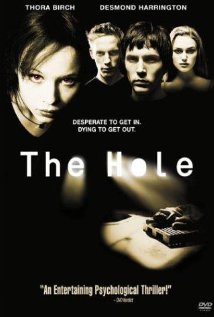
3) In The Hole we find an American student in a British boarding school who gets trapped in a World War II bomb shelter with a few classmates. So we’re led to think…


4) In The Grudge, Sarah Michelle Gellar gets far more than she ever bargained for living and working in Japan as a nurse, when a malevolent creature in her house begins an awful campaign of harassment, mayhem and torture.


5) Orphan finds us with a family interested in adopting a young Russian girl, only the longer she’s with them the more the mother suspects she’s not the child she claims to be.


6) + 7) The Joss Whedon marvels Buffy the Vampire Slayer and Angel, both of
which feature a number of prominent expats — a few are slayer trainers sent over to California from the Old World (Britain), a few are expat vampires who’ve decided the anonymity of the United States better suits their feeding habits.


2. Traveler Horror: “Let your suitcases gather dust!”, cry these films.

8) In Shrooms, a group of young Americans go to meet their Irish friend on his home turf in order to experience the hallucinogenic mushrooms indigenous to the fairylands of Ireland’s bonnie green forests. He forgot to tell them that their chosen “tripping” site is also the home of a haunted and abandoned insane asylum. And that not all the mushrooms are the magic type.


9) In Open Water, two Carribbean cruise snorkelers are left behind, to be tormented by a shark. Based on a true story — and one of many reasons why I keep my feet on dry land despite now living in Florida.


10) In the same vein we have Piranha 3D, in which half-naked spring-breakers are set upon by prehistoric piranha that have been released through an underground fault.


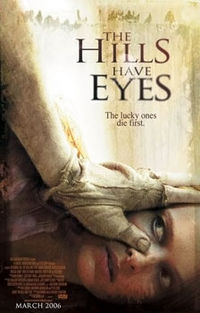
11) The Hills Have Eyes features a family on a road trip through the post-nuclear testing New Mexico desert are set upon by a group of psychopaths who live in the hills.


12) Worlds collide in From Dusk Till Dawn when a reverend on a road trip to Mexico with his children is hijacked by two ruthless killers on the lam from the law after a series of brutal murders and robberies. They find themselves like fish out of water when their rest-stop bar turns out to be a haven for vampires.


13) When a group of friends go white water rafting in Appalachia, the idylic back country scene turns nightmare when a group of inbred locals terrorizes the group, and one of its members in particular. Deliverance is not for the faint of heart.


I could keep going with this sub-genre, but surely you get the point by now. Stay home!

3. Displaced Horror: “Think twice about moving or taking a sojourn outside the ‘hood” is the moral here.

14) Rosemary’s Baby, in which Mia Farrow discovers that her new Manhattan residence is also the home to a group of mad Satanists who’ve got their sights on her unborn baby.


15) The slasher musical Don’t Go In the Woods features a band on the verge of a breakthrough go camping to write some new tunes. Only, there’s something else in there with them that’s picking them off one by one.


16) Every incarnation of the Alien series brings us a group of Earth’s citizens in outer space, battling a wretched and basically unkillable xenomorph. Keep your feet on land. Save yourself the trouble.


17) In Friday the 13th, a group of summer-camp goers are stalked by a relentless killer. Man, this one makes me glad I never went to summer camp, even though growing up I always wanted to.


18) A writer on a summertime retreat to a supposedly peaceful cabin is brutalized by a gang of locals. One of my personal favorites, I Spit On Your Grave is a grotesque revenge fantasy come to life and suggests one might be better off simply working from home.


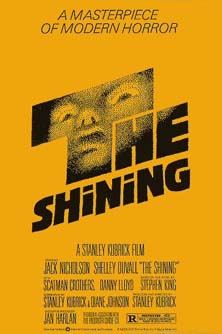
19) And we can’t forget one of the most iconic examples of Displaced Horror: The Shining, in which Jack Torrance, temporary caretaker of the historically creepy and ever haunted evil Overlook Hotel, goes mad and tries to murder his family. All work and no play makes Jack a dull boy, eh?

Happy Hallowe’en!

* * *

So, are you ready to burn your passport and throw away all your travel gear yet? 😉

And while we’re still at it, do you have any other films you’d add to Sezin’s best-of abroad horror list?

Sezin Koehler, author of American Monsters, is a woman either on the verge of a breakdown or breakthrough writing from Lighthouse Point, Florida. Culture shock aside, she’s working on four follow-up novels to her first, progress of which you can follow on her Pinterest boards. Her other online haunts are Zuzu’s Petals, Twitter, and Facebook — all of which feature eclectic bon mots, rants and raves.

STAY TUNED for tomorrow’s post, in which our fictional expat heroine, Libby Oliver, checks in and lets us know how she’s doing back at “home” in Merry Olde.

If you enjoyed this post, we invite you to register for The Displaced Dispatch, a round up of weekly posts from The Displaced Nation, with seasonal recipes, book giveaways and other extras. Register for The Displaced Dispatch by clicking here!

Related posts:

EXPAT MOMENTS: The Doll Collection

As Halloween is nearly upon us time to return to Expat Moments for something a little more unnerving.

“You must have been very proud of her,” said the hotel owner.

I never knew her.

“We’re all proud of her,” she continued. “This is just my little tribute.”

“That’s nice,” I said. I didn’t mean it, obviously.

There mounted on the wall of the sitting room was the subject of our awkward conversation – a shelf on which the hotel owner kept her prized collection of “individually authenticated” Princess Diana dolls.

“She would have been so excited about Will and Kate’s wedding, don’t you think?”

“I guess.”

The hotel owner certainly kept them all in good condition, there was no disputing that. I pictured her on a step ladder on her tip-toes, reaching out unsteadily as she tries to grab a doll to bring down for its once a week dusting. I couldn’t take my eyes off the collection. I had noticed them as I left the hotel bar for my room and I found myself stopping and staring intently at what I thought a strange collection. It seemed to me so odd to find in a New England hotel, until the elderly owner of the collection appeared by my shoulder.

“They get lots of admirers,” she said.

“Yes, I’m sure.” On hearing my accent, the hotel owner was doubly keen to talk to me about the “People’s Princess” and politeness forced me to stand there listening as she told me about the many, many Princess Diana books she owned, and how upset she had been when she died, but I found it hard to concentrate on what she was saying as ten doll’s eyes stared blankly back at me.

“Has anyone ever said that they find them…” I was unsure how wise I was in broaching this, “…just a little unnerving?”

“Are you one of those,” she said, her tone frostier. “Did you not like her? Well, I like you,” she said, addressing the dolls.

I didn’t sleep well that night. The whisky I had drank in the bar to warm me from the New England winter disagreed with me and I lay miserable in bed listening to the creaking of the old hotel.

Outside my door, I could swear I could hear the scratching of something trying to get in. The hotel owner must have a cat, I reasoned, I actually concluded that she probably owned half-a-dozen felines – and no doubt all named after British royalty.

When I did sleep, in my dreams I saw those ten doll’s eyes staring impassively at me. I dreamt of the dolls. Of one of them entering into my room, a knife in its hand, a reimagining of Chucky for genteel PBS watching old women. The doll stood on my chest and plunged its knife down. The princess of our hearts had come to claim mine…

The next morning groggy from the previous night’s drinking and poor sleeping, I went to check-out from the hotel. As I closed the door to my room I noticed a number of scratch marks towards the bottom of the door. Strange, I thought, I didn’t notice them before.  I hoped that I wouldn’t see the owner as I had no desire to listen to another inane conversation about Royalty or even worse have her claim that I was the one responsible for scratching the door.

I was relieved to see not the owner but a young girl on reception.

“How was your stay?” she said.

“Fine,” I said.

Carrying my bag out to my car I passed the sitting room and I couldn’t help but look to the mounted shelf on which the collection of Diana dolls was housed, and there where they had been five dolls were now just four.

STAY TUNED for next tomorrow’s Halloween post – we’re sure you’ll go batty for it.

If you enjoyed this post, we invite you to register for The Displaced Dispatch, a round up of weekly posts from The Displaced Nation, with seasonal recipes, book giveaways and other extras. Register for The Displaced Dispatch by clicking here!

Related posts:

Img: by awindram.

TRAVEL YARN: Just a regular expat girls’ night out in Kenya…um, right?

Today, as many of us await the very real horror of Hurricane Sandy, it may be helpful to have a distraction in the form of a scary travel tale. Guest blogger Amy Lucinda Jones, an Englishwoman who lives in Italy, has obliged with this story about an unsettling experience she had while volunteering in Africa.

If I had a pound, or even a penny, for every person who told me that it was dangerous to go to Kenya on my own, well…I would have been able to afford to take a friend with me, too.

Have you heard about all those terrible things that happen to people who go there? And you’re going alone! And you’re a WOMAN!

But, I shrugged off these (somewhat sexist, and racist) warnings and went to Kenya anyway, fresh out of university, ready to face a new part of the world and a new adventure. I had decided to take part in a volunteer programme, helping children in the local community. And while the experience was one of the most interesting, eye opening and rewarding things I have ever done, it was definitely challenging.

The heat for one thing. Then the million tablets I had to take to stop me getting malaria (which, in turn, gave me terrible indigestion…and some other, ahem, more “personal” side effects that I won’t mention).

Oh, and the fact that I found lots of little white ants crawling all over my toothbrush one morning. They were in the breakfast jam, too. After a few days I grew tired of picking them out. Extra protein and whatnot.

But despite the creepy crawlies and the questionable hygiene, nothing compared to the experience I had with my fellow volunteers, one Saturday night.

What an excellent night for…

We’d decided to let off some steam after a tiring week, due to hard work and challenging projects. After having had a few Smirnof Ices (yes, alcopops are still pretty big over there) at a local bar where we lived in Mombasa, we decided to take the party elsewhere. There was a “discotheque” several miles away, where we could drink more sugary alcohol and dance under the stars.

The only problem was getting there.

We approached a taxi driver and bartered with him for a while. There were about eight of us, so two taxis were needed, and the guy suggested we go with his somewhat shifty looking friend. Please don’t let me be in his taxi, I silently prayed, as one of the other girls pulled me in the direction of said taxi driver’s car.

As we got in, though, everything seemed fine. He drove through the city calmly, without saying too much. I didn’t blame the guy for staying so quiet when he had a group of women who were squealing as though they were 13 again, in his back seat.

But then we reached the edge of the city. It was pitch black — a whole load of nothing was surrounding us. I began to feel just a little uneasy, but none of the other girls seemed to be in the slightest bit bothered.

That was until the driver slowed right down. He crawled along the road, looking around him. We all looked at each other. We had done this journey before, and the road was straightforward. It should not be taking this long.

Oh, yes, there will be blood!

“You do know the way to the disco, right?” One of us asked.

“Mmm.”

Well, of course that response filled us with a whole load of confidence. We repeated the question but were met with an even less helpful silence.

I’m sure he’s just lost and feels embarrassed about it, I told myself, noticing that I was starting to sweat a little bit, even though it wasn’t that hot. We all fell silent as he continued to creep along, still surveying his surroundings.

Suddenly a petrol station loomed into view. Our driver pulled over and silently got out of the car. As he closed the door behind him, we erupted into a state of panic.

“Oh my God, what’s he doing?!”

Followed by:

“Who’s that weird man he’s now talking to?!”

And then, the slightly more alarming:

“I actually think he’s going to chop us into little pieces!”

After this last statement I instinctively placed my fingers on the door handle to assess our possible escape option.

“OH MY GOD — THE DOORS ARE LOCKED!!!”

The other girls frantically tried their doors, too, but to no avail. The driver was talking with the attendant and beckoning towards the car. Probably explaining about how he had four young women captive in the back seat, and he was planning to take us to his rickety old house and, of course, chop us all into little pieces.

I seriously started to panic.

After a few more horrific minutes, he ambled back to the car. In a slow, Leatherface-like way. Albeit without the chainsaw (although he could have had one of those in the boot).

He got into the driver’s seat and pulled away. Still driving at an agonizingly slow speed and saying nothing. He took another turning, which was again unknown to us.

We were in silence now — all secretly wondering if we should pounce on him to try and take him out. Grab the steering wheel or something equally as reckless.

Help me! Help meeeee!

We continued to crawl along. I could hear one of the girls whimpering. Or maybe it was me. I don’t remember. I thought back to those who had warned me about the dangers of traveling. Although to be honest, I think their concerns were more along the lines of avoiding being mugged, or catching typhoid from ice cubes. I’m pretty sure they hadn’t imagined me being stuck in the back of a taxi with a murderer.

Okay, that was harsh. Maybe he wasn’t the actual murderer. Maybe he just “found” innocent, unsuspecting people and took them to his “boss,” who would do the torturing and killing. Maybe he was actually a really nice guy who was stuck in this horrid job. I almost started to feel sorry for him.

He pulled over again. This time at the side of the road. In the middle of nowhere. We clung to each other for dear life as he got out and talked into his mobile phone. He’d probably lost the address to the House for Killing Unsuspecting Foreign Women.

After another five minutes of driving, one of the girls squealed. With a voice barely containing her excitement, she pointed out that she recognized the road. “We are two minutes away from the disco,” she said.. We bounced about in the back seat as the driver pulled into the car park. People! Noise! No Killing Houses!

We threw some money at him and escaped the moment he brought the car to a stop.

The other girls were waiting by the entrance. They looked incredibly annoyed by our lateness. But we just didn’t care.

Because we were ALIVE.

Amy Lucinda Jones is an English teacher, keen traveler, food fanatic, and occasional follower of fashion. Currently, she is living in Puglia (Apulia) and discovering southern Italy one gelato at a time… You can keep up with her adventures by visiting her blog, Sunshine and Tomatoes, and/or following her on Twitter: @BritInItaly. She was recently interviewed about her adventures by Expats Blog.

STAY TUNED for tomorrow’s post, an Expat Moment involving creepy Princess Di dolls, by Anthony Windram.

If you enjoyed this post, we invite you to register for The Displaced Dispatch, a round up of weekly posts from The Displaced Nation, with seasonal recipes, book giveaways and other extras. Register for The Displaced Dispatch by clicking here!

Related posts:


15 films that depict the horrors of being abroad, or otherwise displaced

Readers, we’re getting goosebumps and our blood is curdling. Horror novelist, former expat and Third Culture Kid Sezin Koehler is here to remind us that, however glamorous the life of an expat or world traveler may seem, it has a netherworld — one that horror movie makers are fond of depicting. To proceed is at your peril.

As if moving or traveling abroad isn’t scary enough, there is a whole host of films that would put the kibosh on even the most adventurous of people. For today’s guest post for The Displaced Nation, I’m breaking down these tales of terror into three groups:

  1. The expat.
  2. The world traveler.
  3. The otherwise displaced.

What follows is a rundown of some of the best horror films that will make you never want to leave home again.

1. Expat Horror: Caveat expat, or expat beware (or in some cases, beware of the expat!).

1) Ils (Them) (2006), dir. David Moreau and Xavier Palud.
In this terrifying French film, two expat partners, a teacher and a writer, living outside Bucharest in Romania are terrorized and psychologically tortured by an unknown group for days before their murder. Based on a true story, the villains — who were apprehended in real life — turn out to be even more shocking than the events they perpetrated.

My big question: Why on earth do you choose to live out in the middle of nowhere in Romania? Tragic story indeed, but really, they should have known better. Now you do.

2) Suspiria (1977), dir. Dario Argento.
Considered one of the classic horror films and what many now consider to be the father of the arthouse horror genre, Argento’s dark and twisted tale features a ballet school in Rome full of young girls from all around the world who live and study within walls haunted by a chilling presence that picks off the girls one by one. The score by Goblin is enough to give you nightmares and make you reconsider sending your children away to school. Ever.

3) & 4) Red Dragon (2002), dir. Bret Rattner; & The Silence of the Lambs (1991), dir. Jonathan Demme.
In Red Dragon Dr. Hannibal Lector is just a British expat living and practicing psychiatry in the United States. In fact, he’s helping the police with a brutal series of murders in which specific body parts had been taken as trophies. Detective Will Graham eventually discovers that not only is psychiatrist-to-the-stars Dr. Lector responsible for these grisly killings, he’s also eating the missing pieces.

The next time we meet Hannibal the Cannibal is in The Silence of the Lambs, where he is safely tucked away in a maximum security prison until the FBI needs his profiling assistance in uncovering the identity of a man who is kidnapping and skinning women.

Maybe Dr. Lector is a reason why locals are so wary of expats around the world?

5) The Omen (1976), dir. Richard Donner.
It’s hard enough being the wife of the American ambassador to the UK, but when Lee Remick discovers that there is something very wrong, very evil with her son, Damien, matters only get worse.

In many ways this is the kind of expat horror to which we can most relate: being in a foreign country, going through a difficult time, and not having the kind of support one might have at home. Even though the Thorns are wealthy and have a full staff at their beck and call, Mrs. Thorn cannot confide in them her misgivings that her son is the Antichrist — nor can she with anyone else since she’s the ambassador’s wife. In the end she goes mad from fear and frustration.

As expats, we’ve all been there. Luckily, though, we didn’t have the incarnation of Satan as our son. At least I hope not.

6) Freaks (1932), dir. Tod Browning.
This magnificent film follows a group of sideshow circus performers in Dust Bowl America — the majority of whom are European expats from all over the continent. As foreigners as well as displaying physical deformities of all kinds, this group is the marginalized of the most marginalized in America not just at that time, but even today.

The gorgeous German and “normal” trapeze artist Cleopatra finds out that Hans, the midget, is fabulously wealthy and sets out to steal him away from his same-sized girlfriend Frieda — with disastrous consequences as the group of freaks tries to bring the wicked Cleopatra into their embrace. Cleo finds out well and good that one does not mess with members of the sideshow.

The message here? Respect your local customs, even if you think them freakish. It could be what stands between your body as it is or being turned into a human-chicken hybrid.

2. Traveler Horror: “Let your suitcases gather dust!”, cry these films.

1) Hostel (2005), dir. Eli Roth.
A group of backpackers passing through the Slovakian capital city, Bratislava — it has no semblance to the real place whatsoever — gets kidnapped by an organization that sells young people to the highest bidders so that they can be tortured and murdered in the Slovakian outback with impunity. While the film is rife with cultural and geographical blunders, it nonetheless preys on a legitimate fear of kidnapping and/or human trafficking while traveling, especially for young women as we see in the two follow-up films in this gory franchise.

Kids, don’t fall for the local pretty girl/handsome boy who picks you up in a bar. You have no idea whom they could be working for.

2) American Werewolf in London (1981), dir. John Landis.
Two American backpackers (uh-oh) in the Scottish highlands stray from the road and are attacked by a wild beast. One dies, the other is in a coma for three days with horrible gashes across his chest. When the doctor informs him he was attacked by a madman he’s confused, claiming it was a wolf that had killed his friend and wounded him. Come full moon, young David Kessler finds out it was neither man nor wolf, and he’s becoming one.

There’s nothing like a story about a horrific accident taking place while traveling, especially when said accident turns you into a monster. Always remember, STAY AWAY FROM THE MOORS/MUIRS!

3) The Descent (2005), dir. Neil Marshall.
After the tragic death of Sarah’s husband and daughter in a wicked car accident, her fellow British extreme-sporting friends decide to take a trip across the pond to Appalachia for a spelunking expedition. Why anyone would think that crawling around in caves would be a good idea I haven’t a clue — let alone choose to take an already-traumatized woman into that scenario. But hey, they do. And not only do they find themselves in an unmapped cave system that has no way back to the surface, there are others down there in the dark who’d like to ensure the girls never leave.

Dear People Traveling to America: For Pete’s sake, avoid the US’s back country! Monsters are above and below.

4) Wolf Creek (2005), dir. Greg Mclean.
Two British tourists in Australia pair up with a local to check out a supposed alien-landing site in the middle of nowhere. All is fine until their car battery dies. Stranded in the badlands of Oz, grateful are they when a mechanic rolls up and tows them to his place to fix their vehicle. But oh, he’s not a mechanic at all. He’s a serial murderer who waits for tourists to come out to the Wolf Creek Crater, and takes his good time torturing them before their slow death.

The film is based on a true story — one of the British girls actually survived and made it to the authorities. It turned out the man had killed hundreds of people over decades, and nobody even suspected a thing. Shiver

5) Primeval (2007), dir. Michael Katleman.
During the Rwanda-Burundi conflict, bodies were dumped into the Ruzizi River at such alarming rates that the crocs began eating human flesh. One of these crocs, nicknamed Gustave by the locals, gets a taste for human flesh and begins hunting humans inland. An American team of journalists are sent to capture and bring back the beast amidst an ongoing civil conflict between warlords and villagers.

The best thing about this movie is that there really is a 70-year-old, 22-feet-long croc named Gustave who swims the Ruzizi. He was last sighted in 2008, but I know he’s still out there. I can feel him.

3. Displaced Horror: “Think twice about moving or taking a sojourn outside the ‘hood” is the moral here.

1) The Amityville Horror (1979), dir. Stuart Rosenberg.
As if moving doesn’t suck enough, can you imagine moving into a house that not only was the site of a brutal family murder but is also haunted? I don’t even know how many whammies that makes the scene. Also based on the true story of the Lutz family, who were terrorized by their house to the point where they fled without any of their belongings and never went back to collect them.

Word to the wise: Always check about the house’s history before you move in, and always remember to burn sage throughout, even in cabinets and drawers, before you move anything in anything at all. Trust me on this one.

2) Se7en (1995), dir. David Fincher.
Heralding a promotion to detective, Brad Pitt gets transferred to an anonymous city with a reputation of being among the worst in America. *Cough* Detroit *Cough*. His wife is miserable as she wants to have a family, but cannot imagine raising children in that town. The first case he lands is a serial killer murdering people based on the Seven Deadly Sins — one that quickly sucks both him and his wife into a horrific spiral of torture and murder.

Women, don’t let your husband drag you to a horrible city. Just don’t. Your life very well may depend on it.

3) The Texas Chainsaw Massacre (2003), dir. Marcus Nispel.
A group of friends on a road trip through Texas and — oh crap! — their car breaks down. It’s just their luck that the person who finds them is the patriarch of the psychotic and inbred Hewett family, known for killing and cooking their victims. There are no happy endings here, people.

If you’re going on a road trip, stick to the main roads, for God’s sake! I mean, jeez, everybody knows that. And while you’re at it, stay the bloody hell out of Texas!

4) El laberinto del fauno (Pan’s Labyrinth) (2006), dir. Guillermo del Toro.
Set in 1944 fascist Spain, the film tells the story of Ofelia, a young girl who accompanies her mother to live with her new stepfather, a barbarous Spanish general. Amidst the horror, Ofelia discovers a fairy world underneath the very grounds of their home, a place to which she escapes when the torture around her becomes too much to bear. But even fairy worlds have their horrors, as she soon finds out.

Moms, jeez, don’t marry jerks and then don’t agree to live in their military camp. Seems like logic to me, but I guess it needs to be said.

* * *

So, are you ready to burn your passport and throw away all your travel gear yet? 😉

And do you have any other films you’d add to my best-of abroad horror list?

Sezin Koehler, author of American Monsters, is a woman either on the verge of a breakdown or breakthrough writing from Lighthouse Point, Florida. Culture shock aside, she’s working on four follow-up novels to her first, progress of which you can follow on her Pinterest boards. Her other online haunts are Zuzu’s Petals, Twitter, and Facebook — all of which feature eclectic bon mots, rants and raves.

STAY TUNED for tomorrow’s post, which has Kate Allison continuing our horror theme.

If you enjoyed this post, we invite you to register for The Displaced Dispatch, a round up of weekly posts from The Displaced Nation, with seasonal recipes, book giveaways and other extras. Register for The Displaced Dispatch by clicking here!

Related posts:

Images: From MorgueFile: Cinema; Hat and suitcase;  Bridge from biplane.

Photo of Sezin, from her newest FB page, ZUZUHULK, used with her permission.

Would I travel for food? It depends…on whether it’s pizza or haggis!

Third Culture Kid Tiffany Lake-Haeuser is back, to tell us what she thinks about gluttony as a motive for travel.

As a Third Culture Kid who was raised in the United States and Abu Dhabi before returning to my native Germany, I’ve learned that every culture has its own traditional foods — but the idea of trying them all? I’ll take that with a pinch of salt, so to speak.  Some of the world’s most celebrated foods are very good; others, not so much.

At my international school in Frankfurt, I’ve found it amusing to walk around at lunchtime and see what the different nationalities are eating. Obviously, we students are somewhat limited by what the cafeteria offers, but once a year on International Day — a day for celebrating all the nationalities at our school — things get a bit more interesting. We get to choose between egg noodles at the Thai stand and the burgers at the U.S. stand, among others…

Food for thought

Would I travel for food? I know that the Displaced Nation has covered this topic obsessively last month. I discussed it with a few of my schoolmates — ironically, during our lunch period — and we agreed that while most of us have a certain sweet or other type of food we make a habit of eating or buying when we are in certain countries, we would not be inclined to go on a food tour.

One of my friends said she makes it a priority to buy “double stuf” oreos in the U.S. Though hardly a delicacy in America, this cookie is seen as an exotic treat at our school.

Other friends mentioned their efforts to avoid certain traditional foods at all costs. For instance, one of them said she loathed eating haggis in Scotland — even though that’s where she is originally from! For those of you who don’t know what haggis is, it is a savory pudding of sheep lung, liver and heart encased with other ingredients in an animal’s stomach. Mmmmm!

Another friend reported she’d found eating snails in France less than appetizing. The snails slimy and chewy, not pleasurable as French people like to claim.

Rice…again!

My own most memorable food experience associated with travel occurred when I was attending international school in Abu Dhabi. I refer to my eighth-grade week-long school trip to Thailand. Every day, we were given plain white rice to eat; it came with every single meal. By the end of the week, we just couldn’t face another bowl of rice! (On the rare occasions when we were served French fries, the students would attack them and within minutes they would be gone.)

However, on the last day of our trip, we were taken to a school and taught how to make chicken curry and spring rolls. Not only was it the best meal I’d had all week (which is of course not biased to the fact that I was the cook!), but I also found it so interesting to see the way these foods were made.

So maybe I would consider a cookery tour one day?

By the way, that still didn’t stop me from refusing to even consider eating rice for another month after that trip!

Pasta & pizza — perfect!

By the time this post goes up, I will be traveling in Italy, which is by far my favorite country to eat in. Pasta and pizza are two of my favorite things to eat in the world — and let’s face it, Italy does these foods better than anywhere else.

Honestly, I don’t even know how I will stop eating, but that’s a different problem.

I guess everyone needs to decide for themselves how far they are willing to travel for scrumptious or adventuresome eats. As for me, I will not be taking the train to Paris (where my dad now lives) every time I want a croissant — even if the original is truly amazing.

* * *

Readers, any thoughts on or reactions to Tiffany Lake-Haeuser’s skepticism about linking international travel to food experiences? Please put them in the comments. You can also follow what she is up to on her blog, Girl on the Run.

STAY TUNED for the Displaced Nation’s agony aunt, Mary-Sue Wallace, who will attempt to offer expat readers solace on their horrifying experiences in tomorrow’s post.

If you enjoyed this post, we invite you to register for The Displaced Dispatch, a round up of weekly posts from The Displaced Nation, with seasonal recipes, book giveaways and other extras. Register for The Displaced Dispatch by clicking here!

Related posts:


The accidental repatriate

Last time Sezin Koehler wrote for us, she was bidding farewell to “strange, Lovecraftian” Prague, where she and her husband had lived for four years. Also in the Czech Republic, Koehler succeeded in producing her first (horror) novel, American Monsters. After a short stint in Germany, the couple is now saying hello to sunny, but bugbear-filled, Florida. Koehler describes the emotional transition.

When I left the US for Europe in 2002 I had no intention of ever again living in America. Violence, backwards politics, a horrible job market, and a provincial outlook on the world made an extreme contrast with my global, Third Culture Kid background. I am half American, half Sri Lankan, and my mother worked for UNICEF, so the family lived all over the world.

Not to mention I was suffering from extreme post-traumatic stress disorder after witnessing the murder of a dear friend when the two of us were robbed at gunpoint by a gang banger in Hollywood.

Ten years later and a forced repatriation determined by economics rather than desire, I am at a loss for how much worse off this country is since I left. I know a decade is a long time — but surely not long enough to usher in political rhetoric that would take this nation back to pre-1950s? My mind boggles.

One big dark nation

Gun violence has ever increased — to the point where we find so-called Stand Your Ground laws that allow citizens to kill each other with impunity, under the guise of “I felt threatened” — even when that threat consists merely of a young African-American boy, armed with nothing but iced tea and a bag of Skittles.

I’m back in the world of mad gunmen going on shooting sprees. Sikhs mistaken for Muslims and murdered. Women getting abducted and raped at gunpoint while waiting for a bus — this happened just recently not far from where I live.

Post-9/11 America has seen the sharpest increase in the infringement of civil liberties as matters of homeland security and anti-terrorism. The arrests of journalists covering Occupy Wall Street events brought the US’s rank of journalistic freedom down 27 points, putting the country at 47, just behind Comoros and Romania.

Xenophobia abounds as states pass laws against the teaching of ethnic studies, and even literature written by Native and Mexican Americans, in schools. Such developments are exponentially more ironic when considering that this country’s immigrant history.

The worst (and rudest!) of times

After college it took me almost a year to get a proper job. Upon returning, I’ve had trouble securing even a retail job: all applications are now submitted online and don’t give you an option to upload a cover letter or even your full resume. Not only are American jobs outsourced to China, the application process has been tech-sourced to boot, as machines vet your application — even if you live right down the street from the store to which you’re applying.

I was shocked to find that retail jobs pay exactly what they did a whole ten years ago. Way to move forward, America.

America might have progressed in terms of technology; I see a smart phone in every hand. However, common courtesy has gone out the window as people text, Facebook, Tweet, right in the middle of an actual face-to-face interaction, without even a twinge of remorse.

Call me old fashioned, or a kindred spirit to Hannibal Lecter, in believing it’s the epitome of rude to fiddle with one’s phone (or any other such object of distraction) whilst another human being is talking to you.

The wheels on the bus go back-backwards.

Monsters are the best friends I ever had

To add insult to injury, I find myself in a particularly devoid area of Florida, easily one of the most vapid places on the planet. Plastic people who can spend an hour telling you about their lunch salad are the antithesis of the cultured individuals with whom I spent my time while living elsewhere.

Who would have thought the rabbit hole I fell down when I left Prague would lead to a place scarily resembling Hell, with its torturous circles and its staggering temperatures?

Each day I force myself to review the positives:

It seems incredible that the America I left ten years ago — the one that traumatized me so badly — is actually a better version than the one in which I live now.

So frustrated have I been by absurd American conservatism and the zombie hordes of consumerism around me, I’ve resorted to a new persona: Zuzu Grimm, a creature who writes wicked dystopic visions of where this country is headed if it continues down this current path of willful ignorance and fear mongering.

Bored now

But that’s not been the only struggle: For years I defined myself as an expat. My blog was filled with anthropological tales of living in Switzerland, France, Spain, Turkey, the Czech Republic and Germany. More than that: stories of growing up in Sri Lanka, Zambia, Thailand, Pakistan, India.

While I’m still a Third Culture Kid — never really at home anywhere — my expat identity became a cornerstone of who I was. It worked, and was so much less confusing to explain. The expat label made me feel ultimately more interesting. Writing a novel in Prague sounds infinitely more exotic than writing from an essentially retiree community of ten thousand.

Oy vey.

Accepting that this is who I am now, and this is where I am, has been even harder than the absolute culture shock upon repatriation.

Being an expat gives a person a sense of uniqueness that may or may not be deserved. Yes, you’re a foreigner who must negotiate language/cultural/social barriers. But it’s also your choice. And for many people economics determines whether you can or can’t participate.

Kind of like having kids. You can complain all you want about how hard it is, but it’s something you elected to do, not something that was forced upon you.

(Well…unless Republicans head up the White house; with their insane ideas on abortion there’ll be thousands more women forced to carry rapists’ babies to term. Disgusting. Terrifying. Yet another grotesque example of the New America I find on return.)

I’m nobody, who are you?

My former life as an expat has taken on so many more shades of meaning as I consider how it must have seemed to those in my position right now: How glamorous. How decadent. How lucky. How dare they criticize my government when they’ve jumped ship. I have to live here. I’m thousands of dollars in debt. I don’t have the luxury of leaving.

Maybe one day when my husband wins the lottery, that’s just what we’ll do. Leave. Maybe for Buenos Aires, or Addis Ababa. Maybe in the meantime we’ll find a better city in the US, one that offers more by way of creativity, culture, and history — the things I miss most about life in Europe.

Until then, I have to make peace with being plain old Sezin Koehler who lives in and writes from Florida. Hopefully some time soon I’ll be okay with that. Any minute now. It’s going to happen.

That’s fine. I’ll wait.

And pray I don’t get sick in the meantime, because even with Obamacare, I still can’t afford health insurance.

Sezin Koehler, author of American Monsters, is a woman either on the verge of a breakdown or breakthrough writing from Lighthouse Point, Florida. Culture shock aside, she’s working on four follow-up novels to her first, progress of which you can follow on her Pinterest boards. Her other online haunts are Zuzu’s Petals‘, Twitter, and Facebook — all of which feature eclectic bon mots, rants and raves.

STAY TUNED for tomorrow’s post, another displaced Q from anti-foodie Tony James Slater.

If you enjoyed this post, we invite you to register for The Displaced Dispatch, a round up of weekly posts from The Displaced Nation, with seasonal recipes, book giveaways and other extras. Register for The Displaced Dispatch by clicking here!

Related posts:

img: Sezin Koehler in St. Petersburg, Florida, by Steven Koehler (2012).

TRAVEL YARN: Two madcap Indonesian ladies in weird & wonderful Japan (2/2)

Japan — the country that many Westerners have likened to Lewis Carroll’s “wonderland” for its quality of wacky unpredictability. But what about for other Asians — do they feel as displaced and disoriented there as we do? Our very first Random Nomad, Anita McKay, ventured into the Land of the Rising Sun for the first time this summer, in the company of another Indonesian, P, who had been there once before as a student. This is Part 2 of the pair’s adventures. (See also Part 1.)

After Tokyo and Kyoto, P and I headed to Kobe — with Kobe beef as our main target. We’re Indonesians, remember? Which means we’re always looking forward to our next meal.

Gluttons for gourmet food

Our hotel in Kobe had booked us a table at Mouriya, a restaurant that prides itself on serving superior quality beef from the Kobe Cow and the Tajima Cow. Mmmm…

The meat was really delicious, but not long afterwards, I was craving sushi again. Fortunately, I was able to indulge in some serious sushi eating one last time with my blogging buddy from Yokohama, whom we met on our way back up to Tokyo. She and I went out for a meal at Kyubey, a high-end sushi restaurant in the Ginza. (P couldn’t join as she actually had to work in Tokyo for her Indonesian company for the last two days of our trip.)

Kyubey, which is actually two restaurants across the street from each other, doesn’t take bookings and always has a long queue. Luckily, my friend and I were able to get a table — and, to our delight, the chef had rather fluent English.

He patiently explained to us about the fish we were eating. One particular sushi had to be held with chopsticks in a certain way and nibbled at from the side, not the front.

We told the chef that both of us weren’t too keen on tuna, as the tuna we’d tried had been chewy or smelled too fishy — so we preferred salmon instead. He smiled and then put some tuna on our plates and told us to try it. We soon realized that this might be the best thing we’d ever eaten — melted like butter in our mouths.

Our nine-course lunch, which included eel (unagi), tuna, scallop, and squid, cost only about AUD 50 (around the same in US$). I would happily go back to Kyubey again and again and again.

P, upset at being stuck in the office while my friend and I were feasting on sushi, insisted that we go to Tsukiji market on our last morning in Japan. We got to the market just after 6:00 a.m. — but by then had already missed the tuna auction.

Still, we took a good look around at all the weird and wonderful sea creatures for sale, and then decided to have a sushi assortment for breakfast. While at the sushi restaurant, I discovered that different parts of the tuna are sold at different prices. I also came to realize that tuna costs 2-3 times more than salmon. Remembering what I’d told the chef at Kyubei about salmon and tuna, I think he must have been laughing at us!

Sex (and hugs), please, we’re Japanese!

Our first night in Kobe, P and I had wandered around looking for a place to have a drink after dinner. It was only 9:00 p.m., but outside nearly every club were girls in miniskirts handing out pamphlets.

(If guys, not girls, were standing outside the clubs, it was to advertise that “go go dancing” was on offer. Hmmm…is that a euphemism?)

We passed one big place claiming to be an Arabian club (actually, the building did have a Middle Eastern look), with a big banner of three Japanese girls dressed as nurses and “A Whole New World” blasting loudly.

We passed a couple who looked as though they were in their mid-50s and had had too much fun too early. The lady was leaning against a tree and wrenching; not exactly the picture of elegance!

We decided just to go back to our hotel instead.

Later, when we joined my blogging buddy for some shopping at the Yokohama Red Brick Warehouse, we rested over coffee as she regaled us with some stories she’d collected of strange and rather lewd behavior engaged in by Japanese men.

And then, as if to illustrate her story, something rather creepy happened. Ever the snap-happy tourist, P had decided to take a parting shot of me and my blogging buddy with the Red Brick Warehouse in the background. There was a young couple doing the same thing, who turned out to be Indonesians, sent by their companies for a training session in Yokohama.

While we were busy exchanging e-mails and phone numbers, a young Japanese man popped up out of nowhere.

He shook my hand, asked my name (in English), and mumbled something I couldn’t understand. He then walked over to my blogging buddy, repeated the same series of gestures — and then hugged her. He walked over to P and did the same thing. And then it was the turn of the young Indonesian couple.

By then, all of us had realized there was something “not right” about this guy — but as he seemed harmless enough, we waited patiently until he finished hugging the last person in the group.

At that point, he walked back to my blogging buddy and hugged her again.

I laughed a little because it seemed so strange — also because I was the only one he hadn’t hugged so felt safe.

But then, to my horror, he came back to me, shook my hand again, asked my name again, and then really hugged me and wouldn’t let go.

My blogging buddy, seeing the expression on my face, started walking away as fast as she could. The rest of us followed her. I broke free and followed her as well. As we looked back at Hugger Boy, he just waved and started laughing.

Another funny, weird, horrifying tale for my blogging buddy’s collection!

Some seriously good people watching

As our time in Japan drew to a close, I entertained myself by staring at the Frank Lloyd Wright wall in Tokyo’s Imperial Hotel, spying on a wedding procession at Meiji Shrine — and, best of all, people watching.

As I was sitting on the subway, I noticed two very pretty girls sitting right in front of me. Their hair was almost light brown (a favorite color in Japan), very long and slightly wavy (favorite style in Japan). They also wore fake eyelashes, but there was something about them that made me keep staring at them. After a few minutes I realized that their eyeballs were unusually large, more like dolls than human.

Later I consulted with Google and found that Japanese girls sometimes wear special contact lens that do make their irises look bigger. Odd…

More odd stuff: both P and I had been wondering why so many young Japanese men carry bags just like us girls. There was one guy in the subway who carried a black Dior tote bag. And if that wasn’t weird enough, I saw a guy carrying a brown city messenger bag by Balenciaga. (Google the bag and your jaw will drop, just as mine did.) Oh, and there was also a man with matching red tote bag and shoes in Bvlgari’s Il Café in Omotesandō, where P and I stopped for martinis.

Still, I did enjoy watching that particular man, who was accompanied by his two pooches. One dog kept begging from the cute girl at the next table, while the other kept demanding food from him.

Meow — or should it be nyan?!

Actually, I’m more of a cat person — so before we flew home I wanted to visit the Calico Cat Café in Shinjuku, where people can enjoy coffee or tea in the company of real cats. P still had to work so I went by myself. I didn’t even get lost!

The café has two floors and charges the guest by the first hour, then per 15 minutes. I saw a wide variety of cat breeds: Maine Coon, Abyssinian, Ragdoll, Persian, Scottish Fold, and so on. No Sphinx, though.

The café has strict rules about entering the cat area: you have to change your shoes to slippers, clean your hands with disinfectant, and not take any photos with a flash.

All of the cats seemed rather spoiled. They refused to be petted unless you gave them a snack first. A Scottish Fold named Apollo apparently thought he was the cashier, so he sat at the cashier counter, looking at us lazily.

One hour passed by so quickly that I wished I could spend at least another day in Tokyo! P, meanwhile, wished she didn’t have to work so she could experience the cat café as well.

A fond sayonara

We spent our last minutes at the airport buying Tokyo bananas and green-tea Kit Kats for friends and family back home. I was pondering about buying sake, but then all of a sudden, it was time for boarding!

P is determined to go back again, and I, too would love to go back. But as the seat belt sign went off, we looked at the world map spread in our screen, and started day-dreaming about our next adventure…

* * *

Readers, any questions or comments for Anita? Where do you think she’ll go next?!

Anita McKay is a property consultant, travel junkie, cat lover, food enthusiast. She resides in Perth with her Scottish husband but is still searching for a place called home. To learn more about her, check out her blog, Finally Woken, and/or follow her on Twitter: @finallywoken.

STAY TUNED for tomorrow’s review of an expat memoir of a cross-cultural elopement.

If you enjoyed this post, we invite you to register for The Displaced Dispatch, a round up of weekly posts from The Displaced Nation, with seasonal recipes, book giveaways and other extras. Register for The Displaced Dispatch by clicking here!

Related posts:

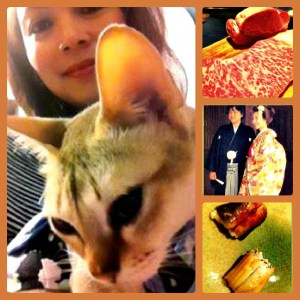
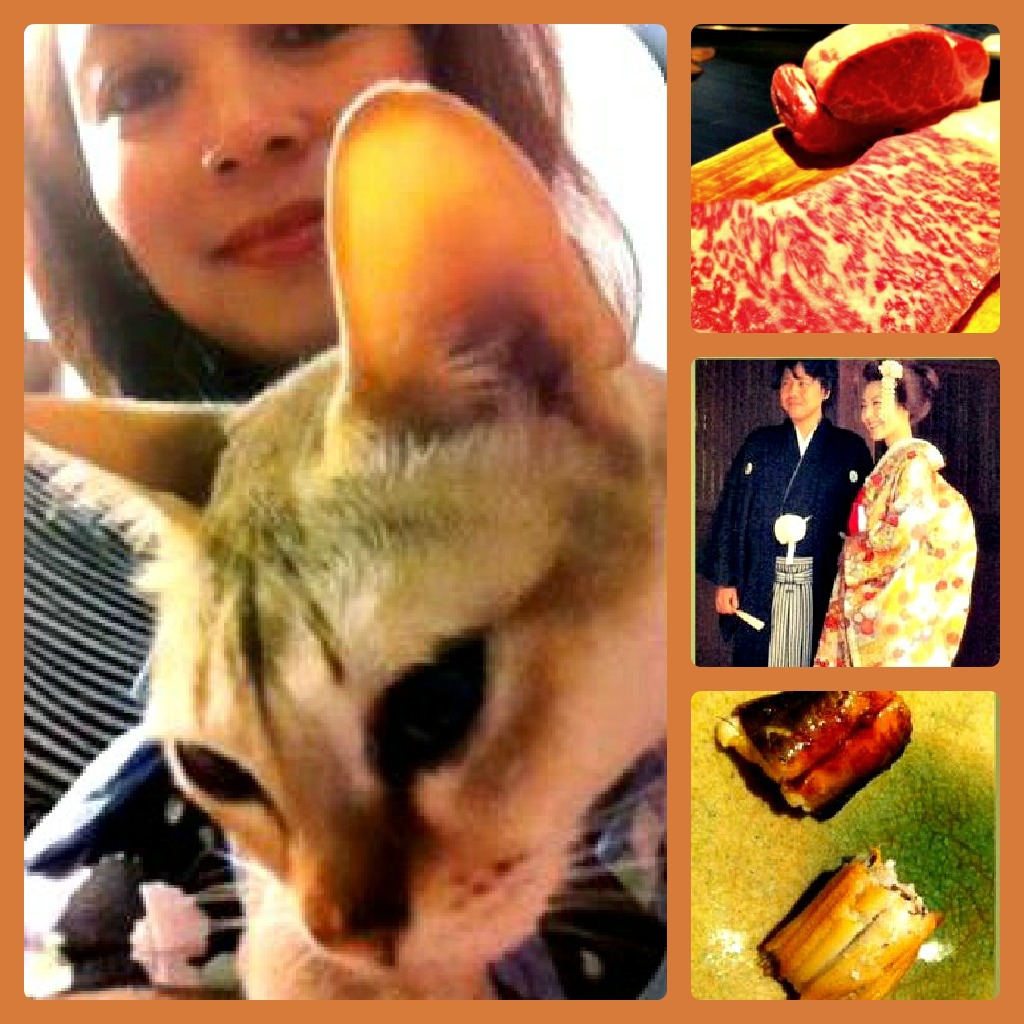
Images (clockwise): Anita McKay making a feline friend in Café Calico in Shinjuku, Tokyo; the marble-ous Kobe beef; the bride and groom at a Japanese wedding at the Meiji Shrine; and Kyubey sushi (all from Anita McKay’s extensive collection).
Repatriating from paradise — and breaking all the rules

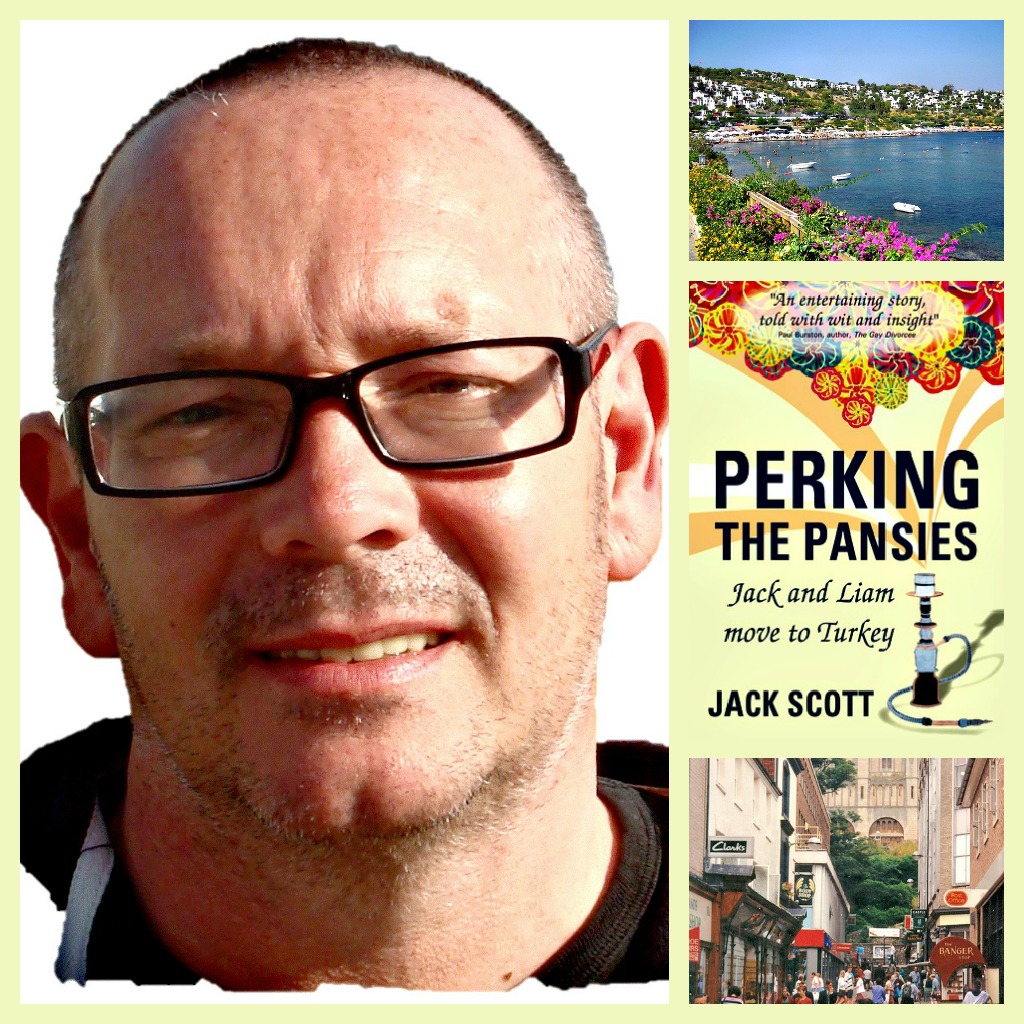
One of our earliest Random Nomads, Jack Scott, drank deeply of the cup of expat life. He and his civil partner, Liam, moved to their version of paradise: Bodrum, Turkey. This decision enabled Jack to become a writer, parlaying his popular blog, Perking the Pansies, into a book, which was published about a year ago and reviewed on this blog. After so much success, why have the pair traded in Bodrum for Norwich, in East Anglia? Yes, that’s right, they’ve repatriated!

In the beginning there was work and work was God. After 35 years in the business, the endless predictability made me question the Faith.

I wrote those words on the 8th October 2010 — the opening sentence of my debut post on a brand new blog, Perking the Pansies, about a couple of silly, cynical old queens who decided to jump the good ship Blighty and wade ashore to Asia Minor.

For a minority report, the blog’s done rather well. Then there was a book. That’s done rather well too. Remarkable. Both crept up behind me unexpectedly, without hint or herald. Sometimes I wonder if we should have listened to the early advice from our playground peers; maybe we should have kept our backs to the wall. Too late now.

At the time, we had a plan — well, a plan of sorts. We would stay in Turkey for a good few years, slowly descend into memory loss and erectile dysfunction (both disguised by a haze of alcohol) and eventually paddle back to Blighty for the liver transplant and the Grim Reaper’s call.

It was not to be. I wanted to do author things and keep the pennies (and believe me I do mean pennies) rolling in. I could do neither in Turkey. Added to this, serious family issues beckoned us back from paradise and we wanted to do our bit.

Decision #1: Leaving Bodrum

When we first announced our intention to up sticks and become “repats,” we were taken aback by the reaction in our little corner of expatland.

There was a strong sense that some gang members felt badly let down, betrayed even. It was as if our decision to leave reflected badly on their decision to stay.

Some even suggested that we’d soon be back, presumably with our tail between our legs and begging to re-join the fold.

You see, our particular expat ghetto was meant to be the final destination, a place to retire and expire. We were breaking the unspoken rules.

Ironically, when we first left Blighty for our place in the sun, our friends and family, the people with whom we have the deepest roots, simply wished us well and promised to visit.

Decision #2: Picking Norwich

So, the first big decision was to leave. The second was where next to lay our hatboxes. We were adamant that we wouldn’t revert to the world of coffees-on-the-run, nose-to-nipple commutes, kiss-my-arse bosses and treadmill mortgages. So, London was off the agenda.

After much heated debate and pins on maps, we settled on Norwich, a small cathedral city in Eastern England, a two hour drive northeast of the Smoke. Our choice was met with a wall of incredulity, both at home and away. To be fair, all I really knew of Norwich was the classic seventies game show “Sale of the Century”, Bernard Matthews gobbling turkeys at his farm in Norfolk, and the acronym (k)Nickers Off Ready When I Come Home, first used in the BBC Radio show “Just a Minute” in 1979. (I’ve often used the latter in text messages to Liam, but that’s another story…)

By common consent, the former Anglo-Saxon kingdom of East Anglia is full of inbreds fiddling with their siblings and marrying their cousins. That’s the myth peddled by the urban pretentious. In reality, Norwich is a sparkling jewel hidden in the rural flatlands of England’s gobbling breadbasket with more art houses, wines bars and fancy restaurants than you could shake a stick at. As the most complete medieval city in England and home to a thriving university, Norwich is where the old and the young are blended in perfect harmony.

We were delighted to join the north folk of Norfolk as neo-Norwichians (not to be confused with Norwegians who, as Vikings, did a bit of raping and pillaging in this flat part of our Sceptred Isle).
No regrets…

Our time in the sun was a magical experience. We don’t regret a single second, not even those cold winter days huddled under a duvet and fighting over the hot water bottle as torrential rain battered the house. Thank you, Turkey. Thank you for breaking the umbilical cord between wages and lifestyle, and teaching us to make do with less. Thank you, for giving me the time and space to write. Thank you, for handing me a story on a plate. One day, we may return. But, for now, there will be no going back on going back.
* * *

Readers, any thoughts on, reactions to Jack Scott’s rule-breaking move back home? Can you relate at all?

STAY TUNED for tomorrow’s episode in the life of our fictional expat heroine, Libby. (What, not keeping up with Libby? Read the first three episodes of her expat adventures.)

If you enjoyed this post, we invite you to register for The Displaced Dispatch, a round up of weekly posts from The Displaced Nation, with seasonal recipes, book giveaways and other extras. Register for The Displaced Dispatch by clicking here!

Related posts:

Images (clockwise from left): Jack Scott; Bodrum, Turkey, courtesy Yilmaz Ovunc (Flickr) Creative Commons CC BY-SA 2.0; Perking the Pansies book cover; Norwich, England, courtesy Roger Wollstadt (Flickr) Creative Commons CC BY-SA 2.0.

Repatriation is just relocation — with benefits

Today’s guest blogger, Anastasia Ashman, has been pioneering a new concept of global citizenship. Through various publications, both online and in print, and now through her GlobalNiche initiative, she expresses the belief that common interests and experiences can connect us more than geography, nationality, or even blood. But what happens when someone like Ashman returns to the place where she was born and grew up? Here is the story of her most recent repatriation.

I recently relocated to San Francisco. Three decades away from my hometown area, I keep chanting: “Don’t expect it to be the same as it was in the past.”

Since leaving the Bay area, I’ve lived in 30 homes in 4 countries, journeying first to the East Coast (Philadelphia Mainline) for college, then to Europe (Rome) for further studies, back to the East Coast (New York) and the West Coast (Los Angeles) for work, over to Asia (Penang, Kuala Lumpur) for my first overseas adventure, back to the USA (New York), and finally, to Istanbul for my second expat experience.

My daily mantra has become: “Don’t expect to be the same person you once were.”

With each move, my mental map has faded, supplanted by new information that will get me through the day.

Back in San Francisco, I repeat several times a day: “This place may be where I’m from, but it’s a foreign country now. Don’t expect to know how it all works.”

What a difference technology makes (?!)

Today my work travels, just as it did when I arrived in Istanbul with a Hemingway-esque survival plan to be on an extended writing retreat and emerge at the border with my passport and a masterpiece.

I knew from my previous expat stint in Malaysia that I needed to tap into a local international scene. But I spent months in limbo without local friends, nor being able to share my transition with the people I’d left.

This time is different. Now I’m connected to expat-repat friends around the world on the social Web with whom I can discuss my re-entry. I’ve built Twitter lists of San Francisco people  (1, 2, 3) to tap into local activities and lifestyles, in addition to blasts-from-my-Berkeley-past.

I’ve already drawn some sweet time-travely perks. To get a new driver’s license I only needed to answer half the test questions since I was already in the system from teenhood.

After Turkey’s Byzantine bureaucracy and panicky queue-jumpers, I appreciated the ease of making my license renewal appointment online even if the ruby-taloned woman at the Department of Motor Vehicles Information desk handed me additional forms saying: “Oh, you got instructions on the Internet? That’s a different company.”

One of the reasons my husband and I moved here is to more closely align with a future we want to live in, so it’s cool to see the online-offline reality around us in San Francisco’s tech-forward atmosphere.

It doesn’t always translate to an improved situation though. Just as we are searching for staff to speak to in person at a ghost-town Crate & Barrel, a suggestion card propped on a table told us to text the manager “how things are going.”

So, theoretically I can reach the manager — I just can’t see him or her.

So strange…yet so familiar

It took a couple of months to identify the name for what passes as service now in the economically-depressed United States: anti-service. Customer service has been taken over by scripts read by zombies.

When I bought a sticky roller at The Container Store, the clerk asked me, “Oh, do you have a dog?”

“No, a cat,” I countered into the void.

He passed me the bag, his small-talk quota filled. He wasn’t required by his employer to conclude the pseudo-interaction with human-quality processing, like, “Ah, gotta love ’em.”

What I didn’t plan for are the psychedelic flashbacks to my childhood. I may have moved on, but this place seems set in amber. The burrito joints are still playing reggae (not even the latest sounds of Kingston or Birmingham) and the pizza places, ’70s classic rock stations (Steve Miller Band’s “Fly Like An Eagle,” anyone?). The street artists are still peddling necklaces of your name twisted in wire. Residents are still dressed like they’re going for a hike in the hills with North Face fleece jackets and a backpack.

A bid for minimalism

The plan is also to be somewhat scrappy after years of increasing bloat. My Turkish husband and I got rid of most of our stuff in Turkey in a bid for minimalism. We camped out on the floor of our apartment in San Francisco until we could procure some furniture.

If it was a literal repositioning, it was also a conscious one — for a different set of circumstances. We’d expanded in Istanbul with a standard 3-bedroom apartment and “depot” storage room, and affordable house cleaners to maintain the high level of cleanliness of a typical Turkish household. In California, I intended to shoulder more of the housework.

I was soon reminded of relocation’s surprises that can make a person clumsy and graceless. I should have kept my own years-in-the-making sewing kit since I can’t find a quality replacement for it in an American market flooded with cheap options from China — and now have to take a jacket to the tailor to sew on a button, something I used to be able to do myself.

When the lower-quality dishwasher door in our San Francisco rental drops open and bangs my kneecap, I recall the too-thin cling wrap and tinfoil that I ripped to shreds in Istanbul, or the garden hose in Penang that kinked and unkinked without warning, spraying me in the face.

New purchases

“We’re getting too old for this,” my husband and I keep telling each other as we shift on our polyester-filled floor pillows that looked a lot bigger and less junky on Amazon. (We were abusing one-day delivery after years of not buying anything online due to difficulties with customs in Istanbul. Cat litter can be delivered tomorrow! Pepper grinder! Then I read about the harsh conditions faced by fulfillment workers in Amazon’s warehouses and cut back.)

One of our first purchases Stateside was a television. Not that we’re going to start watching local TV, but we did flick through some satellite channels. It’s something I like to do upon relocating: watch TV and soak up the local culture like a cyborg.

Since I last lived in the US, reality shows like COPS — where the camera would follow policemen on their seedy beats — have gone deeper into the underbelly of life, and now there are reality shows about incarceration.

The Discovery Channel has also gone straight to the swamp. That’s where I caught a moonshiner reality show featuring shirtless (and toothless) men in overalls called “Popcorn” and “Grandad.”

It’s an America I am not quite keen to get to know.

But I can take these reverse culture shocks lightly because my repatriation is part of a continuum. It’s not a hiatus from anything nor a return home. I’m not missing anything elsewhere, I haven’t given up anything for good. Being here now is simply the latest displacement. Today is a bridge to where I’m headed.

ANASTASIA ASHMAN is the cultural writer/producer behind the Expat Harem book and discussion site.  The Californian has been on a global rollercoaster: fired in Hollywood, abandoned on a snake-infested island off Borneo, married in an Ottoman palace, interviewed by Matt Lauer on the Today show. She brings it all home in the “Web 3.0 & Life 3.0” educational media startup GlobalNiche.net, empowering creative, adventurous, self-improving people to tap into a wider world of personal and pro opportunity no matter where you are. Get your copy of the Global You manifesto here.

STAY TUNED for tomorrow’s episode in the life of our fictional expat heroine, Libby. (What, not keeping up with Libby? Read the first three episodes of her expat adventures.)

If you enjoyed this post, we invite you to register for The Displaced Dispatch, a round up of weekly posts from The Displaced Nation, with seasonal recipes, book giveaways and other extras. Register for The Displaced Dispatch by clicking here!

Related posts:

Images: Anastasia Ashman (2012), her World Champions ring, and a view of the bridge to where she’s headed right now.