The Displaced Nation

A home for international creatives

Do refugees and migrants have anything in common with us expats? No, and yes…

displacedvdisplacedBelieve it or not, the Displaced Nation has occasional qualms about whether “displaced” is the right word to describe a group of expats and internationalists. What does a group of privileged travelers have in common with refugees or migrants who’ve had no choice but to leave their homelands? We thought we’d begin the new year by touching on this vexed question, this time with the help of a mentor, Andy Martin. Andy is now an expat in Brazil, but he previously worked with refugees in London.

— ML Awanohara

Before moving to Brazil in February 2012 I worked with refugees as a social worker in the UK, and my last job entailed supporting unaccompanied minors: children as young as 11 who flee conflicts and persecution in countries such as Afghanistan — on their own.

And it is of them that I remind myself when I reflect upon my own struggles and anxieties at being “displaced” from my own country. Suddenly, my tongue-in-cheek British moans about uncomfortable buses and lopsided pavements (yes, pavements), or my frustrations with struggling to learn Portuguese, seem trivial when contrasted with the experiences of the young people I worked with.

Given this, it would seem bizarre for a rich (relatively) migrant like myself to even contemplate comparing my experiences of displacement with those who flee poverty, persecution or some other unimaginably unfortunate situation that most of us will thankfully never have to experience.

Or is it?

Well, I guess the differences are probably easier to distinguish — for example:

1) The reasons for the migration

Whilst refugees are forcibly displaced through circumstances outside of their control, more fortunate gringos like myself possess far greater agency when it comes to the motives for our movements: love, jobs, travel, etc.

2) The journey itself

Forcibly displaced people often leave their homes unexpectedly with no belongings, or else hurriedly sell whatever possessions and land they have in order to fund their flight, whilst my wife and I had carefully planned our move for over two years (well, we read a few books and, to be fair, she is Brazilian herself — which helps).

What’s more, the route a refugee takes is often perilous, taking months or even years, and in turn may comprise many different means of movement: on foot, by car, on overcrowded boats, airtight lorries or refrigerated trucks. On top of that, their destinies also usually lie in the hands of people smugglers.

My wife and I, though, as middle-earners in the UK, booked our flight with a click of our laptop, and the path from our flat in London to our new life in São Paulo was no more than a day’s inconvenience — and a relatively smooth and comfortable one at that.

I had the cabin crew to serve me unlimited amounts of Cabernet Sauvignon and my biggest anxiety was which of the in-flight films to watch: Moneyball or Midnight in Paris?

3) The arrival at the new destination

Refugees are typically at the complete mercy of the host countries they successfully manage to reach. Most likely, they are from countries for which there are strict immigration controls and they are typically confronted not with empathy but with a culture of disbelief — yes, 11-year-old kids from Afghanistan with no family.

A British citizen like myself meanwhile, merely through my place of birth, possesses a passport that requires one of the fewest number of visas to travel around the world. Even when there is a requirement, particularly to live or work, it’s often pretty straightforward.

Refugees, though, even if they are granted some form of status, will by the nature of their former lives typically have to start from scratch, their qualifications often meaningless (that’s if they can even prove them) — and thus with access to only menial jobs and bottom-of-the-rung housing.

And then, once they’re settled, the mental scars from the trauma they’ve experienced will slowly emerge.

Fortunately for me — with the education I’ve received, the qualifications I’ve gained and the work experience I’ve accumulated — I’ll be in a far better position to start my dream life abroad.

Just take me to the beach already!

* * *

So far, so different then.

Is it really possible then that the experiences of forcibly displaced people can ever be compared to those whose displacement is chosen?

Well, yes, I think they can. Here’s a couple of ways we are similar:

1) The requisite adjustments to a new culture

One of the fascinating things about my job back in London was listening to people describe their reactions and adjustments to their strange new worlds. And, as you can imagine, the youthful frankness of the kids I worked with often made these accounts hilarious and, perhaps, more honest.

For example, I remember one young person seemed bemused as to why on one particularly hot day (well, relatively anyway) in London, so many people were stripping off their clothes and heading to the local park to sunbathe. He only realized why when by the next time I had seen him, there had been subsequently been 20 successive days of rain in London.

“Welcome to the UK,” I joked.

2) The occasional bouts of homesickness

It wasn’t, of course, just the things they were discovering which were intriguing, it was also what they were missing. For some it was their homelands, for others it was speaking their language, whilst often it was specific things like their mother’s home cooking, although most commonly it was the weather — of course.

However, a common and I guess obvious sadness amongst all of them was missing people — whether that be their friends, family or both.

* * *

In sum, writing my blog over the past year has made me realize that despite our very many differences all migrants share some common behaviors: that of exploring, adjusting and, inevitably, comparing (in my case moaning), as well as reflecting upon the losses we have to make in order to get to where we are.

At the same time, I’ve also acknowledged that my own anxieties are not trivial just because they might seem so in comparison. They are real and probably shared by many people. However, thinking about those kids back in the UK just gives me the motivation to try even harder.

Thank you, Andy, for that reality check! Readers, what did you think of Andy’s analysis?

British by birth and slowly becoming a little more Brazilian each day after moving to São Paulo a year ago with his Brazilian wife, Andy Martin is also a qualified social worker in the UK, who specialized in supporting refugees in negotiating the process of displacement. Now, as a migrant himself, he is finding out whether any of the advice he gave them was of any use in the first place. Andy is also known to drink tea, warm beer and play cricket, none of which Brazilians seem to be massively convinced by. You can learn more about him by following his blog, The book is on the table, and/or following him on Twitter: @andyhpmartin.

STAY TUNED for next week’s posts.

If you enjoyed this post, we invite you to register for The Displaced Dispatch, a round up of weekly posts from The Displaced Nation, with seasonal recipes, book giveaways and other extras. Register for The Displaced Dispatch by clicking here!

Related posts:

Images: The photo of the boy is from Morguefiles; the other photo is of Andy Martin (his own).

A newly arrived expat in Boston asks: Is distance really the antidote to romance?

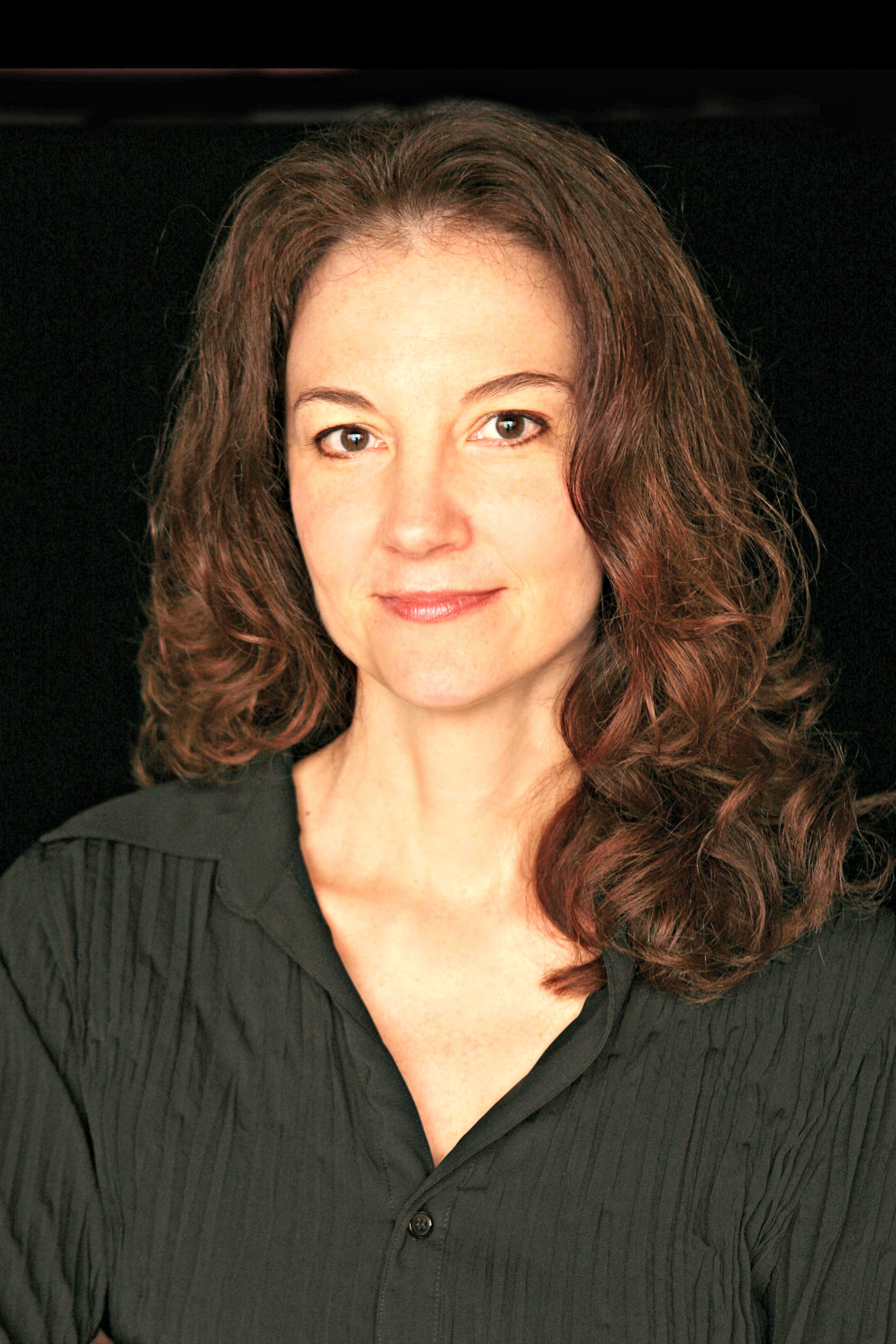
James_Murray_DisplacedToday, we welcome guest blogger James Murray to The Displaced Nation. Originally from East Sussex, UK, James “recently arrived in Boston, Massachusetts, with a half-written book, a smattering of web design skills and a utopian vision that will probably never change the world.” He’s here for his partner, Ash, who is American (although few people think of her that way). Though he doesn’t really label himself a traveler, his displacement is “likely to verge on the permanent.”

I’m finally here in America. After the best part of a year living in separate countries, my partner and I are finally married — which I suppose makes her my wife. The word doesn’t sit well — we have a pretty equal relationship, where the terms ‘husband’ and ‘wife’ seem to imply a structure; a certain assignment of roles. In a husband-and-wife relationship, you can make a guess as to who does the cooking and cleaning; but in a relationship of two partners there are no preconceptions (apart from the one that you might be gay).

But the labels of husband and wife are just one of a number of areas where the typical encapsulation of a relationship differs from the reality.

For around eight months I’d been sitting in limbo over the other side of the Atlantic, fidgeting around with various projects and living in various temporary places — it’s been okay, but I’ve just wanted to get settled for a bit. My partner, Ash, visited a few times, but those occasions weren’t what you would think.

The old airport reunion kiss

In particular, there’s a fault with the ‘airport reunion kiss’ — that little run-up, the unseen orchestra with its musical swell and the big hug and the big kiss between two people who have spent so much time apart. I want to blame Hollywood, but I simply couldn’t find an example of this happening in a movie, so I think it must just be hard-wired into the human mind — that this is simply how it happens, a tempestuous embrace with no doubts and no awkwardness.

It doesn’t work like that. Certainly we kissed at the airport, but after months apart, living our separate lives, we couldn’t quite get our heads around who this other person was. Logically, you know, you could recite details about this person — their likes and dislikes; their beliefs; their habits; but there are memories that are harder to keep.

For instance, how do you remember what it feels like to kiss your partner? How do you remember their smell or a particular look they might give you? There are things that, once they’re not physically there in front of you, just disappear, so when you finally see them again after a long separation, it’s a shock. Not a bad shock, but it’s not comfortable yet — you have to re-acclimatise.

Ash and I found that meeting again after our first three months apart, it actually took about a week for this to happen. Which means that when your partner comes to stay with you for ten days, you’re finally re-discovering your groove when you’re just about to say good-bye again.

Doubt — nothing wrong with that!

Lots of expats know what it’s like to have a long distance relationship — for many that’s the reason they’re expats; but I think we’re badly served by the standard story of long-distance romance and reunion. Who’s talking about the difficulties of keeping the faith throughout doubts and the regular tribulations of a normal life?

It’s hard to discuss doubt sometimes — it’s seen as a sign of weakness, a sign that you don’t love the person you’ve committed yourself to. It’s not — it’s perfectly normal (and it’s normal even if your partner is actually in the same country).

Everyone has doubts and it’s really the failure to acknowledge them that leads to problems. About the least supportive thing I ever said on the phone to Ash was that I had ‘absolute faith’ in our relationship. I wasn’t saying it meanly, but I had essentially raised the bar for our relationship impossibly high — nobody has absolute faith, especially when faced with the unknowns of long distance.

If you have doubts and the other person has absolute faith, who do you turn to? It makes it hard to discuss or even acknowledge those doubts — and you should discuss them if you want to resolve them. Absolute faith is the trump card that ends the conversation, and potentially the relationship, but it’s so often just assumed.

Creatures of the moment?

The funny thing is that now that I’m here and we’ve got used to each other again, it’s as hard to remember the separated life of the past year as it once was to picture living here with Ash.

I think that more than we’d care to admit it, we really are creatures of the moment — what matters is now. Committing to the future is vague and riddled with doubt; the past is foggy and easily forgotten. What carries us through is faith rather than emotion — a faith based on the knowledge that at some point in the past you felt strongly enough to say ‘let’s get married’. You have to trust that knowledge long after you’ve forgotten how exactly you felt at the time.

If what I’m describing sounds peculiar, that’s only because these aren’t the terms we’re usually given to describe our relationships — because the language of romance is a language of absolutes; because to question the titles of ‘husband’ and ‘wife’ seems tantamount to saying you aren’t ready to be one.

There isn’t just one experience of a relationship — no single narrative that applies to everybody; but that’s how it often feels.

So for all the people with doubts — the people who aren’t in a Hollywood romance, but are in love just the same; the people for whom the happiest day of their lives will probably not be the day they got married (or even the birth of their first child) — I think we can still count ourselves as romantics — especially after moving continents (twice in my case) to be with our loved ones.

* * *

Readers, what are your thoughts on long-distance relationships? Does distance lend enchantment to the view, or is it a case of “out of sight, out of mind”?

Check out James’s own blog at quaintjames.com

.

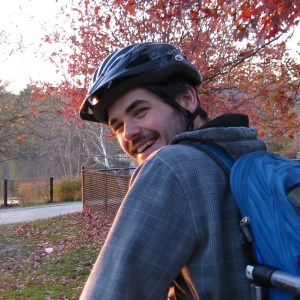
Image: James looking vaguely itinerant in his bike helmet.

STAY TUNED for Thursday’s post!

If you enjoyed this post, we invite you to register for The Displaced Dispatch, a round up of weekly posts from The Displaced Nation, with seasonal recipes, book giveaways and other extras. Register for The Displaced Dispatch by clicking here!

Related posts:

For a Third Culture Kid, birthday candles are easier to come by than the Christmas kind

Tiffany Xmas Collage_dropshadowBorn to German parents in the United States who later moved the family to the UAE, Tiffany Lake-Haeuser learned very quickly that unlike birthday candles, Christmas candles only happen if you’re living in the right place. She joins us today to tell her tales of Christmas Past, in New York and the UAE, and Present — in Germany. (Hmmm…what will Christmas Future will hold for Tiffany — the world having already been her oyster in so many ways?!)

— ML Awanohara

There have been two events I have always looked forward to since I was a little girl, my birthday and Christmas. Luckily for me, those are perfectly spaced so that in the summer I have my birthday and in the winter I have Christmas.

My fascination for the two events was different, though. My birthday was special to my family, my friends and me; the decorations were left up for a day and it ended almost as quickly as it started. I generated most of the excitement, with others joining in.

Through my travels I have come to learn that this is not the case with Christmas — which is a group affair. At least half the Christmas spirit depends on the people around you and the widespread anticipation of that one magical night or morning.

Although I am German, I was born in New York City, and that’s where I remember having my first Christmases.

New York’s love affair with Christmas

I think no city does Christmas decorations like NYC.

My family lived in Battery Park City, and I remember when I was just a little kid going to the Winter Garden Atrium in the World Financial Center, and seeing that huge light switch that turned on the lights on the an enormous Christmas tree.

Later, when I was a little bigger, I recall walking the city streets in my coat and mittens and hat and feeling in every bone of my body that Christmas was coming.

Of course my German family celebrated a little different than the Americans. In Germany we celebrate on Christmas Eve; families get all dressed up and have a nice dinner before opening all their presents.

But when I was younger I didn’t notice this difference. It was only much later, back in Germany, when our American friends came to spend Christmas with us, that I noticed this (and other) differences.

Discovering Weihnachts

Now that I’m back living in Frankfurt, I keep thinking how much more old fashioned and traditional Christmas seems in Germany compared to in America. We take pride, for instance, in our hand-crafted ornaments and their old-style workmanship — the kind you can buy at our Weihnachtsmarkt. Not for us the fantasy luxury windows of Bergdorf’s.

Christmas in Germany is tied very closely to religion. We don’t say “Happy Holidays” here. And we emphasize nativity scenes in our decorations. My family has its own little crèche — and on Christmas Day my older sister and I get to add Baby Jesus.

But probably the most striking difference of all is that we don’t really have Santa Claus. Saint Nicholas (“Nikolaus”) visits German children on December 6: we put our boots in front of our door, and they get filled overnight. This tradition commemorates when Nikolaus gave a cold, homeless man his coat.

It’s true we do have Weihnachtsmann (Santa Claus), but the concept came from outside and is part of popular German culture. Das Christkind (Christ Child, or Baby Jesus) visits on Christmas Eve with presents.

…but after an Emirati interlude

Before repatriating to Germany for the second time, my family lived in Abu Dhabi. I was 13 then and for me, Christmas temporarily lost part of its appeal. There was no cold, no snow and barely any Christmas trees.

Believe me when I say, you don’t understand the importance of a Christmas tree until you don’t have it anymore. Instead, we had a little metal frame that was supposed to represent a Christmas tree.

The cold I used to have a love-hate relationship with in New York (Germany, too) was now non-existent; and though I didn’t exactly miss it, it did take away a big part of the anticipation of the holiday — of the winter solstice.

With very few people around you getting excited for Christmas, it was much harder to even remember that Christmas was nearing. It snuck up on you and then disappeared, much like birthdays — but without any of the accompanying fanfare.

* * *

Living in Germany had renewed my awareness of Christmas traditions and the sense of community they bring. Nowadays I actually enjoy the build-up to Christmas as much as Christmas Eve or the day itself — the markets and the decorations. For me, this is what makes this age-old holiday so much more than a time to give presents.

* * *

Readers, especially those who are Third Culture Kids, or TCKs, can you relate to Tiffany Lake-Haeuser’s competing visions of Christmas? She would love to hear your comments. You can also follow Tiffany on her blog, Girl on the Run.

STAY TUNED for tomorrow’s displaced Q, on stogy holiday foods.

If you enjoyed this post, we invite you to register for The Displaced Dispatch, a round up of weekly posts from The Displaced Nation, with seasonal recipes, book giveaways and other extras. Register for The Displaced Dispatch by clicking here!

Related posts:

Images (clockwise from top left): Candles in Tiffany Lake-Haeuser’s German home, Christmas 2011; birthday candles (Morguefiles); the crèche in Tiffany’s home, Christmas 2011; Bergdorf Goodman Christmas windows, courtesy Flickr Creative Commons; the rare Christmas tree in Abu Dhabi, courtesy Flickr Creative Commons; the Christmas tree at Rockefeller Center (Morguefiles); and Tiffany in front of the tree in her German home, Christmas 2011.

Expats and travelers, the adage is true: There’s no place like home for the holidays

“I’ll be home for Christmas if only in my dreams” — Bing Crosby’s closing line has special meaning for best-selling Australian author Lana Penrose. As reported below, she will never forget spending the holidays in Europe during her decade-long stint as an expat, beginning in Greece — highlights from which are chronicled in two memoirs: To Hellas and Back and Kickstart My HeartNOTE: As a special gift to Displaced Nation readers, Lana is giving away a print copy of To Hellas and Back! See details below.

— ML Awanohara

It’s that time again: Christmas, where the cynical amongst us are found warbling, “‘Tis the season to be melancholy.” For the displaced expat, this period really can be an odd time. If you’re remaining in your adopted country, you may catch yourself yearning for your friends, family and homeland. Somehow drunken Uncle Ernie who likes to lick your neck vanishes from memory.

Yes, there’s no place like home, particularly on Christmas Day. I know this because (a) I lived as an expat in Athens for 5 years; (b) I also lived as an expat in London for 5 years; and (c) I’ve written books about it, one a bestseller titled To Hellas and Back (see what I did there?).

So I get it. I truly do.

And I’m no stranger to grappling with the unfamiliar during the festive season. Actually, make that most celebratory occasions.

Hell yeah!

I believe it all started when I was encouraged to join “The Circle.” No, it wasn’t a cult (arguably), although there was a noticeable absence of Kool-Aid and Nike trainers.

I was attending a Greek boyfriend’s cousin’s engagement party in my native country of Australia. It was to be my first head-on collision with Hellenic culture. I distinctly recall being led by the hand towards my beau’s extended family. And as Greek folk music wailed from tinny speakers, I watched relatives dance around and around connected by tightly clutched handkerchiefs.

The leg-scissoring madness was mesmerizing — and there was nothing else for it but to clap along as though attending a barn dance, get hitched and relinquish my country for at least half a decade.

As the years passed, I swallowed more foreign tradition than I did dolmades. I was now living in Greece. And as I’d done so many times before, come Easter I was straddling yet more unfamiliar customs. There I was ingesting mageiritsa soup, traditionally made from lambs’ tongue, lungs, liver and intestines.

It seemed all about innards as my own sighed dejectedly.

A misplaced gift

I also remember a Christmas where I was presented with a gift from a bone fide Athenian native. I excitedly opened a grey velvet box — and there, inside, was a flashy faux gold necklace of the type preferred by gangland hos.

It kind of made sense considering he’d once also given me a birthday present in the form of a pair of black and gold shoes and a fluffy white vest.

At the end of the day, the gesture was beautiful and I couldn’t wait to try everything on as an ensemble … and submit a job application to the Black Eyed Peas.

Food — a substitute for love?

But that stuff’s plain amusing. The toughest part about spending auspicious occasions away from home is missing the people you love most, which thankfully at Christmas usually means the perfect excuse for unprecedented weight gain (if you’re in a country that celebrates such things).

In contrast to Easter, for me Greek Christmases meant hoovering up* delicious fare — including egg and lemon chicken, rice soup, roast pork, turkey stuffed with ground beef, spinach and cheese pies, stuffed cabbage leaves and salads of every description, followed by sesame baklava and cinnamon melomakarona.

My standout memory of a Christmas abroad, however, is the time that an older Greek couple lamented how sorry they were that I wasn’t able to spend the festive season with my family. They “got” it. Because they’d lived as expats, too.

That couple promised to do all in their power to make my day happy, and they succeeded simply by being mindful, considerate and absolutely lovely.

The sentiment was so touching that it will stay with me forever.

So, yeah, the pros and cons of celebrating Christmas abroad. The anomalies are hardly going to kill you, but sometimes you just want to click your shiny red shoes and declare, “There’s no place like home.”
*Canadian slang for “eat very fast and too much.” (Lana, where and when did you pick that up?!)

* * *

And now to that giveaway! Readers, Lana Penrose has offered to send a copy of her best-selling memoir, To Hellas and Back, to the person who leaves the best comment in answer to the question:  Where are you spending the holidays this year, and will you feel at home or displaced? To tempt you even more, consider the fact that To Hellas and Back, which was first published by Penguin, has been described as an “Eat, Pray, Love face-ploughing into a steaming pile of moussaka.” Its dedication coincidentally reads: “For the displaced.” So if you’re tired of reading about the joys of successfully renovating Tuscan homes and the like, this book might be for you!

Sydney-based (and no longer displaced!) author Lana Penrose has had various incarnations, including music journalist, record company promotions gal, music television producer and personal assistant to an iconic pop sensation whose name shall never be revealed unless she’s subjected to Chinese water torture. She also once worked with the now-infamous Simon Cowell, which she today finds really odd. You can read more about her and her works on her author blog and/or follow her on Twitter: @LanaPenrose

STAY TUNED for tomorrow’s post, when we’ll be checking in on some of our Random Nomads from earlier in the year and find out what they’re up to for the holidays and beyond.

If you enjoyed this post, we invite you to register for The Displaced Dispatch, a round up of weekly posts from The Displaced Nation, with seasonal recipes, book giveaways and other extras. Register for The Displaced Dispatch by clicking here!

Related posts:


An expat author on why he can’t get enough of Beirut — and your chance to win his thriller named for that city!

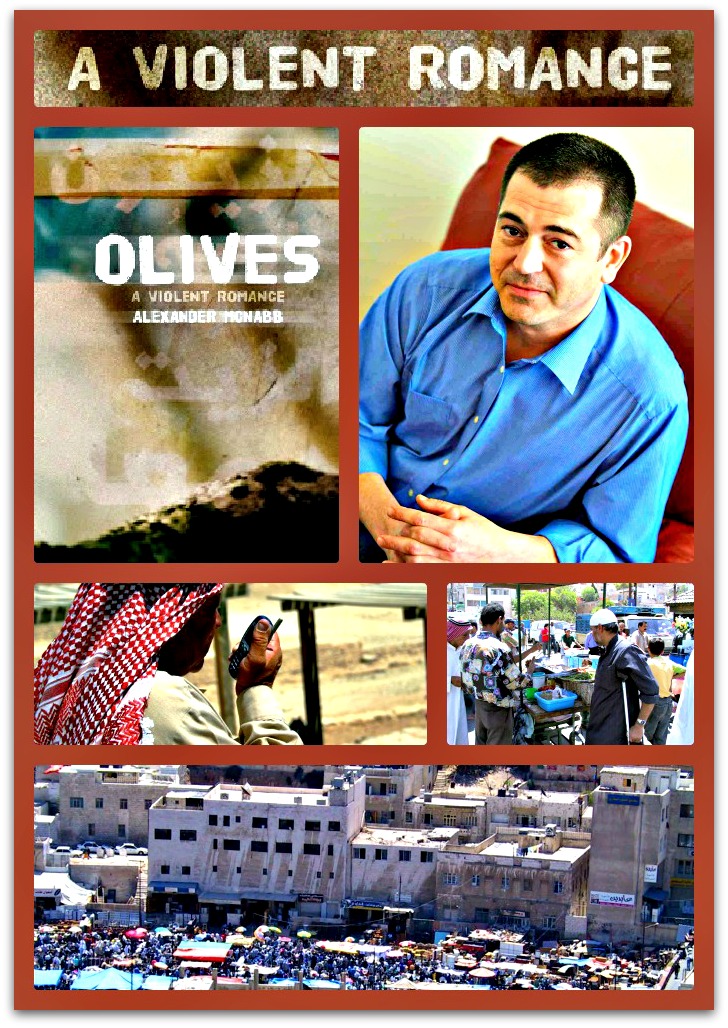
Beirut Collage 3We here at the Displaced Nation simply can’t get enough of the displaced thriller-writer Alexander McNabb. Last month he gave away his first book in his Levant series, Olives — A Violent Romance, to several lucky Displaced Nation readers. (Yes, they were thrilled!) And today we announce a couple of more McNabb giveaways, including of his second book, Beirut (see below). But before we explode with excitement, let’s hear what Alexander has to say about that notoriously dangerous city…

— ML Awanohara

To start off, I’d like to present a passage from my new book, Beirut, that I hope captures the flavor of this historic and extremely dynamic Middle Eastern city. The scene centers on the displaced Gerald Lynch, the British Secret Intelligence Service officer we encountered in Olives:

It was late in the afternoon as Gerald Lynch hopped along the uneven paving that lined Gouraud Street, the heart of Beirut’s bustling Gemayze area. He wore jeans and a leather jacket against the chill spring air, his hands in his pockets as he squeezed between the parked cars.
Gouraud’s bars, as ever, welcomed those who wanted to party and forget the woes of a world where violence and conflict were a distant memory but a constant worry. Orphaned by Belfast’s troubles, Lynch appreciated Beirut’s fragile peace and sectarian divides, the hot embers under the white ash on the surface of a fire that looked, to the casual observer, as if it had gone out. Lynch scowled as he passed a poster carrying Michel Freij’s smiling face, encircled in strong black script: “One Leader. One Lebanon.”

There can be few places on earth so sexy, dark, cosmopolitan and brittle as Beirut. At night the city celebrates with a vigour that borders on the manic. Louche young things puff cigarette smoke up into the air, DJs make music, poets dream and artists stencil the walls with the painful irony of youth. Drinkers drink, dancers dance. They celebrate life there as only people who realize how slender the tightrope they walk is — as only a people who collaborated in a 15-year-long enterprise designed to wipe themselves, and their country, off the face of the earth can.

But first, the country

It’s important to understand that Lebanon is a country of divides: north and south; mountain and coast; Shia, Sunni, Christian and Druze.

The country was born out of Greater Syria and the collapse of the Ottoman Empire following World War II. The French as the reigning colonial power created it by cobbling together communities who had been in conflict since the Crusades and legislating their way through ancient attitudes and rivalries.

Lebanon’s answer? To enshrine the sectarianism in its constitution, with each religious sect being given its own proscribed role.

Beirut, the Monte Carlo of the East

From its early days as Roman Berytus, Beirut — Lebanon’s capital and largest city — has been a city with greatness in her heart. Surrounded by lush Mediterranean countryside, the verdant Chouf mountains and the glorious fecundity of the Bekaa Valley, served by the sea and a history of maritime trade going back to the Phoenicians, Beirut developed in the course of the 20th century into a major financial center and trade entrepôt.

It was “the Monte Carlo of the East,” the jewel of the Mediterranean. Rich Arab playboys tossed cash around them like leaves; mean-eyed British spies clung to the hotel bars, trading waspish observations and gathering undiplomatic innuendoes. And the women! The olive-skinned beauties of the Levant, like Beirut itself, were so welcoming, so corrupting!

The impact of the Lebanese Civil War (1975-1990)

Lebanon tore itself apart in a war as senseless as any other, admirably abetted by the Palestine Liberation Organization, Syria and Russia, America and Israel. It’s always the outsiders who throw kindling on the hot passions of Lebanon’s divisions. And then the Lebanese pay a heavy price for their lack of moderation and willingness to invite those outsiders in.

After the war, Beirut dragged itself wearily to its feet, slowly but surely rebuilding its commercial heart — the efforts to rebuild dogged by constant conflict, corruption and terrible old men who weave together influence and fear to maintain their profitable status quo.

When the war finally ended, in 1990, the travel magazines were starting to gush about Beirut again — its stunning restaurants, funky bars and glorious sights.

But the potential for violence remains. As you may recall, a deadly car bomb attack occurred in October of this year. It tore a busy square in Ashrafiyeh apart, killing the head of Lebanese intelligence.

A bomb as big as the monstrous blast that had taken the life of Rafiq Hariri in 2005, the man who had led the effort to rebuild Beirut — an explosion big enough to make the Syrians finally quit Lebanon.

Both of these car-bomb assassinations left three-meter craters.

The book Beirut

Although Beirut — An Explosive Thriller is set across a swathe of Europe and not just Beirut, the book is about Beirut at its core. It’s about sectarianism and power, corruption and sex. It’s about wealth and poverty, love and betrayal.

While writing it, I spent hours walking around the city, along the curving corniche and up into the busy streets that cling to the foothills rising from the coast up to the snow-capped mountains.

Walking with friends, walking alone — day and night, spring and summer. From the maze of funky little bars of Hamra to the boutiques of Verdun, from the spicy Armenian groceries of Bourj Hammoud to the cafés overlooking the famous rocks at Raouché, I have long reveled in the city’s beautiful wealth and its grim poverty.

How can you not write books set in the Levant? I’m only amazed I’m in such scant company. As a playground for spies and powerful men, beautiful women and deadly conflicts you can’t beat it. And yet, as a writer of novels, I have it pretty much to myself.

* * *

Now it’s time for the freebies! Displaced Nation readers, you can get your very own copy of my latest book. Here are 2 ways to do so:

1) For TDN readers with an iPad or ePub compatible reader (Nook, Sony, Kobo, Android etc): Get your copy of Beirut — An Explosive Thriller free of charge (and save $4.99) on Smashwords. But first, you’ll need to sign up for the DISPLACED DISPATCH to get the code (it will come in the issue delivered this Saturday, December 8). NOTE: The code is valid ONLY FROM THIS SATURDAY, DECEMBER 8th TO MONDAY DECEMBER 10 — and then, pfft, it’ll disappear. Dear readers, you are MORE than welcome to share that code with family, friends, strangers, dogs in the street — even lawyers.

2) For TDN readers with Kindles: Leave a comment on this post with your e-mail, and I will send a Kindle file and instructions how to install it. Best I can do, I’m afraid — Amazon doesn’t let me do freebies! Do remember to use “name dot name at domain dot com” so the spambots don’t find you! Or you can hit me up directly at @AlexanderMcNabb on Twitter.

If you miss out on these opportunities and/or would like to read something else I’ve written, my first novel, Space (a spoof of international spy thrillers), is available for free download on Amazon from today onwards for three days.

TO ALL READERS: If anyone wants to add their voice (whichever way it leans) about my books on Amazon or Goodreads, that’s welcome feedback. The more people know they exist, the merrier! 🙂

Finally, congrats to Apple Gidley, who left an engaging comment on my last post and will be getting a print copy of Olives by post!

STAY TUNED for tomorrow’s post, consisting of some 2012 highlights from the Anthony Windram series, Expat Moments.

If you enjoyed this post, we invite you to register for The Displaced Dispatch, a round up of weekly posts from The Displaced Nation, with seasonal recipes, book giveaways and other extras. Register for The Displaced Dispatch by clicking here!

Related posts:

Images (of the book, of Beirut): All from Alexander McNabb.

An expat looks for love in her adopted country — only to be told she’s “exotic,” the Other (2/2)

We welcome back Zeynep Kilic to the Displaced Nation for Part 2 of her story about searching for love in the United States. Turkish born and bred, she’d endured two failed marriages to Turkish men before determining to hunt for an American mate. By then she’d taken out American citizenship and had an American Ph.D. In Part 1 of this post, she described her first bout of Internet dating in Arizona. She’d become increasingly frustrated by being told she looked “exotic” as compared to American women. Let’s see how she fares in Alaska, the aptly-named Last Frontier…

— ML AWANOHARA

I move away to Alaska in 2008, slightly tired of the recurring comments from American men about my exoticism as well as my record of failure on Arizona’s online dating scene. I know nobody means any harm by labeling me exotic. I know it is a compliment. I have been told that many times.

Still, it doesn’t sit well in my heart.

But the fact is, I am still shaking my metaphorical ass in this literal mating dance, which must mean one of two things at this point:

  1. I must have some hope left that gentlemen don’t prefer blondes; or
  2. I am desperate to make it work with an American before going back to choosy Turkish mothers and their sons.

Lots of space — and lots of men?

Before my move, everybody jokes that there are so many men per woman in Alaska that I should find a man soon enough. Like a good academic, I research the validity of this legend — only to find that it’s true only if you can stand to live in the Bush — the remote, rural parts of the state. In such places, sexual abuse and rape are also rampant, particularly against Alaska Native women.

I will not be going anywhere near.

In fact, I am moving to the largest city in Alaska — which is literally the smallest town I would have ever lived in as an adult. And in this city, the male-to-female ratio is about the same as elsewhere in America.

I am not holding my breath.

As I search through profiles I realize that my chances in fact might be lower in this part of the world. I see just two kinds of men:

  1. The über-athlete who can’t go to bed in peace unless he skis a super hard-core mountain every weekend, backpacks all summer, and camps in -30 degree weather because — gasp! — it is “fun”; or
  2. The I-kill-a-bear-for-my-woman-with-my-bare-hands kind of guy, who lives for his gas-guzzling vehicle, be it a dirt bike, snow machine, or huge truck that hauls thousands of pounds of manly stuff in the back.

I decide I have no chance in this town. These are not my people.

It’s all relative!

To my surprise, my profile attracts greater interest in the frozen north. Who knew I had to drive across the continent to become a relative hottie!

I am almost forty and still overweight. I’ll take it.

Though I am still surprised no one thinks I am an American.

Let’s be honest, the name is not helping — but seriously? How could I have been blind for so long? Why did I fancy myself as Americanized?

My friend Eun tells me I need to acquire racial consciousness: I am not a white woman; I am a woman of color. I consider it. It will take three years but I will eventually acknowledge the debt I owe to the American men I met in a romantic context — who, unbeknownst to me, upon seeing my picture online, established my exotic quotient right away.

Who would have guessed I would learn a lesson about my racialized self because of these men who objectified me — not because of my education on the topic? This moment of reckoning does not make me feel good about my academic self, by the way, though my non-academic self is sheepishly feeling, well, sexified.

Happily ever after…

But let’s get on with my story. Am I with an American now? Yep. Is he close to his mother? Nope! Am I feeling bad about myself for wishing for a hands-off mother-in-law? You betcha!

He (his name is Wayne) is blond and has blue eyes. I take Wayne to Turkey, and all my friends and family tell me what lovely blue eyes he has. “Oh, no,” I cut them off, “stop focusing on his blue American eyes! That does not make him a better guy compared to my earlier Turkish mates who had beautiful non-blue eyes.”

They all laugh. They think I am so uptight (must be the sociologist in me).

“Relax,” they say. “He is a cute American, and we like his tattoo.”

Did I mention that Wayne has a manly tattoo sprawling across his very muscular — non-Turkish — arms?

Wayne is truly enjoying the objectifying comments from the ladies — my mom of all people, who whispers about how strong he looks and covers her smile with her hand like a schoolgirl.

He states with a grin that Turkish men look kind of puny. “Yeah, they haven’t been eating hormone-injected beef on a daily basis,” I say sarcastically.

Enough of this Orientalism

What is wrong with him? What is wrong with everyone? Has no one read Edward Said?!!!

One day when Wayne and I are lying in bed, he tells me how exotic my skin is, how much he loves my olive complexion.

I stop him with a sigh:

Do I look green or black to you, because that is all the olives I know?

I see him with a deer-in-the-headlight look on his face, wondering if he has messed up. He is probably thinking: “She is a PhD and holds all kinds of theories in her head. Not wonder she gets bent out of shape unexpectedly. But, wait, her skin is definitely darker than mine, it’s exotic — what do I do, what do I do?” So he apologizes.

I tell him that, incidentally, I am considered to have very fair skin in Turkey. He says he is sorry; he just meant I am hot, that’s all.

He is a nice guy. He means well and he absolutely thinks I am exotic and sees nothing wrong with this.

I tell him that wheat makes more sense than olive. He agrees.

From now on, every time he eats his cherished Turkish olives, he smiles and says he can never look at a zeytin (olive) the same way anymore.

Neither can I.

* * *

Readers, now that you know how Zeynep’s story ends, do you have any comments or further observations about the perils, and potential joys, of seeking love abroad? Please leave them in the comments. We’d love to hear them…

Zeynep Kilic lives in Anchorage with her blue-eyed American husband, complains about the dark or cold on a regular basis, and fails miserably at skiing. She is an assistant professor of sociology at the University of Alaska Anchorage, where she is navigating the treacherous waters of tenure. You can find her on Google+ and on Twitter: @zeynepk

STAY TUNED for another episode in the life of our fictional expat heroine, Libby. (What, not keeping up with Libby? Read the first three episodes of her expat adventures.)

If you enjoyed this post, we invite you to register for The Displaced Dispatch, a round up of weekly posts from The Displaced Nation, with seasonal recipes, book giveaways and other extras. Register for The Displaced Dispatch by clicking here!

Related posts:

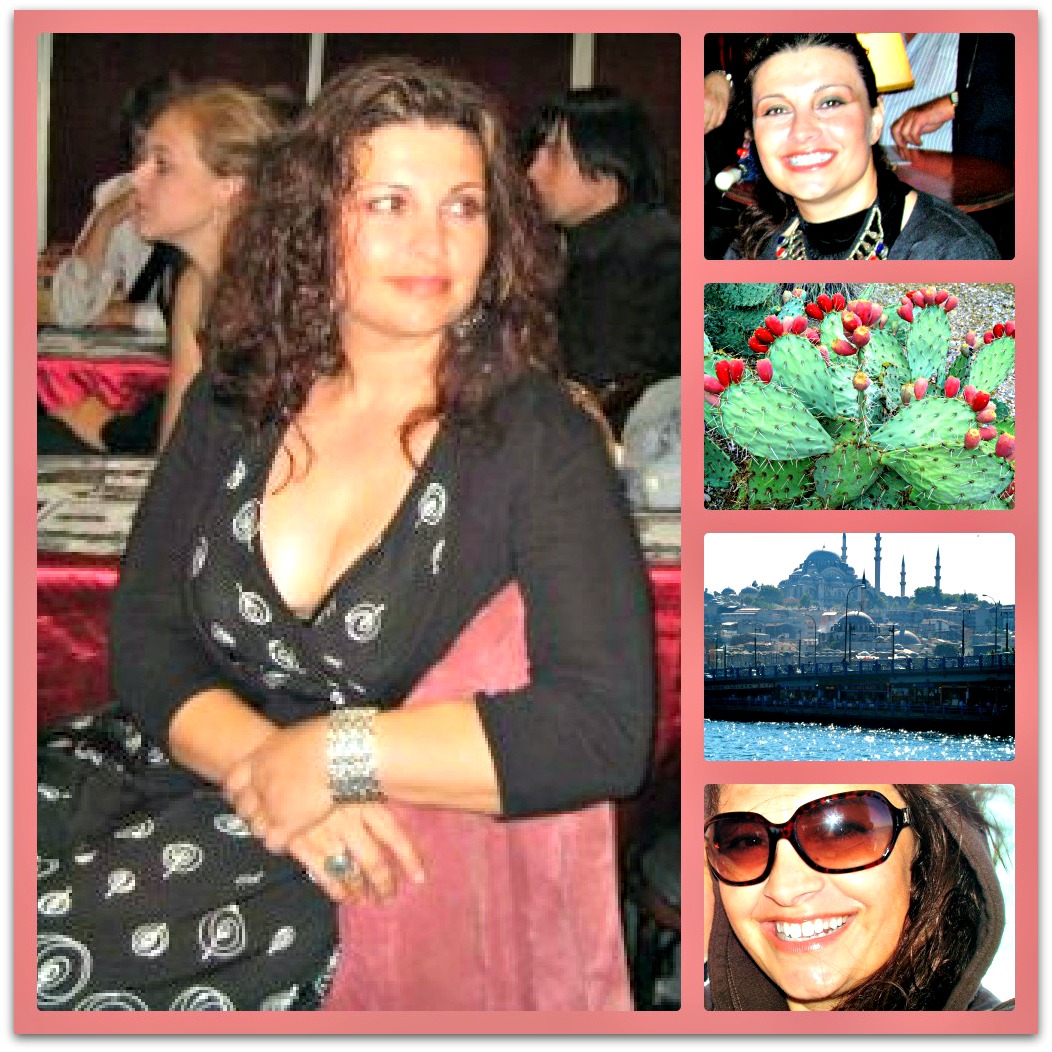
Images: The photo of Zeynep Kilic and her husband, Wayne, is her own; photos of olives, wheat, Arizona cactus and Alaska are from Morguefiles.

Thanksgiving: Shine, shine, shine, dear writers, however displaced

Today’s guest blogger, Kristin Bair O’Keeffe, is a cultural spelunker. With a husband from Ireland, a daughter from Vietnam, nearly five years as an expat in Shanghai, China, and an insatiable appetite for place, how could she not be? She’s also an author with an MFA degree in fiction writing, 18 years of experience as a writing instructor, a writerhead passionista, and the curator of #38Write, a monthly series of online writing workshops for place-passionate culture junkies around the world. Let’s listen up and hear why Kristin thinks Thanksgiving is a time for us displaced writers to shine!

— ML Awanohara

On Thursday, November 22, friends and families all over the United States (as well as oodles of displaced/replaced U.S.-ians around the world) will gather together to celebrate Thanksgiving. While this holiday can be traced back to the English Reformation and Henry VIII, it is now a secular holiday during which participants are expected to do just three simple things:

  1. eat turkey and pumpkin pie until we groan and bloat up like petrified puffer fish.
  2. endure our Great Aunt Pru, who smells like mothballs and passes out linty lozenges that look like they’ve been in the bottom of her purse since the Reformation.
  3. give thanks.

Writers of all ilk love this holiday. After all, it’s a day for us to shine! A day for us to show off by expressing our thanks far more eloquently than the neighbor who is slouched in front of his television in a tryptophan-induced haze.

We do, of course, have a lot to live up to:

“Thanksgiving Day, a function which originated in New England two or three centuries ago when those people recognized that they really had something to be thankful for—annually, not oftener—if they had succeeded in exterminating their neighbors, the Indians, during the previous twelve months instead of getting exterminated by their neighbors, the Indians.” ~ Mark Twain

“There is one day that is ours…Thanksgiving Day is the one day that is purely American.” ~ O. Henry [except, Mr. Henry forgot to add, those damn Canadians a bit to our north, who horn in on our gratefulness territory and dare to give thanks of their own, albeit on a different day]

“I come from a family where gravy is considered a beverage.” ~ Erma Bombeck

But no matter how splendid the thanks of those who came before us, this is a day on which writers can strut their best stuff!

So whether or not you’re American (U.S. American, that is), grab this opportunity to make a list of things for which you are thankful. Hurl yourself into the craft of thanks! Then, when your Thanksgiving host pauses just before cutting the first slice of turkey and says, “Would anyone like to share a thing or two for which you’re grateful?” you can whip out that slip of paper, clear your throat, and in your best writerly voice, make ’em weep in their cranberry sauce.

Here are a handful of mine:

1) Despite my great love for China, I am wildly thankful I will not be sitting face to face with the still-raw, almost-gobbling, dripping-blood, trying-to-limp-away turkey I once faced in Shanghai (ordered weeks in advance, mind you, from a fancy, well-respected, Western-y hotel and for which we paid a pretty-pretty RMB). All hail the year of mashed potatoes as the main dish! (We should have stuck with jiaozi.)

2) I am so, so, so grateful I am not living during the English Reformation and that I am not required to wear contraptions like this on my head:

Anne Boleyn

3) I am grateful that Maya Angelou called to read me a new poem. (Sorry, sorry, sorry! This is actually one of Oprah’s moments of thankfulness, not mine. But it sounds good, doesn’t it?)

4) I am thankful for my amazing family and friends from Ireland, Vietnam, Germany, India, China, the U.S., the U.K., and so many more places—all those who guide me, teach me, love me, and put up with me in my best and worst moments as a human being.

5) I am thankful and excited and inspired that writers around the world are flocking to my #38Write workshops and that my vision for contributing—and helping other writers contribute—to the global conversation of story is being realized. Whoop! Whoop!

6) I am grateful that there are writers all around the globe (like you!) who are driven to explore, write stories about the cultures and places in which they live, and connect.

Your turn! What are you thankful for?

CONNECT: If you’d like to learn more or if you’d like to register for one of Kristin Bair O’Keeffe’s #38Write workshops, grab a cup of coffee and pop over to her Web site and blog WRITERHEAD. Registration for December’s #38Write workshop is now open. You can Tweet Kristin at @kbairokeeffe, friend her on Facebook, and/or check out the #38Write group boards on Pinterest.

STAY TUNED for tomorrow’s post, Part 2 of Zeynep Kilic’s search for love in her adopted country.

If you enjoyed this post, we invite you to register for The Displaced Dispatch, a round up of weekly posts from The Displaced Nation, with seasonal recipes, book giveaways and other extras. Register for The Displaced Dispatch by clicking here!

Related posts:

Images: Kristin Bair O’Keeffe portrait; Anne Boleyn, courtesy Wikimedia Commons.

An expat looks for love in her adopted country — only to be told she’s “exotic,” the Other (1/2)

Today’s guest blogger, Zeynep Kilic, did not come to the United States in 1993 looking for love. Turkish born and bred, she was here for an overseas adventure (she worked as an au pair for a year in New Jersey) and to pursue graduate studies (she went on to earn a PhD in sociology at Arizona State). But then, two failed marriages to Turkish men later (they were also expats), she changed her tune about American men — and was looking for love…in the desert.

— ML AWANOHARA

I am not as much a foreigner as I was before. Not any more, right? After all, I have been living in the United States for almost fifteen years. I get the references to popular culture, politics or religion; I went to graduate school here, I taught here, worked here, established close friendships here, annnnnnd I can cook the traditional dishes served during holidays.

Plus I am an American citizen. What else is there?

Except — and here is where culture shock sets in, 15 years too late — I have no clue how Americans perceive me.

Chapter 1 of my single life: Arizona 2007

It is 2007 — time I date an American already. This may be due in large part to my two failed marriages with Turkish men, along with my hope that I may be more acceptable to an American mother-in-law.

Not to mention my even more fervent hope that American men aren’t as attached to their mothers as Turkish men are.

After the first divorce, I have become an undesirable partner for any Turkish mother’s precious son. After the second, I’m considered an untouchable. I may as well be wearing the red letter D on my forehead, forewarning all Turkish families about the dangers of an educated woman who thinks that no man can come up to her standard.

(Actually, did I really think those things about my own people — I, a sociologist, who teaches students about the pitfalls of stereotyping and blanket generalizations? For shame!)

Maybe I shouldn’t worry about the man’s family right away, I tell myself, particularly his mother. Let the cultural weirdness enter the picture a bit later. At least that’s my plan.

I will ask my American friends to set me up with their American friends. Luckily, I am already a citizen and no one can blame me for being after a green card. This should work. Except, none of my friends have any single friends to introduce me to. Must I really endure the Internet? I am overweight; no one is going to email me back.

I come up with a strategy: put all my fat-angle pictures up to give potential suitors a slightly worse, but still realistic, version of who I am. Then, if they still want to meet me, they will be pleasantly surprised.

This goes against everybody else’s strategy on the Internet but I think it should work. Maybe I’ve found the loophole?

After much dragging of feet I tell myself what they say in the Black Sea:

Once you get up to join the horon (folk dance), you must shake your ass!

So here I come, timidly jiggling my metaphorical ass on the Internet dating sites with a profile that says — too much really. I guess my tendency to speak too much in the classroom translates very well into writing too much on the profile. I am a consistently verbose woman.

To my surprise, over a period of time, I meet a few men.

Candidate #1

The first guy I meet is a handsome Latino with a very well-groomed beard. He says he likes the curves. Okay, we are good. Then he says he likes the wavy hair. “Very exotic,” he says with a wink.

I change the subject to his kids and job. I am a very serious academic after all. Enough with the objectification…

I don’t see him again but keep thinking about his comment on my exotic hair. Am I supposed to feel good about this?

The next day, I meet my friend Jill for a run. I recount the story and tell her I am slightly bothered by the “exotic hair” comment. She assures me that it was meant to be a compliment, to suggest that I looked different than a “generic” American — which is not a bad thing.

I glance at her fine blond hair blowing in the morning desert breeze and wonder if her hair is the generic American hair. Let’s not make a mountain out of a molehill, I tell myself.

Candidate #2

The second guy doesn’t work out either, though we have a pleasant lunch. He is wearing ripped, skin-tight jeans and sporting a bleached ponytail. I am wearing the opposite — literally and metaphorically. As he says goodbye, he leans in for a kiss on the cheek, sighs and says:

It would have been hot to add Turkish to my list.

I recount this to Jill on another run, telling her that I never thought that the major thing these men would notice about me would be my non-Americanness, which I seem to exude in spades.

I’ve been feeling quite at home in Arizona, especially after a 13-year-long residence, exactly as long as my life in Ankara, where I went to college. Sure, my name always invites questions about its origin, and people sometimes remark how “pretty” it is and all that. But I don’t have the thickest accent and I certainly do not talk about my differences all the time, especially not with a stranger.

It dawns on me that nobody sees an American when they look at me. This is a surprise because nobody made any comments about it before. I guess exoticizing someone is not cool in a non-dating context. The subtext of racism makes it too politically incorrect to bring up.

Jill stops my ranting to say, a little apprehensively, that she always liked that I was Turkish. I am different than her other friends. I cook different things, and she loves my slight accent. She also loves saying my name, and receiving wonderfully “authentic” gifts from my visits back home, such as evil eye beads I gave to her babies. It is not a bad thing, she says — it is a good thing.

Okay, I must enjoy this and use it to my advantage, I say to myself — make the wave in my hair even wavier. Onwards, to the next encounter!

Candidate #3

Guy #3 does not work out either. He makes a lot of references to his parents though he has not actually seen them in the last year and a half. He also does not speak to his brother. He shrugs and says, “You know how it is.” I don’t actually, so I just smile tentatively.

When silence falls on the conversation, he reiterates that I am so exotic — something refreshing in his desert dating experience. “Scottsdale types,” he adds.

I think he means he’s been seeing mostly blonde, tanned woman with straight hair and French manicures.

Finally, I ask: “What do you mean by that, what makes me exotic exactly?”

A little taken aback, he says I have interesting, chunky jewelry. I haven’t heard that one before. Do American women not wear chunky jewelry? I glance at Jill next time I see her and notice her diamond pendant the size of a pea and her very small hoop earrings.

Candidate #4

The fourth one is a clean-cut guy from Chicago. He is very particular about his finances and is investing in a large house even though he lives alone (but we all know he will have a family populating the rooms some day soon!).

He assures me that he dated a lot of “ethnic” women — like when he was in Korea, he had Korean girlfriends. He then proceeds to tell me how he will never forget that time in a baseball field’s dugout with two friends…

I am not sure if he is expecting a pat on the back. I don’t.

* * *

Readers, tune in next week to Part 2 of Zeynep’s story — covering her decision to leave the deserts of Arizona for the frozen grounds of Alaska — to find out how the story ends. Meanwhile, do you have any stories about the process of self-discovery when seeking love abroad? Please leave them in the comments. We’d love to hear them…

Zeynep Kilic is an assistant professor of sociology at the University of Alaska Anchorage, where she is navigating the treacherous waters of tenure. You can find her on Google+ and on Twitter: @zeynepk

STAY TUNED for another episode in the life of our fictional expat heroine, Libby. (What, not keeping up with Libby? Read the first three episodes of her expat adventures.)

If you enjoyed this post, we invite you to register for The Displaced Dispatch, a round up of weekly posts from The Displaced Nation, with seasonal recipes, book giveaways and other extras. Register for The Displaced Dispatch by clicking here!

Related posts:

Images: All are from Zeynep Kilic’s own collection except for those of the Arizona cactus and the view of Istanbul, which are from Morguefiles.

An expat author on what it’s like to write “controversial” books — and your chance to win one!

The London-born Alexander McNabb has spent nearly half of his life in the United Arab Emerites. Last month we interviewed him about his series of books on Middle Eastern themes, the first of which, Olives — A Violent Romance, has been sparking some controversy. (“Bring it on!” he told us.) Alexander is back at the Displaced Nation to share some good news: He is giving away several copies of Olives to our readers!! (See details below.) He is also here to discuss: does the book deserve its notoriety?

The Jordanian Web site Albawaba did a lovely interview with me in which they played up the “controversial novelist” angle quite nicely — I am, apparently, “scandalous.” Now, as any fule kno, if you want to sell books a whiff of scandal is quite handy.

That said, I have always shied away from that sales strategy — at least in part born of my dislike of the way the British author Geraldine Bedell’s publisher attempted to hijack the first Emirates Airline Festival of Literature (which I usually attend) to promote her mediocre book, The Gulf Between Us. Penguin claimed the festival organizers had tried to ban the book for its inclusion of a homosexual sheikh. (For more details, go to my post on this story.)

And yet bucketloads of controversy have dogged me since Olives — A Violent Romance was published a year ago. It’s much easier to be a “controversial author” in the Middle East than it is in the West these days.

Where is speech truly free?

We tend to forget how the film Monty Python’s Life of Brian (1979) was picketed by Christian groups, and how in 1988 Scorsese’s Last Temptation of Christ an adaption of a 1953 novel, was picketed and banned in some countries.

Let alone Lady Chatterley’s Lover (an unexpurgated edition could not be published in the UK until 1960), Frankie Goes to Hollywood (their controversial single, “Relax”) or many other shameful bans on music and literature in my own country in my own lifetime.

We think of ourselves as secular, tolerant and free-minded — yet our recent history has been filled with our failing to come to terms with free speech and literature that brings up topics we find uncomfortable.

Imagine how it is, then, in the Middle East, a region not only more sensitive to discussion of religious, cultural and social issues but with many more taboos to play with.

Some inconvenient truths

In Olives, my first book, a Muslim family is depicted drinking alcohol. This caused considerable comment online and from reviewers in the region, some of whom thought this was unnecessary and meretricious. A few tried to portray this scenario as unrealistic, but that didn’t really wash. Alcohol and the Arab world have a fraught — and frequently secretive — relationship.

Even more controversy followed with the fact that a Muslim woman sleeps with a British, Christian, man in the book. This was a humdinger that sparked debate about my motivations, the possibility this could happen and, once again, why I had to include such unsavory behavior.

Talk about inconvenient truth.

But the money shot was my decision to use real names in the book: real Jordanian and Palestinian family names. It wasn’t much of a decision, really, more of a no-brainer — you wouldn’t set a novel in the Highlands of Scotland and call characters MacShuggy or MacSquarepants because you were afraid of the clans, would you? And yet that expectation very much exists in Jordan today!

One member of a family with the same name as the female protagonist, Dajani, posted a comment on the Olives blog on behalf of the whole family demanding that the name be changed:

It would have been entirely feasible for you as an author to have contrived/fabricated a fictional name which does not infringe or violate our good family’s history and reputation and [we] do not believe that you have exercised good judgement in this choice.

The row spilled over to Facebook and other platforms and quickly got out of hand. One commenter on Jordanian blog 7iber (pronounced “hiber”) noted:

…this would be worth some honor killings if these names were abused.

Umm, that’s a death threat. (No matter that it’s probably something silly typed by an anonymous pimply onanist showing off, it does tend to stop one in the old tracks when you first read it.)

Worse, distributors in Jordan had refused to carry the print edition, citing concerns over the book’s use of that prominent Palestinian family name. Olives wasn’t banned in Jordan by government censors — but it was blocked by what a sympathetic commentator quite rightly called “a more insidious form of censorship.”

Fact vs fiction

Why has this been happening — because people in the Middle East can’t separate fact from fiction? Absolutely! It’s a real issue in the region. There is all too little fiction produced in and about the region: people simply don’t read very much in the main. A bestselling Arabic novel might sell a few thousand copies at most — the vast majority of Arabic writers pay to have their books printed.

So quite a few people, not unsurprisingly, find it hard to separate fiction from fact. Strangely enough, another branch of the Dajani family (which is very large and widespread, part of the reason I used the name) is passionately pro Olives — and I have to say the same thing to them: “Guys, it’s fiction!”

But the fact remains, my book set in Jordan can’t be sold in the country it’s set in.

As I said, it’s all too easy to be scandalous in the Middle East. Mind you, wait ‘till they see Beirut – An Explosive Thriller

*  *  *

Now it’s time for the freebies! Displaced Nation readers, you can get your very own copy of the book that’s been making waves in my part of the world. Here are 3 ways to do so:

1) For TDN readers with an iPad or ePub compatible reader (Nook, Sony, Kobo, Android etc): Get your copy of Olives — A Violent Romance free of charge (and save $4.99) on Smashwords. But first, you’ll need to sign up for the DISPLACED DISPATCH to get the code (it will come in the issue delivered this Saturday). NOTE: The code is valid until 1st December — and then, pfft, it’ll disappear. Dear readers, you are MORE than welcome to share that code with family, friends, strangers, dogs in the street — even lawyers.

2) For TDN readers with Kindles: Leave a comment on this post with your e-mail, and I will send a Kindle file and instructions how to install it. Best I can do, I’m afraid — Amazon doesn’t let me do freebies! Do remember to use name dot name at domain dot com so the spambots don’t find you! Or you can hit me up directly at @alexandermcnabb on Twitter…

3) For TDN readers who still like shiny PRINT books: If anyone would like to win Olives — A Violent Romance in print, delivered to their doorsteps anywhere in the world, just leave a comment and let us know where, if you could move to live anywhere on earth tomorrow, you’d go — and why!

TO ALL READERS: Olives — A Violent Romance has (wonderfully) met with considerable critical acclaim — if anyone wants to add their voice (whichever way it leans) on Amazon or Goodreads, that’s welcome feedback. The more people know the book exists, the merrier! 🙂

STAY TUNED for tomorrow’s post, the first in a two-part series on an expatriate’s love life.

If you enjoyed this post, we invite you to register for The Displaced Dispatch, a round up of weekly posts from The Displaced Nation, with seasonal recipes, book giveaways and other extras. Register for The Displaced Dispatch by clicking here!

Related post:

Images: All from Alexander McNabb.

The accidental repatriate on the 2012 elections: Looking back — and forward

The Displaced Nation’s coverage of the 2012 U.S. elections would hardly be complete without a post by our accidental repatriate, Sezin Koehler — who, to add yet another whammy to her many counter culture shocks, had to cast her vote in the District of the Hanging Chads. Please note: Although Sezin always gets our vote, her opinions are her own, not necessarily those of the Displaced Nation.

The last time I voted in the United States was the disastrous 2000 election in which George W. Bush effectively stole the race from Al Gore, all on account of “hanging chads” and allegations of voter fraud in Florida.

That election was actually the first time I ever voted, and the polling station was even in my place of residence for my final year at the Occidental College (in Los Angeles) — at the Women’s Center. I cast my ballot with shaking hands: my dear friend Wendy had been murdered just the week before and I had returned from her funeral in Texas only a few days before the election.

Emotional to the max.

The long — and nightmarish — march to Election Day

My accidental repatriation in December of 2011 brought me right smack dab in the middle of the so-called American election season. I had completely forgotten that, unlike many European and other governments which only allow campaigning for a short period directly before the election (for example, in the Czech Republic it’s a mere six weeks), the USA has no such rules.

And worse, the addition of Super PACs — a new loophole passed in 2010 that allows for an organization to indirectly campaign for the candidate of their choice, spending as much money as they can raise — brought home a frightening new reality for me in the form of the corporatization of our government. The Campaign-Industrial Complex.

Further, I would actually be voting in the same Florida district that was under such great contention in 2000.

Horror mounting, I watched President Obama forced to make his birth certificate public even though his opponents kept their tax records secret. The outright lies about the president being a Muslim, socialist, un-American, and so on swirled around me in the conservative pocket of Florida in which I live. Every other commercial on television was an attack ad, each more vicious than the last. It was becoming clearer and clearer: the problems people here (and Republicans) have with the president comes down to the color of his skin.

Bumper stickers like “Re-Nig 2012” and “Put the WHITE back in the WHITE HOUSE” adorned some of the cars in my neighborhood, so proud were some of the anti-Obamaites of their willful ignorance.

After voting from abroad all these years, it was a complete shock to the system to be confronted daily with the dysfunctional American political system.

I asked myself over and over: How is it possible that I’d ended up here?

From jitters to jubilation

As the presidential debates unfolded it became more and more clear that Romney and Obama represented two distinct visions for the future of this country. Mitt Romney’s a plan to bolster the already wealthy and set women’s rights back to the 1950s. President Obama’s to continue the slow going of getting the country out of the mess his predecessor left behind as well as get the United States in line with the rest of the developed world by providing things like affordable healthcare and protecting the rights of women.

Clearly, a very Divided States of America.

Election Day loomed ever nearer and my anxiety levels were through the roof, stomach in knots, wondering which America its citizens would choose.

When I went to cast my ballot I was shaking so terribly my husband had to hold me up and help me to my voting seat. It only occurred to me afterwards that my body remembered the trauma of 12 years ago, right down to a terrifying election.

After leaving the polling station, my husband and I wandered around in a daze. Waiting for results felt like years passing by. Every bit of news a cause for momentary relief or stark panic. As the first reports — from Fox News no less! — said Obama had been re-elected, we were still too scared to get excited. It wasn’t until Mitt Romney finished his acceptance of defeat speech that I stood up and cheered.

We had won.

I’ve never in my left felt such a feeling of sweet relief. I hadn’t given America enough credit. There are more than enough Americans like me, concerned about healthcare, women’s rights, human rights, to balance out the conservatives! Hallelujah!

However, that didn’t stop the losing party taking to social media and proving what we’ve known for ages: their biggest problem with the president is that he’s African-American. I predict it’s the beginning of the end for the Republican and Tea Parties.

Gee…am I no longer displaced?!

Though it took five days for us to get the Florida results! WTF?! Seriously, developing countries get election results quicker than that! And President Obama even won here, in spite of Governor Rick Scott’s illegal attempts to disenfranchise black and Hispanic voters by sending out mailers with the wrong election date, purging voter rolls, and making it generally difficult for Obama-supporting areas to vote.

Amazing. I moved to a Republican state and even with all their tampering, it is now Democrat. I feel instantly better about where I live. Just like that.

In these seven days since the Obama victory I’ve lost five+ pounds without doing anything, the weight of incredible stress that’s simply melted off. I’ve been sleeping better than I have in years. My husband tells me I’m even snoring, something I’ve only done when with cold!

So, after a miserable first year in Florida coupled with an absurdly harrowing “election season,” I finally feel there is reason to hope in this country’s future and my own place within these red and blue borders.

Sezin Koehler, author of American Monsters, is a woman either on the verge of a breakdown or breakthrough writing from Lighthouse Point, Florida. Culture shock aside, she’s working on four follow-up novels to her first, progress of which you can follow on her Pinterest boards. Her other online haunts are Zuzu’s Petals‘, Twitter, and Facebook — all of which feature eclectic bon mots, rants and raves.

STAY TUNED for Tuesday’s post, announcing this month’s book giveaways.

If you enjoyed this post, we invite you to register for The Displaced Dispatch, a round up of weekly posts from The Displaced Nation, with seasonal recipes, book giveaways and other extras. Register for The Displaced Dispatch by clicking here!

Related posts:

Images: From Morguefile, apart from the one of Sezin Koehler, which is her own.