The Displaced Nation

A home for international creatives

Tag Archives: What a Displaced World

TRAVEL YARN: Just a regular expat girls’ night out in Kenya…um, right?

Today, as many of us await the very real horror of Hurricane Sandy, it may be helpful to have a distraction in the form of a scary travel tale. Guest blogger Amy Lucinda Jones, an Englishwoman who lives in Italy, has obliged with this story about an unsettling experience she had while volunteering in Africa.

If I had a pound, or even a penny, for every person who told me that it was dangerous to go to Kenya on my own, well…I would have been able to afford to take a friend with me, too.

Have you heard about all those terrible things that happen to people who go there? And you’re going alone! And you’re a WOMAN!

But, I shrugged off these (somewhat sexist, and racist) warnings and went to Kenya anyway, fresh out of university, ready to face a new part of the world and a new adventure. I had decided to take part in a volunteer programme, helping children in the local community. And while the experience was one of the most interesting, eye opening and rewarding things I have ever done, it was definitely challenging.

The heat for one thing. Then the million tablets I had to take to stop me getting malaria (which, in turn, gave me terrible indigestion…and some other, ahem, more “personal” side effects that I won’t mention).

Oh, and the fact that I found lots of little white ants crawling all over my toothbrush one morning. They were in the breakfast jam, too. After a few days I grew tired of picking them out. Extra protein and whatnot.

But despite the creepy crawlies and the questionable hygiene, nothing compared to the experience I had with my fellow volunteers, one Saturday night.

What an excellent night for…

We’d decided to let off some steam after a tiring week, due to hard work and challenging projects. After having had a few Smirnof Ices (yes, alcopops are still pretty big over there) at a local bar where we lived in Mombasa, we decided to take the party elsewhere. There was a “discotheque” several miles away, where we could drink more sugary alcohol and dance under the stars.

The only problem was getting there.

We approached a taxi driver and bartered with him for a while. There were about eight of us, so two taxis were needed, and the guy suggested we go with his somewhat shifty looking friend. Please don’t let me be in his taxi, I silently prayed, as one of the other girls pulled me in the direction of said taxi driver’s car.

As we got in, though, everything seemed fine. He drove through the city calmly, without saying too much. I didn’t blame the guy for staying so quiet when he had a group of women who were squealing as though they were 13 again, in his back seat.

But then we reached the edge of the city. It was pitch black — a whole load of nothing was surrounding us. I began to feel just a little uneasy, but none of the other girls seemed to be in the slightest bit bothered.

That was until the driver slowed right down. He crawled along the road, looking around him. We all looked at each other. We had done this journey before, and the road was straightforward. It should not be taking this long.

Oh, yes, there will be blood!

“You do know the way to the disco, right?” One of us asked.

“Mmm.”

Well, of course that response filled us with a whole load of confidence. We repeated the question but were met with an even less helpful silence.

I’m sure he’s just lost and feels embarrassed about it, I told myself, noticing that I was starting to sweat a little bit, even though it wasn’t that hot. We all fell silent as he continued to creep along, still surveying his surroundings.

Suddenly a petrol station loomed into view. Our driver pulled over and silently got out of the car. As he closed the door behind him, we erupted into a state of panic.

“Oh my God, what’s he doing?!”

Followed by:

“Who’s that weird man he’s now talking to?!”

And then, the slightly more alarming:

“I actually think he’s going to chop us into little pieces!”

After this last statement I instinctively placed my fingers on the door handle to assess our possible escape option.

“OH MY GOD — THE DOORS ARE LOCKED!!!”

The other girls frantically tried their doors, too, but to no avail. The driver was talking with the attendant and beckoning towards the car. Probably explaining about how he had four young women captive in the back seat, and he was planning to take us to his rickety old house and, of course, chop us all into little pieces.

I seriously started to panic.

After a few more horrific minutes, he ambled back to the car. In a slow, Leatherface-like way. Albeit without the chainsaw (although he could have had one of those in the boot).

He got into the driver’s seat and pulled away. Still driving at an agonizingly slow speed and saying nothing. He took another turning, which was again unknown to us.

We were in silence now — all secretly wondering if we should pounce on him to try and take him out. Grab the steering wheel or something equally as reckless.

Help me! Help meeeee!

We continued to crawl along. I could hear one of the girls whimpering. Or maybe it was me. I don’t remember. I thought back to those who had warned me about the dangers of traveling. Although to be honest, I think their concerns were more along the lines of avoiding being mugged, or catching typhoid from ice cubes. I’m pretty sure they hadn’t imagined me being stuck in the back of a taxi with a murderer.

Okay, that was harsh. Maybe he wasn’t the actual murderer. Maybe he just “found” innocent, unsuspecting people and took them to his “boss,” who would do the torturing and killing. Maybe he was actually a really nice guy who was stuck in this horrid job. I almost started to feel sorry for him.

He pulled over again. This time at the side of the road. In the middle of nowhere. We clung to each other for dear life as he got out and talked into his mobile phone. He’d probably lost the address to the House for Killing Unsuspecting Foreign Women.

After another five minutes of driving, one of the girls squealed. With a voice barely containing her excitement, she pointed out that she recognized the road. “We are two minutes away from the disco,” she said.. We bounced about in the back seat as the driver pulled into the car park. People! Noise! No Killing Houses!

We threw some money at him and escaped the moment he brought the car to a stop.

The other girls were waiting by the entrance. They looked incredibly annoyed by our lateness. But we just didn’t care.

Because we were ALIVE.

Amy Lucinda Jones is an English teacher, keen traveler, food fanatic, and occasional follower of fashion. Currently, she is living in Puglia (Apulia) and discovering southern Italy one gelato at a time… You can keep up with her adventures by visiting her blog, Sunshine and Tomatoes, and/or following her on Twitter: @BritInItaly. She was recently interviewed about her adventures by Expats Blog.

STAY TUNED for tomorrow’s post, an Expat Moment involving creepy Princess Di dolls, by Anthony Windram.

If you enjoyed this post, we invite you to register for The Displaced Dispatch, a round up of weekly posts from The Displaced Nation, with seasonal recipes, book giveaways and other extras. Register for The Displaced Dispatch by clicking here!

Related posts:


THE DISPLACED Q: On your travels, have you ever run into horror in the midst of beauty?

We’re trading horror stories again today — about places that are otherwise considered beautiful. With all the violence in this planet’s history, almost every unspoilt view has been a battlefield at some point or other.

But instead I have a personal tale, about the beauty — and the power — of nature.

My wife and I have recently moved to Perth, Australia, to be close to her family. She grew up in a village surrounded by forest on the outskirts of Perth called Roleystone, in the same house her dad and three sisters still live in.

Heaven in the hills

Her hometown is an amazing place — far enough from the city that urbanites consider it part of the outback, yet close enough to have those things that make modern life so convenient, like mains water and electricity.

It’s a ocean of tranquility, a haven for wildlife from bandicoots to parrots to possums to kangaroos. All of them can be seen in the back garden of the family house, which is built into half an acre of steep, wooded hillside.

It is utterly beautiful.

To live in that house is to experience peace — at least until the possums start fighting on the roof! During the period when we lived with her family, I used to wake up every morning to bird-song and dappled light streaming in past the trees that shade the windows.

But then, in February of 2011, tragedy struck in the form of a raging bushfire. Most Australians have nightmares about bushfires at some point or other, but out here in the forest it becomes real all too often.

Fire is a way of life for much of the native flora; the cycle of summer burnings is so regular that seed pods from the honky trees only split when roasted in several-hundred-degree infernos. The vegetation is designed to burn, charring the outer layers of bark on trees that have adapted to cope with — indeed, have come to require — this treatment. Iconic Australian species like grass trees and gum trees couldn’t reproduce without fire to crack open their rock-like seed casings. It’s just another cycle: natural, predictable — and unstoppable.

Especially when it gets out of hand.

Because humans aren’t like those trees. The colonizers of Australia have learned to live with the harshness of its environment — but there’s one thing that can never be withstood, and that is fire.

Hell in the hills

The blaze that engulfed Roleystone was started by accident (as so many of them are). A local man, using an angle grinder outside the front of his house, caused the sparks that set the bush alight for miles around. In a matter of hours, the neighborhood was surrounded by fire, dozens of properties were ablaze, and street by street, as the fire advanced, residents were told to evacuate their homes.

My wife and I were back in England at the time, dealing with some issues of our own, so all I could do was scour the Internet for news while she studied Facebook for updates from her family and friends.

My wife’s father and her three sisters had packed their most precious belongings into the car. Photo albums went in first — the only truly irreplaceable things in the house, containing the last memories of my wife’s mum.

As the wind picked up and the flames grew closer, the next street over was evacuated by fire service volunteers. Helicopters thundered past overhead, carrying giant buckets filled with lake water.

My wife’s whole family sat by the radio, listening to the emergency broadcast, waiting for their street name to be announced; waiting for the call to flee.

It never came.

The wind changed again and the fire swept past less than half 500 metres away, incinerating the village on the other side of the hill.

My wife’s family never had to make the choice between leaving their home for good, and staying to risk their lives defending it. They were luckier than many of their neighbors — though thankfully all of them chose wisely. No one stayed, and no one lost their life.

What they did lose was absolutely everything else.

71 houses were burnt to the ground. Another 39 were damaged, along with two schools — and the main bridge into the village, which collapsed.

Almost two years later, the local landscape has started to recover. The legacy of the fires is, as always, new growth; everywhere new trees and under-brush is flourishing, dark green against the black. The charred portion of bark reaches three or four metres up the trunk of every tree, and still dominates the woodland when viewed from the road — but the trees themselves survived, and will prosper because of it.

Unlike the houses.

Now, we drive through that scorched, blackened forest almost every day. Houses have been rebuilt on many, but not all, of the vacant plots. Life has returned to normal in Roleystone, bordered as it is by charcoal-coated trees. It’s a reminder that living here, in such a volatile environment, is very nearly as dangerous as it is peaceful, beautiful and idyllic.

And so as not to end on a downer, here’s one of my favorite quotes from comic fantasy book writer Terry Pratchett:

Build a man a fire, and he’ll be warm for a day. Set a man on fire, and he’ll be warm for the rest of his life.

* * *

So, Displaced Nationers, share your stories with us! Have you visited any beauty spots that are tinged with horror? We’d love to know about them.

Let us know in the comments, or catch us on Twitter: @DisplacedNation

STAY TUNED for Monday’s guest post, a horror tale of a different kind.

If you enjoyed this post, we invite you to register for The Displaced Dispatch, a round up of weekly posts from The Displaced Nation, with seasonal recipes, book giveaways and other extras. Register for The Displaced Dispatch by clicking here!

Related posts:


Grim Reapers around the globe: 7 creatures that say “Time’s up!”

Before we had civil lawsuits, and lawyers wanting to find someone to take the fall for all Life’s misfortunes, we had mythological creatures to take the blame and who couldn’t be subpoenaed.

This Halloween, in the interests of banishing our modern litigious society, perhaps we should consider reintroducing some of these ancient ghouls to replace the ambulance-chasing variety.

1) Banshee (Ireland)

A fairy woman — omens of death are nearly always women — who weeps and wails when someone is about to die. Usually appears as an old hag, but can be a beautiful woman of any age. Or a hooded crow or hare. Or a stoat. Or a weasel.

Evidently a creature that hedges its bets.

The ever-practical Scots have a version called the bean sìth, who makes herself useful by washing the blood-stained clothes or armour of the nearly dead.

2) Aswang (Philippines)

A generic term for witch/vampire/shapeshifter, etc, responsible for various human misfortunes, including but not limited to:

  • Grave robberies
  • Miscarriages
  • Kidnappings
  • Any mildly strange incidents reported in the local tabloids that would benefit from supernatural sensationalism.

Certain areas of the Philippines have a high prevalence of the neurological disorder dystonia; one theory is that this disease, with its characteristic involuntary muscle contractions, gave rise to the belief in the aswang.

3) Rusalka (Slavic mythology)

Another mythological, wily, conniving female; the unquiet spirit of, say, a jilted woman or unmarried mother who has committed suicide, or a drowned, unbaptized baby.

The rusalka lives at the bottom of a river, emerging in the middle of the night to dance and sing and thus lure unsuspecting males back to the river for a watery death.

Nothing to do with the unsuspecting males having one pint too many at the local hostelry and falling in the river on the way home, then.

4) Sihuanaba (Central America)

Seen from the back, she’s an attractive woman with long hair; from the front, it’s a horse. (No jokes about Sex and the City, please.) Another female creature that lures innocent men astray, this time to lose them in deep canyons.

All very Freudian.

5) Bäckahästen, or Brook Horse (Scandinavia)

A white horse, appearing near rivers. Not a good idea to catch a ride on this creature, because once you’re aboard, you can’t get off. The horse will jump in the river and you’ll drown.

But hey. At least this one isn’t a woman.

6) Hellhound (Europe)

Fierce black dog of super strength and speed, who often has the job of guarding entrances to the underworld, such as graveyards. Why this is mystical, I don’t know. There’s nothing mystical about a dog hanging around a place full of buried bones.

Its howl is an omen, or even cause, of death. Stare into its glowing red/yellow eyes three times or more and you will die, for sure. The mythology books don’t specify what you will die of, though.

Rabies, is my guess.

7) La Sayona (Venezuela)

A beautiful woman from the jungle, appearing to guys who are indulging in extra-curricular love activities, or even just idly contemplating having a bit on the side.

Depending on which story you believe, she either takes the errant man into the jungle to eat or mangle him, or she covers his nether regions with an eruption of boils that he has to explain away later to his wife.

“Look, I’d run out of toilet paper, OK? The only thing handy was poison ivy.”

At this point, the errant husband is probably wishing he’d met the kind of sayona that eats and mangles.

.

STAY TUNED for Wednesday’s Random Nomad, another crime writer!

If you enjoyed this post, we invite you to register for The Displaced Dispatch, a round up of weekly posts from The Displaced Nation, with seasonal recipes, book giveaways and other extras. Register for The Displaced Dispatch by clicking here!

Related posts:

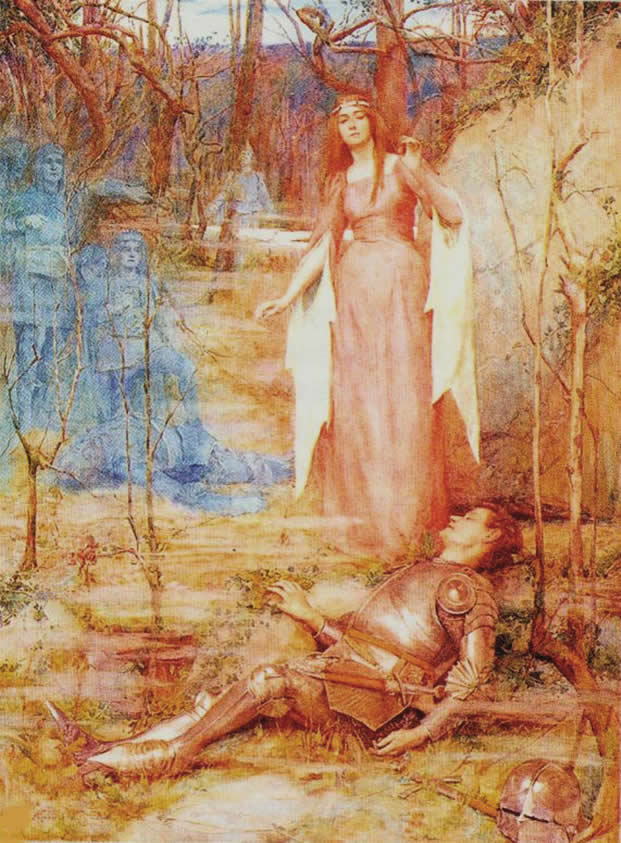
Image: The Banshee (Wiki Commons)

15 films that depict the horrors of being abroad, or otherwise displaced

Readers, we’re getting goosebumps and our blood is curdling. Horror novelist, former expat and Third Culture Kid Sezin Koehler is here to remind us that, however glamorous the life of an expat or world traveler may seem, it has a netherworld — one that horror movie makers are fond of depicting. To proceed is at your peril.

As if moving or traveling abroad isn’t scary enough, there is a whole host of films that would put the kibosh on even the most adventurous of people. For today’s guest post for The Displaced Nation, I’m breaking down these tales of terror into three groups:

  1. The expat.
  2. The world traveler.
  3. The otherwise displaced.

What follows is a rundown of some of the best horror films that will make you never want to leave home again.

1. Expat Horror: Caveat expat, or expat beware (or in some cases, beware of the expat!).

1) Ils (Them) (2006), dir. David Moreau and Xavier Palud.
In this terrifying French film, two expat partners, a teacher and a writer, living outside Bucharest in Romania are terrorized and psychologically tortured by an unknown group for days before their murder. Based on a true story, the villains — who were apprehended in real life — turn out to be even more shocking than the events they perpetrated.

My big question: Why on earth do you choose to live out in the middle of nowhere in Romania? Tragic story indeed, but really, they should have known better. Now you do.

2) Suspiria (1977), dir. Dario Argento.
Considered one of the classic horror films and what many now consider to be the father of the arthouse horror genre, Argento’s dark and twisted tale features a ballet school in Rome full of young girls from all around the world who live and study within walls haunted by a chilling presence that picks off the girls one by one. The score by Goblin is enough to give you nightmares and make you reconsider sending your children away to school. Ever.

3) & 4) Red Dragon (2002), dir. Bret Rattner; & The Silence of the Lambs (1991), dir. Jonathan Demme.
In Red Dragon Dr. Hannibal Lector is just a British expat living and practicing psychiatry in the United States. In fact, he’s helping the police with a brutal series of murders in which specific body parts had been taken as trophies. Detective Will Graham eventually discovers that not only is psychiatrist-to-the-stars Dr. Lector responsible for these grisly killings, he’s also eating the missing pieces.

The next time we meet Hannibal the Cannibal is in The Silence of the Lambs, where he is safely tucked away in a maximum security prison until the FBI needs his profiling assistance in uncovering the identity of a man who is kidnapping and skinning women.

Maybe Dr. Lector is a reason why locals are so wary of expats around the world?

5) The Omen (1976), dir. Richard Donner.
It’s hard enough being the wife of the American ambassador to the UK, but when Lee Remick discovers that there is something very wrong, very evil with her son, Damien, matters only get worse.

In many ways this is the kind of expat horror to which we can most relate: being in a foreign country, going through a difficult time, and not having the kind of support one might have at home. Even though the Thorns are wealthy and have a full staff at their beck and call, Mrs. Thorn cannot confide in them her misgivings that her son is the Antichrist — nor can she with anyone else since she’s the ambassador’s wife. In the end she goes mad from fear and frustration.

As expats, we’ve all been there. Luckily, though, we didn’t have the incarnation of Satan as our son. At least I hope not.

6) Freaks (1932), dir. Tod Browning.
This magnificent film follows a group of sideshow circus performers in Dust Bowl America — the majority of whom are European expats from all over the continent. As foreigners as well as displaying physical deformities of all kinds, this group is the marginalized of the most marginalized in America not just at that time, but even today.

The gorgeous German and “normal” trapeze artist Cleopatra finds out that Hans, the midget, is fabulously wealthy and sets out to steal him away from his same-sized girlfriend Frieda — with disastrous consequences as the group of freaks tries to bring the wicked Cleopatra into their embrace. Cleo finds out well and good that one does not mess with members of the sideshow.

The message here? Respect your local customs, even if you think them freakish. It could be what stands between your body as it is or being turned into a human-chicken hybrid.

2. Traveler Horror: “Let your suitcases gather dust!”, cry these films.

1) Hostel (2005), dir. Eli Roth.
A group of backpackers passing through the Slovakian capital city, Bratislava — it has no semblance to the real place whatsoever — gets kidnapped by an organization that sells young people to the highest bidders so that they can be tortured and murdered in the Slovakian outback with impunity. While the film is rife with cultural and geographical blunders, it nonetheless preys on a legitimate fear of kidnapping and/or human trafficking while traveling, especially for young women as we see in the two follow-up films in this gory franchise.

Kids, don’t fall for the local pretty girl/handsome boy who picks you up in a bar. You have no idea whom they could be working for.

2) American Werewolf in London (1981), dir. John Landis.
Two American backpackers (uh-oh) in the Scottish highlands stray from the road and are attacked by a wild beast. One dies, the other is in a coma for three days with horrible gashes across his chest. When the doctor informs him he was attacked by a madman he’s confused, claiming it was a wolf that had killed his friend and wounded him. Come full moon, young David Kessler finds out it was neither man nor wolf, and he’s becoming one.

There’s nothing like a story about a horrific accident taking place while traveling, especially when said accident turns you into a monster. Always remember, STAY AWAY FROM THE MOORS/MUIRS!

3) The Descent (2005), dir. Neil Marshall.
After the tragic death of Sarah’s husband and daughter in a wicked car accident, her fellow British extreme-sporting friends decide to take a trip across the pond to Appalachia for a spelunking expedition. Why anyone would think that crawling around in caves would be a good idea I haven’t a clue — let alone choose to take an already-traumatized woman into that scenario. But hey, they do. And not only do they find themselves in an unmapped cave system that has no way back to the surface, there are others down there in the dark who’d like to ensure the girls never leave.

Dear People Traveling to America: For Pete’s sake, avoid the US’s back country! Monsters are above and below.

4) Wolf Creek (2005), dir. Greg Mclean.
Two British tourists in Australia pair up with a local to check out a supposed alien-landing site in the middle of nowhere. All is fine until their car battery dies. Stranded in the badlands of Oz, grateful are they when a mechanic rolls up and tows them to his place to fix their vehicle. But oh, he’s not a mechanic at all. He’s a serial murderer who waits for tourists to come out to the Wolf Creek Crater, and takes his good time torturing them before their slow death.

The film is based on a true story — one of the British girls actually survived and made it to the authorities. It turned out the man had killed hundreds of people over decades, and nobody even suspected a thing. Shiver

5) Primeval (2007), dir. Michael Katleman.
During the Rwanda-Burundi conflict, bodies were dumped into the Ruzizi River at such alarming rates that the crocs began eating human flesh. One of these crocs, nicknamed Gustave by the locals, gets a taste for human flesh and begins hunting humans inland. An American team of journalists are sent to capture and bring back the beast amidst an ongoing civil conflict between warlords and villagers.

The best thing about this movie is that there really is a 70-year-old, 22-feet-long croc named Gustave who swims the Ruzizi. He was last sighted in 2008, but I know he’s still out there. I can feel him.

3. Displaced Horror: “Think twice about moving or taking a sojourn outside the ‘hood” is the moral here.

1) The Amityville Horror (1979), dir. Stuart Rosenberg.
As if moving doesn’t suck enough, can you imagine moving into a house that not only was the site of a brutal family murder but is also haunted? I don’t even know how many whammies that makes the scene. Also based on the true story of the Lutz family, who were terrorized by their house to the point where they fled without any of their belongings and never went back to collect them.

Word to the wise: Always check about the house’s history before you move in, and always remember to burn sage throughout, even in cabinets and drawers, before you move anything in anything at all. Trust me on this one.

2) Se7en (1995), dir. David Fincher.
Heralding a promotion to detective, Brad Pitt gets transferred to an anonymous city with a reputation of being among the worst in America. *Cough* Detroit *Cough*. His wife is miserable as she wants to have a family, but cannot imagine raising children in that town. The first case he lands is a serial killer murdering people based on the Seven Deadly Sins — one that quickly sucks both him and his wife into a horrific spiral of torture and murder.

Women, don’t let your husband drag you to a horrible city. Just don’t. Your life very well may depend on it.

3) The Texas Chainsaw Massacre (2003), dir. Marcus Nispel.
A group of friends on a road trip through Texas and — oh crap! — their car breaks down. It’s just their luck that the person who finds them is the patriarch of the psychotic and inbred Hewett family, known for killing and cooking their victims. There are no happy endings here, people.

If you’re going on a road trip, stick to the main roads, for God’s sake! I mean, jeez, everybody knows that. And while you’re at it, stay the bloody hell out of Texas!

4) El laberinto del fauno (Pan’s Labyrinth) (2006), dir. Guillermo del Toro.
Set in 1944 fascist Spain, the film tells the story of Ofelia, a young girl who accompanies her mother to live with her new stepfather, a barbarous Spanish general. Amidst the horror, Ofelia discovers a fairy world underneath the very grounds of their home, a place to which she escapes when the torture around her becomes too much to bear. But even fairy worlds have their horrors, as she soon finds out.

Moms, jeez, don’t marry jerks and then don’t agree to live in their military camp. Seems like logic to me, but I guess it needs to be said.

* * *

So, are you ready to burn your passport and throw away all your travel gear yet? 😉

And do you have any other films you’d add to my best-of abroad horror list?

Sezin Koehler, author of American Monsters, is a woman either on the verge of a breakdown or breakthrough writing from Lighthouse Point, Florida. Culture shock aside, she’s working on four follow-up novels to her first, progress of which you can follow on her Pinterest boards. Her other online haunts are Zuzu’s Petals, Twitter, and Facebook — all of which feature eclectic bon mots, rants and raves.

STAY TUNED for tomorrow’s post, which has Kate Allison continuing our horror theme.

If you enjoyed this post, we invite you to register for The Displaced Dispatch, a round up of weekly posts from The Displaced Nation, with seasonal recipes, book giveaways and other extras. Register for The Displaced Dispatch by clicking here!

Related posts:

Images: From MorgueFile: Cinema; Hat and suitcase;  Bridge from biplane.

Photo of Sezin, from her newest FB page, ZUZUHULK, used with her permission.

Oblivious to controversy, this expat author stirs up tales of violence, romance and tragedy in the Middle East

Alexander McNabb isn’t afraid of ghoulies, ghosties, long-leggedy beasties, and things that go bump in the night — which, as Kate Allison announced the week before last, is this month’s theme at the Displaced Nation.

How do I know he isn’t afraid? Because he is too busy tuning into other sources of thrills, chills and excitement for his books — namely, Middle Eastern politics and intrigue.

Though he doesn’t seek controversy, he doesn’t shy away from it either. His books are violent, explosive, and deadly. One has actually been banned in Jordan.

I now have the pleasure of giving Mr McNabb the floor to tell us more about his affinity for such dastardly topics. Don’t worry, he doesn’t have fangs but is a gentle sort with a great sense of humo(u)r… He is also a lively conversationalist, with his own radio show in Dubai, and a cook.

Welcome, Alexander. Shall we start out with what should be a basic question (though it rarely is for us displaced types): where are you from?
I was born in London, in Edgware General Hospital, which they have since knocked down, presumably to stop lightning striking twice. I grew up in various countryside areas north of London and was unwillingly educated at The Haberdashers’ Aske’s Boys’ School in Elstree.

When did you first go to the Middle East?
In 1986. I was selling an insanely visionary software package put together by a directory publisher that had the wonderful idea of selling its information as an integrated database. I presented this to a number of puzzled Saudis who lost no time in introducing me to their most junior members of staff and leaving me there. It taught me an important lesson — Gulf Arabs never say “no,” it’s considered rude. And “not no” doesn’t mean “yes”!

How did you end up living in Dubai?
When that project and, ultimately, the company failed I got involved in the publishing side of things. And so in 1993 I moved out to Dubai to start a subsidiary of the publishing company I worked for. And got myself shut down by the Ministry of Information. But that’s another story…

We will talk about your trio of books set in the Middle East shortly. But first: do you have any other published works?
The first book I wrote was a spoof of international spy thrillers, called just Space. I re-read the manuscript a couple of months ago and it made me laugh a lot, so I published that as a $2.99 Kindle-only book. I worked for ten years as an editor and publisher and for longer than that as a writer and journalist, so there are millions of my words out there — lost and crying out plaintively…

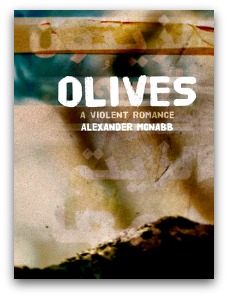
No need for them to mourn as you’ve just now published Beirut — An Explosive Thriller, which is the second in three books you are writing that are set in the Middle East, called The Levant Cycle. The first was Olives — A Violent Romance and the third will be Shemlan — A Deadly Tragedy. Could you say a little more about the Levant Cycle?
The Levant Cycle was never meant to be — the three books just happen to be set in the same region, contain some of the same characters and be roughly contiguous. But they are very different. Olives is really a novel — the story follows young British journalist, Paul Stokes as he arrives in Jordan and quickly falls afoul of the law — while Beirut is a hardcore international spy thriller. And they’re independent works in themselves. I had always thought of a book that would form an interlinear to Olives, a telling of that story from another perspective, possibly that of Gerald Lynch, the British Secret Intelligence Service officer that Paul encounters. Beirut wasn’t meant to follow on from Olives and then it just did, sort of taking up from when Paul moves to Beirut. And of course Beirut shows a very different Gerald Lynch, because in Olives you only see Lynch from Paul’s somewhat jaundiced perspective. So the books can be grouped, but I didn’t want a trilogy — a cycle seemed more appropriate.

Are you now working on the third book?
Yes, I’m about halfway through Shemlan and loving it. It’s a great deal darker than the other two books. It’s about a retired diplomat who’s dying of cancer going back to his past and finding that past is likely to kill him before the disease does.

What does “shemlan” mean?
Shemlan is a tiny village high in the hills above Beirut. It’s a little-known fact that Shemlan was for many years home to the Middle East Centre for Arabic Studies, where the British government taught its diplomats — and its spies — Arabic. A lot of my research for the book has consisted of taking friends and colleagues up there for lunch at Al Sakhra (The Cliff House), the lovely Arabic restaurant in the village. I know, it’s hard…

What made you decide to center the action of your books around the politics of the Middle East?
No one else was writing fiction centered on this region. There hasn’t been an interesting Middle Eastern spy thriller since Eric Ambler’s The Levanter. Olives was intended to introduce a Western audience that doesn’t care very much to some of the more complicated aspects of life in that part of the world — to some of the human issues that lie behind the glib headlines.

I presume you aren’t afraid of controversy?
Bring it on! Actually, I was amazed at the “controversy” that Olives provoked because of my having depicted Muslims drinking alcohol and Arab women having sex with foreigners. These things never happen in the Arab World! And then the Great Naming Scandal, when my use of a real Palestinian name (Dajani, for the Palestinian family Paul gets involved with) was deemed by distributors in Jordan to make the book too hot for them to handle. It still can’t be sold there!

How about Beirut?
I was truly blown away when the UAE’s National Media Council granted the necessary “Permission to Print” for Beirut. I’m sure someone, somewhere will find some aspect of the book controversial, but I think that’s more a product of the lack of narrative literature in the region than it is any quest for controversy on my part. And yes, you do actually have to get permission to print a book here — and government clearance to import books into any country in the region.

What audience did you have in mind for Olives?
Olives was written for a British audience but has appealed broadly across Europe and the US as well as in the Arab World. I’ve been more than pleased at Western readers who have enjoyed Olives and said, “I didn’t know about all that stuff.” And, because I thought I might lose Arab friends, I have been truly overjoyed that so many Palestinian and Arab readers have loved it.

At one point in Olives, Paul, the British journalist, becomes romantically involved with his Palestinian coworker, Aisha Dajani. Do you think Westerners can have successful relationships with Arabs and live happily ever after?
I really don’t see it as a “Westerner/Arab” thing at all – it’s an awful cliché, but love transcends nationality, culture and, yes, religion. I have seen relationships founder on that particular rock, where the partners can’t clear the hurdle of converting to or from Islam, but I have also seen couples deal with that. And, of course, there are still a great number of Christians in the Arab world and Muslims in the West. East and West doesn’t have to be about Islam, even if it often is.

Did you base the hero, Paul, on anyone in particular?
Paul Stokes is modeled on a number of callow Brits I have encountered arriving in the Middle East over the years, most of them journalists. You get a lot of credit in the Arab World for having tried to understand things, for actually bothering to learn something about the region and its people before you go leaping in blindly, as Paul does. I have often been highly amused at the way Arab friends have reacted to the behavior of British people new to the region — funny little things like different approaches to generosity, family, children and manners. I remember once walking into the office to be met by horrified glares from the girls, all trying to catch my attention and draw it to the new Brit who was happily — and loudly — clipping his nails at his desk. Or the British staffer who labelled her things in the office fridge. To the Arabs, you just share and if we’re out of something, you get it — someone labeling a bottle of milk was a source of appalled amusement.

Paul becomes “localized,” even becomes a smoker, which is why he is so torn between “home,” represented by his girlfriend Anne, and “away,” which of course is Aisha. And she, of course, is the hero of the book. You’re not actually supposed to like Paul, really. Perhaps sympathize with him…

You characterize Olives as a “violent romance.” What does that mean exactly?
The book’s working title for years was just “Olives.” The problem with that is that when you google “Olives,” you get Crespo, cookbooks or restaurants. So I decided on a defining subtitle — and nothing else seemed to suit other than “violent romance.” Olives is both a romance and a spy thriller. Thriller readers would find it too slow or romantic, romance readers would find it a little rough was the general concern. I hate how publishing brackets and pigeonholes us like that. The love story part of it has been popular, for sure — but a lot of people didn’t know about the region’s water crisis and learned about it from Olives, which has been cool.

Will Beirut attract the same readers?
Beirut is a totally different book and I was perhaps a little gleeful at how Olives readers would react to its much more hardcore spy thriller nature, particularly female readers. I was also a little scared, because I was setting out to kill what little fan base Olives has won for me. Readers, including females, have loved Beirut so far, which has me slack-jawed to be honest. But then it shows how wrong those traditional publishing preconceptions are — women actually reading a thriller? Oh, the shock of it all!

Is that why you are self-publishing The Levant Cycle — because the books do not fit in traditional publishing categories? I ask because quite a few expat authors we’ve featured on The Displaced Nation have self-published their works.
Let’s start with 250 rejections from agents for, respectively, Space, Olives and Beirut. When London agent Robin Wade signed me, it was for Beirut. I thought I was made, I really did. 250 rejections — and then an agent comes along and makes like a scrooch owl! Robin shopped Beirut around to 14 top publishers (there’s an image of the list I had of them, one after another struck off as the news came in, posted up on the Beirut site) and they, to a man, rejected it.

Why do you think that happened?
The ignorance about the Middle East from agents and editors alike has been shocking: “We have terrorism here at home, I don’t think people want to read about that” and “This novel, set in war-torn city Beirut” were two low points. But the worst was the editor who praised Beirut’s pace, setting, style and dialogue, compared it to Le Carré — but said he didn’t think it would fly in supermarkets. After that, I decided to see what readers thought without waiting for the gatekeepers. I am so glad I did.

Funnily enough, I discovered your books last month, when the Displaced Nation was dedicating itself to a series of food posts and I happened upon your collective blog about food, The Fat Expat.
Blogging became an outlet for me between frustrated bouts of writing. My partner in foodie crime, Simon “HalfManHalfBeer” McCrum, and I tried bringing others on board — but in the end The Fat Expat was doomed to tempus fugit failure. Still, I loved it while it lasted. I used to run a food magazine so am quite experienced in food preparation, photography and so on — and I love cooking.

Last month we were asking all of our interviewees: would you travel for food?
Damn right I would! Sweden this year, stunning food at stunningly high prices but you haven’t lived until you’ve eaten sour cream and crayfish on toast for breakfast. Estonia last year, a gorgeous holiday of art, museums and culture interspersed with the world’s largest, cheapest Martinis and top class cuisine — pelmeni in chicken stock, venison in red wine! But you want to really eat? There are stunning restaurants in Jordan — puffed up flatbreads fresh from the brick oven, potato pan-fried with egg and Mediterranean herbs. And, of course, Beirut — French food that makes Parisians blush alongside mountains of mezze, splashes of Armenian spice and of course Lebanese wines. I had to edit out my descriptions of Château Musar from Beirut because they crossed that threshold between what matters in a book and what readers need to know. But Musar is one of the world’s great wines. And the rosé from Château Ksara? Barmy, quite barmy. Do not, if you have the chance, neglect Massaya — a lovely wine from the achingly beautiful Bekaa Valley.

Next month’s Displaced Nation theme will be expats and politics — in honor of the U.S. elections. Do you have a horse in that particular race?
Obama. I don’t think anyone should forget that the people behind Romney are the people who took America to war against Iraq for no reason other than profit and dominance. There were never any WMDs and there was no link whatever between the murderously secular Saddam and the New Caliphate of Al Qaeda. Over a million people have died, the Middle East is lurching from crisis to crisis — and those old men are still doing three-martini lunches and planning their next move to make the world a safer place. At least Obama represents a hope of inclusion and reason.

Do you think expats should stay in touch with their home country’s politics? Do you?
Living in the Middle East, US politics are something you tend to follow because it pretty much shapes the region. I follow British politics to a degree, but it’s hard to be passionate about a system that has become so centrist and messaged. It’s something of a sitcom really.

What’s next, after the Cycle is finished?
I can’t even begin to think about what’s next, but there are plenty of contenders for next project, including a book set in Ireland and one about a traumatized teacher coming back from Iraq. Neither feature Mr. Lynch.

Readers, why not give those witches, ghosts, zombies, werewolves and vampires of yours a break and try Alexander McNabb’s wonderful cocktails of romance, intrigue, and high-stakes international politics instead?

STAY TUNED for tomorrow’s episode in the life of our fictional expat heroine, Libby. (What, not keeping up with Libby? Read the first three episodes of her expat adventures.)

If you enjoyed this post, we invite you to register for The Displaced Dispatch, a round up of weekly posts from The Displaced Nation, with seasonal recipes, book giveaways and other extras. Register for The Displaced Dispatch by clicking here!

Related posts:

Images: Alexander McNabb author image and book covers.
5 travel situations that spell H-O-R-R-O-R!

Overseas travel can be a dangerous business. Casting yourself out into the wide world — into a foreign culture, possibly alone and thousands of miles from home — is always going to present challenges and perils aplenty.

Sometimes everything goes all right, or almost — sure, you lose your hat at the beach, or your taxi driver struggles to find the right address; but otherwise, everything is fine.

And then there are those moments when something goes terribly amiss — and your stomach feels like it’s dropped into your shoes!

This post is devoted to those H-O-R-R-I-F-Y-I-N-G moments…beginning with five of mine, hand picked from dozens. And I’d like you all to share yours!

1) Your accommodation is not as described.

Now this is a common enough problem. As a broke backpacker, I’ve stayed in some seriously nasty places, but there was one that took the biscuit — or would have, had I dared to eat it in there. I refer to the last two beds left anywhere in Perth — which served my sister and I right for waiting till we arrived to arrange a place to stay. It was coming up to Christmas, and the place looked okay on the Web site. Cheap and cheerful, just like us! Only the rooms stank. They were knee deep in the occupants’ clothes, and it was clear some of them had been hanging out in there for a while. My room, bizarrely, was all girls apart from me — with sarongs hanging from the top bunks as privacy screens. That seemed like a good idea, as I certainly didn’t want to see what was going on — not judging by what I could hear…

Yep, you guessed it. Turned out that place was being used as a brothel, with the owner taking a cut to look the other way. We lasted two nights before thankfully finding more salubrious accommodation. I guess I should have been grateful that our beds weren’t charged by the hour…

2) Your money is suddenly all gone.

Been there, done that! Haven’t we all? When living on a small island in Thailand, I discovered to my horror one day that my bank account was almost empty. A closer inspection revealed a series of withdrawals — always the maximum amount possible, all transacted on the mainland over five hours away by boat.

Something didn’t add up. I got in touch with my bank and took the last of my cash out — only to have it stolen in a bungalow break in the following night! Luckily, I’d made a lot of friends, and they supported me until the bank agreed I’d been defrauded, and gave me all the money back.

(Interestingly enough, years later, it occurred to me that around the time of those withdrawals I’d been buying a lot of diving gear for cash…and of course, my island was too small to process its own transactions, so they all showed up as being made on the mainland…)

3) You drop your camera.

People get very attached to their photos — and we travelers more so than most. Hardly a week goes by without some friend pleading on Facebook for pictures of a night out that got inexplicably wiped from memory. So dropping your camera is potentially a huge disaster — and one that, thankfully, I’ve never done. No, I’ve never owned a camera, because I am death to gadgets. I’m terminally clumsy, which is why no one trusts me — except my poor wife, who paid the ultimate price. She handed her camera to me for safekeeping only for a minute, while she went back to lock the door of our traditional Fijian hut. Now I never thought of concrete as traditionally Fijian, but that is what the path was made of. So when I fumbled and dropped the camera, it shattered into about a thousand pieces.

We were able to claim it on insurance — not ours, as we hadn’t bought any, but my mother’s, since she was kind enough to pretend it was her camera I’d destroyed.

The photos, however, were gone for good. And seeing as how I was wearing a bikini in some of them, maybe that’s for the best…

4) You eat a dodgy curry!

Eating something that doesn’t agree with you and developing a pain, quite literally, in the backside only gets worse when you’re miles from home. And unfortunately, it also gets way more likely. Especially if, like me, you have a habit of eating food from wherever is cheapest! I never found out what caused my illness in Ecuador, but it resulted in my own Night of the Living Dead, in which I, zombie like, spent twelve hours weaving between my bed in a crummy hostel dorm and the nearest toilet two floors away — where (ignore the rest of this sentence if you’re squeamish) I was vomiting more blood than I’d ever seen outside my body. I honestly thought I was going to die that night — a good thing I was already dead!

And last but by no means least:

5) You discover there is no toilet paper…

Whether it’s electronically controlled and plays music at you, or a rough wooden plank over a hole in the ground, you know you’ll have to use the facilities at some point, and when that moment comes, will adapt somehow — you haven’t really got a choice. In one extreme case I’d left it as long as humanly possible — by which point there was no thought in my head beyond getting out of the restaurant in time! Once I’d made it to the toilet round the back, I felt much better. Until, that is, I felt in my pocket and remembered I was wearing new jeans — and hadn’t transferred over the stash of TP…

I won’t go into any more detail, apart from to say that for the rest of that meal, I adopted the local practice of only eating with my right hand.

* * *

So, now it’s your turn! Travel horror stories, if you please! And as always, you can catch me and the rest of the crew on Twitter: @TonyJamesSlater +/or @displacednation.

Thanks for reading!

STAY TUNED for Wednesday’s post, an interview with a displaced author of a violent romance!

If you enjoyed this post, we invite you to register for The Displaced Dispatch, a round up of weekly posts from The Displaced Nation, with seasonal recipes, book giveaways and other extras. Register for The Displaced Dispatch by clicking here!

Related posts:

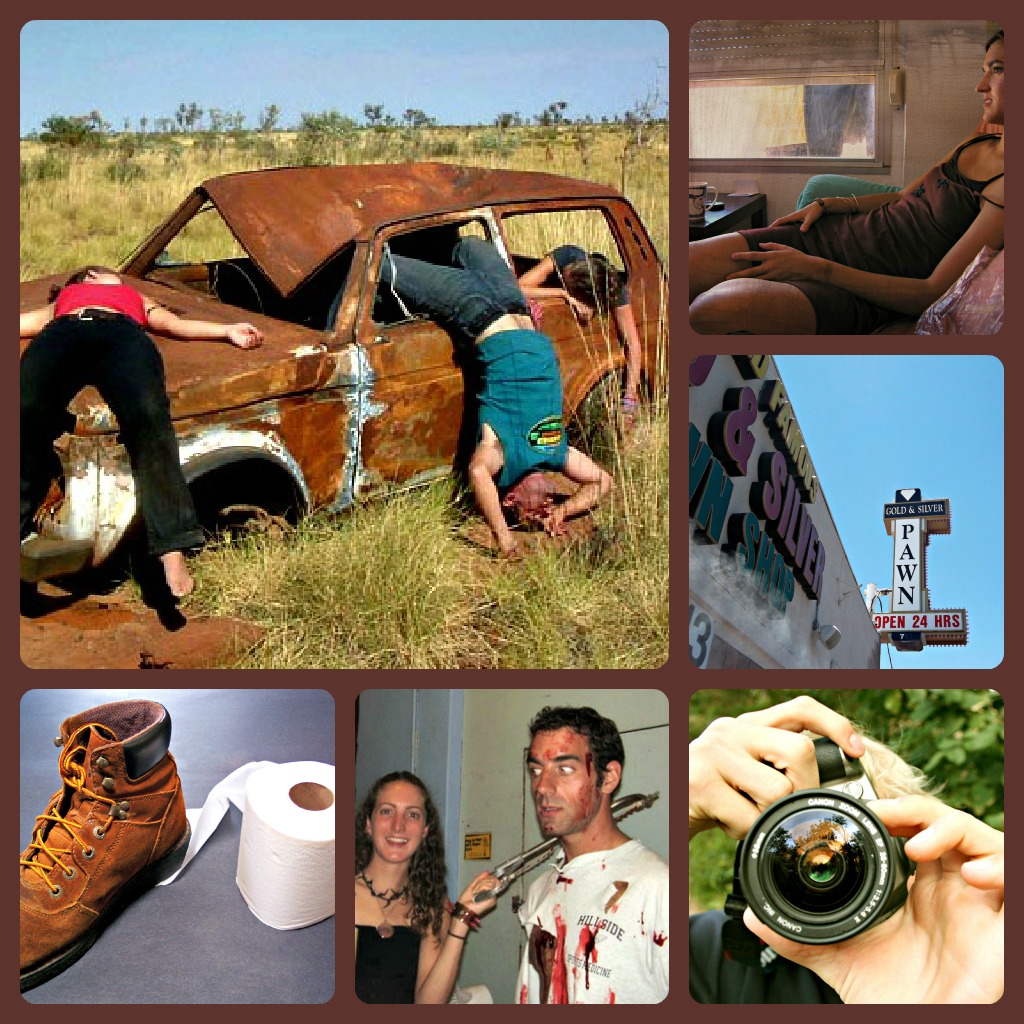
Images (clockwise, left to right): Horror image from Tony’s personal collection: fooling around with an abandoned vehicle near Wolfe Creek, Northern Territory (2007); sexy woman, pawn shop and Canon camera all from MorgueFile; Tony’s “undead” photo from a Halloween in Perth, Australia (2008); toilet paper and travel boot from MorgueFile.

Expats, do you play with your identities? Are you an imposter or a chameleon?

Pretending to be a dead child is the cruelest trick you could play on a family.

Insinuating yourself into their lives, claiming falsely the intimacy and bonds that only exists between immediate family — mother and son; brother and sister — and to convince them that that son, that brother, that they feared murdered, has returned. There was, it transpires, nothing to worry about all along. You were fine. You are alive.

To succeed in such a deception scarcely seems possible. It sounds like the plot of a mystery novel, but it is, in fact, chillingly true. We have ourselves a real-life Talented Mr Ripley.

This post is concerned with the case of Frédéric Bourdin, a 23-year-old brown-eyed Frenchman who convinced a Texan family, the Barclays, that he was Nicholas, their missing blue-eyed teenage son and brother.

A conman, a fantasist, a sociopath, Bourdin already had a history of impersonating destitute children when in 1997 he convinced authorities in France and the US that he was the unruly child who at aged thirteen had disappeared from the Barclay family in San Antonio, Texas. The police presumed Nicholas was dead until Bourdin concocted a tale that the child had been snatched by a pedophile ring and brought to Europe. Bourdin lived with the Barclay family for three months before a private investigator revealed the truth.

With the release of the documentary film, The Imposter, directed by Bart Layton, the story of Bourdin has returned to the news. The film, a success at Sundance, is now in limited release in the US. Bourdin’s masquerade is so hard to believe, and so stranger than fiction, that it is of little surprise that is perfect material for a documentary.

This is not, however, the first time that the story of Bourdin has been depicted on the cinema screens. In 2010 a fictionalized account entitled The Chameleon was released, directed by Jean-Paul Salomé.

To be honest, The Chameleon is a disappointing film that despite being based on the most compelling of true-life tales is never itself compelling. (For anyone in the US who might be interested, it is available for streaming on Netflix.)

A better use of your time may be spent reading about Bourdin in David Grann’s essay “The Chameleon,” which belongs to his essay collection The Devil & Sherlock Holmes. This is where I first came across the story. The essay is actually available on The New Yorker Web site and I can’t recommend it enough.

Why, however, have we chosen this topic for The Displaced Nation? Well, we think that The Imposter is a film that you may be fascinated by, but we also think that there’s something about Bourdin’s tale, undeniably horrific and callous as it, that resonates with an expat audience. How did this man with his French accent convince others that he was an American teenager? In an interview with The Daily Telegraph, Bourdin stated that there was an unspoken collusion on the part of Nicholas Barclay’s mother, Beverly Dollarhide — that she knew damn well that this was not her son:

Most people who go to church don’t believe in God, very few of them really believe, but somewhere deep inside they try to convince themselves there is a God. It’s the same thing for the Dollarhide family. It happened exactly the same way.

Bourdin throughout his life has cruelly taken playing roles to an extremity. Despite being jailed for identity fraud after it is was revealed that he was not Nicholas Barclay, he continued to pass himself off as teenagers. In 2004 he claimed to be a Spanish adolescent whose mother had been killed in that year’s Madrid train bombings. The next year he again pretended to be a Spanish orphan, this time claiming that he lost his parents in a car accident.

While none of us play roles to that extent, this imposter and chameleon aspect of Bourdain’s personality is — though I am aware that I over-reaching here somewhat to make a point — reflected in many of our lives as expats.

I know that I find myself occupying roles I had previously not thought I would before. Sometimes I am the imposter. I play a role that isn’t me. In my case, it may be exaggerating national characteristics and language that I feel people expect of me, but that I would never use back home. At other times, I find myself trying to be the chameleon. Trying to scrub away my otherness so that no attention is drawn to me because I sound different, or behave differently.

What about you? What sort of an expat do you find yourself to be. In your adopted home, do you find yourself, at time, to be a chameleon? Or are you more an imposter?

STAY TUNED for Tuesday’s post, a list of travel situations that spell H-O-R-R-O-R!

If you enjoyed this post, we invite you to register for The Displaced Dispatch, a round up of weekly posts from The Displaced Nation, with seasonal recipes, book giveaways and other extras. Register for The Displaced Dispatch by clicking here!

Related posts:

Image: MorgueFile 

THE DISPLACED Q: On your travels … have you ever seen a ghost?

Tony+ScaryBoy_collageOn your travels, have you ever seen a ghost?

And if you have — who ya gonna call?

I know, I know, you saw that one coming!

Seriously, though, for today’s Displaced Q, I’m asking about your supernatural experiences. Between all of us, we’ve been to a lot of places. So if there’s any truth in spooks and spirits, some of us are bound to have seen them, right?

Getting into the spirit of things

Well, I’ve never seen a ghost; but that could well be because I’m about as psychic as a cheese. Seriously — I’m not what you’d call particularly sensitive. Even to the physical world around me, as my body can attest; it’s constantly covered in bruises from walking into walls, chairs, doors — anything that regular people have sufficient grace to avoid.

But I digress. Our topic today is ghosts, and I’m a big believer in them. Why is that, you may wonder — given that I haven’t had a particularly spooky encounter of my own? I’ve visited (allegedly) haunted pubs, and creepy castles by the bucketload (being a Brit has its advantages in this regard).

I’ve also been in tombs of many different kinds — from the long barrows of the old Celtic peoples to the chiseled-out mausoleums of Petra in Jordan, to the pyramids and underground catacombs of Egypt.

And … not a sausage!

You wouldn’t believe…

Yes, I’ve had those strange, hard-to-explain occurrences that I think everyone has at some point or other: doors opening on their own, things moving from one place to another; one time I was looking right at a mirror when it fell off the wall and smashed to pieces, after over a decade of hanging there unmoving!

More recently at my wedding, there were two important guests who were no longer with us. We invited them anyway, with our hearts and minds. Both were ladies who shared an obsession with butterflies, so we felt blessed by their presence when a pair of butterflies danced over our heads all the way through the ceremony!

And yet, I know such experiences are easy to explain. Maybe I want them to be paranormal in origin, but the logical part of my brain is too active. It soon rationalizes these kind of happenings until I feel foolish even mentioning them … so, generally, I don’t. (Unless of course, the Displaced Nation is doing a series of ghostie posties.)

The multilingual (and TCK) actor Robert Stack served as host of the TV program Unsolved Mysteries. As he once said:

I don’t mind UFOs and ghost stories, it’s just that I tend to give value to the storyteller rather than to the story itself.

Do ghosts escape from dreams?

But I do have dreams. Sometimes, when things happen, I swear I’ve already dreamt about them at least once. And then, just occasionally, I have dreams when I’m visited by the spirits of people I’ve lost.

Earlier this year I had to make that journey every expat dreads — back to my home country of England, all the way from Australia, to help look after a dying relative. It was my granddad, and we weren’t sure he was dying at the time, but whilst keeping vigil with him I had a dream that rang with prophecy. His wife — my grandmother — who had passed on almost ten years earlier, showed up in my dream, wandering about his house and looking under things. When I asked her what she was looking for, she replied that she was here to find her other half, and that it was somewhere in the room.

It was a curious dream, and a thought-provoking one, but not unpleasant. I had the presence of mind to tell my family about it as we prepared for another day caring for Gramp.

The doctors at the time were discussing weeks versus months, but he clearly had received his marching orders. He died that evening.

This isn’t the first time I’ve experienced this, although I hope it will be the last; at least for a while. To have dreams of lost ones you first have to lose someone — and I’ve lost enough people this year to last me a lifetime.

That being said, I don’t think ghosts are evil, or vengeful spirits: just souls left behind, looking for something — or someone — they needed or cared for in life.

* * *

What do you think? Am I crazy?

To think that after all of my world travels, the most ghostly encounters I’ve had anywhere occurred back in my childhood home, in my bed.

Now that IS spooky!

So what about you folks? I’d love to hear your tales of what goes bump in the night. We’re coming up on Halloween, after all! In your travels, have you ever come across any restless spirits? Or had any experiences which made you think twice about them? Let me know in the comments!

Alternatively you can hit me up on Twitter: @TonyJamesSlater +/or @displacednation. I look forward to hearing from you!

STAY TUNED for Wednesday’s post, an interview with a Random Nomad who writes books about dead bodies!

If you enjoyed this post, we invite you to register for The Displaced Dispatch, a round up of weekly posts from The Displaced Nation, with seasonal recipes, book giveaways and other extras. Register for The Displaced Dispatch by clicking here!

Related posts:

Image: Tony (L) and  Scary boy from MorgueFile (R)

BOOK REVIEW: “The Englishman” by Helena Halme

Today we are delighted to review Helena Halme’s book, The Englishman. Helena is a regular visitor to The Displaced Nation, where she has been featured both as a Random Nomad, and as Cleopatra For The Day. The Englishman is available from Amazon (UK and US) and for a limited time this week, is free to download as a Kindle ebook!

TITLE: The Englishman
AUTHOR: Helena Halme
AUTHOR’S CYBER COORDINATES:
Blog: Helena’s London Life
Twitter: @HelenaHalme
PUBLICATION DATE: August 2012
FORMAT: Ebook (Kindle)
GENRE: Fiction
SOURCE: Review copy from author

Author Bio:

Helena Halme grew up in Finland and Sweden, and left Finland for good when she married her English husband. She now lives in London. The Englishman is her first book.

Summary:

At the age of twenty, Kaisa has her life mapped out. After university in Helsinki, she’s going to marry her well-to-do fiancé, Matti, and live happily ever after. But in October 1980, she’s invited to a British Embassy cocktail party, and meets a dashing Naval officer. In the chilly Esplanade Park the Englishman and Kaisa share passionate, secret kisses and promise to meet up again. But they live thousands of miles apart – and Kaisa is engaged to be married.

At the height of the Cold War the Englishman chases Russian submarines whilst Kaisa’s stuck in a country friendly with the Soviet Union. Will their love go the distance?

(Source: Amazon.com book description)

Review:

The Englishman is semi-autobiographical, based on the author’s blog posts on How I came to be in England, which, after an enthusiastic response from readers, she was inspired to turn into a fully fledged novel.

It is a love story: the account of the long-distance romance between English Naval officer Peter and Finnish student Kaisa, as this star-crossed couple discovers that Shakespeare’s words are still true, even in the 1980s, and the course of true love never runs smooth. Together, they contend with a broken engagement, long separations, the Falklands War, inevitable cultural differences, and the small matter of a member of the British armed forces wanting to marry a citizen of a country bordering the Soviet Union.

No matter where you are from, or even if you and your partner are from the same cultural background – if you’ve ever been in a long-distance relationship, The Englishman will strike a chord. Loving from afar in the early 1980s was a different matter than it is now: no Skype, no Facebook, no texting, but instead the sweet agony of waiting for letters in the mail and for the landline telephone to ring. Kaisa and her Englishman remind us of the forgotten pleasures of delayed, rather than immediate, gratification.

TDN verdict:

Especially recommended for romantics who grew up listening to Chrissie Hynde and wearing leg warmers the first time they were in fashion.

“The Englishman” can be purchased from Amazon.co.uk and Amazon.com, and from October 8 – 12 is available to download free of charge.

STAY TUNED for tomorrow’s ghosty posty, a spooky Displaced Q from Tony James Slater!

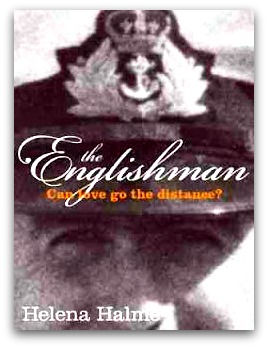
Image: Book cover — “The Englishman”

If you enjoyed this post, we invite you to register for The Displaced Dispatch, a round up of weekly posts from The Displaced Nation, with seasonal recipes, book giveaways and other extras. Register for The Displaced Dispatch by clicking here!

Related posts:

DEAR MARY-SUE: One expat’s horror story is another’s delight

Mary-Sue Wallace, The Displaced Nation’s agony aunt, is back. Her thoughtful advice eases and soothes any cross-cultural quandary or travel-related confusion you may have. Submit your questions and comments here, or else by emailing her at thedisplacednation@gmail.com

Shoot! Is it October already? I don’t know how the time flies. I don’t know about you, but I’m not a big fan of fall. Who would be living in Tulsa. It just gets grey here, no burnt ochres like in Vermont. In fact, I wouldn’t know a burnt ochre if I saw one. Is it like a vole (please don’t feel the need to write in. I’m not that stupid. I know it’s not a rodent). Anyhoo, on with this month’s questions.

Dear Mary-Sue,

I can’t resist asking you: how does the Wallace household celebrate Halloween? I can imagine it’s quite an occasion!

– Ian (a British fan of yours) in Iowa

Dear Ian,

Well I can tell you that we don’t celebrate Halloween like the Larsons across the street. She gives out fruit to the kids in the neighborhood. Why would you even do that? It’s just cruel, isn’t it?

No, it’s a time of excess over at the Wallace household. That’s why I wake up the day after Halloween and don’t have to worry about finding the trees outside my house covered in toilet paper.

I buy plenty of Reese’s peanut butter cups because who doesn’t love them? I hear in Europe they have what they call food mountains when they have too much of a particular food source, well let me tell you that the Wallace household ends up with a Reese’s peanut butter cup mountain come Halloween.

You should come along and grab yourself a treat.

***********************************************************

Dear Mary-Sue,

My wife and I have lived in the United States since last May, and I must say, she is throwing herself into the life here with considerable vigour. She is now talking about hosting a Halloween party for some of our fellow expats, and inviting a few of our American neighbors. She has suggested that she and I dress up as an Elephant and a Donkey, in celebration of the American election season. No pun intended, but that would make me feel a bit of, well, an ass, to use the local dialect.

I wonder if I could talk her into going as a Milkman and Pregnant Lady instead? At least that would be true to our native (British) culture.

– Stephen in St. Louis

Dear Stephen,

So let me guess this right regarding your Halloween costumes, your wife was to be satirical and you want to be lewd? Gee, what is it with you Brits. You always think your jokes are funny and yet they always just seem to be about sex. Just go as something horror related and stop trying to over think it. If you really want to be true to your native culture why not go as King George III. Bam! Yes, I went there.

************************************************************

Dear Mary-Sue,

My husband writes mystery books for a living. He and I have decided to live in England for a few years while he does research on his latest story. He insists that we look for an old isolated cottage somewhere deep in the heart of the countryside, where he can be free to write. But I feel certain that those oldy-worldy thatched roof places may be haunted. And what if I have to stay in a house like that on my own, should he be called up to London to meet his agent or give a talk.

Do you think I’m strange to be so afraid of (admittedly English) ghosts?

– Susan of Savannah, Georgia, soon to be of Suffolk, East Anglia

Dear Susan,

If you’re going to be living in East Anglia I’d be more concerned with the living than the dead. They’re a scary in-bred bunch, though coming from Georgia you should be able to handle it. I kid, I kid…well not about East Anglia.

*****
Dear Mary-Sue,

Do Westerners see Western ghosts, Chinese see Chinese ghosts, and Africans see African ghosts, or can we see each other’s?

– Just Curious

And does Just Curious see ghosts of low intelligence?

*****

Dear Mary-Sue,

When I first saw the farmhouse in Tuscany that my husband and I are now renting while we look for a place to live for our retirement, I thought to myself: Frances Mayes, eat your heart out! However, we’ve just now found out from one of our neighbors that a murder took place here about ten years ago — and ever since, the house has always been rented to expats. I’m thinking we should consult with the local Catholic priest about whether he could perform an exorcism — casting out evil spirits and all that. But my husband says, don’t be silly — it just adds to the atmosphere.

What do you advise?

-Victoria of Vulterra (formerly of Wellington, NZ)

Dear Vicky,

First thing I would be doing is renegotiating a lower rental fee and not thinking about calling the local Padre.

*****
Dear Mary-Sue,

In my opinion, Asian ghosts are far freakier — and hence scarier — than Western ones. Especially the Japanese kind. I mean, what’s a vampire compared to a wailing Asian woman with a very pale face and long, jet black hair? Actually, I’m scaring myself even as I write this…

– Ted of Tsukuba (formerly of Texas)

Dear Ted,

Yeah, I mean Casper has nothing on the Krasue from Thai legend. Now that’s freaky. I’d like to see Stephen in St Louis go to his party dressed as that.

STAY TUNED for tomorrow’s episode in the life of our fictional expat heroine, Libby. (What, not keeping up with Libby? Read the first three episodes of her expat adventures.) If you enjoyed this post, we invite you to register for The Displaced Dispatch, a round up of weekly posts from The Displaced Nation, with seasonal recipes, book giveaways and other extras. Register for The Displaced Dispatch by clicking here!

Related posts: