The Displaced Nation

A home for international creatives

Tag Archives: UK

Talking to expat entrepreneur Alison McGowan about cracking the hard nut of Brazil’s tourism market

Hidden Pousatas Brazil CollageAlison McGowan is rather famous among us expats in Brazil: a foreigner who has settled here and “made it” as an entrepreneur. Her business is called Hidden Pousadas Brazil. Pousada literally means “place to land” or “place to stay”; but as McGowan explains on her About Us page, unlike in Portugal where a pousada is usually a luxury inn in a restored historical building, in Brazil the concept encompasses a much wider range of price and accommodation.

Alison has visited and vetted many of Brazil’s pousadas on behalf of Western tourists who might be overwhelmed by a country of Brazil’s size and complexity. She offers a set of well-honed marketing services to pousadas that come up to her standard, consisting of an English-language Web page on her site optimized for Google, from which they can receive direct bookings. (She will also add social media and PR for a further fee.) And she provides an English-speaking interface for those pousada owners who lack the requisite linguistic skills to attract foreign guests.

Perhaps you’ve heard of Alison’s pousada business, too? Word has traveled far and wide among the English-speaking world thanks to some choice publicity. Seth Kugal chose to include it in his write-up on Brazil for the New York Times‘s Frugal Traveler series, urging those looking to make Brazil more affordable to try

a rare English-language pousada site nicely curated by an expatriate Englishwoman, Alison McGowan.

And the intrepid Michael Palin, while he finally added Brazil to his itinerary with a four-part BBC series last year, gave a shout-out to McGowan for her “gorgeous pousada” recommendations.

Yet her accomplishment can’t have been easy. According to recent data, 40 percent of Brazilian start-up businesses do not survive for more than two years after opening due to the “excess of laws, regulations, taxes, paperwork…”

I caught up with McGowan recently on behalf of the Displaced Nation and peppered her with questions about her business success story. Any wannabe displaced entrepreneurs out there, listen up!

Olá, Alison! Tudo bem? Thanks for agreeing to be interviewed for the Displaced Nation. How long have you been working in Brazil?
I established Hidden Pousadas Brazil in 2008 but have a long history of working with and in Brazil dating back to 1979 when I was sent out to set up the first office for Oxford University Press. In 1984 I decided to return to UK but continued working with Brazil over the next 18 years before returning to the country definitively in 2002, bringing my old business in educational marketing—called Florence Associates—with me. This lasted me very well until 2008, when the increased use of broadband Internet and students booking direct with schools effectively put paid to the business model. Hidden Pousadas Brazil was a very lucky idea which came to me at just the right time. It never occurred to me to go “home” when the other business ended.

Let’s go back even further in time. What first attracted you to the country both of us now call home?
I lived in Paris for a year in the early 70s and that was where I first discovered Brazilian music, and Brazilian musicians. I fell in love with both!

What do you love most about living here?
I love the people, the attitude, the optimisim, the energy and the light.

As an Englishwoman, do you ever feel “displaced”?
I rarely feel “displaced” but had one such moment yesterday when I realized I had spent over a thousand reais paying company bills which were actually optional. My Britishness and desire to be up to date with payments had blinded me to the possibility that anyone would or could legally send an official demand for something which I actually didn’t have to pay.

Have you reached a point where you now feel more comfortable in Brazil than in Britain?
I feel totally comfortable in both countries and move easily between them, partly because I am pretty well bilingual and understand both cultures very well. People here often refer to me as a gringa carioca—basically a foreigner who is at the same time someone from Rio de Janeiro. Brazilian musician friends just introduce me to others as a fellow musician. Nationality isn’t usually mentioned.

You said that Hidden Pousadas Brazil was a “lucky idea.” Where did it come from?
I was super stressed from running a huge cello festival in Rio and asked a friend for a recommendation of somewhere to stay where I could just chill out in peace for a while. He immediately told me to go to the Pousada Santa Clara on Boipeba. I had no idea at the time where Boipeba was or indeed what a pousada was, but I went and discovered paradise—a traffic free island with endless deserted sandy beaches fringed by palm trees and a lovely, friendly pousada guesthouse to stay at. I thought if this paradise existed there must be other paradises in Brazil, and I reckoned I knew quite a lot of people who would like to be in paradise if they only knew it existed! Hidden Pousadas Brazil was born.

Was opening up your own business something you always wanted to do?
Had I not lost my rather well-paid job in the UK, I might not have started down the entrepreneurial path. That was the original stimulus. But now that I’m on my second business, I can’t imagine working for someone else again!

What’s been the biggest challenge of running your own business in Brazil?
The most challenging part is undoubtedly Brazilian bureaucracy and tax system. It is both expensive and time consuming to get it right.

The most fulfilling?
Meeting so many satisfied travelers who have been choosing pousadas and trips just using the recommendations on www.hiddenpousadasbrazil.com.

If you could do anything else, what would it be?
I can’t imagine doing anything else right now. Once Hidden Pousadas Brazil is in a mature phase and is no longer challenging, a logical step would be to move into consultancy, public speaking and training for pousada owners, but whatever I do would still have to allow me extensive travel in offbeat Brazil!

What’s on your bucket list?
Right at the moment a few pousadas on deserted beaches in Piauí, Ceará, Maranhão, and Rio Grande do Norte are beckoning; also some places near the capital city of Brasília such as Pirenópolis and São Jorge in the neighboring state of Goias, as well as in the historical cities of Minas Gerais.

It sounds as though you still have a lot to explore. Have you left Britain behind, or will you go back to live some day?
I will be here in Brazil for as long as good is good, but I still go back to the UK twice a year, and could easily run the business the other way round, living in the UK and coming over to Brazil a few times a year.

Do you have any advice for anyone else wanting to be an entrepreneur in Brazil?
I wouldn’t do it unless you speak Portuguese fluently, understand the culture, have tons of patience, considerable money and support behind you, AND see a gap in the market for that brilliant idea you are passionate about! If you’ve got all that then go for it! The rewards are enormous.

We understand you are creative in another way: as a travel writer. Do you have any books planned?
I have plans for two forthcoming books: one just entitled The Hidden Pousadas of Brazil and the other on foreign immigration and entrerpreneurship in the Amazon in early-20th century Brazil (title still to be decided).

É boa pra caramba! We look forward to featuring one day on the Displaced Nation.

* * *

Readers, I found talking to Alison McGowan quite a trip! Do you have any questions for her before she ventures off in hot pursuit of the next Brazilian paradise? You can also follow Hidden Pousadas Brazil on Twitter, like them on Facebook, and subscribe to their YouTube station, where the latest video shows Alison giving advice for anyone planning a trip to Brazil for the World Cup in 2014 (coming soon!) or the Rio Olympics in 2016. As an avid football fan myself, I have only one comment to make on Alison’s creative enterprise: Vai Brasil! O Brasil é o número um! For the purposes of today’s celebration of Alison, this football rallying cry may be translated as “Go to Brazil! It’s the number-one country!”

STAY TUNED for tomorrow’s post, about a theatrical enterprise…

If you enjoyed this post, we invite you to register for The Displaced Dispatch, a round up of weekly posts from The Displaced Nation, with seasonal recipes, book giveaways and other extras. Register for The Displaced Dispatch by clicking here!

Related posts:

Images: (Clockwise from Alison McGowan’s headshot) Pousada Araras Eco Lodge, in the northern Pantanal (home of the Hyacinth Macaw); Pousada Uacari (in the Mamirauá reserve, home of the uacari monkey); Pousada de Selva Mato Limpo (in the hills of the Serra da Mantiqueira); and Hidden Posadas Brazil logo.

NEW VS OLDE: The Canadian “R”

Libby Collage New&OldFor just over two years, readers of the Displaced Nation have been following a novel-in-progress by Kate Allison called Libby’s Life. It’s the running diary of Libby Patrick, an Englishwoman who has trailed her spouse to a town just outside Boston. Libby’s Life is rich in Kate’s observations about life in New England vs. England. In the weeks when she doesn’t publish an episode, we plan to feature posts by writers who are sensitive to the often-subtle differences between new and old worlds.

This week: Carolyn Steele, a Brit now living in Canada, whose book, Trucking In English, we reviewed last month.

It’s a useful thing, the Canadian R. There are times that I wish my English way of speaking—my inherent BBC accent—could learn to incorporate it. The technique would have helped a lot with a potentially disastrous spot of linguistic difficulty. The discovery that I am still prone to linguistic difficulty is surprising in itself. I have been through the initial culture shock associated with realizing that no-one in Canada knows that Brits speak a different language. I have come to terms with the fact that old episodes of Are You Being Served on TVO don’t help me when I want to buy petrol, crisps or knickers.

Carolyn Steele, TruckingI came through all that and emerged on the other side the sort of wise and whimsical Brit who uses the language barrier for fun but can turn it off at will when there is serious work to be done. I went native vocabulary-wise and thought I knew it all. Well guess what? Vocabulary isn’t always enough. An inability to produce the Canadian R can get you into just as much trouble as a car with a bonnet.

It all began with an email from a friend; another ex-pat from London, transplanted to Ontario. Another mascot with a quaint accent who entertains all and sundry on a regular basis with jolly misunderstandings of a transatlantic nature. After a few years of gags about putting trunks in the boots and boots in the trunks of our cars, asking for tomatoes that don’t rhyme with potatoes just to confuse people, and clinging doggedly to trousers and torches and lorries, we both considered ourselves adept at mangling the language for pleasure; the deliberate, linguistically delicious cabaret.

Light dawns…or should that be “dorns”?

So, what strange alignment of the planets, which unheard of synchronicity of biorhythms, caused us both to discover in the same week that Canadians pronounce ‘pawn’ and ‘porn’ somewhat differently? Of course, I am very grateful to have received the email. Without it (typed amid tears of glee I understand, after what sounds like a classic cabaret day) I would not have known. And that is the big difference between his story and mine, his listeners put him right. There and then. Embarrassment, laughter, beer, funny anecdote.

Mine were polite. Without the anecdotal email I still might not have known quite how I had managed to horrify a couple of guests at my B&B. I would only have known that they appeared to think me a little strange. If my ex-pat pal had not been among work colleagues who consider it their inalienable right to poke fun, and if he had refrained from kindly sharing the joke with me, I would still be none the wiser.

If you’re not using the Canadian R — be specific.

It might have helped if I had told them I was looking for a TV to upgrade one of our bedrooms but I didn’t. They told me all about their day and I told them all about mine. About finding this great little pawn shop where the people were so friendly and helpful. My guests looked a little nonplussed but smiled encouragingly. They appeared to want me to continue with an explanation, so I did. “They have this great scratch and dent section for electrical goods,” I wittered. “All new stuff, nothing used…and I have a 30 day guarantee too.”

If you are reading this, dear guests, I am truly sorry if you thought I was running a brothel out of the room next to yours. I wasn’t you see; I was a landed immigrant who would have been deported for breaking the law. It was a beautiful little TV and I was delighted with it, I am quite normal really.

I have been practicing my diction ever since. I thought I could be relatively Canadian when I chose, after all I could do a really authentic howarya on the telephone sometimes after a beer or two, so this bothered me. I tried really hard to make ‘pawn’ and ‘porn’ sound different just in case I ever needed to use either word again. Different people thought I was mad but I got there in the end. I run little podcasts on my blog these days and when I listen to them back while editing I can hear the BBC accent plus randomly sprinkled Canadian Rs.

Should I ever frequent a pawn shop again it’ll be ok.

* * *

Readers: what linguistic trouble have you unwittingly landed yourself in?  Please leave your thoughts in the comments!

A Londoner born and bred, Carolyn Steele is now a Canadian citizen and lives in Kitchener, Ontario, where she ran a Bed & Breakfast for five years before trying her hand at negotiating 18-wheelers. Depending on who is asking,  she “maintains that she is either multi-faceted or easily bored”. Confirming this, her résumé states that, in addition to being a lady trucker, she has also been a psychologist and a London Ambulance Service paramedic, while her hobbies include tatting, a form of lace-making. 

Check out her website, Trucking in English, at TruckingTales.com, and/or follow her on Twitter:  @Trucking_Lady

STAY TUNED for next week’s fabulous posts!

If you enjoyed this post, we invite you to register for The Displaced Dispatch, a round up of weekly posts from The Displaced Nation, with seasonal recipes, book giveaways and other extras. Register for The Displaced Dispatch by clicking here!

Related posts:

Images: Picture of Carolyn from herself.

Portrait of woman from MorgueFile; Lighthouse (R) from MorgueFile; Lighthouse (L) from MorgueFile

6 Alice-in-Wonderland themes for creatives abroad to explore in their works

 © Iamezan | Dreamstime.com Used under license

© Iamezan | Dreamstime.com
Used under license

Call us zany, but when we first started this site two years ago, someone (no, not me!) had the bright idea of picking a literary or historical figure and using that person as a source of inspiration for a month-long series of posts.

June 2011, for instance, was Alice in Wonderland month; July, Pocahontas month; September, Robert Persig month; and October, Julia Child month.

You’ll never guess which one of these themes proved most popular: why, Alice of course! What international traveler or expat hasn’t experienced the sensation of stepping through the looking glass or falling down the rabbit hole? Like Alice, those of us who venture beyond borders must furiously navigate the new environments we uncover. Also like Alice, we are prone to feeling lonely and a bit sorry for ourselves on occasion.

Most expats can also relate to Alice’s gradual loss of self-identity. As she confesses to the Caterpillar:

“I can’t explain myself, I’m afraid, Sir, because I’m not myself, you see.”

In today’s post, I propose to revisit Lewis Carroll’s masterpiece for themes that are worth exploring from a creative angle. Here are six that I find myself thinking about a lot, when trying to parse my own expat experience (an American, I lived first in England and then in Japan). WARNING: Tongue-in-cheek, but only somewhat!

1) The old adage about trusting your gut doesn’t always work when it comes to your actual gut.

ALICE PASSAGE: In Alice’s Wonderland, a jar labeled “Orange Marmalade” is not actually a jar full of orange marmalade.
APPLIES TO: Expats in Japan, who are always biting into pastries in the hopes of tasting chocolate and tasting azuki bean paste instead. Indeed, should you ever be in need of an Alice-like culinary experience, Japan has got to be your place. There’s the wasabi Kit Kats, of course. And how about the time when Carole Hallett Mobbs’s friend in Tokyo bought a sandwich with a lumpy filling? As Carole reported in her guest post for us:

A gentle squeeze sent a whole cooked potato shooting across the room.

ANOTHER ALICE FOOD PASSAGE: Fearing the contents of the “Drink Me” bottle may be poison, Alice is pleasantly surprised:

it had, in fact, a sort of mixed flavour of cherry-tart, custard, pine-apple, roast turkey, toffee, and hot buttered toast.

APPLIES TO: International travelers who venture to remote spots and are pleasantly surprised by the local cuisine. Actually, you don’t even have to be somewhere remote. Tokyo was where I developed a fondness for hirezake (hot sake with fugu fin) — talk about poisonous cocktails! And travel author Janet Brown told us she dreaded trying fried grasshoppers while living in Bangkok,  only to find she liked them as much as popcorn! But even dedicated locavores, such as Jessica Festa, can have an Alice moment from time to time. I’ll never forget the story about her first experience eating cuy (guinea pig) in Ecuador. As she tells it, she saw it on the grill and thought it resembled her childhood pet, Joey. Repressing her better instinct not to eat anything she grew up playing with, she took a bite and said: “Holy crap, this is delicious!”

2) Communications with others and in general are far from satisfactory.

ALICE PASSAGE: When Alice is “opening out like the largest telescope that ever was, saying good-bye to her feet, she cries “Curiouser and curiouser!”—and then feels surprised that “for the moment she quite forgot how to speak good English.”
APPLIES TO: Native English speakers living in a non-English speaking country. Their English inevitably morphs into the version the locals speak; spelling, too, deteriorates, and doesn’t come back.

ANOTHER ALICE MISCOMMUNICATION: Alice repeatedly offends the creatures in Wonderland without even trying.
APPLIES TO: Anyone who finds themselves “tone deaf” in Bangkok, as the aforementioned Janet Brown once did. (NOTE: Applies equally to those struggling to learn other Asian tonal languages such as Mandarin Chinese.) As she explained in her interview with us:

The most common mistake for foreigners is to tell someone their baby is beautiful, while actually announcing that the infant is bad luck.

3) Committing to another country can sometimes mean altering your body size (or wishing you could).

ALICE PASSAGE: When Alice first lands in Wonderland, she finds herself too large for the doorway out of the dark hall into the beautiful garden.
APPLIES TO: Anyone over 5’5″ living in Japan, Korea or Southeast Asia, who has to keep their head down when entering traditional dwellings for fear of getting a concussion.

ANOTHER BODY-CHANGING ALICE MOMENT: At the instruction of the Caterpillar, Alice tries eating portions of mushroom he’s been sitting on, which make her grow and shrink.
APPLIES TO: Repeat expats, or rex-pats, who find themselves going back and forth between the obesity epidemic in United States and almost anywhere else in the world, where people simply eat less and walk more. While living in Tokyo I soon reached my lowest body weight ever without even trying: all those meals of clear soup, rice, veggies and fish. Now that I’m back in America, I weigh ten pounds more, while in England I was somewhere in between…

4) People in other countries have their own relationships with Father Time.

ALICE PASSAGE: Alice experiences the full gamut: from the White Rabbit dashing about with his stopwatch for fear of being late for an important date, to the slackers at the Mad Hatter’s tea party, who waste time “asking riddles that have no answers.”
APPLIES TO: Repeat expats, or rex-pats, who’ve had the chance to live in Southern Europe, South America, or other places notorious for their laid-back approach to time, as well as in Germany, Switzerland or Japan where people pride themselves on their punctuality. Compared to Japan, I found England a Southern European country. When I was living in Tokyo and visiting the UK during summers, I was always late to appointments because I’d forgotten that trains don’t run on time (or at all). And most of the time, I had their sympathies. Whereas in Japan, I swear a White Rabbit must be in charge of public transport. You can set your watch by the trains! No excuses for lateness…

5) The laws and practices of another land can take some getting used to.

ALICE PASSAGE:

“No, no!” said the Queen. “Sentence first—verdict afterwards.”
“Stuff and nonsense!” said Alice loudly. “The idea of having the sentence first!”

APPLIES TO: Anyone who displaces themselves to a country with a radically different life philosophy. For instance, as an American I found that one of the biggest challenges of getting used to England and then Japan, the two small-island nations where I lived, was that I could never quite accept the natives’ stoicism. As I wrote in the first of my “Lessons from Two Small Islands” posts:

Where the citizens of each of these countries saw grace, strength, endurance, and perseverance, I saw passivity, masochism, fatalism and pain. “Why is everyone bowing so readily to their fates?” I would ask myself repeatedly.

And, though I never committed an act of “queue rage” while standing in line at the post office in the English town where I lived, I came pretty close—especially when watching others who’d come in after I did get served before me.

On those occasions, I felt like crying out: why don’t we try a serpentine line instead?

And what about all those expats living in countries with byzantine immigration laws? Apparently, Alice’s own home, the UK, is among the worst. As we learned from interviewing New Zealander Vicki Jeffels, it essentially tells any wannabe immigrants: “Off with your heads!” Even if you’re from the Commonwealth! Still, at least they no longer discriminate… (Jeffels sorted out her visa problems in the end but has since repatriated.)

6) “Pool of tears” moments eventually build resilience.

ALICE PASSAGES: Alice goes from “shedding gallons of tears, until there was a large pool all round her, about four inches deep” to holding her own in Wonderland (see #5).
APPLIES TO: Well, really all of us. In the previous incarnation of the Displaced Nation, I had a Random Nomads column in which I would interview expats or veterans of international travel and ask them to describe their “most displaced” and “least displaced” moments. Many had difficulty with the former request, I guess because they felt uncomfortable going down the Rabbit Hole and examining their hearts more closely. The American Brian MacDuckston, though, was the rare exception. His “pool of tears” moment was his very first day of work as an English teacher in Japan. He somehow managed to get on the wrong train (every foreigner in Japan’s nightmare) and ended up in a “depot storage yard with an attendant yelling at me in a language I didn’t understand.” He was late for his first class and wanted to quit. Since then, however, he has emerged as one of the leading experts on Japanese ramen. Last we heard, he’d been offered a few gigs on Japanese TV shows as a “ramen reporter” and successfully pitched his first magazine article about a best-of-ramen list. Way to go, Brian, in treating that screaming railway worker as a Jack of Spades!

* * *

So, are you ready to inject a bit of Alice into your Great Work on the voluntarily displaced life? And can you think of any more inspirational passages from Lewis Carroll? (No doubt there are more, and I will think of some of them as soon as I post this.)

Meantime, the Displaced Nation will continue its tradition of awarding “Alices” to writers who capture the curious, unreal side of the displaced life—only we will now be awarding one per week, via our Displaced Dispatch. What, not a subscriber yet? CLICK HERE NOW—or off with your head! Recommendations of posts (your own, other bloggers’) for Alices are also warmly appreciated. Please send to ML@thedisplacednation.com.

STAY TUNED for tomorrow’s post, another in our Old World/New World series.

If you enjoyed this post, we invite you to register for The Displaced Dispatch, a round up of weekly posts from The Displaced Nation, with seasonal recipes, book giveaways and other extras. Register for The Displaced Dispatch by clicking here!

Related posts:

For author Lana Penrose, expat “curveballs” come in threes

curveballToday we welcome back best-selling Australian author Lana Penrose, who last visited us in December to commiserate with those who were spending the holidays separated from their dearest and no longer nearest. Today’s occasion? The publication of Lana’s third memoir on her life abroad in Europe. Wait, did I just write “third”? Yes, this indefatigable Aussie managed to get a trilogy out of her expat experience, and is here today to explain.

—ML Awanohara

I’ve been asked to explain what motivated me to write my latest mini-memoir Addicted to Love, and it’s a very good question—one that I pose to myself often, particularly while in the throes of insomnia.

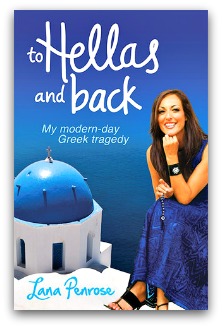
ToHelasandBack_dropshadowFor the uninitiated, I’m the author of To Hellas and Back, which chronicles my true-life tale of following the love of my life to the ends of the Earth (Greece) only to wind up losing my mind.

I then Nutbushed over to the UK to work for a world-renowned pop star and in the process wrote Kickstart My Heart, which details my attempt to negotiate my newly single life à la Bridget Jones—only with an axe through her head. As the book’s subtitle says: “A carnival of dating disasters”.

KickstartmyHeart_dropshadowNow these two books are rife with comedy, tragedy and my own human failings, so why scoop out what’s left of my heart and smear it across my shirtsleeve?

Like I said … a very good question.

More to the story…

The truth is that my story absolutely did not end with me leaving London to re-sample Greece after again being lured by love’s enchantment. In fact what happened next is something that I’ve kept close to my chest because it was downright shocking. I spent considerable time deliberating over whether I should share it at all.

AddictedtoLove_cover_dropshadowBut as many of you displaced writers know, the problem with being an author (one of the many!) is that you can’t seem to stop writing. And life has been more than accommodating in throwing me the odd curveball, the sort of material I feel compelled to purge away with my pen.

And so Addicted to Love was born: a mini-memoir that proves once and for all that truth really is stranger than fiction.

It’s set on the beautiful Greek island of Kythera, where I faced an impossible situation that I can’t go into here without issuing a spoiler alert … but rest assured that it’s gripping and you’ll digest it quite quickly, because it’s been described as “a page turner.”

Finally, an answer (of sorts)

But back to the original question: What motivated me to write this book? Well, thankfully (and unfortunately), experience has shown that there are many people who go through similar triumphs and tragedies to mine, particularly while traversing the globe. I like to connect with such people, and book writing is my way of holding out a hand and saying: “What—you, too?”and “You’re not alone.”

To Hellas and Back, Kickstart My Heart and Addicted to Love form a trilogy of the victories and pitfalls I experienced as an everyday person hurdling life abroad.

Each book can be read as a stand-alone, but I (predictably) suggest that you start at the very beginning to understand the depths of where I wound up.

* * *

Hey, Lana—you wound up here, at the Displaced Nation! That’s not the depths, surely? Readers, any questions for Lana or words of support? If you’re not familiar with Lana’s works, you can find the entire trilogy on Amazon or Smashwords. And don’t forget to follow her advice and begin at the beginning: by going to hellas and back!

Sydney-based (and no longer displaced) author Lana Penrose has had various incarnations, including music journalist, record company promotions gal, music television producer and personal assistant to an iconic pop sensation whose name shall never be revealed unless she’s subjected to Chinese water torture. She also once worked with the now-infamous Simon Cowell, which she today finds really odd. You can read more about her and her works on her author blog and/or follow her on Twitter: @LanaPenrose

STAY TUNED for tomorrow’s post, when we’ll be revisiting one of the earliest themes on this blog, Alice in Wonderland, but from the perspective of an international creative.

If you enjoyed this post, we invite you to register for The Displaced Dispatch, a round up of weekly posts from The Displaced Nation, with seasonal recipes, book giveaways and other extras. Register for The Displaced Dispatch by clicking here!

Related posts:

Image: MorgueFile

LIBBY’S LIFE #75 – Glass houses

We’re house hunting again.

I meant to have a serious talk with Oliver about Sandra’s interior design efforts in our home in Milton Keynes, but before I could find the right moment (you have to pick the right moment to talk to Oliver about his mother) we had a sweet little note from our landlady.

She’s given us three months’ notice.

Now, we always knew the lease would finish this July, and after the scene at last year’s Christmas dinner, we’d been looking forward to leaving. It’s just that we’d have preferred to give notice in writing to Melissa before she got there first.

Following her letter, a call to a local realtor told us we should have started looking earlier for a new house, even if it had meant paying two lots of rent for a month or two to secure a place. The woman we spoke to must have attended the same realtor charm school as Melissa Harvey Connor, because she could hardly keep the laughter out of her voice when I asked what rental properties she had on her books. There was nothing to rent in Woodhaven, she informed me, when I listed our requirements.

“And certainly nothing with three or four bedrooms,” she said with a derisive little laugh, as if instead of requesting a modest family home with grubby, 1980s wallpaper I’d asked her for a Fifth Avenue penthouse with views over the Grand Canyon. “I have a one-bedroomed apartment, six hundred square feet. Would you like to look at that?”

One bedroom? Was she kidding? I know co-sleeping en famille is fashionable at the moment, especially among yummy-mummies who carry their babies everywhere in slings and breastfeed until their children are in high school, but it’s not for me. If forced to co-sleep with four sets of limbs, I know I’d get more quality rest if the limbs belonged to two octopi rather than the four humans I live with.

“I expect something will come on the market between now and July,” was Oliver’s comforting, if unsubstantiated, verdict as he channel surfed to find some English football. Soccer, he calls it now.

“And suppose it doesn’t?” I asked. “What then?”

He found an old game between Man U and Arsenal.

“We could always rent in another town,” he said. “We’re not forced to live in Woodhaven.”

“But…”

Technically, he was right. We have no real ties to this town. Jack hasn’t started elementary school yet. But after nearly two years here, I was starting to feel as if I belonged. Moving even ten miles away would take me back to square one. If we were going to live here for another three years with Oliver’s new job, I would like to feel at home for all of it — not spend the first year making new friends and finding my way around again.
I picked up the local paper to flick through the property pages again, to see if I’d missed anything the first four times I’d read the paper.

“Or we could buy,” Oliver said, his eyes fixed on Wayne Rooney.

I wasn’t sure I’d heard him right.

“Buy? Buy a house, you mean?”

“Yeah. I’ve been promoted a few levels, so the company will subsidise a mortgage. I forgot until now.”

“How very male and forgetful of you,” I told him; he didn’t look very pleased with my assessment. “How very Oliver.”

*  *  *

I’ve spent the last few days poring over property websites and coming up with a list of houses in Woodhaven to look at; we’ve lived in the town long enough to know where is a good place to live and where you need to avoid because it’s near a noisy highway or next to a graveyard. Once I’ve got a shortlist together, I look for a suitable realtor to represent us, the buyers, because without one we’re restricted to gazing at the outside walls and gardens of the houses on that list. Only a realtor can get us through the front doors.

The system’s a bit different over here. There are two estate agents in a house sale transaction: one for the buyer and one for the seller. They share the 6% commission they charge the seller, which is why they can all wear designer suits and drive Lexus cars.

The big realty companies have mugshots of their realtors online, and I browse through them. The men have Italian surnames, woffly moustaches, and thick, wavy hair, while the women are dressed in power suits with pearls and bouffant up-dos, and are in the same awkward photographer’s pose with one shoulder hunched up to ear level. It looks most uncomfortable.

I can’t see any particular photo makes me feel confident in the model’s abilities to negotiate property sales, so I run the cursor around the screen while my eyes are shut, and select the photo where the cursor lands: the cyber equivalent of pulling a name out of a hat.

It’s a woman called Donna in a red jacket and big hair and Quasimodo shoulder pose, and she looks familiar — probably because the For Sale signs outside the houses around town have the same realtor photos on them, I think.

When I speak to her on the phone, though, her voice sounds familiar too. It’s only when she’s taken the details of the houses I want to view, and has made appointments for us to view them in a marathon session next Tuesday, that I realise why.

*  *  *

“I know it’s awkward but I think I should phone the office back and ask for a different realtor,” I say to Oliver. “This woman is a real ditz. She was taking Jack’s details at kindergarten registration and couldn’t understand why a British boy born in Britain wouldn’t have an American birth certificate. She probably has difficulty negotiating her way through the supermarket’s self-checkout, never mind legal contracts of for six-figure amounts. She—”

I see Oliver’s face, and stop talking. It’s the Libby-you’re-giving-me-a-headache face. Actually, if I’m honest, I’m giving myself a headache.

“She’s not that bright,” I finish, rather lamely. “But we’re going to see these eight houses on Tuesday afternoon.” I hand him the info sheets I’ve printed off the internet, each with an appointment time written in the top corner. I feel quite pleased with my efficiency.

Oliver gets his BlackBerry out, checks his calendar, and wrinkles his nose.

“What?” I ask. “Can’t you make it? I thought you said you were free on Tuesday.”

“I am,” he says. He waits a bit then asks, “Are you bringing the kids with us?”

“Probably,” I say. “I know it won’t be much fun for them, but it’s a bit much to ask Maggie to have three of them all afternoon. The twins are a handful now they’re both trying to walk. They’re at that age.”

Oliver flicks through the sheaf of house details.

“And what age would that be?” he asks.

He really is unbelievable. His memory’s getting worse.

“Honestly, Oliver. Don’t you know how old your own children are?”

He pauses, then says: “Of course. Do you?”

“Yes, they’re a year old on…”

I clap my hand over my mouth. I’ve just arranged to take Beth and George house hunting for six hours as their First Birthday treat.

“That’s why I said I would be free on Tuesday,” Oliver says. “ Cake, presents, candles. Not ditzy realtors and fusty basements.”

I’m mortified. Oliver grins at me.

“How very female and forgetful of you,” he says. “How very Libby.”

.

Next post: LIBBY’S LIFE #76 – This old house

Previous post: LIBBY’S LIFE #74  – Quarterly accounts

Read Libby’s Life from the first episode

Want to read more? Head on over to Kate Allison’s own site, where you can find out more about Libby and the characters of Woodhaven, and where you can buy Taking Flight, the first year of Libby’s Life — now available as an ebook.


STAY TUNED for next week’s fabulous posts!

If you enjoyed this post, we invite you to subscribe for email delivery of The Displaced Dispatch, a round up of the week’s posts from The Displaced Nation. Sign up for The Displaced Dispatch by clicking here!

Image: Travel – Map of the World by Salvatore Vuono / FreeDigitalPhotos.net

ENGLAND VS NEW ENGLAND: The arcane laws of taxing and tipping

Libby New EnglandFor just over two years, readers of the Displaced Nation have had the treat of following a novel-in-progress by Kate Allison called Libby’s Life. It’s the running diary of Libby Patrick, an Englishwoman who has trailed her spouse to a town just outside Boston. Libby’s Life is rich in Kate’s observations about life in New England vs. England. In the weeks when she doesn’t publish an episode (she is now up to #75!), we plan to feature posts by writers who are sensitive to the often-subtle differences between new and old worlds. First up: James Murray, a young Brit now living in Boston.

–ML Awanohara

Hey, where did all my money go?

Apparently it’s all to do with my upbringing — I remember with almost preternatural clarity, learning how to shop in an English supermarket. You had a list. You found the things on the list. Where there was an element of choice — this brand of toothpaste or that one — you looked for the special offers.

Only people with money to throw away would ever buy the branded cereal, unless they were on holiday, because really, how much difference is there in taste?

I learned the arts of thrift in Tesco of a Wednesday morning. My guiding words were “2 for 1” and “Special Offer” — and a treat was especially permitted if it was drawn from the holy well of the Reduced section.

Prices — written numbers — were important in those innocent days. They told you clearly and precisely how much you could expect to pay for the things you put in your trolley. You could even add it up as you went around the shop.

Taxed by state taxes

Not so in New England. Here in Massachusetts a quick turn around the supermarket for say $56.59 worth of groceries will actually cost you $60.12 –and unless you happen to be quick with your percentages, you more than likely won’t know how much you’re spending until it’s totaled on the cash register.

This isn’t new to anyone who’s been to pretty much anywhere in the States. Most states have a sales tax, with varying rates, and it’s hardly ever included on the price tag for whatever you’re buying. So if (God forbid) you only have so much cash and you’ve been carefully estimating the total in your head as you go shopping, you might find that you need to leave an item behind when you check out.

I have a healthy fear of being ripped off or paying over the odds. It took me some time to let go of the expectation that I would know exactly how much I was spending — and as soon as I did, I discovered the much larger grey area: tipping.

Price is not only contingent on the face value of an item; it’s also contingent on culture. In the States, as most people know, there is a culture of not paying bar and restaurant staff a living wage, which means that they rely on tips.

The tipping point

When I was tipped as a barman in the UK, it was a perk — a small one. I would have been floored if anyone had tipped me 20 percent and especially floored if they’d insisted on tipping me an extra 60 pence (or a dollar) for each drink I served them — but such is the expectation in New England.

Okay, there are differences to the working culture of bar staff — table service, for one — which mean that the staff actually earn their tips. But it’s often expected even if you order at the bar and do the walking to fetch the food yourself. In terms of hidden costs, a meal out is pretty pricey, especially when there’s that 6.25 percent tax on meals added in there. You basically pay over 125% of the menu price if you’re being a good citizen.

And if you’re coming from the UK, all that this tipping will buy you is a lot of extra attention that you don’t want. The Brits are a private people when it comes to eating out. In our part of the world, good service is characterized by quiet diligence. If we get asked three times in the course of a meal “How is everything?” it just starts to rub us up the wrong way. We begin to ask ourselves: “Why are you asking? Should there be something wrong with it?” They’re just “earning” that tip, but it can initially feel like solicitation.

Tipping also creates unintended outcomes, one being that if you enter smaller bars at peak times and sit down at a table, you will be expected to eat. If you then reveal that you’re actually just after a drink, you might see some of the rudest service you’ve ever experienced. Tables are prime real-estate, where you can cram in the eating customers, which means higher order value, which means more tips.

I’m generalizing of course, but I never used to even think about buying food in most UK pubs, whereas in Boston it’s sometimes hard not to.

Hey, it’s only money!

With the financial anxiety of living on savings (the default position of a new immigrant), I’ve fought the urge to resent the little extra slices of cash that get siphoned off on a daily basis.

My new mantra is not “2 for 1” or “Look for the offers.” Instead I say to myself:

Just let it go — it’s just the way they do things here.

* * *

So, readers, are you surprised as Murray’s sense of displacedness on money matters? Perhaps some repats to the U.S. can also relate? Please leave your thoughts in the comments…

James Murray is a self-described “itinerant Brit.” After a stint in New Zealand, and some travel in Southeast Asia, he and his American girlfriend — now wife — are practicing “staying put” in Boston, where James is pursing a career as a wordsmith for marketing and fiction, and as a non-professional theatre director. He is also a Utopian idealist and SingStar enthusiast. You can find more about his views by reading his blog, Quaint James, and/or following him on Twitter: @quaintjames.

STAY TUNED for next week’s fabulous posts, including a new giveaway!

If you enjoyed this post, we invite you to register for The Displaced Dispatch, a round up of weekly posts from The Displaced Nation, with seasonal recipes, book giveaways and other extras. Register for The Displaced Dispatch by clicking here!

Related posts:

Images from MorgueFile

JACK THE HACK: You’re thinking about writing a travelogue or memoir. Should you start with a blog?

JACK THE HACK _writingtips

Today we introduce a new monthly column by Jack Scott, who was a Random Nomad for the Displaced Nation way back when we started this site. After an expat experience that was literally something to write home about, he and his partner, Liam, have traded in the dream for a less pressured existence back in their home country. We’re thrilled to have recruited Jack as a writing guru for all of you wannabe authors who are hacking away at travelogues-cum-memoirs — perhaps even as I type this?!

— ML Awanohara

Do you think it helps to write a blog with the purpose of publishing a travelogue or memoir in mind?

It’s a good question — and for me, the short answer would be a simple no.

But the long answer would be a qualified yes.

Let me explain.

When Liam and I first flogged off the family silver, jumped the good ship Blighty and waded ashore to Turkey, we planned to put our feet up and watch the pansies grow. Twelve months into the dream, we began to feel, well, a little bored.

It was a benign type of boredom — not the terminal kind that leads to low self-esteem, heavy drinking, chocolate binges and serial infidelity.

But it was boredom nevertheless.

Life before expat-dom

In the wicked world of the waged, I had been a busy bean counter, mismanaging a large public sector service. Liam had been shackled to a cut-and-thrust slash-and-burn private sector company, with a grueling 12-hour day as his reward.

My boss was off with the fairies, his was Lucifer in lace. Work gave me a routine on auto-pilot, while it nearly drove Liam over the edge.

In quite different ways, we were both fully (if unhappily) occupied.

In our brave new world of idleness and long Anatolian summers, lazy days in Eden turned into one perpetual holiday. Our old life withdrew into the fog of a hazy past.

The trouble is, life isn’t supposed to one long holiday.

Like so many before us, we parachuted into paradise thinking entirely of the destination. We gave very little thought to what we might do once we got there.

Not another beautiful day!

It’s an all too common mistake. For every able-bodied emigrey (well, those with brains and bones still in reasonable working order), the trick is to find a meaningful occupation: something to break up the unending monotony and keep them off the sauce.

It really doesn’t matter what it is: turning water into homemade wine, feeding the five thousand street dogs or raising your sex life from the dead — whatever gets the juices flowing.

For me it was starting a blog to tell an unsuspecting world about our encounters with the mad, the bad, the sad and the glad along the highways and byways of the whitewashed ghetto where we lived.

A book really never entered my mind.

Then, quite by chance, my irrelevant ramblings became one of the most successful English-language blogs in Turkey.

You could have knocked me down with a feather boa, I was that surprised.

It was only then that I began to think there just might be a book in me.

Remarkably, there was.

Re-energized!

It’s quite amazing how the fear of terminal boredom can re-energize a novice expat. In just 12 months, I created the blog, designed and published a Web site, and wrote my debut book. For most of this meandering expedition, I had absolutely no idea what I was doing. A combination of trial and error, intuition, intravenous wine, gentle encouragement from an inspirational publisher and not-so-gentle cajoling from Liam turned an unplanned and uncoordinated series of chess moves into the production of a well-received book that I’m proud to have written.

My probation was illuminating and taught me a great deal — about writing, process, content, plot, characterization, networking, promotion and engagement.

You see, hindsight is a wonderful thing. Looking back, it seems only too obvious that blogging was a great audition for my writing. I had never written before (unless you count a series of unread and unloved business reports rotting away on dusty book-shelves in municipal vaults). Writing my blog was a safe and fun way to experiment and to build up an audience at the same time. Reading through my back catalogue, I can see quite clearly how I evolved as a writer.

WRITING TIP FOR EXPATS NO 1 (aka the long answer to the question at the top of the conversation):

It might be useful to start up a blog if you want to write a travelogue-cum-memoir. It’s not the Law, but blogging can really help.

And what about Liam in all of this? Did he develop suicidal tendencies or did he cope better with the ever-constant Aegean vista and nightly sunset show?

Well, apart from re-discovering a love of composing and tickling the ivories, he acquired a new skill of his own: cracking the editor’s whip, something he did (and still does) with rather too much pleasure than I (or he) would care to admit.

Us writers put up with so much, we really do.

* * *

Readers, any comments for further questions for Jack the Hack? He’ll be back next month with some more writing tips…

Jack Scott’s debut book, Perking the Pansies — Jack and Liam move to Turkey, is a bitter-sweet tragi-comedy that recalls the first year of a British gay couple in a Muslim country. For more information on this and Jack’s other titles, go to his author site.

STAY TUNED for tomorrow’s post, on NEW England…

If you enjoyed this post, we invite you to register for The Displaced Dispatch, a round up of weekly posts from The Displaced Nation, with seasonal recipes, book giveaways and other extras. Register for The Displaced Dispatch by clicking here!

Related posts:

Images: from top, clockwise: Hand with pen / MorgueFile.com; Boats in King’s Lynn, Norfolk / MorgueFile.com; Jack Scott, used with his permission; Turkish boats / MorgueFile.com

LIBBY’S LIFE #74 – Quarterly accounts

April 1, 2013.
One quarter of the way through the year. Time to check in with those New Year’s Resolutions. In the wee hours of January 1st while being kept awake by the neighbours’ illuminated, inflatable Christmas decorations, I promised myself I would do certain things this year.

In no particular order:

1. Talk to Maggie about her taking permanent custody of Fergus.
Check. Not only did I talk to Maggie, but the mission was successful. Maggie and Fergus are happy, I am happy, and as Jack is no longer snacking on high-calorie, gourmet dog biscuits, the paediatrician is also happy. Jack, however, still suffers from Fergus-withdrawal symptoms. Would a goldfish or two fill the pet void, I wonder? Or is Jack merely suffering from dog-biscuit-withdrawal symptoms? We could give the goldfish a try, I suppose. If it turns out it’s pet food Jack misses, he’ll have a hard time putting on weight if he starts pinching Goldie’s fish food.

Unless Sandra comes to visit and she buys him a piran—

No. Don’t even think about it.

2. Check out the local elementary school and enrol Jack for kindergarten.
Another tick in another box. Jack will start kindergarten after Labor Day, just six months from now. After last week’s school assembly for the parents of prospective kindergarteners, when we were all assured our offspring were Special And Important, we were herded into a series of classrooms where we sat on miniature chairs, banged our knees on miniature desks, and handed over paperwork to assorted admin assistants, to enlist our children in the academia sausage machine enrol our children in the Class of 2026.

The admin assistant to whom I gave my paperwork was, not to put too fine a point on it, not very bright.

She had a clipboard with a sheet of paper that said “Kindergarten Registration Checklist.” Nothing complicated on the list, until we came to the item that requested “US Birth Certificate.”

I handed her Jack’s, which, as he was born in Milton Keynes, was issued in the UK.

She looked at it, turned it over and back again, then asked, “Which state was he born in?”

Assuming she meant “State” in the sovereign sense, I said, “United Kingdom.”

A pause while she held the certificate up to the light.

“Is that like Puerto Rico or Guam?”

“No. It’s like England or Scotland.”

This time, a frown.

“So, it’s, like, not a state in the USA?”

“No, it’s Great Britain.”

“Britain? You mean British?”

I nodded, daring to hope we were getting somewhere. Silly me.

She jabbed at the clipboard with her pen. “I need a US birth certificate.”

“But I can’t give you one.”

“Then I can’t complete the registration form. Can you get a US birth certificate?”

For the love of God. I saw the Principal walking by and called out to him:

“Could you please explain to this lady why I haven’t got an American birth certificate for my son and why I’m unable to get one, and why it doesn’t matter?”

Eventually we got it sorted out.

As I signed the forms that condemned Jack to thirteen years of compulsory schooling with no parole, I asked the woman, “Do you work here?”

The idea that our local taxes paid her to work among impressionable children was quite alarming.

She shook her head. “I’m on the PTA, just volunteering tonight.”

That was a relief.

“So you know Jodee Addison?” I asked.

“Of course! We did our realtor training together.”

Realtor? Aha! It was all becoming clear now.

“What about Melissa Harvey Connor? Do you know her as well?”

A beaming smile. “Everyone knows Melissa! Is she a friend of yours?”

I tucked all Jack’s paperwork carefully in a manilla folder, then stood up to let the next person in the queue have their turn in the torture chair.

“Absolutely not,” I said.

Talking of Melissa: 3. Find another house.
Yes, we really should get round to finding somewhere else. It would mean paying two lots of rent if we found somewhere now, though, because Melissa won’t release us from the lease early.

The cow.

4. Make friends based on their personalities rather than nationalities.

And — check! My new friend from kindergarten registration evening, Willow Reeves, is not English, but as American as they get.

After we’d both finished being tortured by the PTA, Willow said to me “Got time for a coffee?”

Only she didn’t say “coffee.” She said “cawfee.”

“Sure,” I said. Because I can say things like “sure” now and not feel like a Brit trying to be American.

“Maxwell Plum?” she said. “The owners are friends of mine.”

Willow Reeves and Anna Gianni. Yes, that made sense.

5. Go to England and see what sort of a dog’s dinner Sandra has made of our house.
Over Maxwell Plum espressos — not a good idea, in retrospect; those babies pack more caffeine than a Red Bull reduction, and it was already 8 p.m. — Willow and I exchanged life stories. She’s originally from Brooklyn, New York, which is why we were having cawfee together instead of coffee.

“So you’re telling me,” she said, “that your mother-in-law, who gave you food poisoning at Thanksgiving, regifted you a pit bull for your wedding anniversary, and bought a tarantula for your three-year-old, is living in your house in England? And you haven’t checked on that house since she moved in?”

I gazed down into my espresso. “Yep.”

Willow leaned back in her chair. “Looks are so deceptive,” she said. “You don’t seem insane on the outside, but you must be. Aren’t you worried about your home?”

“Of course,” I said. “But what can I do? I’m 3000 miles away, and she’s my husband’s mother, not mine.”

“You need to visit,” Willow insisted. “I had some friends who sublet their apartment in New York while they went travelling for a year, and the subtenants did all kinds of shit to the apartment. Guess who had to pay to put it right? Not the subtenants.”

“What sort of ‘shit’?” I asked.

“The absolute literal kind. These guys kept adopting stray cats. When the ASPCA went in, there were 37 in this one-bedroomed apartment and only two litter trays.”

I shuddered.

“And you say your monster-in-law likes animals?” Willow said. “Well, honey, I just don’t know why you’re sitting here having cawfee. If it was me, I’d be heading over to Logan for the next plane home.”

April 5.
For the last few days, have been thinking over what Willow said. She’s right. It’s time for another trip home.

Oliver and I need a little talk.

.

Next post: LIBBY’S LIFE #75 – Glass houses

Previous post: LIBBY’S LIFE #73  – Stuck in my craw(fish) 

Read Libby’s Life from the first episode

Want to read more? Head on over to Kate Allison’s own site, where you can find out more about Libby and the characters of Woodhaven, and where you can buy Taking Flight, the first year of Libby’s Life — now available as an ebook.

 STAY TUNED for Tuesday’s post!

If you enjoyed this post, we invite you to subscribe for email delivery of The Displaced Dispatch, a round up of the week’s posts from The Displaced Nation. Sign up for The Displaced Dispatch by clicking here!

Image: Travel – Map of the World by Salvatore Vuono / FreeDigitalPhotos.net

Citizenship limbo: How long-term expat life has impacted my status back home

England-Korea_ValerieAh, the no-man’s land of the expat life — if you don’t know what I’m talking about, then you haven’t been abroad for long enough. Nor would you, I’m afraid, qualify for Displaced Nation citizenship. One person who does know what I’m talking about, and would more than qualify, is Valerie Hamer. She likes to refer to herself “British by birth and a nomad by choice.” Here is her bittersweet tale of where that attitude has taken her…

— ML Awanohara

Having lived in Asia for nearly 13 years, I’ve grown accustomed to the standard opening line: “Where are you from?”

However, as the years have passed, my factual auto response of “England” has made me uneasy.

I consider myself a global nomad: an international citizen, albeit one with a passport identifying my roots in the Commonwealth realm.

Plus, I dislike labels of any kind because they invoke stereotypes: and when it comes to nationality there are only so many questions — do you have afternoon tea at 4:00? do English gentlemen really wear bowler hats? — a person can take!

Not British any more…except at the core!

The truth is, I don’t feel particularly British (whatever that really means) anymore.

In fact, I’m so out of touch I have to spend time online researching current UK news on weather, music, sport fashion and politics — because knowing these things is what is expected of me.

Foreign is what I am all about after all, and that isn’t ever going to change.

The blurring of one’s national identity happens over time. In the first couple of years of the expat life, we crouch on the edge of our host culture, secure in the knowledge that the familiar is only a plane ride away. We make cross-cultural comparisons, some of them invidious; have adventures; reminisce; and sometimes escape for brief periods of intense reunion with the motherland. The possibility is always open for ending the foreign adventure and resuming the life left behind.

Over time, however, the attachment to the homeland fades and in the process, most long-term expats mutate into something closer to the global citizen. Take my case: I am now a quasi-fraudulent impersonation of a bona fide English woman.

But, even though I have lived abroad for over a decade, I have never seriously doubted my citizenship. Great Britain is, after all, the place where I was born and raised. The island I could return to on my terms, without fear of any impositions on my status or freedom.

After all, I continue to be a British citizen, right?

No right to investment

Not quite, as it turns out, for while I have been busy living as a temporary resident of South Korea, times have been a-changing back home in Britain.

A standing joke amongst my family and friends is that I manage to devalue the currency of any country I choose to live in. I have the same effect on UK interest rates, too, which is why I’ve made a habit of checking out the best deals and making the necessary transfers every time I visit.

Suddenly, though, this became impossible! New government rules have outlawed British non-residents from investing their cash in the country. How dare we?!

I chose a Korean bank instead, where thankfully I haven’t confronted similar issues — though it should be no surprise to hear that the interest rate dropped by half during my first year in the scheme!

Little right to health care

I rarely get ill, but sometimes I’ll make a quick trip to the doctors when back in England. Most health care services are free at source, and even temporary visitors can make use of any emergency facility. Those of us with family in England can see a general practitioner as long as a family member is on the books.

It’s never been a problem until now.

Last summer I called the office of the GP my father uses and was interrogated quite fiercely by the receptionist. I won’t bore you with the details: suffice to say, as a non-resident I need to be close to death before the medical profession will give me the time of day.

I can’t complain about being denied access to a system I don’t pay into, but the experience further defined me as an alien in a place where I used to belong.

No right to drive?!

One area that shouldn’t be a problem is driving in the UK, right? Last summer I decided to hire a car for my visit. I hadn’t been behind the wheel for ten years but had kept my license updated, registered to my family’s UK address.

After shelling out for a couple of refresher lessons and an expensive insurance policy, I felt confident that all was good — and it was, that is, until I discovered quite by accident that the insurance had actually been useless.

Who knew that my UK license grants only permanent residents the right to drive? Living outside the country means you forfeit the permission to use, or even renew, the license.

It makes sense when you think about it — but the assumption that we are good to go without an international permit is pretty widespread among us British expats.

* * *

These are just a few examples of show how ignorant I was of the gradual erosion of my rights to access UK services and systems — an ignorance I suspect I share with many other displaced Brits.

Ultimately, those of us who occupy a liminal space between two cultures need to come to terms with the idea that we may truly belong in neither.

* * *

Readers, any comments or questions for Valerie? Can you relate to her “floating world” status?

Valerie Hamer is a global nomad with a severe coffee addiction and a love of the written word. Her first book, Picky, Sticky or Just Plain Icky? A Blind Date Conversation: South Korea, came out last year; we gave it a two thumbs up. Hamer writes a popular blog, Faraway Hammer Writing, which is named for how people in Asia tend to pronounce “Valerie Hamer”. You can also follow her by that moniker on Twitter: @Farawayhammer.

STAY TUNED for another guest post, by Kat Selvocki. Last time we heard from her, she was on her way to start a new life in Australia. And now…

If you enjoyed this post, we invite you to register for The Displaced Dispatch, a round up of weekly posts from The Displaced Nation, with seasonal recipes, book giveaways and other extras. Register for The Displaced Dispatch by clicking here!

Related posts:

images: (clockwise, starting top left) Ploughman’s lunch (courtesy Flickr); traditional Korean meal; Korean marchers; Seoul (courtesy Flickr); Thames view of London; Queen’s Guards marching; Valerie Hamer. (Non-Flickr photos from Morguefiles.)

LIBBY’S LIFE #73 – Stuck in my craw(fish)

Beth is in possession of her wooden box again. I, however, am in possession of a new enemy. Ah well. I suppose it’s about time.

Last week I met Crystal’s mom, Jodee Addison. In the nursery school parking lot, we returned our respective offspring’s stolen Valentine gifts as if exchanging ransom and hostage — each of us with a different opinion of which item was hostage, of course. Ms. Addison, whom I was liking less and less each minute, was determined to have the last word.

“Crystal was heartbroken this morning when I told her she had to give the box back,” she said, holding tightly onto said box even as I tried to take it from her. “She wouldn’t get dressed or eat her breakfast, so I ran her a bubble bath to soothe her, but bless her heart, she was so upset about the box she threw all her American Girl dolls and their clothes in the bathtub.”

Jack has had a lucky escape from this girl, if you ask me. I’d just seen her going into school wearing a pink plastic tiara and a T-shirt with the word “Princess” on the front. While I object to calling small girls “princess” on the grounds they need no further encouragement in that department (“Princess” is merely a euphemism for “Spoiled Brat”) it was Crystal’s Coach handbag that bothered me. All the other children at nursery school have Angry Birds or Dora The Explorer backpacks, but no — Crystal has a Coach handbag. It might be a cast-off from her mother, but I wouldn’t bet on it.

And I’m meant to feel sympathetic because she can’t have one of my own daughter’s Christmas gifts?

“Perhaps she needs some help,” I suggested, firmly taking hold of Beth’s wooden box.

Jodee sighed and raked French-manicured nails through her ash-blonde extensions. Carefully, so as not to pull them loose. “She has anger issues.” (Trendy-Mom-speak for “Temper tantrums”.) “I hear there’s a really good paediatric therapist in town. Maybe I should contact her.”

I nodded, with what I hoped was a sincere expression on my face. “On the other hand, I hear Supernanny is doing a new series. Maybe you should contact her instead.”

It took a few seconds for the penny to drop, by which time I was safely locked in my car.

Well. Honestly.

*  *  *

So, that was last week. This week, it’s time to set a new era in motion: tonight, I am going to the local elementary school for Kindergarten Registration Evening.

Kindergarten in American schools is what they used to call Reception Class when I was Jack’s age. It’s ABCs, 123s, fingerpainting, and nap-time. The children start when they’re five-going-on-six, and only do half a day for the first year, so the daily routine won’t be much different from how it is at the moment. Nevertheless, I feel quite emotional at the prospect. My baby is going to Big School.

I get ready with more care than usual, and even remember to put makeup on. When you’ve lived in Woodhaven long enough, you know not to turn up at public events in the first rags that come out of your closet, because all the other parents will be sizing you up and making decisions about whether, based on his mother’s appearance, your child will be a suitable playmate for their child.

It’s very stressful for a slob like me.

I find the school OK; I’ve driven past it numerous times in the last eighteen months on the way to the supermarket. This is the first time I’ve been inside the school gates, however, never mind inside the building itself, and although I’ve arrived in plenty of time before the official start of 6pm, there’s already a Mom-war going on for prime parking spaces. I find a space easily enough at the back of the car park, and stay there, watching the power struggle.

The parking lot is a heaving mass of SUVs. Small Subarus driven by mousy moms are being bullied by outsize Lincoln Navigators — everyone round here has a 4-wheel-drive car because of the Massachusetts winters — which in turn are looked down upon by Porsche Cayennes. “I’m a mother of three so I have to drive a big car, but at least it’s a Porsche” is what those cars say. Lincoln Navigators generally have bumper stickers advertising the local high school lacrosse team, and are driven by only-just-right-side-of-forty blondes with a cellphone permanently attached to one ear. Occasionally, a large pickup truck with plumbing advertising decals comes along, and all other cars stop and let it pass. You don’t argue with pickup trucks. They’re the T-rexes of Car World.

As I sit in my nondescript Ford, a monster black SUV pulls into a slot two rows in front, and, true to stereotype, a woman with blonde hair extensions gets out with a cellphone stapled to the side of her head. I idly gaze at her for a moment before realising who it is; then I swear loudly (eliciting a startled look from the man who is getting out of the car next to me), slink down behind the steering wheel, and hope Jodee Addison doesn’t notice me.

For some reason, it didn’t occur to me that other parents from Jack’s nursery school would be here tonight, but now I think about it, everyone from his current school and also from Patsy Traynor’s, where he went last year, will be registering for kindergarten this evening.

After a few minutes, I peep cautiously over the dashboard. It’s a couple of minutes before six, and the parking lot is magically empty except for a few parents power walking towards the school’s front door. I clamber out of the car and attempt to power walk too, but my high-heeled boots won’t go faster than a teetering hobble.

Inside the school, I follow the other straggling parents to the gymnasium, where all the seats are taken and the noise is intense. Front rows are occupied by the hair-extension types, Jodee Addison included, still yapping on their cellphones; middle rows are full of married couples, the men in their work suits, looking stiff and uncomfortable and trying to loosen their ties, here to show that they are caring fathers who take an interest but really longing to be at home with a Michelob and ESPN; and the back rows are occupied by mothers on their own with two or three small children in tow. The children are either crying, crumbling Goldfish crackers on the floor, or bobbing up and down on their seats to play peek-a-boo with the people behind them. I send up a silent “thank you” that Oliver was able to leave work early today, and I don’t have to join this throng of RMS Titanic third-class inmates.

And then, at the very back, in the “standing room only” section, are people like me who didn’t quite make it on time. We are doomed; classified already as parents who aren’t as serious as we should be about our children’s education.

A bearded man approaches the lectern at the other end of the gym and introduces himself as Dr. Felix Roth. He is the Principal of this establishment, he says, and has been an Educator for forty years now.

The woman standing next to me, a curly redhead about my age with heavy eye makeup and an armful of silver bangles, shuffles impatiently.

“We believe your children are the most precious resource we have,” Dr. Roth is saying. “They are all special. We truly believe that. We nurture that sense of being special, that self-esteem, that feeling of being important to the community, in every single child.”

He introduces the head of the PTA, and I’m not surprised to see that it’s Jodee Addison. She must have older kids here.

“Special and important,” she begins, as she adjusts the lectern’s microphone. “That’s how this school makes our kids feel. It’s how my kids feel.” Yes. I know this already. “Every morning, the teachers at this school do affirmations with our kids to make them believe the world is their oyster.”

The redhead snorts softly, and I glance sideways at her. She smiles apologetically and leans across to whisper.
“Last year, that PTA woman got it wrong. She said ‘lobster’ instead of ‘oyster’. The sad thing is, I think I was the only one who noticed.”

Jodee’s finished her little seafood speech, and plays a Powerpoint presentation of five-year-olds with gappy mouths and inky fingers doing various kindergarten activities. Then she cuts to a short video of them chorusing “We are all Special and Important.”

My neighbour covers her mouth with her hand, but not before a giggle escapes. I meet her eyes, and can’t help giggling too.

“Did you ever hear such a crock?” she says as a round of applause bursts from the more earnest parents. “And they wonder why kids today are such entitled narcissists.”

I like you, I think. Another voice of sanity in Woodhaven.

I hold out my hand. “Libby Patrick,” I say. “I couldn’t agree more with you.”

She takes my hand and shakes it.

“Willow Reeves,” she says, and smiles. “Thank God for a like-minded parent.”

So, although I might have made a new enemy this week, I think I made a new friend as well.

Hey. Win some, lose some.

.

Next post: LIBBY’S LIFE #74 – Quarterly accounts

Previous post: LIBBY’S LIFE #72  – Puppy Love

Read Libby’s Life from the first episode

Want to read more? Head on over to Kate Allison’s own site, where you can find out more about Libby and the characters of Woodhaven, and where you can buy Taking Flight, the first year of Libby’s Life — now available as an ebook.

 STAY TUNED for Tuesday’s post!

If you enjoyed this post, we invite you to subscribe for email delivery of The Displaced Dispatch, a round up of the week’s posts from The Displaced Nation. Sign up for The Displaced Dispatch by clicking here!

Image: Travel – Map of the World by Salvatore Vuono / FreeDigitalPhotos.net