The Displaced Nation

A home for international creatives

Tag Archives: The Netherlands

GLOBAL FOOD GOSSIP: When facing repatriation after 18 years of the expat life, bring on the comfort food!

Serial expat (and soon to be repat!) Joanna Masters-Maggs is back with some juicy global food gossip to share.
Global Food Gossip 062315
“Oh, I see, it’s that time again, is it?” My husband entered the kitchen and sniffed the air. “It’s smells like Christmas, but it’s 30 degrees outside. “You’ll be wanting tea with that gingerbread?” Sighing he reached for the kettle.

Now, I’m not saying that expat life calls for comfort food more than any other lifestyle, but it does have it’s own rhythm of needs. For me, the main calls for comfort come during the entry and exit period of a new location.

I am now facing moving on from France—and frankly, even my beloved madeleine is not up to the job.

I need the kind of comfort food that warms up the winter, as neither the glorious weather nor the proximity of pools and beaches here in Provence can distract me this time.

Bikini be damned, my next move will be a return to England.

It is hard to imagine that repatriation can be more alarming than a move from one foreign country to another. Yet, after 18 years abroad and seven intercontinental moves, I am discovering that it is.

Our house in England is our holiday home, and we have few of the friends and none of the social networks we would have built had we stayed put. All the friends we have made at various offices, playgroups, schools, dog training groups and sundry activities are scattered across several continents. We will be in the interesting position of not belonging, while giving every outward appearance of doing so and no possibility of joining a repat support group (do such things even exist?).

You understand why I am reaching for the gingerbread now?

gingerbread-repatriation

Gingerbread by roxymjones via Pixabay.

The act of making gingerbread is a comfort in itself. Just watching the butter, syrup and sugar melt together and swirl in the pan, gives one time to relax and think.

Mm…as I watch the ingredients swirl, I’m thinking about cultural comfort foods of locations past.

Morning sickness in New Orleans calls for Morning Call

For anyone into comfort eating, my former home of New Orleans is a dangerous place. There are just too many temptations along the path of righteous eating, beginning with crawfish stew, jambalaya, seafood gumbo…

But it was beignets with coffee from Café du Monde or Morning Call (the less touristy choice, favored by locals) that became my preferred source of solace.

"City Park 12-12-12 Morning Call Coffee Beignets Dunk," by Infrogmation of New Orleans (CC BY 2.0).

“City Park 12-12-12 Morning Call Coffee Beignets Dunk,” by Infrogmation of New Orleans via Flickr (CC BY 2.0).

Of course life in New Orleans is pretty fabulous, especially when you are lucky enough to live in the French Quarter and see the life that exists behind the touristy façade. But comfort requirements are still there. Coffee and beignets are a fabulous hangover buster for one thing and for another they sure beat morning sickness into retreat while providing a good dose of the additional calcium an expectant mum needs. For me, the beignet and café au lait was the multi-tasking workhorse of comfort foods.

When it came time to leave the Big Easy, the beignet soothed my sadness, and I was careful to ensure I had a good recipe (see end of post) should it be needed to help with my adjustment to the next location: Den Haag.

The only problem, of course, with making your own beignets is the terror one feels when cooking with large quantities of hot fat—so it was with relief that I quickly discovered a more convenient way to ease my emotional entry into The Hague.

A cold arrival in Holland calls for oliebollen

We arrived in the middle of a particularly cold Christmas season. You can only imagine my delight at catching my first whiff of oliebollen and appelflappen, which fills the air that time of year.

Oliebollen is a Dutch style of doughnut that is traditionally eaten on New Year’s Eve, and appelflappen are a kind of apple beignet—YES!—served with sugar and cinnamon and sold from little stands throughout the Christmas season.

What a happy Christmas that turned out to be. What joy to have a little bag of those to warm both your chilly fingers and the depths of your heart.

How can you not love living in such a place?

Dumpy in Brazil calls for Disk Cook

And then there was Brazil. Now Brazil provided a different sort of comfort food to get me through the hard times. Being pregnant and feeling dumpy in a land full of girls from Ipanema in tiny bikinis isn’t exactly fun—but then, suffering from the heat, I cut off all my hair. Short.

You don’t do that in Brazil. It’s akin to cutting off your femininity. It’s ugly.

Happily unaware of this and feeling as though I was channeling mid 1990s Meg Ryan, I returned home from the hairdresser. My housekeeper took one look of me and clapped her hands loudly to her cheeks with a look of pure horror. After a slight pause and in an unnaturally high voice, she said “Madame looks beautiful”—before making her excuses and disappearing for half an hour.

The next few days were a bit unsettling as Maria avoided eye contact. It wasn’t that I minded her thinking my hair was ugly, more that I was now aware of how little I understood the culture. How many other things was I getting wrong?

As insecure as it makes me sound, I decided not to compound one aesthetic error with that of gaining weight, too. I avoided thoughts of my beignet recipe and my go-to home remedy of buttered toast. I also steered clear of the local padarias (bakeries). Instead I filled up on fruit.

But the thing is, comfort food is the kind of thing that finds you and it doesn’t have to come in carbohydrate form. You just need to be open to it: it being a well-rounded flavor that puts your taste buds at ease.

The comfort food of Brazil found me rather quickly. Disc Cook is a service which will collect food from a huge list of restaurants and deliver to your house. A new restaurant opened in our area and we decided to try it out. Imagine my surprise when the healthy sounding chicken liver and spinach dish turned out to be my next comfort food.

Disk Cook screenshot.

Disk Cook screenshot, taken 24 June 2015.

No, hear me out. Full-flavoured meat that melted in the mouth, cooked with balsamic vinegar and pine nuts. Yes, I know it sounds odd, but it was so richly satisfying, I couldn’t get enough of it. I even took comfort in the cold leftovers of that dish, straight from the fridge.

In honesty, however, comforting as it was, it can never qualify as true comfort food. Firstly, it comes from a good restaurant and true comfort food should not be exclusive. Secondly, I was never able to find or make up that recipe for myself. If it is too hard to lay your hands on, it isn’t comfort food. Comfort food cannot be a cause of any stress—other than the weekly weigh-in, of course.

Enough of my unabashed wallowing, and now for my beignet recipe

As I write, I am beginning to feel a little nostalgic and rather sad again. The problem with being in a constant state of serial expatness is that each time you leave one place, you remember the pain of leaving the last. It is a sort of travellers’ emotional add-on game. Sometimes I have to walk away from it. That is true now.

Perhaps next time I can tell you how I found solace from homesickness and last-location-sickness in the foods of Malaysia, Venezuela and Saudi.

(If you have had enough of this unabashed wallowing, I apologise—but would politely point out that at least I haven’t descended to mentioning visits to certain popular fast food chains, which I have no doubt we perpetual expats have all indulged in at least once or twice. For that we must be grateful.)

New Orleans-style Beignets, adapted from The Ultimate Southern Living Cookbook
NOTE: I made the conversions to grams years ago. Metric rocks!

Ingredients:
1 package dried yeast
3 tablespoons warm water (hand hot)
180 ml milk
150g sugar
28g shortening (or lard—which I prefer)
1 tsp salt
375g all-purpose flour
1 large egg
Vegetable oil
Powdered sugar

Method
Combine the yeast and water and leave to stand for five minutes.

Combine the milk with the sugar, shortening and salt in a saucepan over a low heat until the fat melts. Remove from the heat and leave to cool until again hand hot. Very hot liquid will kill the yeast and so it will not rise. If your hand can tolerate the heat, so too can the yeast.

Combine yeast mixture, liquid mixture, two cups of the flour and the egg in a large mixing bowl. Beat at medium speed with an electric mixer for two minutes. Gradually stir in as much of the remaining flour as you need to make a soft dough.

Put dough onto a lightly floured surface and knead until smooth and elastic (about 10 minutes). Place in a buttered bowl, cover and leave to rise in a warm place for one hour until doubled in size.

Punch dough back, turn onto a floured surface and roll out into a 30 x 25cms rectangle. Cut into two-inch squares and place them onto a lightly floured surface where they can be covered and left to rise until double in size (about 45 minutes).

Pour oil into a pan to a depth of about 3 or 4” and heat to 375° F (190 °C). Fry the beignets four at a time until golden. Drain on paper towels. Sprinkle with icing sugar and serve warm. YUM.

* * *

Readers, we invite you to continue the food gossip! What new comfort foods have you added to your list on your moves around the globe? And do you have any words of comfort for Joanna on her imminent repatriation? Be sure to let us know in the comments!

Joanna Masters-Maggs was displaced from her native England 17 years ago, and has since attempted to re-place herself in the USA, Holland, Brazil, Malaysia, Venezuela, Saudi Arabia, and now France. She describes herself as a “global food gossip”, saying: “I’ve always enjoyed cooking and trying out new recipes. Overseas, I am curious as to what people buy and from where. What is in the baskets of my fellow shoppers? What do they eat when they go home at night?”

STAY TUNED for the next fab post!

If you enjoyed this post, we invite you to register for The Displaced Dispatch, a round up of weekly posts from The Displaced Nation—and much, much more! Register for The Displaced Dispatch by clicking here!

Related posts:

CULTURE SHOCK TOOLBOX: Expats, don’t throw away your old coping tools—they may come in handy for your new life abroad

For her column this month, transitions enthusiast H.E. Rybol interviews displaced creative Jessica Lipowski about her culture shock memories and coping strategies.

June 2015 Jessica Libowksi Culture Shock Toolbox
Hello, Displaced Nationers! I’m excited to introduce you to road-less-traveled (#TRLT) buff and foodie Jessica Lipowski. Originally from Detroit, Michigan, Jessica moved to Amsterdam in February 2011 to be with her Dutch boyfriend, Matthijs. She has worked in a variety of jobs related to travel and is currently writing a non-fiction book that documents the stories of 83 entrepreneurs from 50 different countries who live in Amsterdam. They all have in common that they own restaurants in the city.

Jessica, who appreciates Amsterdam’s wide range of cuisines, has developed a curiosity about how all of these people ended up in the same industry, in the same city and with similar passions. As she writes on her site:

Why Amsterdam and how did so many people from every corner of the world end up in this small capital city? What drew them to the land of tulips and windmills?

But our focus today is not these expat restauranteurs but Jessica herself. While sampling Amsterdam’s rich cultural stew, has she ever had to put down her spoon owing to culture shock? And what tools did she use to restore her appetite?

* * *

Hi, Jessica, and welcome to the Displaced Nation. Can you tell us a little about your background?

I am originally from the United States, born and raised in the metropolitan Detroit area. I spent the first 23 years of my life in Michigan, apart from the two summer internships I completed in Washington D.C. In February 2011, I moved to the Netherlands and have resided in Amsterdam for the past four years.

In the context of transitioning from the United States into Europe, did you ever put your foot in your mouth? Can you share any memorable stories?

While working in sales and marketing for an online group travel platform, I often had to attend business meetings and conferences in Europe. I was a regular at one of these events, which took place four to six times a year. I soon developed a friendship with another regular, a Dutch woman, whom I’d always look forward to seeing. On one occasion when we met, she complimented me on the dress I was wearing. I thanked her and then, as I leaned in to share with her where I purchased the dress (I wanted to tell her I’d paid a relatively cheap price), she cut me off and said: “Oh, Jessica, you should never tell someone details like that.” I honestly thought she would appreciate hearing my story, but it turned out to be the kind of information that is supposed to be shared only with close friends.

I got a bargain! Shhh... Photos via Pixabay.

I got a bargain! Shhh… Photo credits: “Street signs of the nine Straatjes” on Wikimedia by JSpijer via Wikimedia Commons (CC BY-SA 3.0); other two photos via Pixabay.

What lessons can you offer to the rest of us from this story?

Instead of being offended, I smiled and apologized. I told my Dutch business acquaintance how much I appreciated that she’d corrected me, and I meant it sincerely, as it would keep me from making the same mistake again in future. I think a smile and an apology can go a long way in such situations. Of course it might have helped if I’d done more research beforehand on social customs and norms in various European countries. But if you haven’t done your research, then don’t be too proud to rely on business colleagues or local friends for advice.

Looking back on your transition from the United States to Holland, can you recall any situations that you handled with surprising finesse?

I surprised myself with my commitment to learning Dutch. My first exposure to the language occurred when I met Matthijs, who is now my partner. When we started dating, I used Rosetta Stone intermittently; but then, once I made the move to Holland, I started taking private lessons once a week. Expats can get by quite easily in Amsterdam speaking just English as the Dutch start learning English at a young age and many speak the language quite well. However, I felt it was important to learn Dutch so that I could speak it with my partner’s family. It’s not easy but can be done. It all comes down to practice, practice, practice.

If you had to give advice to someone who just moved to a new country, what’s the tool you’d tell them to develop first and why?

I guess it would be pack some of your old tools. Because one of the most important things to do when you first arrive is to establish a routine. A routine will help you settle into a new country and feel at home. For instance, if you used to work out or do yoga, search for a gym or studio. Or maybe you always looked forward to grabbing a cup of coffee on the way to work. So find a favorite coffee house en route. Did you used to have an active social circle? Then make a point of joining a local meet-up group, a sports team, classes or other activities where it’s relatively easy to make friends and develop a support system. It will make the transition that much easier.

Thank you so much, Jessica, for taking the time to share your culture shock stories with us. Leaning on local friends for advice and re-establishing small personal rituals or routines: those are two nifty tools that can ease the initial stress of changing countries.

* * *

Readers, what do you make of Jessica’s advice? Have you ever found yourself in a situation in your life abroad where you thought, “I should have done more research”? Do tell!

If you like what you heard from Jessica, be sure to check out her writer’s site and/or follow her on Facebook, Twitter and Instagram.

Well, hopefully this has you “fixed” until next month.

Until then. Prost! Santé!

H.E. Rybol is a TCK and the author of Culture Shock: A Practical Guide and Culture Shock Toolbox. She loves animals, piano, yoga and being outdoors. You can find her on Twitter, Linkedin and Goodreads. She is currently working on her new Web site and her second book.  

STAY TUNED for next week’s fab posts.

If you enjoyed this post, we invite you to register for The Displaced Dispatch, a round up of weekly posts from The Displaced Nation—and much, much more! Register for The Displaced Dispatch by clicking here!

Related post:

And the December 2014 Alices go to … these 4 international creatives

 © Iamezan | Dreamstime.com Used under license

© Iamezan | Dreamstime.com
Used under license

If you are a subscriber to our weekly newsletter, the Displaced Dispatch, you’re already in the know. But if you’re not, listen up. (Hey, why aren’t you? Off with your head!)

Every week, when that esteemed publication comes out, we present contenders for a monthly “Alice Award,” most of whom are writers or other kinds of international creatives who appear to have a special handle on the curious and unreal aspects of being a global resident or voyager.

Not only that, but this person tries to use this state of befuddlement as a spur to greater creative heights.

Today’s post hono(u)rs our four Alice recipients for December 2014. Listed in order of most to least recent, they are (drumroll…):

1) Lani Cox, half-Thai expat in Chiangmai, Thailand

For her comment on a post: “Dealing with Loneliness Abroad (and at home),” by Mary, former expat in Japan and blogger at The Ruby Ronin. (NOTE: Lani’s own blog is Life, the Universe and Lani.)
Posted on: 9 December 2014

2) Amanda Mouttaki, American expat in Morocco and blogger

For her post: The NOT-SO-NICE Side of Expat Life to her blog, MarocMama
Posted on: 25 November 2014

Alice Connection:
Pool of Tears Quote

LANI: “When I first moved to Thailand, … I was deeply confused over what I was expected to do and where I was supposed to go and basically get the help that I needed for my visa. So, I spent the day crying into my pillow! It didn’t help that we lived by this horrible electrical monster thingy and had squatters outside our window.”

AMANDA: “I cried. And cried. And cried. Over nothing specifically…”

Citation: Lani and Amanda, is it any wonder we have associated your writings with Alice in Wonderland’s “pool of tears” moment? Let us begin by saying how much we admire you both for overcoming the feeling of shame that comes with realizing, and admitting to others, that even “great girls” cry.

Lani, it seems that you blamed yourself, thinking that Thailand shouldn’t have confused you so much since you were raised in the United States by a Thai mother (she’d married an American soldier she’d met during the Vietnam War). But that of course is silly, especially as she didn’t teach you any Thai language (knowing some Thai would have helped with getting your visa sorted). On the other hand, maybe it’s good she didn’t teach you the language, you might have been further disappointed. (We speak from experience, having been Brits in the US or Yanks in the UK.)

Amanda, you say you didn’t want your readers to think you were complaining, especially when so many of them find your story romantic—and it is romantic, meeting and falling in love in fairy-tale fashion on the streets of Marrakesh. In any event, becoming catatonic over nothing specific sounds perfectly normal to us. We’re just glad MarocBaba was there to give you a hug—more than Alice could count on!

3) Kevin Lynch, American expat in Hong Kong

For his interview: “My Airbnb year in Hong Kong: ‘Big fat American’ discovers hidden sides to the city”, by Vanessa Yung, in the South China Morning Post
Posted on: 5 December 2014
Big Alice Quote

“Part of it is I’m a big fat American, which makes things even smaller. It’s just such a different scale of living. Just when I’m used to it—I don’t even take pictures of most of the small things any more—and then something will surprise me.”

Citation: Hats off to you, Kevin—even the Mad Hatter is removing his—for deciding to forgo Western digs to stay in Airbnb accommodation during your first 14 months in Hong Kong, a city that is challenged for space and known for its cramped accommodations. Recall that Alice, who isn’t fat, found the White Rabbit’s house a bit of an uncomfortable fit. You are right, of course: serviced apartments for expats don’t afford many opportunities to meet the natives even if they do have taller ceilings, longer beds, fatter sofas, and proper cutlery. Kudos to you for learning how to tilt your head when standing up in the low-ceilinged rooms and to sleep “in the fetal position” when beds are too short. You had the kind of Hong Kong experience not usually available to the generous of flesh.

4) Amanda van Mulligen, British expat in Holland, blogger, and one of the contributors to the new book Dutched Up! Rocking the Clogs Expat Style

For her post: “My Love Hate Relationship with Sinterklaas” to her personal blog, Expat Life with a Double Buggy
Posted on: 4 December 2014
Mock Tortoise SongAlice Connection:

“Now, I’m all for a good sing song. I’ll croon away with the best of them. But Sinterklaas songs get tedious sang at the top of a child’s voice for weeks on end.”

Citation: Amanda, surely a song repeatedly begging Sinterklaas to leave something nice in one’s shoe or boot is preferable to a song about green soup, such as the Mock Turtle sings to Alice? That’s after she had to withstand the Lobster Quadrille, with repeated refrains of:

Will you come and join the dance?
So, will you, won’t you, won’t you,
Will you, won’t you join the dance?
Will you, won’t you, will you,
Won’t you, won’t you join the dance?

But we do appreciate your attempt to convey the strange, Wonderland-like experience of raising children in a country other than the one in which you grew up. And we grant that you’re not as lucky as Alice, who was saved from having to hear the soup song in its entirety by the announcement of the trial, whereas for you the Sinterklaas din carries on until May! Sinterklaas bloody kapoentje indeed.

*  *  *

So, readers, do you have a favorite from the above, or have you read any recent posts you think deserve an Alice Award? We’d love to hear your suggestions! And don’t miss out on the shortlist of Alice contenders we provide in each week’s Dispatch, which are sources of creative thought if nothing else! Get on our subscription list now!

STAY TUNED for more fab posts.

Writers and other international creatives: If you want to know in advance the contenders for our monthly Alice Award winners, sign up to receive The Displaced Dispatch, a round up of weekly posts from The Displaced Nation, with news of book giveaways, future posts, and of course, our weekly Alice Award!. Register for The Displaced Dispatch by clicking here!

Related posts:

BOOKLUST, WANDERLUST: Curiosity leads Elizabeth Gilbert’s Victorian heroine to international travel

Booklust Wanderlust Collage

Left: Oleh Slobodeniuk (CC BY-NC-SA 4.0); right: Beth Green (her own photo).

Attention displaced bookworms! Our book review columnist, Beth Green, is back. An American who lives in Prague, Beth mixes booklust with wanderlust in equal measures, which gives her just the right background for reviewing book releases on behalf of international creatives.

—ML Awanohara

Hello again, Displaced Nationers! Since I last wrote, summer has slipped by us. The gradual wicking away of days and weeks puts me in mind of the protagonist of the book I have chosen to review this month: The Signature of All Things, a scientific and historical novel by Elizabeth Gilbert (she of Eat, Pray, Love fame).

The story’s heroine, Alma Whittaker, an early Victorian botanist living in North America, thinks of time as running on three concurrent tracks:
1) Human Time, which goes by as quickly and flittingly as a summer’s day.
2) Geological Time, in which the Earth moves.
3) Moss Time, which reflects the events of both Human and Geological time but moves at its own pace, expanding rapidly.

signature_coverAlma regrets that her life is stuck on the track of Human Time in an era that doesn’t favor women of character, intelligence and strength (but not looks). I found her fascinating and think that you international creatives will find her that way as well for these three reasons:

1) She is a Third Culture Kid and a polyglot.

As the daughter of English and Dutch botanists who eloped to start an empire on stolen seeds in the New World, Alma is a delightful fictional example of a Third Culture Kid. She has an unconventional upbringing at a time when most young ladies of her class were strictly bound by convention.

Gilbert writes:

She learned that walking carefully in the mud to save one’s boots or the hems of one’s skirts never rewarded one’s search. She was never scolded for returning home with muddied boots and hems.

At home, Alma speaks English with her British-born father, an old rascal who sailed with Captain Cook and turned himself into a rare plants and pharmaceuticals baron, one of the richest and most powerful men in Philadelphia; and a mix of classical languages with her highly educated mother. As for her nurse:

[The nurse] always spoke Dutch to Alma, and Dutch, to Alma’s ears would forever be the language of comfort and bank vaults and salted ham and safety.

Alma spends her childhood wandering in the breathtaking gardens and fields of her father’s estate, working on French and Latin, and being regaled with tales of far-flung expeditions at her parents’ dinner parties. She grows into a young woman with a wide breadth of knowledge but a constricted life experience.

2) Alma chooses to expand her horizons through international travel, rather like Gilbert herself.

Many novelists would slow down the narrative at this point, bring in a love interest (and a rival or two), and make the story all about the broadening of Alma’s horizons through a courtship followed by marriage. But Gilbert, who first made herself known to the world through the memoir of her solo travels to Italy (to eat), India (to pray) and Bali (where she found love), isn’t the right author for such conventions.

True, Alma’s youth, measured in Human Time, speeds by, but in the world Gilbert creates, one need not be young to have adventures. Indeed, Alma’s true adventures begin only after she believes she’s past her prime, when she enters Moss Time.

The spark that ignites those adventures is a surprise even to her. While contemplating the passage of her middle years, Alma discovers her passion for researching moss and its evolution. Moss, of course, knows no national boundaries. As Gilbert writes:

Moss grows where nothing else can grow. It grows on bricks. It grows on tree bark and roofing slate. It grows in the Arctic Circle and in the balmiest tropics; it also grows on the fur of sloths, on the backs of snails, on decaying human bones.

After Alma’s marriage fails, she sets sail for Tahiti.

As she takes off, so does the book—at least for me: Alma’s voyage across the Atlantic and Pacific was one of my favorite parts of the novel. Experiencing the long, slow sea voyage through the eyes of someone educated but who, at age 48, had barely left the confines of the family estate made for a compelling read.

“The ocean both stunned and disturbed her. Nothing had ever put more of an impression upon her being,” writes Gilbert. “It seemed to her the very distillation of matter, the very masterpiece of mysteries.”

There are also moments when her innocence clashes with her surroundings, as we see in this passage:

Alma offered payment in American coins, but the man attempted to make change for her from a handful of dirty Spanish piastres and Bolivian pesos. Alma could not figure out how he was possibly calculating his currency exchange, until she realized hew as trading in his dull old coins for her shiny new ones.

3) Alma’s insatiable curiosity is the driving force behind her travels.

It is tempting to see Alma as an extension of Gilbert: abandoning a marriage to travel recalls Gilbert’s break-out memoir Eat, Pray, Love. But in that book, along with its sequel Committed: A Love Story, Gilbert’s primary concern is with her ongoing personal evolution as writer, person, friend and romantic partner. In Signature, by contrast, Gilbert has created a character who as a young girl has already surpassed society’s expectations of what she can become. Alma is an intellectual whiz—fluent in languages, adept at math and strategy, precise in science and research—and a sensitive, caring friend. She’s strong. She’s healthy. But most of all, she’s curious—something I think she has in common with those of us who’ve chosen to live in other cultures.

When Alma reaches 16, she is faced with the decision to throw away a pornographic book or hide it. Gilbert writes:

But what about the cankerworm of curiosity that lived within Alma’s belly? What about its desire to feed daily upon the novel, the extraordinary, the true?

Then when Alma is approaching 60, she finally meets the special someone she has been searching for for years and says:

Allow me to tell you something about myself, for it might help you to speak more freely. Implanted in my very disposition—though I do not always consider it either a virtue or a blessing—is a desire to understand the nature of things.

Interestingly, curiosity seems to have become a mantra for Gilbert these days. On recent speaking tours (with Oprah, for example), she has been offering writers this advice:

Foster your curiosity even more than your passion.

To sum up: The Signature of All Things is not always a page-turner and Alma is not always a likable character, but the book held my attention to the end, in large part because I wanted to find out what happened to Alma. Gilbert’s writing, too, is impressive. Certain scenes in the book—the docks and a moss cave in Tahiti, the Spartan kitchen Alma’s abolitionist sister keeps, the crude sea tales of Alma’s father—are portrayed with such cinematic clarity I will never forget them.

Those who have read the book may know that readers have criticized Gilbert for focusing too much attention on Alma’s (mostly unfulfilled) sexual desires. I did not feel that way. Through the force of her sheer intelligence, Alma takes us closer to a period of our history that wasn’t so long ago, at least in Geological Time, when scientific findings were beginning to challenge traditional beliefs. As the English philosopher Thomas Hobbes once said:

Curiosity is the lust of the mind.

What say you, Displaced Nationers? Are you curious about Gilbert’s latest? Until we meet again, may Human Time roll by slowly for a change. (And if it doesn’t, plant some moss on it!)

* * *

Thanks, Beth! Until I read this review, I hadn’t realized that Elizabeth Gilbert, a member of our Displaced Hall of Fame for her travel memoir, had moved on to fiction. Readers, are you familiar with Signature and Alma Whittaker? If so, were you just as smitten as Beth was?

Beth Green is an American writer and English teacher living in Prague, Czech Republic. She grew up on a sailboat and, though now a landlubber, continues to lead a peripatetic life, having lived in Asia as well as Europe. Her personal Web site is Beth Green Writes, and she is about to launch a new site called Everyday Travel Stories. To keep in touch with her in between columns, try following her on Facebook and Twitter. She’s a social media nut!

STAY TUNED for the next fab post!

If you enjoyed this post, we invite you to register for The Displaced Dispatch, a round up of weekly posts from The Displaced Nation, with Alice nominations, exclusive book giveaways and other extras. Register for The Displaced Dispatch by clicking here!

Related posts:

LOCATION, LOCUTION: JJ Marsh looks back on a year with TDN

jill 3One year ago, Displaced Nation asked me to conduct a series of regular interviews with writers on their use of location. Place is vitally important to my writing and that of my colleagues at  Triskele Books . It’s our USP. After a year of interviews with authors from Brazil, America, South Africa, Ireland, France, India, Hungary/China, I’m looking back.

First, I’ve selected ten of favourite answers, on how these writers approach weaving literary magic carpets to transport readers to Bombay or Berlin, Syria or Odessa.
Secondly, I’ve added five of the most books that held me spellbound; works which make place a character in its own right.

Happy Anniversary!

Which came first, story or location?

 Jeet Thayil, author of Narcopolis:
“I knew Narcopolis would be set in Bombay. I started with that city and that period in mind. It was about telling a story that hadn’t been told before, in a way that Indian fiction doesn’t really tell stories. Unsentimental, brutal and beautiful. When I realised that was what the book would be like, it revealed itself to me.”

Charlotte Otter, author of Balthasar’s Gift:
“The two are intertwined. When the first images began to flash in my head more than eight years ago, the setting was immediately clear: my home town in South Africa, Pietermaritzburg. BV is a post-apartheid novel and PMB is struggling to become an effective post-apartheid city. It was the natural setting for the story that was starting to unspool before me.”


How do you go about evoking the atmosphere of a place?

Chris Pavone, author of The Expats and The Accident:
“I love walking around cities, looking around at the architecture and the shops and the restaurants, at the people and their pet. My characters do the same, using all their senses to inhabit the world around them. Of course walking around, in and of itself, isn’t the type of action that does much to drive a plot forward, so characters should also be doing something else while walking around. Something such as spying.”

JD Smith, author of Tristan and Iseult, and The Rise of Zenobia:
“With great difficulty. In writing Tristan and Iseult I evoked the wet and wind the British know only too well. I’ve always lived on the coast, though in the north, not Cornwall (Kernow), but those salt winds and perpetually grey skies are the same. The Rise of Zenobia is based in 3rd century Syria, and I’m finding that much harder. I didn’t grow up with the atmosphere ingrained in me. I haven’t spent years of my childhood visiting the remains, the palaces and the fortifications. I rely on films a lot. Being a designer I’m an incredibly visual person, and seeing it played out, filmed in the locations I’m trying to conjure on the written page, helps immensely.”

Which particular features create a sense of location? Landscape, culture, food?

Amanda Hodgkinson, author of Spilt Milk:
“All those but also I find the light is important. I adore Edward Hopper’s paintings for his use of light and I find writing can experiment in a similar way with light, creating mystery or clarity and deepening character.”

Janet Skeslien Charles, author of Moonlight in Odessa:
“For me, it is how characters react to situations. Odessa is the humor capital of the former Soviet Union, which means that my characters use humor as a shield to ward off painful situations. Odessans are capable of laughing at things that would make me bawl. Their mental toughness is impressive. So for me, the sense of city is the sense of self.”

How well do you need to know the place before using it as a setting?

Steven Conte, author of The Zookeeper’s War:
“With skill, only moderately well, though it’s probably wise to minimise the difference between your characters’ supposed knowledge of a setting and your own. This aside, the best fiction implies more than it states (Hemingway’s iceberg principle), and a few vivid details can be enough to evoke an entire town or city or region. I’d recommend not writing about famous landmarks, since locations such as the Brooklyn Bridge, the Eiffel Tower and the Brandenburg Gate will remain clichés of place however brilliantly they might be described.”

AD Miller, author of Snowdrops:
“You need to know it, and then you need to unknow it. A novel isn’t a travelogue or an encyclopaedia; you enlist only those aspects or details of a place that serve the narrative.”

Which writers do you admire for the way they use location?

James Ferron Anderson, author of The River and the Sea:
“Charles Dickens in Chapter Three of Great Expectations uses the weather to bring alive his location when Pip runs in the morning to meet Magwitch. ‘The mist was heavier yet when I got out upon the marshes, so that instead of my running at everything, everything seemed to run at me.’ Wonderful stuff that took me to that location so effectively I still picture it. Anton Chekhov is marvellous for both countryside and city. Yalta is so alive, so liveable-in, in Lady With a Lapdog. W.G. Sebald, not a favourite writer of mine, is nevertheless someone whose ability to put me in his location I much admire.”

Share an extract from your work which illustrates place.

Paulo Coelho, author of The Alchemist and Eleven Minutes, on Geneva’s Water Fountain:

“Our body is almost completely made of water through which electric charges pass to convey information. One such piece of information is called Love, and this can interfere in the entire organism. Love changes all the time. I think that the symbol of Geneva is the most beautiful monument to Love yet conceived by any artist.”

Books I’d recommend for use of location:

* * *

In next month’s Location, Locution, our guest will be Jessica Bell, an Australian expat living in Greece, who writes fiction, advice for authors, and makes music too.

JJ Marsh grew up in Wales, Africa and the Middle East, where her curiosity for culture took root and triggered an urge to write. After living in Hong Kong, Nigeria, Dubai, Portugal and France, JJ finally settled in Switzerland, where she is currently halfway through her European crime series, set in compelling locations all over the continent and featuring detective inspector Beatrice Stubbs.

_(75_of_75)

Author photo: J J Marsh

STAY TUNED for our next post!

If you enjoyed this post, we invite you to register for The Displaced Dispatch, a round up of weekly posts from The Displaced Nation, with seasonal recipes, book giveaways and other extras. Register for The Displaced Dispatch by clicking here!

Related posts:


And the June 2014 Alices go to … these 4 international creatives

 © Iamezan | Dreamstime.com Used under license

© Iamezan | Dreamstime.com
Used under license

If you are a subscriber to our weekly newsletter, the Displaced Dispatch, you’re already in the know. But if you’re not, listen up. (Hey, why aren’t you? Off with your head!)

Every week, when that esteemed publication comes out, we present contenders for a monthly “Alice Award,” most of whom are writers or other kinds of international creatives who appear to have a special handle on the curious and unreal aspects of being a global resident or voyager.

Not only that, but this person tries to use this state of befuddlement as a spur to greater creative heights.

Today’s post honors June’s four Alice recipients. They are (drumroll…):

1) ANDREW CREELMAN, British expat in São Paulo, blogger and author of the memoir Trying to Understand Brazilian Culture

For his post: What It’s Like to Watch World Cup Games on the Streets of São Paulo, on his blog, What About São Paulo?
Posted on: 19 June 2014
Snippet:

Watching England vs Italy
The day I’d been waiting for had arrived! I’d managed to recruit a Dane, an American and a couple of Brazilians to support England with me, and we all headed over to the Fan fest area just in time for the English national anthem. I belted this out with gusto, and I noticed I wasn’t alone; there were at least 100 other Brits I could almost hear singing too.

Then the Italian anthem started, and things took an unexpected turn. It was as if EVERYONE else was singing along to this, waving their Italian flags. But then São Paulo is home to a huge number of Brazilians of Italian descent, and for some reason, I hadn’t even thought about this before arriving. To make things worse, there was a group of big, burly Italians stood by us, clearly very passionate about this song and the team.

Citation: Andrew, we’re surprised you didn’t perfect your capoeira kicks before venturing into the FIFA Fan Fest area of São Paulo to watch England play Italy. But it seems you were that clueless. Your story in fact puts us in mind of Alice when she was handed a flamingo and gopher and told to play croquet. She was “in such confusion that she never knew whether it was her turn or not.” Likewise, we note that you were jumping up and down when you imagined England had scored a goal when in fact the ball had hit the outside of the net. Still, it’s a good thing you were mistaken or else those “big, burly” Brazilians of Italian descent might have screamed “Off with his head!”. As it was, their smirks must have made you feel a right wally. Welcome to the Fédération Internationale de Alice (FIA). And, yes, it’s time to invest in the Brazilian equivalent of Spec Savers.

2) CLAIRE BOLDEN MCGILL, British expat in Maryland and blogger at UKDesperateHousewifeUSA

For her post: Brazil 2014: The World Cup Widow’s Guide to Surviving It Stateside, to Lawrence Brown’s blog, Lost in the Pond
Posted on: 12 June 2014
Snippet:

List of activities for making World Cup widowhood fun

3. Buy a big hat and pretend you’re a rich British aristocrat. There is no other reason to do this, other than it’s something fun to do when the game is on.

Really go to town on the British accent. Order or make tea and be all lah-dee-dah, and poo-poo lemon and sweetener, get a proper milk jug and dunk in a Custard Cream. Keep being posh and drink tea and say posh British things during the game.

Citation: Love it, love it, love it, Claire! Only can we make just one wee suggestion, that while outfitted in this rather outlandish garb, you borrow a line from the March Hare and say to your husband, very earnestly: “Take some more tea.” Then when he says he hasn’t had any tea yet so can hardly take more, you can say:

“You mean you can’t take LESS. It’s very easy to take MORE than nothing.”

Just think, he may look away from the screen for an instant, wondering whether you’ve gone totally barking. Mmmmm… Okay, probably not. Still, a Mad Hatter Tea Party would be marginally more entertaining than playing World Cup bingo with yourself (No 6).

3) JANE DEAN, blogger, editor, writer; English-born global resident (but currently in the Netherlands)

For her post: The Non-Expat Expat: Not Fitting The Box to her blog, Wordgeyser
Posted on: 28 May 2014
Snippet:

Today we have no concept of “home” in a geographic sense. This used to worry me and I know it caused consternation for our families that we no longer felt, or identified ourselves as, “British”. I used to feel wholly American, now not so much. I find I can’t identify with any given nationality, but am most comfortable surrounded by people like me, who are from everywhere.

Citation: Jane, at a time when America is about to celebrate its independence from Britain, we find it refreshing to encounter your “nothing is permanent, not even nationality” perspective. British one day and “wholly American” the next—it’s a pivot that can only be rivaled by the German football players on Team USA. What’s more, it’s impressive that you’ve renounced expat-hood as an alternative identity. We, too, have never identified with the expat label and, upon reading your post, suddenly understood why: it’s because we’ve all been “local” (only one of us has had an expat package, in Japan). Like you, we would advise others who feel they are “from everywhere” not to spend too much time on the Alice-in-Wonderland puzzle of “Who in the world am I?” The sooner one can get over the feeling of having arms and feet poking out of the windows and doors of the White Rabbit’s house—or, as you would put it, Jane, “not fitting the box”—the better. To echo your words: “The worst disasters make the best stories down the years.”

4) BRITTANY JORDT, diehard Wisconsinite, “almost expat” in New Zealand and travel blogger

For her post: Reflections on a year and a half abroad, from an almost expat on her blog, Today I’m 20-Something
Posted on: 13 May 2014
Snippet:

Which brings me to my point: anyone who tells you they don’t miss home is either lying or doesn’t have a home worth missing. In the first case, you can hardly blame a person for denying how much they long for the land of their birth, especially when (as is often the case) it’s not feasible to go back. The second scenario is one I don’t envy, even if the homesickness sometimes drags me down.

Citation: Well said, Brittany! Listen, a rainy day in Auckland, the kind that makes you wear socks with your slippers and huddle around the propane heater, would bring out the homesick in anyone, even those of us who don’t have homes worth missing. But your point is well taken. You’re not in Wisconsin any more. To return to Alice (don’t you imagine she and Dorothy would be friends?), a person who is living abroad, particularly on the other side of the world, in the Land of Feijoas no less, would be lying if they didn’t occasionally admit to having a moment like this:

“It was much pleasanter at home,” thought poor Alice, “when one wasn’t always growing larger and smaller, and being ordered about by mice and rabbits. I almost wish I hadn’t gone down that rabbit-hole—and yet—and yet—it’s rather curious, you know, this sort of life!”

We also love that you refer to yourself as an “almost expat—a person who still feels the tug of home on her heart”. It’s the perfect way to describe the existential ambivalence that goes hand in hand with a life of displacement, that persistent feeling of: “There’s no place like home…There’s no place…” Is it any wonder that the Kiwi granny thought you were a keeper? 🙂

*  *  *

So, readers, do you have a favorite from the above, or have you read any recent posts you think deserve an Alice Award? We’d love to hear your suggestions! And don’t miss out on the shortlist of Alice contenders we provide in each week’s Dispatch, which are sources of creative thought if nothing else! Get on our subscription list now!

STAY TUNED for more fab posts.

Writers and other international creatives: If you want to know in advance the contenders for our monthly Alice Award winners, sign up to receive The Displaced Dispatch, a round up of weekly posts from The Displaced Nation, with news of book giveaways, future posts, and of course, our weekly Alice Award!. Register for The Displaced Dispatch by clicking here!

Related posts:

LOCATION, LOCUTION: Charlotte Otter – South African expat and crime writer living in Germany

charlotte otter

Author photo: Charlotte Otter

In this month’s “Location, Locution”, expat crime writer JJ Marsh interviews Charlotte Otter, a South African crime writer who lives in Germany.

Charlotte has worked as a writer since leaving university. Balthasar’s Gift is her first novel. It was published in Germany in 2013 as as Balthasars Vermaechtnis, by Argument Verlag mit Ariadne, a Hamburg publisher that focuses on crime fiction by women. It is also available as an e-book, published by Culturbooks. The English version will be published in June 2014 by South Africa’s Modjaji Books.

Charlotte blogs at Charlotte’s Web and takes coffee breaks on Twitter (@charlwrites). She is presently working on her second novel – an eco-conspiracy called Karkloof Blue.

When she is not thinking up ways to kill people, Charlotte is a corporate hack, mother of three, reader, traveller, feminist and optimist. She is happily married to the love of her life.

Check out her author site.

* * *

Which comes first, story or location?
The two are intertwined. When the first images for Balthasars Vermaechtnis began to flash in my head more than eight years ago, the setting was immediately clear: my home town in South Africa, Pietermaritzburg, often informally abbreviated as PMB. BV is a post-apartheid novel and PMB is struggling to become an effective post-apartheid city. It was the natural setting for the story that was starting to unspool before me.

How do you go about evoking the atmosphere of a place?
I wrote a blog post a few years ago called I am from, and someone said to me they would love to read a novel with those elements in. I realised that my childhood memories of monkeys in the garden, chameleons on a bush and eating granadillas off the vine were not everyone’s memories and that some of them could be put to good use in landscaping a novel.

Which particular features create a sense of location? You’ve mentioned animals and fruits. Is it landscape, culture, food, all of the above?
All of the above. However, as I’m sure all writers say, they have to serve the story. The elements of location have to be sprinkled through the story with a light hand, serving to shine a light on the narrative and not distracting from it. Huge chunks of location, just like huge chunks of ill-disguised research, serve to pull the reader out of the story and that’s the last thing a writer wants. I try to be sparing and frugal with my detail, but at the same time apt. Location details are highlighters or amplifiers of the core narrative, never the story itself.

How well do you need to know the place before using it as a setting?
In my case, I knew it very well. I would never be brave enough to set a novel in a place I didn’t know, because I would be nervous about making mistakes and looking like an idiot. For me authenticity is everything.

Could you give a brief example from your work which you feel brings the location to life?

The city centre hummed with Saturday shoppers carrying glistening bags full of summer bargains from the fashion palaces on Church Street, gangs of teenagers flirting with each other, pavement hairdressers giving people their weekend dos. Radios blared, taxis hooted and added to the chaos by swerving across lanes, risking the lives of their passengers and all pedestrians. She dodged one self-styled ‘Road Warrior’ and swore. The driver leant out of his window and winked at her. ‘Calm down.’ Was this a message from the universe? Or had all the town’s taxi drivers ganged up to irritate her with their insistence on her remaining serene and tranquil?”

Which writers do you admire for the way they use location?
I think Barbara Kingsolver is a master of location. She is the best nature writer I know and she mostly sets her novels in rural surroundings. She does an incredible job of evoking a sense of place through her deep, abiding love of nature.

I Am From
I am from Africa. I am from blue skies, tropical breezes, and sunshine on my back. I am from tall trees that throw great shadows. I am from monkeys in the garden and a chameleon on a bush. I am from mountains that rarely see snow, beaches with huge waves, sharks behind the shoreline. I am from banana plants, sugar-cane and mealies. I am from huge moths and flying ants. I am from humidity, from thunderstorms that build up as black towers in the sky, and rain so hard it hurts my skin.

I am from eating outside. I am from the intense smell of a slightly under-ripe naartjie that I pick from its tree, dig open with dirty fingernails, and devour despite the sourness. I am from plucking granadillas off the vine and greedily sucking the juice. I am from braai meat, salad and crunchy white rolls. I am from mussels gathered from the sea.

I am from lucky beans. I am from a hoary old magnolia tree that bursts forth luscious, vanilla-scented blooms that decorate the Christmas table. I am from a red-brick house that looks out over trees and a hot town. I am from black and white tiles that cool hot summer feet. I am from the smell of dogs being washed. I am from the sound of Zulu hymns as I fall asleep.

I am from Marmite sandwiches. I am from a schoolbag digging into my shoulder as I walk home. I am from the smell of an over-chlorinated swimming-pool in my wet hair. I am from giggling. I am from eating all the cookie mixture. I am from marathon card games. I am from the thwack of tennis balls. I am from kissing boys.

I am from little brothers playing cricket on the lawn. I am from long car journeys. I am from beach holidays. I am from sand in my hair, from fairy gardens and dreaming I can fly. I am from blonde people. I am from children go to bed early. I am from fragrant grandmothers and laughing aunts. I am from a funny dad. I am from a little brother who shared my nightmares. I am from a mother who said, “You can do anything.”

Where are you from?

* * *

Next month’s Location, Locution:  Incredibly, it is now a year since Jill wrote her first “Location, Locution” column! In next month’s post, Jill will pick some of her favorite responses from her interviewees.

JJ Marsh grew up in Wales, Africa and the Middle East, where her curiosity for culture took root and triggered an urge to write. After living in Hong Kong, Nigeria, Dubai, Portugal and France, JJ finally settled in Switzerland, where she is currently halfway through her European crime series, set in compelling locations all over the continent and featuring detective inspector Beatrice Stubbs.

_(75_of_75)

Author photo: J J Marsh

STAY TUNED for our next post!

If you enjoyed this post, we invite you to register for The Displaced Dispatch, a round up of weekly posts from The Displaced Nation, with seasonal recipes, book giveaways and other extras. Register for The Displaced Dispatch by clicking here!

Related posts:

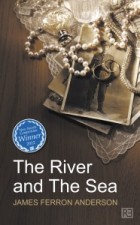
LOCATION, LOCUTION: James Ferron Anderson, weaver, glassblower, soldier – and award-winning novelist

Author photo – James Ferron Anderson

In this month’s “Location, Locution”, expat crime writer JJ Marsh interviews James Ferron Anderson, author of  The River and The Sea.

James was born in Northern Ireland, and worked there as a weaver, glassblower and soldier. He eventually had children, moved to Norwich, UK, studied at UEA, and began to write in different forms, including poetry, short stories, plays and, more recently, novels. One of his first short stories, The Bog Menagerie, won the Bryan MacMahon Short Story Award. He won an Escalator Award winner for I Still Miss Someone, and a Writers’ Centre Free Reads Award winner. The River and The Sea won the Rethink Press New Novels Award in 2012, and was published in November 2012.

The River and The Sea is set in British Columbia. James is currently working on Terminal City, set in Vancouver. While he’s visited British Columbia and Vancouver many times (his once estranged brother lives there, but that’s another story) he has never lived there.

Visit his website at jamesferronanderson.com.

Which came first, story or location?
Location, and more so as I continue to write. I’ll stick with Terminal City, the novel I am currently working on, but it applies equally to The River and The Sea. I was already studying the history of British Columbia, and focusing on Vancouver, when I read that Errol Flynn had died there. It was the human touch that caught my attention: once flamboyant athletic actor reduced, much against his will, to selling his last possession of any worth, his yacht. Shattered, riddled with diseases, looking like seventy instead of the fifty he actually was, he dies. But if my head had not already been filled with images of Vancouver from its lumber town days in the early 1900s to its evolution into the city of glass it is today I may not have found myself, I would say unintentionally, making up stories based around a Flynn-type character.

Politics and mores are as an integral part of a location as are its streets or hills. It was what I knew of the political aspects of this West Coast city in the 30s and 40s that determined that Terminal City would be a crime story. I wanted that mixture of danger and timidity that noir provides: the lure of the forbidden and the pulling back from it. I’d say location determined the form, feel and nature of the book. The rest was my regular desire to tell stories of how people need each other, hate each other, love each other and dispense with each other.

Simply put, it begins with location, finding an interesting event and/or person in that location when I’m not knowingly looking, and getting hooked.

What’s your technique for evoking the atmosphere of a place?
I think finding myself writing a story set in Vancouver (and it felt like finding more than choosing) was a just a wonderful gift. For a start, almost no one in the book was born in the city. They have a past at variance with their present, having come there from across the world for their own purposes. They are testing it, examining it, seeing what they can get from it. Will they be satisfied with what they’ve found? With the people they become over the twenty years of living there from 1939 to 1959? It makes the city, like the Thompson River in The River and The Sea, a protagonist in the book.

Which particular features create a sense of location? Landscape, culture, food?
Vancouver is a mild-weather city with plenty of rain. For noir it knocks LA into a cocked hat. It’s a city on a great bay so there are beaches, ships pass in and out visibly and constantly, there are well-forested and, for large parts of the year, snowy mountains rearing up just across Burrard Inlet. The wild and magnificent outdoors is no more than half an hour away, even in 1959.

Vancouver is a port, and more culturally mixed than an interior city. It’s in the far west of the continent: the final destination, like it or not, for the drifter or seeker after a better life. A large Asian presence leant, certainly in the period of which I am writing, a feeling of tension to nightlife, whether justified or not. My desire to use all that shaped the story.

Buildings matter. I have old all-wood housing from when Vancouver first laid down its streets side by side with the rise of its first multi-storey offices: a city in flux, home to people from elsewhere, also in flux, looking for roots and stability, looking for meaning too in the aftermath of a war.

How well do you need to know the place before using it as a setting?
I couldn’t imagine locating a story in a place I didn’t know well. I was relishing knowing Vancouver more and more anyway. To set a novel there was an excuse to know it better again, from visiting, diving into the City Archives on-line, to examining Google Earth Street View for hours. Plenty, then. I want to make what I write correct as well as relevant to the story. That doesn’t mean that very much of what I know has to go on the page. I read a comment that Colm Toibin in writing his novel on Henry James, The Master, wore his learning lightly. I want to know everything that’s relevant, and more, and use it lightly. The tip of the iceberg theory.

There are tricks also. Why would a local person wonder or remark on anything like the view or the tram tracks in the streets? I feel description has to grow out of incident and dialogue in the narrative. The first person narrator of Terminal City has, in the 1939 scenes, only lived in Vancouver for a year and is still coming to terms with it. He can wonder and notice and remark a little more freely and yet, hopefully, realistically. In 1959 he can reflect on changes, good and bad.

Could you give a brief example from your work which you feel brings the location to life?

The River and The SeaFrom The River and The Sea:

‘Snow was falling and visibility down to a few feet. We stopped in the afternoon and managed to light a fire and had tea and sugar. In a break in the snow Harry saw a raven. That meant there were caribou, and on the move.’

‘It did, did it?’

‘For a certainty, Harry said. We crossed a frozen lake, for easier walking, and came back onto the river. The wind was unrelenting. Even on the lake it took us four hours to make a couple of miles.’ Edward drank his tea. This was the most talking any of us had done for a long time. ‘We found a little clump of spruce. We ate some of the hide matting for the first time, but neither of us slept from the cold and the need to keep the fire going.’

It’s a narrative told to inform someone else and, almost incidentally, informs the reader. The intention was to convey their location as a site of cold, hunger and desperation, but it had to be an integral part of the story, not a piece of description standing to one side.

Which writers do you admire for the way they use location?
Charles Dickens in Chapter Three of Great Expectations uses the weather to bring alive his location when Pip runs in the morning to meet Magwitch.The mist was heavier yet when I got out upon the marshes, so that instead of my running at everything, everything seemed to run at me.’ Wonderful stuff that took me to that location so effectively I still picture it. Anton Chekhov is marvellous for both countryside and city. Yalta is so alive, so liveable-in, in Lady With a Lapdog. W.G. Sebald, not a favourite writer of mine, is nevertheless someone whose ability to put me in his location I much admire.


Next month’s Location, Locution:  Jill interviews Charlotte Otter, South African author – now living in Germany, whose homeland provides fertile fictional soil.

 * * *

JJ Marsh grew up in Wales, Africa and the Middle East, where her curiosity for culture took root and triggered an urge to write. After living in Hong Kong, Nigeria, Dubai, Portugal and France, JJ finally settled in Switzerland, where she is currently halfway through her European crime series, set in compelling locations all over the continent and featuring detective inspector Beatrice Stubbs.

_(75_of_75)

Author photo: J J Marsh

STAY TUNED for our next post!

If you enjoyed this post, we invite you to register for The Displaced Dispatch, a round up of weekly posts from The Displaced Nation, with seasonal recipes, book giveaways and other extras. Register for The Displaced Dispatch by clicking here!

Related posts:

LOCATION, LOCUTION: Andrea Cheng, award-winning children’s author

Author photo: Andrea Cheng

Author photo: Andrea Cheng

In this month’s “Location, Locution”, expat crime writer JJ Marsh interviews Andrea Cheng, award-winning author of  books for children and young adults.  

Cheng’s first novel, Marika, was selected by the city of Cincinnati for “On the Same page,” a citywide reading program.  Honeysuckle House, Anna the Bookbinder, and Shanghai Messenger received Parent’s Choice Awards.  Grandfather Counts was featured on Reading Rainbow. Where the Steps Were, the first book that Cheng has both written and illustrated, received starred reviews in both Publisher’s Weekly and Kirkus. The Year of the Book, a Junior Library Guild selection, was reviewed in the NY Times and was followed by The Year of the Baby (2013 May). Cheng’s most recent title is Etched in Clay.

Some of Cheng’s books draw on her background as the child of Hungarian immigrants as well as the background of her husband, the son of immigrants from China. Others draw on the lives of her children growing up in inner city Cincinnati where she and her husband now live.  Andrea studied Chinese at Cornell University where she received a Masters degree in linguistics.  She and her family have traveled to both Budapest and Shanghai to get to know their extended families.

Which came first, story or location?
I think character comes first in my writing, followed by location, atmosphere, etc.  Plot or ‘story” come later.  I usually start with a character at a particularly salient moment in a specific place, and go from there.

Year of the Book

Cover art: The Year of the Book, by Andrea Cheng

What’s your technique for evoking the atmosphere of a place?
I have to have spent a fair amount of time in a place before I can evoke the atmosphere.  I have to know how it smells and tastes and looks and feels.

Which particular features create a sense of location? Landscape, culture, food?
Everything!  I think I focus a lot on language, the way people talk. I think it would be very hard for me to write a story that takes place in a location in which I cannot speak the native language of the people who live there.

Can you give a brief example of your work which illustrates place?
This is from my chapter book called THE YEAR OF THE FORTUNE COOKIE, coming out with Houghton Mifflin in May 2014.  It is for grades 3-6.  The main character, Ana Wang, is in Beijing:

It starts to rain.  The sky is almost dark, and the air smells like gasoline and charcoal.  We turn down an ally and wind our way behind some buildings.  “This is my home,” Fan says finally, opening a door with her key.

Inside the light is dim.  Her brother is watching television and her mother is cooking on a hot plate.  “This is my friend from America,” Fan says.  

How well do you need to know the place before using it as a setting?
I have to have spent time in the place and I have to understand the language of the people there.  The more time the better.

Which writers do you admire for the way they use location?
I just read Jhumpa Lahiri’s new novel, Lowland.  Although I think the book has some problems, I love her sense of place.

Next month’s Location, Locution:  Jill interviews James Ferron Anderson – weaver, glassblower, soldier, and now writer.

 * * *

JJ Marsh grew up in Wales, Africa and the Middle East, where her curiosity for culture took root and triggered an urge to write. After living in Hong Kong, Nigeria, Dubai, Portugal and France, JJ finally settled in Switzerland, where she is currently halfway through her European crime series, set in compelling locations all over the continent and featuring detective inspector Beatrice Stubbs.

_(75_of_75)

Author photo: J J Marsh

STAY TUNED for our next post!

If you enjoyed this post, we invite you to register for The Displaced Dispatch, a round up of weekly posts from The Displaced Nation, with seasonal recipes, book giveaways and other extras. Register for The Displaced Dispatch by clicking here!

Related posts:

EMERALD CITY TO “KANSAS”: Linda Janssen on seeing the Wizard of Expat Life and returning home

Linda Janssen author photo; the Ruby Slippers (CC); corn path (Morguefiles).

Linda Janssen author photo; the Ruby Slippers (CC); corn path (Morguefiles).

Welcome to “Emerald City to ‘Kansas,'” a brand new series in which we focus on expatriate-into-repatriate stories. To kick it off, we are delighted to have Linda Janssen at the Displaced Nation for the first time. As many of you know, she blogs at Adventures in Expatland and is the author of  The Emotionally Resilient Expat. Until recently, she was an expat in the Netherlands. Without further ado, here is Linda’s riff on the classic tale.

—ML Awanohara

Follow (your own) yellow brick road…

For me, moving abroad has always been a matter of “not if, but when”simply a natural evolution of how life has unfolded. I’m married to an adult Third Culture Kid, and we both have studied and worked in and around the international arena throughout our careers. We always looked for an opportunity to take the next obvious step of moving our family overseas to live in another culture.

I can certainly see The Wizard of Oz as an apt metaphor for what we were seeking (i.e., the movie’s characters searching for brains, courage, heart and home). We wanted to soak up as much knowledge, information andmost importantly—firsthand experiences about this incredible world we live in, and our place within that. We wanted to go beyond the “what if” stage of dreaming about making such a move, muster our courage to go outside our comfort zone and just do it. There was such a strong emotional pull to embracing the wayfaring soul within us, we felt compelled to heed this call of the heart.

Unlike Dorothy, though, I had a growing sense that home is wherever you make your life, and I looked forward to learning how that might carry over in a different culture.

“You’ve always had the power, my dear, you just had to learn it for yourself.” – Glinda

Throughout the years we lived in the Netherlands and during these early months of repatriation, I’ve reflected continually on lessons learned—many of which will reverberate for the rest of our lives. In that respect, I think the overarching insight I’ve taken away from our cross-cultural experience is that lessons are never simply learned and put away. We learn and relearn and learn anew from our life experiences; like the turning of a kaleidoscope, the prisms offer us alternative perspectives and new ways of viewing ourselves and our lives.

Living in another culture afforded wonderful opportunities to learn to live more in the moment amid the barrage of new experiences, a deeper sense of our common humanity despite nuanced differences, and even some difficult challenges. It taught me about a tiny slice of our world, but also so much more about myself and my place in it.

Another lesson that echoes is the importance of relationships, not only of family and friends, but of pushing yourself out of your comfort zone to make the connections with others which ground you in your life. It’s easy for us to fall into the trapoften unconsciouslyof feeling as though we’ve got these social/emotional connections covered. It’s when we’re complacent about developing new relationships that we risk being blindsided by loss of people and places which matter to us, or of biding our time until the next move.

There’s no place like home?!

In some ways, yes, absolutely, there is a sense of belonging experienced in returning to our own culture. But there can also be moments of alienation and feeling apart from or not in synch with aspects of that as well. We’ve found treating repatriation as we would a new cross-cultural experience has helped, because both we and the people/culture around us have changed in the intervening years, and I think that’s a healthy attitude to have throughout life.

Returning to the United States has deepened my understanding that while home does have elements of place within it, it is our loved onesfamily and closest friendsthat make a place “home.” We feel that this is our home-base, where we want to be and return to, from which we will launch ourselves on new adventures in the years ahead. We’re part of a larger global community, and that’s reflected in our connectedness with others here and around the world, and my husband’s and my recent decisions to pursue careers in international consulting.

“Not in Kansas any more” feelings?

So far, there haven’t been any particularly cataclysmic events to speak of, more a series of small moments when we’re reminded we’re in new territory. After all, life is a series of cross-cultural experiences, isn’t it?

* * *

Thank you, Linda! And thanks for being so willing to trade the Alice in Wonderland meme (something your blog has in common with ours) for the Wizard of Oz! Readers, any comments or questions for the extraordinary Linda? After reading this, I am harboring the suspicion that Linda is actually Glinda—the Good Witch of the expat world! On that note, be sure to check out her book, The Emotionally Resilient Expat, which is chock full of material about how to engage, adapt, and thrive across cultures.

STAY TUNED for next week’s fab posts!

If you enjoyed this post, we invite you to register for The Displaced Dispatch, a round up of weekly posts from The Displaced Nation, with seasonal recipes, book giveaways and other extras. Register for The Displaced Dispatch by clicking here!

Related posts: