The Displaced Nation

A home for international creatives

Tag Archives: TCK

For a Third Culture Kid, birthday candles are easier to come by than the Christmas kind

Tiffany Xmas Collage_dropshadowBorn to German parents in the United States who later moved the family to the UAE, Tiffany Lake-Haeuser learned very quickly that unlike birthday candles, Christmas candles only happen if you’re living in the right place. She joins us today to tell her tales of Christmas Past, in New York and the UAE, and Present — in Germany. (Hmmm…what will Christmas Future will hold for Tiffany — the world having already been her oyster in so many ways?!)

— ML Awanohara

There have been two events I have always looked forward to since I was a little girl, my birthday and Christmas. Luckily for me, those are perfectly spaced so that in the summer I have my birthday and in the winter I have Christmas.

My fascination for the two events was different, though. My birthday was special to my family, my friends and me; the decorations were left up for a day and it ended almost as quickly as it started. I generated most of the excitement, with others joining in.

Through my travels I have come to learn that this is not the case with Christmas — which is a group affair. At least half the Christmas spirit depends on the people around you and the widespread anticipation of that one magical night or morning.

Although I am German, I was born in New York City, and that’s where I remember having my first Christmases.

New York’s love affair with Christmas

I think no city does Christmas decorations like NYC.

My family lived in Battery Park City, and I remember when I was just a little kid going to the Winter Garden Atrium in the World Financial Center, and seeing that huge light switch that turned on the lights on the an enormous Christmas tree.

Later, when I was a little bigger, I recall walking the city streets in my coat and mittens and hat and feeling in every bone of my body that Christmas was coming.

Of course my German family celebrated a little different than the Americans. In Germany we celebrate on Christmas Eve; families get all dressed up and have a nice dinner before opening all their presents.

But when I was younger I didn’t notice this difference. It was only much later, back in Germany, when our American friends came to spend Christmas with us, that I noticed this (and other) differences.

Discovering Weihnachts

Now that I’m back living in Frankfurt, I keep thinking how much more old fashioned and traditional Christmas seems in Germany compared to in America. We take pride, for instance, in our hand-crafted ornaments and their old-style workmanship — the kind you can buy at our Weihnachtsmarkt. Not for us the fantasy luxury windows of Bergdorf’s.

Christmas in Germany is tied very closely to religion. We don’t say “Happy Holidays” here. And we emphasize nativity scenes in our decorations. My family has its own little crèche — and on Christmas Day my older sister and I get to add Baby Jesus.

But probably the most striking difference of all is that we don’t really have Santa Claus. Saint Nicholas (“Nikolaus”) visits German children on December 6: we put our boots in front of our door, and they get filled overnight. This tradition commemorates when Nikolaus gave a cold, homeless man his coat.

It’s true we do have Weihnachtsmann (Santa Claus), but the concept came from outside and is part of popular German culture. Das Christkind (Christ Child, or Baby Jesus) visits on Christmas Eve with presents.

…but after an Emirati interlude

Before repatriating to Germany for the second time, my family lived in Abu Dhabi. I was 13 then and for me, Christmas temporarily lost part of its appeal. There was no cold, no snow and barely any Christmas trees.

Believe me when I say, you don’t understand the importance of a Christmas tree until you don’t have it anymore. Instead, we had a little metal frame that was supposed to represent a Christmas tree.

The cold I used to have a love-hate relationship with in New York (Germany, too) was now non-existent; and though I didn’t exactly miss it, it did take away a big part of the anticipation of the holiday — of the winter solstice.

With very few people around you getting excited for Christmas, it was much harder to even remember that Christmas was nearing. It snuck up on you and then disappeared, much like birthdays — but without any of the accompanying fanfare.

* * *

Living in Germany had renewed my awareness of Christmas traditions and the sense of community they bring. Nowadays I actually enjoy the build-up to Christmas as much as Christmas Eve or the day itself — the markets and the decorations. For me, this is what makes this age-old holiday so much more than a time to give presents.

* * *

Readers, especially those who are Third Culture Kids, or TCKs, can you relate to Tiffany Lake-Haeuser’s competing visions of Christmas? She would love to hear your comments. You can also follow Tiffany on her blog, Girl on the Run.

STAY TUNED for tomorrow’s displaced Q, on stogy holiday foods.

If you enjoyed this post, we invite you to register for The Displaced Dispatch, a round up of weekly posts from The Displaced Nation, with seasonal recipes, book giveaways and other extras. Register for The Displaced Dispatch by clicking here!

Related posts:

Images (clockwise from top left): Candles in Tiffany Lake-Haeuser’s German home, Christmas 2011; birthday candles (Morguefiles); the crèche in Tiffany’s home, Christmas 2011; Bergdorf Goodman Christmas windows, courtesy Flickr Creative Commons; the rare Christmas tree in Abu Dhabi, courtesy Flickr Creative Commons; the Christmas tree at Rockefeller Center (Morguefiles); and Tiffany in front of the tree in her German home, Christmas 2011.

Highlight of 2012: “Pinning” down expat, TCK, travel & other displaced themes on Pinterest

Would it be mixing my metaphors too much to say we stumbled upon Pinterest in 2012? I suppose so. But that’s really what happened.

By the end of last year, Kate Allison and I were debating about Pinterest: should the Displaced Nation be participating in a pinboard-style photo-sharing site that some commentators were predicting might surpass Facebook in popularity? Kate felt cautious about making another major commitment to social media, whereas I was gung-ho to give it a whirl.

Kate also pointed out, very sensibly, that the Displaced Nation isn’t trading primarily in food, fashion and weddings — the most popular Pinterest topics. Not wishing to be dissuaded, I reminded her of our “IT’S FOOD!” category, adding: “We also do fashion, and multicultural marriage…”

It came to pass that one day in early April, Kate, for reasons still unknown to me, took the Pinterest plunge. She told me about it afterwards and said we’d been missing out on a whole lot of fun! As anyone who reads Kate’s posts will know, for her to say something is fun is a high recommendation. “I wanna get me some of that,” I said to myself.

The bubble tea of the social media world

The first time I pinned, I was reminded, in a strange kind of way, of my first experience with Taiwanese bubble tea. Just as I wasn’t sure what to do with all the tapioca balls or pearls, I wasn’t sure what to do with all the images on a Pinterest page. But as with the tapioca balls, which proved to be chewy and addictive, so with Pinterest. It was not long before I was pinning with the best of ’em.

This pinning business is amusing, that’s for sure, as well as mildly addictive. But let’s not overlook the fundamental question. Do collections of photos that are archived on Pinterest bring more attention to issues that are important to the Displaced Nation? We’re talking not only food but expat stories, TCK experiences, travel yarns, books about the displaced life, movies about said life, and so on.

As New York Times senior writer C.J. Chivers said in a Poynter article listing the ways journalists are trying to use Pinterest:

Used poorly, [Pinterest] would be just as much as a time suck on work and on life as the rest of the Internet can be.

Two dozen boards and counting…

The Displaced Nation currently has 28 boards and has accepted invites to several shared boards, including the one for #hybridambassadors, a group put together by Anastasia Ashman, and two on travel.

The boards that get the most traffic, by far and away, are the shared boards on travel.

Why is it that comparatively few have discovered our other collections? Especially as five of those boards would qualify as a useful “visual index” of themes I would posit to be the core of the shared displaced identity.

Here is just a small sample of what people in our circles may be missing:

1) Displaced Reads
Purpose: Originally created to keep track of all the books by and/or about expats we’d been featuring on the Displaced Nation, this board has become a repository for any books we happen upon that involve global voyages or living in other countries.
Recent pins: Tequila Oil: Getting Lost in Mexico by Hugh Thomson; Beirut: An Explosive Thriller, by Alexander McNabb; and To Hellas and Back, by Lana Penrose.
Recent repin: An Inconvenient Posting: An expat wife’s memoir of lost identity, by Laura Stephens (via BlogExpat, their “Expat Books” board).

2) The Displaced Oscars
Purpose: To keep track of the films we’ve been reviewing since launching our Displaced Oscars theme last March. As with Displaced Books, Displaced Oscars has morphed into a record of all the films we hear about that involve expats, displacement and/or global travel.
Recent pins: The Iran Job, a documentary about an American pro basketball player who signs up to play for an Iranian team for a year; Infancia Clandestina (Clandestine Childhood), a cinematic memoir about a family returning to Argentina after many years in political exile; and Tabu, an experimental fiction that ranges from contemporary Lisbon to an African colony (Portuguese Mozambique) in the distant past.
Recent repin: Notting Hill from the Jetpac blog — they’d pinned it to their “Movies to Fuel Your Wanderlust” board.

3) Third Culture Kids
Purpose: To highlight the third culture kids who’ve contributed to this blog, along with other accomplished people who fall into this category.
Recent pins: Fashion designer Joseph Altuzarra, who was born in Paris to a French-Basque father and Chinese American mother, and now lives in the U.S.; Maggi Aderin Pocock, who was born in Britain to Nigerian parents and is now the BBC’s “face of space”; and Isabel Fonesca, a writer born to an American mother and Uruguayan sculptor father, who ended up living in London (she is the wife of Martin Amis, and they’ve now moved to Brooklyn).
Recent repin: President Obama, via Kristin Bair O’Keefe (her Inspiration board).

4) Multicultural Love
Purpose: To continue one of the blog’s most popular themes, especially after the momentum gained this past February, when we did a whole slew of posts in honor of Valentine’s Day.
Recent pins: Helena Bonham Carter and Tim Burton; Carla Bruni and Nicholas Sarkozy; Martin Amis and Isabel Fonesca.
Recent repin: Becky Ances and her Chinese boyfriend, in Shanghai, via Jocelyn Eikenburg (pinned to her board “Chinese Men and Western Women in Love”).

5) Displaced Hall of Fame (Historical) & Displaced Hall of Fame (Contemporary)
Purpose: To flesh out a category that has been somewhat neglected on our live blog — not for want of examples.
Recent pins: Historical: Robert Sterling Clark, heir to the Singer sewing machine fortune except that he preferred to explore the Far East; Josef Frank, the Hungarian-born architect and designer who became a Swedish citizen and lived in New York; and P.L. Travers, the Australian-born author who moved to Britain in her twenties and composed Mary Poppins in a Sussex cottage. | Contemporary: Writer and literary critic Francine du Plessix Gray; Pakistani writer and journalist Mohammed Hanif; model and actress Diane Kruger.
Recent repins: Historical: Lady Sarah Forbes Bonetta Davies, a West African royal who was taken to England and presented as a “gift” to Queen Victoria, from #hybridambassadors. | Contemporary: David Beckham, via Smitten by Britain (her “My Favourite Brits” board).

Is Pinterest Pinter-esque?

There’s such a wealth of images on Pinterest that I sometimes feel that, as in a Harold Pinter drama where what the characters don’t say speaks volumes, it’s what you don’t pin that’s more important than what you do, in shaping your Pinterest presence.

Right now we are in a period of excess — it was just so right-brain-stimulating to become immersed in the Pinterest world. Or, to put it another way: I’ve done so much pinning, my head is now spinning!

But might we move to more curated collections in 2013? Instead of pinning all of our Random Nomads onto a single board, for instance — with their food choices in another board and their favorite objects in yet another — could we give each one a board of their own, with all of these items?

Readers, we are dizzy and would appreciate your help in getting our balance back. Can you answer these questions please:

  1. What are the rules of the Pinterest game?
  2. What’s a “secret board”?
  3. Should we have fewer boards, more boards?
  4. Are there any other topics we should be covering?

I apologize if you’re fearfully bored (hahaha) but I’m on pins and needles awaiting your advice. What’s more, if I don’t hear from you soon, I may go back to pinning (yes, I’m pining away!).

STAY TUNED for tomorrow’s post from the author of a displaced read (yes, her works have been pinned to our “Displaced Reads” board!).

If you enjoyed this post, we invite you to register for The Displaced Dispatch, a round up of weekly posts from The Displaced Nation, with seasonal recipes, book giveaways and other extras. Register for The Displaced Dispatch by clicking here!

Related posts:


And the Alices go to … these 3 expat writers for their Hurricane Sandy posts

 © Iamezan | Dreamstime.com Used under license

© Iamezan | Dreamstime.com
Used under license

My husband and I have a habit of going on holiday just before some major world crisis occurs — after which we have no choice but to spend several days holed up in our hotel room watching the events unfold on CNN. Twice it was a crisis involving water: the deadly Hurricane Katrina and the 2004 Boxing Day tsunami.

But for Hurricane Sandy, we were very much on the scene — ensconced in our apartment in NYC’s East Village, and with no television to watch, not even a radio to listen to! As those who read my post of earlier this month are aware, we were deprived not only of power but also water, communications and public transportation for several days, and displaced from our home for one night — an inconvenience that, while somewhat traumatic, turned out to be minor compared to what others had suffered in harder-hit areas.

As I mentioned then, the experience gave me a chance to test this blog’s basic premise: that forcible displacement at some level compares with the kind of displacement one has when living in a country that is not your home. And if so, can a former expat like me draw on the strengths gained from living overseas to keep calm and carry on?

While pondering these fundamental questions, I came across three posts by expats on Hurricane Sandy that gave me some fresh insights — not only on Sandy but on the down-the-rabbit hole nature of international travel and the expat life.

Thus I’d like to hand out three “Alices” today to (in reverse chronological order):

1) PETE LAWLER

Awarded for: Clouds from the Past: My Reflections on Sandy, Gloria and the Jersey Shore, in his personal blog: The American Londoner
Posted on: 3 November 2012
Moving passage:

But here and now, when things are raw, when my cousins have been without power for a week and my parents are cooking with a propane tank and a Coleman portable grill even high up in the Pocono Mountains of Pennsylvania, I mourn. My heart goes out to those suffering and I mourn for that place of childhood sunshine and wish it a good and steady recovery in the coming months.
All the best, Jersey. I am thinking of you.

Citation: Pete, before Sandy, you probably weren’t thinking that much about “that place of childhood sunshine,” the Jersey shore — because, after eight years in London, you try not to think too much about sunshine any more. But then Sandy plunged you into mourning for all the good times you had as an all-American kid — the “long sunny days spent lazily frolicking through waves, collecting shells, and cautiously avoiding jellyfish.” It even made you think with some nostalgia of Hurricane Gloria, which you rather enjoyed as a seven-year-old. Absence, plus tragedy, can indeed make the heart grow fonder… What’s more, I sense how bad you must have felt about being powerless, from a distance, to help your parents and your cousin in their time of need — a guilt that’s at the hard core of the expat life. Just ask Linda Janssen — I’m thinking of her aptly titled “Down the Rabbit Hole” post of last summer, about her father’s illness.

2) MADELINE GRESSEL

Awarded for: Hurricane Sandy and the unspoken attraction of disaster, in Matador Abroad
Posted on: 1 November 2012
Thought-provoking passage:

Now, as New York City is sloshed by a record-breaking 13ft wall of water, it is I sitting comfortably in a café in Hong Kong watching the light October rain outside. … My friends post photos on Facebook of candlelit dinners, submerged cars, and the powerless, darkened skyline.

And I wish I were there with them. Not because I’m afraid for their safety (I’m not), but because I’m missing a moment of New York history. I’ll never be able to say, “Remember the flood of 2012? That was insane.” I feel jealous at the pictures, like I’ve seen a photo of an ex-lover with his new flame.

Citation: Maddie, I wonder why it is, as we also learned on this blog this month, so few American expats feel the need to connect with their homeland during a presidential election — which, too, provides a chance to be “part of history,” especially if the race is closely contested? I think the answer may lie in your rather astute observation: people love a disaster. Come to think of it, a friend of mine has confessed that during Sandy, she had the overwhelming urge to go outside — in the storm! (Even though it was expressly forbidden by Mayor Bloomberg.) In addition, your post reminded me of another old expat adage: out of sight, (afraid of being) out of mind…

3) RUTH MARGOLIS

Awarded for: “I wasn’t afraid of Superstorm Sandy — until the lights went out,” in Telegraph Expat
Posted on: 31 October 2012
Moving passage:

Forty-eight hours ago, I was relishing my role as stoic, cynical Brit, refusing to bow down to an impending crisis. I bashed out jokey emails to friends and family noting that it was “a bit blustery”…

…my husband and I — plus my visiting younger sister — spent much of Sunday and Monday quite enjoying the commotion. Like kids playing an imaginary game, we stocked up on all the (un)necessaries: crisps mainly, and garish American junk foods…

Then, something strange happened: the lights went out in Manhattan. … “Ah,” we thought, followed by a shaky: “Hmm”. … Eventually, we went to bed, with the radio on. No one got much sleep.

When the next storm hits, I expect I’ll ditch the cockiness sooner.

Citation: Ruth, there I was, trying to conjure up the “keep calm and carry on” ethos that I’d learned (rather begrudgingly) from nearly a decade of living in Britain, when, had I known you were down in Brooklyn, I could have asked for a refresher course (ah, yes, the junk foods and the jokey emails!). Still and all, I’m glad to know that even for a native-born Brit, there are limits, one of which is seeing the lights go out in lower Manhattan… (From now on, I won’t be too hard on myself!) I can also relate to what you said about these disasters having a cumulative effect (made worse by the fact that you’re living far away from your homeland and already feeling somewhat displaced). As you point out in your post, Sandy was the second time since emigrating that you’ve “had to assume the brace position,” the first being Irene. I can recall feeling something similar when living in Tokyo — first there was the Aum Shinrikyo attack on the subway and then the massive earthquake in Kobe, after which I decided that the stoicism required for this situation hadn’t yet been invented! (Bloomin’ heck, why was it I’d told everyone at “home” that Japan was so much safer?)

* * *

So, readers, do you have a favorite from the above, any comments on these bloggers’ ruminations, or any further posts to suggest? I’d love to hear your suggestions!

STAY TUNED for tomorrow’s post, some comforting advice and (hopefully) words of wisdom from The Displaced Nation’s resident agony aunt, Mary-Sue Wallace.

If you enjoyed this post, we invite you to register for The Displaced Dispatch, a round up of weekly posts from The Displaced Nation, with seasonal recipes, book giveaways and other extras. Register for The Displaced Dispatch by clicking here!

Related posts:

Images: All from Morguefiles.

How the 2012 elections looked to a repatriated American who is now a digital global citizen

Global citizens follow the US elections closely; some even see American politics as a spectator sport. For today’s post, we asked Anastasia Ashman, an occasional contributor to the Displaced Nation, to tell us how she felt about the 2012 elections. An expat of many years and an active proponent of global citizenship, Anastasia recently repatriated, with her Turkish husband, to her native California.

Rather than drifting away from the American political process when I was far from my fellow citizens, it was during an expat stint that I became most deeply involved.

My involvement had a displaced quality, of course.

I have always been on the edges of the American experience, hailing as I do from the countercultural town of Berkeley, California. The first time in my life I owned and brandished an American flag was after 9/11. It felt like a homecoming after a lifetime of being the outsider.

Even now that I’m back in California, my political involvement continues to have a displaced quality because I know what it’s like to be a citizen on the front lines of our nation’s foreign policy. For most Americans, the issue of how the rest of the world perceives our country is distant, amorphous, forgettable — but not for those of us who’ve lived abroad.

Clark for President!

I’d discovered Wesley Clark on television after 9/11. A four-star general, he was talking about the world we’d suddenly plunged into like a polished, collected and thoughtful world-class leader. It was easy to feel a kinship with the philosopher general even though I’d grown up in a household that vilified the military. Instead of activist or escapist pursuits, I chose to join him in geopolitical chess.

During the months between September 2003 and February 2004 when Clark competed in the presidential primary to become the Democratic candidate, I campaigned for him from afar. My email inbox soon filled with security warnings from the U.S. Consul urging Americans to keep a low profile.

If I had been able to get my hands on a campaign poster back in 2003 and 2004, I wouldn’t have displayed it publicly in my Istanbul apartment window. We were invading Iraq, and Istanbul was the site of four al Qaeda-related terrorist bombings that November. Avoid obvious gatherings of Americans, the emails cautioned. No mention of red, white, and blue “Clark for Democratic Candidate” campaign posters plastered on your residence — I had to extrapolate that.

Instead, I became active in online forums and wrote letters to undecided voters and newspapers in numerous states for my choice, the former N.A.T.O. Supreme Commander Wesley Clark. That was all I could do.

Obama for Re-election!

I’ve now been back in the USA for a year and have followed this election cycle, like the last one, mostly via social media. Online is an ideal place to become disconnected from echo chambers you don’t resonate with, and to stumble into rooms you don’t recognize. Both have happened.

But for the first time in the American political process, I don’t feel displaced. I feel like I am right where I belong.

Maybe it’s the San Francisco environs, which, although they may not match my concerns, don’t rankle too badly. At least I’m not in Los Angeles being asked to vote on whether porn actors must wear condoms. (They should, obvs!)

I feel less displacement in this election because of the resonant connections I’ve made online in the last four years or more. I’m in open, deep geopolitical conversation with Americans, American expats and with citizens of other nations, all over the world.

During this election I’ve been using my web platform, my digital footprint, to gather political news and opinion, enter discussions, and raise awareness. I’ve been reconciling my patchwork politics by weaving together who I relate to, and what I care about, and what sources I pass on to my network and what conversations I start. I now know that I am

  • A woman from an anti-war town who campaigned for a general!
  • A Hillary supporter who’s backing Barack, and
  • An adult-onset Third Culture Kid who understands how and why Obama’s Third Culture Kid experience confuses the average American.

What I have chosen to share on social media during this election cycle is a processing of all that makes me a political animal. I feel I have participated in this election cycle as the whole me, and that is all I can do.

I’ve shared that I care deeply that

I am buoyed that these abominations are leaking out and being countered. I was edified to hear others share my disapproval of eligible voters who choose to throw their votes away.

I have been able to be an active digital world citizen during this election cycle, someone who votes for the bigger picture, not just at the ballot box, but in everything I do. And that feels like home to me.

ANASTASIA ASHMAN is the cultural writer/producer behind the Expat Harem book and discussion site. The Californian has been on a global rollercoaster: fired in Hollywood, abandoned on a snake-infested island off Borneo, married in an Ottoman palace, interviewed by Matt Lauer on the Today show. She brings it all home in the “Web 3.0 & Life 3.0” transformational media startup GlobalNiche.net, empowering people to be more visible in the world and develop personally/professionally through social web technology. Get your copy of the Global You manifesto here.

STAY TUNED for tomorrow’s account of the American election cycle from a British expat’s perspective.

If you enjoyed this post, we invite you to register for The Displaced Dispatch, a round up of weekly posts from The Displaced Nation, with seasonal recipes, book giveaways and other extras. Register for The Displaced Dispatch by clicking here!

Related posts:

19 more films that depict the horrors of being abroad, or otherwise displaced

Readers, we have to confess, ever since horror novelist, former expat and Third Culture Kid Sezin Koehler suggested 15 horror films on travel and the expat life, we’ve become rather addicted — and have invited her back here today for another hit. Go ahead and indulge yourselves — it’s Halloween, after all!

Being the horror-obsessed film nut that I am — and loving how my expat/traveller life has collided with my scary movie self — I offer here are a few more honorable mentions within the three sub-genres I presented in last week’s post:

  1. The expat.
  2. The world traveler.
  3. The otherwise displaced.

1. Expat Horror: Caveat expat, or expat beware (or in some cases, beware of the expat!).

1) Blood and Chocolate, about an American orphan who goes to live with her aunt in Bucharest. Oh, and the orphan is a werewolf.


2) Drag Me To Hell, in which a Romany shaman in the US is evicted from her home and takes her rage out on the lowly loan officer who refused to give her a mortgage.


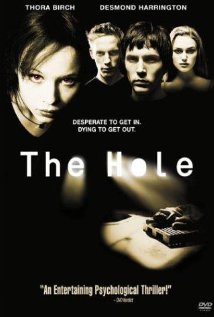
3) In The Hole we find an American student in a British boarding school who gets trapped in a World War II bomb shelter with a few classmates. So we’re led to think…


4) In The Grudge, Sarah Michelle Gellar gets far more than she ever bargained for living and working in Japan as a nurse, when a malevolent creature in her house begins an awful campaign of harassment, mayhem and torture.


5) Orphan finds us with a family interested in adopting a young Russian girl, only the longer she’s with them the more the mother suspects she’s not the child she claims to be.


6) + 7) The Joss Whedon marvels Buffy the Vampire Slayer and Angel, both of
which feature a number of prominent expats — a few are slayer trainers sent over to California from the Old World (Britain), a few are expat vampires who’ve decided the anonymity of the United States better suits their feeding habits.


2. Traveler Horror: “Let your suitcases gather dust!”, cry these films.

8) In Shrooms, a group of young Americans go to meet their Irish friend on his home turf in order to experience the hallucinogenic mushrooms indigenous to the fairylands of Ireland’s bonnie green forests. He forgot to tell them that their chosen “tripping” site is also the home of a haunted and abandoned insane asylum. And that not all the mushrooms are the magic type.


9) In Open Water, two Carribbean cruise snorkelers are left behind, to be tormented by a shark. Based on a true story — and one of many reasons why I keep my feet on dry land despite now living in Florida.


10) In the same vein we have Piranha 3D, in which half-naked spring-breakers are set upon by prehistoric piranha that have been released through an underground fault.


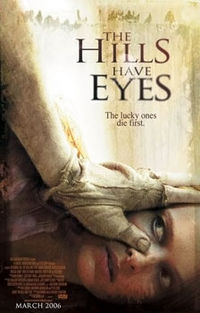
11) The Hills Have Eyes features a family on a road trip through the post-nuclear testing New Mexico desert are set upon by a group of psychopaths who live in the hills.


12) Worlds collide in From Dusk Till Dawn when a reverend on a road trip to Mexico with his children is hijacked by two ruthless killers on the lam from the law after a series of brutal murders and robberies. They find themselves like fish out of water when their rest-stop bar turns out to be a haven for vampires.


13) When a group of friends go white water rafting in Appalachia, the idylic back country scene turns nightmare when a group of inbred locals terrorizes the group, and one of its members in particular. Deliverance is not for the faint of heart.


I could keep going with this sub-genre, but surely you get the point by now. Stay home!

3. Displaced Horror: “Think twice about moving or taking a sojourn outside the ‘hood” is the moral here.

14) Rosemary’s Baby, in which Mia Farrow discovers that her new Manhattan residence is also the home to a group of mad Satanists who’ve got their sights on her unborn baby.


15) The slasher musical Don’t Go In the Woods features a band on the verge of a breakthrough go camping to write some new tunes. Only, there’s something else in there with them that’s picking them off one by one.


16) Every incarnation of the Alien series brings us a group of Earth’s citizens in outer space, battling a wretched and basically unkillable xenomorph. Keep your feet on land. Save yourself the trouble.


17) In Friday the 13th, a group of summer-camp goers are stalked by a relentless killer. Man, this one makes me glad I never went to summer camp, even though growing up I always wanted to.


18) A writer on a summertime retreat to a supposedly peaceful cabin is brutalized by a gang of locals. One of my personal favorites, I Spit On Your Grave is a grotesque revenge fantasy come to life and suggests one might be better off simply working from home.


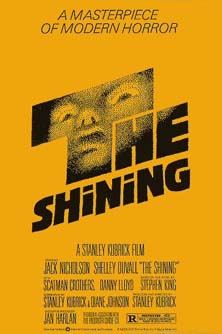
19) And we can’t forget one of the most iconic examples of Displaced Horror: The Shining, in which Jack Torrance, temporary caretaker of the historically creepy and ever haunted evil Overlook Hotel, goes mad and tries to murder his family. All work and no play makes Jack a dull boy, eh?

Happy Hallowe’en!

* * *

So, are you ready to burn your passport and throw away all your travel gear yet? 😉

And while we’re still at it, do you have any other films you’d add to Sezin’s best-of abroad horror list?

Sezin Koehler, author of American Monsters, is a woman either on the verge of a breakdown or breakthrough writing from Lighthouse Point, Florida. Culture shock aside, she’s working on four follow-up novels to her first, progress of which you can follow on her Pinterest boards. Her other online haunts are Zuzu’s Petals, Twitter, and Facebook — all of which feature eclectic bon mots, rants and raves.

STAY TUNED for tomorrow’s post, in which our fictional expat heroine, Libby Oliver, checks in and lets us know how she’s doing back at “home” in Merry Olde.

If you enjoyed this post, we invite you to register for The Displaced Dispatch, a round up of weekly posts from The Displaced Nation, with seasonal recipes, book giveaways and other extras. Register for The Displaced Dispatch by clicking here!

Related posts:

15 films that depict the horrors of being abroad, or otherwise displaced

Readers, we’re getting goosebumps and our blood is curdling. Horror novelist, former expat and Third Culture Kid Sezin Koehler is here to remind us that, however glamorous the life of an expat or world traveler may seem, it has a netherworld — one that horror movie makers are fond of depicting. To proceed is at your peril.

As if moving or traveling abroad isn’t scary enough, there is a whole host of films that would put the kibosh on even the most adventurous of people. For today’s guest post for The Displaced Nation, I’m breaking down these tales of terror into three groups:

  1. The expat.
  2. The world traveler.
  3. The otherwise displaced.

What follows is a rundown of some of the best horror films that will make you never want to leave home again.

1. Expat Horror: Caveat expat, or expat beware (or in some cases, beware of the expat!).

1) Ils (Them) (2006), dir. David Moreau and Xavier Palud.
In this terrifying French film, two expat partners, a teacher and a writer, living outside Bucharest in Romania are terrorized and psychologically tortured by an unknown group for days before their murder. Based on a true story, the villains — who were apprehended in real life — turn out to be even more shocking than the events they perpetrated.

My big question: Why on earth do you choose to live out in the middle of nowhere in Romania? Tragic story indeed, but really, they should have known better. Now you do.

2) Suspiria (1977), dir. Dario Argento.
Considered one of the classic horror films and what many now consider to be the father of the arthouse horror genre, Argento’s dark and twisted tale features a ballet school in Rome full of young girls from all around the world who live and study within walls haunted by a chilling presence that picks off the girls one by one. The score by Goblin is enough to give you nightmares and make you reconsider sending your children away to school. Ever.

3) & 4) Red Dragon (2002), dir. Bret Rattner; & The Silence of the Lambs (1991), dir. Jonathan Demme.
In Red Dragon Dr. Hannibal Lector is just a British expat living and practicing psychiatry in the United States. In fact, he’s helping the police with a brutal series of murders in which specific body parts had been taken as trophies. Detective Will Graham eventually discovers that not only is psychiatrist-to-the-stars Dr. Lector responsible for these grisly killings, he’s also eating the missing pieces.

The next time we meet Hannibal the Cannibal is in The Silence of the Lambs, where he is safely tucked away in a maximum security prison until the FBI needs his profiling assistance in uncovering the identity of a man who is kidnapping and skinning women.

Maybe Dr. Lector is a reason why locals are so wary of expats around the world?

5) The Omen (1976), dir. Richard Donner.
It’s hard enough being the wife of the American ambassador to the UK, but when Lee Remick discovers that there is something very wrong, very evil with her son, Damien, matters only get worse.

In many ways this is the kind of expat horror to which we can most relate: being in a foreign country, going through a difficult time, and not having the kind of support one might have at home. Even though the Thorns are wealthy and have a full staff at their beck and call, Mrs. Thorn cannot confide in them her misgivings that her son is the Antichrist — nor can she with anyone else since she’s the ambassador’s wife. In the end she goes mad from fear and frustration.

As expats, we’ve all been there. Luckily, though, we didn’t have the incarnation of Satan as our son. At least I hope not.

6) Freaks (1932), dir. Tod Browning.
This magnificent film follows a group of sideshow circus performers in Dust Bowl America — the majority of whom are European expats from all over the continent. As foreigners as well as displaying physical deformities of all kinds, this group is the marginalized of the most marginalized in America not just at that time, but even today.

The gorgeous German and “normal” trapeze artist Cleopatra finds out that Hans, the midget, is fabulously wealthy and sets out to steal him away from his same-sized girlfriend Frieda — with disastrous consequences as the group of freaks tries to bring the wicked Cleopatra into their embrace. Cleo finds out well and good that one does not mess with members of the sideshow.

The message here? Respect your local customs, even if you think them freakish. It could be what stands between your body as it is or being turned into a human-chicken hybrid.

2. Traveler Horror: “Let your suitcases gather dust!”, cry these films.

1) Hostel (2005), dir. Eli Roth.
A group of backpackers passing through the Slovakian capital city, Bratislava — it has no semblance to the real place whatsoever — gets kidnapped by an organization that sells young people to the highest bidders so that they can be tortured and murdered in the Slovakian outback with impunity. While the film is rife with cultural and geographical blunders, it nonetheless preys on a legitimate fear of kidnapping and/or human trafficking while traveling, especially for young women as we see in the two follow-up films in this gory franchise.

Kids, don’t fall for the local pretty girl/handsome boy who picks you up in a bar. You have no idea whom they could be working for.

2) American Werewolf in London (1981), dir. John Landis.
Two American backpackers (uh-oh) in the Scottish highlands stray from the road and are attacked by a wild beast. One dies, the other is in a coma for three days with horrible gashes across his chest. When the doctor informs him he was attacked by a madman he’s confused, claiming it was a wolf that had killed his friend and wounded him. Come full moon, young David Kessler finds out it was neither man nor wolf, and he’s becoming one.

There’s nothing like a story about a horrific accident taking place while traveling, especially when said accident turns you into a monster. Always remember, STAY AWAY FROM THE MOORS/MUIRS!

3) The Descent (2005), dir. Neil Marshall.
After the tragic death of Sarah’s husband and daughter in a wicked car accident, her fellow British extreme-sporting friends decide to take a trip across the pond to Appalachia for a spelunking expedition. Why anyone would think that crawling around in caves would be a good idea I haven’t a clue — let alone choose to take an already-traumatized woman into that scenario. But hey, they do. And not only do they find themselves in an unmapped cave system that has no way back to the surface, there are others down there in the dark who’d like to ensure the girls never leave.

Dear People Traveling to America: For Pete’s sake, avoid the US’s back country! Monsters are above and below.

4) Wolf Creek (2005), dir. Greg Mclean.
Two British tourists in Australia pair up with a local to check out a supposed alien-landing site in the middle of nowhere. All is fine until their car battery dies. Stranded in the badlands of Oz, grateful are they when a mechanic rolls up and tows them to his place to fix their vehicle. But oh, he’s not a mechanic at all. He’s a serial murderer who waits for tourists to come out to the Wolf Creek Crater, and takes his good time torturing them before their slow death.

The film is based on a true story — one of the British girls actually survived and made it to the authorities. It turned out the man had killed hundreds of people over decades, and nobody even suspected a thing. Shiver

5) Primeval (2007), dir. Michael Katleman.
During the Rwanda-Burundi conflict, bodies were dumped into the Ruzizi River at such alarming rates that the crocs began eating human flesh. One of these crocs, nicknamed Gustave by the locals, gets a taste for human flesh and begins hunting humans inland. An American team of journalists are sent to capture and bring back the beast amidst an ongoing civil conflict between warlords and villagers.

The best thing about this movie is that there really is a 70-year-old, 22-feet-long croc named Gustave who swims the Ruzizi. He was last sighted in 2008, but I know he’s still out there. I can feel him.

3. Displaced Horror: “Think twice about moving or taking a sojourn outside the ‘hood” is the moral here.

1) The Amityville Horror (1979), dir. Stuart Rosenberg.
As if moving doesn’t suck enough, can you imagine moving into a house that not only was the site of a brutal family murder but is also haunted? I don’t even know how many whammies that makes the scene. Also based on the true story of the Lutz family, who were terrorized by their house to the point where they fled without any of their belongings and never went back to collect them.

Word to the wise: Always check about the house’s history before you move in, and always remember to burn sage throughout, even in cabinets and drawers, before you move anything in anything at all. Trust me on this one.

2) Se7en (1995), dir. David Fincher.
Heralding a promotion to detective, Brad Pitt gets transferred to an anonymous city with a reputation of being among the worst in America. *Cough* Detroit *Cough*. His wife is miserable as she wants to have a family, but cannot imagine raising children in that town. The first case he lands is a serial killer murdering people based on the Seven Deadly Sins — one that quickly sucks both him and his wife into a horrific spiral of torture and murder.

Women, don’t let your husband drag you to a horrible city. Just don’t. Your life very well may depend on it.

3) The Texas Chainsaw Massacre (2003), dir. Marcus Nispel.
A group of friends on a road trip through Texas and — oh crap! — their car breaks down. It’s just their luck that the person who finds them is the patriarch of the psychotic and inbred Hewett family, known for killing and cooking their victims. There are no happy endings here, people.

If you’re going on a road trip, stick to the main roads, for God’s sake! I mean, jeez, everybody knows that. And while you’re at it, stay the bloody hell out of Texas!

4) El laberinto del fauno (Pan’s Labyrinth) (2006), dir. Guillermo del Toro.
Set in 1944 fascist Spain, the film tells the story of Ofelia, a young girl who accompanies her mother to live with her new stepfather, a barbarous Spanish general. Amidst the horror, Ofelia discovers a fairy world underneath the very grounds of their home, a place to which she escapes when the torture around her becomes too much to bear. But even fairy worlds have their horrors, as she soon finds out.

Moms, jeez, don’t marry jerks and then don’t agree to live in their military camp. Seems like logic to me, but I guess it needs to be said.

* * *

So, are you ready to burn your passport and throw away all your travel gear yet? 😉

And do you have any other films you’d add to my best-of abroad horror list?

Sezin Koehler, author of American Monsters, is a woman either on the verge of a breakdown or breakthrough writing from Lighthouse Point, Florida. Culture shock aside, she’s working on four follow-up novels to her first, progress of which you can follow on her Pinterest boards. Her other online haunts are Zuzu’s Petals, Twitter, and Facebook — all of which feature eclectic bon mots, rants and raves.

STAY TUNED for tomorrow’s post, which has Kate Allison continuing our horror theme.

If you enjoyed this post, we invite you to register for The Displaced Dispatch, a round up of weekly posts from The Displaced Nation, with seasonal recipes, book giveaways and other extras. Register for The Displaced Dispatch by clicking here!

Related posts:

Images: From MorgueFile: Cinema; Hat and suitcase;  Bridge from biplane.

Photo of Sezin, from her newest FB page, ZUZUHULK, used with her permission.

Would I travel for food? It depends…on whether it’s pizza or haggis!

Third Culture Kid Tiffany Lake-Haeuser is back, to tell us what she thinks about gluttony as a motive for travel.

As a Third Culture Kid who was raised in the United States and Abu Dhabi before returning to my native Germany, I’ve learned that every culture has its own traditional foods — but the idea of trying them all? I’ll take that with a pinch of salt, so to speak.  Some of the world’s most celebrated foods are very good; others, not so much.

At my international school in Frankfurt, I’ve found it amusing to walk around at lunchtime and see what the different nationalities are eating. Obviously, we students are somewhat limited by what the cafeteria offers, but once a year on International Day — a day for celebrating all the nationalities at our school — things get a bit more interesting. We get to choose between egg noodles at the Thai stand and the burgers at the U.S. stand, among others…

Food for thought

Would I travel for food? I know that the Displaced Nation has covered this topic obsessively last month. I discussed it with a few of my schoolmates — ironically, during our lunch period — and we agreed that while most of us have a certain sweet or other type of food we make a habit of eating or buying when we are in certain countries, we would not be inclined to go on a food tour.

One of my friends said she makes it a priority to buy “double stuf” oreos in the U.S. Though hardly a delicacy in America, this cookie is seen as an exotic treat at our school.

Other friends mentioned their efforts to avoid certain traditional foods at all costs. For instance, one of them said she loathed eating haggis in Scotland — even though that’s where she is originally from! For those of you who don’t know what haggis is, it is a savory pudding of sheep lung, liver and heart encased with other ingredients in an animal’s stomach. Mmmmm!

Another friend reported she’d found eating snails in France less than appetizing. The snails slimy and chewy, not pleasurable as French people like to claim.

Rice…again!

My own most memorable food experience associated with travel occurred when I was attending international school in Abu Dhabi. I refer to my eighth-grade week-long school trip to Thailand. Every day, we were given plain white rice to eat; it came with every single meal. By the end of the week, we just couldn’t face another bowl of rice! (On the rare occasions when we were served French fries, the students would attack them and within minutes they would be gone.)

However, on the last day of our trip, we were taken to a school and taught how to make chicken curry and spring rolls. Not only was it the best meal I’d had all week (which is of course not biased to the fact that I was the cook!), but I also found it so interesting to see the way these foods were made.

So maybe I would consider a cookery tour one day?

By the way, that still didn’t stop me from refusing to even consider eating rice for another month after that trip!

Pasta & pizza — perfect!

By the time this post goes up, I will be traveling in Italy, which is by far my favorite country to eat in. Pasta and pizza are two of my favorite things to eat in the world — and let’s face it, Italy does these foods better than anywhere else.

Honestly, I don’t even know how I will stop eating, but that’s a different problem.

I guess everyone needs to decide for themselves how far they are willing to travel for scrumptious or adventuresome eats. As for me, I will not be taking the train to Paris (where my dad now lives) every time I want a croissant — even if the original is truly amazing.

* * *

Readers, any thoughts on or reactions to Tiffany Lake-Haeuser’s skepticism about linking international travel to food experiences? Please put them in the comments. You can also follow what she is up to on her blog, Girl on the Run.

STAY TUNED for the Displaced Nation’s agony aunt, Mary-Sue Wallace, who will attempt to offer expat readers solace on their horrifying experiences in tomorrow’s post.

If you enjoyed this post, we invite you to register for The Displaced Dispatch, a round up of weekly posts from The Displaced Nation, with seasonal recipes, book giveaways and other extras. Register for The Displaced Dispatch by clicking here!

Related posts:


The accidental repatriate

Last time Sezin Koehler wrote for us, she was bidding farewell to “strange, Lovecraftian” Prague, where she and her husband had lived for four years. Also in the Czech Republic, Koehler succeeded in producing her first (horror) novel, American Monsters. After a short stint in Germany, the couple is now saying hello to sunny, but bugbear-filled, Florida. Koehler describes the emotional transition.

When I left the US for Europe in 2002 I had no intention of ever again living in America. Violence, backwards politics, a horrible job market, and a provincial outlook on the world made an extreme contrast with my global, Third Culture Kid background. I am half American, half Sri Lankan, and my mother worked for UNICEF, so the family lived all over the world.

Not to mention I was suffering from extreme post-traumatic stress disorder after witnessing the murder of a dear friend when the two of us were robbed at gunpoint by a gang banger in Hollywood.

Ten years later and a forced repatriation determined by economics rather than desire, I am at a loss for how much worse off this country is since I left. I know a decade is a long time — but surely not long enough to usher in political rhetoric that would take this nation back to pre-1950s? My mind boggles.

One big dark nation

Gun violence has ever increased — to the point where we find so-called Stand Your Ground laws that allow citizens to kill each other with impunity, under the guise of “I felt threatened” — even when that threat consists merely of a young African-American boy, armed with nothing but iced tea and a bag of Skittles.

I’m back in the world of mad gunmen going on shooting sprees. Sikhs mistaken for Muslims and murdered. Women getting abducted and raped at gunpoint while waiting for a bus — this happened just recently not far from where I live.

Post-9/11 America has seen the sharpest increase in the infringement of civil liberties as matters of homeland security and anti-terrorism. The arrests of journalists covering Occupy Wall Street events brought the US’s rank of journalistic freedom down 27 points, putting the country at 47, just behind Comoros and Romania.

Xenophobia abounds as states pass laws against the teaching of ethnic studies, and even literature written by Native and Mexican Americans, in schools. Such developments are exponentially more ironic when considering that this country’s immigrant history.

The worst (and rudest!) of times

After college it took me almost a year to get a proper job. Upon returning, I’ve had trouble securing even a retail job: all applications are now submitted online and don’t give you an option to upload a cover letter or even your full resume. Not only are American jobs outsourced to China, the application process has been tech-sourced to boot, as machines vet your application — even if you live right down the street from the store to which you’re applying.

I was shocked to find that retail jobs pay exactly what they did a whole ten years ago. Way to move forward, America.

America might have progressed in terms of technology; I see a smart phone in every hand. However, common courtesy has gone out the window as people text, Facebook, Tweet, right in the middle of an actual face-to-face interaction, without even a twinge of remorse.

Call me old fashioned, or a kindred spirit to Hannibal Lecter, in believing it’s the epitome of rude to fiddle with one’s phone (or any other such object of distraction) whilst another human being is talking to you.

The wheels on the bus go back-backwards.

Monsters are the best friends I ever had

To add insult to injury, I find myself in a particularly devoid area of Florida, easily one of the most vapid places on the planet. Plastic people who can spend an hour telling you about their lunch salad are the antithesis of the cultured individuals with whom I spent my time while living elsewhere.

Who would have thought the rabbit hole I fell down when I left Prague would lead to a place scarily resembling Hell, with its torturous circles and its staggering temperatures?

Each day I force myself to review the positives:

It seems incredible that the America I left ten years ago — the one that traumatized me so badly — is actually a better version than the one in which I live now.

So frustrated have I been by absurd American conservatism and the zombie hordes of consumerism around me, I’ve resorted to a new persona: Zuzu Grimm, a creature who writes wicked dystopic visions of where this country is headed if it continues down this current path of willful ignorance and fear mongering.

Bored now

But that’s not been the only struggle: For years I defined myself as an expat. My blog was filled with anthropological tales of living in Switzerland, France, Spain, Turkey, the Czech Republic and Germany. More than that: stories of growing up in Sri Lanka, Zambia, Thailand, Pakistan, India.

While I’m still a Third Culture Kid — never really at home anywhere — my expat identity became a cornerstone of who I was. It worked, and was so much less confusing to explain. The expat label made me feel ultimately more interesting. Writing a novel in Prague sounds infinitely more exotic than writing from an essentially retiree community of ten thousand.

Oy vey.

Accepting that this is who I am now, and this is where I am, has been even harder than the absolute culture shock upon repatriation.

Being an expat gives a person a sense of uniqueness that may or may not be deserved. Yes, you’re a foreigner who must negotiate language/cultural/social barriers. But it’s also your choice. And for many people economics determines whether you can or can’t participate.

Kind of like having kids. You can complain all you want about how hard it is, but it’s something you elected to do, not something that was forced upon you.

(Well…unless Republicans head up the White house; with their insane ideas on abortion there’ll be thousands more women forced to carry rapists’ babies to term. Disgusting. Terrifying. Yet another grotesque example of the New America I find on return.)

I’m nobody, who are you?

My former life as an expat has taken on so many more shades of meaning as I consider how it must have seemed to those in my position right now: How glamorous. How decadent. How lucky. How dare they criticize my government when they’ve jumped ship. I have to live here. I’m thousands of dollars in debt. I don’t have the luxury of leaving.

Maybe one day when my husband wins the lottery, that’s just what we’ll do. Leave. Maybe for Buenos Aires, or Addis Ababa. Maybe in the meantime we’ll find a better city in the US, one that offers more by way of creativity, culture, and history — the things I miss most about life in Europe.

Until then, I have to make peace with being plain old Sezin Koehler who lives in and writes from Florida. Hopefully some time soon I’ll be okay with that. Any minute now. It’s going to happen.

That’s fine. I’ll wait.

And pray I don’t get sick in the meantime, because even with Obamacare, I still can’t afford health insurance.

Sezin Koehler, author of American Monsters, is a woman either on the verge of a breakdown or breakthrough writing from Lighthouse Point, Florida. Culture shock aside, she’s working on four follow-up novels to her first, progress of which you can follow on her Pinterest boards. Her other online haunts are Zuzu’s Petals‘, Twitter, and Facebook — all of which feature eclectic bon mots, rants and raves.

STAY TUNED for tomorrow’s post, another displaced Q from anti-foodie Tony James Slater.

If you enjoyed this post, we invite you to register for The Displaced Dispatch, a round up of weekly posts from The Displaced Nation, with seasonal recipes, book giveaways and other extras. Register for The Displaced Dispatch by clicking here!

Related posts:

img: Sezin Koehler in St. Petersburg, Florida, by Steven Koehler (2012).

BOOK REVIEW: “The Elopement: A Memoir” by Dipika Kohli

TITLE: The Elopement
AUTHOR: Dipika Kohli
AUTHOR’S CYBER COORDINATES:
Website: kismuth.com
Twitter: @DipikaKohli
Kismuth on Facebook
PUBLICATION DATE: July 2012
FORMAT: Ebook (Kindle) available from Amazon
GENRE: Memoir
SOURCE: Review copy from author

Author Bio:

A former journalist, raised in America by her Indian parents, Dipika Kohli has previously lived in Japan and Ireland, and now lives in Durham, NC, with her husband and son. The third volume in her Kismuth series will be published in October 2012.

Summary:

When American-born Karin Malhotra elopes to Ireland with her college sweetheart, she botches the dreams her parents had for her when they left New Delhi with a stalwart philosophy on what a good life “ought” to be. “Opportunity,” her father said, “is in the U.S. That’s why we came.”

But finding herself in Ireland, juxtaposed in not one, but two additional cultures (her new husband is Japanese), Karin finds herself thinking about the early years of her own parents’ married lives, and wondering if, like her, they questioned their decision to leave everything familiar for the mere promise of a better life.

She tumbles headlong without any preparation into a small village in the corner of Ireland. Not only does she have to contend with a new suite of social mores, she wonders what it would have been like had she not quit home.

(Source: Amazon.com book description)

Review:

The Elopement is the second book in a four-part memoir series, Kismuth, which, in Hindi, means “destiny”. Karin’s grandmother defined destiny as:

We’re all meant to be someplace…And when we get there, wherever it is, that’s what’s supposed to happen.

This implies a passiveness about the process, a casting off of responsibility for our futures, yet many would argue that destiny is of our own making. You reap what you sow, is another way of putting it.

Karin Malhotra’s ambitious parents left Delhi in search for a new life, for better opportunities for them and their children. Sadly, by forcing their own ambitions onto Karin, they sowed what they would later reap: an unhappy daughter, rejecting her family’s strict expectations by following her heart and searching for her own “better opportunities”. Her interpretation of the phrase, unfortunately, did not agree with that of her parents, who refused even to acknowledge Karin’s relationship with Japanese boyfriend Yoshi.

Little wonder that, when Karin finds the acceptance from Yoshi’s parents that she never had from her own, elopement seems an attractive, fairytale-like option. But of course, everyone knows that not all fairytales have happy endings. And while it might be possible to create one’s own destiny, the lesson we can learn from this book is that it is folly to try to create someone else’s.

The Elopement is a fascinating read, beautifully and eloquently written. Dipika Kohli’s next book, The Dive, starts where The Elopement ends. I am already counting the days until its publication on October 10.

Notable quotes:

On being a TCK:

[My parents’] choices, and the consequences that arose, ought not affect my own. If they didn’t think the trade was worth it — the one where they gave up everything in a familiar context in India to take a chance on a new opportunity abroad — well, that wasn’t my problem, was it?

On interculteral relationships:

Our summer of trying out…this intercultural relationship thing, felt like wearing a happened-upon outfit I’d never imagined could fit, but thought, once in a while, why not break that one out? …This “once in a while” was about to become my new look.

On Ireland:

Ireland had the kinds of places and people that would make you stop what you were doing, and sit up and pay full attention, to the degree that you felt really aware and present, maybe for the first time in your life.

.

STAY TUNED for Thursday’s post!

Image: Book cover – “The Elopement”

If you enjoyed this post, we invite you to register for The Displaced Dispatch, a round up of weekly posts from The Displaced Nation, with seasonal recipes, book giveaways and other extras. Register for The Displaced Dispatch by clicking here!

Related posts:

BOOK REVIEW: “Expat Life Slice By Slice” by Apple Gidley

TITLE: Expat Life Slice by Slice
AUTHOR: Apple Gidley
AUTHOR’S CYBER COORDINATES:
Website: www.expatapple.com
Blog: my.telegraph.co.uk/applegidley
Twitter: @ExpatApple
PUBLICATION DATE: March 2012 (Summertime Publishers)
FORMAT: Ebook (Kindle) and Paperback, available from Amazon
GENRE: Memoir
SOURCE: Review copy from author

Author Bio:

Apple Gidley became an expat at the tender age of one month old, in Kano, Nigeria. Since her early initiation into global wandering, she has relocated 26 times through 12 countries, acquiring a husband and two children en route.

Apple is known to thousands as ExpatApple, through her popular blog at the Daily Telegraph.

Summary:

“From marauding monkeys to strange men in her bedroom, from Africa to Australasia to America, with stops in Melanesia, the Caribbean and Europe along the way, Apple Gidley vividly sketches her itinerant global life. The challenges of expatriation, whether finding a home, a job, or a school are faced mostly with equanimity. Touched with humour and pathos, places come alive with stories of people met and cultures learned, with a few foreign faux pas added to the mix.”

(Source: Amazon.com book description)

Review:

If anyone is qualified to issue advice on expat life, Apple Gidley is that person. Born to an English father and Australian mother, she takes the label “Serial Expat” to new heights.  She was a TCK before the term was invented (instead classed unflatteringly as an “expat brat”) and continued the global wandering throughout her adult life, with 26 relocations through 12 countries to date.

Her memoir provides fascinating reading, about places and lifestyles that most of us will never experience, and at times is almost anachronistic:  reading her reminiscences about servants, voluntary work, and charity committees, there’s a time warp sensation of stepping into a Somerset Maugham short story.

Although the book is a record of Apple’s patchwork life, most expats will relate to the emotional experiences she describes, no matter where in the world they are or  how many countries they’ve lived in. For example, we worry that leaving our family and friends behind will increase the emotional distance as well as the physical. After a while, we realise that this is mostly not the case, and that those who allow physical distance to become an obstacle weren’t so emotionally close in the first place. In Chapter 8, “Eighth Slice: Staying Connected”, she says:

As we age we draw closer still. We believe in family but do not see each other for years at a time, and yet we are all aware of where each of us is in the world, still scattered and testaments to a global upbringing.

In “Ninth Slice: Death at a Distance”, Apple deals with the elephant-in-the-room topic: the illness or death of a family member while we are thousands of miles away. During such times, it’s easy to beat ourselves up for choosing a nomadic lifestyle;  if our associated guilt trips were eligible for air miles, we could afford to fly back and forth to be with our loved ones as often as we wanted. In describing her own experiences of bereavement, Apple’s practical, matter-of-fact approach, plus her insights gleaned from other cultures’ attitudes to old age and death, reminds us that the old cliché of “life goes on” holds true, even after “death at a distance”.

Whether you’re a veteran expat, a re-pat, or are just about to embark upon your first move to another country, “Expat Life Slice By Slice” should be on your reading list.

Words of wisdom:

On TCKs:

For those children brought up as TCKs…a nonjudgmental and accepting attitude to different customs, colours and cultures is the norm. As this demographic grows, let’s hope for an even greater understanding of cultural differences for all our children.

On voluntary work:

Volunteering is work, sometimes harder than a paid position because it is the cause keeping you there and not the salary.

On making new connections:

Picking up people around the world to share your life with is one of the greatest pleasures in life, and sometimes you know straight away they will continue to stay in it.

On “Home”

Home is with me wherever I go…It is not a single building or a single country, but many of them.

.

STAY TUNED for Wednesday’s post.

Image:  Book cover – “Expat Life Slice By Slice”

If you enjoyed this post, we invite you to register for The Displaced Dispatch, a round up of weekly posts from The Displaced Nation, with seasonal recipes, book giveaways and other extras. Register for The Displaced Dispatch by clicking here!

Related posts: