The Displaced Nation

A home for international creatives

Tag Archives: Memoir | Travel | Food Writers

ENGLAND VS NEW ENGLAND: The arcane laws of taxing and tipping

Libby New EnglandFor just over two years, readers of the Displaced Nation have had the treat of following a novel-in-progress by Kate Allison called Libby’s Life. It’s the running diary of Libby Patrick, an Englishwoman who has trailed her spouse to a town just outside Boston. Libby’s Life is rich in Kate’s observations about life in New England vs. England. In the weeks when she doesn’t publish an episode (she is now up to #75!), we plan to feature posts by writers who are sensitive to the often-subtle differences between new and old worlds. First up: James Murray, a young Brit now living in Boston.

–ML Awanohara

Hey, where did all my money go?

Apparently it’s all to do with my upbringing — I remember with almost preternatural clarity, learning how to shop in an English supermarket. You had a list. You found the things on the list. Where there was an element of choice — this brand of toothpaste or that one — you looked for the special offers.

Only people with money to throw away would ever buy the branded cereal, unless they were on holiday, because really, how much difference is there in taste?

I learned the arts of thrift in Tesco of a Wednesday morning. My guiding words were “2 for 1” and “Special Offer” — and a treat was especially permitted if it was drawn from the holy well of the Reduced section.

Prices — written numbers — were important in those innocent days. They told you clearly and precisely how much you could expect to pay for the things you put in your trolley. You could even add it up as you went around the shop.

Taxed by state taxes

Not so in New England. Here in Massachusetts a quick turn around the supermarket for say $56.59 worth of groceries will actually cost you $60.12 –and unless you happen to be quick with your percentages, you more than likely won’t know how much you’re spending until it’s totaled on the cash register.

This isn’t new to anyone who’s been to pretty much anywhere in the States. Most states have a sales tax, with varying rates, and it’s hardly ever included on the price tag for whatever you’re buying. So if (God forbid) you only have so much cash and you’ve been carefully estimating the total in your head as you go shopping, you might find that you need to leave an item behind when you check out.

I have a healthy fear of being ripped off or paying over the odds. It took me some time to let go of the expectation that I would know exactly how much I was spending — and as soon as I did, I discovered the much larger grey area: tipping.

Price is not only contingent on the face value of an item; it’s also contingent on culture. In the States, as most people know, there is a culture of not paying bar and restaurant staff a living wage, which means that they rely on tips.

The tipping point

When I was tipped as a barman in the UK, it was a perk — a small one. I would have been floored if anyone had tipped me 20 percent and especially floored if they’d insisted on tipping me an extra 60 pence (or a dollar) for each drink I served them — but such is the expectation in New England.

Okay, there are differences to the working culture of bar staff — table service, for one — which mean that the staff actually earn their tips. But it’s often expected even if you order at the bar and do the walking to fetch the food yourself. In terms of hidden costs, a meal out is pretty pricey, especially when there’s that 6.25 percent tax on meals added in there. You basically pay over 125% of the menu price if you’re being a good citizen.

And if you’re coming from the UK, all that this tipping will buy you is a lot of extra attention that you don’t want. The Brits are a private people when it comes to eating out. In our part of the world, good service is characterized by quiet diligence. If we get asked three times in the course of a meal “How is everything?” it just starts to rub us up the wrong way. We begin to ask ourselves: “Why are you asking? Should there be something wrong with it?” They’re just “earning” that tip, but it can initially feel like solicitation.

Tipping also creates unintended outcomes, one being that if you enter smaller bars at peak times and sit down at a table, you will be expected to eat. If you then reveal that you’re actually just after a drink, you might see some of the rudest service you’ve ever experienced. Tables are prime real-estate, where you can cram in the eating customers, which means higher order value, which means more tips.

I’m generalizing of course, but I never used to even think about buying food in most UK pubs, whereas in Boston it’s sometimes hard not to.

Hey, it’s only money!

With the financial anxiety of living on savings (the default position of a new immigrant), I’ve fought the urge to resent the little extra slices of cash that get siphoned off on a daily basis.

My new mantra is not “2 for 1” or “Look for the offers.” Instead I say to myself:

Just let it go — it’s just the way they do things here.

* * *

So, readers, are you surprised as Murray’s sense of displacedness on money matters? Perhaps some repats to the U.S. can also relate? Please leave your thoughts in the comments…

James Murray is a self-described “itinerant Brit.” After a stint in New Zealand, and some travel in Southeast Asia, he and his American girlfriend — now wife — are practicing “staying put” in Boston, where James is pursing a career as a wordsmith for marketing and fiction, and as a non-professional theatre director. He is also a Utopian idealist and SingStar enthusiast. You can find more about his views by reading his blog, Quaint James, and/or following him on Twitter: @quaintjames.

STAY TUNED for next week’s fabulous posts, including a new giveaway!

If you enjoyed this post, we invite you to register for The Displaced Dispatch, a round up of weekly posts from The Displaced Nation, with seasonal recipes, book giveaways and other extras. Register for The Displaced Dispatch by clicking here!

Related posts:

Images from MorgueFile

JACK THE HACK: You’re thinking about writing a travelogue or memoir. Should you start with a blog?

JACK THE HACK _writingtips

Today we introduce a new monthly column by Jack Scott, who was a Random Nomad for the Displaced Nation way back when we started this site. After an expat experience that was literally something to write home about, he and his partner, Liam, have traded in the dream for a less pressured existence back in their home country. We’re thrilled to have recruited Jack as a writing guru for all of you wannabe authors who are hacking away at travelogues-cum-memoirs — perhaps even as I type this?!

— ML Awanohara

Do you think it helps to write a blog with the purpose of publishing a travelogue or memoir in mind?

It’s a good question — and for me, the short answer would be a simple no.

But the long answer would be a qualified yes.

Let me explain.

When Liam and I first flogged off the family silver, jumped the good ship Blighty and waded ashore to Turkey, we planned to put our feet up and watch the pansies grow. Twelve months into the dream, we began to feel, well, a little bored.

It was a benign type of boredom — not the terminal kind that leads to low self-esteem, heavy drinking, chocolate binges and serial infidelity.

But it was boredom nevertheless.

Life before expat-dom

In the wicked world of the waged, I had been a busy bean counter, mismanaging a large public sector service. Liam had been shackled to a cut-and-thrust slash-and-burn private sector company, with a grueling 12-hour day as his reward.

My boss was off with the fairies, his was Lucifer in lace. Work gave me a routine on auto-pilot, while it nearly drove Liam over the edge.

In quite different ways, we were both fully (if unhappily) occupied.

In our brave new world of idleness and long Anatolian summers, lazy days in Eden turned into one perpetual holiday. Our old life withdrew into the fog of a hazy past.

The trouble is, life isn’t supposed to one long holiday.

Like so many before us, we parachuted into paradise thinking entirely of the destination. We gave very little thought to what we might do once we got there.

Not another beautiful day!

It’s an all too common mistake. For every able-bodied emigrey (well, those with brains and bones still in reasonable working order), the trick is to find a meaningful occupation: something to break up the unending monotony and keep them off the sauce.

It really doesn’t matter what it is: turning water into homemade wine, feeding the five thousand street dogs or raising your sex life from the dead — whatever gets the juices flowing.

For me it was starting a blog to tell an unsuspecting world about our encounters with the mad, the bad, the sad and the glad along the highways and byways of the whitewashed ghetto where we lived.

A book really never entered my mind.

Then, quite by chance, my irrelevant ramblings became one of the most successful English-language blogs in Turkey.

You could have knocked me down with a feather boa, I was that surprised.

It was only then that I began to think there just might be a book in me.

Remarkably, there was.

Re-energized!

It’s quite amazing how the fear of terminal boredom can re-energize a novice expat. In just 12 months, I created the blog, designed and published a Web site, and wrote my debut book. For most of this meandering expedition, I had absolutely no idea what I was doing. A combination of trial and error, intuition, intravenous wine, gentle encouragement from an inspirational publisher and not-so-gentle cajoling from Liam turned an unplanned and uncoordinated series of chess moves into the production of a well-received book that I’m proud to have written.

My probation was illuminating and taught me a great deal — about writing, process, content, plot, characterization, networking, promotion and engagement.

You see, hindsight is a wonderful thing. Looking back, it seems only too obvious that blogging was a great audition for my writing. I had never written before (unless you count a series of unread and unloved business reports rotting away on dusty book-shelves in municipal vaults). Writing my blog was a safe and fun way to experiment and to build up an audience at the same time. Reading through my back catalogue, I can see quite clearly how I evolved as a writer.

WRITING TIP FOR EXPATS NO 1 (aka the long answer to the question at the top of the conversation):

It might be useful to start up a blog if you want to write a travelogue-cum-memoir. It’s not the Law, but blogging can really help.

And what about Liam in all of this? Did he develop suicidal tendencies or did he cope better with the ever-constant Aegean vista and nightly sunset show?

Well, apart from re-discovering a love of composing and tickling the ivories, he acquired a new skill of his own: cracking the editor’s whip, something he did (and still does) with rather too much pleasure than I (or he) would care to admit.

Us writers put up with so much, we really do.

* * *

Readers, any comments for further questions for Jack the Hack? He’ll be back next month with some more writing tips…

Jack Scott’s debut book, Perking the Pansies — Jack and Liam move to Turkey, is a bitter-sweet tragi-comedy that recalls the first year of a British gay couple in a Muslim country. For more information on this and Jack’s other titles, go to his author site.

STAY TUNED for tomorrow’s post, on NEW England…

If you enjoyed this post, we invite you to register for The Displaced Dispatch, a round up of weekly posts from The Displaced Nation, with seasonal recipes, book giveaways and other extras. Register for The Displaced Dispatch by clicking here!

Related posts:

Images: from top, clockwise: Hand with pen / MorgueFile.com; Boats in King’s Lynn, Norfolk / MorgueFile.com; Jack Scott, used with his permission; Turkish boats / MorgueFile.com

CAPITAL IDEA: Reykjavík: A quick guide

20130409-201825.jpg
Welcome to another “Capital Ideas” – our somewhat idiosyncratic, ever so slightly tongue-in-cheek guide to various world cities, perfect for the ever discerning readership of this blog. We know our readers are always visitors, never tourists (an important distinction).

Do feel free to contribute your own ideas or suggestions in the comments section, we’d love to hear your thoughts, too.

Capital: Reykjavík

Oh God, don’t even think about doing it. What?

You know what I mean — I can read you like a book. I’ve no idea what you’re referring to.

You’re going to try and lead off with the “my mum’s gone to Iceland” gag, aren’t you?  Really, you think that little of me?

Yes. Charming. The very idea! My gags are expertly crafted, and besides most of our readers have no idea about Iceland, the British frozen goods store, and their longstanding tagline — so there!!!

Okay, okay, let’s get this over with.  Blimey, you’re a bit glum today.

Isn’t that appropriate if you want to talk me about the land of the midnight sun? I thought most people ended up depressed or mad. Please, let’s leave the ridiculous stereotyping to me.

You’re normally very good at it. Stop trying to distract me. Reykjavík, you may be interested to learn, is the northernmost capital in the world.

So I’d need to pack my thermals? Yes.

Guessing this isn’t a beach holiday? No. At least, not in the conventional sense.

I normally like going somewhere hot for my vacation, somewhere I can relax. Then you’d be missing out if you dismiss this sort of vacation out of hand, you’d be visiting a truly wonderful city. But, hey, if you like relaxing in a hot pool, you could still give Reykjavik a try.

Hardly sounds like Club Tropicana. Think about it. Iceland is only there because it’s a mass of volcanic activity. Remember when Eyjafjallajökull grounded all transatlantic flights a few years ago?

Yes, still struggling with this. You’re suggesting I relax by the side of an active volcano in Iceland rather than my plan to relax by the side of a pool in Hawai’i? No, even though I may at this precise moment be tempted to push you into an active volcano. What Iceland does have is plenty of geothermal springs. You must visit the Blue Lagoon.

Is that the one with the creature or with Brooke Shields? Neither. It’s a geothermal spa located in a lava field outside of the city. Even if it’s a freezing night, the water in the pool averages around 100 °F. And there’s plenty of supposedly healing minerals that you can cover yourself in. It’s quite the experience.

Sounds it. Have you done it? Yes, and very enjoyable it was too. A little bit of wind chafing around the neck though. Your body might be enjoying the pool, but your head is still battered by the elements.

Okay, I’m definitely intrigued, but I think I need a little more than slapping mud all over myself and wandering into a geothermal pool. What else can I do? Well, from the centre of Reykjavík you can get a daylong bus tour to the Golden Circle.

I hear their cashew chicken is wonderful. No, the Golden Circle is a popular tourist route that will allow you to see the Icelandic countryside. You will see the stupendous Gullfoss (Golden Falls); Þingvellir (Thing Fields), a national park that was the site of Iceland’s first parliament in 930AD; and Geysir — the first geysir to be recorded in printed material (if Wikipedia is to be believed). Certainly, when it comes to geysers accept no substitutes. If you’re lucky, you might also see a pack of Icelandic ponies.

Aurora Borealis? I beg your pardon?

The Northern Lights. Will I see that during this bus tour? No, this is a day tour. There are night tours that will take you out in the evening in the hopes of seeing the lights. If you’re away from the city and the light pollution, your chances improve. Of course, nothing is guaranteed that you’ll see anything so don’t get too downhearted if you don’t see the lights. However, if you want to try and stack the cards in your favor then you could stay at The Northern Lights Inn.  One further advantage of this hotel is its convenient location to the Blue Lagoon.

And Reykjavík itself? What should I do there? No pun intended, but it is a really great place just to chill. Wander the streets. Take a walk by Tjörnin, a delightful lake in the center of town. As you wander the city, you’ll notice plenty of public art in the city. Walk down towards the harbor and check out Jón Gunnar Árnason (The Sun Voyager). Visit Hallgrímskirkja, the city’s impressive Lutheran church, and at all times keep yourself caffeinated. So many good coffee shops in the city for you to sample.

But what about the food? I hear fermented shark is popular. You mean hákarl. If you find it, you’re more than welcome to try it. Good luck with that. I think Icelandic cuisine has moved on from the shark and puffin stereotypes. Not surprisingly, you’ll be able to try some amazing seafood. If you really want to dine out, Siggi Hall is the most famous Icelandic chef, so you may want to try and get a reservation at his restaurant inside the Hotel Odinsve.

What should I read before I go? It’s Iceland, you should give some Icelandic sagas a try. They detail the early colonization of the land. Penguin has an anthology if you want to dip your toe in. Halldór Laxness is the only Icelandic winner of the Nobel prize for literature (nothing lax about him there). He won the prize in 1955, and as a result a lot of his work has been translated into English and remains in print. The Fish Can Sing and the two-part epic Independent People are easy enough to find. Mál og Menning is a bookstore in downtown Reykjavík has a good selection of Icelandic literature available in English translations. More recently, Hallgrímur Helgason’s 101 Reykjavík has probably been the most successful novel to come out of the country.

Wasn’t that made into a movie? Yes, back in 2000, so you could check that out if you so wished.

And I should listen to plenty of Björk? And don’t forget Sigur Rós, Of Monsters and Men, and Bjork’s original band, The Sugarcubes. If you happen to be visiting late October, you could go to Iceland Airwaves, the country’s biggest musical festival. It’s certainly a great city to scour record stores.

If only the beer were cheap. Well, you can’t have everything.


STAY TUNED for a new Displaced Nation post tomorrow.

If you enjoyed this post, we invite you to register for The Displaced Dispatch, a round up of weekly posts from The Displaced Nation, with seasonal recipes, book giveaways and other extras. Register for The Displaced Dispatch by clicking here!

Related posts:

Image: awindram

Marry a diplomat, travel the world and write expat guides: Talking to new author Véronique Martin-Place

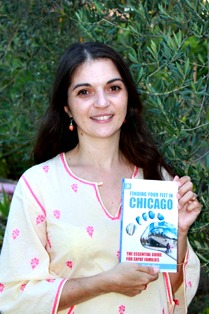
Veronique and her bookAs some readers may know, before the Displaced Nation, I had my own blog, called “Seen the Elephant” — which I used as an outlet while struggling to readjust to life in America after having lived abroad, in England and Japan, for quite a few years. (The name for the blog came from the expression used by Victorian travelers: “Been there, done that, seen the elephant.” Which is how I felt…)

It was because of that blog that I got to know today’s guest, Véronique Martin-Place, since she, too, was quite active in the expat blogging world.

And when I found out she was a Frenchwoman living in Chicago, I was intrigued. What did she make of the city of broad shoulders, jazz, and deep-dish pizza?

I asked her this and a host of other questions in an interview for my blog. For starters, she said that she and her family — her husband is a French diplomat and they have two young daughters — were gradually finding their feet in Chicago. (She did not, however, mention she was planning to write a book of that title!) She didn’t entirely approve of America’s throw-away society and still cooked every day for her family — she even offered her recipe for “real” vinaigrette in the comments. She also reported she’d seen plenty of elephants while living in Sri Lanka (her husband’s second assignment, after Norway).

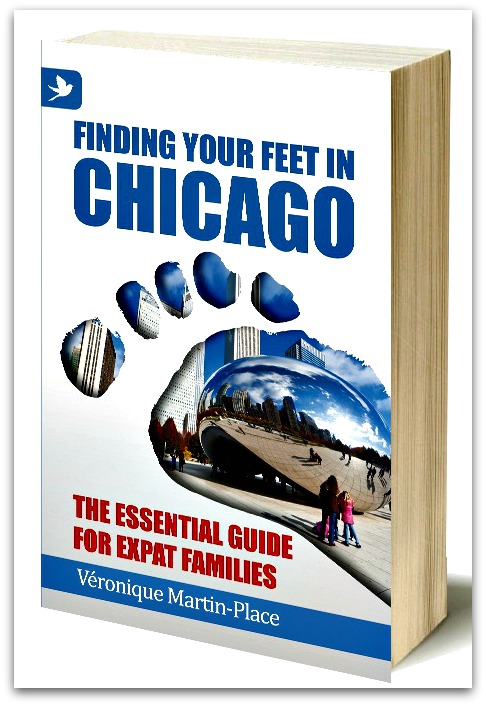
Véronique leads life in the fast lane. A little over three years since our conversation, I find that she has written the definitive expat guide to Chicago: Finding Your Feet in Chicago — The essential guide for expat families (Summertime, 2012). And she is already putting her feet down in a brand new city, one of the world’s trendiest… Here is our exchange:

Bonjour, Véronique! When we last spoke, toward the end of 2010, you told me you’d arrived in Chicago with hopes of getting a job, but then the recession hit, so you’d started up your own writing business. When did you hatch the plan to write a book for expats in the Windy City?
I was already thinking about it when we connected. After witnessing several incidences of culture shock at my daughters’ school, I realized I wasn’t alone in having troubles. Several families from different parts of the world had moved to Chicago around the same time. All of us were in need of information and advice. Meanwhile, I’d started up my blog, Expat Forever, to share my experiences about Chicago — tips on where to settle, which schools to choose, etc. I looked around for local guidebooks to recommend — but there was nothing. So I decided to write one myself.

finding-your-feet-in-chicago-3D-Book CoverThat reminds me of the famous quote by Toni Morrison: “If there’s a book that you want to read, but it hasn’t been written yet, then you must write it.” How long did it take you to produce the book?
From the idea to holding the book in my hands, it took one year and a half! Writing the book directly in English was difficult at the beginning, since English is not my native language. But after a while, I got used to it.

Besides writing in English, what was the most challenging part of the process?
Editing the manuscript. I decided to hire an editor to help with the task.

I know from our previous conversation that having fresh, healthy food is important to you — after all, that’s part of being French! I also seem to recall that you were not a fan of Chicago pizza. You said it was too heavy. But did you cover it in your book?
Of course! I have a chapter dedicated to “Having fun in Chicago,” which includes a section on family-friendly dining out. Before giving my top 10 Chicago child-friendly restaurants, I explain what the Chicago specialties are and insist that children (and their parents) MUST try them. That includes Chicago-style pizza and Chicago-style hot dogs.

What has been the response thus far?
Rather good, I think. I’ve gotten only five-stars comments on Amazon!

Which sections are the most popular?
Readers say they like having so much practical information on family-related topics — not just the advice itself, but all the personal anecdotes and testimonials I include from expat parents. I talked to lots of them and wrote up their stories as “blog posts” or interviews. The stories really speak to the kinds of anxieties most expats have — and they make the book an easy, fun read.

And now your husband has moved on to a diplomatic post in Shanghai! Tell me, does ANYTHING about China remind you of the United States, or are these two countries poles apart?
The United States and China are definitely different cultures — but one similarity struck me right away. Both are consumerist societies. In the US, everything is done to make you purchase and there are plenty of opportunities for you to part with your money. Here in Shanghai, it seems that the only occupation is “shopping.” It’s the only activity people urge you to do from the moment you arrive — visit malls, markets, supermarkets and so on. And I can tell you they have tons of malls, tons of markets (from traditional, the kinds that sell crickets and flowers, to modern, selling electronics, furniture, shoes, and so on), and many, many supermarkets.

How did you prepare yourself and your two daughters for the move?
We didn’t have the chance to make a look-see visit. But six months before moving to Chicago, I’d gone to Shanghai on business, so I had a picture of what to expect: a very urbanized and polluted city. That is also why we decided to settle in the new and “green” development area of Shanghai that is called Pudong.

Did your daughters have any idea of the change they were in for?
My husband and I found some videos about the city on the Internet for them to watch. Fortunately, they’d studied some Mandarin at their American elementary school, so already knew a lot about Chinese traditions and stories. To be honest, I think we learned as much from them about cultural matters as they learned from us on the practical aspects. It was real team work!

I know it’s still early days, but what have you enjoyed the most about living in Shanghai?
Perhaps surprisingly, the fact I can bike! In Pudong, there are a lot of protected biking trails, so it allows me to discover independently this part of the city, and it’s much faster than by foot. But I don’t bike in Puxi (the other side of the Huangpu River, which divides the city into two regions: Pudong, where I live, and Puxi, the city’s historic center). It’s too dangerous.

What is the feature you enjoy the least?
Shanghai is extremely urbanized and I miss greenery. Also, it is very polluted, though less so than Beijing.

What is the top piece of advice you’d give to anyone thinking of becoming an expat in that part of the world — particularly a trailing spouse?
I have five — and actually, they’re for anywhere, not just Shanghai:
1) Learn the language.
2) Get involved in your local community.
3) Keep doing your (or start new) hobbies and/or sports.
4) Discover your surroundings little by little, and you’ll eventually come to know the city as well as the content of your pocket.
5) If you are an accompanying spouse and cannot work locally, go back to school and get new skills, or volunteer to do something you can use professionally upon returning home for good.

And now I have to ask you the obvious question: any plans to write Finding Your Feet in Shanghai?
Many people have indeed asked me that question. And I must admit, the idea was in the back of my mind when I first started my book for expats in Chicago. I thought to myself, this can be the first in a collection, and the next one will be about the city where my husband gets posted next. But at least at this point, I don’t think I’ll write an expat guide to Shanghai. One reason is that there are already lots of books, magazines as well as Web sites for expats in this city. There isn’t the same need as there was in Chicago. But another reason is that my time here is so limited. My husband’s post is for just three years. I’d have to spend all of my time doing research and interviews, getting to know the city like my pocket. And that’s before I can start writing. My book on Chicago was released a couple of weeks after I left to fly to Shanghai — which didn’t give me any time for promoting it locally. I found that very frustrating and wouldn’t want to repeat the experience. Books these days have to be promoted like crazy, and although you can do a lot of it online, I don’t think online promotions can replace interacting with readers in person.

But surely you’ll write another book?
I may not write another book for expat families living in Shanghai, but I already know I will write another book about expatriation. Actually, I have already started it. But I cannot say much more. It is too early.

Aha! You are always so mysterious… Last but not least, I’d like to ask a series of questions that I’ve asked some of our other featured authors, about your reading and writing habits:
1. Last truly great book you read: Rien Ne S’oppose a la Nuit (Nothing Holds Back the Night), by Delphine de Vigan.
2. Favorite literary genre: Memoirs — but also novels, illustrated books like the ones of Danny Gregory (I love his writings and drawings), and carnets de voyage (travel journals). And I have to confess that I still read a lot of children books, especially picture books. My dream is to write and illustrate one.
3. Reading habits on a plane: Something fun and easy to read on my Kindle! I travel light.
4. The one book you’d require the president of France to read, and why: My book, of course! I’m joking. I would like him to read Les mots pour le dire (The Words to Say It), by Marie Cardinal. Everyone should read it.
5. Favorite books as a child: Astérix and Obélix comic book stories, by René Goscinny (illustrated by Albert Uderzo) and Le Petit Prince (The Little Prince), by Antoine de Saint Exupéry.
6. Favorite heroine: Anna Karenina
7. The writer, alive or dead, you’d most like to meet: There are several — all alive and all women: Robin Pascoe, the author of four books about expatriation; Anne Lamott; Annie Ernaux; and the aforementioned Delphine De Vigan.
8. Your reading habits: Every evening, at least one hour, and Sundays as much as I can.
9. The book you’d most like to see made as a film: Hidden in Paris, by Corine Gantz
10. The book you plan to read next: The Help (but I got the French translation), by Kathryn Stockett.

* * *

Wow, what a stimulating list! Readers, any questions or comments for Véronique while we have her attention? Ce qu’est une femme extraordinaire — I think you’ll agree!

STAY TUNED for tomorrow’s post, another installment in the life of our fictional expat heroine, Libby. (What, not keeping up with Libby? Read the first three episodes of her expat adventures.)

If you enjoyed this post, we invite you to register for The Displaced Dispatch, a round up of weekly posts from The Displaced Nation, with seasonal recipes, book giveaways and other extras. Register for The Displaced Dispatch by clicking here!

Related posts:

Images: Véronique Martin-Place with her Chicago book; the book cover in 3D (author’s own photos).

EXPAT BOOK REVIEW: “Trucking in English” by Carolyn Steele

Image.ashx

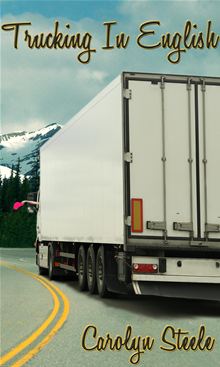
Today we review Carolyn Steele’s Trucking in English: a memoir of being a woman in what is very much a man’s world: that of long-haul tractor-trailor driving in North America.  A Londoner born and bred, Carolyn is now a Canadian citizen and lives in Kitchener, Ontario, where she ran a Bed & Breakfast for five years before trying her hand at negotiating 18-wheelers. Depending on who is asking,  she “maintains that she is either multi-faceted or easily bored”. Confirming this, her résumé states that, in addition to being a lady trucker, she has also been a psychologist and a London Ambulance Service paramedic, while her hobbies include tatting, a form of lace-making.

Trucking in English is available from SmashwordsAmazon (Canada, USA, UK), and Barnes & Noble, but this week we at TDN are in luck: Carolyn is giving away 3 ebook copies to Displaced Nation readers! (Details below.)

TITLE: Trucking in English
AUTHOR: Carolyn Steele
AUTHOR’S CYBER COORDINATES:
Blog: Trucking in English
Website: Carolyn Steele
Twitter: @Trucking_Lady
Facebook: Trucking in English
PUBLICATION DATE: November 2012
FORMAT: Paperback, Ebook (Kindle)
GENRE: Memoir
SOURCE: Review copy from author

Amazon Summary:

“So here’s the plan. I’m going to train to drive a truck and go long-haul. I can get paid and maybe write a book at the same time. What do you reckon?” “Go for it Mum, how bad can it be?” This is the tale of what happens when a middle-aged mum from England decides to actually drive 18-wheelers across North America instead of just dreaming about it. From early training (when it becomes apparent that negotiating 18 wheels and 13 gears involves slightly more than just learning how to climb in) this rookie overcomes self-doubt, infuriating companions and inconsiderate weather to become a real trucker. She learns how to hit a moose correctly and how to be hijacked. She is almost arrested in Baltimore Docks and survives a terrifying winter tour of The Rockies. Nothing goes well, but that’s why there’s a book. Trucking in English began as a blog from the cab and became a popular podcast before taking book form. It is part of Carolyn’s ‘Armchair Emigration’ series.

Review:

“Why would a fifty-something, nicely brought-up mother suddenly decide to go trucking?”

Indeed. Until I read this book, I’d considered trucks to be part of the roads’ parallel universe: menacing beasts that slow you down going uphill, hurtle dangerously fast behind you downhill, or who scatter remnants of blown tires across three lanes, strategically positioned to rip open your door skins like sardine cans.

Carolyn Steele, however, has given me a glimpse inside this parallel universe, and I’ll say this: she’s braver than I’ll ever be.  If I announced to my own family my intention of learning to drive one of these shiny monsters, the reaction would be unflattering: “You?” (Cue gales of incredulous laughter.) “You can’t even reverse a Mini.”  I’m not one of Life’s natural drivers, which makes me all the more admiring of people who are, particularly “fifty-something, nicely brought-up mothers.”

Trucking in English starts at Carolyn’s pipe dream to become a truck driver:

Why not get paid to see North America? I’d driven for a living before, I’d seen little of Canada and nothing of the States, how hard could it be?

— takes us through the training period which was more demanding than she’d anticipated:

I’d assumed it was merely a matter of getting used to where the corners were and developing a technique for climbing in.

— and recounts Carolyn’s adventures once she was let loose on the road.

These long-haul expeditions across Canada and the USA are peppered with frustrations deriving from red tape (seriously — Campbell’s Chicken Soup requires a Customs’ Meat Inspection certificate before it can cross the border?) and the sexism, both unintentional and blatant, that a female truck driver will encounter.

Red-faced squaddie escorted us outside and managed not to look too confused when we [Carolyn and her male co-driver] headed for the wrong sides of our vehicle and it became horribly apparent that I was driving.

Throughout the book shines Carolyn’s good humor, frankness, and sense of the ridiculous.  The characters and events she encounters are described so vividly that they seemed as real to me as they were to her, and in such a way that I had to stifle snorts of laughter if I was reading my Kindle in a public place.

Finally, as March is Style and Beauty Month at TDN, it would be remiss of me not to share a few of Carolyn’s style tips for lady truck drivers:

1. Do not go anywhere without a large supply of baby wipes. You never know when or where your next shower will be.

2. Use a bathroom whenever you see one, even if you don’t need to. (Ever wondered what happens when truckers are taken short in the middle of nowhere during a Canadian blizzard?)

3. Most important of all — dress androgynously. Do not, under any circumstances, let other truck drivers on the road know you are a woman.

A chap in a slower truck does not like to be overtaken by a woman and some of them can get quite snippy about it…With a cap over my eyes (so long as it isn’t pink) hair tucked up into it, large sunglasses and a golf-shirt I can just about pass for anybody… I left the cap off one day due to being so hot that even my hair was sweating. Overtook a truck just south of Toledo and he tried extremely hard to run [me] off the road.

And now it’s your chance to ENTER OUR DRAW TO WIN A FREE  COPY!!!  You can either:

1) Leave a comment on this post, saying why you’d like your own copy of Trucking in English, or

2) Head across to Twitter and tweet the following:

“I want a copy of Trucking in English by Carolyn Steele: http://wp.me/p11cxT-55G via @Trucking_Lady @DisplacedNation”

Don’t forget, you double your chances if  you’re a Displaced Dispatch subscriber!!!

The winner will be announced in our Displaced Dispatch in April.

.

STAY TUNED for tomorrow’s author interview!

Image: Book cover — “Trucking in English”

If you enjoyed this post, we invite you to register for The Displaced Dispatch, a round up of weekly posts from The Displaced Nation, with seasonal recipes, book giveaways and other extras. Register for The Displaced Dispatch by clicking here!

Related posts:

Pay no mind to the travel experts — beauty is in the eye of the beholder!

Matador Network published an article last month bemoaning “travel pornography” — in other words, the kinds of photos one often sees in polished travel guides, making an exotic place look so much better than it does in reality.

This is significant because many of us make our decisions about where or where not to go on the basis of travel Web sites, guidebooks and even Pinterest boards — with their slick photography and accompanying reviews.

As the Swiss-born British philosopher Alain de Botton noted in his book The Art of Travel:

Where guidebooks praised a site, they pressured a visitor to match their authoritative enthusiasm, and where they were silent, pleasure or interest seemed unwarranted.

Case-in-point: São Paulo vs Rio

In Brazil the travel experts have influenced and help perpetuate contrasting perceptions about the country’s two biggest cities: São Paulo (where I live with my Brazilian wife) and Rio de Janeiro.

In most instances you’ll read that Rio is the jewel in the nation’s metaphorical crown, the princess; whereas São Paulo is the ugly stepsister that is best avoided at all costs.

To be honest, when I moved to São Paulo just over a year ago, my own first impressions were not much different. It struck me as a place with ugly skylines, overwhelming traffic and polluted rivers. However, as time went by and I got to know the city better, those impressions changed.

And when I recently went traveling around Brazil with a visiting friend from London, I discovered something quite interesting — I was actually becoming as defensive of São Paulo as the natives.

The bad rap on SP

I started to notice this shift when my friend and I encountered other travelers. Anyone who has traveled recently will know that it’s common to meet all sorts. Typically, your first interactions — long before you decide to become best friends and end up downing shots of tequila in some godforsaken bar (even though you’ll probably never see each other again) — consist of small talk along the lines of:

“Where do you come from?”
“What do you do?”
“How long will you be in [insert city, town, country, etc]?”
“Which football team do you support?”
“Who the hell are Gillingham?”

On this trip, when the mundanities came my way, I had to explain why I resided in São Paulo rather than in London. Then I would get the inevitable “Why the hell are you there?” along with repeated denouncements of São Paulo and how it is a city of doom and gloom, a modern day Sodom and Gomorrah:

“I couldn’t live there” | “I don’t like the sound of living there” [delete phrase depending upon whether you’ve actually been to São Paulo].
“There’s too much/many…. [insert one of the following: traffic|pollution|cars|people].”
“It’s not a tourist city, there’s nothing to do or see.”
“It’s just a big, ugly city.”
“It’s too dangerous.”

There is, of course, an element of truth to most of these points. However, don’t these criticisms (apart from the lack of tourist sights) reflect the reality of 21st-century urban life the world over? I mean, isn’t the debate a matter of degrees?

I blame the travel pornography/travel guidebooks. Cities like São Paulo are constantly maligned because no one has taken the time to dig beneath the surface, or because they are not as immediately captivating as their outwardly attractive neighbors (namely, Rio).

Is beauty an illusion?

But whilst anyone can see that Rio is beautiful, it takes a keener to eye to observe beauty or virtue where it is embodied in less obvious forms. You need to become an explorer of the sort James Murray described in his post of yesterday.

Besides, as is the case of many places that are subject to so-called travel porn, Rio may not actually be as stunning as you first thought. It’s often said of that much-visited city that it is beautiful from afar but rather less so when you get up close.

Copacabana, for example, with its world-famous beach, may have once been the home of the glamorous, but today it’s tatty and parts of it, especially at night, are seedy and not massively safe.

And São Paulo?

Well, if Rio is beautiful from afar but less so up close, then I’d say SP is the opposite. As you approach Brazil’s largest city, its skyline advances towards and then engulfs you in its beige blandness, overwhelming and unending — an effect made more noticeable due to the city’s ban on outdoor advertising.

That said, once you get used to it, SP’s vastness actually becomes one of its marvels.

SP at its most splendid

When I moved here just over a year ago, I vividly remember my sister-in-law saying that living and working in São Paulo makes her feel like a “citizen of the world” — like a small part of something big and important.

What she said is true. Whilst I love venturing into the wild, I am more fascinated by cities — mainly because they are man-made and hence symbolize the complexity of the human condition (I’m a typical sociology graduate!).

Returning to our friend de Botton: he introduces the notion of the sublime in his book on travel, pointing out that certain landscapes can provoke sublime thoughts. Places, he says, can “gently move us to acknowledge limitations that we might otherwise encounter with anxiety or anger in the ordinary flow of events.” (He sees this as a kind of substitute for traditional religious worship.)

For most people, the sight of a desert, canyon or rainforest is enough to elevate them to the sublime, helping to put their daily woes into perspective. But for me it has taken an encounter with a mega-city like São Paulo.

And then there’s that street art!

Whenever I start feeling this way — that SP has put me in touch with something sublime — I begin to appreciate the beauty in the things around me. (I’d missed those things before because of feeling overwhelmed.)

For example, I became acutely aware of the quantity and quality of São Paulo’s street art, which I think must rank amongst the finest, if not the finest, anywhere in the world. You can find fascinating street art everywhere and if you exclude pichação (wall writings done in angry protest), then on the whole it enhances one’s enjoyment of the city’s neighborhoods.

In my view, the street art alone is a good enough reason to visit São Paulo.

But if street art doesn’t take your fancy, rest assured the city also offers plenty of good food, culture and entertainment. Indeed, I cannot think of a place I’ve been to in the continent with as wide a range of quality museums and art galleries.

At weekends you can go for a walk in Parque Ibiraquera (SP’s Central Park), watch a top South American football team, catch a film at an IMAX or, if culture is more your thing, go to a play, opera or ballet. And if you’re a music fan, you’re in luck. Artists who tour South America usually have São Paulo as one of the first dates on their itinerary.

The thing about São Paulo is that whilst it can be intimidating and is perennially frustrating, it’s also pretty cool. As displaced actress Marlene Dietrich once said:

Rio is a beauty — but São Paulo, ah … São Paulo is a city.

And for me, there’s something rather exciting, not to mention awe-inspiring, about that.

STAY TUNED for Tuesday’s post.

If you enjoyed this post, we invite you to register for The Displaced Dispatch, a round up of weekly posts from The Displaced Nation, with seasonal recipes, book giveaways and other extras. Register for The Displaced Dispatch by clicking here!

Related posts:


I’m an explorer — not a traveler

This week, the Displaced Nation is drifting away from March’s initial theme of beauty/fashion tips picked up from world travels. Hardly surprising, given that all of this week’s writers are males! Today’s guest poster, James Murray, a displaced Brit in Boston, is a prime example. The only new fashion he’d like to start would be replacing the word “travel” with “explore.” Sounds pedantic, right? Well, see what you think!

— ML Awanohara

I was never really one for traveling. When all the kids went on their gap years before college, I called them on it: I knew it was a waste of money; a way to delay the inevitable intrusion of the Real World into their lives — in short, I didn’t see the point.

Receiving emails from abroad about how wonderful these experiences were and how life-affirming and eye-opening and incredible the world was, I simply smiled to myself.

How naïve they were, I thought.

Whereas I would be a year ahead; a year closer to a job; a year closer to money, and a year closer to actual freedom.

I did not see work as some black hole into which you pour all of your efforts with no hope of ever getting anything back. On the contrary, I thought it would be pretty good to have a job and a flat and friends and the cash to support a lifestyle I could be comfortable with.

Travel for travel’s sake

I still think that. In fact, I’m not entirely sure I was ever wrong on this point. Sorry to disappoint. And particular apologies to Jeff Jung, whose book on career-break travel was favorably reviewed on this site at the end of last month.

Don’t get me wrong. Yes, I’ve traveled and, yes, I love being “elsewhere,” doing things differently, as much as the next displaced nation resident. In fact I’m a bit of a neophile when it comes to food and culture…

But being enamored of the new doesn’t mean you have to travel.

Travel provides a set of obvious novelties: new tastes; new currencies; new transport; climate; a different view from the window.

But just being somewhere different doesn’t make you an explorer; in order to get that badge, you need to set foot outside your comfort zone, step away from the hotel, the package tour, the guidebook — and look with your own eyes.

Cross that one off the list!

That Facebook app that challenges you to prove you’re a world traveler by listing all the countries you’ve visited irrespective of how long you were there or where exactly you were: what does it really show? It makes a three-day hotel stay in Shanghai look as though you’ve conquered the entirety of mainland China, and it reduces that beautiful holiday in Wales — you know, the one that reminded you what it was like when shops closed on a Sunday — to a complete non-event.

The way we think of travel is all wrong: the political boundaries on the map say that I now live in the USA, but that doesn’t really say anything about where I actually live or the aspects of American culture that I’ve actually experienced.

My life would be completely different if, say, I lived in the desert or the mountains — it would even be different if I lived in New York instead of Boston.

I don’t anticipate ever being able to say that I’ve seen it all.

Explore, for heaven’s sake!

Exploring as opposed to traveling is a question of quality against quantity. I did a lot of exploring in London and Edinburgh that opened my eyes just as much as wandering around Thailand and Romania.

A few curiously exploratory examples:

  • Getting a haircut at a weird little barber’s in Shepherd’s Bush. It was an all-male barber’s, where men could “come along and say what they like in whatever language they like,” as the proprietor put it. I remember being very quiet amid a torrent of very macho conversation. Not a totally unpleasant experience, but I never went back.
  • With my flatmate, laying Russian roulette with the pastries at Vanna Patisserie, a Chinese bakery in Shepherd’s Bush. They were either sugary and delicious or curiously tough with a peculiar secret ingredient. There was no way of telling from the outside.
  • Spotting a Portobello (Edinburgh) art exhibition displayed outside people’s homes that featured, amongst other things, a fat-and-seed bird feeder in the shape of the artist’s head, hung from a tree, where it was gradually and gruesomely pecked to pieces.

These bizarre titbits are the wages of the explorer but not necessarily the traveler, who might see only those accepted “landmarks” to which his eyes are directed.

Avenues for exploration are everywhere. In fact, when I first moved to London, I was so inspired by the tube stops that I wanted to develop a guide to each one.

My idea was that I would use some algorithm to pick a different tube stop each weekend, go there and simply wander around in a roughly spiral shape from that stop, looking carefully at architectural details, stopping in parks and perhaps interviewing the proprietors of particularly interesting local businesses.

I would document these things not so much as a guide for others to visit exactly the same places, but in hopes of inspiring them to look at their own neighborhoods with new eyes.

Exploring the New World

I try to do the same kind of thing in Boston, although I confess I find it a bit harder — there’s the sheer fact that London is 1) massive and 2) very, very old that makes it rather easier to find the gems at the ends of the nooks and crannies.

But I’m not discouraged — I’ve still barely explored the North End with its windy little streets and ample opportunities for getting lost (I don’t have one of those phones that tells me where I’m going).

And just the other day we were introduced to a bar not five minutes down the road, which will make a superb local, with its walls plastered in kitschy tut. I’m sure I’ve passed it before, but, like all the best things, it’s a bit hard to spot.

In amongst these streets are histories, idiosyncrasies and mythologies — of that I have little doubt. Finding them is just a matter of retiring my traveler’s shoes and donning an explorer’s hat.

* * *

So, world travelers — sorry, I meant to say “explorers” — what do you think? Is James right in saying that all of this obsession with the quantity of travel (how many countries, etc.) is misguided? And what do you think of his assertion that Edinburgh can be as fascinating as Bangkok, if you take an explorer’s approach? Please leave your thoughts in the comments…

James Murray is a self-described “itinerant Brit.” After a stint in New Zealand, and some travel in Southeast Asia, he and his American girlfriend — now wife — are practicing “staying put” in Boston, where James is pursing a career as a wordsmith for marketing and fiction, and as a non-professional theatre director. He is also a Utopian idealist and SingStar enthusiast. You can find more about his views by reading his blog, Quaint James, and/or following him on Twitter: @quaintjames.

STAY TUNED for tomorrow’s post by Andy Martin, about a unusual source of beauty in his new home town of São Paulo.

If you enjoyed this post, we invite you to register for The Displaced Dispatch, a round up of weekly posts from The Displaced Nation, with seasonal recipes, book giveaways and other extras. Register for The Displaced Dispatch by clicking here!

Related posts:

img: MorgueFile

CAPITAL IDEA: Singapore: A quick guide

Welcome to another “Capital Ideas” – our somewhat idiosyncratic, ever so slightly tongue-in-cheek guide to various world cities, perfect for the ever discerning readership of this blog. We know our readers are always visitors, never tourists (an important distinction).

Do feel free to contribute your own ideas or suggestions in the comments section, we’d love to hear your thoughts, too.

Capital: Singapore.

Wait a moment, isn’t that an island? Well, it’s actually made up of 63 islands, but Singapore is, in fact, a city state.

Like the Vatican? There’s fewer Cardinals, but yes, the Vatican is an example of another city state.

All I know about Singapore is that chewing gum is illegal. As a confessed chewing gum addict, I think I’ll have to pass on this one. Some forms of therapeutic gum is allowed.

So I can get hold of gum? If a doctor or dentist sells it to you for health purposes, then yes.

What else is banned? Candy? No, in fact, when I was last there I noticed that Singapore immigration put out bowls of hard candy as you went through passport control.

That’s definitely preferable than dealing with Homeland Security.Isn’t it?

This still isn’t quite explaining why I should visit. Well, being a well developed, self-contained city state, it’s easy to get a sense of Singapore quickly and it’s easy to get around.

So I should go because it’s convenient? No . . . Well. . . Yes, I suppose it is. Everything is easy and doable. You won’t have aggressive taxi drivers trying to trick you over fares as you leave the airport. It’s a very well-run state. That’s interesting to see, and it means some of the more stressful elements of travelling, aren’t such a problem here.

Wouldn’t that be primarily due to Singapore’s soft authoratinism? Hey, I thought you only knew about the gum?

I’m smarter than I look. Considering your looks, that’s not too difficult, but to answer your earlier question, yes, Singapore’s laws can be draconian at times, and it’s these laws that make it, on the surface, a well-run state that you’ll feel very safe in for the duration of your visit.

What else do I need to know? Well, being a financial and business center for the region means that there’s a large number of European, American, and Australian expat communities in Singapore. 40% of Singapore’s residents are foreigners. Accordingly, no matter where you’re from, you’ll find something or someone to remind you of home. What’s also useful to remember is that English is one of Singapore’s four official languages. Don’t assume that that means that everyone speak it, but a large number of Singaporeans do, which does make it a more convenient destination in terms of being understood than most other Asian destinations.

Will I be able to understand Singlish? You’ll have better luck understanding a drunk tramp screaming at you on Sauchiehall street. The Singapore government strongly discourages Singlish, but personally we find it charming and a rich part of Singapore’s identity.

Okay, so if I do decide to go, what should I do there? If you’re with young children then you need to make a visit to the Singapore zoo? They do an amazing night safari.

Really? The zoo? I was expecting an answer a little more imaginative than that. It is a nice zoo, though. You can also visit the botanical gardens that houses one of the world’s largest orchid collections.

Orchids? Don’t mock. You can see an orchid dedicated to Princess Di AND one dedicated to Margaret Thatcher.

Umm. . .sounds thrilling. The must-do is checking-out Orchard Road.

What’s that? It’s the main road through Singapore. It’s the social epicenter where people come to…and forgive me for using this phrase…shop til they drop.

Are they that into shopping in Singapore? Yes. Orchard road isn’t shop after shop, it’s high-end mall after high-end mall. It needs to be seen to be believed. For a not quite so high-end retail experience, but just as fascinating, visit the Mustafa Centre in Little India. You’ll be able to find anything in this department

I thought this site had cultural pretensions. All I’m hearing about is shopping, zoos, and flowers dedicated to Maggie bloody Thatcher. One of our favorite museums can be found in Singapore.

What would that be? The National Museum of Singapore. They really do an excellent job of presenting the island’s history. It will you a marvellous grounding in the Singapore. Once you’ve finished there you can head over to Raffles for a Singapore Sling.

Wasn’t Raffles a gentleman thief? You’re thinking of a different chap. This Raffles, is Sir Thomas Stamford Raffles a member of the East India Company who founded the city of Singapore. The Raffles Hotel is named after him. It’s an ornate colonial hotel that is worth a visit. It was also here that the cocktail the Singapore Sling was invented.

What’s in it? Gin, Cherry Heering, Bénédictine, and fresh pineapple juice. It’s a very attractive pink color. Drink it in the Long Bar. Bowls of peanuts are also provided in the bar, you’re expected – nay encouraged – to throw the peanut shells on the bar floor. It’s the only place in Singapore you’re allowed to litter. The Long Bar was a favoured hang-out of Ernest Emmingway and Somerset Maugham.

What other food should I try? Kaya toast is my favorite. Kaya is a fruit curd made from coconut and sugar, spread it on hot buttered toast and at with a runny, soft-boiled egg – it’s heaven. Also, if anything is made with pandan – be it bread or cakes – then gobble it down. Pandanus leaves make the most mundane item delicious. You should also go to Clarke Quay to try Chilli Crab, and Little India for some Fish Head Curry.

Fish Head Curry? Sounds gross. It’s an experience, and one I didn’t find unpleasant, though I don’t think I’d want to make a habit of it. The eyes are the best bit.

Should I eat durian? I would say, yes. It’s an experience, you should try it.

What’s it like? Initially, it tastes rather pleasant. There’s a creamy custard taste. It’s the second taste that may make you retch. I’d describe that second taste as being a mix of raw onions, halitosis, and burnt dog hair. In my experience, you may want to try it first as an ice cream flavor before you build up to the real deal.

What should I read? For fiction, A Many-Splendoured Thing by Han Suyin, King Rat by James Cavell, and Far Eastern Tales by Somerset Maugham. For history, try A history of Singapore, 1819-1988 by C.M. Turnbull.

Thanks, I’m off to try and find some durian ice cream. I’ve had garlic ice cream, can it be any worse? Careful what you wish for.

STAY TUNED for a new Displaced Nation post tomorrow.

If you enjoyed this post, we invite you to register for The Displaced Dispatch, a round up of weekly posts from The Displaced Nation, with seasonal recipes, book giveaways and other extras. Register for The Displaced Dispatch by clicking here!

Related posts:

Image: MorgueFile

LESSONS FROM TWO SMALL ISLANDS — 6) Keep Calm and Run a Bath

I didn’t think seriously about fashion and beauty until I, an American East Coaster, became a resident of two small islands: Britain and then Japan.

Both London and Tokyo are fashion capitals, and living in each of these cities, I found that every so often I really enjoy thinking about striking clothing combinations, make-up, and self-pampering.

Would I have discovered this love of what America’s Puritan founders would call frivolity had I stayed in this country? It’s conceivable, especially if I’d moved to New York City, where I now live as a repatriate. (NOTE: While I do not have Puritan ancestry, I was raised to be a bluestocking, not a girl in rhinestone-studded pantyhose.)

But in the event, I discovered fashion and beauty through my travels — and from learning about how women in other countries clothe and groom themselves.

So what, you may ask, were my key take-aways from this relatively speaking decadent period of my life? No specific beauty products or fashions, but these five guiding principles:

1) To get an English rose (or any other perfect) complexion, you have to be born with it. Nevertheless, skin care is worth it.

As a Caucasian woman, one of my beauty ideals was that of the English rose: a woman with flawless porcelain skin and rosy cheeks that look as though they’ve been produced by good bracing walks in the countryside wearing sensible shoes and tweed skirts.

When I first moved to England and encountered some actual English Roses, I wondered: is it because of the climate, the cosmetics from Boots the Chemist, the diet? (How do I get me one of those?)

My research soon revealed that diet has nothing to do with it. Not in a country where people grow up eating chips and crisps.

And as nice as the No7 products are, they can’t work miracles.

So maybe a glowing appearance is the result of England’s unique climatic conditions: a paucity of direct sunlight and the moisturizing drizzle that almost always seems to be in the air?

I hardly think that can be the case, as there are plenty of Britons with problem skin…

Trying not to turn pea green with envy (hardly a flattering shade!), I could come to only one conclusion: you have to be born with it.

But, not to despair! Once I reached Japan, where women are obsessed with their skin — some even use whitening lotions to obtain a creamier complexion — I learned that of all the things you can do for beauty, skin care is the most worthwhile.

Ladies, if you protect your skin, you might find yourself turning into an English Rose when you get a bit older — the Last Rose of Summer, so to speak.  While some may swear by Crème de la Mer, I go with the regime I picked up in Japan: sunscreen, a hat and a parasol.

I’d also recommend befriending your dermatologist, who knows a lot more about skin care and sun protection than the woman behind the cosmetics counter…

2) Don’t be afraid of experimenting with your hair: it can add some spice and life to your image.

In the UK one of my English rose-complexioned friends favored a chic bob — but with a streak of blue, green or red in it.

As an American fresh off the boat, I was rather scandalized. Why was she ruining a perfectly good hairstyle?

Over time, however, I came to realize that when you live in a country where skies are often the color of lead, adding a bright color to a strand of hair can brighten up your day.

By the time I left England, I could no longer understand why any woman, once she reached maturity, wouldn’t dye or highlight her hair. She doesn’t know the fun she’s missing out on! And, even though I have yet to streak my hair in an outrageous color, it’s definitely on my bucket list.

In Japan, too, I got some kicks from playing with my hair — this time, by adorning it with the kinds of hair ornaments that have been popular since the times when women wore kimono and kanzashi: combs, hair sticks and pins, hair bands, and fancy barrettes.

I did not have particularly long hair when I first reached Japan, but as long hair is the signature of Japanese ladies — and they were my new role models — I soon had locks long enough to make the most of such accessories. My favorite was the snood — I had one that was attached to a barrette covered with a bow. What a great way to keep long hair out of one’s face.

3) Gemstones and pearls are a girl’s best friend.

Sorry, Marilyn dear, but after living in the UK and Japan, my BFFs are gemstones and pearls. Is this because I went to England in the era of Princess Diana, with her (now Kate Middleton’s) 18-carat sapphire ring?

My relationship with colored gemstones only deepened after I moved to Japan and went on several sojourns into Southeast Asia, land of rubies and sapphires, among others.

My engagement ring is a ruby (purchased by my hubby in Tokyo!).

In Japan itself, I fell for pearls and now have quite the collection of necklaces, earrings, rings, and bracelets, mostly from Wally Yonamine’s in the Roppongi area of Tokyo. The owner, Jane, wife of  Wally (a professional baseball player who played with the Yomiuri Giants) is a displaced Japanese Hawaiian.

4) Youth is the time to have fun with fashion.

In the UK, I was taken in by the spectacle of punk and post-punk kids and their strange fashions, while in Japan I found it mesmerizing to watch the Lolita fashions of the Harajuku kids, on a Sunday afternoon.

Eventually, instead of thinking they were weird, I regretted never having had my own equivalent of wearing Doc Martens with a Laura Ashley dresses … sporting long, back-combed hair, pale skin, dark eyeshadow, eyeliner, and lipstick, black nail varnish, along with a spiked bracelet and dog-collar … dressing up like a Victorian boy …

It just wasn’t the done thing, in my stiff, conservative American circles, to wear outlandish garb. And now it’s too late, of course. Youth is the time when you can get away with it. After that, you have to wait for Halloween. (Unless, of course, you want to come across as “mutton dressed as lamb,” as the English say…)

5) Last but not least, my top beauty tip, reinforced by both of these countries: A bath is much preferable to a shower.

At the beginning of living in England, I missed the American shower so much. I was convinced I would never be clean again. But then one day I woke up and realized I’d been brainwashed into believing I needed to have a shower every day. In fact, daily showers dry out the skin. As one dermatologist puts it:

Most people wash far too much. Using piping-hot water combined with harsh soaps can strip the skin of its oils, resulting in dryness, cracking and even infection.

That was around the same time I opened my mind to the possibility that baths — which tend to be favored over showers in the UK (at least in my day) — might actually be preferable. Nothing like a long hot bath with a glass of wine and a book, my English friends would say. Or, as one British beauty site puts it:

A nice bubble bath is the closest you can come to having a spa-like relaxing experience in your own home, without much effort or without spending a lot of money.

Too true! Plus the English shops sell such wonderful bubble bath creams. My favorite was the Perlier Honey Miel (actually from Italy).

Still, I didn’t mind giving all of that up once I reached Tokyo — not the bathing but the bubbles. In the land of the communal bath, you scrub the skin first and then have a long soak in clean hot water, in a tub (ofuro) that is deep rather than long.

Indeed, Japan was where I learned the benefits of exfoliation: I ended up sloughing off dry skin from parts of my body I didn’t know existed. And then the immersion in clean hot water: bliss! Like returning to the womb…

For a Japanese who works long hours, bathing is a sacred time, a ritual. While I haven’t quite converted that far, I have a Pavlovian reaction every time I hear bath water running. Time to go into Total Relax Mode!

I even have a Japanese bath here in my apartment in NYC, and the thought of sitting in it is what keeps me going … That said, I must confess that I sometimes put bubbles in. What can I say? I’m displaced.

* * *

So, readers, what do you make of my five beauty principles? Have you picked up any of your own in the countries where you live? I’m all ears — only please excuse me for a minute while I make sure the bath water isn’t running over. (I don’t want my downstairs neighbors knocking on my door at 3:00 a.m.!)

STAY TUNED for tomorrow’s post, another installment in the life of our fictional expat heroine, Libby. (What, not keeping up with Libby? Read the first three episodes of her expat adventures.)

If you enjoyed this post, we invite you to register for The Displaced Dispatch, a round up of weekly posts from The Displaced Nation, with seasonal recipes, book giveaways and other extras. Register for The Displaced Dispatch by clicking here!

Related posts:

Image: MorgueFile

BOOK REVIEW: “The Career Break Traveler’s Handbook” by Jeffrey Jung

careerbreak_coverThe author of today’s reviewed book, Jeff Jung, was one of our featured Random Nomads last May. We caught up with him again at Christmas, shortly after The Career Break Traveler’s Handbook was published.

TITLE: The Career Break Traveler’s Handbook
AUTHOR: Jeffrey Jung

AUTHOR’S CYBER COORDINATES:
Website: Career Break Secrets
Twitter: @Career BrkSecret
Other: Facebook page, YouTube channel
PUBLICATION DATE: October 2012

FORMAT: Paperback, Ebook (Kindle)
GENRE: Nonfiction, Travel
SOURCE: Review copy from author

Author Bio:

Host of the new global TV show, The Career Break Travel Show, and publisher of CareerBreakSecrets.com, Jeff Jung is the world’s leading career break expert. Originally from Fredericksburg, Texas, Jeff became an international traveler at the age of sixteen with his first trip to Australia and, when he left a successful marketing career for his own career break, became a “true citizen of the world.” He lives in Bogotá, Colombia.

Summary:

The Career Break Traveler’s Handbook is your indispensable tool for dreaming, planning, and finally taking your trip of a lifetime. Filled with tips, stories, and photos from around the world, the Career Break Traveler’s Handbook will both excite you and prepare you.”

(Source: Amazon.com book description)

Review:

Six years ago, Jeff Jung, like many other people, was experiencing dissatisfaction with corporate life.  Business trips abroad racked up frequent flyer miles and provided a temporary escape from the office cubicle and constant phone calls, but those were the only benefits of his adult experiences of travelling. Faced with years more of a work-life balance teetering heavily on the “work” side of the scale, Jeff wondered if he had 

“made a bargain with the devil, building a successful career while sacrificing a satisfying personal life?”

More to the point:

“How was I ever going to engage with the things that really mattered to me: time for myself, for my family and friends, time to pursue my personal passions?”

A throwaway question from two friends provided the catalyst he needed to do something about this unsatisfactory state of affairs.

“What’s it going to take to make you happy?”

In answer, Jeff quit his job four weeks later, although it was several months before he set off on his trip. Planning is all — which is where this book comes in. It’s one thing to dream about getting away from it all, and another thing to do it right.

Based on Jeff’s own experiences, plus those of other seasoned travelers, this book offers advice on aspects from the mundane (budgeting and saving for both the trip and your return, when you might be out of work for a while) to the slightly morbid (make a will; go through details of insurance and finance with a close family member or friend; appoint someone to have power of attorney). There are tips on emotional aspects, too: how to stop talking yourself out of this wild idea, or how to deal with people who, out of concern or jealousy, aren’t as enthusiastic about this adventure as you are.

As you would expect, much of the book covers advice on preparations and the trip itself, such as managing money on the road, dealing with unexpected loneliness, and adjusting to being free again. It also includes specific tips such as “White headphones are an unmistakable marker of an iPod. Replace them with black ones” which might not occur to you at the packing stage and won’t be much use occurring to you when a mugger is running away with your iPod and unsaved photographs.

The final part of the book deals with your return trip, your re-entry into your old life, and how you can turn that “dreaded résumé gap” to your advantage.

It’s worth noting, however, that after their life-changing travels many career-breakers — including the author — don’t re-enter their old life at all but instead make a new one.

Word of wisdom:

On persuading yourself:

You only get one shot at life. Are you really sure you can’t take less than 3 percent of your working life to do what you want to do, to reconnect with yourself and pursue personal passions?

On reasons for going:

This is not a time to run away. It’s a time to run to something.

TDN verdict:

With many companies starting to see the benefits in offering paid sabbaticals to their employees — nearly one-quarter of Fortune’s 2012 “Best 100 Companies To Work For” do so — career breaks, we hope, will become more common. This book will help you make the most of yours.

STAY TUNED for next week’s posts!

Image: Book cover — “The Career Break Traveler’s Handbook”

If you enjoyed this post, we invite you to register for The Displaced Dispatch, a round up of weekly posts from The Displaced Nation, with seasonal recipes, book giveaways and other extras. Register for The Displaced Dispatch by clicking here!

Related posts: