Ah, the no-man’s land of the expat life — if you don’t know what I’m talking about, then you haven’t been abroad for long enough. Nor would you, I’m afraid, qualify for Displaced Nation citizenship. One person who does know what I’m talking about, and would more than qualify, is Valerie Hamer. She likes to refer to herself “British by birth and a nomad by choice.” Here is her bittersweet tale of where that attitude has taken her…
— ML Awanohara
Having lived in Asia for nearly 13 years, I’ve grown accustomed to the standard opening line: “Where are you from?”
However, as the years have passed, my factual auto response of “England” has made me uneasy.
I consider myself a global nomad: an international citizen, albeit one with a passport identifying my roots in the Commonwealth realm.
Plus, I dislike labels of any kind because they invoke stereotypes: and when it comes to nationality there are only so many questions — do you have afternoon tea at 4:00? do English gentlemen really wear bowler hats? — a person can take!
Not British any more…except at the core!
The truth is, I don’t feel particularly British (whatever that really means) anymore.
In fact, I’m so out of touch I have to spend time online researching current UK news on weather, music, sport fashion and politics — because knowing these things is what is expected of me.
Foreign is what I am all about after all, and that isn’t ever going to change.
The blurring of one’s national identity happens over time. In the first couple of years of the expat life, we crouch on the edge of our host culture, secure in the knowledge that the familiar is only a plane ride away. We make cross-cultural comparisons, some of them invidious; have adventures; reminisce; and sometimes escape for brief periods of intense reunion with the motherland. The possibility is always open for ending the foreign adventure and resuming the life left behind.
Over time, however, the attachment to the homeland fades and in the process, most long-term expats mutate into something closer to the global citizen. Take my case: I am now a quasi-fraudulent impersonation of a bona fide English woman.
But, even though I have lived abroad for over a decade, I have never seriously doubted my citizenship. Great Britain is, after all, the place where I was born and raised. The island I could return to on my terms, without fear of any impositions on my status or freedom.
After all, I continue to be a British citizen, right?
No right to investment
Not quite, as it turns out, for while I have been busy living as a temporary resident of South Korea, times have been a-changing back home in Britain.
A standing joke amongst my family and friends is that I manage to devalue the currency of any country I choose to live in. I have the same effect on UK interest rates, too, which is why I’ve made a habit of checking out the best deals and making the necessary transfers every time I visit.
Suddenly, though, this became impossible! New government rules have outlawed British non-residents from investing their cash in the country. How dare we?!
I chose a Korean bank instead, where thankfully I haven’t confronted similar issues — though it should be no surprise to hear that the interest rate dropped by half during my first year in the scheme!
Little right to health care
I rarely get ill, but sometimes I’ll make a quick trip to the doctors when back in England. Most health care services are free at source, and even temporary visitors can make use of any emergency facility. Those of us with family in England can see a general practitioner as long as a family member is on the books.
It’s never been a problem until now.
Last summer I called the office of the GP my father uses and was interrogated quite fiercely by the receptionist. I won’t bore you with the details: suffice to say, as a non-resident I need to be close to death before the medical profession will give me the time of day.
I can’t complain about being denied access to a system I don’t pay into, but the experience further defined me as an alien in a place where I used to belong.
No right to drive?!
One area that shouldn’t be a problem is driving in the UK, right? Last summer I decided to hire a car for my visit. I hadn’t been behind the wheel for ten years but had kept my license updated, registered to my family’s UK address.
After shelling out for a couple of refresher lessons and an expensive insurance policy, I felt confident that all was good — and it was, that is, until I discovered quite by accident that the insurance had actually been useless.
Who knew that my UK license grants only permanent residents the right to drive? Living outside the country means you forfeit the permission to use, or even renew, the license.
It makes sense when you think about it — but the assumption that we are good to go without an international permit is pretty widespread among us British expats.
* * *
These are just a few examples of show how ignorant I was of the gradual erosion of my rights to access UK services and systems — an ignorance I suspect I share with many other displaced Brits.
Ultimately, those of us who occupy a liminal space between two cultures need to come to terms with the idea that we may truly belong in neither.
* * *
Readers, any comments or questions for Valerie? Can you relate to her “floating world” status?
STAY TUNED for another guest post, by Kat Selvocki. Last time we heard from her, she was on her way to start a new life in Australia. And now…
If you enjoyed this post, we invite you to register for The Displaced Dispatch, a round up of weekly posts from The Displaced Nation, with seasonal recipes, book giveaways and other extras. Register for The Displaced Dispatch by clicking here!
images: (clockwise, starting top left) Ploughman’s lunch (courtesy Flickr); traditional Korean meal; Korean marchers; Seoul (courtesy Flickr); Thames view of London; Queen’s Guards marching; Valerie Hamer. (Non-Flickr photos from Morguefiles.)
Don’t miss our 4 polls below! Results to be announced in March 2nd Displaced Dispatch! Enjoy!
When I first repatriated to the United States, I relished the chance to watch the Oscars again. For some reason — I’m not sure why, particularly as I was never a big movie buff — I regretted missing out on the pinnacle of Hollywood glamour during my years of living overseas, first in England and then in Japan.
It did not take long, however, before the novelty wore off. I grew bored with the dresses — they all seemed so same-y. And a tux is a tux is a tux.
I also grew bored with the selection of films. Typically, Oscar-nominated films take place within a single country’s borders — and when people cross these borders, it is in the service of maintaining them (IT’S WAR!!!). Apart from when Sofia Coppola was singled out for her Lost in Translation screenplay, the plots do not exactly speak to me and my prior situation of displacement.
Case-in-point: 2013 Oscar nominees
A great example of what I’m talking about are the two historical — or, more accurately, historically informed — movies that are up for this year’s Oscars:
Steven Spielberg’s Lincoln — the quintessential American biographical period piece that the Academy loves (it is predicted to win five Oscars, including best director for Spielberg).
Les Misérables, the film of the musical theatre adaptation — which in turn is based on an historical novel by Victor Hugo (1862), depicting life in the aftermath of the French Revolution. (Les Mis is likely to win for its score, sound mixing, makeup and hair styling, and best supporting actress for Anne Hathaway.)
Actually, make that three historical films, as Quentin Tarantino’s Django Unchained (up for best picture, cinematography and best original screenplay) can come under that rubric as well. The first half is a mock Western and the second, a mock-revenge melodrama about slavery. At least, though, it has one foreign character: German bounty hunter King Schultz (Christoph Waltz). Posing as a dentist, he gallivants around Texas, speaking perfect English. And you’ll never guess what? He’s a villain. He does have manners — but does that mitigate or enhance his villainy? One can never tell with Mr Tarantino…
Likewise, Argo (likely to win best picture along with some other prizes) and Zero Dark Thirty (likely to win for best original screenplay) depict epic events in the — albeit much more recent — American past. And although each of these films portrays Americans abroad, it shows them acting in the service of president and country — with the aim of protecting other Americans. Nothing too displaced about that.
The comedy-drama Silver Linings Playbook (likely to win Best Actress for Jennifer Lawrence) is about two people who bond over shared neuroses — could anything be more American? Not to mention their common love of pro-football (no, Andy, not the soccer kind!).
Perhaps the best of this year’s films for anyone with a proclivity for venturing across borders is Life of Pi (likely to win for best original score and visual effects). The story is about an Indian family that is emigrating to Winnipeg, Canada. Yet, as even those of us who haven’t seen the film know by now, Pi Patel (Suraj Sharma) gets stranded on a lifeboat in the Pacific with a Bengal tiger. (That’s after the steamliner carrying his family’s zoo is pulled underwater during a freak storm.)
Over the course of months, the two unlikely castaways must depend on each other to survive — a scenario that provides an occasion for reflecting on cross-spiritualism, not cross-culturalism. (Pi, who was born a Hindu, loves Jesus and practices Islam.)
It also provides an occasion for displaced Taiwanese filmmaker Ang Lee to try his hand at 3D storytelling.
Why are we trying so hard to fit in when we were born to stand out?
WELCOME TO THE 2013 DISPLACED OSCARS. If we don’t fit into the Hollywood version, we may as well host our own event. We invite you to vote on your favorite films in the four categories we have created below. Preliminary results were announced in the Displaced Dispatch that came out on Saturday, February 23rd. Final results will appear in the Dispatch that comes out on Saturday, March 2nd. Be sure to sign up if you haven’t already!
1) Best Film Exploring Themes of Interest to Expats & International Travelers
This category honors the films that put cross-cultural themes right at the center. And the nominees are:
1) Shanghai Calling (2012, dir. by Daniel Hsia) SUMMARY: Manhattanite Sam (Daniel Henney), an arrogant young lawyer, is transferred to his firm’s Shanghai office. He bungles his first assignment and finds his career in jeopardy. With the help of his beautiful relocation specialist, among others, he just might be able to save his job and learn to appreciate the wonders that Shanghai has to offer. WHAT CRITICS ARE SAYING: How often do we get to see Shanghai on the big screen? That said, the plot is somewhat shallow and fails to make the most of Sam’s background as a Chinese American.
2) The Best Exotic Marigold Hotel (2012, dir. by John Madden) SUMMARY: A group of British retirees — played by British acting greats like Judi Dench, Maggie Smith and Bill Nighy — have outsourced their retirement, attracted by the less expensive and seemingly exotic India. They are enticed by advertisements about the newly restored Marigold Hotel and given false dreams of a life with leisure. WHAT CRITICS ARE SAYING: At the 2012 Mumbai Film Festival, the film was honored for showcasing Indian filming locations — a view not necessarily shared by viewers outside the subcontinent. Some of us feel that India was slighted by being treated as the shimmering background to a story about retirement-age self-renewal.
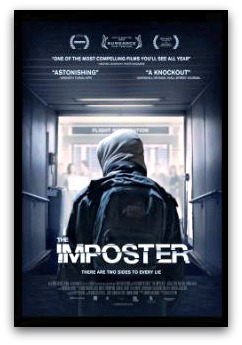
3) The Imposter (2012, dir. by Bart Layton) SUMMARY: Thirteen-year-old Nicholas Barclay disappeared from his home in San Antonio, Texas, in 1994. Three and a half years later, he is allegedly found alive, thousands of miles away in a village in southern Spain with a story of kidnapping and torture. His family is overjoyed to bring him home. But all is not quite as it seems. The boy bears many of the same distinguishing marks he always had, but why does he now have a strange accent? Why does he look so different? This British documentary concerns the 1997 case of French serial imposter Frédéric Bourdin. WHAT CRITICS ARE SAYING: By common consensus, The Imposter is one of the year’s most provocative pictures. Certainly, Displaced Nation writer Anthony Windram found it that way. In one of our most popular posts of last year, he mused that Bourdin’s story is not entirely unfamiliar to expats, all of whom have chameleon-like qualities.
CAST YOUR VOTE HERE!
2) Best Foreign Displaced Film
This category honors films about displacement that take place in non-English speaking countries and therefore require English speakers to read subtitles while learning about other cultures. And the nominees are:
1) Tabu (2012, dir. by Portugal’s Miquel Gomes) SUMMARY: The action in this experimental fiction ranges from contemporary Lisbon to an African colony in the distant past, in what was Portuguese Mozambique. First we are introduced to a cantankerous elderly Portuguese lady with a gambling addition. Then we flashback to her youth as a beautiful young woman living a kind of White Mischief existence at the foot of Mount Tabu, where she falls in love with a handsome adventurer…(Notably, the film’s title references the 1931 German silent film of that name, which took place in the South Seas.) WHAT CRITICS ARE SAYING: The film shows what happens to expats who live too long — there are no remnants of “paradise” left. But some — e.g., A.O. Scott of the New York Times — have faulted the director for glossing over the issues of colonialism in the film in favor of simple aestheticism.
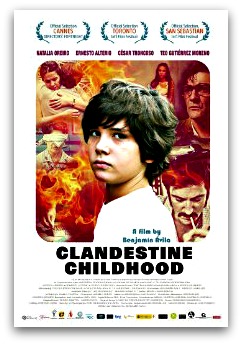
2) Clandestine Childhood (2011, dir. by Benjamín Ávila) SUMMARY: A cinematic memoir drawn from Ávila’s own experiences, the film paints an unsettling portrait of families affected by military dictatorships. The year is 1979, five years after Perón’s death, and the family of 12-year-old Juan, who have been living in exile in Cuba, returns secretly to Argentina. Juan’s parents are members of an underground organization and for sake of their cover, he must assume the name of “Ernesto” and pretend to be a newcomer from northern Argentina. WHAT CRITICS ARE SAYING: Juan’s parents aren’t fleeing the law because of their past misdeeds but are trying violently to overthrow a current dictatorship. The film therefore raises the question: do urban guerrillas make good parents? After all, they are asking their son, a Third Culture Kid, to act the part of a native in the homeland he never knew, for the sake of their political ideals. But while this question is intriguing, the story is driven almost entirely by clichés. As one critic remarked:
[T]he writing needs to be sharper to avoid feeling like a generic coming-of-ager.
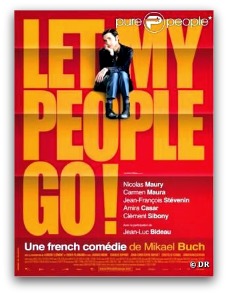
3) Let My People Go (2011, dir. by Mikael Buch) SUMMARY: French immigrant Reuben (Nicolas Maury) is living in fairytale Finland — where he got his MA in “Comparative Sauna Cultures” — with his gorgeous Nordic boyfriend Teemu (Jarkko Niemi). He works as the mailman in a neighborhood whose colorful houses look like Scandinavian Skittles. Then, after a misunderstanding involving a parcel full of Euros, Teemu casts his lover out of Eden, sending him back to where he came from: Paris. WHAT CRITICS ARE SAYING: Ruben’s return to Paris — where he finds his family weathering various crises as well as emotional instability — demonstrates why he left in the first place. (Aren’t most expats escaping something?) However, the scenes with his wacky, feuding family members soon become tedious. As one critic puts it:
The movie’s labored attempt at creating comedy mostly means lots of scenes with Ruben cringing as relatives shout.
CAST YOUR VOTE HERE!
3) Most Displaced Director
This category honors the director who has shown the most chutzpah in raiding the literature of other cultures to make a commercially successful movie (note: they do not cast the natives!). This year’s nominees are:
1) Joe Wright for doing a British version of Anna Karenina (2012), casting his muse (Keira Knightly) in the titular role WHAT CRITICS ARE SAYING: Some enjoyed Wright’s bold new interpretation of this classic Russian novel, while others felt that he did Tolstoy a terrible injustice — for instance, New Yorker critic Richard Brody had this to say:
Wright, with flat and flavorless images of an utterly impersonal banality, takes Tolstoy’s plot and translates it into a cinematic language that’s the equivalent of, say, Danielle Steel, simultaneously simplistic and overdone.
2) Tom Hooper for casting a bunch of Aussies, Brits and Americans in Les Misérables WHAT CRITICS ARE SAYING: Since Hooper previously won the Best Director Oscar for the terribly English drama The King’s Speech (historical drama, yay!), many found it odd that he would choose to take on this sprawling French story, and beloved musical, to create what he calls “an oil tanker of a picture.” But for what it’s worth, Hooper had no qualms about directing a film having to do with French history instead of his own. He is persuaded that Victor Hugo’s story speaks to issues of concern today:
Hugo’s story of populist uprising in 1832 Paris resounds in an era of the Arab Spring, the Occupy protests and general frustration over economic inequality.
3) Korean director Hur Jin-ho for making an Asian version of Dangerous Liaisons (2012) — which was originally an 18th-century novel by Pierre Choderlos de Laclosset — and setting it in 1930s Shanghai WHAT CRITICS ARE SAYING: Many have complimented Hur Jin-ho’s decorous adaptation, saying it was clever of him to swap the insular, decadent world of de Laclos’ book, which takes place pre-French Revolution, with the similarly gilded cage of Chinese aristocrats just prior to the Japanese invasion. But the film isn’t particularly sophisticated on a political or historical level. As one critic writes: “It’s all just window-dressing: pretty, but substance-free.”
CAST YOUR VOTE HERE!
4) Most Displaced Actor/Actress
This category honors the actor who has performed this year’s greatest feat of playing a role that requires them to take on a whole new nationality. We’re talking Versatility Plus! And the nominees are:
1) Daniel Day-Lewis, the Anglo-Irish actor who portrayed Abe Lincoln in Lincoln WHAT CRITICS ARE SAYING: Apparently, there was no American actor good enough to play one of the most exceptional presidents the nation has ever known as critics have had nothing but praise for Day Lewis’s performance. Here is a sampling:
His Lincoln is tall and tousled and bent over with the weight of melancholy responsibility in the fourth year of the Civil War.
[Day-Lewis] manages to inject so much quiet humour into what could have been a very reverential portrait.
[The actor] inhabits the ageing figure of the 16th President of the United States with exquisite poise, intellect and grace.
2) Anne Hathaway for playing saintly prostitute Fantine in Les Misérables WHAT CRITICS ARE SAYING: Many find it impressive that Hathaway, cast as the tragic Fantine, sings the show-stopping “I Dreamed a Dream” in one take. (Tom Hooper’s contribution to the genre was having the actors sing rather than lip synch.) And some say that her willingness to have her locks shorn off on screen shows her commitment to her craft. That said, her performance is not to everyone’s taste. “Rarely have the movies seen such an embarrassingly naked plea for applause,” writes Australian film critic Jake Wilson — the implication being the Victor Hugo’s Fantine would have had more dignity.
3) Swedish actress Alicia Vikander for taking on two non-Swedish roles: Caroline Matilda of Great Britain (she served as Queen of Denmark and Norway in the 18th century) in A Royal Affair (2012); and Kitty in Anna Karenina (2012) WHAT CRITICS ARE SAYING: Vikander’s “moxie” is apparently what landed her both of these parts. According to A Royal Affair director Nikolaj Arcel, every actress in Denmark wanted the role of Mathilde, but only Vikander had the requisite “regal quality.” She even went to Copenhagen two months before shooting began to learn to speak Danish fluently. Likewise, Anna Karenina director Joe Wright saw in her the qualities to play Kitty, a flirtatious young woman who believes the dashing Count Vronsky is her Prince Charming, only to find love with a kind-hearted farmer named Levin. It is not uncommon for movie-goers to remark that she outshines Kiera Knightly’s Anna.
CAST YOUR VOTE HERE!
* * *
Are we missing out on any films/categories? Please leave your suggestions in the comments below.
If you enjoyed this post, we invite you to register for The Displaced Dispatch, a round up of weekly posts from The Displaced Nation, with seasonal recipes, book giveaways and other extras. Register for The Displaced Dispatch by clicking here!
It’s Christmas Day and the holiday party continues for the expats and other global voyagers who washed up on the Displaced Nation’s shores in 2012. Remember all those Random Nomads who proposed to make us exotic meals based on their far-ranging meanderings? Not to mention their suitcases full of treasures they’d collected and their vocabularies full of strange words… How are they doing these days, and do they have any exciting plans for the holidays? Third in a three-part series (see also Part One and Part Two).
During the final third of 2012, we met some expats and intrepid world travelers who, I think it’s fair to say, have developed some rather unusual hobbies and eating habits. The two are one and the same in the case of Brian MacDuckston, who was featured on our site this past August. He has made a habit of eating ramen in as many Tokyo venues as possible — a hobby that was quirky enough to attract the attention of the New York Times. In addition to Brian — a San Franciscan who originally went to Japan to teach English — we encountered:
Liv Gaunt, an Englishwoman who became an expat accidentally, while pursuing her love of scuba diving and underwater photography. Now based in Australia, she told us she has a passion for sharks but would happily do without sea urchins.
Mark Wiens, an American third culture kid who now lives in Thailand and travels all over — he feels least displaced when sampling other countries’ street foods.
Jessica Festa, an American traveler who loves to venture off the beaten track and eat locally — she did not hesitate to eat cuy in Ecuador (even though it reminded her of her pet guinea pig, Joey, named after a school crush).
Larissa Reinhart, a small-town Midwesterner who lived in Japan for several years and, since repatriating, has taken up the pen as a crime novelist. She is now living in small-town Georgia but hopes to go abroad again. She provides recipes for Asian fried chicken, among other delicacies, on her blog about life as an ex-expat.
Patricia Winton, an American who responded to 9/11 by giving up her comfortable life in Washington to become an expat crime writer in Rome. She also invested in a pasta-making machine…
Bart Schaneman, a Nebraskan who wanted to see the world and has made his home in Seoul, where he is an editor for an English-language newspaper and author of a travelogue on the Trans-Siberian railway. He is a huge fan of kimchi.
Three of this esteemed group are with us today. What have they been up to since a few months ago, and are they cooking up anything special for the holidays, besides chatting with us?
1) BRIAN MACDUCKSTON
Have there been any big changes in your life since we last spoke?
I’ve been offered a few gigs on Japanese TV shows as a “ramen reporter” and successfully pitched my first magazine article about a best-of-ramen list. A start! I also started a ramen class aimed at non-Japanese speakers. Check it out!
How will you be spending the holidays this year?
A nice staycation in Tokyo.
What’s the thing you most look forward to eating, dare I ask?
I’m trying to eat more high-class sushi, but I’ll probably just stick to a lot of ramen for the next few weeks.
Can you recommend any books or films you came across in 2012 that speak to the displaced life?
I really enjoyed Jiro Dreams of Sushi, a documentary about the most revered sushi chef in the world. [Editor’s note: The film has been available on Netflix since last August.]
Do you have any New Year’s resolutions for 2013?
I want to train myself to stop using double spaces after periods when I write. Not a big goal, but important for someone who has an interest in being paid for my writing.
A worthy goal, imho! (I’ve had to correct quite a few in my time…) So, any upcoming travel plans?
My father will visit Japan, so I am planning a luxury week-long trip of eating and relaxing in hot springs. Two things I’m good at!
2) LARISSA REINHART
Any big developments in your life since we last spoke?
My second Cherry Tucker Mystery, Still Life in Brunswick Stew, has a release date of May 21, 2013. [Editor’s note: As mentioned in Larissa’s interview, the first in her Cherry Tucker series, Portrait of a Dead Guy, came out this year.]
How will you be spending the holidays this year?
We travel to visit my family in Illinois and St. Louis after Christmas through New Year’s.
What’s the thing you most look forward to eating?
There’s this Italian grocery, Viviano’s, in the Italian district of St. Louis, called The Hill in St. Louis, that I really look forward to visiting. I’ll stock up on cheap wine and Italian staples for the coming year.
Can you recommend any books or films you came across in 2012 that speak to the displaced life?
Yes, two Japanese films:
The fascinating documentary Jiro Dreams of Sushi. I highly recommend — even for non-sushi fans. The film is beautifully shot and reveals what it takes to be a true master at something. Incredible.
The gorgeous The Secret World of Arrietty (aka The Borrower Arrietty), scripted by Hayao Miyazaki. We were excited to see Arrietty because we saw the ads for the movie when we were still living in Japan (and I’m a big fan of Mary Norton’s The Borrowers, on which the film is based, as well as of Miyazaki).
Have you made any New Year’s resolutions for 2013?
To spend less time on social media and more time writing. I love chatting online, but I need to be more disciplined about getting away from the “water cooler” and back to work.
Any upcoming travel plans?
Disney World for spring break! Woot! And we’re hoping to get back overseas soon, but no definite plans yet.
3) PATRICIA WINTON
Any big changes in your life since we last spoke a couple of months ago?
The month after you featured me, I put my long-time WIP in the bottom drawer for a while and started a new one. I’ve written about 30,000 words. This one, also a mystery, is set in Florence. It takes place during the 500th anniversary celebration of the world’s first culinary society.
Meanwhile, my blog partners at Novel Adventurers are working on an anthology of long short stories. We are an adventurous group comprising (besides me):
an Australian who has lived in South America
an American of Swiss-German origin who is married to a man from Iran, where they frequently travel
an American with close family ties in India, where she frequently travels
an American specializing in things Russian, who is married to a Kyrgyz
a former Peace Corps volunteer who writes about the Caribbean
an American who grew up on a sailboat traveling the world and has lived as an adult in many countries.
We’ll be writing about travel and adventure from international perspectives. It will be some time before it sees publication, but I’ll keep you posted. I think it will interest the Displaced Nation!
Where will you be spending the holidays this year?
I’m spending the holidays quietly at home. I plan to visit a friend in the country for New Year’s weekend. The holidays here last almost three weeks, ending on January 6. Nativity scenes are a big deal here, and I plan to visit various churches to view, and photograph, them as I usually do. I’ll write about them on my blog, Italian Intrigues, on January 3rd.
What’s the thing you most look forward to eating?
Christmas Eve in Italy is devoted to eating fish — usually seven fish dishes from antipasto onward. I’m trying out a new recipe for sea bass stuffed with frutta del mare (non-fin fish). I’m using clams, mussels, shrimp, squid and baby octopus, all well laced with garlic. And I always make the holiday custard that comes from my Tennessee childhood.
Can you recommend any books you came across in 2012 that speak to the displaced life? The Lacuna, by Barbara Kingsolver. While it was published in 2010, I didn’t read it until this year, and I think it’s a masterpiece. It’s about a man with one foot in Mexico and the other in the US — but that’s a vast oversimplification. After the young man’s Mexican mother dies, he works for Frida Kahlo and Diego Rivera while Leon Trotsky is staying with them. He later moves to the US to join his American father. He eventually becomes a successful writer caught up in the McCarthy witch hunt. I don’t want to include spoilers here, but it’s fabulous. The boy/man is a foreigner in both countries and speaks both languages with an accent.
Do you have any New Year’s resolutions for 2013?
Not that I want to share.
Last but not least, do you have any upcoming travel plans?
No concrete travel plans at the moment. While composing these answers, I received an email about a tour of Uzbekistan that sounds really alluring. And I will probably go to the US to attend a mystery writers conference.
* * *
Readers, any questions for this rather motley (one former expat and two current ones) but highly creative bunch?
STAY TUNED for tomorrow’s post — expat Anthony Windram’s musings on spending Boxing Day in a country that associates boxing with punching, not (Christmas) punch.
If you enjoyed this post, we invite you to register for The Displaced Dispatch, a round up of weekly posts from The Displaced Nation, with seasonal recipes, book giveaways and other extras. Register for The Displaced Dispatch by clicking here!
Images: Passport photo from Morguefiles; portrait photos are from the nomads (Larissa Reinhart’s shows her family in front of one of their favorite Japanese manga characters, Shin-chan, a sort of Bart Simpson of Japan — the creator, Yoshito Usui, had recently died).
Place of birth:Scottsbluff, Nebraska, USA — I was raised on a farm nine miles east of town. I had an incredible childhood. Passport: USA Overseas history:South Korea (Jeonju, Seoul, Jeonju, Seoul): 2006-08; 2008-09; 2010-11; 2011 – present. Occupation: National editor for the Korea JoongAng Daily, an English newspaper in Seoul; and author of Trans-Siberian, a travelogue about a trip on the the world’s longest railway. Cyberspace coordinates:Bart Schaneman (Tumblr blog) and @bartschaneman (Twitter handle).
What made you abandon your homeland for Korea?
I left because I wanted experiences. I wanted material to write about. I wanted to travel and get out of America. I didn’t want a mortgage. I didn’t want to get trapped. I didn’t want to wait until I was too old to see the world.
Was anyone else in your immediate family displaced?
I’m the only person in my immediate family who doesn’t live in the region called the Great Plains.
Tell me about the moment during your stay in Korea when you felt the most displaced.
I don’t really have a moment like that. Korea’s an exceptional place. It’s safe. The people are kind and educated. It gets easier to live here as a Westerner all the time. I’m here by choice — it gets lonely, and I miss my family, but I don’t really question why I’m here. There were minor annoyances about how things are done differently than what I was used to when I first got here. I don’t really notice those anymore. People here move to their left on the sidewalks. That’s not too hard to get used to.
When did you feel the least displaced?
Every time I go home I remember how lucky I am to live in a foreign country. Not that Nebraska or the Midwest is a bad place. I love it and I hope I’ll be lucky enough to get to live there again someday. It’s just very familiar. Difficult to find interesting. In Asia, I’m rarely bored with my surroundings. I value that more and more as I get older.
You may bring one curiosity you’ve collected from each of the countries where you’ve traveled or lived into The Displaced Nation. What’s in your suitcase? Kimchi. But only from Korea. It’s not right anywhere else.
We are therefore looking forward to the meal you are invited to prepare for Displaced Nation members, based on your travels. What’s on the menu?
I’m going to serve you all a bowl of chamchi kimchi jjiggae: tuna and kimchi soup. It will make you feel like you can flip over cars after you eat it. Great when you’re sick or hungover.
And now can you offer a Korean word or expression for the Displaced Nation’s argot?
The most important word to understand in Korean culture, to my mind, is jeong. It doesn’t translate directly, but the closest way to describe it is as a type of deep bond that is formed between people over time that helps you care for someone. You might not see an old friend frequently any more, or you might not be romantic with your partner, but you have jeong for them so you still want to help them when they need you. It explains a lot about the Korean mind and Korean society.
Earlier this month we did a poll on expat voting. Do you still follow your home-country politics?
I work as a journalist so I pay attention to American politics. Koreans pay attention as well. I’ve heard it said by people here that when the U.S. coughs the whole world gets sick. Most of my co-workers are from the U.S. and very well informed.
Do you vote despite living abroad?
I vote when I like the candidates, but I don’t vote if I don’t like what’s offered.
Were you surprised at the 2012 outcome?
I’m always surprised at how divided America seems around election time. People I love and trust can think about the world in an extremely different way than I do. That’s more surprising to me than who won the election.
The American Thanksgiving took place last week. What do you feel most thankful for in your life right now?
I’m lucky to have the life I have. I’m healthy. I’m alive. I don’t need much more than that. No complaints from me.
Readers — yay or nay for letting Bart Schaneman into The Displaced Nation? He may have us all eating kimchi, but at least he can amuse us with tales of the Trans-Siberian! (Note: It’s fine to vote “nay” as long as you couch your reasoning in terms we all — including Bart — find amusing!)
STAY TUNED for another episode in the life of our fictional expat heroine, Libby. Yes, this time she really is posting! Last week, the washing up after her Thanksgiving dinner took longer than expected…! (What, not keeping up with Libby? Read the first three episodes of her expat adventures.)
If you enjoyed this post, we invite you to register for The Displaced Dispatch, a round up of weekly posts from The Displaced Nation, with seasonal recipes, book giveaways and other extras. Register for The Displaced Dispatch by clicking here!
Mary-Sue Wallace, The Displaced Nation’s agony aunt, is back. Her thoughtful advice eases and soothes any cross-cultural quandary or travel-related confusion you may have. Submit your questions and comments here, or else by emailing her at thedisplacednation@gmail.com
Shoot! Is it October already? I don’t know how the time flies. I don’t know about you, but I’m not a big fan of fall. Who would be living in Tulsa. It just gets grey here, no burnt ochres like in Vermont. In fact, I wouldn’t know a burnt ochre if I saw one. Is it like a vole (please don’t feel the need to write in. I’m not that stupid. I know it’s not a rodent). Anyhoo, on with this month’s questions.
Dear Mary-Sue,
I can’t resist asking you: how does the Wallace household celebrate Halloween? I can imagine it’s quite an occasion!
– Ian (a British fan of yours) in Iowa
Dear Ian,
Well I can tell you that we don’t celebrate Halloween like the Larsons across the street. She gives out fruit to the kids in the neighborhood. Why would you even do that? It’s just cruel, isn’t it?
No, it’s a time of excess over at the Wallace household. That’s why I wake up the day after Halloween and don’t have to worry about finding the trees outside my house covered in toilet paper.
I buy plenty of Reese’s peanut butter cups because who doesn’t love them? I hear in Europe they have what they call food mountains when they have too much of a particular food source, well let me tell you that the Wallace household ends up with a Reese’s peanut butter cup mountain come Halloween.
My wife and I have lived in the United States since last May, and I must say, she is throwing herself into the life here with considerable vigour. She is now talking about hosting a Halloween party for some of our fellow expats, and inviting a few of our American neighbors. She has suggested that she and I dress up as an Elephant and a Donkey, in celebration of the American election season. No pun intended, but that would make me feel a bit of, well, an ass, to use the local dialect.
I wonder if I could talk her into going as a Milkman and Pregnant Lady instead? At least that would be true to our native (British) culture.
– Stephen in St. Louis
Dear Stephen,
So let me guess this right regarding your Halloween costumes, your wife was to be satirical and you want to be lewd? Gee, what is it with you Brits. You always think your jokes are funny and yet they always just seem to be about sex. Just go as something horror related and stop trying to over think it. If you really want to be true to your native culture why not go as King George III. Bam! Yes, I went there.
My husband writes mystery books for a living. He and I have decided to live in England for a few years while he does research on his latest story. He insists that we look for an old isolated cottage somewhere deep in the heart of the countryside, where he can be free to write. But I feel certain that those oldy-worldy thatched roof places may be haunted. And what if I have to stay in a house like that on my own, should he be called up to London to meet his agent or give a talk.
Do you think I’m strange to be so afraid of (admittedly English) ghosts?
– Susan of Savannah, Georgia, soon to be of Suffolk, East Anglia
Dear Susan,
If you’re going to be living in East Anglia I’d be more concerned with the living than the dead. They’re a scary in-bred bunch, though coming from Georgia you should be able to handle it. I kid, I kid…well not about East Anglia.
***** Dear Mary-Sue,
Do Westerners see Western ghosts, Chinese see Chinese ghosts, and Africans see African ghosts, or can we see each other’s?
– Just Curious
And does Just Curious see ghosts of low intelligence?
*****
Dear Mary-Sue,
When I first saw the farmhouse in Tuscany that my husband and I are now renting while we look for a place to live for our retirement, I thought to myself: Frances Mayes, eat your heart out! However, we’ve just now found out from one of our neighbors that a murder took place here about ten years ago — and ever since, the house has always been rented to expats. I’m thinking we should consult with the local Catholic priest about whether he could perform an exorcism — casting out evil spirits and all that. But my husband says, don’t be silly — it just adds to the atmosphere.
What do you advise?
-Victoria of Vulterra (formerly of Wellington, NZ)
Dear Vicky,
First thing I would be doing is renegotiating a lower rental fee and not thinking about calling the local Padre.
***** Dear Mary-Sue,
In my opinion, Asian ghosts are far freakier — and hence scarier — than Western ones. Especially the Japanese kind. I mean, what’s a vampire compared to a wailing Asian woman with a very pale face and long, jet black hair? Actually, I’m scaring myself even as I write this…
– Ted of Tsukuba (formerly of Texas)
Dear Ted,
Yeah, I mean Casper has nothing on the Krasue from Thai legend. Now that’s freaky. I’d like to see Stephen in St Louis go to his party dressed as that.
Mary-Sue Wallace, The Displaced Nation’s agony aunt, is back. Her thoughtful advice eases and soothes any cross-cultural quandary or travel-related confusion you may have. Submit your questions and comments here, or else by emailing her at thedisplacednation@gmail.com.
Well, this month I’ve been asked to deal with your food-based queries. That’s pretty easy for this gal! I love to chow down. Not in a Paula Deen kinda way, you understand, but I sure do love a refined meal and am pretty well known on the Tulsa culinary scene.
Fermented salted herring — how does that sound to you as a national dish? [Not great. Think roadkill cooked up in the finest Ozarks tradition sound preferable, if I’m being honest – M-S] As an American living in Northern Sweden, I have yet to acquire the taste let alone abide the smell. However, a friend at my new church has invited me to a party where they’ll be serving surströmmingsklämma — that’s a sandwich made with slices of surströmming (the name for this fish — quite a mouthful, too, though at least it’s not fermented!) between two pieces of the hard and crispy kind of bread they love so much up here. The bread is buttered and there is a further layer of boiled and sliced or else mashed potatoes.
What to do? Do I accept my friend’s invitation or pretend to be busy “settling in”?
– Mary-Louise from Umeå, Sweden
Dear Mary-Louise,
You don’t have to pretend to be Anthony Bourdain if you don’t want to be. Look at Samantha Brown, she travels all the world and never once leaves her comfort zone or experiences something new.
Also, you’re in Sweden, not some village in the third world where they are honoring you by offering you a slice of roast anteater rump. I’m sure you won’t be insulting anyone by politely declining. Just be graceful and say you’re not big into fish.
I know you’re very pro-USA, but as an English expat who has just spent his first summer in the United States, I haven’t been able to get the hang of some of your summer desserts.
Take, for instance, strawberry shortcake — overly sweetened strawberries on a sweet biscuit, which should actually be called a scone. Whose bright idea was that? I guess that person hadn’t heard of strawberries and cream?
Moving right along to that traditional American Girl Scout favorite, s’mores. The chocolate and graham crackers are fine, but a roasted marshmallow — that’s OTT. Please, sir, can I have no-more?
I could go on about the American obsession with eating ice cream in a wide variety of sickening flavors, when there’s absolutely nothing wrong with chocolate and vanilla (okay, strawberry, too, if you like) — but I’ll stop there.
Here’s the thing, old girl [??????? M-S]. I would love to tell my various American hosts that nothing beats a tall glass of Pimm’s on a summer’s day, and a slice of summer pudding, but I’m guessing that wouldn’t go down too well.
Nigel of Nevada
Dear Nigel,
Old girl??! Why, aren’t you a little slice of honey pie? I’d certainly like to beat you with a tall glass of Pimms. It actually isn’t too difficult to get hold of a Pimms cup here in the land of the free. As for the rest of your letter: yeah, we like our desserts to be sweet. What a surprise!
I’m originally from Winnipeg, in Manitoba, Canada, and am teaching English in Korea. The other day one of my students went so far as to tell me that the reason the Korean economy has gotten strong is because they all eat so much kimchi.
I wanted to tell him that I think there’s something strange about a nation being so obsessed with what is essentially spicy fermented cabbage.
I mean, can’t they think of anything else to brag about?
– Sally from Seoul
Dear Sally,
First Mary-Louise’s problems with fermented fish and now this. I don’t know what it is with foreigners and fermentation — seems crazy to me. The Mary-Sue rule is that unless you’re fermenting something that I can make into a mimosa or margarita, then it’s best not to bother.
My hubby, Jake, is always going off to the Korean barbeque in town. If the owner is sending back all the money he makes off dear ol’ hubby, well, it’s probably that that’s keeping the Korean economy strong.
Oh. My. God. Do people really eat this stuff? I’m an American student staying with a British family as part of a semester abroad, and they SERIOUSLY just offered me the most foul-tasting stuff imaginable on toast. I thought I was going to spit it out. I mean, it was soooo salty! And then they presented the jar to me as a GIFT! What am I supposed to do with it?!?!?!?
– Patti in Plymouth
Dear Patti,
I’m assuming you’re talking about Marmite. I wouldn’t worry too much, it probably won’t make it past customs when you return to the land of milk and honey.
Mary-Sue
___________________________________________
Anyhoo, that’s all from me readers. I’m so keen to hear about your cultural issues and all your juicy problems. Do drop me a line with any problems you have, or if you want to talk smack about Delilah Rene.
Mary-Sue is a retired travel agent who lives in Tulsa with her husband Jake. She is the best-selling author of Traveling Made Easy, Low-Fat Chicken Soup for the Traveler’s Soul, The Art of War: The Authorized Biography of Samantha Brown, and William Shatner’s TekWar: An Unofficial Guide. If you have any questions that you would like Mary-Sue to answer, you can contact her at thedisplacednation@gmail.com, or by adding to the comments below.
STAY TUNED for tomorrow’s post by Jack Scott.
If you enjoyed this post, we invite you to register for The Displaced Dispatch, a round up of weekly posts from The Displaced Nation, with seasonal recipes, book giveaways and other extras. Register for The Displaced Dispatch by clicking here!
Drawing on her experience as a Cornell University-trained dermatologist, combined with a knowledge of Asian beauty remedies, both ancient and modern, Dr. Marie Jhin delivers an East-West guide to vibrant skin and beauty. Born in Seoul, South Korea, Jhin emigrated to Hawaii with her family when she was six (they settled eventually in New York City). She now lives in San Francisco, where she runs her own practice, Premier Dermatology. She has been rated as one of America’s top doctors for the past three years.
Review:
The first time I visited Seoul, my husband, who is Japanese, insisted that I try a spa treatment, as Koreans do this sort of thing better than other Asians, he said. Before I knew it, I was lying naked on a table with an older Korean lady scrubbing every inch of my body. Eventually, she took my hand and put it on my stomach. At first I thought I was touching a piece of terry cloth but no, it was my skin — it had come off in shreds!
I lay there thinking, “Can this be healthy?”
Having pondered these issues quite a lot — also during my years of living in Japan, where I could hardly fail to note how obsessed Japanese women are with skincare — I was intrigued to come across a new book on Asian beauty methods, by San Francisco-based dermatologist Marie Jhin.
Born in Seoul, Jhin is now settled in California. She is not an expat, which makes the title of this post a little misleading; but is she “displaced”? Yesterday she told me in an email exchange that while she doesn’t think of Korea as “home” any more, her birth country remains something of a lodestar. She specializes in Asian skincare, lived in Seoul for two years after college to teach ESL, and has been going to Korea on business of late.
But what really convinced me of Jhin’s “displacedness” is that like me, she was uncertain of the benefits of Korean skin scrubbing but unlike me, let it get under her skin, so to speak:
I grew up doing certain things beauty-wise that I wanted know the truth of. For example, … my mother used to take me to get my skin scrubbed at a Korean sauna. Back then I didn’t understand what the point was, but now, as a dermatologist, I realize that it was basically whole body microdermabrasion that they have been doing for centuries that is great for the skin.
(Good to know!)
Jhin called her book “Asian Beauty Secrets” because it covers the beauty habits of not only Korean but also Chinese and Japanese women. Her key finding is that while women in all three countries have been caught up in the quest to look more Western, they have plenty to be proud of in their native beauty traditions.
The influence of Western beauty ideals
The last time I visited Tokyo, I couldn’t always tell who was a foreigner and who wasn’t since so many Japanese youth had dyed their hair a reddish blonde (I no longer stood out in the crowd!).
Thus I was glad to see Jhin tackle the issue of Western beauty ideals. In addition to dying and streaking their hair, many Asians are getting plastic surgery in the quest to look more Western.
Jhin notes the popularity — especially in Korea, cosmetic surgery capital of Asia (and the world?) — of procedures such as blepharoplasty (double eyelid surgery), rhinoplasty (nose jobs) and surgery to correct what Japanese call daikon-ashi (radish-shaped calves).
And when Asian women do Botox, she says, it’s not to reduce wrinkles but to soften square jaw lines and/or to atrophy cheek muscles and thereby shrink a too-round face.
Jhin draws a line, however, between these procedures and the value traditionally placed by women in all three cultures — Chinese, Japanese and Korean — on having white skin. She cites Chinese Canadian consumer research professor Eric Li in stating that the preoccupation with whiteness predates colonialism and Western notions of beauty. In fact, the Japanese see their own version of whiteness as superior to the Western one!
What Asian women bring to the vanity table
We Westerners are notorious for mistaking one Asian culture for another. Jhin helps us negotiate this sometimes-fraught territory by listing some of their distinguishing elements when it comes to notions of beauty:
1) KOREA
Who’s the fairest of them all? In the Far East, it’s Korean women, by common consensus.
Korean women like to exfoliate the skin to keep it glowing and healthy.
Koreans have long revered the ginseng plant, a vital ingredient in health and beauty potions.
2) JAPAN
Going back at least to the Heian period, Japanese have celebrated long tresses — the record of that era being 23 feet! Their favorite conditioning treatment is camellia oil, thought to promote glossy hair growth without making it greasy.
Japan spa culture, which dates back thousands of years, favors the use of natural ingredients for cleansing the skin: eg, volcanic mud, wakame seaweed and even nightingale droppings(!).
Though Japanese are known for rushing around, they in fact have a tradition of enjoying “empty moments.” Such meditative practices contribute to well-being and bring out a woman’s natural beauty.
3) CHINA
In ancient China, pearls were a girl’s best friend: ground pearl powder was taken internally and applied topically. (Hmmm…did they get that habit from Cleopatra, or vice versa?)
Chinese have a saying that “a woman’s second face is in her hands” — to this day, Chinese women are meticulous about moisturizing their hands and feet.
Traditional Chinese Medicine (TCM) emphasizes certain foods for balancing yin and yang within the body. This inner harmony is thought to contribute to outer radiance.
There is also, of course, much overlap among the three cultures.. All subscribe to the belief that by eating healthy foods, releasing stress (e.g., by getting an accu-massage), and pursuing nature-based healing (TCM) on a regular basis, a woman can enhance her best assets.
The “skinny” on beauty tips and secrets
One of the reasons to pick up a book with the word “secrets” in the title is to find out what one is missing out on. On this score, Jhin’s book is a bit of a mixed beauty bag. Some of her suggestions struck me as being far fetched — and I have a reasonably high tolerance for Asian cultural quirks.
Bird’s nest soup or soup containing hasma (frog fallopian tubes), anyone? Both are ancient Chinese foods thought to nurture glowing skin (Jhin provides recipes). Um, thanks, but no thanks. I’d almost rather eat fugu (which likewise has stimulating properties).
Even more offputting is the Chinese custom of spreading sheep’s placenta on one’s face. (It’s a mercy they’ve moved on from ingesting human placenta, that’s all I can say…)
As for V-steaming one’s chai-york (Korean for vaginal tract) with medicinal herbs such as mugwort (common wormwood) — it will take more than a reassurance by a Beverly Hills doctor to convince me that such a practice doesn’t lead to other problems such as UTIs.
On the other hand, I might actually consider soothing my skin with a high-quality ginseng cream. That sounds nice. Or perhaps I’ll try facial acupuncture. It’s noninvasive and, according to Jhin, can have the effect of a mini-facelift.
Note: More secrets can be found on Jhin’s book site.
Verdict:
For me, the most interesting portion of Asian Beauty Secrets is when Jhin addresses her area of specialization: the conditions peculiar to Asian skin, such as eczema (they are more prone to it than we are) or sun damage that manifests itself not in wrinkles but in brown spots. I also found fascinating the chapter on the latest skin renewal techniques being pioneered by Korean doctors. Acupuncture meets nanotechnology with the “INTRAcel laser” treatment! (The laser reaches “deeper into the dermis for more lasting collagen production and overall skin rejuvenation,” Jhin explains.)
That said, I’d hesitate about recommending Jhin’s book to anyone who isn’t yet oriented (no pun intended!) to beauty practices in this part of the world. Instead you might try experimenting with some of the brands Jhin recommends — e.g., Sulwhasoo cosmetics (now being carried at Bergdorf Goodman here in New York) — by way of familiarizing yourself with Asian skincare methods. As it happens, I got some Sulwhasoo samples when I bought the book — and would be more than happy to report back on the effects, if anyone’s curious! 🙂
If you enjoyed this post, we invite you to register for The Displaced Dispatch, a round up of weekly posts from The Displaced Nation, with seasonal recipes, book giveaways and other extras. Register for The Displaced Dispatch by clicking here!
Mary-Sue Wallace, The Displaced Nation’s agony aunt,is back. Her thoughtful advice eases and soothes any cross-cultural quandary or travel-related confusion you may have. Submit your questions and comments here, or else by emailing her atthedisplacednation@gmail.com.
Aloha to all my readers — or as I affectionately think of you, my Mary-Suers! This month finds me in sunny Hawaii — the island of Kauai, to be precise. As president of the Thorn Birds Appreciation Society, I’ve had to come out for the society’s annual trip to see where the series was shot. Yes, yes, I know it was set in the lovely land Down Under, but all those scenes of Richard Chamberlain smoldering away under the Queensland sun were in fact shot here in Kauai.
To think I get to walk along pathways and beaches that Richard once walked along — it’s enough to make a gal go weak at the knees.
So, seeing as I’m at the most romantic place IN THE ENTIRE WORLD!!! — the spot where Rachel Ward snagged herself that dishy Mr C — and with Valentine’s Day fast approaching, little ol’ Mary-Sue is going to tackle your romantic quandaries.
Strap yourself in, things are about to get all Mary-Sue Wallace!
___________________________________________
Dear Mary-Sue,
I have a hot Brazilian girlfriend and am thinking of serenading her on Valentine’s Day. Any suggestions for a song?
Rick in Rio
Dear Rick in Rio,
I’m a trained therapist from no less an august institution as Tulsa Community College. I’m here to provide relationship advice. Maybe you could try that question on Delilah with better luck — or maybe not, I hear she can be one vicious b****.
Mary-Sue
———————————- Dear Mary-Sue:
My American girlfriend gave me a Valentine’s card with a Cupid on it. I thought it was a comic book character but she said no. So who is Cupid, and what does he have to do with Valentine’s Day? Also, the Cupids in my comics have wings, but this one doesn’t have wings — why is that?
Kim in Seoul
Dear Kim in Seoul,
Who stole my heart?
You did, you did.
Bow to the target,
Blame Cupid, Cupid.
So sang Martin Fry in “Poison Arrow,” a song that btw Rick in Rio is not allowed to sing to his hot Brazilian girlfriend.
You see, Cupid is a naked baby that can fly. He has a bow and arrow that he shoots people with — in the case of this song, Martin Fry (I believe he’s the younger brother of Mr Stephen Fry). Cupid’s arrows don’t pierce the sternum and damage inner organs like, for example’s sake, Robin Hood’s arrow. No, when Cupid’s arrow pierces your heart, it doesn’t cause myocardial infarction but instead you fall in love with the first person you see — in Martin’s case with unfortunate consequences.
As to why the picture of Cupid in the card your girlfriend gave you doesn’t have wings, well that’s simple. That isn’t a picture of Cupid at all, but of a nondescript naked baby. She sounds like the sort who’d buy one of those Flower Baby Calenders — I’d get rid of her if I were you.
Mary-Sue
———————————- Dear Mary-Sue:
How do I wish someone a Happy Valentine’s Day in French? I’m not sure if they celebrate it over here, but I’m hoping the Frenchwomen will find it charmant, coming from an American.
Peter in Paris
Dear Peter in Paris,
A quick look at my desktop calender reveals that it’s 2012, not 1945 — which means there’s nothing an American man can do to charm the young ladies of Paris. They just don’t appreciate your wholesome all-American charm. Shame, as I’m pretty certain you have a lovely smile. I can sense it from the letter you wrote that you have a lovely mid-Western smile.
Mary-Sue
———————————- Dear Mary-Sue:
I’m a newcomer to the United States and someone just wished me a Happy Anti Valentines Day. What’s that supposed to mean?
Lars in Los Angeles
Dear Lars,
It’s a sign from the good Lord for you to (pardon my language) get the heck out of Los Angeles and move to Tulsa.
Mary-Sue
___________________________________________
Anyhoo, that’s all from me readers. I’m so keen to hear about your cultural issues and all your juicy problems. Do drop me a line with any problems you have, or if you want to share your fave meatloaf recipe with me (yum! yum!). As they say in Italy, “ciao!”
Mary-Sue is a retired travel agent who lives in Tulsa with her husband Jake. If you have any questions that you would like Mary-Sue to answer, you can contact her at thedisplacednation@gmail.com, or by adding to the comments below.
STAY TUNED for Monday’s post, a displaced Q about the best places to hook up with a honey abroad, by new Displaced Nation team member Tony James Slater (he’ll be writing from recent experience!).
If you enjoyed this post, we invite you to register for The Displaced Dispatch, a round up of weekly posts from The Displaced Nation, with seasonal recipes, book giveaways and other extras. Register for The Displaced Dispatch by clicking here!
Had you gone abroad for the holidays, what would you have done first?
Look for a party!
What do you most like doing during the holidays?
I love the friend and family reunions. As everyone lives all over the world nowadays, chances are few for crossing paths with friends and even some family members.
Will you be on or offline?
Offline for the holidays — maybe curled up by the fire watching movies and drinking wine.
Are you sending any cards?
I LOVE snailmail, especially making personalized cards with photographs. Plus after Christmas I will have to hand write thank-you notes to my grandparents, aunts and uncles, as is the family tradition.
What’s the thing you most look forward to eating?
A full tin of chocolates!!
Can you recommend any good films or books other “internationals” might enjoy?
I liked The Whistleblower (2010, directed by Larysa Kondracki and starring Rachel Weisz) — about a peacekeeper in post-war Bosnia who outs a UN scandal. It portrays the kind of work I would like to get into after I finish my MSc.
While living in South Korea, I read Nothing to Envy: Ordinary Lives in North Korea, by the journalist Barbard Demick (Spiegel & Grau, 2009). By following the lives of six people who escaped from North Korea, Demick provides some fascinating insights into a country we know little about. I found it deeply moving.
If you could travel anywhere for Christmas +/or New Year’s Eve, where would it be?
Somewhere hot and sunny…so maybe back to Australia or South Africa for Xmas on the beach.
What famous person do you think it would be fun to spend New Year’s Eve with? Charlie Todd, the guy who set up Improv Everywhere. Who knows what sort of New Year’s Even mischief he and I might improvise?
What’s been your most displaced holiday experience?
Christmas in Ethiopia, where they don’t actually celebrate Christmas. And, because they use a different calendar, it’s never Christmas there when it’s Christmas everywhere else. The Ethiopians were preparing to celebrate the millennium when it was September 2007 everywhere else!
How about the least displaced experience — when you’ve felt the true joy of the season?
Last year I was really settled into my life in Korea with a great group of expat friends, so even though we were abroad it felt like home.
How do you feel when the holidays are over?
Tired, hungover and broke!
STAY TUNED for tomorrow’s featured nomad (11/12) in our 12 Nomads of Christmas series.
If you enjoyed this post, we invite you to register for The Displaced Dispatch, a round up of weekly posts from The Displaced Nation, with seasonal recipes, book giveaways and other extras. Register for The Displaced Dispatch by clicking here!
While our writers take off on what they hope will be enchanting August breaks, The Displaced Nation will occasionally be reissuing some posts that, for one reason or another, enchanted our readers. Enjoy these “return trips”! Some months ago, The Displaced Nation explored the theme of Gothic tales — the idea that many of us return from our world travels with some horrific stories to tell. That’s assuming we return at all, of course. Displaced Nation writer Kate Allison contributed this piece on deadly dishes as part of our “It’s Food!” category. It’s one of our most popular posts to date.
A Briton abroad spends a surprising amount of time defending his native national cuisine. I remember going to a steak house in Connecticut where the waitress, upon taking our order and hearing our accents, said brightly, “From England, huh? I hear you don’t get anything good to eat over there. ” When she brought the filet mignon to the table, she did so with the pitying smile of one delivering alms to the starving.
British super-chefs like Gordon Ramsay and Jamie Oliver may be taking the US by storm, but still this delusion of bad food persists. To which I say: whatever the perceived faults of English cuisine, at least no one has to take out extra life insurance before eating Yorkshire pudding.
Yet there are quite a few delicacies from countries without this dismal food reputation, where a top-up premium might be useful before you take that first bite.
An assortment of herbs, small snakes, and a large venomous snake are steeped for many months in a glass jar of rice wine, then consumed in small shots for medicinal purposes. Fortunately, the ethanol renders snake venom harmless.
6. Surströmming – Sweden.
Fermented Baltic herring. Stored in cans, where the fermentation continues, causing the cans to bulge. In 2006, Air France and British Airways banned surstromming from their flights because they said the cans were potentially explosive. According to a Japanese study, the smell of this Scandinavian rotten fish is the most putrid food smell in the world.
5. Fried tarantula – Cambodia.
Tarantulas, tossed in MSG, sugar, and salt, are fried with garlic until their legs are stiff and the abdomen contents less liquid. The flesh tastes a little like chicken or white fish, and the body is gooey inside. Certain breeds of tarantula have urticating hairs on their abdomen, which they use for self-defense. If the spiders are not prepared properly – i.e., if the offending hairs are not removed with a blow torch or similar – these hairs can cause pharyngeal irritation in the consumer.
4. Sannakji – Korea.
Small, live, wriggling octopus, seasoned with sesame and sesame oil. The suction cups are still active, so bits of tentacle may stick to your throat as you swallow, especially if you’ve had one too many drinks before dinner. The trick is to chew thoroughly so no piece is big enough to take hold of your tonsils. Some veteran sannakji eaters, however, enjoy the feel of longer pieces of writhing arm and are prepared to take the risk.
3. Stinkhead – Alaska
Heads of salmon, left to ferment in a hole in the ground for a few weeks. Traditionally, the fish was wrapped in long grasses and fermented in cool temperatures, but then someone discovered Baggies and plastic buckets, which increase the speed of the process. Unfortunately, they also increase the number of botulism cases.
2. Casu Marzu – Sardinia
Made by introducing the eggs of the cheese fly to whole Pecorino cheese (hard cheese made from sheep’s milk) and letting the cheese ferment to a stage of terminal decomposition. Locally, the cheese is considered dangerous to eat when the maggots are dead, so you eat them live and squirming. As the larvae can jump six inches in the air, it is advisable to cover your cheese sandwich with your hand while eating to prevent being smacked in the face by grubs. An alternative is to put the cheese in a paper bag to suffocate the maggots, then eat it straight away. The maggots will jump around in the bag for a while, making a sound, I imagine, not unlike that of popcorn in the microwave. Although the European Union outlawed this food for a while, it has since been classified as a “traditional” food and therefore exempt from EU food hygiene regulations.
1. Fugu (Puffer fish) – Japan
Considered to be the second most toxic vertebrate in the world, puffer fish is a delicacy in Japan, but preparation of the food is strictly controlled, with only specially trained chefs in licensed restaurants permitted to deal with the fish. Fugu contains tetrodotoxin, a poison about 1200 times stronger than cyanide, which is most highly concentrated in the fish’s liver — the tastiest part. Sadly, for gourmets who like to live life on the edge, fugu liver in restaurants was banned in Japan in 1984.
Question: What is the most adventurous dish you’ve ever eaten?
If you enjoyed this post, we invite you to subscribe for email delivery of The Displaced Dispatch, a round up of the week’s posts from The Displaced Nation. Sign up for The Displaced Dispatch by clicking here!
CLICK HERE TO REGISTER for THE DISPLACED DISPATCH. It’s delivered to your inbox and features:
* new works by expats or other international creatives;
* debate-worthy topics in the expat realm;
* surprising discoveries expats have made; &
* a couple of the latest Displaced Nation posts. SIGN UP NOW. (On temporary hiatus; next issue to appear in Spring 2018)
FOR, BY & ABOUT DISPLACED CREATIVES
We have interviewed many displaced creatives: memoirists, novelists, entrepreneurs & artists of various kinds. Check out the collection for possible soulmates!
About The Displaced Nation
The founders of The Displaced Nation share a passion for what we call the "displaced life" of global residency and travel—particularly when it leads to creative pursuits, be it writing, art, food, business or even humo(u)r.


















 The Displaced Nation