The Displaced Nation

A home for international creatives

Tag Archives: It’s Fiction!

DIARY OF AN EXPAT WRITER: Shifting base to literary London, where it all began

DiaryExpatWriterAn American expat newlywed in Hong Kong, Shannon Young took the momentous decision last summer to quit her day job and launch out as a full-time writer. She’d given herself until Chinese New Year to see if she could make a living but has now postponed the decision until the end of next month—which we’re actually rather glad about as it means she’s still with us!

—ML Awanohara

Dear Displaced Diary,

It’s a blustery morning here in London and time for another update on my life as an expat writer. You may remember that I do not, in fact, live in London. I’m taking a break from my writing life in Hong Kong for a visit that combines the Easter holidays with my husband’s business trip.

I am still making the most of not having a day job by staying in the UK for nearly three weeks.

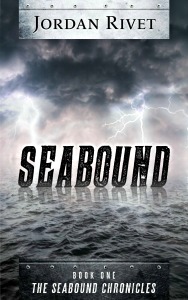
Of course the work never stops for a working writer. I spent the first four days of the holiday finishing up the final revisions of Seaswept, the sequel to my post-apocalyptic adventure at sea called Seabounda job that can be done anywhere, really!

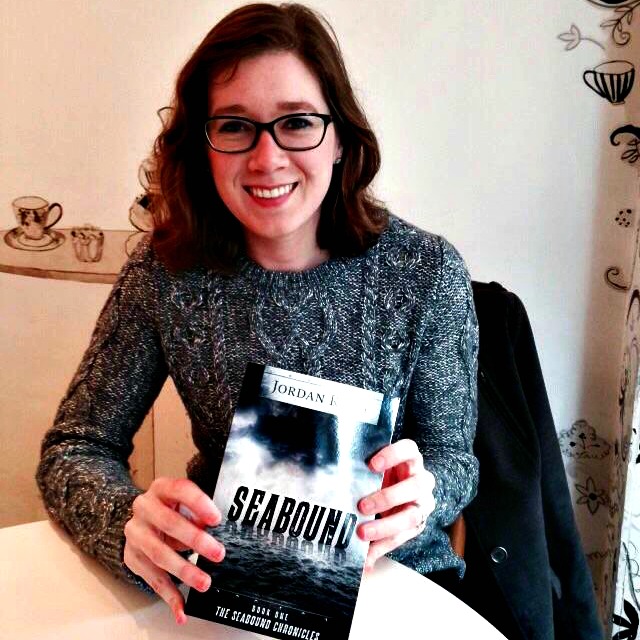
Jordan Rivet in London

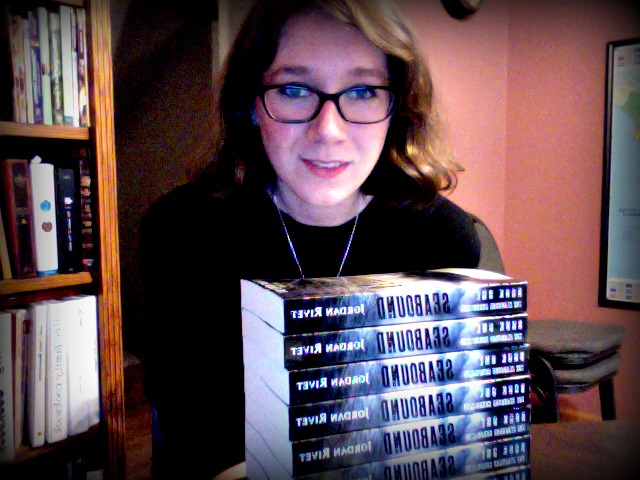
Shannon Young aka Jordan Rivet showing off her first book on a tea break in London; photo credit: Shannon Young.

As I mentioned in my last post, the revisions on Seaswept were a bit of a slog, but I really got into the groove by the final pass. I have to admit it was kind of magical to wake up with the sun (or clouds) in this famous literary city, write for a few hours, go for a walk, and then do a bit more writing before the jet lag knocked me out. London has always been a source of inspiration for me, and the setting somehow seemed right for ending my work on this book.

In addition to the beautiful buildings, blue historical plaques, and bridges (have I ever told you, dear diary, how much I love bridges?), I’ve found another source of inspiration in London: a friend from Hong Kong.

Expat connections are everywhere

As Displaced Nation readers know, we expats have a tendency to move on often, either to a new country or back to where we came from. Expat life is a constant rotation of hellos and goodbyes. While it’s sad when friends leave, it’s pretty cool to acquire connections all over the world.

A friend from my writers’ group in Hong Kong returned to the UK nearly two years ago, but she has maintained her link with the group and her role as true cheerleader for my work. Recently, she decided to embark on a similar literary adventure by taking time off work to write!

I met up with her at the cafe and bookshop run by the London Review of Books and spent nearly four hours writing and talking about writing together. (I also ate hummus on toast that came with real worms on the side, but that’s another story.) It was a joy to have a friend in a city thousands of miles away from both my home country and my country of residence, all thanks to this expat life.

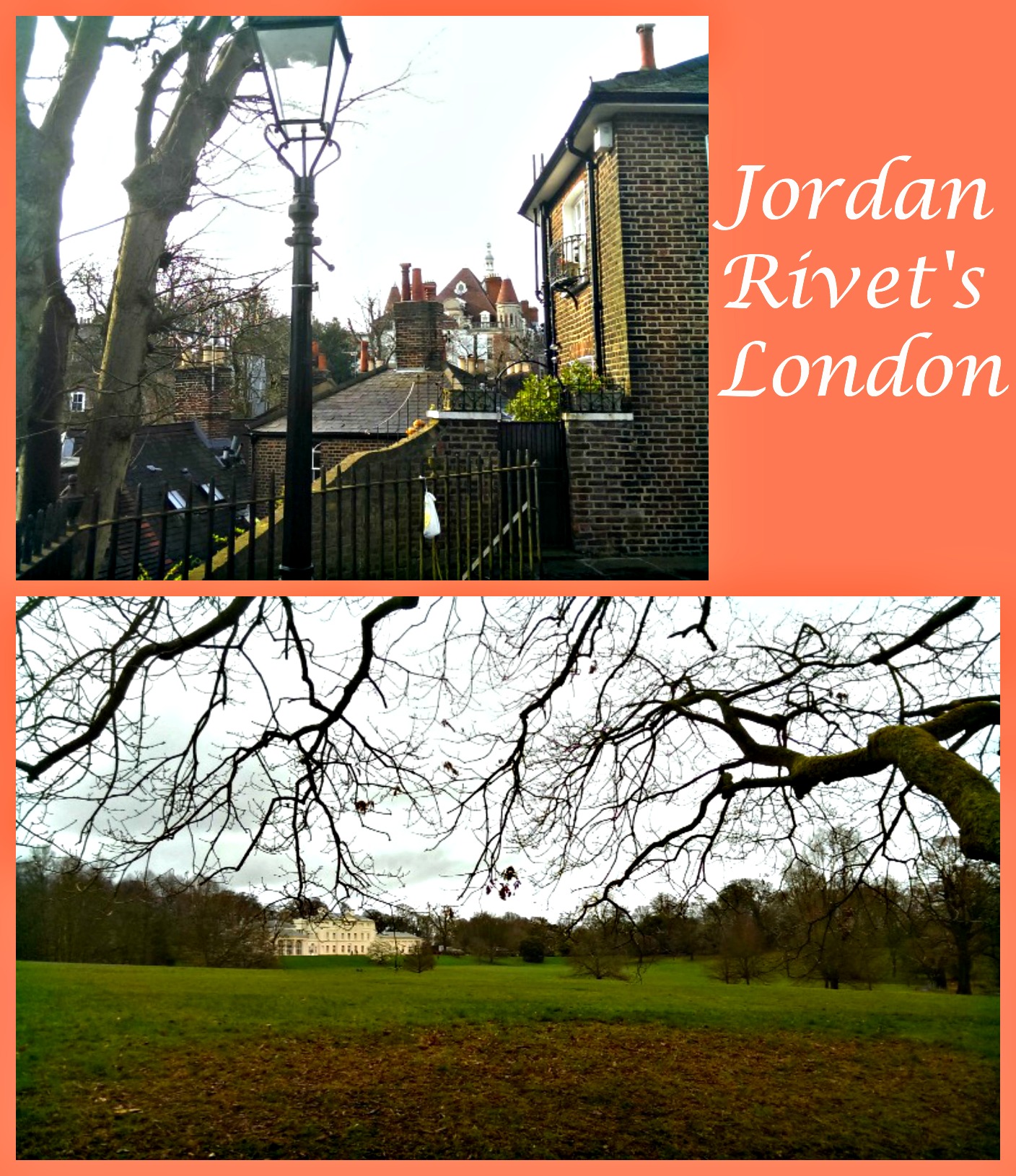
The day I sent the final draft of Seaswept to my editor, my Hong Kong friend took me on a literary tour of Highgate and Hampstead—and, of course, a trek across the rain-soaked trails of Hampstead Heath. In between breaks for tea and hot cross buns, she showed me the home of Samuel Coleridge (and the alley where he bought his laudanum), a garden straight out of a Jane Austen novel, and a pub visited by many notable figures throughout its 200-year history. As we walked, I was reminded again and again of just how old this city is and just how much has happened in its streets. It’s the setting for some of my favorite novels, novels that made me want to be a writer myself.

Photo souvenirs from Jordan Rivet's London walks. At bottom: Hampstead Heath with a view of Kenwood House, a former stately home.

The houses of Highgate and the expanses of Hampstead Heath, with former stately home Kenwood House in distance. Photo credit: Shannon Young.

As my writing journey continues across the globe in Hong Kong, it’s nice to remember its origins and to soak in a bit of history in the company of someone who is just as excited about it as I am.

Beginnings, revisited

During my time in London, I’m also revisiting the origins of my own expat life. As you may recall, Dear Diary, I met my husband in London during a semester abroad. We ended up in Hong Kong, but our early romance took place here. The memories have been flooding back over the past few days as we walk by all the places where we shared sweet moments: first meeting, first date, first kiss.

I wrote about our romance in the first book I ever started, Year of Fire Dragons. It’s mostly about Hong Kong, but I can’t tell my Hong Kong story without starting in London.

Hong Kong tends to change very quickly, with restaurants and shops going in and out of business all the time. Buildings are torn down and rebuilt completely in the space of months. But London seems largely the same. Back in this place with this man, it’s easy to remember why I decided to follow him across the world.

LondonKiss+Year of Fire Dragons

A firey romance in London led Shannon to the land of Fire Dragons and her first book, a memoir (photo credit: pixabay).

What’s on the horizon?

Well, the sun is breaking through the clouds over the city. I’d better head out to make the most the sunshine before the rain and wind return.

I have two weeks to go in London. During that time, my editor will be working on Seaswept, which should be ready to launch by April 30th. Meanwhile, I’m looking ahead to my next project: the prequel to the Seabound Chronicles. Then it will be time to finish Book 3.

But I’m already working on my next series. I’ve written a rough outline and the first 10,000 words. While I’m enjoying the flood of inspiration and nostalgia in London, perhaps I’ll tap out a few more chapters. If there’s one thing I’ve learned on this expat writing journey, it’s that places have power. I don’t want to miss out on anything London has to offer in the next few weeks.

Thanks for following along on my writing journey around the world.

Yours,

Shannon Young/Jordan Rivet
www.shannonyoungwriter.com

P.S. If you like dystopian fiction and writing Amazon reviews, shoot me an email and I’ll send you a book or two!

* * *

Readers, Shannon’s diary post this month has made me nostalgic for my own days of living in London. Sigh! It sounds as though she’s making the most of her time in the Big Smoke with walks on the Health and so on, but if you have any further recommendations for her remaining two weeks (any bridges you think she should see?), do let her know in the comments!

STAY TUNED for more fab posts!

If you enjoyed this post, we invite you to register for The Displaced Dispatch, a round up of weekly posts from The Displaced Nation and much, much more. Register for The Displaced Dispatch by clicking here!

Related posts:

TCK TALENT: Maya Evans, Poet, Writer, Teacher, Translator, Consultant & Transition Facilitator

Maya Evans for TDN

Maya Evans (own photo)

Elizabeth (Lisa) Liang is back with her column featuring interviews with Adult Third Culture Kids (ATCKs) who work in creative fields. Lisa herself is a prime example. A Guatemalan-American of Chinese-Spanish-Irish-French-German-English descent, she has developed her own one-woman show about growing up as a TCK, called Alien Citizen, which premiered nearly two years ago and is still going strong. In fact, she is now raising funds to take the production to Valencia, Spain, and Capetown, South Africa, later this year.

—ML Awanohara

Greetings, readers. Today’s interviewee is Maya Evans, a poet and writer, transition facilitator, international education consultant, and translator based in Boston, Massachusetts. She is also my fellow ATCK author in the anthology Writing Out of Limbo, in which her poem “Le Français” appears. Currently, she is working on a memoir about her extraordinary life, which took her from the Middle East to Europe to South America and finally to her current home of the United States.

* * *

Welcome to The Displaced Nation, Maya. I understand that you were born to a Francophone Jewish Egyptian-Hungarian family in Alexandria, Egypt, and that you grew up there and in Caracas, Venezuela. Please tell us why your family moved.
My family moved from Alexandria, Egypt, in 1958 after what history termed the Suez Crisis, which is to say the nationalization of the Suez Canal. Built by the French in 1869, and jointly controlled by the British and French until 1956, the Canal was of strategic importance to Western powers. Egyptian President Gamal Abdel Nasser‘s actions to nationalize it provoked a brief war—a lot like the wars carried out presently in the Middle East. Nasser wanted to end Egypt’s colonization. We left because Jews were no longer welcome in Egypt. The revolutionary government confiscated Jewish properties and bank accounts, even expelling some Jewish people holding French or British passports. My father was demoted, the bank where he worked was taken over by the authorities, and clearly his career was finished. His brothers, sisters, and their families mostly went to Brazil, although some ended up in France, but none in Hungary, where they’d come from originally. (At the time, Hungary was occupied by the Soviet Union.) When we left, I was 12-and-a-half—and still have vivid memories.

Did your mother’s family leave as well?
My mother’s family, rooted in the area for generations, did not leave. My grandmother refused to leave her house. My uncles and one of my mother’s sisters, who were very close, all stayed, not daring to contradict their mother.

Where did your family end up going?
For a brief time we lived in Paris, scattered among relatives. We also stayed in Genoa, Italy, for a couple of months waiting for my father to clear his affairs and obtain a visa for emigrating to Venezuela. We were “stateless” at the time, having left Egypt with a travel document valid for one trip with no return. My father had managed to “transfer” money out of Egypt to Switzerland, which was needed to buy our passages to South America. This is a story on its own, one I’m attempting to describe in my memoir.

Achieving happiness in the midst of displacement

I find your story moving as it’s about exile, not the usual voluntary migration for TCK families (voluntary for the parents at least). Still, your moves from North Africa to Europe to the Americas is very relatable for this ATCK. Were you happiest in a certain place at a certain time?
I can recall the exact time when I realized I was truly happy. It was at Brenau College (now Brenau University), in Gainesville, Georgia. It took one year to convince my father to allow me to go to college in the U.S. He thought that a girl had to stay home and go to the university nearest to where her family lives which in my case would have been the Universidad Central de Venezuela (UCV), a 15-minute ride from our home in Caracas. The problem was that the Venezuelan government did not recognize my high school degree from Colegio Internacional de Caracas (CIC)—the school is only accredited in the United States. Besides, my Spanish was not at a high enough level for the entrance exam. A solution would be to transfer to the UCV from an accredited school in the U.S., after a year of university-level courses. Reluctantly, my father agreed as long as I went to a “girls only” school, properly chaperoned during my trip to the States. I was fortunate enough to meet a trustee of Brenau College at a tea sponsored by the American Association of University Women. She traveled with me from Caracas to Atlanta, and drove me to her college. For a variety of reasons, among them the lack of money, neither my father nor mother could have made the trip at that time.

What was it like being in a small southern town after living in Caracas?
At Brenau, I was one of a handful of international students. Besides Venezuela, there were also girls from Norway and Taiwan. Luckily, two Hungarian sisters from Venezuela, in their third and last year of college respectively, took me under their wing. Both were intelligent and poised, which made me a “cool girl” by association. Suddenly, there was no need to explain why French was my native language but I wasn’t French, etc. It was easy to say: “I am from Venezuela.” Period. I had a distinct identity, foreign but also exotic. It was also wonderful to be far from the dramas of home. I had postponed the moment of reckoning, which would occur upon my return to Venezuela, when I would find out what it would be like to be a university student in Caracas who had attended an American high school full of students with tenuous ties to the country.

Maya Universities

From studying at Brenau in Georgia to getting a degree at Universidad Central Caracas Venezuela to working at Harvard…

Eventually, though, you moved back to the United States. Why was that?
I was just starting to feel Caraqueña (from Caracas)—finding my bearings as a journalism student at the UCV by night and as a bilingual assistant in an export company by day, enjoying 80-degree Fahrenheit weather year-round, living in a beautiful apartment facing the mountain—when I met my husband, an American. (We met in Caracas.) We moved to the States in the early 1970s. His job moved us to Boston; then to Stanford, Connecticut, where our first child was born; and then back to Boston.

Allow me to bridge cultures, people and dreams…

At what point did you start your career…or careers I should say, as I know you’ve had more than one.
After the birth of my second child, I was determined to find a job that would link me to the Latino community, or better yet, send me on frequent trips to Latin America. I found that job at Harvard, in a department facilitating studies in the United States for professors and business executives from Latin America. I traveled all over Latin America, and in the mid-90s, was assigned to a project in Venezuela sponsored by Petróleos de Venezuela (PDVSA) to train a cadre of executives for studies in the United States. I left Harvard shortly after and worked directly as a consultant for PDVSA. I also trained as an interpreter, working for the Massachusetts courts, and taught Spanish at the University of Massachusetts.

Consultant, trainer, interpreter, teacher: your careers seem to have been influenced by your peripatetic upbringing…
True. I would slide in and out of professions just as I slid in and out of countries, and adjust like the chameleon I’d become. I was always being uprooted but then would find ways to adapt. This in turn led me to my life’s “calling”: to facilitate transitions for others. Whether working with foreign students at American universities, or with international researchers trying to find the right department to pursue their research, or with companies wanting to train their personnel to live somewhere else, I would bridge cultures and languages in an effort to help others ease into their new surroundings.

Who am I? Where am I from?

Have you found that “your people” tend to be Adult TCKs or other cross-cultural people?
Undoubtedly, I feel comfortable with other Adult TCKs as well as multicultural people. I am actually uncomfortable with monocultural, monolingual people, regardless of their education level or accomplishments. I find that I have little in common with them, or that I have to “explain” myself again—and at a certain stage in life, it gets tiresome. I also feel a kinship with artists and people who are a bit out of the mainstream. Like Adult TCKs, they tend to look at the world from the outside. For the longest time, I felt outside, looking in. Even now, that feeling hasn’t left me completely.

Not only for your sake but for the rest of us ATCKs, I’m happy you are now working on your memoir, a few parts of which I was privileged to hear you read. What inspired you to start writing it, and how far along are you in the process?
Thank you for your kind words. It’s been a long and tortuous road. For the longest time, from my days as a journalism student, I wanted to tell stories. Stories I heard around the world, and stories of my relatives who happen to be an eclectic bunch of multinational people. But I am always escaping into work, travel, poetry writing, whatever other excuse I can find. Now I’ve decided to work less and, while I still can conjure the memories, dedicate more time to writing what I like to call a “romanticized memoir,” with characters loosely built on the stories I heard about Egypt and on the memories I have of the places where we lived. I am still at the beginning of the process, and need to speed it up, lest it get buried alongside other writings.

Attempting to “capture all the voices in my head without sounding schizophrenic”

On top of all of this, you are a published poet. Is there a particular poem of yours that expresses your feelings of transience or loneliness or instability—or freedom or curiosity or love of travel—that you are most proud of? If so, could you share it with us?
Two years ago, a poem of mine I like the best, “Voz Ajena” (“Alien Voice”), was published in Spanish in the New England Translators Association’s newsletter. Although I translate other people’s work, I cannot translate my own. I don’t hear it in any other language but Spanish. In that poem, I attempted to capture all the “voices” in my head without sounding schizophrenic. To me, it is interesting to note that I can do this only in Spanish, which was the third language I acquired, after which it became my “go to” language. Even though French is rooted in me, Spanish carries Latin America with its music and colors, which trumps all others! I’ll give you that poem, but for those who don’t read Spanish, I’ll first give you a poem I wrote in English:

Notebook with a Missing Language

Only English is missing
in these familiar lines
that stretch quietly on a
tidy little notebook
filled in French with spatters of Spanish;
scents of places and of people long gone
leaving behind tender thoughts,
silent melodies, objects of desire,
histories of exiles and commencements
of lenities and humiliations,
of successes and exonerations;
tales of lost places, warm embraces,
mute voices, empty houses,
doors shut on bygone worlds.

door_shut_maya_poetry

The last line of “Notebook with a Missing Language,” a poem by Maya Evans


And now for those who read Spanish:

Voz Ajena

Le preguntó un día por su acento opaco,
esa manera que tiene ella
de tropezar con las erres,
saltar continentes al azar,
atar letras sin más sabor
en un ritmo extraño, ritmo de blanco.

Son recuerdos de otras voces,
las vivencias de mi memoria
de crêpe georgette y chantilly,
dijo ella con voz de seda, voz de sirena.

Yo no sabía de los fantasmas que te habitan,
No sabía de Egipto, España,
Francia y Hungría,
No sabía que te comían noche y día,
ocultándote la luz, clamando por aire,
y todos con ese afán de ser.

Y más aún le dijo ella,
tocan tambores y hacen ruidos,
se contorsionan en las tinieblas
por estallar en mil estrellas,
dejar arañas y demás vainas,
ser lentejuelas, champaña fino, jamón ibérico,
Ravel de fuego, Maria Callas reencarnada,
vistiendo toga, comiendo astros, tragando mundos.

Maya
Boston, 19 de abril de 2010

* * *

It’s been a pleasure, Maya, hearing about your many professional accomplishments and “romanticized memoir” in progress. And thank you so much for sharing two of your poems! Readers, please leave questions or comments for Maya below.

STAY TUNED for next week’s fab posts!

If you enjoyed this post, we invite you to register for The Displaced Dispatch, a round up of weekly posts from The Displaced Nation, and so much more! Register for The Displaced Dispatch by clicking here!

Related posts:

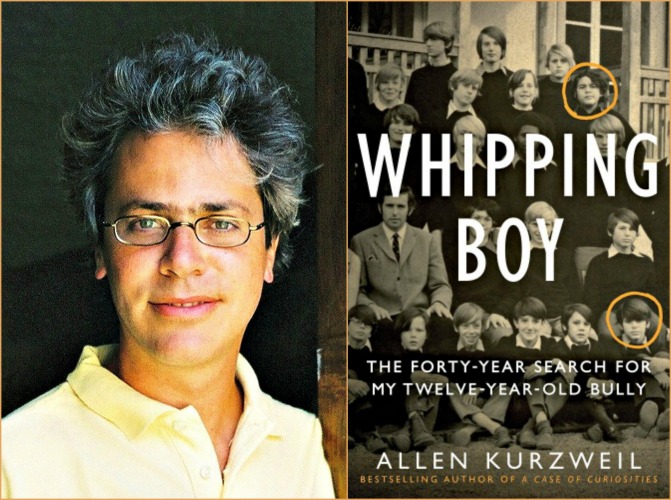
BOOKLUST, WANDERLUST: When what happens in a third culture refuses to stay there: Allen Kurzweil’s “Whipping Boy”

Booklust Wanderlust Collage

Left: Oleh Slobodeniuk (CC BY-NC-SA 4.0); right: Beth Green (her own photo).

Attention displaced bookworms! Our book review columnist, Beth Green, an American expat in Prague (she is also an Adult Third Culture Kid), is back with a rather unusual selection: a memoir that reads like crime fiction. The author, but of course, is an international creative. Enjoy!

—ML Awanohara

Hello again, Displaced Nationers!

Our Booklust, Wanderlust roundtable series left me with such a wide selection of books to read that I’m only just now coming up for air. This month I’d like to tell you about Whipping Boy: My Forty-Year Search for My Twelve-Year-Old Bully, by the bestselling novelist Allen Kurzweil—which our own ML named as one of the books on her radar in early 2015.

Well, Whipping Boy is out, and it’s a cracking (so to speak) read!

"Allen Kurzweil Wiki2007," by Allen Kurzweil - an image provided by Allen Kurzweil. Transferred from en.wikipedia by SreeBot. Licensed under CC BY-SA 3.0 via Wikimedia Commons.

TCK author Allen Kurzweil & his memoir. Photo credits: “Allen Kurzweil Wiki2007,” by Allen Kurzweil – an image provided by Allen Kurzweil. Transferred from en.wikipedia by SreeBot. Licensed under CC BY-SA 3.0 via Wikimedia Commons.

Kurzweil has produced a memoir that deals with deep emotions dating back to his displaced youth—but that still manages to flow fast and fun like an international thriller. As marketing whiz Kat Gordon put it in a recent tweet:

Hanging on every word of @AllenKurzweil memoir “Whipping Boy.” A whodunit + fairytale in one.

In the fairy tale portion, we watch as our hero, age ten, attends a British-style boarding school perched on an alpine meadow high above Geneva. All goes well until he meets the dastardly Cesar (full name Cesar Augusto Viana), who torments him mercilessly. When our hero grows up, he resolves to track down and confront his childhood nemesis, however long it takes…

The whodunit starts the moment Kurzweil discovers that Cesar has become a leading figure in an international fraud scheme. At that point he converts into an investigative journalist, leaving no stone unturned in his quest to find out how many victims the adult Cesar has racked up.

Before saying anything more about the book, I should point out that Kurzweil is an adult Third Culture Kid. His parents were Jewish émigrés from Vienna to New York City. The family relocated to Milan, Italy, when Kurzweil was young, but he spent his teen years back in New York. He got his education at Yale and the University of Rome and then worked for ten years as a freelance journalist in France, Italy, and Australia before settling back in the United States with his French wife and son.

Kurzweil’s previous works include two novels and a children’s book inspired by his son’s preschool bully. The Whipping Boy has also been excerpted and condensed in the New Yorker.

“In 1971, I met a boy who changed my life forever.”

Kurzweil roomed with Cesar—a burly Filipino rumored to be the son of Ferdinand Marcos’s head of security—at the exclusive Aiglon College, in Villars, Switzerland, for the better part of a year, while Kurzweil’s mother was “test-driving her third husband.” (Kurzweil’s father died of cancer when he was five.)

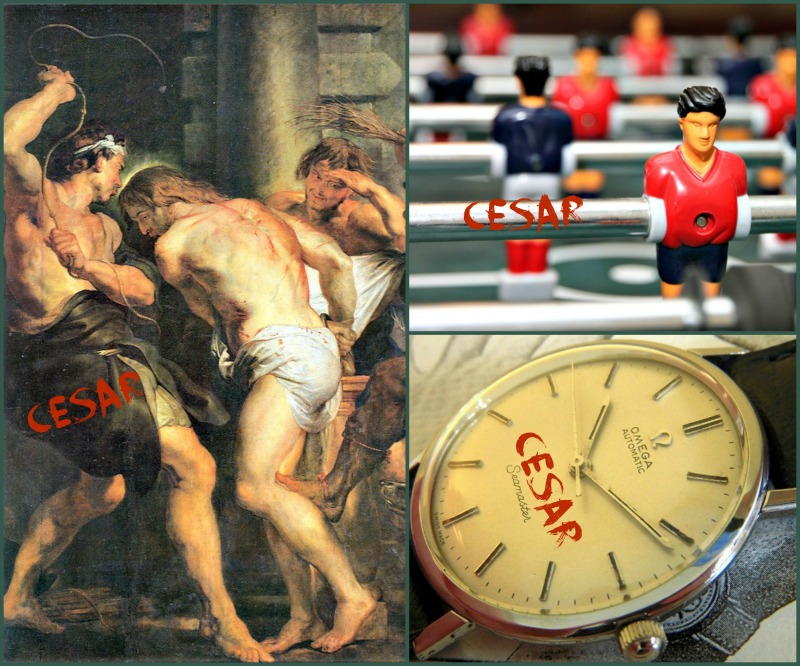
Kurzweil loved the idea of the school—his deceased father had adored the Alps and mountaineering. But he hated boarding, particularly at night, when Cesar and his stooges would subject him to all manner of hazing. They forced him to eat hot pepper sauce, stole his things (including his most prized possession, his father’s Omega Seamaster watch), taunted him with anti-Semitic slurs, and at one point whipped him with a belt while playing “The 39 Lashes” from Jesus Christ Superstar (Kurzweil was Jesus).

Some form of bullying in schools is universal, but when the kids are internationals, and boarders—dealing with the losses of worlds they have loved (which in Kurzweil’s case was tied to the loss of his dad)—things can get even more intense, something non-TCKs may not appreciate.

Fortunately, though, Kurzweil has a sense of humor. In this book he never misses a chance to point out that life, even when traumatizing, has its comic moments.

“It didn’t take long to shed the habits I’d picked up in Switzerland.”

After a year at the school, Kurzweil moves back to New York City, and quickly re-acculturates:

“[My mother and I] returned to New York, where the plimsolls, anoraks and rucksacks I wore at Aiglon reverted to sneakers, parkas and backpacks. I no longer had to address my teachers as sir and ma’am.”

But while Kurzweil displays the TCK’s resilience in adjusting back to life in the U.S., happy to get rid of the crossbars on his “7s” and scuttle his schooner-sail “4s”, he cannot let go of his memories of Cesar so easily. He harbors an obsession, which grows worse with the years, even (especially?) after he finds success as a writer.

When he learns that his boyhood enemy is most probably a con man working for a shady “royal”-family-led corporation named Badische (pronounced “Baddish,” Kurzweil notes slightly gleefully) that runs investment “schemes” for hard-up New York one-percenters, Kurzweil becomes unstoppable:

Obsessives tend to have obsessions. Cesar wasn’t my first fixation, and I’m sure he won’t be the last. Baseball cards, Matchbox cars, Pez dispensers—I’ve always been a collector…my point is I tend to go overboard. I investigated Cesar and Badische the same way I collected Lincoln pennies—intent on filling every void.

“…I began to acknowledge the obvious: Cesar had taken over my life.”

His investigations span decades and continents, and throughout it all he is haunted by memories of Cesar:

At the back of a dingy bar in Alice Springs, a pair of drunks playing foosball recalled my ex-roommate’s unstoppable bank shot. In Vienna, hanging on the wall of the Kunsthistoriches Museum, a Flagellation of Christ reinvoked the musical whipping. Hot sauce, Andrew Lloyd Weber tunes, Ferdinand Marcos, Montblanc fountain pens, and more than anything else, vintage Omegas, had me reaching for the journal.

The Ubiquitous Cesar. Photo credits (clockwise from left): “Flagellation-of-christ-Rubens” by Peter Paul Rubens (licensed under CC BY-SA 3.0 via Wikimedia Commons); foosball, byrev via Pixabay; Omega watch, ephotographythemes via Pixabay.

Kurzweil shares with the reader his mixed emotions when he at last finds Cesar, wondering what to say to someone who may not even remember him. And then the fear returns—the fear that he experienced as a shy boy being whipped with a belt in his dorm room…only now it is morphing into an adult fear as Kurzweil realizes he has tracked down an actual criminal:

Fake knights. False banks. Imaginary kingdoms. These guys travelled on bogus passports. They hosted lavish dinner parties at five-star hotels. They performed knighting ceremonies. (When I interviewed the assistant U.S. attorney who filed the initial charges, he summed up the crime as Dirty Rotten Scoundrels meets Clue.)

“So, basically, I’m being blamed for your memories?”

Whipping Boy was a quick, satisfying read. I loved the truth-is-stranger-than-fiction details that Kurzweil unearths about Cesar and his company’s schemes.

I loved his humor.

I also enjoyed the quiet pauses when Kurzweil would describe personal moments having nothing to do with the hunt for Cesar: for example, when he met his wife in outback Australia:

A French anthropologist named Françoise Dussart spotted me wandering toward a sacred site off limits to visitors. Concerned for my safety, she drove up and warned me away. She was sitting in the cab of a Toyota Land Cruiser and cradling a baby kangaroo. How could I not fall in love?

And then:

She flew west, from Alice. I flew east, from New York. We met each other halfway, in Paris, broke and in love.

Juanchito via Pixabay[http://pixabay.com/en/kangaroo-australia-jump-creature-250873/]; talitaraquel via Pixabay[http://pixabay.com/en/eiffel-tower-paris-france-tower-350453/]. License: CC0 Public Domain[http://pixabay.com/en/service/terms/#download_terms]

From kangaroo love to love in the City of Light. Photo credits: Australian kangaroo, Juanchito via Pixabay; Eiffel Tower, talitaraquel via Pixabay. License: CC0 Public Domain

I further appreciated his candor in admitting that two people can remember the details of an event differently, particularly when one of them is a psychopath with a chip on his shoulder. As Cesar puts it when they finally meet up again for the first time:

“I recall a lot… But just in bits and pieces. There are some things that people have told me about that I really don’t remember. You might need to prod me a bit.”

I would particularly recommend the book to those who like stories about heists or con artists—the movie American Hustle has some parallels—as well as to anyone who has harbored a fantasy of facing down a childhood bully.

Kurzweil may be beaten but he isn’t conquered, and that’s an inspiration to victims everywhere.

But most of all I appreciated Kurzweil’s understanding that for us TCKs, what happens in a third culture doesn’t always stay in a third culture. Some readers may wonder why Kurzweil couldn’t leave his bullying experience behind, particularly as it happened overseas, in a country to which he had limited personal ties. But for Third Culture Kids, the floating world of the expat is as real as it gets. And, as Kurzeil’s story shows, what happens there can have a life-long impact.

* * *

Fellow TCKs, do you have a Cesar or other skeletons in your cupboard dating back to your school days, at an international school or boarding school? Do tell!

Till next time!

Editor’s note: All subheds are quotes taken from Allen Kurzweil’s New Yorker article.

Beth Green is an American writer and English teacher living in Prague, Czech Republic. She grew up on a sailboat and, though now a landlubber, continues to lead a peripatetic life, having lived in Asia as well as Europe. Her personal Web site is Beth Green Writes, and she is about to launch a new site called Everyday Travel Stories. To keep in touch with her in between columns, try following her on Facebook and Twitter. She’s a social media nut!

STAY TUNED for the next fab post!

If you enjoyed this post, we invite you to register for The Displaced Dispatch, a round up of weekly posts from The Displaced Nation, and much, much more. Register for The Displaced Dispatch by clicking here!

Related posts:

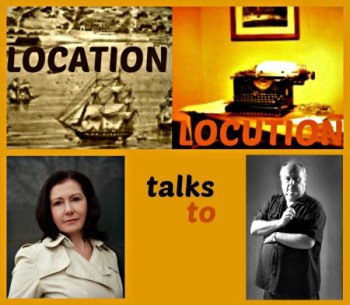
LOCATION, LOCUTION: British expat author Carl Plummer turns his gaze upon his adopted home of China

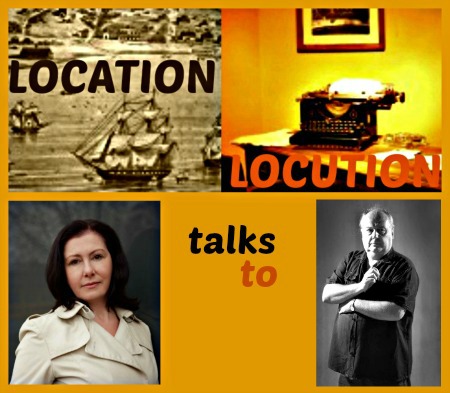
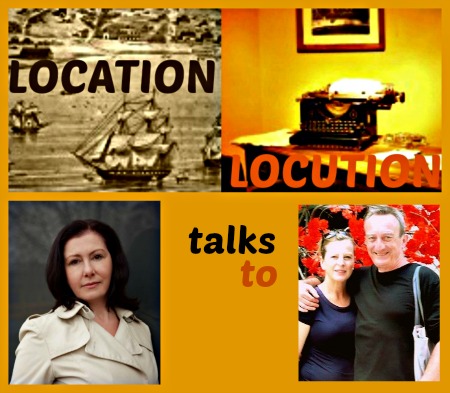
Columnist JJ Marsh (left) talks to Carl Plummer,

Columnist JJ Marsh (left) talks to Carl Plummer, a writer of historical adventure fiction.

We welcome JJ Marsh back to the Displaced Nation for this month’s “Location, Locution.” If you are new to the site, JJ, who is a crime series writer, chats with fellow fiction writers about their methods for portraying place in their works. Her guest today is Carl Plummer, who writes World War II adventure spoofs under the pen name of Robert E. Towsie. Born in Hull, England, he lived in Cyprus, Paris and Libya before moving to his current home of China, where he works as a university lecturer. Today he does something unusual for this column: describes the place where he’s living right now.

—ML Awanohara

JJ MARSH: Once in a while, Location, Locution likes to surprise you. Remember the Paulo Coelho piece on monuments that immortalise cities? If not, go read it now. Is it any surprise this man is an international bestseller?

This month, I tracked down an author I’ve admired for a long time. Carl Plummer writes as Robert E. Towsie, in a classic comic style, setting his capers around Europe against the backdrop of its dramatic history.

But what interested me about Carl/Robert is where this expat creative lives. China. A place I find fascinating, mysterious and sometimes a little scary. So this month’s Location, Locution is his take on China, its people and and how he sees it. Enjoy.

* * *

CARL PLUMMER: In 2004, after a stint in Libya, I arrived in China and started a job at Nanyang Normal University to teach British and American literature. The city of Nanyang (pop. 1,000,000) in Henan Province was proud to boast ten lao wai, foreigners.

Every minute, on every street, in every shop, I was reminded I was a foreigner. Some reminders were harsh, nationalistic and racist with the “go back where you came from” we associate with racism in England.

Other reminders were through curiosity, the wish to speak English to and even touch a foreigner, the assumption all foreigners are American and a sense of me being something exotic, something new and different, and most of all—rich.

I wasn’t rich, am not rich. Teachers are the poorest working travellers of the world. We are the intellectual navvies from the western world. We are not businessmen with expense accounts; we are not oil people or wheeler and dealers. But we are approachable because we have to mingle, use the buses and the metros, and the trains. We do not have company cars with around-the-clock company drivers.

During the rainy season in a small coal-mining town near Pingdingshan the streets would run black when it poured and families would come out to shower beneath the torrents thundering off awnings.

What made me rich to such people? I had an apartment with a shower and I could afford the water it used—I didn’t have to wait for the rain.

In China, the iron rice bowl has long gone.

Why am I talking about money instead of garnishing the text with tales of magnificent walls, gaudy ancient temples or food conjured up with every living creature imaginable? Well, that’s all been done before.

I’m talking of money because poverty is not romantic; it never has been and it never will be. It is cruel and it doesn’t discriminate; there are no deserving and no undeserving poor.

That cradle-to-the-grave surety of Communism is a generation ago, but that generation brought up in it is still around. It is my age, brought up in the 60s and 70s, taught to root out the treacherous intellectual bourgeoisie, taught to spy on parents and teachers, taught to love the state above all else.

It worked in theory for a while because the state cared; it looked after your every need as long as your toed the line, as long as you never asked questions. Now it doesn’t. Now there is no line to toe.

The young are asking questions. That is their hope.

I meet many young people, in their 20s, who have something hanging around their necks; cultural and domestic demands, greatly exacerbated by the growth of capitalism and the cracking of the iron rice bowl.

Education is expensive in China, as is being healthy. Young people have shown me lists, lists almost like invoices saying: we spent this much on your upbringing and this is what you must pay back to us. It is easy to get the sense parents have children for one reason: someone to take care of them in their old age. Babies, especially boys, are glorified little emperors, smothered and mothered—especially grandmothered—to the extreme; but once in their teens they are seen as future life-support systems.

Rich CEOs and husbands framed

Haozhi Chen (CEO of Chinese mobile powerhouse Chukong), by Jon Jordan via Flickr; “Wedding couple in the clan house,” by shankar s. via Flickr. Both photos are licensed under Creative Commons (CC BY 2.0).

Boys are expected to become CEOs and girls are expected to find rich husbands. All are expected to become members of extended families because extended families are safer, more secure. Individualism and independence is dangerous.

The average salary in China is still about 2000 yuan a month (about 200GBP) for a ten-hour-day and a six-day week. Millions of workers live in dormitories more akin to barracks, and send home half their salaries to support families back home. Young people must pay back the money they owe their parents. This is how it is for the majority of young people in China. The majority has to save because everyone has to pay.

When the future is precarious you have to save.

When I lived in the Bai Yun district of Guangzhou (Guangdong province, in Southern China), I used to cycle through a huge housing estate (apartments by the thousand) and cut through the grounds of Jinxi Nanfang Hospital.

Those middle-class apartments sell for about 3,000,000 yuan each, rented out for between 3,000 and 4,000 a month.

From the higher balconies you can see the rows of beggars in the streets around the hospital. These are not the beggars we expect—those in shop doorways with mangy dogs for company.

These beggars are lying in makeshift hospital beds, out in the open, with drips hanging from stands. These beggars are families trying to get the 500 yuan a night needed for hospital treatment, or even the 100 yuan just to see a doctor.

Dontspend$$youdonthave

Lesson for all SL-ers, by Laurence Simon via Flickr (CC BY 2.0).

This is why so many Chinese people are savers, not spenders.

And those apartments—the richer you are, the higher up you live. The higher up you are, the farther you can see across the hospital surrounds where the aged and sick lie in the shadows of a hospital they cannot afford to enter. It is a world where education and health is a luxury, not a right.

For the growing middle-class it is different; for the Chinese aristocracy—very different. There is a Chinese aristocracy; it’s the cushioned group of party members—the 5 percent. (Google “My father is Li Gang”* if you wish to know how that works.)

The growing middle classes do not live with the fearful uncertainties of old age. They do not fear the need to see a doctor or the need to stay in hospital for a few days. They can send their children to good schools; send them to the UK, the USA or Australia to continue with their studies. They can send their children out into the world to be whatever they wish to be—something so many westerners take for granted. They do not need their offspring to look after them in old age. They can be spenders and savers.

I’d rather cry in the back of a BMW than laugh on the back of a bicycle.

"Cargirl," by Xuan Zheng via Flickr (CC BY-SA 2.0); (bottom) "Shanghai cyclists," by Gwydion M. Williams via Flickr (CC BY 2.0).

“Cargirl,” by Xuan Zheng via Flickr (CC BY-SA 2.0); “Shanghai cyclists,” by Gwydion M. Williams via Flickr (CC BY 2.0).

How about the girl who said on a TV show “I’d rather cry in the back of a BMW than laugh on the back of a bicycle”?

Yes, she was condemned and ridiculed, but she does not have the luxury of choice, the luxury of hope; the safety net is not yet there for her.

I believe and hope it will be for her children. Already, there are newly middle class young people who not have to choose between the BMW and the bicycle. Educated women are buying their own BMWs, their own apartments. They do not have to get married as soon as possible in order to be secure.

And more importantly, their individualism and prosperity is running alongside a new sense of social justice, political justice, and an awareness of the needs of others.

Religion, philosophy, or just simple humanism, whatever it is—the humanity is breaking through.

Twenty years ago, capitalism was raw in China; it was Darwinian and brutal, but it is slowly coming around, perhaps in the way it eventually did so in Britain until it was scuppered by the bankers who played with money as though it was Monopoly money.

We started with the Bounderby style of capitalism where Britain was the richest country in the world, populated by the poorest masses.

That is where China has been, perhaps still is, but it is moving through that. Communism denuded the soul, evicted compassion and turned the people into soldier ants. Capitalism came along to lift people out of poverty, but it did not fill the spiritual vacuum—the vacuum of feeling and compassion.

Christianity is becoming ever more popular in China. Confucianism is being taught again. The vacuum is being filled. The younger capitalist—who is not from the spoilt 5 percent—has a sense of social responsibility, the idea of giving back.

Mr Cameron’s “long-term plan” is but a sparrow’s sneeze in Chinese terms.

It’s a long process, but China has a long history and has always been about long processes.

The hope is, and I am confident about it, is the young; they have enough to eat, will have roofs over their heads, but more importantly, they can afford to be more thoughtful, more caring—they can afford humanity. Breaking free from poverty allows kindness to flourish (kindness in individuals and kindness from the state) if it is not smothered by the unacceptable face of capitalism or the dehumanization of totalitarianism.

I believe it will get there. But we cannot think in European terms; European terms are far too short. And remember why you can afford your cheap TV, cheap mobile phone and cheap computer; it is funded by cheap labour.

There are still millions and millions with a standard of living we would find totally unacceptable; but the fear of starvation has gone and the idea of a health service free at the point of use is slowly becoming more than just a dream. For most young people, going to university is still a dream.

It is changing. The young people are making it change.

* * *

Readers, if this interview has piqued your curiosity about Carl Plummer and his Robert E. Towsie books, we encourage you to visit his author site.

JJ Marsh grew up in Wales, Africa and the Middle East, where her curiosity for culture took root and triggered an urge to write. After living in Hong Kong, Nigeria, Dubai, Portugal and France, JJ finally settled in Switzerland, where she is currently halfway through her European crime series, set in compelling locations all over the continent and featuring detective inspector Beatrice Stubbs.

STAY TUNED for next week’s fab posts!

If you enjoyed this post, we invite you to register for The Displaced Dispatch, a round up of weekly posts from The Displaced Nation, with seasonal recipes, book giveaways and other extras. Register for The Displaced Dispatch by clicking here!

Related posts:

DIARY OF AN EXPAT WRITER: Has it really been six months? How time flies when you’re writing full time

DiaryExpatWriterAn American expat newlywed in Hong Kong, Shannon Young took the momentous decision last summer to quit her day job and launch out as a full-time writer. She’d given herself until Chinese New Year to see if she could make a living. And now the Year of the Sheep is here—baa baa—is she a lost lamb or making the most of life apart from the herds? Let’s find out, shall we?

—ML Awanohara

Dear Displaced Diary,

It has been six months since my last confess—oh wait. It has been six months since I posted a video about how I quit my day job as an English teacher in Hong Kong to write full-time (and also cut 18 inches off my hair):

For those who haven’t been following: it was now or never. Before going all in as a writer, I had been writing seriously for about four years in my free time and had several books out, or in the process of launching. I had been working on drafts for a four-book post-apocalyptic series, and I wanted to devote myself full-time to getting those titles out into the world.

Financially, I was also in a better place. I paid off my student debt in December 2013 and had spent eight months saving up the money I’d previously put toward loans, which meant I could live without a day job for a while.

My goal was to see whether I could make it as a writer, both financially and in terms of lifestyle: could I stay productive without much external structure?

I gave myself until Chinese New Year to see how it was going.

And now for the moment of truth!

It isn’t really a moment, it turns out, but a process, during which:

  • I figured out ways to create structure for myself.
  • I learned more about my own productivity habits.
  • I improved my endurance (I’m having more and more five-hour writing/working sessions).
  • Most importantly, I developed a better sense of how long each project takes, which allows me to set accurate goals.

There have been some hard moments along the way. The first book in my series. Seabound, has sold fairly well, but it hasn’t taken off like a shot.

My entire strategy has been to build a readership slowly with a series of four books, but I have to keep reminding myself of that while sales of the first volume are still modest.

My revisions on Book 2 have been kind of painful. The rough draft has actually been finished for a long time, but it has been hard to get going on the final revisions.

On the other hand, I’ve done two drafts of the prequel now and I think it’s the best book I’ve written so far.

Giving myself pep talks and jealously guarding my time

I also have to give myself pep talks more often and train myself not to get discouraged.

Back in the days when I was a teacher, I would get lots of positive feedback from my students. Even though it had nothing at all to do with writing, I had 300 kids pretty much worshiping the ground I walked on every day. It was much easier to maintain a positive attitude.

Now it’s just me and Starbucks and the Amazon reviewers. I love the coffee shop time, and I’m never happier than when I’m hammering away at my laptop, but thoughts of strangers reading my books and giving them harsh critiques still creep in.

Ironically, even though I have more time available to me, I’ve been reducing the time I spend on other commitments. That’s something I didn’t expect.

When I had a day job, my schedule was broken up anyway and it wasn’t a big deal to answer emails here and there. Now that kind of thing can really break my focus, so I’m trying to say “no” more often to protect my work time.

Six-month report card

The past six months have been a roller coaster, with higher highs and lower lows than I’d anticipated.

I’m bringing in money every month, though I haven’t yet reached my income goals.

On the whole, I’m happier than I’ve ever been. I’ve published two books and one audio book, and I have four projects in progress.

It’s time to make a decision.

Dun da da da!

And now for the moment you’ve all been waiting for. Here’s what I’m planning to do:

To sum up, I’m giving myself until April. My savings are holding out and I plan to launch Seaswept around my next deadline. (If you want to see the cover image, sign up for my mailing list; I’m doing a secret reveal soon.)

Yesterday I completed another non-fiction piece for my primary pen name. Hopefully when I see how the books do I’ll be in a position to make my next big decision.

As always, I’ll keep you posted.

Thanks for following along on this journey! I really appreciate your words of encouragement.

Yours,

Shannon Young/Jordan Rivet
www.shannonyoungwriter.com

P.S. If you like dystopian fiction and writing Amazon reviews, shoot me an email and I’ll send you a book or two!

* * *

Readers, as they say in the Basque country, the lost sheep can be recovered, whereas the lost time cannot. It seems to me that Shannon has approached the Year of the Sheep having made the most of her time as a full-time writer! Do you have any thoughts or words of encouragement about her extension? Let her know in the comments!

STAY TUNED for next week’s fab posts!

If you enjoyed this post, we invite you to register for The Displaced Dispatch, a round up of weekly posts from The Displaced Nation, with snippets of worldly wisdom, exclusive book giveaways and our nominees for the monthly Alice Awards. Register for The Displaced Dispatch by clicking here!

Related posts:

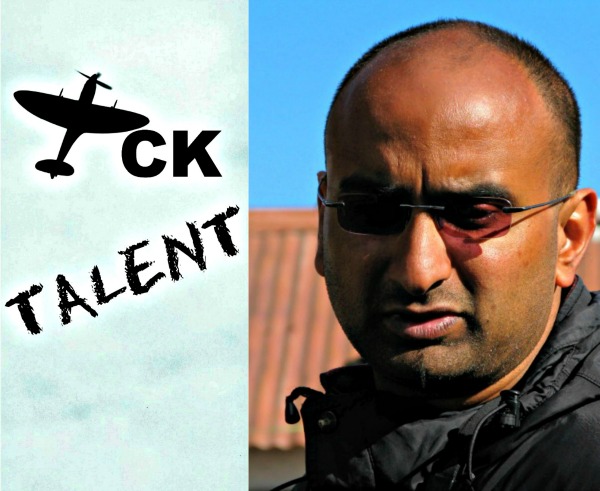
TCK TALENT: Rahul Gandotra, Oscar-shortlisted filmmaker

Rahul Gandotra CollageElizabeth (Lisa) Liang is back with her column featuring interviews with Adult Third Culture Kids (ATCKs) who work in creative fields. Lisa herself is a prime example. A Guatemalan-American of Chinese-Spanish-Irish-French-German-English descent, she has developed her own one-woman show about growing up as a TCK, which receives rave reviews wherever it goes.

—ML Awanohara

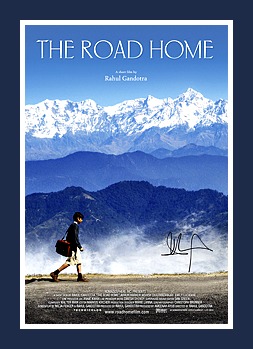
Hello again, dear readers. Today’s interviewee is filmmaker Rahul Gandotra, whose short film, The Road Home, has played in over 60 festivals around the world and won over 20 awards, including the Student Film Academy Award and British Independent Film Award, and was shortlisted for the 2012 Oscar nominations.

The film beautifully depicts a Third Culture Kid story; it also catapulted Rahul into the shortlist of up-and-coming filmmakers.

RoadHome_posterHere is the film synopsis:

Growing up in England, ten-year old Pico never wanted to go to boarding school in the Himalayas, and despite the beauty there, he struggles to fit in. When he’s bullied for insisting he’s British in spite of his Indian heritage, he runs away, determined to return to his home in London. As he journeys through a country foreign to him, Pico encounters others who mistake him for an Indian boy, forcing him to face the painful truth that the world does not see him the way he sees himself.

* * *

Welcome to The Displaced Nation, Rahul. I understand that you were born in Belfast, Northern Ireland, and grew up in eight countries across Europe, the Middle East, Asia, and the Americas. Why did your family move so much, and to which countries?
A lot of my moving around happened because of my father’s job—he was a doctor looking for new opportunities in different parts of the world. While it gets complicated with all the cities I’ve lived in, the general overview is: after being born in Belfast, I spent the first six years of my life in all four parts of the UK (England, Northern Ireland, Scotland, Wales). Then we moved to Saudi Arabia, where I spent three years before attending a boarding school in the Himalayas (in Northern India) for seven years.

How about college and beyond?
I received my undergraduate degree in the United States, where I lived for eleven years. After that I was in the Czech Republic for one year. Since moving to London for my graduate degree, I’ve been in England for the last ten years.

“If you want to see the Himalayas, they’re that way.” —Pico to a British couple touring India

Were you happiest in a certain place at a certain time, and if so, why?
Tough question. My happiest memories stem from when I was living in Saudi Arabia from age 6 to 9. Perhaps it was because I was a child? Perhaps it was because I was still with my parents (my mum was a homemaker) before I went to the boarding school in the Himalayas?

I just remember having happy memories in Saudi Arabia. I think my time at my boarding school was also quite enjoyable after I adjusted to life there.

Come to think about it, I’ve had good memories in places where there was a TCK-like / international environment. The more monocultural the environment was, the less I enjoyed the place.

What led you to become a filmmaker, and did it have anything to do with your peripatetic upbringing?
I don’t know if my moving around pushed me into filmmaking. I think the moving around has given me many gifts that I use in filmmaking. The ability to see things from different points of view, for example, helps me in seeing an actor’s point of view—especially when it’s different from mine.

Looking back, I learned a lot of my storytelling from my mother with all the stories she told me. I guess the patterns and rhythms of storytelling just seeped into me, as she recounted one story after the other!

At what point did you pick up the technical skills that turned you into a filmmaker?
That came from a combination of “doing it myself,” formal education, and a lot of reading!

“But I don’t feel Indian inside!” —Pico to an Indian taxi driver

Have you found that “your people” tend to be other Adult TCKs in creative fields or does it really depend on the individual and what s/he evokes in you, whether it’s a resonance that’s artistic or political or personality-related or life-experience related, etc.?
I seem to gravitate to people who are either TCKs or people who have done a significant amount of traveling. They don’t necessarily have to be in the creative fields though.

Congratulations on all the accolades your short film, The Road Home, has won! What inspired you to tell this story?
The plot was a fiction but the themes were autobiographical in nature. The idea of looking like you belong to a particular region because of your skin colour but feeling inside that you belong somewhere else is something that I wanted to illuminate in the short film.

Here is the trailer:

And if your readers would like to watch The Road Home, they may do so here.

I understand you are now making a feature-length version of The Road Home. Where are you in the pre-production phase?  
I’m in the financing stage where I’m hoping all the investments will be in place so I can shoot the feature film soon. (If there are any interested investors, please do contact me!)

“Why not speaking Hindi, huh? Important your knowing your mother tongue.” —Taxi driver to Pico

Are you working on other projects?
My screenwriting partner and I have been writing other screenplays but those are bigger in scope, and we’ll present those to the world when I’ve completed my first feature.

You’ve been directing commercials. Where are they airing and can we see them online?
I’ve just started directing commercials. Some of them have aired in the UK, while others have aired in India. The funny thing is that the commercial that was shot in the UK aired in India. And the commercial shot in India aired only in the UK! Here is one that was shot in India, for Rajah’s garam masala:


You can see more here.

Congratulations again, Rahul, on the success of The Road Home, all of the commercial work you’ve been doing, and the screenplays you’ve been writing. You’re a true “ATCK creative” and we’re hereby nominating you as Best Up-and-Coming Director for our Displaced Oscars!

Readers, please leave questions or comments for Rahul below.

STAY TUNED for next week’s fab posts!

If you enjoyed this post, we invite you to register for The Displaced Dispatch, a round up of weekly posts from The Displaced Nation, and so much more! Register for The Displaced Dispatch by clicking here!

Related posts:

LOCATION, LOCUTION: Kiwi-Brit author team produce first in eco-thriller series spanning continents where they’ve lived

JJ LN Collage

Columnist JJ Marsh (left) talks to Lambert Nagle, Kiwi/Brit co-writers of international thrillers.

Today we welcome JJ Marsh back to the Displaced Nation for this month’s “Location, Locution.” If you are new to the site, JJ, who is a crime series writer (see her bio below), talks to fellow fiction writers about their methods for portraying place in their works. We’re excited that her guest today is the better half of a husband-wife team who have composed an eco-thriller that takes place all over the world, including places where they’ve been expats.

—ML Awanohara

Lambert Nagle is the pen name of co-authors Alison Ripley Cubitt and Sean Cubitt. They write thrillers set in sunny climes.

Sean’s day job is Professor of Film and Television, Goldsmiths, University of London. He has been published by leading academic publishers.

Alison worked in TV and film production for companies including the BBC and Walt Disney but her passion has always been for writing. She is an author, screenwriter and novelist.

Serial expats, Lambert Nagle have lived in Malaysia, Canada, New Zealand, Australia and are now based in leafy Hampshire.

Now let’s find out how they perceived the connection between location and locution for their debut novel, Revolution Earth. (Alison is answering for the pair.)

* * *

Which comes first, story or location?

We knew that Revolution Earth had to have a circular structure as one of the themes is that an event in one part of the world will have an impact in another. We needed a major global city for the inciting incident as well as the conclusion and we chose the one we know best—London. Sean was once a bicycle courier and he knew what it was like to have to dodge potholes and taxis in Soho and still get the delivery there on time.

We wrote the New Zealand section after we’d reluctantly left my native land and moved to Melbourne. It was a bit of a love letter to a place we adored but needed to leave in order to pursue professional opportunities abroad. In southeast Australia we were thrilled to find that there was an oil refinery—identical to one we had driven past in Cheshire years ago, which inspired the story.

What’s your technique for evoking the atmosphere of a place?

For the Antarctica portion of the story, Sean had spent four years in Canada as a post-graduate student. The memory of cold is something that never leaves you, so we drew on that, starting from the physical experience and expanding out into the visual side of things.

Photo credits (clockwise from top left): Kakadu in the Australian outback, by Muireann Ní Cheallacháin via Flickr; book cover with photo of Snowy Mountain region of New South Wales, Australia, taken by Alison Ripley Cubitt; lady bicyclist in London, by Danica via Flickr; Alberta, Canada, by davebloggs007 via Flickr (all Flickr photos CC BY 2.0).

How well do you need to know the place before using it as a setting?

Revolution Earth was originally a screenplay. As a screenwriter you have to know a place extremely well before you’d dare use it as a setting. Film is a literal medium and your job is to give very clear instructions about an actual place—as a camera has to be able to film the location exactly as you’ve described it. So we went to extremes: including a trip to a uranium mine in the Outback, thousands of miles from where we lived in Australia.

Eventually we realised we needed to write a novel first, before we could interest film-makers. But by then, we knew we couldn’t get to every location and would have to inhabit some places purely through imagination. The important thing is that the imagined places have to be just as detailed, just as carefully tuned to the physical experience of being there, as the real ones. Something really familiar like a dusty, disorganised office in a backstreet in the East End of London should be as deeply felt as battling a storm in a leaky boat in the Southern Ocean encircling Antarctica. As someone who goes green at the mention of the phrase “rough seas,” this is where the imagination comes in as well.

The liberation of cresting the top of a hill on a bicycle before swooping down towards the valley is the same everywhere, but knowing the twists of the road, the steepness of it, how it burns up your lungs before filling them with joy, is all the richer if you can take your reader into what is special about this road, this time of year, for this character.

Which particular features create a sense of location: landscape, culture, food?

Whether it’s real or imagined, a place comes as a feeling first. Then you identify the elements of that feeling: what can you hear, smell, see, taste. How do people talk? Hot, cold, windy or still? What plants and animals, how personal or impersonal, what sense of the past, ancient or recent, does it communicate and what are the things that carry that sense—things like the absence of birdsong or the sound of a kettle boiling. Sometimes you reach out to the reader to share an experience, but sometimes you have to lead them into an experience they have never had, and then it’s often the emotion of the characters and scene that drive the description rather than its physical elements.

Can you give an example from Revolution Earth that illustrates place?

Great mountains of blue-white floating in a sea caught between the colour of the sky and the fresh green of young pine forests under mid-summer sun. Between them, smaller floes drifted about aimlessly, as though in some kind of trance. On the horizon she saw, thanks to Novak, a steep rise of endless white cliffs. This must be where the glaciers came down to the sea, where the icebergs calved. It was as alien a place as she had ever seen, more alien even than a science fiction film because it was right there, illuminated for her in the startling clarity of dazzling sunshine.

Which writers do you admire for the way they use location?

For Sean, Dickens immediately comes to mind: hardly a scene goes by that isn’t redolent of a life lived in it—stuffy banqueting rooms, Essex marshes, debtors’ prison… I admire Tim Winton who writes about his home state of Western Australia in such a way that I just want to jump on a plane and go there. He’s as comfortable describing what life’s like for the struggling poor living in beachside shacks as he is showing the reader what the inside of a wave looks like from a surfer’s point-of-view.

* * *

Readers, if this interview has piqued your curiosity about Lambert Nagle and the Cubitts, we encourage you to visit their author site.

JJ Marsh grew up in Wales, Africa and the Middle East, where her curiosity for culture took root and triggered an urge to write. After living in Hong Kong, Nigeria, Dubai, Portugal and France, JJ finally settled in Switzerland, where she is currently halfway through her European crime series, set in compelling locations all over the continent and featuring detective inspector Beatrice Stubbs.

STAY TUNED for next month’s Location, Locution, with Carl Plummer, who lives in China and writes comic thrillers as Robert E. Towsie.

If you enjoyed this post, we invite you to register for The Displaced Dispatch, a round up of weekly posts from The Displaced Nation, with seasonal recipes, book giveaways and other extras. Register for The Displaced Dispatch by clicking here!

Related posts:
A valentine to displaced creatives: Let a thousand friendships flourish!

Valentine_Displaced_Friendships

Photo credit: PublicDomainPictures via Pixabay.

In my nearly four years of managing the Displaced Nation, I’ve had about as many face-to-face meet-ups with the creatives I’ve “met” on this site. Let me see…the last one was was about eight months ago, when the delightful Jennifer Eremeeva and I had coffee. Among many other things, we talked about her autobiographical novel based on her two decades of living in Russia: Lenin Lives Next Store: Marriage, Martinis and Mayhem in Moscow (don’t you love the alliteration?).

I suppose it’s not surprising how rare these real-life encounters are, given that, by definition, displaced creatives tend to be on the move and/or opt to live in far-flung corners of the globe. (Jennifer was on her way to her summer home—or dacha, as she jokingly referred to it—in Northampton, Massachusetts, when we met, but would soon be heading “home” to Russia.)

Still, putting a gravatar to a name is one thing, putting an actual face to a name quite another. It cements your friendship in a way that nothing else can.

No doubt that’s why I was so thrilled to learn that another such meet-up has taken place between two writers who first encountered each other here: Cinda MacKinnon, author of the novel A Place in the World, and Rita Gardner, author of the memoir The Coconut Latitudes.

Both Cinda and Rita have kindly agreed to answer a few questions about their flourishing friendship (there’s that alliteration again!). This being February, I offer it as a kind of valentine to the pair of them, who have been great friends not only to each other but to TDN, as well as what they represent about the site’s potential to be a haven from the storm of the displaced life, a “home”.

* * *

Rita and Cinda, welcome back to the Displaced Nation! Why don’t we start by having you recount how you discovered each other on this site?

Cinda&Rita
RITA: I first discovered Cinda when she posted a comment on James King’s interview with me in his delightful “A Picture Says” column for the Displaced Nation. I immediately responded to her and we began our online friendship, which evolved into our discovering we were practically neighbors in the San Francisco Bay Area—and subsequent in-person get-togethers.

CINDA: It is ironic to think that James, who lives in Thailand, is responsible for connecting two writers who now live in the San Francisco Bay Area. James’s blog, Jamorocki, and the Displaced Nation are my two favorites.

Thank you for that lovely compliment, Cinda! We’ll be sure to pass on to James… Tell us, what was the thing that immediately drew you the two of you together?

CINDA: We were both expats who grew up in Latin American and her story reminded me of other foreigners I knew, whose parents exchanged a comfortable life for a more adventurous, exotic one…but sometimes with devastating consequences—have you read/seen Mosquito Coast? Actually, I told Rita that Cocoloco—the name of her family’s coconut finca (plantation) in the Dominican Republic—would have served as an apt alternative title for her book. She said it was her working title but then she changed it to The Coconut Latitudes just before publication.

RITA: Besides the obvious—that Cinda was an expat and a TCK who grew up in Latin America—I was intrigued that she’d written a novel that is set in Colombia.

Cinda, you’ve also been a guest of James King’s photography column. Can each of you tell me what which photo of each other’s you liked best?

Rita & Cinda Fave Pix
RITA: My favorite photo of Cinda’s was “A Profusion of Wildflowers in Arvin.” I liked the subtle angles and composition and it reminded me of the unexpected beauty that can be encountered everywhere flowers bloom.

CINDA: I think the “Wading Chairs.” That is so Latino! You can just picture a couple of islanders lounging there and keeping their feet cool.

By now, I assume you’ve read each other’s books. What were your impressions?

Cinda&Rita covers
RITA: I read the TDN interview with Cinda before reading her book. The first line struck a chord, about how her fiction “was a way to revisit homes she has cherished.” I also appreciated learning about Cinda’s life and her writing process and her list of favorite books, many of which mirrored my own. Once I got to reading the novel itself: I loved so much about it! The first thing was its sensory lushness; I could see, smell, taste, and feel the cloud forest setting and the coffee finca. I felt for Alicia, the main character, as she ached to find her own place in that world amid complicated relationship struggles. It was a satisfying read.

CINDA: I loved reading Rita’s memoir. The honesty—a lot of soul searching went into this work. Although her upbringing was difficult and her entry into adult life harsh, the writing is straightforward. And I have to say, her mother must have done a marvelous job with home schooling. For those who aren’t aware: Rita mostly taught herself to write, I believe. The results are extremely impressive.

One of you chose to write a novel based on your TCK life, whereas the other wrote a memoir. Do you think those were the right choices?

CINDA: If Rita had written this story as fiction, we would have assumed that she was exaggerating any real life background that went in to it. It is a haunting and compelling memoir.

RITA: I wondered of course if Cinda’s novel was autobiographical (which I’ve learned it is not, other than being influenced by her South American roots and her love of botany). I thought it was perfect as fiction. A memoir would not have produced A Place in the World—and since I liked this book just as it is, I’m glad she chose that route. However, I’d love to see her write a memoir, too!

Both of you grew up as Third Culture Kids, which gives you something in common right away, though not all adult TCKs become fast friends, of course. What are the closest parallels you’ve discovered?

RITA: Goodness—the parallels are uncanny: We both grew up in families that roamed the world before settling in Latin America. We both love nature, writing, photography, many of the same authors and books. We both wrote our books as ways to revisit our own past. We both arrived in the U.S. as teens, wearing “the wrong clothes” and struggled to basically “become” North Americans. I could go on!

CINDA: I could immediately relate to this line in Rita’s author bio: “She continues to dream in Spanish and dance the merengue.” Like many TCKs we are multilingual and have a tolerance for and interest in other cultures. Both of us had parents that were somewhat negligent and we were on our own by the time we were 18 (maybe 17 for Rita—and I did have some encouragement elsewhere).

You almost sound like the Bobbsey Twins, but I guess you also have some differences?

CINDA: One major difference is that as children, Rita lived in a very isolated village, home-schooled and restricted to certain contacts, whereas I went to international schools with a mélange of teachers and friends. My siblings and I didn’t see our parents as often as most kids, but they were stable individuals. Also, between the ages of 6 and 12, I spent a month every summer stateside with my cousins and affectionate aunts; this helped me both emotionally and gave me a glimpse of American life.

RITA: Also in terms of our adult lives: Cinda pursued a life as an environmental scientist and has had a successful academic career. She possesses a deep knowledge of botany and geology I’ll never have. I’m sure there are a lot of other differences—and look forward to continuing our friendship and discovering more about each other, whether differences or connections.

Finally, can you each tell me something about the other you think might be interesting to Displaced Nation readers?

CINDA: Rita is not just as a writer but has had a big job reporting to the Vice Chancellor of Administration at UC Berkeley. She also garnered a good review from the acclaimed Dominican American author/professor Julia Alvarez, who declared her an “honorary Dominicana”. Rita is an accomplished artist as well; supporting the TDN theory of the creativity of expats .

RITA: Cinda has a generous heart—evident both in person and through her blog posts. For example: Through her blog I’ve learned about a Cuban musician who defected to the US and now is in the San Francisco Bay Area; she did an excellent interview with him and included links to his music. In ways like that, she expands everyone’s horizons. Likewise, she has gotten the word out to friends and readers about my book, and has introduced me to other writers in the area. Oh, and she loves Burmese food!

* * *

Thank you, Cinda and Rita! Readers, be sure to check out their books if you haven’t already! Any further questions for these two writers and adult third culture kids? Any of your own meet-ups to report?! Let a thousand friendships bloom!! As usual, please let us know in the comments…

STAY TUNED for PART 2 of our 2014-2015 reads!

If you enjoyed this post, we invite you to subscribe to The Displaced Dispatch, a weekly round up of posts from The Displaced Nation, plus some extras such as seasonal recipes and occasional book giveaways. Sign up for The Displaced Dispatch by clicking here!

Related posts:
DIARY OF AN EXPAT WRITER: There’s no place like home, especially when your compatriots are reading your books!

DiaryExpatWriterShannon Young, an expat writer based in Hong Kong, decided last year to quit her day job to become a full-time writer. Since October she has been writing a diary for us about this new phase of her life. We last heard from Shannon when was heading home to Arizona for the holidays. And now let’s find out what happened during her stay in her home country.

—ML Awanohara

Dear Displaced Diary,

A belated Happy New Year! This is my fifth update on my new life as an expat writer in Hong Kong. As you know, I spent the holidays in Phoenix, Arizona, for a bunch of family events—a birth, a wedding, the adoption of a baby tortoise(!).

During my last week, I also managed to fit in some writerly activities—two school visits, a seminar, a book club meeting—where I spent a lot of time talking to others about what I’ve learned on this writing journey so far.

But before I tell you about that…

Seabound_coverartArizona is where I first got to hold the Seabound paperback in my hands! It has been available online since mid-November, but shipping to Hong Kong takes forever. (I’m sure you expats can appreciate the joys of international shipping. 4–6 weeks—from Amazon?!)

Anyway, the copies I ordered didn’t arrive until after I left for the United States. So the night I arrived in Arizona, I picked up the thumbed copy of Seabound that one of my family members had been reading and flipped through the pages for the first time.

I’ve gotta say: the book looks awesome! Even though I mostly read e-books these days, I can still appreciate a hefty paperback. (400 pages!)

And now back to my Arizona chronicle, beginning with my visit to a high school where I used to teach…

On the recommendation of a mutual acquaintance, I met up with two high school student writers to drink coffee and talk about our work. We covered general subjects including the likelihood of making a living as an author as well as specifics such as how to choose the right POV for a story and whether majoring in creative writing is a good idea.

I enjoyed our conversation, and I guess the students liked what I had to say because they invited me to their high school writing club meeting the following day!

As it happens, I had taught at their high school my first year after graduation from college. I got to catch up with my old teaching friends before the writing club meeting began. It was nice to come full circle like that.

As for the students, they asked lots of sharp questions. They especially wanted to know about plot—both how it’s structured and how to come up with something interesting. We also talked about how important it is to write the kind of books you want to read.

Continuing with a book club discussion of…my book!

Perhaps the highlight of my writerly activities in Arizona was being invited to attend a book club meeting where the group was discussing one of my books! That’s right, the entire group had read Seabound. We spent several hours talking about the story and about my writing life. They made me feel like a real celebrity—and I even got to sign a bunch of books! (I wrote a bit more about this experience on my Jordan Rivet blog.)
SeaboundArizona_Book_Club

…a self-publishing seminar at my old local library

Next up was a seminar on self-publishing at the local library I always used to walk to when growing up. It was a bit surreal returning there to learn about something I strongly associate with my adult life in Hong Kong.

It’s funny how we respond to old familiar places after we’ve gone out into the world, isn’t it?

The teacher, Barbara Hinske, is a successful self-publisher who has sold over 50,000 books in her Rosemont series. Some of the information she covered is stuff I have read before in my research, but it was exciting to meet a self-pub success story in the flesh. She also had some cool ideas to share about how she does her marketing. I’ll be applying some of her advice to my own promo strategies.

After the session I showed her the Seabound paperback because we were talking about formatting, and I’d used a template she was considering. In addition to the layout, she was quite impressed with my cover and blurb, which I found encouraging!

…and one last school visit!

Before leaving Arizona, I made one more school visit. My sister is a teacher, and she invited me to speak to her two 5th-grade classes about being a writer. Boy, were her students excited! They asked great questions, but my favorite was when one little girl asked if I know Lemony Snickett.

The kids had so much energy. They participated enthusiastically when I asked them for their ideas about what Hong Kong is like (one wanted to know if we have Panda Express in Hong Kong). They stayed totally focused when I explained how a book is made. They even asked my advice on dealing with writers block (short answer: you just stay in your chair and write through it).

The one point that I tried to make over and over again was that a book is never perfect on the first draft or even the second or third or fourth. I told them that even if a book isn’t very good the first time through, I just keep rewriting. I tried to encourage them not to get frustrated if they don’t think their essays and stories are good the first time. Real writers rewrite lots of times too!

Which brings me back to Hong Kong…

I’m now back in Hong Kong, deep into the revision process for the second draft of the prequel to Seabound. Meanwhile, I’ve been getting feedback on the third draft of the sequel and should be ready to dive into the final revision by next month if all goes well.

Shannon Young and Seabounds

You may remember that I decided to give myself until Chinese New Year to decide whether or not to keep writing full time. Well, that starts on February 19th…and February is just around the corner.

Come back next month, folks, when all will be revealed!!

Thank you for following my writing journey.

Shannon
www.shannonyoungwriter.com

* * *

Readers who are also writers, have you ever presented on your works in your home country, and if so, how did you find the experience?

STAY TUNED for next week’s fab posts!

If you enjoyed this post, we invite you to register for The Displaced Dispatch, a round up of weekly posts from The Displaced Nation, with snippets of worldly wisdom, exclusive book giveaways and our nominees for the monthly Alice Awards. Register for The Displaced Dispatch by clicking here!

Related posts:
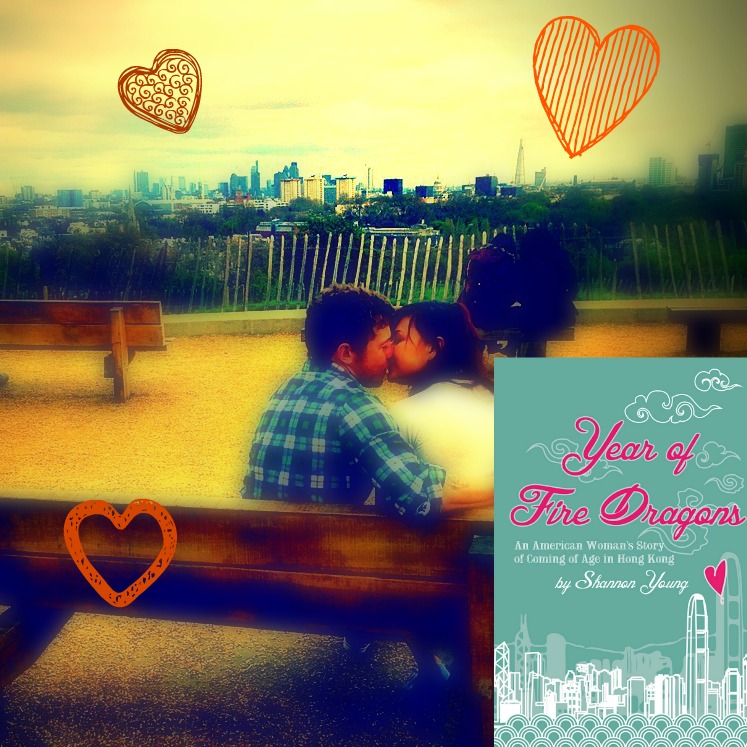
LOCATION, LOCUTION: Author and part-time expat Susan Jane Gilman, who plunders her life for memoir and fiction

JJ Marsh Susan Jane GilmanWe welcome JJ Marsh back to the Displaced Nation for her first “location, locution” column of the new year, in which she talks to current authors about their methods for portraying place in their works.

My guest this month is the precocious and prolific Susan Jane Gilman. She is the author of three acclaimed nonfiction works:

  1. A travel memoir, Undress Me in the Temple of Heaven
  2. A memoir of her upbringing in New York City Hypocrite in a Pouffy White Dress, and
  3. An advice book, Kiss My Tiara.

And now she has a novel, a work of historical fiction called The Ice Cream Queen of Orchard Street, which came out in February of last year.

Gilman has also contributed to numerous anthologies, worked as journalist, and written for many well-known publications including the New York Times, Los Angeles Times, Real Simple, and Us magazine. And she claims to have opened the Susan Jane Gilman Institute for Advanced Gelato Studies here in Geneva.

Oh, did I mention she is an expat?

Though made, born, and raised in New York City, and educated at Brown University and the University of Michigan (MFA in Creative Writing), Gilman currently divides her time between Switzerland and the United States.

Perhaps she developed her wanderlust through exposure to her high school English teacher (she went to Stuyvesant), the Pulitzer Prize-winning Irish-American memoirist Frank McCourt. In any event, she holds him accountable for her decision to become a writer.

Now let’s find out how Gilman perceives the connection between location and locution.

* * *

Which comes first, story or location?
Before I sit down to write, I need a sense of narrative, of a who-what-where, but so often, story and location are intertwined. Undress Me in the Temple of Heaven, for example, is the true story of a disastrous backpacking trip I made through the People’s Republic of China in 1986. To separate the story from the place is simply impossible; so much of what made the trip horrific was the poverty and totalitarianism of China itself; I can’t imagine that my travel companion and I would have disintegrated in the same way at, say, the Canyon Ranch Spa or a luxury resort in the Maldives. Similarly, my novel, The Ice Cream Queen of Orchard Street, is a rags-to-riches-to-indictment story that begins with a child immigrating to the USA in 1913. New York City was simply the logical place to have it begin. It is not only my hometown but, of course, the great immigrant gateway to America.

location locution gilman

Lower East Side New York City @1910, credited to the Brown Brothers [Public domain], via Wikimedia Commons; cover art.

What’s your technique for evoking the atmosphere of a place?
First, I usually describe vivid, visual details so that readers can see a place in their mind’s eye. Then I go for are the smells. Smell is the most evocative of all the senses. It brings a place to life more potently than anything else. Add sounds, and there you are. I’m afraid I’m sounding glib in the way that I’m saying this—”use all the senses”—it sounds easy, and it sounds like a recipe. But it’s not. I really struggle and strive to conjure a place, be it a roadside restaurant, a German city, an abandoned tenement, using incisive, significant details. I’m always on “cliche alert.”

Which particular features create a sense of location? Landscape, culture, food?
Background noises, cooking smells, shadow and light, voices, architecture…there are no given particulars. I try to find what is most unique and evocative and go with it.

How well do you need to know the place before using it as a setting?
Saul Bellow wrote a whole novel set in Africa, apparently without having set foot once on the continent. I find this presumptuous. That said, I have written about places that I’ve only been in briefly, or glimpsed, or created out as a composites of other places I’ve been. But I like to have a feel for a place; I need to be able imagine it throughly, to exist in it. Often, if a character needs to be in a place that I’ve never been to, I research it as much as possible. The Internet is a godsend; I find old photographs or use Google Earth. I try to travel there in whatever way I can.

Can you give a brief example of your work which illustrates place?
I don’t have any of my books in front of me because I’m on the road, but read the very first paragraph of The Ice Cream Queen of Orchard Street and you’ll immediately find yourself on the Lower East Side of Manhattan in 1913. Read the first page of Undress Me in the Temple of Heaven and you’re on board a plane plummeting into Hong Kong; the next six pages take you right into downtown Kowloon at night, with all its lurid traffic, neon, and squalor. I’ve been told by readers that these sections have utterly transported them…

Gilman Kowloon Undress_medium

“Typical street scene in downtown Kowloon,” by VasenkaPhotography via Flickr (CC BY 2.0); cover art.

Which writers do you admire for the way they use location?
I love the way Richard Ford conjures up the American West, John Cheever the Connecticut suburbs, Junot Díaz the Dominican community in New York City and Dominica. That said, I usually don’t admire writers so much as specific books, eg:

And, in a different way, I have always admired Anne Tyler for the way she conjures up so well these cosy, fraught, detailed middle class American households. She is stunning in her ability to make you see rooms, houses, offices—small, intimate tableaux—in such a rich way.

Locations need not be exotic or epic, just alive and relevant.

* * *

Readers, if this interview has piqued your curiosity about Susan Jane Gilman and her writings, I encourage you to visit her author site. You can also follow her on Twitter.

JJ Marsh grew up in Wales, Africa and the Middle East, where her curiosity for culture took root and triggered an urge to write. After living in Hong Kong, Nigeria, Dubai, Portugal and France, JJ finally settled in Switzerland, where she is currently halfway through her European crime series, set in compelling locations all over the continent and featuring detective inspector Beatrice Stubbs.

STAY TUNED for next week’s fab posts!

If you enjoyed this post, we invite you to register for The Displaced Dispatch, a round up of weekly posts from The Displaced Nation, with seasonal recipes, book giveaways and other extras. Register for The Displaced Dispatch by clicking here!

Related posts: