The Displaced Nation

A home for international creatives

Tag Archives: Indonesia

Living La Dolce Vita with Food Writer and World Explorer Robyn Eckhardt

Veteran travel and food journalist Robyn Eckhardt is here. A few months ago, she shared some insights on Southeast Asian cooking with Displaced Dispatch subscribers, but for this post I’ve asked her to supply a recipe for La Dolce Vita, or the Sweet Life — drawing the ingredients from her extensive world travels and their sensory delights — along with an easy version anyone can try!

Robyn Eckhardt’s Personal Recipe for La Dolce Vita

Mix together the following:

3 heart-stopping sights

1) The Bund, Shanghai, in 1990 before the city underwent its construction boom. It was of those moments when you realize that a place you know by heart from books (I studied Chinese history in college and grad school) is actually real.
2) Istanbul’s Blue Mosque from a taxi at 1:00 a.m. on a crisp, clear February night. It was my first time in Turkey; I’d just arrived from Shanghai, where I was living at the time. The combination of jetlag and being somewhere so foreign and utterly different to the place that I called home was like a slap in the face, in a good way.
3) When I was 17 I saw the Statue of Liberty up close on a Circle Line tour. Even though I was your typical cynical, jaded teenager, my jaw kind of dropped. I imagined the thousands and thousands of immigrants to the US arriving by ship and having that same view. It’s still a pretty amazing sight, I think.

11 intoxicating scents

1) In most any neighborhood in Chengdu (capital of China’s Sichuan province) at around 5:00-6:00 p.m., the scent of dried chilies hitting hot rapeseed oil.
2) Just-off-the-boat anchovies grilling in Sinop, on the Turkish Black Sea.
3) Chicken barbecuing anywhere in Thailand.
4) Chòu dòufu, or “stinky beancurd,” in Taipei — funky yet beguiling.
5) Jasmine flowers in bloom on a hot summer ‘s (which is actually in September or October) evening in the San Francisco Bay Area.
6) On winter evenings in Santa Fe, burning piñon tree branches in a hundred fireplaces.
7) The seafood section in the market in Butuan, Mindanao in the Philippines, which smells like nothing but seawater — it smelled so good we didn’t mind eating kinilaw (the Philippine “ceviche”) prepared by a fish vendor, right smack in the middle of the market.
8) In any Turkish town or city very early in the morning, the first whiff of rising dough and baking bread from any bakery.
9) The enveloping, almost chokingly overwhelming scent of spices freshly ground in huge quantities at an old, Indian-run spice shop in George Town, Penang.
10) The dining room at a tiny osteria in Calosso, Piemonte, which my husband and I frequented four years in a row. It didn’t matter what was on the menu that day, as soon as I walked in the I knew that I was going to eat wonderful foods, drink good wines and leave very, very happy.
11) Last but not least, the smell of China. You smell it as soon as you get off an airplane. What is it? I’m not really sure. It’s certainly not magnificent but it is intoxicating to me because it never fails to transport me in a single second to my 21-year-old self, abroad and on her own for the first time, arriving in Chengu. Lots of emotions there.

4 dreamy sounds

1) The call to prayer one late afternoon as I sat on a hill overlooking the ruins of the theater at Aspendos, on Turkey’s Mediterranean coast. One muezzin started, then another from the opposite direction began, then another and another, from mosques in nearby villages. Their voices alternately intertwined and competed — one of those incredible moments that leaves you almost gasping for breath.
2) The sound of calling/singing/chanting vendors at wet markets. Especially when they get into a groove, sing-songing the same phrase over and over again. Like at Pudu Market in Kuala Lumpur: satu ringgit satu ringgit satu ringgit satu ringgit satu ringgit satu ringgit! When I hear a great call from a market vendor I just stop and listen while the market frenzy continues around me.
3) The sound of the rain forest waking up on Langkawi Island from the vantage point of the top of a hill, above the forest canopy. I arrived to perfect stillness; as the sky began to lighten there was movement in the trees — creakings and squawks and chirps and rumbles and knocks and grinding noises. Just before I left, ten or so hornbills simultaneously rose from their perches, making a tremendous, wonderful racket with their wide wingspans. It sounded like a jet flying low overhead — whoo whoo whoo whoo. I could feel that noise in my gut. Incredible.
4) A trio of genggong (Jew’s harp) players on the front porch of a cottage on the edge of a rice field in northern Bali. Bali is magical to begin with. This was an unexpected treat.

A particularly delicate flavoring

Normally, I’m attracted to bold flavors, but as this is La Dolce Vita, I’ll probably throw in the sap from the cut flower of an aren palm, which I tasted when I went out at dawn with a palm sugar maker in northern Sumatra to get the sap he was collecting in bamboo tubes from dozens of trees. It was sweet and flowery but in a very, very restrained way — what’s incredible is that after just three hours of boiling it becomes one of the most intensely flavored sugars in the world.

An extraordinary physical sensation

For this recipe I’ll include the most amazing physical sensation I can remember: riding an elephant bareback and solo, which I did last year in northern Thailand near the border with Burma. Grabbing its leathery ear to pull myself up, palming the spiky, hair-sprinkled knobs of its massive forehead to keep my balance, feeling its shoulders move under me when it walked — something I will never, ever forget.

A memorable encounter with strangers

My husband and I ended up eating lunch with an elderly Turkish couple in their traditional timber farmhouse on the Black Sea. The experience sticks with me, for many reasons. Rather than retell the story here, let me point you to the relevant post on our blog, EatingAsia.

A place that stimulates all five senses

For me, this can be anywhere unfamiliar, or where I haven’t visited for a long time. Right now, especially, it’s eastern Turkey, which I’ve been getting to know in bits and pieces over the last two years.

The food is new (to me) and surprising — interesting twists on familiar Turkish dishes and curve balls out of nowhere, like dolma made with cherry tree leaves(!) or dough spirals seasoned with copious amounts of ground poppy seeds that taste like cacao.

I love the way the Turkish language sounds; I speak enough to get by but am nowhere near even half-fluency. I desperately want to be better at it, so when I’m traveling there my ears and brain are hyper alert to conversations around me; I’m constantly trying to understand what I hear, writing down unfamiliar words, trying (and often failing) to communicate well with strangers. That’s fun in a certain way, though ultimately exhausting — but it’s a level of engagement with everything that is going on around me that I don’t always have.

Outside Turkish cities the sky is big and the population sparse. To me — a resident of Southeast Asia — that is incredible and wonderful. When my husband and I go, we rent a car and do long, long road trips. I’m always eager for what’s around the next bend in the road or over the next pass because in two or three hours the terrain can change tremendously.

I can never get over the scent of air in that part of the world: nothing but air, clean fresh air! We make it a point to go once or twice a year when it’s cold; this past February temperatures in Eastern Anatolia averaged about 10 degrees Fahrenheit and there was lots of snow. It was that kind of cold where the hairs in your nose freeze as soon as you walk outdoors and ice cracks under foot and snow crunches with an especially hard “c”. I loved it.

And I’ve had so many great people experiences there — strangers opening their homes and kitchens to me. Even though I’m always a wee bit tentative in that way that you get when you are among strangers somewhere unfamiliar, eastern Turkey is probably the place where I travel with my heart the most open. When I arrive there I take a deep breath and just relax and let whatever is going to happen, happen. I can’t and don’t always let my guard down like that when I travel, so it’s lovely to be somewhere where I can.

Art by 2 artists who understand La Dolce Vita

1) Well, I am biased, but this recipe definitely calls for my husband Dave Hagerman‘s portraits and people-focused street photography because they often capture, I think, that moment when a subject decides to just let it go. Those sorts of photographs only come when a photographer is willing to extend his or herself, take a risk and show utmost respect to his or her subject.
2) I also love the work — paintings especially — of California realist John Register. The empty-room paintings, the diners-at-night paintings. I can’t say much about his heart or his soul when he was painting them, but to me they show that mundane things can evoke emotion. That is beautiful.

An inspiring travel quote

“The first condition of understanding a foreign country is to smell it.”
– Rudyard Kipling

As one who travels most of the time on her stomach, I can especially identify with this sentiment.

* * *

After adding a pinch of salt to all of the above, Robyn is living the sweet life. And if you’re not as well traveled as she is, not to worry. Robyn offers this simple recipe to try at home.

Robyn’s recipe for living La Dolce Vita at home

You don’t have to physically get on a plane or train or bus to travel. Do something unfamiliar in the place you know best, your home:
1) Go to a neighborhood you don’t usually frequent, go to a museum if you are an outdoors person or to a park if you’re an indoors type.
2) If you are not an early riser, go out before dawn and watch your town or city or neighborhood wake up, or if you’re an early-to-bed sort of person, take a nap in the evening and then go out late and see what where you live looks and sounds and feels like when you’re usually asleep.
3) Ride a bus or some other form of public transport if you’re always in your car.
4) Try a new restaurant or bakery or cafe, or shop at a farmer’s market if you usually buy your food at the big box or grocery store.

Penang-based freelance food and travel journalist Robyn Eckhardt is a contributing writer at Travel+Leisure Southeast Asia, a contributor at ZesterDaily and to publications like The New York Times Travel Section, Saveur and SBS Feast. With her photographer husband David Hagerman, she publishes the food-travel blog EatingAsia. As this interview hits interwebs, the two are hiking village-to-village in far northeastern Turkey, learning about beekeeping and cow-herding and tasting lots of honey and cheese.
Final note from ML Awanohara: Extra points will be awarded to anyone who recalls Robyn’s husband, David, being featured in the series I ran at the end of last year: “The 12 Nomads of Christmas.” He’s just as extraordinary as Robyn says!

STAY TUNED for Wednesday’s post, an interview with Laura Graham, author of Down a Tuscan Alley, a semi-autobiographical novel about her mid-life move to Tuscany. (Ah, la dolce vita!)

If you enjoyed this post, we invite you to register for The Displaced Dispatch, a round up of weekly posts from The Displaced Nation, with seasonal recipes, book giveaways and other extras. Register for The Displaced Dispatch by clicking here!

Related posts:

Img: Robyn Eckhardt writing in Tokat, Turkey (by David Hagerman).

How to throw a party for a bunch of global nomads

One year has passed since our first random nomad, Anita McKay, crashed through the gates of The Displaced Nation, bribing the guards with chicken tikka masala and cranachan and shouting “bollocks” at several of us who tried to stop and question her.

And now there are 40 such nomads within our ranks — the latest being Annabel Kantaria, who insisted on bringing an alarm clock that looks like a miniature mosque — it rings every morning with the call to prayer. (Note to other founders: perhaps we need to find guards who aren’t so easily intimidated when travelers show a bit of temerity…)

Still, as we now have 40 nomads, randomly selected, why not make the best of the situation and throw a party? And what better excuse than The Displaced Nation’s 1st birthday — which, as announced by Kate Allison in a post a couple of days ago, took place on April 1 (no fooling!).

Further to that end, I’ve come up with a Party Primer that I think should work for this group — as well as for similar gatherings.

PARTY PRIMER FOR DISPLACED NOMADS

Click on the headlines below to go to each section:

  1. INVITATIONS
  2. DRESS CODE
  3. DECORATIONS
  4. MUSIC
  5. TABLE ASSIGNMENTS
  6. FOOD
  7. TOPICS FOR SMALL TALK
  8. PHOTOGRAPHY
  9. GAMES
  10. SONGS

INVITATIONS

As this party marks a special occasion (who ever thought we’d make it to be one year old?), a deluxe printed invitation is in order. The only thing is, our invitees are a bunch of nomads! We’ll be lucky if we can catch them on email, let alone at a fixed address. Let’s compromise on an attractively designed message: see mock-up at top of this page.

DRESS CODE

As some of you may know, Cleopatra recently paid a visit to The Displaced Nation. Based on her observations of today’s international travelers, we’ll be doing well if we can get the men to shower and change before joining us. As for the women, well, allow me to offer these pearls of wisdom from Jennifer Scott — the American guru of Parisian chic who was featured on this blog last week. Jennifer says:

There are certain occasions that always warrant dressing up. Generally any gathering … where others went to a lot of effort for your sake.

DECORATIONS

The theme is easy: the wide wide world! (Rather the opposite of Disney’s “It’s a small world after all” concept.) This calls for tablecloths imprinted with the world map (to make it easy for guests to point out where exactly “Moldova” etc is); globe-patterned balloons (can we coin a new term: globalloons?); and for the centerpieces, flags from each of the adopted country represented at the table in question.

Optional extras include party hats, noisemakers and loot bags. It’s fun when the loot contains some surprises. Given all the items our nomads have insisted upon carrying into The Displaced Nation, we should have plenty to choose from, eg:

  • mosque alarm clocks (thanks, Annabel!)
  • hairy coo fluffy toys (thanks, Nerissa!)
  • fake Harry Potter glasses (thanks, Charlotte!)
  • boomerangs (thanks, Kim & Vicki!)
  • brie bakers (thanks, Toni!)

MUSIC

As Todd Lyon, author of a number of party and lifestyle books, puts it:

Without music, a party isn’t a party. It might be an assembly, a meeting, or a bee, but it can never be a shindig, a bust-up or a ball unless there’s fine tunes that never stop.

Not being a party tunes buff myself, I’ve consulted with The Displaced Nation’s resident music expert, Kate Allison, about the kind of soundtrack that would cultivate just the right ambience. Her suggestions include:

Everybody all around the world, gotta tell you what I just heard
There’s gonna be a party all over the world…

TABLE ASSIGNMENTS

8-10 person tables work well. Since we’ll have 40 guests, I’ve decided on five tables of eight people each, and to mix everyone up as much as possible. Hostesses must also, of course, take steps to reduce the risk of a “silent table,” where people just eat and don’t talk. To be honest, I don’t there is too much risk of that with this crowd — have you ever watched a bunch of expats try to outdo each other with stories of their (cross-cultural, linguistic and travel) adventures? But just in case, I’m offering some “hostess notes” for each table (the hostess’s job being to introduce everyone and make sure the conversation keeps flowing!).

TABLE 1
Matthew Chozick (American expat in Japan)
Tom Frost (American expat in China)
Lyn Fuchs (American expat in Mexico — Sacred Ground Travel Magazine)
Turner Jansen (American canine in Holland)
Annabel Kantaria (English expat in Dubai — Telegraph Expat blog)
Kirsty Rice (Australian expat in Qatar — 4 kids, 20 suitcases and a beagle)
Jack Scott (English expat in Turkey — Perking the Pansies)
Karen van der Zee (Dutch/American expat in Moldova — Life in the Expat Lane)
Hostess notes: Introduce Tom Frost to Matthew Chozick — Tom used to live in Japan and speaks Japanese. Kirsty Rice should sit next to Turner Jansen, as she travels around with a beagle. Annabel Kantaria, Jack Scott and Kirsty all have in common life in the Middle East. Karen van der Zee and and Lyn Fuchs should find each other fascinating, as both have had some extraordinary adventures (Karen could entertain Lyn with her crocodile tale and Lyn, keep Karen amused talking about the time he went paddling with orcas.)

TABLE 2
Balaka Basu (Indian American in New York City)
Santi Dharmaputra (Indonesian expat in Australia)
Michelle Garrett (American expat in UK — The American Resident)
Robin Graham (Irish expat in Spain — a lot of wind)
Anita McKay (Indonesian expat in Australia — Finally Woken)
Brian Peter (Scottish expat in Brazil — A Kilt and a Camera)
Kate Reuterswärd (American expat in Sweden — Transatlantic Sketches)
Wendy Tokunaga (Former American expat in Japan)
Hostess notes: You might want to break up Santi Dharmaputra and Anita McKay, who are the same nationality (Indonesian) and already friends. Anita should definitely be introduced to Brian Peter, who like her hubby, is Scottish, and will probably be amused by her stories of toasting oatmeal in whisky. And make sure Anita also talks to Wendy Tokunaga — I know from personal experience how intrigued Anita is by stories of Western woman marrying Asian men. To be honest, everyone at this table should really be socializing with everyone else, as each and every one of them has a partner of a different nationality! (Now if that isn’t a talking point, I don’t know what is…)

TABLE 3
Kim Andreasson (Swedish expat in Vietnam)
Jo Gan (American expat in China– Life behind the wall)
Jennifer Greco (American expat in France — Chez Loulou)
David Hagerman (American expat in Malaysia — SkyBlueSky)
Helena Halme (Finnish expat in UK — Helena’s London Life)
Vicki Jeffels (Kiwi expat in UK — Vegemite Vix)
Janet Newenham (Irish internationalist — Journalist on the run)
Adria Schmidt (former Peace Corps worker in the Dominican Republic)
Hostess notes: Seat David Hagerman next to Jennifer Greco — since his wife is a well-known food writer and expert cook, he’ll find nothing strange in her quest to sample all the known French cheeses. Janet Newenham should be near Adria Schmidt and Kim Andreasson as they are all interested in international affairs. Vicki should be introduced to Helena as I’m sure the latter would love to hear about her recent spa experience in Cyprus. Jo Gan, too, should meet Vicki as she is now experiencing visa problems with the Chinese authorities — on a level that may even surpass Vicki’s own nightmare experience in Britain.

TABLE 4
Aaron Ausland (American expat in Colombia — Staying for Tea)
Emily Cannell (American expat in Japan — Hey from Japan)
Charlotte Day (Australian expat in UK)
Toni Hargis (English expat in USA — Expat Mum)
Vilma Ilic (Former aid worker in Uganda)
Jennifer Lentfer (Former American expat in Africa — How Matters)
Camden Luxford (Australian expat in Argentina — The Brink of Something Else)
Piglet in Portugal (English expat in Portugal — Piglet in Portugal)
Hostess notes: Aaron Ausland will naturally gravitate towards Jennifer Lentfer as they are both deeply involved in global aid and development. Make sure you introduce the pair of them to Piglet in Portugal — she’ll ask them some thought-provoking questions about whether it’s better to save the world or cultivate your own garden. Jennifer should also be near Vilma as the two will want to share their Africa experiences, and you might urge Emily Cannell to join that conversation as well — she has such an adventuresome spirit! Along with Toni Hargis, who runs her own charity supporting a school in Ghana. As for Camden Luxford, she’s an easy one: a social butterfly! Perhaps she could take fellow Aussie Charlotte Day under her wing (ha ha) and make sure she gets plenty of material to write about for her courses at Oxford next year!

TABLE 5
Lei Lei Clavey (Australian expat in New York City)
Matt Collin (American expat in UK)
Megan Farrell (American expat in Brazil — Born Again Brazilian)
Liv Hambrett (Australian expat in Germany — A Big Life)
Mardi Michels (Australian expat in Canada — eat. live. travel. write | culinary adventures, near and far)
Iain Mallory (English adventurer — Mallory on Travel | Making Everyday an Adventure)
Nerissa Muijs (Australian expat in Holland — Adventures in Integration)
Simon Wheeler (English expat in Slovakia — Rambling Thoughts of Moon)
Hostess notes: As soon as Lei Lei Clavey, Liv Hambrett, Mardi Michels and Nerissa Muijs discover they all have Australia in common, they will be blabbing away — just hope it doesn’t turn into an Ozfest! Also, make sure Mardi connects with Matt — I suspect he may need her counseling about how to seek creative refuge from academia. Iain Mallory and Simon Wheeler will form a natural pair, exchanging stories of their travel adventures and perhaps even breaking into a rousing chorus of “Jerusalem.” But should their antics get too raucous, ask Mardi to step in: she teaches cooking classes to 9-11-year-old boys in Canada. Megan Farrell should connect with Nerissa and Simon on the topic of what it’s like to raise a child in a nationality (and language) other than your own.

FOOD

One of the purposes of gathering together nomads from the four corners of the earth has to be eating, especially if each of them brings along some of their favorite dishes. For our party, we will have a dazzling tableaux brimming over with rare and exotic foods. (We know that because our Random Nomads have already described their faves to us in their interviews.)

Shall we go over the list? (Warning: Don’t read on an empty stomach, or if on a restricted diet!)

NIBBLES/STARTERS

  • Guacamole & chips (Kim — recipe provided)
  • Selection of mezze with pita bread (Annabel Kantaria)
  • Assorted pinchos (Megan Farrell)
  • Avocado & mango salad (Matt Collin)
  • Bhelpuri (Tom Frost)
  • Satay sticks (Nerissa Muijs)
  • Four kinds of eggs: tea eggs, thousand-year-old eggs, fried eggs with tomato, and boiled salted eggs with a chicken embryo inside (Jo Gan)
  • Shrimp & grits (Lei Lei Clavey)
  • Vietnamese caramelized chili prawns (Mardi)
  • Ceviche (Camden Luxford)
  • Bluff oysters from New Zealand (Vicki Jeffels)
  • Gravad lax with Finnish rye bread (Helena Halme)
  • Tuna sashimi with ponzu sauce (Emily Cannell)

COCKTAILS

  • Traditional Bloody Marys (Lei Lei Clavey)
  • Caipirinhas (Megan Farrell)
  • Margaritas (Kirsty Rice)

WINE

  • Rich red wines from Lebanon (Annabel K)
  • Red wine from Macedonia (Vilma Ilic)
  • Malbec wine from Argentina (Camden Luxford)
  • Shiraz from Australia (Vicki Jeffels)
  • White wine from Australia (Simon Wheeler)
  • Chilled sake (Tom Frost)
  • Rice wine (Jo Gan)

BEER

  • Carlsberg browns (Matt Collin)
  • Cusqueña beer (Camden Luxford)
  • Mexican Pacifico (Tom Frost)
  • Harbin beer (Jo Gan)
  • Coopers beer (Simon Wheeler)

MAINS
Meat dishes:

  • Carne de Porco a Alentejana (Piglet in Portugal)
  • Schnitzel served with rotkohl (Liv Hambrett)
  • Bondiola-chevre-basil wraps and nattō (Tom Frost)
  • Fried chicken sandwiches with hand-cut fries (Lei Lei Clavey)
  • Chicken tikka masala (Anita McKay)
  • Libyan soup (Kirsty Rice — recipe provided)
  • Cuban ropa vieja (Mardi)
  • Argentinian steak cooked rare (Camden Luxford)
  • Tapola black sausage with lingonberry jam (Helena Halme)
  • Barbecued steak, snags & lamb chops (Nerissa Muijs)

Fish dishes:

  • Paella Valenciana (Megan Farrell)
  • Llish in mustard and chili paste, smoked in banana leaves (Balaka Basu)
  • Chambo curry with nsima (Matt Collin)
  • Moreton Bay bugs (Vicki Jeffels)
  • Grilled salmon on a plank (Emily Cannell)
  • Sushi (Simon Wheeler)

Vegetarian offerings:

  • Peanut butter vegetable stew (Jennifer Lentfer)
  • Overcooked spaghetti with carnation milk, canned tomatoes and corn (Adria Schmidt)

DESSERTS

  • Summer pudding (Toni Hargis)
  • Apple crumble (Matt Collin)
  • Cranachan (Anita McKay)
  • Hot fudge sundaes (Lei Lei Clavey)
  • Blackberry gelato (Balaka Basu)
  • Caramel cheesecake (Kirsty Rice)
  • Bread pudding with Bourbon sauce (Jennifer Greco)
  • Île flottante (Mardi)
  • Molotof cake (Piglet in Portugal)
  • Mouse de maracujá (Megan Farrell)
  • Tiramisu (Camden Luxford)
  • Homemade Slovakian cream cakes (Simon Wheeler)
  • Dutch waffles (Turner Jansen)
  • Oblande, tulumbe, kadaif & krempite (Vilma Ilic)
  • Umm Ali (Annabel Kantaria)
  • Sigara borek (Jack Scott)
  • Juustoleipä with fresh cloudberries and cream (Helena Halme)
  • Yangmei fruit (Jo Gan)
  • Languedoc cheese: Roquefort, Pélardon and Tomette des Corbières (Jennifer Greco)

AFTER-DINNER DRINKS

  • Chlicanos (Camden Luxford)
  • Rakija (Vilma Ilic)
  • Fernet (Tom Frost)
  • Homemade Slivovica (Simon Wheeler)
  • Dragon-wall green tea (Jo Gan)
  • Espresso (Balaku Basu)
  • Large “flat whites” (Charlotte Day)

FOR THE TOAST(S):
New Zealand champenoise (Vicki Jeffels)

NOTE: Charlotte Day will be cooking a Sydney-style breakfast for diehards who care to linger to the next morning. (And Nerissa Muijs will be frying up some bacon!)

TOPICS FOR SMALL TALK

There are some topics that should be avoided at all costs. As style writer Rita Konig puts it,

It is very dull to talk about journeys. Once you have arrived somewhere, try to keep quiet about how long it took you to get there.

Should you notice anyone engaging in this, put the kibosh on it by asking them to help with pouring drinks, or with putting away coats in the spare room.

PHOTOGRAPHY

Fortunately, there’s usually one great photographer or two in a group of global nomads, thereby saving unnecessary expenditure. (We will ask David Hagerman — he’s sensational!)

GAMES

Games are a great ice breaker. Here are a few that might be appropriate for a well-traveled crowd:
1) Musical countries: Draw a big map on a piece of vinyl (back of a Twister mat might do), and give everyone a flagpole. When the music stops, they must place the flagpole on a country, Anyone whose flagpole ends up in the ocean is out.

2) Variation on “Pin the Donkey”: Pin the rudder on the 747! (Contributed by Kate Allison.)

3) Word games: As we’ve found out from our interviews, global nomads pick up words and expressions from here and there. Taking some of these and mixing them together, we can come up with some pretty strange exchanges. (Prizes for anyone who manages to decipher!)

A: Prego, could you get me a ba ba ba? Kippis!
B: Inshallah, a barbie would also be awesome. And how about la ziq?
A: Avustralyalılaştıramadıklarımızdanmışsınızcasına.
B: So desu ne!

A: Tudo bem? You look a bit daggy.
B: Life can be arbit sometimes.
A: Zvakaoma.

A: Hey.
B: Hey. Das stimmt, sorry to be such a Debbie Downer but I’m knackered after all this work.
A: Bless!
B: Zikomo.

A: Oh la vache! You are lost. Siga, siga. Ni chifan le ma?
B: Bollocks! [Sucking air through gritted teeth.] I think I got lost in the wopwops.
A: Well, there’s the big ol’ tree out the front.
B: Bula! Okay-la. Le bon ton roule!

TOASTS

Toasts should be made repeatedly throughout the latter half of the dinner. Just in case no one feels inspired, prepare one or two classics for the host or hostess to offer, eg:

I’d rather be with all of you than with the finest people in the world.

SONGS

Songs can be sung in several languages. In this case, a stirring rendition of “Happy Birthday” is called for, sung not only in English but in:
Dutch (Karen, Nerissa)
Finnish (Helena)
French (Jennifer, Mardi)
Indonesian (Anita & Santi)
Japanese (Emily, Matthew, Tom, Wendy)
Spanish (Aaron, Adria, Camden, Lyn, Megan, Robin)
Swedish (Kate, Kim)
Woof-woof (Turner)

Finally, the party should end with the Displaced Nation founders treating the guests to a round of:

For you are all jolly good fellows, for you are all jolly good fellows,
For you are all jolly good fellows…
Kate, Anthony, Tony: And so say all of us!
ML: Which nobody can deny!

* * *
Have I left out any important details? Any tweaks you can suggest? Your turn!!! Let’s work together to make this the most awesome gathering of global nomads ever. Onegaishimasu, shokran — and all that!

STAY TUNED for tomorrow’s installment from our displaced fictional heroine, Libby. She is expecting a visitor: her own mother, who is — in theory — coming to help as her due date gets closer. Will Granny Jane be an improvement on Sandra, the MIL from hell — or will she prove to be one more spanner in the works for our poor displaced heroine? (What, not keeping up with Libby? Read the first three episodes of her expat adventures.)

If you enjoyed this post, we invite you to register for The Displaced Dispatch, a round up of weekly posts from The Displaced Nation, with seasonal recipes, book giveaways and other extras. Register for The Displaced Dispatch by clicking here!

Related posts:

CLEOPATRA FOR A DAY: Fashion & beauty diary of former expat Anastasia Ashman

Continuing our feature, “Cleopatra for a Day,” we turn to Anastasia Ashman, an American whose love of the exotic led her to Southeast Asia (Malaysia) and Istanbul, Turkey to live (she also found a Turkish husband en route!). Having just moved back home to California, Ashman opens her little black book and spills the fashion and beauty secrets she has collected over three decades of pursuing a nomadic life.

BEAUTY STAPLES

Like Cleopatra, I’m into medicinal unguents and aromatic oils. My staples are lavender and tea tree oil for the tropical face rot you can get in hot, humid places — and for all other kinds of skin complaints, stress, headaches, jet lag, you name it — and Argan oil for skin dryness. I take them everywhere. I also spray lavender and sandalwood on my sheets.

When living in Southeast Asia I liked nutmeg oil to ward off mosquitoes. (I know that’s not beauty per se but bug-bitten is not an attractive look, and it’s just so heavenly smelling too, I suppose you can slather it on your legs and arms for no reason at all.)

I didn’t even have to go to Africa to become dependent on shea butter for lips and hands, and I like a big block of cocoa butter from the Egyptian Bazaar in Istanbul for après sun and gym smoothing — less greasy than shea butter, which I usually use at night.

I’m not really into branded products. When you move around it’s hard to keep stocking your favorite products and I find companies are always discontinuing the things I like so I’ve become mostly brand agnostic.

I just moved from Istanbul to San Francisco, and I got rid of almost everything I owned so I’m seeing what basics I can live with. Because to me, basics that do a wonderful, multifaceted job are the definition of luxury. You’ve got to figure out what those basics are for you.

Oh, and when I am in Paris, I buy perfume. Loved this tiny place in Le Marais that created scents from the plants on the island of Sardinia. And wouldn’t you know it, the second time I went they’d gone out of business. Crushing.

My favorite perfume maker in Paris at the moment — very intriguing perspective, lots of peppery notes and almost nicotiney pungencies — is L’Artisan Parfumeur. I’ve got my eye on their Fou d’Absinthe.

In another life, past or present, I know I was involved with perfume…

BEAUTY TREATMENTS

Believe Cleopatra would drink them dissolved in vinegar? In Malaysia I used to get capsules of crushed pearls from a Chinese herbalist down the street from my house — apparently they’re good for a creamy-textured skin.

I’ll take a facial in any country. I like Balinese aromatic oil massages when I can get them, too, and will take a bath filled with flowers if I’ve got a view of the jungle. Haven’t yet had my chance to do a buttermilk bath. I also do mud baths and hot springs where ever they’re offered, in volcanic areas of the world.

Another indispensable: the Turkish hamam. It’s really great for detoxification, relaxation and exfoliation. When living in Istanbul, I’d go at least once a season, and more often in the summer. It’s great to do with a clutch of friends. You draw out the poaching experience by socializing in the steamy room on heated marble benches, and take turns having your kese (scrub down) with a rough goat-hair mitt. You hire a woman who specializes in these scrubs, and then she massages you with a soapy air-filled cotton bag, and rinses you off like a mother cat washes her kitten.

Soap gets in the eyes, yes.

I own all the implements now, including hand-crocheted washcloths made with silverized cotton, knitted mitts, oil and laurel oil soaps, copper hamam bowls (for rinsing), linen pestemal (wraps or towels), and round pumice stones. (For haman supplies, try Dervis.com.)

DENTAL CARE

I’ve had dental work done in Malaysia and Turkey and was very satisfied with the level of care and the quality and modernity of the equipment and techniques. I got used to state-of-the-science under-the-gum-line laser cleanings in Malaysia (where my Taiwanese dentist was also an acupuncturist) and worry now that I am back to regular old ineffective cleanings. I’ve had horrific experiences in New York, by the way, so don’t see the USA as a place with better oral care standards.

In general, I like overkill when it comes to my teeth. I’ll see oral surgeons rather than dentists, and have my cleanings from dentists rather than oral hygienists.

ENHANCEMENTS

Turkey apparently has a lot of plastic surgery, as well as Lasik eye surgery. One thing to consider about cosmetic procedures is the local aesthetic and if it’s right for you. I didn’t appreciate the robot-like style of eyebrow shaping in Istanbul (with a squared-off center edge) — so I’d be extra wary of anything permanent!

HAIR

I’ve dyed my hair many colors — from black cherry in Asia to red to blonde in Turkey — and had it styled into ringlets and piled up like a princess and blown straight like an Afghan hound. That last one doesn’t work with my fine hair, and doing this style before an event on the Bosphorus would make it spring into a cotton candy-like formation before I’d had my first hors d’oeuvre.

I’ve had my hair cut by people who don’t know at all how to handle curly hair. That’s pretty daring.

I looked like a fluff ball for most of my time in Asia, because I tried to solve the heat and humidity problem with short hair and got tired of loading it up with products meant for thick straight Asian hair.

Now that I’ve relocated to San Francisco (which, even though it’s close to my hometown of Berkeley where I haven’t lived in 30 years, I still consider “a foreign country”), I’m having my hair cut by a gardener, who trims it dry, like a hedge. Having my hair cut by an untrained person with whatever scissors he can find is also pretty daring!

FASHION

On the fashion front, I have an addiction to pashmina-like shawls from Koza Han, the silk market in Bursa, the old capital of the Ottoman empire and a Silk Road stop. I can keep wearing them for years.

I also have a small collection of custom-made silk kebayas from Malaysia, the long, fitted jacket over a long sarong skirt on brightly hand-drawn and printed batik, which I pull out when I have to go to a State dinner and the dress code is formal/national dress. (It’s only happened once, at Malacañan Palace, in Manila!)

I have one very tightly fitting kebaya jacket that is laser-cut velvet in a midnight blue which I do not wear enough. Thanks for reminding me. I may have to take out the too-stiff shoulder pads.

LINGERIE

I like state-of-the-art stuff that does more than one thing at once and find most places sell very backward underthings that are more about how they look than how they fit, feel, or perform. Nonsense padded bras, bumpy lace, and stuff that is low on performance and high on things I don’t care about.

I got an exercise racerback bra at a Turkish shop and had to throw it away it was so scratchy and poorly performing. No wicking of sweat, no staying put, no motion control. But it had silver glittery thread — and (unnecessary) padding!

JEWELRY

I like most of the jewelry I’ve acquired abroad and am grateful to receive it as gifts, too. All of my pieces have some kind of story — and some attitude, too.

From Turkey: Evil-eye nazar boncuğu pieces in glass and porcelain; silk-stuffed caftan pendants from the Istanbul designer Shibu; Ottoman-style enameled pieces; and an opalized Hand of Fatima on an impossibly fine gold chain. This last piece is what all the stylish women in Istanbul are wearing at the moment.

From China: White pearls from Beijing, pink from Shanghai and purple from Shenyang.

From Malaysia: I got an tiny tin ingot in the shape of a turtle in Malacca, which I was told once served as currency in the Chinese community. I had it mounted in a gold setting and wear it from a thick satin choker.

From Holland: A recent acquisition from Amsterdam are gold and silver leather Lapland bracelets with hand-twinned pewter and silver thread and reindeer horn closures. They’re exquisite and rugged at the same time.

WEARING RIGHT NOW

Today’s a rainy day of errands so I’m wearing a fluffy, black cowl-necked sweater with exaggerated sleeves, brown heathered slacks, and black ankle boots. They’re all from New York, which is where I’ve done the most shopping in recent years.

My earrings are diamond and platinum pendants from Chicago in the 1940s, a gift from my grandmother.

I’ve also got on my platinum wedding and engagement rings. They’re from Mimi So in New York.

DAILY FASHION FIXES

I liked FashionTV in Turkey, which was owned by Demet Sabanci Cetindogan, the businesswoman who sponsored my Expat Harem book tour across America in 2006.

The segment of Turkish society interested in fashion is very fashion forward. I enjoyed being able to watch the runway shows and catch interviews with the designers.

If I could draw and sew I’d make all my own clothes but I am weak in these areas. In another life, when I get a thicker skin for the fashion world’s unpleasantries, I’ll devote myself to learning these things and have a career in fashion design.

STREET STYLE

In Istanbul, Nişantaşi is somewhere you’d see some real fashion victims limping along in their heels on the cobblestones and Istiklal Caddesi, the pedestrian boulevard in Beyoğlu, would be a place to see a million different looks from grungy college kids to young men on the prowl, with their too-long, pointy-toed shoes.

TOP BEAUTY/STYLE LESSONS FROM TRAVELS

In fact, I’m still assimilating everything — and everywhere — I’ve experienced in terms of fashion and beauty, but here are a few thoughts:

1) Layering: I learned from Turkish women to layer your jewelry and wear a ton of things at the same time. Coco Chanel would have a heart attack! But the idea is not to wear earrings, necklace, bracelet and rings all at once, but lots of necklaces or lots of bracelets or lots of rings at the same time.

2) Jewelry as beach accessory: During the summer Turkish wear lots of ropy beaded things on their wrists during a day at the beach — nothing too valuable (it’s the beach!) but attractive nonetheless. Jewelry stands feeding this seasonal obsession crop up at all the fashionable beach spots. Dangly charms and evil eyes and little golden figures on leather and paper ropes.

3) A little bling never hurts: I’ve also been influenced by the flashiness of Turkish culture, and actually own a BCBG track suit with sequined logos on it. This is the kind of thing my Turkish family and I would all wear on a plane or road trip. Comfortable and sporty, but not entirely unaware of being in public (and not at the gym). Coming from dressed-down Northern California, it was difficult to get used to being surrounded by glitzy branded tennis shoes and people wearing watches as jewelry, but I hope I’ve been able to take some of the better innovations away with me. I know I’m more likely to wear a glittery eye shadow now that I’ve lived in the Near East.

4) The need for sun protection: It was a shock to go from bronzed Los Angeles to can’t-get-any-paler Asia and then to the bronzed Mediterranean. In Asia I arrived with sun damage and then had lots of people helping me to fix it — I even used a parasol there. Then in Turkey everyone thought I was inexplicably pale and I let my sun protection regimen slip a bit. I’m back on the daily sunblock.

5) What colors to wear: I also used to get whiplash from trips back and forth between California and Southeast Asia in terms of color in clothing. In Malaysia the colors were vivid jewel tones — for the Malays and the Tamils especially. The louder the print, the better. Around the same time I was living in that part of the world, I witnessed a scuffle between shoppers at C.P. Shades in my hometown Berkeley, fighting over velvet granny skirts in moss, and mildew and wet cement colors. That kind of disconnect wreaks havoc on your wardrobe, and your sense of what looks good. Right now I’m trying to incorporate bright colors into my neutral urges. I’m still working it out.

Anastasia Ashman is founder of GlobalNiche.net, a work-life initiative for cultural creatives and mobile progressives that she calls “creative self enterprise for the global soul.” (Global Niche recently held a Webinar “Dressing the Inner You,” featuring psychologist and author Jennifer Baumgartner talking about the cultural displacement that shows up in one’s dressing style.) A Californian with 14 years of expatriatism under her belt, Ashman was the director of the online neoculture discussion community expat+HAREM and coeditor of the critically- and popularly-acclaimed expat lit collection that inspired this community, Tales from the Expat Harem: Foreign Women in Modern Turkey. Catch her tweeting on Pacific Standard Time at @AnastasiaAshman.

STAY TUNED for tomorrow’s post, a contrarian perspective by Anthony Windram on this month’s fashion and beauty conversation.

If you enjoyed this post, we invite you to register for The Displaced Dispatch, a round up of weekly posts from The Displaced Nation, with seasonal recipes, book giveaways and other extras. Register for The Displaced Dispatch by clicking here!

Related posts:

Images: (clockwise beginning with top left): Anastasia Ashman holding her own with the ever-glamorous Princess Michael of Kent, in Turkey; with her sister Monika, rocking the traditional Turkish Telkari silver jewelry, Anatolian shawl and requisite deep Bodrum tan; displaying her hamam collection — including traditional silver hamam bowl and hand-loomed linen pestemal towels; and sporting ringleted hair (along with some fashion flair!) at the Istanbul launch of Tales from the Expat Harem.
The Displaced Q: Can travel and the expat life lead to a healthier diet?

Part of the formula for feeling better about oneself — TDN’s theme this month — is eating a healthier diet. Today Tony James Slater, the newest addition to our team, poses a Displaced Q on the eating habits of travelers and expats.

I’m not sure what qualifies me to pose a question about food, since my idea of healthy eating is using low-fat mayonnaise on a full English breakfast — but hey, I’d love to hear your side of the story…

I think I have what you might consider to be a rather controversial point of view, which is that traveling and leading an expat lifestyle can lead to a healthier diet — but for the most part do not.

WAIT! Before you hit the comments with that vitriolic reply — hear me out. I may be wrong (my past wrongness is legendary), but I believe I have a point. Tell you what — I’ll lay out my opinion (which I’ve put a lot of thought into), and then you can tell me if I’m talking out of my asparagus.

Chopping veggies: too much like hard work?

Plenty of people see travel as a way to reinvent themselves. I should know, I did exactly that, as explained in my last post about volunteering in Ecuador.

But reinventing your lifestyle is one thing — your diet is something else. I think statistically speaking (and I’m no expert) 99.9% of us have struggled with our diet at some point or other.

It’s not a change like deciding to make more “me time,” or adding the beach into your daily itinerary. We struggle because changing our diet requires that dreaded thing: commitment.

And the enemy of commitment is convenience.

Ah, convenience…the single biggest factor driving the fast-food phenomenon worldwide. Is it easier to swing past KFC on your way home from work than it is to get home and start chopping vegetables?

You bet it is.

What’s more, this instant gratification factor appeals not just to the terminally lazy — like me — but to an awful lot of people in a world where free time is increasingly under pressure.

The food you know…

So you’re in a new country. You tour the neighborhood. What’s the first thing you’ll recognize — whether in Cairo, Bangkok, Buenos Aires or Paris? Chances are it’ll be a fast-food joint. It’s just so easy. Nothing new to challenge you — either your palette or your linguistic skills. Just point and grunt, to be rewarded with something you could have bought within five minute’s drive of the last place you lived.

Don’t get me wrong. As I travel I make an effort to eat everything — including, on occasion, things I shouldn’t. (Apparently, the wings stay on the locust, even if they have got most of the soy sauce on them — who knew?)

Still, there is the part of me that, after a few days dining from street vendors, really craves a burger. Or a pizza. Something Western, that tastes of home.

As British writer George Miller once remarked:

The trouble with eating Italian food is that five or six days later you’re hungry again.

Asia — the exception?

There are certain countries with a deserved reputation as a mecca for healthy eating — yes, I’m talking about Japan here. In fact, most Asian countries are considered to have a healthy yet appealing diet, with an emphasis on seafood and simplicity.

For the better part of a year in Thailand I lived like a king. Fresh fruit for breakfast every morning, compared with jam on toast, bacon and sausage back home — score one for healthier eating!

Simple meals of chicken and rice, or noodles from street vendors were my staples. They were as cheap as they were delicious!

And yet… It was all fried. The rice was fried. The chicken was fried. The noodles… Is it possible to overdose on MSG?

I had no control over how my food was cooked and no kitchen to prepare it myself. Back home I fry things occasionally, but I’m a path-of-least-resistance kinda guy. My food isn’t always healthy (burgers, schnitzels, chips) — but I’d stick it in the oven or grill it. So the score…is tricky to say on this one.

And then there’s the booze…

Thailand is famous — at least amongst the 18-35 age group — less for its culinary marvels than for its parties. Score one (a large ONE) + a whisky chaser for the unhealthy diet.

Do you drink more when you travel? Cocktail by the pool? Glass of wine or two in the evening, because why not — you feel so free? Yeah, you do. Don’t worry — so does everyone else. But that’s another nail in the coffin of a healthier diet…

(And yes, I know all about anti-oxidants. That’s how I justify red wine too.)

* * *

In my experience, to eat anything decent, you have to work for it. The easier food is to find, and the more recognizable, the less healthy it tends to be.

If you’re prepared to experiment with different recipes and ingredients, different cooking apparatus and utensils, to learn a few words in the local language and risk using them in the market — then you can manage it.

But if you’re prepared to do all that for the sake of eating healthy, chances are you do it at home too, in which case you’ll eat healthily wherever you are. And probably outlive me by at least a decade.

So, as I said at the beginning: can travel encourage one to adopt a healthier diet? Well, I think it can…but doesn’t.

Am I full of carp? Am I talking sushi? What do you think?

TONY JAMES SLATER is a self-confessed adventureholic. For the last six years he’s been traveling nonstop around the world, working at a variety of jobs including yacht deliverer in the Mediterranean, professional diver in Thailand and snow boarder in New Zealand. He even deprived the world of sandalwood one tree at a time in Australia (though he still maintains it was an accident). Last year, Slater published his first book, That Bear Ate My Pants!, an account of his misadventures while volunteering at the animal refuge in Ecuador. (The book was featured in The Displaced Nation’s list of 2011 expat books.) He is currently working on a second book set in Thailand, while exploring his new home in Perth, Australia.

STAY TUNED for Wednesday’s post, an opinion piece by Lawrence Hunt on what drives today’s young people to seek spiritual enlightenment abroad.

If you enjoyed this post, we invite you to register for The Displaced Dispatch, a round up of weekly posts from The Displaced Nation, with seasonal recipes, book giveaways and other extras. Register for The Displaced Dispatch by clicking here!

Related posts:

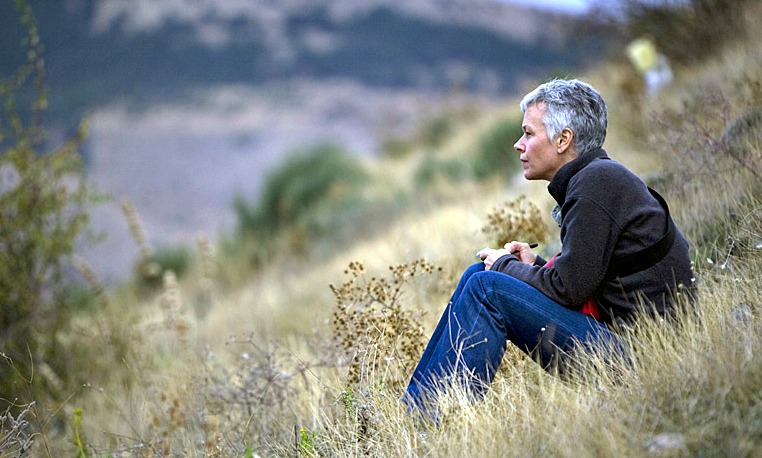
Image: Tony Slater with his girlfriend (now wife), Krista, in an open shack-style cafe in Kuta Beach, Bali, Indonesia. Krista is eating nasi goreng, a Balinese veggie curry (over fried rice), whereas Tony has ordered a burger (but will it be too Asianized for his tastes?).

Top 10 expat & travel posts on spiritual escapes

As the holidays draw to a close and a new calendar year commences, many of us find ourselves desperately in need of some “me” time — a chance to reassess our “to do” lists and decide which of our life goals deserves top priority.

Gah?? Did I just write that? Talk about understatements! If you’re like me, you are lucky if you can remember that you used to have personal goals at one point. (My only aims for the past few weeks have been writing x many cards, wrapping x many gifts, hosting/visiting x many relations…)

That could be why Kate Allison’s post on Monday — announcing that The Displaced Nation has dedicated this month to spiritual escapes — was a goad to such debate. Does the quest for spiritual enlightenment require geographical displacement, away from the demands of family and everyday life? And what about those who are already living far away from “home” — do they need to displace themselves even further, to the most obscure corners of the globe? (Wait, aren’t some of them already living there?!)

Having tracked this topic on social media for several weeks, I would like to share my top 10 findings as further food for meditation, so to speak… My hope is that these writers can help us disentangle our thoughts — which might otherwise come to resemble advanced yoga positions — on the best techniques for getting in touch with the innermost core of our beings.

As usual, and as befits our blog’s slightly irreverent tone, they’re from a mix of indie and conventional publications.

1) Meditation vacation
Author: Matthew Green (@MattGreenAfPak), a reporter covering Pakistan and Afghanistan and author of The Wizard of the Nile
Publication: Financial Times, Life & Arts (@FTlifeandarts)
Why it’s helpful: Spending so much time in war zones, Green desperately needed the kind of retreat where alcohol, email — and talking — are all banned. During his 10-day “Buddhist boot camp” at the Himachal Vipassana Centre in the Himalayas, he ended up weeping harder than he could remember, for a reason he couldn’t fathom — but he also had to bite his lip to stifle the kind of giggles he hadn’t felt since school!

2) The Joy of Quiet
Author: Pico Iyer, British essayist, novelist, travel writer, and Third Culture Kid (born in Britain to Indian parents, he grew up in California), who once said: “And if nowhere is quite home, we can be optimists everywhere.”
Publication: New York Times Week in Review (@nytopinion)
Why it’s helpful: Iyer suggests that there’s something in the zeitgeist to make us all in need of stillness at this particular moment — that the more ways we have to connect, the more desperate we become to unplug, and would pay almost anything for the privilege. (Hmmm… Perhaps I should end this post right here?) I also found it interesting that as a writer, he prefers to live in rural Japan,

“in part so I could more easily survive for long stretches entirely on foot, and every trip to the movies would be an event.”

(Presumably the other part, which he doesn’t mention, is that his wife is Japanese.) Almost needless to say, Iyer has never tweeted or gone on Facebook.

3) The Threshold
Author: Catherine Yiğit (@Yarzac), a writer who was born, bred and buttered in Ireland but who now lives as an expat (also mother and wife) in northwestern Turkey near the mythical city of Troy.
Publication: The Skaian Gates: Notes from an Online Wanderer (Yiğit’s personal blog)
Why it’s helpful: If you’re serious about bringing change to your life, sometimes it helps to take a “tough love” approach. Yiğit found the kick she needed for empowering herself after stumbling upon a program for women writers called “A Year with Myself.” The approach, she says, is gentler than that taken by the unmercifully profane Chuck Wendig (@ChuckWendig), he of the author-advice blog Terrible Minds. (Ironically, Yiğit cites a post by Wendig that I’d shortlisted for this top-ten list: 25 Things Writers Should Stop Doing Right F****** Now. But then I found Yiğit’s post — and could relate to her yearning for some blend of toughness and forgiveness to help her cross the threshold…)

4) A year in awe over the fabulously mundane
Author: Lauren Alissa Hunter (@SankofaMeLately ), world traveler, former expat in China, and blogger (SankofaMe Lately), currently in search of a publisher for her WIP.
Publication: She Writes (@shewritesdotcom), a virtual workplace for women who write from all 50 states and more than 30 countries.
Why it’s helpful: Wannabe novelists, before making any major changes to your life this year, take heed of this rather cautionary tale. A year ago, Hunter upped and quit her job and booked a one-way flight to China in hopes it would spark her creativity as a writer. But instead of finding serenity, she found “intense loneliness, terrifying introspection, emotional vulnerability.” Still, at least she discovered where “home” is — her native United States. What’s more, she currently finds the mundane simply fabulous.

5) The (hateful) ties that bind: Expats and cultural criticism
Author: Camden Luxford (@camdenluxford), an Australian traveler and freelance writer who is now an expat in Argentina. Note: Luxford has been one of TDN’s Random Nomads.
Publication: The Brink of Something Else (Luxford’s blog)
Why it’s helpful: In her inimitable style, Luxford raises the vexed issue of why some expats can’t resist slagging off the countries where they live. Though she didn’t design the post as a contemplation on the January blahs, it dovetails neatly with TDN’s current theme. Are some of us feeling low simply because we can’t stand the thought of starting a new calendar year in the same old same old country? Or because we’re no longer that thrilled about being a world traveler? Burn-out is a serious condition. If you think you might be a victim, I would suggest adding to the comments on Luxford’s post as a first step to recovery… (In this connection, it’s also worth taking a look at the post Struggling in Seville by Ayngelina on her Bacon is magic blog. Ayngelina was traveling solo through Latin America, ended up in Spain — and then decided she was done with being a nomad and would return to Canada. Her post attracted a whopping 168 comments!)

6) 10 of the world’s best yoga retreats 2012
Author: Susan Greenwood (@Pedalfeet) — Guardian writer, bike rider & blogger (Pedalfeet)
Publication: Guardian Travel (@GuardianTravel)
Why it’s helpful: One of the things that always puts me off considering a yoga retreat is the cost — for which you’ll need some controlled breathing even before you’ve learned the proper technique! Greenwood claims that the retreats on her list qualify not only as inspirational but also affordable. I’m not sure if that’s true, especially if you had to add the cost of airplane travel to the cost of the retreat (most of these places aren’t exactly offering bargain-basement prices). Still, the Yoga Barn in Bali seems surprisingly unpretentious and good value — eat-pray-love, anyone?
Worth noting: This Saturday’s Guardian Travel has a special issue on healthy holidays and “courses that will change your life.”

7) 5 magical places in China to disconnect from the world and recharge
Author: “travelingman” Troy on GotSaga (From California, he is now planning a trip to Peru.)
Publication: GotSaga (@GotSaga), an online community for sharing travel sagas, tips, and destinations.
Why it’s helpful: Having been to Mainland China several times, I wouldn’t put it first on my destination list for spiritual escapes, though it’s such a large country it’s bound to have a few spots that are conducive to contemplation — especially if you’re willing to venture to the back of Outer Mongolia. Though Troy doesn’t completely persuade me — some of his proposed retreats sound rather touristy — I do like the idea of glimpsing rural life amid the bamboo forests of Huzhou, which also boasts the distinction of having the world’s only museum devoted to bamboo. As I rather like things that are in bad taste, I might even be tempted to take home some kitsch bamboo products along with my white tea, for the memories. (Listen, if you can find peace of mind in today’s China, you can find it anywhere! No need for fancy yoga retreats…)

8) Happy New Year and the Clutter-free Home
Author: Jennifer L. Scott (@jenlyneva), author of Lessons from Madame Chic, a how-to book based on her experience of living in posh apartment in Paris for a semester while a student at the University of Southern California. (NOTE: The book was featured on our 2011 expat book list.)
Publication: The Daily Connoisseur (Scott’s popular lifestyle blog)
Why it’s helpful: I love the idea of someone deriving powerful life lessons from a study-abroad experience and then distilling them into a “Top 20” list for the benefit of wider humanity. (I’m also rather jealous — have always wanted to do something like that with my years in Japan…) And what better time to contemplate such life lessons than in January — beginning with the need to declutter. Because they understand the pleasure of only using the best things you own, the French apparently excel at getting rid of excess belongings (or not buying them in the first place). Les gens extraordinaires!

9) Quick and Dirty Japanese: It’s What’s for Dinner
Author: Larissa Reinhart Hoffman (@RisWrites), a former expat in various parts of Japan, with a WIP entitled “Portrait of a Dead Guy.”
Publication: The ExPat Returneth: A place to express what you miss about living abroad (a new blog just started up by Hoffman — she hopes to recruit other writers eventually).
Why it’s helpful: Have you included healthier eating in your New Year’s resolutions? Then you ought to be eating Japanese food, Hoffman states. She also gives short shrift to complaints that it’s too hard to tackle their cooking, insisting that if she can handle making Japanese food (she was a late bloomer to cooking), anyone can. While living in Japan as an expat with her (American) husband and their two girls, Hoffman developed a repertoire of what she likes to call “quick and dirty” recipes (the Japanese might be horrified by the latter adjective!). Her main message:

You don’t have to be Martha Stewart to make home-style Japanese food.

Thank God.

10) The Buzz in Mexico
Author: Melina Gerosa Bellows, editor-in-chief of National Geographic Kids and Huffington Post blogger
Publication: Jan/Feb 2012 issue of National Geographic Traveler (@NatGeoTraveler)
Why it’s helpful: Bellows spins the yarn of her recent trip to Tulum, Mexico. She was on a mission to follow the path of the stingless Melipona beecheii bee, which is now endangered — a cause of concern to all those who value traditional Mayan culture. As she explains:

At risk of dying along with the insect is a beekeeping tradition that for centuries has been sacred to the Maya for its spiritual benefits.

In the process, she slows down and learns to value the art of “just being” (pun intended?). Her story is a reminder of how peace of mind can hit you over the head when you least expect it — in Bellows’ case, while on a work assignment (albeit to a very agreeable part of the world, where even bees behave in a civilized manner).

* * *

Question: Can you suggest any other works that should have made the list?

STAY TUNED for Monday’s post, a contrarian perspective on spiritual escapes from TDN contributor Anthony Windram.

If you enjoyed this post, we invite you to register for The Displaced Dispatch, a round up of weekly posts from The Displaced Nation, with seasonal recipes, book giveaways and other extras. Register for The Displaced Dispatch by clicking here!

Related posts:

Image: MorgueFile

12 NOMADS OF CHRISTMAS: Karen van der Zee, Dutch/American expat in Moldova (8/12)

Current home: Chișinău, Moldova
Past overseas locations: Kenya, Ghana, Indonesia, Palestine, Ghana (again), Armenia, Moldova. (For years I was also an expat in the USA, my husband’s home country, and have dual — Dutch and American — citizenship.)
Cyberspace coordinates: Life in the Expat Lane — Foreign Fun in Exotic Places (blog) and @missfootloose (Twitter handle)
Recent posts: “Life Abroad: Of Red Undies, Sugary Pigs, and Freezing Waters” (December 31, 2011); “Expat Foodie: What to Do with Goose Fat?” (December 27, 2011); “Expat Life: Holiday Greetings from Afar” (December 26, 2011)

Where are you spending the holidays this year?
In Moldova. It will be the first time ever that my husband and I will not be spending it with the rest of our family.

What do you most like doing during the holidays?
Besides spending time with family, I enjoy decorating and cooking. This year I will cook dinner for expat friends who are also not going home. We can cry on each other’s shoulders, or perhaps just have a good time.

Will you be on or offline?
The computer will be on. We may be able to Skype.

Are you sending any cards?
I send only a few snailmail paper cards. Mostly I write short personal emails, using in part a few paragraphs of prepared text, but no newsletters. Newsletters never seem to quite fit for everybody the same way.

What’s the thing you most look forward to eating?
I wish I had something exotic to tell you about here, but actually, I just love having a good Christmas dinner and some decadent dessert. Normally I don’t eat much sugary food.

Can you recommend any good books other expats or “internationals” might enjoy?
Two works of nonfiction:

1) The Last Resort: A Memoir of Mischief and Mayhem on a Family Farm in Africa, by Douglas Rogers (Crown, 2009): A tragic-comic account of the author’s (white) parents’ life in Zimbabwe in the last 15 years and the trials and tribulations of running and holding on to their resort while all around them farms of white owners are being stolen and the country is falling apart. Great read.

2) Almost French: Love and a New Life in Paris, by Sarah Turnbull (Gotham, 2003): An Australian journalist falls in love with a Frenchman, moves to Paris, and culture shock ensues. I always enjoy culture shock stories, and Paris is a great setting for culture shock.

And one novel:

Finding Nouf, by Zoë Ferraris (Houghton Mifflin Harcourt, 2008): A murder mystery set in Jeddah, Saudi Arabia, with Saudi Arabian characters. I love this book because it offers an intimate look into the culture and lives of men and women in the very closed society of the Kingdom. Fascinating.

If you could travel anywhere for the holidays, where would it be?
I must be a terrible bore, but spending the holidays anonymously with strangers in some exotic place doesn’t appeal to me. However, I would love to live in the highlands of Bali!

What famous person do you think it would be fun to spend New Year’s Eve with?
What a fun question! Let me think. How about New Year’s Eve with Whoopi Goldberg? Why? Well, she’s unconventional, creative, fun, and loves to hang loose. What else do you need in a person to have some fun?

What’s been your most displaced holiday experience?
When we lived in Indonesia with our two young daughters. It was difficult to create a Christmas atmosphere in the sweltering tropics because we were used to a cold Christmas in the northern hemisphere. The year after that, while still living in Indonesia, we visited friends in Australia over the holidays. It was better, but still, it was summer there. It just wasn’t quite right!

How about the least displaced experience — when you’ve felt the true joy of the season?
I honestly cannot pick just one. I’ve had so many Christmasses and they’ve always been good one way or another.

How do you feel when the holidays are over?
Usually it’s a bit of a drag to take down the tree and pack up all the decorations and the house looks so bare and boring, but then I get busy and get on with life. I do not go into a major funk or depression, fortunately.

In the past, we would be returning from the US to wherever we were living, in the tropics or elsewhere, and that sort of took care of the transition to normal life.

On the first day of Christmas, my true love said to me:
EIGHT WHOOPHIS WHOOPING,
SEVEN SKIERS A-PARTYING,
SIX SPOUSES TRAILING,
FIVE GOOOOOOOFY EXPATS.
FOUR ENGLISH CHEESES,
THREE DECENT WHISKIES,
TWO CANDY BOXES,
& AN IRISHMAN IN A PALM TREE!

STAY TUNED for tomorrow’s featured nomad (9/12) in our 12 Nomads of Christmas series.

If you enjoyed this post, we invite you to register for The Displaced Dispatch, a round up of weekly posts from The Displaced Nation, with seasonal recipes, book giveaways and other extras. Register for The Displaced Dispatch by clicking here!

Related posts:

12 NOMADS OF CHRISTMAS: Santi Dharmaputra, Indonesian expat in Australia (6/12)

Current home: Sydney, Australia
Past overseas locations: Germany, USA, The Netherlands, Syria
Cyberspace coordinates: Trilingual: Indonesian, French, English | world trotters raising two multilingual kids (blog)
Most recent post: “”A Woman’s Work” (my article in The Jakarta Globe)” (December 23, 2011)

Where are you spending the holidays this year?
At my parents’ house in Indonesia.

What will you do when you first arrive?
Hugging and kissing my parents.

What do you most like doing during the holidays?
Spending time with family and old friends.

Will you be on or offline?
Online.

Are you sending any cards?
I usually write greetings on my FB wall or my blog.

What’s the thing you most look forward to eating?
Any kind of Indonesian food. Pineapple tarts (a festive Indonesian cookie) and kastengel (Indonesian cheese sticks) are among my favorite guilty-pleasures.

Can you recommend any good books other expats or “internationals” might enjoy?
Trailing wives — regardless of whether they are sojourners or seasoned expats — might appreciate:
1. A Broad Abroad: The Expat Wife’s Guide to Successful Living Abroad, by Robin Pascoe (The Expatriate Press, 2009)
2. A History of the Wife, by Marilyn Yalom (Harper, 2001)
These are two among many books that have made me feel more empowered. By reading widely, I’ve come to understand that (trailing) wives everywhere and in every era have struggled to find happiness, just as I have. 🙂

What’s been your most displaced holiday experience?
I spent part of my childhood in The Netherlands. I loved it when Sinterklaas visited our school and gave us presents. When my family moved to Syria, I was disappointed: no Sinterklaas! By the time I returned to Indonesia at age 11, I didn’t believe in Santa. To this day, though, I believe that Sinterklaas is the only real Santa (LOL).

How about the least displaced experience — when you’ve felt the true joy of the season?
Tricky. I’m an adult TCK married to another adult TCK, and we’ve continued moving around the globe in our adulthood. I can feel both displaced and part of a place at the same time. But if I had to pick one occasion, it would be when I witnessed my trilingual children celebrating the holidays with their paternal relations in Alsace, France. Their granny and great-granny spoiled them, and it was lovely to see my kids so happy. I felt very at home in my husband’s French family. At the same time, though, I felt displaced — I was missing my own family in Indonesia.

How do you feel when the holidays are over?
Also tricky, as it depends on where we happen to be. Last year we spent the holidays on our own, just the four of us. My husband was too busy working and had only two days off. I was left to entertain the kids during their six-week school break (in Australia, Xmas break is the equivalent of the long summer break in the Northern Hemisphere). At that time, we’d been living in Sydney for less than a year, so we spent most of the time exploring the beach.

When we were living in Munich, we spent two Christmases with my husband’s family in Alsace, and it was sad each time we left. As adult TCKs ourselves, my husband and I are used to living with our nuclear families, so it was a novelty to spend those two Xmases with the extended family, including my husband’s siblings and their kids. Our kids were even happier with their grannies and cousins around, and the same was also true of us (at least during holiday seasons ;)).

When living in Chicago, we tended to use the time between Xmas and New Year for road trips. Sometimes we were traveling in snowstorms — so were happy and relieved to arrive back home safely.

While we were in Holland, I worked as a lawyer and used to enjoy the Xmas dinner held by the office along with the generous Xmas bonus. But when I had to return to the office after the New Year, I did so rather reluctantly — LOL.

The last time I spent New Years in Jakarta was in 2001. My brothers, husband and I (we didn’t have kids yet) stayed at a hotel to celebrate New Year’s Eve. It was kind of sad to leave Jakarta to return to the winter season in Europe (we were in Holland then).

This year, we traded in Australian summer for the Indonesian rainy season. Temperature wise, though, there’s almost no difference. I guess our kids will be sad to leave their Indonesian grandparents and cousins when we go back to Sydney.

On the first day of Christmas, my true love said to me:
SIX SPOUSES TRAILING,
FIVE GOOOOOOOFY EXPATS.
FOUR ENGLISH CHEESES,
THREE DECENT WHISKIES,
TWO CANDY BOXES,
& AN IRISHMAN IN A PALM TREE!

STAY TUNED for tomorrow’s featured nomad (7/12) in our 12 Nomads of Christmas series.

If you enjoyed this post, we invite you to register for The Displaced Dispatch, a round up of weekly posts from The Displaced Nation, with seasonal recipes, book giveaways and other extras. Register for The Displaced Dispatch by clicking here!

Related posts:

My grandfather tried saving the world long before it became trendy — with mixed results

Our Third Culture Kid columnist, Charlotte Day, upon reading this month’s posts about those who displace themselves on behalf of those less fortunate, felt moved to contact her grandfather in Sydney, Australia, for a chat about his own experiences with international aid work, which began in the 1950s.

These days, it is a rare teenager who has not shown some evidence of civic engagement by a certain age: spending their summers beneath foreign suns in search of that fabled sensation, that fulfillment born of “helping others.”

Of course, no altruistic act is truly pure, but I would argue that it is better than nothing.

Nothing, however, is the word that best qualifies my own civic engagement. I have reached the age of 17 tacitly scorning the moral and spiritual quests of British gap-year students, as well as American Ivy-League hopefuls, from my comfortable desk chair.

I read Dostoevsky’s portraits of tormented youths, striving in vain and misguidedly to effect a change in society…and decide that changing the world is futile.

Yet a chastening thought sometimes breaks through this complacency: there are many who do valuable work. There are many who displace themselves — not only from their comfortable desk chairs, but from comfortable world-views and notions — to serve others, outside the framework of self.

My grandfather’s first foray into global philanthropy

One such person is my maternal grandfather, Robert Ayre-Smith. He entered the field of international aid before the idea of a “third world” even existed. As he informed me in our recent email exchange:

In the middle of the last century, there were the tropics, the Empire, the Americas, the colonies, etc. But they were not rated economically as is now the case.

Paradoxically, he chose animals over humans when he initially diverged from the family profession, medicine, and entered London’s Royal Veterinary College. His first appointment as a livestock specialist came in 1952, shortly after his marriage to my grandmother, Carol. The newlyweds set off for Kenya’s Rift Valley, where Robert set up a research station by Lake Naivasha, working with cattle, sheep and pigs. As motivation, he cites scientific interests in “tropical animal production” — a topic he’d investigated while doing graduate work at Louisiana State University.

As is often true of those who move from the halls of academe to real-life applications, Robert soon found that what he calls his “enthusiasm for science itself, and then for the benefits bestowed by scientific advances,” matured into “some feeling of disillusionment.” His focus shifted away from books to people — and looking at what small-scale farmers in Kenya’s villages were realistically capable of accomplishing.

But while he found fulfillment in these human interactions, he remained bothered by the tension between his “lofty agricultural scientist’s perspective” and the perspective taken by the farmers whose cares he was attempting to alleviate.

Some thirty years later, an “Aha!” moment

Fast forward to 1989, by which time my grandfather was working in Indonesia. During a roadside breakdown, Robert experienced an epiphany. Watching a nearby farmstead owner and his family tending their crops and livestock, he “started to question the appropriateness of much [then] current agricultural research for increasing crop and livestock productivity.”

His own knowledge, “derived from vastly different circumstances,” seemed markedly out of place. Until then, he’d been seeing agricultural development in the Third World through the lens of First World research, where commercial farms are relatively large-scale operations, and where farmers are literate and can therefore study results and adopt them to increase their productivity.

Yet most Third World farmers are fighting an altogether different battle. Their farms are small in scale, with “only two acres for the house, food crops and animals and virtually no machinery except hoe and sickle.”

From that time on, my grandfather thought it would be unreasonable — and betrayed a lack of empathy on the part of the professed do-gooder — to expect farmers in Indonesia and other developing countries to make changes according to developed-world research. He became a founding member of the Asian Farming Systems Association in 1991, which aimed to “undertake research of relevance to the farmer that it was hoped to benefit.”

As he concludes in his message to me:

So you see, Charlotte, it took time to mature my thoughts and approaches — a lot of time.

The world as one’s oyster — whatever that means

This being the Displaced Nation, I felt obliged to ask to what extent my grandfather ever felt himself displaced in the course of his work. “NEVER!” came his emphatic reply. He traces the desire to live and work abroad to his mother, “a great traveler in body and soul.”

Born and raised in India “at the height of the Raj,” my great-grandmother was educated in England and Switzerland before traveling widely in the United States and then working in France as a Voluntary Aid Detachment nurse during World War I.

Even after marrying, she continued to travel the Continent.

As Robert puts it: “I believe I may have learned from her that the world was my oyster — whatever that means. Certainly I have never had fear of the world.”

The only environment in which he recalls being ill at ease was Bogotá, Colombia, in 1980, where he was conscious of an underlying malaise about a possible recurrence of La Violencia, the nation’s horrifying period of civil conflict that had taken place from 1948 to 1958. He remembers being “hoicked out of a bus” between the Amazonian Basin and Bogotá by “some roadside gang — or was it the police?” It did not help matters that he found himself “doing an impossible job that no one really wanted [him] to do.”

Even in the presence of immense danger, my grandfather appears to have taken things in his stride. Here’s how he described being in Baghdad in late 1956, when the city revolted as a result of the British and French invasion of Egypt during the Suez Crisis:

I remember no fear although there was one moment when I was in the street of gold and silver smiths when a big and noisy mob rushed down a street parallel to it and all the merchants pulled down their corrugated metal shutters. Machine gun fire ensued.

A plethora of lessons learned

When I asked what he considered the most effective form of international aid, my grandfather’s immediate answer was “the health and welfare of under-privileged people, maybe I should say village people.” Yet this, he added, is not a form of aid, it’s an aim of aid. He went on: “Moreover, it sounds very pompous — as there are plenty of under-privileged people in all parts of the world, not just in villages.”

On the matter of food aid, Robert had this to say:

I could make a good case against food aid, and against some of the inappropriate advice that I gave in the past to small and large landholders. But what I can say with some confidence is that people in the front line of providing development aid must have empathy with those towards whom the aid is directed.

Empathy formed the heart of his approach — coupled with a saying of his father’s, borrowed from Hamlet (Act I, Scene iii):

To thine own self be true, and it must follow, as the night the day, thou canst not thence be false to any man.

Robert and Carol now live in Sydney, Australia — the last in a long series of displacements. Though he contentedly remembers his work in developing countries, and those with whom he worked, Robert prefers to focus on the present. Yet from time to time, he allows those close to him glimpses of the past — cuttings from the swathes of his memory.

His experiences have persuaded me that it does not pay to be defeatist about “changing the world” — and that the world, even amid current extremes of xenophobic paranoia, is nothing to be afraid of.

Readers, questions for Charlotte — or responses to her grandfather’s insights?

STAY TUNED for tomorrow’s post by the Displaced Nation’s agony aunt, Mary-Sue Wallace.

If you enjoyed this post, we invite you to subscribe to The Displaced Dispatch, a weekly round up of posts from The Displaced Nation, plus some extras such as seasonal recipes and occasional book giveaways. Sign up for The Displaced Dispatch by clicking here!

Related posts:

img: Charlotte Day surveying Trafalgar Square in London

RANDOM NOMAD: Kirsty Rice, Freelance Writer & Blogger

Born in: Renmark*, South Australia
Passport: Australia (no one else will have me!)
Countries lived in: Australia (Adelaide & Perth): 1997-98; Indonesia (Jakarta): 1999 – 2001; Malaysia (Kuala Lumpur): 2001-02; Libya (Tripoli): 2002-04; Canada (Calgary): 2004-08; USA (Houston): 2008-09; Qatar (Doha): 2010-present.
Cyberspace coordinates: 4 kids, 20 suitcases and a beagle (blog)
*A small town of 7,500; my parents still live there.

What made you leave your homeland in the first place?
I am married to a former expat child. I know the term is Third Culture Kid, but I don’t really think it applies to him. He was always keen on doing the “expat” thing. I, on the other hand, was raised in the same town that I was born in and wasn’t a great lover of change. Our first move was the result of a promotion for my husband and the fact that I was pregnant with our first child. The plan was to do a two-year posting in Indonesia and to return “home”. That was 7 countries and 12 years ago. I now thrive on change.

So your husband was already “displaced”?
My husband’s parents were expats. He was actually born in New Zealand and then they went to the Philippines for many years before moving to Sydney, then Melbourne, and finally to Brisbane.

How about your kids?
My children were all born in different countries. We were living in Jakarta when I had my first child, my second was born in KL, the third in Malta and the fourth in Canada. Although none of them have lived permanently in Australia (our longest stint has been during school holidays, so a maximum of 12 weeks), they all think of themselves as Australian. My husband and I have both worked hard for that to be the case.

Describe the moment when you felt most displaced.
When we first moved to Tripoli — it was the middle of summer and I had a two-week-old baby and a two-year-old. We then had to endure months of housing hell — we couldn’t find one! For a while, I shared a “guest house” with about sixty men who were rotating in and out of the desert: there were no other women. Breast feeding amongst men who hadn’t seen a woman for a couple of months was a rather unique experience. Due to the weather, fruit and vegetables were limited and small in size. I can remember standing in a fruit and vegetable stand with a screaming baby and a restless toddler wondering how I was going to cook carrots the size of my little finger. I was continually getting lost, and the simplest of tasks seemed very overwhelming. There were many days that I considered getting on a plane — but I’m so pleased I didn’t. Three months later, we had a house, the weather was better, I made friends, and I loved our life in Libya. I was devastated to leave.

Describe the moment when you felt least displaced.
I feel like that here in Qatar. Our children are at a fabulous school, I have a place to write, and my husband works for a Qatari company and really enjoys it. There is so much here in the community for expats, and we are made to feel very welcome. I have made local friends and love heading to the local souqs. I feel that this is very much our second home. In other locations I have felt that we were passing through, but not here.

You may bring one curiosity you’ve collected from your adopted country into The Displaced Nation. What’s in your suitcase?
From Indonesia: A jamu (traditional medicine) woman made of silver, given to me by a very dear friend.
From Malaysia: The Selangor pewter tea set I was given as a gift. Each time I use it I think of my friends.
From Libya: A wedding blanket with traditional jewellery pinned to it, which was given as a farewell present. It is such a unique gift and always a talking point when people spot it in our house.
From Canada: Nothing material, just the memory of what it was like to be back to work full time. In Calgary, I returned to the “old” me, remembering who I was pre children and travel. That was Canada’s gift — along with a huge appreciation of weather!
From the U.S. (Houston): A fantastic painting of an American flag that I picked up in San Antonio. It’s 3D and not in the traditional colors. It reminds me that America is far more layered and multidimensional that what I’d given it credit for.

You’re invited to prepare one meal based on your travels for other Displaced Nation members. What’s on the menu?
We’ll have some kind of soup for starters: either Indonesian soto ayam (chicken soup), Libyan soup* (I love it!), or the Canadian version of Italian wedding soup. Though I come from an area in Australia that has a large Italian community, I’d never heard of Italian Wedding Soup — turns out it’s more of a North American thing.

For the mains, perhaps I’ll offer a choice between Malaysian curry or maybe a nasi goreng from Indonesia.

And for drinks, we’ll have margaritas. I learned to make a mean margarita in Houston.

For dessert, a caramel cheesecake — a recipe I picked up from a fellow Aussie in Houston.

You may add one word or expression from the country you’re living in to The Displaced Nation argot. What will you loan us?
From Indonesia: Satu lagi (one more) — I said that way to often!
From Malaysia: I just loved how you could put lah on the end of everything and automatically make a sentence sound friendlier.
From Tripoli: Shokran (thank you). It was the first Arabic word I learned and makes me think of how special the people in Libya are — so kind and helpful. Incidentally, in learning how to say “pregnancy test,” I discovered that hamil is the word for “pregnant” in Indonesia, Malaysia and Tripoli.
From Canada: Hey — kind of the same as lah in Malaysian.
From the U.S. (Houston): I found myself describing things differently. It wasn’t just “the big tree out the front” but “the big ‘ol tree out the front.”
From Qatar: Right now I’m back to learning Arabic (unsuccessfully). Oh how I wish I had a chip I could just insert into my brain to switch languages. Why haven’t they invented that yet?

It’s Zen and the Art of the Road Trip month at The Displaced Nation. Robert M. Pirsig, author of Zen and the Art of Motorcycle Maintenance, famously said: “Sometimes it’s a little better to travel than to arrive.” Do you agree?
I disagree. I like to arrive, settle and learn how a city/country works. You can learn so much about a place just by trying to get the telephone connected! Traveling through is just a brief picture. I love that we’ve been able to become part of a community everywhere we have lived.

Pirsig’s book details two types of personalities: 1) those who are interested mostly in gestalts so focus on being in the moment, not rational analysis; and 2) those who seek to know the details, understand the inner workings, and master the mechanics. Which type are you?
If you read my blog you’ll see there is usually a romantic viewpoint or flowery end to a posting. I’m a big believer in things happening for a reason and not always being logical. Having said that, I am a stickler for details, I hate to enter into things blindly and have to know exactly what the story is. Which personality am I in my expat life? I’m a bit of both. I don’t believe that anyone can be a successful expat without having the flexibility to change with the situation. In our daily lives as expats we need to quickly learn the rules, find out the details, go with the flow and just enjoy the ride. You have to be both.

* Libyan soup is a tomato-based soup. There are many variations. The one I loved was with lamb.

Ingredients:
1/2 to 1/3 lb. lamb meat cut into small pieces
1/4 cup oil or “samn” (vegetable ghee)
one large onion
1 tablespoon tomato paste
2-3 tomatoes
1 lemon
1/2 cup orzo, salt, red pepper, Libyan spices (Hararat) or cinnamon

Directions:
Sauté the onion with meat in oil.
Add parsley and sauté until meet is brown.
Add chopped tomatoes, tomato paste, salt, spices, and stir while sizzling.
Add enough water to cover meat, simmer on medium heat until meat is cooked.
Add more water if needed, and bring to a boil.
Add orzo, simmer until cooked.
Before serving, sprinkle crushed dried mint leaves, and squeeze fresh lemon juice to taste.

Readers — yay or nay for letting Kirsty Rice into The Displaced Nation? Tell us your reasons. (Note: It’s fine to vote “nay” as long as you couch your reasoning in terms we all — including Kirsty — find amusing.)

img: Kirsty Rice with her family (sans the beagle) at Souq Waqif, Doha, Qatar.

STAY TUNED for tomorrow’s installment from our displaced fictional heroine, Libby, whose rather dramatic road-trip adventure has come to an end. Time to face reality again in Woodhaven! What, not keeping up with Libby? Read the first three episodes of her expat adventures.

If you enjoyed this post, we invite you to register for The Displaced Dispatch, a round up of weekly posts from The Displaced Nation. Includes seasonal recipes and book giveaways. Register for The Displaced Dispatch by clicking here!

Related posts:

RANDOM NOMAD: Anita McKay, Property Manager

Born in: Indonesia
Passport(s): Indonesian and British Permanent Resident
Countries lived in: Australia (Sydney): 1999-2001; Scotland (Aberdeen): 2007-2009; Western Australia (Perth): 2009-2013
Cyberspace coordinates: Finally Woken (blog)

What made you leave your homeland in the first place?
I left in 2000 to study for a master’s degree in Sydney. I left again in 2007 because my then fiance (now husband) got a job in the UK. Philosophically, I have never really felt at “home” in my own home country of Indonesia. Lots of its values don’t match with mine. From the time I was a child, I felt like an alien and longed to go away.

Is anyone else in your immediate family a “displaced” person?
No. My brother doesn’t like to travel and still lives at home with my parents. But three of my father’s sisters are married to Germans: two still in Germany and one in Indonesia. And I have four cousins living in the Netherlands and Germany.

Describe the moment when you felt the most displaced over the course of your various travels.
It was in Sydney. I was working as a casual staff at an ice cream shop while doing my postgraduate study. It was winter, around 10:00 or 11:00 p.m. I had just closed the shop and was waiting for the bus. It was rainy and cold, and then all of a sudden, there was a hailstorm. I almost cried, I felt so sorry for myself. I was thinking about how if I’d stayed put in Indonesia, I could have been working for a big company and earning a nice salary by then, living with maids and a chauffeur. I wouldn’t have to mop floors or clean windows to pay the rent. In the Indonesian island where I come from, everyone knows me and my family, but here in Sydney, no one cares who I am or whose daughter I am…

Describe the moment when you felt least displaced.
Weirdly, I almost always feel more at home in anywhere but my own country.

You may bring one curiosity you’ve collected from your travels into the Displaced Nation. What’s in your suitcase?
A flash disk containing thousands of photos.

You’re invited to prepare one meal based on your travels for other Displaced Nation members. What’s on your menu?
Chicken tikka masala — it’s originally from Glasgow, most people don’t know that — and cranachan for dessert.

You may add one word or expression you’ve picked up from the countries you’ve lived in to The Displaced Nation argot. What word(s) do you loan us?
“Bollocks.” My hubby, who is Scottish, says it sounds cute when I say it. I try to use a Scottish intonation. He would let me say it whenever I wanted — until I said it in front of his 95-year-old grandmother, and then he explained it was actually a very very rude word.

img: Anita McKay (left) with a good Indonesian friend who was visiting her in Scotland, in front of Balmoral Castle, the only royal residence outside England.

If you enjoyed this post, we invite you to subscribe for email delivery of The Displaced Nation. That way, you won’t miss a single issue.