The Displaced Nation

A home for international creatives

Tag Archives: Europe

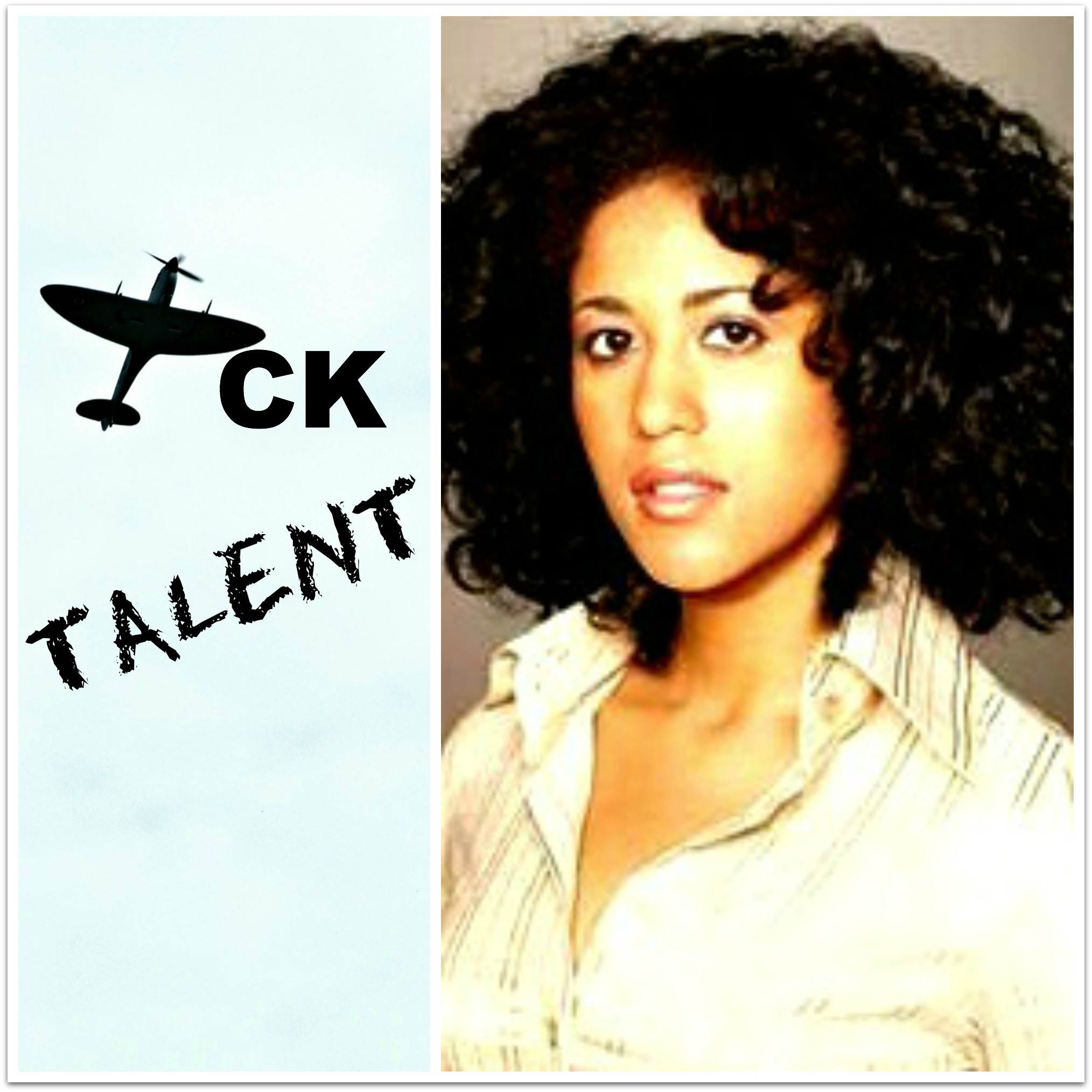
TCK TALENT: Amber Godfrey, Diplomatic Kid Turned Performer-Writer

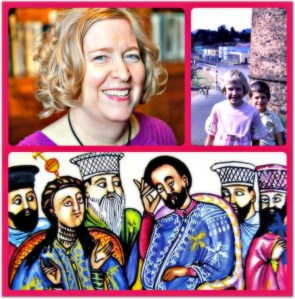
Amber Godfrey Collage

Photo credits: left: RoganJosh (MorgueFiles); right: Amber Godfrey, from her portfolio.

Welcome to Elizabeth (Lisa) Liang’s monthly column about adult Third Culture Kids (TCKs) who work in creative fields. Lisa is herself a prime example. A Guatemalan-American of Chinese-Spanish-Irish-French-German-English descent, she recently debuted her one-woman show about being a TCK, which I had the pleasure of seeing during its too-short run in New York City in September: stupendous!

—ML Awanohara

Happy Thanksgiving, readers! I’m thankful to be bringing you today’s guest, a kindred spirit of mine. She is Amber Godfrey, an actress-writer who, like me, has written and performed her own solo show about growing up as a TCK of mixed heritage.

* * *

Welcome to The Displaced Nation, Amber! I’m happy to have met another solo performer whose TCK story parallels my own. Since your dad is a Canadian diplomat, you grew up in eight countries. Can you tell us which ones?
Besides Canada, I’ve lived in the USA, Ecuador, Trinidad, India, Hong Kong, Sri Lanka and England.

Growing up, which of these countries do you identify most strongly with?
I identified, and continue to identify, strongly as a Canadian probably because of my dad’s job and the fact that we always connected with the Canadian expat community wherever we went. I also heard on more than one occasion (usually when I was being busted for some rebellious act): “You represent Canada!!” I’ve spent most of my adult life in Canada and the US, so I feel very “North American” at this point. At the same time, though, I do feel like a “citizen of the world,” and the bond that I feel with other TCKs is unique.

“Are you adopted?”

Your family is particularly diverse. Let’s see if I can get this right. You are the daughter of an Ecuadorian mom and an African American father, but you were raised by your mom and a Caucasian-Jewish Canadian stepdad, who then had your brother, David. Was your family’s status ever challenged by strangers, like mine was? In grade school, no one believed my brother was my brother, and people asked my mom if I was adopted.
Yes! This still happens all the time. When the four of us go out for dinner, servers will assume my brother and I are a couple. If I check into a hotel with my Dad, we get stares. When I was in fifth grade, I had to go to the school nurse and, when she realized who my brother was, she asked pointedly: “Are you adopted?” I panicked and said “Yes,” even though that wasn’t the whole truth. Looking back—what an inappropriate question to ask a 10-year-old!

Do you feel offended when that happens?
Honestly, it sort of tickles me that people don’t know what to make of us. I figure, that’s their problem and it doesn’t have to ruin my day. As an actor, I get irritated by the under-portrayal of mixed-race families on stage and in film. When I was auditioning a lot, I became really frustrated realizing I would most likely not be considered for “sister of” so-and-so because the other actor had already been cast as white.

Love the place you’re in

I completely relate! So, with such a mixed background, which culture(s) form the core of your identity?
I grew up with a lot of focus on Jewish history, tradition and heritage, which I resisted up to a point—I chose not to be Bat Mizvah’d—but to which I also really connected. As a pre-teen I was obsessed with The Diary of Anne Frank and wrote short stories about young Jewish girls in the Nazi era. In my early 20s, the combination of acting roles I was being sent out for and my burgeoning adulthood piqued a stronger curiosity in the African-American side of me, which ultimately led to me reaching out to find my birth father. Now, in my 30s, I find myself seeking to connect with my Latin American roots. Of course I also identify with the cultures of the countries I grew up in! I think the quest to understand my “identity” is ongoing…

Were you happiest in a certain place at a certain time?
I guess the short answer is: I aim to be happiest in the moment I am in. Every place I went to had its good and bad moments…

What were your school experiences like growing up?
I went to private school in California, international schools in India, HK and Sri Lanka, and the local public school in Canada. During high school I had to contend with three completely different school systems, which was a challenge to say the least.

How about college?
I went back to Canada for college: I studied theatre at Acadia University, in Nova Scotia. It was hard to get good information back then (the Internet was just a baby!), but my Dad pointed out that as a small school in a small town, it might be an easier transition than if I went to a big school in a bigger city like Toronto. And Acadia has a good theatre program.

“It’s all in me…”

Did your TCK upbringing influence your desire to become a performer?  
Being in school plays or performance groups was a good way to get involved and make friends when moving from place to place. But I also think that portraying characters on stage allowed different parts of myself to come forth and was a way for me to work out my identity. I’m laughing because I’m thinking of Whitney Houston’s “I’m Every Woman”—I’m a hippy at heart and believe we are all one and connected. Seeking to experience and understand life/truth from multiple viewpoints is an essential part of who I am.

Before we get into your solo show, let’s talk about your series of performances of Anna Deavere Smith‘s solo show Fires in the Mirror, a docudrama for a solo performer about the racial tensions that erupted between blacks and Jews in Brooklyn in 1991.
I was asked to do Fires in the Mirror by Jesse Freedman, a fellow performer and prolific director, whom I met in a SITI Company Suzuki/Viewpoints workshop. I jumped at the chance to engage with this epic piece because it is constructed so thoughtfully and allows me to play with my Black/Jewish roots. I initially performed Fires in the Mirror at the Limmud Conference, which took place in Coventry, England. Then the Jewish Theatre Workshop in Baltimore requested the show as part of an initiative to continue dialogue between Blacks and Jews who share space in that community. I also had a short run in NYC at the New Yiddish Repertory Company Theatre.

Moving over to your autobiographical solo show: why did you create DipKid?
I’d been thinking for many years about telling my story but couldn’t decide which way to tell it. After taking a Soulo-Show Workshop with Tracey Erin Smith, I finally started writing. I submitted a proposal to a small festival in NY, and when I got in, I realized it was time to start making the show! My efforts resulted in a short but sweet twenty-minute piece (you can watch it here).

How was it received?
The reaction was fascinating. I had assumed my story was unique, but it seemed that people could relate to it, and wanted more! That’s where the struggle began for me. I didn’t know how to finish the piece because I felt I wanted it to link up with my current situation—but that kept changing! The next time I performed the show, I expanded it to 45 minutes but felt less satisfied. I’d watched the video of my first performance so many times I felt sort of stuck in the past. I also found myself listening to many differing opinions on where my show should go and how it should be crafted—my vision got a little lost in the din. Finally, the festival format was crazy-making—especially as I was holding down a full-time job. Trying to write and rehearse this piece all for just one evening was too much pressure. My dream would be to take the show to the countries I lived in and beyond. I’d love to perform it at international schools and for expat communities worldwide.

As the interviewer, I think I can permit one question that’s of particular interest to me, which is: how do you like solo performing?
Solo performance is relatively new for me and I do miss getting to work with other actors on stage. That said, the medium allows me to be a bit more in control of the work and my approach. And it’s wonderfully vulnerable!

I understand you’re planning to film a documentary. What will it be about?
The focus will be on other children of diplomats (i.e., “dip kids”) and how their lives have been shaped by their upbringing and the jobs of their parent(s). I plan to tell the story from my perspective and also weave in my experiences as a mixed-race individual who continues to search for an understanding of and connection to my identity, heritage and all the parts that I am made of.

Do you have any other projects coming up?
I am writing a memoir that will delve deeper into the stories I reveal in DipKid.

Best and worst (Canadian) Thanksgiving memories

Canadian Thanksgiving was in October, but since American Thanksgiving is today, please share with us your best and worst Thanksgivings.
The best occurred when we were living in New Delhi. We were invited to the Official Residence of the High Commissioner for a Canadian Thanksgiving celebration. It was a big party with live music and food sprawled out on the grounds. At dusk everyone looked up and gasped as hundreds of bats swarmed the sky. It was the coolest thing I had ever seen!

I think the worst was my first Thanksgiving away from home. My parents were in Sri Lanka and I was in Wolfville, Nova Scotia (where Acadia U is). Everyone I knew at school had family nearby, but it was only October and I hadn’t bonded with anyone enough to get an invite. I ate Pop-Tarts and drank Dr. Pepper and felt homesick for my family and a bit sorry for myself…

* * *

Thank you, Amber, for being you, a fellow TCK theatre-maker! Readers, please leave questions and comments for Amber below. And if you want to keep up with her creative undertakings, I suggest you also follow her on Twitter: @DipKidAmber.

STAY TUNED for next week’s/month’s fab posts!

If you enjoyed this post, we invite you to register for The Displaced Dispatch, a round up of weekly posts from The Displaced Nation, with seasonal recipes, book giveaways and other extras. Register for The Displaced Dispatch by clicking here!

Related posts:

For semi-retired expat blogger James King, a picture says…

Welcome back to our series “A picture says…”, which we created to celebrate those for whom photography is a creative outlet—who rely on a camera to register the look, character, and ambiance of the people and places that capture their fancy as they move around the globe.

Today’s guest is English expat, blogger, writer, world traveler and photography enthusiast James King. From December onwards, James will take over the hosting of this column from Andy Martin and publish it monthly.

As James plans to ask his interviewees to provide a selection of photos that help to tell their personal travel stories, it seems only fair that we require him to undergo the same exercise. What pix would he use to illustrate his peripatetic life of the past 25 years?

Indeed, “peripatetic” seems an apt descriptor for James. Semi-retired and now living in Chiang Mai, Thailand, he has traveled to over twenty countries. He lived in South Africa for a couple of decades and Thailand for the past five years. Here, in summary, are his vital travel stats:
Place of birth: England, UK
Passports: UK and EU (British citizen)
Resident in: UK (Bristol): 1942 to 1995; South Africa (Durban, Johannesburg, Cape Town): 1995 to 2008; Thailand (Chiangmai): 2008 to present.
Main countries visited: France, Spain, Greece, Italy, Morocco, Gambia, Kenya, Botswana, South Africa, USA, Thailand, Malaysia, West Indies.
Business interests: Majority shareholder in WestJewel (Pty) Ltd., a Cape Town jewelry wholesaler he founded in 2004.
Social media coordinates:
Twitter: @JimKing28265666
Facebook: Jim King
Linkedin: James King
Google+: jamoroki@gmail.com
Blog: Jamoroki.com

* * *

A bloomin’ late bloomer!

Hi, James. I see you were born in England during World War II. When did you actually start traveling?
Life was pretty austere after the war, we had rationing and people lived a fairly simple life. There were very few restaurants and I don’t actually remember ever going out to eat with my parents. Don’t get me wrong, we weren’t on the “bread line”; but it just didn’t happen in those days. We had TV for the first time in 1953, and it wasn’t until I was 24 that I first traveled overseas; to Paris in fact. When I got into my thirties, then I really started to spread my wings but I was very busy trying to make a living so I didn’t have the freedom I gained later in life. Only then was the adventurous side of me given wings, so to speak. Eventually, at the age of 53, I packed my bags and emigrated to South Africa after a few sorties there in the three years before.

SouthAfricanBeach_JK

Photo credit: James King

Okay, time to see your first photo. What’s the story behind this one?
This guy wears many hats and makes a living selling his wares on the beach at Bloubergsands, which is close to the house that I bought (and am now trying to sell!) in Table View in Cape Town. Generally these traders are not South African. They often travel a very long way from neighboring countries such as Zimbabwe, Zambia and Mozambique. Many of them dodge border posts by hiding in the back of goods trucks. They all hope to make a new life in South Africa after escaping from oppressive regimes or poverty. Some of them are intelligent, articulate and well educated, as I remember this guy was.

What do you like most about this shot?
I like that it highlights the harshness of Cape Town light. The ozone layer is so thin there—I had to be far more careful of the sun than I do in the tropics. I also like the photo because at that time, I wasn’t into photography at all and had even less idea about what I was doing than I do now. I always have to be aware of what harsh light can do to my pics.

Okay, let’s move along to another photo that speaks to your South Africa experience.
Can I have two shots, please? One of the Cape of Good Hope and the other of Table Mountain, with Cape Town below.

EndoftheEarth_JK

Photo credit: James King

TableMountain

Photo credit: James King

For me, these photos bring back memories of how wonderful the landscape is in that part of the world. So overwhelming, you really have to experience it in person. Just think, we are at the Cape of Good Hope, the bottom of Africa! And, despite how beautiful it looks, you don’t want to know how cold that water is. Naked you may survive ten minutes in there!

What particularly appeals to you about the Table Mountain photo?
I love how the clarity changes as soon as you hit the shore line below the mountain. It really is like that and not a cock-up on my part. It won’t win awards, but it is very personal so I love it.

How did you end up in Cape Town?
How long have you got? Things went a bit wrong for me in England after I got divorced, and then I met a guy who used to live in Durban and still had some business interests there. His wife had died the previous year so we were both single and hit it off. He had to go to South Africa again, so we decided to go and work together. That’s the “nutshell” version.

Semi-retirement in the Thai tropics

And now 20 years later you are in Thailand. How did that happen?
I’ll have to get the “nutshell” out again. In 2004, with some backing, I bought a jewelry wholesale business. Most of our silver is sourced and manufactured in Thailand, and I took on the responsibility of buying overseas. So I started traveling to Bangkok to meet suppliers and go to the Gems and Jewelry Fair in March and September. I met so many new people and also took a couple of holidays in Phuket before going back to Cape Town. Gradually I got a taste for SE Asia and, after a few years, decided to stay for four months getting to know more whilst still working remotely. That was it. Semi-retirement in the tropics beckoned and I was hooked!

I imagine it’s all been plain sailing since you moved to Thailand. Just kidding! I see from your blog you’ve had your struggles.
It is very difficult to précis my life over the last four years. I wrote my first book, the memoir MASK, to try and show the different sides to Thailand, its people and their culture. The book isn’t everybody’s cup of tea, but it was a cathartic exercise and helped me a lot. I should add that I didn’t include everything in it. The rest may come out later. But now I have a new lease of life and am so pleased I found blogging and photography because I believe the two go hand in glove. Writing, which has been a passion of mine for a long time, can embellish the photos and photos can enhance the writing, so in blogging you have the best of both worlds.

You say that photography gives you the ability to be able to capture something unique, which will never be seen again. What brought you to this realization?
I have always admired great photography while not having time to pursue it because I was working. Now, through my blog, I am learning how to incorporate photos into my posts. It’s fair to say my appreciation is growing as I hope will my knowledge. Writing is still my primary passion, but I now have another tool in my observation box. Although late in life for me, we are so lucky to be living in a technological age where we have the tools to enable us to express ourselves like never before. Sorry to take over the interviewing, but don’t you think it is so amazing?

Thailand2_JK

Photo credit: James King

But of course! Getting back to you and the photos that capture special memories: what do you choose next?
Actually, on my “to do” list is scanning some of the photos from my pre-digital collection, beginning in the 1970s, a number of which carry powerful memories and should help to create some rather interesting blog posts. In the meantime I have selected three of my more recent favorites for you.

The first one shows this guy and his wife who live in their little house at the end of Kata Noi, a beach on Koh Phuket. Every grain of sand is polished every day, they welcome everyone whether you want a drink or something to eat or just to say hello. They have a few beach loungers as well if you want to relax there. If you can have a more simple stress free existence, I’d like to know about it. On this particular day, I visited early one morning before the tourists woke up, and they made me feel most welcome.

Thailand3_JK

Photo credit: James King

This little seven-year-old boy lives in my village in Chiang Mai. As you can imagine he is very naughty and the older children tease him unmercifully. So he comes to my house at weekends to annoy me and get chocolate and biscuits. He always wants me to take his pic, and on this occasion I caught him waiting for the school bus. He felt very proud.

Let’s not get technical

What kind of camera and lenses do you use?
Please don’t ask me anything technical. It says on the bottom “Canon PC1130” and on the front “Power Shot S2 IS”. One fixed lens 12x Optical Zoom with lots of numbers on it. It has lots of settings but I don’t know what they are for so I leave it on auto-pilot and hope for the best. Oh, and most importantly, the rechargeable batteries are held in with an elastic band. I haven’t got a clue whether it is any good or not: I just shoot and ask questions afterwards. But sometimes I do worry that my photos are not so good when I see many accomplished photographers blogs. I just console myself I must work extra hard on the subject matter.

ThaiWhiteTemple_jk

Photo credit: James King

I think you have one more Thai photo?
Yes, this one: the white temple in the forest, which can be viewed from my village. This is very special because most of the time, although I know it is there, I can’t see it for mist or haze. Then one evening it was there and so was I with my camera!

Where have been your very favorite places to take photographs?
On safari in Kenya, Mykonos Island in Greece, and here in Chiang Mai where, even though I say it myself, I’ve managed to capture some beautiful morning and evening landscapes.

MykonosTown_JK

Photo credit: James King

Do you have a shot that’s your all-time favorite?
I pick this one, of a house in Mykonos Town, taken in 2005. I think it will always be one of my favorites.

A few parting shots

Do you feel reserved about taking photos of people, particularly when they are conscious that you are doing so?
It’s a very good question because I am always conscious that they may be shy and so I try and make a quick judgement call. But I do have an aversion to posed photos in the natural environment, so getting the balance right is important to me.

Do you ask permission before taking people’s photographs?
I just try and feel how they feel if they are aware I want to shoot them. I prefer to take them when they are unaware, then smile and say thanks. Otherwise I don’t get the naturalness I want. Look, I’m not experienced so I am not over-confident and I need all the advantages I can get. I find people will show you pretty quickly if they don’t want their picture taken.

But how do you get around problems of language?
Funnily enough I find not speaking the same language gives me an excuse not to ask. I have a smattering of Thai so the people here know I’m not a tourist, which definitely helps a bit.

Finally, do you have any advice for wannabe photographers who are traveling or living abroad?
In a nutshell (there I go again!), here are two pieces of advice:

  1. Never leave your camera at home or you may miss the shot of a lifetime out of nowhere. (Up until recently I have regretted not taking my camera on so many occasions. Now I hardly go anywhere without it, so much so that I often feel like a Japanese tourist. Believe it or not, most of my best shots were taken when I forgot to put in the SD card!)
  2. If, like me, you are not proficient, use other skills such as writing and storytelling or bizarre scenes, so that the photos don’t have to stand alone, to be judged naked.

* * *

Thank you, James! Readers, what do you make of James’s experiences and his photography advice? And do you have any questions for him on his photos and/or travels? Please leave them in the comments! (If you are a photographer and would like to be interviewed by James for this series, please let me know: ml@thedisplacednation.com.)

Once again, if you want to read more of James, be sure to check out his blog, Jamoroki.com. (Hmmm…I suspect there’s a story in that name!)

STAY TUNED for tomorrow’s post, an interview with November’s featured author, a novelist!

If you enjoyed this post, we invite you to register for The Displaced Dispatch, a round up of weekly posts from The Displaced Nation, with seasonal recipes, book giveaways and other extras. Register for The Displaced Dispatch by clicking here!

Related posts:

Main image at top of page: Camera lens from Morguefile; James King at the Khao Panong Rung Khmer Temple near Buriram, NE Thailand. All other images by James King.

TCK TALENT: Wendy Laura Belcher, best-selling author, memoirist, and distinguished scholar of her adopted cultures

wendy-l-belcher-tck-collageWelcome to the third installment of “TCK Talent,” Elizabeth (Lisa) Liang’s monthly column about adult Third Culture Kids who work in creative fields. As some readers may recall, Lisa—a Guatemalan-American of Chinese-Spanish-Irish-French-German-English descent—has written and performed a one-woman show about being a Third Culture Kid, or TCK. It debuted in LA in the spring, and I had the pleasure of seeing it during its too-short run in New York City last month. It was stupendous!

—ML Awanohara

Greetings, readers, and thanks, ML, for that vote of confidence in my work. But it cannot compare to the output of today’s guest, a woman of extraordinary talents. Wendy Laura Belcher is a professor of African literature at Princeton University as well as a published memoirist, produced playwright, popular workshop leader, and author of the best-selling Writing Your Journal Article in Twelve Weeks: A Guide to Academic Publishing Success.

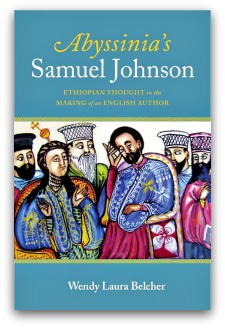
Wendy grew up in Ethiopia, Ghana, and the USA, and has been a writer since childhood. Her most recent book, Abyssinia’s Samuel Johnson: Ethiopian Thought on the Making of an English Author, is a finalist for the African Studies Association’s 2013 Ogot Award (to be announced in Baltimore at the end of next month).

* * *

Welcome to The Displaced Nation, Wendy, and thank you for joining us. I’ve known you for years and yet don’t know as much as I should about your TCK childhood, so am happy to take this opportunity to learn more. You are the daughter of an American dad and a Canadian mom. What’s the story behind why your family moved to Ethiopia and Ghana?
My father is a physician and my mother always loved to travel, so she convinced him to move to Ethiopia. Her idea was that he would teach and do clinical work at a public health college in Gondar, and she would be the college librarian. My first memories are of Ethiopia. I moved back to the US when I was 14. But my specific geographical trajectory is as follows: Philadelphia (birth), Boston, Seattle, Gondar (Ethiopia), Seattle, Accra (Ghana), Seattle, and South Hadley (Massachusetts). After that I lived in Tamale (Ghana). Then back to Washington DC, Accra, Los Angeles, Princeton, Addis Ababa (Ethiopia), and now Princeton again.

That’s an impressively peripatetic life! When and where were you happiest while growing up?
As a child, I loved Ethiopia the best, perhaps because it was the first place my family went and perhaps because, as a child who loved reading, it seemed like a magical place. There was a castle in my backyard as well as oxen threshing grain like in the Bible. On the throne was a descendant of King David. From a child’s perspective, it was like living in a book.

How did you find your first “repatriation” to the United States, at age 14?
I never got used to Seattle, it was very parochial in the 1970s when we moved there, and the weather was too gloomy for someone who had spent a significant part of her childhood in the tropics.

At home, but without a role, in Africa

Has your relationship to Africa evolved as an adult?
As an adult, I settled in the US and not Africa, returning to Africa only a few times until 1997, after which I started going every third year or so. Since 2009, I’ve gone every year to Ethiopia. I thought I might settle in Africa, but as an adult my relationship with Africa was more vexed.

That is, what could my role in Africa be as a white American woman?

I wasn’t particularly interested in “helping,” as it seemed to me that Africans were perfectly adept at solving their own problems and only didn’t do so because of all the “help” they received from the West.

But also, I was in a bind. In the US I often didn’t feel a strong sense of calling in my work, but I felt more satisfied emotionally. In Africa, I felt a strong sense of calling in my work, but I was often lonely.

The problem for me as an adult in Africa as a single woman without children was the lack of female friendships. In the 1980s and 1990s I found it difficult to find in Africa other career women like myself with whom I would have something in common.

One of the reasons I’ve found it easier to return to Ethiopia and have done so regularly in the recent past is that I’ve found some good Ethiopian female friends.

Where do you think of as “home” these days?
My mother always thought that my father never really had a sense of home as a particular place, because he had an identical twin brother. It was the presence of one other human being from the beginning that meant home was someone to him, not somewhere. He didn’t really know what loneliness was, she thought.

I may be somewhat similar albeit for different reasons. I don’t think of anywhere as home.

I lived in Los Angeles for 20 years and loved many things about it, but I mostly think of it as a place where my network of affection is. It isn’t the place so much but the people who make it a kind of home.

At the same time, I still have good friends in Seattle, and my family of origin is still there, so it is also a kind of home.

Are you like many TCKs in finding yourself drawn to people of similar backgrounds?
Almost all my friends are people who live straddling some boundary: either geographically, being from elsewhere or spending significant time outside the US, or racially (growing up as minorities). I am almost never in a room with people who mostly look like me.

Writing calls from an early age

I often wonder if TCKs who pursue writing careers do so because the story is entirely in their hands as opposed to the experienced upheaval of their itinerant childhoods. Did your TCK upbringing influence a) your desire to be a writer and b) what you wrote about?
Growing up in Africa, I was surrounded by literary culture. In Ethiopia, a country with a 3,000-year-old written civilization, people read illuminated manuscripts on sheepskin bound with wood. In Ghana, hand-written epigrams adorned most vehicles, and my father’s Ghanaian colleagues traded bon mots in Latin. At school, I would pick a promising library shelf and work my way through it from left to right. I wrote my first novel when I was nine, titled Shipwrecked at Silver Lagoon. I had set myself the task of writing the best title for a book ever and, after I came up with this, decided it was too good to go unwritten. It was about two English girls in the 17th century who, after their ship is wrecked off the American coast, go on to discover what happened to the disappeared colony of Roanoke: it had moved into an underground, underwater kingdom. The book ground to a halt on page 40, perhaps because, as I tried to articulate issues that were all too real to me (the loss of home and the entry into the hybrid colonial world), my imagination foundered on the demands of the adventure form.

After that, I wrote for my middle school and high school newspapers, where I was the editor.

I was shy, partly due to all the moving and not being sure how to fit in, so I spent most of my time reading. Reading allowed me to immerse myself in a world where I could watch and not be watched (or judged). It also allowed me to develop skills in “reading” people and situations, which is essential to surviving so much moving.
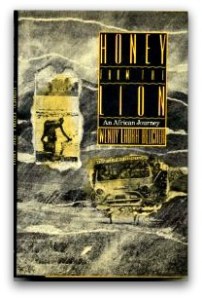
HoneyfromtheLion_coverTell us what drew you to write your memoir, Honey from the Lion: An African Journey, when you were in your twenties.
I had enough credits to graduate from Mount Holyoke in three years so I spent my junior year back in Ghana. While working for a nonprofit organization that was spreading literacy and translating the Bible into local languages, I spent a weekend in a village with an Irish Bible translator. A series of events transpired, the impact of which was so powerful I decided I wanted to write about it. It was a gift: the story was so fascinating that I didn’t worry about writing it. Even if I wrote it poorly, I thought people would find it compelling.

Do you ever go back to the memoir now, and if so, does it resonate very differently due to the passage of time?
I can’t bring myself to read the book now. It seems like a different self wrote itsomeone who was more religious for one.

Congratulations on Abyssinia’s Samuel Johnson being selected as a finalist for a prestigious academic award. Please tell us what inspired you to write the book.
Belcher_AbyssiniaSamJohnson_coverIn 2002, I was talking with an Ethiopian friend about reading Samuel Johnson’s Rasselas, an eighteenth-century fiction he wrote about an Ethiopian prince. This Ethiopian friend surprised me by saying that he had read the book and quite liked it. When I asked him why, he said the book was “very Ethiopian.” I started to correct him, but then I began to wonder if he could be right, if a book written by a European could be Africanin particular, if it could be animated by African discourse. It’s my hope that my book will be convince others about the importance of African thought to the European canon.

From offering TCK courses at Princeton to helping junior faculty

At Princeton you teach courses that I wish had been offered when I was in college, like “Growing Up Global: Novels and Memoirs of Transnational Childhoods” and “Model Memoirs: The Life Stories of International Fashion Models.” You also teach workshops around the world to aid faculty in publishing academic articles. Please tell us the countries in which you’ve taught the workshops.
The workshops have taken place in Norway, Sudan, Malawi, Ethiopia, Indonesia, Canada and all over the USA.

What led you to teach academics about how to write for publication?

belcher_writingyourjournalarticle_coverI did two master’s degrees in the early nineties and I struggled in writing my classroom papers. What did these professors want and why did some papers succeed and others didn’t? I decided not to go on for a doctorate and when people asked me why, I said I just didn’t feel like I got the hang of being a graduate student and in particular about how to write in graduate school.

To my surprise, I found that most other graduate students felt the same way and were as confused and uncertain as I had been. Then UCLA Extension asked me to teach a writing class. I had always sworn I would never teach, but I think you grow when you do things you are terrified of, so I agreed and found that three of my first six students were academics looking for help with their writing.

UCLA Extension agreed to let me restructure the next class around writing for academic journals. The restructured class was a massive success and changed my life.

Within a few years I was teaching “Writing and Publishing the Academic Article” twice a year at UCLA to graduate students, where the class was in great demand, as well as at other universities and institutes around the world. I wrote the workbook Writing Your Journal Article in Twelve Weeks: A Guide to Academic Publishing Success for people who could not take the workshop.

Turning back to your writing, can you tell us what you are working on at present?
I have several writing and translation projects; here are the top three:
1) The Life and Struggles of Our Mother Walatta Petros: A Translation of the Earliest African Biography of an African Woman. Thirty years after the death of a revered African religious leader who led a successful nonviolent movement against European incursions, her Ethiopian disciples (many of whom were women) wrote this vivid book, full of dialogue and drama. The original text, which was written in 1672 by Africans for Africans in an African language, is unknown in the United States (Walatta Petros does not have a Wikipedia entry, for instance). Thanks to the Fulbright US Scholar Award that I held during my third year at Princeton, I was able to spend ten months in Ethiopia devoting myself to archival research. I worked on the translation with Michael Kleiner, a leading scholar and translator of Ge’ez. We believe it will electrify the fields of early modern and gender studies.
2) The Black Queen of Sheba: A Global History of an Ethiopian Idea. Those familiar with the sixth century BCE biblical tale of the Queen of Sheba’s visit to King Solomon may be surprised to hear that there is also an Ethiopian version, variations on which have in fact circulated for centuries, far beyond the Ethiopian highlands. According to the medieval text Kəbrä Nägäśt, the biblical Queen of Sheba was an Ethiopian woman—the wisest, the wealthiest, and the most powerful woman in the world. Tricked by Solomon into sleeping with him, she gives birth to their biracial son, who later takes the Ark of the Covenant to Ethiopia forever. My book traces how the Ethiopian tale came about and the impact it had on not just literature but the world. The emergence of the religion of Rastafari is one of its most far-reaching effects…
3) A Wardrobe of Selves: The Literature of Transnational Childhoods. Based on my life experiences, observing those of my TCK friends, and reading lots of memoirs, I am thinking of writing a book about memoirs by those who have spent their childhood crossing boundaries (in terms of culture, nation, state, language, gender, school, etc.). It would attend to how the narrators like Barack Obama, John McCain, Edward Said, Eva Hoffman, Gloria Anzaldua, Diana Abu-Jaber, Alice Kaplan, Gene Luen Yang, and Mohsin Hamid construct meaningful identities through narrative. These writers—usually considered separately, as part of American ethnic literatures like Arab American, African American, Asian American, or Latino—often negotiate the intricacies of identity in similar ways and should be considered together. That is, this would be a broad comparative project on diasporic memoir in the context of American ethnic literature.

* * *

Thanks, Wendy! You are so prolific, it’s an inspiration to all of us creatives! If we could accomplish just a fraction of what you’ve already done, what a life we’d be leading! Readers, any questions or comments for the amazing Wendy? Please leave them below. And…see you next month!

STAY TUNED for tomorrow’s post, when we hear from an international traveler who has started up her own business in New York City, catering to expats.

If you enjoyed this post, we invite you to register for The Displaced Dispatch, a round up of weekly posts from The Displaced Nation, with seasonal recipes, book giveaways and other extras. Register for The Displaced Dispatch by clicking here!

Related posts:

Images: Wendy Belcher; Wendy with her brother in front of a castle in Gondar, Ethiopia; detail from the cover of Wendy’s latest book, Abyssinia’s Samuel Johnson.
For travel addict & photography lover Milda Ratkelyte, a picture says …

Milda M CollageWelcome to the second installment of “A picture says,” a series that sheds light on the people who move through our planet with a camera in hand, registering the look, character, and ambiance of people and places that capture their fancy.

Our guest today is Milda Ratkelyte, a camera-happy Lithuanian whose wanderings have taken her to the UK, America and now Asia.

Here are Milda’s vital travel statistics:
Place of birth: Lithuania
Passport: Lithuanian
Overseas history: From least to most recent: United Kingdom (London): 2005-2008; China (Wuhan, Shanghai, Beijing): 2008-2009; United States (California, Colorado, New York): 2009-2010; United Kingdom (London): 2010-2011; Singapore: 2011-present.
Occupations: Travel Community Manager at AsiaRooms.com and owner of Milda Ratkelyte Photography
Social media coordinates:
Twitter: @MildaRatkelyte
Facebook: Milda Ratkelyte Travel
Instagram: @milda_ratkelyte
Google+: Milda Ratkelyte

And now let’s meet Milda and find out: which came first, the photography obsession or the peripatetic life?

Kenyan curiosity

Hi, Milda. Let’s talk a bit about your travels. You are originally from Lithuania but have spent a considerable amount of time in other countries and now live in Singapore. Tell me about how that came about, and what inspired your moves.
I had the most amazing childhood in Lithuania. I was very lucky, because my dad was a true travel fanatic. Back then it was not easy for us Lithuanians to go traveling to remote destinations outside of Europe, but my dad found a way to get us to Kenya for a summer. From that time on, I was addicted to travel, and have been wandering the world ever since. “Explore, discover and get to know different cultures and people around the world”that’s become my mantra.

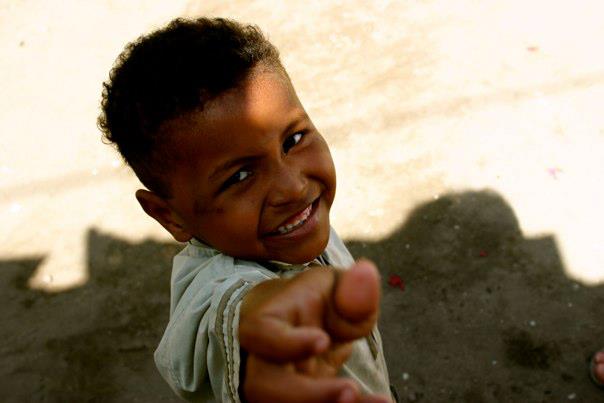
Boy reaching for candyKenya sounds amazing. Can you share with us one of the photos from that trip?
I like this shot of a boy reaching for what he hoped would be candy. It’s from the early days of my camera experience, but I love it because it’s just so natural. There was no set up, no preparation. I was wandering the streets of the Watamu village, looking for the school where I was volunteering, when a group of kids ran towards me asking for candies. I didn’t have any on me, but I had a pack of pencils that I was carrying to the school, so I gave them out and decided to take a photo of the group. As I was setting up the shot, this boy ran from the end of the street. Noticing something was being given away, he squeezed through other kids and jumped right in front of the camera.

Asia calls!

How did you end up in my native land, the UK?
When I graduated from high school, I knew that I want to do something travel related. I enrolled in an International Tourism Management course at the University of Bedfordshire in the UK. For my work placement, I was sent to work in China for the Shangri-La Hotels and Resorts, which gave me the chance to explore some other Asian destinations such as Hong Kong and Singapore. I fell in love with Hong Kong and told myself that once I graduated, I would definitely be coming back. However, when that moment occurred, reality kicked in: I could not get a visa for Hong Kong. I’d decided to stay in London when an opportunity to work for a major events company in Singapore suddenly landed on my doorstep. I had my bags packed in a few days and was on the 14-hour flight to Singapore.

How do you like Singapore?
I’ve been in Singapore for two-and-a-half years already and absolutely love it. Mostly, because it’s the most convenient spot in Asia travel wise. In just two hours I can be in Bali, Hong Kong, or Thailand. And Malaysia is just an hour’s bus drive away.

Luck strikes again

On your blog you say you were “one lucky girl” in finding your current position as a Community Manager for AsiaRooms, a site for booking hotels throughout Asia. Tell us how that opportunity came about and how it fits into your life ideals and love of travel.
When I moved to Singapore, I was working for an events company in the oil and gas industry. While I loved the thrill of closing huge deals, I had no life. The hours were long, with weekends in the office and sales calls at all times of the night. After about half a year, I missed having time to travel, take photos, explore and discover! I started looking around for something in the travel industry, and that was when I got introduced to my current boss, who mentioned that AsiaRooms.com were looking to hire a Community Manager. It was a dream come true. Today I can definitely say I love my job! I have been working on the launch of AsiaRooms.com Community site together with an amazing team, and we’ve already achieved some incredible results. I have also gotten a chance to study and have completed MatadorU’s Travel Writing and Photography courses. But most importantly, I’m getting to work with some amazing and talented photographers, filmmakers, writers and musicians in Asia and across the world while traveling a lot! This year I will finally tick off all the places on my bucket list for Asia.

Passionate about photographybut not equipment

On your blog you say that you love photography “and being able to freeze a particular moment in time, so when things in life change you have the one thing, one memory that never will.” What are the shots that capture some of your favorite memories? And what made them so special?
It is hard to say which ones are my favorites since there are just so many of them, and every trip I make is special. But if I had to choose, I’d pick the photos from the trip to Kenya such as the one above. That was the first time I got exposed to a truly different environment. It was also the first time I experimented with my DLSR, which was a present from my dad. My dad passed away unexpectedly last year, and I feel sad that I’ll never get to travel with him again. But having those photos reminds me of him and of the reason I started traveling.

What kind of camera and lenses do you use?
I have a Canon 300D with two Canon lenses: 18-55mm and 70-300mm. When I was doing a short weekend photography course, my tutor joked: “This girl is truly passionate about photography and not equipment.” My camera was so old it did not have half of the functions they were using during the course!

But although the camera has huge sentimental value, I think I will need to invest in a new one soon, since I have started MatadorU’s Travel Filmmaking course and will need a camera that can capture video.

A “no holds barred” approach to people as subjects

Where have been your favorite places to take photographs? Any particular shots stick out as being amongst your favorites?
My two favorite spots are Myanmar and Japan: Myanmar, for its amazing people, who are always smiling, and the colors of its markets, nature and city life, as well as incredible sunsets and sunrises over the ancient city of Bagan; Japan for its nature, culture and architecture. The old streets of Kyoto, the underground cafes and restaurants in Tokyo, hip people in the Harajuku district, lush greenery and deer in Nara, and bamboo groves in ArashiyamaJapan is just naturally photogenic.

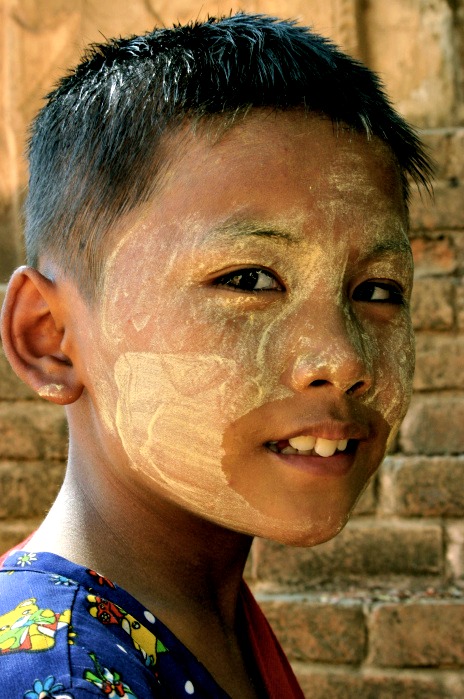
ThanakaBoy_mmIn your shots of Myanmar, I noticed one of a young child. Tell me about how that shot came about and what exactly is going on!
It was taken in Bagan, Myanmar, which is full of the remains of temples and pagodas. That particular morning we’d grabbed our bikes and were exploring the terrain, when I was approached by this young kid trying to sell me his drawings for a dollar. They were crayon drawings of the temples, neatly packed in plastic bags. The boy spoke almost no English, but soon he became my little tour guide, showing me around all the ruins. After our little tour we sat on the old dusty stairs at one of the temples, and while he was trying to tell me more about the place, this perfect photo opportunity appeared. I just love the look in his eyes.

I often feel very reserved about taking photos of people, particularly when they are conscious that I am doing so. Are you the same?
I used to be very reserved about it, but at the same time I knew that this was a major obstacle if I want to progress with my travel photography. I think I came to realize that after traveling around with my boyfriend, who is also a photographer and who has never had hang-ups about this! He doesn’t find it difficult to go straight to someone and ask them to take a photo. At the beginning I used to stay back and watch him, but when I saw how his shots turned out, I realized I needed to overcome this barrier.

Do you ask permission before taking people’s photographs?
It was hard at the beginning, because the truth is you will get a lot of people who will just tell you NO, but at the same time you will get the few that will be very nice to you. I guess my main advice would be to definitely ask them first, and if they don’t agree, leave it! If they do agree, have a little chit chat with them to ease the atmosphere and, once you take the shot, show them how the photo looks, I’ve noticed a lot of people appreciate that!

But how do you get around the inevitable problem of language barriers?
Well, I always try to learn at least few words in the local language before I visit country, like “please,” “thank you”, “hello”, etc. As for the rest, I just point to the camera, then at the person, and smile 🙂 Usually this works—and trust me, the results will be worth the effort.

Parting shots…

Finally, do you have any advice for wannabe photographers (like me) who are traveling or living abroad?
1. Never leave your camera at home. The truth is, some of the most amazing photos are from the moments that come out the blue. It doesn’t have to be an incredible place, it might just be the street you walk down every day. Even if it’s just your iPhone camera, have something at hand.
2. Don’t let rejections stop you from achieving your dreams. I must admit, I have been trying to pitch different publications, blogs, magazines, etc for over a year and all I got were either unpaid opportunities or rejections. And it’s hard to keep motivated, when someone says that your photos are not good enough. But I’ve carried on pursuing my dream and finally, a year later, I am getting paid assignments and, what’s even more important, people are finally starting to look for me and not me for them. As a Community Manager at AsiaRooms.com, I source the photo and video content myself, so I get about 30 pitches a day from very talented people. The roles are reversed: I am the one who is telling someone that we will not be publishing their work. However, in most cases, it’s not because their photos are not good, it’s because the industry is so competitive and businesses like ours can choose only the very best. Knowing this helps me to deal with my own rejections.

Thank you, Milda! Readers, what do you make of Milda’s advice on shooting people? And do you have any further questions for her on her photography, travels, or anything else? Please leave them in the comments!

STAY TUNED for next week’s fab posts!

If you enjoyed this post, we invite you to register for The Displaced Dispatch, a round up of weekly posts from The Displaced Nation, with seasonal recipes, book giveaways and other extras. Register for The Displaced Dispatch by clicking here!

Related posts:

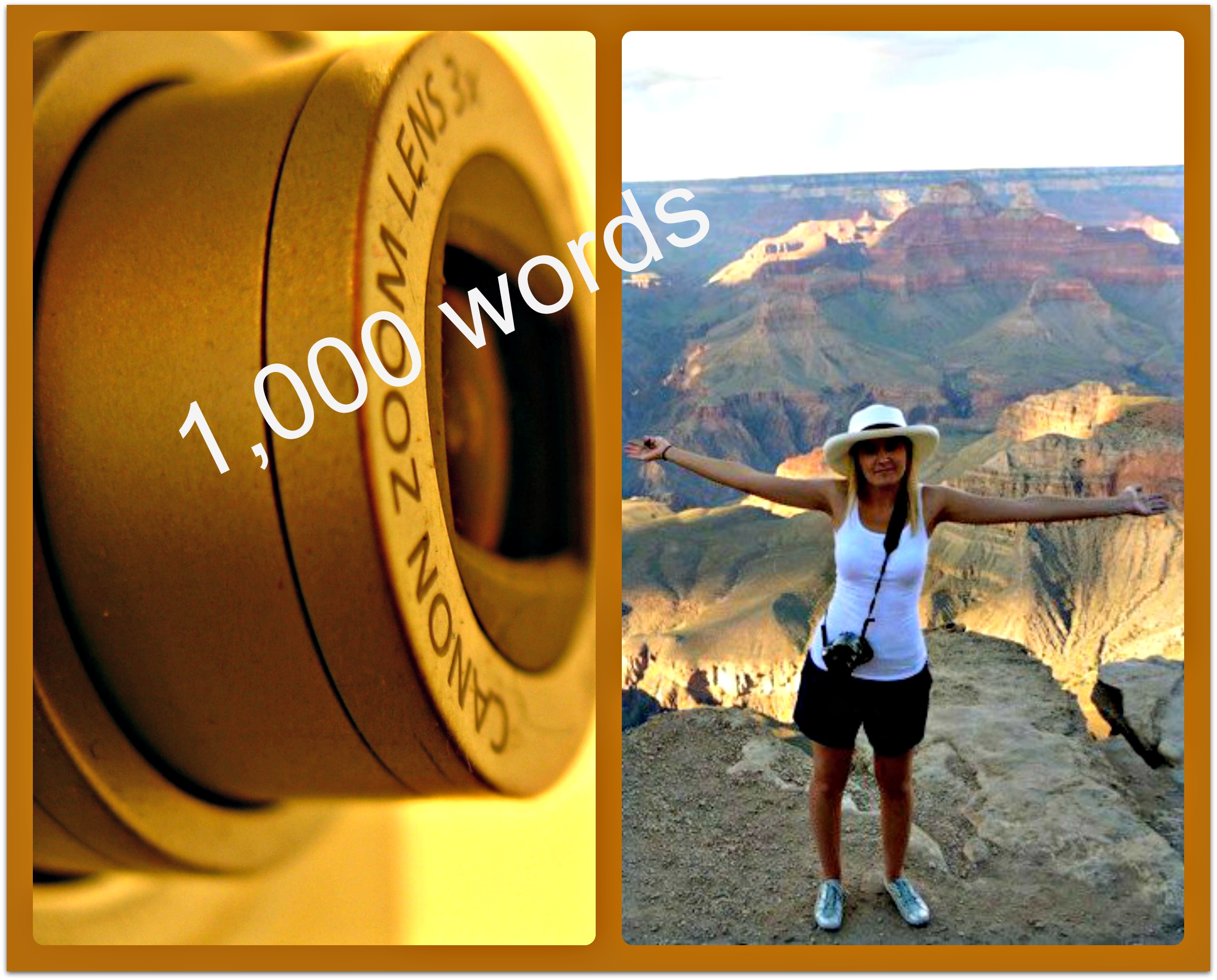
Images (from left): Camera lens from Morguefile; Milda Ratkelyte reveling in her Grand Canyon moment. All other photos by Milda Ratkelyte

CAPITAL IDEA: Vaduz: A quick guide

Welcome to another “Capital Ideas”—our somewhat idiosyncratic, ever so slightly tongue-in-cheek guide to various world cities, perfect for the ever discerning readership of this blog.

We know our readers are always visitors, never tourists (an important distinction). Do feel free to contribute your own ideas or suggestions in the comments section, we’d love to hear your thoughts, too.

Capital: Vaduz.

Umm . . . I think I’m going to be saying this quite a bit, but why?  Because great things come in small packages.

No really, why? Why not?

No seriously, why? The element of surprise is wonderful, isn’t it?

It is? Oh, most certainly. Did you expect me to suggest Vaduz?

I have no idea what Vaduz is or if it’s real. Precisely. What a surprise that is!

I was rather hoping that you might do Rio this month. I’ve been watching the Confederations Cup and, civil strife to one side for a moment, my appetite is very much whetted for next year’s World Cup. I’ll bear it in mind, but today I thought we could discuss Vaduz.

Venezuela? Ha! That’s Caracas. You’re not even close continent wise.

Okay, clearly I have no idea. Just tell me where it is. It’s in Liechtenstein. Isn’t that exciting?

Not particularly, no! Oh, come on, it is a little bit.

Little seems to be the operative word. Vaduz must be one of the smallest capitals in the world. It’s certainly not large. It has a population of under 6,000.

So a pulsating nightlife must be on offer, then? Apparently, you could try a Club Z, Liechtenstein’s premier nightclubI’m sure it’s wild! But be warned: it does not have a dance ring.

Hmm. Was there any ulterior motive in your choosing Vaduz? Ulterior motive? Me? Why the very idea! Of course not!

Apologies for impugning your good name. That’s okay, you’re forgiven. I can assure you that there are no ulterior motives here. I absolutely was not struggling with a deadline and thought that a small city would mean that I could quicker meet that deadline.

A-ha, the plot thickens. Are you trying to shortchange me by fobbing Vaduz off me. Smaller city means less work for you. Unfortunately, it’s not true. A smaller city does not mean less work. There’s enough reason to visit Vaduz to more than fill up a post here. There’s charm and history aplenty. Who doesn’t want to stroll around a small town filled with medieval and baroque architecture?

Please, never ever use the word “aplenty” again. So how do I even get there? I’m assuming that there isn’t a direct flight from Heathrow or JFK. And you’d be right, but you can get a flight to Zurich and from there get the train from Zurich to Sargans where you can then hop on to a bus to Vaduz. More information can be found here.

And once there, do I need to worry about getting round town? No, this isn’t one of those entries where I tell you about how to navigate the local subway system. This is a town of five and a half thousand, after all.

What is there to see in Vaduz? Well, wherever you are in town you can’t really help but see Vaduz Castle. (You can see it in the above photo.) Set in a hilltop overlooking the town it really is picture postcard pretty. It’s the home to the reigning Price of Liechtenstein, Hans-Adam II. Unlike other European monarchies, the Prince of Liechtenstein has an extremely large amount of political power – he has, for instance, veto power over the government.

So I can’t visit the castle? No, and as the Prince of Liechtenstein is Europe’s wealthiest monarch with an estimated fortune of $4 billion, there’s no pressing need for him to open the castle up to get those tourist coffers in. But given that its presence in the city is all pervading, you’ll be able to take some wonderful shots of it from every street corner; and if you were to take a tour of the city – you know how much we love our walking tours here on The Displaced Nation – you’ll learn lots about the castle’s history.  Some more information can be found here.

What else can I do. Under six thousand residents? Sounds like it’s really a village in name only. Well even if he’s not letting you into his castle, you could always go and visit the wine cellars of the Prince.

I’m always up for some wine tasting, but I don’t recall ever having wine from Liechtenstein before. Is it any good? Liechtenstein actually has an ideal climate for wine. They’ve been growing wine in that region for over 2,000 years so it’s not entirely surprising that a bunch of grapes can be found on Vaduz’s coat of arms.  If you’re traveling by car, take a trip into the countryside and visit one of the many wineries. Sit back and have a refreshing glass of gewürztraminer – it’s a favorite of mine. Plenty of information can be found here.

And for a more cultural suggestion? Hey, I would contend that you can’t get more cultural than a wine tasting, but if you’re after something more artistic then you should visit the Kunstmuseum Liechtenstein (Liechtenstein Museum of Fine Arts). An interesting piece of architecture in itself (an intriguing black cube, it has been voted one of the world’s ugliest buildings, but I absolutely don’t agree with that assessment), it houses an extensive collection of modern art from around the world as well as Liechtenstein’s national art collection. So to your earlier suggestion that Vaduz was a village in name only, this is precisely the sort of thing one would not expect to find in your local village. Vaduz offer more than a duck pond and a Spar shop. You could also visit the National Museum (Liechtensteinisches Landesmuseum). This is rather less imposing than the Kunstmuseum. Unlike that with all it’s modern architectural pizzazz, the National Museum is housed in a former tavern and customhouse. Covering the folklore and history of the principality, it’s well worth your time, particularly if you aren’t planning on doing an historical walking tour. Finally, if – like me – you are a sucker for visiting old churches, then you should pop into the neo-Gothic Cathedral of St. Florin.

What should I read? Normally I use this part of a Capital Ideas post to expand from merely writing about whichever featured city we’re looking at so that I can highlight a larger national literature. This month that isn’t quite so easy. For why that’s the case I refer you to an interview with the Liechtenstein writer Stefan Sprenger, who was featured in the 2011 edition of Dalkey Archive Press‘s acclaimed Best European Fiction anthology series. In an interview translated by Jeffrey Zuckerman, Sprenger declares: “There is no Liechtenstein literature, and never has been.” Also worth a read is this interesting blog post on the subject.

What should I watch?  Again, I’m cheating a bit but as it’s about a small European nation still far too enthralled to a crusty almost farcical form of government that combines absolute and constitutional monarchy, but as it may be somewhat relevant, I’d suggest The Mouse That Roared, starring Peter Sellers, who plays both the Grand Duchess and Prime Minister of the fictional Duchy of Grand Fenwick. It’s a fun little British comedy from the late 1950s, which was based on a 1955 Cold War satirical novel by Irish-American writer Leonard Wibberley.

STAY TUNED for tomorrow’s post, another installment in the life of our fictional expat heroine, Libby. (What, not keeping up with Libby? Read the first three episodes of her expat adventures.)

If you enjoyed this post, we invite you to register for The Displaced Dispatch, a round up of weekly posts from The Displaced Nation, with seasonal recipes, book giveaways and other extras. Register for The Displaced Dispatch by clicking here!

Related posts:

LOCATION, LOCUTION: Expat author JJ Marsh on bringing a location to life through writing

jill 3Today we welcome expat crime writer JJ Marsh to the Displaced Nation. JJ grew up in Wales, Africa and the Middle East, where her curiosity for culture took root and triggered an urge to write. Having at this point lived in Hong Kong, Nigeria, Dubai, Portugal and France—she finally settled in Switzerland—JJ certainly belongs in our midst! But what makes her even more special is that she has offered to impart her knowledge to other international creatives about the portrayal of “place” in one’s works.

Currently halfway through her European crime series, set in compelling locations all over the continent and featuring detective inspector Beatrice Stubbs (on loan from Interpol), today JJ begins a new series for us, entitled “Location, Locution.” In the opening post, she will answer the questions she plans to ask other displaced authors in future posts.

JJ, we are positively THRILLED (in more ways than one!) to have you as a new columnist. Welcome! And now to get to know you a little better…

Which comes first, story or location?
Story, always. Or at least the bare bones of the plot. Then I audition various places before beginning to write. I have to know the setting, even before populating the novel with characters. The place IS a character. For example, once I knew the victims would be corporate Fat Cats in Behind Closed Doors, the first in my Beatrice Stubbs series, I looked around for a financial centre with the right kind of atmosphere. Turns out my home town of Zürich fitted the bill and even gave me the title.

How do you go about evoking the atmosphere of a place?
I’d say by really looking at it and digging deep. Not only that, but try to look at it from the perspective of your reader. It’s no coincidence that in many European languages, one asks for a description using the word “How”.

Como é?
Wie war es?

Yet in English, we say “What is it like?” We want comparisons to what we know. I actively chose to use a foreigner arriving in a strange country/city, so as to look at it with new eyes.

Which particular features create a sense of location? Landscape, culture, food?
I start with the senses. We notice sights, sounds and smells first, and add to our impressions with tastes and textures, all the while comparing them to our expectations. Food and drink are essential, as they reveal something of the region but also much about the characters. Cultural differences have to be treated with great care in fiction. Lumpen great dumps of information are poison to pace. But subtle observations can be woven into the story, provided they are relevant. I’ve just abandoned a book set in Rome which was clumsily pasted chunks of guidebook against a sub-par Eat, Pray, Love plot. The reader wants to be immersed in the world of the book, not subjected to the author’s holiday snaps.

How well do you need to know the place before using it as a setting?
Speaking for myself, extremely well. I feel insecure describing an area I’ve never visited. But that’s not true for everyone. Stef Penney, who wrote The Tenderness of Wolves, created a beautiful story set against the backdrop of the frozen wastes of Canada. She’d never even been there.

While I am awed by that achievement, I don’t think I could do it. I need to ‘feel’ the place and also, to understand the people.

My nomadic past and interest in culture led me to study the work of Geert Hofstede and Fons Trompenaars. One of their models is to analyze culture like an onion. The outer layer is Symbols—what represents the country to outsiders/its own people? The next is Heroes—who do the people worship and venerate? Peel that away and explore its Rituals—on a national and personal level. At the centre of the Onion, you will find its values, the hardest part of a culture to access. But that’s where the heart is.

Could you give a brief example from your work which you feel brings the location to life?
The recent UK horsemeat scandal amused me, as it’s part of the average menu in Switzerland. Here my combative detectives, one Swiss, one British, have just finished lunch.

Beatrice patted her mouth with her napkin. “Herr Kälin, your recommendation was excellent. I thoroughly enjoyed that meal.”

“Good. Would you like coffee, or shall I get the bill?”

“I’ve taken up enough of your time. Let’s pay up and head for home.” Beatrice finished her wine.

Kälin hailed the waitress. “I wasn’t sure you’d like this kind of farmer’s food.”

“Farmer’s food is my favourite sort. Solid and unpretentious. Not the sort of fare they would serve in those crisp white tents at the polo park.”

Kälin let out a short laugh. Beatrice cocked her head in enquiry.

“It would definitely be inappropriate at the polo park, Frau Stubbs. We’ve just eaten Pferdefleisch. Horse steak.”

Which writers do you admire for the way they use location?
Val McDermid, particularly for A Place of Execution. Not only place but period done with impressive subtlety. Kate Atkinson, for making the environment vital to the plot in a book such as One Good Turn. Monique Roffey for bringing Trinidad to life in The White Woman on the Green Bicycle. Alexander McCall Smith enriches his stories with a wealth of local detail, be it Botswana or Edinburgh. And Kathy Reichs for making her dual identity an advantage. Donna Leon’s Venetian backdrop, Scotland according to Iain Banks in Complicity, and Peter Høeg’s Copenhagen in Smilla’s Sense of Snow.

There are many, many more.

* * *

Thank you, JJ! Readers, any further questions to JJ on her portrayal of “place”, or authors you’d like to see her interview in future posts? Please leave your suggestions in the comments. You may also enjoy checking out the first three books in JJ Marsh’s Beatrice Stubbs series:

  • Behind Closed Doors: Takes place in Zürich, where someone is bumping off bankers.
  • Raw Material: Takes place between London and Pembrokeshire. Here Beatrice is joined by wannabe sleuth, Adrian. Amateur detectives and professional criminals make a bad mix.
  • Tread Softly: Unfolds in the Basque Country of Northern Spain. Beatrice is supposedly on sabbatical, but soon finds herself up to her neck in corruption, murder and Rioja.

STAY TUNED for tomorrow’s interview with Lisa Egle, author of Magic Carpet Seduction, two copies of which we’ll be giving away!

If you enjoyed this post, we invite you to register for The Displaced Dispatch, a round up of weekly posts from The Displaced Nation, with seasonal recipes, book giveaways and other extras. Register for The Displaced Dispatch by clicking here!

Images: Typewriter from MorgueFile; picture of JJ Marsh and her book cover supplied by herself; map from MorgueFile

And the May 2013 Alices go to … these 4 international creatives

 © Iamezan | Dreamstime.com Used under license

© Iamezan | Dreamstime.com
Used under license

As subscribers to our weekly newsletter will hopefully have noticed by now, each week our Displaced Dispatch presents an “Alice Award” to a writer who we think has a special handle on the curious and unreal aspects of the displaced life of global residency and travel. Not only that, but this person has used their befuddlement as a spur to creativity. He or she qualifies as an “international creative.”

Today’s post honors May’s four Alice recipients, beginning with the most recent and this time including citations.

So, without further ado: The May 2013 Alices go to (drumroll…):

1) ADAM GROFFMAN, travel blogger and expat

Source: “How a children’s book inspired my wanderlust” in Travels of Adam
Posted on: 13 April 2013
Snippet:

You see, what I loved about this book as a kid is the focus on architecture and food in this utopian society. Each family is responsible for bringing a country’s culture to the island nation.

Citation: Many of us at the Displaced Nation attribute our abilities to tolerate and even embrace life abroad (the strange foods and drinks, the loneliness, the largely incomprehensible rules) from having taken to heart Alice’s Adventures in Wonderland and its sequel, Through the Looking Glass, as kids. A good dose of literary nonsense has taken us a long way, and even to this day, we appreciate having recourse to Lewis Carroll’s great works to make sense of our rather curious lifestyles in countries other than those in which we were born.

Adam, we understand that you quit your job in Boston to travel the world and that you trace your own wanderlust to the 1947 American children’s book The Twenty-One Balloons, by William Pène du Bois, a story that in some ways is even more fanciful than Alice’s.

For those who don’t know it: The book begins when a schoolteacher, Professor William Waterman Sherman, becomes bored with his life and sets off on a journey in a hot air balloon called The Globe. He hopes the wind will blow him and his balloon all around the world. But instead he has a crash landing on the mysterious island of Krakatoa (Indonesia), where he discovers a utopian society started up by a group of wealthy families. Each family owns a restaurant of different types of foreign foods and all members of the island eat together at a different house, full of fantastic inventions, every night. Krakatoa being a volcanic island, the families are aware of the danger that the volcano could erupt at any moment (in fact its volcanoes erupted in 1883). Their escape plan consists of a platform made of balloons…

Adam, we love the idea of emulating a fictional character who favors balloon travel—the kind that begins without regard to speed and without a destination in mind. It’s also romantic to think that you expect to find, at best, utopianism, at worst, good food, in the course of your world wanderings. Perhaps it accounts for why you’ve landed your own “balloon” in Berlin, Germany’s creative capital and a city renowned for its architecture (only, how is the food there?).

2) TRACY SLATER, expat writer, author and blogger

Source: “What Does Home Mean When You Live Abroad?” in The Good Shufu
Posted on: 8 May 2013
Snippet:

I know how easy it is, when we live overseas, to lose our gimlet eye about home: to romanticize it, to see it as a kind of lost Eden, a place where we wouldn’t suffer the same disappointments or lonelinesses or defeats that we suffer in our expat lives.

Citation: Tracy, we would add to that something we learned from Alice, which is that part of the reason for cherishing the memory of home so much is that you can’t easily share what you love about it with the people you encounter in your new place. Alice experiences this when trying to talk about her beloved cat, Dinah, with the Wonderland creatures:

“I wish I hadn’t mentioned Dinah!” she said to herself in a melancholy tone. “Nobody seems to like her, down here, and I’m sure she’s the best cat in the world! Oh, my dear Dinah! I wonder if I shall ever see you any more!” And here poor Alice began to cry again, for she felt very lonely and low-spirited.

We also find inspiring your quote from the Egyptian writer and thinker André Aciman, that all exiles impulsively look for their homeland abroad. Even poor Alice suffered from that affliction—recall her trying to make herself at home at the Mad Hatter’s tea party, only to discover it is a less than civil gathering to what she is used to. First she is told there is no room for her at the table; then when she sits anyway, that her hair needs cutting. She is offered wine even though there isn’t any, and told to take more tea even though she hasn’t had any.

In fact, some of us can relate quite directly to this need to feel at home via a good cup of tea. TDN writer Kate Allison, for instance, has lived in the United States for many years but to this day fails to understand why Americans give her a cup of lukewarm water and a tea bag when she orders tea. And ML Awanohara, who lived in England before becoming an expat in Japan, often longed for English tea while sitting through the Japanese tea ceremony.

Tracy, we very much look forward to your forthcoming book, The Good Shufu: A Wife in Search of a Life Between East and West (Putnam, 2015), to help us make sense of such classic expat predicaments.

3) DANIELLA ZALCMAN, photojournalist

Source: “London + New York: A double exposure project”—an interview with Daniella by Austin Yoder on Matador Network
Posted on: 22 April, 2013
Snippet:

When [Daniella] moved from New York to London, she decided to create a series of double exposures to marry the spirit of both cities based on a combination of negative space, color, and contrast. Daniella’s double exposures create beautiful imaginary landscapes, and are captured entirely with her iPhone 4s.

“When I got to London, I knew that I wanted to capture not just the sensation of leaving NYC, but also of exploring a new city and making that environment feel like home.”

Citation: Daniella, we are enchanted by your idea of creating a composite of your beloved home city (New York) with your adopted city (London) to come up with an imaginary landscape. Indeed, we think it must be akin to the process Lewis Carroll used when creating Alice’s Wonderland—blending the bucolic English countryside surrounding Alice (she is sitting on the river bank considering making a daisy chain when the White Rabbit first appears) with the curious world that exists at the bottom of the rabbit hole, the familiar with the unfamiliar. When Alice awakens and reports her dream to her sister, the sister “half-believes” herself to be in Wonderland—if only she can suspend her disbelief for long enough to the sheep-bells tinkling in the distance as rattling teacups, the voice of the shepherd boy as the Queen’s shrill cries, and the lowing of the cattle in the distance as the Mock Turtle’s heavy sobs…

4) “SARAH SOMEWHERE”, world traveler and blogger

Source:On Freedom” in Sarah Somewhere blog
Posted on: 29 April 2013
Snippet:

I am not, by nature, a free spirit. I’m a worrier, a control freak and a chronic people pleaser. Letting go and trusting in the universe’s plan for me is not my default setting, nor is being content with what I have rather than continually striving for more. I still need some practice.

Citation: Sarah, your struggle with living life in the moment in Mexico puts us in mind of Alice, who, is constantly worrying about the impression she is leaving on the Wonderland residents, and finds it a challenge to enjoy the moment in a place as curious as Wonderland. We wish you luck in finding that sweet spot between total personal freedom and societal obligations. And, taking our cue from Alice’s sister, we envision a day when you’ll be telling stories about your adventures in Southeast Asia, China, Mexico and India to a group of children and inspiring them to follow their unique destinies:

she pictured to herself how this same little sister of hers would, in the after-time, be herself a grown woman; and how she would keep, through all her riper years, the simple and loving heart of her childhood: and how she would gather about her other little children, and make their eyes bright and eager with many a strange tale, perhaps even with the dream of Wonderland of long ago: and how she would feel with all their simple sorrows, and find a pleasure in all their simple joys, remembering her own child-life, and the happy summer days.

* * *

So, readers, do you have a favorite from the above, and do you have any posts you’d like to see among June’s Alice Awards? We’d love to hear your suggestions! And don’t miss out on these weekly sources of inspiration. Get on our subscription list now!

STAY TUNED for tomorrow’s post, another Jack the Hack column…

Writers and other international creatives: If you want to know in advance whether you’re one of our Alice Award winners, sign up to receive The Displaced Dispatch, a round up of weekly posts from The Displaced Nation, with news of book giveaways, future posts, and of course, our weekly Alice Award!. Register for The Displaced Dispatch by clicking here!

Related posts:

For travel & shutter bug Ildrim Valley, a picture says …

Collage_1000words_Ildrim_dssWelcome to our new series: “A picture says …”, featuring interviews with displaced creatives for whom a camera is a mode of artistic expression for the sights and people they encounter in their nomadic wanderings.

To kick off the series, I have the pleasure of conversing with Ildrim Valley, an intrepid adventurer who is also an economist(!) and travel photographer. It is, of course, this last point we’ll be focusing on, so to speak…

But first a few of Ildrim’s vital statistics:

Place of birth: Baku, Azerbaijan
Passports: Canada; Azerbaijan
Overseas history: From least to most recent: Azerbaijan (Baku); Switzerland (Geneva); Kenya (Nairobi); Canada (Vancouver, British Columbia); Hungary (Budapest); France (Toulouse)—2012 to present.
Occupations: Graduate student of economics; travel photographer; amateur snowboarder; adventurer!
Cyberspace coordinates: Curious Lines (photography blog)

Without further ado, let’s find out more about Ildrim and the way he uses photography as a creative outlet for his international adventures.

Peripatetic from an early age

Hello there, Ildrim. Welcome to the Displaced Nation. Let’s begin by having you tell us a bit about your travels. What inspired you to set off and what has motivated you to keep on going?
My first travel experiences come from traveling with my mom and brother. My mom is eager to change her surroundings, so thanks to her I was lucky to move around and travel early in life. At an early age I’ve been amazed at how life can be so different for people elsewhere than my hometown.

I think that this early fascination developed into a strong curiosity about lifestyles. Now that my mom no longer takes me on adventures (she gets herself into trouble without me!), I try to find my own means of traveling and satisfying my curiosity about places around the world.

You are a self-described adventurer. Do you prefer going and going, or do you sometimes settle in one place for a time?
As I travel more, I realize that it’s not just about seeing a new place that excites me the most. As fun as it is to keep going and going, simply being somewhere new isn’t always satisfying. Settling somewhere for a time gives me an opportunity to live through something different and possibly understand it.

I understand you recently moved to Toulouse, France?
Yes, I moved to Toulouse in September 2012 for graduate school. I felt like grad school would open a few doors to pursue some of my other interests, and it presented a fairly easy way to move to another country. So I set out to look for good schools around the world that fit my background as well as academic interests. At the time I was interested in southern Europe, and Toulouse offers the right kind of balance: it’s a great school with welcoming people and fine landscapes to be explored. Plus an opportunity to finally master French was very appealing—though I have to say I’m not doing a very satisfactory job so far.

On your photography blog, Curious Lines, you say:

Photography for me isn’t just an art form, it’s a way to share experiences.

When and why did you start using DSLR cameras?
I got my first DSLR in 2010, shortly before moving to Budapest. I got it in order to document the move.

Does the process itself of capturing a place or moment affect the relationship you have with that place? For example, does capturing a good set of photos increase the fondness you have for that place?
The process of capturing a moment does affect the way I experience a place, which in turn affects my relationship with it. But how I feel about a place has a lot to do with how I feel about the people from that place. So when I spend enough time in one spot, I get to meet people and build relationships. However, when the stays are short, the camera has a more significant role as it facilitates a connection with others. It helps me get a reaction, an emotional response—a smile or maybe a conversation.

But it’s important to point out that in some places around the world, carrying a camera can have a negative affect. People are fast to judge you on how you look. In Kenya, for example, I have a lighter skin tone, which results in the locals treating me differently, not necessarily in a positive way.

Likewise, having a large camera around your neck or in your hand will send a different signal and will be interpreted in a different way depending on where you are in the world.

I would just like to add that one way in which camera affects my experiences is that it taught me how to look at things differently without a lens. It helps me appreciate things differently and it’s important to know when to put the camera away and enjoy things with your own eyes. It’s easy for me to get sucked into continuous photo taking when I’m in a new place. Though I enjoy it, there are still other things to be enjoyed behind the lens, which is even more true when you’re traveling with someone else. But it doesn’t have to be one or the other; with time I’ve been learning how to balance the two.

For me, the camera has to be an extension of the adventure and not the purpose for it.

Looking back on all the places where you’ve taken photos, which have been your top three favorite places to shoot?
Although my opinion changes with time, my top spot for now is Mongolia. Last year I spent about a month there. The people and their lifestyles around the country fascinate me. The landscapes are pure and surreal. When you have such a keen interest and curiosity about your subject, shooting becomes that much more enjoyable. I’m actually redesigning my Website to present more content via other channels than a blog. One of the new sections will be about my experiences in Mongolia. The other two places that I love for photography are coastal British Columbia and Croatia.

An eye for the London Eye

On your blog you also say:

Once I started using a DSLR I’ve realized that scenes that come out on my computer screen don’t reflect the whole beauty of the moment. They don’t transmit the same type of emotion I felt standing behind the lens. So I tried and am still experimenting with different techniques to bring myself and others closer to how it actually was, at least in my mind. I don’t always try to achieve the most “realistic” looking photos, but rather try to transmit the feeling of the scene.

the-london-eye_dropshadowI notice that one of the techniques you’ve used is High Dynamic Range Imaging (HDR), an example of which can be seen in this striking image of my hometown London (original here)—by the way, you’ve now made me feel a little homesick! Tell me a little about HDR and how a novice photographer like myself can go about trying to achieve similar effects with a DSLR camera.
I have a very basic example of what High Dynamic Range (HDR) does in one of my blog posts. In a nutshell, cameras don’t capture the range of light the same way our eyes do. Our eyes adjust to both bright and dark spots in the same scene while for cameras it’s always a trade off.

HDR photography allows you to capture more light by taking multiple shots of different exposures. I take three: one normal, one overexposed bright photo, and one underexposed dark photo. By combining these three shots together you get a higher range of light information available to play with. Some people take five or even seven photos, but three is enough in most situations.

To achieve this HDR effect, I take my three shots bearing these points in mind:

  • The auto-bracketing option on modern-day cameras helps you take three photos with a single click.
  • Set the camera on Aperture priority mode (“AV” or “A” on most cameras) to have the same aperture and depth of field in all three shots.
  • Ensure that the three shots are as identical in composition as possible. A tripod could be useful. (The surroundings or simply holding your breath will do in many cases.)
  • Use software* to combine all three shots together and then let your imagination take charge.

*Some of the most popular softwares are Photomatix Pro, HDR EFEX PRO and HDR Darkroom. Then there are options like Luminance HDR, which is free (open source) but will take some time getting used to. Whichever software you choose, it will help you combine all this light information into one image. Then it’s almost always a good idea to take it into your preferred photo editing software and continue working as you would with any other photo.

People pix

Streetvendor_drop shadowTell me about this recent photo you took of a street vendor in Kiev (original here). How did you find yourself in Kiev?
I was on a long earthbound trip in 2012 from Budapest to Hong Kong, which took me through Kiev.

How did you come across this street vendor? Did you converse with him before taking his photo?
There was no verbal communication. Rather, I nodded at the guy while moving the camera in my hand slowly, indicating that I wanted to take his photo. His face was blank in acceptance so I went ahead and snapped the photo.

Do you always try to try get permission from people when trying to take a photo?
I prefer to ask for permission, but sometimes it’s the spontaneity that makes the photo and asking would yield a different result when they prepare themselves for the photo. Either way, I make sure the subject knows I’m taking their photo.

Is it difficult to obtain permission when facing a language barrier?
It’s important to learn how to communicate with your facial expressions and your body as well as being able to read others. In my experience, regardless of whether your communications are verbal or non-verbal, the more confident and subtle you are, the more likely you are to get approval.

One thing about the street vendor picture that really stands out for me is the boldness of the colors. Can you tell me why and how you set up the shot like this?
Initially, I tried to achieve an effect that would provoke an emotional response akin to the one I had in that moment. A new environment can be emotionally overwhelming—a feeling that can be difficult to capture. First impressions are special. So when I first started editing it was the exaggeration of colors that made me feel the closest to “re-experiencing” the place. Although you can never really re-live the moment, you can come up with something that reminds you of it.

In a way it’s like when a friend tells you a “you really had to be there” story—and exaggerates the details to make the point. It’s not that the true story needs any exaggeration to be interesting, but you need to have the exaggeration to translate the feeling.

Many of these aspects of photography are, of course, a matter of experience and taste. Believe it or not, my earlier photos were even more color crazy. With more experience I’m leaning away from it and trying to express the moment in other ways. I really like black-and-white photography and the subtlety of its expression. I find it trickier and am experimenting with it more at the moment.

Parting shots…

When you take a look at the two photos mentioned above, what’s the first thing you remember?
The London photo reminds me of my host, a friend I haven’t seen in years.

The photo of the Ukrainian street vendor reminds me of a young violinist I met on the train and spent the day with. It also reminds me of how hot the day was and my craving for kvass (a fermented drink made from rye bread). Believe me, a hot day in Ukraine can make you crave kvass as a refreshment.

Are you hoping that these photos will evoke similar emotions in other viewers?
The intent is not always to prompt the same reaction I had. The same photo can prompt many different reactions. I like it when visitors to my site send messages expressing how my photos reminded them of their own experiences.

Finally, do you have any advice for wannabe photographers who are traveling or living abroad, on getting started?
I’d say to take photos for yourself first and not to think about what others would want to see or to try to meet their expectations. The first person your photos should move is yourself.

Thank you, Ildrim! Readers, what do you make of our first photographer post? Some wise words here, and who knew that autobracketing could be so useful? So, any further questions for Ildrim? Please leave them in the comments!

STAY TUNED for tomorrow’s post from expat author, Helena Halme, who is giving away THREE COPIES of her latest novel! 🙂

If you enjoyed this post, we invite you to register for The Displaced Dispatch, a round up of weekly posts from The Displaced Nation, with seasonal recipes, book giveaways and other extras. Register for The Displaced Dispatch by clicking here!

Related post:

Images (from left): Camera lens from MorgueFile; Ildrim Valley (on right) with a traveler he met last summer in Ulaanbaatar in Mongolia. Says Ildrim: “He was originally from Slovenia but didn’t like being associated with any particular place. He’d been traveling on his bicycle for about four years at that point.”

And the April 2013 Alices go to … these 5 international creatives

 © Iamezan | Dreamstime.com Used under license

© Iamezan | Dreamstime.com
Used under license

As subscribers to our weekly newsletter, The Displaced Dispatch, may have noticed, we are now presenting our “Alice Awards” in that esteemed publication. Each week, we give an “Alice” to someone who has a special handle on the the curious and unreal aspects of the displaced life of global residency and travel. Not only that, but they have used their befuddlement as a spur to creativity of all kinds.

Today’s post honors our first five Alice recipients, beginning with the most recent and this time including citations.

So, without further ado: The April 2013 Alices went to …

1) MICHELLE GARRETT, expat blogger

Source:Has Your Expat Life Inspired You To Write A Book?” in Expat Focus (e-zine for anyone moving or living abroad)
Posted on: 19 April 2013
Snippet:

By definition is an “expat novel” about an expat? Or does it need to be more than that—does an expat novel need to be about an expat experiencing expat life? You know, the culture shock, the language differences, the homesickness …

I have always written and always wanted to be a Writer so for me the motivation to write a novel was more about “you want to write? Start by writing what you know’” rather than, “I’m an expat with adventures—I think I’ll write about them!”

Citation: Should we expats write books about the wonderlands we’ve experienced on our travels, or should we write because we enjoy writing (and just so happen to live abroad)? Michelle, you’re sounding a little Mad Hatterish by posing this riddle with no answer, and we feel duty bound to point out that Alice herself felt that her adventures could be worth writing about:

When I used to read fairy-tales, I fancied that kind of thing never happened, and now here I am in the middle of one! There ought to be a book written about me, that there ought!

But listen, if our enjoyment of your blog, The American Resident, is any indication, we’re going to love the novel you’re writing about an expat woman but that isn’t an expat novel. We also look forward to your book of tips for expats with long and sad tales, like the Mouse’s.

2) JUDY LEE DUNN, award-winning blogger on blogging and former humanitarian aid worker

Source:Judy Lee Dunn on words, maps, and inspiration“—an interview with Judy conducted by author Lisa Ahn (notably, Lisa’s own favorite words are “once upon a time”!).
Posted on: 17 April 2013
Snippet:

For as long as I can remember, I have been enchanted by the power of words to transport readers to a world they don’t yet know.

And when I was a child, maps were a metaphor for a world I had not yet seen …

Whenever my two passions intersected, I was truly inspired. As manager of Writing Resources for World Vision, words and maps perfectly converged to send me to West Africa as part of a documentary team to tell the stories of projects helping third world families become self-sufficient. …

Now, I’ve finally reached the point where I am putting together the pieces of my life, word by word, shining a light on one of the recurring themes of my life. Finding just the right words to express a life map of sorts: to understand where I started and where I am going.

Citation: Judy, we feel certain you would approve of our fondness for Lewis Carroll, believing as you do in the power of words to transport us to other worlds (and also having worked as a first-grade teacher!). We’re with you on the map thing, too, as evidenced by our “Here be dragons” banner. And we love the idea of someone who has worked abroad, as you have (in West Africa), writing a “life map.” May we borrow this term?

3) ANN PATCHETT, best-selling American author

Source:What now? Advice on Writing and Life from Ann Patchett“—a post by Maria Popova on her Brain Pickings blog, containing extracts from Patchett’s 2006 commencement address at Sarah Lawrence, which has been published as a book, What Now?
Snippet:

Coming back is the thing that enables you to see how all the dots in your life are connected, how one decision leads you to another, how one twist of fate, good or bad, brings you to a door that later takes you to another door, which aided by several detours—long hallways and unforeseen stairwells—eventually puts you in the place you are now. … But when you look ahead there isn’t a bread crumb in sight—there are just a few shrubs, a bunch of trees, a handful of skittish woodland creatures.

Citation: Ann, we know you intended your words for the ears of graduates from your alma mater, but they could easily apply to us displaced types, who spend a good deal of our time feeling lost and clueless. You go on to say: “Sometimes not having any idea where we’re going works out better than we could possibly have imagined.” What a marvelous assertion! Far more reassuring than the series of unhelpful responses Alice elicits from the Cheshire Cat after asking him: “Would you tell me, please, which way I ought to go from here?” (What’s more, you’ve followed your own advice, booking a trip to the Amazon as soon as you decided to set your sixth novel there.)

4) LAINIE LIBERTI, world traveler and blogger

Source:Reentry Observations—Washington DC,” an entry on her blog, Raising Milo on the Road of Life—a single mom and son’s nomadic adventures as they travel around the world together.
Posted on: 29 March 2013
Snippet:

I imagined this country’s politicians, their assistants, their staff, all rushing away from the Capital, eager to go somewhere else. I imagined this was the group of stressed people who were running the United States of America. … I clearly have a different feeling about the United States now. I feel as if I’m on foreign soil. I don’t perceive the energy as welcoming.

Citation: Lainie, your description of Washington VIPs dashing about reminds us of Alice’s encounters with the White Rabbit. And we join you in wondering: don’t they realize that someday their actions will seems as trivial as some might perceive the ancient cultures of Peru? (Certainly puts it in perspective!)

5) LAURA J. STEPHENS, psychotherapist and author

Source: “Overcoming Isolation,” an entry on her author blog (she is the author of An Inconvenient Posting: an expat wife’s memoir of lost identity).
Posted on: 9 March 2013
Snippet:

For me, there was nothing in my experience quite so isolating as arriving in an unfamiliar country and trying to orientate myself, whilst experiencing the losses of “home” and all the while thinking I should be grateful for my new existence.

Citation: Laura, it’s great to know that someone out there understands the tendency for us expat Alices to declare “I am so very tired of being all alone here!” and then to suffer “pool of tears” moments… Not only that, but you provide practical tips to keep from drowning. What more can we ask?

* * *

So, readers, do you have a favorite from the above, and do you have any posts you’d like to see among May’s Alice Awards? We’d love to hear your suggestions! And don’t miss out on these weekly sources of inspiration. Get on our subscription list now!

STAY TUNED for tomorrow’s post—more writing advice from Jack (the Hack) Scott!

Writers and other international creatives: If you want to know in advance whether you’re one of our Alice Award winners, sign up to receive The Displaced Dispatch, a round up of weekly posts from The Displaced Nation, with news of book giveaways, future posts, and of course, our weekly Alice Award!. Register for The Displaced Dispatch by clicking here!

Related posts:

6 Alice-in-Wonderland themes for creatives abroad to explore in their works

 © Iamezan | Dreamstime.com Used under license

© Iamezan | Dreamstime.com
Used under license

Call us zany, but when we first started this site two years ago, someone (no, not me!) had the bright idea of picking a literary or historical figure and using that person as a source of inspiration for a month-long series of posts.

June 2011, for instance, was Alice in Wonderland month; July, Pocahontas month; September, Robert Persig month; and October, Julia Child month.

You’ll never guess which one of these themes proved most popular: why, Alice of course! What international traveler or expat hasn’t experienced the sensation of stepping through the looking glass or falling down the rabbit hole? Like Alice, those of us who venture beyond borders must furiously navigate the new environments we uncover. Also like Alice, we are prone to feeling lonely and a bit sorry for ourselves on occasion.

Most expats can also relate to Alice’s gradual loss of self-identity. As she confesses to the Caterpillar:

“I can’t explain myself, I’m afraid, Sir, because I’m not myself, you see.”

In today’s post, I propose to revisit Lewis Carroll’s masterpiece for themes that are worth exploring from a creative angle. Here are six that I find myself thinking about a lot, when trying to parse my own expat experience (an American, I lived first in England and then in Japan). WARNING: Tongue-in-cheek, but only somewhat!

1) The old adage about trusting your gut doesn’t always work when it comes to your actual gut.

ALICE PASSAGE: In Alice’s Wonderland, a jar labeled “Orange Marmalade” is not actually a jar full of orange marmalade.
APPLIES TO: Expats in Japan, who are always biting into pastries in the hopes of tasting chocolate and tasting azuki bean paste instead. Indeed, should you ever be in need of an Alice-like culinary experience, Japan has got to be your place. There’s the wasabi Kit Kats, of course. And how about the time when Carole Hallett Mobbs’s friend in Tokyo bought a sandwich with a lumpy filling? As Carole reported in her guest post for us:

A gentle squeeze sent a whole cooked potato shooting across the room.

ANOTHER ALICE FOOD PASSAGE: Fearing the contents of the “Drink Me” bottle may be poison, Alice is pleasantly surprised:

it had, in fact, a sort of mixed flavour of cherry-tart, custard, pine-apple, roast turkey, toffee, and hot buttered toast.

APPLIES TO: International travelers who venture to remote spots and are pleasantly surprised by the local cuisine. Actually, you don’t even have to be somewhere remote. Tokyo was where I developed a fondness for hirezake (hot sake with fugu fin) — talk about poisonous cocktails! And travel author Janet Brown told us she dreaded trying fried grasshoppers while living in Bangkok,  only to find she liked them as much as popcorn! But even dedicated locavores, such as Jessica Festa, can have an Alice moment from time to time. I’ll never forget the story about her first experience eating cuy (guinea pig) in Ecuador. As she tells it, she saw it on the grill and thought it resembled her childhood pet, Joey. Repressing her better instinct not to eat anything she grew up playing with, she took a bite and said: “Holy crap, this is delicious!”

2) Communications with others and in general are far from satisfactory.

ALICE PASSAGE: When Alice is “opening out like the largest telescope that ever was, saying good-bye to her feet, she cries “Curiouser and curiouser!”—and then feels surprised that “for the moment she quite forgot how to speak good English.”
APPLIES TO: Native English speakers living in a non-English speaking country. Their English inevitably morphs into the version the locals speak; spelling, too, deteriorates, and doesn’t come back.

ANOTHER ALICE MISCOMMUNICATION: Alice repeatedly offends the creatures in Wonderland without even trying.
APPLIES TO: Anyone who finds themselves “tone deaf” in Bangkok, as the aforementioned Janet Brown once did. (NOTE: Applies equally to those struggling to learn other Asian tonal languages such as Mandarin Chinese.) As she explained in her interview with us:

The most common mistake for foreigners is to tell someone their baby is beautiful, while actually announcing that the infant is bad luck.

3) Committing to another country can sometimes mean altering your body size (or wishing you could).

ALICE PASSAGE: When Alice first lands in Wonderland, she finds herself too large for the doorway out of the dark hall into the beautiful garden.
APPLIES TO: Anyone over 5’5″ living in Japan, Korea or Southeast Asia, who has to keep their head down when entering traditional dwellings for fear of getting a concussion.

ANOTHER BODY-CHANGING ALICE MOMENT: At the instruction of the Caterpillar, Alice tries eating portions of mushroom he’s been sitting on, which make her grow and shrink.
APPLIES TO: Repeat expats, or rex-pats, who find themselves going back and forth between the obesity epidemic in United States and almost anywhere else in the world, where people simply eat less and walk more. While living in Tokyo I soon reached my lowest body weight ever without even trying: all those meals of clear soup, rice, veggies and fish. Now that I’m back in America, I weigh ten pounds more, while in England I was somewhere in between…

4) People in other countries have their own relationships with Father Time.

ALICE PASSAGE: Alice experiences the full gamut: from the White Rabbit dashing about with his stopwatch for fear of being late for an important date, to the slackers at the Mad Hatter’s tea party, who waste time “asking riddles that have no answers.”
APPLIES TO: Repeat expats, or rex-pats, who’ve had the chance to live in Southern Europe, South America, or other places notorious for their laid-back approach to time, as well as in Germany, Switzerland or Japan where people pride themselves on their punctuality. Compared to Japan, I found England a Southern European country. When I was living in Tokyo and visiting the UK during summers, I was always late to appointments because I’d forgotten that trains don’t run on time (or at all). And most of the time, I had their sympathies. Whereas in Japan, I swear a White Rabbit must be in charge of public transport. You can set your watch by the trains! No excuses for lateness…

5) The laws and practices of another land can take some getting used to.

ALICE PASSAGE:

“No, no!” said the Queen. “Sentence first—verdict afterwards.”
“Stuff and nonsense!” said Alice loudly. “The idea of having the sentence first!”

APPLIES TO: Anyone who displaces themselves to a country with a radically different life philosophy. For instance, as an American I found that one of the biggest challenges of getting used to England and then Japan, the two small-island nations where I lived, was that I could never quite accept the natives’ stoicism. As I wrote in the first of my “Lessons from Two Small Islands” posts:

Where the citizens of each of these countries saw grace, strength, endurance, and perseverance, I saw passivity, masochism, fatalism and pain. “Why is everyone bowing so readily to their fates?” I would ask myself repeatedly.

And, though I never committed an act of “queue rage” while standing in line at the post office in the English town where I lived, I came pretty close—especially when watching others who’d come in after I did get served before me.

On those occasions, I felt like crying out: why don’t we try a serpentine line instead?

And what about all those expats living in countries with byzantine immigration laws? Apparently, Alice’s own home, the UK, is among the worst. As we learned from interviewing New Zealander Vicki Jeffels, it essentially tells any wannabe immigrants: “Off with your heads!” Even if you’re from the Commonwealth! Still, at least they no longer discriminate… (Jeffels sorted out her visa problems in the end but has since repatriated.)

6) “Pool of tears” moments eventually build resilience.

ALICE PASSAGES: Alice goes from “shedding gallons of tears, until there was a large pool all round her, about four inches deep” to holding her own in Wonderland (see #5).
APPLIES TO: Well, really all of us. In the previous incarnation of the Displaced Nation, I had a Random Nomads column in which I would interview expats or veterans of international travel and ask them to describe their “most displaced” and “least displaced” moments. Many had difficulty with the former request, I guess because they felt uncomfortable going down the Rabbit Hole and examining their hearts more closely. The American Brian MacDuckston, though, was the rare exception. His “pool of tears” moment was his very first day of work as an English teacher in Japan. He somehow managed to get on the wrong train (every foreigner in Japan’s nightmare) and ended up in a “depot storage yard with an attendant yelling at me in a language I didn’t understand.” He was late for his first class and wanted to quit. Since then, however, he has emerged as one of the leading experts on Japanese ramen. Last we heard, he’d been offered a few gigs on Japanese TV shows as a “ramen reporter” and successfully pitched his first magazine article about a best-of-ramen list. Way to go, Brian, in treating that screaming railway worker as a Jack of Spades!

* * *

So, are you ready to inject a bit of Alice into your Great Work on the voluntarily displaced life? And can you think of any more inspirational passages from Lewis Carroll? (No doubt there are more, and I will think of some of them as soon as I post this.)

Meantime, the Displaced Nation will continue its tradition of awarding “Alices” to writers who capture the curious, unreal side of the displaced life—only we will now be awarding one per week, via our Displaced Dispatch. What, not a subscriber yet? CLICK HERE NOW—or off with your head! Recommendations of posts (your own, other bloggers’) for Alices are also warmly appreciated. Please send to ML@thedisplacednation.com.

STAY TUNED for tomorrow’s post, another in our Old World/New World series.

If you enjoyed this post, we invite you to register for The Displaced Dispatch, a round up of weekly posts from The Displaced Nation, with seasonal recipes, book giveaways and other extras. Register for The Displaced Dispatch by clicking here!

Related posts: