The Displaced Nation

A home for international creatives

Tag Archives: Europe

BOOKLUST, WANDERLUST: 2014–2015 books recommended by expats & other international creatives (1/2)

Global Bookshelf Part OneHello Displaced Nationers! Looking back at the our popular series Best of 2014 in expat books, published at the end of last year, I decided we should continue the fun at the start of the year—and managed to convince our redoubtable editor, ML Awanohara, that the pair of us should canvass our “displaced” contacts to see what they’d enjoyed reading from last year’s crop of new books, as well as books they’re looking forward to reading in 2015.

A “best reads” roundtable, if you will.

In Part One, which appears below, several of my bookworm friends from a previous blog, Novel Adventurers, along with ML and JJ Marsh (JJ writes the Location, Locution column for Displaced Nation), discuss their favorite 2014 reads.

In Part Two, a similar group of us will talk about releases we’re hotly anticipating this year.

Having already shared my 2014 faves in last year’s series, I’ll concede the floor to others, beginning with ML.

—Beth Green

* * *

ML AWANOHARA: Thanks, Beth. These days, I seem to be more of a collector than a reader (I simply can’t keep up with all the titles I hear about!). If you’ll allow me to bend the rules, I’d like to highlight five more 2014 books I’ve discovered since our Best of 2014 in expat books went live. While I can’t personally recommend any of these titles, I feel justified in presenting them as an addendum to our series.

I’ll start with these four “displaced” novels, listed from most to least recent:

IHaveLivedToday_cover_300x200I Have Lived Today (October 2014)
Author: Steven Moore
Synopsis: Having barely survived his Dickensian childhood in 1960s Britain, Tristan Nancarrow sets out on a journey that will take him through the alleys of London and New York, to the rocky shores of ancient islands, and on pub crawls in dark and gloomy ports. The book is a classic coming-of-age adventure.
Expat creds: Originally from England, Moore is a writer, photographer, traveler and part-time ESL teacher who splits his time between Mexico, Korea and the world.
How we learned about: From his blog, Twenty-first Century Nomad.

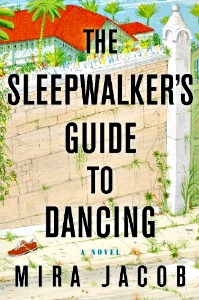
SleepwalkersGuide_cover_300x200The Sleepwalker’s Guide to Dancing (Random House, July 2014)
Author: Mira Jacob
Synopsis: This debut novel takes us on a journey that ranges from 1970s India to suburban 1980s New Mexico to Seattle during the dot.com boom. It follows the fortunes of the Eapens, an Indian American family dealing with tragedy and loss. Alternating between past and present, it shows the family’s transition from India to the United States. As one Indian critic writes, the story is “firmly rooted in an immigrant home, its peculiar methods and madness.”
Expat creds: Jacob is an Adult Third Culture Kid, whose Syrian Christian parents came over from Kerala, India, to New Mexico, in the 1960s. She now lives in Brooklyn with her Jewish American husband and son.
How we found out about: Recommended by Condé Nast Traveler as a book to read on a plane.

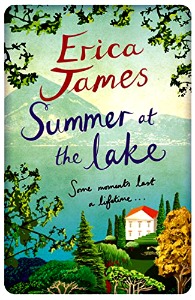
SummerattheLake_cover_300x200Summer at the Lake (Orion, June 2014)
Author: Erica James
Synopsis: An Oxford Tour guide, Floriana, a property developer, Adam, and Esme, an elderly woman who lives next door to a recent purchase by Adam, meet by chance and develop a lovely friendship, which takes them from the glittering spires of Oxford to the balmy shores of Lake Como. The story blends the tale of an old romance with a modern love affair.
Expat creds: James divides her time between living in Cheshire, UK, in a small rural hamlet and Lake Como, Italy, giving her plenty to draw upon in her books.
How we heard about: Pinterest.

TheBalladofaSmallPlayer_cover_300x200The Ballad of a Small Player: A Novel (Deckle Edge, April 2014)
Author: Lawrence Osborne
Synopsis: Lord Doyle decamps from the stuffy legal courtrooms of London to the smoky back-alley casinos of Macau, where he tries to capitalize on the ill-gotten gains that forced his flight from his homeland. But can he game the system at the island’s glitzy baccarat tables? With its expat angst and debauched air of moral ambiguity set amid the sinister demimonde of the Far East’s corrupt gambling dens, the book is an introspective study of decline and decay.
Expat creds: Lawrence Osborne was born in England and lives in New York City. A widely published and widely traveled journalist, he has lived a nomadic life in Mexico, Italy, France, Morocco, Cambodia and Thailand, places that he draws on in his fiction and non-fiction. His first novel was The Forgiven, which Beth Green reviewed for the Displaced Nation last year.
How we learned about: From Amazon.

Lastly, I have another expat memoir that was issued in 2014 and I think deserves a spot on our shelves:

FallinginHoney_cover_300x200Falling in Honey: How a Tiny Greek Island Stole My Heart (Sourcebooks, March 2014)
Author: Jennifer Barclay
Synopsis: Barclay first visited the tiny Greek island of Tilos, in the south Aegean, with friends, including a lover with promising prospects. In her mid-thirties when those prospects fell apart, she decides to reconnect with herself by returning to Tilos for a month and immersing herself in Greek culture, food, language, and dance. Emotionally healed and recharged, she returns to England, where she meets a man who wants what she wants, only to discover… (I won’t ruin it for you.)
Expat creds: Born in Manchester, UK, Barclay subsequently grew up on the edge of the Pennines—but has lived in Greece, Canada and France, with longish stays in Guyana and South Korea. She now lives mostly on Tilos. Notably, she previously produced a memoir about life in South Korea, amusingly titled Meeting Mr. Kim: Or How I Went to Korea and Learned to Love Kimchi.
How we learned about: Barclay’s “Gathering Road” podcast interview with Elaine Masters.


TheShadowoftheWind_coverJJ MARSH, crime series author and Displaced Nation columnist (Location, Locution): My best book of 2014 is The Shadow of the Wind, by Carlos Luis Záfon. All booklovers will fall hopelessly in love with this tale of a boy and a book he swears to protect after he is taken to the Cemetery of Forgotten Books by his bookseller father. Which of us could resist doing the same? Readers know how a story can act as a portal to otherwhere. This is the most perfect example, not to mention illuminating Barcelona in addition to the Franco dictatorship, love, loyalty and growth.


TheLie_coverHEIDI NOROOZY, adult TCK, translator and author (@heidinoroozy): One of the most remarkable and memorable books I’ve read recently is The Lie, by Hesh Kestin. Set in Israel, it features a Jewish human rights lawyer whose commitment to her principles is put to the test when her soldier son is kidnapped by Arab militants and whisked over the border to Lebanon. I love stories that explore the human spirit and are set against a backdrop of real-life events. The heart of this novel is the question of how far a mother is willing to go to save her child. Very chilling at times, heartbreaking at others and masterfully told overall.


PointofDirection_cover_300x200KELLY RAFTERY, translator and writer: In 2014, I loved Point of Direction, by Rachel Weaver. A starkly beautiful tale set in the Alaskan outback, it reads like a cross-cultural adventure. Most expats will recognize the feelings of culture shock, disorientation and unreality that haunt Anna, a woman on the run from her own ghosts. The sharp writing style perfectly mirrors the jagged mountains and rough seas that inhabit the novel as surely as another character.


SUPRIYA SAVKOOR, editor and mystery writer: I haven’t read many memoirs, but in recent months, I read two that blew me away. The first, Not My Father’s Son, by Alan Cumming, is a must-read, even if celebrity memoirs aren’t your thing or you don’t know much about this Scottish actor, now a dual American-British citizen based in New York City. NotMyFathersSon_cover_300x200Cumming, it turns out, is a genius storyteller, and he takes us on an extraordinary journey through two juicy family mysteries across four countries and three time periods. It is, in turns, emotional, tragic, exciting, suspenseful, and funny. The colorful cast of characters, with names like Tommy Darling and Sue Gorgeous, are real people. Along the way, you’ll learn all kinds of fascinating little tidbits, much of it cross-cultural, about genealogy, history, pop culture, language, psychology. Even Cumming’s anecdotes about his life as a TV and film star are surprisingly interesting, largely because of the author’s clear-eyed, honest wisdom. (I also highly recommend the audiobook, narrated by Cumming himself. Alongwayhome_cover_300x200 His lovely Scottish accent and intonations are an additional treat.)

A Long Way Home: A Memoir, by Saroo Brierley, is another great read. The story is simple but powerful: a five-year-old boy in rural India gets lost, is ultimately adopted to a family in Australia, then, as an adult, tracks down his birth family and reunites with them. How he pieces together his past and finds his roots is one of several beautiful mysteries in this small book. Loss and identity are obvious themes, but not just for the author. A truly unique story. (Side note: Modern technology is one of this book’s heroes.)


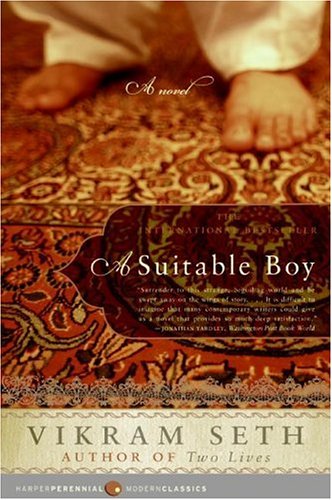
ASuitableBoy_coverALLI SINCLAIR, world traveler and novelist (www.allisinclair.com): I recently re-read A Suitable Boy by Vikram Seth. It was released way back in 1993 and caused quite a stir in the literary world as it was one of the longest novels ever to be published in English (1,349 pages hardcover). I first read it then, and, while it’s highly unusual for me to give a book a second or third read, every few years I return to this wonderful novel rich with Indian history, family saga, and a heartbreaking romance. It’s set in post-partition India and explores the political issues at the time (1950s), along with the Hindu-Muslim issues and the caste system. It’s quite an undertaking to read this book but I enjoy revisiting the characters I love. I am very fond of stories written by Indian authors as there is a beautiful style and interesting points of view I find appealing. There’s a sequel in 2016—I can’t wait!

* * *

Thank you, ML, JJ and guests! Readers, have you read any of the above or do you have further 2014 recommendations? Please leave a comment below. And stay tuned for Part Two of this post, books to look forward to in 2015!

Finally, please be sure to sign up for the DISPLACED DISPATCH, which has a Recommended Read every week. You can also follow the Displaced Nation’s DISPLACED READS Pinterest board.

STAY TUNED for PART 2 of this post: 2015 reads!

If you enjoyed this post, we invite you to subscribe to The Displaced Dispatch, a weekly round up of posts from The Displaced Nation, plus some extras such as seasonal recipes and occasional book giveaways. Sign up for The Displaced Dispatch by clicking here!

Related posts:

BOOKLUST, WANDERLUST: Best of 2014 in expat books (1/2)

Best of Expat Books 2014

Kindle Amazon e-reader by Unsplash via Pixabay (CC0 1.0)

Seasons greetings, Displaced Nationers. That special time of the year is here again, when we publish our selection of this year’s books with meaningful connections to expats, Third Culture Kids, global wanderers, and others of us who have in some way led “displaced lives”.

Having assembled this list on my own in years past, I am pleased to be joined this year by Beth Green, our BOOKLUST, WANDERLUST columnist, who has also graciously agreed to sign over her column space for the month.

Let’s give Beth the floor:

Happy holidays, all! Preparing for this yearly special, I went back through all of the books I’ve read since January—not such an easy task; I read a lot!—and realized that I hadn’t actually read all that many that were published in 2014. I just now took a look at my TBR list, to which I’m constantly adding—and saw it includes a few that were written a couple of hundred years ago!

As is the case I suspect for many a well-traveled reader, I read most often on my Kindle, which means that I don’t often look at the title and publication pages to see when the book came out. Probably the book that has stayed with me for the longest this year is The Tiger’s Wife, the debut novel by Téa Obreht, an American writer of Bosniak/Slovene origin. But that came out in 2011!

* * *

And now for some 2014 picks in these three categories (stay tuned for a follow-up post with THREE MORE CATEGORIES!!):

  1. TRAVEL
  2. MEMOIRS
  3. CROSS-CULTURAL CHALLENGES

A few points to note:

  • Books in each category are arranged from most to least recent.
  • Unless otherwise noted, books are self-published.
  • Contributions by Beth are (appropriately enough!) in green.

* * *

TRAVEL

My_Gutsy_story_cover_smallMy Gutsy Story Anthology: Inspirational Short Stories About Taking Chances and Changing Your Life (Volume 2) (October 2014)
Compiled by: Sonia Marsh
Synopsis: Marsh celebrates the gutsy in each of us with this collection of stories from 64 authors who found the courage to face their fears and live their dreams.
Expat credentials: Born to a Danish mother and British father, who brought her to live in West Africa at the age of three months, Marsh has lived in many countries—Demark, Nigeria, France, England, the U.S. and Belize—and considers herself a citizen of the world. With a degree in environmental science from the University of East Anglia, U.K., she is currently living in Southern California with her husband but in 2015 intends to start a new chapter as a Peace Corps volunteer.
How we heard about: We have long enjoyed Marsh’s collection of “gutsy” travel stories and have followed her on Twitter for some time.
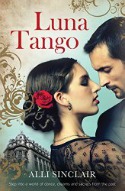

Luna_Tango_Cover_smallLuna Tango (The Dance Card Series Book 1) (Harlequin Mira, July 2014)
Author: Alli Sinclair
Genre: Romance
Synopsis: Tango is a mysterious—and deadly—influence in journalist Danni McKenna’s life. She looks for answers about her mother’s and grandmother’s lives, and finds romance in the process.
Expat credentials: Alli Sinclair is from Australia but lived for many years in South America, where she worked as a mountain and tour guide. She considers herself a citizen of the world.
How we heard about it:  I used to blog with Alli on the now-retired Novel Adventurers and have enjoyed hearing about her book’s path to publication. I was especially thrilled when Luna Tango won Book of the Year in the inaugural AusRom Today Reader’s Choice Awards last month. Congratulations, Alli!
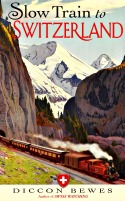

Slow-Train-final-cover_smallSlow Train to Switzerland (Nicholas Brealey Publishing, April 2014)
Author: Diccon Bewes
Genre: Travel history
Synopsis: Bewes follows “in the footsteps” of Miss Jemima Morrell, a customer on Thomas Cook’s first guided tour of Switzerland in 1863, and discovers how this plucky Victorian woman helped shape the face of modern tourism and Switzerland itself, transforming it into the Cinderella of Europe.
Expat creds: An Englishman who grew up in “deepest Hampshire”, Bewes worked for ten years at Lonely Planet and the UK consumer magazine Which? Travel, before moving to Bern, Switzerland, where he is now a full-time writer. He considers himself a “permanent expat.”
How we discovered: I came across Bewes’s blog through a Google Alert and was impressed by how prolific he is. I also liked the fact that he admits to being a chocolate lover. (No wonder he has a thing for Switzerland!)


Kamikaze_kangaroos_cover_smallKamikaze Kangaroos!: 20,000 Miles Around Australia. One Van,Two Girls… And An Idiot (February 2014)
Author: Tony James Slater
Synopsis: Tony James Slater knew nothing about Australia. Except for the fact that he’d just arrived there. The stage is set for an outrageous adventure: three people, one van, on an epic, 20,000-mile road trip around Australia. What could possibly go wrong?…
Expat credentials: As a former writer for the Displaced Nation, what more creds does Tony need?
How we heard about: The Displaced Nation is committed to tracking Tony’s progress as a writer. We are especially fond of his ability to make fun of himself! He wears his travels lightly, you might say…


MEMOIRS

Year_of_Fire_Dragons_cover_smallYear of Fire Dragons: An American Woman’s Story of Coming of Age in Hong Kong (Blacksmith, forthcoming June 2015; available for pre-order)
Author: Shannon Young
Synopsis: When 22-year-old Shannon follows her Eurasian boyfriend to his hometown of Hong Kong, she thinks their long distance romance is over. But a month later his company sends him to London. The city enchants her, forcing her to question her plans. Soon, she will need to choose between her new life and the love that first brought her to Asia.
Expat creds: Shannon is an American twenty-something currently living in Hong Kong. (Reader, she married him!)
How we knew about: Shannon writes our “Diary of an Expat Writer” column and has also been sharing “chunks” from an anthology she edited of writings by women expats in Asia (see listing below: under “Crosscultural Challenges”).


Coming_Ashore_cover_smallComing Ashore (October 2014)
Author: Catherine Gildiner
Synopsis: The third and final in a series of best-selling memoirs by this American who has worked for many years as a psychologist in Toronto and writes a popular advice column in the Canadian women’s magazine Chatelaine. The book begins with Gildiner’s move to Canada in 1970 to study literature at the University of Toronto, where she ends up rooming with members of the FLQ (Quebec separatists), among other adventures.
How we heard about: Book #2 in Chatelaine’s 7 must-read books for November.
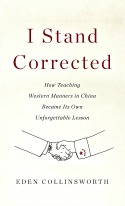

I_stand_corrected_cover_smallI Stand Corrected: How Teaching Manners in China Became Its Own Unforgettable Lesson (Nan A. Talese, October 2014)
Author: Eden Collinsworth
Synopsis: Collinsworth tells the story of the year she spent living among the Chinese while writing an advice manual covering such topics as personal hygiene (non-negotiable!), the rules of the handshake, and making sense of foreigners. (She has since returned to live in New York City.)
How we heard about: Book #3 in Conde Nast Traveler’s 7 Books to Get You Through Travel Delays, Bad Company.


Seven_Letters_from_Paris_cover_smallSeven Letters from Paris: A Memoir (Sourcebooks, October 2014)
Author: Samantha Vérant
Synopsis: At age 40, Samantha Verant’s life is falling apart—she’s jobless, in debt, and feeling stuck…until she stumbles upon 7 old love letters from Jean-Luc, the sexy Frenchman she’d met in Paris when she was 19. She finds him through a Google search, and both are quick to realize that the passion they felt 20 years prior hasn’t faded with time and distance.
How we heard about: From an interview with Vérant by British expat in Greece Bex Hall on her new blog, Life Beyond Borders.


Becoming_Home_cover_smallBecoming Home: A Memoir of Birth in Bali (October 2014)
Author: Melinda Chickering
Synopsis: Though born in small-town USA, Melinda never felt quite at home there. As an adult, her search for herself led her to the Indonesian island of Bali, where she found herself living a life she hadn’t anticipated, becoming a housewife and mother. This memoir of her experience with pregnancy and birth offers a window on life for a western woman living in an Asian culture that respects the forces of darkness as well as the light.
Expat credentials: Originally from Iowa, Chickering has settled in Bali.
How we heard about it: Displaced Nationer Melinda contacted me earlier this year to tell us the exciting news that her memoir was being published. Congratulations, Melinda!
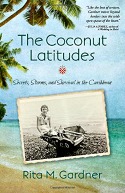

The_Coconut_Latitudes_cover_smallThe Coconut Latitudes: Secrets, Storms, and Survival in the Caribbean (September 2014)
Author: Rita M. Gardner
Synopsis: Rita is an infant when her father leaves a successful career in the US to live in “paradise”—a seaside village in the Dominican Republic. The Coconut Latitudes is her haunting, lyrical memoir of surviving a reality far from the envisioned Eden—and of the terrible cost of keeping secrets.
How we heard about: Displaced Nation columnist James King interviewed Rita for “A picture says”.
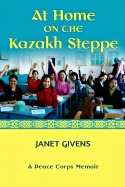

At_home_on_Kazakh_Steppe_cover_smallAt Home on the Kazakh Steppe: A Peace Corps Memoir (August 2014)
Author: Janet Givens
Synopsis: The story a middle-aged grandmother who left behind a life she loved and forged a new identity as an English teacher, mentor, and friend in Kazakhstan, a newly independent country determined to find its own identity after generations under Soviet rule.
How we heard about: Recommended by the We Love Memoirs Facebook Community.


Good_Chinese_Wife_cover_smallGood Chinese Wife: A Love Affair with China Gone Wrong (Sourcebooks, July 2014)
Author: Susan Blumberg-Kason
Synopsis: A shy Midwesterner, Blumberg-Kason spent her childhood in suburban Chicago dreaming of the neon street signs and double-decker buses of Hong Kong. She moved there for graduate school, where she fell for Cai, the Chinese man of her dreams. As they exchanged vows, she thought she’d stumbled into an exotic fairy tale, until she realized Cai—and his culture—where not what she thought. One of our featured authors, Wendy Tokunaga, says: “A fascinating, poignant and brutally honest memoir that you won’t be able to put down. Good Chinese Wife is riveting.”
How we heard about: We had known about the book for some time but hadn’t realized it came out this year Jocelyn Eikenburg tipped us off in her comment below. She, too, highly recommends.
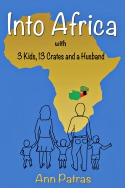

Into_Africa_cover_smallInto Africa: 3 kids, 13 crates and a husband (June 2014)
Author: Ann Patras
Synopsis: Patras was born and raised in Burton-upon-Trent, in the English Midlands. When her husband, Ziggy, is offered a two-year contract as site manager for building a new cobalt plant in Zambia, they discuss the pros and cons of leaving luxuries and England behind—and then decide it could be an “interesting” family adventure. They end up raising three kids, countless dogs and living in Africa for over thirty years. (She and Ziggy now live in Andalucía, Spain, and have absolutely no intention of ever moving again. Hmmm…have they encountered Charlotte Smith yet? See next item.)
How we heard about: E-book promotion.
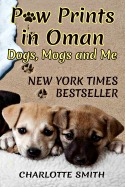

PawPrintsinOman_cover_smallPaw Prints in Oman: Dogs, Mogs and Me (April 2014)
Author: Charlotte Smith
Synopsis: Smith was born, raised and lived in West Sussex, UK, until her persuasive husband, Nick, swept her and their youngest daughter off to live in mystical Oman. Her love of animals helped her to shape an extraordinary life in the Middle East—her first step being to convince a local veterinary clinic to employ her. (Note: Smith now lives in Andalucía, in southern Spain.)
How we heard about: Recommended by the We Love Memoirs Facebook community. The book was also on the New York Times best-seller list (“animals”) in October.


loveyoubye_cover_smallLoveyoubye: Holding Fast, Letting Go, And Then There’s the Dog (She Writes Press, April 2014)
Author: Rossandra White
Synopsis: A collision of crises on two continents forces Rossandra White to face the truth. Just as her American husband disappears to Mexico, her brother’s health crisis calls her back home to Africa, and her beloved dog receives a fatal diagnosis. She faces down her demons to make a painful decision: stay in a crumbling marriage, or leave her husband of 25 years and forge a new life alone.
How we heard about: Through a Facebook share of White’s Good Reads giveaway.
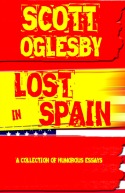

Lost_in_Spain_cover_smallLost in Spain: A Collection of Humorous Essays (March 2014)
Author: Scott Oglesby
Synopsis: Scott Oglesby moved to Spain to start over. When he discovered he was still the same person, now six thousand miles from home, the result was dysfunction, delusion, chaos and this book, which many readers have described as “hilarious” and “brilliant”.
How we heard about: E-book promotion.


Journey_to_a_Dream_cover_smallJourney to a Dream: A voyage of discovery from England’s industrial north to Spain’s rural interior (February 2014)
Author: Craig Briggs
Synopsis: Craig, his wife Melanie and their dog, Jazz, left their home town of Huddersfield, in England’s industrial north, and set off for Galicia: a remote and little-known autonomous province in the northwest corner of Spain. And so began their Journey to a Dream…
How we heard about: E-book promotion, as a result of which I am currently reading this on my Kindle. It’s very well written and entertaining.


Paris_Letters_cover_smallParis Letters: One woman’s journey from the fast lane to a slow stroll in Paris (February 2014)
Author: Janice Macleod
Synopsis: MacLeod found herself age 34 and single, suffering from burn-out and dissatisfaction. So she abandoned her copywriting job and headed off to Europe, where she ended up finding love and freedom in a pen, a paintbrush…and Paris! Macleod says her journey was inspired by The Artist’s Way, written by Julie Cameron.
How we heard about: From an interview with MacLeod by American expat in Paris Lindsey Tramuta, which appeared on Lindsey’s blog, Lost in Cheeseland.


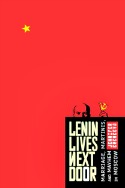
lenin_smallLenin Lives Next Door: Marriage, Martinis, and Mayhem in Moscow (Small Batch Books, January 2014)
Author: Jennifer Eremeeva
Synopsis: Based on Eremeeva’s two decades in Russia, Lenin Lives Next Door is a work of self-described “creative nonfiction.” It knits together vignettes of cross-cultural and expatriate life with sharp observation, historical background, and humor. Each chapter explores an aspect of life in today’s Russia, told with the help of a recurring cast of eccentric Russian and expat characters, including HRH, Eremeeva’s Handsome Russian Husband (occasionally a.k.a. Horrible Russian Husband), and their horse-mad daughter.
How we heard about: Eremeeva sent me a review copy and we met up for coffee at Columbia University. I found her a delightful conversationalist. No wonder several reviewers have likened her style to Jane Austen’s.


CROSS-CULTURAL CHALLENGES
Soundimals_cover_smallSoundimals: An illustrated guide to animal sounds in other languages (November 2014)
Author/illustrator: James Chapman.
Synopsis: In English, we say dogs go WOOF, but in Romanian they go HAM HAM. Chapman regularly publishes illustrations of onomatopoeia and animal sounds in other languages on his Tumblr blog. This book (available through his Etsy shop) collects some of those plus a lot of new sounds that weren’t in the original comics, and a few new animals that haven’t been posted at all.
Expat creds: None that we know of; would love to hear more about how he got started collecting these sounds.
How we heard about: Pinterest.
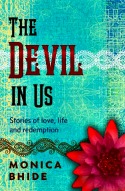

The_Devil_in_us_cover_smallThe Devil in Us (CreateSpace, October 2014)
Author: Monica Bhide
Genre: Literary fiction
Synopsis: Short stories that carry you to a far away place, amidst people seemingly very foreign to you, but somehow create a connection—from the Indian-American cancer survivor escaping her pain and finding passion in Mumbai, to the Japanese teen in Georgetown discovering forbidden love. Bhide is known for her writings about Indian food. This is her first work of fiction.
Expat creds: Monica is originally from Delhi, India, but has lived in Bahrain ad now in the United States.
How we found out about: Pinterest.
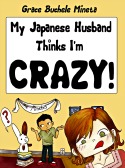

Japanese_Husband_cover_smallMy Japanese Husband Thinks I’m Crazy! The comic book: Surviving and thriving in an intercultural, interracial marriage in Tokyo (October 2014)
Author: Grace Buchelle Mineta
Genre: Comics/manga; humor
Synopsis: The autobiographical misadventures of a native Texan freelancer and her Japanese “salaryman” husband, in comic book form.
Expat credentials: Mineta grew up mostly in Texas, but also spent her teenage years in Accra, Ghana and Sapporo (Hokkaido), Japan. She now lives in Tokyo with her Japanese husband (they got married in January) and blogs at Texan in Tokyo.
How we found out about: From a guest post by Mineta on Jocelyn Eikenburg’s blog, Speaking of China, titled The “Dark Side” to Moving Across the World for Love.
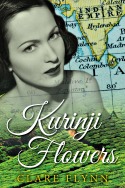

Kurinji_Flowers_cover_smallKurinji Flowers (October 2014)
Author: Clare Flynn
Genre: Historical romance
Synopsis: Set in South India during World War II and India’s struggle for independence, the book is centered on a young British colonial, Ginny Dunbar, who has arrived in India for a new start in life. She has to battle her inner demons, the expectations of her husband, mother-in-law, and colonial British society, and her prejudices towards India and its people.
Expat credentials: Flynn is a repeat expat, having lived for two years each in Paris and Brussels, three years in Milan, and six months in Sydney, though never in India. She now lives in London but spends as much time as she can in Italy. Almost needless to say, Flynn loves travel and her idea for this book came while she was on holiday in Kerala, India.
How we knew about: Flynn was interviewed by JJ Marsh for the latter’s popular column, LOCATION LOCUTION.
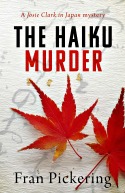

The_Haiku_Murder_cover_smallThe Haiku Murder (Josie Clark in Japan mysteries Book 2) (October 2014)
Author: Fran Pickering
Genre: Expat mystery series
Synopsis: A haiku-writing trip turns to tragedy when a charismatic financier falls from the top of Matsuyama castle. But was he pushed? Expat Londoner Josie Clark thinks he was, and that’s when the trouble starts…
Expat credentials: Pickering has lived and worked in Tokyo, and though she is now back in London (literally next door to where she was born), she travels back to Japan frequently to visit friends and do research for the Josie Clark mystery series.
How we heard about: Pickering was interviewed by JJ Marsh for the latter’s popular column, LOCATION LOCUTION.
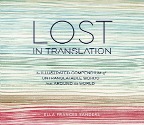

LostinTranslation_cover_smallLost in Translation: An Illustrated Compendium of Untranslatable Words from Around the World (September 2014)
Author: Ella Frances Sanders
Genre: Illustration/Translation
Synopsis: Did you know that the Japanese language has a word to express the way sunlight filters through the leaves of trees? Or that there’s a Finnish word for the distance a reindeer can travel before needing to rest? This book is an artistic collection of more than 50 drawings featuring unique, funny, and poignant foreign words that have no direct translation into English.
Expat credentials:  A self-described “intentional” global nomad, Sanders has lived all over the place—most recently Morocco, the United Kingdom, and Switzerland.
How we heard about: From a post about the book by Maria Popova on her much-acclaimed Brain Pickings site.


Everything_I_Never_Told_You_cover_smallEverything I Never Told You (Penguin, June 2014)
Author: Celeste Ng
Genre: Thriller
Synopsis: A mixed-race family in the 1970s tries to unravel a family tragedy.
Expat credentials: Celeste Ng isn’t an expat, but she has a deep understanding of what it means to feel displaced. Her work deals with multiculturalism and race issues in the United States.
How we heard about it: It was voted the Amazon Book of the Year.
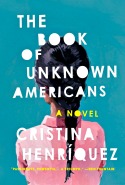

TheBook_Of_Unknown_Americans_smallThe Book of Unknown Americans (Knopf, June 2014)
Author:  Cristina Henríquez
Genre: Literary fiction
Synopsis: Arturo and Alma Rivera have lived their whole lives in Mexico. One day, their beautiful fifteen-year-old daughter, Maribel, sustains a terrible injury, one that casts doubt on whether she’ll ever be the same. And so, leaving all they have behind, the Riveras come to America with a single dream: that in this country of great opportunity and resources, Maribel can get better.
Expat credentials: Henríquez isn’t an expat, but her father was—he came to the US from Panama to attend university.
How we heard about it: Henríquez’s novel was Amazon’s No. 1 bestseller this year in the Hispanic American Literature & Fiction category.


TheOtherLanguage_cover_smallThe Other Language (Pantheon, April 2014)
Author: Francesca Marciano
Synopsis: A collection of short stories involving women who are confronted by radical change or an old flame, in locations that range from New York to India to Kenya to southern Italy.
Expat credentials: Marciano is an Italian novelist who left Rome at age 21 to live in the United States. She later moved to Kenya, where she lived for a decade. Although Italian is her first language, she chooses to write in English.
How we found out: From an essay by William Grimes in the New York Times Book Review: “Using the Foreign to Grasp the Familiar: Writing in English, Novelists Find Inventive New Voices.”


Dragonfruit_cover_smallHow Does One Dress to Buy Dragon Fruit: True Stories of Expat Women in Asia (April 2014)
Editor: Shannon Young
Genre: Expat non-fiction; anthology
Synopsis: In this collection, 26 women reveal the truth about expatriate life in modern East Asia through original works of memoir and creative non-fiction.
Expat credentials: To qualify for inclusion in the volume, writers had to be able to say they were, or had once been, expats.
How we heard about: We have followed Shannon Young ever since she contributed to the Displaced Nation on the topic of the London Olympics. She currently writes a column for us about being an expat writer, and we’ve been sharing “chunks” from her Dragonfruit anthology for the past few months.


Chasing_Athens_cover_smallChasing Athens (April 2014)
Author: Marissa Tejada
Genre: Romance
Synopsis: When Ava Martin’s new husband unexpectedly ditches her months after they’ve relocated across the world to Greece, the heartbroken American expat isn’t sure where home is anymore. On the verge of flying back to the States with her tail between her legs, she makes an abrupt decision to follow her gut instead and stay on in Greece, until a crisis back home forces her to decide where she truly belongs.
Expat credentials: A Native New Yorker, Tejada is an author, writer and journalist based in Athens, Greece. Living the expat life in Europe inspired her to write her debut novel.
How we heard about it: Again, from an interview conducted by British expat in Greece Bex Hall on her blog, Life Beyond Borders.


Moving_without_Shaking_cover_smallMoving Without Shaking: The guide to expat life success (from women to women) (April 2014)
Author: Yelena Parker
Genre: Guidebook-meets-memoir
Synopsis: Parker draws from the experiences and views of 9 women who have lived across 12 countries, to craft a resource for those who are dreaming of—or already facing—relocation abroad.
Expat creds: Parker herself is originally from Eastern Ukraine but has lived and worked in the US, Switzerland, the UK and Tanzania. She has chosen London as her latest expat location.
How we heard about: From a Google Alert.
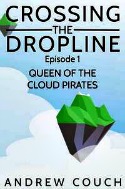

QueenOfCloudPirates_cover_smallQueen of the Cloud Pirates (Crossing the Dropline Book 1) (March 2014)
Author: Andrew Couch
Genre: Fantasy novella
Synopsis: Far to the North of the Iron League core cities lies the Dropline. Beyond this line of cliffs the power of elemental Air rules supreme. The crucial region is threatened and two young men stand at the tipping point. In order to survive, they must learn to work together and rise above their own shortcomings. Oh yeah, and escape from pirates. Don’t forget the pirates….
Expat credentials: An American abroad, Couch lives with his wife in Freiburg, Germany. He says that much of the inspiration for the worlds he writes about is a mix of a wild and crazy imagination (he grew up reading fantasy books) and his travels around the world.
How we found out about: Couch contributes the HERE BE DRAGONS column to the Displaced Nation, focusing on the connection between the displaced life and fantasy writing (more powerful than any skeptics out there might think!).
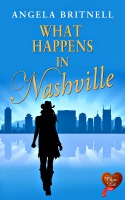

What_Happens_in_Nashville_cover_smallWhat Happens in Nashville (March 2014)
Author: Angela Britnell
Genre: Romance (“choc lit”)
Synopsis: Claire Buchan, a straight-laced barrister from Exeter, UK, flies to Nashville, Tennessee, to organize her sister Heather’s bridal bash—and quickly finds herself out of her comfort zone and into the arms of a most unsuitable beau…
Expat credentials: Britnell grew up in a small Cornish village in southwestern England. She served in the Royal Navy for almost six years, culminating in an assignment in Denmark, where she met her American husband. Thus began a chronic expat life. The couple, now empty nesters, have settled in Brentwood, Tennessee.
How we heard about: Rosie Milne wrote about Britnell in an article that appeared on Telegraph Expat: “Expat romantic novelists inspired by real life.” (Milne btw lives in Singapore and runs Asian Books Blog.)


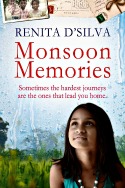
Monsoon_Memories_cover_smallMonsoon Memories (January 2014)
Author: Renita D’Silva
Genre: Literary fiction
Synopsis: Sometimes the hardest journeys are the ones that lead you home. Exiled from her family in India for more than a decade, Shirin and her husband lead a comfortable but empty life in London. Memories of her childhood fill Shirin with a familiar and growing ache for the land and the people that she loves. With the recollections, though, come dark clouds of scandal and secrets. Secrets that forced her to flee her old life and keep her from ever returning…
Expat credentials: Now living in the UK, Renita grew up in a picturesque coastal village in South India.
How we heard about: Amazon.
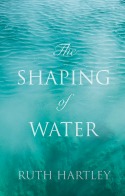

The_Shaping_of_Water_cover_smallThe Shaping of Water (December 2013—we’re letting it squeak in!)
Author: Ruth Hartley
Genre: Literary fiction
Synopsis: The story concerns the overlapping lives of several different people, expats and locals or some mix, who are connected to a ramshackle cottage by a man-made lake in Central Africa during the Liberation wars across its region.
Expat credentials: Hartley grew up on her father’s farm in Zimbabwe, which at that point was known as Rhodesia, at a time when struggles for independence in European-ruled African territories were spreading like a wave. As a young woman, she moved to South Africa to study art and then had to escape to England because of her political activities. She later moved back to Africa, as an expat. She now lives in Southern France.
How we heard about: I discovered Hartley via one of my social networks and then decided to approach her about being interviewed for the Displaced Nation.

* * *

Your turn readers: Have you read any of the above works and if so, what did you think of them? And can you suggest other works to add to the list? Beth and I look forward to reading your comments below!

From Beth:
Intrigued by some of these titles? Go on, download a few! ‘Tis the season to support the output of other international creatives!

Finally, please note: Beth and I may repeat this exercise in six months (summer reads!). But if you can’t wait until then, I suggest that you sign up for our DISPLACED DISPATCH, which has a Recommended Read every week, and also follow our Pinterest board: DISPLACED READS.

STAY TUNED for PART 2 of this post: IT’S FOOD!, THIRD CULTURE KIDS & COUNTRY GUIDES/TRIBUTES.

If you enjoyed this post, we invite you to subscribe to The Displaced Dispatch, a weekly round up of posts from The Displaced Nation, plus some extras such as seasonal recipes and occasional book giveaways. Sign up for The Displaced Dispatch by clicking here!

Related posts:
EXPAT ART AS THERAPY: Works that capture precious memories of life in other countries

ExpatArtasTherapy_Principle1As explained in my introductory post to this series, the Swiss-British philosopher (and Adult Third Culture Kid) Alain de Botton argues that art of all kinds can be a form of therapy, providing powerful solutions to many of life’s dilemmas.

But is that also true of expat works? Does our art benefit humanity more broadly, or are we creating things—memoirs, novels, films, dance and stage performances, social enterprises—that will only ever speak to people like ourselves: what fellow global soul Pico Iyer has called the great floating tribe of people “living in countries not their own”? (We currently number around 230 million, or just over 3 percent of the world’s population.)

SEND IN THE CLOUDS: "London from Hampstead Heath," by John Constable (British Museum)

SEND IN THE CLOUDS: “London from Hampstead Heath,” by John Constable (British Museum). Photo credit: John Constable, via Wikimedia Commons.

In his “Art as Therapy” lecture, de Botton specifies 6 ways art can answer human needs.

The remainder of this series will look at whether, and to what extent, these observations apply to the works of international creatives, beginning with…

Principle #1: Art can compensate for the fact that we have bad memories.
De Botton cites John Constable and his paintings of clouds above Hampstead Heath as an example of how an artist can sometimes capture something significant yet fragile they have experienced and don’t want to forget.

Will the John Constables among us please stand up? Seriously, it strikes me that we international creatives are well positioned to preserve the memories of the daily wonders we’ve encountered in far-flung parts of the world, our knowledge of which accrues over time. (Not for us the Wonders of the World, when there are so many intrepid world travelers around, eager to conquer them.)

Back in the days when I lived first in England and then in Japan, I always felt like the poor cousin of the anthropologist—I wasn’t an area specialist but that left me free to approach life with an Alice-like curiosity, never quite losing the sensation of having fallen through the rabbit hole. And to convey that to others…

But let’s look at some examples, shall we? Each of the visuals below is inspired by or belongs to the work of an international creative that has featured on this site in some way. I selected these four individuals because of their ability to conjure up an image of something rather precious within their new landscape—the expat equivalent of a dramatically shaped cloud. And, as de Botton has been invited to do at several museums, I’ve added post-it notes describing the therapeutic effects I experienced.

#1: Parabéns: We’re All Mad Here

Parabens

Photo credit: Marbela via Flickr (CC BY-SA 2.0)

OBJECT LABEL: Parabéns: We’re All Mad Here, inspired by Megan Farrell (aka Maggie Foxhole) and her book, American Exbrat in São Paulo.
ML’S POST-IT: I have never been to Brazil, but reading Farrell’s step-by-step guide for foreigners who are living (or planning to live) in São Paulo piqued my curiosity. I particularly enjoyed her vivid account of the Brazilian birthday party. What a palava! Far beyond my wildest imaginings. But what is even more curious to me is the Sweet Table, sitting in splendid isolation until the very end of the festivities. According to Farrell:

“The design of the Sweet Table is on the same level of importance for the birthday party as is the set design for a Broadway performance. It consists of hundreds of sweets, strategically placed around the other decorations. But most importantly, NO ONE TOUCHES the Sweet Table until the birthday candles have been blown out at the end of the party. No one. An interesting objective when you have anywhere from thirty to fifty children running around wild and free.”

I rather like the thought of deprivation in the midst of so much decadence: does that make the brigadeiro, when you finally get one, taste even sweeter?
FURTHER READING: Our interview with Megan Farrell, by Andy Martin: Why exbrats in São Paulo need their own book to appreciate life in Brazil’s largest city.

#2: Are Acacia Trees Humans in Disguise?

Acacia Trees

Photo credit: Gezira Sporting Club, by Jorge Láscar via Flickr (CC BY 2.0).

OBJECT LABEL: Are Acacia Trees Humans in Disguise?, inspired by Alice Award nominee Kathleen Saville‘s description of these trees in Zamalek, Gezira Island (Cairo, Egypt) in a post for her personal blog.
ML’S POST-IT: The thought of living in Egypt scares me, and I’ve been avoiding most trees ever since Hurricane Sandy. But after reading Saville’s description of Egyptian acacias—

I see folds and twists in the trunks like nothing I have ever seen in another tree. Each tree looks like a long thin body or leg covered with support hose. It’s odd because the appearance is almost human like.

—I feel calmer. Might I have a tree-hugging future?
FURTHER READING: Saville’s blog, Water Meditations, focusing on her water travels.

#3: Elephant Road Trip

Elephant Road Trip
OBJECT LABEL: Elephant Road Trip, inspired by Ruth Hartley and her novel about Africa, The Shaping of Water (Hartley grew up in that part of the world).
ML’S POST-IT: Hartley’s novel begins with the construction of the Kariba Dam, one of the largest dams in the world, over the Zambezi, the fourth-longest river in Africa, flowing into the Indian Ocean. As much as I enjoyed Hartley’s book, I could never quite wrap my head around the scale of what she describes, whether talking about the dam, a massively ambitious project, or about the problems Africa faces as it attempts to shake off the colonial yoke. Perhaps that’s why I took comfort in Hartley’s description of elephants serving as the continent’s original bulldozers:

The roads over the escarpment follow for the main part the old migratory routes taken year after year for millennia by elephants. Elephants, who for all those thousands of years would roam, not just around Zimbabwe, or just around Kenya, but all the way up sub-Saharan Africa from south to north and back again. Now human governments have decreed that elephants must obey human laws and stay within the bounds of national boundaries drawn by straight-edged rulers on maps. In the time before colonization, a mere 150 years ago, elephants travelled where they always travelled, and they walked across mountains with consummate skill and ease, always finding the most direct routes through the least difficult of the passes.

In the midst of a man-against-nature, man-against-man story, I found it a restorative to imagine these pre-colonial times when the elephant, such a magnificent beast, could be relied on to forge trails through the dense brush and trees.
FURTHER READING: Coming soon: our interview with Ruth Hartley about her book.

#4: Shanghai Mix

Shanghai Mix

Photo credit: Rachel Kanev.

OBJECT LABEL: Shanghai Mix, consisting of a photo taken by globe drifter Rachel Kanev, which she chose to feature in her iinterview with James King for our site’s “A Picture Says…” column.
ML’S POST-IT: Rachel has captured a memory of an experience I’ve had several times myself but had nearly forgotten: namely, what it’s like actually to witness Asian economic development rather than pontificate about it. As Rachel puts it in her chat with James:

In that fleeting instant, one can see Shanghai’s varied transportation, high-rise buildings and red lanterns, as well as Kate Winslet—that curious amalgamation of Western modernity and Chinese traditionalism that is everywhere around you in the city.

Perhaps because she snapped the photo just as the sun was setting, it fills me with sweet nostalgia. (I’m not remembering the smog, for a change…)
FURTHER READING: Rachel Kanev’s blog, Globe Drifting

* * *

So, readers, what do you think of the above “exhibition” of works that touch on expat experiences and emotions. Did you find it therapeutic? And are there other expat works you would recommend for this reason? Do tell in the comments.

STAY TUNED for next week’s fab posts.

If you enjoyed this post, we invite you to register for The Displaced Dispatch, a round up of weekly posts from The Displaced Nation, with Alice nominations, book giveaways, and other extras. Register for The Displaced Dispatch by clicking here!

Related posts:

TCK TALENT: Even without slide projector, projection of life as a Third Culture Kid engages Reykjavík audiences

TCK in Iceland Collage

Elizabeth Liang in front of Tjarnarbíó, in downtown Reykjavík, where she performed her one-woman autobiographical show, Citizen Alien, on growing up as a TCK of mixed heritage. Photo courtesy Elizabeth Liang.

This month Elizabeth (Lisa) Liang updates us on her own creative life, which this past summer veered in the direction of an island situated at the confluence of the North Atlantic and Arctic Oceans!

Halló, vinir mínir! Hello, my friends! I’m addressing you in Icelandic because in this month’s column I’ll be re-creating my journey to Reykjavík, where I traveled in August to perform ALIEN CITIZEN: An Earth Odyssey, my one-woman show about growing up as a Third Culture Kid, or TCK, of mixed heritage.

How did I end up performing my show in Iceland? I have a friend in that part of the world who put me in touch with the artistic director of Tjarnarbíó, a creative center for professional live art in Reykjavík, who enthusiastically offered to host the show if I could cover my travel and lodging. Presented with a chance to combine three of my favorite activities—acting, writing and travel—how could I resist?

Engum flýgur sofanda steikt gæs i munn (“One cannot expect to benefit without making some effort”)—Icelandic proverb

My husband, Dan, agreed to work as my stage manager, which was perfect because he knows the show so well. I launched a successful Kickstarter campaign to raise the requisite funds for our trip, found a cozy house in Reykjavík on AirBnB for us to rent, bought our flights, started promoting the show on social media—and then off we went to the Land of Fire and Ice.

We arrived in ideal weather, cool and dry, which many Icelanders told us was lucky because it had been raining all summer. We were relieved to find that our lodgings were in a quiet, pleasant residential area that was a seven-minute walk to downtown and a 15-minute walk to Tjarnarbíó.

Tjarnarbíó is a beautiful venue with state-of-the-art technology. At the technical rehearsal, the two “techies” who adjusted the lights and projector were friendly and professional. (Incidentally, we never met anyone in Iceland who was unfriendly, and the Icelanders we encountered all spoke perfect English, some with gorgeous British accents.)

That said, we had an unexpected snafu at the tech rehearsal. There are two kinds of projections in the show:

  1. Pictures and videos that are projected onto a screen via my laptop, and
  2. Words that I project onto my torso using an old-fashioned slide projector.

During the tech rehearsal, the slide projector I’d used in the show for over a year konked out. The stage hand and I stared at the plume of smoke rising from the top and said: “It’s smoking.”

No, the problem was not the power converter. We had the right one. Nor was it the bulb. We replaced it but the projector still didn’t revive. So my Icelandic friend’s father-in-law generously loaned us his. More on this later…

Citizen Alien Photo Strip

(top to bottom) At the tech rehearsal, the lights were lowered from the ceiling–fancy!; opening night; closing night; post-show celebratory drink; with Dan in front of Hallgrímskirkja Church; with Dan in Þingvellir National Park. All photos courtesy Elizabeth Liang.

August 20, 2014: Opening Night

We had an audience! I only knew of five people who were planning to attend (of whom I’d actually met only one—my Icelandic friend). What a pleasant surprise to see twenty or so people in the house!

And they laughed! I guess the show’s humor translates.

Dan stage managed wonderfully and the light board operator did a great job, too. The only hitch was that when it came time to project slides onto my torso, the borrowed projector didn’t work, even though we’d tested it earlier. I improvised and the audience went right along with this. (Afterward, a very kind audience member offered to loan us his projector, but when we met later, he realized it had a part missing. So Iceland never got to see words projected onto my torso. Ah, well.)

The best part of opening night was the fact that I enjoyed myself on stage, which hadn’t happened in a while. There were two curtain calls and people stayed afterward to shake my hand, thank me, and say lovely things. It was such a pleasure. About half were Icelandic and the other half internationals—once again, the right people had found me and my show. Several said they would spread the word for the next performance.

A few people from Spain, France, the Czech Republic, and Iceland hung out with us at Tjarnarbíó’s cafe afterwards. They all mentioned different parts of the show that resonated for them, and one said she felt that the show does a service for nomadic and non-nomadic people—it’s like a bridge between them. They thought it should be filmed, which I’m planning to do in December.

All hail my director, Sofie Calderon, for making this show such a dynamic experience for the audience! People from far and wide have enjoyed the production, and that’s Sofie’s doing. If it had been up to me, I would have found ways to hide onstage, because performing a solo show is super scary.

August 22, 2014: Closing Night

More people in the audience, which was very moving, because I knew none of them. The word of mouth from opening night must have been good. And maybe all those promos I sent to the international school and Facebook groups helped…?

The performance didn’t feel as good—I was having less fun and getting fewer laughs—but I forged ahead. Afterward Dan and the light board operator said “No way, it was TIGHT, really good show!” Yet more proof that we actors have no idea how well we’re doing. We only know if the audience is responsive or quiet.

Just like on opening night, a bunch of people waited to speak to me afterward. One was a young adult TCK who was very moved by the show. Another was a professor at the University of Rekjavík whose field of study is TCKs. Their compliments, along with all the words of support from other audience members, was tremendously encouraging.

Because the truth is: before embarking on this Northern European adventure, I had no idea how audiences would react, or if there would be any audiences at all. I had girded myself to perform for a handful of kindly people on opening night and then possibly cancel closing night because who knew if there would be enough interest?

Reykjavík may be a small capital, but as it turns out, it has plenty of residents who are international or international in outlook, and open to trying new things.

Kleina & coffee, Björks in boots, Lutherans & lava…

Beyond the show, Dan and I had a glorious time exploring small but pretty Reykjavík; the Blue Lagoon, a thermal spa located in a lava field in Grindavík; and the Golden Circle, a route the loops from Reykjavík to central Iceland and back. Other highlights included:

  • snacking on kleina, a donut-like pastry in the shape of a trapezoid;
  • visiting Hallgrímskirkja, the Lutheran cathedral designed to resemble the lava flows of Iceland’s landscape, and Settlement House;
  • hanging out at the Boston, said to be one of the world’s best bars, and at several coffee houses; and
  • last but not least, watching singers and dancers all over town on Culture Day/Night, a day and night-long program of cultural events that takes place in August every year and is one of the country’s largest festivals.

I also got a kick out of Icelandic fashion—bright colors, unusual cuts—and, as I love boots, was pleased to see practically every woman sporting boots of some kind: ankle, knee-high, sexy, hiking, and everything in between. (Did I buy a pair? Nope. Iceland is expensive.)

On our last night, we stepped out onto our little street to see fireworks, which felt like a final burst of congratulations. I got teary-eyed!

Overall, it was a delightful trip. Dan and I left thinking we’d like to go back someday. We want to see more of the island (puffins! volcanoes!), enjoy the friendly vibe…and hopefully bring another solo show for Icelanders’ entertainment—but without any cantankerous 1980s equipment.

* * *

Thank you, Lisa! Having only been to the Blue Lagoon as a round trip from Keflavík International Airport, I really appreciated this vicarious journey into the heart of the city’s cultural scene. And, as always, I’m impressed that you were contributing to the culture as well as taking something from it! Readers, please leave questions or comments for Lisa below.

STAY TUNED for next week’s fab posts!

If you enjoyed this post, we invite you to register for The Displaced Dispatch, a round up of weekly posts from The Displaced Nation, with news, book giveaways and other extras. Register for The Displaced Dispatch by clicking here!

Related posts:
EXPAT ART AS THERAPY: A new series based on Alain de Botton’s strange and wonderful notions

expat_art_as_therapy introGreetings, Displaced Nationers. While countries in Asia are celebrating harvest and moon festivals, we are marking the occasion with the start of a new series: EXPAT ART AS THERAPY. The series owes its provenance to the fertile and somewhat loony imagination of the young Swiss-English philosopher Alain de Botton. Today and over the next few months, we’ll cover some of the same ground as de Botton in his “Art as Therapy” lecture, in which he demonstrates how art can shed light on life’s big themes.

Except our topic will be the work of international creatives, a subset of artists more generally. Can the art people produce as a result of living among cultures in other parts of the world—and feeling, at times, displaced—shed light on life’s big questions?

Haven’t yet heard of de Botton? Here is (more than) you need to know:

  • Having grown up in both Switzerland and the UK, he’s an Adult Third Culture Kid who comes across as European, English, both and neither.
  • He’s a prolific pop philosopher, with a shelf-full of books and two very popular TED talks to his name.
  • He also has his critics, who call him a “high-brow self-help guru.”
  • Regardless, he hasn’t looked back since his 1997 essay titled How Proust Can Change Your Life became an unlikely blockbuster in the “self-help” category.
  • As explained in a recent Displaced Dispatch—what, not a subscriber yet? get on with it!—de Botton has set up a cultural enterprise in Bloomsbury, London, called The School of Life, which aims to “teach ideas to live by” and “inspire people to change their lives through culture.”

Returning to the aforementioned “art as therapy” lecture, De Botton lists six ways that art can respond to human needs, and in this series I’ll be attempting to apply this scheme to the works of international creatives. Does the art produced by expats, rexpats, TCKS, ATCKs repats, and other international creatives have something to contribute to the good of humanity at large and if so, in what ways?

It all sounds rather grand, doesn’t it—or would grandiose be more accurate? In any event, not to worry, you won’t remember any of this by the time the column starts up properly next month.

That said, perhaps it would help if I left you with a couple of examples of the kinds of questions we’ll be examining, enough to whet your appetite for more.

Here goes:

1) How does it benefit the world that Alan Parker has written a best-selling indie book about what it’s like to be a Brit man trying to raise alpacas in Spain? I’ll warrant that many of us, myself included, have no wish to live in Spain or raise alpacas—yet I did feel moved by the account of his adventures as reported on this blog, and presume that others have as well. What are we all getting out of it?

2) Likewise, are there pleasures for all to be reaped from long-term expat Kathleen Saville’s description of the acacia trees on the island in Zamalek, Gezira Island, where she lives in Cairo? (NOTE: Saville, who blogs at Water Meditations, is a contender for a September Alice Award, which you’d know if you read our most recent Dispatch.) Take me for example. The thought of living in Egypt scares me, and I’ve been avoiding most trees ever since Hurricane Sandy, but after reading Saville’s description of Egyptian acacias—

I see folds and twists in the trunks like nothing I have ever seen in another tree. Each tree looks like a long thin body or leg covered with support hose. It’s odd because the appearance is almost human like.

—I was blown away. Why, and would others with no special interest in Egypt feel the same?

* * *

At this point I hope I’ve said enough for you to make a mental note about checking out next month’s column!

In closing, please join me in a resounding chorus of “Shine on, shine on harvest moon/Up in the sky…” (Click here if you don’t know what I’m talking about or can’t remember the words.) Yes, I know it’s not high art; it’s a Tin Pan Alley stuff. But it’s seasonal and makes me smile—and our mentor, Alain de Botton, would give me a pat on the back for that!

STAY TUNED for Beth Green’s book review column.

If you enjoyed this post, we invite you to register for The Displaced Dispatch, a round up of weekly posts from The Displaced Nation, with Alice nominations, book giveaways, and other extras. Register for The Displaced Dispatch by clicking here!

Related post:

LOCATION, LOCUTION: Catriona Troth, novelist – from Scotland to Canada to a long stay in the Chilterns

Kat

In this month’s “Location, Locution”, expat crime writer JJ Marsh interviews Catriona Troth, who was born in Scotland and grew up in Canada before coming back to the UK. She has now lived in the Chilterns longer than she has ever lived in anywhere, a fact that still comes as a surprise.

After more than twenty years spent writing technical reports at work and fiction on the commuter train, Catriona made the shift into freelance writing. Her writing explores themes of identity and childhood memory. Her novella, Gift of the Raven, is set against a backcloth of Canada from the suburbs of Montreal to the forests of the Haida Gwaii. Her novel, Ghost Town, is set in Coventry in 1981, when the city of Two Tone and Ska was riven with battles between skinheads and young Asians.

Which comes first, story or location?
In my case, it’s usually a collision between the two. I have a story in my mind, I look for a location, and when I find the right one, some sort of explosive reaction happens that produces something I never anticipated.

Ghost TownHow do you go about evoking the atmosphere of a place?
I think it’s always about the small, telling details. Readers get bored with long passages of description, so you focus on something striking. It’s important, too, that you appeal to all the readers senses – smell and taste and touch as well and seeing and hearing. It’s also important to see setting not as something static, but as it relates to your characters – how they interact with a place, how it looks through their eyes.

Which particular features create a sense of location? Landscape, culture, food?
It depends. In Gift of the Raven, I was mostly evoking wild places, so landscape was important, and the way colours change with light, and the sounds of wild birds. On the other hand, in my novel, Ghost Town, the setting was the Coventry at a very specific point in time. So I was looking for ways to evoke the contradictions of the city – the old medieval buildings, the post-War concrete monoliths, the grandeur of the new cathedral. But also the little things that mark out what it was like to live in the city at that particular time – like which groups of kids hung out where, how they dressed, what music they liked. One thing that was important to me in both cases was weather – a place can be very different in bright sunshine than it is in teeming rain or thick snow.

How well do you need to know the place before using it as a setting?
For me, knowing the location well allows me to give the story texture and depth. I’m terrible for worrying over whether I have got details right! The internet is great for being able to check things like that – but it can also be a terrible trap, hobbling you when you should be getting the bones of the story down.

Could you give a brief example from your work which you feel brings the location to life?
This is the description, from Gift of the Raven, of a lake in the Rocky Mountains, seen through the eyes of a young boy who is just discovering his own artistic talent.

49560-copyofgiftoftheravencovermediumI was at one end of a narrow lake. The other end disappeared off into tomorrow. Below where I stood, the wind ruffled the edges of the water, but out there it could have been polished stone. A stone so blue you could lose yourself in the colour. At either side—like bold strokes of a palette knife from the sky to the lake—were mountains. Green-black pine over an ash-grey beach, peaks of dazzling white snow …

No. The snow wasn’t just white. In the sunshine it was a hundred different colours. Pink. Blue. Gold. You only saw white if you were too lazy to look.

Which writers do you admire for the way they use location?
A book I read earlier this year which I thought was extraordinary in terms of setting was Peter May’s Lewis Man. He managed to capture the way islands of Hebrides change, day by day, with the changing weather, and also the way the character of the different islands change with the character of their inhabitants. Masterly to achieve this while still creating a fast-paced thriller.

Joanne Harris creates a sense of place through tastes and smells – food is almost always a huge part of her books. Reading some of the passages in her books you can feel as if you have just enjoyed a banquet of tastes.

And for a book that evoked both a time and a place, I’d choose Michel Faber’s The Crimson Petal and the White. The scene where the reader is enticed to follow Sugar into the sleaziest corners of Victorian London is spell-binding. I couldn’t put the book down after that.

* * *

Next month’s Location, Locution: Fran Pickering sets her Josie Clark series in Japan. East-West fusion murder mysteries with a cultural twist.

_(75_of_75)


JJ Marsh grew up in Wales, Africa and the Middle East, where her curiosity for culture took root and triggered an urge to write. After living in Hong Kong, Nigeria, Dubai, Portugal and France, JJ finally settled in Switzerland, where she is currently halfway through her European crime series, set in compelling locations all over the continent and featuring detective inspector Beatrice Stubbs.

STAY TUNED for our next post!

If you enjoyed this post, we invite you to register for The Displaced Dispatch, a round up of weekly posts from The Displaced Nation, with seasonal recipes, book giveaways and other extras. Register for The Displaced Dispatch by clicking here!

Related posts:
And the August 2014 Alices go to … these 3 international creatives

 © Iamezan | Dreamstime.com Used under license

© Iamezan | Dreamstime.com
Used under license

If you are a subscriber to our weekly newsletter, the Displaced Dispatch, you’re already in the know. But if you’re not, listen up. (Hey, why aren’t you? Off with your head!)

Every week, when that esteemed publication comes out, we present contenders for a monthly “Alice Award,” most of whom are writers or other kinds of international creatives who appear to have a special handle on the curious and unreal aspects of being a global resident or voyager.

Not only that, but this person tries to use this state of befuddlement as a spur to greater creative heights.

Today’s post honours August’s three Alice recipients. They are (drumroll…):

1) JESSICA WRAY, overthinking Californian, serial expat (currently in Madrid), and blogger

For her post: Seven Reasons Why English Food Doesn’t Actually Suck on her blog, Curiosity Travels
Posted on: 13 August 2014
Snippet:

3. Yorkshire Pudding
Not the pudding we are used to, this version doesn’t come from a powdered Jello packet. Instead, the Yorkshire pudding is actually referring to the pastry-like cooked dough which holds an assortment of heart attack inducing savory foods.

This specific Yorkshire pudding came with mashed potatoes, sausage and smothered in gravy. Accompanied by an ale, it was great for my soul but horrible for my waistline.

Citation: Jessica, the title of your post goes down in the annals. If that isn’t damning with faint praise, we don’t know what is. Your British hosts would be impressed. And it’s rather too literally gutsy of you to champion the cause of as many as 10 stogy foods merely because of “having dated a Brit for an extended period of time” and after having visited the country only twice. And while we don’t wish to stop you from acquiring a taste for stodge (British victuals need all the support they can get!), we worry you’ve become too focused on the gravy that’s smothering the Yorkshire pud and what it’s doing to your waistline to take in the protocol surrounding the British Sunday roast tradition. Alice, too, forgot her manners after stepping through the looking glass. We refer to the faux pas she committed when attempting to carve the leg of mutton just after having been introduced to it—only to be informed by the Red Queen:

“It isn’t etiquette to cut any one you’ve been introduced to. Remove the joint!”

Should you be possessed by a similar urge to seize the carving knife, don’t be surprised if your hosts are less than appreciative. You may wish to say something cheeky just as Alice did, i.e.:

“I won’t be introduced to the pudding, please, or we shall get no dinner at all.”

Then again, you could always utter an Americanism like: “Don’t get your panties in a bunch.” After all, the Brits have a comparable expression about getting their knickers in a twist. (What’s the worst that can happen—you don’t get invited back and have to make do with the food in Madrid?)

2) KEN SEEROI, American expat in Japan and professional writer, photographer and blogger

For his post: How to Stop Learning Japanese on his blog, Japanese Rule of 7
Posted on: 2 August 2014
Snippet:

Who knew languages had so many components? It’s all those words—that’s the real problem. First, I only wanted to know enough Japanese to order a beer. I figured I’d be happy with one word. But then I wanted another beer, so I needed another word. See, I told you I don’t think about the future.

Citation: We can empathize, Ken. How beautiful life in Japan would be if we foreigners didn’t have to grapple with the “devil’s tongue”. One minute you’re ordering a beer, and the next you find you’ve been captured and hooked: condemned to the life of an eternal student. And the struggle to learn vocabulary that doesn’t resemble Latin in any way is only the half of it. You also have to get into the mode of thinking that what isn’t said is usually far more important than what is said—the (in)famous wa factor. Indeed, if you have wa going, then your listeners should be able to finish your sentences for you—which is great if you’ve forgotten the verb, but not so great if they fill in the blank in the wrong way and you find you’ve agreed to something like tutoring their child in English for the rest of his born days when you were actually trying to say you’re giving up tutoring because you’re writing a book. Another challenging aspect of wa is the tendency to allow emotion to take over in favor of clarity. After all, stating something clearly may mean that that the speaker commits to something and thus would get the blame if the situation goes awry. Should you become the victim of this, you could always do a Humpty Dumpty—we refer to the (in)famous exchange between Alice and Humpty Dumpty over semantics, in Through the Looking Glass:

“When I use a word,” Humpty Dumpty said in rather a scornful tone, “it means just what I choose it to mean—neither more nor less.”

“The question is,” said Alice, “whether you CAN make words mean so many different things.”

“The question is,” said Humpty Dumpty, “which is to be master—that’s all.”

All things considered, though, you may be better off floating in a sea of vagueness. You had the right instincts, Ken, when ordering that beer and realizing one might not be enough. Well done!

3) DR. KATE EVANS, British zoologist, founder of Elephants for Africa (based in Botswana), and expat in Germany

For her remarks in an interview, The Expat that African Elephants Will Never Forget, with Claire Bolden McGill in Global Living Magazine (July/August 2014)
Posted on: 18 August 2014
Snippet:

The sounds we wake up to at night are very different. In Botswana my nights are disturbed by the roaring of a lion, the cackle of hyena or the rumble of an elephant, and I wake up to the sounds of the local franklin (a small chicken-like bird that is common throughout Southern Africa and very funny to watch running).

Citation: Dr. Kate, first of all we must congratulate you on heading up an organization that is doing one of the most noble deeds on the planet—attempting to save the African elephant from extinction. And although we know you have a list of degrees as long as an arm for doing such important work, we also suspect it’s your Alice-like curiosity that makes you so suited to the task. It is not at all surprising to us when you tell Claire (who btw was an Alice winner back in June and has also guest posted for our “New vs. Olde Worlds” series), that you feel more at home in the bush than you do in “hectic lifestyle of the West”. Your comfort level among African wildlife brings to mind this passage from Through the Looking-Glass:

…[Alice] found herself sitting quietly under a tree—while the Gnat (for that was the insect she had been talking to) was balancing itself on a twig just over her head, and fanning her with its wings.

It certainly was a VERY large Gnat: “about the size of a chicken,” Alice thought. Still, she couldn’t feel nervous with it, after they had been talking together so long.

You go on to tell Claire that your expat life owes to a promise you made to an elephant at the age of seven. Were you aware you were channeling Alice?!

*  *  *

So, readers, do you have a favorite from the above, or have you read any recent posts you think deserve an Alice Award? We’d love to hear your suggestions! And don’t miss out on the shortlist of Alice contenders we provide in each week’s Dispatch, which are sources of creative thought if nothing else! Get on our subscription list now!

STAY TUNED for more fab posts.

Writers and other international creatives: If you want to know in advance the contenders for our monthly Alice Award winners, sign up to receive The Displaced Dispatch, a round up of weekly posts from The Displaced Nation, with news of book giveaways, future posts, and of course, our weekly Alice Award!. Register for The Displaced Dispatch by clicking here!

Related posts:

For this adult TCK writer with an ocean-loving soul and a passion for travel, a picture says…

Canon zoom lens; photo credit: Morguefiles. Rita Gardner at home in California.

Canon zoom lens; photo credit: Morguefiles. Rita Gardner at home in California.

Welcome to our monthly series “A picture says…”, created to celebrate expats and other global residents for whom photography is a creative outlet. The series host is English expat, blogger, writer, world traveler and photography enthusiast James King, who thinks of a camera as a mirror with memory. If you like what you see here, be sure to check out his blog, Jamoroki.

My guest this month is 67-year-old Rita Gardner, who grew up on her expatriate family’s coconut farm in a remote seaside village in the Dominican Republic. Her father declared them to be the luckiest people on earth. In reality, the family was in the path of hurricanes and in the grip of a brutal dictator, Rafael Trujillo.

But if life was far from the Eden her father had envisioned, Rita developed a set of childhood passions that sustains her to this day: writing, traveling, hiking—and photography.

TheCoconutLatitudes_cover_dropshadowShe may no longer live in the Dominican Republic but she continues to dream in Spanish, dance the merengue, and gather inspiration from nature and the ocean. Her favorite color is Caribbean blue.

And now Rita has written a memoir about her life as a Third Culture Kid in República Dominicana. Due out from She Writes Press in September, the book is evocatively titled The Coconut Latitudes: Secrets, Storms and Survival in the Caribbean.

Rita contacted me because she is enjoying “A Picture Says…” I am pleased that she can be this month’s featured guest.

* * *

Hi, Rita, and welcome to the Displaced Nation. I’m delighted to hear you’re enjoying “A Picture Says…” and to have the opportunity to do this interview. Before we get down to the nitty gritty, can you tell me a little more about how your family ended up living in the Caribbean?
My father was an electrical engineer and traveled all over the world installing hydro-electric dams. I think my travel wings must have sprouted in the womb since my parents were in Uruguay on a job site when my mother got pregnant. They flew back to the U.S. so I could be born, and six weeks later we were on another plane, this time to an engineering job in the Dominican Republic. My parents fell in love with that Caribbean island nation, and my father quit his engineering job and “went off the grid” to become a coconut farmer on an isolated beach on the country’s northern coast. It became our permanent home for the next 19 years, and, as you already mentioned, our Caribbean life is the subject of my forthcoming memoir, The Coconut Latitudes.

I guess that being born into an expat family was a passport, so to speak, to a life of travel?
That’s true. It influenced me in other ways as well. I tend to travel “close to the ground,” getting to know the people where I’m visiting. I also travel light as I want to be free to immerse myself (to the extent possible) in other cultures, exploring commonalities as well as differences. Most of my travels have been within Latin America, where I’ve been able to put my Spanish-language skills to use.

And I gather that growing up where you did, on a Caribbean island, you sometimes encountered real adventurers? Did they inspire you as well?
Yes. Those who made it as far as our isolated coconut farm were pretty intrepid and would have stories to tell. Because they were so rare, these visitors made a big impression on me, and their stories made me thirst for the day when I could venture out into the wider world myself. In my new memoir I chronicle one such encounter with a group of strangers who shipwrecked near our farm, and turned out to be not who they appeared to be. Someone else who inspired me was my older sister. By the time she was in her fifties, she’d traveled to over seventy countries.

Wow, she does sound adventuresome. How about you—which countries have you visited?
Most of the islands in the Caribbean, several of them by sailboat, plus Mexico, Costa Rica, Argentina, and Uruguay. In Europe I’ve been to Italy (where I attempted to speak Italian but it came out Spanish), France, and Greece (island-hopping by small boat plus a side trip to Athens).

A day at the beach restores the soul…

South America is a part of the world I have never been but the three weeks I spent in Trinidad more than thirty years ago gave me an idea of what it may be like. I’m sure you have some wonderful memories and I look forward to reading them soon in The Coconut Latitudes. I see you now live in North America. Can you tell us where?
I’m in northern California, right on San Francisco Bay. I found my way here a few decades ago. I’ve always chosen to live near the ocean. Like most people, I had to earn a living, so travel was only an option during vacations. Luckily, I’ve recently retired so have more to time to travel, take pictures, and write.

RG1 Smoking Bride

The smoking bride; photo credit: Rita M. Gardner.


Photo credit: Rita M. Gardner.

Wading chairs; photo credit: Rita M. Gardner.


Photo credit: Rita M. Gardner.

A sitting duck; photo credit: Rita M. Gardner.

Speaking of taking pictures, let’s have a look at a few in your collection that capture favorite memories. Can you describe the story behind each one and what makes them so special?
I visited France for the first time last year with a dear friend, and one of our favorite things to do was meander about. We saw this bridal couple in Monmartre. The bride’s leg-baring gown and the cigarette struck me as being improper yet fun.

She obviously stepped out of the part for a while, which makes for a lovely scene—almost like an actor taking a break on a film set. What else do you have for us?
The next one is from Boca Chica Beach, in the Dominican Republic, whose pastel turquoise waters I had loved since the time I was a small child. I recently went back to the Dominican Republic to attend a friend’s mother’s 100th birthday party. A group of us decided to pay a visit to this beach. I liked the whimsy of the chairs in the shallows, as if they were bathing.

So you didn’t put the chairs there yourself?
No—it was un-staged! The third photo won “Best of Show” earlier this year in a camera club I belong to. If you look closely, you’ll see a small duck in the foreground, which I didn’t notice when I got the shot. The ship itself is one of the last Liberty ships that had been built for action in World War II by the Kaiser Shipyards, near where I now live. At the peak of the war, ships were being turned out at the rate of one almost every week! It’s now “mothballed”, and volunteers, some of whom saw action in that war, maintain it. They’re getting pretty old…

“Seas” the day!

That may not be such a small duck but it certainly is a big ship. And now can you share some examples of your favorite places to take photographs? What is it about these places that inspires you?
It’s a bit of a mixture really. One of my favorite subjects is nature. Growing up on a Caribbean island, I saw the entire range, from watching in awe as thundering waves destroyed our pier and pitch-poled fishing boats, to contemplating sunsets that painted calm seas with exuberant color, to enjoying the deep chorus of frogs announcing rain. To this day, I love to take pictures out of doors. I enjoy finding unusual patterns in nature and looking for images that are “hidden in plain sight.” My other favorite subject is people: I am endlessly curious. Sometimes I plunge into crowds in hopes of getting opportunities for candid people shots.

This photo was taken in the midst of a parade in Santo Domingo, where the child’s attention was riveted to the action beyond the scene.

Photo credit: Rita M. Gardner.

Out of this displaced world; photo credit: Rita M. Gardner.

I took the next photo, of leaf patterns, at nearby Phoenix Lake during a hike with friends. I love the variety of colors and shapes.

Photo credit: Rita M. Gardner.

Leaf patterns; photo credit: Rita M. Gardner.

This third photo, taking in Mykonos, combines my love of nature and people. It feels meditative to me; clearly the fisherman is at one with his environment.

Photo credit: Rita M. Gardner.

Fishing for serenity of mind; photo credit: Rita M. Gardner.

I particularly love the fisherman shot because I have had many wonderful holidays in Mykonos, where I’ve taken photos—but never witnessed a scene like this one. In fact it is one that most people would not associate with Mykonos. Moving on, I know some people feel reserved about taking photos of people, particularly when they are conscious that they are doing so. What’s your feeling about this?
I feel respect more than reserve, and if it seems that taking pictures would not be a welcome experience, I back away from doing it.

In that case, do you ask permission before taking people’s photographs? And how do you get around any problem of language?
I’m a pretty friendly person, so if I’ve caught someone’s eye,I might engage them in a brief conversation and ask if it’s OK if I take their picture. I find smiles break through a lot of language barriers. Also, most people I meet like to practice their English, so language is not usually a problem. That said, some of the best photos are candid ones. Sometimes I try to capture a shot without the subject being aware—I don’t engage in conversation in those instances.

Would you say that photography and the ability to be able to capture something unique which will never be seen again is a powerful force for you and has changed the way you look at life?
I consider myself extremely lucky when I’ve managed to capture an image that is unusual and unlikely to be photographed again. I don’t think the experience changes me. My chief emotion is to feel grateful that I have an eye for images that others may lack.

Sea-ing the light

Photographers never tire of discussing cameras and lenses. What kind of equipment do you use?
I gave up my SLR and its array of lenses for the convenience of a small digital camera. I use a Canon PowerShot and my i-Phone. Both fit in pockets, so I can travel light. Also, I prefer to shoot in natural light rather than use a flash (unless it’s absolutely necessary). So I guess I could say I travel light, and I shoot “light.” How’s that for a quick summary of my style?

Well said! I see nothing wrong with using smaller cameras. Their power and versatility is improving all the time, so unless you need big images for printing they do a great job, sufficient for posting on websites and social media. What is your take on post-processing?
I don’t manipulate my photos other than with the standard tools for cropping, adjusting exposure, etc. I don’t use Photoshop or any the other software products available. Okay, I have to confess I just discovered some apps for the i-Phone camera which I’m having fun with, but mostly “what I see is what I get.” That said, I’m not a purist; I may get into photo software at some point in the future.

The results are good so don’t tell anyone!!! Finally, do you have any advice from your experiences for wannabe photographers who are traveling or living abroad?
Given the ability to erase unwanted images on digital cameras, just shoot away, assuming you get a photo card with enough memory that it doesn’t fill up quickly. Always carry an extra battery and extra film card, because it does you no good to have those items tucked away in your suitcase, or wherever you are lodging! Oh, and do have a battery charger if you are on a long trip so you don’t have to worry about running out of juice. So to speak.

Thanks so much for all these practical tips and for sharing these photos, Rita, and may I take this opportunity to wish you the very best when you launch The Coconut Latitudes this coming month.

* * *

Readers, what do you make of Rita’s experiences and her photography advice? And do you have any questions for her on her photos and/or travels? Please leave them in the comments!

And if you want to know more about Rita, don’t forget to visit her author site and like her author page on Facebook. You can also follow her on Twitter and Pinterest.

Last but not least, I would highly recommend that you pre-order a copy of Rita’s Dominican memoir, The Coconut Latitudes, from Amazon.

(If you are a photographer and would like to be interviewed by James for this series, please send your information to ml@thedisplacednation.com.)

STAY TUNED for next week’s fab posts!

If you enjoyed this post, we invite you to register for The Displaced Dispatch, a round up of weekly posts from The Displaced Nation, with seasonal recipes, book giveaways and other extras. Register for The Displaced Dispatch by clicking here!

Related posts:

LOCATION, LOCUTION: Jessica Bell – Australian contemporary fiction author in Ithaca, Greece

black and white_Jessica BellIn this month’s “Location, Locution”, expat crime writer JJ Marsh interviews Jessica Bell, a thirty-something Australian-native contemporary fiction author, poet and singer/songwriter/ guitarist. Jessica is the Publishing Editor of Vine Leaves Literary Journal and the director of the Homeric Writers’ Retreat & Workshop on the Greek island of Ithaca. She makes a living as a writer/editor for English Language Teaching Publishers worldwide, such as Pearson Education, HarperCollins, MacMillan Education, Education First and Cengage Learning.

Which came first, story or location?

Neither. My characters always start off a story. But if I had to choose, I would say location comes before story as I think the location of the story would have a lot of impact on how it’s told.

What’s your technique for evoking the atmosphere of a place?

I try to incorporate as many of the senses as possible. Utilizing the six senses (see, hear, smell, taste, touch, and instinct) can really bring your writing to life. To do this successfully, you need to “show, not tell.” Otherwise, these senses will not really be senses. The reader won’t actually experience them, they will only “read about” them. And the whole point of reading a great book is to feel like you aren’t actually reading. Right? Right. Using the six senses in an effective way will accomplish this.

The key to using sense in your writing, however, is to limit your use of the words, see, feel, hear, smell and taste. That’s not to say you shouldn’t ever use these words, but just be aware you don’t overuse them.

The most ideal way to incorporate senses is to employ language in which sense is already a part of. For example, instead of saying the kitchen smelled sweet with melted chocolate, show the reader what’s cooking, and consequently that taste and scent will be present in the narrative without you having to point it out.

Using the six senses well is also not only about having your characters sense things, it’s about making your readers sense things—even elements that your characters aren’t feeling, i.e., if the reader knows more than your character(s) do, or if you’re showing something that you might react to differently than the characters in the book.

If you’d like more of my advice on writing craft, take a gander at Writing in a Nutshell.

Which particular features create a sense of location? Landscape, culture, food?

Oh, everything!

Can you give a brief example of your work which illustrates place?

Sure! This excerpt is from String Bridge:

String Bridge paperback coverThe island’s windy mountainous roads are framed with olive groves and air so crisp you could snap it like celery. The houses are stained with whitewash and embedded with old-style wooden shutters, tailored by the locals to keep the summer swelter out. They are painted blue, red, or green, but occasionally you may come across the odd pink or orange shutters, which are more often than not inhabited by the eccentric barmy type who are colour-blind, or the young and loaded foreigner who believes an island revolution should be in order.

Goats meander about the streets, butting each other’s heads senselessly as they try to escape oncoming cars and motorcycles. The roosters, chickens, and geese fire up the locals at the first sign of sunrise. Birds chirp, cicadas “jijiga” in the olive trees, and dogs bark as the bread truck, a red beat-up Ute, delivers fresh hot loaves to each residence, and slips the required amount of bread into handmade cloth bags hanging from wire fencing.

Summer on this island engraves your skin with a longing to spend sunrise to sunset lying on a small, empty, white-pebbled beach in a secluded cove at the end of a private dirt track. At midday, it gets so hot you need to wade through the heat waves rising from the uneven tarred road like kindred spirits before you can wade in the Ionian Sea to cool off—a flat, motionless oil bath which glows with an infinite turquoise glint. It may seem you are stepping into velvet, however, you emerge covered in a thin salty crust you can brush off like sand when it dries.

How well do you need to know the place before using it as a setting?

For the above example, I knew the setting extremely well as I have spent at least a quarter of my life on this Greek island. However, I don’t think you necessarily need to know a place to write about it well. For example, if you want to write about a Greek beach, just think of another beach you’ve been to, imagine it smaller, imagine pebbles instead of sand, how would that setting change affect your senses? Just use knowledge gleaned from other places you’ve been to and be smart about incorporating the differences. You’d be surprised what you can find on the Internet to help you.

Which writers do you admire for the way they use location?

Definitely Margaret Atwood, Neil Gaiman, and Marilynne Robinson.


Writing in a Nutshell_Jessica BellSign up to Jessica’s newsletter and receive Book #1 of the Writing in a Nutshell Series, Show & Tell in a Nutshell, or Muted: A Short Story in Verse, for free.

Connect with Jessica online:

Website | Retreat & workshop | Blog | Vine Leaves Literary Journal | Facebook | Twitter


* * *

Next month’s Location, Locution: Scottish-born/Canadian-raised Catriona Troth, whose books Gift of the Raven and Ghost Town encompass 1970s Canada through the eyes of a young boy, and Britain’s 1980s race riots respectively. .

_(75_of_75)


JJ Marsh grew up in Wales, Africa and the Middle East, where her curiosity for culture took root and triggered an urge to write. After living in Hong Kong, Nigeria, Dubai, Portugal and France, JJ finally settled in Switzerland, where she is currently halfway through her European crime series, set in compelling locations all over the continent and featuring detective inspector Beatrice Stubbs.

STAY TUNED for our next post!

If you enjoyed this post, we invite you to register for The Displaced Dispatch, a round up of weekly posts from The Displaced Nation, with seasonal recipes, book giveaways and other extras. Register for The Displaced Dispatch by clicking here!

Related posts:

LOCATION, LOCUTION: JJ Marsh looks back on a year with TDN

jill 3One year ago, Displaced Nation asked me to conduct a series of regular interviews with writers on their use of location. Place is vitally important to my writing and that of my colleagues at  Triskele Books . It’s our USP. After a year of interviews with authors from Brazil, America, South Africa, Ireland, France, India, Hungary/China, I’m looking back.

First, I’ve selected ten of favourite answers, on how these writers approach weaving literary magic carpets to transport readers to Bombay or Berlin, Syria or Odessa.
Secondly, I’ve added five of the most books that held me spellbound; works which make place a character in its own right.

Happy Anniversary!

Which came first, story or location?

 Jeet Thayil, author of Narcopolis:
“I knew Narcopolis would be set in Bombay. I started with that city and that period in mind. It was about telling a story that hadn’t been told before, in a way that Indian fiction doesn’t really tell stories. Unsentimental, brutal and beautiful. When I realised that was what the book would be like, it revealed itself to me.”

Charlotte Otter, author of Balthasar’s Gift:
“The two are intertwined. When the first images began to flash in my head more than eight years ago, the setting was immediately clear: my home town in South Africa, Pietermaritzburg. BV is a post-apartheid novel and PMB is struggling to become an effective post-apartheid city. It was the natural setting for the story that was starting to unspool before me.”


How do you go about evoking the atmosphere of a place?

Chris Pavone, author of The Expats and The Accident:
“I love walking around cities, looking around at the architecture and the shops and the restaurants, at the people and their pet. My characters do the same, using all their senses to inhabit the world around them. Of course walking around, in and of itself, isn’t the type of action that does much to drive a plot forward, so characters should also be doing something else while walking around. Something such as spying.”

JD Smith, author of Tristan and Iseult, and The Rise of Zenobia:
“With great difficulty. In writing Tristan and Iseult I evoked the wet and wind the British know only too well. I’ve always lived on the coast, though in the north, not Cornwall (Kernow), but those salt winds and perpetually grey skies are the same. The Rise of Zenobia is based in 3rd century Syria, and I’m finding that much harder. I didn’t grow up with the atmosphere ingrained in me. I haven’t spent years of my childhood visiting the remains, the palaces and the fortifications. I rely on films a lot. Being a designer I’m an incredibly visual person, and seeing it played out, filmed in the locations I’m trying to conjure on the written page, helps immensely.”

Which particular features create a sense of location? Landscape, culture, food?

Amanda Hodgkinson, author of Spilt Milk:
“All those but also I find the light is important. I adore Edward Hopper’s paintings for his use of light and I find writing can experiment in a similar way with light, creating mystery or clarity and deepening character.”

Janet Skeslien Charles, author of Moonlight in Odessa:
“For me, it is how characters react to situations. Odessa is the humor capital of the former Soviet Union, which means that my characters use humor as a shield to ward off painful situations. Odessans are capable of laughing at things that would make me bawl. Their mental toughness is impressive. So for me, the sense of city is the sense of self.”

How well do you need to know the place before using it as a setting?

Steven Conte, author of The Zookeeper’s War:
“With skill, only moderately well, though it’s probably wise to minimise the difference between your characters’ supposed knowledge of a setting and your own. This aside, the best fiction implies more than it states (Hemingway’s iceberg principle), and a few vivid details can be enough to evoke an entire town or city or region. I’d recommend not writing about famous landmarks, since locations such as the Brooklyn Bridge, the Eiffel Tower and the Brandenburg Gate will remain clichés of place however brilliantly they might be described.”

AD Miller, author of Snowdrops:
“You need to know it, and then you need to unknow it. A novel isn’t a travelogue or an encyclopaedia; you enlist only those aspects or details of a place that serve the narrative.”

Which writers do you admire for the way they use location?

James Ferron Anderson, author of The River and the Sea:
“Charles Dickens in Chapter Three of Great Expectations uses the weather to bring alive his location when Pip runs in the morning to meet Magwitch. ‘The mist was heavier yet when I got out upon the marshes, so that instead of my running at everything, everything seemed to run at me.’ Wonderful stuff that took me to that location so effectively I still picture it. Anton Chekhov is marvellous for both countryside and city. Yalta is so alive, so liveable-in, in Lady With a Lapdog. W.G. Sebald, not a favourite writer of mine, is nevertheless someone whose ability to put me in his location I much admire.”

Share an extract from your work which illustrates place.

Paulo Coelho, author of The Alchemist and Eleven Minutes, on Geneva’s Water Fountain:

“Our body is almost completely made of water through which electric charges pass to convey information. One such piece of information is called Love, and this can interfere in the entire organism. Love changes all the time. I think that the symbol of Geneva is the most beautiful monument to Love yet conceived by any artist.”

Books I’d recommend for use of location:

* * *

In next month’s Location, Locution, our guest will be Jessica Bell, an Australian expat living in Greece, who writes fiction, advice for authors, and makes music too.

JJ Marsh grew up in Wales, Africa and the Middle East, where her curiosity for culture took root and triggered an urge to write. After living in Hong Kong, Nigeria, Dubai, Portugal and France, JJ finally settled in Switzerland, where she is currently halfway through her European crime series, set in compelling locations all over the continent and featuring detective inspector Beatrice Stubbs.

_(75_of_75)

Author photo: J J Marsh

STAY TUNED for our next post!

If you enjoyed this post, we invite you to register for The Displaced Dispatch, a round up of weekly posts from The Displaced Nation, with seasonal recipes, book giveaways and other extras. Register for The Displaced Dispatch by clicking here!

Related posts: