The Displaced Nation

A home for international creatives

Tag Archives: Brazil

Talking to expat entrepreneur Alison McGowan about cracking the hard nut of Brazil’s tourism market

Hidden Pousatas Brazil CollageAlison McGowan is rather famous among us expats in Brazil: a foreigner who has settled here and “made it” as an entrepreneur. Her business is called Hidden Pousadas Brazil. Pousada literally means “place to land” or “place to stay”; but as McGowan explains on her About Us page, unlike in Portugal where a pousada is usually a luxury inn in a restored historical building, in Brazil the concept encompasses a much wider range of price and accommodation.

Alison has visited and vetted many of Brazil’s pousadas on behalf of Western tourists who might be overwhelmed by a country of Brazil’s size and complexity. She offers a set of well-honed marketing services to pousadas that come up to her standard, consisting of an English-language Web page on her site optimized for Google, from which they can receive direct bookings. (She will also add social media and PR for a further fee.) And she provides an English-speaking interface for those pousada owners who lack the requisite linguistic skills to attract foreign guests.

Perhaps you’ve heard of Alison’s pousada business, too? Word has traveled far and wide among the English-speaking world thanks to some choice publicity. Seth Kugal chose to include it in his write-up on Brazil for the New York Times‘s Frugal Traveler series, urging those looking to make Brazil more affordable to try

a rare English-language pousada site nicely curated by an expatriate Englishwoman, Alison McGowan.

And the intrepid Michael Palin, while he finally added Brazil to his itinerary with a four-part BBC series last year, gave a shout-out to McGowan for her “gorgeous pousada” recommendations.

Yet her accomplishment can’t have been easy. According to recent data, 40 percent of Brazilian start-up businesses do not survive for more than two years after opening due to the “excess of laws, regulations, taxes, paperwork…”

I caught up with McGowan recently on behalf of the Displaced Nation and peppered her with questions about her business success story. Any wannabe displaced entrepreneurs out there, listen up!

Olá, Alison! Tudo bem? Thanks for agreeing to be interviewed for the Displaced Nation. How long have you been working in Brazil?
I established Hidden Pousadas Brazil in 2008 but have a long history of working with and in Brazil dating back to 1979 when I was sent out to set up the first office for Oxford University Press. In 1984 I decided to return to UK but continued working with Brazil over the next 18 years before returning to the country definitively in 2002, bringing my old business in educational marketing—called Florence Associates—with me. This lasted me very well until 2008, when the increased use of broadband Internet and students booking direct with schools effectively put paid to the business model. Hidden Pousadas Brazil was a very lucky idea which came to me at just the right time. It never occurred to me to go “home” when the other business ended.

Let’s go back even further in time. What first attracted you to the country both of us now call home?
I lived in Paris for a year in the early 70s and that was where I first discovered Brazilian music, and Brazilian musicians. I fell in love with both!

What do you love most about living here?
I love the people, the attitude, the optimisim, the energy and the light.

As an Englishwoman, do you ever feel “displaced”?
I rarely feel “displaced” but had one such moment yesterday when I realized I had spent over a thousand reais paying company bills which were actually optional. My Britishness and desire to be up to date with payments had blinded me to the possibility that anyone would or could legally send an official demand for something which I actually didn’t have to pay.

Have you reached a point where you now feel more comfortable in Brazil than in Britain?
I feel totally comfortable in both countries and move easily between them, partly because I am pretty well bilingual and understand both cultures very well. People here often refer to me as a gringa carioca—basically a foreigner who is at the same time someone from Rio de Janeiro. Brazilian musician friends just introduce me to others as a fellow musician. Nationality isn’t usually mentioned.

You said that Hidden Pousadas Brazil was a “lucky idea.” Where did it come from?
I was super stressed from running a huge cello festival in Rio and asked a friend for a recommendation of somewhere to stay where I could just chill out in peace for a while. He immediately told me to go to the Pousada Santa Clara on Boipeba. I had no idea at the time where Boipeba was or indeed what a pousada was, but I went and discovered paradise—a traffic free island with endless deserted sandy beaches fringed by palm trees and a lovely, friendly pousada guesthouse to stay at. I thought if this paradise existed there must be other paradises in Brazil, and I reckoned I knew quite a lot of people who would like to be in paradise if they only knew it existed! Hidden Pousadas Brazil was born.

Was opening up your own business something you always wanted to do?
Had I not lost my rather well-paid job in the UK, I might not have started down the entrepreneurial path. That was the original stimulus. But now that I’m on my second business, I can’t imagine working for someone else again!

What’s been the biggest challenge of running your own business in Brazil?
The most challenging part is undoubtedly Brazilian bureaucracy and tax system. It is both expensive and time consuming to get it right.

The most fulfilling?
Meeting so many satisfied travelers who have been choosing pousadas and trips just using the recommendations on www.hiddenpousadasbrazil.com.

If you could do anything else, what would it be?
I can’t imagine doing anything else right now. Once Hidden Pousadas Brazil is in a mature phase and is no longer challenging, a logical step would be to move into consultancy, public speaking and training for pousada owners, but whatever I do would still have to allow me extensive travel in offbeat Brazil!

What’s on your bucket list?
Right at the moment a few pousadas on deserted beaches in Piauí, Ceará, Maranhão, and Rio Grande do Norte are beckoning; also some places near the capital city of Brasília such as Pirenópolis and São Jorge in the neighboring state of Goias, as well as in the historical cities of Minas Gerais.

It sounds as though you still have a lot to explore. Have you left Britain behind, or will you go back to live some day?
I will be here in Brazil for as long as good is good, but I still go back to the UK twice a year, and could easily run the business the other way round, living in the UK and coming over to Brazil a few times a year.

Do you have any advice for anyone else wanting to be an entrepreneur in Brazil?
I wouldn’t do it unless you speak Portuguese fluently, understand the culture, have tons of patience, considerable money and support behind you, AND see a gap in the market for that brilliant idea you are passionate about! If you’ve got all that then go for it! The rewards are enormous.

We understand you are creative in another way: as a travel writer. Do you have any books planned?
I have plans for two forthcoming books: one just entitled The Hidden Pousadas of Brazil and the other on foreign immigration and entrerpreneurship in the Amazon in early-20th century Brazil (title still to be decided).

É boa pra caramba! We look forward to featuring one day on the Displaced Nation.

* * *

Readers, I found talking to Alison McGowan quite a trip! Do you have any questions for her before she ventures off in hot pursuit of the next Brazilian paradise? You can also follow Hidden Pousadas Brazil on Twitter, like them on Facebook, and subscribe to their YouTube station, where the latest video shows Alison giving advice for anyone planning a trip to Brazil for the World Cup in 2014 (coming soon!) or the Rio Olympics in 2016. As an avid football fan myself, I have only one comment to make on Alison’s creative enterprise: Vai Brasil! O Brasil é o número um! For the purposes of today’s celebration of Alison, this football rallying cry may be translated as “Go to Brazil! It’s the number-one country!”

STAY TUNED for tomorrow’s post, about a theatrical enterprise…

If you enjoyed this post, we invite you to register for The Displaced Dispatch, a round up of weekly posts from The Displaced Nation, with seasonal recipes, book giveaways and other extras. Register for The Displaced Dispatch by clicking here!

Related posts:

Images: (Clockwise from Alison McGowan’s headshot) Pousada Araras Eco Lodge, in the northern Pantanal (home of the Hyacinth Macaw); Pousada Uacari (in the Mamirauá reserve, home of the uacari monkey); Pousada de Selva Mato Limpo (in the hills of the Serra da Mantiqueira); and Hidden Posadas Brazil logo.

GLOBAL FOOD GOSSIP: Brigadeiros, the essential element of every Brazilian child’s party

Brazil, Brigadeiros, FoodToday we introduce Global Food Gossip: a new monthly food column by Joanna Masters-Maggs, who was our guest in October 2011 with a two-part post about her culinary observations in Provence.

Joanna was displaced from her native England 16 years ago, and has since attempted to re-place herself and blend into the USA, Holland, Brazil, Malaysia, Venezuela, Saudi Arabia, and now France. She describes herself as a “food gossip”, saying:

“I’ve always enjoyed cooking and trying out new recipes. Overseas, I am curious as to what people buy and from where. What is in the baskets of my fellow shoppers? What do they eat when they go home at night? What sort of kitchen appliances do they use — if any?”

Today, she takes us to Rio for her youngest son’s favourite dessert, Brigadeiros — a dish without which no Brazilian child’s party is complete.

The inner Carioca

“Is there something you want to tell me about Sergio?” my husband teased, in reference to our Brazilian gardener. Our son Patrick [pictured] had just been born in Rio de Janeiro. Nine years later Patrickzinho  — little Patrick — can still pass as a Brazilian. Not only are his eyes as dark as his pupils and his skin the type that tans successfully, but he has the open friendliness typical of the people we came to know and love.

Patrick is a Carioca, the name given to those born in Rio. He wears the name with pride.

More than once have I had to dissuade his friends’ parents that Patrick is not half Brazilian, he just feels it. That feeling has curled itself in and around him like a particularly persistent Virginia creeper.

Patrick’s inner Carioca is why I have spent the morning in the kitchen, surrounded by empty cans of condensed milk, chocolate powder and mini-cake papers. I am making brigadeiros. Brigadeiros are simple truffle-like chocolates as integral to children’s parties as bikinis are to Copacabana Beach. Forgo the birthday clown if you must, but the brigadeiros cannot be skipped.

Perfecting the role of Brazilian mother

Tomorrow, Patrick’s school is throwing a farewell party for a friend who is returning to Japan. The children have been asked to bring a treat from their country of origin. Well, it’s a party, and Brazil is his country of origin, so what else is he to request from the Maggs kitchen?

Over the years I have played the role of Brazilian mother more than once. I have given school presentations on Brazil, sung Brazilian songs and made countless brigadeiros – all with varying degrees of success but always with great deal of enthusiasm.

The brigadeiro was so named for a chocolate loving army officer. Neither his army career nor his sweet tooth were successful enough for his actual name to be remembered. The brigadeiro, however, has gained iconic status.

I have been making these chocolate treats for years, but it is only recently I perfected the technique. Brazilians insist they are very easy to make, but mine always tended to be a little flat. Then, on moving to Saudi Arabia, I discovered my beautiful and charming neighbor, Yamara, was a Brazilian. An afternoon in the kitchen making a countless number of these sticky balls for yet another “My Country” presentation, and I’ve never looked back. The problem was that my consistency was too soft and I had to be braver about cooking the mixture a little longer. My little chocolate balls now have the correct mixture of stickiness and shape, but never a toffee-like chewiness.

So, it is Yamara’s instructions I am sharing with you. I hope you enjoy them as much as Patrick’s class did. Brigadeiro-making is a fun project for all ages and now that Patrick is making his own, I pass the wooden spoon on to you.

To make Brigadeiros you will need:

I can of condensed milk

3 tbsp of chocolate powder (I use Nesquik)

1 tsp of butter.

Put over a gentle flame and heat until the mixture begins to thicken. Don’t stop stirring. Brazilians say you must heat until “you can see the bottom of the pan”. This is when the heat gently lifts the mixture from the pan and you can make a wide “path” in the mixture with a wooden spoon. It takes about 5 minutes.

Let the mixture cool until you can handle it. You will see it will firm up a little, so avoid the temptation to cook too long. If it is too firm the chocolate strands will not stick. If you have got it right you can take small teaspoons of the cooled mixture and it roll into balls between your hands. Finish by rolling the balls in chocolate strands. Cheerful mini paper baking cases add the final touch. Well, let’s be honest, you need the paper cases for authenticity. Really.

Brazilians also like to make a softer version of the this mixture to make a decadent topping and filling for cakes. Just cook for a couple of minutes less so you achieve a rich pouring consistency. On a rich, soft chocolate cake and sprinkled with chocolate strands you have Brigadeiro Cake, another Brazilian staple. I defy anyone to eat two pieces and live to tell the tale.

Fellow Food Gossips, share your own stories with us!

.

STAY TUNED for tomorrow’s author interview and a new giveaway!

If you enjoyed this post, we invite you to register for The Displaced Dispatch, a round up of weekly posts from The Displaced Nation, with seasonal recipes, book giveaways and other extras. Register for The Displaced Dispatch by clicking here!

Related posts:

Image: Joanna’s son Patrick, with his Brigadeiros

Pay no mind to the travel experts — beauty is in the eye of the beholder!

Matador Network published an article last month bemoaning “travel pornography” — in other words, the kinds of photos one often sees in polished travel guides, making an exotic place look so much better than it does in reality.

This is significant because many of us make our decisions about where or where not to go on the basis of travel Web sites, guidebooks and even Pinterest boards — with their slick photography and accompanying reviews.

As the Swiss-born British philosopher Alain de Botton noted in his book The Art of Travel:

Where guidebooks praised a site, they pressured a visitor to match their authoritative enthusiasm, and where they were silent, pleasure or interest seemed unwarranted.

Case-in-point: São Paulo vs Rio

In Brazil the travel experts have influenced and help perpetuate contrasting perceptions about the country’s two biggest cities: São Paulo (where I live with my Brazilian wife) and Rio de Janeiro.

In most instances you’ll read that Rio is the jewel in the nation’s metaphorical crown, the princess; whereas São Paulo is the ugly stepsister that is best avoided at all costs.

To be honest, when I moved to São Paulo just over a year ago, my own first impressions were not much different. It struck me as a place with ugly skylines, overwhelming traffic and polluted rivers. However, as time went by and I got to know the city better, those impressions changed.

And when I recently went traveling around Brazil with a visiting friend from London, I discovered something quite interesting — I was actually becoming as defensive of São Paulo as the natives.

The bad rap on SP

I started to notice this shift when my friend and I encountered other travelers. Anyone who has traveled recently will know that it’s common to meet all sorts. Typically, your first interactions — long before you decide to become best friends and end up downing shots of tequila in some godforsaken bar (even though you’ll probably never see each other again) — consist of small talk along the lines of:

“Where do you come from?”
“What do you do?”
“How long will you be in [insert city, town, country, etc]?”
“Which football team do you support?”
“Who the hell are Gillingham?”

On this trip, when the mundanities came my way, I had to explain why I resided in São Paulo rather than in London. Then I would get the inevitable “Why the hell are you there?” along with repeated denouncements of São Paulo and how it is a city of doom and gloom, a modern day Sodom and Gomorrah:

“I couldn’t live there” | “I don’t like the sound of living there” [delete phrase depending upon whether you’ve actually been to São Paulo].
“There’s too much/many…. [insert one of the following: traffic|pollution|cars|people].”
“It’s not a tourist city, there’s nothing to do or see.”
“It’s just a big, ugly city.”
“It’s too dangerous.”

There is, of course, an element of truth to most of these points. However, don’t these criticisms (apart from the lack of tourist sights) reflect the reality of 21st-century urban life the world over? I mean, isn’t the debate a matter of degrees?

I blame the travel pornography/travel guidebooks. Cities like São Paulo are constantly maligned because no one has taken the time to dig beneath the surface, or because they are not as immediately captivating as their outwardly attractive neighbors (namely, Rio).

Is beauty an illusion?

But whilst anyone can see that Rio is beautiful, it takes a keener to eye to observe beauty or virtue where it is embodied in less obvious forms. You need to become an explorer of the sort James Murray described in his post of yesterday.

Besides, as is the case of many places that are subject to so-called travel porn, Rio may not actually be as stunning as you first thought. It’s often said of that much-visited city that it is beautiful from afar but rather less so when you get up close.

Copacabana, for example, with its world-famous beach, may have once been the home of the glamorous, but today it’s tatty and parts of it, especially at night, are seedy and not massively safe.

And São Paulo?

Well, if Rio is beautiful from afar but less so up close, then I’d say SP is the opposite. As you approach Brazil’s largest city, its skyline advances towards and then engulfs you in its beige blandness, overwhelming and unending — an effect made more noticeable due to the city’s ban on outdoor advertising.

That said, once you get used to it, SP’s vastness actually becomes one of its marvels.

SP at its most splendid

When I moved here just over a year ago, I vividly remember my sister-in-law saying that living and working in São Paulo makes her feel like a “citizen of the world” — like a small part of something big and important.

What she said is true. Whilst I love venturing into the wild, I am more fascinated by cities — mainly because they are man-made and hence symbolize the complexity of the human condition (I’m a typical sociology graduate!).

Returning to our friend de Botton: he introduces the notion of the sublime in his book on travel, pointing out that certain landscapes can provoke sublime thoughts. Places, he says, can “gently move us to acknowledge limitations that we might otherwise encounter with anxiety or anger in the ordinary flow of events.” (He sees this as a kind of substitute for traditional religious worship.)

For most people, the sight of a desert, canyon or rainforest is enough to elevate them to the sublime, helping to put their daily woes into perspective. But for me it has taken an encounter with a mega-city like São Paulo.

And then there’s that street art!

Whenever I start feeling this way — that SP has put me in touch with something sublime — I begin to appreciate the beauty in the things around me. (I’d missed those things before because of feeling overwhelmed.)

For example, I became acutely aware of the quantity and quality of São Paulo’s street art, which I think must rank amongst the finest, if not the finest, anywhere in the world. You can find fascinating street art everywhere and if you exclude pichação (wall writings done in angry protest), then on the whole it enhances one’s enjoyment of the city’s neighborhoods.

In my view, the street art alone is a good enough reason to visit São Paulo.

But if street art doesn’t take your fancy, rest assured the city also offers plenty of good food, culture and entertainment. Indeed, I cannot think of a place I’ve been to in the continent with as wide a range of quality museums and art galleries.

At weekends you can go for a walk in Parque Ibiraquera (SP’s Central Park), watch a top South American football team, catch a film at an IMAX or, if culture is more your thing, go to a play, opera or ballet. And if you’re a music fan, you’re in luck. Artists who tour South America usually have São Paulo as one of the first dates on their itinerary.

The thing about São Paulo is that whilst it can be intimidating and is perennially frustrating, it’s also pretty cool. As displaced actress Marlene Dietrich once said:

Rio is a beauty — but São Paulo, ah … São Paulo is a city.

And for me, there’s something rather exciting, not to mention awe-inspiring, about that.

STAY TUNED for Tuesday’s post.

If you enjoyed this post, we invite you to register for The Displaced Dispatch, a round up of weekly posts from The Displaced Nation, with seasonal recipes, book giveaways and other extras. Register for The Displaced Dispatch by clicking here!

Related posts:


Where’s the fairest of them all? Fashion & Style in Brazil vs. Britain

It’s March, a month when residents of the Displaced Nation turn to fashion ideas, beauty tips and other frivolities we’ve gathered from our travels. To kick off the discussion, we’re delighted to have Georgia Campello as today’s guest. She is married to our newest contributor, Andy Martin — and apparently more qualified to comment on such topics than he. A Brazilian (the couple currently live in São Paulo), Georgia has also lived in Britain. How do the beauty and fashion standards compare?

— ML Awanohara

According to my humble observations of my home country (Brazil) and the country where I once lived as an expat (Britain), and trying not to generalize too far, I think it’s fair to say that Brazilian and British women possess somewhat different ideals of fashion and beauty.

Of course they do, I can hear you say. What can women who live in a country known for sunshine and beaches have in common with the female occupants of a rainy, overcast island? It doesn’t snow in Brazil (and in most places it doesn’t get cold at all), so you are not going to see many women in woolly hats, gloves and scarves. Similarly, women in the UK rarely appear in shorts, a t-shirt and flip flops — except on the rare days when the sun suddenly shines.

Yet it’s also true that Britain and Brazil produce many of the world’s most famous beauties: Kate Moss, Naomi Campbell, Lily Cole; Gisele Bündchen, Alessandra Ambrosio and Adriana Lima.

And even on the level of the ordinary commoner in each of these countries — by that I mean, those of us who aren’t tall, size-zero goddesses — in my experience, we have similar everyday beauty routines: shower every day, shampoo/conditioner, moisturizer, some make-up, some sort of hair styling and off we go… (Is that not the case for most women?)

Have you had a Brazilian?

But hey, it is not that simple.

It seems that Brazilians have put a little more thought into it; at least regarding new procedures and technologies. What do you get before wearing a bikini? That’s right, a Brazilian. It’s even in the Oxford Dictionary!

Have you had a Britain? It doesn’t quite have the same ring to it, does it?

A quick Google search starting with “Brazilian” will also get you a Brazilian blow dry and even a Brazilian butt lift.

It’s funny how adding this adjective attaches credibility to such a wide range of treatments. Maybe because Brazilian women are associated with beautiful, half-naked, sun-kissed, beach babes with gorgeous bodies dancing samba.

Well, sorry, guys; that is not the case for most of us.

The fakest of them all?

But I digress.

On the whole, most Brazilian women are indeed more concerned about the way they look and spend much more time/effort/money than most British women do on changing their looks rather than enhancing their natural assets. While women in Britain may flirt with the idea of changing their looks to something other than what they were born with, in my native country they go a little further. Brazil is in the Top Three for plastic surgeries, whereas the UK is 17th.

And you don’t even have to go under the knife. It’s easy to find grown women in Brazil wearing braces to correct their teeth. Likewise, it’s hard to find a woman in Brazil who hasn’t changed her hair color and/or texture with some sort of chemical treatment. As a result, you can see a lot of blonde girls with straight hair all over the place, even when their complexion does little to favor this combination.

A UK equivalent might be the “Oompa Loompas” you see walking around with silly amounts of fake tan on their faces and bodies, or the women with so much make-up they look like they’re wearing masks.

At least we Brazilians have no need for a fake tan, thanks to our relentlessly hot and sunny climate. Indeed, it’s almost impossible to avoid the sun in this part of the world.

Call in the fashion police

For me the biggest difference in style relates to the price/availability of clothes. In the UK you have a choice depending on your budget: designer or High Street. People who don’t have much money can still be stylish as the High Street provides inexpensive knockoffs of the latest looks.

In Brazil, by contrast, clothes tend to be VERY expensive. The so-called popular stores are not cheap, and the quality of the garments they sell is rather poor.

Also, because we’re in the Southern hemisphere, European Fashion Weeks are showing autumn/winter collections while we are boiling at 30+ºC. By the time the latest seasonal styles arrive here, they feel outdated.

There are exceptions, of course, but I do regard British women as more stylish than us Brazilians.

Having said all that, I would caution against making too much of the differences between British and Brazilian women. In the end, most of us women, regardless of nationality, tend to enjoy looking and feeling good. And, as we all know, every woman has her own unique beauty or appeal — which at some level has little to do with her country of origin.

* * *

Thanks, Georgia! Readers, any questions for her? Are you, too, sensitive to beauty and fashion differences between your country of origin and where you are living now (or have lived)? Please share in the comments!

STAY TUNED for tomorrow’s post, also on fashion and beauty.

If you enjoyed this post, we invite you to register for The Displaced Dispatch, a round up of weekly posts from The Displaced Nation, with seasonal recipes, book giveaways and other extras. Register for The Displaced Dispatch by clicking here!

Related posts:


Is it cooler to be married to someone from another country? Yes, particularly if they’re Brazilian!

Is it cooler being married to someone from another country? In my experience, it’s often everyone else who seems to think so, although maybe that’s because I happen to be married to someone from a country whose people are perennially voted the coolest nationality on the planet.

Typically, as soon as I mention that I’m married to a Brazilian the almost universal reaction is:

“Cool! I’ve always wanted to go to Brazil!”

Such reactions inevitably tend to be informed by the idealized images most people have about Brazil and Brazilians:

  • Carnaval
  • Samba
  • Football
  • Exotic beaches frequented by beautiful people wearing minuscule pieces of beach attire.

Brazil is, of course, far more complex than this. It’s as equally well-known for its

  • Favelas
  • Drugs
  • Gang violence
  • And…errr…films about favelas, drugs and gang violence.

Naturally though, people tend to assume that I probably haven’t married a gun-wielding, drug-pusher from the favelas, and so it’s the cool, beach-loving Brazilians they tend to envisage whenever I mention my marital status.

So, in everyone else’s eyes at least, my story of marrying the Brazilian girl I met in Argentina is way cooler than that about the girl they met in their local boozer in London.

And to be fair, it is a pretty cool story.

Cool as in mind-expanding

Yes, the samba, the beaches and the football (especially the football!) make life exciting, but what’s even cooler is that marriage to a Brazilian woman has been a life-changer — in a good way. For instance:

1) My horizons have been broadened immeasurably.
I’ve learned to view things through the eyes of someone who’s experienced them within another country and culture. Thus, things you may have previously found exotic, unusual or irrational become familiar, normal and logical.

2) I now see “cultural differences” in a positive light.
True, cultural differences have the potential to make a relationship fractious. But in our case, these cultural differences help to fill in certain gaps that we’d always looked for in the people we’d dated.

As a self-conscious Brit (British stereotype No 1: tick), I find it appealing to have a naturally sociable and confident wife (Brazilian stereotype No 1: tick), who is able to take control of social situations in which I’d otherwise feel uncomfortable. Her effortless sociability is the perfect counterbalance to my stuttering inability to engage in anything other than mindless small talk with most strangers.

By the same token, she appears to have found it a pleasant surprise to encounter a man who was a little less “forward” than what she had been used to in Brazil.

That, and the fact that I was the only man she’d ever met who could cook, I imagine.

3) I also think that cultural differences are often overdone.
Despite the perceived and real differences between our countries and cultures, there are occasions when I realize that in many ways, my wife and I aren’t all that different. As a football geek, I’ve found my wife’s interest in watching football one of life’s great blessings (Brazilian stereotype No. 2: tick; British stereotype No. 2: tick). I’ve lost count of the number of times I’ve come home to find her watching a game on the telly.

Cool as in constant adventure

Another cool thing about marrying someone from another country is that life becomes more adventurous — at times rather literally. For example:

1) I’ve had the opportunity to learn and explore a culture and country with what effectively amounts to having a free tour guide.
And, let’s face it, where would you rather go when you have to go and visit the in-laws: Brazil or another boring town in England?

2) I’ve now embarked on the adventure of learning another language.
This is something I’d always wanted to do but was too lazy. Also, language schooling is pretty appalling in the UK — I can barely remember any of the French of German that I learnt all those years ago.

Whilst it’s still a work in progress, my Portuguese is now at least functional — and improving everyday.

3) I’ve been able to do something I always wanted to do, live abroad.
Indeed, my language learning has been significantly aided by our recent relocation from London to São Paulo. Would I have done this without my wife? Maybe not, because of circumstances and/or apprehension of moving countries on my own. For me, the option to live in Brazil was instantly made more manageable by my wife being from the country we moved to — my own personal relocation advisor if you will. As explained it my Random Nomad interview, it makes me feel a lot less displaced.

But, not always as cool as it sounds

However, despite how cool all this sounds it’s not to say that marrying someone from another country doesn’t come without its own particular challenges. Here are two that really stand out for me:

1) The early days weren’t easy.
Once we’d both returned home, following what was effectively a holiday romance, there was the little issue of us both living in different continents — a mere 6,000 miles apart.

And then, once we’d decided to give the whole (very) long-distance relationship a go, there was the feeling, similar to the one expressed by fellow Brit James Murray in his column last month, that the few weeks here and there we occasionally managed to spend together consisted mainly of getting re-acclimatized, rather than enjoying each other’s company.

And, of course, there were the usual issues that complicate long-distance relationships: loneliness, uncertainty, jealousy, lack of communication, etc. Fortunately, we had the Internet — a relationship like ours would have been unimaginable 15 years ago.

2) UK immigration laws — need I say more?
When my wife made the crunch decision to move to the UK, there was the added complication of the navigating a Kafka-esque immigration system that does its best to keep out anyone deemed to be from a “developing country.” Four years, various visa refusals, threats of deportation and thousands of pounds later, my wife was finally able to settle her status permanently in the UK.

Rather ironically, as soon as she received permanent status, we scarpered from the economic crisis in Europe to the relative calm in Brazil — where they’ve been far happier to accept me as a resident.

But hey! That’s pretty cool, too.

* * *

Readers, having witnessed Andy’s valentine to his Brazilian wife, what do you think? Are you in a cross-cultural relationship and if so, do you perceive similar benefits? Or are you more jaded than he is — suspecting that the challenges can outweigh the benefits once the “cool factor” wears off? Please leave your thoughts in the comments!

STAY TUNED for tomorrow’s post, when a Random Nomad with a finely-tuned sense of romance joins us!

If you enjoyed this post, we invite you to register for The Displaced Dispatch, a round up of weekly posts from The Displaced Nation, with seasonal recipes, book giveaways and other extras. Register for The Displaced Dispatch by clicking here!

Related posts:

5 movies for expats and world travelers looking to stir up romance this Valentine’s Day

Editor’s note: Today we are happy to welcome a new member to the Displaced Nation team, Andy Martin. His debut post introduces our two favorite February’s themes: Valentine’s Day (aka expat love) and displaced movies (in honor of Oscar season). For those who haven’t read Andy’s Random Nomad interview with us, it’s worth knowing that he’s a UK-qualified social worker who now lives in Brazil with his Brazilian wife, and a self-professed football geek.

One of the things I discovered when I moved to Brazil is that Valentine’s Day is not actually celebrated here until 12th June, where it is instead known as Dia dos Namorados (Boyfriend’s/Girlfriend’s Day). The reasoning for this is that 12th June is the eve of St. Anthony’s Day, the saint otherwise known as “the marriage saint.”

Additionally, what the rest of us know as Valentine’s Day (14th February) typically falls during or around the time of Carnaval, and anyone who knows anything about the excesses of Carnaval knows that a holiday to celebrate fidelity may probably be best left until later in the year — say, June time.

Anyhow, seeing as my wife has lived in the UK and now openly embraces British culture she’s suggested that it would only be proper to celebrate both the British and Brazilian holidays — she’s a clever one! And what more traditional way to celebrate than a trip to the cinema?

Bearing this in mind, I’ve made a list of 5 films that couples like us — multicultural, expat, glolo and/or nomadic — might like to watch this coming Valentine’s Day, to stir up the romance of travel that brought you together in the first place…

The one about adventure

IndianaJones_small1) Indiana Jones and the Raiders of the Lost Ark (1981), dir. Steven Spielberg
An action-adventure drama that pits Indiana Jones (played by Harrison Ford) against a group of Nazis who are searching for the Ark of the Covenant because Adolf Hitler believes it will make their army invincible.

Why I like it: The original Indiana Jones trilogy was released between 1981 and 1989, and despite the pointless release of Indiana Jones and the Kingdom of the Crystal Skull in 2008, it will forever remain, for my generation at least, what introduced us to the potential excitement of exploring the unknown.

Personal note: I love my in-laws but they neglected their parenting duties in one pretty big way: their failure to introduce my wife to Indiana Jones (a situation that has, thankfully, now been rectified).

Most stunning aspect: Let’s face it, any film that can make archaeology seem like the coolest profession in the world has got to be doing something right hasn’t it?

The ones with the romantic clichés

The traveler is often accused of being a romantic, an idealist and of someone who is running away from life and all the problems and commitments that go with it. The alternative argument is that the traveler is actually taking life by the scruff of the neck and living it to the full.

Either way, two films that best capture this dialectic are the two that often most lionized by today’s generation of travelers:

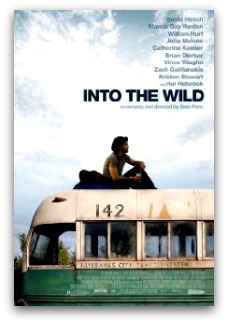
IntotheWild_small2) Into the Wild (2007), dir. Sean Penn
An adaptation (also by Penn) of the book of the same name, by Jon Krakauer, depicting the true story of Chris McCandless, a 24 year-old American and persistent wanderer whom believed that there was more to life than settling for the 9-5 grind in an office.

Why I like it: My wife introduced me to it (her riposte to my Indiana Jones exasperation). She had watched it early on in our relationship, when she was in Brazil and I was in London — a genuinely long distance relationship.

Personal note: She said that the film’s protagonist, Chris McCandless, reminded her of me — although fortunately our story has had a bit of a happier ending than his (I’ll say no more in order not to ruin it for you).

No half-measures: Boy did McCandless walk the walk, giving away his $24,000 college fund to charity before hitchhiking to Alaska and plunging into the wilderness, gradually seeking the means to remove himself from the “real world. ”

TheMotorcyleDiaries_small3) The Motorcycle Diaries (Spanish: Diarios de motocicleta) (2004), dir. Walter Salles
A biopic of Ernesto “Che” Guevara as a young man, representing an adaptation of Che’s memoir of the same name, recounting the trip he made around South America with his best friend, Alberto Granado.

Why I like it: Whatever you view of Che is, there is actually relatively little politics in the film, although one is introduced to some of the experiences that started to inform what he later became in life. Instead, for the most part, this is a film which perfectly captures what is to be young and curious of the world outside your own town or city. Che and Alberto chase beautiful landscapes and beautiful people, but also volunteer their time to those less fortunate than themselves.

Personal note: This film was the tipping point in inspiring me to travel around South America.

Memorable scene: There’s a great scene that highlights the dichotomy between the travel romanticized by “travelers” and that which is driven by the needs of most other migrants around the world — the topic of my guest post last month for The Displaced Nation. In it Che and Alberto meet an indigenous couple who have been forced from their lands and who are traveling in order to find work. When the couple ask Alberto and Che why they are traveling, they reply: “We travel just to travel.” Confused, the wife replies: “God bless you.”

The one about being displaced

Lost_in_Translation_small4) Lost in Translation (2003), dir. Sofia Coppola
The story of the unlikely bond between an aging movie star, played by the awesome Bill Murray, and a trailing spouse (Scarlett Johansson), after they meet in the bar of their five star hotel in Tokyo.

Why I like it: Life as a nomad is not all about romantic adventures and life-changing experiences — there are also just as many challenges and struggles: homesickness, culture shock and loss being just some of them. Lost in Translation is, perhaps, one of the films that best explores some of these issues.

Additional benefits: The story is poignant, and the film is beautifully shot.

The one that’s not actually about travel or expats

Blood_into_Wine_small5) Blood Into Wine (2010), dirs. Ryan Page & Christopher Pomerenke
A documentary about the Northern Arizona wine industry focusing on the musician Maynard James Keenan and Eric Glomski and their winery, Caduceus Cellers.

Why I like it: This film doesn’t really have anything to do with either travel or expat life, but I’m including it here because it’s about one of my favorite artists: Maynard James Keenan. A slightly biased choice perhaps, but I think it deserves a merit for the way it encapsulates the spirit of those people who have dreams and then act upon them to make them happen — a spirit which, I think, drives many of us travelers and expats.

Maynard’s dream: Maynard dreams of starting a vineyard in Arizona. Yes, Arizona. Despite the doubts and concerns of the experts he consulted Maynard invested almost his entire fortune, made from working with the bands Tool and A Perfect Circle, to start a vineyard in Arizona — a state entirely unknown for growing wine.

Does he succeed? You’ll have to watch it, I guess… And don’t forget to invite a date!

* * *

Readers, what do you think of Andy’s suggestions? Are these the sorts of films that make you feel romantic, or do you think he’s bonkers? We’re open to any and all comments…as well as to further recommendations of films likely to bring out the romantic side in us glomads!

STAY TUNED for tomorrow’s post from our monthly columnist, James Murray, who right now can be found in front of his fireplace in Boston — and not because he’s in a romantic mood! Far from it…

If you enjoyed this post, we invite you to register for The Displaced Dispatch, a round up of weekly posts from The Displaced Nation, with seasonal recipes, book giveaways and other extras. Register for The Displaced Dispatch by clicking here!

Related posts:

RANDOM NOMAD: Andy Martin, UK-qualified Social Worker, Football Geek & Now a São Paulo Resident

Andy_MartinPlace of birth: Chatham, Kent, United Kingdom
Passport: UK
Overseas history: Brasil (São Paulo): February 2012 – present. I also had a period of travel around South America between 2007 and 2008.
Occupation: NGO Volunteer, English teacher, blogger
Cyberspace coordinates: The book is on the table: An Englishman’s guide to living in São Paulo (blog) and @andyhpmartin (Twitter handle).

What made you give up London for São Paulo?
For some reason — probably because I’m a massive football geek — I had always wanted to go to South America, and so when I found out that one of my best friends was planning to travel there, it took very little persuasion for me to tag along. Then whilst there I met my future wife, who is Brazilian, and it all got a bit more complicated.

First she moved to live with me in the UK. We got married and stayed in London for three years. However, she had deferred her degree in Brazil to move to London, where I had a job as a social worker. I am a qualified social worker and spent almost nine years working in various social or community work roles. For most of that time I specialized in supporting refugees and asylum seekers. But when my job became uncertain due to government cuts (due to the economic crisis), it seemed like the perfect opportunity to move to Brazil so that my wife could finally get everything finished.

So now you’re a trailing spouse. Does anyone in your immediate family share that fate, or do they all live in the UK?
When I first traveled to South America in 2007, I was pretty much the first person in my entire family who had ever traveled outside of Europe, so I can’t really say there’s any significant history or influence of having the urge to want to explore or become “displaced.”

You haven’t been in São Paulo for long, but can you pinpoint a moment when you have felt displaced?
I had been to São Paulo twice before I moved here and I was already quite familiar with South America as a whole, so was pretty well prepared for what to expect — although there’s no doubting that living somewhere and just visiting are entirely different things.

But if I had to pick one thing, it wouldn’t be a moment but more the constant challenge of living somewhere where you are unable to speak your mother tongue. We Brits are notoriously bad at learning languages, and I can barely remember any of the French or German I learned at school. I did learn some Spanish whilst traveling in 2007, and in some ways this helped because of its similarities with Portuguese, although on the other hand it was also a hindrance because of their very many differences.

Not being able to fully communicate your thoughts is obviously very frustrating and when you’re having a bad day, it just intensifies your sense of displacement and dislocation. Fortunately, Brazilians are pretty intrigued by people (especially those from the “West”) who have moved to Brazil and are trying to learn Portuguese. They’re often very forgiving when you make mistakes. It also helps that many Brazilians themselves tend not to speak grammatically correct Portuguese, so in effect your own mistakes are just contributing towards the evolution of the language (that’s what I like to convince myself, anyway!).

When have you felt the least displaced?
One of the things I love about Brazilians is their general informality. As someone who’s never worked in an office or a suit, I feel right at home. For example, people are often referred to by their nicknames (even the former President was) and rarely, if ever, by their surnames. Also, Brazilians tend not to make a big deal out of social occasions — it’s more about making sure you’re surrounded by the people who matter to you. As long as there’s cold beer, everyone’s happy.

How could you not feel at ease?

You may bring one curiosity you’ve collected from the country where you’ve lived into The Displaced Nation. What’s in your suitcase?
Again, as a self-confessed football nerd, I think it would have to be my collection of football shirts. I have one from pretty much every country I’ve been to, and I’ve lost count of how many I’ve acquired in South America.

You are invited to prepare a meal for the Displaced Nation, based on your travels. What’s on the menu?

Starter: Salgadinhos (savoury snacks) are fantastic so a platter of these, including:

Main: It’d have to be a churrasco (Brazilian BBQ). That may sound pretty unimaginative, but once you’ve had a Brazilian BBQ, especially those from the south, you’ll forever wonder why it took you so long to do so.
Dessert: A selection of some of Brazil’s finest (and weirdest looking) fruits. Believe me, I’ve seen fruits in the markets here which look like they have been imported from Mars. They taste great, though.
Drinks: Brazil’s most famous cocktail, a caipirinha, which is a hangover-inducing concoction of cachaça (sugar cane rum), lime, sugar and ice. Refreshing, tasty and deceptively lethal.

Now that you are hard at work learning the language, can you donate a Brazilian Portuguese word or expression to the Displaced Nation’s argot?
Tudo bem? This is pretty much said every time you greet someone in Brazil and literally translates as “Is everything okay?” It reflects quite nicely, as I mentioned previously, how Brazilians prefer to keep things simple and informal.

This month, we’ve been focusing on the need for mentors: people who teach us what we need to know, or remind us of things we have buried deep. Have you found discovered any new mentors, whether physically present or not, in your life abroad?
As mentioned in my guest post this month for the Displaced Nation, when I’m going through a period where I’m missing home or things get tough, I often think about some of the kids I worked with back home in London (in my last job I worked with unaccompanied minors from countries such as Afghanistan).

Thinking about the challenges they as young kids faced after fleeing their home countries — but then still being able, on the whole, to go on and make the most of their new lives — always helps me to put into perspective the things I tend to moan or stress about here, in what is fortunately a much easier experience of displacement.

Apart from that, I read as widely as possible. For instance, I recently really enjoyed Alain de Botton’s The Art of Travel.

If you had all the money and time in the world, what topic(s) would you choose to study in your adopted country?
I guess, given my pre-existing interest and work experiences with migration, I’d like to study the history of migration to Brazil. Brazil is a country defined by (im)migration — for example, my wife has indigenous, Spanish, Italian and Portuguese heritage, a mix that is is pretty normal for Brazilians. It would be fascinating to piece it all together in order to get a more holistic understanding of who Brazilians really are.

I’ve always wanted to do a PhD, so who knows, maybe this might be my research proposal one day!

Readers — yay or nay for letting Andy Martin into The Displaced Nation? A social worker who is taking lessons from the Brazilians on how to be more social? Who is used to helping the displaced and is now displaced himself — so may be in need of our help? (Note: It’s fine to vote “nay” as long as you couch your reasoning in terms we all — including Andy — find amusing!)

STAY TUNED for tomorrow’s post, an expat take on the muses of Classical Antiquity.

If you enjoyed this post, we invite you to register for The Displaced Dispatch, a round up of weekly posts from The Displaced Nation, with seasonal recipes, book giveaways and other extras. Register for The Displaced Dispatch by clicking here!

Related posts:

Img: Andy Martin travels within his native land (the Norfolk Broads, 2010), a couple of years before his expatriation.

Do refugees and migrants have anything in common with us expats? No, and yes…

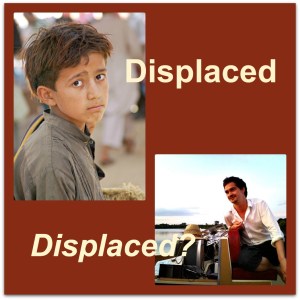
displacedvdisplacedBelieve it or not, the Displaced Nation has occasional qualms about whether “displaced” is the right word to describe a group of expats and internationalists. What does a group of privileged travelers have in common with refugees or migrants who’ve had no choice but to leave their homelands? We thought we’d begin the new year by touching on this vexed question, this time with the help of a mentor, Andy Martin. Andy is now an expat in Brazil, but he previously worked with refugees in London.

— ML Awanohara

Before moving to Brazil in February 2012 I worked with refugees as a social worker in the UK, and my last job entailed supporting unaccompanied minors: children as young as 11 who flee conflicts and persecution in countries such as Afghanistan — on their own.

And it is of them that I remind myself when I reflect upon my own struggles and anxieties at being “displaced” from my own country. Suddenly, my tongue-in-cheek British moans about uncomfortable buses and lopsided pavements (yes, pavements), or my frustrations with struggling to learn Portuguese, seem trivial when contrasted with the experiences of the young people I worked with.

Given this, it would seem bizarre for a rich (relatively) migrant like myself to even contemplate comparing my experiences of displacement with those who flee poverty, persecution or some other unimaginably unfortunate situation that most of us will thankfully never have to experience.

Or is it?

Well, I guess the differences are probably easier to distinguish — for example:

1) The reasons for the migration

Whilst refugees are forcibly displaced through circumstances outside of their control, more fortunate gringos like myself possess far greater agency when it comes to the motives for our movements: love, jobs, travel, etc.

2) The journey itself

Forcibly displaced people often leave their homes unexpectedly with no belongings, or else hurriedly sell whatever possessions and land they have in order to fund their flight, whilst my wife and I had carefully planned our move for over two years (well, we read a few books and, to be fair, she is Brazilian herself — which helps).

What’s more, the route a refugee takes is often perilous, taking months or even years, and in turn may comprise many different means of movement: on foot, by car, on overcrowded boats, airtight lorries or refrigerated trucks. On top of that, their destinies also usually lie in the hands of people smugglers.

My wife and I, though, as middle-earners in the UK, booked our flight with a click of our laptop, and the path from our flat in London to our new life in São Paulo was no more than a day’s inconvenience — and a relatively smooth and comfortable one at that.

I had the cabin crew to serve me unlimited amounts of Cabernet Sauvignon and my biggest anxiety was which of the in-flight films to watch: Moneyball or Midnight in Paris?

3) The arrival at the new destination

Refugees are typically at the complete mercy of the host countries they successfully manage to reach. Most likely, they are from countries for which there are strict immigration controls and they are typically confronted not with empathy but with a culture of disbelief — yes, 11-year-old kids from Afghanistan with no family.

A British citizen like myself meanwhile, merely through my place of birth, possesses a passport that requires one of the fewest number of visas to travel around the world. Even when there is a requirement, particularly to live or work, it’s often pretty straightforward.

Refugees, though, even if they are granted some form of status, will by the nature of their former lives typically have to start from scratch, their qualifications often meaningless (that’s if they can even prove them) — and thus with access to only menial jobs and bottom-of-the-rung housing.

And then, once they’re settled, the mental scars from the trauma they’ve experienced will slowly emerge.

Fortunately for me — with the education I’ve received, the qualifications I’ve gained and the work experience I’ve accumulated — I’ll be in a far better position to start my dream life abroad.

Just take me to the beach already!

* * *

So far, so different then.

Is it really possible then that the experiences of forcibly displaced people can ever be compared to those whose displacement is chosen?

Well, yes, I think they can. Here’s a couple of ways we are similar:

1) The requisite adjustments to a new culture

One of the fascinating things about my job back in London was listening to people describe their reactions and adjustments to their strange new worlds. And, as you can imagine, the youthful frankness of the kids I worked with often made these accounts hilarious and, perhaps, more honest.

For example, I remember one young person seemed bemused as to why on one particularly hot day (well, relatively anyway) in London, so many people were stripping off their clothes and heading to the local park to sunbathe. He only realized why when by the next time I had seen him, there had been subsequently been 20 successive days of rain in London.

“Welcome to the UK,” I joked.

2) The occasional bouts of homesickness

It wasn’t, of course, just the things they were discovering which were intriguing, it was also what they were missing. For some it was their homelands, for others it was speaking their language, whilst often it was specific things like their mother’s home cooking, although most commonly it was the weather — of course.

However, a common and I guess obvious sadness amongst all of them was missing people — whether that be their friends, family or both.

* * *

In sum, writing my blog over the past year has made me realize that despite our very many differences all migrants share some common behaviors: that of exploring, adjusting and, inevitably, comparing (in my case moaning), as well as reflecting upon the losses we have to make in order to get to where we are.

At the same time, I’ve also acknowledged that my own anxieties are not trivial just because they might seem so in comparison. They are real and probably shared by many people. However, thinking about those kids back in the UK just gives me the motivation to try even harder.

Thank you, Andy, for that reality check! Readers, what did you think of Andy’s analysis?

British by birth and slowly becoming a little more Brazilian each day after moving to São Paulo a year ago with his Brazilian wife, Andy Martin is also a qualified social worker in the UK, who specialized in supporting refugees in negotiating the process of displacement. Now, as a migrant himself, he is finding out whether any of the advice he gave them was of any use in the first place. Andy is also known to drink tea, warm beer and play cricket, none of which Brazilians seem to be massively convinced by. You can learn more about him by following his blog, The book is on the table, and/or following him on Twitter: @andyhpmartin.

STAY TUNED for next week’s posts.

If you enjoyed this post, we invite you to register for The Displaced Dispatch, a round up of weekly posts from The Displaced Nation, with seasonal recipes, book giveaways and other extras. Register for The Displaced Dispatch by clicking here!

Related posts:

Images: The photo of the boy is from Morguefiles; the other photo is of Andy Martin (his own).

Catching up with this year’s Random Nomads over the holidays (1/3)

RandomNomadXmasPassportThe holiday season is here — the perfect time for the Displaced Nation to catch up with the expats and other global voyagers who washed up on our shores in 2012. Remember all those Random Nomads who proposed to make us exotic meals based on their far-ranging meanderings? Not to mention their suitcases full of treasures they’d collected and their vocabularies full of strange words… How are they doing these days, and do they have any exciting plans for the holidays? First in a three-part series.

In the first part of 2012, quite an array of Random Nomads arrived at the Displaced Nation’s gates, including:

  • Toni Hargis, a Brit married to an American and living in Chicago (she goes by the moniker “Expat Mum”);
  • Megan Farrell, an American married to a Brazilian and living in São Paulo;
  • Liv Hambrett, an Australian moving cities in Germany to be with her SG (Significant German);
  • Lei Lei Clavey, an Australian working in New York City’s fashion industry; and
  • Annabel Kantaria, an Englishwoman living in Dubai (one of the Telegraph Expat bloggers).

Unfortunately, Liv and Lei Lei cannot be with us today as they’ve both headed back to their native Australia. Lei Lei is living in Perth with her boyfriend — and still feeling somewhat displaced as she’s from Melbourne. (Still, her mum, one of our featured authors, Gabrielle Wang, is glad she’s a little closer.)

Liv — who has moved her blog, A Big Life, over to her portfolio site — says she is “now hopelessly pulled in opposing directions by my home country and adopted home, Germany.” Back with her family in Sydney, she is planning a return to Germany in early 2013. Between now and then, SG will have completed his maiden voyage to Oz to pay her a visit.

But now let’s start the party with the three Random Nomads who still qualify as expats. What have they been up to since nearly a year ago, and are they cooking up anything special for the holidays?

ToniHargis_Xmas1) TONI HARGIS

Have there been any big changes in your life since we last spoke?
Yes, I got a new gig writing for BBC America’s “Mind the Gap” column, which is very exciting. I have also just completed a 55,000-word manuscript for a new expat book which should be coming out late Spring 2013. Can’t give any more details at the moment I’m afraid.

Where will you be spending the holidays this year?
We have been going to Copper Mountain, Colorado for the last few years and this year will be the same.

What do you most look forward to eating?
My husband goes mad cooking “skier’s dinners” as he calls them — gumbo, lasagna, chili etc. He will also probably take care of most of the Xmas dinner. Unfortunately, I usually suffer from mild altitude sickness so food isn’t always at the top of my list!

Can you recommend any books you read in 2012 that speak to the displaced life? 
Yes, I read three great books this year on that theme, all from Summertime Publishers:

  1. Expat Life Slice by Slice, by Apple Gidley, which is memoir style and chronicles her (so far) amazing expat adventures.
  2. Finding Your Feet in Chicago, which is a great book for newly arrived expats to the Windy City, by Veronique Martin-Place.
  3. Sunshine Soup: Nourishing the Global Soul, by Jo Parfitt, which came out in 2011 and is a lovely novel set in Dubai about expat women there. (Jo is the founder of Summertime Publishers.)

Do you have any New Year’s resolutions for 2013?
Hmmm…. I try not to make resolutions because it can just be a set up for failure and bitterness (just kidding). There will be a lot of background work to do on my upcoming book, so I suppose my resolution should be to keep my energy levels up and work hard while not ignoring my children for too long!

Last but not least, do you have any upcoming travel plans?
Other than Colorado, I have no definite plans but there will be the annual summer trip to England and perhaps a trip somewhere else in Europe if we can fit it in.

meganfarrell_xmas2) MEGAN FARRELL

Hi there, Megan. Have you had any big changes since we last spoke?
I am currently writing a book, titled American Exbrat in São Paulo: Advice, Stories, Tips and Tricks to Surviving South America’s Largest City, which will be available via Amazon in the next few weeks. And we moved from Jardim Paulista to Higienópolis. The Higienópolis neighborhood feels much more family friendly to me, without losing options for great restaurants and activities.

How will you be spending the holidays this year?
For the holidays, we will be visiting Petrópolis (Brazil’s “City of Emperors” and a lovely mountain resort) and Búzios (known for its magnificent beaches and crystal-clear water), both towns in the state of Rio de Janeiro. I am looking forward to the beach and mountain time.

What’s the thing you most look forward to eating?
Churrasco (Brazilian style barbecue)!

Can you recommend any books you came across in 2012 that speak to the displaced life?
Dark Star Safari: Overland from Cairo to Capetown, by Paul Theroux. I’m also reading Eat, Pray, Love again, but this time in Portuguese (Comer Rezar Amar).

Do you have any New Year’s resolutions for 2013?
I do. My resolutions are to spend more time working on my writing projects and further develop my business. I currently guide executives and managers in their business communications to help them gain advantages in the global market, but I really need to expand my marketing strategy. I also have a large list of São Paulo experiences I have yet to enjoy.

Do you have any upcoming travel plans?
I’m hoping to get back to the States early this year and hit not only Chicago but also Los Angeles and New York City.

AnnabelKantaria_Xmas3) ANNABEL KANTARIA

Have there been any big changes in your life since we last spoke?
None to speak of.

Where will you be spending the holidays this year?
We love to spend Christmas in Dubai as the weather is exactly how a British summer day should be: clear, sunny, blue sky and temperatures of about 28°C (around 82°F).

What’s the thing you most look forward to eating?
We always have a big Christmas lunch in the garden with friends. This year another friend is playing host to us. I feel very lucky as she is practically the “Martha Stewart” of Dubai and I just know the food, decor and company will be divine. I’m vegetarian, so I won’t be eating turkey — I think we’re barbecuing this year.

Can you recommend any books you came across in 2012 that speak to the displaced life?
I read a new book called The Expats, by Chris Pavone, but I was more inspired to revisit old favorites such as White Mischief, by James Fox.

Do you have any New Year’s resolutions for 2013?
To finish writing my book, find an agent and/or publisher and get it published!

Any upcoming travel plans?
We usually go away in the February half-term holidays. Last year we visited family in Kenya before taking a few days in the Seychelles. This year I’m looking East — maybe Thailand, Malaysia (I’ve always wanted to go to Langkawi) or perhaps Bali.

* * *

Readers, before we lose these three Random Nomads to their various holiday (and half-term) adventures, do you have any more questions? Perhaps some of you are wondering, like I am, how they manage to be so productive — each of them has children but also a book to publish in 2013!

STAY TUNED for another episode in the life of our fictional expat heroine, Libby. (What, not keeping up with Libby? Read the first three episodes of her expat adventures.)

If you enjoyed this post, we invite you to register for The Displaced Dispatch, a round up of weekly posts from The Displaced Nation, with seasonal recipes, book giveaways and other extras. Register for The Displaced Dispatch by clicking here!

Related posts:

Images: Passport photo from Morguefile; portrait photos are from the nomads.

Which country produces the people who travel the farthest, the longest — and with the most credit cards?

The Displaced Nation was contacted about doing a post on a recent survey by Travelex on “How the World Vacations” — the results of which are summed up in a cool infographic (see bottom of this post).

Since Travelex helps travelers with their foreign currency needs, they were particularly interested in finding out not only where people are traveling internationally but also how they are financing their vacations.

I thought I’d go over some of their findings and see if it helps me to understand this Big Wide World of Travel.

Really? Did I? Or did I do something altogether more irresponsible, and just pull it apart for my own amusement? Well, you all know me by now. You decide…

What’s up with international travel?

More people are doing it now than ever before. Even in the most parochial parts of England, folk are pulling the ferrets out of their trousers, staring at glossy magazine adverts and dreaming of something more glamorous than a weekend caravanning in Skegness.

Rumor has it that almost ten percent of Americans now own a passport; even more significantly, some of them have actually used them!

Yes, travel beyond one’s borders is growing — but so is the human race. So it’s only to be expected, right? (The numbers of people going abroad did decline, however, in 2008 due to the global recession, but in 2009 the upwards trend resumed.)

And now for some stereotype-busting!?

I’m not sure how much the survey tells us that we didn’t already know, to be honest — but I’m willing to be persuaded otherwise, if one of you is a better statistician than I am.

Where do the Brits go on holiday? Hmm. Tough one.

If you guessed Spain, you can give yourself a pat on the back. It is Spain. For two weeks. The survey doesn’t tell us this, but most of them spend the entire fortnight lying lobster-red on the beach before heading for the nearest bar. Had the survey asked what they ate, the finding would have been 85 percent fish and chips, of which most would have been washed down with beer — the local variety of course, because it’s so staggeringly cheap.

The destination that comes in second for the Brits? Right again! France. The main surprise is how few are going to the United States nowadays: just nine percent (versus over fifty percent to Spain and France).

The Americans? They head to Mexico and Canada. Goodness, that’s a revelation! And if they venture any further, it’s usually to Europe, especially the UK and Italy, or to the Caribbean. That said, there are a few brave American souls visiting China these days.

The survey doesn’t report this, but most Americans when they go abroad eat burgers and fries, even when sitting in an Italian restaurant. They drink beer, too — but the good stuff, because it’s still cheap, and imported, which makes everything taste better!

Noticed any Chinese tourists lately?

Thanks to its booming economy, China gets pride of place in this survey. (The Japanese used to be the most well-traveled of all Asians, but I’m afraid they’ve been displaced!)

Interestingly, the 1.3 billion Chinese are represented by a sample of 20,000; anyway, for most of them the average length of holiday is six days. Perhaps it’s not surprising, then, that they end up going to Hong Kong — which I’m not sure counts as foreign these days. (Didn’t my country transfer sovereignty to China in 1997, or have I misremembered something?)

Chinese mostly use credit cards to pay their way, despite almost a third of those being refused. Which is a shame, though I can’t say it surprises me. Would you take a Chinese credit card? Be honest.

And a surprising number, about a third, travel by boat. Still trying to puzzle that one out, given how short their vacations are. Fear of flying, perhaps? I’ve heard some nightmare stories about China Airlines.

How about Brazilians?

Another booming emerging economy is Brazil, which is the fourth country to be featured in a big way in the survey. Guess where most Brazilians go? You got it, their wealthy neighbor to the North, the United States!

But what I’d really like to know is whether the five percent of Brazilians who had their bank cards stolen were the same ones that said they traveled by rail — in which case, it serves ’em right. Everyone knows that if you take a train in Brazil, you get robbed — it’s, like, common knowledge.

International holiday central

Australia, my adopted and much beloved homeland, makes a brief appearance in the statistics for “how long they stay.” We’re at the top of the charts. Did you know that Aussies having the longest holidays IN THE WORLD, by almost a week?

The survey doesn’t tell you how often we go abroad and where we go, however.  Because if you knew that every man, woman, child and most of the sheep here take a foreign holiday every single year — and that the vast majority spend it in Bali — you’d have perished of jealousy by now (or else looking into emigrating!).

As it is, I’m worried that if the Chinese see that Aussie vacations are almost three times longer than theirs, it will trigger a revolt, for which Australia will somehow be blamed! 🙂

Herzlichen Glückwunsch!

In their write-up of the survey findings, Travelex said:

We were surprised to find that the most consistent destination for international travel seems to be Germany. That’s right! Germany. We guess lederhosen and lagers hold a certain amount of appeal no matter what native language you speak.

It’s a fair point — who’da thunk it? Even the Chinese went to Germany. Well, 1.9 percent of them did. (Which, out of the 20,000 vacationers surveyed, means at least 382 out of a country of 1.3 billion.) Germany must be thrilled at this news of its new-found popularity across cultures.

I suppose another surprising finding is that while Chinese are busy having their credit cards turned down, Brits tend to err on the side of caution, doing their money exchanges before they leave, while many Americans are still getting away with using dollars — despite the recent talk of abandoning the U.S. dollar as the single major reserve currency.

* * *

It’s often said that statistics can be made to say whatever you want them to say. And then of course, there’s the old truism that 97.6 percent of statistics are made up on the spot…

Not that I’m saying Travelex did any of this, of course. Far be it from me to cast aspersions on their information-gathering tactics. I’m just wondering if something like this can tell us much. Still, it’s a pretty infographic — the designer of which has certainly earned a vacation overseas, in my opinion!

Please talk to me in the comments. Are you into travel surveys? Have I missed something earthshaking in this one? Am I being too flippant? I’d love to know your thoughts!

Additionally, you can hit us up on Twitter: @DisplacedNation and/or @TonyJamesSlater

And now for that fabuloso infographic:

STAY TUNED for Tuesday’s post reviewing some books by expats in Dubai.

If you enjoyed this post, we invite you to register for The Displaced Dispatch, a round up of weekly posts from The Displaced Nation, with seasonal recipes, book giveaways and other extras. Register for The Displaced Dispatch by clicking here!

Related posts:

Infographic courtesy of Adria Saracino, Distilled Creative.