The Displaced Nation

A home for international creatives

Tag Archives: ATCK

TCK TALENT: Even without slide projector, projection of life as a Third Culture Kid engages Reykjavík audiences

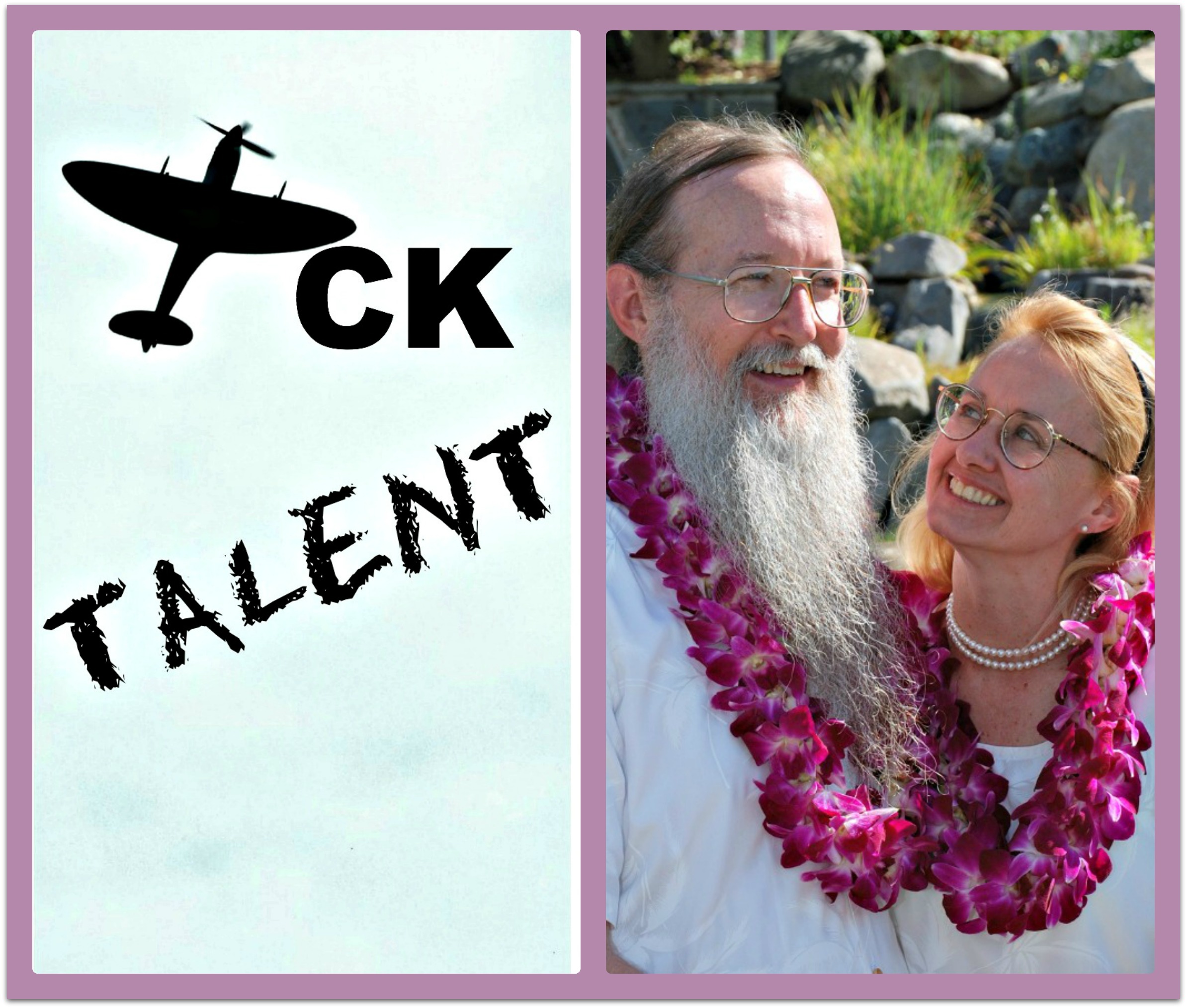
TCK in Iceland Collage

Elizabeth Liang in front of Tjarnarbíó, in downtown Reykjavík, where she performed her one-woman autobiographical show, Citizen Alien, on growing up as a TCK of mixed heritage. Photo courtesy Elizabeth Liang.

This month Elizabeth (Lisa) Liang updates us on her own creative life, which this past summer veered in the direction of an island situated at the confluence of the North Atlantic and Arctic Oceans!

Halló, vinir mínir! Hello, my friends! I’m addressing you in Icelandic because in this month’s column I’ll be re-creating my journey to Reykjavík, where I traveled in August to perform ALIEN CITIZEN: An Earth Odyssey, my one-woman show about growing up as a Third Culture Kid, or TCK, of mixed heritage.

How did I end up performing my show in Iceland? I have a friend in that part of the world who put me in touch with the artistic director of Tjarnarbíó, a creative center for professional live art in Reykjavík, who enthusiastically offered to host the show if I could cover my travel and lodging. Presented with a chance to combine three of my favorite activities—acting, writing and travel—how could I resist?

Engum flýgur sofanda steikt gæs i munn (“One cannot expect to benefit without making some effort”)—Icelandic proverb

My husband, Dan, agreed to work as my stage manager, which was perfect because he knows the show so well. I launched a successful Kickstarter campaign to raise the requisite funds for our trip, found a cozy house in Reykjavík on AirBnB for us to rent, bought our flights, started promoting the show on social media—and then off we went to the Land of Fire and Ice.

We arrived in ideal weather, cool and dry, which many Icelanders told us was lucky because it had been raining all summer. We were relieved to find that our lodgings were in a quiet, pleasant residential area that was a seven-minute walk to downtown and a 15-minute walk to Tjarnarbíó.

Tjarnarbíó is a beautiful venue with state-of-the-art technology. At the technical rehearsal, the two “techies” who adjusted the lights and projector were friendly and professional. (Incidentally, we never met anyone in Iceland who was unfriendly, and the Icelanders we encountered all spoke perfect English, some with gorgeous British accents.)

That said, we had an unexpected snafu at the tech rehearsal. There are two kinds of projections in the show:

  1. Pictures and videos that are projected onto a screen via my laptop, and
  2. Words that I project onto my torso using an old-fashioned slide projector.

During the tech rehearsal, the slide projector I’d used in the show for over a year konked out. The stage hand and I stared at the plume of smoke rising from the top and said: “It’s smoking.”

No, the problem was not the power converter. We had the right one. Nor was it the bulb. We replaced it but the projector still didn’t revive. So my Icelandic friend’s father-in-law generously loaned us his. More on this later…

Citizen Alien Photo Strip

(top to bottom) At the tech rehearsal, the lights were lowered from the ceiling–fancy!; opening night; closing night; post-show celebratory drink; with Dan in front of Hallgrímskirkja Church; with Dan in Þingvellir National Park. All photos courtesy Elizabeth Liang.

August 20, 2014: Opening Night

We had an audience! I only knew of five people who were planning to attend (of whom I’d actually met only one—my Icelandic friend). What a pleasant surprise to see twenty or so people in the house!

And they laughed! I guess the show’s humor translates.

Dan stage managed wonderfully and the light board operator did a great job, too. The only hitch was that when it came time to project slides onto my torso, the borrowed projector didn’t work, even though we’d tested it earlier. I improvised and the audience went right along with this. (Afterward, a very kind audience member offered to loan us his projector, but when we met later, he realized it had a part missing. So Iceland never got to see words projected onto my torso. Ah, well.)

The best part of opening night was the fact that I enjoyed myself on stage, which hadn’t happened in a while. There were two curtain calls and people stayed afterward to shake my hand, thank me, and say lovely things. It was such a pleasure. About half were Icelandic and the other half internationals—once again, the right people had found me and my show. Several said they would spread the word for the next performance.

A few people from Spain, France, the Czech Republic, and Iceland hung out with us at Tjarnarbíó’s cafe afterwards. They all mentioned different parts of the show that resonated for them, and one said she felt that the show does a service for nomadic and non-nomadic people—it’s like a bridge between them. They thought it should be filmed, which I’m planning to do in December.

All hail my director, Sofie Calderon, for making this show such a dynamic experience for the audience! People from far and wide have enjoyed the production, and that’s Sofie’s doing. If it had been up to me, I would have found ways to hide onstage, because performing a solo show is super scary.

August 22, 2014: Closing Night

More people in the audience, which was very moving, because I knew none of them. The word of mouth from opening night must have been good. And maybe all those promos I sent to the international school and Facebook groups helped…?

The performance didn’t feel as good—I was having less fun and getting fewer laughs—but I forged ahead. Afterward Dan and the light board operator said “No way, it was TIGHT, really good show!” Yet more proof that we actors have no idea how well we’re doing. We only know if the audience is responsive or quiet.

Just like on opening night, a bunch of people waited to speak to me afterward. One was a young adult TCK who was very moved by the show. Another was a professor at the University of Rekjavík whose field of study is TCKs. Their compliments, along with all the words of support from other audience members, was tremendously encouraging.

Because the truth is: before embarking on this Northern European adventure, I had no idea how audiences would react, or if there would be any audiences at all. I had girded myself to perform for a handful of kindly people on opening night and then possibly cancel closing night because who knew if there would be enough interest?

Reykjavík may be a small capital, but as it turns out, it has plenty of residents who are international or international in outlook, and open to trying new things.

Kleina & coffee, Björks in boots, Lutherans & lava…

Beyond the show, Dan and I had a glorious time exploring small but pretty Reykjavík; the Blue Lagoon, a thermal spa located in a lava field in Grindavík; and the Golden Circle, a route the loops from Reykjavík to central Iceland and back. Other highlights included:

  • snacking on kleina, a donut-like pastry in the shape of a trapezoid;
  • visiting Hallgrímskirkja, the Lutheran cathedral designed to resemble the lava flows of Iceland’s landscape, and Settlement House;
  • hanging out at the Boston, said to be one of the world’s best bars, and at several coffee houses; and
  • last but not least, watching singers and dancers all over town on Culture Day/Night, a day and night-long program of cultural events that takes place in August every year and is one of the country’s largest festivals.

I also got a kick out of Icelandic fashion—bright colors, unusual cuts—and, as I love boots, was pleased to see practically every woman sporting boots of some kind: ankle, knee-high, sexy, hiking, and everything in between. (Did I buy a pair? Nope. Iceland is expensive.)

On our last night, we stepped out onto our little street to see fireworks, which felt like a final burst of congratulations. I got teary-eyed!

Overall, it was a delightful trip. Dan and I left thinking we’d like to go back someday. We want to see more of the island (puffins! volcanoes!), enjoy the friendly vibe…and hopefully bring another solo show for Icelanders’ entertainment—but without any cantankerous 1980s equipment.

* * *

Thank you, Lisa! Having only been to the Blue Lagoon as a round trip from Keflavík International Airport, I really appreciated this vicarious journey into the heart of the city’s cultural scene. And, as always, I’m impressed that you were contributing to the culture as well as taking something from it! Readers, please leave questions or comments for Lisa below.

STAY TUNED for next week’s fab posts!

If you enjoyed this post, we invite you to register for The Displaced Dispatch, a round up of weekly posts from The Displaced Nation, with news, book giveaways and other extras. Register for The Displaced Dispatch by clicking here!

Related posts:

BOOKLUST, WANDERLUST: Curiosity leads Elizabeth Gilbert’s Victorian heroine to international travel

Booklust Wanderlust Collage

Left: Oleh Slobodeniuk (CC BY-NC-SA 4.0); right: Beth Green (her own photo).

Attention displaced bookworms! Our book review columnist, Beth Green, is back. An American who lives in Prague, Beth mixes booklust with wanderlust in equal measures, which gives her just the right background for reviewing book releases on behalf of international creatives.

—ML Awanohara

Hello again, Displaced Nationers! Since I last wrote, summer has slipped by us. The gradual wicking away of days and weeks puts me in mind of the protagonist of the book I have chosen to review this month: The Signature of All Things, a scientific and historical novel by Elizabeth Gilbert (she of Eat, Pray, Love fame).

The story’s heroine, Alma Whittaker, an early Victorian botanist living in North America, thinks of time as running on three concurrent tracks:
1) Human Time, which goes by as quickly and flittingly as a summer’s day.
2) Geological Time, in which the Earth moves.
3) Moss Time, which reflects the events of both Human and Geological time but moves at its own pace, expanding rapidly.

signature_coverAlma regrets that her life is stuck on the track of Human Time in an era that doesn’t favor women of character, intelligence and strength (but not looks). I found her fascinating and think that you international creatives will find her that way as well for these three reasons:

1) She is a Third Culture Kid and a polyglot.

As the daughter of English and Dutch botanists who eloped to start an empire on stolen seeds in the New World, Alma is a delightful fictional example of a Third Culture Kid. She has an unconventional upbringing at a time when most young ladies of her class were strictly bound by convention.

Gilbert writes:

She learned that walking carefully in the mud to save one’s boots or the hems of one’s skirts never rewarded one’s search. She was never scolded for returning home with muddied boots and hems.

At home, Alma speaks English with her British-born father, an old rascal who sailed with Captain Cook and turned himself into a rare plants and pharmaceuticals baron, one of the richest and most powerful men in Philadelphia; and a mix of classical languages with her highly educated mother. As for her nurse:

[The nurse] always spoke Dutch to Alma, and Dutch, to Alma’s ears would forever be the language of comfort and bank vaults and salted ham and safety.

Alma spends her childhood wandering in the breathtaking gardens and fields of her father’s estate, working on French and Latin, and being regaled with tales of far-flung expeditions at her parents’ dinner parties. She grows into a young woman with a wide breadth of knowledge but a constricted life experience.

2) Alma chooses to expand her horizons through international travel, rather like Gilbert herself.

Many novelists would slow down the narrative at this point, bring in a love interest (and a rival or two), and make the story all about the broadening of Alma’s horizons through a courtship followed by marriage. But Gilbert, who first made herself known to the world through the memoir of her solo travels to Italy (to eat), India (to pray) and Bali (where she found love), isn’t the right author for such conventions.

True, Alma’s youth, measured in Human Time, speeds by, but in the world Gilbert creates, one need not be young to have adventures. Indeed, Alma’s true adventures begin only after she believes she’s past her prime, when she enters Moss Time.

The spark that ignites those adventures is a surprise even to her. While contemplating the passage of her middle years, Alma discovers her passion for researching moss and its evolution. Moss, of course, knows no national boundaries. As Gilbert writes:

Moss grows where nothing else can grow. It grows on bricks. It grows on tree bark and roofing slate. It grows in the Arctic Circle and in the balmiest tropics; it also grows on the fur of sloths, on the backs of snails, on decaying human bones.

After Alma’s marriage fails, she sets sail for Tahiti.

As she takes off, so does the book—at least for me: Alma’s voyage across the Atlantic and Pacific was one of my favorite parts of the novel. Experiencing the long, slow sea voyage through the eyes of someone educated but who, at age 48, had barely left the confines of the family estate made for a compelling read.

“The ocean both stunned and disturbed her. Nothing had ever put more of an impression upon her being,” writes Gilbert. “It seemed to her the very distillation of matter, the very masterpiece of mysteries.”

There are also moments when her innocence clashes with her surroundings, as we see in this passage:

Alma offered payment in American coins, but the man attempted to make change for her from a handful of dirty Spanish piastres and Bolivian pesos. Alma could not figure out how he was possibly calculating his currency exchange, until she realized hew as trading in his dull old coins for her shiny new ones.

3) Alma’s insatiable curiosity is the driving force behind her travels.

It is tempting to see Alma as an extension of Gilbert: abandoning a marriage to travel recalls Gilbert’s break-out memoir Eat, Pray, Love. But in that book, along with its sequel Committed: A Love Story, Gilbert’s primary concern is with her ongoing personal evolution as writer, person, friend and romantic partner. In Signature, by contrast, Gilbert has created a character who as a young girl has already surpassed society’s expectations of what she can become. Alma is an intellectual whiz—fluent in languages, adept at math and strategy, precise in science and research—and a sensitive, caring friend. She’s strong. She’s healthy. But most of all, she’s curious—something I think she has in common with those of us who’ve chosen to live in other cultures.

When Alma reaches 16, she is faced with the decision to throw away a pornographic book or hide it. Gilbert writes:

But what about the cankerworm of curiosity that lived within Alma’s belly? What about its desire to feed daily upon the novel, the extraordinary, the true?

Then when Alma is approaching 60, she finally meets the special someone she has been searching for for years and says:

Allow me to tell you something about myself, for it might help you to speak more freely. Implanted in my very disposition—though I do not always consider it either a virtue or a blessing—is a desire to understand the nature of things.

Interestingly, curiosity seems to have become a mantra for Gilbert these days. On recent speaking tours (with Oprah, for example), she has been offering writers this advice:

Foster your curiosity even more than your passion.

To sum up: The Signature of All Things is not always a page-turner and Alma is not always a likable character, but the book held my attention to the end, in large part because I wanted to find out what happened to Alma. Gilbert’s writing, too, is impressive. Certain scenes in the book—the docks and a moss cave in Tahiti, the Spartan kitchen Alma’s abolitionist sister keeps, the crude sea tales of Alma’s father—are portrayed with such cinematic clarity I will never forget them.

Those who have read the book may know that readers have criticized Gilbert for focusing too much attention on Alma’s (mostly unfulfilled) sexual desires. I did not feel that way. Through the force of her sheer intelligence, Alma takes us closer to a period of our history that wasn’t so long ago, at least in Geological Time, when scientific findings were beginning to challenge traditional beliefs. As the English philosopher Thomas Hobbes once said:

Curiosity is the lust of the mind.

What say you, Displaced Nationers? Are you curious about Gilbert’s latest? Until we meet again, may Human Time roll by slowly for a change. (And if it doesn’t, plant some moss on it!)

* * *

Thanks, Beth! Until I read this review, I hadn’t realized that Elizabeth Gilbert, a member of our Displaced Hall of Fame for her travel memoir, had moved on to fiction. Readers, are you familiar with Signature and Alma Whittaker? If so, were you just as smitten as Beth was?

Beth Green is an American writer and English teacher living in Prague, Czech Republic. She grew up on a sailboat and, though now a landlubber, continues to lead a peripatetic life, having lived in Asia as well as Europe. Her personal Web site is Beth Green Writes, and she is about to launch a new site called Everyday Travel Stories. To keep in touch with her in between columns, try following her on Facebook and Twitter. She’s a social media nut!

STAY TUNED for the next fab post!

If you enjoyed this post, we invite you to register for The Displaced Dispatch, a round up of weekly posts from The Displaced Nation, with Alice nominations, exclusive book giveaways and other extras. Register for The Displaced Dispatch by clicking here!

Related posts:

EXPAT ART AS THERAPY: A new series based on Alain de Botton’s strange and wonderful notions

expat_art_as_therapy introGreetings, Displaced Nationers. While countries in Asia are celebrating harvest and moon festivals, we are marking the occasion with the start of a new series: EXPAT ART AS THERAPY. The series owes its provenance to the fertile and somewhat loony imagination of the young Swiss-English philosopher Alain de Botton. Today and over the next few months, we’ll cover some of the same ground as de Botton in his “Art as Therapy” lecture, in which he demonstrates how art can shed light on life’s big themes.

Except our topic will be the work of international creatives, a subset of artists more generally. Can the art people produce as a result of living among cultures in other parts of the world—and feeling, at times, displaced—shed light on life’s big questions?

Haven’t yet heard of de Botton? Here is (more than) you need to know:

  • Having grown up in both Switzerland and the UK, he’s an Adult Third Culture Kid who comes across as European, English, both and neither.
  • He’s a prolific pop philosopher, with a shelf-full of books and two very popular TED talks to his name.
  • He also has his critics, who call him a “high-brow self-help guru.”
  • Regardless, he hasn’t looked back since his 1997 essay titled How Proust Can Change Your Life became an unlikely blockbuster in the “self-help” category.
  • As explained in a recent Displaced Dispatch—what, not a subscriber yet? get on with it!—de Botton has set up a cultural enterprise in Bloomsbury, London, called The School of Life, which aims to “teach ideas to live by” and “inspire people to change their lives through culture.”

Returning to the aforementioned “art as therapy” lecture, De Botton lists six ways that art can respond to human needs, and in this series I’ll be attempting to apply this scheme to the works of international creatives. Does the art produced by expats, rexpats, TCKS, ATCKs repats, and other international creatives have something to contribute to the good of humanity at large and if so, in what ways?

It all sounds rather grand, doesn’t it—or would grandiose be more accurate? In any event, not to worry, you won’t remember any of this by the time the column starts up properly next month.

That said, perhaps it would help if I left you with a couple of examples of the kinds of questions we’ll be examining, enough to whet your appetite for more.

Here goes:

1) How does it benefit the world that Alan Parker has written a best-selling indie book about what it’s like to be a Brit man trying to raise alpacas in Spain? I’ll warrant that many of us, myself included, have no wish to live in Spain or raise alpacas—yet I did feel moved by the account of his adventures as reported on this blog, and presume that others have as well. What are we all getting out of it?

2) Likewise, are there pleasures for all to be reaped from long-term expat Kathleen Saville’s description of the acacia trees on the island in Zamalek, Gezira Island, where she lives in Cairo? (NOTE: Saville, who blogs at Water Meditations, is a contender for a September Alice Award, which you’d know if you read our most recent Dispatch.) Take me for example. The thought of living in Egypt scares me, and I’ve been avoiding most trees ever since Hurricane Sandy, but after reading Saville’s description of Egyptian acacias—

I see folds and twists in the trunks like nothing I have ever seen in another tree. Each tree looks like a long thin body or leg covered with support hose. It’s odd because the appearance is almost human like.

—I was blown away. Why, and would others with no special interest in Egypt feel the same?

* * *

At this point I hope I’ve said enough for you to make a mental note about checking out next month’s column!

In closing, please join me in a resounding chorus of “Shine on, shine on harvest moon/Up in the sky…” (Click here if you don’t know what I’m talking about or can’t remember the words.) Yes, I know it’s not high art; it’s a Tin Pan Alley stuff. But it’s seasonal and makes me smile—and our mentor, Alain de Botton, would give me a pat on the back for that!

STAY TUNED for Beth Green’s book review column.

If you enjoyed this post, we invite you to register for The Displaced Dispatch, a round up of weekly posts from The Displaced Nation, with Alice nominations, book giveaways, and other extras. Register for The Displaced Dispatch by clicking here!

Related post:

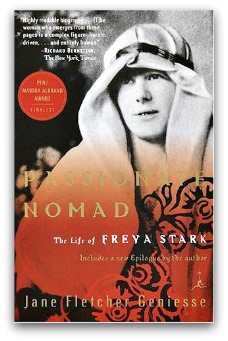
BOOKLUST, WANDERLUST: Jane Fletcher Geniesse’s biography of the passionate nomad (but displaced expat) Freya Stark

Booklust Wanderlust Collage

Left: Oleh Slobodeniuk (CC BY-NC-SA 4.0); right: Beth Green (her own photo).

Attention displaced bookworms! Our book review columnist, Beth Green, is back. An American who lives in Prague, Beth mixes booklust with wanderlust in equal measures, which gives her just the right background for reviewing book releases on behalf of international creatives.

—ML Awanohara

Hello again, Displaced Nationers! Hasn’t the summer gone by fast? How’s your progress on that reading list you made back in the day when it seemed like the dog days would go on forever?

Well, if you abide by the rule that summer ends with the equinox, then you still have a few more weeks. And if you’re searching for one last read to feed your wanderlust, I would recommend the volume I just now finished: a biography of Dame Freya Stark, one of the most amazing travelers and travel writers of the last century. Called Passionate Nomad: The Life of Freya Stark, it’s by former New York Times journalist Jane Fletcher Geniesse.

Passionate_Nomad_coverDays after reading, I’m still in a daze (so to speak), transported by Geniesse’s tale of this intrepid British war-time adventurer.

Stark is one of those people—we’ve all met them on our travels, haven’t we?—who seems to have crammed many lives’ worth of living into one single walk on Earth.

Born to Anglo-Italian-German parents who made their living painting, growing flowers, and managing textile factories (among other pursuits) across Europe, Stark was the original Third Culture Kid. As she traipsed with her parents across Britain, France and Italy, she had no real place to call home. She was further burdened by her parents’ separation and an emotionally manipulative mother, along with numerous illnesses and financial troubles.

A late bloomer

Though she would eventually achieve renown as a witty speaker who could always be counted on to liven up a party, as a young woman Stark despaired of being able to have her own life. She did not make her first trip to the Orient (as it was known in those days) until age 33.

Perhaps because Stark herself told the stories of her travels in the 25 books she published, Geniesse gives most of her attention to the adventures Stark had before being lionized for her travel exploits and writings. (Geniesse covers the last 40 years of Stark’s life—Stark lived to age 100!—in just one chapter.)

For me, Geniesse’s portrait is most brilliant when recreating the straitened times that preceded the period when Stark became fluent in Arabic, gained a reputation for bravery abroad and published her first articles and books on her Middle Eastern travels.

Geniesse relies on her intuition as well as meticulous research to highlight the details of Stark’s upbringing that help to explain her transformation from a penny-pinching flower farmer in Italy to a voracious student of classical literature, a free-spirited wanderer (she was one of the first non-Arabians to travel through the southern Arabian Deserts), and an internationally respected author, speaker, ethnologist and political consultant.

A misfit in the expat community

In tracing Stark’s life journey, Geniesse provides some sense of her struggle to find a place in the expat communities of the interwar years. On the one hand, she had trouble relating to the other Europeans she encountered on her travels, writing in one of her letters:

[The British missionaries in Lebanon] suffer from stagnation of the brain, and that surely produces stagnation of the soul in time. To feel, and think, and learn—learn always: surely that is being alive and young and the real sense. And most people seem to want to stagnate when they reach middle age. I hope I shall not become so, resenting ideas that are not my ideas, and seeing the world with all its changes and growth as a series of congealed formulas.

But during the period she spent within the expat community in Baghdad while researching her next trip, it was clear her fellow expats weren’t clear what to make of her either. As Geniesse writes:

Freya, now 37, was feeling her earlier despair give way to expanding hope. She could change her life; she had watched herself do it—although precisely to what purpose remained as much a mystery to her as the question of what Miss Stark was doing in their midst intrigued the Baghdad community. Freya enjoyed being directionless, learning purely for learning’s sake—and adjusting, if that was her fate, to a spinster’s life.

Geniesse concludes it may have been easier for Stark to explain herself to the tribes and villagers she encountered during her travels as they had no expectations of how she should be behaving. As a European, Christian woman traveling in remote areas of Yemen, Lebanon, Syria, Persia, Iraq and Iran, she was accepted as a foreigner, while in the expatriate communities there was some expectation that she should conduct herself as a proper unmarried lady.

(In fact she did eventually marry, in her fifties, to a good friend—but the couple separated soon afterwards, when her husband told her he was gay.)

Warts and all

Like all good biographers, Geniesse also highlights Stark’s less flattering qualities. From Stark’s petty rivalry with archaeologist Gertrude Caton-Thompson, to her sharp attitude toward women she felt were prettier than herself, to her irresponsible attitude to money and certain friends, Geniesse shows us the other side of this larger-than-life character. I liked Stark all the more for this mix of traits.

As I got to the end of Genisse’s work, I felt a little bereft. I missed Freya. There is something irresistible about a woman who not only writes her own script for her life but also gives herself a series of challenging parts. As Geniesse says, at the end of her life

Freya had followed her own genius. She had imagined herself as the star in many roles over the years—explorer in Persia and Luristan, Mata Hari at the imam’s court, English plenipotentiary during the war, and humble pilgrim, wandering through Turkey’s ancient ruins.

Next up on my reading list will have to be one of Stark’s own stories, several of which are still in print.

And now, I’ll leave you with a quote from Freya Stark herself, excerpted from a letter to her mother, listing the “7 cardinal virtues for a traveller”:
1. To admit standards that are not one’s own standards and discriminate the values that are not one’s own values.
2. To know how to use stupid men and inadequate tools with equanimity.
3. To be able to disassociate oneself from one’s bodily sensations.
4. To be able to take rest and nourishment as and when they come.
5. To love not only nature but human nature also.
6. To have an unpreoccupied, observant and uncensorious mind—in other words, to be unselfish.
7. To be as calmly good-tempered at the end of the day as at the beginning.”

* * *

Thanks, Beth, for bringing Dame Freya Stark to our attention! And now I would like to offically nominate her for our Displaced Hall of Fame. Readers, had you heard of Freya Stark before reading Beth’s column? What do you make of her? Have you encountered an eccentric like her on your own travels, or does she seem like a product of a previous age?

Beth Green is an American writer and English teacher living in Prague, Czech Republic. She grew up on a sailboat and, though now a landlubber, continues to lead a peripatetic life, having lived in Asia as well as Europe. Her personal Web site is Beth Green Writes, and she is about to launch a new site called Everyday Travel Stories. To keep in touch with her in between columns, try following her on Facebook and Twitter. She’s a social media nut!

STAY TUNED for the next fab post!

If you enjoyed this post, we invite you to register for The Displaced Dispatch, a round up of weekly posts from The Displaced Nation, with seasonal recipes, book giveaways and other extras. Register for The Displaced Dispatch by clicking here!

Related posts:

For this adult TCK writer with an ocean-loving soul and a passion for travel, a picture says…

Canon zoom lens; photo credit: Morguefiles. Rita Gardner at home in California.

Canon zoom lens; photo credit: Morguefiles. Rita Gardner at home in California.

Welcome to our monthly series “A picture says…”, created to celebrate expats and other global residents for whom photography is a creative outlet. The series host is English expat, blogger, writer, world traveler and photography enthusiast James King, who thinks of a camera as a mirror with memory. If you like what you see here, be sure to check out his blog, Jamoroki.

My guest this month is 67-year-old Rita Gardner, who grew up on her expatriate family’s coconut farm in a remote seaside village in the Dominican Republic. Her father declared them to be the luckiest people on earth. In reality, the family was in the path of hurricanes and in the grip of a brutal dictator, Rafael Trujillo.

But if life was far from the Eden her father had envisioned, Rita developed a set of childhood passions that sustains her to this day: writing, traveling, hiking—and photography.

TheCoconutLatitudes_cover_dropshadowShe may no longer live in the Dominican Republic but she continues to dream in Spanish, dance the merengue, and gather inspiration from nature and the ocean. Her favorite color is Caribbean blue.

And now Rita has written a memoir about her life as a Third Culture Kid in República Dominicana. Due out from She Writes Press in September, the book is evocatively titled The Coconut Latitudes: Secrets, Storms and Survival in the Caribbean.

Rita contacted me because she is enjoying “A Picture Says…” I am pleased that she can be this month’s featured guest.

* * *

Hi, Rita, and welcome to the Displaced Nation. I’m delighted to hear you’re enjoying “A Picture Says…” and to have the opportunity to do this interview. Before we get down to the nitty gritty, can you tell me a little more about how your family ended up living in the Caribbean?
My father was an electrical engineer and traveled all over the world installing hydro-electric dams. I think my travel wings must have sprouted in the womb since my parents were in Uruguay on a job site when my mother got pregnant. They flew back to the U.S. so I could be born, and six weeks later we were on another plane, this time to an engineering job in the Dominican Republic. My parents fell in love with that Caribbean island nation, and my father quit his engineering job and “went off the grid” to become a coconut farmer on an isolated beach on the country’s northern coast. It became our permanent home for the next 19 years, and, as you already mentioned, our Caribbean life is the subject of my forthcoming memoir, The Coconut Latitudes.

I guess that being born into an expat family was a passport, so to speak, to a life of travel?
That’s true. It influenced me in other ways as well. I tend to travel “close to the ground,” getting to know the people where I’m visiting. I also travel light as I want to be free to immerse myself (to the extent possible) in other cultures, exploring commonalities as well as differences. Most of my travels have been within Latin America, where I’ve been able to put my Spanish-language skills to use.

And I gather that growing up where you did, on a Caribbean island, you sometimes encountered real adventurers? Did they inspire you as well?
Yes. Those who made it as far as our isolated coconut farm were pretty intrepid and would have stories to tell. Because they were so rare, these visitors made a big impression on me, and their stories made me thirst for the day when I could venture out into the wider world myself. In my new memoir I chronicle one such encounter with a group of strangers who shipwrecked near our farm, and turned out to be not who they appeared to be. Someone else who inspired me was my older sister. By the time she was in her fifties, she’d traveled to over seventy countries.

Wow, she does sound adventuresome. How about you—which countries have you visited?
Most of the islands in the Caribbean, several of them by sailboat, plus Mexico, Costa Rica, Argentina, and Uruguay. In Europe I’ve been to Italy (where I attempted to speak Italian but it came out Spanish), France, and Greece (island-hopping by small boat plus a side trip to Athens).

A day at the beach restores the soul…

South America is a part of the world I have never been but the three weeks I spent in Trinidad more than thirty years ago gave me an idea of what it may be like. I’m sure you have some wonderful memories and I look forward to reading them soon in The Coconut Latitudes. I see you now live in North America. Can you tell us where?
I’m in northern California, right on San Francisco Bay. I found my way here a few decades ago. I’ve always chosen to live near the ocean. Like most people, I had to earn a living, so travel was only an option during vacations. Luckily, I’ve recently retired so have more to time to travel, take pictures, and write.

RG1 Smoking Bride

The smoking bride; photo credit: Rita M. Gardner.


Photo credit: Rita M. Gardner.

Wading chairs; photo credit: Rita M. Gardner.


Photo credit: Rita M. Gardner.

A sitting duck; photo credit: Rita M. Gardner.

Speaking of taking pictures, let’s have a look at a few in your collection that capture favorite memories. Can you describe the story behind each one and what makes them so special?
I visited France for the first time last year with a dear friend, and one of our favorite things to do was meander about. We saw this bridal couple in Monmartre. The bride’s leg-baring gown and the cigarette struck me as being improper yet fun.

She obviously stepped out of the part for a while, which makes for a lovely scene—almost like an actor taking a break on a film set. What else do you have for us?
The next one is from Boca Chica Beach, in the Dominican Republic, whose pastel turquoise waters I had loved since the time I was a small child. I recently went back to the Dominican Republic to attend a friend’s mother’s 100th birthday party. A group of us decided to pay a visit to this beach. I liked the whimsy of the chairs in the shallows, as if they were bathing.

So you didn’t put the chairs there yourself?
No—it was un-staged! The third photo won “Best of Show” earlier this year in a camera club I belong to. If you look closely, you’ll see a small duck in the foreground, which I didn’t notice when I got the shot. The ship itself is one of the last Liberty ships that had been built for action in World War II by the Kaiser Shipyards, near where I now live. At the peak of the war, ships were being turned out at the rate of one almost every week! It’s now “mothballed”, and volunteers, some of whom saw action in that war, maintain it. They’re getting pretty old…

“Seas” the day!

That may not be such a small duck but it certainly is a big ship. And now can you share some examples of your favorite places to take photographs? What is it about these places that inspires you?
It’s a bit of a mixture really. One of my favorite subjects is nature. Growing up on a Caribbean island, I saw the entire range, from watching in awe as thundering waves destroyed our pier and pitch-poled fishing boats, to contemplating sunsets that painted calm seas with exuberant color, to enjoying the deep chorus of frogs announcing rain. To this day, I love to take pictures out of doors. I enjoy finding unusual patterns in nature and looking for images that are “hidden in plain sight.” My other favorite subject is people: I am endlessly curious. Sometimes I plunge into crowds in hopes of getting opportunities for candid people shots.

This photo was taken in the midst of a parade in Santo Domingo, where the child’s attention was riveted to the action beyond the scene.

Photo credit: Rita M. Gardner.

Out of this displaced world; photo credit: Rita M. Gardner.

I took the next photo, of leaf patterns, at nearby Phoenix Lake during a hike with friends. I love the variety of colors and shapes.

Photo credit: Rita M. Gardner.

Leaf patterns; photo credit: Rita M. Gardner.

This third photo, taking in Mykonos, combines my love of nature and people. It feels meditative to me; clearly the fisherman is at one with his environment.

Photo credit: Rita M. Gardner.

Fishing for serenity of mind; photo credit: Rita M. Gardner.

I particularly love the fisherman shot because I have had many wonderful holidays in Mykonos, where I’ve taken photos—but never witnessed a scene like this one. In fact it is one that most people would not associate with Mykonos. Moving on, I know some people feel reserved about taking photos of people, particularly when they are conscious that they are doing so. What’s your feeling about this?
I feel respect more than reserve, and if it seems that taking pictures would not be a welcome experience, I back away from doing it.

In that case, do you ask permission before taking people’s photographs? And how do you get around any problem of language?
I’m a pretty friendly person, so if I’ve caught someone’s eye,I might engage them in a brief conversation and ask if it’s OK if I take their picture. I find smiles break through a lot of language barriers. Also, most people I meet like to practice their English, so language is not usually a problem. That said, some of the best photos are candid ones. Sometimes I try to capture a shot without the subject being aware—I don’t engage in conversation in those instances.

Would you say that photography and the ability to be able to capture something unique which will never be seen again is a powerful force for you and has changed the way you look at life?
I consider myself extremely lucky when I’ve managed to capture an image that is unusual and unlikely to be photographed again. I don’t think the experience changes me. My chief emotion is to feel grateful that I have an eye for images that others may lack.

Sea-ing the light

Photographers never tire of discussing cameras and lenses. What kind of equipment do you use?
I gave up my SLR and its array of lenses for the convenience of a small digital camera. I use a Canon PowerShot and my i-Phone. Both fit in pockets, so I can travel light. Also, I prefer to shoot in natural light rather than use a flash (unless it’s absolutely necessary). So I guess I could say I travel light, and I shoot “light.” How’s that for a quick summary of my style?

Well said! I see nothing wrong with using smaller cameras. Their power and versatility is improving all the time, so unless you need big images for printing they do a great job, sufficient for posting on websites and social media. What is your take on post-processing?
I don’t manipulate my photos other than with the standard tools for cropping, adjusting exposure, etc. I don’t use Photoshop or any the other software products available. Okay, I have to confess I just discovered some apps for the i-Phone camera which I’m having fun with, but mostly “what I see is what I get.” That said, I’m not a purist; I may get into photo software at some point in the future.

The results are good so don’t tell anyone!!! Finally, do you have any advice from your experiences for wannabe photographers who are traveling or living abroad?
Given the ability to erase unwanted images on digital cameras, just shoot away, assuming you get a photo card with enough memory that it doesn’t fill up quickly. Always carry an extra battery and extra film card, because it does you no good to have those items tucked away in your suitcase, or wherever you are lodging! Oh, and do have a battery charger if you are on a long trip so you don’t have to worry about running out of juice. So to speak.

Thanks so much for all these practical tips and for sharing these photos, Rita, and may I take this opportunity to wish you the very best when you launch The Coconut Latitudes this coming month.

* * *

Readers, what do you make of Rita’s experiences and her photography advice? And do you have any questions for her on her photos and/or travels? Please leave them in the comments!

And if you want to know more about Rita, don’t forget to visit her author site and like her author page on Facebook. You can also follow her on Twitter and Pinterest.

Last but not least, I would highly recommend that you pre-order a copy of Rita’s Dominican memoir, The Coconut Latitudes, from Amazon.

(If you are a photographer and would like to be interviewed by James for this series, please send your information to ml@thedisplacednation.com.)

STAY TUNED for next week’s fab posts!

If you enjoyed this post, we invite you to register for The Displaced Dispatch, a round up of weekly posts from The Displaced Nation, with seasonal recipes, book giveaways and other extras. Register for The Displaced Dispatch by clicking here!

Related posts:

TCK TALENT: Esther Williams Kalbfleish, Military Brat with a Heart for Theatre and a Mind for Teaching Other TCKs

Esther & Leon collage

TCK BELLS: Esther with her ATCK husband, Leon Kalbfleisch, on their wedding day six years ago. The couple originally met at the International School in Bangkok. Photo credit: Vikki Goodman.

Elizabeth (Lisa) Liang is back with her monthly column about Adult Third Culture Kids (ATCKs) who work in creative fields, Lisa herself being a prime example. A Guatemalan-American of Chinese-Spanish-Irish-French-German-English descent, she has developed her own one-woman show about being a TCK, which was the closing keynote at this year’s Families in Global Transition (FIGT) conference and will be staged in Europe for the first time this August.

—ML Awanohara

Greetings, readers! Today’s guest is Esther Williams Kalbfleisch, an actress who also works as an ESL teacher in Alhambra, California, teaching kids from around the world whose families have migrated to the USA. I hope you enjoy her TCK Tale as much as I did!

* * *

Hello, Esther, and welcome to The Displaced Nation. I know you grew up in a military family, which gave you automatic admission into the ranks of us Third Culture Kids. Is it true that your dad worked as a spy at one point?
Yes, my dad was an army officer who served for 33 years, and while we were in India he was assigned to the Diplomatic Corps and worked as a spy!

So what did your mom do?
She was a housewife. Besides being a Cub Scout Den Mother and Girl Scout Leader, she assisted my dad with all of the entertaining that was necessary in his position.

I understand you were the youngest of four TCK siblings and the only girl, and that only one of your brothers traveled with you the first time you went overseas.
Yes, John was my only sibling to go overseas with my family after I was born; he was four years older and was born in Germany. My two eldest brothers, Wynn and Dennis, were from my dad’s first marriage and had gone overseas with him years before I was born. Wynn was 17 when I was born; Dennis was 13. Wynn attended West Point for a year and then served in Germany and Vietnam—my first memory of him would be from years later. By the time we went to India, Dennis had enlisted in the army.

Hey, we serve, too!

Tell me about all the moves and transitions you experienced as a kid.
We moved about every two years after I was born at Fort Eustis in Virginia. At that time my family was living off post, in a town called Lee Hall. Eventually we moved on post, to housing on Fort Eustis, and then to Springfield so that my parents could attend a foreign language school in D.C. in preparation for my father’s next assignment, in India. I remember my mom and dad bringing home films to give John and me an idea of what was to come. They also taught us how to count and say some simple phrases in Hindi. We moved to New Delhi when I was six, where I attended an American school. After two years we were transferred to Travis Air Force Base, in California, where we were one of the few army families. My dad was MATCO (Military Air Traffic Coordinating Officer)—his job was to organize and send materials to Vietnam and other places overseas. We moved to Thailand when I was in my last month of fourth grade. I enrolled in the International School of Bangkok, where I stayed and graduated from high school. My dad retired in Thailand, and my parents continued living there until 1976, when they moved back to the States.

When did your love of acting start?
Like many other military brats, I was raised in a very strict environment. My parents taught us that as Americans living overseas we were mini-ambassadors for the USA. Country, God, and family came first, especially country. When outside the home, we had to be polite, quiet, and respectful to all, and it was like that at home as well: no heated discussions or emotional outbursts. But then I got cast as Princess Lonelyheart in the second-grade play. Princess Lonelyheart stomped her feet when angry, cried when sad, and jumped up and down for joy. I had no idea one was allowed to react to the world in such a way—and thus began my life-long love affair with the theatre. I helped to found Thespian Troop 1163 at my high school in Bangkok, and performed or worked on over 12 productions.

The drama of choosing an acting career

But you went on to earn an education degree?
When it came time for college I was torn. My parents (who paid for my college, bless them!) considered theatre to be impractical and frivolous. And I had to struggle with my own feeling that acting was basically selfish. It didn’t fit in with my sense of duty to others. But even after I enrolled at the University of Colorado to study education, I couldn’t resist the pull of theatre. I continued to take classes and work with local theatre groups, both in college and immediately afterwards. I taught for three years in Dallas, Texas, before deciding to quit and study acting full time. I earned a second degree, in theatre, from the University of Texas.

So you got a second degree in theatre?
Yes, and eventually a master’s degree, from Cal State L.A.

It sounds like you really were torn.
For my entire adult life, I’ve been going back and forth between teaching and acting, struggling to find a place where I can best “serve” my community. After pursuing a career in theatre in the Chicago area, I moved to the L.A. area, where, for a time, teaching took over as my second love. For three years I was content to teach—there is nothing quite like watching a spark of understanding flit across a child’s face. But then one morning I woke up and vowed to find a theatre community. I learned that Theatre of NOTE was holding auditions the following day. I dragged out some monologues and went to the audition. For the next 24 years, Theatre of NOTE would be my artistic family. Due to my teaching demands I have now become an associate member. I still struggle with my choices.

Give me someone who has lived in another country…

Like many other ATCK artists I’ve talked to in this series, you’ve lived among worlds—first quite literally, when growing up in different cultures; and then professionally, as you found yourself torn between acting and teaching. As an adult TCK, have you also struggled with your cultural identity? And do you tend to gravitate towards people with interests or backgrounds similar to yours? 
To this day I have a particular fondness for the Thai people and their culture. Like most TCKs, I imagine, I identify most closely with people who have similar interests or who have lived abroad. I was a bit of a snob when I came back to the states for college. I couldn’t believe everyone was discussing Homecoming. I was far more interested in the latest Thai coup d’état… Give me someone who has lived in another country and I can LISTEN, as well as talk, for hours.

Were you happiest in a certain place at a certain time? 
I have fond memories of each place I’ve lived in, but I think India captured my curiosity. I was 6–8 years old when we lived there—old enough to be curious and yet not old enough to be set in any particular way of thinking. For me, India was a great mystery just waiting to be discovered. As I was always accompanied by my brother, John, I had nothing to fear. We would wander the streets of Dehli together or with friends, having adventures.

“The worst thing about being a military brat is not being a military brat anymore.” —Marc Curtis

As an ATCK, do you have “itchy feet” or do you prefer to have a home base and only travel for pleasure?
For many years I had “itchy feet”—I moved to different states or apartments every two to three years. Then someone asked me, was I running away or towards something. That got me thinking! I had three older brothers, all of whom were married with kids. I realized I was in search of something similar, a sense of community and family. That’s when I stopped moving and bought my own place. I realized I had to learn the skills to keep friendships and relationships going. There are wonderful people everywhere, but it is making the time to be with them that creates enduring bonds.

Have you kept in touch with friends from your TCK days?
One thing I’ve done for many years is to attend reunions of the International School in Bangkok, which are held every two years in different locations in the United States and even sometimes in Thailand. What is unique about the reunions is that they are for all graduating classes at the same time. I’ve attended almost every one since 1984. It has been great to reconnect with old friends and create many new ones.

I understand your husband is an old friend from the international school in Bangkok.
Yes! I re-met Leon at the 2000 reunion in Virginia—we had worked together on some plays in high school and were in choir and a couple of shared classes, but there had been nothing romantic between us. During that particular reunion we enjoyed a few nice chats. Fast forward to the next reunion, held in Arizona, in 2002. I had just returned from a magical, month-long trip to Kenya, and when I saw Leon, there was a little flutter in my stomach. It’s a long story, but for a while we had a long-distance relationship, after which he moved to California. We got married six years ago. We both enjoy traveling, but our first priority is visiting family and friends. We still attend the reunions every two years.

A good teacher is a good actor

What drew you to teaching?
The 1974 documentary film Hearts and Minds, which is about the Vietnam War. I came out of that movie believing that if everyone could learn to love and respect others as they love and respect themselves, no one would need to “react” out of fear, and we would no longer need war. It’s a somewhat naive thought, of course, but I can’t let go of it. I hold it in my heart each day when facing my students.

Do you think your international upbringing makes you particularly well suited to be an ESL teacher?
Definitely. As you mentioned at the outset, the students I work with are recent arrivals to the USA. Together we share what it is to leave your own country, family, and friends and try to create a new world for yourself in a new place. I’m currently working with high school students. Besides culture shock, they have the usual teenage angst about boyfriends or girlfriends left behind… Because I lived overseas and constantly moved around as a kid, I can easily relate to what they might be feeling.

Do you use both acting and diplomacy skills as a teacher? 
I think all teachers are actors to some degree. Especially working with high school students, one needs to react in a calm and thoughtful way, even if you’re not feeling that way inside. Teens will try to unnerve you if they can. I am constantly using both my acting skills and my diplomatic skills to create an environment of mutual trust and respect. One thing that drew me to the ESL students is that because their English is so limited, they don’t use language to hide what they need or want; they are too busy trying to make their meanings clear. Their needs are laid right out there for all to see. I find my ESL students to be especially honest and compassionate.

Our time is nearly up, but let’s give acting the final word. Are you performing anything soon? 
I’ll be performing in the New Short Fiction Series, L.A.’s longest running spoken words series, on Sunday, October 12, at 7:00 p.m. at the Federal Bar in North Hollywood. I’ll be presenting a new work of short fiction by a featured West Coast writer. Anyone who is passing through LA at that time is welcome to attend. You can sign up for tickets at www.newshortfictionseries.com.

* * *

Thank you, Esther! Readers, please leave any questions or comments for Esther or me below. I’ll see you in September, after I’ve returned from Iceland. As ML mentioned above, I’m kicking off a global theatre tour of Alien Citizen on August 20 and 22 at the amazing Tjarnarbíó creative center in Reykjavik! Thanks to all those who supported my Kickstarter campaign.

STAY TUNED for next week/month’s fab posts!

If you enjoyed this post, we invite you to register for The Displaced Dispatch, a round up of weekly posts from The Displaced Nation, with seasonal recipes, book giveaways and other extras. Register for The Displaced Dispatch by clicking here!

Related posts:

TCK TALENT: Alice Shu-Hsien Wu, Cultural Bridge Builder and Global Nomad Videographer

Alice Wu TCK TALENT Collage

Alice Shu-Hsien Wu (her own photo).

Elizabeth (Lisa) Liang is back with her monthly column about Adult Third Culture Kids (ATCKs) who work in creative fields, Lisa herself being a prime example. A Guatemalan-American of Chinese-Spanish-Irish-French-German-English descent, she has developed her own one-woman show about being a TCK, which was the closing keynote at this year’s Families in Global Transition (FIGT) conference.

—ML Awanohara

Happy summer/winter/rainy season, international readers! As some of you may recall, last month I talked to Cathleen Hadley, a fellow ATCK contributor to the anthology Writing Out of Limbo, dedicated to telling the stories of those of us who grew up among different countries. Today I’m interviewing another Limbo contributor, Alice Shu-Hsien Wu. An intercultural communication consultant and lecturer at Cornell University, Alice is particularly interested in intercultural adjustment and in internationally mobile families. She has produced two acclaimed videos about college students who have led internationally mobile, nomadic lives, in which the students themselves discuss such challenges as transition, cultural identity, and rootlessness.

* * *

Welcome to The Displaced Nation, Alice. I understand that you were internationally mobile while growing up, living in England, Finland and Sweden in addition to the United States.
Yes, my father was a biochemistry professor and had sabbaticals in various places. We went from New York City to Palo Alto, California, when I was 6 and to Upstate New York when I was 7, and then to England when I was 11 and back to New York State when I was 12. We also sometimes traveled to various countries where my father had meetings. I was a Rotary exchange student in Finland when I was 17; went to college and grad school in New York; and then, at age 26, went to Sweden to study and work, returning two years later to Ithaca, New York, where I still live.

Were you happiest in a certain place at a certain time?
I’ve been happy in many places—one of my favorites was California because of the sunny weather, fruit trees and flowers in my yard, and sand in the playgrounds (I was 6 then, remember). This was a welcome change from living in NYC—where the playgrounds were concrete and you weren’t allowed to walk on the small amounts of grass.

“Then when I got here it was a big adjustment identity thing: I didn’t feel American…” – Lynn, US

How did you find your various “repatriation” experiences?
My repatriation from Sweden was probably the most challenging—since I had lived there longer and gotten more immersed in the culture through school, work, and friends. I remember thinking American TV newscasters smiled and laughed too much compared to Swedish commentators and that college and grad students in the United States dressed very informally compared to students in Stockholm. Everything in the U.S. seemed bigger than I had become accustomed to in Sweden—gigantic tableware and portions in restaurants (especially in California), huge shopping carts and vast numbers of products in supermarkets. Also, I was surprised by the general lack of discussion about current world events in the U.S., compared to the amount and frequency of these discussions in Europe.

Now you sound like the other Alice: in Wonderland! (I mention because she’s the Displaced Nation’s mascot.) As an instructor at Cornell, you’ve made two important documentaries about global nomads/TCKs, Global Nomads: Cultural Bridges for the Future (1994) and Global Nomads: Cultural Bridges for the New Millennium (2001). What did you like best about the creative process?
Meeting the students and getting to know them—they were fascinating, honest, and articulate. I screened the first global nomads video for the student interviewees at the end of the school year, and they liked it so much they decided to form a global nomads club. They asked me to be their advisor and I ended up working with them for the next three years. They were amazingly creative, active, and energetic and brought a lot to the campus community.

“Global Nomads have the ability to educate others…” – Liliona, Ghana

What attracted you to the documentary format? I have talked to other ATCK actors like myself and to novelists and artists, but you are my first videographer.
Clearly, there are many effective ways to portray the GN/TCK experience, but I was more familiar with the documentary format since I’d used it in teaching. For example, I’d used videos during intercultural training sessions for students and staff at Cornell to introduce topics like cultural adjustment, culture shock, and reentry shock. I also videoed international students as well as first-generation Americans who were participating in panels about aspects of American culture, as well as some international students who were teaching and doing role-plays. So I was very comfortable with the format. I really like being able to feature students’ own words and impressions—especially when I can capture them interacting with other students. In the first video, all of the students were from Cornell. In the second video, the students were from six different schools across the United States: San Diego State University, Colorado State University, The College of Wooster, George Mason University, Syracuse University, and Cornell.

Limbo_coverIn your essay in Writing Out of Limbo, you describe the impact of the videos not only on the college students who participated in them but also on the TCKs in your audiences. You produced these two documentaries in the era before social media. How did the news spread?
I showed the videos to as many groups at Cornell as I could: students, including Resident Advisors in dorms and the members of an international student discussion group, as well as groups of staff. I also screened them at international and intercultural conferences. Also, the students who appeared in the first video were great with promotions. They showed it to their dorm-mates to help them understand the GN experience, as well as at an initial meeting of their global nomads club to introduce prospective members to the concept. And they traveled together to a Global Nomads International (GNI) collegiate conference in Virginia where they screened it for GNs and TCKs from other colleges. Audience members who’d been TCKs/GNs could really relate to the students on screen, and word soon spread.

“I never wanted to put down roots…”- Brian, US

Did making these videos help you to better understand yourself as an ATCK?
I could relate to many things that the students talked about, and making the videos helped me think about some of my own experiences such as leaving my friends many times and having friends in many different places.

Do you identify most with a particular culture or cultures? Or are you like many TCKs who are more likely to identify with people who have similar interests and perhaps similar cross-cultural backgrounds? (And of course it’s not a given that we’ll identify with them!)
I identify with some aspects of Nordic cultures like Sweden and Finland, some aspects of Chinese culture (due to my family background), and some aspects of American culture. I always seem to meet global nomads and Third Culture Kids wherever I go: I really enjoy it. After learning about the concept of global nomads and Third Culture Kids at the Summer Institute for Intercultural Communication and from the late, great David Pollock, I realized that a lot of the friends I’d made at college were global nomads (and they were very interested in learning more once I’d informed them).

As an ATCK, do you want to move frequently, or do you prefer to have a home base and only travel for pleasure?
My suitcase is always partly packed so it is easy to go on the next trip. On a recent trip to the West Coast, I was thinking about how much I love seeing all the gates listing flights to various parts of the world. I like to imagine what it would be like to jump on one of these planes and end up in a new part of the world. That said, I also enjoy having a home base, especially since I have kids who are quite rooted and don’t like me to be away for very long.

Are you working on a new TCK video project?
Yes. This spring I filmed three panels of Cornell students at Cornell’s Language House. This time I am looking at the influence of technology on the global nomad/TCK experience and how this compares to the experiences of GN/TCK students in my previous two videos. In addition, I am making a video that follows up on some of the students who participated in my first two films, and am planning to use social media tools.

* * *

Thank you, Alice! Readers, if you’re interested in learning more about Alice’s work or obtaining a copy of either of her documentaries, you can go to the Families in Global Transition (FIGT) website. And, to reiterate, you can read her chapter describing her work in Writing Out of Limbo: International Childhoods, Global Nomads and Third Culture Kids. The subheds above are all quotes from the students featured in her second documentary. Please leave any questions or comments for Alice below.

STAY TUNED for our next fab post!

If you enjoyed this post, we invite you to register for The Displaced Dispatch, a round up of weekly posts from The Displaced Nation, with seasonal recipes, book giveaways and other extras. Register for The Displaced Dispatch by clicking here!

Related posts:

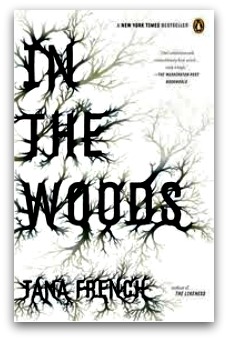
BOOKLUST, WANDERLUST: Tana French’s Dublin Murder Squad series is made in the shade for expats and Third Culture Kids

Booklust Wanderlust Collage

Left: Oleh Slobodeniuk (CC BY-NC-SA 4.0); right: Beth Green (her own photo).

Today we welcome brand new columnist Beth Green to the Displaced Nation. An American who lives in Prague, Beth is an intrepid traveler and voracious reader, who mixes booklust with wanderlust in equal measures. In other words, she has the perfect background for reviewing recent book releases on behalf of international creatives. Hmmm…but will we enjoy her reviews more than the actual works?

—ML Awanohara

Thanks, ML! Displaced Nationers, for my first column we’ll be plunging into the world of crime fiction in which a city plays a major role. As I’m sure you know, many popular crime novels are set in Los Angeles, New York, London, or Chicago, where that setting is as important as the crimes committed there.

So, let me introduce another city with an underbelly you might enjoy: Dublin.

In contrast to the shamrock-and-Guinness tourist propaganda, Dublin can have a grittier, noir aspect, at least in the hands of skilled writer Tana French.

If you’re looking for a nice read where setting bolsters plot, and where some of the themes related to the experiences of those who lead the international creative life, French’s series about the Dublin Murder Squad is a fine place to start. The series, currently consisting of four books, features the members of Ireland’s fictional homicide unit, each of whom is given narration duties for one of the books—a device by which we constantly get new perspectives on the other detectives in the team as well as a chance to see the Irish Republic’s capital city through a new pair of eyes.

Various Dublins

For example, when the narrator is an experienced cop who was born to a poor family, the city doesn’t get a glossy treatment. He describes, with equal honesty, the run-down parts of town where members of his family live and the middle-class suburb where his ex-wife now resides.

Another detective, who has lived abroad, describes Dublin with more of a tourist’s eye when it’s her turn to narrate a novel.

Yet another is obsessed with appearances; and the fourth alternately seems to love and hate the city.

Cultural challenges

Though born in the USA, Tana French grew up as a Third Culture Kid. Her father was a development economist, and she spent her childhood in Ireland, Italy, the USA, and Malawi. She went to university, and ultimately chose to settle, in Ireland. Perhaps reflecting this early experience, French has each of her main characters navigate some kind of cultural shift in addition to playing his or her role in the solving (or making) of a murder.

IntheWoods_cover_pmIn the Woods is French’s debut, Edgar-winning novel. The action centers on homicide detective Rob Ryan and his partner, Cassie Maddox, both of whom feel culturally conflicted. Ryan, who grew up in the same village he must now investigate, was sent away to school after a horrifying childhood experience. He returns to Ireland as an adult but retains a carefully learned prep-school accent and manner of dress that marks him as an outsider even while standing in front of his childhood home.

Maddox, on the other hand, spent part of her childhood with relatives in France. She speaks French fluently and readily adapts to new surroundings and diverse situations. While this chameleon-like quality often comes in handy, it also gives her a sense of alienation in her home country. As Maddox says in The Likeness, the next book in the series:

I take after the French side. Nobody thinks I’m Irish, till I open my mouth.

Love of disguises

TheLikeness_cover_pmIn The Likeness, Maddox narrates the story of how she must go undercover impersonating someone—a foreigner, it turns out, who in turn is impersonating an undercover role (that of a college student) Maddox had previously assumed.

Controlling these layers of identity becomes intoxicating to Maddox (and to the reader, I might add) while also putting her career, and that of her superior officer, Frank Mackey, at risk.

Reading The Likeness, I was impressed by how much detail French provides to show that Maddox undergoes a believable transformation.

The domestic expat

In French’s third book, Faithful Place, Maddox’s boss, Mackey, gets his chance to prove himself in navigating the shifting subtleties of Irish culture and society.

Set in an area of Dublin known as The Liberties— not far from the tourist highlights in terms of distance but miles away in terms of economic progress and commitment to law and order—Faithful Place requires Mackey to return to the home he grew up in and attempt to solve the disappearance of his high school sweetheart, who he had always thought simply dumped him.

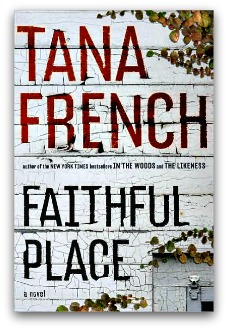
FaithfulPlace_cover_pmThough Mackey is thought of as down-to-earth and street-smart by his colleagues (one of the joys of the Dublin Murder Squad books is seeing different characters from inside and out over the course of several books), his time as a cop has not endeared him to his family or neighbors. He also married “up”, and there’s a great minor plot line concerning his decision to introduce his young daughter, Holly, to his “lower-class” relations.

At the beginning of the novel, Mackey says:

Both Jackie and Olivia have tried hinting, occasionally, that Holly should get to know her dad’s family. Sinister suitcases aside, over my dead body does Holly dip a toe in the bubbling cauldron of crazy that is the Mackeys at their finest.

No safe harbors

Broken Harbor_cover_pmIn the latest book in the series, Broken Harbor, a minor character from Faithful Place, Mike “Scorcher” Kennedy, takes the lead in investigating a gruesome crime committed in a rundown (yet half-finished) housing development on the same site his family used to vacation when he was a child.

Kennedy introduces the housing site to us as follows:

I used to know Broken Harbor like the back of my hand, when I was a skinny little guy with home-cut hair and mended jeans. Kids nowadays grew up on sun holidays during the boom, two weeks in the Costa del Sol is their bare minimum. But I’m forty-two and our generation had low expectations.

Why French speaks to international creatives

Though common plot and character threads hold a detective series together, there’s always a danger the author will fall back on the same formula to help her main characters solve the crimes in question. French succeeds in weaving common themes throughout the four books while also treating these themes afresh in each work. Most excitingly for us expats, she visits and revisits the feeling of being out-of-place in a culture (or subculture) not your own as well as the clashes that can occur when working with someone from a different background. Another favorite theme of hers, which also aligns with some expat experiences, is the stress of being evaluated on one’s exterior appearance.

But one of the most important common themes in Broken, Faithful and Woods is the power that a special place from one’s childhood can have—to which French’s fellow ATCK readers can surely relate. In Woods, Ryan must solve a crime in the very forest a crime was committed against him as a child—a crime he cannot remember but desperately wishes he could. In Faithful, Mackey discovers the ties to the past can last fast and strong, even years after he thought he’d broken them. And, in Broken, Kennedy’s memories from his childhood make the seaside scenery both delightful and sad, while the importance of the spot to the victims is equally powerful and alluring albeit for different reasons.

Moreover in Likeness, perhaps my favorite of the series so far, the main character doesn’t return to a place that’s important to her, but it’s just as important for her to realize that she—like the victim—doesn’t have a particular place on Earth to call her own in memory or deed.

French’s next novel, The Secret Place, will continue the Murder Squad series but with a new set of protagonist detectives drawn from the supporting characters of the first four novels. It comes out in August.

* * *

Thanks, Beth, for such a fascinating column! I felt completely transported to the noir underbelly of Dublin. BTW, I noticed that in an interview with French that is posted on Amazon, she says she can’t imagine herself setting her books anywhere other than Dublin as she knows the city like the back of her hand. Hard to imagine she started life as an American! And I must say, her crime series sounds like perfect summer reading. What do others think? Have you read French, and if so, do you concur that her books would suit expats and TCKs?

Beth Green is an American writer and English teacher living in Prague, Czech Republic. She grew up on a sailboat and, though now a landlubber, continues to lead a peripatetic life, having lived in Asia as well as Europe. Her personal Web site is Beth Green Writes, and she is about to launch a new site called Everyday Travel Stories. To keep in touch with her in between columns, try following her on Facebook and Twitter. She’s a social media nut!

STAY TUNED for the next fab post!

If you enjoyed this post, we invite you to register for The Displaced Dispatch, a round up of weekly posts from The Displaced Nation, with seasonal recipes, book giveaways and other extras. Register for The Displaced Dispatch by clicking here!

Related posts:

TCK TALENT: Cathleen Hadley, Porteña at Heart and Artist by Calling

Cathleen Hadley Collage

Cathleen Hadley in the transit lounge nervously awaiting her son’s arrival from Afghanistan, taken by her husband, Roger.

Elizabeth (Lisa) Liang is back with her monthly column about Adult Third Culture Kids (ATCKs) who work in creative fields, Lisa herself being a prime example. A Guatemalan-American of Chinese-Spanish-Irish-French-German-English descent, she has developed her own one-woman show about being a TCK, which was the closing keynote at this year’s Families in Global Transition (FIGT) conference.

—ML Awanohara

Greetings, readers! My guest today is Cathleen Hadley, my fellow ATCK author in the anthology Writing Out of Limbo: International Childhoods, Global Nomads and Third Culture Kids. Cathleen grew up in South America and the USA; she is a visual-turned-conceptual artist now living in Oviedo, Florida.

* * *

Welcome to The Displaced Nation, Cathleen. I understand that as the US-born TCK child of American parents—a Foreign Service dad and a homemaking mom—you lived in the United States (Washington, DC and Maryland), Venezuela, and Argentina before enrolling in Hartford Art School, part of the University of Hartford in Connecticut, and starting your adult life back in your “home” country. Recalling these many transitions, do you have a place and a time where you felt happiest, as in least displaced?
I had a happy childhood in Maryland, but of all the places I lived while growing up, I liked Buenos Aires the best. BA was like a first love; I had come to it fresh, and found it fascinating. It gave me the freedom to explore, discover joy in my life and youth, find myself in the arts… The depth of my feelings for this city are perhaps best summed up in my reaction to the first book I read by the Argentine writer Jorge Louis Borges (who was a living celebrity at the time), his short story collection Labyrinths. I likened myself to one of his halls of mirrors, and felt as though I lived in his circular time travel of art: prose to dreams or dreams to canvas and so on.

Was it an adjustment coming back to the U.S. after such a heady experience?
When I left, I carried as many things Argentine as I could. I had a lot to relearn. In BA, for example, I was courteously late for all appointments, but that was unacceptable in the USA. I had forgotten that if a class started at 8:00 a.m., I should arrive 15 minutes earlier or at least be on time. This reset to my inner clock was harsh. I still carry the music of the language spoken with soft “che” sounds. It grates on my ears to hear the City of Good Airs mispronounced.

But I presume you enjoyed attending art school?
My first art school: the smell, lighting, and echoes in those rooms resonated with my awareness of being in a circle of like-minded souls. Each project was an awakening, a revelation of inner potential.

Becoming a tourist in her own country

Limbo_coverIn your essay in the anthology Writing Out of Limbo, called “Artist in Transit,” you write about the difficulties of repatriation. I can relate! Eventually, you married a U.S. Navy officer and the pair of you ended up living in several different states.
After years of meeting Germans, Indians, and other assorted nationalities who congratulated me on my awareness of the culture of others but admonished me for my lack of knowledge about my native land, I decided that the Navy could serve as my passport to the United States—I would follow my husband, Roger, in his career. I particularly enjoyed being stationed in the Pacific Northwest, our final destination while he was active Navy. It offered the combination of climate from where I grew up in Maryland (think gardening), the temperate weather of Buenos Aires, and the emerald green and mists of the Indonesian Islands.

How did moving to different states compare to your earlier experience of moving from country to country?
The experiences were not dissimilar. Each place we lived in the United States had a different routine and a distinct local culture. Living in Ridgecrest, California (the Mojave Desert) was vastly different from living in San Diego—and that was within the same state! The Navy culture and traditions—those we carried with us everywhere. And having a child, a son, rooted me in life/home.

And now you live in Florida?
Now I am in a place that was not on my map—Florida, where I moved to be near my parents. Roger and I are rooted here by necessity, by the roof over our heads, his job, and my disability (chronic back pain).

I’m so sorry to hear about your back pain. That would be hard for anyone to endure, but especially an artist and a traveler! Going back to your upbringing: are you like many of us TCKs in that you tend to gravitate towards people who have similar interests and perhaps similar cross-cultural backgrounds? (And of course it’s not a given we’ll become fast friends…)
Identifying with people from my own culture is an ongoing process, and to this day I often find myself failing when making an effort to blend in. I suppose I am happiest with my dear old friends from my traveling TCK days and with those Navy folks from my ATCK days. And I was drawn to you, fellow author—Limbo brought us together because of the “resonance” we find in each other’s stories. Though we’ve never met in person, I am certain that if we did, we’d be comfortable and familiar with each other.

“Painting is silent poetry.” — Plutarch

Something that resonated with me from your Limbo essay was your description of how you behaved on home leave during your adolescent years: “I began wearing a mask, holding back information, or my true stories and feelings.” I gather you found ways to express yourself through your art, as I did through acting. Are there particular art works of yours that express these feelings of transience or loneliness or instability—and what about the freedom, curiosity, and love of travel you’ve also experienced?
Yes. I can share several examples:

ch_arrival

“Arrival,” by Cathleen Hadley

I created this painting, “Arrival”, a cleaned-up version of which was used on the cover of Limbo, when imagining what my son would see when serving in Afghanistan. That was a speechless, visual time for me. I wanted to paint endless versions of the same horizon until he came home.

"Phantom in the Woods," by Cathleen Hadley

“Phantom in the Woods,” by Cathleen Hadley

Here I painted myself looking like a phantom standing in a dark and gloomy woods, which symbolized the closed-in feelings I had about transience, loneliness, and instability. The ghost is passing through the landscape of an imaginary world because “place” did not yet exist.

CH_Bug Quilt

Bug Quilt, created by Cathleen Hadley for her son, Alan.

I asked my son to pick out whatever quilt pattern he wanted and I would make it for him. Of course he picked one that required a complicated technique called appliqué, which requires attaching small pieces of fabric to a larger piece. It was way out of my league—not on my list of quilting goals. But making Bug Quilt represented my love for him and my husband, and what it took to make a home for all of us.

What sort of artwork do you find yourself doing now? And is it influenced by any culture(s) and/or by your peripatetic upbringing?
Today, I am a conceptual artist adapting by necessity. I had worked with many wonderful local artists—but had to give that up in 2012 due to my recurring back pain, which influences the mediums I can and cannot use. For one year—as I sat on my terraced porch—with a view over trees directly across from where I sat, I took photos of the sunrise and the changing clouds. That view became my canvas. It was the most accessible art I had at the time. I call it the cloud photo series:

Three of the photos in C Hadley's "cloud series."

Three of the photos in Cathleen Hadley’s “cloud series.”

Today’s painting are these words on paper:

Grey mountain, Green grass. Yellow sky. Blue water.

Time to open those boxes?!

I imagine that due to your back pain, you can no longer travel as you used to. But do you still have the ACTK’s “itchy feet”?
I have worse than itchy feet. How about itchy underworked imagination? Some days I’ll move wall hangings, rearrange the photos on display. Other days, it’s the furniture, or the books…anything that isn’t nailed down. My poor husband! For the first time, I am focusing on “place”. What would I do, what will I keep, to make this place more than a temporary home? As far as travel goes, the urge to travel and live elsewhere remains, but I am becoming a person who wants a home base as well. I consider myself to be in the transit lounge of my life. When we relocated to Florida, I became homesick for the first time for the Pacific Northwest. I am over that now.

Are you working on a new art project or projects?
I am in a period of transformation. From years of having to change or make do, I recognize it as a moment before something new emerges. It’s a slow and alone time and I hope to use it wisely (well). I am feeling remarkably undefined—and that is okay. I am making an art of managing expectations, trying to lose some of my structured behavior and let things unfold. Find my place and be satisfied. Not every day has to be an answer to an existential question. I am on a quest to be a homemaker—lay down the past and make a homey home. A home as a place to speak from, somewhere to simply be. Time to open those boxes!

* * *

Thank you, Cathleen. I do hope we get the chance to meet in person some day! Readers, I hope you’ve enjoyed getting to know Cathleen through this post. Please leave any questions or comments for her below.

STAY TUNED for next month’s fab posts!

If you enjoyed this post, we invite you to register for The Displaced Dispatch, a round up of weekly posts from The Displaced Nation, with seasonal recipes, book giveaways and other extras. Register for The Displaced Dispatch by clicking here!

Related posts:

For this globe drifter and Adult Third Culture Kid, a picture says…

Rachel Kanev Collage

Canon zoom lens; photo credit: Morguefiles; Rachel (right) with her friend Sara experimenting with make-up and photography with the help of a bottle of wine (or two?) and some props (photo credit: Rachel Kanev).

Welcome to our monthly series “A picture says…”, created to celebrate expats and other global residents for whom photography is a creative outlet. The series host is English expat, blogger, writer, world traveler and photography enthusiast James King, who thinks of a camera as a mirror with memory. If you like what you see here, be sure to check out his blog, Jamoroki.

My guest this month is 24-year-old Rachel Kanev. She has a Bulgarian father and German Jewish mother but grew up in England, where she studied French and Chinese languages. She feels she got “…caught somewhere in between” these many cultures:

With my Jewish nose, Bulgarian skin and English accent, I at once belong to British, East German, Bulgarian, Jewish, French and Chinese cultures and yet to none of them at all.

Her grandmother, by contrast, lived in Berlin for decades but was more English than Tetley tea.

Indications of Rachel’s escalating identity crisis are borne out in the images that bombard you upon reaching her engaging blog, Global Drifting, in which she says she is drifting across the globe in hopes of stumbling upon enlightenment…

* * *

Hi, Rachel. I’m pleased your globe-drifting has taken you to the shores of the Displaced Nation, which gives us the opportunity to discuss your photo-travel experiences. For one so young you’ve travelled a fair bit, but where were you actually born?
I was born in my mother’s hometown of Berlin, at the traffic lights on the way to hospital. My mother said I looked like a hedgehog that day, and my family still calls me Igel (“Hedgehog” in German). A few months later, the Berlin Wall came down and one year after that, we all moved to England.

So you were a Third Culture Kid in Britain. When did you spread your wings to start travelling?
My nursery and primary school classes were filled with international children. Eugenia—a Spanish girl from Madrid with long black hair and a passion for witchcraft and the Greek goddess Athena—soon became my best friend. In the momentary way that often strikes a child, I was devastated when she left me to return home for good. So, at the tender age of nine, I boarded a plane alone, in my size 1 shoes, to visit Eugenia in Spain. As I began my first solo journey, I experienced a thirst for discovery, which, as yet, has not been quenched. Since that first adventure, I have visited Italy, Holland, France, Austria, Switzerland, Réunion Island and China. I plan to step (in my now size 5 shoes) into Morocco and perhaps Israel this coming summer.

What do you love so much about travel?
I love travel because everything is new and unknown; we share no past and perhaps no future with the things we see and people we meet. The errant wanderer therefore has no choice but to revel in the present.

Will I ever get over the pull I feel to both of these places?

Despite your age, I think I can put you in the category of seasoned traveller. Tell me, what inspires your decision to travel to particular places?
My inspiration comes partly from a love of languages and partly from the idealistic images of France I painted in my head when watching French films and listening to French music, which I did while revising for my exams at university. Aided by the amazing Erasmus, that towering figure of the Renaissance, I had taken a university year abroad in the island paradise of Réunion, near Africa. It’s a French overseas department so qualifies for the European Union’s Erasmus Programme, which finances students to spend up to a year of their university courses in a university in another European country. But it wasn’t until after finishing university that I had a chance to visit France itself. I meandered through southern French villages like an aimless hippie, reveling in its rural chic.

I understand you also have a passion for China?
Chinese was my third language at university. After graduating, I remained in England saving pennies as a waitress to finance spending a year in the land of silk. I lived in a city about an hour from Beijing.

I’m curious: where are you right now and what are you up to?
Right now I’m back living in my English hometown of Cambridge, selling nutritional products to vitamin-mad French and German customers—and saving up for my next Chinese/Moroccan/Spanish/Israeli adventure this summer. As I look out of the window, I am visualizing being there already, far from the Land of Vitamins C and D!
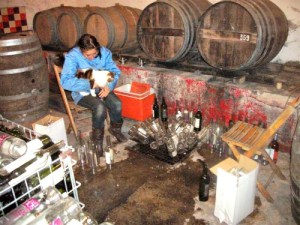
RK_SouthofFrance

No use crying over spilled wine! Rachel in the cellar of a now-defunct winery near Perpignan, France; photo credit: Rachel Kanev.

Hmmm… I think I detect something of the entrepreneur in you, alongside your intrepid traveller’s spirit! And now let’s have a look at a few of your favorite photos from your travels to France and China.
Sure! I took this first photo in a wine cellar in a small hamlet near Perpignan, some way off the coast of southern France. I’d been helping out, but it was late December, and there was very little work left. Besides, the winemaker, whose name was Bernard, had gone bankrupt due to the stresses of organic farming. Our main task for the day, as his helpers, was to pour bottle upon bottle of wine down the drain as he looked on bemoaning the demise of the modern world. It proved a good way to get skillful with a corkscrew!! And I think poor Bernard appreciated our efforts quite a lot. Just think if he’d drunk all that wine in his cellar, it would have sent him spiraling into an even deeper fit of depression…
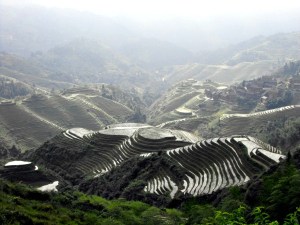
RK_dragonriceterraces

China’s Longji (Dragon’s Backbone) Terraced Rice Fields are so named because of their resemblance to a dragon’s scales; photo credit: Rachel Kanev.

The next photo provides a glimpse of the glorious Dragon rice terraces of Longshen, in China’s Guangxi province. Amazing terraces stretch as far as the eye can see. I visited some years ago and remember being in awe at the combination of nature’s beauty and the skillfulness of the human hand. I had quite an adventure ambling through the fields with two of my Chinese friends. We got lost and at one point envisaged spending a cold night cuddled up to the cows. In the end we reached our hostel, at the top of the terraces, by nightfall. I returned again last year and was saddened to see that the beauty of the fields has been marred by the greedy hand of tourism. Huge plastic cable cars now transport visitors to the top, and the local villagers are paid to dress in traditional clothes.
RK_AnotherBernard

A French farmer, another Barnard; photo credit: Rachel Kanev.

Last in this series we have another Bernard who stumbled into my traveller’s path. This Bernard is an 80-year-old farmer with whom I lived on my own for a week. His farm is an hour away from the nearest town and is completely self-sufficient. He grows his own organic vegetables and was fit enough to hack up the ground with a pickaxe when the underwater pipes burst (ironically, I had left the home of Bernard number 1 because his pipes had burst and the water system needed to be repaired, only to be faced with more burst pipes at the home of Bernard number 2!).

I love the first photo just because it looks as though you’ve broken into someone’s cellar and are drinking all the wine!! The dragon terraces appear so surreal to me because they are so different to the flat rice fields of Thailand, where I live. I wish I could see them one day. I know you take a lot of photos and these next four, I believe, have a special significance for you. Can you explain?

Not all who wander are lost…

The following is a photo I took of a photo of Bernard number 2, which was taken some fifty years ago, when his newly polished army boots took their very first steps away from the small village on the outskirts of the Pyrenees, where he was born. He bid farewell to the farm he’d grown up on and to the parents who’d raised both him and the thriving trees and crops that had formed the backdrop to his childhood. By the time I encountered Bernard, nature had outlived his parents but their legacy remained. He is now a beekeeper and organic vegetable farmer, tending to the very same trees and plants that his father and his father’s father had cared for. Though he has no human family, the trees you see in my other photo of Bernard (above) appear to me to be his forefathers; they are equally his children.
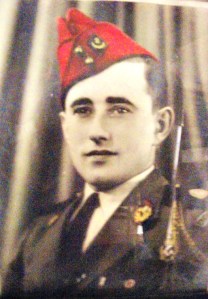
Bernard as a young man

The French farmer Bernard as a young soldier; photo credit: Rachel Kanev.

The next photo was a fluke as I managed to capture an ad for Longines watches showing Kate Winslet just as the sun was setting. In that fleeting instant, one can see Shanghai’s varied transportation, high-rise buildings and red lanterns—that curious amalgamation of Western modernity and Chinese traditionalism that is everywhere around you in the city.

RK_ShanghaiSunset

A British beauty, a Swiss watch and a Shanghai sunset; photo credit: Rachel Kanev.

Cambridge is my home town and I think of it much like a family member, having watched it age and evolve just as it has silently witnessed me grow and change. I love its grandiose architecture, endless greenery, and the way winter and spring intertwine in front of the University’s palace-like structures that are fit for if not a queen then the rulers of academia, to which I never belonged.

RK_CambridgeUK

The dreaming spires of Cambridge; photo credit: Rachel Kanev.

Here my sister explores the labyrinth-like forestry of a park near where we live in Cambridge. It has amazing multi-coloured plants I have never seen anywhere else before and huge trees that watch over you like silent giants. I like this photo because she looks like Alice in Wonderland with her long, thick flowing locks!
RK_SisterinPark

The great outdoors near Cambridge, UK; photo credit: Rachel Kanev.

Is photography sometimes a moral decision?

I love your explanations as they show us the profound effects a picture can have on its creator, something the viewer can never fully appreciate. Tell me, do you ever feel reserved about taking photos of people, particularly when they are conscious that you are doing so?
For me, the morality of taking photos of strangers has always been ambiguous. I think of it whenever I see photos of human suffering. I believe I have the right to use my camera to record the world but without intruding on it. At what point does the power of images and the need for education and understanding through the push of a button and flash of a light become intrusive and affect the lives of others in a negative way? I’ll give you an example from my own experience. The Western media has focused almost exclusively on China’s explosive economic growth when in fact 1.6 million people (11.8 percent of the population) still live below the poverty line. When taking the train, part of me would like to photograph the dirt-covered, barefooted children asleep on newspapers or the train door frozen from the inside as passengers are left to deal with the icy temperatures of the North (-37°C). But feeling intrusive, I refrain.

Do you also feel self-conscious in Asia?
It’s difficult being subtle, given the colour of my hair and skin, and the stamp on my passport. Noticing me walking the streets of China, many Chinese will assume, quite rightly, that I am Western but quite wrongly that I must therefore have dollar bills rolling from my body like a central bank printing press. Often I do not wish to fuel their prejudices by whipping out a digital camera, however small, before their eyes.

As a resident in Thailand, I can empathize with those views, especially the general Asian misconception that all Westerners are rich. Although this can be annoying, I do believe these views are changing for the better, as the younger generation becomes more socially aware through travel and better education. Now let’s turn to the technical stuff. Some of our readers may want to know what kind of camera and lenses you use.
I have a small Samsung camera that fits neatly in the palm of my hand. It’s nothing fancy and often leaves something to be desired in terms of quality, but it was a birthday gift years ago and has sentimental value, having been my only travel partner across unknown lands. Whatever it lacks in lens quality, Windows Photo Gallery makes up for in magical editing power!

Finally, do you have any advice for wannabe photographers who are traveling or living abroad?
Wander through villages, peel garlic with a farmer, shake hands with a prince, run through jungles, leap into waterfalls, swing across the rainforest wilderness and lose a leg to the marble rocks—see the world and allow the world to be seen. Travel, live, eternalize what you see with a photo.

Great non-technical advice, Rachel, that’s right up my street! I’d like to thank you for taking the time to tell your fascinating story in this interview.

* * *

Readers, what do you make of Rachel’s experiences and her photography advice? And do you have any questions for her on her photos or her travels? Please leave them in the comments!

And if you want to know more about Rachel Kanev, don’t forget to visit her blog, Globe Drifting. You can also follow her on Twitter or even shoot her an email.

(If you are a photographer and would like to be interviewed by James for this series, please send your information to ml@thedisplacednation.com.)

STAY TUNED for next week’s fab posts!


If you enjoyed this post, we invite you to register for The Displaced Dispatch, a round up of weekly posts from The Displaced Nation, with seasonal recipes, book giveaways and other extras. Register for The Displaced Dispatch by clicking here!

Related posts: