The Displaced Nation

A home for international creatives

Category Archives: Just for Laughs

Ghoulies, ghosties, long-leggedy beasties, and expat horror stories that go bump in the night

Welcome to October in the Displaced Nation —  a month of night terrors and gruesome tales, all with a global spin.

While most us regard telling horror stories round the campfire as just a bit of harmless fun, some unfortunate souls find the experience too close for comfort. Many global travelers, when they first embark upon an expat lifestyle, see the change as a way to escape past events. And why not? New surroundings can mean a chance to reinvent yourself, to live the dream.

Sadly, as these news stories attest this week, the dream can sometimes become a nightmare:

  1. A 41-year-old French businessman in Dubai is on trial, accused of holding a woman prisoner and using white magic to persuade her to marry him;
  2. A British man in Turkey was convicted of murdering his Russian wife after he discovered she used to be a man;
  3. A Thai woman plundered her British husband’s bank account to pay a hitman to kill him;
  4. A British expat in Spain drowned in the freak floods last week.

The last incident seems particularly sad in its irony: leaving rainy Britain for sunny Spain, only to perish in Spanish floods.

Often underlying the media stories such as these is the insinuation that, had these unfortunate people never strayed from their homelands, the situations wouldn’t have arisen. True enough in case number 1 — it’s difficult to be accused of practicing white magic in France.  But the others? They could happen anywhere.  Homegrown horror stories are every bit as bad as those cultivated abroad.

Although — thankfully — most of our misfortunes are not as extreme as the examples above, we’ve probably all had moments when we’ve thought, “This wouldn’t have happened if…” Yet how helpful is that train of thought, really?

So, to travel or not to travel? To take risks at home — or abroad? If you’re asking this, you’re already halfway there. Perhaps at this point you should turn to C.S Lewis’s The Magician’s Nephew,  where Digory and Polly have found themselves in a strange world, in front of a mysterious bell and hammer bearing the following message:

Make your choice, adventurous Stranger;
Strike the bell and bide the danger
Or wonder, till it drives you mad,
What would have followed if you had.

Have your travels brought you regrets, or can you only regret the things you haven’t done? Take part in our poll!

If you enjoyed this post, we invite you to register for The Displaced Dispatch, a round up of weekly posts from The Displaced Nation, with seasonal recipes, book giveaways and other extras. Register for The Displaced Dispatch by clicking here!

Related posts:

Image: MorgueFile

TRAVEL YARN: Two madcap Indonesian ladies in weird & wonderful Japan (2/2)

Japan — the country that many Westerners have likened to Lewis Carroll’s “wonderland” for its quality of wacky unpredictability. But what about for other Asians — do they feel as displaced and disoriented there as we do? Our very first Random Nomad, Anita McKay, ventured into the Land of the Rising Sun for the first time this summer, in the company of another Indonesian, P, who had been there once before as a student. This is Part 2 of the pair’s adventures. (See also Part 1.)

After Tokyo and Kyoto, P and I headed to Kobe — with Kobe beef as our main target. We’re Indonesians, remember? Which means we’re always looking forward to our next meal.

Gluttons for gourmet food

Our hotel in Kobe had booked us a table at Mouriya, a restaurant that prides itself on serving superior quality beef from the Kobe Cow and the Tajima Cow. Mmmm…

The meat was really delicious, but not long afterwards, I was craving sushi again. Fortunately, I was able to indulge in some serious sushi eating one last time with my blogging buddy from Yokohama, whom we met on our way back up to Tokyo. She and I went out for a meal at Kyubey, a high-end sushi restaurant in the Ginza. (P couldn’t join as she actually had to work in Tokyo for her Indonesian company for the last two days of our trip.)

Kyubey, which is actually two restaurants across the street from each other, doesn’t take bookings and always has a long queue. Luckily, my friend and I were able to get a table — and, to our delight, the chef had rather fluent English.

He patiently explained to us about the fish we were eating. One particular sushi had to be held with chopsticks in a certain way and nibbled at from the side, not the front.

We told the chef that both of us weren’t too keen on tuna, as the tuna we’d tried had been chewy or smelled too fishy — so we preferred salmon instead. He smiled and then put some tuna on our plates and told us to try it. We soon realized that this might be the best thing we’d ever eaten — melted like butter in our mouths.

Our nine-course lunch, which included eel (unagi), tuna, scallop, and squid, cost only about AUD 50 (around the same in US$). I would happily go back to Kyubey again and again and again.

P, upset at being stuck in the office while my friend and I were feasting on sushi, insisted that we go to Tsukiji market on our last morning in Japan. We got to the market just after 6:00 a.m. — but by then had already missed the tuna auction.

Still, we took a good look around at all the weird and wonderful sea creatures for sale, and then decided to have a sushi assortment for breakfast. While at the sushi restaurant, I discovered that different parts of the tuna are sold at different prices. I also came to realize that tuna costs 2-3 times more than salmon. Remembering what I’d told the chef at Kyubei about salmon and tuna, I think he must have been laughing at us!

Sex (and hugs), please, we’re Japanese!

Our first night in Kobe, P and I had wandered around looking for a place to have a drink after dinner. It was only 9:00 p.m., but outside nearly every club were girls in miniskirts handing out pamphlets.

(If guys, not girls, were standing outside the clubs, it was to advertise that “go go dancing” was on offer. Hmmm…is that a euphemism?)

We passed one big place claiming to be an Arabian club (actually, the building did have a Middle Eastern look), with a big banner of three Japanese girls dressed as nurses and “A Whole New World” blasting loudly.

We passed a couple who looked as though they were in their mid-50s and had had too much fun too early. The lady was leaning against a tree and wrenching; not exactly the picture of elegance!

We decided just to go back to our hotel instead.

Later, when we joined my blogging buddy for some shopping at the Yokohama Red Brick Warehouse, we rested over coffee as she regaled us with some stories she’d collected of strange and rather lewd behavior engaged in by Japanese men.

And then, as if to illustrate her story, something rather creepy happened. Ever the snap-happy tourist, P had decided to take a parting shot of me and my blogging buddy with the Red Brick Warehouse in the background. There was a young couple doing the same thing, who turned out to be Indonesians, sent by their companies for a training session in Yokohama.

While we were busy exchanging e-mails and phone numbers, a young Japanese man popped up out of nowhere.

He shook my hand, asked my name (in English), and mumbled something I couldn’t understand. He then walked over to my blogging buddy, repeated the same series of gestures — and then hugged her. He walked over to P and did the same thing. And then it was the turn of the young Indonesian couple.

By then, all of us had realized there was something “not right” about this guy — but as he seemed harmless enough, we waited patiently until he finished hugging the last person in the group.

At that point, he walked back to my blogging buddy and hugged her again.

I laughed a little because it seemed so strange — also because I was the only one he hadn’t hugged so felt safe.

But then, to my horror, he came back to me, shook my hand again, asked my name again, and then really hugged me and wouldn’t let go.

My blogging buddy, seeing the expression on my face, started walking away as fast as she could. The rest of us followed her. I broke free and followed her as well. As we looked back at Hugger Boy, he just waved and started laughing.

Another funny, weird, horrifying tale for my blogging buddy’s collection!

Some seriously good people watching

As our time in Japan drew to a close, I entertained myself by staring at the Frank Lloyd Wright wall in Tokyo’s Imperial Hotel, spying on a wedding procession at Meiji Shrine — and, best of all, people watching.

As I was sitting on the subway, I noticed two very pretty girls sitting right in front of me. Their hair was almost light brown (a favorite color in Japan), very long and slightly wavy (favorite style in Japan). They also wore fake eyelashes, but there was something about them that made me keep staring at them. After a few minutes I realized that their eyeballs were unusually large, more like dolls than human.

Later I consulted with Google and found that Japanese girls sometimes wear special contact lens that do make their irises look bigger. Odd…

More odd stuff: both P and I had been wondering why so many young Japanese men carry bags just like us girls. There was one guy in the subway who carried a black Dior tote bag. And if that wasn’t weird enough, I saw a guy carrying a brown city messenger bag by Balenciaga. (Google the bag and your jaw will drop, just as mine did.) Oh, and there was also a man with matching red tote bag and shoes in Bvlgari’s Il Café in Omotesandō, where P and I stopped for martinis.

Still, I did enjoy watching that particular man, who was accompanied by his two pooches. One dog kept begging from the cute girl at the next table, while the other kept demanding food from him.

Meow — or should it be nyan?!

Actually, I’m more of a cat person — so before we flew home I wanted to visit the Calico Cat Café in Shinjuku, where people can enjoy coffee or tea in the company of real cats. P still had to work so I went by myself. I didn’t even get lost!

The café has two floors and charges the guest by the first hour, then per 15 minutes. I saw a wide variety of cat breeds: Maine Coon, Abyssinian, Ragdoll, Persian, Scottish Fold, and so on. No Sphinx, though.

The café has strict rules about entering the cat area: you have to change your shoes to slippers, clean your hands with disinfectant, and not take any photos with a flash.

All of the cats seemed rather spoiled. They refused to be petted unless you gave them a snack first. A Scottish Fold named Apollo apparently thought he was the cashier, so he sat at the cashier counter, looking at us lazily.

One hour passed by so quickly that I wished I could spend at least another day in Tokyo! P, meanwhile, wished she didn’t have to work so she could experience the cat café as well.

A fond sayonara

We spent our last minutes at the airport buying Tokyo bananas and green-tea Kit Kats for friends and family back home. I was pondering about buying sake, but then all of a sudden, it was time for boarding!

P is determined to go back again, and I, too would love to go back. But as the seat belt sign went off, we looked at the world map spread in our screen, and started day-dreaming about our next adventure…

* * *

Readers, any questions or comments for Anita? Where do you think she’ll go next?!

Anita McKay is a property consultant, travel junkie, cat lover, food enthusiast. She resides in Perth with her Scottish husband but is still searching for a place called home. To learn more about her, check out her blog, Finally Woken, and/or follow her on Twitter: @finallywoken.

STAY TUNED for tomorrow’s review of an expat memoir of a cross-cultural elopement.

If you enjoyed this post, we invite you to register for The Displaced Dispatch, a round up of weekly posts from The Displaced Nation, with seasonal recipes, book giveaways and other extras. Register for The Displaced Dispatch by clicking here!

Related posts:

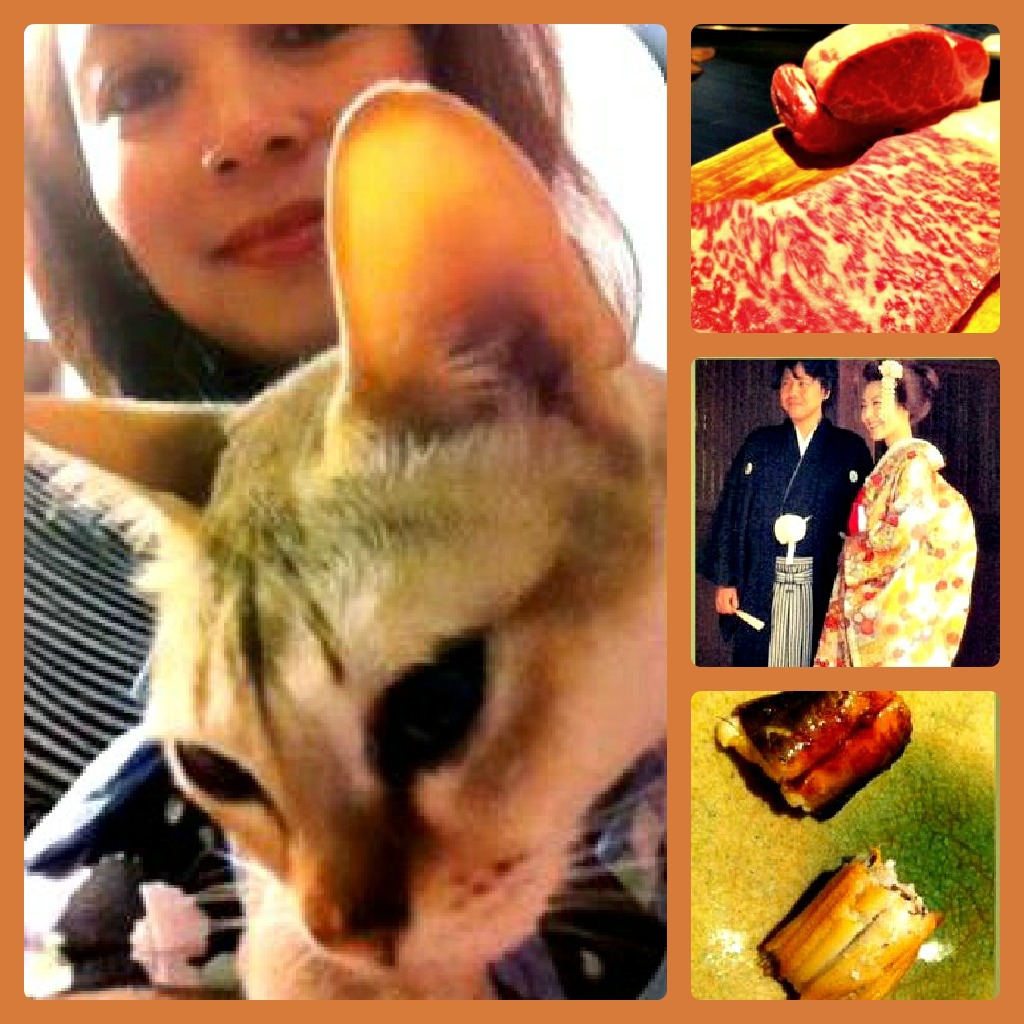
Images (clockwise): Anita McKay making a feline friend in Café Calico in Shinjuku, Tokyo; the marble-ous Kobe beef; the bride and groom at a Japanese wedding at the Meiji Shrine; and Kyubey sushi (all from Anita McKay’s extensive collection).

DEAR MARY-SUE: Can you tell me how to stomach other countries’ bizarre food obsessions?

Mary-Sue Wallace, The Displaced Nation’s agony aunt, is back. Her thoughtful advice eases and soothes any cross-cultural quandary or travel-related confusion you may have. Submit your questions and comments here, or else by emailing her at thedisplacednation@gmail.com.

Well, this month I’ve been asked to deal with your food-based queries. That’s pretty easy for this gal! I love to chow down. Not in a Paula Deen kinda way, you understand, but I sure do love a refined meal and am pretty well known on the Tulsa culinary scene.

****************************************************************************************

Dear Mary-Sue,

Fermented salted herring — how does that sound to you as a national dish? [Not great. Think roadkill cooked up in the finest Ozarks tradition sound preferable, if I’m being honest – M-S]  As an American living in Northern Sweden, I have yet to acquire the taste let alone abide the smell. However, a friend at my new church has invited me to a party where they’ll be serving surströmmingsklämma — that’s a sandwich made with slices of surströmming (the name for this fish — quite a mouthful, too, though at least it’s not fermented!) between two pieces of the hard and crispy kind of bread they love so much up here. The bread is buttered and there is a further layer of boiled and sliced or else mashed potatoes.

What to do? Do I accept my friend’s invitation or pretend to be busy “settling in”?

– Mary-Louise from Umeå, Sweden

Dear Mary-Louise,

You don’t have to pretend to be Anthony Bourdain if you don’t want to be. Look at Samantha Brown, she travels all the world and never once leaves her comfort zone or experiences something new.

Also, you’re in Sweden, not some village in the third world where they are honoring you by offering you a slice of roast anteater rump. I’m sure you won’t be insulting anyone by politely declining. Just be graceful and say you’re not big into fish.

Mary-Sue

*****************************************************************************************

Dear Mary-Sue,

I know you’re very pro-USA, but as an English expat who has just spent his first summer in the United States, I haven’t been able to get the hang of some of your summer desserts.

Take, for instance, strawberry shortcake — overly sweetened strawberries on a sweet biscuit, which should actually be called a scone. Whose bright idea was that? I guess that person hadn’t heard of strawberries and cream?

Moving right along to that traditional American Girl Scout favorite, s’mores. The chocolate and graham crackers are fine, but a roasted marshmallow — that’s OTT. Please, sir, can I have no-more?

I could go on about the American obsession with eating ice cream in a wide variety of sickening flavors, when there’s absolutely nothing wrong with chocolate and vanilla (okay, strawberry, too, if you like) — but I’ll stop there.

Here’s the thing, old girl [??????? M-S]. I would love to tell my various American hosts that nothing beats a tall glass of Pimm’s on a summer’s day, and a slice of summer pudding, but I’m guessing that wouldn’t go down too well.

Nigel of Nevada

Dear Nigel,

Old girl??! Why, aren’t you a little slice of honey pie? I’d certainly like to beat you with a tall glass of Pimms. It actually isn’t too difficult to get hold of a Pimms cup here in the land of the free. As for the rest of your letter: yeah, we like our desserts to be sweet. What a surprise!

Mary-Sue

********************************************************************************************************

Dear Mary-Sue,

I’m originally from Winnipeg, in Manitoba, Canada, and am teaching English in Korea. The other day one of my students went so far as to tell me that the reason the Korean economy has gotten strong is because they all eat so much kimchi.

I wanted to tell him that I think there’s something strange about a nation being so obsessed with what is essentially spicy fermented cabbage.

I mean, can’t they think of anything else to brag about?

– Sally from Seoul

Dear Sally,

First Mary-Louise’s problems with fermented fish and now this. I don’t know what it is with foreigners and fermentation — seems crazy to me. The Mary-Sue rule is that unless you’re fermenting something that I can make into a mimosa or margarita, then it’s best not to bother.

My hubby, Jake, is always going off to the Korean barbeque in town. If the owner is sending back all the money he makes off dear ol’ hubby, well, it’s probably that that’s keeping the Korean economy strong.

Mary-Sue

********************************************************************************************************

Dear Mary-Sue,

Oh. My. God. Do people really eat this stuff? I’m an American student staying with a British family as part of a semester abroad, and they SERIOUSLY just offered me the most foul-tasting stuff imaginable on toast. I thought I was going to spit it out. I mean, it was soooo salty! And then they presented the jar to me as a GIFT! What am I supposed to do with it?!?!?!?

– Patti in Plymouth

Dear Patti,

I’m assuming you’re talking about Marmite. I wouldn’t worry too much, it probably won’t make it past customs when you return to the land of milk and honey.

Mary-Sue

___________________________________________

Anyhoo, that’s all from me readers. I’m so keen to hear about your cultural issues and all your juicy problems. Do drop me a line with any problems you have, or if you want to talk smack about Delilah Rene.

Mary-Sue is a retired travel agent who lives in Tulsa with her husband Jake. She is the best-selling author of Traveling Made Easy, Low-Fat Chicken Soup for the Traveler’s Soul, The Art of War: The Authorized Biography of Samantha Brown, and William Shatner’s TekWar: An Unofficial Guide. If you have any questions that you would like Mary-Sue to answer, you can contact her at thedisplacednation@gmail.com, or by adding to the comments below.

STAY TUNED for tomorrow’s post by Jack Scott.

If you enjoyed this post, we invite you to register for The Displaced Dispatch, a round up of weekly posts from The Displaced Nation, with seasonal recipes, book giveaways and other extras. Register for The Displaced Dispatch by clicking here!

Related posts:


Some like it boiled: When it’s hot outside, go somewhere even hotter for vacation!

“Have a good summer!” The doctor’s receptionist hands me my receipt. “Are you going away?”

“Yes, to Florida,” I say. (Wait for it, wait for it…)

“Florida?” she screeches. In August?”

Bring quickly to the boil…

That old saying, the one about only mad dogs and Englishmen going out in the midday sun, apparently has a Northeast American variation: Only mad dogs and Englishmen go south to the midsummer sun.

On the face of it, it makes sense. Why bother to fly south when the mercury is already at 90 degrees in New England, as it has been for much of this summer?

That’s all well and good, but no one questions your sanity in winter, when you announce you’re leaving the cold February gloom to find even colder weather in which to ski. If anyone did question it, the reasoning would be: “But the snow’s better in Colorado/Italy/Switzerland!”

Simmer for 7 days…

Well — she said defiantly —  in summer, the sun and palm trees are better in Florida. Or Aruba. Or the Cayman Islands. While I love the maple and oak trees of New England in the Fall, they don’t look right amid tropical temperatures. It’s like lying on a sun lounger on an expanse of white sand, waiting for a margarita, and the waiter bringing you a cup of tomato soup instead. It’s just wrong.

“A-ha!” someone is bound to say. “But what about the hurricanes?”

True enough. Tropical Storm Isaac is right now barreling its way toward the Gulf Coast, where it is expected to reach hurricane strength. Yet the Northeast is not immune to summer storms, either. Exactly one year ago, Hurricane Irene arrived in Connecticut, downing trees and knocking out power for days. Two months later, the same thing happened again, but this time with a snowstorm called Alfred.

Now, you don’t see that very often in the Keys.

Remove from the heat…

The people who shun the roasting climes in summer prefer to go south in the colder months, and that’s fair enough. As I said in a post last Christmas, I would love to spend December 25 in a desert-island-like setting (albeit with room service.) That, however, means going farther south than good old Florida. I’ve had friends do the Disney water rides at Thanksgiving and come back home with streaming colds to prove it.

Thank you, but I’ll pass on that particular souvenir.

…And serve in July.

Perhaps this perverse determination to find somewhere hotter than my home climate stems from my nationality. I am from the country whose residents flee for two weeks every year in search of the summer that nearly always evades England.  Perhaps I am genetically programmed to be suspicious of summer’s consistency in my place of residence, imagining that it can only be guaranteed a few thousand miles nearer the equator.

The only solution to this state of suspicion and dissatisfaction, as I see it, is to move there permanently. Perhaps it would have its drawbacks: people who move to Florida or the Caribbean often say they “miss the seasons.”

Me, though, I would happily give some seasons a miss.

.

STAY TUNED for Tuesday’s post, in which Tony James Slater tells us what it’s like to be an expat writer!

If you enjoyed this post, we invite you to subscribe for email delivery of The Displaced Dispatch, a round up of the week’s posts from The Displaced Nation. Sign up for The Displaced Dispatch by clicking here!

Related posts:

Image: MorgueFile

TRAVEL YARN: Two madcap Indonesian ladies in weird & wonderful Japan (1/2)

Japan — the country that many Westerners have likened to Lewis Carroll’s “wonderland” for its quality of wacky unpredictability. But what about for other Asians — do they feel as displaced and disoriented there as we do? Our very first Random Nomad, Anita McKay, ventured into the Land of the Rising Sun for the first time this summer, in the company of another Indonesian, P, who had been there once before as a student. McKay reports on the pair’s adventures in this two-part travel yarn.

The message exchange between my travel buddy, P, and me, in May, went like this:

Me: “So have we decided where we want to go this July?”

P: “How about Japan?

Me: “Okay.”

P had lived in Japan decades ago for a student exchange program. She hadn’t been back since, and thought this year would be a good time.

I, on the other hand, didn’t really have any specific destination in mind — just so long as I could go somewhere I hadn’t been to. As I explained in my interview with the Displaced Nation, although I am from Indonesia originally, I have lived for extended periods in Aberdeen, Scotland, and in Australia. But I still hadn’t made it to Japan.

P suggested Tokyo, Kyoto, and Kobe. I added Yokohama to the list because there’s a blog buddy I wanted to meet up with. She and I had been trying to catch up forever and everywhere — UK, Singapore, and Indonesia — but kept missing each other. If I went to Yokohoma, where she is now based, surely we would finally get together?

I prepared myself for the trip by scanning some pages in Trip Advisor and the Lonely Planet guidebook. At least I would have an idea of what to do and where to go — and wouldn’t be entirely dependent on P, who speaks and reads Japanese and has lived there before so presumably knew how to get around.

Madcap traveler’s motto: Be unprepared!

When we landed at Narita Airport, I suggested that we take a taxi because it was 9:00 a.m., and I had taken the notion of a red-eye quite literally — my eyes looked red as I was still recovering from flu. I desperately wanted to have a quick nap before exploring the city.

We crossed the road, dragging our gigantic suitcases with us, and I let P speak with the men at the taxi rank. When she showed them the address of the hotel, one guy frowned and looked at us. “Tokyo?” he asked in disbelief.

We nodded eagerly. The drivers exchanged glances and apparently decided we weren’t crazy. One of them spoke in Japanese to P, who translated: “It’s 23,000 yen.”

I did a quick calculation, and almost fainted when I found out it will cost us almost 300 AUD [around the same in US$] for a taxi to our hotel.

“300 bucks??” I asked P. She nodded calmly, but her eyes couldn’t lie. She was just as shocked as I was.

“No! Cancel!” I shook my head furiously, while P apologized to the drivers. The men just laughed and pointed us back to the airport. “Take the train instead,” I think they said. “Like normal people.” Maybe they said that, too!!

Now we know why there was no one queuing for a taxi, whereas there was a long queue at the train ticket window. And we thought we were being smart!

Everyone had warned us that Japan — Tokyo in particular — is “very expensive!” The city ranks number 1 in the list of the most expensive cities in the world, while Perth, where I now live, is number 19. But really, if the taxi would cost us almost 300 bucks, what kinds of prices could we expect to find in Tokyo?

P had no memory of taxis from the airport. Years ago when she landed in Tokyo, she was picked up by a shuttle bus.

She’d also paid no attention to the length of the journey — she’d been too busy meeting and getting to know the other students. Both of us were surprised when it took almost an hour for the Narita Express to reach Tokyo Station. P had assumed it would be like Jakarta airport to the city centre (just because), and I must have skipped that page in the guidebook…

Well, at least we now knew why it was so expensive to take a taxi: the distance is more like Heathrow to London.

We just kept laughing at our silliness.

It’s food?!?!?

By the time we’d reached our hotel in Chiyoda, a quiet area near the Imperial Palace, we were both rather hungry and decided food would come first on the agenda, before tackling the first sight on our list: Sensō-ji, Tokyo’s oldest temple, in Asakusa.

Food is important to us Indonesians. We eat all the time. In Japan for the first time, I wanted to try something new: not sushi, yakiniku, donburri (rice bowl), soba, or ramen.

“Let’s try this!” I excitedly pointed at one restaurant name in the guidebook. “It’s in Asakusa and it looks…exotic enough.”

P agreed, and under the glare of the July sun we made our way to a restaurant called Komagata Dojo, only to be greeted by the sight of a rather long queue. If there is a queue, then the food must be good, we assured each other. Plus it seems as though most of the people in the queue are locals, so the taste must be authentic.

As it turned out, the restaurant is in its sixth generation of owners, and is famous for its dojo: a tiny freshwater fish like an eel or sardine, cooked in a cast iron pot.

We ordered what seemed to be everyone’s favorite, dojo nabe (hot pot), and also asked for two bowls of rice.

The waitress lit the charcoal burner in front of us, set the pot down on top of it, and told us to sprinkle the spring onions, or negi, on top of the fish.

We looked at each other after the first gulp.

“What do you think?” I asked P.

“What do you think?” she replied back.

“Well…it’s…all right. Weird.”

She nodded. “The rice is very good though.”

I can’t describe the taste. It’s rather bland for my liking, as I grew up in Indonesia, which is famous for its spicy dishes. Not just hot spicy, but lots of flavors in every dish. But dojo nabe isn’t tasteless either. Lots of soft flavors, like soy and spring onions.

When we were about to finish our lunch, I asked P how come Japanese people look so slim if, like the rest of us Asians, they enjoy eating all the time. We were thinking that their diet of raw seafood might be the answer.

“But this isn’t raw,” I pointed at the dojo. “It’s cooked. Plus the size of the rice is rather big.”

We looked around at the other patrons — and, to our horror, we were the only ones who’d seemed to have ordered a bowl of rice each! The rest of the customers were adding the spring onions to their fish but had no rice bowls.

“That’s the only thing they eat for lunch!” I hissed to P. “Spring onions and tiny fish! No wonder they’re slim!”

“No wonder the waiter asked if we wanted one or two bowls of rice,” P admitted when we were at the cashier. “I thought it was because of my rusty Japanese, but now I know because she didn’t believe two small girls can eat that much!”

Hanging our heads in shame, we slipped out of the restaurant and determined we would burn away the calories by walking to Sensō-ji temple. The temple, however, was only a few minutes’ walk away. Still, we had fun taking photos of ourselves under the gigantic red lantern at the temple gate, and looking at the stalls lining the 200-metre-long Nakamise-dōri, the street approaching the temple — selling every manner of Japanese trinket and souvenir, including yukata robes (cotton kimono), tenugui (hand towel, often used as a headband), furoshiki (rectangular cloth for gift wrapping) and folding fans. There were also local snacks for sale, of a kind I’d never seen before in my life, in every shape and color possible, in beautiful packaging.

Kyoto and the Indonesian connection

After two days in Tokyo, we took the shinkansen to Kyoto and stayed in a ryokan — a traditional Japanese guesthouse where you sleep on tatami mats. Being shoppers at heart (another trait of Indonesian tourists!), we were pleased to see that the ryokan was just two minutes away from Nishiki Market, which we saved for our last day.

At first I was skeptical. How “weird and wonderful” can the Nishiki market wares be? I’m an Asian, I’ve seen lots of weird and wonderful things, I don’t think that the Japanese can produce anything that would shock me. Well, I was wrong. From pickled eggplants to live turtles, from grilled sea-eels to rakugan (tea-ceremony sweets) shaped as sushi — every single stall was full of wonders that had me alternatively oohing and ahing, or eek-ing and yuck-ing (along with a few WOWs and OMGs).

But I’m getting ahead of myself. We ended up having a better experience in Kyoto because of making an Indonesian connection on our very first day. After encountering the tail end of the Gion Matsuri, one of Japan’s most famous festivals, named for Kyoto’s Gion district, we stopped in one of the shops in Gion, where the owner happily chatted with us in English. He knew about Indonesia’s first president (I guess because the third of Soekarno’s nine wives was a Japanese woman), and explained to me that the stuff I was buying wasn’t candy but rakugan, made of sugar and starchy powder and often served in Japanese tea ceremony to offset the bitterness of the green tea.

Arranged in a pretty box, the rakugan have the most beautiful soft colors, from baby pink to green. Each was in a floral shape, with delicate carvings on the surface — yet each was only as big as my smallest fingernail. How they could make such detailed coverings in such a small space, I had no idea.

We told the shop owner we were hoping to eat a good soba for dinner. He said to go straight ahead until we reached the kabuki theatre. Next door to that theatre is a famous soba place called Matsuba, he said.

We found the place easily (thanks to P’s ability to read the restaurant sign!), and had fantastic soba with smoked herring.

Our luck didn’t stop there. The next day, after wandering around Kiyomizu-dera, a famously beautiful temple in Eastern Kyoto, and spending a fortune buying souvenirs, cookies and ice cream from virtually every shop along the temple street, we made a quick stop at a proper store to buy sunglasses for P. One of the staff turned out to be an Indonesian. He recommended a bar not far from our hotel for a drink, where the owners are Japanese sisters but can speak Indonesian. Thanks to this advice, we ended up spending our last night in Kyoto befriending a set of Indonesian-speaking Japanese twins.

IT’S FOOD!!!

I queried the twins about where to have lunch on our last morning. They booked us into Gion Nishikawa — 2 stars in the Japanese Michelin Guide and the first restaurant in Japan that made me appreciate how wonderful Japanese food can be. The eight-course, kaiseki-style lunch cost only around 70 AUD and was served directly by the cute chef (whom P rather fancied!) from across the counter. No other Japanese food I’d had before in my life could compare to this.

The chef would tell us (in Japanese, of course) what type of dish he was putting on our plates, and which food goes with which sauce. By the fourth course, which featured three types of fish, even we were starting to feel rather full, and P decided not to finish it — she wanted to save some space for course No. 8. When the chef cleared her dish, he saw that there was still some fish left, put it back in front of her and told her to finish it! I assumed he did that because it was such a costly delicacy.

Meanwhile, I was amazed that one of the fish in the bowl was koi (carp or goldfish) — yes, koi, what people normally keep as a pet! I looked at the chef in disbelief and he only laughed at me and said (as translated by P) that of course they eat koi.

Hahaha — I still felt as though I was eating my own cat…

By the eighth course both P and I swore we wouldn’t eat again until tomorrow. Famous last words! 🙂 We’re Indonesians, remember?

* * *

Readers, do you have any questions or comments for Anita? Stay tuned for the second part of her travel yarn, when the madcap duo move on to Kobe and Yokohama, and then back to Tokyo, to be posted within the next two weeks.

Anita McKay is a property consultant, travel junkie, cat lover, food enthusiast. She resides in Perth with her Scottish husband but is still searching for a place called home. To learn more about her, check out her blog, Finally Woken, and/or follow her on Twitter: @finallywoken.

STAY TUNED for tomorrow’s interview with a hilariously funny British expat author.

If you enjoyed this post, we invite you to register for The Displaced Dispatch, a round up of weekly posts from The Displaced Nation, with seasonal recipes, book giveaways and other extras. Register for The Displaced Dispatch by clicking here!

Related posts:

Images (clockwise from top left): Japanese trinkets for sale at the famed Nakamise-dori in Asakusa, Tokyo; Anita McKay deciding that dojo nabe may be an acquired taste (at a famous Tokyo restaurant); one of the many fabulous lunch courses at Gion Nishikawa in Kyoto; one half of the dynamic duo (A) outside of the JR Station in Kyoto; the other half of the dynamic duo (P) at Nishiki Tenmangu Shrine, just outside Nishiki Market, Kyoto. All photos from Anita McKay’s personal collection.
Christmas in July & other Winter’s Tales from an expat Down Under

After sweltering through America’s hottest July on record, three of us Displaced Nation writers have been imploring the fourth, Tony James Slater, for some cooling stories from his newly adopted home of Perth, Australia.

I noticed a Christmas tree in my gym a couple of weeks ago. I wondered what the hell it was doing there, until some kind staff member — presumably on hearing me curse in the middle of the foyer — decided to enlighten me.

Christmas in July, the Aussies call it — for no apparent reason other than that most countries celebrate Christmas when it’s freezing cold outside, with snow on the ground and cards covered in penguins and polar bears decorating the mantle piece.

July is as cold as it gets in Perth. The temperature — sometimes — dips into the single digits overnight, and we wake up to a sensation overly familiar to a Brit like me: not wanting to get up because it’s warmer in bed!

Once upon a time, when I made my first visit to Oz from Thailand, all those years ago, I arrived (in my infinite wisdom) in June. At 6:00 a.m.

I had no idea Australia had seasons. From the postcards and other literature, I’d assumed it was the Land of Eternal Summer.

It was achingly cold, pouring it down with rain — and I was wearing a pair of shorts and a vest [tank top], because that’s all the clothing I owned!

I’m now super careful when advising my friends who plan on visiting: “Don’t come November to February,” I tell them. “It’ll be way too hot. You won’t be able to breathe.

But don’t come June to August either — it’ll be too cold! And all sensible Australians will be holed up inside with our mitts wrapped around a hot cup of Milo.”

Mmmmmm…. Have you ever had Milo? It’s a hot chocolate malt drink. I must say, it really hits the spot this time of year.

Storm warning!

We have our blistering hot summers, too, down in Oz. In fact, the whole country is geared around this inevitability. That may be why no one seems quite prepared for the winter.

It rains, of course — it has to, otherwise we’d be in an even worse state come summer. But no one here is quite ready for it when it does.

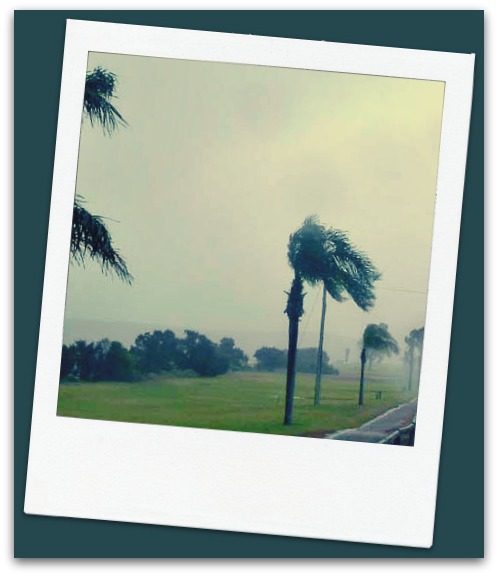
Take the Great Perth Storm of 2012, for example. Several weeks ago now, there was a severe weather warning issued. Businesses closed early. Employees scurried home, fearing what would happen if they were caught in traffic when The Big One hit. By the time it started raining, the streets were deserted – which was probably a good thing. Boy, did it rain! It rained, and rained, and the good folk of Perth cowered indoors, until…the rain stopped.

And that was it.

I honestly think half of them didn’t expect to survive it.

They were most upset when they had to drive to work the next morning, through rapidly drying puddles.

The four seasons in one day

But let’s not get carried away; to those of you fanning yourselves under an air-con unit, wishing you’d remembered to get it serviced before the heat-wave hit, I can sympathize — it’s not exactly cold here all the time.

Even in winter, the middle of each day is quite pleasant — probably what you’d call “beach weather” on most of the rest of the planet.

Charles Dickens’s description of an English springtime seems most appropriate:

It was one of those [March] days when the sun shines hot and the wind blows cold: when it is summer in the light, and winter in the shade.

Have you ever worn a hat indoors?

Perhaps because of this, the houses here are built without insulation, and without any form of central heating. Most of them have a little wood-burning stove in a corner of the family room, but that’s it — and of course no double glazing!

Houses built like this in Europe would never pass the building code, but it seems that the housing industry here just doesn’t worry about it. Yeah, sure, they’re building houses that’ll be a bit cold in winter. But the owners can always wear a jumper! Or, as frequently happens when we visit my father-in-law in his house in the Perth hills, a scarf, gloves and a beanie…

In an unheated, un-insulated house at night, there are only two things to do — and one of them doesn’t really belong on a public forum like this. The other, of course, is to wear as many layers as you can — kind of like you’re going hiking in a blizzard — and try to keep exposed flesh to a bare (sorry!) minimum.

Of course, this being winter, you can find that blizzard. Just about. There’s nothing between the bottom of Australia and the top of Antarctica, so our southern seas get a little chilly around now. We have snow-capped mountains – okay, we have a snow-capped mountain. Sometimes…

But the scene over in neighboring New Zealand is a little frostier!

In fact, my sister is there right now, training to be a skiing instructor.

And because the architecture over there is mostly derived from what we have over here…her house also doesn’t have any heating either.

All things being equal…

I’m content to be cold once in a while. It reminds me of home — just a little, in a slightly-chilled-’till-the-sun-comes-up kind of way. Not like actually being back in England — where, even though it’s summer, I think it’s colder than here… I mean, did you see that beach volleyball tournament? Only in London could they import twenty tonnes of sand and play beach sports in torrential rain…in bikinis.

Now there’s a refreshing image!

So instead of feeling sorry for yourselves over there in sweltering America, please do feel pity for us over here. After the terrible inconvenience of our slightly chilly winter, we have plenty of other ordeals to face — like Christmas on the beach!

* * *

So tell me: would you rather be here — or where you are right now? Let me know in the comments, or on Twitter: @DisplacedNation +/or @TonyJamesSlater. Now back to my nice mug of Milo before it gets cold — cheers!

STAY TUNED for tomorrow’s Random Nomad, who, too, has some stories to help alleviate the effects of the heat…

If you enjoyed this post, we invite you to register for The Displaced Dispatch, a round up of weekly posts from The Displaced Nation, with seasonal recipes, book giveaways and other extras. Register for The Displaced Dispatch by clicking here!

Related posts:

Main image:  “Polaroids” are all from Tony James Slater’s collection: The Great Perth Storm of 2012; Tony’s wife, Roo, asleep in her dad’s house in the hills of Perth (2012); Tony & Roo celebrating Christmas on Cottesloe Beach, near Perth, Australia (December 2011).

Dear Mary-Sue: Expats face tough come-down after Olympics high

Mary-Sue Wallace, The Displaced Nation’s agony aunt, is back. Her thoughtful advice eases and soothes any cross-cultural quandary or travel-related confusion you may have. Submit your questions and comments here, or else by emailing her at thedisplacednation@gmail.com.

U-S-A! U-S-A! U-S-A! That’s been the chant in the ol’ Wallace homestead these last two weeks. We took on the world and we whopped its ass — just as it should be. All very exciting — and some of those swimmers! Well, let’s just say they can come round to Mary-Sue’s pool to practice their doggy paddle anytime they want.

*****************************************************************************************

Dear Mary-Sue,

I was watching the closing ceremony of the London Olympics last night, and at one point the commentator said that it was a great tribute to British individualism and creativity. But why don’t we just go ahead and call it eccentricity? Because that’s what it is, right?

Former expat in Britain, now happily repatriated to USA

Dear Former Expat,

Hmm, if my understanding of British culture is correct, and bear in mind that I am no expert like Mary Carillo, but I don’t think there was enough cross-dressing for it to technically count as British eccentricity.

Mary-Sue

*****************************************************************************************

Dear Mary-Sue,

At the conclusion to the London Olympics, Sebastian Coe said: “Britain did it right.” But then why were the Spice Girls involved in the closing ceremony?

A happy repatriate to the USA after several years in Britain

Dear AHRTTUASYIB,

How many years were you in Britain and yet you never learned their famed sense of irony? Two weeks Mary Carillo has spent there and she has got it all sorted. Shows what you can do if you apply yourself.

Mary-Sue

********************************************************************************************************

Dear Mary-Sue,

I’ve been watching my home country, Britain, host the Olympics for the past two weeks, and now I’m really homesick. What’s the cure for this? (I’m allergic to chicken soup.)

Ben in Boston

Dear Ben,

Epcot, British pavilion. Just like being in Britain, but with actual customer service!!

Mary-Sue

********************************************************************************************************

Dear Mary-Sue,

I noticed that the great Brazilian footballer Pelé made an appearance in the closing ceremonies when Britain was handing over the Olympics flag to Brazil for the next Summer Games in 2016. As you may or may not know, Brazil will also host the World Cup in 2014. As much as I like the Olympics, in my opinion, that’s a far more important and prestigious event — even though America, my new country, doesn’t participate. Would you agree?

Pablo from Pittsburgh

p.s. Viva España!

Dear Pablo,

No.

Mary-Sue is all about those tasty swimmers. Is Ryan Lochte (yeah, he’s an idiot, I know) going to be at the World Cup? Thought not. Pelé may have been a great soccer player, but all I know about him now is that he does commercials for Viagra. Give me Lochte any day.

Mary-Sue

********************************************************************************************************

Dear Mary-Sue,

I noticed that one of the Displaced Nation writers, Anthony Windram, was criticizing the NBC coverage of the Olympics. He even went so far as to call Bob Costas the “ugly American.”

Though I now live in England, I’m sure it couldn’t have been any more partisan than what I witnessed over here on the BBC.

Wasn’t Windram just being churlish and if so, why was the Displaced Nation giving him so much “air time”?

Bob from Britain

Dear Bob,

I agree Windram is a blight on this site. I actually have to deal with him. I ask for Ryan Lochte and they send me that chump Windram. I wanted a wet athlete and they give me a wet fish. He called Bob Costas ugly, I know which one I’d rather wake up to on a cold winter’s morning.

Mary-Sue

*******************************************************************************************************

Dear Mary-Sue,

At one point during the Olympics, tensions between Kiwis and us Aussies here in the Netherlands reached an all-time high because they were winning more medals than we were. But all’s well that ends well, or at least that’s the way I and my fellow Aussies see it: we finished 10th, with 35 medals (of which 7 were gold), as compared to their 16th-place finish with 13 medals, of which 5 were gold. However, some Kiwis continue to lord it over us despite these stats. Until now, we all got on quite well. How can we repair the rift?

Ethan of Emmeloord

Dear Ethan,

Wait, Australia and New Zealand are different countries? Well, I’ll be a monkey’s Aunt!

********************************************************************************************************

Dear Mary-Sue,

Why did NBC show Russell Brand singing but not Ray Davies?

Baby Boomer in USA

Dear Baby Boomer,

As one of the 800,000 people to have experienced at first hand the debauched ways of Mr Brand, I can attest that while his whole Pied Piper aesthetic is unusual, his spindly body has an unusual sexual-voodoo pull on others. I’m guessing that Russell was awarded a gold in bedroom gymnastics by Mr Costas, and that Costas then made sure Russell was included in the final broadcast. Ray, by contrast, probably wasn’t able to be heard by the 17-year-old athletes, like Missy Franklin, who were screaming in excitement for One Direction.

Mary-Sue
___________________________________________

Anyhoo, that’s all from me readers. I’m so keen to hear about your cultural issues and all your juicy problems. Do drop me a line with any problems you have, or if you want to talk smack about Delilah Rene.

Mary-Sue is a retired travel agent who lives in Tulsa with her husband Jake. She is the best-selling author of Traveling Made Easy, Low-Fat Chicken Soup for the Traveler’s Soul, The Art of War: The Authorized Biography of Samantha Brown, and William Shatner’s TekWar: An Unofficial Guide. If you have any questions that you would like Mary-Sue to answer, you can contact her at thedisplacednation@gmail.com, or by adding to the comments below.

STAY TUNED for tomorrow’s post with some cooling thoughts for those of us in the Northern Hemisphere who, after sweltering away under the summer’s record heat waves, need a boost to get through the remainder of August.

If you enjoyed this post, we invite you to register for The Displaced Dispatch, a round up of weekly posts from The Displaced Nation, with seasonal recipes, book giveaways and other extras. Register for The Displaced Dispatch by clicking here!

Related posts:


THE DISPLACED Q: As an expat, do you ever get confused about which team to support at the Olympics?

The long-anticipated Games of the XXX Olympiad, also known as London 2012, are now in full swing. Some members of the Displaced Nation team are looking a tad bleary eyed after staying up late several nights in a row to watch their favorite events (gymnastics, anyone? or how about some synchronized diving?).

Maybe we’re getting grouchy from the lack of sleep, but we’re beginning to engage in some surprisingly heated debates — surprising given how much we looked forward to the arrival of the Games.

Or perhaps it’s not surprising given that most, if not all, of us residents have confused, hybrid nationalities…

In any event, here’s my displaced question for YOU: What if an athlete or team from your native land ends up competing with one from your adopted country?

Now pay heed, because this could be important.

I studied in Cardiff, Wales, where this sort of thing can be a matter of life and death. I’m English y’see, and while Wales may be part of the United Kingdom, it’s also its own country. For which I can hardly blame it…

Historically, Wales and England have not been the best of friends — in fact in one English city, it’s still legal to shoot a Welshman with a bow and arrow at certain times of the year.

For some reason it’s one law they just keep forgetting to appeal…

To say the English have treated the Welsh unfairly is…well, fair. We were utter bastards to them back in the day, as we were to pretty much every other civilization with which we came into contact. That’s why they all rose up and threw us out at various points in time.

Unfortunately, we haven’t learned our lesson — that infamous stiff upper lip isn’t the only national trait we’re known for. Yes, we Brits are an arrogant lot — legendarily so — and never more so than in the arena of international sport.

Luckily we’re not very good at most of it, or we’d have been involved in even more wars.

The art of living dangerously in a country of sore losers

But the Welsh, alas, aren’t much better; on the contrary, they have a horrible habit of being even worse than we are. Rugby is supposed to be their game, yet we English keep beating them at it. And if you’re the only English bloke in the immediate vicinity shortly after such a humiliating defeat occurs…well, the Welsh aren’t known for having a magnanimous, forgiving nature. They are known, rather, as barbarian tribes so unruly that even the Romans couldn’t subjugate them.

I never once tried to subjugate anyone, but in my three years at university I was on the short end of a serious subjugation every time the Welsh lost to England. Which was depressingly often.

So, herein lies the dilemma: You’re an expat. Your birth-home team is playing your adopted-home team. Do you:
a) Cheer for the local team to curry popularity — even if you’re dying inside with every goal scored by the locals?
b) Cheer for your native country’s team to show character, and honesty, and that you’re not afraid – even if, inside, you are actually terrified at what the locals may do to you afterwards?
c) Find a nice, comfy hole to lie in for a week or so until all the excitement dies down? (Note: Not for heroes. I’ve been known to adopt this tactic.)

Both a) and b) are seriously risky strategies. When questioned by a drunk and excitable Welshman, approximately five feet tall and about the same girth — along with ten of his veteran drinking buddies — it was always something of a lottery. Declare for my homeland, and pray I was in better shape athletically (or at least less drunk) than any of them; or declare for Wales, and risk getting beaten up anyway because they thought I was taking the mickey.

My answer varied (like my patriotism) with the number of pints I’d drunk.

(Note to self: Singing “God Save The Queen” loudly in response is almost never a good idea, even if you are drunk enough to hardly feel a thing. And especially when you haven’t even bothered to learn the words…)

The art of not having an opinion

Thankfully, I have since come up with my patented Ultimate Solution™ to this problem, after years of suffering one way or the other — or sometimes both ways simultaneously — at the hands of my ancestral foes.

I don’t cheer for my home team. Either of them. Because to be honest, I don’t give two figs about a sport unless I’m actually playing it, and then if I win, at least I’m dressed in the right gear for running away.

Let’s break this strategy down a little more.

PRINCIPLE #1: CHEER FOR THE WINNERS, REGARDLESS OF NATIONALITY
Taking this approach means you can celebrate every goal. If “your” team loses, you’re not too heavily committed, having cheered equally for both sides in their best moments.

Indeed, no one will be 100% sure which side you’re on, and as you’ve shared at least a few cheers with their side, they’re bound to feel more kindly disposed towards you than if you’d been screaming obscenities at their favorite player.

The second, and even more important part of this strategy is:

PRINCIPLE #2: BE THE LOSER!

As Leo “The Lip” Durocher, manager of several Major League baseball teams, once said (in 1946):

Nice guys finish last.

It doesn’t matter who wins in the end. No, really, it doesn’t. That’s the whole point of the saying “It’s only a game!” — because it is.

And while some people honestly admire a winner, and are happy to let them enjoy their well-earned celebration, in my experience most people have a bitter spot in their hearts for those who beat them — or their team. And it’s not a healthy place to be for anyone — basically, they can’t stand someone who beats them.

But everyone loves a loser.

If your birth-home team loses, be the humble eater-of-pie. Congratulate your new-found compatriots and maybe let slip — in an unguarded moment — that you knew they would win anyway as you’d had a horrible feeling that they were actually a much better team.

And if your adopted-home team loses — join them in commiserating. Because let’s face it, people from your home country are a bunch of so and sos — except you, of course. Which is why you’re here, and not there… “They” never play fairly. One day, hopefully soon, the local team will show ’em who’s boss. And until then, well, you might as well drown your sorrows with the rest of the losers…

Either way it goes, you get points for being a good sportsman. That’s what I call winning by default.

* * *

Okay, readers, now it’s your turn to weigh in on this vexed question. Do you ever feel confused about who you should be rooting for at the Olympics, or is this a moment when blind nationalism sets in, and it’s your home athlete/team or nothing?

Tell me what you think!

STAY TUNED for Monday’s post, another in our “expat moment” series…

If you enjoyed this post, we invite you to register for The Displaced Dispatch, a round up of weekly posts from The Displaced Nation, with seasonal recipes, book giveaways and other extras. Register for The Displaced Dispatch by clicking here!

Related posts:

Image: MorgueFile

Dear Mary-Sue: Should expatriates do patriotism, even if it is July?

Mary-Sue Wallace, The Displaced Nation’s agony aunt, is back. Her thoughtful advice eases and soothes any cross-cultural quandary or travel-related confusion you may have. Submit your questions and comments here, or else by emailing her at thedisplacednation@gmail.com.

I hope you’re having a better July than I am, Mary-Suers. Ol’ Mary-Sue is not a happy bunny, let me tell you that, NOT A HAPPY BUNNY AT ALL. Some neighbor of mine — let’s for the sake of argument call him Gary Geshke, and while we’re at, let’s assume that this Gary Geshke was the most incompetent realtor in town, and let’s also assume that most of the women in the neighborhood wonder how Linda Geshke can stomach staying with him.

Whoops, I never finished my sentence. Anyway, this “Gary Geshke”  was struggling — as usual — to do the most basic tasks with just the tiniest of competency. This is the sort of guy you worry is going to chop off a toe when mowing his lawn. Well, he was having a fireworks party for the 4th and instead of blowing an arm off, as would be more in line with his reputation, he managed to have one of his fireworks land on my roof nearly causing the whole thing to burn down. Thankfully hubby Jake was quick on the scene before we nearly had a disaster on our hands the likes of which we haven’t seen since The Towering Inferno.

Gee, I could skin that guy alive. I know his wife sometimes visits The Displaced Nation, so if you have are reading this post, Linda, Gary is an ingrate.

Anyhow, I’m in a FOUL mood so let’s get the July questions over with quickly so I can get back to watching some soap operas as well as the marvelous summer barbecue that I am going to organize and pointedly not invite Gary and Linda to.

Yeah, you read that right, Linda!

*****************************************************************************************

Dear Mary-Sue,

I grew up Catholic in Northern Ireland, I was only too happy to get out of Belfast when the opportunity arose to take off for Canada came along.  I’d never have to deal with nonsense like The Glorious Twelfth.

That was before I realized Canadians are mad about Canada Day on July 1.

I know, I know, it could be worse. I could be in the heartland of American watching people wave flags on July 4, or in Paris on July 14, not able to cross the streets because of the Bastille Day pomp and circumstance. But what is it about July that makes people embrace their motherlands? I just don’t get it…

Brendan, Nova Scotia

Dear Brendan,

April is the wettest month. July is the most patriotic. November is the most miserable, but June is the sexiest. March is chaste while September is outrageous. May oftentimes pretends to be coy, while October smells like an old man’s pipe. January is nice-looking, but her acting in Mad Men was wooden.

*****************************************************************************************

Dear Mary-Sue,

As an Englishman in the United States on July 4th, I thought I should hide my accent. I made a few jokes about this to my American friends, but they didn’t seem to get it. They told me July 4 was for barbecues, so just have a hamburger and enjoy myself.

I ask you, did we fight a war or didn’t we?

Henry, Houston, Texas

Henry,

I normally have time for Limeys, but I’m not in a great mood at the moment. Who does an agony aunt write to? That’s what I really want to know.

Anyway, on your minor case, I would say, “let it go.” People invited you into their homes. They were nice to you. They watered and fed you. Yes, they didn’t laugh at your jokes. Do people often laugh at your jokes? Seems like you were going for a way-too-obvious topic, so I would wager no. Hubby Jake makes me laugh because he does an amazing John McCain impression that’s always a hit at parties. Perhaps you could work on something similar. Or you could just be really clumsy and knock over a jug of Sangria — as seems to be Gary Geshke’s party trick.

Also, if you want everyone to start bringing up that time their country had a war with England, pretty soon the only people you’ll be able to speak to will be the Portuguese.

********************************************************************************************************

Dear Mary-Sue,

I’ve heard it said that you make the best 4th of July potato salad in the world. What is the recipe and method? Would love to try it. *hint,  hint, hint.*

Susie-May, Arizona

Aw shoot!

Susie-May!

And you were doing so well in following the restraining order in not making any contact with me. First, there was the incident in Krogers on Tuesday — and now this! Also, don’t think I don’t know it wasn’t you who sent me some hair clippings in the post. That’s just weird Susie-May. Get a grip!

Anyhoo, it is true that my potato salad is the best. Secret is never use mayo. Mayo is the devil’s work. Or Paula Deen’s — one of the two.

Also don’t parboil the potatoes — that’s a rookie’s mistake. You just want to steam them. After steaming, crush them a bit, not too much. Then season them with salt and pepper. To that, add a dash of olive oil, a dash of cider vinegar, and a tablespoon of Dijon mustard. Then throw chopped up green onions and some fresh cilantro. Mix it all together and then squeeze some lemon juice over it before serving. (Gary and Linda Geshke wish they could have some of that!)
___________________________________________

Anyhoo, that’s all from me readers. I’m so keen to hear about your cultural issues and all your juicy problems. Do drop me a line with any problems you have, or if you want to talk smack about Delilah Rene.

Mary-Sue is a retired travel agent who lives in Tulsa with her husband Jake. She is the best-selling author of Traveling Made Easy, Low-Fat Chicken Soup for the Traveler’s Soul, The Art of War: The Authorized Biography of Samantha Brown, and William Shatner’s TekWar: An Unofficial Guide. If you have any questions that you would like Mary-Sue to answer, you can contact her at thedisplacednation@gmail.com, or by adding to the comments below.

STAY TUNED for tomorrow’s Random Nomad, who is attempting an epic expedition…

If you enjoyed this post, we invite you to register for The Displaced Dispatch, a round up of weekly posts from The Displaced Nation, with seasonal recipes, book giveaways and other extras. Register for The Displaced Dispatch by clicking here!

Related posts:


THE DISPLACED Q: How many of these Olympic travelers do you recognize?

It’s a strange thing about high-profile sporting events. They bring out the athlete in even the most unathletic of us. During Wimbledon fortnight, the normally deserted tennis courts in the local park are packed with Federer wannabes; driving back from a Grand Prix, drivers of Ford Fiestas morph into Jenson Button; and while the World Cup is on, everyone kicks random household objects around the kitchen and becomes temporarily expert on the offside rule.

During the Olympics, of course, there’s a much bigger menu of sports to choose from, and during those 16 days, not to mention the previous 70 days of torch relay, it becomes impossible not to see everybody in an Olympic (torch)light.

Especially — since this is our particular mindset– travelers.

So, how many of these Olympic travelers do you recognize?

The Greco-Roman Wrestler

Greco-Roman Wrestling — so-called because of its purported similarity to the wrestling at the ancient Greek Olympics, which lends dignity to an otherwise extremely undignified sport.

Greco-Roman Wrestling Travelers, while not engaging in unseemly public bear hugs and takedowns, are often found at locations of ancient ruins, fighting to hold down folding maps, and heaving around 30-pound guide books. Instead of wrestling headgear and ear guards, they wear sets of headphones, plugged into their audio tour devices.

Matches with other GRWTs are strictly intellectual, based on the Intellectual One-Upmanship system, and wins are determined only by Technical Superiority.

The Synchro Swimmer

Synchro swimming is the only sport where it’s obligatory to wear quantities of makeup that make Dame Edna Everage‘s layers of face paint seem subtle. While regular makeup is dubiously acceptable in  figure skating, this caked-on paint job is ridiculous in an aquatic sport.

The Synchro Traveler is invariably female, and insists on dressing up to the nines no matter how unsuitable for the circumstances.

Hiking boots and backpack for an all-day trek along the Great Wall of China?

No thank you, darling. Louboutins and this divine little Prada clutch will be just fine.

The Rugby Player

Rugby needs no introduction, unless it’s to spout that old joke about it being a game played by men with funny-shaped…but never mind.

The Rugby Traveler — actually, what am I talking about? There is no such thing as a Rugby Traveler Singular. They travel in packs. They also drink lots of beer, sing patriotic songs (out of tune, at 1 a.m.) and do manly guy-things together.

Usually found in their natural habitats of Ibiza and Cancun, hunting for females.

The Pentathlete

The Modern Pentathlon is a series of five events: pistol shooting, fencing, freestyle swimming, show jumping, and cross-country running. It’s athletics for the overachiever.

In traveling terms, the Pentathlete Traveler is the vacationer who will bore you for hours with their elaborate plans to see everything in Fodor’s Guide to Europe in ten days, traveling variously by airplane, train, helicopter, ferry, and pack mule.

Upon their return from said vacation, be prepared to sit through interminable soirees of home videos, accompanied by some marvelous duty-free Chianti Riserva all the way from Leonardo da Vinci-Fiumicino Airport.

Don’t spoil their fun by telling them the same stuff was on special offer at the local wine shop while they were away.

The Archer

Archery: the art of firing arrows from a bow. Requires great concentration and accuracy if you don’t want to poke someone’s eye out (see: King Harold, Hastings, 14th October 1066.)

As far as traveling goes, The Archer knows what he wants, where he wants to go, and how to get there. Easily spotted in airports, Archers are the ones pushing past you on the moving walkway so they get to the end before anyone else does.

They are expert, seasoned travelers and know the layout of every major international airport. Because of this, they are blasé about the arrive-two-hours-before-flight-time rule.

When the flight attendant at the boarding gate pages them by name — that’s more than time enough for The Archer.

.

Image: “Athletics On The Line” by hin255/FreeDigitalPhotos.net

STAY TUNED for Tuesday’s Question and Answer session with Mary-Sue!

If you enjoyed this post, we invite you to subscribe for email delivery of The Displaced Dispatch, a round up of the week’s posts from The Displaced Nation. Sign up for The Displaced Dispatch by clicking here!

Related posts: