The Displaced Nation

A home for international creatives

Category Archives: Cool Columns

CULTURE SHOCK TOOLBOX: How to pry open your mind to new cultures—and keep them all sorted

Yelena Parker for CST Displaced Nation Columnist H.E. Rybol never saw a culture clash she didn’t want to fix. A “transitions enthusiast,” she credits her Third Culture Kid upbringing with giving her a head start in this department. That said, H.E. is always on the lookout for shiny new tools, and toward that end has been interviewing other displaced creatives about their culture shock memories and coping strategies. Today she speaks to Yelena Parker, a Ukrainian expat, executive coach, and writer who, through her many international moves, claims to have mastered the art of “moving without shaking.”

—ML Awanohara

Hello, Displaced Nationers! I’d like you to meet today’s guest, businesswoman and author Yelena Parker. Yelena is Ukrainian but has lived in the United States, Switzerland, Tanzania and now the United Kingdom, and has conducted business in many more countries. Last year she published a book titled Moving without Shaking, which made the Displaced Nation’s “Best of 2014 in Expat Books” list. Described as a “guidebook-meets-memoir,” it aims to help women “who are interested in building their new global life styles whether through working, studying, volunteering or simply living abroad.”

One of Yelena’s contentions is:

Once you are on a serial expat path, new relocations get easier.

Can we take this to mean it’s possible to get better at handling culture shock?

Let’s find out by asking Yelena to describe a few of her own culture shock experiences. She may advocate for moving without shaking; but how does that line up with her own adventures? Has she never shaken like a leaf at some point during her various international moves?

* * *

Hi, Yelena! First can you please tell us which countries you’ve lived in and for how long?

I came to California from Ukraine in my 20s to get an MBA and ended up living there for more than nine years. I didn’t make it till the very end of year 10 as an opportunity came along to relocate to Switzerland for work. After two years in Geneva I moved to London to continue working in tech. I’ve now lived in the UK for four years, only interrupted by a four-month volunteering stint in Tanzania, with a Kilimanjaro climbing break in between.

You’ve certainly made your fair share of cultural transitions. Did you ever put your foot in your mouth? Any memorable stories?

I travel to Moscow frequently for work. During the last trip the taxi driver asked me where I was from. This question is always complicated since, like many here at the Displaced Nation, I now feel as though I’m from everywhere and nowhere in particular. I tend to focus on the most recent location when giving an answer. To be polite, I share where I am coming from literally (versus where I am from). On this occasion, the last port of call was St. Petersburg, which in Soviet times was known as Leningrad. Some wires in my brain must have crossed as I blurted out: “From Leningrad.” The driver said “Really???” We ended up engaging in a much longer conversation, about my Soviet childhood in Ukraine and so on. I think I had a reverse culture shock reaction after being away from where I grew up for so long.

What lessons can you offer to the rest of us from this story?

It’s a bit of a strange example, but what I am trying to get across is that keeping your life truly connected to multiple worlds is very difficult. You are bound to lose some of your identity, forget the basics, replace them with new realities and then, perhaps, come full circle as you find yourself back in your good old comfort zone. You and your memories have many layers now. It can be challenging to keep them sorted. That toolbox of yours needs to have quite a few compartments!

Looking back on your many cultural transitions, can you recall any situations that you handled with surprising finesse?

Moving to Tanzania, I was surprised at how quickly I embraced the pole pole (slowly-slowly) way of life. Until I went on this amazing adventure, I had always been a workaholic. But then I found myself living enjoying the most beautiful sunsets and spending a lot of time talking to people in front of me instead of using various digital ways to connect with people remotely. I didn’t complain about the lack of speedy or efficient services anywhere as I no longer expected that kind of thing. I was not rushed or overwhelmed so wasn’t concerned about being late or other people being late or not showing up to meetings. I just enjoyed every moment of this new experience: no deadlines, no crazy work hours, only things I truly wanted to do. You could say I felt burnt out after working non-stop (or being in school) for 23 years. I do believe, however, that something in that culture was appealing to my natural preferences, which had been suppressed by years of working in the corporate world. I also realized that I wanted to teach again. My first career was in teaching English at a university level in Ukraine—work I’d chosen to abandon when I took a degree in business. That said, I am back on the corporate path again.

If you had to give advice to new expats, what’s the tool you’d tell them to develop first
and why?

I guess it would be some kind of crowbar to pry open your mind to new experiences, no matter how many times you relocate. Learn everything you can about your new home country. Explore it thoroughly. If you end up moving back home, you will regret that you didn’t do enough. If you stay, the more you learn, the easier your assimilation into your new life is going to be.

Thank you so much, Yelena, for taking the time to share your experiences and reminding us that keeping an open mind and a willingness to learn about other cultures can be effective tools, sometimes in unexpected ways! I love your example of becoming immersed in an East African culture and learning more about your own (suppressed) natural preferences as a result. And I of course love the idea of moving without shaking! That’s what this toolbox is for…

* * *

Readers, what do you make of Yelena’s advice? Have you ever found yourself having a Rip-Van-Winkle moment like hers? How about discovering your “true self” in a vastly different culture? Do tell!

If you like what you heard from Yelena, be sure to check out her author site and follow her on Facebook and Twitter.

Well, hopefully this has you “fixed” until next month.

Until then. Prost! Santé!

H.E. Rybol is a TCK and the author of Culture Shock: A Practical Guide and Culture Shock Toolbox. She loves animals, piano, yoga and being outdoors. You can find her on Twitter, Linkedin and Goodreads. She is currently working on her new Web site and her second book.  

STAY TUNED for next week’s fab posts.

If you enjoyed this post, we invite you to register for The Displaced Dispatch, a round up of weekly posts from The Displaced Nation—and much, much more! Register for The Displaced Dispatch by clicking here!

Related post:

LOCATION, LOCUTION: Columnist JJ Marsh bids farewell with generous book giveaway

JJ Marsh hands over the Location Locution reins to Lorraine Mace, who will start next month.

JJ Marsh hands over the Location Locution reins to Lorraine Mace, who will start next month.

JJ Marsh first graced the shores of the Displaced Nation two years ago. Growing up a Third Culture Kid in Africa and the Middle East, and now an expat in Switzerland, she was an immediate fit. For two years we have benefited from her love of language and place, and now, as she takes her leave from this column (though not from the Displaced Nation), she does something that makes us love her even more: hand picks a successor and offers a chance to win a set of SEVEN books from Triskele, the acclaimed writers’ collective she helped to found. Thank you, JJ!

—ML Awanohara

Two years after joining Displaced Nation with the Location, Locution column, it’s time for me to say goodbye.

It’s been a terrific experience and I’ve learnt so much from my interviewees, not to mention discovering wonderful books and unexplored places. Heartfelt thanks to ML Awanohara and the Displaced Nation team for taking a risk on me.

I’m going to hand over to a fresh face, with her own unique flair. From June, Location, Locution will be in the expert hands of inveterate creative and nomad, Lorraine Mace. I asked Lorraine to introduce herself to you next month by providing her own answers to the Location, Locution questions.

Finally, I’d like to leave you with a goodbye present. As international creatives, I know you enjoy exploring books that make a feature of place.

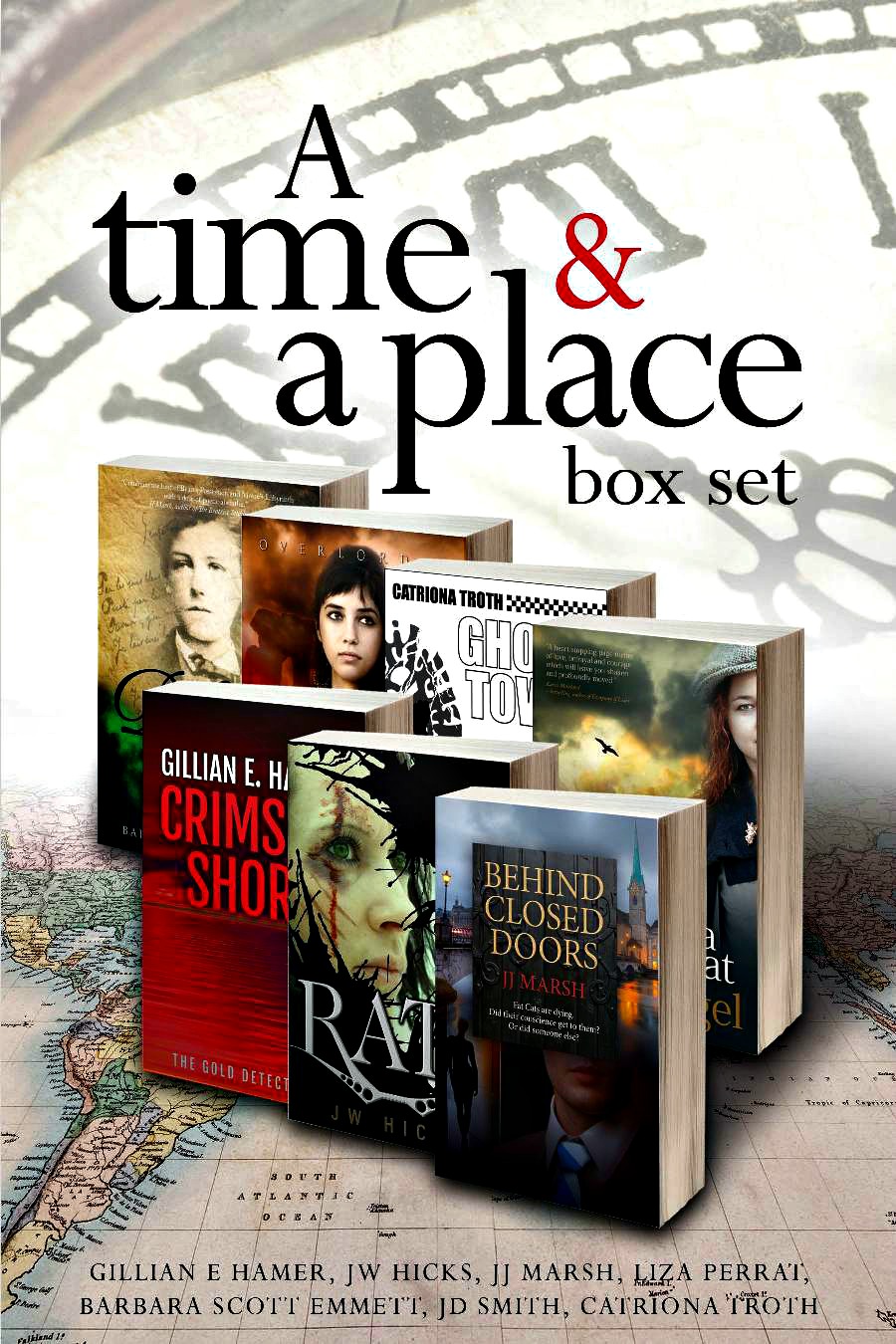
My colleagues and I at Triskele Books have created a box set of books to transport you across time and place, from 3rd century Syria to futuristic Wales. A Time & A Place contains seven award-winning novels that have in common the theme of this column: location, locution.

Come on a journey.
We’ll take you to another place.
And tell you a story.

And as my farewell gift to Displaced Nation readers, I have one free copy (ebook only) to give away. You can win by adding a comment in the box below. In no more than 50 words, where and when in the world would you like to go, and why?

JJ Marsh's farewell giveaway

JJ Marsh’s farewell giveaway

The winner will be announced in next month’s Location, Locution.

* * *

Where would you like to be taken?

1) Modern-day Anglesey on the trail of a psychopath
Crimson Shore, by Gillian Hamer (Contemporary crime)
“Hamer does for Anglesey what Rankin does to Edinburgh, what Dexter did to Oxford”

2) Post-apocalyptic Wales, surviving with a rat pack
Rats, by JW Hicks (YA)
“An absolute treat for fans of SF, dystopian, and YA novels, but I would recommend it to anyone who loves a great story brilliantly told.”

3) Contemporary Zurich, where everyone has a secret
Behind Closed Doors, by JJ Marsh (European crime)
“Warning: once you start this book you may not be able to put it down, and you may find yourself talking to it.”

4) WWII France to resist occupation and fall in love
Wolfsangel, by Liza Perrat (Historical fiction)
“Fascinating, forceful and extremely well researched… will thrill historical fiction fans.”

5) Ancient Palmyra to fight alongside a warrior queen
The Rise of Zenobia, by JD Smith (Historical fiction)
“Packed to the hilt with tension and adventure, it kept me spellbound.”

6) Charleville, France, and the poetic voyage of a manuscript
Delirium – The Rimbaud Delusion, by Barbara Scott-Emmett (Literary fiction)
“Beautifully plotted and written, this absorbing, enchanting novel is one of the best books I have read this year.”

7) Coventry – a 1980s crucible of racial tensions
Ghost Town, by Catriona Troth (Literary fiction)
“Unique and brilliant… not just a compelling read, but also a learning experience.”

JJ Marsh and her  fellow Triskelites.

JJ Marsh and her fellow Triskelites.

Can’t wait to get the set? It’s available for a limited period at the special offer price of $9.99/£7.99. Don’t miss this box of delights. Who knows what you’ll discover?

Or, to reiterate, you can try your luck at winning a FREE copy (ebook only) by adding a comment in the box below:

In no more than 50 words, where and when in the world would you like to go, and why?

Goodbye, thank you for reading the column and I wish you all excellent journeys.

Jill

* * *

Happy trails to you as well, Jill! I noticed you said in a recent interview: “My definition of literary genius is writing about places you want to visit.” May that become the Displaced Nation’s new mantra! Readers and JJ fans, let’s all bid JJ a fond farewell by answering the question: In no more than 50 words, where and when in the world would you like to go, and why? (Seven books, wow! That’s your summer reading…)

JJ Marsh grew up in Wales, Africa and the Middle East, where her curiosity for culture took root and triggered an urge to write. After living in Hong Kong, Nigeria, Dubai, Portugal and France, JJ finally settled in Switzerland, where she has been writing a European crime series set in compelling locations all over the continent and featuring detective inspector Beatrice Stubbs. She recently produced the fourth book in the series: Cold Pressed, which takes place on a luxury cruise bound for Santorini.

STAY TUNED for the next fab post!

If you enjoyed this post, we invite you to register for The Displaced Dispatch, a round up of weekly posts from The Displaced Nation, with weekly updates and much, much more. Register for The Displaced Dispatch by clicking here!

Related posts:

BOOKLUST, WANDERLUST: Meet me in Atlantis—Mark Adams’ globetrotting search of the ultimate ancient mystery

Booklust Wanderlust Collage

Left: Oleh Slobodeniuk (CC BY-NC-SA 4.0); right: Beth Green (her own photo).

Attention displaced bookworms! This month our book review columnist, Beth Green, an American expat in Prague (she is also an Adult Third Culture Kid), is exploring a new book in one of her favorite genres, mystery—only this time the mystery has to do with an ancient place and travel.

—ML Awanohara

Hello again, Displaced Nationers!

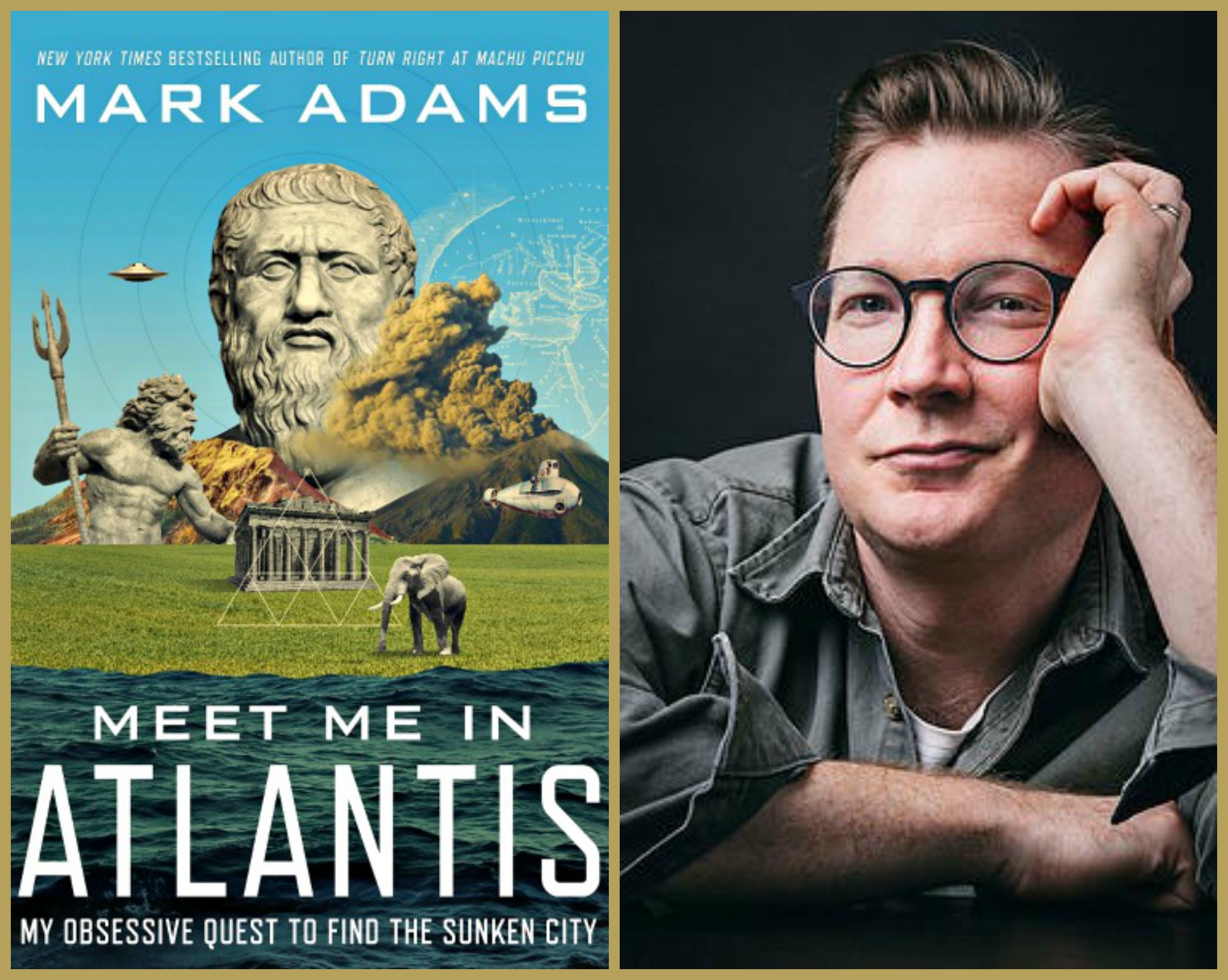
Here in Europe, the spring weather has me in a mood for getting outdoors and exploring—but, alas, I’ve been inside submerged in this month’s book pick, Meet Me in Atlantis: My Obsessive Quest to Find the Sunken City, by Mark Adams, which has just the right ingredients to appeal to international creatives. After all, didn’t we all venture abroad looking to solve at least one mystery and/or locate a utopian society?

Adams, who spent his career editing adventure and travel magazines, says he thrives on combining “travel writing with deep research and reporting.” (He is the bestselling author of two previous nonfiction books: Turn Right at Machu Picchu and Mr. America, a biography of “muscular millionaire” Bernarr Macfadden.)

Meet Me in Atlantis came out in March, and, yes, Adams does take a deep dive into uncovering the real story behind this fabled sunken city! As he puts it:

…this is a detective story, one that starts in ancient Greece and follows a twisting path through (to list just a few locations) Pharaonic Egypt, Nazi Germany, and contemporary Saint Paul, Minnesota.

Sinking one’s teeth into the Atlantis story

The mystery Adams is trying to solve isn’t so much a “who” or a “where” as a “why” and a “how”. Why do people keep trying to find the legendary city of Atlantis? And how did it get lost, anyway?

Book cover; author photo: Joshua Scott.

Book cover; author photo: Joshua Scott.

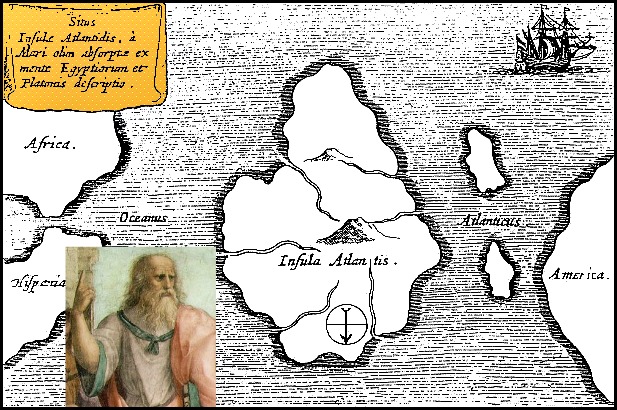
Adams starts off, as any good detective would, at the scene of the crime—two dialogues written by Plato more than 2,000 years ago, Timaeus and Critias. According to Plato, Atlantis represents the antagonist naval power that besieges “Ancient Athens”—the pseudo-historic embodiment of Plato’s ideal state. Athens is able to repel the Atlantean attack, thereby proving its superiority.

Inset: Raphael's Plato.

German scholar Athanasium Kircher’s map of Atlantis, in the middle of the Atlantic Ocean (south is at top). From Mundus Subterraneus. 1669. Inset: Raphael’s Plato (detail). Both photos licensed under Public Domain via Wikimedia Commons.

Plato’s descriptions of the society—lost even when he wrote about it—serve as a textual treasure map. Among the features mentioned are “the rings, the earthquakes, the elephants, the location outside the Pillars of Heracles.”

It’s these seemingly concrete details that have enticed a whole group of people, known as Atlantologists, to search for the ruins of the island nation, which, as legend has it, fell out of favor with the gods and submerged into the Atlantic Ocean. And it’s the absence of other sources—every single clue comes from Plato—that makes the search so hard, some would say infuriating.

Meet today’s Atlantis sleuthhounds

Atlantologists (doesn’t exactly trip off the tongue!) are more numerous than I’d realized. Adams’ interviewees range from historians, archeologists and geologists whose work loosely concerns Atlantis, to laypeople who find themselves caught up in the mystery of the lost city.

Now, I’m the kind of person who loves to seek out obscure places that catch my attention for some reason. Once when I was living as an expat in China, I spent a few days with my partner without a map or Internet access trying to find packed-mud forts built hundreds of years ago by Hakka clans in the Guangdong countryside. Another time, in Inner Mongolia, we took a bus 10 hours across the desert each way to find a specific grove of poplar trees my partner had once heard about at a dinner party three years before. (How we even managed to remember the trees after the beer consumed at the dinner is another mystery!)

But I digress. Returning to Adams’ book: for me, the most entertaining aspect are the people. I appreciated his light-hearted touch when presenting the cast of modern-day characters who continue searching for Atlantis.

For instance, he describes one of the historians he interviews as follows:

Coleman looked like a Broadway casting director’s idea of a state librarian—tall, white-haired, tie askew. His office was as comically perfect as a stage set, too: precarious piles of ancient hardbound books, sepia maps of Minnesota on the walls…

Another Atlantologist is so intent on explaining data, he misses Adams’ repeated requests to use the restroom. Several characters he interviews don’t want to be known as Atlantologists at all—it’s regarded as pseudoscience by many academics.

“The great Egyptian age is but a remnant of the Atlantian culture…” (from the song “Atlantis,” by Donovan Leitch)

But wait, Adams isn’t writing a spoof but an exhaustive book on the Atantis myth. Light-hearted he may be, but it soon becomes clear he wants his readers to care as much as he does about the whether or not Atlantis existed. He includes sections on Pythagoras, on warring peoples, on ancient catastrophes, and on the question of whether an ancient scribe could have transposed numbers. And, though it would be satisfying to suddenly debunk the Atlantis myth as a series of typos or an allegory using math as symbols, Adams remains skeptical. He also doesn’t give much credence to the new theories about Atlantis that have cropped up in the last 10 years (more than in the past 2,400 years thanks to tools like GoogleEarth).

Adams wouldn’t approve, but my personal favorite is the one that was propagated by a 19th-century ex-U.S. congressman from Minnesota. Sometimes referred to as the “father of the 19th-century Atlantis revival,” Ignatious Donnelly published a pseudo-scientific book Atlantis: The Antediluvian World forwarding the idea that the existence of Atlantis would explain supposed similarities between ancient civilizations of the Old and New Worlds. As Adams recounts:

Pyramids stretching from Egypt to Peru to India to Mesoamerica indisputably share an Atlantean source despite their having been built in hugely different styles over thousands of years. The use of bronze, mummification of the dead similarities of language—Donnelly assembled every available scrap of evidence to support his diffusionist idea of a benevolent ur-Atlantis spreading its wisdom to the far corners of the globe.

Adams has no time for a theory that says all the sophistication found in the world descends from a single Mother Culture. And of course he is right. Donnelly must have been a bit of a kook, and a condescending one at that.

Getting that sinking feeling…this mystery may never be solved!

Like all good detectives, Adams sticks close to the original source, Plato, and tries to make sense of the 2,000-year-old evidence.

After a conversation particularly dense with particulars and logical arguments, one interviewee brushes off one of Adams’ questions with a smile. “I think Plato maybe made a joke,” he tells him.

But Adams doesn’t agree. He sets out to visit Tony O’Connell, an Irishman who runs a project called The Atlantipedia. He ends up spending a week with Tony in rural Ireland, during which they narrow down the number of plausible theories about the location of Atlantis to four: southern Spain, Malta, Santorini, or Morocco. Notably, none of them are in the Atlantic Ocean, the original Platonic setting.

In sum Meet me in Atlantis is worth reading not only for its insights on the culture of Atlantology but also for the way Adams weaves philosophy, archeology, recorded history, geology and more into his investigation. I enjoyed the book’s sections on map-making, sea trade and old legends, but the part that really got my imagination going was the discussion of natural disasters. If there was an Atlantis, what happened to it? Was it wiped out by a volcanic explosion? Slammed by a tsunami? Swallowed by an earthquake? Devastated by plague? Warfare? Or, simply, did the society decline until it was no longer known by its former glory? Could Atlantis still be thriving—under another name?

By the end I wanted more. As Adams said in a recent Ask Me Anything (AMA) discussion on Reddit: “The thing about a topic like Atlantis is that you come across so many ‘holy crap’ moments that you can’t fit them all in a book.”

And perhaps that’s the best kind of mystery, the head-scratcher that may never be solved, that always leaves you wanting to search for one more piece of evidence. Adams had that kind of mystery in Manchu Picchu: the structure whose purpose no one can explain. And he has found it again in Atlantis: the kingdom for which we have a description but no physical evidence.

* * *

That’s all for this month, Displaced Nationers! Have you ever read a book that references an obscure site and been inspired to go on a madcap quest to find it? Do tell in the comments!

Beth Green is an American writer and English teacher living in Prague, Czech Republic. She grew up on a sailboat and, though now a landlubber, continues to lead a peripatetic life, having lived in Asia as well as Europe. Her personal Web site is Beth Green Writes, and she is about to launch a new site called Everyday Travel Stories. To keep in touch with her in between columns, try following her on Facebook and Twitter. She’s a social media nut!

STAY TUNED for the next fab post!

If you enjoyed this post, we invite you to register for The Displaced Dispatch, a round up of weekly posts from The Displaced Nation, and much, much more. Register for The Displaced Dispatch by clicking here!

Related posts:

TCK TALENT: Neil Aitken, Computer Gaming Whiz Kid Turned Award-Winning Poet

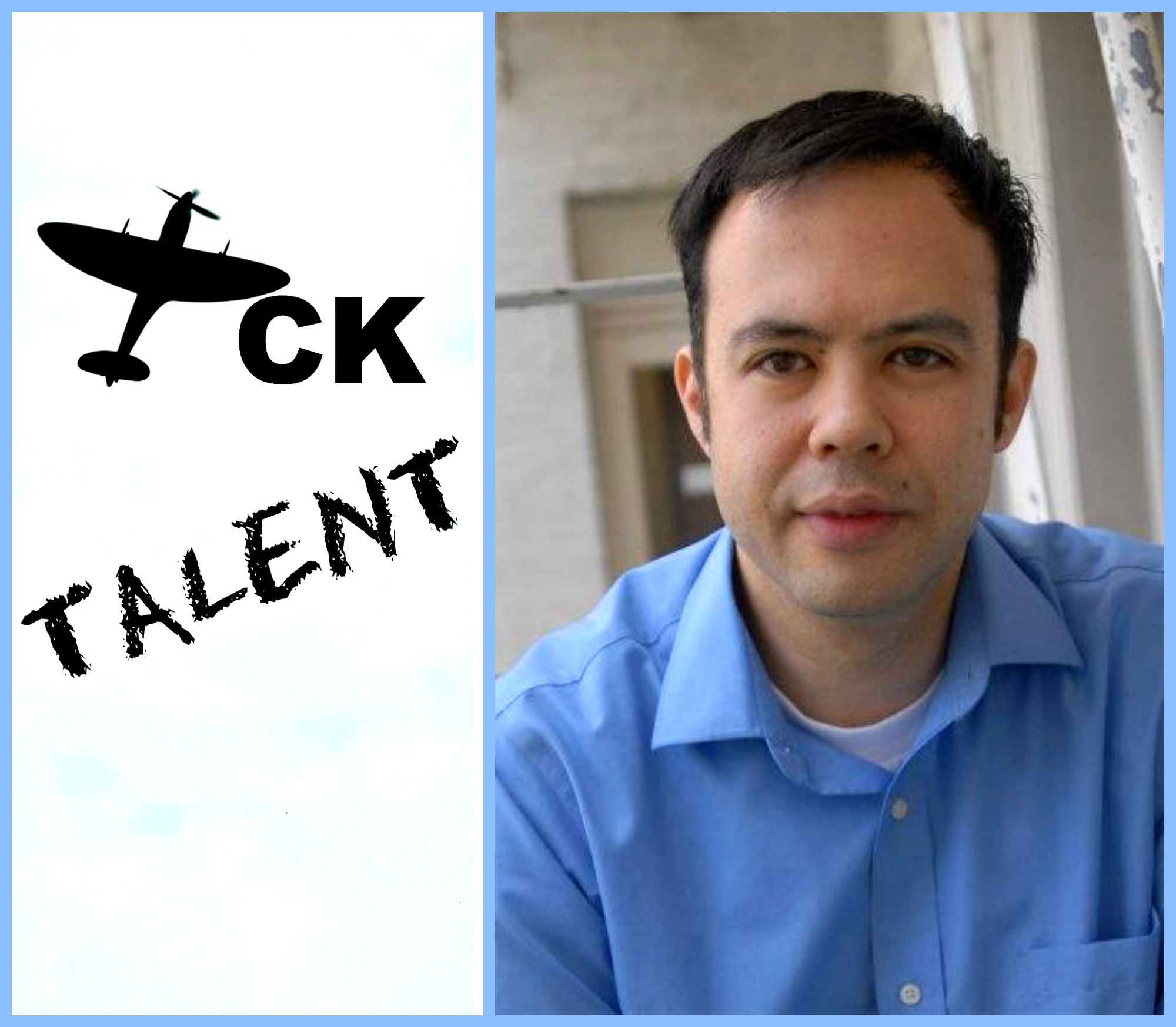
Neil Aitken Poet

Neil Aitken (photo supplied)

Elizabeth (Lisa) Liang is back with her column featuring interviews with Adult Third Culture Kids (ATCKs) who work in creative fields. Lisa herself is a prime example. A Guatemalan-American of Chinese-Spanish-Irish-French-German-English descent, she has developed her own one-woman show about growing up as a TCK, called Alien Citizen, which premiered nearly two years ago and is still going strong. In fact, she will soon be taking the production to Valencia, Spain, and Capetown, South Africa!

—ML Awanohara

Welcome back, readers! Today’s interviewee is poet Neil Aitken: winner of the prestigious Philip Levine Prize for Poetry for his book of poems, The Lost Country of Sight and founding editor of Boxcar Poetry Review. Neil and I met at the Mixed Roots Literary & Film Festival in 2009. I am so pleased to have the chance to interview him this month for TCK Talent.

* * *

Welcome to The Displaced Nation, Neil. I understand that you’re a multi-ethnic ATCK like me! Please tell us about your heritage.
My father was born in the Okanogan Valley in British Columbia, Canada, of Scottish and English descent. My mother was born on Hainan Island, south of China, in the midst of the conflict between the Nationalists and the Communists in China. Shortly after her birth, her parents—her father was a high-ranking officer in the Nationalist Army and her mother, the daughter of one of the elite island families—fled to Taiwan to escape the Communists. Despite growing up a world apart, my parents met in the middle, Hawaii, while both attending university there.

Where were you born, and where did you live growing up?
I was born in Vancouver. My father’s bachelor’s degree was in Linguistics & ESL. His first job took us to Dhuhran, Saudi Arabia, where he taught English in the oil universities. But then my mother developed severe asthma due to the extreme heat and dust, and the doctors warned her that if she stayed any longer, she would be putting her life in peril. So she took my younger sister and me (I was four, my sister two-and-half) to Taiwan to live with relatives while my father completed the last nine months of his teaching contract. While in Taiwan, my sister and I forgot all our English, switched completely to Mandarin Chinese, and attended a Chinese-speaking pre-school. When my father finally arrived to pick us up, apparently we were so frustrated in our inability to communicate with him, we refused to speak Chinese until we relearned English. By the time we returned to Canada, we’d made the switch—but lost our Chinese in the process. My father returned to school in Vancouver, concluding that it was too hard to raise a family as an ESL professor. He completed a Masters in Library Science degree at the University of British Columbia and, when I was eight, we moved to North Battleford, Saskatchewan, a small city surrounded by farmland in the northern part of the province. Later we moved to Regina, the province’s capital and a much more vibrant multicultural center, where my father took his dream job as the supervisor over a special book collection focused on local, regional, and family histories of the Central Plains and Prairie Provinces. I completed elementary school and high school there.

“It is dark always, then someone opens a door./Then another. Then another.” —Neil Aitken from “Prodigal”

Fascinating! Did you stay in Canada for college?
No, I moved to Provo, Utah, to attend Brigham Young University, but I took a two-year break from school to serve as a missionary in Taiwan, relearning Mandarin in the process and re-immersing myself in culture, family, and place. When I returned, I completed my studies and then returned to Canada—to Calgary, Alberta. I looked for work for a year and eventually landed a job in Los Angeles.

I understand that just as your background spans two very different cultures, your academic background spans two very different disciplines?
Yes, as an undergraduate I studied Computer Engineering with a minor in Mathematics. I also took a number of graduate courses in Creative Writing. My first job was working in the computer games industry, but after five years, I left programming to pursue an MFA in Creative Writing and then returned to Canada for a year to look for work and to care for my father, who was in rapid decline from ALS. I also spent that year writing and finishing my first book of poetry and then applying to PhD programs. I received a number of excellent offers from all over the US, but in the end chose to return to Los Angeles and pursue a PhD in Literature and Creative Writing at the University of Southern California. I’ve been here in Los Angeles ever since, but now, on the threshold of graduating, am likely to be packing up and moving again to somewhere as yet undetermined.

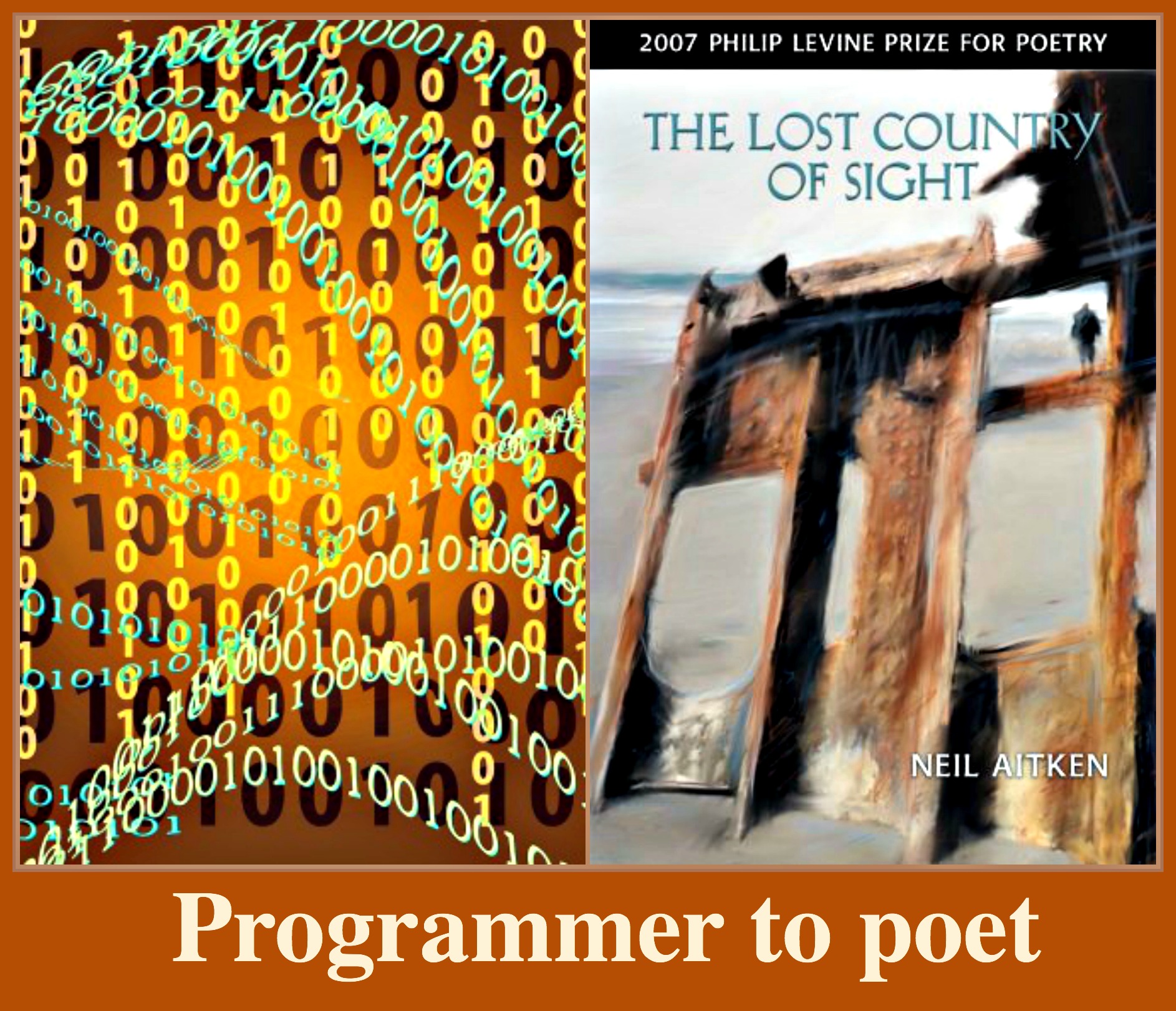
Binary code via Pixabay; cover art.

Binary code via Pixabay; cover art.

What has the transition been like, going from computer programmer to poet?
In truth, I’ve been writing poetry almost as long as I’ve been programming. I started writing poetry in earnest when I was around 10, about the same time my father brought home an IBM PC Jr with GW-BASIC on it. One of my very first original programs was a haiku generator that produced pretty awful haiku. Even as an undergraduate studying computer science, I sought permission to take creative writing classes at the graduate level. For a long time, I thought I could juggle writing poetry with computer programming. Eventually, however, programming lost its luster and I stopped loving the work, despite still being good at what I did. I knew at some point I needed to jump ship—I couldn’t bear the thought of spending my life in a field that no longer held my attention or affection. Working full time as a computer games programmer, I found myself putting in 60-, 70-, 80-, and occasionally 94-hour weeks. It was just too much. It was time to find a way out. At the same time, it was important to me that I avoid going into debt for my poetry degree, so I had to wait for the right offer. All the while, I continued programming and when possible, spent my evenings at open mic poetry venues, listening to all sorts of poets read their works. Eventually, I received a call from UC Riverside offering me a generous full-ride MFA scholarship, which made the transition possible.

“I wake already longing for those whom I soon will leave—” —Neil Aitken, from “Kundiman”

One of the judges for the Philip Levine Prize said that “Traveling Through the Prairies, I Think of My Father’s Voice” struck him as being a “perfectly made poem.” Was your family close?
I have many fond memories of time spent as a family together, whether it was picking through a coal seam at the side of a mountain highway with my father searching for fossils, or gathering together as a family on the eve of my graduation—the photo of which is the only family photo where we’re all smiling naturally, unrehearsed, unburdened by life’s later challenges and sorrows—or just simply lazing around the house at Christmas, listening to my father read Dylan Thomas’ A Child’s Christmas in Wales to us with his usual gusto and dramatic flair.

Where have you been happiest as an adult?
My happiest moments in recent years have been tied to my friends and fellow poets whom I met through Kundiman, an organization dedicated to the creation and cultivation of Asian American literature. The three years I attended the Kundiman Poetry Retreat set in motion lifetime friendships and bonds with people that, to this day, I count as my closest poetry kin—I was unprepared for how deeply and completely I would fall in love with the community, and how this group of Asian American poets would come to be a second family. When I showed up for my first Kundiman retreat in 2005, I was convinced that there had been an error—how had they let me in? What use could they have for a Chinese-Scottish-English Canadian poet who rarely wrote about identity, at least not directly? But on the first day, as we made our introductions in a classroom at the University of Virginia, I soon realized that many of the other participants felt the same way I did. We had all arrived convinced that our lives and our writing were somehow outside of what was expected and permitted—only to discover that what was happening on the front lines of Asian American literature was much more diverse and vibrant, much more compelling and dynamic, much more inclusive than whatever we had been led to believe from the anthologies we’d read and the classes we’d taken. To this day, I love running into a fellow Kundiman and can’t wait to hear about their work and discover what they have to offer to the conversation.

Your Kundiman experience sounds like a quintessentially good TCK experience. In general, do you find that “your people” tend to be other ATCKs, or cross-cultural people, or creative folk?
It varies quite a bit, but generally speaking I’ve found myself most at home with other Asian American writers (especially those I’ve met through Kundiman), other editors of literary journals, and other people who negotiate the fragile yet fertile space between faith, science, and compassion. On a broader level, I find my people are those who share a love of language and literature, whose eyes are on the forgotten spaces and figures of the world, and whose efforts and desires pointed outwards, with the ambition to make more room at the table. I love surrounding myself with people who are building bridges and tearing down arbitrary walls, who are not afraid to speak against the structures of oppression and forgetting, and who challenge themselves to do more and be more than who they were yesterday.

“There is always something that refuses to be contained…” —Neil Aitken in “Encapsulation”

On top of working toward your PhD, you won the DJS Translation Award for your co-translations of poetry from Mandarin to English. How do you feel about your two “native” languages? Do you prefer one to the other?
I love the strange and omnivorous nature of English. English is constantly devouring other languages, incorporating new terms into its lexicon, and expanding with each passing year and succeeding social revolution. In terms of tone, music, and range, very few languages can compete with English. That being said, I also have a big place in my heart for Mandarin Chinese, a language I learned once when I was very young, forgot, then relearned at 19.

What is it like to translate from Chinese into English?
The two languages could not be more different. Chinese is a language traditionally learned by the memorization of classical and literary texts. It relies heavily on allusion, each word and phrase carrying with it a wealth of cultural association and literary reference. It moves not just sonically but also visually, evoking the elements—fire and water, air and earth—and connecting words and ideas that share some common philosophical history. The act of translation is a humbling experience—I’m constantly reminded of how fluid concepts and relationships are between ideas once they are unshackled from one’s mother tongue. And yet, there is great pleasure in it as well. I enjoy puzzles—I enjoy this bit of creative play where the translator searches for a way to create an equivalent experience and gesture in a new language for something that they have encountered in the original. My childhood experiences with Chinese left a deep imprint in my mind that manifests itself now as a type of intuition when it comes to finding the right equivalent phrase or understanding the cultural impact or resonance of the original line. It’s an imperfect intuition, but one that nevertheless guides me through tricky places in the poems and helps me feel still a part of the Chinese culture.

Finally, I’d like to congratulate you on winning of the prestigious Philip Levine Prize for Poetry for The Lost Country of Sight. Is there a particular poem from that collection that expresses your feelings of transience or loneliness or instability—or freedom or curiosity or love of travel—that you are most proud of, and could you share it with us?
In many respects, my entire first book of poetry, The Lost Country of Sight, grapples with these themes and, therefore, it’s actually pretty hard to settle on just one poem. I’m going to suggest two, if I may:

In the Long Dream of Exile

You are counting the dark exit of crows
in the rear view mirror, or from the top of an overpass
looking back into the last flames of cloud.
Your car, steel to the world of flint, rests listless
with its windows wide, the stars slipping in
and settling down for the night.
Now, what you could not leave rides in boxes
heavy with numbers and places you’ve already
turned into poems. There is nothing left
in your pockets, your clothes worn down
to this list of miles taking you out of the known earth.
Outside your open window, the dark repeats
like the wind in late fall, twisting the names
of familiar back roads into a long rope of sighs.
You could lower yourself down with such longing.
It could be a woman or a young girl, the way the light
clings to that body like a sheet of immaculate heat,
invisible to the eye, but something, you are certain,
something that must be on the verge of love.
driving_abstractly

In the Country I Call Home

I have two countries, Cuba and the night.
~ José Marti

There is no Cuba, no other half of night.
No dark woman in her deep robe of grief,
no wooden doors flung open to emptiness. Nothing
of music. No city in flames. All this absent.

In me, there are as many countries as names.
As many versions of the world.

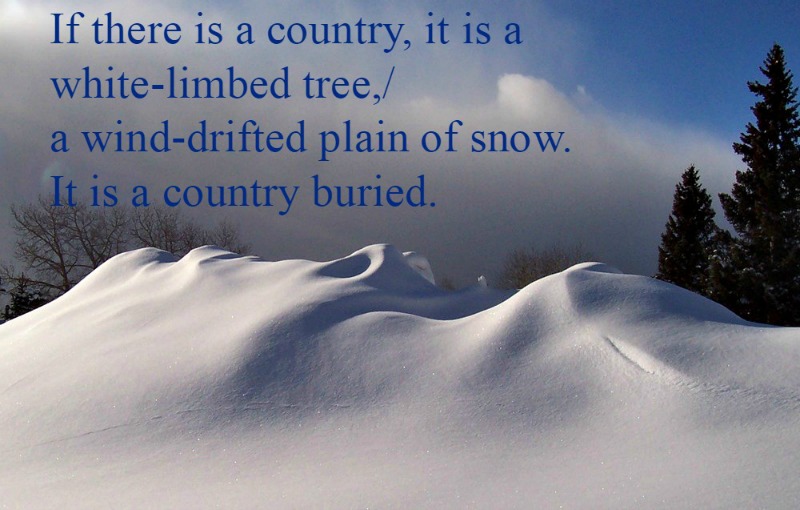
If there is a country, it is a white-limbed tree,
a wind-drifted plain of snow. It is a country buried.
Or a man holding a camera to his eye. Or a silence.

If there is a country, there are two countries.
A double exposure. The other world ghosting the first.
The second full of dark-haired strangers. Ink ground
from charcoal pressed to stone. Hard as raw rice.

If there are two countries, a third always rises.
Life preserver on the waves. A ship without reference.
Anywhere. Everywhere. A nation of one.

If there are three, there must be a fourth.
I will find it in your skin. Hear it resonate in your bones.
A ringing echo. Something of sound. It will be small.
Almost a hut. A thatched roof shack in the wilderness.
A hermitage for two. A boat in a river. Almost a home.

snowdrift

“Wind shapes,” by John Holm via Flickr (CC BY 2.0).

* * *

Thank you, Neil, for these two lyrical offerings. Again, congratulations on your numerous accomplishments in poetry and translation, and best of luck with post-PhD life! Readers, please leave questions or comments for Neil below.

STAY TUNED for more fab posts!

If you enjoyed this post, we invite you to register for The Displaced Dispatch, a round up of weekly posts from The Displaced Nation, and so much more! Register for The Displaced Dispatch by clicking here!

Related posts:

DIARY OF AN EXPAT WRITER: My writing process, now being applied to a shiny new book series

DiaryExpatWriterAn American expat newlywed in Hong Kong, Shannon Young took the momentous decision last summer to quit her day job and launch out as a full-time writer. She’d given herself until Chinese New Year to see if she could make a living but has now postponed the decision—something we’re actually rather glad about as her expat writer’s diary can continue!

—ML Awanohara

Dear Displaced Diary,

It’s a hazy, jet-lagged time for me right now. Ever since I returned to Hong Kong from London last week, I’ve been awake through the night and struggling out of bed at noon or later. One advantage of setting my own schedule is that I can afford these late starts and still get plenty of work done during the afternoons and evenings (and in the hours past 3:00 a.m., it turns out). On the other hand, I don’t have a boss and a required start time to get me back on track—so could be on London time for a while yet.

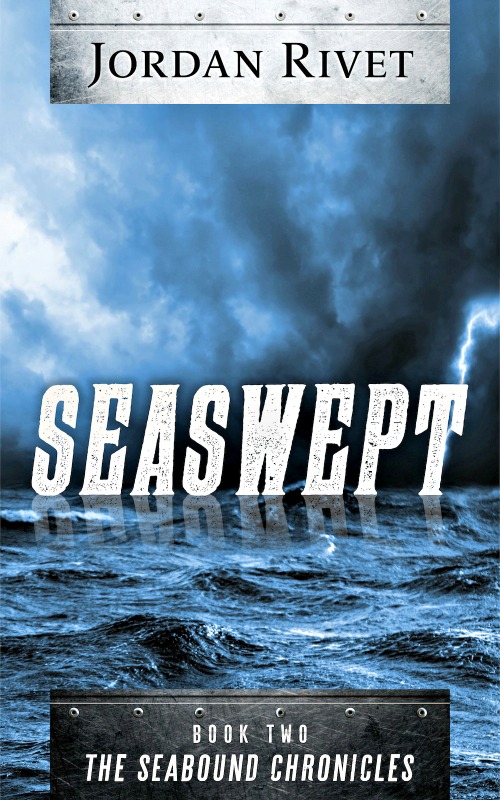
But the work goes on no matter what time it is or where in the world I happen to find myself. I’m currently waiting for Seaswept, the second book in the Seabound Chronicles, to come back from my editor.

The cover for Jordan Rivet's latest book

The cover for Jordan Rivet’s latest book

As soon as it arrives I’ll jump into the final stages of proofreading and publication.

In the meantime, I’m working on my next book series.

That next book will be the first installment, which I’m aiming to release upon completion of the Seabound Chronicles.

It has been a while since I began an all-new project with all-new characters set in an all-new world. I’m trying to apply the same writing process I’ve been using for the Seabound books to the new idea.

So far it’s going well!

Since you, Dear Diary, are the vessel for my intimate thoughts about the writing process, today I want to share with you how I approach a new book. I developed this method while working on the four books in the Seabound Chronicles. As you know, all four are now completed—but in vastly different stages. Book 1 is published. Book 2 is finished and with the editor. Book 3 (the prequel) is in the third draft. Book 4 is a rough draft.

You may think I have too many projects on the go at once, but this in fact is the key to my writing process, as you’ll soon see.

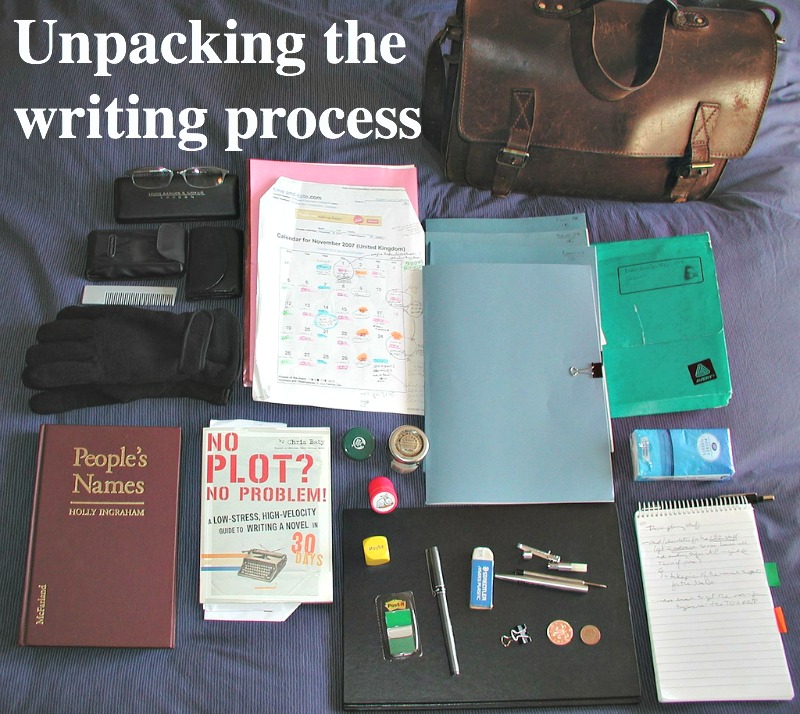
"Emptying the NaNo bag at last," by  Anne-Lise Heinrichs via Flickr ().

“Emptying the NaNo bag at last,” by Anne-Lise Heinrichs via Flickr (CC BY 2.0).

STEP ONE: The Idea

You can’t force yourself to come up with an amazing concept for a new book, but you can help the inspiration process along. Before producing Seabound, I knew I wanted to write a fast-paced story with high stakes and cool world-building, probably science fiction or fantasy, but I needed an idea. Then one day I hopped on a boat and spotted the cruise ship that inspired my post-apocalyptic Seabound series. It took more than just seeing a cruise ship, of course, for the concept to take hold. It took leaving my mind open and not forcing things, so that my subconscious could oblige.

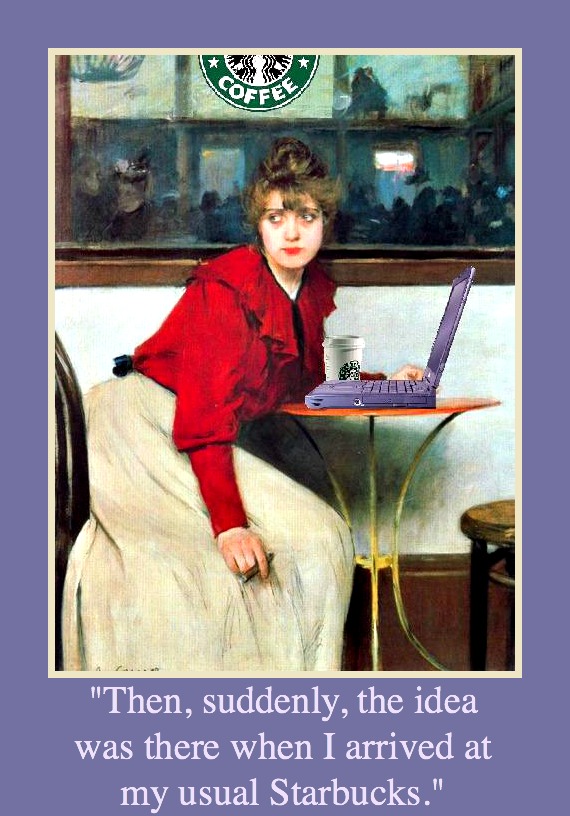
With the Seabound Chronicles under way, the hope entered my mind of coming up with another fantasy project to work on; but this time I wanted an original take or some kind of cool mash-up. I held that thought for months and cycled through various ideas (a secret agent in a fantasy world? a fantasy apocalypse?); but none of them felt quite right. Then, suddenly, the idea was there when I arrived at my usual Starbucks. I could see it plain as day. I was actually supposed to be working on Seaswept edits, but instead I opened up a new Word doc and hammered out notes for several hours.

STEP TWO: Characters and Worlds

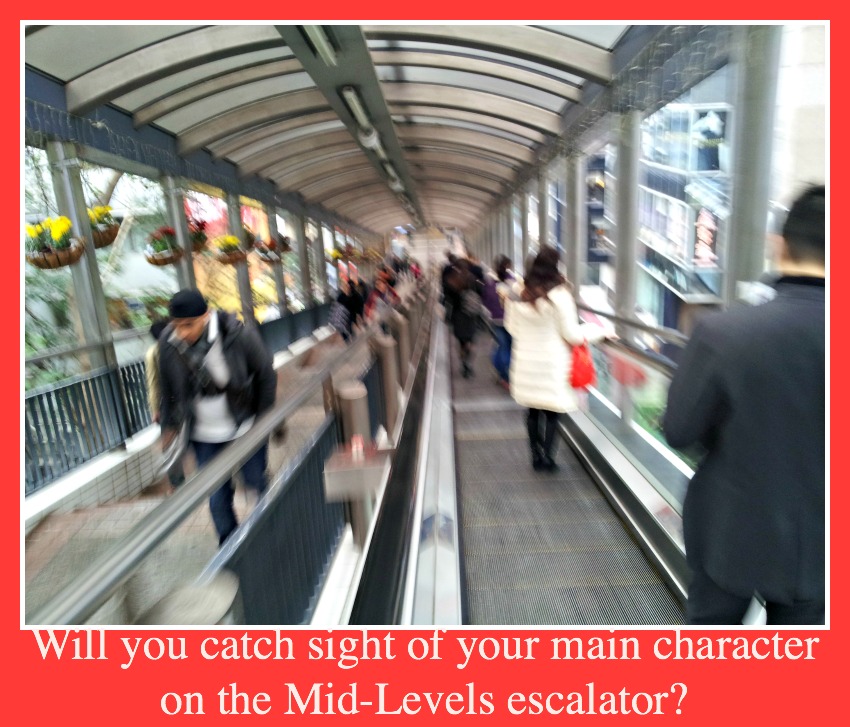
Once I had the concept of the world, the characters followed quickly on its heels. For some of these characters, I used a method similar to the one described above, where I had a general sense of what the person should be like, and then when I saw someone who matched the idea in my head, fleshed out my portrayal. (I spotted “Esther” walking down the Mid-Levels escalator with a camera around her neck that became a pair of storm goggles; “David Hawthorne” walked into one of my regular coffee shops dressed like an investment banker and wearing memorable black-framed glasses.)

"Mid-levels escalator blur," by Maureen Didd via Flickr.

“Mid-levels escalator blur,” by Maureen Didde via Flickr (CC BY 2.0).

For other characters, I started with people I’ve encountered as a jumping off point to develop key aspects of their personalities, appearances, and roles they would play in the story. I spent several writing sessions scribbling notes on the characters and describing the basic structure of the world they inhabit. I held off on writing the first chapter for as long as possible because I wanted to give the ideas time to mature. I also worked out the world’s magic system, which I’m treating differently than in a typical fantasy novel.

STEP THREE: The Rough Outline

As my ideas for the story became more concrete, I wrote a rough outline of the plot. This is a back and forth process. As I developed more ideas for the story I’d go back and flesh out the existing characters or create new ones. My outlines typically follow a three-act structure and they absolutely must include the main conflict and climactic scene. Outlines are essential for my process, but I don’t do a strict chapter-by-chapter plan at this stage.

For the new fantasy project, I’ve now written a very rough outline for a five-book series. Even so, I’ll have to get further into the first book before I know whether the story will support all five books in the plan.
STEP FOUR: The Rough Draft

I am now 16,000 words into the rough draft for my newest book. I’m a huge believer in writing fast, messy first drafts.

I wrote three of the four rough drafts for the books in the Seabound Chronicles during three consecutive National Novel Writing Months. I didn’t worry about whether they would be any good at this stage. I told myself I can always take things out and rewrite as needed. This method really helped me keep up the story’s pace.

Seaswept is the only one of the Seabound books for which I wrote the first draft over a longer period (about six months, during which I took a break to rewrite my memoir, Year of Fire Dragons). The edits for this volume were actually more difficult than for the other titles.

Writing the first draft is a bit like watching a movie play out—it’s best if you can do it without too many gaps.

STEP FIVE: Rest and Repeat

As soon as I finish a draft I put it away, something Stephen King recommends in his book On Writing. The work needs to sit for a bit and I need to get some distance from it before I can rewrite effectively. But I don’t stop writing. At this stage, I’ll start the next book.

Go back to Step One and repeat!

STEP SIX: Read and Rewrite

With another rough draft under my belt, I’ll go back to the first one, print it out, and read the whole thing. I’ll make tons of notes as I go, but I won’t rewrite until I’ve completed a full read-through.

At this stage, I also create a more detailed outline. My rough drafts follow a basic plot structure, but sometimes they take unexpected twists, and I like to leave room for those in the new outline. Other times, I find gaps or pacing issues that I’m not aware of until I step back and look at the book as a whole.

When I do my first read-through, I plug the events of the rough draft into a storyboard. I use this one, which covers a classic plot progression over twenty chapters. I write the basic plot points in where they occur, paying attention to gaps in the storyboard. Then I may plan additional chapters for my next draft.

Stories are actually quite similar in structure, so the books often fit quite neatly into the storyboard with only a bit of tweaking. I don’t like doing this at the outset because I want to leave room for those unexpected twists—let the ideas come out once I’m really living in the draft.

After I’ve worked out what changes need to be made based on my read-through and storyboard, I rewrite the book from the beginning. I do all this in the same document and keep a lot of the first draft, but I also add thousands of words, fleshing out scenes and filling in chapters. At this stage, I’m still not worried about how neat the actual writing is.

STEP SEVEN: Rest and Repeat

I put that new draft away and then go back to do the second draft of the second book. Or the first draft of the third book. Or the third draft of the last book in the last series. You get the picture. It gets complicated from here, and this is why I have so many books on the go at once. Each time a draft needs to rest, I’ll have something else to work on.

And so on!

My process continues like this, and the books get better with each draft. I also become a better writer with each draft. By the time I wrote the final draft of Seaswept last month, I was far better writer than when I wrote the first draft in early 2013.

After I’ve done at least two, usually three, drafts, I ask other people to read the book and give me feedback. Then there will be more notes, more drafts, more hours spent sitting in the chair and refining the story and the prose.

Some problems are just easier to solve on the second (or third or fourth) rewrites.

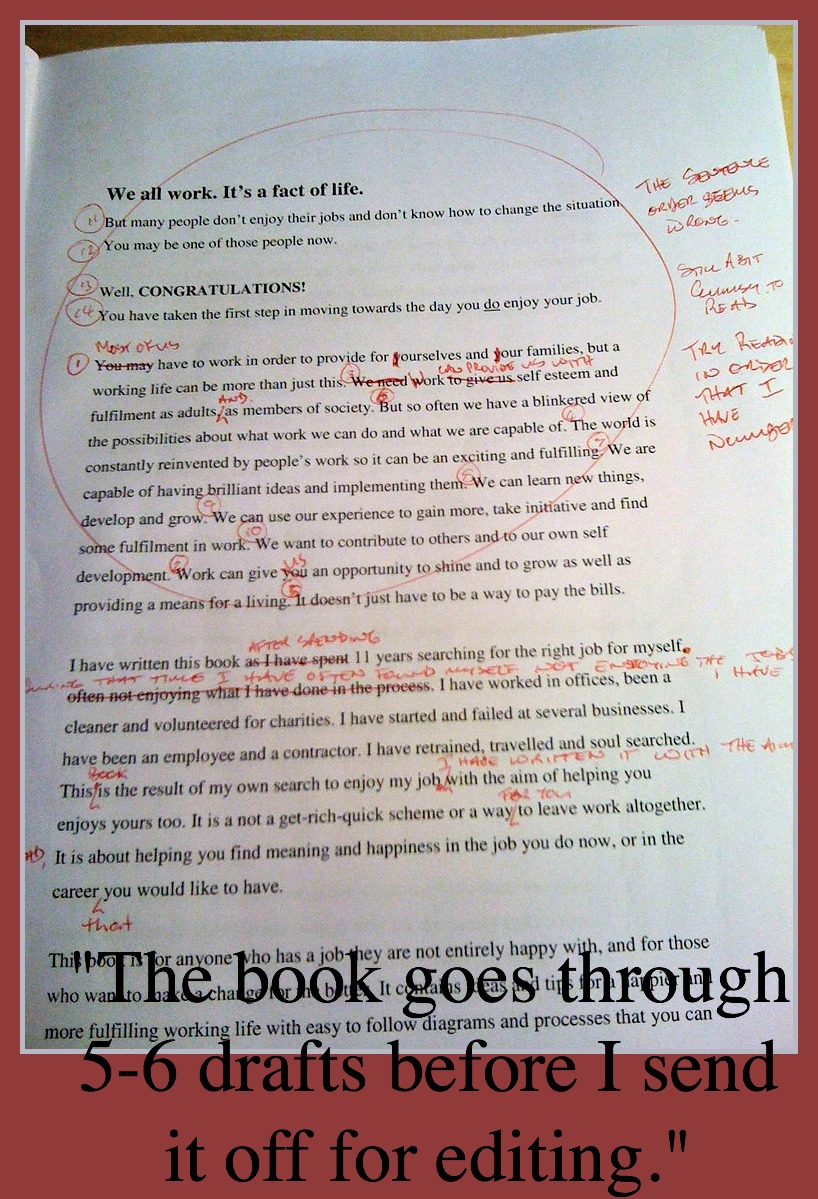
I estimate that each book goes through five or six drafts before I send it off for editing. I’m hoping that as I become a better writer it’ll take fewer drafts to get the book where I want it, but the important thing is that I try not to get bogged down by worrying whether any one draft is good enough. Taking this approach is liberating, and it allows me to get a lot of work done.

"Edited Version of First Book," by Joanna Penn via Flickr (CC BY 2.0).

“Edited Version of First Book,” by Joanna Penn via Flickr (CC BY 2.0).

So, Dear Diary, this is my writing process as it exists so far. I’m having fun applying it to my shiny new project.

Seaswept will be out soon and then I’ll be doing another draft of Burnt Sea, the prequel, but in the meantime it’s exciting to have another series on the go!

Thanks for following along on my writing journey. I hope this glimpse at my process might be helpful for another budding writer or two. It is certainly helping me get my brain back in order so I can get back to work

I remain yours,

Shannon Young/Jordan Rivet
www.shannonyoungwriter.com
JordanRivet.com

* * *

Readers, Shannon has graciously shared her writing process with us this month. By breaking it all down, she almost makes it seem easy! (You can tell that she’s been a teacher.) So, what do you think—any responses to her methods, questions, words of encouragement for her next endeavor? Do let her know in the comments!

STAY TUNED for next week’s fab posts!

If you enjoyed this post, we invite you to register for The Displaced Dispatch, a round up of weekly posts from The Displaced Nation and much, much more. Register for The Displaced Dispatch by clicking here!

Related posts:

For this Salzburg-based New Englander and fine-art photographer, a picture says…

Kosovo selfie by Dave Long

Morguefiles; Kosovo selfie by Dave Long.

Hello, Displaced Nationers! I am standing in for A Picture Says… columnist James King, who unfortunately can’t be with us this month. James left the choice up to me, so I’ve extended an invitation to Dave Long, a U.S.-born photographer living in Salzburg, Austria. I discovered Dave through his involvement with under a grey sky…, the personal Web site of Paul Scraton, a Brit living in Berlin, Germany. Paul plans to produce a quarterly journal called Elsewhere, as reported in a recent Displaced Dispatch.

(What, not a subscriber to our esteemed Dispatch? Get on the list NOW!!)

Dave specializes in commercial and fine-art photography, with an emphasis on dramatic landscapes, extreme sports and historical architecture.

I was further intrigued upon visiting his photography site, where I discovered he has just self-published a book called Daheim Away from Home, available on Blurb.com. Daheim is German for “home”, and Dave explains that after 15 years of living in Salzburg, a “city full of cultural and historical wonder,” he “has finally come to terms that this truly is his new home.”

He also says that he wrote the photo captions in a “mix of English and German that is the reality of everyday life for an expatriate.”

And now it’s time to meet Dave and hear which of his photos he thinks speak at least 1,000 words.

Hmmm… But are these speaking in German or English—or both?! Let’s find out, shall we?

* * *

Welcome, Dave, to the Displaced Nation. Let’s start as James usually does, by asking where you were born and when you spread your wings to start traveling.
I was born and raised in Massachusetts, USA. My folks split up when I was ten and I bounced between two houses every other day/weekend for several years. I think that set me up for the flexibility you need when traveling. After hosting an exchange student from Switzerland who ultimately became a great friend, all I wanted to do was go abroad and learn a second language. By the time I got to college, I was already looking into semester programs in Europe. After a few adventurous bus trips across America, I finally left U.S. shores in 1999. With snowboarding as a top priority in those days, I wound up in Austria.

“High on a hill was a lonely goatherd…”

Is that where you’re living now?
Yes. Fifteen years later, two new languages and my own tricultural family, I am living in Salzburg, a small city nestled into the northern ridge of the Alps.

I think we’ve all heard of it thanks to Julie Andrews and The Sound of Music. But I’m curious, why did you choose Salzburg as your base?
The city is bursting with cultural flair, historic relevance, architectural splendor and immediate access to crystal clear lakes and imposing mountains. Not to mention the best of all four seasons. Basically everything a budding photographer could dream of. My wife, also from elsewhere, found a great education here, and we’ve both been fortunate to find good jobs. We’ve never had a reason to leave.

Wow, it sounds as idyllic as it looked in the film! I understand you’ve lived in Austria for 15 years. How many other countries have you visited during that time?
Nearly every country in the EU plus Serbia, Kosovo, Macedonia, Albania and Tunisia. And, though I’ve only lived in Austria since leaving the United States, I’ve spent extensive time in Switzerland and in Kosovo on account of friends and in-laws.

“I’ve always longed for adventure/To do the things I’ve never dared…”

And now I’m excited to get into the substance of our interview, the photos, especially as I’ve been to your photography site and find your work pretty amazing. Let’s start off by having you share with us three photos that capture some of your favorite memories of the so-called “displaced” life of global residency and travel.
I’ve often traveled the Balkans, visiting friends and more recently, in-laws. I took this first shot in Prishtina, Kosovo, in 2007. It captures the moment when I realized that I would never have seen a United Nations SUV that had been dirtied by actual service in a war-torn region,had I failed to venture beyond my small town in New England.

“Peace Keeping Is Dirty Work,” by Dave Long

Definitely a “You’re not in Kansas any more” moment! What’s next?
High in the Alps, at a friend’s cabin in the forest, our mixed group of Austrians and Americans ultimately turned to light-painting after more than a few rounds of local Schnapps. I’ve found nostalgia to be a rare, but welcome, companion during my life abroad.

“Austria—Schnapps and Nostalgia,” by Dave Long

Having been abroad for as long as you, I can really relate to the nostalgia so wonderfully expressed in this shot. And your last one?
Playing lead guitar with an Austrian brass band to rowdy crowds at rural beer tent festivals was definitely not something I envisioned when I left home years ago. Had I known how much fun it is, I probably would have left even sooner.

"Austria—On Stage at Beer Tent," by Dave Long

“Austria—On Stage at Beer Tent,” by Dave Long

What a fabulous photo!

“These are a few of my favorite things…”

Moving on: Tell me the top three locations where you’ve enjoyed taking photos thus far—and can you offer an example from each place?
I love taking photos no matter where I am! If I had to choose, though, it would be:

  1. The Balkans, for their mysterious mountain landscapes, breathtaking shores and a tragic history you can often read from the walls of buildings;
  2. New England because I spent the first 20 years of my life there and now return as a traveler who views everything through the eyes of a photographer;
  3. And finally Salzburg, because it’s nearly impossible to take a bad photo here.

And now for the examples. Here is Struga, Macedonia, in the late afternoon, which brings out the raw beauty of this historic lake town.

“Struga—Raw Beauty,” by Dave Long

Next I’ll share a photo of Lowell, Massachusetts. Growing up nearby, I never paid much attention to the red brick factories. Now they seem like original backdrops in Hollywood films about the industrial revolution or working-class boxing legends.

"Lowell—Brick Reality," by Dave Long

“Lowell—Brick Reality,” by Dave Long

Finally, I offer two from Salzburg. Here is one of an Austrian girl in traditional dress reaching out across space and time to grasp the hand of a boy from an immigrant family. (Unfortunately, that’s a politically sensitive topic here, and all over Europe, these days.) I captured it while testing a new lens at Salzburg’s version of the Oktoberfest (called Ruperti Kirtag).

"Salzburg—Time and Space," by Dave Long

“Salzburg—Time and Space,” by Dave Long

The second one is a staged photo shoot with an athletic friend of mine showcasing not only the unique layout of the city but the quality of life for those who live here. My friend claims it’s more fun to run through the cobblestone streets Mozart once roamed than on a treadmill in a stuffy fitness studio. (I don’t run so can only take his word for it.)

“Salzburg—The Runner,” by Dave Long

I love seeing the range of the places where you’ve been—definitely speaks to the displaced life! Okay, time to move on an ethical question. I know the last photo you shared was staged with a friend, but I wonder: do you ever feel reserved taking photos of people, particularly when they are conscious of your doing so?
I’d be concerned about a photographer who didn’t sense the importance of a subject’s privacy. That said though, some of the best street photos are those that capture a person’s candid nature. This sort of photography is difficult in Europe because the laws are extremely restrictive. I’ve found the best approach is to take the photo you see, then approach the subject in a friendly way, explain you’re a photographer and that the person has just created or been part of a unique/beautiful/extraordinary moment that you captured. If they ask, share the photo and if it works out, ask them to sign a model release so you can publish the photo later.

“How do you hold a moonbeam in your hand?”

And now over to the technical nitty gritty. What kind of camera and lenses do you use?
From 2005 to 2008 I was the editor in chief and co-founder of “packed magazine,” a free bimonthly magazine distributed at hostels all over Europe. We wound up acquiring a Sony a100 for the magazine, the first SLR Sony released after taking over Minolta. I’ve been a Sony man ever since, having owned the a700 and a77. I’ve also stuck to prosumer lenses from various brands because so far that’s all I’ve ever needed to get the job done. It’s always been important for me to have the full focal range from 8mm fish-eye up to 300mm tele in various forms of primes and zoom (those are aps-c focal lengths). I love my kit, but I’m keenly looking forward to building a new set based around Sony’s compact full frame a7 line of e-mount cameras and lenses. I’m slowly and stubbornly learning (admitting) that full frame bodies simply produce a level of quality that just isn’t possible with an aps-c sensor.

I’m not sure I followed that last part, but I’ll leave it to others, more technical than I am, to work out. What about post-processing software?
I only shoot in RAW format and post-process in Camera Raw, Photomatix Pro and Photoshop.

“I have confidence in confidence alone…”

Finally, can you offer a few words of advice for wannabe photographers who are traveling the world or living abroad?
For the traveler: Just do it! Seek the unknown. But also be open to the possibility of staying in a place that seems like it’s trying to keep you if it feels right. For the photographer: Enjoy the mid-day hours by not planning on taking any photos. At the most, snap some candid street photos and macro stuff as it comes. Explore the destination by day and keep track of places you’d like to shoot later during the golden hour or early next morning (with your tripod!). Also never return to your hotel/hostel/etc the same way you left!

Editor’s note: All subheds are lyrics from Sound of Music songs.

* * *

Readers, what do you make of Dave’s experiences? If you have any questions for him about his European adventure and/or photos, please leave them in the comments!

If you want to get to know Dave and his creative works better, I suggest you visit his photography site. And don’t forget about his book, Daheim Away from Home.

(If you are a travel-photographer and would like to be interviewed by James King for this series, please send your information to ml@thedisplacednation.com.)

STAY TUNED for more fab posts!

If you enjoyed this post, we invite you to register for The Displaced Dispatch, a round up of weekly posts from The Displaced Nation and much, much more! Register for The Displaced Dispatch by clicking here!

Related posts:

GLOBAL FOOD GOSSIP: Is humankind getting too fussy to share food, one of our most basic bonding rituals?

Global Food Gossip April 2015

Joanna Masters-Maggs (supplied) and three forbidden foods: Wheat , by Rasbak via Wikimedia Commons (CC BY-SA 3.0); dairy, by Stefan Kühn via Wikimedia Commons (CC BY-SA 3.0); and peanuts, by Daniella Segura via Flickr (CC BY 2.0).

Joanna Masters-Maggs was displaced from her native England 17 years ago, and has since attempted to re-place herself in the USA, Holland, Brazil, Malaysia, Venezuela, Saudi Arabia, and now France. She describes herself as a “global food gossip”, saying: “I’ve always enjoyed cooking and trying out new recipes. Overseas, I am curious as to what people buy and from where. What is in the baskets of my fellow shoppers? What do they eat when they go home at night?”

* * *

Dost thou think there shall be no more cakes and ale
Because of thy wretched bowels?

—Paraphrase of Sir Toby Belch (Twelfth Night: Act 2, Scene 3)

Readers, I hope you will indulge me in this dramatic, and admittedly somewhat unseemly, turn of a Shakespearean phrase. Not long ago, I was planning a simple supper for a few couples and had just received a third text informing me of various food allergies. The relaxed and convivial supper I had imagined was rapidly becoming a nightmare of compromise and unsatisfactory substitutions.

Somehow I had to come up with a delicious menu that didn’t involve dairy, flour or meat.

I should have known not to invite a bunch of people I barely knew, but I was feeling expansive at the time. I’d also been envisioning a pleasant few days pottering through familiar recipes in my kitchen—only to find myself feeling cross, taken for granted and somewhat overwhelmed.

As those of you who are cooks will know, “simple” suppers never take less than days to bring off in the desired relaxed and blasé style—so one really needs to enjoy the preparation. Frankly, getting ready for this particular dinner was beginning to feel like a challenge on a brutal reality show.

I also felt I could empathize with the nearly 100 restaurateurs in Britain who last month signed a letter protesting the new EU rules requiring restaurants to audit their menus for allergens from lupins to eggs. These allergens must be flagged on menus. Failure to do so could result in a $5,000 fine which, for most restaurants, could be the difference between survival and going to the wall. They rightly point out that having to undertake such work will also reduce the spontaneity of their menus and reduce creativity.

Modern etiquette requires hosts to ask guests if there is anything they don’t eat.

SirTobyBelch

Toby jug (named after Sir Toby Belch), by Graham and Sheila via Flickr (CC BY 2.0).

This is when the guest can mention any genuine allergies—not their likes and dislikes. I might feign polite interest, but I don’t really care to hear about your digestive issues.

Of course, I do want to know if you are actually c(o)eliac. Curmudgeonly as I can be, I get that this is a very real health issue and I will go to any lengths, happily, to accommodate it.

If I have to jump through culinary hoops because you “really feel that you have more energy since you gave up wheat,” I am, frankly, annoyed.

I once entertained a guest and made the mistake of including in a recipe an ingredient he had repeatedly informed me caused a severe allergic reaction.

To this day I cannot explain how I so deliberately included it; however, when I realized my mistake, it was with a heart-stopping thump in the middle of the night. I agonized for hours, caught a moral maze of whether or not I should call and confess my reckless stupidity or not. As dawn broke, so, too, did the suspicion that if this had been a true allergy, I could have expected some drama before the end of the evening. If I am going to get careless while entertaining an allergy sufferer, I expect the subsequent experience to include severe anaphylactic shock and hysterical calls for an ambulance…

Sure enough, by lunchtime I had received the text thanking me for a lovely evening. The experience has left me deeply suspicious of subsequent allergy stories.

It can’t be fun living with an allergy, but neither can it be everyone else’s responsibility and expense.

During the time when we lived as expats in Malaysia, my children were at school in Kuala Lumpur. Peanut butter was not banned. How can you ban it in a country where peanut oil is a major component of the air? But if your child took in nuts or peanut butter to school, it was their responsibility to sit with kids with who claimed peanut allergies, so that the latter wouldn’t feel isolated.

How severe could such allergies be, I wondered? Indeed, at that time, and probably to this day, Malaysian Airlines tested the peanut-withstanding ability of all those entering the country by serving peanuts with the aperitifs—long after other airlines had bailed.

(While on this topic, it’s worth noting that, according to the latest medical studies, those who consume a greater amount of peanuts have about a 35 percent reduced risk of coronary heart disease. This effect is a result of the peanuts’ ability to lower cholesterol and its antioxidant and anti-inflammatory components.)

When you are invited to eat at someone’s house, you are being asked to share with the family.

dinner party quote

Dinner party, by Elin B via Flickr (CC BY 2.0).

As we expats know better than anyone else, the dinner party is an age-old, worldwide gesture of hospitality and friendship. We must take every measure to protect this prized human tradition.

Listen, it is even possible to desensitize ourselves to allergies. I recently saw a documentary about a little boy who showed extreme allergy to a new dog brought into the family. Instead of re-homing the dog, the family decided that the positive aspects of owning a pet were worth making an effort for. They began a desensitization programme at a local hospital and, in time, the boy could begin a wonderful relationship with his dog.

It’s worth thinking about, isn’t it?

* * *

Readers, we invite you to continue the food gossip! To what extent has food fussiness become an item in your social circle? Are you a victim, or do you agree with the curmudgeonly Joanna, that fussy eaters are making dinner parties and other group meals less fun for the rest of us? Be sure to let us know in the comments!

STAY TUNED for next week’s fab posts!

If you enjoyed this post, we invite you to register for The Displaced Dispatch, a round up of weekly posts from The Displaced Nation—and much, much more! Register for The Displaced Dispatch by clicking here!

Related posts:

EMERALD CITY TO “KANSAS”: Lynne Door on seeing the Wizard of Expat Life and returning home too early

Lynne Door Emerald City to Kansas Collage

The Ruby Slippers (CC); corn path (Morguefiles); Lynne Door portrait, taken in her home (supplied).

Welcome to “Emerald City to ‘Kansas,'” a series in which we focus on expatriate-into-repatriate stories. Today’s subject is Lynne Door, a graphic designer and self-proclaimed “typophile” who runs her own business specializing in branding, web design and print. Originally from New England, Lynne is now based in California, but she also managed to squeeze in two years living, working and studying in Singapore. Let’s hear about how that overseas experience affected her life.

—ML Awanohara

To Oz? To Oz!

My boyfriend (now husband!) and I had been dating just a little over a month (I had known him for a year before that), but we knew there was something good between us. So when he received an offer from his company to work in business development in Singapore, we had an open and honest conversation and agreed it was something we both wanted to do together. We said: “Why not do this? Let’s have fun, let’s go do this and experience it together!” We couldn’t think of any reasons not to move, and if our relationship didn’t work out in the process, it would be okay, I would just fly home. At least we’d given it a shot. That’s why we were both willing to take the chance.

Follow the yellow brick road…

Well, the first feeling was, “Uh oh, I’m not a local anymore!” That felt weird and a little scary. I felt like I stuck out like a sore thumb. Especially since I only knew English. Luckily, Singapore is Asia for Beginners insofar as one of the main languages is English. At least I could navigate down the yellow brick road so to speak and converse with the people I encountered along the way.

What have you learned, Dorothy?

I had the pleasure of both working and going to school in Singapore, so my experience was very broad. I worked for a local Singaporean advertising/design company while also attending LASALLE College of the Arts to continue my studies towards a graphic design degree. Every day I would go from encountering people within a corporate business environment to hanging out with a group of young, artsy students. I had never lived outside of the United States before and was completely enthralled. The whole experience gave me a much broader perspective on myself and others. Ultimately what I learned was no matter where you are on the globe, we’re all human and ultimately we all go about our day with the same intentions. It’s only geography—and a smile goes a long way!

Oh dear! I keep forgetting I’m not in Kansas!

While working for the Singaporean company, I did experience an unusual business practice. “Scolding” is where managers shout at employees for doing something wrong in front of other colleagues and/or behind closed doors. For the manager it’s a way of getting everyone’s attention and reminding employees who is in charge and why mistakes won’t be tolerated. I remember my scolding like it was yesterday, the repeated shouts of “Why did you do this?”, “How could you do this?” and “What were you thinking?”. I was absolutely speechless. I felt perplexed and completely thrown off by such aggressive managerial behavior. After the incident, I told him I would have responded more positively had we sat and calmly talked about the situation with the team. Looking back, I think we both realized we had a significant culture clash.

I feel as if I’d known you all the time, but I couldn’t have, could I?

LynneDoor_Singapore

Lynne with her Singaporean student friends at LASALLE College of the Arts, a cherished photo (supplied).

I made some great friends at the design school and discovered the world isn’t such a big place. I keep this photo of me with my classmates on my desk. I just love it! It was an amazing time for me and hold them all so dear to my heart.

Going so soon?…Why, my little party’s just beginning!

We stayed in Singapore just two years. While it felt good to return to California life, I don’t know if I’d agree that there’s no place like home. In the comfort of being “home,” I went back to my usual routines, shutting out my surroundings. Whereas in unfamiliar territory, you need to be present every moment: observing, exploring, absorbing, learning about all that’s around you, making decisions. That’s the beauty of travel, expat life and experiencing new places, it opens up the mind completely. It’s invigorating and stimulating in every way—mentally, emotionally and physically. I miss those feelings! And I believe it can’t happen any other way but when traveling to new, unknown places!

LynneDoor_PalmSprings

Lynne with her husband, Jim, at their favorite Mexican restaurant in Palm Springs (supplied).

* * *

Thank you, Lynne, for being willing to be Dorothy and show us the yellow-brick-road you experienced in Singapore, as well as your mixed feelings about returning home. Having lived in Japan, I think I can relate to the “scolding” experience that took place in your Singaporean office. Definitely a Wicked-Witch-of-the-West moment! Readers, any questions for Lynne? If you’re curious about her design work, be sure to visit her design site, where you can peruse her personal collection of “wanderlust” photos. You can also follow her on Twitter, Pinterest, and Instagram. Finally, if you need a cover for that book you’re writing, Lynne can help you with that as well! (She designed the cover for HE Rybol’s Culture Shock. HE Rybol is of course our Culture Shock Toolbox columnist.)

STAY TUNED for our next fab post!

If you enjoyed this post, we invite you to register for The Displaced Dispatch, a round up of weekly posts from The Displaced Nation and much, much more! Register for The Displaced Dispatch by clicking here!

Related posts:

CULTURE SHOCK TOOLBOX: How to be a diva in another culture–by not being one!

Culture Shock Toolbox April 2015 Rossi Columnist H.E. Rybol never saw a culture clash she didn’t want to fix. She calls herself a “transitions enthusiast” and credits her Third Culture Kid upbringing for giving her a head start in that department. That said, H.E. is always looking for new tools to add to her kit, and toward that end has been interviewing other displaced creatives about their culture shock experiences. Today she speaks to Kristen Rossi, a New Yorker who is on a mission to spread the Golden Age of Broadway/jazz throughout Asia. Okay, H.E. and Kristen, time to paint the town and all that jazz!

—ML Awanohara

Hello, Displaced Nationers! Today I am delighted to introduce Kristen Evelyn Rossi to Culture Shock Toolbox readers. Kristen is an American actress, singer and voice over artist based in Southeast Asia. Besides being a talented performer, she is an entrepreneur and, while living in Bangkok, has co-founded two organizations: Broadway Babe, an endeavor to bring Broadway style to the Thai capital, and Musical Theatre for KIDS, which offers Broadway musical and theatre workshops for Asian youth.

I was lucky enough to catch up with Kristen recently and ask her a few questions about her somewhat unusual life of crooning her way around Asia, while also teaching others how to traipse the Broadway boards. I can see from the YouTube videos on her Website that she has racked up many successful performances; but I wanted to know: have there been any cultural flops?

Here’s what she had to say…

* * *

Hi, Kristen, and welcome to the Displaced Nation. Can you tell us which countries you’ve lived in and for how long?

I have lived in London (UK) for just under a year; about seven years in Bangkok, Thailand; Hanoi, Vietnam for the past four months; and I will call Macau home in May.

That is quite a few cultural transitions! You are a singer, so I’m not sure if this is the right question, but did you ever put your foot in your mouth? Any memorable stories?

As an entertainer I meet people from all over the world. One common mistake I make is in judging a guest’s nationality. In particular I find it hard to tel the difference between Japanese and Koreans. Sometimes I can tell the difference and sometimes it is hard, especially when they come in their business suits! Several times I have said, “oh are you from ___” and they will just say “no, we are ____” and then look at me very seriously. Awkward.

Another occasional mistake related to nationality is that I don’t always know what the people of a country are called. I remember the first time I was speaking with a diplomat from Qatar. I was about to refer to the people…and hesitated. It made me feel a little embarrassed. (Of course I know now it’s Qatari!)

How do you usually handle these situations?

I try to quickly move on to something I do know and like about the country or culture in question. For example, with Koreans I always say, “Oooh, I just love makgeolli (an alcoholic beverage native to Korea).” Once I say this, I usually get smiles and “ooooh!” and laughs. I’ve found that it helps to learn a few positive facts about the nation and its culture—so you can always change the subject quickly.

In general, how do you think you have handled your many cultural transitions?

Most of my transitions have been positive and quite easy I think because I’m a performer by nature. I just get out there. I walk around, I interact, I am patient, I smile a lot. I figure out how to make the best of the situation.

If you had to give advice to someone who just moved to a new country, what’s the tool you’d tell them to develop first and why?

Engage with the culture. I can only speak on behalf of Southeast Asia/Asia, but what I have found is people want to share their culture with you. They want to be good “hosts”; embrace this. Ask your colleagues or new friends to show you their favorite local artists (music, gallery, etc). Ask them to take you to their favorite coffee spot or their favorite place to get their favorite local dish. Most of the time, they will be flattered you are interested in them, happy to share their culture—and you’ll probably end up making new friends. Another important tool is language. Make an effort to learn even a few words in the local language. You can practice simple words at home and then go into the office and ask your local colleagues if you are saying the words right. They will LOVE IT, I promise!

Thank you so much, Kristen, for taking the time to share your experiences. It’s wonderful to hear that a Broadway diva knows when not to be a diva. And I think you’ve hit the nail soundly on the head in advising that the best way to handle culture shock is to engage with the culture head on. Show interest and ask questions; learn the language and ask for feedback.

* * *

Readers, what do you make of Kristen’s advice? Do you agree with my impression that she’s brought some of the energy of the “city that never sleeps” to this column?

If you like what you heard, be sure to check out Kristen’s site and follow her on Facebook and Twitter.

Well, hopefully this has you “fixed” until next month.

Until then. Prost! Santé!

H.E. Rybol is a TCK and the author of Culture Shock: A Practical Guide and Culture Shock Toolbox. She loves animals, piano, yoga and being outdoors. You can find her on Twitter, Linkedin and Goodreads. She is currently working on her new Web site and her second book.  

STAY TUNED for next week’s fab posts.

If you enjoyed this post, we invite you to register for The Displaced Dispatch, a round up of weekly posts from The Displaced Nation—and much, much more! Register for The Displaced Dispatch by clicking here!

Related post:

LOCATION, LOCUTION: Canadian writer Lee Strauss uses busy, multicultural Dresden as setting for romance

Location Locution_LeeStrauss

LOCATION, LOCUTION: JJ Marsh (left) talks to author Lee Strauss about the craft of setting contemporary romance novels in foreign locations.

In “Location, Locution” expat crime series writer JJ Marsh chats with fellow displaced fiction writers about their methods of portraying place in their works. Her guest today is contemporary romance and speculative fiction writer Lee Strauss. Born near Chicago to Canadian parents, Lee might have grown up a California girl had it not been for Vietnam, which caused her parents to retreat back to Canada. At age 22, she married Norm Strauss, a Canadian folk rock musician—and signed up for a life of adventure. They have traveled extensively overseas and live part-time in Germany.

—ML Awanohara

Lee Strauss is the author of the Minstrel Series, a collection of contemporary romance novels set in the singer/songwriter world, taking place in Germany and England; the Perception Series, a trilogy of young adult dystopian novels; and several works of YA historical fiction. Under the alter ego of Elle Strauss, she writes fanciful younger adult stories about time travel, mermaids and fairies.

Lee is the married mother of four grown children, three boys and a girl. Because of her husband’s job as an indie folk musician, she has traveled to twelve European countries, Mexico, fourteen states, and six Canadian provinces. Currently, the couple divide its time between Kelowna, a town in British Columbia’s temperate Okanangan Valley, and Dresden, Germany. When not writing or reading Lee likes to cycle, hike and do yoga. She enjoys travel (but not jet lag :0), soy lattes, red wine and dark chocolate.

Now let’s talk to Lee about how she has woven European settings into several of her books.

* * *

Which came first, story or location?

It was a simultaneous decision. My singer-songwriter husband and I spent some time brainstorming on how we could merge our two worlds, indie publishing collaborating with indie music artists, and the idea for the Minstrel Series was born. (Each of the books has accompanying music.) The first two books, Sun & Moon and Flesh & Bone, are song titles of music used in the books. We live part of the year in Dresden, Germany, and I just knew that the books had to be set there, right in our neighbourhood.

Minstrel Series Set in Dresden

Cover art from first two books of the Minstrel Series; (middle) view of Dresden’s historical center, from the same spot where Canaletto made his famous painting.

I’ve also written a WW2 historical novel called Playing with Matches, about a group of boys growing up in Hitler Youth. The story takes place in Passau and Nuremberg. Traveling to both cities made a huge difference in getting the setting and ambiance right.

Playing with Matches Collage

Clockwise, left to right: Cover art; Nuremberg citiscape; view of Veste Oberhaus, a 13th-century fortress in Paussau, in lower Bavaria, Germany.

What’s your technique for evoking the atmosphere of a place?

Nothing like living in the middle of it! The street and building in Dresden where we lived are featured in great detail in Sun & Moon and Flesh & Bone. Many readers comment on how they feel like they visited Germany while reading my books.

Which particular features create a sense of location? Landscape, culture, food?

All three. I share a lot of Dresden images on Tumblr, including not just landscape but also food and the local culture.

Can you give a brief example of your work which illustrates place?

Here’s a passage from the Minstrel Series, describing a scene in Dresden:

Katja stood in one of the cutaways on the old stone bridge over the River Elbe that joined the Altstadt with the Neustadt, the old city with the new.

She shivered despite her winter jacket and the scarf wrapped around her neck and strummed her guitar with fingerless gloves. The limestone dome of the Frauenkirche—the Church of our Lady—peaked out over the city’s ancient, baroque skyline. Like all the buildings in the historic center, it had been completely demolished during the Second World War. The entire city was rebuilt to look much like it had before it was destroyed. In essence, the old town was now the new one, and the new town the old one.

It was majestic and awe-inspiring to look upon.

Most days.

Katja’s guitar case lay open at her feet. She’d thrown in the few cents she’d found under the sofa cushions, hoping to lure other donations.

The cold wind kept people hunched over and moving at a fast pace across the bridge, most with chins tucked down and hands shoved into deep pockets. No one took the time to stop and listen, much less drop money in her case.

How well do you need to know the place before using it as a setting?

Spending time living there is the absolute best way. There’s so much you see and learn about a place over time. The second best is to visit in person. After that, talking to people who have lived or visited there along with research and Google Earth.

Which writers do you admire for the way they use location?

Maeve Binchy has a wonderful way of pulling the reader deep into Ireland. (My next book in The Minstrel Series will be set in Ireland and Boston, where I’ve lived.) Susan Grafton does the same for Southern California with her Alphabet Mystery series, set in the fictional city of Santa Teresa, based on Santa Barbara.

* * *

Readers, if this interview has piqued your curiosity about Lee Strauss and her creative array of fiction works, we encourage you to visit her author site.

JJ Marsh grew up in Wales, Africa and the Middle East, where her curiosity for culture took root and triggered an urge to write. After living in Hong Kong, Nigeria, Dubai, Portugal and France, JJ finally settled in Switzerland, where she is currently halfway through her European crime series, set in compelling locations all over the continent and featuring detective inspector Beatrice Stubbs.

STAY TUNED for the next fab post!

If you enjoyed this post, we invite you to register for The Displaced Dispatch, a round up of weekly posts from The Displaced Nation, with weekly updates and much, much more. Register for The Displaced Dispatch by clicking here!

Related posts: