The Displaced Nation

A home for international creatives

Tag Archives: What a Displaced World

A day in the life of an expat writer

So, today I’ve been asked to share with you all what it’s like to be an expat writer. I looked around for a real writer to ask, but they’re notoriously hard to spot in the middle of the day, so I’m afraid you’re stuck with me. Currently, I’m working on a sequel to my first book, That Bear Ate My Pants! — a second light-hearted travelogue that covers my volunteering adventures in Thailand (amongst other things).

The fantasy:

It is, as you can well imagine, an extremely glamorous life, full of high-octane car chases, explosions and pithy one-liners… At least, inside my head it is.

The reality:

I wake up at 6:40 a.m. I’ve no choice, because that’s what time my wife wakes up. Much as I would love to moan at her about it, she’s doing it for me — in fact, she gets up, gets breakfast and goes out to work, all in the name of supporting me while I lounge around at home, pretending to be a writer.

So, yeah, I figure it’s best not to grumble.

Even though it’s bloody freezing at 7 a.m.!

It continues to surprise me that it can be this cold in Australia. Who knew? (But I’ve already written a post about that.)

At random intervals throughout the day I receive instructions from the wife via text message.

“It’s sunny out! Go for a walk.”

“It’s raining — bring the washing in!”

“Don’t forget to clean the bathroom today!”

“Eat something!”

It’s because she loves me, but also because she’s lived with me long enough to know that I’m an idiot. Without these helpful prompts she’d get home to find I’d tweeted my heart out, e-mailed everyone I know in this hemisphere and written thousands of words of my new manuscript — but that I hadn’t eaten anything since breakfast.

Then, when she takes me to the gym, I end up fainting halfway through the class.

Oz is for artists

Australia is an amazing place for such a wide variety of reasons that I could fill this entire blog post waffling about them; but there’s one stand-out fact that makes a real difference at this point.

The wages here are good. Very good. So good, in fact, that my wife, working part time as a cleaner, can comfortably support us both!

Now, we’ve been backpackers long enough to know how to live frugally. We rent the room on the top floor of a share-house, for example, rather than splashing out on our own flat. (Hey, it’s a nice share-house, not a rat-infested dump like most of them!)

Other than that, I’d say we do okay. We eat out plenty, go to parties and the cinema, and have a gym membership so ridiculously expensive I sweat more thinking about it than I do using it — but we manage it all quite comfortably, on one part-time wage. (Ever since sales of my book took off in February, I’ve been earning just about a minimum wage from it; before then, it was pocket change!)

I’ve never found another country where this is possible.

Back to my productive morning

After wading through a mountain of emails, tweets and Facebook messages — some of which aren’t even spam — I finally get to start on the real work. And then…

10:00 a.m.: Check my sales.
10:02 a.m.: Shout “WOOHOO!” unnecessarily loudly, pissing off my student friend in the next room, who doesn’t have to be up ’till 12:00.
10:05 a.m.: Celebrate with a coffee.
10:10 a.m : Back to work, until…
10:30 a.m.: Check sales again — just to be sure I wasn’t imagining things.
10:32 a.m.: Wake up student again with another cry of “Woohoo!”
10:35a.m.: Celebrate with another coffee…

There is a compulsion amongst self-published authors to constantly check our sales and our Amazon rankings. This is because, unlike “properly” published authors, we have access to this information in real time. Watching sales tick up one by one — or watching them stubbornly refuse to do so — is a highly addictive (and utterly pointless) pastime.

I DO NOT suffer from this.

I check less than five times a day — except on the days when I check more often. Which is quite often.

But I don’t suffer from the compulsion. At all.

I also don’t do denial.

The sounds of silence

So, we’ve reached lunch. Or rather, we should have. By this time I’m usually quite deep into the world I’m writing in — which for me is my own torrid past. Having to nail it down so completely, with colors and gestures and remembering what people said, sends me into such a vivid re-living of the event I’m describing that I lose all track of time.

If I don’t get that text from my wife telling me to eat, I don’t eat lunch.

Which is one reason why I’m so skinny, despite sitting in front of my desk all day.

When I do get the text, it scares the hell out of me.

I’m usually sitting in silence. I can’t work with music on, or else I end up listening to the lyrics and, inevitably, singing along with gusto. As the student in the next room can attest, I’m one of the worst singers in the entire country. Maybe even the world.

So all is calm and quiet. Only the rhythmic clacking of keys disturbs the air as I try to produce 2,000 words (my daily minimum) — 2,000 good words (5-6 pages), not random churned-out waffle. Then my phone screeches at me and I jump three feet off my chair, in a move that amazes anyone lucky enough to see it happen.

“How the hell do you jump that high while you’re sitting down?” they ask.

“You must have some potent muscles in your arse!”

“Why thank-you,” I tell them. “It’s all the practice I get, talking out of it.”

A man works from sun to sun…

My wife gets home and takes me out to the gym. I rely on her because I can’t drive. Actually, I tell a lie: I can now. I took a test last December (my first, at age 33) and passed with flying colors. But I haven’t driven since, so I tend to rely on her — not just for money but as a taxi service, too.

Poor woman.

Anyway, we only have one car. Or more accurately, about two-thirds of a car; it’s gotten considerably shorter since she crashed it into the back of the taxi a few months ago. But it still works, so what’s the problem?

Although I do have to put my hand under the bonnet to start it.

After the gym — assuming we’re not going straight out for dinner with friends, to pile all the calories we’ve just burnt back on at Nando’s (for those who don’t know, it’s a fried chicken chain) — we wend our weary way home.

She cooks, and I clean up afterwards because a) she’s been cleaning all day, and b) I can’t cook for toffee. Seriously — beans on toast is the pinnacle of my culinary ability. And I usually burn at least one component of it.

While she cooks, I finish off whatever piece of writing was rudely interrupted by the end of her working day.

But social media is never done!

After dinner I tweet, do Facebook, and send e-mail — but from the comfort of our bed, where we sit with our legs propped up watching a movie.

And we’re often also eating ice cream, because if you’re going to go to the gym four times a week, you might as well make it worthwhile. :0)

And then it’s 10:00 p.m.: well-earned sleep time for the wife. After all, she’s got to be up at 6:40 the next morning.

So I tuck her in and sneak downstairs, where I carry on twittering, writing the odd guest post, sending out review copies of my book to bloggers, replying to e-mails from readers, making posts on forums and indulging in my two main vices: drinking a glass of wine and allowing myself to write a bit of my first novel, a work of science fiction, which I hope one day to publish. Right now it’s just a guilty pleasure for when I’ve finished my “real” writing. Ah, good times!

At around 2:00 a.m. I generally remember that I’ll be getting up at 6:00 as well, as it’s impossible to get back to sleep after seeing the wife off to work; it’s also usually around this time that someone living in a far more sensible time-zone strikes up an interesting conversation on Twitter…

But I try to be in bed by 4:00.

I don’t always make it.

Y’see? I told you! Pure, unadulterated glamour…

If you enjoyed this post, we invite you to register for The Displaced Dispatch, a round up of weekly posts from The Displaced Nation, with seasonal recipes, book giveaways and other extras. Register for The Displaced Dispatch by clicking here!

Related posts:

Images (clockwise, left to right): TJS’s desk, TJS in embarrassing gym costume, the Slater-mobile, and TJS’s long-suffering wife, Krista, in her wild pants and equally wild hair (all from Tony James Slater’s personal collection).

Some like it boiled: When it’s hot outside, go somewhere even hotter for vacation!

“Have a good summer!” The doctor’s receptionist hands me my receipt. “Are you going away?”

“Yes, to Florida,” I say. (Wait for it, wait for it…)

“Florida?” she screeches. In August?”

Bring quickly to the boil…

That old saying, the one about only mad dogs and Englishmen going out in the midday sun, apparently has a Northeast American variation: Only mad dogs and Englishmen go south to the midsummer sun.

On the face of it, it makes sense. Why bother to fly south when the mercury is already at 90 degrees in New England, as it has been for much of this summer?

That’s all well and good, but no one questions your sanity in winter, when you announce you’re leaving the cold February gloom to find even colder weather in which to ski. If anyone did question it, the reasoning would be: “But the snow’s better in Colorado/Italy/Switzerland!”

Simmer for 7 days…

Well — she said defiantly —  in summer, the sun and palm trees are better in Florida. Or Aruba. Or the Cayman Islands. While I love the maple and oak trees of New England in the Fall, they don’t look right amid tropical temperatures. It’s like lying on a sun lounger on an expanse of white sand, waiting for a margarita, and the waiter bringing you a cup of tomato soup instead. It’s just wrong.

“A-ha!” someone is bound to say. “But what about the hurricanes?”

True enough. Tropical Storm Isaac is right now barreling its way toward the Gulf Coast, where it is expected to reach hurricane strength. Yet the Northeast is not immune to summer storms, either. Exactly one year ago, Hurricane Irene arrived in Connecticut, downing trees and knocking out power for days. Two months later, the same thing happened again, but this time with a snowstorm called Alfred.

Now, you don’t see that very often in the Keys.

Remove from the heat…

The people who shun the roasting climes in summer prefer to go south in the colder months, and that’s fair enough. As I said in a post last Christmas, I would love to spend December 25 in a desert-island-like setting (albeit with room service.) That, however, means going farther south than good old Florida. I’ve had friends do the Disney water rides at Thanksgiving and come back home with streaming colds to prove it.

Thank you, but I’ll pass on that particular souvenir.

…And serve in July.

Perhaps this perverse determination to find somewhere hotter than my home climate stems from my nationality. I am from the country whose residents flee for two weeks every year in search of the summer that nearly always evades England.  Perhaps I am genetically programmed to be suspicious of summer’s consistency in my place of residence, imagining that it can only be guaranteed a few thousand miles nearer the equator.

The only solution to this state of suspicion and dissatisfaction, as I see it, is to move there permanently. Perhaps it would have its drawbacks: people who move to Florida or the Caribbean often say they “miss the seasons.”

Me, though, I would happily give some seasons a miss.

.

STAY TUNED for Tuesday’s post, in which Tony James Slater tells us what it’s like to be an expat writer!

If you enjoyed this post, we invite you to subscribe for email delivery of The Displaced Dispatch, a round up of the week’s posts from The Displaced Nation. Sign up for The Displaced Dispatch by clicking here!

Related posts:

Image: MorgueFile

Repatriation is just relocation — with benefits

Today’s guest blogger, Anastasia Ashman, has been pioneering a new concept of global citizenship. Through various publications, both online and in print, and now through her GlobalNiche initiative, she expresses the belief that common interests and experiences can connect us more than geography, nationality, or even blood. But what happens when someone like Ashman returns to the place where she was born and grew up? Here is the story of her most recent repatriation.

I recently relocated to San Francisco. Three decades away from my hometown area, I keep chanting: “Don’t expect it to be the same as it was in the past.”

Since leaving the Bay area, I’ve lived in 30 homes in 4 countries, journeying first to the East Coast (Philadelphia Mainline) for college, then to Europe (Rome) for further studies, back to the East Coast (New York) and the West Coast (Los Angeles) for work, over to Asia (Penang, Kuala Lumpur) for my first overseas adventure, back to the USA (New York), and finally, to Istanbul for my second expat experience.

My daily mantra has become: “Don’t expect to be the same person you once were.”

With each move, my mental map has faded, supplanted by new information that will get me through the day.

Back in San Francisco, I repeat several times a day: “This place may be where I’m from, but it’s a foreign country now. Don’t expect to know how it all works.”

What a difference technology makes (?!)

Today my work travels, just as it did when I arrived in Istanbul with a Hemingway-esque survival plan to be on an extended writing retreat and emerge at the border with my passport and a masterpiece.

I knew from my previous expat stint in Malaysia that I needed to tap into a local international scene. But I spent months in limbo without local friends, nor being able to share my transition with the people I’d left.

This time is different. Now I’m connected to expat-repat friends around the world on the social Web with whom I can discuss my re-entry. I’ve built Twitter lists of San Francisco people  (1, 2, 3) to tap into local activities and lifestyles, in addition to blasts-from-my-Berkeley-past.

I’ve already drawn some sweet time-travely perks. To get a new driver’s license I only needed to answer half the test questions since I was already in the system from teenhood.

After Turkey’s Byzantine bureaucracy and panicky queue-jumpers, I appreciated the ease of making my license renewal appointment online even if the ruby-taloned woman at the Department of Motor Vehicles Information desk handed me additional forms saying: “Oh, you got instructions on the Internet? That’s a different company.”

One of the reasons my husband and I moved here is to more closely align with a future we want to live in, so it’s cool to see the online-offline reality around us in San Francisco’s tech-forward atmosphere.

It doesn’t always translate to an improved situation though. Just as we are searching for staff to speak to in person at a ghost-town Crate & Barrel, a suggestion card propped on a table told us to text the manager “how things are going.”

So, theoretically I can reach the manager — I just can’t see him or her.

So strange…yet so familiar

It took a couple of months to identify the name for what passes as service now in the economically-depressed United States: anti-service. Customer service has been taken over by scripts read by zombies.

When I bought a sticky roller at The Container Store, the clerk asked me, “Oh, do you have a dog?”

“No, a cat,” I countered into the void.

He passed me the bag, his small-talk quota filled. He wasn’t required by his employer to conclude the pseudo-interaction with human-quality processing, like, “Ah, gotta love ’em.”

What I didn’t plan for are the psychedelic flashbacks to my childhood. I may have moved on, but this place seems set in amber. The burrito joints are still playing reggae (not even the latest sounds of Kingston or Birmingham) and the pizza places, ’70s classic rock stations (Steve Miller Band’s “Fly Like An Eagle,” anyone?). The street artists are still peddling necklaces of your name twisted in wire. Residents are still dressed like they’re going for a hike in the hills with North Face fleece jackets and a backpack.

A bid for minimalism

The plan is also to be somewhat scrappy after years of increasing bloat. My Turkish husband and I got rid of most of our stuff in Turkey in a bid for minimalism. We camped out on the floor of our apartment in San Francisco until we could procure some furniture.

If it was a literal repositioning, it was also a conscious one — for a different set of circumstances. We’d expanded in Istanbul with a standard 3-bedroom apartment and “depot” storage room, and affordable house cleaners to maintain the high level of cleanliness of a typical Turkish household. In California, I intended to shoulder more of the housework.

I was soon reminded of relocation’s surprises that can make a person clumsy and graceless. I should have kept my own years-in-the-making sewing kit since I can’t find a quality replacement for it in an American market flooded with cheap options from China — and now have to take a jacket to the tailor to sew on a button, something I used to be able to do myself.

When the lower-quality dishwasher door in our San Francisco rental drops open and bangs my kneecap, I recall the too-thin cling wrap and tinfoil that I ripped to shreds in Istanbul, or the garden hose in Penang that kinked and unkinked without warning, spraying me in the face.

New purchases

“We’re getting too old for this,” my husband and I keep telling each other as we shift on our polyester-filled floor pillows that looked a lot bigger and less junky on Amazon. (We were abusing one-day delivery after years of not buying anything online due to difficulties with customs in Istanbul. Cat litter can be delivered tomorrow! Pepper grinder! Then I read about the harsh conditions faced by fulfillment workers in Amazon’s warehouses and cut back.)

One of our first purchases Stateside was a television. Not that we’re going to start watching local TV, but we did flick through some satellite channels. It’s something I like to do upon relocating: watch TV and soak up the local culture like a cyborg.

Since I last lived in the US, reality shows like COPS — where the camera would follow policemen on their seedy beats — have gone deeper into the underbelly of life, and now there are reality shows about incarceration.

The Discovery Channel has also gone straight to the swamp. That’s where I caught a moonshiner reality show featuring shirtless (and toothless) men in overalls called “Popcorn” and “Grandad.”

It’s an America I am not quite keen to get to know.

But I can take these reverse culture shocks lightly because my repatriation is part of a continuum. It’s not a hiatus from anything nor a return home. I’m not missing anything elsewhere, I haven’t given up anything for good. Being here now is simply the latest displacement. Today is a bridge to where I’m headed.

ANASTASIA ASHMAN is the cultural writer/producer behind the Expat Harem book and discussion site.  The Californian has been on a global rollercoaster: fired in Hollywood, abandoned on a snake-infested island off Borneo, married in an Ottoman palace, interviewed by Matt Lauer on the Today show. She brings it all home in the “Web 3.0 & Life 3.0” educational media startup GlobalNiche.net, empowering creative, adventurous, self-improving people to tap into a wider world of personal and pro opportunity no matter where you are. Get your copy of the Global You manifesto here.

STAY TUNED for tomorrow’s episode in the life of our fictional expat heroine, Libby. (What, not keeping up with Libby? Read the first three episodes of her expat adventures.)

If you enjoyed this post, we invite you to register for The Displaced Dispatch, a round up of weekly posts from The Displaced Nation, with seasonal recipes, book giveaways and other extras. Register for The Displaced Dispatch by clicking here!

Related posts:

Images: Anastasia Ashman (2012), her World Champions ring, and a view of the bridge to where she’s headed right now.

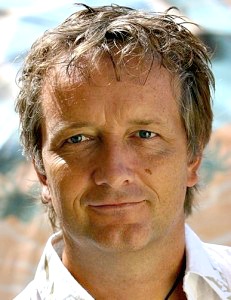
In search of Spanish paradise, Joe Cawley finds his salsa in the writing life

Hands up, anyone who’s ever thought of jacking it all in — running away to a paradise island, opening a bar and living the easy life?

I know I have. So many times! Thank God I didn’t, though, because Joe Cawley got there first and wrote a book about it — and in the process discovered that the easy life is not quite as idyllic as you’d imagine. In fact, it was terrifying!

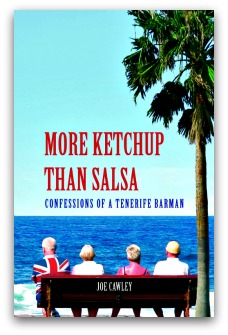
Joe’s book, More Ketchup Than Salsa: Confessions of a Tenerife Barman, is a hilarious account of his decision to trade in working in a cold fish market in Bolton, Lancashire, England, for running a bar in the sunshine of Tenerife, the largest and most populous of Spain’s Canary Islands. Accompanied by his girlfriend, Joy, Joe anticipates a paradise of sea, sand and siestas — but instead ends up with a life of chaos, full of crazy locals, irritating expats, gangsters, con men, and the endless nightmare of Spanish bureaucracy.

It’s a great book, and I loved it.

Today we’re lucky enough to feature an interview with Joe that was published the week before last on the excellent writing blog Woman On The Edge Of Reality. Linda Parkinson-Hardman is that edgy woman, and she has very graciously allowed me to share this interview with you — because Joe Cawley is a hero of mine! By the end of this, I’m sure he’ll be one of yours, too!!

Here’s Linda:

In More Ketchup than Salsa, Joe had me laughing so hard that I spilled a cup of tea all over the bed. His tale of travelling from Bolton Fish Market to Tenerife, Costa del Bognor, opens up the can of worms that most of us never even consider when we are sitting sipping coffee on a terrace and dreaming. His daily battles with cockroaches, the local mafia, animals and the never-ending variety of people that stepped through his door, was the wake-up call I needed to think again about what it was I might just do if I ever decided to take the plunge and live abroad. This is the perfect book to take on holiday with you especially if you are already planning to make that move.

Hello, Joe, and welcome to the hot seat. As you know, I start every interview off with the same question: “What is one thing that no one would usually know about you?”
That I was once appeared as an alien in a US TV commercial for Chevrolet. Not the proudest moment of my life, or the most comfortable. I had to stand outside in 100 degree heat painted from head to toe in silver and wearing a silicone head extension. I’ve looked better.

What did the best review you ever had say about you and your work?
That More Ketchup than Salsa was: “Fantastic, hilarious, painful. Completely un-put-downable. Probably the best book I have read this millennium!” And no, it wasn’t written by me. Or my mother. (Linda’s Aside: I have to agree, it was brilliant and I’m looking forward to a sequel.)

How did you choose a title for your book?
I was at the Carnival in Tenerife watching lithe Latinos strutting their stuff to the salsa beats. A pocket of Brits were trying to copy, but their movements were all over the place and sloppy. I thought it looked more like ketchup than salsa.

Have you ever wished that you could be or do anything else instead of writing, and if so what?
Absolutely not. I love it…best job in the world. Although if pushed, I’d say drummer in a rock band. I nearly got there with that one but was foiled by a bowl of sugar, a broken tooth and an over-zealous immigration official.

Have you ever written naked?
Hell yeah! I often wake up in the middle of the night with some inspired idea for a chapter. And not being one for pyjamas, I’ll sit butt naked at my desk and write for hours while my dog gives me quizzical looks. I try to finish up before the postman arrives though.

Do you have any hints or tips for aspiring writers?
Write. The difference between “aspiring writers” and “writers” is that the latter have finished something.

What has been the best experience you have ever had in your life?
Apart from having two gorgeous kids, I’d have to say sleeping in an open-sided hut in the Peruvian Amazon while a tropical lightning storm exploded all around me.

Are you jealous of other writers?
Not jealous, but definitely inspired. D. H. Lawrence was my first inspiration. I just love the way he paints with words. Bill Bryson was my second. In fact I’m inspired by any author who has great success. It makes me think there’s no reason why I can’t do it.

What was the most important thing you learned at school?
Kissing girls who wear braces can be painful. (Linda’s Aside: Oh dear, I was one of those girls!)

What is the book that you wished you had written?
The Bible. Though I’d have included full-page photos. It would make it seem all that more believable.

Tea, coffee, water, juice, wine or beer: which do you prefer when writing?
Water while writing during the day, wine for creative stints in the evening. And maybe the odd Jack Daniels and Coke or single malt if I’m feeling very pleased with myself.

* * *

So, readers, any further questions for Joe — especially from an expat or travel perspective?

You can meet Joe online on his author site; you can also read his work in The Sunday Times, Telegraph, Independent, Express, New York Post, and Taipei Times; and/or you can join him on Twitter: @theWorldofJoe

You can also download the book onto your Kindle from More Ketchup than Salsa from Amazon UK or Amazon US.

What are you waiting for? You’ve still got two weeks of summer left! And thanks again to Linda for letting us share this awesome interview.

STAY TUNED for a guest post tomorrow from long-time friend of the Displaced Nation, cultural writer/producer Anastasia Ashman.

If you enjoyed this post, we invite you to register for The Displaced Dispatch, a round up of weekly posts from The Displaced Nation, with seasonal recipes, book giveaways and other extras. Register for The Displaced Dispatch by clicking here!

Related posts:

TRAVEL YARN: Two madcap Indonesian ladies in weird & wonderful Japan (1/2)

Japan — the country that many Westerners have likened to Lewis Carroll’s “wonderland” for its quality of wacky unpredictability. But what about for other Asians — do they feel as displaced and disoriented there as we do? Our very first Random Nomad, Anita McKay, ventured into the Land of the Rising Sun for the first time this summer, in the company of another Indonesian, P, who had been there once before as a student. McKay reports on the pair’s adventures in this two-part travel yarn.

The message exchange between my travel buddy, P, and me, in May, went like this:

Me: “So have we decided where we want to go this July?”

P: “How about Japan?

Me: “Okay.”

P had lived in Japan decades ago for a student exchange program. She hadn’t been back since, and thought this year would be a good time.

I, on the other hand, didn’t really have any specific destination in mind — just so long as I could go somewhere I hadn’t been to. As I explained in my interview with the Displaced Nation, although I am from Indonesia originally, I have lived for extended periods in Aberdeen, Scotland, and in Australia. But I still hadn’t made it to Japan.

P suggested Tokyo, Kyoto, and Kobe. I added Yokohama to the list because there’s a blog buddy I wanted to meet up with. She and I had been trying to catch up forever and everywhere — UK, Singapore, and Indonesia — but kept missing each other. If I went to Yokohoma, where she is now based, surely we would finally get together?

I prepared myself for the trip by scanning some pages in Trip Advisor and the Lonely Planet guidebook. At least I would have an idea of what to do and where to go — and wouldn’t be entirely dependent on P, who speaks and reads Japanese and has lived there before so presumably knew how to get around.

Madcap traveler’s motto: Be unprepared!

When we landed at Narita Airport, I suggested that we take a taxi because it was 9:00 a.m., and I had taken the notion of a red-eye quite literally — my eyes looked red as I was still recovering from flu. I desperately wanted to have a quick nap before exploring the city.

We crossed the road, dragging our gigantic suitcases with us, and I let P speak with the men at the taxi rank. When she showed them the address of the hotel, one guy frowned and looked at us. “Tokyo?” he asked in disbelief.

We nodded eagerly. The drivers exchanged glances and apparently decided we weren’t crazy. One of them spoke in Japanese to P, who translated: “It’s 23,000 yen.”

I did a quick calculation, and almost fainted when I found out it will cost us almost 300 AUD [around the same in US$] for a taxi to our hotel.

“300 bucks??” I asked P. She nodded calmly, but her eyes couldn’t lie. She was just as shocked as I was.

“No! Cancel!” I shook my head furiously, while P apologized to the drivers. The men just laughed and pointed us back to the airport. “Take the train instead,” I think they said. “Like normal people.” Maybe they said that, too!!

Now we know why there was no one queuing for a taxi, whereas there was a long queue at the train ticket window. And we thought we were being smart!

Everyone had warned us that Japan — Tokyo in particular — is “very expensive!” The city ranks number 1 in the list of the most expensive cities in the world, while Perth, where I now live, is number 19. But really, if the taxi would cost us almost 300 bucks, what kinds of prices could we expect to find in Tokyo?

P had no memory of taxis from the airport. Years ago when she landed in Tokyo, she was picked up by a shuttle bus.

She’d also paid no attention to the length of the journey — she’d been too busy meeting and getting to know the other students. Both of us were surprised when it took almost an hour for the Narita Express to reach Tokyo Station. P had assumed it would be like Jakarta airport to the city centre (just because), and I must have skipped that page in the guidebook…

Well, at least we now knew why it was so expensive to take a taxi: the distance is more like Heathrow to London.

We just kept laughing at our silliness.

It’s food?!?!?

By the time we’d reached our hotel in Chiyoda, a quiet area near the Imperial Palace, we were both rather hungry and decided food would come first on the agenda, before tackling the first sight on our list: Sensō-ji, Tokyo’s oldest temple, in Asakusa.

Food is important to us Indonesians. We eat all the time. In Japan for the first time, I wanted to try something new: not sushi, yakiniku, donburri (rice bowl), soba, or ramen.

“Let’s try this!” I excitedly pointed at one restaurant name in the guidebook. “It’s in Asakusa and it looks…exotic enough.”

P agreed, and under the glare of the July sun we made our way to a restaurant called Komagata Dojo, only to be greeted by the sight of a rather long queue. If there is a queue, then the food must be good, we assured each other. Plus it seems as though most of the people in the queue are locals, so the taste must be authentic.

As it turned out, the restaurant is in its sixth generation of owners, and is famous for its dojo: a tiny freshwater fish like an eel or sardine, cooked in a cast iron pot.

We ordered what seemed to be everyone’s favorite, dojo nabe (hot pot), and also asked for two bowls of rice.

The waitress lit the charcoal burner in front of us, set the pot down on top of it, and told us to sprinkle the spring onions, or negi, on top of the fish.

We looked at each other after the first gulp.

“What do you think?” I asked P.

“What do you think?” she replied back.

“Well…it’s…all right. Weird.”

She nodded. “The rice is very good though.”

I can’t describe the taste. It’s rather bland for my liking, as I grew up in Indonesia, which is famous for its spicy dishes. Not just hot spicy, but lots of flavors in every dish. But dojo nabe isn’t tasteless either. Lots of soft flavors, like soy and spring onions.

When we were about to finish our lunch, I asked P how come Japanese people look so slim if, like the rest of us Asians, they enjoy eating all the time. We were thinking that their diet of raw seafood might be the answer.

“But this isn’t raw,” I pointed at the dojo. “It’s cooked. Plus the size of the rice is rather big.”

We looked around at the other patrons — and, to our horror, we were the only ones who’d seemed to have ordered a bowl of rice each! The rest of the customers were adding the spring onions to their fish but had no rice bowls.

“That’s the only thing they eat for lunch!” I hissed to P. “Spring onions and tiny fish! No wonder they’re slim!”

“No wonder the waiter asked if we wanted one or two bowls of rice,” P admitted when we were at the cashier. “I thought it was because of my rusty Japanese, but now I know because she didn’t believe two small girls can eat that much!”

Hanging our heads in shame, we slipped out of the restaurant and determined we would burn away the calories by walking to Sensō-ji temple. The temple, however, was only a few minutes’ walk away. Still, we had fun taking photos of ourselves under the gigantic red lantern at the temple gate, and looking at the stalls lining the 200-metre-long Nakamise-dōri, the street approaching the temple — selling every manner of Japanese trinket and souvenir, including yukata robes (cotton kimono), tenugui (hand towel, often used as a headband), furoshiki (rectangular cloth for gift wrapping) and folding fans. There were also local snacks for sale, of a kind I’d never seen before in my life, in every shape and color possible, in beautiful packaging.

Kyoto and the Indonesian connection

After two days in Tokyo, we took the shinkansen to Kyoto and stayed in a ryokan — a traditional Japanese guesthouse where you sleep on tatami mats. Being shoppers at heart (another trait of Indonesian tourists!), we were pleased to see that the ryokan was just two minutes away from Nishiki Market, which we saved for our last day.

At first I was skeptical. How “weird and wonderful” can the Nishiki market wares be? I’m an Asian, I’ve seen lots of weird and wonderful things, I don’t think that the Japanese can produce anything that would shock me. Well, I was wrong. From pickled eggplants to live turtles, from grilled sea-eels to rakugan (tea-ceremony sweets) shaped as sushi — every single stall was full of wonders that had me alternatively oohing and ahing, or eek-ing and yuck-ing (along with a few WOWs and OMGs).

But I’m getting ahead of myself. We ended up having a better experience in Kyoto because of making an Indonesian connection on our very first day. After encountering the tail end of the Gion Matsuri, one of Japan’s most famous festivals, named for Kyoto’s Gion district, we stopped in one of the shops in Gion, where the owner happily chatted with us in English. He knew about Indonesia’s first president (I guess because the third of Soekarno’s nine wives was a Japanese woman), and explained to me that the stuff I was buying wasn’t candy but rakugan, made of sugar and starchy powder and often served in Japanese tea ceremony to offset the bitterness of the green tea.

Arranged in a pretty box, the rakugan have the most beautiful soft colors, from baby pink to green. Each was in a floral shape, with delicate carvings on the surface — yet each was only as big as my smallest fingernail. How they could make such detailed coverings in such a small space, I had no idea.

We told the shop owner we were hoping to eat a good soba for dinner. He said to go straight ahead until we reached the kabuki theatre. Next door to that theatre is a famous soba place called Matsuba, he said.

We found the place easily (thanks to P’s ability to read the restaurant sign!), and had fantastic soba with smoked herring.

Our luck didn’t stop there. The next day, after wandering around Kiyomizu-dera, a famously beautiful temple in Eastern Kyoto, and spending a fortune buying souvenirs, cookies and ice cream from virtually every shop along the temple street, we made a quick stop at a proper store to buy sunglasses for P. One of the staff turned out to be an Indonesian. He recommended a bar not far from our hotel for a drink, where the owners are Japanese sisters but can speak Indonesian. Thanks to this advice, we ended up spending our last night in Kyoto befriending a set of Indonesian-speaking Japanese twins.

IT’S FOOD!!!

I queried the twins about where to have lunch on our last morning. They booked us into Gion Nishikawa — 2 stars in the Japanese Michelin Guide and the first restaurant in Japan that made me appreciate how wonderful Japanese food can be. The eight-course, kaiseki-style lunch cost only around 70 AUD and was served directly by the cute chef (whom P rather fancied!) from across the counter. No other Japanese food I’d had before in my life could compare to this.

The chef would tell us (in Japanese, of course) what type of dish he was putting on our plates, and which food goes with which sauce. By the fourth course, which featured three types of fish, even we were starting to feel rather full, and P decided not to finish it — she wanted to save some space for course No. 8. When the chef cleared her dish, he saw that there was still some fish left, put it back in front of her and told her to finish it! I assumed he did that because it was such a costly delicacy.

Meanwhile, I was amazed that one of the fish in the bowl was koi (carp or goldfish) — yes, koi, what people normally keep as a pet! I looked at the chef in disbelief and he only laughed at me and said (as translated by P) that of course they eat koi.

Hahaha — I still felt as though I was eating my own cat…

By the eighth course both P and I swore we wouldn’t eat again until tomorrow. Famous last words! 🙂 We’re Indonesians, remember?

* * *

Readers, do you have any questions or comments for Anita? Stay tuned for the second part of her travel yarn, when the madcap duo move on to Kobe and Yokohama, and then back to Tokyo, to be posted within the next two weeks.

Anita McKay is a property consultant, travel junkie, cat lover, food enthusiast. She resides in Perth with her Scottish husband but is still searching for a place called home. To learn more about her, check out her blog, Finally Woken, and/or follow her on Twitter: @finallywoken.

STAY TUNED for tomorrow’s interview with a hilariously funny British expat author.

If you enjoyed this post, we invite you to register for The Displaced Dispatch, a round up of weekly posts from The Displaced Nation, with seasonal recipes, book giveaways and other extras. Register for The Displaced Dispatch by clicking here!

Related posts:

Images (clockwise from top left): Japanese trinkets for sale at the famed Nakamise-dori in Asakusa, Tokyo; Anita McKay deciding that dojo nabe may be an acquired taste (at a famous Tokyo restaurant); one of the many fabulous lunch courses at Gion Nishikawa in Kyoto; one half of the dynamic duo (A) outside of the JR Station in Kyoto; the other half of the dynamic duo (P) at Nishiki Tenmangu Shrine, just outside Nishiki Market, Kyoto. All photos from Anita McKay’s personal collection.

Displace Yourself…to Tuscany

Welcome back to another in our occasional series, “Displace Yourself,” where we look at books by expats and travelers focusing on particular countries or regions, in hopes of displacing ourselves through their experiences. (One lifetime isn’t long enough to sample it all!)

This month, a place that’s on many of our wish lists: Tuscany, Italy.

Tuscany: Facts and figures

Capital: Florence
Area: 8,878 square miles
Population: 3,750,000
Language: Standard Italian/Tuscan Dialect
Demographic: 93% Italian; immigrants from Britain, America, and China.

*  *  *

To Tuscany from England:

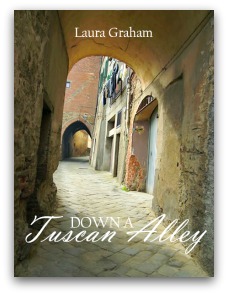
Down A Tuscan Alley (Fiction/memoir)
by Laura Graham
 Published June 2011

The Displaced Nation first met Laura Graham in May this year. Click here to read our interview with her.

About the author:
After the breakdown of a longterm relationship, Laura left England in search for a new life in Italy. With a distinguished acting career behind her, she now runs her own holiday property agency in Sinalunga, where the Tuscan tranquility inspires her writing.

Cyber coordinates:
Website: www.lauragraham.co.uk
Twitter: @LauraGraham7

Overview of book:
A long relationship ends. At 48, house taken by the bank, Lorri has little money. What can she do? And where can she go? Gathering her meager savings and her two beloved cats, she escapes England for a new life in a remote Italian village, never imagining the intrigue, passion and adventure she will find.

One reader’s review:
“The author’s use of dialogue enables the reader to form their own images of the characters to whom we are introduced. The reader is invited to share with [protagonist] Lorri as she develops her confidence, her new language, a knowledge of a different culture and her love for Ronaldo. The juxtaposition of romance and intrigue helps the book to flow to its end, and keeps the reader’s interest. The author brings her story to its conclusion using one of her characters to inform both the reader, and the protagonist herself.” (Amazon.co.uk reviewer)

To Tuscany from New York:

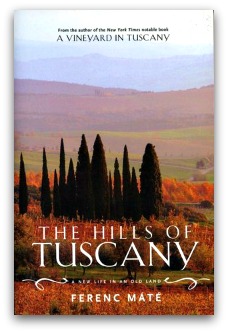
The Hills of Tuscany: A New Life in an Old Land (Autobiography)
by Ferenc Máté
Published November 1998

About the author:
Ferenc Máté  escaped Hungary after the 1956 revolution, and went with his mother to Vancouver, British Columbia. He now lives on a wine estate in Tuscany with his wife (painter and winemaker Candace Máté) and their son, Peter.

Cyber coordinates:
Website: www.ferencmate.com

Overview of book:
This hilarious, international bestseller is a true-life adventure of a New York City couple moving to Tuscany.  Ferenc Máté’s enthusiastic prose is infectious. He brings to life the real Tuscany: the contadini neighbors, country life—the harvest, grape, and olive picking, wine making, mushroom hunting, woodcutting—the holidays, and of course the never-ending, mouthwatering meals. (Amazon.com book description)

One reader’s review:
“As a second-generation Italian-American, I’m getting tired of the subtle patronizing attitudes that some prosperous expatriates to Italy emit via their memoirs. Reading this book, I felt that Ferenc Mate truly felt a genuine empathy with Italians. His ability to laugh at himself, and with his Italian neighbors — not at them — was a superb aspect of this work. He seemed to understand that being at home in Italy requires more than merely hobnobbing with other expatriates, and absorbing their prejudices.” (Amazon.com reviewer)

To Tuscany from California:

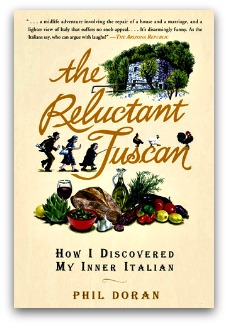
The Reluctant Tuscan: How I Discovered My Inner Italian (Humor/Autobiography)
by Phil Doran
Published March 2006

About the author:
Phil Doran worked in TV production for 25 years, as writer-producer for TV shows such as Sanford and Son, as a writer for The Wonder Years, and writing episodes of The Bob Newhart Show. He divides his time between California and Tuscany.

Cyber coordinates:
Website: www.reluctanttuscan.com

Overview of book:
After twenty-five years of losing her husband to Hollywood, Doran’s wife decided it was finally time for a change—so on one of her many solo trips to Italy she surprised her husband by purchasing a broken-down 300-year-old farmhouse for them to restore. The Reluctant Tuscan is about the author’s transition from being a successful but overworked writer-producer in Hollywood to rediscovering himself and his wife while in Italy, and finding happiness in the last place he expected. (Amazon.com book description)

Readers reviews:
Note: “The Reluctant Tuscan” appears to provoke a “Marmite” response from readers — they either love the book or hate it (or at least, are marginally lukewarm about it.) Here are two fairly typical reviews from both sides of the spectrum, from Amazon.com reviewers.

Love it:
“This is such a fresh, enjoyable book. Phil Doran is so honest & matter of fact about himself & his wife. I picked this book up to glance through & found I could not nor did I want to put it down. So I sat & read it non-stop, from cover to cover….My sides hurt from so much laughing. This is a must read book for anyone & any age….Enjoy!!!”

Lukewarm:
“The book recounts the period of time when the writer moved to a rural town in Tuscany and undertakes renovating a dilapidated farm house, mostly to appease his wife, who has bought the property without consulting him…There were some amusing bits but none that made me laugh out loud. Stereotypes and caricatures of Italians abound and there are multiple references to the Germans and WWII. Maybe it’s a generational thing, but I found these annoying.”

To Tuscany from Jerusalem:

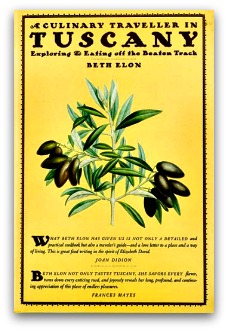
A Culinary Traveller in Tuscany: Exploring and Eating Off  the Beaten Track  (Travel guide/cookbook)
by Beth Elon
Published March 2009

About the author:
Former literary agent and her journalist husband Amos bought a neglected manor house in Tuscany in the late 1970s, long before the region became a desirable destination. Every summer, they would travel with their young family from their home in Jerusalem to spend two months in their Tuscan home, gradually renovating it as they were able. Eventually, the couple made Tuscany their permanent residence.

Overview of book:
“One might think that everything that can be written about Tuscany has been written. But here is a gem of a book in the tradition of M.F.K. Fisher that takes readers down Italian back roads and into private kitchens. There are 10 chapters that represent 10 itineraries into 10 different Tuscan regions. Included are more than 100 recipes and contact information and descriptions from private kitchens and restaurants, trattorias, gourmet shops, bakeries, wineries, and olive oil producers. Also included are days and dates when food festivals are held that celebrate chocolate, truffles, chestnuts and mushrooms. Warning: this book may contribute to an expanding waistline.” (Book Passage Bookstore review)

One reader’s review:
Beth Elton’s title isn’t just a cookbook – it takes a culinary tour of Tuscany into regions largely uncovered in other titles – and surveys the special kitchens and products of over fifty restaurants whose cooks produce original recipes revealed just for this title. All dishes have been adapted for home cooks but retain the authenticity of generations of development, so cooks seeking a blend of travelogue and new dishes to try will find delightful the blend of travel insights and easy dishes.” (Amazon.com reviewer)
.

STAY TUNED for Monday’s travel yarn from our very first Random Nomad, Anita McKay.

If you enjoyed this post, we invite you to subscribe for email delivery of The Displaced Dispatch, a round up of the week’s posts from The Displaced Nation. Sign up for The Displaced Dispatch by clicking here!

Related posts:

Image: MorgueFile

Christmas in July & other Winter’s Tales from an expat Down Under

After sweltering through America’s hottest July on record, three of us Displaced Nation writers have been imploring the fourth, Tony James Slater, for some cooling stories from his newly adopted home of Perth, Australia.

I noticed a Christmas tree in my gym a couple of weeks ago. I wondered what the hell it was doing there, until some kind staff member — presumably on hearing me curse in the middle of the foyer — decided to enlighten me.

Christmas in July, the Aussies call it — for no apparent reason other than that most countries celebrate Christmas when it’s freezing cold outside, with snow on the ground and cards covered in penguins and polar bears decorating the mantle piece.

July is as cold as it gets in Perth. The temperature — sometimes — dips into the single digits overnight, and we wake up to a sensation overly familiar to a Brit like me: not wanting to get up because it’s warmer in bed!

Once upon a time, when I made my first visit to Oz from Thailand, all those years ago, I arrived (in my infinite wisdom) in June. At 6:00 a.m.

I had no idea Australia had seasons. From the postcards and other literature, I’d assumed it was the Land of Eternal Summer.

It was achingly cold, pouring it down with rain — and I was wearing a pair of shorts and a vest [tank top], because that’s all the clothing I owned!

I’m now super careful when advising my friends who plan on visiting: “Don’t come November to February,” I tell them. “It’ll be way too hot. You won’t be able to breathe.

But don’t come June to August either — it’ll be too cold! And all sensible Australians will be holed up inside with our mitts wrapped around a hot cup of Milo.”

Mmmmmm…. Have you ever had Milo? It’s a hot chocolate malt drink. I must say, it really hits the spot this time of year.

Storm warning!

We have our blistering hot summers, too, down in Oz. In fact, the whole country is geared around this inevitability. That may be why no one seems quite prepared for the winter.

It rains, of course — it has to, otherwise we’d be in an even worse state come summer. But no one here is quite ready for it when it does.

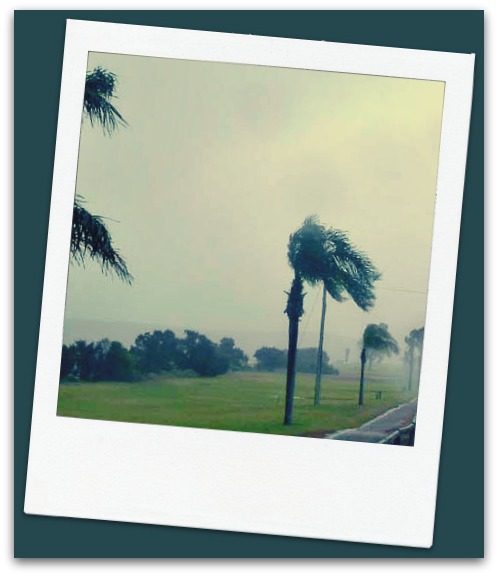
Take the Great Perth Storm of 2012, for example. Several weeks ago now, there was a severe weather warning issued. Businesses closed early. Employees scurried home, fearing what would happen if they were caught in traffic when The Big One hit. By the time it started raining, the streets were deserted – which was probably a good thing. Boy, did it rain! It rained, and rained, and the good folk of Perth cowered indoors, until…the rain stopped.

And that was it.

I honestly think half of them didn’t expect to survive it.

They were most upset when they had to drive to work the next morning, through rapidly drying puddles.

The four seasons in one day

But let’s not get carried away; to those of you fanning yourselves under an air-con unit, wishing you’d remembered to get it serviced before the heat-wave hit, I can sympathize — it’s not exactly cold here all the time.

Even in winter, the middle of each day is quite pleasant — probably what you’d call “beach weather” on most of the rest of the planet.

Charles Dickens’s description of an English springtime seems most appropriate:

It was one of those [March] days when the sun shines hot and the wind blows cold: when it is summer in the light, and winter in the shade.

Have you ever worn a hat indoors?

Perhaps because of this, the houses here are built without insulation, and without any form of central heating. Most of them have a little wood-burning stove in a corner of the family room, but that’s it — and of course no double glazing!

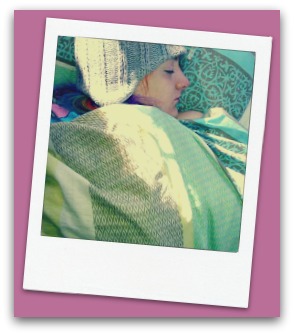
Houses built like this in Europe would never pass the building code, but it seems that the housing industry here just doesn’t worry about it. Yeah, sure, they’re building houses that’ll be a bit cold in winter. But the owners can always wear a jumper! Or, as frequently happens when we visit my father-in-law in his house in the Perth hills, a scarf, gloves and a beanie…

In an unheated, un-insulated house at night, there are only two things to do — and one of them doesn’t really belong on a public forum like this. The other, of course, is to wear as many layers as you can — kind of like you’re going hiking in a blizzard — and try to keep exposed flesh to a bare (sorry!) minimum.

Of course, this being winter, you can find that blizzard. Just about. There’s nothing between the bottom of Australia and the top of Antarctica, so our southern seas get a little chilly around now. We have snow-capped mountains – okay, we have a snow-capped mountain. Sometimes…

But the scene over in neighboring New Zealand is a little frostier!

In fact, my sister is there right now, training to be a skiing instructor.

And because the architecture over there is mostly derived from what we have over here…her house also doesn’t have any heating either.

All things being equal…

I’m content to be cold once in a while. It reminds me of home — just a little, in a slightly-chilled-’till-the-sun-comes-up kind of way. Not like actually being back in England — where, even though it’s summer, I think it’s colder than here… I mean, did you see that beach volleyball tournament? Only in London could they import twenty tonnes of sand and play beach sports in torrential rain…in bikinis.

Now there’s a refreshing image!

So instead of feeling sorry for yourselves over there in sweltering America, please do feel pity for us over here. After the terrible inconvenience of our slightly chilly winter, we have plenty of other ordeals to face — like Christmas on the beach!

* * *

So tell me: would you rather be here — or where you are right now? Let me know in the comments, or on Twitter: @DisplacedNation +/or @TonyJamesSlater. Now back to my nice mug of Milo before it gets cold — cheers!

STAY TUNED for tomorrow’s Random Nomad, who, too, has some stories to help alleviate the effects of the heat…

If you enjoyed this post, we invite you to register for The Displaced Dispatch, a round up of weekly posts from The Displaced Nation, with seasonal recipes, book giveaways and other extras. Register for The Displaced Dispatch by clicking here!

Related posts:

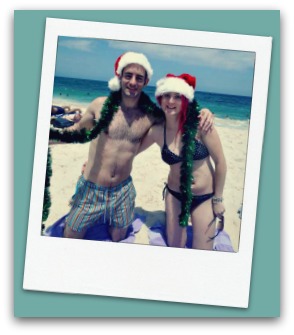
Main image:  “Polaroids” are all from Tony James Slater’s collection: The Great Perth Storm of 2012; Tony’s wife, Roo, asleep in her dad’s house in the hills of Perth (2012); Tony & Roo celebrating Christmas on Cottesloe Beach, near Perth, Australia (December 2011).

Dear Mary-Sue: Expats face tough come-down after Olympics high

Mary-Sue Wallace, The Displaced Nation’s agony aunt, is back. Her thoughtful advice eases and soothes any cross-cultural quandary or travel-related confusion you may have. Submit your questions and comments here, or else by emailing her at thedisplacednation@gmail.com.

U-S-A! U-S-A! U-S-A! That’s been the chant in the ol’ Wallace homestead these last two weeks. We took on the world and we whopped its ass — just as it should be. All very exciting — and some of those swimmers! Well, let’s just say they can come round to Mary-Sue’s pool to practice their doggy paddle anytime they want.

*****************************************************************************************

Dear Mary-Sue,

I was watching the closing ceremony of the London Olympics last night, and at one point the commentator said that it was a great tribute to British individualism and creativity. But why don’t we just go ahead and call it eccentricity? Because that’s what it is, right?

Former expat in Britain, now happily repatriated to USA

Dear Former Expat,

Hmm, if my understanding of British culture is correct, and bear in mind that I am no expert like Mary Carillo, but I don’t think there was enough cross-dressing for it to technically count as British eccentricity.

Mary-Sue

*****************************************************************************************

Dear Mary-Sue,

At the conclusion to the London Olympics, Sebastian Coe said: “Britain did it right.” But then why were the Spice Girls involved in the closing ceremony?

A happy repatriate to the USA after several years in Britain

Dear AHRTTUASYIB,

How many years were you in Britain and yet you never learned their famed sense of irony? Two weeks Mary Carillo has spent there and she has got it all sorted. Shows what you can do if you apply yourself.

Mary-Sue

********************************************************************************************************

Dear Mary-Sue,

I’ve been watching my home country, Britain, host the Olympics for the past two weeks, and now I’m really homesick. What’s the cure for this? (I’m allergic to chicken soup.)

Ben in Boston

Dear Ben,

Epcot, British pavilion. Just like being in Britain, but with actual customer service!!

Mary-Sue

********************************************************************************************************

Dear Mary-Sue,

I noticed that the great Brazilian footballer Pelé made an appearance in the closing ceremonies when Britain was handing over the Olympics flag to Brazil for the next Summer Games in 2016. As you may or may not know, Brazil will also host the World Cup in 2014. As much as I like the Olympics, in my opinion, that’s a far more important and prestigious event — even though America, my new country, doesn’t participate. Would you agree?

Pablo from Pittsburgh

p.s. Viva España!

Dear Pablo,

No.

Mary-Sue is all about those tasty swimmers. Is Ryan Lochte (yeah, he’s an idiot, I know) going to be at the World Cup? Thought not. Pelé may have been a great soccer player, but all I know about him now is that he does commercials for Viagra. Give me Lochte any day.

Mary-Sue

********************************************************************************************************

Dear Mary-Sue,

I noticed that one of the Displaced Nation writers, Anthony Windram, was criticizing the NBC coverage of the Olympics. He even went so far as to call Bob Costas the “ugly American.”

Though I now live in England, I’m sure it couldn’t have been any more partisan than what I witnessed over here on the BBC.

Wasn’t Windram just being churlish and if so, why was the Displaced Nation giving him so much “air time”?

Bob from Britain

Dear Bob,

I agree Windram is a blight on this site. I actually have to deal with him. I ask for Ryan Lochte and they send me that chump Windram. I wanted a wet athlete and they give me a wet fish. He called Bob Costas ugly, I know which one I’d rather wake up to on a cold winter’s morning.

Mary-Sue

*******************************************************************************************************

Dear Mary-Sue,

At one point during the Olympics, tensions between Kiwis and us Aussies here in the Netherlands reached an all-time high because they were winning more medals than we were. But all’s well that ends well, or at least that’s the way I and my fellow Aussies see it: we finished 10th, with 35 medals (of which 7 were gold), as compared to their 16th-place finish with 13 medals, of which 5 were gold. However, some Kiwis continue to lord it over us despite these stats. Until now, we all got on quite well. How can we repair the rift?

Ethan of Emmeloord

Dear Ethan,

Wait, Australia and New Zealand are different countries? Well, I’ll be a monkey’s Aunt!

********************************************************************************************************

Dear Mary-Sue,

Why did NBC show Russell Brand singing but not Ray Davies?

Baby Boomer in USA

Dear Baby Boomer,

As one of the 800,000 people to have experienced at first hand the debauched ways of Mr Brand, I can attest that while his whole Pied Piper aesthetic is unusual, his spindly body has an unusual sexual-voodoo pull on others. I’m guessing that Russell was awarded a gold in bedroom gymnastics by Mr Costas, and that Costas then made sure Russell was included in the final broadcast. Ray, by contrast, probably wasn’t able to be heard by the 17-year-old athletes, like Missy Franklin, who were screaming in excitement for One Direction.

Mary-Sue
___________________________________________

Anyhoo, that’s all from me readers. I’m so keen to hear about your cultural issues and all your juicy problems. Do drop me a line with any problems you have, or if you want to talk smack about Delilah Rene.

Mary-Sue is a retired travel agent who lives in Tulsa with her husband Jake. She is the best-selling author of Traveling Made Easy, Low-Fat Chicken Soup for the Traveler’s Soul, The Art of War: The Authorized Biography of Samantha Brown, and William Shatner’s TekWar: An Unofficial Guide. If you have any questions that you would like Mary-Sue to answer, you can contact her at thedisplacednation@gmail.com, or by adding to the comments below.

STAY TUNED for tomorrow’s post with some cooling thoughts for those of us in the Northern Hemisphere who, after sweltering away under the summer’s record heat waves, need a boost to get through the remainder of August.

If you enjoyed this post, we invite you to register for The Displaced Dispatch, a round up of weekly posts from The Displaced Nation, with seasonal recipes, book giveaways and other extras. Register for The Displaced Dispatch by clicking here!

Related posts:


A classic TCK dilemma: Which of my 3 heritages counts for the Olympics?

We welcome back Third Culture Kid Tiffany Lake-Haeuser to the Displaced Nation. (She last joined us during fashion month.) Born in the United States to German parents, Tiffany returned “home” to Frankfurt when she was six. But then at age 13, she moved with her family to Abu Dhabi, UAE. Now back in Frankfurt, this 16-year-old divides her time between this city and Paris, where her father currently resides. So which team(s) does Tiffany support in the Olympics? That’s the million-euro (or is it dollar?) question.

I was never really very interested in sports. This year, during the Olympics, that changed. You still won’t find me glued to the television to see all the events, but I’m definitely more interested than in the past.

Then of course, there is the somewhat confusing decision of which country to cheer for. Do I support my heritage and the country I now live in, Germany? Or do I support the country I was born in and often associate with, the USA? Well for me it was easy to decide. You see, I am extremely competitive and enjoy cheering for the country that wins, which for the most part leads to me cheering for the USA.

I watched the pre-Olympic trials for the American gymnastics team when I was in the United States visiting childhood friends earlier this summer. I was gobsmacked — not only by the amazing talent of the athletes, but also by the enthusiasm shown by the spectators.  I think that’s when I caught the Olympic bug. Suddenly I was eager to see the team compete for gold in London.

German apathy

But when I got back in Germany, there was barely any sign that the Games were fast approaching. Maybe I was just in the wrong environment, but no one was even talking about it. Even when the Games started, it felt like no one cared. The most excitement I observed was a small promotional program by a pharmacy(!). Unless I was on some social networking site, I barely ever exchanged views with anyone about what was happening at the Olympics.

While waiting for the Games to start, I did some research and found out that since the modern Olympic Games began, the USA has always been in the top three countries when it came to the number of medals won.

This history made me even more inclined to support my other “home” country. I love cheering for countries that are doing well. I love being a fan.

Go USA! Hmmm…unless it’s soccer?

As anyone who read my March interview with The Displaced Nation knows, I’m something of a fashionista. I love the idea of showing some pride for the US team by wearing red, white and blue. It may seem petty, but half the fun of watching the Olympics for a non-athlete like me is getting dressed up and painting your face in your team’s colors.

That’s something I picked up from Germany, in fact. Germans get truly pumped up for one thing: soccer. It’s our pride and joy. During the European Cup or the World Cup, Germany is transformed into a black, red and golden country. While in the USA people have flags hanging by their doors all year long, in Germany that happens only during these major soccer events.

One test of which side I was on in the Olympics came when a friend tried to bug me by saying that Germany was being beaten by his country in some sport. To be honest, I didn’t mind that much. All I could think about how well Gabby Douglas was doing in gymnastics.

Does this mean I am not proud of my German heritage? It definitely doesn’t; by the next soccer game you will see me losing my voice for cheering on Germany.

So it really isn’t that straightforward or clear. You never truly stop cheering for a country that means something to you. All you can really hope for is that the two countries’ teams never play against each other…

Go women athletes!

On a different note, I was excited to hear about how every country sent women to the Olympics this year. I wouldn’t call myself a feminist, but I do think gender equality is important, and that a country that is sending its women athletes to compete in the Olympics for the first time is taking a big step. I hope that gender equality in sports can become the new standard. Some day, perhaps, it will be considered so normal it won’t even make the headlines.

Having lived for three years in Abu Dhabi, I was particularly interested in the news about Saudi Arabian women participating in the Games. I know from experience how easy it is for us Westerners to look at Arab women wearing the hijab and think they are less liberated than we are. When I saw the Saudi women walking behind the men during the London opening ceremony, I was not surprised so much as humbled. Not everyone sees equality in the same way as we Westerners do.

Likewise, I didn’t think it was fair for the International Olympic Committee to consider banning the judo wrestler Wodjan Ali Seraj Abdulrahim Shahrkhani from dressing according to the traditions by which she was raised.  (In the end, they compromised on a cap for her to wear instead of the hijab.) To some degree, I admire Saudi Arabia for insisting upon preserving its cultural identity and traditions in face of the influence of Westernization.

By the time the Games end on Sunday, I think my favorite part will not be about having supported a particular country. The best part, in my opinion, has been seeing the people who rise to the occasion and do phenomenally well. It sounds cheesy, but you can see in their eyes the joy and relief that all their hard work and training has finally paid off — in the moment that counted, they were able to be the best they could be.

* * *

Readers, any thoughts on or reactions to Tiffany Lake-Haeuser’s dilemma? Please put them in the comments. You can also follow what she is up to on her blog, Girl on the Run.

STAY TUNED for tomorrow’s episode in the life of our fictional expat heroine, Libby. (What, not keeping up with Libby? Read the first three episodes of her expat adventures.)

If you enjoyed this post, we invite you to register for The Displaced Dispatch, a round up of weekly posts from The Displaced Nation, with seasonal recipes, book giveaways and other extras. Register for The Displaced Dispatch by clicking here!

Related posts:


BOOK REVIEW: “Expat Life Slice By Slice” by Apple Gidley

TITLE: Expat Life Slice by Slice
AUTHOR: Apple Gidley
AUTHOR’S CYBER COORDINATES:
Website: www.expatapple.com
Blog: my.telegraph.co.uk/applegidley
Twitter: @ExpatApple
PUBLICATION DATE: March 2012 (Summertime Publishers)
FORMAT: Ebook (Kindle) and Paperback, available from Amazon
GENRE: Memoir
SOURCE: Review copy from author

Author Bio:

Apple Gidley became an expat at the tender age of one month old, in Kano, Nigeria. Since her early initiation into global wandering, she has relocated 26 times through 12 countries, acquiring a husband and two children en route.

Apple is known to thousands as ExpatApple, through her popular blog at the Daily Telegraph.

Summary:

“From marauding monkeys to strange men in her bedroom, from Africa to Australasia to America, with stops in Melanesia, the Caribbean and Europe along the way, Apple Gidley vividly sketches her itinerant global life. The challenges of expatriation, whether finding a home, a job, or a school are faced mostly with equanimity. Touched with humour and pathos, places come alive with stories of people met and cultures learned, with a few foreign faux pas added to the mix.”

(Source: Amazon.com book description)

Review:

If anyone is qualified to issue advice on expat life, Apple Gidley is that person. Born to an English father and Australian mother, she takes the label “Serial Expat” to new heights.  She was a TCK before the term was invented (instead classed unflatteringly as an “expat brat”) and continued the global wandering throughout her adult life, with 26 relocations through 12 countries to date.

Her memoir provides fascinating reading, about places and lifestyles that most of us will never experience, and at times is almost anachronistic:  reading her reminiscences about servants, voluntary work, and charity committees, there’s a time warp sensation of stepping into a Somerset Maugham short story.

Although the book is a record of Apple’s patchwork life, most expats will relate to the emotional experiences she describes, no matter where in the world they are or  how many countries they’ve lived in. For example, we worry that leaving our family and friends behind will increase the emotional distance as well as the physical. After a while, we realise that this is mostly not the case, and that those who allow physical distance to become an obstacle weren’t so emotionally close in the first place. In Chapter 8, “Eighth Slice: Staying Connected”, she says:

As we age we draw closer still. We believe in family but do not see each other for years at a time, and yet we are all aware of where each of us is in the world, still scattered and testaments to a global upbringing.

In “Ninth Slice: Death at a Distance”, Apple deals with the elephant-in-the-room topic: the illness or death of a family member while we are thousands of miles away. During such times, it’s easy to beat ourselves up for choosing a nomadic lifestyle;  if our associated guilt trips were eligible for air miles, we could afford to fly back and forth to be with our loved ones as often as we wanted. In describing her own experiences of bereavement, Apple’s practical, matter-of-fact approach, plus her insights gleaned from other cultures’ attitudes to old age and death, reminds us that the old cliché of “life goes on” holds true, even after “death at a distance”.

Whether you’re a veteran expat, a re-pat, or are just about to embark upon your first move to another country, “Expat Life Slice By Slice” should be on your reading list.

Words of wisdom:

On TCKs:

For those children brought up as TCKs…a nonjudgmental and accepting attitude to different customs, colours and cultures is the norm. As this demographic grows, let’s hope for an even greater understanding of cultural differences for all our children.

On voluntary work:

Volunteering is work, sometimes harder than a paid position because it is the cause keeping you there and not the salary.

On making new connections:

Picking up people around the world to share your life with is one of the greatest pleasures in life, and sometimes you know straight away they will continue to stay in it.

On “Home”

Home is with me wherever I go…It is not a single building or a single country, but many of them.

.

STAY TUNED for Wednesday’s post.

Image:  Book cover – “Expat Life Slice By Slice”

If you enjoyed this post, we invite you to register for The Displaced Dispatch, a round up of weekly posts from The Displaced Nation, with seasonal recipes, book giveaways and other extras. Register for The Displaced Dispatch by clicking here!

Related posts: