The Displaced Nation

A home for international creatives

Tag Archives: What a Displaced World

DEAR MARY-SUE: Reconnecting with old friends (the year in review)

Mary-Sue Wallace, The Displaced Nation’s agony aunt, is back. Her thoughtful advice eases and soothes any cross-cultural quandary or travel-related confusion you may have. Submit your questions and comments here, or else by emailing her at thedisplacednation@gmail.com

There’s chestnuts roasting on an open fire (well, baking in my Jenn-Air 48″ Pro-Style gas oven) and I’m sipping on a glass of eggnog while listening to Michael Buble’s take on some Christmas classics Yepsiree, it’s a Mary-Sue Christmas!!
Christmas is an important time for the ol’ Wallace homestead. Hubby really goes all out with the Christmas lights and we’re now something of a seasonal event in Tulsa. People come from all over the state to see hubby’s lights. Must say, I’m not happy when I see the electricity bill.
Anyhoo, on with the final column of the year (time hasn’t just flown this year, it’s broke the sound barrier. It’s like that Austrian Lee Majors who fell from space in a Red Bull balloon).
Now, I know from you regular readers that one thing you’re always asking me about is what happened to those who wrote in to me. Did they follow my advice (yes, if they had any sense). Well, as it’s the end of the year, let’s see, shall we?
*****************************************************************************************
First up is Sharon who wrote to me for advice on whether spending time at an ashram in India was necessary for her spiritual enlightenment. (She had just read the book Eat, Pray, Love.) I advised her to go for a hike or take up watercolors (she lives in Texas), or if she just wanted to escape, sure, take a plane trip to India. Here is her story since then:“A lot has happened since I sent you that letter in January of this year. I took your advice and went on a hike rather than going off to an ashram. Unfortunately, during the hike, I got a nasty snake bite. After eight months in a deep coma, I finally woke from it at the end of August. Every day is now a blessing, and I’ve come to the realization of what I want to do in my life. That’s why in the new year, I am off to India where I WILL join an ashram. Why, I figure, let my fear of what other people think get in the way of me living my life.” 
Lot of snakes in India, Sharon … a lot of snakes
* * **********************************************************************************
Another letter that received a lot of votes was the one from Lars in Los Angeles. He couldn’t fathom what it meant when someone in that fair city wished him a Happy Anti Valentines Day. I told him it was a sign he should get the heck out of LA and move to Tulsa. Did he take my advice? Let’s hear his story:

“I did come out and visit Tulsa to see whether I could make a life for myself out there. I had a look round … let’s just say it gave me a whole new perspective on life in LA.”

Your loss, Lars.* * **********************************************************************************
There were also some votes from Patti in Plymouth who wondered what she should do with a gift of a jar of Marmite from her host family. I told her not to worry as it probably wouldn’t make it past customs. But is that what happened?“Actually, I did get past customs with my Marmite jar. And you know something else? Everyone hated it. I however douse it all over philly cheesesteaks.”

They’re going to run you out of town, sweetie.

 *************************************************************************************
That’s it from me this year, dear readers. Here’s hoping your misery and confusion keeps me occupied in 2013 as I was in 2012! God bless us all!
STAY TUNED for next week’s post, some more Random Nomad highlights.

If you enjoyed this post, we invite you to register for The Displaced Dispatch, a round up of weekly posts from The Displaced Nation, with seasonal recipes, book giveaways and other extras. Register for The Displaced Dispatch by clicking here!

Related posts:


For a Third Culture Kid, birthday candles are easier to come by than the Christmas kind

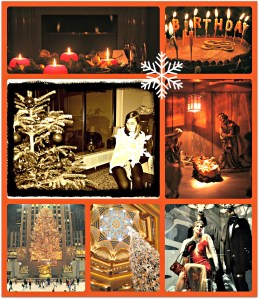
Tiffany Xmas Collage_dropshadowBorn to German parents in the United States who later moved the family to the UAE, Tiffany Lake-Haeuser learned very quickly that unlike birthday candles, Christmas candles only happen if you’re living in the right place. She joins us today to tell her tales of Christmas Past, in New York and the UAE, and Present — in Germany. (Hmmm…what will Christmas Future will hold for Tiffany — the world having already been her oyster in so many ways?!)

— ML Awanohara

There have been two events I have always looked forward to since I was a little girl, my birthday and Christmas. Luckily for me, those are perfectly spaced so that in the summer I have my birthday and in the winter I have Christmas.

My fascination for the two events was different, though. My birthday was special to my family, my friends and me; the decorations were left up for a day and it ended almost as quickly as it started. I generated most of the excitement, with others joining in.

Through my travels I have come to learn that this is not the case with Christmas — which is a group affair. At least half the Christmas spirit depends on the people around you and the widespread anticipation of that one magical night or morning.

Although I am German, I was born in New York City, and that’s where I remember having my first Christmases.

New York’s love affair with Christmas

I think no city does Christmas decorations like NYC.

My family lived in Battery Park City, and I remember when I was just a little kid going to the Winter Garden Atrium in the World Financial Center, and seeing that huge light switch that turned on the lights on the an enormous Christmas tree.

Later, when I was a little bigger, I recall walking the city streets in my coat and mittens and hat and feeling in every bone of my body that Christmas was coming.

Of course my German family celebrated a little different than the Americans. In Germany we celebrate on Christmas Eve; families get all dressed up and have a nice dinner before opening all their presents.

But when I was younger I didn’t notice this difference. It was only much later, back in Germany, when our American friends came to spend Christmas with us, that I noticed this (and other) differences.

Discovering Weihnachts

Now that I’m back living in Frankfurt, I keep thinking how much more old fashioned and traditional Christmas seems in Germany compared to in America. We take pride, for instance, in our hand-crafted ornaments and their old-style workmanship — the kind you can buy at our Weihnachtsmarkt. Not for us the fantasy luxury windows of Bergdorf’s.

Christmas in Germany is tied very closely to religion. We don’t say “Happy Holidays” here. And we emphasize nativity scenes in our decorations. My family has its own little crèche — and on Christmas Day my older sister and I get to add Baby Jesus.

But probably the most striking difference of all is that we don’t really have Santa Claus. Saint Nicholas (“Nikolaus”) visits German children on December 6: we put our boots in front of our door, and they get filled overnight. This tradition commemorates when Nikolaus gave a cold, homeless man his coat.

It’s true we do have Weihnachtsmann (Santa Claus), but the concept came from outside and is part of popular German culture. Das Christkind (Christ Child, or Baby Jesus) visits on Christmas Eve with presents.

…but after an Emirati interlude

Before repatriating to Germany for the second time, my family lived in Abu Dhabi. I was 13 then and for me, Christmas temporarily lost part of its appeal. There was no cold, no snow and barely any Christmas trees.

Believe me when I say, you don’t understand the importance of a Christmas tree until you don’t have it anymore. Instead, we had a little metal frame that was supposed to represent a Christmas tree.

The cold I used to have a love-hate relationship with in New York (Germany, too) was now non-existent; and though I didn’t exactly miss it, it did take away a big part of the anticipation of the holiday — of the winter solstice.

With very few people around you getting excited for Christmas, it was much harder to even remember that Christmas was nearing. It snuck up on you and then disappeared, much like birthdays — but without any of the accompanying fanfare.

* * *

Living in Germany had renewed my awareness of Christmas traditions and the sense of community they bring. Nowadays I actually enjoy the build-up to Christmas as much as Christmas Eve or the day itself — the markets and the decorations. For me, this is what makes this age-old holiday so much more than a time to give presents.

* * *

Readers, especially those who are Third Culture Kids, or TCKs, can you relate to Tiffany Lake-Haeuser’s competing visions of Christmas? She would love to hear your comments. You can also follow Tiffany on her blog, Girl on the Run.

STAY TUNED for tomorrow’s displaced Q, on stogy holiday foods.

If you enjoyed this post, we invite you to register for The Displaced Dispatch, a round up of weekly posts from The Displaced Nation, with seasonal recipes, book giveaways and other extras. Register for The Displaced Dispatch by clicking here!

Related posts:

Images (clockwise from top left): Candles in Tiffany Lake-Haeuser’s German home, Christmas 2011; birthday candles (Morguefiles); the crèche in Tiffany’s home, Christmas 2011; Bergdorf Goodman Christmas windows, courtesy Flickr Creative Commons; the rare Christmas tree in Abu Dhabi, courtesy Flickr Creative Commons; the Christmas tree at Rockefeller Center (Morguefiles); and Tiffany in front of the tree in her German home, Christmas 2011.

Expats and travelers, the adage is true: There’s no place like home for the holidays

“I’ll be home for Christmas if only in my dreams” — Bing Crosby’s closing line has special meaning for best-selling Australian author Lana Penrose. As reported below, she will never forget spending the holidays in Europe during her decade-long stint as an expat, beginning in Greece — highlights from which are chronicled in two memoirs: To Hellas and Back and Kickstart My HeartNOTE: As a special gift to Displaced Nation readers, Lana is giving away a print copy of To Hellas and Back! See details below.

— ML Awanohara

It’s that time again: Christmas, where the cynical amongst us are found warbling, “‘Tis the season to be melancholy.” For the displaced expat, this period really can be an odd time. If you’re remaining in your adopted country, you may catch yourself yearning for your friends, family and homeland. Somehow drunken Uncle Ernie who likes to lick your neck vanishes from memory.

Yes, there’s no place like home, particularly on Christmas Day. I know this because (a) I lived as an expat in Athens for 5 years; (b) I also lived as an expat in London for 5 years; and (c) I’ve written books about it, one a bestseller titled To Hellas and Back (see what I did there?).

So I get it. I truly do.

And I’m no stranger to grappling with the unfamiliar during the festive season. Actually, make that most celebratory occasions.

Hell yeah!

I believe it all started when I was encouraged to join “The Circle.” No, it wasn’t a cult (arguably), although there was a noticeable absence of Kool-Aid and Nike trainers.

I was attending a Greek boyfriend’s cousin’s engagement party in my native country of Australia. It was to be my first head-on collision with Hellenic culture. I distinctly recall being led by the hand towards my beau’s extended family. And as Greek folk music wailed from tinny speakers, I watched relatives dance around and around connected by tightly clutched handkerchiefs.

The leg-scissoring madness was mesmerizing — and there was nothing else for it but to clap along as though attending a barn dance, get hitched and relinquish my country for at least half a decade.

As the years passed, I swallowed more foreign tradition than I did dolmades. I was now living in Greece. And as I’d done so many times before, come Easter I was straddling yet more unfamiliar customs. There I was ingesting mageiritsa soup, traditionally made from lambs’ tongue, lungs, liver and intestines.

It seemed all about innards as my own sighed dejectedly.

A misplaced gift

I also remember a Christmas where I was presented with a gift from a bone fide Athenian native. I excitedly opened a grey velvet box — and there, inside, was a flashy faux gold necklace of the type preferred by gangland hos.

It kind of made sense considering he’d once also given me a birthday present in the form of a pair of black and gold shoes and a fluffy white vest.

At the end of the day, the gesture was beautiful and I couldn’t wait to try everything on as an ensemble … and submit a job application to the Black Eyed Peas.

Food — a substitute for love?

But that stuff’s plain amusing. The toughest part about spending auspicious occasions away from home is missing the people you love most, which thankfully at Christmas usually means the perfect excuse for unprecedented weight gain (if you’re in a country that celebrates such things).

In contrast to Easter, for me Greek Christmases meant hoovering up* delicious fare — including egg and lemon chicken, rice soup, roast pork, turkey stuffed with ground beef, spinach and cheese pies, stuffed cabbage leaves and salads of every description, followed by sesame baklava and cinnamon melomakarona.

My standout memory of a Christmas abroad, however, is the time that an older Greek couple lamented how sorry they were that I wasn’t able to spend the festive season with my family. They “got” it. Because they’d lived as expats, too.

That couple promised to do all in their power to make my day happy, and they succeeded simply by being mindful, considerate and absolutely lovely.

The sentiment was so touching that it will stay with me forever.

So, yeah, the pros and cons of celebrating Christmas abroad. The anomalies are hardly going to kill you, but sometimes you just want to click your shiny red shoes and declare, “There’s no place like home.”
*Canadian slang for “eat very fast and too much.” (Lana, where and when did you pick that up?!)

* * *

And now to that giveaway! Readers, Lana Penrose has offered to send a copy of her best-selling memoir, To Hellas and Back, to the person who leaves the best comment in answer to the question:  Where are you spending the holidays this year, and will you feel at home or displaced? To tempt you even more, consider the fact that To Hellas and Back, which was first published by Penguin, has been described as an “Eat, Pray, Love face-ploughing into a steaming pile of moussaka.” Its dedication coincidentally reads: “For the displaced.” So if you’re tired of reading about the joys of successfully renovating Tuscan homes and the like, this book might be for you!

Sydney-based (and no longer displaced!) author Lana Penrose has had various incarnations, including music journalist, record company promotions gal, music television producer and personal assistant to an iconic pop sensation whose name shall never be revealed unless she’s subjected to Chinese water torture. She also once worked with the now-infamous Simon Cowell, which she today finds really odd. You can read more about her and her works on her author blog and/or follow her on Twitter: @LanaPenrose

STAY TUNED for tomorrow’s post, when we’ll be checking in on some of our Random Nomads from earlier in the year and find out what they’re up to for the holidays and beyond.

If you enjoyed this post, we invite you to register for The Displaced Dispatch, a round up of weekly posts from The Displaced Nation, with seasonal recipes, book giveaways and other extras. Register for The Displaced Dispatch by clicking here!

Related posts:


Highlight of 2012: “Pinning” down expat, TCK, travel & other displaced themes on Pinterest

Would it be mixing my metaphors too much to say we stumbled upon Pinterest in 2012? I suppose so. But that’s really what happened.

By the end of last year, Kate Allison and I were debating about Pinterest: should the Displaced Nation be participating in a pinboard-style photo-sharing site that some commentators were predicting might surpass Facebook in popularity? Kate felt cautious about making another major commitment to social media, whereas I was gung-ho to give it a whirl.

Kate also pointed out, very sensibly, that the Displaced Nation isn’t trading primarily in food, fashion and weddings — the most popular Pinterest topics. Not wishing to be dissuaded, I reminded her of our “IT’S FOOD!” category, adding: “We also do fashion, and multicultural marriage…”

It came to pass that one day in early April, Kate, for reasons still unknown to me, took the Pinterest plunge. She told me about it afterwards and said we’d been missing out on a whole lot of fun! As anyone who reads Kate’s posts will know, for her to say something is fun is a high recommendation. “I wanna get me some of that,” I said to myself.

The bubble tea of the social media world

The first time I pinned, I was reminded, in a strange kind of way, of my first experience with Taiwanese bubble tea. Just as I wasn’t sure what to do with all the tapioca balls or pearls, I wasn’t sure what to do with all the images on a Pinterest page. But as with the tapioca balls, which proved to be chewy and addictive, so with Pinterest. It was not long before I was pinning with the best of ’em.

This pinning business is amusing, that’s for sure, as well as mildly addictive. But let’s not overlook the fundamental question. Do collections of photos that are archived on Pinterest bring more attention to issues that are important to the Displaced Nation? We’re talking not only food but expat stories, TCK experiences, travel yarns, books about the displaced life, movies about said life, and so on.

As New York Times senior writer C.J. Chivers said in a Poynter article listing the ways journalists are trying to use Pinterest:

Used poorly, [Pinterest] would be just as much as a time suck on work and on life as the rest of the Internet can be.

Two dozen boards and counting…

The Displaced Nation currently has 28 boards and has accepted invites to several shared boards, including the one for #hybridambassadors, a group put together by Anastasia Ashman, and two on travel.

The boards that get the most traffic, by far and away, are the shared boards on travel.

Why is it that comparatively few have discovered our other collections? Especially as five of those boards would qualify as a useful “visual index” of themes I would posit to be the core of the shared displaced identity.

Here is just a small sample of what people in our circles may be missing:

1) Displaced Reads
Purpose: Originally created to keep track of all the books by and/or about expats we’d been featuring on the Displaced Nation, this board has become a repository for any books we happen upon that involve global voyages or living in other countries.
Recent pins: Tequila Oil: Getting Lost in Mexico by Hugh Thomson; Beirut: An Explosive Thriller, by Alexander McNabb; and To Hellas and Back, by Lana Penrose.
Recent repin: An Inconvenient Posting: An expat wife’s memoir of lost identity, by Laura Stephens (via BlogExpat, their “Expat Books” board).

2) The Displaced Oscars
Purpose: To keep track of the films we’ve been reviewing since launching our Displaced Oscars theme last March. As with Displaced Books, Displaced Oscars has morphed into a record of all the films we hear about that involve expats, displacement and/or global travel.
Recent pins: The Iran Job, a documentary about an American pro basketball player who signs up to play for an Iranian team for a year; Infancia Clandestina (Clandestine Childhood), a cinematic memoir about a family returning to Argentina after many years in political exile; and Tabu, an experimental fiction that ranges from contemporary Lisbon to an African colony (Portuguese Mozambique) in the distant past.
Recent repin: Notting Hill from the Jetpac blog — they’d pinned it to their “Movies to Fuel Your Wanderlust” board.

3) Third Culture Kids
Purpose: To highlight the third culture kids who’ve contributed to this blog, along with other accomplished people who fall into this category.
Recent pins: Fashion designer Joseph Altuzarra, who was born in Paris to a French-Basque father and Chinese American mother, and now lives in the U.S.; Maggi Aderin Pocock, who was born in Britain to Nigerian parents and is now the BBC’s “face of space”; and Isabel Fonesca, a writer born to an American mother and Uruguayan sculptor father, who ended up living in London (she is the wife of Martin Amis, and they’ve now moved to Brooklyn).
Recent repin: President Obama, via Kristin Bair O’Keefe (her Inspiration board).

4) Multicultural Love
Purpose: To continue one of the blog’s most popular themes, especially after the momentum gained this past February, when we did a whole slew of posts in honor of Valentine’s Day.
Recent pins: Helena Bonham Carter and Tim Burton; Carla Bruni and Nicholas Sarkozy; Martin Amis and Isabel Fonesca.
Recent repin: Becky Ances and her Chinese boyfriend, in Shanghai, via Jocelyn Eikenburg (pinned to her board “Chinese Men and Western Women in Love”).

5) Displaced Hall of Fame (Historical) & Displaced Hall of Fame (Contemporary)
Purpose: To flesh out a category that has been somewhat neglected on our live blog — not for want of examples.
Recent pins: Historical: Robert Sterling Clark, heir to the Singer sewing machine fortune except that he preferred to explore the Far East; Josef Frank, the Hungarian-born architect and designer who became a Swedish citizen and lived in New York; and P.L. Travers, the Australian-born author who moved to Britain in her twenties and composed Mary Poppins in a Sussex cottage. | Contemporary: Writer and literary critic Francine du Plessix Gray; Pakistani writer and journalist Mohammed Hanif; model and actress Diane Kruger.
Recent repins: Historical: Lady Sarah Forbes Bonetta Davies, a West African royal who was taken to England and presented as a “gift” to Queen Victoria, from #hybridambassadors. | Contemporary: David Beckham, via Smitten by Britain (her “My Favourite Brits” board).

Is Pinterest Pinter-esque?

There’s such a wealth of images on Pinterest that I sometimes feel that, as in a Harold Pinter drama where what the characters don’t say speaks volumes, it’s what you don’t pin that’s more important than what you do, in shaping your Pinterest presence.

Right now we are in a period of excess — it was just so right-brain-stimulating to become immersed in the Pinterest world. Or, to put it another way: I’ve done so much pinning, my head is now spinning!

But might we move to more curated collections in 2013? Instead of pinning all of our Random Nomads onto a single board, for instance — with their food choices in another board and their favorite objects in yet another — could we give each one a board of their own, with all of these items?

Readers, we are dizzy and would appreciate your help in getting our balance back. Can you answer these questions please:

  1. What are the rules of the Pinterest game?
  2. What’s a “secret board”?
  3. Should we have fewer boards, more boards?
  4. Are there any other topics we should be covering?

I apologize if you’re fearfully bored (hahaha) but I’m on pins and needles awaiting your advice. What’s more, if I don’t hear from you soon, I may go back to pinning (yes, I’m pining away!).

STAY TUNED for tomorrow’s post from the author of a displaced read (yes, her works have been pinned to our “Displaced Reads” board!).

If you enjoyed this post, we invite you to register for The Displaced Dispatch, a round up of weekly posts from The Displaced Nation, with seasonal recipes, book giveaways and other extras. Register for The Displaced Dispatch by clicking here!

Related posts:


A clueless immigrant’s 5 expat highlights for the year

I am not doing well with the passing of the years: they are over at an alarming rate. That we are already coming to the end of 2012 fills me with anxiety and dread. So perhaps I am not the best person to be in charge of one of those prerequisite “best-of-the-year” lists that fill up space this time of year. Nonetheless I have revisited my 2012 posts on The Displaced Nation to come up with my personal expat highlights for the year. Do join me on my existential journey.

1. “Travel for excitement, not enlightenment”

We started 2012 with a look at travel and moving abroad as a search for spiritual enlightenment. While I may possibly in the minority among this blog’s readers in finding the Elizabeth Gilbert idea of travel patronising, irritating, and misplaced, I do think travel is important. It (when done properly) broadens the mind; it can also be the most exciting thing you can do in your life. But — let’s be clear — in of itself buying a Virgin Airways ticket does not nourish your soul. That can be done much closer to home.

Now most of us can’t be as amazing as Pico Iyer — that’s just the burden we have to carry through our lives. We can’t just move to rural Japan and fetishize solitude. We will still spend our evenings in the grocery store, our weekends in the mall, they will still be those 2.4 children and those bloody traffic jams — as David Byrne sang, “same as it ever was.”

What I am going to do try and do in 2012 (and yes even though it’s mid-January I still feel it is early enough to mention resolutions in a post) is to take advantage of technology to find some solitude. I’m not going to posture by lighting an incense stick as if the path to personal enlightenment lies in sniffing in something called Egyptian Musk. What I am going to do is take advantage of the quiet moments that my everyday life provides by sitting and concentrating at a task and deriving satisfaction from that. It may be by learning programming, a foreign language, or taking advantage of the sheer, vast number of books that are now available for free on Google books. In this well-known brand of coffee shop while Tony Bennett plays to me and the tattooed man and the policeman and the baristas return to talking about the smaller one’s mother-in-law, I have on my iPad access to a library of books greater than the Bodleian — reason enough not to throw the iPad across the room when I’m annoyed by Iyer.

2. What to wear for an Independence Day party

Being British I always find Independence Day just a little bit awkward. Choosing appropriate clothing is always something of a dilemma.

Finding the Target employee that looked the most patriotic — the telltale signs are a sensible haircut, good posture, and a strong jaw line — I asked where I might find the most patriotic T-shirts in store. Leading me to a selection of T-shirts featuring the stars and stripes, it was difficult for me to contain my disappointment with this somewhat anemic selection.

“Hmmm, do you have anything more patriotic?” I asked.

The patriotic youth seemed a little confused, a look that made him seem increasingly un-American.

“I was,” I said, “looking for something with a little more pizzazz. Something more OTT. I was kinda hoping you’d have one where Jesus is cradling the Liberty Bell while a bald eagle looks down approvingly?”

3. London Olympics

In 2012, I was swept up by the Olympics far more than I anticipated. What I did not enjoy, however, was the poor coverage I had to put up with by NBC which revealed their own awkward world view.

The Games have made me homesick. My usual cynicism is no match for the enthusiasm of my London friends, all of whom seem to be attending events (if Facebook is anything to go by) while I sit watching it in one of the dullest towns in California. The opening ceremony elicited in me a mixture of pride and embarrassment — and as such, perfectly encapsulated for me what it is to be British. The ceremony also irritated Rush Limbaugh — so clearly job well done on Danny Boyle‘s part there.

4. Are you an imposter or a chameleon?

The release of a new documentary film about the French con man, Frédéric Bourdin, led to my favorite discussion of the year: what sort of expat are you, an imposter or a chameleon?

I know that I find myself occupying roles I had previously not thought I would before. Sometimes I am the imposter. I play a role that isn’t me. In my case, it may be exaggerating national characteristics and language that I feel people expect of me, but that I would never use back home. At other times, I find myself trying to be the chameleon. Trying to scrub away my otherness so that no attention is drawn to me because I sound different, or behave differently.

5. Donkeys and elephants: The US Presidential election

Here in the US, 2012 was marked by the presidential election. As a resident alien, a domestic election is an interesting thing as you have one foot in and one foot out.

It’s a strange feeling waking up on the morning of an election in the country that you live, and not voting. Equally, it’s a strange feeling posting your ballot in an election 6,000 miles away as I did in the last British election in 2010.

What are some of your expat highlights of the year? If you have a blog, feel free to leave links to a favorite blog post you may have written.

STAY TUNED for next week’s posts.

If you enjoyed this post, we invite you to register for The Displaced Dispatch, a round up of weekly posts from The Displaced Nation, with seasonal recipes, book giveaways and other extras. Register for The Displaced Dispatch by clicking here!

Related posts:

An expat author on why he can’t get enough of Beirut — and your chance to win his thriller named for that city!

Beirut Collage 3We here at the Displaced Nation simply can’t get enough of the displaced thriller-writer Alexander McNabb. Last month he gave away his first book in his Levant series, Olives — A Violent Romance, to several lucky Displaced Nation readers. (Yes, they were thrilled!) And today we announce a couple of more McNabb giveaways, including of his second book, Beirut (see below). But before we explode with excitement, let’s hear what Alexander has to say about that notoriously dangerous city…

— ML Awanohara

To start off, I’d like to present a passage from my new book, Beirut, that I hope captures the flavor of this historic and extremely dynamic Middle Eastern city. The scene centers on the displaced Gerald Lynch, the British Secret Intelligence Service officer we encountered in Olives:

It was late in the afternoon as Gerald Lynch hopped along the uneven paving that lined Gouraud Street, the heart of Beirut’s bustling Gemayze area. He wore jeans and a leather jacket against the chill spring air, his hands in his pockets as he squeezed between the parked cars.
Gouraud’s bars, as ever, welcomed those who wanted to party and forget the woes of a world where violence and conflict were a distant memory but a constant worry. Orphaned by Belfast’s troubles, Lynch appreciated Beirut’s fragile peace and sectarian divides, the hot embers under the white ash on the surface of a fire that looked, to the casual observer, as if it had gone out. Lynch scowled as he passed a poster carrying Michel Freij’s smiling face, encircled in strong black script: “One Leader. One Lebanon.”

There can be few places on earth so sexy, dark, cosmopolitan and brittle as Beirut. At night the city celebrates with a vigour that borders on the manic. Louche young things puff cigarette smoke up into the air, DJs make music, poets dream and artists stencil the walls with the painful irony of youth. Drinkers drink, dancers dance. They celebrate life there as only people who realize how slender the tightrope they walk is — as only a people who collaborated in a 15-year-long enterprise designed to wipe themselves, and their country, off the face of the earth can.

But first, the country

It’s important to understand that Lebanon is a country of divides: north and south; mountain and coast; Shia, Sunni, Christian and Druze.

The country was born out of Greater Syria and the collapse of the Ottoman Empire following World War II. The French as the reigning colonial power created it by cobbling together communities who had been in conflict since the Crusades and legislating their way through ancient attitudes and rivalries.

Lebanon’s answer? To enshrine the sectarianism in its constitution, with each religious sect being given its own proscribed role.

Beirut, the Monte Carlo of the East

From its early days as Roman Berytus, Beirut — Lebanon’s capital and largest city — has been a city with greatness in her heart. Surrounded by lush Mediterranean countryside, the verdant Chouf mountains and the glorious fecundity of the Bekaa Valley, served by the sea and a history of maritime trade going back to the Phoenicians, Beirut developed in the course of the 20th century into a major financial center and trade entrepôt.

It was “the Monte Carlo of the East,” the jewel of the Mediterranean. Rich Arab playboys tossed cash around them like leaves; mean-eyed British spies clung to the hotel bars, trading waspish observations and gathering undiplomatic innuendoes. And the women! The olive-skinned beauties of the Levant, like Beirut itself, were so welcoming, so corrupting!

The impact of the Lebanese Civil War (1975-1990)

Lebanon tore itself apart in a war as senseless as any other, admirably abetted by the Palestine Liberation Organization, Syria and Russia, America and Israel. It’s always the outsiders who throw kindling on the hot passions of Lebanon’s divisions. And then the Lebanese pay a heavy price for their lack of moderation and willingness to invite those outsiders in.

After the war, Beirut dragged itself wearily to its feet, slowly but surely rebuilding its commercial heart — the efforts to rebuild dogged by constant conflict, corruption and terrible old men who weave together influence and fear to maintain their profitable status quo.

When the war finally ended, in 1990, the travel magazines were starting to gush about Beirut again — its stunning restaurants, funky bars and glorious sights.

But the potential for violence remains. As you may recall, a deadly car bomb attack occurred in October of this year. It tore a busy square in Ashrafiyeh apart, killing the head of Lebanese intelligence.

A bomb as big as the monstrous blast that had taken the life of Rafiq Hariri in 2005, the man who had led the effort to rebuild Beirut — an explosion big enough to make the Syrians finally quit Lebanon.

Both of these car-bomb assassinations left three-meter craters.

The book Beirut

Although Beirut — An Explosive Thriller is set across a swathe of Europe and not just Beirut, the book is about Beirut at its core. It’s about sectarianism and power, corruption and sex. It’s about wealth and poverty, love and betrayal.

While writing it, I spent hours walking around the city, along the curving corniche and up into the busy streets that cling to the foothills rising from the coast up to the snow-capped mountains.

Walking with friends, walking alone — day and night, spring and summer. From the maze of funky little bars of Hamra to the boutiques of Verdun, from the spicy Armenian groceries of Bourj Hammoud to the cafés overlooking the famous rocks at Raouché, I have long reveled in the city’s beautiful wealth and its grim poverty.

How can you not write books set in the Levant? I’m only amazed I’m in such scant company. As a playground for spies and powerful men, beautiful women and deadly conflicts you can’t beat it. And yet, as a writer of novels, I have it pretty much to myself.

* * *

Now it’s time for the freebies! Displaced Nation readers, you can get your very own copy of my latest book. Here are 2 ways to do so:

1) For TDN readers with an iPad or ePub compatible reader (Nook, Sony, Kobo, Android etc): Get your copy of Beirut — An Explosive Thriller free of charge (and save $4.99) on Smashwords. But first, you’ll need to sign up for the DISPLACED DISPATCH to get the code (it will come in the issue delivered this Saturday, December 8). NOTE: The code is valid ONLY FROM THIS SATURDAY, DECEMBER 8th TO MONDAY DECEMBER 10 — and then, pfft, it’ll disappear. Dear readers, you are MORE than welcome to share that code with family, friends, strangers, dogs in the street — even lawyers.

2) For TDN readers with Kindles: Leave a comment on this post with your e-mail, and I will send a Kindle file and instructions how to install it. Best I can do, I’m afraid — Amazon doesn’t let me do freebies! Do remember to use “name dot name at domain dot com” so the spambots don’t find you! Or you can hit me up directly at @AlexanderMcNabb on Twitter.

If you miss out on these opportunities and/or would like to read something else I’ve written, my first novel, Space (a spoof of international spy thrillers), is available for free download on Amazon from today onwards for three days.

TO ALL READERS: If anyone wants to add their voice (whichever way it leans) about my books on Amazon or Goodreads, that’s welcome feedback. The more people know they exist, the merrier! 🙂

Finally, congrats to Apple Gidley, who left an engaging comment on my last post and will be getting a print copy of Olives by post!

STAY TUNED for tomorrow’s post, consisting of some 2012 highlights from the Anthony Windram series, Expat Moments.

If you enjoyed this post, we invite you to register for The Displaced Dispatch, a round up of weekly posts from The Displaced Nation, with seasonal recipes, book giveaways and other extras. Register for The Displaced Dispatch by clicking here!

Related posts:

Images (of the book, of Beirut): All from Alexander McNabb.
A trip to light fantastic: 5 places to find brightness in the winter gloom

Last year, I confessed that my ideal Christmas would be spent far away from the snow, ice, and frigid temperatures. If I wanted a white Christmas, I’d be perfectly happy to use foot-searing sand as an alternative to snow, and spend December in the Caribbean.

Twelve months on, and I haven’t changed my mind. I still feel a twinge of envy when I read about Australian friends’ plans for a summer Christmas. No matter how displaced the idea may be to a Northern Hemisphere mind, a Christmas barbecue on Bondi Beach seems very appealing as I look outside into the foggy dusk, the sun already setting at not quite 4 p.m.

Lots of people wouldn’t agree. Below-freezing temperatures and dull skies, for them, are all part of Christmas, or Hanukkah, or whatever form their December holiday takes.

Yet December holidays, at their most fundamental level, are festivals to raise people’s spirits from the gloom that comes with winter solstice light deprivation. Think about it: isn’t there something perverse about refusing a Caribbean Christmas getaway while covering your house with electric lights à la National Lampoons Christmas Vacation? Wouldn’t a beach holiday at this time of the year just be a simple case of cutting out the middle man?

Sigh. As I said — most people don’t seem to agree with me. So for those who would rather have your winter light minus the vitamin D production, here are some places you could consider visiting this month:

1. Longford Road, Melksham, Wiltshire, UK

Electrician Alex Goodhind paid £700 for his local electricity board to dig up the road outside his house and install an industrial strength cable to support his Christmas display of 100,000 lights. Actually, the number of lights varies according to which news report you read, but it’s certainly on a par with Clark Griswold’s efforts: without the special cable, Mr Goodhind was unable even to boil his kettle while the lights were on.

After a two-year absence, during which the neighbors must have been relieved not to wear eye masks at night, the lights are back in full force. Proceeds from the display go to local charities.

2. Paris – The City of Light

OK, so that’s a bit of a cheat, but nevertheless the Christmas lights on the Champs-Elysées are spectacular.

For wackiness and dubious use of performing animals, the prize goes to Galeries Lafayette with its animal-themed Christmas displays, where an elephant dressed in Louis Vuitton switched on the festive lights this year:

3. Umea, Sweden

Although you might be perfectly positioned to see Nature’s own Christmas lights — the Northern Lights — if you live in Umea, you might also be more prone to light-deprivation depression, or Seasonal Affective Disorder. In December, the sun rises around 10 a.m. and sets before 3 p.m.

Acknowledging the problems this causes for residents, Umea’s electric company has installed ultra-violet light in 30 bus shelters around the town, replacing illuminated advertisement boards with the energy-boosting light therapy.

In case any Jersey Shore cast members are thinking this is a great idea — these lights don’t give you a tan.

4. Winter Festival of Lights, Niagara Falls, Ontario

With three million tree lights turning the Falls into a sheet of ‘watercolors’, and 125 animated lighting displays, the Winter Festival of Lights has become “a tradition for over 1 million local residents and visitors from around the world” according to its website.

We’re guessing that the Canadian cold weather distracts you from thinking about global warming and the effect those three million lights might be having on it.

5. And finally…

If going out in the cold to find winter light displays seems like too much trouble, let me point you towards a wonderful site I found while researching this post.

TackyLightTour.com has a comprehensive list of Griswold-like lights at private homes, giving the street address, how many lights/inflatables at said address, and the number of years of tackiness-expertise by the house owner .  The houses are mainly in the USA — of course — but Canada, Australia, and even France get a mention.

Added bonus: Probably a good site to check if you’re house hunting in summer.

.

STAY TUNED for Wednesday’s post with details of our next giveaway!

If you enjoyed this post, we invite you to subscribe for email delivery of The Displaced Dispatch, a round up of the week’s posts from The Displaced Nation.

Sign up for The Displaced Dispatch by clicking here!

Image: MorgueFiles


LESSONS FROM TWO SMALL ISLANDS — 5) Keep calm and pour some tea

Teatime CollageDecember greetings, everyone! Can you see us twinkling? The Displaced Nation wants to be part of your Festival of Lights this December — a source of brightness and enLIGHTenment during the dark days of winter. (Unless, of course, you reside in the Southern Hemisphere, in which case, you should be helping all of us to feel brighter!)

But before we get to that — Kate Allison will be delivering some tips tomorrow on generating holiday cheer regardless of location — do you fancy what the Brits would call a cuppa?

If you said no, that you’d prefer coffee or cold beverage, I suspect you may be a compatriot of mine. Once upon a time, I was an American like you — I didn’t drink any caffeinated beverages apart from Diet Coke. But then I traveled to Europe and Asia, and now I can’t imagine a life without tea. As the Chinese lady who owns Ching Ching Cha, a traditional Chinese tea house in Georgetown, DC, once remarked to me, when I told her how much I’d grown to like tea from my travels: “For me, tea is a way of life.”

Those who already know what I’m talking about may read no further. But for the unconvinced, here are 10 lessons I learned while living in two major tea-drinking nations, Britain and Japan, for many years. (If you’re the bucket-list-keeping type, think of it is as 10 reasons to develop a tea-drinking habit before you die!)

1) Even if coffee is more your cup of tea, so to speak, give tea a chance.

Coffee is great for that jolt to the system. One of its most effective uses, apart from first thing in the morning when you’re going to work, is for the jet lag that occurs after a really long international flight — say between the United States and Japan. (Japanese, btw, love coffee as much as the English do — and perhaps thanks to German influence, can make an even better cup than anyone in the UK or the USA.) But unlike coffee, tea is what keeps you going day in day out, putting one foot in front of the other. It’s the sustenance beverage for the marathon known as life.

2) I mean tea, not tisanes.

I apologize to those expats who’ve spent their formative years in France. I have nothing against those herbal drinks with medicinal qualities. I just think it would be a shame to miss out on the kind of caffeine that tea has to offer — the kind that produces sustained mental alertness. Not to mention tea’s own medicinal qualities — all of those lovely antioxidants. Why do you think the Japanese live so long, with all their bad habits of smoking, drinking to excess and overwork? Likewise, the English writer, George Orwell, was able to sustain himself on cups of tea when living “down and out” in Paris and London.

3) Tea has a special role to play in the holiday season.

It’s the perfect libation to help you recover when your feet are aching after a full day of shopping and wrapping gifts (surely, the bane of any adult female’s existence this time of year!) or when you think your hand will drop off if you have to write one more Christmas card. It’s also the perfect drink to serve, because so convivial and relaxing, when meeting up with friends or family you haven’t seen in a long time.

4) Tea is a primary aid for developing a more stoical attitude towards life.

As explained in the very first post in this series, I found it a bit of a challenge to adapt to the brand of stoicism-cum-fatalism both of these small islands, England and Japan, have cultivated over the centuries. But the day I worked out the connection between tea-drinking and stoicism marked the beginning of the end of my struggle. If only I’d paid closer attention to Orwell, who said:

All true tea lovers not only like their tea strong, but like it a little stronger with each year that passes.

5) Tea may also be the key to a philosophical approach to life.

The process of drinking a cuppa slows you down for long enough to clear your head of pressing thoughts and work out what is important. Strangely, I found Brits to be almost as insistent on the importance of a regular tea-drinking habit as the Japanese — even though it’s the latter who are renowned for their Zen approach to tea. Take these words of Rudyard Kipling’s, for example:

We haven’t had any tea for a week…
The bottom is out of the Universe

It reads like a haiku, doesn’t it? Certainly, his sentiments are not far removed from the Japanese proverb:

If man has no tea in him, he is incapable of understanding truth and beauty.

6) The rituals are just as important as the tea itself.

After nearly a decade of living in Britain, I had it all down to a fine art: boiling water to serve tea, heating the pot, putting the milk in the cup first, and pouring the tea without spilling. To this day, I cannot imagine making a pot of tea without pouring hot water in it first to heat the pot. The water and the pot need to be at the right temperature to brew the tea properly. Imagine the affront I experienced upon returning to this country and being served a cup of either semi-warm water or boiling water with a Lipton’s tea bag on the side. And though I found some of the Japanese tea-drinking rituals a bit obscure, especially those related to the tea ceremony — twirl the cup around three times, really? — I still took delight in the spectacle.

7) Tea should be served with something sweet.

“Tea and biccies, anyone?” as they say in England — usually meaning the chocolate-coated digestive biscuits. And the perfect way to offset the super bitter green tea (macha) of the Japanese tea ceremony is with the almost sickeningly sweet kashi and wagashi — confections that are usually served beforehand. A tad of sugar helps this most medicinal of teas go down. Not only that but it’s a beautiful combination, as anyone who has sampled green tea ice cream, by now a classic flavor, will attest.

8) Tea should be served in an aesthetically pleasing cup — never paper or plastic!

Part of the pleasure of taking tea at Fortnum & Mason’s or the Ritz is the bone china it is served in. If the world had a treasure chest, surely it would contain a full set of Wedgwood or Royal Doulton? In Japan, by contrast, it is the roughness and imperfection of the tea cup that provides aesthetic pleasure, or, if you’re drinking Western tea (usually served with lemon, not milk), the sheen of a fine china tea cup — either English (Wedgwood Wild Strawberry is very popular there) or a Japanese version (eg, Noritake). Can’t be bothered with china? At the very least, make your tea in a proper mug.

9) Tea is the ultimate social drink.

Perhaps the British writer known as Saki (yes, he was born in the Far East) put it best when he wrote:

Find yourself a cup of tea; the teapot is behind you. Now tell me about hundreds of things.

Japanese may not be as fond of having a natter when they take tea; nevertheless, they see it as a custom that fosters social harmony.

10) No one should ever be too busy for a tea break.

My fellow Americans, are you still with me? This pointer is particularly for you — particularly those of you who are always crazy busy — although as Tim Kreider pointed out on the New York Times‘s Opinionator blog, it’s often not clear why what you’re doing is so important. Perhaps if you took time out for a regular tea break, you would slow down a bit — see 5) — and find an escape from your self-imposed “busy trap.”

****

And now I must leave you as the clock says ten to three — only, is there still honey for my tea?

Readers, do you agree that tea may be the answer? Or is this just another of my moonbat pronouncements that’s put you in need of a strong cup of Joe?!

STAY TUNED for tomorrow’s post from Kate Allison.

If you enjoyed this post, we invite you to register for The Displaced Dispatch, a round up of weekly posts from The Displaced Nation, with seasonal recipes, book giveaways and other extras. Register for The Displaced Dispatch by clicking here!

Related posts:

Img: Collage made of two photos available on Flickr via Creative Commons: (left) “High tea,” by John Heaven, and “Japanese tea ceremony,” by JoshBerglund19.

DEAR MARY-SUE: 6 jolly holiday tips for expats (& other global wanderers)

Image courtesy of bulldogza / FreeDigitalPhotos.net

Image courtesy of bulldogza / FreeDigitalPhotos.net

Mary-Sue Wallace, The Displaced Nation’s agony aunt, is back. Her thoughtful advice eases and soothes any cross-cultural quandary or travel-related confusion you may have. Submit your questions and comments here, or else by emailing her at thedisplacednation@gmail.com

Woo! That’s Thanksgiving over and I am still full to busting. Oh readers, your Mary-Sue has been one greedy piggy, she is one stuffed turkey — but it was all worth it as she had a lovely time with her family. Yes, she is one mucho happy Mary-Sue.

My oldest child and middle child were back home for the holidays and so I got to feed them and my three lovely grandkids — bliss. Even my youngest was able to extract himself from World of Warcraft and his basement room to join us for dinner.

We had a great time watching Macy’s Thanksgiving Parade on NBC. Other than the Kermit balloon, my favorite part was watching those delightful Kidz Bop Kids sing on a float. Don’t you just want to feed their adorable little faces full of cranberries and mashed potatoes? I do!

And then there’s Matt Lauer hosting the parade. Mmmmh, mmmmh. I know what I am giving thanks for this year. . . Matt’s dreamy eyes. After watching SkyFall this weekend, I think that when Daniel Craig hangs up his tux, Matt’s the guy to replace him. Not only has he got the looks, but you believe he can kill a man. . . with his bare arms!

Anyhoo, enough with my wild thoughts and on with all your problems!

Based on the thousands of similar questions I receive this time of year, this time I am doing something a little different, spicing things up, by issuing a list of six tips for any of you expats and others out there who find the holidays befuddling.

Here we go! Mary-Sue’s top 6 tips for having an amazing holiday!

1) FOOD — BE CREATIVE WITH YOUR LEFTOVERS

Dear Mary-Sue,

We are still trying to work out what to do with all this leftover turkey from our first American Thanksgiving. We’ve got turkey sandwiches coming out of our ears at this point. Can you think of anything more creative?

— A Swedish family in New England

Yes, nothing gets you out of the holiday spirit than eating dreary leftovers. Try and think outside the box. Why just have the leftovers for food? That’s the sort of dreary thinking of a Rachel Ray. Sandwiches, curry, it’s all boring. What you could do with your leftover turkey is use it to make an arts and craft project. It’s a great way of getting the kids or grandkids involved in the holidays, too. Think of the turkey carcass as your canvas and really go to town on it with some acrylic paint. Or why not take that turkey and make a seasonal ottoman with it — the perfect way to put your feet up while watching Hallmark Christmas movies!  

*****************************************************************

2) WEATHER — HOW TO GET THAT CHRISTMAS FEELING

Dear Mary-Sue,

I’m finally in the Northern hemisphere for Christmas, and it doesn’t feel much different than this time of year in Perth, where I come from in Australia. Temps have yet to get below freezing; and as I’m sure you know, we had a hurricane in late October.

Sigh! Will I ever be able to have a white Christmas?

– Aussie in Baltimore

Living in Oklahoma, I can relate to this. To really get that fun, cosy Christmas feeling when temps aren’t as low as you would like, do what I do: wear tops that expose your midriff. When you get a kidney chill, that’s when you know you’re doing things right.

****************************************************************************

3) ROMANCE — FOR A TRULY GREAT HOLIDAY, KEEP THINGS ROMANTIC

Dear Mary-Sue,

My Japanese girlfriend keeps hinting that I should give her a ring on Christmas Eve. By that I don’t mean a telephone call but a diamond. I told her I’m not Japanese (they have a thing about getting engaged at the end of the year), but she says Christmas engagements are also popular in the West.

Actually I always thought of her as my iki jibiki (walking dictionary — Japanese is an extremely difficult language), but if I do decide to get engaged, should I be using their cultural norms? What’s wrong with her learning ours?

Then again, there is the Cold Stone Christmas Cake I could get…

– American in Tokyo

Ah, nothing like getting pressurized into a proposal — that always works out for all involved. I like this Cold Stone Christmas cake idea, but I suggest you do an old-school version of it. I know that it is traditional in England to hide coins in the Christmas pudding and then a child eating the pudding either chokes to death, cuts open their mouth or ends up a penny richer. I suggest you do something like that and hide the ring deep into a seasonal, suet-y pudding. If she chokes, breaks any teeth or cuts her mouth, then you’ll know it wasn’t meant to be, and can renege on the proposal.

***************************************************************************

4) GIFTS — DON’T BE A SCROOGE McDUCK

Dear Mary-Sue,

I was looking forward to being in the US instead of the UK for Christmas as I thought it might mean buying fewer gifts for friends and relations, but now I learn that everyone expects a hand-out in New York City, from the doorman to the garage guy to the hairdresser. Who knew? And how much do I owe all these people I don’t know?

– Newbie British expat in New York

You can give them an actual gift instead of money. I find signed copies of my book (“Treat Every Day Like It Counts. . .because it does” by Mary-Sue Wallace, published by PublishAmerica) and a signed, framed photograph does the trick. Don’t have your own book published? That’s okay, you can just give them a copy of mine.  

********************************************************************************

5) TRAVEL — USE THE HOLIDAYS TO VISIT FAMILY

Dear Mary-Sue,

We are expats in Singapore, and my husband thinks we should use the week off between Christmas and New Year’s to travel within Southeast Asia, instead of going home to the United States to be with our families. But isn’t that what Christmas is about — family? And how can we possibly celebrate Christmas in a non-Christian country?

– The better half of an American exec in Singapore (we’re originally from Georgia)

Actually, it’s about baby Jesus, not your family in Georgia. However, I begrudgingly take your point that it’s nice to be with your family when thinking about baby J.C. You can travel to your family over the holidays, not away from them.  

**************************************************************************

6) HOLIDAY ENTERTAINMENT — WHEREVER YOU ARE IN THE WORLD, CONSULT YOUR LOCAL LISTINGS

Dear Mary-Sue,

I’m an American in the UK and would like to experience the best of Christmas/New Year’s traditions here. Besides Scrooge, what are they?

– Linda of London

I live in Tulsa, OK. Do they not have Time Out in London? They probably have some tradition with those Beefeaters at the Tower. Yeah, they eat beef at the Tower every Christmas Eve. It’s a very quaint ceremony — be sure to go to it — or, whatever.

* * *

That’s your dose of Mary-Sue for November. God bless y’all!

STAY TUNED for tomorrow’s Random Nomad, a chap who is ever-thankful for his expat lifestyle.

If you enjoyed this post, we invite you to register for The Displaced Dispatch, a round up of weekly posts from The Displaced Nation, with seasonal recipes, book giveaways and other extras. Register for The Displaced Dispatch by clicking here!

Related posts:

And the Alices go to … these 3 expat writers for their Hurricane Sandy posts

 © Iamezan | Dreamstime.com Used under license

© Iamezan | Dreamstime.com
Used under license

My husband and I have a habit of going on holiday just before some major world crisis occurs — after which we have no choice but to spend several days holed up in our hotel room watching the events unfold on CNN. Twice it was a crisis involving water: the deadly Hurricane Katrina and the 2004 Boxing Day tsunami.

But for Hurricane Sandy, we were very much on the scene — ensconced in our apartment in NYC’s East Village, and with no television to watch, not even a radio to listen to! As those who read my post of earlier this month are aware, we were deprived not only of power but also water, communications and public transportation for several days, and displaced from our home for one night — an inconvenience that, while somewhat traumatic, turned out to be minor compared to what others had suffered in harder-hit areas.

As I mentioned then, the experience gave me a chance to test this blog’s basic premise: that forcible displacement at some level compares with the kind of displacement one has when living in a country that is not your home. And if so, can a former expat like me draw on the strengths gained from living overseas to keep calm and carry on?

While pondering these fundamental questions, I came across three posts by expats on Hurricane Sandy that gave me some fresh insights — not only on Sandy but on the down-the-rabbit hole nature of international travel and the expat life.

Thus I’d like to hand out three “Alices” today to (in reverse chronological order):

1) PETE LAWLER

Awarded for: Clouds from the Past: My Reflections on Sandy, Gloria and the Jersey Shore, in his personal blog: The American Londoner
Posted on: 3 November 2012
Moving passage:

But here and now, when things are raw, when my cousins have been without power for a week and my parents are cooking with a propane tank and a Coleman portable grill even high up in the Pocono Mountains of Pennsylvania, I mourn. My heart goes out to those suffering and I mourn for that place of childhood sunshine and wish it a good and steady recovery in the coming months.
All the best, Jersey. I am thinking of you.

Citation: Pete, before Sandy, you probably weren’t thinking that much about “that place of childhood sunshine,” the Jersey shore — because, after eight years in London, you try not to think too much about sunshine any more. But then Sandy plunged you into mourning for all the good times you had as an all-American kid — the “long sunny days spent lazily frolicking through waves, collecting shells, and cautiously avoiding jellyfish.” It even made you think with some nostalgia of Hurricane Gloria, which you rather enjoyed as a seven-year-old. Absence, plus tragedy, can indeed make the heart grow fonder… What’s more, I sense how bad you must have felt about being powerless, from a distance, to help your parents and your cousin in their time of need — a guilt that’s at the hard core of the expat life. Just ask Linda Janssen — I’m thinking of her aptly titled “Down the Rabbit Hole” post of last summer, about her father’s illness.

2) MADELINE GRESSEL

Awarded for: Hurricane Sandy and the unspoken attraction of disaster, in Matador Abroad
Posted on: 1 November 2012
Thought-provoking passage:

Now, as New York City is sloshed by a record-breaking 13ft wall of water, it is I sitting comfortably in a café in Hong Kong watching the light October rain outside. … My friends post photos on Facebook of candlelit dinners, submerged cars, and the powerless, darkened skyline.

And I wish I were there with them. Not because I’m afraid for their safety (I’m not), but because I’m missing a moment of New York history. I’ll never be able to say, “Remember the flood of 2012? That was insane.” I feel jealous at the pictures, like I’ve seen a photo of an ex-lover with his new flame.

Citation: Maddie, I wonder why it is, as we also learned on this blog this month, so few American expats feel the need to connect with their homeland during a presidential election — which, too, provides a chance to be “part of history,” especially if the race is closely contested? I think the answer may lie in your rather astute observation: people love a disaster. Come to think of it, a friend of mine has confessed that during Sandy, she had the overwhelming urge to go outside — in the storm! (Even though it was expressly forbidden by Mayor Bloomberg.) In addition, your post reminded me of another old expat adage: out of sight, (afraid of being) out of mind…

3) RUTH MARGOLIS

Awarded for: “I wasn’t afraid of Superstorm Sandy — until the lights went out,” in Telegraph Expat
Posted on: 31 October 2012
Moving passage:

Forty-eight hours ago, I was relishing my role as stoic, cynical Brit, refusing to bow down to an impending crisis. I bashed out jokey emails to friends and family noting that it was “a bit blustery”…

…my husband and I — plus my visiting younger sister — spent much of Sunday and Monday quite enjoying the commotion. Like kids playing an imaginary game, we stocked up on all the (un)necessaries: crisps mainly, and garish American junk foods…

Then, something strange happened: the lights went out in Manhattan. … “Ah,” we thought, followed by a shaky: “Hmm”. … Eventually, we went to bed, with the radio on. No one got much sleep.

When the next storm hits, I expect I’ll ditch the cockiness sooner.

Citation: Ruth, there I was, trying to conjure up the “keep calm and carry on” ethos that I’d learned (rather begrudgingly) from nearly a decade of living in Britain, when, had I known you were down in Brooklyn, I could have asked for a refresher course (ah, yes, the junk foods and the jokey emails!). Still and all, I’m glad to know that even for a native-born Brit, there are limits, one of which is seeing the lights go out in lower Manhattan… (From now on, I won’t be too hard on myself!) I can also relate to what you said about these disasters having a cumulative effect (made worse by the fact that you’re living far away from your homeland and already feeling somewhat displaced). As you point out in your post, Sandy was the second time since emigrating that you’ve “had to assume the brace position,” the first being Irene. I can recall feeling something similar when living in Tokyo — first there was the Aum Shinrikyo attack on the subway and then the massive earthquake in Kobe, after which I decided that the stoicism required for this situation hadn’t yet been invented! (Bloomin’ heck, why was it I’d told everyone at “home” that Japan was so much safer?)

* * *

So, readers, do you have a favorite from the above, any comments on these bloggers’ ruminations, or any further posts to suggest? I’d love to hear your suggestions!

STAY TUNED for tomorrow’s post, some comforting advice and (hopefully) words of wisdom from The Displaced Nation’s resident agony aunt, Mary-Sue Wallace.

If you enjoyed this post, we invite you to register for The Displaced Dispatch, a round up of weekly posts from The Displaced Nation, with seasonal recipes, book giveaways and other extras. Register for The Displaced Dispatch by clicking here!

Related posts:

Images: All from Morguefiles.

