The Displaced Nation

A home for international creatives

Tag Archives: Memoir | Travel | Food Writers

BOOKLUST, WANDERLUST: Best of 2014 in expat books (1/2)

Best of Expat Books 2014

Kindle Amazon e-reader by Unsplash via Pixabay (CC0 1.0)

Seasons greetings, Displaced Nationers. That special time of the year is here again, when we publish our selection of this year’s books with meaningful connections to expats, Third Culture Kids, global wanderers, and others of us who have in some way led “displaced lives”.

Having assembled this list on my own in years past, I am pleased to be joined this year by Beth Green, our BOOKLUST, WANDERLUST columnist, who has also graciously agreed to sign over her column space for the month.

Let’s give Beth the floor:

Happy holidays, all! Preparing for this yearly special, I went back through all of the books I’ve read since January—not such an easy task; I read a lot!—and realized that I hadn’t actually read all that many that were published in 2014. I just now took a look at my TBR list, to which I’m constantly adding—and saw it includes a few that were written a couple of hundred years ago!

As is the case I suspect for many a well-traveled reader, I read most often on my Kindle, which means that I don’t often look at the title and publication pages to see when the book came out. Probably the book that has stayed with me for the longest this year is The Tiger’s Wife, the debut novel by Téa Obreht, an American writer of Bosniak/Slovene origin. But that came out in 2011!

* * *

And now for some 2014 picks in these three categories (stay tuned for a follow-up post with THREE MORE CATEGORIES!!):

  1. TRAVEL
  2. MEMOIRS
  3. CROSS-CULTURAL CHALLENGES

A few points to note:

  • Books in each category are arranged from most to least recent.
  • Unless otherwise noted, books are self-published.
  • Contributions by Beth are (appropriately enough!) in green.

* * *

TRAVEL

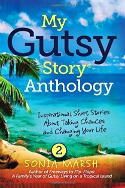
My_Gutsy_story_cover_smallMy Gutsy Story Anthology: Inspirational Short Stories About Taking Chances and Changing Your Life (Volume 2) (October 2014)
Compiled by: Sonia Marsh
Synopsis: Marsh celebrates the gutsy in each of us with this collection of stories from 64 authors who found the courage to face their fears and live their dreams.
Expat credentials: Born to a Danish mother and British father, who brought her to live in West Africa at the age of three months, Marsh has lived in many countries—Demark, Nigeria, France, England, the U.S. and Belize—and considers herself a citizen of the world. With a degree in environmental science from the University of East Anglia, U.K., she is currently living in Southern California with her husband but in 2015 intends to start a new chapter as a Peace Corps volunteer.
How we heard about: We have long enjoyed Marsh’s collection of “gutsy” travel stories and have followed her on Twitter for some time.


Luna_Tango_Cover_smallLuna Tango (The Dance Card Series Book 1) (Harlequin Mira, July 2014)
Author: Alli Sinclair
Genre: Romance
Synopsis: Tango is a mysterious—and deadly—influence in journalist Danni McKenna’s life. She looks for answers about her mother’s and grandmother’s lives, and finds romance in the process.
Expat credentials: Alli Sinclair is from Australia but lived for many years in South America, where she worked as a mountain and tour guide. She considers herself a citizen of the world.
How we heard about it:  I used to blog with Alli on the now-retired Novel Adventurers and have enjoyed hearing about her book’s path to publication. I was especially thrilled when Luna Tango won Book of the Year in the inaugural AusRom Today Reader’s Choice Awards last month. Congratulations, Alli!
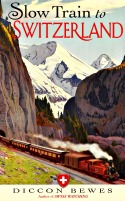

Slow-Train-final-cover_smallSlow Train to Switzerland (Nicholas Brealey Publishing, April 2014)
Author: Diccon Bewes
Genre: Travel history
Synopsis: Bewes follows “in the footsteps” of Miss Jemima Morrell, a customer on Thomas Cook’s first guided tour of Switzerland in 1863, and discovers how this plucky Victorian woman helped shape the face of modern tourism and Switzerland itself, transforming it into the Cinderella of Europe.
Expat creds: An Englishman who grew up in “deepest Hampshire”, Bewes worked for ten years at Lonely Planet and the UK consumer magazine Which? Travel, before moving to Bern, Switzerland, where he is now a full-time writer. He considers himself a “permanent expat.”
How we discovered: I came across Bewes’s blog through a Google Alert and was impressed by how prolific he is. I also liked the fact that he admits to being a chocolate lover. (No wonder he has a thing for Switzerland!)


Kamikaze_kangaroos_cover_smallKamikaze Kangaroos!: 20,000 Miles Around Australia. One Van,Two Girls… And An Idiot (February 2014)
Author: Tony James Slater
Synopsis: Tony James Slater knew nothing about Australia. Except for the fact that he’d just arrived there. The stage is set for an outrageous adventure: three people, one van, on an epic, 20,000-mile road trip around Australia. What could possibly go wrong?…
Expat credentials: As a former writer for the Displaced Nation, what more creds does Tony need?
How we heard about: The Displaced Nation is committed to tracking Tony’s progress as a writer. We are especially fond of his ability to make fun of himself! He wears his travels lightly, you might say…


MEMOIRS
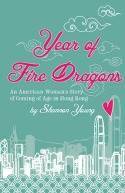
Year_of_Fire_Dragons_cover_smallYear of Fire Dragons: An American Woman’s Story of Coming of Age in Hong Kong (Blacksmith, forthcoming June 2015; available for pre-order)
Author: Shannon Young
Synopsis: When 22-year-old Shannon follows her Eurasian boyfriend to his hometown of Hong Kong, she thinks their long distance romance is over. But a month later his company sends him to London. The city enchants her, forcing her to question her plans. Soon, she will need to choose between her new life and the love that first brought her to Asia.
Expat creds: Shannon is an American twenty-something currently living in Hong Kong. (Reader, she married him!)
How we knew about: Shannon writes our “Diary of an Expat Writer” column and has also been sharing “chunks” from an anthology she edited of writings by women expats in Asia (see listing below: under “Crosscultural Challenges”).


Coming_Ashore_cover_smallComing Ashore (October 2014)
Author: Catherine Gildiner
Synopsis: The third and final in a series of best-selling memoirs by this American who has worked for many years as a psychologist in Toronto and writes a popular advice column in the Canadian women’s magazine Chatelaine. The book begins with Gildiner’s move to Canada in 1970 to study literature at the University of Toronto, where she ends up rooming with members of the FLQ (Quebec separatists), among other adventures.
How we heard about: Book #2 in Chatelaine’s 7 must-read books for November.
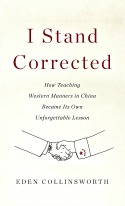

I_stand_corrected_cover_smallI Stand Corrected: How Teaching Manners in China Became Its Own Unforgettable Lesson (Nan A. Talese, October 2014)
Author: Eden Collinsworth
Synopsis: Collinsworth tells the story of the year she spent living among the Chinese while writing an advice manual covering such topics as personal hygiene (non-negotiable!), the rules of the handshake, and making sense of foreigners. (She has since returned to live in New York City.)
How we heard about: Book #3 in Conde Nast Traveler’s 7 Books to Get You Through Travel Delays, Bad Company.


Seven_Letters_from_Paris_cover_smallSeven Letters from Paris: A Memoir (Sourcebooks, October 2014)
Author: Samantha Vérant
Synopsis: At age 40, Samantha Verant’s life is falling apart—she’s jobless, in debt, and feeling stuck…until she stumbles upon 7 old love letters from Jean-Luc, the sexy Frenchman she’d met in Paris when she was 19. She finds him through a Google search, and both are quick to realize that the passion they felt 20 years prior hasn’t faded with time and distance.
How we heard about: From an interview with Vérant by British expat in Greece Bex Hall on her new blog, Life Beyond Borders.


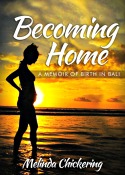
Becoming_Home_cover_smallBecoming Home: A Memoir of Birth in Bali (October 2014)
Author: Melinda Chickering
Synopsis: Though born in small-town USA, Melinda never felt quite at home there. As an adult, her search for herself led her to the Indonesian island of Bali, where she found herself living a life she hadn’t anticipated, becoming a housewife and mother. This memoir of her experience with pregnancy and birth offers a window on life for a western woman living in an Asian culture that respects the forces of darkness as well as the light.
Expat credentials: Originally from Iowa, Chickering has settled in Bali.
How we heard about it: Displaced Nationer Melinda contacted me earlier this year to tell us the exciting news that her memoir was being published. Congratulations, Melinda!
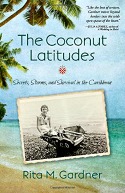

The_Coconut_Latitudes_cover_smallThe Coconut Latitudes: Secrets, Storms, and Survival in the Caribbean (September 2014)
Author: Rita M. Gardner
Synopsis: Rita is an infant when her father leaves a successful career in the US to live in “paradise”—a seaside village in the Dominican Republic. The Coconut Latitudes is her haunting, lyrical memoir of surviving a reality far from the envisioned Eden—and of the terrible cost of keeping secrets.
How we heard about: Displaced Nation columnist James King interviewed Rita for “A picture says”.
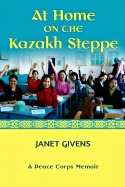

At_home_on_Kazakh_Steppe_cover_smallAt Home on the Kazakh Steppe: A Peace Corps Memoir (August 2014)
Author: Janet Givens
Synopsis: The story a middle-aged grandmother who left behind a life she loved and forged a new identity as an English teacher, mentor, and friend in Kazakhstan, a newly independent country determined to find its own identity after generations under Soviet rule.
How we heard about: Recommended by the We Love Memoirs Facebook Community.


Good_Chinese_Wife_cover_smallGood Chinese Wife: A Love Affair with China Gone Wrong (Sourcebooks, July 2014)
Author: Susan Blumberg-Kason
Synopsis: A shy Midwesterner, Blumberg-Kason spent her childhood in suburban Chicago dreaming of the neon street signs and double-decker buses of Hong Kong. She moved there for graduate school, where she fell for Cai, the Chinese man of her dreams. As they exchanged vows, she thought she’d stumbled into an exotic fairy tale, until she realized Cai—and his culture—where not what she thought. One of our featured authors, Wendy Tokunaga, says: “A fascinating, poignant and brutally honest memoir that you won’t be able to put down. Good Chinese Wife is riveting.”
How we heard about: We had known about the book for some time but hadn’t realized it came out this year Jocelyn Eikenburg tipped us off in her comment below. She, too, highly recommends.
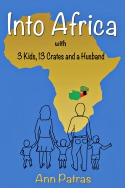

Into_Africa_cover_smallInto Africa: 3 kids, 13 crates and a husband (June 2014)
Author: Ann Patras
Synopsis: Patras was born and raised in Burton-upon-Trent, in the English Midlands. When her husband, Ziggy, is offered a two-year contract as site manager for building a new cobalt plant in Zambia, they discuss the pros and cons of leaving luxuries and England behind—and then decide it could be an “interesting” family adventure. They end up raising three kids, countless dogs and living in Africa for over thirty years. (She and Ziggy now live in Andalucía, Spain, and have absolutely no intention of ever moving again. Hmmm…have they encountered Charlotte Smith yet? See next item.)
How we heard about: E-book promotion.
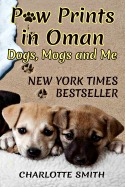

PawPrintsinOman_cover_smallPaw Prints in Oman: Dogs, Mogs and Me (April 2014)
Author: Charlotte Smith
Synopsis: Smith was born, raised and lived in West Sussex, UK, until her persuasive husband, Nick, swept her and their youngest daughter off to live in mystical Oman. Her love of animals helped her to shape an extraordinary life in the Middle East—her first step being to convince a local veterinary clinic to employ her. (Note: Smith now lives in Andalucía, in southern Spain.)
How we heard about: Recommended by the We Love Memoirs Facebook community. The book was also on the New York Times best-seller list (“animals”) in October.


loveyoubye_cover_smallLoveyoubye: Holding Fast, Letting Go, And Then There’s the Dog (She Writes Press, April 2014)
Author: Rossandra White
Synopsis: A collision of crises on two continents forces Rossandra White to face the truth. Just as her American husband disappears to Mexico, her brother’s health crisis calls her back home to Africa, and her beloved dog receives a fatal diagnosis. She faces down her demons to make a painful decision: stay in a crumbling marriage, or leave her husband of 25 years and forge a new life alone.
How we heard about: Through a Facebook share of White’s Good Reads giveaway.


Lost_in_Spain_cover_smallLost in Spain: A Collection of Humorous Essays (March 2014)
Author: Scott Oglesby
Synopsis: Scott Oglesby moved to Spain to start over. When he discovered he was still the same person, now six thousand miles from home, the result was dysfunction, delusion, chaos and this book, which many readers have described as “hilarious” and “brilliant”.
How we heard about: E-book promotion.


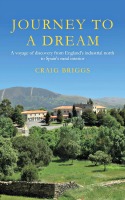
Journey_to_a_Dream_cover_smallJourney to a Dream: A voyage of discovery from England’s industrial north to Spain’s rural interior (February 2014)
Author: Craig Briggs
Synopsis: Craig, his wife Melanie and their dog, Jazz, left their home town of Huddersfield, in England’s industrial north, and set off for Galicia: a remote and little-known autonomous province in the northwest corner of Spain. And so began their Journey to a Dream…
How we heard about: E-book promotion, as a result of which I am currently reading this on my Kindle. It’s very well written and entertaining.


Paris_Letters_cover_smallParis Letters: One woman’s journey from the fast lane to a slow stroll in Paris (February 2014)
Author: Janice Macleod
Synopsis: MacLeod found herself age 34 and single, suffering from burn-out and dissatisfaction. So she abandoned her copywriting job and headed off to Europe, where she ended up finding love and freedom in a pen, a paintbrush…and Paris! Macleod says her journey was inspired by The Artist’s Way, written by Julie Cameron.
How we heard about: From an interview with MacLeod by American expat in Paris Lindsey Tramuta, which appeared on Lindsey’s blog, Lost in Cheeseland.


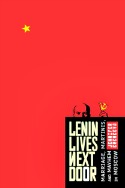
lenin_smallLenin Lives Next Door: Marriage, Martinis, and Mayhem in Moscow (Small Batch Books, January 2014)
Author: Jennifer Eremeeva
Synopsis: Based on Eremeeva’s two decades in Russia, Lenin Lives Next Door is a work of self-described “creative nonfiction.” It knits together vignettes of cross-cultural and expatriate life with sharp observation, historical background, and humor. Each chapter explores an aspect of life in today’s Russia, told with the help of a recurring cast of eccentric Russian and expat characters, including HRH, Eremeeva’s Handsome Russian Husband (occasionally a.k.a. Horrible Russian Husband), and their horse-mad daughter.
How we heard about: Eremeeva sent me a review copy and we met up for coffee at Columbia University. I found her a delightful conversationalist. No wonder several reviewers have likened her style to Jane Austen’s.


CROSS-CULTURAL CHALLENGES

Soundimals_cover_smallSoundimals: An illustrated guide to animal sounds in other languages (November 2014)
Author/illustrator: James Chapman.
Synopsis: In English, we say dogs go WOOF, but in Romanian they go HAM HAM. Chapman regularly publishes illustrations of onomatopoeia and animal sounds in other languages on his Tumblr blog. This book (available through his Etsy shop) collects some of those plus a lot of new sounds that weren’t in the original comics, and a few new animals that haven’t been posted at all.
Expat creds: None that we know of; would love to hear more about how he got started collecting these sounds.
How we heard about: Pinterest.
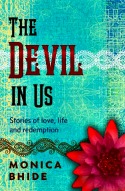

The_Devil_in_us_cover_smallThe Devil in Us (CreateSpace, October 2014)
Author: Monica Bhide
Genre: Literary fiction
Synopsis: Short stories that carry you to a far away place, amidst people seemingly very foreign to you, but somehow create a connection—from the Indian-American cancer survivor escaping her pain and finding passion in Mumbai, to the Japanese teen in Georgetown discovering forbidden love. Bhide is known for her writings about Indian food. This is her first work of fiction.
Expat creds: Monica is originally from Delhi, India, but has lived in Bahrain ad now in the United States.
How we found out about: Pinterest.
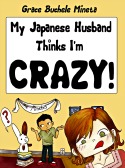

Japanese_Husband_cover_smallMy Japanese Husband Thinks I’m Crazy! The comic book: Surviving and thriving in an intercultural, interracial marriage in Tokyo (October 2014)
Author: Grace Buchelle Mineta
Genre: Comics/manga; humor
Synopsis: The autobiographical misadventures of a native Texan freelancer and her Japanese “salaryman” husband, in comic book form.
Expat credentials: Mineta grew up mostly in Texas, but also spent her teenage years in Accra, Ghana and Sapporo (Hokkaido), Japan. She now lives in Tokyo with her Japanese husband (they got married in January) and blogs at Texan in Tokyo.
How we found out about: From a guest post by Mineta on Jocelyn Eikenburg’s blog, Speaking of China, titled The “Dark Side” to Moving Across the World for Love.
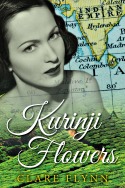

Kurinji_Flowers_cover_smallKurinji Flowers (October 2014)
Author: Clare Flynn
Genre: Historical romance
Synopsis: Set in South India during World War II and India’s struggle for independence, the book is centered on a young British colonial, Ginny Dunbar, who has arrived in India for a new start in life. She has to battle her inner demons, the expectations of her husband, mother-in-law, and colonial British society, and her prejudices towards India and its people.
Expat credentials: Flynn is a repeat expat, having lived for two years each in Paris and Brussels, three years in Milan, and six months in Sydney, though never in India. She now lives in London but spends as much time as she can in Italy. Almost needless to say, Flynn loves travel and her idea for this book came while she was on holiday in Kerala, India.
How we knew about: Flynn was interviewed by JJ Marsh for the latter’s popular column, LOCATION LOCUTION.
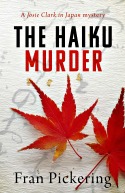

The_Haiku_Murder_cover_smallThe Haiku Murder (Josie Clark in Japan mysteries Book 2) (October 2014)
Author: Fran Pickering
Genre: Expat mystery series
Synopsis: A haiku-writing trip turns to tragedy when a charismatic financier falls from the top of Matsuyama castle. But was he pushed? Expat Londoner Josie Clark thinks he was, and that’s when the trouble starts…
Expat credentials: Pickering has lived and worked in Tokyo, and though she is now back in London (literally next door to where she was born), she travels back to Japan frequently to visit friends and do research for the Josie Clark mystery series.
How we heard about: Pickering was interviewed by JJ Marsh for the latter’s popular column, LOCATION LOCUTION.
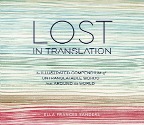

LostinTranslation_cover_smallLost in Translation: An Illustrated Compendium of Untranslatable Words from Around the World (September 2014)
Author: Ella Frances Sanders
Genre: Illustration/Translation
Synopsis: Did you know that the Japanese language has a word to express the way sunlight filters through the leaves of trees? Or that there’s a Finnish word for the distance a reindeer can travel before needing to rest? This book is an artistic collection of more than 50 drawings featuring unique, funny, and poignant foreign words that have no direct translation into English.
Expat credentials:  A self-described “intentional” global nomad, Sanders has lived all over the place—most recently Morocco, the United Kingdom, and Switzerland.
How we heard about: From a post about the book by Maria Popova on her much-acclaimed Brain Pickings site.


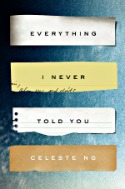
Everything_I_Never_Told_You_cover_smallEverything I Never Told You (Penguin, June 2014)
Author: Celeste Ng
Genre: Thriller
Synopsis: A mixed-race family in the 1970s tries to unravel a family tragedy.
Expat credentials: Celeste Ng isn’t an expat, but she has a deep understanding of what it means to feel displaced. Her work deals with multiculturalism and race issues in the United States.
How we heard about it: It was voted the Amazon Book of the Year.
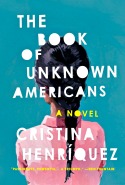

TheBook_Of_Unknown_Americans_smallThe Book of Unknown Americans (Knopf, June 2014)
Author:  Cristina Henríquez
Genre: Literary fiction
Synopsis: Arturo and Alma Rivera have lived their whole lives in Mexico. One day, their beautiful fifteen-year-old daughter, Maribel, sustains a terrible injury, one that casts doubt on whether she’ll ever be the same. And so, leaving all they have behind, the Riveras come to America with a single dream: that in this country of great opportunity and resources, Maribel can get better.
Expat credentials: Henríquez isn’t an expat, but her father was—he came to the US from Panama to attend university.
How we heard about it: Henríquez’s novel was Amazon’s No. 1 bestseller this year in the Hispanic American Literature & Fiction category.


TheOtherLanguage_cover_smallThe Other Language (Pantheon, April 2014)
Author: Francesca Marciano
Synopsis: A collection of short stories involving women who are confronted by radical change or an old flame, in locations that range from New York to India to Kenya to southern Italy.
Expat credentials: Marciano is an Italian novelist who left Rome at age 21 to live in the United States. She later moved to Kenya, where she lived for a decade. Although Italian is her first language, she chooses to write in English.
How we found out: From an essay by William Grimes in the New York Times Book Review: “Using the Foreign to Grasp the Familiar: Writing in English, Novelists Find Inventive New Voices.”


Dragonfruit_cover_smallHow Does One Dress to Buy Dragon Fruit: True Stories of Expat Women in Asia (April 2014)
Editor: Shannon Young
Genre: Expat non-fiction; anthology
Synopsis: In this collection, 26 women reveal the truth about expatriate life in modern East Asia through original works of memoir and creative non-fiction.
Expat credentials: To qualify for inclusion in the volume, writers had to be able to say they were, or had once been, expats.
How we heard about: We have followed Shannon Young ever since she contributed to the Displaced Nation on the topic of the London Olympics. She currently writes a column for us about being an expat writer, and we’ve been sharing “chunks” from her Dragonfruit anthology for the past few months.


Chasing_Athens_cover_smallChasing Athens (April 2014)
Author: Marissa Tejada
Genre: Romance
Synopsis: When Ava Martin’s new husband unexpectedly ditches her months after they’ve relocated across the world to Greece, the heartbroken American expat isn’t sure where home is anymore. On the verge of flying back to the States with her tail between her legs, she makes an abrupt decision to follow her gut instead and stay on in Greece, until a crisis back home forces her to decide where she truly belongs.
Expat credentials: A Native New Yorker, Tejada is an author, writer and journalist based in Athens, Greece. Living the expat life in Europe inspired her to write her debut novel.
How we heard about it: Again, from an interview conducted by British expat in Greece Bex Hall on her blog, Life Beyond Borders.


Moving_without_Shaking_cover_smallMoving Without Shaking: The guide to expat life success (from women to women) (April 2014)
Author: Yelena Parker
Genre: Guidebook-meets-memoir
Synopsis: Parker draws from the experiences and views of 9 women who have lived across 12 countries, to craft a resource for those who are dreaming of—or already facing—relocation abroad.
Expat creds: Parker herself is originally from Eastern Ukraine but has lived and worked in the US, Switzerland, the UK and Tanzania. She has chosen London as her latest expat location.
How we heard about: From a Google Alert.
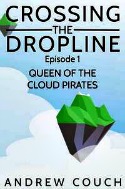

QueenOfCloudPirates_cover_smallQueen of the Cloud Pirates (Crossing the Dropline Book 1) (March 2014)
Author: Andrew Couch
Genre: Fantasy novella
Synopsis: Far to the North of the Iron League core cities lies the Dropline. Beyond this line of cliffs the power of elemental Air rules supreme. The crucial region is threatened and two young men stand at the tipping point. In order to survive, they must learn to work together and rise above their own shortcomings. Oh yeah, and escape from pirates. Don’t forget the pirates….
Expat credentials: An American abroad, Couch lives with his wife in Freiburg, Germany. He says that much of the inspiration for the worlds he writes about is a mix of a wild and crazy imagination (he grew up reading fantasy books) and his travels around the world.
How we found out about: Couch contributes the HERE BE DRAGONS column to the Displaced Nation, focusing on the connection between the displaced life and fantasy writing (more powerful than any skeptics out there might think!).


What_Happens_in_Nashville_cover_smallWhat Happens in Nashville (March 2014)
Author: Angela Britnell
Genre: Romance (“choc lit”)
Synopsis: Claire Buchan, a straight-laced barrister from Exeter, UK, flies to Nashville, Tennessee, to organize her sister Heather’s bridal bash—and quickly finds herself out of her comfort zone and into the arms of a most unsuitable beau…
Expat credentials: Britnell grew up in a small Cornish village in southwestern England. She served in the Royal Navy for almost six years, culminating in an assignment in Denmark, where she met her American husband. Thus began a chronic expat life. The couple, now empty nesters, have settled in Brentwood, Tennessee.
How we heard about: Rosie Milne wrote about Britnell in an article that appeared on Telegraph Expat: “Expat romantic novelists inspired by real life.” (Milne btw lives in Singapore and runs Asian Books Blog.)


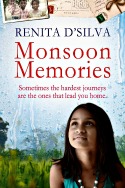
Monsoon_Memories_cover_smallMonsoon Memories (January 2014)
Author: Renita D’Silva
Genre: Literary fiction
Synopsis: Sometimes the hardest journeys are the ones that lead you home. Exiled from her family in India for more than a decade, Shirin and her husband lead a comfortable but empty life in London. Memories of her childhood fill Shirin with a familiar and growing ache for the land and the people that she loves. With the recollections, though, come dark clouds of scandal and secrets. Secrets that forced her to flee her old life and keep her from ever returning…
Expat credentials: Now living in the UK, Renita grew up in a picturesque coastal village in South India.
How we heard about: Amazon.
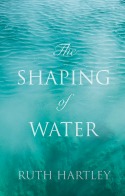

The_Shaping_of_Water_cover_smallThe Shaping of Water (December 2013—we’re letting it squeak in!)
Author: Ruth Hartley
Genre: Literary fiction
Synopsis: The story concerns the overlapping lives of several different people, expats and locals or some mix, who are connected to a ramshackle cottage by a man-made lake in Central Africa during the Liberation wars across its region.
Expat credentials: Hartley grew up on her father’s farm in Zimbabwe, which at that point was known as Rhodesia, at a time when struggles for independence in European-ruled African territories were spreading like a wave. As a young woman, she moved to South Africa to study art and then had to escape to England because of her political activities. She later moved back to Africa, as an expat. She now lives in Southern France.
How we heard about: I discovered Hartley via one of my social networks and then decided to approach her about being interviewed for the Displaced Nation.

* * *

Your turn readers: Have you read any of the above works and if so, what did you think of them? And can you suggest other works to add to the list? Beth and I look forward to reading your comments below!

From Beth:
Intrigued by some of these titles? Go on, download a few! ‘Tis the season to support the output of other international creatives!

Finally, please note: Beth and I may repeat this exercise in six months (summer reads!). But if you can’t wait until then, I suggest that you sign up for our DISPLACED DISPATCH, which has a Recommended Read every week, and also follow our Pinterest board: DISPLACED READS.

STAY TUNED for PART 2 of this post: IT’S FOOD!, THIRD CULTURE KIDS & COUNTRY GUIDES/TRIBUTES.

If you enjoyed this post, we invite you to subscribe to The Displaced Dispatch, a weekly round up of posts from The Displaced Nation, plus some extras such as seasonal recipes and occasional book giveaways. Sign up for The Displaced Dispatch by clicking here!

Related posts:

CHUNKS OF DRAGONFRUIT: The story of an expat for whom Burma literally becomes the Tropic of Cancer

Dragonfruit cover and photo of Philippa Ramsden, courtesy Shannon Young. Purple dragonfruit by Mike Behnken (CC BY 2.0).

Dragonfruit cover and photo of Philippa Ramsden, courtesy Shannon Young. Purple dragonfruit by Mike Behnken (CC BY 2.0).

First of all, if How Does One Dress to Buy Dragonfruit? True Stories of Expat Women in Asia isn’t on your Christmas list, it ought to be. As regular Displaced Nation readers will know, Dragonfruit is a new anthology edited by columnist Shannon Young. Shannon has been sharing a few tasty morsels with us over the past couple of months, and we have been repeatedly amazed at the window afforded on Asia by these expat women writers. This is the third installment. The first can be read here; the second, here.

—ML Awanohara

For this month’s excerpt, I’ve chosen a piece by Philippa Ramsden. A Scotswoman, Philippa is a development and humanitarian professional, writing in any leisure time. She had been to Asia only once when she stepped off a plane in Kathmandu in 2000 to take up a new job, with no idea what to expect—and has been in Asia ever since. She has lived and worked in Nepal, Mongolia, India, Sri Lanka, and now Burma/Myanmar.*

Philippa actually submitted more than one piece for consideration in the expat women anthology, but this one stood out because it addresses head-on one of the scariest things an expat can experience: receiving a life-threatening diagnosis abroad. Philippa is a true inspiration for handling such a significant challenge without letting it undermine her sense of wonder and appreciation for the country she currently calls home.

I am honored to share the beginning of Philippa’s story here.

“Moving to the Tropic of Cancer,” by Philippa Ramsden

Rainy season in Burma is spectacular. At night, I love to lie in bed, listening to the torrential rainfall drenching the earth and bringing life and vitality to the land. Between showers, the air is so thick that you can hear the moisture dripping from leaves and branches. And if you listen very carefully, you can almost hear the grass sighing and burbling with delight as it wallows in the rainwater. When the rains come down, they do so thick and fast. Even with an umbrella and raincoat you are quickly drenched. In the intervals between the downpours, it is hot, humid and sticky.

When I arrived in Burma in mid June of 2009 to start a new job, rainy season was in full force. Having lived in Asia for more than a decade, I have become close friends with the monsoons, which bring welcome respite from stifling heat and humidity. Being caught in a sudden downpour, or even listening to the rain from outside, brings energy and feels like a revitalising force. I have many fond memories of standing, drenched to the skin, grinning from ear to ear after only a few moments in an unexpected cloudburst. It helps that the rain is warm! Coming from Scotland, where the rain can be just as heavy but usually accompanied by grey skies and often a biting wind, I have never tired of this warm torrential rain.

When the rains make their first annual appearance, they usually arrive dramatically, and the world is transformed. There is a festive feeling; smiles and laughter return. The sight of children playing in the rain, splashing in puddles and letting the rain soak them through is ubiquitous. And not just children—adults too! The city turns green, mosquitoes hold crowded parties, and the frogs grow to such a size that they sound like male tigers as they croak in the night. The ground and pavements are covered with a layer of slippery, slimy moss in the hidden spaces which have not already turned to mud.

Such was Yangon when we arrived with our suitcases, papers, and a crate of enthusiasm, to take up a new life in this enigmatic country. It is quite an experience looking for a home in such a setting. We had a temporary place to live but were keen to settle and unpack properly. In those first weeks, we tramped round a number of potential homes, the mosquitoes nipping at our ankles and the rain teeming down.

It was not too long before my husband found the perfect place, a simple bungalow within walking distance from work. We made arrangements to view it, and the heavens opened shortly before the visit. The road outside the office flooded, and we had to wade through warm, murky water to get there. It was well worth the effort, though. The bungalow was indeed perfect: modest, but deceptively spacious. The wooden floors gave it a cosy warmth and the large, high windows made it feel light and optimistic. Unusually for Yangon, it had ceiling fans throughout. My fear of earthquakes was assuaged by the fact it was all on one level. The generous garden was gloriously tropical and mature, bounded by bamboo, mango trees, and hedging, and filled with pink, white, and yellow bougainvillea, crimson foliage, pink and purple hibiscus, and scented frangipani. It was ideal. We would share it with several families of geckos, some of which were the tiniest ones I have ever seen. They added to the nighttime chorus with their characteristic chirruping sound.

After a series of one-year postings in different countries in the South and Southeast Asian region, we were very happy at the prospect of a longer posting. We were keen to move into this peaceful space and finally unpack. Particularly back in 2009, Burma had an air of mystery, and were eager to learn about our new environment. We made arrangements to rent this house and moved in as soon as everything was in order. It was a marvelous feeling to be settling at last.

By late September, the rainy season had truly left its mark: the vegetation was lush and vibrant from the rains, clothes seemed to be neither clean nor dry, almost everything was growing a layer of mould, and the humidity made me feel constantly grimy.

One unremarkable evening, as another hot, sticky, and wet day was drawing to a close, I had my usual shower to refresh myself and clean off the day’s grime. It was in the shower that I felt a hard, solid area where one should not have been, in my left breast.

I was instantly transported back in time twenty-six years to when I had found a lump one evening while bathing. I vividly remembered the sensation of sick fear as I checked that I had not imagined it. It had indeed been real all those years ago, and I had had it investigated promptly the next day with my local doctor. It had turned out to be nothing sinister and was shrinking by the time I had a hospital appointment a couple of weeks later. Although the lump at that time was not worrisome, the emotions and fear that I felt at that time were very real.

My reaction was different, however, on finding this lump all these years later. My stomach didn’t sink in quite the same way. In the previous days, I had noticed some changes in my left breast, and was intending to seek medical advice. However, I believed these to be related to my age. When my fingers rested on the hard mass, I knew that the lump plus changes must constitute worrying signs. This really could be sinister this time. I comforted and contradicted myself, focusing on the fact that eighty percent of breast lumps are benign, and moreover, there was no history of cancer at all in my family.

I swallowed the sense of fear and uncertainty. My mind had to absorb the possibility that I might have cancer. And I was living in a new and foreign environment. I had no idea what the implications might be.
*We have chosen to use Burma and Rangoon rather than Myanmar and Rangon.

* * *

Readers, if you enjoyed that morsel, I hope you will at least consider downloading a sample of the Dragonfruit anthology from Amazon or purchasing the book: the e-book and paperback of are available at all major online retailers.

And if this excerpt has made you curious to learn more about Philippa Ramsden, her blog is Feisty Blue Gecko. You can also find her on Facebook and twitter. She has written several meditations on the challenges and joys of life in a foreign environment—and they are all fascinating. She is currently working on a memoir.

* * *

Thank you so much, Shannon! Displaced Nationers, do you have any responses to the opening of Philippa’s moving story?

Before I go, here’s another reminder to purchase a copy of Shannon’s wonderful anthology. What better end-of-year gift for the expat woman in your life (or for yourself, if that is you!).

STAY TUNED for next week’s fab posts!

If you enjoyed this post, we invite you to register for The Displaced Dispatch, a round up of weekly posts from The Displaced Nation, with snippets of worldly wisdom, exclusive book giveaways and our nominees for the monthly Alice Awards. Register for The Displaced Dispatch by clicking here!

Related posts:
DIARY OF AN EXPAT WRITER: Turning into Jordan Rivet, writer of post-apocalyptic adventures, for an entire month

DiaryExpatWriterAs regular readers of the Displaced Nation will know, Shannon Young* recently took the decision to quit her day job to become a full-time writer in Hong Kong, where she lives with her half-Chinese husband. She joins us today to update the diary of this new phase of her life—and this time has brought along Jordan Rivet, her alter-ego. Hmmm…should be interesting!

—ML Awanohara

Dear Displaced Diary,

I hope you don’t mind if I allow Jordan Rivet to contribute to this month’s entry. I created Jordan Rivet as the pen name for my post-apocalyptic adventure series, which I first started writing during National Novel Writing Month, aka NaNoWriMo (often shortened even further, to NaNo), two years ago. For those who aren’t familiar, NaNo challenges people to write 50,000 words of a novel in the 30 days of November.

Nowadays, writers across the world come out in force to meet this challenge. (Hmmm… Shouldn’t it be renamed INTERnational Novel Writing Month: IntNoWriMo?)

But enough from me: The next portion of this entry will be from Jordan.

* * *

Thank you, Shannon. Displaced Diary, I’ll start out by saying how grateful I am for NaNo: it’s what brought me, Jordan Rivet, into existence. By the end of the month of November two years ago, I had produced 57,002 words about a floating city one disaster away from extinction, and I now have a book out under my name! (I even have my own email and twitter accounts.)

Last time Shannon wrote to you, she talked about going through the final publication stages for her memoir, Year of Fire Dragons—with a lot of help from her friends.

This month, though, has been all about me. I am back and am writing away furiously, having joined NaNo again, here in Hong Kong.

There are writers in Hong Kong!

Hong Kong is sometimes accused of lacking a literary culture. The scene definitely exists, but it can be hard to find. There’s a lot of pressure in this city to focus on purely commercial pursuits—and people are busy.

Yet every November, lots of us creative types come out of the woodwork—pros, beginners, and hobbyists alike. We are a mix of locals, expats, and returners who were educated abroad. You’ll find students and teachers and lawyers and marketers and homemakers. Unlike me, they don’t necessarily have time to write every day, but they do love books. They carve out time for writing in the midst of busy schedules and obligations. They get excited about stories and about inventing new worlds. Their energy is infectious.

People come and go a lot here, but I make new writing friends for Shannon every November, particularly at the NaNo write-ins, where participants gather to chat, write, laugh, and drink coffee together.

Being an adventuresome sort, I particularly love it when we have visitors at our write-ins who are just traveling through the city or who’ve made special trips from Macau and Shenzhen to connect with their fellow NaNo participants.

“Bird by bird, buddy. Just take it bird by bird.” —Kenneth Lamott

Seabound - Jordan RivetThis is my third November working on a novel in Shannon’s post-apocalyptic adventure series set at sea, called The Seabound Chronicles.

As already mentioned, Shannon just now launched my first book in this series, which I’d drafted in November 2012. It’s called Seabound, but back then I’d titled it The Vertigo. Shannon loved it immediately: it was her first foray into fast-paced genre fiction. “Planning and writing a grand adventure is just as much fun as reading one,” she told me.

Now every November I hammer out a very rough draft of another installment in the series, and it always reminds Shannon how much fun writing actually is. (Actually, I wrote the first draft of the sequel the spring after that first NaNo. In November of 2013 I wrote the prequel.)

In Bird by Bird, her classic mediation on the writing life, Anne Lamott argues that writers should produce “shitty first drafts.” Her point is that by giving ourselves permission to write rough, messy, and even bad work, writers can avoid the kind of perfectionism and fear that stifles creativity.

That’s why I’m so glad Shannon invented me during NaNoWriMo. She was thinking that NaNo is a great time to produce what may well be a shitty first draft in the madcap rush to reach 50,000 words in thirty days, and that revisions can always come later.

I love that I get to do the first draft, which is all about discovery. As I’ve said, adventure is my thing!

I’m now working on what I believe will be the fourth and final book in the Seabound Chronicles (27,555 words and going strong). This is the part where I get to figure out what happens in the end.

Though I’m enjoying it to the hilt, I have to tell you that writing my final first draft is bittersweet. Of course Shannon will call me in again, as the series still needs a lot of work. But will I still have a life after it finishes? That is the question…

Since I don’t know the answer, I’ll give you back to Shannon.

* * *

Priorities, priorities

Thanks, Jordan. Diary, I must confess that ever since I quit my job to write full time, I’m finding there are still a lot of things that pull me away. These are all writing-related tasks: answering emails, writing blog posts, updating my websites, requesting reviews, promoting my books, etc.

And, as Jordan reported, I’ve been working on formatting and uploading all the files for the e-book and paperback of Seabound, a task I kind of love but it’s time consuming.

As you know, I want to make the most of this time. I’m slowly developing strategies to keep me on task. Even if the miscellaneous stuff is writing-related, I still have to make sure the real writing comes first.

Thank goodness Jordan has reappeared to keep me on track this month.

It’s not New York City, but…

Once upon a time, I dreamed of living in New York City. I imagined renting a loft in Brooklyn, going to book launches every weekend, and having lunch with authors (ideally as an editor at a major publishing house). It was a very particular sort of dream.

Then this crazy, wonderful expat life happened.

Shannon Young at HKILF

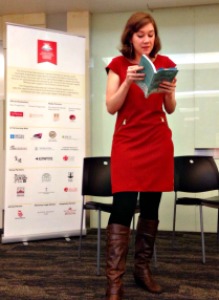
Shannon Young at the Hong Kong Literary Festival earlier this month, reading from her memoir of her first year in Hong Kong, Year of Fire Dragons.

When I first moved to Hong Kong, I worried I’d have to give up my book publishing dreams. A little over four years later, it’s amazing how wrong I was. Hong Kong may not have a deeply entrenched literary and publishing scene like New York’s, but it has provided opportunities for me to chase a more evolved version of my dream. And Hong Kong writers have an energy and optimism that’s all their own.

Earlier this month, I attended the Hong Kong International Literary Festival as one of the featured writers. I got to be on the radio, visit a local secondary school, attend the opening and closing parties, and read from my book, Year of Fire Dragons, at an event.

This expat life isn’t what I planned. I meet people all the time who also didn’t mean to end up in Hong Kong. But through chance and circumstance, here we are. As it turns out, there are plenty of opportunities to follow our dreams, and I wouldn’t want it any other way.

Thanks for continuing to follow my expat writing journey.

Yours,

Shannon (& Jordan)

www.shannonyoungwriter.com

* * *

Readers, I hope you are finding writing buddies wherever you are, as well as alter egos who are as fun (and productive!) as Jordan is. And if you’re participating in NaNoWriMo, get back to work!

*Shannon Young (not Jordan Rivet!) has edited an anthology, How Does One Dress to Buy Dragonfruit? True Stories of Expat Women in Asia (2014), from which she is sharing some excerpts. We’re calling them “chunks” of dragonfruit—they taste delicious!

STAY TUNED for next week’s fab posts!

If you enjoyed this post, we invite you to register for The Displaced Dispatch, a round up of weekly posts from The Displaced Nation, with snippets of worldly wisdom, exclusive book giveaways and our nominees for the monthly Alice Awards. Register for The Displaced Dispatch by clicking here!

Related posts:
TCK TALENT: Nina Sichel, writer, editor, and guiding light on the Third Culture Kid experience

Nina Sichel_TCK TalentElizabeth (Lisa) Liang is back with her monthly column about Adult Third Culture Kids (ATCKs) who work in creative fields, Lisa herself being a prime example. A Guatemalan-American of Chinese-Spanish-Irish-French-German-English descent, she has developed her own one-woman show about growing up as a TCK, which she has taken all over the country. In fact, she turned up as the convocation speaker at Carleton College on October 31st, where my niece, now a Carleton freshman, had the pleasure of watching her perform some excerpts!

—ML Awanohara

Welcome back, readers! Today I’m honored to be interviewing Nina Sichel, co-editor of the seminal TCK / global-nomad anthology Unrooted Childhoods, which includes essays by several famous TCK writers such as:

  • Pico Iyer: “I fold up my self and carry it round with me as if it were an overnight case”;
  • Isabel Allende (she fled her homeland for political survival); and
  • Military brat Pat Conroy: “Each year I began my life all over again . . . and I think it damaged me.”

In addition, she co-edited the TCK / global-nomad anthology Writing Out of Limbo—to which I contributed. Thank you, Nina, for the hard work you did on my first published essay!

Nina grew up in Venezuela and “repatriated” to the USA for college and beyond; she is a writer, editor, and leader of memoir-writing workshops in Virginia.

* * *

Welcome to The Displaced Nation, Nina. I understand that you grew up in a multicultural household as a TCK in Caracas—the daughter of an American mom and a German-Jewish dad. With Thanksgiving around the corner, my thoughts are turning to the upcoming holidays. Did any particular holiday traditions or celebrations take precedence over others in your household as you were growing up?
My father had to leave Germany when he was 11 and grew up in Uruguay. He seldom spoke about his childhood. He came to the U.S. for college, and, after marrying my mother, lived in Puerto Rico and the Dominican Republic before settling in Venezuela. After all of those moves, his identity was not at all tied to nationality, and, like so many other choices in his life, citizenship was a matter of practicality. So national holidays were completely unimportant.

What about your mother?
My mother was a nostalgic American—more so when she was in Venezuela than when she was anywhere else. But she was an expat, and U.S. national holidays were not celebrated in that country. My parents’ friends were multinationals—our social circle was not defined by nationality. And, even though my father’s sister and mother, Uruguayan citizens by then, lived in Caracas, close by, we were secular Jews, only going to synagogue on the High Holidays and mostly not even then. We had an abbreviated seder, we lit candles at Chanukah. That Jewish identity, more ethnic, perhaps, than religious, was important to my parents. Yet we had very little religious training. I think things were assumed more than instructed… I remember going to summer camp in the States with Jewish girls from Long Island—and feeling I had absolutely nothing in common with them.

Did you celebrate other holidays?
We had a Christmas tree with lots of presents and sang carols. Santa Claus came till we were too old for him, but there were still gifts afterwards. We dressed up for carnaval, and the Easter bunny came to visit us. Hmmm… I’ve given you a long answer to what should be a simple question—but then, some things are not so simple. Like composite identities.

I was raised with no real roots, an American child in Venezuela…

Writing_Out_of_Limbo_coverWhich brings us to your wonderful essay, “Outsider,” which appears in Writing Out of Limbo. You mention in that piece that there was a lot of turnover among your friends at your international schools. Can you tell us a little more about what that was like?
I never knew, from one school year to the next, which of my classmates would actually be back. I don’t remember ever talking about it; this was normal, nothing remarkable. I remember a few friends who left with advance notice, and I tried to keep in touch with them—pen pals during a time when letters would take one or two weeks to reach their destinations. Those friendships faded over time. Quite a few friends were sent away to boarding school once they reached high school; sometimes they’d be back for summer vacations, but by then I’d usually be in the States. There were also, of course, quite a few children whose parents would stay in Venezuela indefinitely, till retirement and after. And then there were the kids who rotated in and out every couple of years, many of whom were Americans. Recently, I’ve been thinking a lot about how different the ones who stayed as long-term residents were from the ones who rotated in and out. And how difficult it is to make general statements about any of this—there are layers and layers of outsiderness, not just one sort of expat or TCK identity.

Have you still got friends from that period?
I’ve kept strong ties to some friends from my youth, and to me this is very special—they are more like family than friends now. I’ve learned to invest deeply in relationships I hope will last, perhaps because the chances are so fleeting. I’ve felt incredibly lucky to be able to contact some people from my past via the Internet, and rekindle friendships from long ago, and learn how TCK life has affected them, their choices, their lives.

Our memories are the part of life we get to keep and take with us…

After an entire adulthood in the USA, tell us what you still miss about Venezuela. I’m also curious to know how many of those things can still be found there, and how many are connected to memories of family and/or friends who are no longer there?
Though I have lived my adulthood in the U.S., my parents remained in Venezuela, and I went back often to visit until they passed away. The place changed—all places do—and I also changed. My memories now are interwoven with nostalgia for what was or might have been. But there are also tangible things. Venezuela is a beautiful country, and there are things about nature I miss. I miss smells—that thick Caribbean salt air, the tangy grass. I miss tropical light, and will miss it more and more now that we’re approaching winter here.

Nowadays, do you feel at home in the United States?
I do feel “at home” in the States in general; just not rooted in any particular place. As you know from my essays, I’ve lived in several places. I lived in a small town in upstate New York, then Manhattan; I lived in the Deep South two different times; in rural Michigan; in West Palm Beach and then urban Miami; and now I live outside Washington, DC. In the smaller towns, what I missed was diversity—of language, ethnicity, experience, culture. I had to seek it out in the people I befriended and the kind of work I chose to do. But even in the cities, I felt outside the mainstream. Remember, coming to the States was not coming home for me; it was immersion in a different culture.

Unrooted_Childhoods_coverIn Unrooted Childhoods, your co-editor, Faith Eidse, writes about her yearning “for thick gumbo-limbo roots.” Do you sometimes wish your roots were deeper in this country?
I remember being fascinated by a friend’s roots in the Deep South that went back many generations. As my family does not have that history, it was something new and rather foreign to me, an oddity. But it was not something I wanted, as it felt too confining, to be defined by your predecessors that way.

Do you have “itchy feet,” which still make you want to move frequently? Or are you the kind who prefers to have a home base and travel only for pleasure?
Yes yes yes. All of the above. o I have to choose?

You mentioned longing to find other people with the experience of having lived overseas. Have you found that “your people” tend to be other ATCKs in creative fields—or does it really depend on the individual and what s/he evokes in you, whether it’s a resonance that’s artistic or political or personality-related or life-experience related, etc.?
I tend to fall in love with people, with aspects of people, and am constantly surprised that all my friends don’t automatically feel the same about each other as I feel about each of them! So, yes, I think it’s about that resonance that you mentioned, but it’s a different resonance in each person, a different connection I respond to. In any case, I never knew about TCKs or ATCKs until I began to work on Unrooted Childhoods.

I want to choose and gather the markers by which to remember our years here…

Like other ACTKs including myself, you were drawn to the craft of writing as a means of self-expression. Is there a particular piece that you think expresses your feelings of transience or loneliness or instability—or freedom or curiosity or love of travel—that you are most proud of? And where can we read it?
I’m not going to choose among my babies, but anyone who is interested can read my essays in Unrooted Childhoods and Writing Out of Limbo. I also wrote much of the introductory material in both books. There was an essay of mine published recently in Brain, Child Magazine, titled “Leaving,” which many of the readers of this column will surely respond to. And I’ve been posting short blogs on the Children’s Mental Health Network website, to inform readers about issues concerning TCKs.

We both lead workshops for people who want to write about their own lives. Tell us what got you started as a memoir workshop leader.
I’ve always felt torn between creative expression and nurturing others—as though I had to choose, as though the work I’d always done (teaching, counseling, raising children) wasn’t already a combination of the two. When I moved to the Washington, DC area, I developed the memoir and other writing programs I currently offer and am always expanding the menu of choices. The workshops are theme-based, and range in topic from creative change and transformation to intercultural exchange to turning points to writing about place to parenting to… I had a program that I developed once specifically for au pairs, which I’d like to offer again at some point. I keep the workshops small, intimate, supportive. We do not engage in critiquing—most of my writers are beginners in memoir, and need to both give and receive positive feedback to grow into the writers they are becoming. I feel honored by their trust, in bearing witness to their journeys.

It’s wonderful that you enjoy helping others make the most of this genre. Of course a good example of that is Unrooted Childhoods, which is a book of memoirs by people who grew up in multiple countries.
Memoir is a wonderful genre, open to many forms, and helping writers find their voices, their unique expression, their subject, is a joy for me. There are strands in life that one thinks of as separate, and I have figured out a way to braid them together. There is so much self-discovery in the process—I can’t tell you how many times students have told me, “I had no intention of writing about that. And I’m so glad I did.”

Where can people find those workshops?
My regular memoir-writing workshops are offered through Northern Virginia Community College in Annandale, outside Washington, DC. I’ve offered other types of reflective writing programs in various community and art centers in the area, and am open to offers elsewhere. I’m happy to share more detailed information upon request.

Thank you, Nina, for sharing the story of your creative life with readers at the Displaced Nation. So, any questions or comments for Nina? Be sure to leave them in the comments!

*All subheds are quotes from Nina’s essay for Brain, Child Magazine, “Leaving” (April 2014).

STAY TUNED for our next fab post.

If you enjoyed this post, we invite you to register for The Displaced Dispatch, a round up of weekly posts from The Displaced Nation, with seasonal recipes, book giveaways and other extras. Register for The Displaced Dispatch by clicking here!

Related posts:

BOOKLUST, WANDERLUST: Brittani Sonnenberg’s gem of a novel about an expat family for whom home is everywhere–and nowhere

Booklust Wanderlust Collage

Left: Oleh Slobodeniuk (CC BY-NC-SA 4.0); right: Beth Green (her own photo).

Attention displaced bookworms! Our book review columnist, Beth Green, is back. An American who lives in Prague, Beth mixes booklust with wanderlust in equal measures, which gives her just the right background for reviewing recent book releases on behalf of international creatives.

—ML Awanohara

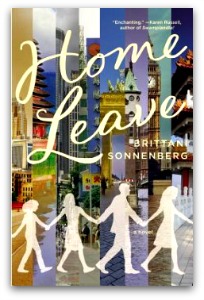
November greetings, Displaced Nationers! I’ve been reading up a storm lately (including Tana French’s latest addition to the Dublin Murder Squad series that I reviewed here this past summer—another great book!). But as I contemplated which work to pull down from my digital bookshelf for this month’s review, my attention came to rest on a super example of Third Culture Kid fiction: Home Leave, the debut novel from Brittani Sonnenberg, which came out earlier this year.

Home_Leave_coverPerhaps I was attracted to this book because the story Sonnenberg tells, about a globetrotting family, reminds me of my own. As some of you may know, I grew up on a boat and spent most of my life before high school outside the US—we were seven years in the Caribbean and two in the South Pacific.

But if it’s my story, it’s also Sonnenberg’s. She spent her childhood alternating between her native US and the UK, Germany, China, and Singapore, and, like many of us TCKs, has opted to become a “chronic expat” in her adulthood. She has worked as a journalist in Germany, China, and throughout Southeast Asia. (Currently, she resides in Berlin but is also a visiting lecturer in Hong Kong.)

Until Home Leave, Sonnenberg was known primarily for her short stories and NPR commentaries about life in Berlin.

In fact, her novel started as a memoir, but then one of her agents encouraged her to try re-approaching the material through fiction.

There must be more to life than having everything!”—Maurice Sendak

Home Leave concerns an American nuclear family, the Kriegsteins. The parents, Chris and Elise, determine to escape their dreary lives in the US by living and working overseas as expats. As Chris pursues a career at several international companies, their two daughters, Leah and Sophie, learn what it is to feel at home abroad and a stranger “at home” in the US. They revel in their uniqueness, but they also sometimes long for putting down roots and living like kids back home.

Sonnenberg makes a creative decision not to have a single character as the protagonist. Each of the Kriegsteins is a main character, and there are multiple narrators.

But for me, the book did have a star, and that was Leah. Sonnenberg links Leah’s emotional and personal success as a young adult to her peripatetic childhood, delivering in her a multifaceted portrait of a Third Culture Kid to whom other TCKs can relate.

“Home is where one starts from.”—T.S. Eliot

Leah is the elder daughter, and her toddler years abroad insert themselves into her identity almost from the moment when the family moves back to the US for a few years. As Sonnenberg writes:

Even Leah, with eleven-year-old pretensions of grandeur, craved a “next,” though her memories of “before” Atlanta were limited to the backyard in London, fish and chips, and falling blossoms in a British park…Leah grumbled that they always went to the airport to pick people up but never went anywhere themselves.

Her wish is granted when the family departs to Asia, where they begin a tradition of going on home leave back to the United States:

Like Persephone’s annual permitted return to her mother aboveground, by the gods in Olympus, the powers that be at Chris’s company will grant the Kriegstein women “home leave” once a year, each summer, when they will stay with friends and relatives, the flights covered by the company. In September they will be forced to leave again, back to China. This habit of home leave will cement Atlanta as “home” in their minds, since they always fly back to the Atlanta airport.

Of course, the price to pay for home leave is a complicated definition of where “home” is. As Sonnenberg writes:

When the Kriegsteins leave Atlanta for Shanghai in 1992…they are desperate to be overseas again. After three months in Shanghai, they will be desperate to return home.

And once Leah is an adult, she faces the classic Adult Third Culture Kid dilemma—how to answer the unanswerable: “Where’s home?” Speaking for myself, I never seem to answer it the same way twice in a row!

But what if one must re-start from tragedy?

There is a further twist to the Kriegsteins’ story, which is that Leah’s younger sister, Sophie, dies unexpectedly in their teen years—another parallel to Sonnenberg’s own life (she lost her own sister, Blair).

If you haven’t read the book yet, please note: to tell you about Sophie’s death is not a spoiler. Her death is referred to in the book before it happens, and at one point, her ghost actually narrates the story.

Now, Leah’s strongest relationship is with Sophie—something any TCK out there will understand. As children in foreign places, Leah and Sophie are sometimes each other’s only playmate. As preteens, they look out for each other in Shanghai and share a conspiracy to run away back to Atlanta—a plan only foiled when airport staff won’t accept their father’s credit card without their dad present.

Not surprisingly, Sophie’s death breaks the teenaged Leah, influencing how she perceives her place in the world and reality for years afterward:

Was Sophie’s death a foregone conclusion in any geography, a heart failure built into her system that would have struck her down on any continent? Later, the doctors would say, “There was nothing you could have done. Undetectable heart conditions are just that: undetectable. You mustn’t blame yourselves.” But because the death will happen in Singapore, its occurrence will be unimaginable anywhere else. Thus, in the parallel (irrational) universe, where they stay in Atlanta, where the good years never end, Sophie never dies.

Likewise, Sophie’s abandonment of Leah comes to affect her definition of “home”:

Years later, as an adult, when asked where she is from, Leah will always say “Atlanta,” as if we come from our joy, as if, aside from their goodness, there was anything to say about the good years.

Living in not-so-splendid isolation

The late, great David Pollock, a recognized authority on TCKs, once wrote*:

The TCK frequently builds relationships to all of the cultures, while not having full ownership in any. Although elements from each culture may be assimilated into the TCK’s life experience, the sense of belonging is in relationship to others of similar background.

Sonnenberg gives us a sense of the disjointedness of the TCK upbringing, and the many identity issues this results in, by having each chapter of Home Leave read like its own short story, with its own narrator. Thus we go from Elise delivering an electric first-person narration of how she coped with her daughter’s death, to therapist appointments written like scenes in a play, to a first-person-plural foray into describing how a group of young TCK women experience university.

Although this style can be jarring for the reader—the book you pick up in the afternoon doesn’t feel like the same book you put down in the morning—taken as a whole, Home Leave feels as fragmented as a life abroad sometimes feels.

Most importantly of all, Sonnenberg’s book does not shy away from the irony of the TCK experience, which is that although a family may travel abroad to broaden its horizons, none of its members ends up having any long-standing relationships except with each other. And, in the case of the family she depicts in Home Leave, even those relationships are uncertain. As the novel’s action unfolds, the older Kriegsteins are shown to be deeply flawed people whose naivety toward the world, and indifference to the needs of their own children, is sometimes astounding.

Home Leave left me feeling sorry for the Kriegsteins: they appear to have been impoverished by their life abroad, not enriched. Throughout the story, I kept wishing they might form a real connection to the places they inhabit and the people they encounter. But, except for the touching scene when Elise is pregnant in Germany, Chris’s ambitions and their own dysfunction buffers them from opportunities to create authentic bonds.

The sections about Shanghai seemed particularly sad, though perhaps that’s only because we see the city partially through the lens of an awkward, pubescent Leah.

But, although not all TCKs will find that the Kriegsteins’ experiences are close to their own, Home Leave is a gem of story suitable for anyone with international experience. And the quality of Sonnenberg’s writing is such that I’m really looking forward to seeing what she produces next.

* * *

Now for a parting thought for my fellow TCKs, some of whom may be feeling rather wistful after reading this review:

Home life is no more natural to us than a cage is natural to a cockatoo.

—George Bernard Shaw

Till next month!

*Third Culture Kids: Growing Up Among Worlds, by David Pollock and Ruth Ven Reken (2009, rev. 2010).

* * *

Thanks, Beth! I note that the New York Times reviewer of Home Leave concluded that in putting Leah at the book’s emotional core, not her parents, Sonnenberg has opened the door for the next generation of international creatives, no mean feat! Readers, any thoughts or responses?

Beth Green is an American writer and English teacher living in Prague, Czech Republic. She grew up on a sailboat and, though now a landlubber, continues to lead a peripatetic life, having lived in Asia as well as Europe. Her personal Web site is Beth Green Writes, and she is about to launch a new site called Everyday Travel Stories. To keep in touch with her in between columns, try following her on Facebook and Twitter. She’s a social media nut!

STAY TUNED for next week’s fab posts!

If you enjoyed this post, we invite you to register for The Displaced Dispatch, a round up of weekly posts from The Displaced Nation, with Alice nominations, exclusive book giveaways and other extras. Register for The Displaced Dispatch by clicking here!

Related posts:

EXPAT ART AS THERAPY: Works that capture precious memories of life in other countries

ExpatArtasTherapy_Principle1As explained in my introductory post to this series, the Swiss-British philosopher (and Adult Third Culture Kid) Alain de Botton argues that art of all kinds can be a form of therapy, providing powerful solutions to many of life’s dilemmas.

But is that also true of expat works? Does our art benefit humanity more broadly, or are we creating things—memoirs, novels, films, dance and stage performances, social enterprises—that will only ever speak to people like ourselves: what fellow global soul Pico Iyer has called the great floating tribe of people “living in countries not their own”? (We currently number around 230 million, or just over 3 percent of the world’s population.)

SEND IN THE CLOUDS: "London from Hampstead Heath," by John Constable (British Museum)

SEND IN THE CLOUDS: “London from Hampstead Heath,” by John Constable (British Museum). Photo credit: John Constable, via Wikimedia Commons.

In his “Art as Therapy” lecture, de Botton specifies 6 ways art can answer human needs.

The remainder of this series will look at whether, and to what extent, these observations apply to the works of international creatives, beginning with…

Principle #1: Art can compensate for the fact that we have bad memories.
De Botton cites John Constable and his paintings of clouds above Hampstead Heath as an example of how an artist can sometimes capture something significant yet fragile they have experienced and don’t want to forget.

Will the John Constables among us please stand up? Seriously, it strikes me that we international creatives are well positioned to preserve the memories of the daily wonders we’ve encountered in far-flung parts of the world, our knowledge of which accrues over time. (Not for us the Wonders of the World, when there are so many intrepid world travelers around, eager to conquer them.)

Back in the days when I lived first in England and then in Japan, I always felt like the poor cousin of the anthropologist—I wasn’t an area specialist but that left me free to approach life with an Alice-like curiosity, never quite losing the sensation of having fallen through the rabbit hole. And to convey that to others…

But let’s look at some examples, shall we? Each of the visuals below is inspired by or belongs to the work of an international creative that has featured on this site in some way. I selected these four individuals because of their ability to conjure up an image of something rather precious within their new landscape—the expat equivalent of a dramatically shaped cloud. And, as de Botton has been invited to do at several museums, I’ve added post-it notes describing the therapeutic effects I experienced.

#1: Parabéns: We’re All Mad Here

Parabens

Photo credit: Marbela via Flickr (CC BY-SA 2.0)

OBJECT LABEL: Parabéns: We’re All Mad Here, inspired by Megan Farrell (aka Maggie Foxhole) and her book, American Exbrat in São Paulo.
ML’S POST-IT: I have never been to Brazil, but reading Farrell’s step-by-step guide for foreigners who are living (or planning to live) in São Paulo piqued my curiosity. I particularly enjoyed her vivid account of the Brazilian birthday party. What a palava! Far beyond my wildest imaginings. But what is even more curious to me is the Sweet Table, sitting in splendid isolation until the very end of the festivities. According to Farrell:

“The design of the Sweet Table is on the same level of importance for the birthday party as is the set design for a Broadway performance. It consists of hundreds of sweets, strategically placed around the other decorations. But most importantly, NO ONE TOUCHES the Sweet Table until the birthday candles have been blown out at the end of the party. No one. An interesting objective when you have anywhere from thirty to fifty children running around wild and free.”

I rather like the thought of deprivation in the midst of so much decadence: does that make the brigadeiro, when you finally get one, taste even sweeter?
FURTHER READING: Our interview with Megan Farrell, by Andy Martin: Why exbrats in São Paulo need their own book to appreciate life in Brazil’s largest city.

#2: Are Acacia Trees Humans in Disguise?

Acacia Trees

Photo credit: Gezira Sporting Club, by Jorge Láscar via Flickr (CC BY 2.0).

OBJECT LABEL: Are Acacia Trees Humans in Disguise?, inspired by Alice Award nominee Kathleen Saville‘s description of these trees in Zamalek, Gezira Island (Cairo, Egypt) in a post for her personal blog.
ML’S POST-IT: The thought of living in Egypt scares me, and I’ve been avoiding most trees ever since Hurricane Sandy. But after reading Saville’s description of Egyptian acacias—

I see folds and twists in the trunks like nothing I have ever seen in another tree. Each tree looks like a long thin body or leg covered with support hose. It’s odd because the appearance is almost human like.

—I feel calmer. Might I have a tree-hugging future?
FURTHER READING: Saville’s blog, Water Meditations, focusing on her water travels.

#3: Elephant Road Trip

Elephant Road Trip
OBJECT LABEL: Elephant Road Trip, inspired by Ruth Hartley and her novel about Africa, The Shaping of Water (Hartley grew up in that part of the world).
ML’S POST-IT: Hartley’s novel begins with the construction of the Kariba Dam, one of the largest dams in the world, over the Zambezi, the fourth-longest river in Africa, flowing into the Indian Ocean. As much as I enjoyed Hartley’s book, I could never quite wrap my head around the scale of what she describes, whether talking about the dam, a massively ambitious project, or about the problems Africa faces as it attempts to shake off the colonial yoke. Perhaps that’s why I took comfort in Hartley’s description of elephants serving as the continent’s original bulldozers:

The roads over the escarpment follow for the main part the old migratory routes taken year after year for millennia by elephants. Elephants, who for all those thousands of years would roam, not just around Zimbabwe, or just around Kenya, but all the way up sub-Saharan Africa from south to north and back again. Now human governments have decreed that elephants must obey human laws and stay within the bounds of national boundaries drawn by straight-edged rulers on maps. In the time before colonization, a mere 150 years ago, elephants travelled where they always travelled, and they walked across mountains with consummate skill and ease, always finding the most direct routes through the least difficult of the passes.

In the midst of a man-against-nature, man-against-man story, I found it a restorative to imagine these pre-colonial times when the elephant, such a magnificent beast, could be relied on to forge trails through the dense brush and trees.
FURTHER READING: Coming soon: our interview with Ruth Hartley about her book.

#4: Shanghai Mix

Shanghai Mix

Photo credit: Rachel Kanev.

OBJECT LABEL: Shanghai Mix, consisting of a photo taken by globe drifter Rachel Kanev, which she chose to feature in her iinterview with James King for our site’s “A Picture Says…” column.
ML’S POST-IT: Rachel has captured a memory of an experience I’ve had several times myself but had nearly forgotten: namely, what it’s like actually to witness Asian economic development rather than pontificate about it. As Rachel puts it in her chat with James:

In that fleeting instant, one can see Shanghai’s varied transportation, high-rise buildings and red lanterns, as well as Kate Winslet—that curious amalgamation of Western modernity and Chinese traditionalism that is everywhere around you in the city.

Perhaps because she snapped the photo just as the sun was setting, it fills me with sweet nostalgia. (I’m not remembering the smog, for a change…)
FURTHER READING: Rachel Kanev’s blog, Globe Drifting

* * *

So, readers, what do you think of the above “exhibition” of works that touch on expat experiences and emotions. Did you find it therapeutic? And are there other expat works you would recommend for this reason? Do tell in the comments.

STAY TUNED for next week’s fab posts.

If you enjoyed this post, we invite you to register for The Displaced Dispatch, a round up of weekly posts from The Displaced Nation, with Alice nominations, book giveaways, and other extras. Register for The Displaced Dispatch by clicking here!

Related posts:
DIARY OF AN EXPAT WRITER: How to fly solo without burning the tips of my wings

DiaryExpatWriterI am pleased to welcome back up-and-coming author Shannon Young. This past summer, Shannon announced she’d cut 18 inches off her hair, quit her day job to become a full-time writer, and given herself a pen name for her planned adventure novel series. And, yes, she is an expat, a kind of love refugee, in Hong Kong. Shannon has agreed to chronicle her writing adventure for us. This is her second installment.*

—ML Awanohara

Dear Displaced Diary,

As you may recall, last month I gave you some background on my decision to quit my day job and dedicate six months to writing with all my time, all my savings, and all my heart.

I already love the sensation of flying solo. As writing coach Mary Carroll Moore once said:

Books demand more time inside, to think, muse, dream, and design our stories.

But what if I love it so much I end up soaring too high and burning my wings? To continue the aviation metaphor, I mustn’t forget to touch ground and refuel every so often.

Diary, my goal this month is to find the balance between chasing my dreams and relying on much-needed feedback, input and advice from the people within my editing and writing community.

Recently I’ve learned three lessons that I think could be useful to bear in mind:

1: Languish in limbo no longer.

fire-dragons_coverThis month saw the final publication stages for the first book I ever started writing: Year of Fire Dragons. The working title for several years was Hong Kong Limbo, which is a fairly good description of this book’s journey. After writing several drafts, I worked with an excellent critique partner (fellow expat author Jane Cornelius) and asked numerous friends and relatives to beta read before querying literary agents.

To make a long story short, one of the first agents who requested the full manuscript spent two years assuring me she would get to it soon. I don’t know if she ever opened the manuscript, leaving me—and my writing career—hanging in the balance.

At the two-year mark, I withdrew my manuscript from her consideration. By that time, I had begun to believe that this particular book could find just the right home outside the New York publishing world and didn’t want to keep being strung along. I decided to take my career back into my own hands.

Three months later I had signed a book deal with Blacksmith Books, an excellent Hong Kong-based publisher, and my piece on student debt had been accepted into the competitive Kindle Singles program. That piece is now being made into an audiobook as well.

In retrospect I’m grateful for the delay that took place due because of that New York City agent. It gave me time to do some rewriting, and my manuscript was much better by the time I submitted it to Blacksmith Books.

That said, it also taught me an important lesson about taking control of my own career.

In this season as a full-time writer, I hope I’ll continue to learn when to take the initiative and be a better judge of when to rely on other people’s responses.

2: Get by with A LOT of help from your friends.

My full-time writing schedule has allowed plenty of time to work on the little details while preparing for the launch of Year of Fire Dragons—with help and feedback from others, of course!

Here are a few things that happened this month:

1) The publisher sent the final proofreading notes. I combed through the manuscript one final time, knowing that this was my very last chance to catch any errors.

2) We rewrote the blurb (again), simplifying it a bit from the previous version. It needed to be stripped down to the basics of the story. Here it is:

Year of Fire Dragons: An American Woman’s Story of Coming of Age in Hong Kong

When a bookish 22-year-old follows her Eurasian boyfriend to Hong Kong, she hopes it’ll be the happy ending to their long distance love story. But a month later, his company sends him to London. Left with a new job and a pile of student debt, she embarks on a wide-eyed newcomer’s journey through Hong Kong—alone. She works as the only foreigner in a local school and explores with other young expats. The city enchants her, forcing her to question her carefully laid plans. Soon she must make a choice between her new life and the love that first brought her to Asia.

(Is your curiosity piqued, Dear Diary?)

3) I practiced talking about the book without being annoying. This is a difficult one for me. Like many writers, I’m an introvert, and it’s a constant struggle to figure out the right balance of things to say. (If you know me in a real life and I talk about my work too much, please tell me to cut it out!)

4) I messed up, but got things sorted out in the nick of time. My publisher arranged to have an excerpt from my book published in a cool local magazine. I got the email about the opportunity shortly before I flew to Taipei for a friend’s wedding. I didn’t read the email closely enough to realize that they needed the excerpt ASAP. Several days later, I found myself in line for the elevator at Taipei 101 (the world’s second tallest building) reading an email asking where my excerpt was and could I send a photo, too? I had left my computer back in Hong Kong. At the top of Taipei 101, I tucked myself into a corner and spent most of our visit frantically trying to download the manuscript on my phone and find an appropriate photo to forward. Thank goodness for free WiFi! When we got back to the hostel I was able to use their computer to download my book and find just the right excerpt for the magazine.

5) I received blurbs offering advance praise of my book, the final full spread cover design, and a PDF with typeset pages (248!)—all the bits and pieces that make a book come to life. I’d written the pages, but my publisher had polished them, the designer had created the beautiful artwork for the cover, and the blurb writers had inspired me through their own books and offers of encouragement along the way.

Notably, all of these little victories were the direct result of other people’s input.

3: Expat life can be read as a metaphor for the editing process.

It occurred to me the other day that living in another country can be likened to the writing and editing process. An expat has to be open-minded to the cultures around him—just as a writer must learn when to accept feedback. An expat must also forge her own path—just as a writer must sometimes decide to hold fast to the words she wants to write and the career she wants to pursue.

With the near constant feedback of the other culture, an expat naturally reassesses the way they do things. Sometimes your new country doesn’t offer the same opportunities and you need to adapt, and sometimes you see a better way.

Year of Fire Dragons used to have a lot more words: awkward words, melodramatic words, giddy and petulant and angry words about my first year living as an expat in Hong Kong. The process of writing the book was a maturing process. I had to first learn to describe what I saw on the surface, with assumptions and prejudices and even rose-colored glasses. Then I had to learn to refine my perceptions even as I learned to edit my words. I had to cut to the heart of what was most important, most interesting, and most moving.

My work and my expat life are not so different, it turns out.

Diary, I still struggle with whether I’m making the right decisions. I wonder whether my book will be good enough, or if I should have spent yet another year revising. I even question whether people are just trying to be nice when they say sweet things about my book.

Throughout the next few months, I hope I’ll continue to learn how to take all the lessons offered by the wise folks around me, while still building this new life the way I want it to be.

Thank you again for following along on this journey!

Yours,

Shannon Young
www.shannonyoungwriter.com

* * *

Readers, it’s your turn. Have you ever struggled with the writing process, wondering how long you should hunker down before accepting feedback on your work, or if that feedback is genuine? Let us know in the comments!

*Shannon Young has edited an anthology, How Does One Dress to Buy Dragonfruit? True Stories of Expat Women in Asia (2014), from which she is sharing some excerpts. We’re calling them “chunks” of dragonfruit—they taste delicious!

STAY TUNED for next week’s fab posts!

If you enjoyed this post, we invite you to register for The Displaced Dispatch, a round up of weekly posts from The Displaced Nation, with snippets of worldly wisdom, exclusive book giveaways and our nominees for the monthly Alice Awards. Register for The Displaced Dispatch by clicking here!

Related posts:

CHUNKS OF DRAGONFRUIT: A tale of an Australian expat navigating her own way in Japan

Dorcas Cheng-Tozun and Dragonfruit cover, courtesy Shannon Young. Purple dragonfruit by Mike Behnken (CC BY 2.0)

Kathryn Hummel and Dragonfruit cover, courtesy Shannon Young. Purple dragonfruit by Mike Behnken (CC BY 2.0)

How Does One Dress to Buy Dragonfruit? True Stories of Expat Women in Asia is a new anthology edited by columnist Shannon Young. For the benefit of Displaced Nation readers, Shannon has generously carved out a few tasty morsels from the writings of the collection’s 26 female contributors, highlighting their feelings of displacement within Asia. This is the second installment. The first can be read here.

—ML Awanohara

For our October excerpt, I’ve chosen Kathryn Hummel, an accomplished poet whose prose immediately stuck out to me for its lyrical quality. She uses intricate details to make her life as an Australian expat in Japan come alive, and she captures the emotions of displacement beautifully.

Kathryn also uses a unique structure featuring a poem followed by a meditation on the stages of expat life: from arrival to finding community to a mid-life crisis of sorts to acceptance. Kathryn draws the full map of a life abroad.

I hope you’ll enjoy the beginning of Kathryn’s piece, which is titled “Charting Koenji.” (Kōenji, for those unfamiliar with Tokyo’s layout, is a neighborhood on the outer western edges of the city.)

“Charting Koenji,” by Kathryn Hummel

Sometimes there are moments that catch in the flow of the everyday like a taped-up tear in a reel of film. Afterwards, there is an almost imperceptible change in the tension and projection of life, when I feel more than I see that Koenji is not my place. While I am closer than a stranger, I am still at a distance: this I measure from the inside out, since I can’t get far enough away to see it as an onlooker, detached but still interested in how the scene rolls on. For the past two years, the everyday scenes of my life have had Japan as a setting: most of these have been concentrated in the district of Koenji-minami, Suginami Ward, Tokyo. During my first weeks here, I intoned that address so many times it became a mantra, a verbal talisman to guard against losing myself in the city. Although being an expatriate—a collection of syllables I don’t often apply to myself—places me in a position of being both inside and outside, when I hear the wooden heels of my shoes clip the now familiar walkways of my neighbourhood, I am reminded only of this place, my present.

I. Arrival

Arrival is not signified by
the unburdening of suitcases
but the mechanics of realisation.
This is where I am, will be:
I have come now to the place
where before I was going.

Being present in a place means you inevitably paint yourself in the picture, draw the map around you. Slip outside these bounds and you are lost, or so I once thought. In 2004 I had stopped in Japan on my way from China to Australia and was delighted by my weeklong visit. I knew that living and working in Japan would be harder than traveling through, when my only responsibility had been to find the best way to be happy before my set departure date. Still, I had friends in Japan and their phone numbers to call; a Japanese language certificate and alphabet flashcards; a few tatami mats’ worth of rented space and a position, courtesy of an arts-exchange program, to write words for an intimate Koenji gallery wanting to commune with the English-speaking art world. If the present was a leafy bough, my future (as well as my literary imagery) would be heavy with the fruit of my Japanese incarnation.

I arrived in Osaka and rested for a few days at the home of Quentin, a university friend who had spent the last three years of his life traveling back to Japan to teach English, a compulsion he would spend another three years satisfying. At Quentin’s suggestion, I made my way to Tokyo on a journey of acclimatisation and language practice. I took a slow train to Hamamatsu to go on a gyoza (dumpling) hunt and traveled on to Yaizu, where, walking to the beach to see the distant Fuji-san bathed in the light of sunset, I met and later made love to a fish-factory worker from Peru. Yet even this encounter had the day-seizing quality of one made on a transient journey only.

When I reached Tokyo, the city was so miserably wet I thought it would never dry out. As arranged, I was met at Koenji station by my landlord, whose easy graciousness flickered warmth over my arrival, and accompanied to the building where my first studio apartment was waiting. After giving me a tour, which consisted of opening the bathroom door and indicating to the rest of the open-plan space, diminished by a folded futon and my wet bags, my landlord retreated with a bow. I was not delighted by Tokyo so far but wanted to be, so I gave my wool scarf a tighter wind, armed myself with an umbrella and ventured out. During my walk, I found that the compass on my Bleu Bleuet watch was only for show—an incidental discovery, since instinct is the direction I rely on above all. At that particular moment, I had none, and the rain didn’t help clarify my position. It leaked somehow through my umbrella and under my collar, where it remained without guiding me. As it usually happens when I walk the streets of a new place, I got lost.

The houses lost me. Or I lost myself in them. Every grey, dun, or cream-colored structure fit together in a maze of reinforced concrete. Some homes were irregularly shaped to sit correctly on their blocks; others had strange additions that seemed the architectural equivalent to tusks and antlers; oddly shaped, overgrown bonsai sprouting various thicknesses of branch and colors of foliage mingled with low electrical wires; antennas, rubbish bins, sometimes just inexplicable but neatly arranged collections of junk, assembled to give the impression that it was still of use, awaited their purpose. There was an element of seediness that did not feature in my memory of Japan: paint peeled from wooden walls and bald light globes had been left burning after midday. In the alleys behind restaurants, I was met with cardboard boxes, broken brooms and wooden pallets, rusty machinery and empty cans of cooking oil. The rain blurred the scenes without actually softening them, making greyer what was already dismal.

I told myself not to try to make sense of the maze. Tomorrow I would find my way to the gallery where I would be working and meet Kenzo-san, its owner, and all would be well if I believed all would be well. At the same time I thought, with naïveté or impatience, that I had to have a plan, that aimlessness would prevent me connecting to Koenji.

Before I left Osaka, Quentin studied my face as if trying to read its meaning. “You should have a Japanese name,” he told me. “Kat-san isn’t so easy to say.”

To me it didn’t seem as difficult as “Kassorin-san,” but I already had thought of a name that sounded appropriately Japanese. “What about Katsu?” I asked. “It’s a mixture of my first and second names: Kathryn Susannah.”

Quentin shook his head. “No. It will make people think of tonkatsu (deep-fried pork). They’ll think it’s strange. Why not choose something that represents you—a tree, or an animal?”

Quentin’s advice may have worked admirably for him in his various Japanese incarnations, but has never yielded the same results for me. I was then, and remain, “Kassorin-san,” a woman who navigates her own way. On that first afternoon in Koenji, I continued to walk until I at last saw something that indicated my flat was not far off: a secondhand bookshop I never have learned the name of, though I did eventually begin to buy books there that I hope to read, one day, with ease. The bookshop is recognisable during the day by its awning of green-and-white stripes, at night, by its security doors. Each of the three doors is painted with a face: one with running mascara and a Clara Bow hairdo, one with a sweat-beaded forehead and a guilty laugh, the last with an angry eye and an imperious-looking nose.

These faces, which remain guarding the bookshop until 11:00 am each day, signal more than my location—they are signposts for my mood. Depending on whether my mind is full or empty as I walk past on my way to the gallery or language lessons or the house of a friend, I either ignore or sympathize with whatever I can read in their expressions: their moods always change. It seems charmingly whimsical to write that these faces were my first friends, though when I realised this, I knew it was time to stop observing and start finding my community in Koenji.

* * *

Poems From Here KHummelReaders, if you enjoyed that morsel, I hope you will consider downloading a sample of the Dragonfruit anthology from Amazon. (The e-book and paperback of are available at all major online retailers.)

And if this excerpt has made you curious to learn more about Kathryn Hummel, her new collection of poetry called Poems from Here has recently been published by Walleah Press. You can also find out more about Kathryn at her author site: KathrynHummel.com.

I look forward to sharing more excerpts from the Dragonfruit anthology over the next couple of months.

* * *

Thank you so much, Shannon! Displaced Nationers, any comments on what Kathryn had to say in this passage? Having lived in Tokyo myself, I found her description of the city captivating. I was also impressed by her determination to “navigate her own way” in a city that makes many of us Westerners feel we’ve stepped through the looking glass.

STAY TUNED for next week’s fab posts!

If you enjoyed this post, we invite you to register for The Displaced Dispatch, a round up of weekly posts from The Displaced Nation, with snippets of worldly wisdom, exclusive book giveaways and our nominees for the monthly Alice Awards. Register for The Displaced Dispatch by clicking here!

Related posts:
BOOKLUST, WANDERLUST: Lawrence Osborne’s haunting tale of expats and travel in the Moroccan desert

Booklust Wanderlust Collage

Left: Oleh Slobodeniuk (CC BY-NC-SA 4.0); right: Beth Green (her own photo).

Attention displaced bookworms! Our book review columnist, Beth Green, is back. An American who lives in Prague, Beth mixes booklust with wanderlust in equal measures, which gives her just the right background for reviewing recent book releases on behalf of international creatives.

—ML Awanohara

Thanks, M.L.! And, hello again, Displaced Nationers. With the arrival of fall in the Northern hemisphere, I find myself in the mood to dig into some darker, heavier—more Halloweeny, shall we say?—material.

As a long-term traveler, third-culture kid, current expat, or all of the above in some cases, each of us has at some point or another faced a cultural divide we’ve found it difficult, if not impossible, to cross. Maybe it came down to a clash of religious or political beliefs. Or was it something to do with wealth? There are privileges that come with being an expat—and that, ironically, can cause discomfort.

But perhaps one of the most harrowing breaches of trust occurs when people possess differing concepts of justice.
TheForgiven_colorcoverLawrence Osborne’s novel, The Forgiven, wraps all three of these tough-to-tackle subjects into a compelling tale centered around one darkly beautiful “what if”:

What if you accidentally committed a crime in another country?

Every traveler’s worst nightmare

Osborne’s protagonists, David and Jo Henniger, are a wealthy middle-aged London couple who have grown frustrated with each other and jaded about life in general. David is a society doctor in Chelsea who has just lost a malpractice suit and is also beginning to lose patients. Jo is a children’s book writer who hasn’t written a book in some time.

To get a change of scene, and perhaps a new lease on life, the couple sets off to attend a lavish party being thrown by one of David’s school friends, Richard, and his partner, Dally, at their ritzy retreat in the Moroccan desert. It’s a wild weekend-long affair tony enough to have photographers from the New York society pages chronicling it.

Now, that doesn’t sound like my travel scene, but Osborne makes it clear that what happens to Henningers could happen to any of us who dare to venture into unknown lands, where the inhabitants have different religious beliefs to ours, are poorer, and possess an unfamiliar sense of justice.

Jo to David: “I shouldn’t let you, Stumblebum.”

Overriding Jo’s objections, David decides to do the drive from Tangier through the desert in the night even though he has just consumed a bottle of wine.

Jo sulks but lets him drive.

Long after dark, while the Hennigers are trying to navigate the unfamiliar desert terrain, two Moroccan boys leap into the road ostensibly selling fossils though possibly intending to highjack the vehicle. David runs in to one of the young men, killing him. The other boy runs away.

Osborne sets up an unforgettable scene as David and Jo make their entrance to an extravagant expat party with a dead body on the back seat of their car. Not knowing what to do or how the Moroccan police will respond, the Hennigers have taken the corpse with them.

For the hosts, the situation is an embarrassment and a source of annoyance. For their Western guests, it’s a rude interruption and a source of gossip. For Moroccans like Hamid, the head servant of Richard and Dally’s estate, it’s a tragedy that brings out his deep loathing of Western values. For the family of the boy, who arrive the following day to collect the body, it’s both tragedy and crime.

But for David and Jo, it will prove life changing.

Jo to Day (another guest): “It’s like going through the Looking Glass.”

This story, rather than showing how travel erases our differences, puts the notion of “otherness” into high relief. The couple who host the party and many of their friends see Moroccans as as objects of curiosity, wisdom, servitude, and lust. David, less cosmopolitan than his hosts, falls back on traditional colonial values, regarding Morocco and Moroccans as inscrutable and inferior.

By the same token, the Moroccans in the story can’t fathom the Westerners’ lifestyles or motives. They are “unimaginable human beings,” infidels—people who don’t eat with their fingers, who don’t believe in God.

Driss, the young man who is struck and killed by David, wants desperately to break away from the life his father had. He comes from a Berber family that lives in a remote outpost of the Sahara, where children must slave away hacking out Trilobites all day long, with the hope of selling them to Western millionaires.

Driss’s father, Abdellah, more than anything else wants to avenge “the fact that he simply had never known his son at all.”

When Abdellah and his brothers arrive to pick the body up for burial, they demand to meet David. They ask that he travel with them to make atonement. Richard and Dally, keen to get on with the party, assure him that it will be for the best.

Jo to herself: “Who knew what here was artificial and what was indigenous?”

The Forgiven is a tribute to Osborne’s roots as a world-class travel writer and chronicler of the expat life. He takes us behind the scenes and into the inner lives of Moroccans as well as of the expats who choose to live in that part of the world.

Take, for instance, Osborne’s account of Moroccan versus British pessimism:

“The men of the desert know everything,” Hamid said once, like a quote out of Lawrence of Arabia. But they didn’t, really. They were just efficient pessimists, and therefore astute readers of human nature. They always assumed the worst, and that made them correct nine times out of ten. Their pessimism, however, was not like David’s. David was someone who believed that the past was superior to the present, and that was a different sort of pessimist. It was not the entire past that was superior, of course; it was mostly just the British nineteenth to the mid-twentieth century.

Or this passage about how the Moroccan villagers tend to regard Richard and Dally and their wild parties:

It was admitted that they were wealthy and that they spent their money in an exceedingly unwise and profligate way, and that this was much to the advantage of the people.

Jo to Richard: “I dare say I won’t be the same again…”

The story maintains momentum by swinging between Western and Moroccan cultures, leaving the reader almost breathless, not always sure of their footing.

As readers, we guess but aren’t sure if the lumpish David, who is clearly an alcoholic, is still drunk on his midnight drive. Did he mean to hit the young man? And, the victim of the accident—can we say he’s a victim? Flashbacks to the youth’s bravado-filled conversations with a younger, impressionable friend paint him as an unstable character, full of hatred, with a shady past…

Jo, David’s long-suffering wife, is also an enigma. An aging beauty, she feels isolated from the young, frivolous women at the party. Does she love David, or want to leave him? Does she care if justice is exacted? Or does she care only that she be, as the title suggests, forgiven?

* * *

Not wishing to give away any more of the plot, I’ll end by reiterating: Displaced Nationers, in your own experience, which topics tend to open up the widest cultural divides?

Let me also leave you with the epigraph from the novel:

“Many roads do not lead to the heart.” —Moroccan Proverb

Until next time—oh and please drive safely!

* * *

Thanks, Beth! I’ve read The Forgiven and am still haunted by it. Lawrence Osborne is a contemporary writer with a deep understanding of what it means to feel “displaced” by one’s travels. Reading the book gave me thrills and chills, not just for the story but for the beauty and precision of his prose. Readers, does this sound like a book for you?

Beth Green is an American writer and English teacher living in Prague, Czech Republic. She grew up on a sailboat and, though now a landlubber, continues to lead a peripatetic life, having lived in Asia as well as Europe. Her personal Web site is Beth Green Writes, and she is about to launch a new site called Everyday Travel Stories. To keep in touch with her in between columns, try following her on Facebook and Twitter. She’s a social media nut!

STAY TUNED for next week’s fab posts!

If you enjoyed this post, we invite you to register for The Displaced Dispatch, a round up of weekly posts from The Displaced Nation, with Alice nominations, exclusive book giveaways and other extras. Register for The Displaced Dispatch by clicking here!

Related posts:

CHUNKS OF DRAGONFRUIT: A tale by a Chinese American expat woman in China
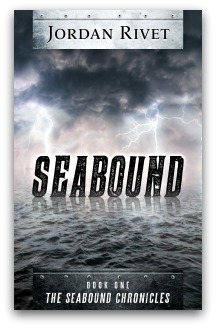
Dorcas and Dragonfruit cover, courtesy Shannon Young. Purple dragonfruit cubes by http://www.flickr.com/photos/mikebehnken/4996063234/

Dorcas Cheng-Tozun and Dragonfruit cover, courtesy Shannon Young. Purple dragonfruit by Mike Behnken (CC BY 2.0)

How Does One Dress to Buy Dragonfruit? True Stories of Expat Women in Asia is a new anthology edited by our latest columnist, Shannon Young. For the sake of the Displaced Nation audience, Shannon has generously agreed to carve out a few tasty morsels from the writings of the 26 female writers within the collection that highlight their feelings of displacement within Asia. Take it away, Shannon!

—ML Awanohara

Thanks, ML. I’m excited to be doing this. The very first excerpt comes from a piece by Dorcas Cheng-Tozun, called “The Weight of Beauty,” which covers the insecurities she experienced as a Chinese American woman living in China. Dorcas worries that her command of the language doesn’t match her Asian face and her average American weight is considered fat in China (she knows because strangers tell her!). Despite the difficulties, she finds an unexpected connection with her slim, beautiful, bilingual Mandarin teacher.

Here is the beginning of her story:

“The Weight of Beauty,” by Dorcas Cheng-Tozun

“If you went running every day, you could lose some weight.” A maintenance worker with a receding hairline squinted at me as the elevator in our apartment building rose far too slowly. This was the first time I had ever interacted with this man. Unfortunately, he was speaking Cantonese, which meant that I understood him perfectly.

“Mmm…” I responded, avoiding his eyes.

“Really. If you ran every day, you could lose some weight,” he repeated, concerned that I had not given him a proper reply.

I flashed him a tight smile, but I did not trust myself to say anything else before he stepped out of the elevator. As I watched his stooped, retreating back, I tried to remember how I was considered “petite” and “tiny” by my American friends. But the US was, literally, half a world away.

When my husband and I moved to China in the summer of 2008, my body’s relative mass seemed to triple during the time it took us to cross the Pacific Ocean. From my first day living in the industrial city of Shenzhen, my weight was a favorite conversation topic of friends, colleagues, and acquaintances alike. “You’re rather fat,” I would often hear. Or, “Did you gain weight? You look fatter.” If I stepped into a shop, sales clerks would rush forward, stopping my progress with wild gesticulations communicating that they had no merchandise remotely close to my size.

My figure was not the only thing wrong with me in the Middle Kingdom. I had grown up speaking Cantonese in the United States, but I knew barely any Mandarin. And judging by the reaction of the locals, my lack of language skills was by far my greater sin. Restaurant waitresses turned up their noses at me; grocery store cashiers clucked their tongues at me; taxi drivers quizzed me endlessly about my deficiency in Mandarin. My life in China at times felt like a series of one-act plays in which characters emerged with the sole purpose of telling me how stupid, fat, and just plain wrong I was.

“Ignore them,” my husband Ned, whose Turkish and Jewish roots had combined to make him look generically Caucasian, urged me.

“How can I?” I protested. “They’re everywhere.”

“But their opinions don’t matter. They don’t know you.”

That was the problem: they thought they knew me. I was a Chinese woman living in urban China, so knowing how to speak Mandarin was the minimum criterion for proving my sentience. It was equal to a blonde, blue-eyed woman in a cowboy hat and boots in rural Texas barely comprehending a word of English. It just wasn’t supposed to happen.

In exasperating contrast, the locals regarded Ned like a creature with magical properties. They were entranced by his height and broad shoulders, his light hair and green eyes, and they immediately set the bar for cultural competence at zero. All he had to do was say, “Ni hao,” and the same individuals who had been glaring at me as if I had insulted their ancestors as far back as the Tang Dynasty would glow with beatific smiles and tell Ned how amazing his Mandarin was. Ni hao was Ned’s universal password to obtain what would forever be denied to me: respect, attentive service, automatic entry into heavily guarded buildings, and a mysterious fount of Chinese joy and happiness that seemed to emerge only at the white man’s touch.

“He’s so handsome,” Chinese women would tell me, glancing at him through fluttering eyelashes. “Is he your boyfriend?”

“He’s my husband” was a Mandarin phrase I quickly learned to say.

Under the daily barrage of insults and sneers, my former life in the United States as an independent, competent, well-adjusted young woman began to recede from memory. It was as if that old version of me had never existed, as if I had always been the overweight, bumbling idiot that 1.3 billion people seemed to think I was.

I learned to wear an I-don’t-care-what-you-think expression on my face, but in reality, my defenses were only shadows of battlements. I felt as if I was constantly under siege; even the most innocuous encounter could become a surprise assault.

One day I greeted a deliveryman at the door of the office where Ned and I worked. I had done this several times before, and the routine was easy. All I had to do was say “Ni hao,” take the package, and sign for it.

But this time, when I handed the clipboard back to the deliveryman, he scrutinized my signature before eyeing me suspiciously. “Why don’t you have a Chinese signature?” he asked in Mandarin, a stony expression on his face.

“I’m American. I only have an English name.” I spoke slowly and gave him a small, apologetic smile.

“Why don’t you have a Chinese signature?” he repeated stubbornly, red blotches blooming across his forehead.

“I was born in the US I only have an English name,” I repeated just as stubbornly, all traces of the smile gone.

I didn’t understand any of the words he spat at me after that; he was speaking too fast and I was too shocked at his venomous tone. Knowing that I had just been deeply insulted, I refused to give him a response. We faced off in silence for a few tense moments before he turned on his heel, continuing to mutter vitriol under his breath as he walked away.

At that moment, learning Mandarin became my top priority. I contacted a company called New Concept Mandarin, which focused on teaching conversational survival Mandarin. They promptly responded, offering to send a company representative to my office the following day. When I told Ned about it, he asked to join in on the meeting to see if the classes were right for him as well.

The next afternoon, when I heard a knock at the office door, I jumped up from my desk. “I’ll get it,” I announced to the office in general.

Easing the door open, I called a cheery “Ni hao” into the dimly lit hallway. Then I froze.

“Ni hao,” responded the supermodel standing in the doorway.

I couldn’t stop the thought from entering my mind: If this woman isn’t from New Concept Mandarin, she must be a high-class prostitute. My eyes locked first on her dress, a body-hugging, black-and-white-striped mini that revealed every impeccable curve on her petite form. The shine of her straight, long black hair, which she casually tossed behind one shoulder, mesmerized me; her wide almond-shaped brown eyes, her thin upturned nose, and her closed-lip smile left me in awe.

As I stared at her, I remembered how I had barely brushed my hair that morning; how I had a grease stain on my blouse from lunch; how I had an angry zit on my forehead that was probably doubling in size at that very moment.

“Are you from New Concept Mandarin?” I asked in a squeaky voice.

“Yes,” the vision said confidently, with only a trace of a Chinese accent. “My name is Joanna.” She held out a tiny hand adorned by a French manicure.

Feeling oafish, I extended my sweaty, un-manicured hand and awkwardly shook hers. “Please come in.”

I shuffled to the conference table in the middle of the office, conscious that five pairs of eyes followed our progress. The room suddenly felt too open, too public. I didn’t want all my colleagues—and certainly not my husband—seeing what I saw: this epitome of Chinese beauty in juxtaposition with the ungainly, unkempt Chinese American who actually liked to eat.

I invited Joanna to sit in a black swivel chair. She descended gracefully into the seat and crossed her slender legs. I attempted to imitate her movements, but instead I had to steady myself on the armrests when I nearly missed my seat. Clearing my throat to hide my embarrassment, I asked Ned to join us.

* * *

Readers, I hope you enjoyed that morsel! Want to read more of Dorcas’s story? It’s the second in the book, so you’ll be able to finish it if you download the free sample on Amazon. (The e-book and paperback of Dragonfruit are available at all major online retailers.)

And if you’re curious to find out more about Dorcas Cheng-Tozun and her writing, she can be found at chengtozun.com.

I look forward to sharing more excerpts from the Dragonfruit anthology over the next few months.

* * *

Thank you so much, Shannon! Displaced Nationers, any comments on what Dorcas had to say in this passage? Have you ever had the experience of having people look at you but not believe you were (or weren’t) speaking their language? I speak of the phenomenon known as cognitive dissonance…which can make one feel very displaced. Tell us about it, or any other responses you’ve had to this excerpt, in the comments!

STAY TUNED for tomorrow’s announcement of the September Alice Awards.

If you enjoyed this post, we invite you to register for The Displaced Dispatch, a round up of weekly posts from The Displaced Nation, with snippets of worldly wisdom, exclusive book giveaways and our nominees for the monthly Alice Awards. Register for The Displaced Dispatch by clicking here!

Related posts: