The Displaced Nation

A home for international creatives

Tag Archives: Memoir | Travel | Food Writers

EXPAT MOMENTS: A Question of Sport

As this summer, for me at least, has been a summer of sport, I thought I would continue this Expat Moments series with a post I originally put in 2010 on my own blog Culturally Discombobulated. They are thoughts I had while watching a San Francisco giants baseball game. That season the giants would go on to win the World Series, and the fans celebrating outside my apartment elicited a sound like that of a dying whale.


I’m in AT&T Park, San Francisco. It’s the top of the 4th innings and the San Francisco Giants trail the Arizona Diaomondbacks 6 – 1. It is little surprise therefore that the atmosphere in the stadium is tetchy. The main object of the crowd’s impatience is the Giant’s pitcher Barry Zito who to use a British expression is “having a ‘mare.” Even to me – a man who could write everything he knows about the art of pitching on the back of a postage stamp – it is apparent that Zito is a player struggling with confidence and that’s affecting his ability to settle into a rhythm. Within minutes of the game starting he had allowed Arizona to wrest the initiative. That disaster of a first innings would see Arizona score 6 quick runs – now they’re hoping to add more. Zito is in trouble again as he preps himself to pitch at Reynolds. Young has already walked and LaRoche hit a single. There’s an unpleasant air of expectancy in the ground as Zito pulls his left arm back readying himself to throw. It doesn’t feel as if the crowd expect much from this pitch – at least not heroics from Zito. There’s a palpable feeling of a crowd readying itself for disappointment, a collective anxiety over the failure they anticipate. Crack!! It’s a sweet hit from Reynolds. The crowd groans in anguish. Jesus, they knew it, they just knew it was going to happen. As the groan turns into boos, Young, LaRoche and Reynolds pass home plate. Arizona Diamondbacks 9 – San Francisco Giants 1.

A few minutes later and Zito is “relieved”, to use a baseball term, by Ramirez, another of the Giants’ pitchers. Relieved: to free from anxiety, fear, pain – that sounds about right. Zito trudges off the field disappointed. Some of the crowd feel the need to make their feelings known. “You suck, Zito!!” Despite the anger of those shouting, as someone used to English soccer fans, the language the baseball fans employ is clean – unimaginative even. For me, I am disappointed that Zito is off. He is one of the few players I’d bothered to read about before the game and was vital in my attempt to try and pass as being vaguely knowledgable about the Giants. I feel disconnected from the rest of the crowd; alone in the communal. Various things have confused me. I don’t get why the National Anthem was performed by a guitarist who looks Will Ferrell done up as a generic rock star for an SNL sketch. I don’t get why the Giants came out to Radiohead’s Idoteque; surely the oddest choice of song to get 30,000 people pumped up? And then there’s the game itself, following it takes effort. Though I think of myself as a sports fan, this game is not my sporting heritage and mythology. I am having to start from scratch, learning new rules and new idols. Though some aspects of the game are familiar, for me it is still the Other, it is still foreign. I feel like a Christian pilgrim worshipping in a mosque. This feeling is made worse (or better) by the opportunity for contemplation and reflection that the game allows. It is in that respect that I find baseball most like cricket – quick bursts of action punctuated by long periods of anticipation, the moments where it pleases me to sit and think.

And as I think, I’m reminded of an old teacher of mine. He was American, first-generation. Possessing both an Ivy League and Oxbridge education he was smart, but not overbearing about it, and though now mature in his years he had the height and broad shoulders of a man who back in college must have made for a hell of a footballer. To my mind, he was like a character out of a Philip Roth novel. And here at AT&T Park, I am reminded of a conversation I once had with him, a conversation that hadn’t really registered much with me at the time, but now a few years later is striking a chord. Like so many American stories, it centres around a child’s grievances against their father. In this case, my teacher told me about how he had unfairly resented his immigrant father for not understanding or enjoying the same sports as he did. Unlike his friends’ fathers, his didn’t play catch with him in the backyard or explain the rules of baseball or football. When it came to sport they spoke different languages: the son spoke in the vernacular of the New World, of Red Sox and Yankees, of touchdowns and home runs; the accented father could only speak of the weird and unknown – of Dynamos and Red Stars. And so my teacher, as a boy, would observe his friends and their fathers and how they bonded over sport. Fathers teaching sons how best to catch, how best to bat. When they did this, they would mention how the Babe gripped the bat, how DiMaggio hit the ball, without knowing it they were passing down an ocular history of American sport, a sense of identity ever bit as important as tales of Washington or Lincoln. To my teacher’s young self, his father was failing in the very purpose a father was meant for. He wasn’t giving him this rites of passage that all the other fathers were giving their sons. Heck, if a father can’t show you how to throw a curveball, just what use is he? Today, I feel like that father.

For me, dealing with sport in America is like having a whole idiom and vocabulary removed; I feel emasculated even. All those useless little facts and figures that I know about sport are useless here. No one knows of Dixie Dean or has an opinion on the relative merits of the Duke ball against the Kookaburra ball. Where once I was confident with the sports round in a pub quiz or in a game of trivia pursuit, it’s now my weakest subject and to be avoided at all costs. When a discussion turns to Roger Clemens or Brett Favre I have to Wikipedia them to remind myself just who they are and what sport they play. I try to learn a few facts so I have something that I can at least talk about. For this Giants game, by rote I have learnt the following: that the Giants were until 1957 the New York Giants after which they oved to San Francisco; that since leaving New York they have failed to add to their tally of five World Series; that game 3 of the 1989 World Series against local rivals Oakland Athletics was disrupted by the Loma Prieta earthquake; that Giants pitcher Barry Zito has a teddy bear collection and is the nephew of Dallas actor Patrick Duffy. But they’re just random facts that I have learnt, it’s not as if I have an opinion about any of these sports. And if you don’t have dumb sports opinions then it is difficult to connect with 90% of American males. What noticeable about my time here is that I’ve found that I don’t get along with American men as much as American women. Put a group of men together and talk quickly descends into discussing the minutiae of sport. When that happens I find I have little to say and so for the most part keep quiet.

I am going to try and change that. I often feel that I’m only in America when I step out of my apartment. Thanks to the web, my apartment remains de facto British soil where I can still listen to British radio, read the British papers and watch British sport. By that token, I remember coming across a photograph of Kim Philby; it had been taken late in his life when he was exiled in Moscow. Behind him, you could clearly see a bookshelf, and on the shelf where fat, yellow volumes of Wisden – the cricket lovers bible. That image has stuck with me. Though Philby had defected to the USSR and had betrayed his country, he still couldn’t escape the trappings of his Britishness – nor I guess did he have any intention of. I imagine Philby struggling to explain to his KGB handlers about just how important Test cricket is and resenting them for their indifference. And I’m guilty of that too, isolating myself culutrally from those around me. I need to make a concerted effort to change that and understand American sports better. With the baseball season getting to its interesting stage and the football season about to start, it seems an opportune time to make a greater effort to learn this new (for me) language though I will still, from time to time, talk of Dynamos and Red Stars.

STAY TUNED for Monday’s post where Kate will be reviewing a chocolate app.

If you enjoyed this post, we invite you to register for The Displaced Dispatch, a round up of weekly posts from The Displaced Nation, with seasonal recipes, book giveaways and other extras. Register for The Displaced Dispatch by clicking here!

Related posts:

Images: by Anthony Windram.

Lessons from Two Small Islands — 4) Keep Calm and Focus on Your Core

Keep calm and focus on your core — it sounds as though I’m about to lead a Pilates class!

Is that what life on two small islands taught me — the value of doing daily sit-ups and push-ups?

Hardly. I wasn’t into exercise routines in either England or Japan, the two small islands where I lived for almost as long as I’d (consciously) lived in my birth country, the United States.

It was only after repatriating that I ventured into my first Pilates class — and ended up cursing Joseph Pilates for developing, in essence, a set of military exercises for civilians. Hup two! Hup two!

I asked around at the class but no one seemed to have a clue who the founder of this torture had been. I did some investigation and discovered, somewhat to my surprise, that Mr Pilates had led a displaced life not dissimilar from mine.* He was descended from a family of Greeks who’d emigrated to Germany — German kids would taunt him for being “Christ’s killer” because they thought “Pilates” sounded like “Pontius Pilate.” Still, he had something going for him: an athletic physique. His father having been a prize-winning gymnast, Pilates Junior was a gymnast, a diver and a body-builder. He moved to England in 1912 to earn a living as a professional boxer and circus performer. Eventually, he would emigrate to the United States, where he set up his first exercise studio for professional dancers and other performers, offering them a routine that focused on core postural muscles.

What impressed me the most about Mr Pilates’s life, though, was that at his most displaced moment, his instinct was to think about his core. That moment occurred few years after he arrived in England. World War I broke out, and because of being German, he was rounded up and sent to an internment camp on the Isle of Wight. In great physical condition himself, he wanted to help the other prisoners, who included some wounded German soldiers, stay in shape, too. He thoughht it would lift their spirits. The exercises he developed for them, for strengthening the core, were the precursors of what we now call the Pilates routine. (See, I wasn’t so far from the mark: military exercises for civilians!)

No core, no cry

I thought about my core a lot, too, when leading my life of displacement first in England and then in another shimaguni (island country), Japan.

To begin with, I was convinced that it was my very lack of a cultural core that enabled me to live in other cultures for as long as I did. What does it mean to be an American from Delaware, of all places? I didn’t have any clear cultural identity — yet it didn’t really bother me. It meant I could go with the flow.

I still remember my first job in Tokyo, which involved working as an editor in the research department of a British stockbrokers that had been taken over by a major Swiss bank.

Being a displaced person myself after several years of living in the UK, I looked forward to working in what I thought would be a mini-UN: Brits, Swiss and Japanese.

It did not take long to disabuse me of that fantasy. The Brits and the Swiss were always clashing, and the Japanese kept themselves to themselves (they probably wished they’d never allowed foreign bankers into their country!).

There were three or four of us Yanks in the department, and we tended to be the ones who tried to be pleasant to everyone else and didn’t bear grudges. A couple of us (not including me) were great speakers of Japanese so were often called on to facilitate when “war” broke out.

“Why can’t we all get along?” was our motto. “Go with the flow.”

But that was then…

By the time I got back to the United States, however, I envied the residents of the two island nations where I’d lived for knowing what they were about — for having such a strong sense of core, or self. Which, when you think about it, is no easy feat in the face of globalization!

Not only did I envy them, but I was grateful for the bits of each nation’s core that I’d picked up on my travels. These are the principles I keep going back to in times of stress, particularly when I’m struggling to readjust to life in my native U.S. — which is what this series is about.

Indeed, if it weren’t for those core pieces I’ve borrowed from other countries, I think I’d now feel like the tin man wishing for a heart, the scarecrow wondering what it would be like to have a brain, the lion yearning for courage… (Boy, did L. Frank Baum ever understand his native country!)

England would not be England without…

A couple of months ago, a group of Britophiles and Brits were debating the essence of Britishness on our site. They were responding to a list created by the gardening journalist Alan Titchmarsh (could there be any more British name than that?) beginning with “England would not be England without…”

Some were disputing the items on the list as being hopelessly out of date and romanticized — Miss Marple, daisies in the lawn, and cucumber sandwiches without crusts. Come on, what century is he living in?

Meanwhile, the author of the post, Kate Allison, maintained that Britain had become more like a mini-US in recent years.

But I didn’t agree with any of that. After spending so many years in the UK, I am ALWAYS overjoyed when encountering someone else who “gets” the part of me that’s anglicized. It means they share my need to discuss politics over a beer, my love of creamy desserts, my preference for baths not showers, my excitement at seeing fresh rhubarb and gooseberries at the green market, or my passion for public transport and national healthcare.

Now if I, a quasi-Brit, feel this way, how much more so must the true natives feel?

Japan would not be Japan without…

Likewise in Japan — or perhaps even more so, as that nation adopted a policy of isolating itself from the outside world, which lasted over two centuries. Plenty of time to develop a core of Japanese-ness.

Again, I am not a true Japanese — but I was the only foreigner in a Japanese office for four years, when I was more or less adopted by the group and taught their code of ethics. I used to joke with my colleagues and say, “I’m a bad Japanese,” as they often had to nudge me about some protocol I’d forgotten.

Still, they trained me well. To this day, I can rattle off a long list of what it means to be Japanese. Surely, Japan would not be Japan without sakura (cherry blossoms) set lunches, soba, slurping soba, sushi, sashimi, shiatsu, shinkansen, and sumo? And that’s just the “s”es. Japanese traits run the gamut from A (amae) to Z (“Zen”).

Even tonight, when I was walking down 9th Street in the East Village and heard the sound of obon music in front of one of the Japanese restaurants, I longed to hear the beat of taiko and join in a traditional dance… Now that’s at the very core of Japanese culture — and I happily went there, still would!

America would not be America without…

What is the American core? Despite Joseph Pilates’s efforts, I don’t see much of one. Here is my attempt to brainstorm a list.

America would not be America without:

  • wide highways chockerblock with traffic (at least here on the East Coast, where it’s one person, one car)
  • gas-guzzling cars
  • poor people using the Emergency Room for their health care
  • shooting sprees every so often by young men who are too easily able to buy guns
  • racial incidents/slurs (even against the president — we still seem to be fighting the civil war)
  • rudeness and the blame game (there’s so much rage here!)
  • supersized food portions
  • junk food of all kinds
  • children with obesity/diabetes
  • mindless popular culture as represented by Kate Perry, Lindsay Lohan, Britney Spears…
  • gridlocked politics and a Supreme Court with a political agenda
  • men in power who think they know what’s best for women
  • men in power who act like cowboys
  • religious nuts who home-school their kids so that they won’t learn evolution

Of course I know there are good things about being American — such as the freedom and openness we represent to oppressed people, our generosity in helping strangers, our inventiveness, our can-do attitude (not for us “ten reasons why not” as it was for many of the people in both of my small-island homes), Hollywood, jazz, and of course the old stand-bys of baseball and apple pie — can we also throw in some Sonoma Valley wine?!

But several of these positive aspects were breaking down when I left this country to live abroad, and now the situation seems so much worse! Indeed, our much-vaunted openness to outsiders seems to be in question now that so many states are threatening to send hard-working  immigrants back to their countries. (Strange, given that such immigrants are among the few left who carry some core-building potential…)

Why don’t we have a proper core, on which we continue to build an identity? Is it because we are too big or too new? Size probably has a lot to do with it — and the fact that we are divided into states.

Several cities/states/regions have stronger cores — I’m thinking of New York, Vermont, Texas, Silicon Valley, the Deep South — than the nation as a whole.

But our national core seems to be as hallow as the European Union’s is proving to be.

Newness, too, could be the reason our core is underdeveloped. Both England and Japan have lived through hard times, which have given their people a sense of who they are. Thus far our hard times — e.g., 9/11 — bring us together only for a brief respite, after which we are more divided than ever.

Readers, please tell me that I’m wrong — that America has a sound core, but I just haven’t seen it?

Next time I do Pilates, I’m going to breathe in thought the nose, out through the mouth, so that I can keep calm, and focus not only on strengthening my own core, but on what we citizens can do to strengthen that of our native land…
* I herewith nominate Joseph Pilates for the Displaced Nation’s Displaced Hall of Fame!

STAY TUNED for Thursday’s post, another in our “Expat Moments” series, by Anthony Windram.

If you enjoyed this post, we invite you to register for The Displaced Dispatch, a round up of weekly posts from The Displaced Nation, with seasonal recipes, book giveaways and other extras. Register for The Displaced Dispatch by clicking here!

Related posts:


A day in the life of an expat writer

So, today I’ve been asked to share with you all what it’s like to be an expat writer. I looked around for a real writer to ask, but they’re notoriously hard to spot in the middle of the day, so I’m afraid you’re stuck with me. Currently, I’m working on a sequel to my first book, That Bear Ate My Pants! — a second light-hearted travelogue that covers my volunteering adventures in Thailand (amongst other things).

The fantasy:

It is, as you can well imagine, an extremely glamorous life, full of high-octane car chases, explosions and pithy one-liners… At least, inside my head it is.

The reality:

I wake up at 6:40 a.m. I’ve no choice, because that’s what time my wife wakes up. Much as I would love to moan at her about it, she’s doing it for me — in fact, she gets up, gets breakfast and goes out to work, all in the name of supporting me while I lounge around at home, pretending to be a writer.

So, yeah, I figure it’s best not to grumble.

Even though it’s bloody freezing at 7 a.m.!

It continues to surprise me that it can be this cold in Australia. Who knew? (But I’ve already written a post about that.)

At random intervals throughout the day I receive instructions from the wife via text message.

“It’s sunny out! Go for a walk.”

“It’s raining — bring the washing in!”

“Don’t forget to clean the bathroom today!”

“Eat something!”

It’s because she loves me, but also because she’s lived with me long enough to know that I’m an idiot. Without these helpful prompts she’d get home to find I’d tweeted my heart out, e-mailed everyone I know in this hemisphere and written thousands of words of my new manuscript — but that I hadn’t eaten anything since breakfast.

Then, when she takes me to the gym, I end up fainting halfway through the class.

Oz is for artists

Australia is an amazing place for such a wide variety of reasons that I could fill this entire blog post waffling about them; but there’s one stand-out fact that makes a real difference at this point.

The wages here are good. Very good. So good, in fact, that my wife, working part time as a cleaner, can comfortably support us both!

Now, we’ve been backpackers long enough to know how to live frugally. We rent the room on the top floor of a share-house, for example, rather than splashing out on our own flat. (Hey, it’s a nice share-house, not a rat-infested dump like most of them!)

Other than that, I’d say we do okay. We eat out plenty, go to parties and the cinema, and have a gym membership so ridiculously expensive I sweat more thinking about it than I do using it — but we manage it all quite comfortably, on one part-time wage. (Ever since sales of my book took off in February, I’ve been earning just about a minimum wage from it; before then, it was pocket change!)

I’ve never found another country where this is possible.

Back to my productive morning

After wading through a mountain of emails, tweets and Facebook messages — some of which aren’t even spam — I finally get to start on the real work. And then…

10:00 a.m.: Check my sales.
10:02 a.m.: Shout “WOOHOO!” unnecessarily loudly, pissing off my student friend in the next room, who doesn’t have to be up ’till 12:00.
10:05 a.m.: Celebrate with a coffee.
10:10 a.m : Back to work, until…
10:30 a.m.: Check sales again — just to be sure I wasn’t imagining things.
10:32 a.m.: Wake up student again with another cry of “Woohoo!”
10:35a.m.: Celebrate with another coffee…

There is a compulsion amongst self-published authors to constantly check our sales and our Amazon rankings. This is because, unlike “properly” published authors, we have access to this information in real time. Watching sales tick up one by one — or watching them stubbornly refuse to do so — is a highly addictive (and utterly pointless) pastime.

I DO NOT suffer from this.

I check less than five times a day — except on the days when I check more often. Which is quite often.

But I don’t suffer from the compulsion. At all.

I also don’t do denial.

The sounds of silence

So, we’ve reached lunch. Or rather, we should have. By this time I’m usually quite deep into the world I’m writing in — which for me is my own torrid past. Having to nail it down so completely, with colors and gestures and remembering what people said, sends me into such a vivid re-living of the event I’m describing that I lose all track of time.

If I don’t get that text from my wife telling me to eat, I don’t eat lunch.

Which is one reason why I’m so skinny, despite sitting in front of my desk all day.

When I do get the text, it scares the hell out of me.

I’m usually sitting in silence. I can’t work with music on, or else I end up listening to the lyrics and, inevitably, singing along with gusto. As the student in the next room can attest, I’m one of the worst singers in the entire country. Maybe even the world.

So all is calm and quiet. Only the rhythmic clacking of keys disturbs the air as I try to produce 2,000 words (my daily minimum) — 2,000 good words (5-6 pages), not random churned-out waffle. Then my phone screeches at me and I jump three feet off my chair, in a move that amazes anyone lucky enough to see it happen.

“How the hell do you jump that high while you’re sitting down?” they ask.

“You must have some potent muscles in your arse!”

“Why thank-you,” I tell them. “It’s all the practice I get, talking out of it.”

A man works from sun to sun…

My wife gets home and takes me out to the gym. I rely on her because I can’t drive. Actually, I tell a lie: I can now. I took a test last December (my first, at age 33) and passed with flying colors. But I haven’t driven since, so I tend to rely on her — not just for money but as a taxi service, too.

Poor woman.

Anyway, we only have one car. Or more accurately, about two-thirds of a car; it’s gotten considerably shorter since she crashed it into the back of the taxi a few months ago. But it still works, so what’s the problem?

Although I do have to put my hand under the bonnet to start it.

After the gym — assuming we’re not going straight out for dinner with friends, to pile all the calories we’ve just burnt back on at Nando’s (for those who don’t know, it’s a fried chicken chain) — we wend our weary way home.

She cooks, and I clean up afterwards because a) she’s been cleaning all day, and b) I can’t cook for toffee. Seriously — beans on toast is the pinnacle of my culinary ability. And I usually burn at least one component of it.

While she cooks, I finish off whatever piece of writing was rudely interrupted by the end of her working day.

But social media is never done!

After dinner I tweet, do Facebook, and send e-mail — but from the comfort of our bed, where we sit with our legs propped up watching a movie.

And we’re often also eating ice cream, because if you’re going to go to the gym four times a week, you might as well make it worthwhile. :0)

And then it’s 10:00 p.m.: well-earned sleep time for the wife. After all, she’s got to be up at 6:40 the next morning.

So I tuck her in and sneak downstairs, where I carry on twittering, writing the odd guest post, sending out review copies of my book to bloggers, replying to e-mails from readers, making posts on forums and indulging in my two main vices: drinking a glass of wine and allowing myself to write a bit of my first novel, a work of science fiction, which I hope one day to publish. Right now it’s just a guilty pleasure for when I’ve finished my “real” writing. Ah, good times!

At around 2:00 a.m. I generally remember that I’ll be getting up at 6:00 as well, as it’s impossible to get back to sleep after seeing the wife off to work; it’s also usually around this time that someone living in a far more sensible time-zone strikes up an interesting conversation on Twitter…

But I try to be in bed by 4:00.

I don’t always make it.

Y’see? I told you! Pure, unadulterated glamour…

If you enjoyed this post, we invite you to register for The Displaced Dispatch, a round up of weekly posts from The Displaced Nation, with seasonal recipes, book giveaways and other extras. Register for The Displaced Dispatch by clicking here!

Related posts:

Images (clockwise, left to right): TJS’s desk, TJS in embarrassing gym costume, the Slater-mobile, and TJS’s long-suffering wife, Krista, in her wild pants and equally wild hair (all from Tony James Slater’s personal collection).

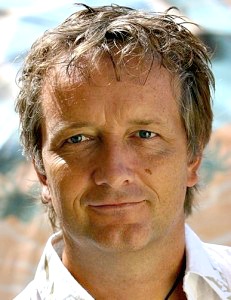
In search of Spanish paradise, Joe Cawley finds his salsa in the writing life

Hands up, anyone who’s ever thought of jacking it all in — running away to a paradise island, opening a bar and living the easy life?

I know I have. So many times! Thank God I didn’t, though, because Joe Cawley got there first and wrote a book about it — and in the process discovered that the easy life is not quite as idyllic as you’d imagine. In fact, it was terrifying!

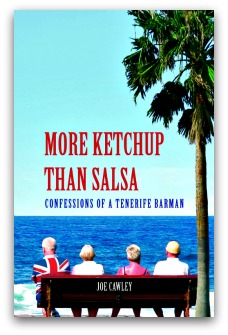
Joe’s book, More Ketchup Than Salsa: Confessions of a Tenerife Barman, is a hilarious account of his decision to trade in working in a cold fish market in Bolton, Lancashire, England, for running a bar in the sunshine of Tenerife, the largest and most populous of Spain’s Canary Islands. Accompanied by his girlfriend, Joy, Joe anticipates a paradise of sea, sand and siestas — but instead ends up with a life of chaos, full of crazy locals, irritating expats, gangsters, con men, and the endless nightmare of Spanish bureaucracy.

It’s a great book, and I loved it.

Today we’re lucky enough to feature an interview with Joe that was published the week before last on the excellent writing blog Woman On The Edge Of Reality. Linda Parkinson-Hardman is that edgy woman, and she has very graciously allowed me to share this interview with you — because Joe Cawley is a hero of mine! By the end of this, I’m sure he’ll be one of yours, too!!

Here’s Linda:

In More Ketchup than Salsa, Joe had me laughing so hard that I spilled a cup of tea all over the bed. His tale of travelling from Bolton Fish Market to Tenerife, Costa del Bognor, opens up the can of worms that most of us never even consider when we are sitting sipping coffee on a terrace and dreaming. His daily battles with cockroaches, the local mafia, animals and the never-ending variety of people that stepped through his door, was the wake-up call I needed to think again about what it was I might just do if I ever decided to take the plunge and live abroad. This is the perfect book to take on holiday with you especially if you are already planning to make that move.

Hello, Joe, and welcome to the hot seat. As you know, I start every interview off with the same question: “What is one thing that no one would usually know about you?”
That I was once appeared as an alien in a US TV commercial for Chevrolet. Not the proudest moment of my life, or the most comfortable. I had to stand outside in 100 degree heat painted from head to toe in silver and wearing a silicone head extension. I’ve looked better.

What did the best review you ever had say about you and your work?
That More Ketchup than Salsa was: “Fantastic, hilarious, painful. Completely un-put-downable. Probably the best book I have read this millennium!” And no, it wasn’t written by me. Or my mother. (Linda’s Aside: I have to agree, it was brilliant and I’m looking forward to a sequel.)

How did you choose a title for your book?
I was at the Carnival in Tenerife watching lithe Latinos strutting their stuff to the salsa beats. A pocket of Brits were trying to copy, but their movements were all over the place and sloppy. I thought it looked more like ketchup than salsa.

Have you ever wished that you could be or do anything else instead of writing, and if so what?
Absolutely not. I love it…best job in the world. Although if pushed, I’d say drummer in a rock band. I nearly got there with that one but was foiled by a bowl of sugar, a broken tooth and an over-zealous immigration official.

Have you ever written naked?
Hell yeah! I often wake up in the middle of the night with some inspired idea for a chapter. And not being one for pyjamas, I’ll sit butt naked at my desk and write for hours while my dog gives me quizzical looks. I try to finish up before the postman arrives though.

Do you have any hints or tips for aspiring writers?
Write. The difference between “aspiring writers” and “writers” is that the latter have finished something.

What has been the best experience you have ever had in your life?
Apart from having two gorgeous kids, I’d have to say sleeping in an open-sided hut in the Peruvian Amazon while a tropical lightning storm exploded all around me.

Are you jealous of other writers?
Not jealous, but definitely inspired. D. H. Lawrence was my first inspiration. I just love the way he paints with words. Bill Bryson was my second. In fact I’m inspired by any author who has great success. It makes me think there’s no reason why I can’t do it.

What was the most important thing you learned at school?
Kissing girls who wear braces can be painful. (Linda’s Aside: Oh dear, I was one of those girls!)

What is the book that you wished you had written?
The Bible. Though I’d have included full-page photos. It would make it seem all that more believable.

Tea, coffee, water, juice, wine or beer: which do you prefer when writing?
Water while writing during the day, wine for creative stints in the evening. And maybe the odd Jack Daniels and Coke or single malt if I’m feeling very pleased with myself.

* * *

So, readers, any further questions for Joe — especially from an expat or travel perspective?

You can meet Joe online on his author site; you can also read his work in The Sunday Times, Telegraph, Independent, Express, New York Post, and Taipei Times; and/or you can join him on Twitter: @theWorldofJoe

You can also download the book onto your Kindle from More Ketchup than Salsa from Amazon UK or Amazon US.

What are you waiting for? You’ve still got two weeks of summer left! And thanks again to Linda for letting us share this awesome interview.

STAY TUNED for a guest post tomorrow from long-time friend of the Displaced Nation, cultural writer/producer Anastasia Ashman.

If you enjoyed this post, we invite you to register for The Displaced Dispatch, a round up of weekly posts from The Displaced Nation, with seasonal recipes, book giveaways and other extras. Register for The Displaced Dispatch by clicking here!

Related posts:

Displace Yourself…to Tuscany

Welcome back to another in our occasional series, “Displace Yourself,” where we look at books by expats and travelers focusing on particular countries or regions, in hopes of displacing ourselves through their experiences. (One lifetime isn’t long enough to sample it all!)

This month, a place that’s on many of our wish lists: Tuscany, Italy.

Tuscany: Facts and figures

Capital: Florence
Area: 8,878 square miles
Population: 3,750,000
Language: Standard Italian/Tuscan Dialect
Demographic: 93% Italian; immigrants from Britain, America, and China.

*  *  *

To Tuscany from England:

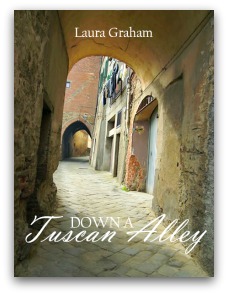
Down A Tuscan Alley (Fiction/memoir)
by Laura Graham
 Published June 2011

The Displaced Nation first met Laura Graham in May this year. Click here to read our interview with her.

About the author:
After the breakdown of a longterm relationship, Laura left England in search for a new life in Italy. With a distinguished acting career behind her, she now runs her own holiday property agency in Sinalunga, where the Tuscan tranquility inspires her writing.

Cyber coordinates:
Website: www.lauragraham.co.uk
Twitter: @LauraGraham7

Overview of book:
A long relationship ends. At 48, house taken by the bank, Lorri has little money. What can she do? And where can she go? Gathering her meager savings and her two beloved cats, she escapes England for a new life in a remote Italian village, never imagining the intrigue, passion and adventure she will find.

One reader’s review:
“The author’s use of dialogue enables the reader to form their own images of the characters to whom we are introduced. The reader is invited to share with [protagonist] Lorri as she develops her confidence, her new language, a knowledge of a different culture and her love for Ronaldo. The juxtaposition of romance and intrigue helps the book to flow to its end, and keeps the reader’s interest. The author brings her story to its conclusion using one of her characters to inform both the reader, and the protagonist herself.” (Amazon.co.uk reviewer)

To Tuscany from New York:

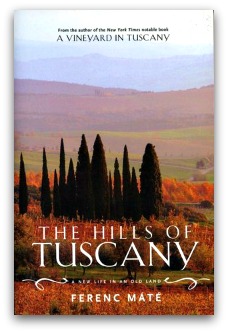
The Hills of Tuscany: A New Life in an Old Land (Autobiography)
by Ferenc Máté
Published November 1998

About the author:
Ferenc Máté  escaped Hungary after the 1956 revolution, and went with his mother to Vancouver, British Columbia. He now lives on a wine estate in Tuscany with his wife (painter and winemaker Candace Máté) and their son, Peter.

Cyber coordinates:
Website: www.ferencmate.com

Overview of book:
This hilarious, international bestseller is a true-life adventure of a New York City couple moving to Tuscany.  Ferenc Máté’s enthusiastic prose is infectious. He brings to life the real Tuscany: the contadini neighbors, country life—the harvest, grape, and olive picking, wine making, mushroom hunting, woodcutting—the holidays, and of course the never-ending, mouthwatering meals. (Amazon.com book description)

One reader’s review:
“As a second-generation Italian-American, I’m getting tired of the subtle patronizing attitudes that some prosperous expatriates to Italy emit via their memoirs. Reading this book, I felt that Ferenc Mate truly felt a genuine empathy with Italians. His ability to laugh at himself, and with his Italian neighbors — not at them — was a superb aspect of this work. He seemed to understand that being at home in Italy requires more than merely hobnobbing with other expatriates, and absorbing their prejudices.” (Amazon.com reviewer)

To Tuscany from California:

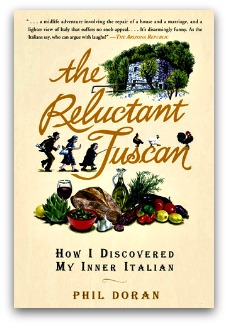
The Reluctant Tuscan: How I Discovered My Inner Italian (Humor/Autobiography)
by Phil Doran
Published March 2006

About the author:
Phil Doran worked in TV production for 25 years, as writer-producer for TV shows such as Sanford and Son, as a writer for The Wonder Years, and writing episodes of The Bob Newhart Show. He divides his time between California and Tuscany.

Cyber coordinates:
Website: www.reluctanttuscan.com

Overview of book:
After twenty-five years of losing her husband to Hollywood, Doran’s wife decided it was finally time for a change—so on one of her many solo trips to Italy she surprised her husband by purchasing a broken-down 300-year-old farmhouse for them to restore. The Reluctant Tuscan is about the author’s transition from being a successful but overworked writer-producer in Hollywood to rediscovering himself and his wife while in Italy, and finding happiness in the last place he expected. (Amazon.com book description)

Readers reviews:
Note: “The Reluctant Tuscan” appears to provoke a “Marmite” response from readers — they either love the book or hate it (or at least, are marginally lukewarm about it.) Here are two fairly typical reviews from both sides of the spectrum, from Amazon.com reviewers.

Love it:
“This is such a fresh, enjoyable book. Phil Doran is so honest & matter of fact about himself & his wife. I picked this book up to glance through & found I could not nor did I want to put it down. So I sat & read it non-stop, from cover to cover….My sides hurt from so much laughing. This is a must read book for anyone & any age….Enjoy!!!”

Lukewarm:
“The book recounts the period of time when the writer moved to a rural town in Tuscany and undertakes renovating a dilapidated farm house, mostly to appease his wife, who has bought the property without consulting him…There were some amusing bits but none that made me laugh out loud. Stereotypes and caricatures of Italians abound and there are multiple references to the Germans and WWII. Maybe it’s a generational thing, but I found these annoying.”

To Tuscany from Jerusalem:

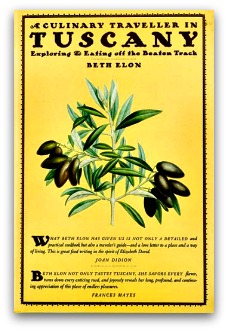
A Culinary Traveller in Tuscany: Exploring and Eating Off  the Beaten Track  (Travel guide/cookbook)
by Beth Elon
Published March 2009

About the author:
Former literary agent and her journalist husband Amos bought a neglected manor house in Tuscany in the late 1970s, long before the region became a desirable destination. Every summer, they would travel with their young family from their home in Jerusalem to spend two months in their Tuscan home, gradually renovating it as they were able. Eventually, the couple made Tuscany their permanent residence.

Overview of book:
“One might think that everything that can be written about Tuscany has been written. But here is a gem of a book in the tradition of M.F.K. Fisher that takes readers down Italian back roads and into private kitchens. There are 10 chapters that represent 10 itineraries into 10 different Tuscan regions. Included are more than 100 recipes and contact information and descriptions from private kitchens and restaurants, trattorias, gourmet shops, bakeries, wineries, and olive oil producers. Also included are days and dates when food festivals are held that celebrate chocolate, truffles, chestnuts and mushrooms. Warning: this book may contribute to an expanding waistline.” (Book Passage Bookstore review)

One reader’s review:
Beth Elton’s title isn’t just a cookbook – it takes a culinary tour of Tuscany into regions largely uncovered in other titles – and surveys the special kitchens and products of over fifty restaurants whose cooks produce original recipes revealed just for this title. All dishes have been adapted for home cooks but retain the authenticity of generations of development, so cooks seeking a blend of travelogue and new dishes to try will find delightful the blend of travel insights and easy dishes.” (Amazon.com reviewer)
.

STAY TUNED for Monday’s travel yarn from our very first Random Nomad, Anita McKay.

If you enjoyed this post, we invite you to subscribe for email delivery of The Displaced Dispatch, a round up of the week’s posts from The Displaced Nation. Sign up for The Displaced Dispatch by clicking here!

Related posts:

Image: MorgueFile

BOOK REVIEW: “Expat Life Slice By Slice” by Apple Gidley

TITLE: Expat Life Slice by Slice
AUTHOR: Apple Gidley
AUTHOR’S CYBER COORDINATES:
Website: www.expatapple.com
Blog: my.telegraph.co.uk/applegidley
Twitter: @ExpatApple
PUBLICATION DATE: March 2012 (Summertime Publishers)
FORMAT: Ebook (Kindle) and Paperback, available from Amazon
GENRE: Memoir
SOURCE: Review copy from author

Author Bio:

Apple Gidley became an expat at the tender age of one month old, in Kano, Nigeria. Since her early initiation into global wandering, she has relocated 26 times through 12 countries, acquiring a husband and two children en route.

Apple is known to thousands as ExpatApple, through her popular blog at the Daily Telegraph.

Summary:

“From marauding monkeys to strange men in her bedroom, from Africa to Australasia to America, with stops in Melanesia, the Caribbean and Europe along the way, Apple Gidley vividly sketches her itinerant global life. The challenges of expatriation, whether finding a home, a job, or a school are faced mostly with equanimity. Touched with humour and pathos, places come alive with stories of people met and cultures learned, with a few foreign faux pas added to the mix.”

(Source: Amazon.com book description)

Review:

If anyone is qualified to issue advice on expat life, Apple Gidley is that person. Born to an English father and Australian mother, she takes the label “Serial Expat” to new heights.  She was a TCK before the term was invented (instead classed unflatteringly as an “expat brat”) and continued the global wandering throughout her adult life, with 26 relocations through 12 countries to date.

Her memoir provides fascinating reading, about places and lifestyles that most of us will never experience, and at times is almost anachronistic:  reading her reminiscences about servants, voluntary work, and charity committees, there’s a time warp sensation of stepping into a Somerset Maugham short story.

Although the book is a record of Apple’s patchwork life, most expats will relate to the emotional experiences she describes, no matter where in the world they are or  how many countries they’ve lived in. For example, we worry that leaving our family and friends behind will increase the emotional distance as well as the physical. After a while, we realise that this is mostly not the case, and that those who allow physical distance to become an obstacle weren’t so emotionally close in the first place. In Chapter 8, “Eighth Slice: Staying Connected”, she says:

As we age we draw closer still. We believe in family but do not see each other for years at a time, and yet we are all aware of where each of us is in the world, still scattered and testaments to a global upbringing.

In “Ninth Slice: Death at a Distance”, Apple deals with the elephant-in-the-room topic: the illness or death of a family member while we are thousands of miles away. During such times, it’s easy to beat ourselves up for choosing a nomadic lifestyle;  if our associated guilt trips were eligible for air miles, we could afford to fly back and forth to be with our loved ones as often as we wanted. In describing her own experiences of bereavement, Apple’s practical, matter-of-fact approach, plus her insights gleaned from other cultures’ attitudes to old age and death, reminds us that the old cliché of “life goes on” holds true, even after “death at a distance”.

Whether you’re a veteran expat, a re-pat, or are just about to embark upon your first move to another country, “Expat Life Slice By Slice” should be on your reading list.

Words of wisdom:

On TCKs:

For those children brought up as TCKs…a nonjudgmental and accepting attitude to different customs, colours and cultures is the norm. As this demographic grows, let’s hope for an even greater understanding of cultural differences for all our children.

On voluntary work:

Volunteering is work, sometimes harder than a paid position because it is the cause keeping you there and not the salary.

On making new connections:

Picking up people around the world to share your life with is one of the greatest pleasures in life, and sometimes you know straight away they will continue to stay in it.

On “Home”

Home is with me wherever I go…It is not a single building or a single country, but many of them.

.

STAY TUNED for Wednesday’s post.

Image:  Book cover – “Expat Life Slice By Slice”

If you enjoyed this post, we invite you to register for The Displaced Dispatch, a round up of weekly posts from The Displaced Nation, with seasonal recipes, book giveaways and other extras. Register for The Displaced Dispatch by clicking here!

Related posts:


RANDOM NOMAD: Brian MacDuckston, American Expat in Tokyo & Expert Ramen Slurper

Place of birth: San Francisco, California USA
Passport: USA
Overseas history: Japan (Saitama, Hiroshima, Tokyo): 2006 – present.
Occupation: Food consultant and freelance English teacher (available for high school classes, after-school programs, private lessons, children’s events…)
Cyberspace coordinates: Ramen Adventures (blog); @macduckston (Twitter handle); and Ramen Adventures (Facebook).

What made you leave your homeland in the first place?
Around 2004 I took a colloquial Mandarin Chinese class, hoping to learn a bit to help with the massive amounts of Kung Fu movies I was into at the time — I soon learned that Cantonese, not Mandarin, is used in these flicks. One of my classmates was going to China for a year to teach English. I did some Internet searching and decided I really wanted to check this out. I was stressed with my computer job, and a year abroad seemed like a good idea. Opportunities abound in China, Korea, and Japan. Japan just seemed like a good choice to me.

You’ve now lived in Japan for more than five years. Tell me about the moment when you felt the most displaced.
My first day of work in Saitama, I somehow managed to get on an empty train that had reached its last stop. A minute later and I was in the depot storage yard with an attendant yelling at me in a language I didn’t understand. I was late to my very first English lesson. I wanted to quit right away. Things got better, obviously.

Is there any particular moment or moments that stand out as your least displaced?
Whenever I’m on the road here in Japan. I ride a motorcycle — very few foreigners do that. Something about being able to navigate across mountain ranges on poorly marked roads fills me with a great sense of accomplishment.

Hmmm…are you sure it’s safe? And now you may bring one curiosity you’ve collected from your adopted country into The Displaced Nation. What’s in your suitcase?
A curiosity? I am actually quite a minimalist, collecting only photos. My Nikon camera is technically a Japanese thing. I guess I would choose that. Or perhaps I should consider bringing a few of my Japanese cooking knives. Beautifully crafted and razor sharp, they are amazing things.

Ah, cooking! I’m glad you mentioned that. You are invited to prepare one meal based on your travels for other members of The Displaced Nation. What’s on your menu?

Ramen of course! Let’s go ahead and serve it after the drinks. After many drinks. Ramen is one of the best hangover prevention foods. All that fat and all those carbs do wonders for the next morning.

And now you may add a word or expression from the country you live in to The Displaced Nation argot. What will you loan us?
Umai is a great food word in Japanese. Most people first learn oishii to mean delicious, but umai is a bit stronger, a bit more cool. It’s mostly a guy word, though. I hope that’s okay with the female occupants of the Displaced Nation?

Perfectly okay! This summer, thanks to the London Olympics, all of us Displaced Nation residents, whether male or female, have become obsessed with displays of machismo and strength. In fact, this may be a good time to bring up your hobby of eating ramen in as many Tokyo venues as possible. How did you get launched in such a curious culinary sport — and become so accomplished that you and your blog were featured in the Travel section of the New York Times?
After living in Hiroshima for a bit, I knew that I needed to live in the big city.  So I finished my contract, signed up for unemployment insurance, and moved to Tokyo. Suddenly I found myself with a massive amount of time on my hands — and not a lot of money in my pockets. I decided to wait in the ridiculously long ramen shop line that I had seen many times across the street from a massive bookstore in Ikebukuro, one of Tokyo’s multiple city centers.

I was shocked how good it was. Completely worth the hour wait outside in the cold. A bit of research later, and I had a list of the 30 best shops in Tokyo…a nice place to start.

Thirty shops sounds rather daunting, particularly if each one involves standing in line for hours! What keeps you going, and do you still like ramen after the upteempth bowl of it?
What keeps me going? A job that doesn’t pay much! In fact, it’s the kind of random fun that comes with this obsession that keeps me going. When I can somehow influence someone to have the best bowl of ramen they have ever had, I feel like it is worth it.

Would you say that you’ve now graduated from amateur to pro?
Becoming a pro in such a niche corner of the food world is tough, but I suppose the few guidebook articles or magazine pieces I have worked on would put me up there.

Readers — yay or nay for letting Brian MacDuckston into The Displaced Nation once he’s finished slurping up his latest bowl of noodles? Tell us your reasons. (Note: It’s fine to vote “nay” as long as you couch your reasoning in terms we all — including Brian — find amusing!)

STAY TUNED for tomorrow’s Displaced Q, about nationalism and the Olympics.

If you enjoyed this post, we invite you to register for The Displaced Dispatch, a round up of weekly posts from The Displaced Nation, with seasonal recipes, book giveaways and other extras. Register for The Displaced Dispatch by clicking here!

Related posts:

img: Brian at a ramen-ya in Tokyo, pursuing his favorite “sport.”

The opening ceremony of the London Olympics — from an expat who witnessed Beijing’s spectacle firsthand

As regular readers will know, The Displaced Nation has some special connections to Britain. We therefore held our collective breath when the Olympic ceremony opened on Friday evening in London. How would the Brits measure up to the Chinese extravaganza of four years ago? Britain is after all a declining power — which is not exactly true of China! Today we turn to guest poster Shannon Young, an expat in Hong Kong who has written a book about her firsthand experience of attending the Beijing Games, for a verdict.

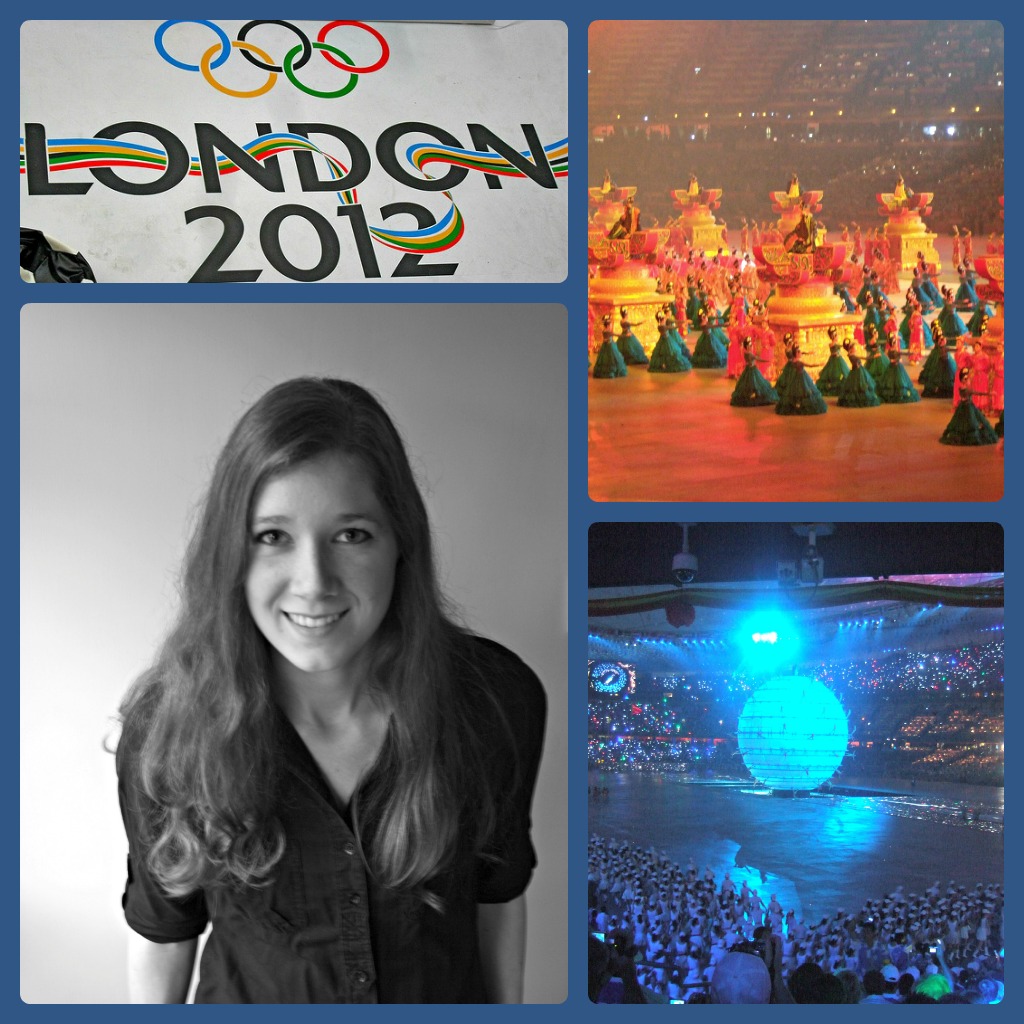
Four years ago, 2,008 drummers opened the Summer Olympics in Beijing with a thunderous rhythm heard ’round the world. Spectacular feats of coordination, drama and energy followed, wowing the world with the precision and ambition of the production.

Heralded as the greatest live performance in history, Beijing’s opening ceremony was a tough act to follow.

It was a tough act for me to follow as well. I’d been in the stands as the rumble of the drums swelled through Beijing’s Bird’s Nest stadium. But as the opening ceremony of the London Games was about to begin, I found myself at the kitchen table of my grandparents’ home in Oregon (I am back in the United States for a visit) watching a live stream on my computer.

Oh we can be heroes…just for one day

A landscape that looked rather like a shire appeared, complete with sheep and idyllically dressed country folk. The agrarian scene was quickly replaced with the frenetic energy of the Industrial Revolution, but the contrast was obvious: London was not trying to “beat” China.

Quirky, funny and nuanced. Those three words characterize the July 27th, 2012, ceremony. It displayed the heart and humor for which the British are famous — especially in the form of Rowan Atkinson (Mr. Bean), whose rendition of “Chariots of Fire” completely stole the show.

London brought the opening ceremony of the Summer Olympics back down to a human level. It was no Beijing, but it was the kind of show that speaks to people.

Famous for such films as Trainspotting and Slumdog Millionaire, director Danny Boyle infused the London ceremony with a cinematic flare.

Like many other spectators around the world, I loved the short film in which James Bond picked up Queen Elizabeth in a helicopter, which they (or their stunt doubles) proceeded to jump out of, for their “entrance” into the stadium.

There were other nods to cinematography throughout the production, including to Boyle’s own films, mixing the mediums of live performance and cinema. The costumes were intricate when viewed through a zoomed-in camera, but I had to wonder how much of this was for the camera and not the live audience. The spectators in the stands may not have been able to enjoy the details.

Only rock ‘n roll (but I like it)

There was a rock-and-roll feeling to the show. The dance numbers were more like big parties than expertly timed performances. They were full of mini-storylines and surprises.

The segment that began with a nightmare of the villains of children’s literature ended with the raucous defeat of a gigantic Lord Voldemort by none other than Mary Poppins.

The soundtrack was fun and familiar, liberally paying homage to Britain’s many contributions to culture.

A high-octane production like the Olympics opening ceremony needs to have quiet moments, too.

In Beijing there were eerie performances, such as a single dancer gliding across a glowing scroll.

In London, the quiet moments were solemn. There was a moving dance performance dedicated to the victims of the July 7th bombings on London transport, and a moment of silence for those who fell in the two world wars.

New takes on old classics

The Parade of Nations was faster than usual, bringing 204 teams into the stadium in record time.

The production culminated in the lighting of the torch, which was done in a particularly elegant fashion. David Beckham delivered the torch to retired British rower Sir Stephen Redgrave in a neon speedboat on the Thames.

In a touching act, Britain’s venerated Olympian then delivered the torch to seven promising young athletes, who lit the torch together. The torch itself was composed of many copper petals which rose together on long stems to create the Olympic cauldron.

London’s opening ceremony drew many laughs and perhaps a few tears. There weren’t as many breathtaking moments as in Beijing, but the show was like the British: quirky, personable, and utterly self-assured.

Shannon Young is an American writer currently living in Hong Kong. She is the author of The Olympics Beat: A Spectator’s Memoir of Beijing. She writes a blog called A Kindle in Hong Kong and tweets @ShannonYoungHK.

EDITOR’S NOTE: We will be giving away several copies of Shannon Young’s mini travel memoir of the Beijing Olympics this month. The first will go to a commenter on this post — please share your favorite moment from London’s opening ceremony, or a memorable moment from a previous Olympics.

STAY TUNED for tomorrow’s Expat Moment with Anthony Windram!

If you enjoyed this post, we invite you to register for The Displaced Dispatch, a round up of weekly posts from The Displaced Nation, with seasonal recipes, book giveaways and other extras. Register for The Displaced Dispatch by clicking here!

Related posts:

Images: A London Olympics sign courtesy e-costa on Flickr; author Shannon Young and two of her photos from the opening ceremony of the 2008 Summer Olympics in Beijing.

Summer reading list: an Olympic selection of books

Welcome to our summer list of reading suggestions. With only four days to go until the first official day of the 2012 London Olympics, we offer no prizes for guessing the theme of this list! What we have tried to do, however, is find you some books that are a little outside the usual “History of the Olympics” mold.

2012 London Olympics: Some fun facts and figures

8,000 torchbearers
26 sports
8.8 million tickets
10,490 athletes
350 miles of cabling
5,000 anti-doping samples
10,000 temporary toilets
356 pairs of boxing gloves
4 skeletons removed from prehistoric settlement on site
(Source: http://www.london2012.com

A spectator’s eye view:

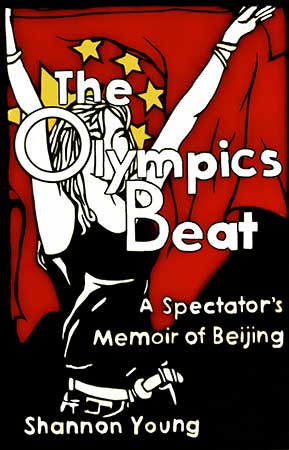
The Olympics Beat: A Spectator’s Memoir of Beijing
by Shannon Young

Published May 2012

About the author:
An American writer living in Hong Kong, Shannon Young writes a blog called A Kindle in Hong Kong, featuring her walking tours, book reviews, and bookspotting adventures.

Cyber coordinates:
Blog: A Kindle in Hong Kong
Twitter: @ShannonYoungHK
Facebook:  A Kindle in Hong Kong

Overview of book:
The drama, the variety, the spectacle – Shannon can’t get enough of it. She is an American student who has always been fascinated by the Olympic Games; her father has a lifelong love affair with China. They team up for the Beijing games and the adventure of a lifetime. Without the filter of a small screen, Shannon and her father are hypnotized by the passion of a great nation unveiling itself to the world. This mini travel memoir is a picture of a new China and the experiences that would change one American girl’s life forever.
(Amazon product description)

Displaced Nation review:
A search for “Olympics” on Amazon will bring up many hits: history of the Olympics, Olympics in ancient times, autobiographies of famous Olympic competitors, lots of picture books for children about the Olympics, and so on. Unique on this list, however, is Shannon Young’s autobiographical account of what it is like to be a spectator at the Games.

As a young university student, Shannon received a fellowship to go to the Beijing Olympics and study the effects the Games had on the city. The resultant academic paper, she felt, was dry and earnest and did nothing to capture the  excitement of the sights and atmosphere, so, three years later, she decided to write a memoir of her personal experience there. Although the book is mainly travelogue, there is also a touching glimpse into the relationship between Shannon and her father, with whom she traveled, and who wants to impart his love of China to his daughter.

At only 60 pages, this is a very short and easy read — quite manageable before the Games start in four days’ time. While Shannon traveled to Beijing for academic purposes, this memoir is not a commentary on the political situation in China in 2008. It is simply the honest observations of a twenty-year-old at the world’s most important sporting event, in a country that is trying to show its best, Botoxed, surgically enhanced face to the rest of that world. The final paragraph of the book sums this up so well:

We returned to the US TV coverage of the remaining events, and it focused on China’s problems: air quality, protesters confined to limited spaces, rumours of human rights violations and trouble. But that wasn’t the Olympics we witnessed. We saw a city full of people who were proud of their accomplishments… The athletes, volunteers, and spectators had poured their souls into welcoming people to their city, and they wanted the world to know how great China was. We knew it — because we were there.

A survivor’s eye view:

Running for My Life: One Lost Boy’s Journey from the Killing Fields of Sudan to the Olympic Games
by Lopez Lomong, Mark Tabb

Published July 2012

About the author:
Lopez Lomong was born in southern Sudan in 1985. After his village was attacked by rebel soldiers when he was 6 years old, he spent ten years in Kenyan refugee camp before moving to the United States, where he was fostered by a family in New York. He became a professional runner in 2007, and a US citizen in 2008, the year he also represented the US at the Beijing Olympics.

Cyber coordinates:
Website: lopezlomong.com
Twitter: @LopezLomong
Facebook: https://www.facebook.com/LopezLomong

Overview of book:
Lopez Lomong chronicles his inspiring ascent from a barefoot lost boy of the Sudanese Civil War to a Nike sponsored athlete on the US Olympic Team. Though most of us fall somewhere between the catastrophic lows and dizzying highs of Lomong’s incredible life, every reader will find in his story the human spark to pursue dreams that might seem unthinkable, even from circumstances that might appear hopeless. (Barnes and Noble product overview)

One reader’s review:
“Lopez Lomong’s story is certainly one of pain, suffering and hardship but all that is overshadowed by his tremendous drive, hope and selfless endeavors for the people of South Sudan.” (Review at “Reflecting from here”)


A stranger-than-fiction eye view:

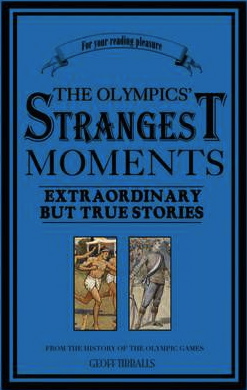
The Olympics’ Strangest Moments: Extraordinary but True Stories from the History of the Olympic Games
by Geoff Tibballs

Published July 2008

About the author:
Geoff Tibballs is a former sports journalist who has written nearly 100 books. He is “an accomplished armchair sportsman, [who] believes his life-long devotion to Millwall Football Club has enabled him to appreciate the ridiculous.” (Random House author bio)

Cyber coordinates:
Author’s page on publisher’s website: Random House/ Geoff Tibballs

Overview of book:
The Olympics’ Strangest Moments recounts the bizarre, controversial, inept, heroic and plain unlucky from the first modern games in 1896 to the return of the games to their birthplace in Athens in 2004 and up to the Beijing 2008 games. (Amazon book description)

One reader’s review:
“The early episodes offer a glimpse into a very different world than the one we know today… The 1900 Paris Olympics featured a cricket competition with only two teams entered…The swimming events were staged in the River Seine…This book is sometimes funny, occasionally tragic, but always entertaining. You don’t have to be fanatical about the Olympics to enjoy this book.” (Amazon.com review)

An insider’s eye view:

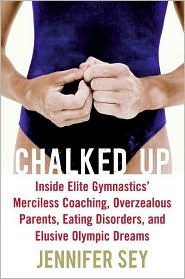
Chalked Up: Inside Elite Gymnastics’ Merciless Coaching, Overzealous Parents, Eating Disorders, and Elusive Olympic Dreams
by Jennifer Sey

Published October 2009

About the author:
Jennifer Sey is an American writer, producer and former gymnast. She began competing in the sport of gymnastics at the age of six and went on to become 1986 National Gymnastics Champion and seven-time national team member.  She lives with her husband and two sons in San Francisco. (Amazon/Wikipedia bio)

Cyber coordinates:
Author’s page on publisher’s website: Harper Collins/Jennifer Sey

Overview of book:
“Chalked Up” presents the story of the 1986 US National Gymnastics champion whose life long dream was to compete in the 1988 Olympics – until anorexia, injuries, coaching abuses, and parental hopes and neglect nearly destroyed her. (Amazon.com book description)

One reader’s review:
“Jennifer Sey is telling her story. She is not preaching nor is she telling you to remove your child from the sport of gymnastics. Although a painful side of gymnastics, which so many of us are scared to acknowledge, it is a reality in the elite world of gymnastics. Twenty two years after winning the national title, a crown that all elite gymnasts dream of, Sey still struggles with a love/hate gymnastics relationship.” (Amazon.com review)

.

Img: Olympic Torch with laurel wreath by nirots/freedigitalphotos.net

STAY TUNED for another Displaced Q!

If you enjoyed this post, we invite you to subscribe for email delivery of The Displaced Dispatch, a round up of the week’s posts from The Displaced Nation. Sign up for The Displaced Dispatch by clicking here!

Related posts:

Expat book review: “The Chalk Circle” by Tara L. Masih

Expat book reivew: “Chique Secrets of Dolce Amore” by Barbara Conelli

Expat book review: “Picky, Sticky or Just Plain Icky?” by Valerie Hamer

Expat book review: “A Tight Wide-open Space,” by Matt Krause

EXPAT MOMENTS: Unravelling the enigma of American fireworks booths

Another post in our series focusing on little moments or images of expat experience.

Like a fungal spore, they appeared unannounced one morning about four weeks ago. Every parking lot in town had one — a single compact wooden booth covered in brightly colored posters.

Inside each of these booth, sweating in the summer heat, sat a vendor surrounded by merchandise – box upon box of fireworks. The vendor lists off the inventory, the names sounding more like dive-bar cocktails than pyrotechnics: Shagadellic Mojos; Fiery Frogs; Round Red Dahlias; Falcons Rising; Dragons’s Tears.

Over the next few weeks, I learn two things about these booths. First, that each booth has been set up by local group, that depending which booth you choose you are, in fact, deciding which school or church or local charity you want to help raise funds for. I calculate that there must be around 200 of these booths around town. That is a lot of local groups and non-profits and yet my response is an apathetic one, the response of a man who feels untethered to this community, who has no cause here he wants to endorse and support. The second thing I learn, from those who cast me a conspiratorial glance, is that I don’t want to waste my time with these booths. They know a man. He has “stuff” from Mexico. It’ll blow your mind, and possibly your arm — Shagadellic Mojos these ain’t.

And then, a week or so after July 4th and just as quickly as they appeared, one morning you wake and the booths have gone. 

STAY TUNED for next Monday’s post – a round up of Olympics books.

If you enjoyed this post, we invite you to register for The Displaced Dispatch, a round up of weekly posts from The Displaced Nation, with seasonal recipes, book giveaways and other extras. Register for The Displaced Dispatch by clicking here!

Related posts: