The Displaced Nation

A home for international creatives

Tag Archives: Japan

Catching up with this year’s Random Nomads over the holidays (2/3)

RandomNomadXmasPassportWelcome back to the holiday party we are throwing for the expats and other global voyagers who washed up on our shores in 2012. Remember all those Random Nomads who proposed to make us exotic meals based on their far-ranging meanderings? Not to mention their suitcases full of treasures they’d collected and their vocabularies full of strange words… How are they doing these days, and do they have any exciting plans for the holidays? Second in a three-part series (Part One here).

The second third of 2012 brought quite an intriguing (albeit as random as ever) bunch of nomads our way — intriguing because most of them have had experience with spouses from other cultures, suggesting that the point made by one of their number, Wendy Williams, about the globalization of love has some validity. They are:

  • Wendy Williams, the Canadian who is as happy as Larry living with her Austrian husband and their daughter in Vienna.
  • Suzanne Kamata, an American writer who went to Japan on the JET program, married a Japanese man, and made her home on Shikoku Island.
  • Isabelle Bryer, a French artist who feels as though she’s on a permanent vacation because of landing in LA — she’s lived there for years with her American husband and family.
  • Jeff Jung, formerly of corporate America but now an entrepreneur who promotes career breaks from his new base in Bogotá, Colombia.
  • Lynne Murphy, the lovely lexicologist who landed in — I want to say “London” for the alliteration, but it’s Sussex, UK. And yes, despite not being the marrying type, she now treasures her wedding ring of Welsh gold!
  • Melissa Stoey, the former expat in Britain who, despite no longer living in the UK, has a half-British son and remains passionate about all things British.
  • Antrese Wood, the American artist who is busy painting her way around Argentina, having married into the culture.

I’m happy to say that three of this esteemed group are with us today. What have they been up to since nearly a year ago, and are they cooking up anything special for the holidays?

Wendy_Williams1) WENDY WILLIAMS

Have there been any big changes in your life since we last spoke?
Yes, I’ve spent less time at my desk and more time travelling since the publication of my book, The Globalisation of Love. Given the title, I guess I should have expected it.

Where will you be spending the holidays this year?
Since I have “gone native” in Austria, I will be skiing during the holidays. Yipppeeee!

What do you most look forward to eating?
I most look forward to eating a Germknödel, which is a big ball of dough filled with plum sauce and covered in melted butter. Apparently, it has 1,000 calories and I savour every last one. If no one is looking, I lick the plate.

Can you recommend any books you came across in 2012 that speak to the displaced life?

  1. A Nile Adventure — cruising and other stories, by Kim Molyneaux — a light-hearted story of one family’s journey to and adventures in Egypt, both ancient and modern.
  2. Mint Tea to Maori Tattoo!, by Carolina Veranen-Phillips, an account from a fearless female backpacker — is there anywhere she hasn’t been?!
  3. Secrets of a Summer Village, by Saskia Akyil: an intercultural coming-of-age novel for young adults, but a cute read for adults, too.

Have you made any New Year’s resolutions for 2013?
More time with friends & family and more writing, the two of which are completely counter-productive in my case.

Any upcoming travel plans?
I am only happy when I have a plane ticket in my pocket so there are always trips planned. Didn’t René Descartes write, “I travel, therefore I am” — or something like that? The year will start with Germany, Ukraine, Spain and Canada.

SuzanneKamata_festive2) SUZANNE KAMATA

Have there been any big changes in your life since we last spoke?
I sold my debut YA novel, Gadget Girl: The Art of Being Invisible, about a biracial (Japanese/American) girl who travels to Paris with her sculptor Mom, to GemmaMedia. It will be published in May 2013. I was also honored to receive a grant for my work-in-progress, a mother/daughter travel memoir, from the Sustainable Arts Foundation.

How will you be spending the holidays?
We are planning a little jaunt to Osaka between Christmas and New Year’s, but mostly, we’ll be staying at home.

What’s the thing you most look forward to eating?
I’m looking forward to eating fried chicken and Christmas cake, which is what we traditionally have here in Japan on Christmas Eve. There are all kinds of Christmas cakes, but my family likes the kind made of ice cream.

Can you recommend any books you came across in 2012 that speak to the displaced life?

  1. The Girl with Borrowed Wings is a beautifully written contemporary paranormal novel featuring a biracial Third Culture Kid. The author herself, Rinsai Rossetti, is a TCK. She wrote this book when she was a student at Dartmouth. It’s unique and lovely and captures that in-between feeling of those who live in lots of different countries.
  2. I also enjoyed I Taste Fire, Earth, Rain: Elements of a Life with a Sherpa, by Caryl Sherpa, an American woman who went on a round-the-world trip and fell in love with a Sherpa while trekking in Nepal.
  3. Oh, and Harlot’s Sauce: A Memoir of Food, Family, Love, Loss, and Greece, by Patricia Volonakis Davis.

Do you have any New Year’s resolutions for 2013?
Hmmm. Exercise more (same as last year). Also, I resolve to finish a draft of my next novel.

Last but not least, any upcoming travel plans?
Yes! I’m planning on taking my daughter to Paris.

Jeff at Turkish Embassy3) JEFF JUNG

Have there been any big changes in your life since we last spoke?
Since the interview, I launched my first book, The Career Break Traveler’s Handbook. It’s available online at most major book stores in both print and e-versions. And, we’re on the verge of launching Season 1 of our TV show, The Career Break Travel Show, internationally. It includes adventures in South Africa, Spain, New Zealand and Patagonia. We’re just waiting for the new channel to launch.

How will you be spending the holidays this year?
After spending a quiet Christmas in Bogotá, I’ll head off to Washington, DC for my best friend’s wedding on New Year’s Eve. Then I’m off to Texas to see my parents for about ten days.

What’s the thing you most look forward to eating?
As far as food goes, I’m most looking forward to turkey and my dad’s award-winning BBQ.

Can you recommend any books you came across in 2012 that speak to the displaced life?
This year I read Dream. Save. Do., by Betsy and Warren Talbot. It’s a great book to help people achieve whatever goal they have.

Speaking of goals, any New Year’s resolutions for 2013?
Personally, I need to drop a bit of weight. I spent too much time writing and editing in 2012! Professionally, I want to see The Career Break Travel Show find its audience so we can head out to film Season 2!

Last but not least, any exciting travel plans?
I plan to travel for the filming of our second season (countries still to be determined). I also have the chance to go to Romania to volunteer at a bear rescue with Oyster Worldwide. It’ll be a mini-career break for me. I can’t wait.

* * *

Readers, this lot seems just as productive, if not more so, than the last one! Any questions for them — don’t you want to know their secret?

STAY TUNED for tomorrow’s post by the Displaced Nation’s agony aunt, Mary-Sue — she wraps up 2012 by paying a visit to several of this year’s questioners: did they take her advice?!

If you enjoyed this post, we invite you to register for The Displaced Dispatch, a round up of weekly posts from The Displaced Nation, with seasonal recipes, book giveaways and other extras. Register for The Displaced Dispatch by clicking here!

Related posts:

Images: Passport photo from Morguefiles; portrait photos are from the nomads.

LESSONS FROM TWO SMALL ISLANDS — 5) Keep calm and pour some tea

Teatime CollageDecember greetings, everyone! Can you see us twinkling? The Displaced Nation wants to be part of your Festival of Lights this December — a source of brightness and enLIGHTenment during the dark days of winter. (Unless, of course, you reside in the Southern Hemisphere, in which case, you should be helping all of us to feel brighter!)

But before we get to that — Kate Allison will be delivering some tips tomorrow on generating holiday cheer regardless of location — do you fancy what the Brits would call a cuppa?

If you said no, that you’d prefer coffee or cold beverage, I suspect you may be a compatriot of mine. Once upon a time, I was an American like you — I didn’t drink any caffeinated beverages apart from Diet Coke. But then I traveled to Europe and Asia, and now I can’t imagine a life without tea. As the Chinese lady who owns Ching Ching Cha, a traditional Chinese tea house in Georgetown, DC, once remarked to me, when I told her how much I’d grown to like tea from my travels: “For me, tea is a way of life.”

Those who already know what I’m talking about may read no further. But for the unconvinced, here are 10 lessons I learned while living in two major tea-drinking nations, Britain and Japan, for many years. (If you’re the bucket-list-keeping type, think of it is as 10 reasons to develop a tea-drinking habit before you die!)

1) Even if coffee is more your cup of tea, so to speak, give tea a chance.

Coffee is great for that jolt to the system. One of its most effective uses, apart from first thing in the morning when you’re going to work, is for the jet lag that occurs after a really long international flight — say between the United States and Japan. (Japanese, btw, love coffee as much as the English do — and perhaps thanks to German influence, can make an even better cup than anyone in the UK or the USA.) But unlike coffee, tea is what keeps you going day in day out, putting one foot in front of the other. It’s the sustenance beverage for the marathon known as life.

2) I mean tea, not tisanes.

I apologize to those expats who’ve spent their formative years in France. I have nothing against those herbal drinks with medicinal qualities. I just think it would be a shame to miss out on the kind of caffeine that tea has to offer — the kind that produces sustained mental alertness. Not to mention tea’s own medicinal qualities — all of those lovely antioxidants. Why do you think the Japanese live so long, with all their bad habits of smoking, drinking to excess and overwork? Likewise, the English writer, George Orwell, was able to sustain himself on cups of tea when living “down and out” in Paris and London.

3) Tea has a special role to play in the holiday season.

It’s the perfect libation to help you recover when your feet are aching after a full day of shopping and wrapping gifts (surely, the bane of any adult female’s existence this time of year!) or when you think your hand will drop off if you have to write one more Christmas card. It’s also the perfect drink to serve, because so convivial and relaxing, when meeting up with friends or family you haven’t seen in a long time.

4) Tea is a primary aid for developing a more stoical attitude towards life.

As explained in the very first post in this series, I found it a bit of a challenge to adapt to the brand of stoicism-cum-fatalism both of these small islands, England and Japan, have cultivated over the centuries. But the day I worked out the connection between tea-drinking and stoicism marked the beginning of the end of my struggle. If only I’d paid closer attention to Orwell, who said:

All true tea lovers not only like their tea strong, but like it a little stronger with each year that passes.

5) Tea may also be the key to a philosophical approach to life.

The process of drinking a cuppa slows you down for long enough to clear your head of pressing thoughts and work out what is important. Strangely, I found Brits to be almost as insistent on the importance of a regular tea-drinking habit as the Japanese — even though it’s the latter who are renowned for their Zen approach to tea. Take these words of Rudyard Kipling’s, for example:

We haven’t had any tea for a week…
The bottom is out of the Universe

It reads like a haiku, doesn’t it? Certainly, his sentiments are not far removed from the Japanese proverb:

If man has no tea in him, he is incapable of understanding truth and beauty.

6) The rituals are just as important as the tea itself.

After nearly a decade of living in Britain, I had it all down to a fine art: boiling water to serve tea, heating the pot, putting the milk in the cup first, and pouring the tea without spilling. To this day, I cannot imagine making a pot of tea without pouring hot water in it first to heat the pot. The water and the pot need to be at the right temperature to brew the tea properly. Imagine the affront I experienced upon returning to this country and being served a cup of either semi-warm water or boiling water with a Lipton’s tea bag on the side. And though I found some of the Japanese tea-drinking rituals a bit obscure, especially those related to the tea ceremony — twirl the cup around three times, really? — I still took delight in the spectacle.

7) Tea should be served with something sweet.

“Tea and biccies, anyone?” as they say in England — usually meaning the chocolate-coated digestive biscuits. And the perfect way to offset the super bitter green tea (macha) of the Japanese tea ceremony is with the almost sickeningly sweet kashi and wagashi — confections that are usually served beforehand. A tad of sugar helps this most medicinal of teas go down. Not only that but it’s a beautiful combination, as anyone who has sampled green tea ice cream, by now a classic flavor, will attest.

8) Tea should be served in an aesthetically pleasing cup — never paper or plastic!

Part of the pleasure of taking tea at Fortnum & Mason’s or the Ritz is the bone china it is served in. If the world had a treasure chest, surely it would contain a full set of Wedgwood or Royal Doulton? In Japan, by contrast, it is the roughness and imperfection of the tea cup that provides aesthetic pleasure, or, if you’re drinking Western tea (usually served with lemon, not milk), the sheen of a fine china tea cup — either English (Wedgwood Wild Strawberry is very popular there) or a Japanese version (eg, Noritake). Can’t be bothered with china? At the very least, make your tea in a proper mug.

9) Tea is the ultimate social drink.

Perhaps the British writer known as Saki (yes, he was born in the Far East) put it best when he wrote:

Find yourself a cup of tea; the teapot is behind you. Now tell me about hundreds of things.

Japanese may not be as fond of having a natter when they take tea; nevertheless, they see it as a custom that fosters social harmony.

10) No one should ever be too busy for a tea break.

My fellow Americans, are you still with me? This pointer is particularly for you — particularly those of you who are always crazy busy — although as Tim Kreider pointed out on the New York Times‘s Opinionator blog, it’s often not clear why what you’re doing is so important. Perhaps if you took time out for a regular tea break, you would slow down a bit — see 5) — and find an escape from your self-imposed “busy trap.”

****

And now I must leave you as the clock says ten to three — only, is there still honey for my tea?

Readers, do you agree that tea may be the answer? Or is this just another of my moonbat pronouncements that’s put you in need of a strong cup of Joe?!

STAY TUNED for tomorrow’s post from Kate Allison.

If you enjoyed this post, we invite you to register for The Displaced Dispatch, a round up of weekly posts from The Displaced Nation, with seasonal recipes, book giveaways and other extras. Register for The Displaced Dispatch by clicking here!

Related posts:

Img: Collage made of two photos available on Flickr via Creative Commons: (left) “High tea,” by John Heaven, and “Japanese tea ceremony,” by JoshBerglund19.

DEAR MARY-SUE: 6 jolly holiday tips for expats (& other global wanderers)

Image courtesy of bulldogza / FreeDigitalPhotos.net

Image courtesy of bulldogza / FreeDigitalPhotos.net

Mary-Sue Wallace, The Displaced Nation’s agony aunt, is back. Her thoughtful advice eases and soothes any cross-cultural quandary or travel-related confusion you may have. Submit your questions and comments here, or else by emailing her at thedisplacednation@gmail.com

Woo! That’s Thanksgiving over and I am still full to busting. Oh readers, your Mary-Sue has been one greedy piggy, she is one stuffed turkey — but it was all worth it as she had a lovely time with her family. Yes, she is one mucho happy Mary-Sue.

My oldest child and middle child were back home for the holidays and so I got to feed them and my three lovely grandkids — bliss. Even my youngest was able to extract himself from World of Warcraft and his basement room to join us for dinner.

We had a great time watching Macy’s Thanksgiving Parade on NBC. Other than the Kermit balloon, my favorite part was watching those delightful Kidz Bop Kids sing on a float. Don’t you just want to feed their adorable little faces full of cranberries and mashed potatoes? I do!

And then there’s Matt Lauer hosting the parade. Mmmmh, mmmmh. I know what I am giving thanks for this year. . . Matt’s dreamy eyes. After watching SkyFall this weekend, I think that when Daniel Craig hangs up his tux, Matt’s the guy to replace him. Not only has he got the looks, but you believe he can kill a man. . . with his bare arms!

Anyhoo, enough with my wild thoughts and on with all your problems!

Based on the thousands of similar questions I receive this time of year, this time I am doing something a little different, spicing things up, by issuing a list of six tips for any of you expats and others out there who find the holidays befuddling.

Here we go! Mary-Sue’s top 6 tips for having an amazing holiday!

1) FOOD — BE CREATIVE WITH YOUR LEFTOVERS

Dear Mary-Sue,

We are still trying to work out what to do with all this leftover turkey from our first American Thanksgiving. We’ve got turkey sandwiches coming out of our ears at this point. Can you think of anything more creative?

— A Swedish family in New England

Yes, nothing gets you out of the holiday spirit than eating dreary leftovers. Try and think outside the box. Why just have the leftovers for food? That’s the sort of dreary thinking of a Rachel Ray. Sandwiches, curry, it’s all boring. What you could do with your leftover turkey is use it to make an arts and craft project. It’s a great way of getting the kids or grandkids involved in the holidays, too. Think of the turkey carcass as your canvas and really go to town on it with some acrylic paint. Or why not take that turkey and make a seasonal ottoman with it — the perfect way to put your feet up while watching Hallmark Christmas movies!  

*****************************************************************

2) WEATHER — HOW TO GET THAT CHRISTMAS FEELING

Dear Mary-Sue,

I’m finally in the Northern hemisphere for Christmas, and it doesn’t feel much different than this time of year in Perth, where I come from in Australia. Temps have yet to get below freezing; and as I’m sure you know, we had a hurricane in late October.

Sigh! Will I ever be able to have a white Christmas?

– Aussie in Baltimore

Living in Oklahoma, I can relate to this. To really get that fun, cosy Christmas feeling when temps aren’t as low as you would like, do what I do: wear tops that expose your midriff. When you get a kidney chill, that’s when you know you’re doing things right.

****************************************************************************

3) ROMANCE — FOR A TRULY GREAT HOLIDAY, KEEP THINGS ROMANTIC

Dear Mary-Sue,

My Japanese girlfriend keeps hinting that I should give her a ring on Christmas Eve. By that I don’t mean a telephone call but a diamond. I told her I’m not Japanese (they have a thing about getting engaged at the end of the year), but she says Christmas engagements are also popular in the West.

Actually I always thought of her as my iki jibiki (walking dictionary — Japanese is an extremely difficult language), but if I do decide to get engaged, should I be using their cultural norms? What’s wrong with her learning ours?

Then again, there is the Cold Stone Christmas Cake I could get…

– American in Tokyo

Ah, nothing like getting pressurized into a proposal — that always works out for all involved. I like this Cold Stone Christmas cake idea, but I suggest you do an old-school version of it. I know that it is traditional in England to hide coins in the Christmas pudding and then a child eating the pudding either chokes to death, cuts open their mouth or ends up a penny richer. I suggest you do something like that and hide the ring deep into a seasonal, suet-y pudding. If she chokes, breaks any teeth or cuts her mouth, then you’ll know it wasn’t meant to be, and can renege on the proposal.

***************************************************************************

4) GIFTS — DON’T BE A SCROOGE McDUCK

Dear Mary-Sue,

I was looking forward to being in the US instead of the UK for Christmas as I thought it might mean buying fewer gifts for friends and relations, but now I learn that everyone expects a hand-out in New York City, from the doorman to the garage guy to the hairdresser. Who knew? And how much do I owe all these people I don’t know?

– Newbie British expat in New York

You can give them an actual gift instead of money. I find signed copies of my book (“Treat Every Day Like It Counts. . .because it does” by Mary-Sue Wallace, published by PublishAmerica) and a signed, framed photograph does the trick. Don’t have your own book published? That’s okay, you can just give them a copy of mine.  

********************************************************************************

5) TRAVEL — USE THE HOLIDAYS TO VISIT FAMILY

Dear Mary-Sue,

We are expats in Singapore, and my husband thinks we should use the week off between Christmas and New Year’s to travel within Southeast Asia, instead of going home to the United States to be with our families. But isn’t that what Christmas is about — family? And how can we possibly celebrate Christmas in a non-Christian country?

– The better half of an American exec in Singapore (we’re originally from Georgia)

Actually, it’s about baby Jesus, not your family in Georgia. However, I begrudgingly take your point that it’s nice to be with your family when thinking about baby J.C. You can travel to your family over the holidays, not away from them.  

**************************************************************************

6) HOLIDAY ENTERTAINMENT — WHEREVER YOU ARE IN THE WORLD, CONSULT YOUR LOCAL LISTINGS

Dear Mary-Sue,

I’m an American in the UK and would like to experience the best of Christmas/New Year’s traditions here. Besides Scrooge, what are they?

– Linda of London

I live in Tulsa, OK. Do they not have Time Out in London? They probably have some tradition with those Beefeaters at the Tower. Yeah, they eat beef at the Tower every Christmas Eve. It’s a very quaint ceremony — be sure to go to it — or, whatever.

* * *

That’s your dose of Mary-Sue for November. God bless y’all!

STAY TUNED for tomorrow’s Random Nomad, a chap who is ever-thankful for his expat lifestyle.

If you enjoyed this post, we invite you to register for The Displaced Dispatch, a round up of weekly posts from The Displaced Nation, with seasonal recipes, book giveaways and other extras. Register for The Displaced Dispatch by clicking here!

Related posts:

THE DISPLACED Q: Expats, repats, what’s the most outlandish tweak you’ve made to your Thanksgiving menu?

Since my repatriation to America, Thanksgiving has become my very favorite holiday here. This is partly because of a tweak that I make to the menu, but we’ll get to that later.

I wasn’t always so thankful for Thanksgiving. I only celebrated this American holiday twice while living abroad for many years, first in England and then in Japan — and to be honest, I didn’t really miss it.

Both celebrations took place when I was pursuing graduate studies at a British university.

The first time was for my very first Thanksgiving away from my family. I joined several other American grad students in preparing a traditional Thanksgiving dinner to serve in the dorm. Our guests were mostly other international students who were curious to experience an authentic version of this quintessentially American custom — as I recall, there were very few Brits.

At one point, a rather bitter argument erupted between Anna, a Harvard-educated woman who was pursuing a higher degree in feminist studies, and Andy, a Georgetown-educated man who was doing an M.A. in politics.

Andy didn’t like the fact that Anna was carving the turkey, proclaiming to the assembled guests:

It can’t be Thanksgiving if a WOMAN is carving the turkey.

I don’t really remember what happened after that — whether Andy insisted upon taking over, or Anna stormed out of the room. But it did cast a bit of a pall over the proceedings.

The food, though, was a close facsimile to the meals I’d enjoyed at home. And the arguing part? That was something I could relate to as well.

And there was snow, which we could see through the huge dorm windows, covering the panoramic Constable (literally) landscape below.

Thanksgiving-on-the-Hill

The only other time occurred a few years later, when an American friend came to live in North London on a teaching exchange with the Harrow School.

He, too, was spending his first Thanksgiving away from home, so decided to host a potluck Thanksgiving dinner in his living quarters.

Again, I think the food was good, but as I recall, the guests, most of whom were English, thought that potluck was a funny way to do a formal dinner. And the setting wasn’t exactly conducive to re-creating a New World feast. Walking from Harrow-on-the-Hill station, we passed by boys in the quaint Harrow uniform, including black ties (allegedly they are still in mourning for Queen Victoria!).

My Thankgiving-less years

After that rather harrowing (sorry, couldn’t resist) experience, I stopped doing Thanksgiving. I married a Brit and we invariably went to his family for Christmas dinner, which — probably not coincidentally — resembles the Thanksgiving meal enjoyed by the Pilgrims. Turkey is the most popular main, cranberry sauce and all. (No pumpkin pie, though!)

Even when we moved to Japan, where there were more Americans, I didn’t reinstate the custom. It seemed too much like hard work competing at the international grocery stores for vastly overpriced frozen turkeys (specially imported for the occasion) and cans of pumpkin.

What’s more — and I probably should have mentioned this earlier — I’ve never been especially keen on turkey. Once, when I was an early teen, I got food poisoning from an undercooked bird, a memory I’ve found hard to erase.

Something else I forgot to mention is that although I enjoy cooking, I’m not a roaster or a baker. I have never achieved the requisite culinary skills to produce a Thanksgiving dinner on my lonesome — even to this day, when I’m living in the U.S. again.

Nor did I especially enjoy the production such a big meal entails. If I’m going to spend a lot of time in the kitchen, I’d prefer to be producing something a little less bland than a roasted turkey, such as a Madhur Jaffrey Indian spread.

New thought: Maybe going abroad gave me the chance to escape from Thanksgiving? I wonder…

Giving thanks for Thanksgiving…but for one tweak!

So it is strange, the inordinate fondness I now have for this late November holiday. I like it because, unlike Christmas, it’s secular, so you don’t have to hesitate in wishing someone a happy Thanksgiving. It’s also less commercial, consisting primarily of an elegant meal with family and friends (I’m good at tuning out football).

I even enjoy eating turkey more than I used to — especially the dark meat. According to the Wall Street Journal, it’s the sides that American people sometimes tweak. But I like the sides. My absolute favorites are the stuffing and mashed potatoes, in that order.

All of that said, I do feel compelled to make one major tweak because of my hybrid background. Instead of turkey sandwiches the day after, I prefer chirashi-turkey-zushi!!!

Chirashi is Japanese for “scattered” — a scattered bowl of assorted fresh ingredients. Most likely you have tried chirashizushi: a bowl of sushi rice topped with a variety of sashimi (raw fish) and other garnishes. (See #2 in the photo.)

What my (second) husband, who is Japanese, and I like to do, on the day after Thanksgiving, is to substitute leftover turkey for the raw fish.

Chirashi-turkey-zushi is tasty, fast, and easy to make — particularly if you can get ahold of:

  • microwavable Japanese rice (use two or three packets for four people)
  • chirashi seasoning mix, containing five vegetables — typically, carrots, lotus, bamboo shoots, and shiitake mushrooms — sushi vinegar, seasoning, and nori (seaweed).
  • Kizami nori (shredded seaweed), to use as a topping.

There are no hard and fast rules as long as you get the seasoning right. And in my (admittedly rather biased) view, turkey goes as well with that seasoning as raw fish does!

* * *

Okay, your turn to tell me: what’s your idiosyncratic contribution to America’s national feast? Or if you’re not American, what do you do to internationalize your native festive spreads this time of year? I’m all ears, and tastebuds…!

STAY TUNED for another Thanksgiving post, by guest blogger Kristin Bair O’Keeffe.

If you enjoyed this post, we invite you to register for The Displaced Dispatch, a round up of weekly posts from The Displaced Nation, with seasonal recipes, book giveaways and other extras. Register for The Displaced Dispatch by clicking here!

Related posts:


A veteran of the expat life, I thought I knew displacement…but then along came Hurricane Sandy!

The topic of today’s post is Hurricane Sandy. We’ll get to that soon. But first I want to tell you how I’m feeling today, one week after this monster storm struck.

I’m feeling like Joy in the Flannery O’Connor short story, “Good Country People.”

Joy — in fact, she calls herself “Hulga” in an act of rebellion against her simple-minded mother. With a Ph.D. in philosophy, Joy fancies herself the intellectual superior of her mother and the rest of the country bumpkins around them. (Although 32, she still lives at home because of being handicapped — a childhood hunting accident cost her one of her legs.)

But Joy’s advanced degree doesn’t help one iota when, out of the blue, a Bible salesman pays them a visit. In fact he’s a con man and cons Joy into giving him her prosthetic leg. For all her smarts, Joy is left stranded in the barn loft, immobilized.

I’ll tell you something — you ain’t so smart!

As one of the founders of the Displaced Nation — and as a long-time expat who has now repatriated to my native U.S. — I thought I knew displacement. I even considered myself something of an expert on the feelings one has when living in someone else’s place instead of your own.

But did this background in displacement help me at all when, like Joy/Hulga, I met my nemesis, Hurricane Sandy? Sandy left me, along with my husband and our two dogs, stranded without power, water or communications for four whole days.

Instead of sophisticated urbanites, my husband and I were no better than cave dwellers, Neanderthals. Our daily routine entailed going up dark stairwells, through dark halls and into a dark apartment, where we would gather around the fire (our gas stove still worked) and make tea and cobble together some dinner from the food that would otherwise spoil (but without opening the fridge door too much).

No longer seeing the light

I will never forget the moment the lights went off, and we were plunged into this unreal netherworld. We were eating chicken pot pie and Greek salad when it happened. I’d made us a proper dinner thinking that even though Frankenstorm’s monster was on its way, we may as well “keep calm and carry on” — a lesson I’d mastered from living on two other small islands before Manhattan: England and Japan.

We kept calm enough and carried on for the rest of that evening. After finishing the meal, we headed down one floor with our trusty flashlights to the apartment of another couple, with whom I’d communicated just before the blackout. Another couple from a higher floor joined us.

The six of us sat around a flashlight — that was the closest we could get to simulating a camp fire — and kept each other entertained while waiting out the storm.

“Bailing” out

The next day, however, the excitement of camping out in the city wore off rather quickly, especially as we no longer had any water. I’d followed the advice of the Weather Channel and filled the bathtub — but it’s no fun stumbling about in the dark to get a pan full of water when you need to flush the toilet.

It is also no fun going up and down 12 flights of stairs with two dogs in a pitch-dark stairwell, made only slightly brighter by your average flashlight. Note to self: Get one of the those miners-style flashlight headbands for the next time. Dorky they may be, but it’s so much easier to have two hands available.

After three days, like most East Villagers, we bailed — something I’m not very proud of, but my office (at Columbia University) had opened again and I was having a dickens of a time getting there and back using buses — there were no subways running.

A kind colleague with a spare room made an offer we couldn’t refuse. She doesn’t mind dogs (has one herself).

What have I learned from being — literally — displaced?

So, is “displacement” a good metaphor for international travel and the expat life? Does it hold water, so to speak?

Here are three quick lessons I’ve derived from the experience:

1) You know all those expat sites that talk about developing resilience? Well, that’s not such a crackpot notion after all, when it comes to real displacement. Now, I was never someone who admired the Brits for their stiff upper lip, or the Japanese for their gaman. But I ended up imbibing these traits by osmosis, as explained in a previous post — and I’m so glad I did.

New Yorkers like to brag about how great they are at weathering crises, but in this particular instance, they seemed like a bunch of wimps! (They were far more stoical in the wake of 9/11.)

Take for instance the downtown fashion set — including Anna Wintour, Carine Roitfeld, Pat McGrath and Marc Jacobs — and celebs like Naomi Watts and Liev Schrieber. As the Wall Street Journal reported, they immediately sought refuge in the Mark Hotel on E. 77th St., to await the return of power and water and normalcy.

The younger crowd, led by Emma Watson, were at the Carlyle.

C’mon, guys, I got through three nights!

Another prime example were the bus drivers who refused to take any of us cave dwellers south of 26th St. because it was “too dark.”

As a result of their intransigence, I found myself walking down nearly 20 blocks of darkened streets in the company of another East Villager — a young woman from New Orleans who’d already had the misfortune of having been evacuated during Hurricane Katrina. Two flashlights are better than one under these circumstances, and together we dodged rogue vehicles that were taking advantage of the no-traffic-lights chaos. All for the pleasure of, in my case, climbing up 12 flights of stairs to my little cave. Gaman shita.

2) My priorities are in the wrong place. As it turns out, I’d be better off doing fewer blog posts on developing a “core” of self while living abroad and more Pilates, developing an actual core. This is of course assuming I continue to live a dozen flights up in a high-rise apartment building.

Likewise, I’ve been placing too great a priority on hyper-communications. Even though I’m the first to feel offended when someone texts while I’m talking to them, I can’t describe how elated I felt when I at last managed to exchange texts with outside world.

When I was an expat, I could be happy in my own company for days on end. What happened?

3) I’m not sure it matters if you’re at home or abroad when you become forcibly displaced. I used to think differently, as I pointed out in my post about what happens when reality bites for expats.

But as it turns out, displacement is a God-awful experience no matter where you happen to be — and in some ways, being able to understand the language and the culture makes it worse.

You’re planning to hold the New York City marathon, Mayor Bloomberg, really? I can’t tell you how agitated I became upon hearing that announcement. Yes, I knew it meant a colossal loss of income to the city. But at a time when many of us were leading disrupted lives, did we need yet another reminder that life goes on uptown, where no one really suffered?

And did any of us really want an influx of entitled outsiders into the city at a time when our own people are in need?

Thank goodness he saw sense in the end and called the thing off.

And don’t get me started on the debates we ought to be having — but won’t — on climate change as well as the need to re-engineer New York’s waterfront to withstand storms of this nature. I feel incensed — not so much because of what I’ve personally endured, but on behalf of the some 40,000 New Yorkers who are still displaced.

* * *

Readers, do you have any Sandy experiences, impressions, or insights to share? Do tell! People who are truly displaced love community! And please hurry! They’re forecasting a northeaster on Wednesday. When it rains, it pours…

STAY TUNED for tomorrow’s post, a poll about, of all things, expat voting…

If you enjoyed this post, we invite you to register for The Displaced Dispatch, a round up of weekly posts from The Displaced Nation, with seasonal recipes, book giveaways and other extras. Register for The Displaced Dispatch by clicking here!

Related posts:

Image: MorgueFile

19 more films that depict the horrors of being abroad, or otherwise displaced

Readers, we have to confess, ever since horror novelist, former expat and Third Culture Kid Sezin Koehler suggested 15 horror films on travel and the expat life, we’ve become rather addicted — and have invited her back here today for another hit. Go ahead and indulge yourselves — it’s Halloween, after all!

Being the horror-obsessed film nut that I am — and loving how my expat/traveller life has collided with my scary movie self — I offer here are a few more honorable mentions within the three sub-genres I presented in last week’s post:

  1. The expat.
  2. The world traveler.
  3. The otherwise displaced.

1. Expat Horror: Caveat expat, or expat beware (or in some cases, beware of the expat!).

1) Blood and Chocolate, about an American orphan who goes to live with her aunt in Bucharest. Oh, and the orphan is a werewolf.


2) Drag Me To Hell, in which a Romany shaman in the US is evicted from her home and takes her rage out on the lowly loan officer who refused to give her a mortgage.


3) In The Hole we find an American student in a British boarding school who gets trapped in a World War II bomb shelter with a few classmates. So we’re led to think…


4) In The Grudge, Sarah Michelle Gellar gets far more than she ever bargained for living and working in Japan as a nurse, when a malevolent creature in her house begins an awful campaign of harassment, mayhem and torture.


5) Orphan finds us with a family interested in adopting a young Russian girl, only the longer she’s with them the more the mother suspects she’s not the child she claims to be.


6) + 7) The Joss Whedon marvels Buffy the Vampire Slayer and Angel, both of
which feature a number of prominent expats — a few are slayer trainers sent over to California from the Old World (Britain), a few are expat vampires who’ve decided the anonymity of the United States better suits their feeding habits.


2. Traveler Horror: “Let your suitcases gather dust!”, cry these films.

8) In Shrooms, a group of young Americans go to meet their Irish friend on his home turf in order to experience the hallucinogenic mushrooms indigenous to the fairylands of Ireland’s bonnie green forests. He forgot to tell them that their chosen “tripping” site is also the home of a haunted and abandoned insane asylum. And that not all the mushrooms are the magic type.


9) In Open Water, two Carribbean cruise snorkelers are left behind, to be tormented by a shark. Based on a true story — and one of many reasons why I keep my feet on dry land despite now living in Florida.


10) In the same vein we have Piranha 3D, in which half-naked spring-breakers are set upon by prehistoric piranha that have been released through an underground fault.


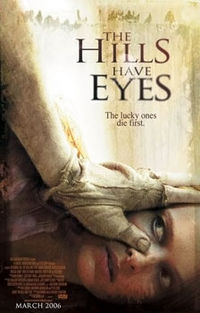
11) The Hills Have Eyes features a family on a road trip through the post-nuclear testing New Mexico desert are set upon by a group of psychopaths who live in the hills.


12) Worlds collide in From Dusk Till Dawn when a reverend on a road trip to Mexico with his children is hijacked by two ruthless killers on the lam from the law after a series of brutal murders and robberies. They find themselves like fish out of water when their rest-stop bar turns out to be a haven for vampires.


13) When a group of friends go white water rafting in Appalachia, the idylic back country scene turns nightmare when a group of inbred locals terrorizes the group, and one of its members in particular. Deliverance is not for the faint of heart.


I could keep going with this sub-genre, but surely you get the point by now. Stay home!

3. Displaced Horror: “Think twice about moving or taking a sojourn outside the ‘hood” is the moral here.

14) Rosemary’s Baby, in which Mia Farrow discovers that her new Manhattan residence is also the home to a group of mad Satanists who’ve got their sights on her unborn baby.


15) The slasher musical Don’t Go In the Woods features a band on the verge of a breakthrough go camping to write some new tunes. Only, there’s something else in there with them that’s picking them off one by one.


16) Every incarnation of the Alien series brings us a group of Earth’s citizens in outer space, battling a wretched and basically unkillable xenomorph. Keep your feet on land. Save yourself the trouble.


17) In Friday the 13th, a group of summer-camp goers are stalked by a relentless killer. Man, this one makes me glad I never went to summer camp, even though growing up I always wanted to.


18) A writer on a summertime retreat to a supposedly peaceful cabin is brutalized by a gang of locals. One of my personal favorites, I Spit On Your Grave is a grotesque revenge fantasy come to life and suggests one might be better off simply working from home.


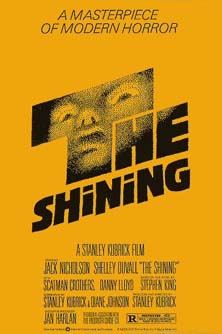
19) And we can’t forget one of the most iconic examples of Displaced Horror: The Shining, in which Jack Torrance, temporary caretaker of the historically creepy and ever haunted evil Overlook Hotel, goes mad and tries to murder his family. All work and no play makes Jack a dull boy, eh?

Happy Hallowe’en!

* * *

So, are you ready to burn your passport and throw away all your travel gear yet? 😉

And while we’re still at it, do you have any other films you’d add to Sezin’s best-of abroad horror list?

Sezin Koehler, author of American Monsters, is a woman either on the verge of a breakdown or breakthrough writing from Lighthouse Point, Florida. Culture shock aside, she’s working on four follow-up novels to her first, progress of which you can follow on her Pinterest boards. Her other online haunts are Zuzu’s Petals, Twitter, and Facebook — all of which feature eclectic bon mots, rants and raves.

STAY TUNED for tomorrow’s post, in which our fictional expat heroine, Libby Oliver, checks in and lets us know how she’s doing back at “home” in Merry Olde.

If you enjoyed this post, we invite you to register for The Displaced Dispatch, a round up of weekly posts from The Displaced Nation, with seasonal recipes, book giveaways and other extras. Register for The Displaced Dispatch by clicking here!

Related posts:

15 films that depict the horrors of being abroad, or otherwise displaced

Readers, we’re getting goosebumps and our blood is curdling. Horror novelist, former expat and Third Culture Kid Sezin Koehler is here to remind us that, however glamorous the life of an expat or world traveler may seem, it has a netherworld — one that horror movie makers are fond of depicting. To proceed is at your peril.

As if moving or traveling abroad isn’t scary enough, there is a whole host of films that would put the kibosh on even the most adventurous of people. For today’s guest post for The Displaced Nation, I’m breaking down these tales of terror into three groups:

  1. The expat.
  2. The world traveler.
  3. The otherwise displaced.

What follows is a rundown of some of the best horror films that will make you never want to leave home again.

1. Expat Horror: Caveat expat, or expat beware (or in some cases, beware of the expat!).

1) Ils (Them) (2006), dir. David Moreau and Xavier Palud.
In this terrifying French film, two expat partners, a teacher and a writer, living outside Bucharest in Romania are terrorized and psychologically tortured by an unknown group for days before their murder. Based on a true story, the villains — who were apprehended in real life — turn out to be even more shocking than the events they perpetrated.

My big question: Why on earth do you choose to live out in the middle of nowhere in Romania? Tragic story indeed, but really, they should have known better. Now you do.

2) Suspiria (1977), dir. Dario Argento.
Considered one of the classic horror films and what many now consider to be the father of the arthouse horror genre, Argento’s dark and twisted tale features a ballet school in Rome full of young girls from all around the world who live and study within walls haunted by a chilling presence that picks off the girls one by one. The score by Goblin is enough to give you nightmares and make you reconsider sending your children away to school. Ever.

3) & 4) Red Dragon (2002), dir. Bret Rattner; & The Silence of the Lambs (1991), dir. Jonathan Demme.
In Red Dragon Dr. Hannibal Lector is just a British expat living and practicing psychiatry in the United States. In fact, he’s helping the police with a brutal series of murders in which specific body parts had been taken as trophies. Detective Will Graham eventually discovers that not only is psychiatrist-to-the-stars Dr. Lector responsible for these grisly killings, he’s also eating the missing pieces.

The next time we meet Hannibal the Cannibal is in The Silence of the Lambs, where he is safely tucked away in a maximum security prison until the FBI needs his profiling assistance in uncovering the identity of a man who is kidnapping and skinning women.

Maybe Dr. Lector is a reason why locals are so wary of expats around the world?

5) The Omen (1976), dir. Richard Donner.
It’s hard enough being the wife of the American ambassador to the UK, but when Lee Remick discovers that there is something very wrong, very evil with her son, Damien, matters only get worse.

In many ways this is the kind of expat horror to which we can most relate: being in a foreign country, going through a difficult time, and not having the kind of support one might have at home. Even though the Thorns are wealthy and have a full staff at their beck and call, Mrs. Thorn cannot confide in them her misgivings that her son is the Antichrist — nor can she with anyone else since she’s the ambassador’s wife. In the end she goes mad from fear and frustration.

As expats, we’ve all been there. Luckily, though, we didn’t have the incarnation of Satan as our son. At least I hope not.

6) Freaks (1932), dir. Tod Browning.
This magnificent film follows a group of sideshow circus performers in Dust Bowl America — the majority of whom are European expats from all over the continent. As foreigners as well as displaying physical deformities of all kinds, this group is the marginalized of the most marginalized in America not just at that time, but even today.

The gorgeous German and “normal” trapeze artist Cleopatra finds out that Hans, the midget, is fabulously wealthy and sets out to steal him away from his same-sized girlfriend Frieda — with disastrous consequences as the group of freaks tries to bring the wicked Cleopatra into their embrace. Cleo finds out well and good that one does not mess with members of the sideshow.

The message here? Respect your local customs, even if you think them freakish. It could be what stands between your body as it is or being turned into a human-chicken hybrid.

2. Traveler Horror: “Let your suitcases gather dust!”, cry these films.

1) Hostel (2005), dir. Eli Roth.
A group of backpackers passing through the Slovakian capital city, Bratislava — it has no semblance to the real place whatsoever — gets kidnapped by an organization that sells young people to the highest bidders so that they can be tortured and murdered in the Slovakian outback with impunity. While the film is rife with cultural and geographical blunders, it nonetheless preys on a legitimate fear of kidnapping and/or human trafficking while traveling, especially for young women as we see in the two follow-up films in this gory franchise.

Kids, don’t fall for the local pretty girl/handsome boy who picks you up in a bar. You have no idea whom they could be working for.

2) American Werewolf in London (1981), dir. John Landis.
Two American backpackers (uh-oh) in the Scottish highlands stray from the road and are attacked by a wild beast. One dies, the other is in a coma for three days with horrible gashes across his chest. When the doctor informs him he was attacked by a madman he’s confused, claiming it was a wolf that had killed his friend and wounded him. Come full moon, young David Kessler finds out it was neither man nor wolf, and he’s becoming one.

There’s nothing like a story about a horrific accident taking place while traveling, especially when said accident turns you into a monster. Always remember, STAY AWAY FROM THE MOORS/MUIRS!

3) The Descent (2005), dir. Neil Marshall.
After the tragic death of Sarah’s husband and daughter in a wicked car accident, her fellow British extreme-sporting friends decide to take a trip across the pond to Appalachia for a spelunking expedition. Why anyone would think that crawling around in caves would be a good idea I haven’t a clue — let alone choose to take an already-traumatized woman into that scenario. But hey, they do. And not only do they find themselves in an unmapped cave system that has no way back to the surface, there are others down there in the dark who’d like to ensure the girls never leave.

Dear People Traveling to America: For Pete’s sake, avoid the US’s back country! Monsters are above and below.

4) Wolf Creek (2005), dir. Greg Mclean.
Two British tourists in Australia pair up with a local to check out a supposed alien-landing site in the middle of nowhere. All is fine until their car battery dies. Stranded in the badlands of Oz, grateful are they when a mechanic rolls up and tows them to his place to fix their vehicle. But oh, he’s not a mechanic at all. He’s a serial murderer who waits for tourists to come out to the Wolf Creek Crater, and takes his good time torturing them before their slow death.

The film is based on a true story — one of the British girls actually survived and made it to the authorities. It turned out the man had killed hundreds of people over decades, and nobody even suspected a thing. Shiver

5) Primeval (2007), dir. Michael Katleman.
During the Rwanda-Burundi conflict, bodies were dumped into the Ruzizi River at such alarming rates that the crocs began eating human flesh. One of these crocs, nicknamed Gustave by the locals, gets a taste for human flesh and begins hunting humans inland. An American team of journalists are sent to capture and bring back the beast amidst an ongoing civil conflict between warlords and villagers.

The best thing about this movie is that there really is a 70-year-old, 22-feet-long croc named Gustave who swims the Ruzizi. He was last sighted in 2008, but I know he’s still out there. I can feel him.

3. Displaced Horror: “Think twice about moving or taking a sojourn outside the ‘hood” is the moral here.

1) The Amityville Horror (1979), dir. Stuart Rosenberg.
As if moving doesn’t suck enough, can you imagine moving into a house that not only was the site of a brutal family murder but is also haunted? I don’t even know how many whammies that makes the scene. Also based on the true story of the Lutz family, who were terrorized by their house to the point where they fled without any of their belongings and never went back to collect them.

Word to the wise: Always check about the house’s history before you move in, and always remember to burn sage throughout, even in cabinets and drawers, before you move anything in anything at all. Trust me on this one.

2) Se7en (1995), dir. David Fincher.
Heralding a promotion to detective, Brad Pitt gets transferred to an anonymous city with a reputation of being among the worst in America. *Cough* Detroit *Cough*. His wife is miserable as she wants to have a family, but cannot imagine raising children in that town. The first case he lands is a serial killer murdering people based on the Seven Deadly Sins — one that quickly sucks both him and his wife into a horrific spiral of torture and murder.

Women, don’t let your husband drag you to a horrible city. Just don’t. Your life very well may depend on it.

3) The Texas Chainsaw Massacre (2003), dir. Marcus Nispel.
A group of friends on a road trip through Texas and — oh crap! — their car breaks down. It’s just their luck that the person who finds them is the patriarch of the psychotic and inbred Hewett family, known for killing and cooking their victims. There are no happy endings here, people.

If you’re going on a road trip, stick to the main roads, for God’s sake! I mean, jeez, everybody knows that. And while you’re at it, stay the bloody hell out of Texas!

4) El laberinto del fauno (Pan’s Labyrinth) (2006), dir. Guillermo del Toro.
Set in 1944 fascist Spain, the film tells the story of Ofelia, a young girl who accompanies her mother to live with her new stepfather, a barbarous Spanish general. Amidst the horror, Ofelia discovers a fairy world underneath the very grounds of their home, a place to which she escapes when the torture around her becomes too much to bear. But even fairy worlds have their horrors, as she soon finds out.

Moms, jeez, don’t marry jerks and then don’t agree to live in their military camp. Seems like logic to me, but I guess it needs to be said.

* * *

So, are you ready to burn your passport and throw away all your travel gear yet? 😉

And do you have any other films you’d add to my best-of abroad horror list?

Sezin Koehler, author of American Monsters, is a woman either on the verge of a breakdown or breakthrough writing from Lighthouse Point, Florida. Culture shock aside, she’s working on four follow-up novels to her first, progress of which you can follow on her Pinterest boards. Her other online haunts are Zuzu’s Petals, Twitter, and Facebook — all of which feature eclectic bon mots, rants and raves.

STAY TUNED for tomorrow’s post, which has Kate Allison continuing our horror theme.

If you enjoyed this post, we invite you to register for The Displaced Dispatch, a round up of weekly posts from The Displaced Nation, with seasonal recipes, book giveaways and other extras. Register for The Displaced Dispatch by clicking here!

Related posts:

Images: From MorgueFile: Cinema; Hat and suitcase;  Bridge from biplane.

Photo of Sezin, from her newest FB page, ZUZUHULK, used with her permission.

RANDOM NOMAD: Larissa Reinhart, Former Expat, Midwestern Southern Belle & Crime Novelist

Place of birth: Silvis, Illinois USA (I’m actually from nearby Andover, but it’s too small to have a hospital!)
Passport: USA only — but I’m on my third edition!
Overseas history: Japan (Yokohama, Kameoka, Nagoya): 1995-96; 1998-99; 2008-10.
Occupation: Mother and author of the Cherry Tucker Mystery Series. I’m also working on a mystery series set in contemporary Japan.
Cyberspace coordinates: The Expat Returneth — Sharing my life overseas, my life at home, and the other world that lives between my head and paper (blog); Larissa Reinhart: Writing mysteries and romance south of the sweet tea line (author site) @riswrites (Twitter handle); Larissa Reinhart (FB page); and Larissa Reinhart (Good Reads).

What made you leave the United States to live in a faraway land?
I’ve always wanted to live overseas. Before I got the chance to do it physically, I traveled through books — for instance, The Crane Maiden, by Miyoko Matsutani, and The Laughing Dragon, by Kenneth Mahood (I have passed them to my children). When I got older, I loved Elizabeth Peters mysteries, which are set in Egypt.

Was anyone else in your immediate family displaced?
My family is firmly rooted in Illinois, but was always interested in other cultures. My father was a history teacher, and I had a good understanding of geography and world history from him. I also had a grandfather who loved to travel. As a kid, I read his National Geographic collection and was fascinated by the countries he visited, particularly Egypt. He probably would have loved to have been displaced, but had to wait until retirement to travel.

Tell me about the moment during your various stays in Japan when you felt the most displaced.
My husband had a scholarship from the Monbu-shō to study at Keio University, so I applied to the JET (Japan Exchange and Teaching) Programme — and ended up getting to Japan a few weeks before he did. I lived with a homestay family. They spoke no English. I spoke no Japanese. They were very sweet, but they swung between helicopter-parent smothering and leaving me for long periods of time alone in a tatami room. I had horrible jet lag and felt so isolated and helpless. Once I moved into an apartment, my jet lag abated and I began enjoying myself. I had traveled to Egypt previously — but hadn’t experienced that kind of debilitating jet lag that comes with a 13-hour time difference. It’s a killer!

When did you feel the least displaced?
We have two young daughters from China. Four years ago, we took them to Nagoya to live for a couple of years. We saw it as a chance for them to experience life in Asia at a time in their lives when it was still easy to move around and adjust. They loved Japan. By the end of our two years, we all wanted to stay, but unfortunately couldn’t. There is no one particular instance, but lots of little, everyday moments we hark back to and can’t seem to reproduce back here — our family living comfortably in our tiny house, walking to shops and restaurants in the neighborhood, my children riding their bikes with the local kids to play at the neighborhood park…

You may bring one curiosity you’ve collected from each of the countries where you’ve traveled or lived into The Displaced Nation. What’s in your suitcase?
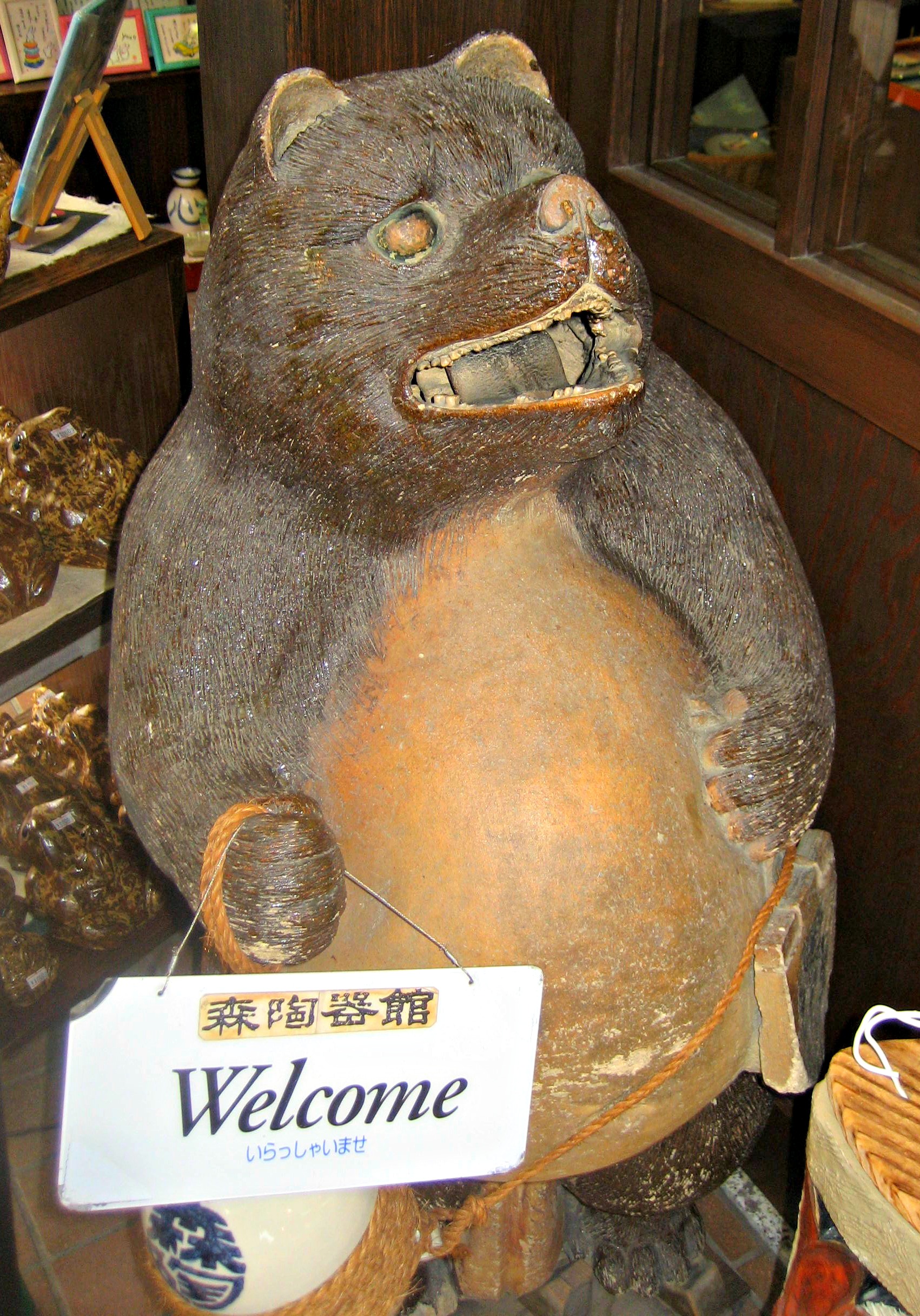
A ceramic tanuki (Japanese raccoon-dog). Japanese families and businesses keep them in front of their doors to welcome guests. It’s similar to the Maneki-neko (beckoning cat), but more fun because of their sake bottle and large kintama (golden testicles), which are meant to bring good fortune.

Hmmm…moving right along: You are also invited to prepare one meal based on your travels for other members of The Displaced Nation. What’s on the menu?

I like Japanese bar food, so we’ll have a meal based on that.
Appetizer: Edamame (boiled & salted green soy beans) and a Grapefruit Sour to drink. My favorite bars in Japan will give you a glass of ice, seltzer, and shōchū (grain alcohol) and a half-grapefruit with a strainer for you to squeeze the juice into the glass. Really refreshing.
Main: A bunch of Japanese tapas dishes — yaki-gyōza (fried potstickers), tebasaki (grilled wings), pari pari renkon chips (spicy, deep fried lotus root), tsukune (grilled chicken meatballs), and yakitori (skewered grilled chicken)
Dessert: Japan isn’t big into dessert, so we’ll have a savory bowl of ramen instead. And maybe another Grapefruit Sour. Or two.

Yum, you’ve brought me back to my own izakaya days… And now can you please suggest a Japanese word or expression for the Displaced Nation’s argot?
Chuto-hanpa. It literally means half-measure, but is used to describe doing something half-assed. I love this word.

We’re getting into a bit of a Halloweeny mood at the Displaced Nation. Tell me, did you keep the American Halloween tradition alive while living in Japan?
We did celebrate Halloween in Japan with our children. It’s becoming popular there in terms of decorations and parties (we even found an American-type pumpkin for $20), but trick-or-treating is an oddity. You don’t request gifts from people — certainly not door-to-door. Our neighbors would deliver snacks in a plastic jack-o-lanterns to our house instead. One expat friend arranged a trick-or-treating excursion for the children as part of a Halloween party. But first we mothers delivered bowls of candy to the businesses and homes in the area so that, when we brought the children round to trick-or-treat, they would have something to give them. People probably thought we were crazy, but at least they found the children in costume adorable.

Also in keeping with the season, we’ve started exchanging expat horror stories on the site. What’s the creepiest situation you’ve encountered on your travels?
It was on a trip to Thailand. My husband and I hung out on a beach at Koh Samui for a few days. To get back to the mainland, we had to hike across the island to catch a boat. We were proceeding along the dirt road, chatting…when I felt something grab my arm. Without breaking stride, I glanced down and saw a monkey, teeth bared, ready to bite me. Suddenly it flew off my arm, and I screamed. It had been chained to the side of the road, and was ripped away as it reached the end of its tether. Its vicious eyes and sharp teeth will forever be burned in my memory. That nasty monkey must have been someone’s pet. My husband saw it standing next to its stake before it jumped on my arm. Too busy talking, I totally missed it and walked within its perimeter. You can bet I have remained vigilant for monkeys ever since. I had a close call with some snow monkeys in Nagano, as well. I am not a fan.

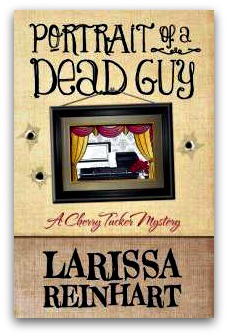
The first book in your Cherry Tucker mystery series is called Portrait of a Dead Guy. That sounds a little creepy. Is it?
It’s actually a humorous mystery, but the idea of painting a coffin portrait is creepy even for my heroine, a sassy Southern artist named Cherry Tucker. However, she’s desperate for a commission, which is why she offers her services. The dead guy has been murdered, and his stepmother felt that a final portrait would be a fitting commemoration. Cherry ends up as another potential victim of the murderer because of her proximity to the corpse. That said, she does have one spooky scene at night in a funeral home, alone with the dead body, which ends badly.

Painting a portrait of a dead man — how did you think that one up?
In truth, coffin portraits are not all that unusual, depending on your culture. Many cultures use a portrait of the deceased with their memorialization. I know a family friend who was asked to photograph a coffin portrait to send to the deceased’s family in Asia. They would probably place the photo in a family shrine and burn incense for a specific number of days along with other rites.

Tell me about your plans for the Japanese mystery series.
I’m a humorous mystery writer, so I look at the lighter side of crime. Did you know that the Japanese love mysteries? I think it’s because they have so little crime. I have another Southern heroine for the Japanese series, which will bring an interesting cross-cultural twist. I love the interplay of cultures.

Say, what is this thing about you and Southern ladies? Aren’t you an Illinois girl? Is this another displacement?
It is another displacement! We moved to Georgia between trips to Japan, about fifteen years ago. Small town South is very similar to small town Midwest, except for the Southerner’s extravagant use of hyperbole and simile in conversation. I can’t imagine living anywhere else in the U.S. now, although I can place myself in some foreign spots quite easily. 🙂

Readers — yay or nay for letting Larissa Reinhart into The Displaced Nation? She has an affinity for dead bodies, true — but in a humorous sense! And she doesn’t monkey around… (Note: It’s fine to vote “nay” as long as you couch your reasoning in terms we all — including Larissa — find amusing!)

STAY TUNED for tomorrow’s post, an interview with another former expat author.

If you enjoyed this post, we invite you to register for The Displaced Dispatch, a round up of weekly posts from The Displaced Nation, with seasonal recipes, book giveaways and other extras. Register for The Displaced Dispatch by clicking here!

Related posts:

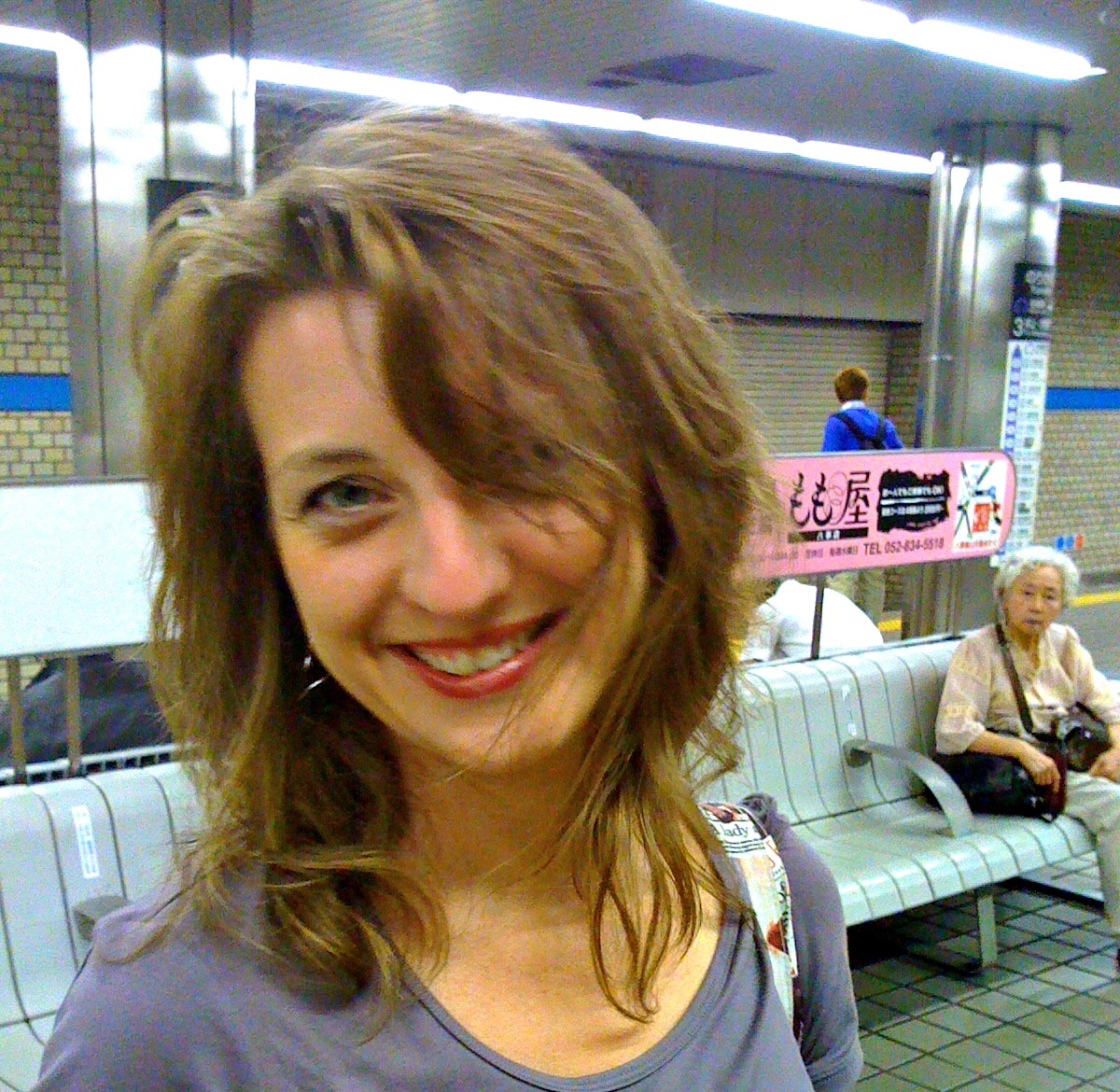
Images: Larissa Reinhart inside a subway station in Nagoya; her favorite tanuki (cute or creepy?); her book cover.

EXPAT MOMENTS: Finding your tongue

Continuing our food-themed posts of September, here’s an Expat Moments post on unexpected encounters with local cuisine.

Kyoto reveals itself to you, a source of delight for the curious of spirit. Alien yet unintimidating, you lose yourself in this ancient city, confused and disoriented as only a contented traveler can be.

But with all that wandering comes hunger. You look around for a restaurant to try. You aren’t entirely sure where precisely you are. It’s not that you’re lost, you know you are somewhere near the centre. You can see in the mid-distance Kyoto Tower. You know you only have to walk in the direction of the tower to find yourself back at your hotel. It’s by no means late, but everything here seems to close unfathomably early. Nothing appears to be open. You had expected the streets at night to be awash with neon advertising hoardings in kanji, but that is not the case here. Your assumptions again proved incorrect.

You spot a salaryman, the only other person on the street apart from you, and see him go into a small building. You follow, but stop at the doorway of the building. There are no windows for you to peer through. There is no sign. You can smell something intoxicating inside, but is it a restaurant? Is it the entrance to an apartment complex that the salaryman lives in? Is it something altogether more illicit that you would be ill-advised from entering? Curiosity combined with hunger gets the better of you and you step into the building.

Walking through the hallway, you discover that it is a restaurant, a tiny one. In the center of the restaurant is an open kitchen where a chef cooks. Who you immediately assume (though why you assume this, you’re not entirely sure) is his daughter serves the food. Three salarymen are sitting there, eating and smoking. The assumed daughter smiles at you. She goes over to the side of the room and rummages through her menus looking for that English copy that they had made. When she has finally located it, she hands it to you with a smile and the only English phrase she will say to you other than a “thank you” as you leave. “For you,” she says, and hands you a laminated menu.

You take the laminated menu. Reading through it, you notice that there is only the one ingredient that they cook – beef tongue (gyutan). Not what you were expecting, or what your stomach was grumbling for. The assumed daughter smiles expectantly at you. You smile back and pick from one of the dozen gyutan dishes available and you wait. The smell of the cigarette smoke from the salarymen irritates you, gets in your chest. As you wait, you read through that laminated menu again and notice that they have included a print-out of the English language Wikipedia page on gyutan, saying hat it only became popular during the occupation after World War 2. You read on, irritated that the Japanese still allow smoking in restaurants, not knowing that you are about to eat one of the most unassuming — but most delicious — meals in your life. Beef tongue, grilled and served with rice.

Assumed daughter and father will say “thank you” as you leave, but you have no Japanese to tell them how much you loved what they offered. All you can give is awkward smile and utter an even more awkward, tongue-tied attempt at “sayonara”.

STAY TUNED for next Monday’s post.

If you enjoyed this post, we invite you to register for The Displaced Dispatch, a round up of weekly posts from The Displaced Nation, with seasonal recipes, book giveaways and other extras. Register for The Displaced Dispatch by clicking here!

Related posts:

Image: MorgueFile

BOOK REVIEW: “The Elopement: A Memoir” by Dipika Kohli

TITLE: The Elopement
AUTHOR: Dipika Kohli
AUTHOR’S CYBER COORDINATES:
Website: kismuth.com
Twitter: @DipikaKohli
Kismuth on Facebook
PUBLICATION DATE: July 2012
FORMAT: Ebook (Kindle) available from Amazon
GENRE: Memoir
SOURCE: Review copy from author

Author Bio:

A former journalist, raised in America by her Indian parents, Dipika Kohli has previously lived in Japan and Ireland, and now lives in Durham, NC, with her husband and son. The third volume in her Kismuth series will be published in October 2012.

Summary:

When American-born Karin Malhotra elopes to Ireland with her college sweetheart, she botches the dreams her parents had for her when they left New Delhi with a stalwart philosophy on what a good life “ought” to be. “Opportunity,” her father said, “is in the U.S. That’s why we came.”

But finding herself in Ireland, juxtaposed in not one, but two additional cultures (her new husband is Japanese), Karin finds herself thinking about the early years of her own parents’ married lives, and wondering if, like her, they questioned their decision to leave everything familiar for the mere promise of a better life.

She tumbles headlong without any preparation into a small village in the corner of Ireland. Not only does she have to contend with a new suite of social mores, she wonders what it would have been like had she not quit home.

(Source: Amazon.com book description)

Review:

The Elopement is the second book in a four-part memoir series, Kismuth, which, in Hindi, means “destiny”. Karin’s grandmother defined destiny as:

We’re all meant to be someplace…And when we get there, wherever it is, that’s what’s supposed to happen.

This implies a passiveness about the process, a casting off of responsibility for our futures, yet many would argue that destiny is of our own making. You reap what you sow, is another way of putting it.

Karin Malhotra’s ambitious parents left Delhi in search for a new life, for better opportunities for them and their children. Sadly, by forcing their own ambitions onto Karin, they sowed what they would later reap: an unhappy daughter, rejecting her family’s strict expectations by following her heart and searching for her own “better opportunities”. Her interpretation of the phrase, unfortunately, did not agree with that of her parents, who refused even to acknowledge Karin’s relationship with Japanese boyfriend Yoshi.

Little wonder that, when Karin finds the acceptance from Yoshi’s parents that she never had from her own, elopement seems an attractive, fairytale-like option. But of course, everyone knows that not all fairytales have happy endings. And while it might be possible to create one’s own destiny, the lesson we can learn from this book is that it is folly to try to create someone else’s.

The Elopement is a fascinating read, beautifully and eloquently written. Dipika Kohli’s next book, The Dive, starts where The Elopement ends. I am already counting the days until its publication on October 10.

Notable quotes:

On being a TCK:

[My parents’] choices, and the consequences that arose, ought not affect my own. If they didn’t think the trade was worth it — the one where they gave up everything in a familiar context in India to take a chance on a new opportunity abroad — well, that wasn’t my problem, was it?

On interculteral relationships:

Our summer of trying out…this intercultural relationship thing, felt like wearing a happened-upon outfit I’d never imagined could fit, but thought, once in a while, why not break that one out? …This “once in a while” was about to become my new look.

On Ireland:

Ireland had the kinds of places and people that would make you stop what you were doing, and sit up and pay full attention, to the degree that you felt really aware and present, maybe for the first time in your life.

.

STAY TUNED for Thursday’s post!

Image: Book cover – “The Elopement”

If you enjoyed this post, we invite you to register for The Displaced Dispatch, a round up of weekly posts from The Displaced Nation, with seasonal recipes, book giveaways and other extras. Register for The Displaced Dispatch by clicking here!

Related posts: