The Displaced Nation

A home for international creatives

Tag Archives: Germany

How to throw a party for a bunch of global nomads

One year has passed since our first random nomad, Anita McKay, crashed through the gates of The Displaced Nation, bribing the guards with chicken tikka masala and cranachan and shouting “bollocks” at several of us who tried to stop and question her.

And now there are 40 such nomads within our ranks — the latest being Annabel Kantaria, who insisted on bringing an alarm clock that looks like a miniature mosque — it rings every morning with the call to prayer. (Note to other founders: perhaps we need to find guards who aren’t so easily intimidated when travelers show a bit of temerity…)

Still, as we now have 40 nomads, randomly selected, why not make the best of the situation and throw a party? And what better excuse than The Displaced Nation’s 1st birthday — which, as announced by Kate Allison in a post a couple of days ago, took place on April 1 (no fooling!).

Further to that end, I’ve come up with a Party Primer that I think should work for this group — as well as for similar gatherings.

PARTY PRIMER FOR DISPLACED NOMADS

Click on the headlines below to go to each section:

  1. INVITATIONS
  2. DRESS CODE
  3. DECORATIONS
  4. MUSIC
  5. TABLE ASSIGNMENTS
  6. FOOD
  7. TOPICS FOR SMALL TALK
  8. PHOTOGRAPHY
  9. GAMES
  10. SONGS

INVITATIONS

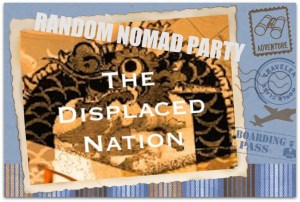
As this party marks a special occasion (who ever thought we’d make it to be one year old?), a deluxe printed invitation is in order. The only thing is, our invitees are a bunch of nomads! We’ll be lucky if we can catch them on email, let alone at a fixed address. Let’s compromise on an attractively designed message: see mock-up at top of this page.

DRESS CODE

As some of you may know, Cleopatra recently paid a visit to The Displaced Nation. Based on her observations of today’s international travelers, we’ll be doing well if we can get the men to shower and change before joining us. As for the women, well, allow me to offer these pearls of wisdom from Jennifer Scott — the American guru of Parisian chic who was featured on this blog last week. Jennifer says:

There are certain occasions that always warrant dressing up. Generally any gathering … where others went to a lot of effort for your sake.

DECORATIONS

The theme is easy: the wide wide world! (Rather the opposite of Disney’s “It’s a small world after all” concept.) This calls for tablecloths imprinted with the world map (to make it easy for guests to point out where exactly “Moldova” etc is); globe-patterned balloons (can we coin a new term: globalloons?); and for the centerpieces, flags from each of the adopted country represented at the table in question.

Optional extras include party hats, noisemakers and loot bags. It’s fun when the loot contains some surprises. Given all the items our nomads have insisted upon carrying into The Displaced Nation, we should have plenty to choose from, eg:

  • mosque alarm clocks (thanks, Annabel!)
  • hairy coo fluffy toys (thanks, Nerissa!)
  • fake Harry Potter glasses (thanks, Charlotte!)
  • boomerangs (thanks, Kim & Vicki!)
  • brie bakers (thanks, Toni!)

MUSIC

As Todd Lyon, author of a number of party and lifestyle books, puts it:

Without music, a party isn’t a party. It might be an assembly, a meeting, or a bee, but it can never be a shindig, a bust-up or a ball unless there’s fine tunes that never stop.

Not being a party tunes buff myself, I’ve consulted with The Displaced Nation’s resident music expert, Kate Allison, about the kind of soundtrack that would cultivate just the right ambience. Her suggestions include:

Everybody all around the world, gotta tell you what I just heard
There’s gonna be a party all over the world…

TABLE ASSIGNMENTS

8-10 person tables work well. Since we’ll have 40 guests, I’ve decided on five tables of eight people each, and to mix everyone up as much as possible. Hostesses must also, of course, take steps to reduce the risk of a “silent table,” where people just eat and don’t talk. To be honest, I don’t there is too much risk of that with this crowd — have you ever watched a bunch of expats try to outdo each other with stories of their (cross-cultural, linguistic and travel) adventures? But just in case, I’m offering some “hostess notes” for each table (the hostess’s job being to introduce everyone and make sure the conversation keeps flowing!).

TABLE 1
Matthew Chozick (American expat in Japan)
Tom Frost (American expat in China)
Lyn Fuchs (American expat in Mexico — Sacred Ground Travel Magazine)
Turner Jansen (American canine in Holland)
Annabel Kantaria (English expat in Dubai — Telegraph Expat blog)
Kirsty Rice (Australian expat in Qatar — 4 kids, 20 suitcases and a beagle)
Jack Scott (English expat in Turkey — Perking the Pansies)
Karen van der Zee (Dutch/American expat in Moldova — Life in the Expat Lane)
Hostess notes: Introduce Tom Frost to Matthew Chozick — Tom used to live in Japan and speaks Japanese. Kirsty Rice should sit next to Turner Jansen, as she travels around with a beagle. Annabel Kantaria, Jack Scott and Kirsty all have in common life in the Middle East. Karen van der Zee and and Lyn Fuchs should find each other fascinating, as both have had some extraordinary adventures (Karen could entertain Lyn with her crocodile tale and Lyn, keep Karen amused talking about the time he went paddling with orcas.)

TABLE 2
Balaka Basu (Indian American in New York City)
Santi Dharmaputra (Indonesian expat in Australia)
Michelle Garrett (American expat in UK — The American Resident)
Robin Graham (Irish expat in Spain — a lot of wind)
Anita McKay (Indonesian expat in Australia — Finally Woken)
Brian Peter (Scottish expat in Brazil — A Kilt and a Camera)
Kate Reuterswärd (American expat in Sweden — Transatlantic Sketches)
Wendy Tokunaga (Former American expat in Japan)
Hostess notes: You might want to break up Santi Dharmaputra and Anita McKay, who are the same nationality (Indonesian) and already friends. Anita should definitely be introduced to Brian Peter, who like her hubby, is Scottish, and will probably be amused by her stories of toasting oatmeal in whisky. And make sure Anita also talks to Wendy Tokunaga — I know from personal experience how intrigued Anita is by stories of Western woman marrying Asian men. To be honest, everyone at this table should really be socializing with everyone else, as each and every one of them has a partner of a different nationality! (Now if that isn’t a talking point, I don’t know what is…)

TABLE 3
Kim Andreasson (Swedish expat in Vietnam)
Jo Gan (American expat in China– Life behind the wall)
Jennifer Greco (American expat in France — Chez Loulou)
David Hagerman (American expat in Malaysia — SkyBlueSky)
Helena Halme (Finnish expat in UK — Helena’s London Life)
Vicki Jeffels (Kiwi expat in UK — Vegemite Vix)
Janet Newenham (Irish internationalist — Journalist on the run)
Adria Schmidt (former Peace Corps worker in the Dominican Republic)
Hostess notes: Seat David Hagerman next to Jennifer Greco — since his wife is a well-known food writer and expert cook, he’ll find nothing strange in her quest to sample all the known French cheeses. Janet Newenham should be near Adria Schmidt and Kim Andreasson as they are all interested in international affairs. Vicki should be introduced to Helena as I’m sure the latter would love to hear about her recent spa experience in Cyprus. Jo Gan, too, should meet Vicki as she is now experiencing visa problems with the Chinese authorities — on a level that may even surpass Vicki’s own nightmare experience in Britain.

TABLE 4
Aaron Ausland (American expat in Colombia — Staying for Tea)
Emily Cannell (American expat in Japan — Hey from Japan)
Charlotte Day (Australian expat in UK)
Toni Hargis (English expat in USA — Expat Mum)
Vilma Ilic (Former aid worker in Uganda)
Jennifer Lentfer (Former American expat in Africa — How Matters)
Camden Luxford (Australian expat in Argentina — The Brink of Something Else)
Piglet in Portugal (English expat in Portugal — Piglet in Portugal)
Hostess notes: Aaron Ausland will naturally gravitate towards Jennifer Lentfer as they are both deeply involved in global aid and development. Make sure you introduce the pair of them to Piglet in Portugal — she’ll ask them some thought-provoking questions about whether it’s better to save the world or cultivate your own garden. Jennifer should also be near Vilma as the two will want to share their Africa experiences, and you might urge Emily Cannell to join that conversation as well — she has such an adventuresome spirit! Along with Toni Hargis, who runs her own charity supporting a school in Ghana. As for Camden Luxford, she’s an easy one: a social butterfly! Perhaps she could take fellow Aussie Charlotte Day under her wing (ha ha) and make sure she gets plenty of material to write about for her courses at Oxford next year!

TABLE 5
Lei Lei Clavey (Australian expat in New York City)
Matt Collin (American expat in UK)
Megan Farrell (American expat in Brazil — Born Again Brazilian)
Liv Hambrett (Australian expat in Germany — A Big Life)
Mardi Michels (Australian expat in Canada — eat. live. travel. write | culinary adventures, near and far)
Iain Mallory (English adventurer — Mallory on Travel | Making Everyday an Adventure)
Nerissa Muijs (Australian expat in Holland — Adventures in Integration)
Simon Wheeler (English expat in Slovakia — Rambling Thoughts of Moon)
Hostess notes: As soon as Lei Lei Clavey, Liv Hambrett, Mardi Michels and Nerissa Muijs discover they all have Australia in common, they will be blabbing away — just hope it doesn’t turn into an Ozfest! Also, make sure Mardi connects with Matt — I suspect he may need her counseling about how to seek creative refuge from academia. Iain Mallory and Simon Wheeler will form a natural pair, exchanging stories of their travel adventures and perhaps even breaking into a rousing chorus of “Jerusalem.” But should their antics get too raucous, ask Mardi to step in: she teaches cooking classes to 9-11-year-old boys in Canada. Megan Farrell should connect with Nerissa and Simon on the topic of what it’s like to raise a child in a nationality (and language) other than your own.

FOOD

One of the purposes of gathering together nomads from the four corners of the earth has to be eating, especially if each of them brings along some of their favorite dishes. For our party, we will have a dazzling tableaux brimming over with rare and exotic foods. (We know that because our Random Nomads have already described their faves to us in their interviews.)

Shall we go over the list? (Warning: Don’t read on an empty stomach, or if on a restricted diet!)

NIBBLES/STARTERS

  • Guacamole & chips (Kim — recipe provided)
  • Selection of mezze with pita bread (Annabel Kantaria)
  • Assorted pinchos (Megan Farrell)
  • Avocado & mango salad (Matt Collin)
  • Bhelpuri (Tom Frost)
  • Satay sticks (Nerissa Muijs)
  • Four kinds of eggs: tea eggs, thousand-year-old eggs, fried eggs with tomato, and boiled salted eggs with a chicken embryo inside (Jo Gan)
  • Shrimp & grits (Lei Lei Clavey)
  • Vietnamese caramelized chili prawns (Mardi)
  • Ceviche (Camden Luxford)
  • Bluff oysters from New Zealand (Vicki Jeffels)
  • Gravad lax with Finnish rye bread (Helena Halme)
  • Tuna sashimi with ponzu sauce (Emily Cannell)

COCKTAILS

  • Traditional Bloody Marys (Lei Lei Clavey)
  • Caipirinhas (Megan Farrell)
  • Margaritas (Kirsty Rice)

WINE

  • Rich red wines from Lebanon (Annabel K)
  • Red wine from Macedonia (Vilma Ilic)
  • Malbec wine from Argentina (Camden Luxford)
  • Shiraz from Australia (Vicki Jeffels)
  • White wine from Australia (Simon Wheeler)
  • Chilled sake (Tom Frost)
  • Rice wine (Jo Gan)

BEER

  • Carlsberg browns (Matt Collin)
  • Cusqueña beer (Camden Luxford)
  • Mexican Pacifico (Tom Frost)
  • Harbin beer (Jo Gan)
  • Coopers beer (Simon Wheeler)

MAINS
Meat dishes:

  • Carne de Porco a Alentejana (Piglet in Portugal)
  • Schnitzel served with rotkohl (Liv Hambrett)
  • Bondiola-chevre-basil wraps and nattō (Tom Frost)
  • Fried chicken sandwiches with hand-cut fries (Lei Lei Clavey)
  • Chicken tikka masala (Anita McKay)
  • Libyan soup (Kirsty Rice — recipe provided)
  • Cuban ropa vieja (Mardi)
  • Argentinian steak cooked rare (Camden Luxford)
  • Tapola black sausage with lingonberry jam (Helena Halme)
  • Barbecued steak, snags & lamb chops (Nerissa Muijs)

Fish dishes:

  • Paella Valenciana (Megan Farrell)
  • Llish in mustard and chili paste, smoked in banana leaves (Balaka Basu)
  • Chambo curry with nsima (Matt Collin)
  • Moreton Bay bugs (Vicki Jeffels)
  • Grilled salmon on a plank (Emily Cannell)
  • Sushi (Simon Wheeler)

Vegetarian offerings:

  • Peanut butter vegetable stew (Jennifer Lentfer)
  • Overcooked spaghetti with carnation milk, canned tomatoes and corn (Adria Schmidt)

DESSERTS

  • Summer pudding (Toni Hargis)
  • Apple crumble (Matt Collin)
  • Cranachan (Anita McKay)
  • Hot fudge sundaes (Lei Lei Clavey)
  • Blackberry gelato (Balaka Basu)
  • Caramel cheesecake (Kirsty Rice)
  • Bread pudding with Bourbon sauce (Jennifer Greco)
  • Île flottante (Mardi)
  • Molotof cake (Piglet in Portugal)
  • Mouse de maracujá (Megan Farrell)
  • Tiramisu (Camden Luxford)
  • Homemade Slovakian cream cakes (Simon Wheeler)
  • Dutch waffles (Turner Jansen)
  • Oblande, tulumbe, kadaif & krempite (Vilma Ilic)
  • Umm Ali (Annabel Kantaria)
  • Sigara borek (Jack Scott)
  • Juustoleipä with fresh cloudberries and cream (Helena Halme)
  • Yangmei fruit (Jo Gan)
  • Languedoc cheese: Roquefort, Pélardon and Tomette des Corbières (Jennifer Greco)

AFTER-DINNER DRINKS

  • Chlicanos (Camden Luxford)
  • Rakija (Vilma Ilic)
  • Fernet (Tom Frost)
  • Homemade Slivovica (Simon Wheeler)
  • Dragon-wall green tea (Jo Gan)
  • Espresso (Balaku Basu)
  • Large “flat whites” (Charlotte Day)

FOR THE TOAST(S):
New Zealand champenoise (Vicki Jeffels)

NOTE: Charlotte Day will be cooking a Sydney-style breakfast for diehards who care to linger to the next morning. (And Nerissa Muijs will be frying up some bacon!)

TOPICS FOR SMALL TALK

There are some topics that should be avoided at all costs. As style writer Rita Konig puts it,

It is very dull to talk about journeys. Once you have arrived somewhere, try to keep quiet about how long it took you to get there.

Should you notice anyone engaging in this, put the kibosh on it by asking them to help with pouring drinks, or with putting away coats in the spare room.

PHOTOGRAPHY

Fortunately, there’s usually one great photographer or two in a group of global nomads, thereby saving unnecessary expenditure. (We will ask David Hagerman — he’s sensational!)

GAMES

Games are a great ice breaker. Here are a few that might be appropriate for a well-traveled crowd:
1) Musical countries: Draw a big map on a piece of vinyl (back of a Twister mat might do), and give everyone a flagpole. When the music stops, they must place the flagpole on a country, Anyone whose flagpole ends up in the ocean is out.

2) Variation on “Pin the Donkey”: Pin the rudder on the 747! (Contributed by Kate Allison.)

3) Word games: As we’ve found out from our interviews, global nomads pick up words and expressions from here and there. Taking some of these and mixing them together, we can come up with some pretty strange exchanges. (Prizes for anyone who manages to decipher!)

A: Prego, could you get me a ba ba ba? Kippis!
B: Inshallah, a barbie would also be awesome. And how about la ziq?
A: Avustralyalılaştıramadıklarımızdanmışsınızcasına.
B: So desu ne!

A: Tudo bem? You look a bit daggy.
B: Life can be arbit sometimes.
A: Zvakaoma.

A: Hey.
B: Hey. Das stimmt, sorry to be such a Debbie Downer but I’m knackered after all this work.
A: Bless!
B: Zikomo.

A: Oh la vache! You are lost. Siga, siga. Ni chifan le ma?
B: Bollocks! [Sucking air through gritted teeth.] I think I got lost in the wopwops.
A: Well, there’s the big ol’ tree out the front.
B: Bula! Okay-la. Le bon ton roule!

TOASTS

Toasts should be made repeatedly throughout the latter half of the dinner. Just in case no one feels inspired, prepare one or two classics for the host or hostess to offer, eg:

I’d rather be with all of you than with the finest people in the world.

SONGS

Songs can be sung in several languages. In this case, a stirring rendition of “Happy Birthday” is called for, sung not only in English but in:
Dutch (Karen, Nerissa)
Finnish (Helena)
French (Jennifer, Mardi)
Indonesian (Anita & Santi)
Japanese (Emily, Matthew, Tom, Wendy)
Spanish (Aaron, Adria, Camden, Lyn, Megan, Robin)
Swedish (Kate, Kim)
Woof-woof (Turner)

Finally, the party should end with the Displaced Nation founders treating the guests to a round of:

For you are all jolly good fellows, for you are all jolly good fellows,
For you are all jolly good fellows…
Kate, Anthony, Tony: And so say all of us!
ML: Which nobody can deny!

* * *
Have I left out any important details? Any tweaks you can suggest? Your turn!!! Let’s work together to make this the most awesome gathering of global nomads ever. Onegaishimasu, shokran — and all that!

STAY TUNED for tomorrow’s installment from our displaced fictional heroine, Libby. She is expecting a visitor: her own mother, who is — in theory — coming to help as her due date gets closer. Will Granny Jane be an improvement on Sandra, the MIL from hell — or will she prove to be one more spanner in the works for our poor displaced heroine? (What, not keeping up with Libby? Read the first three episodes of her expat adventures.)

If you enjoyed this post, we invite you to register for The Displaced Dispatch, a round up of weekly posts from The Displaced Nation, with seasonal recipes, book giveaways and other extras. Register for The Displaced Dispatch by clicking here!

Related posts:

CLEOPATRA FOR A DAY: Fashion & beauty diary of Third Culture Kid Tiffany Lake-Haeuser

Let’s all line up and curtsy to the 16-year-old German-American Tiffany Lake-Haeuser, who has just disembarked on the shores of The Displaced Nation. Born in New York City to German parents, this Third Culture Kid returned “home” to Germany when she was six and then at age 13, moved with her family to Abu Dhabi, UAE. Now back in Frankfurt, she divides her time between this city and Paris, where her father currently resides. Today she will play the role of Queen of the Nile and let us in on the fashion and beauty secrets she’s collected from her travels.

BEAUTY STAPLES

I’ve become a big fan of black eyeliner after living in the Middle East. (The real Cleopatra would approve!) The more conservative Arab women in Abu Dhabi and the rest of the UAE don’t wear eyeliner, but those who are more modern or Westernized often wear quite a lot. They all have such nice eyes and long eye lashes, so it always looks striking. Eyeliner easily takes an ordinary make-up to something special.

BEAUTY TREATMENTS

Living in the Middle East also taught me that eyebrow shaping helps frame the face and makes people look elegant. Even though it’s painful, I get my eyebrows done regularly.

And from my various travels, I’ve learned how important it is to take care of one’s skin and hair, especially since those are two things people notice right away when they they meet you.

HAIR

My hair has been very long, but I recently had it cut to much shorter. I have pretty much done everything with my hair from long to short to all different kinds of bangs. The only thing I haven’t done is dye my hair, because I am afraid it will be damaged.

FASHION

My favorite piece of clothing from my travels is not so exotic. It’s a big dark blue woolly cardigan that I bought at the Urban Outfitters in London. I love that sweater because it is so comfortable. Sometimes it can be hard to combine with an outfit, but I’ve discovered some ways I think work well.

LINGERIE

I have never bought lingerie in any country other than my own but I would imagine South America to have nice lingerie so I would definitely keep an eye out for that if I ever travel there.

JEWELRY

My favorite piece of jewelry is a ring my mom bought me at a market in Sharjah (the capital city of Sharjah, one of the emirate states). It has a black smooth stone and a silver frame; the stone is slightly bigger, too. I really like the fact that it doesn’t come from a store that mass produces their stuff, but instead it’s different and individual.

WEARING RIGHT NOW

I am wearing a pair of black jeggings, which I recently got at the German clothing store People’s Place. In my opinion, they are flattering and you can never really go wrong with a comfy pair of skinny jeans. I am also wearing a light green sweatshirt, which is the softest piece of clothing I own (also from People’s Place), and a slightly cropped pastel-pink shirt. It’s also amazingly soft — it’s from a Roman boutique called Brandy Melville, their store in New York City. For accessories I have on a feather necklace from the Urban Outfitters in Frankfurt and a black flower ring that comes from a small jewelry store on the outskirts of Frankfurt.

DAILY FASHION FIXES

I always read Glamour magazine, especially since it has so many versions: German, British, American and Australian. I like to see the differences in fashion around the globe. (British and French magazines have the most cutting-edge fashions, though.) And I read a lot of fashion blogs: for instance, Birds of a feather flock together — by Cailin Klohk, an 18-year-old half-Irish, half-German girl who lives near Frankfurt — and Snakes Nest (an American one).

Actually, I created my own blog at the end of last year as my dream now is to become a fashion journalist. It’s called Girl on the Run. I chose the name because of my many moves and travels, which makes me feel like life never stands still and I am constantly discovering new things.

STYLE ICON

Alexa Chung is very present across Europe — I think she has a beautiful and individual style. She mixes some pieces no one would think of to mix, yet they work so wonderfully together. Also, she seems to follow her own instincts instead of being a slave to current fashion trends.

STREET FASHION

I like to go to the Zeil/Hauptwache area in Frankfurt to people watch; there are so many different kinds of people and fashion-forward styles. I especially like to look at people’s bags as I have a slight obsession with bags.

TOP BEAUTY/STYLE LESSON FROM TRAVELS

From all my travels, I have learned that it is important to follow one’s own tastes and cultivate one’s own style instead of just mimicking fashion trends. There are so many beautiful ways to dress in the world, and seeing them has really opened my eyes and made me open to experimenting with what really suits me.

Tiffany Lake-Haeuser is an 11th-grade student at Frankfurt International School with an ambition to become a fashion journalist some day. For more of her fashion impressions and beauty advice, follow her blog, Girl on the Run, which she plans to update regularly now that it’s spring break!

STAY TUNED for Monday’s post, a celebration of The Displaced Nation’s one-year anniversary!

If you enjoyed this post, we invite you to register for The Displaced Dispatch, a round up of weekly posts from The Displaced Nation, with seasonal recipes, book giveaways and other extras. Register for The Displaced Dispatch by clicking here!

Related posts:

Images: (clockwise beginning with large picture on left): Tiffany Lake-Haeuser on the balcony of her father’s apartment in Paris, sporting her shorter hairdo; applying eyeliner; her Emerati ring (a gift from her mother); and a side view of her beloved cardie from London (Urban Outfitters).

Dear Mary-Sue: Mad Mad Mad expat men & their fashion & beauty quirks

Mary-Sue Wallace, The Displaced Nation’s agony aunt, is back. Her thoughtful advice eases and soothes any cross-cultural quandary or travel-related confusion you may have. With this month’s theme being fashion and Mary-Sue being Tulsa’s answer to Donatella Versace, she’s keen to share her sartorial expertise with Displaced Nation readers. Submit your questions and comments here, or else by emailing her at thedisplacednation@gmail.com.

You Mary-Suers are an insatiable lot, aren’t you? One big helping of my advice wasn’t enough for y’all this month, so after popular demand following my earlier post on fashion, I’ve been asked back. So that’s two lots of Mary-Sue for you this month — or “double the trouble” as Jake (or Mr Mary-Sue Wallace, as my pastor calls him) likes to say. (My how we laugh at that little joke! Well, I do and the pastor does — Jake doesn’t.)

Anyhoo, if my latest mailbag is anything to go by, I’m finding some interesting (or should that be alarming?) insights into my readership. Seems a lot of my readership skews male and weird — story of my life!

Am I right, or am I right?!

___________________________________________

Dear Mary-Sue,

About a year ago, I moved to the United States from the UK and find I’m now in thrall to the Mad Men series, which has just now started up again on AMC.

My obsession has grown to the point where I’m thinking of getting a retro hair style similar to Don Draper’s. I’ve enclosed a photo of myself to get your opinion on whether that would look good or if it might be too natty?

Cheers,

Tim from Tunbridge Wells via Trenton

Dear Tim from Tunbridge Wells (incidentally my cousin Janine visited there last summer – MS),

Hmmm, I’ll be honest, I’m not convinced this Mad Men malarkey is going to last. Sure, it’s the flavor of the month at the moment, but will we still be talking about Don Draper and his style in thirty years’ time in the way we still talk about Magnum P.I.?

I think not!

My advice to you, Tim, is to grow a mustache like Tom Selleck’s. Having seen the photo you’ve enclosed, you’ll still look like a drunk manatee, but at least you’ll look like a drunk manatee with a Tom Selleck mustache. I can’t promise that it’ll make you look good or natty, but you will definitely be a talking point.

———————————-

Dear Mary-Sue,

I’m from Germany but am now living in London. At the suggestion of my new English girlfriend, I’ve been browsing this mantyhose site (http://e-mancipate.net/). TBH, I can’t decide among the white, the military green, or the ones with patterns (eg, checkerboard, stars, or stripes). Since I’m a newbie to this trend, I wonder if you could give me your thoughts? (I’ve enclosed photos of myself in the mantyhose.)

Hans from Hamburg via Holland Park

Dear Hans from Hamburg,

Thank you for the photograph you sent me. (I don’t know why everyone is so insistent on sending pictures of themselves to me this week. And not a looker among you. I mean I don’t expect all my male admirers to be Tom Selleck or Richard Chamberlain lookalikes, but when it gets to the point where I’d settle for you being an Al Roker lookalike — well, that’s one slim pickings I’ve got.) More importantly, thank you for including a return address on your envelope, the authorities say that will make it very easy to track you down.

I don’t know why you’d think I’d want to see that. You must have mistaken me for Dear Prudence over on Slate.

———————————-

Dear Mary-Sue,

I just moved from Oslo to Oshkosh. I have a suitcase full of trousers in different colors — salmon pink, sky blue, red rose, and kelly green. Back home, these are the latest trend, but looking around here in Wisconsin, I’m afraid I might stand out a little too far in the crowd. Do you think I can get away with wearing them and if so, which color(s)?

Nils from Norway

Dear Nils,

Quite why you’re so bothered with what people from Wisconsin think of your clothes is bizarre to me. Anything other than stretch denim is probably going to draw attention out there.

What I would suggest is that you go with yellow-colored pants. That’ll probably sate your Nordic desire for garish pants. What you can do is claim that they’re your cheese pants and that you’ve picked them out as they’re the same shade of yellow as a fine (though that’s a relative term in this context) Wisconsin cheddar. I’m sure you can convince them that it’s your weird pants-based way of paying tribute to the state’s cheese industry.

Best of luck!

___________________________________________

Anyhoo, that’s all from me readers. I’m so keen to hear about your cultural issues and all your juicy problems. Do drop me a line with any problems you have, or if you want to talk smack about Delilah Rene.

Mary-Sue is a retired travel agent who lives in Tulsa with her husband Jake. She is the best-selling author of Traveling Made Easy, Low-Fat Chicken Soup for the Traveler’s Soul, The Art of War: The Authorized Biography of Samantha Brown, and William Shatner’s TekWar: An Unofficial Guide. If you have any questions that you would like Mary-Sue to answer, you can contact her at thedisplacednation@gmail.com, or by adding to the comments below.

STAY TUNED for Tuesday’s post. Mary-Sue has heard it’s going to be great.

If you enjoyed this post, we invite you to register for The Displaced Dispatch, a round up of weekly posts from The Displaced Nation, with seasonal recipes, book giveaways and other extras. Register for The Displaced Dispatch by clicking here!

Related posts:


In honor of Valentine’s Day, top 10 travel and expat posts on finding love abroad

My mother used to disapprove of Valentine’s Day. Although she would indulge our need to cut out elaborate paper valentines and bake heart cookies, she always made sure my sisters and I knew what she thought — that it was a fabricated consumer holiday for boosting sales during the winter doldrums.

Despite her remonstrations, I always used to look forward to February 14 — even (especially!) when living outside the United States.

For a start, they have much better chocolate abroad. Plus you get to try new foods that other cultures find seductive — see Kate Allison’s scrumptious post of a couple of days ago.

And your idea of what constitutes romantic adventure changes, too, as you expand your visual repertoire to include the world’s most stunning settings. Indeed, why not pop the question as the sun sets over the City Palace and Lake Pichola in India’s Land of the Kings? (For this and nine other exotic locations for marriage proposals, see Annie Fitzsimmons’ recent article for Forbes.)

In that connection, I was distressed to learn that couples who are thinking of heading to Venice, that magical city of watery landscapes, for a Valentine’s escape may need tips from Guardian Travel on how to avoid feeling ripped off. From the sound of things, it may be safer, and perhaps a good deal more enjoyable, to stay at home and watch The Tourist

But let’s leave the film discussion for later in the month, when we’ll be doing a series of posts in honor of the Oscars. Right now we’re honoring Valentine’s Day, and I’m urging you all to get into the Valentine’s spirit. To aid you in that aim,  I’ve compiled a list of 10 online articles that address the specific needs of those who are looking for romance abroad. As usual, and as befits our blog’s slightly irreverent tone, they’re from a mix of indie and conventional publications.

Click on any or all categories that apply:

Stories of love on the road

In addition to the story told by TDN’s own Tony James Slater of his own love affair — which sparked off no end of wonderful romantic tales in the comments — I enjoyed these two posts:

1) Modern Love — A Place to Lay My Heart (8 January 2012)
Author: Elisabeth Eaves (@ElisabethEaves)
Publication: New York Times, Sunday Style section (@nytimes)
Synopsis: Two single journalists in their 30s meet up in Mexico to write about tequila. At first, romance seems off the table. Both are commitment phobes: they see travel as their first love and like nothing better than plunging into a foreign culture. But then…something happens, and for the first time, instead of opting for a distance relationship, they take the leap. (Tequila will be served at the wedding.)

2) 10 Reasons Why You Should Marry a Foreigner (Like I Did) (Archived: 10 November 2010)
Author: Corey Heller (@MultiLingLiving)
Publication: Multilingual Living blog
Synopsis: Chances are, if you spend a lot of time abroad, you may end up marrying, God forbid, a foreigner! Hey, it’s not the worst thing that can happen. Some of us have done it multiple times and lived to tell the story. Still others, such as this week’s Random Nomad, Toni Hargis, fell for a foreigner in their home countries and followed him/her abroad. Heller, who met her husband in Ireland (he trailed her back to the US), lists her own ten reasons for committing such a foolhardy act — everything from his “glorious accent” to her enjoyment of a challenge to the fact that he is her true love (now fancy that!). Actually, the one that sticks with me is #3: being a German (no, he’s not Irish), he craves good chocolate just as much as she does! (But perhaps that says more about me than it does about them?)

The practicalities of dating abroad

If you do decide to make someone you meet in another culture the object of your affections, there may still be some practical concerns. These four posts should help you finesse these sometimes awkward moments:

3) Dating expectations worldwide: Who pays? (4 February 2011)
Author: C. Noah Pelletier (@flyingknuckle)
Publication: Matador Network (@matadornetwork)
Synopsis: From Pelletier’s unofficial survey of dating etiquette across nine cultures, we learn that German men excel at subtle flirting whereas Turks are much more direct; French don’t really “date”; Mexican men wear clean suits; and Japanese are into group dating. But on the all-important question of “who pays,” all nations are in agreement: THE MAN!!!

4) Don’t pull out the chair — but do hold open the door! (Archived: 26 October 2011)
Author: Tanja from Germany
Publication: InterNations blog (@InterNationsorg)
Synopsis: Notably, one of Tanja’s top concerns is:

Who pays for the meal? Does one split the bill, or does he expect to pay — or even worse, must I pay?!

Too bad Noah Pelletier’s post for the Matador Network wasn’t yet available for Tanja’s perusal (see #3 above), or she needn’t have fretted — especially as it’s Mexico, where men have been known to TAKE OFFENSE if a woman offers to pay. Also, she might not have been surprised when she received more flowers on first dates in Mexico than in her entire life in Germany. Still, Tanja’s story (which ends very happily) is a tribute to the power of persistence and the efficacy of muddling one’s way through. Just one thing I’m still not clear on: do Mexican men expect you to open the door for them, rather like Japanese men expecting you to let them exit the elevator first? (See her post title.)

5) Ten Foreign Words for a Romantic Valentine’s Day (9 February 2012)
Author: Justine Ickes (@justineickes)
Publication: Culture Every Day blog
Synopsis: So as not to be totally culturally clueless, it’s important to master a few other romantic terms/concepts. In Japan, for instance, if you hear someone say bakushan as they look you in the face, then they’re probably not a romantic prospect. The expression is used when you think someone looks cuter from behind! (If, on the other hand, you hear the word kawaii, things may be looking up!)

6) Sex when traveling: location, location, location (29 January 2012)
Author: Laurence Norah (@lozula)
Publication: Finding the universe blog
Synopsis: Norah illustrates (literally — yet tastefully, I hasten to add) various options that travelers have for “getting jiggy on the road”: dorm rooms, tents, showers, beaches, backs of camper vans, and (best of all!) private rooms.

Lonely hearts in foreign lands

When all the world is going gaga for romantic love, it can be lonely if you’re not doing so well in that department, particularly if you’re already feeling isolated because of being so far away from your homeland. The following four posts should help with that predicament:

7) 8 Empowering Ways a Traveling Single Female Should Celebrate Valentines Day (Archived: 13 February 2011)
Author: Lainie Liberti (@ilainie)
Publication: Raising Miro blog
Synopsis: From LA, Laine has been traveling with her son, Miro, since 2009 in search of a simpler life. When still in the States, spending Valentine’s Day on her own was no big deal:

it was easy to ignore the day all together or grab a group of my amazing single girl friends and have an AbFab marathon complete with bottomless cosmos.

But what about now that she’s on the road? Though the post is a year old, her suggestions — some aimed at those who enjoy solitude (movies, nature, dinner-in for one), and others, at those who would prefer being with people (volunteering, meet-ups) — won’t go out of style any time soon, and are good for any day of the year.

8) Help! Nobody Wants to Date Me! (Archived: 15 December 2011)
Author: Chris Laub (@Travel_rtw)
Publication: Backpacker Savings blog
Synopsis: Chris claims he’s “undateable” because of his need to spend almost half of the year traveling. He’s not proud of that fact:

The truth is I want to be in relationship, but my deeper desire to travel and have fun makes it seemingly impossible.

Still, the travel addict’s life does have its compensations. He’s moving to Brazil for the 2014 World Cup, leaving him free to hook up with a Brazilian woman. As he sees it:

…running around chasing women in exotic countries and enjoying no-strings-attached travel romances isn’t a bad alternative

— though methinks he doth protest too much!

9) Offbeat Traveler: Unromantic places around the world (6 February 2012)
Author: Jason La
Publication: Los Angeles Times travel section (@latimestravel)
Synopsis: Kissing a well-kissed stone in Ireland, encountering the venomous Komodo dragon in Indonesia, peering into the Gates of Hell in northern Turkmenistan — after such experiences, being wounded by Cupid’s arrow may seem like light relief. (In addition to his seven unromantic suggestions, La thoughtfully provides a link to the LA Times‘s post on 10 romantic cities, in case you get lucky at some point! Chris — see #8 above — may be in with a chance: Rio is on the list. Venice, however, doesn’t make it — not even as a “dishonorable mention.”)

10) Valentine’s Day — the perfect holiday for one (4 February 2012)
Author: Amy Chavez (@JapanLite)
Publication: The Japan Times (@japantimes)
Synopsis: On Valentine’s Day in Japan, the custom is for men to get showered in chocolates by women — women have to hold out for “White Day” when men allegedly return to the favor. But as Chavez points out in her Japan Times column, Japanese women tend to buy just as much chocolate for themselves as they do for the guys, while also indulging themselves with a Hello Kitty trinket or two. I believe that Chavez intends the title of her column — “the perfect holiday for one” — to sound ironic as she finds the Japanese interpretation of Valentine’s Day a little twisted. Perhaps I lived in Japan too long, but I don’t agree. Or maybe it is twisted, but I can hardly blame the Japanese for that. (The other day I noticed that an Asian publication was carrying a story about how the Bronx Zoo encourages people to pay money to give their sweetheart’s name to one of its Madagascar hissing cockroaches, in time for Valentine’s day. After being bombarded with information like this, is it any wonder that Asian women would prefer to buy their own Valentine’s gifts?) What’s more, all women (and not just those who are single) stand to learn a lot from our Japanese sisters: 1) if you can’t rely on the men, then eat chocolate; and 2) never mind diamonds, Hello Kitty charms are a girl’s best friend!

Bonus feature: “Valentine’s Day and the displaced life”

Living abroad can have other benefits besides finding your perfect mate. It can also help you adopt a more expansive vision of life’s rich tapestry and where “love” fits in. To take but one example, the Sufi notion of love entails falling in love with ideal attributes rather than particular people — which, as Turkish writer Mustafa Akyol points out in his article “The Shariah of Love”, leads to a great deal less heartache than Western “romantic love.” (Hmmm…the idea that love shouldn’t hurt — how novel!)

Another potential benefit of the displaced life is the joy in discovering what it feels like to love an actual place, as was the case for British journalist Jane Alexander when she visited Jerusalem. Despite not being religious, she fell smack dab in love with the city and all it stands for:

Love. Total overwhelming Love. Unconditional love that sweeps away all prejudice, all difference, all wanting, all needing, all sense of I, of ego.

Sounds pretty cool, doesn’t it? And no need to worry if it’s unrequited…

What’s more, travel can also open your mind to rebooting Valentine’s Day itself. This year Causes.com is on a mission to rename it as Generosity Day, and I noticed just now that one of the causes we featured on this blog during Global Philanthropy Month, Free the Children, is asking for donations to empower Kenyan women in bee-keeping businesses. “Bee my Valentine!” sounds a great deal less corny when you know it’s for the sake of others on the globe whose lives are less fortunate…

Come to think of it, could my mother have been right about Valentine’s Day being overly commercial? Best to make that up to her on Mother’s Day — except she doesn’t believe in that either! 😦

* * *

Question: Can you suggest any other posts that should have made the list?

STAY TUNED for Monday’s post, when Tony James Slater, who is rapidly becoming our in-house expert on searching for love in foreign lands, takes up the timely topic of transcending language barriers with potential partners.

If you enjoyed this post, we invite you to register for The Displaced Dispatch, a round up of weekly posts from The Displaced Nation, with seasonal recipes, book giveaways and other extras. Register for The Displaced Dispatch by clicking here!

Related posts:

Love, love, love — love (& film) is all an expat needs… Welcome to February!

Two expats — he from England and she from Germany — first lock eyes in the lobby of a posh hotel in the Big Apple.

Returning to his room from the gym, he stops in his tracks, bowled over by her exotic Northern European beauty, while she is drawn to his toned and muscular physique. (Did we mention that he is of mixed — Nigerian and Brazilian — ancestry, and wearing bicycle shorts?)

She is, as it happens, already carrying another man’s child. But luck is on his side: she has split up with that man, some months back, after catching him in the arms of a jewelry heiress.

The goddess is available!

He wastes no time in sweeping her off her feet and, after less than a year, invites her to a custom-built igloo in British Columbia on the top of an glacier in uncharted terrain — kitted out with a bed, rose petals, and candles — to ask for her hand.

The couple are of course Seal and Heidi Klum — who until recently were the exemplar of a cross-cultural, cross-racial expat marriage.

Happy Valentine’s Day

But we’re here today to celebrate — not caution against — such unions. It’s February 1, and Valentine’s Day is just around the corner.

The Displaced Nation is dedicating the month to international nomads who are out there looking for their own Heidi/Seal. Some of you may already have found a candidate, in which case you are busy decking out your version of Seal’s igloo with hearts and champagne, in preparation.

But whether you’ve found someone or not, the Displaced Nation is where you’ll want to hang out this month. We’ll have posts on Valentine’s Day customs, seductive foods, hook-up stories, and testimony from those who, unlike our celebrity example, have lived happily ever after — all with an international flavor.

And we’ll be celebrating love’s robust and free-wheeling spirit, as unleashed in the following lines:

Love, love, love, love, love, love, love, love, love.
There’s nothing you can do that can’t be done.
Nothing you can sing that can’t be sung.
Nothing you can say but you can learn how to play the game
It’s easy.

Notably, John Lennon composed these lyrics after the Beatles were to come up with a song for Our World, the first live global television link (it was watched by 400 million in 26 countries). He was told it had to contain a simple message to be understood by all nationalities.

John and Yoko — there’s another international, interracial couple. They were living in New York. Would they still be together if John were alive? One likes to think so…

Hey, listen — should love not prove as easy as the song suggests, our blog can assist with that, too. One of our most frequently visited posts is one I wrote during Pocahontas month last summer: “Cross-cultural marriage? 4 good reasons not to rush into it…” (I’m not exactly proud of that, given that I’m the veteran of two cross-cultural marriages — a case of “don’t do what I do but what I say”?)

Pocahontas-John Smith are of course an archetype of cross-cultural, cross-racial marriage à la Lennon-Ono, Seal-Klum.

Just sayin’!

Movie-ing right along…

I promise I’ll come back for you. I promise I’ll never leave you.
–Hungarian geographer, Count László de Almásy (Ralph Fiennes) to his married lover, Katharine Clifton (Kristin Scott Thomas), in The English Patient

Sometimes fiction can be more wondrous than truth. Certainly that is the hope of those magicians of cinematography, who seek to manipulate us by reaching through the big screen to move our hearts and change how we see the world, remind us we have a soul…

If you’re a cinema lover, you’re in luck — because we are also dedicating this month to the movies.

In honor of film award season — the BAFTAs as well as the Oscars — The Displaced Nation will spend part of February paying homage to films that in some way feature expats and/or international travel.

Ah, the movies… As you get older, how much preferable it seems to experience danger and romance via the big screen. Why? Because you’re so much more aware of the risks.

Now, if only there weren’t so much bromance about. All of this male bonding is enough to make you long for Hollywood’s Glory Days, when stars were paired for their sizzling on-screen chemistry. Is is any wonder so many of us have turned to the small screen — namely, Downton Abbey — for that sort of thing of late?

Downton has the expat theme going for it, too, with an American heiress — played by Elizabeth McGovern, herself an American expat in England with an English husband — at the heart of the action (her money has kept the British estate from going under). And Shirley MacLaine will be arriving in Season 3 to play her mother!

Okay, I’ve gone off on a tangent. Back to what celluloid has to offer. When asked by Charlie Rose in November to explain the allure of film, Alexander Payne, director of the Oscar-nominated film The Descendants, said:

Like so many people, I’ve been madly in love with film as long as I can remember. If you love film, you love life. It’s the most verisimil [sic] mirror we have… If we look to art in general to be a mirror of our lives, to give us context, give us something to reflect off of — we’ve been waiting millennia for film… it really is us. And it also captures time, it defeats death in a way… You can capture moments of in life, core samples of someone’s life…

I don’t know about you, but I think we displaced types deserve a piece of that action!

Questions: Do you have any Valentine’s Day abroad stories to share with us? Are you rooting for any particular films at this year’s Oscars? And is anyone else besides us left feeling oddly bereft at the news of Heidi and Seal’s break-up?

STAY TUNED for tomorrow’s episode in the life of our fictional displaced heroine, Libby Oliver. Having uncovered corruption in Patsy’s Munchkinland, Libs wonders what to do. Should she inform WikiLeaks of the situation, or write a strongly worded letter to the Woodhaven Observer? Or is it just simpler to say ‘if you can’t beat them, join them’? (What, not keeping up with Libby? Read the first three episodes of her expat adventures.)

If you enjoyed this post, we invite you to register for The Displaced Dispatch, a round up of weekly posts from The Displaced Nation, with seasonal recipes, book giveaways and other extras. Register for The Displaced Dispatch by clicking here!

Related posts:
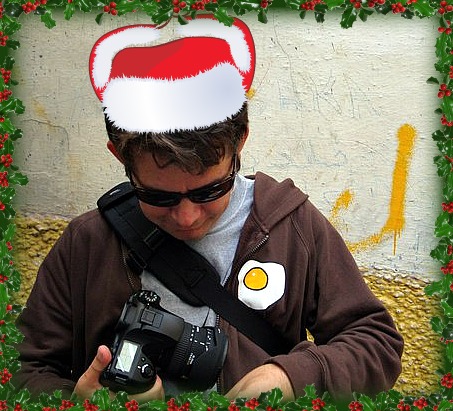
12 NOMADS OF CHRISTMAS: Iain Mallory, English adventurer (7/12)

Current home: Salford, UK
Cyberspace coordinates: Mallory on Travel | Making Everyday an Adventure! (blog) and @MalloryonTravel (Twitter handle)
Recent posts: “The ABCs of Travel — Reflections on a Wanderlusting Life”; “Adventure in Lucerne, Switzerland — Travel Journal”; Cologne: The Bridge of Love Locks (December 2011)

Where are you spending the holidays this year?
I have two trips planned before Christmas: Lucerne for a week and then Cologne for just a few days. That does not leave a lot of time to help with getting the dinner ready for the main day, so I guess Christmas will be spent in the doghouse.

What will you do when you first arrive?
In Lucerne, I’ll be exploring. Cologne is more of a social visit so the Christmas markets will get a battering — along with copious amounts of glühwein and bratwurst.

What do you most like doing during the holidays?
If in Europe, meeting friends for laughs and drinks on a cold evening at a small town Christmas market. But if anything goes, then careering down a piste on two planks of carbon fibre with a group of friends followed closely by plenty of après-ski.

Will you be on or offline?
This year as I’ll be home, I’ll be spending time online, though a little quieter on Christmas day.

Are you sending any cards?
My closest circle of friends will receive a card, handed to them personally at sometime over the festive period when we meet. As for those that I have gotten to know online, hmmm…anybody know a good online card site? I would need some news to produce a newsletter.

What’s the thing you most look forward to eating?
During my travels, I’ll be staying at a veggie house so most definitely looking forward to the turkey although I’ll have to go out for it myself, a day or so before the big day.

Can you recommend any good books other expats or “internationals” might enjoy?
I’ve always loved The Worst Journey in the World by Apsley Cherry-Garrard, about Scott’s final Antarctic expedition (Cherry-Garrard was the youngest member of Scott’s team and one of three men to survive the notorious Winter Journey). Any of the mountaineering books by Joe Simpson is worth reading. These days I don’t have that much time to read but when I do, I prefer mountain or exploration literature. I’m looking forward to finding some time to read The Mammoth Book of Adventures on the Edge, by Jon E. Lewis — a collection of 28 eyewitness accounts of climbing adventures on the world’s greatest mountains.

If you could travel anywhere for the holidays, where would it be?
Mount Everest or maybe Mount Erebus (in Antarctica) for skiing. And I really have to bring in the New Year in Sydney one day.

What famous person or persons do you think it would be fun to spend New Year’s Eve with?
Billy Connolly or Peter Kay would be the funniest people to party with over New Year; David Attenborough and Ranulph Fiennes would provide the most fascinating stories.

What’s been your most displaced holiday experience?
I like to think that it is possible to adapt to most cultures and environments and therefore fit in well, but if I had to pick anywhere, it is hard not to feel a little alien in India. Every day seems to throw up a new surprise that often can be quite shocking.

How about the least displaced experience — when you’ve felt the true joy of the season?
Any time when I’m surrounded by friends, it doesn’t matter where I am. The feeling is one of belonging and being completely at home.

How do you feel when the holidays are over?
Excited; the New Year always offers new opportunities and the potential to be an amazing year.

On the first day of Christmas, my true love said to me:
SEVEN SKIERS A-PARTYING,
SIX SPOUSES TRAILING,
FIVE GOOOOOOOFY EXPATS.
FOUR ENGLISH CHEESES,
THREE DECENT WHISKIES,
TWO CANDY BOXES,
& AN IRISHMAN IN A PALM TREE!

STAY TUNED for Monday’s featured nomad (8/12) in our 12 Nomads of Christmas series.

If you enjoyed this post, we invite you to register for The Displaced Dispatch, a round up of weekly posts from The Displaced Nation, with seasonal recipes, book giveaways and other extras. Register for The Displaced Dispatch by clicking here!

Related posts:

12 NOMADS OF CHRISTMAS: Santi Dharmaputra, Indonesian expat in Australia (6/12)

Current home: Sydney, Australia
Past overseas locations: Germany, USA, The Netherlands, Syria
Cyberspace coordinates: Trilingual: Indonesian, French, English | world trotters raising two multilingual kids (blog)
Most recent post: “”A Woman’s Work” (my article in The Jakarta Globe)” (December 23, 2011)

Where are you spending the holidays this year?
At my parents’ house in Indonesia.

What will you do when you first arrive?
Hugging and kissing my parents.

What do you most like doing during the holidays?
Spending time with family and old friends.

Will you be on or offline?
Online.

Are you sending any cards?
I usually write greetings on my FB wall or my blog.

What’s the thing you most look forward to eating?
Any kind of Indonesian food. Pineapple tarts (a festive Indonesian cookie) and kastengel (Indonesian cheese sticks) are among my favorite guilty-pleasures.

Can you recommend any good books other expats or “internationals” might enjoy?
Trailing wives — regardless of whether they are sojourners or seasoned expats — might appreciate:
1. A Broad Abroad: The Expat Wife’s Guide to Successful Living Abroad, by Robin Pascoe (The Expatriate Press, 2009)
2. A History of the Wife, by Marilyn Yalom (Harper, 2001)
These are two among many books that have made me feel more empowered. By reading widely, I’ve come to understand that (trailing) wives everywhere and in every era have struggled to find happiness, just as I have. 🙂

What’s been your most displaced holiday experience?
I spent part of my childhood in The Netherlands. I loved it when Sinterklaas visited our school and gave us presents. When my family moved to Syria, I was disappointed: no Sinterklaas! By the time I returned to Indonesia at age 11, I didn’t believe in Santa. To this day, though, I believe that Sinterklaas is the only real Santa (LOL).

How about the least displaced experience — when you’ve felt the true joy of the season?
Tricky. I’m an adult TCK married to another adult TCK, and we’ve continued moving around the globe in our adulthood. I can feel both displaced and part of a place at the same time. But if I had to pick one occasion, it would be when I witnessed my trilingual children celebrating the holidays with their paternal relations in Alsace, France. Their granny and great-granny spoiled them, and it was lovely to see my kids so happy. I felt very at home in my husband’s French family. At the same time, though, I felt displaced — I was missing my own family in Indonesia.

How do you feel when the holidays are over?
Also tricky, as it depends on where we happen to be. Last year we spent the holidays on our own, just the four of us. My husband was too busy working and had only two days off. I was left to entertain the kids during their six-week school break (in Australia, Xmas break is the equivalent of the long summer break in the Northern Hemisphere). At that time, we’d been living in Sydney for less than a year, so we spent most of the time exploring the beach.

When we were living in Munich, we spent two Christmases with my husband’s family in Alsace, and it was sad each time we left. As adult TCKs ourselves, my husband and I are used to living with our nuclear families, so it was a novelty to spend those two Xmases with the extended family, including my husband’s siblings and their kids. Our kids were even happier with their grannies and cousins around, and the same was also true of us (at least during holiday seasons ;)).

When living in Chicago, we tended to use the time between Xmas and New Year for road trips. Sometimes we were traveling in snowstorms — so were happy and relieved to arrive back home safely.

While we were in Holland, I worked as a lawyer and used to enjoy the Xmas dinner held by the office along with the generous Xmas bonus. But when I had to return to the office after the New Year, I did so rather reluctantly — LOL.

The last time I spent New Years in Jakarta was in 2001. My brothers, husband and I (we didn’t have kids yet) stayed at a hotel to celebrate New Year’s Eve. It was kind of sad to leave Jakarta to return to the winter season in Europe (we were in Holland then).

This year, we traded in Australian summer for the Indonesian rainy season. Temperature wise, though, there’s almost no difference. I guess our kids will be sad to leave their Indonesian grandparents and cousins when we go back to Sydney.

On the first day of Christmas, my true love said to me:
SIX SPOUSES TRAILING,
FIVE GOOOOOOOFY EXPATS.
FOUR ENGLISH CHEESES,
THREE DECENT WHISKIES,
TWO CANDY BOXES,
& AN IRISHMAN IN A PALM TREE!

STAY TUNED for tomorrow’s featured nomad (7/12) in our 12 Nomads of Christmas series.

If you enjoyed this post, we invite you to register for The Displaced Dispatch, a round up of weekly posts from The Displaced Nation, with seasonal recipes, book giveaways and other extras. Register for The Displaced Dispatch by clicking here!

Related posts:

12 NOMADS OF CHRISTMAS: Robin Graham, Irish Expat in Spain (1/12)

Current home: Tarifa, Spain
Past overseas locations: UK, Netherlands, Israel, and a previous stay in Spain
Cyberspace coordinates: a lot of wind… (blog) and @robinjgraham (Twitter handle)
Most recent post: “Gran Bretaña” (December 21, 2011)

Where are you spending the holidays this year?
In Hampshire, England. My mother lives there now with her husband, as does my brother and his family.

What will you do when you first arrive?
Once all the greetings are out of the way I may well go for a walk. I’ll be in the town where I spent my adolescent years and there will be memories and perhaps one or two stories for my fiancée, who will be visiting for the first time.

What do you most like doing during the holidays?
TV off, lights off. Candles on, perhaps a fire. To sit in the near dark and talk; to feel connected to all the people who are doing that around the world and to those who have done it down through the centuries. I am not religious but something about gathering with loved ones in the depths of winter seems to run deep.

Will you be on or offline?
I will tell myself to be offline and will fail. Lessline? Halfline? Online Lite?

Are you sending any cards?
Don’t do cards as a result of a selfish and entirely misspent youth. Not going to start now.

What’s the thing you most look forward to eating?
Tricky. I don’t have much of a sweet tooth. If there’s goose I’ll be happy. Roast potatoes never hurt either.

Can you recommend any good books other expats or “internationals” might enjoy?
Ghosts of Spain (2008) is an account of a journalist’s (Giles Tremlett‘s) trips around the country in search of its hidden history, particularly with regard to the civil war and Franco era, and how the country has changed since that era ended with his death in the mid-seventies. It fills a gap that I would have thought was there for many expats in many countries; a chance to get under the skin of your adopted country in your own language.

Foreign Flavours is the second anthology from the online writers group Writers Abroad. The theme is food (and drink) as experienced by the expat, and the collection is nothing if not varied — from short stories to journalistic pieces to recipes; it’s a real kitchen companion. All of the proceeds from the book go to the Book Bus, a registered charity that aims to provide books to and increase literacy rates among children in the developing world.

If you could travel anywhere for Christmas, where would it be?
I was brought up on the premise that an ideal Christmas would involve snow and reindeer, so the notion of an isolated but cosy log cabin in the woods of Lapland has a distinct appeal. Family around me — great. Just my fiancée — better.

What famous person do you think it would be fun to spend some time time with over the holidays?
Richard Dawkins. We could pontificate on the merits of an atheist world view whilst getting tipsy on eggnog, pigging out on Advent chocolates and singing Christmas carols. I hear he does a mean rendition of “Silent Night,” and I’m sure he’d be good company.

What’s been your most displaced Christmas experience?
I spent one Christmas entirely alone in Holland. Broke. Cue violins — it was an episode in that misspent youth I mentioned. My least Christmassy Christmas.

How about the least displaced experience — when you’ve felt the true joy of the season?
When I was a child most Christmas cards, cookie tins and cake wrappers would, for some reason, feature images of snow-laden Bavarian countryside. Castles and cutesy villages with snowy candlelit windows in the darkness. So to find myself in Bavaria a few years ago with my fiancee’s folks, watching families sled down a nearby hill in the evening, attending midnight mass in a 14th century church with an exquisitely painted ceiling, sitting in the house with candles and glühwein and stollen; that would have to be the one that ticked all the boxes for me.

This Christmas coming will be special, too — a family gathering such as there hasn’t been for long time.

How do you feel when the holidays are over?
Honestly? Relieved, ready to get on with it!

On the first day of Christmas, my true love said to me:
AN IRISHMAN IN A PALM TREE!

STAY TUNED for tomorrow’s featured nomad (2/12) in our 12 Nomads of Christmas series.

If you enjoyed this post, we invite you to register for The Displaced Dispatch, a round up of weekly posts from The Displaced Nation, with seasonal recipes, book giveaways and other extras. Register for The Displaced Dispatch by clicking here!

Related posts:

CLASSIC DISPLACED WRITING: Albert Schweitzer, early humanitarian & medic without borders

Fifty years ago, “Albert Schweitzer” was a household name. Nowadays it is hard to find anyone who knows who he is. But given our current theme of looking at those who’ve displaced themselves on behalf of humanitarian causes, today I would like to resurrect this great man for the purpose of honoring him with a membership in our Displaced Hall of Fame.

Were he still alive, Schweitzer, a brilliant theologian and musical genius who received the 1952 Nobel Peace Prize for his philosophy known as Reverence for Life, might not be all that flattered.

Then again, considering that he chose to spend much of his time living simply and without pretension in Africa, is it too far fetched to think he’d “get” what the Displaced Nation is all about? He might even have a good wheeze at learning of his elevated status among our citizenry…

A displaced early life

Schweitzer was born in 1875 in Alsace, which at that time belonged to the German Reich (it would change hands four times between France and Germany over the next 75 years).

According to Professor J. Rufus Fears who has lectured on Schweitzer for the Teaching Company:

Alsatians are their own people — neither French nor German, though they like to say they eat as much as the Germans and as well as the French.

Did being born an Alsatian give Schweitzer a head start on leading a displaced life? It’s tempting to think so. Curiously, although he spoke two languages — actually, three: Alsatian (a dialect of German), German and French — he professed not to believe that anyone was ever truly bilingual. He maintained that a person’s true native tongue could be discovered by asking:

What language do you count your change in when you give someone a dollar bill?

A displaced career

For our ceremony inducting Schweitzer into the Displaced Hall of Fame, we would do well to choose one of Bach’s organ works. While still in his twenties, Schweitzer distinguished himself not only in his chosen field of theology, but also as an organist and musicologist who specialized in Bach.

He wrote two early works that established his reputation in both of these fields: The Quest for the Historical Jesus (German, 1906; English translation, 1910), arguing that Jesus was human, not divine; and J.S. Bach (enlarged German edition 1908; English translation, 1911), a study of the life and art of Johann Sebastian Bach.

As if being an accomplished theologian and notable organist weren’t displaced enough, while still in his twenties, Schweitzer decided he would go out into the world and devote his life to humanity rather than remaining locked up in the cloisters of academe.

Upon turning 30, he shocked and horrified his parents and friends by declaring his intention to become a medical student in preparation for the life of a physician in French Equatorial Africa.

While studying medicine, he married Helene Bresslau, who although a scholar herself, became a trained nurse in order to share her husband’s life in Africa.

In 1913 the couple set sail from Bordeaux for what today is Lambaréné, Gabon.

The conditions the Schweitzers faced were desolate in the extreme. The climate — characterized by fiercely hot days, clammy nights and seasonal torrents of rain — was appalling. Besides the usual diseases, the natives were suffering from leprosy, dysentery, elephantiasis, sleeping sickness, malaria, yellow fever and animal wounds.

But the couple persisted through thick and thin (including a period of being interned during World War I), setting out to build a hospital on the grounds of the Lambaréné station of the Paris Missionary Society (they would later move the hospital to an even more remote spot).

Eventually, Schweitzer’s wife went back to Europe to raise their daughter, while Schweitzer himself carried on working in, and on behalf of, this remarkable medical facility until his own death in 1965. By then the compound had grown to more than 70 buildings, 350 beds and a leper village of 200, and the hospital was staffed by 3 unpaid physicians, 7 nurses and 13 volunteer helpers.

(It still exists today as the Albert Schweitzer Hospital, one of the leading research centers in sub-Saharan Africa training African doctors in the treatment of diseases such as HIV/AIDS, malaria and tuberculosis.)

Schweitzer, who passed away in the hospital itself, was buried next to the Ogooué River in a ceremony attended by hospital workers, lepers, cripples and other patients.

An epiphany of hippopotaman proportions

Schweitzer considered his work as a medical missionary in Africa to be a small recompense for the injustices committed by the African Continent’s European colonizers. In a sermon preached in 1905, he proclaimed:

Oh, this “noble” culture of ours! It speaks so piously of human dignity and human rights and then disregards this dignity and these rights of countless millions and treads them underfoot, only because they live overseas or because their skins are of different color or because they cannot help themselves.

By the time he dedicated his life to serving the natives of Africa, Schweitzer could no longer make the intellectual case for Jesus’s divinity. The French had recruited him to work in their mission as a physician not a pastor (somehow a Lutheran who didn’t believe in Christ was just a little too displaced!). Yet Schweitzer remained deeply spiritual. He wanted to find a philosophy that would persuade others to displace themselves to the most desolate places on earth, just as he had done — separate and apart from a proselytizing mission.

While on a boat trip on the Ogooué, Schweitzer noticed a herd of hippopotamuses swimming in the water, and thought to himself: what purpose does the hippo serve? He decided that the spirit of the universe had made this creature — and that this was reason enough to treat it with respect.

From that point on, he promoted the idea that man, in his quest for dominance, should never forget the need to show reverence and awe for all living creatures.

For Schweitzer, such a belief should suffice as motivation to reach out and help others who are less fortunate than oneself. You can almost sense his relief at discovering this philosophy from the epilogue he attached to his major autobiographical volume, Out of My Life and Thought:

Two observations have cast their shadows over my life. One is the realization that the world is inexplicably mysterious and full of suffering, the other that I have been born in a period of spiritual decline for mankind.

I myself found the basis and the direction for my life at the moment I discovered the principle of Reverence for Life, which contains life’s ethical affirmation.

His Reverence of Life philosophy further led him to warn against man destroying animals (what we know today as “animal rights”) as well as his environment — he was an early environmentalist, who predicted that man “will end by destroying the Earth” (Rachel Carson dedicated Silent Spring to him).

Schweitzer tried to put these principles in practice in all sorts of ways, but the two examples I like best are his refusal to teach his pet parrot how to talk (talking would lower its dignity), and his decline of an offer by a foundation to replace his dug-out canoe with a motorboat for fear it would pollute the Ogooué River.

Schweitzer’s relevance for today’s global nomads

In his lecture on Albert Schweitzer, Professor Fears insists that this early humanitarian still speaks to us. I agree and would add that he positively shouts to those of us who’ve chosen to live much of our lives abroad. For a start, we can find inspiration in his refusal to follow a conventional career path (a quality that, by the way, drove the bureaucrats in charge of French Equatorial Africa crazy).

But the really impressive thing about Schweitzer, of course, is his unconquerable spirit, his desire to do good. Despite living through two world wars, he carried on believing in mankind’s potential to treat life, in all its forms, with the reverence it deserves.

Even after World War II, when Albert Einstein called on him to speak out against the atom bomb, he did so despite his better instinct to get involved in politics (and suffered the fall-out of having funds withdrawn from his hospital when the FBI and CIA began persecuting him for his anti-nuclear-arms-race position).

The way I see it, we expats and “internationals” are perfectly positioned to understand where Schweitzer was coming from. Our travels have taught us that life, whether human or animal, deserves respect no matter where one is on the globe.

But how do we share this knowledge? What do we actually do with it?

As mentioned in my post on Richard Branson at the start of November, for some of us it’s challenge enough to cultivate our own gardens and hope that in doing so, some of our attitudes will rub off on others.

But Schweitzer, whom Fears calls a “living testimony to goodness,” clearly believed in the need to do more. And after a month of celebrating those who’ve done more — see our profiles of Adria Schmidt, Jennifer Lentfer, Matt Collin, and Vilma Ilic — I’m prepared to concede he is right.

To give the redoubtable Albert Schweitzer the final word:

I have always held firmly to the thought that each one of us can do a little to bring some portion of misery to an end.

STAY TUNED for Monday’s reflections on global philanthropy by third-culture-kid columnist Charlotte Day.

If you enjoyed this post, we invite you to subscribe to The Displaced Dispatch, a weekly round up of posts from The Displaced Nation, plus seasonal recipes, book giveaways and other extras. Sign up for The Displaced Dispatch by clicking here!

Related posts:


RANDOM NOMAD: Vilma Ilic, Research Associate for Sub-Saharan Africa (Social & Economic Development Projects)

Born in: Sarajevo, Bosnia (at the time of my birth, still Yugoslavia)
Passports: Happily, I carry a USA passport — and realize how lucky I am!
Cities/States/Countries lived in: Utah (Salt Lake City): 1985-90; Ohio (Columbus): 1991-99; Washington, DC: 2000-01; Washington (Randle*): 2002; Connecticut (Storrs & Hartford): 2003-05 & 2006-08; Germany (Hamburg): 2006; New York (New York): 2008-10, 2011-present; Uganda (Kalisizo Town, Rakai District): 2010-11.
Cyberspace coordinates: Still a work in progress, but stay tuned!
* A small community deep in the temperate rainforest of the Pacific Northwest, between Mt. St. Helen’s and Mt. Rainier.

What made you leave your homeland in the first place?
My mother was accepted to graduate school at the University of Utah. Both my mother and father yearned to leave Bosnia (formerly part of Yugoslavia), for no unusual reasons: they sought greater academic and career opportunities and a better future for their children. They also sensed the progressing demise of our country, which started promptly after Tito’s death. Unlike the rest of our family, friends, and neighbors, my family fled the country before the civil war and genocide began in the early 1990s.

Is anyone else in your immediate family “displaced”?
My parents are definitely displaced. Similar to other immigrants who’ve spent their childhood, adolescence, and young adult years in their home country and then lived more than thirty years in their adopted country, my parents have never quite fit into the United States. The extent to which immigrants like them do or do not have control over “fitting in” remains a mystery to me — resting as it does on so many social, racial, cultural, religious, economic, geographic, and ethnic variables. Maybe they are destined to always feel displaced? People like my parents tend to feel at “home” only when they have found pockets of people from their homeland who have created sub-communities in whatever locales they reside. But then when my parents actually do go home after spending so much time abroad, their friends and family regard them differently: “You’re an American now.” Comments like those — from your own family — can make you feel as though you’re living on the “moon.” You’re seen as something of a traitor, regardless of the amount of remittances you’ve sent home.

Describe the moment when you felt most displaced.
For me, feeling displaced has to do with suffering through a bad life decision — you only realize it’s a terrible choice when it’s too late. Call it poor planning or a penchant for ignoring sage advice, but unfortunately, I have a lot of experience in this realm. Working in Hamburg, Germany, was like that for me. I went there to teach English as a foreign language to Germans. I absolutely loathed the work — and also didn’t have a positive attitude. In retrospect, it’s pretty distressing to think that my time in Hamburg could have been much richer. Although it’s ethnically homogenous and the German culture is a tough one to crack, Hamburg is a wonderful northern European city with an abundance of parks, museums, delicious restaurants, festivals, free events, concerts, shopping, affordable living, social services, and whatever you wish for in a metropolis with enough space to never feel stifled. Yet I felt displaced the entire time I was there.

Describe the moment when you felt least displaced.
The moment I set foot in the Pearl of Africa. There’s something about Uganda. It’s a loving country — the people are warm, welcoming, celebratory — and the terrain itself, not to mention the climate, is extraordinarily beautiful. All of these elements combined — the beauty of the people, the country, the climate — made me feel instantly at home. Of course, in a place like Uganda, I stick out in the crowd — hence am always at the mercy of onlookers and of people incessantly yelling “Muzungu!” But even when I was the only muzungu for miles and miles, and didn’t understand the language, I felt more comfortable and at peace there, than I have anywhere in the world.

If I had to analyze it, I’d say my comfort level also had to do with the work I was doing in that country. I was on a small team that was part of the Suubi Research Project: we’d been given the task of designing a sustainable school-lunch program for 10 primary schools in southern Uganda. The majority of pupils don’t eat anything all day because their parents/caregivers cannot afford the nominal lunch fees. For those who can afford it, the midday meal consists of boiled maize-meal and water in a soupy consistency. Together with school teachers and administrators, pupils, and community members, we tried to come up with a program that would be nutritional but also generate a profit for schools in the long run.

To do this kind of work, I had to access parts of my brain, psyche, and heart that, in many highly-industrialized Western countries, are frequently subdued, or even sabotaged.

You may bring one curiosity you’ve collected from each of your adopted countries into the Displaced Nation. What’s in your suitcase?
From Zagreb, Croatia: A licitarka srce, an ornamental-sized heart-shaped cookie. Not intended for eating, it’s hardened, painted red, and adorned with loving phrases or sketches of historical sites in Zagreb. It’s a typical souvenir, but hasn’t lost its significance for me. And better yet, it’s small and lightweight.

From Sarajevo, Bosnia: A džezva, a pot used to make Turkish coffee, which locals consume about 4-5 times per day in the street cafes of Sarajevo. Pack it in your suitcase, and its uncomplicated design makes it possible to enjoy a strong Turkish coffee anywhere in the world — as long as there are finely ground coffee beans, water, and fire.

From Uganda: Handmade baskets woven from grasses, tree-bark hats, banana-fiber mats, and colorfully printed smocks. I would give all of these items away as gifts to Displaced Nation residents as I know I’ll keep returning to Uganda.

From the US: All of my iLife appendages — nothing else matters. But if there is still space, I’d pack a good pair of American blue jeans, running shoes, powdered electrolyte drink mixes, and probiotics.

You’re invited to prepare one meal based on your travels for other Displaced Nation members. What’s on the menu?
I’m going to choose the food from my home country, and various other parts of former Yugoslavia, which remains my favorite. I would prepare an assortment of meat, cheese and cabbage burek, with kajmak and kupus salata on the side.

For anyone needing to top off the meal with something sweet, I’d offer plates of oblande, tulumbe, kadaif, and krempite.

Beverages would include red wine from Macedonia and some sort of rakija (domestic spirits) as an aperitif.

And for an African touch, I’d consider including fresh tilapia from Lake Victoria, as well as fresh pineapples, avocado, mango, and papaya.

You may add one word or expression from the countries you’ve lived in to The Displaced Nation argot. What will you loan us?
From Uganda: You are lost. The first time a Ugandan said this to me (they say it in English), it took me some time to realize that in fact, I was very much found. After hearing it time and again, I interpreted it to mean: “I haven’t seen you in a while, where have you been?” or “I miss you.”
From American English: It’s not so much a word but the habit Americans have of inventing new words by converting nouns into verbs or combining two words/concepts: eg, voluntouring, voluntourism, professionalize, beveraging, tween…

This month we are looking into “philanthropic displacement” — when people travel or become expats on behalf of helping others less fortunate than themselves. Do you have a role model you look up to when engaged in this kind of travel — whose words of advice you remember when you find yourself in a difficult situation?
I would choose my father for this one. Some advice he has dished over the years has actually stuck. Many immigrant parents wish their displaced and nomadic offspring would settle down in the burbs already — but not my dad. He genuinely supports what I do. Here’s what he said:

Who you are, in terms of your skin color, gender, ethnicity, ability, whatever it may be, it’s all by chance. No one should be so attached to their position in society, because it could change at any moment, and you didn’t have a choice in the first place.

My interpretation of that is, regardless of how you position yourself or where other people place you in the ruthless global hierarchy, what you value in yourself, in other people, and in life, is of prime importance. You are not superior or inferior to anyone on this planet. We are all the same. With that approach, nothing is scary and everyone is valuable.

Voluntourism is said to be the fastest growing segment of the travel industry (itself one of the world’s fastest growing industries). Do you think this kind of travel can help the uninitiated understand the problems our planet is facing?
A lot people, myself included, scoff at the term “voluntourism.” We find it disturbing to think that privileged people are paying very large sums of money to spend a few weeks or months in a low-income country, somewhere in the global south or South/East Asia — to do what, exactly? How much of this money is being invested into the communities in which the voluntourists are traveling/visiting, and how much is supporting the Western-based organization? I think we know the answer.

On the other hand, I realize that this industry provides an organized, safe, and coordinated way for people who wouldn’t otherwise have the opportunity to visit certain parts of the world. I just don’t think the voluntourists should be misled. It is both their — and the organization’s — responsibility to fully understand the implications of their visit, and the impact of their visit on the community.

It’s difficult to measure how much this type of exposure can change one’s attitude toward and knowledge about a particular place and its inhabitants. I would advise anyone who has never left a highly-industrialized country and has enough resources, simply to board a flight to a poor developing country. The real learning and growing happens when you leave the comfort of a temporary expat community, the organized lodging, the capital cities and urban areas — and actually travel, by local means, to very remote and rural villages. It is these very raw, uncomfortable, and painful experiences — when people break the tourist habit of simply arriving, observing, interacting, taking, and leaving — that can lead to major epiphanies.

Readers — yay or nay for letting Vilma Ilic into The Displaced Nation? Tell us your reasons. (Note: It’s fine to vote “nay” as long as you couch your reasoning in terms we all — including Vilma — find amusing.)

img: Vilma Ilic and a friend from Zagreb nervously — owing to their leftover Catholic guilt — navigate the Virgin Mary’s blessed cove in the bluffs of Šibenik, a town on Croatia’s Dalmatian Coast (summer 2009).

STAY TUNED for what may or may not be tomorrow’s installment from our displaced fictional heroine, Libby, who has been in a state ever since her creator, Kate Allison, went missing on Halloween. Has she done an Agatha Christie on her? (What, not keeping up with Libby? Read the first three episodes of her expat adventures.)

If you enjoyed this post, we invite you to register for The Displaced Dispatch, a round up of weekly posts from The Displaced Nation. Includes seasonal recipes and book giveaways. Register for The Displaced Dispatch by clicking here!

Related posts:
