The Displaced Nation

A home for international creatives

Tag Archives: China

BOOKLUST, WANDERLUST: Beach bound? Check out summer reading recommendations from featured authors (1/2)

booklust-wanderlust-2015

Attention displaced bookworms! Our book review columnist, Beth Green, an American expat in Prague (she is also an Adult Third Culture Kid), has arrived with a treasure chest full of recommended reads to take you through the summer. NOTE: Check out Part Two here.

Hello again, Displaced Nationers!

Summer is upon us—well, for readers in the northern hemisphere, that is! And for those in the United States, Fourth of July weekend is coming shortly. Even if you’re not beach bound, perhaps you are at least picturing yourself sitting in a beach chair feeling the sand through your toes, the waves pounding towards you, the fresh, bracing sea air filling your lungs…

And what’s that you have in your hand—a book or a Kindle?

I find the sound of the waves and the ocean breeze the perfect conditions for escaping into other worlds that writers conjure up for us in their books. This summer, I’ve already been to a few local parks with my e-reader, and I’ll soon be topping it up with some of the books from our best-of-2014 list for an overseas trip. But I’m always on the look-out for fresh new material, and as there are miles to go before I can flop down on the beach of my dreams, I fear I’ll run out of prime reading matter by then. With this eventuality in mind, I decided to reach out to a few of the authors whose books I’ve recently read or reviewed, along with a few of my bookish friends, to see what books they recommend taking on vacation. I asked them to tell me:

Summer Reading 2015

Photo credits: Amazon Kindle PDF, by goXunuReviews via Flickr (CC BY 2.0); beach chair and sandy feet via Pixabay.

They responded with recommendations that seem tailor made for an audience of international creatives. Enjoy! Part 2 will be posted on Friday.

* * *

ALLI SINCLAIR, world traveler, Australian romance author and former co-blogger at Novel Adventurers: I recommend that you bring one travel book, one classic, and one novel. The following make a good combination:

ChasingtheMonsoon_cover_x300Chasing the Monsoon: A Modern Pilgrimage Through India, by Alexander Frater (Henry Holt & Co, May 1992)
There are some books that touch something in your soul that stays with you forever. For me, Chasing the Monsoon falls into that category. Originally published in the early nineties (and thankfully, still available!), Alexander Frater follows the monsoonal rains from the Kerala backwaters in southern India to Cherrapunji, in northern India—known as the wettest place on earth. Frater connects beautifully with the people he meets and he writes for all senses, giving the reader a full immersion into one of the most captivating countries on Earth.

The Ascent of Rum Doodle_cover_x300The Ascent of Rum Doodle, by W.E. Bowman (Vintage Classics, 2010)
Originally published in 1956 but still in print, this book is one of the most celebrated mountaineering stories of all time. The 1950s saw some of the world’s highest mountains successfully climbed (including Everest), and this book is a parody of mountaineering at it’s finest…er, worst. There’s a route finder who is constantly lost, a diplomat who continually argues, and a doctor who is always ill. Rum Doodle will most definitely appeal to fans of Bill Bryson, who wrote the introduction to the book’s international edition (published in 2010).

HellofromtheGillespies_cover_x300Hello From The Gillespies, by Monica McInerney (Penguin, 2014)
I’m a long time fan of Monica McInerney’s books, maybe because Monica is a “displaced” person: having grown up in Australia, she has split her time between Australia and Ireland for the past 20 years. This book is mostly set in outback Australia but with ties to England. Angela Gillespie, a mother of four adult children, has sent out a regular Christmas letter to friends and family for thirty years. The notes are always cheery and full of good news but this year, her note details the unsettling truth of how her family has fallen apart. If you enjoy family sagas with humour and heart, you can’t go wrong with this book. (True, some people recommend it for the holidays, but it’s summer in Australia at Christmas time, remember?)


BRITTANI SONNENBERG, adult TCK, current expat and author of Home Leave (which we reviewed in November): I would pack the following books (assuming I’d be packing it for someone else, who hadn’t read them yet).
Sonnenberg_collage

The Dog, by Joseph O’Neill (Vintage, September 2014)
It’s a devilish, compelling take on cosmopolitan and expat life by the TCK author of Netherland. (Joseph O’Neill was born in Cork, Ireland, in 1964 and grew up in Mozambique, South Africa, Iran, Turkey, and Holland. He now lives in New York City.)

Ghana Must Go, by Taiye Selasi (Penguin, 2014)
This is an intimate examination of a splintered family, set in Accra, Lagos, London, and New York.

All My Puny Sorrows, by Miriam Toews (McSweeney’s, 2014)
One of the saddest and funniest books I’ve ever read; an honest, moving portrayal of sisters and mental illness.


CHRISTINE KLING, author of travel- and sailing-related thrillers: I’ve just finished up the edits on a the third novel in my Shipwreck Adventure series, and I’m looking forward to taking a bit of time off from writing and working at reading my way through some of the long list of books I’ve been wanting to read. The three books I’d take in my beach bag include two novels and a combination cookbook/memoir/travelogue.

The-Janissary-Tree_cover_x300The Janissary Tree, by Jason Goodwin (Sarah Crichton Book, 2006)
My husband and I are contemplating building a new boat in Turkey, and after our recent visit, I’ve fallen in love with the country. Jason Goodwin has written travel books, histories, and thrillers, and I’ve been waiting for the chance to begin reading his work. The Janissary Tree, winner of the 2007 Edgar Award for Best Novel, is the first in what is now his five-book series set in in the waning days of the Ottoman Empire’s Istanbul. The series features a very unique protagonist Yashim Togalu, a eunuch guardian. In this book, Yashim is called upon to investigate a series of crimes including murder and theft of jewels.

Marina_cover_x300Marina by Carlos Ruiz Zafón (Little, Brown Books for Young Readers, 2014)
The first book I read by this author was The Shadow of the Wind, which I often cite as one of my favorite books of all time. I knew Zafón had written a young adult novel that was published in 1999 and became a “cult classic” in Spanish, and since I enjoy good YA novels like the Harry Potter series and the Hunger Games, I was happy to see this book finally released in English in 2014. Marina is set in Barcelona around 1980 at the end of Franco’s regime. This gothic tale is touted as containing elements of mystery, romance and horror as a young boarding school boy meets the exotic, dark Marina. Together they embark on a series of adventures where they meet the kind of grotesque Barcelona characters Zafón does so well.

Sea-Fare_cover_x300Sea Fare: A Chef’s Journey Across the Ocean, by Victoria Allman (Norlightspress Com, 2013)
Years ago I worked as a chef on our owner-operated charter sailboat, and I know what it is like to have to create meals for demanding guests. Victoria Allman is in an entirely different category as she trained as a chef and has worked your years on multi-million dollar yachts. In Sea Fare, Allman has combined the tales from her beginning as a green Canadian chef looking for a job in the charter yacht industry to the joys of shopping in exotic markets from Italy to Vietnam. From the descriptions of her experiences on board the yacht, dealing with crew problems and falling in love with the captain, the stories are grand, but the recipes and the outstanding color photos of the food, will probably cut my trip to the beach short as I head home to try some new dish.


HEIDI NOROOZY, adult TCK, translator and author of multicultural fiction: I just returned from a research trip to Germany, and my choices seem to reflect that! (I went there because I’m writing a novel about an East German detective, Johannes Christian Alexander Freiherr von Maibeck—I know, it’s a bit of a mouthful—I created for a short story I once wrote. The setting is Leipzig, German Democratic Republic, 1981.)

The-Leipzic-Affair_cover_x300The Leipzig Affair, by Fiona Rintoul (Aurora Metro Press, May 2015)
Set in 1985, this novel tells the story of a Scottish student at Leipzig University who falls in love with an East German girl and stumbles into a world of shifting half-truths. Well written and fast paced, the story captures the atmosphere of its setting very well, a world where nothing is ever quite what it seems. As one reviewer writes: “The book is expertly written and seems to me to be a very comprehensive picture of what it was like to live in the East German state.” (Rintoul, a Scot who lives in Glasgow, gathered her material for the book by visiting East Germany and meeting a woman who had been imprisoned. She also looking at extracts of STASI files on people she met.)

Zoo-Station_cover_x300Zoo Station: Adventures in East and West Berlin, by Ian Walker (Atlantic Monthly Press, 1988)
British journalist Ian Walker, who once covered Central America for the Observer (and never managed to write his promised volume on Nicaragua), produced this travelogue on the two Berlins back in 1988. It depicts bohemian life in the once-divided city, where everyone seemed to be from somewhere else: West Berlin was full of Brits, Asians, Danes, Turks and East German exiles; East Berlin, of Anglo-Austrian expats. Walker’s descriptive narrative and reflections on the broader social issues of the day are what make this book stand out. As one of Amazon reviewer puts it:

Having read “Zoo Station”, I was able to understand why some people regarded East Germany as a pinnacle of socialist achievement, much more preferable to its capitalist twin in the West. It is good travel writing, and is both politically and culturally astute.

The-One-That-Got_Away_cover_300xThe One That Got Away, by Simon Wood (Thomas & Mercer, 2015)
Okay, this one isn’t about Germany, and I haven’t read it yet—but it’s at the top of my summer book bag. Tag line: “She escaped with her life, but the killer’s obsessed with the one that got away.” The story of two grad students in California who decide to take a road trip to to Las Vegas, this suspense novel deals with survivor’s guilt and is bound to be a thrilling ride. (Originally from England, Simon Wood lives in California with his wife.)

* * *

Readers, that’s it for this round; we’ll have another round on Friday (update: check it out here). Meanwhile, have you read any of the above and/or do you have summer reading recommendations to add? Please leave in the comments!

And if you need more frequent fixes, I urge you to sign up for the DISPLACED DISPATCH, which has at least one Recommended Read every week.

STAY TUNED for PART 2 of this post on July 3rd!

Beth Green is an American writer living in Prague, Czech Republic. She grew up on a sailboat and, though now a landlubber, continues to lead a peripatetic life, having lived in Asia as well as Europe. Her personal Web site is Beth Green Writes. She has also launched the site Everyday Travel Stories. To keep in touch with her in between columns, try following her on Facebook and Twitter. She’s a social media nut!

If you enjoyed this post, we invite you to subscribe to The Displaced Dispatch, a weekly round up of posts from The Displaced Nation and much, much more. Sign up for The Displaced Dispatch by clicking here!

Related posts:

DIARY OF AN EXPAT WRITER: Three expat writers walk into a bar . . . and are giving away their books (limited time only!)

American expat in Hong Kong Shannon Young quit her day job last year to become a full-time writer. Here’s the latest entry in her expat writer’s diary.
Diary of an Expat Writer
Dear Displaced Diary,

As you can see from the facetious title of this month’s diary entry, this will not be the usual report on the ups and downs of becoming a full-time expat writer in Hong Kong. I’m shifting gears a bit to tell you about a couple of other writers who share my experience of leaving behind a home in the United States and making a new home in Asia.

In a previous diary entry (it was actually written by my alter ego, Jordan Rivet), I told you about some of my writing friends here in Hong Kong. All of us share a love of writing in English. And I think we all thrive on living in this vibrant international city, which feeds our creativity in all kinds of ways.

At the same time, I’ve been able to connect online (and sometimes in person) with quite a few other expat writers in the region—through my personal blog, social media, and even email. And let’s not forget you, Displaced Diary! You, too, have given me some new connections.

Today I’d like to tell you about two of these friends: Leza Lowitz and Tracy Slater.

Yes, Leza, Tracy and I are the three expat writers who’ve walked into the bar… We are all Americans but come from different backgrounds, and we share the experience of being outsiders in the places where we live. That must be why we enjoy drinking together—and helping each other.

The reason we’ve walked in the bar?

This summer all of us are celebrating the release of our memoirs talking about how we found love, life, and a home abroad.

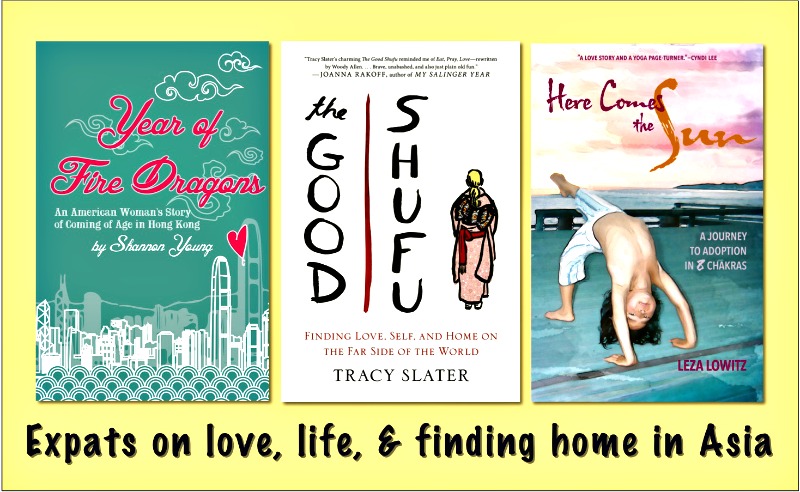
Here are the stories in question:

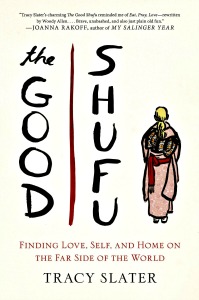
TheGoodShufu_coverThe Good Shufu: Finding Love, Self, & Home on the Far Side of the World, by Tracy Slater (Putnam/Penguin, June 30, 2015)
The Good Shufu is a true story of multicultural love, marriage, and mixups. When Tracy Slater, a highly independent American academic, falls head-over-heels in love with the least likely person in the world—a traditional Japanese salaryman who barely speaks English—she must choose between the existence she’d meticulously planned in the US and life as an illiterate housewife in Osaka. Rather than an ordinary travel memoir, this is a book about building a whole life in a language you don’t speak and a land you can barely navigate, and yet somehow finding a truer sense of home and meaning than ever before. A Summer ’15 Barnes & Noble Discover Great New Writers Selection (as reported in the Displaced Dispatch), The Good Shufu is a celebration of the life least expected: messy, overwhelming, and deeply enriching in its complications.

Fire-Dragons_cover Year of Fire Dragons: An American Woman’s Story of Coming of Age in Hong Kong, by Shannon Young (Blacksmith Books, June 15, 2015)
In 2010, bookish 22-year-old Shannon follows her Eurasian boyfriend to Hong Kong, eager to forge a new love story in his hometown. She thinks their long-distance romance is over, but a month later his company sends him to London. Shannon embarks on a wide-eyed newcomer’s journey through Hong Kong—alone. She teaches in a local school as the only foreigner, explores Asia with other young expats, and discovers a family history of her own in Hong Kong. The city enchants her, forcing her to question her plans. Soon, she must make a choice between her new life and the love that first brought her to Asia. Susan Blumberg-Kason, author of Good Chinese Wife, has called Year of Fire Dragons “a riveting coming-of-age story” and “a testament to the distance people will travel for love.”

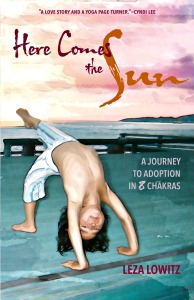
HereCometheSun_coverHere Comes the Sun: A Journey to Adoption in 8 Chakras , by Leza Lowitz (Stonebridge Press, June 2015)
At 30, Californian Leza Lowitz is single and traveling the world, which suits her just fine. Coming of age in Berkeley during the feminist revolution of the 1970s, she learned that marriage and family could wait. Or could they? When Leza moves to Japan and falls in love with a Japanese man, her heart opens in ways she never thought possible. But she’s still an outsider, and home is far away. Rather than struggle to fit in, she opens a yoga studio and makes a home for others. Then, at 44, Leza and her Japanese husband seek to adopt—in a country where bloodlines are paramount and family ties are almost feudal in their cultural importance. She travels to India to work on herself and back to California to deal with her past. Something is still not complete until she learns that when you give a little love to a child, you get the whole world in return. The author’s deep connection to yoga shows her that infertile does not mean inconceivable. By adapting and adopting, she transcends her struggles and embraces the joys of motherhood. “Here Comes the Sun proves that love is not bound by blood. I highly recommend it to anyone interested in that which connects us, holds us together, and makes us family.”—MC Yogi

The bartender looks up and says . . .is this a joke?

Three expat writers— Leza, Tracy and Shannon—walk into the bar…and the bartender wonders what they, and their books, could possible have in common.

True, I tell him, Tracy, Leza and I are rather different. Tracy and Leza are both from liberal Jewish families and are members of Generation X; I’m a Millennial from a large homeschooling family. Leza is from Berkeley; Tracy is from Boston; I’m from Phoenix. Leza writes about yoga; Tracy writes about therapy; I write about fencing. Tracy and Leza live in Japan; I live in Hong Kong. Tracy and Leza each pursued motherhood late in life; I’m a few years away from being ready for children.

Yet the similarities in our life choices and challenges are where our real connections lie. All three of us chose love over the comfort of our home countries. We struggle every day with living far from our families and making our time with them really count, and occasionally experience the joy of connecting unexpectedly with people in our new homes, from in-laws to coworkers to students. We have tried, and keep trying, to make sense of our lives in light of our rather unusual surroundings.

In short we three are displaced; nevertheless we are determined to make the most of the situation and to appreciate that it has fed our creative lives as writers. We have turned ourselves into what the Displaced Nation calls international creatives.

I have read Leza and Tracy’s books and can say without hesitation that if you like Year of Fire Dragons, you will also enjoy The Good Shufu and Here Comes the Sun. Each is a memoir that features a romantic relationship with a man from Asia that has in some way drawn us into our expatriate lives. Each book explores the process of building a new home and life in a new country with someone we love. More importantly, each story is about falling in love with a new place and accepting our new selves.

And now for the fun part, Dear Diary!

3ExpatMemoirsBanner
Click here to enter in the Rafflecopter giveaway.

Three expat writers— Leza, Tracy and I—walk into the bar and start toasting each other, but we’re also carrying a bag with three three books, two paperbacks and one hardback, to give away.

Displaced Nationers who are fans of this column, we’d like you to participate!! Simply click on the above link, and enter your email address in the box. That will count for one entry. You can also tweet and/or comment on this post for additional entries (up to 4). The deadline for entries is July 7; we’ll email the winner on July 8.

By doing this giveaway, we hope to build an even bigger community of people with similar experiences, who can help each other in some of the tough moments of expat and writing life. Finding a community when moving to a new country is vital, and finding a community of like-minded readers and writers is just as important.

It’s also great, as a writer, to feel on occasion that you don’t have to go it alone when it comes to promoting your works, even if you’re an expat living on the other side of the world.

On that note, let’s all raise our glasses.

Cheers!

Gān bēi!

Kanpai!

Shannon Young
AKA Jordan Rivet
www.shannonyoungwriter.com
JordanRivet.com

* * *

Readers, it’s fascinating to discover that three such different American women have all connected overseas and have memoirs coming out at the same time. I think we should offer a toast to them!!

STAY TUNED for next week’s fab posts!

If you enjoyed this post, we invite you to register for The Displaced Dispatch, a round up of weekly posts from The Displaced Nation and much, much more. Register for The Displaced Dispatch by clicking here!

Related posts:

DIARY OF AN EXPAT WRITER: After the hard slog of producing second book in series, the rush that comes with boost to sales

Diary of an Expat WriterAmerican expat in Hong Kong Shannon Young quit her day job last year to become a full-time writer. Here is her latest entry in her expat writer’s diary.

Dear Displaced Diary,

Last month, I told you all about my writing process—all the work that goes into a book before it ever shows up in an editor’s inbox. It’s a slow process requiring perseverance and many hours sitting in a chair every day. And then there’s copyediting, formatting, and a final proofread, after which I finally hit publish.

That’s when things get interesting.

This month, I would even say amazing.

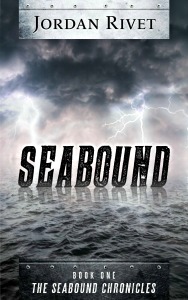
But we’ll get to that. First, let me refresh your memory on where we are. Diary, as you will recall from previous entries, I’ve been writing my post-apocalyptic series, the Seabound Chronicles, under my Jordan Rivet pen name for two-and-a-half years now. The first book, Seabound, came out in November. Sales have been modest, with complimentary reviews but rankings that won’t set the world on fire.

My intention has always been to put out Book Two before doing bigger promotions and (hopefully) seeing bigger results. With the publication of the sequel, Seaswept, at the beginning of this month, I finally had the chance to set that plan in motion.

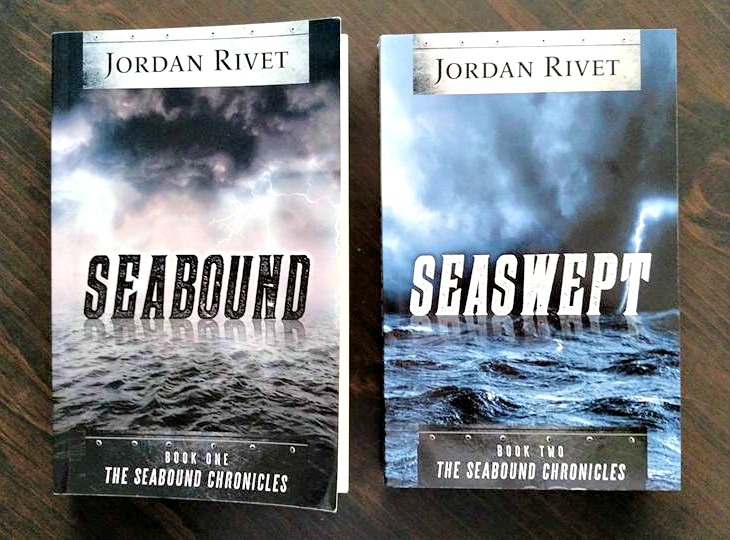
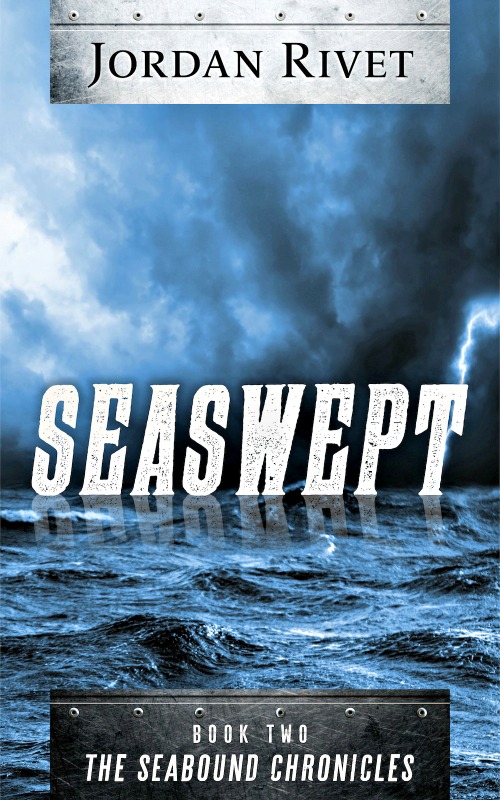
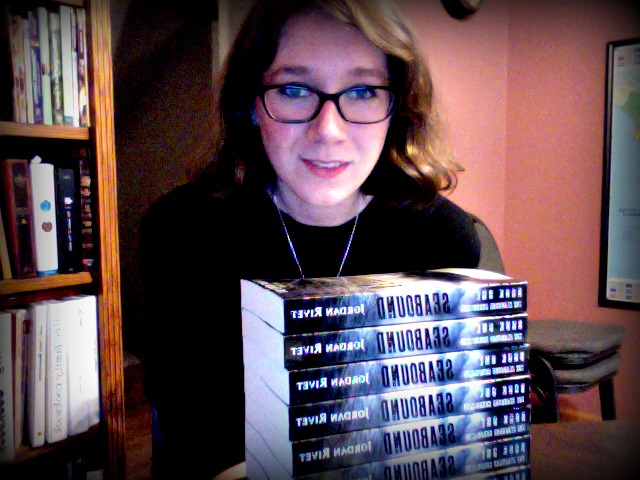
Seaswept and Seabound Paperbacks

Jordan Rivet’s Seabound Chronicles is now a real series, with the publication of Book Two, Seaswept, earlier this month.

She’s got high hopes…

Here’s how it went down. When I released the second installment in the series, it generated sales and a bit of attention for the first book. A few days after Seaswept came out, I put Seabound on sale for $0.99 and advertised it with a couple of book recommendation sites.

My hopes were high, especially as soon I’ll need to decide whether or not to get a new day job. Displaced Diary, as you’ve been following my expat writer journey for a while, you’ll know my big goal is to make a full-time living as a writer, and I’ve been working hard under my own name and a pen name to achieve this. But my savings are running low, and Hong Kong isn’t exactly famous for its low cost of living.

The sale on Seabound lasted five days. For the first two, I booked smaller promo sites—some free, some charging a few dollars for the ads. The sales were similarly modest: 10 on day one and 14 on day two.

To be honest, I was disheartened. Even though these results were consistent with the reach of the smaller promotional sites, I’d hoped for more. If I couldn’t get the ball rolling with multiple books out, maybe it was time to polish up my CV. Failure would mean going back to teaching or hoping for a job opening in Hong Kong’s tiny publishing industry.

For those two days I felt . . . underwhelmed. I dug into the draft of another book to keep from obsessing over my sales graphs, but found myself clicking over at least once an hour anyway. More often than not, nothing had changed.

On the third day…

It was time to bring in the big guns. I’d booked ads on such sites as eReader News Today, Free Kindle Books and Tips, and BookSends. These sites were supposed to get my discounted title in front of tens of thousands of additional readers. And some of those readers decided to buy.

On Day Three, I woke early to over 60 sales. It was already my best sales day ever, and I hadn’t even had my coffee. I spent most of the day glued to my computer, watching the spike tick upward. The numbers climbed and climbed, finishing with a three-digit total.

Throughout the weekend of the promotion, I refreshed my sales dashboard regularly. For three straight mornings I woke to sales multiple times better than my previous best day.

I had scheduled lunches with friends and spent Sunday afternoon on a boat—but snuck off to the restroom to check my ranking every chance I got. Seabound reached the top 1,800 overall in the Kindle store and ranked in the highly competitive Dystopian and Post-Apocalyptic categories for the first time. It even took the #1 spot in Sea Adventures for a little while.

My angst of the previous days was starting to look a bit silly.

Checking sales of self-pubbed books on Amazon

Checking Amazon sales becomes an obsession for self-published authors.

High apple pie in the sky…sales!

It turns out it’s a real rush to see my books climbing the rankings. I experienced a bit of this when my Kindle Single, Pay Off launched with prime placement on Amazon, but sales of the Seabound Chronicles have now surpassed those of the Single. My goal of making a living off my Jordan Rivet pen name feels more and more possible.

The promo has ended but the sales haven’t. This has been the best month of my career. In fact, it has been so good that May sales of Seabound and Seaswept, are double the Seabound sales for the previous six months, and we still have a week to go. I’ll be able to press on to the summer before making any decisions about new jobs or new careers.

Diary, I’m reporting this good news in case you were feeling a little anxious after last month’s post. That one was all about the work: sitting in a chair, outlining, writing and rewriting and rewriting and rewriting. The work is 99 percent of this job. But every once in a while you get to watch the results rolling in—and it’s kind of awesome.

A writer’s “One Percent”

Next month I’m going to see a different set of results, when my traditionally published travel memoir launches worldwide and in e-book (it has been out in Hong Kong since November). This is the very first book I ever sat down to write, so I’m proud that it’ll finally be out in the world. But I’m also proud that I’ve taken what I’ve learned and kept writing. I’m sitting down to start the fourth draft of the Seabound prequel right now.

And so it goes.

Thanks for enjoying this 1 percent event with me as well cheering me on through the 99 percent days, Displaced Diary.

Here’s to many more Mays for us both!

Until next time,

Shannon Young
AKA Jordan Rivet
www.shannonyoungwriter.com
JordanRivet.com

* * *

Readers, it’s encouraging to hear that light can be at the end of the expat writer’s tunnel. Any words of congratulations for Shannon, thoughts on this recent sales experience, or questions for her on marketing techniques, please leave in the comments. And be sure to do so soon, before she gets swept up in the excitement of her memoir coming out next month!

STAY TUNED for next week’s fab posts!

If you enjoyed this post, we invite you to register for The Displaced Dispatch, a round up of weekly posts from The Displaced Nation and much, much more. Register for The Displaced Dispatch by clicking here!

Related posts:

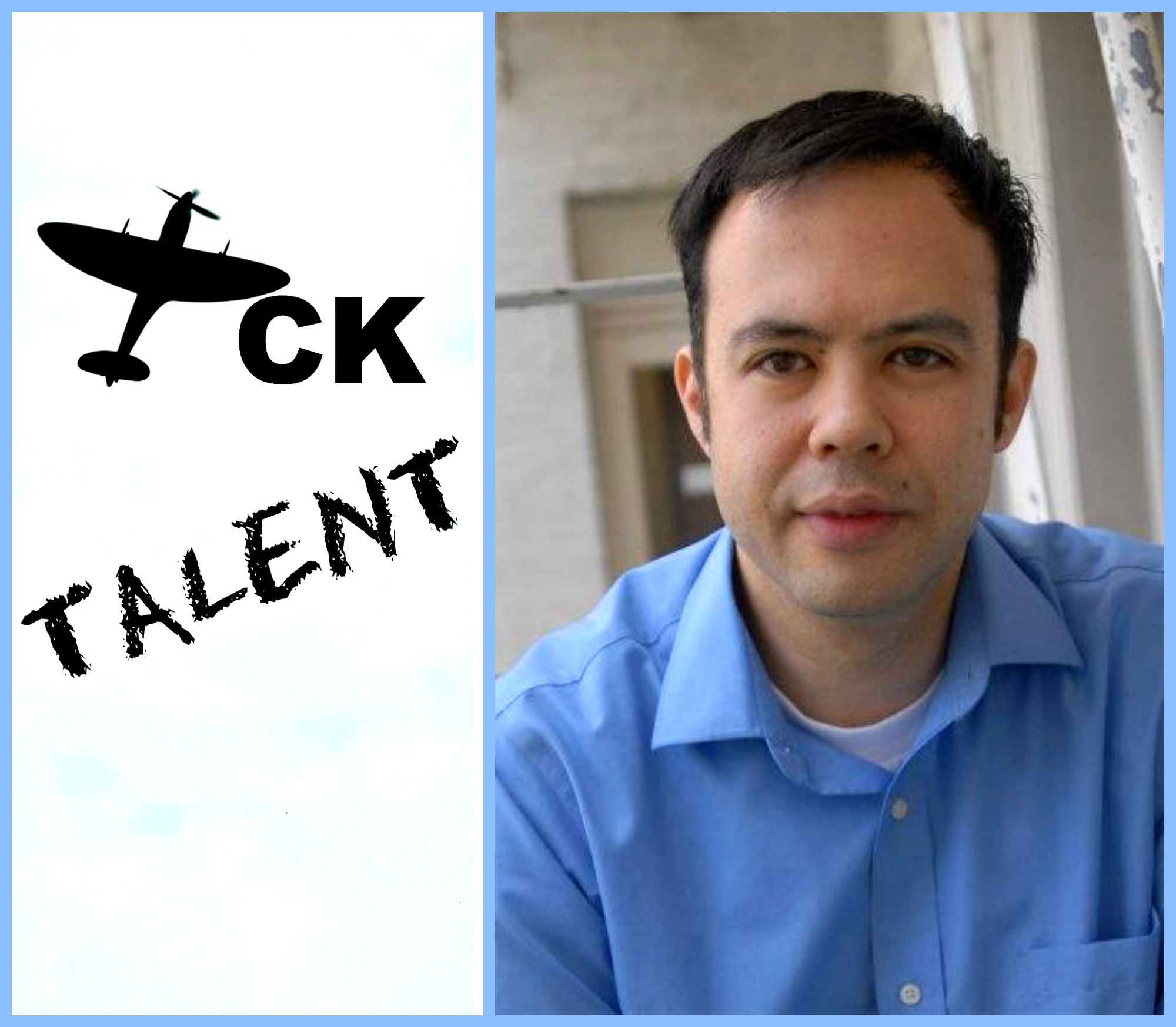
TCK TALENT: Neil Aitken, Computer Gaming Whiz Kid Turned Award-Winning Poet

Neil Aitken Poet

Neil Aitken (photo supplied)

Elizabeth (Lisa) Liang is back with her column featuring interviews with Adult Third Culture Kids (ATCKs) who work in creative fields. Lisa herself is a prime example. A Guatemalan-American of Chinese-Spanish-Irish-French-German-English descent, she has developed her own one-woman show about growing up as a TCK, called Alien Citizen, which premiered nearly two years ago and is still going strong. In fact, she will soon be taking the production to Valencia, Spain, and Capetown, South Africa!

—ML Awanohara

Welcome back, readers! Today’s interviewee is poet Neil Aitken: winner of the prestigious Philip Levine Prize for Poetry for his book of poems, The Lost Country of Sight and founding editor of Boxcar Poetry Review. Neil and I met at the Mixed Roots Literary & Film Festival in 2009. I am so pleased to have the chance to interview him this month for TCK Talent.

* * *

Welcome to The Displaced Nation, Neil. I understand that you’re a multi-ethnic ATCK like me! Please tell us about your heritage.
My father was born in the Okanogan Valley in British Columbia, Canada, of Scottish and English descent. My mother was born on Hainan Island, south of China, in the midst of the conflict between the Nationalists and the Communists in China. Shortly after her birth, her parents—her father was a high-ranking officer in the Nationalist Army and her mother, the daughter of one of the elite island families—fled to Taiwan to escape the Communists. Despite growing up a world apart, my parents met in the middle, Hawaii, while both attending university there.

Where were you born, and where did you live growing up?
I was born in Vancouver. My father’s bachelor’s degree was in Linguistics & ESL. His first job took us to Dhuhran, Saudi Arabia, where he taught English in the oil universities. But then my mother developed severe asthma due to the extreme heat and dust, and the doctors warned her that if she stayed any longer, she would be putting her life in peril. So she took my younger sister and me (I was four, my sister two-and-half) to Taiwan to live with relatives while my father completed the last nine months of his teaching contract. While in Taiwan, my sister and I forgot all our English, switched completely to Mandarin Chinese, and attended a Chinese-speaking pre-school. When my father finally arrived to pick us up, apparently we were so frustrated in our inability to communicate with him, we refused to speak Chinese until we relearned English. By the time we returned to Canada, we’d made the switch—but lost our Chinese in the process. My father returned to school in Vancouver, concluding that it was too hard to raise a family as an ESL professor. He completed a Masters in Library Science degree at the University of British Columbia and, when I was eight, we moved to North Battleford, Saskatchewan, a small city surrounded by farmland in the northern part of the province. Later we moved to Regina, the province’s capital and a much more vibrant multicultural center, where my father took his dream job as the supervisor over a special book collection focused on local, regional, and family histories of the Central Plains and Prairie Provinces. I completed elementary school and high school there.

“It is dark always, then someone opens a door./Then another. Then another.” —Neil Aitken from “Prodigal”

Fascinating! Did you stay in Canada for college?
No, I moved to Provo, Utah, to attend Brigham Young University, but I took a two-year break from school to serve as a missionary in Taiwan, relearning Mandarin in the process and re-immersing myself in culture, family, and place. When I returned, I completed my studies and then returned to Canada—to Calgary, Alberta. I looked for work for a year and eventually landed a job in Los Angeles.

I understand that just as your background spans two very different cultures, your academic background spans two very different disciplines?
Yes, as an undergraduate I studied Computer Engineering with a minor in Mathematics. I also took a number of graduate courses in Creative Writing. My first job was working in the computer games industry, but after five years, I left programming to pursue an MFA in Creative Writing and then returned to Canada for a year to look for work and to care for my father, who was in rapid decline from ALS. I also spent that year writing and finishing my first book of poetry and then applying to PhD programs. I received a number of excellent offers from all over the US, but in the end chose to return to Los Angeles and pursue a PhD in Literature and Creative Writing at the University of Southern California. I’ve been here in Los Angeles ever since, but now, on the threshold of graduating, am likely to be packing up and moving again to somewhere as yet undetermined.

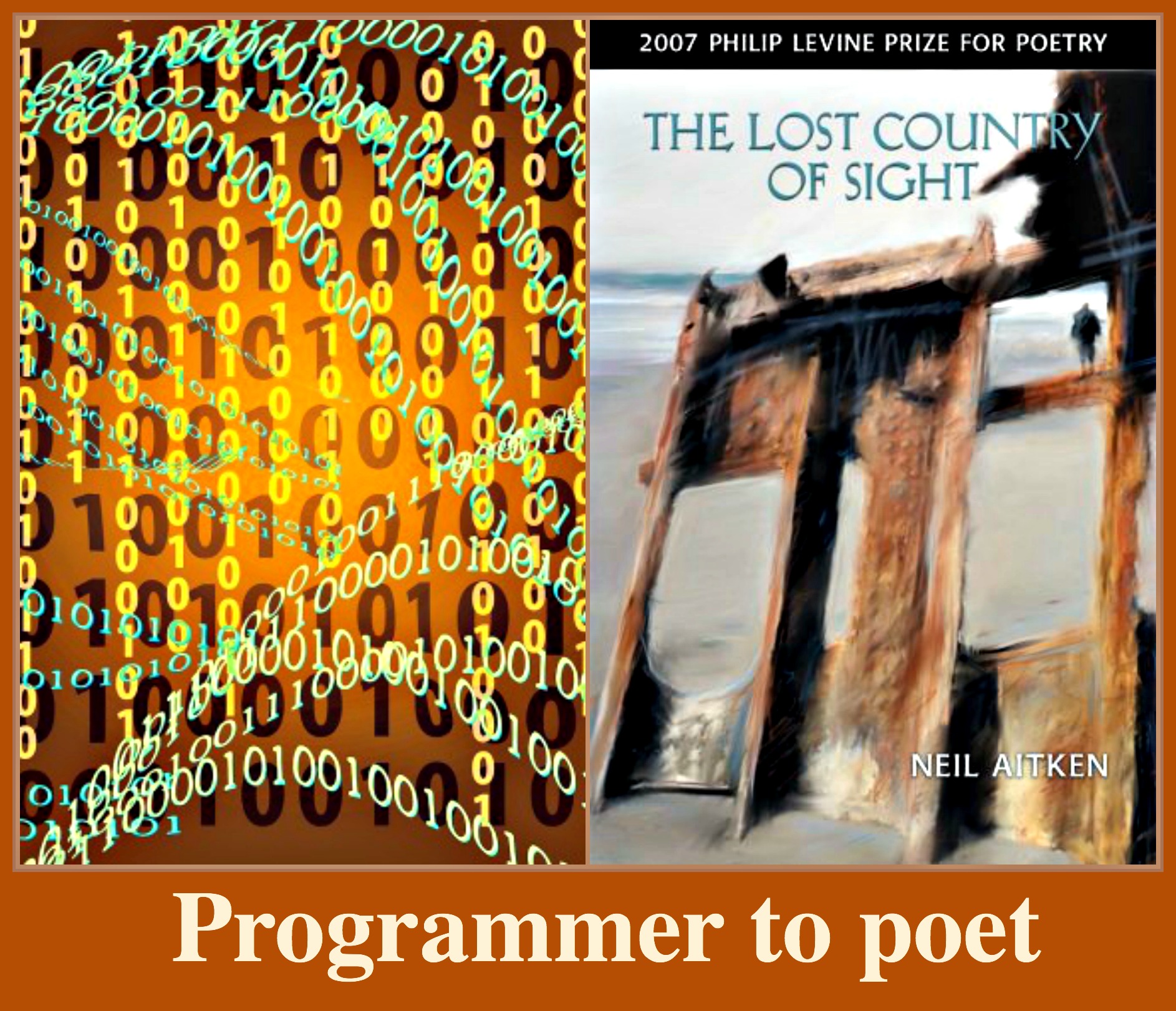
Binary code via Pixabay; cover art.

Binary code via Pixabay; cover art.

What has the transition been like, going from computer programmer to poet?
In truth, I’ve been writing poetry almost as long as I’ve been programming. I started writing poetry in earnest when I was around 10, about the same time my father brought home an IBM PC Jr with GW-BASIC on it. One of my very first original programs was a haiku generator that produced pretty awful haiku. Even as an undergraduate studying computer science, I sought permission to take creative writing classes at the graduate level. For a long time, I thought I could juggle writing poetry with computer programming. Eventually, however, programming lost its luster and I stopped loving the work, despite still being good at what I did. I knew at some point I needed to jump ship—I couldn’t bear the thought of spending my life in a field that no longer held my attention or affection. Working full time as a computer games programmer, I found myself putting in 60-, 70-, 80-, and occasionally 94-hour weeks. It was just too much. It was time to find a way out. At the same time, it was important to me that I avoid going into debt for my poetry degree, so I had to wait for the right offer. All the while, I continued programming and when possible, spent my evenings at open mic poetry venues, listening to all sorts of poets read their works. Eventually, I received a call from UC Riverside offering me a generous full-ride MFA scholarship, which made the transition possible.

“I wake already longing for those whom I soon will leave—” —Neil Aitken, from “Kundiman”

One of the judges for the Philip Levine Prize said that “Traveling Through the Prairies, I Think of My Father’s Voice” struck him as being a “perfectly made poem.” Was your family close?
I have many fond memories of time spent as a family together, whether it was picking through a coal seam at the side of a mountain highway with my father searching for fossils, or gathering together as a family on the eve of my graduation—the photo of which is the only family photo where we’re all smiling naturally, unrehearsed, unburdened by life’s later challenges and sorrows—or just simply lazing around the house at Christmas, listening to my father read Dylan Thomas’ A Child’s Christmas in Wales to us with his usual gusto and dramatic flair.

Where have you been happiest as an adult?
My happiest moments in recent years have been tied to my friends and fellow poets whom I met through Kundiman, an organization dedicated to the creation and cultivation of Asian American literature. The three years I attended the Kundiman Poetry Retreat set in motion lifetime friendships and bonds with people that, to this day, I count as my closest poetry kin—I was unprepared for how deeply and completely I would fall in love with the community, and how this group of Asian American poets would come to be a second family. When I showed up for my first Kundiman retreat in 2005, I was convinced that there had been an error—how had they let me in? What use could they have for a Chinese-Scottish-English Canadian poet who rarely wrote about identity, at least not directly? But on the first day, as we made our introductions in a classroom at the University of Virginia, I soon realized that many of the other participants felt the same way I did. We had all arrived convinced that our lives and our writing were somehow outside of what was expected and permitted—only to discover that what was happening on the front lines of Asian American literature was much more diverse and vibrant, much more compelling and dynamic, much more inclusive than whatever we had been led to believe from the anthologies we’d read and the classes we’d taken. To this day, I love running into a fellow Kundiman and can’t wait to hear about their work and discover what they have to offer to the conversation.

Your Kundiman experience sounds like a quintessentially good TCK experience. In general, do you find that “your people” tend to be other ATCKs, or cross-cultural people, or creative folk?
It varies quite a bit, but generally speaking I’ve found myself most at home with other Asian American writers (especially those I’ve met through Kundiman), other editors of literary journals, and other people who negotiate the fragile yet fertile space between faith, science, and compassion. On a broader level, I find my people are those who share a love of language and literature, whose eyes are on the forgotten spaces and figures of the world, and whose efforts and desires pointed outwards, with the ambition to make more room at the table. I love surrounding myself with people who are building bridges and tearing down arbitrary walls, who are not afraid to speak against the structures of oppression and forgetting, and who challenge themselves to do more and be more than who they were yesterday.

“There is always something that refuses to be contained…” —Neil Aitken in “Encapsulation”

On top of working toward your PhD, you won the DJS Translation Award for your co-translations of poetry from Mandarin to English. How do you feel about your two “native” languages? Do you prefer one to the other?
I love the strange and omnivorous nature of English. English is constantly devouring other languages, incorporating new terms into its lexicon, and expanding with each passing year and succeeding social revolution. In terms of tone, music, and range, very few languages can compete with English. That being said, I also have a big place in my heart for Mandarin Chinese, a language I learned once when I was very young, forgot, then relearned at 19.

What is it like to translate from Chinese into English?
The two languages could not be more different. Chinese is a language traditionally learned by the memorization of classical and literary texts. It relies heavily on allusion, each word and phrase carrying with it a wealth of cultural association and literary reference. It moves not just sonically but also visually, evoking the elements—fire and water, air and earth—and connecting words and ideas that share some common philosophical history. The act of translation is a humbling experience—I’m constantly reminded of how fluid concepts and relationships are between ideas once they are unshackled from one’s mother tongue. And yet, there is great pleasure in it as well. I enjoy puzzles—I enjoy this bit of creative play where the translator searches for a way to create an equivalent experience and gesture in a new language for something that they have encountered in the original. My childhood experiences with Chinese left a deep imprint in my mind that manifests itself now as a type of intuition when it comes to finding the right equivalent phrase or understanding the cultural impact or resonance of the original line. It’s an imperfect intuition, but one that nevertheless guides me through tricky places in the poems and helps me feel still a part of the Chinese culture.

Finally, I’d like to congratulate you on winning of the prestigious Philip Levine Prize for Poetry for The Lost Country of Sight. Is there a particular poem from that collection that expresses your feelings of transience or loneliness or instability—or freedom or curiosity or love of travel—that you are most proud of, and could you share it with us?
In many respects, my entire first book of poetry, The Lost Country of Sight, grapples with these themes and, therefore, it’s actually pretty hard to settle on just one poem. I’m going to suggest two, if I may:

In the Long Dream of Exile

You are counting the dark exit of crows
in the rear view mirror, or from the top of an overpass
looking back into the last flames of cloud.
Your car, steel to the world of flint, rests listless
with its windows wide, the stars slipping in
and settling down for the night.
Now, what you could not leave rides in boxes
heavy with numbers and places you’ve already
turned into poems. There is nothing left
in your pockets, your clothes worn down
to this list of miles taking you out of the known earth.
Outside your open window, the dark repeats
like the wind in late fall, twisting the names
of familiar back roads into a long rope of sighs.
You could lower yourself down with such longing.
It could be a woman or a young girl, the way the light
clings to that body like a sheet of immaculate heat,
invisible to the eye, but something, you are certain,
something that must be on the verge of love.

driving_abstractly

In the Country I Call Home

I have two countries, Cuba and the night.
~ José Marti

There is no Cuba, no other half of night.
No dark woman in her deep robe of grief,
no wooden doors flung open to emptiness. Nothing
of music. No city in flames. All this absent.

In me, there are as many countries as names.
As many versions of the world.

If there is a country, it is a white-limbed tree,
a wind-drifted plain of snow. It is a country buried.
Or a man holding a camera to his eye. Or a silence.

If there is a country, there are two countries.
A double exposure. The other world ghosting the first.
The second full of dark-haired strangers. Ink ground
from charcoal pressed to stone. Hard as raw rice.

If there are two countries, a third always rises.
Life preserver on the waves. A ship without reference.
Anywhere. Everywhere. A nation of one.

If there are three, there must be a fourth.
I will find it in your skin. Hear it resonate in your bones.
A ringing echo. Something of sound. It will be small.
Almost a hut. A thatched roof shack in the wilderness.
A hermitage for two. A boat in a river. Almost a home.

snowdrift

“Wind shapes,” by John Holm via Flickr (CC BY 2.0).

* * *

Thank you, Neil, for these two lyrical offerings. Again, congratulations on your numerous accomplishments in poetry and translation, and best of luck with post-PhD life! Readers, please leave questions or comments for Neil below.

STAY TUNED for more fab posts!

If you enjoyed this post, we invite you to register for The Displaced Dispatch, a round up of weekly posts from The Displaced Nation, and so much more! Register for The Displaced Dispatch by clicking here!

Related posts:

DIARY OF AN EXPAT WRITER: My writing process, now being applied to a shiny new book series

DiaryExpatWriterAn American expat newlywed in Hong Kong, Shannon Young took the momentous decision last summer to quit her day job and launch out as a full-time writer. She’d given herself until Chinese New Year to see if she could make a living but has now postponed the decision—something we’re actually rather glad about as her expat writer’s diary can continue!

—ML Awanohara

Dear Displaced Diary,

It’s a hazy, jet-lagged time for me right now. Ever since I returned to Hong Kong from London last week, I’ve been awake through the night and struggling out of bed at noon or later. One advantage of setting my own schedule is that I can afford these late starts and still get plenty of work done during the afternoons and evenings (and in the hours past 3:00 a.m., it turns out). On the other hand, I don’t have a boss and a required start time to get me back on track—so could be on London time for a while yet.

But the work goes on no matter what time it is or where in the world I happen to find myself. I’m currently waiting for Seaswept, the second book in the Seabound Chronicles, to come back from my editor.

The cover for Jordan Rivet's latest book

The cover for Jordan Rivet’s latest book

As soon as it arrives I’ll jump into the final stages of proofreading and publication.

In the meantime, I’m working on my next book series.

That next book will be the first installment, which I’m aiming to release upon completion of the Seabound Chronicles.

It has been a while since I began an all-new project with all-new characters set in an all-new world. I’m trying to apply the same writing process I’ve been using for the Seabound books to the new idea.

So far it’s going well!

Since you, Dear Diary, are the vessel for my intimate thoughts about the writing process, today I want to share with you how I approach a new book. I developed this method while working on the four books in the Seabound Chronicles. As you know, all four are now completed—but in vastly different stages. Book 1 is published. Book 2 is finished and with the editor. Book 3 (the prequel) is in the third draft. Book 4 is a rough draft.

You may think I have too many projects on the go at once, but this in fact is the key to my writing process, as you’ll soon see.

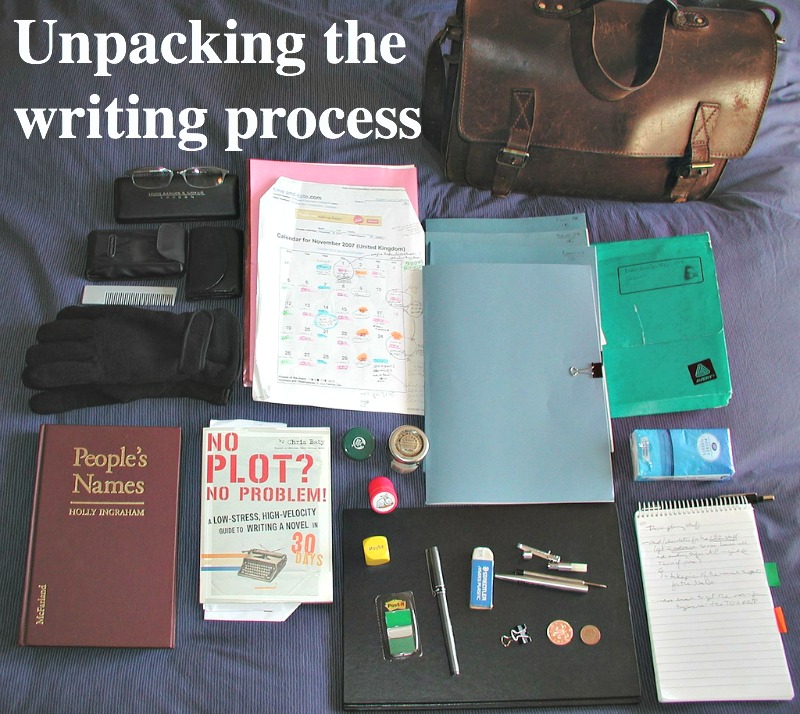
"Emptying the NaNo bag at last," by  Anne-Lise Heinrichs via Flickr ().

“Emptying the NaNo bag at last,” by Anne-Lise Heinrichs via Flickr (CC BY 2.0).

STEP ONE: The Idea

You can’t force yourself to come up with an amazing concept for a new book, but you can help the inspiration process along. Before producing Seabound, I knew I wanted to write a fast-paced story with high stakes and cool world-building, probably science fiction or fantasy, but I needed an idea. Then one day I hopped on a boat and spotted the cruise ship that inspired my post-apocalyptic Seabound series. It took more than just seeing a cruise ship, of course, for the concept to take hold. It took leaving my mind open and not forcing things, so that my subconscious could oblige.

With the Seabound Chronicles under way, the hope entered my mind of coming up with another fantasy project to work on; but this time I wanted an original take or some kind of cool mash-up. I held that thought for months and cycled through various ideas (a secret agent in a fantasy world? a fantasy apocalypse?); but none of them felt quite right. Then, suddenly, the idea was there when I arrived at my usual Starbucks. I could see it plain as day. I was actually supposed to be working on Seaswept edits, but instead I opened up a new Word doc and hammered out notes for several hours.

STEP TWO: Characters and Worlds

Once I had the concept of the world, the characters followed quickly on its heels. For some of these characters, I used a method similar to the one described above, where I had a general sense of what the person should be like, and then when I saw someone who matched the idea in my head, fleshed out my portrayal. (I spotted “Esther” walking down the Mid-Levels escalator with a camera around her neck that became a pair of storm goggles; “David Hawthorne” walked into one of my regular coffee shops dressed like an investment banker and wearing memorable black-framed glasses.)

"Mid-levels escalator blur," by Maureen Didd via Flickr.

“Mid-levels escalator blur,” by Maureen Didde via Flickr (CC BY 2.0).

For other characters, I started with people I’ve encountered as a jumping off point to develop key aspects of their personalities, appearances, and roles they would play in the story. I spent several writing sessions scribbling notes on the characters and describing the basic structure of the world they inhabit. I held off on writing the first chapter for as long as possible because I wanted to give the ideas time to mature. I also worked out the world’s magic system, which I’m treating differently than in a typical fantasy novel.

STEP THREE: The Rough Outline

As my ideas for the story became more concrete, I wrote a rough outline of the plot. This is a back and forth process. As I developed more ideas for the story I’d go back and flesh out the existing characters or create new ones. My outlines typically follow a three-act structure and they absolutely must include the main conflict and climactic scene. Outlines are essential for my process, but I don’t do a strict chapter-by-chapter plan at this stage.

For the new fantasy project, I’ve now written a very rough outline for a five-book series. Even so, I’ll have to get further into the first book before I know whether the story will support all five books in the plan.

STEP FOUR: The Rough Draft

I am now 16,000 words into the rough draft for my newest book. I’m a huge believer in writing fast, messy first drafts.

I wrote three of the four rough drafts for the books in the Seabound Chronicles during three consecutive National Novel Writing Months. I didn’t worry about whether they would be any good at this stage. I told myself I can always take things out and rewrite as needed. This method really helped me keep up the story’s pace.

Seaswept is the only one of the Seabound books for which I wrote the first draft over a longer period (about six months, during which I took a break to rewrite my memoir, Year of Fire Dragons). The edits for this volume were actually more difficult than for the other titles.

Writing the first draft is a bit like watching a movie play out—it’s best if you can do it without too many gaps.

STEP FIVE: Rest and Repeat

As soon as I finish a draft I put it away, something Stephen King recommends in his book On Writing. The work needs to sit for a bit and I need to get some distance from it before I can rewrite effectively. But I don’t stop writing. At this stage, I’ll start the next book.

Go back to Step One and repeat!

STEP SIX: Read and Rewrite

With another rough draft under my belt, I’ll go back to the first one, print it out, and read the whole thing. I’ll make tons of notes as I go, but I won’t rewrite until I’ve completed a full read-through.

At this stage, I also create a more detailed outline. My rough drafts follow a basic plot structure, but sometimes they take unexpected twists, and I like to leave room for those in the new outline. Other times, I find gaps or pacing issues that I’m not aware of until I step back and look at the book as a whole.

When I do my first read-through, I plug the events of the rough draft into a storyboard. I use this one, which covers a classic plot progression over twenty chapters. I write the basic plot points in where they occur, paying attention to gaps in the storyboard. Then I may plan additional chapters for my next draft.

Stories are actually quite similar in structure, so the books often fit quite neatly into the storyboard with only a bit of tweaking. I don’t like doing this at the outset because I want to leave room for those unexpected twists—let the ideas come out once I’m really living in the draft.

After I’ve worked out what changes need to be made based on my read-through and storyboard, I rewrite the book from the beginning. I do all this in the same document and keep a lot of the first draft, but I also add thousands of words, fleshing out scenes and filling in chapters. At this stage, I’m still not worried about how neat the actual writing is.

STEP SEVEN: Rest and Repeat

I put that new draft away and then go back to do the second draft of the second book. Or the first draft of the third book. Or the third draft of the last book in the last series. You get the picture. It gets complicated from here, and this is why I have so many books on the go at once. Each time a draft needs to rest, I’ll have something else to work on.

And so on!

My process continues like this, and the books get better with each draft. I also become a better writer with each draft. By the time I wrote the final draft of Seaswept last month, I was far better writer than when I wrote the first draft in early 2013.

After I’ve done at least two, usually three, drafts, I ask other people to read the book and give me feedback. Then there will be more notes, more drafts, more hours spent sitting in the chair and refining the story and the prose.

Some problems are just easier to solve on the second (or third or fourth) rewrites.

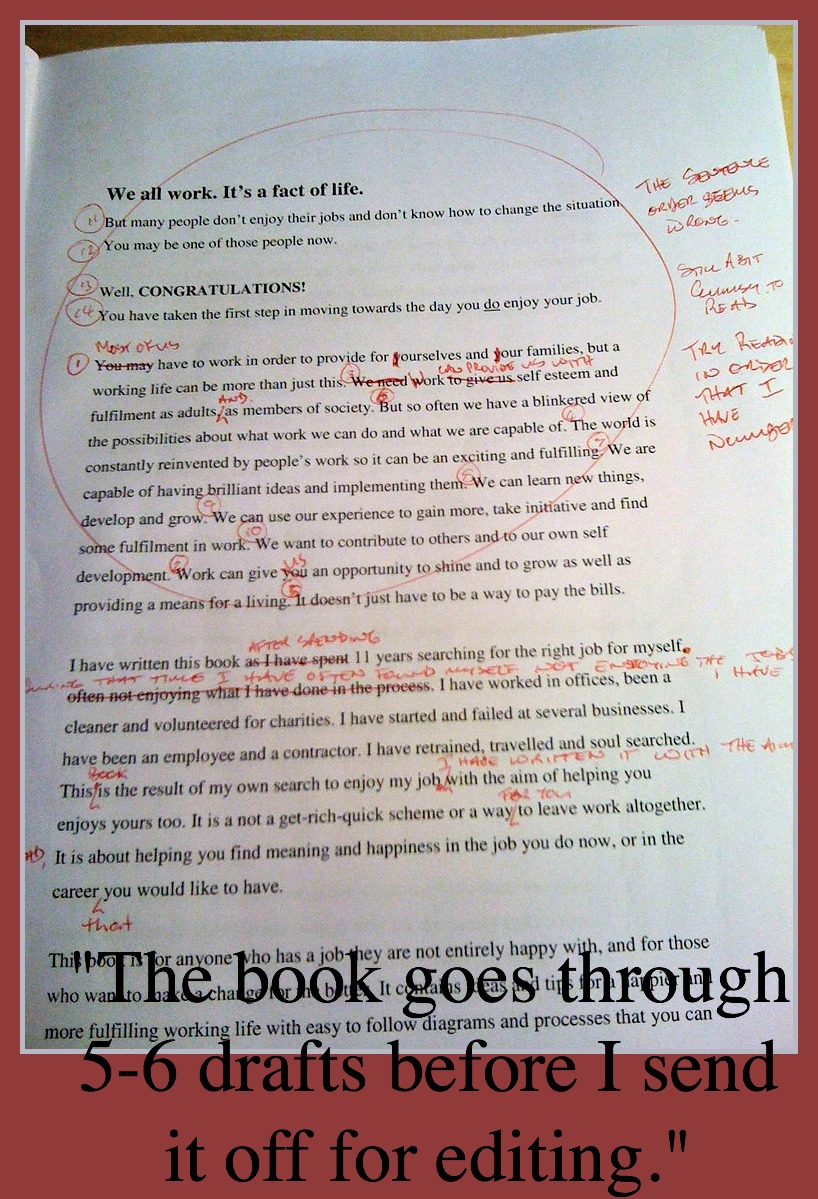
I estimate that each book goes through five or six drafts before I send it off for editing. I’m hoping that as I become a better writer it’ll take fewer drafts to get the book where I want it, but the important thing is that I try not to get bogged down by worrying whether any one draft is good enough. Taking this approach is liberating, and it allows me to get a lot of work done.

"Edited Version of First Book," by Joanna Penn via Flickr (CC BY 2.0).

“Edited Version of First Book,” by Joanna Penn via Flickr (CC BY 2.0).

So, Dear Diary, this is my writing process as it exists so far. I’m having fun applying it to my shiny new project.

Seaswept will be out soon and then I’ll be doing another draft of Burnt Sea, the prequel, but in the meantime it’s exciting to have another series on the go!

Thanks for following along on my writing journey. I hope this glimpse at my process might be helpful for another budding writer or two. It is certainly helping me get my brain back in order so I can get back to work

I remain yours,

Shannon Young/Jordan Rivet
www.shannonyoungwriter.com
JordanRivet.com

* * *

Readers, Shannon has graciously shared her writing process with us this month. By breaking it all down, she almost makes it seem easy! (You can tell that she’s been a teacher.) So, what do you think—any responses to her methods, questions, words of encouragement for her next endeavor? Do let her know in the comments!

STAY TUNED for next week’s fab posts!

If you enjoyed this post, we invite you to register for The Displaced Dispatch, a round up of weekly posts from The Displaced Nation and much, much more. Register for The Displaced Dispatch by clicking here!

Related posts:

DIARY OF AN EXPAT WRITER: Shifting base to literary London, where it all began

DiaryExpatWriterAn American expat newlywed in Hong Kong, Shannon Young took the momentous decision last summer to quit her day job and launch out as a full-time writer. She’d given herself until Chinese New Year to see if she could make a living but has now postponed the decision until the end of next month—which we’re actually rather glad about as it means she’s still with us!

—ML Awanohara

Dear Displaced Diary,

It’s a blustery morning here in London and time for another update on my life as an expat writer. You may remember that I do not, in fact, live in London. I’m taking a break from my writing life in Hong Kong for a visit that combines the Easter holidays with my husband’s business trip.

I am still making the most of not having a day job by staying in the UK for nearly three weeks.

Of course the work never stops for a working writer. I spent the first four days of the holiday finishing up the final revisions of Seaswept, the sequel to my post-apocalyptic adventure at sea called Seabounda job that can be done anywhere, really!

Jordan Rivet in London

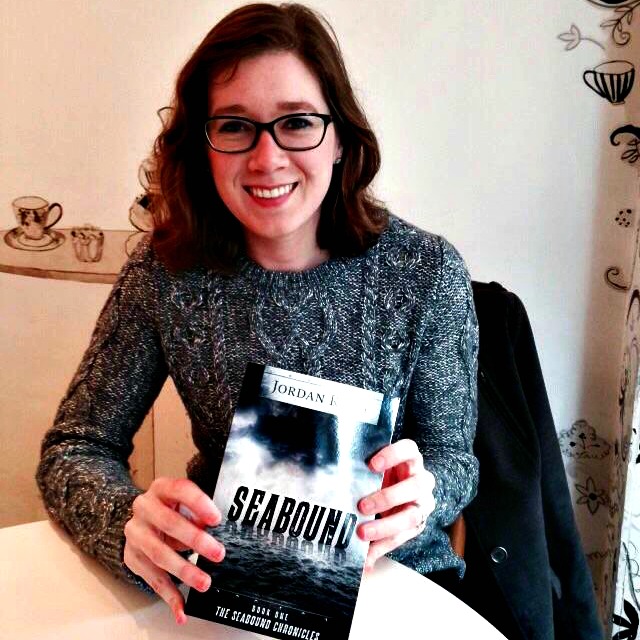
Shannon Young aka Jordan Rivet showing off her first book on a tea break in London; photo credit: Shannon Young.

As I mentioned in my last post, the revisions on Seaswept were a bit of a slog, but I really got into the groove by the final pass. I have to admit it was kind of magical to wake up with the sun (or clouds) in this famous literary city, write for a few hours, go for a walk, and then do a bit more writing before the jet lag knocked me out. London has always been a source of inspiration for me, and the setting somehow seemed right for ending my work on this book.

In addition to the beautiful buildings, blue historical plaques, and bridges (have I ever told you, dear diary, how much I love bridges?), I’ve found another source of inspiration in London: a friend from Hong Kong.

Expat connections are everywhere

As Displaced Nation readers know, we expats have a tendency to move on often, either to a new country or back to where we came from. Expat life is a constant rotation of hellos and goodbyes. While it’s sad when friends leave, it’s pretty cool to acquire connections all over the world.

A friend from my writers’ group in Hong Kong returned to the UK nearly two years ago, but she has maintained her link with the group and her role as true cheerleader for my work. Recently, she decided to embark on a similar literary adventure by taking time off work to write!

I met up with her at the cafe and bookshop run by the London Review of Books and spent nearly four hours writing and talking about writing together. (I also ate hummus on toast that came with real worms on the side, but that’s another story.) It was a joy to have a friend in a city thousands of miles away from both my home country and my country of residence, all thanks to this expat life.

The day I sent the final draft of Seaswept to my editor, my Hong Kong friend took me on a literary tour of Highgate and Hampstead—and, of course, a trek across the rain-soaked trails of Hampstead Heath. In between breaks for tea and hot cross buns, she showed me the home of Samuel Coleridge (and the alley where he bought his laudanum), a garden straight out of a Jane Austen novel, and a pub visited by many notable figures throughout its 200-year history. As we walked, I was reminded again and again of just how old this city is and just how much has happened in its streets. It’s the setting for some of my favorite novels, novels that made me want to be a writer myself.

Photo souvenirs from Jordan Rivet's London walks. At bottom: Hampstead Heath with a view of Kenwood House, a former stately home.

The houses of Highgate and the expanses of Hampstead Heath, with former stately home Kenwood House in distance. Photo credit: Shannon Young.

As my writing journey continues across the globe in Hong Kong, it’s nice to remember its origins and to soak in a bit of history in the company of someone who is just as excited about it as I am.

Beginnings, revisited

During my time in London, I’m also revisiting the origins of my own expat life. As you may recall, Dear Diary, I met my husband in London during a semester abroad. We ended up in Hong Kong, but our early romance took place here. The memories have been flooding back over the past few days as we walk by all the places where we shared sweet moments: first meeting, first date, first kiss.

I wrote about our romance in the first book I ever started, Year of Fire Dragons. It’s mostly about Hong Kong, but I can’t tell my Hong Kong story without starting in London.

Hong Kong tends to change very quickly, with restaurants and shops going in and out of business all the time. Buildings are torn down and rebuilt completely in the space of months. But London seems largely the same. Back in this place with this man, it’s easy to remember why I decided to follow him across the world.

LondonKiss+Year of Fire Dragons

A firey romance in London led Shannon to the land of Fire Dragons and her first book, a memoir (photo credit: pixabay).

What’s on the horizon?

Well, the sun is breaking through the clouds over the city. I’d better head out to make the most the sunshine before the rain and wind return.

I have two weeks to go in London. During that time, my editor will be working on Seaswept, which should be ready to launch by April 30th. Meanwhile, I’m looking ahead to my next project: the prequel to the Seabound Chronicles. Then it will be time to finish Book 3.

But I’m already working on my next series. I’ve written a rough outline and the first 10,000 words. While I’m enjoying the flood of inspiration and nostalgia in London, perhaps I’ll tap out a few more chapters. If there’s one thing I’ve learned on this expat writing journey, it’s that places have power. I don’t want to miss out on anything London has to offer in the next few weeks.

Thanks for following along on my writing journey around the world.

Yours,

Shannon Young/Jordan Rivet
www.shannonyoungwriter.com

P.S. If you like dystopian fiction and writing Amazon reviews, shoot me an email and I’ll send you a book or two!

* * *

Readers, Shannon’s diary post this month has made me nostalgic for my own days of living in London. Sigh! It sounds as though she’s making the most of her time in the Big Smoke with walks on the Health and so on, but if you have any further recommendations for her remaining two weeks (any bridges you think she should see?), do let her know in the comments!

STAY TUNED for more fab posts!

If you enjoyed this post, we invite you to register for The Displaced Dispatch, a round up of weekly posts from The Displaced Nation and much, much more. Register for The Displaced Dispatch by clicking here!

Related posts:

LOCATION, LOCUTION: British expat author Carl Plummer turns his gaze upon his adopted home of China

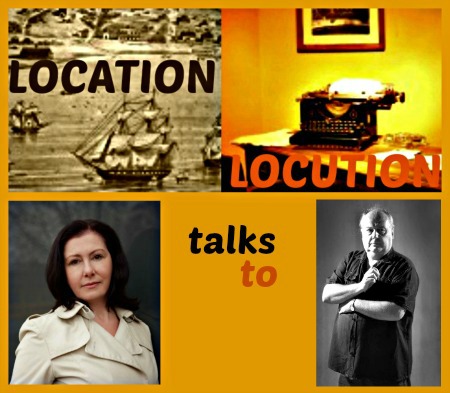
Columnist JJ Marsh (left) talks to Carl Plummer,

Columnist JJ Marsh (left) talks to Carl Plummer, a writer of historical adventure fiction.

We welcome JJ Marsh back to the Displaced Nation for this month’s “Location, Locution.” If you are new to the site, JJ, who is a crime series writer, chats with fellow fiction writers about their methods for portraying place in their works. Her guest today is Carl Plummer, who writes World War II adventure spoofs under the pen name of Robert E. Towsie. Born in Hull, England, he lived in Cyprus, Paris and Libya before moving to his current home of China, where he works as a university lecturer. Today he does something unusual for this column: describes the place where he’s living right now.

—ML Awanohara

JJ MARSH: Once in a while, Location, Locution likes to surprise you. Remember the Paulo Coelho piece on monuments that immortalise cities? If not, go read it now. Is it any surprise this man is an international bestseller?

This month, I tracked down an author I’ve admired for a long time. Carl Plummer writes as Robert E. Towsie, in a classic comic style, setting his capers around Europe against the backdrop of its dramatic history.

But what interested me about Carl/Robert is where this expat creative lives. China. A place I find fascinating, mysterious and sometimes a little scary. So this month’s Location, Locution is his take on China, its people and and how he sees it. Enjoy.

* * *

CARL PLUMMER: In 2004, after a stint in Libya, I arrived in China and started a job at Nanyang Normal University to teach British and American literature. The city of Nanyang (pop. 1,000,000) in Henan Province was proud to boast ten lao wai, foreigners.

Every minute, on every street, in every shop, I was reminded I was a foreigner. Some reminders were harsh, nationalistic and racist with the “go back where you came from” we associate with racism in England.

Other reminders were through curiosity, the wish to speak English to and even touch a foreigner, the assumption all foreigners are American and a sense of me being something exotic, something new and different, and most of all—rich.

I wasn’t rich, am not rich. Teachers are the poorest working travellers of the world. We are the intellectual navvies from the western world. We are not businessmen with expense accounts; we are not oil people or wheeler and dealers. But we are approachable because we have to mingle, use the buses and the metros, and the trains. We do not have company cars with around-the-clock company drivers.

During the rainy season in a small coal-mining town near Pingdingshan the streets would run black when it poured and families would come out to shower beneath the torrents thundering off awnings.

What made me rich to such people? I had an apartment with a shower and I could afford the water it used—I didn’t have to wait for the rain.

In China, the iron rice bowl has long gone.

Why am I talking about money instead of garnishing the text with tales of magnificent walls, gaudy ancient temples or food conjured up with every living creature imaginable? Well, that’s all been done before.

I’m talking of money because poverty is not romantic; it never has been and it never will be. It is cruel and it doesn’t discriminate; there are no deserving and no undeserving poor.

That cradle-to-the-grave surety of Communism is a generation ago, but that generation brought up in it is still around. It is my age, brought up in the 60s and 70s, taught to root out the treacherous intellectual bourgeoisie, taught to spy on parents and teachers, taught to love the state above all else.

It worked in theory for a while because the state cared; it looked after your every need as long as your toed the line, as long as you never asked questions. Now it doesn’t. Now there is no line to toe.

The young are asking questions. That is their hope.

I meet many young people, in their 20s, who have something hanging around their necks; cultural and domestic demands, greatly exacerbated by the growth of capitalism and the cracking of the iron rice bowl.

Education is expensive in China, as is being healthy. Young people have shown me lists, lists almost like invoices saying: we spent this much on your upbringing and this is what you must pay back to us. It is easy to get the sense parents have children for one reason: someone to take care of them in their old age. Babies, especially boys, are glorified little emperors, smothered and mothered—especially grandmothered—to the extreme; but once in their teens they are seen as future life-support systems.

Rich CEOs and husbands framed

Haozhi Chen (CEO of Chinese mobile powerhouse Chukong), by Jon Jordan via Flickr; “Wedding couple in the clan house,” by shankar s. via Flickr. Both photos are licensed under Creative Commons (CC BY 2.0).

Boys are expected to become CEOs and girls are expected to find rich husbands. All are expected to become members of extended families because extended families are safer, more secure. Individualism and independence is dangerous.

The average salary in China is still about 2000 yuan a month (about 200GBP) for a ten-hour-day and a six-day week. Millions of workers live in dormitories more akin to barracks, and send home half their salaries to support families back home. Young people must pay back the money they owe their parents. This is how it is for the majority of young people in China. The majority has to save because everyone has to pay.

When the future is precarious you have to save.

When I lived in the Bai Yun district of Guangzhou (Guangdong province, in Southern China), I used to cycle through a huge housing estate (apartments by the thousand) and cut through the grounds of Jinxi Nanfang Hospital.

Those middle-class apartments sell for about 3,000,000 yuan each, rented out for between 3,000 and 4,000 a month.

From the higher balconies you can see the rows of beggars in the streets around the hospital. These are not the beggars we expect—those in shop doorways with mangy dogs for company.

These beggars are lying in makeshift hospital beds, out in the open, with drips hanging from stands. These beggars are families trying to get the 500 yuan a night needed for hospital treatment, or even the 100 yuan just to see a doctor.

Dontspend$$youdonthave

Lesson for all SL-ers, by Laurence Simon via Flickr (CC BY 2.0).

This is why so many Chinese people are savers, not spenders.

And those apartments—the richer you are, the higher up you live. The higher up you are, the farther you can see across the hospital surrounds where the aged and sick lie in the shadows of a hospital they cannot afford to enter. It is a world where education and health is a luxury, not a right.

For the growing middle-class it is different; for the Chinese aristocracy—very different. There is a Chinese aristocracy; it’s the cushioned group of party members—the 5 percent. (Google “My father is Li Gang”* if you wish to know how that works.)

The growing middle classes do not live with the fearful uncertainties of old age. They do not fear the need to see a doctor or the need to stay in hospital for a few days. They can send their children to good schools; send them to the UK, the USA or Australia to continue with their studies. They can send their children out into the world to be whatever they wish to be—something so many westerners take for granted. They do not need their offspring to look after them in old age. They can be spenders and savers.

I’d rather cry in the back of a BMW than laugh on the back of a bicycle.

"Cargirl," by Xuan Zheng via Flickr (CC BY-SA 2.0); (bottom) "Shanghai cyclists," by Gwydion M. Williams via Flickr (CC BY 2.0).

“Cargirl,” by Xuan Zheng via Flickr (CC BY-SA 2.0); “Shanghai cyclists,” by Gwydion M. Williams via Flickr (CC BY 2.0).

How about the girl who said on a TV show “I’d rather cry in the back of a BMW than laugh on the back of a bicycle”?

Yes, she was condemned and ridiculed, but she does not have the luxury of choice, the luxury of hope; the safety net is not yet there for her.

I believe and hope it will be for her children. Already, there are newly middle class young people who not have to choose between the BMW and the bicycle. Educated women are buying their own BMWs, their own apartments. They do not have to get married as soon as possible in order to be secure.

And more importantly, their individualism and prosperity is running alongside a new sense of social justice, political justice, and an awareness of the needs of others.

Religion, philosophy, or just simple humanism, whatever it is—the humanity is breaking through.

Twenty years ago, capitalism was raw in China; it was Darwinian and brutal, but it is slowly coming around, perhaps in the way it eventually did so in Britain until it was scuppered by the bankers who played with money as though it was Monopoly money.

We started with the Bounderby style of capitalism where Britain was the richest country in the world, populated by the poorest masses.

That is where China has been, perhaps still is, but it is moving through that. Communism denuded the soul, evicted compassion and turned the people into soldier ants. Capitalism came along to lift people out of poverty, but it did not fill the spiritual vacuum—the vacuum of feeling and compassion.

Christianity is becoming ever more popular in China. Confucianism is being taught again. The vacuum is being filled. The younger capitalist—who is not from the spoilt 5 percent—has a sense of social responsibility, the idea of giving back.

Mr Cameron’s “long-term plan” is but a sparrow’s sneeze in Chinese terms.

It’s a long process, but China has a long history and has always been about long processes.

The hope is, and I am confident about it, is the young; they have enough to eat, will have roofs over their heads, but more importantly, they can afford to be more thoughtful, more caring—they can afford humanity. Breaking free from poverty allows kindness to flourish (kindness in individuals and kindness from the state) if it is not smothered by the unacceptable face of capitalism or the dehumanization of totalitarianism.

I believe it will get there. But we cannot think in European terms; European terms are far too short. And remember why you can afford your cheap TV, cheap mobile phone and cheap computer; it is funded by cheap labour.

There are still millions and millions with a standard of living we would find totally unacceptable; but the fear of starvation has gone and the idea of a health service free at the point of use is slowly becoming more than just a dream. For most young people, going to university is still a dream.

It is changing. The young people are making it change.

* * *

Readers, if this interview has piqued your curiosity about Carl Plummer and his Robert E. Towsie books, we encourage you to visit his author site.

JJ Marsh grew up in Wales, Africa and the Middle East, where her curiosity for culture took root and triggered an urge to write. After living in Hong Kong, Nigeria, Dubai, Portugal and France, JJ finally settled in Switzerland, where she is currently halfway through her European crime series, set in compelling locations all over the continent and featuring detective inspector Beatrice Stubbs.

STAY TUNED for next week’s fab posts!

If you enjoyed this post, we invite you to register for The Displaced Dispatch, a round up of weekly posts from The Displaced Nation, with seasonal recipes, book giveaways and other extras. Register for The Displaced Dispatch by clicking here!

Related posts:

DIARY OF AN EXPAT WRITER: Has it really been six months? How time flies when you’re writing full time

DiaryExpatWriterAn American expat newlywed in Hong Kong, Shannon Young took the momentous decision last summer to quit her day job and launch out as a full-time writer. She’d given herself until Chinese New Year to see if she could make a living. And now the Year of the Sheep is here—baa baa—is she a lost lamb or making the most of life apart from the herds? Let’s find out, shall we?

—ML Awanohara

Dear Displaced Diary,

It has been six months since my last confess—oh wait. It has been six months since I posted a video about how I quit my day job as an English teacher in Hong Kong to write full-time (and also cut 18 inches off my hair):

For those who haven’t been following: it was now or never. Before going all in as a writer, I had been writing seriously for about four years in my free time and had several books out, or in the process of launching. I had been working on drafts for a four-book post-apocalyptic series, and I wanted to devote myself full-time to getting those titles out into the world.

Financially, I was also in a better place. I paid off my student debt in December 2013 and had spent eight months saving up the money I’d previously put toward loans, which meant I could live without a day job for a while.

My goal was to see whether I could make it as a writer, both financially and in terms of lifestyle: could I stay productive without much external structure?

I gave myself until Chinese New Year to see how it was going.

And now for the moment of truth!

It isn’t really a moment, it turns out, but a process, during which:

  • I figured out ways to create structure for myself.
  • I learned more about my own productivity habits.
  • I improved my endurance (I’m having more and more five-hour writing/working sessions).
  • Most importantly, I developed a better sense of how long each project takes, which allows me to set accurate goals.

There have been some hard moments along the way. The first book in my series. Seabound, has sold fairly well, but it hasn’t taken off like a shot.

My entire strategy has been to build a readership slowly with a series of four books, but I have to keep reminding myself of that while sales of the first volume are still modest.

My revisions on Book 2 have been kind of painful. The rough draft has actually been finished for a long time, but it has been hard to get going on the final revisions.

On the other hand, I’ve done two drafts of the prequel now and I think it’s the best book I’ve written so far.

Giving myself pep talks and jealously guarding my time

I also have to give myself pep talks more often and train myself not to get discouraged.

Back in the days when I was a teacher, I would get lots of positive feedback from my students. Even though it had nothing at all to do with writing, I had 300 kids pretty much worshiping the ground I walked on every day. It was much easier to maintain a positive attitude.

Now it’s just me and Starbucks and the Amazon reviewers. I love the coffee shop time, and I’m never happier than when I’m hammering away at my laptop, but thoughts of strangers reading my books and giving them harsh critiques still creep in.

Ironically, even though I have more time available to me, I’ve been reducing the time I spend on other commitments. That’s something I didn’t expect.

When I had a day job, my schedule was broken up anyway and it wasn’t a big deal to answer emails here and there. Now that kind of thing can really break my focus, so I’m trying to say “no” more often to protect my work time.

Six-month report card

The past six months have been a roller coaster, with higher highs and lower lows than I’d anticipated.

I’m bringing in money every month, though I haven’t yet reached my income goals.

On the whole, I’m happier than I’ve ever been. I’ve published two books and one audio book, and I have four projects in progress.

It’s time to make a decision.

Dun da da da!

And now for the moment you’ve all been waiting for. Here’s what I’m planning to do:

To sum up, I’m giving myself until April. My savings are holding out and I plan to launch Seaswept around my next deadline. (If you want to see the cover image, sign up for my mailing list; I’m doing a secret reveal soon.)

Yesterday I completed another non-fiction piece for my primary pen name. Hopefully when I see how the books do I’ll be in a position to make my next big decision.

As always, I’ll keep you posted.

Thanks for following along on this journey! I really appreciate your words of encouragement.

Yours,

Shannon Young/Jordan Rivet
www.shannonyoungwriter.com

P.S. If you like dystopian fiction and writing Amazon reviews, shoot me an email and I’ll send you a book or two!

* * *

Readers, as they say in the Basque country, the lost sheep can be recovered, whereas the lost time cannot. It seems to me that Shannon has approached the Year of the Sheep having made the most of her time as a full-time writer! Do you have any thoughts or words of encouragement about her extension? Let her know in the comments!

STAY TUNED for next week’s fab posts!

If you enjoyed this post, we invite you to register for The Displaced Dispatch, a round up of weekly posts from The Displaced Nation, with snippets of worldly wisdom, exclusive book giveaways and our nominees for the monthly Alice Awards. Register for The Displaced Dispatch by clicking here!

Related posts:

BOOKLUST, WANDERLUST: 2014–2015 books recommended by expats & other international creatives (2/2)

Globe Bookshelf Part TwoHello Displaced Nationers! As those who caught Part One of this post last week will know, we are continuing the party we had at the end of last year in publishing a Best of 2014 in expat books list by soliciting various international creatives and other “displaced” contacts for more recommended books.

In Part One, several of my bookworm friends from a previous blog, Novel Adventurers, along with ML and JJ Marsh (JJ writes the Location, Locution column for Displaced Nation), revealed their favorite 2014 reads.

In Part Two, below, kicking off with yours truly, we talk about releases we’re hotly anticipating this year.

A “forthcoming reads” roundtable, if you will.

—Beth Green

* * *

BETH GREEN: I actively search out books by Elizabeth George, the American author of the Inspector Lynley mystery novels set in Britain, and Elizabeth Gilbert, who achieved fame with her travel memoir, Eat, Pray, Love. 2015 is a great year for me as both Elizabeths have books coming out.

A_Banquet_of_Consequence_300s_coverA Banquet of Consequences (Inspector Lynley Book 19), by Elizabeth George, due out in October.
Synopsis: Lynley and Havers are drawn from Cambridge to London to the windswept town of Shaftesbury during one of their most complex cases yet: the murder of a feminist writer and speaker.
Why I’m excited: Though actually not in the “expat” realm, I have to confess it’s the book I’m most looking forward to reading. I’m a huge fan of George’s diverse characters and elaborate stories.

BigMagic_cover_300Big Magic: Creative Living Beyond Fear, by Elizabeth Gilbert, due out in September.
Synopsis: Gilbert digs deep into her own creative process to share her wisdom and unique perspective about creativity.
Why I’m excited: As some readers may recall, I reviewed her novel The Signature of All Things last fall for this column. It seems that Gilbert is now turning her hand to self-help/motivational books for us creatives. I’m intrigued, and I figure other international creatives should be as well.

Three other upcoming books, by authors I’ve not come across before, have also caught my eye:

Displacement_cover_300Displacement, by Lucy Knisley, due out February 8th.
Synopsis: A graphic-novel-style/comic-book travelogue reporting on a cruise ship trip to the Caribbean Knisley took with her grandparents.
What interests me: Even though I seldom read graphic novels, I’m curious to pick it up, especially given its title(!). Knisley has two previous travelogues in graphic form: French Milk (her six-week trip to Paris to celebrate a milestone birthday) and An Age of License (her all-expenses trip to Europe/Scandinavia).

Meet_Me_in_Atlantis_cover_300Meet Me in Atlantis: My Obsessive Quest to Find the Sunken City, by Mark Adam, due out in March
Synopsis: A few years ago, travel writer Mark Adams made a strange discovery: everything we know about the lost city of Atlantis comes from the work of one man, the Greek philosopher Plato. Then he made a second, stranger discovery: amateur explorers are still actively searching for this sunken city all around the world, based entirely on the clues Plato left behind. Adams decides to track these people down. He reports on what he learns from scientists and amateur historians who all share his curiosity about the facts and fiction surrounding the “lost city.”
What interests me: Count me in that curious group!

The Porcelain Thief: Searching for the Middle Kingdom in Buried China, by Huan Hsu (forthcoming in March).
The_Porcelain_Thief_cover_300Synopsis: The author, raised in Utah, goes back to his ancestral homeland in China, in part to look for porcelain and other treasures his great-great-grandfather may have buried before the family fled the Sino-Japanese War.
What interests me: As a former expat in China, I love anything about this part of the world, and this displaced family saga sounds particularly fascinating!


ML AWANOHARA: I am always on the lookout for books that could be of interest to the Displaced Nation readership. (Whether I end up reading them or not is a different matter!) I’m sure this is just the tip of the iceberg, but thus far in 2015 I have my eye on one novel and several memoirs.

First, the novel:

The_Art_of_Unpacking_Your_Life_cover_300The Art of Unpacking Your Life, by Shireen Jilla (forthcoming in March)
Synopsis: A million miles away from their daily concerns, on a safari in the Kalahari Desert, two women who were once best friends see if they can reconnect.
What interests me: We featured Jilla’s first novel, Exiled, on the Displaced Nation shortly after we started the site as we were curious to as to why, after her own expat life in New York City, she had produced such a dark, dysfunctional family psychodrama concerning a British expat family living on the Upper East Side of New York. (Her answer was extremely satisfying!)

As to memoirs, here are three that were issued in January:

Leaving_Before_the_Rains_Come_cover_300Leaving Before the Rains Come, by Alexandra Fuller (came out in January)
Synopsis: A child of the Rhodesian wars and daughter of two deeply complicated parents, Alexandra Fuller is no stranger to pain. But the disintegration of her own marriage leaves her shattered. Looking to pick up the pieces of her life, she finally confronts the tough questions about her past, about the American man she married in hopes of being saved from the madness of her early life, and about the family she left behind in Africa.
What interests me: I so enjoyed Fuller’s first memoir, Don’t Let’s Go to the Dogs Tonight, about growing up in a white family during the Rhodesian Bush War, I have come to think of her as a modern-day displaced heroine, or goddess: larger than life, an extraordinary mix of beauty and brains, out of this displaced world… (Hmmm… No wonder her marriage to a mere mortal didn’t last.)

Russian_Tattoo_cover_300Russian Tattoo: A Memoir, by Elena Gorokhova
SYNOPSIS: In her first memoir, A Mountain of Crumbs, Gorokhova detailed her life growing up with an iron-willed mother in Soviet-era St. Petersburg. In this follow-up, she escapes both mother and country by entering into an unsuitable marriage with an American. When her husband first brings her to live in Austin, Texas, the culture shock is extreme. He then ships her off to Princeton to live with his psychotherapist mother. There she meets her second husband and a happier future.
WHAT INTERESTS ME: Maybe because I lived abroad for so long and then had to readjust to life in the U.S., I identify very closely with immigrant stories. And for personal reasons, I’m always attracted to stories that revolve around the challenges of cross-cultural marriage.

Whipping_boy_cover_300Whipping Boy: The Forty-Year Search for My Twelve-Year-Old Bully, by Allen Kurzweil
SYNOPSIS: As a 10-year-old American shipped to a Swiss boarding school, Kurzweil endured a year of torment. Years later he set out to search for the chief bully, Cesar, who, it turned out, had gone to prison twice, having become a professional con man. In circling the globe to find Cesar, Kurzweil stands up for all who’ve been the victim of bullies.
WHAT INTERESTS ME: As we’ve always recognized on this site, some of us who are “displaced” have gothic tales to tell. Thank goodness in this case the villain picked on a man who was destined to become a world-class writer, hence able to exact an exquisite revenge.

Finally, I just now heard about another memoir whose title alone has me panting to know more: The Dead Ladies Project: Exiles, Ex-Pats and Ex-Countries, by litblog founder and book reviewer Jessa Crispin, who moved to Berlin in 2009. It’s due out in September; no book cover yet.


JJ MARSH, crime series author and Displaced Nation columnist (Location, Locution): I have a novel and a poem on my list, along with one publishing house.

A_Spool_of_Blue_Thread_300A Spool of Blue Thread: A Novel, by Anne Tyler (forthcoming this month).
Synopsis: It’s not an expat story but rather the opposite: a domestic family saga. The family, Whitshanks, have lived in Baltimore for several generations.
What interests me: Tyler wrote The Accidental Tourist (about the ultra-insular Leary family, who also live in Baltimore) and I’m curious.

“Sentenced to Life”, by Clive James (James, for those who don’t know, is an Australian writer and personality who has long lived in Britain.)
Synopsis: It’s one of James’s recent poems, published in May of last year, and can be read in full on her author site.
What interests me: I heard James on the radio talking about writing poetry about facing death and it humbled me.

I also look forward to whatever Galley Beggar Press puts out because they’re exciting and adventurous and try things other publishers will not. This strategy paid off with their Baileys Prize success of A Girl is a Half-Formed Thing by Eimear McBride last year.


The_Tutor_of_History_cover_300HEIDI NOROOZY, adult TCK, translator and author (@heidinoroozy): This year I’ve resolved to read more books in translation and stories from far-flung parts of the world. And, as I enjoy novels set in foreign locations that are told in local voices, I’ve got these two on my list:

The Tutor of History, written in English by the Nepali author Manjushree Thapa
SYNOPSIS: One of South Asia’s best-known writers, Thapa follows the lives of a variety of characters in the lead-up to local and national elections in a small town in central Nepal.
NOTE: This novel came out in 2012, but I haven’t gotten round to reading it yet.

The_Little_Paris_Bookshop_cover_300The Little Paris Bookshop, by the German author Nina George (forthcoming in English in June).
SYNOPSIS: Monsieur Perdu calls himself a literary apothecary. From his floating bookstore in a barge on the Seine, he prescribes novels for the hardships of life. The only person he can’t seem to heal through literature is himself…but will he manage to do that on a mission he takes to the south of France, with an Italian chef as his companion?
NOTE: I already read the novel in German. In Germany it spent over a year on the bestseller lists.


My_Fellow_Prisoners_cover_300KELLY RAFTERY, translator and writer: In 2015, I am looking forward to being able to read Mikhail Khodorkovsky’s collection of short stories entitled My Fellow Prisoners. Already available in Europe, it is due to have its U.S. release in late February. Convicted on thinly disguised, politically motivated charges, Mikhail Khodorkovsky went from being Russia’s richest man to a labor camp inmate in Siberia. In the decade of his incarceration, Khodorkovsky scribbled short sketches of the men he encountered, jailers and prisoners alike.


SUPRIYA SAVKOOR, editor and mystery writer: In the last roundtable, I mentioned having recently read two gripping memoirs: Not My Father’s Son, by Alan Cumming, and A Long Way Home, by Saroo Brierley. In 2015 I’m looking forward to more books that surprise me as these two did, particularly ones in which the new stories are intertwined with the old ones and make me see the grander scheme of things.


Rebel_Queen_cover_300ALLI SINCLAIR, world traveler and novelist (www.allisinclair.com): I’m a huge fan of Michelle Moran’s books and any book of hers is an automatic buy for me. Moran has an interesting story. Born in Southern California, she was a public high school teacher before becoming a writer, using her summers to travel around the world. It was her experiences as a volunteer on archaeological digs that inspired her to write historical fiction. Moran’s upcoming work, Rebel Queen, will be released in March. It’s about Queen Lakshmi—also known as India’s Joan of Arc because she stood up to the British invasion of her beloved Kingdom of Jhansi. The queen raises two armies—one male and one female—and they go into battle against the well-prepared British.

Moran’s books are rich in historical facts but the stories are so enthralling it never feels like a history lesson. Another reason I’m a fan is because she usually chooses the point of view of someone not so well known. For example, in this story the main character is Sita, one of the Queen’s trusted soldiers and companions, a device that serves to paint a less-biased picture of the more famous Queen Lakshmi.

* * *

Thank you, ML, JJ and guests! Readers, do you have any further 2015 recommendations? Please leave a comment below. And then let’s get our noses back into our books!

Finally, please be sure to sign up for the DISPLACED DISPATCH, which has a Recommended Read every week. You can also follow the Displaced Nation’s DISPLACED READS Pinterest board.

STAY TUNED for next week’s fab posts!

If you enjoyed this post, we invite you to subscribe to The Displaced Dispatch, a weekly round up of posts from The Displaced Nation, plus some extras such as seasonal recipes and occasional book giveaways. Sign up for The Displaced Dispatch by clicking here!

Related posts:

DIARY OF AN EXPAT WRITER: There’s no place like home, especially when your compatriots are reading your books!

DiaryExpatWriterShannon Young, an expat writer based in Hong Kong, decided last year to quit her day job to become a full-time writer. Since October she has been writing a diary for us about this new phase of her life. We last heard from Shannon when was heading home to Arizona for the holidays. And now let’s find out what happened during her stay in her home country.

—ML Awanohara

Dear Displaced Diary,

A belated Happy New Year! This is my fifth update on my new life as an expat writer in Hong Kong. As you know, I spent the holidays in Phoenix, Arizona, for a bunch of family events—a birth, a wedding, the adoption of a baby tortoise(!).

During my last week, I also managed to fit in some writerly activities—two school visits, a seminar, a book club meeting—where I spent a lot of time talking to others about what I’ve learned on this writing journey so far.

But before I tell you about that…

Seabound_coverartArizona is where I first got to hold the Seabound paperback in my hands! It has been available online since mid-November, but shipping to Hong Kong takes forever. (I’m sure you expats can appreciate the joys of international shipping. 4–6 weeks—from Amazon?!)

Anyway, the copies I ordered didn’t arrive until after I left for the United States. So the night I arrived in Arizona, I picked up the thumbed copy of Seabound that one of my family members had been reading and flipped through the pages for the first time.

I’ve gotta say: the book looks awesome! Even though I mostly read e-books these days, I can still appreciate a hefty paperback. (400 pages!)

And now back to my Arizona chronicle, beginning with my visit to a high school where I used to teach…

On the recommendation of a mutual acquaintance, I met up with two high school student writers to drink coffee and talk about our work. We covered general subjects including the likelihood of making a living as an author as well as specifics such as how to choose the right POV for a story and whether majoring in creative writing is a good idea.

I enjoyed our conversation, and I guess the students liked what I had to say because they invited me to their high school writing club meeting the following day!

As it happens, I had taught at their high school my first year after graduation from college. I got to catch up with my old teaching friends before the writing club meeting began. It was nice to come full circle like that.

As for the students, they asked lots of sharp questions. They especially wanted to know about plot—both how it’s structured and how to come up with something interesting. We also talked about how important it is to write the kind of books you want to read.

Continuing with a book club discussion of…my book!

Perhaps the highlight of my writerly activities in Arizona was being invited to attend a book club meeting where the group was discussing one of my books! That’s right, the entire group had read Seabound. We spent several hours talking about the story and about my writing life. They made me feel like a real celebrity—and I even got to sign a bunch of books! (I wrote a bit more about this experience on my Jordan Rivet blog.)
SeaboundArizona_Book_Club

…a self-publishing seminar at my old local library

Next up was a seminar on self-publishing at the local library I always used to walk to when growing up. It was a bit surreal returning there to learn about something I strongly associate with my adult life in Hong Kong.

It’s funny how we respond to old familiar places after we’ve gone out into the world, isn’t it?

The teacher, Barbara Hinske, is a successful self-publisher who has sold over 50,000 books in her Rosemont series. Some of the information she covered is stuff I have read before in my research, but it was exciting to meet a self-pub success story in the flesh. She also had some cool ideas to share about how she does her marketing. I’ll be applying some of her advice to my own promo strategies.

After the session I showed her the Seabound paperback because we were talking about formatting, and I’d used a template she was considering. In addition to the layout, she was quite impressed with my cover and blurb, which I found encouraging!

…and one last school visit!

Before leaving Arizona, I made one more school visit. My sister is a teacher, and she invited me to speak to her two 5th-grade classes about being a writer. Boy, were her students excited! They asked great questions, but my favorite was when one little girl asked if I know Lemony Snickett.

The kids had so much energy. They participated enthusiastically when I asked them for their ideas about what Hong Kong is like (one wanted to know if we have Panda Express in Hong Kong). They stayed totally focused when I explained how a book is made. They even asked my advice on dealing with writers block (short answer: you just stay in your chair and write through it).

The one point that I tried to make over and over again was that a book is never perfect on the first draft or even the second or third or fourth. I told them that even if a book isn’t very good the first time through, I just keep rewriting. I tried to encourage them not to get frustrated if they don’t think their essays and stories are good the first time. Real writers rewrite lots of times too!

Which brings me back to Hong Kong…

I’m now back in Hong Kong, deep into the revision process for the second draft of the prequel to Seabound. Meanwhile, I’ve been getting feedback on the third draft of the sequel and should be ready to dive into the final revision by next month if all goes well.

Shannon Young and Seabounds

You may remember that I decided to give myself until Chinese New Year to decide whether or not to keep writing full time. Well, that starts on February 19th…and February is just around the corner.

Come back next month, folks, when all will be revealed!!

Thank you for following my writing journey.

Shannon
www.shannonyoungwriter.com

* * *

Readers who are also writers, have you ever presented on your works in your home country, and if so, how did you find the experience?

STAY TUNED for next week’s fab posts!

If you enjoyed this post, we invite you to register for The Displaced Dispatch, a round up of weekly posts from The Displaced Nation, with snippets of worldly wisdom, exclusive book giveaways and our nominees for the monthly Alice Awards. Register for The Displaced Dispatch by clicking here!

Related posts: