The Displaced Nation

A home for international creatives

Tag Archives: Alice in Wonderland

And the December 2014 Alices go to … these 4 international creatives

 © Iamezan | Dreamstime.com Used under license

© Iamezan | Dreamstime.com
Used under license

If you are a subscriber to our weekly newsletter, the Displaced Dispatch, you’re already in the know. But if you’re not, listen up. (Hey, why aren’t you? Off with your head!)

Every week, when that esteemed publication comes out, we present contenders for a monthly “Alice Award,” most of whom are writers or other kinds of international creatives who appear to have a special handle on the curious and unreal aspects of being a global resident or voyager.

Not only that, but this person tries to use this state of befuddlement as a spur to greater creative heights.

Today’s post hono(u)rs our four Alice recipients for December 2014. Listed in order of most to least recent, they are (drumroll…):

1) Lani Cox, half-Thai expat in Chiangmai, Thailand

For her comment on a post: “Dealing with Loneliness Abroad (and at home),” by Mary, former expat in Japan and blogger at The Ruby Ronin. (NOTE: Lani’s own blog is Life, the Universe and Lani.)
Posted on: 9 December 2014

2) Amanda Mouttaki, American expat in Morocco and blogger

For her post: The NOT-SO-NICE Side of Expat Life to her blog, MarocMama
Posted on: 25 November 2014

Alice Connection:
Pool of Tears Quote

LANI: “When I first moved to Thailand, … I was deeply confused over what I was expected to do and where I was supposed to go and basically get the help that I needed for my visa. So, I spent the day crying into my pillow! It didn’t help that we lived by this horrible electrical monster thingy and had squatters outside our window.”

AMANDA: “I cried. And cried. And cried. Over nothing specifically…”

Citation: Lani and Amanda, is it any wonder we have associated your writings with Alice in Wonderland’s “pool of tears” moment? Let us begin by saying how much we admire you both for overcoming the feeling of shame that comes with realizing, and admitting to others, that even “great girls” cry.

Lani, it seems that you blamed yourself, thinking that Thailand shouldn’t have confused you so much since you were raised in the United States by a Thai mother (she’d married an American soldier she’d met during the Vietnam War). But that of course is silly, especially as she didn’t teach you any Thai language (knowing some Thai would have helped with getting your visa sorted). On the other hand, maybe it’s good she didn’t teach you the language, you might have been further disappointed. (We speak from experience, having been Brits in the US or Yanks in the UK.)

Amanda, you say you didn’t want your readers to think you were complaining, especially when so many of them find your story romantic—and it is romantic, meeting and falling in love in fairy-tale fashion on the streets of Marrakesh. In any event, becoming catatonic over nothing specific sounds perfectly normal to us. We’re just glad MarocBaba was there to give you a hug—more than Alice could count on!

3) Kevin Lynch, American expat in Hong Kong

For his interview: “My Airbnb year in Hong Kong: ‘Big fat American’ discovers hidden sides to the city”, by Vanessa Yung, in the South China Morning Post
Posted on: 5 December 2014
Big Alice Quote

“Part of it is I’m a big fat American, which makes things even smaller. It’s just such a different scale of living. Just when I’m used to it—I don’t even take pictures of most of the small things any more—and then something will surprise me.”

Citation: Hats off to you, Kevin—even the Mad Hatter is removing his—for deciding to forgo Western digs to stay in Airbnb accommodation during your first 14 months in Hong Kong, a city that is challenged for space and known for its cramped accommodations. Recall that Alice, who isn’t fat, found the White Rabbit’s house a bit of an uncomfortable fit. You are right, of course: serviced apartments for expats don’t afford many opportunities to meet the natives even if they do have taller ceilings, longer beds, fatter sofas, and proper cutlery. Kudos to you for learning how to tilt your head when standing up in the low-ceilinged rooms and to sleep “in the fetal position” when beds are too short. You had the kind of Hong Kong experience not usually available to the generous of flesh.

4) Amanda van Mulligen, British expat in Holland, blogger, and one of the contributors to the new book Dutched Up! Rocking the Clogs Expat Style

For her post: “My Love Hate Relationship with Sinterklaas” to her personal blog, Expat Life with a Double Buggy
Posted on: 4 December 2014
Mock Tortoise SongAlice Connection:

“Now, I’m all for a good sing song. I’ll croon away with the best of them. But Sinterklaas songs get tedious sang at the top of a child’s voice for weeks on end.”

Citation: Amanda, surely a song repeatedly begging Sinterklaas to leave something nice in one’s shoe or boot is preferable to a song about green soup, such as the Mock Turtle sings to Alice? That’s after she had to withstand the Lobster Quadrille, with repeated refrains of:

Will you come and join the dance?
So, will you, won’t you, won’t you,
Will you, won’t you join the dance?
Will you, won’t you, will you,
Won’t you, won’t you join the dance?

But we do appreciate your attempt to convey the strange, Wonderland-like experience of raising children in a country other than the one in which you grew up. And we grant that you’re not as lucky as Alice, who was saved from having to hear the soup song in its entirety by the announcement of the trial, whereas for you the Sinterklaas din carries on until May! Sinterklaas bloody kapoentje indeed.

*  *  *

So, readers, do you have a favorite from the above, or have you read any recent posts you think deserve an Alice Award? We’d love to hear your suggestions! And don’t miss out on the shortlist of Alice contenders we provide in each week’s Dispatch, which are sources of creative thought if nothing else! Get on our subscription list now!

STAY TUNED for more fab posts.

Writers and other international creatives: If you want to know in advance the contenders for our monthly Alice Award winners, sign up to receive The Displaced Dispatch, a round up of weekly posts from The Displaced Nation, with news of book giveaways, future posts, and of course, our weekly Alice Award!. Register for The Displaced Dispatch by clicking here!

Related posts:

CHUNKS OF DRAGONFRUIT: The story of an expat for whom Burma literally becomes the Tropic of Cancer

Dragonfruit cover and photo of Philippa Ramsden, courtesy Shannon Young. Purple dragonfruit by Mike Behnken (CC BY 2.0).

Dragonfruit cover and photo of Philippa Ramsden, courtesy Shannon Young. Purple dragonfruit by Mike Behnken (CC BY 2.0).

First of all, if How Does One Dress to Buy Dragonfruit? True Stories of Expat Women in Asia isn’t on your Christmas list, it ought to be. As regular Displaced Nation readers will know, Dragonfruit is a new anthology edited by columnist Shannon Young. Shannon has been sharing a few tasty morsels with us over the past couple of months, and we have been repeatedly amazed at the window afforded on Asia by these expat women writers. This is the third installment. The first can be read here; the second, here.

—ML Awanohara

For this month’s excerpt, I’ve chosen a piece by Philippa Ramsden. A Scotswoman, Philippa is a development and humanitarian professional, writing in any leisure time. She had been to Asia only once when she stepped off a plane in Kathmandu in 2000 to take up a new job, with no idea what to expect—and has been in Asia ever since. She has lived and worked in Nepal, Mongolia, India, Sri Lanka, and now Burma/Myanmar.*

Philippa actually submitted more than one piece for consideration in the expat women anthology, but this one stood out because it addresses head-on one of the scariest things an expat can experience: receiving a life-threatening diagnosis abroad. Philippa is a true inspiration for handling such a significant challenge without letting it undermine her sense of wonder and appreciation for the country she currently calls home.

I am honored to share the beginning of Philippa’s story here.

“Moving to the Tropic of Cancer,” by Philippa Ramsden

Rainy season in Burma is spectacular. At night, I love to lie in bed, listening to the torrential rainfall drenching the earth and bringing life and vitality to the land. Between showers, the air is so thick that you can hear the moisture dripping from leaves and branches. And if you listen very carefully, you can almost hear the grass sighing and burbling with delight as it wallows in the rainwater. When the rains come down, they do so thick and fast. Even with an umbrella and raincoat you are quickly drenched. In the intervals between the downpours, it is hot, humid and sticky.

When I arrived in Burma in mid June of 2009 to start a new job, rainy season was in full force. Having lived in Asia for more than a decade, I have become close friends with the monsoons, which bring welcome respite from stifling heat and humidity. Being caught in a sudden downpour, or even listening to the rain from outside, brings energy and feels like a revitalising force. I have many fond memories of standing, drenched to the skin, grinning from ear to ear after only a few moments in an unexpected cloudburst. It helps that the rain is warm! Coming from Scotland, where the rain can be just as heavy but usually accompanied by grey skies and often a biting wind, I have never tired of this warm torrential rain.

When the rains make their first annual appearance, they usually arrive dramatically, and the world is transformed. There is a festive feeling; smiles and laughter return. The sight of children playing in the rain, splashing in puddles and letting the rain soak them through is ubiquitous. And not just children—adults too! The city turns green, mosquitoes hold crowded parties, and the frogs grow to such a size that they sound like male tigers as they croak in the night. The ground and pavements are covered with a layer of slippery, slimy moss in the hidden spaces which have not already turned to mud.

Such was Yangon when we arrived with our suitcases, papers, and a crate of enthusiasm, to take up a new life in this enigmatic country. It is quite an experience looking for a home in such a setting. We had a temporary place to live but were keen to settle and unpack properly. In those first weeks, we tramped round a number of potential homes, the mosquitoes nipping at our ankles and the rain teeming down.

It was not too long before my husband found the perfect place, a simple bungalow within walking distance from work. We made arrangements to view it, and the heavens opened shortly before the visit. The road outside the office flooded, and we had to wade through warm, murky water to get there. It was well worth the effort, though. The bungalow was indeed perfect: modest, but deceptively spacious. The wooden floors gave it a cosy warmth and the large, high windows made it feel light and optimistic. Unusually for Yangon, it had ceiling fans throughout. My fear of earthquakes was assuaged by the fact it was all on one level. The generous garden was gloriously tropical and mature, bounded by bamboo, mango trees, and hedging, and filled with pink, white, and yellow bougainvillea, crimson foliage, pink and purple hibiscus, and scented frangipani. It was ideal. We would share it with several families of geckos, some of which were the tiniest ones I have ever seen. They added to the nighttime chorus with their characteristic chirruping sound.

After a series of one-year postings in different countries in the South and Southeast Asian region, we were very happy at the prospect of a longer posting. We were keen to move into this peaceful space and finally unpack. Particularly back in 2009, Burma had an air of mystery, and were eager to learn about our new environment. We made arrangements to rent this house and moved in as soon as everything was in order. It was a marvelous feeling to be settling at last.

By late September, the rainy season had truly left its mark: the vegetation was lush and vibrant from the rains, clothes seemed to be neither clean nor dry, almost everything was growing a layer of mould, and the humidity made me feel constantly grimy.

One unremarkable evening, as another hot, sticky, and wet day was drawing to a close, I had my usual shower to refresh myself and clean off the day’s grime. It was in the shower that I felt a hard, solid area where one should not have been, in my left breast.

I was instantly transported back in time twenty-six years to when I had found a lump one evening while bathing. I vividly remembered the sensation of sick fear as I checked that I had not imagined it. It had indeed been real all those years ago, and I had had it investigated promptly the next day with my local doctor. It had turned out to be nothing sinister and was shrinking by the time I had a hospital appointment a couple of weeks later. Although the lump at that time was not worrisome, the emotions and fear that I felt at that time were very real.

My reaction was different, however, on finding this lump all these years later. My stomach didn’t sink in quite the same way. In the previous days, I had noticed some changes in my left breast, and was intending to seek medical advice. However, I believed these to be related to my age. When my fingers rested on the hard mass, I knew that the lump plus changes must constitute worrying signs. This really could be sinister this time. I comforted and contradicted myself, focusing on the fact that eighty percent of breast lumps are benign, and moreover, there was no history of cancer at all in my family.

I swallowed the sense of fear and uncertainty. My mind had to absorb the possibility that I might have cancer. And I was living in a new and foreign environment. I had no idea what the implications might be.
*We have chosen to use Burma and Rangoon rather than Myanmar and Rangon.

* * *

Readers, if you enjoyed that morsel, I hope you will at least consider downloading a sample of the Dragonfruit anthology from Amazon or purchasing the book: the e-book and paperback of are available at all major online retailers.

And if this excerpt has made you curious to learn more about Philippa Ramsden, her blog is Feisty Blue Gecko. You can also find her on Facebook and twitter. She has written several meditations on the challenges and joys of life in a foreign environment—and they are all fascinating. She is currently working on a memoir.

* * *

Thank you so much, Shannon! Displaced Nationers, do you have any responses to the opening of Philippa’s moving story?

Before I go, here’s another reminder to purchase a copy of Shannon’s wonderful anthology. What better end-of-year gift for the expat woman in your life (or for yourself, if that is you!).

STAY TUNED for next week’s fab posts!

If you enjoyed this post, we invite you to register for The Displaced Dispatch, a round up of weekly posts from The Displaced Nation, with snippets of worldly wisdom, exclusive book giveaways and our nominees for the monthly Alice Awards. Register for The Displaced Dispatch by clicking here!

Related posts:

And the November 2014 Alices go to … these 3 international creatives

 © Iamezan | Dreamstime.com Used under license

© Iamezan | Dreamstime.com
Used under license

If you are a subscriber to our weekly newsletter, the Displaced Dispatch, you’re already in the know. But if you’re not, listen up. (Hey, why aren’t you? Off with your head!)

Every week, when that esteemed publication comes out, we present contenders for a monthly “Alice Award,” most of whom are writers or other kinds of international creatives who appear to have a special handle on the curious and unreal aspects of being a global resident or voyager.

Not only that, but this person tries to use this state of befuddlement as a spur to greater creative heights.

Today’s post hono(u)rs our three Alice recipients for November. Listed in order of most to least recent, they are (drumroll…):

1) Becky Ances, American expat in China and creator behind the Moo-Cow Fan Club, an award-winning children’s magazine & book series

For her post: “No I DO NOT Want to Drink F&%#%$ Hot Water,” to her personal blog, Writer Traveler Tea Drinker: Doing all three in China
Posted on: 18 November 2014
Queen Alice Drink CollageAlice Connection:

“Drink more hot water”
This is the most annoying piece of advice you hear ALL THE TIME when living in China. My friend smashed her elbow, the bone, and went to the hospital. Their recommendation? Drink hot water.

Citation: Becky, please forgive us for having found your post about what happened when you came down with a “major disgusting, hocking, snotty nose, bleary-eyed” case of flu in your adopted home of China highly amusing. That is actually a compliment, coming from us! We also think, moreover, that you may have overreacted slightly to being told repeatedly by Chinese students and friends to drink hot water. We refer you to the “Queen Alice” chapter in Through the Looking Glass, specifically the section where Alice, having found herself wearing a golden crown, arrives at a party being held in her honor. She is surprised to be serenaded by a solo singer with a shrill voice pretending to be her stand-in. She is even more surprised when the hundreds of looking-glass creatures (animals, birds, even a few flowers) who are attending as guests join in a refrain that proposes concocting drinks full of cats and mice, treacle and ink, etc., for a special toast. Looping back to your situation in China: Be grateful it was only hot water they were prescribing (besides, isn’t hot water safer to drink in China?). Under other circumstances, your Chinese friends might have been foisting snake wine or other therapeutic drinks on you as curatives. You are absolutely right, however, to avoid people who sneeze and don’t cover their mouths. And we hope you are also sensible enough to know that if someone offers you a  bottle labeled 我喝 to pour the contents into a flower pot when no one’s looking. (The flowers will thank you for it!) Get well soon, Becky. We wish to read more of your posts!

2) Ruth Van Reken, Adult Third Culture Kid writer, editor, and lecturer; and author of the memoir Letters Never Sent

For her interview: “Exploring Her Third Culture Through Journaling with Ruth Van Reken,” by Eric for geodip
Posted on: 3 November 2014
Alice Connection:
Alice Cheshire Cat Collage

It is from this frequent changing of worlds and communities that the two main challenges of growing up global form. The question of identity: Which of my many selves am I? and the matter of unresolved grief. With so many cycles of transition, if people don’t process the inevitable losses as they happen, the grief that is inherent in losing things that we love will have to go somewhere deep inside.

Citation: Ruth, reading about your struggle to embrace your multiple identities and channel your grief at saying so many goodbyes at a young age—well, let’s say it makes Alice’s confession of an identity crisis to the Cheshire Cat seem a bit of a cake walk. Alice presumably had only one other self, that of a well-behaved Victorian girl, to reconcile with the adventuresome spirit she’d become in Wonderland. You by contrast have had to deal with multiple selves after spending your first 13 years in Nigeria with your missionary parents. We must say, it was brilliant of you to use journaling as your Cheshire Cat when you found yourself, in your late thirties, suffering from a depression about these unresolved emotions. Translating feelings of loss, grief and confusion into the written word has clearly been a tonic. It has left you with a grin about your cross-cultural life, which you’ve generously shared with others through your memoir and other writings. Kudos, Ruth, and thank you.

3) Hannah Reyes, photographer, travel enthusiast, Filipina expat in Phnom Penh, Cambodia, and National Geographic Young Explorer

For her interview: “I Heart My City: Hannah’s Phnom Penh,” in Beyond the Guidebook, a feature of NationalGeographic.com’s Intelligent Travel section.
Posted on: 22 October 2014
Tweedle Dums Collage

The most random thing about my city is the quantity of people going about their workdays dressed in matching, printed pajamas.

Citation: Hannah, our first concern, after reading your engrossing interview post, is whether there’s a way to tell “dee” from “dum” when you see two people wearing identical pajamas—and if not, would they consider embroidering their names on their collars? Also, the concept of wearing pajamas during the workday sounds most unusual to those of us who know Japan, where pajama costumes might be worn to the hot springs bath but certainly not to work. Finally, we are curious about the print on the pajamas. Most uniforms we’ve seen, including those for Tweedle Dum and Tweedle Dee, don’t involve prints (apart, that is, from the stripes on their caps). We hope for your sake that the print is subtle rather than garish. Otherwise, there might be too much “ditto”, as Tweedledum might say, or “ditto ditto” as Tweedle Dee would respond. To sum up, Hannah, your interview has left us curiouser and curiouser. Well done!

*  *  *

So, readers, do you have a favorite from the above, or have you read any recent posts you think deserve an Alice Award? We’d love to hear your suggestions! And don’t miss out on the shortlist of Alice contenders we provide in each week’s Dispatch, which are sources of creative thought if nothing else! Get on our subscription list now!

STAY TUNED for more fab posts.

Writers and other international creatives: If you want to know in advance the contenders for our monthly Alice Award winners, sign up to receive The Displaced Dispatch, a round up of weekly posts from The Displaced Nation, with news of book giveaways, future posts, and of course, our weekly Alice Award!. Register for The Displaced Dispatch by clicking here!

Related posts:

HERE BE DRAGONS: And much else besides! A fantasy-laden Halloween paves way for NaNoWriMo

http://www.flickr.com/photos/taymtaym/15520387690/

Left: Lucca comics & games 2014, by taymtaym via Flickr (CC BY 2.0); the “dragons” of Lucca, by Andrew Couch (October 2014).

For the past few months expat Andrew Couch has been helping us make the connection between a life of international travel and fantasy writing. This month he reports on how he spent Halloween. After you read it, I have only one question: train trip or mind trip or both?

—ML Awanohara

While my compatriots were out trick or treating, I was having my own kind of Halloween adventure over here in Europe, one that took me beyond my wildest imaginingssaying a lot for a fantasy writer!

Naturally, it had people in all manner of costumes wandering about. But it also presented opportunities to hear from a grown man about why he loves writing stories from the point of view of talking mice, and to explore a medieval walled city.

By now fellow geeks should be able to guess that I was attending a comic and games convention: the one that took place in Lucca, Italy, over Halloween weekend. Lucca, a city in Tuscany, is an hour from Florence and half an hour from Pisa.

Now, Lucca may not be able to boast of having a Uffizi Gallery or a leaning tower, but it does have church towers, clock towers, winding streets and odd-shaped plazas, all within a set of Renaissance-era city walls. So many fantasy stories feature towns inside of walls, and there are not many cities that still have them. I had a blast walking around on top of them. Here’s the view it yielded:

Photo credit: Andrew Couch (October 2014).

Aerial view of Lucca. Photo credit: Andrew Couch (October 2014).

You know, being an expat in Europe does have its advantages besides being able to spend Halloween in Tuscany. When in the United States, I never lived in a place big enough to have a decent Con, but in Europe, size doesn’t matter so much, and good train connections make it less of a hassle to attend (no parking woes, and maybe no need for overnight accommodations). This was my first time in Lucca, but for a few years in row now, I’ve been attending the Essen games in Germany, where I live. My first year I took a four-hour train to and from the convention on the same day. At Lucca I noticed someone buying a train ticket home to Turin, which isn’t so close either.

The costumes were a treat

It’s been seven years since I’ve seen any trick-or-treaters as Halloween isn’t widely indulged in Germany (as in other European countries, November 1, All Saint’s Day, is the holiday). But this year it didn’t matter as I had plenty of cosplayers to distract me. Cosplay, short for costume play, is a kind of performance art where we geeks dress up as our favorite characters or ideas.

Similar to Halloween, there are those who create their own original costumes around themes and those who don meticulous real-life facsimiles of 2-D drawings in a comic, game or movie.

I had fun watching both groups.

Since so much of what I like to read and write is steam punk (my fantasy world employs steam power), I enjoyed running into a troop of steam punk people:

SteampunkParade

Steampunk parade. Photo credit: Andrew Couch (October 2014).

Articulated metal hands and fancy goggles blending with romantic ideas of Victorian clothing—it’s definitely fantasy but not as over-the-top as anime and game characters. The mix of reality and fantasy is different, too. For many of the steam punk designs, you could imagine the mechanisms actually working, whereas the fellow on the other side of the street encased in red leather from head to foot? He can barely walk, let alone swing one of his many swords.

A real-life fantasy simulation

Perhaps even more helpful from my writer’s perspective was the chance to observe all of these characters circulating in the convention crowds. Writers, particularly fantasy writers, are free to create all manner of craziness—physics be damned. But seeing some of these ideas in the flesh wandering around was a reality check. The character who carries his signature 7-foot sword around on his back everywhere he goes really sticks out—even in a crowd full of people sporting wings and carrying all kinds of swords and staffs.

Wings, too, are interesting. Out of necessity they create a wider concept of personal space in a society, and potentially the need for wider doors…

So even my crowd watching was a source of reflection. Whether I want to write an over-the-top action story or a more realistic fantasy, I have an idea of what it looks like for various characters to wander around in a city. Because I’ve seen it.

Of Mice and Comics

I chose to attend this year’s Lucca Comics and Games primarily because of an American, the comic book creator David Petersen. He is the author and artist of Mouse Guard, an awesome set of comics (and a role-playing game) about talking mice in a medieval world. I waited in line for an hour to get my book signed (totally worth it!). I also sat in a old Italian church and watched him draw and listen to him talk about his creative process.

Asked about what inspires his drawings, Petersen told a story of being a young boy going with his family to a church in the States with rich wood carvings and decorative elements. He talked about how craftsmanship affected him. He liked the idea that functional items could still be beautiful and wanted his mice characters to have that.

He went on to say that he developed his storyteller muscles as a teen, when engaging in a lot of role-playing games. And he talked about the physical format of the comic book, allowing for dramatic shots and pacing. He said that the British film maker David Lean had inspired him to conceive of the comic book in these terms.

So Petersen takes part of his inspiration from movies. Who knew? And one day my written-word fantasy stories may take inspiration from comic books like his. Why not?

There was something rather stunning about Petersen talking about all this in the setting of a church, with stained glass behind him and a carved wooden ceiling above. My thoughts wandered briefly to the cathedral in Freiburg:

FreibergMinster

Inside the Freiburg Minster II, by orestART via Flickr (CC BY-SA 2.0)

The original Freiburg Minster was built in the Middle Ages, before people believed the world wasn’t round. That is still mind boggling to me as an American.

* * *

In the end I found the Lucca event so stimulating I only went two of the four days. After being in such enormous crowds, I was happy to be quiet and retreat into the introverted part of my self.

And yet those two days got me thinking more about my own stories, a good thing. I definitely felt ready to write when I got back on the train. I started NaNoWriMo (see my profile) last week along with many others and am already 10K words into the new story (with my second novella nearing completion as well). This is partly due to having a plot pre-planned and partly due to the rich stew of images generated by my time in Lucca, more nourishing for geeks like me than your average Halloween witch’s broth.

Andrew Couch has been a fantasy book nut since childhood; he really has not grown up much since then. After struggling to write his own games for years, he is now creating fantastical worlds in a series of novellas that echo the TV shows, anime and role-playing games of his youth. Beyond fantasy he is an avid blogger and a world traveler who resides in Germany. To learn more about Andrew, check out his blog, Grounded Traveler, and follow him on Twitter: @groundedtravelr.

STAY TUNED for our next fab post!

If you enjoyed this post, we invite you to register for The Displaced Dispatch, a round up of weekly posts from The Displaced Nation, with seasonal recipes, book giveaways and other extras. Register for The Displaced Dispatch by clicking here!

Related posts:

And the October 2014 Alices go to … these 3 international creatives

 © Iamezan | Dreamstime.com Used under license

© Iamezan | Dreamstime.com
Used under license

If you are a subscriber to our weekly newsletter, the Displaced Dispatch, you’re already in the know. But if you’re not, listen up. (Hey, why aren’t you? Off with your head!)

Every week, when that esteemed publication comes out, we present contenders for a monthly “Alice Award,” most of whom are writers or other kinds of international creatives who appear to have a special handle on the curious and unreal aspects of being a global resident or voyager.

Not only that, but this person tries to use this state of befuddlement as a spur to greater creative heights.

Today’s post hono(u)rs our three Alice recipients for October. They are (drumroll…):

2) Maya Kachroo-Levine, New Yorker in Los Angeles

For her post: “5 Things an East Coast Transplant Misses on the West Coast,” in Thought Catalog
Posted on: 15 October 2014

"But I'm not used to it!" pleaded poor Alice in a piteous tone. And she thought of herself, "I wish the creatures wouldn't be so easily offended!" "You'll get used to it in time," said the Caterpillar; and it put the hookah into its mouth and began smoking again. Photo credit: Arthur Rackham [Public domain], via Wikimedia Commons.

“But I’m not used to it!” pleaded poor Alice in a piteous tone. And she thought of herself, “I wish the creatures wouldn’t be so easily offended!”
“You’ll get used to it in time,” said the Caterpillar; and it put the hookah into its mouth and began smoking again. Photo credit: Arthur Rackham [Public domain], via Wikimedia Commons.

Alice Connection:

[Y]ou occasionally find yourself feeling that your sarcasm is falling flat, and you want someone to appreciate it. Or better, you want them to argue with you. I miss that.

Citation: Maya, if you think navigating between East and West Coasts is bad in terms of sarcasm and irony, try the UK versus the USA. The former is a lot more irreverent, a difference can cause misunderstanding and even offense (not to mention homesickness for the perpetrator). You have our deepest condolences. What’s more, your point about having to drive two hours merely to go apple picking reminds us of Alice repeatedly trying to reach the garden at the top of the hill at the start of Through the Looking Glass. Likewise in your case it seems reasonable to ask: how hard can it be to reach a deciduous fruit tree? Thank you for your thoughtful (no pun or irony intended!) post. We wonder if the best way to endure this domestic culture shock would be to seek out a Caterpillar equivalent, who in the current California context would most likely manifest itself as a mindfulness guru. Until then, deep breathing; and, as one of that state’s more renowned self-help proponents used to say, try not to sweat the small stuff!

2) Sarah O’Meara, former lifestyle editor for Huffington Post UK turned China expat

Alice_in_Wonderland_by_Arthur_Rackham_The_Pool_of_Tears

It was high time to go, for the pool was getting quite crowded with the birds and animals that had fallen into it: there were a Duck and a Dodo, a Lory and an Eaglet, and several other curious creatures. Alice led the way, and the whole party swam to the shore. Photo credit: Arthur Rackham [Public domain], via Wikimedia Commons.

For her post: “The art of swimming in China,” for Telegraph Expat
Posted on: 27 September 2014
Alice Connection:

Many young Chinese men prefer to conquer, rather than swim, in the water. They thrash their arms around, causing enough splash to choke fellow lane users, yet never quite enough to move them forward. While underneath the surface, their legs flail, neither acting as propellers or buoyancy aids.

Citation: Sarah, we have to say that after reading your wonderfully amusing post, we are still processing the image of women wearing pencil skirts walking very slowly on running machines in heels. Still, we commend your decision to focus not on Chinese sports centers but on the risks one faces “of being half-drowned by frothing waves, or hit in the face” when venturing into China’s public swimming pools. And, just as Alice concludes she may be better off swimming to shore, we applaud your solution to the problem. Joining a private pool, where, as you say, the proportion of non-swimmers is lower, must be much safer, even if you can never quite escape the young men who have adopted the walking and thrashing style of Mao crossing the Yangzte. (My, my. That Mao has a lot to answer for…)

3) Jenny Miller, NYC-based food and travel writer

For her post: “I Ate Tarantulas In Cambodia. And Liked It,” for Food Republic
Posted on: 23 September 2014

'—then you don't like all insects?' the Gnat went on, as quietly as if nothing had happened. 'I like them when they can talk,' Alice said. 'None of them ever talk, where I come from.' Photo credit: John Tenniel.Slatifs at en.wikipedia [Public domain or Public domain], from Wikimedia Commons.

“—then you don’t like all insects?’ the Gnat went on, as quietly as if nothing had happened.
“I like them when they can talk,” Alice said. “None of them ever talk, where I come from.” Photo credit: John Tenniel.Slatifs at en.wikipedia [Public domain or Public domain], from Wikimedia Commons.

Alice Connection:

We might have gone on sampling this towering insect buffet, but Megan made our excuses in Khmer and we walked down the road for an ice cream instead.

Citation: Jenny, we’ve got to hand it to you. What kind of traveler knows exactly what to say when, bumming around Southeast Asia, they find themselves on a bus sitting next to a Peace Corps volunteer named Megan who says she lives in Skuon, Cambodia? Only one who has read her Lonely Planet Cambodia guide from cover to cover! And then, as though being able to conduct a lively conversation with Megan about Skuon’s insect-eating habits were not enough, you take her up on her offer to visit and eat some tarantulas! Now that takes some guts, as you appear to realize once you reach “Cambodia’s spider central.” For sure, you show greater courage than poor Alice, who, upon being informed by the Gnat that a bread-and-butterfly is crawling at her feet, draws her feet back “in some alarm”. She certainly doesn’t think about eating it, even though, compared to your spiders, a bread-and-butterfly meal doesn’t sound half bad:

“Its wings are thin slices of bread, its body is a crust, and its head is a lump of sugar.”

Hmmm… Perhaps you should have read Lewis Carroll more thoroughly?

*  *  *

So, readers, do you have a favorite from the above, or have you read any recent posts you think deserve an Alice Award? We’d love to hear your suggestions! And don’t miss out on the shortlist of Alice contenders we provide in each week’s Dispatch, which are sources of creative thought if nothing else! Get on our subscription list now!

STAY TUNED for more fab posts.

Writers and other international creatives: If you want to know in advance the contenders for our monthly Alice Award winners, sign up to receive The Displaced Dispatch, a round up of weekly posts from The Displaced Nation, with news of book giveaways, future posts, and of course, our weekly Alice Award!. Register for The Displaced Dispatch by clicking here!

Related posts:

CHUNKS OF DRAGONFRUIT: A tale of an Australian expat navigating her own way in Japan

Dorcas Cheng-Tozun and Dragonfruit cover, courtesy Shannon Young. Purple dragonfruit by Mike Behnken (CC BY 2.0)

Kathryn Hummel and Dragonfruit cover, courtesy Shannon Young. Purple dragonfruit by Mike Behnken (CC BY 2.0)

How Does One Dress to Buy Dragonfruit? True Stories of Expat Women in Asia is a new anthology edited by columnist Shannon Young. For the benefit of Displaced Nation readers, Shannon has generously carved out a few tasty morsels from the writings of the collection’s 26 female contributors, highlighting their feelings of displacement within Asia. This is the second installment. The first can be read here.

—ML Awanohara

For our October excerpt, I’ve chosen Kathryn Hummel, an accomplished poet whose prose immediately stuck out to me for its lyrical quality. She uses intricate details to make her life as an Australian expat in Japan come alive, and she captures the emotions of displacement beautifully.

Kathryn also uses a unique structure featuring a poem followed by a meditation on the stages of expat life: from arrival to finding community to a mid-life crisis of sorts to acceptance. Kathryn draws the full map of a life abroad.

I hope you’ll enjoy the beginning of Kathryn’s piece, which is titled “Charting Koenji.” (Kōenji, for those unfamiliar with Tokyo’s layout, is a neighborhood on the outer western edges of the city.)

“Charting Koenji,” by Kathryn Hummel

Sometimes there are moments that catch in the flow of the everyday like a taped-up tear in a reel of film. Afterwards, there is an almost imperceptible change in the tension and projection of life, when I feel more than I see that Koenji is not my place. While I am closer than a stranger, I am still at a distance: this I measure from the inside out, since I can’t get far enough away to see it as an onlooker, detached but still interested in how the scene rolls on. For the past two years, the everyday scenes of my life have had Japan as a setting: most of these have been concentrated in the district of Koenji-minami, Suginami Ward, Tokyo. During my first weeks here, I intoned that address so many times it became a mantra, a verbal talisman to guard against losing myself in the city. Although being an expatriate—a collection of syllables I don’t often apply to myself—places me in a position of being both inside and outside, when I hear the wooden heels of my shoes clip the now familiar walkways of my neighbourhood, I am reminded only of this place, my present.

I. Arrival

Arrival is not signified by
the unburdening of suitcases
but the mechanics of realisation.
This is where I am, will be:
I have come now to the place
where before I was going.

Being present in a place means you inevitably paint yourself in the picture, draw the map around you. Slip outside these bounds and you are lost, or so I once thought. In 2004 I had stopped in Japan on my way from China to Australia and was delighted by my weeklong visit. I knew that living and working in Japan would be harder than traveling through, when my only responsibility had been to find the best way to be happy before my set departure date. Still, I had friends in Japan and their phone numbers to call; a Japanese language certificate and alphabet flashcards; a few tatami mats’ worth of rented space and a position, courtesy of an arts-exchange program, to write words for an intimate Koenji gallery wanting to commune with the English-speaking art world. If the present was a leafy bough, my future (as well as my literary imagery) would be heavy with the fruit of my Japanese incarnation.

I arrived in Osaka and rested for a few days at the home of Quentin, a university friend who had spent the last three years of his life traveling back to Japan to teach English, a compulsion he would spend another three years satisfying. At Quentin’s suggestion, I made my way to Tokyo on a journey of acclimatisation and language practice. I took a slow train to Hamamatsu to go on a gyoza (dumpling) hunt and traveled on to Yaizu, where, walking to the beach to see the distant Fuji-san bathed in the light of sunset, I met and later made love to a fish-factory worker from Peru. Yet even this encounter had the day-seizing quality of one made on a transient journey only.

When I reached Tokyo, the city was so miserably wet I thought it would never dry out. As arranged, I was met at Koenji station by my landlord, whose easy graciousness flickered warmth over my arrival, and accompanied to the building where my first studio apartment was waiting. After giving me a tour, which consisted of opening the bathroom door and indicating to the rest of the open-plan space, diminished by a folded futon and my wet bags, my landlord retreated with a bow. I was not delighted by Tokyo so far but wanted to be, so I gave my wool scarf a tighter wind, armed myself with an umbrella and ventured out. During my walk, I found that the compass on my Bleu Bleuet watch was only for show—an incidental discovery, since instinct is the direction I rely on above all. At that particular moment, I had none, and the rain didn’t help clarify my position. It leaked somehow through my umbrella and under my collar, where it remained without guiding me. As it usually happens when I walk the streets of a new place, I got lost.

The houses lost me. Or I lost myself in them. Every grey, dun, or cream-colored structure fit together in a maze of reinforced concrete. Some homes were irregularly shaped to sit correctly on their blocks; others had strange additions that seemed the architectural equivalent to tusks and antlers; oddly shaped, overgrown bonsai sprouting various thicknesses of branch and colors of foliage mingled with low electrical wires; antennas, rubbish bins, sometimes just inexplicable but neatly arranged collections of junk, assembled to give the impression that it was still of use, awaited their purpose. There was an element of seediness that did not feature in my memory of Japan: paint peeled from wooden walls and bald light globes had been left burning after midday. In the alleys behind restaurants, I was met with cardboard boxes, broken brooms and wooden pallets, rusty machinery and empty cans of cooking oil. The rain blurred the scenes without actually softening them, making greyer what was already dismal.

I told myself not to try to make sense of the maze. Tomorrow I would find my way to the gallery where I would be working and meet Kenzo-san, its owner, and all would be well if I believed all would be well. At the same time I thought, with naïveté or impatience, that I had to have a plan, that aimlessness would prevent me connecting to Koenji.

Before I left Osaka, Quentin studied my face as if trying to read its meaning. “You should have a Japanese name,” he told me. “Kat-san isn’t so easy to say.”

To me it didn’t seem as difficult as “Kassorin-san,” but I already had thought of a name that sounded appropriately Japanese. “What about Katsu?” I asked. “It’s a mixture of my first and second names: Kathryn Susannah.”

Quentin shook his head. “No. It will make people think of tonkatsu (deep-fried pork). They’ll think it’s strange. Why not choose something that represents you—a tree, or an animal?”

Quentin’s advice may have worked admirably for him in his various Japanese incarnations, but has never yielded the same results for me. I was then, and remain, “Kassorin-san,” a woman who navigates her own way. On that first afternoon in Koenji, I continued to walk until I at last saw something that indicated my flat was not far off: a secondhand bookshop I never have learned the name of, though I did eventually begin to buy books there that I hope to read, one day, with ease. The bookshop is recognisable during the day by its awning of green-and-white stripes, at night, by its security doors. Each of the three doors is painted with a face: one with running mascara and a Clara Bow hairdo, one with a sweat-beaded forehead and a guilty laugh, the last with an angry eye and an imperious-looking nose.

These faces, which remain guarding the bookshop until 11:00 am each day, signal more than my location—they are signposts for my mood. Depending on whether my mind is full or empty as I walk past on my way to the gallery or language lessons or the house of a friend, I either ignore or sympathize with whatever I can read in their expressions: their moods always change. It seems charmingly whimsical to write that these faces were my first friends, though when I realised this, I knew it was time to stop observing and start finding my community in Koenji.

* * *

Poems From Here KHummelReaders, if you enjoyed that morsel, I hope you will consider downloading a sample of the Dragonfruit anthology from Amazon. (The e-book and paperback of are available at all major online retailers.)

And if this excerpt has made you curious to learn more about Kathryn Hummel, her new collection of poetry called Poems from Here has recently been published by Walleah Press. You can also find out more about Kathryn at her author site: KathrynHummel.com.

I look forward to sharing more excerpts from the Dragonfruit anthology over the next couple of months.

* * *

Thank you so much, Shannon! Displaced Nationers, any comments on what Kathryn had to say in this passage? Having lived in Tokyo myself, I found her description of the city captivating. I was also impressed by her determination to “navigate her own way” in a city that makes many of us Westerners feel we’ve stepped through the looking glass.

STAY TUNED for next week’s fab posts!

If you enjoyed this post, we invite you to register for The Displaced Dispatch, a round up of weekly posts from The Displaced Nation, with snippets of worldly wisdom, exclusive book giveaways and our nominees for the monthly Alice Awards. Register for The Displaced Dispatch by clicking here!

Related posts:

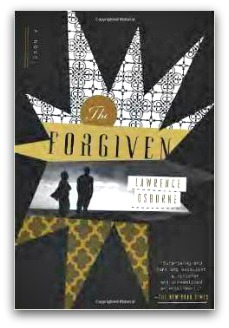
BOOKLUST, WANDERLUST: Lawrence Osborne’s haunting tale of expats and travel in the Moroccan desert

Booklust Wanderlust Collage

Left: Oleh Slobodeniuk (CC BY-NC-SA 4.0); right: Beth Green (her own photo).

Attention displaced bookworms! Our book review columnist, Beth Green, is back. An American who lives in Prague, Beth mixes booklust with wanderlust in equal measures, which gives her just the right background for reviewing recent book releases on behalf of international creatives.

—ML Awanohara

Thanks, M.L.! And, hello again, Displaced Nationers. With the arrival of fall in the Northern hemisphere, I find myself in the mood to dig into some darker, heavier—more Halloweeny, shall we say?—material.

As a long-term traveler, third-culture kid, current expat, or all of the above in some cases, each of us has at some point or another faced a cultural divide we’ve found it difficult, if not impossible, to cross. Maybe it came down to a clash of religious or political beliefs. Or was it something to do with wealth? There are privileges that come with being an expat—and that, ironically, can cause discomfort.

But perhaps one of the most harrowing breaches of trust occurs when people possess differing concepts of justice.
TheForgiven_colorcoverLawrence Osborne’s novel, The Forgiven, wraps all three of these tough-to-tackle subjects into a compelling tale centered around one darkly beautiful “what if”:

What if you accidentally committed a crime in another country?

Every traveler’s worst nightmare

Osborne’s protagonists, David and Jo Henniger, are a wealthy middle-aged London couple who have grown frustrated with each other and jaded about life in general. David is a society doctor in Chelsea who has just lost a malpractice suit and is also beginning to lose patients. Jo is a children’s book writer who hasn’t written a book in some time.

To get a change of scene, and perhaps a new lease on life, the couple sets off to attend a lavish party being thrown by one of David’s school friends, Richard, and his partner, Dally, at their ritzy retreat in the Moroccan desert. It’s a wild weekend-long affair tony enough to have photographers from the New York society pages chronicling it.

Now, that doesn’t sound like my travel scene, but Osborne makes it clear that what happens to Henningers could happen to any of us who dare to venture into unknown lands, where the inhabitants have different religious beliefs to ours, are poorer, and possess an unfamiliar sense of justice.

Jo to David: “I shouldn’t let you, Stumblebum.”

Overriding Jo’s objections, David decides to do the drive from Tangier through the desert in the night even though he has just consumed a bottle of wine.

Jo sulks but lets him drive.

Long after dark, while the Hennigers are trying to navigate the unfamiliar desert terrain, two Moroccan boys leap into the road ostensibly selling fossils though possibly intending to highjack the vehicle. David runs in to one of the young men, killing him. The other boy runs away.

Osborne sets up an unforgettable scene as David and Jo make their entrance to an extravagant expat party with a dead body on the back seat of their car. Not knowing what to do or how the Moroccan police will respond, the Hennigers have taken the corpse with them.

For the hosts, the situation is an embarrassment and a source of annoyance. For their Western guests, it’s a rude interruption and a source of gossip. For Moroccans like Hamid, the head servant of Richard and Dally’s estate, it’s a tragedy that brings out his deep loathing of Western values. For the family of the boy, who arrive the following day to collect the body, it’s both tragedy and crime.

But for David and Jo, it will prove life changing.

Jo to Day (another guest): “It’s like going through the Looking Glass.”

This story, rather than showing how travel erases our differences, puts the notion of “otherness” into high relief. The couple who host the party and many of their friends see Moroccans as as objects of curiosity, wisdom, servitude, and lust. David, less cosmopolitan than his hosts, falls back on traditional colonial values, regarding Morocco and Moroccans as inscrutable and inferior.

By the same token, the Moroccans in the story can’t fathom the Westerners’ lifestyles or motives. They are “unimaginable human beings,” infidels—people who don’t eat with their fingers, who don’t believe in God.

Driss, the young man who is struck and killed by David, wants desperately to break away from the life his father had. He comes from a Berber family that lives in a remote outpost of the Sahara, where children must slave away hacking out Trilobites all day long, with the hope of selling them to Western millionaires.

Driss’s father, Abdellah, more than anything else wants to avenge “the fact that he simply had never known his son at all.”

When Abdellah and his brothers arrive to pick the body up for burial, they demand to meet David. They ask that he travel with them to make atonement. Richard and Dally, keen to get on with the party, assure him that it will be for the best.

Jo to herself: “Who knew what here was artificial and what was indigenous?”

The Forgiven is a tribute to Osborne’s roots as a world-class travel writer and chronicler of the expat life. He takes us behind the scenes and into the inner lives of Moroccans as well as of the expats who choose to live in that part of the world.

Take, for instance, Osborne’s account of Moroccan versus British pessimism:

“The men of the desert know everything,” Hamid said once, like a quote out of Lawrence of Arabia. But they didn’t, really. They were just efficient pessimists, and therefore astute readers of human nature. They always assumed the worst, and that made them correct nine times out of ten. Their pessimism, however, was not like David’s. David was someone who believed that the past was superior to the present, and that was a different sort of pessimist. It was not the entire past that was superior, of course; it was mostly just the British nineteenth to the mid-twentieth century.

Or this passage about how the Moroccan villagers tend to regard Richard and Dally and their wild parties:

It was admitted that they were wealthy and that they spent their money in an exceedingly unwise and profligate way, and that this was much to the advantage of the people.

Jo to Richard: “I dare say I won’t be the same again…”

The story maintains momentum by swinging between Western and Moroccan cultures, leaving the reader almost breathless, not always sure of their footing.

As readers, we guess but aren’t sure if the lumpish David, who is clearly an alcoholic, is still drunk on his midnight drive. Did he mean to hit the young man? And, the victim of the accident—can we say he’s a victim? Flashbacks to the youth’s bravado-filled conversations with a younger, impressionable friend paint him as an unstable character, full of hatred, with a shady past…

Jo, David’s long-suffering wife, is also an enigma. An aging beauty, she feels isolated from the young, frivolous women at the party. Does she love David, or want to leave him? Does she care if justice is exacted? Or does she care only that she be, as the title suggests, forgiven?

* * *

Not wishing to give away any more of the plot, I’ll end by reiterating: Displaced Nationers, in your own experience, which topics tend to open up the widest cultural divides?

Let me also leave you with the epigraph from the novel:

“Many roads do not lead to the heart.” —Moroccan Proverb

Until next time—oh and please drive safely!

* * *

Thanks, Beth! I’ve read The Forgiven and am still haunted by it. Lawrence Osborne is a contemporary writer with a deep understanding of what it means to feel “displaced” by one’s travels. Reading the book gave me thrills and chills, not just for the story but for the beauty and precision of his prose. Readers, does this sound like a book for you?

Beth Green is an American writer and English teacher living in Prague, Czech Republic. She grew up on a sailboat and, though now a landlubber, continues to lead a peripatetic life, having lived in Asia as well as Europe. Her personal Web site is Beth Green Writes, and she is about to launch a new site called Everyday Travel Stories. To keep in touch with her in between columns, try following her on Facebook and Twitter. She’s a social media nut!

STAY TUNED for next week’s fab posts!

If you enjoyed this post, we invite you to register for The Displaced Dispatch, a round up of weekly posts from The Displaced Nation, with Alice nominations, exclusive book giveaways and other extras. Register for The Displaced Dispatch by clicking here!

Related posts:

And the September 2014 Alices go to … these 2 international creatives

 © Iamezan | Dreamstime.com Used under license

© Iamezan | Dreamstime.com
Used under license

If you are a subscriber to our weekly newsletter, the Displaced Dispatch, you’re already in the know. But if you’re not, listen up. (Hey, why aren’t you? Off with your head!)

Every week, when that esteemed publication comes out, we present contenders for a monthly “Alice Award,” most of whom are writers or other kinds of international creatives who appear to have a special handle on the curious and unreal aspects of being a global resident or voyager.

Not only that, but this person tries to use this state of befuddlement as a spur to greater creative heights.

Today’s post hono(u)rs September’s two Alice recipients. They are (drumroll…):

1) DANIEL ROUSE, Shropshire-born expat living in Toronto, Canada, and Telegraph Expat blogger

For his post: “Class doesn’t matter in Toronto,” for Telegraph Expat
Posted on: 19 September 2014
Snippet:

Back in Shropshire…it wasn’t uncommon to have friends with nicknames deriving from their occupation; that’s how they are identified. It can be to the extent where a job is married with a first name without pause for breath: “you know my mate Ronnie-the-plumber.” I am guilty of this….

Over here it doesn’t matter what people do for a living, so people from all walks of life socialise together. Being worth a decent conversation is all that matters.

Citation: Daniel, we had rather assumed that the British class obsession would be fading by now. It’s been quite a few years since Maggie-the-Grocer’s-Daughter assumed power, followed by John-the-Circus-Performer’s-Son. Then there was Tony-the-Grandson-of-Actors-&-Grocers. And let’s not forget Kate-the-Party-Planners’-Daughter. But it seems that with the ascendance of David-the-Descendant-of-William IV (albeit via an illegitimate line), class considerations are permeating the land again—having now reached Shropshire. Some may say it’s a good thing—long may class distinctions flourish! A society can’t function if people don’t know their place. And besides, as Downtown Abbey has taught us, upper and lower classes have always been the best of friends. We must confess, however, that we do not find this very sensible. Rather, we think that names, rather than being associated with professions or parents’ professions (and therefore educations, incomes, and class profiles), should be reminders of what a person looks like. The source of our wisdom is the redoubtable Humpty Dumpty, in this exchange with Alice:

“MUST a name mean something?” Alice asked doubtfully.

“Of course it must,” Humpty Dumpty said with a short laugh: “MY name means the shape I am—and a good handsome shape it is, too. With a name like yours, you might be any shape, almost.”

Now some may think Humpty Dumpty has prosopagnosia, but surely he’s just being practical? We also believe that expats would do well to employ this kind of mnemonic device when they first go abroad and are immersed in a phantasmagoria of new faces, body shapes, clothing, hair styles… In your part of the world, for instance, we could imagine epithets like “Big-Boots-xxx” or “Bushy-Beard-xxx” coming in handy. (Listen, you say you know your Canadian friends really well, but we still don’t advise using these nicknames to their faces, just in case…) Congrats on this fine post, Daniel, and we look forward to re-encountering some of this material in your short stories!

2) LINDA RUBRIGHT, former expat in Europe and the Caribbean, and founder of the travel and lifestyle blog the delicious day

For her post: “8 Secrets No One Tells You about Being an Expat,” for Sherry Ott’s new career break site, Meet Plan Go
Posted on: 25 September 2014
Snippet:

Secret #4: You are the punch line to a lot of jokes.
…The tiny differences are enormous differences, and what can you do about it? Expect a lot of laughs—in your direction.

Citation: Linda, you are so right, and have such a good way of putting it: how truly strange a culture can look when you are stuck in its “deep catacombs” (see Secret #2). For sure, “catacombs” are a telltale sign of having fallen down a rabbit hole. And we agree with your premise that exploring said catacombs without a compass can induce “profound loneliness and feelings of complete incompetence” (#2 again) not to mention homesickness (#8). We’d further like to point out that even on Alice’s through-the-looking glass adventure, when she stays above ground, such feelings of discombobulation continue, especially when she repeatedly tries to climb the hill near the house to the beautiful garden—only to find herself back at the house. Did an encounter with the Red Queen shed light on her frustrations? Hardly:

“Well, in OUR country,” said Alice, still panting a little, “you’d generally get to somewhere else—if you ran very fast for a long time, as we’ve been doing.”

“A slow sort of country!” said the Queen. “Now, HERE, you see, it takes all the running YOU can do, to keep in the same place. If you want to get somewhere else, you must run at least twice as fast as that!”

Still, at least the Red Queen was kind enough to attempt an explanation of basic cultural differences. She didn’t laugh at Alice. Which is more than we can say for you that time when you witnessed your Spanish boyfriend’s first attempt to pump gas in the United States and apparently found it uncontrollably funny that, being from Spain, which is 100% full service, he was also not used to gallons, credit cards, or zip codes, and kept fumbling with the machine. But we have news for you, Linda: the joke may be on you in the end. Little did you realize that the most successful expats are gluttons for punishment, and the eight points you list as drawbacks to the expat life in fact don’t perturb us all that much. Why do you think your BF is now your husband, living with you in Colorado? He loves being the object of your humor! In any case, thanks for this great post, and good luck to the pair of you with your travel advice site.

*  *  *

So, readers, do you have a favorite from the above, or have you read any recent posts you think deserve an Alice Award? We’d love to hear your suggestions! And don’t miss out on the shortlist of Alice contenders we provide in each week’s Dispatch, which are sources of creative thought if nothing else! Get on our subscription list now!

STAY TUNED for more fab posts.

Writers and other international creatives: If you want to know in advance the contenders for our monthly Alice Award winners, sign up to receive The Displaced Dispatch, a round up of weekly posts from The Displaced Nation, with news of book giveaways, future posts, and of course, our weekly Alice Award!. Register for The Displaced Dispatch by clicking here!

Related posts:

CHUNKS OF DRAGONFRUIT: A tale by a Chinese American expat woman in China

Dorcas and Dragonfruit cover, courtesy Shannon Young. Purple dragonfruit cubes by http://www.flickr.com/photos/mikebehnken/4996063234/

Dorcas Cheng-Tozun and Dragonfruit cover, courtesy Shannon Young. Purple dragonfruit by Mike Behnken (CC BY 2.0)

How Does One Dress to Buy Dragonfruit? True Stories of Expat Women in Asia is a new anthology edited by our latest columnist, Shannon Young. For the sake of the Displaced Nation audience, Shannon has generously agreed to carve out a few tasty morsels from the writings of the 26 female writers within the collection that highlight their feelings of displacement within Asia. Take it away, Shannon!

—ML Awanohara

Thanks, ML. I’m excited to be doing this. The very first excerpt comes from a piece by Dorcas Cheng-Tozun, called “The Weight of Beauty,” which covers the insecurities she experienced as a Chinese American woman living in China. Dorcas worries that her command of the language doesn’t match her Asian face and her average American weight is considered fat in China (she knows because strangers tell her!). Despite the difficulties, she finds an unexpected connection with her slim, beautiful, bilingual Mandarin teacher.

Here is the beginning of her story:

“The Weight of Beauty,” by Dorcas Cheng-Tozun

“If you went running every day, you could lose some weight.” A maintenance worker with a receding hairline squinted at me as the elevator in our apartment building rose far too slowly. This was the first time I had ever interacted with this man. Unfortunately, he was speaking Cantonese, which meant that I understood him perfectly.

“Mmm…” I responded, avoiding his eyes.

“Really. If you ran every day, you could lose some weight,” he repeated, concerned that I had not given him a proper reply.

I flashed him a tight smile, but I did not trust myself to say anything else before he stepped out of the elevator. As I watched his stooped, retreating back, I tried to remember how I was considered “petite” and “tiny” by my American friends. But the US was, literally, half a world away.

When my husband and I moved to China in the summer of 2008, my body’s relative mass seemed to triple during the time it took us to cross the Pacific Ocean. From my first day living in the industrial city of Shenzhen, my weight was a favorite conversation topic of friends, colleagues, and acquaintances alike. “You’re rather fat,” I would often hear. Or, “Did you gain weight? You look fatter.” If I stepped into a shop, sales clerks would rush forward, stopping my progress with wild gesticulations communicating that they had no merchandise remotely close to my size.

My figure was not the only thing wrong with me in the Middle Kingdom. I had grown up speaking Cantonese in the United States, but I knew barely any Mandarin. And judging by the reaction of the locals, my lack of language skills was by far my greater sin. Restaurant waitresses turned up their noses at me; grocery store cashiers clucked their tongues at me; taxi drivers quizzed me endlessly about my deficiency in Mandarin. My life in China at times felt like a series of one-act plays in which characters emerged with the sole purpose of telling me how stupid, fat, and just plain wrong I was.

“Ignore them,” my husband Ned, whose Turkish and Jewish roots had combined to make him look generically Caucasian, urged me.

“How can I?” I protested. “They’re everywhere.”

“But their opinions don’t matter. They don’t know you.”

That was the problem: they thought they knew me. I was a Chinese woman living in urban China, so knowing how to speak Mandarin was the minimum criterion for proving my sentience. It was equal to a blonde, blue-eyed woman in a cowboy hat and boots in rural Texas barely comprehending a word of English. It just wasn’t supposed to happen.

In exasperating contrast, the locals regarded Ned like a creature with magical properties. They were entranced by his height and broad shoulders, his light hair and green eyes, and they immediately set the bar for cultural competence at zero. All he had to do was say, “Ni hao,” and the same individuals who had been glaring at me as if I had insulted their ancestors as far back as the Tang Dynasty would glow with beatific smiles and tell Ned how amazing his Mandarin was. Ni hao was Ned’s universal password to obtain what would forever be denied to me: respect, attentive service, automatic entry into heavily guarded buildings, and a mysterious fount of Chinese joy and happiness that seemed to emerge only at the white man’s touch.

“He’s so handsome,” Chinese women would tell me, glancing at him through fluttering eyelashes. “Is he your boyfriend?”

“He’s my husband” was a Mandarin phrase I quickly learned to say.

Under the daily barrage of insults and sneers, my former life in the United States as an independent, competent, well-adjusted young woman began to recede from memory. It was as if that old version of me had never existed, as if I had always been the overweight, bumbling idiot that 1.3 billion people seemed to think I was.

I learned to wear an I-don’t-care-what-you-think expression on my face, but in reality, my defenses were only shadows of battlements. I felt as if I was constantly under siege; even the most innocuous encounter could become a surprise assault.

One day I greeted a deliveryman at the door of the office where Ned and I worked. I had done this several times before, and the routine was easy. All I had to do was say “Ni hao,” take the package, and sign for it.

But this time, when I handed the clipboard back to the deliveryman, he scrutinized my signature before eyeing me suspiciously. “Why don’t you have a Chinese signature?” he asked in Mandarin, a stony expression on his face.

“I’m American. I only have an English name.” I spoke slowly and gave him a small, apologetic smile.

“Why don’t you have a Chinese signature?” he repeated stubbornly, red blotches blooming across his forehead.

“I was born in the US I only have an English name,” I repeated just as stubbornly, all traces of the smile gone.

I didn’t understand any of the words he spat at me after that; he was speaking too fast and I was too shocked at his venomous tone. Knowing that I had just been deeply insulted, I refused to give him a response. We faced off in silence for a few tense moments before he turned on his heel, continuing to mutter vitriol under his breath as he walked away.

At that moment, learning Mandarin became my top priority. I contacted a company called New Concept Mandarin, which focused on teaching conversational survival Mandarin. They promptly responded, offering to send a company representative to my office the following day. When I told Ned about it, he asked to join in on the meeting to see if the classes were right for him as well.

The next afternoon, when I heard a knock at the office door, I jumped up from my desk. “I’ll get it,” I announced to the office in general.

Easing the door open, I called a cheery “Ni hao” into the dimly lit hallway. Then I froze.

“Ni hao,” responded the supermodel standing in the doorway.

I couldn’t stop the thought from entering my mind: If this woman isn’t from New Concept Mandarin, she must be a high-class prostitute. My eyes locked first on her dress, a body-hugging, black-and-white-striped mini that revealed every impeccable curve on her petite form. The shine of her straight, long black hair, which she casually tossed behind one shoulder, mesmerized me; her wide almond-shaped brown eyes, her thin upturned nose, and her closed-lip smile left me in awe.

As I stared at her, I remembered how I had barely brushed my hair that morning; how I had a grease stain on my blouse from lunch; how I had an angry zit on my forehead that was probably doubling in size at that very moment.

“Are you from New Concept Mandarin?” I asked in a squeaky voice.

“Yes,” the vision said confidently, with only a trace of a Chinese accent. “My name is Joanna.” She held out a tiny hand adorned by a French manicure.

Feeling oafish, I extended my sweaty, un-manicured hand and awkwardly shook hers. “Please come in.”

I shuffled to the conference table in the middle of the office, conscious that five pairs of eyes followed our progress. The room suddenly felt too open, too public. I didn’t want all my colleagues—and certainly not my husband—seeing what I saw: this epitome of Chinese beauty in juxtaposition with the ungainly, unkempt Chinese American who actually liked to eat.

I invited Joanna to sit in a black swivel chair. She descended gracefully into the seat and crossed her slender legs. I attempted to imitate her movements, but instead I had to steady myself on the armrests when I nearly missed my seat. Clearing my throat to hide my embarrassment, I asked Ned to join us.

* * *

Readers, I hope you enjoyed that morsel! Want to read more of Dorcas’s story? It’s the second in the book, so you’ll be able to finish it if you download the free sample on Amazon. (The e-book and paperback of Dragonfruit are available at all major online retailers.)

And if you’re curious to find out more about Dorcas Cheng-Tozun and her writing, she can be found at chengtozun.com.

I look forward to sharing more excerpts from the Dragonfruit anthology over the next few months.

* * *

Thank you so much, Shannon! Displaced Nationers, any comments on what Dorcas had to say in this passage? Have you ever had the experience of having people look at you but not believe you were (or weren’t) speaking their language? I speak of the phenomenon known as cognitive dissonance…which can make one feel very displaced. Tell us about it, or any other responses you’ve had to this excerpt, in the comments!

STAY TUNED for tomorrow’s announcement of the September Alice Awards.

If you enjoyed this post, we invite you to register for The Displaced Dispatch, a round up of weekly posts from The Displaced Nation, with snippets of worldly wisdom, exclusive book giveaways and our nominees for the monthly Alice Awards. Register for The Displaced Dispatch by clicking here!

Related posts:

DIARY OF AN EXPAT WRITER: Testing one, two, three…Can anybody hear me?

DiaryExpatWriterToday we welcome a brand new columnist, the up-and-coming author Shannon Young. This past summer, Shannon announced she’d cut 18 inches off her hair, quit her day job to become a full-time writer, and given herself a pen name for her new series of adventure novels. And, yes, she is an expat, a kind of love refugee, living in Hong Kong. She has generously agreed to chronicle her writing adventure for us.

—ML Awanohara

Dear Displaced Diary,

In this column, I’ll be recording my experiences as a full-time expatriate writer. Officially, this is only a test.

Let’s start with a bit of background: I have been an expat, an American in Hong Kong, for four years and one month. For the past four years, I taught English in a local primary school while harboring a desire to work in book publishing.

Originally, I wanted to be an editor, to find talented writers and help them get their work into the world. I didn’t think I had stories of my own. Then, I moved to Hong Kong. In my new expatriate life, I found stories: personal dramas, bewildering worlds, opportunities for stimulating observations, and even ideas for fiction.

So, I started writing…

I discovered I love the process: mulling over half-formed ideas, stealing character descriptions from people I saw on the street, scribbling outlines on everything, and sitting down in coffee shops for hours at a time to actually do the work.

Four years later, I’ve completed a number of projects composed of bytes and bits of code, of pages and ink, of words and stories. Each project has taught me to look closer at the world around me. Each project has challenged me to be more diligent and to look for opportunities to write something that will matter.

One of those projects, a Kindle single called Pay Off, discusses how my teaching job in Hong Kong enabled me to pay off my large student loans from a US university. I’ve been debt free since December 2013 so have been able look seriously at other occupations.

I want to keep writing…

My teaching contract ended in July 2014. By that time I had accrued some savings, some complete or nearly complete books, and a husband with permanent residency. Instead of continuing to teach, I realized that now was the time to try to make it as a writer.

This is only a test. If I am not bringing in enough money from my writing (or worse, not enjoying the work) around Chinese New Year, I will start looking for a new job.

For now, I’m jumping in with both feet, seeing if this dream is feasible.

Like becoming an expat all over again…

Quitting a day job to write full-time is a lot like moving to a new country. You might know a bit about what to expect and what to pack. You do your homework; you find stories of people who’ve done it successfully, who love their new lives. You also find stories of people who’ve failed, who didn’t gel with the new place for any number of reasons. Most expats fall somewhere in between, learning to live with the difficulties while also enjoying many good moments.

Some people say it isn’t possible to make a living as a writer. They cite the successes and insist such people are outliers: exceptionally good or exceptionally lucky. As with moving to a new country, I suspect the truth lies somewhere in between. All I can do is take the leap and see if I can make it work.

But, just as I wouldn’t move to a new country without a suitcase, I am not starting this writing journey with a blank Word document and “Once upon a time…”

I have a strategy!

Here’s what I’m “packing” for my full-time writing life:

1) A portfolio of published works—comprising not just the student debt Kindle single but also the anthology How Does One Dress to Buy Dragonfruit: True Stories of Expat Women in Asia, which I edited for a small Hong Kong publisher. It came out earlier this year.* Neither of these works is a huge moneymaker, but sales can add up slowly. More importantly, these two publications have given me valuable publishing experience.

2) A book deal. My memoir of my first year in Hong Kong, Year of Fire Dragons, is being published by Blacksmith Books, an independent Hong Kong publisher, at the end of October. Hong Kong is a small market and even healthy sales won’t pay my rent, but at least I have a book to launch and a tangible opportunity to build my career.

3) A genre series in the works. This is the essential part of my strategy, the heavy winter coat, if you will, that I’m packing as you never quite know, once you become an expat, where you might end up. (I’m in Hong Kong now, but as I never could have predicted that, shouldn’t I be prepared for the day when I move to, say, Finland?) Since late 2012 I have had the wild pleasure of working on a series of post-apocalyptic adventure novels set at sea called The Seabound Chronicles (under the pen name Jordan Rivet). I’ve planned for a four-book series and written drafts of three of the titles. Book One, Seabound, is currently with the copy editor and should be ready to launch in November. I plan to self-publish this series as e-books and POD paperbacks and, frankly, hope to make some money.

4) Last but not least, reasonable expectations. While I am hopeful that the combination of my publishing experience so far, my existing works, and a highly commercial series will enable me to continue doing what I love, I am also realistic. I don’t expect to get rich. The goal here is to build up an audience—and a long tail of sales—that will eventually enable me to pay my rent and buy the occasional plane ticket home to see my family. But my primary expectation is that I will work hard, produce the best books I can, and try to learn as I go.

“If you want a pearl, you must dive for it.”—Chinese proverb

I realize I’m taking a risk by forgoing a steady income and living on savings in order to give myself more time to write. But taking risks is second nature to expats. We leave behind everything we know, and there are never any guarantees about how things will turn out.

My own jump into expat life occurred when I followed the man I loved to his home country. At the time, I didn’t even know if we would get along when we finally lived in the same country. At first, it looked like everything would fall to pieces because a month after I arrived in Hong Kong my boyfriend’s company sent him to London. I had a year on my own in Asia, fearing that my risk had been in vain.

That story has a happy ending: that boyfriend is now my husband—and I love Hong Kong. It was a risk that paid off, but it could have gone very wrong. Now, I hope the risk I’m taking will turn out at least half as well.

And can I tell you a secret, diary? Since I stopped working and started focusing on writing full time, I’ve been deliriously happy. I love having hours to myself each day to sit down and work on my own creative projects. I love reading about the publishing industry and studying other people’s books and careers. I’m trying hard not to become an obnoxious friend who only talks about their own work because it’s all I think about these days.

Yes, I know this honeymoon period won’t last forever, but at least allow me to say: it’s been wonderful so far!

And yes, I sometimes struggle with prioritizing, but that’s because there are so many things I want to do! But I’m gradually getting used to my new routines and performing triage on my to-do lists. I’m developing the daily habits of a writer. I want to use this period well.

Each month, I’ll share a bit more with you about where this journey is taking me. I hope you’ll come along for the ride.

Thanks for reading!

Yours,

Shannon Young
www.shannonyoungwriter.com

*From now until the end of the year, Shannon will be sharing excerpts from Dragon Fruit. Stay tuned!

* * *

Readers, it’s your turn. What is a risk you’ve taken in order to follow a dream? Was it becoming an expat or something even more daring, like becoming a full-time writer? What are some difficulties you faced along the way? Let me know in the comments!

STAY TUNED for next week’s fab posts!

If you enjoyed this post, we invite you to register for The Displaced Dispatch, a round up of weekly posts from The Displaced Nation, with snippets of worldly wisdom, exclusive book giveaways and our nominees for the monthly Alice Awards. Register for The Displaced Dispatch by clicking here!

Related posts: