The Displaced Nation

A home for international creatives

Category Archives: Pot Luck

RETURN TRIP: 5 lessons Wonderland taught me about the expat life, by Lewis Carroll’s Alice

August is finally drawing to a close — we hope you managed to have an enchanting time of it. Here is one more in our series of “return trips” to posts that, for one reason or another, enchanted our readers. Enjoy!
All three members of The Displaced Nation team have found Alice, of Wonderland and Through the Looking-Glass renown, a source of inspiration on our travels — seeing her as a kind of ultimate expat. Thus we decided to dedicate the month of June to Lewis Carroll’s “little heroine.” Kate Allison launched a series of posts on our Alice in Wonderland theme with 5 “lessons” Alice had allegedly learned from her adventures. It remains one of our most popular posts to date.

To kick off our Alice in Wonderland theme, we asked Alice if she had any advice for today’s Displaced Person:

*

Indeed I do. It might be many years since I fell down the rabbit hole, but human nature hasn’t changed. This is a little of what I learned:

1. Keep the golden key in your pocket at all times, and make a note of the emergency exits.

In another moment down went Alice after [the White Rabbit], never once considering how in the world she was to get out again.

My first mistake was to plunge down the rabbit-hole without planning ahead. The adventurous life is all very well, but it’s good to have a bolt-hole, as well as a rabbit-hole, when you need to escape to the old and familiar.

My second mistake was to leave the key on the glass table before drinking from the bottle marked “Drink Me.” In your vernacular, that’s like buying a return ticket home for this evening, then discovering your passport expired six months ago. Be prepared for the unexpected, the peculiar, and the almost impossible.

2. No matter how hard you try contrariwise, at some point you will offend someone.

Evidently Humpty Dumpty was very angry… “It is a—MOST—PROVOKING—thing,” he said at last, “when a person doesn’t know a cravat from a belt!”

Oh dear! If only I had a shilling for every time I inadvertently offended one of the creatures in Wonderland and through the Looking Glass! Not knowing Humpty Dumpty’s neck-wear from midriff-wear; my compulsive mentioning of cats and dogs in the Mouse’s presence without considering that he and I might have a different perspective of these animals…the list went on and on.

In the end, I think the Red Queen’s advice was the best:

“Always speak the truth—think before you speak—and write it down afterwards.”

But still, I couldn’t help thinking:

“I wish the creatures wouldn’t be so easily offended!”

3. “The rule is, jam to-morrow and jam yesterday — but never jam to-day.” Different country, different rules.

The Queen of Hearts was the worst example of this:

“No, no!” said the Queen. “Sentence first—verdict afterwards.”

I suggest if you are ever in this situation yourself, you employ more tact than I did. “Stuff and nonsense!” I said. “The idea of having the sentence first!”

Perhaps today a quick telephone call to your country’s embassy might be better.

Better still, acquaint yourself with the country’s rules before you go jumping on aeroplanes or down rabbit holes.

4. Go to a party or a Caucus-Race — don’t drown in your own tears.

“I am so VERY tired of being all alone here!”

The Caucus-Race proved to me that I could make friends with the most unlikely companions.

After a few minutes it seemed natural to Alice to find herself talking familiarly with them, as if she had known them all her life.

If you feel alone in your new environment, seek out company, even if it’s not the kind of company you’re used to. You might find your life is richer for it.

5. And finally: Keep a note of your name in your memorandum-book.

“Who are YOU?” said the Caterpillar.

Alice replied, rather shyly, “I—I hardly know, sir, just at present—at least I know who I WAS when I got up this morning, but I think I must have been changed several times since then.”

I spent a great deal of time in both countries wondering who I was now. Was I my little friend Ada, or Mabel, perhaps?

Tweedledum even suggested I wasn’t really there at all.

“You’re only one of the things in his dream. You know very well you’re not real.”

“I AM real!” said Alice and began to cry.

Take a tip from me and write your name in a memorandum-book. Then keep a journal.

That way you will always remember who you were on any particular day.

And one day, people might read about you as they do about me.

*

Thank you, Alice!


If you enjoyed this post, we invite you to subscribe to The Displaced Dispatch, a weekly round up of posts from The Displaced Nation, plus some extras such as seasonal recipes and occasional book giveaways. Sign up for The Displaced Dispatch by clicking here!

Related posts:

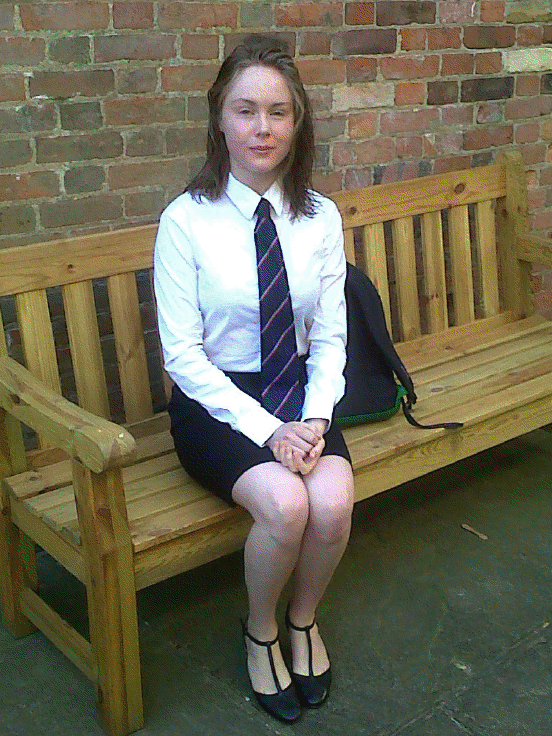
RETURN TRIP: Random Nomad – Charlotte Day, High School Student (Sixth Former)

While our writers take off on what they hope will be enchanting August breaks, The Displaced Nation will occasionally be reissuing some posts that, for one reason or another, enchanted our readers. Enjoy these “return trips”!
As youngsters head back to school, we’re reissuing a Random Nomad interview ML Awanohara did with Charlotte Day, a displaced teenager in England. Charlotte spent a chunk of her summer taking a Russian-language course in St. Petersburg and living with a Russian family. She has produced a travel yarn on her adventures, which will appear on Monday.

Born in: Sydney, Australia
Passports: Australia, UK and US Green Card
Countries lived in: Australia (Sydney): 1994-2001; United States (New York, New York): 2001-2010; England (Sevenoaks, Kent): 2010-present

What made you leave your homeland in the first place?
My father is Australian and my mother English. They split up when I was two. When I was six, my mother met and married an Australian who had been living in New York for thirty years. I was rather disgruntled about moving to the United States and for two or three years, remained determined never to accept it as “home.” At that time, I was deeply patriotic to my native country — though this sentiment has dissipated since.

Is anyone else in your immediate family a “displaced” person?
My mother’s family, originally from England, has long been displaced. My mother herself was born in Kenya, in 1961. Following the Mau Mau Uprising, her parents were forced to relocate, and my grandfather, presented with a choice between Australia and Canada, chose the warmer of the two countries. My mother spent her childhood bouncing between schools in England and Australia. She eventually grew so fed up with packing and unpacking, she decided to leave school at the age of 16. Her father agreed to the plan provided she spend a final year at the school in Switzerland his own mother had attended as a girl. My mother moved on from Swiss finishing school to work in London, Paris and Sydney. But she appears to have made New York her last port of call. Indeed, we had a fairly solid life in the city until I decided to take myself off to boarding school in England.

Describe the moment when you felt most displaced over the course of your many displacements.
It must have been when I first arrived in New York as a six-year-old. I stepped out of the JFK arrivals terminal into a snowy March night. My stepfather was wearing a leather coat, the interior of his car smelled of leather — and the world outside the car window seemed an undulating stream of black and silver. Though it was the end of 2001’s warm winter, my Australian blood froze beneath my first-ever coat. And their apartment — that was all leather as well. It smelled of musk and cologne. Since that time, I have felt similar pangs of displacement, some of which lasted for considerable periods. But those first few moments in New York stand out as the most acute concentration of “displacedness” I have ever known.

Describe the moment when you felt least displaced.
For the last five or so years in New York, I have felt more at home than I ever did in Sydney. I ascribe this to growing up: at a certain age, one can take possession of a city, know its streets, bridges, tunnels and transportation system. I was too young when I lived in Sydney to reach that kind of comfort level. But when have I felt the most like a New Yorker? Perhaps it was the last time I came home for the holidays, and took the 4 train uptown for the first time in months. At that moment I realized how much this train had been a part of my life — conveying me home from school every day for two years. My old life would always be waiting for me on the subway, ready for me to pick it up again. That’s something only a New Yorker could say!

You may bring one curiosity you’ve collected from each of the countries where you’ve lived into the Displaced Nation. What’s in your suitcase?
From Australia: A miniature wooden wombat figurine — a gift from my grandfather. It conjures memories of a childhood spent beating about the bush (literally) and fishing for yabbies at the dam in the company of audacious dogs who stuck their heads down wombat holes, to no good end.
From New York: A pair of fake Harry Potter glasses. These defined my first six months in New York — I even wore them to my first day of school. I think it is telling that even at the age of six, I was unwilling to give all of my real self to this new home.
From England: My school tie — representative of the alternative universe I seem to have entered. At boarding school, the sense of removal from reality can be disconcerting — especially after having spent a decade in the city I regard as the world’s capital.

You’re invited to prepare one meal based on your travels for other Displaced Nation members. What’s on your menu?
I’d like to make you a Sydney breakfast: scrambled eggs, made with cream, salt and pepper and served on a bed of Turkish toast, with avocado and stewed tomato on the side (is this being greedy?). Our meal will be accompanied by a large “flat white”: what we call perfectly strong, milky coffee without excessive froth. I suggest we consume it overlooking a beach on a Sunday morning. At least, I assume The Displaced Nation has beaches?

You may add one word or expression from each of the countries you’ve lived in to The Displaced Nation argot. What words do you loan us?
From Australia: Daggy. I use this word all the time — and did not realize it was exclusively Australian until I was informed of the etymology. Apparently, it comes from trimming the soiled wool around a sheep’s bottom. Which part of this repugnant whole is actually the “dag,” I do not remember. (No, I’m not a proper Australian!) But as I understand it, “daggy” means sloppy in appearance or badly put together.
From New York: There are so many words, and most are second nature by now. However, I will choose grande-soy-chai-tea-latte because I still shudder to think of myself as the kind of person who can utter such a phrase, at great speed, with great insistence. In fact, I’m still in denial about my love for Starbucks: having known Sydney coffee, my standards should be higher.
From England: Banter. I still do not know the precise meaning of this word, but it seems to encapsulate everything that makes someone my age feel socially acceptable — and, of course, I have no banter whatsoever. I think it means the capacity for combining wit with meaningless conversation. But there are other components, too, which seem to me unfathomable.

Question: Readers, tell us what you think: should we welcome Charlotte Day to The Displaced Nation and if so, why? (Note: It’s fine to vote “no” as long as you couch your reasoning in terms you think we all — Charlotte included — will find amusing.)

img: Charlotte Day at her boarding school in southeast England

If you enjoyed this post, we invite you to subscribe to The Displaced Dispatch, a weekly round up of posts from The Displaced Nation, plus some extras such as seasonal recipes and occasional book giveaways. Sign up for The Displaced Dispatch by clicking here!

Related posts:

Random Nomads to the rescue! How to have an enchanted August (2/2)

Every year in mid-August, I swear I can still hear the beat of the taiko drums, even though it’s been years since I lived in Japan as an expat.

As I mentioned in my comment on Anthony Windram’s post of last week, the Japanese hold their Obon Festival in the dead of August. Appropriately, it’s the Buddhist version of the Festival of the Dead — when the dead are supposed to come back and visit.

That said, I have always thought of obon festivities as an attempt to arouse the living dead, which is what most people are after enduring the agonies of a Japanese summer. Just hearing the lively drumbeat can be revitalizing, getting one’s blood flowing again.

I am therefore personally curious to see how The Displaced Nation’s Random Nomads who live in Asia are doing. Are they managing to have some enchanting moments despite the heat — which, if anything, appears to be even more brutal in that part of the world than it was in my day? And what advice can they impart to the rest of us? (Besides the fact that compared to them, we shouldn’t really be complaining…)

Three of them got back with answers to these questions:
1) What has been your most enchanting moment of Summer 2011 thus far?
2) What has been your least enchanting moment?
3) Do you have any survival tips for people who can’t escape?

Please note:
a. You can read interviews with each of these three Random Nomads about their “displacement” by clicking on their names. They, and their lives, are fabulously inspiring regardless of season.
b. In Part 1 of this post, five US/Europe-based Random Nomads answered the same three questions. Check it out!

KIM ANDREASSON — Swedish passport; current home: Vietnam (Saigon)
Most enchanting:
Vacationing in my native Sweden with my wife. It was the longest time I have spent in my homeland in over a decade, and I have a new-found appreciation for the proverb: “Away is good, but home is best.”

Least enchanting:
Trying to do work while vacationing in Italy. An hour before an important conference call, the Internet went down at our 4-star hotel, and the hotel manager airily proclaimed, “That’s what usually happens when it rains.”

Survival tips:
We live in Saigon, where it’s basically 90 degrees all the time so there are only two options: stay inside and use AC; or if you go outside, wear light-colored clothes and drink lots of liquid.

EMILY CANNELL — U.S. passport; current home: Japan (Tokyo)
Most enchanting:
In spite of not being terribly interested in the rainforest or the quest to save it, I found myself smack dab in the middle of Borneo, Malaysia, on an Ecotour. Searching for the endangered orang-utans, we happened upon what became one of the highlights of my summer — and life. A pygmy elephant emerged from the trees, and just like the rest of us, he was hot. Slowly, he ambled in to the river where he proceeded to entertain us with his cooling down antics — scratching his ears on the trees, blowing water out of his trunk, and completely submerging himself while only 10 feet away from our boat. What a gift! I got out my checkbook then and there.

Least enchanting:
Getting up at 4:00 a.m. for the fifth time this summer in order to catch a 7:00 a.m. flight to somewhere. Once is okay, but five times?

Survival tips:
Currently I’m writing from the complete darkness of the guest bedroom, fan on high. Keep the curtains closed and the fans on high to circulate the air. When outside, wear a hat to keep the sun off the top of the head. It’ll do wonders.

JO GAN — U.S. passport; current home: China (Yuyao City, Zhejiang Province)
Most enchanting:
Since my summer is usually spent teaching high school and university students on their summer holidays, I usually don’t get many enchanting moments.  However, I did have one thing that was kind of nice.  After a long day at the language school, I walked down to the Yaojiang River that flows through the downtown area, with some fellow expat teachers and a couple of our adult students.  To our great surprise, white plastic chairs and tables had been set up all along the river underneath the willow trees. Cold beer and hot tea was being served, and there was a lone guitarist playing Chinese folk music for all to enjoy. We sat down and chatted, drank our beers, and watched the river float by with a slight breeze. The servers kept the beggars at bay so we were not hounded for money.

The best part of the evening was around midnight when they started shooting fireworks over the river.

It wasn’t a special occasion or even a special event — just the right mix of people and location, at just the right moment.

Least enchanting:
That would have to be when it rained for a month. I don’t know what was going on with the weather, but in the month of June I thought we were going to have to build an ark. It rained for three weeks straight every day without stopping. I didn’t want to do anything, but had to trek in the rain and puddles all the way to school every day. One day was particularly miserable because the electricity went out.  So it was hot and rainy, and we had no lights. I just kept thinking, why me?

Survival tips:
In the small Chinese city where I live, it’s the little things that count. Taking a trip around the city center in a rickshaw may cost you a little, but you get to sit back and survey the different things going on — and if that special person joins you, it can be romantic.

Another option is going out to the local parks every evening from 7:00 to 8:30 p.m. to dance with the older locals. They are almost always playing some salsa or pop music and dancing the cha cha, or there’s some line dancing action. It is actually kind of fun to join them even if your are not in their age set. They always are excited to teach you their moves.

Lastly, we live close to Siming Mountain. You can take a trolley bus to the top and then float down the small river in a little orange raft. The river has added twists, turns and drops that make you scream out for your mama to help you. It makes for an interesting day, and you are bound to get wet and cool off.

STAY TUNED for tomorrow’s post, in which Anthony Windram debuts his new Agony Aunt column!

If you enjoyed this post, we invite you to subscribe to The Displaced Dispatch, a weekly round up of posts from The Displaced Nation, plus some extras such as seasonal recipes and occasional book giveaways. Sign up for The Displaced Dispatch by clicking here!

Related posts:

RETURN TRIP: Seven deadly dishes — global grub to die for

While our writers take off on what they hope will be enchanting August breaks, The Displaced Nation will occasionally be reissuing some posts that, for one reason or another, enchanted our readers. Enjoy these “return trips”!
Some months ago, The Displaced Nation explored the theme of Gothic tales — the idea that many of us return from our world travels with some horrific stories to tell. That’s assuming we return at all, of course. Displaced Nation writer Kate Allison contributed this piece on deadly dishes as part of our “It’s Food!” category. It’s one of our most popular posts to date.

A Briton abroad spends a surprising amount of time defending his native national cuisine. I remember going to a steak house in Connecticut where the waitress, upon taking our order and hearing our accents, said brightly, “From England, huh? I hear you don’t get anything good to eat over there. ” When she brought the filet mignon to the table, she did so with the pitying smile of one delivering alms to the starving.

British super-chefs like Gordon Ramsay and Jamie Oliver may be taking the US by storm, but still this delusion of bad food persists. To which I say: whatever the perceived faults of English cuisine, at least no one has to take out extra life insurance before eating Yorkshire pudding.

Yet there are quite a few delicacies from countries without this dismal food reputation, where a top-up premium might be useful before you take that first bite.

In ascending order of danger or toxicity:

7. Snake wine – Vietnam, Southeast Asian, Southern China.

An assortment of herbs, small snakes, and a large venomous snake are steeped for many months in a glass jar of rice wine, then consumed in small shots for medicinal purposes. Fortunately, the ethanol renders snake venom harmless.

6. Surströmming – Sweden.

Fermented Baltic herring. Stored in cans, where the fermentation continues, causing the cans to bulge. In 2006, Air France and British Airways banned surstromming from their flights because they said the cans were potentially explosive. According to a Japanese study, the smell of this Scandinavian rotten fish is the most putrid food smell in the world.

5. Fried tarantula – Cambodia.

Tarantulas, tossed in MSG, sugar, and salt, are fried with garlic until their legs are stiff and the abdomen contents less liquid. The flesh tastes a little like chicken or white fish, and the body is gooey inside. Certain breeds of tarantula have urticating hairs on their abdomen, which they use for self-defense. If the spiders are not prepared properly – i.e., if the offending hairs are not removed with a blow torch or similar – these hairs can cause pharyngeal irritation in the consumer.

4. Sannakji – Korea.

Small, live, wriggling octopus, seasoned with sesame and sesame oil. The suction cups are still active, so bits of tentacle may stick to your throat as you swallow, especially if you’ve had one too many drinks before dinner. The trick is to chew thoroughly so no piece is big enough to take hold of your tonsils. Some veteran sannakji eaters, however, enjoy the feel of longer pieces of writhing arm and are prepared to take the risk.

3. Stinkhead – Alaska

Heads of salmon, left to ferment in a hole in the ground for a few weeks. Traditionally, the fish was wrapped in long grasses and fermented in cool temperatures, but then someone discovered Baggies and plastic buckets, which increase the speed of the process. Unfortunately, they also increase the number of botulism cases.

2. Casu Marzu – Sardinia

Made by introducing the eggs of the cheese fly to whole Pecorino cheese (hard cheese made from sheep’s milk) and letting the cheese ferment to a stage of terminal decomposition. Locally, the cheese is considered dangerous to eat when the maggots are dead, so you eat them live and squirming. As the larvae can jump six inches in the air, it is advisable to cover your cheese sandwich with your hand while eating to prevent being smacked in the face by grubs. An alternative is to put the cheese in a paper bag to suffocate the maggots, then eat it straight away. The maggots will jump around in the bag for a while, making a sound, I imagine, not unlike that of popcorn in the microwave. Although the European Union outlawed this food for a while, it has since been classified as a “traditional” food and therefore exempt from EU food hygiene regulations.

1. Fugu (Puffer fish) – Japan

Considered to be the second most toxic vertebrate in the world, puffer fish is a delicacy in Japan, but preparation of the food is strictly controlled, with only specially trained chefs in licensed restaurants permitted to deal with the fish. Fugu contains tetrodotoxin, a poison about 1200 times stronger than cyanide, which is most highly concentrated in the fish’s liver — the tastiest part. Sadly, for gourmets who like to live life on the edge, fugu liver in restaurants was banned in Japan in 1984.

Question: What is the most adventurous dish you’ve ever eaten?

If you enjoyed this post, we invite you to subscribe for email delivery of The Displaced Dispatch, a round up of the week’s posts from The Displaced Nation. Sign up for The Displaced Dispatch by clicking here!

Enchanting European escapes at the hands of Woody Allen, BBC & Jersey Shore(!)

I could easily have gotten in a crabby mood this summer while watching everyone (who’s anyone) escape the heat of New York City while I stayed put.

But what saved me, in addition to cocktails, were all the enchanting images of Europe on the big and small screen.

I could live vicariously through the works of film directors and TV producers who have packed up casts and crew and moved to foreign locales — all for my viewing pleasure.

So what if their works weren’t exactly exploring the kinds of themes that citizens of the displaced nation care about? We’re talking escape and enchantment here, and that means pleasant scenery, surely?

Woody Allen’s postcard Paris

Take, for instance, the new Woody Allen film, Midnight in Paris. I haven’t seen it yet but the trailer already has me in love with the idea of an escape within an escape, particularly as it involves Paris.

Woody’s hero, Gil, a disenchanted Hollywood screenwriter played by Owen Wilson, gets to escape to Paris — pretty nice even if he’s going as the guest of his pushy fiancée and her frightful parents. Especially as he gets to escape from them by traveling back in time to the sizzling city of the 1920s.

There he hobnobs with the brilliant expat crowd of that era, including on the American side, F. Scott and Zelda Fitzgerald, Ernest Hemingway, Gertrude Stein, and Cole Porter, and on the European side, Picasso, Salvador Dalí and T. S. Eliot.

In the course of this time-travel adventure, Gil picks up writing advice from Papa Hemingway and even has an affair with Picasso’s fictional mistress, played by the enchanting French actress Marion Cotillard.

But let’s get back to the scenery, which, to be honest, sounds like the real star of the film — or as one film critic put it:

What an enchanting movie — almost as enchanting as its location.

And indeed, the City of Light has never looked more glorious, from the opening montage of narrow streets, the Eiffel Tower and the Arc de Triomphe, to the vistas unfolding before Gil on his warm spring evening strolls.

Yes, it’s a mostly touristic view of the city, but that’s precisely what I’m after while living through a spell of hot, humid weather in New York City.

And speaking of New York, I’m further inspired that a kid from Brooklyn — someone who has always struck me as NOT being displaced — can abandon his hometown so completely in his twilight years. Woody Allen now seems to favor photogenic foreign locales for his films — e.g., London in Match Point and Barcelona in Vicky Cristina Barcelona.

Rumor has it that this is because New York has become too expensive and he’s found some European investors.

But even if Allen wasn’t yearning for it, he certainly seems to have been stimulated by his change of surroundings. I for one am still chuckling over Penélope Cruz’s constant defiance to speak English in front of her ex’s (American) girlfriend in VCB. Has Allen elicited that level of comic performance in an actress since Diane Keaton in Annie Hall? I personally don’t think so, and Oscar agrees with me!

The BBC’s postcard Rome


This summer PBS’s Masterpiece Mystery! carried a new crime series, Zen, produced for the BBC by Left Bank Films. The title refers to the hero, a Venetian-born Roman police detective by the name of Aurelio Zen (“Zen” is a Venetian way of shortening the surname “Zeno”).

Originally the creation of British crime writer Michael Dibdin, Zen attempts to bring justice to modern-day Italy whether the authorities — politicians, the Church, the Mafia — want it or not. (They don’t — and to make matters worse for poor Zen, his bosses, too, side with the outlaws.)

Now, Dibdin was as English as they come but he led a peripatetic life and wrote the Zen books after being an expat in Italy for four years, where he taught at a university in Perugia.

So we have him to thank for the chance to see some of Britain’s handsomest actors wearing sharp suits, talking sexy, and frolicking about in the Roman sunshine. I kept waiting for Rufus Sewell, who plays Zen, to wink at me as if to say, aren’t I lucky to be on this Roman holiday instead of making yet another London-based crime drama?

He even gets a dishy Italian girlfriend, played by the Italian actress Caterina Murino (see above clip).

As New York Times TV critic Gina Bellefonte observes,

The [Zen] films deploy a light comic sensibility and graphics that suggest a ‘60s caper. They situate us in a Rome where the weather always seems heavenly, blouses are always unbuttoned suggestively, and no lunch transpires without multiple courses and repeated instances of sexual innuendo. Risotto is eaten; cigarettes are smoked; espresso is consumed; public displays of lust are evident. There is little resistance to cliché in all this, but the cliché is so visually appealing that you’ll feel like a spoiled child if you complain.

Not to worry, Gina, I’m not complaining! A 1960s caper is exactly the kind of enchantment I’ve been so desperately seeking this summer.

Jersey Shore’s postcard Florence


Okay, I know I’m stretching the picture-perfect postcard idea here, but the fact is that MTV’s hit reality series — about eight housemates who spend their summers in a summer share on the Jersey shore — has opened its fourth season in Florence, Italy. It premiered on August 4.

And that’s a lot more enchanting than Seaside Heights, NJ, or Miami (where Season 2 took place) — I say that having never been to Seaside Heights or Miami, but still…

Ostensibly, Snooki, Vinny, and the rest are in Florence to find their Italian roots.

They certainly aren’t there to meet the natives, try the food, or tour the Uffizi or the Duomo. As New York Times TV critic Alessandra Stanley has it:

The road signs point to Florence but they should read “Welcome to the Jersey Shoro.” … Even in Florence, the producers are determined not to let anything under the Tuscan sun melt the parochial insularity of “Jersey Shore.”

But that doesn’t mean the rest of us can’t enjoy the setting, does it? Call me a snobbo, but watching Snooki, Sammi, Deena and Jenni negotiate the cobblestone streets of Florence in their six-inch leopard skin stilettos makes me appreciate the city’s quaint beauty even more.

And MTV has already announced that in the fifth season, the gang (many of the whom in fact hail from Staten Island or other outer NYC boroughs) will return to Seaside Heights. So for now, viva Italia — that’s what I say!

QUESTION: Can you recommend any more TV series or films that can serve as eye candy for the travel-starved this summer?

YouTube clips: Midnight in Paris trailer 2011, by MoviePediaTrailers; Rufus Sewell — Zen — Vendetta (2011) — Drinks, PrairieGirl1000; and Jersey shore season 4 sneak peek, by TheAdam419.

STAY TUNED for tomorrow’s post, a reprise of our popular post about seven deadly dishes — apparently, we didn’t kill enough of you off the first time around! 🙂

If you enjoyed this post, we invite you to subscribe to The Displaced Dispatch, a weekly round up of posts from The Displaced Nation, plus some extras such as seasonal recipes and occasional book giveaways. Sign up for The Displaced Dispatch by clicking here!

Related posts:

The Displaced Nation’s monthly themes — witty, wacky, wise, all or none of the above?

Before drawing up the charter, as it were, for The Displaced Nation in April, the site’s two Founding Mothers — Kate Allison and myself — and its one Founding Father, Anthony Windram, engaged in some vigorous debate over what the site’s “categories” should be.

We had met through our blogs. What topics did we all have in common?

One of them was easy: cultural discombobulation, to borrow a phrase from Anthony Windram’s blog title. Except we had now come up with a new term: displacement.

Now what do we mean by “displacement” in the context of global travel and residency? My favorite analogy is to an old-fashioned fruit slot machine — but where each fruit is assigned a national identity. I suspect, for instance, that my two colleagues, both of whom are Brits who are living in the U.S., sometimes have days when they spin the reels and get two gooseberries (British fruit) and one cranberry (American fruit) — meaning they’re feeling a lot more British than American. Whereas for me — an American who has lived in both the UK and Japan — I’ll often get one cranberry, one gooseberry and one mikan (Japanese fruit), an outcome that makes my head spin, as I simply don’t know where or who I am. That, btw, is what’s known as hitting the jackpot in our displaced world!

Thus the category What a Displaced World was born, the default category for most of our articles.

Speaking of fruits, food was another obvious category. It was something that had drawn the three of us together in the first place. Indeed, Kate Allison’s blog — Marmite & Fluff — even has food (two of her favorites) in its title.

For this category, we came up with It’s Food! — which, if less than original, we hope does the job thanks to the exclamation mark.

Around the time we spoke about starting this blog, Kate was beginning to serialize a fictional account of a trailing spouse, Libby, on her blog. She proposed moving Libby’s Life to the new site, and we came up with the category It’s Fiction! Libby now shares that real estate with our posts consisting of interviews with novelists who’ve written about the expat life or travel.

Sometimes truth is stranger than fiction, and the category Random Nomads sprung out of our decision to have me continue the interviews with expats and repats I’d started on my blog, Seen the Elephant. If “nomad” was obvious, the three of us felt that “random” worked well with it, since we’re constantly bumping into — actually as well as virtually — the kind of people who strike us as being interesting because of their displacement.

As for the Displaced Hall of Fame, this came about because of Anthony Windram’s desire to explore the writings of famous people who’ve been displaced both in centuries past and our own time. While he has a bent for the classics — and has chosen to feature literary giants such as Vladimir Nabokov and James Joyce in his posts — Kate and I have occasionally expanded the category to include celebrity types, ranging from the actress Mia Wasikowska (a Third Culture Kid) to the model India Hicks to the chef Jamie Oliver.

The “monthly theme” idea

But then once the blog got underway, we decided that in addition to these categories, we enjoyed organizing our posts around monthly themes, rather like a magazine (the fashion issue, the cheap eats issue, the summer issue, etc.).

This came about rather by accident as Kate Middleton and Prince William’s nuptials took place around the time we launched, prompting us to do a series of Royal Wedding posts focusing on what a global event this quintessentially British occasion had become.

Other initial themes were:

  • Domestic expats — the idea that you didn’t have to go abroad to feel displaced (apt in these economically troubled times), anchored by Kate Allison’s The domestic expat.

But then something (we’re not quite clear what) happened, and our thinking morphed again. We started exploring themes based on particular characters, historical and literary, that have inspired us, as well as books:

And September will be — wait for it! — Zen and the Art of Motorcycle Maintenance month, a series of posts inspired by Robert M. Pirsig’s 1974 philosophical novel.

Some say they like the way we cover themes, while we suspect others find it rather zany.

How about you, what do you think? And if you’re pro-theme, can you suggest any you might like us to cover?

STAY TUNED for tomorrow’s post on films and TV series that take vacations to other lands.

If you enjoyed this post, we invite you to subscribe to The Displaced Dispatch, a weekly round up of posts from The Displaced Nation, plus some extras such as seasonal recipes and occasional book giveaways. Sign up for The Displaced Dispatch by clicking here!

Related posts:

Random Nomads to the rescue! How to have an enchanted August (1/2)

Ah, summer — what power you have to make us suffer…and like it?!

I don’t know about you, but I’m not liking the mid-August dog days very much. For a start, I’m getting tired of watching my own two dogs panting instead of playing.

Thus I’ve turned to The Displaced Nation’s Random Nomads to help me find things to like during the remaining weeks of Summer 2011, which doesn’t technically end until September 23.

Besides asking them to report back on how their own summers have been, I begged them to share some tips for escaping one’s surroundings at times when one can’t manage a physical escape. I recall from my own expat days (in the UK and Japan) that global residents develop superhuman-reserves of stamina (the Japanese call it gaman, or “enduring the seemingly unendurable with patience and dignity”) to sustain them during less-than-pleasant interludes.

And I wasn’t disappointed — no less than five USA/Europe-based Random Nomads have come to my rescue! They’ve answered these three questions:
1) What has been your most enchanting moment of Summer 2011 thus far?
2) What has been your least enchanting moment?
3) Do you have any survival tips for people who can’t escape?

And next week, we’ll hear from three more, all of whom hang their hats in Asia.

NOTE: If you haven’t read the interviews with these five people about their “displacement,” be sure to do so by clicking on their names. They, and their lives, are fabulously inspiring regardless of what season it is!

BALAKA BASU — USA passport; current home: USA (New York City)
Most enchanting:
Swimming at Sandy Hook in New Jersey. The water out there at Gunnison Beach is green and gorgeous; the waves are gentle and warm, and they lap round you like a soft embrace. Over in the distance, you can see the skyline of NYC, wrapped in haze. It’s truly lovely, the closest you can come to the Caribbean in the metropolitan area, I think.

Least enchanting:
WASPS (the insects)! They built five(!) hives in our car, and we had to suit up in full sleeves, veils and boots — full-on winter armor in heat-stroke inducing weather — to kill them with poison as they boiled out of their hives. Not cool. Not cool at all.

Survival tip:
Find a cheap(ish) hotel with a bar and an outdoor pool — someplace no tourist would ever visit. Bring towels, bathing suits, a great beach read, and plastic cups — and pretend you’re on beachfront property in some place awesome: e.g., “Jamaica” without the plane ticket.

VICKI JEFFELS — New Zealand passport; current home: England (Tadley, Hampshire)
Most enchanting:
England had a couple of days of really tropical weather back in July — I loved it. For a brief time there was the lingering smell of BBQ wafting around our neighborhood, and I was even able to lie down on a towel in the garden and safely fill up my vitamin D reserves. Ah, bliss!

Least enchanting:
The following week the temperatures plummeted and it looked as if that was all the summer we were going to get.

Survival tips:
Ah yes, right down my alley! Many of my neighbors and friends were finding it really difficult to sleep in the humid weather, not helped at all by the BBC advising everyone to close their curtains! Whaaat? When you find it difficult to sleep, I advise a tepid (not cold!) shower to lower the body temperature before sleep. If possible (I know it’s not always possible), take a dip in a swimming pool — that’s ideal.

PIGLET IN PORTUGAL — English passport; current home: Portugal (Algarve)
Most enchanting:
To date, there are two special moments. Can I have two?

Yes, OK. Great!

Actually, one is magical and the other enchanting. Both slightly predate the summer months, but the effects still linger.

The most magical moment was the birth of our first grandchild, Lily-May, on the 28th of April in France. We drove as if possessed for two days from Portugal across Spain to the South of France to see her. Although I am not maternal by nature (I’m more of a practical Mom), when I held her in my arms for the first time, my heart melted. As recorded on my blog, she’s adorable!

The most enchanting moment was when I was singing to her and she gave me a big smile. Poor little thing — my singing is not that tuneful; I think she felt sorry for me!

Least enchanting:
The least enchanting because most worrying moment of Summer 2011 was the way our daughter’s health deteriorated after giving birth. Despite various consultations with doctors about the excruciating pain and the ongoing urine infections she was experiencing, they just prescribed antibiotics rather than trying to find the root cause. The local GPs were totally clueless! However, the answer quickly became apparent once her husband insisted she go to hospital for a proper examination. The maternity ward doctor, upon examining our daughter, quickly discovered that medical compresses, now rotting, had been left inside her! Once these were removed, she began to recover. But had they remained, I have since been informed septicaemia would have set in, with devastating consequences for both our daughter and breastfed baby granddaughter.

Survival tips:
This is difficult because adverse weather conditions to some could be absolute heaven for others. Weather, I tend to take as it comes as it is out of my control.

My own great escape would not be from the weather but from tourist areas. Living in a tourist area myself, I have renamed tourists “terrorists” because many leave their manners and consideration for others at home. They literally do “terrorize” the locals!

 Personally, I love wild and natural places far away from the mass concrete high-rise hotels, with rows of sun beds and parasols lining the beaches.

My idea of heaven is to take a picnic, a bottle of chilled white wine, our comfy chairs and a parasol down to one of the unspoilt beaches for a “sun-downer.”

Yes, there are other people there in July and August, but we all seem to appreciate the luxury of freedom from tourists, and peace…

So, if you are coming to the Algarve on holiday please check out some of my
“secret beaches.” I can show you how to escape the “maddening” crowds!

JACK SCOTT — British passport; current home: Bodrum, Turkey
Most enchanting:
Bodrum is the most secular and modern of Turkish towns. It’s where people come to escape the conformity of everyday Turkish society. Normal social rules don’t apply. However, scrape the surface and you will find magic of a different kind.

This summer, we were visiting a friend, a thoroughly modern Millie, who lives just a few hundred meters behind the bustling marina with its luxury yachts and raucous watering holes. Her home is set within a traditional quarter of whitewashed buildings huddled together along narrow lanes.

As we approached her door, we noticed an elderly neighbor dressed in traditional livery of floral headscarf, crocheted cardigan and capacious clashing pantaloons. She sat cross-legged in a shady spot of her bountiful garden and was busy plucking a fleece.

Being city boys and largely ignorant of country ways, we asked our friend what the old lady was doing. She was preparing the wool for hand carding, straightening and separating fibers for weaving on the spinning wheel she kept in her house.

She hummed as she plucked, happy under the cool of an ancient knotted olive tree and doing what women have done in Turkey for millennia.

Now you don’t get that in Blighty.

Least enchanting:
We were wandering down Bodrum’s bar street, a procession of cheap and cheerful bars and hassle shops.

We normally rush by; casual shopping in Turkey can be a bruising experience best only tried by the foolish and heroic. The cheaper outlets employ aggressive teenagers in tight, bright, white shirts to drag gullible punters in from the street. A firm refusal elicits a bellicose riposte. The posher shops employ mostly female staff whose sales technique is softer but no less annoying. Speculative browsing is unbearable when tailed by KGB-trained assistants and you are made to feel like a serial shoplifter.

On this occasion my partner, Liam, popped into a corner shop to buy some cigarettes. Keen to use the local lingo, he asked for them in very passable Turkish. The po-faced assistant looked at him blankly. Liam repeated the request. Another blank look. After a brief standoff, the assistant relented and repeated the order in English. He threw the cigarettes at Liam, snatched the payment and slammed the change on the counter.

Welcome to Turkey, where hospitality greets you at every corner. I know there are arse-holes in every country — but next time we’ll just shout loudly in English.

Survival tips:
During the height of the summer we’re like camp vampires and only venture out after dark. Earlier in the season we found ourselves sweltering in 40+C (104+F) heat with no air conditioning. Because our pretty little cottage has 18-inch thick stone and concrete walls it took us weeks to find a technical solution. In the meantime, I received a host of suggestions to help us through the sleepless, sweaty nights. I’d like to share a few:
• Wrap a gel-type freezer pack in a wet tea-towel and apply it to your hot bits (and watch them shrink).
• Buy a floor-standing industrial fan (but nail everything down).
• Bathe your feet in an ice bucket (and develop frostbite).
• Take a cold shower (except the cold water is hot at this time of year).
• Sleep on a wet towel (and rot the mattress).
• Decamp to the roof (and get eaten alive my mozzies).
• Emigrate to Sweden?!

SIMON WHEELER — English passport; current home: Slovakia (Plavé Vozokany)
Most enchanting:
I love the sound of the crickets chirping. Whenever I left for holidays from England as a kid, that sound always meant I was away and exploring. Now I have them every summer’s night, and I still cannot get used to it. I still get that thrill of being in a new place…

Least enchanting:
Mosquitoes — they love every bit of me!!!

Survival tip:
I’m afraid I need a physical escape from our 35C (95F) “phew, what a scorcher!” summer. Fortunately, one is available in North Slovakia — in the Tatra Mountains, on the border between Slovakia and Poland. Just a stunning part of the world, very quiet, largely undiscovered, a place that exudes old-fashioned peace. Being that bit higher in altitude, the temps are perfect.


STAY TUNED for tomorrow’s Displaced Q on enchanting expat summers.

If you enjoyed this post, we invite you to subscribe to The Displaced Dispatch, a weekly round up of posts from The Displaced Nation, plus some extras such as seasonal recipes and occasional book giveaways. Sign up for The Displaced Dispatch by clicking here!

Related posts:
RETURN TRIP: Travel author Janet Brown channels Alice in Wonderland’s “tone deaf” adventures

While our writers take off on what they hope will be enchanting August breaks, The Displaced Nation will occasionally be reissuing some posts that, for one reason or another, enchanted our readers. Enjoy these “return trips”!
June was “Alice in Wonderland” month in The Displaced Nation, and the enchanting travel author Janet Brown came to our online tea party. She answered ML Awanohara’s questions on the curious and unreal aspects of her life in Thailand. Last time we checked in with Janet, she was in the process of moving back to the States. Will her counterculture shock prove to be another Alice adventure? We hope to hear back from Janet in the coming months.

As you may have noticed, The Displaced Nation has gone Alice-in-Wonderland mad since around the first of June. To take just a few examples:

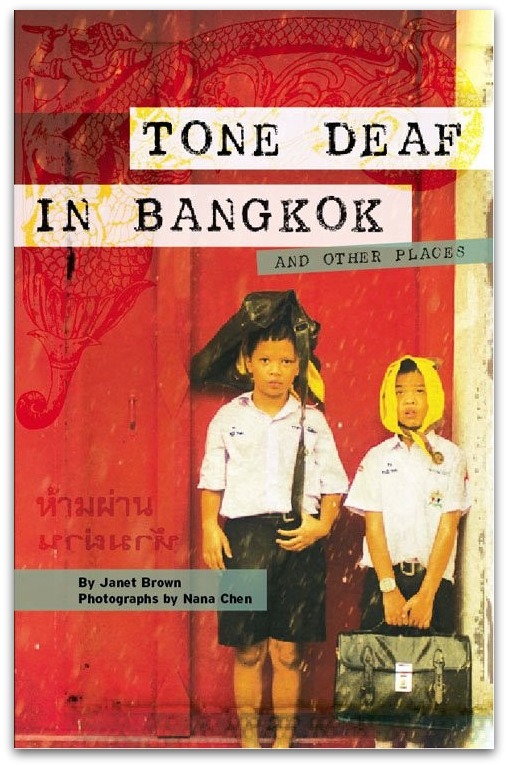
And now, to top that all off, the extraordinary travel writer Janet Brown is paying us a visit. Brown could almost be a stand-in for the Lewis Carroll heroine herself, having published a book on travel to and life in Thailand called Tone Deaf in Bangkok, to much acclaim.

“Tone deaf” — it puts one in mind of poor Alice’s plea to the Mouse, “I didn’t mean it…But you’re so easily offended, you know!”

But if Brown sees herself as tone deaf, her readers regard her as anything but. Here is a sampling of her reader reviews on Amazon:

It has been ages since I have loved a piece of travel literature…, and so when I read TONE DEAF IN BANGKOK, I was thrilled. This is a good travel book, and it is a good book, period.

I am not a traveler, nor do I typically read travel books. Shame on me, I know, but here’s the thing: … The author brought Bangkok to life in a way that made me want to go there, yes, but it was her own story that captivated me and kept me turning the pages. Now I’d read anything Janet Brown writes!

Janet Brown’s TONE DEAF IN BANGKOK is a travelogue, to be sure. Yet it is more, so much more. It’s also an investigation into how dislocated we can become by ourselves, by our priorities and by all that we demand of the cultures in which we live. … That she has a gift for spotting the universal in the exotic makes this collection all the more profound.

Janet Brown has graciously agreed to answer some of my Alice-related questions. After that, dear reader, I urge you to chime in!

Before we go down the rabbit-hole, can you tell me a little bit more about your background?
My parents turned me into a gypsy before I was two, by taking me on their journey by jeep from New York City to Alaska when the 49th state was still a territory and the Alcan Highway was still an unpaved trail into the frozen north. I have wandered ever since, most recently in Southeast Asia with Bangkok as my home, writing down the stories I encounter as I explore. My books include:

Maybe because I’m so steeped in Alice-of-Wonderland lore this month, I think of you as Alice Personified. To what extent can you relate to Alice’s sense of disorientation? Going back not just to the first time you went to Thailand but also when your family dragged you to Alaska…
I was 18 months old when my family moved to Alaska from Manhattan. I coped with any displacement issues by making my mother read my favorite book over and over again — a truly saccharine Little Golden Book called The New Baby. The main character had the same name as I so that was the big attraction — all about me! My mother swears she can still recite it verbatim after having two martinis.

Alice came to mind constantly in my first months in Bangkok — and frequently thereafter. I knew I’d gone through the looking glass — or had entered the postcard — and asked myself often if that experience had been as painful for Alice as it often was for me.

Can you describe your worst “Pool of Tears” moment in Bangkok, where you wished you hadn’t decided on living there?
I’ve tried to make light of that time when I wrote about it in Tone Deaf in Bangkok, but it nearly demolished me. When the manager of my apartment turned me into Ryan’s Daughter by listening in on my phone calls and then entertaining the neighborhood with highly embroidered versions of my life — and when people fell silent when I walked down the street and began gabbling excitedly after I’d passed — I felt as though my life had been stolen from me and I shut down to the point of hypothermia. If my students hadn’t helped me find a new neighborhood, I would have gone home a gibbering mess.

Thailand is renowned for its distinctive cuisine. Was there anything that carried an “Eat me” label that you felt hesitant about at first, but then discovered you loved?
I’ve written about durian in Tone Deaf, how I thought its smell in the market was sewer gas and then how I was forced to taste it, with happy results. Fried grasshoppers were another thing I didn’t warm to at first sight and then liked as much as I do popcorn — they have much the same crunch and texture.

By the same token, were there any foods that you thought might be good but then didn’t acquire a taste for? (For Alice, of course, that was the Duchess’s over-peppered soup.)
One night I stopped to buy green papaya salad from a food cart to take home for supper. There was something in a little plastic bag that looked like a sort of relish, so I bought that, too.When I opened it at home a smell of rot filled the air, but remembering the delightful surprise that durian had proved to be, I took a generous spoonful. It was pla ra — fermented fish, a Northeastern Thailand culinary staple that is meant to be added and mixed judiciously with the salad, not eaten like peanut butter. There wasn’t enough toothpaste in the world to rid my mouth of that thoroughly foul taste.

As already mentioned, Alice finds it’s easy to offend the creatures in Wonderland without even trying. Why did you choose the expression “tone deaf” for the title of your book on Bangkok?
“Tone deaf” can be taken quite literally. Thai is a tonal language with five different tones giving meaning to every word. Use the wrong tone and at best you’re incomprehensible, at worst shocking. The most common mistake for foreigners is to tell someone their baby is beautiful, while actually announcing that the infant is bad luck. Another pitfall is confusing the word “near” with the word for “far” — they are the same sound, differentiated by a crucial tone.

But travelers to Thailand can also be “tone deaf” when it comes to figuring out the Thais’ communication style. As a Thai-American friend has observed, the important things are what remain unsaid. “You looked so beautiful yesterday” probably means today you resemble dogfood and ought to go home and rectify that at once. Subtlety is the hallmark of Thai communication, and is often expressed through a quirk of an eyebrow or a famous Thai smile, which has at least one hundred different meanings — including disdain or outright menace.

Describe the biggest faux pas you’ve made since settling in Bangkok.
Oh, how to choose — it’s impossible not to make faux pas every second because Thai etiquette is demanding and complex. The one that makes me cringe most is in my first week when I set off on my first solo bus ride. I was clutching a twenty-baht note, which like all bank notes in Thailand bears the countenance of the King. He is revered to the point of near godhood in his kingdom and his picture is always elevated to the highest spot in a room — nothing is above the King. But I was fresh off the boat and when I dropped my money and it was caught in a little breeze, I put out my foot (the lowest and most ignominious part of the body) and stepped on the picture of the King’s face to secure my bus fare. I was too clueless to pick up on the ripples of horror that this caused others at the bus stop, but now I writhe when I remember this.

“Off with her head!” as the chief royal in Alice’s story is wont to proclaim. Actually, never mind your head. Your mention of your foot makes me think of how physically awkward Alice feels around the creatures in Wonderland. As a farang in Bangkok, do you often feel self conscious?
I’m short and dark in a family of pale-skinned people, so I was used to being an anomaly from early childhood. In Bangkok, if I dressed like a Thai woman and wore sunglasses and walked slowly, I felt as though I blended in. But one day I walked down a quiet street on my way to a class, and someone looked up and said, “Look at the foreigner.” “How did she know?” I asked my class of teenage girls. “Your hair,” they said. “No, lots of Thai women have dyed their hair brown,” I replied — to which they responded: “Your nose.” It was my big American nose that gave me away every time — and since I hate pain and surgery, I just had to accept that.

Have you tweaked your personal style at all so as to fit in better?
Yes — I adopted the conservative “Don’t show your bare shoulders” school of dressing that prevailed in Bangkok when I first arrived and slowed my pace to that of the women around me. I learned to keep my facial expression as bland as I possibly could to achieve the quiet Thai “public face,” and I ironed everything, including my Levis. Now women are much more casual in the way they dress but I’m still stuck in the cultural mores of the 90s. To foreign women who live here now, my introductory years in Bangkok seem like fiction — things have changed so drastically in the past 16 years.

Time for a quote from the Cheshire Cat: “…we’re all mad here. I’m mad. You’re mad.” Can you relate?
Riding on the back of a motorcycle taxi down a crowded city sidewalk, buying a glass of Shiraz to take with my popcorn into a movie theater, being drenched to the bone during Thai New Year’s — this is actually the most difficult question you’ve asked so far because at this point it all seems normal.

If you were to hold your own Mad Hatter’s Tea Party in Bangkok, whom would you invite, and why?
Anais Nin, because she would love the unbridled hedonism of this place, Evelyn Waugh because he would satirize the expat scene so well, Ho Chi Minh because he could help put together the revolution that is needed here, Emily Hahn because she has always been my role model since I first read her when I was twelve, and Elvis because in Bangkok he is still the king.

Alice becomes aware that Wonderland is turning her into a different person, unrecognizable to the one she used to be. Has your identity has shifted in fundamental ways since living in Bangkok?
This is a very complex question — I’ve written one book about it and am working on a second one, Almost Home. I’m always drawn back to the US because my children are there. Seeing them for two weeks a year doesn’t work for me. Once I get back to the US this time around, I’ll return here but plan to spend the bulk of my time near family in the Pacific Northwest. I won’t know how much I’ve been changed by this recent incarnation in Bangkok until then. Ask me again in several months.

Can you offer any advice for newcomers to Bangkok, who aren’t sure who they are any more?
Tone Deaf in Bangkok and my next book, Almost Home, are where I directly address the challenges of feeling like an Alice in Thailand. In addition, the recently published Lost and Found Bangkok, for which I wrote the text, may be helpful for newcomers. It’s a book in which five different photographers — two American men, two Thai men (both from Bangkok), and one Taiwanese-American woman — show the city they live in. New arrivals can look at the photos and see some great places to get lost — and find out who they are — in this Wonderland-like city.

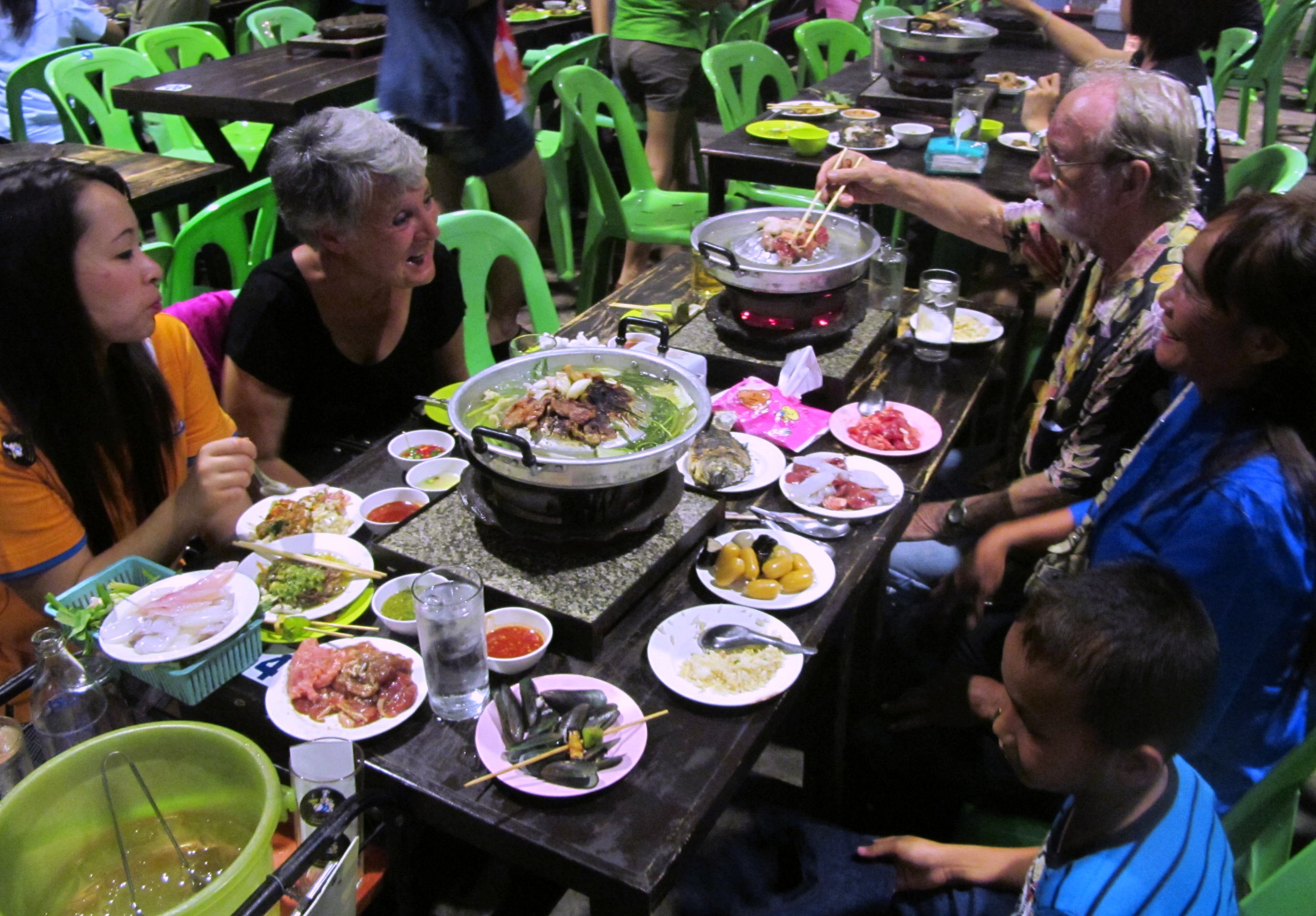
img: Janet Brown with friends at an all-you-can-eat DIY barbecue at a huge restaurant under a bridge in Bangkok, by Will Yaryan.

If you enjoyed this post, we invite you to subscribe to The Displaced Dispatch, a weekly round up of posts from The Displaced Nation, plus some extras such as seasonal recipes and occasional book giveaways. Sign up for The Displaced Dispatch by clicking here!

Related posts:

Is The Displaced Nation for expats, travelers — or both?

When we started up The Displaced Nation on April Fool’s Day, many people wondered: is it a site for fools, be they expats, travelers, or both?

From the perspective of outsiders — people who aren’t in the biz — that distinction may seem frivolous. After all, many travelers become expats and many expats travel.

But from the inside, it’s very clear who the travelers and expats are. Both are interested in viewing the world’s rich tapestry firsthand — but expats tend to focus on the intricacies of particular patterns, whereas global travelers want to take in as much of the picture as they can, including the tattered bits.

So, who is more displaced — the expats or the travelers?

The answer is neither. Feeling displaced is a state of mind. To continue the tapestry metaphor, part of you identifies with the new patterns you’re looking at, while another part thinks it’s a confused mess compared to the patterns you’re used to.

Not all global residents feel displaced; same for global travelers. And there are even cases where a person has never traveled except in an armchair — but has ended up feeling displaced by what they’ve read.

As a student of Shakespeare, I’m often reminded of the King Lear line:

“Who is it that can tell me who I am?” – William Shakespeare, King Lear, 1.4.230

Except that King Lear felt this way at the end of his life; many of us global voyagers get there rather earlier. Is it any wonder we feel like fools?!

Now, if you’ve noticed that our site tends to be expat-centric, it’s because two of our writers are expats and the other one (me), a former expat.

Reflecting this imbalance, I’ve started commissioning guest posts by writers — switching metaphors here, but only slightly — who can spin the kind of travel yarn that focuses on the ways travel can make you feel misplaced, displaced, out of place — and, in the process, challenge who you are as a person.

Thus far we’ve featured three such yarns:

1) My first flirtation with the lawlessness of global travel: 4 painful lessons, by Lara Sterling
Sterling has done it all, from round-the-world trips to expat stints. In this article she reports on the shock/horror she experienced after falling in love with a German traveler and following him all the way to war-torn Guatemala — only to discover he was engaged in criminal activities. Part of her was with him, fascinated — they were in a lawless land, so was there any reason to abide by the laws back home? But another part of her was repelled, and couldn’t wait to get back to the United States.

2) In search of 007th heaven, a travel yarn in three parts, by Sebastian Doggart
Doggart — a Brit who lives in New York City and blogs for the Daily Telegraph‘s expat site — tells of the pilgrimage he made to Goldeneye, the Jamaican coastal retreat where Ian Fleming wrote all the James Bond novels. As a Bond fan, he had fun identifying the sights that made it into Fleming’s stories and films. But he also felt alienated that Goldeneye had become GoldeneEye, a playground of the rich and famous — sensing that Fleming, who wrote for the masses, would not approve.

3) How foreign is Fez? A travel yarn in two parts, by Joy Richards
Richards lives in her native England and travels whenever she can. Here she describes her first foray into Fez, Morocco, which was also her first time in an Arab country. She decided to go with the flow, finding that she could relate to the Moroccan sense of shame through her parents’ values, didn’t mind “covering up” (is it any worse than being urged by the Western media to put your body on display?), and had a knack for bargaining. But the flow stopped as soon as she became aware of corrupt police tactics along with some cracks in the society’s facade.

* * *

As The Displaced Nation assumes its normal schedule next month, we hope to feature still more travel yarns.

Meanwhile, can you kindly do us a favor by answering these questions:
1) Would you like to see travel play an even bigger part in our article mix?
2) If so, can you suggest any candidates for guest posts, as well as countries/regions you’d like to hear more about?

Much obliged, as always, for your input!


STAY TUNED for tomorrow’s post on the less-than-enchanting challenges of vacationing with family.

If you enjoyed this post, we invite you to subscribe to The Displaced Dispatch, a weekly round up of posts from The Displaced Nation, plus some extras such as seasonal recipes and occasional book giveaways. Sign up for The Displaced Dispatch by clicking here!

Related posts:

Some enchanted reading: A round-the-world tour from 4 of our featured writers

For this month’s reading suggestions, we have compiled a list of books from four of our recent featured writers — all of different genres, and set in different parts of the world.

If you are stay-cationing this year, we hope one of these books will transport you for a while to a different place —  and all for a fraction of the cost of a plane ticket.

IRAN – Sons of the Great Satan – Anthony Roberts

Our featured writer in April, Tony Roberts spent his childhood in Saudi Arabia and Iran before the Islamic revolution forced him and his family back to their hometown in Kansas — which, to Tony, no longer seemed like home.

Now living in Hawai’i with his New Zealand wife and their son, Tony has published his first novel, Sons of the Great Satan. It tells the story of the friendship between two teenagers — one American, one Iranian — in the last hours before the fall of the Shah of Iran.

Amazon description:

“SONS OF THE GREAT SATAN is a tale of culture clash, international politics, heroism, friendship, cowardice and sinister betrayal. The character and beliefs of the Shah of Iran, President Jimmy Carter and the Ayatollah Khomeini are all put to the test as the whirlwind of chaos engulfs them all. The actions of these powerful men play out on the world stage and forever change the lives of those who called Tehran home in the late 1970s.”

NEW YORK – Exiled – Shireen Jilla

Third Culture Kid Shireen Jilla (half English, half Persian, and grew up in Germany, Holland and England) currently lives in London after being an expat in Paris, Rome, and New York.

Commenting on our May 7th article, Shireen said, “New York is a material fantasy that most wannabe expats have had. People imagine it to be an adventure laced only with IPad2s and lychee martinis. But, as many of you know, stepping outside your own cultural comfort zone is never as straight forward as those people, longing for it from the comfort of their three-piece sofa in the suburbs, imagine. So I choose to write about Anna, an eager expat looking for experience, but finding she sucked into a cultural nightmare that she neither could control, or understand.”

Amazon description:

“In love with her husband Jessie, an ambitious British diplomat, whose first posting brings them to New York, Anna begins the hectic, enjoyable life of a successful expat. But New York also brings her into contact with her husband’s manipulative and competitive stepmother Nancy, a powerful American socialite and philanthropist. When a silly incident with her only son Josh involves the Police Department, Anna’s seemingly perfect world begins to shatter. As Jessie’s journey to rediscover his New York roots draws him closer to Nancy, terrible and strange things keep happening to Anna. She begins to fear that someone is out to destroy her family.”

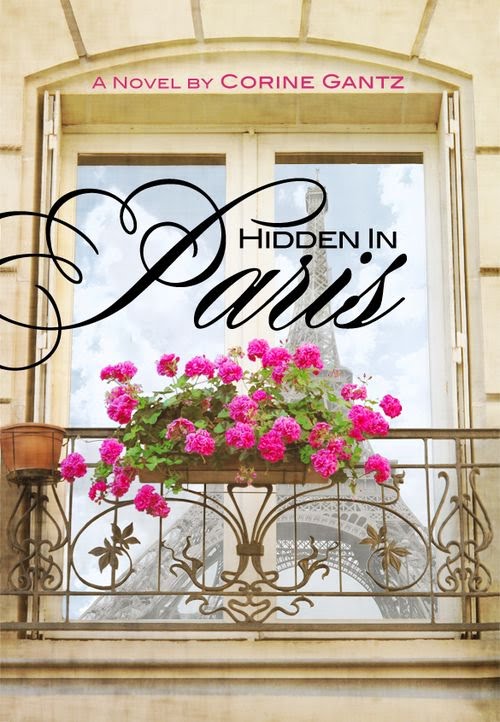
FRANCE – Hidden in Paris – Corine Gantz

Our second featured writer in May, Corine Gantz has just released her debut novel about a group of American women who try to start new lives in Paris.

A displaced Parisian in Los Angeles, where she lives with her husband and two sons, Corine blogs at Hidden in France.

Amazon description:

When bankruptcy threatens her beloved house, her one anchor in life, Annie has no choice but to find renters, and quick. Leave it to someone socially phobic to phrase a want ad in all the wrong ways. With shimmering promises of ‘Starting over in Paris’ –– a concept she has no intention of applying to her own life––Annie attracts tenants with the kind of baggage that doesn’t fit in suitcases.

THAILAND – Tone Deaf in Bangkok – Janet Brown

The last book on today’s list is by Janet Brown, whom we featured on June 10th.

In the article, Janet said: “My parents turned me into a gypsy before I was two, by taking me on their journey by jeep from New York City to Alaska when the 49th state was still a territory and the Alcan Highway was still an unpaved trail into the frozen north. I have wandered ever since, most recently in Southeast Asia with Bangkok as my home, writing down the stories I encounter as I explore.”

Amazon description:

“From her first bewildered hours to the moment that she reluctantly leaves, Janet Brown describes her experience of falling in love with, and in, Thailand’s largest city. Nana Chen’s evocative photographs provide illustrations of daily living in Bangkok.”
BC Magazine review:
“Janet Brown’s experiences in Thailand are chronicled in short essays that bypass the usual tourist spots and concepts and present an intimate and revealing understanding of Bangkok and the Thai way of life from a female foreigner’s fascinated point of view.”

If you enjoyed this post, we invite you to subscribe for email delivery of The Displaced Dispatch, a round up of the week’s posts from The Displaced Nation. Sign up for The Displaced Dispatch by clicking here!

Related posts:

Ho’ omaika’i ‘Ana to TCK writer Tony Roberts

Expat life as psychological thriller? An unholy appreciation of novelist Shireen Jilla