The Displaced Nation

A home for international creatives

Category Archives: Golden Oldies

RANDOM NOMAD: Bart Schaneman, Experience-hungry Newspaper Editor in Seoul

Place of birth: Scottsbluff, Nebraska, USA — I was raised on a farm nine miles east of town. I had an incredible childhood.
Passport: USA
Overseas history: South Korea (Jeonju, Seoul, Jeonju, Seoul): 2006-08; 2008-09; 2010-11; 2011 – present.
Occupation: National editor for the Korea JoongAng Daily, an English newspaper in Seoul; and author of Trans-Siberian, a travelogue about a trip on the the world’s longest railway.
Cyberspace coordinates: Bart Schaneman (Tumblr blog) and @bartschaneman (Twitter handle).

What made you abandon your homeland for Korea?
I left because I wanted experiences. I wanted material to write about. I wanted to travel and get out of America. I didn’t want a mortgage. I didn’t want to get trapped. I didn’t want to wait until I was too old to see the world.

Was anyone else in your immediate family displaced?
I’m the only person in my immediate family who doesn’t live in the region called the Great Plains.

Tell me about the moment during your stay in Korea when you felt the most displaced.
I don’t really have a moment like that. Korea’s an exceptional place. It’s safe. The people are kind and educated. It gets easier to live here as a Westerner all the time. I’m here by choice — it gets lonely, and I miss my family, but I don’t really question why I’m here. There were minor annoyances about how things are done differently than what I was used to when I first got here. I don’t really notice those anymore. People here move to their left on the sidewalks. That’s not too hard to get used to.

When did you feel the least displaced?
Every time I go home I remember how lucky I am to live in a foreign country. Not that Nebraska or the Midwest is a bad place. I love it and I hope I’ll be lucky enough to get to live there again someday. It’s just very familiar. Difficult to find interesting. In Asia, I’m rarely bored with my surroundings. I value that more and more as I get older.

You may bring one curiosity you’ve collected from each of the countries where you’ve traveled or lived into The Displaced Nation. What’s in your suitcase?
Kimchi. But only from Korea. It’s not right anywhere else.

We are therefore looking forward to the meal you are invited to prepare for Displaced Nation members, based on your travels. What’s on the menu?

I’m going to serve you all a bowl of chamchi kimchi jjiggae: tuna and kimchi soup. It will make you feel like you can flip over cars after you eat it. Great when you’re sick or hungover.

And now can you offer a Korean word or expression for the Displaced Nation’s argot?
The most important word to understand in Korean culture, to my mind, is jeong. It doesn’t translate directly, but the closest way to describe it is as a type of deep bond that is formed between people over time that helps you care for someone. You might not see an old friend frequently any more, or you might not be romantic with your partner, but you have jeong for them so you still want to help them when they need you. It explains a lot about the Korean mind and Korean society.

Earlier this month we did a poll on expat voting. Do you still follow your home-country politics?
I work as a journalist so I pay attention to American politics. Koreans pay attention as well. I’ve heard it said by people here that when the U.S. coughs the whole world gets sick. Most of my co-workers are from the U.S. and very well informed.

Do you vote despite living abroad?
I vote when I like the candidates, but I don’t vote if I don’t like what’s offered.

Were you surprised at the 2012 outcome?
I’m always surprised at how divided America seems around election time. People I love and trust can think about the world in an extremely different way than I do. That’s more surprising to me than who won the election.

The American Thanksgiving took place last week. What do you feel most thankful for in your life right now?
I’m lucky to have the life I have. I’m healthy. I’m alive. I don’t need much more than that. No complaints from me.

Readers — yay or nay for letting Bart Schaneman into The Displaced Nation? He may have us all eating kimchi, but at least he can amuse us with tales of the Trans-Siberian! (Note: It’s fine to vote “nay” as long as you couch your reasoning in terms we all — including Bart — find amusing!)

STAY TUNED for another episode in the life of our fictional expat heroine, Libby.  Yes, this time she really is posting! Last week, the washing up after her Thanksgiving dinner took longer than expected…! (What, not keeping up with Libby? Read the first three episodes of her expat adventures.)

If you enjoyed this post, we invite you to register for The Displaced Dispatch, a round up of weekly posts from The Displaced Nation, with seasonal recipes, book giveaways and other extras. Register for The Displaced Dispatch by clicking here!

Related posts:

Img: Bart Schaneman in the Boseong Tea Fields in Boseong, South Korea (May 2011).

DEAR MARY-SUE: 6 jolly holiday tips for expats (& other global wanderers)

Image courtesy of bulldogza / FreeDigitalPhotos.net

Image courtesy of bulldogza / FreeDigitalPhotos.net

Mary-Sue Wallace, The Displaced Nation’s agony aunt, is back. Her thoughtful advice eases and soothes any cross-cultural quandary or travel-related confusion you may have. Submit your questions and comments here, or else by emailing her at thedisplacednation@gmail.com

Woo! That’s Thanksgiving over and I am still full to busting. Oh readers, your Mary-Sue has been one greedy piggy, she is one stuffed turkey — but it was all worth it as she had a lovely time with her family. Yes, she is one mucho happy Mary-Sue.

My oldest child and middle child were back home for the holidays and so I got to feed them and my three lovely grandkids — bliss. Even my youngest was able to extract himself from World of Warcraft and his basement room to join us for dinner.

We had a great time watching Macy’s Thanksgiving Parade on NBC. Other than the Kermit balloon, my favorite part was watching those delightful Kidz Bop Kids sing on a float. Don’t you just want to feed their adorable little faces full of cranberries and mashed potatoes? I do!

And then there’s Matt Lauer hosting the parade. Mmmmh, mmmmh. I know what I am giving thanks for this year. . . Matt’s dreamy eyes. After watching SkyFall this weekend, I think that when Daniel Craig hangs up his tux, Matt’s the guy to replace him. Not only has he got the looks, but you believe he can kill a man. . . with his bare arms!

Anyhoo, enough with my wild thoughts and on with all your problems!

Based on the thousands of similar questions I receive this time of year, this time I am doing something a little different, spicing things up, by issuing a list of six tips for any of you expats and others out there who find the holidays befuddling.

Here we go! Mary-Sue’s top 6 tips for having an amazing holiday!

1) FOOD — BE CREATIVE WITH YOUR LEFTOVERS

Dear Mary-Sue,

We are still trying to work out what to do with all this leftover turkey from our first American Thanksgiving. We’ve got turkey sandwiches coming out of our ears at this point. Can you think of anything more creative?

— A Swedish family in New England

Yes, nothing gets you out of the holiday spirit than eating dreary leftovers. Try and think outside the box. Why just have the leftovers for food? That’s the sort of dreary thinking of a Rachel Ray. Sandwiches, curry, it’s all boring. What you could do with your leftover turkey is use it to make an arts and craft project. It’s a great way of getting the kids or grandkids involved in the holidays, too. Think of the turkey carcass as your canvas and really go to town on it with some acrylic paint. Or why not take that turkey and make a seasonal ottoman with it — the perfect way to put your feet up while watching Hallmark Christmas movies!  

*****************************************************************

2) WEATHER — HOW TO GET THAT CHRISTMAS FEELING

Dear Mary-Sue,

I’m finally in the Northern hemisphere for Christmas, and it doesn’t feel much different than this time of year in Perth, where I come from in Australia. Temps have yet to get below freezing; and as I’m sure you know, we had a hurricane in late October.

Sigh! Will I ever be able to have a white Christmas?

– Aussie in Baltimore

Living in Oklahoma, I can relate to this. To really get that fun, cosy Christmas feeling when temps aren’t as low as you would like, do what I do: wear tops that expose your midriff. When you get a kidney chill, that’s when you know you’re doing things right.

****************************************************************************

3) ROMANCE — FOR A TRULY GREAT HOLIDAY, KEEP THINGS ROMANTIC

Dear Mary-Sue,

My Japanese girlfriend keeps hinting that I should give her a ring on Christmas Eve. By that I don’t mean a telephone call but a diamond. I told her I’m not Japanese (they have a thing about getting engaged at the end of the year), but she says Christmas engagements are also popular in the West.

Actually I always thought of her as my iki jibiki (walking dictionary — Japanese is an extremely difficult language), but if I do decide to get engaged, should I be using their cultural norms? What’s wrong with her learning ours?

Then again, there is the Cold Stone Christmas Cake I could get…

– American in Tokyo

Ah, nothing like getting pressurized into a proposal — that always works out for all involved. I like this Cold Stone Christmas cake idea, but I suggest you do an old-school version of it. I know that it is traditional in England to hide coins in the Christmas pudding and then a child eating the pudding either chokes to death, cuts open their mouth or ends up a penny richer. I suggest you do something like that and hide the ring deep into a seasonal, suet-y pudding. If she chokes, breaks any teeth or cuts her mouth, then you’ll know it wasn’t meant to be, and can renege on the proposal.

***************************************************************************

4) GIFTS — DON’T BE A SCROOGE McDUCK

Dear Mary-Sue,

I was looking forward to being in the US instead of the UK for Christmas as I thought it might mean buying fewer gifts for friends and relations, but now I learn that everyone expects a hand-out in New York City, from the doorman to the garage guy to the hairdresser. Who knew? And how much do I owe all these people I don’t know?

– Newbie British expat in New York

You can give them an actual gift instead of money. I find signed copies of my book (“Treat Every Day Like It Counts. . .because it does” by Mary-Sue Wallace, published by PublishAmerica) and a signed, framed photograph does the trick. Don’t have your own book published? That’s okay, you can just give them a copy of mine.  

********************************************************************************

5) TRAVEL — USE THE HOLIDAYS TO VISIT FAMILY

Dear Mary-Sue,

We are expats in Singapore, and my husband thinks we should use the week off between Christmas and New Year’s to travel within Southeast Asia, instead of going home to the United States to be with our families. But isn’t that what Christmas is about — family? And how can we possibly celebrate Christmas in a non-Christian country?

– The better half of an American exec in Singapore (we’re originally from Georgia)

Actually, it’s about baby Jesus, not your family in Georgia. However, I begrudgingly take your point that it’s nice to be with your family when thinking about baby J.C. You can travel to your family over the holidays, not away from them.  

**************************************************************************

6) HOLIDAY ENTERTAINMENT — WHEREVER YOU ARE IN THE WORLD, CONSULT YOUR LOCAL LISTINGS

Dear Mary-Sue,

I’m an American in the UK and would like to experience the best of Christmas/New Year’s traditions here. Besides Scrooge, what are they?

– Linda of London

I live in Tulsa, OK. Do they not have Time Out in London? They probably have some tradition with those Beefeaters at the Tower. Yeah, they eat beef at the Tower every Christmas Eve. It’s a very quaint ceremony — be sure to go to it — or, whatever.

* * *

That’s your dose of Mary-Sue for November. God bless y’all!

STAY TUNED for tomorrow’s Random Nomad, a chap who is ever-thankful for his expat lifestyle.

If you enjoyed this post, we invite you to register for The Displaced Dispatch, a round up of weekly posts from The Displaced Nation, with seasonal recipes, book giveaways and other extras. Register for The Displaced Dispatch by clicking here!

Related posts:

An expat looks for love in her adopted country — only to be told she’s “exotic,” the Other (2/2)

We welcome back Zeynep Kilic to the Displaced Nation for Part 2 of her story about searching for love in the United States. Turkish born and bred, she’d endured two failed marriages to Turkish men before determining to hunt for an American mate. By then she’d taken out American citizenship and had an American Ph.D. In Part 1 of this post, she described her first bout of Internet dating in Arizona. She’d become increasingly frustrated by being told she looked “exotic” as compared to American women. Let’s see how she fares in Alaska, the aptly-named Last Frontier…

— ML AWANOHARA

I move away to Alaska in 2008, slightly tired of the recurring comments from American men about my exoticism as well as my record of failure on Arizona’s online dating scene. I know nobody means any harm by labeling me exotic. I know it is a compliment. I have been told that many times.

Still, it doesn’t sit well in my heart.

But the fact is, I am still shaking my metaphorical ass in this literal mating dance, which must mean one of two things at this point:

  1. I must have some hope left that gentlemen don’t prefer blondes; or
  2. I am desperate to make it work with an American before going back to choosy Turkish mothers and their sons.

Lots of space — and lots of men?

Before my move, everybody jokes that there are so many men per woman in Alaska that I should find a man soon enough. Like a good academic, I research the validity of this legend — only to find that it’s true only if you can stand to live in the Bush — the remote, rural parts of the state. In such places, sexual abuse and rape are also rampant, particularly against Alaska Native women.

I will not be going anywhere near.

In fact, I am moving to the largest city in Alaska — which is literally the smallest town I would have ever lived in as an adult. And in this city, the male-to-female ratio is about the same as elsewhere in America.

I am not holding my breath.

As I search through profiles I realize that my chances in fact might be lower in this part of the world. I see just two kinds of men:

  1. The über-athlete who can’t go to bed in peace unless he skis a super hard-core mountain every weekend, backpacks all summer, and camps in -30 degree weather because — gasp! — it is “fun”; or
  2. The I-kill-a-bear-for-my-woman-with-my-bare-hands kind of guy, who lives for his gas-guzzling vehicle, be it a dirt bike, snow machine, or huge truck that hauls thousands of pounds of manly stuff in the back.

I decide I have no chance in this town. These are not my people.

It’s all relative!

To my surprise, my profile attracts greater interest in the frozen north. Who knew I had to drive across the continent to become a relative hottie!

I am almost forty and still overweight. I’ll take it.

Though I am still surprised no one thinks I am an American.

Let’s be honest, the name is not helping — but seriously? How could I have been blind for so long? Why did I fancy myself as Americanized?

My friend Eun tells me I need to acquire racial consciousness: I am not a white woman; I am a woman of color. I consider it. It will take three years but I will eventually acknowledge the debt I owe to the American men I met in a romantic context — who, unbeknownst to me, upon seeing my picture online, established my exotic quotient right away.

Who would have guessed I would learn a lesson about my racialized self because of these men who objectified me — not because of my education on the topic? This moment of reckoning does not make me feel good about my academic self, by the way, though my non-academic self is sheepishly feeling, well, sexified.

Happily ever after…

But let’s get on with my story. Am I with an American now? Yep. Is he close to his mother? Nope! Am I feeling bad about myself for wishing for a hands-off mother-in-law? You betcha!

He (his name is Wayne) is blond and has blue eyes. I take Wayne to Turkey, and all my friends and family tell me what lovely blue eyes he has. “Oh, no,” I cut them off, “stop focusing on his blue American eyes! That does not make him a better guy compared to my earlier Turkish mates who had beautiful non-blue eyes.”

They all laugh. They think I am so uptight (must be the sociologist in me).

“Relax,” they say. “He is a cute American, and we like his tattoo.”

Did I mention that Wayne has a manly tattoo sprawling across his very muscular — non-Turkish — arms?

Wayne is truly enjoying the objectifying comments from the ladies — my mom of all people, who whispers about how strong he looks and covers her smile with her hand like a schoolgirl.

He states with a grin that Turkish men look kind of puny. “Yeah, they haven’t been eating hormone-injected beef on a daily basis,” I say sarcastically.

Enough of this Orientalism

What is wrong with him? What is wrong with everyone? Has no one read Edward Said?!!!

One day when Wayne and I are lying in bed, he tells me how exotic my skin is, how much he loves my olive complexion.

I stop him with a sigh:

Do I look green or black to you, because that is all the olives I know?

I see him with a deer-in-the-headlight look on his face, wondering if he has messed up. He is probably thinking: “She is a PhD and holds all kinds of theories in her head. Not wonder she gets bent out of shape unexpectedly. But, wait, her skin is definitely darker than mine, it’s exotic — what do I do, what do I do?” So he apologizes.

I tell him that, incidentally, I am considered to have very fair skin in Turkey. He says he is sorry; he just meant I am hot, that’s all.

He is a nice guy. He means well and he absolutely thinks I am exotic and sees nothing wrong with this.

I tell him that wheat makes more sense than olive. He agrees.

From now on, every time he eats his cherished Turkish olives, he smiles and says he can never look at a zeytin (olive) the same way anymore.

Neither can I.

* * *

Readers, now that you know how Zeynep’s story ends, do you have any comments or further observations about the perils, and potential joys, of seeking love abroad? Please leave them in the comments. We’d love to hear them…

Zeynep Kilic lives in Anchorage with her blue-eyed American husband, complains about the dark or cold on a regular basis, and fails miserably at skiing. She is an assistant professor of sociology at the University of Alaska Anchorage, where she is navigating the treacherous waters of tenure. You can find her on Google+ and on Twitter: @zeynepk

STAY TUNED for another episode in the life of our fictional expat heroine, Libby. (What, not keeping up with Libby? Read the first three episodes of her expat adventures.)

If you enjoyed this post, we invite you to register for The Displaced Dispatch, a round up of weekly posts from The Displaced Nation, with seasonal recipes, book giveaways and other extras. Register for The Displaced Dispatch by clicking here!

Related posts:

Images: The photo of Zeynep Kilic and her husband, Wayne, is her own; photos of olives, wheat, Arizona cactus and Alaska are from Morguefiles.

Thanksgiving: Shine, shine, shine, dear writers, however displaced

Today’s guest blogger, Kristin Bair O’Keeffe, is a cultural spelunker. With a husband from Ireland, a daughter from Vietnam, nearly five years as an expat in Shanghai, China, and an insatiable appetite for place, how could she not be? She’s also an author with an MFA degree in fiction writing, 18 years of experience as a writing instructor, a writerhead passionista, and the curator of #38Write, a monthly series of online writing workshops for place-passionate culture junkies around the world. Let’s listen up and hear why Kristin thinks Thanksgiving is a time for us displaced writers to shine!

— ML Awanohara

On Thursday, November 22, friends and families all over the United States (as well as oodles of displaced/replaced U.S.-ians around the world) will gather together to celebrate Thanksgiving. While this holiday can be traced back to the English Reformation and Henry VIII, it is now a secular holiday during which participants are expected to do just three simple things:

  1. eat turkey and pumpkin pie until we groan and bloat up like petrified puffer fish.
  2. endure our Great Aunt Pru, who smells like mothballs and passes out linty lozenges that look like they’ve been in the bottom of her purse since the Reformation.
  3. give thanks.

Writers of all ilk love this holiday. After all, it’s a day for us to shine! A day for us to show off by expressing our thanks far more eloquently than the neighbor who is slouched in front of his television in a tryptophan-induced haze.

We do, of course, have a lot to live up to:

“Thanksgiving Day, a function which originated in New England two or three centuries ago when those people recognized that they really had something to be thankful for—annually, not oftener—if they had succeeded in exterminating their neighbors, the Indians, during the previous twelve months instead of getting exterminated by their neighbors, the Indians.” ~ Mark Twain

“There is one day that is ours…Thanksgiving Day is the one day that is purely American.” ~ O. Henry [except, Mr. Henry forgot to add, those damn Canadians a bit to our north, who horn in on our gratefulness territory and dare to give thanks of their own, albeit on a different day]

“I come from a family where gravy is considered a beverage.” ~ Erma Bombeck

But no matter how splendid the thanks of those who came before us, this is a day on which writers can strut their best stuff!

So whether or not you’re American (U.S. American, that is), grab this opportunity to make a list of things for which you are thankful. Hurl yourself into the craft of thanks! Then, when your Thanksgiving host pauses just before cutting the first slice of turkey and says, “Would anyone like to share a thing or two for which you’re grateful?” you can whip out that slip of paper, clear your throat, and in your best writerly voice, make ’em weep in their cranberry sauce.

Here are a handful of mine:

1) Despite my great love for China, I am wildly thankful I will not be sitting face to face with the still-raw, almost-gobbling, dripping-blood, trying-to-limp-away turkey I once faced in Shanghai (ordered weeks in advance, mind you, from a fancy, well-respected, Western-y hotel and for which we paid a pretty-pretty RMB). All hail the year of mashed potatoes as the main dish! (We should have stuck with jiaozi.)

2) I am so, so, so grateful I am not living during the English Reformation and that I am not required to wear contraptions like this on my head:

Anne Boleyn

3) I am grateful that Maya Angelou called to read me a new poem. (Sorry, sorry, sorry! This is actually one of Oprah’s moments of thankfulness, not mine. But it sounds good, doesn’t it?)

4) I am thankful for my amazing family and friends from Ireland, Vietnam, Germany, India, China, the U.S., the U.K., and so many more places—all those who guide me, teach me, love me, and put up with me in my best and worst moments as a human being.

5) I am thankful and excited and inspired that writers around the world are flocking to my #38Write workshops and that my vision for contributing—and helping other writers contribute—to the global conversation of story is being realized. Whoop! Whoop!

6) I am grateful that there are writers all around the globe (like you!) who are driven to explore, write stories about the cultures and places in which they live, and connect.

Your turn! What are you thankful for?

CONNECT: If you’d like to learn more or if you’d like to register for one of Kristin Bair O’Keeffe’s #38Write workshops, grab a cup of coffee and pop over to her Web site and blog WRITERHEAD. Registration for December’s #38Write workshop is now open. You can Tweet Kristin at @kbairokeeffe, friend her on Facebook, and/or check out the #38Write group boards on Pinterest.

STAY TUNED for tomorrow’s post, Part 2 of Zeynep Kilic’s search for love in her adopted country.

If you enjoyed this post, we invite you to register for The Displaced Dispatch, a round up of weekly posts from The Displaced Nation, with seasonal recipes, book giveaways and other extras. Register for The Displaced Dispatch by clicking here!

Related posts:

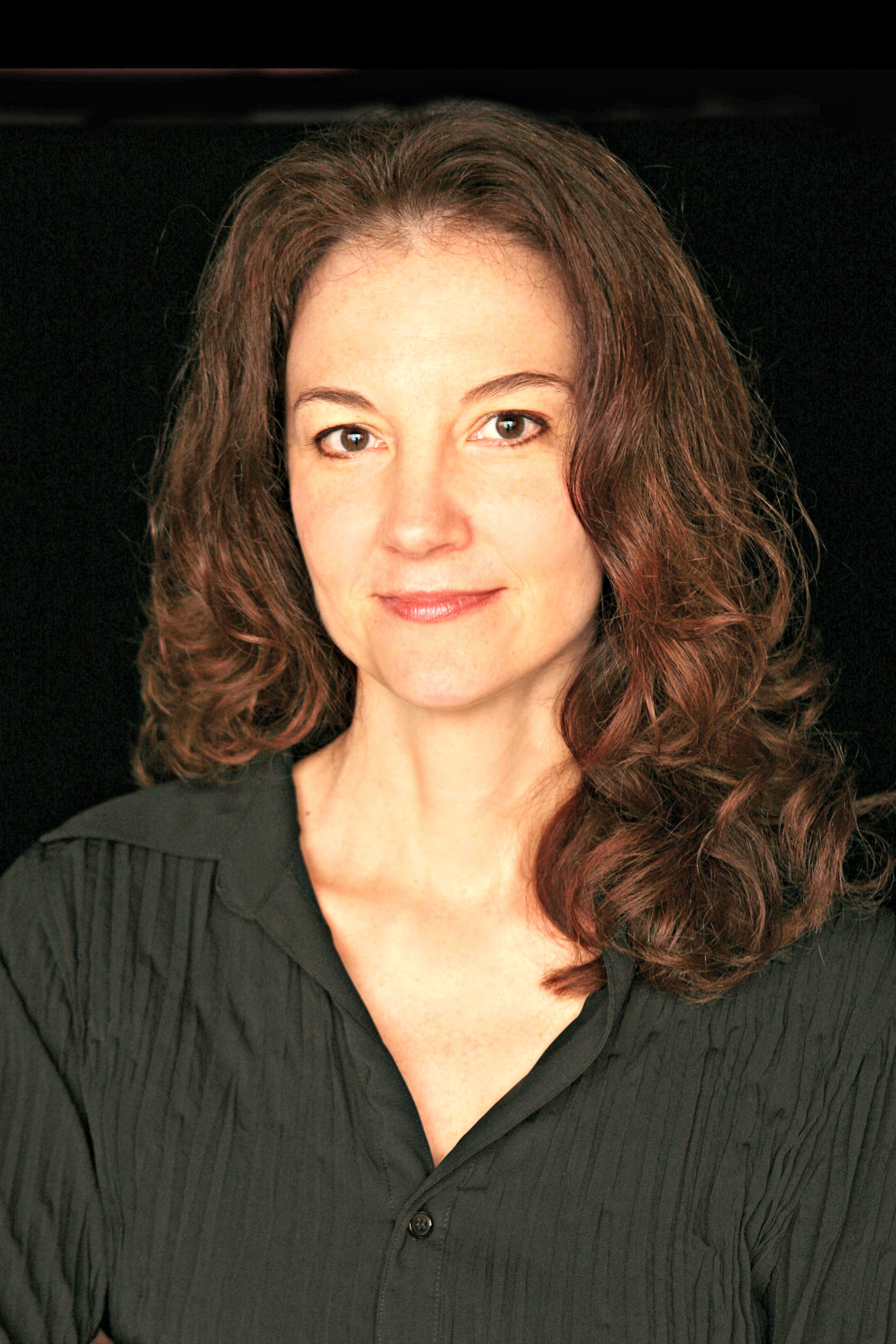
Images: Kristin Bair O’Keeffe portrait; Anne Boleyn, courtesy Wikimedia Commons.

THE DISPLACED Q: Expats, repats, what’s the most outlandish tweak you’ve made to your Thanksgiving menu?

Since my repatriation to America, Thanksgiving has become my very favorite holiday here. This is partly because of a tweak that I make to the menu, but we’ll get to that later.

I wasn’t always so thankful for Thanksgiving. I only celebrated this American holiday twice while living abroad for many years, first in England and then in Japan — and to be honest, I didn’t really miss it.

Both celebrations took place when I was pursuing graduate studies at a British university.

The first time was for my very first Thanksgiving away from my family. I joined several other American grad students in preparing a traditional Thanksgiving dinner to serve in the dorm. Our guests were mostly other international students who were curious to experience an authentic version of this quintessentially American custom — as I recall, there were very few Brits.

At one point, a rather bitter argument erupted between Anna, a Harvard-educated woman who was pursuing a higher degree in feminist studies, and Andy, a Georgetown-educated man who was doing an M.A. in politics.

Andy didn’t like the fact that Anna was carving the turkey, proclaiming to the assembled guests:

It can’t be Thanksgiving if a WOMAN is carving the turkey.

I don’t really remember what happened after that — whether Andy insisted upon taking over, or Anna stormed out of the room. But it did cast a bit of a pall over the proceedings.

The food, though, was a close facsimile to the meals I’d enjoyed at home. And the arguing part? That was something I could relate to as well.

And there was snow, which we could see through the huge dorm windows, covering the panoramic Constable (literally) landscape below.

Thanksgiving-on-the-Hill

The only other time occurred a few years later, when an American friend came to live in North London on a teaching exchange with the Harrow School.

He, too, was spending his first Thanksgiving away from home, so decided to host a potluck Thanksgiving dinner in his living quarters.

Again, I think the food was good, but as I recall, the guests, most of whom were English, thought that potluck was a funny way to do a formal dinner. And the setting wasn’t exactly conducive to re-creating a New World feast. Walking from Harrow-on-the-Hill station, we passed by boys in the quaint Harrow uniform, including black ties (allegedly they are still in mourning for Queen Victoria!).

My Thankgiving-less years

After that rather harrowing (sorry, couldn’t resist) experience, I stopped doing Thanksgiving. I married a Brit and we invariably went to his family for Christmas dinner, which — probably not coincidentally — resembles the Thanksgiving meal enjoyed by the Pilgrims. Turkey is the most popular main, cranberry sauce and all. (No pumpkin pie, though!)

Even when we moved to Japan, where there were more Americans, I didn’t reinstate the custom. It seemed too much like hard work competing at the international grocery stores for vastly overpriced frozen turkeys (specially imported for the occasion) and cans of pumpkin.

What’s more — and I probably should have mentioned this earlier — I’ve never been especially keen on turkey. Once, when I was an early teen, I got food poisoning from an undercooked bird, a memory I’ve found hard to erase.

Something else I forgot to mention is that although I enjoy cooking, I’m not a roaster or a baker. I have never achieved the requisite culinary skills to produce a Thanksgiving dinner on my lonesome — even to this day, when I’m living in the U.S. again.

Nor did I especially enjoy the production such a big meal entails. If I’m going to spend a lot of time in the kitchen, I’d prefer to be producing something a little less bland than a roasted turkey, such as a Madhur Jaffrey Indian spread.

New thought: Maybe going abroad gave me the chance to escape from Thanksgiving? I wonder…

Giving thanks for Thanksgiving…but for one tweak!

So it is strange, the inordinate fondness I now have for this late November holiday. I like it because, unlike Christmas, it’s secular, so you don’t have to hesitate in wishing someone a happy Thanksgiving. It’s also less commercial, consisting primarily of an elegant meal with family and friends (I’m good at tuning out football).

I even enjoy eating turkey more than I used to — especially the dark meat. According to the Wall Street Journal, it’s the sides that American people sometimes tweak. But I like the sides. My absolute favorites are the stuffing and mashed potatoes, in that order.

All of that said, I do feel compelled to make one major tweak because of my hybrid background. Instead of turkey sandwiches the day after, I prefer chirashi-turkey-zushi!!!

Chirashi is Japanese for “scattered” — a scattered bowl of assorted fresh ingredients. Most likely you have tried chirashizushi: a bowl of sushi rice topped with a variety of sashimi (raw fish) and other garnishes. (See #2 in the photo.)

What my (second) husband, who is Japanese, and I like to do, on the day after Thanksgiving, is to substitute leftover turkey for the raw fish.

Chirashi-turkey-zushi is tasty, fast, and easy to make — particularly if you can get ahold of:

  • microwavable Japanese rice (use two or three packets for four people)
  • chirashi seasoning mix, containing five vegetables — typically, carrots, lotus, bamboo shoots, and shiitake mushrooms — sushi vinegar, seasoning, and nori (seaweed).
  • Kizami nori (shredded seaweed), to use as a topping.

There are no hard and fast rules as long as you get the seasoning right. And in my (admittedly rather biased) view, turkey goes as well with that seasoning as raw fish does!

* * *

Okay, your turn to tell me: what’s your idiosyncratic contribution to America’s national feast? Or if you’re not American, what do you do to internationalize your native festive spreads this time of year? I’m all ears, and tastebuds…!

STAY TUNED for another Thanksgiving post, by guest blogger Kristin Bair O’Keeffe.

If you enjoyed this post, we invite you to register for The Displaced Dispatch, a round up of weekly posts from The Displaced Nation, with seasonal recipes, book giveaways and other extras. Register for The Displaced Dispatch by clicking here!

Related posts:


An expat author on what it’s like to write “controversial” books — and your chance to win one!

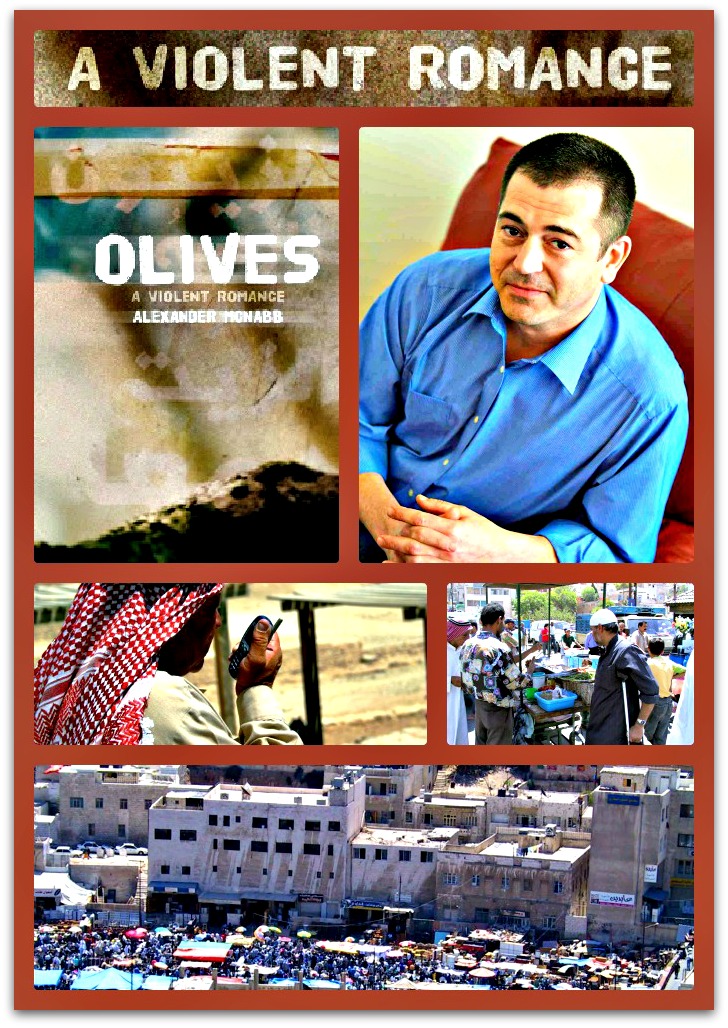
The London-born Alexander McNabb has spent nearly half of his life in the United Arab Emerites. Last month we interviewed him about his series of books on Middle Eastern themes, the first of which, Olives — A Violent Romance, has been sparking some controversy. (“Bring it on!” he told us.) Alexander is back at the Displaced Nation to share some good news: He is giving away several copies of Olives to our readers!! (See details below.) He is also here to discuss: does the book deserve its notoriety?

The Jordanian Web site Albawaba did a lovely interview with me in which they played up the “controversial novelist” angle quite nicely — I am, apparently, “scandalous.” Now, as any fule kno, if you want to sell books a whiff of scandal is quite handy.

That said, I have always shied away from that sales strategy — at least in part born of my dislike of the way the British author Geraldine Bedell’s publisher attempted to hijack the first Emirates Airline Festival of Literature (which I usually attend) to promote her mediocre book, The Gulf Between Us. Penguin claimed the festival organizers had tried to ban the book for its inclusion of a homosexual sheikh. (For more details, go to my post on this story.)

And yet bucketloads of controversy have dogged me since Olives — A Violent Romance was published a year ago. It’s much easier to be a “controversial author” in the Middle East than it is in the West these days.

Where is speech truly free?

We tend to forget how the film Monty Python’s Life of Brian (1979) was picketed by Christian groups, and how in 1988 Scorsese’s Last Temptation of Christ an adaption of a 1953 novel, was picketed and banned in some countries.

Let alone Lady Chatterley’s Lover (an unexpurgated edition could not be published in the UK until 1960), Frankie Goes to Hollywood (their controversial single, “Relax”) or many other shameful bans on music and literature in my own country in my own lifetime.

We think of ourselves as secular, tolerant and free-minded — yet our recent history has been filled with our failing to come to terms with free speech and literature that brings up topics we find uncomfortable.

Imagine how it is, then, in the Middle East, a region not only more sensitive to discussion of religious, cultural and social issues but with many more taboos to play with.

Some inconvenient truths

In Olives, my first book, a Muslim family is depicted drinking alcohol. This caused considerable comment online and from reviewers in the region, some of whom thought this was unnecessary and meretricious. A few tried to portray this scenario as unrealistic, but that didn’t really wash. Alcohol and the Arab world have a fraught — and frequently secretive — relationship.

Even more controversy followed with the fact that a Muslim woman sleeps with a British, Christian, man in the book. This was a humdinger that sparked debate about my motivations, the possibility this could happen and, once again, why I had to include such unsavory behavior.

Talk about inconvenient truth.

But the money shot was my decision to use real names in the book: real Jordanian and Palestinian family names. It wasn’t much of a decision, really, more of a no-brainer — you wouldn’t set a novel in the Highlands of Scotland and call characters MacShuggy or MacSquarepants because you were afraid of the clans, would you? And yet that expectation very much exists in Jordan today!

One member of a family with the same name as the female protagonist, Dajani, posted a comment on the Olives blog on behalf of the whole family demanding that the name be changed:

It would have been entirely feasible for you as an author to have contrived/fabricated a fictional name which does not infringe or violate our good family’s history and reputation and [we] do not believe that you have exercised good judgement in this choice.

The row spilled over to Facebook and other platforms and quickly got out of hand. One commenter on Jordanian blog 7iber (pronounced “hiber”) noted:

…this would be worth some honor killings if these names were abused.

Umm, that’s a death threat. (No matter that it’s probably something silly typed by an anonymous pimply onanist showing off, it does tend to stop one in the old tracks when you first read it.)

Worse, distributors in Jordan had refused to carry the print edition, citing concerns over the book’s use of that prominent Palestinian family name. Olives wasn’t banned in Jordan by government censors — but it was blocked by what a sympathetic commentator quite rightly called “a more insidious form of censorship.”

Fact vs fiction

Why has this been happening — because people in the Middle East can’t separate fact from fiction? Absolutely! It’s a real issue in the region. There is all too little fiction produced in and about the region: people simply don’t read very much in the main. A bestselling Arabic novel might sell a few thousand copies at most — the vast majority of Arabic writers pay to have their books printed.

So quite a few people, not unsurprisingly, find it hard to separate fiction from fact. Strangely enough, another branch of the Dajani family (which is very large and widespread, part of the reason I used the name) is passionately pro Olives — and I have to say the same thing to them: “Guys, it’s fiction!”

But the fact remains, my book set in Jordan can’t be sold in the country it’s set in.

As I said, it’s all too easy to be scandalous in the Middle East. Mind you, wait ‘till they see Beirut – An Explosive Thriller

*  *  *

Now it’s time for the freebies! Displaced Nation readers, you can get your very own copy of the book that’s been making waves in my part of the world. Here are 3 ways to do so:

1) For TDN readers with an iPad or ePub compatible reader (Nook, Sony, Kobo, Android etc): Get your copy of Olives — A Violent Romance free of charge (and save $4.99) on Smashwords. But first, you’ll need to sign up for the DISPLACED DISPATCH to get the code (it will come in the issue delivered this Saturday). NOTE: The code is valid until 1st December — and then, pfft, it’ll disappear. Dear readers, you are MORE than welcome to share that code with family, friends, strangers, dogs in the street — even lawyers.

2) For TDN readers with Kindles: Leave a comment on this post with your e-mail, and I will send a Kindle file and instructions how to install it. Best I can do, I’m afraid — Amazon doesn’t let me do freebies! Do remember to use name dot name at domain dot com so the spambots don’t find you! Or you can hit me up directly at @alexandermcnabb on Twitter…

3) For TDN readers who still like shiny PRINT books: If anyone would like to win Olives — A Violent Romance in print, delivered to their doorsteps anywhere in the world, just leave a comment and let us know where, if you could move to live anywhere on earth tomorrow, you’d go — and why!

TO ALL READERS: Olives — A Violent Romance has (wonderfully) met with considerable critical acclaim — if anyone wants to add their voice (whichever way it leans) on Amazon or Goodreads, that’s welcome feedback. The more people know the book exists, the merrier! 🙂

STAY TUNED for tomorrow’s post, the first in a two-part series on an expatriate’s love life.

If you enjoyed this post, we invite you to register for The Displaced Dispatch, a round up of weekly posts from The Displaced Nation, with seasonal recipes, book giveaways and other extras. Register for The Displaced Dispatch by clicking here!

Related post:

Images: All from Alexander McNabb.

How the 2012 elections looked to a repatriated American who is now a digital global citizen

Global citizens follow the US elections closely; some even see American politics as a spectator sport. For today’s post, we asked Anastasia Ashman, an occasional contributor to the Displaced Nation, to tell us how she felt about the 2012 elections. An expat of many years and an active proponent of global citizenship, Anastasia recently repatriated, with her Turkish husband, to her native California.

Rather than drifting away from the American political process when I was far from my fellow citizens, it was during an expat stint that I became most deeply involved.

My involvement had a displaced quality, of course.

I have always been on the edges of the American experience, hailing as I do from the countercultural town of Berkeley, California. The first time in my life I owned and brandished an American flag was after 9/11. It felt like a homecoming after a lifetime of being the outsider.

Even now that I’m back in California, my political involvement continues to have a displaced quality because I know what it’s like to be a citizen on the front lines of our nation’s foreign policy. For most Americans, the issue of how the rest of the world perceives our country is distant, amorphous, forgettable — but not for those of us who’ve lived abroad.

Clark for President!

I’d discovered Wesley Clark on television after 9/11. A four-star general, he was talking about the world we’d suddenly plunged into like a polished, collected and thoughtful world-class leader. It was easy to feel a kinship with the philosopher general even though I’d grown up in a household that vilified the military. Instead of activist or escapist pursuits, I chose to join him in geopolitical chess.

During the months between September 2003 and February 2004 when Clark competed in the presidential primary to become the Democratic candidate, I campaigned for him from afar. My email inbox soon filled with security warnings from the U.S. Consul urging Americans to keep a low profile.

If I had been able to get my hands on a campaign poster back in 2003 and 2004, I wouldn’t have displayed it publicly in my Istanbul apartment window. We were invading Iraq, and Istanbul was the site of four al Qaeda-related terrorist bombings that November. Avoid obvious gatherings of Americans, the emails cautioned. No mention of red, white, and blue “Clark for Democratic Candidate” campaign posters plastered on your residence — I had to extrapolate that.

Instead, I became active in online forums and wrote letters to undecided voters and newspapers in numerous states for my choice, the former N.A.T.O. Supreme Commander Wesley Clark. That was all I could do.

Obama for Re-election!

I’ve now been back in the USA for a year and have followed this election cycle, like the last one, mostly via social media. Online is an ideal place to become disconnected from echo chambers you don’t resonate with, and to stumble into rooms you don’t recognize. Both have happened.

But for the first time in the American political process, I don’t feel displaced. I feel like I am right where I belong.

Maybe it’s the San Francisco environs, which, although they may not match my concerns, don’t rankle too badly. At least I’m not in Los Angeles being asked to vote on whether porn actors must wear condoms. (They should, obvs!)

I feel less displacement in this election because of the resonant connections I’ve made online in the last four years or more. I’m in open, deep geopolitical conversation with Americans, American expats and with citizens of other nations, all over the world.

During this election I’ve been using my web platform, my digital footprint, to gather political news and opinion, enter discussions, and raise awareness. I’ve been reconciling my patchwork politics by weaving together who I relate to, and what I care about, and what sources I pass on to my network and what conversations I start. I now know that I am

  • A woman from an anti-war town who campaigned for a general!
  • A Hillary supporter who’s backing Barack, and
  • An adult-onset Third Culture Kid who understands how and why Obama’s Third Culture Kid experience confuses the average American.

What I have chosen to share on social media during this election cycle is a processing of all that makes me a political animal. I feel I have participated in this election cycle as the whole me, and that is all I can do.

I’ve shared that I care deeply that

I am buoyed that these abominations are leaking out and being countered. I was edified to hear others share my disapproval of eligible voters who choose to throw their votes away.

I have been able to be an active digital world citizen during this election cycle, someone who votes for the bigger picture, not just at the ballot box, but in everything I do. And that feels like home to me.

ANASTASIA ASHMAN is the cultural writer/producer behind the Expat Harem book and discussion site. The Californian has been on a global rollercoaster: fired in Hollywood, abandoned on a snake-infested island off Borneo, married in an Ottoman palace, interviewed by Matt Lauer on the Today show. She brings it all home in the “Web 3.0 & Life 3.0” transformational media startup GlobalNiche.net, empowering people to be more visible in the world and develop personally/professionally through social web technology. Get your copy of the Global You manifesto here.

STAY TUNED for tomorrow’s account of the American election cycle from a British expat’s perspective.

If you enjoyed this post, we invite you to register for The Displaced Dispatch, a round up of weekly posts from The Displaced Nation, with seasonal recipes, book giveaways and other extras. Register for The Displaced Dispatch by clicking here!

Related posts:

A veteran of the expat life, I thought I knew displacement…but then along came Hurricane Sandy!

The topic of today’s post is Hurricane Sandy. We’ll get to that soon. But first I want to tell you how I’m feeling today, one week after this monster storm struck.

I’m feeling like Joy in the Flannery O’Connor short story, “Good Country People.”

Joy — in fact, she calls herself “Hulga” in an act of rebellion against her simple-minded mother. With a Ph.D. in philosophy, Joy fancies herself the intellectual superior of her mother and the rest of the country bumpkins around them. (Although 32, she still lives at home because of being handicapped — a childhood hunting accident cost her one of her legs.)

But Joy’s advanced degree doesn’t help one iota when, out of the blue, a Bible salesman pays them a visit. In fact he’s a con man and cons Joy into giving him her prosthetic leg. For all her smarts, Joy is left stranded in the barn loft, immobilized.

I’ll tell you something — you ain’t so smart!

As one of the founders of the Displaced Nation — and as a long-time expat who has now repatriated to my native U.S. — I thought I knew displacement. I even considered myself something of an expert on the feelings one has when living in someone else’s place instead of your own.

But did this background in displacement help me at all when, like Joy/Hulga, I met my nemesis, Hurricane Sandy? Sandy left me, along with my husband and our two dogs, stranded without power, water or communications for four whole days.

Instead of sophisticated urbanites, my husband and I were no better than cave dwellers, Neanderthals. Our daily routine entailed going up dark stairwells, through dark halls and into a dark apartment, where we would gather around the fire (our gas stove still worked) and make tea and cobble together some dinner from the food that would otherwise spoil (but without opening the fridge door too much).

No longer seeing the light

I will never forget the moment the lights went off, and we were plunged into this unreal netherworld. We were eating chicken pot pie and Greek salad when it happened. I’d made us a proper dinner thinking that even though Frankenstorm’s monster was on its way, we may as well “keep calm and carry on” — a lesson I’d mastered from living on two other small islands before Manhattan: England and Japan.

We kept calm enough and carried on for the rest of that evening. After finishing the meal, we headed down one floor with our trusty flashlights to the apartment of another couple, with whom I’d communicated just before the blackout. Another couple from a higher floor joined us.

The six of us sat around a flashlight — that was the closest we could get to simulating a camp fire — and kept each other entertained while waiting out the storm.

“Bailing” out

The next day, however, the excitement of camping out in the city wore off rather quickly, especially as we no longer had any water. I’d followed the advice of the Weather Channel and filled the bathtub — but it’s no fun stumbling about in the dark to get a pan full of water when you need to flush the toilet.

It is also no fun going up and down 12 flights of stairs with two dogs in a pitch-dark stairwell, made only slightly brighter by your average flashlight. Note to self: Get one of the those miners-style flashlight headbands for the next time. Dorky they may be, but it’s so much easier to have two hands available.

After three days, like most East Villagers, we bailed — something I’m not very proud of, but my office (at Columbia University) had opened again and I was having a dickens of a time getting there and back using buses — there were no subways running.

A kind colleague with a spare room made an offer we couldn’t refuse. She doesn’t mind dogs (has one herself).

What have I learned from being — literally — displaced?

So, is “displacement” a good metaphor for international travel and the expat life? Does it hold water, so to speak?

Here are three quick lessons I’ve derived from the experience:

1) You know all those expat sites that talk about developing resilience? Well, that’s not such a crackpot notion after all, when it comes to real displacement. Now, I was never someone who admired the Brits for their stiff upper lip, or the Japanese for their gaman. But I ended up imbibing these traits by osmosis, as explained in a previous post — and I’m so glad I did.

New Yorkers like to brag about how great they are at weathering crises, but in this particular instance, they seemed like a bunch of wimps! (They were far more stoical in the wake of 9/11.)

Take for instance the downtown fashion set — including Anna Wintour, Carine Roitfeld, Pat McGrath and Marc Jacobs — and celebs like Naomi Watts and Liev Schrieber. As the Wall Street Journal reported, they immediately sought refuge in the Mark Hotel on E. 77th St., to await the return of power and water and normalcy.

The younger crowd, led by Emma Watson, were at the Carlyle.

C’mon, guys, I got through three nights!

Another prime example were the bus drivers who refused to take any of us cave dwellers south of 26th St. because it was “too dark.”

As a result of their intransigence, I found myself walking down nearly 20 blocks of darkened streets in the company of another East Villager — a young woman from New Orleans who’d already had the misfortune of having been evacuated during Hurricane Katrina. Two flashlights are better than one under these circumstances, and together we dodged rogue vehicles that were taking advantage of the no-traffic-lights chaos. All for the pleasure of, in my case, climbing up 12 flights of stairs to my little cave. Gaman shita.

2) My priorities are in the wrong place. As it turns out, I’d be better off doing fewer blog posts on developing a “core” of self while living abroad and more Pilates, developing an actual core. This is of course assuming I continue to live a dozen flights up in a high-rise apartment building.

Likewise, I’ve been placing too great a priority on hyper-communications. Even though I’m the first to feel offended when someone texts while I’m talking to them, I can’t describe how elated I felt when I at last managed to exchange texts with outside world.

When I was an expat, I could be happy in my own company for days on end. What happened?

3) I’m not sure it matters if you’re at home or abroad when you become forcibly displaced. I used to think differently, as I pointed out in my post about what happens when reality bites for expats.

But as it turns out, displacement is a God-awful experience no matter where you happen to be — and in some ways, being able to understand the language and the culture makes it worse.

You’re planning to hold the New York City marathon, Mayor Bloomberg, really? I can’t tell you how agitated I became upon hearing that announcement. Yes, I knew it meant a colossal loss of income to the city. But at a time when many of us were leading disrupted lives, did we need yet another reminder that life goes on uptown, where no one really suffered?

And did any of us really want an influx of entitled outsiders into the city at a time when our own people are in need?

Thank goodness he saw sense in the end and called the thing off.

And don’t get me started on the debates we ought to be having — but won’t — on climate change as well as the need to re-engineer New York’s waterfront to withstand storms of this nature. I feel incensed — not so much because of what I’ve personally endured, but on behalf of the some 40,000 New Yorkers who are still displaced.

* * *

Readers, do you have any Sandy experiences, impressions, or insights to share? Do tell! People who are truly displaced love community! And please hurry! They’re forecasting a northeaster on Wednesday. When it rains, it pours…

STAY TUNED for tomorrow’s post, a poll about, of all things, expat voting…

If you enjoyed this post, we invite you to register for The Displaced Dispatch, a round up of weekly posts from The Displaced Nation, with seasonal recipes, book giveaways and other extras. Register for The Displaced Dispatch by clicking here!

Related posts:

Image: MorgueFile

19 more films that depict the horrors of being abroad, or otherwise displaced

Readers, we have to confess, ever since horror novelist, former expat and Third Culture Kid Sezin Koehler suggested 15 horror films on travel and the expat life, we’ve become rather addicted — and have invited her back here today for another hit. Go ahead and indulge yourselves — it’s Halloween, after all!

Being the horror-obsessed film nut that I am — and loving how my expat/traveller life has collided with my scary movie self — I offer here are a few more honorable mentions within the three sub-genres I presented in last week’s post:

  1. The expat.
  2. The world traveler.
  3. The otherwise displaced.

1. Expat Horror: Caveat expat, or expat beware (or in some cases, beware of the expat!).

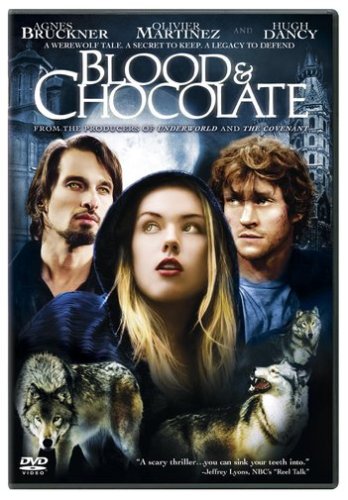
1) Blood and Chocolate, about an American orphan who goes to live with her aunt in Bucharest. Oh, and the orphan is a werewolf.


2) Drag Me To Hell, in which a Romany shaman in the US is evicted from her home and takes her rage out on the lowly loan officer who refused to give her a mortgage.


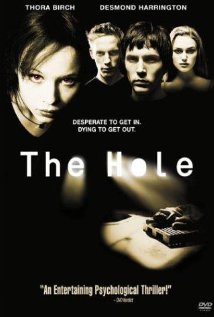
3) In The Hole we find an American student in a British boarding school who gets trapped in a World War II bomb shelter with a few classmates. So we’re led to think…


4) In The Grudge, Sarah Michelle Gellar gets far more than she ever bargained for living and working in Japan as a nurse, when a malevolent creature in her house begins an awful campaign of harassment, mayhem and torture.


5) Orphan finds us with a family interested in adopting a young Russian girl, only the longer she’s with them the more the mother suspects she’s not the child she claims to be.


6) + 7) The Joss Whedon marvels Buffy the Vampire Slayer and Angel, both of
which feature a number of prominent expats — a few are slayer trainers sent over to California from the Old World (Britain), a few are expat vampires who’ve decided the anonymity of the United States better suits their feeding habits.


2. Traveler Horror: “Let your suitcases gather dust!”, cry these films.

8) In Shrooms, a group of young Americans go to meet their Irish friend on his home turf in order to experience the hallucinogenic mushrooms indigenous to the fairylands of Ireland’s bonnie green forests. He forgot to tell them that their chosen “tripping” site is also the home of a haunted and abandoned insane asylum. And that not all the mushrooms are the magic type.


9) In Open Water, two Carribbean cruise snorkelers are left behind, to be tormented by a shark. Based on a true story — and one of many reasons why I keep my feet on dry land despite now living in Florida.


10) In the same vein we have Piranha 3D, in which half-naked spring-breakers are set upon by prehistoric piranha that have been released through an underground fault.


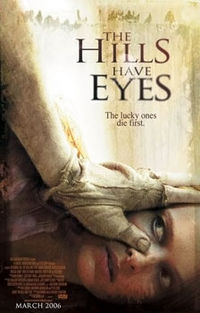
11) The Hills Have Eyes features a family on a road trip through the post-nuclear testing New Mexico desert are set upon by a group of psychopaths who live in the hills.


12) Worlds collide in From Dusk Till Dawn when a reverend on a road trip to Mexico with his children is hijacked by two ruthless killers on the lam from the law after a series of brutal murders and robberies. They find themselves like fish out of water when their rest-stop bar turns out to be a haven for vampires.


13) When a group of friends go white water rafting in Appalachia, the idylic back country scene turns nightmare when a group of inbred locals terrorizes the group, and one of its members in particular. Deliverance is not for the faint of heart.


I could keep going with this sub-genre, but surely you get the point by now. Stay home!

3. Displaced Horror: “Think twice about moving or taking a sojourn outside the ‘hood” is the moral here.

14) Rosemary’s Baby, in which Mia Farrow discovers that her new Manhattan residence is also the home to a group of mad Satanists who’ve got their sights on her unborn baby.


15) The slasher musical Don’t Go In the Woods features a band on the verge of a breakthrough go camping to write some new tunes. Only, there’s something else in there with them that’s picking them off one by one.


16) Every incarnation of the Alien series brings us a group of Earth’s citizens in outer space, battling a wretched and basically unkillable xenomorph. Keep your feet on land. Save yourself the trouble.


17) In Friday the 13th, a group of summer-camp goers are stalked by a relentless killer. Man, this one makes me glad I never went to summer camp, even though growing up I always wanted to.


18) A writer on a summertime retreat to a supposedly peaceful cabin is brutalized by a gang of locals. One of my personal favorites, I Spit On Your Grave is a grotesque revenge fantasy come to life and suggests one might be better off simply working from home.


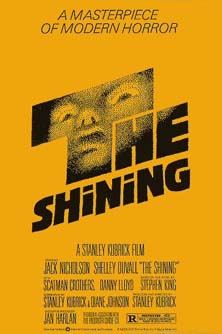
19) And we can’t forget one of the most iconic examples of Displaced Horror: The Shining, in which Jack Torrance, temporary caretaker of the historically creepy and ever haunted evil Overlook Hotel, goes mad and tries to murder his family. All work and no play makes Jack a dull boy, eh?

Happy Hallowe’en!

* * *

So, are you ready to burn your passport and throw away all your travel gear yet? 😉

And while we’re still at it, do you have any other films you’d add to Sezin’s best-of abroad horror list?

Sezin Koehler, author of American Monsters, is a woman either on the verge of a breakdown or breakthrough writing from Lighthouse Point, Florida. Culture shock aside, she’s working on four follow-up novels to her first, progress of which you can follow on her Pinterest boards. Her other online haunts are Zuzu’s Petals, Twitter, and Facebook — all of which feature eclectic bon mots, rants and raves.

STAY TUNED for tomorrow’s post, in which our fictional expat heroine, Libby Oliver, checks in and lets us know how she’s doing back at “home” in Merry Olde.

If you enjoyed this post, we invite you to register for The Displaced Dispatch, a round up of weekly posts from The Displaced Nation, with seasonal recipes, book giveaways and other extras. Register for The Displaced Dispatch by clicking here!

Related posts:

TRAVEL YARN: Just a regular expat girls’ night out in Kenya…um, right?

Today, as many of us await the very real horror of Hurricane Sandy, it may be helpful to have a distraction in the form of a scary travel tale. Guest blogger Amy Lucinda Jones, an Englishwoman who lives in Italy, has obliged with this story about an unsettling experience she had while volunteering in Africa.

If I had a pound, or even a penny, for every person who told me that it was dangerous to go to Kenya on my own, well…I would have been able to afford to take a friend with me, too.

Have you heard about all those terrible things that happen to people who go there? And you’re going alone! And you’re a WOMAN!

But, I shrugged off these (somewhat sexist, and racist) warnings and went to Kenya anyway, fresh out of university, ready to face a new part of the world and a new adventure. I had decided to take part in a volunteer programme, helping children in the local community. And while the experience was one of the most interesting, eye opening and rewarding things I have ever done, it was definitely challenging.

The heat for one thing. Then the million tablets I had to take to stop me getting malaria (which, in turn, gave me terrible indigestion…and some other, ahem, more “personal” side effects that I won’t mention).

Oh, and the fact that I found lots of little white ants crawling all over my toothbrush one morning. They were in the breakfast jam, too. After a few days I grew tired of picking them out. Extra protein and whatnot.

But despite the creepy crawlies and the questionable hygiene, nothing compared to the experience I had with my fellow volunteers, one Saturday night.

What an excellent night for…

We’d decided to let off some steam after a tiring week, due to hard work and challenging projects. After having had a few Smirnof Ices (yes, alcopops are still pretty big over there) at a local bar where we lived in Mombasa, we decided to take the party elsewhere. There was a “discotheque” several miles away, where we could drink more sugary alcohol and dance under the stars.

The only problem was getting there.

We approached a taxi driver and bartered with him for a while. There were about eight of us, so two taxis were needed, and the guy suggested we go with his somewhat shifty looking friend. Please don’t let me be in his taxi, I silently prayed, as one of the other girls pulled me in the direction of said taxi driver’s car.

As we got in, though, everything seemed fine. He drove through the city calmly, without saying too much. I didn’t blame the guy for staying so quiet when he had a group of women who were squealing as though they were 13 again, in his back seat.

But then we reached the edge of the city. It was pitch black — a whole load of nothing was surrounding us. I began to feel just a little uneasy, but none of the other girls seemed to be in the slightest bit bothered.

That was until the driver slowed right down. He crawled along the road, looking around him. We all looked at each other. We had done this journey before, and the road was straightforward. It should not be taking this long.

Oh, yes, there will be blood!

“You do know the way to the disco, right?” One of us asked.

“Mmm.”

Well, of course that response filled us with a whole load of confidence. We repeated the question but were met with an even less helpful silence.

I’m sure he’s just lost and feels embarrassed about it, I told myself, noticing that I was starting to sweat a little bit, even though it wasn’t that hot. We all fell silent as he continued to creep along, still surveying his surroundings.

Suddenly a petrol station loomed into view. Our driver pulled over and silently got out of the car. As he closed the door behind him, we erupted into a state of panic.

“Oh my God, what’s he doing?!”

Followed by:

“Who’s that weird man he’s now talking to?!”

And then, the slightly more alarming:

“I actually think he’s going to chop us into little pieces!”

After this last statement I instinctively placed my fingers on the door handle to assess our possible escape option.

“OH MY GOD — THE DOORS ARE LOCKED!!!”

The other girls frantically tried their doors, too, but to no avail. The driver was talking with the attendant and beckoning towards the car. Probably explaining about how he had four young women captive in the back seat, and he was planning to take us to his rickety old house and, of course, chop us all into little pieces.

I seriously started to panic.

After a few more horrific minutes, he ambled back to the car. In a slow, Leatherface-like way. Albeit without the chainsaw (although he could have had one of those in the boot).

He got into the driver’s seat and pulled away. Still driving at an agonizingly slow speed and saying nothing. He took another turning, which was again unknown to us.

We were in silence now — all secretly wondering if we should pounce on him to try and take him out. Grab the steering wheel or something equally as reckless.

Help me! Help meeeee!

We continued to crawl along. I could hear one of the girls whimpering. Or maybe it was me. I don’t remember. I thought back to those who had warned me about the dangers of traveling. Although to be honest, I think their concerns were more along the lines of avoiding being mugged, or catching typhoid from ice cubes. I’m pretty sure they hadn’t imagined me being stuck in the back of a taxi with a murderer.

Okay, that was harsh. Maybe he wasn’t the actual murderer. Maybe he just “found” innocent, unsuspecting people and took them to his “boss,” who would do the torturing and killing. Maybe he was actually a really nice guy who was stuck in this horrid job. I almost started to feel sorry for him.

He pulled over again. This time at the side of the road. In the middle of nowhere. We clung to each other for dear life as he got out and talked into his mobile phone. He’d probably lost the address to the House for Killing Unsuspecting Foreign Women.

After another five minutes of driving, one of the girls squealed. With a voice barely containing her excitement, she pointed out that she recognized the road. “We are two minutes away from the disco,” she said.. We bounced about in the back seat as the driver pulled into the car park. People! Noise! No Killing Houses!

We threw some money at him and escaped the moment he brought the car to a stop.

The other girls were waiting by the entrance. They looked incredibly annoyed by our lateness. But we just didn’t care.

Because we were ALIVE.

Amy Lucinda Jones is an English teacher, keen traveler, food fanatic, and occasional follower of fashion. Currently, she is living in Puglia (Apulia) and discovering southern Italy one gelato at a time… You can keep up with her adventures by visiting her blog, Sunshine and Tomatoes, and/or following her on Twitter: @BritInItaly. She was recently interviewed about her adventures by Expats Blog.

STAY TUNED for tomorrow’s post, an Expat Moment involving creepy Princess Di dolls, by Anthony Windram.

If you enjoyed this post, we invite you to register for The Displaced Dispatch, a round up of weekly posts from The Displaced Nation, with seasonal recipes, book giveaways and other extras. Register for The Displaced Dispatch by clicking here!

Related posts: