The Displaced Nation

A home for international creatives

Highlight of 2012: “Pinning” down expat, TCK, travel & other displaced themes on Pinterest

Would it be mixing my metaphors too much to say we stumbled upon Pinterest in 2012? I suppose so. But that’s really what happened.

By the end of last year, Kate Allison and I were debating about Pinterest: should the Displaced Nation be participating in a pinboard-style photo-sharing site that some commentators were predicting might surpass Facebook in popularity? Kate felt cautious about making another major commitment to social media, whereas I was gung-ho to give it a whirl.

Kate also pointed out, very sensibly, that the Displaced Nation isn’t trading primarily in food, fashion and weddings — the most popular Pinterest topics. Not wishing to be dissuaded, I reminded her of our “IT’S FOOD!” category, adding: “We also do fashion, and multicultural marriage…”

It came to pass that one day in early April, Kate, for reasons still unknown to me, took the Pinterest plunge. She told me about it afterwards and said we’d been missing out on a whole lot of fun! As anyone who reads Kate’s posts will know, for her to say something is fun is a high recommendation. “I wanna get me some of that,” I said to myself.

The bubble tea of the social media world

The first time I pinned, I was reminded, in a strange kind of way, of my first experience with Taiwanese bubble tea. Just as I wasn’t sure what to do with all the tapioca balls or pearls, I wasn’t sure what to do with all the images on a Pinterest page. But as with the tapioca balls, which proved to be chewy and addictive, so with Pinterest. It was not long before I was pinning with the best of ’em.

This pinning business is amusing, that’s for sure, as well as mildly addictive. But let’s not overlook the fundamental question. Do collections of photos that are archived on Pinterest bring more attention to issues that are important to the Displaced Nation? We’re talking not only food but expat stories, TCK experiences, travel yarns, books about the displaced life, movies about said life, and so on.

As New York Times senior writer C.J. Chivers said in a Poynter article listing the ways journalists are trying to use Pinterest:

Used poorly, [Pinterest] would be just as much as a time suck on work and on life as the rest of the Internet can be.

Two dozen boards and counting…

The Displaced Nation currently has 28 boards and has accepted invites to several shared boards, including the one for #hybridambassadors, a group put together by Anastasia Ashman, and two on travel.

The boards that get the most traffic, by far and away, are the shared boards on travel.

Why is it that comparatively few have discovered our other collections? Especially as five of those boards would qualify as a useful “visual index” of themes I would posit to be the core of the shared displaced identity.

Here is just a small sample of what people in our circles may be missing:

1) Displaced Reads
Purpose: Originally created to keep track of all the books by and/or about expats we’d been featuring on the Displaced Nation, this board has become a repository for any books we happen upon that involve global voyages or living in other countries.
Recent pins: Tequila Oil: Getting Lost in Mexico by Hugh Thomson; Beirut: An Explosive Thriller, by Alexander McNabb; and To Hellas and Back, by Lana Penrose.
Recent repin: An Inconvenient Posting: An expat wife’s memoir of lost identity, by Laura Stephens (via BlogExpat, their “Expat Books” board).

2) The Displaced Oscars
Purpose: To keep track of the films we’ve been reviewing since launching our Displaced Oscars theme last March. As with Displaced Books, Displaced Oscars has morphed into a record of all the films we hear about that involve expats, displacement and/or global travel.
Recent pins: The Iran Job, a documentary about an American pro basketball player who signs up to play for an Iranian team for a year; Infancia Clandestina (Clandestine Childhood), a cinematic memoir about a family returning to Argentina after many years in political exile; and Tabu, an experimental fiction that ranges from contemporary Lisbon to an African colony (Portuguese Mozambique) in the distant past.
Recent repin: Notting Hill from the Jetpac blog — they’d pinned it to their “Movies to Fuel Your Wanderlust” board.

3) Third Culture Kids
Purpose: To highlight the third culture kids who’ve contributed to this blog, along with other accomplished people who fall into this category.
Recent pins: Fashion designer Joseph Altuzarra, who was born in Paris to a French-Basque father and Chinese American mother, and now lives in the U.S.; Maggi Aderin Pocock, who was born in Britain to Nigerian parents and is now the BBC’s “face of space”; and Isabel Fonesca, a writer born to an American mother and Uruguayan sculptor father, who ended up living in London (she is the wife of Martin Amis, and they’ve now moved to Brooklyn).
Recent repin: President Obama, via Kristin Bair O’Keefe (her Inspiration board).

4) Multicultural Love
Purpose: To continue one of the blog’s most popular themes, especially after the momentum gained this past February, when we did a whole slew of posts in honor of Valentine’s Day.
Recent pins: Helena Bonham Carter and Tim Burton; Carla Bruni and Nicholas Sarkozy; Martin Amis and Isabel Fonesca.
Recent repin: Becky Ances and her Chinese boyfriend, in Shanghai, via Jocelyn Eikenburg (pinned to her board “Chinese Men and Western Women in Love”).

5) Displaced Hall of Fame (Historical) & Displaced Hall of Fame (Contemporary)
Purpose: To flesh out a category that has been somewhat neglected on our live blog — not for want of examples.
Recent pins: Historical: Robert Sterling Clark, heir to the Singer sewing machine fortune except that he preferred to explore the Far East; Josef Frank, the Hungarian-born architect and designer who became a Swedish citizen and lived in New York; and P.L. Travers, the Australian-born author who moved to Britain in her twenties and composed Mary Poppins in a Sussex cottage. | Contemporary: Writer and literary critic Francine du Plessix Gray; Pakistani writer and journalist Mohammed Hanif; model and actress Diane Kruger.
Recent repins: Historical: Lady Sarah Forbes Bonetta Davies, a West African royal who was taken to England and presented as a “gift” to Queen Victoria, from #hybridambassadors. | Contemporary: David Beckham, via Smitten by Britain (her “My Favourite Brits” board).

Is Pinterest Pinter-esque?

There’s such a wealth of images on Pinterest that I sometimes feel that, as in a Harold Pinter drama where what the characters don’t say speaks volumes, it’s what you don’t pin that’s more important than what you do, in shaping your Pinterest presence.

Right now we are in a period of excess — it was just so right-brain-stimulating to become immersed in the Pinterest world. Or, to put it another way: I’ve done so much pinning, my head is now spinning!

But might we move to more curated collections in 2013? Instead of pinning all of our Random Nomads onto a single board, for instance — with their food choices in another board and their favorite objects in yet another — could we give each one a board of their own, with all of these items?

Readers, we are dizzy and would appreciate your help in getting our balance back. Can you answer these questions please:

  1. What are the rules of the Pinterest game?
  2. What’s a “secret board”?
  3. Should we have fewer boards, more boards?
  4. Are there any other topics we should be covering?

I apologize if you’re fearfully bored (hahaha) but I’m on pins and needles awaiting your advice. What’s more, if I don’t hear from you soon, I may go back to pinning (yes, I’m pining away!).

STAY TUNED for tomorrow’s post from the author of a displaced read (yes, her works have been pinned to our “Displaced Reads” board!).

If you enjoyed this post, we invite you to register for The Displaced Dispatch, a round up of weekly posts from The Displaced Nation, with seasonal recipes, book giveaways and other extras. Register for The Displaced Dispatch by clicking here!

Related posts:


LESSONS FROM TWO SMALL ISLANDS — 5) Keep calm and pour some tea

Teatime CollageDecember greetings, everyone! Can you see us twinkling? The Displaced Nation wants to be part of your Festival of Lights this December — a source of brightness and enLIGHTenment during the dark days of winter. (Unless, of course, you reside in the Southern Hemisphere, in which case, you should be helping all of us to feel brighter!)

But before we get to that — Kate Allison will be delivering some tips tomorrow on generating holiday cheer regardless of location — do you fancy what the Brits would call a cuppa?

If you said no, that you’d prefer coffee or cold beverage, I suspect you may be a compatriot of mine. Once upon a time, I was an American like you — I didn’t drink any caffeinated beverages apart from Diet Coke. But then I traveled to Europe and Asia, and now I can’t imagine a life without tea. As the Chinese lady who owns Ching Ching Cha, a traditional Chinese tea house in Georgetown, DC, once remarked to me, when I told her how much I’d grown to like tea from my travels: “For me, tea is a way of life.”

Those who already know what I’m talking about may read no further. But for the unconvinced, here are 10 lessons I learned while living in two major tea-drinking nations, Britain and Japan, for many years. (If you’re the bucket-list-keeping type, think of it is as 10 reasons to develop a tea-drinking habit before you die!)

1) Even if coffee is more your cup of tea, so to speak, give tea a chance.

Coffee is great for that jolt to the system. One of its most effective uses, apart from first thing in the morning when you’re going to work, is for the jet lag that occurs after a really long international flight — say between the United States and Japan. (Japanese, btw, love coffee as much as the English do — and perhaps thanks to German influence, can make an even better cup than anyone in the UK or the USA.) But unlike coffee, tea is what keeps you going day in day out, putting one foot in front of the other. It’s the sustenance beverage for the marathon known as life.

2) I mean tea, not tisanes.

I apologize to those expats who’ve spent their formative years in France. I have nothing against those herbal drinks with medicinal qualities. I just think it would be a shame to miss out on the kind of caffeine that tea has to offer — the kind that produces sustained mental alertness. Not to mention tea’s own medicinal qualities — all of those lovely antioxidants. Why do you think the Japanese live so long, with all their bad habits of smoking, drinking to excess and overwork? Likewise, the English writer, George Orwell, was able to sustain himself on cups of tea when living “down and out” in Paris and London.

3) Tea has a special role to play in the holiday season.

It’s the perfect libation to help you recover when your feet are aching after a full day of shopping and wrapping gifts (surely, the bane of any adult female’s existence this time of year!) or when you think your hand will drop off if you have to write one more Christmas card. It’s also the perfect drink to serve, because so convivial and relaxing, when meeting up with friends or family you haven’t seen in a long time.

4) Tea is a primary aid for developing a more stoical attitude towards life.

As explained in the very first post in this series, I found it a bit of a challenge to adapt to the brand of stoicism-cum-fatalism both of these small islands, England and Japan, have cultivated over the centuries. But the day I worked out the connection between tea-drinking and stoicism marked the beginning of the end of my struggle. If only I’d paid closer attention to Orwell, who said:

All true tea lovers not only like their tea strong, but like it a little stronger with each year that passes.

5) Tea may also be the key to a philosophical approach to life.

The process of drinking a cuppa slows you down for long enough to clear your head of pressing thoughts and work out what is important. Strangely, I found Brits to be almost as insistent on the importance of a regular tea-drinking habit as the Japanese — even though it’s the latter who are renowned for their Zen approach to tea. Take these words of Rudyard Kipling’s, for example:

We haven’t had any tea for a week…
The bottom is out of the Universe

It reads like a haiku, doesn’t it? Certainly, his sentiments are not far removed from the Japanese proverb:

If man has no tea in him, he is incapable of understanding truth and beauty.

6) The rituals are just as important as the tea itself.

After nearly a decade of living in Britain, I had it all down to a fine art: boiling water to serve tea, heating the pot, putting the milk in the cup first, and pouring the tea without spilling. To this day, I cannot imagine making a pot of tea without pouring hot water in it first to heat the pot. The water and the pot need to be at the right temperature to brew the tea properly. Imagine the affront I experienced upon returning to this country and being served a cup of either semi-warm water or boiling water with a Lipton’s tea bag on the side. And though I found some of the Japanese tea-drinking rituals a bit obscure, especially those related to the tea ceremony — twirl the cup around three times, really? — I still took delight in the spectacle.

7) Tea should be served with something sweet.

“Tea and biccies, anyone?” as they say in England — usually meaning the chocolate-coated digestive biscuits. And the perfect way to offset the super bitter green tea (macha) of the Japanese tea ceremony is with the almost sickeningly sweet kashi and wagashi — confections that are usually served beforehand. A tad of sugar helps this most medicinal of teas go down. Not only that but it’s a beautiful combination, as anyone who has sampled green tea ice cream, by now a classic flavor, will attest.

8) Tea should be served in an aesthetically pleasing cup — never paper or plastic!

Part of the pleasure of taking tea at Fortnum & Mason’s or the Ritz is the bone china it is served in. If the world had a treasure chest, surely it would contain a full set of Wedgwood or Royal Doulton? In Japan, by contrast, it is the roughness and imperfection of the tea cup that provides aesthetic pleasure, or, if you’re drinking Western tea (usually served with lemon, not milk), the sheen of a fine china tea cup — either English (Wedgwood Wild Strawberry is very popular there) or a Japanese version (eg, Noritake). Can’t be bothered with china? At the very least, make your tea in a proper mug.

9) Tea is the ultimate social drink.

Perhaps the British writer known as Saki (yes, he was born in the Far East) put it best when he wrote:

Find yourself a cup of tea; the teapot is behind you. Now tell me about hundreds of things.

Japanese may not be as fond of having a natter when they take tea; nevertheless, they see it as a custom that fosters social harmony.

10) No one should ever be too busy for a tea break.

My fellow Americans, are you still with me? This pointer is particularly for you — particularly those of you who are always crazy busy — although as Tim Kreider pointed out on the New York Times‘s Opinionator blog, it’s often not clear why what you’re doing is so important. Perhaps if you took time out for a regular tea break, you would slow down a bit — see 5) — and find an escape from your self-imposed “busy trap.”

****

And now I must leave you as the clock says ten to three — only, is there still honey for my tea?

Readers, do you agree that tea may be the answer? Or is this just another of my moonbat pronouncements that’s put you in need of a strong cup of Joe?!

STAY TUNED for tomorrow’s post from Kate Allison.

If you enjoyed this post, we invite you to register for The Displaced Dispatch, a round up of weekly posts from The Displaced Nation, with seasonal recipes, book giveaways and other extras. Register for The Displaced Dispatch by clicking here!

Related posts:

Img: Collage made of two photos available on Flickr via Creative Commons: (left) “High tea,” by John Heaven, and “Japanese tea ceremony,” by JoshBerglund19.

RANDOM NOMAD: Bart Schaneman, Experience-hungry Newspaper Editor in Seoul

Place of birth: Scottsbluff, Nebraska, USA — I was raised on a farm nine miles east of town. I had an incredible childhood.
Passport: USA
Overseas history: South Korea (Jeonju, Seoul, Jeonju, Seoul): 2006-08; 2008-09; 2010-11; 2011 – present.
Occupation: National editor for the Korea JoongAng Daily, an English newspaper in Seoul; and author of Trans-Siberian, a travelogue about a trip on the the world’s longest railway.
Cyberspace coordinates: Bart Schaneman (Tumblr blog) and @bartschaneman (Twitter handle).

What made you abandon your homeland for Korea?
I left because I wanted experiences. I wanted material to write about. I wanted to travel and get out of America. I didn’t want a mortgage. I didn’t want to get trapped. I didn’t want to wait until I was too old to see the world.

Was anyone else in your immediate family displaced?
I’m the only person in my immediate family who doesn’t live in the region called the Great Plains.

Tell me about the moment during your stay in Korea when you felt the most displaced.
I don’t really have a moment like that. Korea’s an exceptional place. It’s safe. The people are kind and educated. It gets easier to live here as a Westerner all the time. I’m here by choice — it gets lonely, and I miss my family, but I don’t really question why I’m here. There were minor annoyances about how things are done differently than what I was used to when I first got here. I don’t really notice those anymore. People here move to their left on the sidewalks. That’s not too hard to get used to.

When did you feel the least displaced?
Every time I go home I remember how lucky I am to live in a foreign country. Not that Nebraska or the Midwest is a bad place. I love it and I hope I’ll be lucky enough to get to live there again someday. It’s just very familiar. Difficult to find interesting. In Asia, I’m rarely bored with my surroundings. I value that more and more as I get older.

You may bring one curiosity you’ve collected from each of the countries where you’ve traveled or lived into The Displaced Nation. What’s in your suitcase?
Kimchi. But only from Korea. It’s not right anywhere else.

We are therefore looking forward to the meal you are invited to prepare for Displaced Nation members, based on your travels. What’s on the menu?

I’m going to serve you all a bowl of chamchi kimchi jjiggae: tuna and kimchi soup. It will make you feel like you can flip over cars after you eat it. Great when you’re sick or hungover.

And now can you offer a Korean word or expression for the Displaced Nation’s argot?
The most important word to understand in Korean culture, to my mind, is jeong. It doesn’t translate directly, but the closest way to describe it is as a type of deep bond that is formed between people over time that helps you care for someone. You might not see an old friend frequently any more, or you might not be romantic with your partner, but you have jeong for them so you still want to help them when they need you. It explains a lot about the Korean mind and Korean society.

Earlier this month we did a poll on expat voting. Do you still follow your home-country politics?
I work as a journalist so I pay attention to American politics. Koreans pay attention as well. I’ve heard it said by people here that when the U.S. coughs the whole world gets sick. Most of my co-workers are from the U.S. and very well informed.

Do you vote despite living abroad?
I vote when I like the candidates, but I don’t vote if I don’t like what’s offered.

Were you surprised at the 2012 outcome?
I’m always surprised at how divided America seems around election time. People I love and trust can think about the world in an extremely different way than I do. That’s more surprising to me than who won the election.

The American Thanksgiving took place last week. What do you feel most thankful for in your life right now?
I’m lucky to have the life I have. I’m healthy. I’m alive. I don’t need much more than that. No complaints from me.

Readers — yay or nay for letting Bart Schaneman into The Displaced Nation? He may have us all eating kimchi, but at least he can amuse us with tales of the Trans-Siberian! (Note: It’s fine to vote “nay” as long as you couch your reasoning in terms we all — including Bart — find amusing!)

STAY TUNED for another episode in the life of our fictional expat heroine, Libby.  Yes, this time she really is posting! Last week, the washing up after her Thanksgiving dinner took longer than expected…! (What, not keeping up with Libby? Read the first three episodes of her expat adventures.)

If you enjoyed this post, we invite you to register for The Displaced Dispatch, a round up of weekly posts from The Displaced Nation, with seasonal recipes, book giveaways and other extras. Register for The Displaced Dispatch by clicking here!

Related posts:

Img: Bart Schaneman in the Boseong Tea Fields in Boseong, South Korea (May 2011).

And the Alices go to … these 3 expat writers for their Hurricane Sandy posts

 © Iamezan | Dreamstime.com Used under license

© Iamezan | Dreamstime.com
Used under license

My husband and I have a habit of going on holiday just before some major world crisis occurs — after which we have no choice but to spend several days holed up in our hotel room watching the events unfold on CNN. Twice it was a crisis involving water: the deadly Hurricane Katrina and the 2004 Boxing Day tsunami.

But for Hurricane Sandy, we were very much on the scene — ensconced in our apartment in NYC’s East Village, and with no television to watch, not even a radio to listen to! As those who read my post of earlier this month are aware, we were deprived not only of power but also water, communications and public transportation for several days, and displaced from our home for one night — an inconvenience that, while somewhat traumatic, turned out to be minor compared to what others had suffered in harder-hit areas.

As I mentioned then, the experience gave me a chance to test this blog’s basic premise: that forcible displacement at some level compares with the kind of displacement one has when living in a country that is not your home. And if so, can a former expat like me draw on the strengths gained from living overseas to keep calm and carry on?

While pondering these fundamental questions, I came across three posts by expats on Hurricane Sandy that gave me some fresh insights — not only on Sandy but on the down-the-rabbit hole nature of international travel and the expat life.

Thus I’d like to hand out three “Alices” today to (in reverse chronological order):

1) PETE LAWLER

Awarded for: Clouds from the Past: My Reflections on Sandy, Gloria and the Jersey Shore, in his personal blog: The American Londoner
Posted on: 3 November 2012
Moving passage:

But here and now, when things are raw, when my cousins have been without power for a week and my parents are cooking with a propane tank and a Coleman portable grill even high up in the Pocono Mountains of Pennsylvania, I mourn. My heart goes out to those suffering and I mourn for that place of childhood sunshine and wish it a good and steady recovery in the coming months.
All the best, Jersey. I am thinking of you.

Citation: Pete, before Sandy, you probably weren’t thinking that much about “that place of childhood sunshine,” the Jersey shore — because, after eight years in London, you try not to think too much about sunshine any more. But then Sandy plunged you into mourning for all the good times you had as an all-American kid — the “long sunny days spent lazily frolicking through waves, collecting shells, and cautiously avoiding jellyfish.” It even made you think with some nostalgia of Hurricane Gloria, which you rather enjoyed as a seven-year-old. Absence, plus tragedy, can indeed make the heart grow fonder… What’s more, I sense how bad you must have felt about being powerless, from a distance, to help your parents and your cousin in their time of need — a guilt that’s at the hard core of the expat life. Just ask Linda Janssen — I’m thinking of her aptly titled “Down the Rabbit Hole” post of last summer, about her father’s illness.

2) MADELINE GRESSEL

Awarded for: Hurricane Sandy and the unspoken attraction of disaster, in Matador Abroad
Posted on: 1 November 2012
Thought-provoking passage:

Now, as New York City is sloshed by a record-breaking 13ft wall of water, it is I sitting comfortably in a café in Hong Kong watching the light October rain outside. … My friends post photos on Facebook of candlelit dinners, submerged cars, and the powerless, darkened skyline.

And I wish I were there with them. Not because I’m afraid for their safety (I’m not), but because I’m missing a moment of New York history. I’ll never be able to say, “Remember the flood of 2012? That was insane.” I feel jealous at the pictures, like I’ve seen a photo of an ex-lover with his new flame.

Citation: Maddie, I wonder why it is, as we also learned on this blog this month, so few American expats feel the need to connect with their homeland during a presidential election — which, too, provides a chance to be “part of history,” especially if the race is closely contested? I think the answer may lie in your rather astute observation: people love a disaster. Come to think of it, a friend of mine has confessed that during Sandy, she had the overwhelming urge to go outside — in the storm! (Even though it was expressly forbidden by Mayor Bloomberg.) In addition, your post reminded me of another old expat adage: out of sight, (afraid of being) out of mind…

3) RUTH MARGOLIS

Awarded for: “I wasn’t afraid of Superstorm Sandy — until the lights went out,” in Telegraph Expat
Posted on: 31 October 2012
Moving passage:

Forty-eight hours ago, I was relishing my role as stoic, cynical Brit, refusing to bow down to an impending crisis. I bashed out jokey emails to friends and family noting that it was “a bit blustery”…

…my husband and I — plus my visiting younger sister — spent much of Sunday and Monday quite enjoying the commotion. Like kids playing an imaginary game, we stocked up on all the (un)necessaries: crisps mainly, and garish American junk foods…

Then, something strange happened: the lights went out in Manhattan. … “Ah,” we thought, followed by a shaky: “Hmm”. … Eventually, we went to bed, with the radio on. No one got much sleep.

When the next storm hits, I expect I’ll ditch the cockiness sooner.

Citation: Ruth, there I was, trying to conjure up the “keep calm and carry on” ethos that I’d learned (rather begrudgingly) from nearly a decade of living in Britain, when, had I known you were down in Brooklyn, I could have asked for a refresher course (ah, yes, the junk foods and the jokey emails!). Still and all, I’m glad to know that even for a native-born Brit, there are limits, one of which is seeing the lights go out in lower Manhattan… (From now on, I won’t be too hard on myself!) I can also relate to what you said about these disasters having a cumulative effect (made worse by the fact that you’re living far away from your homeland and already feeling somewhat displaced). As you point out in your post, Sandy was the second time since emigrating that you’ve “had to assume the brace position,” the first being Irene. I can recall feeling something similar when living in Tokyo — first there was the Aum Shinrikyo attack on the subway and then the massive earthquake in Kobe, after which I decided that the stoicism required for this situation hadn’t yet been invented! (Bloomin’ heck, why was it I’d told everyone at “home” that Japan was so much safer?)

* * *

So, readers, do you have a favorite from the above, any comments on these bloggers’ ruminations, or any further posts to suggest? I’d love to hear your suggestions!

STAY TUNED for tomorrow’s post, some comforting advice and (hopefully) words of wisdom from The Displaced Nation’s resident agony aunt, Mary-Sue Wallace.

If you enjoyed this post, we invite you to register for The Displaced Dispatch, a round up of weekly posts from The Displaced Nation, with seasonal recipes, book giveaways and other extras. Register for The Displaced Dispatch by clicking here!

Related posts:

Images: All from Morguefiles.

THE DISPLACED Q: Expats, repats, what’s the most outlandish tweak you’ve made to your Thanksgiving menu?

Since my repatriation to America, Thanksgiving has become my very favorite holiday here. This is partly because of a tweak that I make to the menu, but we’ll get to that later.

I wasn’t always so thankful for Thanksgiving. I only celebrated this American holiday twice while living abroad for many years, first in England and then in Japan — and to be honest, I didn’t really miss it.

Both celebrations took place when I was pursuing graduate studies at a British university.

The first time was for my very first Thanksgiving away from my family. I joined several other American grad students in preparing a traditional Thanksgiving dinner to serve in the dorm. Our guests were mostly other international students who were curious to experience an authentic version of this quintessentially American custom — as I recall, there were very few Brits.

At one point, a rather bitter argument erupted between Anna, a Harvard-educated woman who was pursuing a higher degree in feminist studies, and Andy, a Georgetown-educated man who was doing an M.A. in politics.

Andy didn’t like the fact that Anna was carving the turkey, proclaiming to the assembled guests:

It can’t be Thanksgiving if a WOMAN is carving the turkey.

I don’t really remember what happened after that — whether Andy insisted upon taking over, or Anna stormed out of the room. But it did cast a bit of a pall over the proceedings.

The food, though, was a close facsimile to the meals I’d enjoyed at home. And the arguing part? That was something I could relate to as well.

And there was snow, which we could see through the huge dorm windows, covering the panoramic Constable (literally) landscape below.

Thanksgiving-on-the-Hill

The only other time occurred a few years later, when an American friend came to live in North London on a teaching exchange with the Harrow School.

He, too, was spending his first Thanksgiving away from home, so decided to host a potluck Thanksgiving dinner in his living quarters.

Again, I think the food was good, but as I recall, the guests, most of whom were English, thought that potluck was a funny way to do a formal dinner. And the setting wasn’t exactly conducive to re-creating a New World feast. Walking from Harrow-on-the-Hill station, we passed by boys in the quaint Harrow uniform, including black ties (allegedly they are still in mourning for Queen Victoria!).

My Thankgiving-less years

After that rather harrowing (sorry, couldn’t resist) experience, I stopped doing Thanksgiving. I married a Brit and we invariably went to his family for Christmas dinner, which — probably not coincidentally — resembles the Thanksgiving meal enjoyed by the Pilgrims. Turkey is the most popular main, cranberry sauce and all. (No pumpkin pie, though!)

Even when we moved to Japan, where there were more Americans, I didn’t reinstate the custom. It seemed too much like hard work competing at the international grocery stores for vastly overpriced frozen turkeys (specially imported for the occasion) and cans of pumpkin.

What’s more — and I probably should have mentioned this earlier — I’ve never been especially keen on turkey. Once, when I was an early teen, I got food poisoning from an undercooked bird, a memory I’ve found hard to erase.

Something else I forgot to mention is that although I enjoy cooking, I’m not a roaster or a baker. I have never achieved the requisite culinary skills to produce a Thanksgiving dinner on my lonesome — even to this day, when I’m living in the U.S. again.

Nor did I especially enjoy the production such a big meal entails. If I’m going to spend a lot of time in the kitchen, I’d prefer to be producing something a little less bland than a roasted turkey, such as a Madhur Jaffrey Indian spread.

New thought: Maybe going abroad gave me the chance to escape from Thanksgiving? I wonder…

Giving thanks for Thanksgiving…but for one tweak!

So it is strange, the inordinate fondness I now have for this late November holiday. I like it because, unlike Christmas, it’s secular, so you don’t have to hesitate in wishing someone a happy Thanksgiving. It’s also less commercial, consisting primarily of an elegant meal with family and friends (I’m good at tuning out football).

I even enjoy eating turkey more than I used to — especially the dark meat. According to the Wall Street Journal, it’s the sides that American people sometimes tweak. But I like the sides. My absolute favorites are the stuffing and mashed potatoes, in that order.

All of that said, I do feel compelled to make one major tweak because of my hybrid background. Instead of turkey sandwiches the day after, I prefer chirashi-turkey-zushi!!!

Chirashi is Japanese for “scattered” — a scattered bowl of assorted fresh ingredients. Most likely you have tried chirashizushi: a bowl of sushi rice topped with a variety of sashimi (raw fish) and other garnishes. (See #2 in the photo.)

What my (second) husband, who is Japanese, and I like to do, on the day after Thanksgiving, is to substitute leftover turkey for the raw fish.

Chirashi-turkey-zushi is tasty, fast, and easy to make — particularly if you can get ahold of:

  • microwavable Japanese rice (use two or three packets for four people)
  • chirashi seasoning mix, containing five vegetables — typically, carrots, lotus, bamboo shoots, and shiitake mushrooms — sushi vinegar, seasoning, and nori (seaweed).
  • Kizami nori (shredded seaweed), to use as a topping.

There are no hard and fast rules as long as you get the seasoning right. And in my (admittedly rather biased) view, turkey goes as well with that seasoning as raw fish does!

* * *

Okay, your turn to tell me: what’s your idiosyncratic contribution to America’s national feast? Or if you’re not American, what do you do to internationalize your native festive spreads this time of year? I’m all ears, and tastebuds…!

STAY TUNED for another Thanksgiving post, by guest blogger Kristin Bair O’Keeffe.

If you enjoyed this post, we invite you to register for The Displaced Dispatch, a round up of weekly posts from The Displaced Nation, with seasonal recipes, book giveaways and other extras. Register for The Displaced Dispatch by clicking here!

Related posts:


A veteran of the expat life, I thought I knew displacement…but then along came Hurricane Sandy!

The topic of today’s post is Hurricane Sandy. We’ll get to that soon. But first I want to tell you how I’m feeling today, one week after this monster storm struck.

I’m feeling like Joy in the Flannery O’Connor short story, “Good Country People.”

Joy — in fact, she calls herself “Hulga” in an act of rebellion against her simple-minded mother. With a Ph.D. in philosophy, Joy fancies herself the intellectual superior of her mother and the rest of the country bumpkins around them. (Although 32, she still lives at home because of being handicapped — a childhood hunting accident cost her one of her legs.)

But Joy’s advanced degree doesn’t help one iota when, out of the blue, a Bible salesman pays them a visit. In fact he’s a con man and cons Joy into giving him her prosthetic leg. For all her smarts, Joy is left stranded in the barn loft, immobilized.

I’ll tell you something — you ain’t so smart!

As one of the founders of the Displaced Nation — and as a long-time expat who has now repatriated to my native U.S. — I thought I knew displacement. I even considered myself something of an expert on the feelings one has when living in someone else’s place instead of your own.

But did this background in displacement help me at all when, like Joy/Hulga, I met my nemesis, Hurricane Sandy? Sandy left me, along with my husband and our two dogs, stranded without power, water or communications for four whole days.

Instead of sophisticated urbanites, my husband and I were no better than cave dwellers, Neanderthals. Our daily routine entailed going up dark stairwells, through dark halls and into a dark apartment, where we would gather around the fire (our gas stove still worked) and make tea and cobble together some dinner from the food that would otherwise spoil (but without opening the fridge door too much).

No longer seeing the light

I will never forget the moment the lights went off, and we were plunged into this unreal netherworld. We were eating chicken pot pie and Greek salad when it happened. I’d made us a proper dinner thinking that even though Frankenstorm’s monster was on its way, we may as well “keep calm and carry on” — a lesson I’d mastered from living on two other small islands before Manhattan: England and Japan.

We kept calm enough and carried on for the rest of that evening. After finishing the meal, we headed down one floor with our trusty flashlights to the apartment of another couple, with whom I’d communicated just before the blackout. Another couple from a higher floor joined us.

The six of us sat around a flashlight — that was the closest we could get to simulating a camp fire — and kept each other entertained while waiting out the storm.

“Bailing” out

The next day, however, the excitement of camping out in the city wore off rather quickly, especially as we no longer had any water. I’d followed the advice of the Weather Channel and filled the bathtub — but it’s no fun stumbling about in the dark to get a pan full of water when you need to flush the toilet.

It is also no fun going up and down 12 flights of stairs with two dogs in a pitch-dark stairwell, made only slightly brighter by your average flashlight. Note to self: Get one of the those miners-style flashlight headbands for the next time. Dorky they may be, but it’s so much easier to have two hands available.

After three days, like most East Villagers, we bailed — something I’m not very proud of, but my office (at Columbia University) had opened again and I was having a dickens of a time getting there and back using buses — there were no subways running.

A kind colleague with a spare room made an offer we couldn’t refuse. She doesn’t mind dogs (has one herself).

What have I learned from being — literally — displaced?

So, is “displacement” a good metaphor for international travel and the expat life? Does it hold water, so to speak?

Here are three quick lessons I’ve derived from the experience:

1) You know all those expat sites that talk about developing resilience? Well, that’s not such a crackpot notion after all, when it comes to real displacement. Now, I was never someone who admired the Brits for their stiff upper lip, or the Japanese for their gaman. But I ended up imbibing these traits by osmosis, as explained in a previous post — and I’m so glad I did.

New Yorkers like to brag about how great they are at weathering crises, but in this particular instance, they seemed like a bunch of wimps! (They were far more stoical in the wake of 9/11.)

Take for instance the downtown fashion set — including Anna Wintour, Carine Roitfeld, Pat McGrath and Marc Jacobs — and celebs like Naomi Watts and Liev Schrieber. As the Wall Street Journal reported, they immediately sought refuge in the Mark Hotel on E. 77th St., to await the return of power and water and normalcy.

The younger crowd, led by Emma Watson, were at the Carlyle.

C’mon, guys, I got through three nights!

Another prime example were the bus drivers who refused to take any of us cave dwellers south of 26th St. because it was “too dark.”

As a result of their intransigence, I found myself walking down nearly 20 blocks of darkened streets in the company of another East Villager — a young woman from New Orleans who’d already had the misfortune of having been evacuated during Hurricane Katrina. Two flashlights are better than one under these circumstances, and together we dodged rogue vehicles that were taking advantage of the no-traffic-lights chaos. All for the pleasure of, in my case, climbing up 12 flights of stairs to my little cave. Gaman shita.

2) My priorities are in the wrong place. As it turns out, I’d be better off doing fewer blog posts on developing a “core” of self while living abroad and more Pilates, developing an actual core. This is of course assuming I continue to live a dozen flights up in a high-rise apartment building.

Likewise, I’ve been placing too great a priority on hyper-communications. Even though I’m the first to feel offended when someone texts while I’m talking to them, I can’t describe how elated I felt when I at last managed to exchange texts with outside world.

When I was an expat, I could be happy in my own company for days on end. What happened?

3) I’m not sure it matters if you’re at home or abroad when you become forcibly displaced. I used to think differently, as I pointed out in my post about what happens when reality bites for expats.

But as it turns out, displacement is a God-awful experience no matter where you happen to be — and in some ways, being able to understand the language and the culture makes it worse.

You’re planning to hold the New York City marathon, Mayor Bloomberg, really? I can’t tell you how agitated I became upon hearing that announcement. Yes, I knew it meant a colossal loss of income to the city. But at a time when many of us were leading disrupted lives, did we need yet another reminder that life goes on uptown, where no one really suffered?

And did any of us really want an influx of entitled outsiders into the city at a time when our own people are in need?

Thank goodness he saw sense in the end and called the thing off.

And don’t get me started on the debates we ought to be having — but won’t — on climate change as well as the need to re-engineer New York’s waterfront to withstand storms of this nature. I feel incensed — not so much because of what I’ve personally endured, but on behalf of the some 40,000 New Yorkers who are still displaced.

* * *

Readers, do you have any Sandy experiences, impressions, or insights to share? Do tell! People who are truly displaced love community! And please hurry! They’re forecasting a northeaster on Wednesday. When it rains, it pours…

STAY TUNED for tomorrow’s post, a poll about, of all things, expat voting…

If you enjoyed this post, we invite you to register for The Displaced Dispatch, a round up of weekly posts from The Displaced Nation, with seasonal recipes, book giveaways and other extras. Register for The Displaced Dispatch by clicking here!

Related posts:

Image: MorgueFile

RANDOM NOMAD: Patricia Winton, Crime Writer, Expat in Rome & Lover of La Dolce Vita

Place of birth: In a farmhouse belonging to my paternal grandparents near Pelham, Tennessee, on a snowy December night
Passport: USA
Overseas history: Italy (Marina di Pisa, Livorno, Rome): 1969-70; 1970-71; 2002 – present.
Occupation: Crime Writer. My protag is an Italian American journalist rebuilding a career as a food writer in Italy. She first appeared in “Feeding Frenzy,” one of the mystery stories in Fish Tales: The Guppy Anthology, edited by Ramona DeFelice Long (Wildside Press, 2011). She’s waiting in the wings in an as yet unsold manuscript, set in Rome. She will solve another crime in the novel I’m beginning next week (for National Novel Writing Month), set in Florence.
Cyberspace coordinates: Italian Intrigues — Notes about life in Italy, food and wine, mysteries and crime (blog); Novel Adventurers — Seven writers blog about their passion for culture, travel, and storytelling (collaborative blog); @patriciawinton (Twitter handle); and Novel Adventurers (FB page).

What made you abandon your homeland for Italy?
I had the opportunity to come live in Italy when I was quite a young woman, and I lost my heart to the land, the people, and the cuisine — not to mention the wine. I talked about coming back to live for years, but life intervened. Following 9/11 (I worked a block from the White House at the time), I really felt my mortality and decided it was time to make the move. Or to stop talking about it.

Was anyone else in your immediate family displaced?
One of my sisters lived in Panama for three years. Another lives in New Mexico, a state that many people think is a foreign country. One classic example: New Mexicans had trouble trying to get tickets to the Atlanta Olympics and were told to go the the Mexican consulate. The situation is so ridiculous that New Mexico Magazine runs a monthly column called “One of Our 50 Is Missing.”

Tell me about the moment during your various stays in Italy when you felt the most displaced.
“Bureaucracy” may be a French word, but the Italians invented it. If you don’t believe me, I invite you to consider the Biblical story of Christmas: a decree went out from Caesar Augustus that all the world should be taxed, each to his own city.

Getting together the paperwork to file for permanent residency was a nightmare. After almost a year of compiling documents, it all came down to what the Italians saw as a discrepancy: my passport lists my place of birth as Tennessee while my birth certificate, issued by the state of Tennessee, listed my place of birth as Pelham. Getting that sorted out took six months. During the interregnum, every document including my permission to stay expired. I couldn’t renew anything until the residency question was settled.

When did you feel the least displaced?
It’s always at table. On the edge of a Tuscan vineyard enjoying homemade pasta and good wine, sharing laughter with friends. Before a roaring fire in a chilly stately home with simple chicken and salad, but more laughter and wine. With a group of strangers in at a local market luncheonette, querying a table-mate about her meal and being offered a share.

You may bring one curiosity you’ve collected from each of the countries where you’ve traveled or lived into The Displaced Nation. What’s in your suitcase?
A morsa di prosciutto (prosciutto holder). While most prosciutto crudo sold in Italy as elsewhere is machine-sliced, traditional purists want it cut by hand. To hold the ham steady, it’s placed in the morsa, a large clamp that hold it, while a knife is used to slice.

Hmmm… I hope it won’t be deployed by the murderer in one of your crime novels as an instrument of torture! I understand that when you first went to Italy, you learned to make pasta by hand, and then took a pasta machine back to the United States, where you taught many others how to make it, while also writing a food column for a newspaper. We are therefore looking forward to the meal you are invited to prepare for Displaced Nation members, based on your travels. What’s on the menu?

Indeed, I’ll be serving a traditional Italian meal:
Antipasto (appetizer): Fiori di zucca faraciti (zucchini blossoms stuffed with mozzarella and anchovies, dipped in batter and fried)
Primo piatto (first plate — traditionally the pasta, rice, or soup course): Gnocchi di Zucca alla Gorgonzola (pumpkin dumplings with gorgonzola sauce)
Secondo piatto (main course): Grigliata Mista di Pesce (mixed fish grill)
Contorni (vegetable accompaniment): Finocchio (fennel)
Frutta: Pesca (peach)
Dolce (dessert): Tiramisù
Bevande (drinks): Acqua minerale frizzante (fizzy mineral water); and Falanghina (white wine made from one of the oldest grapes grown in Italy)
.

And now can you please suggest an Italian word or expression for the Displaced Nation’s argot?
One that I’m currently enjoying is in gamba, meaning “in the leg.” In general, it means “to be an expert” or “to be good at what you do.” But it means so much more. I wrote an extensive piece about the phrase at Novel Adventurers recently.

Halloween is nearly upon us, and many of our posts of late have been about horror and that sort of thing. Tell me, do you keep up American Halloween celebrations in Rome?
I haven’t really celebrated Halloween since I was a child. I spent much of my adult life working on political campaigns. With Halloween falling days before the election, I never seemed to get organized for it. Here in Italy, it’s a relatively new holiday and more for adults than children, really. Children dress up for carnival, wearing their costumes to school for days before Martedì Grasso (Italian for Mardi Gras).

There are Halloween-related items for sale (plastic Jack O’ Lanterns and such), but no pumpkins for making Jack O’ Lanterns. Those are reserved for cooking. If I do anything to celebrate, I cook pumpkin, either as a vegetable or as part of the primo piatto.

Also in keeping with the season, we’ve started exchanging expat horror stories on the site. What’s the creepiest situation you’ve encountered on your travels?
The creepiest thing that ever happened to me occurred many years ago on a train from Munich to Florence. It started off pleasantly enough. I shared a compartment with five or six other people. A couple of them spoke only German. One woman spoke Italian and German, a man spoke German and English, and I spoke English and Italian. We had a polyglot conversation, with people translating for others and listening to see how much of the foreign tongues we could decipher. It was lots of fun. They all left the train before I did, and each warned me to be careful on my long journey as they descended one by one.

Alone, I moved near the window, and the rocking of the train lulled me to sleep. Quite some time later, I was awakened by the conductor turning on the lights to check tickets. I discovered that I had been joined in the compartment by a man who was in the act of pleasuring himself in the dark while I slept.

Now THAT’s creepy! Readers — yay or nay for letting Patricia Winton into The Displaced Nation? Not only can she cook, but she can tell a shocking story! (Note: It’s fine to vote “nay” as long as you couch your reasoning in terms we all — including Patricia — find amusing!)

STAY TUNED for tomorrow’s post, another horrifying Displaced Q by Tony James Slater!

If you enjoyed this post, we invite you to register for The Displaced Dispatch, a round up of weekly posts from The Displaced Nation, with seasonal recipes, book giveaways and other extras. Register for The Displaced Dispatch by clicking here!

Related posts:

Img: Patricia Winton (author photo)

Oblivious to controversy, this expat author stirs up tales of violence, romance and tragedy in the Middle East

Alexander McNabb isn’t afraid of ghoulies, ghosties, long-leggedy beasties, and things that go bump in the night — which, as Kate Allison announced the week before last, is this month’s theme at the Displaced Nation.

How do I know he isn’t afraid? Because he is too busy tuning into other sources of thrills, chills and excitement for his books — namely, Middle Eastern politics and intrigue.

Though he doesn’t seek controversy, he doesn’t shy away from it either. His books are violent, explosive, and deadly. One has actually been banned in Jordan.

I now have the pleasure of giving Mr McNabb the floor to tell us more about his affinity for such dastardly topics. Don’t worry, he doesn’t have fangs but is a gentle sort with a great sense of humo(u)r… He is also a lively conversationalist, with his own radio show in Dubai, and a cook.

Welcome, Alexander. Shall we start out with what should be a basic question (though it rarely is for us displaced types): where are you from?
I was born in London, in Edgware General Hospital, which they have since knocked down, presumably to stop lightning striking twice. I grew up in various countryside areas north of London and was unwillingly educated at The Haberdashers’ Aske’s Boys’ School in Elstree.

When did you first go to the Middle East?
In 1986. I was selling an insanely visionary software package put together by a directory publisher that had the wonderful idea of selling its information as an integrated database. I presented this to a number of puzzled Saudis who lost no time in introducing me to their most junior members of staff and leaving me there. It taught me an important lesson — Gulf Arabs never say “no,” it’s considered rude. And “not no” doesn’t mean “yes”!

How did you end up living in Dubai?
When that project and, ultimately, the company failed I got involved in the publishing side of things. And so in 1993 I moved out to Dubai to start a subsidiary of the publishing company I worked for. And got myself shut down by the Ministry of Information. But that’s another story…

We will talk about your trio of books set in the Middle East shortly. But first: do you have any other published works?
The first book I wrote was a spoof of international spy thrillers, called just Space. I re-read the manuscript a couple of months ago and it made me laugh a lot, so I published that as a $2.99 Kindle-only book. I worked for ten years as an editor and publisher and for longer than that as a writer and journalist, so there are millions of my words out there — lost and crying out plaintively…
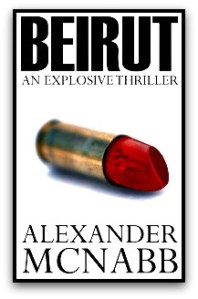
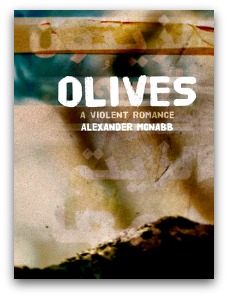
No need for them to mourn as you’ve just now published Beirut — An Explosive Thriller, which is the second in three books you are writing that are set in the Middle East, called The Levant Cycle. The first was Olives — A Violent Romance and the third will be Shemlan — A Deadly Tragedy. Could you say a little more about the Levant Cycle?
The Levant Cycle was never meant to be — the three books just happen to be set in the same region, contain some of the same characters and be roughly contiguous. But they are very different. Olives is really a novel — the story follows young British journalist, Paul Stokes as he arrives in Jordan and quickly falls afoul of the law — while Beirut is a hardcore international spy thriller. And they’re independent works in themselves. I had always thought of a book that would form an interlinear to Olives, a telling of that story from another perspective, possibly that of Gerald Lynch, the British Secret Intelligence Service officer that Paul encounters. Beirut wasn’t meant to follow on from Olives and then it just did, sort of taking up from when Paul moves to Beirut. And of course Beirut shows a very different Gerald Lynch, because in Olives you only see Lynch from Paul’s somewhat jaundiced perspective. So the books can be grouped, but I didn’t want a trilogy — a cycle seemed more appropriate.

Are you now working on the third book?
Yes, I’m about halfway through Shemlan and loving it. It’s a great deal darker than the other two books. It’s about a retired diplomat who’s dying of cancer going back to his past and finding that past is likely to kill him before the disease does.

What does “shemlan” mean?
Shemlan is a tiny village high in the hills above Beirut. It’s a little-known fact that Shemlan was for many years home to the Middle East Centre for Arabic Studies, where the British government taught its diplomats — and its spies — Arabic. A lot of my research for the book has consisted of taking friends and colleagues up there for lunch at Al Sakhra (The Cliff House), the lovely Arabic restaurant in the village. I know, it’s hard…

What made you decide to center the action of your books around the politics of the Middle East?
No one else was writing fiction centered on this region. There hasn’t been an interesting Middle Eastern spy thriller since Eric Ambler’s The Levanter. Olives was intended to introduce a Western audience that doesn’t care very much to some of the more complicated aspects of life in that part of the world — to some of the human issues that lie behind the glib headlines.

I presume you aren’t afraid of controversy?
Bring it on! Actually, I was amazed at the “controversy” that Olives provoked because of my having depicted Muslims drinking alcohol and Arab women having sex with foreigners. These things never happen in the Arab World! And then the Great Naming Scandal, when my use of a real Palestinian name (Dajani, for the Palestinian family Paul gets involved with) was deemed by distributors in Jordan to make the book too hot for them to handle. It still can’t be sold there!

How about Beirut?
I was truly blown away when the UAE’s National Media Council granted the necessary “Permission to Print” for Beirut. I’m sure someone, somewhere will find some aspect of the book controversial, but I think that’s more a product of the lack of narrative literature in the region than it is any quest for controversy on my part. And yes, you do actually have to get permission to print a book here — and government clearance to import books into any country in the region.

What audience did you have in mind for Olives?
Olives was written for a British audience but has appealed broadly across Europe and the US as well as in the Arab World. I’ve been more than pleased at Western readers who have enjoyed Olives and said, “I didn’t know about all that stuff.” And, because I thought I might lose Arab friends, I have been truly overjoyed that so many Palestinian and Arab readers have loved it.

At one point in Olives, Paul, the British journalist, becomes romantically involved with his Palestinian coworker, Aisha Dajani. Do you think Westerners can have successful relationships with Arabs and live happily ever after?
I really don’t see it as a “Westerner/Arab” thing at all – it’s an awful cliché, but love transcends nationality, culture and, yes, religion. I have seen relationships founder on that particular rock, where the partners can’t clear the hurdle of converting to or from Islam, but I have also seen couples deal with that. And, of course, there are still a great number of Christians in the Arab world and Muslims in the West. East and West doesn’t have to be about Islam, even if it often is.

Did you base the hero, Paul, on anyone in particular?
Paul Stokes is modeled on a number of callow Brits I have encountered arriving in the Middle East over the years, most of them journalists. You get a lot of credit in the Arab World for having tried to understand things, for actually bothering to learn something about the region and its people before you go leaping in blindly, as Paul does. I have often been highly amused at the way Arab friends have reacted to the behavior of British people new to the region — funny little things like different approaches to generosity, family, children and manners. I remember once walking into the office to be met by horrified glares from the girls, all trying to catch my attention and draw it to the new Brit who was happily — and loudly — clipping his nails at his desk. Or the British staffer who labelled her things in the office fridge. To the Arabs, you just share and if we’re out of something, you get it — someone labeling a bottle of milk was a source of appalled amusement.

Paul becomes “localized,” even becomes a smoker, which is why he is so torn between “home,” represented by his girlfriend Anne, and “away,” which of course is Aisha. And she, of course, is the hero of the book. You’re not actually supposed to like Paul, really. Perhaps sympathize with him…

You characterize Olives as a “violent romance.” What does that mean exactly?
The book’s working title for years was just “Olives.” The problem with that is that when you google “Olives,” you get Crespo, cookbooks or restaurants. So I decided on a defining subtitle — and nothing else seemed to suit other than “violent romance.” Olives is both a romance and a spy thriller. Thriller readers would find it too slow or romantic, romance readers would find it a little rough was the general concern. I hate how publishing brackets and pigeonholes us like that. The love story part of it has been popular, for sure — but a lot of people didn’t know about the region’s water crisis and learned about it from Olives, which has been cool.

Will Beirut attract the same readers?
Beirut is a totally different book and I was perhaps a little gleeful at how Olives readers would react to its much more hardcore spy thriller nature, particularly female readers. I was also a little scared, because I was setting out to kill what little fan base Olives has won for me. Readers, including females, have loved Beirut so far, which has me slack-jawed to be honest. But then it shows how wrong those traditional publishing preconceptions are — women actually reading a thriller? Oh, the shock of it all!

Is that why you are self-publishing The Levant Cycle — because the books do not fit in traditional publishing categories? I ask because quite a few expat authors we’ve featured on The Displaced Nation have self-published their works.
Let’s start with 250 rejections from agents for, respectively, Space, Olives and Beirut. When London agent Robin Wade signed me, it was for Beirut. I thought I was made, I really did. 250 rejections — and then an agent comes along and makes like a scrooch owl! Robin shopped Beirut around to 14 top publishers (there’s an image of the list I had of them, one after another struck off as the news came in, posted up on the Beirut site) and they, to a man, rejected it.

Why do you think that happened?
The ignorance about the Middle East from agents and editors alike has been shocking: “We have terrorism here at home, I don’t think people want to read about that” and “This novel, set in war-torn city Beirut” were two low points. But the worst was the editor who praised Beirut’s pace, setting, style and dialogue, compared it to Le Carré — but said he didn’t think it would fly in supermarkets. After that, I decided to see what readers thought without waiting for the gatekeepers. I am so glad I did.

Funnily enough, I discovered your books last month, when the Displaced Nation was dedicating itself to a series of food posts and I happened upon your collective blog about food, The Fat Expat.
Blogging became an outlet for me between frustrated bouts of writing. My partner in foodie crime, Simon “HalfManHalfBeer” McCrum, and I tried bringing others on board — but in the end The Fat Expat was doomed to tempus fugit failure. Still, I loved it while it lasted. I used to run a food magazine so am quite experienced in food preparation, photography and so on — and I love cooking.

Last month we were asking all of our interviewees: would you travel for food?
Damn right I would! Sweden this year, stunning food at stunningly high prices but you haven’t lived until you’ve eaten sour cream and crayfish on toast for breakfast. Estonia last year, a gorgeous holiday of art, museums and culture interspersed with the world’s largest, cheapest Martinis and top class cuisine — pelmeni in chicken stock, venison in red wine! But you want to really eat? There are stunning restaurants in Jordan — puffed up flatbreads fresh from the brick oven, potato pan-fried with egg and Mediterranean herbs. And, of course, Beirut — French food that makes Parisians blush alongside mountains of mezze, splashes of Armenian spice and of course Lebanese wines. I had to edit out my descriptions of Château Musar from Beirut because they crossed that threshold between what matters in a book and what readers need to know. But Musar is one of the world’s great wines. And the rosé from Château Ksara? Barmy, quite barmy. Do not, if you have the chance, neglect Massaya — a lovely wine from the achingly beautiful Bekaa Valley.

Next month’s Displaced Nation theme will be expats and politics — in honor of the U.S. elections. Do you have a horse in that particular race?
Obama. I don’t think anyone should forget that the people behind Romney are the people who took America to war against Iraq for no reason other than profit and dominance. There were never any WMDs and there was no link whatever between the murderously secular Saddam and the New Caliphate of Al Qaeda. Over a million people have died, the Middle East is lurching from crisis to crisis — and those old men are still doing three-martini lunches and planning their next move to make the world a safer place. At least Obama represents a hope of inclusion and reason.

Do you think expats should stay in touch with their home country’s politics? Do you?
Living in the Middle East, US politics are something you tend to follow because it pretty much shapes the region. I follow British politics to a degree, but it’s hard to be passionate about a system that has become so centrist and messaged. It’s something of a sitcom really.

What’s next, after the Cycle is finished?
I can’t even begin to think about what’s next, but there are plenty of contenders for next project, including a book set in Ireland and one about a traumatized teacher coming back from Iraq. Neither feature Mr. Lynch.

Readers, why not give those witches, ghosts, zombies, werewolves and vampires of yours a break and try Alexander McNabb’s wonderful cocktails of romance, intrigue, and high-stakes international politics instead?

STAY TUNED for tomorrow’s episode in the life of our fictional expat heroine, Libby. (What, not keeping up with Libby? Read the first three episodes of her expat adventures.)

If you enjoyed this post, we invite you to register for The Displaced Dispatch, a round up of weekly posts from The Displaced Nation, with seasonal recipes, book giveaways and other extras. Register for The Displaced Dispatch by clicking here!

Related posts:

Images: Alexander McNabb author image and book covers.

RANDOM NOMAD: Larissa Reinhart, Former Expat, Midwestern Southern Belle & Crime Novelist

Place of birth: Silvis, Illinois USA (I’m actually from nearby Andover, but it’s too small to have a hospital!)
Passport: USA only — but I’m on my third edition!
Overseas history: Japan (Yokohama, Kameoka, Nagoya): 1995-96; 1998-99; 2008-10.
Occupation: Mother and author of the Cherry Tucker Mystery Series. I’m also working on a mystery series set in contemporary Japan.
Cyberspace coordinates: The Expat Returneth — Sharing my life overseas, my life at home, and the other world that lives between my head and paper (blog); Larissa Reinhart: Writing mysteries and romance south of the sweet tea line (author site) @riswrites (Twitter handle); Larissa Reinhart (FB page); and Larissa Reinhart (Good Reads).

What made you leave the United States to live in a faraway land?
I’ve always wanted to live overseas. Before I got the chance to do it physically, I traveled through books — for instance, The Crane Maiden, by Miyoko Matsutani, and The Laughing Dragon, by Kenneth Mahood (I have passed them to my children). When I got older, I loved Elizabeth Peters mysteries, which are set in Egypt.

Was anyone else in your immediate family displaced?
My family is firmly rooted in Illinois, but was always interested in other cultures. My father was a history teacher, and I had a good understanding of geography and world history from him. I also had a grandfather who loved to travel. As a kid, I read his National Geographic collection and was fascinated by the countries he visited, particularly Egypt. He probably would have loved to have been displaced, but had to wait until retirement to travel.

Tell me about the moment during your various stays in Japan when you felt the most displaced.
My husband had a scholarship from the Monbu-shō to study at Keio University, so I applied to the JET (Japan Exchange and Teaching) Programme — and ended up getting to Japan a few weeks before he did. I lived with a homestay family. They spoke no English. I spoke no Japanese. They were very sweet, but they swung between helicopter-parent smothering and leaving me for long periods of time alone in a tatami room. I had horrible jet lag and felt so isolated and helpless. Once I moved into an apartment, my jet lag abated and I began enjoying myself. I had traveled to Egypt previously — but hadn’t experienced that kind of debilitating jet lag that comes with a 13-hour time difference. It’s a killer!

When did you feel the least displaced?
We have two young daughters from China. Four years ago, we took them to Nagoya to live for a couple of years. We saw it as a chance for them to experience life in Asia at a time in their lives when it was still easy to move around and adjust. They loved Japan. By the end of our two years, we all wanted to stay, but unfortunately couldn’t. There is no one particular instance, but lots of little, everyday moments we hark back to and can’t seem to reproduce back here — our family living comfortably in our tiny house, walking to shops and restaurants in the neighborhood, my children riding their bikes with the local kids to play at the neighborhood park…

You may bring one curiosity you’ve collected from each of the countries where you’ve traveled or lived into The Displaced Nation. What’s in your suitcase?
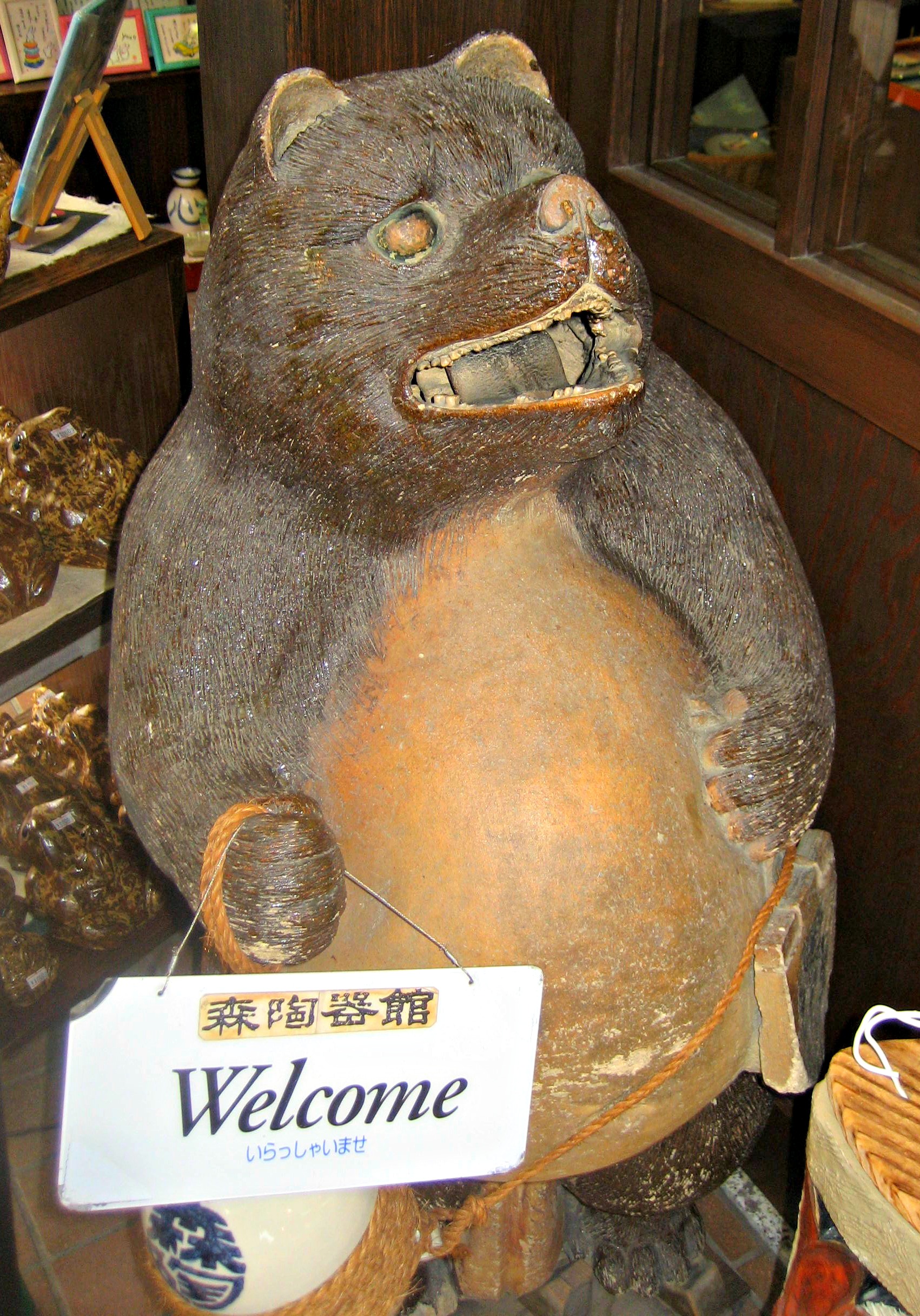
A ceramic tanuki (Japanese raccoon-dog). Japanese families and businesses keep them in front of their doors to welcome guests. It’s similar to the Maneki-neko (beckoning cat), but more fun because of their sake bottle and large kintama (golden testicles), which are meant to bring good fortune.

Hmmm…moving right along: You are also invited to prepare one meal based on your travels for other members of The Displaced Nation. What’s on the menu?

I like Japanese bar food, so we’ll have a meal based on that.
Appetizer: Edamame (boiled & salted green soy beans) and a Grapefruit Sour to drink. My favorite bars in Japan will give you a glass of ice, seltzer, and shōchū (grain alcohol) and a half-grapefruit with a strainer for you to squeeze the juice into the glass. Really refreshing.
Main: A bunch of Japanese tapas dishes — yaki-gyōza (fried potstickers), tebasaki (grilled wings), pari pari renkon chips (spicy, deep fried lotus root), tsukune (grilled chicken meatballs), and yakitori (skewered grilled chicken)
Dessert: Japan isn’t big into dessert, so we’ll have a savory bowl of ramen instead. And maybe another Grapefruit Sour. Or two.

Yum, you’ve brought me back to my own izakaya days… And now can you please suggest a Japanese word or expression for the Displaced Nation’s argot?
Chuto-hanpa. It literally means half-measure, but is used to describe doing something half-assed. I love this word.

We’re getting into a bit of a Halloweeny mood at the Displaced Nation. Tell me, did you keep the American Halloween tradition alive while living in Japan?
We did celebrate Halloween in Japan with our children. It’s becoming popular there in terms of decorations and parties (we even found an American-type pumpkin for $20), but trick-or-treating is an oddity. You don’t request gifts from people — certainly not door-to-door. Our neighbors would deliver snacks in a plastic jack-o-lanterns to our house instead. One expat friend arranged a trick-or-treating excursion for the children as part of a Halloween party. But first we mothers delivered bowls of candy to the businesses and homes in the area so that, when we brought the children round to trick-or-treat, they would have something to give them. People probably thought we were crazy, but at least they found the children in costume adorable.

Also in keeping with the season, we’ve started exchanging expat horror stories on the site. What’s the creepiest situation you’ve encountered on your travels?
It was on a trip to Thailand. My husband and I hung out on a beach at Koh Samui for a few days. To get back to the mainland, we had to hike across the island to catch a boat. We were proceeding along the dirt road, chatting…when I felt something grab my arm. Without breaking stride, I glanced down and saw a monkey, teeth bared, ready to bite me. Suddenly it flew off my arm, and I screamed. It had been chained to the side of the road, and was ripped away as it reached the end of its tether. Its vicious eyes and sharp teeth will forever be burned in my memory. That nasty monkey must have been someone’s pet. My husband saw it standing next to its stake before it jumped on my arm. Too busy talking, I totally missed it and walked within its perimeter. You can bet I have remained vigilant for monkeys ever since. I had a close call with some snow monkeys in Nagano, as well. I am not a fan.

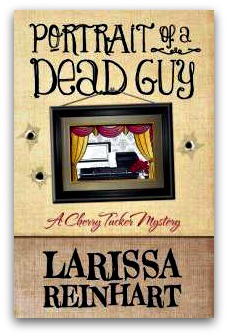
The first book in your Cherry Tucker mystery series is called Portrait of a Dead Guy. That sounds a little creepy. Is it?
It’s actually a humorous mystery, but the idea of painting a coffin portrait is creepy even for my heroine, a sassy Southern artist named Cherry Tucker. However, she’s desperate for a commission, which is why she offers her services. The dead guy has been murdered, and his stepmother felt that a final portrait would be a fitting commemoration. Cherry ends up as another potential victim of the murderer because of her proximity to the corpse. That said, she does have one spooky scene at night in a funeral home, alone with the dead body, which ends badly.

Painting a portrait of a dead man — how did you think that one up?
In truth, coffin portraits are not all that unusual, depending on your culture. Many cultures use a portrait of the deceased with their memorialization. I know a family friend who was asked to photograph a coffin portrait to send to the deceased’s family in Asia. They would probably place the photo in a family shrine and burn incense for a specific number of days along with other rites.

Tell me about your plans for the Japanese mystery series.
I’m a humorous mystery writer, so I look at the lighter side of crime. Did you know that the Japanese love mysteries? I think it’s because they have so little crime. I have another Southern heroine for the Japanese series, which will bring an interesting cross-cultural twist. I love the interplay of cultures.

Say, what is this thing about you and Southern ladies? Aren’t you an Illinois girl? Is this another displacement?
It is another displacement! We moved to Georgia between trips to Japan, about fifteen years ago. Small town South is very similar to small town Midwest, except for the Southerner’s extravagant use of hyperbole and simile in conversation. I can’t imagine living anywhere else in the U.S. now, although I can place myself in some foreign spots quite easily. 🙂

Readers — yay or nay for letting Larissa Reinhart into The Displaced Nation? She has an affinity for dead bodies, true — but in a humorous sense! And she doesn’t monkey around… (Note: It’s fine to vote “nay” as long as you couch your reasoning in terms we all — including Larissa — find amusing!)

STAY TUNED for tomorrow’s post, an interview with another former expat author.

If you enjoyed this post, we invite you to register for The Displaced Dispatch, a round up of weekly posts from The Displaced Nation, with seasonal recipes, book giveaways and other extras. Register for The Displaced Dispatch by clicking here!

Related posts:

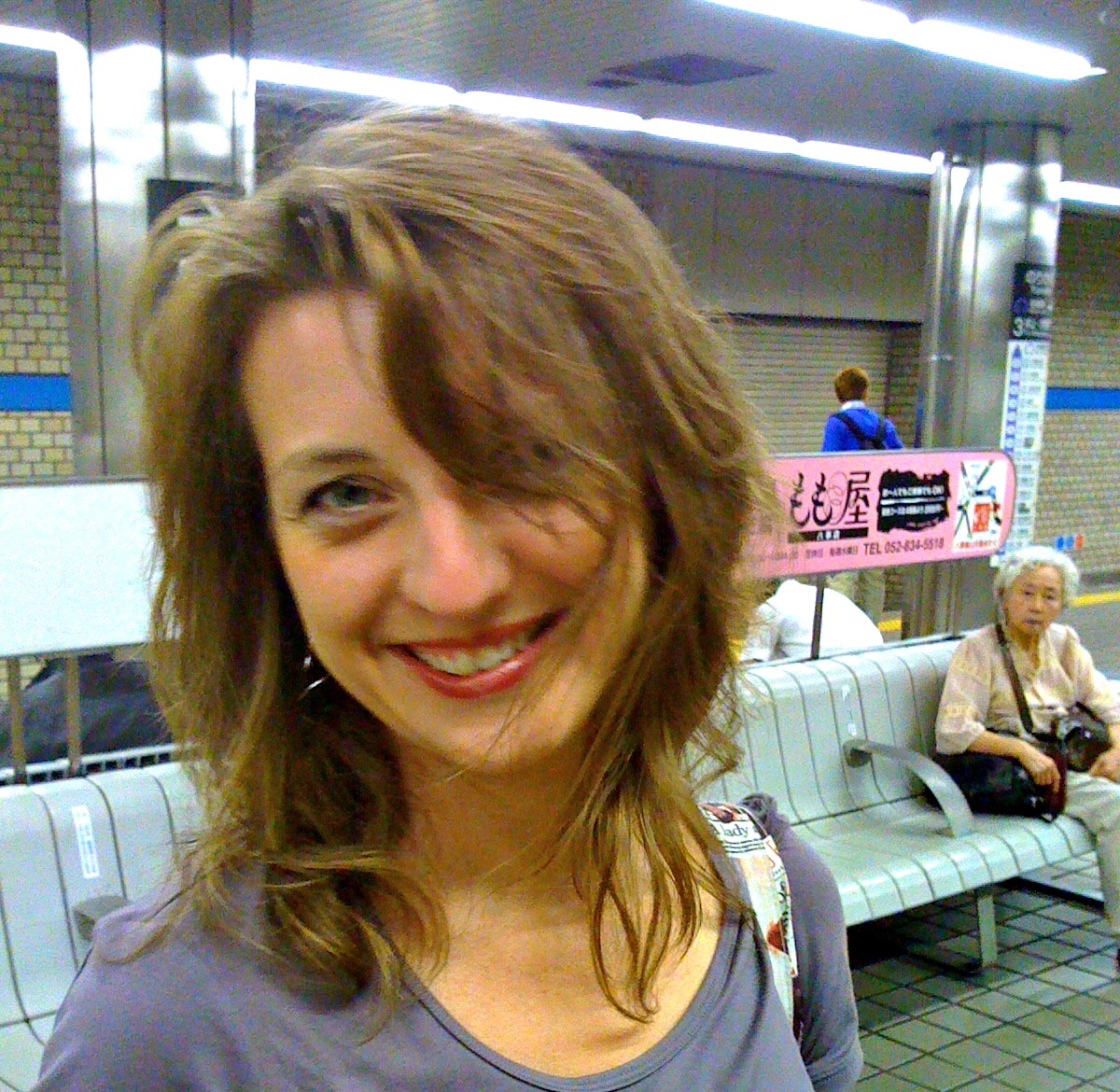
Images: Larissa Reinhart inside a subway station in Nagoya; her favorite tanuki (cute or creepy?); her book cover.

RANDOM NOMAD: Jessica Festa, Backpacker, Offbeat Traveler & Locavore

Place of birth: Long Island, New York, USA
Passport: USA — but I’m planning on starting the papers for my Italian passport soon (my grandparents were born there).
Overseas history: Australia (Sydney): 2008. I’ve also backpacked through western Europe (for partying and food!), South America (for surreal landscapes and hiking trails), and Southeast Asia/China and Ghana (for volunteer projects).
Occupation: Freelance travel writer. I have my own site and also write for Gadling, Viator and Matador, among others.
Cyberspace coordinates: Jessie on a Journey — Taking you beyond the guidebook (travel-zine); @JessonaJourney (Twitter handle); Jessie on a Journey (FB page for backpacking community); and Jessie on a Journey (Pinterest).

What made you leave the United States for the Land of Oz?
I chose Australia for studying abroad because I wanted to be able to communicate in English — it was my first time going abroad alone.

On your site you describe yourself as a “natural backpacker.” How did you find living in one country?
It’s so different living somewhere than just traveling to it. When you have a part-time job, class schedule, gym membership, local hangout, go-to grocery store, etc, you really begin to feel a strong connection to a place. Sydney is such a great city. That said, I did not give up my backpacking habit entirely. I also traveled a lot through Australia when studying!

Tell me about the moment on your travels when you felt the most displaced.
I had many moments like that when I did a homestay for a month in Ghana, in West Africa. I was doing orphanage work, and absolutely loved the experience — but the culture is just completely different. Especially in city areas, it’s very loud and chaotic, and people will shout at you and grab your skin to feel if it’s real. They don’t get many tourists, so they’re just curious and wanting to get to know you — but sometimes it got a little too intense.

When have you felt the most comfortable?
In Sydney. I actually called my family crying the night before my flight back to New York, saying I had a new home and would not be returning. I had this camaraderie with my neighbors and so many connections to the community, I really felt like a local.

You may bring one curiosity you’ve collected from each of the countries where you’ve traveled or lived into The Displaced Nation. What’s in your suitcase?
My collection of paintings, jewelry and handcrafted items:

  • Ghanaian artwork and wooden masks
  • Handmade jewelry from Sydney and Bolivia
  • A handwoven purse from Peru
  • Alpaca socks from Ecuador
  • Banksy artwork from the UK
  • Masapán (bread dough art) from Calderón, Ecuador
  • A hand-sewn water-bottle holder from Thailand

You are also invited to prepare one meal based on your travels for other members of The Displaced Nation. What’s on the menu?

Appetizer: Locro, a thick soup with potatoes, avocado, cheese and vegetables from the Andes.
Main: A pesto pasta with some kind of meat mixed in from the Cinque Terre in Italy.
Dessert: Salzburger Nockerl, a sweet soufflé from Austria.
Drink: Malbec wine from Argentina.

I wonder if you could also add a word or expression from one or more of the countries you’ve visited to the Displaced Nation’s argot.
“No worries” from Australia. Such a great phrase for life. I have it tattooed on my foot!

This week you received a “Food Alice” from the Displaced Nation for your post about the first time you tried cuy, or guinea pig, in Ecuador — you said your dinner reminded you of your pet guinea pig, Joey, named after a school crush. So, does food play a big role in your travels?
For me it’s about trying new things. It doesn’t need to be in the fanciest restaurant or prepared by a Michelin chef, just something truly local. For example, in South America while many of the other backpackers went to guidebook-rated restaurants, I always opted for the tiny, simple, dimly-lit local hangouts. I ate 2- and 3-course meals for a $1, and the food was fresh and local. It was exactly what everyday people in the community were having, and that was important to me.

If you were to design a world tour based on food, what would be your top five recommendations?
1) Mendoza, Argentina — try asado (barbecued meat) with a glass of Malbec.
2) Cinque Terre, Italy — try the pesto pasta that I served to you in my meal!
3) Naples, Italy — try the pizza.
4) Cuzco, Peru — try the cuy (guinea pig) or, if you’re too squeamish, the lomo saltado: strips of marinated steak served over white rice and with French fries.
5) Munich, Germany — try the brätwurst. It is like no other sausage I’ve ever tasted, and tastes so much better in Germany!

To be honest, I’m not so sure about going to Cuzco for cuy.
Really? I love it. I’m planning to go back, and possibly move, to Peru or Ecuador in March. I’m already looking forward to getting my fill of cuy again!

Readers — yay or nay for letting Jessica Festa into The Displaced Nation? At least she’s not planning to serve us guinea pig for dinner — that’s a mercy! (Note: It’s fine to vote “nay” as long as you couch your reasoning in terms we all — including Jessie — find amusing!)

STAY TUNED for tomorrow’s post, which will most likely be on food. (No, we haven’t finished gorging ourselves yet!)

If you enjoyed this post, we invite you to register for The Displaced Dispatch, a round up of weekly posts from The Displaced Nation, with seasonal recipes, book giveaways and other extras. Register for The Displaced Dispatch by clicking here!

Related posts:

img: Jessie Festa enjoying one of the biggest and best empanadas in all of Peru, at the Point Hostels in Máncora (May 2012).