The Displaced Nation

A home for international creatives

Tag Archives: Turkey

JACK THE HACK: How do you know whether you want to write a memoir or a novel, and what’s the difference?

JACK THE HACK _writingtipsJack Scott is back with his monthly column for all of you wannabe authors who are hacking away at travelogues-cum-memoirs (cum-novels?). For those who don’t know, he was a Random Nomad for the Displaced Nation way back when we started this site. After an expat experience that was literally something to write home about, he and his partner, Liam, have traded in the dream for a less pressured existence back home in the UK.

—ML Awanohara

Hmmm… Is it easier to turn expat stories or travel adventures into a memoir or a novel, and how does one decide?

As with all such questions, the answer is a resounding “it depends”.

Let’s look at some definitions:

Memoir (noun) – a historical account or biography written from personal knowledge.
Travelogue (noun) – a film, book, or illustrated lecture about the places visited by or experiences of a traveller.
Novel (noun) – a fictional narrative, typically having a plot that is unfolded by the actions, speech, and thoughts of the characters.

So it seems that travelogues and biographies can’t be novels because, by definition, they’re based on real events by real people in real places.

Does this matter?

I think not.

False dichotomies

For me, writing a memoir is like telling a story and every story, even a real-life one, needs order, pace, plot, a compelling blend of highs and lows and a sense of purpose.

I learned some valuable lessons from David Steddall, the English teacher at my South London grammar school back in the big hair, bell-bottomed Seventies.

“A story should have a beginning, a middle and an end,” Mr Steddall would say.

We’ve all heard the mantra, haven’t we?

Mr Steddall seemed to like my essays, even if they were sometimes a little risqué in a post-pubescent, hormone-raging kind of way. He would often give me top marks and have me recite my work in class. His encouragement gave me confidence—a confidence that lay dormant for thirty-odd years until a little sun-kissed nourishment breathed life into it like rains in a desert.

I’ve stayed faithful to Dave(as I now think of him)’s cause. My own memoir has a beginning, a middle and an end. It’s not a random series of observations like a diary. Who’d want to read that? Let’s face it, I’m not Anne Frank, Kenneth Williams or Samuel Pepys.

Make it work!

Here’s the trick. Just because a memoir can’t be a novel, it doesn’t mean it can’t be written as if it were. The greatest challenge is to give memoir a plot that readers will find convincing and engaging enough to make them turn the page.

For me, that meant very little fat. One of the first tips I picked up from my publisher was to dump storylines and characters that weren’t key to the main event or didn’t add interesting flavour. I tackled this by creating a story board, much like they do in the movies. This meant I could identify gaps in the narrative, ensure continuity and shoot down the flights of fancy.

Does this mean it’s not true?

Well, as I wrote at the top of my first book:

This book is based on actual events. To protect the privacy of the persons involved, and in the interest of narrative clarity, some names, characterizations, locations, conversations and timescales have been changed.

This was necessary to protect the guilty, avoid a brick through my window and keep me out of the courts. The end result is that all the characters are true, if renamed and heavily disguised, and all the events actually happened, though not necessarily as chronologically written. Once I accepted this, I could let my imagination run riot and had enormous fun assembling the pieces of my life abroad like one huge colourful jigsaw.

I admit, though, I may have left some little gems on the cutting-room floor.

It’s the risk you take.

Glossy travelogues and expat classics

Most people are familiar with the lavish and beautifully crafted travel book, heavy enough to stop a burglar or prop open the living room door. Every coffee table should have one.

But I don’t really think of travelogues as memoir as their primary purpose is to inform the reader about foreign places in words and (often) pictures.

As for the kind of expat book that has ended up appealing to a mass audience—Peter Mayle’s A Year in Provence and Chris Stewart’s Driving Over Lemons come to mind—the formula calls for lots of descriptions of majestic landscapes as well as a plot centered around building a dream home out of a hovel in the rolling hills.

Which leads me to …

WRITING TIP FOR EXPATS NO 2:

My advice to the budding expat writer: find your own angle; don’t waste your time reinventing the wheel.

In my case, I wrote about the (sometimes grubby) reality of expat life from the unique perspective of a gay man in a Muslim land. It’s something no one had done before, and why would they? There weren’t many of us there.

* * *

Readers, any comments, further questions for Jack the Hack? He’ll be back next month with some more writing tips…

Jack Scott’s debut book, Perking the Pansies — Jack and Liam move to Turkey, is a bitter-sweet tragi-comedy that recalls the first year of a British gay couple in a Muslim country. For more information on this and Jack’s other titles, go to his author site.

STAY TUNED for tomorrow’s “Capital Ideas” post, by Anthony Windram.

If you enjoyed this post, we invite you to register for The Displaced Dispatch, a round up of weekly posts from The Displaced Nation, with seasonal recipes, book giveaways and other extras. Register for The Displaced Dispatch by clicking here!

Related posts:

Images from top, clockwise: Hand with pen / MorgueFile.com; Boats in King’s Lynn, Norfolk / MorgueFile.com; Jack Scott, used with his permission; Turkish boats / MorgueFile.com

JACK THE HACK: You’re thinking about writing a travelogue or memoir. Should you start with a blog?

JACK THE HACK _writingtips

Today we introduce a new monthly column by Jack Scott, who was a Random Nomad for the Displaced Nation way back when we started this site. After an expat experience that was literally something to write home about, he and his partner, Liam, have traded in the dream for a less pressured existence back in their home country. We’re thrilled to have recruited Jack as a writing guru for all of you wannabe authors who are hacking away at travelogues-cum-memoirs — perhaps even as I type this?!

— ML Awanohara

Do you think it helps to write a blog with the purpose of publishing a travelogue or memoir in mind?

It’s a good question — and for me, the short answer would be a simple no.

But the long answer would be a qualified yes.

Let me explain.

When Liam and I first flogged off the family silver, jumped the good ship Blighty and waded ashore to Turkey, we planned to put our feet up and watch the pansies grow. Twelve months into the dream, we began to feel, well, a little bored.

It was a benign type of boredom — not the terminal kind that leads to low self-esteem, heavy drinking, chocolate binges and serial infidelity.

But it was boredom nevertheless.

Life before expat-dom

In the wicked world of the waged, I had been a busy bean counter, mismanaging a large public sector service. Liam had been shackled to a cut-and-thrust slash-and-burn private sector company, with a grueling 12-hour day as his reward.

My boss was off with the fairies, his was Lucifer in lace. Work gave me a routine on auto-pilot, while it nearly drove Liam over the edge.

In quite different ways, we were both fully (if unhappily) occupied.

In our brave new world of idleness and long Anatolian summers, lazy days in Eden turned into one perpetual holiday. Our old life withdrew into the fog of a hazy past.

The trouble is, life isn’t supposed to one long holiday.

Like so many before us, we parachuted into paradise thinking entirely of the destination. We gave very little thought to what we might do once we got there.

Not another beautiful day!

It’s an all too common mistake. For every able-bodied emigrey (well, those with brains and bones still in reasonable working order), the trick is to find a meaningful occupation: something to break up the unending monotony and keep them off the sauce.

It really doesn’t matter what it is: turning water into homemade wine, feeding the five thousand street dogs or raising your sex life from the dead — whatever gets the juices flowing.

For me it was starting a blog to tell an unsuspecting world about our encounters with the mad, the bad, the sad and the glad along the highways and byways of the whitewashed ghetto where we lived.

A book really never entered my mind.

Then, quite by chance, my irrelevant ramblings became one of the most successful English-language blogs in Turkey.

You could have knocked me down with a feather boa, I was that surprised.

It was only then that I began to think there just might be a book in me.

Remarkably, there was.

Re-energized!

It’s quite amazing how the fear of terminal boredom can re-energize a novice expat. In just 12 months, I created the blog, designed and published a Web site, and wrote my debut book. For most of this meandering expedition, I had absolutely no idea what I was doing. A combination of trial and error, intuition, intravenous wine, gentle encouragement from an inspirational publisher and not-so-gentle cajoling from Liam turned an unplanned and uncoordinated series of chess moves into the production of a well-received book that I’m proud to have written.

My probation was illuminating and taught me a great deal — about writing, process, content, plot, characterization, networking, promotion and engagement.

You see, hindsight is a wonderful thing. Looking back, it seems only too obvious that blogging was a great audition for my writing. I had never written before (unless you count a series of unread and unloved business reports rotting away on dusty book-shelves in municipal vaults). Writing my blog was a safe and fun way to experiment and to build up an audience at the same time. Reading through my back catalogue, I can see quite clearly how I evolved as a writer.

WRITING TIP FOR EXPATS NO 1 (aka the long answer to the question at the top of the conversation):

It might be useful to start up a blog if you want to write a travelogue-cum-memoir. It’s not the Law, but blogging can really help.

And what about Liam in all of this? Did he develop suicidal tendencies or did he cope better with the ever-constant Aegean vista and nightly sunset show?

Well, apart from re-discovering a love of composing and tickling the ivories, he acquired a new skill of his own: cracking the editor’s whip, something he did (and still does) with rather too much pleasure than I (or he) would care to admit.

Us writers put up with so much, we really do.

* * *

Readers, any comments for further questions for Jack the Hack? He’ll be back next month with some more writing tips…

Jack Scott’s debut book, Perking the Pansies — Jack and Liam move to Turkey, is a bitter-sweet tragi-comedy that recalls the first year of a British gay couple in a Muslim country. For more information on this and Jack’s other titles, go to his author site.

STAY TUNED for tomorrow’s post, on NEW England…

If you enjoyed this post, we invite you to register for The Displaced Dispatch, a round up of weekly posts from The Displaced Nation, with seasonal recipes, book giveaways and other extras. Register for The Displaced Dispatch by clicking here!

Related posts:
Images: from top, clockwise: Hand with pen / MorgueFile.com; Boats in King’s Lynn, Norfolk / MorgueFile.com; Jack Scott, used with his permission; Turkish boats / MorgueFile.com

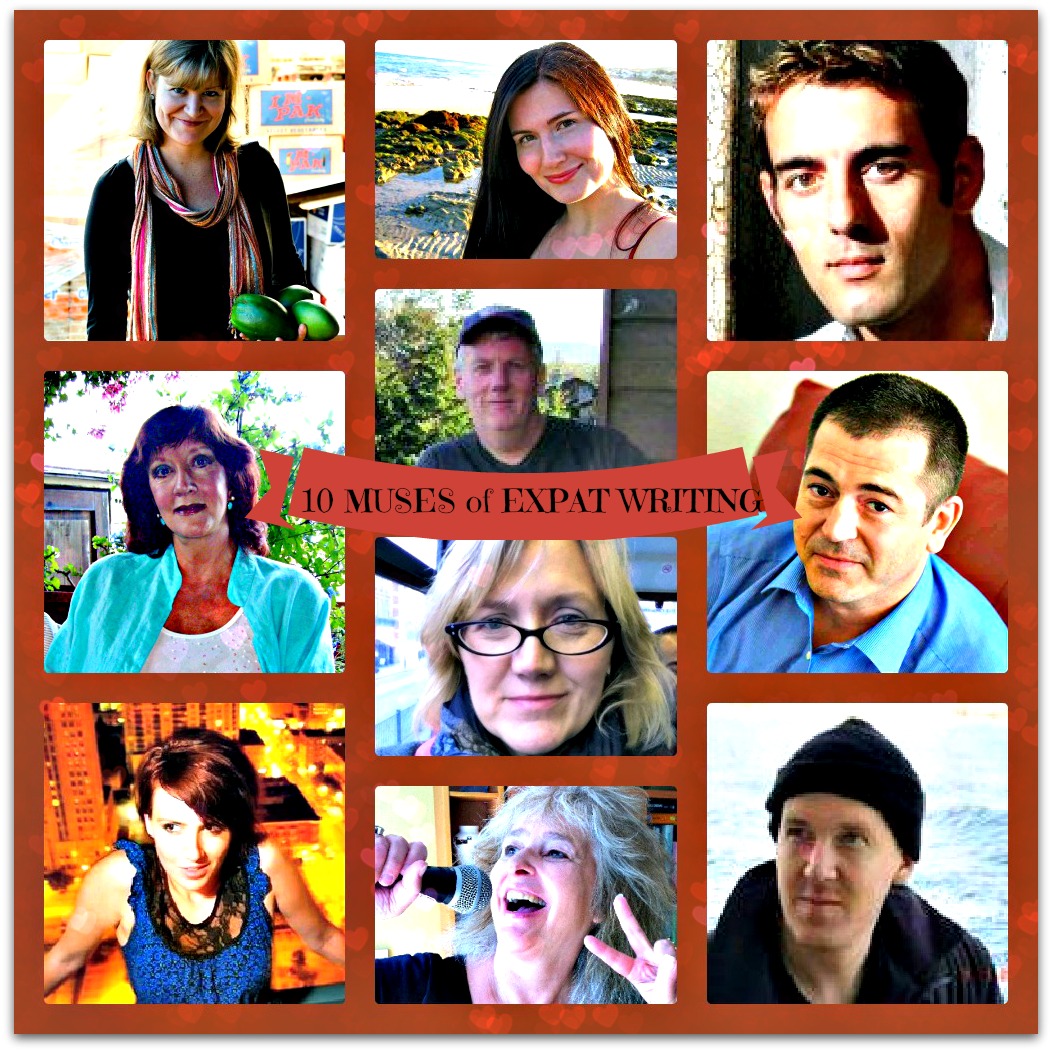
The 10 Muses of Expat & International Adventure Writing and their 5 most popular tunes

10 muses collageGreetings, Displaced Nation-ers! Ready for a little more intellectual stimulation?

A couple of weeks ago, I wrote about Great Thinkers who can help with task of embracing the well-traveled life and teasing out its deeper meaning, in the new year.

And today I will address the needs of those who have resolved to tackle a major writing project in 2013.

It’s a well-known fact that many of us who live in foreign lands aspire to write novels, memoirs and travelogues about our overseas adventures. But many of us also live in isolated situations (by definition).

So who can aid us, provide our inspiration?

Why, the muses of course!

Tell us, O muses, how to tell our stories…

And we don’t even have to look heavenwards to invoke them! The 10 Muses (that’s one more than the ancients got!) of Expat and International Travel Writing are right in our midst. They have already shared the joys, wonders and value of writing with Displaced Nation readers:

  1. Barbara Conelli, author of the Chique Travel Book series, filled with the charm, beauty, secrets and passion of Italy…
  2. Martin Crosbie, who is writing a trilogy entitled My Temporary Life; in December of last year, he published Book Two: My Name Is Hardly.
  3. Helena Halme, author of the novel The Englishman (2012)
  4. Laura Graham, author of the novel Down a Tuscan Alley (2011)
  5. Matt Krause, author of the memoir A Tight Wide-open Space: Finding love in a Muslim land (2011)
  6. Meagan Adele Lopez, author of the novel Three Questions: Because a quarter-life crisis needs answers (2011)
  7. Edith McClintock, author of the mystery novel Monkey Love and Murder (2013)
  8. Alexander McNabb, who is writing the Levant Cycle, a trilogy of books about the Middle East; he released the second book, Beirut — An Explosive Thriller, last September.
  9. Tony James Slater, erstwhile regular at the Displaced Nation and author of a two-book series: The Bear That Ate My Pants: Adventures of a real idiot abroad (2011) and Don’t Need the Whole Dog!, which came out in December.
  10. Wendy Nelson Tokunaga, author of Marriage in Translation: Foreign Wife, Japanese Husband (2011) and of several novels that explore cross-cultural themes between the United States and Japan.

Over the past year on our site, if you were listening closely, these heaven-sent muses were singing a number of tunes. Here are their five top hits:

SONG #1: “Yes, it’s hard; yes it’s uphill. But you’re living the dream, which makes writing a thrill!”

In one of the Displaced Nation’s most popular posts of the past year, Tony James Slater tried to make it out that the life of an expat writer is far from glamorous. Don’t believe him. He was pulling your leg, as usual — or singing off key, to continue the metaphor.

Alexander McNabb has the more accurate rendition. Here’s his account of the prep for his latest thriller, Beirut:

While writing it, I spent hours walking around the city, along the curving corniche and up into the busy streets that cling to the foothills rising from the coast up to the snow-capped mountains. Walking with friends, walking alone — day and night, spring and summer. From the maze of funky little bars of Hamra to the boutiques of Verdun, from the spicy Armenian groceries of Bourj Hammoud to the cafés overlooking the famous rocks at Raouché…

Barbara Conelli is another inspirational example. She explores every nook and cranny of Milan so as to take the reader on an armchair journey. And now she is doing the same with Rome, which will be the subject of her third book in the Chique Travel series.

Great work, if you can get it!

SONG #2: “It’s time to make your creative debut — so why not make it all about you?”

These days it’s hard to tell the difference between a heavily autobiographical novel and a memoir, though one of our muses, Helena Halme, insists that there is a distinction. When questioned about her decision to write The Englishman as a novel — it’s about a young Finnish woman, Kaisa, who meets a dashing British naval officer, a plot that echoes very closely her own life story — she had the following to say:

I tried to write a memoir, but couldn’t! Much of this story is, however, true — but I didn’t think I could call it a memoir as some things were pure fiction. I am a novelist and just keep making stories up.

Hmmm… By that reckoning, perhaps Tony James Slater should be a novelist, too? As regular readers of this blog will know, his favorite topic consists of his own, rather daring but also bumbling, world adventures.

But did a bear really eat his pants, or is he exaggerating for comic effect?

The mind boggles…

But whatever the form, the point is that quite a few of our muses have found plenty of material in their own life experiences. Besides Halme and Slater, we have

  • Martin Crosbie: His protagonist, Malcolm, leaves Scotland for Canada at a formative age, just as he did.
  • Laura Graham: Her protagonist, Lorri, arrives in Italy as a forty-something single and finds a younger Italian man, just as she did.
  • Matt Krause: He has written a memoir on the portion of his life that involved meeting a Turkish woman on a plane and following her back to Turkey. (Reader, he married her!)
  • Meagan Adele Lopez: The protagonist of her debut novel, Del, is offered three questions by her British fiancé (just as Lopez was offered three questions by hers).
  • Edith McClintock: Her protagonist, Emma, works as a researcher in the very Amazonian rainforest where she once conducted her own research.

To conclude, the old adage is alive and well, even (especially?) in expat and travel writing: “Write about what you know and care for…”

SONG #3: “Looking for inspiration from above? The answer lies in cross-cultural love.”

Another theme running through the works of several of our muses is the love that takes place across cultures, usually resulting in marriage. I just now referred to the cross-cultural love stories at the heart of the books produced by Helena Halme (Finnish woman, English man), Laura Graham (Englishwoman, Italian man), Matt Krause (American man, Turkish woman) and Meagan Adele Lopez (American woman, Scotsman).

To this list should be added Wendy Nelson Tokunaga, who has written about Western women getting involved with Japanese men — one of the stranger of all possible unions, to be sure! 😉 — in both fiction and nonfiction (the latter being a bit of a self-help book).

SONG #4: “As your brainstorming proceeds apace, never forget the appeal of place.”

Since travel is a constant for all of us, it should come as no surprise that particular places can become a pull for certain expat writers. They cannot rest until they’ve depicted a place they’ve experienced so that others can live vicariously. Several of our muses represent this principle:

  • Barbara Conelli and her love for “capricious, unpredictable” Milan. To quote from her book: “When the streets of Milan ask you to dance, there’s nothing else to do but put on your ballet shoes and surrender…”
  • Alexander McNabb and his obsession with Beirut. “There can be few places on earth so sexy, dark, cosmopolitan and brittle…,” he writes in his Displaced Nation post.
  • Edith McClintock and her preoccupation with the rainforest and a place called Raleighvallen in the Central Suriname Nature Reserve. As her main character, Emma, says:

    I fell completely and irretrievably in love with the rainforest that week — the deep rich smells of dirt and decay and teeming, thriving life; the warm soft light of the rocky moss-covered paths hidden beneath layers of climbing and tumbling lianas and roots; soaring tree trunks wrapped in colorful bromeliads, orchids, moss, and lichens; and the canopy of leaves of every conceivable size and shape….

SONG #5: “Growing weary of fruitless writing sessions? Time to take some acting lessons!”

Four of our ten muses could double as the muses of acting and entertainment:

  • Tony James Slater and Meagan Adele Lopez trained as actors (Lopez actually starred in a bad horror film!) before embarking on their world travels.
  • Laura Graham enjoyed a long career as a stage actress in Britain, working for the Royal Shakespeare Company and the Young Vic, and on television, before setting herself up as an expat in Tuscany.
  • Wendy Nelson Tokunaga first went to Japan because she won a prize in a songwriting contest sponsored by Japan Victor Records. She is an accomplished karaoke artist who can sing jazz as well as j-pop and enka, a type of sentimental ballad.

Why are so many of the Muses of Expat Writing multi-talented, you may ask? Does a former acting/singing career work to one’s advantage when it comes to overseas travel and writing? I like to think so.

Just as Dickens used to act out the dialogue of his characters, I like to think of Tony James Slater reenacting his wild adventures on the road, in the confines of his flat in Perth…

And sometimes this versatility can add a further dimension to the writing. Last we heard from Lopez, she had created a trailer for her book and was trying to convert it to a screenplay. Tokunaga composed and sang an enka to accompany her novel Love in Translation. (It’s impressive!)

Plus these four could always hew to the tradition of wandering minstrel, one of the oldest careers in the book, if their works don’t sell. (Hey, it’s never a bad idea to have a fallback option when you’re a long ways away from family and friends…)

* * *

So, writers out there, did our 10 Muses sing to you? And will you listen to some of their songs again as you face the blank page in 2013? Let me know in the comments. (Only, be careful of criticizing the Muses — they have been known to be vengeful!)

STAY TUNED for tomorrow’s post, another installment in the life of our fictional expat heroine, Libby. (What, not keeping up with Libby? Read the first three episodes of her expat adventures.)

If you enjoyed this post, we invite you to register for The Displaced Dispatch, a round up of weekly posts from The Displaced Nation, with seasonal recipes, book giveaways and other extras. Register for The Displaced Dispatch by clicking here!

Related posts:

Images: Our Ten Muses (left to right, top to bottom) — Edith McClintock, Barbara Conelli, Tony James Slater; Laura Graham, Martin Crosbie, Helena Halme, Alexander McNabb; Meagan Adele Lopez, Wendy Nelson Tokunaga, Matt Krause.

An expat looks for love in her adopted country — only to be told she’s “exotic,” the Other (2/2)

We welcome back Zeynep Kilic to the Displaced Nation for Part 2 of her story about searching for love in the United States. Turkish born and bred, she’d endured two failed marriages to Turkish men before determining to hunt for an American mate. By then she’d taken out American citizenship and had an American Ph.D. In Part 1 of this post, she described her first bout of Internet dating in Arizona. She’d become increasingly frustrated by being told she looked “exotic” as compared to American women. Let’s see how she fares in Alaska, the aptly-named Last Frontier…

— ML AWANOHARA

I move away to Alaska in 2008, slightly tired of the recurring comments from American men about my exoticism as well as my record of failure on Arizona’s online dating scene. I know nobody means any harm by labeling me exotic. I know it is a compliment. I have been told that many times.

Still, it doesn’t sit well in my heart.

But the fact is, I am still shaking my metaphorical ass in this literal mating dance, which must mean one of two things at this point:

  1. I must have some hope left that gentlemen don’t prefer blondes; or
  2. I am desperate to make it work with an American before going back to choosy Turkish mothers and their sons.

Lots of space — and lots of men?

Before my move, everybody jokes that there are so many men per woman in Alaska that I should find a man soon enough. Like a good academic, I research the validity of this legend — only to find that it’s true only if you can stand to live in the Bush — the remote, rural parts of the state. In such places, sexual abuse and rape are also rampant, particularly against Alaska Native women.

I will not be going anywhere near.

In fact, I am moving to the largest city in Alaska — which is literally the smallest town I would have ever lived in as an adult. And in this city, the male-to-female ratio is about the same as elsewhere in America.

I am not holding my breath.

As I search through profiles I realize that my chances in fact might be lower in this part of the world. I see just two kinds of men:

  1. The über-athlete who can’t go to bed in peace unless he skis a super hard-core mountain every weekend, backpacks all summer, and camps in -30 degree weather because — gasp! — it is “fun”; or
  2. The I-kill-a-bear-for-my-woman-with-my-bare-hands kind of guy, who lives for his gas-guzzling vehicle, be it a dirt bike, snow machine, or huge truck that hauls thousands of pounds of manly stuff in the back.

I decide I have no chance in this town. These are not my people.

It’s all relative!

To my surprise, my profile attracts greater interest in the frozen north. Who knew I had to drive across the continent to become a relative hottie!

I am almost forty and still overweight. I’ll take it.

Though I am still surprised no one thinks I am an American.

Let’s be honest, the name is not helping — but seriously? How could I have been blind for so long? Why did I fancy myself as Americanized?

My friend Eun tells me I need to acquire racial consciousness: I am not a white woman; I am a woman of color. I consider it. It will take three years but I will eventually acknowledge the debt I owe to the American men I met in a romantic context — who, unbeknownst to me, upon seeing my picture online, established my exotic quotient right away.

Who would have guessed I would learn a lesson about my racialized self because of these men who objectified me — not because of my education on the topic? This moment of reckoning does not make me feel good about my academic self, by the way, though my non-academic self is sheepishly feeling, well, sexified.

Happily ever after…

But let’s get on with my story. Am I with an American now? Yep. Is he close to his mother? Nope! Am I feeling bad about myself for wishing for a hands-off mother-in-law? You betcha!

He (his name is Wayne) is blond and has blue eyes. I take Wayne to Turkey, and all my friends and family tell me what lovely blue eyes he has. “Oh, no,” I cut them off, “stop focusing on his blue American eyes! That does not make him a better guy compared to my earlier Turkish mates who had beautiful non-blue eyes.”

They all laugh. They think I am so uptight (must be the sociologist in me).

“Relax,” they say. “He is a cute American, and we like his tattoo.”

Did I mention that Wayne has a manly tattoo sprawling across his very muscular — non-Turkish — arms?

Wayne is truly enjoying the objectifying comments from the ladies — my mom of all people, who whispers about how strong he looks and covers her smile with her hand like a schoolgirl.

He states with a grin that Turkish men look kind of puny. “Yeah, they haven’t been eating hormone-injected beef on a daily basis,” I say sarcastically.

Enough of this Orientalism

What is wrong with him? What is wrong with everyone? Has no one read Edward Said?!!!

One day when Wayne and I are lying in bed, he tells me how exotic my skin is, how much he loves my olive complexion.

I stop him with a sigh:

Do I look green or black to you, because that is all the olives I know?

I see him with a deer-in-the-headlight look on his face, wondering if he has messed up. He is probably thinking: “She is a PhD and holds all kinds of theories in her head. Not wonder she gets bent out of shape unexpectedly. But, wait, her skin is definitely darker than mine, it’s exotic — what do I do, what do I do?” So he apologizes.

I tell him that, incidentally, I am considered to have very fair skin in Turkey. He says he is sorry; he just meant I am hot, that’s all.

He is a nice guy. He means well and he absolutely thinks I am exotic and sees nothing wrong with this.

I tell him that wheat makes more sense than olive. He agrees.

From now on, every time he eats his cherished Turkish olives, he smiles and says he can never look at a zeytin (olive) the same way anymore.

Neither can I.

* * *

Readers, now that you know how Zeynep’s story ends, do you have any comments or further observations about the perils, and potential joys, of seeking love abroad? Please leave them in the comments. We’d love to hear them…

Zeynep Kilic lives in Anchorage with her blue-eyed American husband, complains about the dark or cold on a regular basis, and fails miserably at skiing. She is an assistant professor of sociology at the University of Alaska Anchorage, where she is navigating the treacherous waters of tenure. You can find her on Google+ and on Twitter: @zeynepk

STAY TUNED for another episode in the life of our fictional expat heroine, Libby. (What, not keeping up with Libby? Read the first three episodes of her expat adventures.)

If you enjoyed this post, we invite you to register for The Displaced Dispatch, a round up of weekly posts from The Displaced Nation, with seasonal recipes, book giveaways and other extras. Register for The Displaced Dispatch by clicking here!

Related posts:
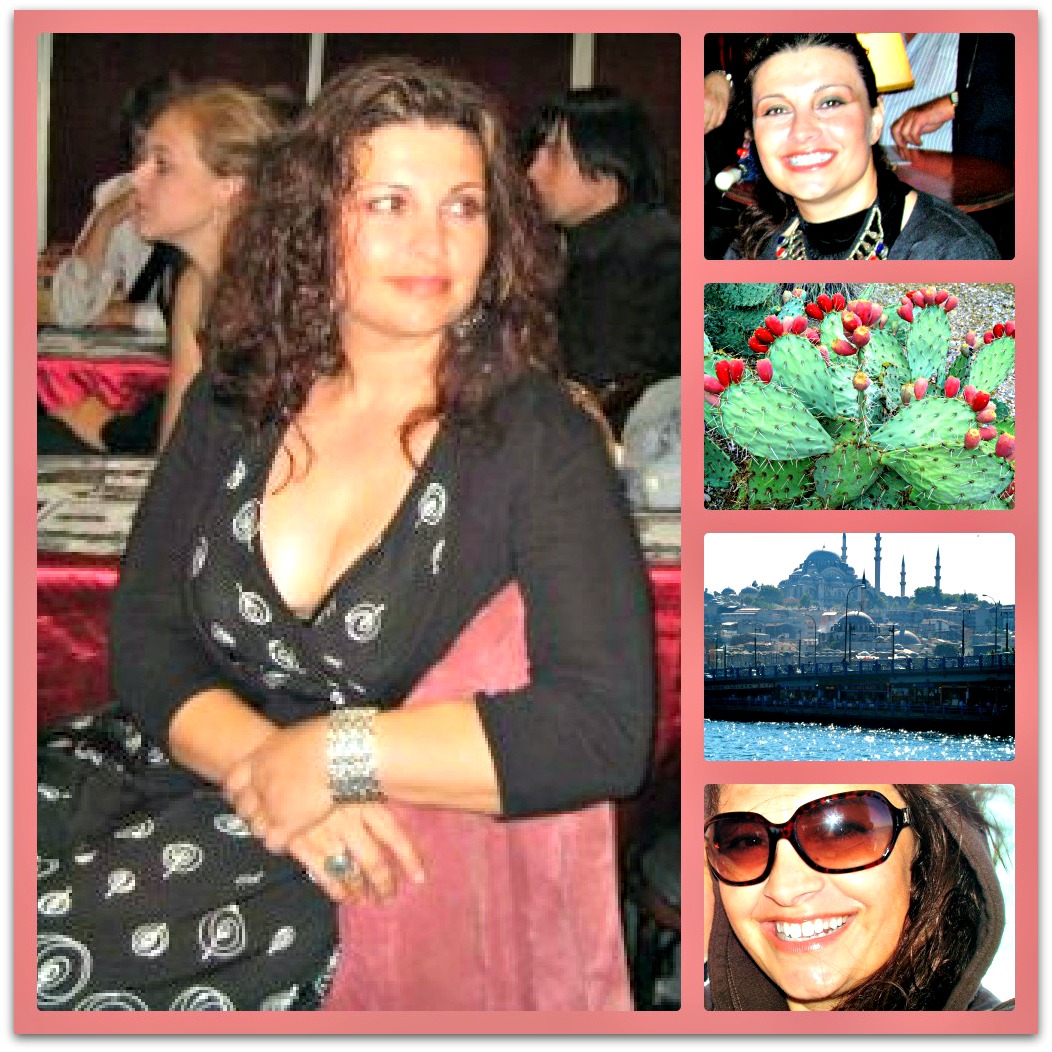
Images: The photo of Zeynep Kilic and her husband, Wayne, is her own; photos of olives, wheat, Arizona cactus and Alaska are from Morguefiles.

An expat looks for love in her adopted country — only to be told she’s “exotic,” the Other (1/2)

Today’s guest blogger, Zeynep Kilic, did not come to the United States in 1993 looking for love. Turkish born and bred, she was here for an overseas adventure (she worked as an au pair for a year in New Jersey) and to pursue graduate studies (she went on to earn a PhD in sociology at Arizona State). But then, two failed marriages to Turkish men later (they were also expats), she changed her tune about American men — and was looking for love…in the desert.

— ML AWANOHARA

I am not as much a foreigner as I was before. Not any more, right? After all, I have been living in the United States for almost fifteen years. I get the references to popular culture, politics or religion; I went to graduate school here, I taught here, worked here, established close friendships here, annnnnnd I can cook the traditional dishes served during holidays.

Plus I am an American citizen. What else is there?

Except — and here is where culture shock sets in, 15 years too late — I have no clue how Americans perceive me.

Chapter 1 of my single life: Arizona 2007

It is 2007 — time I date an American already. This may be due in large part to my two failed marriages with Turkish men, along with my hope that I may be more acceptable to an American mother-in-law.

Not to mention my even more fervent hope that American men aren’t as attached to their mothers as Turkish men are.

After the first divorce, I have become an undesirable partner for any Turkish mother’s precious son. After the second, I’m considered an untouchable. I may as well be wearing the red letter D on my forehead, forewarning all Turkish families about the dangers of an educated woman who thinks that no man can come up to her standard.

(Actually, did I really think those things about my own people — I, a sociologist, who teaches students about the pitfalls of stereotyping and blanket generalizations? For shame!)

Maybe I shouldn’t worry about the man’s family right away, I tell myself, particularly his mother. Let the cultural weirdness enter the picture a bit later. At least that’s my plan.

I will ask my American friends to set me up with their American friends. Luckily, I am already a citizen and no one can blame me for being after a green card. This should work. Except, none of my friends have any single friends to introduce me to. Must I really endure the Internet? I am overweight; no one is going to email me back.

I come up with a strategy: put all my fat-angle pictures up to give potential suitors a slightly worse, but still realistic, version of who I am. Then, if they still want to meet me, they will be pleasantly surprised.

This goes against everybody else’s strategy on the Internet but I think it should work. Maybe I’ve found the loophole?

After much dragging of feet I tell myself what they say in the Black Sea:

Once you get up to join the horon (folk dance), you must shake your ass!

So here I come, timidly jiggling my metaphorical ass on the Internet dating sites with a profile that says — too much really. I guess my tendency to speak too much in the classroom translates very well into writing too much on the profile. I am a consistently verbose woman.

To my surprise, over a period of time, I meet a few men.

Candidate #1

The first guy I meet is a handsome Latino with a very well-groomed beard. He says he likes the curves. Okay, we are good. Then he says he likes the wavy hair. “Very exotic,” he says with a wink.

I change the subject to his kids and job. I am a very serious academic after all. Enough with the objectification…

I don’t see him again but keep thinking about his comment on my exotic hair. Am I supposed to feel good about this?

The next day, I meet my friend Jill for a run. I recount the story and tell her I am slightly bothered by the “exotic hair” comment. She assures me that it was meant to be a compliment, to suggest that I looked different than a “generic” American — which is not a bad thing.

I glance at her fine blond hair blowing in the morning desert breeze and wonder if her hair is the generic American hair. Let’s not make a mountain out of a molehill, I tell myself.

Candidate #2

The second guy doesn’t work out either, though we have a pleasant lunch. He is wearing ripped, skin-tight jeans and sporting a bleached ponytail. I am wearing the opposite — literally and metaphorically. As he says goodbye, he leans in for a kiss on the cheek, sighs and says:

It would have been hot to add Turkish to my list.

I recount this to Jill on another run, telling her that I never thought that the major thing these men would notice about me would be my non-Americanness, which I seem to exude in spades.

I’ve been feeling quite at home in Arizona, especially after a 13-year-long residence, exactly as long as my life in Ankara, where I went to college. Sure, my name always invites questions about its origin, and people sometimes remark how “pretty” it is and all that. But I don’t have the thickest accent and I certainly do not talk about my differences all the time, especially not with a stranger.

It dawns on me that nobody sees an American when they look at me. This is a surprise because nobody made any comments about it before. I guess exoticizing someone is not cool in a non-dating context. The subtext of racism makes it too politically incorrect to bring up.

Jill stops my ranting to say, a little apprehensively, that she always liked that I was Turkish. I am different than her other friends. I cook different things, and she loves my slight accent. She also loves saying my name, and receiving wonderfully “authentic” gifts from my visits back home, such as evil eye beads I gave to her babies. It is not a bad thing, she says — it is a good thing.

Okay, I must enjoy this and use it to my advantage, I say to myself — make the wave in my hair even wavier. Onwards, to the next encounter!

Candidate #3

Guy #3 does not work out either. He makes a lot of references to his parents though he has not actually seen them in the last year and a half. He also does not speak to his brother. He shrugs and says, “You know how it is.” I don’t actually, so I just smile tentatively.

When silence falls on the conversation, he reiterates that I am so exotic — something refreshing in his desert dating experience. “Scottsdale types,” he adds.

I think he means he’s been seeing mostly blonde, tanned woman with straight hair and French manicures.

Finally, I ask: “What do you mean by that, what makes me exotic exactly?”

A little taken aback, he says I have interesting, chunky jewelry. I haven’t heard that one before. Do American women not wear chunky jewelry? I glance at Jill next time I see her and notice her diamond pendant the size of a pea and her very small hoop earrings.

Candidate #4

The fourth one is a clean-cut guy from Chicago. He is very particular about his finances and is investing in a large house even though he lives alone (but we all know he will have a family populating the rooms some day soon!).

He assures me that he dated a lot of “ethnic” women — like when he was in Korea, he had Korean girlfriends. He then proceeds to tell me how he will never forget that time in a baseball field’s dugout with two friends…

I am not sure if he is expecting a pat on the back. I don’t.

* * *

Readers, tune in next week to Part 2 of Zeynep’s story — covering her decision to leave the deserts of Arizona for the frozen grounds of Alaska — to find out how the story ends. Meanwhile, do you have any stories about the process of self-discovery when seeking love abroad? Please leave them in the comments. We’d love to hear them…

Zeynep Kilic is an assistant professor of sociology at the University of Alaska Anchorage, where she is navigating the treacherous waters of tenure. You can find her on Google+ and on Twitter: @zeynepk

STAY TUNED for another episode in the life of our fictional expat heroine, Libby. (What, not keeping up with Libby? Read the first three episodes of her expat adventures.)

If you enjoyed this post, we invite you to register for The Displaced Dispatch, a round up of weekly posts from The Displaced Nation, with seasonal recipes, book giveaways and other extras. Register for The Displaced Dispatch by clicking here!

Related posts:
Images: All are from Zeynep Kilic’s own collection except for those of the Arizona cactus and the view of Istanbul, which are from Morguefiles.

How the 2012 elections looked to a repatriated American who is now a digital global citizen

Global citizens follow the US elections closely; some even see American politics as a spectator sport. For today’s post, we asked Anastasia Ashman, an occasional contributor to the Displaced Nation, to tell us how she felt about the 2012 elections. An expat of many years and an active proponent of global citizenship, Anastasia recently repatriated, with her Turkish husband, to her native California.

Rather than drifting away from the American political process when I was far from my fellow citizens, it was during an expat stint that I became most deeply involved.

My involvement had a displaced quality, of course.

I have always been on the edges of the American experience, hailing as I do from the countercultural town of Berkeley, California. The first time in my life I owned and brandished an American flag was after 9/11. It felt like a homecoming after a lifetime of being the outsider.

Even now that I’m back in California, my political involvement continues to have a displaced quality because I know what it’s like to be a citizen on the front lines of our nation’s foreign policy. For most Americans, the issue of how the rest of the world perceives our country is distant, amorphous, forgettable — but not for those of us who’ve lived abroad.

Clark for President!

I’d discovered Wesley Clark on television after 9/11. A four-star general, he was talking about the world we’d suddenly plunged into like a polished, collected and thoughtful world-class leader. It was easy to feel a kinship with the philosopher general even though I’d grown up in a household that vilified the military. Instead of activist or escapist pursuits, I chose to join him in geopolitical chess.

During the months between September 2003 and February 2004 when Clark competed in the presidential primary to become the Democratic candidate, I campaigned for him from afar. My email inbox soon filled with security warnings from the U.S. Consul urging Americans to keep a low profile.

If I had been able to get my hands on a campaign poster back in 2003 and 2004, I wouldn’t have displayed it publicly in my Istanbul apartment window. We were invading Iraq, and Istanbul was the site of four al Qaeda-related terrorist bombings that November. Avoid obvious gatherings of Americans, the emails cautioned. No mention of red, white, and blue “Clark for Democratic Candidate” campaign posters plastered on your residence — I had to extrapolate that.

Instead, I became active in online forums and wrote letters to undecided voters and newspapers in numerous states for my choice, the former N.A.T.O. Supreme Commander Wesley Clark. That was all I could do.

Obama for Re-election!

I’ve now been back in the USA for a year and have followed this election cycle, like the last one, mostly via social media. Online is an ideal place to become disconnected from echo chambers you don’t resonate with, and to stumble into rooms you don’t recognize. Both have happened.

But for the first time in the American political process, I don’t feel displaced. I feel like I am right where I belong.

Maybe it’s the San Francisco environs, which, although they may not match my concerns, don’t rankle too badly. At least I’m not in Los Angeles being asked to vote on whether porn actors must wear condoms. (They should, obvs!)

I feel less displacement in this election because of the resonant connections I’ve made online in the last four years or more. I’m in open, deep geopolitical conversation with Americans, American expats and with citizens of other nations, all over the world.

During this election I’ve been using my web platform, my digital footprint, to gather political news and opinion, enter discussions, and raise awareness. I’ve been reconciling my patchwork politics by weaving together who I relate to, and what I care about, and what sources I pass on to my network and what conversations I start. I now know that I am

  • A woman from an anti-war town who campaigned for a general!
  • A Hillary supporter who’s backing Barack, and
  • An adult-onset Third Culture Kid who understands how and why Obama’s Third Culture Kid experience confuses the average American.

What I have chosen to share on social media during this election cycle is a processing of all that makes me a political animal. I feel I have participated in this election cycle as the whole me, and that is all I can do.

I’ve shared that I care deeply that

I am buoyed that these abominations are leaking out and being countered. I was edified to hear others share my disapproval of eligible voters who choose to throw their votes away.

I have been able to be an active digital world citizen during this election cycle, someone who votes for the bigger picture, not just at the ballot box, but in everything I do. And that feels like home to me.

ANASTASIA ASHMAN is the cultural writer/producer behind the Expat Harem book and discussion site. The Californian has been on a global rollercoaster: fired in Hollywood, abandoned on a snake-infested island off Borneo, married in an Ottoman palace, interviewed by Matt Lauer on the Today show. She brings it all home in the “Web 3.0 & Life 3.0” transformational media startup GlobalNiche.net, empowering people to be more visible in the world and develop personally/professionally through social web technology. Get your copy of the Global You manifesto here.

STAY TUNED for tomorrow’s account of the American election cycle from a British expat’s perspective.

If you enjoyed this post, we invite you to register for The Displaced Dispatch, a round up of weekly posts from The Displaced Nation, with seasonal recipes, book giveaways and other extras. Register for The Displaced Dispatch by clicking here!

Related posts:

Repatriating from paradise — and breaking all the rules

One of our earliest Random Nomads, Jack Scott, drank deeply of the cup of expat life. He and his civil partner, Liam, moved to their version of paradise: Bodrum, Turkey. This decision enabled Jack to become a writer, parlaying his popular blog, Perking the Pansies, into a book, which was published about a year ago and reviewed on this blog. After so much success, why have the pair traded in Bodrum for Norwich, in East Anglia? Yes, that’s right, they’ve repatriated!

In the beginning there was work and work was God. After 35 years in the business, the endless predictability made me question the Faith.

I wrote those words on the 8th October 2010 — the opening sentence of my debut post on a brand new blog, Perking the Pansies, about a couple of silly, cynical old queens who decided to jump the good ship Blighty and wade ashore to Asia Minor.

For a minority report, the blog’s done rather well. Then there was a book. That’s done rather well too. Remarkable. Both crept up behind me unexpectedly, without hint or herald. Sometimes I wonder if we should have listened to the early advice from our playground peers; maybe we should have kept our backs to the wall. Too late now.

At the time, we had a plan — well, a plan of sorts. We would stay in Turkey for a good few years, slowly descend into memory loss and erectile dysfunction (both disguised by a haze of alcohol) and eventually paddle back to Blighty for the liver transplant and the Grim Reaper’s call.

It was not to be. I wanted to do author things and keep the pennies (and believe me I do mean pennies) rolling in. I could do neither in Turkey. Added to this, serious family issues beckoned us back from paradise and we wanted to do our bit.

Decision #1: Leaving Bodrum

When we first announced our intention to up sticks and become “repats,” we were taken aback by the reaction in our little corner of expatland.

There was a strong sense that some gang members felt badly let down, betrayed even. It was as if our decision to leave reflected badly on their decision to stay.

Some even suggested that we’d soon be back, presumably with our tail between our legs and begging to re-join the fold.

You see, our particular expat ghetto was meant to be the final destination, a place to retire and expire. We were breaking the unspoken rules.

Ironically, when we first left Blighty for our place in the sun, our friends and family, the people with whom we have the deepest roots, simply wished us well and promised to visit.

Decision #2: Picking Norwich

So, the first big decision was to leave. The second was where next to lay our hatboxes. We were adamant that we wouldn’t revert to the world of coffees-on-the-run, nose-to-nipple commutes, kiss-my-arse bosses and treadmill mortgages. So, London was off the agenda.

After much heated debate and pins on maps, we settled on Norwich, a small cathedral city in Eastern England, a two hour drive northeast of the Smoke. Our choice was met with a wall of incredulity, both at home and away. To be fair, all I really knew of Norwich was the classic seventies game show “Sale of the Century”, Bernard Matthews gobbling turkeys at his farm in Norfolk, and the acronym (k)Nickers Off Ready When I Come Home, first used in the BBC Radio show “Just a Minute” in 1979. (I’ve often used the latter in text messages to Liam, but that’s another story…)

By common consent, the former Anglo-Saxon kingdom of East Anglia is full of inbreds fiddling with their siblings and marrying their cousins. That’s the myth peddled by the urban pretentious. In reality, Norwich is a sparkling jewel hidden in the rural flatlands of England’s gobbling breadbasket with more art houses, wines bars and fancy restaurants than you could shake a stick at. As the most complete medieval city in England and home to a thriving university, Norwich is where the old and the young are blended in perfect harmony.

We were delighted to join the north folk of Norfolk as neo-Norwichians (not to be confused with Norwegians who, as Vikings, did a bit of raping and pillaging in this flat part of our Sceptred Isle).

No regrets…

Our time in the sun was a magical experience. We don’t regret a single second, not even those cold winter days huddled under a duvet and fighting over the hot water bottle as torrential rain battered the house. Thank you, Turkey. Thank you for breaking the umbilical cord between wages and lifestyle, and teaching us to make do with less. Thank you, for giving me the time and space to write. Thank you, for handing me a story on a plate. One day, we may return. But, for now, there will be no going back on going back.

* * *

Readers, any thoughts on, reactions to Jack Scott’s rule-breaking move back home? Can you relate at all?

STAY TUNED for tomorrow’s episode in the life of our fictional expat heroine, Libby. (What, not keeping up with Libby? Read the first three episodes of her expat adventures.)

If you enjoyed this post, we invite you to register for The Displaced Dispatch, a round up of weekly posts from The Displaced Nation, with seasonal recipes, book giveaways and other extras. Register for The Displaced Dispatch by clicking here!

Related posts:
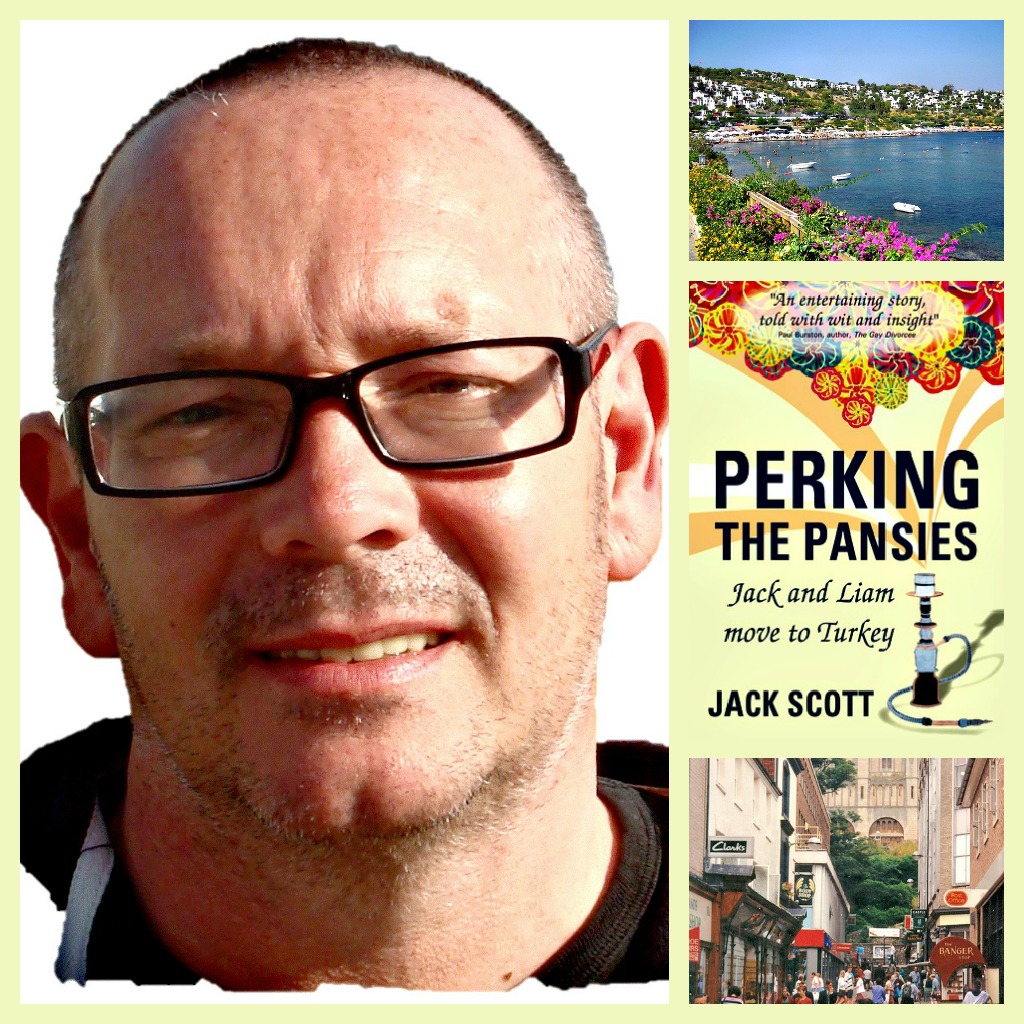
Images (clockwise from left): Jack Scott; Bodrum, Turkey, courtesy Yilmaz Ovunc (Flickr) Creative Commons CC BY-SA 2.0; Perking the Pansies book cover; Norwich, England, courtesy Roger Wollstadt (Flickr) Creative Commons CC BY-SA 2.0.

Repatriation is just relocation — with benefits

Today’s guest blogger, Anastasia Ashman, has been pioneering a new concept of global citizenship. Through various publications, both online and in print, and now through her GlobalNiche initiative, she expresses the belief that common interests and experiences can connect us more than geography, nationality, or even blood. But what happens when someone like Ashman returns to the place where she was born and grew up? Here is the story of her most recent repatriation.

I recently relocated to San Francisco. Three decades away from my hometown area, I keep chanting: “Don’t expect it to be the same as it was in the past.”

Since leaving the Bay area, I’ve lived in 30 homes in 4 countries, journeying first to the East Coast (Philadelphia Mainline) for college, then to Europe (Rome) for further studies, back to the East Coast (New York) and the West Coast (Los Angeles) for work, over to Asia (Penang, Kuala Lumpur) for my first overseas adventure, back to the USA (New York), and finally, to Istanbul for my second expat experience.

My daily mantra has become: “Don’t expect to be the same person you once were.”

With each move, my mental map has faded, supplanted by new information that will get me through the day.

Back in San Francisco, I repeat several times a day: “This place may be where I’m from, but it’s a foreign country now. Don’t expect to know how it all works.”

What a difference technology makes (?!)

Today my work travels, just as it did when I arrived in Istanbul with a Hemingway-esque survival plan to be on an extended writing retreat and emerge at the border with my passport and a masterpiece.

I knew from my previous expat stint in Malaysia that I needed to tap into a local international scene. But I spent months in limbo without local friends, nor being able to share my transition with the people I’d left.

This time is different. Now I’m connected to expat-repat friends around the world on the social Web with whom I can discuss my re-entry. I’ve built Twitter lists of San Francisco people  (1, 2, 3) to tap into local activities and lifestyles, in addition to blasts-from-my-Berkeley-past.

I’ve already drawn some sweet time-travely perks. To get a new driver’s license I only needed to answer half the test questions since I was already in the system from teenhood.

After Turkey’s Byzantine bureaucracy and panicky queue-jumpers, I appreciated the ease of making my license renewal appointment online even if the ruby-taloned woman at the Department of Motor Vehicles Information desk handed me additional forms saying: “Oh, you got instructions on the Internet? That’s a different company.”

One of the reasons my husband and I moved here is to more closely align with a future we want to live in, so it’s cool to see the online-offline reality around us in San Francisco’s tech-forward atmosphere.

It doesn’t always translate to an improved situation though. Just as we are searching for staff to speak to in person at a ghost-town Crate & Barrel, a suggestion card propped on a table told us to text the manager “how things are going.”

So, theoretically I can reach the manager — I just can’t see him or her.

So strange…yet so familiar

It took a couple of months to identify the name for what passes as service now in the economically-depressed United States: anti-service. Customer service has been taken over by scripts read by zombies.

When I bought a sticky roller at The Container Store, the clerk asked me, “Oh, do you have a dog?”

“No, a cat,” I countered into the void.

He passed me the bag, his small-talk quota filled. He wasn’t required by his employer to conclude the pseudo-interaction with human-quality processing, like, “Ah, gotta love ’em.”

What I didn’t plan for are the psychedelic flashbacks to my childhood. I may have moved on, but this place seems set in amber. The burrito joints are still playing reggae (not even the latest sounds of Kingston or Birmingham) and the pizza places, ’70s classic rock stations (Steve Miller Band’s “Fly Like An Eagle,” anyone?). The street artists are still peddling necklaces of your name twisted in wire. Residents are still dressed like they’re going for a hike in the hills with North Face fleece jackets and a backpack.

A bid for minimalism

The plan is also to be somewhat scrappy after years of increasing bloat. My Turkish husband and I got rid of most of our stuff in Turkey in a bid for minimalism. We camped out on the floor of our apartment in San Francisco until we could procure some furniture.

If it was a literal repositioning, it was also a conscious one — for a different set of circumstances. We’d expanded in Istanbul with a standard 3-bedroom apartment and “depot” storage room, and affordable house cleaners to maintain the high level of cleanliness of a typical Turkish household. In California, I intended to shoulder more of the housework.

I was soon reminded of relocation’s surprises that can make a person clumsy and graceless. I should have kept my own years-in-the-making sewing kit since I can’t find a quality replacement for it in an American market flooded with cheap options from China — and now have to take a jacket to the tailor to sew on a button, something I used to be able to do myself.

When the lower-quality dishwasher door in our San Francisco rental drops open and bangs my kneecap, I recall the too-thin cling wrap and tinfoil that I ripped to shreds in Istanbul, or the garden hose in Penang that kinked and unkinked without warning, spraying me in the face.

New purchases

“We’re getting too old for this,” my husband and I keep telling each other as we shift on our polyester-filled floor pillows that looked a lot bigger and less junky on Amazon. (We were abusing one-day delivery after years of not buying anything online due to difficulties with customs in Istanbul. Cat litter can be delivered tomorrow! Pepper grinder! Then I read about the harsh conditions faced by fulfillment workers in Amazon’s warehouses and cut back.)

One of our first purchases Stateside was a television. Not that we’re going to start watching local TV, but we did flick through some satellite channels. It’s something I like to do upon relocating: watch TV and soak up the local culture like a cyborg.

Since I last lived in the US, reality shows like COPS — where the camera would follow policemen on their seedy beats — have gone deeper into the underbelly of life, and now there are reality shows about incarceration.

The Discovery Channel has also gone straight to the swamp. That’s where I caught a moonshiner reality show featuring shirtless (and toothless) men in overalls called “Popcorn” and “Grandad.”

It’s an America I am not quite keen to get to know.

But I can take these reverse culture shocks lightly because my repatriation is part of a continuum. It’s not a hiatus from anything nor a return home. I’m not missing anything elsewhere, I haven’t given up anything for good. Being here now is simply the latest displacement. Today is a bridge to where I’m headed.

ANASTASIA ASHMAN is the cultural writer/producer behind the Expat Harem book and discussion site.  The Californian has been on a global rollercoaster: fired in Hollywood, abandoned on a snake-infested island off Borneo, married in an Ottoman palace, interviewed by Matt Lauer on the Today show. She brings it all home in the “Web 3.0 & Life 3.0” educational media startup GlobalNiche.net, empowering creative, adventurous, self-improving people to tap into a wider world of personal and pro opportunity no matter where you are. Get your copy of the Global You manifesto here.

STAY TUNED for tomorrow’s episode in the life of our fictional expat heroine, Libby. (What, not keeping up with Libby? Read the first three episodes of her expat adventures.)

If you enjoyed this post, we invite you to register for The Displaced Dispatch, a round up of weekly posts from The Displaced Nation, with seasonal recipes, book giveaways and other extras. Register for The Displaced Dispatch by clicking here!

Related posts:

Images: Anastasia Ashman (2012), her World Champions ring, and a view of the bridge to where she’s headed right now.

RANDOM NOMAD: Liv Gaunt, Accidental Serial Expat and Feeder of Sharks

Place of birth: Luxembourg
Passport: UK
Overseas history: England (Sevenoaks, Kent): 1981–98); Turkey (Fethiye, Ölüdeniz, Fethiye again): 1998–99, 2001–02, 2004; Kenya (Watamu): 1999–2000; Egypt (Dahab): 2000-01, Bahamas (Nassau and Family Islands): 2002–03; Barbados (Bridgetown): 2004–05; England (London): 2006–10; Australia (Cairns, Brisbane, Esperance): 2011 – present. (Gosh, I feel like a serial expat listing so many places!)
Occupation: Journalist and scuba instructor
Cyberspace coordinates: The World is Waiting — Expat humour, travel tips, handy hints, photos and inspiration for travellers (site); @worldswaiting (Twitter handle); The World is Waiting (Facebook); WorldsWaiting (Pinterest); and Liv G (foursquare).

What made you leave your homeland in the first place?
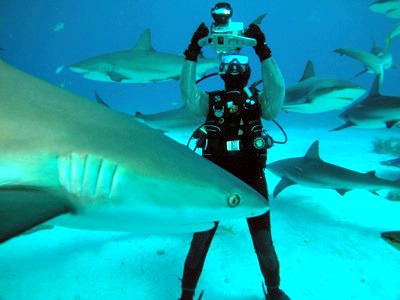
Though I am fond of Britain, I left because I was seeking work as a scuba diving instructor and underwater photographer. The jobs available overseas offered a better diving experience and a better lifestyle. Photographing sharks, filming turtles, and teaching people to dive in an island paradise conditions are not things you can do in Britain.

Is anyone else in your immediate family “displaced”?
My parents were expats in Luxembourg, which is where I was born. For a few years my father was based in Barbados for work, so I guess it runs in the family — but nobody other than me is displaced at this moment.

Your chosen profession of diving and underwater photography has led you to settling, at least for a time, in quite a few different countries. Tell me about the moment when you felt the most displaced.
I believe it is the people who make the place. I feel most displaced when I am surrounded by people who do not treat others with what I consider to be the most basic level of respect — basically, as they would wish to be treated. Discovering cultural differences can be fascinating; but living with discrimination day in day out is frustrating and awful. Living in Egypt I found it really frustrating that men would not take me seriously simply because I am female. They completely disregarded the fact that I had more experience and was more qualified than they were. Of course I understand there are significant differences between Arab and Western culture. But being in a male-dominated industry (scuba diving) in a paternal society (Egypt) was simply not for me.

Was there one specific moment during your time in Egypt that catalyzed this feeling for you?
No, I think it was more the growing realization that I would never be taken seriously.

Describe the moment when you felt your least displaced — i.e., when you felt more or less at home in one of your adopted countries.
The first time I lived somewhere other than with my parents, was in Turkey in my late teens. I took on the responsibility of earning enough to pay rent, bills and to feed myself — and it was all in Turkish. It was a classic example of me diving in at the deep end, so to speak. As a result, I quickly gained a working knowledge of the Turkish language as well as an understanding of the country, culture and its people. Initially I thought that my Turkish friends would be horrified by my near constant butchering of their language. But they only ever encouraged me — and even nicknamed me “the Turkish-English girl.” Nowadays, whenever I visit Turkey I feel very at home there. I don’t have the normal visitor’s questioning of things. I still have quite a few Turkish habits like always removing my shoes indoors, being quick to hit the horn whilst driving, and showing hospitality to visitors.

You may bring one curiosity you’ve collected from each of your adopted countries into The Displaced Nation. What’s in your suitcase?
From Turkey: An evil eye. Evil eyes are so-called, rather misleadingly, as they are believed to ward off evil. They are usually made from glass or ceramics and are often seen hanging over entrances to offices and people’s homes.
From Kenya: Some beaded sandals made from leather and old car tyres. They are the most comfortable sandals I ever had.
From Egypt: Egyptian hibiscus tea. They serve it warm with a classy piece of foil over the top of the glass!
From the Bahamas: Pink sand from Harbour Island. All Bahamian sand is silky soft and impressive frankly but on Harbour Island it is even more beautiful for being a dusky pink.
From Barbados: An amazing reggae soundtrack.
From Australia: Can I bring a quokka? They are small marsupials, a bit like a large-bottomed mini-kangaroo. I find them endlessly amusing.

And now you are invited to prepare one meal based on your travels for other members of The Displaced Nation. What’s on your menu?

Starters: A huge plate of Turkish meze including filled filo pastries, various dips, Turkish bread, olives, cheese and some köfte.
Main: Bahamian conch fritters — the conch will be fresh from the sea and delicately fried — served with lime coconut dip and salad.
Dessert: An Australian pavlova, covered in fresh fruit.
Drinks: To include Caribbean piña coladas and mojitos, and Turkish cherry juice.

It would be a strange meal perhaps, but very tasty!

I wonder if you could also add a word or expression from one of the countries you’ve lived in to The Displaced Nation argot.
Ubuntu, which is an African ethical philosophy. Nelson Mandela explained it thus:

A traveller through a country would stop at a village and he didn’t have to ask for food or for water. Once he stops, the people give him food, entertain him. That is one aspect of Ubuntu, but it will have various aspects. Ubuntu does not mean that people should not enrich themselves. The question therefore is: Are you going to do so in order to enable the community around you to be able to improve?

Your life thus far has been quite an odyssey. You’ve traveled to 42 countries and lived in six. Do you think of yourself as a travel pro?
I don’t consider myself a professional traveler. To me, that term implies that I am paid to travel, which is certainly not the case. I am inspired to continue traveling to new places because I enjoy learning about people’s lives and cultures, and seeing the world through their eyes. I find the different foods interesting as well. Travel also allows you to see where you have come from in a whole new light.

What’s still on your bucket list?
Oh, it’s endlessly growing! Top of the list currently are the Philippines and the Galápagos.

But you are a professional scuba diver. Did you watch the diving events in the London Olympics?
I wasn’t able to watch most of the Olympics because of the time difference between Australia and Britain and a recent spate of overtime at my job. However, to answer your question, no, I have little interest in competition diving. I am not a competitive person generally and rather believe that at the end of the day the only person you ever truly compete with is yourself.

What made you so certain you wanted to be a scuba diver?
I enjoy interacting with the creatures of the deep. Watching as a shark cruises out of the blue towards you, having a curious manta ray investigate you, or sharing a moment with a cheeky turtle is far more fun to me than being faster or more coordinated than someone else. I also enjoy the challenge of capturing the underwater critters on camera.

As it happens, this week marks the 25th anniversary of Shark Week, the Discovery Channel’s longest-running programming event. The purpose is to draw the attention to the shark species, one third of which is at risk for extinction. (We must all stop eating shark fin soup — up to 73 million sharks are killed each year for their fins!) I understand that you love to video and photograph sharks. Is that the riskiest thing you’ve done under water?
Most people would say the riskiest thing I have done underwater is feed sharks. It’s not about thrill-seeking, though, but about providing divers with an up-close encounter, which I think is the best way to educate people about and ultimately protect the sharks.

But while you are a shark lover, you have an aversion for sea urchins. Why is that?
If you ask me that question, I have to assume you have never accidentally brushed past one and received an ankle full of their bloody painful spines?!

But have you ever eaten uni in a Japanese restaurant?
No. I love sushi but haven’t managed any sea urchin yet. Have you, is it good?!

Readers — yay or nay for letting Liv Gaunt into The Displaced Nation? Is she above water or is there something fishy about her application? (Note: It’s fine to vote “nay” as long as you couch your reasoning in terms we all — including Liv — find amusing!)

STAY TUNED for tomorrow’s compendium of books on travel to Tuscany.

If you enjoyed this post, we invite you to register for The Displaced Dispatch, a round up of weekly posts from The Displaced Nation, with seasonal recipes, book giveaways and other extras. Register for The Displaced Dispatch by clicking here!

Related posts:

img: Liv Gaunt videoing a shark feed in the Bahamas.

For former expat Matt Krause, a second act as a heathen pilgrim

For some of us, starting a new life overseas is challenge enough. But for others, it represents an opportunity to take things to the next level. It’s fair to say that Matt Krause falls into the latter category. Returning to California after following a Turkish woman back to her native land, he used the material for his first book. And now he’s preparing to set out on a 1,300-mile solo walk across Turkey — a country he still regards as his second home. I caught up with Matt recently to ask about this latest, much more athletic challenge.

Hi again, Matt. Welcome back to The Displaced Nation. It seems like only yesterday that we were reviewing your expat memoir, A Tight Wide-open Space, and now we find you preparing for an epic travel adventure. Can you say a little more about it?
On Saturday, September 1, 2012, I will start an eight-month solo walk across Turkey, from the Aegean to Iran — 1,305 miles (2,100 km) in all. I will carry a backpack, a tent, and a sleeping bag.

Why are you doing this?
To put my life where my mouth is.

In 2003 I met a girl on an airplane to Hong Kong. We ended up going out, then moving together to her hometown of Istanbul and getting married there. We lived in Turkey for six years, but in 2009 things unraveled and I came back home to the US.

When I came back to the US, people kept asking me about the differences I had seen in Turkey. Political differences, religious differences, cultural differences, gender differences, just about every kind of difference you could think of.

But I really wanted to tell them about how people are so much the same. Living in Turkey had reminded me that most of what we are as human beings, and how we act in any given situation, is pretty much the same. Human nature being what it is, though, we can’t take our eyes off our differences, and I think that this focus makes us more afraid of each other than we need to be.

I don’t want to talk about this in theory. If these similarities are so profound, I should be able to walk, alone and unprotected, across the country I still think of as my second home.

Going to the dogs

What have you done to prepare for this odyssey?
I walked 1,200 miles (almost 2,000 km), 700 of them with a fully loaded backpack. That’s four hours a day, five days a week, for five months.

I walked the same four 12-mile routes about 25 times each — those were 1,200 very repetitive and boring miles.

However, I love dogs, and the dogs added some flavor to the walks. The first few times I walked those routes, the dogs all acted ferocious, but week by week they warmed up to me. The Labs were the first, of course — I only had to walk past them once or twice before they’d run out to me wagging their behinds like I was an old friend.

The last to go was one particular Doberman Pinscher. He spent about four months acting like he was going to rip my head off each time I passed by, and then one day when I walked by he was busy talking to another dog. He looked over at me like, “Are you serious, are you going to make me interrupt this perfectly good conversation in order to come chase you?” He broke down quickly after that, and now when I walk past his house he just playfully runs alongside me, glancing back at the house every few seconds to make sure nobody’s watching. He’s got a reputation to think about, after all.

How will you finance the trip?
I have savings, which I’ve supplemented by working in the peach and plum orchards near my hometown of Reedley, California. I was grafting, which is basically cutting off the top of an old tree and sticking a new kind of wood into it. The new wood takes over, and within a couple years the tree is producing a new variety of fruit.

I will also be raising some money on Kickstarter in a few weeks.

Will you be grafting any electronic devices onto yourself while you walk?
I’ll have a pocket camera and a cell phone connection so that I can post daily updates (people photos, landscape photos, short written updates, etc) on my Web site, Heathen Pilgrim. Most of the time, of course, I’ll be out in the middle of nowhere. It’s not like I’ll be able to run into the nearest Starbucks and connect over wifi, so I had to figure some things out. I’ve been doing a lot of equipment testing.

An oxymoronic concept?

“Heathen Pilgrim” — that’s a curious name for a project.
I picked that name for a couple of reasons. The main reason is that a heathen is a person who does not share one’s religion. Christians see non-believers as pagan; Muslims see them as infidels; and as far as Jews are concerned, gentiles can never be members of God’s chosen people.

One thing we all have in common is that someone, somewhere considers us heathen. And if you want to travel outside of your own circle, you must be willing to be considered a heathen by someone else. If the people around you are not considering you heathen yet, you have not traveled far enough from home.

I also have a tongue-in-cheek reason. A secondary definition of “heathen” is “a rude or uncivilized person.” I’m a fairly polite and well-mannered person. So calling myself a heathen pilgrim is a bit of an attempt at self-deprecating humor.

Well, particularly when you juxtapose it with a word like “pilgrim,” since pilgrims are supposed to be on a journey to a holy place. Your itinerary is pretty ambitious. Do you identify at all with the athletes who are now preparing for the Olympics?
No, not at all. Those guys train all their lives. I’m just a guy who likes to eat donuts and walk — although I did have to turn a lot of things upside down in my life in order to do this.

On the subject of ways of looking at this project, there’s a relevant saying I like, that we are not entitled to the fruits of our labors, only to the labors themselves.

In this case, I have no control over the meanings people might assign to my walk. I only have a say in whether or not I do it.

A few last-minute jitters

What’s left by way of preparation for this unholy journey of yours?
Not much. At some point you’ve just got to take the leap of faith (no pun intended!), and that time has arrived for me. Right now I’m preparing for the Kickstarter campaign in a few weeks, and there are still a few things I still need to get, like a sleeping pad and a small whiteboard. But I’m as prepared as I’ll ever be without actually doing it. It’s time to go.

But what about psychological preparation? Are you nervous? Despite your affection for Turkey, do you worry about feeling out of your element, displaced in ways you’ve never been before?
You bet I’m nervous. I’ve never walked across a country before. I’ll be displaced and out of my element 24 hours a day, seven days a week, for the entire trip.

What makes me most nervous is that I don’t know where I’ll be sleeping at night. I don’t want to stay in hotels, because then I’d just be doing the tourist thing. So I’ll be taking people up on their offers to pitch my tent in their front yard, or let me sleep on their living room floors, or even sleep on their roofs (many of the roofs in that part of the world are flat, and people use them like a front porch).

For a while, I was really worried about approaching all these strangers and asking for help. In fact, until a few months ago I would wake up in the middle of the night worrying about how that was going to pan out. But then I talked to a young woman who had backpacked through that part of the world many times. She said don’t worry about them, they’ll be fine with it. The worry is in you. Get over it quickly by knocking on a stranger’s door the very first night.

How to follow Matt’s progress

If people want to follow your progress, what should they do?
I’ve put out an open invitation to anyone who wants to come walk part of the route with me. So if you can, get yourself a backpack and a sleeping bag, and join me on the road somewhere.

However, if you can’t join me in person, follow the trip vicariously. There’s the aforementioned Heathen Pilgrim site, a weekly email newsletter, a Facebook page, and my Twitter account (@mattkrause). Use whichever of those you prefer — they’ll be showing pretty much the same content.

I assume you’ll also be getting some books out of this?
I’ll also be writing four books at the end of the trip: two books tentatively titled “Turkey on 12 Miles a Day” and “Walking Turkey”; and two photo essays, tentatively titled “Walk Turkey: The Landscape” and “Walk Turkey: The People.”

Those books will be available later on Amazon, but you can sign up for them early, and get some other trip-related goodies, by backing the trip on Kickstarter. The Kickstarter campaign isn’t live yet, but if you keep an eye on my cyber-coordinates, in early August you’ll hear about it when it starts.

Thanks, Matt. You may not think of yourself as an Olympic athlete, but I’m impressed by your determination and all the meticulous preparations. Readers, make sure you follow Matt’s journey in one of the ways he suggests and spread the word about his Kickstarter campaign. You can also support him by downloading his memoir on his expat life in Turkey — as Kate Allison said in her review, “For all that this is a love story, Matt pulls no punches in the telling of it.” He’s honest, as well as humble. Two great qualities for a pilgrim, even if he is a bit of a heathen! 🙂

STAY TUNED for tomorrow’s Displaced Q on the Olympic Games and the sometimes awkward issues they raise for us displaced types about national loyalties, by Tony James Slater.

If you enjoyed this post, we invite you to register for The Displaced Dispatch, a round up of weekly posts from The Displaced Nation, with seasonal recipes, book giveaways and other extras. Register for The Displaced Dispatch by clicking here!

Related posts:

