The Displaced Nation

A home for international creatives

Tag Archives: Paris

Talking with former expat Meagan Adele Lopez about travel, romance & novel/screenplay writing

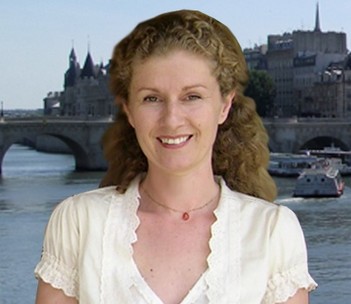
Earlier this week I caught up with Meagan Adele Lopez, actor, world traveler, blogger and now a first-time author. She self-published her novel, Three Questions: Because a quarter-life crisis needs answers, in October of last year. It was featured on The Displaced Nation’s post Best of 2011: Books for, by and about expats.

Meagan — who is also known as MAL and the Lady Who Lunches (after her blog of that title) — may have just three questions, but I had quite a few more! I wanted to find out what inspired her to write her book, which she is now attempting to turn into a screenplay — the story behind the story…

Here’s what she had to say.

Meagan, I think it’s fair to say that you’ve been around a bit — I mean that in the nicest possible sense! Would you mind telling us a bit about your background — where you grew up, what you studied?
Do you mean I’ve been around as in I’ve lived for a long time, or do you mean I’ve traveled loads? (I won’t bother going to the other possibility!) Actually, I am getting up there in age — just six more months of my twenties; but there’s no need to rub it in, Tony! Just kidding. I think I’ll be relieved to be out of my twenties. What a crazy ride they were!

No, of course I wasn’t referring to your age — I’m an English gentleman, remember? I meant, you’ve lived in quite a few places — and that was before you moved abroad.
By the time I was 12 years old, I had lived in 12 different houses, and four different states. I pretty much grew up in a suburb of Baltimore called Towson. I say “pretty much” because I also lived in Tennessee and New Jersey for two years in between. But Towson is where I call home.

You have a passion for acting. When did you develop it?
Since I was eight years old, acting was all I wanted to do. For high school, I auditioned for a conservatory arts school called Baltimore School for the Arts (it boasts Jada Pinkett, Josh Charles and Tupac as students), where I was lucky enough to be trained by professional actors everyday.

Funnily enough, I wanted to be an actor, too. What drew you to the profession?
I had this fear that my life would pass too fast, and acting was somehow a way to slow down time, and be “in the moment.” Nowadays I find that writing is what does this for me. I am able to record thoughts and moments forever. Very existential, I know.

But you haven’t completely lost your passion for acting — I see you’ve instilled it in your main character, Adele (“Del”), in Three Questions. And I noticed there’s a mention of a horror film in your author’s bio — could you tell us a bit about that?
About the horror film? Oh no, you really don’t want to know about that (wink). But okay, my first starring role was in a horror movie called Sleepy Hollow High, about students who believe that the legend of Sleepy Hollow is real. It’s one of those films that is so cheesy and kitschy that it might be considered entertaining at some level. At the time, I was just excited to be in something, but it certainly wasn’t Oscar-worthy — ahem — at all. 

And you also got into some major motion pictures?
My first speaking role in a big Hollywood movie was as a cocktail guest in Traffic, with Catherine Zeta Jones and Michael Douglas — now there’s an Oscar worthy film. Unfortunately, my lines got cut — but you can still see me shaking Michael Douglas’s hand. I got my Screen Actors Guild card from acting in small parts in Enemy of the State, a spy-thriller starring Will Smith, and The Replacements, a college football film starring Keanu Reeves. Numb3rs was my first TV show.

Wow — you gave all that up to become a writer?
I got disillusioned with acting after working in casting for four years. I saw how completely random and superficial some of the choices can be for who gets cast. I’d gotten into acting for a much more altruistic goal — I wanted to make a difference in how people see the world — but ultimately realized that the place where I could make a real difference, because I have control over my own success, was with writing. Without great content, after all, actors couldn’t do their job!

Well you’re having plenty of success with writing. In addition to the book (which we’ll come to, don’t worry!), you started up a popular expat blog, A Lady Who Lunches, while you were living in the UK. Now that you’ve repatriated, and are living in Chicago, are you still keeping it up?
When I got to Chicago, the blog went through a bit of an identity crisis. Even though I’d never lived in that city, writing about the adventures of a newbie Chicagoan didn’t really interest me. Especially since I was no longer lunching — I was working, hard. Though I still have the same URL and twitter handle (@theladylunches), I now call the blog by my own name, and I’m glad I’ve kept it up. It’s a built-in fan platform that has helped me to sell my novel.

You’re also something of a social media guru. Are there any secrets you can impart to other bloggers about building an audience?
I didn’t set out for the blog to become popular (and thank you for saying so). It was a lot of ground work, as well as trial and error. You can’t expect results from a blog unless you’re updating it frequently, creating a community with other similar, like-minded people, and engaging with them on a consistent basis. My biggest piece of advice to other bloggers is to take a course in SEO. I never really paid attention to SEO, and it wasn’t until I took a course that I realized the importance of knowing the basics. Simple things like: are people even searching for the topics that you’re writing? Are you wasting two hours of writing time on a topic that gets only 100 hits per month?

Now let’s turn to Three Questions, which follows the developing love between two young people — who have only met each other once, by chance, on a night out in Las Vegas. The love interest, Guy, is from England, as is your real-life boyfriend, Jock. So what I’d like to know is, just how much of the book is autobiographical?
This is a question that Jock and I dodge quite often! I would say that about sixty percent of the book is autobiographical. There are many similar personality characteristics between Guy (Del’s boyfriend) and Jock, and between Del and me, Even the outline of the story conforms quite closely to what happened to Jock and me. Jock and I did meet in Las Vegas before his trip to Africa, and we did write letters back and forth to get to know each other. Hey — they always say to write about what you know, so that’s what I did! However, “how” things happened — and obviously the ending — are all very different.

One of my favorite aspects of the book was the use of the three questions in each email between Del and Guy, which the couple used to get to know one another during their long separation. It’s genius! Where did the idea for that come from?
Thanks, Tony! It came from Jock, actually. He used to play a questions game with his mates in England when they were out at the pubs. They were quirky questions like “If you were an animal, what would you be?” When Jock went traveling through Africa and we had only met that one night, he decided to take a slightly different spin on it, and ask me three VERY different questions to get to know me. It was such a great way to get to know someone, and build up the intensity and connection. I highly recommend it for anyone who has a long-distance relationship.

Tell us about the screenplay for the novel.
At the end of last year, I raised some money through a Kickstarter campaign to take the novel to the next level, which hopefully will include turning it into a movie. I’m working on the screenplay now, and then I’ll pitch it to Hollywood. What they do with it after that is up to them.

To give you a taster, Meagan has just released this movie-style trailer for the book, which is awesome!

Right, here’s something your fans will be keen to know the answer to: are you writing another book, and can you share any juicy details with us? Is it about travel again?
I’m now working on a second novel, which — particularly as a citizen of The Displaced Nation — you’ll be interested to learn is about someone who is forcibly, not voluntarily, displaced. It’s about a Cuban teenager who was torn from her homeland and true love in the early 1960s — and the struggles, ghosts and eventual success she faces in the United States leading up to today.

Love is a recurring theme in your writing, and one we’ve been looking into recently at The Displaced Nation. So, post Valentines Day, do you have an advice for the singletons out there, wherever they are?
My only advice is to figure out who you are first, and what you want before worrying about finding someone. I really believe that the right man or woman will come when you finally decide that you’re the most important person in your life, and you are taking care of you.

And I have to ask this of someone who has written such a beautiful and memorable love story; tell me about True Love. Does it exist? Is there one person for each of us?
Wow — that’s the kind of question that years ago, I always used to ask everyone else. I never thought I’d be on the receiving end. (Maybe I am getting old?!) I come from a family where love comes multiple times in their lives, so for a long time I never believed that there could be only one person for me. What I’ve come to learn is that with a mixture of timing, chemistry and hard work, true love can certainly be created. How else do I explain running into Jock in a bar in Vegas on Easter Sunday, and thus creating a life out of it, despite our different backgrounds, cultures and nationalities?

Yes, how does a girl from Towson get together with a bloke from Portsmouth? Can I ask, how is Jock coping with the transition to life in Chicago?
Ah… besides the constant yelling at the way we drive, the lack of manners that Americans have when opening doors, and absolutely hating the egos and pompous attitudes of our politicians and media? I would say he’s adjusted much better than I did when I was in England! (I did a lot better in Paris!) Luckily, Chicago has a variety of cultures. He has actually started a business with another Englishman, and found another good friend who’s English. Plus, I think he secretly loves the attention that his accent brings him.

And will your love story have a traditional ending — any plans to tie the knot?
He has one more year before he has to get down on his hands and knees. I gave him five years not thinking he would take the entire five! But we’ve had a few cross-continental moves in the past four years, which has made it challenging to find the right moment.

In Three Questions, Del describes her perfect future as “living by the water in a big city, traveling as much as possible.” You’ve traveled and lived in France and England, and now you’re living in the Windy City, presumably somewhere near the lake… Have you found that perfect future yet? Or is your dream different from Del’s?
Perhaps when I first started writing the book, that was my dream. But success is very important to me as well. I want to leave this life with a feeling that I have left a significant mark on people’s lives. I don’t think I will feel satisfied until that happens, which means I may always be striving to better myself, to make a difference… On a more practical note, I can see myself back in SoCal or having a flat in Paris eventually. That’s not too much to ask for, is it??

Thanks very much, Meagan! It was great chatting with you.

* * *

So, what do you all think? I loved Meagan’s book Three Questions and I’m not normally a fan of love stories and chick lit. I strongly recommend you all give it a read. Three Questions is available now on Amazon.com for the Kindle and, most excitingly of all, is now in paperback!
Three Questions on Amazon Kindle
Three Questions in Paperback

And luckily for you lot, Meagan has also agreed to participate in a giveaway, just for Displaced Nation readers!!!

She’s agreed to give a free ebook to the first 15 people who tweet: I want a free copy of @theladylunches’ new romance from afar novel, #ThreeQuestions via @displacednation

AND, she’s offered to give away a free copy of the paperback to the best comment in the comments section.

So what are you waiting for? Let’s chat 🙂

STAY TUNED for tomorrow’s episode from our long-running expat soap, Libby’s Life. You can look forward to a battle with tiger-mums, a three-hour glucose tolerance test, one suspected case of galloping dandruff, and the crowning glory of a Valentine’s Day party for three-year-olds. (What, not keeping up with Libby? Read the first three episodes of her expat adventures.)

If you enjoyed this post, we invite you to register for The Displaced Dispatch, a round up of weekly posts from The Displaced Nation, with seasonal recipes, book giveaways and other extras. Register for The Displaced Dispatch by clicking here!

Related posts:

Images: Meagan Adele Lopez; Three Questions book cover (designed by Kathleen Bergen).

10 expat books ripe for movie adaptations

Those who have been following this blog for some time are probably all too aware of my unhealthy preoccupation as to what constitutes an expat or travel book.

Is it, as often seems the case when I browse the expat blogosphere, that expat books must occupy themselves with the oh-so-amusing hi-jinks of expat life? The result almost invariably of such approach is that we are depressingly left with another third-rate knock-off of Bill Bryson for us to throw on the bonfire.

So when considering which expat books are ripe for movie adaptations, my first thought is that the film world, not to mention the world in general — at least, the one I want to live in — really doesn’t need any more travesties such as Under the Tuscan Sun, A Good Year or — most horrifying of all — Eat, Pray, Love. So with that in mind I will nominate the following 10 expat books as being ripe for interesting adaptations.

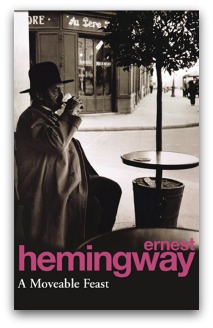
10. A Moveable Feast (1964, revised 2009)

Author: Ernest Hemingway
Synopsis: Hemingway’s posthumously published memoir detailing his years as a young American expat in Paris socializing with the likes of F. Scott Fitzgerald, Gertrude Stein and Ezra Pound.
Film pitch: Perhaps now is the perfect time for an adaptation of A Moveable Feast. The surprising success of Woody Allen‘s Midnight in Paris will perhaps have whetted Hollywood’s appetite for a more serious take on the same subject matter.

9. One Fat Englishman (1963)

Author: Kingsley Amis
Synopsis: Inspired by a year Amis spent teaching at Princeton, One Fat Englishman follows the badly behaved Roger Micheldene with Amis’s typical brio. An English gentleman who is affronted by everything on the American scene, Roger fails to see how his presence might adversely affect Anglo-American relations.
Film pitch: Cast Timothy Spall as Roger and watch the fireworks.

8. A Burnt Out Case (1960)

Author: Graham Greene
Synopsis: A man named Querry arrives at a leper colony in the Congo. He assists the colony’s doctor, who diagnoses him as suffering depression. It is revealed that Querry is in fact a world-famous architect, though he is hiding other secrets, too.
Film pitch: Perhaps Greene’s bleakest work — which may explain why it hasn’t been filmed previously despite being optioned twice by Otto Preminger (Greene was said to be thankful that it was never made). I would argue, however, that it has all the material for a fascinating film.

7. Travels through France and Italy (1766)

Author: Tobias Smollett
Synopsis: After the sad death of his daughter, Tobias Smollett and his wife left England for a tour of France and Italy. Detailing the quarrels Smollett has on his journey with those pesky Continentals, this is a very funny book.
Film pitch: Yes, I am suggesting that someone should make a movie based on an 18th-century travelogue. If Robbie Coltrane and John Sessions can turn Boswell and Johnson’s tour of the Hebrides into a delightful TV movie then I think the same could be done with this.

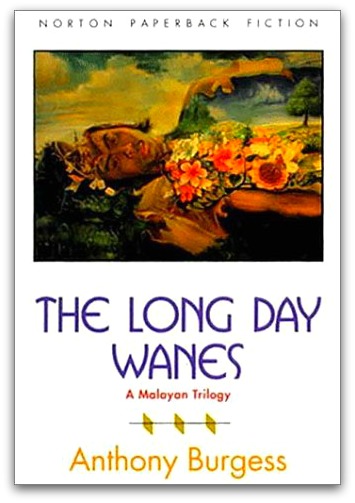
6. The Long Day Wanes: A Malayan Trilogy (1956-59)

Author: Anthony Burgess
Synopsis: Burgess’s first three novels are concerned with the character of Victor Crabbe, a teacher in a village in Malaya (now Malaysia). Based upon Burgess’s own experiences as a British civil servant in Malaya, the three novels that make up The Long Day Wanes detail the death of Empire and the birth pains of a newly independent nation.
Film pitch: Other than A Clockwork Orange, whose adaptation Burgess had strong misgivings over, Burgess’s work often seems overlooked for movie adaptations. It really shouldn’t be.

5. The Thousand Autumns of Jacob de Zoet (2010)

Author: David Mitchell
Synopsis: Until Commodore Perry in 1853 anchored four warships off the Japanese coast and so opened up Japan to western trade, Japan had been a “locked country” (sakoku) where it was illegal for a foreigner to enter Japan and for a Japanese subject to leave. The exception to this was at Dejima, in Nagasaki, where trade with some select foreign powers was allowed. This fascinating piece of history is the basis for David Mitchell’s latest novels. Set in 1799, The Thousand Autumns of Jacob de Zoet details a young Dutch trader who has come to Dejima to make his fortune though he discovers a lot more.
Film pitch: The book has all the makings of a wonderful historical epic.

4. Up Above the World (1966)

Author: Paul Bowles
Synopsis: Dr and Mrs Slade are an American couple touring Central America. A chance encounter with an elderly woman leads to a tense and gripping chain of events.
Film pitch:A disturbing and intense work typical of Bowles, it would make for a deeply compelling thriller.

3. Burmese Days (1934)

Author: George Orwell
Synopsis: Similar to Burgess’s The Long Day Wanes, this novel is concerned with the dying days of Empire. Orwell, who was himself an officer in the Indian Imperial Police Force in Burma, paints a depressing picture of expatriate life that is based around the stultifying social hub of the European club.
Film pitch: Orwell’s first novel and while certainly not his best work, even a bad Orwell novel is still worthy of consideration.

2. Henderson the Rain King (1959)

Author: Saul Bellow
Synopsis: Eugene Henderson is a rich American with an unfulfilled desire. Not knowing quite what it is, he hopes he will discover it by going to Africa. Through a series of misadventures Eugene Henderson finds himself away from his original group and in the village of Wariri in Africa. After performing a feat of strength, Eugene is adopted by the villagers as the Wariri Rain King.
Film pitch: Bellow’s funniest book, Henderson the Rain King could be pitched as an intellectual Joe Versus the Volcano (or maybe not — that’s a terrible pitch).

1. Turkish Embassy Letters (1763)

Author: Lady Mary Wortley Montagu
Synopsis: An important writer in her own right, Lady Mary Wortley Montagu was the wife of Edward Wortley Montagu, who was appointed as the ambassador at Constantinople. Accompanying her husband just after recovering from contracting smallpox marring her famed beauty, Lady Wortley Montagu wrote about her observations in numerous letters. These letters form a fascinating look at the Ottoman Empire — from how they inoculated against smallpox to the zenanas, special areas of the house reserved for women — as observed by an aristocratic English woman of the time.
Film pitch: Just think what a great biopic you could make about her.

Note: If you click on the book titles in the above list, you’ll be taken to Amazon, where the books can be purchased — except in the case of Tobias Smollett’s travelogue, which goes to Gutenberg, where he can be read FOR FREE!!

STAY TUNED for tomorrow’s post, an interview with first-time novelist Meagan Adele Lopez, and her plans for turning the book into a film.

If you enjoyed this post, we invite you to register for The Displaced Dispatch, a round up of weekly posts from The Displaced Nation, with seasonal recipes, book giveaways and other extras. Register for The Displaced Dispatch by clicking here!

Related posts:

Dear Mary-Sue: Finessing Valentine’s Day abroad

Mary-Sue Wallace, The Displaced Nation’s agony aunt, is back. Her thoughtful advice eases and soothes any cross-cultural quandary or travel-related confusion you may have. Submit your questions and comments here, or else by emailing her at thedisplacednation@gmail.com.

Aloha to all my readers — or as I affectionately think of you, my Mary-Suers! This month finds me in sunny Hawaii — the island of Kauai, to be precise. As president of the Thorn Birds Appreciation Society, I’ve had to come out for the society’s annual trip to see where the series was shot. Yes, yes, I know it was set in the lovely land Down Under, but all those scenes of Richard Chamberlain smoldering away under the Queensland sun were in fact shot here in Kauai.

To think I get to walk along pathways and beaches that Richard once walked along — it’s enough to make a gal go weak at the knees.

So, seeing as I’m at the most romantic place IN THE ENTIRE WORLD!!! — the spot where Rachel Ward snagged herself that dishy Mr C — and with Valentine’s Day fast approaching, little ol’ Mary-Sue is going to tackle your romantic quandaries.

Strap yourself in, things are about to get all Mary-Sue Wallace!

___________________________________________

Dear Mary-Sue,

I have a hot Brazilian girlfriend and am thinking of serenading her on Valentine’s Day. Any suggestions for a song?

Rick in Rio

Dear Rick in Rio,

I’m a trained therapist from no less an august institution as Tulsa Community College. I’m here to provide relationship advice. Maybe you could try that question on Delilah with better luck — or maybe not, I hear she can be one vicious b****.

Mary-Sue

———————————-
Dear Mary-Sue:

My American girlfriend gave me a Valentine’s card with a Cupid on it. I thought it was a comic book character but she said no. So who is Cupid, and what does he have to do with Valentine’s Day? Also, the Cupids in my comics have wings, but this one doesn’t have wings — why is that?

Kim in Seoul

Dear Kim in Seoul,

Who stole my heart?
You did, you did.
Bow to the target,
Blame Cupid, Cupid.

So sang Martin Fry in “Poison Arrow,” a song that btw Rick in Rio is not allowed to sing to his hot Brazilian girlfriend.

You see, Cupid is a naked baby that can fly. He has a bow and arrow that he shoots people with — in the case of this song, Martin Fry (I believe he’s the younger brother of Mr Stephen Fry). Cupid’s arrows don’t pierce the sternum and damage inner organs like, for example’s sake, Robin Hood’s arrow. No, when Cupid’s arrow pierces your heart, it doesn’t cause myocardial infarction but instead you fall in love with the first person you see — in Martin’s case with unfortunate consequences.

As to why the picture of Cupid in the card your girlfriend gave you doesn’t have wings, well that’s simple. That isn’t a picture of Cupid at all, but of a nondescript naked baby. She sounds like the sort who’d buy one of those Flower Baby Calenders — I’d get rid of her if I were you.

Mary-Sue

———————————-
Dear Mary-Sue:

How do I wish someone a Happy Valentine’s Day in French? I’m not sure if they celebrate it over here, but I’m hoping the Frenchwomen will find it charmant, coming from an American.

Peter in Paris

Dear Peter in Paris,

A quick look at my desktop calender reveals that it’s 2012, not 1945 — which means there’s nothing an American man can do to charm the young ladies of Paris. They just don’t appreciate your wholesome all-American charm. Shame, as I’m pretty certain you have a lovely smile. I can sense it from the letter you wrote that you have a lovely mid-Western smile.

Mary-Sue

———————————-
Dear Mary-Sue:

I’m a newcomer to the United States and someone just wished me a Happy Anti Valentines Day. What’s that supposed to mean?

Lars in Los Angeles

Dear Lars,

It’s a sign from the good Lord for you to (pardon my language) get the heck out of Los Angeles and move to Tulsa.

Mary-Sue

___________________________________________

Anyhoo, that’s all from me readers. I’m so keen to hear about your cultural issues and all your juicy problems. Do drop me a line with any problems you have, or if you want to share your fave meatloaf recipe with me (yum! yum!). As they say in Italy, “ciao!”

Mary-Sue is a retired travel agent who lives in Tulsa with her husband Jake. If you have any questions that you would like Mary-Sue to answer, you can contact her at thedisplacednation@gmail.com, or by adding to the comments below.

STAY TUNED for Monday’s post, a displaced Q about the best places to hook up with a honey abroad, by new Displaced Nation team member Tony James Slater (he’ll be writing from recent experience!).

If you enjoyed this post, we invite you to register for The Displaced Dispatch, a round up of weekly posts from The Displaced Nation, with seasonal recipes, book giveaways and other extras. Register for The Displaced Dispatch by clicking here!

Related posts:


12 NOMADS OF CHRISTMAS: Karen van der Zee, Dutch/American expat in Moldova (8/12)

Current home: Chișinău, Moldova
Past overseas locations: Kenya, Ghana, Indonesia, Palestine, Ghana (again), Armenia, Moldova. (For years I was also an expat in the USA, my husband’s home country, and have dual — Dutch and American — citizenship.)
Cyberspace coordinates: Life in the Expat Lane — Foreign Fun in Exotic Places (blog) and @missfootloose (Twitter handle)
Recent posts: “Life Abroad: Of Red Undies, Sugary Pigs, and Freezing Waters” (December 31, 2011); “Expat Foodie: What to Do with Goose Fat?” (December 27, 2011); “Expat Life: Holiday Greetings from Afar” (December 26, 2011)

Where are you spending the holidays this year?
In Moldova. It will be the first time ever that my husband and I will not be spending it with the rest of our family.

What do you most like doing during the holidays?
Besides spending time with family, I enjoy decorating and cooking. This year I will cook dinner for expat friends who are also not going home. We can cry on each other’s shoulders, or perhaps just have a good time.

Will you be on or offline?
The computer will be on. We may be able to Skype.

Are you sending any cards?
I send only a few snailmail paper cards. Mostly I write short personal emails, using in part a few paragraphs of prepared text, but no newsletters. Newsletters never seem to quite fit for everybody the same way.

What’s the thing you most look forward to eating?
I wish I had something exotic to tell you about here, but actually, I just love having a good Christmas dinner and some decadent dessert. Normally I don’t eat much sugary food.

Can you recommend any good books other expats or “internationals” might enjoy?
Two works of nonfiction:

1) The Last Resort: A Memoir of Mischief and Mayhem on a Family Farm in Africa, by Douglas Rogers (Crown, 2009): A tragic-comic account of the author’s (white) parents’ life in Zimbabwe in the last 15 years and the trials and tribulations of running and holding on to their resort while all around them farms of white owners are being stolen and the country is falling apart. Great read.

2) Almost French: Love and a New Life in Paris, by Sarah Turnbull (Gotham, 2003): An Australian journalist falls in love with a Frenchman, moves to Paris, and culture shock ensues. I always enjoy culture shock stories, and Paris is a great setting for culture shock.

And one novel:

Finding Nouf, by Zoë Ferraris (Houghton Mifflin Harcourt, 2008): A murder mystery set in Jeddah, Saudi Arabia, with Saudi Arabian characters. I love this book because it offers an intimate look into the culture and lives of men and women in the very closed society of the Kingdom. Fascinating.

If you could travel anywhere for the holidays, where would it be?
I must be a terrible bore, but spending the holidays anonymously with strangers in some exotic place doesn’t appeal to me. However, I would love to live in the highlands of Bali!

What famous person do you think it would be fun to spend New Year’s Eve with?
What a fun question! Let me think. How about New Year’s Eve with Whoopi Goldberg? Why? Well, she’s unconventional, creative, fun, and loves to hang loose. What else do you need in a person to have some fun?

What’s been your most displaced holiday experience?
When we lived in Indonesia with our two young daughters. It was difficult to create a Christmas atmosphere in the sweltering tropics because we were used to a cold Christmas in the northern hemisphere. The year after that, while still living in Indonesia, we visited friends in Australia over the holidays. It was better, but still, it was summer there. It just wasn’t quite right!

How about the least displaced experience — when you’ve felt the true joy of the season?
I honestly cannot pick just one. I’ve had so many Christmasses and they’ve always been good one way or another.

How do you feel when the holidays are over?
Usually it’s a bit of a drag to take down the tree and pack up all the decorations and the house looks so bare and boring, but then I get busy and get on with life. I do not go into a major funk or depression, fortunately.

In the past, we would be returning from the US to wherever we were living, in the tropics or elsewhere, and that sort of took care of the transition to normal life.

On the first day of Christmas, my true love said to me:
EIGHT WHOOPHIS WHOOPING,
SEVEN SKIERS A-PARTYING,
SIX SPOUSES TRAILING,
FIVE GOOOOOOOFY EXPATS.
FOUR ENGLISH CHEESES,
THREE DECENT WHISKIES,
TWO CANDY BOXES,
& AN IRISHMAN IN A PALM TREE!

STAY TUNED for tomorrow’s featured nomad (9/12) in our 12 Nomads of Christmas series.

If you enjoyed this post, we invite you to register for The Displaced Dispatch, a round up of weekly posts from The Displaced Nation, with seasonal recipes, book giveaways and other extras. Register for The Displaced Dispatch by clicking here!

Related posts:

Best of 2011: Books for, by and about expats

One of our Random Nomads in November, Aaron Ausland, had this to say about those of us who venture across borders:

Travel to a new place for three weeks and you can write a book, travel for three months and you can write an article, travel for three years and you’ll likely have nothing to say.

While that may be true, I’m afraid it hasn’t stopped many of us who’ve spent large chunks of our lives gallivanting around the globe trying out life in different countries, from taking up the pen.

As with any other group, some are born writers (and thrive on new surroundings), while others have become writers (attempting to make sense of their adventures), while still others have had writing thrust upon them (responding to invitations to share their experiences).

At the Displaced Nation, we revere people who publish books, fiction or non, that in some way assist those of us who are (or have been) engaged in overseas travel and residency. We feature — and do giveaways of — their works. And, for established writers with a global following, we’ve created a unique “category” called the Displaced Hall of Fame.

In this spirit — and in the December tradition of looking back at the past year’s highlights — I present the following (admittedly incomplete) list of books for, by, and about expats that were published in 2011, in these five sections (click on the title to go to each section):

  1. NOVELS ABOUT EXPATS
  2. NOVELS ABOUT “HOME”
  3. EXPAT MEMOIRS
  4. SELF-HELP, CROSS-CULTURAL & OTHER NONFICTION WORKS
  5. INSPIRATIONAL ANTHOLOGIES

A few more points to note:

  • Books in each category are arranged from most to least recent.
  • I’ve mixed indie books with those by conventional publishers (it suits our site’s somewhat irreverent tone).
  • To qualify for the list, authors must have been expats for at least six months at some point.

* * *

NOVELS ABOUT EXPATS

Three Questions: Because a quarter-life crisis needs answers (CreateSpace, October 2011)
Author: Meagan Adele Lopez
Genre: Women’s fiction
Synposis: A love story based loosely on the author’s own romance with a lad from Bristol, the action traverses continents through letters and features a quarter-life crisis, a road trip to Vegas, and two crazy BFFs.
Expat credentials: An American, Lopez lived as an expat in the UK for a while (she is now back in Chicago).
How we heard about it: Melissa of Smitten by Britain was a fan of Lopez’s blog (originally titled The Lady Who Lunches). The pair met her London in the summer of 2010, when Lopez was still living in England. Recently, Melissa has been supporting Lopez’s attempt to gain sponsorship for turning the novel into a screenplay.
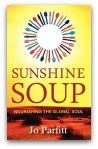
Sunshine Soup: Nourishing the Global Soul (Summertime, October 2011)
Author: Jo Parfitt
Genre: Women’s fiction
Synopsis: Six expat women from the UK, US, Thailand, Ireland, Norway and Holland converge in Dubai in 2008. The action centers on a Brit, who is on her first posting, and an American, who is on her 25th. The Brit learns the ropes and settles in, while the American woman’s world begins to crumble.
Expat credentials: A prolific author, publisher and pioneer in addressing the issues of accompanying spouses and aspiring expat writers worldwide, Parfitt has been an expat for nearly a quarter of a century. Born British, she now lives in the Hague.
How we heard about it: We noticed a couple of interviews with Parfitt — one by expat coach Meg Fitzgerald and another by Expat Women.

The Beautiful One Has Come: Stories (Wyatt-MacKenzie Publishing, July 2011)
Author: Suzanne Kamata
Genre: Cross-cultural romance
Synopsis: Twelve short stories reveal the pains and the pleasures experienced by expat women, most of whom live in Japan.
Expat credentials: Kamata is an American who has lived in Japan for 20 years.
How we heard about it: Kamata and her book were featured on Kristin Bair O’Keeffe’s Writerhead Wednesday in July of this year.

Hidden in Paris (Carpenter Hill Publishing, April 2011)
Author: Corine Gantz
Genre: Women’s fiction
Synopsis: Three strangers — all American women — have reached the point of terminal discomfort with their lives so run away to Paris to begin anew.
Expat credentials: Gantz is a French expat living near Los Angeles. She is getting her own back by writing about American expats in Paris.
How we heard about it: We are long-time fans of Gantz’s blog, Hidden in France — in fact, we promoted one of her posts (about falling into her swimming pool) with the launch of TDN in April. We also interviewed her about her first novel as part of our “gothic tales” theme this past May.

Exiled (Quartet Books, April 2011)
Author: Shireen Jilla
Genre: Psychological thriller
Synopsis: The wife of an ambitious British diplomat, whose first posting brings them to New York, looks forward to escaping from Kent and leading the high-profile life of a successful expat — only to find her world being threatened by dark psychological forces on a par with those depicted in Rosemary’s Baby.
Expat credentials: A Third Culture Kid (she is half English, half Persian, and grew up in Germany, Holland and England), Jilla has also been an expat in Paris, Rome, and New York.
How we heard about it: TDN writer ML Awanohara read a review of Jilla’s novel by Kate Saunders in the Sunday Times. She approached Jilla in May about having an exchange with our readers about the gothic themes in her novel, in line with our site’s own delvings into the gothic aspects of expat life. Our readers loved her!

NOVELS ABOUT “HOME”

Lady Luck (Colorado Mountain Series)
Author: Kristen Ashley
Genre: Romance
Synopsis: Ex-con hero, wrongly imprisoned, gets mixed up with unlucky heroine, who will stop at nothing to help him get revenge.
Expat credentials: Born in Gary, Indiana, Ashley grew up in Brownburg and then moved to Denver, where she lived for 12 years. She now lives with her husband in a small seaside town in Britain’s West Country, where she has produced more than twenty books featuring rock-chick, Rocky Mountain, and other all-American heroines.
How we heard about it: Ashley is the friend of an old schoolfriend of TDN writer Kate Allison, who invited her to do a guest post for us on Britain’s (lack of) Royal Wedding preparations  for our Royal Wedding coverage.

Queen by Right: A Novel (Touchstone, May 2011)
Author: Anne Easter Smith
Genre: Historical romance
Synopsis: This is the fictional story of Cecily of York, mother of two kings and said to be one of the most intelligent and courageous women in English history.
Expat credentials: The daughter of an English army colonel, Easter Smith spent her childhood in England, Germany and Egypt. She came to New York City at age 24, and as she puts it:

Many years, two marriages, two children and five cross-country moves later I’m very definitely a permanent resident of the U.S. — but my love for English history remains.

(She now lives in Plattsburgh, New York.)
How we heard about it: Easter Smith and her book were featured on Kristin Bair O’Keeffe’s Writerhead Wednesday in October.

Dance Lessons (Syracuse University Press, March 2011)
Author: Áine Greaney
Genre: Irish Studies, Women’s Fiction
Synopsis: The action centers on a woman of French-Canadian background who marries an Irish emigrant who is working illegally in a bar in Boston. After his death by drowning, she visits Ireland for the first time and finds out what a shattered man he actually was.
Expat credentials: She may be a resident of Boston’s North Shore, but Greaney continues to identify herself as an Irish writer (County Mayo).
How we heard about it: Greaney and her book were featured on Kristin Bair O’Keeffe’s Writerhead Wednesday in October.
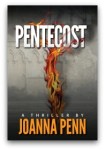
Pentecost: A Thriller (The Creative Penn, January 2011)
Author: Joanna Penn
Genre: Thriller
Synopsis: The Keepers of the stones from Jesus’s tomb — which enabled the Apostles to perform miracles — are being murdered. The stones have been stolen by those who would use them for evil in a world. An Oxford University psychologist spearheads a search for them in a race against time…
Expat credentials: English by birth, Penn grew up as a third-culture-kid and at the time of producing her first novel, was living in Australia.
How we heard about it: We are avid followers of Penn’s blog, The Creative Penn. Several months ago, TDN writer ML Awanohara deconstructed Penn’s post about what “home” means for writers for what it might teach expats and others who struggle with this issue as well. For Penn, home means some sort of spiritual kinship, which she has with two places: Oxford, where she went to university and near where her father now lives, and Jerusalem, which she’s visited at least ten times because she loves it there so much. Not surprisingly, she chose to set much of the action for her debut novel in these two cities.

EXPAT MEMOIRS
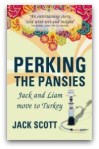
Perking the Pansies: Jack and Liam move to Turkey (Summertime Publishing, December 2011)
Author: Jack Scott
Synopsis: Dissatisfied with suburban life and middle management, Scott and his civil partner, Liam, abandon the sanctuary of liberal London for an uncertain future in Bodrum, Turkey. The book is based on Scott’s irreverent blog of the same name, which after its launch in 2010, quickly became one of the most popular English language blogs in Turkey.
How it came to our attention: Scott was featured as one of our Random Nomads in May of this year and since then, has done us the favor of commenting on and liking several of our posts. **Kate Allison will be reviewing his book for our site on Wednesday.**

Ramblings of a Deluded Soul (CreateSpace, September 2011)
Author: Jake Barton
Synopsis: In his inimitable style, the British-born Barton strings together snippets from new novels and try-outs with reminiscences and, for the first time, insight into his own remarkable experiences as a traveler and expat in Europe (he once owned a small French vineyard and had another job he’s not supposed to talk about). NOTE: Barton’s first novel, Burn, Baby, Burn, burned its way into the Top Ten of the Amazon All Books list.
How it came to our attention: Barton is an online acquaintance of TDN writer Kate Allison. We celebrated him in the early days of our blog for his insights on foreign-language learning in Spain.

A Tight Wide-open Space: Finding Love in a Muslim Land (Delridge Press, August 2011)
Author: Matt Krause
Synopsis: A Californian who is now a Seattle-ite recounts how he became an Istanbullu, all for the love of a beautiful Turkish woman he met on a airplane. The year is 2003, and he can still hear the echoes of 9/11 as well as being acutely conscious of America’s engagement in two wars in Muslim countries. Eventually, he comes to love his new home more deeply than he might have expected.
How we heard about it: Linda Janssen, who writes the blog Adventures in Expatland, interviewed Krause about his book in October.

Planting Dandelions: Field Notes from a Semi-Domesticated Life (Penguin, April 2011)
Author: Kyran Pittman
Synopsis: A native of Newfoundland (her father was a well-known Newfoundler poet), Pittman writes about co-parenting with her charming Southern U.S. hubbie (they have three rambunctious boys); keeping the fiscal wolf from the door of their home in Little Rock, Arkansas; and honoring her marriage vows despite her refusal to give up her party-girl persona.
How we heard about it: Pittman came to our notice when she was a guest on Kelly Ryan Keegan‘s Bibliochat in late September.

Big in China: My Unlikely Adventures Raising a Family, Playing the Blues, and Becoming a Star in Beijing (Harper, March 2011)
Author: Alan Paul
Synopsis: Paul tells the story of trailing his journalist-wife to China and unwittingly becoming a rock star. His Chinese American blues rock band, called Woodie Alan, even earned the title of Beijing’s best band.
How we heard about it: We were early fans of Alan Paul’s back in the days of his Wall Street Journal online column, “The Expat Life.” Also, Paul and his book were featured on Kristin Bair O’Keeffe’s Writerhead Wednesday this past April.

The Foremost Good Fortune (Knopf, February 2011)
Author: Susan Conley
Synopsis: Conley, her husband, and their two young sons say good-bye to their friends, family, and house in Maine for a two-year stint in a high-rise apartment in Beijing. All goes well until Conley learns she has cancer. She goes home to Boston for treatment and then returns to Beijing, again as a foreigner — to her own body as well.
How we heard about it: Conley and her book were featured on Kristin Bair O’Keeffe’s Writerhead Wednesday in early October.

SELF-HELP, CROSS-CULTURAL AND OTHER NONFICTION WORKS

The Globalisation of Love (Summertime, November 2011)
Author: Wendy Williams
Genre: Relationships, self-help, humor
Synopsis: Williams interviews multicultural, interfaith and biracial partners from all over the world on what it feels like to “marry out” of one’s culture, religion and/or race. She also talks to experts on the topic and coins a term for it: “GloLo.”
Expat credentials: From a British-Ukrainian-Canadian family, Williams has been married to an Austrian for 13 years and lives in Vienna.
How we heard about it: TDN writer ML Awanohara listened to Jo Parfitt’s interview with Williams on her Writers Abroad show (Women’s International Network) and was attracted to the ideas of a book that treats this topic with humor. **TDN writer Anthony Windram will review the book for our site tomorrow (Tuesday).**

Modern Arab Women — The New Generation of the United Arab Emirates (Molden Verlag, November 2011)
Author: Judith Hornok
Genre: Women’s studies
Synopsis: The book consists of 20 chapters, each a stand-alone interview with an Emirati woman from disciplines as varied as business, film, medicine and politics. The women talk to Hornok about their careers, philosophies of life and plans for the future. The book, which is published in German and English, aims to dispel some of the Western myths surrounding Arab women.
Expat credentials: While not quite an expat, Hornok has been moving between the UAE and her home in Vienna, Austria, for eight years.
How we heard about it: TDN writer ML Awanohara read an article on the book in The National (UAE English-language publication) and became intrigued.

Expat Women: Confessions — 50 Answers to Your Real-life Questions about Living Abroad (Expat Women Enterprises Pty Ltd ATF Expat Women Trust, May 2011)
Authors: Andrea Martins and Victoria Hepworth (foreword by Robin Pascoe)
Genre: Women’s self-help, family, relationships
Synopsis: Experienced expats share wisdom and tips on topics that most expat women face, such as the trauma of leaving family back home, the challenges of transitioning quickly, intercultural relationships, parenting bilingual children and work-life balance. They also tackle more difficult issues such as expat infidelity, divorce, alcoholism and reverse culture shock. The book is based on the “confessions” page of Expat Women, the largest global Web site helping women living overseas.
Expat credentials: Andrea Martins is the director and co-founder of Expat Women. An Australian who has spent many years abroad, she began dreaming of connecting expat women worldwide when an expat in Mexico City. Victoria Hepworth is a New Zealander who has lived in Japan, China, Russia, Sweden, India and is currently living in Dubai, UAE. She is a trained psychologist who specializes in expat issues.
How we heard about it: Andrea Martins announced the publication of the book to much fanfare on Twitter and in other social media venues. It has been widely reviewed on expat blogs.

Marriage in Translation: Foreign Wife, Japanese Husband (CultureWave Press, April 2011)
Author: Wendy Nelson Tokunaga
Genre: Relationships, self-help
Synopsis: Tokunaga conducts a series of candid conversations with 14 Western women about the challenges in making cross-cultural marriages work both inside and outside Japan. She quizzes them about the frustrations, as well as the joys, of adapting to a different culture within married life.
Expat credentials: Born in San Francisco, Tokunaga has spent numerous years studying, living, working and playing in Japan. She is the author of two Japan-related novels, published by St. Martins Griffin. Oh, and did we mention her Japanese “surfer-dude” husband?
How we heard about it: Sometimes one tweet is all it takes! (We follow Wendy Tokunaga on Twitter.)

A Modern Fairytale: William, Kate and Three Generations of Royal Love (Hyperion/ABC Video Book, April 2011)
Author: Jane Green
Genre: Romance, royalty
Synopsis: In this video book for ABC News, produced just in time for the Royal Wedding in March, best-selling chick-lit novelist Jane Green follows the stories of three generations of royal love from their meeting up to and after their respective wedding days. She concludes that Kate and William have a much better chance than William’s parents of enjoying a relationship on their own terms.
Expat credentials: Born in London, Green worked as a feature writer for The Daily Express before trying her hand at writing novels. She now lives in Westport, Connecticut, with her second husband and their blended family.
How we heard about it: One of us noticed that Jane Green had been tapped to provide coverage of the Royal Wedding for ABC News. We then invited her to talk about her e-book and engage with our readers in a debate on whether women should still aspire to be “princesses” in the 21st century — a post that received a record number of comments.

INSPIRATIONAL ANTHOLOGIES

Turning Points: 25 inspiring stories from women entrepreneurs who have turned their careers and their lives around (Summertime Publishing, November 2011)
Editor: Kate Cobb
Synopsis: In this collection of stories from women all over the world, the focus is on the moments, or short passages of time, when a woman was facing something challenging and came out the other side smiling.
Expat credentials: Cobb is a British woman living in France, and about a third of the contributors — including Jo Parfitt and Linda Janssen — are expats who now run their own businesses.
How we heard about it: Linda Janssen promoted the book on her blog, Adventures in Expatland.

Indie Chicks: 25 Women 25 Personal Stories (Still Waters Publishing, October 2011)
Compiler: Cheryl Shireman
Synopsis: 25 indie novelists share personal stories in hopes of inspiring other women to live the life they were meant to live. (All proceeds go to the Susan G. Komen Foundation for breast cancer research.)
Expat credentials: Close to half of these indie authors are expats or have done significant overseas travel. To take a few examples: After living in Portland, Oregon, for most of her life, Shéa MacLeod now makes her home in an Edwardian town house in London just a stone’s throw from the local cemetery. Linda Welch was born in a country cottage in England, but then married a dashing young American airman, left her homeland, raised a family, and now lives in the mountains of Utah. Julia Crane is from the United States but recently moved to Dubai with her huband and family (her personal story concerns the adjustment process).
How we heard about it: Again, sometimes all it takes it a tweet (we picked up one of Linda Welch’s).

* * *

Questions: Have you read any of the above works and if so, what did you think of them? And can you suggest other works to add to the list? My colleagues and I look forward to reading your comments below!

STAY TUNED for tomorrow’s post, a review of The Globalisation of Love, by Wendy Williams, and for Wednesday’s post, a review of Perking the Pansies, by Jack Scott.

If you enjoyed this post, we invite you to subscribe to The Displaced Dispatch, a weekly round up of posts from The Displaced Nation, plus some extras such as seasonal recipes and occasional book giveaways. Sign up for The Displaced Dispatch by clicking here!

Related posts:

A Julia Child for our times: Expat author & French cookery expert Elizabeth Bard

Et voila. In a little less than a month, The Displaced Nation has gone from reminiscing over American expat in France Julia Child to engaging with American expat in France Elizabeth Bard.

Move over Julie Powell. At a pace rather like a simmering le Creuset pot of Child’s signature boeuf bourguignon, Bard is on the way to becoming the 21st-century’s answer to that towering figure of 20th-century cuisine Française.

The similarities between the two women are intriguing. Child went to France as a trailing spouse for an American diplomat. Bard went to France trailing a Frenchman.

Child was seduced by France. She found herself through French cuisine. Bard was seduced by France (after being seduced by a Frenchman). She found a way into French culture through the markets and cooking — and found herself in the process.

On this point, the line between the two women gets a little blurry. Which one, Child or Bard, said the following:

More than the museums, more than the ancient streets, these stalls of fruits and vegetables and spices were the Paris that inspired me.

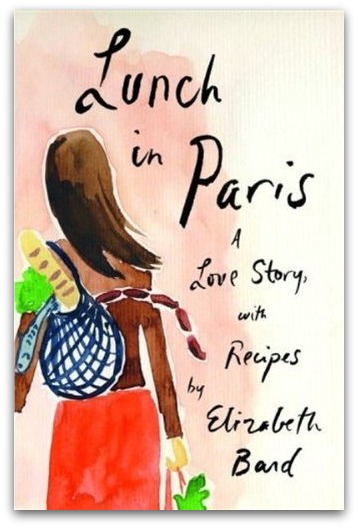
As everyone knows, Child returned to the United States to launch a career in television. Whereas Bard has become a long-term resident of France — and has launched a brilliant writing career with the publication of Lunch in Paris: A Love Story, with Recipes, a New York Times and international bestseller, a Barnes & Noble “Discover Great New Writers” pick, and the recipient of the 2010 Gourmand World Cookbook Award for Best First Cookbook. NOTE: We are giving away copies to two lucky DISPLACED DISPATCH subscribers. Sign up today!

Child inspired Julie Powell to make all of her recipes. Bard has inspired, among others, two Displaced Nation writers — myself and Anthony Windram — to try out her recipes.

But here the comparison ends. A key difference is that Bard’s recipes are nowhere near as difficult as Child’s — which is exactly what makes Bard so perfect for our times. She’s approachable, and her cooking suggestions are doable. She also has a rich life outside cooking — the life of a woman who has displaced herself into another culture — and enjoys sharing that part of her story as well.

Mesdames et Messieurs, I would now like to offer you the fruits (not to mention veggies) of my exchange with expat author, chef and lifestyle muse Elizabeth Bard.

Tell me a little more about your background.
I grew up in Northern New Jersey and spent weekends with my father in New York City. I studied English Lit as an undergrad at Cornell, then art history at Christie’s and the Courtauld Institute in London. My dream was to be the chief curator of the Pierpont Morgan Library in Manhattan. I was always convinced I’d been born in the wrong century. I love old objects, lost worlds, so, of course, I was instantly seduced by Paris (and of course, my French husband).

Over the years, I’ve written on art, travel and food, and digital culture for the New York Times, International Herald Tribune, Harper’s Bazaar, Wired, Time Out and Huffington Post, among others. Lunch in Paris was my first book.

In July 2010, my husband and I and our baby son Augustin moved to a small village in Provence, to live in the wartime home of the famous poet and WWII Resistance leader René Char. At the time, we had no plans to leave Paris — it was a date with destiny. You can find the complete (completely crazy?) story of how we found the house on my blog.

How are you finding life in Provence as compared to Paris?
As a city girl, village life is a discovery for me. I’m still adjusting to hanging my undies in the sun, and learning the names of the local birds (they can’t all be pigeons…). I’m surrounded by wonderful cooks and gardeners; last week, I went on my first saffron harvest. The move has been a wonderful transition for us as a family — it has made me question many of the things I believe about work/life balance, health, and being close to nature. All things I hope to share (along with my neighbor’s recipe for Provençal soupe au pistou) in my next book.

Turning to Lunch in Paris: What made you decide to write a book telling the story of your transition to living in France?
I hope Lunch in Paris captures something real about what it means to build a life in another culture. As an American, I follow generations of women who all came from somewhere else. They learned to cook with new ingredients, speak a new language, manage in a new world. My Jewish grandmother learned to make spaghetti sauce with pork ribs from the Italian ladies she met on line at the butcher shop during the war; I’m simply another in a long line.

Did you ever think of writing a novel instead? I ask because in reading the book, I kept noticing your facility with dialogue and description.
It never occurred to me to write Lunch in Paris as a novel. Fantasy lives in France are easy to imagine — but I wanted to express some of the things I’d learned personally, about what it means to take risks, to put happiness first on your checklist. That’s not a fictional decision — that’s something we struggle with every day.

Why did you decide to include recipes in your book?
Almost as soon as I arrived in Paris, I knew that I wanted to write about the roller coaster of international living, and the richness of intercultural marriage. When I sat down to think about the moments that really helped me discover French life, I kept coming back to the dinner table, the markets, the recipes — so it seemed natural to structure Lunch in Paris around those experiences.

Do you still use the recipes from the book and which one is your favorite?
I’m always trying new recipes, which I share on the blog or Facebook page, but I do use my copy of Lunch in Paris as a cookbook — I keep it handy in the cabinet with the pasta. The recipes I go back to again and again: for summer, it’s the haricot verts with walnut oil, for winter, the lentils. The tagines are great for a party — and the molten chocolate cakes work anytime.

Which portion of your book — Paris, the love story, the recipes — have readers responded to most?
I’m so surprised, humbled, gratified by the fact that Lunch in Paris has found such a wide audience. I’m so pleased that the book has been a vivid piece of armchair (or bathtub) travel for those who love Paris — and a temptation for those who’d like to go. I’ve had many young readers say it inspired them hold on to their dream of living abroad, or simply doing something a bit outside the box with love or career.

I’m also thrilled that people are getting their books all greasy, using the recipes — and posting photos of their creations on the Lunch in Paris Facebook page. I’m a home cook; I tested all the recipes myself. I was determined that readers take as much pleasure (and as little stress) in preparing them as I did. Maybe the nicest thing anyone has said came from a friend in London:

“It’s nice for Augustin to have such a wonderful record of his parent’s romance.”

I’m proud to be passing that on.

The thing that has surprised me the most is the wonderful online community. Though the readers are all over the world, it really feels warm and personal to me. I love that social media allows people to share recipes and stories from all over the world. A few months ago, I got an email from a New Zealander living in Crete. I now follow her blog to learn about traditional Cretean cooking.

As I mentioned in my intro, Julia Child was the inspiration for TDN’s October theme — and you remind me of a 21st century version of her in some ways. I’m curious, do you have her Mastering the Art of French Cooking — and do you actually use it?
I have my mom’s copy of Mastering the Art, but at the moment – I’m too busy trying recipes from my French neighbors to actually use it!

What did you think of Julie Powell’s blogging about making all the recipes from that encyclopedic book?
I love a good project — especially one that gets a girl out of a rut — it was fun to read about how the random adventures we set for ourselves can change everything.

How about the film, Julie & Julia?
The film — well, it just proves that Meryl Streep can do ANYTHING.

We’ve been asking our Random Nomad interviewees this month if they identify with any of the following Julia Child quotes and why. Can we ask you as well?
I agree with the choice that both Mardi and Jennifer made:

The only real stumbling block is fear of failure. In cooking, you’ve got to have a what-the-hell attitude.

I’d say this goes for goes for life in general — not just cooking. With all of our “Just-do-it” attitude, Americans are particularly prone to fear of failure: everything is possible, so everything we don’t accomplish is our fault. Fear is paralyzing. I work every day to get the hell out of my own way.

Quite a few of our readers are long-term expats who’ve entered cross-cultural marriages. What do you think is the biggest challenge about marrying someone of another culture?
The Franco-American combination is a very powerful one. I gave my husband a bit of the American can-do spirit, permission to pursue his dreams based on his own qualities, instead of family or class. He gave me a bit of the French joie de vivre — permission to live in the moment, to consider happiness, rather than some abstract (and culturally relative) notion of “success”, as my ultimate goal.

Was language an obstacle at all?
I speak fluent French now. It was a struggle at the beginning — you feel a bit invisible. That’s one reason cooking became so important to me. During the early days of our marriage, I used food to welcome people. My husband’s friends didn’t know if I was intelligent, charming, witty, or warm. What they did know is that I made a mean sweet potato puree. There were times when I used the kitchen to hide. French dinner parties are marathons of cuisine and conversation — 4 or 5 hours minimum. With the rapid-fire French buzzing in my ears, and my brain foggy from the wine, it was just easier to say, “I’m just going to check the roast” than “Dear God, I’m so bored and exhausted I’m considering sticking my head in the oven.”

Do you think you could fit back into living in American culture after a decade of living in France?
I’ve been away for a long time — and like many expats, I find myself in a no-man’s land, not quite one or the other. Honestly, I think the hardest thing about moving back to the States would be the portions — even with a great farmer’s market nearby I think it would be a struggle to maintain our very healthy French eating habits. That and the hyper-competitive attitude about raising kids. I’m not sure I’m ready for preschool applications.

As it happens, on October 13 Travelers Night In (#TNI) was French inspired, and everyone tweeted their answers to 10 questions about the best of the best in France. Could you do us — and the traveling community at large — the honor of providing your own short answers?
Q1. The best thing about French people is…
Food is not fuel.
Q2. France is famous for food, what dish is your favorite? Best food city?
Give me a perfect, flaky, buttery croissant.
Q3. Favorite French countryside escape?
The rolling hills of Burgundy — with a stop at the cathedral in Vézelay.
Q4. What is the most overrated thing about France?
April in Paris (it rains)
Q5. What defines Paris?
PDA (does that still mean public display of affection?)
Q6. French museum or monument that shouldn’t be missed?
Musée Jacquemart-André, Paris
Q7. Perfect place to enjoy a glass of French wine? What varietal, region, winery?
People watching along the Canal Saint-Martin, any glass recommended at the Verre Vole (rue de Lancry)
Q8. Top way to spend a night out in Paris?
Walking along the banks of the Île Saint-Louis with a double scoop of Berthillon sorbet.
Q9. Best things to do on the French Riviera?
We avoid the French Riviera — over-crowded, over-priced, over.
Q10. Biggest misconception about the French?
French cooking is complicated.

Thank you so much for engaging in this tête-à-tête! Readers, do you have your own questions for this 21st-century answer to Julia Child? Hurry up, before she disappears into her kitchen or heads out to another saffron field!

Images: Head shot of Elizabeth Bard by Cindi de Channes (2008); book cover.

STAY TUNED for tomorrow’s installment from our displaced fictional heroine, Libby, who is taking seriously her friend’s advice to make time for herself, and enjoying her freedom while Jack is in nursery school. Someone had better remind her that small babies tend to put a damper on such wanton activities. (Speaking of which, Libs — isn’t it time you saw a doctor?) What, not keeping up with Libby? Read the first three episodes of her expat adventures.

If you enjoyed this post, we invite you to subscribe for email delivery of The Displaced Dispatch, a round up of the week’s posts from The Displaced Nation, including seasonal recipes and book giveaways. Sign up for The Displaced Dispatch by clicking here!

Related posts:

A further Parisian lunch, à la displaced author Elizabeth Bard

As we’re continuing this month’s theme where we celebrate all culinary things Frenchie (well, you’ve got to really, the French are such a retiring lot — they’d never dream of singing their own praises), it seems like now is the time to let you into my shameful, dark secret. There is something in my past that I cannot escape from, no matter how much I may wish to. That secret, dear reader, is that I am, in fact, a quarter-French. Yes, some of my genetic make-up is Frenchie. Being a proud Englishman, this obviously churns me up inside.

Now my Gran, or Bonne-Maman as I called her, like many a Frenchie, thought of herself a good cook. Unfortunately for her she moved to England shortly after the end of the First World War. She left the bucolic center of France and found herself in the industrial paradise that is Teesside. It is somewhat redundant to note, but I will anyway, that England in the 1920s and 1930s was very different from the England of now. This is a time pre-Ainsley Harriot. Look at what passed for cookery films — not a single mention of Sally Salt or Percy Pepper. Even in the leafy climes of Islington you would be hard pressed to find a sun-dried tomato or a tub of hummus. These were dark, Ainsley Harriot-less times indeed.

So when I was instructed that as part of this blog I would be making a Parisian lunch using Elizabeth Bard recipes here in the Dennys-loving part of California that I call home, I thought back on my Bonne-Maman. Living in another country now is so easy. On my phone I can read English papers, I can, for the most part, try and approximate dishes that I’ve eaten in other countries. I can go into a supermarket in your average suburban strip-mall and I can guarantee I can find some exotic fruit or vegetable that it would have been unthinkable for this supermarket to stock 15 or 20 years ago. So when I received my recipes for an Omelette with Goat Cheese and Artichoke Hearts and for what Elizabeth Bard titles Better than French Onion Soup (after today’s Rugby World Cup Final, I’m guessing she means it should be called New Zealand Onion Soup), I’m struck by how easy it is to find all these ingredients and how easy it would be to find them in my hometown, where my Bonne-Maman spent the next 60 years of her life after moving there from France as a young adult.

But, for the most part, Bonne-Maman wasn’t able to get everything that she needed and so would make do with local alternatives. As a child in the early 80s when Bonne-Maman was still able to live in her own house and do her own cooking, I saw the end product of all of her years living in the north-east of England (hardly the gourmet capital of the world) and the compromises she had to make to recreate dishes from her French background. There was a whole repertoire that she had. One, in particular, that I recall was that when she would make a roast she would have a little side-dish to go alongside it that consisted of sliced onion doused in malt vinegar. It seems curious, though the way she made it, not at all unpleasant, and I am sure it has some French classic as its antecedents and for years could probably only buy malt vinegar in Hartlepool. The other thing I remember is steaks. Her steaks were bloody, which I think the neighbors rationalized as her being French (and they are such an odd sort). I seem to recall this being a source of contention in my parents’ relationship as my Dad favored the bloody steaks he had been brought up on, but my Mum insisted that they had to be cooked well-done. It was a debate that was only ended when the crisis over British beef in the late 80s saw my family dramatically reduce its beef consumption.

So as I follow Elizabeth’s recipes, I am just struck by how easy it is to buy and prepare all the ingredients that I need to recreate a delicious Parisian lunch, but my poor grandmother had to make do with malt vinegar, pease pudding and her own ingenuity.

STAY TUNED for tomorrow’s post on classic displaced writing.

If you enjoyed this post, we invite you to subscribe for email delivery of The Displaced Dispatch, a round up of the week’s posts from The Displaced Nation, including seasonal recipes and book giveaways. Sign up for The Displaced Dispatch by clicking here!

Related posts:
A Parisian lunch in Manhattan, à la displaced author Elizabeth Bard

I have a confession to make. I have a bit of fluff on the side. I’ve had it for many years now — and the flame of my passion never diminishes. The love burns in my soul, aches in my flesh, and ignites my nerves.

Why am I revealing this now, and in such a public way? As you may know, the Displaced Nation is dedicating many of its October posts to the joys of moving to France and learning French cooking.

I take this as a sign that the time has arrived for me to own up to my own rather torrid relationship with La Belle Cuisine Française — she of infinite variety, who makes hungry where she most satisfies.

Admittedly, I do feel a little guilty talking so openly about our affair while my husband, who is Japanese, is away on a business trip. (Because I’m so practiced at hiding it, I think he assumes that, like him, I would always choose Asian food over Western, Italian over French.)

But there you have it, my little secret. And now that it’s out in the open, allow me to report on my most recent tryst — a Parisian lunch I hosted in Manhattan yesterday using the recipes of Elizabeth Bard, who will be featured on this blog next week. A former New Yorker who now lives in Provence with her French husband, Bard is the author of Lunch in Paris: A Love Story, with Recipes.

Friday, Oct 7 — plotting my assignation

I download Bard’s book to my Kindle and retreat to bed — mais oui! — for a read.

I am instantly enchanted. Bard is a woman after my own heart: she went to Europe to study and then fell head over heels for the culture, a man, the food…

I’m having a hard time choosing among Bard’s recipes, though.

The guest list is easy: my sister (who will go into the hospital on Wednesday for an operation, after which she won’t be able to enjoy food for a while) and two foodie friends, a couple, with whom I’ve collaborated on some lovely meals.

Except this time I’ll be going solo, especially as my husband is away (though maybe that’s just as well as he tends to dismiss French food out of hand, and therefore out of kitchen, for being too rich and creamy).

Actually, it’s the main course I’m dithering about — not the starter or the dessert.

I know I want to do mussels for the opening course as that’s one of my sister’s favorites, and Bard has a classic recipe for Mussels with White Wine and Fennel (and fennel is now in season).

I see that on her Web site, Bard has a recipe for Spicy Chocolate Pots with Fresh Figs — and quickly decide to make that my dessert. Like most sane people, I consider chocolate (along with champagne and oysters) to be the perfect food for revving up the libido.

And figs — Bard says that every autumn, around this time, she stages her own mini Figapalooza. I like the sound of that orgy. The more I think about it, the more convinced I become that the Bible got it wrong: Eve must have seduced Adam with a fig, not an apple. Didn’t he cover himself up with a fig leaf afterwards?

Speaking of apples, the recipe of Bard’s I’m most attracted to for the main course is her Pork Tenderloin with Four Kinds of Apples. The only thing holding me back is that my sister has a pet pig. For a moment, I imagine being able to persuade her to partake of this forbidden meat. “Oh, go on, just one little taste…” But then I realize how offended I’d be, as a dog owner and lover, if I were invited to lunch at a Korean household and they were serving dog.

No, not a good idea. So I opt for Bard’s Pasta with Fresh Peas, Arugula, and Goat Cheese for my main. To be honest, I feel a little sheepish about it. Surely my infatuation with La Belle Cuisine should drive me to my boldest feats of exploration and invention?

But then I remember Bard’s story about her husband-to-be inviting her to lunch at a Parisian restaurant that specializes in du porc noir de Bigorre. She refuses to indulge, even (especially?) when the waitress tells her he’s a happy pig, ordering the cassoulet instead.

Pasta it is, even though the only thing French about it involves topping the pasta with extravagantly big gobs of goat cheese.

Saturday, Oct 8 — shopping for just the right ingredients

I head to the green market in Union Square very early, my two dogs in tow. Just before I reach the Patches of Star Dairy stand, which sells fresh goat cheeses and goat cheese ice cream, one of them, my cocker spaniel, scavenges a brussels sprout and someone asks me if he is a vegetarian. (I wonder if his English springer spaniel heritage is kicking in, and he’s registering his disapproval of my love affair with France?)

Other green market finds include freshly picked arugula (also for the pasta), onions and fennel (for the mussels), and heavy cream (for the dessert).

I see some blue salvia at the flower stall that remind me of postcards I’ve seen of Provence, and appropriate these for the table decor.

I still need to get peas (they aren’t in season), so leave the dogs at home and go out again. Bard makes a curious observation at the start of her pasta recipe:

Five years ago, if someone told me I would take this much satisfaction in shelling my own peas, I would have laughed out loud. How times have changed.

I guess I’m not quite there yet (or perhaps I was there when I was younger — am I getting too old for these affairs?), as I find myself heading to the Trader Joe’s on 14th Street for a bag of freshly shelled English peas (yes, English — apparently there are limits to my love).

Actually, waiting on the line at Trader Joe’s on a Saturday is almost as tedious as shelling peas, and I almost laugh out loud — but then console myself by noting that I’ve also managed to score the bow tie pasta. It’s not whole wheat, though, as Bard recommends. I’m not sure if I’ve ever seen whole wheat farfalle, TBH. (I wonder where Bard gets hers?)

It still remains to get fresh pesto (from the Italian specialty store on E 11th St), Green & Black’s 70% organic chocolate and ras el hanout for the dessert. I find both of these items at the Indian grocery around the corner from Little India. The ras el hanout is labeled “couscous spice” and smells appropriately exotic.

I stay up late infusing the ras el hanout in the heavy cream and melting the chocolate in that mixture for the dessert. Heaven!

Sunday, Oct 9 (morning) — final mad preparations

Another early start. I swing by the East Village Cheese store for a fresh whole wheat baguette, and then it’s off to the green market at Tompkins Square Park, to buy fresh mussels at the fishmonger’s.

There’s a spring in my step as I approach his stall. I am a woman in love, a woman possessed. Little do I know that disaster is about to strike — he had only a small supply of mussels and sold them all first thing.

Aïe. I stumble away from his stall trying to hide my tears. But then, American ingenuity kicks in: why don’t I try using Bard’s recipe but for little neck clams, which are in large supply? I go back and discuss with the fishmonger, who’s a friendly sort, très sympathique. He ends up giving me 40 clams for the price of three dozen.

But I’m not out of the woods yet. I have forgotten the figs — those delectable little fruits that ooze with flesh and seeds when you cut them open. Despite trying three grocery stores, I can’t find a single fig in the East Village — and this is fig season. Go figure!

On this ingredient, I cannot compromise. I text my foodie friends who are coming to the lunch (they live in the West Village) and ask them to scour the shops for the fleshiest, freshest figs they can find. They come through for me, confirming my long-held belief that West Village is the city’s epicurean center.

Sunday Oct 9 (1 p.m. onwards) — ah, quel plaisir!

My sister and friends arrive, the wine (initially the Muscadet I’m cooking the clams in) flows, and conversation does as well, ranging from tales of our misspent youths to the Wall Street protests.

I produce the first course, and it’s judged a big success. Does anyone mind that it’s clams and not mussels, I ask? All agree that it’s the broth that counts — and the broth, a mix of fennel, onions, garlic and white wine, is divine.

Despite being a little tipsy on the wine — we have now progressed to a bottle of red from the family domaine of Robert Sérol, au cœur de la Côte Roannaise — I manage to make the bow tie pasta al dente. I stir in the peas and the pesto, divide among four plates and then dollop on the lightly salted chevre. My guests and I gorge ourselves on this latest creation, exclaiming as several nuances emerge and caress our taste-buds — oh là là!

I suggest that we take a short break before the dessert. My cocker spaniel is nipping at my pant legs — signaling that it’s time for the guests to go home as he needs my full attention (and some treat toys with the leftovers).

But my other dog, who is mostly poodle, is having the time of her life (bien sûr), making several rounds with the guests for extended petting sessions.

Enfin, it’s back to the table for my chocolate dessert, which, I’m sorry to say, falls a little flat because — absolument incroyable! — it’s too chocolatey. Is that our fault (we don’t know chocolate from chocolate) or could the recipe use some sugar?

But the purplish-brown figs, which are ripe and ever-so-sweet, save the day.

Over little cups of coffee we all agree that my Parisian lunch at the hands of Elizabeth Bard has been an affair to remember.

Monday, Oct 10 — the morning after

My husband calls in the wee hours of the morning. He is now in Tokyo, with another week to go on his business trip.

“How was your Sunday?” he asks.

“Well, I had some my sister and some friends over for a little lunch,” I reply, thinking to myself: what he doesn’t know won’t hurt him.

I go back to bed and awaken several hours later, at around 8:00 a.m. I lie there for a few minutes, basking in the afterglow of yesterday’s tryst.

When I at last rouse myself and face the mounds of dishes still to be done, I realize that this little flirtation of mine has its costs (not to mention my exhaustion at having to clean the apartment).

At least the hole in my pocketbook isn’t too bad. I reckon this particular fling has cost me around $80, including the wine — not bad considering what it would cost for four people to go out for a proper French lunch in Manhattan.

Hmmm… I wonder if I can fit in one more quickie meal before my husband gets home on Friday?

As Mario Cuomo, former New York State governor and father of our current governor, once said:

When you’ve parked the second car in the garage, and installed the hot tub, and skied in Colorado, and wind-surfed in the Caribbean, when you’ve had your first love affair and your second and your third, the question will remain, where does the dream end for me?

Touché — only I don’t think he’s ever been seduced by French cuisine à la Elizabeth Bard?

Images (top to bottom): Friendly fishmonger at Tompkins Square Park; little neck clams in fennel; an enthusiastic canine participant; chocolate pot with figs.

STAY TUNED for Tuesday’s post on classic displaced writing.

If you enjoyed this post, we invite you to subscribe for email delivery of The Displaced Dispatch, a round up of the week’s posts from The Displaced Nation, including seasonal recipes and book giveaways. Sign up for The Displaced Dispatch by clicking here!

Related posts:

RANDOM NOMAD: Mardi Michels, Elementary School French Teacher, Home Cook, Writer, Photographer & Traveler

Born in: Adelaide, South Australia
Passports: Australia (by birth), Britain/EU (through my dad), Canada (I became a citizen in 2007)
Countries lived in: France (Paris): 1995-2000; Canada (Toronto): 2000-present
Cyberspace coordinates: eat. live. travel. write | my creative refuge from academia (blog); eatlivtravwrite (Twitter handle)

What made you leave your homeland in the first place?
I left Australia because I was working on my PhD in French literature and felt it made a lot more sense to be in the country of the language and culture I was studying. Soon after moving to Paris, I began working in a restaurant (Woolloomooloo Restaurant Australien — now closed) to supplement a meagre scholarship. About a year after moving to Paris, I got a job teaching English at Université Paris X and I was hooked on teaching English (I was already qualified to teach French) so I undertook my Dip TEFL [professional diploma in Teaching English as a Foreign Language] at the University of London Institute in Paris, eventually scoring a full time teaching job at the British Council. My PhD? Incomplete…

Is anyone else in your immediate family “displaced”?
My sister also left home when she was in her early 20s to complete a PhD at Oxford (which she did), and from there she worked in banking all over the world (England, Singapore, Japan). She has also traveled extensively in South America. She, too, has ended up in North America (New York City), teaching math!

How about your husband? Is he displaced?
He was when we first met — in Casablanca in December 1999. I was on a vacation in Morocco, and after that two-week jaunt, Mr Neil followed me back to Paris for a visit. He is the reason I am now in Canada. Six months after he visited me in Paris, I had a job teaching in French in Toronto lined up for the 2000-01 school year — and the rest, as they say is history. Neil is originally from Vancouver but has traveled the seven continents to some “out there” places. I mean, how many people do you know who have been to Easter Island?

Describe the moment when you felt most displaced.
The first time I had to do lunchtime outdoor yard duty the first year I was living in Toronto. I was ill equipped for the cold, wearing leather boots and a wool coat that was more than adequate in Paris. Not so much here. It was five years before I succumbed to the puffy coat and winter boots.

Describe the moment when you felt least displaced.
Honestly? Stepping off the plane this past summer when I arrived in Paris. I try to get back there every year or so (I completed my MA in Second and Foreign Language Teaching a few years ago, requiring me to take courses two summers in a row in Paris). Even though I have lived longer in Toronto now than I did in Paris (and I love my life in Toronto), and I don’t have any family there, Paris is still a place where I feel curiously “at home.”

You may bring one curiosity you’ve collected from each of your adopted countries into the Displaced Nation. What’s in your suitcase?
I’m thinking cookware from Mora (a treasure trove of ring molds, tart pans and other French pastry equipment) or A Simon (good selection of glassware and heavy-duty white French porcelain) — both on rue Montmartre; or else baking ingredients from G Detou, one of the world’s great food shops, in Les Halles.

You’re invited to prepare one meal based on your travels for other Displaced Nation members. What’s on the menu?
The meal I would prepare for you would include a dish inspired by each continent. My husband and I have visited all seven continents, and we actually hosted this luxury dinner last year, as documented on my blog:

  • Moroccan spiced chick peas
  • Vietnamese caramelized chili prawns
  • Italian polpette d’uova
  • Australian micro meat pies
  • Mexican tortilla chicken soup
  • Cuban ropa vieja
  • Panamanian (coconut) rice with pigeon peas
  • Jamaican jerk chicken
  • Île flottante

You may add one word or expression from the country you’re living in to The Displaced Nation argot. What will you loan us?
I couldn’t pick one specific one but some words that have crept into my vocabulary (and that of my students’) include hop là, aïeoh là là, et hop, and ouf — words that sound ridiculous removed from the context of everyday French vocabulary but that have turned out to be very useful in the context of my classroom 😉 Surely The Displaced Nation could use a few more interjections?

It’s French Cuisine month at The Displaced Nation. Who is your favorite French chef, living or dead, and why?
Whilst she is not French, it has to be Julia Child, mainly for her “can-do” attitude.

Julia Child is the role model for our posts this month — and has just now been inducted into our Displaced Hall of Fame. Of the following three quotes by her, which one do you most identify with?

1) The only time to eat diet food is when you’re waiting for the steak to cook.

2) The only real stumbling block is fear of failure. In cooking, you’ve got to have a what-the-hell attitude.

3) Until I discovered cooking, I was never really interested in anything.

I have to say the quote I most identify with is “The only real stumbling block is fear of failure. In cooking, you’ve got to have a what-the-hell attitude.”

I teach a once a week cooking class to nine-to-eleven-year-old boys, called Les Petits Chefs; and though my students are pretty young and cannot be expected to know a lot about cooking (yet!), I found myself thinking of them as I read this quote. What continues to amaze me about my group of little chefs is their willingness to try new things and their (mostly) complete lack of fear about being in the kitchen (well, science lab, in our case!). Yesterday, for example, I had five little boys cutting up raw chicken (thighs, no less, so much messier than neat clean breast meat), and I watched them attack the task with great gusto. No fear (though a few “ewws!”) — they just got on and did the job, trusting me that the icky meat would be turned into something delicious in about 30 minutes (it was!).

Readers — yay or nay for letting Mardi Michels into The Displaced Nation? Tell us your reasons. (Note: It’s fine to vote “nay” as long as you couch your reasoning in terms we all — including Mardi — find amusing.)

img: Mardi Michels and her mari, Mr Neil, at the Fêtes de Bayonne (2008).

STAY TUNED for tomorrow’s installment from our displaced fictional heroine, Libby, who seeks advice on her unexpected second pregnancy from someone who is older…if not altogether wiser. What, not keeping up with Libby? Read the first three episodes of her expat adventures.

If you enjoyed this post, we invite you to register for The Displaced Dispatch, a round up of weekly posts from The Displaced Nation. Includes seasonal recipes and book giveaways. Register for The Displaced Dispatch by clicking here!

Related posts:
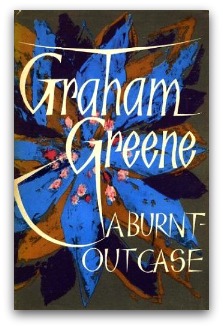
RETURN TRIP: Even in Paris, expats can’t escape former lives: A celebration of displaced novelist Corine Gantz

As summer draws to a close, The Displaced Nation is reissuing some posts that, for one reason or another, have enchanted our readers. Enjoy these “return trips”!
This past spring, The Displaced Nation interviewed Corine Gantz, a popular expat blogger, about her newly published novel, Hidden in Paris. The action centers on a group of expat Americans trying to start their lives afresh in the City of Light. At that time, TDN was exploring the theme of Gothic Tales. We wanted Mme Gantz to tell us more about the premise at the heart of her book — the idea that people travel to other lands to escape their former lives. How does it usually play out: as a dream come true or as a recurring nightmare?
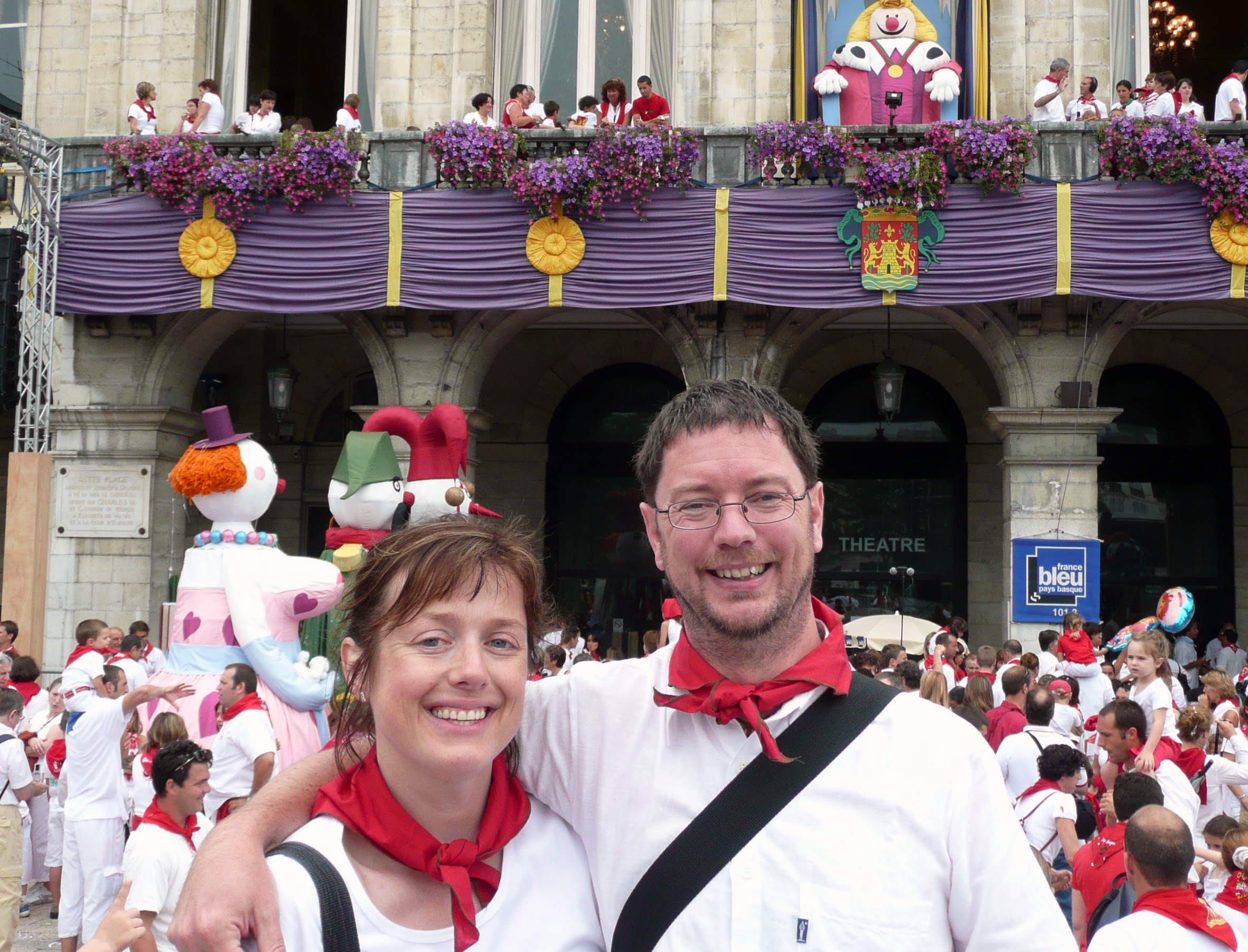
The Displaced Nation has been examining the “gothic” side of expat life over the past couple of weeks. Thus it may seem odd that today we have chosen to celebrate a book that takes place in La Ville-Lumière (“The City of Light” or “The Illuminated City”) by an author who lives near the City of Angels.

But looks can be deceiving — and the cover of Corine Gantz’s debut novel, Hidden in Paris, is quite a cunning ruse. It shows a Parisian balcony with French doors reflecting the Eiffel Tower, and a flower box bursting with hot-pink geraniums. What could possible be amiss within such a picture-perfect setting, you may wonder? Plenty, it turns out.

But before we get into that, let’s begin our fête in honor of Mme Gantz and her book. To put ourselves in the proper mood, we have prepared a special cocktail, a French 75. We’ve also gone all out with our canapés. There’s a savory gougère, brie en croûte, duck rillettes, chilled asparagus with mustard sauce, a Puy lentil salad — and, in honor of Mme Gantz, her family favorite, taramasalata on toast (see her father’s recipe below).

Okay, seats, please! Our honored guest has agreed to kick off the festivities by answering a few questions from The Displaced Nation team. After that, the floor is yours, dear reader.

Hidden in Paris coverYour new novel, Hidden in Paris, may not tell a gothic tale per se, but we think it relates to our theme because it centers on three women who are running away from their lives. Is that a fair assessment?
People who say they love to be scared amuse me. They have a fascination with horror flicks, they read vampire books, they ride roller coasters. Yet they might be the same people who walk great circles around a pile of bills or make every effort to avoid a difficult phone call. What can be scarier than real life?

I think there is a limit to what we can handle, and at some point the tendency is to want to run way, literally or figuratively. In Hidden in Paris three strangers — all American women — have reached the point of terminal discomfort, when tackling real issues feels more terrifying than running away abroad.

Lola is running away from her husband, Althea from an eating disorder, and Annie, although she pretends to be the most high functioning member of the group, is hiding the biggest secret of all. (Just to add some spice, there is also a male character, Lucas, who is hiding his love for Annie.)

People often fantasize that “elsewhere” — particularly Paris because of the attached notion of romance — will solve their problems, or at least make the problems go away for a while. Well, we long-term expats know better. Moving to another country brings great logistical changes to one’s life, which can distract you into thinking you’ve left your pathos behind, when, in fact, you’ve brought it along in your suitcase. Wherever you go, you bring your own personal gothic tale with you.

In the case of these three female characters, the disruptions to their routines, along with new encounters, bring them to the tipping point toward change.

The thing is, as in real life, my characters fight the change they need kicking and screaming, which makes for fun story telling.

Food is another obsession of ours at The Displaced Nation. We detect from reading an excerpt from Hidden in Paris that it also plays a big role in your book.
You detect correctly. For me, writing a novel is a barely disguised way for me to talk about food — the novel being a vehicle for food just as grilled toast is a vehicle for foie gras.

I grew up in France on my mother’s terrific cooking. But she is the type of cook who wants no help in the kitchen, so at age 23 I arrived in the United States never having cooked an egg. I was terribly homesick and depressed and needed to “taste home” again — so had no choice but to teach myself how to cook. The saving grace was that I had a copy of a recipe book filled with my mother’s recipes, so I proceeded to recreate the food, and jolly myself out of my depression. Cooking gave my life a purpose: it became my creative outlet.

I think the preparation of food can be extremely healing, meaningful and joyful. Food is, after all, the soul and spirit of a home. I enjoy cooking as much as I enjoy eating, and when I’m not doing one or the other I’m telling stories where food turns out to be one of the principal characters.

You are a Française who has been “displaced” to the Los Angeles area for a couple of decades, where you live with your American husband and two sons. Does your novel echo that experience?
Had I landed on an alien planet I doubt I would have been any more confused and out of place. I understood none of the codes, none of the cultural references, of Los Angeles. I could not understand people or express myself — and I resented them for that.

Writing sprouted from this: the frustrated need for self-expression and communication. Like my protagonist, Annie, I had to figure out how to function, and I would be lying to say I functioned well. Also like Annie, I resisted my country of adoption for years. I did not have both feet in it. A part of me felt in limbo: I was standing by for my eventual return to my home country.

Twenty years later I don’t even feel French anymore, but no one here lets me forget I’m not American either. Americans seem fascinated with my Frenchness, as though it defines me. For example, it’s often about how I say things rather than what I say. Yesterday I was saying to a friend: “On the envelope my husband gave me for mother’s day there was a…” She interrupted and said: “Could you repeat that?” I repeated and she fell into peals of laughter: “I just love how you said the word ‘envelope’!”

In Hidden in Paris, I wanted to transpose my experience and reverse it. I wanted to bring American women to France and see how well they coped with that set of codes and cultural idiosyncrasies. That’s only fair, don’t you think? I’m a little miffed to report that they are more adaptable than I was.

You have a popular blog, Hidden in France, where you’ve been entertaining Francophiles and others with stories of the writing life, décor, food, family, travel and all things French. In fact, The Displaced Nation has featured one of your posts — about the time you fell into your swimming pool when the first day of spring brought heavy rains to the LA area. Tell us, has your blog had an influence on your writing? Also, why have you chosen the trope “hidden in”?
The blog has everything to do with my writing. Before the blog, I was a closet writer, ashamed that my English was too imperfect. The blog gave me a sense of just how forgiving and supportive readers were. I have readers now, and I have fans! Had I based my self-worth as a writer on agent rejections, I would have changed my hobby to fly-fishing. Readers are what make someone a writer.

The word “hidden” is significant only in the sense that I was hiding for years behind an alias as a blogger, and I just recently came out as writer for the world to see (speaking of fear…).

When it came time to settle on a title for the book, it felt natural to give it the same title as the blog — but I decided against it because there was already a memoir by that name. So Hidden in France became Hidden in Paris.

Finally, The Displaced Nation supports a fictional character, Libby, who is about to move from London to Boston with her husband. Do you have any advice for her?
Well, how about if I let my own fictional character, Annie — who moved from Boston to Paris to follow her own husband twelve years ago — speak to Libby directly:

Don’t do it, Libby! Kidding! Well I would suggest you have more babies, some siblings for your son, Jack, and fast. They will keep you busy and busy is the name of the game: no time to think! And if you decide against having more babies, then take on a hobby (such as cooking and eating) to keep your sanity without demanding that your husband become your everything for companionship, friendship and intellectual stimulation.

Don’t be like me in other words. Don’t forget that the man has a job and he is tired at the end of the day and nobody needs a needy wife. (Sorry for the harsh words, Libby, but this is the truth.)

You could also take a run-down house and remodel it. I did. You will have no skin left on your fingers but lifting bags of concrete makes for pretty shapely biceps. The remodeling might bring you to financial ruin but if that becomes the case, you will always have eating, which you can become very good at.

Without further ado, let’s pour the champagne for a toast to Corine Gantz. Tchin-tchin! And now, patient reader, it’s your turn. Questions, please, for this très gentille debut novelist… If you want to check out her book a little more, go to her author’s site, and to buy it, go to her Amazon page.

Taramasalata on toast — Corine Gantz’s family recipe
You will need:

  • one packet of smoked cod roe (seriously, can you even find this in the US?)
  • 8 tablespoons safflower oil
  • 2 tablespoons lemon juice.

Mix fish roe and lemon juice, then slowly beat with a fork and add the oil as you would do to make mayonnaise.Spread thinly on toasts and serve with very good champagne, et voilà! Très festif.

Images: Author’s photo; Hidden in Paris cover, artwork by Robin Pickens.

If you enjoyed this post, we invite you to subscribe to The Displaced Dispatch, a weekly round up of posts from The Displaced Nation, plus some extras such as seasonal recipes and occasional book giveaways. Sign up for The Displaced Dispatch by clicking here!

Related posts: