The Displaced Nation

A home for international creatives

Tag Archives: North America

Some funny things happened on the way to paradise, as recorded in this brilliant new expat memoir

Paradise Imperfect Collage

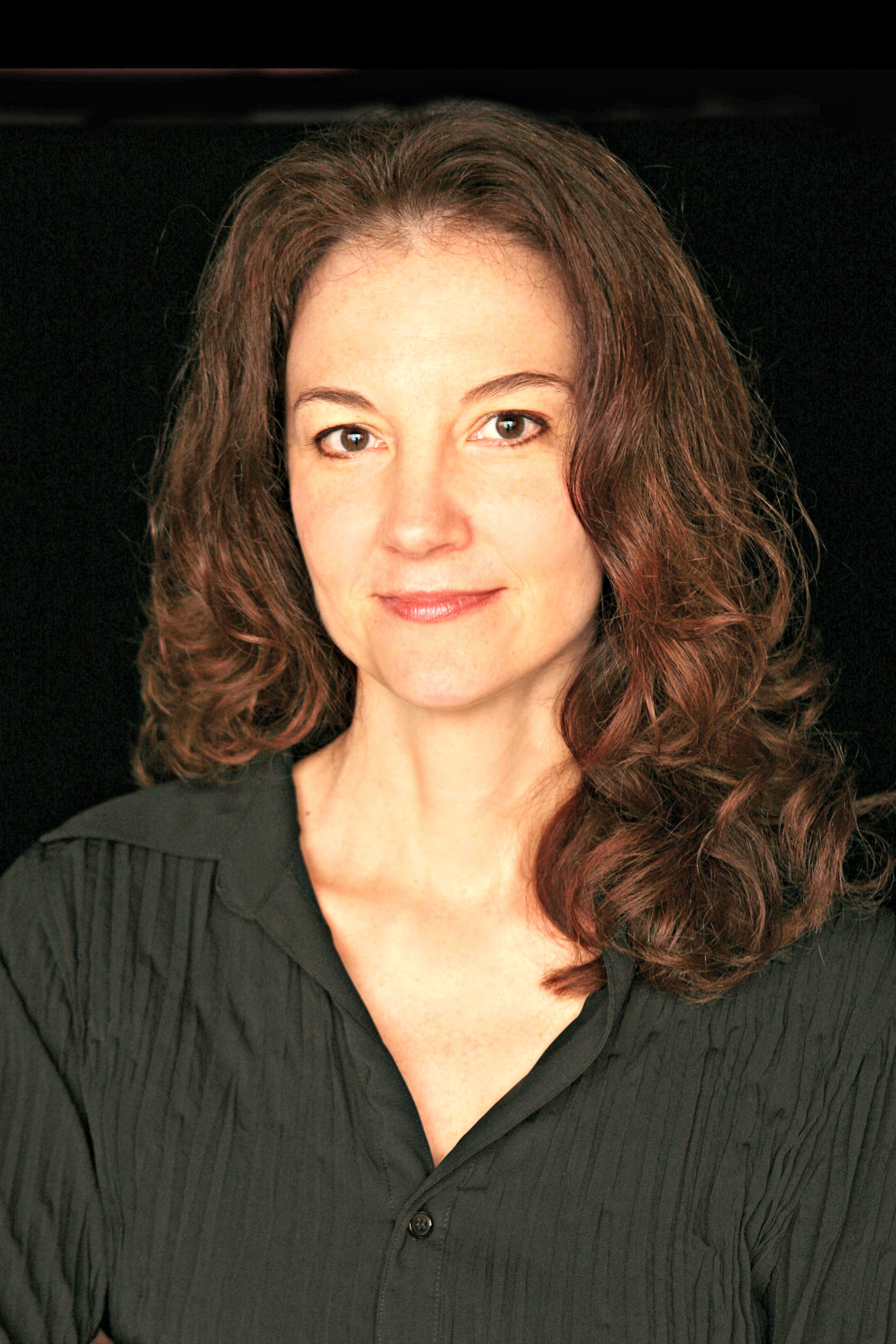
Clockwise from top left, surrounding Margot Page’s author photo (center): Monteverde waterfall; the family’s front yard; Margot, her husband,and their three kids; sunset; their youngest child, Ivy, on the vine outside their house; first day of school. All photos courtesy of Margot Page.

Before introducing today’s guest, Margot Page, I’d like to make one thing clear. When I first read of her decision to uproot herself, her husband and three young kids from their comfortable life in Seattle to spend a year in Costa Rica, I thought it made perfect sense.

In fact, it reminded me of my initial decision to try living abroad. While I wasn’t married with kids, nor was I looking to land in paradise, I sensed that I needed to get a wider perspective on my own country. It was before the era of the dot com boom and crazy Wall Street wealth, but even then, we Americans were becoming a pretty spoiled and entitled lot. I almost couldn’t bear to watch it and wondered: would my life be enriched if I tried living with less?

Now that I’ve made that clear, let’s return to Margot’s story. As she notes toward the beginning of her wonderful memoir, Paradise Imperfect, Seattle in 2003 could drive a person crazy:

It was an environment that made a person constantly aware of how rich other people are.

Thanks to all the overnight Microsoft millionaires, her family often felt “downright poor,” she says, despite enjoying a high standard of living and a reasonable amount of money.

Margot missed out on her opportunity to go abroad while still single—to “confront her privilege,” as she might say. But she is feisty enough to think that she need not forgo the expat experience of her dreams. A dozen years into her marriage, she finagles it so that she and her husband, Anthony, could quit their jobs, rent out their house, and head off with their three children, 4, 9 and 12, into the mountains of Central America, for a year.

The family settles down in the cloud forest of Monteverde, where the kids attend a “school in the clouds” with many Tico classmates and the entire family works hard on mastering Spanish. While it is enjoyable to read about their adventures in that part of the world—which at one point include a trip to Nicaragua, where they received a “full-on truth assault” about what poverty really is and hence their “own, unimaginable wealth”—there are plenty of other reasons to read the book as well, not least of which is that Margot is a gifted writer possessed of a self-deprecating sense of humor (always a huge plus at the Displaced Nation). She is, in short, jolly good company, as we shall see in the interview that follows. NOTE: Margot has generously offered to GIVE AWAY ONE FREE COPY to the person who leaves the most compelling comment about why they’d like to read her book.

* * *

PI_FrontCoverMargot, pura vida! Welcome to the Displaced Nation. Many people may not realize that you waited ten years before writing a memoir about the year you and your family spent in Costa Rica. Why was that?
Actually, I did try to write the book when we first got back—I just couldn’t get it done! But the great thing about that initial effort is that I wrote down a lot of the events when they were still fresh. Then, when I was actually ready to write the book, I was able take those stories and stand back from them, and see the picture they formed. You might liken it to an impressionist painting. Up close, I could have looked at an event from that year and said “Hmm, nice dot.” But with the distance of time, I could see that all the dots made a picture, with form and theme and sense. Had I managed to get it written right away, Paradise Imperfect would have been a completely different book.

Did you ever think of writing a novel instead?
More than one publisher suggested I turn Paradise Imperfect into a novel. Fictionalizing your story really lets you pile on the crises. Memoir only has a chance with the big publishing houses these days if you’re either already a celebrity (Tina Fey, Hillary), or if something truly hideous happened to you. If I’d had to saw off my arm or a couple of the kids were on meth, the big houses would have been all over me. As it was, they were very “Ooooh, we love your writing! Can you turn it into a novel?” Because then of course I could introduce some addictions or incest or something—you know, the stuff that really makes a story pop.

You went from a harried existence with very little work-life balance in Seattle, to a carefree, pura vida existence in Monteverde. Looking back, what do you think was your strongest impetus for packing it all in like that?
I think my impetus was about the same as anyone’s who’s living a busy, full life and has one of those days where you just feel like you’re running the whole time. The only difference is that a lot of people take a bubble bath at the end of that day, maybe pour a glass of wine—whereas I rented out the house and bought airplane tickets. It’s still not entirely clear to me what made that night different from a bubble bath night. Although clearly, the bubbles weren’t doing it for me anymore.

From reading the book, I know that even though you didn’t work in Costa Rica, you were far from idle. You applied yourself to learning Spanish and also did some volunteering—which had the added benefit of helping you practice your Spanish.
Yes, I went from working more than full time to volunteering a few hours each week at an amazing art gallery/studio; one of the owners painted me the piece of a woman in a hammock, stretching her toes to heaven, which became the cover of Paradise Imperfect. So while the kids did their homework, I would work on my Spanish, or practice painting assignments.

“The mind is its own place, and in itself can make a heaven of hell, a hell of heaven…”

No doubt you’re familiar with the expression “Be careful what you wish for”. Was all the family togetherness as wonderful as you were hoping?
The initial period, when it was just the five of us, on top of each other all the time—that was a real challenge. It’s a good thing to have done, but it wasn’t so delightful in the doing. Of course, as we grew into our lives there, other people got incorporated, which was great. Kids would go off with friends, people would come over. And, as time passed and we adjusted to the conditions, we found all kinds of goofy things to do with ourselves. We had dance parties in the living room, just the five of us. We’d walk several kilometers just to get a milkshake and go to the library. There was much flopping around in hammocks with books and conversation. And with no sports practices to work around, dinner was a nightly togetherness event, with kids helping cook and clean the kitchen.

When I saw the title to your book, I was thinking of Milton’s Paradise Lost. In your case, paradise was imperfect. Why is that?
Paradise is imperfect because people are. We just ARE, and putting us in front of a really pretty waterfall just means you have flawed, funny people in front of a really pretty waterfall. In Costa Rica, we were strangers in a strange land together, and that made us incredibly close—which was wonderful, but you know, the closer you are, the more blemishes you can see. Wherever we go in the world, we take our human frailties with us.

You were the one with the original idea to take your family to Costa Rica. Were there any moments for you personally when you could say that you felt displaced and had made a mistake? 
Honestly, I never had that moment. At Christmas during our Costa Rica year—I put this in the book—the kids were lonely, and the possibility hit me hard that maybe the whole escapade was just a tremendously selfish act, bringing the kids on this adventure that was really for ME. But I never once felt like it was the wrong thing for me.

Here at the Displaced Nation, we call that your “pool of tears” moment.

“Sweet is the breath of morn…/With charm of earliest birds…/fragrant the fertile earth/After soft showers”

Was there a particular moment when you felt you were born to be Costa Rican rather than American? Having read the book, I can think of quite a few: when visiting your children’s “school in the sky,” when coming across new flora & fauna, or when tasting the fried chicken from El Super Pollo in Monteverde.
I had those moments almost every day, that Costa Rica was exactly where I belonged. But I think it was usually tinged with “I am exactly where I belong right now.” And although it was hard to leave, coming back to the States felt right, too. One of the fun things about that year, paradoxically, was that it gave me the chance to fall back in love with being an American. Back home, I’d been pretty upset with the political landscape. But when you travel, you get a different perspective on what truly corrupt government can look like, and you think “You know, we all wish Congress would do their jobs, but it appears that not having your shit together is not, in fact, the very worst crime a government can perpetrate on its people.”

You say you were happy to get back to Seattle, but did you miss Costa Rica once you returned? 
We definitely missed Costa Rica, and the way we got to live there. My son, Harry, spent a semester in Monteverde a few years after our family returned. When he got home, he smelled fried chicken and had this super strong sense memory of Super Pollo in Monteverde. He said:

I love it there so much. And I love Seattle so much. And it’s great, having two places to love. But it also means that, no matter where I am, I’m always just a little bit homesick.

Unlike many of our readers who are long-term expats, you stayed abroad only for a year. But the impact appears to have been lasting.
All our kids are travelers, now. And I can’t see a freighter without wanting to jump on it. My husband, Anthony, seems to have the travel bug the least, but that is not surprising. As I mention in the book, he’s a congenitally satisfied person 🙂

“Thou shalt possess a Paradise within thee, happier far.”

When you got back to Seattle, was it back to the grind for you and your husband, or was your outlook somehow different?
The hours went back to being a similar breakdown to what we had before, though there was much less parental shuttling as our kids had become brilliant walkers and public-transit-takers. 
But the most important change was internal: We knew in a much clearer way that we had made a choice to live in this way. And our family also had a core togetherness as a result of that year in Costa Rica. Even when we’re geographically scattered, we feel together in a way I didn’t feel before. I attribute it to our common challenge of spending a year figuring out a new language and culture. Think about it: When do parents and kids ever have the opportunity to learn something so fundamental as how to speak, all at the same time?

And one more repat question: Did your family retain its social conscience, developed over the course of that year of learning to live with less?
I think we’ve kept an in-our-bones awareness of the fact of our own, sheer luck. I used to tell myself “I’ve worked really hard for what we have,” which is true! But you know what else is true? A lot of people work just as hard, and don’t have any cushion, and never will. That year in Costa Rica also developed us as people who will keep getting out there. Our son, Harry, was recently in South America, and while many of his peers tend to backpack and look at things until their parents’ money gives out, he got a job waiting tables. Our older daughter, Hannah, recently graduated college and moved to a new city; she hasn’t asked for a dime to help get started, and the housing she can afford is frankly a little appalling—but she is so spunky and awesome about it! And Ivy, the youngest, is currently back in Costa Rica, where she goes to school and helps out in the small hotel that her family runs.

Treading the publishing path

Moving back to the book: what was the most difficult part of the writing process?
Finding the discipline to cut was just excruciating. There are so many fun little stories that didn’t make it into the book. Stories I slaved over! Sentences I loved! But the difference between writing a legit book and just publishing your journal all cleaned up is that you really do have to kill your darlings, as Faulkner or whoever said. At the time I was finalizing, I thought I had cut absolutely down to the bone. But now, looking back—I think I could have killed more darlings.

Why did you publish with a small press?
That decision was made on the advice of my agent. As already mentioned, the big publishing houses told me I needed more crisis, but my agent loved the book and wanted me to be true to my experience. I simply don’t grant that there isn’t interest and beauty in true stories of normal people. You have to tell them well, of course.

What audience did you have in mind for the book?
My ideas about audience went from something pretty specific to something much more general. People always think we’re this crazy alt family that’s always up to wild shenanigans. Or else they think we’re obscenely wealthy, and had no economic issue in quitting our jobs. But we’re actually so mainstream! So I wanted to show regular people: “If we could do this, you totally could.”

But it quickly became clear the audience is basically everyone who likes a good story. Men, women, people with kids, people without kids, people with grown kids—the different populations that have responded has been really lovely. Some people are planning a big adventure and are actively looking for inspiration, but the vast majority just love the people they meet and the events that unfold in the book.

The most fun for me is when women say “I got your book but I haven’t read it yet, because my husband is totally hogging it!” I can’t say why it’s so rewarding for me that Paradise isn’t just a chick book, but it really, really is.

What’s next for the indefatigable Margot—more books? Other creative projects?
I write for magazines about topics that interest me. Although I’m not Catholic, I’m nuts about the head of their church—I call him Pope Frantastic. And in the next year, I’m going to seriously embark on the novel that’s been in my head. I’m trying very hard to be a Twitter user, but really? I find the whole idea enormously intimidating.

How’s your Spanish these days, your art?
My Spanish and art—ack. Let’s just say I really hit my zenith during that year away.

10 Questions for Margot Page

Finally, I’d like to ask a series of questions that I’ve asked some of our other featured authors, about your reading and writing habits:
1. Last truly great book you read: Wow, that is a hard question! It’s the “truly” that’s stressing me out. I’m going with Fidelity, a five-story collection by Wendell Berry. It is the most beautiful arrangement of sentences ever organized about how to be a person.
2. Favorite literary genre: Any book that someone in my family read and then gave it to me saying: “You HAVE to read this; you will love it so much.”
3. Reading habits on a plane: I’m actually really smug about what a light traveler I am, so my reading usually tends to be any book I’ve been meaning to read that I won’t mind leaving behind. Or airport magazines (Harper’s, The Atlantic). I try to read trashy magazines because it seems like that’s what you’re supposed to do, but honestly I just can’t bring myself to give money to the people who are putting this crap in the world.
4. The one book you’d require President Obama to read, and why: The Complete Calvin and Hobbes, by Bill Watterson. I just don’t trust anyone to run the country who doesn’t love Calvin. That’s my litmus test, right there.
5. Favorite books as a child: Mandy, by Julie Edwards. I must have read that book a hundred times. It’s about a girl who finds a garden and makes it hers. It’s like The Secret Garden but has a lot more soul and a lot fewer sideshows. It’s just a beautiful story of a lonely girl who sets out to heal her own little heart, and in the process finds people to help. And Julie Edwards (who, amazingly enough, is also the actress Julie Andrews) wrote it because she lost a bet about swearing to her daughter. I have a lot of respect for that whole situation.
6. Favorite heroine: Claudia from From the Mixed-up Files of Mrs. Basil E. Frankweiler, by E.L. Konigsburg. I love Claudia. I never was her, as a kid—I was much more like her reckless little brother, Jamie. But as an adult and a parent, I relate to Claudia much more. She went to the museum for reasons not unlike the ones that took me to Costa Rica. She had to go get a piece of her self back, a piece she had lost to her role as responsible big sister. Mine was as responsible mama and breadwinner, but those roles are not so dissimilar. Claudia’s cooler than I am, though, just by nature of being 12. And in New York.
7. The writer, alive or dead, you’d most like to meet: The thing is, my fantasies around meeting writers all revolve around how incredible it will be that this amazing, brilliant human is interested in ME. But writers are total crazed narcissists! Have you noticed? So my scenario is unlikely. That said, I think Donald Barthelme and I could have a pretty good time, if he’d just stop being dead for a minute. He wouldn’t be interested in what I had to say and I wouldn’t really care. I’d just listen to what he said and then we’d have pie.
8. Your reading habits: I read every single day on the bus to and from the office. This makes going to an office infinitely more tolerable.
9. The book you’d most like to see made as a film: I gotta be honest here. Paradise Imperfect.
10. The book you plan to read next: Mr. Penumbra’s 24-Hour Bookstore, by Robin Sloan. I’m traveling right now, and it’s next to me on the seat.

* * *

So, readers, any COMMENTS or QUESTIONS for Margot? Do you admire her decision to trade in her family’s packed schedules for a life of monkeys and footpaths, which is almost paradise? Or do you think she was crazy? Do you identify with any of her motives or epiphanies, thinking (as I do) that extended trips overseas should be encouraged for Americans?

Don’t forget, there’s a FREE digital copy on offer that will go to the best commenter…

And if you can’t wait to read the book or don’t win, Paradise Imperfect is available from Amazon (among other venues). Peruse the many five-star reviews, and be sure to grab a copy! You can also visit the book’s companion site (where you can read about Margot’s other writings, including a Modern Love column for the New York Times), like its Facebook page +/or follow Margot on Twitter, where she’s now testing her wings.

STAY TUNED for more fab posts!

If you enjoyed this post, we invite you to register for The Displaced Dispatch, a round up of weekly posts from The Displaced Nation, with seasonal recipes, book giveaways and other extras. Register for The Displaced Dispatch by clicking here!

Related posts:

5 movies for expats and world travelers looking to stir up romance this Valentine’s Day

Editor’s note: Today we are happy to welcome a new member to the Displaced Nation team, Andy Martin. His debut post introduces our two favorite February’s themes: Valentine’s Day (aka expat love) and displaced movies (in honor of Oscar season). For those who haven’t read Andy’s Random Nomad interview with us, it’s worth knowing that he’s a UK-qualified social worker who now lives in Brazil with his Brazilian wife, and a self-professed football geek.

One of the things I discovered when I moved to Brazil is that Valentine’s Day is not actually celebrated here until 12th June, where it is instead known as Dia dos Namorados (Boyfriend’s/Girlfriend’s Day). The reasoning for this is that 12th June is the eve of St. Anthony’s Day, the saint otherwise known as “the marriage saint.”

Additionally, what the rest of us know as Valentine’s Day (14th February) typically falls during or around the time of Carnaval, and anyone who knows anything about the excesses of Carnaval knows that a holiday to celebrate fidelity may probably be best left until later in the year — say, June time.

Anyhow, seeing as my wife has lived in the UK and now openly embraces British culture she’s suggested that it would only be proper to celebrate both the British and Brazilian holidays — she’s a clever one! And what more traditional way to celebrate than a trip to the cinema?

Bearing this in mind, I’ve made a list of 5 films that couples like us — multicultural, expat, glolo and/or nomadic — might like to watch this coming Valentine’s Day, to stir up the romance of travel that brought you together in the first place…

The one about adventure

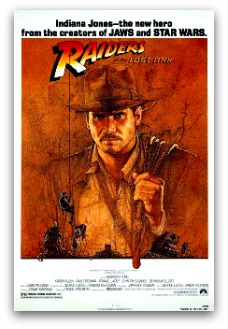
IndianaJones_small1) Indiana Jones and the Raiders of the Lost Ark (1981), dir. Steven Spielberg
An action-adventure drama that pits Indiana Jones (played by Harrison Ford) against a group of Nazis who are searching for the Ark of the Covenant because Adolf Hitler believes it will make their army invincible.

Why I like it: The original Indiana Jones trilogy was released between 1981 and 1989, and despite the pointless release of Indiana Jones and the Kingdom of the Crystal Skull in 2008, it will forever remain, for my generation at least, what introduced us to the potential excitement of exploring the unknown.

Personal note: I love my in-laws but they neglected their parenting duties in one pretty big way: their failure to introduce my wife to Indiana Jones (a situation that has, thankfully, now been rectified).

Most stunning aspect: Let’s face it, any film that can make archaeology seem like the coolest profession in the world has got to be doing something right hasn’t it?

The ones with the romantic clichés

The traveler is often accused of being a romantic, an idealist and of someone who is running away from life and all the problems and commitments that go with it. The alternative argument is that the traveler is actually taking life by the scruff of the neck and living it to the full.

Either way, two films that best capture this dialectic are the two that often most lionized by today’s generation of travelers:

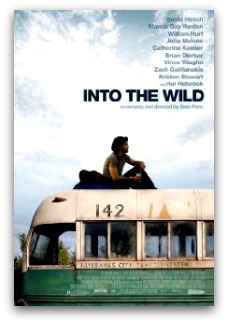
IntotheWild_small2) Into the Wild (2007), dir. Sean Penn
An adaptation (also by Penn) of the book of the same name, by Jon Krakauer, depicting the true story of Chris McCandless, a 24 year-old American and persistent wanderer whom believed that there was more to life than settling for the 9-5 grind in an office.

Why I like it: My wife introduced me to it (her riposte to my Indiana Jones exasperation). She had watched it early on in our relationship, when she was in Brazil and I was in London — a genuinely long distance relationship.

Personal note: She said that the film’s protagonist, Chris McCandless, reminded her of me — although fortunately our story has had a bit of a happier ending than his (I’ll say no more in order not to ruin it for you).

No half-measures: Boy did McCandless walk the walk, giving away his $24,000 college fund to charity before hitchhiking to Alaska and plunging into the wilderness, gradually seeking the means to remove himself from the “real world. ”

TheMotorcyleDiaries_small3) The Motorcycle Diaries (Spanish: Diarios de motocicleta) (2004), dir. Walter Salles
A biopic of Ernesto “Che” Guevara as a young man, representing an adaptation of Che’s memoir of the same name, recounting the trip he made around South America with his best friend, Alberto Granado.

Why I like it: Whatever you view of Che is, there is actually relatively little politics in the film, although one is introduced to some of the experiences that started to inform what he later became in life. Instead, for the most part, this is a film which perfectly captures what is to be young and curious of the world outside your own town or city. Che and Alberto chase beautiful landscapes and beautiful people, but also volunteer their time to those less fortunate than themselves.

Personal note: This film was the tipping point in inspiring me to travel around South America.

Memorable scene: There’s a great scene that highlights the dichotomy between the travel romanticized by “travelers” and that which is driven by the needs of most other migrants around the world — the topic of my guest post last month for The Displaced Nation. In it Che and Alberto meet an indigenous couple who have been forced from their lands and who are traveling in order to find work. When the couple ask Alberto and Che why they are traveling, they reply: “We travel just to travel.” Confused, the wife replies: “God bless you.”

The one about being displaced

Lost_in_Translation_small4) Lost in Translation (2003), dir. Sofia Coppola
The story of the unlikely bond between an aging movie star, played by the awesome Bill Murray, and a trailing spouse (Scarlett Johansson), after they meet in the bar of their five star hotel in Tokyo.

Why I like it: Life as a nomad is not all about romantic adventures and life-changing experiences — there are also just as many challenges and struggles: homesickness, culture shock and loss being just some of them. Lost in Translation is, perhaps, one of the films that best explores some of these issues.

Additional benefits: The story is poignant, and the film is beautifully shot.

The one that’s not actually about travel or expats

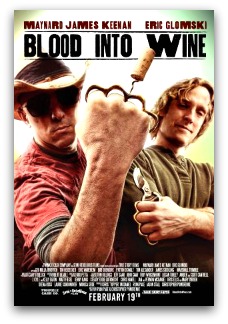
Blood_into_Wine_small5) Blood Into Wine (2010), dirs. Ryan Page & Christopher Pomerenke
A documentary about the Northern Arizona wine industry focusing on the musician Maynard James Keenan and Eric Glomski and their winery, Caduceus Cellers.

Why I like it: This film doesn’t really have anything to do with either travel or expat life, but I’m including it here because it’s about one of my favorite artists: Maynard James Keenan. A slightly biased choice perhaps, but I think it deserves a merit for the way it encapsulates the spirit of those people who have dreams and then act upon them to make them happen — a spirit which, I think, drives many of us travelers and expats.

Maynard’s dream: Maynard dreams of starting a vineyard in Arizona. Yes, Arizona. Despite the doubts and concerns of the experts he consulted Maynard invested almost his entire fortune, made from working with the bands Tool and A Perfect Circle, to start a vineyard in Arizona — a state entirely unknown for growing wine.

Does he succeed? You’ll have to watch it, I guess… And don’t forget to invite a date!

* * *

Readers, what do you think of Andy’s suggestions? Are these the sorts of films that make you feel romantic, or do you think he’s bonkers? We’re open to any and all comments…as well as to further recommendations of films likely to bring out the romantic side in us glomads!

STAY TUNED for tomorrow’s post from our monthly columnist, James Murray, who right now can be found in front of his fireplace in Boston — and not because he’s in a romantic mood! Far from it…

If you enjoyed this post, we invite you to register for The Displaced Dispatch, a round up of weekly posts from The Displaced Nation, with seasonal recipes, book giveaways and other extras. Register for The Displaced Dispatch by clicking here!

Related posts:

Catching up with this year’s Random Nomads over the holidays (2/3)

RandomNomadXmasPassportWelcome back to the holiday party we are throwing for the expats and other global voyagers who washed up on our shores in 2012. Remember all those Random Nomads who proposed to make us exotic meals based on their far-ranging meanderings? Not to mention their suitcases full of treasures they’d collected and their vocabularies full of strange words… How are they doing these days, and do they have any exciting plans for the holidays? Second in a three-part series (Part One here).

The second third of 2012 brought quite an intriguing (albeit as random as ever) bunch of nomads our way — intriguing because most of them have had experience with spouses from other cultures, suggesting that the point made by one of their number, Wendy Williams, about the globalization of love has some validity. They are:

  • Wendy Williams, the Canadian who is as happy as Larry living with her Austrian husband and their daughter in Vienna.
  • Suzanne Kamata, an American writer who went to Japan on the JET program, married a Japanese man, and made her home on Shikoku Island.
  • Isabelle Bryer, a French artist who feels as though she’s on a permanent vacation because of landing in LA — she’s lived there for years with her American husband and family.
  • Jeff Jung, formerly of corporate America but now an entrepreneur who promotes career breaks from his new base in Bogotá, Colombia.
  • Lynne Murphy, the lovely lexicologist who landed in — I want to say “London” for the alliteration, but it’s Sussex, UK. And yes, despite not being the marrying type, she now treasures her wedding ring of Welsh gold!
  • Melissa Stoey, the former expat in Britain who, despite no longer living in the UK, has a half-British son and remains passionate about all things British.
  • Antrese Wood, the American artist who is busy painting her way around Argentina, having married into the culture.

I’m happy to say that three of this esteemed group are with us today. What have they been up to since nearly a year ago, and are they cooking up anything special for the holidays?

Wendy_Williams1) WENDY WILLIAMS

Have there been any big changes in your life since we last spoke?
Yes, I’ve spent less time at my desk and more time travelling since the publication of my book, The Globalisation of Love. Given the title, I guess I should have expected it.

Where will you be spending the holidays this year?
Since I have “gone native” in Austria, I will be skiing during the holidays. Yipppeeee!

What do you most look forward to eating?
I most look forward to eating a Germknödel, which is a big ball of dough filled with plum sauce and covered in melted butter. Apparently, it has 1,000 calories and I savour every last one. If no one is looking, I lick the plate.

Can you recommend any books you came across in 2012 that speak to the displaced life?

  1. A Nile Adventure — cruising and other stories, by Kim Molyneaux — a light-hearted story of one family’s journey to and adventures in Egypt, both ancient and modern.
  2. Mint Tea to Maori Tattoo!, by Carolina Veranen-Phillips, an account from a fearless female backpacker — is there anywhere she hasn’t been?!
  3. Secrets of a Summer Village, by Saskia Akyil: an intercultural coming-of-age novel for young adults, but a cute read for adults, too.

Have you made any New Year’s resolutions for 2013?
More time with friends & family and more writing, the two of which are completely counter-productive in my case.

Any upcoming travel plans?
I am only happy when I have a plane ticket in my pocket so there are always trips planned. Didn’t René Descartes write, “I travel, therefore I am” — or something like that? The year will start with Germany, Ukraine, Spain and Canada.

SuzanneKamata_festive2) SUZANNE KAMATA

Have there been any big changes in your life since we last spoke?
I sold my debut YA novel, Gadget Girl: The Art of Being Invisible, about a biracial (Japanese/American) girl who travels to Paris with her sculptor Mom, to GemmaMedia. It will be published in May 2013. I was also honored to receive a grant for my work-in-progress, a mother/daughter travel memoir, from the Sustainable Arts Foundation.

How will you be spending the holidays?
We are planning a little jaunt to Osaka between Christmas and New Year’s, but mostly, we’ll be staying at home.

What’s the thing you most look forward to eating?
I’m looking forward to eating fried chicken and Christmas cake, which is what we traditionally have here in Japan on Christmas Eve. There are all kinds of Christmas cakes, but my family likes the kind made of ice cream.

Can you recommend any books you came across in 2012 that speak to the displaced life?

  1. The Girl with Borrowed Wings is a beautifully written contemporary paranormal novel featuring a biracial Third Culture Kid. The author herself, Rinsai Rossetti, is a TCK. She wrote this book when she was a student at Dartmouth. It’s unique and lovely and captures that in-between feeling of those who live in lots of different countries.
  2. I also enjoyed I Taste Fire, Earth, Rain: Elements of a Life with a Sherpa, by Caryl Sherpa, an American woman who went on a round-the-world trip and fell in love with a Sherpa while trekking in Nepal.
  3. Oh, and Harlot’s Sauce: A Memoir of Food, Family, Love, Loss, and Greece, by Patricia Volonakis Davis.

Do you have any New Year’s resolutions for 2013?
Hmmm. Exercise more (same as last year). Also, I resolve to finish a draft of my next novel.

Last but not least, any upcoming travel plans?
Yes! I’m planning on taking my daughter to Paris.

Jeff at Turkish Embassy3) JEFF JUNG

Have there been any big changes in your life since we last spoke?
Since the interview, I launched my first book, The Career Break Traveler’s Handbook. It’s available online at most major book stores in both print and e-versions. And, we’re on the verge of launching Season 1 of our TV show, The Career Break Travel Show, internationally. It includes adventures in South Africa, Spain, New Zealand and Patagonia. We’re just waiting for the new channel to launch.

How will you be spending the holidays this year?
After spending a quiet Christmas in Bogotá, I’ll head off to Washington, DC for my best friend’s wedding on New Year’s Eve. Then I’m off to Texas to see my parents for about ten days.

What’s the thing you most look forward to eating?
As far as food goes, I’m most looking forward to turkey and my dad’s award-winning BBQ.

Can you recommend any books you came across in 2012 that speak to the displaced life?
This year I read Dream. Save. Do., by Betsy and Warren Talbot. It’s a great book to help people achieve whatever goal they have.

Speaking of goals, any New Year’s resolutions for 2013?
Personally, I need to drop a bit of weight. I spent too much time writing and editing in 2012! Professionally, I want to see The Career Break Travel Show find its audience so we can head out to film Season 2!

Last but not least, any exciting travel plans?
I plan to travel for the filming of our second season (countries still to be determined). I also have the chance to go to Romania to volunteer at a bear rescue with Oyster Worldwide. It’ll be a mini-career break for me. I can’t wait.

* * *

Readers, this lot seems just as productive, if not more so, than the last one! Any questions for them — don’t you want to know their secret?

STAY TUNED for tomorrow’s post by the Displaced Nation’s agony aunt, Mary-Sue — she wraps up 2012 by paying a visit to several of this year’s questioners: did they take her advice?!

If you enjoyed this post, we invite you to register for The Displaced Dispatch, a round up of weekly posts from The Displaced Nation, with seasonal recipes, book giveaways and other extras. Register for The Displaced Dispatch by clicking here!

Related posts:
Images: Passport photo from Morguefiles; portrait photos are from the nomads.

Thanksgiving: Shine, shine, shine, dear writers, however displaced

Today’s guest blogger, Kristin Bair O’Keeffe, is a cultural spelunker. With a husband from Ireland, a daughter from Vietnam, nearly five years as an expat in Shanghai, China, and an insatiable appetite for place, how could she not be? She’s also an author with an MFA degree in fiction writing, 18 years of experience as a writing instructor, a writerhead passionista, and the curator of #38Write, a monthly series of online writing workshops for place-passionate culture junkies around the world. Let’s listen up and hear why Kristin thinks Thanksgiving is a time for us displaced writers to shine!

— ML Awanohara

On Thursday, November 22, friends and families all over the United States (as well as oodles of displaced/replaced U.S.-ians around the world) will gather together to celebrate Thanksgiving. While this holiday can be traced back to the English Reformation and Henry VIII, it is now a secular holiday during which participants are expected to do just three simple things:

  1. eat turkey and pumpkin pie until we groan and bloat up like petrified puffer fish.
  2. endure our Great Aunt Pru, who smells like mothballs and passes out linty lozenges that look like they’ve been in the bottom of her purse since the Reformation.
  3. give thanks.

Writers of all ilk love this holiday. After all, it’s a day for us to shine! A day for us to show off by expressing our thanks far more eloquently than the neighbor who is slouched in front of his television in a tryptophan-induced haze.

We do, of course, have a lot to live up to:

“Thanksgiving Day, a function which originated in New England two or three centuries ago when those people recognized that they really had something to be thankful for—annually, not oftener—if they had succeeded in exterminating their neighbors, the Indians, during the previous twelve months instead of getting exterminated by their neighbors, the Indians.” ~ Mark Twain

“There is one day that is ours…Thanksgiving Day is the one day that is purely American.” ~ O. Henry [except, Mr. Henry forgot to add, those damn Canadians a bit to our north, who horn in on our gratefulness territory and dare to give thanks of their own, albeit on a different day]

“I come from a family where gravy is considered a beverage.” ~ Erma Bombeck

But no matter how splendid the thanks of those who came before us, this is a day on which writers can strut their best stuff!

So whether or not you’re American (U.S. American, that is), grab this opportunity to make a list of things for which you are thankful. Hurl yourself into the craft of thanks! Then, when your Thanksgiving host pauses just before cutting the first slice of turkey and says, “Would anyone like to share a thing or two for which you’re grateful?” you can whip out that slip of paper, clear your throat, and in your best writerly voice, make ’em weep in their cranberry sauce.

Here are a handful of mine:

1) Despite my great love for China, I am wildly thankful I will not be sitting face to face with the still-raw, almost-gobbling, dripping-blood, trying-to-limp-away turkey I once faced in Shanghai (ordered weeks in advance, mind you, from a fancy, well-respected, Western-y hotel and for which we paid a pretty-pretty RMB). All hail the year of mashed potatoes as the main dish! (We should have stuck with jiaozi.)

2) I am so, so, so grateful I am not living during the English Reformation and that I am not required to wear contraptions like this on my head:

Anne Boleyn

3) I am grateful that Maya Angelou called to read me a new poem. (Sorry, sorry, sorry! This is actually one of Oprah’s moments of thankfulness, not mine. But it sounds good, doesn’t it?)

4) I am thankful for my amazing family and friends from Ireland, Vietnam, Germany, India, China, the U.S., the U.K., and so many more places—all those who guide me, teach me, love me, and put up with me in my best and worst moments as a human being.

5) I am thankful and excited and inspired that writers around the world are flocking to my #38Write workshops and that my vision for contributing—and helping other writers contribute—to the global conversation of story is being realized. Whoop! Whoop!

6) I am grateful that there are writers all around the globe (like you!) who are driven to explore, write stories about the cultures and places in which they live, and connect.

Your turn! What are you thankful for?

CONNECT: If you’d like to learn more or if you’d like to register for one of Kristin Bair O’Keeffe’s #38Write workshops, grab a cup of coffee and pop over to her Web site and blog WRITERHEAD. Registration for December’s #38Write workshop is now open. You can Tweet Kristin at @kbairokeeffe, friend her on Facebook, and/or check out the #38Write group boards on Pinterest.

STAY TUNED for tomorrow’s post, Part 2 of Zeynep Kilic’s search for love in her adopted country.

If you enjoyed this post, we invite you to register for The Displaced Dispatch, a round up of weekly posts from The Displaced Nation, with seasonal recipes, book giveaways and other extras. Register for The Displaced Dispatch by clicking here!

Related posts:
Images: Kristin Bair O’Keeffe portrait; Anne Boleyn, courtesy Wikimedia Commons.

RANDOM NOMAD: Antrese Wood, American Expat in Argentina and Artist on an Epic Expedition

Place of birth: Pomona Valley Hospital. I grew up in Claremont, California — in fact, my mother still lives in the house she brought me home to.
Passport: USA
Overseas history: Honduras (San Pedro Sula): 1986; Argentina (San Antonio de Arredondo + Villa Carlos Paz), 2010-11 + 2011 – present.
Occupation: Artist (painter).
Cyberspace coordinates: Antrese.com (art site + blog); @antresewood (Twitter handle);  Antrese Wood Artist Page (Facebook); and Antrese Wood (Pinterest) — see “A Portrait of Argentina” board.

What made you leave your homeland in the first place?
A friend of mine in high school asked me to go with her to an American Field Service (AFS) meeting. I went because she didn’t want to go alone. I had no idea what it was, but after the meeting I thought, “Awesome! I’m in!!” I ended up going to San Pedro Sula, Honduras, for six months. I didn’t speak a word of Spanish when I left. I memorized the three questions I thought I would get asked most: What is your name, where are you from & how old are you? Unfortunately, I got them mixed up. When someone asked “What is your name?,” with a huge smile I would answer: “I’m 15 years old!” By the time I left, my Spanish was pretty good.

I didn’t travel much until after college, and I didn’t practice my Spanish, so I lost most of it. After college, I got bit by the travel bug again. I would go anywhere if I had the chance. I worked in the video game department at Disney for years, and got to travel a lot with them — all over the US, Vancouver, Montreal, London, Paris, even to the South of France. On my own, I went to South Korea. I also lived in Alaska for a short while (not a foreign country but compared to the Los Angeles culture, it might as well be). At one point I decided I wanted to do a semester with NOLS (the National Outdoor Leadership School). I choose their semester in Patagonia, and thinking this was my last chance to see South America, I spent a few months exploring Chile, Argentina, Peru, and Ecuador.

Indirectly, that is how I met my husband. A friend was worried about my traveling alone, so she introduced me to her friend from Argentina (“even though she doesn’t live there, she can at least give you a few phone numbers just in case…”). Years later, my new Argentine friend introduced me to my future husband.

Which brings me to why I left Los Angeles to live in Argentina: I fell in love.

Wow — that’s some wanderlust! So is anyone else in your immediate family “displaced”?
No one else in my family is displaced. My mother and I both travel as much as possible, but my brothers and sisters are happy where they are.

Can you describe the moment in your Argentinian life when you felt the most displaced?
My husband and I first lived in a tiny town called San Antonio de Arredondo. It’s in el campo — literally, the countryside. But when you move from Los Angeles to a town of barely 5,000…you call it the boondocks. Some friends rented us their quincho (guest house) while they were out of the country. It was in a new neighborhood with few other houses and lots of empty lots. Green and beautiful, but no natural gas, no phone lines…and worst of all, no Internet!

I was used to 24-hour access to everything. The Internet, grocery stores, restaurants…everything. Another thing: San Antonio and Carlos Paz (where we currently live), both honor the siesta. Everything closes between 1:30 and 5:00 p.m.

It was quaint and beautiful at first, but I got tired of riding my bike to the next town to check my email. I’m completely dependent on the Internet. It was in those moments when I admittedly thought “Oh my god, what have I done!?” When we moved to Carlos Paz, the first question I had about the apartment was: “Does it have high-speed Internet?”

And does it?
YES IT DOES!!!….yay!

Now that you have Internet access and are feeling more at home, is there any particular moment that stands out as your least displaced?
As I contemplate this question, a series of images and moments flashes through my head: our house filled with friends for an impromptu dinner; the huge smile on my husband’s face when he cooks for a crowd (he loves it!); looking at the clock and being surprised that it’s already 4:00 a.m…. A big cultural difference is that you can call friends for a dinner, and within an hour or two, your house is filled with all your friends and all their kids. There is always room for just one more.

If I had to pick one event where I didn’t feel displaced, it would definitely be our wedding. It was the best of both worlds. Friends and family from the US, along with about 200 of our “closest” friends from Argentina, came to celebrate. We had a huge asado (barbecue), lots of wine, dancing until 6:30 a.m.

Sounds amazing. And now you may bring one curiosity you’ve collected from your adopted country into The Displaced Nation. What’s in your suitcase?
Really? only one!?

I’m tempted to pack some fernet, but I’ll bring my mate instead.

Drinking mate is a national pastime in Argentina. The mate is a hollowed out gourd that you fill with tea leaves called yerba. You add hot water and drink the tea from a bombilla (a kind of straw with a filter at the bottom). Typically, it’s shared with other people — one person serves the mate to the circle. Drinking mate plays an important social role; it’s the preferred excuse to get together and hang out. “Let’s have a mate” really means “Let’s hang out and chat for a while.” Most gas stations have a hot water dispenser at exactly the right temperature, and almost any restaurant will fill your thermos regardless of whether you eat there. They understand the importance.

There are various subtleties to preparing mate (sugar, no sugar, with mint, water temperature, etc.), and the opinions on how to properly prepare mate are strong and sometimes fiercely debated. When a person drinks mate alone for the first time, its like a right of passage into adulthood. When my husband came home and found me drinking mate by myself, he said: “AHA!! now you are an Argentine!!”

Let’s move on to food. You are invited to prepare one meal based on your travels for other members of The Displaced Nation. What’s on your menu?

Now we’re talking! This one is pretty easy:

Appetizer: Empanadas — dough filled with just about anything and then baked or fried. They’re a staple here. A common filling is ground beef, olives, hard boiled egg, paprika, cumin and salt. My favorite is the árabes, which is ground beef “cooked” with lemon and aromatic spices.

Main: Definitely an asado: various cuts of Argentine beef, and lamb. The meat here is so good, people are surprised how much flavor it has. Typically the only condiment used is salt. (Argentina would be a difficult place for vegetarians!)

Dessert: We could have ice cream — call and have it delivered (yes, they do!!); but I think I’d prefer to introduce you to alfajores from Las delicias de Mamushka. An alfajor is like a cookie sandwich: two cookies made from cornmeal, filled with dulce de leche. I never liked them until I tried Mamushka’s. Now I’m addicted.

Wine & after-dinner drinks: A nice Malbec wine. I like Trapiche. A few hours later, after dessert and coffee, an ice-cold Fernet con Coka.

And now you may add a word or expression from the country you live in to The Displaced Nation argot. What will you loan us?
There are so many — again, hard to choose.

Che and “más vale!” are among my favorites.

Che is used all the time here, especially in the province of Córdoba. Depending on the context, it means “hey…” or “umm…” Sometimes, it seems to be used in the same way we Californians use the word “like.” Che Guevara is from this area. He is actually called Che because when he went to Cuba, he used the word so frequently, people just started calling him “Che.”

Más vale is equivalent to “Hell, yeah!!” — and also has a bit of “Let’s do this!!”

This summer we’ve been doing some posts with an Olympics theme. Are you planning to watch the Summer Olympics in London? If so, who will you be rooting for: Americans, Argentines, both, or neither?
I’ll be rooting for them both. In the event that the U.S. squares off against Argentina in a soccer match, I will be wearing a helmet and full body armor — and cheering for the US!

Are Agentines excited about the Games?
In general, Argentines are fanatical about sports. Especially soccer. Messi is a God. During the World Cup, It seemed like every man, woman and child in this country was wearing a blue-and-white striped #10 jersey. We went to a  friend’s house to watch a game. Normally busy streets were completely deserted. The city had literally shut down. There was an eerie silence occasionally broken by simultaneous cheers erupting from the houses and (closed) shops. During national playoffs, you see grown men sobbing uncontrollably after their local team has lost. The first time I saw this, I was flipping channels on TV. As the camera switched from one sobbing man to another, I thought there had been a national disaster. So, yes, I think it’s safe to say that there will be plenty of excitement about the Games!

The Olympics gives me a segue way into your 8-month project to paint Argentina. That strikes me as being an Olympian feat. Can you say a little bit more about it?
Now that you mention it, it is an Olympian feat! The project is called “A Portrait of Argentina.” I will spend eight months visiting the country’s 23 provinces, traversing something like 15,600 miles, painting portraits of the people I meet. I’ll listen to their stories and then paint en plein-aire, the scenes from their daily life. I’m hoping to deliver a cultural portrait of my adopted home.

When did you first conceive of the project?
The idea came out of a period of misery after I left Los Angeles to live in Argentina. The first year I lived here, I saw everything from a touristic point of view. It was quaint, beautiful and…a little quirky. But the second year was more difficult. It was no longer cute and quirky; the honeymoon was over. I made unfair comparisons and was judging everything. My normally optimistic and upbeat attitude shifted to “This sucks.”

I had two obvious choices: go back to California — or change my outlook, appreciate all that is good, and stay. My husband (fiancé at the time) left it up to me (no pressure, eh?). We could pack everything up and head back to Los Angeles, or I could give Argentina another try.

I realized that much of my misery was self imposed. It came from the fact that I had not integrated and was spending the majority of my time alone, working out of the house. You can’t love anything until you take the time to develop a relationship with, and really get to know, it. Here I was, on an adventure of living in another country, and I wasn’t even willing to give it the time of day. What a wasted opportunity!

As I integrated myself more and became determined to learn as much as I could about Argentina, I started taking classes at the university and began developing this idea about painting my way across the country. Painting has always been my way of making sense out of the world. It forces me to pause and really look at my subject.

Is the project having the effect that you’d hoped — is it improving your attitude?
Just by researching the project, looking for “known” and “unknown” people and places, I have a new-found appreciation for this country. I’m realizing how easy it would be to say I know Argentina because I’ve lived here for two years. The fact is, I know a lot about one region in one province of a very large country, and a little bit about a dozen other places. A native New Yorker and a native Alaskan may live in the same country, but they are culturally worlds apart. The same can be said for a Porteño (a person from Buenos Aires) and a person from La Quiaca near the Bolivian border. Same country, worlds apart.

I’m also overjoyed that so many people here seem excited about my project. Obviously, I’m super excited about it (it’s my baby, after all), but when I share my vision with Argentines and their response is equally enthusiastic, it’s just amazing.

I’ve barely started, and already my outlook has changed. I’m owning the project in a way I didn’t at the start.

What do you hope the project will ultimately accomplish?
“A Portrait of Argentina” is both a personal and a professional journey. I expect to be surprised, challenged, and profoundly affected by it. I’ll be seeking out people from diverse backgrounds, looking to honor those who have dedicated their lives to their passion and whose work positively impacts others: scientists, athletes, artists, musicians, teachers, even the abuelita (little old lady) on the street corner. It’s a collaborative project, and I hope to involve as many people as possible. Luckily, the people I’m meeting are quick to offer help and introduce me to others who might want to participate.

Do you ever feel daunted by the scale of the project?
Argentina is a huge country so I’ve set myself a very ambitious goal to cover this much ground in just eight months. When I break it down into small chunks, it feels manageable. When I think about its entirety, it’s overwhelming.

Finance was another daunting prospect. When I first thought about the funds it would take to get me to and from so many places, it seemed completely insane and impossible. I decided to launch a Kickstarter campaign with a $25k goal. Kickstarter is all or nothing, so if I didn’t hit the goal, my five-week campaign would end with $0.

There were days when I did let the campaign get to me and was sure it would fail. To keep going, I would sometimes just think, okay, how can I raise just $100?

In addition to a herculean effort by family and friends, I was fortunate to have some key influencers get excited about the project and promote it. In the end, with just 17 hours to spare, I made my goal!

I’m sure I will have some of these same feelings on the road, but I’ve developed a number of tactics to deal with it. I don’t give up easily. Besides, there are too many people supporting me and cheering me on. I know it will be hard, but am I ready for it? Más vale!!

Readers — yay or nay for letting Antrese Wood into The Displaced Nation once she’s finished her travels for her project? Tell us your reasons. (Note: It’s fine to vote “nay” as long as you couch your reasoning in terms we all — including Antrese — find amusing!)

STAY TUNED for tomorrow’s episode in Libby’s Life, our fictional expat series set in small town New England. (What, not keeping up with Libby? Read the first three episodes of her expat adventures and/or check out “Who’s Who in Libby’s Life.”)

If you enjoyed this post, we invite you to register for The Displaced Dispatch, a round up of weekly posts from The Displaced Nation, with seasonal recipes, book giveaways and other extras. Register for The Displaced Dispatch by clicking here!

Related posts:

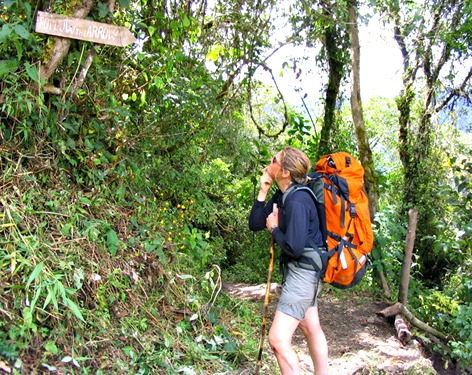
img: Antrese Wood displaying her intrepid travel skills on the Machu Picchu trail in Peru. Her comment: “I thought the Follow the Arrow sign was hilarious because 1) the trail is so well marked I cant imagine anyone getting lost; and 2) this was the one and only sign on the trail and it was near the end of the four-day hike. The other hilarious thing about the photo, at least to me, is that if you look closely, you can see my knee is bleeding. I had just spent 80 days carrying a backpack two-three times as heavy in seriously remote back country, no trails, no markers, nothing. We had to sign a waiver acknowledging the understanding that if something should happen, it could take a helicopter up to a week to arrive. I made it through without a scratch. Here, on this comparative cake-walk, on a perfectly even trail, I fell for no apparent reason and totally skinned up my knee.”

5 reasons why American aviatrix Amelia Earhart could be an expat heroine

The American aviatrix Amelia Earhart has been propelling her way into the news headlines this week. Yesterday marked the 75th anniversary of her Lockheed Electra disappearing over the Pacific Ocean.

And today marked the beginning of an expedition, led by an American nonprofit group, to locate the wreckage from her plane. The group plans to scan the depths of the Pacific Ocean near a remote island where they believe Earhart and her navigator, Fred Noonan, died as castaways.

With America’s most famous aviatrix back on our horizons, it seems a timely moment to nominate her for our Displaced Hall of Fame, where we put all of our expat heroes and heroines.

What, was she an expat, too? I can hear you asking. In fact, she was an expat briefly — during World War I, when she went to visit her sister in Toronto and ended up staying on as a nurse’s aide in a military hospital.

But I’ll admit that Earhart seems more of a domestic heroine — as American as apple pie, you might say. Born in Atchison, Kansas, in America’s heartland, Amelia grew up tall and willowy like the corn in the fields. As the Reigning Queen of the Air, she became the nation’s sweetheart and to this day retains a special place in the hearts of young American women.

What’s more, recruiting her to serve as a heroine for global nomads, many of whom have hybrid nationalities, might not fly with my fellow Americans. Secretary of State Hillary Clinton has endorsed the expedition to hunt for Earhart’s plane, saying that Earhart embodies the “spirit of America coming of age and increasingly confident, ready to lead in a quite uncertain and dangerous world…”

But in reviewing the main facts of Earhart’s life, I have found plenty of aspects that show how “displaced” she actually was — “displaced” in the sense of being “removed from the usual or proper place” (see definition on our About page) — and hence belongs in our orbit. Here are five of my top reasons:

1) She was born with wings.

Veteran expats and long-term travelers cannot afford to have fear, or dislike of, flying. Should we incline at all in this direction, it may help to lie back in your airplane seat (or pretend you have a seat where it’s possible to lie back) and think of Earhart, who took to the skies without hesitation, as though the airplane wings were her own. Legend has it that she first caught the aviation bug while an expat in Canada. She went to see an exhibition of stunt flying at a fair in Toronto and later wrote about the sensation she’d felt as a pilot began diving at her and her friend:

I remember the mingled fear and pleasure which surged over me as I watched that small plane at the top of its earthward swoop. I did not understand it at the time, but I believe that little red airplane said something to me as it swished by.

From then on, it was all she could do to keep her feet on the earth. Of her first airplane flight she said: “As soon as we left the ground, I knew I had to fly.” In 1921 she took her first flying lesson, and soon saved enough money to buy a second-hand plane.

Of course it helped that in the early days, flying was a romantic sport for the lucky few, not a form of transport where everyone from pilot to passenger feels as though they’re herding or being treated like cattle. Earhart named her first plane “Canary” because of its bright yellow color. Perhaps she felt like a canary when setting her first women’s record: rising to an altitude of 14,000 feet.

By the time she became the first female pilot to cross the Atlantic solo (Charles Lindbergh was first to do so), she had her own little red airplane — a cherry-colored Lockheed Vega, reputed to be the world’s fastest aircraft and therefore favored by pioneering aviators. Hmmm… Did it make her feel like a cardinal?

2) Always restless with the status quo, she let it drive her adventures.

What’s the litmus test for being a travel or expat type? A person who is always upping the ante. We’re a gang of permanent malcontents!

No sooner had Earhart become the first woman to cross the Atlantic (as a passenger) — a flight that made headlines because three women had died within the same year in trying to achieve it — but she sought to become the first woman to fly solo across the Atlantic (1932) and the first person to fly solo across the Pacific, from Honolulu to Oakland (1935), among other achievements.

At that point, there was nothing for it but to make a bid to become the first person to fly around the world (1937).

One wonders what Earhart might have done next, had she not gone down in her plane on the very last leg of the journey. Perhaps she would she have concluded that she’d peaked out too early? (No doubt many of you serial expats and repats can relate…)

3) She had no qualms whatsoever about the risks involved in an adventuresome life.

In the lore surrounding Earhart, great emphasis is placed on her early feminism. Much of it is said to be due to her mother, who had very little interest in bringing up Amelia and her younger sister as “nice little girls” — she even allowed them to wear bloomers!

Clad in this comfortable attire (Amelia would later design a clothing line for women who wanted comfort), the Earhart sisters climbed trees, hunted rats with a rifle, and “belly-slammed” their sleds downhill.

The young Amelia also kept a scrapbook of newspaper clippings about successful women in predominantly male fields, including film direction and production, law, advertising, management, and mechanical engineering.

Although she did marry eventually — to the publisher George Putnam — she always referred to the marriage as a “partnership” with “dual control,” and did not change her last name.

When she became the first woman to fly solo across the Atlantic, Earhart said it proved that men and women were equal in “jobs requiring intelligence, coordination, speed, coolness and willpower.”

(No doubt she would be knocked out to learn that women’s boxing will be included in the London 2012 Olympics for the very first time.)

But to me, what’s even more impressive about Earhart’s life is that she knew about the risks involved in her chosen occupation — but decided not to let them hold her back. That same kind of risk-taking is at the heart of the overseas travel enterprise, which goes against the grain of most people’s common sense. (“You want to go THERE? And FOR HOW LONG?” Expats and global nomads know the drill of fielding constant questions and doubts from the people back home.)

When Earhart set out on her second attempt to circumnavigate the world (the first had ended in a crash when a tire blew out on take-off), she wrote to her husband: “Please know I am quite aware of the hazards.” And then she went ahead and packed a jar of freckle cream. (I say that because a jar of freckle cream was found on the Pacific Island that’s now being searched.)

4) She was never more in her element than when out of her element (quite literally).

There is something that draws all of us to the displaced life. Since it’s a life of challenges, I have to assume that for most of us, it’s that feeling of being a pioneer, of going the way no one else in our circles has gone before…

In Earhart’s case, the displacement was quite literal: she loved being in the empty sky and facing the unknown. In that sense she was like a character out of Greek myth — a female Icarus. As she once said of an early flight:

The stars seemed near enough to touch and never before have I seen so many. I always believed the lure of flying is the lure of beauty…

Jane Mendelsohn was inspired to write her first novel, I Was Amelia Earhart, after reading that a piece of what may have been Earhart’s plane had been recovered on an atoll in the Pacific. Imagining the life that Earhart and Noonan might have led as castaways, Mendelsohn shows Earhart coming into her own in the desert-island setting, and finding peace of mind.

Random House editor Kristin Fritz commends Mendelsohn for creating a whole new iteration of Earhart as

a woman who had perhaps “taken this journey in order to escape the madness of the world,” a woman who “didn’t give a damn if she was alone” and finally a woman who would “live the rest of her long and brilliant life on this wild and desolate island.”

Now that’s displaced! And if Fritz is right and Medelsohn captured the essence of Earhart in her novel, then we should not feel too bad that she perished on an island out in the middle of nowhere. That’s how she would have wanted it…

5) Last but not least, she appears to have known the value of chocolate.

Here we come to the true test of an expat or international traveler: do they like chocolate? Are they addicted to that sudden charge of energy, the little lift, one gets from the sugar and the caffeine? Most seasoned expats and international travelers know that we could never have prevailed during the inevitable moments of loneliness and displacement the life entails without a chocolate supply of some sort.

When Earhart embarked on her 2,408-mile solo flight across the Pacific in 1935, she packed a thermos of hot chocolate in case she felt chilled. As she later observed:

Indeed, that was the most interesting cup of chocolate I have ever had sitting up eight thousand feet over the middle of the Pacific Ocean, quite alone.

* * *

Now that we’re touching down, I feel the need to quote from Mendelsohn’s recent op-ed for the New York Times:

We still wonder what happened to Amelia Earhart — perhaps soon we may even find out — but do we know what to do with her? Do we know how to make not just her mysterious disappearance but also her miraculous life relevant and inspiring to our global society? And could she matter across the globe, that ball around which she tried to fly that feels so much smaller today but is in fact exactly the same size as it was then?

For me there’s an easy answer to all three of Mendelsohn’s questions: YESSSSSSS!!! It’s time Amelia Earhart went global, and not just literally…don’t you agree?

STAY TUNED for Wednesday’s post, another in our Expat Moments series by Anthony Windram — and yes, it does have to do with the 4th of July!

If you enjoyed this post, we invite you to register for The Displaced Dispatch, a round up of weekly posts from The Displaced Nation, with seasonal recipes, book giveaways and other extras. Register for The Displaced Dispatch by clicking here!

Related posts:


RANDOM NOMAD: Lynne Murphy, American Expat in UK & Champion Linguist

Place of birth: Western New York State, USA
Passports: USA + UK
Overseas history: South Africa (Johannesburg): 1993-97; Texas, USA (Waco): 1997-99 — definitely a different country!; England, UK (Brighton): 2000 – present.
Occupation: Senior Lecturer in Linguistics, University of Sussex
Cyberspace coordinates: Separated by a Common Language — observations on British and American English by an American linguist in the UK (blog); @LynneGuist (Twitter handle).

What made you leave your homeland in the first place?
What made me move were jobs. I am a theoretical lexicologist. Not many places want a theoretical lexicologist, so I applied far and wide and have been rewarded with some very interesting jobs and living experiences.

Is anyone else in your immediate family “displaced”?
I was the first person in my immediate family-of-birth to own a passport.

Can you describe the moment when you felt the most displaced?
The night after the American student Amy Biehl was killed in South Africa, in August 1993. At that point, I lived in a granny flat — an outbuilding behind a house in a Johannesburg suburb. I came home to find my neighbours in the main house packing up and leaving for a safe place to stay, as they’d been robbed during the day. As they left, they told me the thieves had taken the spare keys to my flat — and had already come back to steal the bicycles from the garage. At that point, I had no car, no telephone (setting one up there took FOREVER), nowhere to go and no way to get there. I stayed up all night with the lights on and with a newspaper with the story of Biehl’s murder on the front page, feeling very alone and very scared.

Is there any particular moment that stands out as your “least displaced”?
Sometimes it’s funny to reflect on the fact that my own child speaks with an English accent, and I feel most absolutely at home with her. But I also often feel really divorced from the US when I read the news. When the hullabaloo about “Obamacare” was going on, I just couldn’t believe that I came from a place where many people seem not to see good medical care as a basic right for all. And it especially galled when I saw some Americans spreading lies about how British healthcare works and others willing to believe those lies. The National Health Service isn’t perfect, but it has saved my life, and I have more confidence in its care for me than I had in the insurance-industry-driven care I had in the US.

You may bring one curiosity you’ve collected from your adopted country into The Displaced Nation. What’s in your suitcase?
From South Africa: It’s the art that’s lasted! Two pieces by Ezekiel Madiba, a print and one of his printing blocks — which is nice because it’s sturdy enough to put in a suitcase and to hug every once in a while.
From Texas: My doctor’s instructions on what to do the next time I’m stung by a fire ant (to try to avoid being bed-ridden for a week, like the first time).
From England: My wedding ring. It’s a one-off, made by a Brighton goldsmith, and it’s a curiosity, because I hadn’t thought I was the marrying type.

You are invited to prepare one meal based on your travels for other members of The Displaced Nation. What’s on your menu?

Starter/Appetizer: South African biltong. A nice peppery one—but I don’t mind if it’s beef or game. Maybe a selection.
Main course: For this, I’ll bring together the British and the American — not fancy but delicious. I haven’t given it a name, but here’s the recipe: Toast crumpets. cover with cheddar cheese and put under the broiler/grill. Slather on A1 Steak Sauce. Eat with knife and fork.
Dessert: Eton mess with raspberries instead of strawberries.
Drinks: South African wine (I never had a South African wine I didn’t like while I was in South Africa– the exported stuff is of more variable quality, in my experience); Castle Lager (a South African beer); and Schweppes Bitter Lemon (a popular soft drink in South Africa, no longer being produced in this part of the world as far as I know).

And now you may add a word or expression from each of the countries where you’ve lived to The Displaced Nation argot. What will you loan us?
From South Africa: Putting hey? on the ends of sentences. It was so easy to start doing, since I’d grown up using the “Canadian” eh? (Though I hadn’t realized I said it till I moved from upstate New York to Massachusetts, where they don’t say it.) It’s been a while since I lived in South Africa, but I still find myself doing it.
From the UK: There are so many great expressions, but the thing that’s invaded my language most is lovely. When I write emails, I have to go back at the end and take out half of the lovelies because I say it so terrifically much.

This month we have been doing some posts on Queen Elizabeth’s Diamond Jubilee. How did you spend the Bank Holiday weekend? Did you celebrate?
We’re not much into the monarchy in my house, so we just enjoyed the extra time off. But we did go to a friend’s house and eat red-white-and-blue cupcakes — which we should probably have called “fairy cakes” if we wanted to take the whole Rule Britannia thing seriously.

A couple of us on The Displaced Nation team thinks that the Queen deserves an Olympic medal for being on the throne for so long. Do you agree?
I respect the queen for handling many awkward situations with grace, but all she has done to be on the throne so long is not die yet. She got a national holiday for the occasion—I think that’s sufficient!

Readers — yay or nay for letting Lynne Murphy into The Displaced Nation? Tell us your reasons. (Note: It’s fine to vote “nay” as long as you couch your reasoning in terms we all — including Lynne — find amusing!)

STAY TUNED for tomorrow’s episode in Libby’s Life, our fictional expat series set in small town New England. (What, not keeping up with Libby? Read the first three episodes of her expat adventures and/or check out “Who’s Who in Libby’s Life.”)

If you enjoyed this post, we invite you to register for The Displaced Dispatch, a round up of weekly posts from The Displaced Nation, with seasonal recipes, book giveaways and other extras. Register for The Displaced Dispatch by clicking here!

Related posts:
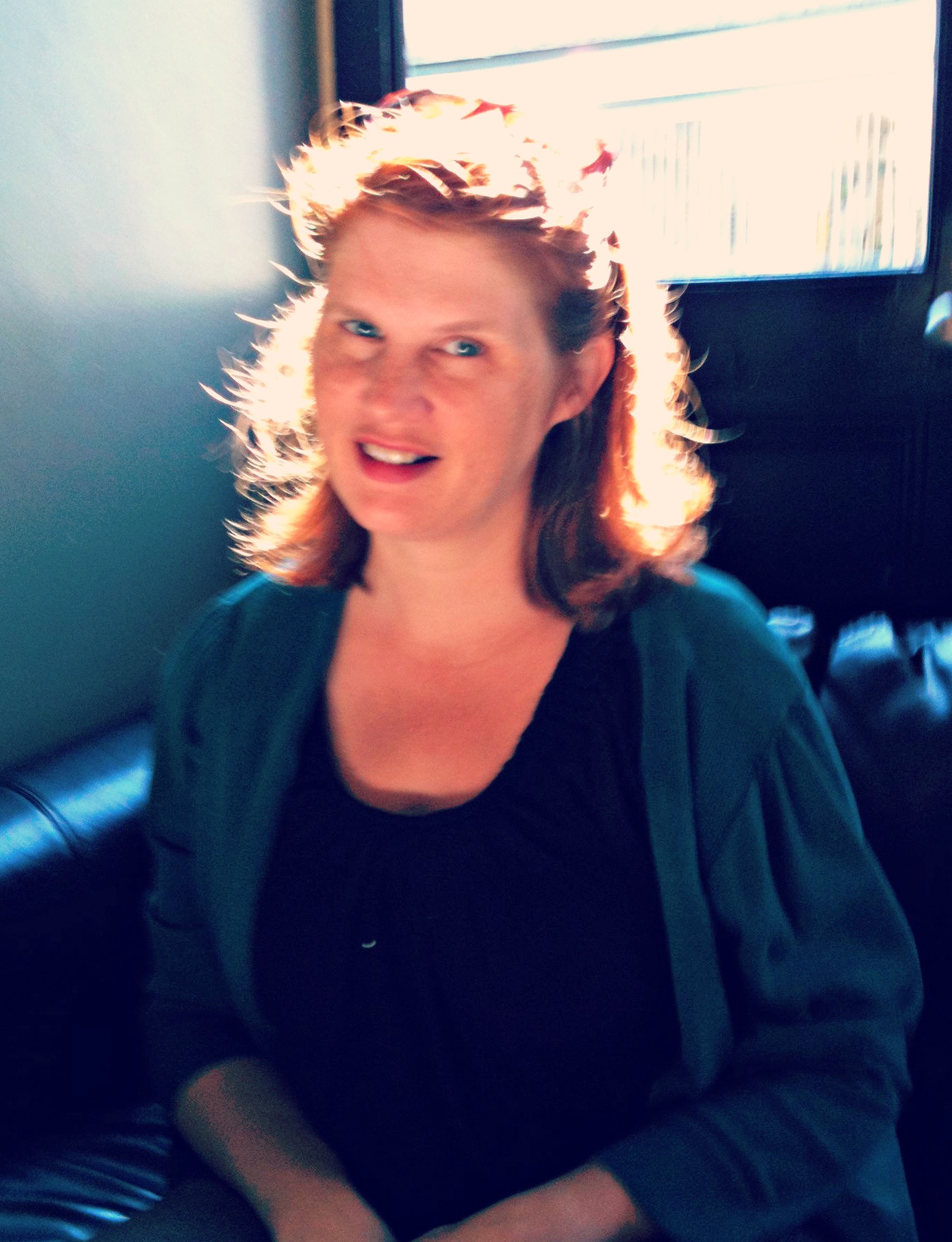
img: Lynne Murphy looking rather other-worldly — or  “out of this displaced world,” as we like to say — in a Brighton pub.

For the displaced writer Martin Crosbie, a life between two cultures is the stuff of literary fiction

Readers who’ve been paying attention will know that a couple of days ago, in honor of The Displaced Nation’s first birthday, we fleshed out a prospectus for a literary festival for authors who’ve been expats, third culture kids and/or global nomads.

Should this litfest ever happen, this month’s featured author, Martin Crosbie, would make an exciting addition to the line-up.

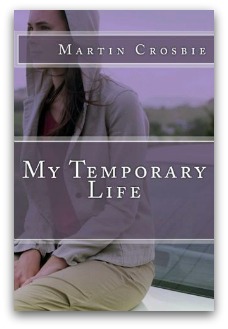
Last year he published a sensitive, partly autobiographical first novel, My Temporary Life, telling the story of Malcolm, a young half-Scot half-Canadian. As Malcolm informs us towards the start of the book:

I live with a father [in Scotland], who didn’t intend to have a son with no wife, or I spend my summers in Canada, with a mother who forgets that I’m there.

Eventually, circumstances make it impossible for Malcolm to continue this peripatetic life, and he heads to Canada to finish up his schooling. Even then, he feels unsettled:

It really does feel like everything is going to be okay, or at least it might be for a little while. Nothing in my life has ever been forever anyways. Everything is always just temporary, always temporary.

The novel has taken the Amazon charts by storm, garnered rave reviews and turned Crosbie into an overnight publishing sensation.

In fact, I recommend you become part of the storm by reading the book RIGHT NOW — or as soon as you’ve finished this post.

Here’s a link to the book on Amazon: My Temporary Life.

Alternatively, you can sign up for our DISPLACED DISPATCH — and cross your fingers that you’ll be one of this month’s two lucky winners!

And now for some highlights from my exchange with Martin Crosbie…

Is Malcolm Martin?

Hi there, Martin!
Hi, Tony!

Can you tell me a bit about your upbringing — where you were born and how you ended up in Vancouver?
I was born in Aberdeen in Scotland but I was adopted and transplanted to Kilmarnock when I was still an infant. I lived there until I was ten and my family moved us to the west coast of Canada. Other than a few years in Toronto and in Ontario when I was in my twenties, I have always lived here, just outside of Vancouver, British Columbia.

I’ve read your book My Temporary Life, and I loved it. I was particularly impressed by the way your writing flows, which is the mark of a very accomplished writer.
Thanks for saying that, I really appreciate it. This is my first novel and I think one of the reasons that it’s done well is that it went through so many re-writes and revisions. The novel that is out there today is very unlike the first few drafts.

You’ve lived in both Scotland and Canada, the two locations in the book. You also share the main character’s love of running… So I have to ask — how much of this character is autobiographical?
I had a writing teacher who would say “What is truth, in fiction? Write something down!”

Then, he’d sit down and wouldn’t answer any questions until the class had all written something, anything.

Once we shared what we’d written, he’d talk about the fact that when you read something and it “rings true” — in that you get lost in the scene — the reason is that the emotions the writer has conveyed are coming from a true place.

So, I appreciate your question because it means that my story probably worked when you read it.

But did the events in the book really happen — the boy with two parents from two cultures (Malcolm), his best friend whose parents beat him up (Hardly), and his dream woman, who, too, has had an abusive childhood (Heather)?
A lot of the incidents did in fact happen — but to different people at different times. The book is most definitely fictional.

But it is true?
Without wanting to become the next James Frey, yes, on some level it is. I had the daughter of a friend read the novel and really enjoy it, and she asked me if I was Malcolm. I told her that some days I feel like Malcolm and some days I feel like Hardly — lol.

The ups and downs of self-publishing

Quite a few authors in The Displaced Nation’s circle have self-published their works, myself included. Can you tell us what was behind your decision to self-publish My Temporary Life?
I self-published My Temporary Life because I was turned down over one hundred times by agents and publishers. The strange thing, though, was I’d pass my work to readers and they enjoyed it — very few of them didn’t. Oh, there were changes that I made along the way because of readers’ input, but the feedback was almost always decent. And they all wanted to know the same thing: “When’s the next book?”

So I self-published through Amazon, and it’s been an incredible ride. In less than three months 85,000 copies of my book are out there. I say that number and it absolutely astounds me that so many people have taken the time to give My Temporary Life a chance.

Is there a particular group of readers who’ve found particular resonance with your story?
One of the challenges with my novel has been that it doesn’t fit any specific genre, and when that happens you don’t know where to market your work. This has been good and bad. Not knowing whether to call it a coming-of-age story, a romance, or a thriller has been challenging. But not knowing exactly to whom it might appeal has also been a good thing, because I now have women and men readers of all ages.

I guess Malcolm is a reluctant, flawed hero and we can all kind of relate to that.

Self-publishing , as I know from my own experience, can be time consuming, however rewarding it is. Have you found it that way?
Without self-publishing, my story would not have reached anyone. It’s as simple as that. Having said that, the downside is that it’s a lot of work — and I mean, a lot of work. I promote my book anywhere that I can online where I think folks might be interested. Unfortunately, this takes me away from writing my next book, and that’s what I really want to be doing these days.

The positive of self-publishing is that I enjoy interacting with folks who’ve read or are reading My Temporary Life. I’m very accessible. I answer every email. I am on chat loops, Facebook groups, Yahoo groups — anywhere that somebody wants to talk about self-publishing or writing or my work. And, in doing that, I’ve formed some incredible friendships.

You know when you meet someone, whether it’s virtually or in person, and you just know that they’re going to be in your life for a long time? Well, I have met friends like that because of my book.

In the past week, I’ve had instant messages, tweets and emails from all kinds of people. One lady was ribbing me because she had to call in sick after being up all night reading my book. Another woman sent me a barbecued salmon recipe — she’d liked the recipe in my book but thought hers was better. And a gentleman sent me a message who is a huge fan of the book. He said that he’d told his wife that if she didn’t read it, she had to pack her bags, lol.

And, the readers that I am “meeting” are from all over: Taiwan, Luxembourg, lots in Australia, the UK of course, and the US.

It’s an amazing world that we live in that I’m able to experience that, and it’s all because I self-published my book.

Cross-cultural relationships

Malcolm gets involved with Heather, who’s a born-and-bred Canadian from a secluded little town in Northern Ontario. Heather says to Malcolm when they first meet: “You have this Scottish look to you, like you just got off the boat and are still lost; it’s very cute.” What’s your view on cross-cultural relationships? Do you see them as particularly challenging? (Many Displaced Nation readers are in them, which is why I ask…)
It’s funny that you bring that up as I’m trying to address it in my work in progress. I don’t really know if I’m properly qualified to comment… I live in an area of Vancouver where I have friends from pretty much every culture you can imagine. I’m lucky in that respect, and of course because of that, I get to eat lots and lots of different foods. Food is very very important to me, Tony, I do love to eat.

The importance of being Scottish

You’ve lived in Canada a long time. But does Scotland still exert some kind of pull?
Scotland calls me back every few years. Right now it’s been three years since I was there and it’s whispering in my ear again, so I’ll be back there soon.

You see, when you’re a Scot, you’re always a Scot. There are third and fourth generation Scots who live in Canada who still call themselves Scottish.

Well, I was born and bred there and have been back many times, and even though I am a Canadian citizen now, you can’t not be a Scot. It’s more than just being born there. It’s much more than that.

When I arrive at Glasgow airport and present my European passport (yes, I have a Canadian and European one), and the customs agent sees my birthplace and says, “Welcome home, Mr Crosbie,” I always get a tear in my eye.

And, there are many many things that I miss about Scotland.

I miss the passion that they have for football, real football. I miss big sour pickled onions. I miss the way the rain can be lashing in your face and somebody will say to you that it’s a “grand” day. I miss the way that Scottish history is real history, real old history.

The dream of partial repatriation

Would you ever go back to live in Scotland?
I’m fortunate that I can go back from time to time, and in the movie of my life that plays in my head, I do live there part time too. One day I hope to make it happen. I already have the city picked out in Scotland where I’d like to live…

But wouldn’t you have to make some adjustments?
During the months when I’m living in Scotland, I expect I’d miss the mountains that we have here on the Vancouver coast — but I’d sure like to try it for a little while.

If my next book is as successful as My Temporary Life, I might just find a way to fulfill my dream and live part time in both countries.

A Temporary Life — The Sequel

Rumor has it you’ll be doing a sequel following the life of Malcolm’s Scottish friend, Hardly. What can you tell us about this work in progress?
I can tell you that I’ve seldom been as excited about anything as much as I’m excited about my next novel. Yes, it is the story of Hardly. I’m having so much fun writing it.

Just what the final product will look like I don’t really know, so at this point I’ll just say that it’s like the first novel in the sense that it’s an in-depth character study of a man and his motivations, and in terms of how the novel reads, well, I do love plot twists, Tony, and I can absolutely guarantee you that this book will have them.

Sounds fantastic! Thanks so much for your time, Martin.
Thanks for doing this Tony, and of course now I’m going to be dreaming tonight about the wee chip shop in Stewarton, and the farm house that my cousins live in in Inverness, and a multitude of other Scottish things.

* * *

Anyone who’d like to know more about Martin’s life and his work, you can check out his author site and follow his escapades on Twitter: @martinthewriter

And if you have any questions for Martin, please feel free to ask them in the comments!

And don’t forget to sign up for our Dispatch to be eligible for the giveaway of Martin’s book!

STAY TUNED for tomorrow’s installment in the life of our fictional expat heroine, Libby, which will be another party-themed post — this time, of course, it’s a baby shower! (What, not keeping up with Libby? Read the first three episodes of her expat adventures.)

If you enjoyed this post, we invite you to register for The Displaced Dispatch, a round up of weekly posts from The Displaced Nation, with seasonal recipes, book giveaways and other extras. Register for The Displaced Dispatch by clicking here!

Related posts: