The Displaced Nation

A home for international creatives

Tag Archives: Memoir | Travel | Food Writers

EXPAT MOMENTS: The Doll Collection

As Halloween is nearly upon us time to return to Expat Moments for something a little more unnerving.

“You must have been very proud of her,” said the hotel owner.

I never knew her.

“We’re all proud of her,” she continued. “This is just my little tribute.”

“That’s nice,” I said. I didn’t mean it, obviously.

There mounted on the wall of the sitting room was the subject of our awkward conversation – a shelf on which the hotel owner kept her prized collection of “individually authenticated” Princess Diana dolls.

“She would have been so excited about Will and Kate’s wedding, don’t you think?”

“I guess.”

The hotel owner certainly kept them all in good condition, there was no disputing that. I pictured her on a step ladder on her tip-toes, reaching out unsteadily as she tries to grab a doll to bring down for its once a week dusting. I couldn’t take my eyes off the collection. I had noticed them as I left the hotel bar for my room and I found myself stopping and staring intently at what I thought a strange collection. It seemed to me so odd to find in a New England hotel, until the elderly owner of the collection appeared by my shoulder.

“They get lots of admirers,” she said.

“Yes, I’m sure.” On hearing my accent, the hotel owner was doubly keen to talk to me about the “People’s Princess” and politeness forced me to stand there listening as she told me about the many, many Princess Diana books she owned, and how upset she had been when she died, but I found it hard to concentrate on what she was saying as ten doll’s eyes stared blankly back at me.

“Has anyone ever said that they find them…” I was unsure how wise I was in broaching this, “…just a little unnerving?”

“Are you one of those,” she said, her tone frostier. “Did you not like her? Well, I like you,” she said, addressing the dolls.

I didn’t sleep well that night. The whisky I had drank in the bar to warm me from the New England winter disagreed with me and I lay miserable in bed listening to the creaking of the old hotel.

Outside my door, I could swear I could hear the scratching of something trying to get in. The hotel owner must have a cat, I reasoned, I actually concluded that she probably owned half-a-dozen felines – and no doubt all named after British royalty.

When I did sleep, in my dreams I saw those ten doll’s eyes staring impassively at me. I dreamt of the dolls. Of one of them entering into my room, a knife in its hand, a reimagining of Chucky for genteel PBS watching old women. The doll stood on my chest and plunged its knife down. The princess of our hearts had come to claim mine…

The next morning groggy from the previous night’s drinking and poor sleeping, I went to check-out from the hotel. As I closed the door to my room I noticed a number of scratch marks towards the bottom of the door. Strange, I thought, I didn’t notice them before.  I hoped that I wouldn’t see the owner as I had no desire to listen to another inane conversation about Royalty or even worse have her claim that I was the one responsible for scratching the door.

I was relieved to see not the owner but a young girl on reception.

“How was your stay?” she said.

“Fine,” I said.

Carrying my bag out to my car I passed the sitting room and I couldn’t help but look to the mounted shelf on which the collection of Diana dolls was housed, and there where they had been five dolls were now just four.

STAY TUNED for next tomorrow’s Halloween post – we’re sure you’ll go batty for it.

If you enjoyed this post, we invite you to register for The Displaced Dispatch, a round up of weekly posts from The Displaced Nation, with seasonal recipes, book giveaways and other extras. Register for The Displaced Dispatch by clicking here!

Related posts:

Img: by awindram.

Talking with author Sonia Taitz about home, abroad, and the healing properties of travel

Today we welcome Sonia Taitz to The Displaced Nation’s interview chair.  Sonia is an author, playwright, and essayist; her writing has been featured in publications such as The New York Times, The New York Observer, and O: The Oprah Magazine. She is also a regular guest on NBC’s TODAY show, CNN, and National Public Radio.

The Watchmaker’s Daughter is Sonia’s third book, published today. A memoir of growing up as the child of European holocaust survivors, The Watchmaker’s Daughter has already received glowing reviews, such as this from New Yorker and Vanity Fair cultural critic James Wolcott:

A heartbreaking memoir of healing power and redeeming devotion, Sonia Taitz’s The Watchmaker’s Daughter has the dovish beauty and levitating spirit of a psalm…A past is here reborn and tenderly restored with the love and absorption of a daughter with a final duty to perform, a last act of fidelity.

Intrigued? So were we. You’ll be happy to hear that Sonia has agreed to participate in this month’s prize draw, and has let us have a copy of The Watchmaker’s Daughter for October’s giveaway. See the end of this interview for details of how to enter the draw!

But now, over to Sonia.

Sonia, welcome to TDN. Could you tell us a little about your early life?
I was born in New York City. My parents had emigrated here from Germany, where they lived as displaced people after World War II.

And what was your parents’ reaction when they first arrived in America? How did the country make them feel?
They felt they had found refuge and harbor at last. When they saw the Statue of Liberty, they understood, for the first time in their adult lives, that they could be safe in the world.

Growing up in America must have been full of cultural contradictions for you. As a TCK and child of Holocaust survivors, did you feel at home in or removed from American culture?
Both. I felt American in contrast to my parents, to whom I had to translate things big and small (various cultural revolutions; why you don’t wear socks with sandals). At the same time, I felt different from American children whose parents were not from somewhere else. There was a deep rift between the “light” attitude shown on television (my strongest link to the culture) and the serious and weighted way my parents tended to see the world. I lived on both sides of that rift. Sometimes it was tiring; sometimes it was exciting.

You helped your parents get over their trauma of being in the concentration camp through travel. Where did you go, and how did you react to the other cultures?
I left my safe milieu in NY (we lived in a cozy Jewish immigrant neighborhood) and crossed the Atlantic to the Old World, Europe. My parents had experienced deep and savage hatred in Lithuania, under the Nazi regime, and both had survived ghettos and concentration camps. They had seen neighbors turn their backs on them, or even turn against them. To my parents, America was free of these horrors. Here, everyone had a chance. Here, no one could ever round you up and kill you. Europe, they felt deeply, was a checkerboard of blood-hatreds, and they had rejected it as much as it had rejected them. So that’s where I went at 21, sure that the world was no longer as bad as they had thought – that it was, in a sense – safe to trust again.

Although I traveled to Germany (and later, to Lithuania), my journey centered on Oxford, England, where I studied for two years. And while I made many close friendships there, I did feel displaced. I was frightened by the depths of snobbery, prejudice, and even hatred that I sometimes felt – not only directed toward Jews like myself but toward blacks, “Asians” (as they indiscriminately called anyone from Pakistan to Polynesia), and even Southern Europeans. I particularly remember the phrase “the wogs start at Calais.” And the student I fell deeply in love with had parents who rejected me as a “Jewess.”

You might be wondering how all this was helpful to my parents. The story is told in my memoir, The Watchmaker’s Daughter, but the upshot is, I married the Englishman, and everyone ended up happy ever after.

You say your journey centered on Oxford, England — in fact, you did a degree at Oxford University. How did you find living in the UK, and what were the biggest adjustments you had to make?
I loved it and I hated it. There was no place more seductive, in the sense of misty fog, the flowing river Isis on which proud swans drifted, dreamy willow trees and – on the inside – fireplaces, hot mulled wine, the tinkling sounds of poetry and a golden sense of age. But it was all very foreign to me. My culture (not only Jewish but American) was louder, franker, more ambitious, less resentful. Where I came from, you openly tried to succeed, and could crow about how and what you did to “make it.” In fact, we cheered the rags-to-riches hero. England liked to dampen this enthusiasm. I got in over my head sometimes, and I remember feeling lost and bereft. My currency wasn’t worth the same in this place. But learning to adapt to another culture was intriguing. Travel can make you feel rootless and alone – but it can also make you soar. Best of all is when you come to feel at home in somewhere you once thought so strange. I did, eventually, come to that place.

I think everyone at this site knows what you mean by that. So — do you still like “soaring”? Do you still like to travel? 
I love to travel, and still feel that it is the best way to understand the world – and the world inside you. Wherever I go, I try to be porous, to float, to leave my safety zone and almost pretend I live somewhere new. I eat the food, listen to the music, even try to speak the language. Being comfortable is not my main goal in life – it is to experience and learn. So I feel exhilarated as a traveler, even with the physical or emotional discomforts that come with it.

Where is your home now — and where do you feel most “at home”?
I feel most at home in my hometown, Manhattan, where all cultures are enthusiastically represented (it’s a world tour in itself). I also love to go to a small lakeside cabin, less than an hour from the city. You don’t need to be in Switzerland or Kenya to feel the overall majesty of the world.

You married a non-Jewish man, an Englishman. How did you both adjust to the religious differences, as well as the cultural ones?
When we met each other, it felt less like a culture “gap” than opposites attracting. The man in question had always been interested in the Jewish Bible, which he knew better than most. He confessed that he had always had “envious aspirations” towards the Jewish people. But in a real sense, even after more than 25 years of marriage, he is still very English (in attitude and accent), and his sense of being Jewish feels different to him than my own. He doesn’t have the weight of being “of immigrant stock,” or of being the child of refugees, castaways. After all, Americans tend to be intimidated by English people, and not the other way around. My husband has been embraced by this culture.

After your own experience, what do you now see as the biggest challenge facing someone who is marrying into a different culture?
The problem usually manifests in the broader family sense. Between the man and woman, there may be only perfect love, but you do have to add parents and, later, children to the mix. My parents were as horrified as his by our romantic “exogamy.” Although they came to love my husband, he was not the “nice Jewish boy” they had dreamed of. And then, when there are children, new questions arise — how do you raise them? That seemed easier in my case; my husband was now Jewish and wanted, as I did, to raise them in that tradition. But even so, his parents had to deal with the fact that we did not celebrate Christmas. Our children have to deal with the paradox that while they are Jewish, their English family is not.

Our October theme is based around the tales of regret by those who travel. Do you have any regrets about traveling or studying abroad? What would you do differently — if anything?
Unlike Edith Piaf, I regret so much. While my parents grew to love my husband, and – most movingly – his parents and mine grew to love each other, my going away caused immediate hurt. I still can feel guilty about my taking that step away. My parents were immigrants with a tiny remnant of a family. Yet, I had sailed off to explore the world, leaving them far behind. On the other hand, that is what children do. Mine are beginning to do the same, and I try not to hold them back.

I also wish I had been more sensitive to my husband’s parents. They didn’t want me for their son, and I thought that made them prejudiced and “bad.” I mixed them up with those who had hurt my parents and millions of other Jews. Now that I have raised children, worried about whom they dated and how it would impact our family, I understand both sets of parents better. Youth makes us callous and cocky, and now, I hope, I am neither.

Could you tell us about your memoir being published today, The Watchmaker’s Daughter? Is this always something you’ve wanted to write?
The memoir is something I had wanted to write since my parents died. For many years after they were gone, I couldn’t put pen to paper about anything. Still, thoughts about our odd and interesting lives began to form. Death gives a shape to existence – a beginning, middle, and a punctuated end – and I began to see a story coming through. A circle away and back home. The classic Ulysses story, but seen from the eyes of a little girl in a Jewish ghetto in New York City, and the larger world she longs to understand. After the voyage, the return.

What made this book almost impossible to write was the duty I felt to be fair to everyone in the story, while doing justice to the story itself. This wasn’t my personal journal either – I wrote it as a coherent work that would resonate with others, regardless of their background. I needed to transmit what I had experienced and learned. I wanted to give the reader a tale of suffering, love, redemption, and renewal.

You have also published a novel, In the King’s Arms, about an American Jewish woman who goes to England and marries into the aristocracy. How much of this was based on your own life? Did you find it easier to write the memoir or the novel, and why?
The novel takes my real trip to Oxford and enhances it with far more dramatic plotlines. Many characters are invented, others are conflated from different people. Much of the drama that happens in that book never happened to me (although funnily, many people assume it did).

I found both the novel and memoir enjoyable to write. Novels are fun; you can play with your characters and make them say or do anything you want. I love this freedom to create a new world. Memoirs are deeply rewarding in that emotional chaos is translated, ideally, into art. It’s a darker assignment, but a deeply satisfying one. Notice that I didn’t respond to the question of which was “easier.” I guess I enjoy intense engagement, which may be why I like travel, or the difficult task of writing.

What audience did you have in mind for In the King’s Arms? Did you end up attracting those sorts of readers, and to which part of the story had the audience responded the most ?
I felt the novel had a universal theme — young love, Romeo and Juliet, the sorrows of the broken heart. All sorts of people have responded to it in all kinds of ways. Some find it very English, comparing it to Evelyn Waugh. Some find it as Jewish as Philip Roth. Some treat it as a satisfying read, and others as a moral fable.

Were you surprised at the book’s reception?
The biggest surprise was that people responded to it at all. The book had almost been published 25 years ago, but the contract had fallen through, and I had thought it would never see the light of day. To see it come back to life, be read, and even garner critical praise, was the biggest and happiest surprise.

Do you hope to attract another kind of audience with The Watchmaker’s Daughter?
I hope to attract a bigger and more diverse audience than a small literary novel tends to. I am now decades older than the author of the novel, and I hope this book reflects that.

You’re a very diverse writer, and have had some theatrical works produced at the Oxford Playhouse and at the National Theatre in Washington, DC. Could you tell us a little about them?
The Oxford experience was one of the greatest ones of my life; I was given license to write a play that would be seen not only by the sophisticated body, but also by the London press. My husband-to-be acted in it (he was part of the Oxford University Dramatic Society), and it was an incomparable experience to watch him onstage giving life to my work. It was my first full-length play, my first public experience as an artist.

The play at the National Theatre was part of a series that took place on Monday nights, when theatres are typically dark. Our troupe – author, actors, director — took the train down from New York, rehearsing all the way. The audience was great — the play was a farce about jealousy, kind of madcap and packed with complicated jokes and stage business – and they responded well to all of it. People who go to see new plays are adventurous, and people who’d go on a Monday night to see one they’d never read about are even more so.

And finally: what next? Are you working on another book or play, and if so, can you tell us anything about it?
My next book is a tragicomic novel based on a real public figure (a very famous actor), but the story is largely invented. Starting with his childhood, I create the background that made this man become an unbalanced anti-Semite. His father abuses him mentally and physically, and is a nightmarish tyrant. As a teenager, the boy falls in love with a Jewish girl from a good family, but something happens that affects both their lives. The novel is called DOWN UNDER, and it’s been a real treat to bring this story to life.

We’re already looking forward to it! Thank you, Sonia, for being so honest and giving us such an insight into your life and your writing. We wish you and The Watchmaker’s Daughter every success.

To win a copy of The Watchmaker’s Daughter, you can:

We will announce all the winners in a couple of weeks!
.

STAY TUNED for Monday’s post, Anthony Windram’s musings on films, horror and the displaced life!

If you enjoyed this post, we invite you to register for The Displaced Dispatch, a round up of weekly posts from The Displaced Nation, with seasonal recipes, book giveaways and other extras. Register for The Displaced Dispatch by clicking here!

Related posts:

Images: Sonia Taitz author photo; The Watchmaker’s Daughter book cover.

EXPAT MOMENTS: Decorative Gourds

So summer ends, at least where we are, and we mark that with another Expat Moments.

The debate over whether aesthetics are universal or encultured is answered definitively in the high aesthetic value North American women place in “decorative” gourds.

Bubonically bucolic, these hideous, misshapen vegetables appear in supermarkets and at farm stands every autumn. The gourds I’m looking at have ridges, bumps and warts that cover the rind completely. Staring at these, my thoughts aren’t of pumpkins and butternut squashes, but of a diseased, pustule-covered body part. The talon-like stem of the gourd is dark, almost black. These . . . things . . . these devil squash would be better placed in a jar of formalin and displayed in the Hunterian alongside Charles Byrne’s skeleton and other morbid curiosities, instead they are arranged into wicker baskets and called seasonal centerpieces.

This post was first published on Culturally Discombobulated.

STAY TUNED for next Monday’s post.

If you enjoyed this post, we invite you to register for The Displaced Dispatch, a round up of weekly posts from The Displaced Nation, with seasonal recipes, book giveaways and other extras. Register for The Displaced Dispatch by clicking here!

Related posts:

Image: MorgueFile

THE DISPLACED Q: Expats & other globetrotters, what foods do you inflict on visitors from home?

I was a very finicky eater when I was growing up.

I would only eat beans on toast or fish-fingers.

Not beans with fish-fingers! Oh, no. In fact if beans touched the fish-fingers, the whole lot was all for the bin.

My poor mother must have been in despair.

Flash forward to the present day, and not much has changed…

Okay, so it has! Honest. I’m now prepared to try anything and everything — although my regular eating habits are not substantially more sophisticated. Well, I’ve added pizza to the mix, which I guess counts as Italian food.

So my question for you today, is this: what do you do when the roles are reversed, and your parents come to see you in a foreign land and rely on you for food? Do you inflict the local cuisine or look for a McDonald’s to tide them over?

The adventuresome Slater women

Now, my Mum has spent half her life trying to inflict a healthier diet on me, and I’d love to pay her back for that. Unfortunately she still has an infinitely more varied diet than I do, so there’s not much I can honestly try to inflict that would phase her.

As explained in my last Displaced Q, I once ate a peculiar insect dipped in soy sauce in Thailand, just to prove a point about my iron stomach. That may be why, when living in Thailand, I sometimes fantasized about getting my mother to try one of the deep-fried locusts they sell on the streets. First I would convince her it was a staple part of my new, healthier diet. And then I would watch carefully while she munched on it, seeing if she could keep it down. Just, you know, to get her back for all those times the beans touched the fish-fingers…

My only sibling, Gillian, has been traveling almost as long as I have, and is far more experimental when it comes to cooking and eating. Although I’ve never seen her eat insects either… But then, I can’t really blame her for all the horrible vegetables I was forced to consume as a young man.

Instead I’ll take revenge on my Dad.

The stick-in-the-mud Slater men

Because whilst it’s not his fault either, he is a very easy target.

He is not big on travel.

He is not big on foreign food.

Anytime he’s left to his own devices he invariably buys fish and chips wrapped up in a newspaper and eats it on his knee in front on the telly.

Sometimes for weeks at a time!

Bless him, he’s even more set in his ways in terms of food that I am. It took me a year to inflict pizza on him for the first time, and I’ve still never managed to convince him to try a nice pad thai.

The thing is, we both know what we like, and we’re both happy to stick with them.

It’s not the most exciting way to live, and certainly not the healthiest.

We’re both firm believers in this saying of Mark Twain’s:

“Part of the secret of success in life is to eat what you like and let the food fight it out inside.”

So, our combined intake of junk food is worryingly high.

But just for a change, I’d like to inflict on him — and on all my family, given half a chance — the one thing I’ve eaten that might prove too much for all of them: guinea pig (cuy) in South America. Or possibly baby octopus in Thailand.

Just to see the looks on their faces… And to hear my Dad announce in no uncertain terms: “I’m not bloody eating that!”

* * *

So, now it’s your turn! What foods would you inflict on a visiting relative, and why? Or have you already inflicted some — and with what results?

Answers on a postcard to — no, wait! Stick ’em in the comments section below. We’re not in our childhoods any more; it’s the future!

STAY TUNED for tomorrow’s post, an interview with a Random Nomad who has eaten cuy and loved it! (She was one of the winners of yesterday’s Food Alices…)

If you enjoyed this post, we invite you to register for The Displaced Dispatch, a round up of weekly posts from The Displaced Nation, with seasonal recipes, book giveaways and other extras. Register for The Displaced Dispatch by clicking here!

Related posts:

img: The Slater women chowing down at a Medieval banquet; stomachs of iron indeed!

And the Alices go to … these 7 writers for their revealing posts on food and world travel

 © Iamezan | Dreamstime.com Used under license

© Iamezan | Dreamstime.com
Used under license

Autumn is finally here, and those of us who lost our appetite during the onslaught of this summer’s heat and humidity find that we can breathe — and eat — again!

Accordingly, the Displaced Nation has turned its attention to food — though in a way that conjures up the magical dreamscape of Alice in Wonderland rather than a blog populated by posts on typical and traditional world cuisines.

On the one hand, we’ve heard from the Top Hatter — I refer to Anthony Windram’s avatar — on the pleasures of indulging in beef tongue at a Kyoto restaurant. On the other, we’ve encountered Duchess Kate (Allison) just as she was pronouncing on the Queen’s favorite chocolate and inviting us to join her in a chocolate cocktail.

Last week when Tony James Slater appeared on the site, he was looking for all the world like Lewis Carroll’s Caterpillar, smoking his hookah and talking in short, somewhat rude sentences. His topic was the time he became violently ill (to use more polite language than he did) on mansaf on his visit to Jordan.

And personally I’ve yet to recover from last week’s encounter with the curious and curiouser Mark Wiens, who said he

would be very happy to fly to a destination and not do any of the normal tourist attractions, but just eat.

What’s more, he had the cheek to propose serving durian to The Displaced Nation! Off with his nose!!!

While putting together this menu of “It’s food!” posts, I’ve found it entertaining to read as many foodie posts as possible on other expat, repat, and travel blogs. And today I’d like to acknowledge some of their writers for what they’ve taught me about food and world travel.

A year-and-a-half ago, I had the pleasure of handing out the Displaced Nation’s Alice Awards to 7 writers who clearly understand — and aren’t afraid to reveal — the curious, unreal side of international travel.

Today I will hand out another set of Alices — you might call them the “Foodie Alices” — to writers who share the Displaced Nation’s down-the-rabbit-hole disposition toward world cuisines, i.e., who aren’t afraid to try mushrooms that make you grow, potions that make you shrink, tea parties where they don’t serve tea, and also feel duty bound to report these experiences to the rest of us.

So, without further ado, the Alices go to (in reverse chronological order):

1) AMANDA VAN MULLIGEN

Awarded for: “Do I Not Like Mushy Peas”, in A Letter from the Netherlands (personal blog about life as an Englishwoman in Holland)
Posted on: 19 September 2012
Choice morsel:

[Regular readers will know I am a fan of the Great British fish and chips.] However, there is no way, no how, I will eat fish and chips with mushy peas. They are vile. Foul. By far, mushy peas are … [t]he most disgusting monstrous green mess that has ever passed my lips. They turn my stomach.

Citation: Amanda, we award you this Food Alice or the feat of turning the typical “foods I miss from home” post on its head. That’s what it means to step through the looking glass. You’re a smart cookie and the rest of us would do well follow your example and focus on the “evil” accompaniments to our native cuisines that for health reasons alone, we’re lucky to have escaped from.

2) ANDREW COUCH

Awarded for: “Making Pancakes from a Bottle,” in Grounded Traveler (personal blog covering expat life in Germany), Posted on: 21 September 2012
Choice morsel:

We do not have a griddle. I imagine very few Germans have a griddle, at least not one useful for pancakes. So I get a set of 3 in a pan and the whole bottle [of Mondamin Pfannkuchen Teig-Mix] makes 12 or so, so I was doing several batches. … It works great, but well.. umm.. the Celsius temperatures still seem hard to understand for me. So while I didn’t overcook the cakes, I did almost burn my finger…

Citation: Andrew, you showed derring-do in experimenting with using bottled German pancake mix (and no griddle) to produce one of your favorite breakfast foods from home. Such bravery merits an Alice as does your acknowledged befuddlement over temperatures in Celsius, the vagaries of baking soda performance across the globe, and the extortionate prices of maple syrup. (Hey, we’ve all been there…)

3) KATE BAILWARD

Awarded for: “Sunday Supper,” in Driving Like a Maniac (personal blog about life as an Englishwoman in Sicily), part of her “Eating like a maniac” series.
Posted on: 3 September 2012
Choice morsel:

A Sunday night chuck it together kind of a lazy supper for one, to use up whatever you’ve got left in the fridge. I had a medium aubergine, a small courgette and some ricotta, as well as a jar of passata vellutata. You could say it was a very bastardised version of parmigiana alla melanzana, or you could just take it on its own merits and call it courgette, ricotta and aubergine rolls in tomato sauce. Or something else entirely. Whatever takes your fancy.

Citation: Kate — Katja, if we may — we give you an Alice for your versatility in writing foodie posts. Just after you published this piece, you wrote a post for Travel Belles on the joys of rustling up one’s own caponata, which you described as the “very essence of traditional Sicilian food.” Clearly, your training as an actor has borne fruit (and veggies!) if you can segue from harried EFL teacher chucking together a pseudo-Italian dinner, to full-fledged cookery expert. (What’s wrong with trifle, btw?)

4) JESSICA FESTA

Awarded for: “Eating My First Pet in Ecuador,” in Jessie on a Journey (personal travel blog)
Posted on: 24 August 24 2012
Choice morsel:

The body is sliced down the middle, opened like a thick book, on top of sizzling coals. Tiny hands, still with finger nails, reach into the air as if their last plea for help had gone completely unnoticed. Bright white teeth gleam out of mouths open in a scream and faces twist in agony. Apparently, the miniature murder scene I am witnessing is about to be my dinner.

Despite having been excited to try the popular Ecuadorian meal, something inside me feels a bit uneasy. My mind wanders back to my first pet, a guinea pig I named Joey after a school crush.

Citation: Jessica, we award you this Alice for your refusal to let “mental discomfort” stop you from ordering cuy, a popular South American dish, just because it resembles your Joey. (I for one never let sentiment get in the way of my enjoyment of koi, or goldfish, in Japan.) You’ve more than delivered on your promise to take us “beyond the guidebook.” We’re also very pleased that you found the dish delicious. Another one to add to our “must try” list, alongside Anthony Windram’s beef tongue.
COMING ON WEDNESDAY: A Random Nomad interview with the cuy-eating Jessie!

5) GERALDINE

Awarded for: “7 Badass Bavarian Foods You Must Try,” in The Everywhereist (personal blog about a trailing spouse’s adventures)
Posted on: 8 May 2012
Choice morsel:

Do you want to eat Bavarian food? OF COURSE YOU DO. It is rich and doughy and filling and is the only thing on the planet that can soak up German beer. Every other fare will simply hide in the corner of your stomach, petrified at the sheer awesomeness of the brew that resides in there with it, and it will never get digested.

In short: if you don’t eat Bavarian food while in Germany, you could die.

Citation: Geraldine, you’re full o’ beans, but we love you for that. Most “10 best foods” posts are about Southeast Asia or, more specifically, Thailand, home of cheap, tasty yet healthy food. But you realized that the market was already satiated for such posts and that it was time to give “badass Bavarian” food — of the kind that puts hairs on one’s chest — more of a chance. Not only that but you persuaded us. Pass the schweinshaxe.

6) & 7) MICHAEL HARLING & TONY HARGIS

Awarded for: “Is America too Sweet or Britain too Bland?” in Pond Parleys (joint blog, now defunct)
Posted on: 13 March 2011
Choice morsel:

Mike: I was surprised, on our recent visit, at how sweet America was: the beer, the bread, the pretzels (sugar-coated pretzels—honest to God) and even, oddly enough, the candy. And if it wasn’t infused with sugar, it was too salty and/or covered in cinnamon. After nearly ten years in UK, I found it all a bit too cloying.
Toni: While I do agree that American food has some strange stuff added to it, I wouldn’t call British food particularly bland. Rather than sweet, there is often a surprisingly savoury taste when you least expect it. While Cumberland sausage can have a peppery bite to it, Americans actually build their sweetness into the sausage, with maple syrup mixed right in.

Citation: Mike and Toni, we know you aren’t publishing Pond Parleys any more, but surely this post goes down in the annals and therefore deserves an Alice. I commented on it at the time it was published, wrote a post about it on TDN, and here I am writing about it again. The pair of you had a genius for pinpointing the kinds of things that routinely throw off American expats in Britain and vice versa, without their even knowing it. In the case of this food post, it turns out that we Yanks, just like the Duchess in Alice’s Adventures in Wonderland, may be allergic to all that pepper in the sausage! And who would have guessed that the sweets-loving Brits would recoil from our foods for their high sugar content?

* * *

So, readers, do you have a favorite from the above, and do you have any other writers/posts to nominate for our next round of Alices? I’d love to hear your suggestions!

STAY TUNED for tomorrow’s post, another Displaced Q focused on food by the anti-foodie Tony James Slater!

If you enjoyed this post, we invite you to register for The Displaced Dispatch, a round up of weekly posts from The Displaced Nation, with seasonal recipes, book giveaways and other extras. Register for The Displaced Dispatch by clicking here!

Related posts:

THE DISPLACED Q: On your world travels, have you ever downright refused to try a new food?

Well, I’ve developed a reputation for having a cast-iron stomach as I’ve traveled around. I’ve never been shy to try new things, even though my own taste in food is pretty poor.

I ate a peculiar insect dipped in soy sauce in Thailand — mostly because I’d just finished telling my friends about this cast-iron stomach of mine, and they felt inclined to put me to the test.

On this occasion I passed — despite the stall holder who’d sold me the thing waiting until I’d taken a good healthy bite before pointing out that I wasn’t supposed to eat the wings and carapace. So why did he leave them on? Sadist. They tasted — and felt — like eating fingernails. Dipped in soy sauce, of course.

But I survived, and since then have graciously accepted all manner of disgusting foods — most notably, vegetables of all kinds, including (horror of horrors!) Brussels sprouts and broccoli. Blech!

I personally feel that there needs to be a very good reason before I refuse to at least try something. What would be cause for turning a food down? I’ll go with Woody Allen’s principle:

I will not eat oysters. I want my food dead — not sick, not wounded — dead.

Known for my stomach of iron…

In many cultures, especially those found in Africa and Asia, refusing food (or drink) is considered to be an insult to the host. Well, I’m never one to insult my host — at least, not intentionally. What comes out of my mouth does enough damage by accident without me refusing to shove something into it.

Generally, I don’t refuse food.

I didn’t even refuse mansaf. At least, not the first time.

I was in Jordan with my wife, doing the touristy thing, seeing the sights. It seemed appropriate to try the local cuisine, especially as I’m all about embracing new experiences whilst traveling. Jordan was the first country I visited in the Middle East, and it promised to be something entirely different from what I was used to.

So we found a nice local restaurant, all tricked out with low benches and huge long tables for communal eating. The proprietor was waiting on us himself because it was a small, family-run establishment. I liked that — made me feel comfortable and safe.

He asked what we wanted to eat, and I told him I’d like to try something traditional, something that the local people ate. The menu was in English, but mostly featured Western food like burgers and pizza. I figured since I was in an authentic setting, I should try some authentic grub. The owner was more than happy to suggest something, and ordered me mansaf.

When it arrived, I caught a slight snigger from my wife, who had just been served her pancakes. In truth, it looked utterly revolting. But I had every confidence my iron stomach would prevail, and I’d soon be one cultural notch up on her and ready to boast about it!

…until it broke down!

The lamb (or possibly goat), still on the bone, was stringy and gelatinous. It had the consistency of those bits you cut off and throw away, the ones you can’t even bring yourself to feed to the dog because the very thought of them being eaten turns your stomach. It was a like a large knuckle joint, all sinew and cartilage and tendons… I had a feeling I’d been given a leg — Which, if you’ve seen a sheep lately, doesn’t do much to whet the appetite. But I ate as much of it as I could ferret off the bone, and then started in on the sauce.

The sauce was made of rancid yogurt. I’m serious – it said “rancid yogurt sauce” on the English menu, although I’m sure it translates into something less off-putting in Arabic. I didn’t want to think about how it was made, or about how impossible it would be to concoct something along these lines whilst adhering to any sort of health-and-safety principles. I just ate the stuff — or, as much of it as I could get down.

That night, my wife mocked me through the door to our en-suite bathroom as I locked myself in for the long-haul. I’d barely made it back to our hotel in time for the first heave.

Whatever it was I’d put into my body, it didn’t appreciate it and was doing it’s best to get rid of it; I spent the rest of the night kneeling on the bathroom tiles — you can get the picture.

Was the mansaf cooked right? Who knows? Was it poisonous? Well, my body seemed to think so. Will I try it again…?

Hm.

A few nights later, mansaf became the only food I have ever officially refused, on the grounds that there is no fun at all in projectile vomiting for several hours straight.

***

So! I’ve shown you mine, now show me yours! Do you have any qualms about refusing the foods offered to you on your travels? Have you ever done so? Or were you too much of a good sport so didn’t refuse — and regretted it later? (And what happened? Apart from, you know, the obvious…) Let me know in the comments!

STAY TUNED for Wednesday’s post, an interview with a Random Nomad who doesn’t eat to travel but travels to eat!

If you enjoyed this post, we invite you to register for The Displaced Dispatch, a round up of weekly posts from The Displaced Nation, with seasonal recipes, book giveaways and other extras. Register for The Displaced Dispatch by clicking here!

Related posts:


EXPAT MOMENTS: Finding your tongue

Continuing our food-themed posts of September, here’s an Expat Moments post on unexpected encounters with local cuisine.

Kyoto reveals itself to you, a source of delight for the curious of spirit. Alien yet unintimidating, you lose yourself in this ancient city, confused and disoriented as only a contented traveler can be.

But with all that wandering comes hunger. You look around for a restaurant to try. You aren’t entirely sure where precisely you are. It’s not that you’re lost, you know you are somewhere near the centre. You can see in the mid-distance Kyoto Tower. You know you only have to walk in the direction of the tower to find yourself back at your hotel. It’s by no means late, but everything here seems to close unfathomably early. Nothing appears to be open. You had expected the streets at night to be awash with neon advertising hoardings in kanji, but that is not the case here. Your assumptions again proved incorrect.

You spot a salaryman, the only other person on the street apart from you, and see him go into a small building. You follow, but stop at the doorway of the building. There are no windows for you to peer through. There is no sign. You can smell something intoxicating inside, but is it a restaurant? Is it the entrance to an apartment complex that the salaryman lives in? Is it something altogether more illicit that you would be ill-advised from entering? Curiosity combined with hunger gets the better of you and you step into the building.

Walking through the hallway, you discover that it is a restaurant, a tiny one. In the center of the restaurant is an open kitchen where a chef cooks. Who you immediately assume (though why you assume this, you’re not entirely sure) is his daughter serves the food. Three salarymen are sitting there, eating and smoking. The assumed daughter smiles at you. She goes over to the side of the room and rummages through her menus looking for that English copy that they had made. When she has finally located it, she hands it to you with a smile and the only English phrase she will say to you other than a “thank you” as you leave. “For you,” she says, and hands you a laminated menu.

You take the laminated menu. Reading through it, you notice that there is only the one ingredient that they cook – beef tongue (gyutan). Not what you were expecting, or what your stomach was grumbling for. The assumed daughter smiles expectantly at you. You smile back and pick from one of the dozen gyutan dishes available and you wait. The smell of the cigarette smoke from the salarymen irritates you, gets in your chest. As you wait, you read through that laminated menu again and notice that they have included a print-out of the English language Wikipedia page on gyutan, saying hat it only became popular during the occupation after World War 2. You read on, irritated that the Japanese still allow smoking in restaurants, not knowing that you are about to eat one of the most unassuming — but most delicious — meals in your life. Beef tongue, grilled and served with rice.

Assumed daughter and father will say “thank you” as you leave, but you have no Japanese to tell them how much you loved what they offered. All you can give is awkward smile and utter an even more awkward, tongue-tied attempt at “sayonara”.

STAY TUNED for next Monday’s post.

If you enjoyed this post, we invite you to register for The Displaced Dispatch, a round up of weekly posts from The Displaced Nation, with seasonal recipes, book giveaways and other extras. Register for The Displaced Dispatch by clicking here!

Related posts:

Image: MorgueFile

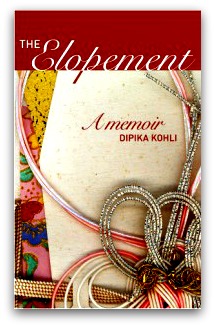
BOOK REVIEW: “The Elopement: A Memoir” by Dipika Kohli

TITLE: The Elopement
AUTHOR: Dipika Kohli
AUTHOR’S CYBER COORDINATES:
Website: kismuth.com
Twitter: @DipikaKohli
Kismuth on Facebook
PUBLICATION DATE: July 2012
FORMAT: Ebook (Kindle) available from Amazon
GENRE: Memoir
SOURCE: Review copy from author

Author Bio:

A former journalist, raised in America by her Indian parents, Dipika Kohli has previously lived in Japan and Ireland, and now lives in Durham, NC, with her husband and son. The third volume in her Kismuth series will be published in October 2012.

Summary:

When American-born Karin Malhotra elopes to Ireland with her college sweetheart, she botches the dreams her parents had for her when they left New Delhi with a stalwart philosophy on what a good life “ought” to be. “Opportunity,” her father said, “is in the U.S. That’s why we came.”

But finding herself in Ireland, juxtaposed in not one, but two additional cultures (her new husband is Japanese), Karin finds herself thinking about the early years of her own parents’ married lives, and wondering if, like her, they questioned their decision to leave everything familiar for the mere promise of a better life.

She tumbles headlong without any preparation into a small village in the corner of Ireland. Not only does she have to contend with a new suite of social mores, she wonders what it would have been like had she not quit home.

(Source: Amazon.com book description)

Review:

The Elopement is the second book in a four-part memoir series, Kismuth, which, in Hindi, means “destiny”. Karin’s grandmother defined destiny as:

We’re all meant to be someplace…And when we get there, wherever it is, that’s what’s supposed to happen.

This implies a passiveness about the process, a casting off of responsibility for our futures, yet many would argue that destiny is of our own making. You reap what you sow, is another way of putting it.

Karin Malhotra’s ambitious parents left Delhi in search for a new life, for better opportunities for them and their children. Sadly, by forcing their own ambitions onto Karin, they sowed what they would later reap: an unhappy daughter, rejecting her family’s strict expectations by following her heart and searching for her own “better opportunities”. Her interpretation of the phrase, unfortunately, did not agree with that of her parents, who refused even to acknowledge Karin’s relationship with Japanese boyfriend Yoshi.

Little wonder that, when Karin finds the acceptance from Yoshi’s parents that she never had from her own, elopement seems an attractive, fairytale-like option. But of course, everyone knows that not all fairytales have happy endings. And while it might be possible to create one’s own destiny, the lesson we can learn from this book is that it is folly to try to create someone else’s.

The Elopement is a fascinating read, beautifully and eloquently written. Dipika Kohli’s next book, The Dive, starts where The Elopement ends. I am already counting the days until its publication on October 10.

Notable quotes:

On being a TCK:

[My parents’] choices, and the consequences that arose, ought not affect my own. If they didn’t think the trade was worth it — the one where they gave up everything in a familiar context in India to take a chance on a new opportunity abroad — well, that wasn’t my problem, was it?

On interculteral relationships:

Our summer of trying out…this intercultural relationship thing, felt like wearing a happened-upon outfit I’d never imagined could fit, but thought, once in a while, why not break that one out? …This “once in a while” was about to become my new look.

On Ireland:

Ireland had the kinds of places and people that would make you stop what you were doing, and sit up and pay full attention, to the degree that you felt really aware and present, maybe for the first time in your life.

.

STAY TUNED for Thursday’s post!

Image: Book cover – “The Elopement”

If you enjoyed this post, we invite you to register for The Displaced Dispatch, a round up of weekly posts from The Displaced Nation, with seasonal recipes, book giveaways and other extras. Register for The Displaced Dispatch by clicking here!

Related posts:

Repatriating from paradise — and breaking all the rules

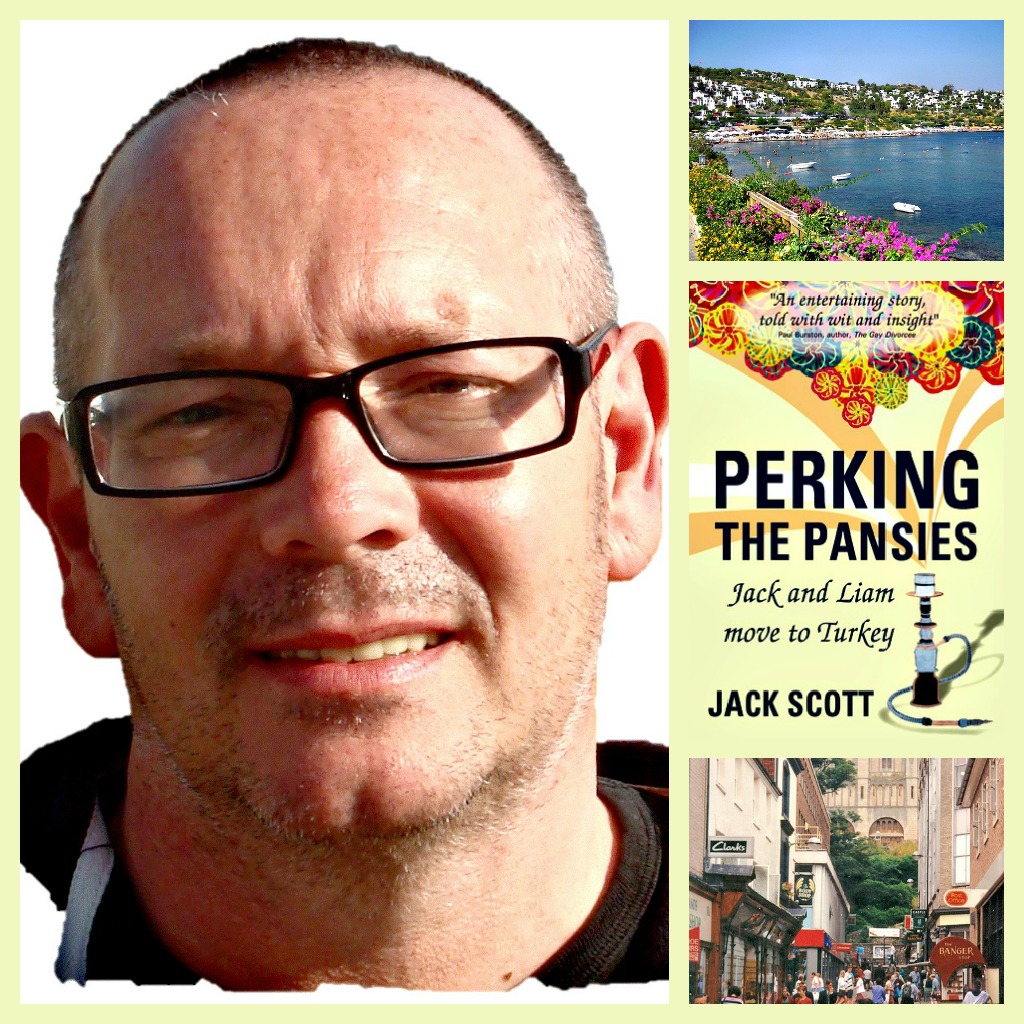
One of our earliest Random Nomads, Jack Scott, drank deeply of the cup of expat life. He and his civil partner, Liam, moved to their version of paradise: Bodrum, Turkey. This decision enabled Jack to become a writer, parlaying his popular blog, Perking the Pansies, into a book, which was published about a year ago and reviewed on this blog. After so much success, why have the pair traded in Bodrum for Norwich, in East Anglia? Yes, that’s right, they’ve repatriated!

In the beginning there was work and work was God. After 35 years in the business, the endless predictability made me question the Faith.

I wrote those words on the 8th October 2010 — the opening sentence of my debut post on a brand new blog, Perking the Pansies, about a couple of silly, cynical old queens who decided to jump the good ship Blighty and wade ashore to Asia Minor.

For a minority report, the blog’s done rather well. Then there was a book. That’s done rather well too. Remarkable. Both crept up behind me unexpectedly, without hint or herald. Sometimes I wonder if we should have listened to the early advice from our playground peers; maybe we should have kept our backs to the wall. Too late now.

At the time, we had a plan — well, a plan of sorts. We would stay in Turkey for a good few years, slowly descend into memory loss and erectile dysfunction (both disguised by a haze of alcohol) and eventually paddle back to Blighty for the liver transplant and the Grim Reaper’s call.

It was not to be. I wanted to do author things and keep the pennies (and believe me I do mean pennies) rolling in. I could do neither in Turkey. Added to this, serious family issues beckoned us back from paradise and we wanted to do our bit.

Decision #1: Leaving Bodrum

When we first announced our intention to up sticks and become “repats,” we were taken aback by the reaction in our little corner of expatland.

There was a strong sense that some gang members felt badly let down, betrayed even. It was as if our decision to leave reflected badly on their decision to stay.

Some even suggested that we’d soon be back, presumably with our tail between our legs and begging to re-join the fold.

You see, our particular expat ghetto was meant to be the final destination, a place to retire and expire. We were breaking the unspoken rules.

Ironically, when we first left Blighty for our place in the sun, our friends and family, the people with whom we have the deepest roots, simply wished us well and promised to visit.

Decision #2: Picking Norwich

So, the first big decision was to leave. The second was where next to lay our hatboxes. We were adamant that we wouldn’t revert to the world of coffees-on-the-run, nose-to-nipple commutes, kiss-my-arse bosses and treadmill mortgages. So, London was off the agenda.

After much heated debate and pins on maps, we settled on Norwich, a small cathedral city in Eastern England, a two hour drive northeast of the Smoke. Our choice was met with a wall of incredulity, both at home and away. To be fair, all I really knew of Norwich was the classic seventies game show “Sale of the Century”, Bernard Matthews gobbling turkeys at his farm in Norfolk, and the acronym (k)Nickers Off Ready When I Come Home, first used in the BBC Radio show “Just a Minute” in 1979. (I’ve often used the latter in text messages to Liam, but that’s another story…)

By common consent, the former Anglo-Saxon kingdom of East Anglia is full of inbreds fiddling with their siblings and marrying their cousins. That’s the myth peddled by the urban pretentious. In reality, Norwich is a sparkling jewel hidden in the rural flatlands of England’s gobbling breadbasket with more art houses, wines bars and fancy restaurants than you could shake a stick at. As the most complete medieval city in England and home to a thriving university, Norwich is where the old and the young are blended in perfect harmony.

We were delighted to join the north folk of Norfolk as neo-Norwichians (not to be confused with Norwegians who, as Vikings, did a bit of raping and pillaging in this flat part of our Sceptred Isle).

No regrets…

Our time in the sun was a magical experience. We don’t regret a single second, not even those cold winter days huddled under a duvet and fighting over the hot water bottle as torrential rain battered the house. Thank you, Turkey. Thank you for breaking the umbilical cord between wages and lifestyle, and teaching us to make do with less. Thank you, for giving me the time and space to write. Thank you, for handing me a story on a plate. One day, we may return. But, for now, there will be no going back on going back.

* * *

Readers, any thoughts on, reactions to Jack Scott’s rule-breaking move back home? Can you relate at all?

STAY TUNED for tomorrow’s episode in the life of our fictional expat heroine, Libby. (What, not keeping up with Libby? Read the first three episodes of her expat adventures.)

If you enjoyed this post, we invite you to register for The Displaced Dispatch, a round up of weekly posts from The Displaced Nation, with seasonal recipes, book giveaways and other extras. Register for The Displaced Dispatch by clicking here!

Related posts:

Images (clockwise from left): Jack Scott; Bodrum, Turkey, courtesy Yilmaz Ovunc (Flickr) Creative Commons CC BY-SA 2.0; Perking the Pansies book cover; Norwich, England, courtesy Roger Wollstadt (Flickr) Creative Commons CC BY-SA 2.0.

Chocolate on the go: The Chocoholic Traveler (App review)

Having spent much of the summer with an athletic, Olympic theme to our site, it’s time for us to switch to a less exhausting topic for a few weeks, and return to a TDN favorite: food.

Or, more specifically, traveling across or around the world to eat certain foods. What kind of foods, of course, depends on the individual. It’s literally a matter of personal taste.

For example, while I would happily pass on trekking across Cambodia to sample some deep-fried tarantula, I could be persuaded to travel to Sweden – although not for the Surströmming. As a self-confessed chocoholic, I’d need a sweeter temptation than fermented Baltic herring. October’s Stockholm Chocolate Fest in the National Museum of Cultural History, on the other hand —  a weekend of chocolate demonstrations, tasting, and (of course) purchasing — would entice me.

An app for the hopeless chocoholic

One woman who might agree with me is Kay Harwell Fernandez. Journalist Kay writes about travel as it relates to food and drink — particularly chocolate. Her passion for world chocolate is such that she has created an app for iPad/iPhone, called Chocoholic Traveler.

Be warned: this is an app for even the most dedicated of chocoholics, and one which will considerably lengthen their bucket lists.

Fancy a pilgrimage to Joanne Harris‘s Lansquenet-sous-Tannes, the fictional French town in Chocolat? For $18,200 for a party of four, you can take a barge cruise through the French Burgundy Canal and, along the way, have lunch in Flavigny, where the movie of Harris’s Chocolat was filmed.

Perhaps you prefer a more hands-on approach. From the app, I discovered several chocolate cooking classes, ranging from a $10 class at Hershey Story Museum, to a $900 four-day summer camp at Burdick’s in New Hampshire.

Need to crush the chocolate guilt? Try a chocolate walking tour of London’s Mayfair and Chelsea. The three-hour walk will go some way to silencing the voice of your conscience as you drink hot chocolate and taste different varieties of chocolates, including the Queen’s favorite. The tour, by the way, starts off with a chocolate cocktail. Of course.

Verdict

If you’re looking for an app that identifies individual chocolate shops, this isn’t it. This is more accurately an act of worship for the cacao bean. In the same way an app for Napa Valley wine tours wouldn’t list every local liquor store, this doesn’t list every Main Street confectionery store. Kay Harwell Fernandez is, however, continually updating her app with new global chocolate events. One nice touch is the comments page — users can see others’ suggestions for future updates.

Check out Chocoholic Traveler on iTunes here, and

STAY TUNED for Tuesday’s post: helpful advice on the subject strange food obsessions, from our resident agony aunt, Mary-Sue Wallace.

If you enjoyed this post, we invite you to register for The Displaced Dispatch, a round up of weekly posts from The Displaced Nation, with seasonal recipes, book giveaways and other extras. Register for The Displaced Dispatch by clicking here!

Related posts:

Image: Chocolate Splash by Idea go; courtesy FreeDigitalPhotos.net