The Displaced Nation

A home for international creatives

Tag Archives: Los Angeles

TCK TALENT: Lisa Liang performs “Alien Citizen” before fellow aliens

Alien Citizen Collage_dropshadowThis month Elizabeth (Lisa) Liang takes a break from interviewing fellow Adult Third Culture Kids (ATCKs) who work in creative fields, to tell us about what it was like to perform her one-woman show about being a TCK as the closing keynote at last month’s Families in Global Transition (FIGT) conference.

Hello again, Displaced Nationers! I was excited and anxious about performing my solo show, ALIEN CITIZEN: An Earth Odyssey, as the closing keynote at the Families in Global Transition (FIGT) conference, held March 21-23 in Virginia.

Excited because the FIGT audience comprises ATCKs, global nomads, TCK parents, and various professionals (cross-cultural experts, therapists, school administrators, etc.) who help expat families with issues specific to their lifestyles—in other words, my target audience. I hoped that if conference participants liked the show, it could lead to more bookings.

But if I was excited, I was also anxious. What if my work didn’t resonate with the FIGT crowd? That would signal a massive failure on my part as performer/writer.

On the other hand, what if it resonated with them too much? Maybe the FIGT participants would be looking for something light-hearted by the end of two-and-a-half days. While my show uses humor, it also goes to some dark places. Would it make people uncomfortable?

Of course I never know how my shows will be received, but I felt more was at stake at FIGT. As with other performances, I wanted people to laugh, but I also wanted them to be moved.

* * *

Here’s what happened:

1) The audience was quiet at first. I couldn’t tell if they were bored or listening intently—we were in a ballroom and I was on a platform, not close enough to see anyone’s expression. But I didn’t want to lose sight of the storytelling so charged ahead as usual.

2) To my relief, they started laughing at the right places, including lines I like but that don’t always get laughs, such as:

“So I sit in the back until I make friends with another misfit. Also known as an Australian.”

3) They listened intently. I began to realize this about twenty minutes in, which gave me the confidence to tweak some lines. The majority of the audience were my generation and older, so I sensed that if I said “I first fell in love with [Clark Gable] when I saw Judy Garland sing to him in THAT’S ENTERTAINMENT on our Betamax,” they would laugh. Normally I say “on video” because anyone younger than I am has no idea what a Betamax is.

4) I got a standing ovation as soon as the lights came up at the end. It felt warm and sincere and lasted a while.

The keynote of my keynote: Special effects

I hoped the FIGT audience would be pleasantly surprised by the show’s video projections and sound effects, since those are unusual elements in a conference setting.

Everything I attended at the conference was fascinating and of excellent quality. But my piece was something else, something purely theatrical. At the show’s beginning, the room fades to darkness as you hear David Bowie’s “Space Oddity” and then see a projection of the moon flashing past the Earth. The lights come up and I’m standing on the platform with kooky headgear and a bobbly alien headband, grinning at you.

Showtime!

One of my favorite memories of the whole experience was the Q2Q (or cue-to-cue) rehearsal the day before. The hotel staff were busy setting tables and preparing for the following day’s events. Several of them seemed bemused as they watched me performing excerpts so that the projections and sound cues could be rehearsed.

My brother John was my techie, running the cues off of my laptop in the back of the room while telling the hotel’s A/V technician when to fade down/up the lights.

John hadn’t worked in a theatre booth in something like 25 years, but you would never have guessed. And as my brother was taking on the mantle of stage manager/techie, the A/V guy started telling us how he could do some sound mixing during a tricky part of the show.

Then another hotel staffer offered to give me some background lighting to enhance the effect, until the A/V guy told him it wouldn’t be possible to run light cues, so the staffer said he could at least set up the lights to have a nice glow for me from the start.

To our delight, there were showbiz folks among the hotel staff. They loved having something to do other than give people mikes and set tables and were jazzed about what they saw, which boosted my confidence.

After the show, shows of emotion and gratitude

My brother said that when the lights came up there were people who were trying to compose themselves before they stood for the ovation. For the next half hour, people came up to thank me. Some talked at length about how the show affected them, while others just gave me big hugs. A few ATCKs with swollen eyes lodged a complaint: they felt it should have been mandatory to have a box of tissues at every table!

I recall one woman thanking me for “coming out” with my painful adolescent experiences, saying she had experienced the same when growing up in a foreign country.

Another one said the show had changed her mind about theatre—she had no idea it could be moving and transformative. That’s a compliment to my director, Sofie Calderon, who made the show far more dynamic than I could on my own.

Several parents of TCKs told me the show had given them a lot to think about, and one said she could now appreciate some of the issues she ought to be dealing with on behalf of her kids.

To my relief given my initial trepidations, the response was overwhelmingly positive. I also felt, and continue to feel, gratified that people have continued discussing their impressions on blogs, Twitter, Facebook, and email. This confirmed what I’ve learned since the world premiere and through the show’s international tour: the story is relatable and interesting; it’s a testament to TCKs’ strength; and if a story is told with humor, people will listen to the darker side of it, and empathize.

As I had hoped, FIGT has led to a new booking: I’m performing excerpts at the gala dinner for the World Bank Family Network, to be held in Washington, DC, on May 13. That’s right after my San Francisco premiere at the United States of Asian America Festival, sponsored by the Asian Pacific Islander Cultural Center, on May 10.

Hey, if the show has antennae, it also has legs!

Also, since I posted about ALIEN CITIZEN: An Earth Odyssey a year ago on the Displaced Nation, my dream of taking it Off Off Broadway came true this past September. And my goal to take it on the college circuit has come to fruition: I’ve performed the show or excerpts at Princeton, M.I.T., and CSULA, and today, April 10th, I’m taking it to my alma mater, Wesleyan University.

Another desire of mine was to perform the show at international schools, and this, too, is beginning to be fulfilled: right after FIGT, I performed excerpts at two international schools and the U.S. Embassy in Panama.

I’ve also led workshops on how to create a solo show / memoir / personal essay at Princeton, CSULA, FIGT (in 2013 and 2014), and in private classes in Los Angeles.

I’m astonished, thrilled, and humbled by the show’s life and hope to take it all over the world.

* * *

Thank you, Lisa! Your experience at the FIGT conference sounds out of this world (figuratively as well as literally), and it’s wonderful to hear news of all the progress you’ve made since this time last year, when we first “discovered” your talent! Readers, please leave questions or comments for Lisa below.

STAY TUNED for next week’s fab posts!

If you enjoyed this post, we invite you to register for The Displaced Dispatch, a round up of weekly posts from The Displaced Nation, with seasonal recipes, book giveaways and other extras. Register for The Displaced Dispatch by clicking here!

Related posts:

Up, up and away: The Displaced Nation turns three today (no foolin’!)

TDN Birthday CardWal-lah! The Displaced Nation is turning three today. Yes, our birthday is April 1st—no foolin’!

To celebrate, we would like to invite you to a virtual “hot air balloon” party.

Yes, a hot air balloon party—no foolin’ on that score either, though you could have fooled me as I had never heard of such a party until a day or so ago. Back in my day, when I still celebrated birthdays, ordinary balloons would suffice. As Winnie the Pooh once put it:

Nobody can be uncheered with a balloon.

But surely they can be even less uncheered with a hot air balloon—or so I’ve come to be persuaded.

What’s more, I’ve come to realize that hot air ballooning represents most of what we’ve been up to on this site over the past three years. Here are the three observations that led to this considerable epiphany:

1) We are full of hot air.

I won’t point the finger at anyone in particular. We are all guilty. But if I had to start somewhere it might be with:

2) But we’ve steadfastly adhered to our goal of putting air under the wings of international travelers and residents.

Just because we’re full of hot air, doesn’t mean everyone else has to be. Tellingly, our most inspirational posts tend to be by our current crop of columnists. They produce monthly tales of international residents who’ve used their time creatively. Who can fail to feel uplifted when reading about individuals like:

And these are just from the past month! Thank you, JJ Marsh, James King, Lisa Liang, Joanna Masters-Magg and Meagan Adele Lopez (her column comes up tomorrow!) for the critical part all of you have played in keeping us afloat.

On this note, Kate Allison deserves special mention for keeping us entertained with her serial expat novel, Libby’s Life, for the entire length of this voyage. She recently posted its 90th episode! The thought of writing that much fiction online is enough to puncture anyone’s balloon, but not Kate’s!

3) We go wherever the wind takes us.

As regular readers will realize by now, we don’t really steer the balloon, because, well, we can’t. And to be honest, we never had any particular destination in mind. We started out with monthly “themes” of global residency and travel, in hopes we would one day land in an island full of great wealth and fantastic inventions, the kind of place where our themes could become memes. Everyone there would say, how right you are, we international travelers are all writing our own versions of the Alice in Wonderland story! Let’s have a Mad Hatter’s Tea Party to celebrate. As a matter of fact, let’s turn it into an island-wide holiday!

As it turns out, however, we have yet to share the fate of retired schoolteacher Professor William Waterman Sherman. We have not yet found (or founded?) the utopian displaced community of our dreams. Thus, on our second anniversary, we rebranded ourselves as something a little tamer: a “site for international creatives”: fiction and nonfiction writers, artists, entrepreneurs, and activists.

But we kept two categories that pay tribute to our original concept: Pot Luck and Just for Laughs. And to this day, we enjoy lurching towards the odd (you can say that again!) thematic post. We just can’t help ourselves! As most regular readers know, we still give out monthly “Alices” to those with a special handle on the curious and unreal aspects of life as a global resident or voyager. And, just last month, we embraced a new heroine for the repatriate challenge many of us have faced: Dorothy Gale from the Wizard of Oz!

Is it any wonder we are throwing a Hot Air Balloon Party?

* * *

I’ve just now heard that the band has arrived. They’re called The Fifth Dimension—what could be more appropriate for take-off?! Up, up and away!

Hey, even if you’re not a balloonatic yet, we guarantee that this is the most fun you’ll ever have in a wicker basket. (And perhaps the most fear…)

Before leaving, let’s all raise our glasses. Here’s to another good year aboard the Displaced Nation Thermal Airship! Three cheers! Hip, hip, hooray!

Readers, if you have any posts that you particularly enjoyed in the past three years, please let us know in the comments. We can see if we can produce more of the same (depending on which way the wind blows, of course).

STAY TUNED for tomorrow’s fab post from The Lady Who Writes.

If you enjoyed this post, we invite you to register for The Displaced Dispatch, a round up of weekly posts from The Displaced Nation, with seasonal recipes, book giveaways and other extras. Register for The Displaced Dispatch by clicking here!

Related posts:

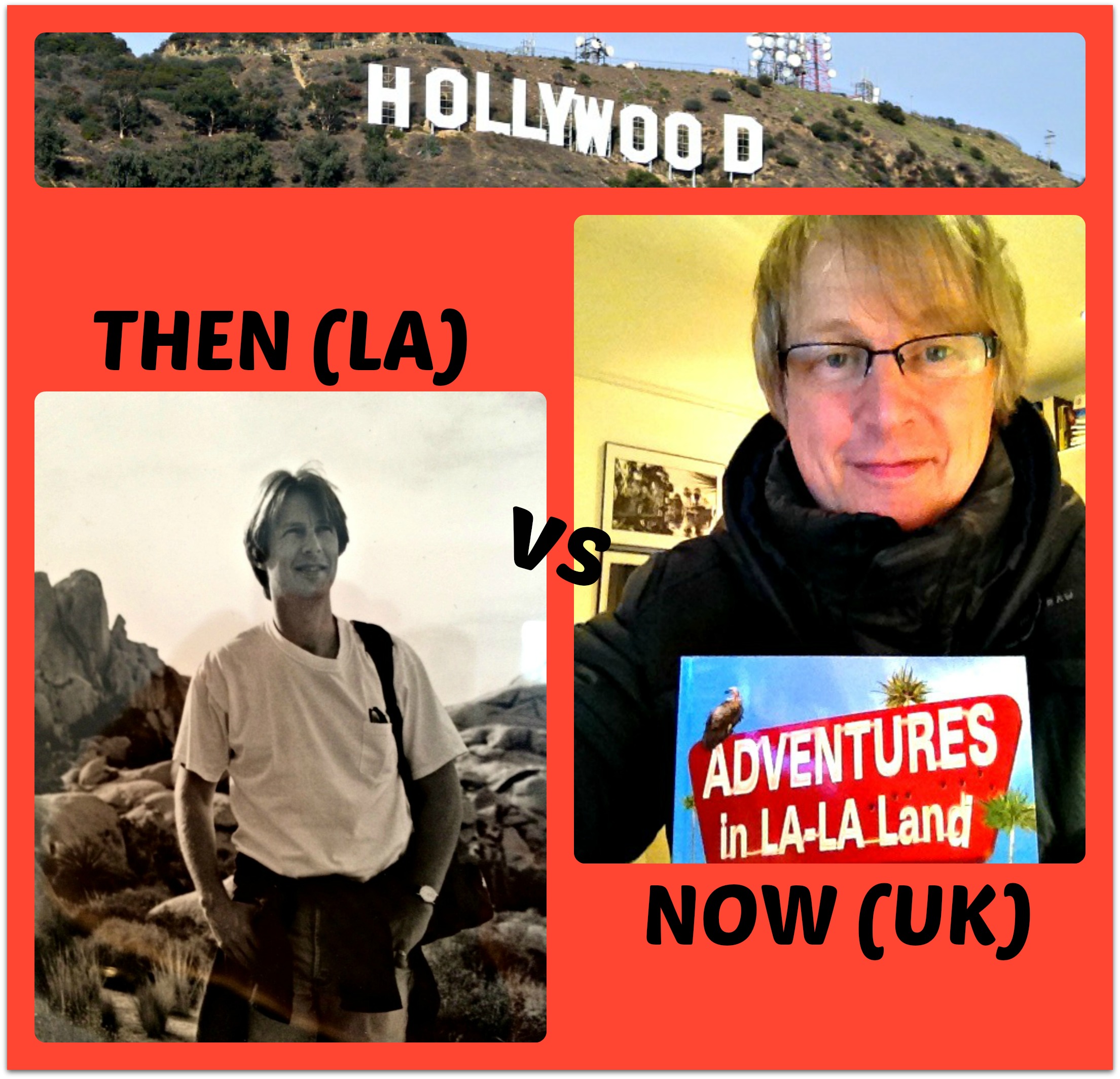
Does an expat life in Los Angeles ever go according to script? Read Tim John’s memoir to find out…

Tim John Hollywood CollageFor many of us, the calling to the expat life is not really a calling at all, but more of a vague (albeit rather deep-seated) need to escape our surroundings in search of adventure. We have no idea of what we’re looking for until we’ve arrived at a place and put down roots. Even then, we still have the mentality of drifters, and it take us a while to access our muses.

My guest today, the screenwriter Tim John, does not belong in that mould, as soon becomes clear from the first few pages of his new book, Adventures in LA-LA Land, an account of the seven years he spent in Los Angeles with his wife, Jenny, and their two young daughters.

You see, Tim plunged into his particular expat adventure with the script already written, both literally (he had a project in the works) and figuratively. Heading for Hollywood was Plan B after he lost his job with a London advertising agency during the recession of the early 1990s, and started dabbling in screenwriting.

The late Christopher Hitchens, another English writer who chose to be based in the United States, once described LA as a city “mostly full of nonsense and delusion and egomania.” But in the script Tim had written for himself and family, it was LA-LA Land—a place where they could have it all, great climate, a house with swimming pool, and (hopefully) big money.

So did Hollywood feed Tim’s creative muses (and fill his coffers) in the manner he expected? You’ll have to read the book to find out. I read it, and found myself surprisingly moved by the story of a man who lives for the movies. In fact, the pace can be likened to that of a roller coaster ride—fun but also harrowing at times.

On that note, it’s time to welcome Tim to the Displaced Nation to talk about his book. And just a heads up: Tim will be “screening” the comments for the person who leaves the best pitch for why they’d like to read it. That lucky individual will be under contract for a free digital copy!!!

* * *
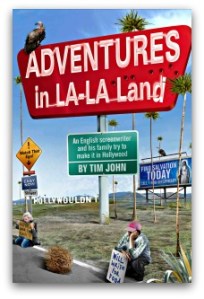
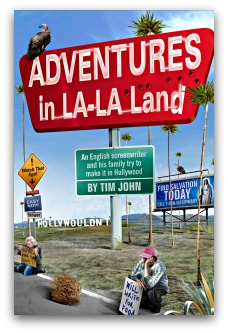
AdventuresinLALALand_coverHi, Tim, and welcome to the Displaced Nation. Can you tell me why you decided to write a memoir about your years in Hollywood?
I’d read so many books about how to write a Hollywood screenplay, but never found one that also told you what it was like living there, so I decided to write my own, based on the seven years I lived there with my wife and two daughters.

Have you thought about turning it into an actual script for a movie?
I would love to turn it into a screenplay, too.

I understand you lived in LA from 1991 to 1998. I’m curious why you produced the book so long after the fact?
I’m not really sure why I waited so long to write it, possibly because I’ve been doing more and more teaching over the last couple of years and I’m often aware that students often don’t get taught important skills that are crucial to being successful as a screenwriter, such as being able to pitch and how to balance writing life with social life and family life. I thought that relating my experiences could be useful for others. If nothing else, they could learn from my mistakes as well as my successes!

In the end, the movie (of my life) was about…

Has your perspective on the experience deepened with time?
I suppose gaining some distance in time and geographically helped me to see Hollywood from a more objective perspective.

What impact did your writing about the experience have on you?
Definitely part of it was cathartic, to process the bizarre experience.

You worked in advertising for a while. When exactly did you catch the movie-making bug?
I worked a copywriter and then as a creative director—both of which are extremely useful if you want to go into film as they teach you so much about writing for a particular audience and how to write pithy dialogue and how to edit, etc. I always loved film mainly because it was such a great escape. As a kid, The Jungle Book was a big favorite. Mutiny on the Bounty and Lawrence of Arabia got me pretty scared, as did that spider in Doctor No!

Yes, I recall your mentioning in the book your fear of spiders when you found yourself face to face with a black widow at your house in LA. I’m still shuddering at the thought of being bitten by a brown recluse, by the way!

Was there a single epiphanic moment?

Your book is chockerblock with what we like to refer to on this site as “displaced moments” as a result of your encounters with not just deadly spiders but also shrieking peacocks, rats, snakes, and even some neighbors who believed in extraterrestrial burglars—and that’s before we get to the highly venomous creatures who populate the Hollywood film industry. Does any one moment stand out as your most displaced?
Wow. There were many moments when I thought “What on Earth am I doing in this bizarre place?” One that sticks out in my professional life was that time I went to pitch to Disney and the exec said “Great to meet you guys, we’re looking for some comedy writers” and I self-effacingly said: “Then you should meet these guys I play tennis with—they’re hilarious.” None of the execs could see I was joking and at the end of the meeting, the development girl took me aside, discreetly handed me a business card and said: “If you continue to have self-esteem issues, see my shrinkshe’s fabulous!”

That makes me think of Johnny Carson’s line: “In Hollywood if you don’t have a shrink, people think you’re crazy.” And I think the Northridge earthquake of 1994 displaced you and your family rather literally.
Yes, the whole house rattled and creaked for over forty seconds and there were waves in the pool.

Ah, the pool… You also talk about how much you loved the weather, having a pool, and taking drives to some fabulous scenery. Can you pinpoint your LEAST displaced moment, when you felt you were born to be in LA-LA Land rather than your native UK?
There were so many great moments. Personally, living in that sunshine, with a pool, a hot tub, etc., along with plenty of money and also plenty of free time (even though you’re constantly thinking of ideas to pitch), seems like a dream for anyone who’s come from the UK climate and ever struggled to make ends meet. It’s like living in a vacationuntil you realize it will all collapse if you don’t sell your next idea, and you’re going to have to sell it far sooner than you expected because the cost of living is very high, especially when you factor in things you’d never had to pay for before, such as earthquake insurance. Never forget that “writer” is only one letter away from “waiter”.

Professionally, when you get to chat with famous stars and talented directors and they take your comments seriouslythat feels unreal but also great. Probably the greatest moment for me was just before I moved to LA, being able to go to the tenth birthday party for George Harrison’s film company, HandMade Films. For anyone English, I think having a chat with a Beatle tops it all.

What did you and George chat about?
I’d worked on two screenplays for his company, so we talked about that. The funniest thing, I thought, at the company’s birthday party, was when George and Ringo joined the band playing on stage. If anyone requested they perform a Beatles’ song, George said: “I don’t know that one.”

In the end, the film was about spirit…

I understand you found LA a culture shock.
Wow, there are so many things that are culturally different about living in the UK and living in America, especially in Hollywood, which many Americans find totally unreal, too. Ones that really stand out: the almost constant sunshine for a start. The smog levels on bad days. The way so many Americans are so welcoming, where so many Brits can be snooty and suspicious. The way so many Americans are optimistic and so many Brits are pessimistic (or maybe more realistic than many film people). I never forgot that Hollywood has been described as “the only town where you can die of encouragement.”

I know you decided to leave LA in part because of your mother’s health and in part because of your daughters’ education. The family, particularly your daughters, didn’t want to go. What were the biggest adjustments?
Tiny parking spaces, terrible weather, high cost of living but a wonderful sense of humor. I did miss my irony in LA. We also hadn’t realized quite how much UK house prices had rocketed during the period when we’d sold ours to live abroad!

What do you think were the chief benefits you and your family derived from being Los Angelenos for a time?
I’m sure that our seven years in LA and coming home taught us all to adapt to change. My elder daughter had enjoyed an ice skating career in the US, which didn’t continue in the UK. But at least she learned that if you set goals and envision yourself achieving those goals, it will seriously boost your chances of success. The rest of us learned that you can probably have all the things you’d like in life—you just can’t have them all at the same time!

Looking back, what was your single most professional achievement during your time in LA?
Not one single thing; rather, it was learning the craft and how to work with industry people sufficiently well to be able get regular work from the studios (but not all the time!).

How do you make a living these days?
Right now, I’m rushing out to give six hours worth of lectures on dialogue to students at Bournemouth University. I also teach on and off about creative writing in general and about writing for advertising, at various universities: Bournemouth Uni, where I teach part of the MA in Advertising, at Southampton Solent, where I do some spots on Advertising and some on Screenwriting, to students at all levels, and at the Arts University in Poole, where I teach adult classes in all sorts of writing. But teaching is just part-time. I also do some freelance copywriting. And most of my time goes into writing screenplays still!

Do you still feel like a Los Angeleno in some respects?
Only in that I have several great friends in LA and I feel totally at home with film industry people. I probably see myself as neither totally British any more or completely Californian. I’m obviously some sort of mongrel.

Writing for publication: A different animal?

Moving back to the book: what was the most difficult part of the writing process?
The hardest part was the guilt I occasionally feel for what I see as building up all the family’s hopes by showing them a few years of a dream lifestyle, then waking them up from that dream by saying we have to go back to the harsh reality of living back in the UK. BUT, as mentioned, the family all feel really lucky to have had those seven great years and have made all those extra friends without staying away from their old friends and family for so long they felt like strangers. (That’s what they tell me anyway. I have an extremely supportive family!)

Why did you decide to self-publish?
Because I’d had two books published by a big publisher many years ago and never felt they did much to promote them. My agent said most publishers only push big brand names and my wife had a friend who did very well self-publishing a memoir, so I thought I’d give it a go.

What audience did you have in mind for the book, and has it been reaching those people? Is it mainly for wannabe British scriptwriters like yourself, or do you think it has broader appeal—for instance, to any Brit who might be thinking of living in America?
I hope the book will appeal to anyone who likes a laugh, to anyone who is interested in a family fish-out-of-water story and to anyone who wonders how you can make it in the film business. There’s plenty in there about the American school my wife taught in, the ones the kids went to, about my eldest daughter making it as an ice-skating champion… It’s by no means just about the movies, but, as I mentioned earlier, it will show you far more about how to make it as a screenwriter than books that simply tell you about the script, the formats, and nothing else.

Of all the advice you transmit to wannabe Hollywood screenwriters, which is the most important?
Make sure you enjoy the writing process as much as possible. Don’t pin everything on whether you sell it or it gets made. Enjoy the small triumphs, such as writing a great scene or even a great line of dialogue. All the little triumphs can add up into a pretty rewarding experience. And never forget that you may well learn more from your mistakes than from your successes.

What’s next for you in terms of creative projects?
I’ve just finished a UK thriller “Living in Sin”; I’m currently doing a re-write for a sci-fi project for a Californian director, and I have a UK drama that I wrote written with a writing partner, Jon Rolls, for which the producers have just this week started looking for a top director and cast—I’m still going for it!

10 Questions for Tim John

Finally, I’d like to ask a series of questions that I’ve asked some of our other featured authors, about your reading and writing—and in your case, also film-watching—habits:
1. Last truly great book you read / film you watched: Paper Towns, by John Green; The Way Way Back (2013), directed by Nat Faxon and Jim Rash.
2. Favorite literary / film genre: It varies enormously but I’d say “comedy drama” for both (eg, Little Miss Sunshine).
3. Reading/film watching habits on a plane: I only ever read paper books and magazines. Generally I watch films on long flights—but nothing involving flights in danger. I’m a nervous flyer. I can never sleep.
4. The one book you’d require President Obama to read, or film you’d require him to watch, and why: War and Peace, so he’s fully aware what Russians can do if stirred up. No films to recommend—I’d rather he kept his eye on world news!
5. Favorite books/films as a child: The Secret Garden; The Jungle Book and Bond movies and then Paper Moon when I was slightly older. Also the musical Oliver.
6. Favorite hero/heroine in fiction/film: Heroines: Victoria Wood as a writer; Kathy Bates as an actress. Heroes: No book heroes apart from Bilbo Baggins (when I was ten); in film, the cheeky little boy in Cinema Paradiso and later Léon in the film of that name.
7. The writer, alive or dead, you’d most like to meet: Woody Allen, as I’m nearly always amazed at how inventive he can be and how, against the odds, he so frequently gets cross-genre movies to work, certainly during his Crimes and Misdemeanors period.
8. Your reading/film-watching habits: I don’t read that many books as I find it hard to give authors the benefit of 50 or 60 pages to get into it. I far prefer books that grab me almost immediately, but with their style and outlook on life, not with purely mechanical plot like Dan Brown or John Grisham. I find those stories generally too thin to keep reading. I frequently start books and leave them if they don’t hold my interest. As far as films go, I go to the cinema at least once a week. I also watch endless boxed sets: generally US drama such as Breaking Bad, The Sopranos, The Wire, House… I really got into The Bridge and Spiral. My worst DVD marathon took place in the early series of 24, when I watched 13 episodes over a single weekend.
9. The book you’d most like to see made as a film: On Mermaid Avenue, a great American novel that I’ve optioned and written a screenplay from.
10. The book you plan to read next / film you plan to watch next: The Fault in Our Stars, by John Green; currently, I don’t have any films I’m looking forward to watching.

* * *

Bravo, Tim! If we ever host the Displaced Oscars, something we’ve been threatening to do for some time now, you’ll definitely be receiving a statue.

So, any COMMENTS or QUESTIONS for Tim, or PITCHES for why you’d like to read the book? Don’t forget, there’s a free digital copy on offer…

And if you can’t wait to read the book or don’t win, Adventures in LA-LA Land is available from Amazon. Be sure to grab a copy! You can also visit Tim’s writer site, like his book’s Facebook page +/or follow him on Twitter.

STAY TUNED for next week’s (month’s) fab posts!

If you enjoyed this post, we invite you to register for The Displaced Dispatch, a round up of weekly posts from The Displaced Nation, with seasonal recipes, book giveaways and other extras. Register for The Displaced Dispatch by clicking here!

Related posts:

LOCATION, LOCUTION: Amanda Hodgkinson, author of “22 Britannia Road” and “Spilt Milk”

OLYMPUS DIGITAL CAMERA

Author photo – Amanda Hodgkinson

In this month’s “Location, Locution”, expat crime writer JJ Marsh interviews Amanda Hodgkinson, author of 22 Britannia Road and Spilt Milk.

Born in Somerset but raised in a village on the Blackwater estuary in Essex, Amanda has childhood memories of  shingle beaches and mudflats, grey-green heather, salt marshes, messing about in boats, gangs of rowdy kids playing all day along the sea-walls, and the ever-present cries of seagulls.

As an adult, she moved inland to Suffolk. She took an MA in Creative Writing at the University of East Anglia and after the MA, she and her husband, with two young daughters, upped sticks and bought a property in south west France. She intended to write a novel but spent the first few years of their new life mixing concrete to fix their house. She also had to learn French, settle her daughters into school and deal with the ups and downs of living in a country miles away from friends and family. Finally though, the family made a home in France. And she finished the novel…

22 Britannia Road became an international bestseller. Spilt Milk came out in February 2014 (Penguin Books) and a novella Tin Town (Grand Central Penguin US) will be published this summer. Meanwhile Amanda has begun work on a third novel. You can find out more about Amanda at her website, www.amandahodgkinson.com

Which came first, story or location?

With Spilt Milk, I was inspired by a location. I was visiting friends in rural Suffolk. It was late October, that lovely, damp time of year when the smell of leafmould is everywhere in the country. We went walking and ended up on the banks of a small river. I knew there and then that I wanted it to be the location for my next novel. I was amazed by the stillness of the place. The river had a timelessness to it. I suppose the slow moving waters suited the themes I was interested in writing about – the passing of time in families, the stories we keep and the ones we allow to slip away from us. By the time we’d walked back home, I had the beginnings of the novel in my head.

What’s your technique for evoking the atmosphere of a place?

When I am writing about a time and a place I find evoking colour, smell and the sounds of that place help create mood. I know it’s considered old-fashioned to use landscape to create mood and emotional intensity but I not only love writing which evokes emotion in that way, I also believe there is a strong connection between our identities and the geographic landscapes we inhabit.

Which particular features create a sense of location? Landscape, culture, food?

All those but also I find the light is important. I adore Edward Hopper’s paintings for his use of light and I find writing can experiment in a similar way with light, creating mystery or clarity and deepening character.

Can you give a brief example of your work which illustrates place?

In the following passage set in 1970, Nellie, who is a very old lady, watches her family as they picnic together by the river that she has known since she was a small child.

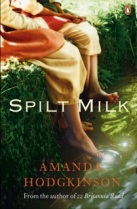
SpiltMilkNellie sat in the shade of summer-green willows, watching the procession of men, women and children making their way down to the riverbank, one after the other, their hands drifting through the day’s fragile bloom of field poppies, all the new-born crimson petals falling at their touch.

Slowly, the murmur of voices, the greetings and talk turned to seasons remembered, harvests and ploughing, days long gone. They discussed winters whose legendary harshness were in retrospect to be marvelled at and even doubted a little, particularly this deep in the year when the barley fields were pale gold and in the distance beyond the farm, the village with its church spire shimmered into the vagueness of a heat haze.

Black and white farm dogs lay low, eyeing Tupperware boxes of sandwiches and sausage rolls. The transistor radio announced cricket scores. A tartan rug was spread out by the bulrushes, and a baby in its frilly white knickers and matching bonnet wriggled and laughed while the women cooed over her. Sunburnt men sprawled in the grass with bottled beers, straw hats tipped low across their brows. Oh, heavens, Nellie thought, eyeing the new baby. And how did I get to be so old?

How well do you need to know the place before using it as a setting?

A place can inspire a novel but I don’t think it is necessary (at least not for me as a writer) to know a place intimately before I begin a story. It is a starting point and as both my books have been set in the past, my research has also been looking at photographs, old films and reference books.

It feels liberating to be able to know a landscape physically and than allow it to become a place of the imagination. I recently wrote a historical novella for an anthology and spent a day exploring an old World War Two airfield which I then used as the basis for the story. While I stuck very closely to the layout of the airfield in the story, I still had to imagine how it must have been back in the 1940s. As in my novels, the landscape was a starting point for my fiction.

Which writers do you admire for the way they use location?

Lots! Thomas Hardy, DH Lawrence, Toni Morrison, Annie Proulx, Paul Harding, Marilynne Robinson, John Steinbeck, Robert Macfarlene, Tracy Chevalier, Jane Smiley, to name a few.

Author bio and photograph from Amanda’s website

Next month’s Location, Locution:  Jill interviews Andrea Cheung, whose Hungarian/Chinese heritage informs her multicultural prize-winning children’s stories.

 * * *

_(75_of_75)JJ Marsh grew up in Wales, Africa and the Middle East, where her curiosity for culture took root and triggered an urge to write. After living in Hong Kong, Nigeria, Dubai, Portugal and France, JJ finally settled in Switzerland, where she is currently halfway through her European crime series, set in compelling locations all over the continent and featuring detective inspector Beatrice Stubbs.

STAY TUNED for our next post!

If you enjoyed this post, we invite you to register for The Displaced Dispatch, a round up of weekly posts from The Displaced Nation, with seasonal recipes, book giveaways and other extras. Register for The Displaced Dispatch by clicking here!

Related posts:

LOCATION, LOCUTION: Chris Pavone, author of “The Expats”, on why story and location are inseparable

Cover art "The Accident; Author photo Chris Pavone; Author photo JJ Marsh

Cover art “The Accident; Author photo Chris Pavone; Author photo JJ Marsh

In this month’s “Location, Locution”, expat crime writer JJ Marsh interviews author Chris Pavone, whose  first novel, The Expats, was published in 2012, and was a New York Times and international bestseller, with nearly twenty foreign editions and a major film deal.

The Expats was nominated for a Los Angeles Times Book Prize and a Macavity, and awards from the Strand Magazine Critics Circle, the Mystery Booksellers Association, and the International Thriller Writers. It received the 2013 Edgar Award and the 2013 Anthony Award for Best First Novel.

Pavone’s new book, The Accident, will be published in March 2014.


Which comes first, story or location?
For some books I think the story and location are inextricably intertwined: the story is about the location. My thriller The Expats is one of those, defined by taking place in a country that’s not the protagonist’s home. The plot is driven by this situation, by her sense of disassociation and isolation, by the necessity of her reinvention.

How do you go about evoking the atmosphere of a place?
I love walking around cities, looking around at the architecture and the shops and the restaurants, at the people and their pets. My characters do the same, using all their senses to inhabit the world around them. Of course walking around, in and of itself, isn’t the type of action that does much to drive a plot forward, so characters should also be doing something else while walking around. Something such as spying…

Which particular features create a sense of location? Landscape, culture, food?
On the written page, I think the clearest evocation is via the physical landscape, especially when it echoes the culture. New York is the big brashness of skyscrapers and noise; London is the polite order of elegant uniformity; Rome is cheerful dilapidated chaos.

How well do you need to know the place before using it as a setting?
As much as my characters. If they’re only in a city for a day, they don’t know that much about the place, and I don’t need to either. Both The Expats and my next book, The Accident, use a variety of locations, and the amount of time the characters spend in placesLuxembourg, Paris, the Alps, Amsterdam, London, Zurich, Los Angeles, etc.is roughly proportionate to the amount of time I’ve spent there.

Could you give a brief example from your work which you feel brings the location to life?
This is the final sentence of The Expats . . .

Kate watches them merge into the flow of the dense crowd, all the streetlights and lamplights ignited in the Carrefour de l’Odeon, a little red Fiat beeping at a bright green Vespa that’s weaving in the traffic, the policeman oblivious while he continues to flirt with the pretty girl, cigarette smoke wafting from the tables filled with wineglasses and tumblers and carafes and bottles, plates of ham and slabs of foie-gras terrine and napkin-lined baskets of crusty sliced baguette, women wearing scarves knotted at the neck and men in plaid sport jackets, peals of laughter and playful smirks, hand-shaking and cheek-kissing, saying hello and waving good-bye, in the thick lively humanity of early night in the City of Light, where a pair of expats is quickly but quietly disappearing.

Which writers do you admire for the way they use location?
Hemingway was not only a master of evoking location, but also of using physical atmosphere as emotional metaphor. Empty barges on the Seine can represent a lot more than just boats.

Next month on Location, Locution:  award-winning author Amanda Hodgkinson.

 * * *

JJ Marsh grew up in Wales, Africa and the Middle East, where her curiosity for culture took root and triggered an urge to write. After living in Hong Kong, Nigeria, Dubai, Portugal and France, JJ finally settled in Switzerland, where she is currently halfway through her European crime series, set in compelling locations all over the continent and featuring detective inspector Beatrice Stubbs.

STAY TUNED for our next post!

If you enjoyed this post, we invite you to register for The Displaced Dispatch, a round up of weekly posts from The Displaced Nation, with seasonal recipes, book giveaways and other extras. Register for The Displaced Dispatch by clicking here!

Related posts:
TCK TALENT: Wendy Laura Belcher, best-selling author, memoirist, and distinguished scholar of her adopted cultures

wendy-l-belcher-tck-collageWelcome to the third installment of “TCK Talent,” Elizabeth (Lisa) Liang’s monthly column about adult Third Culture Kids who work in creative fields. As some readers may recall, Lisa—a Guatemalan-American of Chinese-Spanish-Irish-French-German-English descent—has written and performed a one-woman show about being a Third Culture Kid, or TCK. It debuted in LA in the spring, and I had the pleasure of seeing it during its too-short run in New York City last month. It was stupendous!

—ML Awanohara

Greetings, readers, and thanks, ML, for that vote of confidence in my work. But it cannot compare to the output of today’s guest, a woman of extraordinary talents. Wendy Laura Belcher is a professor of African literature at Princeton University as well as a published memoirist, produced playwright, popular workshop leader, and author of the best-selling Writing Your Journal Article in Twelve Weeks: A Guide to Academic Publishing Success.

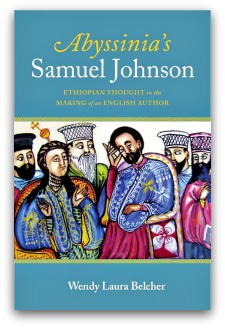
Wendy grew up in Ethiopia, Ghana, and the USA, and has been a writer since childhood. Her most recent book, Abyssinia’s Samuel Johnson: Ethiopian Thought on the Making of an English Author, is a finalist for the African Studies Association’s 2013 Ogot Award (to be announced in Baltimore at the end of next month).

* * *

Welcome to The Displaced Nation, Wendy, and thank you for joining us. I’ve known you for years and yet don’t know as much as I should about your TCK childhood, so am happy to take this opportunity to learn more. You are the daughter of an American dad and a Canadian mom. What’s the story behind why your family moved to Ethiopia and Ghana?
My father is a physician and my mother always loved to travel, so she convinced him to move to Ethiopia. Her idea was that he would teach and do clinical work at a public health college in Gondar, and she would be the college librarian. My first memories are of Ethiopia. I moved back to the US when I was 14. But my specific geographical trajectory is as follows: Philadelphia (birth), Boston, Seattle, Gondar (Ethiopia), Seattle, Accra (Ghana), Seattle, and South Hadley (Massachusetts). After that I lived in Tamale (Ghana). Then back to Washington DC, Accra, Los Angeles, Princeton, Addis Ababa (Ethiopia), and now Princeton again.

That’s an impressively peripatetic life! When and where were you happiest while growing up?
As a child, I loved Ethiopia the best, perhaps because it was the first place my family went and perhaps because, as a child who loved reading, it seemed like a magical place. There was a castle in my backyard as well as oxen threshing grain like in the Bible. On the throne was a descendant of King David. From a child’s perspective, it was like living in a book.

How did you find your first “repatriation” to the United States, at age 14?
I never got used to Seattle, it was very parochial in the 1970s when we moved there, and the weather was too gloomy for someone who had spent a significant part of her childhood in the tropics.

At home, but without a role, in Africa

Has your relationship to Africa evolved as an adult?
As an adult, I settled in the US and not Africa, returning to Africa only a few times until 1997, after which I started going every third year or so. Since 2009, I’ve gone every year to Ethiopia. I thought I might settle in Africa, but as an adult my relationship with Africa was more vexed.

That is, what could my role in Africa be as a white American woman?

I wasn’t particularly interested in “helping,” as it seemed to me that Africans were perfectly adept at solving their own problems and only didn’t do so because of all the “help” they received from the West.

But also, I was in a bind. In the US I often didn’t feel a strong sense of calling in my work, but I felt more satisfied emotionally. In Africa, I felt a strong sense of calling in my work, but I was often lonely.

The problem for me as an adult in Africa as a single woman without children was the lack of female friendships. In the 1980s and 1990s I found it difficult to find in Africa other career women like myself with whom I would have something in common.

One of the reasons I’ve found it easier to return to Ethiopia and have done so regularly in the recent past is that I’ve found some good Ethiopian female friends.

Where do you think of as “home” these days?
My mother always thought that my father never really had a sense of home as a particular place, because he had an identical twin brother. It was the presence of one other human being from the beginning that meant home was someone to him, not somewhere. He didn’t really know what loneliness was, she thought.

I may be somewhat similar albeit for different reasons. I don’t think of anywhere as home.

I lived in Los Angeles for 20 years and loved many things about it, but I mostly think of it as a place where my network of affection is. It isn’t the place so much but the people who make it a kind of home.

At the same time, I still have good friends in Seattle, and my family of origin is still there, so it is also a kind of home.

Are you like many TCKs in finding yourself drawn to people of similar backgrounds?
Almost all my friends are people who live straddling some boundary: either geographically, being from elsewhere or spending significant time outside the US, or racially (growing up as minorities). I am almost never in a room with people who mostly look like me.

Writing calls from an early age

I often wonder if TCKs who pursue writing careers do so because the story is entirely in their hands as opposed to the experienced upheaval of their itinerant childhoods. Did your TCK upbringing influence a) your desire to be a writer and b) what you wrote about?
Growing up in Africa, I was surrounded by literary culture. In Ethiopia, a country with a 3,000-year-old written civilization, people read illuminated manuscripts on sheepskin bound with wood. In Ghana, hand-written epigrams adorned most vehicles, and my father’s Ghanaian colleagues traded bon mots in Latin. At school, I would pick a promising library shelf and work my way through it from left to right. I wrote my first novel when I was nine, titled Shipwrecked at Silver Lagoon. I had set myself the task of writing the best title for a book ever and, after I came up with this, decided it was too good to go unwritten. It was about two English girls in the 17th century who, after their ship is wrecked off the American coast, go on to discover what happened to the disappeared colony of Roanoke: it had moved into an underground, underwater kingdom. The book ground to a halt on page 40, perhaps because, as I tried to articulate issues that were all too real to me (the loss of home and the entry into the hybrid colonial world), my imagination foundered on the demands of the adventure form.

After that, I wrote for my middle school and high school newspapers, where I was the editor.

I was shy, partly due to all the moving and not being sure how to fit in, so I spent most of my time reading. Reading allowed me to immerse myself in a world where I could watch and not be watched (or judged). It also allowed me to develop skills in “reading” people and situations, which is essential to surviving so much moving.

HoneyfromtheLion_coverTell us what drew you to write your memoir, Honey from the Lion: An African Journey, when you were in your twenties.
I had enough credits to graduate from Mount Holyoke in three years so I spent my junior year back in Ghana. While working for a nonprofit organization that was spreading literacy and translating the Bible into local languages, I spent a weekend in a village with an Irish Bible translator. A series of events transpired, the impact of which was so powerful I decided I wanted to write about it. It was a gift: the story was so fascinating that I didn’t worry about writing it. Even if I wrote it poorly, I thought people would find it compelling.

Do you ever go back to the memoir now, and if so, does it resonate very differently due to the passage of time?
I can’t bring myself to read the book now. It seems like a different self wrote itsomeone who was more religious for one.

Congratulations on Abyssinia’s Samuel Johnson being selected as a finalist for a prestigious academic award. Please tell us what inspired you to write the book.
Belcher_AbyssiniaSamJohnson_coverIn 2002, I was talking with an Ethiopian friend about reading Samuel Johnson’s Rasselas, an eighteenth-century fiction he wrote about an Ethiopian prince. This Ethiopian friend surprised me by saying that he had read the book and quite liked it. When I asked him why, he said the book was “very Ethiopian.” I started to correct him, but then I began to wonder if he could be right, if a book written by a European could be Africanin particular, if it could be animated by African discourse. It’s my hope that my book will be convince others about the importance of African thought to the European canon.

From offering TCK courses at Princeton to helping junior faculty

At Princeton you teach courses that I wish had been offered when I was in college, like “Growing Up Global: Novels and Memoirs of Transnational Childhoods” and “Model Memoirs: The Life Stories of International Fashion Models.” You also teach workshops around the world to aid faculty in publishing academic articles. Please tell us the countries in which you’ve taught the workshops.
The workshops have taken place in Norway, Sudan, Malawi, Ethiopia, Indonesia, Canada and all over the USA.

What led you to teach academics about how to write for publication?

belcher_writingyourjournalarticle_coverI did two master’s degrees in the early nineties and I struggled in writing my classroom papers. What did these professors want and why did some papers succeed and others didn’t? I decided not to go on for a doctorate and when people asked me why, I said I just didn’t feel like I got the hang of being a graduate student and in particular about how to write in graduate school.

To my surprise, I found that most other graduate students felt the same way and were as confused and uncertain as I had been. Then UCLA Extension asked me to teach a writing class. I had always sworn I would never teach, but I think you grow when you do things you are terrified of, so I agreed and found that three of my first six students were academics looking for help with their writing.

UCLA Extension agreed to let me restructure the next class around writing for academic journals. The restructured class was a massive success and changed my life.

Within a few years I was teaching “Writing and Publishing the Academic Article” twice a year at UCLA to graduate students, where the class was in great demand, as well as at other universities and institutes around the world. I wrote the workbook Writing Your Journal Article in Twelve Weeks: A Guide to Academic Publishing Success for people who could not take the workshop.

Turning back to your writing, can you tell us what you are working on at present?
I have several writing and translation projects; here are the top three:
1) The Life and Struggles of Our Mother Walatta Petros: A Translation of the Earliest African Biography of an African Woman. Thirty years after the death of a revered African religious leader who led a successful nonviolent movement against European incursions, her Ethiopian disciples (many of whom were women) wrote this vivid book, full of dialogue and drama. The original text, which was written in 1672 by Africans for Africans in an African language, is unknown in the United States (Walatta Petros does not have a Wikipedia entry, for instance). Thanks to the Fulbright US Scholar Award that I held during my third year at Princeton, I was able to spend ten months in Ethiopia devoting myself to archival research. I worked on the translation with Michael Kleiner, a leading scholar and translator of Ge’ez. We believe it will electrify the fields of early modern and gender studies.
2) The Black Queen of Sheba: A Global History of an Ethiopian Idea. Those familiar with the sixth century BCE biblical tale of the Queen of Sheba’s visit to King Solomon may be surprised to hear that there is also an Ethiopian version, variations on which have in fact circulated for centuries, far beyond the Ethiopian highlands. According to the medieval text Kəbrä Nägäśt, the biblical Queen of Sheba was an Ethiopian woman—the wisest, the wealthiest, and the most powerful woman in the world. Tricked by Solomon into sleeping with him, she gives birth to their biracial son, who later takes the Ark of the Covenant to Ethiopia forever. My book traces how the Ethiopian tale came about and the impact it had on not just literature but the world. The emergence of the religion of Rastafari is one of its most far-reaching effects…
3) A Wardrobe of Selves: The Literature of Transnational Childhoods. Based on my life experiences, observing those of my TCK friends, and reading lots of memoirs, I am thinking of writing a book about memoirs by those who have spent their childhood crossing boundaries (in terms of culture, nation, state, language, gender, school, etc.). It would attend to how the narrators like Barack Obama, John McCain, Edward Said, Eva Hoffman, Gloria Anzaldua, Diana Abu-Jaber, Alice Kaplan, Gene Luen Yang, and Mohsin Hamid construct meaningful identities through narrative. These writers—usually considered separately, as part of American ethnic literatures like Arab American, African American, Asian American, or Latino—often negotiate the intricacies of identity in similar ways and should be considered together. That is, this would be a broad comparative project on diasporic memoir in the context of American ethnic literature.

* * *

Thanks, Wendy! You are so prolific, it’s an inspiration to all of us creatives! If we could accomplish just a fraction of what you’ve already done, what a life we’d be leading! Readers, any questions or comments for the amazing Wendy? Please leave them below. And…see you next month!

STAY TUNED for tomorrow’s post, when we hear from an international traveler who has started up her own business in New York City, catering to expats.

If you enjoyed this post, we invite you to register for The Displaced Dispatch, a round up of weekly posts from The Displaced Nation, with seasonal recipes, book giveaways and other extras. Register for The Displaced Dispatch by clicking here!

Related posts:
Images: Wendy Belcher; Wendy with her brother in front of a castle in Gondar, Ethiopia; detail from the cover of Wendy’s latest book, Abyssinia’s Samuel Johnson.

TCK TALENT: Diahann Reyes is in her element as writer, actor & storytelling coach

DiahannReyes_headshot_pmWelcome to the second installment of “TCK Talent,” Elizabeth (Lisa) Liang’s monthly column about adult Third Culture Kids who work in creative fields. As some readers may recall, Lisa—a Guatemalan-American of Chinese-Spanish-Irish-French-German-English descent—has written and performed a one-woman show about being a Third Culture Kid, or TCK. (It debuted in LA in the spring and is coming next week to NYC!)

—ML Awanohara

My guest today is Diahann Reyes, a professional writer/actor who is launching a new blog, writing a memoir, and beginning an additional career as a writer’s editor/coach. Diahann grew up in six countries, worked as a journalist for CNN before becoming an actor, and currently lives in Los Angeles, California.

Growing up here and there and everywhere

Greetings, Diahann, and welcome to the Displaced Nation. I understand you’re the TCK child of Filipino parents. Can you fill us in a little more: why did your family move around and which countries did you live in as a kid?
My dad was a marketing expat. I learned how to speak English with a Kiwi accent in New Zealand, discovered my love for books in Argentina, rode my first camel in Pakistan, went through puberty in the US, attended junior prom in the Philippines, and graduated from high school in Indonesia.

Of all those cultures, did you identify with one in particular?
Like you, I’m a “mash up” of the different cultures I’ve lived in. Living in America for most of my life now, I feel most at home here, which is its own kind of cultural mishmash. In my twenties, I realized that I had to pick one of my “home” cultures as my main one or I’d continue to feel ungrounded. I also identify with particular subcultures that aren’t necessarily considered mainstream, such as the artist culture.

Where and when were you happiest while growing up?
My family’s two years in Argentina were some of my happiest, probably because my mom, dad, sister, and I were all so excited to be living in a new country together. Moving to a different culture was still an adventure of which I had yet to grow weary. Also, at age 8, I was still very much myself and hadn’t been impacted yet by the pressures of puberty and the need to fit in.

What lies beneath the surface…

Speaking of puberty and the female body brings me to the launching of your new blog, Stories from the Belly: A Blog About the Female Body and Its Appetites. What inspired you to begin it and what can followers look forward to from the blog?
For women especially, there are so many truths, emotions, and desires that we tend to suppress: they get buried deep down in our bodies. My blog is my way of excavating this buried inner emotional landscape. I want to talk about the female body in ways not normally touched upon in mainstream media. My blog will include personal stories as well as commentary on relevant current events.

You’ve been working on a memoir. Is it specific to a time and place in your life?
Yes. My memoir is about my latest “move,” only this time rather than going to live in a new country, I’ve spent the last decade “moving into” and learning how to fully inhabit my own body. Location-wise, I take the reader across the globe to some of the places I’ve lived growing up, but the main action takes place in my body.

What themes are you exploring?
The story I tell is absolutely personal, but it does touch on a lot of bigger ideas involving the female body and its objectification and how this can impact a woman’s relationship to herself and others. Desirability, cultural assumptions, sexuality, power, pleasure, and wholeness are some of the through-lines in the book.

Owning who she is

On your website you describe how you fell in love with reading and acting. Did you always know you would pursue both of these interests as careers, or did you struggle with the decision?
I knew I wanted to be a writer from the time I could read, but it took me a long time to own that this is who I am, in part because the grownup me couldn’t imagine that my younger self could just “know” this. Still, writing has been the primary way I’ve made a living—as a TV news writer, an editor, a ghostwriter, and now a blogger, so I guess I didn’t need to know I was a writer to be one.

The decision to act was tougher. I didn’t start to pursue acting until my 30th birthday, and by then I had established a pretty good career in journalism and online media, so I was giving up a lot to change focus. But acting was like this siren calling to me, saying “act, act, act.”

You and I grew up reading many of the same (mostly American and British) authors: Ingalls Wilder, L’Engle, Cleary, Blyton… I remember the day I realized I would never get cast as Jo in any theatrical production of Alcott’s Little Women because I was a girl of color. Did you ever have a moment like this, and if so, which beloved character(s) and book(s) or play(s) did you realize you wouldn’t get to explore as an actress?
I always thought I could be anyone because while growing up I’ve had to be a chameleon. “Adapt and assimilate and fit in” was one of my mantras as a global nomad. But when I got to LA and started auditioning, I realized that I would never be able to play certain characters because I was the wrong ethnicity or type. I was primarily limited to not even Asian parts but Latina roles because I look more Hispanic than Southeast Asian. This meant that I was likely never going to play Maggie from Cat on a Hot Tin Roof or Caroline Ingalls in any future Little House on the Prairie remake, and parts that were for people of my actual ethnicity were out, too. Fortunately, the industry has changed, and more minorities are getting cast outside of ethnicity and stereotype.

What sorts of roles are you attracted to now?
I love parts that call for emotional depth and angst.

I wonder if one of the reasons we’re writers is that we have more autonomy to tell stories than we do as actresses?
I love that I can write what I want—I don’t need anyone to “cast” me first. And I can create characters that aren’t limited by ethnicity or type. I am thinking of creating a solo show that would probably require me to write and play different characters.

I understand you also write poetry. What drew you to that?
I kept diaries growing up and would process my feelings through poetry. With both nonfiction and poetry, I can just be myself. After so many years of working hard at adapting and assimilating to fit in, getting to just be me on the page is a relief.

Helping others to own their stories

You’re about to begin a new endeavor as a writer’s editor/coach. What inspired you to follow this new path?
I know what it is like to have something to say and to struggle with fully expressing my truth—especially when the fears come up—and I want to help other writers overcome these obstacles so they can get their stories out there. I want to work with people who are just as engaged in their process as they are in having a finished product.

What are you looking for in a student/client?
I work with nonfiction writers, bloggers, storytellers, and essayists, and other people with writing and online content projects. Healers and people with unusual business ideas like to work with me, too.

Do you have any other projects coming up?
I hope to publish my memoir next year. The film Out of Her Element, in which I play a therapist with a pill addiction, will premiere soon.

* * *

I must congratulate Diahann on her exciting new ventures, which I believe will resonate with people working in creative fields—and with female travelers and TCKs, especially! Readers, please leave questions or comments for Diahann below.

STAY TUNED for tomorrow’s post, when Andy Martin will talk to Mark Hillary about his new book, Reality Check: Life in Brazil through the Eyes of a Foreigner.

If you enjoyed this post, we invite you to register for The Displaced Dispatch, a round up of weekly posts from The Displaced Nation, with seasonal recipes, book giveaways and other extras. Register for The Displaced Dispatch by clicking here!

Related posts:

img: Diahann Reyes

TCK TALENT: Alaine Handa choreographs her way to festivals in Toronto and now Edinburgh (2/2)

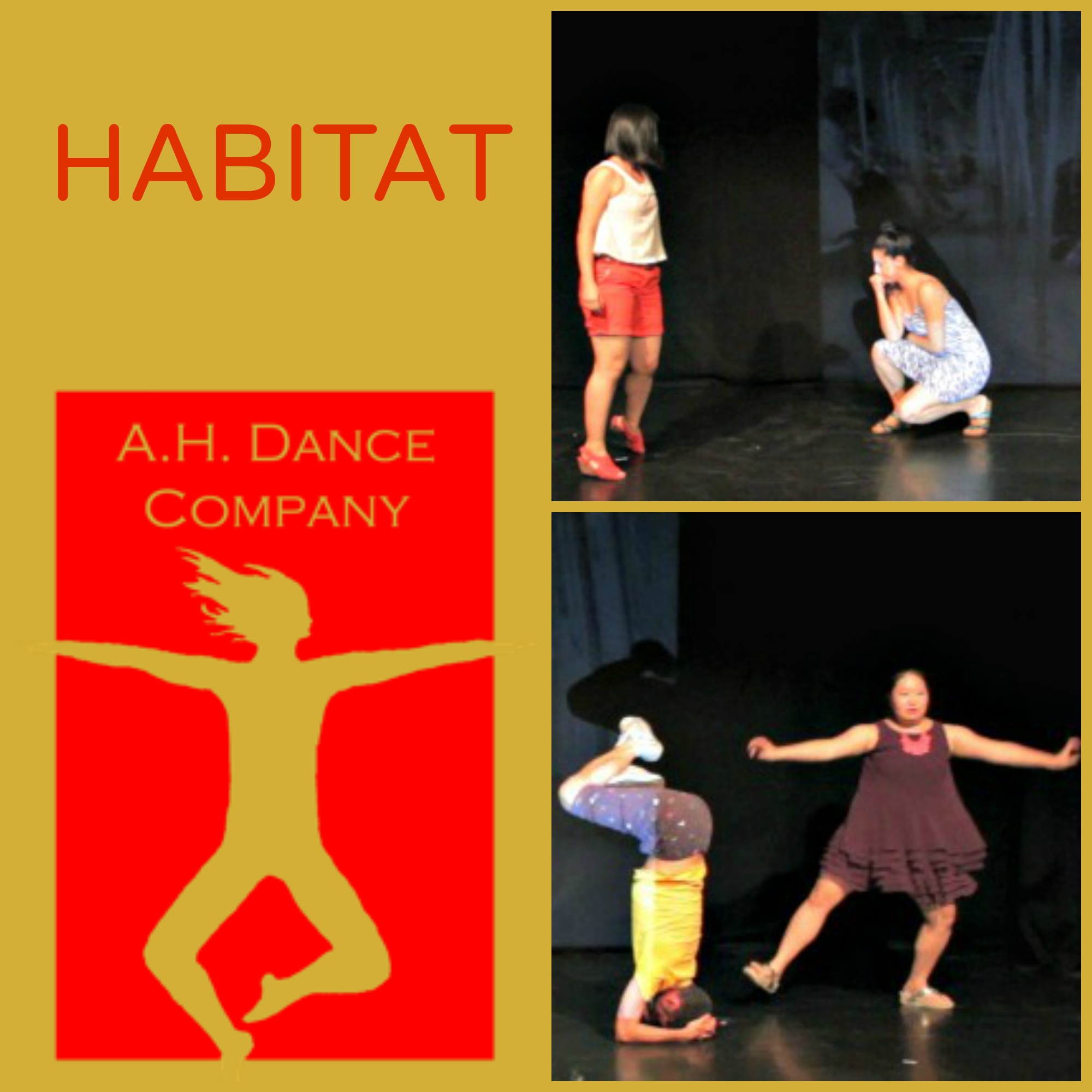
Habitat CollageNew columnist Elizabeth (Lisa) Liang continues her conversation with fellow TCK performing artist Alaine Handa. (Be sure to check out Part 1 if you haven’t already.)

—ML Awanohara

Hi, everyone! Yesterday, I talked to Alaine Handa about her Third Culture Kid background and what led her to produce her first international touring show, Chameleon. Today we’ll finish up our Chameleon conversation and move on to talking about Alaine’s brand new show, Habitat, which is having its world premiere at the Edinburgh Fringe Festival. (If you happen to be in Edinburgh, scroll down to the bottom of this post for details.)

* * *

Act 2: Chameleon, continued…

Welcome back, Alaine. I can relate to so much of what you said about Chameleon. The creative/rehearsal process can be so fulfilling that the performance itself is often the icing on the cake for the performer-creator. Whom did you have in mind for the wider audience?
As a proud TCK and Global Citizen, I felt the stories of TCKs needed to have a voice that supports all the research, books, blogs, and memoirs that have been written on our lives—yet can transcend boundaries of spoken language through dance and movement, something all cultures can understand. Perhaps my ideas were grandiose, but I really hoped that productions of Chameleon would touch the lives of all those who identify with living cross-culturally and existing as cultural mixes.

It sounds as though Chameleon provided a voice for a cross-section of nomadic, mixed-heritage, intercultural people, not to mention everyone who has ever felt unheard or unseen—which is everyone at some point in their lives. I did the same with Alien Citizen and am wondering if we should create a TCK festival for performing artists like us… But, back to you! How was the performance received?
Every single performance of Chameleon had at least one person in tears because they identified so much with it. After each performance, we spent quite a lot of time talking to audience members. I made a lot of new friends around the world!

Were there any surprises?
The biggest surprise for me came from the TCK student performance at Utahloy International School, in Guangzhou. The students were very receptive and open to sharing their TCK stories with me, as well as on stage. It brought tears to my eyes.

Did you learn anything about yourself in the process?
By telling my story and other TCK/CCK stories, not only did I come to understand myself better, but I also felt a strong sense of community among the globally mobile citizens of the world.

Act 3: Preparing a new show, Habitat, for the Edinburgh Fringe

And now you have a new show, Habitat. Is this your first time at the Edinburgh Fringe?
Yes! We are very excited. One of my dancers has performed in the Fringe before so he will be super helpful during the festival.

In your promotional materials for Habitat, you have the following statement:


Our personal space is the environment in which we confine ourselves to become our truest selves.


Can you explain?
As a TCK, I am constantly meeting people of different backgrounds, and I change my behavior and mannerisms accordingly. Thinking about this, I wanted to explore the transition to one’s personal habitat, where you can finally relax and just “be” who you are.

Who is the intended audience, and is it different than the audience from the one you had in mind for Chameleon?
This piece is more universal. It shows how different people from different backgrounds change the way they behave around others and when they are alone.

I see the cast is multicultural, with dancers from Singapore, USA, Portugal, and Indonesia. Was it a challenge to bring together a cast from so many different places?
To be honest, although it’s “easier” to label the cast by our passport countries, we are, in fact, a collection of multicultural individuals who have lived in different parts of the world at various times. Right now, two of us live in Singapore and the other two in New York. The biggest challenge we faced was rehearsing on separate continents, given the time difference. We relied heavily on email and YouTube, and later on Skype. As the choreographer, I faced the challenge of conveying what I wanted to see from the 2-D perspective of video. Slowly but surely, the show has come together piece by piece, like a jigsaw puzzle.

How did you find the other dancers?
I’ve worked with Laura on Chameleon and was working with her on the creation of draft material prior to my move back to Singapore last year. I met Ezekiel in Singapore; we both teach dance for the same company. Belinda and I are friends from New York; she and I met at an audition for a choreographer I danced for while living there. We found out that we trained with the same jazz dance instructor while I was growing up here in Singapore and took the same classes.


Are the other dancers also TCKs or “displaced” in some way?
I think I’m the only TCK, but of the other three cast members, two are expats and the other is bi-cultural, with both parents originating from different countries and cultures. I guess you could say we are a “displaced” group. I knew I wanted to work with a multicultural cast again because it made for such an interesting group dynamic with Chameleon—although in this case, the cast has not worked together before.

You’re now in Edinburgh. What’s it been like so far?
When we first arrived, we had about 20 hours of rehearsal (including tech and dress rehearsals). The pieces are gradually falling into place.

Act 4: Life after Edinburgh?


Do you have plans to take Habitat anywhere else?
Yes, we are encouraging theatre venue producers, programmers, agents, etc. to come see Habitat during the Fringe in hopes it can be produced in other venues around the world.

Where do you think the show will go next?
I’m not sure—I’d like to bring it down to Australia. I also really enjoyed Toronto Fringe a couple years ago and might bring Habitat there. We are also looking to get this show booked for different venues across Europe, Asia, and North America.

* * *

If you happen to be in Edinburgh, here are the details for Alaine’s show:

  • Number of performers: four, including Alaine
  • Show length: 45 minutes
  • When and where: July 31 – August 13, 2013 @ C Venues (Venue 34), Adam House, Chambers Street, Edinburgh, United Kingdom.
  • Time: 1:50 pm every day.
  • Purchase tickets here.
  • Trailer:

Habitat in Edinburgh Fringe Festival from Alaine Handa on Vimeo.

Questions for Alaine? Be sure to leave them in the comments section!

STAY TUNED for next week’s fab posts.

If you enjoyed this post, we invite you to register for The Displaced Dispatch, a round up of weekly posts from The Displaced Nation, with seasonal recipes, book giveaways and other extras. Register for The Displaced Dispatch by clicking here!

Related posts:
img: Video Stills by Kevin Tadge, taken from preview performances of Habitat at the Edinburgh Fringe (2013).

TCK TALENT: Alaine Handa choreographs her way to festivals in Toronto and now Edinburgh (1/2)

AlaineHanda_pmToday we introduce a new monthly column by Elizabeth (Lisa) Liang. Remember that Guatemalan-American of Chinese-Spanish-Irish-French-German-English descent who was putting on a one woman show in LA about being a Third Culture Kid? You know, she “came out” as a TCK on stage, and lived to write a post about it? Lisa will be searching for other TCK talents to interview for the series. She debuts with a two-part conversation with fellow TCK performing artist Alaine Handa (pictured). Part 2 is here.

—ML Awanohara

Third Culture Kids (TCKs) are making headlines these days for their creative output. We see them being featured in established news outlets and online magazines, as well as on popular blogs. I suspect that the emergence of Barack Obama as national and global leader—he is an Adult TCK (ATCK)—has contributed to the phenomenon.

Still, ATCKs in the performing arts remain relatively rare, so as an ATCK actress-writer I’m always happy to learn of fellow ATCK performing artists like Alaine Handa, a second-generation TCK who works as a choreographer/dancer.

Alaine was born in Singapore. She spent her childhood in Jakarta and adolescence in Singapore. She went to college in Los Angeles, California, and then moved to New York, where she formed her own troupe in December 2007: A.H. Dance Company.

She has since moved back to Singapore, where she has lived for the last year.

In this, the first of a two-part interview, I ask Alaine to tell us about her company, her TCK background, and her first internationally touring show, Chameleon: The Experiences of Global Citizens. In Part Two of the interview, to be posted tomorrow, we’ll move on to talking about her production that is about to premiere (!) at the Edinburgh Fringe Festival.

* * *

Hi, Alaine. I’m curious: what led you to form your own dance company?
Ever since I was a young teenaged dancer, I aspired to have a professional dance company that toured the world performing in different venues, festivals and theaters. I think it was because I longed to have my own choreographic voice to create dance pieces that meant something to me. Still, the decision wasn’t easy to go from dancer/choreographer to choreographer first and dancer second. After moving to New York, I continued performing for other choreographers and project-based dance companies. I only decided at the end of 2009 to focus solely on choreography while performing occasionally. I guess you could say I never lost my determination to make that happen.


Can you tell us more about your background as a second-generation Third Culture Kid?
Both my parents are TCKs. My heritage is mostly Hakka Chinese (with a bit of mix in there somewhere along the lineage). My grandparents and great-grandparents were Chinese immigrants from somewhere in China who settled in Jakarta. My mom attended an English school until it was shut down due to political pressure. She then was sent to boarding schools in Hong Kong and Sydney, and she graduated from an Australian university outside of Sydney. Meanwhile, my Dad attended a Chinese school in Jakarta before it was shut down. He helped his parents for a couple of years and then was sent to Singapore to learn English. After a year, he went to London to attend university and then to Boston to obtain a doctoral degree in optometry.

Which culture do you most identify with?
I attended American international schools in Jakarta and Singapore so I’d say I’m culturally very American. I majored in dance through UCLA’s Department of World Arts & Cultures, which looked at dance and the arts in a sociological-anthropological way and as a community-building catalyst. And then I spent seven years performing, teaching, choreographing, living, creating, loving, and building a community of TCKs in New York.

ACT 1: Chameleon goes to the Toronto Fringe Festival


A couple of years ago, your company put on a show at the Toronto Fringe Festival entitled Chameleon: The Experiences of Global Citizens. I enjoyed watching the video clip of your performance. Please tell us more about it.
Chameleon, the Experiences of Global Citizens is a full dance production with a rotating cast of three to six dancers using film, spoken word, jewelry design, music, and photography, to support the personal stories of TCKs, Cross-Cultural Kids (CCKs), and Global Citizens. Each dancer performs a solo in the production in addition to dancing in the group sections.

The video excerpt is only one section of the production: my solo. (Thanks for watching!) I layered together three different poems for the sound:

  1. “Uniquely Me,” by Alex Graham James from Ruth Van Reken and David C. Pollock’s book, Third Culture Kids: Growing up Among Worlds.
  2. “De Främmande Länderna” by Edith Södergran (translated into English), a Swedish poet I studied while attending UCLA.
  3. Last but not least, “Eulogy to my multi-racial / Multi-cultural ancestors / Also known as the anti-eulogy / To my multi-racial / Multi-cultural ancestors,” by Leilani Chan, an Asian-American theatre director in LA.

It sounds as though you’ve rolled TCK and CCK art into one cohesive piece—much like a TCK or CCK individual is the sum of many seemingly disparate parts, creating a vivid, unique entity. What was the thought process that produced this art?
Hmmm…my thought process in creating Chameleon was a lengthy one as it is very personal to me. A little trip down memory lane is probably the best way to describe it.

I graduated high school in 2001 and then moved to Southern California to attend Pitzer College. 9/11 happened a couple of weeks in. Everyone in the States was in patriotic mode. I didn’t quite fit in. Many journal entries, tears, frustrations, and conversations later, I wrote about my experience as an outsider/insider and drafted a dance piece about my mixed up cultural identity that I wanted to choreograph for my senior project. I transferred to UCLA for my third and fourth year. I experienced bouts of severe depression and several anxiety attacks throughout my college years and began to see the “light” at the end of the dark tunnel my final year.

A friend told me about the Third Culture Kids book in 2003, and a life-changing epiphany happened. I returned to my journal entries and found my ideas to create a dance piece about my experience as a TCK for my senior project. I cast a multicultural group of dancers, interviewed TCKs I knew for my very first documentary film “I am a TCK,” and rented a theatre in L.A. for my senior project and titled the piece “Third Culture Kids.” The first part of the production was the half-hour documentary film followed by a 20-minute dance piece that was autobiographical in nature. This would become the very first draft of Chameleon.

After graduation from UCLA, I was burnt out and moved to New York to pursue a career in dance. I knew that my TCK dance piece needed to be re-created again at some point. I performed for a bunch of independent choreographers, dance companies, and was teaching dance in the public schools in Brooklyn. I formed A.H. Dance Company at the end of 2007 and we had two performing seasons before I decided the time was right to tackle the stories and experiences of TCKs again. I cast dancers that were cross-cultural or TCKs, a TCK actress, a TCK jewelry designer (who created our prop pieces that were an amalgamation of HER TCK experiences), and TCK/CCK/TCA photographers submitted their work to be used as backdrops for the dance sections. I also extended and re-edited the film “I am a TCK” by interviewing even more TCKs. We premiered the piece at University Settlement in New York as part of their Spring Season in 2010, after receiving some funding from Singapore International Foundation, which also funded the performance at the Toronto Fringe Festival.

ACT II: Chameleon travels widely and goes global

We toured the production to festivals and organizations with community programming. I even presented portions of the piece, including the rehearsal process, twice at the annual Families in Global Transitions (FIGT) conference, where I met Ruth Van Reken, Tina Quick, Apple Gidley, Jo Parfitt, Julia Simens, Judy Rickatson, and many more of the TCK researchers, expat writers/bloggers, international educators, and more.

I am very proud of this work and how it has traveled around the world. Currently, Chameleon has taken on a more educational approach. I’ve re-set portions of the piece for student TCK dancers from Singapore American School and they performed it in Kuala Lumpur as well as in Singapore. In January this year, I traveled to Guangzhou to re-set a simpler version on TCK students (a lot of them were non-dancers) at the Utahloy International School for a week-long residency that culminated in a performance. The rehearsal process of telling the personal stories of TCKs through movement and dance with spoken word was equally as rewarding as the student performance itself.

* * *

This just in from Alaine at the Edinburgh Festival: The preview performances of her latest production, Habitat, have been going well, and they’ve even received a recommendation from a local newspaper, behind famous greats like Carlos Acosta and the Bolshoi Ballet (which are actually playing in London). Kudos, Alaine!

Tomorrow we’ll talk to Alaine about how this production came about. Any questions for her, meantime?

STAY TUNED for Part 2 of Lisa Liang’s conversation with Alaine Handa.

If you enjoyed this post, we invite you to register for The Displaced Dispatch, a round up of weekly posts from The Displaced Nation, with seasonal recipes, book giveaways and other extras. Register for The Displaced Dispatch by clicking here!

Related posts:

img: Alaine Handa, by Anthony Schiavo, courtesy A.H. Dance Company.

DEAR MARY-SUE: Reconnecting with old friends (the year in review)

Mary-Sue Wallace, The Displaced Nation’s agony aunt, is back. Her thoughtful advice eases and soothes any cross-cultural quandary or travel-related confusion you may have. Submit your questions and comments here, or else by emailing her at thedisplacednation@gmail.com

There’s chestnuts roasting on an open fire (well, baking in my Jenn-Air 48″ Pro-Style gas oven) and I’m sipping on a glass of eggnog while listening to Michael Buble’s take on some Christmas classics Yepsiree, it’s a Mary-Sue Christmas!!
Christmas is an important time for the ol’ Wallace homestead. Hubby really goes all out with the Christmas lights and we’re now something of a seasonal event in Tulsa. People come from all over the state to see hubby’s lights. Must say, I’m not happy when I see the electricity bill.
Anyhoo, on with the final column of the year (time hasn’t just flown this year, it’s broke the sound barrier. It’s like that Austrian Lee Majors who fell from space in a Red Bull balloon).
Now, I know from you regular readers that one thing you’re always asking me about is what happened to those who wrote in to me. Did they follow my advice (yes, if they had any sense). Well, as it’s the end of the year, let’s see, shall we?
*****************************************************************************************
First up is Sharon who wrote to me for advice on whether spending time at an ashram in India was necessary for her spiritual enlightenment. (She had just read the book Eat, Pray, Love.) I advised her to go for a hike or take up watercolors (she lives in Texas), or if she just wanted to escape, sure, take a plane trip to India. Here is her story since then:“A lot has happened since I sent you that letter in January of this year. I took your advice and went on a hike rather than going off to an ashram. Unfortunately, during the hike, I got a nasty snake bite. After eight months in a deep coma, I finally woke from it at the end of August. Every day is now a blessing, and I’ve come to the realization of what I want to do in my life. That’s why in the new year, I am off to India where I WILL join an ashram. Why, I figure, let my fear of what other people think get in the way of me living my life.” 
Lot of snakes in India, Sharon … a lot of snakes
* * **********************************************************************************
Another letter that received a lot of votes was the one from Lars in Los Angeles. He couldn’t fathom what it meant when someone in that fair city wished him a Happy Anti Valentines Day. I told him it was a sign he should get the heck out of LA and move to Tulsa. Did he take my advice? Let’s hear his story:

“I did come out and visit Tulsa to see whether I could make a life for myself out there. I had a look round … let’s just say it gave me a whole new perspective on life in LA.”

Your loss, Lars.* * **********************************************************************************
There were also some votes from Patti in Plymouth who wondered what she should do with a gift of a jar of Marmite from her host family. I told her not to worry as it probably wouldn’t make it past customs. But is that what happened?“Actually, I did get past customs with my Marmite jar. And you know something else? Everyone hated it. I however douse it all over philly cheesesteaks.”

They’re going to run you out of town, sweetie.

 *************************************************************************************
That’s it from me this year, dear readers. Here’s hoping your misery and confusion keeps me occupied in 2013 as I was in 2012! God bless us all!
STAY TUNED for next week’s post, some more Random Nomad highlights.

If you enjoyed this post, we invite you to register for The Displaced Dispatch, a round up of weekly posts from The Displaced Nation, with seasonal recipes, book giveaways and other extras. Register for The Displaced Dispatch by clicking here!

Related posts: