The Displaced Nation

A home for international creatives

Tag Archives: Hong Kong

DIARY OF AN EXPAT WRITER: Turning into Jordan Rivet, writer of post-apocalyptic adventures, for an entire month

DiaryExpatWriterAs regular readers of the Displaced Nation will know, Shannon Young* recently took the decision to quit her day job to become a full-time writer in Hong Kong, where she lives with her half-Chinese husband. She joins us today to update the diary of this new phase of her life—and this time has brought along Jordan Rivet, her alter-ego. Hmmm…should be interesting!

—ML Awanohara

Dear Displaced Diary,

I hope you don’t mind if I allow Jordan Rivet to contribute to this month’s entry. I created Jordan Rivet as the pen name for my post-apocalyptic adventure series, which I first started writing during National Novel Writing Month, aka NaNoWriMo (often shortened even further, to NaNo), two years ago. For those who aren’t familiar, NaNo challenges people to write 50,000 words of a novel in the 30 days of November.

Nowadays, writers across the world come out in force to meet this challenge. (Hmmm… Shouldn’t it be renamed INTERnational Novel Writing Month: IntNoWriMo?)

But enough from me: The next portion of this entry will be from Jordan.

* * *

Thank you, Shannon. Displaced Diary, I’ll start out by saying how grateful I am for NaNo: it’s what brought me, Jordan Rivet, into existence. By the end of the month of November two years ago, I had produced 57,002 words about a floating city one disaster away from extinction, and I now have a book out under my name! (I even have my own email and twitter accounts.)

Last time Shannon wrote to you, she talked about going through the final publication stages for her memoir, Year of Fire Dragons—with a lot of help from her friends.

This month, though, has been all about me. I am back and am writing away furiously, having joined NaNo again, here in Hong Kong.

There are writers in Hong Kong!

Hong Kong is sometimes accused of lacking a literary culture. The scene definitely exists, but it can be hard to find. There’s a lot of pressure in this city to focus on purely commercial pursuits—and people are busy.

Yet every November, lots of us creative types come out of the woodwork—pros, beginners, and hobbyists alike. We are a mix of locals, expats, and returners who were educated abroad. You’ll find students and teachers and lawyers and marketers and homemakers. Unlike me, they don’t necessarily have time to write every day, but they do love books. They carve out time for writing in the midst of busy schedules and obligations. They get excited about stories and about inventing new worlds. Their energy is infectious.

People come and go a lot here, but I make new writing friends for Shannon every November, particularly at the NaNo write-ins, where participants gather to chat, write, laugh, and drink coffee together.

Being an adventuresome sort, I particularly love it when we have visitors at our write-ins who are just traveling through the city or who’ve made special trips from Macau and Shenzhen to connect with their fellow NaNo participants.

“Bird by bird, buddy. Just take it bird by bird.” —Kenneth Lamott

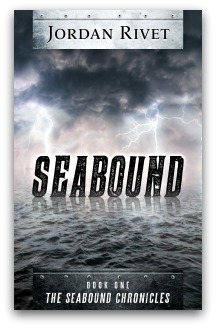
Seabound - Jordan RivetThis is my third November working on a novel in Shannon’s post-apocalyptic adventure series set at sea, called The Seabound Chronicles.

As already mentioned, Shannon just now launched my first book in this series, which I’d drafted in November 2012. It’s called Seabound, but back then I’d titled it The Vertigo. Shannon loved it immediately: it was her first foray into fast-paced genre fiction. “Planning and writing a grand adventure is just as much fun as reading one,” she told me.

Now every November I hammer out a very rough draft of another installment in the series, and it always reminds Shannon how much fun writing actually is. (Actually, I wrote the first draft of the sequel the spring after that first NaNo. In November of 2013 I wrote the prequel.)

In Bird by Bird, her classic mediation on the writing life, Anne Lamott argues that writers should produce “shitty first drafts.” Her point is that by giving ourselves permission to write rough, messy, and even bad work, writers can avoid the kind of perfectionism and fear that stifles creativity.

That’s why I’m so glad Shannon invented me during NaNoWriMo. She was thinking that NaNo is a great time to produce what may well be a shitty first draft in the madcap rush to reach 50,000 words in thirty days, and that revisions can always come later.

I love that I get to do the first draft, which is all about discovery. As I’ve said, adventure is my thing!

I’m now working on what I believe will be the fourth and final book in the Seabound Chronicles (27,555 words and going strong). This is the part where I get to figure out what happens in the end.

Though I’m enjoying it to the hilt, I have to tell you that writing my final first draft is bittersweet. Of course Shannon will call me in again, as the series still needs a lot of work. But will I still have a life after it finishes? That is the question…

Since I don’t know the answer, I’ll give you back to Shannon.

* * *

Priorities, priorities

Thanks, Jordan. Diary, I must confess that ever since I quit my job to write full time, I’m finding there are still a lot of things that pull me away. These are all writing-related tasks: answering emails, writing blog posts, updating my websites, requesting reviews, promoting my books, etc.

And, as Jordan reported, I’ve been working on formatting and uploading all the files for the e-book and paperback of Seabound, a task I kind of love but it’s time consuming.

As you know, I want to make the most of this time. I’m slowly developing strategies to keep me on task. Even if the miscellaneous stuff is writing-related, I still have to make sure the real writing comes first.

Thank goodness Jordan has reappeared to keep me on track this month.

It’s not New York City, but…

Once upon a time, I dreamed of living in New York City. I imagined renting a loft in Brooklyn, going to book launches every weekend, and having lunch with authors (ideally as an editor at a major publishing house). It was a very particular sort of dream.

Then this crazy, wonderful expat life happened.

Shannon Young at HKILF

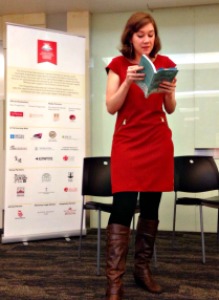
Shannon Young at the Hong Kong Literary Festival earlier this month, reading from her memoir of her first year in Hong Kong, Year of Fire Dragons.

When I first moved to Hong Kong, I worried I’d have to give up my book publishing dreams. A little over four years later, it’s amazing how wrong I was. Hong Kong may not have a deeply entrenched literary and publishing scene like New York’s, but it has provided opportunities for me to chase a more evolved version of my dream. And Hong Kong writers have an energy and optimism that’s all their own.

Earlier this month, I attended the Hong Kong International Literary Festival as one of the featured writers. I got to be on the radio, visit a local secondary school, attend the opening and closing parties, and read from my book, Year of Fire Dragons, at an event.

This expat life isn’t what I planned. I meet people all the time who also didn’t mean to end up in Hong Kong. But through chance and circumstance, here we are. As it turns out, there are plenty of opportunities to follow our dreams, and I wouldn’t want it any other way.

Thanks for continuing to follow my expat writing journey.

Yours,

Shannon (& Jordan)

www.shannonyoungwriter.com

* * *

Readers, I hope you are finding writing buddies wherever you are, as well as alter egos who are as fun (and productive!) as Jordan is. And if you’re participating in NaNoWriMo, get back to work!

*Shannon Young (not Jordan Rivet!) has edited an anthology, How Does One Dress to Buy Dragonfruit? True Stories of Expat Women in Asia (2014), from which she is sharing some excerpts. We’re calling them “chunks” of dragonfruit—they taste delicious!

STAY TUNED for next week’s fab posts!

If you enjoyed this post, we invite you to register for The Displaced Dispatch, a round up of weekly posts from The Displaced Nation, with snippets of worldly wisdom, exclusive book giveaways and our nominees for the monthly Alice Awards. Register for The Displaced Dispatch by clicking here!

Related posts:

DIARY OF AN EXPAT WRITER: How to fly solo without burning the tips of my wings

DiaryExpatWriterI am pleased to welcome back up-and-coming author Shannon Young. This past summer, Shannon announced she’d cut 18 inches off her hair, quit her day job to become a full-time writer, and given herself a pen name for her planned adventure novel series. And, yes, she is an expat, a kind of love refugee, in Hong Kong. Shannon has agreed to chronicle her writing adventure for us. This is her second installment.*

—ML Awanohara

Dear Displaced Diary,

As you may recall, last month I gave you some background on my decision to quit my day job and dedicate six months to writing with all my time, all my savings, and all my heart.

I already love the sensation of flying solo. As writing coach Mary Carroll Moore once said:

Books demand more time inside, to think, muse, dream, and design our stories.

But what if I love it so much I end up soaring too high and burning my wings? To continue the aviation metaphor, I mustn’t forget to touch ground and refuel every so often.

Diary, my goal this month is to find the balance between chasing my dreams and relying on much-needed feedback, input and advice from the people within my editing and writing community.

Recently I’ve learned three lessons that I think could be useful to bear in mind:

1: Languish in limbo no longer.

fire-dragons_coverThis month saw the final publication stages for the first book I ever started writing: Year of Fire Dragons. The working title for several years was Hong Kong Limbo, which is a fairly good description of this book’s journey. After writing several drafts, I worked with an excellent critique partner (fellow expat author Jane Cornelius) and asked numerous friends and relatives to beta read before querying literary agents.

To make a long story short, one of the first agents who requested the full manuscript spent two years assuring me she would get to it soon. I don’t know if she ever opened the manuscript, leaving me—and my writing career—hanging in the balance.

At the two-year mark, I withdrew my manuscript from her consideration. By that time, I had begun to believe that this particular book could find just the right home outside the New York publishing world and didn’t want to keep being strung along. I decided to take my career back into my own hands.

Three months later I had signed a book deal with Blacksmith Books, an excellent Hong Kong-based publisher, and my piece on student debt had been accepted into the competitive Kindle Singles program. That piece is now being made into an audiobook as well.

In retrospect I’m grateful for the delay that took place due because of that New York City agent. It gave me time to do some rewriting, and my manuscript was much better by the time I submitted it to Blacksmith Books.

That said, it also taught me an important lesson about taking control of my own career.

In this season as a full-time writer, I hope I’ll continue to learn when to take the initiative and be a better judge of when to rely on other people’s responses.

2: Get by with A LOT of help from your friends.

My full-time writing schedule has allowed plenty of time to work on the little details while preparing for the launch of Year of Fire Dragons—with help and feedback from others, of course!

Here are a few things that happened this month:

1) The publisher sent the final proofreading notes. I combed through the manuscript one final time, knowing that this was my very last chance to catch any errors.

2) We rewrote the blurb (again), simplifying it a bit from the previous version. It needed to be stripped down to the basics of the story. Here it is:

Year of Fire Dragons: An American Woman’s Story of Coming of Age in Hong Kong

When a bookish 22-year-old follows her Eurasian boyfriend to Hong Kong, she hopes it’ll be the happy ending to their long distance love story. But a month later, his company sends him to London. Left with a new job and a pile of student debt, she embarks on a wide-eyed newcomer’s journey through Hong Kong—alone. She works as the only foreigner in a local school and explores with other young expats. The city enchants her, forcing her to question her carefully laid plans. Soon she must make a choice between her new life and the love that first brought her to Asia.

(Is your curiosity piqued, Dear Diary?)

3) I practiced talking about the book without being annoying. This is a difficult one for me. Like many writers, I’m an introvert, and it’s a constant struggle to figure out the right balance of things to say. (If you know me in a real life and I talk about my work too much, please tell me to cut it out!)

4) I messed up, but got things sorted out in the nick of time. My publisher arranged to have an excerpt from my book published in a cool local magazine. I got the email about the opportunity shortly before I flew to Taipei for a friend’s wedding. I didn’t read the email closely enough to realize that they needed the excerpt ASAP. Several days later, I found myself in line for the elevator at Taipei 101 (the world’s second tallest building) reading an email asking where my excerpt was and could I send a photo, too? I had left my computer back in Hong Kong. At the top of Taipei 101, I tucked myself into a corner and spent most of our visit frantically trying to download the manuscript on my phone and find an appropriate photo to forward. Thank goodness for free WiFi! When we got back to the hostel I was able to use their computer to download my book and find just the right excerpt for the magazine.

5) I received blurbs offering advance praise of my book, the final full spread cover design, and a PDF with typeset pages (248!)—all the bits and pieces that make a book come to life. I’d written the pages, but my publisher had polished them, the designer had created the beautiful artwork for the cover, and the blurb writers had inspired me through their own books and offers of encouragement along the way.

Notably, all of these little victories were the direct result of other people’s input.

3: Expat life can be read as a metaphor for the editing process.

It occurred to me the other day that living in another country can be likened to the writing and editing process. An expat has to be open-minded to the cultures around him—just as a writer must learn when to accept feedback. An expat must also forge her own path—just as a writer must sometimes decide to hold fast to the words she wants to write and the career she wants to pursue.

With the near constant feedback of the other culture, an expat naturally reassesses the way they do things. Sometimes your new country doesn’t offer the same opportunities and you need to adapt, and sometimes you see a better way.

Year of Fire Dragons used to have a lot more words: awkward words, melodramatic words, giddy and petulant and angry words about my first year living as an expat in Hong Kong. The process of writing the book was a maturing process. I had to first learn to describe what I saw on the surface, with assumptions and prejudices and even rose-colored glasses. Then I had to learn to refine my perceptions even as I learned to edit my words. I had to cut to the heart of what was most important, most interesting, and most moving.

My work and my expat life are not so different, it turns out.

Diary, I still struggle with whether I’m making the right decisions. I wonder whether my book will be good enough, or if I should have spent yet another year revising. I even question whether people are just trying to be nice when they say sweet things about my book.

Throughout the next few months, I hope I’ll continue to learn how to take all the lessons offered by the wise folks around me, while still building this new life the way I want it to be.

Thank you again for following along on this journey!

Yours,

Shannon Young
www.shannonyoungwriter.com

* * *

Readers, it’s your turn. Have you ever struggled with the writing process, wondering how long you should hunker down before accepting feedback on your work, or if that feedback is genuine? Let us know in the comments!

*Shannon Young has edited an anthology, How Does One Dress to Buy Dragonfruit? True Stories of Expat Women in Asia (2014), from which she is sharing some excerpts. We’re calling them “chunks” of dragonfruit—they taste delicious!

STAY TUNED for next week’s fab posts!

If you enjoyed this post, we invite you to register for The Displaced Dispatch, a round up of weekly posts from The Displaced Nation, with snippets of worldly wisdom, exclusive book giveaways and our nominees for the monthly Alice Awards. Register for The Displaced Dispatch by clicking here!

Related posts:

DIARY OF AN EXPAT WRITER: Testing one, two, three…Can anybody hear me?

DiaryExpatWriterToday we welcome a brand new columnist, the up-and-coming author Shannon Young. This past summer, Shannon announced she’d cut 18 inches off her hair, quit her day job to become a full-time writer, and given herself a pen name for her new series of adventure novels. And, yes, she is an expat, a kind of love refugee, living in Hong Kong. She has generously agreed to chronicle her writing adventure for us.

—ML Awanohara

Dear Displaced Diary,

In this column, I’ll be recording my experiences as a full-time expatriate writer. Officially, this is only a test.

Let’s start with a bit of background: I have been an expat, an American in Hong Kong, for four years and one month. For the past four years, I taught English in a local primary school while harboring a desire to work in book publishing.

Originally, I wanted to be an editor, to find talented writers and help them get their work into the world. I didn’t think I had stories of my own. Then, I moved to Hong Kong. In my new expatriate life, I found stories: personal dramas, bewildering worlds, opportunities for stimulating observations, and even ideas for fiction.

So, I started writing…

I discovered I love the process: mulling over half-formed ideas, stealing character descriptions from people I saw on the street, scribbling outlines on everything, and sitting down in coffee shops for hours at a time to actually do the work.

Four years later, I’ve completed a number of projects composed of bytes and bits of code, of pages and ink, of words and stories. Each project has taught me to look closer at the world around me. Each project has challenged me to be more diligent and to look for opportunities to write something that will matter.

One of those projects, a Kindle single called Pay Off, discusses how my teaching job in Hong Kong enabled me to pay off my large student loans from a US university. I’ve been debt free since December 2013 so have been able look seriously at other occupations.

I want to keep writing…

My teaching contract ended in July 2014. By that time I had accrued some savings, some complete or nearly complete books, and a husband with permanent residency. Instead of continuing to teach, I realized that now was the time to try to make it as a writer.

This is only a test. If I am not bringing in enough money from my writing (or worse, not enjoying the work) around Chinese New Year, I will start looking for a new job.

For now, I’m jumping in with both feet, seeing if this dream is feasible.

Like becoming an expat all over again…

Quitting a day job to write full-time is a lot like moving to a new country. You might know a bit about what to expect and what to pack. You do your homework; you find stories of people who’ve done it successfully, who love their new lives. You also find stories of people who’ve failed, who didn’t gel with the new place for any number of reasons. Most expats fall somewhere in between, learning to live with the difficulties while also enjoying many good moments.

Some people say it isn’t possible to make a living as a writer. They cite the successes and insist such people are outliers: exceptionally good or exceptionally lucky. As with moving to a new country, I suspect the truth lies somewhere in between. All I can do is take the leap and see if I can make it work.

But, just as I wouldn’t move to a new country without a suitcase, I am not starting this writing journey with a blank Word document and “Once upon a time…”

I have a strategy!

Here’s what I’m “packing” for my full-time writing life:

1) A portfolio of published works—comprising not just the student debt Kindle single but also the anthology How Does One Dress to Buy Dragonfruit: True Stories of Expat Women in Asia, which I edited for a small Hong Kong publisher. It came out earlier this year.* Neither of these works is a huge moneymaker, but sales can add up slowly. More importantly, these two publications have given me valuable publishing experience.

2) A book deal. My memoir of my first year in Hong Kong, Year of Fire Dragons, is being published by Blacksmith Books, an independent Hong Kong publisher, at the end of October. Hong Kong is a small market and even healthy sales won’t pay my rent, but at least I have a book to launch and a tangible opportunity to build my career.

3) A genre series in the works. This is the essential part of my strategy, the heavy winter coat, if you will, that I’m packing as you never quite know, once you become an expat, where you might end up. (I’m in Hong Kong now, but as I never could have predicted that, shouldn’t I be prepared for the day when I move to, say, Finland?) Since late 2012 I have had the wild pleasure of working on a series of post-apocalyptic adventure novels set at sea called The Seabound Chronicles (under the pen name Jordan Rivet). I’ve planned for a four-book series and written drafts of three of the titles. Book One, Seabound, is currently with the copy editor and should be ready to launch in November. I plan to self-publish this series as e-books and POD paperbacks and, frankly, hope to make some money.

4) Last but not least, reasonable expectations. While I am hopeful that the combination of my publishing experience so far, my existing works, and a highly commercial series will enable me to continue doing what I love, I am also realistic. I don’t expect to get rich. The goal here is to build up an audience—and a long tail of sales—that will eventually enable me to pay my rent and buy the occasional plane ticket home to see my family. But my primary expectation is that I will work hard, produce the best books I can, and try to learn as I go.

“If you want a pearl, you must dive for it.”—Chinese proverb

I realize I’m taking a risk by forgoing a steady income and living on savings in order to give myself more time to write. But taking risks is second nature to expats. We leave behind everything we know, and there are never any guarantees about how things will turn out.

My own jump into expat life occurred when I followed the man I loved to his home country. At the time, I didn’t even know if we would get along when we finally lived in the same country. At first, it looked like everything would fall to pieces because a month after I arrived in Hong Kong my boyfriend’s company sent him to London. I had a year on my own in Asia, fearing that my risk had been in vain.

That story has a happy ending: that boyfriend is now my husband—and I love Hong Kong. It was a risk that paid off, but it could have gone very wrong. Now, I hope the risk I’m taking will turn out at least half as well.

And can I tell you a secret, diary? Since I stopped working and started focusing on writing full time, I’ve been deliriously happy. I love having hours to myself each day to sit down and work on my own creative projects. I love reading about the publishing industry and studying other people’s books and careers. I’m trying hard not to become an obnoxious friend who only talks about their own work because it’s all I think about these days.

Yes, I know this honeymoon period won’t last forever, but at least allow me to say: it’s been wonderful so far!

And yes, I sometimes struggle with prioritizing, but that’s because there are so many things I want to do! But I’m gradually getting used to my new routines and performing triage on my to-do lists. I’m developing the daily habits of a writer. I want to use this period well.

Each month, I’ll share a bit more with you about where this journey is taking me. I hope you’ll come along for the ride.

Thanks for reading!

Yours,

Shannon Young
www.shannonyoungwriter.com

*From now until the end of the year, Shannon will be sharing excerpts from Dragon Fruit. Stay tuned!

* * *

Readers, it’s your turn. What is a risk you’ve taken in order to follow a dream? Was it becoming an expat or something even more daring, like becoming a full-time writer? What are some difficulties you faced along the way? Let me know in the comments!

STAY TUNED for next week’s fab posts!

If you enjoyed this post, we invite you to register for The Displaced Dispatch, a round up of weekly posts from The Displaced Nation, with snippets of worldly wisdom, exclusive book giveaways and our nominees for the monthly Alice Awards. Register for The Displaced Dispatch by clicking here!

Related posts:

And the July 2014 Alices go to … these 4 international creatives

 © Iamezan | Dreamstime.com Used under license

© Iamezan | Dreamstime.com
Used under license

If you are a subscriber to our weekly newsletter, the Displaced Dispatch, you’re already in the know. But if you’re not, listen up. (Hey, why aren’t you? Off with your head!)

Every week, when that esteemed publication comes out, we present contenders for a monthly “Alice Award,” most of whom are writers or other kinds of international creatives who appear to have a special handle on the curious and unreal aspects of being a global resident or voyager.

Not only that, but this person tries to use this state of befuddlement as a spur to greater creative heights.

Today’s post honors July’s four Alice recipients. They are (drumroll…):

1) STEVE LUNT, British barrister and expat in the Far East (first Hong Kong and now the Philippines)

For his post: “My invitation to paradise was printed on a T-shirt,” on Telegraph Expat
Posted on: 25 July 2014
Snippet:

The tidal rhythms of island life seem to suit the mind and body. After a week in Boracay, you might forget that other world, where you have to strive more, earn more and worry more.

Small wonder then that so many expats forget to leave.

Citation: First off, Mr. Lunt QC, we’d like to pass judgement on this little adventure of yours. Let’s see. According to your testimony, you were having a “chilly winter” in Hong Kong when you happened to notice someone wearing a T-shirt promoting Boracay, the Philippines’ most popular tourist destination. It read:

Quit your job. Buy a ticket. Fall in love. Stay forever …

—and you decided to do just that. Now, does the defendant plead guilty or not guilty of barmy behavior? Off with your head… (Sorry, this is the first chance we’ve had to use that line in an Alice citation, and we simply couldn’t resist.) Moving right along to your observation about expats who are guilty of staying forever: we note that in your own case, you left the white sands of Boracay for the bright lights of Manila after 10 months. While this is a healthy sign, the jury is still out on your long-term intentions. All we can say is that forgetfulness is surprisingly common among us displaced types. Take Alice for instance. After stepping through the looking-glass, she enters the wood where things have no names and immediately forgets her own name:

“What do you call yourself?” the Fawn said at last. Such a soft sweet voice it had!

“I wish I knew!” thought poor Alice. She answered, rather sadly, “Nothing, just now.”

Suffice it to say that the moment you hear a Palawan Bearded Pig cry out, “I’m a Palawan Bearded Pig! and dear me! You’re an English barrister!”, it will be time to get the heck out of there. We rest our case.

2) LUCILLE CELANO, indie author and New Zealander in New Caledonia

For her post: The downsides of living in a Pacific paradise on Stuff.co.nz
Posted on: 15 July 2014
Snippet:

International contracts in mining and development bring in [to New Caledonia] entire families who must cope with a life not their own. Kids are thrown into school wondering what planet they’ve arrived on. No allowances are made for these children in the local system and the French syllabus of reading, writing and mathematics (and nothing else) seems alien to parents used to school rooms full of colour and creativity.

Citation: Lucille, we’ve long suspected that Paradise has many downsides, so thank you for writing this post. But, as to this business of expat children receiving a French-style education, are you sure that’s not an upside? Maybe we’ve been drinking the Pamela Druckerman Koolaid for too long (has her book, Bringing Up Bébé, reached New Caledonia yet?), but Drukerman, an American expat in Paris, pretty much has us persuaded that if your bébé isn’t doing well in school, it’s a sign of bad parenting. According to Druckerman, the French have a knack for getting the balance right between good parenting and good teaching, the evidence being the kids themselves. French kids are much better behaved than—while also being just as boisterous, curious and creative as—kids elsewhere. That said, it sounds as though you’ve got enough toxic matter in the air from that nickel smelter, and we wouldn’t want Druckerman’s thesis to add any more. The way things are going with that New Calendonian expat crowd, we predict it won’t be long before a Mock Turtle stands up and says he’s had the “best of educations,” far superior to anyone else’s in the room. And just think, if said Mock Turtle held sway, all expat offspring would be forced to study the “different branches of Arithmetic—Ambition, Distraction, Uglification, and Derision.” On the other hand, his idea of classes taking place in the sea might have a certain appeal. Isn’t New Caledonia one of THE diving spots in the South Pacific? Yes, yes, we know it’s no paradise, or if it is, it’s a paradise with flaws. Actually, now that you’ve gotten us thinking about French-style learning, we’re remembering a line of Victor Hugo’s that you may wish to use on the expat crowd, next time things get on your nerves:

An intelligent hell would be better than a stupid paradise.

3) BARNABY EALES, freelance journalist and director of a translation service, former expat but now living in East Sussex, UK

For his post: A return to my beautiful, mad school in Paris, on Telegraph Expat
Posted on: 7 July 2014
Snippet:

Madame Boulic, the mother of my second host French family, dropped me off at the [British School of Paris]’s anniversary party and reunion. To her amusement, a banner at the entrance to the school read: “We are all mad here.”

Ahead of the evening BBQ party, the theme of the summer fête was Alice in Wonderland, and in the cultural sense, living in this part of France is all about being in wonderland: exposed to French culture and language while receiving a British education. An outsider within.

Citation: Barnaby, thank you for sharing this charming story of your misspent youth at a school for (predominantly, at the time you went there) British expats in France. And we’re head over heels for the idea of an Alice-themed summer fête being thrown by such a displaced institution. In our book, that’s calling a spade a spade, or should we say, a heart a heart? We have just one item in need of clarification, though, after reading your post. You mention beer and Jägermeister being enjoyed. But what about wine? We are recalling, of course, this exchange between Alice and the March Hare:

“Have some wine,” the March Hare said in an encouraging tone.

Alice looked all round the table, but there was nothing on it but tea. “I don’t see any wine,” she remarked.

“There isn’t any,” said the March Hare.

That would not be terribly civil, to use Alice’s word, especially in light of the growing numbers of French students at BSP. À la vôtre!

4) EMMA THIEME, fifth-generation Maine girl living off-the-grid in Washington County, Matador Network contributor and MatadorU faculty member

For her post: The First Time I Felt Independence, on Matador Network
Posted on: 4 July 2014
Snippet:

I wish I could say that this worry gene didn’t pass on to me, but I too have felt myself hugging a loved one too tightly when saying goodbye. I’ve saved countless voicemails as if they were soon-to-be artifacts. I’ve even gone so far as imagining the minute details of myself, distraught, at a funeral. What would I wear? Who would bring me? How soon would I return to work?

Citation: Listen, Emma, “worry” is Alice in Wonderland’s middle name! Honestly, has there ever been a bigger fretter in the history of English literature? Don’t even think about competing with her. But the nice thing about Alice, and we suspect you have this gene as well, is that despite her aversion to nasty predicaments, she handles them with aplomb. How about the time when she eats the cookie in the White Rabbit’s house and grows to the point where her arms and legs are sticking out the windows and doors, yet still has the presence of mind to conduct a little conversation with her extremities:

“Good-bye, feet!” (for when she looked down at her feet, they seemed to be almost out of sight, they were getting so far off). “Oh, my poor little feet, I wonder who will put on your shoes and stockings for you now, dears? I’m sure I shan’t be able! I shall be a great deal too far off to trouble myself about you: you must manage the best way you can;—but I must be kind to them,’ thought Alice, “or perhaps they won’t walk the way I want to go!”

And, while we don’t wish to be too literal, perhaps your worrying nature has kept your feet, which are clearly itching to travel and have adventures, from fulfilling their true potential. Had you thought of talking to your feet, as Alice does, and reassuring them of your intention to let them lead the way? We feel certain they appreciated your outburst at the Denver airport: “Wow, I’m alive!” (Hmmm…and now that you’re a domestic expat, having moved from Maine to Washington State, are they getting ideas about moving abroad? It would not surprise us.)

*  *  *

So, readers, do you have a favorite from the above, or have you read any recent posts you think deserve an Alice Award? We’d love to hear your suggestions! And don’t miss out on the shortlist of Alice contenders we provide in each week’s Dispatch, which are sources of creative thought if nothing else! Get on our subscription list now!

STAY TUNED for more fab posts.

Writers and other international creatives: If you want to know in advance the contenders for our monthly Alice Award winners, sign up to receive The Displaced Dispatch, a round up of weekly posts from The Displaced Nation, with news of book giveaways, future posts, and of course, our weekly Alice Award!. Register for The Displaced Dispatch by clicking here!

Related posts:

For this Filipina with a passion for immersive escapades, a picture says…

Jean Alaba Collage

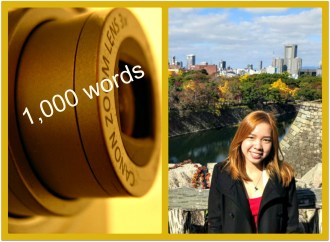
Canon zoom lens; photo credit: Morguefiles. Jean Alaba in front of moat surrounding Osaka Castle, Osaka, Japan. Photo credit: Jean Alaba.

Welcome to our monthly series “A picture says…”, created to celebrate expats and other global residents for whom photography is a creative outlet. The series host is English expat, blogger, writer, world traveler and photography enthusiast James King, who thinks of a camera as a mirror with memory. If you like what you see here, be sure to check out his blog, Jamoroki.

My February guest is 20+ Filipina Jean Alaba. An extrovert who describes herself as a “God-fearing human being” and a “firm believer of living vividly,” Jean is, without a doubt, fulfilling her passion in life: TO TRAVEL. As she explains on the About page of her blog, The Eager Traveller, travel affords her an opportunity to move outside her comfort zone and grow as a person.

Jean was motivated to start up her blog just over a year ago, as a space to record the re-collections of her travels—which she modestly calls “my humble escapades”—in hopes of inspiring others to “nurture their zeal for new adventures” and of promoting the joy of immersing yourself in “the vibrant cultures across the globe.”

Why am I not surprised that Jean has gathered a considerable following in just over one year? My interview with her may provide a few clues as to why other avid travellers are drawn to Jean and her suggested itineraries.

* * *

Hi Jean. I know it has taken us a bit of time to connect, but I’m glad we finally managed to find some time to discuss your photo-travel experiences. Firstly, I see that you are 20+ (I am also 20+: 20 + 50!!), and for one so young you have travelled a fair bit. Can you tell us where you were born and when did you spread your wings to start travelling?
I was born in the Philippines. This may sound like a cliché but my first source of inspiration for travelling was a National Geographic magazine I saw in our school library.

National Geographic is a wonderful publication. I love it.
But I didn’t spread my wings until I made my first trip to West Coast USA. The Strip struck me the most because everyone there seemed to be having the time of their lives. There was such a lot to experience and yet the time was way too short. After that, I developed a passion to immerse myself in new cultures, interact with unfamiliar nationalities and engage in overseas adventures.

To a fearless person, no fence is high enough.—Filipino tagalong proverb

I assume you mean the famous Sunset Strip that has featured in so many movies over the years? I want to know more about your travels, but let’s start with what it’s like to be a solo female traveller.
So far I’ve travelled for pleasure and for business but as yet have never travelled alone. That’s a hurdle I hope to cross this year. I realize it can be risky, but from the inspiring articles I’ve read online, it’s clear it can also be rewarding.

Even though stepping into the unknown by yourself can sometimes be difficult, even for seasoned travellers, I believe preparation is the key. I’m sure you will be fine. Next I would love to know what what countries you have already visited?
So far, I’ve only been to the United States, India, Singapore, Japan, South Korea, Hong Kong, China and Taiwan. I lived in Singapore as an exchange student for four months, which gave me a a sense of independence and responsibility. Another highlight was my six-week business trip in India, where I had the opportunity of visiting Mumbai, Agra, New Delhi and Jaipur. Here are two photos I took on that trip:

Q9-Taj-Mahal

The Taj Mahal in all of its intricacy. Photo credit: Jean Alaba

The first is of the Taj Mahal. I immediately fell in love with its intricate design. By pure luck, a bird flew across at the moment when I snapped this shot. It was only when I was viewing my photos on my laptop that I realized I had captured such an amazing moment. For me, the bird is special: it symbolizes freedom from all the worries in one’s life and from whatever is holding you back from achieving your dreams.
Q9-Bhawani

The jolly Jaipur driver Bhawani. Photo credit: Jean Alaba

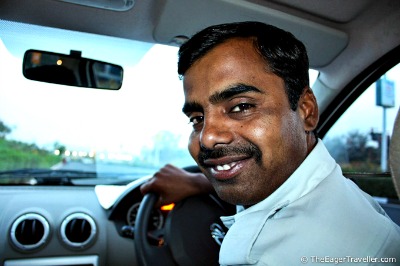
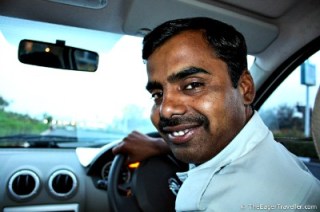
The second is of Bhawani, the driver assigned to my group during our two-day outing to Jaipur. It reminds me of his kindness and positive disposition in life. He had to take us around Jaipur in the burning hot summer, but never once did he become irritated or impatient. He always had a smile on his face, and that kept us all in a good mood during the trip. In fact, the following week when we went to New Delhi, the company driver assigned to us was totally rude and inconsiderate. At one point he left us in the car sleeping (engine shut off!) while he had his dinner. Worse, when we lightly honked the car to signal that we were awake and frankly not amused, he completely ignored us.

I loved your photo of the Taj Mahal when I first saw it on your blog’s Home Page, but I have to be honest, I never noticed the bird until you pointed it out just now. Maybe that’s good as I was able to appreciate the intricate carvings. Now I’m worried I’ll miss the building and concentrate on the bird!! You’ve captured Bhawani exactly as you describe him; perfect.

One finds a way, or finds a reason to do something.—Filipino tagalong proverb

You are very modest to say you’ve been to “only” eight countries. That’s a lot more than most people visit in a lifetime. So tell us about where are you right now and why.
Well, as you know, James, I am currently in my country of birth, the Philippines, but I’m working out a deal that will hopefully pave the way for life in a new place. I’ll keep you posted.
Q9-Baler

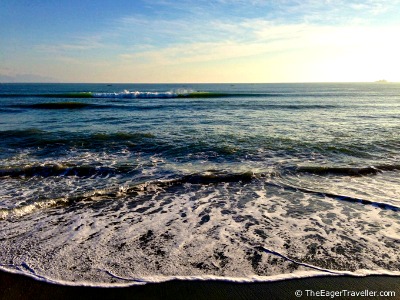
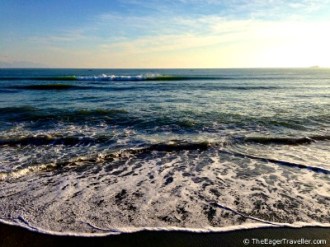
Baler, nicknamed the Philippines’ surfing capital. Photo credit: Jean Alaba

So you are keeping the secret for now, but I’m sure your blog will be give the game away when you are on the move again. The Philippines is a beautiful country and I see you have included one picture in your selection.
Yes, I’ve included this photo of Baler, which is in Aurora province. I like it because it reminds me of my first time attempting to surf and for someone not sporty, I didn’t do too badly. This was also my first time to go beyond my comfort zone in my own part of the world: I travelled for six hours just to catch the waves. It was a spontaneous weekend that proved to be pretty rewarding.

For me, the Baler surf lapping the shore looks just like a welcoming carpet in someone’s lounge.

If you plant, you will harvest.—Filipino tagalong proverb

I know you take a lot of photos but where, so far, are your favourite places to do so? and Can you explain why these places inspire you and how it shows in your next three photos?
My favourite places to take photos so far are India, Japan and Hong Kong. I’ve included one photo of each.

Q10-India

Indian women in colorful saris. Photo credit: Jean Alaba

I like taking photos in India because Indians are very proud of their heritage. This was apparent everywhere we went in India, regardless of the people’s social status.

Q10 Japan

Portraits of Japanese people. Photo credit: Jean Alaba

Japan is a favorite of mine because the people are so organized, disciplined and polite. I never run out of things to see and admire.

Q10-Hong-Kong

A Hong Kong eatery. Photo credit: Jean Alaba

Hong Kong inspires me because of the food! I should think its vast array of local dishes are enough to inspire anyone!

I like that you manage to get a handle on people from the different countries you visit, without actually living in that place. You are clearly a good observer of people, as well as a keen researcher. Tell me, do you feel reserved about taking photos of people, particularly when they are conscious you are doing so?
Not really unless I see they’re offended. But so far, no one has reacted angrily when they see me taking their photo. This is a good thing since I like shooting people. Capturing their unique expressions enables me to glimpse who they are and the kind of lives they lead. I must have taken a thousand portrait shots while in India. Perhaps I’ll get some of these printed and make it my wall art.

I’m the same. I hate to take “posed” photos so never get into a discussion with my subjects. I either take the pic or I don’t. So you like shooting people? Don’t worry; I know what you mean! I think the wall art is a great idea. I know this is a similar question but do you ever ask permission before taking people’s photographs. And how do you get around any language barriers?
Most of the time, I don’t ask but when I was in Japan, where permission needs to be secured for taking photographs of infants and kids, I would politely approach one of the parents and ask them in Japanese—of course with the help of sign language (pointing to my camera and their kids).

Thanks to you, I won’t get into trouble if I ever go to Japan. Would you say that you are motivated by the possibility of capturing something unique, which will never be seen again?
Definitely. You always have to live in the moment, and there is nothing more rewarding than being able to capture the special moments that, unless you have a time machine, you’ll never be able to bring back. Those photos may give you inspiration just when you need it most.

I have to agree, as I think most photographers would. So when did you first realize the power of photography, and how has it changed you?
I first realized it after borrowing a decent SLR for my trip to Hong Kong in 2008. I was able to take high-quality photos to serve as a memento. Ever since, I’ve made it a point to capture moments with my camera, whether during a vacation or simply at a gathering of family or friends—moments I’ll be wanting to view when I get old and grey.

I know what you mean. The picture for me is like a diary of an event in visual form. The photographer can write about it but no one else could.

When the sheets are short, one needs to make do.—Filipino tagalong proverb

Most readers will know by now that I’m not too good on the technical stuff but some of our readers will want to know what kind of camera and lenses you use.
I’m still using the borrowed camera; it’s a Canon 450D. I use the kit lens and a prime lens. It’s outdated equipment now.

You sound a bit like me except that I haven’t managed to borrow any equipment yet. And you aren’t asking me for technical advice. That’s great!! Finally, do you have any advice for wannabe photographers who are traveling or living abroad?
I don’t feel I’m in a position to give advice since I haven’t really achieved anything noteworthy. But I would say from my experience, don’t hesitate to take as many pictures as you can while travelling. Before embarking on a journey, research and learn from the professionals online. You can try copying them, using a trial and error process.

I actually think that is very good non-technical advice, Jean. I’d like to thank you for taking the time to tell your story so far in this interview. On your blog you say:

It has been a spectacular life so far but there is so much more to be seen! I have yet to find that life-changing opportunity which will allow me to do my passion for travelling and blogging as a living.

I have no doubt you will find that opportunity. I’m booking you in for a follow up interview next year to check your progress!!

* * *

Readers, what do you make of Jean’s experiences and her photography advice? And do you have any questions for her on her photos and/or travels? Please leave them in the comments!

And if you want to know more about Jean, don’t forget to visit her excellent blog, The Eager Traveller. You can also follow her on social media:
Twitter: @eagertraveller
Instagram: theeagertraveller
Google+: Jean Alaba

(If you are a photographer and would like to be interviewed by James for this series, please send your information to ml@thedisplacednation.com.)

STAY TUNED for tomorrow’s fab post!

If you enjoyed this post, we invite you to register for The Displaced Dispatch, a round up of weekly posts from The Displaced Nation, with seasonal recipes, book giveaways and other extras. Register for The Displaced Dispatch by clicking here!

Related posts:

LOCATION, LOCUTION: JD Smith – from Cornwall to 3rd century Syria

Book cover art, Tristan & Iseult; JD Smith author photo; JJ Marsh author photo

Book cover art, Tristan & Iseult; JD Smith author photo; JJ Marsh author photo

In this month’s “Location, Locution”, expat crime writer JJ Marsh interviews  JD Smith, author of the novella Tristan and Iseult and the first in The Rise of Zenobia series, Overlord, based in ancient Palmyra, to be released in early 2014.

JD Smith lives in the English Lake District. She has worked in the graphic design industry for over a dozen years, and now specialises in book cover design and typesetting.

The pseudonym JD Smith was adopted as her preferred Editor’s title when launching the writing magazine Words with JAM.

Which comes first, story or location?
Always the story. The location is influential to the story, but the story is the most important thing, the part which excites me as a reader. The location is the background upon which the story is played out, and the history is the framework upon which it is hung.

How do you go about evoking the atmosphere of a place?
With great difficulty. In writing Tristan and Iseult I evoked the wet and wind the British know only too well. I’ve always lived on the coast, though in the north, not Cornwall (Kernow), but those salt winds and perpetually grey skies are the same. The Rise of Zenobia is based in 3rd century Syria, and I’m finding that much harder. I didn’t grow up with the atmosphere ingrained in me. I haven’t spent years of my childhood visiting the remains, the palaces and the fortifications. I rely on films a lot. Being a designer I’m an incredibly visual person, and seeing it played out, filmed in the locations I’m trying to conjure on the written page, helps immensely.

Which particular features create a sense of location? Landscape, culture, food?
All of the above, definitely. Although I think in order to relate better to a reader I am all in favour of sacrificing certain aspects which readers might not gel with, and using others to push plotlines forward. Of course, all of these things give a clue as to the time, as well as the place, in which a book is set.

How well do you need to know the place before using it as a setting?
I’ve never visited Syria but I’m writing about it. You need to know it to a degree, but I think you need to know your characters more. Location is secondary. You can paint the background afterwards. Of course it depends. I write historical novels based on historical events and people, and knowing them and the history of the place, rather than the place as it stands, is key.

Could you give a brief example from your work which you feel brings the location to life?
These two extracts are my favourite descriptions of the weather in Britain which for me was a huge part of the setting of Tristan and Iseult:

Rustling emanates from the dense forest, even though the wind has dropped. White mist shrouds us. I tense to stop cold shivers taking hold. The rain is fine, yet a hand through my hair proves it is wetter than the streams in springtime and my footing slides on the muddy grass as we pick our way through undergrowth.

And:

‘Ireland is no home for me,’ she says. ‘I was at home with the sea and the sand and the shingle of my shores, with the salt spray in my hair.’

Which writers do you admire for the way they use location?
Tricky one. I tend to admire writers for their story, and their characters, not for their use of location. And for me it’s both the time and the place that work together as one with any author’s writing, because I love historical fiction. Time and place are tied so tightly together one does not exist without the other. Sarah Bower’s descriptions are second to none.  Philippa Gregory evokes the royal court with ease. And Bernard Cornwell can describe a battle on any field.

Next month on Location, Locution:  award-winning author Amanda Hodgkinson.

 * * *

JJ Marsh grew up in Wales, Africa and the Middle East, where her curiosity for culture took root and triggered an urge to write. After living in Hong Kong, Nigeria, Dubai, Portugal and France, JJ finally settled in Switzerland, where she is currently halfway through her European crime series, set in compelling locations all over the continent and featuring detective inspector Beatrice Stubbs.

STAY TUNED for tomorrow’s post!

If you enjoyed this post, we invite you to register for The Displaced Dispatch, a round up of weekly posts from The Displaced Nation, with seasonal recipes, book giveaways and other extras. Register for The Displaced Dispatch by clicking here!

Related posts:
LOCATION, LOCUTION: Jeet Thayil on bringing location to life in a semi-dream state

Jeet Thayil

Clockwise from top: author photo Jeet Thayil; book cover art “Narcopolis”; author photo JJ Marsh

In this month’s “Location, Locution”, expat crime writer JJ Marsh interviews Jeet Thayil, author of  Narcopolis.

Jeet Thayil was born in Kerala, India, in 1959 and educated in Hong Kong, New York and Bombay. He is a performance poet, songwriter, librettist and guitarist, and has published four collections of poetry: These Errors Are Correct (Tranquebar, 2008), English (2004, Penguin India, Rattapallax Press, New York, 2004), Apocalypso (Ark, 1997) and Gemini (Viking Penguin, 1992). He is also the editor of The Bloodaxe Book of Contemporary Indian Poets (2008). His first novel, Narcopolis (Faber & Faber, 2012), won the DSC Prize for South Asian Literature and was shortlisted for the 2012 Man Booker Prize and the Hindu Literary Prize 2013. He currently lives in Berlin.

Which came first, story or location?
I knew Narcopolis would be set in Bombay. I started with that city and that period in mind. It was about telling a story that hadn’t been told before, in a way that Indian fiction doesn’t really tell stories. Unsentimental, brutal and beautiful. When I realised that was what the book would be like, it revealed itself to me.

What’s your technique for evoking the atmosphere of a place?
When I was working on Narcopolis, I would work till very late at night, go to bed, wake up and start on it again, without really thinking. I found that when you’re in that oneiric, half-oneiric state, still slightly in the dream, very interesting things would happen. I’d come up with things I’d never have thought of later in the day. I was astonished about how much I remembered from that time, 25 years earlier, when I had no idea I would write a novel, when I was not exactly in the clearest of mental states. I was also surprised how unhealthy it was, the process of remembering.

A negative experience?
Absolutely. It was the opposite of cathartic.

Which particular features create a sense of location? Landscape, culture, food?
All of those. I’m a big fan of crime fiction, the bloodier the better. I’m addicted to crime thrillers. That, and poetry, is what I read on a daily basis. I’m sure a lot of that atmospheric noir milieu seeped into Narcopolis.

That’s curious. Not a link I would have made. I was going to ask you if you had a guilty reading pleasure, but you obviously don’t feel guilty.
Not at all. I hold those books up proudly on the train.

How well do you need to know the place before using it as a setting?
I’ve set poems in places I’ve never been to, and that can be a huge liberation. I think the worst is to know a place glancingly. To visit a place for a few days, get a false sense of it and then try to write about it. It might even be better to have never been there than read a guide about it.

Because it’s too superficial?
I think so. Either never go there or have been there too long.

Which writers do you admire for the way they use location?
I mentioned my love for crime writers and the way they do exactly that, evoking streets and cities and ambiance. But I’m also tremendously fond of the fiction that’s set in the opposite of cities: William Trevor, Henry James, E.M. Forster. Writers that do evoke a sense of place but often in the most mysterious and indirect of ways.

Next on Location, Locution … JD Smith, author of Tristan and Iseult (12th-century Cornwall) and Overlord: The Rise of Zenobia (3rd-century Syria), to be released in early 2014.

 * * *

JJ Marsh grew up in Wales, Africa and the Middle East, where her curiosity for culture took root and triggered an urge to write. After living in Hong Kong, Nigeria, Dubai, Portugal and France, JJ finally settled in Switzerland, where she is currently halfway through her European crime series, set in compelling locations all over the continent and featuring detective inspector Beatrice Stubbs.

STAY TUNED for tomorrow’s post!

If you enjoyed this post, we invite you to register for The Displaced Dispatch, a round up of weekly posts from The Displaced Nation, with seasonal recipes, book giveaways and other extras. Register for The Displaced Dispatch by clicking here!

Related posts:
TCK TALENT: Amber Godfrey, Diplomatic Kid Turned Performer-Writer

Amber Godfrey Collage

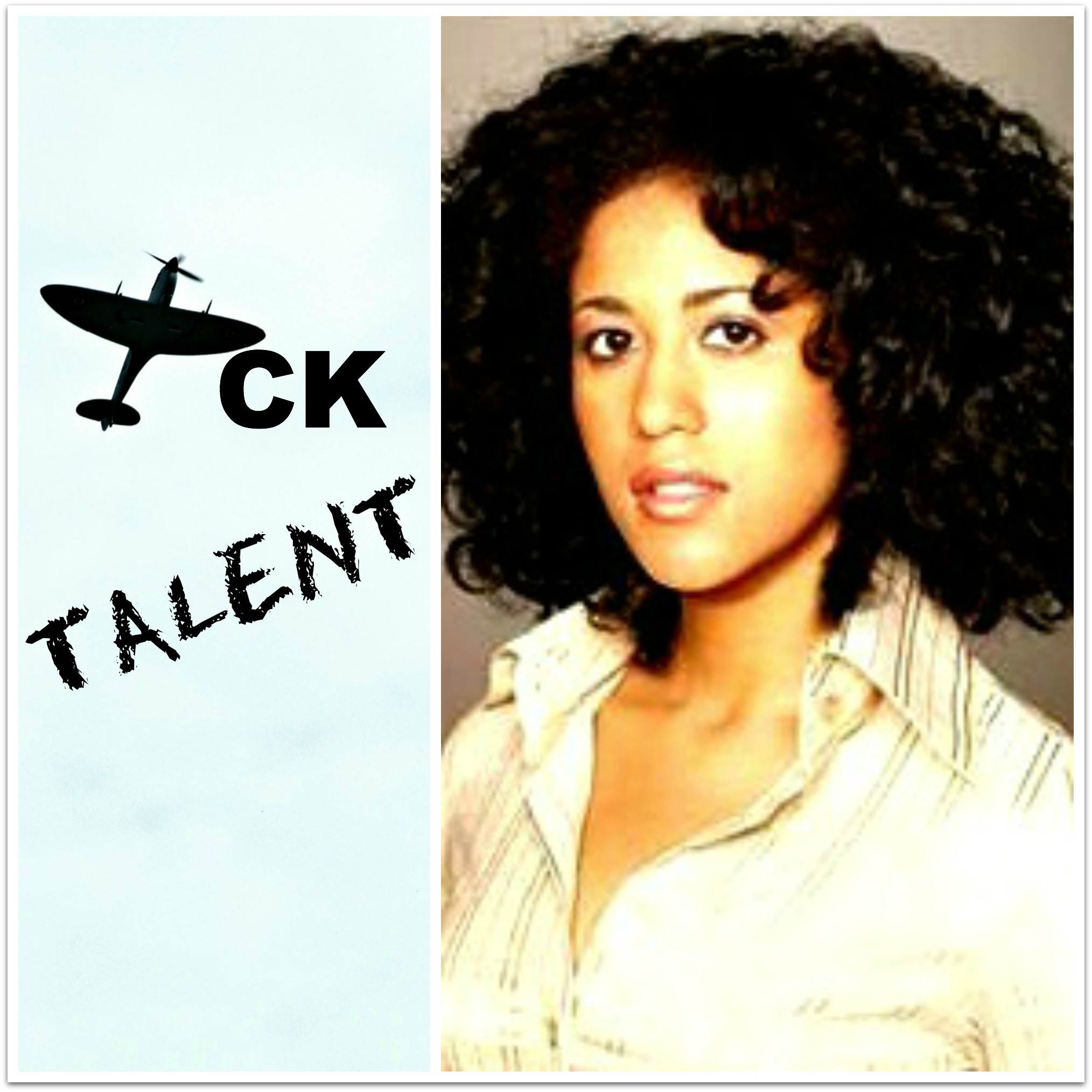
Photo credits: left: RoganJosh (MorgueFiles); right: Amber Godfrey, from her portfolio.

Welcome to Elizabeth (Lisa) Liang’s monthly column about adult Third Culture Kids (TCKs) who work in creative fields. Lisa is herself a prime example. A Guatemalan-American of Chinese-Spanish-Irish-French-German-English descent, she recently debuted her one-woman show about being a TCK, which I had the pleasure of seeing during its too-short run in New York City in September: stupendous!

—ML Awanohara

Happy Thanksgiving, readers! I’m thankful to be bringing you today’s guest, a kindred spirit of mine. She is Amber Godfrey, an actress-writer who, like me, has written and performed her own solo show about growing up as a TCK of mixed heritage.

* * *

Welcome to The Displaced Nation, Amber! I’m happy to have met another solo performer whose TCK story parallels my own. Since your dad is a Canadian diplomat, you grew up in eight countries. Can you tell us which ones?
Besides Canada, I’ve lived in the USA, Ecuador, Trinidad, India, Hong Kong, Sri Lanka and England.

Growing up, which of these countries do you identify most strongly with?
I identified, and continue to identify, strongly as a Canadian probably because of my dad’s job and the fact that we always connected with the Canadian expat community wherever we went. I also heard on more than one occasion (usually when I was being busted for some rebellious act): “You represent Canada!!” I’ve spent most of my adult life in Canada and the US, so I feel very “North American” at this point. At the same time, though, I do feel like a “citizen of the world,” and the bond that I feel with other TCKs is unique.

“Are you adopted?”

Your family is particularly diverse. Let’s see if I can get this right. You are the daughter of an Ecuadorian mom and an African American father, but you were raised by your mom and a Caucasian-Jewish Canadian stepdad, who then had your brother, David. Was your family’s status ever challenged by strangers, like mine was? In grade school, no one believed my brother was my brother, and people asked my mom if I was adopted.
Yes! This still happens all the time. When the four of us go out for dinner, servers will assume my brother and I are a couple. If I check into a hotel with my Dad, we get stares. When I was in fifth grade, I had to go to the school nurse and, when she realized who my brother was, she asked pointedly: “Are you adopted?” I panicked and said “Yes,” even though that wasn’t the whole truth. Looking back—what an inappropriate question to ask a 10-year-old!

Do you feel offended when that happens?
Honestly, it sort of tickles me that people don’t know what to make of us. I figure, that’s their problem and it doesn’t have to ruin my day. As an actor, I get irritated by the under-portrayal of mixed-race families on stage and in film. When I was auditioning a lot, I became really frustrated realizing I would most likely not be considered for “sister of” so-and-so because the other actor had already been cast as white.

Love the place you’re in

I completely relate! So, with such a mixed background, which culture(s) form the core of your identity?
I grew up with a lot of focus on Jewish history, tradition and heritage, which I resisted up to a point—I chose not to be Bat Mizvah’d—but to which I also really connected. As a pre-teen I was obsessed with The Diary of Anne Frank and wrote short stories about young Jewish girls in the Nazi era. In my early 20s, the combination of acting roles I was being sent out for and my burgeoning adulthood piqued a stronger curiosity in the African-American side of me, which ultimately led to me reaching out to find my birth father. Now, in my 30s, I find myself seeking to connect with my Latin American roots. Of course I also identify with the cultures of the countries I grew up in! I think the quest to understand my “identity” is ongoing…

Were you happiest in a certain place at a certain time?
I guess the short answer is: I aim to be happiest in the moment I am in. Every place I went to had its good and bad moments…

What were your school experiences like growing up?
I went to private school in California, international schools in India, HK and Sri Lanka, and the local public school in Canada. During high school I had to contend with three completely different school systems, which was a challenge to say the least.

How about college?
I went back to Canada for college: I studied theatre at Acadia University, in Nova Scotia. It was hard to get good information back then (the Internet was just a baby!), but my Dad pointed out that as a small school in a small town, it might be an easier transition than if I went to a big school in a bigger city like Toronto. And Acadia has a good theatre program.

“It’s all in me…”

Did your TCK upbringing influence your desire to become a performer?  
Being in school plays or performance groups was a good way to get involved and make friends when moving from place to place. But I also think that portraying characters on stage allowed different parts of myself to come forth and was a way for me to work out my identity. I’m laughing because I’m thinking of Whitney Houston’s “I’m Every Woman”—I’m a hippy at heart and believe we are all one and connected. Seeking to experience and understand life/truth from multiple viewpoints is an essential part of who I am.

Before we get into your solo show, let’s talk about your series of performances of Anna Deavere Smith‘s solo show Fires in the Mirror, a docudrama for a solo performer about the racial tensions that erupted between blacks and Jews in Brooklyn in 1991.
I was asked to do Fires in the Mirror by Jesse Freedman, a fellow performer and prolific director, whom I met in a SITI Company Suzuki/Viewpoints workshop. I jumped at the chance to engage with this epic piece because it is constructed so thoughtfully and allows me to play with my Black/Jewish roots. I initially performed Fires in the Mirror at the Limmud Conference, which took place in Coventry, England. Then the Jewish Theatre Workshop in Baltimore requested the show as part of an initiative to continue dialogue between Blacks and Jews who share space in that community. I also had a short run in NYC at the New Yiddish Repertory Company Theatre.

Moving over to your autobiographical solo show: why did you create DipKid?
I’d been thinking for many years about telling my story but couldn’t decide which way to tell it. After taking a Soulo-Show Workshop with Tracey Erin Smith, I finally started writing. I submitted a proposal to a small festival in NY, and when I got in, I realized it was time to start making the show! My efforts resulted in a short but sweet twenty-minute piece (you can watch it here).

How was it received?
The reaction was fascinating. I had assumed my story was unique, but it seemed that people could relate to it, and wanted more! That’s where the struggle began for me. I didn’t know how to finish the piece because I felt I wanted it to link up with my current situation—but that kept changing! The next time I performed the show, I expanded it to 45 minutes but felt less satisfied. I’d watched the video of my first performance so many times I felt sort of stuck in the past. I also found myself listening to many differing opinions on where my show should go and how it should be crafted—my vision got a little lost in the din. Finally, the festival format was crazy-making—especially as I was holding down a full-time job. Trying to write and rehearse this piece all for just one evening was too much pressure. My dream would be to take the show to the countries I lived in and beyond. I’d love to perform it at international schools and for expat communities worldwide.

As the interviewer, I think I can permit one question that’s of particular interest to me, which is: how do you like solo performing?
Solo performance is relatively new for me and I do miss getting to work with other actors on stage. That said, the medium allows me to be a bit more in control of the work and my approach. And it’s wonderfully vulnerable!

I understand you’re planning to film a documentary. What will it be about?
The focus will be on other children of diplomats (i.e., “dip kids”) and how their lives have been shaped by their upbringing and the jobs of their parent(s). I plan to tell the story from my perspective and also weave in my experiences as a mixed-race individual who continues to search for an understanding of and connection to my identity, heritage and all the parts that I am made of.

Do you have any other projects coming up?
I am writing a memoir that will delve deeper into the stories I reveal in DipKid.

Best and worst (Canadian) Thanksgiving memories

Canadian Thanksgiving was in October, but since American Thanksgiving is today, please share with us your best and worst Thanksgivings.
The best occurred when we were living in New Delhi. We were invited to the Official Residence of the High Commissioner for a Canadian Thanksgiving celebration. It was a big party with live music and food sprawled out on the grounds. At dusk everyone looked up and gasped as hundreds of bats swarmed the sky. It was the coolest thing I had ever seen!

I think the worst was my first Thanksgiving away from home. My parents were in Sri Lanka and I was in Wolfville, Nova Scotia (where Acadia U is). Everyone I knew at school had family nearby, but it was only October and I hadn’t bonded with anyone enough to get an invite. I ate Pop-Tarts and drank Dr. Pepper and felt homesick for my family and a bit sorry for myself…

* * *

Thank you, Amber, for being you, a fellow TCK theatre-maker! Readers, please leave questions and comments for Amber below. And if you want to keep up with her creative undertakings, I suggest you also follow her on Twitter: @DipKidAmber.

STAY TUNED for next week’s/month’s fab posts!

If you enjoyed this post, we invite you to register for The Displaced Dispatch, a round up of weekly posts from The Displaced Nation, with seasonal recipes, book giveaways and other extras. Register for The Displaced Dispatch by clicking here!

Related posts:

And the October 2013 Alices go to … these 4 international creatives

 © Iamezan | Dreamstime.com Used under license

© Iamezan | Dreamstime.com
Used under license

If you are a subscriber to our weekly newsletter, Displaced Dispatch, you’re already in the know. But if you’re not (and why aren’t you? off with your head!), listen up. Every week, when that esteemed publication comes out, we present an “Alice Award” to a writer or other kind of creative person who we think has a special handle on the curious and unreal aspects of being a global resident or voyager. Not only that, but this person tries to use this state of befuddlement to their advantage, as a spur to greater creative heights.

Today’s post honors October’s four Alice recipients.

Starting with the most recent, and this time with annotations, they are (drumroll…):

1) CATHY TSANG-FEIGN, American psychologist in Hong Kong, specializing in expat psychology and adjustment issues

For her book: Keep Your Life, Family and Career Intact While Living Abroad
Published: September 2013
Snippet:
Cathy_Feign_cover

[Benjamin is a marketing buyer who was transferred to Hong Kong on a two-year contract. Having been through the phase of “elation,” he now finds himself in phase of “resistance,” with “transformation” and “integration” yet to come.]

Benjamin is getting annoyed by the frantic pace of life in Hong Kong, the indirectness of Chinese people in business, the crowds and difficulties in being understood. He is frustrated at the narrow choice of English-language entertainment on television or in cinemas and theaters. He finds himself missing his old friends, favorite foods, and the ways of doing things back home. Many foreigners in this [resistance] stage tend to associate only with others from their own country. They constantly compare everything to “back in England” (or New York or Frankfurt). Such people remain separate from the local community and establish their own secluded, privileged society. Many expatriates remain in this stage until the day they move back home.

Citation: Dr. Tsang-Feign, we wonder if in addition to Benjamin (who is presumably fictional) you might consider treating Alice in Wonderland as a textbook example of the four phases of acculturation? As you may recall from your own reading of Lewis Carroll’s story, Alice’s elation at falling down the rabbit-hole is rapidly followed by a period of resistance to the wonders found beneath. Down, down, down—Alice’s fall eventually culminates in unlocking a door to a passage through which yields the sight of the most fabulous garden. And her first taste of Wonderland is equally delightful: a drink that has “a sort of mixed flavour of cherry-tart, custard, pine-apple, roast turkey, toffee, and hot buttered toast.” However, it is not long before Alice begins to resist the local community:

“It was much pleasanter at home,” thought poor Alice, “when one wasn’t always growing larger and smaller, and being ordered about by mice and rabbits. I almost wish I hadn’t gone down that rabbit-hole—and yet—and yet—it’s rather curious, you know, this sort of life!”

Still, and as the latter statement attests, even at the height of her resistance Alice shows some potential for “transformation.” And though she never quite achieves “integration” before leaving Wonderland—she always feels a bit what we like to call displaced—her sister predicts that she will forever cherish the memories of her adventures. We can only speculate, not being psychologists ourselves, that this progress is owed to her not having had the opportunity to isolate herself with other Alices, to her having had a solo, and singular, set of experiences. Does that seem a fair assessment?

2) ANONYMOUS BLOGGER at Midwest to Midlands, who describes herself as “an American from the Midwest married to a Brit living in the English Midlands”

For her post: “First a Revisit in England”
Posted on: 23 September 2013
Snippet:

… it has taken me a while to get back on track since returning to England from out visit in the States. What do you do when you need to get yourself in gear? This time for me, some action was needed, or rather lack of action and enjoying the English countryside.

Citation:  M-to-M, we love the idea of getting over the often-rough transitions from homeland to adopted land by doing nothing and simply immersing yourself in your surroundings—we only hope you realize how lucky you are to have landed in the Cotswolds, which has been designated as an Area of Outstanding Natural Beauty. (If you lived in, say, smog-covered Shanghai, this technique would have required more imagination.) In fact, your photographic record of your desultory wanderings—first stop, a magnificent house or two made of Cotswold stone; next stop, a tea room; next, a window-box; next, a shop; next, a tree covered in golden leaves; next, an 18th-century house with an American letterbox—put us in mind of this charming passage from Lewis Carroll’s classic:

“I should see the garden far better,” said Alice to herself, “if I could get to the top of that hill: and here’s a path that leads straight to it—at least, no, it doesn’t do that—” (after going a few yards along the path, and turning several sharp corners), “but I suppose it will at last. But how curiously it twists! It’s more like a corkscrew than a path! Well, THIS turn goes to the hill, I suppose—no, it doesn’t! This goes straight back to the house! Well then, I’ll try it the other way.”

3) MANAL AHMAD KHAN: Journalist, poet, world traveler, and blogger at Windswept Words

For her post: “Thoughts on Leaving Pakistan” (her first post in a year-and-a-half, since she and her husband moved back to Pakistan from the United States, and just before they left for a new adventure in Spain)
Posted on: 4 October 2013
Snippet:

It was a parallel universe, where we all lived free, modern lives, like citizens of a free, modern country, utterly disconnected from the “other” Pakistan, the bigger Pakistan, and for all intents and purposes, the “real” Pakistan. Yet perhaps it was our only survival, the only way to keep sane and creative and happy for those of us who chose to live in our native country.

Citation: Manal, your deep love for your native land shines through your many beautiful photos and stories—as does your frustration about its “overwhelming religiosity and self-righteousness.” We are glad that, unlike Alice, you were able to get out of “that dark hall, and wander about among those beds of bright flowers and those cool fountains” from time to time. And a very pleasant little Wonderland it sounds, that part of Lahore where people meet up in New York-style cafés for mocha cappuccinos, and have children who dress up for Halloween and parties where alcohol flows freely. By the same token, we can appreciate how happy you were to leave this “schizophrenic” life for Madrid. Readers, we will hear about Manal’s latest adventures this month as she has agreed to be one of November’s featured authors!

4) KAY XANDER MELLISH, Wisconsin-born journalist and now an expat entrepreneur in Copenhagen and blogger at How to live in Denmark: An irreverent guide

For her post: Danes and Privacy—Why public nudity is OK and public ambition is not
Posted on: 24 August 2013
Snippet:

Shortly before I arrived in Denmark in 2000, one of the famous guards outside the queen’s palace at Amalieborg was fired.

… She was the first woman to guard the Royal Palace at Amalieborg. … Unfortunately, this young lady also had a part-time job. She was a prostitute. She would guard the palace by day and run her business out of the royal barracks in the evening.

… But she was NOT fired because she was a prostitute. She was fired because she’d been ordered by her commander to stop moonlighting after her side-job was first discovered, and she did not stop. … She was fired for not following orders.

Citation:  Kay, we don’t know which experience is stranger: Alice’s discovery that the Queen of Hearts has cards for guards, or yours that Margrethe II had a prostitute for a guard. But leaving that matter aside, what’s even stranger in both cases is that the rules by which a guard’s behavior is judged are far from transparent, even after an explanation is offered. The Danes you queried about the incident told you that as far as they were concerned, even a Queen’s guard can do what she wants in her private time; but insubordination is unacceptable: off with her job! Likewise, when Alice asks a couple of the Card Guards why they are painting the roses, she gets this response:

Five and Seven said nothing, but looked at Two. Two began in a low voice, “Why the fact is, you see, Miss, this here ought to have been a RED rose-tree, and we put a white one in by mistake; and if the Queen was to find it out, we should all have our heads cut off, you know. So you see, Miss, we’re doing our best, afore she comes.”

We expect you can empathize!

*  *  *

So, readers, do you have a favorite from the above, or have you read any recent posts you think deserve an Alice Award?  We’d love to hear your suggestions! And don’t miss out on these weekly sources of inspiration. Get on our subscription list now!

STAY TUNED for tomorrow’s post, another installment on blogging from JACK THE HACK.

Writers and other international creatives: If you want to know in advance whether you’re one of our Alice Award winners, sign up to receive The Displaced Dispatch, a round up of weekly posts from The Displaced Nation, with news of book giveaways, future posts, and of course, our weekly Alice Award!. Register for The Displaced Dispatch by clicking here!

Related posts:

And the Alices go to … these 3 expat writers for their Hurricane Sandy posts

 © Iamezan | Dreamstime.com Used under license

© Iamezan | Dreamstime.com
Used under license

My husband and I have a habit of going on holiday just before some major world crisis occurs — after which we have no choice but to spend several days holed up in our hotel room watching the events unfold on CNN. Twice it was a crisis involving water: the deadly Hurricane Katrina and the 2004 Boxing Day tsunami.

But for Hurricane Sandy, we were very much on the scene — ensconced in our apartment in NYC’s East Village, and with no television to watch, not even a radio to listen to! As those who read my post of earlier this month are aware, we were deprived not only of power but also water, communications and public transportation for several days, and displaced from our home for one night — an inconvenience that, while somewhat traumatic, turned out to be minor compared to what others had suffered in harder-hit areas.

As I mentioned then, the experience gave me a chance to test this blog’s basic premise: that forcible displacement at some level compares with the kind of displacement one has when living in a country that is not your home. And if so, can a former expat like me draw on the strengths gained from living overseas to keep calm and carry on?

While pondering these fundamental questions, I came across three posts by expats on Hurricane Sandy that gave me some fresh insights — not only on Sandy but on the down-the-rabbit hole nature of international travel and the expat life.

Thus I’d like to hand out three “Alices” today to (in reverse chronological order):

1) PETE LAWLER

Awarded for: Clouds from the Past: My Reflections on Sandy, Gloria and the Jersey Shore, in his personal blog: The American Londoner
Posted on: 3 November 2012
Moving passage:

But here and now, when things are raw, when my cousins have been without power for a week and my parents are cooking with a propane tank and a Coleman portable grill even high up in the Pocono Mountains of Pennsylvania, I mourn. My heart goes out to those suffering and I mourn for that place of childhood sunshine and wish it a good and steady recovery in the coming months.
All the best, Jersey. I am thinking of you.

Citation: Pete, before Sandy, you probably weren’t thinking that much about “that place of childhood sunshine,” the Jersey shore — because, after eight years in London, you try not to think too much about sunshine any more. But then Sandy plunged you into mourning for all the good times you had as an all-American kid — the “long sunny days spent lazily frolicking through waves, collecting shells, and cautiously avoiding jellyfish.” It even made you think with some nostalgia of Hurricane Gloria, which you rather enjoyed as a seven-year-old. Absence, plus tragedy, can indeed make the heart grow fonder… What’s more, I sense how bad you must have felt about being powerless, from a distance, to help your parents and your cousin in their time of need — a guilt that’s at the hard core of the expat life. Just ask Linda Janssen — I’m thinking of her aptly titled “Down the Rabbit Hole” post of last summer, about her father’s illness.

2) MADELINE GRESSEL

Awarded for: Hurricane Sandy and the unspoken attraction of disaster, in Matador Abroad
Posted on: 1 November 2012
Thought-provoking passage:

Now, as New York City is sloshed by a record-breaking 13ft wall of water, it is I sitting comfortably in a café in Hong Kong watching the light October rain outside. … My friends post photos on Facebook of candlelit dinners, submerged cars, and the powerless, darkened skyline.

And I wish I were there with them. Not because I’m afraid for their safety (I’m not), but because I’m missing a moment of New York history. I’ll never be able to say, “Remember the flood of 2012? That was insane.” I feel jealous at the pictures, like I’ve seen a photo of an ex-lover with his new flame.

Citation: Maddie, I wonder why it is, as we also learned on this blog this month, so few American expats feel the need to connect with their homeland during a presidential election — which, too, provides a chance to be “part of history,” especially if the race is closely contested? I think the answer may lie in your rather astute observation: people love a disaster. Come to think of it, a friend of mine has confessed that during Sandy, she had the overwhelming urge to go outside — in the storm! (Even though it was expressly forbidden by Mayor Bloomberg.) In addition, your post reminded me of another old expat adage: out of sight, (afraid of being) out of mind…

3) RUTH MARGOLIS

Awarded for: “I wasn’t afraid of Superstorm Sandy — until the lights went out,” in Telegraph Expat
Posted on: 31 October 2012
Moving passage:

Forty-eight hours ago, I was relishing my role as stoic, cynical Brit, refusing to bow down to an impending crisis. I bashed out jokey emails to friends and family noting that it was “a bit blustery”…

…my husband and I — plus my visiting younger sister — spent much of Sunday and Monday quite enjoying the commotion. Like kids playing an imaginary game, we stocked up on all the (un)necessaries: crisps mainly, and garish American junk foods…

Then, something strange happened: the lights went out in Manhattan. … “Ah,” we thought, followed by a shaky: “Hmm”. … Eventually, we went to bed, with the radio on. No one got much sleep.

When the next storm hits, I expect I’ll ditch the cockiness sooner.

Citation: Ruth, there I was, trying to conjure up the “keep calm and carry on” ethos that I’d learned (rather begrudgingly) from nearly a decade of living in Britain, when, had I known you were down in Brooklyn, I could have asked for a refresher course (ah, yes, the junk foods and the jokey emails!). Still and all, I’m glad to know that even for a native-born Brit, there are limits, one of which is seeing the lights go out in lower Manhattan… (From now on, I won’t be too hard on myself!) I can also relate to what you said about these disasters having a cumulative effect (made worse by the fact that you’re living far away from your homeland and already feeling somewhat displaced). As you point out in your post, Sandy was the second time since emigrating that you’ve “had to assume the brace position,” the first being Irene. I can recall feeling something similar when living in Tokyo — first there was the Aum Shinrikyo attack on the subway and then the massive earthquake in Kobe, after which I decided that the stoicism required for this situation hadn’t yet been invented! (Bloomin’ heck, why was it I’d told everyone at “home” that Japan was so much safer?)

* * *

So, readers, do you have a favorite from the above, any comments on these bloggers’ ruminations, or any further posts to suggest? I’d love to hear your suggestions!

STAY TUNED for tomorrow’s post, some comforting advice and (hopefully) words of wisdom from The Displaced Nation’s resident agony aunt, Mary-Sue Wallace.

If you enjoyed this post, we invite you to register for The Displaced Dispatch, a round up of weekly posts from The Displaced Nation, with seasonal recipes, book giveaways and other extras. Register for The Displaced Dispatch by clicking here!

Related posts:

Images: All from Morguefiles.