The Displaced Nation

A home for international creatives

Tag Archives: Gothic tales

LOCATION, LOCUTION: An expat life in Istanbul frees Oliver Tidy to write crime novels set in places he knows well (and Turkey, too!)

Location Locution
Columnist Lorraine Mace, aka Frances di Plino, is back with her second interview guest: fellow crime writer Oliver Tidy.

Hello, readers. My guest this month is Oliver Tidy, who on his author site refers to himself as a “semi-professional fantasist” and an “attention seeking vanity publisher” who is “living in exile.”

He also says he has a “yearning for yarning”—so how much of this is true and how much an exaggeration?

Well, it’s patently true he is a self-published author, currently with nine books available for download through Amazon:

  • four in his Romney and Marsh Files British police procedural series. Newly promoted Detective Sergeant Joy Marsh is shipped out to Dover on the Kent coast to work under Detective Inspector Romney, a cantankerous copper who nevertheless is good at his job…
  • three in his Acer Sansom thriller series. British soldier Acer Sansom resurfaces a year after the world thought he was dead, possessed with a single-minded need for vengeance…
  • two in his Booker & Cash mystery story series. An unlikely detective team, David Booker and Jo Cash, solve mysteries in Romney Marsh, a wetland area in southeast England…

As for the “exile” part, Oliver tells me he left the UK in 2009 looking for change and ended up in Istanbul, where he “got change in spades.”

He is currently working in a Turkish school teaching English as a foreign language to young learners. It’s a job that affords him enough time for writing, something he deeply appreciates:

When I lived in the UK, I tried a couple of times to write, but with the responsibility of property and family and work, and the distractions of television and radio and newspapers and people I never got anywhere with it. One of the many things that I have learned about writing is that you have to sit down and write—often.

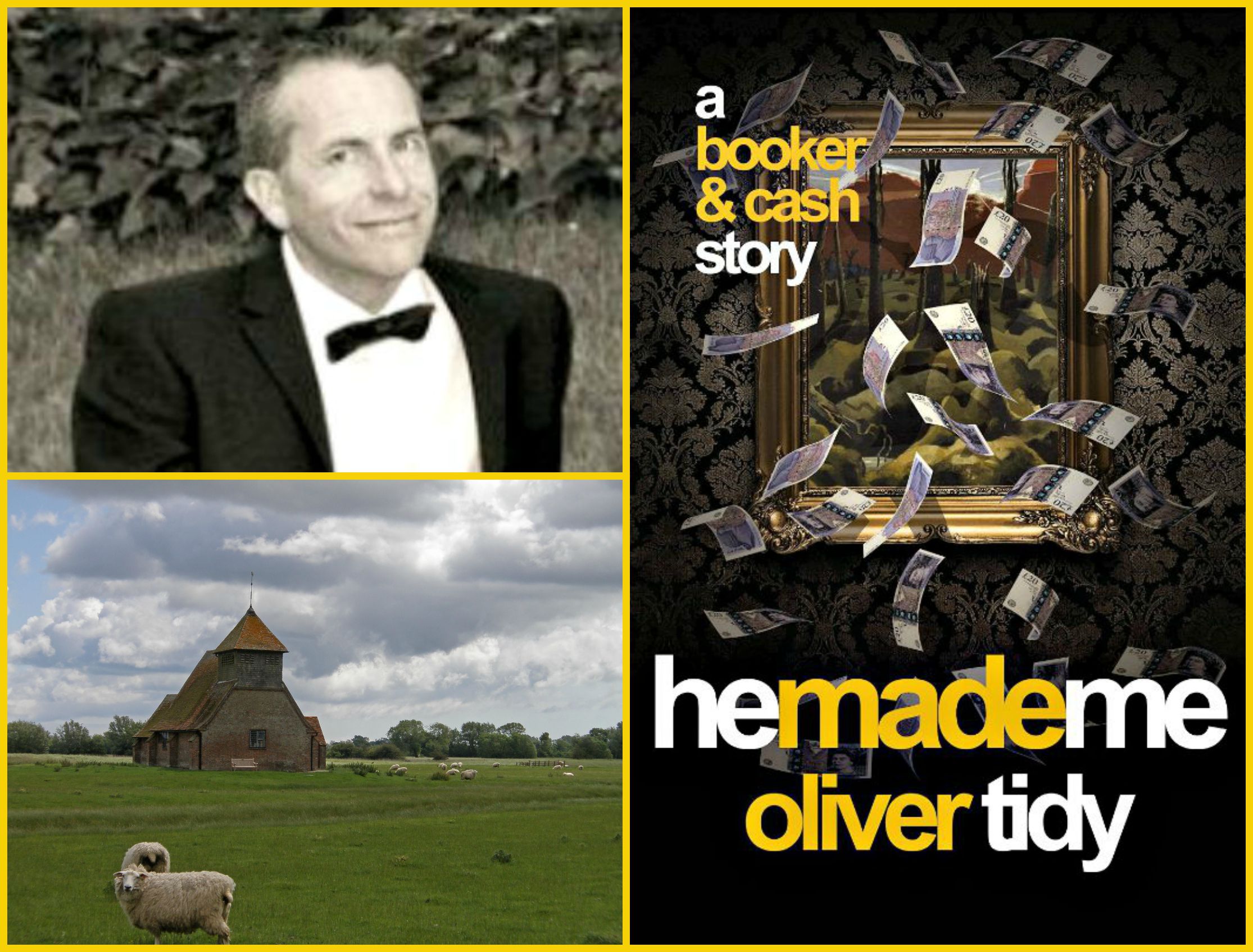
Now that he lives in Istanbul, Turkey, Oliver Tidy is able to write stories set in his homeland, the most recent one being He Made Me. Photo credits: (clockwise) Oliver Tidy (supplied) and book cover art; St Thomas Becket, Fairfield, Kent, by Amanda Slater via Flickr (CC BY-SA 2.0).

Living in Istanbul, Turkey, Oliver Tidy has been able to write books set in the place where he was born and bred, the most recent one being He Made Me, which takes place in Romney Marsh, UK. Photo credits: (clockwise) Oliver Tidy (supplied) and book cover art; St Thomas Becket, Fairfield, Kent, by Amanda Slater via Flickr (CC BY-SA 2.0).

As for the vanity publishing, Oliver also confesses he initially tried to get a literary agent because he never wanted to self-publish, believing that self-publishing was tainted with shades of ego-tripping.

“How wrong I was,” he said. “How wonderful and liberating self-publishing truly is. If I had not taken the step to self-publish, my readership would still be limited to my mum and me—and I’m sure that mum skim-reads most of my stuff.”

Judging by the Amazon reviews he receives, his audience extends far beyond his mum—and what his fans seem to love the most about his writing is its “local colour,” “sense of place,” and “wonderful descriptions of settings.”

Let’s find out how he does it, shall we?

* * *

Which comes first, story or location?

Why does this make me think of chickens and eggs? Such a hard opening question. I hope they’re not all going to be like this. I much prefer questions about my favourite things: raindrops on roses and whiskers on kittens, that sort of thing.

Anyway, here goes. As you mentioned in you kind introduction, I write three different series of books: one is set in Dover, Kent—The Romney and Marsh Files; one is set on Romney Marsh—Booker & Cash Stories; and one where, in three books so far, my central protagonist has shot up several different countries on a variety of continents—the Acer Sansom novels. (Acer is a great advert for Brits abroad. Bit of a one-man stag party.)

With the Romney and Marsh Files, story and location had an equal weighting in development. With the Booker and Cash stories it was certainly location first—I am Romney Marsh born and bred. As for the Acer Sansom novels, the first, Dirty Business, involved him visiting Istanbul, a city that I’d been living in for about a year. Acer went from Istanbul to Bodrum, a seaside resort town in Turkey that I’d spent the summer in. That book was definitely heavily influenced by my geographical experiences. The subsequent two books were predominantly plot led.

What’s your technique for evoking the atmosphere of a place?

Tumble weed moment. In six years of writing I’m yet to experience writer’s block…until now. Give me a minute. I’ll come back to this one at the end. (I came back to it at the end and I still couldn’t answer it. Sorry.)

Which particular features create a sense of location? Landscape, culture, food?

These questions are providing an opportunity to really reflect on my writing—something I’m feeling I don’t do enough of.

I don’t write much about what my characters eat. I write a little more than nothing on the cultures of my settings. Physical geography features more than either of the other two in all of my series. As far as my globe-trotting Acer Sansom novels go, after the first book—where I did have experience of the locations involved—I have to say a massive thank you to the Internet, especially Google maps, Google earth, Google street view. Maybe I should just say thanks Google. I’ve also obtained good insight from some travel blogs. Some of those are a wonderful resource for armchair writers.

Can you give a brief example of your work which illustrates place?

I’ll use a short passage from the first Acer Sansom novel. One of my characters has driven from Istanbul to Bodrum.

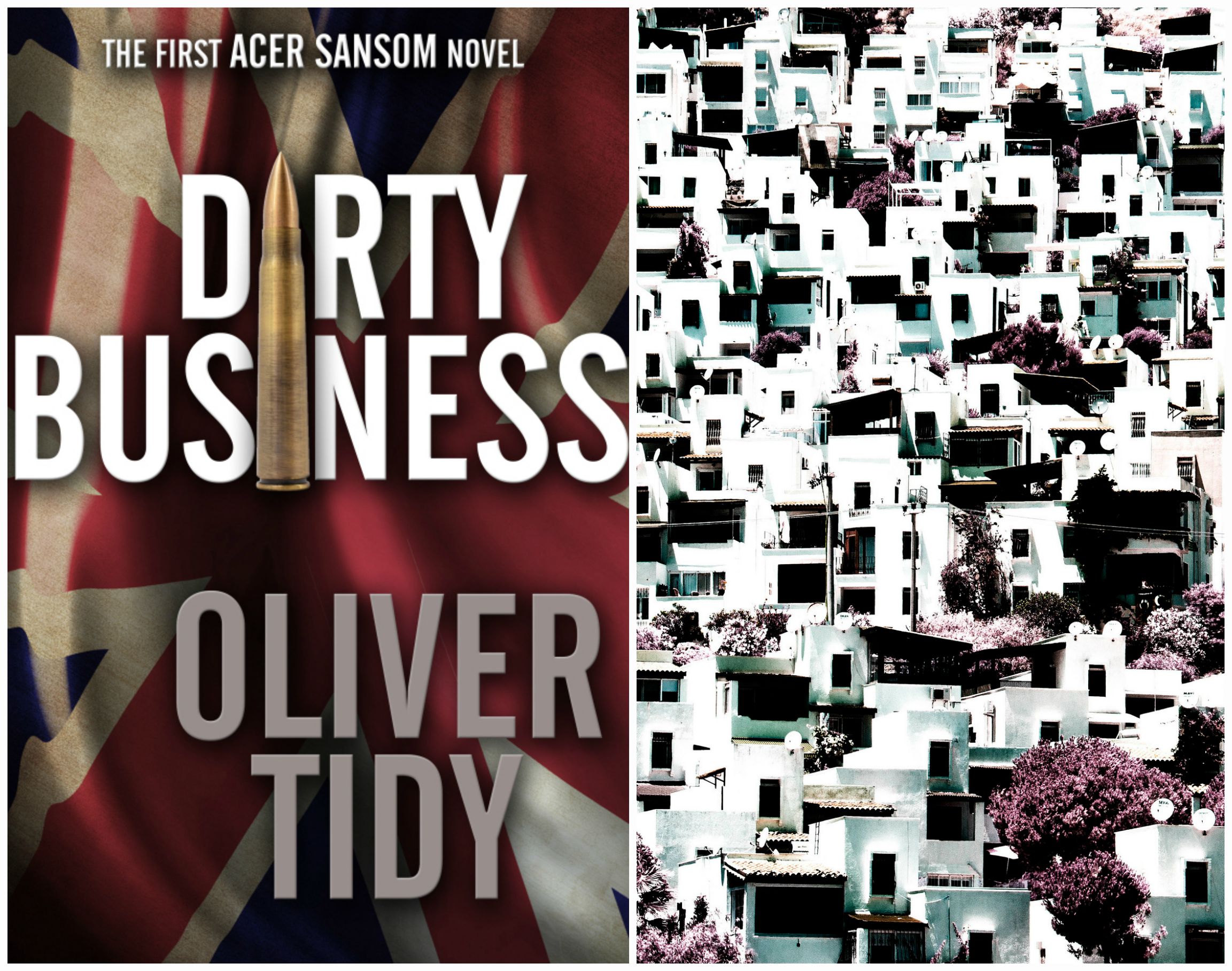
Oliver Tidy’s first Acer Sansom thriller, Dirty Business, is set partly in Bodrum, Turkey, where he lived for a year. Photo credit: Cover art; The best place to live! by Tuncay Coşkun via Flickr (CC BY 2.0).

Before long the vista opened up before her. As she sometimes had in the years that she had driven to Bodrum, she pulled into a loose gravel pocket at the side of the road and got out of the car.

From her lofty vantage point high up in the hills that embraced the area, she was able to look down at the sprawling panorama of the holiday capital of Turkey. Little enclaves of white boxes, taking advantage of the best geography, were packed so tightly together in places that they might have been one huge solid mass of concrete.

The steep hills that backed these separate little communities demonstrated both the developers’ greed and the sun-seekers’ need for yet more building as newer communities sprang up, patching the arid landscape white like some poorly-designed chess board.

At this time of year Bodrum would be heaving not just with the Turks who could afford to escape the suffocating heat and humidity of the bigger cities but also thousands of holidaymakers of all ages and nationalities.

Once, she thought, the place must have looked like paradise from where she stood—before Man’s concrete assault paradoxically began the ruination of the very environment that made him invest in the area. Would it always be only a matter of time and money before the need to develop areas of outstanding natural beauty outstripped Man’s admiration for them? Thank goodness there were still some idyllic pockets of the area where the authorities had elected to cease development. She felt grateful, if a little hypocritical, that her family owned a villa in one of them.

Her gaze took in the superb sweep of the Aegean, glistening in the early morning light, stretching out towards Greek territory; the differing hues of green and blue combined to create the most inviting scene. She tried to make out details of the ships anchored across the bay but was too far away.

How well do you need to know the place before using it as a setting?

Having lived on Romney Marsh for over forty years has made the two stories—the third is under construction—in my Booker & Cash series much easier in the penning-the-setting stakes. My memories of the place are vivid and unshakeable and I return there for a few weeks each year in the summer which allows me to top them up.

I know Dover fairly well, having spent a lot of time there a few years ago. When I return to the UK I like to jump on the bus from my home on Romney Marsh to Dover for the day just to refresh my memory and see what’s new.

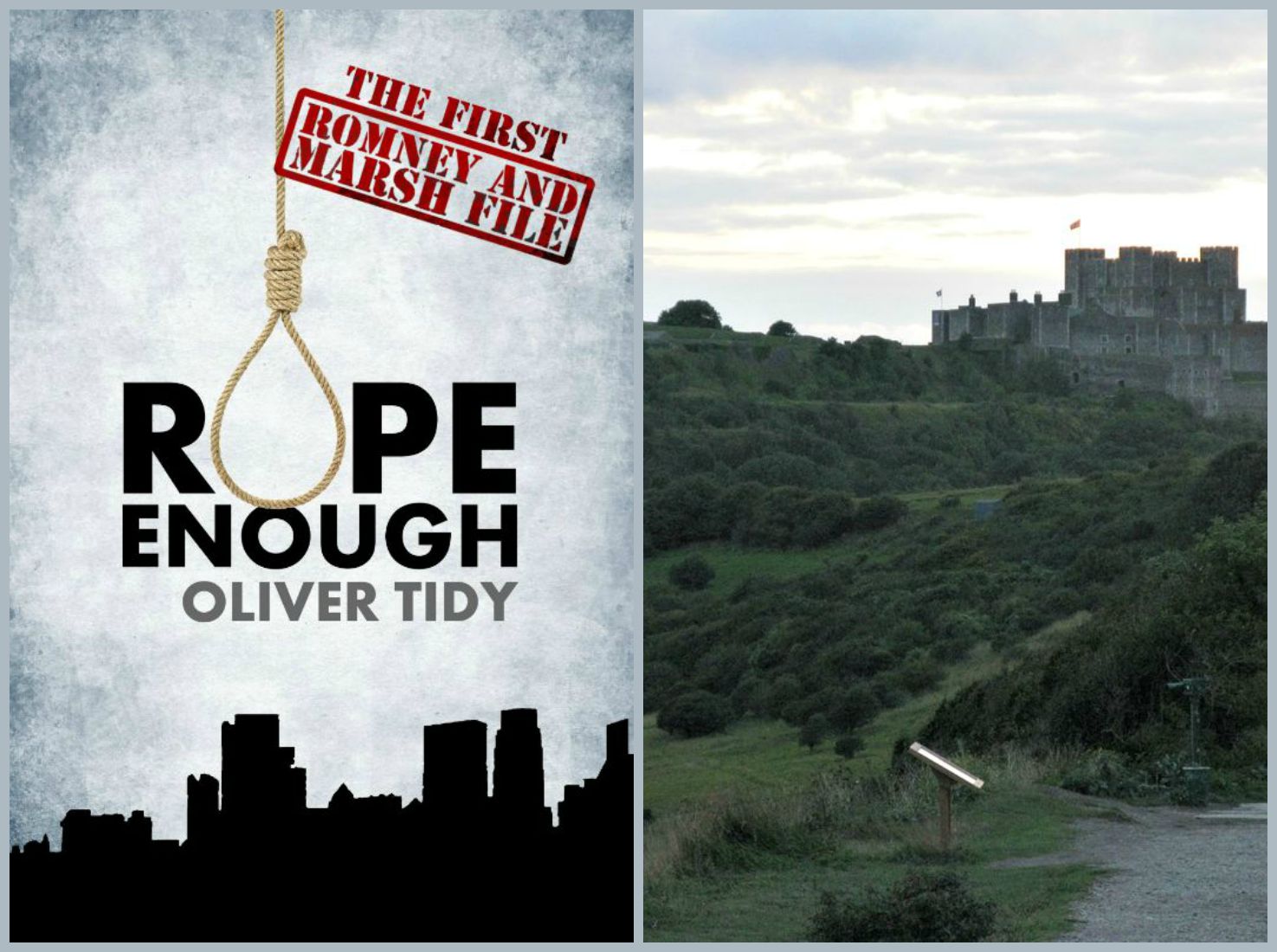
Cover art of Rope Enough, first in police procedural series set in Dover; Dover Castle, by Andrew and Annemarie (CC BY-SA 2.0).

Cover art for Rope Enough, first in Tidy’s “Romney and Marsh File” police procedural series set in Dover; Dover Castle, by Andrew and Annemarie (CC BY-SA 2.0).

As I mentioned, in the first Acer Sansom book I used Istanbul and Bodrum for my exotic locations—two places that I felt I had enough experience of to write convincingly about them. Most of Acer’s locations in the subsequent two books I have never visited. I’m always waiting to be taken to task by readers who have personal and insightful experiences of the places I’ve depicted. What can you do sometimes? You need to write about somewhere you’ve never been. You log on, do some research and then your best.

Which writers do you admire for the way they use location?

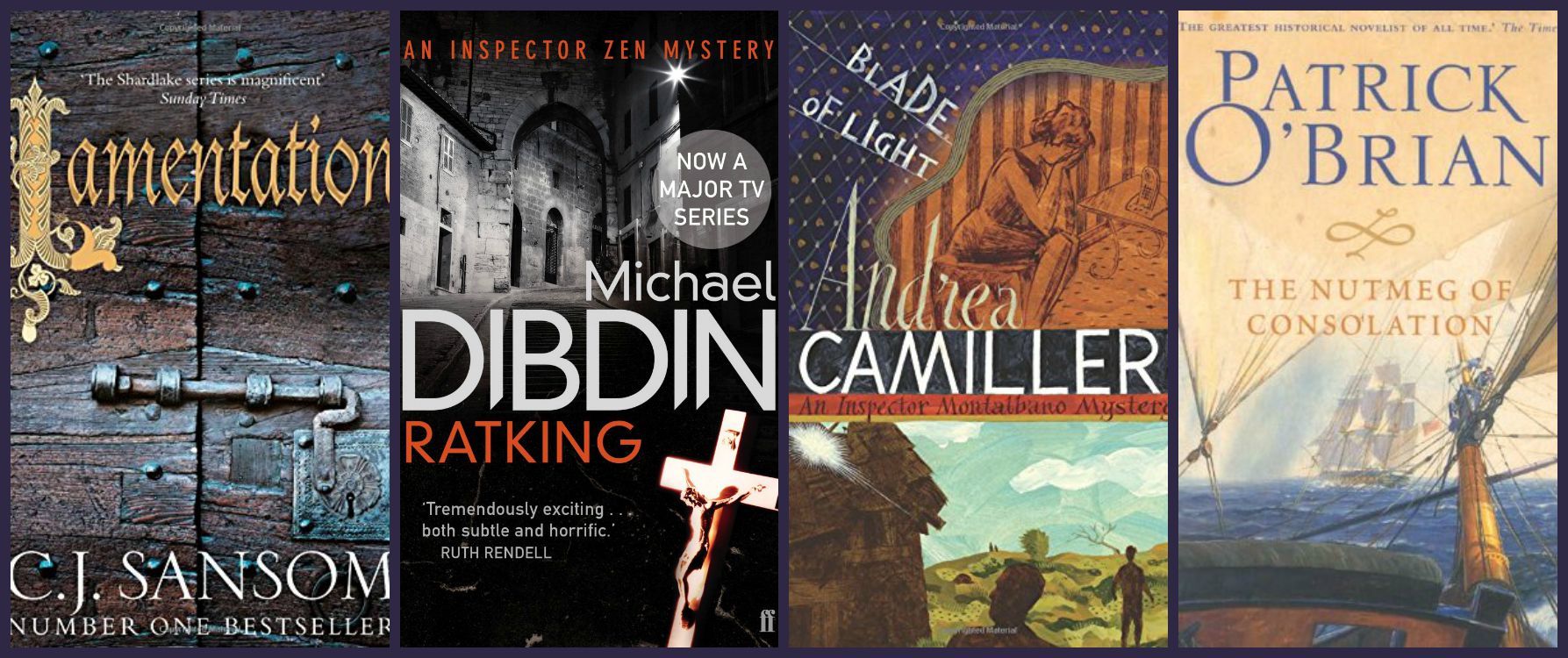
CJ Sansom for the way he portrays London in Tudor times; Michael Dibdin and Andrea Camilleri for their descriptions of Italy, and the unbeatable Patrick O’Brian for his depictions of any location, be it land or sea, that he touches upon in any of his Aubrey/Maturin novels. What a writer.

A few of Tidy's favorite authors, who know how to handle "location, locution."

A few of Tidy’s favorite authors, who have demonstrated a mastery of “location, locution.”

Thanks so much, Oliver!

* * *

Readers, any questions for the jolly Oliver Tidy? Please leave them in the comments below.

And if you’d like to discover more about Oliver Tidy, why not pay a visit to his author site. You can also follow him on twitter at @olivertidy.

Until next month!

Lorraine Mace writes for children with the Vlad the Inhaler books. As Frances di Plino, she writes crime in the D.I. Paolo Storey series. She is a columnist for both of the UK’s top writing magazines, has founded international writing competitions and runs a writing critique service, mentoring authors on three continents.

STAY TUNED for the next fab post!

If you enjoyed this post, we invite you to register for The Displaced Dispatch, a round up of weekly posts from The Displaced Nation, with weekly updates and much, much more. Register for The Displaced Dispatch by clicking here!

Related posts:

Photo credits (top of page): The World Book (1920), by Eric Fischer via Flickr; “Writing? Yeah.” by Caleb Roenigk via Flickr (both CC BY 2.0).


LOCATION, LOCUTION: Nik Morton draws from his nomadic expat life to author genre fiction

Location Locution
Columnist Lorraine Mace, aka Frances di Plino, is back with her very first interview guest, the extraordinary Nik Morton. (Nik, thank you for giving the Displaced Nation a shout-out in one of your recent posts!)

Hello, readers. This month we have the delight of discovering how Nik Morton, a British-born resident of Spain who is also a prolific author, handles location, locution.

Although Nik has fifty years of writing experience, having sold hundreds of articles and more than a hundred short stories, he came late to being a published author. His first novel, a western, came out in 2007. This year he will publish his twenty-second book—Catacomb, the second in his Avenging Cat crime series. (The first was Catalyst and the third will be Cataclysm. All are named for the series’ protagonist, the Avenging Catherine Vibrissae.)

In addition to this contemporary crime series, which he publishes with Crooked Cat (there’s that feline theme again!), Nik has written:

  • westerns (Black Horse series, under the pseudonym Ross Morton, published by Robert Hale)
  • fantasy (co-written with Gordon Faulkner under the pseudonym Morton Faulkner, published by Knox Robinson)
  • Cold War thrillers (the Tana Standish series, which Crooked Cat will reissue).

Nik has run writing workshops and chaired writers’ circles, and has been a magazine editor, a publisher’s editor, and even an illustrator. His writing guide, Write a Western in 30 Days: With Plenty of Bullet-Points!, is said to be useful for all genre writers, not only writers of westerns.

Spain, where he currently lives, was the inspiration for the stories collected in Spanish Eye.

Spain is one of several inspiration sources for the well-travelled writer Nik Morton.

Nik was displaced, incidentally, long before he and his wife retired to Alicante. He spent 23 years in the Royal Navy, during which he had the chance to visit many exotic places—among them Rawalpindi, the Khyber Pass, Sri Lanka, Tokyo, Zululand, Mombasa, Bahrain, Tangier, Turkey, Norway, Finland, South Georgia and the Falklands. He has also travelled widely in his private life, giving him a wealth of places to draw on in his works in addition to his current home of Spain.

* * *

Which comes first, story or location?

This is a tough question, and the answer is ‘it depends’. For my seven western novels, the character and the story came first; the location for each required research for the period and the State, usually Dakota Territory.

Yet location definitely comes first for my Cold War thrillers featuring psychic spy Tana Standish: The Prague Papers, The Tehran Text and the third, a work in progress, The Khyber Chronicle. Each adventure in the series is based around actual historic events, so the location is crucial.

I’ve always hankered after writing about exotic places, and as you mentioned in your introduction, I’ve been fortunate enough to travel widely, both privately and with the Royal Navy. My wife and I lived for 20 months in Malta and out of that location emerged a cross-genre novel, a modern-day vampire romantic thriller, now out of print.

We’ve visited Tenerife on five separate occasions and from that evolved my romantic thriller, Blood of the Dragon Trees.

Having lived in Spain for over 11 years, I’ve absorbed quite a bit about the politics and crime situation here and have had 22 short stories published set in Spain, collected in Spanish Eye—exploring the human condition as seen through the eyes of Leon Cazador, half-English, half-Spanish private eye, written ‘in his own words’.

For my latest crime series about ‘the avenging cat’, Catherine Vibrissae, the story definitely came first: but the exotic locations were a close second—Barcelona (Catalyst), Morocco (Catacomb) and Shanghai (Cataclysm).

What’s your technique for evoking the atmosphere of a place?

Place is important in almost every scene; I want the reader to see the characters in the scene, so the place needs to be described in relation to them. Character point of view can provide an emotional appreciation of the scene too. The rugged, inhospitable High Atlas of Morocco, for example, can be strengthened by the character experiencing the intense heat and the almost preternatural silence of the place.

Technique: be there, in the scene. Of course you can’t overburden the story with too much description, but the weather, the flora and maybe even fauna, the landscape as character, all have their input at various times. If I can’t visualise the scene through my characters’ eyes, then there’s little chance that the reader will. I may not always succeed, but that’s what I strive towards—using all of the character’s senses.

Which particular features create a sense of location? Landscape, culture, food?

All of the above, depending on the dramatic content of the scene. People have to eat to live, so it’s natural that my characters eat from time to time. I don’t want to labour the point for the reader, but if I simply wrote ‘Corbin ate a meal at the hotel and then went out,’ then we’re in the realms of ‘tell’ not ‘show’; which has its place from time to time, but perhaps mentioning some particular food can make it more ‘real’ and show more of the character, such as:

Stomach full with Chili de Sangre Anaranjada, Corbin read the local newspaper in the hotel lounge, allowing the beef and pork to digest. He had complimented the chef, a Swede by the moniker of Iwan Morelius. Apparently, Morelius had been on the staff of Baron Ernst Mattais Peter von Vegesack, who had been given leave to fight for the Union. While the baron returned to Sweden after the war, Morelius stayed and Mr Canaan, the hotel manager, was vociferously proud of his culinary acquisition.

—From The $300 Man, by Ross Morton (p. 84)

Culture is definitely relevant if the story takes place abroad—whether that’s Prague or Shanghai. And we’ve already touched upon landscape, which can become a character that tests individuals to the limit.

Can you give a brief example of your work which illustrates place?

This cafe in Tenerife will soon be populated by characters from Nik Morton's imagination. Photo credit: Tenerife, Canary Islands, by Carrie Finley-Bajak[https://www.flickr.com/photos/cruisebuzz/8158748971] via Flickr (CC BY 2.0)

This cafe in Tenerife will soon be populated by characters from Nik Morton’s imagination. Photo credit: Tenerife, Canary Islands, by Carrie Finley-Bajak via Flickr (CC BY 2.0)

In Blood of the Dragon Trees, Laura has come to Tenerife to teach a couple of Spanish children. I wanted to create an ambiance while moving her through the story. She is waiting for Andrew Kirby, a mystery man who attracts her:

Clutching her Corte Inglés shopping bag, Laura arrived at the square about fifteen minutes early and, as usual, the adjoining roads were jammed with delivery trucks and a variety of taxis: Mercedes, Toyota, Seat, Peugeot. She was lucky and grabbed a café’s outdoor table with two vacant chairs. She sat and politely fended off the attentive waiter, explaining in Spanish that she would order when her friend joined her. Friend?

In the meantime, she waited, idly studying the antics of the men at the taxi rank in front of a series of phone booths. One of them was pushing his car along the rank, rather than switch on the engine, as the row moved forward. The taxis sported a colorful and distinctive coat of arms.

Sitting on the corner of the street was a blind man selling lottery tickets. She doubted if that would be possible in any town or city in England; the poor man would be mugged in seconds.
Most of the people at the other tables appeared to be businessmen and women, though there were some exceptions. An overdressed elderly woman sat with her Pekinese dog on her lap, feeding it biscuits while sipping her Tío Pepe. At the table next to her, a large bull of a man was glancing through the newspaper, El Día; he possessed a Neanderthal jaw and crewcut dark brown hair. For a second she thought she’d seen him before, but shook off the idea. Andrew Kirby was making her unreasonably suspicious!

—from Blood of the Dragon Trees, by Nik Morton (p. 116)

So, besides the observation of little details going on around her—and the suspenseful hint for the reader that we’ve seen the man with the Neanderthal jaw before—there’s the compelling influence that Andrew is exerting on her.

How well do you need to know the place before using it as a setting?

Ideally, travel to the place. But even then additional back-up research is necessary. Of course you can’t hope to travel to every exotic place you write about. I’ve been to many of the places in my novels and short stories, but not all—and I must then concentrate on research.

Sadly, non-fiction reference books can quickly become out-of-date—bus colours might change, customs may once have been quaint only to be replaced by adopted globalised traits. (Yes, it has happened to me!)

Any piece of fiction set in the past requires research; yes, you can travel the battlefields, visit the ancient cities; but you can’t experience that time, only imagine it.

Official map of the territory of Dakota[https://www.flickr.com/photos/normanbleventhalmapcenter/14009763855/], by http://maps.bpl.org via Flickr (CC BY 2.0) [https://creativecommons.org/licenses/by/2.0/]

Some places can’t be visited, only researched. Official map of the territory of Dakota, by http://maps.bpl.org via Flickr (CC BY 2.0).

Fiction requires a writer to be bold, to do research and then re-imagine the place, with its sights, smells and sounds. The bottom line is, it’s fiction, which means an approximation of the real world. If a critic blithely dismisses writers who make a few errors in their research because they haven’t travelled there, then that critic is misguided.

Which writers do you admire for the way they use location?

Some books could be set anywhere; location is not significant to the story. Others, the location is vital to the story. The old practitioners Desmond Bagley, Hammond Innes, Nevil Shute, and Alistair Maclean described the location their main characters found themselves in, and you believed every word. Bernard Cornwell’s Sharpe novels thrust you into a period and a place that seems real while you’re reading. Donna Leon’s Italy is real.

A few of the writers Nik Morton admires for their depiction of place in their novels.

A few of the novelists Nik Morton admires for their skill with depicting location.

Thanks so much, Nik!

* * *

Readers, any questions for my first guest? Please leave them in the comments below.

And if you’d like to discover more about Nik, why not pay a visit to his author site; his blog, called Writealot (no exaggeration in his case); and the archives of Auguries, a science fiction, fantasy and horror magazine Nik edited from 1983 to 1994. You can also follow Nik on twitter at @nik_morton.

Until next month!

Lorraine Mace writes for children with the Vlad the Inhaler books. As Frances di Plino, she writes crime in the D.I. Paolo Storey series. She is a columnist for both of the UK’s top writing magazines, has founded international writing competitions and runs a writing critique service, mentoring authors on three continents.

STAY TUNED for the next fab post!

If you enjoyed this post, we invite you to register for The Displaced Dispatch, a round up of weekly posts from The Displaced Nation, with weekly updates and much, much more. Register for The Displaced Dispatch by clicking here!

Related posts:

Photo credits (top of page): The World Book (1920), by Eric Fischer via Flickr; “Writing? Yeah.” by Caleb Roenigk via Flickr (both CC BY 2.0).

BOOKLUST, WANDERLUST: Beach bound? Check out summer reading recommendations from featured authors (2/2)

booklust-wanderlust-2015

Attention displaced bookworms! Our book review columnist, Beth Green, an American expat in Prague (she is also an Adult Third Culture Kid), empties the remainder of her treasure chest that she brought to us two days ago, stuffed with recommended reads to take you through the summer.

Hello again. As explained in Part One of this post, I reached out to some of my bookish friends as well as a few of the authors whose books I’ve recently reviewed to see what books they recommend taking on vacation. I asked them to tell me:

Summer Reading 2015

Photo credits: Amazon Kindle PDF, by goXunuReviews via Flickr (CC BY 2.0); beach chair and sandy feet via Pixabay.

Here are the rest of the recommendations I received, including a few from yours truly and ML Awanohara (Displaced Nation’s founding editor) at the end. Enjoy!

* * *

MARK ADAMS, best-selling travel writer and author of Meet Me In Atlantis (which we reviewed in May): My recommendations are a classic travelogue, a biography of an intrepid traveler, and an adventure novel.

The-Snow_Leopard_cover_300xThe Snow Leopard, by Peter Matthiessen (Viking Press, 1978)
Shortly before he died, I had the honor of interviewing Matthiessen at his home on Long Island. I was surprised by how concerned he seemed, knowing that his death was rapidly approaching, that he would be remembered less as a novelist than as the author of The Snow Leopard. I went back to reread it for the first time in twenty years and was amazed by how good it was—a moving story about a man’s search for meaning through Zen Buddhism after the death of his young wife, intertwined flawlessly with a thrilling narrative about an incredible journey through the Himalayas. So fresh and evocative it could have been published yesterday.

Bruce-Chatwin_A-Biography_cover_300xBruce Chatwin: A Biography, by Nicholas Shakespeare (Anchor, 2001)
Chatwin, of course, is one of the great travel writers of all time; he practically reinvented the genre with books like In Patagonia and The Songlines. But as Shakespeare’s brilliant biography demonstrates, Chatwin’s greatest creation may have been the globetrotting persona that he carefully presented to the world. The descriptions—decodings might be a better term—of how Chatwin assembled his literary works will be absolutely riveting to anyone who has tried his or her hand at trying to pin down the essence of a place using only words.

State-of-Wonder_cover_300xState of Wonder, by Ann Patchett (HarperCollins, 2011)
I once heard Ann Patchett on the radio, talking about the job of a novelist. She described it as “creating a world.” No one creates worlds with quite the skill that Patchett does. Reading her descriptions of pharmaceutical research being conducted in the Amazon is like being dropped into the jungle—you can feel the sweat beading on your forehead and the buzz of malarial mosquitoes preparing to land on the back of your neck. And you know what? Patchett’s Bel Canto, which takes place in Lima, Peru, is an equally brilliant tale that performs the magic tricks that only great fiction can, allowing you to read minds and travel through time and space.


MARIANNE C. BOHR, Displaced Nationer and author of the soon-to-be-published Gap Year Girl: A Baby Boomer Adventure Across 21 Countries: My summer reads are usually of the meaty kind because as a teacher, I have more time in July and August to pay close attention and savor every word. As one who suffers wanderlust daily, my three choices all have to do with travel. They are very different books, but each grabs my heart in a different way and I could read them over and over, each time discovering something new.
Bohr Collage

The Drifters, by James A. Michener (Random House, 1971)
This book takes me back to my youth and the thirst for exotic adventure that goes along with being young.

Nothing to Declare: Memoirs of a Woman Traveling Alone, by Mary Morris (Houghton Mifflin Harcourt, 1998)
I wanted to head straight to Mexico when I read this heart-wrenching book and also felt like the author was a new friend when I finished.

An Italian Affair, by Laura Fraser (Vintage, 2001)
What a guilty pleasure immersing myself in this book of islands, romance, lust and longing is. I could read it again and again.


SHIREEN JILLA, adult TCK and former expat and author of The Art of Unpacking Your Life (which we reviewed in May) and Exiled (which we featured in 2011): I would pack three very different books:
Jilla Collage

Red Dust: A Path Through China, by Ma Jian (Vintage, 2002)
Dissident artist Ma Jian’s diary of his walk across China in the wake of his divorce and threatened arrest is utterly enlightening, moving, profound and playful. Walking is clearly an under-rated pastime.

Look at Me, by Jennifer Egan (Anchor, 2009)
A powerful, beautiful novel about the crazed nature of modern urban life, it elevates Egan to one of the greats of American literature.

Paris Stories, by Mavis Gallant (NYRB Classics, 2011)
A regular writer for the New Yorker, Gallant penned these short stories about expats and exiles in Europe particularly Paris. They are brilliantly laid bare. (Born in Montreal, Gallant moved to Paris when she was 28 determined to be a full-time writer. She lived there until her death in 2014.)


BETH GREEN, writer, expat, TCK and BOOKLUST, WANDERLUST columnist: Here are my three picks, one of which I’ve not read and two that I have:

The-Messenger-of-Athens_cover_300xThe Messenger of Athens by Anne Zouroudi (Reagan Author Books, 2010)
Summer is the best time to really sink into a mystery series. I love taking a few titles from an established series and binge reading them on the beach or by the pool. Previously, I’ve done this with Elizabeth George’s Inspector Lynley novels, Janet Evanovich’s Stephanie Plum books and Charlaine Harris’ Southern Vampire mysteries. This year I’ll be spending some time on the beach in Greece, so I’ve got my eyes set on British writer Anne Zouroudi’s Greek Inspector mysteries, which depict ugly crimes based on the seven deadly sins in beautiful Mediterranean surroundings. The series now has seven books, of which Messenger is the first. (Born in England, Zouroudi worked in the UK and the USA before giving it all up to live on a Greek island. She married a Greek as well.)

swamplandia_coverSwamplandia! by Karen Russell (Vintage, 2011)
This darkly fascinating and somewhat magical story of a girl and her siblings abandoned in a run-down theme park in Florida fascinated me when I read it a few years ago. It’s both a chilling odyssey into a swampland netherworld and an exploration of subcultures of the kind rarely seen in American books. For me it had the right amount of tension to keep you turning pages and the right amount of whimsy to keep the potentially depressing material light enough for a summer read.

Daughter-of-Fortune_cover_300xDaughter of Fortune, by Isabel Allende, trans. by Margaret Sayers Peden (Harper, 2014)
Summer is a time for voyages—or at least reading about them! I can name a whole bagful of road trip books I’d happily re-read over summer, but for pure swashbuckling joy I have to recommend Isabel Allende’s historical cross-cultural adventure Daughter of Fortune. An upper-class girl raised in an English enclave in Chile in the 1800s stows away to follow her lover to the gold fields of California. I haven’t read the sequel, Portrait in Sepia, yet, but I’m guessing it’s also worth adding to that beach bag. (Born in Peru and raised in Chile, Allende lives in California.)


ML AWANOHARA, former expat and Displaced Nation founding editor: We are constantly reporting on new displaced reads in the Displaced Dispatch, which comes out once a week. Just to give you a taste of the kinds of things we feature, here is a selection. As you can see, it comprises a work of historical nonfiction that reads like a novel, a memoir with elements of Nordic myth, and a novel by a once-displaced poet, all with beach-bag potential.

Daughters_of_the_Samurai_cover_300xDaughters of the Samurai: A Journey from East to West and Back, by Janice P. Nimura (W.W. Norton, May 2015)
Call it the early Japanese version of our gap year or junior year abroad. The story begins in 1871, after Commodore Perry’s ships opened Japan to the outside world, when five young women were sent to the United States on a mission to learn Western ways and help nurture a new generation of enlightened Japanese leaders. Three of them stayed for ten years and returned to Japan determined to revolutionize women’s education. Several critics have said the book reads like a modern fairy tale. But if the women faced many hurdles in the course of their unusual journey, the tale doesn’t necessarily end happily ever after. “I cannot tell you how I feel,” one of them remarked upon her return to her native land, “but I should like to give one good scream.” Janice Nimura, an American who is married to a Japanese, has spent time living in Japan.

Passage-of-the-stork_cover_300xPassage of the Stork: One Woman’s Journey to Self-Realization and Acceptance, by Madeleine Lenagh (Springtime Books, March 2015)
Madeleine Lenagh is American but spent her first five years as an expat child in Europe, after which she grew up in Connecticut. Rebelling against her mother’s interference in her love life, she set out to travel across Europe alone. Arriving in the Netherlands broke, she took a job as an au pair—and the rest is history. She has now been living in the land of cheese and tulips for over four decades and speaks fluent Dutch. But that’s her travel history. Her own personal history remained repressed until she wrote this memoir. One of the things that interests me about it is that Lenagh chose to weave together the narrative using Nordic mythology. (As long-term followers of the Displaced Nation will know, we are fond of doing the same with the Alice in Wonderland story.) Passage of the Stork is a publication of Springtime Books, the new fledgling of Summertime Publishing, which specializes in books by expats and for expats and is the brainchild of global nomad Jo Parfitt.

hausfrau_coverHausfrau, by Jill Alexander Essbaum (Random House, March 2015)
This novel by Texas-born American poet Jill Alexander Essbaum, her first, depicts an American woman in a cross-cultural marriage to a Swiss banker. They are living with their three young children in a postcard-perfect suburb of Zürich. In the spirit of Essbaum’s erotic poetry, Anna (yes, the name is a nod to Tolstoy’s heroine) engages in a series of messy affairs. Now, is this book the expat answer to Fifty Shades? Actually, the answer to that question interests me less than the fact that Essbaum herself was once a hausfrau in Dietlikon, near Zürich, where she moved with her first husband, an American interested in studying Jungian psychoanalysis. Like Anna, she experienced intense loneliness and isolation—albeit no torrid affairs. Who would have guessed?

* * *

Thank you so much for your recommendations, ML and everyone else! Readers, it’s your turn now. What books are you looking forward to popping in the book bag this summer? And, for our friends in the Southern Hemisphere, what books are getting you through the winter?

Also, can I echo ML’s contribution by urging you to sign up for the DISPLACED DISPATCH, which has at least one Recommended Read every week. And please feel welcome to make recommendations for books to be featured in the Dispatch, and in this column, by contacting ML at ML@thedisplacednation.com.

STAY TUNED for next week’s fab posts!

Beth Green is an American writer living in Prague, Czech Republic. She grew up on a sailboat and, though now a landlubber, continues to lead a peripatetic life, having lived in Asia as well as Europe. Her personal Web site is Beth Green Writes. She has also launched the site Everyday Travel Stories. To keep in touch with her in between columns, try following her on Facebook and Twitter. She’s a social media nut!

If you enjoyed this post, we invite you to subscribe to The Displaced Dispatch, a weekly round up of posts from The Displaced Nation and much, much more. Sign up for The Displaced Dispatch by clicking here!

Related posts:

BOOKLUST, WANDERLUST: Beach bound? Check out summer reading recommendations from featured authors (1/2)

booklust-wanderlust-2015

Attention displaced bookworms! Our book review columnist, Beth Green, an American expat in Prague (she is also an Adult Third Culture Kid), has arrived with a treasure chest full of recommended reads to take you through the summer. NOTE: Check out Part Two here.

Hello again, Displaced Nationers!

Summer is upon us—well, for readers in the northern hemisphere, that is! And for those in the United States, Fourth of July weekend is coming shortly. Even if you’re not beach bound, perhaps you are at least picturing yourself sitting in a beach chair feeling the sand through your toes, the waves pounding towards you, the fresh, bracing sea air filling your lungs…

And what’s that you have in your hand—a book or a Kindle?

I find the sound of the waves and the ocean breeze the perfect conditions for escaping into other worlds that writers conjure up for us in their books. This summer, I’ve already been to a few local parks with my e-reader, and I’ll soon be topping it up with some of the books from our best-of-2014 list for an overseas trip. But I’m always on the look-out for fresh new material, and as there are miles to go before I can flop down on the beach of my dreams, I fear I’ll run out of prime reading matter by then. With this eventuality in mind, I decided to reach out to a few of the authors whose books I’ve recently read or reviewed, along with a few of my bookish friends, to see what books they recommend taking on vacation. I asked them to tell me:

Summer Reading 2015

Photo credits: Amazon Kindle PDF, by goXunuReviews via Flickr (CC BY 2.0); beach chair and sandy feet via Pixabay.

They responded with recommendations that seem tailor made for an audience of international creatives. Enjoy! Part 2 will be posted on Friday.

* * *

ALLI SINCLAIR, world traveler, Australian romance author and former co-blogger at Novel Adventurers: I recommend that you bring one travel book, one classic, and one novel. The following make a good combination:

ChasingtheMonsoon_cover_x300Chasing the Monsoon: A Modern Pilgrimage Through India, by Alexander Frater (Henry Holt & Co, May 1992)
There are some books that touch something in your soul that stays with you forever. For me, Chasing the Monsoon falls into that category. Originally published in the early nineties (and thankfully, still available!), Alexander Frater follows the monsoonal rains from the Kerala backwaters in southern India to Cherrapunji, in northern India—known as the wettest place on earth. Frater connects beautifully with the people he meets and he writes for all senses, giving the reader a full immersion into one of the most captivating countries on Earth.

The Ascent of Rum Doodle_cover_x300The Ascent of Rum Doodle, by W.E. Bowman (Vintage Classics, 2010)
Originally published in 1956 but still in print, this book is one of the most celebrated mountaineering stories of all time. The 1950s saw some of the world’s highest mountains successfully climbed (including Everest), and this book is a parody of mountaineering at it’s finest…er, worst. There’s a route finder who is constantly lost, a diplomat who continually argues, and a doctor who is always ill. Rum Doodle will most definitely appeal to fans of Bill Bryson, who wrote the introduction to the book’s international edition (published in 2010).

HellofromtheGillespies_cover_x300Hello From The Gillespies, by Monica McInerney (Penguin, 2014)
I’m a long time fan of Monica McInerney’s books, maybe because Monica is a “displaced” person: having grown up in Australia, she has split her time between Australia and Ireland for the past 20 years. This book is mostly set in outback Australia but with ties to England. Angela Gillespie, a mother of four adult children, has sent out a regular Christmas letter to friends and family for thirty years. The notes are always cheery and full of good news but this year, her note details the unsettling truth of how her family has fallen apart. If you enjoy family sagas with humour and heart, you can’t go wrong with this book. (True, some people recommend it for the holidays, but it’s summer in Australia at Christmas time, remember?)


BRITTANI SONNENBERG, adult TCK, current expat and author of Home Leave (which we reviewed in November): I would pack the following books (assuming I’d be packing it for someone else, who hadn’t read them yet).
Sonnenberg_collage

The Dog, by Joseph O’Neill (Vintage, September 2014)
It’s a devilish, compelling take on cosmopolitan and expat life by the TCK author of Netherland. (Joseph O’Neill was born in Cork, Ireland, in 1964 and grew up in Mozambique, South Africa, Iran, Turkey, and Holland. He now lives in New York City.)

Ghana Must Go, by Taiye Selasi (Penguin, 2014)
This is an intimate examination of a splintered family, set in Accra, Lagos, London, and New York.

All My Puny Sorrows, by Miriam Toews (McSweeney’s, 2014)
One of the saddest and funniest books I’ve ever read; an honest, moving portrayal of sisters and mental illness.


CHRISTINE KLING, author of travel- and sailing-related thrillers: I’ve just finished up the edits on a the third novel in my Shipwreck Adventure series, and I’m looking forward to taking a bit of time off from writing and working at reading my way through some of the long list of books I’ve been wanting to read. The three books I’d take in my beach bag include two novels and a combination cookbook/memoir/travelogue.

The-Janissary-Tree_cover_x300The Janissary Tree, by Jason Goodwin (Sarah Crichton Book, 2006)
My husband and I are contemplating building a new boat in Turkey, and after our recent visit, I’ve fallen in love with the country. Jason Goodwin has written travel books, histories, and thrillers, and I’ve been waiting for the chance to begin reading his work. The Janissary Tree, winner of the 2007 Edgar Award for Best Novel, is the first in what is now his five-book series set in in the waning days of the Ottoman Empire’s Istanbul. The series features a very unique protagonist Yashim Togalu, a eunuch guardian. In this book, Yashim is called upon to investigate a series of crimes including murder and theft of jewels.

Marina_cover_x300Marina by Carlos Ruiz Zafón (Little, Brown Books for Young Readers, 2014)
The first book I read by this author was The Shadow of the Wind, which I often cite as one of my favorite books of all time. I knew Zafón had written a young adult novel that was published in 1999 and became a “cult classic” in Spanish, and since I enjoy good YA novels like the Harry Potter series and the Hunger Games, I was happy to see this book finally released in English in 2014. Marina is set in Barcelona around 1980 at the end of Franco’s regime. This gothic tale is touted as containing elements of mystery, romance and horror as a young boarding school boy meets the exotic, dark Marina. Together they embark on a series of adventures where they meet the kind of grotesque Barcelona characters Zafón does so well.

Sea-Fare_cover_x300Sea Fare: A Chef’s Journey Across the Ocean, by Victoria Allman (Norlightspress Com, 2013)
Years ago I worked as a chef on our owner-operated charter sailboat, and I know what it is like to have to create meals for demanding guests. Victoria Allman is in an entirely different category as she trained as a chef and has worked your years on multi-million dollar yachts. In Sea Fare, Allman has combined the tales from her beginning as a green Canadian chef looking for a job in the charter yacht industry to the joys of shopping in exotic markets from Italy to Vietnam. From the descriptions of her experiences on board the yacht, dealing with crew problems and falling in love with the captain, the stories are grand, but the recipes and the outstanding color photos of the food, will probably cut my trip to the beach short as I head home to try some new dish.


HEIDI NOROOZY, adult TCK, translator and author of multicultural fiction: I just returned from a research trip to Germany, and my choices seem to reflect that! (I went there because I’m writing a novel about an East German detective, Johannes Christian Alexander Freiherr von Maibeck—I know, it’s a bit of a mouthful—I created for a short story I once wrote. The setting is Leipzig, German Democratic Republic, 1981.)

The-Leipzic-Affair_cover_x300The Leipzig Affair, by Fiona Rintoul (Aurora Metro Press, May 2015)
Set in 1985, this novel tells the story of a Scottish student at Leipzig University who falls in love with an East German girl and stumbles into a world of shifting half-truths. Well written and fast paced, the story captures the atmosphere of its setting very well, a world where nothing is ever quite what it seems. As one reviewer writes: “The book is expertly written and seems to me to be a very comprehensive picture of what it was like to live in the East German state.” (Rintoul, a Scot who lives in Glasgow, gathered her material for the book by visiting East Germany and meeting a woman who had been imprisoned. She also looking at extracts of STASI files on people she met.)

Zoo-Station_cover_x300Zoo Station: Adventures in East and West Berlin, by Ian Walker (Atlantic Monthly Press, 1988)
British journalist Ian Walker, who once covered Central America for the Observer (and never managed to write his promised volume on Nicaragua), produced this travelogue on the two Berlins back in 1988. It depicts bohemian life in the once-divided city, where everyone seemed to be from somewhere else: West Berlin was full of Brits, Asians, Danes, Turks and East German exiles; East Berlin, of Anglo-Austrian expats. Walker’s descriptive narrative and reflections on the broader social issues of the day are what make this book stand out. As one of Amazon reviewer puts it:

Having read “Zoo Station”, I was able to understand why some people regarded East Germany as a pinnacle of socialist achievement, much more preferable to its capitalist twin in the West. It is good travel writing, and is both politically and culturally astute.

The-One-That-Got_Away_cover_300xThe One That Got Away, by Simon Wood (Thomas & Mercer, 2015)
Okay, this one isn’t about Germany, and I haven’t read it yet—but it’s at the top of my summer book bag. Tag line: “She escaped with her life, but the killer’s obsessed with the one that got away.” The story of two grad students in California who decide to take a road trip to to Las Vegas, this suspense novel deals with survivor’s guilt and is bound to be a thrilling ride. (Originally from England, Simon Wood lives in California with his wife.)

* * *

Readers, that’s it for this round; we’ll have another round on Friday (update: check it out here). Meanwhile, have you read any of the above and/or do you have summer reading recommendations to add? Please leave in the comments!

And if you need more frequent fixes, I urge you to sign up for the DISPLACED DISPATCH, which has at least one Recommended Read every week.

STAY TUNED for PART 2 of this post on July 3rd!

Beth Green is an American writer living in Prague, Czech Republic. She grew up on a sailboat and, though now a landlubber, continues to lead a peripatetic life, having lived in Asia as well as Europe. Her personal Web site is Beth Green Writes. She has also launched the site Everyday Travel Stories. To keep in touch with her in between columns, try following her on Facebook and Twitter. She’s a social media nut!

If you enjoyed this post, we invite you to subscribe to The Displaced Dispatch, a weekly round up of posts from The Displaced Nation and much, much more. Sign up for The Displaced Dispatch by clicking here!

Related posts:

LOCATION, LOCUTION: Expat author and new columnist Lorraine Mace offers her own thoughts on writing about place

Location Locution
Please join us in welcoming Lorraine Mace, aka Frances di Plino, to the Displaced Nation for the first time. From this month, she’ll be taking over the Location, Locution column from JJ Marsh.

Hello, Displaced Nationers! I am thrilled to be taking over this column from JJ Marsh, and I already have lots of interesting guests lined up to take part over the coming months. For this first post, however, I am going to follow in Jill’s footsteps and use my first column to answer the “location locution” questions as a means of introducing myself.

But before I do that, let me give you a few basics. I was born and raised in London, but moved to South Africa just before my 25th birthday. I first lived just outside Johannesburg, then moved to the Orange Free State before discovering, and falling in love with, “the fairest cape”. Since leaving Cape Town I’ve been a nomad for more years than I care to count, having moved continent and country nine times. I finally put down roots in Spain, but have an inclination to spend summers in British Columbia, Canada.

Like JJ, I write crime fiction. I also have a book series for children.

Lorraine May and books

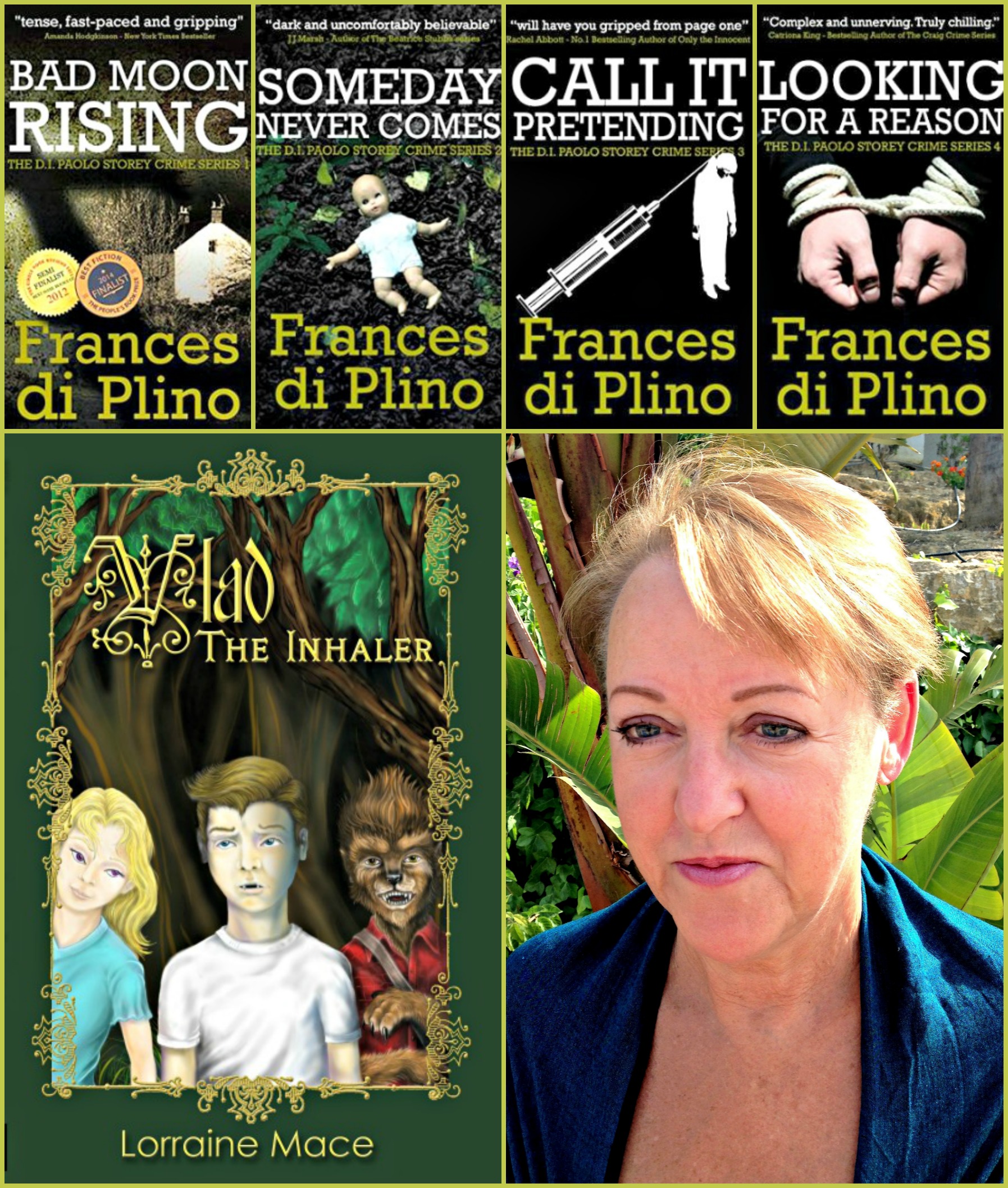
The prolific Lorraine Mace has produced four books in her D.I. Paolo Storey crime thriller series, and one book in her Vlad the Inhaler series (vampires, werewolves and peaches, oh my!).

Oh, and one last item before I move to the questions: don’t forget to visit my predecessor’s farewell post and enter the book giveaway competition. So far there’s only two comments, which by my reckoning gives you a pretty good chance at winning seven great e-books!

* * *

Which came first, story or location?

This can vary from book to book and story to story. However, in my crime novels, written as Frances di Plino, story came first—but then location helps to formulate the plots. Although the series is set in a fictional town, the surrounding British countryside is very real. Bradchester is situated close to Rutland Water and the nearest city is Leicester, both of which feature in the novels on a regular basis. I know this area well. During my last (brief) sojourn in England I lived in a small village a stone’s throw from Rutland Water and frequently visited Leicester.

What’s your technique for evoking the atmosphere of a place?

I put myself into the heads of my characters and experience the place through their senses. When I can smell the bread in the local bakery, or hear the cries of street vendors, weep over a beautiful sunset, taste an orange straight from the tree, or touch the moss-covered stones of a monastery, I know it’s time to start writing, using my character’s experiences of the place.

Which particular features create a sense of location? Landscape, culture, food?

All three, but I must admit I find it easier to use food allied to culture when the story is set outside of the British Isles. Having lived in South Africa, on the Maltese island of Gozo, as well as in France and Spain, I know I can use regional dishes to bring areas of those countries to life. But in Britain I think we have lost the regional aspect of many of our foods. Fish and chips, roast beef and so on are now available throughout the country, where other nations seem to have guarded their regional food identities.

Can you give a brief example of your work which illustrates place?

Bradchester is a town that has more than its fair share of rundown, seedy areas set side by side with gentrified neighbourhoods. This leads to a great deal of social unrest—the haves want the have-nots moved elsewhere and the have-nots resent the wealth and easy life of the haves. This short passage illustrates an area that has, as yet, remained untouched by either sector, but just a street away it is very different.

Station Road wasn’t exactly the best part of town, but the place looked respectable. Paolo was pleased to see that most of the businesses he remembered from his youth were thriving. This was one of the few communities that still had a drycleaners, newsagent, old-fashioned fruit and veg shop, alongside a mini-supermarket, hairdressers and a bank. He glanced up. Even the flats above the businesses looked lived in and cared for. Nice nets and curtains framed the windows and many of the street doors had been painted in recent history.

They walked a couple of hundred yards before turning into Zephyr Road. It was like moving into another country. Here, most of the shops they passed were boarded up and the few remaining open for business seemed to Paolo to concentrate on ways to transform goods into money. Pawnbrokers, gold for cash, payday cheque converters. It appeared as though all the dregs of the financial service industry had found their way into this street. This time when he glanced up, Paolo saw the flats above the shops were likewise either boarded up or had dirty nets hiding whatever was going on up there.

net curtains

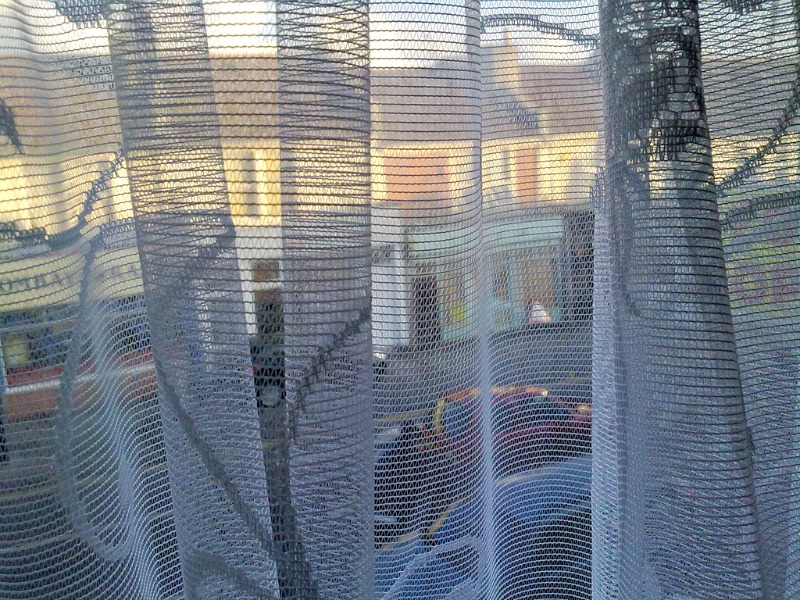
The quality of the net curtains tells you where you are in Bradchester. Photo credit: Joss Smithson via Flickr (CC BY-SA 2.0).

How well do you need to know the place before using it as a setting?

I prefer to use places I’ve lived in, or visited many times. I like to know the area and people so well I can conjure them up at will when I’m writing.

Which writers do you admire for the way they use location?

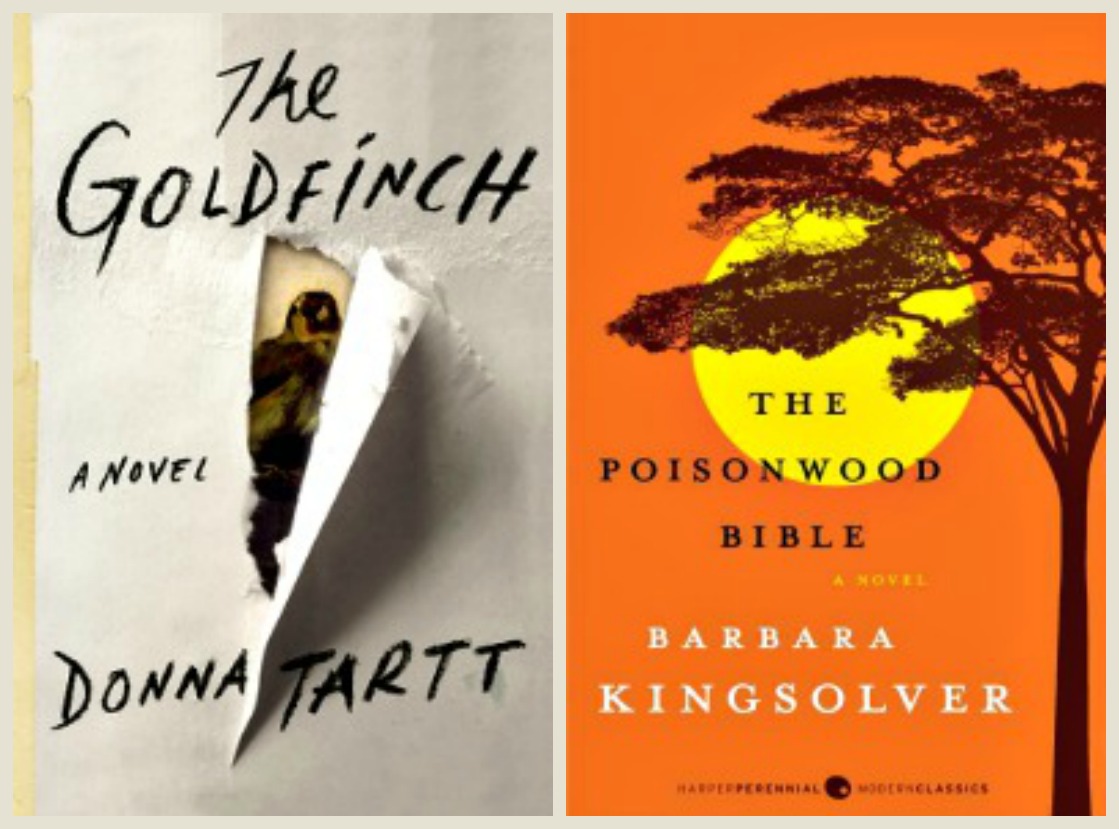
Barbara Kingsolver and Donna Tartt spring to mind. With both authors I feel as if I am living in the locations depicted. In Donna Tartt’s The Goldfinch she manages to recreate both city and desert locations to the extent one can almost feel the weather. Kingsolver’s The Poisonwood Bible brings the 1959 Belgian Congo to life so powerfully the reader is swept into the villages, fearful alike of jungle creatures and the inhospitable landscape.

Books that get "place" right: The Goldfinch, by Donna Tartt; and The Poisonwood Bible, by Barbara Kingsolver.

Books that get “place” right: The Goldfinch, by Donna Tartt; and The Poisonwood Bible, by Barbara Kingsolver.

* * *

Thanks so much, Lorraine! I’m impressed that you created your own place for your crime series novels, and that it’s in the UK, where you haven’t lived for quite some time. Readers, any words of welcome and/or questions for our new columnist? Please leave them in the comments below.

And don’t forget to leave a comment on her predecessor, JJ Marsh’s last post for a chance to win 7 e-books that should take you through the summer. All you have to do is answer the question, in 50 words or less: Where and when in the world would you like to go, and why?

Lorraine Mace writes for children with the Vlad the Inhaler books. As Frances di Plino, she writes crime in the D.I. Paolo Storey series. She is a columnist for both of the UK’s top writing magazines, has founded international writing competitions and runs a writing critique service, mentoring authors on three continents.

STAY TUNED for the next fab post!

If you enjoyed this post, we invite you to register for The Displaced Dispatch, a round up of weekly posts from The Displaced Nation, with weekly updates and much, much more. Register for The Displaced Dispatch by clicking here!

Related posts:

Photo credits (top of page): The World Book (1920), by Eric Fischer via Flickr; “Writing? Yeah.” by Caleb Roenigk via Flickr (both CC BY 2.0).

BOOKLUST, WANDERLUST: In Shireen Jilla’s second novel, a group of old friends go on safari and unpack their lives

Booklust Wanderlust column for the Displaced Nation

Attention displaced bookworms! Our book review columnist, Beth Green, an American expat in Prague (she is also an Adult Third Culture Kid), is back with her latest recommended read.

Hello Displaced Nationers! Do I have a treat in store for you this month! Shireen Jilla, whose 2011 psychological thriller, Exiled, was previously featured on the Displaced Nation, is with us again. She has written a new novel, The Art of Unpacking Your Life, which came out in March, and has graciously agreed to answer my questions about her latest work.

Shireen Jilla author photo and book cover for her second novel, The Art of Unpacking Your Life

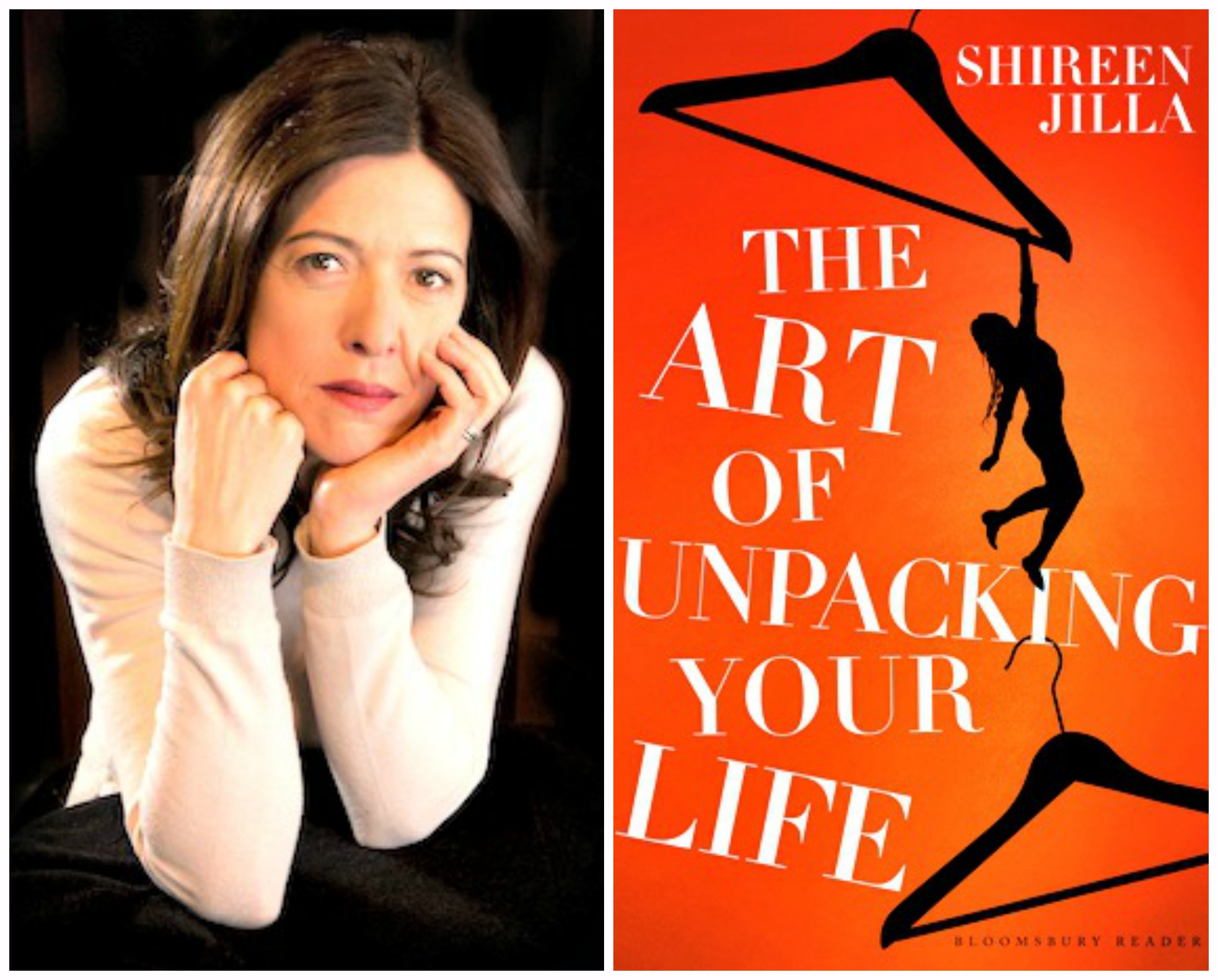
Shireen Jilla author photo, by Francesco Guidicini (from her author site); cover art.

The book made our list of anticipated “displaced reads” for 2015. For those not in the know, it tells the story of what happens when an Englishwoman named Connie decides to celebrate her 40th birthday by organizing a group of her old university friends and their partners to go on an African safari.

But if Connie is the main character, she is not the only point-of-view character. She functions as the heart of the group—but, as we soon learn, doesn’t seem to manage her own affairs very well. To quote one of my favorite lines from the book:

“Connie was brilliant at life’s details, particularly other people’s life details.”

We all know someone like that, don’t we?

Many authors stick to similar genres and even similar stories but in her two books, Jilla has explored very different places and themes. Where Exiled is a thriller akin to Rosemary’s Baby—it centers on Anna, a British expat leading a privileged life in New York—Unpacking is The Big Chill set in an exotic landscape. Anna may feel isolated within the bustle of the Big Apple, but Unpacking‘s characters are faced with the Kalahari Desert, the kind of place where one must unpack one’s life, finding strengths as well as weaknesses.

Both stories are informed by Jilla’s own travels. An adult TCK and former expat, she has lived in Paris, Rome, and New York as an adult; and in Germany, Holland and England as a kid. (She is now back “home” in London.) And as a traveler, she has experienced firsthand the dry, unusual beauty of the South African bush she describes in Unpacking.

But enough introduction! Time to give Shireen Jilla the floor.

* * *

Hi, Shireen, and welcome back to the Displaced Nation. When we discussed your previous novel, you told us about how the cityscape of New York lent itself to writing a thriller. What made you go from New York’s hustle bustle to the stark, sparse landscape you describe in The Art of Unpacking Your Life? Why the Kalahari?
I had the characters in my mind for a long time. I wanted to explore my generation’s surprisingly disparate lives: single, divorced, gay, with children, successful, jobless. I needed them to be away from home, from their daily lives, unnerved and unsure and therefore open to exploring their issues. I tried setting the book in Sardinia because I know it well. But it wasn’t remote or dramatic enough to force them to “unpack” their problems. When I stepped out of an eight-seater plane into the vast orange heat of the Green Kalahari, I knew I had found my setting.

“Everything in Africa bites—but the safari bug, worst of all.” —Brian Jackman

Tell us more about that moment. I understand from another of your interviews that you went to the Kalahari with your brother?
Yes. My brother generously took me on what can only be called a trip of a lifetime to a private reserve, Tswalu, in the Northern Cape Province of South Africa, bang near the border of Botswana. I had never been to Africa before. So my own experience of this extraordinary trip coloured my story in Unpacking. I was surprisingly drawn to the Kalahari.

Connie and her friends started out in the same place—in a shared house at university—but when the book takes place, they’re all at different places in their lives and don’t appear to have much in common any more. One is a happy housewife, or so she thinks, another feels like success has passed her by both professionally and romantically, others want to start a family, while still others are recuperating from seeing their families crumble. Many books are written from the point of view of a single character, but you give us a glimpse into the thoughts of six multi-layered characters. Was it difficult to imagine how all these people would react to the same events—how they would react to travel?
Thank you for asking this question. It touches the heart of the novel. I wanted to tell this story from the point of view of each of the main six characters because I am fascinated by how differently people read, and react to, the same events. I was inspired by Virginia Woolf’s Mrs Dalloway, which roams from character to character, from paragraph to paragraph. That said, I wasn’t keen to jump around that much, so each chapter in Unpacking is told from a different character’s point of view. I loved writing the same scene from different points of view. It gave me a great sense of freedom.

“Africa is mystic; it is wild; it is a sweltering inferno…” —Beryl Markham

Many of our readers are international creatives, so I’m asking this with them in mind: how do you capture inspiration while you travel? 

“Instead they snapped away, looking up periodically from their cameras, as if undecided whether photo memories or physical ones were more powerful.”

This line in Unpacking reflects my own feelings. While in Africa, I kept a detailed diary and took hundreds of photos, a selection of which are on my author’s site. Having started life as a journalist, I also bought books and talked extensively to the guides. I used all of this material for Unpacking, which I believe is faithful to the actual setting.

In the book, Connie and her group have a very dramatic encounter with one of the animals in the park and the friends’ various reactions reveal their state of mind. Did you have any big-animal encounters during your Africa adventure? 
Thankfully not! The scene was imagined.

Giraffe & Namibian sand Collage

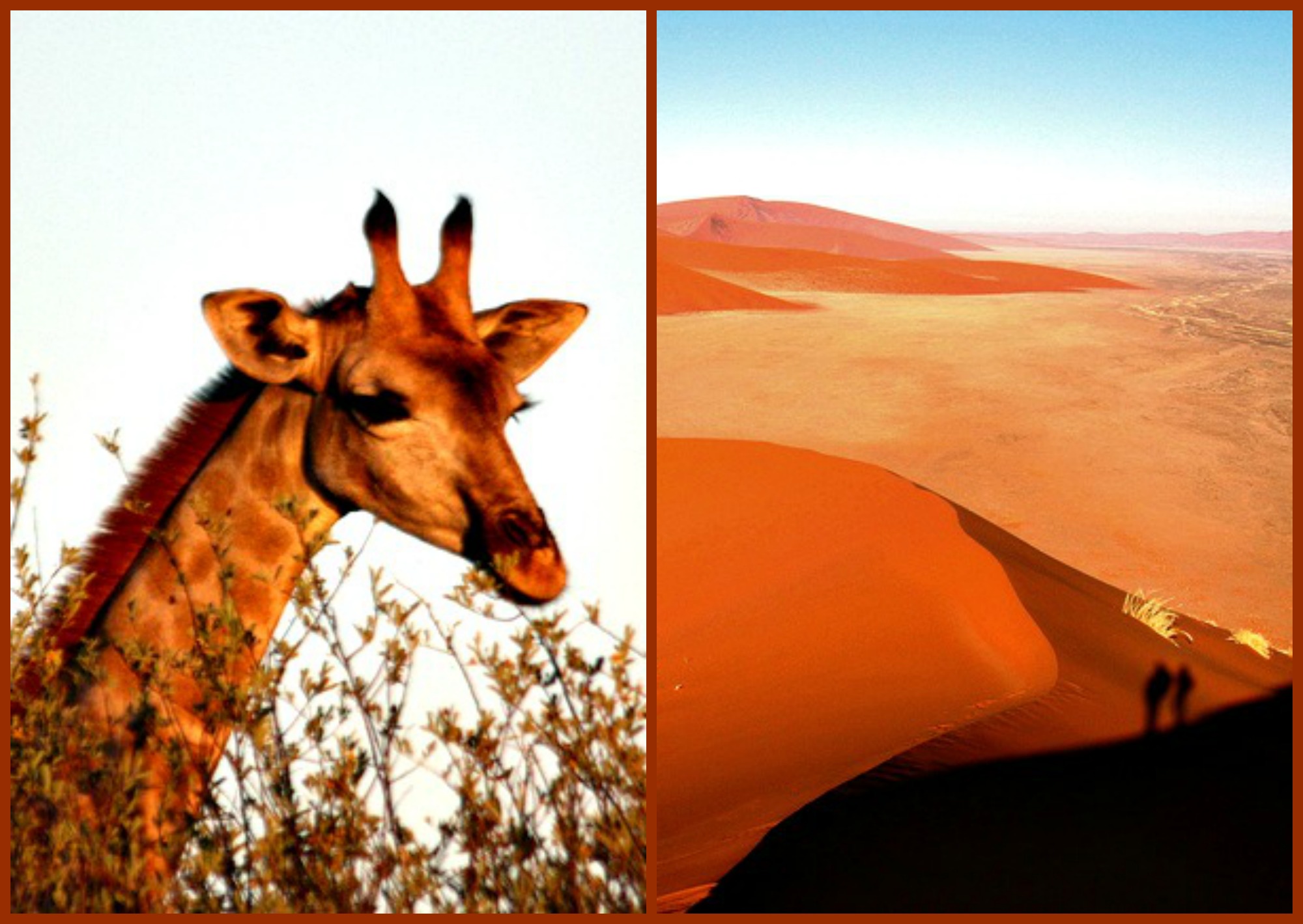
A silent, self-contained Kalahari giraffe and blood orange sands make it into Shireen Jilla’s novel about a group of friends on an African safari. Photo credits: Male giraffe, by Charles Sharp, and Silhouettes in Sossusvlei, by Monica Guy, both via Flickr (CC BY 2.0).

“The more I traveled, the more I realized, fear makes strangers of people who should be friends.” —Shirley MacLaine

As I mentioned in the introduction, you grew up a Third Culture Kid and you’ve also been an expat. Is there anything from your experiences living abroad as a child and an adult that worked its way into this book?
From own experience, I am acutely interested in how people react to being outside their comfort zone. Living or traveling abroad is a very visceral way of exploring this theme. With Unpacking, I wanted to place a group of close friends, who haven’t traveled extensively, into a remote, unnerving location. For me, it gives the novel its heartbeat.

I’m an Adult Third-Culture Kid, too (and an expat currently), and one of the things that I found remarkable in this book is the close cohesion of a group of people who met at an early stage of their adult lives—not always something we TCKs can find! I’m curious. Do you have a group of friends like Connie’s?
Actually, I have a varied and disparate group of old friends from many places and stages in my life. What I drew on in Unpacking is the notion that one can still feel intensely loyal to old friends, despite growing in different directions. But no, I’ve never planned a big trip with old friends as Connie does.

I noticed that within the group of friends you’ve created, there are two cross-cultural relationships. I enjoyed watching the conflicts from their opposing cultures arise in their relationships. Was this something you set out to capture from the beginning?
This is an interesting question. I haven’t consciously created two cross-cultural relationships. But I am clearly fascinated by and drawn to them. I loved writing both relationships, particularly exploring the cultural misunderstandings between the English friends and New Yorker Katherine.

“Travel and change of place impart new vigor to the mind.” —Seneca

So far you’ve given us two great books based on interesting locations—New York and South Africa. What’s next? Will you follow up with Connie and her friends in another novel? Take your readers on a new adventure somewhere else?
I’m normally adverse to sequels, but I would actually love to write another novel based on the same characters. I’m not ready to let any of them go. I am deeply attached to them all. And I would also enjoy the challenge of another new setting abroad. It’s like moving country. Always exciting.

Lastly, my favorite question for everyone—what are you reading at the moment? Any suggestions for good books that might appeal to the Displaced Nation audience?
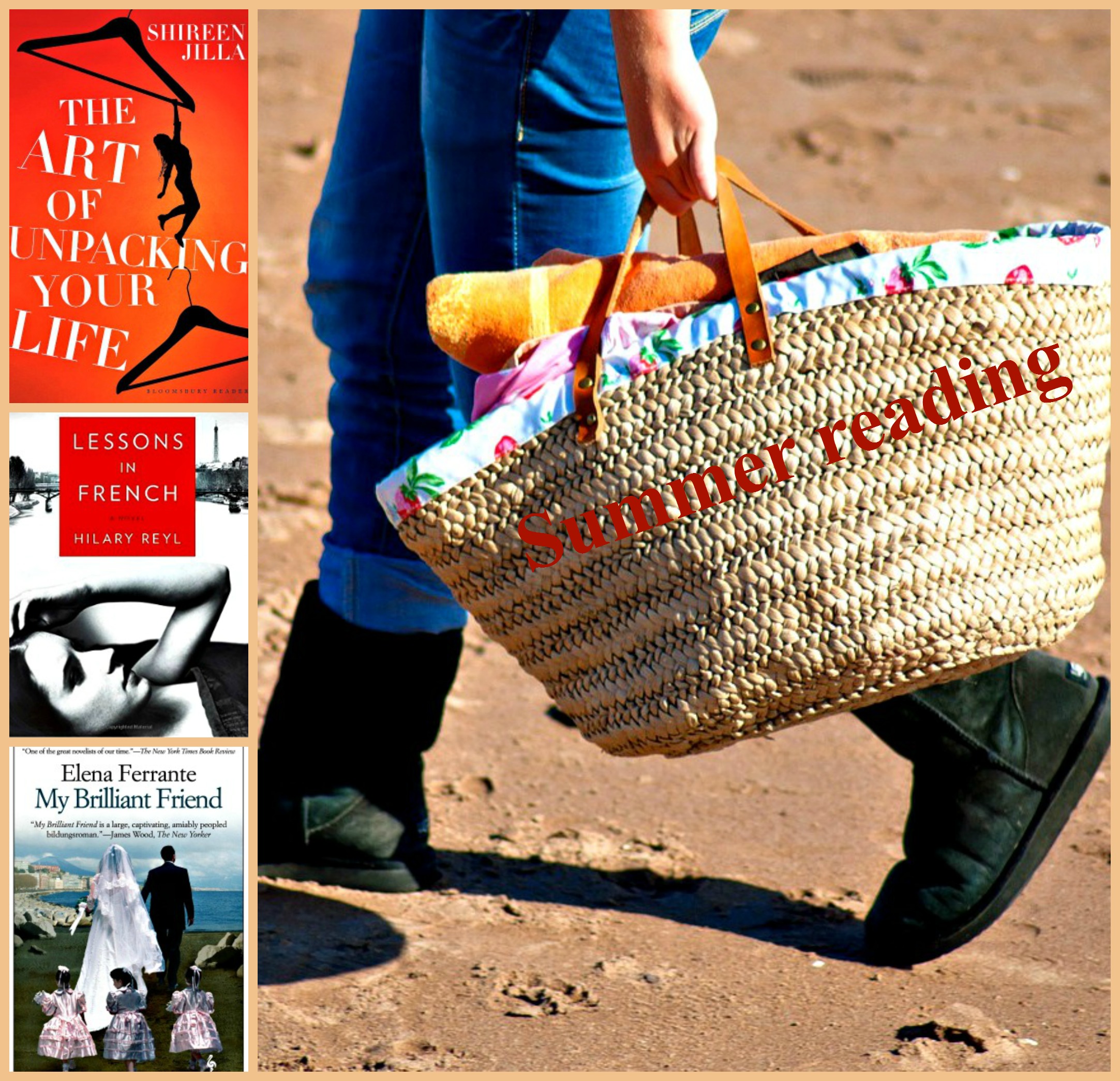
I am currently reading New York writer Hilary Reyl’s Lessons in French. The novel is an absorbing coming-of-age story about an American girl who does work experience with a demanding photographer in Paris. It’s an evocative, lyrical read for all expats. Elena Ferrante’s My Brilliant Friend, is another addictive page turner that lights up a poor working class community in fifties Naples.

Thanks, Shireen, I’ll check those out! And readers, if you’re selecting books for your summer reading list, I suggest you pack Unpacking in your beach bag! Or on your Kindle, more likely… 🙂

Beach bag via Pixabay.

Don’t go to the beach without Shireen’s book and at least one of her recommended reads! Beach bag via Pixabay; book cover art.

* * *

And now Displaced Nationers, it’s your turn to answer some questions. And have you ever tried traveling with friends? Did you pick up any insights about them and/or about yourself? Do let us know in the comments!

Beth Green is an American writer and English teacher living in Prague, Czech Republic. She grew up on a sailboat and, though now a landlubber, continues to lead a peripatetic life, having lived in Asia as well as Europe. Her personal Web site is Beth Green Writes, and she is about to launch a new site called Everyday Travel Stories. To keep in touch with her in between columns, try following her on Facebook and Twitter. She’s a social media nut!

STAY TUNED for the next fab post!

If you enjoyed this post, we invite you to register for The Displaced Dispatch, a round up of weekly posts from The Displaced Nation, and SO much more. Register for The Displaced Dispatch by clicking here!

Related posts:

Photo credit (top of page): “Notebook in hand,” by Oleh Slobodeniuk via Flickr (CC BY-NC-SA 4.0).

LOCATION, LOCUTION: Canadian writer Lee Strauss uses busy, multicultural Dresden as setting for romance

Location Locution_LeeStrauss

LOCATION, LOCUTION: JJ Marsh (left) talks to author Lee Strauss about the craft of setting contemporary romance novels in foreign locations.

In “Location, Locution” expat crime series writer JJ Marsh chats with fellow displaced fiction writers about their methods of portraying place in their works. Her guest today is contemporary romance and speculative fiction writer Lee Strauss. Born near Chicago to Canadian parents, Lee might have grown up a California girl had it not been for Vietnam, which caused her parents to retreat back to Canada. At age 22, she married Norm Strauss, a Canadian folk rock musician—and signed up for a life of adventure. They have traveled extensively overseas and live part-time in Germany.

—ML Awanohara

Lee Strauss is the author of the Minstrel Series, a collection of contemporary romance novels set in the singer/songwriter world, taking place in Germany and England; the Perception Series, a trilogy of young adult dystopian novels; and several works of YA historical fiction. Under the alter ego of Elle Strauss, she writes fanciful younger adult stories about time travel, mermaids and fairies.

Lee is the married mother of four grown children, three boys and a girl. Because of her husband’s job as an indie folk musician, she has traveled to twelve European countries, Mexico, fourteen states, and six Canadian provinces. Currently, the couple divide its time between Kelowna, a town in British Columbia’s temperate Okanangan Valley, and Dresden, Germany. When not writing or reading Lee likes to cycle, hike and do yoga. She enjoys travel (but not jet lag :0), soy lattes, red wine and dark chocolate.

Now let’s talk to Lee about how she has woven European settings into several of her books.

* * *

Which came first, story or location?

It was a simultaneous decision. My singer-songwriter husband and I spent some time brainstorming on how we could merge our two worlds, indie publishing collaborating with indie music artists, and the idea for the Minstrel Series was born. (Each of the books has accompanying music.) The first two books, Sun & Moon and Flesh & Bone, are song titles of music used in the books. We live part of the year in Dresden, Germany, and I just knew that the books had to be set there, right in our neighbourhood.

Minstrel Series Set in Dresden

Cover art from first two books of the Minstrel Series; (middle) view of Dresden’s historical center, from the same spot where Canaletto made his famous painting.

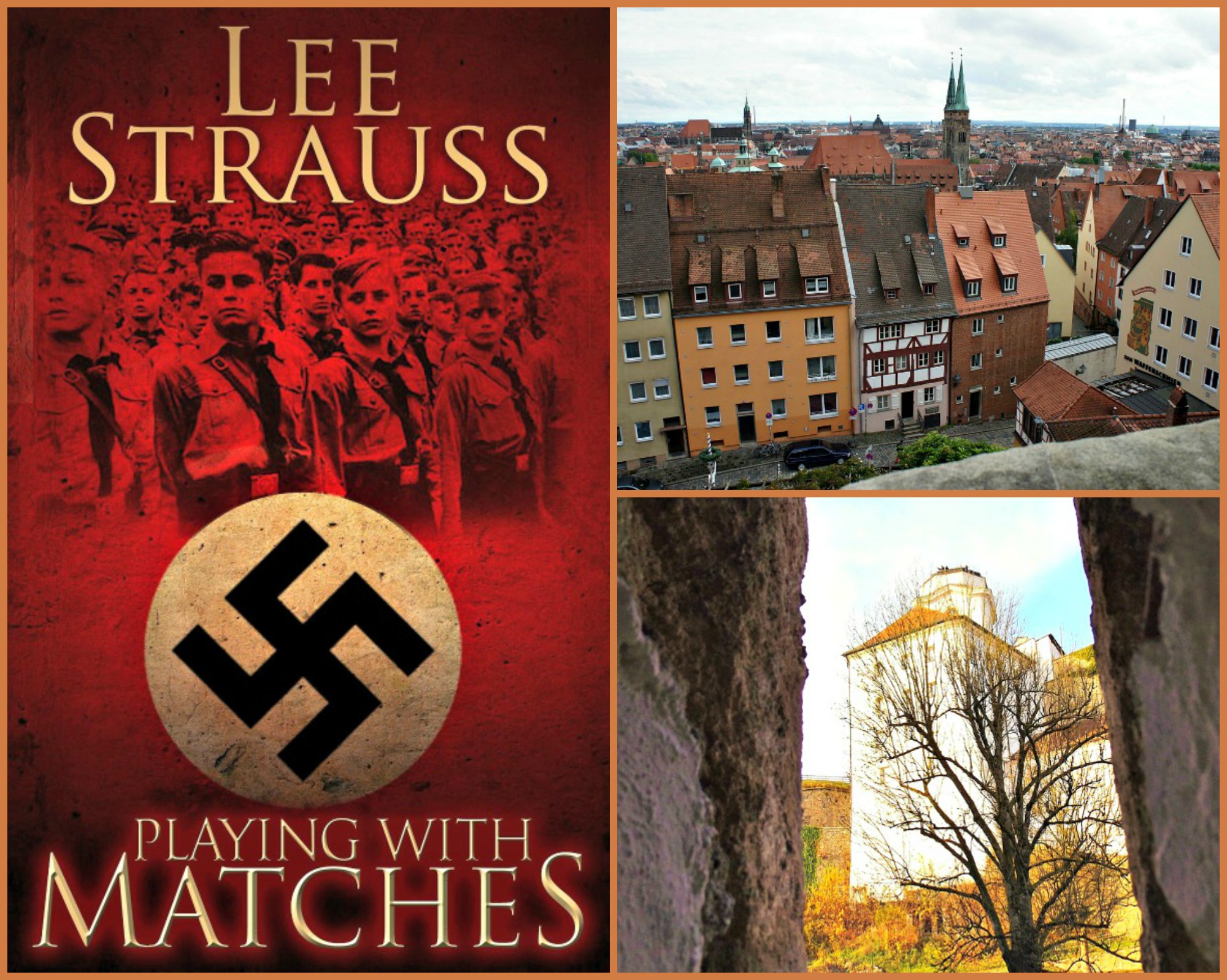
I’ve also written a WW2 historical novel called Playing with Matches, about a group of boys growing up in Hitler Youth. The story takes place in Passau and Nuremberg. Traveling to both cities made a huge difference in getting the setting and ambiance right.

Playing with Matches Collage

Clockwise, left to right: Cover art; Nuremberg citiscape; view of Veste Oberhaus, a 13th-century fortress in Paussau, in lower Bavaria, Germany.

What’s your technique for evoking the atmosphere of a place?

Nothing like living in the middle of it! The street and building in Dresden where we lived are featured in great detail in Sun & Moon and Flesh & Bone. Many readers comment on how they feel like they visited Germany while reading my books.

Which particular features create a sense of location? Landscape, culture, food?

All three. I share a lot of Dresden images on Tumblr, including not just landscape but also food and the local culture.

Can you give a brief example of your work which illustrates place?

Here’s a passage from the Minstrel Series, describing a scene in Dresden:

Katja stood in one of the cutaways on the old stone bridge over the River Elbe that joined the Altstadt with the Neustadt, the old city with the new.

She shivered despite her winter jacket and the scarf wrapped around her neck and strummed her guitar with fingerless gloves. The limestone dome of the Frauenkirche—the Church of our Lady—peaked out over the city’s ancient, baroque skyline. Like all the buildings in the historic center, it had been completely demolished during the Second World War. The entire city was rebuilt to look much like it had before it was destroyed. In essence, the old town was now the new one, and the new town the old one.

It was majestic and awe-inspiring to look upon.

Most days.

Katja’s guitar case lay open at her feet. She’d thrown in the few cents she’d found under the sofa cushions, hoping to lure other donations.

The cold wind kept people hunched over and moving at a fast pace across the bridge, most with chins tucked down and hands shoved into deep pockets. No one took the time to stop and listen, much less drop money in her case.

How well do you need to know the place before using it as a setting?

Spending time living there is the absolute best way. There’s so much you see and learn about a place over time. The second best is to visit in person. After that, talking to people who have lived or visited there along with research and Google Earth.

Which writers do you admire for the way they use location?

Maeve Binchy has a wonderful way of pulling the reader deep into Ireland. (My next book in The Minstrel Series will be set in Ireland and Boston, where I’ve lived.) Susan Grafton does the same for Southern California with her Alphabet Mystery series, set in the fictional city of Santa Teresa, based on Santa Barbara.

* * *

Readers, if this interview has piqued your curiosity about Lee Strauss and her creative array of fiction works, we encourage you to visit her author site.

JJ Marsh grew up in Wales, Africa and the Middle East, where her curiosity for culture took root and triggered an urge to write. After living in Hong Kong, Nigeria, Dubai, Portugal and France, JJ finally settled in Switzerland, where she is currently halfway through her European crime series, set in compelling locations all over the continent and featuring detective inspector Beatrice Stubbs.

STAY TUNED for the next fab post!

If you enjoyed this post, we invite you to register for The Displaced Dispatch, a round up of weekly posts from The Displaced Nation, with weekly updates and much, much more. Register for The Displaced Dispatch by clicking here!

Related posts:

BOOKLUST, WANDERLUST: When what happens in a third culture refuses to stay there: Allen Kurzweil’s “Whipping Boy”

Booklust Wanderlust Collage

Left: Oleh Slobodeniuk (CC BY-NC-SA 4.0); right: Beth Green (her own photo).

Attention displaced bookworms! Our book review columnist, Beth Green, an American expat in Prague (she is also an Adult Third Culture Kid), is back with a rather unusual selection: a memoir that reads like crime fiction. The author, but of course, is an international creative. Enjoy!

—ML Awanohara

Hello again, Displaced Nationers!

Our Booklust, Wanderlust roundtable series left me with such a wide selection of books to read that I’m only just now coming up for air. This month I’d like to tell you about Whipping Boy: My Forty-Year Search for My Twelve-Year-Old Bully, by the bestselling novelist Allen Kurzweil—which our own ML named as one of the books on her radar in early 2015.

Well, Whipping Boy is out, and it’s a cracking (so to speak) read!

"Allen Kurzweil Wiki2007," by Allen Kurzweil - an image provided by Allen Kurzweil. Transferred from en.wikipedia by SreeBot. Licensed under CC BY-SA 3.0 via Wikimedia Commons.

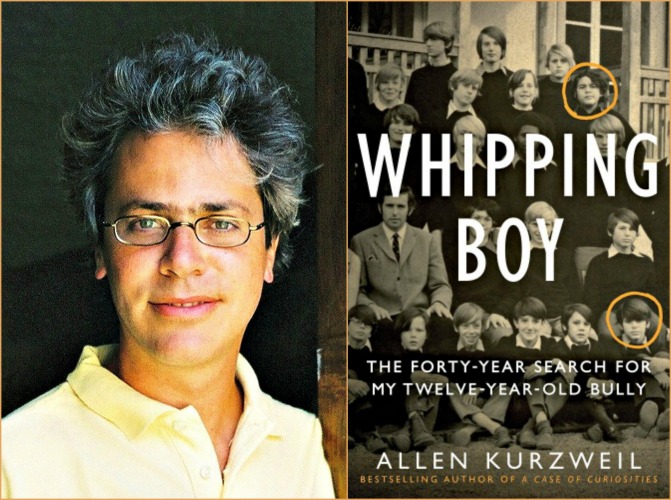
TCK author Allen Kurzweil & his memoir. Photo credits: “Allen Kurzweil Wiki2007,” by Allen Kurzweil – an image provided by Allen Kurzweil. Transferred from en.wikipedia by SreeBot. Licensed under CC BY-SA 3.0 via Wikimedia Commons.

Kurzweil has produced a memoir that deals with deep emotions dating back to his displaced youth—but that still manages to flow fast and fun like an international thriller. As marketing whiz Kat Gordon put it in a recent tweet:

Hanging on every word of @AllenKurzweil memoir “Whipping Boy.” A whodunit + fairytale in one.

In the fairy tale portion, we watch as our hero, age ten, attends a British-style boarding school perched on an alpine meadow high above Geneva. All goes well until he meets the dastardly Cesar (full name Cesar Augusto Viana), who torments him mercilessly. When our hero grows up, he resolves to track down and confront his childhood nemesis, however long it takes…

The whodunit starts the moment Kurzweil discovers that Cesar has become a leading figure in an international fraud scheme. At that point he converts into an investigative journalist, leaving no stone unturned in his quest to find out how many victims the adult Cesar has racked up.

Before saying anything more about the book, I should point out that Kurzweil is an adult Third Culture Kid. His parents were Jewish émigrés from Vienna to New York City. The family relocated to Milan, Italy, when Kurzweil was young, but he spent his teen years back in New York. He got his education at Yale and the University of Rome and then worked for ten years as a freelance journalist in France, Italy, and Australia before settling back in the United States with his French wife and son.

Kurzweil’s previous works include two novels and a children’s book inspired by his son’s preschool bully. The Whipping Boy has also been excerpted and condensed in the New Yorker.

“In 1971, I met a boy who changed my life forever.”

Kurzweil roomed with Cesar—a burly Filipino rumored to be the son of Ferdinand Marcos’s head of security—at the exclusive Aiglon College, in Villars, Switzerland, for the better part of a year, while Kurzweil’s mother was “test-driving her third husband.” (Kurzweil’s father died of cancer when he was five.)

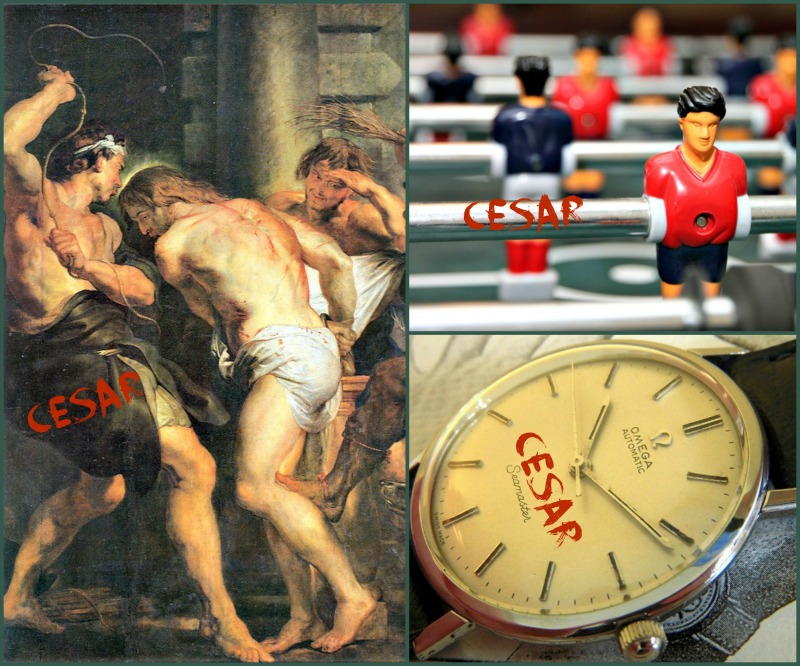
Kurzweil loved the idea of the school—his deceased father had adored the Alps and mountaineering. But he hated boarding, particularly at night, when Cesar and his stooges would subject him to all manner of hazing. They forced him to eat hot pepper sauce, stole his things (including his most prized possession, his father’s Omega Seamaster watch), taunted him with anti-Semitic slurs, and at one point whipped him with a belt while playing “The 39 Lashes” from Jesus Christ Superstar (Kurzweil was Jesus).

Some form of bullying in schools is universal, but when the kids are internationals, and boarders—dealing with the losses of worlds they have loved (which in Kurzweil’s case was tied to the loss of his dad)—things can get even more intense, something non-TCKs may not appreciate.

Fortunately, though, Kurzweil has a sense of humor. In this book he never misses a chance to point out that life, even when traumatizing, has its comic moments.

“It didn’t take long to shed the habits I’d picked up in Switzerland.”

After a year at the school, Kurzweil moves back to New York City, and quickly re-acculturates:

“[My mother and I] returned to New York, where the plimsolls, anoraks and rucksacks I wore at Aiglon reverted to sneakers, parkas and backpacks. I no longer had to address my teachers as sir and ma’am.”

But while Kurzweil displays the TCK’s resilience in adjusting back to life in the U.S., happy to get rid of the crossbars on his “7s” and scuttle his schooner-sail “4s”, he cannot let go of his memories of Cesar so easily. He harbors an obsession, which grows worse with the years, even (especially?) after he finds success as a writer.

When he learns that his boyhood enemy is most probably a con man working for a shady “royal”-family-led corporation named Badische (pronounced “Baddish,” Kurzweil notes slightly gleefully) that runs investment “schemes” for hard-up New York one-percenters, Kurzweil becomes unstoppable:

Obsessives tend to have obsessions. Cesar wasn’t my first fixation, and I’m sure he won’t be the last. Baseball cards, Matchbox cars, Pez dispensers—I’ve always been a collector…my point is I tend to go overboard. I investigated Cesar and Badische the same way I collected Lincoln pennies—intent on filling every void.

“…I began to acknowledge the obvious: Cesar had taken over my life.”

His investigations span decades and continents, and throughout it all he is haunted by memories of Cesar:

At the back of a dingy bar in Alice Springs, a pair of drunks playing foosball recalled my ex-roommate’s unstoppable bank shot. In Vienna, hanging on the wall of the Kunsthistoriches Museum, a Flagellation of Christ reinvoked the musical whipping. Hot sauce, Andrew Lloyd Weber tunes, Ferdinand Marcos, Montblanc fountain pens, and more than anything else, vintage Omegas, had me reaching for the journal.

The Ubiquitous Cesar. Photo credits (clockwise from left): “Flagellation-of-christ-Rubens” by Peter Paul Rubens (licensed under CC BY-SA 3.0 via Wikimedia Commons); foosball, byrev via Pixabay; Omega watch, ephotographythemes via Pixabay.

Kurzweil shares with the reader his mixed emotions when he at last finds Cesar, wondering what to say to someone who may not even remember him. And then the fear returns—the fear that he experienced as a shy boy being whipped with a belt in his dorm room…only now it is morphing into an adult fear as Kurzweil realizes he has tracked down an actual criminal:

Fake knights. False banks. Imaginary kingdoms. These guys travelled on bogus passports. They hosted lavish dinner parties at five-star hotels. They performed knighting ceremonies. (When I interviewed the assistant U.S. attorney who filed the initial charges, he summed up the crime as Dirty Rotten Scoundrels meets Clue.)

“So, basically, I’m being blamed for your memories?”

Whipping Boy was a quick, satisfying read. I loved the truth-is-stranger-than-fiction details that Kurzweil unearths about Cesar and his company’s schemes.

I loved his humor.

I also enjoyed the quiet pauses when Kurzweil would describe personal moments having nothing to do with the hunt for Cesar: for example, when he met his wife in outback Australia:

A French anthropologist named Françoise Dussart spotted me wandering toward a sacred site off limits to visitors. Concerned for my safety, she drove up and warned me away. She was sitting in the cab of a Toyota Land Cruiser and cradling a baby kangaroo. How could I not fall in love?

And then:

She flew west, from Alice. I flew east, from New York. We met each other halfway, in Paris, broke and in love.

Juanchito via Pixabay[http://pixabay.com/en/kangaroo-australia-jump-creature-250873/]; talitaraquel via Pixabay[http://pixabay.com/en/eiffel-tower-paris-france-tower-350453/]. License: CC0 Public Domain[http://pixabay.com/en/service/terms/#download_terms]

From kangaroo love to love in the City of Light. Photo credits: Australian kangaroo, Juanchito via Pixabay; Eiffel Tower, talitaraquel via Pixabay. License: CC0 Public Domain

I further appreciated his candor in admitting that two people can remember the details of an event differently, particularly when one of them is a psychopath with a chip on his shoulder. As Cesar puts it when they finally meet up again for the first time:

“I recall a lot… But just in bits and pieces. There are some things that people have told me about that I really don’t remember. You might need to prod me a bit.”

I would particularly recommend the book to those who like stories about heists or con artists—the movie American Hustle has some parallels—as well as to anyone who has harbored a fantasy of facing down a childhood bully.

Kurzweil may be beaten but he isn’t conquered, and that’s an inspiration to victims everywhere.

But most of all I appreciated Kurzweil’s understanding that for us TCKs, what happens in a third culture doesn’t always stay in a third culture. Some readers may wonder why Kurzweil couldn’t leave his bullying experience behind, particularly as it happened overseas, in a country to which he had limited personal ties. But for Third Culture Kids, the floating world of the expat is as real as it gets. And, as Kurzeil’s story shows, what happens there can have a life-long impact.

* * *

Fellow TCKs, do you have a Cesar or other skeletons in your cupboard dating back to your school days, at an international school or boarding school? Do tell!

Till next time!

Editor’s note: All subheds are quotes taken from Allen Kurzweil’s New Yorker article.

Beth Green is an American writer and English teacher living in Prague, Czech Republic. She grew up on a sailboat and, though now a landlubber, continues to lead a peripatetic life, having lived in Asia as well as Europe. Her personal Web site is Beth Green Writes, and she is about to launch a new site called Everyday Travel Stories. To keep in touch with her in between columns, try following her on Facebook and Twitter. She’s a social media nut!

STAY TUNED for the next fab post!

If you enjoyed this post, we invite you to register for The Displaced Dispatch, a round up of weekly posts from The Displaced Nation, and much, much more. Register for The Displaced Dispatch by clicking here!

Related posts:

LOCATION, LOCUTION: British expat author Carl Plummer turns his gaze upon his adopted home of China

Columnist JJ Marsh (left) talks to Carl Plummer,

Columnist JJ Marsh (left) talks to Carl Plummer, a writer of historical adventure fiction.

We welcome JJ Marsh back to the Displaced Nation for this month’s “Location, Locution.” If you are new to the site, JJ, who is a crime series writer, chats with fellow fiction writers about their methods for portraying place in their works. Her guest today is Carl Plummer, who writes World War II adventure spoofs under the pen name of Robert E. Towsie. Born in Hull, England, he lived in Cyprus, Paris and Libya before moving to his current home of China, where he works as a university lecturer. Today he does something unusual for this column: describes the place where he’s living right now.

—ML Awanohara

JJ MARSH: Once in a while, Location, Locution likes to surprise you. Remember the Paulo Coelho piece on monuments that immortalise cities? If not, go read it now. Is it any surprise this man is an international bestseller?

This month, I tracked down an author I’ve admired for a long time. Carl Plummer writes as Robert E. Towsie, in a classic comic style, setting his capers around Europe against the backdrop of its dramatic history.

But what interested me about Carl/Robert is where this expat creative lives. China. A place I find fascinating, mysterious and sometimes a little scary. So this month’s Location, Locution is his take on China, its people and and how he sees it. Enjoy.

* * *

CARL PLUMMER: In 2004, after a stint in Libya, I arrived in China and started a job at Nanyang Normal University to teach British and American literature. The city of Nanyang (pop. 1,000,000) in Henan Province was proud to boast ten lao wai, foreigners.

Every minute, on every street, in every shop, I was reminded I was a foreigner. Some reminders were harsh, nationalistic and racist with the “go back where you came from” we associate with racism in England.

Other reminders were through curiosity, the wish to speak English to and even touch a foreigner, the assumption all foreigners are American and a sense of me being something exotic, something new and different, and most of all—rich.

I wasn’t rich, am not rich. Teachers are the poorest working travellers of the world. We are the intellectual navvies from the western world. We are not businessmen with expense accounts; we are not oil people or wheeler and dealers. But we are approachable because we have to mingle, use the buses and the metros, and the trains. We do not have company cars with around-the-clock company drivers.

During the rainy season in a small coal-mining town near Pingdingshan the streets would run black when it poured and families would come out to shower beneath the torrents thundering off awnings.

What made me rich to such people? I had an apartment with a shower and I could afford the water it used—I didn’t have to wait for the rain.

In China, the iron rice bowl has long gone.

Why am I talking about money instead of garnishing the text with tales of magnificent walls, gaudy ancient temples or food conjured up with every living creature imaginable? Well, that’s all been done before.

I’m talking of money because poverty is not romantic; it never has been and it never will be. It is cruel and it doesn’t discriminate; there are no deserving and no undeserving poor.

That cradle-to-the-grave surety of Communism is a generation ago, but that generation brought up in it is still around. It is my age, brought up in the 60s and 70s, taught to root out the treacherous intellectual bourgeoisie, taught to spy on parents and teachers, taught to love the state above all else.

It worked in theory for a while because the state cared; it looked after your every need as long as your toed the line, as long as you never asked questions. Now it doesn’t. Now there is no line to toe.

The young are asking questions. That is their hope.

I meet many young people, in their 20s, who have something hanging around their necks; cultural and domestic demands, greatly exacerbated by the growth of capitalism and the cracking of the iron rice bowl.

Education is expensive in China, as is being healthy. Young people have shown me lists, lists almost like invoices saying: we spent this much on your upbringing and this is what you must pay back to us. It is easy to get the sense parents have children for one reason: someone to take care of them in their old age. Babies, especially boys, are glorified little emperors, smothered and mothered—especially grandmothered—to the extreme; but once in their teens they are seen as future life-support systems.

Rich CEOs and husbands framed

Haozhi Chen (CEO of Chinese mobile powerhouse Chukong), by Jon Jordan via Flickr; “Wedding couple in the clan house,” by shankar s. via Flickr. Both photos are licensed under Creative Commons (CC BY 2.0).

Boys are expected to become CEOs and girls are expected to find rich husbands. All are expected to become members of extended families because extended families are safer, more secure. Individualism and independence is dangerous.

The average salary in China is still about 2000 yuan a month (about 200GBP) for a ten-hour-day and a six-day week. Millions of workers live in dormitories more akin to barracks, and send home half their salaries to support families back home. Young people must pay back the money they owe their parents. This is how it is for the majority of young people in China. The majority has to save because everyone has to pay.

When the future is precarious you have to save.

When I lived in the Bai Yun district of Guangzhou (Guangdong province, in Southern China), I used to cycle through a huge housing estate (apartments by the thousand) and cut through the grounds of Jinxi Nanfang Hospital.

Those middle-class apartments sell for about 3,000,000 yuan each, rented out for between 3,000 and 4,000 a month.

From the higher balconies you can see the rows of beggars in the streets around the hospital. These are not the beggars we expect—those in shop doorways with mangy dogs for company.

These beggars are lying in makeshift hospital beds, out in the open, with drips hanging from stands. These beggars are families trying to get the 500 yuan a night needed for hospital treatment, or even the 100 yuan just to see a doctor.

Dontspend$$youdonthave

Lesson for all SL-ers, by Laurence Simon via Flickr (CC BY 2.0).

This is why so many Chinese people are savers, not spenders.

And those apartments—the richer you are, the higher up you live. The higher up you are, the farther you can see across the hospital surrounds where the aged and sick lie in the shadows of a hospital they cannot afford to enter. It is a world where education and health is a luxury, not a right.

For the growing middle-class it is different; for the Chinese aristocracy—very different. There is a Chinese aristocracy; it’s the cushioned group of party members—the 5 percent. (Google “My father is Li Gang”* if you wish to know how that works.)

The growing middle classes do not live with the fearful uncertainties of old age. They do not fear the need to see a doctor or the need to stay in hospital for a few days. They can send their children to good schools; send them to the UK, the USA or Australia to continue with their studies. They can send their children out into the world to be whatever they wish to be—something so many westerners take for granted. They do not need their offspring to look after them in old age. They can be spenders and savers.

I’d rather cry in the back of a BMW than laugh on the back of a bicycle.

"Cargirl," by Xuan Zheng via Flickr (CC BY-SA 2.0); (bottom) "Shanghai cyclists," by Gwydion M. Williams via Flickr (CC BY 2.0).

“Cargirl,” by Xuan Zheng via Flickr (CC BY-SA 2.0); “Shanghai cyclists,” by Gwydion M. Williams via Flickr (CC BY 2.0).

How about the girl who said on a TV show “I’d rather cry in the back of a BMW than laugh on the back of a bicycle”?

Yes, she was condemned and ridiculed, but she does not have the luxury of choice, the luxury of hope; the safety net is not yet there for her.

I believe and hope it will be for her children. Already, there are newly middle class young people who not have to choose between the BMW and the bicycle. Educated women are buying their own BMWs, their own apartments. They do not have to get married as soon as possible in order to be secure.

And more importantly, their individualism and prosperity is running alongside a new sense of social justice, political justice, and an awareness of the needs of others.

Religion, philosophy, or just simple humanism, whatever it is—the humanity is breaking through.

Twenty years ago, capitalism was raw in China; it was Darwinian and brutal, but it is slowly coming around, perhaps in the way it eventually did so in Britain until it was scuppered by the bankers who played with money as though it was Monopoly money.

We started with the Bounderby style of capitalism where Britain was the richest country in the world, populated by the poorest masses.

That is where China has been, perhaps still is, but it is moving through that. Communism denuded the soul, evicted compassion and turned the people into soldier ants. Capitalism came along to lift people out of poverty, but it did not fill the spiritual vacuum—the vacuum of feeling and compassion.

Christianity is becoming ever more popular in China. Confucianism is being taught again. The vacuum is being filled. The younger capitalist—who is not from the spoilt 5 percent—has a sense of social responsibility, the idea of giving back.

Mr Cameron’s “long-term plan” is but a sparrow’s sneeze in Chinese terms.

It’s a long process, but China has a long history and has always been about long processes.

The hope is, and I am confident about it, is the young; they have enough to eat, will have roofs over their heads, but more importantly, they can afford to be more thoughtful, more caring—they can afford humanity. Breaking free from poverty allows kindness to flourish (kindness in individuals and kindness from the state) if it is not smothered by the unacceptable face of capitalism or the dehumanization of totalitarianism.

I believe it will get there. But we cannot think in European terms; European terms are far too short. And remember why you can afford your cheap TV, cheap mobile phone and cheap computer; it is funded by cheap labour.

There are still millions and millions with a standard of living we would find totally unacceptable; but the fear of starvation has gone and the idea of a health service free at the point of use is slowly becoming more than just a dream. For most young people, going to university is still a dream.

It is changing. The young people are making it change.

* * *

Readers, if this interview has piqued your curiosity about Carl Plummer and his Robert E. Towsie books, we encourage you to visit his author site.

JJ Marsh grew up in Wales, Africa and the Middle East, where her curiosity for culture took root and triggered an urge to write. After living in Hong Kong, Nigeria, Dubai, Portugal and France, JJ finally settled in Switzerland, where she is currently halfway through her European crime series, set in compelling locations all over the continent and featuring detective inspector Beatrice Stubbs.

STAY TUNED for next week’s fab posts!

If you enjoyed this post, we invite you to register for The Displaced Dispatch, a round up of weekly posts from The Displaced Nation, with seasonal recipes, book giveaways and other extras. Register for The Displaced Dispatch by clicking here!

Related posts:

LOCATION, LOCUTION: Kiwi-Brit author team produce first in eco-thriller series spanning continents where they’ve lived

JJ LN Collage

Columnist JJ Marsh (left) talks to Lambert Nagle, Kiwi/Brit co-writers of international thrillers.

Today we welcome JJ Marsh back to the Displaced Nation for this month’s “Location, Locution.” If you are new to the site, JJ, who is a crime series writer (see her bio below), talks to fellow fiction writers about their methods for portraying place in their works. We’re excited that her guest today is the better half of a husband-wife team who have composed an eco-thriller that takes place all over the world, including places where they’ve been expats.

—ML Awanohara

Lambert Nagle is the pen name of co-authors Alison Ripley Cubitt and Sean Cubitt. They write thrillers set in sunny climes.

Sean’s day job is Professor of Film and Television, Goldsmiths, University of London. He has been published by leading academic publishers.

Alison worked in TV and film production for companies including the BBC and Walt Disney but her passion has always been for writing. She is an author, screenwriter and novelist.

Serial expats, Lambert Nagle have lived in Malaysia, Canada, New Zealand, Australia and are now based in leafy Hampshire.

Now let’s find out how they perceived the connection between location and locution for their debut novel, Revolution Earth. (Alison is answering for the pair.)

* * *

Which comes first, story or location?

We knew that Revolution Earth had to have a circular structure as one of the themes is that an event in one part of the world will have an impact in another. We needed a major global city for the inciting incident as well as the conclusion and we chose the one we know best—London. Sean was once a bicycle courier and he knew what it was like to have to dodge potholes and taxis in Soho and still get the delivery there on time.

We wrote the New Zealand section after we’d reluctantly left my native land and moved to Melbourne. It was a bit of a love letter to a place we adored but needed to leave in order to pursue professional opportunities abroad. In southeast Australia we were thrilled to find that there was an oil refinery—identical to one we had driven past in Cheshire years ago, which inspired the story.

What’s your technique for evoking the atmosphere of a place?

For the Antarctica portion of the story, Sean had spent four years in Canada as a post-graduate student. The memory of cold is something that never leaves you, so we drew on that, starting from the physical experience and expanding out into the visual side of things.

Photo credits (clockwise from top left): Kakadu in the Australian outback, by Muireann Ní Cheallacháin via Flickr; book cover with photo of Snowy Mountain region of New South Wales, Australia, taken by Alison Ripley Cubitt; lady bicyclist in London, by Danica via Flickr; Alberta, Canada, by davebloggs007 via Flickr (all Flickr photos CC BY 2.0).

How well do you need to know the place before using it as a setting?

Revolution Earth was originally a screenplay. As a screenwriter you have to know a place extremely well before you’d dare use it as a setting. Film is a literal medium and your job is to give very clear instructions about an actual place—as a camera has to be able to film the location exactly as you’ve described it. So we went to extremes: including a trip to a uranium mine in the Outback, thousands of miles from where we lived in Australia.

Eventually we realised we needed to write a novel first, before we could interest film-makers. But by then, we knew we couldn’t get to every location and would have to inhabit some places purely through imagination. The important thing is that the imagined places have to be just as detailed, just as carefully tuned to the physical experience of being there, as the real ones. Something really familiar like a dusty, disorganised office in a backstreet in the East End of London should be as deeply felt as battling a storm in a leaky boat in the Southern Ocean encircling Antarctica. As someone who goes green at the mention of the phrase “rough seas,” this is where the imagination comes in as well.

The liberation of cresting the top of a hill on a bicycle before swooping down towards the valley is the same everywhere, but knowing the twists of the road, the steepness of it, how it burns up your lungs before filling them with joy, is all the richer if you can take your reader into what is special about this road, this time of year, for this character.

Which particular features create a sense of location: landscape, culture, food?

Whether it’s real or imagined, a place comes as a feeling first. Then you identify the elements of that feeling: what can you hear, smell, see, taste. How do people talk? Hot, cold, windy or still? What plants and animals, how personal or impersonal, what sense of the past, ancient or recent, does it communicate and what are the things that carry that sense—things like the absence of birdsong or the sound of a kettle boiling. Sometimes you reach out to the reader to share an experience, but sometimes you have to lead them into an experience they have never had, and then it’s often the emotion of the characters and scene that drive the description rather than its physical elements.

Can you give an example from Revolution Earth that illustrates place?

Great mountains of blue-white floating in a sea caught between the colour of the sky and the fresh green of young pine forests under mid-summer sun. Between them, smaller floes drifted about aimlessly, as though in some kind of trance. On the horizon she saw, thanks to Novak, a steep rise of endless white cliffs. This must be where the glaciers came down to the sea, where the icebergs calved. It was as alien a place as she had ever seen, more alien even than a science fiction film because it was right there, illuminated for her in the startling clarity of dazzling sunshine.

Which writers do you admire for the way they use location?

For Sean, Dickens immediately comes to mind: hardly a scene goes by that isn’t redolent of a life lived in it—stuffy banqueting rooms, Essex marshes, debtors’ prison… I admire Tim Winton who writes about his home state of Western Australia in such a way that I just want to jump on a plane and go there. He’s as comfortable describing what life’s like for the struggling poor living in beachside shacks as he is showing the reader what the inside of a wave looks like from a surfer’s point-of-view.

* * *

Readers, if this interview has piqued your curiosity about Lambert Nagle and the Cubitts, we encourage you to visit their author site.

JJ Marsh grew up in Wales, Africa and the Middle East, where her curiosity for culture took root and triggered an urge to write. After living in Hong Kong, Nigeria, Dubai, Portugal and France, JJ finally settled in Switzerland, where she is currently halfway through her European crime series, set in compelling locations all over the continent and featuring detective inspector Beatrice Stubbs.

STAY TUNED for next month’s Location, Locution, with Carl Plummer, who lives in China and writes comic thrillers as Robert E. Towsie.

If you enjoyed this post, we invite you to register for The Displaced Dispatch, a round up of weekly posts from The Displaced Nation, with seasonal recipes, book giveaways and other extras. Register for The Displaced Dispatch by clicking here!

Related posts: