The Displaced Nation

A home for international creatives

Tag Archives: Expat interviews

RANDOM NOMAD: Lei Lei Clavey, Australian Expat in New York

Place of birth: Melbourne, Australia
Passport: Australia + USA
Overseas travel history: France (Paris): 2005; USA (Santa Barbara, California): 2008-09; USA (New York, New York): May 2011 – present.
Current occupation: Casting director for StyleLikeU, an online fashion magazine based in New York City.
Cyberspace coordinates: Style Like U | Freedom of expression through personal style (work) and @LeiLeiClavey (Twitter handle)

What made you leave your homeland in the first place?
I’ve had the travel bug for as long as I can remember. A lot of it came from my parents, who took me around the world shortly after I was born. The excitement of being in a different country, immersed in a new culture and environment — it’s something I now crave.

Of course, travel is one thing; living in a place for an extended period is another. To make a home amongst strangers takes you out of your comfort zone and tests your courage in new ways. I enjoy the challenge. I always learn new things about myself as I open my eyes to different people, perspectives, and ways of life.

Was anyone else in your family “displaced”?
My father is what you might call permanently displaced. Born in Chicago, he attended Colorado State University and then left the US to live in Taiwan and study Chinese language and herbal medicine. Taiwan was where he met my mother, who was likewise displaced (she is Chinese Australian). My parents lived in Taipei for five years and then moved to Mainland China for two more years before settling permanently in Melbourne, Australia, where my mother was born and grew up — my father now practices there as a Chinese herbal doctor. (Incidentally, The Displaced Nation interviewed my mother, whose name is Gabrielle Wang, last summer about a book she had written on a half-Chinese, half-Aborigine girl who lived in 19th-century Australia.)

A couple of my cousins share my passion for travel and have recently embarked on an adventure in the UK, where many Australians choose to live (the two-year work visa for Australians under 25 is a relatively straightforward process).

Another of my cousins recently shaved her head and embarked on a solo, life-changing adventure in India. I have yet to hear her tales firsthand. All I know is that she has more guts than I ever will to have done that by herself.

Describe the moment when you felt most displaced since making your home in New York City.
I don’t believe anything could surpass how I felt on my first night in New York City. Before leaving Australia I had arranged to stay with a friend of a friend for a month. He told me: “When you arrive, come to 10th, between A and B, and up to the third floor.” A and B: what country uses letters as street names? Surely they must be abbreviations for something!

It was close to midnight by the time I arrived at East 10th Street between Avenue A and Avenue B (thank you, taxi driver, for clearing that up!).

But then I had another challenge. I was exhausted and ready to collapse after my 22-hour plane flight from Melbourne to LA and another five hours to New York City. After dragging my 32kg (70lbs) suitcase up three flights of stairs — yes, it was a walk-up! — bed was the only thing I had in mind. I knocked and waited. No answer. I knocked again. Still no answer. I sat on my suitcase and was feeling very sorry for myself, wondering why I had ever decided to move to NYC, when three young men walked up the stairs. They were surprised and a little bemused to see me sitting outside the door to their apartment. After exchanging glances, they informed me that I was on the 4th floor, not the 3rd. (In the US there is no such thing as a “ground floor” like we have in Australia. The ground floor is the first floor.) So I struggled my way back down one flight of stairs and walked into an artist’s hazy East Village apartment.

People, music and smoke filled the room. It was community open-mic night, held weekly in this man’s apartment in exchange for rent (a great deal, I now realize!). The owner was asleep on the couch, despite the noise of someone playing the Asian zither.

My eyes scanned the audience, and then I saw Will, the friend of my friend. I could finally relax.

I had entered an alternative universe, an environment utterly foreign to me. But I knew at that moment, my New York adventure had begun and my life would be changed forever.

How about the moment when you have felt least displaced?
When I first came to New York City as a tourist, in 2008, it was as if I had lived here before, perhaps in a past life. I loved the city’s multicultural feeling. So many different faces, cultures and languages — I immediately felt at home. Since coming to live in the city ten months ago, I will occasionally bump into the few people I know in the street. That this can happen even in a city of over eight million gives me a buzz.

You may bring one curiosity you’ve collected from each of your adopted countries into The Displaced Nation. What’s in your suitcase?
From Paris: The 2-hour lunch break. Unlike Parisians, New Yorkers work too hard and I believe with no better results than if they were to have a decent break, get refreshed and go back to work. Australia, unfortunately, is following in America’s footsteps. Surely, citizens of The Displaced Nation could enjoy a reasonable work-life balance?
From New York City: The concept of convenience. For most New Yorkers, it is only a short walk to the grocery store, bank or coffee shop. In fact, I have all three on my block — I love it! On the other hand, New Yorkers like to push those convenience boundaries and have EVERYTHING delivered. Convenience has never been so lazy! The Displaced Nation should find a way to have convenience without the laziness.
From Santa Barbara: The practice of recycling. Santa Barbara does a great job of keeping the University of California-Santa Barbara campus, city streets and beaches clean. They understand the need for it and how trash impacts the environment. I cannot stand how dirty the streets are in New York City. I would therefore urge The Displaced Nation to institute Californian-style recycling policies (if you haven’t already!).

You are invited to prepare one meal based on your travels for other members of The Displaced Nation. What’s on your menu?

My menu is inspired by New York City brunches*. I always crave a nice weekend brunch when I fly back to Australia on holiday!
Appetizer: Shrimp and grits, based on a recipe from Peels** with two (allegedly) secret ingredients: a little Budweiser and a lot of tasso, a Cajun-spiced ham.
Main: Fried chicken sandwich, with chilli lime aioli & pickled egg on sweet-potato focaccia with hand-cut fries — based on a recipe from Diner in Williamsburg, Brooklyn.
Dessert: Chocolate sundae consisting of vanilla and malt ice cream, hot fudge, whipped cream, brownie bites, nuts, and pretzels — based on a Peels** recipe.
Drinks: Traditional Bloody Mary, a solid brunch favorite!
*This is an imaginary meal so ignore the high calorie count and just enjoy it!
**Peels is an American diner with a Southern-inspired menu in NYC’s East Village. I used to host there.

And now you may add a word or expression from the country where you live in to The Displaced Nation argot. What will you loan us?
From New York: Debbie Downer, slang for someone who frequently adds bad news and negative feelings to a gathering, thereby bringing down the mood of everyone around them. I hear it being said all the time in the streets of New York. (It was also the name of a fictional character from Saturday Night Live.)
From Paris: La ziqmu/la ziq (music) — an example of verlan, which, similar to Pig Latin, transposes syllables of individual words (la musique) to create slang words (la ziqmu, often shortened to la ziq). Verlan combinations are endless and have become a part of everyday French, especially for younger people.

This month we are looking into beauty and fashion. What’s the best beauty treatment you’ve discovered while abroad?
New Yorkers are crazy about spa treatments, facials, massages, manicures and pedicures. It seems to be everyone’s de-stressing fix, and I have to agree there’s something very relaxing about someone picking dead skin off your feet. Last September, on the weekend when Hurricane Irene was threatening to hit NYC, can you believe that the places that were most packed out were the nail salons? (Besides liquor stores and bars, that is.) There are also speciality barber shops for men in New York. Australian men, take heed! Men in this city have no shame in caring about their looks as much as women do: they see it as a masculine thing.

What about fashion — can you tell us about any beloved outfits, jewelry, or other accessories you’ve collected in your adopted country or countries?
Living in New York and working at an online fashion magazine, I’ve been exposed to the the cutting edge of weird and wonderful styles. Really anything goes, unlike in Australia! No matter how far-out the boundary you feel you are pushing, someone else will always out-do you. I love that! The city has inspired me to accessorize more: to jazz up an otherwise regular outfit with hats, statement jewelry and/or shoes. Also, New York is a walking city, so clothing also has to be practical — a hat to keep your head warm in winter or the sun off your face in summer, and shoes you can actually walk in (more than cab-to-curb, that is!).

Readers — yay or nay for letting Lei Lei Clavey into The Displaced Nation? Tell us your reasons. (Note: It’s fine to vote “nay” as long as you couch your reasoning in terms we all — including Lei Lei — find amusing.)

STAY TUNED for tomorrow’s installment from our displaced fictional heroine, Libby. (What, not keeping up with Libby? Read the first three episodes of her expat adventures.)

If you enjoyed this post, we invite you to register for The Displaced Dispatch, a round up of weekly posts from The Displaced Nation, with seasonal recipes, book giveaways and other extras. Register for The Displaced Dispatch by clicking here!

Related posts:

img: Lei Lei Clavey outside a favorite coffee shop of hers in the East Village, New York City.

RANDOM NOMAD: Liv Hambrett, Australian Expat in Germany

Place of birth: Sydney, Australia
Passport: Just my little blue Australian one. And I’d like to keep it.
Geographical history: Greece (Santorini): for several three-month stints since 2008; Germany (Münster, Nord Rhine-Westphalia): 2010 – TODAY, LEAP DAY! (February 29, 2012); Germany (Weiden in der Oberpfalz, Bavaria): TOMORROW onwards!!!
Current occupation: Writer and language trainer.
Cyberspace coordinates: A Big Life | An Australian in Germany (blog) and @LivWrites (Twitter handle)

What made you leave your homeland in the first place?
The only thing that really made me leave my home was me. I had traveled on and off throughout my studies and was ready for something a bit more … daring. I wanted to live in Europe, not just travel through it whenever I could get enough money and find enough time. I am incredibly lucky to come from the country I do. To return to it would be no problem, to have its passport is a blessing. I just wanted to try something different, and in Germany I found something more solid to assuage my constantly itching feet.

Was anyone else in your family “displaced”?
My parents are both travelers and my mother spent a year working in London in her twenties. My uncle spent four years living in South Africa and traveling through Europe, before meeting his Swiss wife and bringing her back to Australia — she’s now displaced. I think many Australians are nomadic by nature — we like to wander, we like to see what’s out there. It’s in our blood.

Describe the moment when you felt most displaced since making your home in the historic university city of Münster.
Münster is one of the “nicest” cities in the world, so my displacement here is usually a case of: “What’s a girl like me doing in a nice city like this?” I’m pleasantly displaced, in other words! But while there haven’t been precise moments of aggravation, there have been parts of the ongoing adjustment process that made me want to click my heels together three times. As much as I love it, Germany has this thing with bureaucracy and paperwork and red tape; and sometimes, when I am drowning in letters from my insurance company, or wading through the healthcare system, or putting together paperwork for my visa renewal, or trying and failing to understand the language, I do think: wouldn’t it just be easier if you were at home? I’ll soon be moving to Bavaria — and all the bureaucracy that will come with a new job, a new visa and a new state (or as some Germans would have you believe, a new country) will probably have me hurling abuse at walls every so often. Just for therapy. Oh yes, and when it is -18 degrees celsius, I start thinking: what the hell am I doing in this country?

Have you also had some moments when you feel more at home in Germany than you did in Oz?
Any time I have a cup of tea in hand and am talking to a good friend, I feel as if I could be anywhere in the world, and this person and I would still have stories to share and understanding to give. It isn’t a matter of feeling more at home than in my home country, it is a matter of feeling as at home — and I think that’s as comfortable as it gets.

You may bring one curiosity you’ve collected from your adopted country into The Displaced Nation. What’s in your suitcase?
Probably an enormous amount of würste in the many and varied forms it comes in.

Food is close to the heart of all Displaced Nation citizens. Are there any other special German foods you’d like to offer us besides German sausages?
Yes — Schnitzel (deep-fried veal) and rotkohl (German red cabbage).

I assume you’d drain the cabbage in your Villeroy & Boch colander? I saw a photo of it on your blog — rather whimsical and wonderful! And now you may add a word or expression from the country where you live in to The Displaced Nation argot. What will you loan us?
From Germany: Actually, I have two: Das stimmt (that’s true) — it rolls off the tongue; and schnabel (a bird’s beak or bill) … because it is SO CUTE.
From Greece: Siga siga (slowly slowly) — it sums them up perfectly.

This month, because of Valentine’s Day, The Displaced Nation has been delving into the topic of finding love abroad. And today is Leap Day, when according to legend, women get to propose to men. Have you found a candidate in Gerany?
I met the Significant German — I call him SG on my blog — within four months of moving to Münster. I wrote about our story in a blog post last November. As I said then, if I had to give a tagline to the movie poster for my life as it currently is, it would be “she came for the adventure and stayed for love.” Sounds romantic and exciting, doesn’t it? But it’s a new one for me.

I read that on Leap Day (February 29), women are allowed to propose to men. Any plans?
Well, I’m starting my second big life in Germany TOMORROW when I move to Bavaria to be with SG.

On a more prosaic note, are German men very different from their Aussie counterparts?
Oh Lord, the differences are many. The main thing — and this applies to Australian men as compared to many European cultures, not just Germany — is that Australian men have this ongoing thing with being a “bloke”: masculinity in its conventional sense is quite important to an Australian male’s identity, even if they aren’t aware of it.

Also, this month we’ve been looking at expat and travel films, in honor of the Oscars. Do you have any favorite films in this “genre”?
Bienvenue chez les Ch’tis” (Welcome to the Sticks) — not exactly about an expat, but the character moves towns in France. It captures the essence of moving and feeling like an alien, then adapting, perfectly! And as far as the Love theme of February goes: Love Actually. Always Love Actually.

Readers — yay or nay for letting Liv Hambrett into The Displaced Nation? Tell us your reasons. (Note: It’s fine to vote “nay” as long as you couch your reasoning in terms we all — including Liv — find amusing.)

STAY TUNED for tomorrow’s installment from our displaced fictional heroine, Libby. Having de-stresed with Oliver on their Valentine’s Day weekend, she thinks she may be ready to face the Woodhaven world again and its tribulations. But as we all know, it takes more than a facial and pedicure to attain such a level of serenity. (What, not keeping up with Libby? Read the first three episodes of her expat adventures.)

If you enjoyed this post, we invite you to register for The Displaced Dispatch, a round up of weekly posts from The Displaced Nation, with seasonal recipes, book giveaways and other extras. Register for The Displaced Dispatch by clicking here!

Related posts:

img: Liv Hambrett with her mug of glühwein in Münster, Germany.

RANDOM NOMAD: Megan Farrell, American Expat in São Paulo, Brazil

Place of birth: Chicago, Illinois USA
Geographical history: USA (Chicago, Illinois; West Palm Beach, Florida; Ventura, California; Washington, DC): 1969 – 2002; Spain (Barcelona): 2001; USA (Princeton, New Jersey; New York, New York): 2002-10; Brazil (São Paulo): 2010 – present.
Passport: USA — my daughter, however, has three: USA, Brazil & Germany.
Current occupation: Aspiring novelist and screenplay writer, business school lecturer, and former research director at a Wall Street firm.
Cyberspace coordinates: Born Again Brazilian (blog) and @BornAgainBrazil (Twitter handle)

What made you leave your homeland in the first place?
Ever since I was a child, I wanted to explore the world and always had it in my head that I would live in other countries. I think it was because I used to read a lot as a kid, stories about other places, some of my favorites being James and the Giant Peach and The Little Prince. I also loved Laura Ingalls Wilder‘s Little House series. By the time I reached adulthood, I was open to opportunities to travel and explore new cities as a local.

Describe the moment when you felt most displaced since making your home in Brazil’s largest city, São Paulo.
Wandering lost, in the rain, in an unfamiliar neighborhood, after a boy on a bike tried to wrestle my iPhone out of my hands. I’d grabbed it out of his hands, but he still hung around yelling something at me and trying to get the phone. It seemed incredible to me this was happening because although it was raining, it was broad daylight and I was on a street where there was a row of little shops. So after putting a bit of distance between us, I stopped and started screaming like a horror movie starlet and pointing at him. People came out of their shops and of course he got scared — I think mostly because he thought I was crazy. I’d never before experienced anything so bold.

Your blog is called Born Again Brazilian. I imagine you’ve also had many moments when you feel more at home in Brazil than you do in the USA. When have you felt least displaced?
While sitting on the beach of Leblon, in Rio de Janeiro, viewing the ocean. On a beautiful day, it absolutely makes you feel as though all is right with the world and you are exactly where you are meant to be.

You may bring one curiosity you’ve collected from each of your adopted countries into The Displaced Nation. What’s in your suitcase?
No need for a suitcase as what I’d most like to bring with me to The Displaced Nation is a couple of intangible items:
From Brazil: Jeitinho or jeito, the ability to get in, out and/or around something despite a law, a regulation, a contract, physics or gravity.
From Barcelona: The recipe for survival possessed by local shops, which seem to close and open at random times — and when you enter, the owners or employees often act as though you are completely putting them out by wanting to buy something. It’s hilarious and curious at the same time.

Food is close to the heart of all Displaced Nation citizens. We would therefore like to invite you to make a meal for us. What will you offer?
I can offer a choice of two classic menus:
1) Brazilian (São Paulo/Rio de Janeiro)
Appetizer: Bolinho de bacalhau (codfish cakes), served with Original cerveja (beer)
Main: Feijoada (traditional bean stew with beef and pork), served with caipirinhas (Brazilian national cocktail, made with rum, sugar and lime)
Dessert: Mouse de maracujá (passion fruit mousse)
2) Spanish (Barcelona)
Appetizer: Assorted pinchos (bar snacks eaten with toothpicks), served with cider
Main: Paella Valenciana (Valencian paella), served with a nice Spanish white wine
Dessert: Flan (crème caramel)

What’s your pleasure?

You may add a word or expression from the country where you live in to The Displaced Nation argot. What will you loan us?
Tudo bem! When you greet someone in Brazil, you say tudo bem instead of hello, but you use it like a question: “Tudo bem?” (All is well?) And you might respond with tudo bem (all is well) or tudo otimo (all is great) or simply tudo (all). Brazilians must use this greeting countless times a day. What I love about tudo bem is that it represents how familiar and personal the Brazilian culture is. A stranger in the elevator will greet you by asking if all is right in the world for you. That is totally Brazilian.

This month, in honor of Valentine’s Day, The Displaced Nation has been delving into the topic of finding love abroad. I understand you have a Brazilian husband. Where and how did the pair of you meet, and was it love at first sight?
I met my husband while we were getting our MBAs at Georgetown University (in Washington, DC). The first time I met him, I thought he was pretty stern — little did I know he had just arrived to the country the day before and wasn’t so comfortable with his English. I kind of wrote him off as one of the machismo Latin guys that didn’t like to work closely in a business setting with women. But after the final exams of our first semester, we wound up at the same party. I actually attempted to hook him up with my friend — he is tall and she is tall — but it turned out he was more interested in me. After I saw a few of his dance moves…it was love at second sight!

Thanks to Gisele, many people have an image of Brazilian women as very attractive. Is that also true of the men, and do they make good husbands?
First, my husband is not your typical Brazilian man. He spent a great deal of his childhood in Germany with his grandparents and has his behavior has been heavily influenced by his German father. Typical Brazilian men see the roles of men and women as clearly defined channels. From what I’ve seen and heard from my Brazilian and American friends married to Brazilians, the menfolk rarely if ever help out with household chores or issues, as they feel that is the woman’s role — even if she is working a full-time job! However, for the most part, Brazilian men are very charming, complimentary and romantic. They see themselves as Prince Charming, and if that is what a woman is looking for, a Brazilian man is a good catch.

You said you fantasized about traveling to other lands from the time you were a child. How about marrying someone from another land?
I never thought much about it, but before my husband, I only dated All-American guys, so I think it came as a surprise to my parents. However, when my now husband asked me to marry him, I knew that my life would never be boring, and always full of adventure. And I was right!

Now that Valentine’s is over, The Displaced Nation is moving on to look at expat and travel films, in time for the Oscars. Do you have a favorite film(s) in this “genre”? I see you’re interesting in screenplay writing, which makes me doubly curious.
I think the first movies that inspired travel for me were Cocktail with Tom Cruise (he finds love while working in a bar in Jamaica) and Only You with Marisa Tomei (she follows the man she thinks will be her true love to Italy). When I was a bit older, I was definitely was drawn to seeing the world by a beautifully filmed, but wildly depressing, New Zealand-Australian-British film by Jane Campion titled An Angel At My Table. It’s based on Janet Frame‘s autobiographical series about growing up in New Zealand, leaving and returning.

Readers — yay or nay for letting Megan Farrell into The Displaced Nation? Tell us your reasons. (Note: It’s fine to vote “nay” as long as you couch your reasoning in terms we all — including Megan — find amusing.)

STAY TUNED for tomorrow’s installment from our displaced fictional heroine, Libby, who is discovering that Valentine’s Day in the US is quite different from the UK version — a fact that doesn’t come naturally to her three-year-old son. (What, not keeping up with Libby? Read the first three episodes of her expat adventures.)

If you enjoyed this post, we invite you to register for The Displaced Dispatch, a round up of weekly posts from The Displaced Nation, with seasonal recipes, book giveaways and other extras. Register for The Displaced Dispatch by clicking here!

Related posts:

img: Megan Farrell poses at the nature center in Parque Estadual do Pico do Itacolomi, which is outside Ouro Preto, Minas Gerias (July 2011).

RANDOM NOMAD: Toni Hargis, British Expat in the Windy City

Place of birth: Wallsend*, UK
Geographical history: England (Newcastle upon Tyne, Bristol, London): 1961-1990; Wales (Cricieth): circa 1964; USA (Dallas): 1990-1991; USA (Chicago): 1991 – present.
Passports: UK and USA (since 2002)
Current occupation: Writer** (currently working on two books), blogger, and philanthropist (in 2009 Hargis established Caring Kid Connections to support a school in Ghana, West Africa).
Cyberspace coordinates: Expat Mum (blog) and @ToniHargis (Twitter handle).
*At the end of the Roman Wall, in the far northeast of England. Hargis: “I never actually lived there, but my grandparents did. Not quite sure why I was born there, though.”
**Hargis is the author of Rules, Britannia: An Insider’s Guide to Life in the United Kingdom.

What made you leave your homeland in the first place?
I left England in 1990 when I married an American. We met while we both worked in London; he was there for three years. I didn’t really think about the move at the time, and in retrospect it was a fairly huge decision!

Is anyone else in your immediate family displaced?
No one in my immediate family although I have a lot of second cousins spread all over the world: New York, Cyprus, Canada…

Describe the moment when you felt most displaced since coming to the United States.
Although I like Americans (being married to one and with three American kids) I often finding myself wondering what the heck is going on over here. I find the culture very different from the one I grew up in, and that quite often makes me feel displaced. For example, there’s a lot of scare-mongering at the moment about “big government” and “socialism.” Growing up in the UK, with a welfare state and a safety net to ensure that no one falls through the cracks, it frustrates me that people here can’t see that not everything to go with the government is wrong and sinister. And the gun culture here is appalling. The saying that “guns don’t kill people, people do” is absurd to me, and it bothers me that my children might grow up with this attitude.

Describe the moment when you felt least displaced — when you felt more at home in the United States than you had in England.
I don’t think I’ve ever had a moment when I felt more at home in the US than in the UK, although having been away from “home” for over 20 years now, there have been a lot of changes in the UK and I never know what I’m going to discover when I go back to England every summer. When I have British guests here, and I have to explain some of the more unfamiliar customs or words to them, it makes me aware of how much I am a “native” now — but I still don’t feel American.

You may bring one curiosity you’ve collected from each of your adopted countries into the Displaced Nation. What’s in your suitcase?
From the UK it would probably be a Yorkshire pudding mix that I could then turn into fluffy Yorkshire puddings. I could serve to your displaced Brits, and other nationalities could try it as well. (I would make the Yorkshire puddings from scratch except ingredients in the US are slightly different and I assume the same would be true at The Displaced Nation — meaning I wouldn’t get the fluffiness quite right.) From the States it would probably be some unnecessary but totally brilliant kitchen gadget. I saw a Brie baker in a store today! How have I managed to live this long without one?

I’m glad you mentioned food — a topic close to the heart of all Displaced Nation citizens. Is there any other food besides Yorkshire pudding you’d like to prepare for us?
If I were in a good mood, you’d get treated to Summer Pudding. It’s an easy but tasty English pudding and it’s delicious. Basically you line a bowl with bread, pour in various fruits and berries which have been cooking in sugar, leave it for hours and hours till the fruit syrup soaks the bread, then turn it upside down and serve it with cream. But if I felt a bit wicked, I would probably insist on serving something like black pudding (made of disgusting innards and guts and things), which I love — or tripe, which is cow’s stomach!

You may add one word or expression from each of the countries you’ve lived in to The Displaced Nation argot. What will you loan us?
From America: The phrase BTDubs, which I’ve just learned from my teens. (They would cringe if they saw this!) Basically, instead of saying BTW (“by the way”), they are now actually saying BTDubs, which I think is hilarious. I’m far too old to be using it myself, but I do like it.
From the UK: Probably knackered, which is what I am most of the time. Knackered things are broken and knackered people are tired.

This month, in honor of Valentine’s Day, The Displaced Nation is delving into the topic of finding love abroad. Right now women in America are glued to Downton Abbey, and I imagine some of them may be fantasizing about marrying a British lord. You went the other way and married an American. How did that happen?
We met when husband came to work for the same company as me, in London. I was actually responsible for the work scheduling at the time, and he was supposed to be transferring from the Dallas office. Because of delays with his visa, I had to keep re-assigning his work, so I wasn’t too impressed with this American who was making my life difficult. I ended up transferring out of that group before he arrived and met him in the local pub a few weeks later! We saw each other around a lot because we had friends in common; it was over a year before we became “an item.” We got engaged four months before we were married, which meant a lot of rushing around for me, trying to organize a wedding and a visa application at the same time. We were married in London, and he had to return to the States without me as my visa paperwork got lost in the system for a while.

What was his attraction? Did you find his accent charming?
The British guys that I worked with were a little wild, so my husband probably came across as more conservative or “mature” at the time. He also had a lot of sayings that I didn’t really understand. He used the word “copacetic” a lot, and I had never heard it before. You could always tell the Americans though — the guys wore braces (suspenders) and their suit trousers were a little shorter!

Any special plans for Valentine’s Day?
No special plans at this point, but I know I will be busy — with the kids. Americans go nuts for Valentine’s Day so I will probably have to prepare 18 treats for my eight-year-old to take into school. We are going skiing in Copper Mountain, Colorado, the following week, so at that point my husband and I might get to have a nice meal!

Later in the month, The Displaced Nation will be paying homage to films that in some way feature expats and/or international travel. Do you have a favorite film in this “genre”?
I can’t think of a particular film, but I do like to watch small-screen footage of Brits coming over to the States, as in Jamie Oliver and the Top Gear crowd. It’s interesting to hear what they have to say on various parts of the States, especially when they get right off the beaten track. I haven’t seen the series Stephen Fry did so I would love to get hold of that — and could probably recommend it without having seen it as I know his comments would be incredibly pithy. Eddie Izzard is also a hoot when he’s talking about Americans. And he does a great accent, too!

Readers — yay or nay for letting Toni Hargis into The Displaced Nation? Tell us your reasons. (Note: It’s fine to vote “nay” as long as you couch your reasoning in terms we all — including Toni — find amusing.)

STAY TUNED for tomorrow’s installment from our displaced fictional heroine, Libby, who continues to deal with the thickening plot at her son’s American nursery school. (What, not keeping up with Libby? Read the first three episodes of her expat adventures.)

If you enjoyed this post, we invite you to register for The Displaced Dispatch, a round up of weekly posts from The Displaced Nation, with seasonal recipes, book giveaways and other extras. Register for The Displaced Dispatch by clicking here!

Related posts:

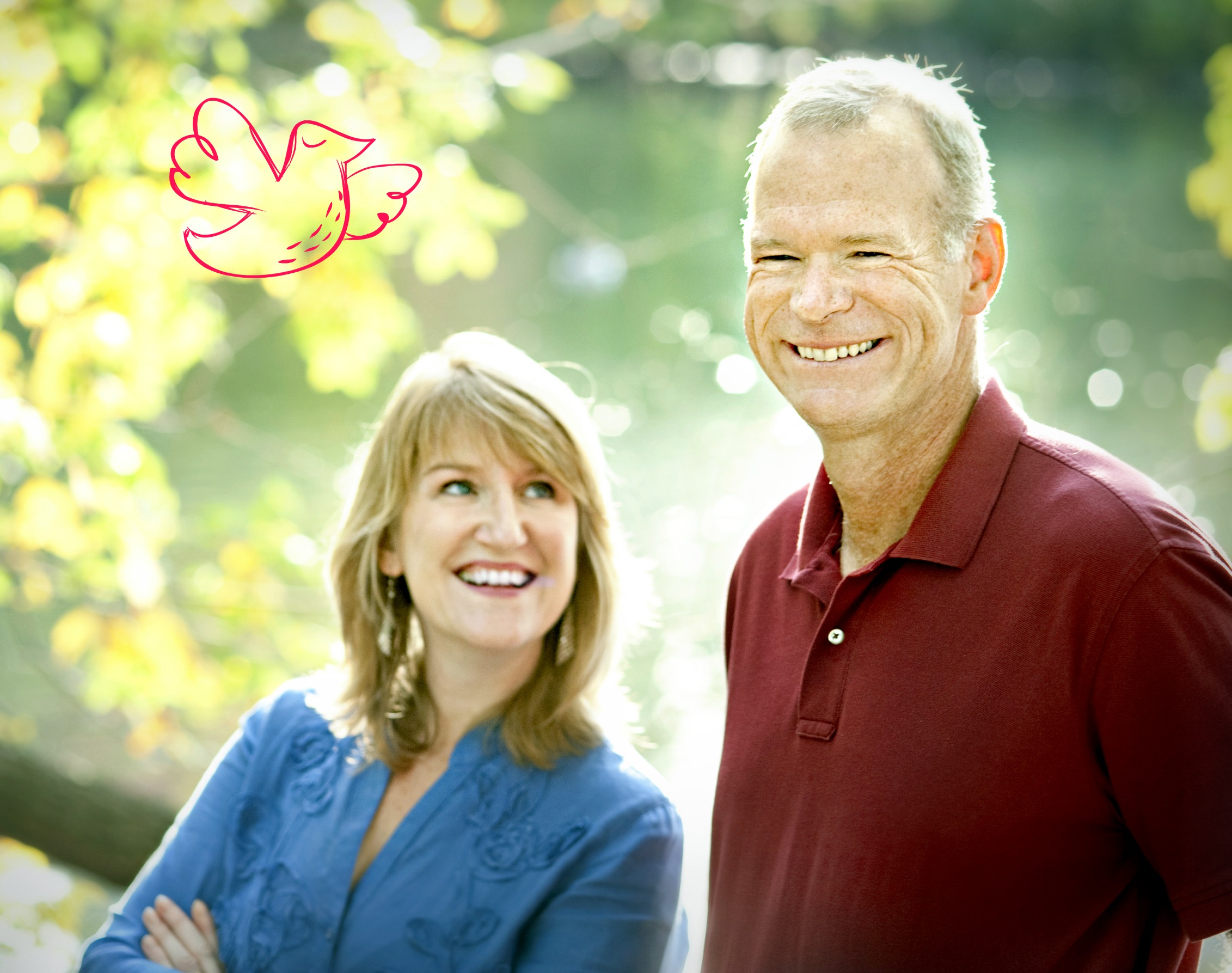
img: Toni Hargis and her American husband, Mark, in a “photo taken for grandma” in 2011. (The love bird is native to The Displaced Nation.)

12 NOMADS OF CHRISTMAS: Kate Reuterswärd, American expat in Sweden (12/12)

Current home: Lund, Sweden
Past overseas locations: Italy (Perugia) and Austria (Vienna) — both for six months
Cyberspace coordinates: transatlantic sketches (personal blog), Expat Blog (guest blog for Swedish Institute, a division of the Swedish government) and @kwise321 (Twitter handle)
Recent posts: “You’re Celebrating on the Wrong Day! — and other things you didn’t know about Christmas in Sweden” (Expat Blog: December 27, 2011); “Work makes me happy” (transatlantic sketches: December 29, 2011); “What a year!” (Expat Blog: December 31, 2011)

Where are you spending the holidays this year?
Actually, it’s my first Christmas outside the United States! I’ll be in Lund with my husband and his parents, his sister and her family, and some family friends. I’m looking forward to it.

What do you most like doing during the holidays?
In the US, I always looked forward to baking Christmas cookies and getting gifts for my family and friends. Sometimes my gifts are homemade, sometimes bought at a store, but I love brainstorming the perfect thing for someone. Here, though, the season is full of Christmassy activities: attending glögg parties, decorating the house with lights and going to Christmas markets. It’s the active part of the holiday season that I like the most in Sweden.

Will you be on or offline?
Totally online and hopefully Skyping with my family and friends on a regular basis.

Are you sending any cards?
My husband and I just got married and it was a sort of spur-of-the-moment decision, so we’re sending a combination Christmas/“Oh hey, we’re married!” card. We’ll be writing thank you’s to the people who were there and a little update to people who weren’t.

What’s the thing you most look forward to eating?
Panettone. My family eats this traditional Italian holiday bread for Christmas breakfast with fruit salad, coffee, and mimosas every year. They sell it in Sweden, too, so I’ll be introducing the tradition here.

Have you read any good books this year other expats or “internationals” might enjoy?
I have really enjoyed these two essay collections (though I have to admit that I haven’t finished either of them yet):
1) The Art of Travel, by Alain de Botton (Pantheon, 2002): A thoughtful contemplation on different aspects of travel. As de Botton says, “Few things are as exciting as the idea of travelling somewhere else, but the reality of travel seldom matches our daydreams.”
2) A Supposedly Fun Thing I’ll Never Do Again: Essays and Arguments, by David Foster Wallace (Little, Brown, 1997): His essay on taking a week long cruise in the Caribbean was so true and so funny that I laughed out loud at several points.

If you could travel anywhere for the holidays, where would it be?
No travel dreams for Christmas unless it were to assemble my family and my husband’s all in the same place at the same time. But for New Year’s Eve, I’d love to return to the countryside in County Cork, Ireland, where I went two years ago with a group of eight friends, one of whom has a cabin there. We would all hole up that cabin again to eat, drink lots of champagne, and welcome in the New Year.

What famous person do you think it would be fun to spend New Year’s Eve with?
Despite having attended some exciting New Year’s Eve parties in the U.S. and Europe, I’m not sure I would want to spend New Year’s Eve with a famous person I didn’t feel close to. That said, Dorothy Parker would be hilarious to sit next to at an event like New Year’s Eve — as long as she didn’t turn against me. I would just want to be a fly on the wall.

What’s been your most displaced holiday experience?
Two days come to mind — both having to do with the Fourth of July, not Christmas. The first was in 2010. I had flown back to the States for my friend’s wedding, and then on July 4th I had to fly back to Vienna to go back to work. I spent the entire day in the no man’s land of the Charlotte, JFK, Dusseldorf, and Vienna airports. (I am an extreme budget flyer.) Actually, I’m not sure whether this counts — I didn’t really experience a displaced holiday; I just missed it altogether.

The other time was July 4, 2009. I was spending the summer in Sweden with my then boyfriend (now husband) — my first extended stay in which I started to really get to know his friends and family. We tried to throw a 4th of July party, but something was off. We grilled, we had flags, we had Jell-o shots for a little novelty Americana, but there wasn’t any patriotism and there weren’t any fireworks. For me it felt like a regular barbecue party trying too hard to be something else rather than an actual holiday.

How about the least displaced experience — when you’ve felt the true joy of the season?
Again, it wasn’t Christmas but Thanksgiving, in 2010. I cooked a traditional Thanksgiving feast with all of my mom’s recipes for almost 30 Swedes. We borrowed a friend’s parents’ apartment to fit everyone in, and it was the coziest, most wonderful celebration. My husband downloaded the Macy’s Day Parade for me as a surprise and streamed it while we were cooking and eating. Best of all, one of my Swedish friends asked me halfway through the meal, “Aren’t we supposed to say what we’re thankful for?” I hadn’t wanted to force them to do that, but everyone got really excited about it, and the whole group took turns saying what they were thankful for in what turned out to be really beautiful toasts to the people in their lives. It was amazing.

How do you feel when the holidays are over?
Rested but a little bit sad. So much energy goes into enjoying the holiday season, anticipating Christmas and New Year’s, gift-giving, baking, merry making — and then suddenly it’s all over! And you’ve got all of January and February to slog through until spring is on its way again.

On the first day of Christmas, my true love said to me:
TWELVE STRANGE TRADITIONS,
ELEVEN CAMERAS CLICKING,
TEN SPROUTS A-BRUSSELING,
NINE CELLPHONES DANCING,
EIGHT WHOOPHIS WHOOPING,
SEVEN SKIERS A-PARTYING,
SIX SPOUSES TRAILING,
FIVE GOOOOOOOFY EXPATS.
FOUR ENGLISH CHEESES,
THREE DECENT WHISKIES,
TWO CANDY BOXES,
& AN IRISHMAN IN A PALM TREE!

STAY TUNED for Monday’s post, setting a new theme for the month’s posts on the connection between the displaced life and spiritual awakenings.

If you enjoyed this post, we invite you to register for The Displaced Dispatch, a round up of weekly posts from The Displaced Nation, with seasonal recipes, book giveaways and other extras. Register for The Displaced Dispatch by clicking here!

Related posts:

12 NOMADS OF CHRISTMAS: David Hagerman, American expat in Malaysia (11/12)

Current home: Penang, Malaysia
Past overseas locations: Vietnam (Ho Chi Minh City), Thailand (Bangkok), Malaysia once before (Kuala Lumpur), Hong Kong, China (Shanghai, Chengdu), Philippines (Los Baños)
Cyberspace coordinates: David Hagerman Photography (business site), SkyBlueSky (blog) and @DaveHagerman (Twitter handle)
Recent posts: “My Date with the Bachelorette” (December 17, 2011); “Day Dreaming” [includes a work-in-progress: “The Ferry Boats of Istanbul”] (November 29, 2011)

Where are you spending the holidays this year?
Chiang Mai, on assignment.

What will you do when you first arrive?
I’ll be scoping out shots as soon as I drop my bags.

What do you most like doing during the holidays?
Eating. My wife, Robyn Eckhardt, is a great cook and she always makes something a bit special, if not necessarily traditional, around Christmas and New Year. (She writes about food and food culture, and has a food blog, EatingAsia, for which I take the photos.) For example, she might make devil’s curry, or curry debal, which is part of the Eurasian Kristang cuisine of Singapore and Malaysia, and is often served during Christmas.

Will you be on or offline?
This year I will be working during the holidays. I’m shooting a hotel in Penang and a travel story in northern Thailand with edits in between. I’ll need to be online for most of that time to send images and file the story.

Are you sending any cards?
I’ll admit that I’m terrible about mailers, promotional and personal. Getting better about doing that is a New Year’s resolution.

Can you recommend any good films or books other expats or “internationals” might enjoy?
The BBC mini-series Michael Palin: Himalaya. Palin has a wonderful way of having fun with a place without making fun of a place. I like it when an actor or a writer can transport you to a place and have you meet the people while not making themselves the center of attention in the narrative.

If you could travel anywhere for the holidays, where would it be?
Turkey. I’ve been three times in the past 18 months and it’s become a bit of an obsession.

What famous person do you think it would be fun to spend the holidays with?
The Ventures‘ guitarist, Nokie Edwards. His version of “Frosty the Snowman” is a reason to listen to Christmas music, and if I could talk him into playing “Telstar” as the ball drops on New Year’s Eve then I’d be a pretty happy guy.

What’s been your most displaced holiday experience?
Christmas in Southeast Asia always feels wrong to me. Too much heat, too much sun, too much Christmas for the sake of nothing but shopping. Except for the Philippines. Filipinos know how to do Christmas better than any people I know.

How about the least displaced experience — when you’ve felt the true joy of the season?
In rural northern Italy, where I’ve spent three Christmases, the holiday felt just as it should: a time for eating and drinking and being together with family and friends. The consumerist frenzy was minimal, and everyone was in a great mood, showing kindness to each other and to me. Even on Christmas Eve, when everyone was out food shopping, there was no pushing, no rudeness, no impatience. I’d like to be in Italy again for the holidays.

How do you feel when the holidays are over?
Robyn and I don’t make a big deal of Christmas or New Year’s, so January 2nd feels pretty much like any other day.

On the first day of Christmas, my true love said to me:
ELEVEN CAMERAS CLICKING,
TEN SPROUTS A-BRUSSELING,
NINE CELLPHONES DANCING,
EIGHT WHOOPHIS WHOOPING,
SEVEN SKIERS A-PARTYING,
SIX SPOUSES TRAILING,
FIVE GOOOOOOOFY EXPATS.
FOUR ENGLISH CHEESES,
THREE DECENT WHISKIES,
TWO CANDY BOXES,
& AN IRISHMAN IN A PALM TREE!

STAY TUNED for tomorrow’s featured nomad, the last (12/12) in our 12 Nomads of Christmas series.

If you enjoyed this post, we invite you to register for The Displaced Dispatch, a round up of weekly posts from The Displaced Nation, with seasonal recipes, book giveaways and other extras. Register for The Displaced Dispatch by clicking here!

Related posts:

12 NOMADS OF CHRISTMAS: Janet Newenham, Irish internationalist (10/12)

Current home: Dublin, Ireland
Past overseas locations: Korea, Australia, South Africa
Cyberspace coordinates: Journalist on the run | Follow my adventures around the world (blog) and @janetnewenham (Twitter handle)
Most recent post: “Dear Diary — Laughter and Crocodiles” (January 3, 2012)

Where are you spending the holidays this year?
Spending Christmas at home in Cork for the first time in 3 years. (I am currently doing a Masters in Humanitarian Action at University College Dublin.) My dad has a vegetable farm so there will be Brussels sprouts galore!!

Had you gone abroad for the holidays, what would you have done first?
Look for a party!

What do you most like doing during the holidays?
I love the friend and family reunions. As everyone lives all over the world nowadays, chances are few for crossing paths with friends and even some family members.

Will you be on or offline?
Offline for the holidays — maybe curled up by the fire watching movies and drinking wine.

Are you sending any cards?
I LOVE snailmail, especially making personalized cards with photographs. Plus after Christmas I will have to hand write thank-you notes to my grandparents, aunts and uncles, as is the family tradition.

What’s the thing you most look forward to eating?
A full tin of chocolates!!

Can you recommend any good films or books other “internationals” might enjoy?
I liked The Whistleblower (2010, directed by Larysa Kondracki and starring Rachel Weisz) — about a peacekeeper in post-war Bosnia who outs a UN scandal. It portrays the kind of work I would like to get into after I finish my MSc.

While living in South Korea, I read Nothing to Envy: Ordinary Lives in North Korea, by the journalist Barbard Demick (Spiegel & Grau, 2009). By following the lives of six people who escaped from North Korea, Demick provides some fascinating insights into a country we know little about. I found it deeply moving.

If you could travel anywhere for Christmas +/or New Year’s Eve, where would it be?
Somewhere hot and sunny…so maybe back to Australia or South Africa for Xmas on the beach.

What famous person do you think it would be fun to spend New Year’s Eve with?
Charlie Todd, the guy who set up Improv Everywhere. Who knows what sort of New Year’s Even mischief he and I might improvise?

What’s been your most displaced holiday experience?
Christmas in Ethiopia, where they don’t actually celebrate Christmas. And, because they use a different calendar, it’s never Christmas there when it’s Christmas everywhere else. The Ethiopians were preparing to celebrate the millennium when it was September 2007 everywhere else!

How about the least displaced experience — when you’ve felt the true joy of the season?
Last year I was really settled into my life in Korea with a great group of expat friends, so even though we were abroad it felt like home.

How do you feel when the holidays are over?
Tired, hungover and broke!

On the first day of Christmas, my true love said to me:
TEN SPROUTS A-BRUSSELING,
NINE CELLPHONES DANCING,
EIGHT WHOOPHIS WHOOPING,
SEVEN SKIERS A-PARTYING,
SIX SPOUSES TRAILING,
FIVE GOOOOOOOFY EXPATS.
FOUR ENGLISH CHEESES,
THREE DECENT WHISKIES,
TWO CANDY BOXES,
& AN IRISHMAN IN A PALM TREE!

STAY TUNED for tomorrow’s featured nomad (11/12) in our 12 Nomads of Christmas series.

If you enjoyed this post, we invite you to register for The Displaced Dispatch, a round up of weekly posts from The Displaced Nation, with seasonal recipes, book giveaways and other extras. Register for The Displaced Dispatch by clicking here!

Related posts:

12 NOMADS OF CHRISTMAS: Matthew Chozick, American expat in Japan (9/12)

Current home: Tokyo, Japan
Cyberspace coordinates: Matthew Chozick, Tokyo-based American writer and translator (writer site) and @mashu_desu (Twitter handle)
Recent article: “Thanksgiving: food, family, but hold the ‘chong chew’ turkey,” in the Japan Times (29 November 2011)

Where are you spending the holidays this year?
I’ll fly out of Tokyo to be in New England with family and loved ones. On the way back to Japan I’ll stop off in Israel to cheer on a Japanese contemporary dancer friend, as she’s doing a six-hour performance art piece. We will then take a quick trip to Jordan to see the ancient Nabataean capital Petra.

What will you do when you first arrive in New England?
I’ll check my email! I must do the final round of design checks on Tokyo Verb Studio, a contemporary art and literary anthology I’m editing with Keisuke Tsubono and Midori Ohmuro. The anthology, published by Awai Books, will be released early in the new year.

What do you most like doing during the holidays?
For the past several years I’ve spent New Years in Japan, where I like to eat my share of rice cakes (mochi) and sweetened black beans (kuromame). I also usually watch the first sunrise of the year at a Shinto shrine and help a friend or two wash off their ancestral gravestones (known as hakamairi).

Are you sending any cards?
In Japan it is customary to send New Year’s cards (nengajō), timed to arrive on the first of January. For traditionalist non-tech savvy acquaintances I’ll hand-write nengajō in Japanese with a calligraphy marker, but for younger friends I will send cellphone messages with the cutest animation I can find, likely containing kittens and balloons.

What’s the thing you most look forward to eating?
An ocean of hummus in Tel Aviv! I’ve never been to Israel, and though I’m not much of a foodie, I hear it’s a gastronomical paradise.

Can you recommend any good books other expats or “internationals” might enjoy?
I loved the novel I Am a Japanese Writer, by Dany Laferrière. While it’s about a Montreal-based Haitian writer who becomes big in Japan, the plot doesn’t matter as much as its digressions and keen observations. There are few authors with as much wit, humor, and enthusiasm for parsing the ball of contradictions we call the human condition.

This year I also really enjoyed Chuck Klosterman’s novel The Visible Man, as well as all the new issues of the magazine N+1, Simon Montefiore’s Jerusalem: The Biography, a book touching on the Fukushima nuclear disaster by Hideo Furukawa (only in Japanese), and M.A. Aldrich’s The Search for a Vanishing Beijing: A Guide to China’s Capital Through the Ages.

How do you feel when the holidays are over?
Bloated.

On the first day of Christmas, my true love said to me:
NINE CELLPHONES DANCING,
EIGHT WHOOPHIS WHOOPING,
SEVEN SKIERS A-PARTYING,
SIX SPOUSES TRAILING,
FIVE GOOOOOOOFY EXPATS.
FOUR ENGLISH CHEESES,
THREE DECENT WHISKIES,
TWO CANDY BOXES,
& AN IRISHMAN IN A PALM TREE!

STAY TUNED for tomorrow’s featured nomad (10/12) in our 12 Nomads of Christmas series.

If you enjoyed this post, we invite you to register for The Displaced Dispatch, a round up of weekly posts from The Displaced Nation, with seasonal recipes, book giveaways and other extras. Register for The Displaced Dispatch by clicking here!

Related posts:

12 NOMADS OF CHRISTMAS: Iain Mallory, English adventurer (7/12)

Current home: Salford, UK
Cyberspace coordinates: Mallory on Travel | Making Everyday an Adventure! (blog) and @MalloryonTravel (Twitter handle)
Recent posts: “The ABCs of Travel — Reflections on a Wanderlusting Life”; “Adventure in Lucerne, Switzerland — Travel Journal”; Cologne: The Bridge of Love Locks (December 2011)

Where are you spending the holidays this year?
I have two trips planned before Christmas: Lucerne for a week and then Cologne for just a few days. That does not leave a lot of time to help with getting the dinner ready for the main day, so I guess Christmas will be spent in the doghouse.

What will you do when you first arrive?
In Lucerne, I’ll be exploring. Cologne is more of a social visit so the Christmas markets will get a battering — along with copious amounts of glühwein and bratwurst.

What do you most like doing during the holidays?
If in Europe, meeting friends for laughs and drinks on a cold evening at a small town Christmas market. But if anything goes, then careering down a piste on two planks of carbon fibre with a group of friends followed closely by plenty of après-ski.

Will you be on or offline?
This year as I’ll be home, I’ll be spending time online, though a little quieter on Christmas day.

Are you sending any cards?
My closest circle of friends will receive a card, handed to them personally at sometime over the festive period when we meet. As for those that I have gotten to know online, hmmm…anybody know a good online card site? I would need some news to produce a newsletter.

What’s the thing you most look forward to eating?
During my travels, I’ll be staying at a veggie house so most definitely looking forward to the turkey although I’ll have to go out for it myself, a day or so before the big day.

Can you recommend any good books other expats or “internationals” might enjoy?
I’ve always loved The Worst Journey in the World by Apsley Cherry-Garrard, about Scott’s final Antarctic expedition (Cherry-Garrard was the youngest member of Scott’s team and one of three men to survive the notorious Winter Journey). Any of the mountaineering books by Joe Simpson is worth reading. These days I don’t have that much time to read but when I do, I prefer mountain or exploration literature. I’m looking forward to finding some time to read The Mammoth Book of Adventures on the Edge, by Jon E. Lewis — a collection of 28 eyewitness accounts of climbing adventures on the world’s greatest mountains.

If you could travel anywhere for the holidays, where would it be?
Mount Everest or maybe Mount Erebus (in Antarctica) for skiing. And I really have to bring in the New Year in Sydney one day.

What famous person or persons do you think it would be fun to spend New Year’s Eve with?
Billy Connolly or Peter Kay would be the funniest people to party with over New Year; David Attenborough and Ranulph Fiennes would provide the most fascinating stories.

What’s been your most displaced holiday experience?
I like to think that it is possible to adapt to most cultures and environments and therefore fit in well, but if I had to pick anywhere, it is hard not to feel a little alien in India. Every day seems to throw up a new surprise that often can be quite shocking.

How about the least displaced experience — when you’ve felt the true joy of the season?
Any time when I’m surrounded by friends, it doesn’t matter where I am. The feeling is one of belonging and being completely at home.

How do you feel when the holidays are over?
Excited; the New Year always offers new opportunities and the potential to be an amazing year.

On the first day of Christmas, my true love said to me:
SEVEN SKIERS A-PARTYING,
SIX SPOUSES TRAILING,
FIVE GOOOOOOOFY EXPATS.
FOUR ENGLISH CHEESES,
THREE DECENT WHISKIES,
TWO CANDY BOXES,
& AN IRISHMAN IN A PALM TREE!

STAY TUNED for Monday’s featured nomad (8/12) in our 12 Nomads of Christmas series.

If you enjoyed this post, we invite you to register for The Displaced Dispatch, a round up of weekly posts from The Displaced Nation, with seasonal recipes, book giveaways and other extras. Register for The Displaced Dispatch by clicking here!

Related posts:

12 NOMADS OF CHRISTMAS: Santi Dharmaputra, Indonesian expat in Australia (6/12)

Current home: Sydney, Australia
Past overseas locations: Germany, USA, The Netherlands, Syria
Cyberspace coordinates: Trilingual: Indonesian, French, English | world trotters raising two multilingual kids (blog)
Most recent post: “”A Woman’s Work” (my article in The Jakarta Globe)” (December 23, 2011)

Where are you spending the holidays this year?
At my parents’ house in Indonesia.

What will you do when you first arrive?
Hugging and kissing my parents.

What do you most like doing during the holidays?
Spending time with family and old friends.

Will you be on or offline?
Online.

Are you sending any cards?
I usually write greetings on my FB wall or my blog.

What’s the thing you most look forward to eating?
Any kind of Indonesian food. Pineapple tarts (a festive Indonesian cookie) and kastengel (Indonesian cheese sticks) are among my favorite guilty-pleasures.

Can you recommend any good books other expats or “internationals” might enjoy?
Trailing wives — regardless of whether they are sojourners or seasoned expats — might appreciate:
1. A Broad Abroad: The Expat Wife’s Guide to Successful Living Abroad, by Robin Pascoe (The Expatriate Press, 2009)
2. A History of the Wife, by Marilyn Yalom (Harper, 2001)
These are two among many books that have made me feel more empowered. By reading widely, I’ve come to understand that (trailing) wives everywhere and in every era have struggled to find happiness, just as I have. 🙂

What’s been your most displaced holiday experience?
I spent part of my childhood in The Netherlands. I loved it when Sinterklaas visited our school and gave us presents. When my family moved to Syria, I was disappointed: no Sinterklaas! By the time I returned to Indonesia at age 11, I didn’t believe in Santa. To this day, though, I believe that Sinterklaas is the only real Santa (LOL).

How about the least displaced experience — when you’ve felt the true joy of the season?
Tricky. I’m an adult TCK married to another adult TCK, and we’ve continued moving around the globe in our adulthood. I can feel both displaced and part of a place at the same time. But if I had to pick one occasion, it would be when I witnessed my trilingual children celebrating the holidays with their paternal relations in Alsace, France. Their granny and great-granny spoiled them, and it was lovely to see my kids so happy. I felt very at home in my husband’s French family. At the same time, though, I felt displaced — I was missing my own family in Indonesia.

How do you feel when the holidays are over?
Also tricky, as it depends on where we happen to be. Last year we spent the holidays on our own, just the four of us. My husband was too busy working and had only two days off. I was left to entertain the kids during their six-week school break (in Australia, Xmas break is the equivalent of the long summer break in the Northern Hemisphere). At that time, we’d been living in Sydney for less than a year, so we spent most of the time exploring the beach.

When we were living in Munich, we spent two Christmases with my husband’s family in Alsace, and it was sad each time we left. As adult TCKs ourselves, my husband and I are used to living with our nuclear families, so it was a novelty to spend those two Xmases with the extended family, including my husband’s siblings and their kids. Our kids were even happier with their grannies and cousins around, and the same was also true of us (at least during holiday seasons ;)).

When living in Chicago, we tended to use the time between Xmas and New Year for road trips. Sometimes we were traveling in snowstorms — so were happy and relieved to arrive back home safely.

While we were in Holland, I worked as a lawyer and used to enjoy the Xmas dinner held by the office along with the generous Xmas bonus. But when I had to return to the office after the New Year, I did so rather reluctantly — LOL.

The last time I spent New Years in Jakarta was in 2001. My brothers, husband and I (we didn’t have kids yet) stayed at a hotel to celebrate New Year’s Eve. It was kind of sad to leave Jakarta to return to the winter season in Europe (we were in Holland then).

This year, we traded in Australian summer for the Indonesian rainy season. Temperature wise, though, there’s almost no difference. I guess our kids will be sad to leave their Indonesian grandparents and cousins when we go back to Sydney.

On the first day of Christmas, my true love said to me:
SIX SPOUSES TRAILING,
FIVE GOOOOOOOFY EXPATS.
FOUR ENGLISH CHEESES,
THREE DECENT WHISKIES,
TWO CANDY BOXES,
& AN IRISHMAN IN A PALM TREE!

STAY TUNED for tomorrow’s featured nomad (7/12) in our 12 Nomads of Christmas series.

If you enjoyed this post, we invite you to register for The Displaced Dispatch, a round up of weekly posts from The Displaced Nation, with seasonal recipes, book giveaways and other extras. Register for The Displaced Dispatch by clicking here!

Related posts: