The Displaced Nation

A home for international creatives

Tag Archives: Acquired tastes

LOCATION, LOCUTION: Expat author JJ Marsh on bringing a location to life through writing

jill 3Today we welcome expat crime writer JJ Marsh to the Displaced Nation. JJ grew up in Wales, Africa and the Middle East, where her curiosity for culture took root and triggered an urge to write. Having at this point lived in Hong Kong, Nigeria, Dubai, Portugal and France—she finally settled in Switzerland—JJ certainly belongs in our midst! But what makes her even more special is that she has offered to impart her knowledge to other international creatives about the portrayal of “place” in one’s works.

Currently halfway through her European crime series, set in compelling locations all over the continent and featuring detective inspector Beatrice Stubbs (on loan from Interpol), today JJ begins a new series for us, entitled “Location, Locution.” In the opening post, she will answer the questions she plans to ask other displaced authors in future posts.

JJ, we are positively THRILLED (in more ways than one!) to have you as a new columnist. Welcome! And now to get to know you a little better…

Which comes first, story or location?
Story, always. Or at least the bare bones of the plot. Then I audition various places before beginning to write. I have to know the setting, even before populating the novel with characters. The place IS a character. For example, once I knew the victims would be corporate Fat Cats in Behind Closed Doors, the first in my Beatrice Stubbs series, I looked around for a financial centre with the right kind of atmosphere. Turns out my home town of Zürich fitted the bill and even gave me the title.

How do you go about evoking the atmosphere of a place?
I’d say by really looking at it and digging deep. Not only that, but try to look at it from the perspective of your reader. It’s no coincidence that in many European languages, one asks for a description using the word “How”.

Como é?
Wie war es?

Yet in English, we say “What is it like?” We want comparisons to what we know. I actively chose to use a foreigner arriving in a strange country/city, so as to look at it with new eyes.

Which particular features create a sense of location? Landscape, culture, food?
I start with the senses. We notice sights, sounds and smells first, and add to our impressions with tastes and textures, all the while comparing them to our expectations. Food and drink are essential, as they reveal something of the region but also much about the characters. Cultural differences have to be treated with great care in fiction. Lumpen great dumps of information are poison to pace. But subtle observations can be woven into the story, provided they are relevant. I’ve just abandoned a book set in Rome which was clumsily pasted chunks of guidebook against a sub-par Eat, Pray, Love plot. The reader wants to be immersed in the world of the book, not subjected to the author’s holiday snaps.

How well do you need to know the place before using it as a setting?
Speaking for myself, extremely well. I feel insecure describing an area I’ve never visited. But that’s not true for everyone. Stef Penney, who wrote The Tenderness of Wolves, created a beautiful story set against the backdrop of the frozen wastes of Canada. She’d never even been there.

While I am awed by that achievement, I don’t think I could do it. I need to ‘feel’ the place and also, to understand the people.

My nomadic past and interest in culture led me to study the work of Geert Hofstede and Fons Trompenaars. One of their models is to analyze culture like an onion. The outer layer is Symbols—what represents the country to outsiders/its own people? The next is Heroes—who do the people worship and venerate? Peel that away and explore its Rituals—on a national and personal level. At the centre of the Onion, you will find its values, the hardest part of a culture to access. But that’s where the heart is.

Could you give a brief example from your work which you feel brings the location to life?
The recent UK horsemeat scandal amused me, as it’s part of the average menu in Switzerland. Here my combative detectives, one Swiss, one British, have just finished lunch.

Beatrice patted her mouth with her napkin. “Herr Kälin, your recommendation was excellent. I thoroughly enjoyed that meal.”

“Good. Would you like coffee, or shall I get the bill?”

“I’ve taken up enough of your time. Let’s pay up and head for home.” Beatrice finished her wine.

Kälin hailed the waitress. “I wasn’t sure you’d like this kind of farmer’s food.”

“Farmer’s food is my favourite sort. Solid and unpretentious. Not the sort of fare they would serve in those crisp white tents at the polo park.”

Kälin let out a short laugh. Beatrice cocked her head in enquiry.

“It would definitely be inappropriate at the polo park, Frau Stubbs. We’ve just eaten Pferdefleisch. Horse steak.”

Which writers do you admire for the way they use location?
Val McDermid, particularly for A Place of Execution. Not only place but period done with impressive subtlety. Kate Atkinson, for making the environment vital to the plot in a book such as One Good Turn. Monique Roffey for bringing Trinidad to life in The White Woman on the Green Bicycle. Alexander McCall Smith enriches his stories with a wealth of local detail, be it Botswana or Edinburgh. And Kathy Reichs for making her dual identity an advantage. Donna Leon’s Venetian backdrop, Scotland according to Iain Banks in Complicity, and Peter Høeg’s Copenhagen in Smilla’s Sense of Snow.

There are many, many more.

* * *

Thank you, JJ! Readers, any further questions to JJ on her portrayal of “place”, or authors you’d like to see her interview in future posts? Please leave your suggestions in the comments. You may also enjoy checking out the first three books in JJ Marsh’s Beatrice Stubbs series:

  • Behind Closed Doors: Takes place in Zürich, where someone is bumping off bankers.
  • Raw Material: Takes place between London and Pembrokeshire. Here Beatrice is joined by wannabe sleuth, Adrian. Amateur detectives and professional criminals make a bad mix.
  • Tread Softly: Unfolds in the Basque Country of Northern Spain. Beatrice is supposedly on sabbatical, but soon finds herself up to her neck in corruption, murder and Rioja.

STAY TUNED for tomorrow’s interview with Lisa Egle, author of Magic Carpet Seduction, two copies of which we’ll be giving away!

If you enjoyed this post, we invite you to register for The Displaced Dispatch, a round up of weekly posts from The Displaced Nation, with seasonal recipes, book giveaways and other extras. Register for The Displaced Dispatch by clicking here!

Images: Typewriter from MorgueFile; picture of JJ Marsh and her book cover supplied by herself; map from MorgueFile

GLOBAL FOOD GOSSIP: Water, water, everywhere, Nor any drop to drink.

JoannaJoanna Masters-Maggs, our resident Food Gossip, is back with her monthly column for like-minded food gossips.

This month, Joanna addresses the issues facing a wine-loving girl who finds herself living in a dry country for two years.

* * *

“I don’t think I can do this,” I whined to my husband casting my eyes around the restaurant in something close to desperation.  “I think it must be time for repatriation, don’t you?”

My husband had taken me to a smart restaurant in Al-Khobar, Saudi Arabia, on our first night in The Kingdom.  It was such an attractive place: lovely china and glasses, a chic wooden floor, attentive waiters and delightful food. Yet it was all, so, so wrongIt wasn’t just that I was clad in a form-engulfing abaya, the sleeves of which kept getting in the way of everything.  It wasn’t that we had been ushered to the less well-appointed “Family Section” without views over the The Gulf.  Annoying as those facts were, they weren’t the only irritant.

“Look.” I held up my large balloon shaped wine glass for inspection. Full of San Pellegrino, it shimmered under the tasteful lighting. “What’s the point of all this wonderful food if you just wash it away with water?”

“It’s nice water. Italian,” encouraged David, whose heart must have already been sinking in the knowledge that he had two more years to live with a discontented missus.

“It’s. Not. Wine.” I enunciated my words carefully. “And I have beef.”

More to the point, I had a beef. Let me make this clear for anyone who has not had the Saudi experience: there is no alcohol to be had anywhere.  It is forbidden, interdit, prohibido, indeed, haram.  Occasionally a hapless supermarket manager might mistakenly stock chocolate liqueurs, but who wants those, with or without a good Chateaubriand?

Home-brewing, the expats’ hobby

I’m all for fitting into the lifestyles of the places where I wash up, but I like a bit of give and take. Several years without wine or bacon didn’t seem like give and take for a girl who is half English and half Irish. On that first night, I would have considered raiding a Church’s communion wine but, of course, there are no churches in Saudi either.

So started a two-year quest to find an acceptable alcoholic drink which would inject a little of the warmth wine offers to a dinner party, and a little of the naughty fun that oils the wheels of a party the rest of the world over.

Our starting point was the homemade wine with which most expats become acquainted.  I won’t bore you with the recipe; suffice to say it involves a water cooler bottle, gallons of red or white grape juice, lemon, lots of sugar, yeast and a handful of teabags – for the tannin, of  course.  This lot is heated up then transferred to the water bottle and bunged up with the special cork and an impressive-looking glass “curly wurly” tube.  After four or five weeks, when the smell of yeast has subsided, the wine can be bottled.

The resulting wines can vary surprisingly, but in one thing they are identical: each is truly appalling.  It doesn’t matter the method used, the care taken or the expensive ingredients experimented with — fresh blueberries in Saudi, anyone? — it is just dreadful.  We knew someone who actually made a batch from grapes he had trodden himself. Well, perhaps that never did sound promising.

Vimto — with a Tixylix chaser

During the weeks of waiting for our wine to ferment, I realized why even cough mixture was banned in The Kingdom.  A few dry company dinners complete with presentations and speeches convinced me that teetotalism is not advisable, at least not before retirement. If you must spend dinner with a bunch of people not entirely of your choosing, a slug of Tixylix would be welcome.

I began to view anything sold in bulk with grave suspicion.  Why, for example, would anyone wish to buy large quantities of Vimto, a cordial traditionally found in fish and chip shops in Northern England?  Could it be possible that it was the secret to a sloe gin sort of drink?  The adverts on massive billboards throughout the city suggested a sophistication more readily associated with champagne than a fruit squash. That observation led to an ill-advised attempt at a Vimto-based wine. Sadly, and perhaps predictably, the result was the cough mixture a million sleepless Saudi parents would have been grateful for. Never mind; undeterred, we continued our experiments with a dedication and wanton disregard for our health that the Curies would have admired.

Putting the fizz in compound life

Early in our stay in Saudi, I heard rumours of “The Champagne Lady” of another compound.  She had, so it was said, perfected a sort of sparkling wine which, if not exactly champagne, was a far more pleasant drink than Saudi Ordinaire.  My search for her was rewarded in time and she proved generous with her recipe.  The key requirements were a strong lemonade bottle with a wired cork, unsweetened white grape juice and just two grains of yeast. Even one grain over requirements could result in a nasty glass-shattering explosion.  One must resolve to keep the fledgling beverage in the fridge and not agitate it for two weeks — harder than it sounds in a household with four kids. After guarding the fridge door like an over-zealous Rottweiler for the required time, I could pull down the wire to cork the bottle then leave it in its comatose state for a further two weeks.  The  “pop” on opening was deeply gratifying; the flavor, surprisingly, “not so bad”. Rather like Appeltiser, it did not cause one’s face to reflexively contort while downing it.  Champagne it was not, but drinkable it was.

Add the Perrier and face the grapes of wrath

Two years of experimentation taught us two things.  Firstly, the only way to make a drink that approximated a bone fide drink one might find on sale elsewhere was not to serve our wine straight but to make a “Pimms” cocktail from it.  We would pour it over a glassful of ice and top up with lemonade.  After adding plenty of mint, cucumber and any other vegetation to hand, we could, at a stretch, imagine ourselves at Wimbledon.  Unlike the wine alone, it was vaguely similar to what we wished it was.  That alone justified the considerable number of Pimms parties we hosted in our time.

The second thing we learned, as a direct consequence of the first thing we learned, is that a wine snob is a wine snob whatever his situation.  Making our “cocktail” on occasion caused as much offence as if we had used a Grand Cru as the base, especially if mixed it with someone else’s wine.  The snorts of outrage could have been no stronger.  Indeed cutting someone else’s wine with anything from Perrier to club soda to ice, was to run the risk of causing deep and enduring offense.  There are certain people (and you know who you are) who should remember wine is meant to be fun.  You need every laugh you can get in certain circumstances, and a dodgy Saudi Red ought to be the perfect vehicle for hilarity.

Postscript

Oh, and in case you were wondering — why the popularity of Vimto? It turns out that it is the Saudi drink of choice during the Iftar breakfast enjoyed at sundown each day of Ramadan.  It addresses low blood sugar levels after a day of fasting and stands up well to the full flavoured food on offer – and it doesn’t make you screw up your face when you drink it.

Joanna was displaced from her native England 16 years ago, and has since attempted to re-place herself and blend into the USA, Holland, Brazil, Malaysia, Venezuela, Saudi Arabia, and now France. She describes herself as a “food gossip”, saying: “I’ve always enjoyed cooking and trying out new recipes. Overseas, I am curious as to what people buy and from where. What is in the baskets of my fellow shoppers? What do they eat when they go home at night?”

Fellow Food Gossips, share your own stories with us!

Image: Joanna in her abaya, celebrating an English goal during the World Cup

STAY TUNED for tomorrow’s post!

If you enjoyed this post, we invite you to register for The Displaced Dispatch, a round up of weekly posts from The Displaced Nation, with seasonal recipes, book giveaways and other extras. Register for The Displaced Dispatch by clicking here!

Related posts:

For travel & shutter bug Ildrim Valley, a picture says …

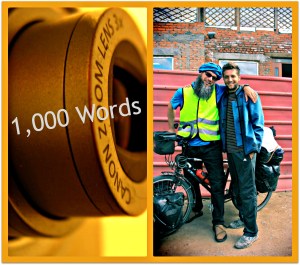
Collage_1000words_Ildrim_dssWelcome to our new series: “A picture says …”, featuring interviews with displaced creatives for whom a camera is a mode of artistic expression for the sights and people they encounter in their nomadic wanderings.

To kick off the series, I have the pleasure of conversing with Ildrim Valley, an intrepid adventurer who is also an economist(!) and travel photographer. It is, of course, this last point we’ll be focusing on, so to speak…

But first a few of Ildrim’s vital statistics:

Place of birth: Baku, Azerbaijan
Passports: Canada; Azerbaijan
Overseas history: From least to most recent: Azerbaijan (Baku); Switzerland (Geneva); Kenya (Nairobi); Canada (Vancouver, British Columbia); Hungary (Budapest); France (Toulouse)—2012 to present.
Occupations: Graduate student of economics; travel photographer; amateur snowboarder; adventurer!
Cyberspace coordinates: Curious Lines (photography blog)

Without further ado, let’s find out more about Ildrim and the way he uses photography as a creative outlet for his international adventures.

Peripatetic from an early age

Hello there, Ildrim. Welcome to the Displaced Nation. Let’s begin by having you tell us a bit about your travels. What inspired you to set off and what has motivated you to keep on going?
My first travel experiences come from traveling with my mom and brother. My mom is eager to change her surroundings, so thanks to her I was lucky to move around and travel early in life. At an early age I’ve been amazed at how life can be so different for people elsewhere than my hometown.

I think that this early fascination developed into a strong curiosity about lifestyles. Now that my mom no longer takes me on adventures (she gets herself into trouble without me!), I try to find my own means of traveling and satisfying my curiosity about places around the world.

You are a self-described adventurer. Do you prefer going and going, or do you sometimes settle in one place for a time?
As I travel more, I realize that it’s not just about seeing a new place that excites me the most. As fun as it is to keep going and going, simply being somewhere new isn’t always satisfying. Settling somewhere for a time gives me an opportunity to live through something different and possibly understand it.

I understand you recently moved to Toulouse, France?
Yes, I moved to Toulouse in September 2012 for graduate school. I felt like grad school would open a few doors to pursue some of my other interests, and it presented a fairly easy way to move to another country. So I set out to look for good schools around the world that fit my background as well as academic interests. At the time I was interested in southern Europe, and Toulouse offers the right kind of balance: it’s a great school with welcoming people and fine landscapes to be explored. Plus an opportunity to finally master French was very appealing—though I have to say I’m not doing a very satisfactory job so far.

On your photography blog, Curious Lines, you say:

Photography for me isn’t just an art form, it’s a way to share experiences.

When and why did you start using DSLR cameras?
I got my first DSLR in 2010, shortly before moving to Budapest. I got it in order to document the move.

Does the process itself of capturing a place or moment affect the relationship you have with that place? For example, does capturing a good set of photos increase the fondness you have for that place?
The process of capturing a moment does affect the way I experience a place, which in turn affects my relationship with it. But how I feel about a place has a lot to do with how I feel about the people from that place. So when I spend enough time in one spot, I get to meet people and build relationships. However, when the stays are short, the camera has a more significant role as it facilitates a connection with others. It helps me get a reaction, an emotional response—a smile or maybe a conversation.

But it’s important to point out that in some places around the world, carrying a camera can have a negative affect. People are fast to judge you on how you look. In Kenya, for example, I have a lighter skin tone, which results in the locals treating me differently, not necessarily in a positive way.

Likewise, having a large camera around your neck or in your hand will send a different signal and will be interpreted in a different way depending on where you are in the world.

I would just like to add that one way in which camera affects my experiences is that it taught me how to look at things differently without a lens. It helps me appreciate things differently and it’s important to know when to put the camera away and enjoy things with your own eyes. It’s easy for me to get sucked into continuous photo taking when I’m in a new place. Though I enjoy it, there are still other things to be enjoyed behind the lens, which is even more true when you’re traveling with someone else. But it doesn’t have to be one or the other; with time I’ve been learning how to balance the two.

For me, the camera has to be an extension of the adventure and not the purpose for it.

Looking back on all the places where you’ve taken photos, which have been your top three favorite places to shoot?
Although my opinion changes with time, my top spot for now is Mongolia. Last year I spent about a month there. The people and their lifestyles around the country fascinate me. The landscapes are pure and surreal. When you have such a keen interest and curiosity about your subject, shooting becomes that much more enjoyable. I’m actually redesigning my Website to present more content via other channels than a blog. One of the new sections will be about my experiences in Mongolia. The other two places that I love for photography are coastal British Columbia and Croatia.

An eye for the London Eye

On your blog you also say:

Once I started using a DSLR I’ve realized that scenes that come out on my computer screen don’t reflect the whole beauty of the moment. They don’t transmit the same type of emotion I felt standing behind the lens. So I tried and am still experimenting with different techniques to bring myself and others closer to how it actually was, at least in my mind. I don’t always try to achieve the most “realistic” looking photos, but rather try to transmit the feeling of the scene.
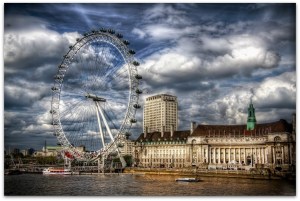
the-london-eye_dropshadowI notice that one of the techniques you’ve used is High Dynamic Range Imaging (HDR), an example of which can be seen in this striking image of my hometown London (original here)—by the way, you’ve now made me feel a little homesick! Tell me a little about HDR and how a novice photographer like myself can go about trying to achieve similar effects with a DSLR camera.
I have a very basic example of what High Dynamic Range (HDR) does in one of my blog posts. In a nutshell, cameras don’t capture the range of light the same way our eyes do. Our eyes adjust to both bright and dark spots in the same scene while for cameras it’s always a trade off.

HDR photography allows you to capture more light by taking multiple shots of different exposures. I take three: one normal, one overexposed bright photo, and one underexposed dark photo. By combining these three shots together you get a higher range of light information available to play with. Some people take five or even seven photos, but three is enough in most situations.

To achieve this HDR effect, I take my three shots bearing these points in mind:

  • The auto-bracketing option on modern-day cameras helps you take three photos with a single click.
  • Set the camera on Aperture priority mode (“AV” or “A” on most cameras) to have the same aperture and depth of field in all three shots.
  • Ensure that the three shots are as identical in composition as possible. A tripod could be useful. (The surroundings or simply holding your breath will do in many cases.)
  • Use software* to combine all three shots together and then let your imagination take charge.

*Some of the most popular softwares are Photomatix Pro, HDR EFEX PRO and HDR Darkroom. Then there are options like Luminance HDR, which is free (open source) but will take some time getting used to. Whichever software you choose, it will help you combine all this light information into one image. Then it’s almost always a good idea to take it into your preferred photo editing software and continue working as you would with any other photo.

People pix

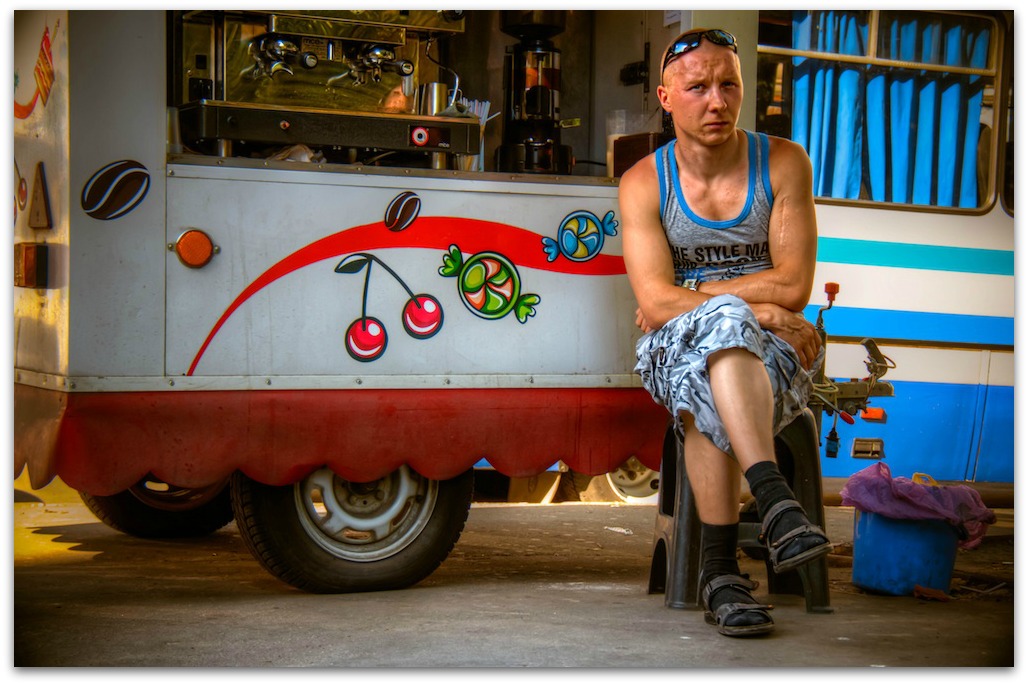
Streetvendor_drop shadowTell me about this recent photo you took of a street vendor in Kiev (original here). How did you find yourself in Kiev?
I was on a long earthbound trip in 2012 from Budapest to Hong Kong, which took me through Kiev.

How did you come across this street vendor? Did you converse with him before taking his photo?
There was no verbal communication. Rather, I nodded at the guy while moving the camera in my hand slowly, indicating that I wanted to take his photo. His face was blank in acceptance so I went ahead and snapped the photo.

Do you always try to try get permission from people when trying to take a photo?
I prefer to ask for permission, but sometimes it’s the spontaneity that makes the photo and asking would yield a different result when they prepare themselves for the photo. Either way, I make sure the subject knows I’m taking their photo.

Is it difficult to obtain permission when facing a language barrier?
It’s important to learn how to communicate with your facial expressions and your body as well as being able to read others. In my experience, regardless of whether your communications are verbal or non-verbal, the more confident and subtle you are, the more likely you are to get approval.

One thing about the street vendor picture that really stands out for me is the boldness of the colors. Can you tell me why and how you set up the shot like this?
Initially, I tried to achieve an effect that would provoke an emotional response akin to the one I had in that moment. A new environment can be emotionally overwhelming—a feeling that can be difficult to capture. First impressions are special. So when I first started editing it was the exaggeration of colors that made me feel the closest to “re-experiencing” the place. Although you can never really re-live the moment, you can come up with something that reminds you of it.

In a way it’s like when a friend tells you a “you really had to be there” story—and exaggerates the details to make the point. It’s not that the true story needs any exaggeration to be interesting, but you need to have the exaggeration to translate the feeling.

Many of these aspects of photography are, of course, a matter of experience and taste. Believe it or not, my earlier photos were even more color crazy. With more experience I’m leaning away from it and trying to express the moment in other ways. I really like black-and-white photography and the subtlety of its expression. I find it trickier and am experimenting with it more at the moment.

Parting shots…

When you take a look at the two photos mentioned above, what’s the first thing you remember?
The London photo reminds me of my host, a friend I haven’t seen in years.

The photo of the Ukrainian street vendor reminds me of a young violinist I met on the train and spent the day with. It also reminds me of how hot the day was and my craving for kvass (a fermented drink made from rye bread). Believe me, a hot day in Ukraine can make you crave kvass as a refreshment.

Are you hoping that these photos will evoke similar emotions in other viewers?
The intent is not always to prompt the same reaction I had. The same photo can prompt many different reactions. I like it when visitors to my site send messages expressing how my photos reminded them of their own experiences.

Finally, do you have any advice for wannabe photographers who are traveling or living abroad, on getting started?
I’d say to take photos for yourself first and not to think about what others would want to see or to try to meet their expectations. The first person your photos should move is yourself.

Thank you, Ildrim! Readers, what do you make of our first photographer post? Some wise words here, and who knew that autobracketing could be so useful? So, any further questions for Ildrim? Please leave them in the comments!

STAY TUNED for tomorrow’s post from expat author, Helena Halme, who is giving away THREE COPIES of her latest novel! 🙂

If you enjoyed this post, we invite you to register for The Displaced Dispatch, a round up of weekly posts from The Displaced Nation, with seasonal recipes, book giveaways and other extras. Register for The Displaced Dispatch by clicking here!

Related post:

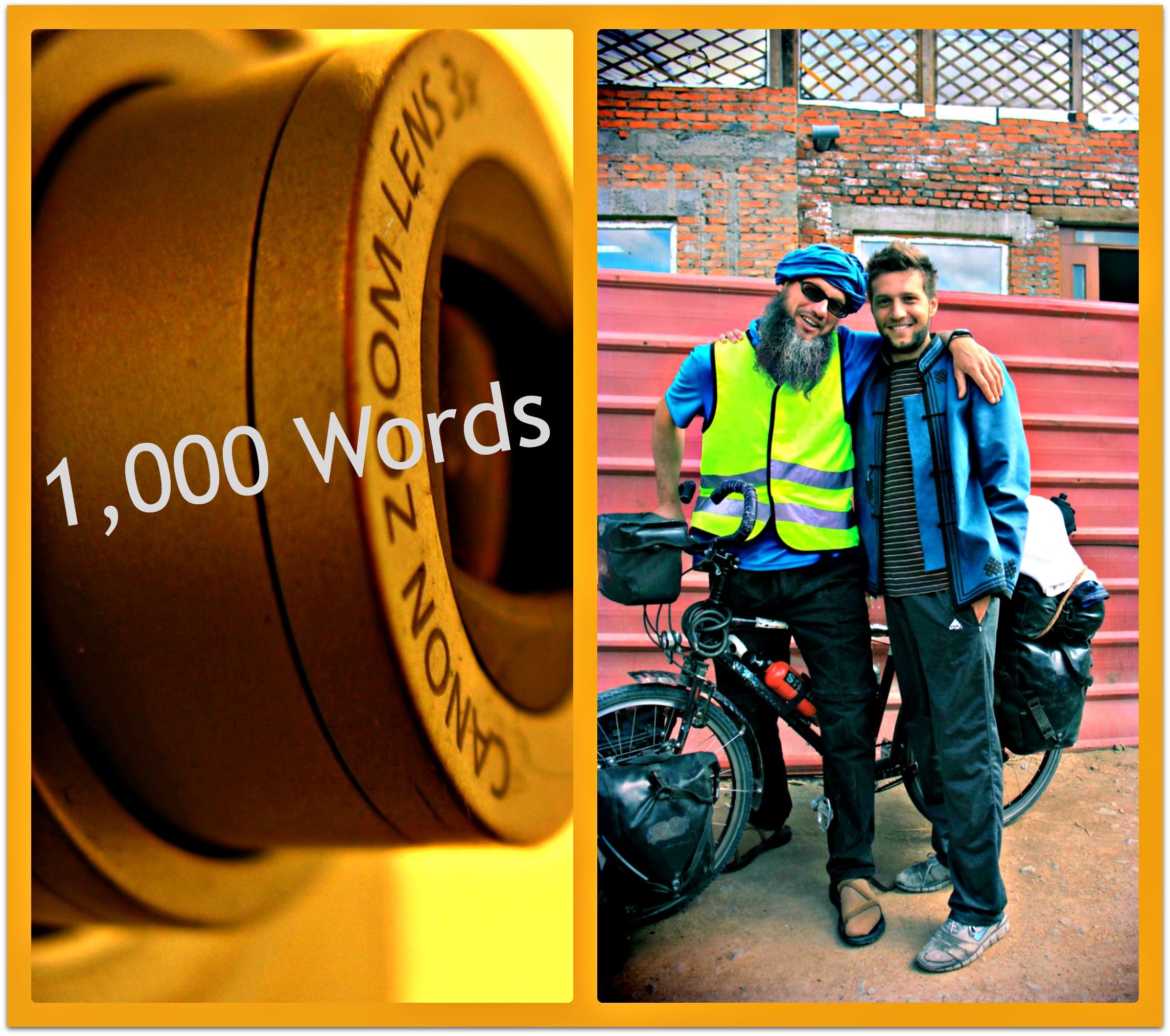
Images (from left): Camera lens from MorgueFile; Ildrim Valley (on right) with a traveler he met last summer in Ulaanbaatar in Mongolia. Says Ildrim: “He was originally from Slovenia but didn’t like being associated with any particular place. He’d been traveling on his bicycle for about four years at that point.”

GLOBAL FOOD GOSSIP: There’s no taste like home

global food gossipJoanna Masters-Maggs, our resident Food Gossip, is back with her monthly column for like-minded food gossips.

Today’s topic for discussion in the kitchen is something very dear to Joanna’s heart: English food.

Before I left the shores of England over 16 years ago, I never gave a thought to British recipes and ingredients as long as I had a supply of strong English teabags. And once I left England and adopted a “displaced” lifestyle, not being able to find ingredients for familiar English recipes simply meant an opportunity to try something new and wonderful, because I love cooking. I tasted and cooked my way around the world and lost touch with food from home.

Now, some people might be unkind enough to suggest that this was for the best, given England’s reputation for lacklustre food. How unfair! A difficult century of war and rationing, followed by the arrival of new convenience foods had an adverse affect on home cooking and restaurants alike. If I had to collect my rations for weeks in order to make a cake, I would probably lose interest within days. The new packets and tins must have seemed welcome relief from the effort of thinking about how to put a meal together. But that’s another story. For now, take it from me that properly cooked English food made with quality ingredients and which doesn’t substitute homemade for pre-packed, is a wonderful thing. It is a wonderful thing.

However. Back to me, living overseas: I felt it was important to learn to cook the local food, and I took this task very seriously. So seriously, in fact, that one day the realization hit me that, in eight years of motherhood, I couldn’t recall having made a single traditional English dish for my kids. Why on earth not? This was the culinary equivalent of refusing to speak to your child in your native tongue, and potentially just as psychologically damaging.

We had just arrived in Malaysia. Kuala Lumpur has a large expat population, and a certain supermarket, Hock Choon, caters to it shamelessly. During one expedition there, I picked up a distinctive green and gold tin of Golden Syrup.

“What’s that?” asked my kids, crowding around, eager to look at this strange foreign product.

Oh dear. What woeful ignorance of an iconic British product. My own children didn’t know that Golden Syrup is to foie gras what corn syrup is to Spam.

Clearly there was some cultural awareness to be taught.

A taste of home

On the drive home I began to feel a tingle of excitement. A quest had begun. A project is a good thing to have in the difficult first few months in a new country. It keeps you from mourning over your lost life elsewhere. I determined that I would cook English favourites for my kids and I would cook them well. No corner cutting, no packets, and certainly no shop bought pastry—one thing thankfully, that was conspicuous by its absence at Hock Choon.

That Sunday I produced my kids’ first-ever Sunday roast. It was simple stuff: just chicken, roast potatoes and green beans, but I just felt such a damn capable mother as I carried it to the dining table. Steamed syrup pudding came next, and custard too — the real deal, made with cream, eggs and a steady nerve.

My children stared with fixed intensity as I lifted the dish to reveal the pudding in its full golden glory. Accustomed to tarts and tortes, they were unsure what they were facing.

“Umm…what is it called?” asked six-year-old Isabel, as I poured custard on her serving.

Seconds later she discovered what everyone does when they try this delight of English baking. The name gives no hint of its tender lightness. It doesn’t swamp the vanilla delicacy of custard. Here was something that looked as though it could break storefronts for ram raiders, but which in reality was a frou-frou pussycat of buttery, light delight. With relief, I surveyed the smiles of my family. There would be no pudding mutiny that night.

Over the months that came, aided by the marvelously stocked Hock Choon, I mastered steak and kidney pie with homemade suet pastry, roast racks of lamb, and liver and onions. On the pudding side, Bakewell tart became a firm favourite and more than adequate British competition for a tarte au citron.

Bravely, I served English food for my children’s Korean and Japanese friends and found they delighted in the names of some of the dishes. I lost count of the number of children who couldn’t wait to tell their parents they had eaten “toads” and that they were delicious. Toad in the Hole, if the fat and oven are hot enough, is a glorious combination of light and golden batter, meaty sausages and sweet onion gravy. I remember one lovely Chinese mum being genuinely disappointed to learn that it was a pork dish and not a spin on frog legs.

Now, my children have favourites recipes from England and are fiercely defensive of their national dishes. Criticism is met with an invitation home for dinner and on those nights I cook with extra care. I am happy to report that we have enjoyed quite a lot of success. No longer are we bashful when our food or produce is knocked—we talk back. That’s important. Food forges a sense of belonging to somewhere.

One more thing before I go: Clotted Cream

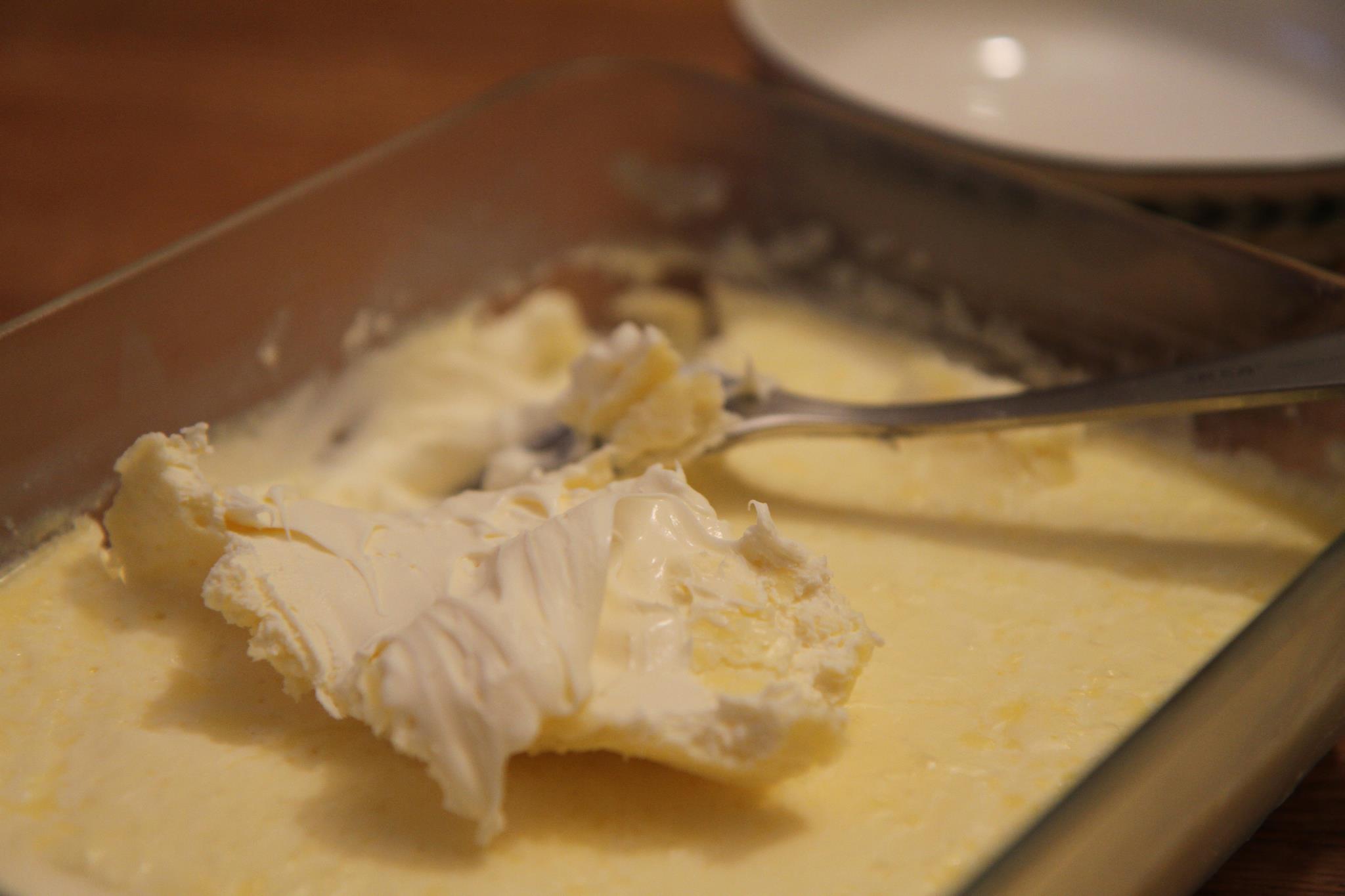
905482_10151362556866828_2018383220_oEngland is rightly famous for its dairy products, king of which is clotted cream. It hails from South West England, particularly Devon, but also Dorset and South Somerset. This is the stuff traditionally served with scones and for which ‘cream tea’ is named. I like to serve it with fruit tarts at dinner and — oh, let’s be frank, this is the cream that goes anywhere. Just don’t waste it in cooking.

It’s quite difficult to find outside Britain, but not to worry—you can make your own.

RECIPE FOR CLOTTED CREAM

You need “raw” cream. It can be called heavy, whipping, double or single cream, just as long as it isn’t UHT (ultra heat treated). UHT won’t separate, and you need to separate the cream from the milk.

Now put that cream in an ovenproof dish and cover. Place it in an oven preheated to 180°F or 80°C and leave for 8-12 hours—yes, you read that correctly.

When a thick, yellowish crust of mascarpone-like consistency has been achieved, remove the dish, wait for it to cool, then refrigerate for a minimum of 8 hours. Scoop it in to jars, cover and eat within a few days.

That should be the easiest part of all.

Joanna was displaced from her native England 16 years ago, and has since attempted to re-place herself and blend into the USA, Holland, Brazil, Malaysia, Venezuela, Saudi Arabia, and now France. She describes herself as a “food gossip”, saying: “I’ve always enjoyed cooking and trying out new recipes. Overseas, I am curious as to what people buy and from where. What is in the baskets of my fellow shoppers? What do they eat when they go home at night?”

Fellow Food Gossips, share your own stories with us!

STAY TUNED for tomorrow’s post!

If you enjoyed this post, we invite you to register for The Displaced Dispatch, a round up of weekly posts from The Displaced Nation, with seasonal recipes, book giveaways and other extras. Register for The Displaced Dispatch by clicking here!

Related posts:

Images: all photos by Joanna and used with her permission

CAPITAL IDEA: Reykjavík: A quick guide

20130409-201825.jpg
Welcome to another “Capital Ideas” – our somewhat idiosyncratic, ever so slightly tongue-in-cheek guide to various world cities, perfect for the ever discerning readership of this blog. We know our readers are always visitors, never tourists (an important distinction).

Do feel free to contribute your own ideas or suggestions in the comments section, we’d love to hear your thoughts, too.

Capital: Reykjavík

Oh God, don’t even think about doing it. What?

You know what I mean — I can read you like a book. I’ve no idea what you’re referring to.

You’re going to try and lead off with the “my mum’s gone to Iceland” gag, aren’t you?  Really, you think that little of me?

Yes. Charming. The very idea! My gags are expertly crafted, and besides most of our readers have no idea about Iceland, the British frozen goods store, and their longstanding tagline — so there!!!

Okay, okay, let’s get this over with.  Blimey, you’re a bit glum today.

Isn’t that appropriate if you want to talk me about the land of the midnight sun? I thought most people ended up depressed or mad. Please, let’s leave the ridiculous stereotyping to me.

You’re normally very good at it. Stop trying to distract me. Reykjavík, you may be interested to learn, is the northernmost capital in the world.

So I’d need to pack my thermals? Yes.

Guessing this isn’t a beach holiday? No. At least, not in the conventional sense.

I normally like going somewhere hot for my vacation, somewhere I can relax. Then you’d be missing out if you dismiss this sort of vacation out of hand, you’d be visiting a truly wonderful city. But, hey, if you like relaxing in a hot pool, you could still give Reykjavik a try.

Hardly sounds like Club Tropicana. Think about it. Iceland is only there because it’s a mass of volcanic activity. Remember when Eyjafjallajökull grounded all transatlantic flights a few years ago?

Yes, still struggling with this. You’re suggesting I relax by the side of an active volcano in Iceland rather than my plan to relax by the side of a pool in Hawai’i? No, even though I may at this precise moment be tempted to push you into an active volcano. What Iceland does have is plenty of geothermal springs. You must visit the Blue Lagoon.

Is that the one with the creature or with Brooke Shields? Neither. It’s a geothermal spa located in a lava field outside of the city. Even if it’s a freezing night, the water in the pool averages around 100 °F. And there’s plenty of supposedly healing minerals that you can cover yourself in. It’s quite the experience.

Sounds it. Have you done it? Yes, and very enjoyable it was too. A little bit of wind chafing around the neck though. Your body might be enjoying the pool, but your head is still battered by the elements.

Okay, I’m definitely intrigued, but I think I need a little more than slapping mud all over myself and wandering into a geothermal pool. What else can I do? Well, from the centre of Reykjavík you can get a daylong bus tour to the Golden Circle.

I hear their cashew chicken is wonderful. No, the Golden Circle is a popular tourist route that will allow you to see the Icelandic countryside. You will see the stupendous Gullfoss (Golden Falls); Þingvellir (Thing Fields), a national park that was the site of Iceland’s first parliament in 930AD; and Geysir — the first geysir to be recorded in printed material (if Wikipedia is to be believed). Certainly, when it comes to geysers accept no substitutes. If you’re lucky, you might also see a pack of Icelandic ponies.

Aurora Borealis? I beg your pardon?

The Northern Lights. Will I see that during this bus tour? No, this is a day tour. There are night tours that will take you out in the evening in the hopes of seeing the lights. If you’re away from the city and the light pollution, your chances improve. Of course, nothing is guaranteed that you’ll see anything so don’t get too downhearted if you don’t see the lights. However, if you want to try and stack the cards in your favor then you could stay at The Northern Lights Inn.  One further advantage of this hotel is its convenient location to the Blue Lagoon.

And Reykjavík itself? What should I do there? No pun intended, but it is a really great place just to chill. Wander the streets. Take a walk by Tjörnin, a delightful lake in the center of town. As you wander the city, you’ll notice plenty of public art in the city. Walk down towards the harbor and check out Jón Gunnar Árnason (The Sun Voyager). Visit Hallgrímskirkja, the city’s impressive Lutheran church, and at all times keep yourself caffeinated. So many good coffee shops in the city for you to sample.

But what about the food? I hear fermented shark is popular. You mean hákarl. If you find it, you’re more than welcome to try it. Good luck with that. I think Icelandic cuisine has moved on from the shark and puffin stereotypes. Not surprisingly, you’ll be able to try some amazing seafood. If you really want to dine out, Siggi Hall is the most famous Icelandic chef, so you may want to try and get a reservation at his restaurant inside the Hotel Odinsve.

What should I read before I go? It’s Iceland, you should give some Icelandic sagas a try. They detail the early colonization of the land. Penguin has an anthology if you want to dip your toe in. Halldór Laxness is the only Icelandic winner of the Nobel prize for literature (nothing lax about him there). He won the prize in 1955, and as a result a lot of his work has been translated into English and remains in print. The Fish Can Sing and the two-part epic Independent People are easy enough to find. Mál og Menning is a bookstore in downtown Reykjavík has a good selection of Icelandic literature available in English translations. More recently, Hallgrímur Helgason’s 101 Reykjavík has probably been the most successful novel to come out of the country.

Wasn’t that made into a movie? Yes, back in 2000, so you could check that out if you so wished.

And I should listen to plenty of Björk? And don’t forget Sigur Rós, Of Monsters and Men, and Bjork’s original band, The Sugarcubes. If you happen to be visiting late October, you could go to Iceland Airwaves, the country’s biggest musical festival. It’s certainly a great city to scour record stores.

If only the beer were cheap. Well, you can’t have everything.


STAY TUNED for a new Displaced Nation post tomorrow.

If you enjoyed this post, we invite you to register for The Displaced Dispatch, a round up of weekly posts from The Displaced Nation, with seasonal recipes, book giveaways and other extras. Register for The Displaced Dispatch by clicking here!

Related posts:

Image: awindram

Marry a diplomat, travel the world and write expat guides: Talking to new author Véronique Martin-Place

Veronique and her bookAs some readers may know, before the Displaced Nation, I had my own blog, called “Seen the Elephant” — which I used as an outlet while struggling to readjust to life in America after having lived abroad, in England and Japan, for quite a few years. (The name for the blog came from the expression used by Victorian travelers: “Been there, done that, seen the elephant.” Which is how I felt…)

It was because of that blog that I got to know today’s guest, Véronique Martin-Place, since she, too, was quite active in the expat blogging world.

And when I found out she was a Frenchwoman living in Chicago, I was intrigued. What did she make of the city of broad shoulders, jazz, and deep-dish pizza?

I asked her this and a host of other questions in an interview for my blog. For starters, she said that she and her family — her husband is a French diplomat and they have two young daughters — were gradually finding their feet in Chicago. (She did not, however, mention she was planning to write a book of that title!) She didn’t entirely approve of America’s throw-away society and still cooked every day for her family — she even offered her recipe for “real” vinaigrette in the comments. She also reported she’d seen plenty of elephants while living in Sri Lanka (her husband’s second assignment, after Norway).

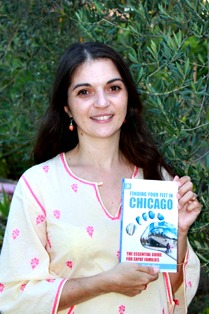
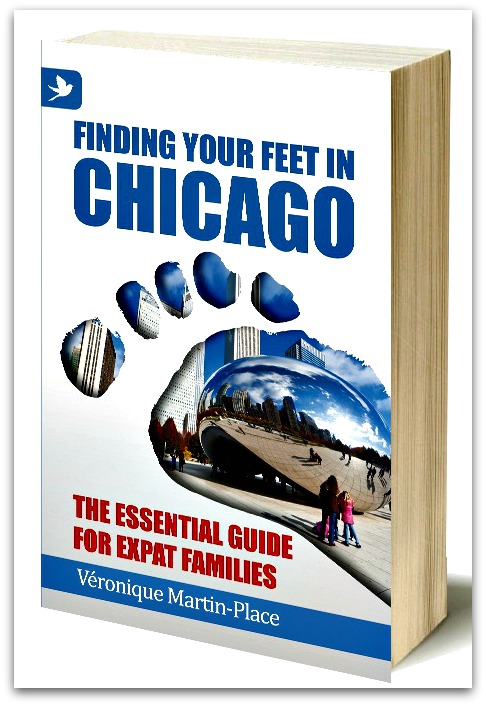
Véronique leads life in the fast lane. A little over three years since our conversation, I find that she has written the definitive expat guide to Chicago: Finding Your Feet in Chicago — The essential guide for expat families (Summertime, 2012). And she is already putting her feet down in a brand new city, one of the world’s trendiest… Here is our exchange:

Bonjour, Véronique! When we last spoke, toward the end of 2010, you told me you’d arrived in Chicago with hopes of getting a job, but then the recession hit, so you’d started up your own writing business. When did you hatch the plan to write a book for expats in the Windy City?
I was already thinking about it when we connected. After witnessing several incidences of culture shock at my daughters’ school, I realized I wasn’t alone in having troubles. Several families from different parts of the world had moved to Chicago around the same time. All of us were in need of information and advice. Meanwhile, I’d started up my blog, Expat Forever, to share my experiences about Chicago — tips on where to settle, which schools to choose, etc. I looked around for local guidebooks to recommend — but there was nothing. So I decided to write one myself.

finding-your-feet-in-chicago-3D-Book CoverThat reminds me of the famous quote by Toni Morrison: “If there’s a book that you want to read, but it hasn’t been written yet, then you must write it.” How long did it take you to produce the book?
From the idea to holding the book in my hands, it took one year and a half! Writing the book directly in English was difficult at the beginning, since English is not my native language. But after a while, I got used to it.

Besides writing in English, what was the most challenging part of the process?
Editing the manuscript. I decided to hire an editor to help with the task.

I know from our previous conversation that having fresh, healthy food is important to you — after all, that’s part of being French! I also seem to recall that you were not a fan of Chicago pizza. You said it was too heavy. But did you cover it in your book?
Of course! I have a chapter dedicated to “Having fun in Chicago,” which includes a section on family-friendly dining out. Before giving my top 10 Chicago child-friendly restaurants, I explain what the Chicago specialties are and insist that children (and their parents) MUST try them. That includes Chicago-style pizza and Chicago-style hot dogs.

What has been the response thus far?
Rather good, I think. I’ve gotten only five-stars comments on Amazon!

Which sections are the most popular?
Readers say they like having so much practical information on family-related topics — not just the advice itself, but all the personal anecdotes and testimonials I include from expat parents. I talked to lots of them and wrote up their stories as “blog posts” or interviews. The stories really speak to the kinds of anxieties most expats have — and they make the book an easy, fun read.

And now your husband has moved on to a diplomatic post in Shanghai! Tell me, does ANYTHING about China remind you of the United States, or are these two countries poles apart?
The United States and China are definitely different cultures — but one similarity struck me right away. Both are consumerist societies. In the US, everything is done to make you purchase and there are plenty of opportunities for you to part with your money. Here in Shanghai, it seems that the only occupation is “shopping.” It’s the only activity people urge you to do from the moment you arrive — visit malls, markets, supermarkets and so on. And I can tell you they have tons of malls, tons of markets (from traditional, the kinds that sell crickets and flowers, to modern, selling electronics, furniture, shoes, and so on), and many, many supermarkets.

How did you prepare yourself and your two daughters for the move?
We didn’t have the chance to make a look-see visit. But six months before moving to Chicago, I’d gone to Shanghai on business, so I had a picture of what to expect: a very urbanized and polluted city. That is also why we decided to settle in the new and “green” development area of Shanghai that is called Pudong.

Did your daughters have any idea of the change they were in for?
My husband and I found some videos about the city on the Internet for them to watch. Fortunately, they’d studied some Mandarin at their American elementary school, so already knew a lot about Chinese traditions and stories. To be honest, I think we learned as much from them about cultural matters as they learned from us on the practical aspects. It was real team work!

I know it’s still early days, but what have you enjoyed the most about living in Shanghai?
Perhaps surprisingly, the fact I can bike! In Pudong, there are a lot of protected biking trails, so it allows me to discover independently this part of the city, and it’s much faster than by foot. But I don’t bike in Puxi (the other side of the Huangpu River, which divides the city into two regions: Pudong, where I live, and Puxi, the city’s historic center). It’s too dangerous.

What is the feature you enjoy the least?
Shanghai is extremely urbanized and I miss greenery. Also, it is very polluted, though less so than Beijing.

What is the top piece of advice you’d give to anyone thinking of becoming an expat in that part of the world — particularly a trailing spouse?
I have five — and actually, they’re for anywhere, not just Shanghai:
1) Learn the language.
2) Get involved in your local community.
3) Keep doing your (or start new) hobbies and/or sports.
4) Discover your surroundings little by little, and you’ll eventually come to know the city as well as the content of your pocket.
5) If you are an accompanying spouse and cannot work locally, go back to school and get new skills, or volunteer to do something you can use professionally upon returning home for good.

And now I have to ask you the obvious question: any plans to write Finding Your Feet in Shanghai?
Many people have indeed asked me that question. And I must admit, the idea was in the back of my mind when I first started my book for expats in Chicago. I thought to myself, this can be the first in a collection, and the next one will be about the city where my husband gets posted next. But at least at this point, I don’t think I’ll write an expat guide to Shanghai. One reason is that there are already lots of books, magazines as well as Web sites for expats in this city. There isn’t the same need as there was in Chicago. But another reason is that my time here is so limited. My husband’s post is for just three years. I’d have to spend all of my time doing research and interviews, getting to know the city like my pocket. And that’s before I can start writing. My book on Chicago was released a couple of weeks after I left to fly to Shanghai — which didn’t give me any time for promoting it locally. I found that very frustrating and wouldn’t want to repeat the experience. Books these days have to be promoted like crazy, and although you can do a lot of it online, I don’t think online promotions can replace interacting with readers in person.

But surely you’ll write another book?
I may not write another book for expat families living in Shanghai, but I already know I will write another book about expatriation. Actually, I have already started it. But I cannot say much more. It is too early.

Aha! You are always so mysterious… Last but not least, I’d like to ask a series of questions that I’ve asked some of our other featured authors, about your reading and writing habits:
1. Last truly great book you read: Rien Ne S’oppose a la Nuit (Nothing Holds Back the Night), by Delphine de Vigan.
2. Favorite literary genre: Memoirs — but also novels, illustrated books like the ones of Danny Gregory (I love his writings and drawings), and carnets de voyage (travel journals). And I have to confess that I still read a lot of children books, especially picture books. My dream is to write and illustrate one.
3. Reading habits on a plane: Something fun and easy to read on my Kindle! I travel light.
4. The one book you’d require the president of France to read, and why: My book, of course! I’m joking. I would like him to read Les mots pour le dire (The Words to Say It), by Marie Cardinal. Everyone should read it.
5. Favorite books as a child: Astérix and Obélix comic book stories, by René Goscinny (illustrated by Albert Uderzo) and Le Petit Prince (The Little Prince), by Antoine de Saint Exupéry.
6. Favorite heroine: Anna Karenina
7. The writer, alive or dead, you’d most like to meet: There are several — all alive and all women: Robin Pascoe, the author of four books about expatriation; Anne Lamott; Annie Ernaux; and the aforementioned Delphine De Vigan.
8. Your reading habits: Every evening, at least one hour, and Sundays as much as I can.
9. The book you’d most like to see made as a film: Hidden in Paris, by Corine Gantz
10. The book you plan to read next: The Help (but I got the French translation), by Kathryn Stockett.

* * *

Wow, what a stimulating list! Readers, any questions or comments for Véronique while we have her attention? Ce qu’est une femme extraordinaire — I think you’ll agree!

STAY TUNED for tomorrow’s post, another installment in the life of our fictional expat heroine, Libby. (What, not keeping up with Libby? Read the first three episodes of her expat adventures.)

If you enjoyed this post, we invite you to register for The Displaced Dispatch, a round up of weekly posts from The Displaced Nation, with seasonal recipes, book giveaways and other extras. Register for The Displaced Dispatch by clicking here!

Related posts:

Images: Véronique Martin-Place with her Chicago book; the book cover in 3D (author’s own photos).

RANDOM NOMAD: Russell VJ Ward, A Bloke from Basingstoke with a Bloomin’ Extraordinary Life

Russell Ward Collage_pmPlace of birth: Basingstoke*, Hampshire, United Kingdom
Passports: UK & Australia
Overseas history: Canada (Vancouver and Ottawa): 2003-06; Australia (Sydney, New South Wales): 2006 – present.
Occupation: Civil servant in New South Wales (state) government; blogger; wannabe fiction writer and entrepreneur — currently setting up a corporate writing business.
Cyberspace coordinates: In Search of a Life Less Ordinary (2012 finalist in the Best Australian Blogs competition); In Search of a Life Less Ordinary (Facebook page); @RussellVJWard (Twitter handle).
*Basingstoke (aka Amazingstoke) is a small commuter town in the south of England that is occasionally voted one of the less preferred towns in Britain — though not by me!

So tell me, how did a bloke from Basingstoke end up in the lovely harbour city of Sydney?
As much as I like Basingstoke, displacement came easy! I always had a burning desire to experience life in a country different to my own. I wanted to explore new environments, opportunities and activities. I was initially drawn to Canada as my grandfather was Canadian, and I had a long-held desire to explore this great country. I left England in 2003 in pursuit of less stress, more emphasis on the greater outdoors, and for a healthier and fuller way of living life. In Canada I lived by mountains and the snow. I blame my Australian wife for the subsequent move to Australia — she wanted to come back home for a while, and knew I was a soft touch for living by the ocean. These days, when spending every available minute doing something, anything, by the beach, I blame her and curse her and blame her some more…

Is anyone else in your immediate family “displaced”?
My grandfather is my opposite number. He met my grandmother while serving with the Canadian Army in Europe during World War II and married her while based in the UK. He returned to Canada several times but ultimately lived out the rest of his life in England.

And wasn’t your wife also displaced at some point? Otherwise, the pair of you would never have met…
Yes, my wife was working in England for a year, while also spending time with her English family (her mother is English and moved to Australia when she was 12). We met in my home town at the gym of all places — she always used to go to the same classes as me.

It sounds as though you’re living the dream in Sydney, but I can imagine you’ve had your displaced moments. Which one stands out?
It occurred just after we arrived in Sydney with our two dogs. I was walking them at a small park opposite our rental house. The younger pup was playing under a tree with his ball when I noticed something dangling out of the tree immediately above him. As I got closer, I realized said dangly thing was a humungous python wrapped around a branch, with its head swinging perilously close to my dog’s own. Thankfully, he’s an obedient little guy (my dog, not the snake) so he came to me as soon as I called. I remember standing there muttering over and over to myself: “What have I done? Where have I taken us? Did I just see a python hanging from a tree?” It became even more surreal when an elderly couple strolled past the tree while out for their morning walk. “Watch out for the python!” I called out. “Oh, don’t worry about him,” the white haired gent replied. “He’s just a harmless diamond python.” I knew then that I was truly displaced … and a lonnnnnnng way from Kansas, Dorothy.

When have you felt the least displaced?
The moment last November when our son, Elliot, was born. Australia was now his place of birth and it suddenly had a new, much more personal, meaning for me. This wild and rugged, unashamedly and devastatingly beautiful country will always be his home, wherever we are as a family in the future. He is an Australian first and foremost — and I’m incredibly proud of having provided that for him.

I’ve seen some of Elliott’s baby pix on Facebook and I must say, he’s adorable! No wonder you’re a proud papa! Besides your wife and new baby, you may bring one precious item or curiosity you’ve collected from the country (or each of the countries) you’ve lived in to The Displaced Nation. What’s in your suitcase?
From Canada: A bowl of poutine — a bowl full of french fries coated with brown gravy and topped off with curd cheese (which is a strange thing to be carrying in your suitcase and no doubt illegal to carry on your travels, but there you go). I’ve always had a penchant for the odd hot chip or fry. When I landed in Canada and somebody introduced me to this delightful French-Canadian dish, I knew I’d found my manna from heaven. Poutine. The very word itself makes me salivate.
From Australia: Probably a pair of budgie smugglers, which, though I’ve never worn — I can never quite get my head around the concept of wearing — would remind me of Oz as the majority of Australian men over the age of 40 wear them. FYI, the budgie smuggler — otherwise known as the “tighty-whitey” or “banana hammock” — is Australian slang for men’s tight-fitting Speedo-style swimwear. It’s something I shall never be seen wearing unless on a desert island by myself.

Don’t even think about it once you’re inside The Displaced Nation. We like to keep a sense of decorum. Next question: Can you donate any words or expressions from your travels to our displaced argot?
From Canada: It has to be “eh?”. “Canada, eh?” is something of a legendary sentence! “How’s it going, eh?” Used often and everywhere, it’s cute, quaint and so very Canadian. I also adore the way Canadians say “out”. Next time you’re near a Canadian, ask him or her to say it and you’ll see why.
From Australia: I’m going to avoid the “g’day” and “no worries” stereotypes and go with “ah yeah” — which I’m told I say all the time and which my friends tell me sounds very Australian. I think I probably used to say it in Amazingstoke, but years later, with the Aussie twang, it sounds less Jude Law and more Steve Irwin.

Let’s move on (or back) to food. You are invited to prepare a meal for the Displaced Nation, based on your travels. What’s on the menu? No poutine, please, we’re displaced!

Appetizer: From Canada — okay, no poutine but possibly a serving of waffles with Canadian maple syrup. I know, it’s not all that healthy and it’ll fill you up as a starter, but it was either that or the BeaverTails (fried dough pastry that resemble a beaver’s tail).
Main: I’ll revert to my current Australian habitat and chuck a couple of steaks with a few prawns on the barbie. (I know it’s an overused cliche — but one I’ve found to be true of life in the land down under.)
Dessert: I’ll whip up a key lime pie — a taste acquired from my short period of time working in the US. The pie was served on my arrival and, after seven hours of cattle-class airplane food, was quite easily the most delicious thing I’d tasted all day.
Drinks: I could share a few schooners of Australian lager, but instead I’ll opt for a jug of iced tea for the non-alcohol drinkers out there — I used to consume it by the gallon when living in Vancouver.

A theme we’ve been exploring this month, in honor of Valentine’s Day, is cross-cultural love. Thanks to your Aussie wife, you qualify! Tell me, what’s your idea of a romantic evening for two — and has it changed since the time when you were an unattached male who hadn’t yet left Britain?
It’s quite similar to when I lived in Britain: i.e., dinner for two, flowers, chocolates, a card and so on. In other words, fairly traditional. The difference now is the setting. In Sydney we’ll sit by the water at a local restaurant, maybe at the edge of the sand on one of the Northern Beaches. The sound of the ocean can be quite soothing … but is it an aphrodisiac, I hear you ask? Next time, I’ll order the oysters and let you know!

😀 Our other theme of the month is film, in honor of the Oscars. Can you recommend any films that speak to the situation of expats and their displacement?
A film I watched recently that I’d thoroughly recommend and which completely spoke to the expat situation was The Best Exotic Marigold Hotel. It’s a British comedy-drama about a group of retirees who travel to India to take up residence in what they believe is a newly restored hotel. The most interesting part for me was the way in which the different characters deal with their displacement, especially to such a polar-opposite country to their own. Some cope well, others not so. And the parallels with everyday expat living are apparent throughout.

That’s actually one of the films we nominated for this year’s Displaced Oscars — results to be announced in our Dispatch on Saturday! We’ll be sure to register your vote before then.

So, readers — yay or nay for letting Russell Ward into The Displaced Nation? Among other contradictions, he’s an Aussie citizen but can’t seem to cope with nonpoisonous snakes and refuses to don a budgie smuggler. And he claims to be loyal to Basing/Amazingstoke, but wants to serve us Canadian (sweet) iced tea. (Note: It’s fine to vote “nay” as long as you couch your reasoning in terms we all — including Russell — find amusing!)

STAY TUNED for tomorrow’s post, a review of Jeff Jung’s new book on mid-life career changes involving travel and the expat life.

If you enjoyed this post, we invite you to register for The Displaced Dispatch, a round up of weekly posts from The Displaced Nation, with seasonal recipes, book giveaways and other extras. Register for The Displaced Dispatch by clicking here!

Related posts:

Images (top to bottom): Banner from Russell VJ Ward’s blog; with his wife on Sydney Harbour (2010); photo he uses for his blog — taken in Launceston, Tasmania, in 2011; wearing Canadian mittens on Avalon Beach, Sydney, just before the Vancouver 2010 Winter Olympics — his way of showing his Canadian friends that he was supporting their athletes: “You should have seen the looks I got from the locals; it was a 35 degree Celsius day and I looked like a madman!”

RANDOM NOMAD: Andy Martin, UK-qualified Social Worker, Football Geek & Now a São Paulo Resident

Andy_MartinPlace of birth: Chatham, Kent, United Kingdom
Passport: UK
Overseas history: Brasil (São Paulo): February 2012 – present. I also had a period of travel around South America between 2007 and 2008.
Occupation: NGO Volunteer, English teacher, blogger
Cyberspace coordinates: The book is on the table: An Englishman’s guide to living in São Paulo (blog) and @andyhpmartin (Twitter handle).

What made you give up London for São Paulo?
For some reason — probably because I’m a massive football geek — I had always wanted to go to South America, and so when I found out that one of my best friends was planning to travel there, it took very little persuasion for me to tag along. Then whilst there I met my future wife, who is Brazilian, and it all got a bit more complicated.

First she moved to live with me in the UK. We got married and stayed in London for three years. However, she had deferred her degree in Brazil to move to London, where I had a job as a social worker. I am a qualified social worker and spent almost nine years working in various social or community work roles. For most of that time I specialized in supporting refugees and asylum seekers. But when my job became uncertain due to government cuts (due to the economic crisis), it seemed like the perfect opportunity to move to Brazil so that my wife could finally get everything finished.

So now you’re a trailing spouse. Does anyone in your immediate family share that fate, or do they all live in the UK?
When I first traveled to South America in 2007, I was pretty much the first person in my entire family who had ever traveled outside of Europe, so I can’t really say there’s any significant history or influence of having the urge to want to explore or become “displaced.”

You haven’t been in São Paulo for long, but can you pinpoint a moment when you have felt displaced?
I had been to São Paulo twice before I moved here and I was already quite familiar with South America as a whole, so was pretty well prepared for what to expect — although there’s no doubting that living somewhere and just visiting are entirely different things.

But if I had to pick one thing, it wouldn’t be a moment but more the constant challenge of living somewhere where you are unable to speak your mother tongue. We Brits are notoriously bad at learning languages, and I can barely remember any of the French or German I learned at school. I did learn some Spanish whilst traveling in 2007, and in some ways this helped because of its similarities with Portuguese, although on the other hand it was also a hindrance because of their very many differences.

Not being able to fully communicate your thoughts is obviously very frustrating and when you’re having a bad day, it just intensifies your sense of displacement and dislocation. Fortunately, Brazilians are pretty intrigued by people (especially those from the “West”) who have moved to Brazil and are trying to learn Portuguese. They’re often very forgiving when you make mistakes. It also helps that many Brazilians themselves tend not to speak grammatically correct Portuguese, so in effect your own mistakes are just contributing towards the evolution of the language (that’s what I like to convince myself, anyway!).

When have you felt the least displaced?
One of the things I love about Brazilians is their general informality. As someone who’s never worked in an office or a suit, I feel right at home. For example, people are often referred to by their nicknames (even the former President was) and rarely, if ever, by their surnames. Also, Brazilians tend not to make a big deal out of social occasions — it’s more about making sure you’re surrounded by the people who matter to you. As long as there’s cold beer, everyone’s happy.

How could you not feel at ease?

You may bring one curiosity you’ve collected from the country where you’ve lived into The Displaced Nation. What’s in your suitcase?
Again, as a self-confessed football nerd, I think it would have to be my collection of football shirts. I have one from pretty much every country I’ve been to, and I’ve lost count of how many I’ve acquired in South America.

You are invited to prepare a meal for the Displaced Nation, based on your travels. What’s on the menu?

Starter: Salgadinhos (savoury snacks) are fantastic so a platter of these, including:

Main: It’d have to be a churrasco (Brazilian BBQ). That may sound pretty unimaginative, but once you’ve had a Brazilian BBQ, especially those from the south, you’ll forever wonder why it took you so long to do so.
Dessert: A selection of some of Brazil’s finest (and weirdest looking) fruits. Believe me, I’ve seen fruits in the markets here which look like they have been imported from Mars. They taste great, though.
Drinks: Brazil’s most famous cocktail, a caipirinha, which is a hangover-inducing concoction of cachaça (sugar cane rum), lime, sugar and ice. Refreshing, tasty and deceptively lethal.

Now that you are hard at work learning the language, can you donate a Brazilian Portuguese word or expression to the Displaced Nation’s argot?
Tudo bem? This is pretty much said every time you greet someone in Brazil and literally translates as “Is everything okay?” It reflects quite nicely, as I mentioned previously, how Brazilians prefer to keep things simple and informal.

This month, we’ve been focusing on the need for mentors: people who teach us what we need to know, or remind us of things we have buried deep. Have you found discovered any new mentors, whether physically present or not, in your life abroad?
As mentioned in my guest post this month for the Displaced Nation, when I’m going through a period where I’m missing home or things get tough, I often think about some of the kids I worked with back home in London (in my last job I worked with unaccompanied minors from countries such as Afghanistan).

Thinking about the challenges they as young kids faced after fleeing their home countries — but then still being able, on the whole, to go on and make the most of their new lives — always helps me to put into perspective the things I tend to moan or stress about here, in what is fortunately a much easier experience of displacement.

Apart from that, I read as widely as possible. For instance, I recently really enjoyed Alain de Botton’s The Art of Travel.

If you had all the money and time in the world, what topic(s) would you choose to study in your adopted country?
I guess, given my pre-existing interest and work experiences with migration, I’d like to study the history of migration to Brazil. Brazil is a country defined by (im)migration — for example, my wife has indigenous, Spanish, Italian and Portuguese heritage, a mix that is is pretty normal for Brazilians. It would be fascinating to piece it all together in order to get a more holistic understanding of who Brazilians really are.

I’ve always wanted to do a PhD, so who knows, maybe this might be my research proposal one day!

Readers — yay or nay for letting Andy Martin into The Displaced Nation? A social worker who is taking lessons from the Brazilians on how to be more social? Who is used to helping the displaced and is now displaced himself — so may be in need of our help? (Note: It’s fine to vote “nay” as long as you couch your reasoning in terms we all — including Andy — find amusing!)

STAY TUNED for tomorrow’s post, an expat take on the muses of Classical Antiquity.

If you enjoyed this post, we invite you to register for The Displaced Dispatch, a round up of weekly posts from The Displaced Nation, with seasonal recipes, book giveaways and other extras. Register for The Displaced Dispatch by clicking here!

Related posts:

Img: Andy Martin travels within his native land (the Norfolk Broads, 2010), a couple of years before his expatriation.

RANDOM NOMAD: Maggie Eriksson, Displaced Californian in Sweden and Student of Swedish

Maggie_pmPlace of birth: Arcadia, California, USA
Passport: USA & Sweden
Overseas history: Sweden (Landskrona, Malmö): 2005 – present.
Occupation: Unemployed and looking for a job. Meanwhile, I’m studying more Swedish since I’m far from fluent.
Cyberspace coordinates: Mag Wheels (Posterous) and @magsinsweden (Twitter handle).

What made you give up California for Sweden?
My husband is Swedish. After working for five years at the California lab for a small pharmaceutical company, he really wanted to go back home. We started the process in 2003, and a couple of years later, in spring 2005, we finally made the move.

How did the pair of you meet?
He was working as a chemist in Sweden and the company transferred him to their lab in California. We met on a Yahoo message board — he was looking for people to meet in California before he moved. I had been online dating a bit, and when I saw his message I replied. We started to exchange e-mails, then letters and phone calls. After six months we met in real life. 🙂 We dated for a few months and got engaged soon after. We have been married for 12 years. We have no children but share of life with our seven-year-old border terrier named Jake.

What things about Sweden did he miss when living in your part of the world?
Besides his family and friends, he missed Swedish Christmas, Swedish candy, the country’s socialized health care, and its four seasons.

So now you’re displaced. Do you share that fate with anyone else in your immediate family?
No! I’m the only one in my family that lives between cultures.

You’re also job searching in a foreign land. Are jobs hard to come by in Sweden?
Without fluent Swedish, finding work is very hard, especially if you want something more than a temp job. I worked in the retail industry in the States. It took me six years to find a job in that field — and then I was laid off last spring.

Since so many Swedes speak better English than us native English speakers, companies will hire the Swede over the expat. That said, even without Swedish, expats who have good IT skills, a university education and are young may find more doors open to them in this market than someone of my background.

Since we live in Malmö, I’ve now extended my search across the Øresund Bridge, to Copenhagen, Denmark. The job market is better over there.

In March of this year you’ll have been in Sweden for eight years. When have you felt the most displaced?
When I first started learning Swedish — and was facing all the challenges that come with learning a new language. For a long time, I didn’t understand anything people were saying around me. And even now, after almost eight years of living here, I don’t feel like myself when attempting to speak the language.

When have you felt the least displaced?
When I became a citizen and went to the lunch for new immigrants, where I was given an official certificate saying that I’m SWEDISH!

You may bring one curiosity you’ve collected from the country where you’ve lived into The Displaced Nation. What’s in your suitcase?
Difficult… From Sweden I think I would bring this little book of Swedish verbs that I carry around since I always get the verb form wrong! 😉 From California — well, it’s impossible to pick just one thing as there’s so much of everything!

You are invited to prepare a meal for the Displaced Nation, based on your travels. What’s on the menu?

I’ll make you a casual dinner of pyttipanna, similar to bubble and squeak in the UK. It’s a dish made with fried potatoes, onions, and bell peppers. Sometimes you eat it with a fried egg. Most people put ketchup on it.

As you’re such a diligent student of the Swedish language, can you donate a Swedish word or expression to the Displaced Nation’s argot?
Actually, I’ll lend you two:
1) Fika — it refers to a taking a break with a coffee and an open-face sandwich or pastry. Most Swedish people have it once or twice a day. I think you would enjoy it.
2) Farthinder — that means speed bump. I love this word. It makes me laugh every time I see a signpost for one.

This month, we’ve been focusing on the need for mentors: people who teach us what we need to know, or remind us of things we have buried deep. Have you found discovered any new mentors, whether physically present or not, in your life abroad?
I have met people along the way that I would never have been friendly with in my old life in California. Living abroad has given me a new appreciation for people from other cultures whom I’ve gotten to know by having dinner with their families or joining in their celebrations. For instance, I have a friend from Iraq who has been wonderful to me when I was really struggling to fit in and get Sweden. She moved to Sweden with her kids in the 1990s.

If you had all the money and time in the world, what topic(s) would you choose to study in your adopted country?
Well, I’m already studying Swedish, but assuming I were fluent, I would study the history of Scandinavia. I would particularly like to learn more about the people who have come from other places to live in Sweden. How do they adjust to the life here? I love my adopted country but still find it a culture shock in many ways!

Which part of the culture is still shocking?
To be honest, I think it’s the Swedes themselves. Most Swedes are very reserved and it’s hard to befriend them. People don’t talk to each other on the bus or in shops. As a American I have always been very friendly and will chat up a stranger. But now I very rarely do it.

Readers — yay or nay for letting Maggie Eriksson into The Displaced Nation? True, she and her Swedish hubbie have a special chemistry, which must help to alleviate the symptoms of displacement — but could she have picked a more different place to live from California? Doubtful… (Note: It’s fine to vote “nay” as long as you couch your reasoning in terms we all — including Maggie — find amusing!)

STAY TUNED for tomorrow’s thought-provoking guest post by Andy Martin, comparing the forcibly displaced to those of us who’ve made the choice to be displaced.

If you enjoyed this post, we invite you to register for The Displaced Dispatch, a round up of weekly posts from The Displaced Nation, with seasonal recipes, book giveaways and other extras. Register for The Displaced Dispatch by clicking here!

Related posts:

Img: Maggie Eriksson outside her flat in Malmö, Sweden (October 2012).

Expats, here’s how to enrich your lives in 2013: Choose a mentor or a muse!

Expats and other world adventurers, let me guess. You have you spent the past week making resolutions about

  • staying positive about your new life in Country X;
  • indulging in less of the local stodge;
  • giving up the smoking habit that no one is nagging you about now that you’re so far away from home;
  • and/or taking advantage of travel opportunities within the region that may never come your way again

— while also knowing full well that at some point in the not-distant future, you’ll end up stuffing your face with marshmallows (metaphorically speaking).

Never mind, it happens to the best of us, as psychologist Walter Mischel — he of the marshmallow experimentrecently told Abby Hunstman of the Huffington Post. Apparently, it has something to do with the way impulses work in the brain. The key is to trick the brain by coming up with strategies to avoid the marshmallow or treat it as something else.

Today I’d like to propose something I found to be one of the most effective strategies for turning away from the marshmallows you’ve discovered in your new home abroad or, for more veteran expats, turning these marshmallows into something new and exotic. My advice is to find a mentor or a muse in your adopted land — someone who can teach you something new, or who inspires you by their example to try new things…

Trust me, if you choose the right mentor +/or muse, benefits like the following will soon accrue:

1) More exotic looks — and a book deal.

Back when I lived abroad, first in England and then in Japan, I was always studying other women for style and beauty tips. I made a muse of everyone from Princess Diana (I could hardly help it as her image was being constantly thrust in front of me) to the stewardesses I encountered on All Nippon Airways. Have you ever seen the film Fear and Trembling, based on the autobiographical novel of that name, by the oft-displaced Amélie Nothomb? On ANA flights, I behaved a little like the film’s young Belgian protagonist, Amélie, who secretly adulates her supervisor Miss Fubuki. I simply couldn’t believe the world contained such attractive women…

The pay-off came upon my repatriation to the US. With such a wide array of fashion and beauty influences, I’d begun to resemble Countess Olenska in The Age of Innocence — with my Laura Ashley dresses, hair ornaments, strings of (real) pearls, and habit of bowing to everyone.

Is it any wonder my (Japanese) husband-to-be nicknamed me the Duchess? (Better than being the sheltered May Welland, surely?)

My one regret is that I didn’t parlay these style tips into a best-seller — unlike Jennifer Scott, one of the authors who was featured on TDN this past year. While studying in Paris, Scott was in a mentoring relationship with Madame Chic and Madame Bohemienne. (The former was the matriarch in her host family; the latter, in her boyfriend’s host family.) Mme C & Mme B took her under their wing and taught her everything she knows about personal style, preparation of food, home decor, entertaining, make-up, you name it…and is now imparting to others in her Simon & Schuster-published book.

2) More memorable dinner parties.

As mentioned in a previous post, I adopted actress and Indian cookbook writer Madhur Jaffrey as my muse shortly after settling down in the UK. I was (still am) madly in love with her, her cookbooks, even her writing style.

And her recipes do me proud to this day.

Right before Christmas I threw a dinner party for 10 featuring beef cooked in yogurt and black pepper, black cod in a coriander marinade, and several of her vegetable dishes.

It was divine — if I say so myself! To be fair, the guests liked it, too…

3) Improved language skills.

Now the ideal mentor for an adult seeking to pick up a new foreign language is a boyfriend or girlfriend in the local culture — preferably one with gobs of patience. The Japanese have the perfect expression for it: iki jibiki, or walking dictionary.

Just one caveat: If you’re as language challenged as Tony James Slater, it could prove a headache and, ultimately, a heartache.

Still, nothing ventured, nothing gained…

(Married people, you might want to give up on this goal. I’m serious…)

4) A fondness for angels who dance on pinheads.

After seeing the film Lost in Translation, I became an advocate for expats giving themselves intellectual challenges. Really, there’s no excuse for ennui of the sort displayed by Scarlett Johansson character, in a well-traveled life.

It was while living in the UK as a grad student that I discovered the extraordinary scholar-writer Marina Warner, who remains an inspiration to this day. Warner, who grew up in Brussels and Cambridge and was educated at convent school and Oxford University, is best known for her books on feminism and myth.

After reading her book Monuments and Maidens, I could never look at a statue in the same way again!

In her person, too, she is something of a goddess. Though I’d encountered women of formidable intellect before, I found her more appealing than most, I think because she wears her learning lightly and has an ethereal presence, like one of the original Muses.

Booker prizewinner Julian Barnes has written of her “incandescent intelligence and Apulian beauty” (she is half Italian, half English). The one time I met her — I asked her to sign my copy of her Booker Prize-shortlisted novel, The Lost Father — I could see what he meant.

I was gobsmacked.

Major girl crush!

(Don’t have a girl crush? Get one! It will enrich your life immeasurably.)

5) Greater powers of mindfulness — and a book deal.

Third Culture Kid Maria Konnikova was born in Moscow but grew up and was educated in the US. She has started the new year by putting out a book with Viking entitled Mastermind: How to Think Like Sherlock Holmes. Who would guess that a young Russian-born woman would use Conan Doyle’s fictional creations, Holmes and Watson, as her muses? But, as she explains in a recent article in Slate, she has learned everything she knows about the art of mindfulness from that master British sleuth:

Mindfulness allows Holmes to observe those details that most of us don’t even realize we don’t see.

So moved is she by Holmes’s example — and so frustrated by her own, much more limited observational powers — Konnikova does the boldest of all thought experiments: she gives up the Internet…

So does her physiological and emotional well-being improve as a result? Does her mind stop wandering away from the present? Does she become happier? I won’t give it away lest you would like to make Konnikova this year’s muse and invest in her book. Hint: If you do, we may not see you here for a while. 😦

6) The confidence to travel on your own.

We expats tend to be a little less intrepid than the average global wanderer: we’re a little too attached to our creature comforts and may need a kick to become more adventuresome. But even avid travelers sometimes lose their courage, as Amy Baker recently reported in a post for Vagabondish. She recounts the first time she met a Swedish solo traveler in Morocco, who had lived on her own in Zimbabwe for 10 years. This Swede is now her friend — and muse:

She was level-headed, organized and fiercely independent — all characteristics that I aim to embody as a female traveler.

With this “fearless Swedish warrior woman” in mind, Amy started venturing out on her lonesome — and hasn’t looked back.

* * *

Readers, the above is not intended as an exhaustive list as I’m hoping you can contribute your own experiences with mentors and muses abroad: What do you do to avoid the “marshmallows” of the (too?) well-traveled life? Who have you met that has inspired you to new creative, intellectual, or travel heights? Please let us know in the comments. In the meantime, I wish you a happy, healthy — and most of all, intellectually stimulating — new year!

STAY TUNED for next week’s posts.

If you enjoyed this post, we invite you to register for The Displaced Dispatch, a round up of weekly posts from The Displaced Nation, with seasonal recipes, book giveaways and other extras. Register for The Displaced Dispatch by clicking here!

Related posts: