Today we welcome back Kat Selvocki to the Displaced Nation. She wrote for us once before: a travel yarn about spending Christmas in Europe with friends. She had just been toiling in the farmlands of Iceland as a volunteer, and was about to head Down Under to begin a new life as a yoga instructor in Sydney. Now, just over a year later, she is back in the United States. What happened? Here is Kat’s repatriation story.
— ML Awanohara
As my year-long working holiday visa for Australia began to wane, I started considering my options.
Or rather, my option.
I teach yoga: a career that doesn’t generally allow for work sponsorship. I also had a rocky relationship with my Australian boyfriend.
The only I way I could feasibly stay in Sydney was to enroll in a course.
I’d heard tales from other expats of reasonably-priced options — reasonably-priced meaning anything under $8,000 a year — but knew in my heart it wasn’t going to work. I no longer had that kind of cash in the bank, and even if I had, you wouldn’t catch me spending it on some ridiculous “business basics” class.
It wasn’t that I necessarily wanted to stay; I just wasn’t sure I wanted to uproot my life after spending just eight months building a new life in Australia. There were places I still wanted to visit in that vast country, things I still wanted to do. And I loved the classes I was teaching.
But then I got glandular fever — commonly known in the US as mono, or the kissing disease. A month into fighting overwhelming exhaustion, all I wanted was for things to be easy again. In the end, it was having a such a debilitating illness that drove me over the edge.
I bought a plane ticket home.
The three emotions of repatriation
First came relief:
No more comments about how my tattoos, taste in music, or style were “too American.”
No more complicated calculations to figure out when friends or family would be available to Skype.
No more job rejections on the basis of not being a citizen.
And most importantly: central heating in abundance — finally, I’d stop getting sick so often!
Self-doubt followed. I’d spent years wanting to live as an expat, and when I finally had the opportunity, I’d been utterly miserable.
Had I failed, or not tried hard enough?
Should I have fought to stay longer, or at least until the end of my visa?
Were my reasons for leaving the right ones?
Why hadn’t I applied for that job working at a roadhouse waitress in the Outback, so that I’d at least seen more of the country?
Next up: fear. As I headed off to Oxford, UK, at the end of last year, to spend Christmas with friends before returning to the States to seek work, the wheel had come full circle. As reported on this blog in December 2011, I’d spent my first Christmas away from family, in Europe, on my way to a new life in Australia.
Whereas before I’d been full of excitement and anticipation, this time I was full of worry. I worried about how welcoming people would be when I returned. So many of my relationships had disintegrated while I was away, and I wasn’t sure if that was because of distance or because people were fed up with my use of Aussie slang in our conversations … or was it all my whining about being so bloody tired? (Hm, there’s that slang again!)
I had no idea whether finding work would actually be any easier, especially considering the much higher unemployment rate in the US.
I didn’t know how to talk about my time in Sydney without sounding bitter or depressed — but was also afraid that even if I sounded upbeat, people wouldn’t care to hear about it.
Old habits die hard…
I’d always believed that if something doesn’t work, you can simply head back to the place you were before.
Suddenly, I wasn’t so sure about that.
I had decided to move back to Seattle, a city where I’d lived eight years earlier. But would that be a terrible mistake? I pictured trying — and failing — to recreate the life I’d loved before.
Last time I wrote for the Displaced Nation, I reminisced about the four months I’d spent living in Prague on a study abroad. What I didn’t report was the depression and reverse culture shock I battle against upon returning to the United States.
If that were true after a mere four months, what impact would a year-and-a-half away have? Would I be feeling even more out of place? I dreaded the long readjustment.
I also worried about money, and whether I had enough to get settled again quickly.
…or do they?
As it turned out, I needn’t have worried. (Except for the money concerns. Then again, I’m convinced that no matter how much I’d saved before returning, I still would have worried.)
From the moment I stepped off the plane, it was as if someone had flipped a switch inside of me. Even though things had changed — something that was particularly evident in New York City, which I passed through on the way to the West Coast (I’d lived there after Seattle) — it all felt normal. Easy. Almost as if I’d never left. My internal map and compass worked again; I knew where I was and where I was going.
And I still believe that — even though, two months after returning to the States, I continue to look the wrong way when crossing the street.
* * *
Thanks, Kat, for sharing your story. I found it very moving. Readers, any comments, questions for Kat — any similar stories to share?
Kat Selvocki — badass yoga instructor, photographer, writer and traveler — is currently kicking ass and taking names in Seattle after returning from her expat adventures. Learn more about her on her Web site: KatSelvocki.com. You can also follow her on Twitter: @katselvocki.
STAY TUNED for the final post in our fashion and style series, by the ever-so-stylish Kate Allison! (Well, she certainly has flair!)
If you enjoyed this post, we invite you to register for The Displaced Dispatch, a round up of weekly posts from The Displaced Nation, with seasonal recipes, book giveaways and other extras. Register for The Displaced Dispatch by clicking here!
images: (clockwise, starting top left) Chelsea Market, NYC; Capitol Hill, Seattle; Circular Quay, Sydney; Chelsea Market, NYC; The Rocks, Sydney; in the air when flying from Sydney to Melbourne; Pioneer Square, Seattle. Center shot of Kat Selvocki was taken in Seattle. All photos are Kat’s with the exception of the Circular Quay in Sydney, which came from Morguefiles.
Ah, the no-man’s land of the expat life — if you don’t know what I’m talking about, then you haven’t been abroad for long enough. Nor would you, I’m afraid, qualify for Displaced Nation citizenship. One person who does know what I’m talking about, and would more than qualify, is Valerie Hamer. She likes to refer to herself “British by birth and a nomad by choice.” Here is her bittersweet tale of where that attitude has taken her…
— ML Awanohara
Having lived in Asia for nearly 13 years, I’ve grown accustomed to the standard opening line: “Where are you from?”
However, as the years have passed, my factual auto response of “England” has made me uneasy.
I consider myself a global nomad: an international citizen, albeit one with a passport identifying my roots in the Commonwealth realm.
Plus, I dislike labels of any kind because they invoke stereotypes: and when it comes to nationality there are only so many questions — do you have afternoon tea at 4:00? do English gentlemen really wear bowler hats? — a person can take!
Not British any more…except at the core!
The truth is, I don’t feel particularly British (whatever that really means) anymore.
In fact, I’m so out of touch I have to spend time online researching current UK news on weather, music, sport fashion and politics — because knowing these things is what is expected of me.
Foreign is what I am all about after all, and that isn’t ever going to change.
The blurring of one’s national identity happens over time. In the first couple of years of the expat life, we crouch on the edge of our host culture, secure in the knowledge that the familiar is only a plane ride away. We make cross-cultural comparisons, some of them invidious; have adventures; reminisce; and sometimes escape for brief periods of intense reunion with the motherland. The possibility is always open for ending the foreign adventure and resuming the life left behind.
Over time, however, the attachment to the homeland fades and in the process, most long-term expats mutate into something closer to the global citizen. Take my case: I am now a quasi-fraudulent impersonation of a bona fide English woman.
But, even though I have lived abroad for over a decade, I have never seriously doubted my citizenship. Great Britain is, after all, the place where I was born and raised. The island I could return to on my terms, without fear of any impositions on my status or freedom.
After all, I continue to be a British citizen, right?
No right to investment
Not quite, as it turns out, for while I have been busy living as a temporary resident of South Korea, times have been a-changing back home in Britain.
A standing joke amongst my family and friends is that I manage to devalue the currency of any country I choose to live in. I have the same effect on UK interest rates, too, which is why I’ve made a habit of checking out the best deals and making the necessary transfers every time I visit.
Suddenly, though, this became impossible! New government rules have outlawed British non-residents from investing their cash in the country. How dare we?!
I chose a Korean bank instead, where thankfully I haven’t confronted similar issues — though it should be no surprise to hear that the interest rate dropped by half during my first year in the scheme!
Little right to health care
I rarely get ill, but sometimes I’ll make a quick trip to the doctors when back in England. Most health care services are free at source, and even temporary visitors can make use of any emergency facility. Those of us with family in England can see a general practitioner as long as a family member is on the books.
It’s never been a problem until now.
Last summer I called the office of the GP my father uses and was interrogated quite fiercely by the receptionist. I won’t bore you with the details: suffice to say, as a non-resident I need to be close to death before the medical profession will give me the time of day.
I can’t complain about being denied access to a system I don’t pay into, but the experience further defined me as an alien in a place where I used to belong.
No right to drive?!
One area that shouldn’t be a problem is driving in the UK, right? Last summer I decided to hire a car for my visit. I hadn’t been behind the wheel for ten years but had kept my license updated, registered to my family’s UK address.
After shelling out for a couple of refresher lessons and an expensive insurance policy, I felt confident that all was good — and it was, that is, until I discovered quite by accident that the insurance had actually been useless.
Who knew that my UK license grants only permanent residents the right to drive? Living outside the country means you forfeit the permission to use, or even renew, the license.
It makes sense when you think about it — but the assumption that we are good to go without an international permit is pretty widespread among us British expats.
* * *
These are just a few examples of show how ignorant I was of the gradual erosion of my rights to access UK services and systems — an ignorance I suspect I share with many other displaced Brits.
Ultimately, those of us who occupy a liminal space between two cultures need to come to terms with the idea that we may truly belong in neither.
* * *
Readers, any comments or questions for Valerie? Can you relate to her “floating world” status?
STAY TUNED for another guest post, by Kat Selvocki. Last time we heard from her, she was on her way to start a new life in Australia. And now…
If you enjoyed this post, we invite you to register for The Displaced Dispatch, a round up of weekly posts from The Displaced Nation, with seasonal recipes, book giveaways and other extras. Register for The Displaced Dispatch by clicking here!
images: (clockwise, starting top left) Ploughman’s lunch (courtesy Flickr); traditional Korean meal; Korean marchers; Seoul (courtesy Flickr); Thames view of London; Queen’s Guards marching; Valerie Hamer. (Non-Flickr photos from Morguefiles.)
Matador Network published an article last month bemoaning “travel pornography” — in other words, the kinds of photos one often sees in polished travel guides, making an exotic place look so much better than it does in reality.
This is significant because many of us make our decisions about where or where not to go on the basis of travel Web sites, guidebooks and even Pinterest boards — with their slick photography and accompanying reviews.
Where guidebooks praised a site, they pressured a visitor to match their authoritative enthusiasm, and where they were silent, pleasure or interest seemed unwarranted.
Case-in-point: São Paulo vs Rio
In Brazil the travel experts have influenced and help perpetuate contrasting perceptions about the country’s two biggest cities: São Paulo (where I live with my Brazilian wife) and Rio de Janeiro.
In most instances you’ll read that Rio is the jewel in the nation’s metaphorical crown, the princess; whereas São Paulo is the ugly stepsister that is best avoided at all costs.
To be honest, when I moved to São Paulo just over a year ago, my own first impressions were not much different. It struck me as a place with ugly skylines, overwhelming traffic and polluted rivers. However, as time went by and I got to know the city better, those impressions changed.
And when I recently went traveling around Brazil with a visiting friend from London, I discovered something quite interesting — I was actually becoming as defensive of São Paulo as the natives.
The bad rap on SP
I started to notice this shift when my friend and I encountered other travelers. Anyone who has traveled recently will know that it’s common to meet all sorts. Typically, your first interactions — long before you decide to become best friends and end up downing shots of tequila in some godforsaken bar (even though you’ll probably never see each other again) — consist of small talk along the lines of:
“Where do you come from?”
“What do you do?”
“How long will you be in [insert city, town, country, etc]?”
“Which football team do you support?”
“Who the hell are Gillingham?”
On this trip, when the mundanities came my way, I had to explain why I resided in São Paulo rather than in London. Then I would get the inevitable “Why the hell are you there?” along with repeated denouncements of São Paulo and how it is a city of doom and gloom, a modern day Sodom and Gomorrah:
“I couldn’t live there” | “I don’t like the sound of living there” [delete phrase depending upon whether you’ve actually been to São Paulo].
“There’s too much/many…. [insert one of the following: traffic|pollution|cars|people].”
“It’s not a tourist city, there’s nothing to do or see.”
“It’s just a big, ugly city.”
“It’s too dangerous.”
There is, of course, an element of truth to most of these points. However, don’t these criticisms (apart from the lack of tourist sights) reflect the reality of 21st-century urban life the world over? I mean, isn’t the debate a matter of degrees?
I blame the travel pornography/travel guidebooks. Cities like São Paulo are constantly maligned because no one has taken the time to dig beneath the surface, or because they are not as immediately captivating as their outwardly attractive neighbors (namely, Rio).
Is beauty an illusion?
But whilst anyone can see that Rio is beautiful, it takes a keener to eye to observe beauty or virtue where it is embodied in less obvious forms. You need to become an explorer of the sort James Murray described in his post of yesterday.
Besides, as is the case of many places that are subject to so-called travel porn, Rio may not actually be as stunning as you first thought. It’s often said of that much-visited city that it is beautiful from afar but rather less so when you get up close.
Copacabana, for example, with its world-famous beach, may have once been the home of the glamorous, but today it’s tatty and parts of it, especially at night, are seedy and not massively safe.
And São Paulo?
Well, if Rio is beautiful from afar but less so up close, then I’d say SP is the opposite. As you approach Brazil’s largest city, its skyline advances towards and then engulfs you in its beige blandness, overwhelming and unending — an effect made more noticeable due to the city’s ban on outdoor advertising.
That said, once you get used to it, SP’s vastness actually becomes one of its marvels.
SP at its most splendid
When I moved here just over a year ago, I vividly remember my sister-in-law saying that living and working in São Paulo makes her feel like a “citizen of the world” — like a small part of something big and important.
What she said is true. Whilst I love venturing into the wild, I am more fascinated by cities — mainly because they are man-made and hence symbolize the complexity of the human condition (I’m a typical sociology graduate!).
Returning to our friend de Botton: he introduces the notion of the sublime in his book on travel, pointing out that certain landscapes can provoke sublime thoughts. Places, he says, can “gently move us to acknowledge limitations that we might otherwise encounter with anxiety or anger in the ordinary flow of events.” (He sees this as a kind of substitute for traditional religious worship.)
For most people, the sight of a desert, canyon or rainforest is enough to elevate them to the sublime, helping to put their daily woes into perspective. But for me it has taken an encounter with a mega-city like São Paulo.
And then there’s that street art!
Whenever I start feeling this way — that SP has put me in touch with something sublime — I begin to appreciate the beauty in the things around me. (I’d missed those things before because of feeling overwhelmed.)
For example, I became acutely aware of the quantity and quality of São Paulo’s street art, which I think must rank amongst the finest, if not the finest, anywhere in the world. You can find fascinating street art everywhere and if you exclude pichação (wall writings done in angry protest), then on the whole it enhances one’s enjoyment of the city’s neighborhoods.
In my view, the street art alone is a good enough reason to visit São Paulo.
But if street art doesn’t take your fancy, rest assured the city also offers plenty of good food, culture and entertainment. Indeed, I cannot think of a place I’ve been to in the continent with as wide a range of quality museums and art galleries.
At weekends you can go for a walk in Parque Ibiraquera (SP’s Central Park), watch a top South American football team, catch a film at an IMAX or, if culture is more your thing, go to a play, opera or ballet. And if you’re a music fan, you’re in luck. Artists who tour South America usually have São Paulo as one of the first dates on their itinerary.
The thing about São Paulo is that whilst it can be intimidating and is perennially frustrating, it’s also pretty cool. As displaced actress Marlene Dietrich once said:
Rio is a beauty — but São Paulo, ah … São Paulo is a city.
And for me, there’s something rather exciting, not to mention awe-inspiring, about that.
STAY TUNED for Tuesday’s post.
If you enjoyed this post, we invite you to register for The Displaced Dispatch, a round up of weekly posts from The Displaced Nation, with seasonal recipes, book giveaways and other extras. Register for The Displaced Dispatch by clicking here!
This week, the Displaced Nation is drifting away from March’s initial theme of beauty/fashion tips picked up from world travels. Hardly surprising, given that all of this week’s writers are males! Today’s guest poster, James Murray, a displaced Brit in Boston, is a prime example. The only new fashion he’d like to start would be replacing the word “travel” with “explore.” Sounds pedantic, right? Well, see what you think!
— ML Awanohara
I was never really one for traveling. When all the kids went on their gap years before college, I called them on it: I knew it was a waste of money; a way to delay the inevitable intrusion of the Real World into their lives — in short, I didn’t see the point.
Receiving emails from abroad about how wonderful these experiences were and how life-affirming and eye-opening and incredible the world was, I simply smiled to myself.
How naïve they were, I thought.
Whereas I would be a year ahead; a year closer to a job; a year closer to money, and a year closer to actual freedom.
I did not see work as some black hole into which you pour all of your efforts with no hope of ever getting anything back. On the contrary, I thought it would be pretty good to have a job and a flat and friends and the cash to support a lifestyle I could be comfortable with.
Travel for travel’s sake
I still think that. In fact, I’m not entirely sure I was ever wrong on this point. Sorry to disappoint. And particular apologies to Jeff Jung, whose book on career-break travel was favorably reviewed on this site at the end of last month.
Don’t get me wrong. Yes, I’ve traveled and, yes, I love being “elsewhere,” doing things differently, as much as the next displaced nation resident. In fact I’m a bit of a neophile when it comes to food and culture…
But being enamored of the new doesn’t mean you have to travel.
Travel provides a set of obvious novelties: new tastes; new currencies; new transport; climate; a different view from the window.
But just being somewhere different doesn’t make you an explorer; in order to get that badge, you need to set foot outside your comfort zone, step away from the hotel, the package tour, the guidebook — and look with your own eyes.
Cross that one off the list!
That Facebook app that challenges you to prove you’re a world traveler by listing all the countries you’ve visited irrespective of how long you were there or where exactly you were: what does it really show? It makes a three-day hotel stay in Shanghai look as though you’ve conquered the entirety of mainland China, and it reduces that beautiful holiday in Wales — you know, the one that reminded you what it was like when shops closed on a Sunday — to a complete non-event.
The way we think of travel is all wrong: the political boundaries on the map say that I now live in the USA, but that doesn’t really say anything about where I actually live or the aspects of American culture that I’ve actually experienced.
My life would be completely different if, say, I lived in the desert or the mountains — it would even be different if I lived in New York instead of Boston.
I don’t anticipate ever being able to say that I’ve seen it all.
Explore, for heaven’s sake!
Exploring as opposed to traveling is a question of quality against quantity. I did a lot of exploring in London and Edinburgh that opened my eyes just as much as wandering around Thailand and Romania.
A few curiously exploratory examples:
Getting a haircut at a weird little barber’s in Shepherd’s Bush. It was an all-male barber’s, where men could “come along and say what they like in whatever language they like,” as the proprietor put it. I remember being very quiet amid a torrent of very macho conversation. Not a totally unpleasant experience, but I never went back.
With my flatmate, laying Russian roulette with the pastries at Vanna Patisserie, a Chinese bakery in Shepherd’s Bush. They were either sugary and delicious or curiously tough with a peculiar secret ingredient. There was no way of telling from the outside.
Spotting a Portobello (Edinburgh) art exhibition displayed outside people’s homes that featured, amongst other things, a fat-and-seed bird feeder in the shape of the artist’s head, hung from a tree, where it was gradually and gruesomely pecked to pieces.
These bizarre titbits are the wages of the explorer but not necessarily the traveler, who might see only those accepted “landmarks” to which his eyes are directed.
Avenues for exploration are everywhere. In fact, when I first moved to London, I was so inspired by the tube stops that I wanted to develop a guide to each one.
My idea was that I would use some algorithm to pick a different tube stop each weekend, go there and simply wander around in a roughly spiral shape from that stop, looking carefully at architectural details, stopping in parks and perhaps interviewing the proprietors of particularly interesting local businesses.
I would document these things not so much as a guide for others to visit exactly the same places, but in hopes of inspiring them to look at their own neighborhoods with new eyes.
Exploring the New World
I try to do the same kind of thing in Boston, although I confess I find it a bit harder — there’s the sheer fact that London is 1) massive and 2) very, very old that makes it rather easier to find the gems at the ends of the nooks and crannies.
But I’m not discouraged — I’ve still barely explored the North End with its windy little streets and ample opportunities for getting lost (I don’t have one of those phones that tells me where I’m going).
And just the other day we were introduced to a bar not five minutes down the road, which will make a superb local, with its walls plastered in kitschy tut. I’m sure I’ve passed it before, but, like all the best things, it’s a bit hard to spot.
In amongst these streets are histories, idiosyncrasies and mythologies — of that I have little doubt. Finding them is just a matter of retiring my traveler’s shoes and donning an explorer’s hat.
* * *
So, world travelers — sorry, I meant to say “explorers” — what do you think? Is James right in saying that all of this obsession with the quantity of travel (how many countries, etc.) is misguided? And what do you think of his assertion that Edinburgh can be as fascinating as Bangkok, if you take an explorer’s approach? Please leave your thoughts in the comments…
James Murray is a self-described “itinerant Brit.” After a stint in New Zealand, and some travel in Southeast Asia, he and his American girlfriend — now wife — are practicing “staying put” in Boston, where James is pursing a career as a wordsmith for marketing and fiction, and as a non-professional theatre director. He is also a Utopian idealist and SingStar enthusiast. You can find more about his views by reading his blog, Quaint James, and/or following him on Twitter: @quaintjames.
STAY TUNED for tomorrow’s post by Andy Martin, about a unusual source of beauty in his new home town of São Paulo.
If you enjoyed this post, we invite you to register for The Displaced Dispatch, a round up of weekly posts from The Displaced Nation, with seasonal recipes, book giveaways and other extras. Register for The Displaced Dispatch by clicking here!
It’s March, a month when residents of the Displaced Nation turn to fashion ideas, beauty tips and other frivolities we’ve gathered from our travels. To kick off the discussion, we’re delighted to have Georgia Campello as today’s guest. She is married to our newest contributor, Andy Martin — and apparently more qualified to comment on such topics than he. A Brazilian (the couple currently live in São Paulo), Georgia has also lived in Britain. How do the beauty and fashion standards compare?
— ML Awanohara
According to my humble observations of my home country (Brazil) and the country where I once lived as an expat (Britain), and trying not to generalize too far, I think it’s fair to say that Brazilian and British women possess somewhat different ideals of fashion and beauty.
Of course they do, I can hear you say. What can women who live in a country known for sunshine and beaches have in common with the female occupants of a rainy, overcast island? It doesn’t snow in Brazil (and in most places it doesn’t get cold at all), so you are not going to see many women in woolly hats, gloves and scarves. Similarly, women in the UK rarely appear in shorts, a t-shirt and flip flops — except on the rare days when the sun suddenly shines.
Yet it’s also true that Britain and Brazil produce many of the world’s most famous beauties: Kate Moss, Naomi Campbell, Lily Cole; Gisele Bündchen, Alessandra Ambrosio and Adriana Lima.
And even on the level of the ordinary commoner in each of these countries — by that I mean, those of us who aren’t tall, size-zero goddesses — in my experience, we have similar everyday beauty routines: shower every day, shampoo/conditioner, moisturizer, some make-up, some sort of hair styling and off we go… (Is that not the case for most women?)
Have you had a Brazilian?
But hey, it is not that simple.
It seems that Brazilians have put a little more thought into it; at least regarding new procedures and technologies. What do you get before wearing a bikini? That’s right, a Brazilian. It’s even in the Oxford Dictionary!
Have you had a Britain? It doesn’t quite have the same ring to it, does it?
It’s funny how adding this adjective attaches credibility to such a wide range of treatments. Maybe because Brazilian women are associated with beautiful, half-naked, sun-kissed, beach babes with gorgeous bodies dancing samba.
Well, sorry, guys; that is not the case for most of us.
The fakest of them all?
But I digress.
On the whole, most Brazilian women are indeed more concerned about the way they look and spend much more time/effort/money than most British women do on changing their looks rather than enhancing their natural assets. While women in Britain may flirt with the idea of changing their looks to something other than what they were born with, in my native country they go a little further. Brazil is in the Top Three for plastic surgeries, whereas the UK is 17th.
And you don’t even have to go under the knife. It’s easy to find grown women in Brazil wearing braces to correct their teeth. Likewise, it’s hard to find a woman in Brazil who hasn’t changed her hair color and/or texture with some sort of chemical treatment. As a result, you can see a lot of blonde girls with straight hair all over the place, even when their complexion does little to favor this combination.
A UK equivalent might be the “Oompa Loompas” you see walking around with silly amounts of fake tan on their faces and bodies, or the women with so much make-up they look like they’re wearing masks.
At least we Brazilians have no need for a fake tan, thanks to our relentlessly hot and sunny climate. Indeed, it’s almost impossible to avoid the sun in this part of the world.
Call in the fashion police
For me the biggest difference in style relates to the price/availability of clothes. In the UK you have a choice depending on your budget: designer or High Street. People who don’t have much money can still be stylish as the High Street provides inexpensive knockoffs of the latest looks.
In Brazil, by contrast, clothes tend to be VERY expensive. The so-called popular stores are not cheap, and the quality of the garments they sell is rather poor.
Also, because we’re in the Southern hemisphere, European Fashion Weeks are showing autumn/winter collections while we are boiling at 30+ºC. By the time the latest seasonal styles arrive here, they feel outdated.
There are exceptions, of course, but I do regard British women as more stylish than us Brazilians.
Having said all that, I would caution against making too much of the differences between British and Brazilian women. In the end, most of us women, regardless of nationality, tend to enjoy looking and feeling good. And, as we all know, every woman has her own unique beauty or appeal — which at some level has little to do with her country of origin.
* * *
Thanks, Georgia! Readers, any questions for her? Are you, too, sensitive to beauty and fashion differences between your country of origin and where you are living now (or have lived)? Please share in the comments!
STAY TUNED for tomorrow’s post, also on fashion and beauty.
If you enjoyed this post, we invite you to register for The Displaced Dispatch, a round up of weekly posts from The Displaced Nation, with seasonal recipes, book giveaways and other extras. Register for The Displaced Dispatch by clicking here!
For the sake of my own ongoing domestic harmony, I should clarify that this blog question is a) hypothetical; b) not my invention; and c) briefly answered by the statement “No, because bigamy’s illegal.” It’s a bit like asking me if I’d ever adopt the kids who live up the street. No, I’m very happy with the ones I’ve already got, thank you.
It’s not that I have anything against American men, you understand. Lots of my friends are married to them. But here’s the thing — these friends are all American themselves.
A “Special Relationship”
For the purpose of researching whether other British women might consider marrying American men, I googled — you’ve got it — “British women married to American men.” Hoping the search would come up with Hollywood examples other than Emily Blunt and John Krasinski or Catherine Zeta-Jones and Michael Douglas (the only celebrity Anglo-American couples I could immediately think of where the woman makes up the Anglo half, and even then, CZJ is Welsh) I was perturbed when this first result appeared — a 2006 headline from The Guardian:
This helped neither my research nor my confidence, so I moved quickly on.
Further down the page, things improved as Toby Young at The Telegraph informed me that Friends star David Schwimmer has decided to marry his English girlfriend rather than “a mercenary American husband-hunter.” (This news, by the way, is three years old. On a Google search, that’s the last time an American celeb married a British girl.) The writer of the article, an Englishman himself, was of the opinion that no man in his right mind would choose an American girl over an English woman, based on his own unsatisfactory experience:
American women tend to judge men according to what desirable attributes they possess rather than what they’re really like underneath.
Then again, he admitted judging these women according to the severity of their bikini waxes, so it’s possible they viewed him in a similar light.
The rest of Page 1 of the search was taken up by immigration and visa questions from young Anglo-American couples, and I didn’t even bother to check Page 2.
Given the up-to-date-ness of Page 1, I suspected it would contain only references to WWII GI brides.
Men are from England, Women are from America
This post’s title question, I was beginning to understand, should not be “Would I ever marry an American man?” but “Could I ever marry an American man?”
Anglo-American marriages seem to be more common when the Anglo is male and the American is female. Think Gwyneth Paltrow and Chris Martin, Kate Hudson and Matt Bellamy, Paul McCartney and Linda Eastman, Guy Ritchie and Madonna. (Until they got divorced, anyway.)
This type of alliance has a rich history. In the late 1800s, quite a few impoverished members of the British aristocracy married rich American heiresses so they could use their fortunes to stop the ancestral mansions from crumbling away. Sir Winston Churchill himself was the offspring of Lord Randolph Churchill (son of 7th Duke of Marlborough) and Jeanette Jerome, an American socialite.
You might wonder what advantage this arrangement offered the socialites: if Lady Randolph’s reputation was anything to go by, perhaps it was the chance to chalk up an impressive number of extra-curricular royal conquests.
British guys: Not just for celebs!
And it doesn’t end there with rock stars, actresses and bankrupt dukes. Today, any American woman with a fetish for Estuary English and glottal stops can find a suitable husband. DateBritishGuys.com promises to
“provide the romantic and love hungry American Female public with British Men.”
although as a 2009 survey voted Englishmen as the second-worst lovers in the world (“too lazy”), these love hungry American females might be better off registering with DateSpanishOrItalianGuys.com and insisting that their Latin lovers learn to speak like Colin Firth.
In conclusion…
My answer to the post’s question, “Would this Brit ever marry an American man?” is still “No”.
It would be pointless because, to all intents and purposes, I already am. My English husband knows more about American football than most American guys do, drives a Chevy pickup, and plows the drive in winter. But he’s still got that accent that American women love.
You could say I’ve got the best of both worlds. 🙂
.
STAY TUNED for tomorrow’s post!
If you enjoyed this post, we invite you to register for The Displaced Dispatch, a round up of weekly posts from The Displaced Nation, with seasonal recipes, book giveaways and other extras. Register for The Displaced Dispatch by clicking here!
Don’t miss our 4 polls below! Results to be announced in March 2nd Displaced Dispatch! Enjoy!
When I first repatriated to the United States, I relished the chance to watch the Oscars again. For some reason — I’m not sure why, particularly as I was never a big movie buff — I regretted missing out on the pinnacle of Hollywood glamour during my years of living overseas, first in England and then in Japan.
It did not take long, however, before the novelty wore off. I grew bored with the dresses — they all seemed so same-y. And a tux is a tux is a tux.
I also grew bored with the selection of films. Typically, Oscar-nominated films take place within a single country’s borders — and when people cross these borders, it is in the service of maintaining them (IT’S WAR!!!). Apart from when Sofia Coppola was singled out for her Lost in Translation screenplay, the plots do not exactly speak to me and my prior situation of displacement.
Case-in-point: 2013 Oscar nominees
A great example of what I’m talking about are the two historical — or, more accurately, historically informed — movies that are up for this year’s Oscars:
Steven Spielberg’s Lincoln — the quintessential American biographical period piece that the Academy loves (it is predicted to win five Oscars, including best director for Spielberg).
Les Misérables, the film of the musical theatre adaptation — which in turn is based on an historical novel by Victor Hugo (1862), depicting life in the aftermath of the French Revolution. (Les Mis is likely to win for its score, sound mixing, makeup and hair styling, and best supporting actress for Anne Hathaway.)
Actually, make that three historical films, as Quentin Tarantino’s Django Unchained (up for best picture, cinematography and best original screenplay) can come under that rubric as well. The first half is a mock Western and the second, a mock-revenge melodrama about slavery. At least, though, it has one foreign character: German bounty hunter King Schultz (Christoph Waltz). Posing as a dentist, he gallivants around Texas, speaking perfect English. And you’ll never guess what? He’s a villain. He does have manners — but does that mitigate or enhance his villainy? One can never tell with Mr Tarantino…
Likewise, Argo (likely to win best picture along with some other prizes) and Zero Dark Thirty (likely to win for best original screenplay) depict epic events in the — albeit much more recent — American past. And although each of these films portrays Americans abroad, it shows them acting in the service of president and country — with the aim of protecting other Americans. Nothing too displaced about that.
The comedy-drama Silver Linings Playbook (likely to win Best Actress for Jennifer Lawrence) is about two people who bond over shared neuroses — could anything be more American? Not to mention their common love of pro-football (no, Andy, not the soccer kind!).
Perhaps the best of this year’s films for anyone with a proclivity for venturing across borders is Life of Pi (likely to win for best original score and visual effects). The story is about an Indian family that is emigrating to Winnipeg, Canada. Yet, as even those of us who haven’t seen the film know by now, Pi Patel (Suraj Sharma) gets stranded on a lifeboat in the Pacific with a Bengal tiger. (That’s after the steamliner carrying his family’s zoo is pulled underwater during a freak storm.)
Over the course of months, the two unlikely castaways must depend on each other to survive — a scenario that provides an occasion for reflecting on cross-spiritualism, not cross-culturalism. (Pi, who was born a Hindu, loves Jesus and practices Islam.)
It also provides an occasion for displaced Taiwanese filmmaker Ang Lee to try his hand at 3D storytelling.
Why are we trying so hard to fit in when we were born to stand out?
WELCOME TO THE 2013 DISPLACED OSCARS. If we don’t fit into the Hollywood version, we may as well host our own event. We invite you to vote on your favorite films in the four categories we have created below. Preliminary results were announced in the Displaced Dispatch that came out on Saturday, February 23rd. Final results will appear in the Dispatch that comes out on Saturday, March 2nd. Be sure to sign up if you haven’t already!
1) Best Film Exploring Themes of Interest to Expats & International Travelers
This category honors the films that put cross-cultural themes right at the center. And the nominees are:
1) Shanghai Calling (2012, dir. by Daniel Hsia) SUMMARY: Manhattanite Sam (Daniel Henney), an arrogant young lawyer, is transferred to his firm’s Shanghai office. He bungles his first assignment and finds his career in jeopardy. With the help of his beautiful relocation specialist, among others, he just might be able to save his job and learn to appreciate the wonders that Shanghai has to offer. WHAT CRITICS ARE SAYING: How often do we get to see Shanghai on the big screen? That said, the plot is somewhat shallow and fails to make the most of Sam’s background as a Chinese American.
2) The Best Exotic Marigold Hotel (2012, dir. by John Madden) SUMMARY: A group of British retirees — played by British acting greats like Judi Dench, Maggie Smith and Bill Nighy — have outsourced their retirement, attracted by the less expensive and seemingly exotic India. They are enticed by advertisements about the newly restored Marigold Hotel and given false dreams of a life with leisure. WHAT CRITICS ARE SAYING: At the 2012 Mumbai Film Festival, the film was honored for showcasing Indian filming locations — a view not necessarily shared by viewers outside the subcontinent. Some of us feel that India was slighted by being treated as the shimmering background to a story about retirement-age self-renewal.
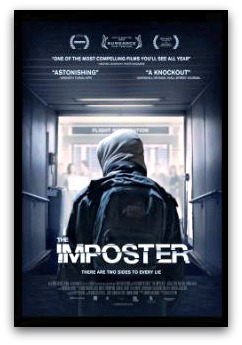
3) The Imposter (2012, dir. by Bart Layton) SUMMARY: Thirteen-year-old Nicholas Barclay disappeared from his home in San Antonio, Texas, in 1994. Three and a half years later, he is allegedly found alive, thousands of miles away in a village in southern Spain with a story of kidnapping and torture. His family is overjoyed to bring him home. But all is not quite as it seems. The boy bears many of the same distinguishing marks he always had, but why does he now have a strange accent? Why does he look so different? This British documentary concerns the 1997 case of French serial imposter Frédéric Bourdin. WHAT CRITICS ARE SAYING: By common consensus, The Imposter is one of the year’s most provocative pictures. Certainly, Displaced Nation writer Anthony Windram found it that way. In one of our most popular posts of last year, he mused that Bourdin’s story is not entirely unfamiliar to expats, all of whom have chameleon-like qualities.
CAST YOUR VOTE HERE!
2) Best Foreign Displaced Film
This category honors films about displacement that take place in non-English speaking countries and therefore require English speakers to read subtitles while learning about other cultures. And the nominees are:
1) Tabu (2012, dir. by Portugal’s Miquel Gomes) SUMMARY: The action in this experimental fiction ranges from contemporary Lisbon to an African colony in the distant past, in what was Portuguese Mozambique. First we are introduced to a cantankerous elderly Portuguese lady with a gambling addition. Then we flashback to her youth as a beautiful young woman living a kind of White Mischief existence at the foot of Mount Tabu, where she falls in love with a handsome adventurer…(Notably, the film’s title references the 1931 German silent film of that name, which took place in the South Seas.) WHAT CRITICS ARE SAYING: The film shows what happens to expats who live too long — there are no remnants of “paradise” left. But some — e.g., A.O. Scott of the New York Times — have faulted the director for glossing over the issues of colonialism in the film in favor of simple aestheticism.
2) Clandestine Childhood (2011, dir. by Benjamín Ávila) SUMMARY: A cinematic memoir drawn from Ávila’s own experiences, the film paints an unsettling portrait of families affected by military dictatorships. The year is 1979, five years after Perón’s death, and the family of 12-year-old Juan, who have been living in exile in Cuba, returns secretly to Argentina. Juan’s parents are members of an underground organization and for sake of their cover, he must assume the name of “Ernesto” and pretend to be a newcomer from northern Argentina. WHAT CRITICS ARE SAYING: Juan’s parents aren’t fleeing the law because of their past misdeeds but are trying violently to overthrow a current dictatorship. The film therefore raises the question: do urban guerrillas make good parents? After all, they are asking their son, a Third Culture Kid, to act the part of a native in the homeland he never knew, for the sake of their political ideals. But while this question is intriguing, the story is driven almost entirely by clichés. As one critic remarked:
[T]he writing needs to be sharper to avoid feeling like a generic coming-of-ager.
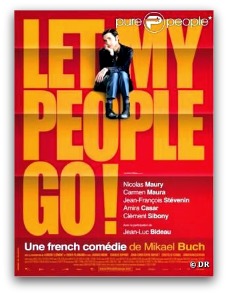
3) Let My People Go (2011, dir. by Mikael Buch) SUMMARY: French immigrant Reuben (Nicolas Maury) is living in fairytale Finland — where he got his MA in “Comparative Sauna Cultures” — with his gorgeous Nordic boyfriend Teemu (Jarkko Niemi). He works as the mailman in a neighborhood whose colorful houses look like Scandinavian Skittles. Then, after a misunderstanding involving a parcel full of Euros, Teemu casts his lover out of Eden, sending him back to where he came from: Paris. WHAT CRITICS ARE SAYING: Ruben’s return to Paris — where he finds his family weathering various crises as well as emotional instability — demonstrates why he left in the first place. (Aren’t most expats escaping something?) However, the scenes with his wacky, feuding family members soon become tedious. As one critic puts it:
The movie’s labored attempt at creating comedy mostly means lots of scenes with Ruben cringing as relatives shout.
CAST YOUR VOTE HERE!
3) Most Displaced Director
This category honors the director who has shown the most chutzpah in raiding the literature of other cultures to make a commercially successful movie (note: they do not cast the natives!). This year’s nominees are:
1) Joe Wright for doing a British version of Anna Karenina (2012), casting his muse (Keira Knightly) in the titular role WHAT CRITICS ARE SAYING: Some enjoyed Wright’s bold new interpretation of this classic Russian novel, while others felt that he did Tolstoy a terrible injustice — for instance, New Yorker critic Richard Brody had this to say:
Wright, with flat and flavorless images of an utterly impersonal banality, takes Tolstoy’s plot and translates it into a cinematic language that’s the equivalent of, say, Danielle Steel, simultaneously simplistic and overdone.
2) Tom Hooper for casting a bunch of Aussies, Brits and Americans in Les Misérables WHAT CRITICS ARE SAYING: Since Hooper previously won the Best Director Oscar for the terribly English drama The King’s Speech (historical drama, yay!), many found it odd that he would choose to take on this sprawling French story, and beloved musical, to create what he calls “an oil tanker of a picture.” But for what it’s worth, Hooper had no qualms about directing a film having to do with French history instead of his own. He is persuaded that Victor Hugo’s story speaks to issues of concern today:
Hugo’s story of populist uprising in 1832 Paris resounds in an era of the Arab Spring, the Occupy protests and general frustration over economic inequality.
3) Korean director Hur Jin-ho for making an Asian version of Dangerous Liaisons (2012) — which was originally an 18th-century novel by Pierre Choderlos de Laclosset — and setting it in 1930s Shanghai WHAT CRITICS ARE SAYING: Many have complimented Hur Jin-ho’s decorous adaptation, saying it was clever of him to swap the insular, decadent world of de Laclos’ book, which takes place pre-French Revolution, with the similarly gilded cage of Chinese aristocrats just prior to the Japanese invasion. But the film isn’t particularly sophisticated on a political or historical level. As one critic writes: “It’s all just window-dressing: pretty, but substance-free.”
CAST YOUR VOTE HERE!
4) Most Displaced Actor/Actress
This category honors the actor who has performed this year’s greatest feat of playing a role that requires them to take on a whole new nationality. We’re talking Versatility Plus! And the nominees are:
1) Daniel Day-Lewis, the Anglo-Irish actor who portrayed Abe Lincoln in Lincoln WHAT CRITICS ARE SAYING: Apparently, there was no American actor good enough to play one of the most exceptional presidents the nation has ever known as critics have had nothing but praise for Day Lewis’s performance. Here is a sampling:
His Lincoln is tall and tousled and bent over with the weight of melancholy responsibility in the fourth year of the Civil War.
[Day-Lewis] manages to inject so much quiet humour into what could have been a very reverential portrait.
[The actor] inhabits the ageing figure of the 16th President of the United States with exquisite poise, intellect and grace.
2) Anne Hathaway for playing saintly prostitute Fantine in Les Misérables WHAT CRITICS ARE SAYING: Many find it impressive that Hathaway, cast as the tragic Fantine, sings the show-stopping “I Dreamed a Dream” in one take. (Tom Hooper’s contribution to the genre was having the actors sing rather than lip synch.) And some say that her willingness to have her locks shorn off on screen shows her commitment to her craft. That said, her performance is not to everyone’s taste. “Rarely have the movies seen such an embarrassingly naked plea for applause,” writes Australian film critic Jake Wilson — the implication being the Victor Hugo’s Fantine would have had more dignity.
3) Swedish actress Alicia Vikander for taking on two non-Swedish roles: Caroline Matilda of Great Britain (she served as Queen of Denmark and Norway in the 18th century) in A Royal Affair (2012); and Kitty in Anna Karenina (2012) WHAT CRITICS ARE SAYING: Vikander’s “moxie” is apparently what landed her both of these parts. According to A Royal Affair director Nikolaj Arcel, every actress in Denmark wanted the role of Mathilde, but only Vikander had the requisite “regal quality.” She even went to Copenhagen two months before shooting began to learn to speak Danish fluently. Likewise, Anna Karenina director Joe Wright saw in her the qualities to play Kitty, a flirtatious young woman who believes the dashing Count Vronsky is her Prince Charming, only to find love with a kind-hearted farmer named Levin. It is not uncommon for movie-goers to remark that she outshines Kiera Knightly’s Anna.
CAST YOUR VOTE HERE!
* * *
Are we missing out on any films/categories? Please leave your suggestions in the comments below.
If you enjoyed this post, we invite you to register for The Displaced Dispatch, a round up of weekly posts from The Displaced Nation, with seasonal recipes, book giveaways and other extras. Register for The Displaced Dispatch by clicking here!
Is it cooler being married to someone from another country? In my experience, it’s often everyone else who seems to think so, although maybe that’s because I happen to be married to someone from a country whose people are perennially voted the coolest nationality on the planet.
Typically, as soon as I mention that I’m married to a Brazilian the almost universal reaction is:
“Cool! I’ve always wanted to go to Brazil!”
Such reactions inevitably tend to be informed by the idealized images most people have about Brazil and Brazilians:
And…errr…films about favelas, drugs and gang violence.
Naturally though, people tend to assume that I probably haven’t married a gun-wielding, drug-pusher from the favelas, and so it’s the cool, beach-loving Brazilians they tend to envisage whenever I mention my marital status.
So, in everyone else’s eyes at least, my story of marrying the Brazilian girl I met in Argentina is way cooler than that about the girl they met in their local boozer in London.
And to be fair, it is a pretty cool story.
Cool as in mind-expanding
Yes, the samba, the beaches and the football (especially the football!) make life exciting, but what’s even cooler is that marriage to a Brazilian woman has been a life-changer — in a good way. For instance:
1) My horizons have been broadened immeasurably. I’ve learned to view things through the eyes of someone who’s experienced them within another country and culture. Thus, things you may have previously found exotic, unusual or irrational become familiar, normal and logical.
2) I now see “cultural differences” in a positive light. True, cultural differences have the potential to make a relationship fractious. But in our case, these cultural differences help to fill in certain gaps that we’d always looked for in the people we’d dated.
As a self-conscious Brit (British stereotype No 1: tick), I find it appealing to have a naturally sociable and confident wife (Brazilian stereotype No 1: tick), who is able to take control of social situations in which I’d otherwise feel uncomfortable. Her effortless sociability is the perfect counterbalance to my stuttering inability to engage in anything other than mindless small talk with most strangers.
By the same token, she appears to have found it a pleasant surprise to encounter a man who was a little less “forward” than what she had been used to in Brazil.
That, and the fact that I was the only man she’d ever met who could cook, I imagine.
3) I also think that cultural differences are often overdone. Despite the perceived and real differences between our countries and cultures, there are occasions when I realize that in many ways, my wife and I aren’t all that different. As a football geek, I’ve found my wife’s interest in watching football one of life’s great blessings (Brazilian stereotype No. 2: tick; British stereotype No. 2: tick). I’ve lost count of the number of times I’ve come home to find her watching a game on the telly.
Cool as in constant adventure
Another cool thing about marrying someone from another country is that life becomes more adventurous — at times rather literally. For example:
1) I’ve had the opportunity to learn and explore a culture and country with what effectively amounts to having a free tour guide. And, let’s face it, where would you rather go when you have to go and visit the in-laws: Brazil or another boring town in England?
2) I’ve now embarked on the adventure of learning another language. This is something I’d always wanted to do but was too lazy. Also, language schooling is pretty appalling in the UK — I can barely remember any of the French of German that I learnt all those years ago.
Whilst it’s still a work in progress, my Portuguese is now at least functional — and improving everyday.
3) I’ve been able to do something I always wanted to do, live abroad. Indeed, my language learning has been significantly aided by our recent relocation from London to São Paulo. Would I have done this without my wife? Maybe not, because of circumstances and/or apprehension of moving countries on my own. For me, the option to live in Brazil was instantly made more manageable by my wife being from the country we moved to — my own personal relocation advisor if you will. As explained it my Random Nomad interview, it makes me feel a lot less displaced.
But, not always as cool as it sounds
However, despite how cool all this sounds it’s not to say that marrying someone from another country doesn’t come without its own particular challenges. Here are two that really stand out for me:
1) The early days weren’t easy. Once we’d both returned home, following what was effectively a holiday romance, there was the little issue of us both living in different continents — a mere 6,000 miles apart.
And then, once we’d decided to give the whole (very) long-distance relationship a go, there was the feeling, similar to the one expressed by fellow Brit James Murray in his column last month, that the few weeks here and there we occasionally managed to spend together consisted mainly of getting re-acclimatized, rather than enjoying each other’s company.
And, of course, there were the usual issues that complicate long-distance relationships: loneliness, uncertainty, jealousy, lack of communication, etc. Fortunately, we had the Internet — a relationship like ours would have been unimaginable 15 years ago.
2) UK immigration laws — need I say more? When my wife made the crunch decision to move to the UK, there was the added complication of the navigating a Kafka-esque immigration system that does its best to keep out anyone deemed to be from a “developing country.” Four years, various visa refusals, threats of deportation and thousands of pounds later, my wife was finally able to settle her status permanently in the UK.
Rather ironically, as soon as she received permanent status, we scarpered from the economic crisis in Europe to the relative calm in Brazil — where they’ve been far happier to accept me as a resident.
But hey! That’s pretty cool, too.
* * *
Readers, having witnessed Andy’s valentine to his Brazilian wife, what do you think? Are you in a cross-cultural relationship and if so, do you perceive similar benefits? Or are you more jaded than he is — suspecting that the challenges can outweigh the benefits once the “cool factor” wears off? Please leave your thoughts in the comments!
STAY TUNED for tomorrow’s post, when a Random Nomad with a finely-tuned sense of romance joins us!
If you enjoyed this post, we invite you to register for The Displaced Dispatch, a round up of weekly posts from The Displaced Nation, with seasonal recipes, book giveaways and other extras. Register for The Displaced Dispatch by clicking here!
The Displaced Nation got through January without grousing too much about the winter doldrums. But our monthly guest columnist James Murray, a displaced Brit in Boston, will not let the same be true of February. Enjoy his short post — he was too cold to write more!
Winter seems to me a bloody silly time to start any kind of resolution.
Want to jog? Why not start when you can venture outside without the high-density wool coat?
Want to write every morning? In fingerless gloves I assume?
About the only kind of resolution I can imagine keeping is a commitment to a higher standard of personal cleanliness, because I just feel like taking hour-long hot showers most of the day.
Winter just makes you want to be elsewhere. Anywhere but here — and the problem is that this applies to whichever “here” you happen to be inhabiting.
So it’s nothing personal, Boston, when I tell you each and every balls-contractingly cold morning what you can do with your damn winter.
Just like it was nothing personal when I told New Zealand that it should get its shorts-clad arse in gear and install some insulation because let’s face it, it doesn’t matter how mild it is outside; seeing your breath in the morning is a severe disincentive to removing your head from under the covers.
Winter has the effect of making you wonder if you’ve made some kind of mistake — whether you’d be happier in a far distant land where they don’t have the subtle divisions of “chilly,” “cold” and “freezing”; where their scales start at “mild” and only go upwards.
But the project for this year is, as far as possible, staying put. The tangent-curved graph depicting our rapidly climbing heating bill will not deter us; the face-paralysing wind will not stop us from riding our bikes like the foolish pseudo-hippies we are; the desaturated colours of the lifeless trees will not bring us down to the point where we won’t leave the house, and above all, the lure of foreign climes will not force us to quit the place we’ve worked so hard to get to.
After all, we have a secret weapon: a fireplace; and so we know that no matter how drearily the wind may whistle or how uncomfortably cold the bathroom tiles may get, we can still hunker down, roast our remaining chestnuts and hold out for Spring.
James Murray is a self-described “itinerant Brit.” After a stint in New Zealand, and some travel in Southeast Asia, he and his American girlfriend — now wife — are practicing “staying put” in Boston, where James is pursing a career as a wordsmith for marketing and fiction, and as a non-professional theatre director. He is also a Utopian idealist and SingStar enthusiast. You can find more about his views by reading his blog, Quaint James, and/or following him on Twitter: @quaintjames.
If you enjoyed this post, we invite you to register for The Displaced Dispatch, a round up of weekly posts from The Displaced Nation, with seasonal recipes, book giveaways and other extras. Register for The Displaced Dispatch by clicking here!
Editor’s note: Today we are happy to welcome a new member to the Displaced Nation team, Andy Martin. His debut post introduces our two favorite February’s themes: Valentine’s Day (aka expat love) and displaced movies (in honor of Oscar season). For those who haven’t read Andy’s Random Nomad interview with us, it’s worth knowing that he’s a UK-qualified social worker who now lives in Brazil with his Brazilian wife, and a self-professed football geek.
One of the things I discovered when I moved to Brazil is that Valentine’s Day is not actually celebrated here until 12th June, where it is instead known as Dia dos Namorados (Boyfriend’s/Girlfriend’s Day). The reasoning for this is that 12th June is the eve of St. Anthony’s Day, the saint otherwise known as “the marriage saint.”
Additionally, what the rest of us know as Valentine’s Day (14th February) typically falls during or around the time of Carnaval, and anyone who knows anything about the excesses of Carnaval knows that a holiday to celebrate fidelity may probably be best left until later in the year — say, June time.
Anyhow, seeing as my wife has lived in the UK and now openly embraces British culture she’s suggested that it would only be proper to celebrate both the British and Brazilian holidays — she’s a clever one! And what more traditional way to celebrate than a trip to the cinema?
Bearing this in mind, I’ve made a list of 5 films that couples like us — multicultural, expat, glolo and/or nomadic — might like to watch this coming Valentine’s Day, to stir up the romance of travel that brought you together in the first place…
The one about adventure
1) Indiana Jones and the Raiders of the Lost Ark (1981), dir. Steven Spielberg
An action-adventure drama that pits Indiana Jones (played by Harrison Ford) against a group of Nazis who are searching for the Ark of the Covenant because Adolf Hitler believes it will make their army invincible.
Why I like it: The original Indiana Jones trilogy was released between 1981 and 1989, and despite the pointless release of Indiana Jones and the Kingdom of the Crystal Skull in 2008, it will forever remain, for my generation at least, what introduced us to the potential excitement of exploring the unknown.
Personal note: I love my in-laws but they neglected their parenting duties in one pretty big way: their failure to introduce my wife to Indiana Jones (a situation that has, thankfully, now been rectified).
Most stunning aspect: Let’s face it, any film that can make archaeology seem like the coolest profession in the world has got to be doing something right hasn’t it?
The ones with the romantic clichés
The traveler is often accused of being a romantic, an idealist and of someone who is running away from life and all the problems and commitments that go with it. The alternative argument is that the traveler is actually taking life by the scruff of the neck and living it to the full.
Either way, two films that best capture this dialectic are the two that often most lionized by today’s generation of travelers:
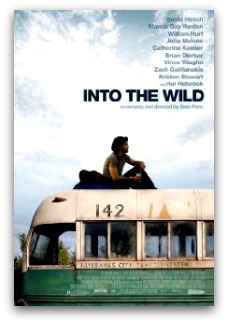
2) Into the Wild (2007), dir. Sean Penn
An adaptation (also by Penn) of the book of the same name, by Jon Krakauer, depicting the true story of Chris McCandless, a 24 year-old American and persistent wanderer whom believed that there was more to life than settling for the 9-5 grind in an office.
Why I like it: My wife introduced me to it (her riposte to my Indiana Jones exasperation). She had watched it early on in our relationship, when she was in Brazil and I was in London — a genuinely long distance relationship.
Personal note: She said that the film’s protagonist, Chris McCandless, reminded her of me — although fortunately our story has had a bit of a happier ending than his (I’ll say no more in order not to ruin it for you).
No half-measures: Boy did McCandless walk the walk, giving away his $24,000 college fund to charity before hitchhiking to Alaska and plunging into the wilderness, gradually seeking the means to remove himself from the “real world. ”
3) The Motorcycle Diaries (Spanish: Diarios de motocicleta) (2004), dir. Walter Salles
A biopic of Ernesto “Che” Guevara as a young man, representing an adaptation of Che’s memoir of the same name, recounting the trip he made around South America with his best friend, Alberto Granado.
Why I like it: Whatever you view of Che is, there is actually relatively little politics in the film, although one is introduced to some of the experiences that started to inform what he later became in life. Instead, for the most part, this is a film which perfectly captures what is to be young and curious of the world outside your own town or city. Che and Alberto chase beautiful landscapes and beautiful people, but also volunteer their time to those less fortunate than themselves.
Personal note: This film was the tipping point in inspiring me to travel around South America.
Memorable scene: There’s a great scene that highlights the dichotomy between the travel romanticized by “travelers” and that which is driven by the needs of most other migrants around the world — the topic of my guest post last month for The Displaced Nation. In it Che and Alberto meet an indigenous couple who have been forced from their lands and who are traveling in order to find work. When the couple ask Alberto and Che why they are traveling, they reply: “We travel just to travel.” Confused, the wife replies: “God bless you.”
The one about being displaced
4) Lost in Translation (2003), dir. Sofia Coppola
The story of the unlikely bond between an aging movie star, played by the awesome Bill Murray, and a trailing spouse (Scarlett Johansson), after they meet in the bar of their five star hotel in Tokyo.
Why I like it: Life as a nomad is not all about romantic adventures and life-changing experiences — there are also just as many challenges and struggles: homesickness, culture shock and loss being just some of them. Lost in Translation is, perhaps, one of the films that best explores some of these issues.
Additional benefits: The story is poignant, and the film is beautifully shot.
The one that’s not actually about travel or expats
5) Blood Into Wine (2010), dirs. Ryan Page & Christopher Pomerenke
A documentary about the Northern Arizona wine industry focusing on the musician Maynard James Keenan and Eric Glomski and their winery, Caduceus Cellers.
Why I like it: This film doesn’t really have anything to do with either travel or expat life, but I’m including it here because it’s about one of my favorite artists: Maynard James Keenan. A slightly biased choice perhaps, but I think it deserves a merit for the way it encapsulates the spirit of those people who have dreams and then act upon them to make them happen — a spirit which, I think, drives many of us travelers and expats.
Maynard’s dream: Maynard dreams of starting a vineyard in Arizona. Yes, Arizona. Despite the doubts and concerns of the experts he consulted Maynard invested almost his entire fortune, made from working with the bands Tool and A Perfect Circle, to start a vineyard in Arizona — a state entirely unknown for growing wine.
Does he succeed? You’ll have to watch it, I guess… And don’t forget to invite a date!
* * *
Readers, what do you think of Andy’s suggestions? Are these the sorts of films that make you feel romantic, or do you think he’s bonkers? We’re open to any and all comments…as well as to further recommendations of films likely to bring out the romantic side in us glomads!
STAY TUNED for tomorrow’s post from our monthly columnist, James Murray, who right now can be found in front of his fireplace in Boston — and not because he’s in a romantic mood! Far from it…
If you enjoyed this post, we invite you to register for The Displaced Dispatch, a round up of weekly posts from The Displaced Nation, with seasonal recipes, book giveaways and other extras. Register for The Displaced Dispatch by clicking here!
CLICK HERE TO REGISTER for THE DISPLACED DISPATCH. It’s delivered to your inbox and features:
* new works by expats or other international creatives;
* debate-worthy topics in the expat realm;
* surprising discoveries expats have made; &
* a couple of the latest Displaced Nation posts. SIGN UP NOW. (On temporary hiatus; next issue to appear in Spring 2018)
FOR, BY & ABOUT DISPLACED CREATIVES
We have interviewed many displaced creatives: memoirists, novelists, entrepreneurs & artists of various kinds. Check out the collection for possible soulmates!
About The Displaced Nation
The founders of The Displaced Nation share a passion for what we call the "displaced life" of global residency and travel—particularly when it leads to creative pursuits, be it writing, art, food, business or even humo(u)r.


 This week, the Displaced Nation is drifting away from March’s initial theme of beauty/fashion tips picked up from world travels. Hardly surprising, given that all of this week’s writers are males! Today’s guest poster, James Murray, a displaced Brit in Boston, is a prime example. The only new fashion he’d like to start would be replacing the word “travel” with “explore.” Sounds pedantic, right? Well, see what you think!




















 The Displaced Nation