The Displaced Nation

A home for international creatives

Category Archives: Golden Oldies

THE DISPLACED Q: On your travels, have you ever run into horror in the midst of beauty?

We’re trading horror stories again today — about places that are otherwise considered beautiful. With all the violence in this planet’s history, almost every unspoilt view has been a battlefield at some point or other.

But instead I have a personal tale, about the beauty — and the power — of nature.

My wife and I have recently moved to Perth, Australia, to be close to her family. She grew up in a village surrounded by forest on the outskirts of Perth called Roleystone, in the same house her dad and three sisters still live in.

Heaven in the hills

Her hometown is an amazing place — far enough from the city that urbanites consider it part of the outback, yet close enough to have those things that make modern life so convenient, like mains water and electricity.

It’s a ocean of tranquility, a haven for wildlife from bandicoots to parrots to possums to kangaroos. All of them can be seen in the back garden of the family house, which is built into half an acre of steep, wooded hillside.

It is utterly beautiful.

To live in that house is to experience peace — at least until the possums start fighting on the roof! During the period when we lived with her family, I used to wake up every morning to bird-song and dappled light streaming in past the trees that shade the windows.

But then, in February of 2011, tragedy struck in the form of a raging bushfire. Most Australians have nightmares about bushfires at some point or other, but out here in the forest it becomes real all too often.

Fire is a way of life for much of the native flora; the cycle of summer burnings is so regular that seed pods from the honky trees only split when roasted in several-hundred-degree infernos. The vegetation is designed to burn, charring the outer layers of bark on trees that have adapted to cope with — indeed, have come to require — this treatment. Iconic Australian species like grass trees and gum trees couldn’t reproduce without fire to crack open their rock-like seed casings. It’s just another cycle: natural, predictable — and unstoppable.

Especially when it gets out of hand.

Because humans aren’t like those trees. The colonizers of Australia have learned to live with the harshness of its environment — but there’s one thing that can never be withstood, and that is fire.

Hell in the hills

The blaze that engulfed Roleystone was started by accident (as so many of them are). A local man, using an angle grinder outside the front of his house, caused the sparks that set the bush alight for miles around. In a matter of hours, the neighborhood was surrounded by fire, dozens of properties were ablaze, and street by street, as the fire advanced, residents were told to evacuate their homes.

My wife and I were back in England at the time, dealing with some issues of our own, so all I could do was scour the Internet for news while she studied Facebook for updates from her family and friends.

My wife’s father and her three sisters had packed their most precious belongings into the car. Photo albums went in first — the only truly irreplaceable things in the house, containing the last memories of my wife’s mum.

As the wind picked up and the flames grew closer, the next street over was evacuated by fire service volunteers. Helicopters thundered past overhead, carrying giant buckets filled with lake water.

My wife’s whole family sat by the radio, listening to the emergency broadcast, waiting for their street name to be announced; waiting for the call to flee.

It never came.

The wind changed again and the fire swept past less than half 500 metres away, incinerating the village on the other side of the hill.

My wife’s family never had to make the choice between leaving their home for good, and staying to risk their lives defending it. They were luckier than many of their neighbors — though thankfully all of them chose wisely. No one stayed, and no one lost their life.

What they did lose was absolutely everything else.

71 houses were burnt to the ground. Another 39 were damaged, along with two schools — and the main bridge into the village, which collapsed.

Almost two years later, the local landscape has started to recover. The legacy of the fires is, as always, new growth; everywhere new trees and under-brush is flourishing, dark green against the black. The charred portion of bark reaches three or four metres up the trunk of every tree, and still dominates the woodland when viewed from the road — but the trees themselves survived, and will prosper because of it.

Unlike the houses.

Now, we drive through that scorched, blackened forest almost every day. Houses have been rebuilt on many, but not all, of the vacant plots. Life has returned to normal in Roleystone, bordered as it is by charcoal-coated trees. It’s a reminder that living here, in such a volatile environment, is very nearly as dangerous as it is peaceful, beautiful and idyllic.

And so as not to end on a downer, here’s one of my favorite quotes from comic fantasy book writer Terry Pratchett:

Build a man a fire, and he’ll be warm for a day. Set a man on fire, and he’ll be warm for the rest of his life.

* * *

So, Displaced Nationers, share your stories with us! Have you visited any beauty spots that are tinged with horror? We’d love to know about them.

Let us know in the comments, or catch us on Twitter: @DisplacedNation

STAY TUNED for Monday’s guest post, a horror tale of a different kind.

If you enjoyed this post, we invite you to register for The Displaced Dispatch, a round up of weekly posts from The Displaced Nation, with seasonal recipes, book giveaways and other extras. Register for The Displaced Dispatch by clicking here!

Related posts:


5 travel situations that spell H-O-R-R-O-R!

Overseas travel can be a dangerous business. Casting yourself out into the wide world — into a foreign culture, possibly alone and thousands of miles from home — is always going to present challenges and perils aplenty.

Sometimes everything goes all right, or almost — sure, you lose your hat at the beach, or your taxi driver struggles to find the right address; but otherwise, everything is fine.

And then there are those moments when something goes terribly amiss — and your stomach feels like it’s dropped into your shoes!

This post is devoted to those H-O-R-R-I-F-Y-I-N-G moments…beginning with five of mine, hand picked from dozens. And I’d like you all to share yours!

1) Your accommodation is not as described.

Now this is a common enough problem. As a broke backpacker, I’ve stayed in some seriously nasty places, but there was one that took the biscuit — or would have, had I dared to eat it in there. I refer to the last two beds left anywhere in Perth — which served my sister and I right for waiting till we arrived to arrange a place to stay. It was coming up to Christmas, and the place looked okay on the Web site. Cheap and cheerful, just like us! Only the rooms stank. They were knee deep in the occupants’ clothes, and it was clear some of them had been hanging out in there for a while. My room, bizarrely, was all girls apart from me — with sarongs hanging from the top bunks as privacy screens. That seemed like a good idea, as I certainly didn’t want to see what was going on — not judging by what I could hear…

Yep, you guessed it. Turned out that place was being used as a brothel, with the owner taking a cut to look the other way. We lasted two nights before thankfully finding more salubrious accommodation. I guess I should have been grateful that our beds weren’t charged by the hour…

2) Your money is suddenly all gone.

Been there, done that! Haven’t we all? When living on a small island in Thailand, I discovered to my horror one day that my bank account was almost empty. A closer inspection revealed a series of withdrawals — always the maximum amount possible, all transacted on the mainland over five hours away by boat.

Something didn’t add up. I got in touch with my bank and took the last of my cash out — only to have it stolen in a bungalow break in the following night! Luckily, I’d made a lot of friends, and they supported me until the bank agreed I’d been defrauded, and gave me all the money back.

(Interestingly enough, years later, it occurred to me that around the time of those withdrawals I’d been buying a lot of diving gear for cash…and of course, my island was too small to process its own transactions, so they all showed up as being made on the mainland…)

3) You drop your camera.

People get very attached to their photos — and we travelers more so than most. Hardly a week goes by without some friend pleading on Facebook for pictures of a night out that got inexplicably wiped from memory. So dropping your camera is potentially a huge disaster — and one that, thankfully, I’ve never done. No, I’ve never owned a camera, because I am death to gadgets. I’m terminally clumsy, which is why no one trusts me — except my poor wife, who paid the ultimate price. She handed her camera to me for safekeeping only for a minute, while she went back to lock the door of our traditional Fijian hut. Now I never thought of concrete as traditionally Fijian, but that is what the path was made of. So when I fumbled and dropped the camera, it shattered into about a thousand pieces.

We were able to claim it on insurance — not ours, as we hadn’t bought any, but my mother’s, since she was kind enough to pretend it was her camera I’d destroyed.

The photos, however, were gone for good. And seeing as how I was wearing a bikini in some of them, maybe that’s for the best…

4) You eat a dodgy curry!

Eating something that doesn’t agree with you and developing a pain, quite literally, in the backside only gets worse when you’re miles from home. And unfortunately, it also gets way more likely. Especially if, like me, you have a habit of eating food from wherever is cheapest! I never found out what caused my illness in Ecuador, but it resulted in my own Night of the Living Dead, in which I, zombie like, spent twelve hours weaving between my bed in a crummy hostel dorm and the nearest toilet two floors away — where (ignore the rest of this sentence if you’re squeamish) I was vomiting more blood than I’d ever seen outside my body. I honestly thought I was going to die that night — a good thing I was already dead!

And last but by no means least:

5) You discover there is no toilet paper…

Whether it’s electronically controlled and plays music at you, or a rough wooden plank over a hole in the ground, you know you’ll have to use the facilities at some point, and when that moment comes, will adapt somehow — you haven’t really got a choice. In one extreme case I’d left it as long as humanly possible — by which point there was no thought in my head beyond getting out of the restaurant in time! Once I’d made it to the toilet round the back, I felt much better. Until, that is, I felt in my pocket and remembered I was wearing new jeans — and hadn’t transferred over the stash of TP…

I won’t go into any more detail, apart from to say that for the rest of that meal, I adopted the local practice of only eating with my right hand.

* * *

So, now it’s your turn! Travel horror stories, if you please! And as always, you can catch me and the rest of the crew on Twitter: @TonyJamesSlater +/or @displacednation.

Thanks for reading!

STAY TUNED for Wednesday’s post, an interview with a displaced author of a violent romance!

If you enjoyed this post, we invite you to register for The Displaced Dispatch, a round up of weekly posts from The Displaced Nation, with seasonal recipes, book giveaways and other extras. Register for The Displaced Dispatch by clicking here!

Related posts:

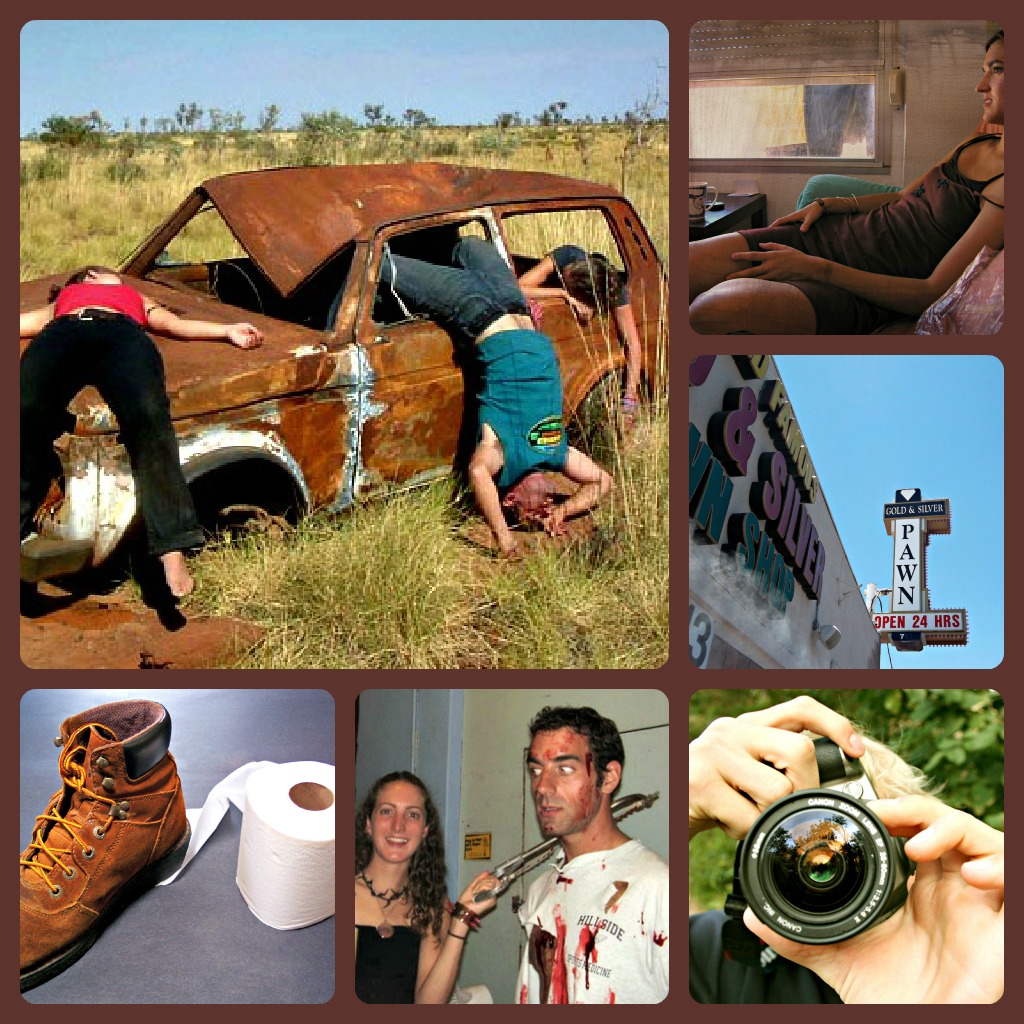
Images (clockwise, left to right): Horror image from Tony’s personal collection: fooling around with an abandoned vehicle near Wolfe Creek, Northern Territory (2007); sexy woman, pawn shop and Canon camera all from MorgueFile; Tony’s “undead” photo from a Halloween in Perth, Australia (2008); toilet paper and travel boot from MorgueFile.

THE DISPLACED Q: On your travels … have you ever seen a ghost?

Tony+ScaryBoy_collageOn your travels, have you ever seen a ghost?

And if you have — who ya gonna call?

I know, I know, you saw that one coming!

Seriously, though, for today’s Displaced Q, I’m asking about your supernatural experiences. Between all of us, we’ve been to a lot of places. So if there’s any truth in spooks and spirits, some of us are bound to have seen them, right?

Getting into the spirit of things

Well, I’ve never seen a ghost; but that could well be because I’m about as psychic as a cheese. Seriously — I’m not what you’d call particularly sensitive. Even to the physical world around me, as my body can attest; it’s constantly covered in bruises from walking into walls, chairs, doors — anything that regular people have sufficient grace to avoid.

But I digress. Our topic today is ghosts, and I’m a big believer in them. Why is that, you may wonder — given that I haven’t had a particularly spooky encounter of my own? I’ve visited (allegedly) haunted pubs, and creepy castles by the bucketload (being a Brit has its advantages in this regard).

I’ve also been in tombs of many different kinds — from the long barrows of the old Celtic peoples to the chiseled-out mausoleums of Petra in Jordan, to the pyramids and underground catacombs of Egypt.

And … not a sausage!

You wouldn’t believe…

Yes, I’ve had those strange, hard-to-explain occurrences that I think everyone has at some point or other: doors opening on their own, things moving from one place to another; one time I was looking right at a mirror when it fell off the wall and smashed to pieces, after over a decade of hanging there unmoving!

More recently at my wedding, there were two important guests who were no longer with us. We invited them anyway, with our hearts and minds. Both were ladies who shared an obsession with butterflies, so we felt blessed by their presence when a pair of butterflies danced over our heads all the way through the ceremony!

And yet, I know such experiences are easy to explain. Maybe I want them to be paranormal in origin, but the logical part of my brain is too active. It soon rationalizes these kind of happenings until I feel foolish even mentioning them … so, generally, I don’t. (Unless of course, the Displaced Nation is doing a series of ghostie posties.)

The multilingual (and TCK) actor Robert Stack served as host of the TV program Unsolved Mysteries. As he once said:

I don’t mind UFOs and ghost stories, it’s just that I tend to give value to the storyteller rather than to the story itself.

Do ghosts escape from dreams?

But I do have dreams. Sometimes, when things happen, I swear I’ve already dreamt about them at least once. And then, just occasionally, I have dreams when I’m visited by the spirits of people I’ve lost.

Earlier this year I had to make that journey every expat dreads — back to my home country of England, all the way from Australia, to help look after a dying relative. It was my granddad, and we weren’t sure he was dying at the time, but whilst keeping vigil with him I had a dream that rang with prophecy. His wife — my grandmother — who had passed on almost ten years earlier, showed up in my dream, wandering about his house and looking under things. When I asked her what she was looking for, she replied that she was here to find her other half, and that it was somewhere in the room.

It was a curious dream, and a thought-provoking one, but not unpleasant. I had the presence of mind to tell my family about it as we prepared for another day caring for Gramp.

The doctors at the time were discussing weeks versus months, but he clearly had received his marching orders. He died that evening.

This isn’t the first time I’ve experienced this, although I hope it will be the last; at least for a while. To have dreams of lost ones you first have to lose someone — and I’ve lost enough people this year to last me a lifetime.

That being said, I don’t think ghosts are evil, or vengeful spirits: just souls left behind, looking for something — or someone — they needed or cared for in life.

* * *

What do you think? Am I crazy?

To think that after all of my world travels, the most ghostly encounters I’ve had anywhere occurred back in my childhood home, in my bed.

Now that IS spooky!

So what about you folks? I’d love to hear your tales of what goes bump in the night. We’re coming up on Halloween, after all! In your travels, have you ever come across any restless spirits? Or had any experiences which made you think twice about them? Let me know in the comments!

Alternatively you can hit me up on Twitter: @TonyJamesSlater +/or @displacednation. I look forward to hearing from you!

STAY TUNED for Wednesday’s post, an interview with a Random Nomad who writes books about dead bodies!

If you enjoyed this post, we invite you to register for The Displaced Dispatch, a round up of weekly posts from The Displaced Nation, with seasonal recipes, book giveaways and other extras. Register for The Displaced Dispatch by clicking here!

Related posts:

Image: Tony (L) and  Scary boy from MorgueFile (R)

Would I travel for food? It depends…on whether it’s pizza or haggis!

Third Culture Kid Tiffany Lake-Haeuser is back, to tell us what she thinks about gluttony as a motive for travel.

As a Third Culture Kid who was raised in the United States and Abu Dhabi before returning to my native Germany, I’ve learned that every culture has its own traditional foods — but the idea of trying them all? I’ll take that with a pinch of salt, so to speak.  Some of the world’s most celebrated foods are very good; others, not so much.

At my international school in Frankfurt, I’ve found it amusing to walk around at lunchtime and see what the different nationalities are eating. Obviously, we students are somewhat limited by what the cafeteria offers, but once a year on International Day — a day for celebrating all the nationalities at our school — things get a bit more interesting. We get to choose between egg noodles at the Thai stand and the burgers at the U.S. stand, among others…

Food for thought

Would I travel for food? I know that the Displaced Nation has covered this topic obsessively last month. I discussed it with a few of my schoolmates — ironically, during our lunch period — and we agreed that while most of us have a certain sweet or other type of food we make a habit of eating or buying when we are in certain countries, we would not be inclined to go on a food tour.

One of my friends said she makes it a priority to buy “double stuf” oreos in the U.S. Though hardly a delicacy in America, this cookie is seen as an exotic treat at our school.

Other friends mentioned their efforts to avoid certain traditional foods at all costs. For instance, one of them said she loathed eating haggis in Scotland — even though that’s where she is originally from! For those of you who don’t know what haggis is, it is a savory pudding of sheep lung, liver and heart encased with other ingredients in an animal’s stomach. Mmmmm!

Another friend reported she’d found eating snails in France less than appetizing. The snails slimy and chewy, not pleasurable as French people like to claim.

Rice…again!

My own most memorable food experience associated with travel occurred when I was attending international school in Abu Dhabi. I refer to my eighth-grade week-long school trip to Thailand. Every day, we were given plain white rice to eat; it came with every single meal. By the end of the week, we just couldn’t face another bowl of rice! (On the rare occasions when we were served French fries, the students would attack them and within minutes they would be gone.)

However, on the last day of our trip, we were taken to a school and taught how to make chicken curry and spring rolls. Not only was it the best meal I’d had all week (which is of course not biased to the fact that I was the cook!), but I also found it so interesting to see the way these foods were made.

So maybe I would consider a cookery tour one day?

By the way, that still didn’t stop me from refusing to even consider eating rice for another month after that trip!

Pasta & pizza — perfect!

By the time this post goes up, I will be traveling in Italy, which is by far my favorite country to eat in. Pasta and pizza are two of my favorite things to eat in the world — and let’s face it, Italy does these foods better than anywhere else.

Honestly, I don’t even know how I will stop eating, but that’s a different problem.

I guess everyone needs to decide for themselves how far they are willing to travel for scrumptious or adventuresome eats. As for me, I will not be taking the train to Paris (where my dad now lives) every time I want a croissant — even if the original is truly amazing.

* * *

Readers, any thoughts on or reactions to Tiffany Lake-Haeuser’s skepticism about linking international travel to food experiences? Please put them in the comments. You can also follow what she is up to on her blog, Girl on the Run.

STAY TUNED for the Displaced Nation’s agony aunt, Mary-Sue Wallace, who will attempt to offer expat readers solace on their horrifying experiences in tomorrow’s post.

If you enjoyed this post, we invite you to register for The Displaced Dispatch, a round up of weekly posts from The Displaced Nation, with seasonal recipes, book giveaways and other extras. Register for The Displaced Dispatch by clicking here!

Related posts:


RANDOM NOMAD: Jessica Festa, Backpacker, Offbeat Traveler & Locavore

Place of birth: Long Island, New York, USA
Passport: USA — but I’m planning on starting the papers for my Italian passport soon (my grandparents were born there).
Overseas history: Australia (Sydney): 2008. I’ve also backpacked through western Europe (for partying and food!), South America (for surreal landscapes and hiking trails), and Southeast Asia/China and Ghana (for volunteer projects).
Occupation: Freelance travel writer. I have my own site and also write for Gadling, Viator and Matador, among others.
Cyberspace coordinates: Jessie on a Journey — Taking you beyond the guidebook (travel-zine); @JessonaJourney (Twitter handle); Jessie on a Journey (FB page for backpacking community); and Jessie on a Journey (Pinterest).

What made you leave the United States for the Land of Oz?
I chose Australia for studying abroad because I wanted to be able to communicate in English — it was my first time going abroad alone.

On your site you describe yourself as a “natural backpacker.” How did you find living in one country?
It’s so different living somewhere than just traveling to it. When you have a part-time job, class schedule, gym membership, local hangout, go-to grocery store, etc, you really begin to feel a strong connection to a place. Sydney is such a great city. That said, I did not give up my backpacking habit entirely. I also traveled a lot through Australia when studying!

Tell me about the moment on your travels when you felt the most displaced.
I had many moments like that when I did a homestay for a month in Ghana, in West Africa. I was doing orphanage work, and absolutely loved the experience — but the culture is just completely different. Especially in city areas, it’s very loud and chaotic, and people will shout at you and grab your skin to feel if it’s real. They don’t get many tourists, so they’re just curious and wanting to get to know you — but sometimes it got a little too intense.

When have you felt the most comfortable?
In Sydney. I actually called my family crying the night before my flight back to New York, saying I had a new home and would not be returning. I had this camaraderie with my neighbors and so many connections to the community, I really felt like a local.

You may bring one curiosity you’ve collected from each of the countries where you’ve traveled or lived into The Displaced Nation. What’s in your suitcase?
My collection of paintings, jewelry and handcrafted items:

  • Ghanaian artwork and wooden masks
  • Handmade jewelry from Sydney and Bolivia
  • A handwoven purse from Peru
  • Alpaca socks from Ecuador
  • Banksy artwork from the UK
  • Masapán (bread dough art) from Calderón, Ecuador
  • A hand-sewn water-bottle holder from Thailand

You are also invited to prepare one meal based on your travels for other members of The Displaced Nation. What’s on the menu?

Appetizer: Locro, a thick soup with potatoes, avocado, cheese and vegetables from the Andes.
Main: A pesto pasta with some kind of meat mixed in from the Cinque Terre in Italy.
Dessert: Salzburger Nockerl, a sweet soufflé from Austria.
Drink: Malbec wine from Argentina.

I wonder if you could also add a word or expression from one or more of the countries you’ve visited to the Displaced Nation’s argot.
“No worries” from Australia. Such a great phrase for life. I have it tattooed on my foot!

This week you received a “Food Alice” from the Displaced Nation for your post about the first time you tried cuy, or guinea pig, in Ecuador — you said your dinner reminded you of your pet guinea pig, Joey, named after a school crush. So, does food play a big role in your travels?
For me it’s about trying new things. It doesn’t need to be in the fanciest restaurant or prepared by a Michelin chef, just something truly local. For example, in South America while many of the other backpackers went to guidebook-rated restaurants, I always opted for the tiny, simple, dimly-lit local hangouts. I ate 2- and 3-course meals for a $1, and the food was fresh and local. It was exactly what everyday people in the community were having, and that was important to me.

If you were to design a world tour based on food, what would be your top five recommendations?
1) Mendoza, Argentina — try asado (barbecued meat) with a glass of Malbec.
2) Cinque Terre, Italy — try the pesto pasta that I served to you in my meal!
3) Naples, Italy — try the pizza.
4) Cuzco, Peru — try the cuy (guinea pig) or, if you’re too squeamish, the lomo saltado: strips of marinated steak served over white rice and with French fries.
5) Munich, Germany — try the brätwurst. It is like no other sausage I’ve ever tasted, and tastes so much better in Germany!

To be honest, I’m not so sure about going to Cuzco for cuy.
Really? I love it. I’m planning to go back, and possibly move, to Peru or Ecuador in March. I’m already looking forward to getting my fill of cuy again!

Readers — yay or nay for letting Jessica Festa into The Displaced Nation? At least she’s not planning to serve us guinea pig for dinner — that’s a mercy! (Note: It’s fine to vote “nay” as long as you couch your reasoning in terms we all — including Jessie — find amusing!)

STAY TUNED for tomorrow’s post, which will most likely be on food. (No, we haven’t finished gorging ourselves yet!)

If you enjoyed this post, we invite you to register for The Displaced Dispatch, a round up of weekly posts from The Displaced Nation, with seasonal recipes, book giveaways and other extras. Register for The Displaced Dispatch by clicking here!

Related posts:

img: Jessie Festa enjoying one of the biggest and best empanadas in all of Peru, at the Point Hostels in Máncora (May 2012).

THE DISPLACED Q: What’s the cheapest — yet tastiest — meal you’ve discovered on your world travels?

So what is the tastiest cheap-eat I’ve come across whilst traversing the globe? Not being much of a foodie, and being a writer, cheap — yet tasty — is what I’m all about.

Well, I hate to be boring and predictable — so I won’t be. Yeah, the street food you get in Thai markets is to die for when you’re hungry. Not only that but you can eat three full meals back to back for the price of a loaf of bread in Australia.

But that’s not what I’m going for. No, for sheer cheapness compared with mouth-watering deliciousness, I’m going to have to go with an old favorite: Indo Mi goreng, an instant-noodle brand produced by the world’s largest instant noodle manufacturer, located in Indonesia.

Not just any old noodles!

Now you could be forgiven for thinking I’ve gone off my rocker here. There are countless brands of instant noodles floating around out there, and they’re pretty much all unified by one thing: being rubbish.

Nutritionally rubbish. Tasteless. Processed. Crap.

But not these noodles! I ate them almost every day on my rejuvenating hike across Western Australia — mostly because they were light enough to carry in a full rucksack and impossible to mess up in terms of cooking. These ones are nice, super nice even. And when I went back to England recently and discovered I couldn’t buy them there, the wife made me order them wholesale! I think they came directly from Indonesia. Forty packet… Oh, yes, this is how much we love these noodles.

Even though we buy them in bulk, they still cost less than the postage!

All the Asians in my area of Australia buy them — either in ten-packs, or in the same giant box I had delivered to me in England. That’s how you know they’re good noodles — when your Malaysian housemates fill their shelves with them!

But I can’t devote this entire post to one brand of instant noodles, can I? Um…no. But I’m hard pressed to think of anything else that’s so delicious for less than 50 cents.

A case of “you get what you pay for”?

Well, Canadian athlete Joe Sakic spoke true when he said:

Any free meal is a good meal, you know?

Or did he? I’ve come across a few ways of getting free food in my time — from famous vegan soup kitchens in a hippie commune in Margaret River (Western Australia) to the delightful food they served me in hospital when I was selling my body to medical science (also know as being a guinea pig for medical testing). And none of these meals were especially delicious.

You know, they would shoot me full of weird, untested drugs, imprison me in a hospital for weeks at a time, make me sleep on rubber sheets and wake me every morning at 4:00 a.m. to take my blood.

But still, the worst thing about the whole experience was the food.

Free is only good if you don’t have to have it; being forced to eat isn’t great no matter the quality of the food. Which, unsurprisingly, wasn’t great.

Tastes that refuse to be acquired

Then, of course, there are the meals in foreign lands that people treat you to. In my experience, that can be risky.

On my last morning in South America, my Ecuadorian girlfriend took me for a surprise breakfast she’d been planning for some time.

She led me all through the suburbs of Quito, to a restaurant which was famous for one dish in particular: ceviche.

Now, I’m not a fan of seafood. I can just about choke down a fish-finger — as long as I can’t see the insides of it. Ugh!

Of course, this topic had never come up; one of the myriad disadvantages to starting a relationship when you don’t share even one common language. We communicated mostly in sign language, and the half-assed version of Spanish I was picking up.

So naturally, I’d never mentioned my intense dislike of seafood, in much the same way as she thought it would be too much effort to explain what her surprise was. As a result, neither of us knew what to expect until I lifted the lid on my service and saw what it was: namely, half the cast of Finding Nemo, after being put in a blender with some brown sauce and chillies…

I tried to eat it, honestly I did!

I didn’t succeed though.

At least, the bit I did eat came back up so rapidly we have to make our excuses and leave the restaurant at top speed…

So remember that, whilst free food is irresistible, you should always season your desire for a cheap eat with a little caution, especially when traveling. The old adage is true: there is no such thing as a free lunch (or breakfast).

There are few things worse than being violently ill in the middle of a country where no one speaks your language. Far from home. Far from healthcare you trust… And wearing most of your raw-seafood breakfast.

That is almost never a good look. :0)

* * *

So, that’s all from me on this particular displaced Q! Now it’s your turn! What experiences have you had in your search for cheap eats around the world? Any tasty morsels? Anything we should avoid? Any scrumptious stories…? We’d love to hear from you! You can also hit us up on Twitter: @TonyJamesSlater +/or @displacednation.

STAY TUNED for Tuesday’s post, the second part of a two-part travel yarn about two madcap Indonesian ladies who are taking Japan by storm!

If you enjoyed this post, we invite you to register for The Displaced Dispatch, a round up of weekly posts from The Displaced Nation, with seasonal recipes, book giveaways and other extras. Register for The Displaced Dispatch by clicking here!

Related posts:

Img: The contents of Tony James Slater’s shopping bag, taken on 9 September 2012 in his current home of Perth, Australia.

Repatriation is just relocation — with benefits

Today’s guest blogger, Anastasia Ashman, has been pioneering a new concept of global citizenship. Through various publications, both online and in print, and now through her GlobalNiche initiative, she expresses the belief that common interests and experiences can connect us more than geography, nationality, or even blood. But what happens when someone like Ashman returns to the place where she was born and grew up? Here is the story of her most recent repatriation.

I recently relocated to San Francisco. Three decades away from my hometown area, I keep chanting: “Don’t expect it to be the same as it was in the past.”

Since leaving the Bay area, I’ve lived in 30 homes in 4 countries, journeying first to the East Coast (Philadelphia Mainline) for college, then to Europe (Rome) for further studies, back to the East Coast (New York) and the West Coast (Los Angeles) for work, over to Asia (Penang, Kuala Lumpur) for my first overseas adventure, back to the USA (New York), and finally, to Istanbul for my second expat experience.

My daily mantra has become: “Don’t expect to be the same person you once were.”

With each move, my mental map has faded, supplanted by new information that will get me through the day.

Back in San Francisco, I repeat several times a day: “This place may be where I’m from, but it’s a foreign country now. Don’t expect to know how it all works.”

What a difference technology makes (?!)

Today my work travels, just as it did when I arrived in Istanbul with a Hemingway-esque survival plan to be on an extended writing retreat and emerge at the border with my passport and a masterpiece.

I knew from my previous expat stint in Malaysia that I needed to tap into a local international scene. But I spent months in limbo without local friends, nor being able to share my transition with the people I’d left.

This time is different. Now I’m connected to expat-repat friends around the world on the social Web with whom I can discuss my re-entry. I’ve built Twitter lists of San Francisco people  (1, 2, 3) to tap into local activities and lifestyles, in addition to blasts-from-my-Berkeley-past.

I’ve already drawn some sweet time-travely perks. To get a new driver’s license I only needed to answer half the test questions since I was already in the system from teenhood.

After Turkey’s Byzantine bureaucracy and panicky queue-jumpers, I appreciated the ease of making my license renewal appointment online even if the ruby-taloned woman at the Department of Motor Vehicles Information desk handed me additional forms saying: “Oh, you got instructions on the Internet? That’s a different company.”

One of the reasons my husband and I moved here is to more closely align with a future we want to live in, so it’s cool to see the online-offline reality around us in San Francisco’s tech-forward atmosphere.

It doesn’t always translate to an improved situation though. Just as we are searching for staff to speak to in person at a ghost-town Crate & Barrel, a suggestion card propped on a table told us to text the manager “how things are going.”

So, theoretically I can reach the manager — I just can’t see him or her.

So strange…yet so familiar

It took a couple of months to identify the name for what passes as service now in the economically-depressed United States: anti-service. Customer service has been taken over by scripts read by zombies.

When I bought a sticky roller at The Container Store, the clerk asked me, “Oh, do you have a dog?”

“No, a cat,” I countered into the void.

He passed me the bag, his small-talk quota filled. He wasn’t required by his employer to conclude the pseudo-interaction with human-quality processing, like, “Ah, gotta love ’em.”

What I didn’t plan for are the psychedelic flashbacks to my childhood. I may have moved on, but this place seems set in amber. The burrito joints are still playing reggae (not even the latest sounds of Kingston or Birmingham) and the pizza places, ’70s classic rock stations (Steve Miller Band’s “Fly Like An Eagle,” anyone?). The street artists are still peddling necklaces of your name twisted in wire. Residents are still dressed like they’re going for a hike in the hills with North Face fleece jackets and a backpack.

A bid for minimalism

The plan is also to be somewhat scrappy after years of increasing bloat. My Turkish husband and I got rid of most of our stuff in Turkey in a bid for minimalism. We camped out on the floor of our apartment in San Francisco until we could procure some furniture.

If it was a literal repositioning, it was also a conscious one — for a different set of circumstances. We’d expanded in Istanbul with a standard 3-bedroom apartment and “depot” storage room, and affordable house cleaners to maintain the high level of cleanliness of a typical Turkish household. In California, I intended to shoulder more of the housework.

I was soon reminded of relocation’s surprises that can make a person clumsy and graceless. I should have kept my own years-in-the-making sewing kit since I can’t find a quality replacement for it in an American market flooded with cheap options from China — and now have to take a jacket to the tailor to sew on a button, something I used to be able to do myself.

When the lower-quality dishwasher door in our San Francisco rental drops open and bangs my kneecap, I recall the too-thin cling wrap and tinfoil that I ripped to shreds in Istanbul, or the garden hose in Penang that kinked and unkinked without warning, spraying me in the face.

New purchases

“We’re getting too old for this,” my husband and I keep telling each other as we shift on our polyester-filled floor pillows that looked a lot bigger and less junky on Amazon. (We were abusing one-day delivery after years of not buying anything online due to difficulties with customs in Istanbul. Cat litter can be delivered tomorrow! Pepper grinder! Then I read about the harsh conditions faced by fulfillment workers in Amazon’s warehouses and cut back.)

One of our first purchases Stateside was a television. Not that we’re going to start watching local TV, but we did flick through some satellite channels. It’s something I like to do upon relocating: watch TV and soak up the local culture like a cyborg.

Since I last lived in the US, reality shows like COPS — where the camera would follow policemen on their seedy beats — have gone deeper into the underbelly of life, and now there are reality shows about incarceration.

The Discovery Channel has also gone straight to the swamp. That’s where I caught a moonshiner reality show featuring shirtless (and toothless) men in overalls called “Popcorn” and “Grandad.”

It’s an America I am not quite keen to get to know.

But I can take these reverse culture shocks lightly because my repatriation is part of a continuum. It’s not a hiatus from anything nor a return home. I’m not missing anything elsewhere, I haven’t given up anything for good. Being here now is simply the latest displacement. Today is a bridge to where I’m headed.

ANASTASIA ASHMAN is the cultural writer/producer behind the Expat Harem book and discussion site.  The Californian has been on a global rollercoaster: fired in Hollywood, abandoned on a snake-infested island off Borneo, married in an Ottoman palace, interviewed by Matt Lauer on the Today show. She brings it all home in the “Web 3.0 & Life 3.0” educational media startup GlobalNiche.net, empowering creative, adventurous, self-improving people to tap into a wider world of personal and pro opportunity no matter where you are. Get your copy of the Global You manifesto here.

STAY TUNED for tomorrow’s episode in the life of our fictional expat heroine, Libby. (What, not keeping up with Libby? Read the first three episodes of her expat adventures.)

If you enjoyed this post, we invite you to register for The Displaced Dispatch, a round up of weekly posts from The Displaced Nation, with seasonal recipes, book giveaways and other extras. Register for The Displaced Dispatch by clicking here!

Related posts:

Images: Anastasia Ashman (2012), her World Champions ring, and a view of the bridge to where she’s headed right now.
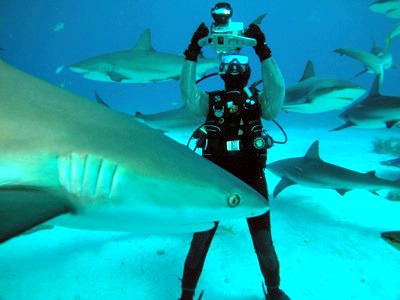
RANDOM NOMAD: Liv Gaunt, Accidental Serial Expat and Feeder of Sharks

Place of birth: Luxembourg
Passport: UK
Overseas history: England (Sevenoaks, Kent): 1981–98); Turkey (Fethiye, Ölüdeniz, Fethiye again): 1998–99, 2001–02, 2004; Kenya (Watamu): 1999–2000; Egypt (Dahab): 2000-01, Bahamas (Nassau and Family Islands): 2002–03; Barbados (Bridgetown): 2004–05; England (London): 2006–10; Australia (Cairns, Brisbane, Esperance): 2011 – present. (Gosh, I feel like a serial expat listing so many places!)
Occupation: Journalist and scuba instructor
Cyberspace coordinates: The World is Waiting — Expat humour, travel tips, handy hints, photos and inspiration for travellers (site); @worldswaiting (Twitter handle); The World is Waiting (Facebook); WorldsWaiting (Pinterest); and Liv G (foursquare).

What made you leave your homeland in the first place?
Though I am fond of Britain, I left because I was seeking work as a scuba diving instructor and underwater photographer. The jobs available overseas offered a better diving experience and a better lifestyle. Photographing sharks, filming turtles, and teaching people to dive in an island paradise conditions are not things you can do in Britain.

Is anyone else in your immediate family “displaced”?
My parents were expats in Luxembourg, which is where I was born. For a few years my father was based in Barbados for work, so I guess it runs in the family — but nobody other than me is displaced at this moment.

Your chosen profession of diving and underwater photography has led you to settling, at least for a time, in quite a few different countries. Tell me about the moment when you felt the most displaced.
I believe it is the people who make the place. I feel most displaced when I am surrounded by people who do not treat others with what I consider to be the most basic level of respect — basically, as they would wish to be treated. Discovering cultural differences can be fascinating; but living with discrimination day in day out is frustrating and awful. Living in Egypt I found it really frustrating that men would not take me seriously simply because I am female. They completely disregarded the fact that I had more experience and was more qualified than they were. Of course I understand there are significant differences between Arab and Western culture. But being in a male-dominated industry (scuba diving) in a paternal society (Egypt) was simply not for me.

Was there one specific moment during your time in Egypt that catalyzed this feeling for you?
No, I think it was more the growing realization that I would never be taken seriously.

Describe the moment when you felt your least displaced — i.e., when you felt more or less at home in one of your adopted countries.
The first time I lived somewhere other than with my parents, was in Turkey in my late teens. I took on the responsibility of earning enough to pay rent, bills and to feed myself — and it was all in Turkish. It was a classic example of me diving in at the deep end, so to speak. As a result, I quickly gained a working knowledge of the Turkish language as well as an understanding of the country, culture and its people. Initially I thought that my Turkish friends would be horrified by my near constant butchering of their language. But they only ever encouraged me — and even nicknamed me “the Turkish-English girl.” Nowadays, whenever I visit Turkey I feel very at home there. I don’t have the normal visitor’s questioning of things. I still have quite a few Turkish habits like always removing my shoes indoors, being quick to hit the horn whilst driving, and showing hospitality to visitors.

You may bring one curiosity you’ve collected from each of your adopted countries into The Displaced Nation. What’s in your suitcase?
From Turkey: An evil eye. Evil eyes are so-called, rather misleadingly, as they are believed to ward off evil. They are usually made from glass or ceramics and are often seen hanging over entrances to offices and people’s homes.
From Kenya: Some beaded sandals made from leather and old car tyres. They are the most comfortable sandals I ever had.
From Egypt: Egyptian hibiscus tea. They serve it warm with a classy piece of foil over the top of the glass!
From the Bahamas: Pink sand from Harbour Island. All Bahamian sand is silky soft and impressive frankly but on Harbour Island it is even more beautiful for being a dusky pink.
From Barbados: An amazing reggae soundtrack.
From Australia: Can I bring a quokka? They are small marsupials, a bit like a large-bottomed mini-kangaroo. I find them endlessly amusing.

And now you are invited to prepare one meal based on your travels for other members of The Displaced Nation. What’s on your menu?

Starters: A huge plate of Turkish meze including filled filo pastries, various dips, Turkish bread, olives, cheese and some köfte.
Main: Bahamian conch fritters — the conch will be fresh from the sea and delicately fried — served with lime coconut dip and salad.
Dessert: An Australian pavlova, covered in fresh fruit.
Drinks: To include Caribbean piña coladas and mojitos, and Turkish cherry juice.

It would be a strange meal perhaps, but very tasty!

I wonder if you could also add a word or expression from one of the countries you’ve lived in to The Displaced Nation argot.
Ubuntu, which is an African ethical philosophy. Nelson Mandela explained it thus:

A traveller through a country would stop at a village and he didn’t have to ask for food or for water. Once he stops, the people give him food, entertain him. That is one aspect of Ubuntu, but it will have various aspects. Ubuntu does not mean that people should not enrich themselves. The question therefore is: Are you going to do so in order to enable the community around you to be able to improve?

Your life thus far has been quite an odyssey. You’ve traveled to 42 countries and lived in six. Do you think of yourself as a travel pro?
I don’t consider myself a professional traveler. To me, that term implies that I am paid to travel, which is certainly not the case. I am inspired to continue traveling to new places because I enjoy learning about people’s lives and cultures, and seeing the world through their eyes. I find the different foods interesting as well. Travel also allows you to see where you have come from in a whole new light.

What’s still on your bucket list?
Oh, it’s endlessly growing! Top of the list currently are the Philippines and the Galápagos.

But you are a professional scuba diver. Did you watch the diving events in the London Olympics?
I wasn’t able to watch most of the Olympics because of the time difference between Australia and Britain and a recent spate of overtime at my job. However, to answer your question, no, I have little interest in competition diving. I am not a competitive person generally and rather believe that at the end of the day the only person you ever truly compete with is yourself.

What made you so certain you wanted to be a scuba diver?
I enjoy interacting with the creatures of the deep. Watching as a shark cruises out of the blue towards you, having a curious manta ray investigate you, or sharing a moment with a cheeky turtle is far more fun to me than being faster or more coordinated than someone else. I also enjoy the challenge of capturing the underwater critters on camera.

As it happens, this week marks the 25th anniversary of Shark Week, the Discovery Channel’s longest-running programming event. The purpose is to draw the attention to the shark species, one third of which is at risk for extinction. (We must all stop eating shark fin soup — up to 73 million sharks are killed each year for their fins!) I understand that you love to video and photograph sharks. Is that the riskiest thing you’ve done under water?
Most people would say the riskiest thing I have done underwater is feed sharks. It’s not about thrill-seeking, though, but about providing divers with an up-close encounter, which I think is the best way to educate people about and ultimately protect the sharks.

But while you are a shark lover, you have an aversion for sea urchins. Why is that?
If you ask me that question, I have to assume you have never accidentally brushed past one and received an ankle full of their bloody painful spines?!

But have you ever eaten uni in a Japanese restaurant?
No. I love sushi but haven’t managed any sea urchin yet. Have you, is it good?!

Readers — yay or nay for letting Liv Gaunt into The Displaced Nation? Is she above water or is there something fishy about her application? (Note: It’s fine to vote “nay” as long as you couch your reasoning in terms we all — including Liv — find amusing!)

STAY TUNED for tomorrow’s compendium of books on travel to Tuscany.

If you enjoyed this post, we invite you to register for The Displaced Dispatch, a round up of weekly posts from The Displaced Nation, with seasonal recipes, book giveaways and other extras. Register for The Displaced Dispatch by clicking here!

Related posts:

img: Liv Gaunt videoing a shark feed in the Bahamas.

A classic TCK dilemma: Which of my 3 heritages counts for the Olympics?

We welcome back Third Culture Kid Tiffany Lake-Haeuser to the Displaced Nation. (She last joined us during fashion month.) Born in the United States to German parents, Tiffany returned “home” to Frankfurt when she was six. But then at age 13, she moved with her family to Abu Dhabi, UAE. Now back in Frankfurt, this 16-year-old divides her time between this city and Paris, where her father currently resides. So which team(s) does Tiffany support in the Olympics? That’s the million-euro (or is it dollar?) question.

I was never really very interested in sports. This year, during the Olympics, that changed. You still won’t find me glued to the television to see all the events, but I’m definitely more interested than in the past.

Then of course, there is the somewhat confusing decision of which country to cheer for. Do I support my heritage and the country I now live in, Germany? Or do I support the country I was born in and often associate with, the USA? Well for me it was easy to decide. You see, I am extremely competitive and enjoy cheering for the country that wins, which for the most part leads to me cheering for the USA.

I watched the pre-Olympic trials for the American gymnastics team when I was in the United States visiting childhood friends earlier this summer. I was gobsmacked — not only by the amazing talent of the athletes, but also by the enthusiasm shown by the spectators.  I think that’s when I caught the Olympic bug. Suddenly I was eager to see the team compete for gold in London.

German apathy

But when I got back in Germany, there was barely any sign that the Games were fast approaching. Maybe I was just in the wrong environment, but no one was even talking about it. Even when the Games started, it felt like no one cared. The most excitement I observed was a small promotional program by a pharmacy(!). Unless I was on some social networking site, I barely ever exchanged views with anyone about what was happening at the Olympics.

While waiting for the Games to start, I did some research and found out that since the modern Olympic Games began, the USA has always been in the top three countries when it came to the number of medals won.

This history made me even more inclined to support my other “home” country. I love cheering for countries that are doing well. I love being a fan.

Go USA! Hmmm…unless it’s soccer?

As anyone who read my March interview with The Displaced Nation knows, I’m something of a fashionista. I love the idea of showing some pride for the US team by wearing red, white and blue. It may seem petty, but half the fun of watching the Olympics for a non-athlete like me is getting dressed up and painting your face in your team’s colors.

That’s something I picked up from Germany, in fact. Germans get truly pumped up for one thing: soccer. It’s our pride and joy. During the European Cup or the World Cup, Germany is transformed into a black, red and golden country. While in the USA people have flags hanging by their doors all year long, in Germany that happens only during these major soccer events.

One test of which side I was on in the Olympics came when a friend tried to bug me by saying that Germany was being beaten by his country in some sport. To be honest, I didn’t mind that much. All I could think about how well Gabby Douglas was doing in gymnastics.

Does this mean I am not proud of my German heritage? It definitely doesn’t; by the next soccer game you will see me losing my voice for cheering on Germany.

So it really isn’t that straightforward or clear. You never truly stop cheering for a country that means something to you. All you can really hope for is that the two countries’ teams never play against each other…

Go women athletes!

On a different note, I was excited to hear about how every country sent women to the Olympics this year. I wouldn’t call myself a feminist, but I do think gender equality is important, and that a country that is sending its women athletes to compete in the Olympics for the first time is taking a big step. I hope that gender equality in sports can become the new standard. Some day, perhaps, it will be considered so normal it won’t even make the headlines.

Having lived for three years in Abu Dhabi, I was particularly interested in the news about Saudi Arabian women participating in the Games. I know from experience how easy it is for us Westerners to look at Arab women wearing the hijab and think they are less liberated than we are. When I saw the Saudi women walking behind the men during the London opening ceremony, I was not surprised so much as humbled. Not everyone sees equality in the same way as we Westerners do.

Likewise, I didn’t think it was fair for the International Olympic Committee to consider banning the judo wrestler Wodjan Ali Seraj Abdulrahim Shahrkhani from dressing according to the traditions by which she was raised.  (In the end, they compromised on a cap for her to wear instead of the hijab.) To some degree, I admire Saudi Arabia for insisting upon preserving its cultural identity and traditions in face of the influence of Westernization.

By the time the Games end on Sunday, I think my favorite part will not be about having supported a particular country. The best part, in my opinion, has been seeing the people who rise to the occasion and do phenomenally well. It sounds cheesy, but you can see in their eyes the joy and relief that all their hard work and training has finally paid off — in the moment that counted, they were able to be the best they could be.

* * *

Readers, any thoughts on or reactions to Tiffany Lake-Haeuser’s dilemma? Please put them in the comments. You can also follow what she is up to on her blog, Girl on the Run.

STAY TUNED for tomorrow’s episode in the life of our fictional expat heroine, Libby. (What, not keeping up with Libby? Read the first three episodes of her expat adventures.)

If you enjoyed this post, we invite you to register for The Displaced Dispatch, a round up of weekly posts from The Displaced Nation, with seasonal recipes, book giveaways and other extras. Register for The Displaced Dispatch by clicking here!

Related posts:


To live the Olympic Ideal, I need to stop watching the Olympics

So the Olympics continue and with it my continuing — and ugly — obsession with the American broadcasting network NBC is laid bare.

Now if I were being fair — and I so rarely am — I would admit that NBC does have a nifty, free Olympics app that is a pretty decent way of keeping track (terrible pun, sorry) of what is happening, but all the goodwill that engenders in me evaporates as soon as I turn on the TV for my nightly fix.

Having already vented in a previous post, I should clearly give this issue a rest, but in all honesty the snide, masochistic side of my personality adores being able to shout each night as the bland features of Bob Costas (a face you forget even while looking at it) illuminate TV screens across the USA.

Six hours a night I’ve been yelping, tutting, and admonishing the TV. My long-suffering wife deals stoically with my piggish behaviour. It starts with my local NBC affiliate, who are staging all their Olympic coverage from the nearby Thunder Valley Casino — because as everyone knows, if you want to see Olympic specimens you head to the lobby of a casino. Once in a while, they cut to Deirdre Fitzpatrick, who each day provides pointless, meandering ten-minute videos of herself wandering round London — Rick Steves is positively Bruce Chatwin-like in comparison. A choice example saw our Deirdre (make-up immaculate, of course, but in that female US newcaster’s way, whereby its effect is disturbingly artificial and it’s impossible to gauge what her true age is) by a footpath on the South Bank. “Everywhere you go, there’s an impromptu performance,” she says as the camera zooms in on a man playing an acoustic guitar. Deirdre, it’s called busking.

But then comes the main event as we cut to Bland Bob Costas. You may even get to see a little bit of sport, but not too much as Mary Carillo is then wheeled out for 15 minutes each night to give a patronising look into some aspect of British life that would even make VisitBritain cringe. She is not quite at Deirdre levels of annoyance, but then poor Deirdre’s day often seems to involve finding an American tourist to talk to, or the most embarrassing old British codger that she can find to interview. Mary, however, has access to various echelons of British society to paint her twee picture of my homeland. I was particularly irate when only the last lap of the 10,000m race was shown — we then moved on to Mary fronting a 15-minute video about bagpipes in Glasgow. I understand that the race had been shown live earlier in the day, but I don’t think anyone was tuning in that night for a piece about the modern renaissance of bagpipes. If this has any place — and that is a big if — it is on The Today Show (which, too, has camped out in London for the duration of the games), not on the actual evening highlights.

Baron Pierre de Coubertin in establishing the modern Olympics probably did not envisage how mass media throughout the 20th century would transform the games, and certainly did not foresee how social media is transforming them again. In the interests of his Olympic Ideal, it seems utterly wrong that I am spending my time moaning into the void-like Internet, rather than celebrating the likes of Usain Bolt, Oscar Pistorius, and Jessica Ennis. I will take a deep breath, count to ten, and smile when Bob beams that ineffectual smile of his when coverage starts. Or perhaps I’ll try and figure out how to get the Canadian coverage of the games.

If you enjoyed this post, we invite you to register for The Displaced Dispatch, a round up of weekly posts from The Displaced Nation, with seasonal recipes, book giveaways and other extras. Register for The Displaced Dispatch by clicking here!

Related posts: