The Displaced Nation

A home for international creatives

“My country, ’tis of thee” applies to my expat mum but not to me

We take a break from road trips today with this guest post from Lawrence Hunt, a recent graduate of Warwick University (UK). Followers of The Displaced Nation may recall that we interviewed two cross-cultural married couples last summer. Hunt is the product of a cross-cultural union between an American mother and an English father. Let’s listen to what he has to say regarding the oft-perplexing matter of cultural identity. NOTE: This post has not been edited for British spelling or punctuation.

One of the things that expats like to tell themselves is that home is a state of mind.

But for me, the child of an English father and an American mother, home stands for a physical place: the one where I was born and grew up, England.

For years my mother has sipped her morning coffee from the same extravagantly large mug, Stars and Stripes boldly printed around the outside. She picked it up at an airport in Washington DC where we were visiting her sister. It’s curvaceous and welcoming, a daily caffeinated hit of homeland comfort. I’ve started drinking from it, too — but more as an ironic gesture.

Mum grew up reciting the Pledge of Allegiance in class, but in ultra-PC Britain, patriotism has to be decidedly lower key. It seems commonplace to see flags hoisted outside American homes, but over here the very act of being seen with a St George’s flag in any context other than sporting events or royal weddings is infrequent enough to draw stares. People see you with it and instantly wonder what fanatical scheme for national purification you’re plotting behind closed doors.

Now, I don’t fault my mum for being proud of her cultural upbringing. I think in some ways her extended absence makes her all the more keen to assert her identity and share it with us.

She did some family history research recently that confirmed we’re the distant descendants of Charles Carroll of Carrollton, the only Catholic and longest surviving signatory of the Declaration of Independence. That’s my strongest claim to fame, and I’m holding onto it.

Chocolate — the way to an English child’s heart

That said, America has never played much of a role in our regular family rituals. For one thing, traditions like the Fourth of July and Labour Day just aren’t compatible with the British calendar.

I do remember Mum hosted a wonderful Thanksgiving dinner once with some other American expats when I was little. Without having the next day off to recuperate, however, everyone left early and I think she found the mountain of washing up too colossal to repeat the effort.

The one institution she has passed down to us (and this is something I cannot thank her enough for) was the American Easter basket hunt. The concept, as I explain it to my friends, is simple but ingenious – essentially, it’s what all kids in England do but with two key differences: 1) More chocolate, and 2) Baskets.

While other English kids were being handed single Cadbury creme eggs in flimsy cardboard boxes, my brothers and I were racing around the garden looking for mighty hoards of chocolate hidden among the shrubbery by a miraculously literate bunny that knew how to spell our names on post-it notes.

As American as everyone else in Britain?

Basket cases aside, it’s difficult to say exactly how ‘Americanized’ I am as a result of my mother, and how much of it is just living in a country where America’s influence pervades almost every cultural platform.

The most differentiating feature of mum’s background has always been her accent. I can do a pretty convincing American accent on a good day, and I used to mimic my mother so often when I was a child that I still lapse into it sometimes without realising.

But even my mother, having lived here for almost thirty years, isn’t really that American any more in her diction. I think the few Americanisms I sometimes find myself using, like ‘movie’ rather than ‘film’, or ‘take-out’ rather than ‘takeaway’, are more because I hear them in American movies and prefer them than because I’ve picked them up from her.

I certainly feel something for the States — a fondness and a familiarity, I suppose. I’ve been lucky enough to go with her on visits to her family almost every other year since I was a baby. Some of my favourite memories have come from spending summers at lake houses in North Carolina, climbing the mountains of West Virginia and walking down endless blocks of New York.

When I was seventeen I took a position teaching at a French camp in the woods in Minnesota, and made friends who I still keep in contact with.

America as distant entity

But America lives for me, as it does for many Brits, more in fiction than in reality. From the moment I read JD Salinger, I was hooked, and I’ve probably read more American writers than British ones: Steinbeck, Fitzgerald and Kerouac, right through to more recent contemporaries like Bret Easton Ellis, David Foster Wallace and Jonathan Franzen.

They all essentially seem to be commenting on the same thing: the tragic failure of American life to live up to its promises. Paradoxically though, in the richness of the characters and landscapes they describe, they evoke a utopia in my mind that’s been hard to shake.

In my final year at university I enrolled in a contemporary American Literature module — ‘States of Damage — US Writing and Culture in the Post 9/11 Context’. I didn’t know what I was getting myself into. It was a step-by-step dissection of everything wrong with free market America, from George Trow’s attack on media culture in ‘Within the Context of No Context’ to Naomi Klein’s The Shock Doctrine, an expose on America’s foreign policy over the past 40 years.

The critique seemed appallingly one-sided to me, and an hour a week for an entire year I felt compelled to fight America’s corner against the scathing intellects of my fellow students. Truth be told, I just like a good debate, and this was a difficult one. There’s a lot about American politics that we find objectionable in British culture — even though we’re implicated in most of the same hypocrisies ourselves.

To be fair, however, my fellow students showed a very different side on Obama’s inauguration night. The Students Union had been decked out in American flags and YESWECAN posters, and multitudes of students were queuing up to buy hotdogs and other American staples. I voted in that election, and it was a night when I felt nothing but pride to be half American.

My mum’s sweet land of liberty

I sometimes think it would be nice to use my dual citizenship and live on the other side of the Atlantic for a while, preferably near the coast. Mum believes that on the whole, Americans are more open, friendlier (at least on the outside) and more honest than British people. She’s even been known to point out these qualities in my brothers and me, when they appear, as our ‘American side’.

I’m sceptical that you can generalise about such vast groups of people in any meaningful way, especially as the world becomes increasingly mixed.

Ultimately, I think when you spend very little time in a place, and you miss it greatly, you begin to feel connected to a idealised version of it, one that’s perhaps better than the reality. When I ask about America, the memories my mother recalls from behind the vapours of her star-spangled mug are those of the pioneering Midwest. She tells me she always wanted to be one of the pioneers in Little House on the Prairie, struggling against the elements and striking out on her own.

That adventurousness is, ironically, probably part of what made her leave America for pastures new in the first place.

I can see the real things she’s had to give up in establishing her new life here — the family, the friends, the holiday traditions, a million different flavours and details that in some cases are only slightly different here from what she grew up with. Those are also the things I take for granted about my own life in Britain.

I was born here, and that counts for a great deal more than where my mother was born.

img: Lawrence Hunt with his mum’s stars-and-stripes mug, at home in Chorley Wood

STAY TUNED for Monday’s post, in which Matthew Cashmore, aka The London Biker, relays his personal “Zen” of this rather risky, albeit exhilarating, mode of travel.

If you enjoyed this post, we invite you to subscribe to The Displaced Dispatch, a weekly round up of posts from The Displaced Nation, plus some extras such as seasonal recipes and occasional book giveaways. Sign up for The Displaced Dispatch by clicking here!

Related posts:

The Displaced Nation observes the 10th anniversary of 9/11

Two members of The Displaced Nation team, ML Awanohara and Kate Allison, were living in the United States at the time of 9/11 — Kate as an expatriate from the UK, and ML as a recent repatriate. In commemoration of Sunday’s 10th anniversary, they recount where they were on that day, as well as the impact it’s had on their lives for the past 10 years.

ML AWANOHARA:
I moved to New York City about a year before the 9/11 attacks occurred. Though an American, I’d spent a big chunk of my life abroad, in England and Japan.

But on that fateful day, just as the planes crashed into the towers, I was sitting at an outdoor table at a hotel on the island of Santorini, sipping retsina and savoring the sweetness of the tomatoes in my salad while admiring the hotel’s cliff-perched views of the sea.

The man who would become my second husband and I had gone to Crete for vacation. We’d traveled to this extraordinary cycladic island by ferry for the day.

After lunch, we made our way through the winding streets of Fira to the cable car station — we had to take the cable car back down to the beach to catch the ferry back home to Crete. We decided we needed more film and went into a little souvenir shop near the cable car entrance. The man behind the counter said something excitedly in Greek and gestured at the little TV on his wall.

The screen contained a surreal image of a plane crashing into the twin towers and billows of smoke.

I then had to do one of the hardest things I’ve ever done: get on a ferry for six hours, without any way of finding out what was going on. By the time we reached Crete, I had worked myself up into a state of panic over my sister and her young family, who were living in Battery Park City, right next to the twin towers. (Fortunately, my sister and her two-week-old baby were evacuated.)

We spent the rest of our holiday glued to CNN. On the occasions when we ventured out, many Cretans would offer words of sympathy. I remember in particular talking to the proprietor of one of the many open-fronted shops on Souliou Street, in the old quarter of Rethymno. She confessed to me how frightened 9/11 had made her feel. “If they can do that to America, then how can any of us be safe?” she said, gesturing at her wares, mostly hand-made sweaters.

Dogs, buses and other neuroses

In the aftermath of 9/11, I got my very first dog — a black-and-tan cocker spaniel, whom I named Cadbury for his sweetness (that was before I knew he had moods).

There’s nothing more comforting than a pet when undergoing trauma, and like everyone else in New York, I felt traumatized by the knowledge that there were people out there who hated our country enough to target civilians.

I also started riding the bus home from work. In the months following 9/11, there were constant rumors of threats against the subway. I’d lived through the sarin gas attacks on the Tokyo subway, and didn’t fancy another round of underground terror.

I liked the bus culture and have been taking buses ever since.

The attacks also deepened my interest in politics and foreign affairs. I understood for the first time how vulnerable cities are in general, and New York in particular. Shouldn’t the opinion of New Yorkers, who are on the front lines, count for more than those of people who live in states that aren’t vulnerable to terrorism? Especially when it comes to choosing our nation’s leaders…

That said, city politics are no better. How many city officials does it take to construct a 9/11 memorial? In fact, fewer (or none at all!) would have been more effective.

But I think what I found most disturbing was the role of religion in international affairs. What was all this talk of “holy wars” and crusades? Were we back in the Middle Ages? No doubt I was influenced by all my years of living in the polytheistic Far East, but I just kept thinking: this monotheism embraced by the West and the Middle East has a lot to answer for. (Give me Buddhism any day!)

A noisy anniversary

We’ve made it 10 years, and that’s a relief. At least, I assume that’s why so many people, along with the mainstream media, are making such a loud noise over this. (Are all ten-year anniversaries commemorated this vociferously?)

What I crave right now, to be honest, is some quiet time, away from all these celebratory undercurrents.

When I first came to NYC in 2000, I lived in Greenwich Village. Whenever I looked down 6th Avenue, the twin towers loomed in the distance, helping to orient me in the right direction.

I now live in the East Village, but perhaps I’ll head toward 6th Avenue this Sunday with my two dogs (Cadbury now has a younger companion) and reflect on my lost landmark.

I may also reflect on the snippet of Zen wisdom that appeared in The Displaced Nation’s Monday post, on road trips:

The place to improve the world is first in one’s own heart and head and hands, and then work outward from there.

KATE ALLISON:

Summer 2001 marked our five year anniversary of living in the USA. Nine months before the attacks, we moved from New England to Leesburg, Virginia – a busy, rapidly expanding town about forty minutes west of Washington DC. I loved our new location. There were fields, and cows, and rolling hills; narrow streets and brick houses in the town. It was, dare I say it, very English.

September 11 started as a normal, beautiful, sunny day. I put my eight-year-old on the school bus, and went back home with my preschooler.

A little before 10 a.m., a friend phoned me. We chatted for a moment, then she asked where my husband was; since he worked with her husband, and they both traveled abroad in their jobs, this question wasn’t unusual. It’s what expat wives with traveling spouses talk about.

“At the Virginia office this week,” I said. “Yours?”

“India. He left yesterday from Dulles…thank goodness.”

Here, I should explain that I’m not a big TV watcher, especially when it comes to daytime programming, so the TV wasn’t on. If it had been, most likely it would have been tuned to Teletubbies.

“Why ’thank goodness’?” I asked.

Silence at the end of the phone, then “Haven’t you heard? Turn your TV on. It’s unbelievable.”

So I turned the TV on. I stared at the picture of the Twin Towers, not quite comprehending. I heard the announcement that a plane had crashed into the Pentagon, just forty miles away. The plane was believed to have taken off from Dulles – the airport my husband, his colleagues, and our friends flew from every week. There but for the grace of God.

“World War Three’s just started,” said my friend.

*

My memories of the rest of that day are disjointed. I tried several times to phone family in England to let them know that we were safe, that no one was traveling this week, and eventually, after many busy signals, I got through. My husband came home from work and I breathed more easily. I didn’t want to be alone with just a four-year-old for company while this was going on.

Reports were vague, rumors rife. There were eleven hijacked planes in the air, there were six hijacked planes in the air. The USAF had shot some down; another two hijacked planes were on the way to Washington. Thirty thousand had died in the towers.

What was clear, however, was that airspace was gradually being cleared, and all planes had to land.

The silence from the skies as this happened was deafening. You don’t realize how much noise comes from overhead aircraft – particularly near a busy airport like Dulles – until the noise isn’t there.

In the early afternoon, rumors were still circulating about a rogue flight on its way to the White House or the Capitol. I went outside into our garden for a moment, and was panicked to hear aircraft engines overhead, because by this time all planes in US airspace had been grounded.

Only later did I discover I had heard Air Force One and its accompanying fighter jets, bringing the President back to Washington.

Our daughter returned from school and wanted to know what was going on. Something was going on, she said; she knew it was, because her teacher was being much nicer than usual and had let the kids draw pictures all day.

How do you explain something like this to a child? For the first time, I wondered at the wisdom of bringing children into this world at all.

Two weeks later, still pondering this question, I discovered we were expecting our third baby. Perhaps it was the answer I needed.

*

Déjà vu

No one we personally knew died that day, but because of where we had lived in the US, close to both attacks, many people we knew lost friends or relatives. Their grief makes me uneasy when I see movies being made about 9/11. It’s too soon, too raw. I’m not sure when it will ever be anything else.

Something I was asked a lot in the aftermath – Will you be coming back to live in England after this?

The answer was always No. I grew up in Britain during the 70s and 80s, when IRA bombings on the mainland occurred all too often. These things can happen anywhere.

This attitude was somewhat justified four years later, on July 7, 2005. I was in London that day, having arrived at Heathrow the night before. Had I not been jet lagged and so overslept, my children and I could have been on one of those trains that were torn apart by suicide bombers – we had planned some sightseeing that day.

Like I said before – there but for the grace of God…whatever you conceive Him to be.

STAY TUNED for Monday’s post, when we return to the theme of road trips.

If you enjoyed this post, we invite you to register for The Displaced Dispatch, a round up of weekly posts from The Displaced Nation. Includes seasonal recipes and book giveaways. Register for The Displaced Dispatch by clicking here!

img: Remember — a September 11th memorial image (the New York skyline is reflected in the eye from a silhouette placed on a window), by David Hepworth.

RETURN TRIP: Even in Paris, expats can’t escape former lives: A celebration of displaced novelist Corine Gantz

As summer draws to a close, The Displaced Nation is reissuing some posts that, for one reason or another, have enchanted our readers. Enjoy these “return trips”!
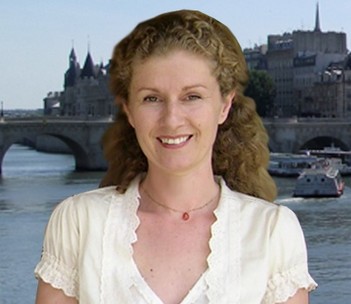
This past spring, The Displaced Nation interviewed Corine Gantz, a popular expat blogger, about her newly published novel, Hidden in Paris. The action centers on a group of expat Americans trying to start their lives afresh in the City of Light. At that time, TDN was exploring the theme of Gothic Tales. We wanted Mme Gantz to tell us more about the premise at the heart of her book — the idea that people travel to other lands to escape their former lives. How does it usually play out: as a dream come true or as a recurring nightmare?

The Displaced Nation has been examining the “gothic” side of expat life over the past couple of weeks. Thus it may seem odd that today we have chosen to celebrate a book that takes place in La Ville-Lumière (“The City of Light” or “The Illuminated City”) by an author who lives near the City of Angels.

But looks can be deceiving — and the cover of Corine Gantz’s debut novel, Hidden in Paris, is quite a cunning ruse. It shows a Parisian balcony with French doors reflecting the Eiffel Tower, and a flower box bursting with hot-pink geraniums. What could possible be amiss within such a picture-perfect setting, you may wonder? Plenty, it turns out.

But before we get into that, let’s begin our fête in honor of Mme Gantz and her book. To put ourselves in the proper mood, we have prepared a special cocktail, a French 75. We’ve also gone all out with our canapés. There’s a savory gougère, brie en croûte, duck rillettes, chilled asparagus with mustard sauce, a Puy lentil salad — and, in honor of Mme Gantz, her family favorite, taramasalata on toast (see her father’s recipe below).

Okay, seats, please! Our honored guest has agreed to kick off the festivities by answering a few questions from The Displaced Nation team. After that, the floor is yours, dear reader.

Hidden in Paris coverYour new novel, Hidden in Paris, may not tell a gothic tale per se, but we think it relates to our theme because it centers on three women who are running away from their lives. Is that a fair assessment?
People who say they love to be scared amuse me. They have a fascination with horror flicks, they read vampire books, they ride roller coasters. Yet they might be the same people who walk great circles around a pile of bills or make every effort to avoid a difficult phone call. What can be scarier than real life?

I think there is a limit to what we can handle, and at some point the tendency is to want to run way, literally or figuratively. In Hidden in Paris three strangers — all American women — have reached the point of terminal discomfort, when tackling real issues feels more terrifying than running away abroad.

Lola is running away from her husband, Althea from an eating disorder, and Annie, although she pretends to be the most high functioning member of the group, is hiding the biggest secret of all. (Just to add some spice, there is also a male character, Lucas, who is hiding his love for Annie.)

People often fantasize that “elsewhere” — particularly Paris because of the attached notion of romance — will solve their problems, or at least make the problems go away for a while. Well, we long-term expats know better. Moving to another country brings great logistical changes to one’s life, which can distract you into thinking you’ve left your pathos behind, when, in fact, you’ve brought it along in your suitcase. Wherever you go, you bring your own personal gothic tale with you.

In the case of these three female characters, the disruptions to their routines, along with new encounters, bring them to the tipping point toward change.

The thing is, as in real life, my characters fight the change they need kicking and screaming, which makes for fun story telling.

Food is another obsession of ours at The Displaced Nation. We detect from reading an excerpt from Hidden in Paris that it also plays a big role in your book.
You detect correctly. For me, writing a novel is a barely disguised way for me to talk about food — the novel being a vehicle for food just as grilled toast is a vehicle for foie gras.

I grew up in France on my mother’s terrific cooking. But she is the type of cook who wants no help in the kitchen, so at age 23 I arrived in the United States never having cooked an egg. I was terribly homesick and depressed and needed to “taste home” again — so had no choice but to teach myself how to cook. The saving grace was that I had a copy of a recipe book filled with my mother’s recipes, so I proceeded to recreate the food, and jolly myself out of my depression. Cooking gave my life a purpose: it became my creative outlet.

I think the preparation of food can be extremely healing, meaningful and joyful. Food is, after all, the soul and spirit of a home. I enjoy cooking as much as I enjoy eating, and when I’m not doing one or the other I’m telling stories where food turns out to be one of the principal characters.

You are a Française who has been “displaced” to the Los Angeles area for a couple of decades, where you live with your American husband and two sons. Does your novel echo that experience?
Had I landed on an alien planet I doubt I would have been any more confused and out of place. I understood none of the codes, none of the cultural references, of Los Angeles. I could not understand people or express myself — and I resented them for that.

Writing sprouted from this: the frustrated need for self-expression and communication. Like my protagonist, Annie, I had to figure out how to function, and I would be lying to say I functioned well. Also like Annie, I resisted my country of adoption for years. I did not have both feet in it. A part of me felt in limbo: I was standing by for my eventual return to my home country.

Twenty years later I don’t even feel French anymore, but no one here lets me forget I’m not American either. Americans seem fascinated with my Frenchness, as though it defines me. For example, it’s often about how I say things rather than what I say. Yesterday I was saying to a friend: “On the envelope my husband gave me for mother’s day there was a…” She interrupted and said: “Could you repeat that?” I repeated and she fell into peals of laughter: “I just love how you said the word ‘envelope’!”

In Hidden in Paris, I wanted to transpose my experience and reverse it. I wanted to bring American women to France and see how well they coped with that set of codes and cultural idiosyncrasies. That’s only fair, don’t you think? I’m a little miffed to report that they are more adaptable than I was.

You have a popular blog, Hidden in France, where you’ve been entertaining Francophiles and others with stories of the writing life, décor, food, family, travel and all things French. In fact, The Displaced Nation has featured one of your posts — about the time you fell into your swimming pool when the first day of spring brought heavy rains to the LA area. Tell us, has your blog had an influence on your writing? Also, why have you chosen the trope “hidden in”?
The blog has everything to do with my writing. Before the blog, I was a closet writer, ashamed that my English was too imperfect. The blog gave me a sense of just how forgiving and supportive readers were. I have readers now, and I have fans! Had I based my self-worth as a writer on agent rejections, I would have changed my hobby to fly-fishing. Readers are what make someone a writer.

The word “hidden” is significant only in the sense that I was hiding for years behind an alias as a blogger, and I just recently came out as writer for the world to see (speaking of fear…).

When it came time to settle on a title for the book, it felt natural to give it the same title as the blog — but I decided against it because there was already a memoir by that name. So Hidden in France became Hidden in Paris.

Finally, The Displaced Nation supports a fictional character, Libby, who is about to move from London to Boston with her husband. Do you have any advice for her?
Well, how about if I let my own fictional character, Annie — who moved from Boston to Paris to follow her own husband twelve years ago — speak to Libby directly:

Don’t do it, Libby! Kidding! Well I would suggest you have more babies, some siblings for your son, Jack, and fast. They will keep you busy and busy is the name of the game: no time to think! And if you decide against having more babies, then take on a hobby (such as cooking and eating) to keep your sanity without demanding that your husband become your everything for companionship, friendship and intellectual stimulation.

Don’t be like me in other words. Don’t forget that the man has a job and he is tired at the end of the day and nobody needs a needy wife. (Sorry for the harsh words, Libby, but this is the truth.)

You could also take a run-down house and remodel it. I did. You will have no skin left on your fingers but lifting bags of concrete makes for pretty shapely biceps. The remodeling might bring you to financial ruin but if that becomes the case, you will always have eating, which you can become very good at.

Without further ado, let’s pour the champagne for a toast to Corine Gantz. Tchin-tchin! And now, patient reader, it’s your turn. Questions, please, for this très gentille debut novelist… If you want to check out her book a little more, go to her author’s site, and to buy it, go to her Amazon page.

Taramasalata on toast — Corine Gantz’s family recipe
You will need:

  • one packet of smoked cod roe (seriously, can you even find this in the US?)
  • 8 tablespoons safflower oil
  • 2 tablespoons lemon juice.

Mix fish roe and lemon juice, then slowly beat with a fork and add the oil as you would do to make mayonnaise.Spread thinly on toasts and serve with very good champagne, et voilà! Très festif.

Images: Author’s photo; Hidden in Paris cover, artwork by Robin Pickens.

If you enjoyed this post, we invite you to subscribe to The Displaced Dispatch, a weekly round up of posts from The Displaced Nation, plus some extras such as seasonal recipes and occasional book giveaways. Sign up for The Displaced Dispatch by clicking here!

Related posts:

RETURN TRIP: 5 lessons Wonderland taught me about the expat life, by Lewis Carroll’s Alice

August is finally drawing to a close — we hope you managed to have an enchanting time of it. Here is one more in our series of “return trips” to posts that, for one reason or another, enchanted our readers. Enjoy!
All three members of The Displaced Nation team have found Alice, of Wonderland and Through the Looking-Glass renown, a source of inspiration on our travels — seeing her as a kind of ultimate expat. Thus we decided to dedicate the month of June to Lewis Carroll’s “little heroine.” Kate Allison launched a series of posts on our Alice in Wonderland theme with 5 “lessons” Alice had allegedly learned from her adventures. It remains one of our most popular posts to date.

To kick off our Alice in Wonderland theme, we asked Alice if she had any advice for today’s Displaced Person:

*

Indeed I do. It might be many years since I fell down the rabbit hole, but human nature hasn’t changed. This is a little of what I learned:

1. Keep the golden key in your pocket at all times, and make a note of the emergency exits.

In another moment down went Alice after [the White Rabbit], never once considering how in the world she was to get out again.

My first mistake was to plunge down the rabbit-hole without planning ahead. The adventurous life is all very well, but it’s good to have a bolt-hole, as well as a rabbit-hole, when you need to escape to the old and familiar.

My second mistake was to leave the key on the glass table before drinking from the bottle marked “Drink Me.” In your vernacular, that’s like buying a return ticket home for this evening, then discovering your passport expired six months ago. Be prepared for the unexpected, the peculiar, and the almost impossible.

2. No matter how hard you try contrariwise, at some point you will offend someone.

Evidently Humpty Dumpty was very angry… “It is a—MOST—PROVOKING—thing,” he said at last, “when a person doesn’t know a cravat from a belt!”

Oh dear! If only I had a shilling for every time I inadvertently offended one of the creatures in Wonderland and through the Looking Glass! Not knowing Humpty Dumpty’s neck-wear from midriff-wear; my compulsive mentioning of cats and dogs in the Mouse’s presence without considering that he and I might have a different perspective of these animals…the list went on and on.

In the end, I think the Red Queen’s advice was the best:

“Always speak the truth—think before you speak—and write it down afterwards.”

But still, I couldn’t help thinking:

“I wish the creatures wouldn’t be so easily offended!”

3. “The rule is, jam to-morrow and jam yesterday — but never jam to-day.” Different country, different rules.

The Queen of Hearts was the worst example of this:

“No, no!” said the Queen. “Sentence first—verdict afterwards.”

I suggest if you are ever in this situation yourself, you employ more tact than I did. “Stuff and nonsense!” I said. “The idea of having the sentence first!”

Perhaps today a quick telephone call to your country’s embassy might be better.

Better still, acquaint yourself with the country’s rules before you go jumping on aeroplanes or down rabbit holes.

4. Go to a party or a Caucus-Race — don’t drown in your own tears.

“I am so VERY tired of being all alone here!”

The Caucus-Race proved to me that I could make friends with the most unlikely companions.

After a few minutes it seemed natural to Alice to find herself talking familiarly with them, as if she had known them all her life.

If you feel alone in your new environment, seek out company, even if it’s not the kind of company you’re used to. You might find your life is richer for it.

5. And finally: Keep a note of your name in your memorandum-book.

“Who are YOU?” said the Caterpillar.

Alice replied, rather shyly, “I—I hardly know, sir, just at present—at least I know who I WAS when I got up this morning, but I think I must have been changed several times since then.”

I spent a great deal of time in both countries wondering who I was now. Was I my little friend Ada, or Mabel, perhaps?

Tweedledum even suggested I wasn’t really there at all.

“You’re only one of the things in his dream. You know very well you’re not real.”

“I AM real!” said Alice and began to cry.

Take a tip from me and write your name in a memorandum-book. Then keep a journal.

That way you will always remember who you were on any particular day.

And one day, people might read about you as they do about me.

*

Thank you, Alice!


If you enjoyed this post, we invite you to subscribe to The Displaced Dispatch, a weekly round up of posts from The Displaced Nation, plus some extras such as seasonal recipes and occasional book giveaways. Sign up for The Displaced Dispatch by clicking here!

Related posts:

Budding Slavophiles, welcome to my kitchen’s-eye view of Russia

As we learned from her Random Nomad interview with us in May, Charlotte Day is torn between three countries: Australia, USA, and England. As if this weren’t enough, it turns out she harbors an obsession with Russia, going back to when she discovered classical Russian novels in 8th grade. Here she spins a travel yarn about the her month-long sojourn in Saint Petersburg this summer, where she studied Russian language while living with a homestay family. So, did the real Russia live up to Charlotte’s expectations, or had her overactive imagination led her astray? Let’s find out…

Bolshoi Kazachiy Pereulok is not a notable St Petersburg street. It is a bent elbow between Zagorodniy Prospekt and the Fontanka embankment.

Emerging from Pushkinskaya metro station, one walks past a travel agency of sorts, a faded basketball court and Kazachiy Bani, a green-tiled 24-hour bathhouse from which emerge oiled men, rubbing their hair with threadbare towels. Peering through the open door, one can just about discern a gleaming ticket window, half plastered over with out-dated rate notices.

In the crook of the elbow stands Number 9, a magnificent turn-of-the-century apartment building, with geraniums tumbling over the serpentine-patterned grilling of occasional balconies. The building’s green façade, tinged as if by an eternal sunset, smiles mournfully over the street — watching as beer bottles clink and smash on the pavement, cats stalk along beneath decades-old cars, and the high gates open and shut in a kind of eternal song.

The plaque outside Number 7 reads: “In this building lived and worked Vladimir Ilich Lenin,” and on a rack beneath, three red carnations wilt.

I lived for a month at Number 5 — past the automated bell at the gate; through the courtyard, painted a warm, yet exhausted, yellow; up the shallow, concrete steps; and behind two locked doors — in the home of Nadezhda Skarinova, her husband, Kirill, and their son, Vladimir.

Striking up an acquaintance with the Skarinovas

While in theory I shared a home with entire family, the two male Skarinovs managed to be absent for the majority of my stay. Kirill, a chemical engineer, offered a smile — sometimes a privyet (hi) — whenever we met in the hallway.

But as he left for work as I was getting up, and had dinner immediately upon returning home at 6:30, we saw very little of each other.

Vladimir, or Vova, had been a source of much speculation before I set off — in the way that only unknown 21-year-old sons can be — among my well-meaning friends and relatives. (I am only sixteen.)

But he turned out to be largely taciturn, spending his days facing a computer screen (he was studying to become a programmer).

We had one two-sentence exchange — when he helped me down with my suitcase, on departure.

The only stories I can spin about my month in Petersburg involve minutiae. Such had been my idea of the perfect adventure before I left for Russia, in anticipation of what it would be like to be free from parental dictates for the first time.

Indeed, I did very little.

Not prone to escapades, I spent my evenings, after class, wandering along the Griboedov Canal Embankment (where I saw a drowned corpse—lying, swollen, neglected, and only haphazardly covered by a tarpaulin), or taking the metro into a far-flung, neglected suburb to spend ten minutes looking at an exquisite church.

But if my journey had less geographical displacement than those of most adventurers, my nightly dinner conversations with Mrs Skarinova made up for the lack by advancing me along the path of greater understanding of that strange thing — Russia.

A series of stove-side conversations

The first time I heard a bang on my bedroom door, and a gruff mozhno uzhinat? (roughly, “is it possible to have dinner?”) at 8:00 p.m., I hurried a nervous da, closed my book, and sidled into the kitchen.

The news was on, as it would be every subsequent evening — the twin anchors of channel Rossiya speaking too quickly for me to understand, their journalistic jargon blending into an unvarying mumble.

There sat Nadya, looking terribly bored, with large bags under her eyes. She poured me some tea from the eternal teapot. (Russians make tea by brewing a pot, which can keep, it would seem, for over a week—and then pouring a small amount, diluted with hot water, into your cup.)

Kuritsa — normalno? She presented me with a plate. As it was chicken, I nodded in assent.

Sitting down opposite me, shelling sunflower seeds — aimlessly, it seemed — she began to comment on the news.

Before I knew what had hit me, we were traipsing through the hardships of the 1990s — lining up outside an empty supermarket, clutching a prescription for baby formula. Mothers would rush from work during their lunch breaks, Nadya said, to secure a ration of bread for their family’s evening meal. And she’d had to bring up the infant Vova without the help of her mother — who died in her early sixties, from exhaustion.

And this was not the only thread Nadya spun over the course of our four weeks together. Another was the Orthodox Church. Her grandmother, who had lived through both world wars and the Russian Revolution of 1917 — and consequently wasn’t afraid of anything — spirited her granddaughter off to a church to be baptized, at a time when any hint of religion could make you a social pariah.

As a member of the Komsomol (“because everyone was in the Komsomol then”), Nadya hid her crucifix under her pillow. She told me that when religion resurfaced after the collapse of the Soviet Union, young couples longing for a church wedding were in a dilemma. How could they know if they had been baptized or not? Perhaps their grandmothers, like Nadya’s, had had it done in secret.

Nadya scowled as Patriarch Kirill appeared on the screen, leading a service in Kiev. His cardinal offense was the purchase of an expensive designer watch, several years back.

Many don’t like Patriarch Kirill so much… I’m an Orthodox person, but Patriarch Kirill… And he’s just one of the problems: for instance, why did they have to make Tsar Nikolai* a saint? What did he ever do? In his youth he was just a normal young man — women, alcohol, all that. What should I pray to him for? And his wife? Nothing wrong with her — German princess, worked in hospitals… And her little boy had that illness. But go to church and ask them for help? Yes, it was a tragedy, a crime — to kill all those children, too. Yes, the revolution oughtn’t to have happened. But Nikolai II a saint?

*With his family, Tsar Nicolas II, Russia’s last emperor, was recognized as a martyred saint and canonized as a passion bearer by the Russian Orthodox Church in 1981.

A samovar too big for the kitchen

On my last night in Petersburg, Mr Skarinova came into the kitchen bearing a large 1830s, wood-burning samovar — complete with chimney.

Nadya was not certain about this new addition to their lives.

It’s going to the dacha. No question about it. Wouldn’t fit in the kitchen anyway. And what am I going to do with a samovar like that? Put it in the bathhouse — na dachye. There’s no electricity in there.

The family had been to their dacha — a few hours south of the city — once while I had stayed at their apartment. They came back laden with berries: bitter and smelling of evergreen.

“All the men want to do there is drink,” Nadya told me one night. “I personally don’t drink — only wine. But Kirill…”

And another evening —

At least Kirill’s never come home drunk in the evenings. On holidays, yes — New Year’s… But the rest of the time — I don’t tolerate that sort of thing. What would have happened with Vova, a child, if dad kept coming home drunk? But it’s a common thing…

And judging by the beer bottles littering the street every morning when I walked to school, I doubt not that it is.

But this seems a catalogue of complaints — when my own experience of Russia was quite the reverse.

There was a moment when, crossing the Neva River on my last evening wander, I saw the spectral moon, blooming into fullness over the Winter Palace embankment.

And faced with that glut of unabashed beauty, I made an inarticulate noise — half of despair, half of exaltation — as people do in Russian novels. (It was only my English reserve keeping me from falling to my knees and weeping: the truly literary gesture.)

As it was, I left the next day feeling I would like to spend the rest of my life in Petersburg. But before I advance any further along that path, I must brave a winter without being killed by a falling snow drift. (“It happens,” says the Voice of Wisdom…)

But no matter how many tracks I beat in Russia, it is somewhat sobering to think of Nadya sitting, through endless reports of train crashes, patriarchal visits and state holidays, in that desperately uncomfortable chair, shelling sunflower seeds and passing the time.

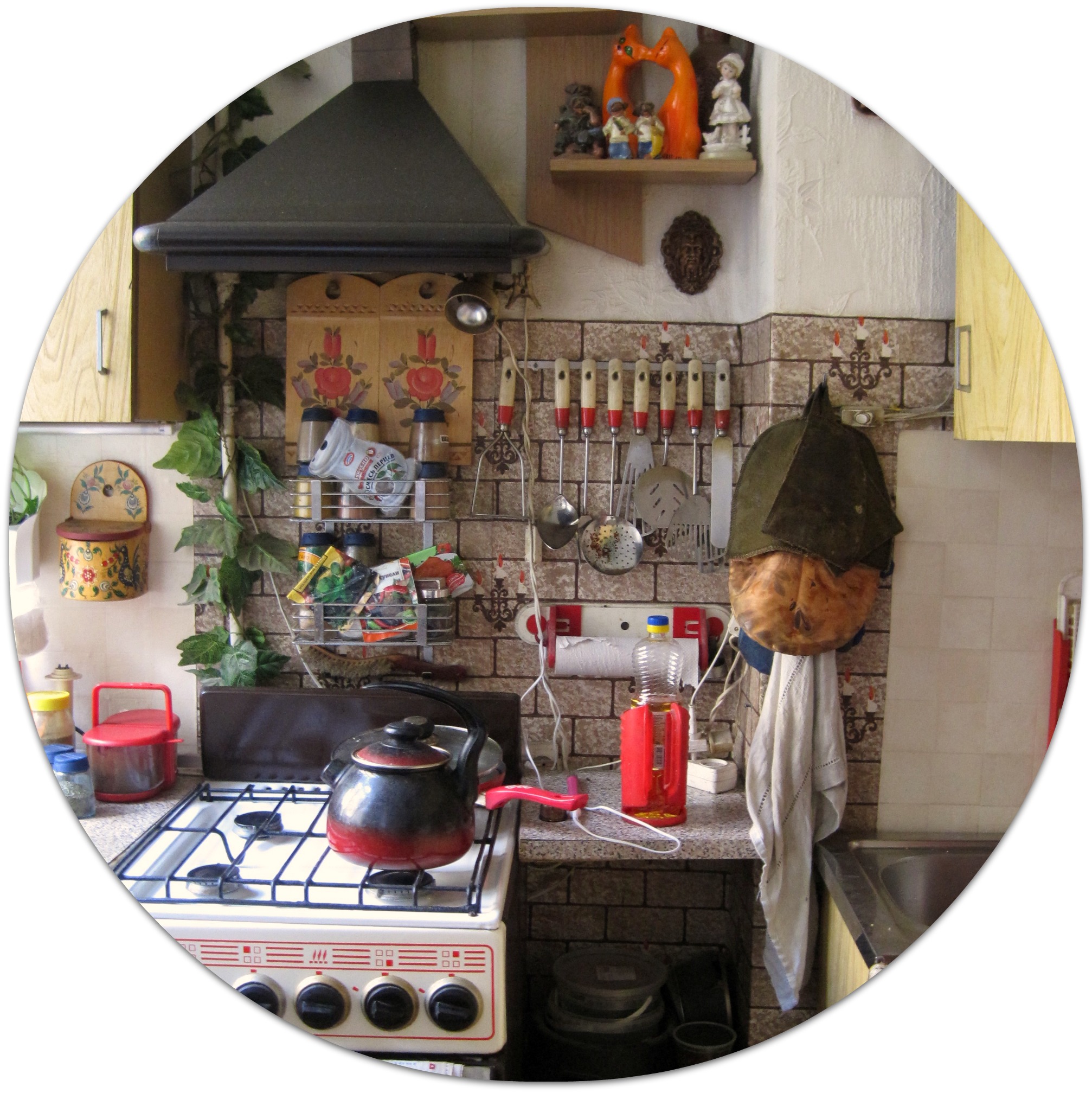
img: The Skarinova kitchen, where Charlotte’s nighttime chats with Nadya took place.

STAY TUNED for tomorrow’s post taking a parting glimpse at summer’s millinery enchantments, by our Alice awardee Sebastian Doggart.

If you enjoyed this post, we invite you to subscribe to The Displaced Dispatch, a weekly round up of posts from The Displaced Nation, with some fun extras such as seasonal recipes. Sign up for The Displaced Dispatch by clicking here!

Related posts:

RETURN TRIP: Random Nomad – Charlotte Day, High School Student (Sixth Former)

While our writers take off on what they hope will be enchanting August breaks, The Displaced Nation will occasionally be reissuing some posts that, for one reason or another, enchanted our readers. Enjoy these “return trips”!
As youngsters head back to school, we’re reissuing a Random Nomad interview ML Awanohara did with Charlotte Day, a displaced teenager in England. Charlotte spent a chunk of her summer taking a Russian-language course in St. Petersburg and living with a Russian family. She has produced a travel yarn on her adventures, which will appear on Monday.

Born in: Sydney, Australia
Passports: Australia, UK and US Green Card
Countries lived in: Australia (Sydney): 1994-2001; United States (New York, New York): 2001-2010; England (Sevenoaks, Kent): 2010-present

What made you leave your homeland in the first place?
My father is Australian and my mother English. They split up when I was two. When I was six, my mother met and married an Australian who had been living in New York for thirty years. I was rather disgruntled about moving to the United States and for two or three years, remained determined never to accept it as “home.” At that time, I was deeply patriotic to my native country — though this sentiment has dissipated since.

Is anyone else in your immediate family a “displaced” person?
My mother’s family, originally from England, has long been displaced. My mother herself was born in Kenya, in 1961. Following the Mau Mau Uprising, her parents were forced to relocate, and my grandfather, presented with a choice between Australia and Canada, chose the warmer of the two countries. My mother spent her childhood bouncing between schools in England and Australia. She eventually grew so fed up with packing and unpacking, she decided to leave school at the age of 16. Her father agreed to the plan provided she spend a final year at the school in Switzerland his own mother had attended as a girl. My mother moved on from Swiss finishing school to work in London, Paris and Sydney. But she appears to have made New York her last port of call. Indeed, we had a fairly solid life in the city until I decided to take myself off to boarding school in England.

Describe the moment when you felt most displaced over the course of your many displacements.
It must have been when I first arrived in New York as a six-year-old. I stepped out of the JFK arrivals terminal into a snowy March night. My stepfather was wearing a leather coat, the interior of his car smelled of leather — and the world outside the car window seemed an undulating stream of black and silver. Though it was the end of 2001’s warm winter, my Australian blood froze beneath my first-ever coat. And their apartment — that was all leather as well. It smelled of musk and cologne. Since that time, I have felt similar pangs of displacement, some of which lasted for considerable periods. But those first few moments in New York stand out as the most acute concentration of “displacedness” I have ever known.

Describe the moment when you felt least displaced.
For the last five or so years in New York, I have felt more at home than I ever did in Sydney. I ascribe this to growing up: at a certain age, one can take possession of a city, know its streets, bridges, tunnels and transportation system. I was too young when I lived in Sydney to reach that kind of comfort level. But when have I felt the most like a New Yorker? Perhaps it was the last time I came home for the holidays, and took the 4 train uptown for the first time in months. At that moment I realized how much this train had been a part of my life — conveying me home from school every day for two years. My old life would always be waiting for me on the subway, ready for me to pick it up again. That’s something only a New Yorker could say!

You may bring one curiosity you’ve collected from each of the countries where you’ve lived into the Displaced Nation. What’s in your suitcase?
From Australia: A miniature wooden wombat figurine — a gift from my grandfather. It conjures memories of a childhood spent beating about the bush (literally) and fishing for yabbies at the dam in the company of audacious dogs who stuck their heads down wombat holes, to no good end.
From New York: A pair of fake Harry Potter glasses. These defined my first six months in New York — I even wore them to my first day of school. I think it is telling that even at the age of six, I was unwilling to give all of my real self to this new home.
From England: My school tie — representative of the alternative universe I seem to have entered. At boarding school, the sense of removal from reality can be disconcerting — especially after having spent a decade in the city I regard as the world’s capital.

You’re invited to prepare one meal based on your travels for other Displaced Nation members. What’s on your menu?
I’d like to make you a Sydney breakfast: scrambled eggs, made with cream, salt and pepper and served on a bed of Turkish toast, with avocado and stewed tomato on the side (is this being greedy?). Our meal will be accompanied by a large “flat white”: what we call perfectly strong, milky coffee without excessive froth. I suggest we consume it overlooking a beach on a Sunday morning. At least, I assume The Displaced Nation has beaches?

You may add one word or expression from each of the countries you’ve lived in to The Displaced Nation argot. What words do you loan us?
From Australia: Daggy. I use this word all the time — and did not realize it was exclusively Australian until I was informed of the etymology. Apparently, it comes from trimming the soiled wool around a sheep’s bottom. Which part of this repugnant whole is actually the “dag,” I do not remember. (No, I’m not a proper Australian!) But as I understand it, “daggy” means sloppy in appearance or badly put together.
From New York: There are so many words, and most are second nature by now. However, I will choose grande-soy-chai-tea-latte because I still shudder to think of myself as the kind of person who can utter such a phrase, at great speed, with great insistence. In fact, I’m still in denial about my love for Starbucks: having known Sydney coffee, my standards should be higher.
From England: Banter. I still do not know the precise meaning of this word, but it seems to encapsulate everything that makes someone my age feel socially acceptable — and, of course, I have no banter whatsoever. I think it means the capacity for combining wit with meaningless conversation. But there are other components, too, which seem to me unfathomable.

Question: Readers, tell us what you think: should we welcome Charlotte Day to The Displaced Nation and if so, why? (Note: It’s fine to vote “no” as long as you couch your reasoning in terms you think we all — Charlotte included — will find amusing.)

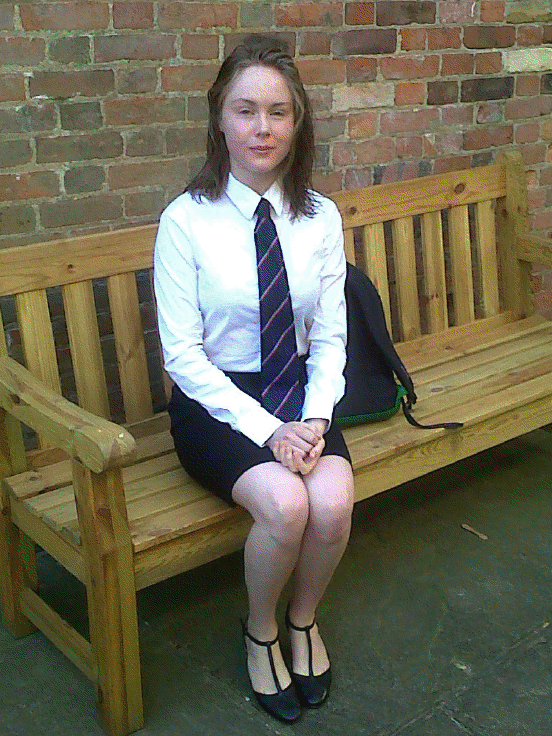
img: Charlotte Day at her boarding school in southeast England

If you enjoyed this post, we invite you to subscribe to The Displaced Dispatch, a weekly round up of posts from The Displaced Nation, plus some extras such as seasonal recipes and occasional book giveaways. Sign up for The Displaced Dispatch by clicking here!

Related posts:

RETURN TRIP: Seven deadly dishes — global grub to die for

While our writers take off on what they hope will be enchanting August breaks, The Displaced Nation will occasionally be reissuing some posts that, for one reason or another, enchanted our readers. Enjoy these “return trips”!
Some months ago, The Displaced Nation explored the theme of Gothic tales — the idea that many of us return from our world travels with some horrific stories to tell. That’s assuming we return at all, of course. Displaced Nation writer Kate Allison contributed this piece on deadly dishes as part of our “It’s Food!” category. It’s one of our most popular posts to date.

A Briton abroad spends a surprising amount of time defending his native national cuisine. I remember going to a steak house in Connecticut where the waitress, upon taking our order and hearing our accents, said brightly, “From England, huh? I hear you don’t get anything good to eat over there. ” When she brought the filet mignon to the table, she did so with the pitying smile of one delivering alms to the starving.

British super-chefs like Gordon Ramsay and Jamie Oliver may be taking the US by storm, but still this delusion of bad food persists. To which I say: whatever the perceived faults of English cuisine, at least no one has to take out extra life insurance before eating Yorkshire pudding.

Yet there are quite a few delicacies from countries without this dismal food reputation, where a top-up premium might be useful before you take that first bite.

In ascending order of danger or toxicity:

7. Snake wine – Vietnam, Southeast Asian, Southern China.

An assortment of herbs, small snakes, and a large venomous snake are steeped for many months in a glass jar of rice wine, then consumed in small shots for medicinal purposes. Fortunately, the ethanol renders snake venom harmless.

6. Surströmming – Sweden.

Fermented Baltic herring. Stored in cans, where the fermentation continues, causing the cans to bulge. In 2006, Air France and British Airways banned surstromming from their flights because they said the cans were potentially explosive. According to a Japanese study, the smell of this Scandinavian rotten fish is the most putrid food smell in the world.

5. Fried tarantula – Cambodia.

Tarantulas, tossed in MSG, sugar, and salt, are fried with garlic until their legs are stiff and the abdomen contents less liquid. The flesh tastes a little like chicken or white fish, and the body is gooey inside. Certain breeds of tarantula have urticating hairs on their abdomen, which they use for self-defense. If the spiders are not prepared properly – i.e., if the offending hairs are not removed with a blow torch or similar – these hairs can cause pharyngeal irritation in the consumer.

4. Sannakji – Korea.

Small, live, wriggling octopus, seasoned with sesame and sesame oil. The suction cups are still active, so bits of tentacle may stick to your throat as you swallow, especially if you’ve had one too many drinks before dinner. The trick is to chew thoroughly so no piece is big enough to take hold of your tonsils. Some veteran sannakji eaters, however, enjoy the feel of longer pieces of writhing arm and are prepared to take the risk.

3. Stinkhead – Alaska

Heads of salmon, left to ferment in a hole in the ground for a few weeks. Traditionally, the fish was wrapped in long grasses and fermented in cool temperatures, but then someone discovered Baggies and plastic buckets, which increase the speed of the process. Unfortunately, they also increase the number of botulism cases.

2. Casu Marzu – Sardinia

Made by introducing the eggs of the cheese fly to whole Pecorino cheese (hard cheese made from sheep’s milk) and letting the cheese ferment to a stage of terminal decomposition. Locally, the cheese is considered dangerous to eat when the maggots are dead, so you eat them live and squirming. As the larvae can jump six inches in the air, it is advisable to cover your cheese sandwich with your hand while eating to prevent being smacked in the face by grubs. An alternative is to put the cheese in a paper bag to suffocate the maggots, then eat it straight away. The maggots will jump around in the bag for a while, making a sound, I imagine, not unlike that of popcorn in the microwave. Although the European Union outlawed this food for a while, it has since been classified as a “traditional” food and therefore exempt from EU food hygiene regulations.

1. Fugu (Puffer fish) – Japan

Considered to be the second most toxic vertebrate in the world, puffer fish is a delicacy in Japan, but preparation of the food is strictly controlled, with only specially trained chefs in licensed restaurants permitted to deal with the fish. Fugu contains tetrodotoxin, a poison about 1200 times stronger than cyanide, which is most highly concentrated in the fish’s liver — the tastiest part. Sadly, for gourmets who like to live life on the edge, fugu liver in restaurants was banned in Japan in 1984.

Question: What is the most adventurous dish you’ve ever eaten?

If you enjoyed this post, we invite you to subscribe for email delivery of The Displaced Dispatch, a round up of the week’s posts from The Displaced Nation. Sign up for The Displaced Dispatch by clicking here!

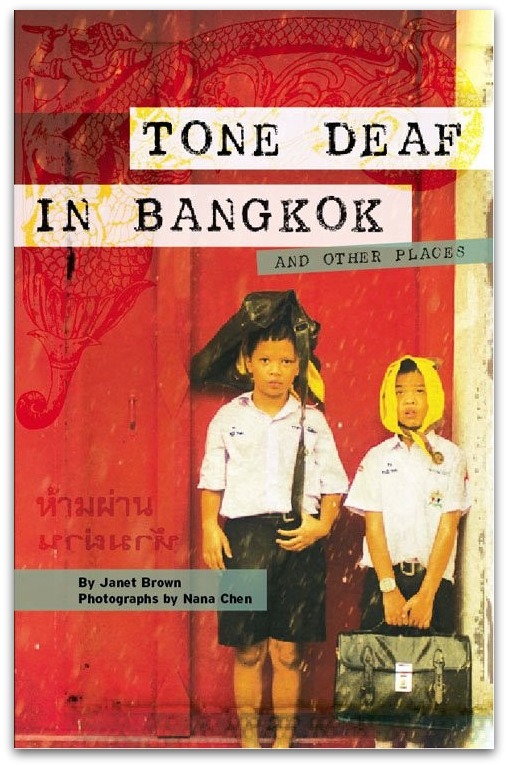
RETURN TRIP: Travel author Janet Brown channels Alice in Wonderland’s “tone deaf” adventures

While our writers take off on what they hope will be enchanting August breaks, The Displaced Nation will occasionally be reissuing some posts that, for one reason or another, enchanted our readers. Enjoy these “return trips”!
June was “Alice in Wonderland” month in The Displaced Nation, and the enchanting travel author Janet Brown came to our online tea party. She answered ML Awanohara’s questions on the curious and unreal aspects of her life in Thailand. Last time we checked in with Janet, she was in the process of moving back to the States. Will her counterculture shock prove to be another Alice adventure? We hope to hear back from Janet in the coming months.

As you may have noticed, The Displaced Nation has gone Alice-in-Wonderland mad since around the first of June. To take just a few examples:

And now, to top that all off, the extraordinary travel writer Janet Brown is paying us a visit. Brown could almost be a stand-in for the Lewis Carroll heroine herself, having published a book on travel to and life in Thailand called Tone Deaf in Bangkok, to much acclaim.

“Tone deaf” — it puts one in mind of poor Alice’s plea to the Mouse, “I didn’t mean it…But you’re so easily offended, you know!”

But if Brown sees herself as tone deaf, her readers regard her as anything but. Here is a sampling of her reader reviews on Amazon:

It has been ages since I have loved a piece of travel literature…, and so when I read TONE DEAF IN BANGKOK, I was thrilled. This is a good travel book, and it is a good book, period.

I am not a traveler, nor do I typically read travel books. Shame on me, I know, but here’s the thing: … The author brought Bangkok to life in a way that made me want to go there, yes, but it was her own story that captivated me and kept me turning the pages. Now I’d read anything Janet Brown writes!

Janet Brown’s TONE DEAF IN BANGKOK is a travelogue, to be sure. Yet it is more, so much more. It’s also an investigation into how dislocated we can become by ourselves, by our priorities and by all that we demand of the cultures in which we live. … That she has a gift for spotting the universal in the exotic makes this collection all the more profound.

Janet Brown has graciously agreed to answer some of my Alice-related questions. After that, dear reader, I urge you to chime in!

Before we go down the rabbit-hole, can you tell me a little bit more about your background?
My parents turned me into a gypsy before I was two, by taking me on their journey by jeep from New York City to Alaska when the 49th state was still a territory and the Alcan Highway was still an unpaved trail into the frozen north. I have wandered ever since, most recently in Southeast Asia with Bangkok as my home, writing down the stories I encounter as I explore. My books include:

Maybe because I’m so steeped in Alice-of-Wonderland lore this month, I think of you as Alice Personified. To what extent can you relate to Alice’s sense of disorientation? Going back not just to the first time you went to Thailand but also when your family dragged you to Alaska…
I was 18 months old when my family moved to Alaska from Manhattan. I coped with any displacement issues by making my mother read my favorite book over and over again — a truly saccharine Little Golden Book called The New Baby. The main character had the same name as I so that was the big attraction — all about me! My mother swears she can still recite it verbatim after having two martinis.

Alice came to mind constantly in my first months in Bangkok — and frequently thereafter. I knew I’d gone through the looking glass — or had entered the postcard — and asked myself often if that experience had been as painful for Alice as it often was for me.

Can you describe your worst “Pool of Tears” moment in Bangkok, where you wished you hadn’t decided on living there?
I’ve tried to make light of that time when I wrote about it in Tone Deaf in Bangkok, but it nearly demolished me. When the manager of my apartment turned me into Ryan’s Daughter by listening in on my phone calls and then entertaining the neighborhood with highly embroidered versions of my life — and when people fell silent when I walked down the street and began gabbling excitedly after I’d passed — I felt as though my life had been stolen from me and I shut down to the point of hypothermia. If my students hadn’t helped me find a new neighborhood, I would have gone home a gibbering mess.

Thailand is renowned for its distinctive cuisine. Was there anything that carried an “Eat me” label that you felt hesitant about at first, but then discovered you loved?
I’ve written about durian in Tone Deaf, how I thought its smell in the market was sewer gas and then how I was forced to taste it, with happy results. Fried grasshoppers were another thing I didn’t warm to at first sight and then liked as much as I do popcorn — they have much the same crunch and texture.

By the same token, were there any foods that you thought might be good but then didn’t acquire a taste for? (For Alice, of course, that was the Duchess’s over-peppered soup.)
One night I stopped to buy green papaya salad from a food cart to take home for supper. There was something in a little plastic bag that looked like a sort of relish, so I bought that, too.When I opened it at home a smell of rot filled the air, but remembering the delightful surprise that durian had proved to be, I took a generous spoonful. It was pla ra — fermented fish, a Northeastern Thailand culinary staple that is meant to be added and mixed judiciously with the salad, not eaten like peanut butter. There wasn’t enough toothpaste in the world to rid my mouth of that thoroughly foul taste.

As already mentioned, Alice finds it’s easy to offend the creatures in Wonderland without even trying. Why did you choose the expression “tone deaf” for the title of your book on Bangkok?
“Tone deaf” can be taken quite literally. Thai is a tonal language with five different tones giving meaning to every word. Use the wrong tone and at best you’re incomprehensible, at worst shocking. The most common mistake for foreigners is to tell someone their baby is beautiful, while actually announcing that the infant is bad luck. Another pitfall is confusing the word “near” with the word for “far” — they are the same sound, differentiated by a crucial tone.

But travelers to Thailand can also be “tone deaf” when it comes to figuring out the Thais’ communication style. As a Thai-American friend has observed, the important things are what remain unsaid. “You looked so beautiful yesterday” probably means today you resemble dogfood and ought to go home and rectify that at once. Subtlety is the hallmark of Thai communication, and is often expressed through a quirk of an eyebrow or a famous Thai smile, which has at least one hundred different meanings — including disdain or outright menace.

Describe the biggest faux pas you’ve made since settling in Bangkok.
Oh, how to choose — it’s impossible not to make faux pas every second because Thai etiquette is demanding and complex. The one that makes me cringe most is in my first week when I set off on my first solo bus ride. I was clutching a twenty-baht note, which like all bank notes in Thailand bears the countenance of the King. He is revered to the point of near godhood in his kingdom and his picture is always elevated to the highest spot in a room — nothing is above the King. But I was fresh off the boat and when I dropped my money and it was caught in a little breeze, I put out my foot (the lowest and most ignominious part of the body) and stepped on the picture of the King’s face to secure my bus fare. I was too clueless to pick up on the ripples of horror that this caused others at the bus stop, but now I writhe when I remember this.

“Off with her head!” as the chief royal in Alice’s story is wont to proclaim. Actually, never mind your head. Your mention of your foot makes me think of how physically awkward Alice feels around the creatures in Wonderland. As a farang in Bangkok, do you often feel self conscious?
I’m short and dark in a family of pale-skinned people, so I was used to being an anomaly from early childhood. In Bangkok, if I dressed like a Thai woman and wore sunglasses and walked slowly, I felt as though I blended in. But one day I walked down a quiet street on my way to a class, and someone looked up and said, “Look at the foreigner.” “How did she know?” I asked my class of teenage girls. “Your hair,” they said. “No, lots of Thai women have dyed their hair brown,” I replied — to which they responded: “Your nose.” It was my big American nose that gave me away every time — and since I hate pain and surgery, I just had to accept that.

Have you tweaked your personal style at all so as to fit in better?
Yes — I adopted the conservative “Don’t show your bare shoulders” school of dressing that prevailed in Bangkok when I first arrived and slowed my pace to that of the women around me. I learned to keep my facial expression as bland as I possibly could to achieve the quiet Thai “public face,” and I ironed everything, including my Levis. Now women are much more casual in the way they dress but I’m still stuck in the cultural mores of the 90s. To foreign women who live here now, my introductory years in Bangkok seem like fiction — things have changed so drastically in the past 16 years.

Time for a quote from the Cheshire Cat: “…we’re all mad here. I’m mad. You’re mad.” Can you relate?
Riding on the back of a motorcycle taxi down a crowded city sidewalk, buying a glass of Shiraz to take with my popcorn into a movie theater, being drenched to the bone during Thai New Year’s — this is actually the most difficult question you’ve asked so far because at this point it all seems normal.

If you were to hold your own Mad Hatter’s Tea Party in Bangkok, whom would you invite, and why?
Anais Nin, because she would love the unbridled hedonism of this place, Evelyn Waugh because he would satirize the expat scene so well, Ho Chi Minh because he could help put together the revolution that is needed here, Emily Hahn because she has always been my role model since I first read her when I was twelve, and Elvis because in Bangkok he is still the king.

Alice becomes aware that Wonderland is turning her into a different person, unrecognizable to the one she used to be. Has your identity has shifted in fundamental ways since living in Bangkok?
This is a very complex question — I’ve written one book about it and am working on a second one, Almost Home. I’m always drawn back to the US because my children are there. Seeing them for two weeks a year doesn’t work for me. Once I get back to the US this time around, I’ll return here but plan to spend the bulk of my time near family in the Pacific Northwest. I won’t know how much I’ve been changed by this recent incarnation in Bangkok until then. Ask me again in several months.

Can you offer any advice for newcomers to Bangkok, who aren’t sure who they are any more?
Tone Deaf in Bangkok and my next book, Almost Home, are where I directly address the challenges of feeling like an Alice in Thailand. In addition, the recently published Lost and Found Bangkok, for which I wrote the text, may be helpful for newcomers. It’s a book in which five different photographers — two American men, two Thai men (both from Bangkok), and one Taiwanese-American woman — show the city they live in. New arrivals can look at the photos and see some great places to get lost — and find out who they are — in this Wonderland-like city.

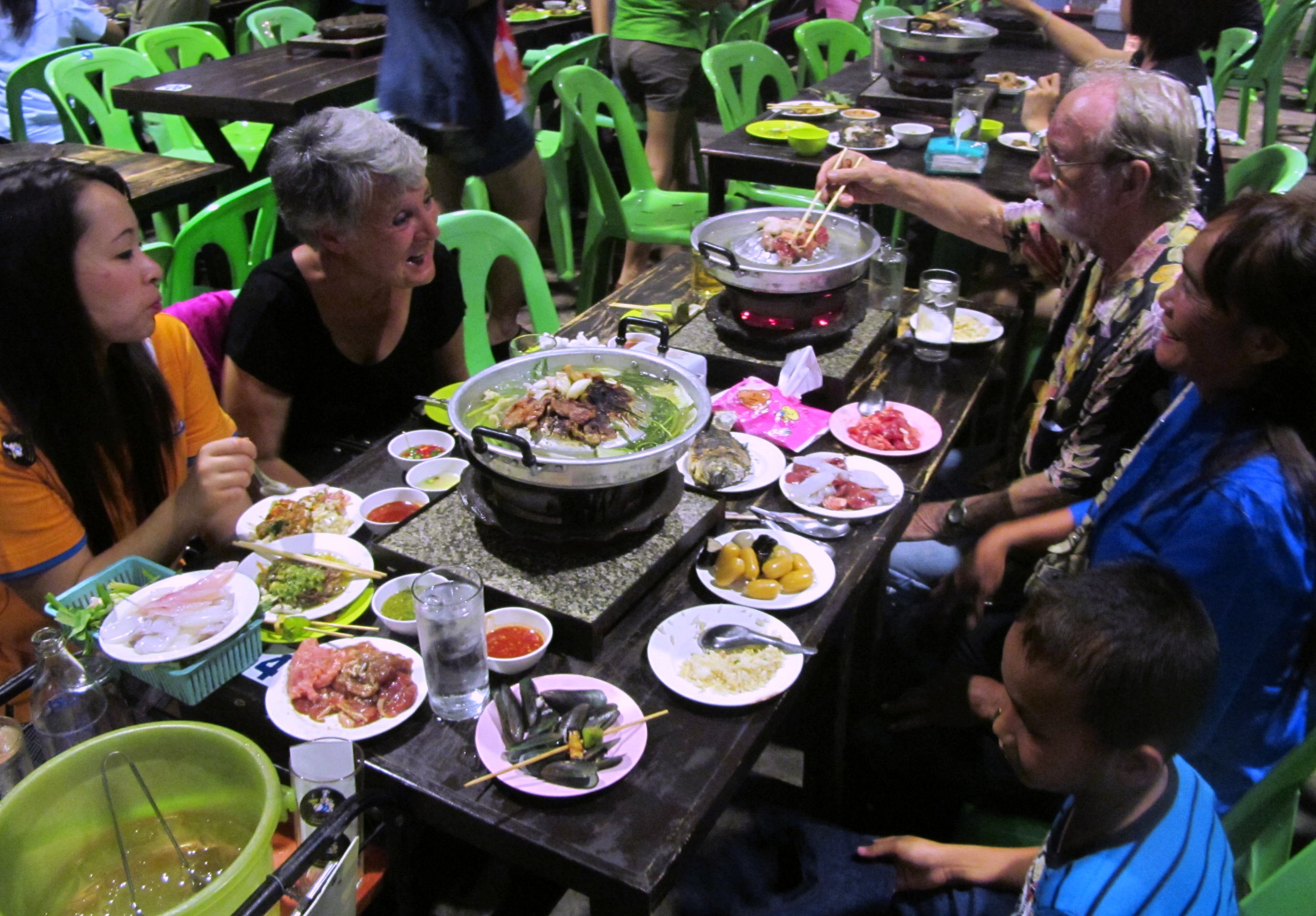
img: Janet Brown with friends at an all-you-can-eat DIY barbecue at a huge restaurant under a bridge in Bangkok, by Will Yaryan.

If you enjoyed this post, we invite you to subscribe to The Displaced Dispatch, a weekly round up of posts from The Displaced Nation, plus some extras such as seasonal recipes and occasional book giveaways. Sign up for The Displaced Dispatch by clicking here!

Related posts:

RETURN TRIP: Mobile in America

While our writers take off on what they hope will be enchanting August breaks, The Displaced Nation will occasionally be reissuing some posts that, for one reason or another, enchanted our readers. Enjoy these “return trips”!
Mandy Rogers wrote this post — about what it’s like to be a Southerner in New York City — in response to Kate Allison’s “The Domestic Expat.” Since then, her domestic expat adventure has entered a new phase. She and her husband, Kerry, packed up pets and belongings again at the end of July and set out on across-country trip to their new home — in San Francisco. We hope to hear back from Mandy before too long…

I don’t always understand what people are saying. I’m temperamentally unsuited to the noise and lack of personal space. I don’t think I’ll ever completely fit in. What am I?

A Mississippian in Manhattan!

My husband, Kary, and I moved to New York City two-and-a-half years ago, when we were in our early thirties. Until then, we had spent our entire lives in Mississippi. We loved it and had a great community of friends, whom we still miss.

Making the move

What possessed us to pick up stakes and try out life somewhere else?

Kary and I met in the marching band at Mississippi State. I played the flute and he the trumpet. We both landed jobs at the university immediately upon graduation. But there was something in each of us, a kind of restlessness. We knew we couldn’t be content with staying in Starkville forever. Was it a passion for travel or a fear of growing too complacent? Perhaps a bit of both…

There was also a practical reason for making the move. I’d gone back to school in my late twenties to do a masters in landscape architecture. I discovered I really enjoyed doing projects involving public spaces, such as parks, gardens, and streetscapes. Public green space isn’t a priority in Mississippi, where most people have their own land.

During my graduate studies, I’d taken a road trip with Kary and my sister to New York City, visiting Central Park, Paley Park, and Bryant Park. The amount of green space was a surprise to me. It’s something my mother, another garden lover, noticed during her first visit to the city, too.

In the end, it all happened rather quickly. Kary was offered the first job in New York he applied for. He actually got it via Twitter!

We packed up our belongings in a rental car — our cocker spaniel, Callie, in her seat belt harness and our three cats in their carriers — and traveled over three days to our new home in the Big Apple, staying in pet-friendly hotels along the way. (We’d flown out to find an apartment just beforehand, signing a lease for one in Brooklyn, which several of our friends had recommended as a great place to live.)

When we first moved, I didn’t have a job so spent the time exploring gardens and parks in Brooklyn, the Bronx and Staten Island. Even now that I’m working for a landscape architecture firm in Manhattan, I escape to the Brooklyn Botanic Garden whenever I can to see what’s in bloom. My dad gave me a membership there just before he died. We had a complicated relationship so it’s a nice reminder of him and our common love of gardens.

The adjustment process

People still ask me: where are you from? They usually guess North Carolina or Georgia; no one has guessed Mississippi yet.

I’m still picking up new vocabulary and pronunciations. “House-ton” instead of “Hue-ston” Street; standing “on line” at the grocery store (in the South we say “in line”).

And I continue to be amazed that the number of people living in Brooklyn equals the entire population of Mississippi (2.5 million). No wonder one of our most difficult adjustments has been to the noise and (by our standards) overcrowding.

Still, there are lots of things we love in this part of the world, beginning with the climate. Thunder and tornadoes are much less frequent here. And believe it or not, even after this rough winter, we still can’t get enough of snow.

We’ve adjusted very quickly to living without a car. You can see and experience so much more on foot than behind the wheel. That said, I usually did most of my singing in the car, and I miss that! (I don’t sing around my apartment too much, as the neighbors could hear me.)

And, although the South is renowned for its hospitality, I am often surprised by how much nicer, friendlier, and helpful New Yorkers are than they are given credit for being.

Moving right along…

Despite these many “likes,” I don’t think we’ll ever be true New Yorkers. To this day, I always relish running into other Southerners. The past two years, Kary and I have attended the annual picnic held in Central Park for folks from Mississippi. There’s always a blues band and plenty of fried catfish, sweet tea, and other Southern delicacies.

Not all Mississippians have exactly the same values, but each of us knows what it was like growing up in that neck of the woods, and it gives us a powerful bond.

During the year, Kary and I congregate with fellow Mississippi State alumni at a local bar to watch our alma mater compete in football or basketball. We’ve made some new acquaintances that way, such as a native New Yorker who went to MSU in the 1970s to run track.

Like most expats, Kary and I debate about the right moment to move on and where to go next. Will we try the West Coast, or consider moving back south? Every time I visit Mississippi these days — I’ve been back three times since we left — I realize how much I’ve missed its hospitality, beautiful forests, and tranquility. Plus it’s been nice catching up with family and friends over hearty Southern meals.

Still, the hot, humid summer would take some getting used to again. And now that we’ve been bitten by the travel bug, we’re contemplating our wish list again. We visited San Francisco last year and liked what we saw.

Being mobile in America — it’s a trip, in more ways than one. Tell me, why do so many Americans seek adventure overseas when it’s perfectly possible to be an expat here?

Question: Can being an “expat” within your own borders be just as enriching as becoming one by crossing borders?

Mandy doesn’t have a blog but you can follow her on Twitter: @mandyluvsplants

img: Mandy (right) and a friend she ran into at a Central Park picnic for Mississippians in New York. Mandy’s comment: “My friend still lives in Mississippi but was here with her daughter, who was attending the picnic as part of her duties as Mississippi’s Miss Hospitality. My mom says I can’t go anywhere without running into someone I know — I guess she’s right!”

STAY TUNED for Some Enchanted Reading on Monday! 

If you enjoyed this post, we invite you to subscribe for email delivery of The Displaced Dispatch, a round up of the week’s posts from The Displaced Nation, including some extras such as quiz questions, recipes, and occasional book giveaways. Sign up for The Displaced Dispatch by clicking here!

How foreign is Fez? A travel yarn in two parts (Part 2)

We welcome back Joy Richards to The Displaced Nation for the second part of her travel yarn about a trip she made in May to visit a British expat friend in Fez, Morocco. In Part 1, Richards learns about the Moroccan concept of hshuma (forbidden, shameful) and reveals she rather likes “covering up.” In Part 2, she discovers she has an innate bargaining instinct while shopping in the Fez medina, but then an incident occurs on a day trip to the Roman ruins that gets her thinking…   

My traveling companions and I are about to go shopping in the Fez medina (walled city), and I wonder to myself: is this how I might feel if I were to attend a football match in England as a lone woman? Actually, women are even less obvious in Fez than they are in British football stadiums.

Morocco prizes its reputation as a “modern” country. It is so modern that the King of Morocco took a computer engineer from Fez, Salma Bennani, as his wife.

However, here in the Medina, where women wear traditional dress and all of the shopkeepers are male, the occupation of the King’s wife seems beside the point.

Shopping until you, or the price, drop

Not as confrontational as football but requiring almost as much as strategy and skill, shopping in Fez is an interactive game. Rarely will any item have a price tag on it, so buying does not happen quickly. Typically, the interchange goes something like:

“How much is this?”

“It is very beautiful.” Seller places the item into your hands. “You like?”

“It depends how much it is.”

“I give you best price. I give you very good price because your friend lives here.”

“What is your best price?”

“She” — gesturing to my friend — “is like family. I give you best price.” Seller begins to wrap the item.

“Don’t wrap it. How much is it?”

“200 dirhams, very good price, best in medina.”

“No, too expensive.”

“No, very good price.”

“100 dirhams.”

“No no. 200 dirhams best price.”

“Ok. No thank you.”

“For you 190 dirhams. Yes.” Begins wrapping again.

“No. Too expensive. 150 dirhams…”

This will continue, and may include either buyer or seller declaring that they are no longer interested and even walking away, until a price is agreed. Probably around 170 if the starting point is 200.

I start bargaining for a scarf, and somewhere through the process, I lose sight of the exchange rate and feel that haggling for ten minutes to get a reduction of 10 dirhams (about 70p) is worth it.

So I take the scarf and put it in my bag with the rest of my loot, the result of a morning’s hard bargaining.

As someone who has haggled over the price of a laptop in PC World (the UK’s largest computing store) — and done so successfully — I have slipped into this mode of shopping rather easily.

Somewhere in my memory is my Mum’s belief that any shopkeeper would “rob you blind if given half a chance.” As a child, shopping was frequently interrupted by Mum asking for a reduction in price on the basis of some imperceptible fault or inadequacy with the proposed purchase. Obtaining the reduction was accompanied by a sense of pride and challenging social injustice.

Ah, Mother, you would have been proud of me.

However as one of my traveling companions points out: “We are not in Kansas any more!”

No, not in Kansas, or in Northampton where my parents lived and I grew up — but I reckon my Mum could have popped on her headscarf, picked up her handbag and got her week’s shopping at a good price.

Mind you, she probably wouldn’t have bought her sausages at the stall with the camel’s head hanging up.

An excursion, and a close encounter

My English friend who lives in Fez suggests that we venture into the countryside to visit nearby towns and the amazing Roman remains of Volublis. We have a great day out. The roads are chaotic, and we feel fortunate to have a friendly and helpful driver, Mustapha, who repeatedly saves us from serious accidents.

But then, as we are driving past the orange farms on our way back to Fez, the police pull us over.

Mustapha has been talking to the police officers for some time and is clearly becoming agitated. He comes back for his wallet and informs us they claim he was speeding.

My friend asks him in Arabic if he has to pay a “back hander.” Yes, he has to pay 200 dirhams (probably 2-3 day’s pay for him).

He goes back over with the money, and the discussion grows even more heated. When he finally comes back, he reports that the policeman said: “You and your f***ing taxi with your f***ing tourists! You should pay 500 dirham. Perhaps we will get you stopped again.”

“These are our police,” he shrugs. “They do what they want and make money for themselves. We cannot trust them, and they are part of our government. It is not right.”

At that very moment, a 1965 country song by Roger Miller, telling of a swinging England with “bobbies on bicycles two by two” pops into my head. The reality it depicts is of course a long way from today’s Britain, where our police are accused of using excessive force in managing demonstrations and of taking payments from journalists for information.

But even if the British law enforcement system isn’t all squeaky clean, I know that when my partner was done for speeding recently, it was not due to the whim of a corrupt police officer. The evidence was fair and reliable, and the fine went to the court — not into the pocket of any policeman.

A plethora of questions, and precious few answers

I’ve been in Fez for a couple of days, and I still have very little idea of the forces that govern people’s behavior: the modern state and its representatives, the traditions of the medina and the controls of hshuma, or both?

Many Westerners are now living in Fez, some of whom are buying up cheap traditional properties. I wonder how they perceive fitting in to the future of this medieval city.

Reviewing the events of the past couple of days, I realize I have many more questions than answers:

  • Was it simply an accident that one of my female friends, who refused to be hshuma-ed out of smoking on the street, got hit on the hand by a stone?
  • Why does the babysitter my friend employs for her daughter, Francesca, have to stay the night rather than walk home through the medina?
  • Will the young boys who, according to some expat observers, sniff glue — and who now have access to satellite TV — uphold the traditional values? How many of Morocco’s young men respond to the call to prayer?
  • Moving on to the country’s young women: how do they make sense of the various and contradictory influences on their lives — and decide what to wear? What do they want, and are they allowed to want it?

The friend whom I visited, who is English and a single mother, told me that as a Western woman, she is a “third sex” in the Fez medina, neither male nor female in terms of what she is allowed and expected to do. She sees opportunities in this strange and wonderful place that would not be there for her in England. She also acknowledges that there will be a point when this way of living is too claustrophobic for her and Francesca.

Overall, Fez is a “find” for a tourist like me — I was delighted to find somewhere so exotic and so accessible from Britain. And, if I step back into my memories of traditional working class culture of the 50s and 60s, I think that we Brits were not always so different to the people of Fez medina. Our world has changed, and theirs is apparently changing now as well.

Or is it? I am left with a feeling that modernity poses a considerable threat to those living and working in this walled city, many of whom would find it easier to maintain the status quo of a traditional Muslim culture.

Would I go back to visit? Yes. Would I live there? No. When I said good-bye to my friend, I was sad to leave her. Our visit had been memorable as well as highly stimulating. I hope she can continue to live safely in her chosen city, and I also hope, and pray, that if the cracks in this fragile society become too wide, she will notice them and remember as Dorothy said, “There’s no place like home.”

Images (top to bottom): The markets of the Fez medina; camel meat for sale; the ruins of the Roman town of Volubilis (Oualili); and the Royal Palace at Meknes, about 60km north of Fez.

STAY TUNED for tomorrow’s interview with Australian author Gabrielle Wang, whose books for children and young adults encourage them to broaden their cultural horizons.

If you enjoyed this post, we invite you to subscribe for email delivery of The Displaced Nation. That way, you won’t miss a single issue. SPECIAL OFFER: New subscribers receive a FREE copy of “A Royally Displaced Tea.”

Related posts: