The Displaced Nation

A home for international creatives

A British expat in France defends the right to feel skeptical about “Je suis Charlie” fever

Joanna_and_Charlie

Marche Républicaine, by João Dias via Flickr (CC BY 2.0); Joanna Masters-Maggs in Provence, France.

Joanna Masters-Maggs was displaced from England 17 years ago, and has since attempted to re-place herself in the USA, Holland, Brazil, Malaysia, Venezuela, Saudi Arabia, and now France, in Provence. She normally writes about food for the Displaced Nation, but today she offers this opinion piece on the shocking events that took place in Paris last week.

—ML Awanohara

“I disapprove of what you say, but I will defend to the death your right to say it”—this line was actually composed by the English writer Evelyn Beatrice Hall in her 1906 anecdotal biography of Voltaire and ten of his closest associates, although the statement does capture the spirit of the great French philosopher and wit.

I am ashamed to say that unlike the fall of the twin towers on 9/11 or the London bombings of 2005, I cannot remember exactly what I was doing when I first heard of the shootings at the offices of the satirical magazine Charlie Hebdo—I imagine it was something rather prosaic in the kitchen.

I’m not sure what it says about me, but my first thoughts were along the lines of: “Oh good, some news to listen to as I iron.” That, and the usual schadenfreude you feel when something bad happens to someone else. That sinking thrill that it could have been me (I live in France, after all) but it wasn’t, this time at least.

Perhaps I have become immune to these things as a result of my own news addiction and life experiences.

Travelling to and staying in Belfast as a child meant that terrorism occasionally formed the backdrop to my daily life. I still have memories of white-gloved airline staff manually checking our opened suitcases in front of us. I can also recall being scanned, frisked and having our bags searched to enter the so-called ring of steel that protected the Belfast City Centre. Though never pleasant, these searches and quick looks under cars became routine.

For the French, last week was a wake-up call to mass insecurity. The idea of being gunned down while in the supermarket is not a happy one, nor is the thought, for France’s Jewish population, that their lives will be curtailed by the need for constant surveillance of schools and synagogues.

We are not all Charlie Hebdo, are we?

In this land of Voltaire, the slogan “Je suis Charlie” has taken rapid hold. We are all Charlie because we all believe that free speech should be protected, like it or not, and you cannot execute us all.

The problem I have with this is that we are not all Charlie Hebdo, are we?

Which one of us has put their offending cartoons on our Facebook profile or Twitter feed—anyone? I didn’t think so.

Perhaps if we all did, the point would be better made. In fact, we should be uploading a cartoon of an imam, a priest, and a rabbi walking into a bar, as the old joke goes—since satire should be aimed at all groups equally.

Like most people here in France, I was not a reader of Charlie Hebdo, whose weekly circulation averaged 30,000 and which was forced to suspend publication between 1981 and 1992 for want of finance. What I know comes mainly from the headlines the publication generated by its provocative cartoons. It is, therefore, difficult to comment intelligently, but since that doesn’t seem to be a bar to the subject for anyone else I’ll go ahead.

Sauce, satire, and silliness—a British speciality

Being a Brit, I do know about satire. I see it as a means of bursting the bubble of one’s own pomposity and seriousness in all matters.

Case in point: Just a few weeks ago, I was listening to a well-known radio news comedy programme. One of the contributors was poking fun at those of us who were getting hot under the collar over the Scottish bid for independence. “Are people really angry?” he asked—and went on to improvise a scene between an unhappy and dreadfully posh couple in a classic 1930s British black-and-white film, where the husband [England] asks his wife [Scotland]:

“But we do alright, don’t we, Cynthia? I mean it wouldn’t do to make a fuss and do anything untoward or vulgar, would it?”

Despite my irritation with the situation, I laughed, and it was gone—the anger, that is. I laughed despite myself, the irritation gone in a flash.

Really, why get bitter when you can laugh? It feels so much better.

In my view, we can never get enough of this kind of satire. We must laugh at ourselves and each other, until we are helpless with mirth. Humour can be such a leveler. But I worry that last week’s events have generated the kind of anger that may become repressed, preying on the lingering fears of what the expression of ideas can provoke. As an expat, I am often shocked at how restrained the French are, of how afraid they are to risk pricking each other’s self-importance through humour, like us Brits. This experience may make them even less inclined to question pomposity—not a good thing.

More cartoons, please, less #JeSuisCharlie

More cartoons then—and less Twitter-friendly phrases that make us all feel as though we have done something noble when in fact we have done nothing at all.

My husband and I were a little afraid that our kids might not take the minute’s silence at school seriously. Living in, but slightly apart from, French life, we sometimes feel as though local news events do not touch us. Had our kids absorbed too much of our expat hardness?

As it turned out, we should have had more confidence in our offspring’s ability to absorb the feelings of schoolmates, their parents and friends at their sports clubs. Our kids knew better than us, perhaps, the level of grief there is in France at the moment. The legendary caricaturist Jean Cabut (Cabu) for example was loved by a generation of children because of his work on a children’s television programme. For many, the sadness over his loss is real, as though an uncle has died.

Cabu once declared:

“Sometimes laughter can hurt—but laughter, humour and mockery are our only weapons.”

So they are. If actions devoid of laughter, humour and mockery are the only way we can deal with such awful events as those of last week, the terrorist has won. He will know we won’t do anything more because we are afraid.

We post the phrase, but not the satire. We are afraid to, because to do so would single us out for attention and, possibly, reprisal.

We have all silenced ourselves—and this, in the land of Voltaire, is a sad thing indeed.

* * *

Thanks, Joanna, for such a brave post, so very honest while also thought provoking. Readers, what do you make of Joanna’s observations? Please leave a comment. Food lovers, rest assured, she will be back next month in her usual role of Global Food Gossip.

STAY TUNED for tomorrow’s post, offering a few more displaced perspectives on what is commonly being referred to as France’s 9/11.

If you enjoyed this post, we invite you to register for The Displaced Dispatch, a round up of weekly posts from The Displaced Nation, with Alice nominees, exclusive book giveaways and other extras. Register for The Displaced Dispatch by clicking here!

Related posts:

And the December 2014 Alices go to … these 4 international creatives

 © Iamezan | Dreamstime.com Used under license

© Iamezan | Dreamstime.com
Used under license

If you are a subscriber to our weekly newsletter, the Displaced Dispatch, you’re already in the know. But if you’re not, listen up. (Hey, why aren’t you? Off with your head!)

Every week, when that esteemed publication comes out, we present contenders for a monthly “Alice Award,” most of whom are writers or other kinds of international creatives who appear to have a special handle on the curious and unreal aspects of being a global resident or voyager.

Not only that, but this person tries to use this state of befuddlement as a spur to greater creative heights.

Today’s post hono(u)rs our four Alice recipients for December 2014. Listed in order of most to least recent, they are (drumroll…):

1) Lani Cox, half-Thai expat in Chiangmai, Thailand

For her comment on a post: “Dealing with Loneliness Abroad (and at home),” by Mary, former expat in Japan and blogger at The Ruby Ronin. (NOTE: Lani’s own blog is Life, the Universe and Lani.)
Posted on: 9 December 2014

2) Amanda Mouttaki, American expat in Morocco and blogger

For her post: The NOT-SO-NICE Side of Expat Life to her blog, MarocMama
Posted on: 25 November 2014

Alice Connection:
Pool of Tears Quote

LANI: “When I first moved to Thailand, … I was deeply confused over what I was expected to do and where I was supposed to go and basically get the help that I needed for my visa. So, I spent the day crying into my pillow! It didn’t help that we lived by this horrible electrical monster thingy and had squatters outside our window.”

AMANDA: “I cried. And cried. And cried. Over nothing specifically…”

Citation: Lani and Amanda, is it any wonder we have associated your writings with Alice in Wonderland’s “pool of tears” moment? Let us begin by saying how much we admire you both for overcoming the feeling of shame that comes with realizing, and admitting to others, that even “great girls” cry.

Lani, it seems that you blamed yourself, thinking that Thailand shouldn’t have confused you so much since you were raised in the United States by a Thai mother (she’d married an American soldier she’d met during the Vietnam War). But that of course is silly, especially as she didn’t teach you any Thai language (knowing some Thai would have helped with getting your visa sorted). On the other hand, maybe it’s good she didn’t teach you the language, you might have been further disappointed. (We speak from experience, having been Brits in the US or Yanks in the UK.)

Amanda, you say you didn’t want your readers to think you were complaining, especially when so many of them find your story romantic—and it is romantic, meeting and falling in love in fairy-tale fashion on the streets of Marrakesh. In any event, becoming catatonic over nothing specific sounds perfectly normal to us. We’re just glad MarocBaba was there to give you a hug—more than Alice could count on!

3) Kevin Lynch, American expat in Hong Kong

For his interview: “My Airbnb year in Hong Kong: ‘Big fat American’ discovers hidden sides to the city”, by Vanessa Yung, in the South China Morning Post
Posted on: 5 December 2014
Big Alice Quote

“Part of it is I’m a big fat American, which makes things even smaller. It’s just such a different scale of living. Just when I’m used to it—I don’t even take pictures of most of the small things any more—and then something will surprise me.”

Citation: Hats off to you, Kevin—even the Mad Hatter is removing his—for deciding to forgo Western digs to stay in Airbnb accommodation during your first 14 months in Hong Kong, a city that is challenged for space and known for its cramped accommodations. Recall that Alice, who isn’t fat, found the White Rabbit’s house a bit of an uncomfortable fit. You are right, of course: serviced apartments for expats don’t afford many opportunities to meet the natives even if they do have taller ceilings, longer beds, fatter sofas, and proper cutlery. Kudos to you for learning how to tilt your head when standing up in the low-ceilinged rooms and to sleep “in the fetal position” when beds are too short. You had the kind of Hong Kong experience not usually available to the generous of flesh.

4) Amanda van Mulligen, British expat in Holland, blogger, and one of the contributors to the new book Dutched Up! Rocking the Clogs Expat Style

For her post: “My Love Hate Relationship with Sinterklaas” to her personal blog, Expat Life with a Double Buggy
Posted on: 4 December 2014
Mock Tortoise SongAlice Connection:

“Now, I’m all for a good sing song. I’ll croon away with the best of them. But Sinterklaas songs get tedious sang at the top of a child’s voice for weeks on end.”

Citation: Amanda, surely a song repeatedly begging Sinterklaas to leave something nice in one’s shoe or boot is preferable to a song about green soup, such as the Mock Turtle sings to Alice? That’s after she had to withstand the Lobster Quadrille, with repeated refrains of:

Will you come and join the dance?
So, will you, won’t you, won’t you,
Will you, won’t you join the dance?
Will you, won’t you, will you,
Won’t you, won’t you join the dance?

But we do appreciate your attempt to convey the strange, Wonderland-like experience of raising children in a country other than the one in which you grew up. And we grant that you’re not as lucky as Alice, who was saved from having to hear the soup song in its entirety by the announcement of the trial, whereas for you the Sinterklaas din carries on until May! Sinterklaas bloody kapoentje indeed.

*  *  *

So, readers, do you have a favorite from the above, or have you read any recent posts you think deserve an Alice Award? We’d love to hear your suggestions! And don’t miss out on the shortlist of Alice contenders we provide in each week’s Dispatch, which are sources of creative thought if nothing else! Get on our subscription list now!

STAY TUNED for more fab posts.

Writers and other international creatives: If you want to know in advance the contenders for our monthly Alice Award winners, sign up to receive The Displaced Dispatch, a round up of weekly posts from The Displaced Nation, with news of book giveaways, future posts, and of course, our weekly Alice Award!. Register for The Displaced Dispatch by clicking here!

Related posts:

Top 5 photos from “A Picture Says” in 2014

Top 5 Pix 2014For the final post in this year’s “A picture says…”, host James King highlights some of the photos that spoke to him most eloquently, from this year’s series. (If you like what you see, be sure to check out his blog, Jamoroki.)

My heartiest holiday greetings to one and all. I hope you enjoying the festive season, and I wish you a wonderful New Year.

As ML says, we’re doing an End-of-Year Special instead of the regular monthly interview. But before I get started with my picks, I really want to thank the 10 wonderful people who have contributed so much to my column over the past year by subjecting themselves to my tortuous interviews. Without exception, every single one of you has had a fascinating story to tell which has been beautifully illustrated with the personal photographs you were kind enough to share with the Displaced Nation readership.

After it was suggested to me that I should select my five favorite photos out of the 70 posted, I dived in head first, only to realize I could upset some of the 10 new friends I have made in 2014.

So I want to say before we start that this is not a competition. I would like to pick all 70 photos but of course that’s not possible so here are my 5 (in random order) along with my reasons for choosing them. There were a few close shaves by the way.

1) “Pumpkin Field,” by Aisha Ashraf

Irish expat, blogger, traveller and photographer Aisha Ashraf is currently based in Canada with her husband and three children. A freelance features writer, Aisha has published articles in newspapers, magazines and a range of expat and mental health websites. She says she has been a cultural chameleon since she first emigrated from Ireland to England at the age of eight. She is also a friend to the Displaced Nation and a recipient of one of its “Alice Awards” for a post on her Expatlog blog, provocatively entitled “My mother was a nun.”

I have chosen this photo of Aisha’s daughter in a field full of pumpkins because it is so vital, and the naturalness of the colours brings her lovely composition to life. Not only this but the viewer can only guess how or why a picture was created and Aisha’s words offer a whole new dimension.
No 1 Pick 2014 Ashraf

Aisha says:

“I love nature—perhaps it was growing up on a farm and spending most of my time outdoors. I have a condition called Borderline Personality Disorder (BPD) and getting outside is a big factor in alleviating its debilitating hold. I see incredible, uncomplicated beauty in the natural world that I find soothing and strengthening. I try to capture it with my camera in a way that may allow others to be moved and nourished by it, too.”

2) “Church on Skyrne Hill,” by Ed Mooney

The story of Irishman Ed Mooney is quite different from others guests for several reasons, the main one being that he is not an expat. On the contrary, he travels within the confines of his native Ireland.

That said, Ed does cross boundaries, at least in a temporal sense. He loves nothing more than to immerse himself in an obscure historical site, exploring Irish history, lore and mythology while also photographing the surrounding ruins, to keep a record of what remains from generations past.

I really like the name Ed has given to his hobby: “ruin-hunting”. Ed tells me that ruin-hunting merges Past, Present & Future. By researching the history behind a place, he pays tribute to the Past. By writing about the experience, he brings it into the Present. And by posting his article, along with his photos, on his blog, he preserves his findings for the future. I love the way Ed weaves historic research into (mostly) black-and-white images.

I have chosen Ed’s photo of the church that sits on Skryne Hill, the site of an early Christian settlement. Ed says his memory of Skryne remains vivid. The tower is inaccessible due to a very heavy iron gate that appears to be rusted shut. As with all Ed’s pictures there seems to be a ghostly atmosphere, which is not surprising considering his subjects. Ed’s story of his experience is spooky to say the least and drew me into the picture more closely than usual.
No 2 Pick Mooney

Ed describes his visit to the church as follows:

“I shone my torch through the bars on one of the windows. Inside were a number of interesting stone artefacts that I wanted to capture. So I set up my flashgun and shot through the bars. On the second or third flash something physically grabbed my camera strap and pulled it into the tower. It all happened so fast, but somehow I managed to pull that camera away from the window while shouting a few expletives. At first I wondered if it might have been a draught of some kind that had caught my strap, but it could not have been as I was pressed right up against the opening and there was no wind to cause a draught. Then I thought that maybe someone was inside, but there was no way for a person to get in or out of the tower. To this day I still can’t explain what happened. But it certainly left a lasting memory.”

3) Monteseel by Andy Harvard

South African photographer, traveller and chef Andrew (Andy) Harvard is by nature a creative person. His creative talents, ideas and passion spill over into his passion for photography, which he indulges on travels in South Africa and worldwide. His blog celebrates all three of his passions under the descriptive title “snap fly cook”.

An early bird, Andy often wakes-up at 03h00 in summer to be on the beach in Durban, where he lives, in time for first light and sunrise an hour or so later. He is also fond of seeking out “hard to access” locations and revels in the hours spent working and reworking his photos through his favourite software packages.

Andy says “I find this process very calming and am sometimes like a kid in awe when something magical happens. It is a meditation of sorts for me, an ‘addiction’ that has to be fed. Oh! The wonders of HDR processing.”
Pick No 3 2014 Harvard Collage
I have chosen Andy’s beautiful picture of Monteseel because, having lived in Durban for a while way back in 1990, I know how awe inspiring the landscape is. Andy has perfectly captures the essence of the Kwa Zulu Natal in this photo. I can feel the heat as the day dawns and, as Andy says:

“Huge mountains, deep valleys, tranquillity, big skies, rural living, clean fresh breezes, golden light—Monteseel, in the Valley of One Thousand Hills, makes one realize how small and insignificant certain problems we all have actually are.”

4) “Boy in the Door,” by Cornish Kylie

Kylie Millar was born and bred in Cornwall, England, and, though she now finds herself in Thailand, just like me, she remains proud of her Cornish heritage, having branded herself on her travel blog as Cornish Kylie.

Not only that but Kylie informs me that the Cornish were granted official minority status earlier this year. Being born and bred in Cornwall now means, technically, that a person is identified as Cornish first, British second—with the latter identity being confined largely to one’s passport. Well, it is true that Cornwall was its own Celtic nation before the Norman Conquest, and they have their own language, Kernewek, which is distinct from Welsh.

I had little hesitation in choosing Kylie’s “Boy in the Door” as one of my five. Adjectives like dirty, dusty, colourful, old and intriguing come to mind when I look at her picture. And each time I look at it, I expect the boy to be gone.
Pick No 4 2014 Kylie
Kylie describes it thus:

“When I was in the Atlas Mountains of Morocco, I couldn’t resist taking pictures of the many beautifully decorated doorways. This picture was accidental as the boy emerged from the doorway just as I pressed the shutter release. Then I realised how people can add an extra dimension and started to include people in more of my photographs. This trip to Morocco was special: it opened my eyes to a very different part of the world.”

5) “Hampi,” by Maverick Bird

Born and raised in India, Svetlana Baghawan, who calls herself Maverick Bird, is a mother and writer as well a traveller. She describes herself as a compulsive shopper, foodie, bad cook (her words) and animal lover. She likes to travel solo across continents, sometimes completely alone, often with her five-year-old daughter in tow. Having worked as a flight attendant for quite a few years, she was bitten by the travel bug early, and for good.

I have chosen Svetlana’s picture of Hampi, a village in Karnataka State in South West India. It is famed for being located within the ruins of Vijayanagara, an empire that came to prominence at the end of the 13th century. Svetlana has clearly been touched by the places she has visited on her travels and in this picture she conveys feelings of solitude in the wilderness and tranquility. I find it very moving.
Pick No 5 2014 Maverick
Svetlana says:

“Although it was tough to decide between Hampi and Kashmir, I love Hampi more for its surreal mix of a tangible ghostly civilization lying scattered amidst one of the most beautiful landscapes in India (think balancing boulder, rice fields, forests and obscure rivers) and little pockets of villages. The enchanting blend of the dead and living is breath-taking and this photo represents Hampi’s larger-than-life beauty. You have to see it to believe it.”

I believe you. Svetlana.

* * *

Readers, do you agree with my picks or do you have other favorites? Please leave any questions or feedback in the comments!

(If you are a travel-photographer and would like to be interviewed by James for the 2015 series, please send your information to ml@thedisplacednation.com.)

STAY TUNED for our next fab post!

If you enjoyed this post, we invite you to register for The Displaced Dispatch, a round up of weekly posts from The Displaced Nation, with Alice nominees, exclusive book giveaways and other extras. Register for The Displaced Dispatch by clicking here!

Related posts:

DIARY OF AN EXPAT WRITER: Will she, or won’t she, on Christmas Day? (We’re taking bets!)

diaryexpatwriter_christmas2014This past summer Shannon Young took the decision to quit her day job to become a full-time writer in Hong Kong, where she lives with her half-Chinese husband. As regular readers of the Displaced Nation will know, she has kindly agreed to chronicle this experience on our behalf.* Her December diary entry appears on Christmas Day for a reason—read on!

—ML Awanohara

Dear Displaced Diary,

This is my fourth update on my new life as an expat writer in Hong Kong. As I type this, I’m sitting in the Hong Kong International Airport waiting for my flight home to Arizona for the holidays. My plane is a little late, giving me time to reflect on the past four months.

I’ve written a lot about the bigger milestones I’ve reached this fall. They include the release of two books, one traditionally published and one self-published, speaking at a literary festival, and signing an audiobook deal.

These moments have been amazing, but right now I really want to talk about the work-a-day process of being a writer. I’ve finally settled into a routine, and that’s the part of this whole adventure that I love the most. Here’s what a day in the life of this expat writer is like:

Morning

I get up when my husband leaves for work around 9:15 am. I go straight to my computer to check my email, sales ranking (this is a bad habit), and Facebook.

At some point, I grab some breakfast (usually yogurt) and make a cup of tea. Over breakfast, I catch up on my favorite publishing blogs, read the news, and take care of any miscellaneous internet and email tasks.

Next I either take a shower or go to the gym (where I listen to audiobooks on the treadmill). I’m ready to work by 11 am or 12:30 pm.

I walk to a coffee shop, usually the Starbucks near me that has a tall table where I don’t have to hunch over my laptop. I typically write for three or four hours at a stretch. I only do more if I’m really on a roll. I’ve found that any more than four hours of actual writing time becomes counterproductive.

Late afternoon

When I hit a good stopping place I head home to make a late lunch or take a detour somewhere to eat and read. Those stopping places are often when I’ve been working at a tough problem like a segment of dialogue that doesn’t sound right and I don’t feel like I’m making any progress. Rather than continuing to chew at it, it helps to leave it and think about the problem throughout the rest of the day. Often I’ve come up with a way to tackle the issue by the next writing session.

After lunch I take care of more miscellaneous tasks like writing blog posts, answering emails, and doing research. I find that even if I’ve exhausted my writing energy for my book-in-progress, I can still blog and work on other things. The change of pace and change of location help me to continue being productive past the four-hour mark.

Evening

I usually work straight through until my husband gets home. Sometimes I stop to read, but I think that counts as work these days. I read widely, staying caught up on my genres while seeking inspiration from other types of literature. I read writing craft and publishing business books too, but not too often. I find it’s generally more productive to practice than to read about how to do things.

I don’t write in the evenings, except on Tuesdays when a regular group of writers gathers at a local coffee shop for two or three hours to work side-by-side on our own projects. I make a point of only going to that particular coffee shop on Tuesdays, and the habit helps me to be productive even if I’ve already been writing for a few hours earlier in the day.

My daily rituals

I’ve been reading a book lately called Daily Rituals: How Artists Work. It’s a collection of short descriptions of the work habits of famous writers, artists, and composers by Mason Currey. I’m reading a few entries at a time, and it’s amazing how similar the habits of the artists are. Like me, they work for a solid chunk of time (often three to four hours) and then devote the remainder of the day to correspondence and other tasks. Over a lifetime, they produce an incredible amount of work like this.

One theme I’ve noticed is that very few of the writers profiled actually waste time waiting for “the muse.” They just sit down and do the work. They recognize that although inspiration is helpful, you can’t sit around waiting for it. At the end of the day, you still have to put in the hours.

Looking to tomorrow…

For now, I’m putting in the hours and getting the work done. The jury is still out on whether this new path will be sustainable. I’m bringing in a bit of money and selling a few books, but I’m not there yet. I know it’ll take more books and more satisfied readers recommending my work to their friends before I can call this experiment a success. For now, I am happy with the process. I have my routine. I might even keep working over the holidays just because I love it.

In On Writing, his singular meditation on the writing life, Stephen King writes about how he used to tell interviewers that he wrote everyday except for Christmas Day. In the book, he says that was a lie. He even writes on Christmas. Perhaps I’ll do the same.

Well, my plane is boarding now. Thank you for all the encouraging comments over the past four months. I’ll keep you updated on my writing adventures in the New Year.

Happy holidays!

Yours,

Shannon Young

shannonyoungwriter.com

* * *

Readers, it’s time to place your bets. Here’s the question:
Will she or won't she

*Shannon Young has edited an anthology, How Does One Dress to Buy Dragonfruit? True Stories of Expat Women in Asia (2014), from which she is sharing some excerpts. We’re calling them “chunks” of dragonfruit—as they taste so delicious! Be sure to sample a few, if you haven’t already…

STAY TUNED for next week’s fab posts!

If you enjoyed this post, we invite you to register for The Displaced Dispatch, a round up of weekly posts from The Displaced Nation, with snippets of worldly wisdom, exclusive book giveaways and our nominees for the monthly Alice Awards. Register for The Displaced Dispatch by clicking here!

Related posts:

LOCATION, LOCUTION: Anthony St. Clair, author of urban fantasies whose plots are globally sourced

JJ Marsh Anthony St Clair

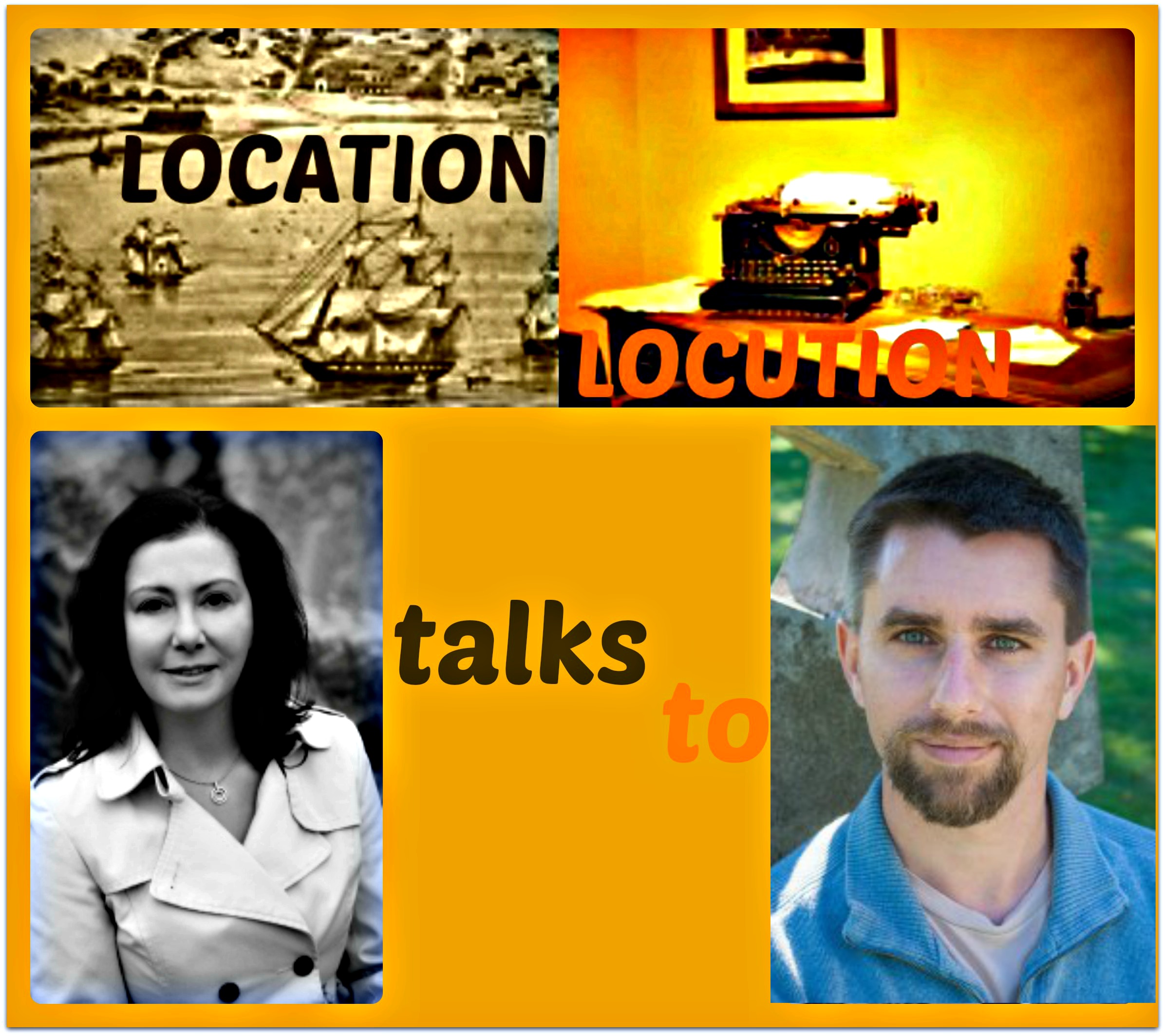
Columnist JJ Marsh (left) talks to “rucksack” urban fantasy writer Anthony St Clair about how he translates his travels into works of fiction.

In this month’s Location, Locution, JJ Marsh talks to Anthony St. Clair, author of the Rucksack Universe books, a series of urban fantasy travel novels set in Hong Kong, India and Ireland. When he’s not concocting the kind of fiction that thrills, delights and bewilders in the spirit of Neil Gaiman, Terry Pratchett, Douglas Adams and Tom Robbins, St. Clair is making a living as a copywriter, blogger and editor. He loves writing about business and anything related to craft beer, homebrew, travel (he’s a self-described globe-trotter), food, and the Pacific Northwest.

Which comes first, story or location?
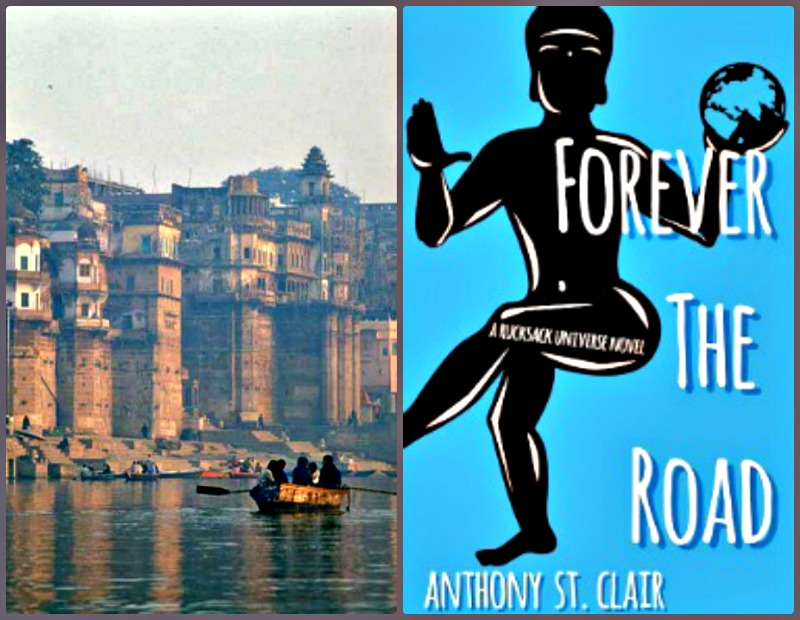
Location. My original idea for Forever the Road, the most recently published book in my Rucksack Universe series, came to me in 2003, when I spent two months traveling through India. As the story took shape, I created a fictional city and river, both called Agamuskara, which is Hindi for “smiling fire.” Both the river and the city are pivotal to the action of the story and what happens with the book’s various characters. But I don’t think I could have come up with either the story or the location without having also traveled through India, especially the city of Varanasi, the holy city on the banks of the Ganges, which Agamuskara is based on.

Photo credit: "Ganges River, Varanasi, Uttar Pradesh, India," by Babasteve via Flickr (CC BY 2.0).

Photo credit: “Ganges River, Varanasi, Uttar Pradesh, India,” by Babasteve via Flickr (CC BY 2.0); Forever the Road cover art.

What’s your technique for evoking the atmosphere of a place?
Have you ever noticed that when you go somewhere new, it’s like you notice everything and experience it more intensely? It’s like our guard comes down. We see, hear, smell, taste, and touch with an intensity and openness that we don’t usually bring to our day-to-day encounters with the world outside ourselves. I try to relate the atmosphere of a place by evoking all the senses. Is the place hot or cold? Crowded or sparse? What does it smell like? What does the food taste like? What are the colors? Sense helps us get to know a place, and evoking the senses works just as well in a book as it does in actual travel.

Which particular features create a sense of location? Landscape, culture, food?
All of the above. Landscape, culture, and food affect each other. What the land is like affects the food that can be available. Place shapes culture, because place drives so much of our experiences. Likewise, food has an influence on how culture connects and evolves. After all, how many of our most pivotal experiences have to do with a meal, or a particular moment in a new place, or by experiencing and trying to understand an aspect of a different culture?

Can you give a brief example of your work which illustrates place?
This excerpt is from Chapter 2 of Forever the Road, which was released September 8th in e-book, all formats, and trade paperback (more information here).

The rattling truck moved so fast that the world passed in a blur, but Jay marveled at all he saw. Countless people wore brilliant colors and smiled from weathered, driven faces. They defied the washed-out landscape and the humid mat of the air. Every village had been here before time was time, it seemed. Each village also brought a glimpse of temples and shrines, elephant-headed gods, bulls, monkeys, multi-limbed deities rendered in brick, stone, concrete, and reverence.

Approaching Agamuskara, Jay now understood that India was four things: heat, humans, history, and gods. They shaped India not so much into a country or a culture but a world. India was all of the world, all of time in every passing moment, and every emotion, every depravity and transcendence, every hope realized and every futility suffered, of all the human race.

And, gods, was India heat. Humid, blazing, sopping heat. India felt as if wet blankets had been baked for an hour in a pot of water, then, steaming and boiling, wrapped around the country. Even Jay’s sweat glands felt sluggish. The humidity jellied the will. It softened the wood of the few meager trees. Even the concrete blocks of houses and shacks seemed to sag, drip, and simmer in the midday, clear-sky blaze of sunlight.

The truck turned onto a highway, renown throughout northeastern India for being maintained. The road reminded Jay of the interstate highways of his left-long-ago home, except that as far as the traffic was concerned, the four lanes were simultaneously one lane, three lanes, twenty lanes, and no lanes. Still, the truck’s consistent speed and motion brought a soothing breeze to Jay’s skin, and the smooth road took him from a blazing sear to a nearly gentle simmer.

For once, Jay’s tenderized rump stayed in one merciful, bounceless spot. After a few kilometers, he relaxed like a roast chicken resting after coming out of the oven.

How well do you need to know the place before using it as a setting?
I want to visit a place before I write about it, and so far all my stories draw on places I’ve visited. Whether or not I’ve traveled there, I also use substantial research to try to understand a place as best I can, but there is no substitute for having been there. Nothing compares with eating the food, walking the quiet streets at dawn, observing the tiny everyday details that make a place its own.

Which writers do you admire for the way they use location?
I’ve spent many a time immersed in the works of Bill Bryson and Pico Iyer, and I try to bring their mix of place and experience into my own style. However, when it comes to using location in story, I admire Terry Pratchett the most. His long-running Discworld, a comic fantasy book series, is not only full of funny, richly told fantasy stories, but he clearly works hard to weave the setting into the story. Whether a book is set in a city or the mountains, it is always clear that a sense of place is key to the characters and events unfolding in the book. I try to evoke a similar connection in my own work. There’s an old saying that character is destiny, but I would add that place shapes character.

Thank you, Anthony! That was fascinating. Readers, if this interview has piqued your curiosity about Anthony and his writings, I encourage you to visit his author site. You can also follow him on Twitter.

* * *

Next up on Location, LocutionSusan Jane Gilman, Geneva resident and author of the New York Times bestseller The Ice Cream Queen of Orchard Street. Until then, I wish you happy holidays. See you next year!

JJ Marsh grew up in Wales, Africa and the Middle East, where her curiosity for culture took root and triggered an urge to write. After living in Hong Kong, Nigeria, Dubai, Portugal and France, JJ finally settled in Switzerland, where she is currently halfway through her European crime series, set in compelling locations all over the continent and featuring detective inspector Beatrice Stubbs.

STAY TUNED for our next fab post!

If you enjoyed this post, we invite you to register for The Displaced Dispatch, a round up of weekly posts from The Displaced Nation, with seasonal recipes, book giveaways and other extras. Register for The Displaced Dispatch by clicking here!

Related posts:

CHUNKS OF DRAGONFRUIT: The story of an expat for whom Burma literally becomes the Tropic of Cancer

Dragonfruit cover and photo of Philippa Ramsden, courtesy Shannon Young. Purple dragonfruit by Mike Behnken (CC BY 2.0).

Dragonfruit cover and photo of Philippa Ramsden, courtesy Shannon Young. Purple dragonfruit by Mike Behnken (CC BY 2.0).

First of all, if How Does One Dress to Buy Dragonfruit? True Stories of Expat Women in Asia isn’t on your Christmas list, it ought to be. As regular Displaced Nation readers will know, Dragonfruit is a new anthology edited by columnist Shannon Young. Shannon has been sharing a few tasty morsels with us over the past couple of months, and we have been repeatedly amazed at the window afforded on Asia by these expat women writers. This is the third installment. The first can be read here; the second, here.

—ML Awanohara

For this month’s excerpt, I’ve chosen a piece by Philippa Ramsden. A Scotswoman, Philippa is a development and humanitarian professional, writing in any leisure time. She had been to Asia only once when she stepped off a plane in Kathmandu in 2000 to take up a new job, with no idea what to expect—and has been in Asia ever since. She has lived and worked in Nepal, Mongolia, India, Sri Lanka, and now Burma/Myanmar.*

Philippa actually submitted more than one piece for consideration in the expat women anthology, but this one stood out because it addresses head-on one of the scariest things an expat can experience: receiving a life-threatening diagnosis abroad. Philippa is a true inspiration for handling such a significant challenge without letting it undermine her sense of wonder and appreciation for the country she currently calls home.

I am honored to share the beginning of Philippa’s story here.

“Moving to the Tropic of Cancer,” by Philippa Ramsden

Rainy season in Burma is spectacular. At night, I love to lie in bed, listening to the torrential rainfall drenching the earth and bringing life and vitality to the land. Between showers, the air is so thick that you can hear the moisture dripping from leaves and branches. And if you listen very carefully, you can almost hear the grass sighing and burbling with delight as it wallows in the rainwater. When the rains come down, they do so thick and fast. Even with an umbrella and raincoat you are quickly drenched. In the intervals between the downpours, it is hot, humid and sticky.

When I arrived in Burma in mid June of 2009 to start a new job, rainy season was in full force. Having lived in Asia for more than a decade, I have become close friends with the monsoons, which bring welcome respite from stifling heat and humidity. Being caught in a sudden downpour, or even listening to the rain from outside, brings energy and feels like a revitalising force. I have many fond memories of standing, drenched to the skin, grinning from ear to ear after only a few moments in an unexpected cloudburst. It helps that the rain is warm! Coming from Scotland, where the rain can be just as heavy but usually accompanied by grey skies and often a biting wind, I have never tired of this warm torrential rain.

When the rains make their first annual appearance, they usually arrive dramatically, and the world is transformed. There is a festive feeling; smiles and laughter return. The sight of children playing in the rain, splashing in puddles and letting the rain soak them through is ubiquitous. And not just children—adults too! The city turns green, mosquitoes hold crowded parties, and the frogs grow to such a size that they sound like male tigers as they croak in the night. The ground and pavements are covered with a layer of slippery, slimy moss in the hidden spaces which have not already turned to mud.

Such was Yangon when we arrived with our suitcases, papers, and a crate of enthusiasm, to take up a new life in this enigmatic country. It is quite an experience looking for a home in such a setting. We had a temporary place to live but were keen to settle and unpack properly. In those first weeks, we tramped round a number of potential homes, the mosquitoes nipping at our ankles and the rain teeming down.

It was not too long before my husband found the perfect place, a simple bungalow within walking distance from work. We made arrangements to view it, and the heavens opened shortly before the visit. The road outside the office flooded, and we had to wade through warm, murky water to get there. It was well worth the effort, though. The bungalow was indeed perfect: modest, but deceptively spacious. The wooden floors gave it a cosy warmth and the large, high windows made it feel light and optimistic. Unusually for Yangon, it had ceiling fans throughout. My fear of earthquakes was assuaged by the fact it was all on one level. The generous garden was gloriously tropical and mature, bounded by bamboo, mango trees, and hedging, and filled with pink, white, and yellow bougainvillea, crimson foliage, pink and purple hibiscus, and scented frangipani. It was ideal. We would share it with several families of geckos, some of which were the tiniest ones I have ever seen. They added to the nighttime chorus with their characteristic chirruping sound.

After a series of one-year postings in different countries in the South and Southeast Asian region, we were very happy at the prospect of a longer posting. We were keen to move into this peaceful space and finally unpack. Particularly back in 2009, Burma had an air of mystery, and were eager to learn about our new environment. We made arrangements to rent this house and moved in as soon as everything was in order. It was a marvelous feeling to be settling at last.

By late September, the rainy season had truly left its mark: the vegetation was lush and vibrant from the rains, clothes seemed to be neither clean nor dry, almost everything was growing a layer of mould, and the humidity made me feel constantly grimy.

One unremarkable evening, as another hot, sticky, and wet day was drawing to a close, I had my usual shower to refresh myself and clean off the day’s grime. It was in the shower that I felt a hard, solid area where one should not have been, in my left breast.

I was instantly transported back in time twenty-six years to when I had found a lump one evening while bathing. I vividly remembered the sensation of sick fear as I checked that I had not imagined it. It had indeed been real all those years ago, and I had had it investigated promptly the next day with my local doctor. It had turned out to be nothing sinister and was shrinking by the time I had a hospital appointment a couple of weeks later. Although the lump at that time was not worrisome, the emotions and fear that I felt at that time were very real.

My reaction was different, however, on finding this lump all these years later. My stomach didn’t sink in quite the same way. In the previous days, I had noticed some changes in my left breast, and was intending to seek medical advice. However, I believed these to be related to my age. When my fingers rested on the hard mass, I knew that the lump plus changes must constitute worrying signs. This really could be sinister this time. I comforted and contradicted myself, focusing on the fact that eighty percent of breast lumps are benign, and moreover, there was no history of cancer at all in my family.

I swallowed the sense of fear and uncertainty. My mind had to absorb the possibility that I might have cancer. And I was living in a new and foreign environment. I had no idea what the implications might be.
*We have chosen to use Burma and Rangoon rather than Myanmar and Rangon.

* * *

Readers, if you enjoyed that morsel, I hope you will at least consider downloading a sample of the Dragonfruit anthology from Amazon or purchasing the book: the e-book and paperback of are available at all major online retailers.

And if this excerpt has made you curious to learn more about Philippa Ramsden, her blog is Feisty Blue Gecko. You can also find her on Facebook and twitter. She has written several meditations on the challenges and joys of life in a foreign environment—and they are all fascinating. She is currently working on a memoir.

* * *

Thank you so much, Shannon! Displaced Nationers, do you have any responses to the opening of Philippa’s moving story?

Before I go, here’s another reminder to purchase a copy of Shannon’s wonderful anthology. What better end-of-year gift for the expat woman in your life (or for yourself, if that is you!).

STAY TUNED for next week’s fab posts!

If you enjoyed this post, we invite you to register for The Displaced Dispatch, a round up of weekly posts from The Displaced Nation, with snippets of worldly wisdom, exclusive book giveaways and our nominees for the monthly Alice Awards. Register for The Displaced Dispatch by clicking here!

Related posts:

GLOBAL FOOD GOSSIP: ‘Tis the season to be jolly—and for that I recommend crunchy sweet potatoes

Crunchy Sweet Potato Collage

Joanna Masters-Maggs portrait; “Pecan Sweet Potato Casserole,” by Vox Efx and “Thanksgiving feast,”  by Star Mama, both via Flickr (CC-BY 2.0).

Joanna Masters-Maggs was displaced from her native England 17 years ago, and has since attempted to re-place herself in the USA, Holland, Brazil, Malaysia, Venezuela, Saudi Arabia, and now France. She describes herself as a “food gossip”, saying: “I’ve always enjoyed cooking and trying out new recipes. Overseas, I am curious as to what people buy and from where. What is in the baskets of my fellow shoppers? What do they eat when they go home at night?”

* * *

Last month I had intended to contribute a pleasant little piece invoking “memories of Thanksgivings past”—but I am afraid I just wasn’t feeling in a terribly thankful sort of mood.

That was a shame, really, as Thanksgiving is one of the few holidays I have been lucky enough to experience overseas that my crabby little heart actually embraces. As a foreigner living in the United States, my experience could be likened to that of a grateful orphan, adopted warmly by a family as a vaguely interesting addition to proceedings.

Really, what is there not to like? Good food, and plenty of it, a lot of wine, usually in the host family’s nice crystal—and ABSOLUTELY NO PRESENT-GIVING other than generous hostess gifts.

Et tu, le shopping?

It was actually the contemplation of present-BUYING that prompted my spell of bad humour. Black Friday, the day after Thanksgiving—which Americans traditionally spend at pre-Christmas sales, in a frenzy that can take on the appearance of contact sports with credit cards—has now arrived in France, my current home.

France!

It seems that even the French have lost their ability to say non to foreign habits that threaten their own culture.

Le shopping, too. 😦

Veggies, glorious veggies!

All of that said, I regret that I never sat down and wrote the column I originally had in mind. Soon after I made that decision, the thought of those cosy Thanksgivings where outdoor grey light gives way to the warmth of candles and fires began to get the better of my jour noir.

Especially when I remembered the BEST THING OF ALL about Thanksgiving: it affords an opportunity for Americans to demonstrate their magical ability to convert healthy, vitamin-brimming vegetables into artery-clogging, heart-stopping not-much-time-left-bombs.

The general principle seems to be to cook out as much of the vegetable’s vitamin content as possible, along with its texture and possibly colour. Next comes the flavour makeover. Those green beans must taste of ham hock and bacon, not bean. The loss of beanly texture is viewed as desirable—and really, who enjoys the blackboard squeak of green beans on teeth?

However, I cannot approve of the makeover given to the sweet potato, whose texture when cooked is always soft. Sweet potatoes require a little more bite—and how!

The joy of this vegetable is that, even after the rather horrifying treatment meted out to it, often involving marshmallows, the B vitamins remain intact allowing it to count as a health food still.

God Bless America indeed.

Let’s talk turkey, or where’s the beef?

If there are to be any complaints about Thanksgiving and, given my heritage, there must be complaints, it would be about the bird. As my own father once said of Christmas lunch in the UK:

If it’s meant to be a fancy there should be proper meat.

For him this means beef, I believe. I’m open to other meats, other birds even, but I agree with my dad’s sentiment that the Turkey is a duffer in pretty much every respect. Even at its most organic, just shot and plucked best, it’s just a stomach filler for crowds. Does anyone, I wonder, ever consider serving two smaller but glorious geese rather than one ho hum turkey?

On the bright side, though, who needs meat at all when you can have sides like green-bean-and-bacon casserole?

Since my mood has lifted somewhat with all this talk of misbehaving veggies, I have decided to share the cheer by offering you the sweet potato recipe I love. It was given to me years ago and involves brown sugar, pecans and cinnamon baked to a crisp and crumble like finish—plenty of crunch and bite!

It’s wonderful for Christmas and it’s wonderful anytime. Bon appétit!

pecan sweet potato casserole

Sweet Potato Casserole

Ingredients:
½ kilo (just over a pound) of sweet potatoes
115g (half a cup) white sugar
2 large eggs
salt to taste
50g (3.5 tbsp) butter
120 ml (half a cup) of milk
1tsp of cinnamon powder

For the topping:
100g (half a cup) brown sugar
40 g (one third a cup) plain flour
40g (one third of a stick) butter
140 g (around one and one third cups) chopped pecans—you can substitute with other nuts if necessary, but I do think pecan is the best for this as it has a pleasing sweetness. (Walnuts, the natural substitute, can be a little bitter.)

Method
Cover sweet potatoes with cold water and bring to boil. Cook gently until tender.

Mash sweet potatoes with the sugar, beaten eggs, salt, butter milk and vanilla extract if desired.

Spread the sweet potato mixture into a casserole dish measuring 22 x 33 centimeters (8.5″ x 13″).

Preheat the oven to 165°C (around 350ºF).

To make the topping, rub the butter into the flour with your fingertips until the mixture resembles breadcrumbs. Stir in the sugar and nuts. Sprinkle evenly over the potato mixture.

Bake for half an hour until golden brown—keep an eye on it, though, as pecans burn easily.

* * *

Fellow Food Gossips,do you have any post-Thanksgiving (or pre-Christmas) food stories & recipes to share? And also please let us know: do you agree with Joanna’s take on the sweet potato?

STAY TUNED for our next fab post!

If you enjoyed this post, we invite you to register for The Displaced Dispatch, a round up of weekly posts from The Displaced Nation, with seasonal recipes, book giveaways and other extras. Register for The Displaced Dispatch by clicking here!

Related posts:

And the November 2014 Alices go to … these 3 international creatives

 © Iamezan | Dreamstime.com Used under license

© Iamezan | Dreamstime.com
Used under license

If you are a subscriber to our weekly newsletter, the Displaced Dispatch, you’re already in the know. But if you’re not, listen up. (Hey, why aren’t you? Off with your head!)

Every week, when that esteemed publication comes out, we present contenders for a monthly “Alice Award,” most of whom are writers or other kinds of international creatives who appear to have a special handle on the curious and unreal aspects of being a global resident or voyager.

Not only that, but this person tries to use this state of befuddlement as a spur to greater creative heights.

Today’s post hono(u)rs our three Alice recipients for November. Listed in order of most to least recent, they are (drumroll…):

1) Becky Ances, American expat in China and creator behind the Moo-Cow Fan Club, an award-winning children’s magazine & book series

For her post: “No I DO NOT Want to Drink F&%#%$ Hot Water,” to her personal blog, Writer Traveler Tea Drinker: Doing all three in China
Posted on: 18 November 2014
Queen Alice Drink CollageAlice Connection:

“Drink more hot water”
This is the most annoying piece of advice you hear ALL THE TIME when living in China. My friend smashed her elbow, the bone, and went to the hospital. Their recommendation? Drink hot water.

Citation: Becky, please forgive us for having found your post about what happened when you came down with a “major disgusting, hocking, snotty nose, bleary-eyed” case of flu in your adopted home of China highly amusing. That is actually a compliment, coming from us! We also think, moreover, that you may have overreacted slightly to being told repeatedly by Chinese students and friends to drink hot water. We refer you to the “Queen Alice” chapter in Through the Looking Glass, specifically the section where Alice, having found herself wearing a golden crown, arrives at a party being held in her honor. She is surprised to be serenaded by a solo singer with a shrill voice pretending to be her stand-in. She is even more surprised when the hundreds of looking-glass creatures (animals, birds, even a few flowers) who are attending as guests join in a refrain that proposes concocting drinks full of cats and mice, treacle and ink, etc., for a special toast. Looping back to your situation in China: Be grateful it was only hot water they were prescribing (besides, isn’t hot water safer to drink in China?). Under other circumstances, your Chinese friends might have been foisting snake wine or other therapeutic drinks on you as curatives. You are absolutely right, however, to avoid people who sneeze and don’t cover their mouths. And we hope you are also sensible enough to know that if someone offers you a  bottle labeled 我喝 to pour the contents into a flower pot when no one’s looking. (The flowers will thank you for it!) Get well soon, Becky. We wish to read more of your posts!

2) Ruth Van Reken, Adult Third Culture Kid writer, editor, and lecturer; and author of the memoir Letters Never Sent

For her interview: “Exploring Her Third Culture Through Journaling with Ruth Van Reken,” by Eric for geodip
Posted on: 3 November 2014
Alice Connection:
Alice Cheshire Cat Collage

It is from this frequent changing of worlds and communities that the two main challenges of growing up global form. The question of identity: Which of my many selves am I? and the matter of unresolved grief. With so many cycles of transition, if people don’t process the inevitable losses as they happen, the grief that is inherent in losing things that we love will have to go somewhere deep inside.

Citation: Ruth, reading about your struggle to embrace your multiple identities and channel your grief at saying so many goodbyes at a young age—well, let’s say it makes Alice’s confession of an identity crisis to the Cheshire Cat seem a bit of a cake walk. Alice presumably had only one other self, that of a well-behaved Victorian girl, to reconcile with the adventuresome spirit she’d become in Wonderland. You by contrast have had to deal with multiple selves after spending your first 13 years in Nigeria with your missionary parents. We must say, it was brilliant of you to use journaling as your Cheshire Cat when you found yourself, in your late thirties, suffering from a depression about these unresolved emotions. Translating feelings of loss, grief and confusion into the written word has clearly been a tonic. It has left you with a grin about your cross-cultural life, which you’ve generously shared with others through your memoir and other writings. Kudos, Ruth, and thank you.

3) Hannah Reyes, photographer, travel enthusiast, Filipina expat in Phnom Penh, Cambodia, and National Geographic Young Explorer

For her interview: “I Heart My City: Hannah’s Phnom Penh,” in Beyond the Guidebook, a feature of NationalGeographic.com’s Intelligent Travel section.
Posted on: 22 October 2014
Tweedle Dums Collage

The most random thing about my city is the quantity of people going about their workdays dressed in matching, printed pajamas.

Citation: Hannah, our first concern, after reading your engrossing interview post, is whether there’s a way to tell “dee” from “dum” when you see two people wearing identical pajamas—and if not, would they consider embroidering their names on their collars? Also, the concept of wearing pajamas during the workday sounds most unusual to those of us who know Japan, where pajama costumes might be worn to the hot springs bath but certainly not to work. Finally, we are curious about the print on the pajamas. Most uniforms we’ve seen, including those for Tweedle Dum and Tweedle Dee, don’t involve prints (apart, that is, from the stripes on their caps). We hope for your sake that the print is subtle rather than garish. Otherwise, there might be too much “ditto”, as Tweedledum might say, or “ditto ditto” as Tweedle Dee would respond. To sum up, Hannah, your interview has left us curiouser and curiouser. Well done!

*  *  *

So, readers, do you have a favorite from the above, or have you read any recent posts you think deserve an Alice Award? We’d love to hear your suggestions! And don’t miss out on the shortlist of Alice contenders we provide in each week’s Dispatch, which are sources of creative thought if nothing else! Get on our subscription list now!

STAY TUNED for more fab posts.

Writers and other international creatives: If you want to know in advance the contenders for our monthly Alice Award winners, sign up to receive The Displaced Dispatch, a round up of weekly posts from The Displaced Nation, with news of book giveaways, future posts, and of course, our weekly Alice Award!. Register for The Displaced Dispatch by clicking here!

Related posts:

For this former flight attendant turned free-spirited solo adventurer, a picture says…

Svetlana Portrait Collage

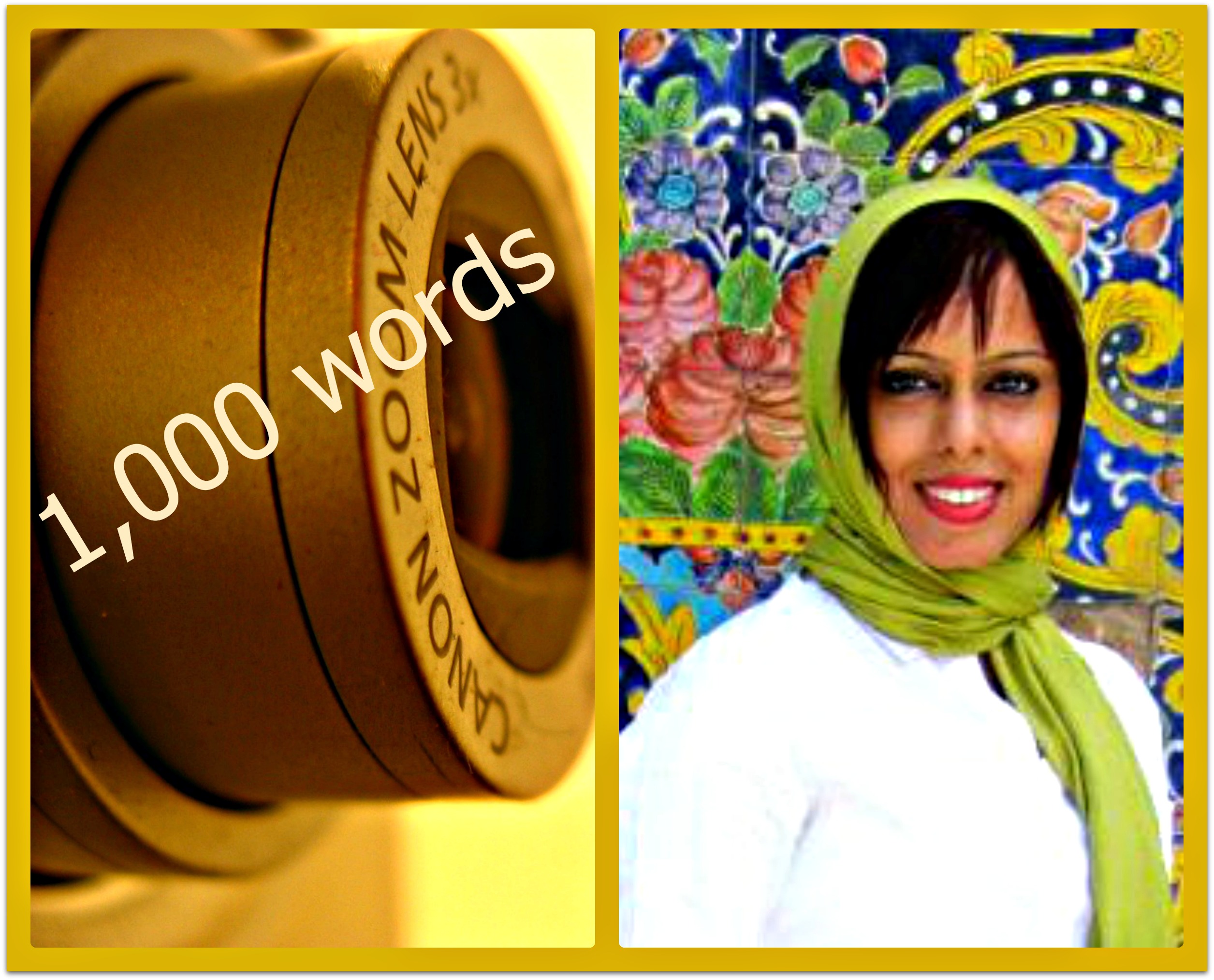
Canon zoom lens, photo credit: Morguefiles; portrait of Svetlana Baghawan taken at Golestan Palace, Tehran, Iran.

Welcome to our monthly series “A picture says…”, created to celebrate expats and other global residents for whom photography is a creative outlet. The series host is English expat, blogger, writer, world traveler and photography enthusiast James King, who thinks of a camera as a mirror with memory. If you like what you see here, be sure to check out his blog, Jamoroki.

My guest this month is 33-year-old Svetlana Baghawan, who says she is a “cloud gypsy” or “maverick bird” (that’s what she calls her blog) because she likes to fly and explore—she also hikes, treks and daydreams. On her blog’s Home Page, Svetlana declares:

“When I’m not traveling physically my mind wanders in loops and whirls across open space.”

Born and raised in India, Svetlana is a mother and writer as well traveller. She also describes herself as a compulsive shopper, foodie, bad cook (her words) and animal lover. She likes to travel solo across continents, sometimes completely alone, often with her five-year-old daughter in tow. Having worked as a flight attendant for quite a few years, she was bitten by the travel bug early, and for good.

The way she described the self-portrait she sent to me for “A Picture Says…” (see above) helped set the scene for my interview with her:

By the time I left Tehran, I was a far cry from the shaky, nervous girl who had landed there two weeks before. The photo (above) was taken by the Tehran moral policeman who pulled me up for wearing tight jeans. When I told him I was from India, he revealed a fascination for Bollywood and I glibly lied about being a professional Bollywood dancer. He happily let me go after taking this photo and a few others. Not only did my response save me from harassment but I’d surprised myself with my new-found confidence. It was a turning point in my life. That’s why I love the photo.

* * *

Welcome to the Displaced Nation, Svetlana. I have been looking forward to discussing your photo-travel experiences ever since I discovered your blog, Maverickbird, some months ago. The first thing that caught my eye was the unusual title which, as I now know, describes you perfectly. Let’s start with where you were born. And when you spread your wings (an apt metaphor in your case!) to start travelling?
I was born in Calcutta, India, and spread my wings at the age of 17 when I was selected as a flight attendant by an international airline.

I think I can put you in the seasoned traveller category now as you have been travelling for work and pleasure for 16 years. Tell us, what is it like to be a solo female traveller?
My travels could be described as falling into three categories. Initially they were only what I would call city centric and absolutely touristy. You know, the places where flight crews get night halts and have limited time to relax. So there is little else to do except take selfies, shop, eat and sleep. Then came the phase when I travelled with my family, which, apart from the touristy fun bit, also involved taking on a lot of responsibilities. Then finally, at the age of 30, I started traveling solo. Since then my journeys have been challenging but also more fulfilling and enriching.

So at last you are, how shall I say, awakened perhaps? And living a dream. I can appreciate how uplifting that must be so I would love to know what inspired you to travel and what countries you have visited?
It may sound a bit melodramatic, but one day I was happily tied to my role of the traditional Indian married lady, and the next I was suddenly alone: a blow was dealt to my secure little world. I struggled to come to terms with my loss, but grief and depression, coupled with the suffocating social taboos that are dumped on bereaved ladies in India, nearly drove me over the edge. I was still a flight attendant at the time so used my free airline ticket facility and took off. I craved an escape. It was my way to survive. Iran was my first stop. It was tough—but soul touching and completely healing. I returned from Iran with a new-found zest for life, secure in my own identity and confident to take on the world once again.

How many countries in all have you visited?
If I include all the places which I have visited since I started flying then the list would run to nearly 60 countries. As a solo traveller, I have visited and engaged with 13 countries in depth.

“Whoever you are, no matter how lonely,/The world offers itself to your imagination…” Mary Oliver

Recovering from a tragedy takes courage, and the fact that you didn’t dwell on your loss for too long shows your resilience. I firmly believe that we learn more from adversity than we do from triumph or success. You have good reason to be proud. So where are you now, how did you end up there and what is life like in a new place?
I am in Sri Lanka where I came to help a friend on a whaling project. I have found Sri Lanka to be very unsettling and unexpectedly tough to handle especially for a single woman of Indian origin. Although it’s a breathtakingly beautiful country with amazing people, culture and history, I have a sense of “alien familiarity” here, which I’m finding difficult to handle. It’s similar to home yet so very different. I am constantly oscillating between feeling at home and being displaced. Sri Lankans only seem to be able to associate with Southern India—hence the dazed reactions of nearly everybody I meet to my descriptions of Calcutta. This is slowing wearing me out.

A whaling project sounds pretty exciting—I hope you don’t let the other issues get you down. Let’s have a look now at some photos that capture a few of your favourite memories and hear your stories about what makes these memories so special.
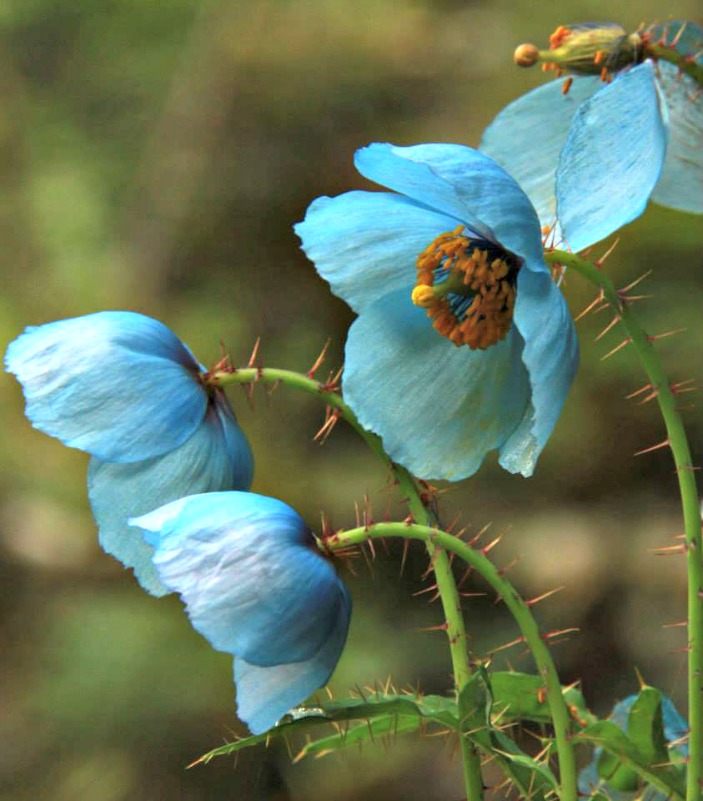
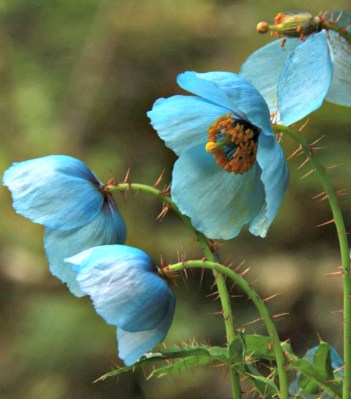
It is a very arduous trek to reach the Himalayan blue poppies at the Valley of Flowers National Park, in Uttarakhand, a state in the northern part of India. But the beauty at the end of the journey is mind blowing. I still clearly remember how my first sight of the rare blue poppies took my breath away:
Svetlana_blueflowers

Singing a gorgeous blues in the Himalayas; photo credit: Svetlana Baghawan.

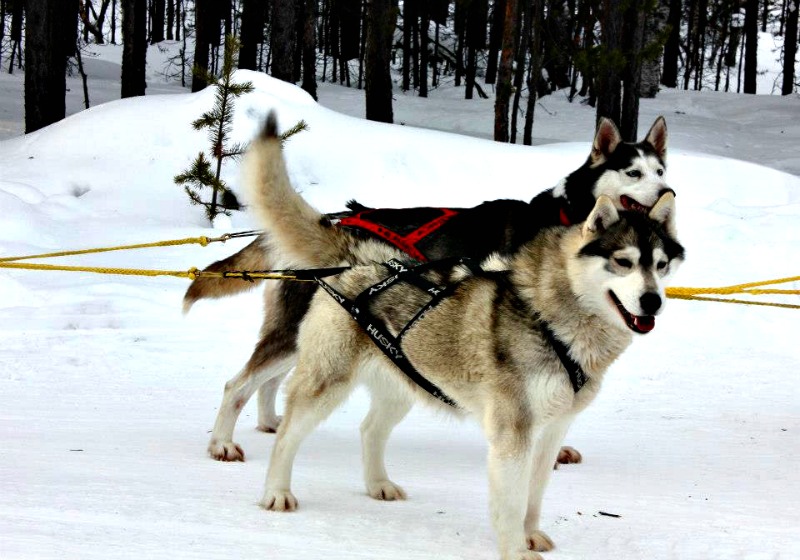
Meeting huskies in Lovozero, a village in Northern Russia, was a dream come true for me. Their puppy love floored me completely. It was extremely heart-warming to see the way those tough little dogs did the usual doggy tricks, like yapping away in happiness on being taken out for a run, making cute puppy eyes to get their way and cuddling on one’s lap like big babies.

Svetlana_huskies

Floored by puppy love in Northern Russia; photo credit: Svetlana Baghawan.

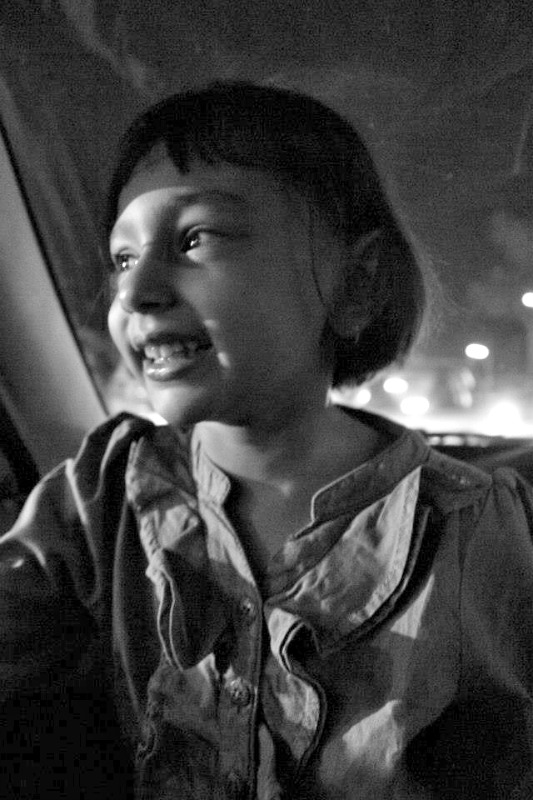
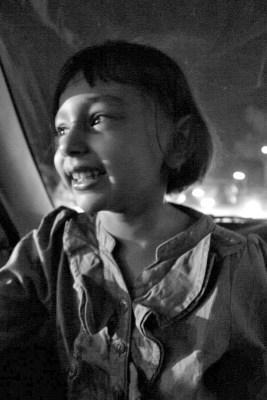
The third photo is of my daughter during Diwali. We had gone for a drive and I loved the way her eyes lit up with happiness at the prospect of quality mommy-baby time. It was fresh after our little world had gone awry, and it was magical to see how fast children rebound from losses and find happiness in every moment and in smallest of things:
Svetlana_daughter

A daughter’s delight in Diwali; photo credit: Svetlana Baghawan.

Diwali, for those who don’t know, is the biggest festival celebrated in India. Held around November, it signifies the victory of good over evil and is celebrated with a lot of festivities: spring cleaning, new clothes, home makeovers, auspicious purchases of substantial things like gold, cars, house etc, starting of new ventures, exchanging gifts, sweets and finally with lots of lights and fireworks. The whole country gets lit up in millions of lights as every Indian irrespective of caste, religion and social standing, decorates their house with lamps/lights.

This is a beautiful photo which captures a child’s joy and innocence. I can see she is very precious to you.

“I love the freedom of my wings.” —Banani Ray

Tell us, where were (or are) your favourite places to take photographs?
Shiraz, Iran, is a favourite of mine because of its stunning landscape, spectacular architecture, feast of archaeological wonders, and photogenic people who are also genuinely friendly. I loved the playful rainbows created inside this mosque. To me it truly represented Iran, which I have found to be a friendly, delightful and safe country. Unfortunately, it is shrouded under an unfortunate pall of cruel myths.
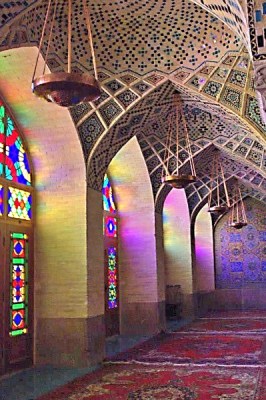
Svetlana_mosque

Somewhere over the rainbow…is this gem of an Iranian mosque; photo credit: Svetlana Baghawan.

How interesting and not the general Western perception of the place, I’m sure.

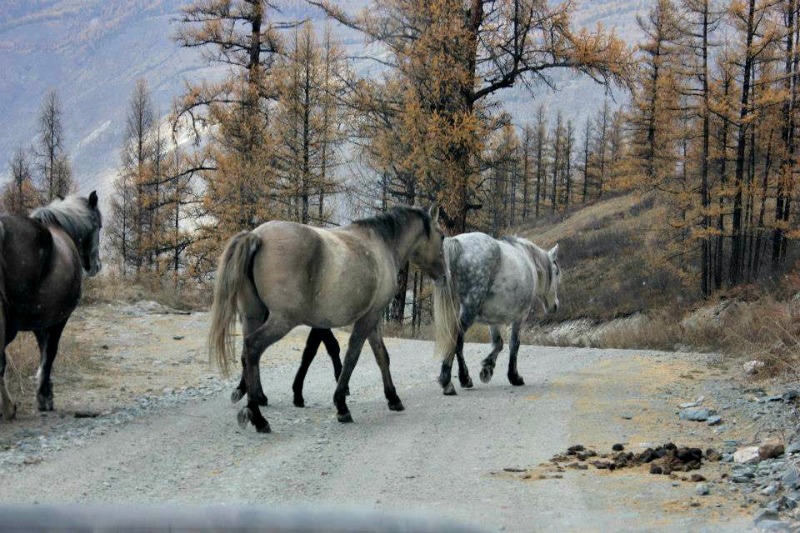
Siberia would be another favourite place to photograph. The sheer amount of unexplored open natural beauty is very freeing and of course the landscape is breathtaking. These wild Altai horses say Siberia to me, with its staggeringly expansive land mass and incredible, wild beauty.
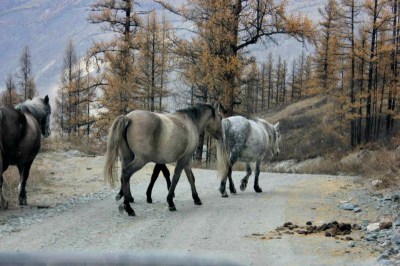
Svetlana_horses

Wild horses in the wilds of Siberia’s Atlai mountains; photo credit: Svetlana Baghawan.

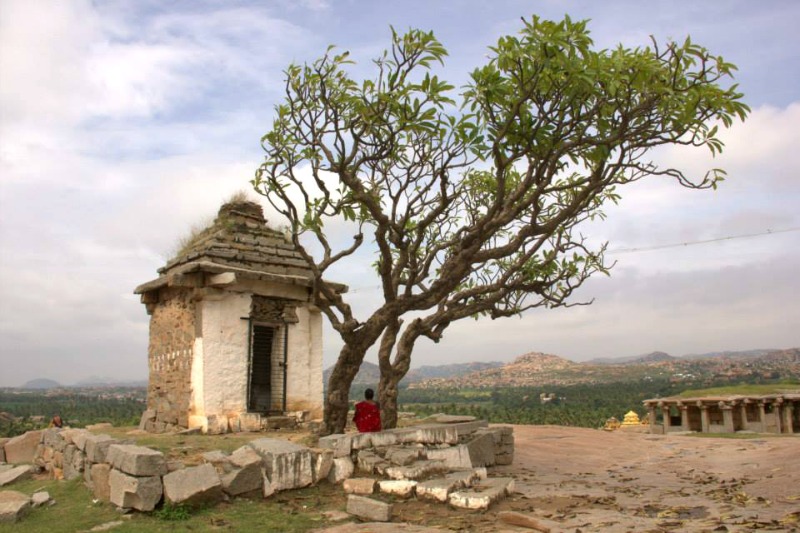
Last but not the least would be Hampi, a village in Karnataka, a state in South West India, famed for being located within the ruins of Vijayanagara, an empire that came to prominence at the end of the 13th century. Although it was tough to decide between Hampi and Kashmir, I love Hampi more for its surreal mix of a tangible ghostly civilization lying scattered amidst one of the most beautiful landscapes in India (think balancing boulder, rice fields, forests and obscure rivers) and little pockets of villages. The enchanting blend of the dead and living is breath-taking and the last photo represents Hampi’s larger-than-life beauty. You have to see it to believe it.
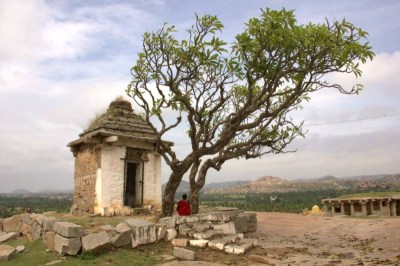
Svetlana_Hampi_India

Contemplating the former glory of a ruined empire (Hampi, India); photo credit: Svetlana Baghawan.

I believe you (I doubt I will ever get the opportunity to see it!). You have clearly been touched by the places you’ve visited, which should be an inspiration to other wannabe solo travellers. I’d like to know if you feel reserved about taking photos of people, particularly when they are conscious that you are doing so?
I love to take people’s photographs but at times do feel a bit conscious about photographing elderly people. This stems from the fact that they belong to a completely different era and might not at all like the idea of getting clicked. Photographing members of the religious fraternity, like monks, also makes me a bit nervous. I almost always ask permission before taking a person’s photo and in case of a language difference, bow, smile, greet and point to my camera to seek permission.

“It’s impossible to explain creativity. It’s like asking a bird, ‘How do you fly?'” —Eric Jerome Dickey

Would you say that photography and the ability to be able to capture something unique which will never be seen again is a powerful force for you?
I would like to think so because I see beauty in almost everything and love to capture it to share those moments with others. I believe that looking at the world through rose-tinted glasses is a gift I received from my mother. When I was growing up, she instilled in me a love for life’s beauty in how she would react to the world around us. She would spot a photogenic army of marching ants, play of sun and shade, curls of flower petals, waving strings of lights, etc., and share those moments with me in such an inspiring way. That said, it took me some time to get in touch with this inborn gift. I first realized it in Delhi while photographing a man selling neon-coloured balloons in front of India Gate. The detailed neon glow against the brooding monument in the dark inspired me, and those photos were very well received by my friends and family. Since then, I’ve been alert to beautiful details and while it was once a conscious effort, it is now a seamless habit, one that has made me much happier and contented. Discovering beauty at every step does make the world a less threatening place.

Your mother clearly had a great influence on you and especially the way you interact with natural scenery. Moving on to the technical aspects of photography: some of our readers may be curious to hear what kind of camera and lenses you use.
I use a Canon 550D although have recently upgraded to 600D and most of the time use 18-200mm lens. I prefer not to use post-processing software, but at times I have tried my hand at Picasa.

That’s a coincidence. I have the 600D as well! But unlike you I spend a lot of time learning and using post-processing. I believe, if you have the time, that learning about and improving photographic skills can add enormously to a blog. Having said that, I love at lot of your photo compositions and the subject matter is really good. Finally, do you have any advice for wannabe photographers who are traveling or living abroad?
Traveling abroad is both extremely tough and fulfilling at the same time. To leave your comfort zone for unknown territories and cultures is difficult but once you start coming to terms with the culture’s uniqueness, you will fall in love with it. Accepting the way a new place is in a non-judgmental way will help the transition process and slowly reveal its unfamiliar yet unique beauty, which you can photograph. Respect for the local culture comes first.

Thank you, Svetlana, for taking the time to tell your heart-warming and fascinating story. The late great American actress Anne Baxter once said:

It’s best to have failure happen early in life. It wakes up the Phoenix bird in you so you rise from the ashes.

You strike me as living proof of that statement. You have overcome adversity and grown as a person: a true triumph!

* * *

Readers, what do you make of Svetlana’s experiences and the photos she has produced? Please leave any questions or feedback in the comments!

Want to get to know her better? I suggest that you visit Svetlana’s blog, maverickbird. She can be contacted by email.

(If you are a travel-photographer and would like to be interviewed by James for this series, please send your information to ml@thedisplacednation.com.)

STAY TUNED for next week’s fab posts!

If you enjoyed this post, we invite you to register for The Displaced Dispatch, a round up of weekly posts from The Displaced Nation, with Alice nominees, exclusive book giveaways and other extras. Register for The Displaced Dispatch by clicking here!

Related posts:

LOCATION, LOCUTION: Clare Flynn, a well-traveled novelist who specializes in geographical displacement

JJ Marsh Clare Flynn

LOCATION, LOCUTION columnist JJ Marsh (left) talks to the novelist Clare Flynn.

In this month’s LOCATION, LOCUTION, expat crime writer JJ Marsh interviews Clare Flynn, the author of A Greater World and the just now published Kurinji Flowers.

Born in Liverpool, the eldest of five children, Clare Flynn read English Language and Literature at Manchester University, although spent most of her time exploring the city’s bars and nightclubs and founding the Rock ‘n’ Roll Society.

For many years she worked in consumer marketing, serving as the international marketing director for big global companies selling detergents, diapers, tuna fish and chocolate biscuits. This included stints in Paris, Brussels, Sydney and Milan.

She began her novel A Greater World, which is set in the Blue Mountains of New South Wales, in 1998, after the first of many visits to Australia. When Clare had almost completed the first draft, burglars stole her computer. Determined that they would not get the better of her, she sat down and wrote it all again.

Her second novel, Kurinji Flowers, is set in a tea plantation in South India in the 1930s. The inspiration for the book came during a sleepless night in a hotel in Munnar in Kerala. The kurinji flowers of the title grow across this region and are renowned for flowering only once in every 12 years.

Both novels are about people being displaced. In A Greater World Elizabeth Morton and Michael Winterbourne are unwilling emigrants from England for Australia, driven away by tragic events. Ginny Dunbar in Kurinji Flowers, following a scandal that wrecks her future, is catapulted from her life as a debutante into the world of colonial India. None of these people is equipped to deal with what lies ahead.

Which came first, story or location?

Definitely location. My latest book, Kurinji Flowers, is set in a small hill town in South India. While on holiday in Kerala, in 2011, the plot came to me one sleepless night. By morning I’d mapped out the basic elements although, as always when writing, it’s changed radically since then. It’s set in the 1930s in a fictional hill town called Mudoorayam, loosely based on Munnar. After I’d finished the first draft I went back, alone, to the area and stayed in a former plantation manager’s bungalow in the midst of the tea gardens. As well as writing, I sketched and painted (then decided my main character would paint, too).

Kurinji Flowers Collage

Photo credit: Kurinji flowers by Suresh Krishna (CC BY-SA 2.0); book cover art.

What’s your technique for evoking the atmosphere of a place?

Definitely being there. I try to walk in my characters’ steps. A Greater World is set mainly in the Blue Mountains and Sydney. I was lucky enough to work there for six months—the perfect opportunity to imbibe a place. I went back after the first draft was written—again, alone, and just went everywhere, taking photographs and making notes. I do a lot of research as well—and gather pictures, both online and in books. As my novels are historical, old photographs are invaluable.

A Greater World Collage

Photo credit: The Three Sisters, Katoomba, New South Wales, Australia, by JJ Harrison (CC BY-SA 3.0); book cover art.


Which particular features create a sense of location? Landscape, culture, food?

I think they all do. Plus sounds and smells—when the heroine of Kurinji Flowers, Ginny Dunbar, arrives in Bombay from England, the scene is evoked with six different sounds, eleven smells and loads of colours. I also use trees, flowers, birds, architecture—anything that makes the place special and takes you there. Writing about London is hard for me as it’s so familiar—but the fact that my plots are historical helps: I have to do a bit of time-travelling. I try to use place as part of the narrative, not as add-on description—it has to have a fundamental impact on the plot.

Can you give a brief example of your work which illustrates place?

From Kurinji Flowers:

We went back to England and a bungalow on the downs outside Eastbourne, where after a while I started to become fond of the sheep, the curving contours of the landscape and the grey-green, chalky sea. But I missed Muddy. I missed the warmth of the late afternoon sun, the intensity of the rains, the bustle of the market, the vast undulating expanse of the tea plantations, the gentle cry of the Nilgiri pigeons, the sluggish, murky river, the blue of the morning glory, and the patchwork of the tea gardens in more shades of green than my palette could do justice.

How well do you need to know the place before using it as a setting?

You don’t need to know it well, but you have to feel strongly enough about it to bring it to life on the page. There are people who write beautifully about places they’ve never visited—finding inspiration in other literature, in photographs and art. Shakespeare never left England as far as I know and it didn’t stop him writing about distant places real and imagined. And you can always use some artistic licence if you rename the place, as I did with my hill town.

Which writers do you admire for the way they use location?
So many—but I’ll pick Dickens and Chapter 1 of Bleak House, which gives a fabulous evocation of smoggy, muddy, London in “implacable November weather,” with a whole page devoted to describing the fog. Read that and you can’t help but be there trudging through those streets and coughing up that filthy air. And what’s great about it is that the depiction of the fog is also an extended metaphor for the impenetrable fog that is the Court of Chancery.

* * *

Next month’s Location, LocutionThe Rucksack Universe series author Anthony St. Clair, with his travel fantasy books set in Hong Kong, India and Ireland.

JJ Marsh grew up in Wales, Africa and the Middle East, where her curiosity for culture took root and triggered an urge to write. After living in Hong Kong, Nigeria, Dubai, Portugal and France, JJ finally settled in Switzerland, where she is currently halfway through her European crime series, set in compelling locations all over the continent and featuring detective inspector Beatrice Stubbs.

STAY TUNED for our next post!

If you enjoyed this post, we invite you to register for The Displaced Dispatch, a round up of weekly posts from The Displaced Nation, with seasonal recipes, book giveaways and other extras. Register for The Displaced Dispatch by clicking here!

Related posts: