The Displaced Nation

A home for international creatives

Tag Archives: Writers we love

Talking with author Dave Prager about his — deliriously unspiritual — expat experience in India

Reading like the work of a hipster Bill Bryson, Delirious Delhi is an account of Dave Prager and his wife Jenny’s move from New York to Delhi — the largest city in India by area and second largest by population — as they become what they term “New Delhi Yankees.” On arrival in their new home they, like so many expats, started a blog: Our Delhi Struggle. Detailing ther occasional bewilderment and occasional delight as two thirtysomethings acclimatizing to life in Delhi, their online musings quickly became popular.

Dave set about expanding Our Delhi Struggle into a book, and Delirious Delhi was the result. Those eagle-eyed among our readers may recall the book being featured under “expat memoirs” in one of the lists ML Awanohara compiled of 2011 books for, by, and about expats.

Earlier this month I spoke with author Dave Prager to discuss his book and his thoughts on Delhi — including the extent to which the expat life he and his wife led in India fits the Displaced Nation’s January theme of spiritual reawakenings.

How did you end up in Delhi and then later on Singapore?
I volunteered. My company needed a copywriter in Delhi. A week later I found myself in the city for the first time. We left Delhi for Singapore because we weren’t ready to return home to the US just yet, but we knew that if we didn’t force ourselves to leave India, then we’d never experience living anywhere else in Asia. So we quit our jobs in the middle of the recession, left Delhi, and flew to Singapore where we were both lucky enough to find work.

What made you decide to write a book telling the story of your transition to living in Delhi?
We had so many growing pains when we first moved to Delhi that we started our blog to share our lessons with everyone who would come after us. It became very popular — not just with expats, as we expected, but with Indians. As we were getting ready to leave, someone suggested we write a book. So I did. Ninety percent of the book is fresh content, never before seen until now. It’s very different from the blog. The blog posts are 500-word essays, where this is a single, 100,000-word narrative.

Delirious Delhi is your second book. Any plans for another one?
I’ve had some ideas I’ve been noodling away at. I have an idea about an American who finds himself living in rural India and doesn’t have a clue what’s going on. Which is how I felt every time we went out to the villages.

No plans to write about your time in Singapore?
There’s no plans for anything about Singapore. Don’t get me wrong, I enjoyed my time there, but it didn’t get my creative juices flowing in the way Delhi did. It didn’t inspire me like India inspired me.

What audience did you have in mind for the book?
When I was writing, I knew exactly who my intended audience was and I pictured them in my head as I wrote. It was two people that I know. The first was an American friend who was back in the US and was curious about India and my experiences; the other was an Indian co-worker who was always fascinated with how I — as an American — found life in his country.

I noticed you did a brief book tour in Delhi. Did you experience any negativity to your views?
Generally the response has been really good. There’s a minority who takes exception to a Westerner writing critically about India. But the book is not a criticism of India, it’s a recollection of the experiences — the good ones and the bad ones. Every country has good and bad, including the US. It’s disingenuous to focus on one and not the other — in both extremes.

This month’s theme for the Displaced Nation is the quest for spiritual enlightenment. At the beginning of the book, you say you would never describe India as “spiritual” as many do. What do you think of writers like Elizabeth Gilbert who present India as the ideal place for spiritual tourism?
It’s not that I wouldn’t describe India as spiritual — it’s that I never found it to be spiritual. Maybe because that wasn’t what I was looking for. In many ways, India is a blank slate, and travelers paint it with the colors they want to see. If you go looking for poverty, you’ll find it. If you go looking for wealth and globalization, you’ll find it. If you want spirituality, you’ll find it. India is the perfect place to find whatever it is you seek. The question is, what else do you have to ignore in order to see only one aspect of the country?

One of the most powerful parts of the book for me was the part where you detailed your wife Jenny’s work for a school that lifts girls out of poverty, and how shocked you were by the poverty. Did you find that after your time in Delhi you more politicized than when you first arrived?
Good question. I certainly arrived in India with a very liberal Western outlook of the world. My approach to the world was one of moral relativism — that everyone can to a certain extent be justified in their views. But the longer I stayed in South Asia, the more I began to believe that they are moral absolutes and that there can be certain aspects of a culture that are simply morally wrong — the treatment of rural girls in India being a case in point. So that really is how I changed politically over those 18 months. I moved from moral relativism to moral absolutism, in certain circumstances.

In the book Delhi reads like the main character in a novel  — with an ever-changing personality that is hard to truly get to know. Is that how you saw it?
One of main points with Delhi is how little you can understand it. It really is what you make it to be. New York, by comparison, is easier to understand. With New York you can find a narrative. Every New Yorker thinks that they are the star of the city, and the city aligns itself around them. Delhi has no overarching narrative; you’re more rooted to your neighborhood rather than the city as a whole and so everyone in Delhi is having different experiences and coming to different conclusions. I don’t think there’s a shared Delhi experience like there is a shared New York experience.

Now that you are back in the US, how do you see Delhi?
I have a sense of wasted opportunity. I think about all the things that we didn’t do when we were there, all those Saturdays when we went to the mall rather than explored different parts of the city. That I didn’t attend a cricket match or that I didn’t travel to a village outside of Delhi that’s famous for its Indian wrestling. And now thinking back on it all, I sometimes have an overwhelming sense of missing Delhi.

And how have you found it as a “repat” in the US? Any reverse culture shock?
What’s struck me is that the US just seems so empty. It’s not that India is always intensely crowded; rather, it’s that India you’re never completely alone. There’s always someone to be seen walking or selling something or cooking chai. Outside of a few select cities in the US, it’s not like that here. We now live in Denver and some mornings I find myself wandering around the middle of the city and I have moments when I stop and notice that I’m alone. I look around me and I just wonder where everyone is. All these tall buildings and nobody around.

Delirious Delhi can be purchased here.

STAY TUNED for Wednesday’s post, an interview with Chicago acupuncturist Jennifer Dubowsky, who believes the West can benefit from importing Eastern concepts of natural healing as an alternative to more invasive medical treatments.

If you enjoyed this post, we invite you to register for The Displaced Dispatch, a round up of weekly posts from The Displaced Nation, with seasonal recipes, book giveaways and other extras. Register for The Displaced Dispatch by clicking here!

Related posts:

Images: Used with kind permission of Dave Prager

12 NOMADS OF CHRISTMAS: Matthew Chozick, American expat in Japan (9/12)

Current home: Tokyo, Japan
Cyberspace coordinates: Matthew Chozick, Tokyo-based American writer and translator (writer site) and @mashu_desu (Twitter handle)
Recent article: “Thanksgiving: food, family, but hold the ‘chong chew’ turkey,” in the Japan Times (29 November 2011)

Where are you spending the holidays this year?
I’ll fly out of Tokyo to be in New England with family and loved ones. On the way back to Japan I’ll stop off in Israel to cheer on a Japanese contemporary dancer friend, as she’s doing a six-hour performance art piece. We will then take a quick trip to Jordan to see the ancient Nabataean capital Petra.

What will you do when you first arrive in New England?
I’ll check my email! I must do the final round of design checks on Tokyo Verb Studio, a contemporary art and literary anthology I’m editing with Keisuke Tsubono and Midori Ohmuro. The anthology, published by Awai Books, will be released early in the new year.

What do you most like doing during the holidays?
For the past several years I’ve spent New Years in Japan, where I like to eat my share of rice cakes (mochi) and sweetened black beans (kuromame). I also usually watch the first sunrise of the year at a Shinto shrine and help a friend or two wash off their ancestral gravestones (known as hakamairi).

Are you sending any cards?
In Japan it is customary to send New Year’s cards (nengajō), timed to arrive on the first of January. For traditionalist non-tech savvy acquaintances I’ll hand-write nengajō in Japanese with a calligraphy marker, but for younger friends I will send cellphone messages with the cutest animation I can find, likely containing kittens and balloons.

What’s the thing you most look forward to eating?
An ocean of hummus in Tel Aviv! I’ve never been to Israel, and though I’m not much of a foodie, I hear it’s a gastronomical paradise.

Can you recommend any good books other expats or “internationals” might enjoy?
I loved the novel I Am a Japanese Writer, by Dany Laferrière. While it’s about a Montreal-based Haitian writer who becomes big in Japan, the plot doesn’t matter as much as its digressions and keen observations. There are few authors with as much wit, humor, and enthusiasm for parsing the ball of contradictions we call the human condition.

This year I also really enjoyed Chuck Klosterman’s novel The Visible Man, as well as all the new issues of the magazine N+1, Simon Montefiore’s Jerusalem: The Biography, a book touching on the Fukushima nuclear disaster by Hideo Furukawa (only in Japanese), and M.A. Aldrich’s The Search for a Vanishing Beijing: A Guide to China’s Capital Through the Ages.

How do you feel when the holidays are over?
Bloated.

On the first day of Christmas, my true love said to me:
NINE CELLPHONES DANCING,
EIGHT WHOOPHIS WHOOPING,
SEVEN SKIERS A-PARTYING,
SIX SPOUSES TRAILING,
FIVE GOOOOOOOFY EXPATS.
FOUR ENGLISH CHEESES,
THREE DECENT WHISKIES,
TWO CANDY BOXES,
& AN IRISHMAN IN A PALM TREE!

STAY TUNED for tomorrow’s featured nomad (10/12) in our 12 Nomads of Christmas series.

If you enjoyed this post, we invite you to register for The Displaced Dispatch, a round up of weekly posts from The Displaced Nation, with seasonal recipes, book giveaways and other extras. Register for The Displaced Dispatch by clicking here!

Related posts:

12 NOMADS OF CHRISTMAS: Karen van der Zee, Dutch/American expat in Moldova (8/12)

Current home: Chișinău, Moldova
Past overseas locations: Kenya, Ghana, Indonesia, Palestine, Ghana (again), Armenia, Moldova. (For years I was also an expat in the USA, my husband’s home country, and have dual — Dutch and American — citizenship.)
Cyberspace coordinates: Life in the Expat Lane — Foreign Fun in Exotic Places (blog) and @missfootloose (Twitter handle)
Recent posts: “Life Abroad: Of Red Undies, Sugary Pigs, and Freezing Waters” (December 31, 2011); “Expat Foodie: What to Do with Goose Fat?” (December 27, 2011); “Expat Life: Holiday Greetings from Afar” (December 26, 2011)

Where are you spending the holidays this year?
In Moldova. It will be the first time ever that my husband and I will not be spending it with the rest of our family.

What do you most like doing during the holidays?
Besides spending time with family, I enjoy decorating and cooking. This year I will cook dinner for expat friends who are also not going home. We can cry on each other’s shoulders, or perhaps just have a good time.

Will you be on or offline?
The computer will be on. We may be able to Skype.

Are you sending any cards?
I send only a few snailmail paper cards. Mostly I write short personal emails, using in part a few paragraphs of prepared text, but no newsletters. Newsletters never seem to quite fit for everybody the same way.

What’s the thing you most look forward to eating?
I wish I had something exotic to tell you about here, but actually, I just love having a good Christmas dinner and some decadent dessert. Normally I don’t eat much sugary food.

Can you recommend any good books other expats or “internationals” might enjoy?
Two works of nonfiction:

1) The Last Resort: A Memoir of Mischief and Mayhem on a Family Farm in Africa, by Douglas Rogers (Crown, 2009): A tragic-comic account of the author’s (white) parents’ life in Zimbabwe in the last 15 years and the trials and tribulations of running and holding on to their resort while all around them farms of white owners are being stolen and the country is falling apart. Great read.

2) Almost French: Love and a New Life in Paris, by Sarah Turnbull (Gotham, 2003): An Australian journalist falls in love with a Frenchman, moves to Paris, and culture shock ensues. I always enjoy culture shock stories, and Paris is a great setting for culture shock.

And one novel:

Finding Nouf, by Zoë Ferraris (Houghton Mifflin Harcourt, 2008): A murder mystery set in Jeddah, Saudi Arabia, with Saudi Arabian characters. I love this book because it offers an intimate look into the culture and lives of men and women in the very closed society of the Kingdom. Fascinating.

If you could travel anywhere for the holidays, where would it be?
I must be a terrible bore, but spending the holidays anonymously with strangers in some exotic place doesn’t appeal to me. However, I would love to live in the highlands of Bali!

What famous person do you think it would be fun to spend New Year’s Eve with?
What a fun question! Let me think. How about New Year’s Eve with Whoopi Goldberg? Why? Well, she’s unconventional, creative, fun, and loves to hang loose. What else do you need in a person to have some fun?

What’s been your most displaced holiday experience?
When we lived in Indonesia with our two young daughters. It was difficult to create a Christmas atmosphere in the sweltering tropics because we were used to a cold Christmas in the northern hemisphere. The year after that, while still living in Indonesia, we visited friends in Australia over the holidays. It was better, but still, it was summer there. It just wasn’t quite right!

How about the least displaced experience — when you’ve felt the true joy of the season?
I honestly cannot pick just one. I’ve had so many Christmasses and they’ve always been good one way or another.

How do you feel when the holidays are over?
Usually it’s a bit of a drag to take down the tree and pack up all the decorations and the house looks so bare and boring, but then I get busy and get on with life. I do not go into a major funk or depression, fortunately.

In the past, we would be returning from the US to wherever we were living, in the tropics or elsewhere, and that sort of took care of the transition to normal life.

On the first day of Christmas, my true love said to me:
EIGHT WHOOPHIS WHOOPING,
SEVEN SKIERS A-PARTYING,
SIX SPOUSES TRAILING,
FIVE GOOOOOOOFY EXPATS.
FOUR ENGLISH CHEESES,
THREE DECENT WHISKIES,
TWO CANDY BOXES,
& AN IRISHMAN IN A PALM TREE!

STAY TUNED for tomorrow’s featured nomad (9/12) in our 12 Nomads of Christmas series.

If you enjoyed this post, we invite you to register for The Displaced Dispatch, a round up of weekly posts from The Displaced Nation, with seasonal recipes, book giveaways and other extras. Register for The Displaced Dispatch by clicking here!

Related posts:

12 NOMADS OF CHRISTMAS: Lyn Fuchs, American expat in Mexico (5/12)

Current home: Oaxaca, Mexico
Past overseas locations: India, Japan, Kenya, Canada
Cyberspace coordinates: Sacred Ground Travel Magazine (blog) and @LynFuchs (Twitter handle)
Most recent post: “Spice Girl Caravan to Srisailam India” [guest post by Evelyn Hills, author of Ivana and the Secret Lake Adventures: Magic vs. Love] (December 26, 2011)

Where are you spending the holidays this year?
I’ll be spending half the time at home in the jungle lowlands of Oaxaca and half the time climbing Mount Pico de Orizaba to gather material for my next book, Fresh Wind and Strange Fire.

What do you most like doing during the holidays?
Experiencing fresh snow, warm fires, soulful music and the goodness of family.

Will you be on or offline?
Online, drunk and probably naked.

What’s the thing you most look forward to eating?
Mashed yams with cashew sprinkles, steamed kale with olive oil/balsamic vinegar dressing, turkey with cranberry relish…

If you could travel anywhere for Christmas, where would it be?
Now that political-correctness has shown us how to rid the world of evil and suffering, I’d like to go back in time to when the cartoon Rudolph The Red-Nosed Reindeer was first broadcast, and fix a few things:

  1. I’d encourage Rudolph to walk off the job on Christmas Eve, find a lawyer and file a suit against Donner and Blitzen for bullying,
  2. I’d tell off Ms. Claus for turning a blind knitting eye to the hostile work environment and that fat cat Santa for sexual harassment in his constant ill-defined references to the North Pole.
  3. I’d rename the Abominable Snow Monster as the Indominable-spirited Snow Person of White Color.
  4. I’d dub the Island of Misfit Toys as the Differently-enabled Toy Cooperative and organize a special sports competition to which Barbie, Ken, and that machismo G.I. Joe are not invited.

Then we’d all live happily ever after — in a fairy-tale sense.

What famous person do you think it would be fun to spend New Year’s Eve with?
I’d like to be in a smoky cafe in Argentina with sultry music, steak, pasta and red wine, sharing literary conversation and long glances with Jane Austen.

Can you recommend any good books you’ve read this year?
Santa’s book of whose been naughty and nice in the expat and travel worlds.

What’s been your most displaced holiday experience?
On December 24th 2008, I was displaced from the palace of an elegant and voluptuous Saudi princess, after I attempted to demonstrate a “traditional Christmas goose.” I still fantasize about returning and showing her how to do a “traditional Christmas stuffing.”

How about the least displaced experience — when you’ve felt the true joy of the season?
When Displaced Nation contacted me about doing this, I immediately got misty-eyed and felt a part of this family of nomads, Bedouins, and international drug mules (hahahahaha). I fondly imagined the big cash payment Displaced Nation will send me so that my son Tiny Tim will finally have the operation he needs. Merry Christmas and God bless us every one.

On the first day of Christmas, my true love said to me:
FIVE GOOOOOOOFY EXPATS.
FOUR ENGLISH CHEESES,
THREE DECENT WHISKIES,
TWO CANDY BOXES,
& AN IRISHMAN IN A PALM TREE!

STAY TUNED for tomorrow’s featured nomad (6/12) in our 12 Nomads of Christmas series.

If you enjoyed this post, we invite you to register for The Displaced Dispatch, a round up of weekly posts from The Displaced Nation, with seasonal recipes, book giveaways and other extras. Register for The Displaced Dispatch by clicking here!

Related posts:

12 NOMADS OF CHRISTMAS: Wendy Tokunaga, American Japanophile (2/12)

Current home: San Francisco Bay Area, USA
Past overseas location: Tokyo, Japan
Cyberspace coordinates: Wendy Nelson Tokunaga | Fiction writer and manuscript consultant (author site) and @Wendy_Tokunaga (Twitter handle)

Where are you spending the holidays this year?
At home, in the Bay Area.

What do you most like doing during the holidays?
Eating!

Will you be on or offline?
Good question. I spend so much time online (Twitter and Facebook mainly) networking with readers and other writers, but I do go offline when I’m on vacation. I’m thinking of foregoing social media between Christmas and New Year’s, even though I’ll be in town. We’ll see if I can hold out.

Are you sending any cards?
I used to love to send out Xmas cards and would give much thought each year as to which ones to choose. But now with keeping touch so much via social media, I’ve stopped sending cards and just exchange holiday greetings with people via Twitter, Facebook and email. My husband and I sometimes upload a holiday photo of the two of us. I have never in my life sent out the dreaded Xmas bragfest newsletter.

What’s the thing you most look forward to eating?
See’s Candies and my husband’s Xmas prime rib.

Can you recommend any good books other expats or “internationals” might enjoy?
I’m going to look so tacky here, but I’d like to plug my own e-book (blush), which is called Marriage in Translation: Foreign Wife, Japanese Husband. It consists of interviews with 14 Western women involved in cross-cultural relationships. It’s a fascinating (if I say so myself!) glimpse into these couples’ lives and will appeal to anyone interested in international marriage and culture shock.

If you could travel anywhere for the holidays, where would it be?
Maui!

What’s been your most favorite holiday experience — when you’ve felt the true joy of the season?
I don’t know about the true joy of the season, but I do have a fond memory of spending Xmas in Tokyo and having it be a regular workday, which I quite enjoyed. I sometimes get weary of the constant pressure and obligation in the U.S. to have a family-filled Xmas and be happy and spend money. In Tokyo there are plenty of Xmas trees and lights (my fave parts of Xmas), but it is just a regular day and that’s appealing.

How do you feel when the holidays are over?
I actually like it. There’s a new, fresh sense of energy in starting a new year and anticipating exciting things to come.

On the first day of Christmas, my true love said to me:
TWO CANDY BOXES,
& AN IRISHMAN IN A PALM TREE!

STAY TUNED for Monday’s featured nomad (3/12) in our 12 Nomads of Christmas series.

If you enjoyed this post, we invite you to register for The Displaced Dispatch, a round up of weekly posts from The Displaced Nation, with seasonal recipes, book giveaways and other extras. Register for The Displaced Dispatch by clicking here!

Related posts:

I may be a Third Culture Kid, but bring me the (gluten-free) figgy pudding!

We welcome back our Third Culture Kid columnist, Charlotte Day, for her final post of 2011. Melding together an interest in food with philosophical musings, she has crafted an ornament of love to what she calls her “triply displaced” Christmas.

Within the context of celebrating a displaced Christmas, my family offers an interesting case study.

In Australia, where I spent my first six years, my maternal grandparents always valiantly brought out a hot ham oozing brown sugar glaze, at a time of year when most Australians took to the beaches, celebrating over seafood and chilled beer.

In our vapor-filled family stronghold, we gathered about the fireplace, though no winter’s cold threatened outside, listening to carols from King’s College Cambridge.

Fired up by dreams of a white Christmas

My mother and I were forbidden from leaving the United States in December 2002, while our green card applications were being processed. So we settled on Jackson Hole, Wyoming, as a place sure to bring us the then unfamiliar Christmas apparition: snow.

Snow it did, forcing my stepfather on to the ski slopes for the first time — a foray into the unknown he hopes never to repeat.

In our hotel room kitchen, we managed to melt the plastic mould around the Christmas pudding, setting off the hotel fire alarms. Yet even this misadventure did not chasten our efforts to bring English tradition with us, wherever we found ourselves celebrating.

This year’s family cook-fest

Now ensconced at an English boarding school, I have come “home” for Christmas to New York City, where my mother and stepfather live.

What fresh culinary (mis)adventures await? The ham lies in its canvas bag, in anticipation of that most keenly felt indignity: pineapple and toothpicks. My mother has produced two gluten-dairy free Christmas puddings, determined that I should not feel shortchanged in a season that can be unkind to those with restricted diets.

Her mince pies, however, were a failure, after the dairy free butter and shortening could not be pummeled into a shapely dough.

My stepfather’s choice of fowl has diverged from tradition: he settled on a pair of Cornish hens and a duck after months of deliberation, spurning turkey early on but then toying with chicken and goose. My mother and I forbade him from using the barbecue, barring all vestiges of Australia from our emphatically English pageantry.

The “true” meaning of Christmas — the wrong question?

When considering my family’s triple displacement — an English Christmas, celebrated by Australians in America — I sometimes wonder: is there some kernel of truth we are missing out on, by not being true to the home traditions of the cultures we live in? And are we missing out on the true meaning of Christmas anyway, amid the holiday’s surface distractions?

Taking the second question first, my answer is no. For me, the sensuality of Christmas is one of the best things about it. Before we can seek truth and integrity, we must first acknowledge that the vast majority of us revel in the commerciality, the gluttony, the clichés and platitudes, no matter how much we may condemn them.

John Betjeman does an excellent job of stripping back the excess in his poem “Christmas.” It is not the holiday’s religious significance alone, but the disparity between this significance (regardless of whether or not this resonates with us) and our concerns with triviality, that should give pause.


And is it true,
This most tremendous tale of all,
Seen in a stained-glass window’s hue,
A Baby in an ox’s stall?
The Maker of the stars and sea
Become a Child on earth for me?

And is it true? For if it is,
No loving fingers tying strings
Around those tissued fripperies,
The sweet and silly Christmas things,
Bath salts and inexpensive scent
And hideous tie so kindly meant,

No love that in a family dwells,
No carolling in frosty air,
Nor all the steeple-shaking bells
Can with this single Truth compare —
That God was man in Palestine
And lives today in Bread and Wine.

But whereas Betjeman emphasizes the inadequacy of mankind’s efforts to celebrate the wonder of Christmas, I think we should not be so hard on ourselves. Is it not enough that there is a time of year when we all seem to bear a little more good will towards each other than usual, when we couple shameless self-indulgence with generosity?

Trivial, exuberant, voluptuous — why ever not?

The Christmas truce of 1914, when unofficial ceasefires took place along the Western Front, involved no burdensome reflections on the holiday’s true meaning. Rather, simple gestures like sharing tobacco transformed these few days into a symbol of fraternity, exemplifying the best of humanity.

As it happens, exchanging things, often trivial things, is a very potent expression of human feeling. The medium is, without a doubt, inadequate, but it is one with which we are comfortable — and is therefore as profoundly human as any Truth, spiritual, cultural, universal or otherwise.

Returning, then, to my family’s Christmas mishmash: my family associates English stodge with the best of human sentiment, and indulge in it to the full. We do not attempt to deny our weaknesses and are shamelessly gluttonous and commercial. We may not be faithful to the holiday traditions of the cultures that host us, but we have at least remained true to our innermost desires, and to what seems natural to us.

For what would a celebration of the best of human sentiment be, untempered by these most exuberant and voluptuous of our follies? In asserting this, I do not mean to glorify the self-indulgent: we would do well to become less so. I simply feel that our self-indulgence is as deeply human — and reflects as pertinent a truth — as any more outwardly meaningful way of celebrating this oft-contentious season.

Readers, any responses to Charlotte Day’s thoughts on her triply displaced Christmas and the holiday’s true meaning?

STAY TUNED for tomorrow’s post, the first of our 12 Nomads of Christmas.

If you enjoyed this post, we invite you to subscribe to The Displaced Dispatch, a weekly round up of posts from The Displaced Nation, plus some extras such as seasonal recipes and occasional book giveaways. Sign up for The Displaced Dispatch by clicking here!

Related posts by or about Charlotte Day:

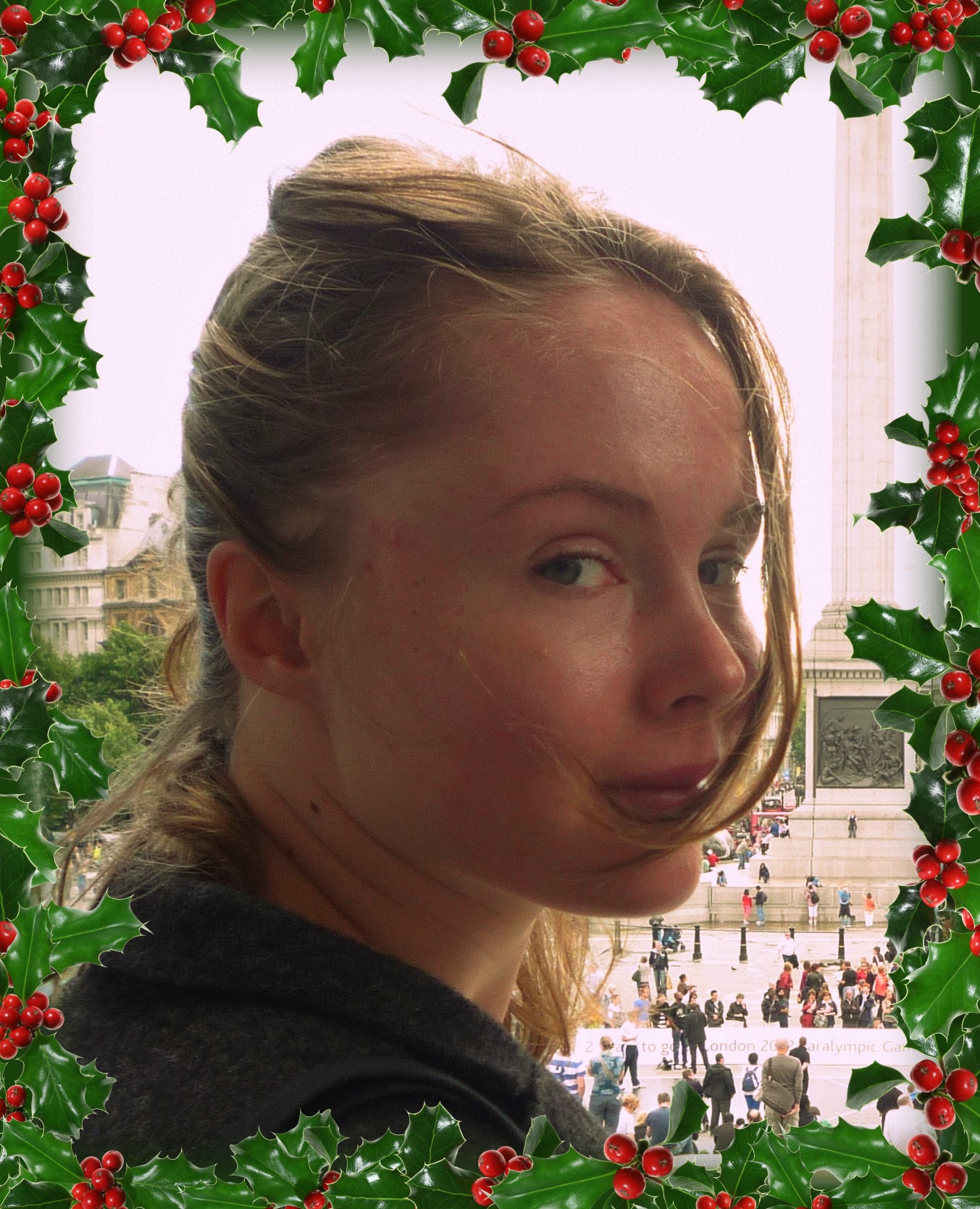
img: Charlotte Day surveying Trafalgar Square in London, this time with a jolly holly border (no ivy, though — that’s for next year!).

CLASSIC DISPLACED WRITING: Dickens — A Christmas Carol


As no points are being handed out for originality (at least, I hope not) this particular edition of Classic Displaced Writing will be yuletide-themed and our text of choice is going to be Dickens’s A Christmas Carol.

I know what a surprise, right?

I am working on the assumption that I needn’t relay to you the basic plot of A Christmas Carol. We’re all familiar with it. Even those who have never picked up the book (and shame on you if you’ve never read it — no matter how good The Muppet Christmas Carol is) will be familiar with the story beats of A Christmas Carol. It has been retold, inverted, and reemphasized since its original publication (168 years ago yesterday, if you are interested). It resonates beyond the Victorian canon, becoming more like a modern myth or fairy tale.

But other than reminding us all of the yuletide season, why feature A Christmas Carol on what is after all an expat-focused blog? Ebenezer Scrooge is most certainly not a character from expat literature, he doesn’t head off to Tuscany to harvest lemons / grow olives / farm terrapins. There’s no cultural misunderstandings with the locals as Scrooge enjoys his year in Provence. Indeed, other than a brief excursion into the English countryside with the Ghost of Christmas Past, this is tale that is contained in the City of London, not venturing beyond the square mile.

So is it just the mulled wine talking or do I have one eye on SEO that leads me to featuring A Christmas Carol in this irregular series? Well, while I may be guilty on both counts there, in the case of Ebenezer Scrooge we have a man who is displaced. Not geographically, but emotionally. The story of his redemption is the story of his realignment with humanity. This is the man we are first introduced to at the beginning of the novella. A man whom beggars, and children, and dogs avoid. He is presented not as a man but as an elemental force, a malevolent wind that blows through Cornhill.

Oh! But he was a tight-fisted hand at the grind-stone, Scrooge! a squeezing, wrenching, grasping, scraping, clutching, covetous, old sinner! Hard and sharp as flint, from which no steel had ever struck out generous fire; secret, and self-contained, and solitary as an oyster. The cold within him froze his old features, nipped his pointed nose, shrivelled his cheek, stiffened his gait; made his eyes red, his thin lips blue; and spoke out shrewdly in his grating voice. A frosty rime was on his head, and on his eyebrows, and his wiry chin. He carried his own low temperature always about with him; he iced his office in the dog-days; and didn’t thaw it one degree at Christmas.

External heat and cold had little influence on Scrooge. No warmth could warm, no wintry weather chill him. No wind that blew was bitterer than he, no falling snow was more intent upon its purpose, no pelting rain less open to entreaty. Foul weather didn’t know where to have him. The heaviest rain, and snow, and hail, and sleet, could boast of the advantage over him in only one respect. They often “came down” handsomely, and Scrooge never did.

Nobody ever stopped him in the street to say, with gladsome looks, “My dear Scrooge, how are you? When will you come to see me?” No beggars implored him to bestow a trifle, no children asked him what it was o’clock, no man or woman ever once in all his life inquired the way to such and such a place, of Scrooge. Even the blind men’s dogs appeared to know him; and when they saw him coming on, would tug their owners into doorways and up courts; and then would their tails as though they said, “No eye at all is better than an evil eye, dark master!”

But what did Scrooge care! It was the very thing he liked. To edge his way along the crowded paths of life, warning all human sympathy to keep its distance, was what the knowing ones call “nuts” to Scrooge.

By contrast, at the end of A Christmas Carol we have the iconic scene of the reformed miser who with a new-found joie de vivre leaps out of his bed, throws open his window and commands of a passing boy to tell him what day it is. One of the most noticeable aspects of the reformed Scrooge is his ability to now joke with others and find humor in life. It is with laughter and good humor that we show that we are not displaced but are integrated with others. “There is nothing in the world,” writes Dickens, “so irresistibly contagious as laughter and good-humor.”

To return to the scene of the reformed Scrooge awakening on Christmas morning, Alistair Sim with his portrayal of Scrooge in the 1951 film adaptation does an excellent job of depicting the delirious glee and humor of the reformed Scrooge. Therefore, it should come as no surprise that the last action we see of Scrooge is him playing a practical joke on Bob Cratchit.

But he was early at the office next morning. Oh, he was early there. If he could only be there first, and catch Bob Cratchit coming late! That was the thing he had set his heart upon.

And he did it; yes, he did! The clock struck nine. No Bob. A quarter past. No Bob. He was full eighteen minutes and a half behind his time. Scrooge sat with his door wide open, that he see him come into the Tank.

His hat was off, before he opened the door; his comforter too. He was on his stool in a jiffy; driving away with his pen, as if he were trying to overtake nine o’clock.

“Hallo!” growled Scrooge, in his accustomed voice, as near as he could feign it. “What do you mean by coming here at this time of day?”

“I am very sorry, sir,” said Bob. “I am behind my time.”

“You are?” repeated Scrooge. “Yes. I think you are. Step this way, sir, if you please.”

“It’s only once a year, sir,” pleaded Bob, appearing from the Tank. “It shall not be repeated. I was making rather merry yesterday, sir.”

“Now, I’ll tell you what, my friend,” said Scrooge, “I am not going to stand this sort of thing any longer. And therefore,” he continued, leaping from his stool, and giving Bob such a dig in the waistcoat that he staggered back into the Tank again; “and therefore I am about to raise your salary!”

Bob trembled, and got a little nearer to the ruler. He had a momentary idea of knocking Scrooge down with it, holding him, and calling to the people in the court for help and a strait-waistcoat.

“A merry Christmas, Bob!” said Scrooge, with an earnestness that could not be mistaken, as he clapped him on the back. “A merrier Christmas, Bob, my good fellow, than I have given you, for many a year! I’ll raise your salary, and endeavour to assist your struggling family, and we will discuss your affairs this very afternoon, over a Christmas bowl of smoking bishop, Bob! Make up the fires, and buy another coal-scuttle before you dot another i, Bob Cratchit!”

STAY TUNED for tomorrow’s post by our monthly third-culture kid columnist, Charlotte Day.

If you enjoyed this post, we invite you to subscribe to The Displaced Dispatch, a weekly round up of posts from The Displaced Nation, plus some extras such as seasonal recipes and occasional book giveaways. Sign up for The Displaced Dispatch by clicking here!

Related posts:

BOOK REVIEW: “The Globalisation of Love,” by Wendy Williams

Writer Wendy Williams has described her new book, The Globalisation of Love, as being about “global love stories, inter-cultural romance and marriage.” A Canadian expat living with her Austrian husband in Vienna, it is of little surprise that Williams is interested in intercultural romances and her book could be best described as an expat take on the self-help, relationship genre — a Men Are from Mödling, Women Are from Vancouver, if you will.

As Williams writes,

…one of the most profound effects on globalisation is that people from everywhere are falling in love with people from everywhere else. There is a world of romance happening out there and it is called the globalisation of love.

That is certainly reflected in the readership of The Displaced Nation, where a large number of you, myself included, are involved in inter-cultural relationships or marriages so I imagine there are those among you or friends you know who may need this book with its advice and anecdotes on how to circumnavigate the occasionally choppy waters and discombobulating experiences of being, in Williams’s neologism, a GloLo couple. Williams explains the problems a GloLo couple may experience in dealing with parents-in-law, marriage ceremonies, immigration officials — all that “fun” stuff many of us have experienced.

Williams has a very conversational turn-of-phrase and peppers her book with references to romantic comedies, and I suspect her style will delight and grate in equal measure. Whether you find yourself charmed by the idea of a GloTini cocktail (recipe included in the book) is probably a fair indicator of whether you are going to curl up with The Globalisation of Love or hurl it across your living room.

With each topic tackled, Williams brings up case studies from a whole ranges of GloLo couples that she has interviewed. For me, this is undoubtably where the book is strongest as you find yourself either charmed or cringing at the experiences of each couple. Williams, also brings in the story of her own marriage, always in a disarmingly self-deprecating way, so at times The Globalisation of Love reads almost like a quasi-memoir.

I do think there are drawbacks. The over-classification of GloLo couples can quickly become confusing. At times I felt that I required some kind of chart to work out what sort of GloLo I’m defined under, though I suspect I probably snugly fit into what Williams classifies as “the scoffer.” The quick, breezy glossing over of the issue of mail-order brides did not sit comfortably with me, and I also thought the look at those who meet on the Internet was a missed opportunity. I’ve heard of a number of people who have found their partner via the Web — not through a dating site, but from regularly participating on a discussion forum centered around an area both partners have a common interest. This often involves those who previously wouldn’t have entered into a GloLo relationship, and perhaps have never once traveled out of their home country despite starting a relationship with someone on the other side of the globe.

While by no means a book that is going to radically change your opinion on self-help, relationship books, it is a worthwhile addition to the genre.

You can buy The Globalisation of Love here.

STAY TUNED for Monday’s post, a displaced Q about the Ideal Christmas Holiday.

If you enjoyed this post, we invite you to subscribe to The Displaced Dispatch, a weekly round up of posts from The Displaced Nation, plus some extras such as seasonal recipes and occasional book giveaways. Sign up for The Displaced Dispatch by clicking here!

Related posts:

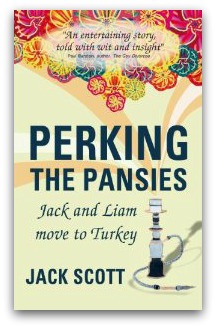
BOOK REVIEW: “Perking the Pansies — Jack and Liam move to Turkey,” by Jack Scott

For some months, I’ve been a big fan of Jack Scott and his blog, Perking the Pansies. Judging by the readership numbers, I’m not the only one, but that’s unsurprising.  Apart from the fact that Jack is one of the nicest bloggers on the block, how could anyone not be enticed by his introduction?

“Imagine the absurdity of two openly gay, recently “married”, middle-aged, middle class men escaping the liberal sanctuary of anonymous London to relocate to a Muslim country.”

Imagine, indeed. Even when it transpires that the Muslim country is Turkey and not Iran —

“We had no desire to be lynched from the nearest olive tree by the Revolutionary Guard”

— newcomers to the blog can be forgiven for wondering, “Guys – what were you thinking?”

Finding Paradise

Thankfully, the imminent publication of Jack Scott’s memoir, Perking the PansiesThe Book, means that readers will no longer have to scroll through months of blog posts for the answer to that question. While the blog’s first post gives a brief account of how Jack and his husband Liam left London for Turkey, the book fleshes out the logistics in a far more satisfactory manner.

Most people “of a certain age” will identify with the events leading up to this dramatic change in lifestyle. A midlife crisis, a middle-aged realization that personal happiness and mental health are worth infinitely more than a big number in the bank account, plus a couple of pieces of golden luck to make it all happen – how many of us have dreamed of just this, to leave the rat race behind and live in our own little Paradise?

Paradise Lost

Naturally, it’s not as simple as that. In leaving the corporate rat race behind, Jack and Liam encountered a new one – the expat rat race. It doesn’t matter where you are an expat – if you’ve ever lived abroad among fellow countrymen with whom you have nothing in common except nationality, you will recognize the competitors in this race. Jack describes them in detail enough to make the reader wince in sympathy.

The truly awful landlady, Chrissy, would be one reason for many people to put their suitcases back in the taxi and return to the airport. A member of The Ignorati  —

“Those who live in utter ignorance of the history and culture of their foster land, shout loudly in English, and see the world at large through the narrow-minded pages of the Daily Mail”

— Chrissy, for me, conjured up the image of a younger Alison Steadman in full-on Mrs Bennet mode. (Later, when Jack likened a hideous expat soiree to “Abigail’s Party without Demis Roussos” I was thrilled to have my impressions confirmed.)

Another memorable character, Clement, I imagined as the likely product of a coupling between a James Bond villain and Noel Coward. Jack deliciously described him as:

“The dotty but loveable old maiden aunt who always pitched up at Christmas and drank all the sherry.”

While I could continue to reminisce about other people I met between the pages of PTP, I won’t. Suffice it to say that Perking The Pansies is not so much about Jack’s Adventures Through The Looking Glass, but more about Who He Found There – a refreshing change from the many memoirs whose authors are constantly center-stage.

Compromise in Paradise

Many readers will also recognize the doubts Jack had about his new life:

“Sad people, bad people, expats-in-a-bubble people. They hate the country they came from; they hate the country they’ve come to. This was my social life. This is what I gave everything up for. This was Liam’s bloody Nirvana. We were the mad ones, not them.”

But eventually, when rid of the expat posse, Jack has this to say of Turkey and its own people:

“Turkey is a magical land graced by a rich culture, gorgeous people and an intrinsic love of the family. A respect for difference won’t destroy that. It’s okay to be queer….At times I think we’re floundering about like idiots, but now and then I think we’re making a real difference.”

Oh Jack — if only all your expat acquaintances could say the same thing.

I’m looking forward to your next book already.

Perking The Pansies by Jack Scott is available from Amazon.co,uk

STAY TUNED for tomorrow’s installment from our displaced fictional heroine, Libby, who is celebrating her mother-in-law’s departure before the holidays. (What, not keeping up with Libby? Read the first three episodes of her expat adventures.)

If you enjoyed this post, we invite you to subscribe to The Displaced Dispatch, a weekly round up of posts from The Displaced Nation, plus some extras such as seasonal recipes and occasional book giveaways. Sign up for The Displaced Dispatch by clicking here!

Related post:

CONTEMPORARY DISPLACED WRITING: Marías — The Man of Feeling

NOTE: Our review of Wendy Williams’ The Globalization of Love has been postponed until this Friday, December 16. In the meantime we’d like to share with you one of our favorite displaced writers, Javier Marías.

At school, an English teacher told my class that good writing should be like a scalpel. Quite what he meant by this was not entirely clear to me, but he said it with such intensity and with an accompanying, ever so disturbing stabbing gesture that I felt I should really take note of what he said. However, on first reading the work of Javier Marías, I finally understand something of what my teacher was trying to explain to my doltish teenage self. Marías’s ability to expertly set up a scene and then dissect the thought processes of his protaganists is a joy.

If you haven’t read any of Marías’s work you really should. Without a doubt he is one of the finest writers currently living and though he has a loyal readership in the English-speaking world, it should be much larger than it is.

When reading his novella The Man of Feeling , I came across one passage that struck me as being perfectly appropriate for featuring as a Contemporary Displaced Writing post. The narrator of The Man of Feeling is a young opera star who is constantly traveling as he tours the world. For the most part, this is not a glamorous life; it is, in fact, a stultifying life spent in rehearsal rooms and hotel bars — they are all different but yet they are all the same, too.

The extract I want to share has our opera star narrator relating his feelings when he first visits a new city:

… I enjoy the feeling that I am in a new and unfamiliar city; getting into public places and being aware that the people there speak a language I know only imperfectly or not at all; studying the clothes and hats (though nowadays one sees fewer of the latter) that the good citizens choose to wear in the streets; finding out if shops are full or empty during office hours; seeing how the news is treated in the newspapers; looking at certain examples of domestic architecture that one can only find in that particular part of the world; noting the typefaces that predominate in shop signs (and reading these like a savage, understanding nothing); scrutinizing the faces in the metro and on the buses which I frequent for that very reason; picking out particular faces and wondering whether I might or might not meet them elsewhere; deliberately getting lost in parts of the city where I have already learned to find my way, that is, with map in hand if I need it; observing the inimitable passing of each languishing day at each point on the globe and the uncertain and variable instant when the lights are lit; setting foot in places where our feet leave no trace, on the luminous asphalt of the morning or on some dusty, ancient stone pavement illuminated by a single street lamp as evening falls; visiting bars full of indistinguishable, blithely insignificant murmurings that cover and erase everything; mingling with the people in the white streets of the south or in the grey avenues of the north at the declining hour when people are going out for a stroll or coming home from work, that brief respite, seeing how the women go out in the evening or perhaps at night, all dressed up, and seeing the cars in their many colors waiting for them; imagining the parties they are going to; wasting time.

And in each city I visit I would like to meet people, to meet those smartly dressed women, who are perhaps climbing into their glossy, impleccable cars to drive to the opera to hear Leon de Napoles: to go and see me.

Extract from Margaret Jull Costa’s translation published by New Directions, available here. You should read it, you know. You really should.

STAY TUNED for tomorrow’s post, a review of the new expat autobiography Perking the Pansies, by Jack Scott.

If you enjoyed this post, we invite you to subscribe to The Displaced Dispatch, a weekly round up of posts from The Displaced Nation, plus some extras such as seasonal recipes and occasional book giveaways. Sign up for The Displaced Dispatch by clicking here!

Related posts:

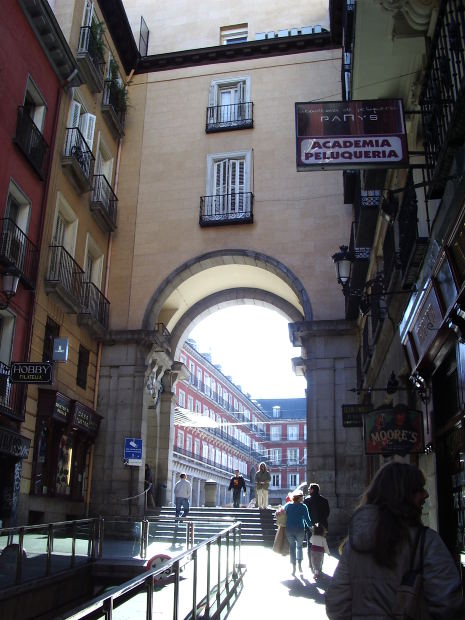
Image: MorgueFile