The Displaced Nation

A home for international creatives

Tag Archives: What a Displaced World

CLEOPATRA FOR A DAY: Fashion & beauty diary of former expat Anastasia Ashman

Continuing our feature, “Cleopatra for a Day,” we turn to Anastasia Ashman, an American whose love of the exotic led her to Southeast Asia (Malaysia) and Istanbul, Turkey to live (she also found a Turkish husband en route!). Having just moved back home to California, Ashman opens her little black book and spills the fashion and beauty secrets she has collected over three decades of pursuing a nomadic life.

BEAUTY STAPLES

Like Cleopatra, I’m into medicinal unguents and aromatic oils. My staples are lavender and tea tree oil for the tropical face rot you can get in hot, humid places — and for all other kinds of skin complaints, stress, headaches, jet lag, you name it — and Argan oil for skin dryness. I take them everywhere. I also spray lavender and sandalwood on my sheets.

When living in Southeast Asia I liked nutmeg oil to ward off mosquitoes. (I know that’s not beauty per se but bug-bitten is not an attractive look, and it’s just so heavenly smelling too, I suppose you can slather it on your legs and arms for no reason at all.)

I didn’t even have to go to Africa to become dependent on shea butter for lips and hands, and I like a big block of cocoa butter from the Egyptian Bazaar in Istanbul for après sun and gym smoothing — less greasy than shea butter, which I usually use at night.

I’m not really into branded products. When you move around it’s hard to keep stocking your favorite products and I find companies are always discontinuing the things I like so I’ve become mostly brand agnostic.

I just moved from Istanbul to San Francisco, and I got rid of almost everything I owned so I’m seeing what basics I can live with. Because to me, basics that do a wonderful, multifaceted job are the definition of luxury. You’ve got to figure out what those basics are for you.

Oh, and when I am in Paris, I buy perfume. Loved this tiny place in Le Marais that created scents from the plants on the island of Sardinia. And wouldn’t you know it, the second time I went they’d gone out of business. Crushing.

My favorite perfume maker in Paris at the moment — very intriguing perspective, lots of peppery notes and almost nicotiney pungencies — is L’Artisan Parfumeur. I’ve got my eye on their Fou d’Absinthe.

In another life, past or present, I know I was involved with perfume…

BEAUTY TREATMENTS

Believe Cleopatra would drink them dissolved in vinegar? In Malaysia I used to get capsules of crushed pearls from a Chinese herbalist down the street from my house — apparently they’re good for a creamy-textured skin.

I’ll take a facial in any country. I like Balinese aromatic oil massages when I can get them, too, and will take a bath filled with flowers if I’ve got a view of the jungle. Haven’t yet had my chance to do a buttermilk bath. I also do mud baths and hot springs where ever they’re offered, in volcanic areas of the world.

Another indispensable: the Turkish hamam. It’s really great for detoxification, relaxation and exfoliation. When living in Istanbul, I’d go at least once a season, and more often in the summer. It’s great to do with a clutch of friends. You draw out the poaching experience by socializing in the steamy room on heated marble benches, and take turns having your kese (scrub down) with a rough goat-hair mitt. You hire a woman who specializes in these scrubs, and then she massages you with a soapy air-filled cotton bag, and rinses you off like a mother cat washes her kitten.

Soap gets in the eyes, yes.

I own all the implements now, including hand-crocheted washcloths made with silverized cotton, knitted mitts, oil and laurel oil soaps, copper hamam bowls (for rinsing), linen pestemal (wraps or towels), and round pumice stones. (For haman supplies, try Dervis.com.)

DENTAL CARE

I’ve had dental work done in Malaysia and Turkey and was very satisfied with the level of care and the quality and modernity of the equipment and techniques. I got used to state-of-the-science under-the-gum-line laser cleanings in Malaysia (where my Taiwanese dentist was also an acupuncturist) and worry now that I am back to regular old ineffective cleanings. I’ve had horrific experiences in New York, by the way, so don’t see the USA as a place with better oral care standards.

In general, I like overkill when it comes to my teeth. I’ll see oral surgeons rather than dentists, and have my cleanings from dentists rather than oral hygienists.

ENHANCEMENTS

Turkey apparently has a lot of plastic surgery, as well as Lasik eye surgery. One thing to consider about cosmetic procedures is the local aesthetic and if it’s right for you. I didn’t appreciate the robot-like style of eyebrow shaping in Istanbul (with a squared-off center edge) — so I’d be extra wary of anything permanent!

HAIR

I’ve dyed my hair many colors — from black cherry in Asia to red to blonde in Turkey — and had it styled into ringlets and piled up like a princess and blown straight like an Afghan hound. That last one doesn’t work with my fine hair, and doing this style before an event on the Bosphorus would make it spring into a cotton candy-like formation before I’d had my first hors d’oeuvre.

I’ve had my hair cut by people who don’t know at all how to handle curly hair. That’s pretty daring.

I looked like a fluff ball for most of my time in Asia, because I tried to solve the heat and humidity problem with short hair and got tired of loading it up with products meant for thick straight Asian hair.

Now that I’ve relocated to San Francisco (which, even though it’s close to my hometown of Berkeley where I haven’t lived in 30 years, I still consider “a foreign country”), I’m having my hair cut by a gardener, who trims it dry, like a hedge. Having my hair cut by an untrained person with whatever scissors he can find is also pretty daring!

FASHION

On the fashion front, I have an addiction to pashmina-like shawls from Koza Han, the silk market in Bursa, the old capital of the Ottoman empire and a Silk Road stop. I can keep wearing them for years.

I also have a small collection of custom-made silk kebayas from Malaysia, the long, fitted jacket over a long sarong skirt on brightly hand-drawn and printed batik, which I pull out when I have to go to a State dinner and the dress code is formal/national dress. (It’s only happened once, at Malacañan Palace, in Manila!)

I have one very tightly fitting kebaya jacket that is laser-cut velvet in a midnight blue which I do not wear enough. Thanks for reminding me. I may have to take out the too-stiff shoulder pads.

LINGERIE

I like state-of-the-art stuff that does more than one thing at once and find most places sell very backward underthings that are more about how they look than how they fit, feel, or perform. Nonsense padded bras, bumpy lace, and stuff that is low on performance and high on things I don’t care about.

I got an exercise racerback bra at a Turkish shop and had to throw it away it was so scratchy and poorly performing. No wicking of sweat, no staying put, no motion control. But it had silver glittery thread — and (unnecessary) padding!

JEWELRY

I like most of the jewelry I’ve acquired abroad and am grateful to receive it as gifts, too. All of my pieces have some kind of story — and some attitude, too.

From Turkey: Evil-eye nazar boncuğu pieces in glass and porcelain; silk-stuffed caftan pendants from the Istanbul designer Shibu; Ottoman-style enameled pieces; and an opalized Hand of Fatima on an impossibly fine gold chain. This last piece is what all the stylish women in Istanbul are wearing at the moment.

From China: White pearls from Beijing, pink from Shanghai and purple from Shenyang.

From Malaysia: I got an tiny tin ingot in the shape of a turtle in Malacca, which I was told once served as currency in the Chinese community. I had it mounted in a gold setting and wear it from a thick satin choker.

From Holland: A recent acquisition from Amsterdam are gold and silver leather Lapland bracelets with hand-twinned pewter and silver thread and reindeer horn closures. They’re exquisite and rugged at the same time.

WEARING RIGHT NOW

Today’s a rainy day of errands so I’m wearing a fluffy, black cowl-necked sweater with exaggerated sleeves, brown heathered slacks, and black ankle boots. They’re all from New York, which is where I’ve done the most shopping in recent years.

My earrings are diamond and platinum pendants from Chicago in the 1940s, a gift from my grandmother.

I’ve also got on my platinum wedding and engagement rings. They’re from Mimi So in New York.

DAILY FASHION FIXES

I liked FashionTV in Turkey, which was owned by Demet Sabanci Cetindogan, the businesswoman who sponsored my Expat Harem book tour across America in 2006.

The segment of Turkish society interested in fashion is very fashion forward. I enjoyed being able to watch the runway shows and catch interviews with the designers.

If I could draw and sew I’d make all my own clothes but I am weak in these areas. In another life, when I get a thicker skin for the fashion world’s unpleasantries, I’ll devote myself to learning these things and have a career in fashion design.

STREET STYLE

In Istanbul, Nişantaşi is somewhere you’d see some real fashion victims limping along in their heels on the cobblestones and Istiklal Caddesi, the pedestrian boulevard in Beyoğlu, would be a place to see a million different looks from grungy college kids to young men on the prowl, with their too-long, pointy-toed shoes.

TOP BEAUTY/STYLE LESSONS FROM TRAVELS

In fact, I’m still assimilating everything — and everywhere — I’ve experienced in terms of fashion and beauty, but here are a few thoughts:

1) Layering: I learned from Turkish women to layer your jewelry and wear a ton of things at the same time. Coco Chanel would have a heart attack! But the idea is not to wear earrings, necklace, bracelet and rings all at once, but lots of necklaces or lots of bracelets or lots of rings at the same time.

2) Jewelry as beach accessory: During the summer Turkish wear lots of ropy beaded things on their wrists during a day at the beach — nothing too valuable (it’s the beach!) but attractive nonetheless. Jewelry stands feeding this seasonal obsession crop up at all the fashionable beach spots. Dangly charms and evil eyes and little golden figures on leather and paper ropes.

3) A little bling never hurts: I’ve also been influenced by the flashiness of Turkish culture, and actually own a BCBG track suit with sequined logos on it. This is the kind of thing my Turkish family and I would all wear on a plane or road trip. Comfortable and sporty, but not entirely unaware of being in public (and not at the gym). Coming from dressed-down Northern California, it was difficult to get used to being surrounded by glitzy branded tennis shoes and people wearing watches as jewelry, but I hope I’ve been able to take some of the better innovations away with me. I know I’m more likely to wear a glittery eye shadow now that I’ve lived in the Near East.

4) The need for sun protection: It was a shock to go from bronzed Los Angeles to can’t-get-any-paler Asia and then to the bronzed Mediterranean. In Asia I arrived with sun damage and then had lots of people helping me to fix it — I even used a parasol there. Then in Turkey everyone thought I was inexplicably pale and I let my sun protection regimen slip a bit. I’m back on the daily sunblock.

5) What colors to wear: I also used to get whiplash from trips back and forth between California and Southeast Asia in terms of color in clothing. In Malaysia the colors were vivid jewel tones — for the Malays and the Tamils especially. The louder the print, the better. Around the same time I was living in that part of the world, I witnessed a scuffle between shoppers at C.P. Shades in my hometown Berkeley, fighting over velvet granny skirts in moss, and mildew and wet cement colors. That kind of disconnect wreaks havoc on your wardrobe, and your sense of what looks good. Right now I’m trying to incorporate bright colors into my neutral urges. I’m still working it out.

Anastasia Ashman is founder of GlobalNiche.net, a work-life initiative for cultural creatives and mobile progressives that she calls “creative self enterprise for the global soul.” (Global Niche recently held a Webinar “Dressing the Inner You,” featuring psychologist and author Jennifer Baumgartner talking about the cultural displacement that shows up in one’s dressing style.) A Californian with 14 years of expatriatism under her belt, Ashman was the director of the online neoculture discussion community expat+HAREM and coeditor of the critically- and popularly-acclaimed expat lit collection that inspired this community, Tales from the Expat Harem: Foreign Women in Modern Turkey. Catch her tweeting on Pacific Standard Time at @AnastasiaAshman.

STAY TUNED for tomorrow’s post, a contrarian perspective by Anthony Windram on this month’s fashion and beauty conversation.

If you enjoyed this post, we invite you to register for The Displaced Dispatch, a round up of weekly posts from The Displaced Nation, with seasonal recipes, book giveaways and other extras. Register for The Displaced Dispatch by clicking here!

Related posts:

Images: (clockwise beginning with top left): Anastasia Ashman holding her own with the ever-glamorous Princess Michael of Kent, in Turkey; with her sister Monika, rocking the traditional Turkish Telkari silver jewelry, Anatolian shawl and requisite deep Bodrum tan; displaying her hamam collection — including traditional silver hamam bowl and hand-loomed linen pestemal towels; and sporting ringleted hair (along with some fashion flair!) at the Istanbul launch of Tales from the Expat Harem.

Fashion Speak: The Idiot’s Guide to Fashionese

Although “Couture” and “Haute Couture” get bandied around to mean any new clothing items that don’t come from Walmart, technically these terms have a very exact definition:

To earn the right to call itself a couture house and to use the term haute couture in its advertising and any other way, members of the Chambre syndicale de la haute couture must follow these rules:

▪ Design made-to-order for private clients, with one or more fittings.
▪ Have a workshop (atelier) in Paris that employs at least fifteen people full-time.
▪ Must have 20 full time technical people in at least one atelier or workshop.
▪ Each season (i.e., twice a year), present a collection to the Paris press, comprising at least thirty-five runs/exits with outfits for both daytime wear and evening wear.

(Wikipedia)

In an industry that sets such a definition for what is essentially “Manufacturer of overpriced frocks for people with more money than sense” it is not surprising that this is only the tip of the iceberg — especially recently.
Fashion jargon, it seems, is out of control.

Couture or calculus?

In a statement last year, Ed Watson, a spokesman for UK department store Debenhams said:

“It’s now easier to understand complex calculus than some of the words commonly used by commentators within the fashion industry to describe garments.”

While I personally disagree with him, on the grounds that I would find the Dead Sea Scrolls easier to understand than complex calculus, he has a point.

Debenhams, apparently, had to introduce a lexicon of fashion terms so its personal stylists could translate modern Fashionese into plain English for their customers.

Sadly, I couldn’t find a copy of it online to assist TDN readers, so I’m having a go at recreating it myself.

Fashionese and How To Speak It

Parts of Speech:

When translating Fashionese, one needs to be aware that it has an extra part of speech — the Absensicoun.

That’s a contraction of three words: Absolutely, Nonsensical, and Noun.

Contracting words is how much of Fashionese is derived.

For example, the Skort (Skirt+Shorts) and Jeggings (Jeans + Leggings). While we all might be familiar with these two, some more obscure Absensicouns are:

• Jorts = Denim hot-pants (Jeans+Shorts)

• Mube = a long, tight dress (Maxi + Tube)

• Spants = Harem pants (Skirt+pants)

• Swacket = something that is not quite Sweater, not quite Jacket

• Coatigan = a cardigan that resembles a coat (presumably for people who don’t want to admit they’re wearing cardigans)

• Glittens = Gloves that roll up into mittens

• Shress = a dress that’s like a T-shirt. (They couldn’t call it a Tress because that’s already a word. “Dirt” wouldn’t work, either. See how complicated this is?)

And my favorite:

• Whorts, which are winter shorts worn with woolly tights.

Words purloined (“Worpurls”) by Fashionese

Just as the English language shamelessly pinches foreign words and gives them different meanings from the original, so do words purloined by Fashionese (“Worpurls”) take on a new dimension.
Directional —
English (adj): having a particular direction of motion, progression, or orientation.
Fashionese (adj): something that looks completely weird now but is so trendsetting that in a few months’ time everyone will be wearing it. It will look weird again in another few months, when people look through last year’s photos and say, “My God, can you believe we actually used to wear that?”

Faux pas —
French (n): Literally “wrong step”.
English usage (n): A social blunder or indiscretion.
Fashionese (n): Dressing in a way to cause minor embarrassment to oneself. Examples include shrimp cocktail toes (wearing open-toed sandals that are too small so the toes extend past the end of the shoe, like a shrimp cocktail dish), inadvertently leaving your flies undone, and all of the 1970s. (See Directional, Past Tense.)

Thrifting —
English: No direct translation, since Thrift is a noun, not a verb.
Fashionese: Hunting for vintage clothes (must be over a certain age to be considered vintage and not just last season’s cast-offs) which have taken on an aura of mystique due to the fact they were produced at the same time as, say, the Ford Edsel.

Arm party –
This should have been an Absensicoun, but it’s difficult to contract satisfactorily. (“Arty”? “Arparty”? “Parmarty”?)
English: Umm…Beats me. A variation on “Twister”?
Fashionese: An armful of bracelets, where less is less.

Covert couture
English (n): Not sure. Anything to do with James Bond’s suit?
Fashionese (n): Clothes that cost a fortune but don’t look as if they did. (See Joel, Billy; Still Rock & Roll To Me: “You can’t dress trashy till you spend a lot of money.”)

Play them at their own game.

Back to Mr Ed Watson, the Debenhams spokesman, who had this to add:

Ideally we would like to drop all these amalgamations, but our hands are tied due to the terms being used on search engines.

Indeed. So the only solution is “If you can’t beat them — join them.”
Which words would you like to see adopted by Fashionese?

If you enjoyed this post, we invite you to subscribe for email delivery of The Displaced Dispatch, a round up of the week’s posts from The Displaced Nation. Sign up for The Displaced Dispatch by clicking here!

Related posts:

5 tips on how to look good when you backpack

Cleopatra for a day: Helena Halme

Dear Mary-Sue: Fashion tips for the hapless traveler

Displaced Q: What fashion souvenirs find their way into your rucksack?

Img: By mandiberg [CC-BY-SA-2.0 (www.creativecommons.org/licenses/by-sa/2.0)], via Wikimedia Commons

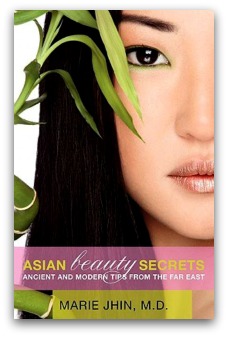
BOOK REVIEW: “Asian Beauty Secrets,” by Marie Jhin

TITLE: Asian Beauty Secrets: Ancient and Modern Tips from the Far East
AUTHOR: Marie Jhin, M.D.
PUBLICATION DATE: July 2011
FORMAT: Paperback and Kindle e-book, available from Amazon
GENRE: Health, fitness & dieting, beauty
SOURCE: Paperback purchased from the Korea Society, New York City

Summary:

Drawing on her experience as a Cornell University-trained dermatologist, combined with a knowledge of Asian beauty remedies, both ancient and modern, Dr. Marie Jhin delivers an East-West guide to vibrant skin and beauty. Born in Seoul, South Korea, Jhin emigrated to Hawaii with her family when she was six (they settled eventually in New York City). She now lives in San Francisco, where she runs her own practice, Premier Dermatology. She has been rated as one of America’s top doctors for the past three years.

Review:

The first time I visited Seoul, my husband, who is Japanese, insisted that I try a spa treatment, as Koreans do this sort of thing better than other Asians, he said. Before I knew it, I was lying naked on a table with an older Korean lady scrubbing every inch of my body. Eventually, she took my hand and put it on my stomach. At first I thought I was touching a piece of terry cloth but no, it was my skin — it had come off in shreds!

I lay there thinking, “Can this be healthy?”

Having pondered these issues quite a lot — also during my years of living in Japan, where I could hardly fail to note how obsessed Japanese women are with skincare — I was intrigued to come across a new book on Asian beauty methods, by San Francisco-based dermatologist Marie Jhin.

Born in Seoul, Jhin is now settled in California. She is not an expat, which makes the title of this post a little misleading; but is she “displaced”? Yesterday she told me in an email exchange that while she doesn’t think of Korea as “home” any more, her birth country remains something of a lodestar. She specializes in Asian skincare, lived in Seoul for two years after college to teach ESL, and has been going to Korea on business of late.

But what really convinced me of Jhin’s “displacedness” is that like me, she was uncertain of the benefits of Korean skin scrubbing but unlike me, let it get under her skin, so to speak:

I grew up doing certain things beauty-wise that I wanted know the truth of. For example, … my mother used to take me to get my skin scrubbed at a Korean sauna. Back then I didn’t understand what the point was, but now, as a dermatologist, I realize that it was basically whole body microdermabrasion that they have been doing for centuries that is great for the skin.

(Good to know!)

Jhin called her book “Asian Beauty Secrets” because it covers the beauty habits of not only Korean but also Chinese and Japanese women. Her key finding is that while women in all three countries have been caught up in the quest to look more Western, they have plenty to be proud of in their native beauty traditions.

The influence of Western beauty ideals

The last time I visited Tokyo, I couldn’t always tell who was a foreigner and who wasn’t since so many Japanese youth had dyed their hair a reddish blonde (I no longer stood out in the crowd!).

Thus I was glad to see Jhin tackle the issue of Western beauty ideals. In addition to dying and streaking their hair, many Asians are getting plastic surgery in the quest to look more Western.

Jhin notes the popularity — especially in Korea, cosmetic surgery capital of Asia (and the world?) — of procedures such as blepharoplasty (double eyelid surgery), rhinoplasty (nose jobs) and surgery to correct what Japanese call daikon-ashi (radish-shaped calves).

And when Asian women do Botox, she says, it’s not to reduce wrinkles but to soften square jaw lines and/or to atrophy cheek muscles and thereby shrink a too-round face.

Jhin draws a line, however, between these procedures and the value traditionally placed by women in all three cultures — Chinese, Japanese and Korean — on having white skin. She cites Chinese Canadian consumer research professor Eric Li in stating that the preoccupation with whiteness predates colonialism and Western notions of beauty. In fact, the Japanese see their own version of whiteness as superior to the Western one!

What Asian women bring to the vanity table

We Westerners are notorious for mistaking one Asian culture for another. Jhin helps us negotiate this sometimes-fraught territory by listing some of their distinguishing elements when it comes to notions of beauty:

1) KOREA

  • Who’s the fairest of them all? In the Far East, it’s Korean women, by common consensus.
  • Korean women like to exfoliate the skin to keep it glowing and healthy.
  • Koreans have long revered the ginseng plant, a vital ingredient in health and beauty potions.

2) JAPAN

  • Going back at least to the Heian period, Japanese have celebrated long tresses — the record of that era being 23 feet! Their favorite conditioning treatment is camellia oil, thought to promote glossy hair growth without making it greasy.
  • Japan spa culture, which dates back thousands of years, favors the use of natural ingredients for cleansing the skin: eg, volcanic mud, wakame seaweed and even nightingale droppings(!).
  • Though Japanese are known for rushing around, they in fact have a tradition of enjoying “empty moments.” Such meditative practices contribute to well-being and bring out a woman’s natural beauty.

3) CHINA

  • In ancient China, pearls were a girl’s best friend: ground pearl powder was taken internally and applied topically. (Hmmm…did they get that habit from Cleopatra, or vice versa?)
  • Chinese have a saying that “a woman’s second face is in her hands” — to this day, Chinese women are meticulous about moisturizing their hands and feet.
  • Traditional Chinese Medicine (TCM) emphasizes certain foods for balancing yin and yang within the body. This inner harmony is thought to contribute to outer radiance.

There is also, of course, much overlap among the three cultures.. All subscribe to the belief that by eating healthy foods, releasing stress (e.g., by getting an accu-massage), and pursuing nature-based healing (TCM) on a regular basis, a woman can enhance her best assets.

The “skinny” on beauty tips and secrets

One of the reasons to pick up a book with the word “secrets” in the title is to find out what one is missing out on. On this score, Jhin’s book is a bit of a mixed beauty bag. Some of her suggestions struck me as being far fetched — and I have a reasonably high tolerance for Asian cultural quirks.

Bird’s nest soup or soup containing hasma (frog fallopian tubes), anyone? Both are ancient Chinese foods thought to nurture glowing skin (Jhin provides recipes). Um, thanks, but no thanks. I’d almost rather eat fugu (which likewise has stimulating properties).

Even more offputting is the Chinese custom of spreading sheep’s placenta on one’s face. (It’s a mercy they’ve moved on from ingesting human placenta, that’s all I can say…)

As for V-steaming one’s chai-york (Korean for vaginal tract) with medicinal herbs such as mugwort (common wormwood) — it will take more than a reassurance by a Beverly Hills doctor to convince me that such a practice doesn’t lead to other problems such as UTIs.

On the other hand, I might actually consider soothing my skin with a high-quality ginseng cream. That sounds nice. Or perhaps I’ll try facial acupuncture. It’s noninvasive and, according to Jhin, can have the effect of a mini-facelift.

Note: More secrets can be found on Jhin’s book site.

Verdict:

For me, the most interesting portion of Asian Beauty Secrets is when Jhin addresses her area of specialization: the conditions peculiar to Asian skin, such as eczema (they are more prone to it than we are) or sun damage that manifests itself not in wrinkles but in brown spots. I also found fascinating the chapter on the latest skin renewal techniques being pioneered by Korean doctors. Acupuncture meets nanotechnology with the “INTRAcel laser” treatment! (The laser reaches “deeper into the dermis for more lasting collagen production and overall skin rejuvenation,” Jhin explains.)

That said, I’d hesitate about recommending Jhin’s book to anyone who isn’t yet oriented (no pun intended!) to beauty practices in this part of the world. Instead you might try experimenting with some of the brands Jhin recommends — e.g., Sulwhasoo cosmetics (now being carried at Bergdorf Goodman here in New York) — by way of familiarizing yourself with Asian skincare methods. As it happens, I got some Sulwhasoo samples when I bought the book — and would be more than happy to report back on the effects, if anyone’s curious! 🙂

STAY TUNED for tomorrow’s installment from our displaced fictional heroine, Libby. (What, not keeping up with Libby? Read the first three episodes of her expat adventures.).

If you enjoyed this post, we invite you to register for The Displaced Dispatch, a round up of weekly posts from The Displaced Nation, with seasonal recipes, book giveaways and other extras. Register for The Displaced Dispatch by clicking here!

Related posts:

5 tips on how to look good when you backpack

I don’t know about you, but I look terrible when I travel.

Not intentionally of course; jet lag notwithstanding, it’s impossible to look crisp and put together after an extended journey by public transport, no matter where in the world you are.

My problem has more to do with my style of travel — or lack thereof… There are two real options when you’re a backpacker: clothes that look good, or clothes that are comfy. Now, bearing in mind you’ll be spending quite a lot of time in them — alternating between the same two pairs of trousers every day until they drop off you and disintegrate — it’s not much of a choice.

Is that because I’m a guy? Maybe — see the note about my wife at the end of this post.

But I don’t care whether you’re male or female, there’s something about being a backpacker that makes keeping up one’s appearance a constant challenge. However fastidious you are about your personal appearance (and most backpackers I know are!), however much you shower before an 18-hour bus journey, you’re still going to look (and smell!) pretty bad afterwards.

So, bearing in mind the following advice from Mr Will Kommen:

If you look like your passport photo, you’re too ill to travel.

…here are five of my tips on how to look good as you bounce around the globe:

1) Haunt charity shops.

Many countries have these in some form or other, and the richer the country the more expensive and interesting gear you can pick up for next to nothing. They’re perfect for replacing an item of clothing that is giving up the will to live in your backpack; or something you’ve become so sick of wearing you daydream constantly about burning it. This shops are incredibly cheap, so you can go crazy — and then just give the stuff back when it’s time to move on.

I don’t travel with any technical clothing, so when my wife and I decided to do a two-month, 1,000 km hike, we had to equip ourselves from scratch — on next-to-no budget. Guess how we did it? Yup, “op shops” they call them in Australia — we visited every one. In a couple of weeks we had all the gear we needed for the hike — plus all the money had gone to charity! And when we were done, we gave most of it back as donations (except the t-shirts, which were too stained to be of use to anyone).

2) Adopt local dress.

Fisherman’s trousers in Thailand, those crazy-colored woolly trousers in South America — pseudo local fashions are cheap to buy, fun to wear and, if they don’t become a souvenir, easy to dispose of before onward travel. I say “pseudo local” because real locals wear the uniform of the world: jeans and a fake Nike T-shirt. Or a Manchester United strip (shirt and shorts).

3) Take any opportunity to wash.

It’s amazing how good it feels to be clean. Most people take it for granted, but then most people have never spent three consecutive nights on the same train, going backwards and forwards to avoid paying for a hotel room. Anyway, the point is there are opportunities everywhere: most major train stations have showers open to the public cheaply, almost all airports do too — and some places you wouldn’t expect, like shopping centres. Shopping centres are free to enter, with regularly cleaned public loos. A lot of them also have “mother-and-baby” rooms, with a table or fold-down shelf, a sink — in short, an open invitation for a full body wash and a change of clothes. Just be wary in Japan — a lot of the public toilets there are “smart.” They unlock and open if you’re in there for too long, which can be pretty embarrassing if you’re soaping yourself down when the door opens opposite Starbucks…

4) Take any opportunity to “dress up.”

Looking posh is a moral boost, and should be possible for most of us bedraggled travelers just by shaving and wearing all-clean clothes! I also travel with a shirt — just one — which transforms a pair of jeans into an outfit smart enough for a nice restaurant or swanky bar (well, as long as they don’t look at my feet, on which I have either flip-flops or hiking boots…).

5) Wear jeans!

The rest of the world will be. Seriously — for every sweat-wicking-fast-drying-wind-proof-mesh-venting-ThermaCELL-layering-system you own, there’s another person behind you who has none of it. And you know what? They look a lot better than you! This is why so much “technical” clothing ends up in charity shops (see above) just waiting for you to pick it up — people with lots of cash buy it, don’t use it for anything more strenuous than shopping, then realize that it looks pretty crummy when compared to clothes that were, you know, designed to look good whilst shopping. So they ditch it. You should too — or at the very least, stop paying outrageous prices for the stuff. Unless you’re headed to Everest Base Camp — in which case, buy it all from those people who’ve just realized that no matter how expensive it was, it doesn’t look right in Sainsbury’s.

* * *

Obviously, this is a bit of a male perspective on things. My wife swears by traveling with a small (for an elephant) bag of “essential” make-up. It’s the main reason she’s recently swapped her rucksack for a suitcase…but she assures me it helps her feel good about herself when otherwise she’d look as bad as I do. So I indulge her.

What do you do to look good while you travel?

Tell us in the comments section!

STAY TUNED for tomorrow’s post, a review of a new book on Asian beauty.

If you enjoyed this post, we invite you to register for The Displaced Dispatch, a round up of weekly posts from The Displaced Nation, with seasonal recipes, book giveaways and other extras. Register for The Displaced Dispatch by clicking here!

Related posts:

Images: (clockwise beginning top left): Charity shop in West Street (© Copyright Basher Eyre and licensed for reuse under this Creative Commons Licence)  baby changing room sign and South American wool pants for sale, by Tony James Slater; backpackers (Morgue photos).

CLEOPATRA FOR A DAY: Fashion & beauty diary of expat Helena Halme

Today we introduce a new feature: “Cleopatra for a Day.” Displaced citizens open their little black books and spill the fashion and beauty secrets they’ve collected on their travels. First up is Helena Halme. One of TDN’s Random Nomads, Halme is a Finnish expat in London and a self-professed fashion maven.

BEAUTY

When my husband (“The Englishman”) and I did a house-swap in Los Angeles in the nineties, I discovered Origins, then a skin care range that wasn’t universally available here in the UK. Anything close to nature was an upcoming trend, and the Origins shops in LA looked quite revolutionary — all wooden flooring and straw shopping baskets. I still use a lot of Origins products and couldn’t live without their foot cream, Reinventing the Heel.

Some time ago, an English friend recommended that I try Elizabeth Arden’s Eight Hour cream — I couldn’t live without it now. If I’d ever end up on a desert island, this would be the one luxury item I’d crave for.

HAIR

When I’d only lived in the UK for a matter of months, I cut my hair very, very short. The Englishman was away at sea and when he came back he was quite shocked to see my blonde locks all gone. But, gentleman that he is, he told me the new style suited me. (I’m not so sure it did!) Much more recently, I’ve discovered the the Brazilian blow dry, a luxurious treatment that makes my thick Nordic locks gleam. I feel like a film star!

FASHION

A few years ago on an annual girls’ trip with my school friends, this time to Rome, I bought a long down coat which has been my winter staple ever since. It was weird shopping for warm winter wear in the humid late summer heat in Rome, but it was great to have the style advice of good friends. I understand that the Displaced Nation has been been debating whether down coats can be fashionable. I’d be curious to hear your verdict on my Roman find!

LINGERIE

I seem to always run out of underwear when on holiday, so I have bought some in Rome, New York, Stockholm, Seville… Now what I bought — that would be telling!

JEWELRY

When on holiday in Puglia, Italy, a few years ago, I bought a set of plastic beads. I love them so much I still wear them. They’re a wonderful color that goes with everything.

WEARING RIGHT NOW

Crickey! It’s a miserably cold and rainy Sunday here in London so I’m in my favorite beige-colored Uniqlo jeans, an All Saints double layer t-shirt (bought at their London store in Spitalfields) and my blonde cashmere poncho from Plum. Underwear is Marks and Spencer (it is the one and only store for underwear for me) and there are warm & cozy Ugg boots on my feet.

DAILY FASHION FIX

There are two magazines I cannot live without: Vogue and Grazia. Vogue is for trying to keep up to date with high fashion, Grazia for street style and gossip. I’m also an avid follower and reader of blogs. My favorites are:

STYLE ICON

I don’t really have style icons — I believe that style is a very individual thing; but one person who I really admire is Helena Bonham-Carter. She used to come into the bookshop I worked at in North London and always looked wonderful, in her extremely unique way. However, I could not pull off her style.

STREET FASHION

Two great places to people watch are Selfridges on Oxford Street and Liberty’s on Regent Street. There are lovely cafes in both stores where you can sip your latte and feel as though you’re on the front row of a Mulberry or McQueen show.

TOP BEAUTY/STYLE LESSONS FROM TRAVELS

1) When on holiday to Greece, I learned to try saving my fair skin from burning through the application of sunscreen and after-sun moisturizer.
2) From watching French and Italian women on my trips to Paris or Rome, I learned about how to use a splash of color when wearing neutrals.
3) From my trips to New York I learned about simple lines, neat tailoring, and the chicness of one color (black) or two (eg, beige turtleneck with black trouser suit) — as perfected by designers like Michael Kors, Donna Karan and Ralph Lauren.

Helena Halme blogs at Helena’s London Life and tweets at @HelenaHalme. She will soon be releasing a digital book based on a popular series of her posts, “How I came to be in England,” entitled The Englishman.

STAY TUNED for tomorrow’s post, a male perspective on how to travel and look good.

If you enjoyed this post, we invite you to register for The Displaced Dispatch, a round up of weekly posts from The Displaced Nation, with seasonal recipes, book giveaways and other extras. Register for The Displaced Dispatch by clicking here!

Related posts:

Images: (clockwise beginning with main photo) Helena Halme modeling her Italian down coat in Harrod’s food hall; posing with The Englishman in Italy, just after picking up the beloved beaded necklace; showing off her hair after a Brazilian blow dry in London; staying warm and stylish in London in her blonde cashmere poncho, just a few days ago.

Dear Mary-Sue: Fashion tips for the hapless traveler

Mary-Sue Wallace, The Displaced Nation’s agony aunt, is back. Her thoughtful advice eases and soothes any cross-cultural quandary or travel-related confusion you may have. Tulsa’s answer to Donatella Versace this month she shares her sartorial expertise. Submit your questions and comments here, or else by emailing her at thedisplacednation@gmail.com.

Happy March to all you Mary-Suers!! Spring is almost here and in the paradise on earth otherwise known Tulsa the sky is blue, the birds are singing and ABC have debuted GCB. Yes, life is sweet – I’ve even made it a little sweeter by making myself a nice pitcher of iced tea while I sit down on the patio and read through the Tulsa Herald to see if there are any interesting yard or estate sales in town this weekend. Anyhoo on with this month’s theme which is fashion – something little ol’ Mary-Sue knows a thing or two about.

___________________________________________

Dear Mary-Sue,

I’m a serial expat and just now moved to Canada from Mexico. Everyone tells met that sooner or later, I’ll have to invest in one of those ugly puffy coats that make everyone look like the Michelin Man, so as to survive the winters. Can you think of any alternative, or some way to jazz up the look?

Tatiana from Toronto

Dear Tatiana from Toronto,

The first thing you’ll discover is that the wind chill factor is a PAIN!!! Even though some days it’s going to seem clear and crisp, it is going to be FREEZING. When it’s like this, you’re going to have to weigh up which is more important to you – snugness or elegance, drabness or hypothermia.

I’ll let you in on a Mary-Sue Wallace tip, when I go on my annual Reykjavik the first thing that I pack is my alpaca hat. I got it from my cousin, Mary-Ann Banville, who lives in California and owns an alpaca farm out there. Well, she makes great hats and sweaters from the alpaca wool – she also grows great avocados as well. Anyhoo, I make sure I’ve got my alpaca hat with me – in fact, I make sure I have it whenever I go north of the 49th parallel. Hubby Jake says it makes me look like a smurf, but he’s no Brian Williams in the looks department and I’m sure you’d look darling in one.

The other thing that you need to do is earn the art of layering. Indulge in some nice autumnal colors, invest in an attractive overcoat and some lovely scarves.

———————————-

Dear Mary-Sue,

I’ve just now moved to Los Angeles from the UK, and I notice that everyone here has straight white teeth. Mine are the usual tea-stained crooked ones that English people have, so I’m feeling very self-conscious. Would you recommend that I get adult braces?

Lily from Lancaster

Dear Lily,

You’re in LA, first things first, get your cheeks, nose and boobies done first, then you can move onto the teeth.

———————————-

Dear Mary-Sue,

I’ve been in Taiwan teaching English for about a year, and I can’t get over how spoiled the dogs here are. Each of them has several little outfits. I know I should be tolerant of other cultures, but I can’t help but think it’s a ridiculous and wasteful custom. Wouldn’t you agree?

Sally from Seattle

Oh Sally,

I know you’re from Seattle and jaded by caffeine and hipsterdom, but get over yourself girl! Would it help if you viewed it all ironically?

My dachshund, Eudora Welty, has a cute little burberry coat. Yes, you’re probably rolling your eyes Sally, try to enjoy life a little more. This is why me and my girlfriends, Sondra and Tilly, are going to Krakow this summer. I’ll be sure to post a picture of Eudora in her Joan of Arc costume up on here.

___________________________________________

Anyhoo, that’s all from me readers. I’m so keen to hear about your cultural issues and all your juicy problems. Do drop me a line with any problems you have, or if you want to talk smack about Delilah Rene.

Mary-Sue is a retired travel agent who lives in Tulsa with her husband Jake. If you have any questions that you would like Mary-Sue to answer, you can contact her at thedisplacednation@gmail.com, or by adding to the comments below.

STAY TUNED for Monday’s post.

If you enjoyed this post, we invite you to register for The Displaced Dispatch, a round up of weekly posts from The Displaced Nation, with seasonal recipes, book giveaways and other extras. Register for The Displaced Dispatch by clicking here!

Related posts:


THE DISPLACED Q: What fashion souvenirs find their way into your rucksack? (Or: Fashion for the Illiterati)

So one of this month’s themes is… Fashion!

I don’t know much about fashion – at all in fact! That’s one of the main reasons I emigrated to Australia, where there are exactly two options for guys; shorts and a vest top,  or a sleeveless t-shirt and ‘boardies’. (And yes, for those of you who don’t get the lingo – those are the same outfit.

However, I do travel with clothes – even if I don’t get to wear very many of them. I’ve got a few key ‘essentials’ that I never leave home without. Not because America’s Next Top Model instructed me to always have them with me in case of an emergency photo shoot (though this does factor heavily in my decision about what make-up to carry), but for one particular reason: they are my souvenirs.

Souvenirs should be useful…

Some people collect magnets. My sister had a thing for sew-on patches once; she bought one in every city and tourist attraction she visited. She filled two bed sheets with the things. The only problem, from my perspective, was this: I travel more or less constantly. While it would be great to tuck myself into bed each night with all the mementos of my travels, it just isn’t practical to carry something like that around. The same  goes for magnets – much as I wish my rucksack was a fridge (and ideally was well stocked with bottles of crisp English cider), it isn’t. I’ve never even owned a fridge. (That was my call for sympathy! What, no takers? Ah well.)

What I mean is, if you want to carry your souvenirs with you as you travel, they really have to earn their place in your rucksack. This is why I chose clothing as the ideal collectible! It’s useful – well, perhaps the grass skirts from Bali have fairly limited potential, but the rest is pretty handy; it’s light; and I’d have to have a bag full of clothes with me anyway. Might as well give them some significance.

…and tell a story

So whenever I go out I can usually tell a fistful of travel stories based solely on what I’m wearing. Jeans from Thailand – cost less than a loaf of bread in Australia, but as I’m a bit bigger than the average Thai, they’re tight in some… interesting places.

I have a technical t-shirt, one of those expensive trekking type ones – only this one is covered in sponsor’s logos. I was given it as a thank-you by the organisers of the very first ‘Rat Race’ – an adventure race in England, where teams of contestants run, canoe, bike, climb and problem solve their way around a major UK city each year. I didn’t compete in the Rat Race, because I have no friends. (Ahhhh…! No?) But I DID dress up in a giant fur rat suit – and roller-skates – and skated around Bristol city centre for a week, trying to draw attention to the race. Oh, and I did a bungee jump in the same outfit (but that was an accident and was entirely due to the cavernous size of my mouth). I LOVE that t-shirt – I wear to the gym at least once a week, and every time I put it on I remember that bungee jump. Even the memory of it loosens my bowels.

…and keep you toasty in Australian summers

I have a fleece jacket I ‘forgot’ to return after finishing my contract as a ski lift operator in New Zealand – while I was working there I wore four complete layers, and this was one of the middle ones. It is so warm that at any altitude less than a thousand meters I can only wear it for a few minutes, before I start to leak profusely from every part of my body. I have it with me now, but it doesn’t come out of the bag much – it’s 39 degrees centigrade here in Perth at the moment – that’s 102 F!

…and repel killer insects.

I also have a bright red Gore-Tex jacket which I got in England – no, wait! There’s a story, I promise! See, I bought one similar just before setting off on my first Grand Voyage Around The World™. You know – the one where I only got as far as France.  The jacket had been a birthday present, but I’d never needed it to repel water – just insects. One fine afternoon, hiking without direction or purpose, I sat on a strange wooden structure to take a rest.

Now, in hindsight, any strange wooden structure in the middle of a field is bound to be a beehive – but I was young and… stupid. Okay, stupider.

The bees swarmed to the attack and I fled across the field – to safety, I thought. One tenacious little devil wasn’t giving up though. He dived at me as I tried to climb the stone boundary wall. For the first time in my life I was faster than something – I lashed out with the Gore-tex jacket, catching the bee mid-air and dashing him against the wall. Two things died in that moment; my insect assailant, and my jacket. The zipper hit the stone wall squarely and disintegrated, leaving me with a 100% waterproof jacket that was impossible to fasten. Which meant that when the inevitable downpour came a day later, I got soaked in a wide stripe from neck to navel. I gave up and went home soon afterwards; not because of the jacket, but because I was terrified of being locked in a prune furnace and roasted alive by my boss, a plum farmer in Bordeaux (long story).

I put in an insurance claim for the jacket, saying it had been damaged in transit, then I returned it to the shop as defective. Between the store credit and the insurance pay-out I was able to buy a much better jacket – and I carry it with me to this day. In the last ten years I have never once tried to use it to kill anything – I’ve learnt my Karmic lesson!

What’s your traveling fashion story?

So, this is where I open the floor to you lovely people!
Have you got a favourite bit of clothing you travel with?
A special shirt you can’t leave home without?
Or a bit of gear with a story behind it…? Share, please, we’d love to hear about it!
You know the drill – do it in the comments  :0)

If you enjoyed this post, we invite you to register for The Displaced Dispatch, a round up of weekly posts from The Displaced Nation, with seasonal recipes, book giveaways and other extras. Register for The Displaced Dispatch by clicking here!

Related posts:

.
Img: Traditional Australian dress, as modeled by Tony James Slater

6 beauty and fashion lessons for world travelers, by Cleopatra

It’s March, and fashion and beauty have arrived at The Displaced Nation. To help us introduce the new theme, may we present the Queen of the Nile, Isis Personified, Cleopatra VII Philopator, who has agreed to impart some travel-oriented beauty and fashion advice.

Greetings, my subjects — for I cannot help but think of you that way, having lived my entire life as Queen of the Nile.

Meantime, I understand that the descendents of those who were once my subjects are fighting for democracy. How times have changed.

Or have they?

As for me, I’m stretching the limits of my tolerance for democracy by addressing you in a tongue full of Latinate words — Latin of course being the language of many of your, and my own nation’s, conquerors.

Still, at least I conquered two of their warlords, Julius Caesar and Mark Antony, with my not inconsiderable charms. The former restored me to my throne, while the latter joined me in fighting off the Romans.

The details of my affair with Antony are well known thanks to the efforts of your foremost literary genius, William Shakespeare. (In more recent times, there was that film starring Elizabeth Taylor and Richard Burton — verbose, muddled, lumbering, lacking in style and, worst of all, not even entertaining! Still, I get some consolation from knowing that it nearly bankrupted the film studio that tried so hard to undermine my reputation.)

But enough about me. I am here today to focus on the needs of my supplicants. The powers-that-be at The Displaced Nation have informed me that you’re all world travelers, just as I was — having traveled twice to Rome during my reign. But, unlike me, you don’t take the matter of your appearance seriously enough.

Well, never fear, Mother Isis is here, friend of slaves, sinners, artisans and the downtrodden — which, as I can see from a quick glance around, is how some of you have chosen to present yourselves to the world. I will now impart six key lessons on beauty, clothing and comportment, which have stood the test of millennia…

1) Outward appearances count, especially when visiting other cultures.

Can it be true that some of you would venture into other countries unshaven, unkempt and unwashed? I can only assume that this is not by choice but rather the lack of a servant/travel companion to look after you. (For what would I have done without my Iras?)

To be welcomed with open arms, allow ample time for grooming. Your initial appearance will inspire wonder and awe rather than revulsion.

This lesson also applies, by the way, to you men out there: do you think I, a goddess personified, would have taken Mark Anthony into my bed had he arrived in Alexandria looking like a homeless person?

2) Become an ambassador for your home nation’s styles.

Though it has taken more than a millennium for their fashions to evolve, Italy is now a fashion leader. Well, how do you think that came about? When summoned to Rome in 46 BC, I dazzled everyone with the latest Egyptian designs, both clothing and accessories. Alexandria was at that time the fashion center of the world, and I saw myself as a conduit. (Even when the time came to take my own life, I made sure the asps on my breast were artfully arranged, in my belief that it’s important to die as one has lived — with style.)

3) Study the women of other nations for their beauty and fashion secrets.

Imagine the excitement of female travelers to Egypt upon discovering that with the help of a bit of pigment, they could enhance their eyes — for I knew about smokey eyes long before most, and had taken them to another level. As for me, though I benefited very little from studying Roman ladies — togas aren’t exactly seductive (Fulvia looked particularly dumpy in hers!) — the experience was useful in that it taught me a lesson in what not wear.

4) Beauty on its own is never enough; cultivate a little something extra.

My own “little something” was wit, charm, multiple languages and a musical voice. What’s yours — telling cross-cultural jokes, spinning travel yarns, holding forth on issues of the importance to our planet? Glamming up is fine, but hardly sufficient.

5) On that same note, never be afraid to project an aura of mystery.

Age cannot wither her, nor custom stale
Her infinite variety: other women cloy
The appetites they feed: but she makes hungry
Where most she satisfies; for vilest things
Become themselves in her: that the holy priests
Bless her when she is riggish.

— Antony and Cleopatra, by William Shakespeare (1606)

I’ve watched for two thousand years as artists and writers have tried to capture my allure — watched, and laughed, because they never quite grasped it. The latest to try is Pulitzer Prize-winning biographer Stacy Schiff. She had a good go, but even she, with her formidable intellect, didn’t fully get what you today might call my “attitude problem.” Why do we always have to tell others what we think? Why do we have to be consistent? In my — rather wide-ranging — experience, a little artifice never hurt anyone, and the plea for straightforward cross-cultural communications is vastly overdone.

6) Pearls are a girl’s best friend.

I once possessed the most valuable pearls in the world, worth a villa each — and ended up swallowing one of them in order to win a bet, after first dissolving it in a glass of vinegar. What a hoot that was! I’ve been told that one of your more famous sex goddesses had the same to say but about diamonds. That was a woman after Isis’s own heart: smarter than she looks! As a global nomad, you never know what kind of predicament you might be in, and jewels have the advantage of being edible as well as portable.

* * *

Thank you, Cleopatra. Readers, any questions or comments for the Egyptian queen before she turns back into a golden statue?


Why “expat” is a misleading term for multicultural couples

Today we welcome author and “global love” expert Wendy Williams to The Displaced Nation. A Canadian, she lives in Vienna with her Austrian husband and their daughter. But is she an expat or an immigrant? Yes, that old chestnut! Except…Williams has a novel way of addressing it.

“At the risk of sounding like a snooty intellectual or immigrant diva, I think it’s time to clear up some confusion about the term ‘expat,'” I announced to a features editor recently.

“Oh no,” she warned me, “don’t get bogged down with tedious definitions and classifications. Just write something about the joys and the dramas of being an expat couple. And offer some good advice, too,” she added cheerily.

As the author of The Globalisation of Love — a book about multicultural romance and marriage — I am frequently asked for advice on “expat relationships.” And that’s my whole point today — what is an expat relationship, anyway? And are multicultural couples and expat couples one and the same?

An “expat couple” — what exactly does that mean?

Expat is a term that is bandied about, dare I say recklessly, to describe someone who is living in a foreign country and it is often used to describe couples where one or more partners are foreign born.

Exhibit A: I am Canadian and my husband is Austrian. We live in Vienna. Often we are referred to as an “expat couple” — or even as an “expat family” if our born-in-Austria daughter is included. Granted, I have pretty high standing as matriarch of my family of three, yet does just one “expat” in the family make us an “expat family”? My husband and daughter are living in the country where they were born after all. Other than a bit of English and a lot of peanut butter that I smuggle in from Canada, there is very little “expat” about them.

Yet expat is a label given to anyone with any kind of international flair.

So, time to get to the heart of this worldly weighty matter. An “expatriate,” in my understanding, as well as that of Merriam Webster and even Wikipedia, is “any person living in a different country from where he or she is a citizen.”

Expats usually start their international lives on assignment for a multinational corporation — unless they are Australian, in which case they begin by bussing tables in London’s grottier pubs or teaching Dutch guests to ski in Austria.

Typically, expats enjoy a long list of job perks to deal with the “stresses” of life abroad so they get free rent, paid trips back to the motherland and private school for the kids. Paying income tax seems to be optional. Expats are like visitors to a country: they deal with external issues like culture, language, and religion. Usually they live from one to five years in a given location “making the most of it” exploring the region and learning about the local culture. They always know they will be going home at some point, even if there are more international postings along the way.

Vs a “GloLo couple” — now there’s a precise label!

A multicultural relationship, by contrast, is one where each partner is from a different country or culture. Multicultural couples — or what I call “GloLo couples” in The Globalisation of Love (blatant self-promotion, I know) — deal with issues like culture, language, and religion within the relationship. GloLo couples do not usually have the job perks of expats because they work locally, so they pay their own rent, they have to pay taxes and their kids go to the local school.

Whether they live in his country or her country — or swing back and forth between the two countries every few years — there is a sense of permanence about the geography. The imported partner is an immigrant really, although “immigrant” has taken on some negative connotations in our nilly-willy live-here-work-there globalized society.

Barring bureaucracy and ludicrous immigration laws (Austria, this means you!), GloLo partners may even gain citizenship in the country into which they have married. At the risk of more shameless self-promotion, I call it the “globalization of love.”

So here is my point: An expat couple and a multicultural couple are not necessarily the same relationship constellation and should not be confused with one another. An expat couple can be a GloLo couple if they have different nationalities, however a GloLo couple is not necessarily an expat couple, even if one partner is an expatriate. It is only when a GloLo couple live in a third neutral country that they become an expat couple as well.

Aren’t you glad we cleared that up?

Meanwhile, the features editor still wants some advice on dealing with the joys and the dramas of being an expat couple though. Hmm, how about make the most of it, explore the region and learn about the local culture?

And my advice for multicultural couples? Well, there’s this book I should tell you about…

Question for readers: How do you define “expat” vs “immigrant” — and does Williams’s “glo-lo” term strike you as being useful?

WENDY WILLIAMS is the author of The Globalisation of Love, which was featured in The Displaced Nation’s post Best of 2011: Books for, by and about expats. You can learn more about Williams and her book at her author site, The Globalisation of Love.

STAY TUNED for Monday’s post, an introduction to March’s Cleopatra(!) theme…

If you enjoyed this post, we invite you to register for The Displaced Dispatch, a round up of weekly posts from The Displaced Nation, with seasonal recipes, book giveaways and other extras. Register for The Displaced Dispatch by clicking here!

Related posts:

How NOT to review Iran’s first Oscar-winning movie, “A Separation”

On Sunday night, A Separation became the first Iranian (and Middle Eastern) film to pick up the Academy Award for Best Foreign Language Film. Although the film has already received rave reviews from mainstream critics, we asked a former expat in the Middle East who recently published a book about his adventures in Turkey, Matt Krause, to direct our attention to what’s interesting and important.

When The Displaced Nation asked me to review the Iranian film A Separation, I hadn’t seen it yet. I don’t follow film much, so even though the movie was up for a couple of Oscars, I hadn’t heard of it.

I am currently living in a very small town in California that’s far from Los Angeles and San Francisco. While I was searching for some alternative way to watch the movie, I read up on it. That was my first mistake.

Based on the descriptions I found, I thought it would be about some combination of seeking a better life abroad, caring for an elderly parent, and the strains of life affecting a marriage. These are all topics near and dear to my heart, and I looked forward to seeing what A Separation had to say about them from an Iranian viewpoint.

Before I found the movie I thought about what I would say in the review. I thought about how I would talk about seeking a better life abroad. I thought about how I would talk about caring for an elderly parent. I thought about how I would talk about the strains of life affecting a marriage. I thought about differences between American society and Iranian society. My review was practically written before I had even seen the movie.

I know, it was ridiculous for me to think I could form an opinion on this or any other movie without watching it with my own eyes, but that was Mistake No 2.

I finally located the movie and watched it. As the closing credits rolled I realized none of what I had planned to say was even remotely relevant. I sat in front of the screen slack-jawed wondering, “Whoa, what am I going to say about this one?”

A Separation is a great movie. It is one of the best movies I have seen in a long time and I would definitely recommend it.

Here are three of the elements I responded to most:

1) The theme transcends the particular to examine universal questions.

The movie’s opening scene introduces a married couple being pulled apart by the struggle between searching for a freer life and fulfilling obligations to others. I thought the movie would be about how that conflict plays out in this particular marriage. However, as the story unfolded, I realized this was not a movie about two people negotiating that conflict. It is about how both sides of that conflict duke it out inside of each one of us, how that internal conflict is an inescapable part of being human, and how, despite our attempts to quiet it, that conflict is unresolvable and will be with us until the day we die. We humans want to be free, but we also want others to depend on us.

2) The cinematography conveys the impression of a tight spiritual space.

When that struggle comes to a head, spiritual space can feel awfully tight. A Separation brings that tightness to life not only in the storyline, but also in the cinematography. The camera angles are tight and the spaces feel cramped, whether the scenes take place in a small apartment, a tiny government office, or a crowded city street. In fact, many of the movie’s scenes take place in rooms so crowded there is barely room for the characters to stand.

3) The action relies on tight story-telling, not music and special effects.

Following the movie’s storyline is excellent mental exercise. There are plot twists, and then there are twists to the plot twists, and then there are twists to those twists. Lesser movies use multiple plot twists to cover up for lazy writing, the writers perhaps hoping the plot twists will distract viewers from the writers’ own inability to tell a good story. In A Separation, however, storytelling discipline remains tight through each plot twist. The characters are as baffled by the twists as we are. The twists do not distract us, they simply allow us to view the central conflict from a new angle, before returning us to the original angle in the final scene.

A Separation uses little or no music, not until the end of the final scene when the closing credits are about to roll. Where most movies use music to guide the viewers through the building and release of tension, A Separation relies on tight storytelling to provide that guidance. The lack of music seems almost like the director accepted his own dare to raise the storytelling bar so high music would be unnecessary.

* * *

Watching A Separation was an excellent investment of my time, and I suspect you will think it is of yours, too. Don’t start out expecting this movie to represent anything except itself, though. Check your baggage at the door and listen to what this movie has to say.

Question: Have you seen A Separation and if so, what did you think?

As American from California who specializes in international trade and operations, MATT KRAUSE has spent forty percent of his life abroad, with stints living and working in China and Turkey. Last year he self-published his memoir, A Tight Wide-open Space: Finding love in a Muslim land. The book appeared on The Displaced Nation’s list Best of 2011: Books for, by and about Expats and was reviewed this month by Kate Allison. After finishing the book, Matt decided to walk 1,500 miles from Turkey to Jerusalem, a journey of about six months. You can read about it on his blog Heathen Pilgrim.

STAY TUNED for tomorrow’s Random Nomad interview.

If you enjoyed this post, we invite you to register for The Displaced Dispatch, a round up of weekly posts from The Displaced Nation, with seasonal recipes, book giveaways and other extras. Register for The Displaced Dispatch by clicking here!

Related posts: