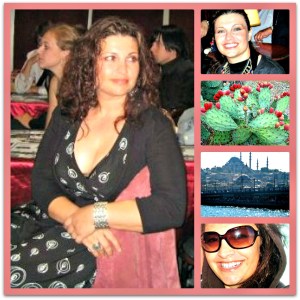
 Today’s guest blogger, Zeynep Kilic, did not come to the United States in 1993 looking for love. Turkish born and bred, she was here for an overseas adventure (she worked as an au pair for a year in New Jersey) and to pursue graduate studies (she went on to earn a PhD in sociology at Arizona State). But then, two failed marriages to Turkish men later (they were also expats), she changed her tune about American men — and was looking for love…in the desert.
— ML AWANOHARA
I am not as much a foreigner as I was before. Not any more, right? After all, I have been living in the United States for almost fifteen years. I get the references to popular culture, politics or religion; I went to graduate school here, I taught here, worked here, established close friendships here, annnnnnd I can cook the traditional dishes served during holidays.
Plus I am an American citizen. What else is there?
Except — and here is where culture shock sets in, 15 years too late — I have no clue how Americans perceive me.
Chapter 1 of my single life: Arizona 2007
It is 2007 — time I date an American already. This may be due in large part to my two failed marriages with Turkish men, along with my hope that I may be more acceptable to an American mother-in-law.
Not to mention my even more fervent hope that American men aren’t as attached to their mothers as Turkish men are.
After the first divorce, I have become an undesirable partner for any Turkish mother’s precious son. After the second, I’m considered an untouchable. I may as well be wearing the red letter D on my forehead, forewarning all Turkish families about the dangers of an educated woman who thinks that no man can come up to her standard.
(Actually, did I really think those things about my own people — I, a sociologist, who teaches students about the pitfalls of stereotyping and blanket generalizations? For shame!)
Maybe I shouldn’t worry about the man’s family right away, I tell myself, particularly his mother. Let the cultural weirdness enter the picture a bit later. At least that’s my plan.
I will ask my American friends to set me up with their American friends. Luckily, I am already a citizen and no one can blame me for being after a green card. This should work. Except, none of my friends have any single friends to introduce me to. Must I really endure the Internet? I am overweight; no one is going to email me back.
I come up with a strategy: put all my fat-angle pictures up to give potential suitors a slightly worse, but still realistic, version of who I am. Then, if they still want to meet me, they will be pleasantly surprised.
This goes against everybody else’s strategy on the Internet but I think it should work. Maybe I’ve found the loophole?
After much dragging of feet I tell myself what they say in the Black Sea:
Once you get up to join the horon (folk dance), you must shake your ass!
So here I come, timidly jiggling my metaphorical ass on the Internet dating sites with a profile that says — too much really. I guess my tendency to speak too much in the classroom translates very well into writing too much on the profile. I am a consistently verbose woman.
To my surprise, over a period of time, I meet a few men.
Candidate #1
The first guy I meet is a handsome Latino with a very well-groomed beard. He says he likes the curves. Okay, we are good. Then he says he likes the wavy hair. “Very exotic,” he says with a wink.
I change the subject to his kids and job. I am a very serious academic after all. Enough with the objectification…
I don’t see him again but keep thinking about his comment on my exotic hair. Am I supposed to feel good about this?
The next day, I meet my friend Jill for a run. I recount the story and tell her I am slightly bothered by the “exotic hair” comment. She assures me that it was meant to be a compliment, to suggest that I looked different than a “generic” American — which is not a bad thing.
I glance at her fine blond hair blowing in the morning desert breeze and wonder if her hair is the generic American hair. Let’s not make a mountain out of a molehill, I tell myself.
Candidate #2
The second guy doesn’t work out either, though we have a pleasant lunch. He is wearing ripped, skin-tight jeans and sporting a bleached ponytail. I am wearing the opposite — literally and metaphorically. As he says goodbye, he leans in for a kiss on the cheek, sighs and says:
It would have been hot to add Turkish to my list.
I recount this to Jill on another run, telling her that I never thought that the major thing these men would notice about me would be my non-Americanness, which I seem to exude in spades.
I’ve been feeling quite at home in Arizona, especially after a 13-year-long residence, exactly as long as my life in Ankara, where I went to college. Sure, my name always invites questions about its origin, and people sometimes remark how “pretty” it is and all that. But I don’t have the thickest accent and I certainly do not talk about my differences all the time, especially not with a stranger.
It dawns on me that nobody sees an American when they look at me. This is a surprise because nobody made any comments about it before. I guess exoticizing someone is not cool in a non-dating context. The subtext of racism makes it too politically incorrect to bring up.
Jill stops my ranting to say, a little apprehensively, that she always liked that I was Turkish. I am different than her other friends. I cook different things, and she loves my slight accent. She also loves saying my name, and receiving wonderfully “authentic” gifts from my visits back home, such as evil eye beads I gave to her babies. It is not a bad thing, she says — it is a good thing.
Okay, I must enjoy this and use it to my advantage, I say to myself — make the wave in my hair even wavier. Onwards, to the next encounter!
Candidate #3
Guy #3 does not work out either. He makes a lot of references to his parents though he has not actually seen them in the last year and a half. He also does not speak to his brother. He shrugs and says, “You know how it is.” I don’t actually, so I just smile tentatively.
When silence falls on the conversation, he reiterates that I am so exotic — something refreshing in his desert dating experience. “Scottsdale types,” he adds.
I think he means he’s been seeing mostly blonde, tanned woman with straight hair and French manicures.
Finally, I ask: “What do you mean by that, what makes me exotic exactly?”
A little taken aback, he says I have interesting, chunky jewelry. I haven’t heard that one before. Do American women not wear chunky jewelry? I glance at Jill next time I see her and notice her diamond pendant the size of a pea and her very small hoop earrings.
Candidate #4
The fourth one is a clean-cut guy from Chicago. He is very particular about his finances and is investing in a large house even though he lives alone (but we all know he will have a family populating the rooms some day soon!).
He assures me that he dated a lot of “ethnic” women — like when he was in Korea, he had Korean girlfriends. He then proceeds to tell me how he will never forget that time in a baseball field’s dugout with two friends…
I am not sure if he is expecting a pat on the back. I don’t.
* * *
Readers, tune in next week to Part 2 of Zeynep’s story — covering her decision to leave the deserts of Arizona for the frozen grounds of Alaska — to find out how the story ends. Meanwhile, do you have any stories about the process of self-discovery when seeking love abroad? Please leave them in the comments. We’d love to hear them…
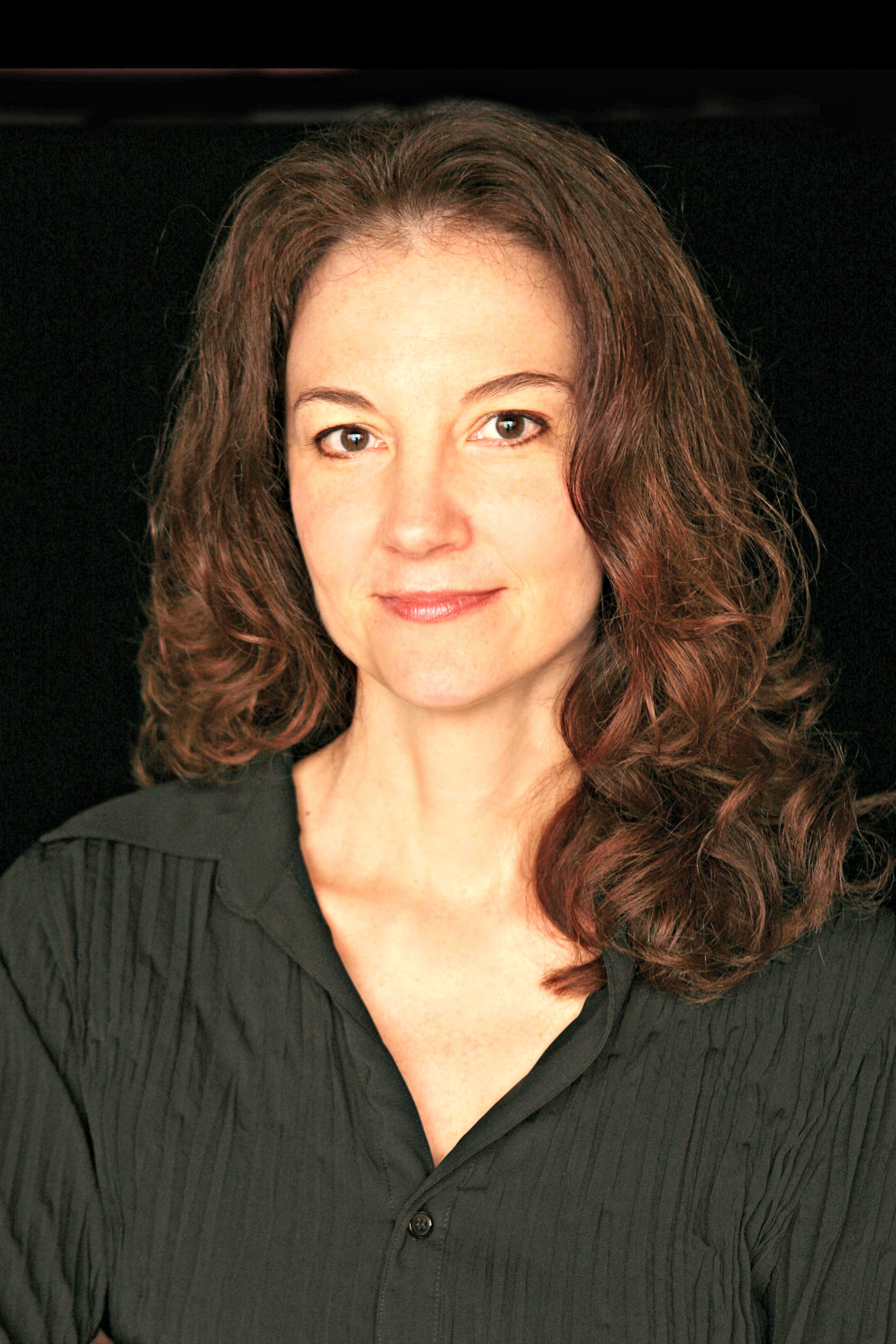
Zeynep Kilic is an assistant professor of sociology at the University of Alaska Anchorage, where she is navigating the treacherous waters of tenure. You can find her on Google+ and on Twitter: @zeynepk
STAY TUNED for another episode in the life of our fictional expat heroine, Libby. (What, not keeping up with Libby? Read the first three episodes of her expat adventures.)
If you enjoyed this post, we invite you to register for The Displaced Dispatch, a round up of weekly posts from The Displaced Nation, with seasonal recipes, book giveaways and other extras. Register for The Displaced Dispatch by clicking here!
Related posts:
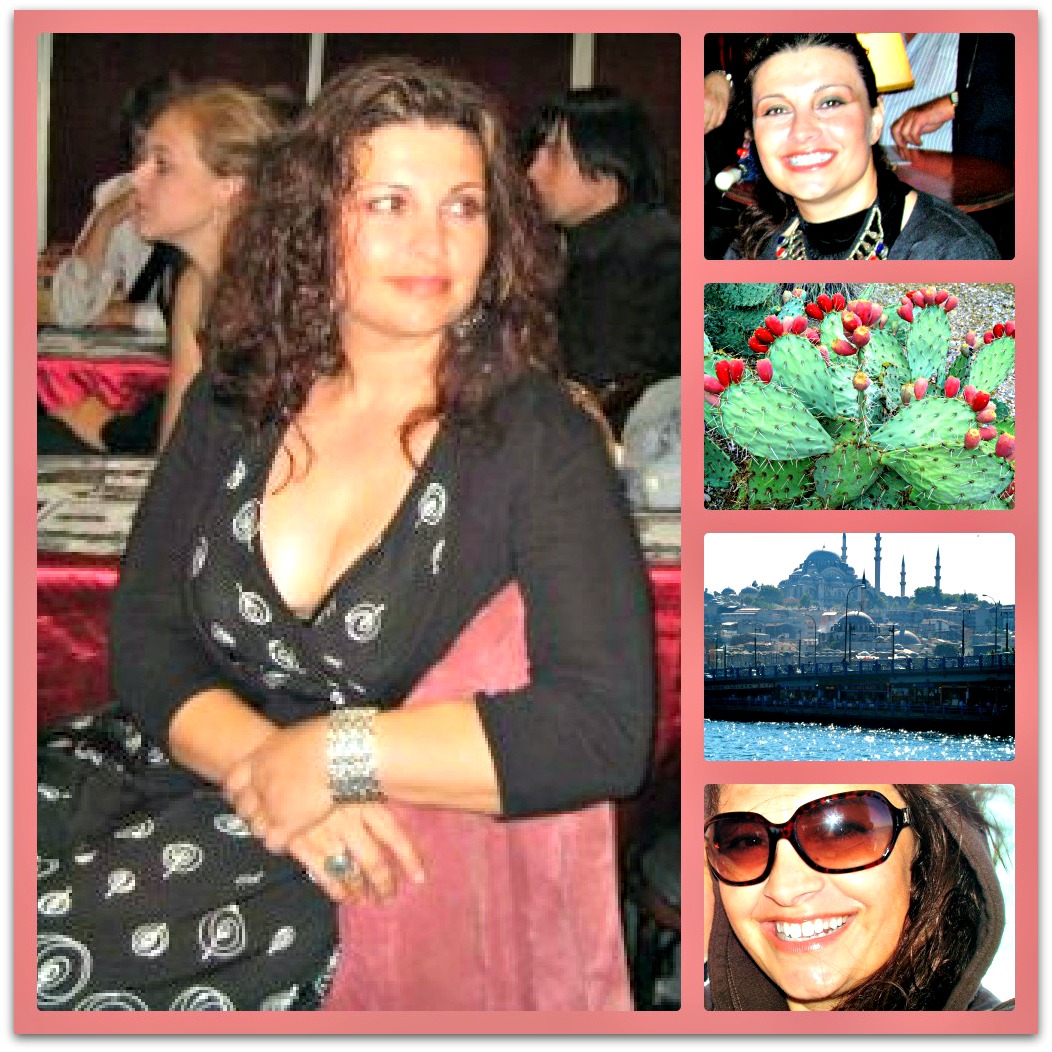
Images: All are from Zeynep Kilic’s own collection except for those of the Arizona cactus and the view of Istanbul, which are from Morguefiles.






















 The Displaced Nation