The Displaced Nation

A home for international creatives

Tag Archives: UK

Is it cooler to be married to someone from another country? Yes, particularly if they’re Brazilian!

Is it cooler being married to someone from another country? In my experience, it’s often everyone else who seems to think so, although maybe that’s because I happen to be married to someone from a country whose people are perennially voted the coolest nationality on the planet.

Typically, as soon as I mention that I’m married to a Brazilian the almost universal reaction is:

“Cool! I’ve always wanted to go to Brazil!”

Such reactions inevitably tend to be informed by the idealized images most people have about Brazil and Brazilians:

  • Carnaval
  • Samba
  • Football
  • Exotic beaches frequented by beautiful people wearing minuscule pieces of beach attire.

Brazil is, of course, far more complex than this. It’s as equally well-known for its

  • Favelas
  • Drugs
  • Gang violence
  • And…errr…films about favelas, drugs and gang violence.

Naturally though, people tend to assume that I probably haven’t married a gun-wielding, drug-pusher from the favelas, and so it’s the cool, beach-loving Brazilians they tend to envisage whenever I mention my marital status.

So, in everyone else’s eyes at least, my story of marrying the Brazilian girl I met in Argentina is way cooler than that about the girl they met in their local boozer in London.

And to be fair, it is a pretty cool story.

Cool as in mind-expanding

Yes, the samba, the beaches and the football (especially the football!) make life exciting, but what’s even cooler is that marriage to a Brazilian woman has been a life-changer — in a good way. For instance:

1) My horizons have been broadened immeasurably.
I’ve learned to view things through the eyes of someone who’s experienced them within another country and culture. Thus, things you may have previously found exotic, unusual or irrational become familiar, normal and logical.

2) I now see “cultural differences” in a positive light.
True, cultural differences have the potential to make a relationship fractious. But in our case, these cultural differences help to fill in certain gaps that we’d always looked for in the people we’d dated.

As a self-conscious Brit (British stereotype No 1: tick), I find it appealing to have a naturally sociable and confident wife (Brazilian stereotype No 1: tick), who is able to take control of social situations in which I’d otherwise feel uncomfortable. Her effortless sociability is the perfect counterbalance to my stuttering inability to engage in anything other than mindless small talk with most strangers.

By the same token, she appears to have found it a pleasant surprise to encounter a man who was a little less “forward” than what she had been used to in Brazil.

That, and the fact that I was the only man she’d ever met who could cook, I imagine.

3) I also think that cultural differences are often overdone.
Despite the perceived and real differences between our countries and cultures, there are occasions when I realize that in many ways, my wife and I aren’t all that different. As a football geek, I’ve found my wife’s interest in watching football one of life’s great blessings (Brazilian stereotype No. 2: tick; British stereotype No. 2: tick). I’ve lost count of the number of times I’ve come home to find her watching a game on the telly.

Cool as in constant adventure

Another cool thing about marrying someone from another country is that life becomes more adventurous — at times rather literally. For example:

1) I’ve had the opportunity to learn and explore a culture and country with what effectively amounts to having a free tour guide.
And, let’s face it, where would you rather go when you have to go and visit the in-laws: Brazil or another boring town in England?

2) I’ve now embarked on the adventure of learning another language.
This is something I’d always wanted to do but was too lazy. Also, language schooling is pretty appalling in the UK — I can barely remember any of the French of German that I learnt all those years ago.

Whilst it’s still a work in progress, my Portuguese is now at least functional — and improving everyday.

3) I’ve been able to do something I always wanted to do, live abroad.
Indeed, my language learning has been significantly aided by our recent relocation from London to São Paulo. Would I have done this without my wife? Maybe not, because of circumstances and/or apprehension of moving countries on my own. For me, the option to live in Brazil was instantly made more manageable by my wife being from the country we moved to — my own personal relocation advisor if you will. As explained it my Random Nomad interview, it makes me feel a lot less displaced.

But, not always as cool as it sounds

However, despite how cool all this sounds it’s not to say that marrying someone from another country doesn’t come without its own particular challenges. Here are two that really stand out for me:

1) The early days weren’t easy.
Once we’d both returned home, following what was effectively a holiday romance, there was the little issue of us both living in different continents — a mere 6,000 miles apart.

And then, once we’d decided to give the whole (very) long-distance relationship a go, there was the feeling, similar to the one expressed by fellow Brit James Murray in his column last month, that the few weeks here and there we occasionally managed to spend together consisted mainly of getting re-acclimatized, rather than enjoying each other’s company.

And, of course, there were the usual issues that complicate long-distance relationships: loneliness, uncertainty, jealousy, lack of communication, etc. Fortunately, we had the Internet — a relationship like ours would have been unimaginable 15 years ago.

2) UK immigration laws — need I say more?
When my wife made the crunch decision to move to the UK, there was the added complication of the navigating a Kafka-esque immigration system that does its best to keep out anyone deemed to be from a “developing country.” Four years, various visa refusals, threats of deportation and thousands of pounds later, my wife was finally able to settle her status permanently in the UK.

Rather ironically, as soon as she received permanent status, we scarpered from the economic crisis in Europe to the relative calm in Brazil — where they’ve been far happier to accept me as a resident.

But hey! That’s pretty cool, too.

* * *

Readers, having witnessed Andy’s valentine to his Brazilian wife, what do you think? Are you in a cross-cultural relationship and if so, do you perceive similar benefits? Or are you more jaded than he is — suspecting that the challenges can outweigh the benefits once the “cool factor” wears off? Please leave your thoughts in the comments!

STAY TUNED for tomorrow’s post, when a Random Nomad with a finely-tuned sense of romance joins us!

If you enjoyed this post, we invite you to register for The Displaced Dispatch, a round up of weekly posts from The Displaced Nation, with seasonal recipes, book giveaways and other extras. Register for The Displaced Dispatch by clicking here!

Related posts:

LIBBY’S LIFE #70 – A brewing storm

Jack lies on the kitchen floor in his red pyjamas, legs and arms flailing, his face a puce, wet, dripping mess.

He looks like an overripe tomato.

“I want Fergus!” he wails, then hitches in a breath for more volume. “I — want — Fergus — baaaack!”

Despite all the episodes of Supernanny that I’ve watched over the years , I don’t know what to do. I’ve tried “bringing myself down to his level” (crouching down to make myself three feet tall), looking him in the eye, using a firm voice, putting him in time-out on the Naughty Spot, asking for apologies and hugs…

Nothing works. At nearly five, he should be growing out of tantrums, not more into them by the day.

The Naughty Spot, a mat outside the laundry closet, worked for about a month until a few days after Fergus left. Jack would sit on the landing quietly in time-out, and happily give me a hug and a “Sorry” when his five minutes was up. (I must be honest and admit here that it was usually more than the allotted five minutes, because I’d go off and do something else and forget he was there.)

I don’t want him to think he gets a reward for bad behaviour, but in this case, it’s unavoidable.

“You can stop that silly noise right now,” I say, sounding like my granny. “You’re going to see Fergus today because we are staying at Maggie’s tonight.”

The screams and kicking magically stop. For a second.

I put my hands over my ears as Jack yells again, this time with joy, and the twins in their high chairs yell with alarm.

“Go get dressed,” I tell him, raising my voice above the noise. “Your clothes are on your bed.”

*  *  *

“This storm looks as if it’s going to be a bad one,” Maggie had said to me yesterday. “We’re bound to lose power on this street, because we always do. Have you got a generator yet?”

I shuffled my feet and mumbled, as if she’d asked me where last night’s maths homework was. “No.”

“Then all of you should come and stay with me tomorrow night until it’s over, or until you get power back on. All five of you. No fun in a house in these temperatures, with three babies and no heat or hot water.”

“We can’t do that,” Oliver said, when I told him of Maggie’s offer. He has no idea what it’s like here without electricity. He’d been safely in England the last time we had a long power-cut.

” ‘We’?” I said. ” ‘You’ can do what you like, my love. Stay in a refrigerator if you prefer, should the worst happen. But the children and I are thinking ahead and staying in Maggie’s nice warm house.”

And after some grumbling, he agreed.

*  *  *

 Jack comes downstairs, fully dressed but not accurately so. I turn his sweatshirt so it’s not back-to-front, and twist a sock round so that the heel is under his foot. His jeans, I’m relieved to see, are looser than they were two weeks ago.

After nearly falling out with Maggie over what she perceived as Jack’s weight issue, I was mortified, when I went clothes shopping for him a couple of days later, to find that the regular boys’ trousers I bought for him were too tight when he put them on at home. I had to take them back and exchange them for the ‘Husky’ fitting, for boys with more generous waistlines. Maggie and that awful paediatrician had been correct, and my son was indeed piling on the inches.

“Puppy fat,” Maggie said, when I apologised later for getting huffy with her when she had been correct in her observation. “Just puppy fat. It will go.”

I wasn’t so sure though — and I was totally at a loss to explain how he could be putting on weight like that. Since Christmas I have only given him organic food — lots of vegetables and fruit and lean meat and stuff like that — and any treats are on the top shelf of the pantry where he can’t reach them. I did this after smugly watching one episode of Supernanny on Christmas Eve that showed a sugar-crazed toddler running around and bashing his younger brother with a toy car, before realising that my own elder son, who earlier had been quietly stuffing his face with a Hershey bar, was pounding George on the head with a plastic toy hammer.

That was the day all chocolate and cookies went on the top shelf, and the Naughty Spot on the landing instigated. Also the day the toy hammer was confiscated indefinitely.

Today, thought, Jack is the picture of sibling virtue as we all plod through the snowflakes across the street towards Maggie’s house.

Maggie sees us coming, opens the door, and we are greeted by a whirlwind of pit-bull-Labrador. Fergus bounds around us, nearly knocking me and Jack over. He saves his biggest welcome for Oliver, of course, but even so, I swear that dog has never been so happy in his life to see me. Not even after several months in kennels while he waited to be shipped abroad.

When we are all inside and have stomped the snow from our boots onto the doormat,  Jack stands on socked tiptoes and indicates to Maggie that he wants to say something in private. She bends down to listen while he whispers in her ear.

“I haven’t got many of those, sweetheart,” she says to him. “They’re a bit expensive, so Fergus only has them as a special treat on Sundays.”

Jack’s mouth droops, and I’m afraid he’s about to go into meltdown. He asks, “Is it Sunday today?”

Maggie laughs. “We can pretend it is, can’t we?”

His mouth becomes a normal shape again. Meltdown situation averted.

“What did he want?” I ask Maggie when Jack has run off to her TV den, where she’s put the DVD of Finding Nemo on for him.

“He wanted to give Fergus one of his special doggie treats, and I said he could. I think he misses that dog, you know.”

I know he does, and I feel guilty. I’d been so intent on getting rid of Fergus that I’d forgotten Jack’s feelings in the matter.

I tell Maggie this.

She frowns. “And yet he never bothered much with Fergus before, that I could see. Why all the fuss now, I wonder?”

Jack runs back into the hall to have another private word with Maggie. She shakes her head. “You’ll have to ask your mummy.”

Jack’s shoulders slump, and he slouches off back to the TV den.

“Ask me what?” I say.

“He wanted a cookie.”

“Ah.” I feel quite proud. “I think he knows better than to ask me that now. They’re strictly rationed in our house.”

Oliver laughs. “My mum did that to me once, when I was about 10, when she decided out of the blue that we should both go on a health kick, So I made myself jam sandwiches every morning before she got up, took them to school, and bought chocolate on the way home with the school lunch money she’d given me. She couldn’t understand why I kept putting on weight when all she fed me was cornflakes and salad.”

I roll my eyes at Maggie, as if to say, “You see what kind of a mother-in-law I have?”

Surprisingly, she doesn’t respond.

Later, when Oliver is busy taking our bags into the spare bedroom, she says: “Libby, you know I’m not one to interfere, and after our last near-argument about Jack, I’m reluctant to say anything at all, but…I have found that the more you stop someone from doing something, the more likely they are to find a way round the obstacle.”

I close my eyes. Maggie’s talking about Jack’s diet again, offering advice where it isn’t wanted.

“Thanks,” I say, and even I can hear the frostiness in my tone that makes the frigid weather outside seem tropical in comparison.

Oh dear. I do hope this storm isn’t a long one. I would like to still be friends with Maggie when the snow has stopped.

.

Next post: LIBBY’S LIFE #71  – Bonnie and Clyde go to preschool

Previous post: LIBBY’S LIFE #69 – This dog’s life takes the biscuit

Read Libby’s Life from the first episode

Want to read more? Head on over to Kate Allison’s own site, where you can find out more about Libby and the characters of Woodhaven, and where you can buy Taking Flight, the first year of Libby’s Life — now available as an ebook.

 STAY TUNED for next week’s posts!

If you enjoyed this post, we invite you to subscribe for email delivery of The Displaced Dispatch, a round up of the week’s posts from The Displaced Nation. Sign up for The Displaced Dispatch by clicking here!

Image: Travel – Map of the World by Salvatore Vuono / FreeDigitalPhotos.net
Baby, it’s cold outside — so why did I choose to become an expat in Boston?!

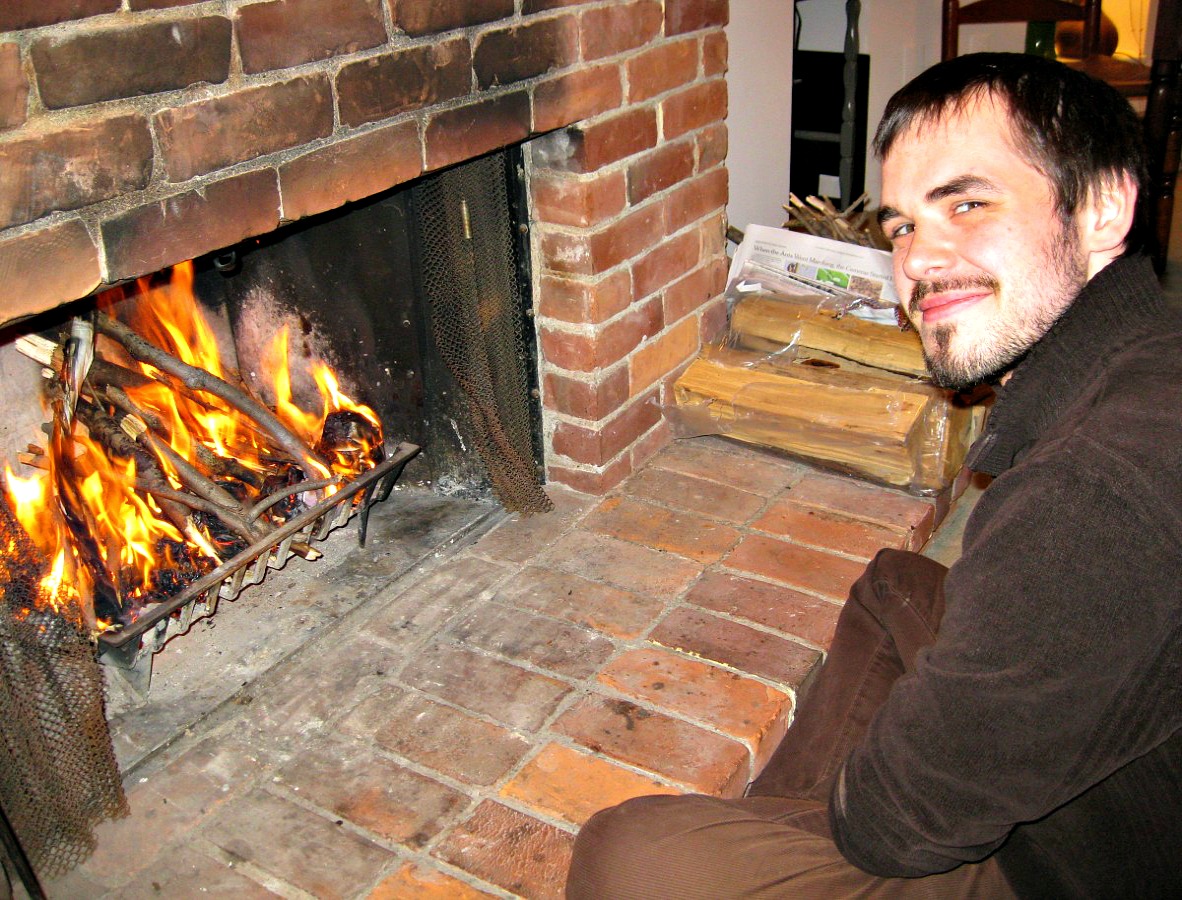
James_Murray_fireThe Displaced Nation got through January without grousing too much about the winter doldrums. But our monthly guest columnist James Murray, a displaced Brit in Boston, will not let the same be true of February. Enjoy his short post — he was too cold to write more!

Winter seems to me a bloody silly time to start any kind of resolution.

Want to jog? Why not start when you can venture outside without the high-density wool coat?

Want to write every morning? In fingerless gloves I assume?

About the only kind of resolution I can imagine keeping is a commitment to a higher standard of personal cleanliness, because I just feel like taking hour-long hot showers most of the day.

Winter just makes you want to be elsewhere. Anywhere but here — and the problem is that this applies to whichever “here” you happen to be inhabiting.

So it’s nothing personal, Boston, when I tell you each and every balls-contractingly cold morning what you can do with your damn winter.

Just like it was nothing personal when I told New Zealand that it should get its shorts-clad arse in gear and install some insulation because let’s face it, it doesn’t matter how mild it is outside; seeing your breath in the morning is a severe disincentive to removing your head from under the covers.

Winter has the effect of making you wonder if you’ve made some kind of mistake — whether you’d be happier in a far distant land where they don’t have the subtle divisions of “chilly,” “cold” and “freezing”; where their scales start at “mild” and only go upwards.

But the project for this year is, as far as possible, staying put. The tangent-curved graph depicting our rapidly climbing heating bill will not deter us; the face-paralysing wind will not stop us from riding our bikes like the foolish pseudo-hippies we are; the desaturated colours of the lifeless trees will not bring us down to the point where we won’t leave the house, and above all, the lure of foreign climes will not force us to quit the place we’ve worked so hard to get to.

After all, we have a secret weapon: a fireplace; and so we know that no matter how drearily the wind may whistle or how uncomfortably cold the bathroom tiles may get, we can still hunker down, roast our remaining chestnuts and hold out for Spring.

James Murray is a self-described “itinerant Brit.” After a stint in New Zealand, and some travel in Southeast Asia, he and his American girlfriend — now wife — are practicing “staying put” in Boston, where James is pursing a career as a wordsmith for marketing and fiction, and as a non-professional theatre director. He is also a Utopian idealist and SingStar enthusiast. You can find more about his views by reading his blog, Quaint James, and/or following him on Twitter: @quaintjames.

STAY TUNED for another episode in the life of our fictional expat heroine, Libby. (What, not keeping up with Libby? Read the first three episodes of her expat adventures.)

If you enjoyed this post, we invite you to register for The Displaced Dispatch, a round up of weekly posts from The Displaced Nation, with seasonal recipes, book giveaways and other extras. Register for The Displaced Dispatch by clicking here!

Related posts:

img: James Murray stoking the fire (his own).

RANDOM NOMAD: Andy Martin, UK-qualified Social Worker, Football Geek & Now a São Paulo Resident

Andy_MartinPlace of birth: Chatham, Kent, United Kingdom
Passport: UK
Overseas history: Brasil (São Paulo): February 2012 – present. I also had a period of travel around South America between 2007 and 2008.
Occupation: NGO Volunteer, English teacher, blogger
Cyberspace coordinates: The book is on the table: An Englishman’s guide to living in São Paulo (blog) and @andyhpmartin (Twitter handle).

What made you give up London for São Paulo?
For some reason — probably because I’m a massive football geek — I had always wanted to go to South America, and so when I found out that one of my best friends was planning to travel there, it took very little persuasion for me to tag along. Then whilst there I met my future wife, who is Brazilian, and it all got a bit more complicated.

First she moved to live with me in the UK. We got married and stayed in London for three years. However, she had deferred her degree in Brazil to move to London, where I had a job as a social worker. I am a qualified social worker and spent almost nine years working in various social or community work roles. For most of that time I specialized in supporting refugees and asylum seekers. But when my job became uncertain due to government cuts (due to the economic crisis), it seemed like the perfect opportunity to move to Brazil so that my wife could finally get everything finished.

So now you’re a trailing spouse. Does anyone in your immediate family share that fate, or do they all live in the UK?
When I first traveled to South America in 2007, I was pretty much the first person in my entire family who had ever traveled outside of Europe, so I can’t really say there’s any significant history or influence of having the urge to want to explore or become “displaced.”

You haven’t been in São Paulo for long, but can you pinpoint a moment when you have felt displaced?
I had been to São Paulo twice before I moved here and I was already quite familiar with South America as a whole, so was pretty well prepared for what to expect — although there’s no doubting that living somewhere and just visiting are entirely different things.

But if I had to pick one thing, it wouldn’t be a moment but more the constant challenge of living somewhere where you are unable to speak your mother tongue. We Brits are notoriously bad at learning languages, and I can barely remember any of the French or German I learned at school. I did learn some Spanish whilst traveling in 2007, and in some ways this helped because of its similarities with Portuguese, although on the other hand it was also a hindrance because of their very many differences.

Not being able to fully communicate your thoughts is obviously very frustrating and when you’re having a bad day, it just intensifies your sense of displacement and dislocation. Fortunately, Brazilians are pretty intrigued by people (especially those from the “West”) who have moved to Brazil and are trying to learn Portuguese. They’re often very forgiving when you make mistakes. It also helps that many Brazilians themselves tend not to speak grammatically correct Portuguese, so in effect your own mistakes are just contributing towards the evolution of the language (that’s what I like to convince myself, anyway!).

When have you felt the least displaced?
One of the things I love about Brazilians is their general informality. As someone who’s never worked in an office or a suit, I feel right at home. For example, people are often referred to by their nicknames (even the former President was) and rarely, if ever, by their surnames. Also, Brazilians tend not to make a big deal out of social occasions — it’s more about making sure you’re surrounded by the people who matter to you. As long as there’s cold beer, everyone’s happy.

How could you not feel at ease?

You may bring one curiosity you’ve collected from the country where you’ve lived into The Displaced Nation. What’s in your suitcase?
Again, as a self-confessed football nerd, I think it would have to be my collection of football shirts. I have one from pretty much every country I’ve been to, and I’ve lost count of how many I’ve acquired in South America.

You are invited to prepare a meal for the Displaced Nation, based on your travels. What’s on the menu?

Starter: Salgadinhos (savoury snacks) are fantastic so a platter of these, including:

Main: It’d have to be a churrasco (Brazilian BBQ). That may sound pretty unimaginative, but once you’ve had a Brazilian BBQ, especially those from the south, you’ll forever wonder why it took you so long to do so.
Dessert: A selection of some of Brazil’s finest (and weirdest looking) fruits. Believe me, I’ve seen fruits in the markets here which look like they have been imported from Mars. They taste great, though.
Drinks: Brazil’s most famous cocktail, a caipirinha, which is a hangover-inducing concoction of cachaça (sugar cane rum), lime, sugar and ice. Refreshing, tasty and deceptively lethal.

Now that you are hard at work learning the language, can you donate a Brazilian Portuguese word or expression to the Displaced Nation’s argot?
Tudo bem? This is pretty much said every time you greet someone in Brazil and literally translates as “Is everything okay?” It reflects quite nicely, as I mentioned previously, how Brazilians prefer to keep things simple and informal.

This month, we’ve been focusing on the need for mentors: people who teach us what we need to know, or remind us of things we have buried deep. Have you found discovered any new mentors, whether physically present or not, in your life abroad?
As mentioned in my guest post this month for the Displaced Nation, when I’m going through a period where I’m missing home or things get tough, I often think about some of the kids I worked with back home in London (in my last job I worked with unaccompanied minors from countries such as Afghanistan).

Thinking about the challenges they as young kids faced after fleeing their home countries — but then still being able, on the whole, to go on and make the most of their new lives — always helps me to put into perspective the things I tend to moan or stress about here, in what is fortunately a much easier experience of displacement.

Apart from that, I read as widely as possible. For instance, I recently really enjoyed Alain de Botton’s The Art of Travel.

If you had all the money and time in the world, what topic(s) would you choose to study in your adopted country?
I guess, given my pre-existing interest and work experiences with migration, I’d like to study the history of migration to Brazil. Brazil is a country defined by (im)migration — for example, my wife has indigenous, Spanish, Italian and Portuguese heritage, a mix that is is pretty normal for Brazilians. It would be fascinating to piece it all together in order to get a more holistic understanding of who Brazilians really are.

I’ve always wanted to do a PhD, so who knows, maybe this might be my research proposal one day!

Readers — yay or nay for letting Andy Martin into The Displaced Nation? A social worker who is taking lessons from the Brazilians on how to be more social? Who is used to helping the displaced and is now displaced himself — so may be in need of our help? (Note: It’s fine to vote “nay” as long as you couch your reasoning in terms we all — including Andy — find amusing!)

STAY TUNED for tomorrow’s post, an expat take on the muses of Classical Antiquity.

If you enjoyed this post, we invite you to register for The Displaced Dispatch, a round up of weekly posts from The Displaced Nation, with seasonal recipes, book giveaways and other extras. Register for The Displaced Dispatch by clicking here!

Related posts:

Img: Andy Martin travels within his native land (the Norfolk Broads, 2010), a couple of years before his expatriation.

CAPITAL IDEA: London: A quick guide

LondonWelcome to the first “Capital Ideas”. It is a new feature here at The Displaced Nation. It’s our somewhat idiosyncratic, ever so slightly tongue-in-cheek guide to various world cities, perfect for the ever discerning readership of this blog. We know our readers are always visitors, never tourists (an important distinction).  Do feel free to contribute your own ideas or suggestions in the comments section, we’d love to hear your thoughts, too.

City: London

Where is it? On some damp, mildew-ridden island in the north Atlantic.

Why should I go? Because it’s one of the world’s great cities. An exciting modern city with a diverse population of eight million there’s something for everyone. With hosting the Olympics, 2012 was a great year for the city and infused it with a self-confidence unusual to the British. Quite simply, this is the perfect time to visit London.

So is it true that when a man tires of London he is tired of life? Not if he’s living in Dalston.

I don’t know anything about Dalston. You’re not missing much.

What are the must sees? Well, if you want to be that tourist, you know the one who wears pristine white sneakers and white socks, keeps their passport safe in their fannypack and planned their trip after taking out a Rick Steeves travel book from 1986, then the basic checklist is Big Ben, Buckingham Palace, St Paul’s, Tower of London. You can do all that by popping on one of those tourist trap sightseeing bus tours. You’ll get to sit on the top of a double-decker with other fannypack wearers — it’ll be beautiful.

Hmm, I don’t have a fannypack. Not to worry. You’re a The Displaced Nation reader, you want something a little more “not for tourists,” don’t you?

You know me so well. Tours can be good fun for the visitor limited in time. However, instead of those overpriced bus tours, we recommend London Walks. Brunel’s Thames tunnel, in particular, is one we’d recommend for a fascinating and sadly forgotten part of London’s history — it was once considered the eighth wonder of the world.

What about a walking tour that sounds a bit more “fun”? Well, provided you’re not traveling with kids, you could also do a pub crawl. That fun enough for you?

Absolutely. Any other suggestions? Spend a morning at Lincoln’s Inn Fields. There you’ll be able to visit two fascinating museums that are among our London favorites. There’s the Hunterian Museum (an C18th collection of anatomical specimens including the skeleton of Charles Byrne, known as the “Irish giant”) at the Royal College of Surgeons and across the fields is Sir John Soanes’s Museum (the former home of architect Sir John Soanes, the museum contains his extensive collection of antiquities and paintings). Or, if you’re in the city in the summer then venture to the north of the city and visit Highgate Cemetery. There you’ll be able to get a guided tour of the western cemetery – resting place of Michael Faraday and Christina Rossetti. In the eastern cemetery rests Karl Marx.

What’s a must-do? Spending time on the South Bank. Here you’ll find the National Theatre, the Royal Festival Hall, the Globe and the BFI Southbank (formerly known as the National Film Theatre). So the perfect place to take to showcase the city’s cultural merits.

Is the city easy to get around? Yes, although Londoners like moaning about the public transport, the city is home to one of the world’s best public transport systems. Familiarize yourself with the London Underground (known as “the tube”) and you can travel around the city easily and relatively cheaply. If you are a night owl then you need to remember that the underground stops running trains between 12.00am and 12.30am.

I hear the British cooking is awful. Do I need to pack sandwiches when visiting London? That outdated stereotype. London is home to some of the world’s best restaurants. And don’t forget how I mentioned earlier that London had such a diverse population, that’s reflected in the city’s restaurants. Whatever you fancy, be it Eritrean or Burmese, you can find it in London. Our recommendation is that you take a trip to Brick Lane for a slap-up Indian dinner.

Hmm, my mate John visited London last year and said the food still sucked. Did John stick with the tourist traps? New York is a great city for eating, but if you only go to restaurants at Time’s Square you’re not going to get that impression. One easy tip, never eat in an Angus Steak House.

So the locals don’t all eat jellied eels? No, but if you do want to experience an old cockney-style pie and mash shop, then we recommend Goddard’s at Greenwich. If you’re being really adventurous and want to unleash your inner pearly queen by having some jellied ell then this is the place to do it.

Have you ever tried it? Yes.

Did you like it? Let’s just say it was interesting.

What should I read? If you want to brush up on London, then we’d suggest Peter Ackroyd’s London for a nice, meaty read about the city, as well as his book The Thames. Other books we’d suggest are Iain Sinclair’s London: City of Disappearances, Henry Mayhew’s London and the London Poor and James Boswell’s London Journal. And, of  course, you can’t visit London and not be reminded of Dickens (do make a trip to the Charles Dickens Museum  , at 48 Doughty Street). We think Bleak House and Our Mutual Friend best show off  Dickens’s writing on London.

What should I watch? Notting Hill.

Really? Yes, it’s the most accurate cinematic depiction of the city.

I’m going to say this again, really? It’s so accurate that there’s even now a Notting Hill Carnival. This happens once a year where fans of the film get together and dress up as their favorite characters from the film and reenact their favorite scenes. Our top tip is that if you’re in London at the same time as the carnival, you should dress up as Julie Roberts or Hugh Grant and go up to people and tell them your favorite lines from the movie. They’ll love.

I really don’t think that’s what the Notting Hill Carnival is all about. Hand on heart, it’s true.

Hmmmm . . .

STAY TUNED for tomorrow’s post, a new Random Nomad interview.

If you enjoyed this post, we invite you to register for The Displaced Dispatch, a round up of weekly posts from The Displaced Nation, with seasonal recipes, book giveaways and other extras. Register for The Displaced Dispatch by clicking here!

Related posts:

Image: awindram

LIBBY’S LIFE #69 – This dog’s life takes the biscuit

Fergus looks up at me, down at his empty dish in the corner of the laundry room, then back at me again. I could be imagining things, but I think his lip is curling.

“No,” I say to him, as I pull one lot of washing out of the dryer and insert another wet load. “Just — no. You can’t be hungry, not again. It’s impossible. And it’s no good trying to fool me. I know you don’t eat everything in sight when Maggie’s in charge of you. You’re just doing it to annoy me.”

At Maggie’s name, Fergus pricks up his ears, wags his tail, and goes to sit by the back door under the coat hook where I keep his lead.

“Later,” I promise him. “You can see Maggie when Jack has gone to school and I’ve gone shopping with the twins. And in a few days more you’ll be with her all the time. Won’t that be nice?”

Nice for him, and oh-so-blissful for me. I am counting the days until next Wednesday, when Maggie has — hallelujah! — agreed to take Fergus and I can rid myself of this hound for good.

Maggie, though, is looking forward to having him. A couple of burglaries in town last month made her nervous, and she thinks a dog barking around the place will be a good deterrent.

“Besides,” she said, sounding rather sad, “he will be good company when you move house.”

Oliver and I haven’t got a moving date yet, but Maggie isn’t looking forward to losing us as neighbours, although we’ll still be in Woodhaven. We haven’t even found a new house to move into, but lately I’m spending so much time and money in the local supermarket that I’m starting to think we should cut out the middle man and set up home in the checkout line.

When I first arrived here, all I heard from the other wives was how cheap it was to live in America compared with England. “I spend three-and-sixpence a month on food, and have money left over for a jar of caviar and some more diamond earrings.” That kind of thing. After a while I sussed out that the reason the wives spent so little on food from the supermarket is because they ate at restaurants, and the husbands hid the bills on their company expense accounts at the end of the month.

With Oliver being boringly honest and never putting items on expenses unless they’re work-related, my own grocery bills are astronomical. Add in disposable nappies and cans of formula milk for two, and even Wills and Kate in their starter flat at Kensington Palace would balk at the monthly total.

But that’s before we get to the pet food aisle.

Fergus, as I mentioned when I started this journal, is one of the most stylish dogs in the world. Never mind diamanté collars or fluffy dog sweaters like Dr. Lowell’s ridiculous chihuahua wears — for his fashion accessories, Fergus has food allergies. He went on a gluten-free diet long before Lady Gaga did. Not for him the cheapo dog kibble; only the best for Fergus. Special gluten-free dog biscuits, more expensive per pound than Black Angus filet mignon.

Hey. Those biscuits are nothing to do with me.

They were Oliver’s idea. Maybe coddling the dog she gave us is a way of assuaging the guilt he feels towards his mother for abandoning her, or for letting the cat out of the bag about her bigamist husband. Whatever the motive, the upshot is that while normal dogs are happily gnawing on bones and finishing the children’s leftover chicken nuggets, Fergus is lording it with grain-free, venison-and-cinnamon-and-butternut-squash dog treats, at 25 bucks a pound. To even things out, I buy the cheapest canned meat without wheat filler, but he turns his nose up at it most of the time. Only those doggie-deli-delights will do.

Not content with his food’s Michelin 5-star quality, Fergus also has to have it in Supersize Me quantity. It doesn’t matter how often I fill his bowl with these delicate morsels — when I look again, the dish is empty, and Fergus has a mournful expression on his face, begging for seconds.

I told Maggie she should rename him Oliver. Twist, that is, not Patrick.

“But he never eats that much when he stays with me,” she says. “He gets whatever meat the butcher has going cheap, and nothing else. Perhaps he’s got worms.”

I’ve given him enough worming tablets to eradicate the subterranean population of Massachusetts. It’s made no difference.

Fergus is still sitting by the back door, staring up at his lead. Every few seconds he lets out a little whine and shifts from side to side on his front paws.

What the hell. It’s nearly time to go, anyway.

I bundle the twins into their snowsuits and fasten them into their double pushchair. Then I tug Jack’s arms into his big winter coat, and pull the two sides of the front together to do up the zip.

The two sides don’t quite meet. Jack’s got an extra layer of fleece on, admittedly, because it’s so cold here at the moment, but even so…

“I need to buy you more clothes while you’re at school today,” I say to him. “You’ve grown again. You’ve eaten too many cookies. You’re the Cookie Monster!”

“No, Mummy,” he says. “Biscuit Monster!”

“Ah, that’s right. Silly me.”

Jack is rather particular lately about his vocabulary. It’s very sweet. He corrects his American friends if they say “Truck” (“Lorry!”) or “Chips” (“Crisps!”) or, in this case, he corrects his mother for saying “Cookie” instead of “Biscuit.”

I think his obsession started when I got into watching old episodes of Supernanny USA. Supernanny herself is unapologetically Essex and sounds like Jack’s Granny Sandra, even after filming with families in New Jersey for two weeks. But although she talks like my mother-in-law, I like watching the programme because it makes me feel superior after I’ve had a bad day, and I can think “Well, at least I don’t do that.” Occasionally, though, an episode will bring me down to earth, like the one a few weeks ago when this woman had about nine kids who kept diving into packets of fun-sized Milky Ways every five minutes, and then bounced off the walls all day, much to the mother’s bewilderment.

I watched one of the nine children having a tantrum just as Jack lay on the floor, kicking and shouting because I’d taken a clandestine Hershey bar off him, which he was about to eat five minutes before lunch was ready. From then on, all chocolate and sugary things have lived on the top shelf of the pantry where Jack can’t reach them, and I’ve doled them out sparingly, only once a day, in accordance with a big set of Mum’s Rules which I wrote in black marker on poster board immediately after the TV programme ended.

Jack seems to have adapted, though. After one episode on the naughty spot outside the landing linen closet on Boxing Day, he accepted it. I can’t say his tantrums have got much better, though.

With some pushing and huffing, I finally get his coat fastened.

“Ready to go?” I ask him. He nods, as best as he can beneath layers of woolly hat, hood, and scarf.

Fergus barks — once, twice, three times.

I open the back door, and the dog shoots out, straight across the road and up Maggie’s driveway. A Jeep coming down the street slows for him and honks its horn. Fergus looks back briefly. If a dog were physically capable of flipping the bird, Fergus just did it.

Next Wednesday can’t come a minute too soon.

.

Next post: LIBBY’S LIFE #70  – A brewing storm

Previous post: LIBBY’S LIFE #68 – Puppy fat

A note for Libby addicts: Check out Woodhaven Happenings, where from time to time you will find more posts from other characters.  Want to remind yourself of Who’s Who in Woodhaven? Click here for the cast list!

Read Libby’s Life from the first episode.

STAY TUNED for Tuesday’s post!

If you enjoyed this post, we invite you to subscribe for email delivery of The Displaced Dispatch, a round up of the week’s posts from The Displaced Nation. Sign up for The Displaced Dispatch by clicking here!

Image: Travel – Map of the World by Salvatore Vuono / FreeDigitalPhotos.net

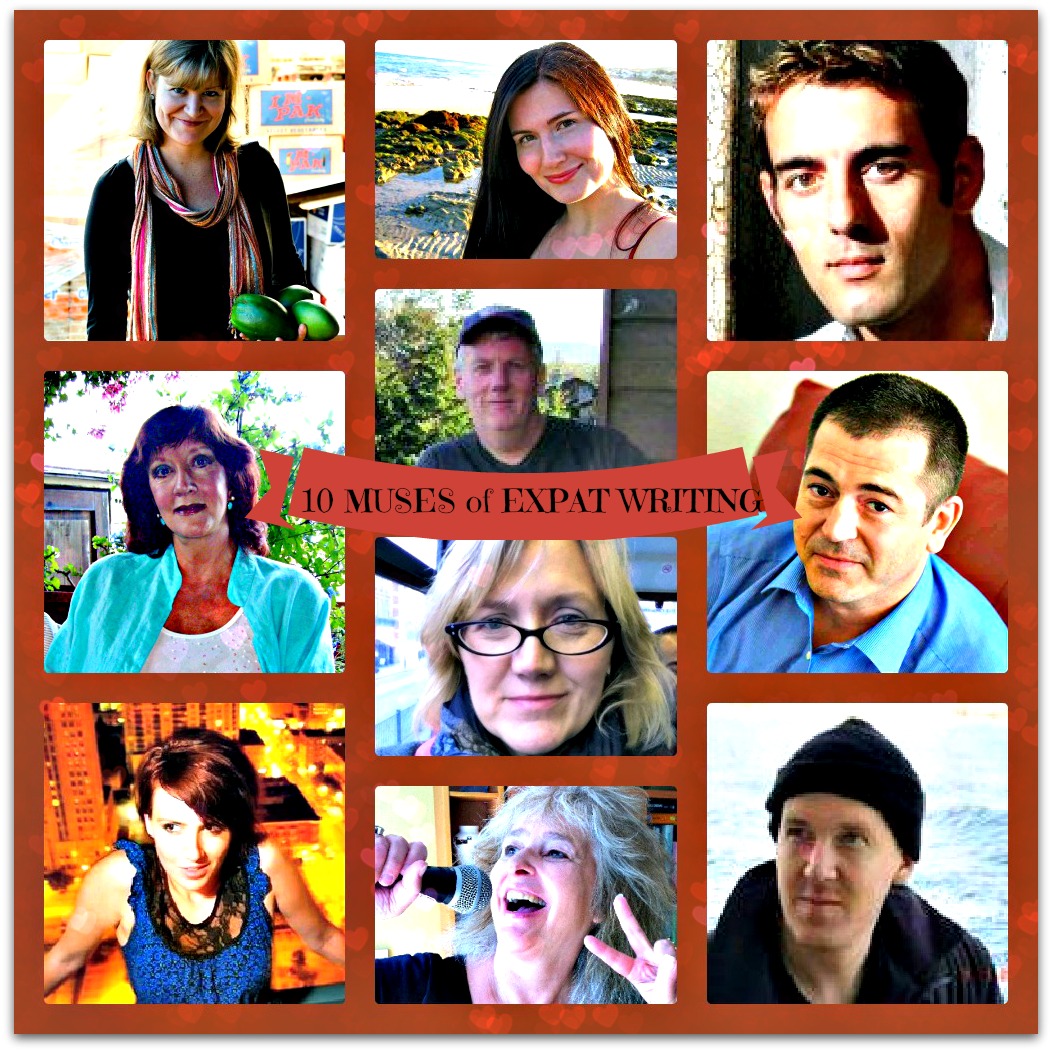
The 10 Muses of Expat & International Adventure Writing and their 5 most popular tunes

10 muses collageGreetings, Displaced Nation-ers! Ready for a little more intellectual stimulation?

A couple of weeks ago, I wrote about Great Thinkers who can help with task of embracing the well-traveled life and teasing out its deeper meaning, in the new year.

And today I will address the needs of those who have resolved to tackle a major writing project in 2013.

It’s a well-known fact that many of us who live in foreign lands aspire to write novels, memoirs and travelogues about our overseas adventures. But many of us also live in isolated situations (by definition).

So who can aid us, provide our inspiration?

Why, the muses of course!

Tell us, O muses, how to tell our stories…

And we don’t even have to look heavenwards to invoke them! The 10 Muses (that’s one more than the ancients got!) of Expat and International Travel Writing are right in our midst. They have already shared the joys, wonders and value of writing with Displaced Nation readers:

  1. Barbara Conelli, author of the Chique Travel Book series, filled with the charm, beauty, secrets and passion of Italy…
  2. Martin Crosbie, who is writing a trilogy entitled My Temporary Life; in December of last year, he published Book Two: My Name Is Hardly.
  3. Helena Halme, author of the novel The Englishman (2012)
  4. Laura Graham, author of the novel Down a Tuscan Alley (2011)
  5. Matt Krause, author of the memoir A Tight Wide-open Space: Finding love in a Muslim land (2011)
  6. Meagan Adele Lopez, author of the novel Three Questions: Because a quarter-life crisis needs answers (2011)
  7. Edith McClintock, author of the mystery novel Monkey Love and Murder (2013)
  8. Alexander McNabb, who is writing the Levant Cycle, a trilogy of books about the Middle East; he released the second book, Beirut — An Explosive Thriller, last September.
  9. Tony James Slater, erstwhile regular at the Displaced Nation and author of a two-book series: The Bear That Ate My Pants: Adventures of a real idiot abroad (2011) and Don’t Need the Whole Dog!, which came out in December.
  10. Wendy Nelson Tokunaga, author of Marriage in Translation: Foreign Wife, Japanese Husband (2011) and of several novels that explore cross-cultural themes between the United States and Japan.

Over the past year on our site, if you were listening closely, these heaven-sent muses were singing a number of tunes. Here are their five top hits:

SONG #1: “Yes, it’s hard; yes it’s uphill. But you’re living the dream, which makes writing a thrill!”

In one of the Displaced Nation’s most popular posts of the past year, Tony James Slater tried to make it out that the life of an expat writer is far from glamorous. Don’t believe him. He was pulling your leg, as usual — or singing off key, to continue the metaphor.

Alexander McNabb has the more accurate rendition. Here’s his account of the prep for his latest thriller, Beirut:

While writing it, I spent hours walking around the city, along the curving corniche and up into the busy streets that cling to the foothills rising from the coast up to the snow-capped mountains. Walking with friends, walking alone — day and night, spring and summer. From the maze of funky little bars of Hamra to the boutiques of Verdun, from the spicy Armenian groceries of Bourj Hammoud to the cafés overlooking the famous rocks at Raouché…

Barbara Conelli is another inspirational example. She explores every nook and cranny of Milan so as to take the reader on an armchair journey. And now she is doing the same with Rome, which will be the subject of her third book in the Chique Travel series.

Great work, if you can get it!

SONG #2: “It’s time to make your creative debut — so why not make it all about you?”

These days it’s hard to tell the difference between a heavily autobiographical novel and a memoir, though one of our muses, Helena Halme, insists that there is a distinction. When questioned about her decision to write The Englishman as a novel — it’s about a young Finnish woman, Kaisa, who meets a dashing British naval officer, a plot that echoes very closely her own life story — she had the following to say:

I tried to write a memoir, but couldn’t! Much of this story is, however, true — but I didn’t think I could call it a memoir as some things were pure fiction. I am a novelist and just keep making stories up.

Hmmm… By that reckoning, perhaps Tony James Slater should be a novelist, too? As regular readers of this blog will know, his favorite topic consists of his own, rather daring but also bumbling, world adventures.

But did a bear really eat his pants, or is he exaggerating for comic effect?

The mind boggles…

But whatever the form, the point is that quite a few of our muses have found plenty of material in their own life experiences. Besides Halme and Slater, we have

  • Martin Crosbie: His protagonist, Malcolm, leaves Scotland for Canada at a formative age, just as he did.
  • Laura Graham: Her protagonist, Lorri, arrives in Italy as a forty-something single and finds a younger Italian man, just as she did.
  • Matt Krause: He has written a memoir on the portion of his life that involved meeting a Turkish woman on a plane and following her back to Turkey. (Reader, he married her!)
  • Meagan Adele Lopez: The protagonist of her debut novel, Del, is offered three questions by her British fiancé (just as Lopez was offered three questions by hers).
  • Edith McClintock: Her protagonist, Emma, works as a researcher in the very Amazonian rainforest where she once conducted her own research.

To conclude, the old adage is alive and well, even (especially?) in expat and travel writing: “Write about what you know and care for…”

SONG #3: “Looking for inspiration from above? The answer lies in cross-cultural love.”

Another theme running through the works of several of our muses is the love that takes place across cultures, usually resulting in marriage. I just now referred to the cross-cultural love stories at the heart of the books produced by Helena Halme (Finnish woman, English man), Laura Graham (Englishwoman, Italian man), Matt Krause (American man, Turkish woman) and Meagan Adele Lopez (American woman, Scotsman).

To this list should be added Wendy Nelson Tokunaga, who has written about Western women getting involved with Japanese men — one of the stranger of all possible unions, to be sure! 😉 — in both fiction and nonfiction (the latter being a bit of a self-help book).

SONG #4: “As your brainstorming proceeds apace, never forget the appeal of place.”

Since travel is a constant for all of us, it should come as no surprise that particular places can become a pull for certain expat writers. They cannot rest until they’ve depicted a place they’ve experienced so that others can live vicariously. Several of our muses represent this principle:

  • Barbara Conelli and her love for “capricious, unpredictable” Milan. To quote from her book: “When the streets of Milan ask you to dance, there’s nothing else to do but put on your ballet shoes and surrender…”
  • Alexander McNabb and his obsession with Beirut. “There can be few places on earth so sexy, dark, cosmopolitan and brittle…,” he writes in his Displaced Nation post.
  • Edith McClintock and her preoccupation with the rainforest and a place called Raleighvallen in the Central Suriname Nature Reserve. As her main character, Emma, says:

    I fell completely and irretrievably in love with the rainforest that week — the deep rich smells of dirt and decay and teeming, thriving life; the warm soft light of the rocky moss-covered paths hidden beneath layers of climbing and tumbling lianas and roots; soaring tree trunks wrapped in colorful bromeliads, orchids, moss, and lichens; and the canopy of leaves of every conceivable size and shape….

SONG #5: “Growing weary of fruitless writing sessions? Time to take some acting lessons!”

Four of our ten muses could double as the muses of acting and entertainment:

  • Tony James Slater and Meagan Adele Lopez trained as actors (Lopez actually starred in a bad horror film!) before embarking on their world travels.
  • Laura Graham enjoyed a long career as a stage actress in Britain, working for the Royal Shakespeare Company and the Young Vic, and on television, before setting herself up as an expat in Tuscany.
  • Wendy Nelson Tokunaga first went to Japan because she won a prize in a songwriting contest sponsored by Japan Victor Records. She is an accomplished karaoke artist who can sing jazz as well as j-pop and enka, a type of sentimental ballad.

Why are so many of the Muses of Expat Writing multi-talented, you may ask? Does a former acting/singing career work to one’s advantage when it comes to overseas travel and writing? I like to think so.

Just as Dickens used to act out the dialogue of his characters, I like to think of Tony James Slater reenacting his wild adventures on the road, in the confines of his flat in Perth…

And sometimes this versatility can add a further dimension to the writing. Last we heard from Lopez, she had created a trailer for her book and was trying to convert it to a screenplay. Tokunaga composed and sang an enka to accompany her novel Love in Translation. (It’s impressive!)

Plus these four could always hew to the tradition of wandering minstrel, one of the oldest careers in the book, if their works don’t sell. (Hey, it’s never a bad idea to have a fallback option when you’re a long ways away from family and friends…)

* * *

So, writers out there, did our 10 Muses sing to you? And will you listen to some of their songs again as you face the blank page in 2013? Let me know in the comments. (Only, be careful of criticizing the Muses — they have been known to be vengeful!)

STAY TUNED for tomorrow’s post, another installment in the life of our fictional expat heroine, Libby. (What, not keeping up with Libby? Read the first three episodes of her expat adventures.)

If you enjoyed this post, we invite you to register for The Displaced Dispatch, a round up of weekly posts from The Displaced Nation, with seasonal recipes, book giveaways and other extras. Register for The Displaced Dispatch by clicking here!

Related posts:

Images: Our Ten Muses (left to right, top to bottom) — Edith McClintock, Barbara Conelli, Tony James Slater; Laura Graham, Martin Crosbie, Helena Halme, Alexander McNabb; Meagan Adele Lopez, Wendy Nelson Tokunaga, Matt Krause.

Do refugees and migrants have anything in common with us expats? No, and yes…

displacedvdisplacedBelieve it or not, the Displaced Nation has occasional qualms about whether “displaced” is the right word to describe a group of expats and internationalists. What does a group of privileged travelers have in common with refugees or migrants who’ve had no choice but to leave their homelands? We thought we’d begin the new year by touching on this vexed question, this time with the help of a mentor, Andy Martin. Andy is now an expat in Brazil, but he previously worked with refugees in London.

— ML Awanohara

Before moving to Brazil in February 2012 I worked with refugees as a social worker in the UK, and my last job entailed supporting unaccompanied minors: children as young as 11 who flee conflicts and persecution in countries such as Afghanistan — on their own.

And it is of them that I remind myself when I reflect upon my own struggles and anxieties at being “displaced” from my own country. Suddenly, my tongue-in-cheek British moans about uncomfortable buses and lopsided pavements (yes, pavements), or my frustrations with struggling to learn Portuguese, seem trivial when contrasted with the experiences of the young people I worked with.

Given this, it would seem bizarre for a rich (relatively) migrant like myself to even contemplate comparing my experiences of displacement with those who flee poverty, persecution or some other unimaginably unfortunate situation that most of us will thankfully never have to experience.

Or is it?

Well, I guess the differences are probably easier to distinguish — for example:

1) The reasons for the migration

Whilst refugees are forcibly displaced through circumstances outside of their control, more fortunate gringos like myself possess far greater agency when it comes to the motives for our movements: love, jobs, travel, etc.

2) The journey itself

Forcibly displaced people often leave their homes unexpectedly with no belongings, or else hurriedly sell whatever possessions and land they have in order to fund their flight, whilst my wife and I had carefully planned our move for over two years (well, we read a few books and, to be fair, she is Brazilian herself — which helps).

What’s more, the route a refugee takes is often perilous, taking months or even years, and in turn may comprise many different means of movement: on foot, by car, on overcrowded boats, airtight lorries or refrigerated trucks. On top of that, their destinies also usually lie in the hands of people smugglers.

My wife and I, though, as middle-earners in the UK, booked our flight with a click of our laptop, and the path from our flat in London to our new life in São Paulo was no more than a day’s inconvenience — and a relatively smooth and comfortable one at that.

I had the cabin crew to serve me unlimited amounts of Cabernet Sauvignon and my biggest anxiety was which of the in-flight films to watch: Moneyball or Midnight in Paris?

3) The arrival at the new destination

Refugees are typically at the complete mercy of the host countries they successfully manage to reach. Most likely, they are from countries for which there are strict immigration controls and they are typically confronted not with empathy but with a culture of disbelief — yes, 11-year-old kids from Afghanistan with no family.

A British citizen like myself meanwhile, merely through my place of birth, possesses a passport that requires one of the fewest number of visas to travel around the world. Even when there is a requirement, particularly to live or work, it’s often pretty straightforward.

Refugees, though, even if they are granted some form of status, will by the nature of their former lives typically have to start from scratch, their qualifications often meaningless (that’s if they can even prove them) — and thus with access to only menial jobs and bottom-of-the-rung housing.

And then, once they’re settled, the mental scars from the trauma they’ve experienced will slowly emerge.

Fortunately for me — with the education I’ve received, the qualifications I’ve gained and the work experience I’ve accumulated — I’ll be in a far better position to start my dream life abroad.

Just take me to the beach already!

* * *

So far, so different then.

Is it really possible then that the experiences of forcibly displaced people can ever be compared to those whose displacement is chosen?

Well, yes, I think they can. Here’s a couple of ways we are similar:

1) The requisite adjustments to a new culture

One of the fascinating things about my job back in London was listening to people describe their reactions and adjustments to their strange new worlds. And, as you can imagine, the youthful frankness of the kids I worked with often made these accounts hilarious and, perhaps, more honest.

For example, I remember one young person seemed bemused as to why on one particularly hot day (well, relatively anyway) in London, so many people were stripping off their clothes and heading to the local park to sunbathe. He only realized why when by the next time I had seen him, there had been subsequently been 20 successive days of rain in London.

“Welcome to the UK,” I joked.

2) The occasional bouts of homesickness

It wasn’t, of course, just the things they were discovering which were intriguing, it was also what they were missing. For some it was their homelands, for others it was speaking their language, whilst often it was specific things like their mother’s home cooking, although most commonly it was the weather — of course.

However, a common and I guess obvious sadness amongst all of them was missing people — whether that be their friends, family or both.

* * *

In sum, writing my blog over the past year has made me realize that despite our very many differences all migrants share some common behaviors: that of exploring, adjusting and, inevitably, comparing (in my case moaning), as well as reflecting upon the losses we have to make in order to get to where we are.

At the same time, I’ve also acknowledged that my own anxieties are not trivial just because they might seem so in comparison. They are real and probably shared by many people. However, thinking about those kids back in the UK just gives me the motivation to try even harder.

Thank you, Andy, for that reality check! Readers, what did you think of Andy’s analysis?

British by birth and slowly becoming a little more Brazilian each day after moving to São Paulo a year ago with his Brazilian wife, Andy Martin is also a qualified social worker in the UK, who specialized in supporting refugees in negotiating the process of displacement. Now, as a migrant himself, he is finding out whether any of the advice he gave them was of any use in the first place. Andy is also known to drink tea, warm beer and play cricket, none of which Brazilians seem to be massively convinced by. You can learn more about him by following his blog, The book is on the table, and/or following him on Twitter: @andyhpmartin.

STAY TUNED for next week’s posts.

If you enjoyed this post, we invite you to register for The Displaced Dispatch, a round up of weekly posts from The Displaced Nation, with seasonal recipes, book giveaways and other extras. Register for The Displaced Dispatch by clicking here!

Related posts:

Images: The photo of the boy is from Morguefiles; the other photo is of Andy Martin (his own).

THE DISPLACED Q: With enough time and resources, what would you most like to learn in your adopted culture?


file0001883482933A long time ago, in a country far, far away, my nine-year-old self visited a museum in England. The American Museum in Bath was my first experience of anything American that wasn’t viewed on a black-and-white TV, and, while I recall finding the museum interesting, there was one particular exhibition that is still lodged in my long-term memory: the extensive collection of antique quilts.  Exquisite, detailed, and painstakingly hand-sewn by American women hundreds of years ago, these quilts and the stories behind them fascinated me.

How difficult can it be?

Fast forward a couple of decades, and there I was, newly arrived in New England. I’d worked out the day-to-day details of where to shop, where to bank, and how to order a pizza in a fake American(ish) accent so that it got delivered to the right address. Perhaps it was the amount of free time suddenly on my hands, or the impending arrival of another baby that put me in a domesticated mood, but when I received in the mail a brochure for adult education courses at the local high school, I signed up for Quilting For Beginners. I was in the heart of quilting territory, and I was going to make one of those big quilts. How difficult could it be, if women two hundred years ago made them by hand, by candlelight?

A newfound respect…

The course lasted for eight weeks. If I’d previously admired the Old American quilters whose handiwork graced the museum in Bath, at the end of those eight weeks they had achieved god-like status in my mind. It’s not as if I was a novice at sewing. My mother, an expert needlewoman and daughter of a tailoress herself, had taught me the basics long ago. But whereas I was making a small lap-quilt on an electric sewing machine, many of the much larger quilts I’d seen in Bath would have been made by hand;  the first American patent for a two-thread machine wasn’t issued until 1846.

…and an appreciation for our foremothers

In the same way I am in awe of Austen and Dickens writing without the help of even a typewriter, let alone a Mac, I am humbled to think of the hours these women spent in creating a textile legacy for their country’s future generations. The two month process of learning a craft associated with the part of the world where I was living made me appreciate aspects of the region’s history and early life, perhaps more than visits to American museums on this side of the Atlantic did.

The quilt I made is still here, draped neatly over a chair in the spare bedroom, a reminder of eight weeks  of cutting, pinning, sewing, and then unpicking when it all went wrong — but eventually finishing. Eight weeks of learning a new craft…and so much more.

Readers, what about you? What would you like to learn in your adopted country, and what else would it teach you?

.
STAY TUNED for Wednesday’s post!

If you enjoyed this post, we invite you to register for The Displaced Dispatch, a round up of weekly posts from The Displaced Nation, with seasonal recipes, book giveaways and other extras. Register for The Displaced Dispatch by clicking here!

Related posts:

Image: Morguefile

LIBBY’S LIFE #68 – Puppy fat

The paediatrician pinches a wad of baby flesh and plunges her syringe into the right thigh of an unsuspecting George.

A couple of seconds of silence while George’s bottom lip sticks out and he fixes me with a reproachful stare. Then, tears squirting from his eyes, he opens his mouth wide and lets rip a bellow that echoes around the small consulting room, the corridor outside, and probably the waiting room as well.

Undeterred, Dr. Lowell picks up another syringe and sticks it in George’s left thigh. The bellows treble.

“I can give Elizabeth her shots now, as well,” she says, as she presses a small, circular Band-Aid over each pinprick. “She also should have had them several weeks ago.”

The last time I fell for this trick and had both twins vaccinated on the same day, I didn’t sleep for three nights, while I paced around the bedroom with one or the other feverish, grizzling baby. Our usual doctor, the lovely Dr. Wong, who is out sick today with a nasty dose of flu, learned from this. She would never make such a silly suggestion.

“I’d rather deal with just one at a time, thanks. We’ll come back next week. I doubt Beth’s going to catch hepatitis B by then.”

Dr. Lowell reaches for another vial and needle as if she hasn’t heard me. “Best to get it over with,” she says. “If you could just take Elizabeth out of the stroller and undress her—”

Dr. Lowell doesn’t have children. She has a chihuahua. I’ve seen her on Main Street, carrying it around in a wicker shopping basket, dressed in a little pink doggie sweater — pooch, that is, not paediatrician. The Coffee Posse warned me long ago that I should avoid this doctor if possible.

Today, thanks to Dr. Wong’s flu, it wasn’t possible.

“No,” I say, more firmly. Instead of unbuckling Beth from the pushchair, I strap George in beside her.

George’s roars have diminished to hiccuping whimpers. I stroke his head and tell him he’s a brave boy and that he can have some ice cream when we get home.

“He’s fat enough already.” The doctor throws the needles in the sharps bin, and snaps off her blue latex gloves.

I’m not sure I’ve heard right. “Excuse me?”

“Childhood obesity is a real problem. He’s already at the 95th percentile for weight. And you need to watch the weight of your older son, too. Neither of them need ice cream.”

Enough. This doctor visit is over. I wheel the pushchair through the doorway, grazing the paint on the door jamb in my rage.

“And I don’t need a chihuahua fashion expert pretending to be Jillian Michaels,” I tell her. “Come on, Jack. Let’s you and me and the twins go to Baskin Robbins and pig out.”

* * *

“And then, the old witch says my boys are fat and they don’t need any ice cream,” I say to Maggie. “So here we are with a gallon of full fat chocolate brownie ice cream to share with you while you tell me all about your holiday.”

We didn’t go to Baskin Robbins, in the end. We went to the supermarket to buy Maggie’s favourite flavour to share with her. She came back from the Seychelles yesterday and I was dying to hear all about it.

Maggie scoops the ice cream into three dishes, and gives the small one to Jack. The largest one she gives to me, because I have to share mine with the twins. Then she pulls a dog bowl out from under the kitchen sink, fills it with a can of premium dog meat, and gives it to Fergus, who is watching her every move with an adoring expression.

He never looks at me like that. Perhaps this would be a good time to approach the subject of her keeping Fergus indefinitely.

“Nothing like ice cream for de-stressing, I find,” Maggie says, shovelling in a mouthful and closing her eyes.

I’m guessing she’s not talking about my own post-doctor stress levels. I’ll mention Fergus another time.

“Was it so hard, spending five days on a tropical island?” I ask.

Another spoonful. Maggie nods.

“I was there as a witness.”

Blimey. I didn’t expect that. Witness to what, I wonder? Drug deals? I’ve heard rumours of Maggie’s hippie past, and there’s sometimes a suspicious whiff of ‘herbal cigarettes’ on her back porch, but this was different. Dangerous, even. You hear about people giving evidence then ending up in neat little dismembered parcels in the bowels of New York’s sewers.

“Will you have to move, or change your identity, or anything like that?” I’d hate to lose my friend just because some drug cartel had it in for her.

Maggie wrinkles her nose and squints at me. “What do you mean?”

“You know — like witness protection.”

Maggie puts her spoon down in her dish. She laughs, and laughs some more. She picks the spoon up, but has to put it down again because she’s still laughing.

On one hand, I’m pleased because I’ve amused Maggie and made her laugh. Laughter is better than ice cream for stress busting. On the other hand, I’m really offended.

“What did I say?” I ask, when she’s quiet at last.

“I wasn’t a witness to a crime,” she says. “I was a witness to a wedding. One of those barefoot beach weddings. My daughter’s.”

And that’s all she would say about it.

But I surmised that, for Maggie at least, it wasn’t a happy occasion.

* * *

As I zip Jack and the twins up into their coats to walk the couple of hundred yards to our house, Maggie says, “You know — don’t take this the wrong way, but that miserable doctor might not have been entirely wrong. You’re struggling to fasten Jack’s zip.”

Et tu, Maggie?

“The zip is stiff, and Jack is not obese. Thank you.” I’d like to say more, but I need to ask her soon if she will take Fergus off my hands. It wouldn’t do to ruin a beautiful friendship at this point.

“No, I didn’t say he was.” She hesitates. “But he’s…hefty, isn’t he? Heftier than he used to be.”

Maggie shouldn’t go on tropical vacations if it makes her this argumentative. I have a perfectly good mother-in-law available if I want to be insulted.

“Even if he is–” I say “— and he’s not — children need it for their growth spurts. They can’t be expected to follow the standard growth charts all the time.”

Maggie holds up her hands, palms outwards, in a “peace” gesture. “Of course not. Anyway, it’s none of my business. Do forgive me, my dear. Tell me, did they like my Christmas presents?”

“They loved them,” I say, stalling for time. They had so many presents from fond grandparents that I can’t instantly recall what Maggie gave them.

“Handpainted, those boxes are. A relic from the time I owned the craft store in Main Street.”

A-ha! Exquisite little wooden boxes with hinged lids, painted with trains and cars for the boys, and fairies and toadstools for Beth. No wonder I couldn’t remember them instantly — I hadn’t seen them since Boxing Day.

“They’re absolutely beautiful,” I say, quite sincerely. “The children loved them. I’ve put them away safely for now, of course,” I add, crossing my fingers behind my back.

Maggie nods. “A good idea.” She opens the front door and looks outside at the descending clouds. “You’d better go before this mist turns to rain. Where’s Fergus…I might have known, in the kitchen, asking for more food! I don’t know where he puts it. Anyone would think he was never fed. Don’t forget to take the rest of your ice cream with you.”

“You keep it,” I say, having just caught sight of my post-Christmas reflection in Maggie’s full-length hallway mirror.

As children, dog, and I hurry home through the rain, I reflect sourly that one member of the family won’t have to diet this January, and can eat as much as his canine heart desires.

Another reason — the final straw, even — why Fergus has to go.

*  *  *

Next post: LIBBY’S LIFE #69 – This dog’s life takes the biscuit

Previous post: LIBBY’S LIFE #67 – Lights in the rearview mirror

A note for Libby addicts: Check out Woodhaven Happenings, where from time to time you will find more posts from other characters.  Want to remind yourself of Who’s Who in Woodhaven? Click here for the cast list!

Read Libby’s Life from the first episode.

STAY TUNED for Tuesday’s post!

If you enjoyed this post, we invite you to subscribe for email delivery of The Displaced Dispatch, a round up of the week’s posts from The Displaced Nation. Sign up for The Displaced Dispatch by clicking here!

Image: Travel – Map of the World by Salvatore Vuono / FreeDigitalPhotos.net