The Displaced Nation

A home for international creatives

Tag Archives: Travel yarn

We interrupt this Olympic broadcast…with breaking news about a travel book that’s going for free on Amazon!

Now as some of you may know, Displaced Nation contributor Tony James Slater is also an author. What you don’t know (yet) is that for today and tomorrow — 17th & 18th July — his book will be available FREE to download from Amazon! Take it away, Tony! If anyone can sell us something, you can! Except in this case, we don’t even have to pay… 🙂

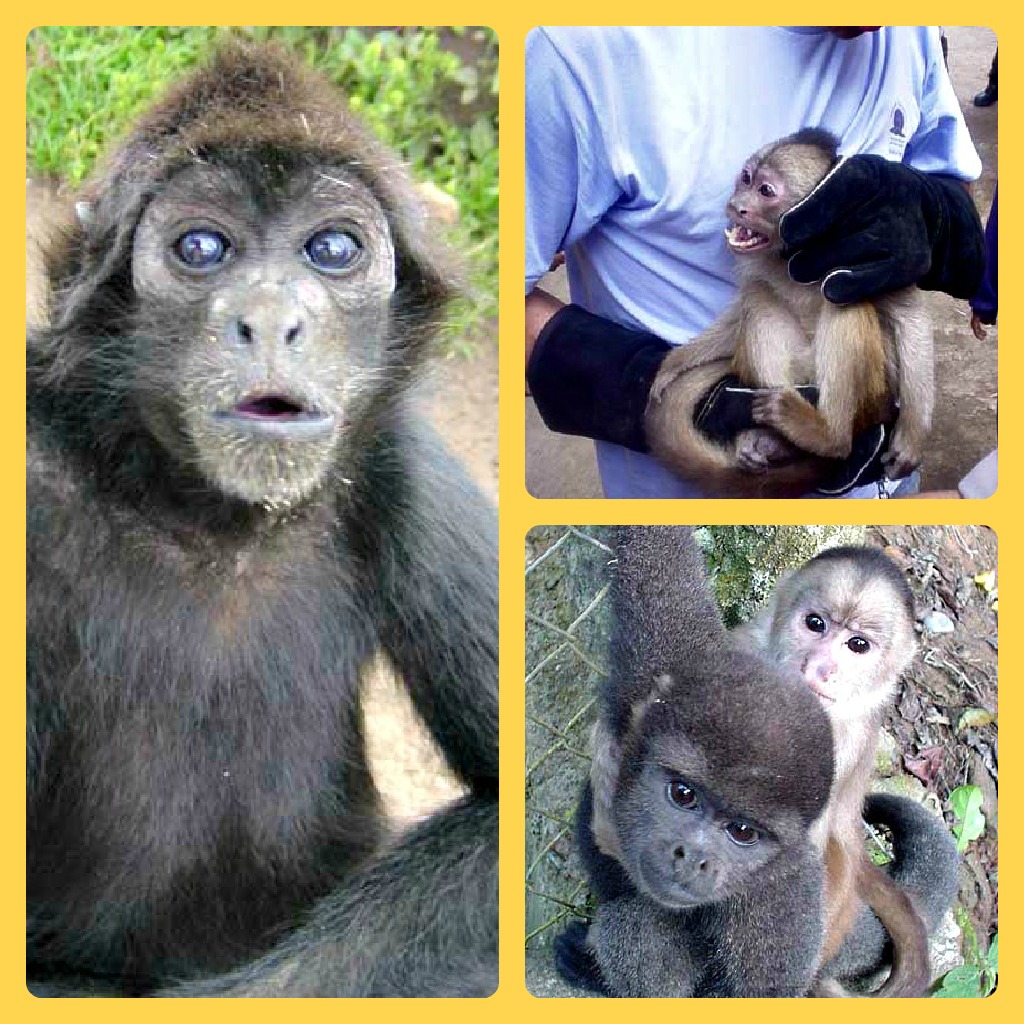
Hi there, folks! Yes, I’m here today to do a bit of shameless self-promotion. Can you ever forgive me? Listen, my book is called That Bear Ate My Pants. As the title suggests, it’s a ridiculous romp of a travel book, based in an animal refuge in Ecuador where I spent three months volunteering. (Some of you have already had a taste of these adventures from the first post I wrote for the Displaced Nation: “I traveled in search of adventure, and ended up embracing a simpler life.”)

To say that working for an Ecuadorian animal shelter was a struggle is an understatement. To say it was a struggle to stay alive — and avoid being eaten by bears and other exotic animals — well, that’s a little closer to the truth…hence the book’s rather provocative title!

Writing a book has often been likened to a Herculean task (usually by the author responsible, who inevitably believes himself to be unappreciated!)

Well, this one — my first — took me six years to complete. Not because the level of effort needed to write it was greater than for any other book; rather, because  — to continue the Olympic analogy — I’m an exceptionally lazy athlete. I’m pretty much guaranteed to come last, but then, nice guys usually do. 🙂

In fact, the only thing remotely Olympian about this book is the number of free downloads it’s had! In one sense, new authors and budding athletes are exactly alike: we all REALLY care about are our stats! My book has only been available for free on Amazon once before, in February, and there were a staggering (if I say so myself) 22,701 copies downloaded in just two days! Needless to say, this earned the book a place right at the top of the charts, which is exactly here I’m hoping to send it today.

So without further ado, here is a brief excerpt from my adventures, to tempt you, and all of your travel-(and animal-)loving friends, to want to read more.

Excerpt from That Bear Ate My Pants!

“MONKEY!” I shouted, as a brown blur swung out of the cage and onto the path.

The chase was on.

He skipped away with incredible speed, dodging around the corner and heading for freedom as though he’d thought of nothing but this moment for years. I bolted after him, grabbing the edge of a cage to swing me round in hot pursuit. The monkey was a good way ahead of me, and far more maneuverable. But I was faster on the straight. I accelerated down the narrow corridor between enclosures, and was closing the distance between us when he reached the steps down to the main road through the farm. This was my chance — if he paused, if he found the stairs confusing, I’d be on him. But no. Being a monkey, he didn’t have much use for stairs. He just jumped.

He made the ten-foot leap to the ground with ease, landed on all fours, and scurried off down the road. Pounding along behind him I had less than a second to make the choice. If I slowed to negotiate the stairs even part of the way down, it would all be over. Once he reached the trees by the first bend in the road he’d be gone for good.

Time was up. I reached the top of the steps at a dead run and launched myself over the edge.

In the seconds I was airborne my entire life flashed before my eyes. I seemed to have spent a disproportionate amount of it chasing monkeys.

Somehow I landed on my feet, with bone-jarring force. I was only a step behind the monkey — my leap had taken me considerably further than his — but my body was moving too fast for my legs. I managed to push off with my feet at the same moment as I started to fall headlong on the ground. The result: I bounced forwards another metre, sailing high above the form of the fleeing monkey, then crashed to earth and flattened the fella.

The impact knocked the stuffing out of me. It temporarily turned the monkey two-dimensional. Pain shot through me. I felt like I’d fallen ten feet onto a small primate. For the monkey it must have been like being beaten around the head with a banana tree. For a split second neither of us could move.

He recovered quicker than I did. Amazingly he wriggled out from under me and leapt towards freedom, just as I, still lying prone, reached out with both arms and caught him.

Unfortunately I could only catch him around the middle. Which meant that while he wasn’t going anywhere, he wasn’t particularly happy about it.

In far less time than it takes to tell the monkey writhed around in my grasp and sank his fangs into my hand.

“ARGH!”

The monkey switched his attention to my other hand and bit down hard.

“Arrr!” I shrieked. I let go with the recently bitten hand, but I had no other options — I had to grab him again or lose him. As I tried to grab his neck he bit me again, puncturing the thick leather glove easily and scoring my vulnerable flesh. Again and again he bit down, faster than I could even register the damage.

I lay on my belly, flat out on the floor, both arms outstretched in front of me and both hands wrapped around a frantically flailing ball of teeth and rage. There was sod all I could do — without my hands free I couldn’t get to my feet, and without standing up I had no way of controlling the beast. It was not the first time I had the thought; what the hell was I doing in Ecuador?

To Be Continued…

*  *  *

So if you’re a Kindle owner (or want to be), head straight on over to Amazon and grab a copy while it’s free.
If you’d like to read a copy but don’t have a Kindle, here’s a link to the free software that allows you to read Kindle books on any PC or Mac, tablet or smartphone.  (Otherwise, I’m afraid you’ll have to wait for the paperback…)

And let me know what you think in the comments!

STAY TUNED for tomorrow’s installment in ML Awanohara’s new series, “Lessons from Two Small Islands.” NOTE: The post by Tony James Slater that was scheduled for today — a Displaced Q on the Olympics and nationalism — has been postponed to early August.

If you enjoyed this post, we invite you to register for The Displaced Dispatch, a round up of weekly posts from The Displaced Nation, with seasonal recipes, book giveaways and other extras. Register for The Displaced Dispatch by clicking here!

Related posts:

Images: Tony James Slater in Ecuador with his simian “friends”; book cover.

TRAVEL YARN: A second date with Rome

Kym Hamer, an Australian expat in London, joins us today as guest blogger to share her version of a Roman Holiday — one of several trips she has made since having the continent of Europe and all of its history on her doorstep. Notably, for Kym, Rome doesn’t need Gregory Peck to be irresistible!

After 12 years away, I recently went back to Rome.

My only previous dalliance with the Eternal City was part of a “12 cities in 20 days” type tour that at the time, seemed to be the best option for getting a taste of Europe in the three weeks of holiday I had available from my job in Australia. You see, when you’re coming from the other side of the world, the flights are long and expensive, so there needs to be a pretty high rate of return for the time and money invested.

It was an amazing holiday. I visited a whole range of places — some hotly anticipated, some moving me unexpectedly, some not quite what I had hoped for. Each got 1-2 days with an experienced tour guide who made the queues disappear, added humour to the gruelling schedule and brought each city to life with her own blend of historic narrative and personal storytelling.

But each stop allowed no more than a brief and flirtatious encounter, the faint ripples disappearing almost as quickly as they were made by the time I’d left. Each major European city, Rome included, made its impression but was quickly over-run by the next.

Living the dream in London

When I moved to London from Melbourne more than eight years ago, it was the third time I travelled to the UK’s capital in four years. The first time I had been drawn for a week and the second time for four days — both times before a longer “whistlestop” tour of the sort just described. And on both of these visits, I split my time between “tourist” and “traveller,” between the seeing what I wanted to see and the aimless wandering: immersing myself in the city streets, using the local transport and chatting with the natives. One way and another, I got the true taste of the city that was to become my home just a few years later.

I love history and I’ve read it — beginning in the guise of historical fiction (by the likes of Jean Plaidy) through to Simon Schama, Alison Weir and several others — since my very early teens, always trying to imagine what those real worlds, leaping off the pages in front of me, were actually like.

Once I’d moved to London, suddenly I felt I was living the dream (albeit one never particularly aligned to that city). I still stand on Waterloo Bridge at night, gazing at all that history along the riverbank reflected in the Thames, pinching myself and wondering: “Wow, how did I get here?”

Was it a love of history that had tempted me across the world? Not really…there were other candidate cities, but the “right” circumstances conspired with a passionate fling to bring me here. And just as you never know where things might lead in life, the fling came and went, yet London had captured my heart.

The grass still looks green(er)

But my yen to explore means there’s always a sense of looking over the fence (so to speak) with curiosity. What’s it like over there? Would I like it? Be disappointed or even worse, nonplussed?

Which leads me to Rome and some of the other cities I’ve visited since living in London. Being able to hop on a plane (or train — the Eurostar is a pretty fabulous way to travel) and, in just a couple of hours, walk the historic cobbled laneways of a completely different place is an extraordinary experience for any Antipodean. Only a few short hours is required to separate oneself from the familiar and the habitual.

European travel has an especially strong hold on my bucket list. For the most part, Australia’s history is both inextricably linked to and considerably newer than anywhere on the Continent, even though some of the names and boundaries may have changed since I first learned of these faraway lands in the schoolroom.

Of course, nothing can ever take you back in time to know truly what it was like standing at The Green at the Tower of London or inside Newgrange passage tomb in Ireland’s Boyne Valley or atop Hadrian’s Mausoleum — now known as Castel Sant’Angelo — in Rome.

But in the Eternal City, there’s a deep sense of generations past, not just battles won and lost and the rise and fall of the empires that at one time or another shaped “the world” — but also everyday trifles, evidence of the “day-to-day” living of previous generations (take, for instance, Trajan’s market, the “shopping” centre where people went to buy their fresh produce). Both strands of history — the extraordinary and the quotidian — are accessible and visible everywhere.

Second-date nerves

There’s always a part of me that feels a little nervous when I first arrive somewhere new — a piece of me that says, “You could stay in the hotel room tonight, read your guidebook a bit more and be really sure when you set out tomorrow morning.” And it takes some mustering of courage to stop dawdling and plunge right in.

I’m always glad, invigorated actually, once I set off but I guess that essential human-ness in us wants to avoid the risks and keep ourselves safe and sound.

The Rome I had encountered on our first date, before moving to London, had grown faint and unfamiliar. But on this second Roman Holiday, I surprised myself by diving right in to its sights, sounds and smells. I was out the door just an hour after checking in to my hotel. Not for me the lolling about to “recover” from my travels. No way. I had only four days and I wanted to fill it with…well, Rome. It was an immersive experience I was after.

So I walked down from Quirinale in the darkening streets as night fell, map in one hand, camera in the other, my eyes filled with wonder and excitement. A stranger in the night if you will: with no local knowledge, limited lingo (si and grazie get you only so far) and quite frankly no idea where I was going. Tingling and a little breathless with the thrill of discovery somehow I found my way through the warren of streets to the Fontana di Trevi.

And the four days flew by. I walked and bus-sed and walked and Metro-ed and walked and cruised and walked some more. Compact and exuberant, Rome spreads its charm around every corner. The noise and busy-ness were energising although the traffic in some of the piazzas less so.

(I always imagined piazzas to be intimate and bustling, even green, rather than spacious, concrete or filled with litter. So the Piazza Navona and Campo de’ Fiori — the latter translates into “field of flowers” — were amongst the few “oh, is that it?” moments.)

A piece of my heart

From my coin toss into the Trevi on that first night to my final morning meandering in the warm rain through the gardens of the Villa Borghese, my second encounter with Rome has moved us beyond the acknowledgement of two passing strangers. But while we are not yet close friends, there’s a piece of my heart that’s indelibly stamped with a sense of delightful possibility.

Will I return to the Italian capital for a gentle kiss, for one more embrace perhaps? I don’t know but it’s exciting, exhilarating, a little self-conscious and filled with promise.

Just like Rome.

Born and raised in Melbourne, Kym Hamer has worked in London in sales and marketing for the past eight-and-a-half years. She writes the popular blog Gidday from the UK. Also follow Kym on Twitter: @giddayfromtheuk.

STAY TUNED for tomorrow’s Random Nomad interview with an American who has taken the “phile” in Anglophile to an extreme.

If you enjoyed this post, we invite you to register for The Displaced Dispatch, a round up of weekly posts from The Displaced Nation, with seasonal recipes, book giveaways and other extras. Register for The Displaced Dispatch by clicking here!

Related posts:

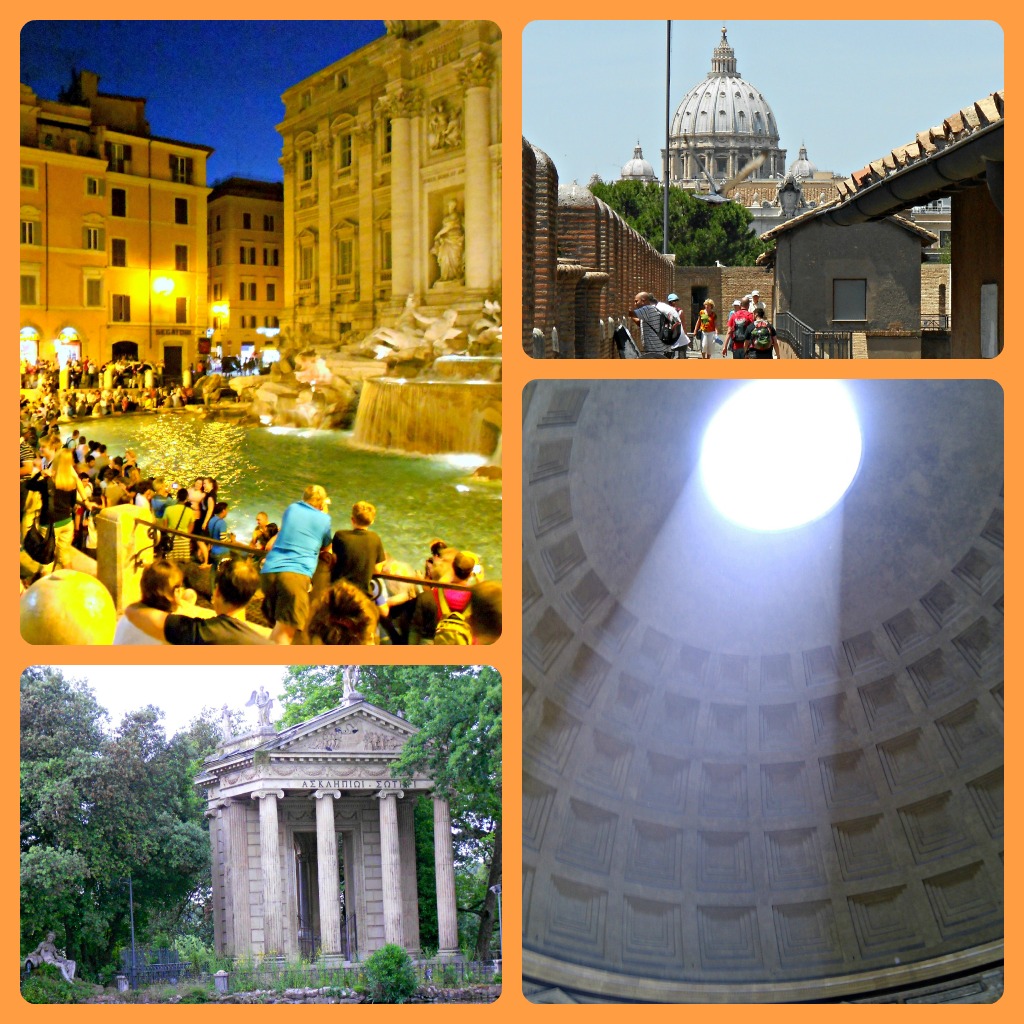
Images: Some enchanted moments from Kym’s second date with Rome. Clockwise from top left: Off peak at the Trevi Fountain (“busy, yes, but somehow still magical”); the Vatican from the battements of the Castel Sant’Angelo; sunlight pouring into the Pantheon; the Giardino del Lago at the Villa Borghese.

Living La Dolce Vita with Heather Hamilton — Writer, Sailor & Adventurer

One year ago almost to the day, Heather Hamilton and her husband cast off their docklines in Annapolis, Maryland, in their 40-foot ketch. Since then, they’ve covered over 3,500 miles, up the east coast of the U.S. and down through the Caribbean island chain. Life on the open seas with nary a care in the world — sounds like La Dolce Vita, doesn’t it? I asked Hamilton to share the sensory highlights of her nautical adventures, along with a few “sweet life” tips for confirmed landlubbers.

Most heart-stopping sights

On the terrifyingly heart-stopping end of the spectrum: the sight of my mizzen-mast rocking back and forth (definitely something you don’t want) while the boat lurched in 12-foot seas and 45-knot winds. It nearly caused a heart attack. It was our first coastal offshore passage, and we were already sleep deprived and exhausted by the time the storm blew up overnight. We hove-to — that is, basically set the sails so that the boat could kind of “park” and wait out the blow. Pip was below, trying to get some rest, when I noticed that the mizzen sail just kept getting looser and looser, despite my many attempts to tighten it. Then I noticed the mast moving. PANIC!

Turns out, we had just had the rigging replaced, and during the big storm the new rig decided to undergo its initial stretching. The loosening of the stays had allowed the chocks to fall out of the mast’s base.

Despite the howling wind and lurching seas, Pip was able to tighten the rig and replace the chocks — only to discover that the pounding into the waves had splintered the bowsprit platform. After hours of work, we had finally secured the boat. We collapsed in a heap for some rest.

On the heart-stoppingly beautiful side of the spectrum: the hundreds of dolphins that danced around us on our trip down the Chesapeake Bay from Annapolis to Norfolk, Virginia. Despite having spent my childhood sailing with my dad in California and having sailed for five years on the Chesapeake, I’d never seen dolphins in the wild. On this particular day, I saw more than I’ve ever seen since: the pod stretched literally further than the eye could see. We radioed a sailing buddy who was two miles ahead of us and he was also surrounded. They played in our bow wave and did acrobatic flips around the boat — but the most astounding thing was their sheer numbers. Hundreds is probably an understatement; there may well have been a thousand dolphins frolicking around us. It was magic.

Most intoxicating scent

Ganja. It’s ever-present in many of the Caribbean islands, and its characteristic skunky smell is nothing if not intoxicating. Local youths and gnarled old rastas alike lounge around the town square smoking their joints; in certain places you get the impression that half the population is stoned. Boat vendors — the men who approach your boat in an anchorage to help you anchor, sell you fish/fruit/veggies, do your laundry, or otherwise do just about anything you will pay them for (uh, no thanks…) — seem particularly fond of weed, often puffing away as they row their boats along.

As we entered a bay in St. Vincent, one particularly ill-mannered vendor shouted at me for declining his services. He sported a spliff literally the size of a stogie, leading Pip to dub him “Stoner Churchill.” His aggression was surprising. Given the amount of weed he’d clearly ingested, one would have expected a much mellower response!

Dreamiest sounds

When I was at home, I had a fancy-schmancy alarm clock that allowed you to fall asleep or awaken to different sounds, like a Zen bell or running water. My two favorites to listen to while falling asleep were the ocean waves and the frogs. Who doesn’t love to fall asleep to the sound of surf? And the sound of the frogs reminded me of the few weeks every spring when the spring peepers went wild in the remote Appalachian area where I grew up.

One night, when we were moored in the national park in St. John, U.S. Virgin Islands, I fell asleep in the cockpit to these two sounds playing in harmony: the real surf gently breaking on the rocks only a hundred yards from the boat, and the nighttime frogs’ chorus providing the treble counterpoint. Heaven.

Most delicate flavors

Tree-ripened mango in Dominica — actually, the taste itself is nowhere near delicate, but I enjoyed the subtle distinctions between the different kinds of mango the island has. We arrived in Dominica in mid-April, just as these tropical fruits were coming into season. Everywhere you looked, sticky children and adults were peeling mangoes and gnawing the flesh off the seed as they walked down the street, chilled on their porches, or waited for the bus. Mangoes rolled in the gutters, where they became treats for street dogs and chickens. Since mango trees are everywhere, it’s simple to pick up a long stick and knock down a few ripe ones anytime you get the craving.

One day, we hiked several miles to the top of a hill where we were greeted by the sight of a stunningly beautiful little farm nestled in the jungle. There were coconut palms, banana trees, taro and sweet potato plants cascading down the steep hills. The farm’s owner, Ti-Babe, was a gnarled old man with approximately six remaining teeth and the warmest smile and eyes you can imagine. Ti-Babe answered all of our questions about his farm before insisting that he load us up with mangoes, peeling open both the large and small mangoes he grew so that we could taste the difference between the two. (The smaller mango had an amazing flavor, with a little sour to balance the sickly sweetness characteristic of a really ripe mango, but was very fibrous.) We sucked on mangoes the whole way back, arriving back at the boat exhausted, sticky and sated.


Softest physical sensations

The feel of the current across my skin while floating along snorkeling in perfectly clear turquoise waters, bright tropical fish flitting underneath in the dappled sunlight. (Pretty much every other physical sensation on a cruising sailboat is intense, painful, or just uncomfortable!)

Most interesting unexpected encounter with a stranger

The other day, I talked the owner of a local beach bar in Bequia, the largest island in the Grenadines, into allowing me to write an article about how she makes her roti, which are a flat bread wrapped around curried fillings, a kind of West Indian burrito. I’d heard that her roti were excellent, but was most intrigued as other sailors had cautioned me that she took a long time to make them — mixing and rolling out the tortilla-like dough for each order rather than making several in a batch. We’d chatted with Ruthie briefly at the bar the day before, when her eight-year old son proudly served us our beers. Her wicked sense of humor promised a fun afternoon in the kitchen.

Ruthie chopped ingredients for the fillings and then walked me through the labor-intensive process of creating the dough, which involves folding cooked, mashed yellow split peas into a flour dough and then rolling it out carefully. While the dough rested, she demonstrated how to make the fillings — both the vegetarian (black-eyed pea/pumpkin) and fish kind, both of which are strongly flavored with Trinidadian curry powder, which is milder and sweeter than the spices used for Indian curries in the States.

As Pip and I tucked into the final, delicious product, we invited Ruthie to sit with us and chat — and that’s when the real fun started. She regaled us with stories of island life, including a side-splitting story about a gay dog she once had. We talked about life and politics and travel, laughing the afternoon away over beers and her delicious food. It was the first serious conversation I’ve had with a local that lasted more than ten minutes, and I know that when we return to Bequia in the future, I’ll seek out Ruthie right away to catch up and continue building our friendship.

The place that stimulates all five senses

Because my life is constant travel, my boat is that place. Living on a voyaging sailboat means that your senses are constantly being stimulated — and not always in pleasant ways. You are stimulated for instance by the smell of a full holding tank, the sight of an approaching squall, the sound of a storm howling in the rigging, the sensation of a rough anchorage that makes you seasick in your own home, and the bitter, dry taste of fear. On the other hand, taking your home with you opens amazing possibilities: staying in one place for long enough to really get to know it; taking days off to do nothing, knowing that another hike or snorkel or town will be there the next day to explore; meeting not just locals but adventurers who have sailed from all over the world; and — most importantly — going to sleep every night in a bed of your very own, cats cuddled at your side. A sailor’s life is bittersweet.

Favorite artist with a sense of dolce vita

In the British Virgin Islands, I was entranced by the art of a man named Aragorn, who had started an artists’ cooperative, complete with pottery studio and organic garden, in the town of Trellis Bay. Every month, Aragorn’s Studio hosts a full moon party, a traditional Caribbean jump-up held on the beach. Trellis Bay’s party is legendary because of Aragorn’s art. Known for his sculpture, Aragorn recently started creating large outdoor fire sculptures: steel spheres, pyramids or cubes that come to life with fire. He hand cuts elaborate silhouetted shapes into the steel to tell a story. On full-moon night, he mounts these sculptures in the sea just beyond the shoreline, fuels them with firewood and sets them ablaze. The roaring fire within the sculptures, each of which is the height of a man, makes the almost prehistoric-style figures seem to dance in the darkness, evoking the earliest cave paintings. All of the elements — water, earth, wind, fire — combine to evoke a kind of primal beauty.

Favorite travel quote

“Every great and commanding moment is the product of some enthusiasm.”

— Ralph Waldo Emerson

I truly believe that without enthusiasm, life risks not only being terribly boring, but meaningless as well. Great things do not generally occur because one stumbles into them, but instead are the product of passion. Travel, with its many discomforts and trials, requires that one persevere with enthusiasm and passion. If you manage to do that, you’ll be rewarded accordingly — with great and commanding moments.

Advice for living la dolce vita under more mundane circumstances

The very same thing that makes travel great — but takes the most work — is something you can do at home: seek out new experiences and take the time to talk with people you meet while having them. I spent 15 years in Washington, DC, and while I hit the art museums more than some people would, I certainly didn’t begin to plumb the depths of experiences I could have had in that city. I wish I had taken the time to attend a service at the African-Methodist-Episcopalian church around the corner, whose rockin’ gospel shook the neighborhood windows every Sunday morning. I didn’t take any funky, historical tours or visit the off-the-beaten-path attractions. Most importantly, I didn’t take as much time to talk to people about their lives as I would have liked. When I travel, I’m good at asking questions and drawing people out; at home, I was in such a hurry to get things done that I didn’t take the time to ask the quirky characters omnipresent in any city about their lives. Travel is definitely a state of mind, a way of becoming an observer rather than a doer. Take a day now and then to become a traveler in your home town; it’s amazing what stories people have to tell.

A self-described “overachieving save-the-worlder” who used to run an international affairs advocacy group in Washington, D.C., Heather Hamilton is enjoying her newest incarnation as a writer, sailor and adventurer in the company of her husband, Pip Fryers. (Fryers has been sailing since he was a wee laddie in the Lake District of northern England.) You can learn more about this adventuresome pair and see where their boat is right now on their Picaroon Blog.

STAY TUNED for tomorrow’s post, another expat book review, by Kate Allison.

If you enjoyed this post, we invite you to register for The Displaced Dispatch, a round up of weekly posts from The Displaced Nation, with seasonal recipes, book giveaways and other extras. Register for The Displaced Dispatch by clicking here!

Related posts:

Staring at the sun — and 3 little “nothing” moments in my displaced life

Yesterday in San Francisco, at the corner of Folsom and 8th, I saw a middle-aged man holding up a sheet of dark glass and staring at the sun through it. “It’s beautiful,” he said to me as I passed him on the sidewalk, “so beautiful.”

I smiled in reply to him, secretly wary that he just another cracked, panhandling prophet in a city full of them.

“Do you want to look at the sun through it?” he asked, indicating his sheet of glass. I looked at him confused. “It’s welder’s glass,” he said by way of explanation.

Yes, he must be mad, I thought, and just before I was about to smile a “no, thank you,” and carry on walking, albeit at a hurried pace, he held the glass up at me, and through it, like some wonderful magic trick, the sun appeared as dark disc apart from a brilliant cresent of light at the bottom. That there was a partial solar eclipse had completely passed me by. I hadn’t been able to see the effect with the naked eye, the sun looked larger, a little hazier, but nothing out of the ordinary and it would have passed me by, but here on this particularly street corner was this happy, smiling man performing what at first seemed like a magic trick, and making sure that a small moment of joy wouldn’t pass me. So I took hold of this stranger’s sheet of glass and looked straight at the sun through it, and he was right — it was so beautiful.

This week, The Displaced Nation asked if I could write about three chance encounters experienced in my adopted homeland that I found moving or bittersweet. Moments like I experienced yesterday on Folsom and 8th.

This ties in with an idea that has long interested me, and inspires my personal blog, Culturally Discombobulated — it’s what I think of as little moments of nothing*. Moments that on the surface may seem mundane, or insignificant, but that move you or are the catalyst for deeper thoughts. My own little dipped madeleines.

As this is something I do at times on my personal blog, I am going to reproduce here three little moments of nothing that I have already been posted over there.

—————————————————————————————————————————————————-

1) A rock and a hard place

A garage forecourt in Kingman, Arizona is not the sort of place you expect to visit on a sightseeing tour. But a sightseeing tour is precisely what I am on, and a garage forecourt in Kingman, Arizona, is precisely where I find myself. In fact, this is the second time today I’ve found myself on this same depressing patch of asphalt.

To be fair, I should clarify that I have been on a bus tour of the Grand Canyon and now, late in the day, we are making our way back to Nevada. We’re certainly not stopping in Kingman for reasons of historical interest. We are not here to learn that it was in Kingman that Clark Gable and Carole Lombard were married. Gable driving the two of them all the way here from Hollywood in his cream-colored roadster during a break in the filming of Gone with the Wind. In the town they purchased a marriage license from a dumb struck clerk named Viola Olsen before being married by the nearest Methodist Minister they could find. We are not here to learn about the town’s connection with Route 66. We are not here to learn that it was in Kingman that Timothy McVeigh renounced his US citizenship, turned his home into a bunker and began making homemade bombs.

No, this is a purely pragmatic stop; a convenient place on the I40 to stretch the legs, grab a bite to eat, and empty the bladder. In the morning on our way out to the Canyon we stopped here. I bought a ham sandwich at a Chevron garage as I couldn’t stomach the thought of my other option — McDonald’s — that early. The women working in the garage were pleasant, hefty, corn-fed girls. All three had the same hairstyle, an architectural triumph of ringlets and hairspray piled high atop their heads, it looked like it belonged in a 1987 High School Prom. Once back outside on the forecourt a number of men tried to pan-handle me. There was, I thought, something off about the place. By its very nature, you expect a stop like this to be full of folks on the move, but instead there was an unsettling stillness. A number of the people gave off the impression that they’ve been standing around in this same forecourt all their adulthood. It could be that some of the sketchier elements in the town have a rough idea of what the sightseeing bus’s itinerary is — and they come especially and try and get some change out of the tourists.

And now after a long day, we’re back. A bus load of predominantly foreign tourists, here to pay a brief visit like some cut-price UN delegation: Japanese, Thai, Italian, Canadian, French, Australian and British make up our contingent. Some of us are loud and overbearing, and some of us think that everything needs to be documented by our cameras, and some of us have spent all day complaining, and some of us have spent all day gushing in delight, and some of us — if the snoring has been anything to go by — have spent all day asleep, and we are all thoroughly sick of the sight of each other.

Thanks to the evening breeze, the forecourt smells even more strongly of gasoline, pitch and fried grease than it did earlier. Off we all trot, against my better judgment, to the McDonald’s. Every night it’s a different cast, but it’s always the same show that the locals get to enjoy when the sightseeing tour stops here: a tired group of hungry tourists that mewl and bark and garble in their strange tongues and accents. We soon take over and overwhelm the McDonald’s; we create long lines for the toilets, even longer lines for the food along with a white noise of strongly accented English and misunderstood orders.

It’s all too much for one Arizonian. I think it’s one of the men that pan-handled me early in the day. He has a similar looking beard, the same sun-blistered complexion, and the same jittery demeanor.  He is angry with the Frenchman queuing behind him for what he perceives as an invasion of his personal space, and he is getting irate with how long it is taking the Turkish family in front of him to order, but their English is poor and they and the cashier are struggling to make themselves understood. When he finally gets to place his order and is waiting for his chicken McNuggets, he scans carefully all of the other people waiting in line, and scowls at these interlopers with their ridiculous anoraks and backpacks. He takes his McNuggets and barges his way out through the line, needlessly aggressive. As he passes, he elbows me. “F***in’ furriners,” he mutters.

——————————————————————————————————————————————

2) “In my father’s house.”

The shoes of the man sat opposite me on the “E” train are made from black leather, long since scuffed to grey. They are on the whole unexceptional, but for a large fleur-de-lis that has been embossed below the lacing. Their one time appropriateness for special occasions has been worn away.

On the subway and on the underground I often find myself staring intently at the shoes of my fellow passengers. It is not from a fetish, it is just that I keep my eyes on the floor, avoiding eye contact with those around me, or I keep my eyes on the page of a book I am reading. A few minutes before, when we pulled into a station, I stopped reading, put my book on my lap, and cast my eyes to the floor. Occasionally a glance is stolen, such as the one I make at the man wearing the fleur-de-lis shoes. He is a thin, middle-aged black man wearing a blue suit that like his shoes is faded by wear.  He sings “In my father’s house.” Well, he sort of sings “In my father’s house.” It is not the whole hymn that he regales the train with, it is just that one phrase — half-sung, half-shouted every thirty seconds or so. Looking up I see that most of the other passengers have their eyes to the ground, particularly when he sing/shouts “In my father’s house,” though every time he does that he looks around. I don’t feel he looks around for a reaction, but for recognition. Perhaps feeling that things have descended again into commuter quietness, he again sing/shouts “In my father’s house.” I put my eyes to the floor and look at the fleur-de-lis pattern.

Queens Plaza is his stop. As he leaves the train, he notices the book in my lap — God: A Biography, by Jack Miles. He seems happy with my reading material and looking at me, he sings/shouts “In my father’s house” as if I’m the only of his “E” train flock that understands the importance and virtue of his ministry. Then he leaves the train before I have time to explain that reading a book called God does not make me virtuous as he might think it does, and that the book is a critical look at the Old Testament. It considers God a literary character and so casts him in the light of literary theory. Not that I would have said that if I had the time.

————————————————————————————————————————————————–

3) Angels and iced tea

In this almost empty coffee shop three elderly women, lifelong friends perhaps, crowd round a table and converse over iced tea. They talk at length about their new pastor, about his energy and his youthfulness. They talk at length about angels, about their unwavering belief in them and their experiences of them. The loudest of the women, her hair an unconvincing shade of red, starts to talk about her youngest granddaughter — about how she’s as sharp as a tack, but hasn’t she started asking the trickiest of questions. The red-haired woman confides to her two companions that she has spoken with their youthful and energetic pastor about how to respond to these questions.

For instance, she tells the other two, only the other day the granddaughter had said, “Grandma, why do we have to go to Church?”

She was, she freely admits, flummoxed by how to answer, but then she remembered the pastor’s words. “Aw, sweetie, that’s a matter of faith.”

Yesterday, she continues, when she was driving her granddaughter home from school the girl had asked, “Grandma, why do we call trees trees?”

She once again patiently said to her granddaughter, “Aw, sweetie, that’s a matter of faith.”

In the almost empty coffee shop the three women gently laugh at the ridiculous things that children say, take a sip of iced tea, and start talking about angels again.

*The film director Max Ophüls once wrote about art: “Details, details, details! The most insignificant, the most unobtrusive among them are often the most evocative, characteristic and even decisive. Exact details, an artful little nothing, make art.” Most of my life I seem to spend in search of moments of little nothings that I end up attaching great importance to. It probably makes me a nightmare to deal with it as a friend or companion.

STAY TUNED for tomorrow’s post, an account of la dolce vita from a fresh perspective!

If you enjoyed this post, we invite you to register for The Displaced Dispatch, a round up of weekly posts from The Displaced Nation, with seasonal recipes, book giveaways and other extras. Register for The Displaced Dispatch by clicking here!

Related posts:

Is there a common theme — or better yet meme — for the expat life?

After writing, planning, commissioning, and editing posts for this site for just over a year — many of which were centered on the keyword “expat” — I have become rather fixated on that word of late.

Yes, we’re back to that old chestnut, but kindly indulge me while I rake it over the coals again and crack it open to take another look.

Back when I myself could have been considered an expat — first in England and then in Japan — I assiduously avoided describing myself in that way. It made me think of the kinds of people who go into a siege mentality, circle the wagons and say: “Right, it’s just us now.” I’m sure you know the kind of expats I mean, the ones who live in a colony or compound, or socialize as if they do. They hang out at the pool drinking G&Ts, exuding a sense of cultural superiority — along with great pride in having remained unassimilated.

After all, if you’re an expat, it means you come from the richer part of the world; otherwise, you’d be an immigrant.

Nowadays, I’m an American living in America, but I simply tell people that I used to live abroad. If I use the word “expat” at all to refer to myself, it’s in inverted commas: “Yes, I suppose I was an ‘expat’ for all those years. And now I’m a ‘repat.’ Hahaha…”

What about you? If you are reading this, chances are you are (or have been) someone who has ventured across borders to travel and/or live. How do you refer to your predicament? (BTW, my choice of “predicament” is the result of cultivating a British sense of humor over many years of living on that sceptered isle — no, not as an expat, but as an international resident!!!)

Maybe unlike me, you don’t have any hang-ups about calling yourself an expat — and think that people of my sort are inverse snobs for rejecting the label?

As the blogger Tabitha Carvan (The City That Never Sleeps In) has written:

To the Vietnamese who live around me, it’s clear where I fit in here: I don’t. The differences between us are as plain as the enormous nose on my big fat face.

So is it fair to say we’re all “displaced”?

One of the other founders of The Displaced Nation, Kate Allison, is an Englishwoman who has lived in the United States for more than 15 years. I sometimes think of her as an immigrant, except that she tells me she keeps a foot on each side of the Atlantic.

Strangely, I did not wince at all when Kate Allison proposed the word “displaced” as a descriptor for our common situation, when she and I were first chatting about starting up this site.

Well, perhaps I winced just slightly. I know from my studies of international affairs that “displaced” is often used for people who are forcibly removed from their homes by natural disaster, famine, civil wars and other tragedies.

In this narrow sense, “displaced” in no way applies to me, Kate or others of our ilk, who have led privileged lives.

But in a broader sense, I had to agree with Kate that “displaced” seems a good fit. As the Italian poet Cesare Pavese once said:

Traveling is a brutality. It forces you to trust strangers and to lose sight of all that familiar comfort of home and friends. You are constantly off balance. Nothing is yours except the essential things – air, sleep, dreams, the sea, the sky — all things tending towards the eternal or what we imagine of it.

If there is any common theme that applies to all of us, surely it’s that sense of being “constantly off balance,” as Pavese so aptly puts it. By trotting off to investigate — and live in — far-flung corners of the globe, we are casting off the balance of our lives and choosing a life where, for a while, the only things we have in common with anyone else are the basics: air, sea, sky, sleep, dreams — a life of displacement, in other words…

And in some cases — Kate’s would be an example — we are trailing others who have made this choice on our behalf, or on behalf of family and kids. (See her “Libby’s Life” series.)

Always look on the bright side of life!

In an article last month for the FT, Edwin Heathcote had this to say about what he called “a life less ordinary”:

The expat experience combines a cocktail of the thrill of the new and the ennui of global alienation, of displacement and dislocation.

Readers may wonder why the founders of The Displaced Nation have chosen to emphasize the negative ingredients of this cocktail. After all, the meaning of “displaced” is only a shade or two away from “misplaced” or “out of place.”

Why not look at the bright side instead — the allure and the thrill of a life overseas?

Well, the fact is, the founders of The Displaced Nation don’t necessarily see displacement as a negative. As shown in numerous ways on this site over the past 12 months, it’s a necessary first step in making the leap beyond the known to the unknown — to feeding what for many of us is, or soon becomes, an insatiable hunger for new ways to knowledge.

By becoming displaced, we open up our minds to new forms of

Now if that isn’t the bright side, we don’t know what is!

Keep ’em laughing as you go

As far as our site stats go, readers have most enjoyed the series of posts where we’ve explored the good and the bad, the yin and the yang, of the displaced life, with a large helping of humor thrown into the mix.

1. Alice in Wonderland

Top of the charts is the month that we dedicated to the “curious, unreal” aspects of the displaced life with the help of Lewis Carroll’s Alice.

When you stop to think of it, barging into other people’s countries is rather like falling down a rabbit hole: full of adventure but also misadventure, of curious — and sometimes scary (because so incomprehensible) — encounters.

Kate Allison produced two brilliant posts illustrating just how unreal things can sometimes get: “5 lessons Wonderland taught me about the expat life, by Lewis Carroll’s Alice,” and “How many of these 5 expat Alice characters do you recognize?”

Meanwhile, Guest blogger Carole Hallett Mobbs kept us in stitches when describing the scenes of young adults dressed up in furry romper suits, “doormice folk,” and flying potatoes that formed the backdrop to her everyday life in Japan.

2. Pocahontas

Readers also appreciated the month when we recruited the legendary Pocahontas to help us understand, from a native’s point of view, what it’s like to be bombarded with clueless nomads.

In particular, we focused on the cases when displaced types befriend, or even marry, the natives, causing them to lead displaced lives (sometimes to tragic effect — I’m thinking not so much of Pocahontas, but of her tribe!).

I weighed in with a post that was partly based on my own experiences: “Cross-cultural marriage: Four good reasons not to rush into it.” Somewhat to my bemusement, the post proved extremely popular — that is, until it was surpassed by new TDN writer Tony James Slater’s hilarious (but with a hard kernel of truth) “Does love conquer all, even language barriers?”

Counterbalancing Tony’s and my cautious take on such matters was a two-part interview series with two cross-cultural couples — all of whom seemed to find their situation “no big deal.”

That blasé sentiment would later be echoed by Wendy Williams, author of the new work, The Globalisation of Love. In a guest post in honor of Valentine’s Day, she pointed out that in an era of increased international travel, multicultural unions are an inevitability — and even deserve their own label: “GloLo.”

3. Global philanthropy

Another monthly theme that earned high marks from readers was “global philanthropy” — the idea of displacing oneself on behalf of the forcibly displaced.

Readers responded with high praise for Kate Allison’s interview of Robin Wiszowaty, who immersed herself in Maasai culture and now runs development programs in Kenya on behalf of the Canada-based charity Free the Children.

Also popular was a feature on international aid worker and consultant Jennifer Lentfer. (Lentfer has received the most hits of any of the 40 Random Nomads who’ve been featured in the site’s first year.)

But even when covering this seemingly sacrosanct topic, we were hard pressed to prevent a note of skepticism, verging on irreverence, from creeping into the site. Guest blogger Lawrence Hunt stirred things up with his well-received post making fun of gap-year students who think they can save the world in just six months. And I wasn’t far behind with this one, still getting many hits: “7 extraordinary women travelers with a passion to save souls.” (Hey, the current generation isn’t the first to perform good works on behalf of those less fortunate!)

But is it a meme?

First, what is a meme exactly? My dictionary tells me it’s an idea, behavior or style that spreads from person to person within a culture.

Memes are the cultural analogues to genes that get selected and then self-replicate.

Is the kind of “displacement” we talk about on this site a meme? Not in the Internet sense — it hasn’t spread like wild fire throughout social media.

But has it been a meme within our community? You tell us — does “displaced” work for you, or is there some other organizing principle we should be using on this site? Expat, perhaps? (Groan…)

STAY TUNED for tomorrow’s post, a roundup of recent displaced reads by Kate Allison.

If you enjoyed this post, we invite you to register for The Displaced Dispatch, a round up of weekly posts from The Displaced Nation, with seasonal recipes, book giveaways and other extras. Register for The Displaced Dispatch by clicking here!

Related posts:


THE DISPLACED Q: What’s your most memorable birthday abroad?

Hi everyone!

Now, since it’s our one-year birthday here at the Displaced Nation — okay, let’s hear some crazy party horns <|8-P~ <|8-P~ — I thought I’d ask you about your most memorable birthday experiences whilst traveling. Crazy drunken escapades? Chance meetings with exotic strangers?

Everyone has a tale inside them, so it’s said.

Here’s mine… 🙂

It is better to wear out than to rust out.
Bishop Richard Cumberland

It was cold. Chillingly, bone-achingly cold — and wet. Rain drenched the outside of me, remorselessly overpowering every chink in my defenses. Neckline, accidentally exposed cuffs — all were soaking wet in spite of my otherwise impenetrable Gore-Tex-clad outline.

My fingers and toes were freezing. My feet were blistered. The bag on my back was so heavy I could barely breathe beneath its crushing weight, and the effort of carrying it was causing me to sweat profusely. It was very nearly as moist inside my clothes as it was outside them.

It was my birthday, and I was utterly, utterly miserable.

Now, spending a birthday hiking through the vast Australian wilderness can sound like a dream to some — whereas other people, more sensible than I, might think of it as more of a nightmare.

I was torn between the two. On the one hand, I was out there, achieving something awesome with the people I loved most in the world — my girlfriend and my sister. On the other hand…well, did I mention the rain?

It hadn’t stopped for two weeks straight.

So far the three of us had hiked over 150 miles in it, and to be honest my enthusiasm was getting a little damp.

I remember wondering what kind of idiot hikes nearly twenty miles in the filthiest weather known to man, with his only goal being to reach a three-sided wooden shelter where he could collapse exhausted? I would then go to sleep — on a bed made of planks — only to wake up the next morning and do it all over again!

Apparently, I am just that kind of idiot.

But extremes of hardship give you more than a feeling of triumph just for surviving; they also make you appreciate the little things.

On that particular evening, as I stripped off my sopping trousers and unrolled my sleeping bag, I had all but forgotten about my birthday. Back home I might have hoped for a novel the size of a house-brick or some awesome piece of electronic gadgetry; here, with no power, the light failing rapidly and a rucksack already verging on the spine-snapping, all I wanted was sleep.

But my girlfriend, Roo, was determined to celebrate. And she was nothing if not resourceful. It had been three days since we’d seen another human soul (unless you count my sister; I usually don’t) — yet somehow Roo had acquired and carefully preserved my present until now.

She unveiled it with a flourish: a marshmallow!

Unbeknownst to me, she’d carried it all the way from home unsquashed, in some hidden corner of her bag. In the top she stuck a tiny candle which she must have begged off the last group of hikers we met. The plan had been to use a match in lieu of a candle, she said, until by pure chance she’d met an old lady who’d been carrying this. Amazing!

I blew it out and made a wish. Actually I made two. “Please, God,” I thought, “let me be in a better place this time next year. Or, ideally, tomorrow morning. And more than anything, tonight, let me sleep…”

The marshmallow I would save for breakfast.

I slept remarkably well that night.

In the morning I woke up in the same place — but the sun was shining, a phenomenon I’d started to think I’d never see again! I stood outside in my underwear and luxuriated in the warmth, safe in the knowledge that no one would see me. Something was going right for a change, and that by itself was a minor miracle.

A pity the same couldn’t be said for my marshmallow.

I’d placed it next to my tiny travel pillow as I slept; mere inches from my nostrils (which were the only part of me that dared protrude from the sleeping bag).

Now, the bright sunlight revealed the damage; my marshmallow was half eaten, having been thoroughly enjoyed in the middle of the night by some kind of rodent. I could only be grateful that the tip of my nose hadn’t shared the same fate.

Did I eat the rest of it though? That’s what you really want to know, isn’t it?

Well, you know what? There are some things better left unsaid…

“I’ll do better next year,” Roo promised as we shouldered our rucksacks for the hike ahead.

“Ipad?” I asked.

“Hm. We’ll work up to that. Next year you can have two marshmallows…”

I’ve had birthdays on four different continents, but this one has always stood out for me. So what I’d like to know from you kind folks is this:

What is YOUR most memorable birthday abroad?

Tell me about ’em in the comments!

I’m looking forward to reading… <l:0

STAY TUNED for Wednesday’s post, a virtual celebration with all of our Random Nomads of the past year!

If you enjoyed this post, we invite you to register for The Displaced Dispatch, a round up of weekly posts from The Displaced Nation, with seasonal recipes, book giveaways and other extras. Register for The Displaced Dispatch by clicking here!

Related post:

THE DISPLACED Q: What fashion souvenirs find their way into your rucksack? (Or: Fashion for the Illiterati)

So one of this month’s themes is… Fashion!

I don’t know much about fashion – at all in fact! That’s one of the main reasons I emigrated to Australia, where there are exactly two options for guys; shorts and a vest top,  or a sleeveless t-shirt and ‘boardies’. (And yes, for those of you who don’t get the lingo – those are the same outfit.

However, I do travel with clothes – even if I don’t get to wear very many of them. I’ve got a few key ‘essentials’ that I never leave home without. Not because America’s Next Top Model instructed me to always have them with me in case of an emergency photo shoot (though this does factor heavily in my decision about what make-up to carry), but for one particular reason: they are my souvenirs.

Souvenirs should be useful…

Some people collect magnets. My sister had a thing for sew-on patches once; she bought one in every city and tourist attraction she visited. She filled two bed sheets with the things. The only problem, from my perspective, was this: I travel more or less constantly. While it would be great to tuck myself into bed each night with all the mementos of my travels, it just isn’t practical to carry something like that around. The same  goes for magnets – much as I wish my rucksack was a fridge (and ideally was well stocked with bottles of crisp English cider), it isn’t. I’ve never even owned a fridge. (That was my call for sympathy! What, no takers? Ah well.)

What I mean is, if you want to carry your souvenirs with you as you travel, they really have to earn their place in your rucksack. This is why I chose clothing as the ideal collectible! It’s useful – well, perhaps the grass skirts from Bali have fairly limited potential, but the rest is pretty handy; it’s light; and I’d have to have a bag full of clothes with me anyway. Might as well give them some significance.

…and tell a story

So whenever I go out I can usually tell a fistful of travel stories based solely on what I’m wearing. Jeans from Thailand – cost less than a loaf of bread in Australia, but as I’m a bit bigger than the average Thai, they’re tight in some… interesting places.

I have a technical t-shirt, one of those expensive trekking type ones – only this one is covered in sponsor’s logos. I was given it as a thank-you by the organisers of the very first ‘Rat Race’ – an adventure race in England, where teams of contestants run, canoe, bike, climb and problem solve their way around a major UK city each year. I didn’t compete in the Rat Race, because I have no friends. (Ahhhh…! No?) But I DID dress up in a giant fur rat suit – and roller-skates – and skated around Bristol city centre for a week, trying to draw attention to the race. Oh, and I did a bungee jump in the same outfit (but that was an accident and was entirely due to the cavernous size of my mouth). I LOVE that t-shirt – I wear to the gym at least once a week, and every time I put it on I remember that bungee jump. Even the memory of it loosens my bowels.

…and keep you toasty in Australian summers

I have a fleece jacket I ‘forgot’ to return after finishing my contract as a ski lift operator in New Zealand – while I was working there I wore four complete layers, and this was one of the middle ones. It is so warm that at any altitude less than a thousand meters I can only wear it for a few minutes, before I start to leak profusely from every part of my body. I have it with me now, but it doesn’t come out of the bag much – it’s 39 degrees centigrade here in Perth at the moment – that’s 102 F!

…and repel killer insects.

I also have a bright red Gore-Tex jacket which I got in England – no, wait! There’s a story, I promise! See, I bought one similar just before setting off on my first Grand Voyage Around The World™. You know – the one where I only got as far as France.  The jacket had been a birthday present, but I’d never needed it to repel water – just insects. One fine afternoon, hiking without direction or purpose, I sat on a strange wooden structure to take a rest.

Now, in hindsight, any strange wooden structure in the middle of a field is bound to be a beehive – but I was young and… stupid. Okay, stupider.

The bees swarmed to the attack and I fled across the field – to safety, I thought. One tenacious little devil wasn’t giving up though. He dived at me as I tried to climb the stone boundary wall. For the first time in my life I was faster than something – I lashed out with the Gore-tex jacket, catching the bee mid-air and dashing him against the wall. Two things died in that moment; my insect assailant, and my jacket. The zipper hit the stone wall squarely and disintegrated, leaving me with a 100% waterproof jacket that was impossible to fasten. Which meant that when the inevitable downpour came a day later, I got soaked in a wide stripe from neck to navel. I gave up and went home soon afterwards; not because of the jacket, but because I was terrified of being locked in a prune furnace and roasted alive by my boss, a plum farmer in Bordeaux (long story).

I put in an insurance claim for the jacket, saying it had been damaged in transit, then I returned it to the shop as defective. Between the store credit and the insurance pay-out I was able to buy a much better jacket – and I carry it with me to this day. In the last ten years I have never once tried to use it to kill anything – I’ve learnt my Karmic lesson!

What’s your traveling fashion story?

So, this is where I open the floor to you lovely people!
Have you got a favourite bit of clothing you travel with?
A special shirt you can’t leave home without?
Or a bit of gear with a story behind it…? Share, please, we’d love to hear about it!
You know the drill – do it in the comments  :0)

If you enjoyed this post, we invite you to register for The Displaced Dispatch, a round up of weekly posts from The Displaced Nation, with seasonal recipes, book giveaways and other extras. Register for The Displaced Dispatch by clicking here!

Related posts:

.
Img: Traditional Australian dress, as modeled by Tony James Slater

Travel yarn: The Holy Land, transformative art — and Michael Jackson?!

We welcome Joanna Liss to the Displaced Nation as a guest blogger. A veteran of volunteering overseas, she recently went to Israel with the voluntourism group GoEcoon a quest that can best be described as quasi-spiritual.

I must confess I do not consider myself a particularly spiritual person. I have been on what would qualify as a spiritual retreat only once — about 40 years ago, when spending a weekend at a Zen center in the mountains of New Mexico. I was a student at the University of New Mexico at the time, with a religious studies minor (though a non-religious person, I was fascinated by religion’s folkloric aspects).

We were assigned to our dorm accommodations, given sparse meals of miso soup and bread, spent many hours sitting still and meditating — interspersed with breaks of walking and meditating — and were instructed not to talk, at all, all weekend.

My major memory of that experience was a dorm companion gesturing, rather frantically, and graphically, in a charade that I finally interpreted as a request for a tampax. I had a hard time stifling giggles for the rest of the weekend.

An unholy visit to the Holy Land

I have traveled to many places but never, until recently, to Israel. I never, honestly, had much of a desire to go — perhaps ironically, because my heritage is Jewish. It is difficult for me to sit through a Bat or Bar Mitzvah service, and my religion-related endeavors consist mostly of cooking potato latkes and matzoh brei.

I also admit that my politics do not necessarily align with those of the Israeli government. I wasn’t interested in religious travel, and there were too many other places that called to me more.

What finally prompted my visit to the Holy Land was an online listing for a volunteer project in a gallery of Arab art in Umm el-Fahem, an Arab city in Israel. I was ignorant enough to not have realized, beforehand, that there were Arab cities in Israel, or that a full 20 percent of Israeli citizens are Arab. I had thought of the Israel-Arab conflict as between Israelis and Palestinians, complicated enough, without knowing that it was made even more complex by the situation of Arab Israelis. (I asked around and was somewhat comforted, perhaps wrongly, to learn that most of my friends, even those who are Israeli Jews, were not aware of the Arab Israeli situation.)

And so, I set off for what would be a rather unorthodox Israeli experience, as a Jewish woman living, for six weeks, in an art gallery in an Israeli city where I was the only Jewish person.

Yes, I not only worked in the gallery but actually lived in an apartment on the rooftop third floor, surrounded by the whimsical sculptures on the rooftop patio outside my apartment. This living space afforded a spectacular view of the city, and several times daily the steep hills of the city echoed with the sounds of the muezzin calling out their amplified prayers.

If I were to call an experience spiritual, I suppose this would be one, especially when the amplified voices of the muezzin blended and harmonized, intentionally or coincidentally, I couldn’t say. It would probably have been a less moving experience for me, though, if I had been able to understand the words.

Travel as a source of personal renewal

I’ve heard, often enough, a person say she or he wasn’t religious, but spiritual. But what exactly is spirituality, especially of the secular kind? According to my prime informational source, Wikipedia, secular spirituality can be experienced as a source of inspiration or orientation in life, without necessarily accepting belief in a divine being. It can encompass compassion, patience, tolerance, contentment, responsibility, forgiveness, and concern for others.

In that sense, all my travels can be considered spiritual experiences, at least in secular terms. So maybe I am more spiritual than I thought?

Still, for me renewal comes not from retreat but from immersion in a new experience — be it a hot spring in the snow, watching the Eiffel Tower’s midnight light show from my garret apartment, or enjoying a leisurely breakfast at home of my favorite cereal with plump fresh blueberries and the sun shining in through the window.

Travel renews me, certainly — when I’m viewing an architectural or natural wonder, a work of art and, most of all, when I’m interacting with interesting people I might not otherwise have encountered.

The mystery of the falling headscarf

Back to Israel: I had many experiences in Umm el-Fahem that might fit the spiritual bill. Let me relate a couple. An artist on exhibit while I was there was Fatima Abu Rumi, whose meticulously detailed paintings deal with issues of self-identity. She paints herself repeatedly, totally veiled, with hijab (head scarf) hiding her hair but not her face, with the same scarf around her neck in quite a modern style, without any scarf at all.

Almost every school day, groups of young local children visited the gallery with their teachers and some mothers, the women all wearing the hijab. After some discussion Halima, the gallery educator, would bring out a basket of scarves, and all the children, boys and girls, helped by the adults, would don scarves, on their heads, over their faces, over their shoulders, as they chose.

Morning after morning, I descended from my apartment and watched, mesmerized. Some children were shy, some posed for my camera. I was as fascinated by the positive reactions of the adults as by the children. I only wish I could have understood what Halima had told them.

In a small niche hung a headscarf, black and white, identical to the one Fatima had repeatedly painted herself wearing. One morning, before my eyes, the hanging scarf suddenly fell off its hook on the wall. There had been no draft of air. I debated whether to pick it up or leave it. Later that month, when we delivered one of Fatima’s paintings to a prominent Jewish art collector, I noticed that the scarf had been tucked into the back of the frame, and told him the story.

Transformative art

Another significant moment came at the Haifa Museum of Art. We had gone to watch another Umm el-Fahem artist, Farid abu Shakra, do a performance piece. Farid is the younger brother of Said abu Shakra, the founding director of the Umm el-Fahem Art Gallery. An artist and an art teacher, Farid also curates some of the gallery’s exhibits.

At the end of the piece, Farid took two pieces of cloth that were hanging on the museum wall, a tallit (Jewish prayer shawl) and a keffiyah (the black and white cloth worn as a head covering by some Arab men). He tied them together. The message was clear. No words were necessary — and no religious belief — to feel the power of the moment, as well as to demonstrate the power of art to transform people, a major goal of the gallery.

(Amusingly, when I later showed my photo of the connected cloths to Farid, he commented, “very powerful image” — as if he were complimenting me, when the image was his.)

Farid also shared with me a series of maxims he had written in English. Here is my favorite:

He said to me, are you happy with your life? And I said to him, first explain the meaning of happiness, and then I tell you my reply.

Further mysterious sightings

On my next to last day in Umm el-Fahem, I visited the nearby ruins of Tel Megiddo, aka Armaggedon. It was just after a certain American minister had re-predicted the coming of the end of the world, realizing he had miscalculated the first time around. The site, and the world, were still intact when I visited. The ruins were interesting, and peaceful, aside from the surly saleswoman in the gift shop. We walked through the ancient stables and down into a huge stone lined cistern. I do feel a heightened intensity of place where historical events have occurred, and Tel Megiddo has had its share of events and battles over the millennia. The now quiet ruins actually might not be a bad place to spend the world’s final days.

Israel, of course, is replete with places of intense spirituality, to folks of many different beliefs, and it impossible not to feel the significance, historically and religiously, particularly in places like Jerusalem and Nazareth. Although I was not there for spiritual reasons, there are, wherever you turn, places of extreme importance to many. One encounters ultra-religious Jews in their dark clothes, side curls on the men and boys, head scarves on the women, Christians walking the literal stations of the Cross shouldering large wooden crosses, Muslim houses painted with what looks like graffiti but is actually a mark that the owner has made the pilgrimage to Mecca.

I went to the Western Wall on the day before Yom Kippur, the Day of Atonement, along with thousands of others. It was crowded, of course, but, surprisingly, not very difficult to make one’s way, after security, to the wall itself. I did make the mistake, at first, of heading toward the men’s side, and was kindly directed to the other side. There were women of all ages and kinds, some with strollers, some with canes, most praying, some just being tourists like me.

I walked up to the wall and touched my hand to it briefly; it seemed like the right thing to do. I did not write a prayer on paper and stick it in a crevice the way most people were doing, although it was tempting. I do like rituals at times, and mysterious things.

Here is the biggest mystery of my Israeli sojourn. On the women’s side of the wall was a woman (man?) who was a dead ringer for Michael Jackson. No kidding. I have the photo to prove it. S/he was standing next to more normal looking women, complete with quasi-military jacket, brass buttons and epaulets. There are many mysteries in the world that may never be solved. But please, is there someone who can explain this to me? I am hoping, and praying, that someone will.

Readers, can you relate to Joanna’s description of her secular spiritual travels — or do we need to come up with another term for it?

Joanna Liss has been traveling from the time she was a child in the Bronx, first to exotic destinations such as Brooklyn and Manhattan, later on family car trips up and down the East Coast, to places including Maine, Delaware, Montreal, and Miami, through all of which she professed that she could never live anyplace but New York. That all changed when she moved to Paris after high school. She has been traveling ever since. Her trip to Israel with GoEco marked her eighth adventure volunteering overseas; the other seven were with Volunteers for Peace. You can follow Liss’s adventures at her blog: Joanna’s Journey. Next stop: Havana.

STAY TUNED for Tuesday’s post, an interview with Dave Prager, author of Delirious Delhi, on our list of 2011 books for, by and about expats.

If you enjoyed this post, we invite you to register for The Displaced Dispatch, a round up of weekly posts from The Displaced Nation, with seasonal recipes, book giveaways and other extras. Register for The Displaced Dispatch by clicking here!

Related posts:

Images (top to bottom): The view from the rooftop of Liss’s apartment in Umm el-Fahem, Israel; the artist Fatima Abu Rumi (note the Hello Kitty tee shirt) with one of her paintings; the keffiyah and tallit tied together at the Haifa Museum; and the Michael Jackson lookalike Liss spotted at the Western Wall in Jerusalem (women’s side).
I traveled in search of adventure — and ended up embracing a simpler life

Today we welcome Tony James Slater to The Displaced Nation as the newest addition to our team. He makes his debut with a post about his trip to Ecuador for the purposes of volunteering at an animal sanctuary in the Andean Mountains — an experience that led to some deep (as well as humorous) reflections.

My first real trip abroad was to Ecuador. (I made a trip to France once, but since I’m from England, that doesn’t really count.)

I went there in search of adventure. I sure wasn’t going to “find myself.” If I had any deeper motive, it was to reinvent myself — ideally as Indiana Jones.

(NB. If you’re going to Ecuador — take cheese. The stuff they have there has the same taste and consistency as soggy toilet-roll.)

I’d planned to volunteer in an animal refuge; it was my way of doing something more meaningful with my life, of giving a little bit back to nature.

And I was absolutely terrified.

There were reasons for this:

  1. I’d never really traveled. (As mentioned, France doesn’t really count.)
  2. I spoke no Spanish.
  3. I had no experience with animals, other than owning a pet rabbit when I was nine.
  4. I was, it has to be said, a pretty weedy human being.

But nobody in Ecuador knew me. I could cast off the bits I didn’t like — and that would start with the fear.

It helped that the setting was gorgeous. The refuge, called Santa Martha Animal Rescue Center, was surrounded by cloud-forest, halfway up a mountain in the Avenue of Volcanoes.

Talk with the animals…

I felt an immediate connection with the animals, who were in the sanctuary because they’d been victims of animal trafficking. I even connected with the monkeys, who escaped so often I spent more time chasing them than feeding them.

But you can’t have an adventure inside your comfort zone. That’s like nipping next-door for a cup of tea and calling it a night out.

First I had to strip everything back. My computer couldn’t make the trip as it was the size of a small building. My phone survived for less than a day before committing suicide from the top bunk-bed, but it was only good as an alarm clock anyway.

(I didn’t even need an alarm clock; I had a rooster for that. Which was great, except it went off an hour early every morning.)

Before I knew it I’d slipped into a much simpler pattern. Get up. Feed the animals. Clean the animals. Tend the wounds I’d received whilst feeding and cleaning the animals. Then chop, dig, carry, nail…

The boss would show me a task that needed doing, give me the tools and then leave me to it. Build a cage. Fix a cage. Build a parrot perch…

Generally the tasks were simple, manual, and I got better each day at handling them. (Except one Saturday morning when he tried to teach me welding; I made the mistake of looking at the torch at the exact moment it flared up, like a miniature sun. In fact I did this every time it flared up. As a result, not a lot of welding got done, and I was blind for the rest of the weekend!)

At the end of a long day I could feel how hard I’d worked; tired in body and nothing in mind to concern me beyond wondering what crazy job they’d get me doing tomorrow. I could just kick back in the hammock and day-dream…

As Albert Camus once philosophized:

But what is happiness except the simple harmony between a man and the life he leads?

Swingin’ in a hammock

Ever notice how when people think of “paradise,” there’s almost always hammocks? No corner offices or Mercedes Benzes. Even shoe shops rarely make an appearance.

It’s that idea of “getting away from it all” that holds the allure, I think; relaxing on a beach wouldn’t be the same if you were doing your tax return while you were at it.

Hence the hammocks. Symbolic of the chance to do — and think of — absolutely nothing; at least for as long as your sojourn lasts.

Perhaps I was in fact searching for a simpler life? Perhaps we all are?

In any event, I loved it.

I was getting stronger, more confident, with every week that passed.

(I was also getting bitten, clawed and mauled by everything that could bite, claw and maul, from monkeys to crocodiles — but that’s another story.)

I was learning to focus, to take my time looking for a solution to a problem and to work at it until it was right. I owned less and less each day as my clothes got shredded through work, but it didn’t matter. I wasn’t out to impress anyone, at least not with my fashion sense.

Best of all I had an identity. It didn’t need explaining — I was “that guy from the animal place.” It was a good job to be defined by. It felt positive and honest.

Reality bites as well

Returning to the “real” world back in the UK was like a wet fish in the face — all of a sudden people had places to be and a time-limit for getting there; everyone seemed so busy, so stressed out about it and so worried that something, somewhere was going wrong.

I don’t think a single one of them was about to be eaten alive, but a lot of them acted like it.

I hadn’t even realized what I’d been a part of until I saw it from the outside — and frankly it scared me more than removing the remnants of a jaguar’s breakfast.

I had two choices at that point. I’d gone “back to basics” and knew how rewarding that kind of lifestyle could be. Or I could rejoin my native society, get a real job, get a career even — go corporate.

It wasn’t too hard a choice to make.

Another Albert — Einstein — famously had

Three Rules of Work: Out of clutter find simplicity; From discord find harmony; In the middle of difficulty lies opportunity.

In Ecuador I’d found simplicity and harmony, wrapped up in the most difficulty I’d ever faced, and it had indeed led to opportunity.

I sold my body to medical science (and that’s not even a joke!), bought a one-way ticket to Thailand and spent the next nine months working in an animal clinic that really was in paradise. I didn’t wear shoes for the better part of a year.

I had found myself after all. I’d made my decision not to rejoin the rat race and I’ve been traveling ever since.

Which is probably why I’m broke.

But I couldn’t be happier!

TONY JAMES SLATER is a self-confessed adventureholic. For the last six years he’s been traveling nonstop around the world, working at a variety of jobs including yacht deliverer in the Mediterranean, professional diver in Thailand and snow boarder in New Zealand. He even deprived the world of sandalwood one tree at a time in Australia (though he still maintains it was an accident). Last year, Slater published his first book, That Bear Ate My Pants!, an account of his misadventures while volunteering at the animal refuge in Ecuador. (The book was featured in The Displaced Nation’s list of 2011 expat books.) He is currently working on a second book set in Thailand, while exploring his new home in Perth, Australia.

STAY TUNED for tomorrow’s episode from Libby’s Life. Did the absence of her mother-in-law at Christmas compensate for the absence of Libby’s own mother — and, come to that, the Mother Country? (What, not keeping up with Libby? Read the first three episodes of her expat adventures.)

If you enjoyed this post, we invite you to register for The Displaced Dispatch, a round up of weekly posts from The Displaced Nation, with seasonal recipes, book giveaways and other extras. Register for The Displaced Dispatch by clicking here!

Related posts:

Image: “Hammocks are not just for humans” — Slater took this photo of Machita, the dog he befriended at Santa Martha, the Ecuadorian animal sanctuary.

I’ll (not) be home for Christmas: A holiday travel yarn

Today we welcome Kat Selvocki to The Displaced Nation as a guest blogger. A retired roller derby skater and yogini who has lived in New York City for the past six years, Selvocki is en route to Sydney, Australia, to start a new chapter in her life as a yoga teacher. In this travel yarn, she contemplates being in Europe for the holidays, without any family.

When I left Brooklyn on September 27, I had every intention of arriving in Australia by December 23. That way, even though I was away from my parents and brother for the first time ever on Christmas, I would at least be able to spend the holiday with my cousins on the other side of the globe.

One of the first rules of travel is that things never go exactly as planned. It’s no surprise, then, that I’ve been in Europe for two months with no sign of purchasing a plane ticket to Australia.

By the time I finished the first leg of my travels — two weeks in Iceland volunteering on farms — I had a feeling I’d be in Europe longer than initially expected. My one hesitation was that, after spending thirty some years celebrating Christmas with my family, the idea of spending it alone scared the hell out of me.

I spent a solo New Year’s Eve in my Queens apartment in 2007; I’d decided I didn’t feel like venturing out and about into the craziness of New York that night. Though I don’t especially enjoy that particular holiday, there was something upsetting about wishing myself a happy new year. I didn’t want to repeat that mistake.

Central Europe works its charm

I arrived in Prague the day before Thanksgiving and was greeted by friends who immediately invited me to spend Christmas with them in Austria.

Prague is one of my favorite cities in the world, and the holiday season is one of the best times to be there, its Christkindlmarkts being among the best in Europe. Mugs of glühwein (mulled wine), tubes of bread coated with cinnamon, palačinky (Czech crêpes) dripping with lemon and sugar, the glimmer of fairy lights, handicrafts for sale, Christmas trees, live concerts — what’s not to like?

Though I didn’t have the space in my bags this time around to purchase any gifts at the markets, I was happy to return for some of my favorite Czech treats. As I perused the stands one chilly Saturday, I happily munched on lázeňské oplatky, large round spa wafers served with chocolate filling sandwiched in between.

The flavor brought back memories of Christmas Eve dinners of my youth, spent with my paternal grandparents. Though my grandmother and grandfather were both born in the United States, they continued some traditions passed down from their Polish parents. On December 24, my grandmother would serve a meatless meal at their house: fish that my grandfather had caught that fall, homemade pierogi (the Polish equivalent of ravioli, stuffed with potato and cheese), and vegetables from their friend’s farm.

We began the meal with those wafers, breaking pieces from each other’s opłatek as a symbol of forgiveness and the spirit of Christmas, as well as a reminder of the importance of family.

The ghost of holidays past

Prague was also where I spent my first Thanksgiving away from home, in 2002. I was on a study abroad program with American University, and all of us had gathered to celebrate at one of our favorite pubs, where our program director had reserved several long tables for us, piled with food — mostly Czech versions of traditional Thanksgiving dishes like stuffing, mashed potatoes, and green bean casserole. The American ideas were there, but the execution and seasonings were distinctly Czech.

(At least this was an improvement over a Thanksgiving dinner that a friend of mine had during her Parisian semester abroad, where bowls of peanut butter were served alongside the turkey and roasted vegetables.)

At my table, my tall anarchist friend with a mohawk carved the turkey. After we’d feasted, several classmates took over the restaurant’s upright bass and piano as the rest of us cheered and clapped.

Most of us had met only three months earlier, but there was a tight bond between us that day.

I called home later in the evening. My cousin’s husband answered the phone, and at first he couldn’t believe it was me, all the way from Europe. He yelled to the rest of my family to get on the phone. Though I probably used up my phone card, it was worth it.

My mother came to visit me in Prague not long afterwards. She, too, couldn’t resist the siren song of all the beautiful handmade items at the holiday markets. She settled on a blown glass ornament covered with simple stars made out of straw. It still hangs on my parents’ tree today, an annual reminder of when she and I traveled together.

Holidays are all about the 3 Fs: Family, Friends & (especially!) Food

My family and I have always enjoyed the culinary traditions associated with each of the holidays, be it Thanksgiving, Christmas or Easter. While Christmas was always tops for me as a kid, over the years my allegiance has shifted, and I now look forward the most to sharing the Thanksgiving meal with my nearest and dearest. (This may have been triggered by extended Christmas vacations in college, which so often seemed to end in ridiculous battles with my parents.)

Last month, I was lucky enough to celebrate Thanksgiving twice — each time with a mix of American travelers/expats and international friends.

At the first of these dinners, which took place in Prague, my Belgian friend asked the Americans in the room about the significance of Thanksgiving. While I think he might have meant historically, I replied with the answer that is truest to me: Thanksgiving is about eating lots of food and spending time with people you love.

On that occasion, friends new and old shared their talents in the kitchen. One friend made a traditional Austrian stuffing, while another roasted three Cornish hens and taught us how to make mulled wine. We mashed potatoes together — both white spuds and sweet — and roasted a colorful array of vegetables. I offered my baking talents with a pear-plum pie, inspired by a drink I’d had the night before.

The small kitchen of our rented apartment quickly filled with the mingling scents of cinnamon and cloves, parsley and chives.

I couldn’t have asked for anything better.

The lingering fairy tale of New York

Some of my holiday nostalgia also relates to my recent past — to the six years I’ve just spent living and working as a volunteer manager in New York City. There may be no place more magical than Central Europe, but there’s also something I’ll always miss about being in Manhattan during the holidays.

During each of the six years that I lived in New York, I would have periods of doubt over whether I wanted to stay. But then December would come along and I’d fall in love with the city all over again.

Some of my fondest memories are of walking around late at night gazing at the major Christmas displays in the shop windows. I preferred viewing the windows at that time, with fewer tourists around and the street lamps casting an atmospheric glow.

My favorites were always Bergdorf Goodman’s windows; I could stand and stare at those for hours and never quite take in all of the perfectly arranged details.

And, while my friends are currently lamenting the unseasonably warm weather in New York, I’m cherishing the memories of December nights when I would get off the subway in Brooklyn or Queens and walk home through a fresh layer of snow, surrounded by silent streets.

Volunteerism, burning bright

Still, the náměstís of Prague and plätze of Graz have proved to be a pretty good distraction, as has the volunteer work that I did in Iceland, when I first arrived in Europe.

After visiting Iceland in November of last year, I wanted to go back again and, after a bit of research, learned that there were a few Icelandic farms looking for volunteer labor.

Assisting with the end-of-season harvest — a time of year when farms need all the hands they can get: it seemed like the perfect way to experience one of the most beautiful countries I’ve ever seen, along with learning new skills.

At the organic farm I went to near Egilsstaðir in northeastern Iceland, called Vallanes, there were 11 of us volunteering (4 Americans, 3 Germans, 1 Italian, 1 Tasmanian, 1 Singaporean, and 1 Belgian), plus two paid workers (1 German and 1 Icelander, in case you’re curious).

The friendships we all formed in the turnip fields and the kitchen were an unexpected bonus.

Though it was sad to leave when the season ended, the spirit of Vallanes remains with me as I contemplate the next chapter of my life, the adventure of setting up as a yoga instructor in Sydney.

The saying that your friends are the family you choose becomes more true for me every year. This year, the holidays might not be the same as they were when I was young, and while I miss my family and it’s hard to be away, I’m enjoying the opportunity to soak up — and create — new traditions of my own while sharing the ones with which I was raised. Traveling alone has opened my heart to a variety of new people and experiences.

All of it feels right somehow, at this current crossroads — which led me to leave the familiarity of my old job, New York, and the United States to pursue a new career halfway around the world.

This New Year’s Eve will see me in Vienna. I will not be alone but with a mix of expats and native Austrians, drinking red wine and watching fireworks — concluding a year of transitions and ringing in what I hope will be an exciting new life overseas in 2012.

NOTE: You can read more about Kat Selvocki’s travel adventures on her blog, Pierced Hearts and True Love, and sample some of her gluten-free baking recipes at Kat of All Trades. You can also hire her to give you personalized yoga lessons over Skype; details on KatSelvocki.com

STAY TUNED for Monday’s post, a list of 2011 books for, by, and about expats.

If you enjoyed this post, we invite you to subscribe to The Displaced Dispatch, a weekly round up of posts from The Displaced Nation, with seasonal recipes and occasional book giveaways. Sign up for The Displaced Dispatch by clicking here!

Related posts:

Images (top to bottom): Staromestske namesti (Old Town Square in Prague) decked out for the holidays; waffle stall at the Christkindlmarkt in Graz; Bergdorf Goodman’s window, 2010; mulled wine in preparation for an Austrian Thanksgiving dinner. All photos by the multi-talented (yes, she does photography, too!) Kat Selvocki.