The Displaced Nation

A home for international creatives

Tag Archives: Strange sightings

A clueless immigrant’s 5 expat highlights for the year

I am not doing well with the passing of the years: they are over at an alarming rate. That we are already coming to the end of 2012 fills me with anxiety and dread. So perhaps I am not the best person to be in charge of one of those prerequisite “best-of-the-year” lists that fill up space this time of year. Nonetheless I have revisited my 2012 posts on The Displaced Nation to come up with my personal expat highlights for the year. Do join me on my existential journey.

1. “Travel for excitement, not enlightenment”

We started 2012 with a look at travel and moving abroad as a search for spiritual enlightenment. While I may possibly in the minority among this blog’s readers in finding the Elizabeth Gilbert idea of travel patronising, irritating, and misplaced, I do think travel is important. It (when done properly) broadens the mind; it can also be the most exciting thing you can do in your life. But — let’s be clear — in of itself buying a Virgin Airways ticket does not nourish your soul. That can be done much closer to home.

Now most of us can’t be as amazing as Pico Iyer — that’s just the burden we have to carry through our lives. We can’t just move to rural Japan and fetishize solitude. We will still spend our evenings in the grocery store, our weekends in the mall, they will still be those 2.4 children and those bloody traffic jams — as David Byrne sang, “same as it ever was.”

What I am going to do try and do in 2012 (and yes even though it’s mid-January I still feel it is early enough to mention resolutions in a post) is to take advantage of technology to find some solitude. I’m not going to posture by lighting an incense stick as if the path to personal enlightenment lies in sniffing in something called Egyptian Musk. What I am going to do is take advantage of the quiet moments that my everyday life provides by sitting and concentrating at a task and deriving satisfaction from that. It may be by learning programming, a foreign language, or taking advantage of the sheer, vast number of books that are now available for free on Google books. In this well-known brand of coffee shop while Tony Bennett plays to me and the tattooed man and the policeman and the baristas return to talking about the smaller one’s mother-in-law, I have on my iPad access to a library of books greater than the Bodleian — reason enough not to throw the iPad across the room when I’m annoyed by Iyer.

2. What to wear for an Independence Day party

Being British I always find Independence Day just a little bit awkward. Choosing appropriate clothing is always something of a dilemma.

Finding the Target employee that looked the most patriotic — the telltale signs are a sensible haircut, good posture, and a strong jaw line — I asked where I might find the most patriotic T-shirts in store. Leading me to a selection of T-shirts featuring the stars and stripes, it was difficult for me to contain my disappointment with this somewhat anemic selection.

“Hmmm, do you have anything more patriotic?” I asked.

The patriotic youth seemed a little confused, a look that made him seem increasingly un-American.

“I was,” I said, “looking for something with a little more pizzazz. Something more OTT. I was kinda hoping you’d have one where Jesus is cradling the Liberty Bell while a bald eagle looks down approvingly?”

3. London Olympics

In 2012, I was swept up by the Olympics far more than I anticipated. What I did not enjoy, however, was the poor coverage I had to put up with by NBC which revealed their own awkward world view.

The Games have made me homesick. My usual cynicism is no match for the enthusiasm of my London friends, all of whom seem to be attending events (if Facebook is anything to go by) while I sit watching it in one of the dullest towns in California. The opening ceremony elicited in me a mixture of pride and embarrassment — and as such, perfectly encapsulated for me what it is to be British. The ceremony also irritated Rush Limbaugh — so clearly job well done on Danny Boyle‘s part there.

4. Are you an imposter or a chameleon?

The release of a new documentary film about the French con man, Frédéric Bourdin, led to my favorite discussion of the year: what sort of expat are you, an imposter or a chameleon?

I know that I find myself occupying roles I had previously not thought I would before. Sometimes I am the imposter. I play a role that isn’t me. In my case, it may be exaggerating national characteristics and language that I feel people expect of me, but that I would never use back home. At other times, I find myself trying to be the chameleon. Trying to scrub away my otherness so that no attention is drawn to me because I sound different, or behave differently.

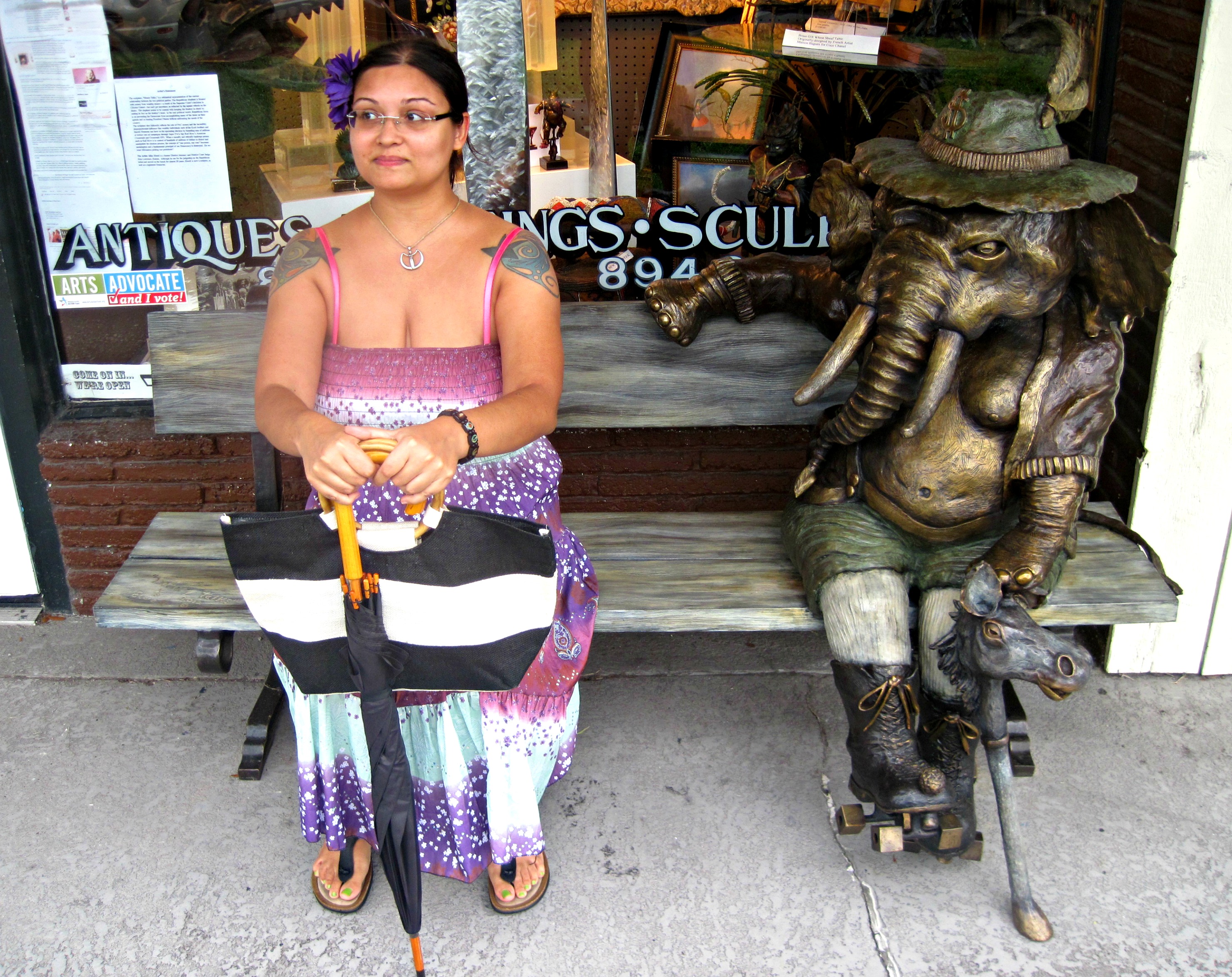
5. Donkeys and elephants: The US Presidential election

Here in the US, 2012 was marked by the presidential election. As a resident alien, a domestic election is an interesting thing as you have one foot in and one foot out.

It’s a strange feeling waking up on the morning of an election in the country that you live, and not voting. Equally, it’s a strange feeling posting your ballot in an election 6,000 miles away as I did in the last British election in 2010.

What are some of your expat highlights of the year? If you have a blog, feel free to leave links to a favorite blog post you may have written.

STAY TUNED for next week’s posts.

If you enjoyed this post, we invite you to register for The Displaced Dispatch, a round up of weekly posts from The Displaced Nation, with seasonal recipes, book giveaways and other extras. Register for The Displaced Dispatch by clicking here!

Related posts:

EXPAT MOMENTS: The Doll Collection

As Halloween is nearly upon us time to return to Expat Moments for something a little more unnerving.

“You must have been very proud of her,” said the hotel owner.

I never knew her.

“We’re all proud of her,” she continued. “This is just my little tribute.”

“That’s nice,” I said. I didn’t mean it, obviously.

There mounted on the wall of the sitting room was the subject of our awkward conversation – a shelf on which the hotel owner kept her prized collection of “individually authenticated” Princess Diana dolls.

“She would have been so excited about Will and Kate’s wedding, don’t you think?”

“I guess.”

The hotel owner certainly kept them all in good condition, there was no disputing that. I pictured her on a step ladder on her tip-toes, reaching out unsteadily as she tries to grab a doll to bring down for its once a week dusting. I couldn’t take my eyes off the collection. I had noticed them as I left the hotel bar for my room and I found myself stopping and staring intently at what I thought a strange collection. It seemed to me so odd to find in a New England hotel, until the elderly owner of the collection appeared by my shoulder.

“They get lots of admirers,” she said.

“Yes, I’m sure.” On hearing my accent, the hotel owner was doubly keen to talk to me about the “People’s Princess” and politeness forced me to stand there listening as she told me about the many, many Princess Diana books she owned, and how upset she had been when she died, but I found it hard to concentrate on what she was saying as ten doll’s eyes stared blankly back at me.

“Has anyone ever said that they find them…” I was unsure how wise I was in broaching this, “…just a little unnerving?”

“Are you one of those,” she said, her tone frostier. “Did you not like her? Well, I like you,” she said, addressing the dolls.

I didn’t sleep well that night. The whisky I had drank in the bar to warm me from the New England winter disagreed with me and I lay miserable in bed listening to the creaking of the old hotel.

Outside my door, I could swear I could hear the scratching of something trying to get in. The hotel owner must have a cat, I reasoned, I actually concluded that she probably owned half-a-dozen felines – and no doubt all named after British royalty.

When I did sleep, in my dreams I saw those ten doll’s eyes staring impassively at me. I dreamt of the dolls. Of one of them entering into my room, a knife in its hand, a reimagining of Chucky for genteel PBS watching old women. The doll stood on my chest and plunged its knife down. The princess of our hearts had come to claim mine…

The next morning groggy from the previous night’s drinking and poor sleeping, I went to check-out from the hotel. As I closed the door to my room I noticed a number of scratch marks towards the bottom of the door. Strange, I thought, I didn’t notice them before.  I hoped that I wouldn’t see the owner as I had no desire to listen to another inane conversation about Royalty or even worse have her claim that I was the one responsible for scratching the door.

I was relieved to see not the owner but a young girl on reception.

“How was your stay?” she said.

“Fine,” I said.

Carrying my bag out to my car I passed the sitting room and I couldn’t help but look to the mounted shelf on which the collection of Diana dolls was housed, and there where they had been five dolls were now just four.

STAY TUNED for next tomorrow’s Halloween post – we’re sure you’ll go batty for it.

If you enjoyed this post, we invite you to register for The Displaced Dispatch, a round up of weekly posts from The Displaced Nation, with seasonal recipes, book giveaways and other extras. Register for The Displaced Dispatch by clicking here!

Related posts:

Img: by awindram.

The accidental repatriate

Last time Sezin Koehler wrote for us, she was bidding farewell to “strange, Lovecraftian” Prague, where she and her husband had lived for four years. Also in the Czech Republic, Koehler succeeded in producing her first (horror) novel, American Monsters. After a short stint in Germany, the couple is now saying hello to sunny, but bugbear-filled, Florida. Koehler describes the emotional transition.

When I left the US for Europe in 2002 I had no intention of ever again living in America. Violence, backwards politics, a horrible job market, and a provincial outlook on the world made an extreme contrast with my global, Third Culture Kid background. I am half American, half Sri Lankan, and my mother worked for UNICEF, so the family lived all over the world.

Not to mention I was suffering from extreme post-traumatic stress disorder after witnessing the murder of a dear friend when the two of us were robbed at gunpoint by a gang banger in Hollywood.

Ten years later and a forced repatriation determined by economics rather than desire, I am at a loss for how much worse off this country is since I left. I know a decade is a long time — but surely not long enough to usher in political rhetoric that would take this nation back to pre-1950s? My mind boggles.

One big dark nation

Gun violence has ever increased — to the point where we find so-called Stand Your Ground laws that allow citizens to kill each other with impunity, under the guise of “I felt threatened” — even when that threat consists merely of a young African-American boy, armed with nothing but iced tea and a bag of Skittles.

I’m back in the world of mad gunmen going on shooting sprees. Sikhs mistaken for Muslims and murdered. Women getting abducted and raped at gunpoint while waiting for a bus — this happened just recently not far from where I live.

Post-9/11 America has seen the sharpest increase in the infringement of civil liberties as matters of homeland security and anti-terrorism. The arrests of journalists covering Occupy Wall Street events brought the US’s rank of journalistic freedom down 27 points, putting the country at 47, just behind Comoros and Romania.

Xenophobia abounds as states pass laws against the teaching of ethnic studies, and even literature written by Native and Mexican Americans, in schools. Such developments are exponentially more ironic when considering that this country’s immigrant history.

The worst (and rudest!) of times

After college it took me almost a year to get a proper job. Upon returning, I’ve had trouble securing even a retail job: all applications are now submitted online and don’t give you an option to upload a cover letter or even your full resume. Not only are American jobs outsourced to China, the application process has been tech-sourced to boot, as machines vet your application — even if you live right down the street from the store to which you’re applying.

I was shocked to find that retail jobs pay exactly what they did a whole ten years ago. Way to move forward, America.

America might have progressed in terms of technology; I see a smart phone in every hand. However, common courtesy has gone out the window as people text, Facebook, Tweet, right in the middle of an actual face-to-face interaction, without even a twinge of remorse.

Call me old fashioned, or a kindred spirit to Hannibal Lecter, in believing it’s the epitome of rude to fiddle with one’s phone (or any other such object of distraction) whilst another human being is talking to you.

The wheels on the bus go back-backwards.

Monsters are the best friends I ever had

To add insult to injury, I find myself in a particularly devoid area of Florida, easily one of the most vapid places on the planet. Plastic people who can spend an hour telling you about their lunch salad are the antithesis of the cultured individuals with whom I spent my time while living elsewhere.

Who would have thought the rabbit hole I fell down when I left Prague would lead to a place scarily resembling Hell, with its torturous circles and its staggering temperatures?

Each day I force myself to review the positives:

It seems incredible that the America I left ten years ago — the one that traumatized me so badly — is actually a better version than the one in which I live now.

So frustrated have I been by absurd American conservatism and the zombie hordes of consumerism around me, I’ve resorted to a new persona: Zuzu Grimm, a creature who writes wicked dystopic visions of where this country is headed if it continues down this current path of willful ignorance and fear mongering.

Bored now

But that’s not been the only struggle: For years I defined myself as an expat. My blog was filled with anthropological tales of living in Switzerland, France, Spain, Turkey, the Czech Republic and Germany. More than that: stories of growing up in Sri Lanka, Zambia, Thailand, Pakistan, India.

While I’m still a Third Culture Kid — never really at home anywhere — my expat identity became a cornerstone of who I was. It worked, and was so much less confusing to explain. The expat label made me feel ultimately more interesting. Writing a novel in Prague sounds infinitely more exotic than writing from an essentially retiree community of ten thousand.

Oy vey.

Accepting that this is who I am now, and this is where I am, has been even harder than the absolute culture shock upon repatriation.

Being an expat gives a person a sense of uniqueness that may or may not be deserved. Yes, you’re a foreigner who must negotiate language/cultural/social barriers. But it’s also your choice. And for many people economics determines whether you can or can’t participate.

Kind of like having kids. You can complain all you want about how hard it is, but it’s something you elected to do, not something that was forced upon you.

(Well…unless Republicans head up the White house; with their insane ideas on abortion there’ll be thousands more women forced to carry rapists’ babies to term. Disgusting. Terrifying. Yet another grotesque example of the New America I find on return.)

I’m nobody, who are you?

My former life as an expat has taken on so many more shades of meaning as I consider how it must have seemed to those in my position right now: How glamorous. How decadent. How lucky. How dare they criticize my government when they’ve jumped ship. I have to live here. I’m thousands of dollars in debt. I don’t have the luxury of leaving.

Maybe one day when my husband wins the lottery, that’s just what we’ll do. Leave. Maybe for Buenos Aires, or Addis Ababa. Maybe in the meantime we’ll find a better city in the US, one that offers more by way of creativity, culture, and history — the things I miss most about life in Europe.

Until then, I have to make peace with being plain old Sezin Koehler who lives in and writes from Florida. Hopefully some time soon I’ll be okay with that. Any minute now. It’s going to happen.

That’s fine. I’ll wait.

And pray I don’t get sick in the meantime, because even with Obamacare, I still can’t afford health insurance.

Sezin Koehler, author of American Monsters, is a woman either on the verge of a breakdown or breakthrough writing from Lighthouse Point, Florida. Culture shock aside, she’s working on four follow-up novels to her first, progress of which you can follow on her Pinterest boards. Her other online haunts are Zuzu’s Petals‘, Twitter, and Facebook — all of which feature eclectic bon mots, rants and raves.

STAY TUNED for tomorrow’s post, another displaced Q from anti-foodie Tony James Slater.

If you enjoyed this post, we invite you to register for The Displaced Dispatch, a round up of weekly posts from The Displaced Nation, with seasonal recipes, book giveaways and other extras. Register for The Displaced Dispatch by clicking here!

Related posts:

img: Sezin Koehler in St. Petersburg, Florida, by Steven Koehler (2012).

TRAVEL YARN: Two madcap Indonesian ladies in weird & wonderful Japan (2/2)

Japan — the country that many Westerners have likened to Lewis Carroll’s “wonderland” for its quality of wacky unpredictability. But what about for other Asians — do they feel as displaced and disoriented there as we do? Our very first Random Nomad, Anita McKay, ventured into the Land of the Rising Sun for the first time this summer, in the company of another Indonesian, P, who had been there once before as a student. This is Part 2 of the pair’s adventures. (See also Part 1.)

After Tokyo and Kyoto, P and I headed to Kobe — with Kobe beef as our main target. We’re Indonesians, remember? Which means we’re always looking forward to our next meal.

Gluttons for gourmet food

Our hotel in Kobe had booked us a table at Mouriya, a restaurant that prides itself on serving superior quality beef from the Kobe Cow and the Tajima Cow. Mmmm…

The meat was really delicious, but not long afterwards, I was craving sushi again. Fortunately, I was able to indulge in some serious sushi eating one last time with my blogging buddy from Yokohama, whom we met on our way back up to Tokyo. She and I went out for a meal at Kyubey, a high-end sushi restaurant in the Ginza. (P couldn’t join as she actually had to work in Tokyo for her Indonesian company for the last two days of our trip.)

Kyubey, which is actually two restaurants across the street from each other, doesn’t take bookings and always has a long queue. Luckily, my friend and I were able to get a table — and, to our delight, the chef had rather fluent English.

He patiently explained to us about the fish we were eating. One particular sushi had to be held with chopsticks in a certain way and nibbled at from the side, not the front.

We told the chef that both of us weren’t too keen on tuna, as the tuna we’d tried had been chewy or smelled too fishy — so we preferred salmon instead. He smiled and then put some tuna on our plates and told us to try it. We soon realized that this might be the best thing we’d ever eaten — melted like butter in our mouths.

Our nine-course lunch, which included eel (unagi), tuna, scallop, and squid, cost only about AUD 50 (around the same in US$). I would happily go back to Kyubey again and again and again.

P, upset at being stuck in the office while my friend and I were feasting on sushi, insisted that we go to Tsukiji market on our last morning in Japan. We got to the market just after 6:00 a.m. — but by then had already missed the tuna auction.

Still, we took a good look around at all the weird and wonderful sea creatures for sale, and then decided to have a sushi assortment for breakfast. While at the sushi restaurant, I discovered that different parts of the tuna are sold at different prices. I also came to realize that tuna costs 2-3 times more than salmon. Remembering what I’d told the chef at Kyubei about salmon and tuna, I think he must have been laughing at us!

Sex (and hugs), please, we’re Japanese!

Our first night in Kobe, P and I had wandered around looking for a place to have a drink after dinner. It was only 9:00 p.m., but outside nearly every club were girls in miniskirts handing out pamphlets.

(If guys, not girls, were standing outside the clubs, it was to advertise that “go go dancing” was on offer. Hmmm…is that a euphemism?)

We passed one big place claiming to be an Arabian club (actually, the building did have a Middle Eastern look), with a big banner of three Japanese girls dressed as nurses and “A Whole New World” blasting loudly.

We passed a couple who looked as though they were in their mid-50s and had had too much fun too early. The lady was leaning against a tree and wrenching; not exactly the picture of elegance!

We decided just to go back to our hotel instead.

Later, when we joined my blogging buddy for some shopping at the Yokohama Red Brick Warehouse, we rested over coffee as she regaled us with some stories she’d collected of strange and rather lewd behavior engaged in by Japanese men.

And then, as if to illustrate her story, something rather creepy happened. Ever the snap-happy tourist, P had decided to take a parting shot of me and my blogging buddy with the Red Brick Warehouse in the background. There was a young couple doing the same thing, who turned out to be Indonesians, sent by their companies for a training session in Yokohama.

While we were busy exchanging e-mails and phone numbers, a young Japanese man popped up out of nowhere.

He shook my hand, asked my name (in English), and mumbled something I couldn’t understand. He then walked over to my blogging buddy, repeated the same series of gestures — and then hugged her. He walked over to P and did the same thing. And then it was the turn of the young Indonesian couple.

By then, all of us had realized there was something “not right” about this guy — but as he seemed harmless enough, we waited patiently until he finished hugging the last person in the group.

At that point, he walked back to my blogging buddy and hugged her again.

I laughed a little because it seemed so strange — also because I was the only one he hadn’t hugged so felt safe.

But then, to my horror, he came back to me, shook my hand again, asked my name again, and then really hugged me and wouldn’t let go.

My blogging buddy, seeing the expression on my face, started walking away as fast as she could. The rest of us followed her. I broke free and followed her as well. As we looked back at Hugger Boy, he just waved and started laughing.

Another funny, weird, horrifying tale for my blogging buddy’s collection!

Some seriously good people watching

As our time in Japan drew to a close, I entertained myself by staring at the Frank Lloyd Wright wall in Tokyo’s Imperial Hotel, spying on a wedding procession at Meiji Shrine — and, best of all, people watching.

As I was sitting on the subway, I noticed two very pretty girls sitting right in front of me. Their hair was almost light brown (a favorite color in Japan), very long and slightly wavy (favorite style in Japan). They also wore fake eyelashes, but there was something about them that made me keep staring at them. After a few minutes I realized that their eyeballs were unusually large, more like dolls than human.

Later I consulted with Google and found that Japanese girls sometimes wear special contact lens that do make their irises look bigger. Odd…

More odd stuff: both P and I had been wondering why so many young Japanese men carry bags just like us girls. There was one guy in the subway who carried a black Dior tote bag. And if that wasn’t weird enough, I saw a guy carrying a brown city messenger bag by Balenciaga. (Google the bag and your jaw will drop, just as mine did.) Oh, and there was also a man with matching red tote bag and shoes in Bvlgari’s Il Café in Omotesandō, where P and I stopped for martinis.

Still, I did enjoy watching that particular man, who was accompanied by his two pooches. One dog kept begging from the cute girl at the next table, while the other kept demanding food from him.

Meow — or should it be nyan?!

Actually, I’m more of a cat person — so before we flew home I wanted to visit the Calico Cat Café in Shinjuku, where people can enjoy coffee or tea in the company of real cats. P still had to work so I went by myself. I didn’t even get lost!

The café has two floors and charges the guest by the first hour, then per 15 minutes. I saw a wide variety of cat breeds: Maine Coon, Abyssinian, Ragdoll, Persian, Scottish Fold, and so on. No Sphinx, though.

The café has strict rules about entering the cat area: you have to change your shoes to slippers, clean your hands with disinfectant, and not take any photos with a flash.

All of the cats seemed rather spoiled. They refused to be petted unless you gave them a snack first. A Scottish Fold named Apollo apparently thought he was the cashier, so he sat at the cashier counter, looking at us lazily.

One hour passed by so quickly that I wished I could spend at least another day in Tokyo! P, meanwhile, wished she didn’t have to work so she could experience the cat café as well.

A fond sayonara

We spent our last minutes at the airport buying Tokyo bananas and green-tea Kit Kats for friends and family back home. I was pondering about buying sake, but then all of a sudden, it was time for boarding!

P is determined to go back again, and I, too would love to go back. But as the seat belt sign went off, we looked at the world map spread in our screen, and started day-dreaming about our next adventure…

* * *

Readers, any questions or comments for Anita? Where do you think she’ll go next?!

Anita McKay is a property consultant, travel junkie, cat lover, food enthusiast. She resides in Perth with her Scottish husband but is still searching for a place called home. To learn more about her, check out her blog, Finally Woken, and/or follow her on Twitter: @finallywoken.

STAY TUNED for tomorrow’s review of an expat memoir of a cross-cultural elopement.

If you enjoyed this post, we invite you to register for The Displaced Dispatch, a round up of weekly posts from The Displaced Nation, with seasonal recipes, book giveaways and other extras. Register for The Displaced Dispatch by clicking here!

Related posts:

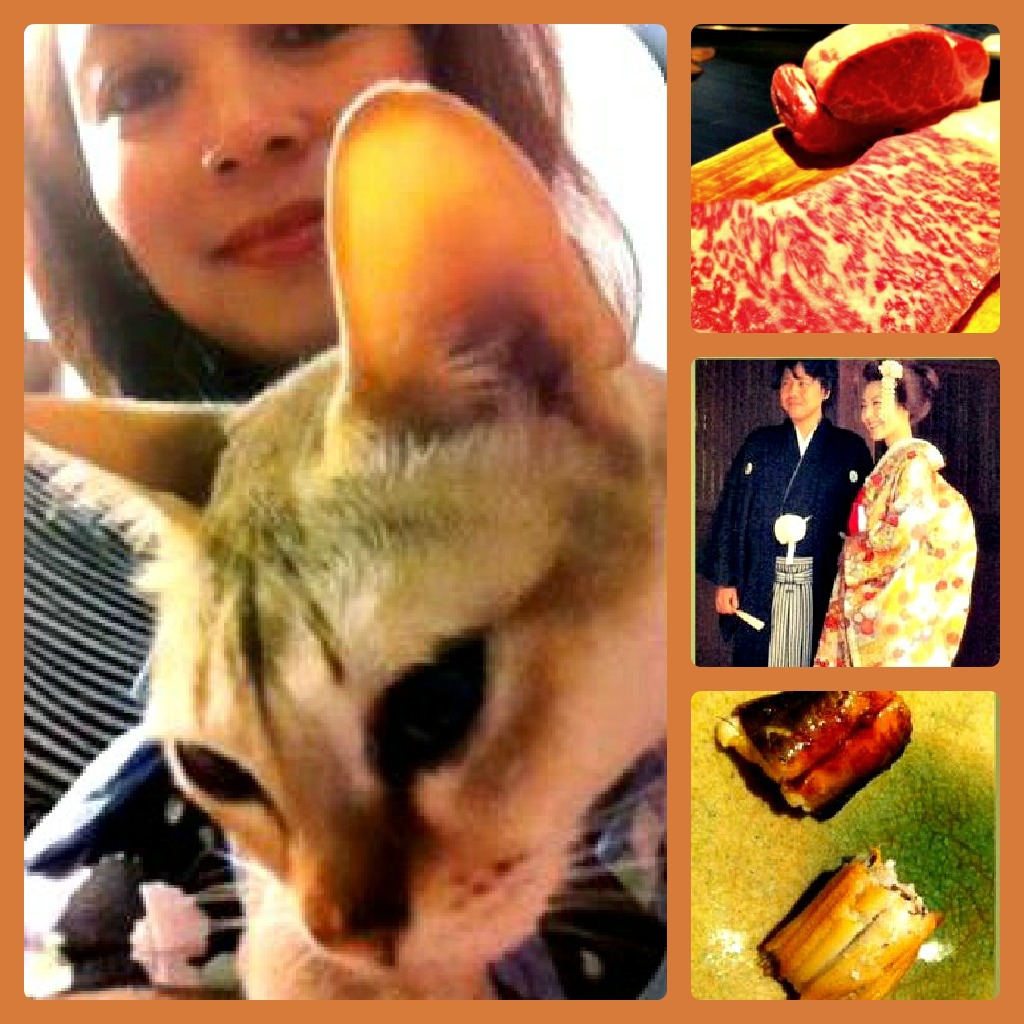
Images (clockwise): Anita McKay making a feline friend in Café Calico in Shinjuku, Tokyo; the marble-ous Kobe beef; the bride and groom at a Japanese wedding at the Meiji Shrine; and Kyubey sushi (all from Anita McKay’s extensive collection).

Repatriation is just relocation — with benefits

Today’s guest blogger, Anastasia Ashman, has been pioneering a new concept of global citizenship. Through various publications, both online and in print, and now through her GlobalNiche initiative, she expresses the belief that common interests and experiences can connect us more than geography, nationality, or even blood. But what happens when someone like Ashman returns to the place where she was born and grew up? Here is the story of her most recent repatriation.

I recently relocated to San Francisco. Three decades away from my hometown area, I keep chanting: “Don’t expect it to be the same as it was in the past.”

Since leaving the Bay area, I’ve lived in 30 homes in 4 countries, journeying first to the East Coast (Philadelphia Mainline) for college, then to Europe (Rome) for further studies, back to the East Coast (New York) and the West Coast (Los Angeles) for work, over to Asia (Penang, Kuala Lumpur) for my first overseas adventure, back to the USA (New York), and finally, to Istanbul for my second expat experience.

My daily mantra has become: “Don’t expect to be the same person you once were.”

With each move, my mental map has faded, supplanted by new information that will get me through the day.

Back in San Francisco, I repeat several times a day: “This place may be where I’m from, but it’s a foreign country now. Don’t expect to know how it all works.”

What a difference technology makes (?!)

Today my work travels, just as it did when I arrived in Istanbul with a Hemingway-esque survival plan to be on an extended writing retreat and emerge at the border with my passport and a masterpiece.

I knew from my previous expat stint in Malaysia that I needed to tap into a local international scene. But I spent months in limbo without local friends, nor being able to share my transition with the people I’d left.

This time is different. Now I’m connected to expat-repat friends around the world on the social Web with whom I can discuss my re-entry. I’ve built Twitter lists of San Francisco people  (1, 2, 3) to tap into local activities and lifestyles, in addition to blasts-from-my-Berkeley-past.

I’ve already drawn some sweet time-travely perks. To get a new driver’s license I only needed to answer half the test questions since I was already in the system from teenhood.

After Turkey’s Byzantine bureaucracy and panicky queue-jumpers, I appreciated the ease of making my license renewal appointment online even if the ruby-taloned woman at the Department of Motor Vehicles Information desk handed me additional forms saying: “Oh, you got instructions on the Internet? That’s a different company.”

One of the reasons my husband and I moved here is to more closely align with a future we want to live in, so it’s cool to see the online-offline reality around us in San Francisco’s tech-forward atmosphere.

It doesn’t always translate to an improved situation though. Just as we are searching for staff to speak to in person at a ghost-town Crate & Barrel, a suggestion card propped on a table told us to text the manager “how things are going.”

So, theoretically I can reach the manager — I just can’t see him or her.

So strange…yet so familiar

It took a couple of months to identify the name for what passes as service now in the economically-depressed United States: anti-service. Customer service has been taken over by scripts read by zombies.

When I bought a sticky roller at The Container Store, the clerk asked me, “Oh, do you have a dog?”

“No, a cat,” I countered into the void.

He passed me the bag, his small-talk quota filled. He wasn’t required by his employer to conclude the pseudo-interaction with human-quality processing, like, “Ah, gotta love ’em.”

What I didn’t plan for are the psychedelic flashbacks to my childhood. I may have moved on, but this place seems set in amber. The burrito joints are still playing reggae (not even the latest sounds of Kingston or Birmingham) and the pizza places, ’70s classic rock stations (Steve Miller Band’s “Fly Like An Eagle,” anyone?). The street artists are still peddling necklaces of your name twisted in wire. Residents are still dressed like they’re going for a hike in the hills with North Face fleece jackets and a backpack.

A bid for minimalism

The plan is also to be somewhat scrappy after years of increasing bloat. My Turkish husband and I got rid of most of our stuff in Turkey in a bid for minimalism. We camped out on the floor of our apartment in San Francisco until we could procure some furniture.

If it was a literal repositioning, it was also a conscious one — for a different set of circumstances. We’d expanded in Istanbul with a standard 3-bedroom apartment and “depot” storage room, and affordable house cleaners to maintain the high level of cleanliness of a typical Turkish household. In California, I intended to shoulder more of the housework.

I was soon reminded of relocation’s surprises that can make a person clumsy and graceless. I should have kept my own years-in-the-making sewing kit since I can’t find a quality replacement for it in an American market flooded with cheap options from China — and now have to take a jacket to the tailor to sew on a button, something I used to be able to do myself.

When the lower-quality dishwasher door in our San Francisco rental drops open and bangs my kneecap, I recall the too-thin cling wrap and tinfoil that I ripped to shreds in Istanbul, or the garden hose in Penang that kinked and unkinked without warning, spraying me in the face.

New purchases

“We’re getting too old for this,” my husband and I keep telling each other as we shift on our polyester-filled floor pillows that looked a lot bigger and less junky on Amazon. (We were abusing one-day delivery after years of not buying anything online due to difficulties with customs in Istanbul. Cat litter can be delivered tomorrow! Pepper grinder! Then I read about the harsh conditions faced by fulfillment workers in Amazon’s warehouses and cut back.)

One of our first purchases Stateside was a television. Not that we’re going to start watching local TV, but we did flick through some satellite channels. It’s something I like to do upon relocating: watch TV and soak up the local culture like a cyborg.

Since I last lived in the US, reality shows like COPS — where the camera would follow policemen on their seedy beats — have gone deeper into the underbelly of life, and now there are reality shows about incarceration.

The Discovery Channel has also gone straight to the swamp. That’s where I caught a moonshiner reality show featuring shirtless (and toothless) men in overalls called “Popcorn” and “Grandad.”

It’s an America I am not quite keen to get to know.

But I can take these reverse culture shocks lightly because my repatriation is part of a continuum. It’s not a hiatus from anything nor a return home. I’m not missing anything elsewhere, I haven’t given up anything for good. Being here now is simply the latest displacement. Today is a bridge to where I’m headed.

ANASTASIA ASHMAN is the cultural writer/producer behind the Expat Harem book and discussion site.  The Californian has been on a global rollercoaster: fired in Hollywood, abandoned on a snake-infested island off Borneo, married in an Ottoman palace, interviewed by Matt Lauer on the Today show. She brings it all home in the “Web 3.0 & Life 3.0” educational media startup GlobalNiche.net, empowering creative, adventurous, self-improving people to tap into a wider world of personal and pro opportunity no matter where you are. Get your copy of the Global You manifesto here.

STAY TUNED for tomorrow’s episode in the life of our fictional expat heroine, Libby. (What, not keeping up with Libby? Read the first three episodes of her expat adventures.)

If you enjoyed this post, we invite you to register for The Displaced Dispatch, a round up of weekly posts from The Displaced Nation, with seasonal recipes, book giveaways and other extras. Register for The Displaced Dispatch by clicking here!

Related posts:

Images: Anastasia Ashman (2012), her World Champions ring, and a view of the bridge to where she’s headed right now.

TRAVEL YARN: Two madcap Indonesian ladies in weird & wonderful Japan (1/2)

Japan — the country that many Westerners have likened to Lewis Carroll’s “wonderland” for its quality of wacky unpredictability. But what about for other Asians — do they feel as displaced and disoriented there as we do? Our very first Random Nomad, Anita McKay, ventured into the Land of the Rising Sun for the first time this summer, in the company of another Indonesian, P, who had been there once before as a student. McKay reports on the pair’s adventures in this two-part travel yarn.

The message exchange between my travel buddy, P, and me, in May, went like this:

Me: “So have we decided where we want to go this July?”

P: “How about Japan?

Me: “Okay.”

P had lived in Japan decades ago for a student exchange program. She hadn’t been back since, and thought this year would be a good time.

I, on the other hand, didn’t really have any specific destination in mind — just so long as I could go somewhere I hadn’t been to. As I explained in my interview with the Displaced Nation, although I am from Indonesia originally, I have lived for extended periods in Aberdeen, Scotland, and in Australia. But I still hadn’t made it to Japan.

P suggested Tokyo, Kyoto, and Kobe. I added Yokohama to the list because there’s a blog buddy I wanted to meet up with. She and I had been trying to catch up forever and everywhere — UK, Singapore, and Indonesia — but kept missing each other. If I went to Yokohoma, where she is now based, surely we would finally get together?

I prepared myself for the trip by scanning some pages in Trip Advisor and the Lonely Planet guidebook. At least I would have an idea of what to do and where to go — and wouldn’t be entirely dependent on P, who speaks and reads Japanese and has lived there before so presumably knew how to get around.

Madcap traveler’s motto: Be unprepared!

When we landed at Narita Airport, I suggested that we take a taxi because it was 9:00 a.m., and I had taken the notion of a red-eye quite literally — my eyes looked red as I was still recovering from flu. I desperately wanted to have a quick nap before exploring the city.

We crossed the road, dragging our gigantic suitcases with us, and I let P speak with the men at the taxi rank. When she showed them the address of the hotel, one guy frowned and looked at us. “Tokyo?” he asked in disbelief.

We nodded eagerly. The drivers exchanged glances and apparently decided we weren’t crazy. One of them spoke in Japanese to P, who translated: “It’s 23,000 yen.”

I did a quick calculation, and almost fainted when I found out it will cost us almost 300 AUD [around the same in US$] for a taxi to our hotel.

“300 bucks??” I asked P. She nodded calmly, but her eyes couldn’t lie. She was just as shocked as I was.

“No! Cancel!” I shook my head furiously, while P apologized to the drivers. The men just laughed and pointed us back to the airport. “Take the train instead,” I think they said. “Like normal people.” Maybe they said that, too!!

Now we know why there was no one queuing for a taxi, whereas there was a long queue at the train ticket window. And we thought we were being smart!

Everyone had warned us that Japan — Tokyo in particular — is “very expensive!” The city ranks number 1 in the list of the most expensive cities in the world, while Perth, where I now live, is number 19. But really, if the taxi would cost us almost 300 bucks, what kinds of prices could we expect to find in Tokyo?

P had no memory of taxis from the airport. Years ago when she landed in Tokyo, she was picked up by a shuttle bus.

She’d also paid no attention to the length of the journey — she’d been too busy meeting and getting to know the other students. Both of us were surprised when it took almost an hour for the Narita Express to reach Tokyo Station. P had assumed it would be like Jakarta airport to the city centre (just because), and I must have skipped that page in the guidebook…

Well, at least we now knew why it was so expensive to take a taxi: the distance is more like Heathrow to London.

We just kept laughing at our silliness.

It’s food?!?!?

By the time we’d reached our hotel in Chiyoda, a quiet area near the Imperial Palace, we were both rather hungry and decided food would come first on the agenda, before tackling the first sight on our list: Sensō-ji, Tokyo’s oldest temple, in Asakusa.

Food is important to us Indonesians. We eat all the time. In Japan for the first time, I wanted to try something new: not sushi, yakiniku, donburri (rice bowl), soba, or ramen.

“Let’s try this!” I excitedly pointed at one restaurant name in the guidebook. “It’s in Asakusa and it looks…exotic enough.”

P agreed, and under the glare of the July sun we made our way to a restaurant called Komagata Dojo, only to be greeted by the sight of a rather long queue. If there is a queue, then the food must be good, we assured each other. Plus it seems as though most of the people in the queue are locals, so the taste must be authentic.

As it turned out, the restaurant is in its sixth generation of owners, and is famous for its dojo: a tiny freshwater fish like an eel or sardine, cooked in a cast iron pot.

We ordered what seemed to be everyone’s favorite, dojo nabe (hot pot), and also asked for two bowls of rice.

The waitress lit the charcoal burner in front of us, set the pot down on top of it, and told us to sprinkle the spring onions, or negi, on top of the fish.

We looked at each other after the first gulp.

“What do you think?” I asked P.

“What do you think?” she replied back.

“Well…it’s…all right. Weird.”

She nodded. “The rice is very good though.”

I can’t describe the taste. It’s rather bland for my liking, as I grew up in Indonesia, which is famous for its spicy dishes. Not just hot spicy, but lots of flavors in every dish. But dojo nabe isn’t tasteless either. Lots of soft flavors, like soy and spring onions.

When we were about to finish our lunch, I asked P how come Japanese people look so slim if, like the rest of us Asians, they enjoy eating all the time. We were thinking that their diet of raw seafood might be the answer.

“But this isn’t raw,” I pointed at the dojo. “It’s cooked. Plus the size of the rice is rather big.”

We looked around at the other patrons — and, to our horror, we were the only ones who’d seemed to have ordered a bowl of rice each! The rest of the customers were adding the spring onions to their fish but had no rice bowls.

“That’s the only thing they eat for lunch!” I hissed to P. “Spring onions and tiny fish! No wonder they’re slim!”

“No wonder the waiter asked if we wanted one or two bowls of rice,” P admitted when we were at the cashier. “I thought it was because of my rusty Japanese, but now I know because she didn’t believe two small girls can eat that much!”

Hanging our heads in shame, we slipped out of the restaurant and determined we would burn away the calories by walking to Sensō-ji temple. The temple, however, was only a few minutes’ walk away. Still, we had fun taking photos of ourselves under the gigantic red lantern at the temple gate, and looking at the stalls lining the 200-metre-long Nakamise-dōri, the street approaching the temple — selling every manner of Japanese trinket and souvenir, including yukata robes (cotton kimono), tenugui (hand towel, often used as a headband), furoshiki (rectangular cloth for gift wrapping) and folding fans. There were also local snacks for sale, of a kind I’d never seen before in my life, in every shape and color possible, in beautiful packaging.

Kyoto and the Indonesian connection

After two days in Tokyo, we took the shinkansen to Kyoto and stayed in a ryokan — a traditional Japanese guesthouse where you sleep on tatami mats. Being shoppers at heart (another trait of Indonesian tourists!), we were pleased to see that the ryokan was just two minutes away from Nishiki Market, which we saved for our last day.

At first I was skeptical. How “weird and wonderful” can the Nishiki market wares be? I’m an Asian, I’ve seen lots of weird and wonderful things, I don’t think that the Japanese can produce anything that would shock me. Well, I was wrong. From pickled eggplants to live turtles, from grilled sea-eels to rakugan (tea-ceremony sweets) shaped as sushi — every single stall was full of wonders that had me alternatively oohing and ahing, or eek-ing and yuck-ing (along with a few WOWs and OMGs).

But I’m getting ahead of myself. We ended up having a better experience in Kyoto because of making an Indonesian connection on our very first day. After encountering the tail end of the Gion Matsuri, one of Japan’s most famous festivals, named for Kyoto’s Gion district, we stopped in one of the shops in Gion, where the owner happily chatted with us in English. He knew about Indonesia’s first president (I guess because the third of Soekarno’s nine wives was a Japanese woman), and explained to me that the stuff I was buying wasn’t candy but rakugan, made of sugar and starchy powder and often served in Japanese tea ceremony to offset the bitterness of the green tea.

Arranged in a pretty box, the rakugan have the most beautiful soft colors, from baby pink to green. Each was in a floral shape, with delicate carvings on the surface — yet each was only as big as my smallest fingernail. How they could make such detailed coverings in such a small space, I had no idea.

We told the shop owner we were hoping to eat a good soba for dinner. He said to go straight ahead until we reached the kabuki theatre. Next door to that theatre is a famous soba place called Matsuba, he said.

We found the place easily (thanks to P’s ability to read the restaurant sign!), and had fantastic soba with smoked herring.

Our luck didn’t stop there. The next day, after wandering around Kiyomizu-dera, a famously beautiful temple in Eastern Kyoto, and spending a fortune buying souvenirs, cookies and ice cream from virtually every shop along the temple street, we made a quick stop at a proper store to buy sunglasses for P. One of the staff turned out to be an Indonesian. He recommended a bar not far from our hotel for a drink, where the owners are Japanese sisters but can speak Indonesian. Thanks to this advice, we ended up spending our last night in Kyoto befriending a set of Indonesian-speaking Japanese twins.

IT’S FOOD!!!

I queried the twins about where to have lunch on our last morning. They booked us into Gion Nishikawa — 2 stars in the Japanese Michelin Guide and the first restaurant in Japan that made me appreciate how wonderful Japanese food can be. The eight-course, kaiseki-style lunch cost only around 70 AUD and was served directly by the cute chef (whom P rather fancied!) from across the counter. No other Japanese food I’d had before in my life could compare to this.

The chef would tell us (in Japanese, of course) what type of dish he was putting on our plates, and which food goes with which sauce. By the fourth course, which featured three types of fish, even we were starting to feel rather full, and P decided not to finish it — she wanted to save some space for course No. 8. When the chef cleared her dish, he saw that there was still some fish left, put it back in front of her and told her to finish it! I assumed he did that because it was such a costly delicacy.

Meanwhile, I was amazed that one of the fish in the bowl was koi (carp or goldfish) — yes, koi, what people normally keep as a pet! I looked at the chef in disbelief and he only laughed at me and said (as translated by P) that of course they eat koi.

Hahaha — I still felt as though I was eating my own cat…

By the eighth course both P and I swore we wouldn’t eat again until tomorrow. Famous last words! 🙂 We’re Indonesians, remember?

* * *

Readers, do you have any questions or comments for Anita? Stay tuned for the second part of her travel yarn, when the madcap duo move on to Kobe and Yokohama, and then back to Tokyo, to be posted within the next two weeks.

Anita McKay is a property consultant, travel junkie, cat lover, food enthusiast. She resides in Perth with her Scottish husband but is still searching for a place called home. To learn more about her, check out her blog, Finally Woken, and/or follow her on Twitter: @finallywoken.

STAY TUNED for tomorrow’s interview with a hilariously funny British expat author.

If you enjoyed this post, we invite you to register for The Displaced Dispatch, a round up of weekly posts from The Displaced Nation, with seasonal recipes, book giveaways and other extras. Register for The Displaced Dispatch by clicking here!

Related posts:

Images (clockwise from top left): Japanese trinkets for sale at the famed Nakamise-dori in Asakusa, Tokyo; Anita McKay deciding that dojo nabe may be an acquired taste (at a famous Tokyo restaurant); one of the many fabulous lunch courses at Gion Nishikawa in Kyoto; one half of the dynamic duo (A) outside of the JR Station in Kyoto; the other half of the dynamic duo (P) at Nishiki Tenmangu Shrine, just outside Nishiki Market, Kyoto. All photos from Anita McKay’s personal collection.

Christmas in July & other Winter’s Tales from an expat Down Under

After sweltering through America’s hottest July on record, three of us Displaced Nation writers have been imploring the fourth, Tony James Slater, for some cooling stories from his newly adopted home of Perth, Australia.

I noticed a Christmas tree in my gym a couple of weeks ago. I wondered what the hell it was doing there, until some kind staff member — presumably on hearing me curse in the middle of the foyer — decided to enlighten me.

Christmas in July, the Aussies call it — for no apparent reason other than that most countries celebrate Christmas when it’s freezing cold outside, with snow on the ground and cards covered in penguins and polar bears decorating the mantle piece.

July is as cold as it gets in Perth. The temperature — sometimes — dips into the single digits overnight, and we wake up to a sensation overly familiar to a Brit like me: not wanting to get up because it’s warmer in bed!

Once upon a time, when I made my first visit to Oz from Thailand, all those years ago, I arrived (in my infinite wisdom) in June. At 6:00 a.m.

I had no idea Australia had seasons. From the postcards and other literature, I’d assumed it was the Land of Eternal Summer.

It was achingly cold, pouring it down with rain — and I was wearing a pair of shorts and a vest [tank top], because that’s all the clothing I owned!

I’m now super careful when advising my friends who plan on visiting: “Don’t come November to February,” I tell them. “It’ll be way too hot. You won’t be able to breathe.

But don’t come June to August either — it’ll be too cold! And all sensible Australians will be holed up inside with our mitts wrapped around a hot cup of Milo.”

Mmmmmm…. Have you ever had Milo? It’s a hot chocolate malt drink. I must say, it really hits the spot this time of year.

Storm warning!

We have our blistering hot summers, too, down in Oz. In fact, the whole country is geared around this inevitability. That may be why no one seems quite prepared for the winter.

It rains, of course — it has to, otherwise we’d be in an even worse state come summer. But no one here is quite ready for it when it does.

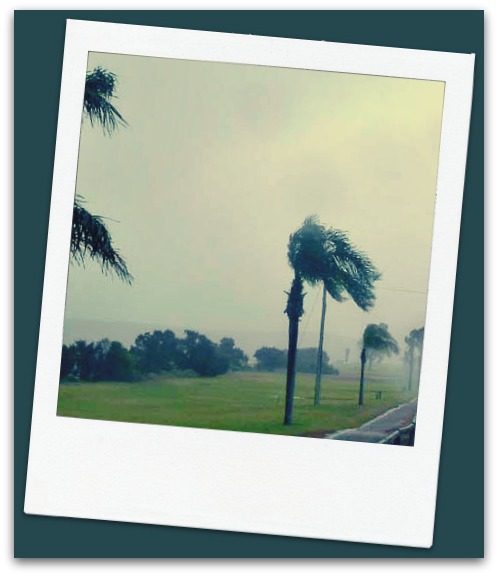
Take the Great Perth Storm of 2012, for example. Several weeks ago now, there was a severe weather warning issued. Businesses closed early. Employees scurried home, fearing what would happen if they were caught in traffic when The Big One hit. By the time it started raining, the streets were deserted – which was probably a good thing. Boy, did it rain! It rained, and rained, and the good folk of Perth cowered indoors, until…the rain stopped.

And that was it.

I honestly think half of them didn’t expect to survive it.

They were most upset when they had to drive to work the next morning, through rapidly drying puddles.

The four seasons in one day

But let’s not get carried away; to those of you fanning yourselves under an air-con unit, wishing you’d remembered to get it serviced before the heat-wave hit, I can sympathize — it’s not exactly cold here all the time.

Even in winter, the middle of each day is quite pleasant — probably what you’d call “beach weather” on most of the rest of the planet.

Charles Dickens’s description of an English springtime seems most appropriate:

It was one of those [March] days when the sun shines hot and the wind blows cold: when it is summer in the light, and winter in the shade.

Have you ever worn a hat indoors?

Perhaps because of this, the houses here are built without insulation, and without any form of central heating. Most of them have a little wood-burning stove in a corner of the family room, but that’s it — and of course no double glazing!

Houses built like this in Europe would never pass the building code, but it seems that the housing industry here just doesn’t worry about it. Yeah, sure, they’re building houses that’ll be a bit cold in winter. But the owners can always wear a jumper! Or, as frequently happens when we visit my father-in-law in his house in the Perth hills, a scarf, gloves and a beanie…

In an unheated, un-insulated house at night, there are only two things to do — and one of them doesn’t really belong on a public forum like this. The other, of course, is to wear as many layers as you can — kind of like you’re going hiking in a blizzard — and try to keep exposed flesh to a bare (sorry!) minimum.

Of course, this being winter, you can find that blizzard. Just about. There’s nothing between the bottom of Australia and the top of Antarctica, so our southern seas get a little chilly around now. We have snow-capped mountains – okay, we have a snow-capped mountain. Sometimes…

But the scene over in neighboring New Zealand is a little frostier!

In fact, my sister is there right now, training to be a skiing instructor.

And because the architecture over there is mostly derived from what we have over here…her house also doesn’t have any heating either.

All things being equal…

I’m content to be cold once in a while. It reminds me of home — just a little, in a slightly-chilled-’till-the-sun-comes-up kind of way. Not like actually being back in England — where, even though it’s summer, I think it’s colder than here… I mean, did you see that beach volleyball tournament? Only in London could they import twenty tonnes of sand and play beach sports in torrential rain…in bikinis.

Now there’s a refreshing image!

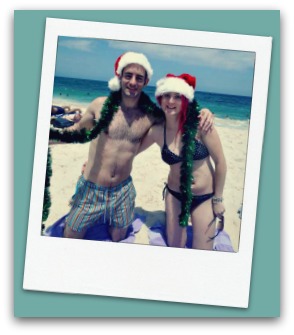
So instead of feeling sorry for yourselves over there in sweltering America, please do feel pity for us over here. After the terrible inconvenience of our slightly chilly winter, we have plenty of other ordeals to face — like Christmas on the beach!

* * *

So tell me: would you rather be here — or where you are right now? Let me know in the comments, or on Twitter: @DisplacedNation +/or @TonyJamesSlater. Now back to my nice mug of Milo before it gets cold — cheers!

STAY TUNED for tomorrow’s Random Nomad, who, too, has some stories to help alleviate the effects of the heat…

If you enjoyed this post, we invite you to register for The Displaced Dispatch, a round up of weekly posts from The Displaced Nation, with seasonal recipes, book giveaways and other extras. Register for The Displaced Dispatch by clicking here!

Related posts:

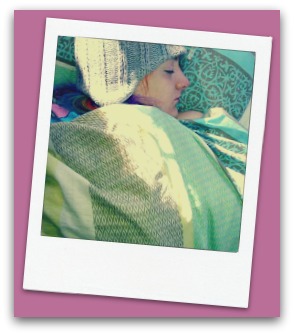
Main image:  “Polaroids” are all from Tony James Slater’s collection: The Great Perth Storm of 2012; Tony’s wife, Roo, asleep in her dad’s house in the hills of Perth (2012); Tony & Roo celebrating Christmas on Cottesloe Beach, near Perth, Australia (December 2011).

The opening ceremony of the London Olympics — from an expat who witnessed Beijing’s spectacle firsthand

As regular readers will know, The Displaced Nation has some special connections to Britain. We therefore held our collective breath when the Olympic ceremony opened on Friday evening in London. How would the Brits measure up to the Chinese extravaganza of four years ago? Britain is after all a declining power — which is not exactly true of China! Today we turn to guest poster Shannon Young, an expat in Hong Kong who has written a book about her firsthand experience of attending the Beijing Games, for a verdict.

Four years ago, 2,008 drummers opened the Summer Olympics in Beijing with a thunderous rhythm heard ’round the world. Spectacular feats of coordination, drama and energy followed, wowing the world with the precision and ambition of the production.

Heralded as the greatest live performance in history, Beijing’s opening ceremony was a tough act to follow.

It was a tough act for me to follow as well. I’d been in the stands as the rumble of the drums swelled through Beijing’s Bird’s Nest stadium. But as the opening ceremony of the London Games was about to begin, I found myself at the kitchen table of my grandparents’ home in Oregon (I am back in the United States for a visit) watching a live stream on my computer.

Oh we can be heroes…just for one day

A landscape that looked rather like a shire appeared, complete with sheep and idyllically dressed country folk. The agrarian scene was quickly replaced with the frenetic energy of the Industrial Revolution, but the contrast was obvious: London was not trying to “beat” China.

Quirky, funny and nuanced. Those three words characterize the July 27th, 2012, ceremony. It displayed the heart and humor for which the British are famous — especially in the form of Rowan Atkinson (Mr. Bean), whose rendition of “Chariots of Fire” completely stole the show.

London brought the opening ceremony of the Summer Olympics back down to a human level. It was no Beijing, but it was the kind of show that speaks to people.

Famous for such films as Trainspotting and Slumdog Millionaire, director Danny Boyle infused the London ceremony with a cinematic flare.

Like many other spectators around the world, I loved the short film in which James Bond picked up Queen Elizabeth in a helicopter, which they (or their stunt doubles) proceeded to jump out of, for their “entrance” into the stadium.

There were other nods to cinematography throughout the production, including to Boyle’s own films, mixing the mediums of live performance and cinema. The costumes were intricate when viewed through a zoomed-in camera, but I had to wonder how much of this was for the camera and not the live audience. The spectators in the stands may not have been able to enjoy the details.

Only rock ‘n roll (but I like it)

There was a rock-and-roll feeling to the show. The dance numbers were more like big parties than expertly timed performances. They were full of mini-storylines and surprises.

The segment that began with a nightmare of the villains of children’s literature ended with the raucous defeat of a gigantic Lord Voldemort by none other than Mary Poppins.

The soundtrack was fun and familiar, liberally paying homage to Britain’s many contributions to culture.

A high-octane production like the Olympics opening ceremony needs to have quiet moments, too.

In Beijing there were eerie performances, such as a single dancer gliding across a glowing scroll.

In London, the quiet moments were solemn. There was a moving dance performance dedicated to the victims of the July 7th bombings on London transport, and a moment of silence for those who fell in the two world wars.

New takes on old classics

The Parade of Nations was faster than usual, bringing 204 teams into the stadium in record time.

The production culminated in the lighting of the torch, which was done in a particularly elegant fashion. David Beckham delivered the torch to retired British rower Sir Stephen Redgrave in a neon speedboat on the Thames.

In a touching act, Britain’s venerated Olympian then delivered the torch to seven promising young athletes, who lit the torch together. The torch itself was composed of many copper petals which rose together on long stems to create the Olympic cauldron.

London’s opening ceremony drew many laughs and perhaps a few tears. There weren’t as many breathtaking moments as in Beijing, but the show was like the British: quirky, personable, and utterly self-assured.

Shannon Young is an American writer currently living in Hong Kong. She is the author of The Olympics Beat: A Spectator’s Memoir of Beijing. She writes a blog called A Kindle in Hong Kong and tweets @ShannonYoungHK.

EDITOR’S NOTE: We will be giving away several copies of Shannon Young’s mini travel memoir of the Beijing Olympics this month. The first will go to a commenter on this post — please share your favorite moment from London’s opening ceremony, or a memorable moment from a previous Olympics.

STAY TUNED for tomorrow’s Expat Moment with Anthony Windram!

If you enjoyed this post, we invite you to register for The Displaced Dispatch, a round up of weekly posts from The Displaced Nation, with seasonal recipes, book giveaways and other extras. Register for The Displaced Dispatch by clicking here!

Related posts:

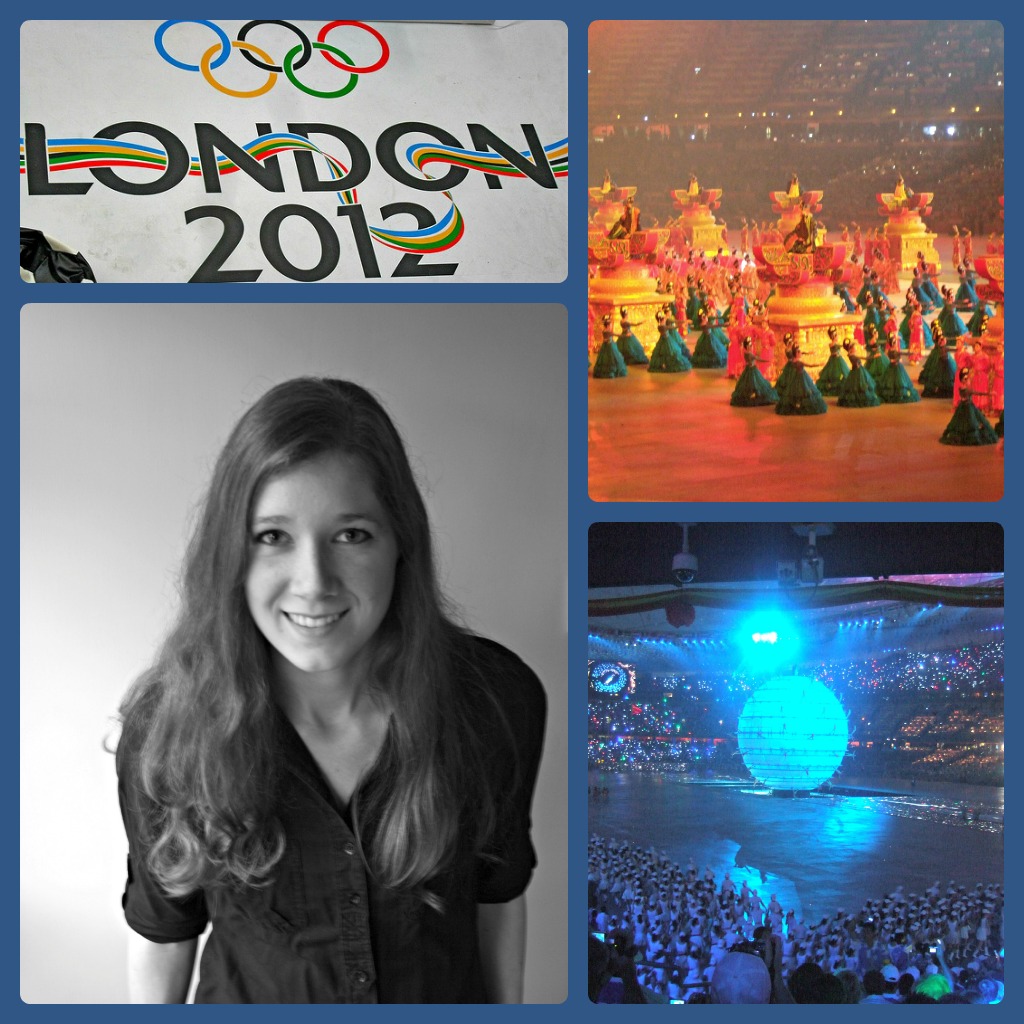
Images: A London Olympics sign courtesy e-costa on Flickr; author Shannon Young and two of her photos from the opening ceremony of the 2008 Summer Olympics in Beijing.

EXPAT MOMENTS: What to wear for an Independence Day Party

Another in our series focusing on little moments of expat experience — moments that at the time seemed pifflingly insignificant.

As far as I can gather, the main advantage of Independence Day for many people seems to be the opportunity to dust off and wear that stars-and-stripes leather jacket that they bought back in 1979.

Wishing to get into the Independence Day spirit, it was clear that I also needing something “appropriate” to wear if I wanted to blend in successfully so I headed over to Target, a fine American corporation that would hopefully have even finer American clothing for me to purchase.

Finding the Target employee that looked the most patriotic — the telltale signs are a sensible haircut, good posture, and a strong jaw line — I asked where I might find the most patriotic T-shirts in store. Leading me to a selection of T-shirts featuring the stars and stripes, it was difficult for me to contain my disappointment with this somewhat anemic selection.

“Hmmm, do you have anything more patriotic?” I asked.

The patriotic youth seemed a little confused, a look that made him seem increasingly un-American.

“I was,” I said, “looking for something with a little more pizzazz. Something more OTT. I was kinda hoping you’d have one where Jesus is cradling the liberty bell while a bald eagle looks down approvingly?”

He just stared back at me. I’d been wrong about him. His jaw line was not as strong as I’d thought, his posture a little crooked, and his hair-style now I was closer was greasy and ostentatious.

“Why would we have that?” he sneered.

“Because you love this country — that’s why!”Though difficult, I tried to calm myself down and keep my temper in check. “Okay, have you got anything with a bald eagle in full flight in front of the stars and stripes, but, and this is the important bit, with a kick-ass explosion going on behind the flag? No? Nothing?”

“Have you tried Wal-Mart?”

I wandered off disappointed. This must have been how Benedict Arnold felt. You try and give this American lark a try, but you just end up getting kicked in the teeth. And that was when I saw the above little number, which I decided would from now on be my Independence Day T-shirt.

A version of this post first appeared on Culturally Discombobulated

STAY TUNED for Thursday’s post, in which Kate Allison debunks some common myths about the UK vs the USA.

If you enjoyed this post, we invite you to register for The Displaced Dispatch, a round up of weekly posts from The Displaced Nation, with seasonal recipes, book giveaways and other extras. Register for The Displaced Dispatch by clicking here!

Related posts:

THE DISPLACED POLL: Which of these 4 travel champions deserves an Olympic gold medal?

Hi there, folks! In keeping with our summer theme — we’ve been talking up the Olympics, in case you haven’t noticed — today I’ll be taking a look at some travely-types who have performed what can only be described as Herculean endeavors.

Which one of these travel worthies would you vote onto the gold medal podium for their efforts? Register your choice in our poll below.

1) THE SPRINTER: Gunnar Garfors

The 30-something Norwegian Gunnar Garfors (he’s a tech and new media guy as well as an avid traveler and former footballer) will never forget where he was on June 18th, 2012. Because he was in Istanbul (Asia), Casablanca (Africa), Paris (Europe), Punta Cana (North America) and Caracas (South America). Yup — all of ’em! He managed to create a new world record by visiting five different continents in one day!

Although the “day” was quite a long one, as Gunnar used the advancing dateline to squeeze a few more hours into his schedule.

It’s hard to believe that something like this is possible… I’m guessing he didn’t use Qantas for any of the flights. (Okay, that little dig was meant for Australians!)

Seriously, he makes me tired just thinking about it! Can you remember what you did on Monday? I think I got a hair cut…

Definitely an Olympian achievement.

2) THE MARATHONER: Jean Béliveau (no, not the ice hockey icon; we’re talking summer Olympics!)

Montrealer Jean Béliveau took a little longer to accomplish his feat than Gunnar Garfors — because Jean walked all the way around the word. No, really! 47,000 miles… It took him 11 years — and 53 pairs of shoes!

At 45, Jean went through a mid-life crisis with the failure of his neon sign business. In his own words:

“I played the game. It left me empty.”

Jean liked the idea of sailing around the world, but ocean-going yachts cost too much. Instead, he began to imagine running away as far as he could.  He started jogging and working out but told no one of his plans — not even his life partner, Luce Archambault. When he finally told Luce, she gave him her blessing — but insisted that he do it for a cause. Jean chose world peace and the safety of children, something no one could disagree with (at that point, he was after some peace of mind).

He began by running south, but by the time he’d reached Atlanta, his knees had started bothering him, so he switched to walking. He waked through the rest of America, Mexico, Latin America, Africa, Europe and Asia — six continents and 64 countries.

His interest in promoting peace didn’t stop him from being mugged, as well as imprisoned (the latter in Ethiopia). But he carried on and eventually even came to embrace his cause, telling people that to achieve peace, we must see the world through “eyes of love.”

It’s an achievement so staggering it begs the question: what can he possibly do next? Where do you go from there?

“Hey honey, let’s celebrate with a holiday…”

“NO! Already been there.”

Another record, of course, belongs to Luce, who has remained loyal to Jean despite his absence of 11 years from their home in Montreal and his falling for a woman in Mexico. Once a year, she would come to him and they would spend three weeks together, in one place.

Jean walked back into Montreal in October of last year. How does the couple find it being under one roof again? Rumor has it, they’re writing a book together! Talk about Olympian challenges…

3) THE PREPOSTEROUS POLYGLOT: Benny Lewis

Brendan (Benny) Lewis is a polyglot who hails from Cavan County in Ireland. (No, “polyglot” isn’t a type of glue; it’s a person who speaks four or more languages fluently.) Benny earned this title — he is also a vegetarian and a teetotaler — after nine years on the road, during which he taught himself to speak eight languages fluently (with more than a smattering of half a dozen more).

I know nothing about Benny’s musculature, but it’s clear his tongue has gotten plenty of exercise.

Benny now considers himself to be a “technomad” — a full-time technology-enabled globe-trotter. His Web site, Fluent in Three Months, is a treasure trove of tips and tricks for picking up languages (called “language hacks”), as well as a tribute to his mind-boggling achievement. (I’m actually surprised that his head hasn’t exploded from the pressure of all that knowledge.)

According to him, it is no big deal — anyone can do what he has done. All they need is dedication, hard work…and more of the same. (Times a million!)

You know, I have to hand it to Benny, he’s the very essence of — sorry, I can’t resist — a cunning linguist. (Well, I said I was sorry! Please stop throwing things at me.)

4) THE MASTER OF EXTREME ENDURANCE: Ben Hatch

The British novelist and travel writer Ben Hatch is the author of a hugely popular (and very entertaining) book about a recent adventure of his: driving 8,000 miles around Britain in a cramped Vauxhall Astra, while researching a guidebook for Frommers.

“But why is that worthy of an Olympics gold medal?” I hear you ask. “Novelists usually aren’t athletes. And he only traveled around his own neck of the woods, Britain.”

Well, there are lots of reasons I could pick: because he practically lived in his car for five months, because he purposefully inflicted dozens of tourist attractions on himself every week, because he had a car crash en route, or because he stayed in a haunted Scottish castle.

But the one I like best is the fact that he did all this with his wife and two children — aged four and two! — in tow.

Can you imagine? While the family was attempting fine dining in a posh hotel restaurant, his children engaged in food fights and eating mashed potatoes with their bare hands. There were tears and tantrums in the car — every single day. For months. It sounds like my worst nightmare! And I don’t even have kids…

The resulting trauma became his best-selling book Are We Nearly There Yet? 8,000 Misguided Miles Round Britain in a Vauxhall Astra — which I can only assume was written cathartically, in a desperate attempt to cling on to what remained of his sanity after such a grueling experience. I think he deserves a medal just for surviving the first week. And of course, once the kids are old enough to read what he’s written about them, he’ll be in for a whole new world of trouble…

* * *

Right! There’s my suggestions. What do think. folks? I just know there are loads of people out there making epic journeys, achieving the unachievable, and generally making the rest of us look like couch potatoes in comparison. Do you know of any? (Olympians, I mean, not couch potatoes — I’ve got enough of the latter in my house.) BTW, I toyed with the idea of including an older traveler, as unlike sport, there seems to be no real age limit on world travel, especially with all the recent growth in the international cruise-ship industry (see photo above).

In any event, I’d love to hear from you — let me know in the comments, or hit us up on Twitter: @DisplacedNation and/or @TonyJamesSlater

And don’t forget to vote in our poll!

STAY TUNED for Tuesday’s post on a historical traveler worthy of a gold medal or two.

If you enjoyed this post, we invite you to register for The Displaced Dispatch, a round up of weekly posts from The Displaced Nation, with seasonal recipes, book giveaways and other extras. Register for The Displaced Dispatch by clicking here!

Related posts:

Image: MorgueFile