The Displaced Nation

A home for international creatives

Tag Archives: South Asia

For this former flight attendant turned free-spirited solo adventurer, a picture says…

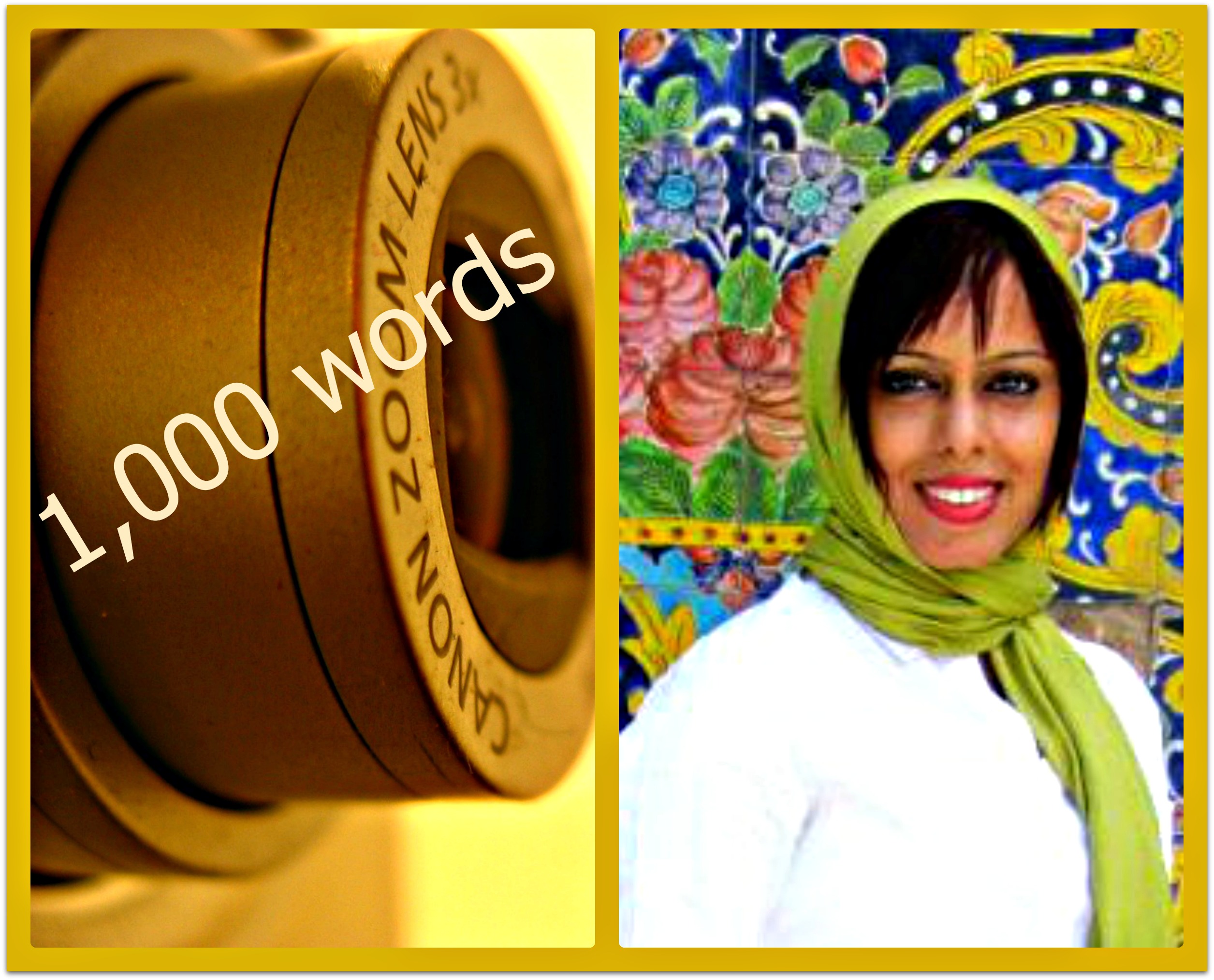
Svetlana Portrait Collage

Canon zoom lens, photo credit: Morguefiles; portrait of Svetlana Baghawan taken at Golestan Palace, Tehran, Iran.

Welcome to our monthly series “A picture says…”, created to celebrate expats and other global residents for whom photography is a creative outlet. The series host is English expat, blogger, writer, world traveler and photography enthusiast James King, who thinks of a camera as a mirror with memory. If you like what you see here, be sure to check out his blog, Jamoroki.

My guest this month is 33-year-old Svetlana Baghawan, who says she is a “cloud gypsy” or “maverick bird” (that’s what she calls her blog) because she likes to fly and explore—she also hikes, treks and daydreams. On her blog’s Home Page, Svetlana declares:

“When I’m not traveling physically my mind wanders in loops and whirls across open space.”

Born and raised in India, Svetlana is a mother and writer as well traveller. She also describes herself as a compulsive shopper, foodie, bad cook (her words) and animal lover. She likes to travel solo across continents, sometimes completely alone, often with her five-year-old daughter in tow. Having worked as a flight attendant for quite a few years, she was bitten by the travel bug early, and for good.

The way she described the self-portrait she sent to me for “A Picture Says…” (see above) helped set the scene for my interview with her:

By the time I left Tehran, I was a far cry from the shaky, nervous girl who had landed there two weeks before. The photo (above) was taken by the Tehran moral policeman who pulled me up for wearing tight jeans. When I told him I was from India, he revealed a fascination for Bollywood and I glibly lied about being a professional Bollywood dancer. He happily let me go after taking this photo and a few others. Not only did my response save me from harassment but I’d surprised myself with my new-found confidence. It was a turning point in my life. That’s why I love the photo.

* * *

Welcome to the Displaced Nation, Svetlana. I have been looking forward to discussing your photo-travel experiences ever since I discovered your blog, Maverickbird, some months ago. The first thing that caught my eye was the unusual title which, as I now know, describes you perfectly. Let’s start with where you were born. And when you spread your wings (an apt metaphor in your case!) to start travelling?
I was born in Calcutta, India, and spread my wings at the age of 17 when I was selected as a flight attendant by an international airline.

I think I can put you in the seasoned traveller category now as you have been travelling for work and pleasure for 16 years. Tell us, what is it like to be a solo female traveller?
My travels could be described as falling into three categories. Initially they were only what I would call city centric and absolutely touristy. You know, the places where flight crews get night halts and have limited time to relax. So there is little else to do except take selfies, shop, eat and sleep. Then came the phase when I travelled with my family, which, apart from the touristy fun bit, also involved taking on a lot of responsibilities. Then finally, at the age of 30, I started traveling solo. Since then my journeys have been challenging but also more fulfilling and enriching.

So at last you are, how shall I say, awakened perhaps? And living a dream. I can appreciate how uplifting that must be so I would love to know what inspired you to travel and what countries you have visited?
It may sound a bit melodramatic, but one day I was happily tied to my role of the traditional Indian married lady, and the next I was suddenly alone: a blow was dealt to my secure little world. I struggled to come to terms with my loss, but grief and depression, coupled with the suffocating social taboos that are dumped on bereaved ladies in India, nearly drove me over the edge. I was still a flight attendant at the time so used my free airline ticket facility and took off. I craved an escape. It was my way to survive. Iran was my first stop. It was tough—but soul touching and completely healing. I returned from Iran with a new-found zest for life, secure in my own identity and confident to take on the world once again.

How many countries in all have you visited?
If I include all the places which I have visited since I started flying then the list would run to nearly 60 countries. As a solo traveller, I have visited and engaged with 13 countries in depth.

“Whoever you are, no matter how lonely,/The world offers itself to your imagination…” Mary Oliver

Recovering from a tragedy takes courage, and the fact that you didn’t dwell on your loss for too long shows your resilience. I firmly believe that we learn more from adversity than we do from triumph or success. You have good reason to be proud. So where are you now, how did you end up there and what is life like in a new place?
I am in Sri Lanka where I came to help a friend on a whaling project. I have found Sri Lanka to be very unsettling and unexpectedly tough to handle especially for a single woman of Indian origin. Although it’s a breathtakingly beautiful country with amazing people, culture and history, I have a sense of “alien familiarity” here, which I’m finding difficult to handle. It’s similar to home yet so very different. I am constantly oscillating between feeling at home and being displaced. Sri Lankans only seem to be able to associate with Southern India—hence the dazed reactions of nearly everybody I meet to my descriptions of Calcutta. This is slowing wearing me out.

A whaling project sounds pretty exciting—I hope you don’t let the other issues get you down. Let’s have a look now at some photos that capture a few of your favourite memories and hear your stories about what makes these memories so special.
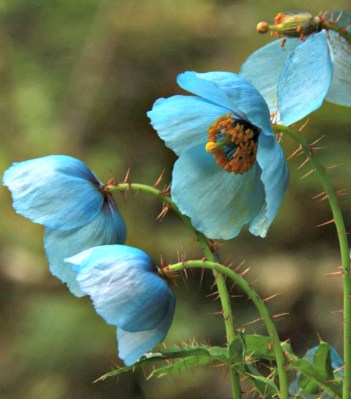
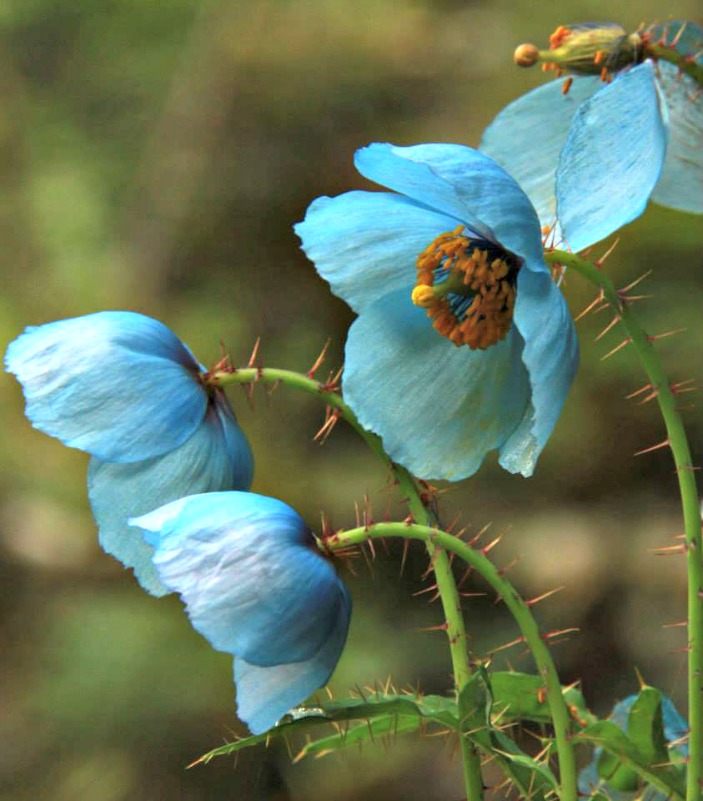
It is a very arduous trek to reach the Himalayan blue poppies at the Valley of Flowers National Park, in Uttarakhand, a state in the northern part of India. But the beauty at the end of the journey is mind blowing. I still clearly remember how my first sight of the rare blue poppies took my breath away:
Svetlana_blueflowers

Singing a gorgeous blues in the Himalayas; photo credit: Svetlana Baghawan.

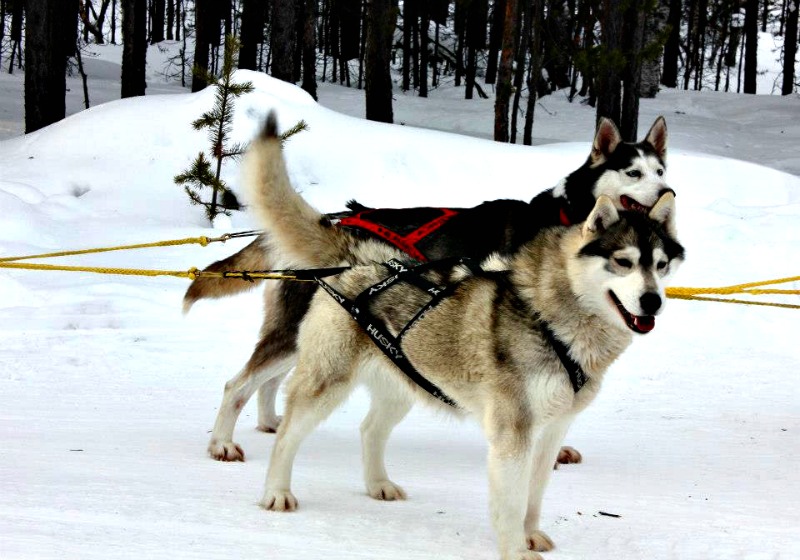
Meeting huskies in Lovozero, a village in Northern Russia, was a dream come true for me. Their puppy love floored me completely. It was extremely heart-warming to see the way those tough little dogs did the usual doggy tricks, like yapping away in happiness on being taken out for a run, making cute puppy eyes to get their way and cuddling on one’s lap like big babies.

Svetlana_huskies

Floored by puppy love in Northern Russia; photo credit: Svetlana Baghawan.

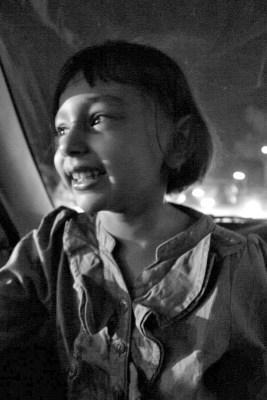
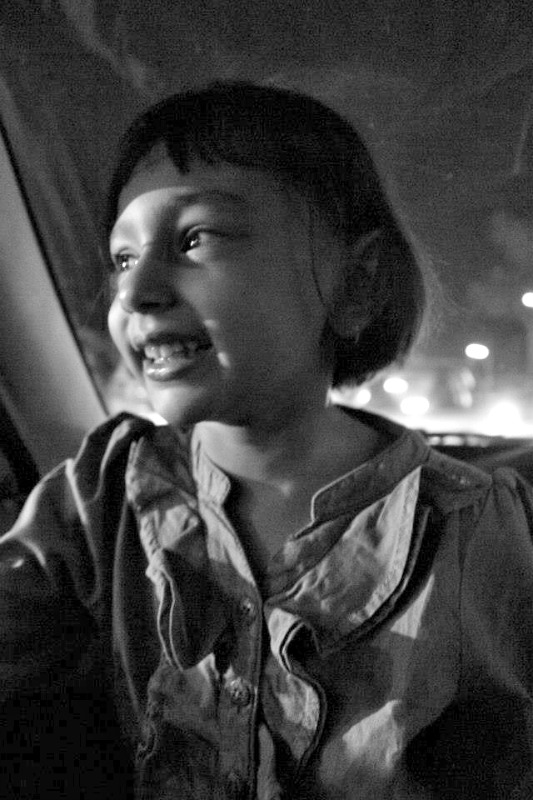
The third photo is of my daughter during Diwali. We had gone for a drive and I loved the way her eyes lit up with happiness at the prospect of quality mommy-baby time. It was fresh after our little world had gone awry, and it was magical to see how fast children rebound from losses and find happiness in every moment and in smallest of things:
Svetlana_daughter

A daughter’s delight in Diwali; photo credit: Svetlana Baghawan.

Diwali, for those who don’t know, is the biggest festival celebrated in India. Held around November, it signifies the victory of good over evil and is celebrated with a lot of festivities: spring cleaning, new clothes, home makeovers, auspicious purchases of substantial things like gold, cars, house etc, starting of new ventures, exchanging gifts, sweets and finally with lots of lights and fireworks. The whole country gets lit up in millions of lights as every Indian irrespective of caste, religion and social standing, decorates their house with lamps/lights.

This is a beautiful photo which captures a child’s joy and innocence. I can see she is very precious to you.

“I love the freedom of my wings.” —Banani Ray

Tell us, where were (or are) your favourite places to take photographs?
Shiraz, Iran, is a favourite of mine because of its stunning landscape, spectacular architecture, feast of archaeological wonders, and photogenic people who are also genuinely friendly. I loved the playful rainbows created inside this mosque. To me it truly represented Iran, which I have found to be a friendly, delightful and safe country. Unfortunately, it is shrouded under an unfortunate pall of cruel myths.
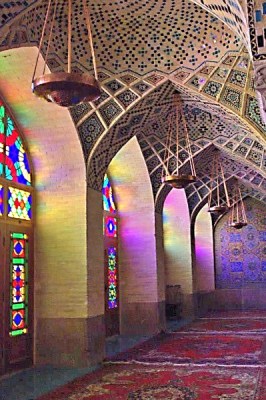
Svetlana_mosque

Somewhere over the rainbow…is this gem of an Iranian mosque; photo credit: Svetlana Baghawan.

How interesting and not the general Western perception of the place, I’m sure.

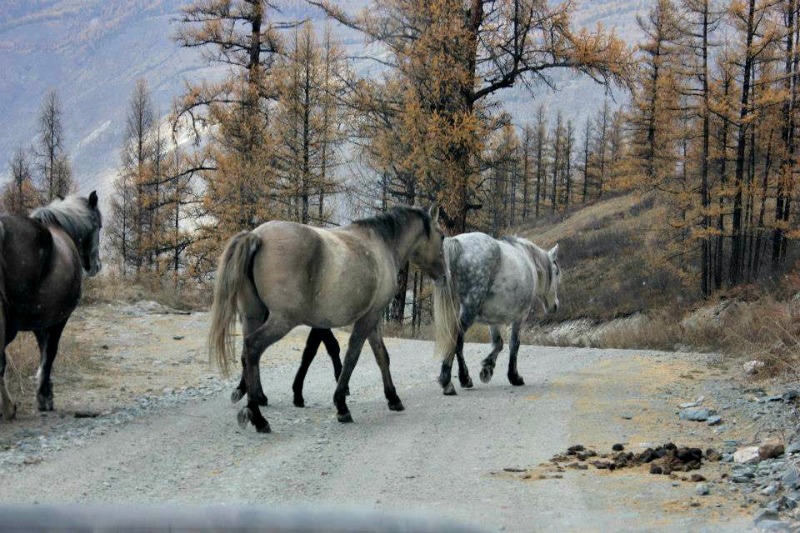
Siberia would be another favourite place to photograph. The sheer amount of unexplored open natural beauty is very freeing and of course the landscape is breathtaking. These wild Altai horses say Siberia to me, with its staggeringly expansive land mass and incredible, wild beauty.
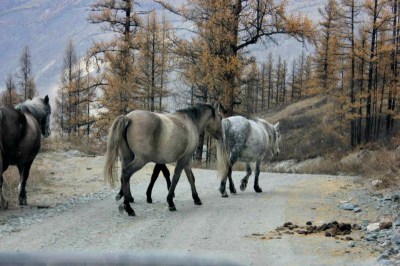
Svetlana_horses

Wild horses in the wilds of Siberia’s Atlai mountains; photo credit: Svetlana Baghawan.

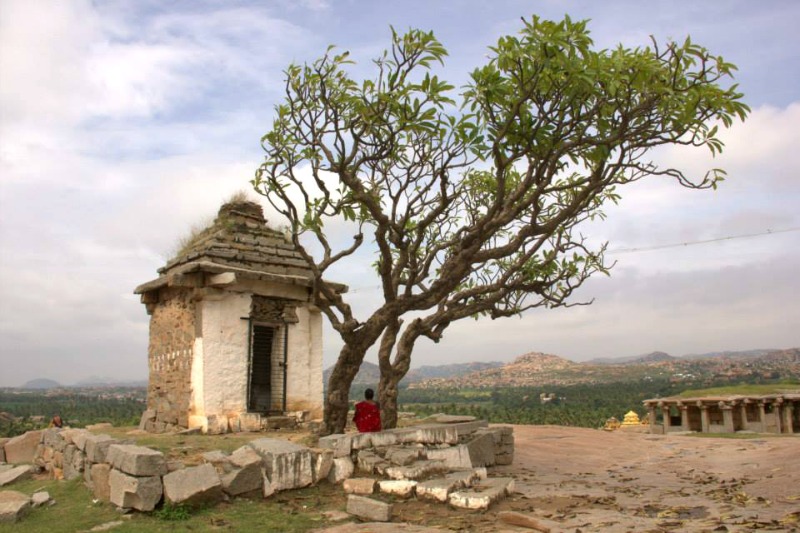
Last but not the least would be Hampi, a village in Karnataka, a state in South West India, famed for being located within the ruins of Vijayanagara, an empire that came to prominence at the end of the 13th century. Although it was tough to decide between Hampi and Kashmir, I love Hampi more for its surreal mix of a tangible ghostly civilization lying scattered amidst one of the most beautiful landscapes in India (think balancing boulder, rice fields, forests and obscure rivers) and little pockets of villages. The enchanting blend of the dead and living is breath-taking and the last photo represents Hampi’s larger-than-life beauty. You have to see it to believe it.
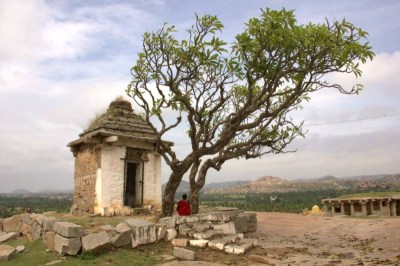
Svetlana_Hampi_India

Contemplating the former glory of a ruined empire (Hampi, India); photo credit: Svetlana Baghawan.

I believe you (I doubt I will ever get the opportunity to see it!). You have clearly been touched by the places you’ve visited, which should be an inspiration to other wannabe solo travellers. I’d like to know if you feel reserved about taking photos of people, particularly when they are conscious that you are doing so?
I love to take people’s photographs but at times do feel a bit conscious about photographing elderly people. This stems from the fact that they belong to a completely different era and might not at all like the idea of getting clicked. Photographing members of the religious fraternity, like monks, also makes me a bit nervous. I almost always ask permission before taking a person’s photo and in case of a language difference, bow, smile, greet and point to my camera to seek permission.

“It’s impossible to explain creativity. It’s like asking a bird, ‘How do you fly?'” —Eric Jerome Dickey

Would you say that photography and the ability to be able to capture something unique which will never be seen again is a powerful force for you?
I would like to think so because I see beauty in almost everything and love to capture it to share those moments with others. I believe that looking at the world through rose-tinted glasses is a gift I received from my mother. When I was growing up, she instilled in me a love for life’s beauty in how she would react to the world around us. She would spot a photogenic army of marching ants, play of sun and shade, curls of flower petals, waving strings of lights, etc., and share those moments with me in such an inspiring way. That said, it took me some time to get in touch with this inborn gift. I first realized it in Delhi while photographing a man selling neon-coloured balloons in front of India Gate. The detailed neon glow against the brooding monument in the dark inspired me, and those photos were very well received by my friends and family. Since then, I’ve been alert to beautiful details and while it was once a conscious effort, it is now a seamless habit, one that has made me much happier and contented. Discovering beauty at every step does make the world a less threatening place.

Your mother clearly had a great influence on you and especially the way you interact with natural scenery. Moving on to the technical aspects of photography: some of our readers may be curious to hear what kind of camera and lenses you use.
I use a Canon 550D although have recently upgraded to 600D and most of the time use 18-200mm lens. I prefer not to use post-processing software, but at times I have tried my hand at Picasa.

That’s a coincidence. I have the 600D as well! But unlike you I spend a lot of time learning and using post-processing. I believe, if you have the time, that learning about and improving photographic skills can add enormously to a blog. Having said that, I love at lot of your photo compositions and the subject matter is really good. Finally, do you have any advice for wannabe photographers who are traveling or living abroad?
Traveling abroad is both extremely tough and fulfilling at the same time. To leave your comfort zone for unknown territories and cultures is difficult but once you start coming to terms with the culture’s uniqueness, you will fall in love with it. Accepting the way a new place is in a non-judgmental way will help the transition process and slowly reveal its unfamiliar yet unique beauty, which you can photograph. Respect for the local culture comes first.

Thank you, Svetlana, for taking the time to tell your heart-warming and fascinating story. The late great American actress Anne Baxter once said:

It’s best to have failure happen early in life. It wakes up the Phoenix bird in you so you rise from the ashes.

You strike me as living proof of that statement. You have overcome adversity and grown as a person: a true triumph!

* * *

Readers, what do you make of Svetlana’s experiences and the photos she has produced? Please leave any questions or feedback in the comments!

Want to get to know her better? I suggest that you visit Svetlana’s blog, maverickbird. She can be contacted by email.

(If you are a travel-photographer and would like to be interviewed by James for this series, please send your information to ml@thedisplacednation.com.)

STAY TUNED for next week’s fab posts!

If you enjoyed this post, we invite you to register for The Displaced Dispatch, a round up of weekly posts from The Displaced Nation, with Alice nominees, exclusive book giveaways and other extras. Register for The Displaced Dispatch by clicking here!

Related posts:
For this Filipina with a passion for immersive escapades, a picture says…

Jean Alaba Collage

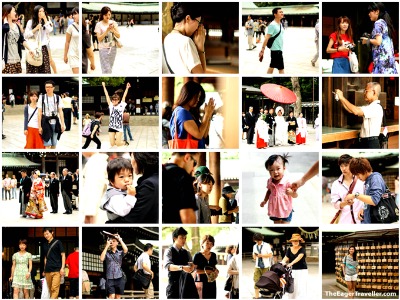
Canon zoom lens; photo credit: Morguefiles. Jean Alaba in front of moat surrounding Osaka Castle, Osaka, Japan. Photo credit: Jean Alaba.

Welcome to our monthly series “A picture says…”, created to celebrate expats and other global residents for whom photography is a creative outlet. The series host is English expat, blogger, writer, world traveler and photography enthusiast James King, who thinks of a camera as a mirror with memory. If you like what you see here, be sure to check out his blog, Jamoroki.

My February guest is 20+ Filipina Jean Alaba. An extrovert who describes herself as a “God-fearing human being” and a “firm believer of living vividly,” Jean is, without a doubt, fulfilling her passion in life: TO TRAVEL. As she explains on the About page of her blog, The Eager Traveller, travel affords her an opportunity to move outside her comfort zone and grow as a person.

Jean was motivated to start up her blog just over a year ago, as a space to record the re-collections of her travels—which she modestly calls “my humble escapades”—in hopes of inspiring others to “nurture their zeal for new adventures” and of promoting the joy of immersing yourself in “the vibrant cultures across the globe.”

Why am I not surprised that Jean has gathered a considerable following in just over one year? My interview with her may provide a few clues as to why other avid travellers are drawn to Jean and her suggested itineraries.

* * *

Hi Jean. I know it has taken us a bit of time to connect, but I’m glad we finally managed to find some time to discuss your photo-travel experiences. Firstly, I see that you are 20+ (I am also 20+: 20 + 50!!), and for one so young you have travelled a fair bit. Can you tell us where you were born and when did you spread your wings to start travelling?
I was born in the Philippines. This may sound like a cliché but my first source of inspiration for travelling was a National Geographic magazine I saw in our school library.

National Geographic is a wonderful publication. I love it.
But I didn’t spread my wings until I made my first trip to West Coast USA. The Strip struck me the most because everyone there seemed to be having the time of their lives. There was such a lot to experience and yet the time was way too short. After that, I developed a passion to immerse myself in new cultures, interact with unfamiliar nationalities and engage in overseas adventures.

To a fearless person, no fence is high enough.—Filipino tagalong proverb

I assume you mean the famous Sunset Strip that has featured in so many movies over the years? I want to know more about your travels, but let’s start with what it’s like to be a solo female traveller.
So far I’ve travelled for pleasure and for business but as yet have never travelled alone. That’s a hurdle I hope to cross this year. I realize it can be risky, but from the inspiring articles I’ve read online, it’s clear it can also be rewarding.

Even though stepping into the unknown by yourself can sometimes be difficult, even for seasoned travellers, I believe preparation is the key. I’m sure you will be fine. Next I would love to know what what countries you have already visited?
So far, I’ve only been to the United States, India, Singapore, Japan, South Korea, Hong Kong, China and Taiwan. I lived in Singapore as an exchange student for four months, which gave me a a sense of independence and responsibility. Another highlight was my six-week business trip in India, where I had the opportunity of visiting Mumbai, Agra, New Delhi and Jaipur. Here are two photos I took on that trip:

Q9-Taj-Mahal

The Taj Mahal in all of its intricacy. Photo credit: Jean Alaba

The first is of the Taj Mahal. I immediately fell in love with its intricate design. By pure luck, a bird flew across at the moment when I snapped this shot. It was only when I was viewing my photos on my laptop that I realized I had captured such an amazing moment. For me, the bird is special: it symbolizes freedom from all the worries in one’s life and from whatever is holding you back from achieving your dreams.

Q9-Bhawani

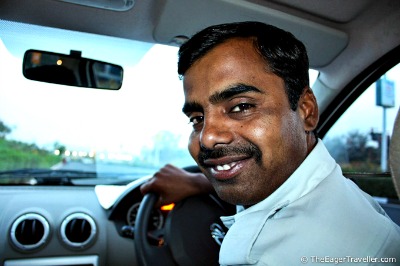
The jolly Jaipur driver Bhawani. Photo credit: Jean Alaba

The second is of Bhawani, the driver assigned to my group during our two-day outing to Jaipur. It reminds me of his kindness and positive disposition in life. He had to take us around Jaipur in the burning hot summer, but never once did he become irritated or impatient. He always had a smile on his face, and that kept us all in a good mood during the trip. In fact, the following week when we went to New Delhi, the company driver assigned to us was totally rude and inconsiderate. At one point he left us in the car sleeping (engine shut off!) while he had his dinner. Worse, when we lightly honked the car to signal that we were awake and frankly not amused, he completely ignored us.

I loved your photo of the Taj Mahal when I first saw it on your blog’s Home Page, but I have to be honest, I never noticed the bird until you pointed it out just now. Maybe that’s good as I was able to appreciate the intricate carvings. Now I’m worried I’ll miss the building and concentrate on the bird!! You’ve captured Bhawani exactly as you describe him; perfect.

One finds a way, or finds a reason to do something.—Filipino tagalong proverb

You are very modest to say you’ve been to “only” eight countries. That’s a lot more than most people visit in a lifetime. So tell us about where are you right now and why.
Well, as you know, James, I am currently in my country of birth, the Philippines, but I’m working out a deal that will hopefully pave the way for life in a new place. I’ll keep you posted.

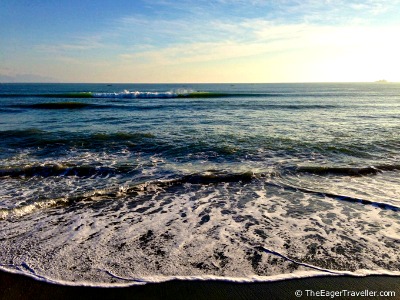
Q9-Baler

Baler, nicknamed the Philippines’ surfing capital. Photo credit: Jean Alaba

So you are keeping the secret for now, but I’m sure your blog will be give the game away when you are on the move again. The Philippines is a beautiful country and I see you have included one picture in your selection.
Yes, I’ve included this photo of Baler, which is in Aurora province. I like it because it reminds me of my first time attempting to surf and for someone not sporty, I didn’t do too badly. This was also my first time to go beyond my comfort zone in my own part of the world: I travelled for six hours just to catch the waves. It was a spontaneous weekend that proved to be pretty rewarding.

For me, the Baler surf lapping the shore looks just like a welcoming carpet in someone’s lounge.

If you plant, you will harvest.—Filipino tagalong proverb

I know you take a lot of photos but where, so far, are your favourite places to do so? and Can you explain why these places inspire you and how it shows in your next three photos?
My favourite places to take photos so far are India, Japan and Hong Kong. I’ve included one photo of each.

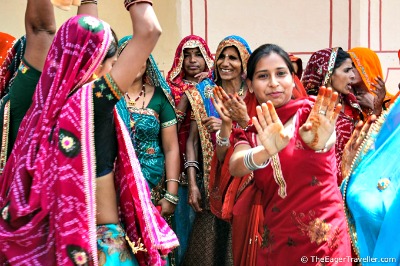
Q10-India

Indian women in colorful saris. Photo credit: Jean Alaba

I like taking photos in India because Indians are very proud of their heritage. This was apparent everywhere we went in India, regardless of the people’s social status.

Q10 Japan

Portraits of Japanese people. Photo credit: Jean Alaba

Japan is a favorite of mine because the people are so organized, disciplined and polite. I never run out of things to see and admire.

Q10-Hong-Kong

A Hong Kong eatery. Photo credit: Jean Alaba

Hong Kong inspires me because of the food! I should think its vast array of local dishes are enough to inspire anyone!

I like that you manage to get a handle on people from the different countries you visit, without actually living in that place. You are clearly a good observer of people, as well as a keen researcher. Tell me, do you feel reserved about taking photos of people, particularly when they are conscious you are doing so?
Not really unless I see they’re offended. But so far, no one has reacted angrily when they see me taking their photo. This is a good thing since I like shooting people. Capturing their unique expressions enables me to glimpse who they are and the kind of lives they lead. I must have taken a thousand portrait shots while in India. Perhaps I’ll get some of these printed and make it my wall art.

I’m the same. I hate to take “posed” photos so never get into a discussion with my subjects. I either take the pic or I don’t. So you like shooting people? Don’t worry; I know what you mean! I think the wall art is a great idea. I know this is a similar question but do you ever ask permission before taking people’s photographs. And how do you get around any language barriers?
Most of the time, I don’t ask but when I was in Japan, where permission needs to be secured for taking photographs of infants and kids, I would politely approach one of the parents and ask them in Japanese—of course with the help of sign language (pointing to my camera and their kids).

Thanks to you, I won’t get into trouble if I ever go to Japan. Would you say that you are motivated by the possibility of capturing something unique, which will never be seen again?
Definitely. You always have to live in the moment, and there is nothing more rewarding than being able to capture the special moments that, unless you have a time machine, you’ll never be able to bring back. Those photos may give you inspiration just when you need it most.

I have to agree, as I think most photographers would. So when did you first realize the power of photography, and how has it changed you?
I first realized it after borrowing a decent SLR for my trip to Hong Kong in 2008. I was able to take high-quality photos to serve as a memento. Ever since, I’ve made it a point to capture moments with my camera, whether during a vacation or simply at a gathering of family or friends—moments I’ll be wanting to view when I get old and grey.

I know what you mean. The picture for me is like a diary of an event in visual form. The photographer can write about it but no one else could.

When the sheets are short, one needs to make do.—Filipino tagalong proverb

Most readers will know by now that I’m not too good on the technical stuff but some of our readers will want to know what kind of camera and lenses you use.
I’m still using the borrowed camera; it’s a Canon 450D. I use the kit lens and a prime lens. It’s outdated equipment now.

You sound a bit like me except that I haven’t managed to borrow any equipment yet. And you aren’t asking me for technical advice. That’s great!! Finally, do you have any advice for wannabe photographers who are traveling or living abroad?
I don’t feel I’m in a position to give advice since I haven’t really achieved anything noteworthy. But I would say from my experience, don’t hesitate to take as many pictures as you can while travelling. Before embarking on a journey, research and learn from the professionals online. You can try copying them, using a trial and error process.

I actually think that is very good non-technical advice, Jean. I’d like to thank you for taking the time to tell your story so far in this interview. On your blog you say:

It has been a spectacular life so far but there is so much more to be seen! I have yet to find that life-changing opportunity which will allow me to do my passion for travelling and blogging as a living.

I have no doubt you will find that opportunity. I’m booking you in for a follow up interview next year to check your progress!!

* * *

Readers, what do you make of Jean’s experiences and her photography advice? And do you have any questions for her on her photos and/or travels? Please leave them in the comments!

And if you want to know more about Jean, don’t forget to visit her excellent blog, The Eager Traveller. You can also follow her on social media:
Twitter: @eagertraveller
Instagram: theeagertraveller
Google+: Jean Alaba

(If you are a photographer and would like to be interviewed by James for this series, please send your information to ml@thedisplacednation.com.)

STAY TUNED for tomorrow’s fab post!

If you enjoyed this post, we invite you to register for The Displaced Dispatch, a round up of weekly posts from The Displaced Nation, with seasonal recipes, book giveaways and other extras. Register for The Displaced Dispatch by clicking here!

Related posts:
LOCATION, LOCUTION: JD Smith – from Cornwall to 3rd century Syria

Book cover art, Tristan & Iseult; JD Smith author photo; JJ Marsh author photo

Book cover art, Tristan & Iseult; JD Smith author photo; JJ Marsh author photo

In this month’s “Location, Locution”, expat crime writer JJ Marsh interviews  JD Smith, author of the novella Tristan and Iseult and the first in The Rise of Zenobia series, Overlord, based in ancient Palmyra, to be released in early 2014.

JD Smith lives in the English Lake District. She has worked in the graphic design industry for over a dozen years, and now specialises in book cover design and typesetting.

The pseudonym JD Smith was adopted as her preferred Editor’s title when launching the writing magazine Words with JAM.

Which comes first, story or location?
Always the story. The location is influential to the story, but the story is the most important thing, the part which excites me as a reader. The location is the background upon which the story is played out, and the history is the framework upon which it is hung.

How do you go about evoking the atmosphere of a place?
With great difficulty. In writing Tristan and Iseult I evoked the wet and wind the British know only too well. I’ve always lived on the coast, though in the north, not Cornwall (Kernow), but those salt winds and perpetually grey skies are the same. The Rise of Zenobia is based in 3rd century Syria, and I’m finding that much harder. I didn’t grow up with the atmosphere ingrained in me. I haven’t spent years of my childhood visiting the remains, the palaces and the fortifications. I rely on films a lot. Being a designer I’m an incredibly visual person, and seeing it played out, filmed in the locations I’m trying to conjure on the written page, helps immensely.

Which particular features create a sense of location? Landscape, culture, food?
All of the above, definitely. Although I think in order to relate better to a reader I am all in favour of sacrificing certain aspects which readers might not gel with, and using others to push plotlines forward. Of course, all of these things give a clue as to the time, as well as the place, in which a book is set.

How well do you need to know the place before using it as a setting?
I’ve never visited Syria but I’m writing about it. You need to know it to a degree, but I think you need to know your characters more. Location is secondary. You can paint the background afterwards. Of course it depends. I write historical novels based on historical events and people, and knowing them and the history of the place, rather than the place as it stands, is key.

Could you give a brief example from your work which you feel brings the location to life?
These two extracts are my favourite descriptions of the weather in Britain which for me was a huge part of the setting of Tristan and Iseult:

Rustling emanates from the dense forest, even though the wind has dropped. White mist shrouds us. I tense to stop cold shivers taking hold. The rain is fine, yet a hand through my hair proves it is wetter than the streams in springtime and my footing slides on the muddy grass as we pick our way through undergrowth.

And:

‘Ireland is no home for me,’ she says. ‘I was at home with the sea and the sand and the shingle of my shores, with the salt spray in my hair.’

Which writers do you admire for the way they use location?
Tricky one. I tend to admire writers for their story, and their characters, not for their use of location. And for me it’s both the time and the place that work together as one with any author’s writing, because I love historical fiction. Time and place are tied so tightly together one does not exist without the other. Sarah Bower’s descriptions are second to none.  Philippa Gregory evokes the royal court with ease. And Bernard Cornwell can describe a battle on any field.

Next month on Location, Locution:  award-winning author Amanda Hodgkinson.

 * * *

JJ Marsh grew up in Wales, Africa and the Middle East, where her curiosity for culture took root and triggered an urge to write. After living in Hong Kong, Nigeria, Dubai, Portugal and France, JJ finally settled in Switzerland, where she is currently halfway through her European crime series, set in compelling locations all over the continent and featuring detective inspector Beatrice Stubbs.

STAY TUNED for tomorrow’s post!

If you enjoyed this post, we invite you to register for The Displaced Dispatch, a round up of weekly posts from The Displaced Nation, with seasonal recipes, book giveaways and other extras. Register for The Displaced Dispatch by clicking here!

Related posts:
LOCATION, LOCUTION: Jeet Thayil on bringing location to life in a semi-dream state

Jeet Thayil

Clockwise from top: author photo Jeet Thayil; book cover art “Narcopolis”; author photo JJ Marsh

In this month’s “Location, Locution”, expat crime writer JJ Marsh interviews Jeet Thayil, author of  Narcopolis.

Jeet Thayil was born in Kerala, India, in 1959 and educated in Hong Kong, New York and Bombay. He is a performance poet, songwriter, librettist and guitarist, and has published four collections of poetry: These Errors Are Correct (Tranquebar, 2008), English (2004, Penguin India, Rattapallax Press, New York, 2004), Apocalypso (Ark, 1997) and Gemini (Viking Penguin, 1992). He is also the editor of The Bloodaxe Book of Contemporary Indian Poets (2008). His first novel, Narcopolis (Faber & Faber, 2012), won the DSC Prize for South Asian Literature and was shortlisted for the 2012 Man Booker Prize and the Hindu Literary Prize 2013. He currently lives in Berlin.

Which came first, story or location?
I knew Narcopolis would be set in Bombay. I started with that city and that period in mind. It was about telling a story that hadn’t been told before, in a way that Indian fiction doesn’t really tell stories. Unsentimental, brutal and beautiful. When I realised that was what the book would be like, it revealed itself to me.

What’s your technique for evoking the atmosphere of a place?
When I was working on Narcopolis, I would work till very late at night, go to bed, wake up and start on it again, without really thinking. I found that when you’re in that oneiric, half-oneiric state, still slightly in the dream, very interesting things would happen. I’d come up with things I’d never have thought of later in the day. I was astonished about how much I remembered from that time, 25 years earlier, when I had no idea I would write a novel, when I was not exactly in the clearest of mental states. I was also surprised how unhealthy it was, the process of remembering.

A negative experience?
Absolutely. It was the opposite of cathartic.

Which particular features create a sense of location? Landscape, culture, food?
All of those. I’m a big fan of crime fiction, the bloodier the better. I’m addicted to crime thrillers. That, and poetry, is what I read on a daily basis. I’m sure a lot of that atmospheric noir milieu seeped into Narcopolis.

That’s curious. Not a link I would have made. I was going to ask you if you had a guilty reading pleasure, but you obviously don’t feel guilty.
Not at all. I hold those books up proudly on the train.

How well do you need to know the place before using it as a setting?
I’ve set poems in places I’ve never been to, and that can be a huge liberation. I think the worst is to know a place glancingly. To visit a place for a few days, get a false sense of it and then try to write about it. It might even be better to have never been there than read a guide about it.

Because it’s too superficial?
I think so. Either never go there or have been there too long.

Which writers do you admire for the way they use location?
I mentioned my love for crime writers and the way they do exactly that, evoking streets and cities and ambiance. But I’m also tremendously fond of the fiction that’s set in the opposite of cities: William Trevor, Henry James, E.M. Forster. Writers that do evoke a sense of place but often in the most mysterious and indirect of ways.

Next on Location, Locution … JD Smith, author of Tristan and Iseult (12th-century Cornwall) and Overlord: The Rise of Zenobia (3rd-century Syria), to be released in early 2014.

 * * *

JJ Marsh grew up in Wales, Africa and the Middle East, where her curiosity for culture took root and triggered an urge to write. After living in Hong Kong, Nigeria, Dubai, Portugal and France, JJ finally settled in Switzerland, where she is currently halfway through her European crime series, set in compelling locations all over the continent and featuring detective inspector Beatrice Stubbs.

STAY TUNED for tomorrow’s post!

If you enjoyed this post, we invite you to register for The Displaced Dispatch, a round up of weekly posts from The Displaced Nation, with seasonal recipes, book giveaways and other extras. Register for The Displaced Dispatch by clicking here!

Related posts:
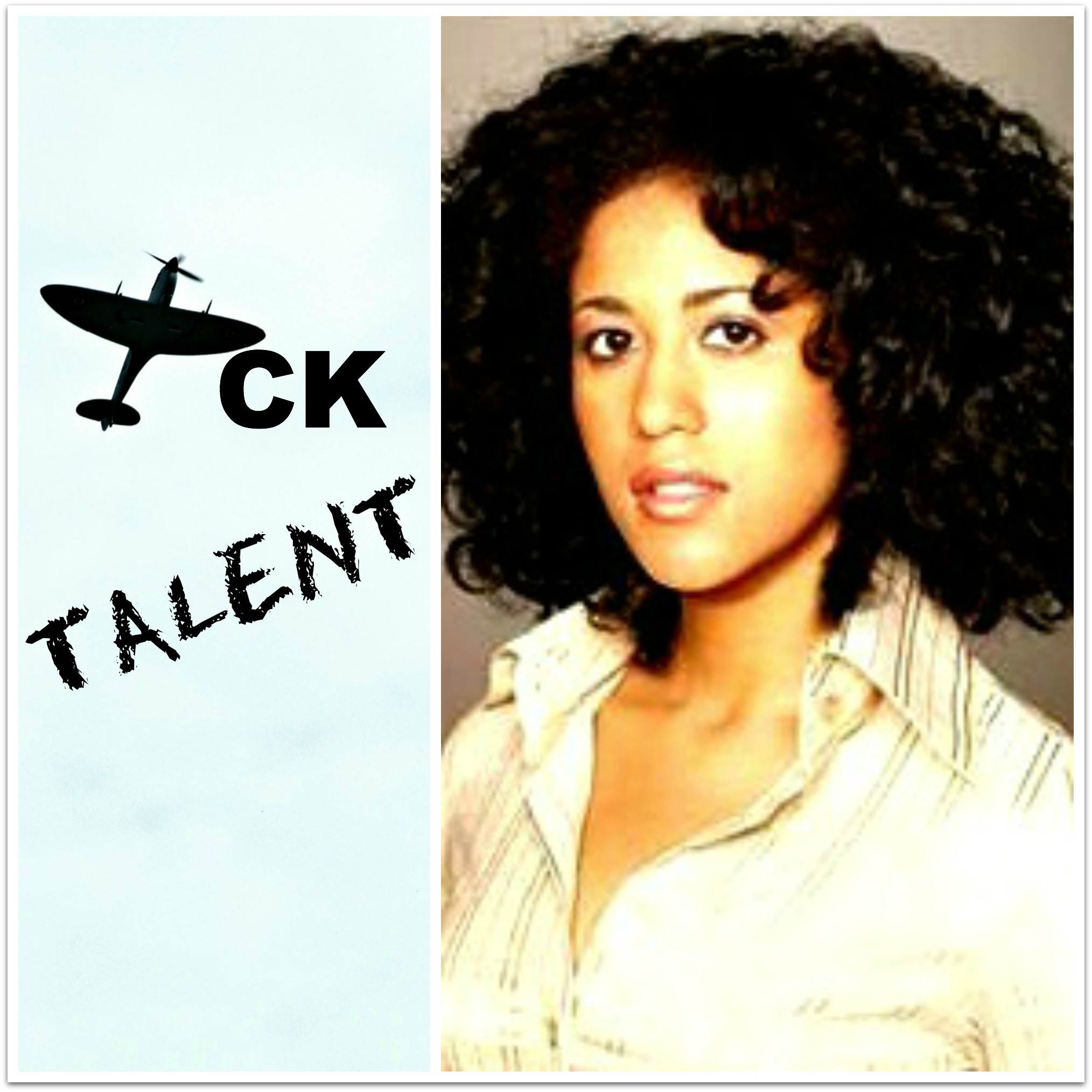
TCK TALENT: Amber Godfrey, Diplomatic Kid Turned Performer-Writer

Amber Godfrey Collage

Photo credits: left: RoganJosh (MorgueFiles); right: Amber Godfrey, from her portfolio.

Welcome to Elizabeth (Lisa) Liang’s monthly column about adult Third Culture Kids (TCKs) who work in creative fields. Lisa is herself a prime example. A Guatemalan-American of Chinese-Spanish-Irish-French-German-English descent, she recently debuted her one-woman show about being a TCK, which I had the pleasure of seeing during its too-short run in New York City in September: stupendous!

—ML Awanohara

Happy Thanksgiving, readers! I’m thankful to be bringing you today’s guest, a kindred spirit of mine. She is Amber Godfrey, an actress-writer who, like me, has written and performed her own solo show about growing up as a TCK of mixed heritage.

* * *

Welcome to The Displaced Nation, Amber! I’m happy to have met another solo performer whose TCK story parallels my own. Since your dad is a Canadian diplomat, you grew up in eight countries. Can you tell us which ones?
Besides Canada, I’ve lived in the USA, Ecuador, Trinidad, India, Hong Kong, Sri Lanka and England.

Growing up, which of these countries do you identify most strongly with?
I identified, and continue to identify, strongly as a Canadian probably because of my dad’s job and the fact that we always connected with the Canadian expat community wherever we went. I also heard on more than one occasion (usually when I was being busted for some rebellious act): “You represent Canada!!” I’ve spent most of my adult life in Canada and the US, so I feel very “North American” at this point. At the same time, though, I do feel like a “citizen of the world,” and the bond that I feel with other TCKs is unique.

“Are you adopted?”

Your family is particularly diverse. Let’s see if I can get this right. You are the daughter of an Ecuadorian mom and an African American father, but you were raised by your mom and a Caucasian-Jewish Canadian stepdad, who then had your brother, David. Was your family’s status ever challenged by strangers, like mine was? In grade school, no one believed my brother was my brother, and people asked my mom if I was adopted.
Yes! This still happens all the time. When the four of us go out for dinner, servers will assume my brother and I are a couple. If I check into a hotel with my Dad, we get stares. When I was in fifth grade, I had to go to the school nurse and, when she realized who my brother was, she asked pointedly: “Are you adopted?” I panicked and said “Yes,” even though that wasn’t the whole truth. Looking back—what an inappropriate question to ask a 10-year-old!

Do you feel offended when that happens?
Honestly, it sort of tickles me that people don’t know what to make of us. I figure, that’s their problem and it doesn’t have to ruin my day. As an actor, I get irritated by the under-portrayal of mixed-race families on stage and in film. When I was auditioning a lot, I became really frustrated realizing I would most likely not be considered for “sister of” so-and-so because the other actor had already been cast as white.

Love the place you’re in

I completely relate! So, with such a mixed background, which culture(s) form the core of your identity?
I grew up with a lot of focus on Jewish history, tradition and heritage, which I resisted up to a point—I chose not to be Bat Mizvah’d—but to which I also really connected. As a pre-teen I was obsessed with The Diary of Anne Frank and wrote short stories about young Jewish girls in the Nazi era. In my early 20s, the combination of acting roles I was being sent out for and my burgeoning adulthood piqued a stronger curiosity in the African-American side of me, which ultimately led to me reaching out to find my birth father. Now, in my 30s, I find myself seeking to connect with my Latin American roots. Of course I also identify with the cultures of the countries I grew up in! I think the quest to understand my “identity” is ongoing…

Were you happiest in a certain place at a certain time?
I guess the short answer is: I aim to be happiest in the moment I am in. Every place I went to had its good and bad moments…

What were your school experiences like growing up?
I went to private school in California, international schools in India, HK and Sri Lanka, and the local public school in Canada. During high school I had to contend with three completely different school systems, which was a challenge to say the least.

How about college?
I went back to Canada for college: I studied theatre at Acadia University, in Nova Scotia. It was hard to get good information back then (the Internet was just a baby!), but my Dad pointed out that as a small school in a small town, it might be an easier transition than if I went to a big school in a bigger city like Toronto. And Acadia has a good theatre program.

“It’s all in me…”

Did your TCK upbringing influence your desire to become a performer?  
Being in school plays or performance groups was a good way to get involved and make friends when moving from place to place. But I also think that portraying characters on stage allowed different parts of myself to come forth and was a way for me to work out my identity. I’m laughing because I’m thinking of Whitney Houston’s “I’m Every Woman”—I’m a hippy at heart and believe we are all one and connected. Seeking to experience and understand life/truth from multiple viewpoints is an essential part of who I am.

Before we get into your solo show, let’s talk about your series of performances of Anna Deavere Smith‘s solo show Fires in the Mirror, a docudrama for a solo performer about the racial tensions that erupted between blacks and Jews in Brooklyn in 1991.
I was asked to do Fires in the Mirror by Jesse Freedman, a fellow performer and prolific director, whom I met in a SITI Company Suzuki/Viewpoints workshop. I jumped at the chance to engage with this epic piece because it is constructed so thoughtfully and allows me to play with my Black/Jewish roots. I initially performed Fires in the Mirror at the Limmud Conference, which took place in Coventry, England. Then the Jewish Theatre Workshop in Baltimore requested the show as part of an initiative to continue dialogue between Blacks and Jews who share space in that community. I also had a short run in NYC at the New Yiddish Repertory Company Theatre.

Moving over to your autobiographical solo show: why did you create DipKid?
I’d been thinking for many years about telling my story but couldn’t decide which way to tell it. After taking a Soulo-Show Workshop with Tracey Erin Smith, I finally started writing. I submitted a proposal to a small festival in NY, and when I got in, I realized it was time to start making the show! My efforts resulted in a short but sweet twenty-minute piece (you can watch it here).

How was it received?
The reaction was fascinating. I had assumed my story was unique, but it seemed that people could relate to it, and wanted more! That’s where the struggle began for me. I didn’t know how to finish the piece because I felt I wanted it to link up with my current situation—but that kept changing! The next time I performed the show, I expanded it to 45 minutes but felt less satisfied. I’d watched the video of my first performance so many times I felt sort of stuck in the past. I also found myself listening to many differing opinions on where my show should go and how it should be crafted—my vision got a little lost in the din. Finally, the festival format was crazy-making—especially as I was holding down a full-time job. Trying to write and rehearse this piece all for just one evening was too much pressure. My dream would be to take the show to the countries I lived in and beyond. I’d love to perform it at international schools and for expat communities worldwide.

As the interviewer, I think I can permit one question that’s of particular interest to me, which is: how do you like solo performing?
Solo performance is relatively new for me and I do miss getting to work with other actors on stage. That said, the medium allows me to be a bit more in control of the work and my approach. And it’s wonderfully vulnerable!

I understand you’re planning to film a documentary. What will it be about?
The focus will be on other children of diplomats (i.e., “dip kids”) and how their lives have been shaped by their upbringing and the jobs of their parent(s). I plan to tell the story from my perspective and also weave in my experiences as a mixed-race individual who continues to search for an understanding of and connection to my identity, heritage and all the parts that I am made of.

Do you have any other projects coming up?
I am writing a memoir that will delve deeper into the stories I reveal in DipKid.

Best and worst (Canadian) Thanksgiving memories

Canadian Thanksgiving was in October, but since American Thanksgiving is today, please share with us your best and worst Thanksgivings.
The best occurred when we were living in New Delhi. We were invited to the Official Residence of the High Commissioner for a Canadian Thanksgiving celebration. It was a big party with live music and food sprawled out on the grounds. At dusk everyone looked up and gasped as hundreds of bats swarmed the sky. It was the coolest thing I had ever seen!

I think the worst was my first Thanksgiving away from home. My parents were in Sri Lanka and I was in Wolfville, Nova Scotia (where Acadia U is). Everyone I knew at school had family nearby, but it was only October and I hadn’t bonded with anyone enough to get an invite. I ate Pop-Tarts and drank Dr. Pepper and felt homesick for my family and a bit sorry for myself…

* * *

Thank you, Amber, for being you, a fellow TCK theatre-maker! Readers, please leave questions and comments for Amber below. And if you want to keep up with her creative undertakings, I suggest you also follow her on Twitter: @DipKidAmber.

STAY TUNED for next week’s/month’s fab posts!

If you enjoyed this post, we invite you to register for The Displaced Dispatch, a round up of weekly posts from The Displaced Nation, with seasonal recipes, book giveaways and other extras. Register for The Displaced Dispatch by clicking here!

Related posts:

Do refugees and migrants have anything in common with us expats? No, and yes…

displacedvdisplacedBelieve it or not, the Displaced Nation has occasional qualms about whether “displaced” is the right word to describe a group of expats and internationalists. What does a group of privileged travelers have in common with refugees or migrants who’ve had no choice but to leave their homelands? We thought we’d begin the new year by touching on this vexed question, this time with the help of a mentor, Andy Martin. Andy is now an expat in Brazil, but he previously worked with refugees in London.

— ML Awanohara

Before moving to Brazil in February 2012 I worked with refugees as a social worker in the UK, and my last job entailed supporting unaccompanied minors: children as young as 11 who flee conflicts and persecution in countries such as Afghanistan — on their own.

And it is of them that I remind myself when I reflect upon my own struggles and anxieties at being “displaced” from my own country. Suddenly, my tongue-in-cheek British moans about uncomfortable buses and lopsided pavements (yes, pavements), or my frustrations with struggling to learn Portuguese, seem trivial when contrasted with the experiences of the young people I worked with.

Given this, it would seem bizarre for a rich (relatively) migrant like myself to even contemplate comparing my experiences of displacement with those who flee poverty, persecution or some other unimaginably unfortunate situation that most of us will thankfully never have to experience.

Or is it?

Well, I guess the differences are probably easier to distinguish — for example:

1) The reasons for the migration

Whilst refugees are forcibly displaced through circumstances outside of their control, more fortunate gringos like myself possess far greater agency when it comes to the motives for our movements: love, jobs, travel, etc.

2) The journey itself

Forcibly displaced people often leave their homes unexpectedly with no belongings, or else hurriedly sell whatever possessions and land they have in order to fund their flight, whilst my wife and I had carefully planned our move for over two years (well, we read a few books and, to be fair, she is Brazilian herself — which helps).

What’s more, the route a refugee takes is often perilous, taking months or even years, and in turn may comprise many different means of movement: on foot, by car, on overcrowded boats, airtight lorries or refrigerated trucks. On top of that, their destinies also usually lie in the hands of people smugglers.

My wife and I, though, as middle-earners in the UK, booked our flight with a click of our laptop, and the path from our flat in London to our new life in São Paulo was no more than a day’s inconvenience — and a relatively smooth and comfortable one at that.

I had the cabin crew to serve me unlimited amounts of Cabernet Sauvignon and my biggest anxiety was which of the in-flight films to watch: Moneyball or Midnight in Paris?

3) The arrival at the new destination

Refugees are typically at the complete mercy of the host countries they successfully manage to reach. Most likely, they are from countries for which there are strict immigration controls and they are typically confronted not with empathy but with a culture of disbelief — yes, 11-year-old kids from Afghanistan with no family.

A British citizen like myself meanwhile, merely through my place of birth, possesses a passport that requires one of the fewest number of visas to travel around the world. Even when there is a requirement, particularly to live or work, it’s often pretty straightforward.

Refugees, though, even if they are granted some form of status, will by the nature of their former lives typically have to start from scratch, their qualifications often meaningless (that’s if they can even prove them) — and thus with access to only menial jobs and bottom-of-the-rung housing.

And then, once they’re settled, the mental scars from the trauma they’ve experienced will slowly emerge.

Fortunately for me — with the education I’ve received, the qualifications I’ve gained and the work experience I’ve accumulated — I’ll be in a far better position to start my dream life abroad.

Just take me to the beach already!

* * *

So far, so different then.

Is it really possible then that the experiences of forcibly displaced people can ever be compared to those whose displacement is chosen?

Well, yes, I think they can. Here’s a couple of ways we are similar:

1) The requisite adjustments to a new culture

One of the fascinating things about my job back in London was listening to people describe their reactions and adjustments to their strange new worlds. And, as you can imagine, the youthful frankness of the kids I worked with often made these accounts hilarious and, perhaps, more honest.

For example, I remember one young person seemed bemused as to why on one particularly hot day (well, relatively anyway) in London, so many people were stripping off their clothes and heading to the local park to sunbathe. He only realized why when by the next time I had seen him, there had been subsequently been 20 successive days of rain in London.

“Welcome to the UK,” I joked.

2) The occasional bouts of homesickness

It wasn’t, of course, just the things they were discovering which were intriguing, it was also what they were missing. For some it was their homelands, for others it was speaking their language, whilst often it was specific things like their mother’s home cooking, although most commonly it was the weather — of course.

However, a common and I guess obvious sadness amongst all of them was missing people — whether that be their friends, family or both.

* * *

In sum, writing my blog over the past year has made me realize that despite our very many differences all migrants share some common behaviors: that of exploring, adjusting and, inevitably, comparing (in my case moaning), as well as reflecting upon the losses we have to make in order to get to where we are.

At the same time, I’ve also acknowledged that my own anxieties are not trivial just because they might seem so in comparison. They are real and probably shared by many people. However, thinking about those kids back in the UK just gives me the motivation to try even harder.

Thank you, Andy, for that reality check! Readers, what did you think of Andy’s analysis?

British by birth and slowly becoming a little more Brazilian each day after moving to São Paulo a year ago with his Brazilian wife, Andy Martin is also a qualified social worker in the UK, who specialized in supporting refugees in negotiating the process of displacement. Now, as a migrant himself, he is finding out whether any of the advice he gave them was of any use in the first place. Andy is also known to drink tea, warm beer and play cricket, none of which Brazilians seem to be massively convinced by. You can learn more about him by following his blog, The book is on the table, and/or following him on Twitter: @andyhpmartin.

STAY TUNED for next week’s posts.

If you enjoyed this post, we invite you to register for The Displaced Dispatch, a round up of weekly posts from The Displaced Nation, with seasonal recipes, book giveaways and other extras. Register for The Displaced Dispatch by clicking here!

Related posts:
Images: The photo of the boy is from Morguefiles; the other photo is of Andy Martin (his own).