The Displaced Nation

A home for international creatives

Tag Archives: Pot Luck

What is the true essence of Britishness? Tea? Harry Potter? This TCK has her own ideas.

Today we welcome Laura Stephens to The Displaced Nation to comment on our themes from her third culture kid perspective. Although Laura’s parents are both British, she has spent most of her life in the USA. She is currently studying film production in Boston – most conveniently for us and this month’s Oscars theme.

At the beginning of a semester, it’s only a matter of time before a professor draws upon some of that “Teacher Training Camp” gold, and suggests we spend half a class playing name games. That way, the reasoning goes, we’ll be vaguely aware of the proper nomenclature of our lecture hall peers, with whom we will probably not speak for the rest of the course anyway.

Or worse, the self-proclaimed “hip” professor will pretend to be struck by a brilliant idea, and suggest, “How about we go around in a circle – say your name, and your major, and where you’re from?”

And I’m all, “How about we… don’t.”

Why? Because apart from it evoking irrational anxiety that sends my inner monologue into a manic babbling fit (“What’s my name, again? What was his name? I wasn’t paying attention because I was too busy preparing my answers to make sure I don’t screw up my own name.”) — I never know how to answer that last question:

“Where are you from?”

Where am I from?

I know my options here.

1. I can take the easy way out, and say I’m from Connecticut – lovely New England, just like most of the kids in the class. It’s not untrue, either. I’ve lived there most of my life.

2. I can inflict upon myself the task of revealing unnecessary further explanations about my background. To a bunch of people I only just met, courtesy of the name game? I don’t think so.

Which is why I never come right out and say I’m from England.

My brother and I differ on this. He kept his English accent, although he wasn’t even born there; he just copied it from our parents. He kept it to pick up chicks, and I mock him regularly for this. He seems to do all right with the ladies, though, so he puts up with it.

Me, I always found my English accent more of a hindrance than help; asking for a glass of “water” at a friend’s house was more trouble than it was worth. As a result, I tried to get rid of my accent as soon as I could – somewhere around fifth grade. This helped me get away with not mentioning where I was from, if I didn’t want the attention. I could always mention it later if I felt like it.

At some point after that I decided I wasn’t going to introduce myself as, “Laura, from England.”

I don’t have an English accent, so why should I?

If I introduced myself that way in the College Name Game, people would either pass over it (as they do everyone else’s responses) or perk up and ask some irrelevant question about London (the only place in England, according to Americans) or Harry Potter, or tea and crumpets.

How English is English?

When I mention I moved to the U.S. when I was three, people appear dejected or slightly peeved, as though they’d been ripped off.

“Oh,” they echo knowingly, as if to say, “So that doesn’t really count.”

This irritates me. I was born in England, lived there until I was three, and have visited relatives overseas every other summer since.

I get defensive:

“I drink tea, for crying out loud! I drink tea daily, and I drank tea before it was the cool thing to do. I like crumpets with butter and honey. I’ll take the Pepsi challenge between true Cadbury’s and the Made-by-Hershey’s imitation.”

I stop. “Do you watch The Office?” I ask them.

“Yeah.”

“No, no. The British one.”

And that’s when I realize: one of the major brag points I rely on, when proving to someone just how English I can be, is British film and television.

British television – a treasure lost in the Atlantic?

I’m a film major. Today in my History of Media Arts course, we learned about the introduction of cable television.

My professor lectured, “…and originally there were only three channels…”

(At which point my inner monologue interjected, “Cheese or snow?” – National Lampoon’s European Vacation reference, in case you missed that.)

I’m assuming we stayed within the realm of American television throughout class today, because by the end of the lecture, people had 52 TV channels, and CBeebies had not been mentioned once.

I think it is a shame that British television hasn’t become as popular in the United States as it is in its native country. I’ve introduced a lot of my friends to shows like Fawlty Towers, Blackadder, The Office, The Royle Family, One Foot in the Grave and Outnumbered. Top Gear seems to have gained a foothold with American audiences, but I’d like to see things like Extras and Episodes become more widely known and appreciated.

It’s not just because they’re British that I like them; I like them because they’re funny. I might enjoy them more than my American-born friends do, because of the references within the shows that probably contribute to my understanding, but generally my friends are appreciative of any British video clips I show them.

ABC meets BBC

My American boyfriend and I have a list of films that we intend to watch at some point, and we add to it regularly. We have a list of television series too – ditto. These lists are written on virtual Sticky Notes for Mac.

He, however, has a separate Sticky: “Weird British Shows.” It contains many of the shows I listed above.

From his reactions to the shows to which I’ve already introduced him, though, I know that Boyfriend is not really serious about the “Weird” in the title.

He’s a fan.

What is being English all about, anyway?

Being English is not about crumpet consumption – not entirely, anyway. There is a strong popular culture built around witticisms, subtlety, and sarcasm. I may have only lived in England for the three least memorable years of my life, but I have an intrinsic love for all those lovely British shows of which most Americans have never heard. I don’t care that this is all I have to defend my culture – I push like nobody’s business to get my American friends to watch these shows.

It’s good television, that’s all – even if it is a little weird or different.

Much of British programming is simply an acquired taste.

Which makes sense, right? It’s kind of like…tea.

.

STAY TUNED for Monday’s post – our own thoughts on the Academy Awards!

If you enjoyed this post, we invite you to register for The Displaced Dispatch, a round up of weekly posts from The Displaced Nation, with seasonal recipes, book giveaways and other extras. Register for The Displaced Dispatch by clicking here!

Related posts:


10 expat books ripe for movie adaptations

Those who have been following this blog for some time are probably all too aware of my unhealthy preoccupation as to what constitutes an expat or travel book.

Is it, as often seems the case when I browse the expat blogosphere, that expat books must occupy themselves with the oh-so-amusing hi-jinks of expat life? The result almost invariably of such approach is that we are depressingly left with another third-rate knock-off of Bill Bryson for us to throw on the bonfire.

So when considering which expat books are ripe for movie adaptations, my first thought is that the film world, not to mention the world in general — at least, the one I want to live in — really doesn’t need any more travesties such as Under the Tuscan Sun, A Good Year or — most horrifying of all — Eat, Pray, Love. So with that in mind I will nominate the following 10 expat books as being ripe for interesting adaptations.

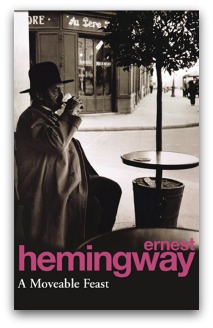
10. A Moveable Feast (1964, revised 2009)

Author: Ernest Hemingway
Synopsis: Hemingway’s posthumously published memoir detailing his years as a young American expat in Paris socializing with the likes of F. Scott Fitzgerald, Gertrude Stein and Ezra Pound.
Film pitch: Perhaps now is the perfect time for an adaptation of A Moveable Feast. The surprising success of Woody Allen‘s Midnight in Paris will perhaps have whetted Hollywood’s appetite for a more serious take on the same subject matter.

9. One Fat Englishman (1963)

Author: Kingsley Amis
Synopsis: Inspired by a year Amis spent teaching at Princeton, One Fat Englishman follows the badly behaved Roger Micheldene with Amis’s typical brio. An English gentleman who is affronted by everything on the American scene, Roger fails to see how his presence might adversely affect Anglo-American relations.
Film pitch: Cast Timothy Spall as Roger and watch the fireworks.

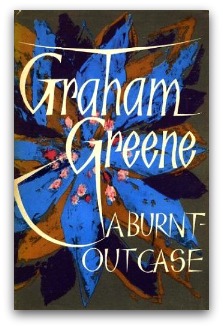
8. A Burnt Out Case (1960)

Author: Graham Greene
Synopsis: A man named Querry arrives at a leper colony in the Congo. He assists the colony’s doctor, who diagnoses him as suffering depression. It is revealed that Querry is in fact a world-famous architect, though he is hiding other secrets, too.
Film pitch: Perhaps Greene’s bleakest work — which may explain why it hasn’t been filmed previously despite being optioned twice by Otto Preminger (Greene was said to be thankful that it was never made). I would argue, however, that it has all the material for a fascinating film.

7. Travels through France and Italy (1766)

Author: Tobias Smollett
Synopsis: After the sad death of his daughter, Tobias Smollett and his wife left England for a tour of France and Italy. Detailing the quarrels Smollett has on his journey with those pesky Continentals, this is a very funny book.
Film pitch: Yes, I am suggesting that someone should make a movie based on an 18th-century travelogue. If Robbie Coltrane and John Sessions can turn Boswell and Johnson’s tour of the Hebrides into a delightful TV movie then I think the same could be done with this.

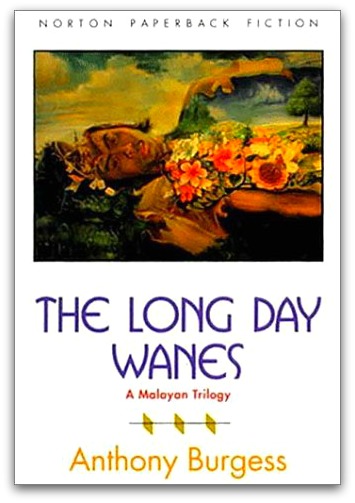
6. The Long Day Wanes: A Malayan Trilogy (1956-59)

Author: Anthony Burgess
Synopsis: Burgess’s first three novels are concerned with the character of Victor Crabbe, a teacher in a village in Malaya (now Malaysia). Based upon Burgess’s own experiences as a British civil servant in Malaya, the three novels that make up The Long Day Wanes detail the death of Empire and the birth pains of a newly independent nation.
Film pitch: Other than A Clockwork Orange, whose adaptation Burgess had strong misgivings over, Burgess’s work often seems overlooked for movie adaptations. It really shouldn’t be.

5. The Thousand Autumns of Jacob de Zoet (2010)

Author: David Mitchell
Synopsis: Until Commodore Perry in 1853 anchored four warships off the Japanese coast and so opened up Japan to western trade, Japan had been a “locked country” (sakoku) where it was illegal for a foreigner to enter Japan and for a Japanese subject to leave. The exception to this was at Dejima, in Nagasaki, where trade with some select foreign powers was allowed. This fascinating piece of history is the basis for David Mitchell’s latest novels. Set in 1799, The Thousand Autumns of Jacob de Zoet details a young Dutch trader who has come to Dejima to make his fortune though he discovers a lot more.
Film pitch: The book has all the makings of a wonderful historical epic.

4. Up Above the World (1966)

Author: Paul Bowles
Synopsis: Dr and Mrs Slade are an American couple touring Central America. A chance encounter with an elderly woman leads to a tense and gripping chain of events.
Film pitch:A disturbing and intense work typical of Bowles, it would make for a deeply compelling thriller.

3. Burmese Days (1934)

Author: George Orwell
Synopsis: Similar to Burgess’s The Long Day Wanes, this novel is concerned with the dying days of Empire. Orwell, who was himself an officer in the Indian Imperial Police Force in Burma, paints a depressing picture of expatriate life that is based around the stultifying social hub of the European club.
Film pitch: Orwell’s first novel and while certainly not his best work, even a bad Orwell novel is still worthy of consideration.

2. Henderson the Rain King (1959)

Author: Saul Bellow
Synopsis: Eugene Henderson is a rich American with an unfulfilled desire. Not knowing quite what it is, he hopes he will discover it by going to Africa. Through a series of misadventures Eugene Henderson finds himself away from his original group and in the village of Wariri in Africa. After performing a feat of strength, Eugene is adopted by the villagers as the Wariri Rain King.
Film pitch: Bellow’s funniest book, Henderson the Rain King could be pitched as an intellectual Joe Versus the Volcano (or maybe not — that’s a terrible pitch).

1. Turkish Embassy Letters (1763)

Author: Lady Mary Wortley Montagu
Synopsis: An important writer in her own right, Lady Mary Wortley Montagu was the wife of Edward Wortley Montagu, who was appointed as the ambassador at Constantinople. Accompanying her husband just after recovering from contracting smallpox marring her famed beauty, Lady Wortley Montagu wrote about her observations in numerous letters. These letters form a fascinating look at the Ottoman Empire — from how they inoculated against smallpox to the zenanas, special areas of the house reserved for women — as observed by an aristocratic English woman of the time.
Film pitch: Just think what a great biopic you could make about her.

Note: If you click on the book titles in the above list, you’ll be taken to Amazon, where the books can be purchased — except in the case of Tobias Smollett’s travelogue, which goes to Gutenberg, where he can be read FOR FREE!!

STAY TUNED for tomorrow’s post, an interview with first-time novelist Meagan Adele Lopez, and her plans for turning the book into a film.

If you enjoyed this post, we invite you to register for The Displaced Dispatch, a round up of weekly posts from The Displaced Nation, with seasonal recipes, book giveaways and other extras. Register for The Displaced Dispatch by clicking here!

Related posts:

4 films that will make you want to travel — and one that won’t!

Now, there’s a pretty standard list of travel-inspiring movies out there; it’s everywhere you look online, and it goes something like this:

But I wanted to give you some slightly more alternative choices — because I try to avoid being ordinary whenever possible. Yes, okay, you can say it — because I’m downright weird. So in place of those otherwise awesome films, may I present to you the following movies which have inspired me personally:

1) The Adventures of Priscilla, Queen of the Desert (1994), directed by Stephan Elliot

Why I love this film: It’s ridiculous and lots of fun, which is pretty much how I think all life should be! As three Sydney drag queens travel through the barren Australian outback, we get to see that iconic terrain, vast and empty and aching to be explored. This film has it all: humor, a light-hearted way of handling a serious message (about homophobia) and visuals to die for as the trio procession through some of Australia’s most awe-inspiring scenery. In a big pink bus.
Personal note: Not only did I travel to Australia and fall in love with a woman who considers this her favorite movie ever –- I also had the good fortune to be with her when she decided to re-enact one of the film’s famous scenes, when the drag queens hike around King’s Canyon in their fabulous dresses! I’d say we got mixed reactions from the other tourists — probably me, most of all…
Memorable line:

Felicia: The only life I saw for the last million miles were the hypnotized bunnies. Most of them are now wedged in the tires.

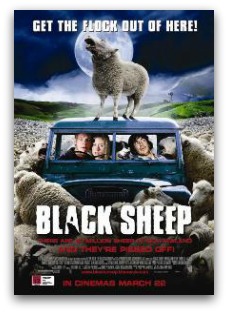
2) Black Sheep (2007), directed by Jonathan King

Also ran: Actually, I was going to nominate The Lord of the Rings trilogy but then decided — NO! I can’t use it. It’s too easy. Plus we’ve already had one film with Hugo Weaving (the mighty Elrond played a drag queen in Priscilla!). I know, across the three films they showcase the sights of New Zealand at their jaw-dropping best — anyone who hasn’t watched these films and felt an urgent need to visit New Zealand needs to watch them again but ignore the kick-ass sword fighting… Yeah, I know. That’s never going to happen.
Why Black Sheep won out: The rugged landscape looks every bit as impressive in this movie as it does in Lord of the Rings — but it’s also populated by were-sheep, an accidental result of some unusual genetic manipulation… See it, and laugh at the New Zealanders. Oddly enough, they’ll love you for it. It’s the Kiwis’ love of poking fun at everything, especially themselves — their self-deprecating humor — that really made me want to visit the place. I felt like I would fit in there. And I did — I stayed for two years. By the time I left, I was on a first-name basis with the entire population.
Memorable lines:

There are 40 million sheep in New Zealand…and they’re pi**ed off!

Harry (as the were-sheep charge towards them): F**k, the sheep!
Tucker: No mate, we haven’t time for that.

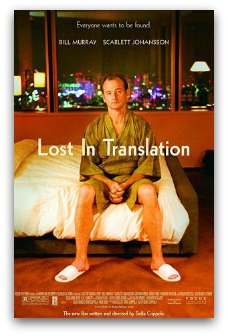
3) Lost in Translation (2003), directed by Sofia Coppola

Why I love this film: It’s an odd one, this one. The first time I watched it, my mind boggled at how something so boring, with nothing remotely resembling a plot, could get made into a movie. Then I watched it again. And again. Because it was the rainy season in Thailand, where I was living, so I couldn’t go outside — and we only had three DVDs in English, so we watched all of them every day. For two months. Somewhere around the halfway point of this torturous process, I fell in love with Lost in Translation — maybe I just needed to relax to appreciate it? Once I stopped looking for something to happen, I started to understand what it was all about: loneliness, uncertainty, being adrift and confused in a completely alien culture. And ever since then I’ve desperately wanted to go to Tokyo. Well, not enough to actually go there — yet — but you know what I mean. I do travel vicariously — just sometimes — and this is one of ‘em.
Caveat: If, like me, you’re a fan of films where, you know, stuff happens — it might take you a few viewings to get used to it. Forty or fifty should do the trick.
Memorable line:

Charlotte: Let’s never come here again because it would never be as much fun.

4) Ip Man (2008), directed by Wilson Yip

Why I love this film: The closest I’ve come to China are the little “made in” labels on almost everything I own. This film, however, kindled a desire to visit China that I never knew I had in me. It’s the biographical story of the most famous kung fu practitioner in the world — not Bruce Lee but his teacher in Wing Chun kung fu, master Ip Man. It’s set in Foshan, China in the 1930s-40s during the Japanese Invasion, but was filmed in Shanghai. It follows the family of the master as he becomes ensnared in the war, losing everything over the course of the Occupation and being forced to face the hardest choices a man could make. The insight into a lifestyle and culture so utterly different from my own was fascinating enough, but this is a story both moving and powerful.
Audience participation: I dare anyone to watch it and not leap off the couch at some point with a cry of “Yeah, kick his ASS!” Ahem. Okay, so maybe that’s just me.
In sum: Will it make you want to visit China? I think so. Will it make you want to learn kung fu? I absolutely guarantee it!

And because I’m a contrary kind of guy, I just had to retaliate against my own optimism by highlighting a film that made me NOT want to travel:

5) Cidade de Deus (City of God) (2002), directed by Fernando Meirelles and Katia Lund

Why I don’t recommend this film: The film is set in the 1970s, in the poorest districts surrounding Rio de Janeiro, where drugs and guns rule and the population live in a fear only matched by their misery. I saw it in South America, in its native Portuguese — but with Spanish subtitles. Given my fledgeling abilities in that language, as described in a previous post, I may have failed to grasp every nuance of the story, but basically what I took from it was: “DON’T EVER GO THERE! They will kill you for the hell of it.”
Analysis:There is poverty everywhere in the world — I’ve worked in homeless shelters in the UK and seen people every bit as desperate as the denizens of Brazilian favelas (shanty towns). But these kind of places, where automatic weapons are more readily available than McDonald’s hamburgers and life is so very cheap…they absolutely terrify me.
In sum: Brazil remains on my list of all-time favorite, must-visit countries — but no way am I going anywhere near the favelas in Rio. This film has put me off — for life.

* * *

And finally…there’s one character that stands head and shoulders (and hat!) above all the rest when it comes to inspiring my travels. I’ve carefully avoided mentioning his films, as I was trying hard to keep this a cheese-free list — but I can’t hold it in any more.

I WANT TO BE INDIANA JONES!

I know, I know! So does everybody in the world, ever. Even people in remote tribes that have never been contacted by the Western world, secretly harbor a desire to be Indiana Jones — they just don’t know how to put it into words.

So — now it’s your turn!
1) What films have made you want to travel? And why?
2) What films have made you want to run screaming from the very idea of travel — and why?
3) If you WERE Indiana Jones — what would you do?

STAY TUNED for tomorrow’s post on cinema and the expat life.

If you enjoyed this post, we invite you to register for The Displaced Dispatch, a round up of weekly posts from The Displaced Nation, with seasonal recipes, book giveaways and other extras. Register for The Displaced Dispatch by clicking here!

Related posts:

Images: Tony James Slater (yes, that’s really him!) playing out his fantasy of being Indiana Jones; film posters courtesy Wikipedia.

Cinema’s top 10 worst British accents

With Oscar season nearly upon us and with it the now seeminly customary Meryl Streep Oscar nomination, I’ve noticed that a number of American friends have asked me my thoughts on The Iron Lady. Specifically, my thoughts on how convincing I find Meryl Streep’s Thatcher.

Yet even when I tell them I haven’t seen the film (I’m just not in a rush to see it on the big screen and am more than happy to catch it on netflix in a few months time), they still ask for my opinion — nationality apparently bestowing expertise on the matter.

From the few clips I’ve seen on TV or the Web, and echoing what most critics have written, Streep’s Thatcher seems decent to me. Whether Streep’s Thatcher dislodges Greta Scacchi‘s somewhat cougar-ish take on the former PM in Jeffrey Archer: The Truth remains to be seen.

What is clear from the little I’ve seen is that Streep (unsurprisingly) will not be entering the Hall of Shame for awful Hollywood British accents. The following are my personal favorites. Let me know yours in the comments — including bad attempts at American accents (it’s only fair).

10. Nicolas Cage in National Treasure: Book of Secrets (2007)

Almost certainly unfair to include as while it is hideously bad, I think it was intended to be hideously bad, and boy did Nicolas Cage succeed in that respect. Included, more than anything, because I think all top ten lists of this nature (something of a creatively bankrupt idea) could be improved with some Cage-branded craziness — it’s like a crack addict’s impersonation of Jimmy Stewart.

9. Josh Hartnett in Blow Dry (2001)

In the (rightly) forgotten hairdresser comedy Blow Dry, the (rightly) forgotten all-American heart throb Josh Hartnett tries hard but fails to convince with an Irish accent… Wait, he’s meant to be doing a Yorkshire accent? Really?

8. John Lithgow in Cliffhanger (1993)

John Lithgow has done some great work in the past, a performer who can be effortlessly at home in comedy or drama. At other times, he seems happy to serve up the audience a big slice of honey roast ham. Cliffhanger was definitely one of his more porcine performances. Warning: clip is not suitable for work — though arguably none of them are.

7. Bette Davis in Of Human Bondage (1934)

Some people would have you believe this is one of the great dramatic scenes of cinematic history showcasing the titantic talent of Bette Davis. Others might counter that it’s am-dram caterwauling delivered in the world’s least convincing cockney accent. Both groups are right.

6. Don Cheadle in Ocean’s 11 (2001)

Actually, forget Bette, Hollywood’s worst cockney accent belongs to Don Cheadle. Here’s Don dubbed in German. Trust me, it’s the only humane way to listen Don Cheadle in Ocean’s 11.

5. Harrison Ford in Indiana Jones and the Last Crusade (1989)

Like the Nicolas Cage entry possibly an unfair inclusion as accuracy was hardly the point, but dude, Harrison Ford acted this in earshot of Sean Connery and so is deserving of either opprobrium or massive props.

4. Lindsay Lohan in The Parent Trap (1998)

That’s right, I’m dickish enough to include a child actor on this list. <Fill in your own Lindsay Lohan joke here>

3. Keanu Reeves in Dracula (1992)

Considering the difficulty Keanu Reeves often seems to have in portraying a functioning, coordinated human being, it was probably a bit too much of a stretch to ask him to do anything as nuanced as acting a different nationality.

2. Dick Van Dyke in Mary Poppins (1964)

You can’t have a list like this and not feature Dick Van Dyke, it’s expected of me and were I to omit it, many of you would invariably comment on it. And while it is a terrible accent, it’s also utterly charming and in no way spoils the movie. Bert probably fell on his head falling from a chimney, knocked his head, and developed foreign accent syndrome.  I believe Henry Mayhew documented this as being very common among Victorian chimney sweeps.

1. Russell Crowe in Robin Hood (2010)

Unquestioningly, Russell Crowe‘s accent in Robin Hood was a triumph. What sort of pr*** would argue otherwise? Definitely not me.

STAY TUNED for next Monday’s post, on travel and cinema.

If you enjoyed this post, we invite you to register for The Displaced Dispatch, a round up of weekly posts from The Displaced Nation, with seasonal recipes, book giveaways and other extras. Register for The Displaced Dispatch by clicking here!

Related posts:


RANDOM NOMAD: Megan Farrell, American Expat in São Paulo, Brazil

Place of birth: Chicago, Illinois USA
Geographical history: USA (Chicago, Illinois; West Palm Beach, Florida; Ventura, California; Washington, DC): 1969 – 2002; Spain (Barcelona): 2001; USA (Princeton, New Jersey; New York, New York): 2002-10; Brazil (São Paulo): 2010 – present.
Passport: USA — my daughter, however, has three: USA, Brazil & Germany.
Current occupation: Aspiring novelist and screenplay writer, business school lecturer, and former research director at a Wall Street firm.
Cyberspace coordinates: Born Again Brazilian (blog) and @BornAgainBrazil (Twitter handle)

What made you leave your homeland in the first place?
Ever since I was a child, I wanted to explore the world and always had it in my head that I would live in other countries. I think it was because I used to read a lot as a kid, stories about other places, some of my favorites being James and the Giant Peach and The Little Prince. I also loved Laura Ingalls Wilder‘s Little House series. By the time I reached adulthood, I was open to opportunities to travel and explore new cities as a local.

Describe the moment when you felt most displaced since making your home in Brazil’s largest city, São Paulo.
Wandering lost, in the rain, in an unfamiliar neighborhood, after a boy on a bike tried to wrestle my iPhone out of my hands. I’d grabbed it out of his hands, but he still hung around yelling something at me and trying to get the phone. It seemed incredible to me this was happening because although it was raining, it was broad daylight and I was on a street where there was a row of little shops. So after putting a bit of distance between us, I stopped and started screaming like a horror movie starlet and pointing at him. People came out of their shops and of course he got scared — I think mostly because he thought I was crazy. I’d never before experienced anything so bold.

Your blog is called Born Again Brazilian. I imagine you’ve also had many moments when you feel more at home in Brazil than you do in the USA. When have you felt least displaced?
While sitting on the beach of Leblon, in Rio de Janeiro, viewing the ocean. On a beautiful day, it absolutely makes you feel as though all is right with the world and you are exactly where you are meant to be.

You may bring one curiosity you’ve collected from each of your adopted countries into The Displaced Nation. What’s in your suitcase?
No need for a suitcase as what I’d most like to bring with me to The Displaced Nation is a couple of intangible items:
From Brazil: Jeitinho or jeito, the ability to get in, out and/or around something despite a law, a regulation, a contract, physics or gravity.
From Barcelona: The recipe for survival possessed by local shops, which seem to close and open at random times — and when you enter, the owners or employees often act as though you are completely putting them out by wanting to buy something. It’s hilarious and curious at the same time.

Food is close to the heart of all Displaced Nation citizens. We would therefore like to invite you to make a meal for us. What will you offer?
I can offer a choice of two classic menus:
1) Brazilian (São Paulo/Rio de Janeiro)
Appetizer: Bolinho de bacalhau (codfish cakes), served with Original cerveja (beer)
Main: Feijoada (traditional bean stew with beef and pork), served with caipirinhas (Brazilian national cocktail, made with rum, sugar and lime)
Dessert: Mouse de maracujá (passion fruit mousse)
2) Spanish (Barcelona)
Appetizer: Assorted pinchos (bar snacks eaten with toothpicks), served with cider
Main: Paella Valenciana (Valencian paella), served with a nice Spanish white wine
Dessert: Flan (crème caramel)

What’s your pleasure?

You may add a word or expression from the country where you live in to The Displaced Nation argot. What will you loan us?
Tudo bem! When you greet someone in Brazil, you say tudo bem instead of hello, but you use it like a question: “Tudo bem?” (All is well?) And you might respond with tudo bem (all is well) or tudo otimo (all is great) or simply tudo (all). Brazilians must use this greeting countless times a day. What I love about tudo bem is that it represents how familiar and personal the Brazilian culture is. A stranger in the elevator will greet you by asking if all is right in the world for you. That is totally Brazilian.

This month, in honor of Valentine’s Day, The Displaced Nation has been delving into the topic of finding love abroad. I understand you have a Brazilian husband. Where and how did the pair of you meet, and was it love at first sight?
I met my husband while we were getting our MBAs at Georgetown University (in Washington, DC). The first time I met him, I thought he was pretty stern — little did I know he had just arrived to the country the day before and wasn’t so comfortable with his English. I kind of wrote him off as one of the machismo Latin guys that didn’t like to work closely in a business setting with women. But after the final exams of our first semester, we wound up at the same party. I actually attempted to hook him up with my friend — he is tall and she is tall — but it turned out he was more interested in me. After I saw a few of his dance moves…it was love at second sight!

Thanks to Gisele, many people have an image of Brazilian women as very attractive. Is that also true of the men, and do they make good husbands?
First, my husband is not your typical Brazilian man. He spent a great deal of his childhood in Germany with his grandparents and has his behavior has been heavily influenced by his German father. Typical Brazilian men see the roles of men and women as clearly defined channels. From what I’ve seen and heard from my Brazilian and American friends married to Brazilians, the menfolk rarely if ever help out with household chores or issues, as they feel that is the woman’s role — even if she is working a full-time job! However, for the most part, Brazilian men are very charming, complimentary and romantic. They see themselves as Prince Charming, and if that is what a woman is looking for, a Brazilian man is a good catch.

You said you fantasized about traveling to other lands from the time you were a child. How about marrying someone from another land?
I never thought much about it, but before my husband, I only dated All-American guys, so I think it came as a surprise to my parents. However, when my now husband asked me to marry him, I knew that my life would never be boring, and always full of adventure. And I was right!

Now that Valentine’s is over, The Displaced Nation is moving on to look at expat and travel films, in time for the Oscars. Do you have a favorite film(s) in this “genre”? I see you’re interesting in screenplay writing, which makes me doubly curious.
I think the first movies that inspired travel for me were Cocktail with Tom Cruise (he finds love while working in a bar in Jamaica) and Only You with Marisa Tomei (she follows the man she thinks will be her true love to Italy). When I was a bit older, I was definitely was drawn to seeing the world by a beautifully filmed, but wildly depressing, New Zealand-Australian-British film by Jane Campion titled An Angel At My Table. It’s based on Janet Frame‘s autobiographical series about growing up in New Zealand, leaving and returning.

Readers — yay or nay for letting Megan Farrell into The Displaced Nation? Tell us your reasons. (Note: It’s fine to vote “nay” as long as you couch your reasoning in terms we all — including Megan — find amusing.)

STAY TUNED for tomorrow’s installment from our displaced fictional heroine, Libby, who is discovering that Valentine’s Day in the US is quite different from the UK version — a fact that doesn’t come naturally to her three-year-old son. (What, not keeping up with Libby? Read the first three episodes of her expat adventures.)

If you enjoyed this post, we invite you to register for The Displaced Dispatch, a round up of weekly posts from The Displaced Nation, with seasonal recipes, book giveaways and other extras. Register for The Displaced Dispatch by clicking here!

Related posts:

img: Megan Farrell poses at the nature center in Parque Estadual do Pico do Itacolomi, which is outside Ouro Preto, Minas Gerias (July 2011).

Love, love, love — love (& film) is all an expat needs… Welcome to February!

Two expats — he from England and she from Germany — first lock eyes in the lobby of a posh hotel in the Big Apple.

Returning to his room from the gym, he stops in his tracks, bowled over by her exotic Northern European beauty, while she is drawn to his toned and muscular physique. (Did we mention that he is of mixed — Nigerian and Brazilian — ancestry, and wearing bicycle shorts?)

She is, as it happens, already carrying another man’s child. But luck is on his side: she has split up with that man, some months back, after catching him in the arms of a jewelry heiress.

The goddess is available!

He wastes no time in sweeping her off her feet and, after less than a year, invites her to a custom-built igloo in British Columbia on the top of an glacier in uncharted terrain — kitted out with a bed, rose petals, and candles — to ask for her hand.

The couple are of course Seal and Heidi Klum — who until recently were the exemplar of a cross-cultural, cross-racial expat marriage.

Happy Valentine’s Day

But we’re here today to celebrate — not caution against — such unions. It’s February 1, and Valentine’s Day is just around the corner.

The Displaced Nation is dedicating the month to international nomads who are out there looking for their own Heidi/Seal. Some of you may already have found a candidate, in which case you are busy decking out your version of Seal’s igloo with hearts and champagne, in preparation.

But whether you’ve found someone or not, the Displaced Nation is where you’ll want to hang out this month. We’ll have posts on Valentine’s Day customs, seductive foods, hook-up stories, and testimony from those who, unlike our celebrity example, have lived happily ever after — all with an international flavor.

And we’ll be celebrating love’s robust and free-wheeling spirit, as unleashed in the following lines:

Love, love, love, love, love, love, love, love, love.
There’s nothing you can do that can’t be done.
Nothing you can sing that can’t be sung.
Nothing you can say but you can learn how to play the game
It’s easy.

Notably, John Lennon composed these lyrics after the Beatles were to come up with a song for Our World, the first live global television link (it was watched by 400 million in 26 countries). He was told it had to contain a simple message to be understood by all nationalities.

John and Yoko — there’s another international, interracial couple. They were living in New York. Would they still be together if John were alive? One likes to think so…

Hey, listen — should love not prove as easy as the song suggests, our blog can assist with that, too. One of our most frequently visited posts is one I wrote during Pocahontas month last summer: “Cross-cultural marriage? 4 good reasons not to rush into it…” (I’m not exactly proud of that, given that I’m the veteran of two cross-cultural marriages — a case of “don’t do what I do but what I say”?)

Pocahontas-John Smith are of course an archetype of cross-cultural, cross-racial marriage à la Lennon-Ono, Seal-Klum.

Just sayin’!

Movie-ing right along…

I promise I’ll come back for you. I promise I’ll never leave you.
–Hungarian geographer, Count László de Almásy (Ralph Fiennes) to his married lover, Katharine Clifton (Kristin Scott Thomas), in The English Patient

Sometimes fiction can be more wondrous than truth. Certainly that is the hope of those magicians of cinematography, who seek to manipulate us by reaching through the big screen to move our hearts and change how we see the world, remind us we have a soul…

If you’re a cinema lover, you’re in luck — because we are also dedicating this month to the movies.

In honor of film award season — the BAFTAs as well as the Oscars — The Displaced Nation will spend part of February paying homage to films that in some way feature expats and/or international travel.

Ah, the movies… As you get older, how much preferable it seems to experience danger and romance via the big screen. Why? Because you’re so much more aware of the risks.

Now, if only there weren’t so much bromance about. All of this male bonding is enough to make you long for Hollywood’s Glory Days, when stars were paired for their sizzling on-screen chemistry. Is is any wonder so many of us have turned to the small screen — namely, Downton Abbey — for that sort of thing of late?

Downton has the expat theme going for it, too, with an American heiress — played by Elizabeth McGovern, herself an American expat in England with an English husband — at the heart of the action (her money has kept the British estate from going under). And Shirley MacLaine will be arriving in Season 3 to play her mother!

Okay, I’ve gone off on a tangent. Back to what celluloid has to offer. When asked by Charlie Rose in November to explain the allure of film, Alexander Payne, director of the Oscar-nominated film The Descendants, said:

Like so many people, I’ve been madly in love with film as long as I can remember. If you love film, you love life. It’s the most verisimil [sic] mirror we have… If we look to art in general to be a mirror of our lives, to give us context, give us something to reflect off of — we’ve been waiting millennia for film… it really is us. And it also captures time, it defeats death in a way… You can capture moments of in life, core samples of someone’s life…

I don’t know about you, but I think we displaced types deserve a piece of that action!

Questions: Do you have any Valentine’s Day abroad stories to share with us? Are you rooting for any particular films at this year’s Oscars? And is anyone else besides us left feeling oddly bereft at the news of Heidi and Seal’s break-up?

STAY TUNED for tomorrow’s episode in the life of our fictional displaced heroine, Libby Oliver. Having uncovered corruption in Patsy’s Munchkinland, Libs wonders what to do. Should she inform WikiLeaks of the situation, or write a strongly worded letter to the Woodhaven Observer? Or is it just simpler to say ‘if you can’t beat them, join them’? (What, not keeping up with Libby? Read the first three episodes of her expat adventures.)

If you enjoyed this post, we invite you to register for The Displaced Dispatch, a round up of weekly posts from The Displaced Nation, with seasonal recipes, book giveaways and other extras. Register for The Displaced Dispatch by clicking here!

Related posts:

Channeling business guru Peter Senge for lessons on spiritual travel

The Displaced Nation has dedicated most of its January posts to the kind of heart-opening, life-changing pilgrimages that enlighten and renew the spirit.

We’ve gathered tips from expat and travel experts on where to go and steps to take.

We’ve spoken with a former expat in India and a woman who dreams of making acupuncture available to one and all in the Midwest.

We’ve talked about our own (admittedly rather limited) experiences with uncovering spiritual wisdom:

And we recruited some guest bloggers for their insights:

Yet as eye opening as all of this discussion has been, my sense is, we haven’t quite reached the sublime and heavenly heights that this blessed topic deserves.

Maybe we shouldn’t be too hard on ourselves. After all, the quest for higher truths entails pondering the imponderable.

Still, I think we’ve forgotten something rather basic: namely, the need for a mentor, guru, safe, wise person, sensei, or elder — someone who has reached an advanced state of spiritual enlightenment so can tell us when we’re veering off course while offering an overarching framework for why, in heaven’s name, we’re doing this.

Today I’m “recruiting” leading business expert Peter Senge to play this role for The Displaced Nation — a service for which he will be awarded a place in our Displaced Hall of Fame.

Though he’s never lived overseas for an extended period, Senge leads a displaced life within the United States by somehow managing to be, at one and the same time, an MIT management guru and an avid disciple of Zen Buddhism (as well as other Eastern religions such as Taoism).

Through his writings, teachings, and lectures on the human face of business and sustainabilty, Senge essentially promotes the idea that Eastern religion has a great deal to offer the West.

Channeling Senge on behalf of The Displaced Nation, I have devised the following Zen mondō — or question-and-answer exchange with the master — for our illumination. NOTE: Senge promises to keep the kōan (riddles) — eg, what is the sound of one hand clap — to a minimum. (Was that applause I heard?)

ZEN MONDO WITH PETER SENGE ON SPIRITUAL TRAVEL

Master, isn’t an expat or international traveler already on a kind of spiritual quest?
Meh. In my experience, a spiritual quest isn’t meant to be a retreat from one’s native country. It’s also not a vacation. The attainment of enlightenment entails hard work — you have to chop wood and carry some water. Seriously,  you have to study, and make sure that your study is in line with your meditation practice, or whatever method you use to connect body and mind. And then you need to have a reason for it all: how you are trying to be of use to the world. My own “working-zen” is institutions: how business works, how schools work, how government works, how collectively we do our work, and how the world can move away from the model of relentless growth towards something more sustainable. What’s yours?

Master, is the quest for spiritual enlightenment something I can do on my own?
Strange question to pose to a teacher! But I’ll refrain from giving you a boot to the head as I can relate to your struggle. In fact, it didn’t dawn on me how much I needed a teacher until after I finished my book The Fifth Discipline: The Art and Practice of the Learning Organization, which became a bestseller and earned me the title of “management guru.” My ego was out of control, and I asked my friends to refer me to a therapist. But then I met this man in China around 1996 and started to realize that meditating isn’t enough. He taught me that I have to be more disciplined in my study and practice, and in linking them to service. “Study, practice, serve” has become my mantra.

Master, will I need to travel to China and India?
Look around you. With the gorilla gone, will there be any hope for man? The Western model is basically bankrupt. We’ve failed to give attention to the human side of economic development. We’ve also lost touch with indigenous knowledge and wisdom. By contrast, the intellectual sophistication of the philosophical traditions of China and India are extraordinary. The next stage of human development — focusing on sustainability — will be about bringing back the interior to be in balance to the exterior. I think that has to come from China or India and maybe to some degree from the indigenous peoples.

Of course it may not be necessary to travel all the way to these countries, especially if you’re lucky enough, as I was, to grow up in California. Many of my friends were Japanese and I was always interested in Asian cultures. I made my first visit to Tassajara Zen Mountain Center just before I went at Stanford. I knew immediately that meditation was very important and did continue to meditate afterwards.

That said, since turning 40, I’ve been thinking about spending the second half of my life in China and India. I may actually go and do that with my wife once our kids are in college.

Master, once I pursue this recommended course, do you think I’ll find the answers of what I want to do in life?
Ah, the inescapable question! I advise you to think about what’s really needed in the world, then work back to what your own role might be. It requires a continuous process of reflection. My own decision-making process has never been oriented externally, even when I was young. I almost always knew what I wanted to do and almost never knew how. It was always this process of deciding the next thing I want to do — and then doors would open!

Master, do you believe in Zen leaps?
Back in the 1980s, I was meditating 2-3 times a week. One day, all of a sudden, clear as a bell, three things popped into my head:

  1. The idea that learning organization is a big fact.
  2. The work I was doing with several others was original and would make a contribution.
  3. I had to write a book now so that as the fact cycle developed, that would be one of the first books to become a point of reference.

It happened in an instant. I was very clear and I decided to write a book. It’s how the process works: continuous reflection informed by what’s important to you and informed by your sense of where the world is at and what’s needed. If you leap under those conditions, the net will appear.

Master, do you have any final words of advice for us?
Don’t be afraid of suffering even though it’s not easy. Sadness is sadness, fear is fear, and anxiety is anxiety. Don’t kid yourself. But recognize that it is very important developmentally and will really assist you in having a rich life with rich relationships. You’ll be able to open your heart to others, and offer your compassion. Oh — and one more:

Once you’ve gotten the meaning, you can forget the words.

Readers, so much mondo mumbo jumbo, or are you at last glimpsing the road to nirvana?

[Sources for Senge’s non-humorous remarks: Prasad Kaipa’s interview with Peter Senge for DailyGood; Jessie Scanlon’s interview with Senge for Businessweek about his latest work: The Necessary Revolution.]

STAY TUNED for one more post in this vein exploring the ideas of Lyn Fuchs, who has written a book about spirituality and travel.

If you enjoyed this post, we invite you to register for The Displaced Dispatch, a round up of weekly posts from The Displaced Nation, with seasonal recipes, book giveaways and other extras. Register for The Displaced Dispatch by clicking here!

Related posts:


My quasi-religious pilgrimage to Oxford University — will I be judged sufficiently pious?

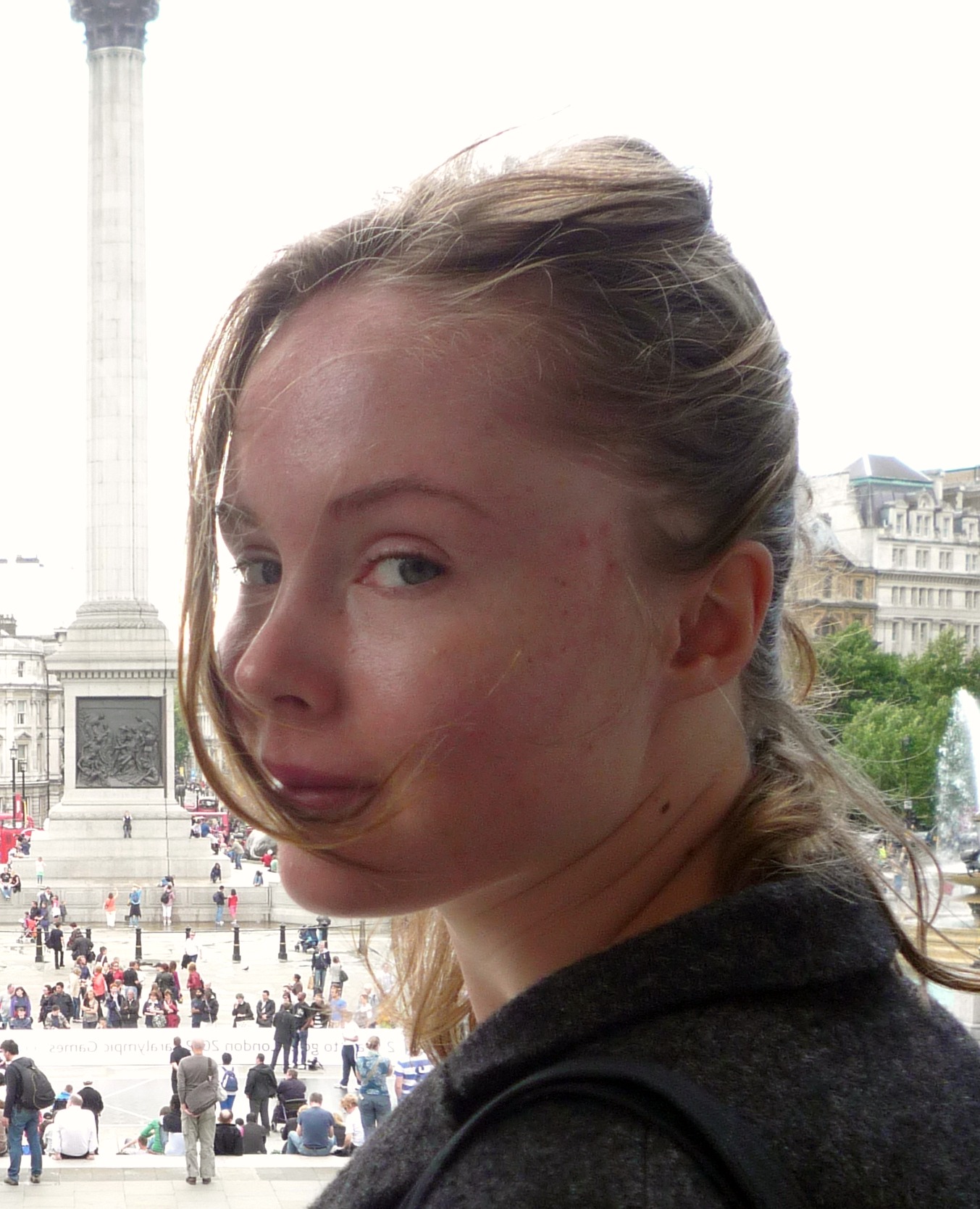
In past columns, Charlotte Day has illuminated aspects of her life as a Third Culture Kid who was born in Sydney, Australia, grew up mostly in New York and is now studying at an English boarding school in Kent. Today she describes her quest to earn a place at Oxford, which she has long revered as her spiritual home.

At 8:45 in the morning, my taxi turns down Holywell Street, and slows to a stop at the front entrance of New College, Oxford. Approaching the Santiago de Compostela of my adolescent dreams, my state of mind can best be described through shameless lyricism.

At this hour, the streets are populated only by the purposeful. Each dark-suited individual has some thought of unfathomable gravity revolving behind his or her furrowed brow. The morning light casts a celestial glow over the Bodleian Library, the Sheldonian Theatre, the Bridge of Sighs. Uniformly, these benevolent sandstone structures breathe in the sun.

God be in my head

Despite these poetic musings, I am incredibly nervous. I left my boarding school bed at a chill 5:00 a.m., knowing I did not know Crime and Punishment well enough, I did not know the Brothers Karamazov at all, and my ideas about the Seamus Heaney translation of Beowulf were utterly laughable.

Once they found me out, would I break down crying? And what about the unseen poem I would be told to discuss on the spot? If it were impermeable, I would certainly not be able to bluff my way through it. After all, what spotty 17-year-old can deceive them? Those eagles of intellect, with their acute, focused gazes; indisputable, measured statements; considered pauses; lofty, balanced arguments…

Oh! It was all too judicious and reasonable for an impulsive wreck like me.

You see, my feelings about Oxford are akin to an otherwordly obsession. So passionate have I grown about this ancient seat of learning that my preparations for this journey, especially in recent months, had taken on a quasi-religious purposefulness.

I spent the end of last year trying to live up to a set of self-imposed monastic ideals. I was to be irreproachably right at all times, my logic to be consistently clear, my views to display great penetration and uncanny powers of observation.

I even dressed in a way that reflected these intellectual ideals: threadbare corduroys in varying neutral tones, and moth-eaten jumpers would create a suitable aesthetic. I was unsparing of myself, subsisting largely on Lenten fare (watery porridge, steamed broccoli, etc.), and never going to bed before one o’clock if I could be reading instead.

Now I simply had to get into Oxford to complete this quest for ascetic perfection.

Getting in to Oxford… Now I am remembering all those melancholy 13-year-old evenings listening to Professor Stuart Lee’s Beowulf lectures on iTunesU, craving with all my ill-adjusted, lonely heart, that one day I would be sitting in that lecture theatre.

Lo, the full, final sacrifice

I am inching closer. Sitting in New College’s Lecture Room Six, with my baggage stacked around me, I will not return to the outside world for four days, and each minute of each of those days is shrouded in mystery.

A steady click comes from the two connect-four sets in the room: the science and law applicants letting off steam.

I gaze around the room. The English applicant is curled into herself, scanning a volume of Ezra Pound with a look of fatalistic despair on her pinched face.

The classicists sit in a convivial circle, trading sections of newspaper.

I take out my Beowulf and start reviewing my notes — columns of fluorescent green post-its, each bearing a comment more absurd than the last. Will I look too intimidating if I do this? I do not seek to intimidate — if only I could tell everyone in that room how intimidated I feel!

I glance at the Russian poem I have been given to analyze, by Yevtushenko: age, youth, gorging an omelette…middle age…the paranoia of the young? Our tendency to fill our lives with empty nothings, like omelette gorging? But these are rather pedestrian observations — is not some sort of inspiration called for? I avail myself of some instant oatmeal — to weigh down those jumpy nerves with a bit of stodge.

It is not hard to spot the two Etonians. One, so endearingly badly dressed, his argyle jumper tucked into a pair of murky-water-green corduroys. Both, so painstakingly polite, so frightfully embarrassed about their origins, so terribly unwilling to share where they live, or let slip that a relative of theirs had once been at the college himself.

I do not deny that there is a lack of diversity in that room, nor do I seek to explain it. The other candidates I encounter in Lecture Room Six are, every one, interested, charming, honest, terribly nervous teenagers — not representative of a centuries-old tradition of inequality.

Beati quorum via (I will lift up my eyes)

I am summoned out of Lecture Room Six to confront the English interview, which takes place by an electric fire, in an office lined with volumes of Elizabethan and Jacobean drama. Perched uneasily on a fur-swathed sofa, I answer questions on Doctor Faustus and the aesthetics of mathematics. Each response meets with a dreamy sort of assent, notes are jotted, and the conversation becomes increasingly oblique.

And then it is time for my Russian interview. I climb to the top of a rickety wooden stairwell, after a walk through the quad, turned hostile in the penetrating wet. (By now it is our second day.)

One tutor merges with the sofa, which in its turn has disappeared beneath stacks of application forms, submitted essays, and Modern Languages Aptitude Tests. The other sits before the fire, her high forehead reflecting its glow.

The discussion that ensues prompts the eyebrow-raising and chilling nods I have foreseen, and then questions about War and Peace — leaving the deficiencies of my 13-year-old’s reading of that tome quite exposed.

Afterwards, I stand, bedraggled in the dark quad, with a terrible sense of emptiness. I have two more days to fill; ahead of me, long hours in Lecture Room Six drinking bitter Tetley tea from a plastic cup. The expansive passion I have carried inside for years has tightened, wound itself into a taut cord of longing.

And I saw a new Heaven

When the fellows swish in to formal dinner, I almost feel ill. I do not know where to rest my eyes, each square inch of wood paneling makes me twitch with anxiety.

We rise with the hollow thud of wood on wood, grace is muttered in Latin, a mallet bangs, and we sit again, our murmured conversation echoing from the high arches of the ceiling.

I have always envisioned an affinity between Oxford and the stars, and even carry an image of my 14th-century counterpart adjusting his astrolabe while attempting to unveil the secrets of the heavens.

I cannot help praying, then, that a benevolent cosmos might know of the yearnings — my own and those of the other applicants — sympathize with our plight, and sweep our destinies into her swirling compass.

STAY TUNED for Monday’s post, when we invite in a guru to help us sort out some of the misconceptions our site has been propagating over the past few weeks on spiritual quests.

If you enjoyed this post, we invite you to subscribe to The Displaced Dispatch, a weekly round up of posts from The Displaced Nation, plus some extras such as seasonal recipes and occasional book giveaways. Sign up for The Displaced Dispatch by clicking here!

Related posts:

img: Charlotte Day surveying Trafalgar Square in London

12 NOMADS OF CHRISTMAS: Kate Reuterswärd, American expat in Sweden (12/12)

Current home: Lund, Sweden
Past overseas locations: Italy (Perugia) and Austria (Vienna) — both for six months
Cyberspace coordinates: transatlantic sketches (personal blog), Expat Blog (guest blog for Swedish Institute, a division of the Swedish government) and @kwise321 (Twitter handle)
Recent posts: “You’re Celebrating on the Wrong Day! — and other things you didn’t know about Christmas in Sweden” (Expat Blog: December 27, 2011); “Work makes me happy” (transatlantic sketches: December 29, 2011); “What a year!” (Expat Blog: December 31, 2011)

Where are you spending the holidays this year?
Actually, it’s my first Christmas outside the United States! I’ll be in Lund with my husband and his parents, his sister and her family, and some family friends. I’m looking forward to it.

What do you most like doing during the holidays?
In the US, I always looked forward to baking Christmas cookies and getting gifts for my family and friends. Sometimes my gifts are homemade, sometimes bought at a store, but I love brainstorming the perfect thing for someone. Here, though, the season is full of Christmassy activities: attending glögg parties, decorating the house with lights and going to Christmas markets. It’s the active part of the holiday season that I like the most in Sweden.

Will you be on or offline?
Totally online and hopefully Skyping with my family and friends on a regular basis.

Are you sending any cards?
My husband and I just got married and it was a sort of spur-of-the-moment decision, so we’re sending a combination Christmas/“Oh hey, we’re married!” card. We’ll be writing thank you’s to the people who were there and a little update to people who weren’t.

What’s the thing you most look forward to eating?
Panettone. My family eats this traditional Italian holiday bread for Christmas breakfast with fruit salad, coffee, and mimosas every year. They sell it in Sweden, too, so I’ll be introducing the tradition here.

Have you read any good books this year other expats or “internationals” might enjoy?
I have really enjoyed these two essay collections (though I have to admit that I haven’t finished either of them yet):
1) The Art of Travel, by Alain de Botton (Pantheon, 2002): A thoughtful contemplation on different aspects of travel. As de Botton says, “Few things are as exciting as the idea of travelling somewhere else, but the reality of travel seldom matches our daydreams.”
2) A Supposedly Fun Thing I’ll Never Do Again: Essays and Arguments, by David Foster Wallace (Little, Brown, 1997): His essay on taking a week long cruise in the Caribbean was so true and so funny that I laughed out loud at several points.

If you could travel anywhere for the holidays, where would it be?
No travel dreams for Christmas unless it were to assemble my family and my husband’s all in the same place at the same time. But for New Year’s Eve, I’d love to return to the countryside in County Cork, Ireland, where I went two years ago with a group of eight friends, one of whom has a cabin there. We would all hole up that cabin again to eat, drink lots of champagne, and welcome in the New Year.

What famous person do you think it would be fun to spend New Year’s Eve with?
Despite having attended some exciting New Year’s Eve parties in the U.S. and Europe, I’m not sure I would want to spend New Year’s Eve with a famous person I didn’t feel close to. That said, Dorothy Parker would be hilarious to sit next to at an event like New Year’s Eve — as long as she didn’t turn against me. I would just want to be a fly on the wall.

What’s been your most displaced holiday experience?
Two days come to mind — both having to do with the Fourth of July, not Christmas. The first was in 2010. I had flown back to the States for my friend’s wedding, and then on July 4th I had to fly back to Vienna to go back to work. I spent the entire day in the no man’s land of the Charlotte, JFK, Dusseldorf, and Vienna airports. (I am an extreme budget flyer.) Actually, I’m not sure whether this counts — I didn’t really experience a displaced holiday; I just missed it altogether.

The other time was July 4, 2009. I was spending the summer in Sweden with my then boyfriend (now husband) — my first extended stay in which I started to really get to know his friends and family. We tried to throw a 4th of July party, but something was off. We grilled, we had flags, we had Jell-o shots for a little novelty Americana, but there wasn’t any patriotism and there weren’t any fireworks. For me it felt like a regular barbecue party trying too hard to be something else rather than an actual holiday.

How about the least displaced experience — when you’ve felt the true joy of the season?
Again, it wasn’t Christmas but Thanksgiving, in 2010. I cooked a traditional Thanksgiving feast with all of my mom’s recipes for almost 30 Swedes. We borrowed a friend’s parents’ apartment to fit everyone in, and it was the coziest, most wonderful celebration. My husband downloaded the Macy’s Day Parade for me as a surprise and streamed it while we were cooking and eating. Best of all, one of my Swedish friends asked me halfway through the meal, “Aren’t we supposed to say what we’re thankful for?” I hadn’t wanted to force them to do that, but everyone got really excited about it, and the whole group took turns saying what they were thankful for in what turned out to be really beautiful toasts to the people in their lives. It was amazing.

How do you feel when the holidays are over?
Rested but a little bit sad. So much energy goes into enjoying the holiday season, anticipating Christmas and New Year’s, gift-giving, baking, merry making — and then suddenly it’s all over! And you’ve got all of January and February to slog through until spring is on its way again.

On the first day of Christmas, my true love said to me:
TWELVE STRANGE TRADITIONS,
ELEVEN CAMERAS CLICKING,
TEN SPROUTS A-BRUSSELING,
NINE CELLPHONES DANCING,
EIGHT WHOOPHIS WHOOPING,
SEVEN SKIERS A-PARTYING,
SIX SPOUSES TRAILING,
FIVE GOOOOOOOFY EXPATS.
FOUR ENGLISH CHEESES,
THREE DECENT WHISKIES,
TWO CANDY BOXES,
& AN IRISHMAN IN A PALM TREE!

STAY TUNED for Monday’s post, setting a new theme for the month’s posts on the connection between the displaced life and spiritual awakenings.

If you enjoyed this post, we invite you to register for The Displaced Dispatch, a round up of weekly posts from The Displaced Nation, with seasonal recipes, book giveaways and other extras. Register for The Displaced Dispatch by clicking here!

Related posts:

12 NOMADS OF CHRISTMAS: Janet Newenham, Irish internationalist (10/12)

Current home: Dublin, Ireland
Past overseas locations: Korea, Australia, South Africa
Cyberspace coordinates: Journalist on the run | Follow my adventures around the world (blog) and @janetnewenham (Twitter handle)
Most recent post: “Dear Diary — Laughter and Crocodiles” (January 3, 2012)

Where are you spending the holidays this year?
Spending Christmas at home in Cork for the first time in 3 years. (I am currently doing a Masters in Humanitarian Action at University College Dublin.) My dad has a vegetable farm so there will be Brussels sprouts galore!!

Had you gone abroad for the holidays, what would you have done first?
Look for a party!

What do you most like doing during the holidays?
I love the friend and family reunions. As everyone lives all over the world nowadays, chances are few for crossing paths with friends and even some family members.

Will you be on or offline?
Offline for the holidays — maybe curled up by the fire watching movies and drinking wine.

Are you sending any cards?
I LOVE snailmail, especially making personalized cards with photographs. Plus after Christmas I will have to hand write thank-you notes to my grandparents, aunts and uncles, as is the family tradition.

What’s the thing you most look forward to eating?
A full tin of chocolates!!

Can you recommend any good films or books other “internationals” might enjoy?
I liked The Whistleblower (2010, directed by Larysa Kondracki and starring Rachel Weisz) — about a peacekeeper in post-war Bosnia who outs a UN scandal. It portrays the kind of work I would like to get into after I finish my MSc.

While living in South Korea, I read Nothing to Envy: Ordinary Lives in North Korea, by the journalist Barbard Demick (Spiegel & Grau, 2009). By following the lives of six people who escaped from North Korea, Demick provides some fascinating insights into a country we know little about. I found it deeply moving.

If you could travel anywhere for Christmas +/or New Year’s Eve, where would it be?
Somewhere hot and sunny…so maybe back to Australia or South Africa for Xmas on the beach.

What famous person do you think it would be fun to spend New Year’s Eve with?
Charlie Todd, the guy who set up Improv Everywhere. Who knows what sort of New Year’s Even mischief he and I might improvise?

What’s been your most displaced holiday experience?
Christmas in Ethiopia, where they don’t actually celebrate Christmas. And, because they use a different calendar, it’s never Christmas there when it’s Christmas everywhere else. The Ethiopians were preparing to celebrate the millennium when it was September 2007 everywhere else!

How about the least displaced experience — when you’ve felt the true joy of the season?
Last year I was really settled into my life in Korea with a great group of expat friends, so even though we were abroad it felt like home.

How do you feel when the holidays are over?
Tired, hungover and broke!

On the first day of Christmas, my true love said to me:
TEN SPROUTS A-BRUSSELING,
NINE CELLPHONES DANCING,
EIGHT WHOOPHIS WHOOPING,
SEVEN SKIERS A-PARTYING,
SIX SPOUSES TRAILING,
FIVE GOOOOOOOFY EXPATS.
FOUR ENGLISH CHEESES,
THREE DECENT WHISKIES,
TWO CANDY BOXES,
& AN IRISHMAN IN A PALM TREE!

STAY TUNED for tomorrow’s featured nomad (11/12) in our 12 Nomads of Christmas series.

If you enjoyed this post, we invite you to register for The Displaced Dispatch, a round up of weekly posts from The Displaced Nation, with seasonal recipes, book giveaways and other extras. Register for The Displaced Dispatch by clicking here!

Related posts: