The Displaced Nation

A home for international creatives

Tag Archives: Fiction Writers

HERE BE DRAGONS: A pox on your expat life! How suffering an illness abroad can inspire fantasy writing

Here Be Dragons Pox

(Clockwise from top) Detail of the medieval map Carta marina; one-day old chicken pox blister, by Evanherk at Dutch Wikipedia (CC BY-SA 3.0); neem leaves, by Miansari66 (CC BY-SA 3.0); Freiberg, by kaffeeeinstein (CC BY-SA 2.0).

HERE BE DRAGONS is back, a column produced by fantasy writer Andrew Couch, an American expat in Germany. We at the Displaced Nation have long been aware of the strong connection between fantasy (think Alice in Wonderland) and a life of international travel and residency. And now Andrew has got us pondering the idea of turning our (mis)adventures into fantasy stories!

—ML Awanohara

A few weeks ago I came down with an adult case of the chicken pox. Seriously, I am in my mid-thirties and never had chicken pox as a kid.

The experience got me thinking about the oddities of dealing with a disease as an expat living abroadand then about how this could become a source of material for a writer like myself, who enjoys leading characters around fantasy realms.

Getting sick in Germany is not the same as getting sick in the United States. To begin with, we don’t have a car, so my wife took me on the tram to see the doctor. He subsequently told me that I shouldn’t really have left the house; my local health service would call me.

In the U.S., we would be driving everywhere and the local health service (do we have one?) couldn’t care less about a case of the chickenpox.

In the end I didn’t get a call from the local health service, nor did my Twitter friends’ predictions I would end up being quarantined come true. And yet I can’t stop thinking about the exposure to disease that comes from riding the trams. Did I get sick because someone else had to ride the trams? Public transport is a glorious thing, but it definitely carries health risks.

Another thing that was strange: the German doctor told me to pretty much suck it up and try not to scratch. Germany, in my experience, is not the super-medicated world we commonly find in the United States.

In the end, despite the fear-inducing comments from friends about how horrible the chicken pox can be as an adult, I had only one day of itchiness amidst a week of hideous red bumps.

Okay, you might be saying, that was really awful, but what does it have to do with fantasy writing? Well, as I mentioned in my first post of the series, the expat experience is a wonderful metaphor for encountering a fantasy world. Why not use the episodes and observations from your life overseas to conjure up fantastical tales?

Here are three ways I can envision using my illness in future stories:

1) Add a plot twist about the threat of sickness and disease and search for a cure. Perhaps I’ll given one of my characters a fever and have a foreign medicine woman tell him to rub certain leaves all over his body. How does he respond? Ohand if you think this is just the realm of fantasy, I did have a friend recommend some Indian neem leaves as a powerful agent for curing skin conditions. I even would have tried them had we been able to figure out how to import them into Germany.

This device could cut another way as well. Perhaps my characters are living in the depths of a jungle, with medicine oozing from every berry, leaf and root. They would likely feel creeped out if required to pay a visit to a city doctor, whose remedy consists of handing out bottles of nondescript white tablets.

2) Use sickness to explore my characters at their worst. In my case, for instance, all I want to do when ill is snuggle under a blanket, drink massive amounts of orange juice, eat grilled cheese sandwiches and watch movies until it goes away. I also want someone to bring me these things. I really would be in trouble if I was not supposed to leave home and didn’t have a wonderful wife (or even friends) to bring me food.

Would my fantasy characters become similarly dependent? How would they cope if deprived of their favorite comfort foods and activities?

3) Explore the fear that comes from a disfiguring illness. You may have had chicken pox when you were small and can no longer remember how you felt. But I tell you this, as an adult with an active imagination, chicken pox are frightening. Bubbly boils cover the body and itch like crazy. Without a ton of stretching (oh, and the fever helped this, too), my imagination could easily have convinced me I had the plague. I refrained from looking in the mirror much, but my wife tells me that I looked as awful as I felt.

And now let’s transfer this physical aspect of disease to fantasy culture. What if my characters didn’t know the long-term impact of the pox? What kind of panic would this induce? Or maybe they know the pox to be non-fatal, but how do they deal with having something that makes them look hideous? Another possibility is that an alien character gets the pox but doesn’t understand when the natives don’t react: is this because they expect that person to die, or because they know the disease will run its course? Terror prevails until that question is answered…

* * *

A few weeks later, I am recovered mostly. I am left with stories to tell.

I also have a mind full of diseases to inflict on future characters in fantasy stories. As the Germans say:

Auf jeden Regen folgt auch Sonnenschein

“After every rain, there will be sunshine.” Similar to “every cloud has a silver lining” but not quite the same as it speaks more to the inevitability of change. “This, too, will pass” would be a closer translation.

For expats, the risk of getting seriously ill while abroad is greater than it is for occasional travelers. Try to recall your first time being sick and dealing with the local culture. Was it more frightening than at home? What about trying to communicate with doctors in another language while suffering from fever? What if your favorite remedy or comfort food just didn’t exist? All of these are situations you can include in your fantasy stories.

Andrew Couch has been a fantasy book nut since childhood; he really has not grown up much since then. After struggling to write his own games for years, he is now creating fantastical worlds in a series of novellas that echo the TV shows, anime and role-playing games of his youth. Beyond fantasy he is an avid blogger and a world traveler who resides in Germany. To learn more about Andrew, check out his blog, Grounded Traveler, and follow him on Twitter: @groundedtravelr.

STAY TUNED for our next fab post!

If you enjoyed this post, we invite you to register for The Displaced Dispatch, a round up of weekly posts from The Displaced Nation, with seasonal recipes, book giveaways and other extras. Register for The Displaced Dispatch by clicking here!

Related posts:

LOCATION, LOCUTION: Catriona Troth, novelist – from Scotland to Canada to a long stay in the Chilterns

Kat

In this month’s “Location, Locution”, expat crime writer JJ Marsh interviews Catriona Troth, who was born in Scotland and grew up in Canada before coming back to the UK. She has now lived in the Chilterns longer than she has ever lived in anywhere, a fact that still comes as a surprise.

After more than twenty years spent writing technical reports at work and fiction on the commuter train, Catriona made the shift into freelance writing. Her writing explores themes of identity and childhood memory. Her novella, Gift of the Raven, is set against a backcloth of Canada from the suburbs of Montreal to the forests of the Haida Gwaii. Her novel, Ghost Town, is set in Coventry in 1981, when the city of Two Tone and Ska was riven with battles between skinheads and young Asians.

Which comes first, story or location?
In my case, it’s usually a collision between the two. I have a story in my mind, I look for a location, and when I find the right one, some sort of explosive reaction happens that produces something I never anticipated.

Ghost TownHow do you go about evoking the atmosphere of a place?
I think it’s always about the small, telling details. Readers get bored with long passages of description, so you focus on something striking. It’s important, too, that you appeal to all the readers senses – smell and taste and touch as well and seeing and hearing. It’s also important to see setting not as something static, but as it relates to your characters – how they interact with a place, how it looks through their eyes.

Which particular features create a sense of location? Landscape, culture, food?
It depends. In Gift of the Raven, I was mostly evoking wild places, so landscape was important, and the way colours change with light, and the sounds of wild birds. On the other hand, in my novel, Ghost Town, the setting was the Coventry at a very specific point in time. So I was looking for ways to evoke the contradictions of the city – the old medieval buildings, the post-War concrete monoliths, the grandeur of the new cathedral. But also the little things that mark out what it was like to live in the city at that particular time – like which groups of kids hung out where, how they dressed, what music they liked. One thing that was important to me in both cases was weather – a place can be very different in bright sunshine than it is in teeming rain or thick snow.

How well do you need to know the place before using it as a setting?
For me, knowing the location well allows me to give the story texture and depth. I’m terrible for worrying over whether I have got details right! The internet is great for being able to check things like that – but it can also be a terrible trap, hobbling you when you should be getting the bones of the story down.

Could you give a brief example from your work which you feel brings the location to life?
This is the description, from Gift of the Raven, of a lake in the Rocky Mountains, seen through the eyes of a young boy who is just discovering his own artistic talent.

49560-copyofgiftoftheravencovermediumI was at one end of a narrow lake. The other end disappeared off into tomorrow. Below where I stood, the wind ruffled the edges of the water, but out there it could have been polished stone. A stone so blue you could lose yourself in the colour. At either side—like bold strokes of a palette knife from the sky to the lake—were mountains. Green-black pine over an ash-grey beach, peaks of dazzling white snow …

No. The snow wasn’t just white. In the sunshine it was a hundred different colours. Pink. Blue. Gold. You only saw white if you were too lazy to look.

Which writers do you admire for the way they use location?
A book I read earlier this year which I thought was extraordinary in terms of setting was Peter May’s Lewis Man. He managed to capture the way islands of Hebrides change, day by day, with the changing weather, and also the way the character of the different islands change with the character of their inhabitants. Masterly to achieve this while still creating a fast-paced thriller.

Joanne Harris creates a sense of place through tastes and smells – food is almost always a huge part of her books. Reading some of the passages in her books you can feel as if you have just enjoyed a banquet of tastes.

And for a book that evoked both a time and a place, I’d choose Michel Faber’s The Crimson Petal and the White. The scene where the reader is enticed to follow Sugar into the sleaziest corners of Victorian London is spell-binding. I couldn’t put the book down after that.

* * *

Next month’s Location, Locution: Fran Pickering sets her Josie Clark series in Japan. East-West fusion murder mysteries with a cultural twist.

_(75_of_75)


JJ Marsh grew up in Wales, Africa and the Middle East, where her curiosity for culture took root and triggered an urge to write. After living in Hong Kong, Nigeria, Dubai, Portugal and France, JJ finally settled in Switzerland, where she is currently halfway through her European crime series, set in compelling locations all over the continent and featuring detective inspector Beatrice Stubbs.

STAY TUNED for our next post!

If you enjoyed this post, we invite you to register for The Displaced Dispatch, a round up of weekly posts from The Displaced Nation, with seasonal recipes, book giveaways and other extras. Register for The Displaced Dispatch by clicking here!

Related posts:

LOCATION, LOCUTION: Jessica Bell – Australian contemporary fiction author in Ithaca, Greece

black and white_Jessica BellIn this month’s “Location, Locution”, expat crime writer JJ Marsh interviews Jessica Bell, a thirty-something Australian-native contemporary fiction author, poet and singer/songwriter/ guitarist. Jessica is the Publishing Editor of Vine Leaves Literary Journal and the director of the Homeric Writers’ Retreat & Workshop on the Greek island of Ithaca. She makes a living as a writer/editor for English Language Teaching Publishers worldwide, such as Pearson Education, HarperCollins, MacMillan Education, Education First and Cengage Learning.

Which came first, story or location?

Neither. My characters always start off a story. But if I had to choose, I would say location comes before story as I think the location of the story would have a lot of impact on how it’s told.

What’s your technique for evoking the atmosphere of a place?

I try to incorporate as many of the senses as possible. Utilizing the six senses (see, hear, smell, taste, touch, and instinct) can really bring your writing to life. To do this successfully, you need to “show, not tell.” Otherwise, these senses will not really be senses. The reader won’t actually experience them, they will only “read about” them. And the whole point of reading a great book is to feel like you aren’t actually reading. Right? Right. Using the six senses in an effective way will accomplish this.

The key to using sense in your writing, however, is to limit your use of the words, see, feel, hear, smell and taste. That’s not to say you shouldn’t ever use these words, but just be aware you don’t overuse them.

The most ideal way to incorporate senses is to employ language in which sense is already a part of. For example, instead of saying the kitchen smelled sweet with melted chocolate, show the reader what’s cooking, and consequently that taste and scent will be present in the narrative without you having to point it out.

Using the six senses well is also not only about having your characters sense things, it’s about making your readers sense things—even elements that your characters aren’t feeling, i.e., if the reader knows more than your character(s) do, or if you’re showing something that you might react to differently than the characters in the book.

If you’d like more of my advice on writing craft, take a gander at Writing in a Nutshell.

Which particular features create a sense of location? Landscape, culture, food?

Oh, everything!

Can you give a brief example of your work which illustrates place?

Sure! This excerpt is from String Bridge:

String Bridge paperback coverThe island’s windy mountainous roads are framed with olive groves and air so crisp you could snap it like celery. The houses are stained with whitewash and embedded with old-style wooden shutters, tailored by the locals to keep the summer swelter out. They are painted blue, red, or green, but occasionally you may come across the odd pink or orange shutters, which are more often than not inhabited by the eccentric barmy type who are colour-blind, or the young and loaded foreigner who believes an island revolution should be in order.

Goats meander about the streets, butting each other’s heads senselessly as they try to escape oncoming cars and motorcycles. The roosters, chickens, and geese fire up the locals at the first sign of sunrise. Birds chirp, cicadas “jijiga” in the olive trees, and dogs bark as the bread truck, a red beat-up Ute, delivers fresh hot loaves to each residence, and slips the required amount of bread into handmade cloth bags hanging from wire fencing.

Summer on this island engraves your skin with a longing to spend sunrise to sunset lying on a small, empty, white-pebbled beach in a secluded cove at the end of a private dirt track. At midday, it gets so hot you need to wade through the heat waves rising from the uneven tarred road like kindred spirits before you can wade in the Ionian Sea to cool off—a flat, motionless oil bath which glows with an infinite turquoise glint. It may seem you are stepping into velvet, however, you emerge covered in a thin salty crust you can brush off like sand when it dries.

How well do you need to know the place before using it as a setting?

For the above example, I knew the setting extremely well as I have spent at least a quarter of my life on this Greek island. However, I don’t think you necessarily need to know a place to write about it well. For example, if you want to write about a Greek beach, just think of another beach you’ve been to, imagine it smaller, imagine pebbles instead of sand, how would that setting change affect your senses? Just use knowledge gleaned from other places you’ve been to and be smart about incorporating the differences. You’d be surprised what you can find on the Internet to help you.

Which writers do you admire for the way they use location?

Definitely Margaret Atwood, Neil Gaiman, and Marilynne Robinson.


Writing in a Nutshell_Jessica BellSign up to Jessica’s newsletter and receive Book #1 of the Writing in a Nutshell Series, Show & Tell in a Nutshell, or Muted: A Short Story in Verse, for free.

Connect with Jessica online:

Website | Retreat & workshop | Blog | Vine Leaves Literary Journal | Facebook | Twitter


* * *

Next month’s Location, Locution: Scottish-born/Canadian-raised Catriona Troth, whose books Gift of the Raven and Ghost Town encompass 1970s Canada through the eyes of a young boy, and Britain’s 1980s race riots respectively. .

_(75_of_75)


JJ Marsh grew up in Wales, Africa and the Middle East, where her curiosity for culture took root and triggered an urge to write. After living in Hong Kong, Nigeria, Dubai, Portugal and France, JJ finally settled in Switzerland, where she is currently halfway through her European crime series, set in compelling locations all over the continent and featuring detective inspector Beatrice Stubbs.

STAY TUNED for our next post!

If you enjoyed this post, we invite you to register for The Displaced Dispatch, a round up of weekly posts from The Displaced Nation, with seasonal recipes, book giveaways and other extras. Register for The Displaced Dispatch by clicking here!

Related posts:

LIBBY’S LIFE #91/#92 – The Stepfordization of Maggie

Maggie’s house used to feel like my second home. Every part of it was an extension of her, my “other” mother: the black wood-stove, the teapot-cats she didn’t have the heart to throw away, the colourful patchwork quilts draped over rocking chairs and love-seats.

I loved the stove’s smoky smell that wound through the house, even in summer, and clung to my clothes after every visit. So similar to cigar smoke, which I cannot bear, but so comforting in a way that tobacco residue never is.

I loved the china cats, gathering dust on the shelf above the kitchen window. They were as ugly as they were useless; cats of any material were never designed to hold hot liquids, and during afternoon tea, as Maggie tipped them over to pour, they would dribble incontinently over her plates of digestive biscuits and slices of Victoria sandwich.

And the quilts? I loved, simply adored, the stories that each quilt told.

“Now this white taffeta here, that’s from my wedding dress. Well, I say ‘dress’, but there wasn’t much of it. You couldn’t get more than a couple of patches out of it. It was the Sixties, and the skirt was noticeable more by its absence than presence. The blue seersucker, though, is from a party dress that Sara wore when she was five. It had a Peter Pan collar and puffed sleeves, and she looked like Miss Pears in it. And see this lime green? That’s part of the shirt I was wearing when I decided, just like that, that I’d had enough of Derek. I packed a bag for me and Sara and we left at midnight, like a pair of Cinderellas, while he was on night shift.”

The last story, about a patch of lime-green cotton commemorating her independence, is the one that keeps coming back to me as I sit with Maggie now in her living room.

Correction. This is not Maggie’s living room. Not anymore. It belongs to someone else who lives here now.

It’s as if the lime-green shirt lost its life in vain.

Gone is the wood-stove, replaced by a wall fire resembling a plasma TV.

Gone are the ceramic cats in the kitchen. The shelf where they used to sit has also gone, and in its place is a calico Roman blind. The countertops, which used to be barely visible for all the bric-a-brac — half-opened letters, a basket of middle-aged Golden Delicious, assorted supermarket receipts and special offer coupons — are clear of paraphernalia and smell faintly of lemon and ammonia. Only a coffeemaker and a toaster grace the surfaces.

And gone are the worn wooden rocking chairs and threadbare love seats, usurped by two cream, leather sofas, the type with angular seats that dig into the backs of your knees, and backrests that are too low to lean your head on.

Naturally, the life-history patchwork quilts are nowhere to be seen.

It’s like an “after” picture on a home makeover program.

Very sleek, very chic, very neutral. Devoid of personality.

Devoid of Maggie.

Well — devoid of the old Maggie, the Maggie who lived here a few months ago, the one whose personality was too big for this little cottage.

Since her ex has been living with her, though, her personality has been on a starvation diet.

The new Maggie twists slightly on her unforgiving sofa, and asks in a too-bright tone if I would like some tea. The old Maggie would have simply put the kettle on with nothing being said. Her Miss Manners style of etiquette is infectious, though, and I find myself answering:

“That would be perfectly lovely, thank you.”

She rejects my offer of help in the kitchen — something else the Maggie of old would not have done — so I stay seated and watch her walk into the kitchen. Even her dress code has changed: no more dirndl skirts or hippy kaftans, no more peasant blouses or wooden beads. I remember, when we first met, my impression of her was “Biba meets Miss Havisham of Great Expectations.”  Today, a first impression might be “Botox meets Liz Claiborne of Stepford Wives.”

What, I ask myself, can make a strong woman like Maggie turn into a drone?

It’s a rhetorical question. When you take into account the variables of Maggie’s life, only one has changed: her companion. Her ex-ex who, even when absent from the room as he is at present, keeps Maggie in a zombie-like trance by remote control.

Maggie’s personality started to alter quite a while ago, of course. My own diary pinpointed the moment as early as last September:

I have no idea what witchcraft Maggie’s ex has spun on my friend, but in the four weeks she was in the Keys, Maggie changed. She’s never been one to show or act her age — “Age is but a number” she is fond of saying — but since she came back, she’s been nearer in mental age and outlook to Jack than to me.

I did wonder if she was becoming prematurely senile, until I saw Maggie and Derek together one afternoon. Then I realised what had happened.

They’ve teleported themselves back forty years. She is behaving as she did when she was nineteen, and he thinks he’s the dashing young state trooper who stopped a redheaded English woman for speeding in a borrowed Corvette.

And it won’t work. You can’t be teenagers when you’re drawing a pension — at least, you can’t be the same teenagers that you used to be. By all means, have a second youth; but the key word there is “second”.

Reliving their first one will end in a pool of tears, I’m sure of it.

Ignoring Miss Manners’ probable advice to stay put on the sofa as my hostess had indicated I should, I follow Maggie into the kitchen.

She looks up as I approach, and I could swear that her expression is one of alarm.

“Let’s have a nice chat while the tea’s brewing,” I say, leaning cosily against the counter. “I haven’t seen you for ages. Not even in the shops, although I’ve seen Derek there a few times. How are you doing?”

Maggie’s alarmed expression returns to one more bland. She smiles and nods once to acknowledge her satisfactory wellbeing, and counts out spoonfuls of looseleaf tea into an angular, stainless-steel teapot that resembles not a tabby cat but part of a car engine.

I stare at the stainless steel monstrosity — no doubt an example of engineering perfection that it wouldn’t dream of dribbling over teatime cake and biscuits — and rage quietly to myself. How dare it decide that Maggie’s old china teapots weren’t good enough?

The answer to that is: it didn’t. Something else did.

Someone else did.

“And how is Derek?” I ask. “You haven’t kicked him out yet?”

Maggie’s eyes widen. She looks around furtively before replying.

“Of course not. Why would I do that?” she says. “We’re just getting to know each other again.”

She pours boiling water on the tea leaves, lets it brew for exactly two minutes, then pours me a cup. It’s not her usual brand of bright orange PG Tips. This stuff is pale grey with a slice of lemon floating in it, and it smells of lavender potpourri.

“The house looks beautiful,” I lie, after I’ve taken a sip. Not only does the tea smell like potpourri, but it tastes like it too. “Very tidy. Very clean. Very…” I can’t think how to describe the new, angular, clinical style that is so out of place in Maggie’s cosy home.

“Very not me, I think you’re trying to say.” Her voice is barely audible.

It’s the first sighting I’ve had of the real Maggie for several months, and in my surprise, I almost drop my cup.

“So why did you do it?” I ask.

Maggie purses her lips: Shush. Then she jerks her head slightly towards the door in the kitchen that leads to the den.

“Can you talk?” I whisper.

She shakes her head.

In a louder voice that will carry to the den where her ex-ex presumably is, she says, “Derek and I have plans to go out very soon, so I’m afraid you won’t be able to stay long. But before you leave, remind me to give you the CD you lent me last summer. I do apologise for keeping it so long.”

Again, a pursing of lips to silence any bemused reaction on my part. I’ve never lent Maggie any CDs. Ever.

I swig back the remnants of my lavender-flavoured tea and Maggie hustles me towards the front door. As I step out onto the porch, she thrusts a CD case at me. I shove it in my handbag without looking at it, get in the car, and head off home to see the children who have been tormenting a local high schooler who was foolish enough to volunteer to babysit.

Later, after dinner, I tell a slightly bored Oliver about the mysterious changes in our old neighbour. “And then, just before I left, she gave me a CD she says I lent her…but I’ve never lent her any CDs.”

“What was it?” Oliver asks.

I rummage in my handbag, which is a large sack-like affair in which everything falls to the bottom in a jumble of loose change, gas receipts, and Happy Meal toys, and pull out the CD case that Maggie had given me.

“A Beatles album,” I tell him, and hold the case up for him to see.

He squints. “I can’t see without my glasses. Which one?”

John, Paul, George, and Ringo; dressed in blue uniforms, holding their arms in various semaphore positions.

“‘Help’,” I say.


.

Next post: LIBBY’S LIFE #93

Previous post: LIBBY’S LIFE #90 – The Other Woman

Read Libby’s Life from the first episode.

Want to read more? Head on over to Kate Allison’s own site, where you can find out more about Libby and the characters of Woodhaven, and where you can buy Taking Flight, the first year of Libby’s Life — now available as an ebook.

STAY TUNED for next week’s posts!

If you enjoyed this post, we invite you to subscribe for email delivery of The Displaced Dispatch, a round up of the week’s posts from The Displaced Nation. Sign up for The Displaced Dispatch by clicking here!

HERE BE DRAGONS: All those cities you’ve visited on your travels? They’re the lego bricks for cityscapes in fantasy writing

Citiscapes Collage

(Clockwise from top) Detail of the medieval map Carta marina; the Speicherstadt (warehouse district) in Hamburg, Germany (photo credit: Andrew Couch); tram in Naples (photo credit: Andrew Couch); legos (photo credit: Morguefiles).

HERE BE DRAGONS is back, a column produced by fantasy writer Andrew Couch, an American expat in Germany. We at the Displaced Nation have long been aware of the strong connection between fantasy (think Alice in Wonderland) and a life of international travel and residency. And now Andrew has got us pondering the idea of turning our adventures into fantasy stories!

—ML Awanohara

Last month on HERE BE DRAGONS, we talked about landscapes: the soaring mountains, unusual geographical formations, torrential storms, and other distinctive natural phenomena that can be used to build a whole new world for a fantasy story.

This month we move to cityscapes: the landscape’s urban counterpart, which has been largely shaped by the hands of man (or beast, depending on your story).

One thing I am learning while writing fantasy novellaswhich has only been reinforced by the posts for this columnis how much I’ve been influenced by my expat life and international travels when attempting to construct my own worlds.

When the bricks stick together, great things can be accomplished…

After living in Europe for several years, I now have a catalog of cityscapes to draw on, from grungy parts of London to quiet Parisian parks to industrialized Hamburg. What’s more, each area of every city has its own distinct sights, sounds and smells. And I’ve come to think of these various parts as my lego bricks for assembling the fantasy cityscape that features in my novellas.

I have heard that the second book is often harder for writers than the first. I am definitely finding this to be the case, but mostly due to character and plot, not setting. The setting of my next few novellas is the city of Resholm, which is perched on the line of cliffs called the Dropline. In creating Resholm I was heavily influenced by my impressions of Hamburg, a city in northern Germany that has a long history of being a free port. Resholm, too, is a port:

QueenOfCloudPirates_cover

A skyline of towers along the ridge watched over the cargo and warehouse districts which dripped down the side of the steep slope, nearly to the edge of the cliffs themselves. Soaring arches piled on soaring arches cut the area in various places to hold up the docking piers. A handful of ships were moored across the area.

Hamburg also has the Speicherstadt, an area where goods could come and go without having to pay customs. I got to thinking, what would a city feel like if it had been created solely for the purpose of moving goods and not for the people in it? Resholm grew from this contemplation. In the stories, the police force exists primarily to safeguard the movement of goods in and out of the port, not to protect residents from harm:

“I don’t know,” Arnhelm said. An hour had passed since the officers of the Teeth had shuffled Jason and him into separate rooms. “Why don’t you ask her? Why are you even hounding my uncle and me? One of her goons nearly killed us and blew up a building in the docks.”

“Listen here, sonny,” the man said. “First off, neither the town nor its populace is in our jurisdiction. Resholm survives on its free port and our duty is to keep it safe. Safe for goods, safe for money and safe for free trade. In my experience, people take care of themselves. If they are smart.”

He leaned forward, picked up a piece of paper from the table between them and began to read. “Endangering goods in the warehouses. Bypassing a checkpoint. Reckless endangerment of transport. And that is before we even talk about the destroyed building in the docklands.”

Could I have created Resholm by studying photos of cityscapes found on the Internet? Probably, but I don’t think the result would have been as rich. Walking around a city is the best way to pick up its sounds, smells and sensations. Building a fantasy city from such memories, you become aware of the details that need to be included. For instance, I decided to include Hamburg’s tall, red-brick warehouses in the Speicherstadt, complete with their cranes and rails to move goods, in Resholm as well. The architecture so happens to date back to the late 1800s, which is the time period I am aiming to replicate in my story.

Sometimes it doesn’t matter what you are building…as long as you’re enjoying the fantasy!

Of course, Hamburg is on water and isn’t dripping down the side of a cliff with airships docked at each level, but hey, it’s fantasy, which means I have the freedom to do what I want:

Only one bulb remained lit and he and Lucia left the tram car. They walked up a set of steps to the road which ran along the level five terrace. The smell of engine exhaust, unwashed humanity and a hint of damp stone assaulted Lors’ nose. The constant wind he had gotten used to didn’t seem to penetrate the row of buildings enough to clear the miasma. Despite the lack of wind, the street was cold. The docklands were in perpetual shadow on the northern slope. He could see the sky between the airships docked at the level above, but its light was so weak that lamps on poles shed he needed the scattered poles with their glowing globes to see anything in the eternal twilight.

A pair of tracks ran down the center of the road. Men stood on carts which ran back and forth controlling them with long handles. Sidings led off to both sides at each building. There was plenty of space to walk on either side, but they had to dodge carts and step carefully to make much headway. This was a place built for shipping goods. People served the crates they carried, not the other way around.

By no means does a fantasy city have to be built from a single real world city. The town square of Resholm is based on my memories of Poznań, Poland. The funiculars that service the docklands are from a day I spent wandering in Naples, Italy, and became fascinated with its tramway network. There are also some pieces of the city that owe to my meanderings in New York. But again, these are my lego bricks that I used to construct a stage for my characters to act upon and interact with each other.

Although my books fall more into the adventure—the characters must traverse a wide terrain—there is an entire genre of urban fantasy set solely in cities. If this kind of thing intrigues you, check out the following works:

* * *

Wannabe fantasy writers who are also travel buffs, how about you? Have you collected some cityscapes on your wanderings you think will affect your writing one day, or perhaps already has? Let me know in the comments. Also, if you’ve been fantasizing about particular topics, let me know, and I’ll attempt to stretch my imagination to discuss in a future post.

Andrew Couch has been a fantasy book nut since childhood; he really has not grown up much since then. After struggling to write his own games for years, he is now creating fantastical worlds in a series of novellas that echo the TV shows, anime and role-playing games of his youth. Beyond fantasy he is an avid blogger and a world traveler who resides in Germany. To learn more about Andrew, check out his blog, Grounded Traveler, and follow him on Twitter: @groundedtravelr.

STAY TUNED for next week’s fab posts!

If you enjoyed this post, we invite you to register for The Displaced Dispatch, a round up of weekly posts from The Displaced Nation, with seasonal recipes, book giveaways and other extras. Register for The Displaced Dispatch by clicking here!

Related posts:

LOCATION, LOCUTION: JJ Marsh looks back on a year with TDN

jill 3One year ago, Displaced Nation asked me to conduct a series of regular interviews with writers on their use of location. Place is vitally important to my writing and that of my colleagues at  Triskele Books . It’s our USP. After a year of interviews with authors from Brazil, America, South Africa, Ireland, France, India, Hungary/China, I’m looking back.

First, I’ve selected ten of favourite answers, on how these writers approach weaving literary magic carpets to transport readers to Bombay or Berlin, Syria or Odessa.
Secondly, I’ve added five of the most books that held me spellbound; works which make place a character in its own right.

Happy Anniversary!

Which came first, story or location?

 Jeet Thayil, author of Narcopolis:
“I knew Narcopolis would be set in Bombay. I started with that city and that period in mind. It was about telling a story that hadn’t been told before, in a way that Indian fiction doesn’t really tell stories. Unsentimental, brutal and beautiful. When I realised that was what the book would be like, it revealed itself to me.”

Charlotte Otter, author of Balthasar’s Gift:
“The two are intertwined. When the first images began to flash in my head more than eight years ago, the setting was immediately clear: my home town in South Africa, Pietermaritzburg. BV is a post-apartheid novel and PMB is struggling to become an effective post-apartheid city. It was the natural setting for the story that was starting to unspool before me.”


How do you go about evoking the atmosphere of a place?

Chris Pavone, author of The Expats and The Accident:
“I love walking around cities, looking around at the architecture and the shops and the restaurants, at the people and their pet. My characters do the same, using all their senses to inhabit the world around them. Of course walking around, in and of itself, isn’t the type of action that does much to drive a plot forward, so characters should also be doing something else while walking around. Something such as spying.”

JD Smith, author of Tristan and Iseult, and The Rise of Zenobia:
“With great difficulty. In writing Tristan and Iseult I evoked the wet and wind the British know only too well. I’ve always lived on the coast, though in the north, not Cornwall (Kernow), but those salt winds and perpetually grey skies are the same. The Rise of Zenobia is based in 3rd century Syria, and I’m finding that much harder. I didn’t grow up with the atmosphere ingrained in me. I haven’t spent years of my childhood visiting the remains, the palaces and the fortifications. I rely on films a lot. Being a designer I’m an incredibly visual person, and seeing it played out, filmed in the locations I’m trying to conjure on the written page, helps immensely.”

Which particular features create a sense of location? Landscape, culture, food?

Amanda Hodgkinson, author of Spilt Milk:
“All those but also I find the light is important. I adore Edward Hopper’s paintings for his use of light and I find writing can experiment in a similar way with light, creating mystery or clarity and deepening character.”

Janet Skeslien Charles, author of Moonlight in Odessa:
“For me, it is how characters react to situations. Odessa is the humor capital of the former Soviet Union, which means that my characters use humor as a shield to ward off painful situations. Odessans are capable of laughing at things that would make me bawl. Their mental toughness is impressive. So for me, the sense of city is the sense of self.”

How well do you need to know the place before using it as a setting?

Steven Conte, author of The Zookeeper’s War:
“With skill, only moderately well, though it’s probably wise to minimise the difference between your characters’ supposed knowledge of a setting and your own. This aside, the best fiction implies more than it states (Hemingway’s iceberg principle), and a few vivid details can be enough to evoke an entire town or city or region. I’d recommend not writing about famous landmarks, since locations such as the Brooklyn Bridge, the Eiffel Tower and the Brandenburg Gate will remain clichés of place however brilliantly they might be described.”

AD Miller, author of Snowdrops:
“You need to know it, and then you need to unknow it. A novel isn’t a travelogue or an encyclopaedia; you enlist only those aspects or details of a place that serve the narrative.”

Which writers do you admire for the way they use location?

James Ferron Anderson, author of The River and the Sea:
“Charles Dickens in Chapter Three of Great Expectations uses the weather to bring alive his location when Pip runs in the morning to meet Magwitch. ‘The mist was heavier yet when I got out upon the marshes, so that instead of my running at everything, everything seemed to run at me.’ Wonderful stuff that took me to that location so effectively I still picture it. Anton Chekhov is marvellous for both countryside and city. Yalta is so alive, so liveable-in, in Lady With a Lapdog. W.G. Sebald, not a favourite writer of mine, is nevertheless someone whose ability to put me in his location I much admire.”

Share an extract from your work which illustrates place.

Paulo Coelho, author of The Alchemist and Eleven Minutes, on Geneva’s Water Fountain:

“Our body is almost completely made of water through which electric charges pass to convey information. One such piece of information is called Love, and this can interfere in the entire organism. Love changes all the time. I think that the symbol of Geneva is the most beautiful monument to Love yet conceived by any artist.”

Books I’d recommend for use of location:

* * *

In next month’s Location, Locution, our guest will be Jessica Bell, an Australian expat living in Greece, who writes fiction, advice for authors, and makes music too.

JJ Marsh grew up in Wales, Africa and the Middle East, where her curiosity for culture took root and triggered an urge to write. After living in Hong Kong, Nigeria, Dubai, Portugal and France, JJ finally settled in Switzerland, where she is currently halfway through her European crime series, set in compelling locations all over the continent and featuring detective inspector Beatrice Stubbs.

_(75_of_75)

Author photo: J J Marsh

STAY TUNED for our next post!

If you enjoyed this post, we invite you to register for The Displaced Dispatch, a round up of weekly posts from The Displaced Nation, with seasonal recipes, book giveaways and other extras. Register for The Displaced Dispatch by clicking here!

Related posts:


LOCATION, LOCUTION: Charlotte Otter – South African expat and crime writer living in Germany

charlotte otter

Author photo: Charlotte Otter

In this month’s “Location, Locution”, expat crime writer JJ Marsh interviews Charlotte Otter, a South African crime writer who lives in Germany.

Charlotte has worked as a writer since leaving university. Balthasar’s Gift is her first novel. It was published in Germany in 2013 as as Balthasars Vermaechtnis, by Argument Verlag mit Ariadne, a Hamburg publisher that focuses on crime fiction by women. It is also available as an e-book, published by Culturbooks. The English version will be published in June 2014 by South Africa’s Modjaji Books.

Charlotte blogs at Charlotte’s Web and takes coffee breaks on Twitter (@charlwrites). She is presently working on her second novel – an eco-conspiracy called Karkloof Blue.

When she is not thinking up ways to kill people, Charlotte is a corporate hack, mother of three, reader, traveller, feminist and optimist. She is happily married to the love of her life.

Check out her author site.

* * *

Which comes first, story or location?
The two are intertwined. When the first images for Balthasars Vermaechtnis began to flash in my head more than eight years ago, the setting was immediately clear: my home town in South Africa, Pietermaritzburg, often informally abbreviated as PMB. BV is a post-apartheid novel and PMB is struggling to become an effective post-apartheid city. It was the natural setting for the story that was starting to unspool before me.

How do you go about evoking the atmosphere of a place?
I wrote a blog post a few years ago called I am from, and someone said to me they would love to read a novel with those elements in. I realised that my childhood memories of monkeys in the garden, chameleons on a bush and eating granadillas off the vine were not everyone’s memories and that some of them could be put to good use in landscaping a novel.

Which particular features create a sense of location? You’ve mentioned animals and fruits. Is it landscape, culture, food, all of the above?
All of the above. However, as I’m sure all writers say, they have to serve the story. The elements of location have to be sprinkled through the story with a light hand, serving to shine a light on the narrative and not distracting from it. Huge chunks of location, just like huge chunks of ill-disguised research, serve to pull the reader out of the story and that’s the last thing a writer wants. I try to be sparing and frugal with my detail, but at the same time apt. Location details are highlighters or amplifiers of the core narrative, never the story itself.

How well do you need to know the place before using it as a setting?
In my case, I knew it very well. I would never be brave enough to set a novel in a place I didn’t know, because I would be nervous about making mistakes and looking like an idiot. For me authenticity is everything.

Could you give a brief example from your work which you feel brings the location to life?

The city centre hummed with Saturday shoppers carrying glistening bags full of summer bargains from the fashion palaces on Church Street, gangs of teenagers flirting with each other, pavement hairdressers giving people their weekend dos. Radios blared, taxis hooted and added to the chaos by swerving across lanes, risking the lives of their passengers and all pedestrians. She dodged one self-styled ‘Road Warrior’ and swore. The driver leant out of his window and winked at her. ‘Calm down.’ Was this a message from the universe? Or had all the town’s taxi drivers ganged up to irritate her with their insistence on her remaining serene and tranquil?”

Which writers do you admire for the way they use location?
I think Barbara Kingsolver is a master of location. She is the best nature writer I know and she mostly sets her novels in rural surroundings. She does an incredible job of evoking a sense of place through her deep, abiding love of nature.

I Am From
I am from Africa. I am from blue skies, tropical breezes, and sunshine on my back. I am from tall trees that throw great shadows. I am from monkeys in the garden and a chameleon on a bush. I am from mountains that rarely see snow, beaches with huge waves, sharks behind the shoreline. I am from banana plants, sugar-cane and mealies. I am from huge moths and flying ants. I am from humidity, from thunderstorms that build up as black towers in the sky, and rain so hard it hurts my skin.

I am from eating outside. I am from the intense smell of a slightly under-ripe naartjie that I pick from its tree, dig open with dirty fingernails, and devour despite the sourness. I am from plucking granadillas off the vine and greedily sucking the juice. I am from braai meat, salad and crunchy white rolls. I am from mussels gathered from the sea.

I am from lucky beans. I am from a hoary old magnolia tree that bursts forth luscious, vanilla-scented blooms that decorate the Christmas table. I am from a red-brick house that looks out over trees and a hot town. I am from black and white tiles that cool hot summer feet. I am from the smell of dogs being washed. I am from the sound of Zulu hymns as I fall asleep.

I am from Marmite sandwiches. I am from a schoolbag digging into my shoulder as I walk home. I am from the smell of an over-chlorinated swimming-pool in my wet hair. I am from giggling. I am from eating all the cookie mixture. I am from marathon card games. I am from the thwack of tennis balls. I am from kissing boys.

I am from little brothers playing cricket on the lawn. I am from long car journeys. I am from beach holidays. I am from sand in my hair, from fairy gardens and dreaming I can fly. I am from blonde people. I am from children go to bed early. I am from fragrant grandmothers and laughing aunts. I am from a funny dad. I am from a little brother who shared my nightmares. I am from a mother who said, “You can do anything.”

Where are you from?

* * *

Next month’s Location, Locution:  Incredibly, it is now a year since Jill wrote her first “Location, Locution” column! In next month’s post, Jill will pick some of her favorite responses from her interviewees.

JJ Marsh grew up in Wales, Africa and the Middle East, where her curiosity for culture took root and triggered an urge to write. After living in Hong Kong, Nigeria, Dubai, Portugal and France, JJ finally settled in Switzerland, where she is currently halfway through her European crime series, set in compelling locations all over the continent and featuring detective inspector Beatrice Stubbs.

_(75_of_75)

Author photo: J J Marsh

STAY TUNED for our next post!

If you enjoyed this post, we invite you to register for The Displaced Dispatch, a round up of weekly posts from The Displaced Nation, with seasonal recipes, book giveaways and other extras. Register for The Displaced Dispatch by clicking here!

Related posts:

HERE BE DRAGONS: Dreaming up a landscape from your world travels for a work of fantasy

HBD Landscape CollageWelcome to the second post in our new series, HERE BE DRAGONS, in which fantasy writer Andrew Couch, an American expat in Germany, brings our attention to the connection between fantasy writing and a life of international travel and residency. In the series opener, he pointed out how expat life in all of its glorious strangeness can be a feed for the fantasy writer’s imagination. And today? He talks about how one’s travels can inspire other-worldly landscapes.

—ML Awanohara

Many people think that fantasy is a genre set apart, but fantasy stories, like those in any other genre, center on compelling characters and the struggles they face. As epic fantasy author Patrick Rothfuss once said:

If you want to write a fantasy story with Norse gods, sentient robots, and telepathic dinosaurs, you can do just that. Want to throw in a vampire and a lesbian unicorn while you’re at it? Go ahead. Nothing’s off limits. But the endless possibility of the genre is a trap. It’s easy to get distracted by the glittering props available to you and forget what you’re supposed to be doing: telling a good story.

Yet clearly there are some elements that set fantasy writing apart, and today I want to talk about one of them: landscapes. By “landscapes” I of course refer to the great swaths of nature not created by man. Often in fantasy writing, they are more than just a backdrop—they represent the force of primal nature that must be appeased or overcome. A landscape can also inform how a society is built and what drives it. (I will devote some time to urban-scapes and architecture in future posts.)

Obviously, setting plays a major part in other genres—see the works featured by JJ Marsh in her Location, Locution column—but I would argue that in fantasy writing, a great deal of time should be devoted to conjuring up a physical landscape for your make-believe world. Tolkien understood this very well. The Lord of the Rings would not have the same impact without those soaring mountain ranges.

“What are men to rocks and mountains?” —Jane Austen

Speaking of Lord of the Rings: After joining my wife in New Zealand during her round-the-world trip some years ago, I suddenly understood why Peter Jackson filmed his Lord of the Rings series in his native land. (Older TV series such as Xena: Warrior Princess and Disney’s Hercules were likewise filmed in New Zealand.) The landscape is so varied, so grand and… well…conducive to fantasy! I don’t know which portions of the Rings movies were filmed where, but I certainly had some ideas on our day through Fiordland National Park, which occupies the South Island’s southwest corner. This is the park surrounding Milford Sound, considered to be one of the world’s top travel destinations.

Due to my fear of flying, I never imagined I would make it as far as New Zealand (literally, half a world away)—but I’m so glad I did. After stopping in Queenstown, we took an overnight bus trip out to Milford Sound. Our bus was glass topped—our first hint of the wonders to come. Between Queenstown and the park entrance are lakes and rolling hills—pretty enough; but once you hit the edge of the park, the scenery becomes much more fantastic. We entered a dense beech forest that evoked visions of natural spirits. Then, after traversing the three valleys toward Milford, we caught sight of the mountains.

How to describe those mountains, which the early Queenstown settlers nicknamed The Remarkables? The human mind tries to makes sense of new experiences based on information it has already collected. For instance, we compare a new food to something we’ve already eaten or a a new piece of technology to X on steroids. But the mountains in Fiordland did not really compare to anything I’d seen before. Those I’d seen before were big, but somehow these were even bigger, and more awe-inspiring.

Sitting at the top of the Homer Tunnel gazing down into the valley, I could readily imagine ten thousand orcs (mythical humanoid creatures, the idea for which was developed by Tolkien) rushing up to besiege our bus of a dozen tourists.

We were surrounded on three sides by enormous sheer rock faces with what looked like trickles of water flowing down them, about a handspan wide. But then our guide informed us that these streams were a meter wide, which meant the mountains were not as close as I’d thought: they were a couple of miles away. So much bigger than I’d imagined! Um…my vision of ten thousand orcs began to seem rather pitiful.

Steam-powered dreams

Queenstown is in Otago, a region that opened up after gold was struck in the 1860s. This led to an influx of foreign miners, many of whom were goldrush veterans.

So while the landscape before me conjured up the feeling of Middle-earth, the setting for most of Tolkien’s fantasy writings, in reality most of the region’s early settlers were part of the Steam Age.

QueenOfCloudPirates_coverI didn’t consciously think about it during our tour, but now that I’m writing a series of fantasy novellas, Crossing the Dropline, I can see that my impressions of the mountains, along with my thoughts about the steam era, have fed into my imaginative process. For instance, Cloud Rock is a precious resource in the story. It powers flight and comes from only one region, called Beyond the Dropline, a harsh landscape that is both protected and contested by different groups. So the challenge becomes: can the power of Cloud Rock be harnessed outside of the Dropline?

South of the Dropline, raw ore [Cloud Rock] no longer had as much power. The real breakthrough of rotor technology was how to use it outside of the ranges. Natives had been floating with ore for centuries before the league explorers brought a sample back and engineers developed a way of refining and attuning it to the energy of Air in the rest of the world. That was only thirty years ago and hailed as the advent of powered flight. From that point on the Iron League had controlled the skies and had grown in influence. They had shifted from sea vessels to airships and proceeded to grow their trade empire around the Circle Sea and over the mountains into the west. Lors had heard on the news that the other nations were growing uncomfortable, but the news man had reassured them that the League diplomacy corps had everything under control.

At the mercy of nature

Nature is sometimes a primal force that characters in a fantasy story must overcome. My wife and I had perfect weather on our trip through Fiordland, but it was not hard to imagine a torrential storm ricocheting off the mountains and threatening to wash us over a steep cliff. In my novella series, the characters have to contend with not only human antagonists but with mountains that float in the sky:

He could see the front of the dark clouds out beyond the floating mountain peaks. An ever churning mass of dark clouds stacked into a formidable wall moving slowly away from them. Then another flash lit the sky and Lors saw what Arnhelm had been watching.

On top of the massive wall of clouds strode the figure of a bearded man. He loomed the size of one of the tall steel buildings in downtown Ironholme and was wrapped in a robe made of the clouds. He shone with a pale white light. Every step he took on the clouds caused sparks to ripple out and illuminate the sky.

“Storm giant,” Jason said from next to Lors. “Pretty, isn’t it?”

The first book only hints at it, but soon the spirits of the howling North will try to tempt the characters. They will become more present as the series develops.

* * *

I made the trip to Fjordland years before I started writing novellas, but the memory of those mountains continues to haunt—and inspire—me.

How about you? Do you have a landscape in mind you think will affect your writing one day, or perhaps already has? Let me know in the comments. Also, if you’ve been fantasizing about particular topics, let me know, and I’ll attempt to stretch my imagination to discuss in a future post.

Andrew Couch has been a fantasy book nut since childhood; he really has not grown up much since then. After struggling to write his own games for years, he is now creating fantastical worlds in a series of novellas that echo the TV shows, anime and role-playing games of his youth. Beyond fantasy he is an avid blogger and a world traveler who resides in Germany. To learn more about Andrew, check out his blog, Grounded Traveler, and follow him on Twitter: @groundedtravelr.

STAY TUNED for the next fab post!

If you enjoyed this post, we invite you to register for The Displaced Dispatch, a round up of weekly posts from The Displaced Nation, with seasonal recipes, book giveaways and other extras. Register for The Displaced Dispatch by clicking here!

Related posts:

LOCATION, LOCUTION: James Ferron Anderson, weaver, glassblower, soldier – and award-winning novelist

Author photo – James Ferron Anderson

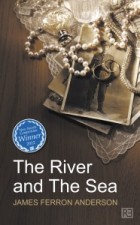
In this month’s “Location, Locution”, expat crime writer JJ Marsh interviews James Ferron Anderson, author of  The River and The Sea.

James was born in Northern Ireland, and worked there as a weaver, glassblower and soldier. He eventually had children, moved to Norwich, UK, studied at UEA, and began to write in different forms, including poetry, short stories, plays and, more recently, novels. One of his first short stories, The Bog Menagerie, won the Bryan MacMahon Short Story Award. He won an Escalator Award winner for I Still Miss Someone, and a Writers’ Centre Free Reads Award winner. The River and The Sea won the Rethink Press New Novels Award in 2012, and was published in November 2012.

The River and The Sea is set in British Columbia. James is currently working on Terminal City, set in Vancouver. While he’s visited British Columbia and Vancouver many times (his once estranged brother lives there, but that’s another story) he has never lived there.

Visit his website at jamesferronanderson.com.

Which came first, story or location?
Location, and more so as I continue to write. I’ll stick with Terminal City, the novel I am currently working on, but it applies equally to The River and The Sea. I was already studying the history of British Columbia, and focusing on Vancouver, when I read that Errol Flynn had died there. It was the human touch that caught my attention: once flamboyant athletic actor reduced, much against his will, to selling his last possession of any worth, his yacht. Shattered, riddled with diseases, looking like seventy instead of the fifty he actually was, he dies. But if my head had not already been filled with images of Vancouver from its lumber town days in the early 1900s to its evolution into the city of glass it is today I may not have found myself, I would say unintentionally, making up stories based around a Flynn-type character.

Politics and mores are as an integral part of a location as are its streets or hills. It was what I knew of the political aspects of this West Coast city in the 30s and 40s that determined that Terminal City would be a crime story. I wanted that mixture of danger and timidity that noir provides: the lure of the forbidden and the pulling back from it. I’d say location determined the form, feel and nature of the book. The rest was my regular desire to tell stories of how people need each other, hate each other, love each other and dispense with each other.

Simply put, it begins with location, finding an interesting event and/or person in that location when I’m not knowingly looking, and getting hooked.

What’s your technique for evoking the atmosphere of a place?
I think finding myself writing a story set in Vancouver (and it felt like finding more than choosing) was a just a wonderful gift. For a start, almost no one in the book was born in the city. They have a past at variance with their present, having come there from across the world for their own purposes. They are testing it, examining it, seeing what they can get from it. Will they be satisfied with what they’ve found? With the people they become over the twenty years of living there from 1939 to 1959? It makes the city, like the Thompson River in The River and The Sea, a protagonist in the book.

Which particular features create a sense of location? Landscape, culture, food?
Vancouver is a mild-weather city with plenty of rain. For noir it knocks LA into a cocked hat. It’s a city on a great bay so there are beaches, ships pass in and out visibly and constantly, there are well-forested and, for large parts of the year, snowy mountains rearing up just across Burrard Inlet. The wild and magnificent outdoors is no more than half an hour away, even in 1959.

Vancouver is a port, and more culturally mixed than an interior city. It’s in the far west of the continent: the final destination, like it or not, for the drifter or seeker after a better life. A large Asian presence leant, certainly in the period of which I am writing, a feeling of tension to nightlife, whether justified or not. My desire to use all that shaped the story.

Buildings matter. I have old all-wood housing from when Vancouver first laid down its streets side by side with the rise of its first multi-storey offices: a city in flux, home to people from elsewhere, also in flux, looking for roots and stability, looking for meaning too in the aftermath of a war.

How well do you need to know the place before using it as a setting?
I couldn’t imagine locating a story in a place I didn’t know well. I was relishing knowing Vancouver more and more anyway. To set a novel there was an excuse to know it better again, from visiting, diving into the City Archives on-line, to examining Google Earth Street View for hours. Plenty, then. I want to make what I write correct as well as relevant to the story. That doesn’t mean that very much of what I know has to go on the page. I read a comment that Colm Toibin in writing his novel on Henry James, The Master, wore his learning lightly. I want to know everything that’s relevant, and more, and use it lightly. The tip of the iceberg theory.

There are tricks also. Why would a local person wonder or remark on anything like the view or the tram tracks in the streets? I feel description has to grow out of incident and dialogue in the narrative. The first person narrator of Terminal City has, in the 1939 scenes, only lived in Vancouver for a year and is still coming to terms with it. He can wonder and notice and remark a little more freely and yet, hopefully, realistically. In 1959 he can reflect on changes, good and bad.

Could you give a brief example from your work which you feel brings the location to life?

The River and The SeaFrom The River and The Sea:

‘Snow was falling and visibility down to a few feet. We stopped in the afternoon and managed to light a fire and had tea and sugar. In a break in the snow Harry saw a raven. That meant there were caribou, and on the move.’

‘It did, did it?’

‘For a certainty, Harry said. We crossed a frozen lake, for easier walking, and came back onto the river. The wind was unrelenting. Even on the lake it took us four hours to make a couple of miles.’ Edward drank his tea. This was the most talking any of us had done for a long time. ‘We found a little clump of spruce. We ate some of the hide matting for the first time, but neither of us slept from the cold and the need to keep the fire going.’

It’s a narrative told to inform someone else and, almost incidentally, informs the reader. The intention was to convey their location as a site of cold, hunger and desperation, but it had to be an integral part of the story, not a piece of description standing to one side.

Which writers do you admire for the way they use location?
Charles Dickens in Chapter Three of Great Expectations uses the weather to bring alive his location when Pip runs in the morning to meet Magwitch.The mist was heavier yet when I got out upon the marshes, so that instead of my running at everything, everything seemed to run at me.’ Wonderful stuff that took me to that location so effectively I still picture it. Anton Chekhov is marvellous for both countryside and city. Yalta is so alive, so liveable-in, in Lady With a Lapdog. W.G. Sebald, not a favourite writer of mine, is nevertheless someone whose ability to put me in his location I much admire.


Next month’s Location, Locution:  Jill interviews Charlotte Otter, South African author – now living in Germany, whose homeland provides fertile fictional soil.

 * * *

JJ Marsh grew up in Wales, Africa and the Middle East, where her curiosity for culture took root and triggered an urge to write. After living in Hong Kong, Nigeria, Dubai, Portugal and France, JJ finally settled in Switzerland, where she is currently halfway through her European crime series, set in compelling locations all over the continent and featuring detective inspector Beatrice Stubbs.

_(75_of_75)

Author photo: J J Marsh

STAY TUNED for our next post!

If you enjoyed this post, we invite you to register for The Displaced Dispatch, a round up of weekly posts from The Displaced Nation, with seasonal recipes, book giveaways and other extras. Register for The Displaced Dispatch by clicking here!

Related posts:

4 observations after 3 years of holding up a mirror to expat (& repat) life

Las Meninas, by Diego Velázquez [Public domain], via Wikimedia Commons

Las Meninas, by Diego Velázquez [Public domain], via Wikimedia Commons

Earlier this month, I wrote a post in celebration of the Displaced Nation’s third birthday, which occurred on April 1st.

For three years we’ve held up a mirror, as it were, to what we’ve been calling the displaced life, writing and commissioning posts on what motivates people to venture across borders to travel and live.

During the past three years, here’s what our looking-glass has revealed:

1) We aspire to be the fairest of them all.

If our site stats are anything to go by, the Fountain of Youth myth is still alive and well. We may not be searching for water with restorative powers on our travels, but we never tire of reading about Jennifer Scott’s top 20 lessons she learned from Madame Chic while living in Paris, TCK Marie Jhin’s advice on Asian beauty secrets, or my post summarizing beauty tips I picked up on two small islands, England and Japan (three of our most popular posts to date). Heck, even 5 tips on how to look good when you backpack still gets plenty of hits.

2) We mostly just want to have fun.

The popularity of two of Tony James’s Slater’s posts—one listing his five favorite parties around the world and other other telling the tale of his attempt to overcome language barriers in pursuit of an Ecuadorian woman—suggest that good times and love still rank high on the list of reasons why people opt for the road much less traveled. That said, some of us worry about going too far with the latter, if the enduring popularity of my post four reasons to think twice before embarking on cross-cultural marriage is anything to go by.

3) But we love hearing stories about international travelers with a higher purpose.

Most of us do not venture overseas in hopes of changing the world, but we are inspired by tales of those who once did—how else to explain the golden oldie status of 7 extraordinary women with a passion to save souls? And our fascination with the international do-gooder of course continues to the present. Kate Allison’s interview with Robin Wiszowaty, who serves as Kenya Program Director for the Canadian charity Free the Children, still gets lots of hits, as does my post about Richard Branson and other global nomads who delve into global misery. Perhaps we like to bask in reflected glory?!

4) Last but not least, we think we know things other people don’t.

Indeed, the most common phenomenon that has occurred when holding up our mirror to international adventurers is to find our mirror reflected in theirs, and theirs reflected in the lives of people they depict, ad infinitum, in a manner not unlike a Diego Velázquez painting (see above). In my view, this mise en abyme owes to the conviction among (particularly long-term) expats that in venturing so far afield, they have uncovered things about our planet that are worth examining, reporting, and creating something with, be it a memoir of what they’ve experienced (think Jack Scott’s Perking the Pansies: Jack and Liam Move to Turkey, Janet Brown’s Tone Deaf in Bangkok, or Jennifer Eremeeva’s soon-to-be featured Lenin Lives Next Door: Marriage, Martinis, and Mayhem in Moscow), a novel based on their overseas adventures (think Kate Allison’s Libby’s Life or Cinda MacKinnon’s A Place in the World), and/or an art work that springs from what they saw and felt when living in other cultures (eg, Elizabeth Liang’s one-woman show about growing up a TCK).

In short, although many of us can relate to Alice’s feeling of having stepped through the looking glass, we also aren’t afraid to hold up a looking glass to that experience. I often think of Janet Brown telling us she almost went home “a gibbering mess” upon discovering that her Thai landlord was spreading salacious rumors about her, but the point is, she survived to tell us about the experience in her gem of a book. Surely, that’s the kind of hero/ine Linda Janssen has in mind for her self-help book The Emotionally Resilient Expat?

* * *

No doubt there are even more insights our three years of running the Displaced Nation have revealed, but I’ll stop here to see what you make of this list of traits. Does it strike you as being accurate, or perhaps a bit distorted? (Hmmm… Given this site’s proclivity for humor and sending things up, how can you be sure this isn’t a funhouse mirror and I’m not pulling your leg? Har har hardy har har.)

STAY TUNED for next week’s fab posts.

If you enjoyed this post, we invite you to register for The Displaced Dispatch, a round up of weekly posts from The Displaced Nation, with seasonal recipes, book giveaways and other extras. Register for The Displaced Dispatch by clicking here!

Related posts: