The Displaced Nation

A home for international creatives

Tag Archives: Europe

An Italian with a passion: How to live the Dolce Vita, with Barbara Conelli

Barbara Conelli is a woman on a mission — a mission to bring, as she puts it on her website, “Fantastic Fearless Feminine Fun into women’s lives.”

A prolific writer, with one book already published (Chique Secrets of Dolce Vita, a journey through Italy), another coming out in May, and other writing credits galore, Barb “invites women to explore Italy from the comfort of their home with elegance, grace and style, encouraging them to live their own Dolce Vita no matter where they are in the world.”

While many of you will be familiar with her writing and blog, others will know Barb from her popular Chique Show at Blog Talk Radio, where she interviews authors and talks about life in and her passion for Italy.

Today, though, it’s Barb’s turn to be interviewed.

Thank you, Barb, for agreeing to be interviewed! Can you tell us a bit about your background — where you were born, where you grew up, where you studied?
I was born in London to an Austrian mother and an Italian father. My background was incredibly multicultural and the fact that I had relatives in different countries who spoke different languages encouraged me to start learning the languages they spoke, and when I did, I realized some of the relatives were much nicer when I didn’t understand them. But it was too late; at that time I was already speaking eight languages and traveling around the globe, a passion that turned out to be totally incurable. I tried hard to be a homebody but it never worked.

A chronic gatherer of knowledge, I studied at several universities in Spain, Portugal, Italy and the US, and when I got my second PhD I realized the academic career was totally killing my creativity and my soul. (As you can see, realizing important stuff too late was a pattern in my 20s.)

Although I’ve had many homes away from home, Italy has always been my real home. Grandma Lily, my paternal grandmother, made sure I grew up to be a real Italian – food-loving, high-spirited, untameable, capricious and addicted to shoes. I frequently visited my cousins in Italy already when I was a kid, and when I got my heart-broken by an Italian at the age of sixteen, I knew there was no turning back. I was an Italian. Until today I’m not sure whether it’s a blessing or a curse. (Thanks, Grandma Lily!)

You split your time between New York and Milan, correct? When did you move to Milan, and why there in particular?
That’s right! Grandma Lily was born in Milan. She left the city and the country with her parents when she was a little girl and she never went back. However, the city stayed in her heart. I visited Milan many, many times, but I decided to actually get a place there and make it my home when I started to think about writing a book about the city. I wanted to really live it, breathe it, be it. I couldn’t live in Tuscany and write about Milan. That would have made me a tourist, not a Milanese. And I wanted to be one with the city and become familiar with its many faces.

Your first book, Chique Secrets of Dolce Vita, was published last year, and your second, Chique Secrets of Dolce Amore, is due to be published in May. Can you tell us a little about your new book?
Yes, I’d love to! I’m so excited because my editor has just sent me the final version of the manuscript, and I’m totally in love with the book! In Chique Secrets of Dolce Amore, I share my unexpected encounters with the capricious, unpredictable and extravagant city of Milan, its glamorous feminine secrets, the everyday magic of its dreamy streets, the passionate romance of its elegant hideaways, and the sweet Italian art of delightfully falling in love with your life wherever you go. This book is very informative and contains lots of factual information about the city, but at the same time it’s very poetic, lyrical and romantic. It shows that Milan is the perfect city to have a love affair with.

And what happens after Dolce Amore? Another book? Can you give us any hints?
There are several exciting projects I’m working on. Later this year, I’m planning to publish a collection of selected articles and essays I’ve written about Milan and published in magazines and on my blog. I’m also putting together a travel anthology that’s going to be released in the fall, with travel essays and short stories written by sixteen amazing, wonderful authors.

As far as my Chique Book series is concerned, with Chique Secrets of Dolce Amore I’m leaving Milan and venturing into Rome. The next book is titled Chique Secrets of Dolce Far Niente, and in this book I’m going to reveal the hidden face of Rome and share with my readers the Roman art of pleasant, carefree idleness.

My books always have a deeper message and I love using the city I write about as “the stage of life”, a creative space where we can learn, grow and get to know ourselves. Milan is about loving your life and finding beauty in simple, everyday things. Rome is about being fully present in your life instead of exhaustingly focusing on doing, doing, doing.

Something that comes across loud and clear in the reviews of Dolce Vita is your talent for writing descriptive prose and storytelling. What made you decide to write non-fiction rather than a novel?
A good question! I’ll be honest with you: I am working on a novel (okay, looks like I’ve just come out of the closet and admitted I’m a shadow novelist). However, I find writing fiction much less appealing. I love exploring the real world, I love talking to people, I enjoy discovering their stories, understanding what makes them tick. I’m incredibly curious and inquisitive, and I always look deeper, beyond the obvious, the visible. My readers often say that when they read my book, they feel they’re actually there with me, experiencing the same things, tasting the food, submerging themselves in the atmosphere. My books are like a magic carpet that takes you to beautiful places enabling you to live a beautiful adventure sitting in an armchair and wearing your jammies. I truly believe that being able to give this to the reader through the pages of my book is a miracle, and it makes me endlessly happy.

What audience did you have in mind for Dolce Vita when you first wrote it, and did you end up attracting those sorts of readers?
It’s an interesting question. I write primarily for women and I wanted my book to appeal to experienced, avid travelers as well as to those who dream of Italy and desire to explore this beautiful country. I definitely succeeded in connecting with my audience and I’m very grateful for my fabulous readers and fans from all around the world who give me lots of love, support, encouragement and wonderful feedback. However, I was very surprised to see that my book attracted also many male readers who totally enjoyed my writing. I just love that.

To which aspects of your writing have readers responded the most?
When you read the reviews, there seems to be one strong common denominator: “I felt I was really there with the author.” I’ve been so touched by this, and I feel very blessed because it means I’ve been able to get my message across and bring Italian beauty, charm and grace into the lives of many women. This is my definition of success – doing what you love and touching other people’s hearts by sharing your passion with them.

Have you written anything else?
I have two previously published books on relationships and self-love, based on my coaching career. I have also written screenplays for TV shows and scripts for TV talk shows. And I’m a movie translator – I have translated and subtitled over 800 feature films, shows and documentaries for major movie studios, TV channels and distribution companies. I have also translated several fiction and poetry books. Yes, I’m a typical “slasher” – a multi-talented person with many careers. But if you ask me who I truly am, my answer is I’m a writer and traveler. That’s my soul’s calling.

I first heard you — and heard of you! — on your blog talk radio show, the Chique Show. How long has the Chique Show been running?
Chique Show has been broadcasting for about a year. It has gained incredible momentum and today, just 12 months later, we have over 5,500 listeners, recently adding more than one hundred new listeners every week.

Is a radio talk show something you have always wanted to do?
When it all started, it really wasn’t my goal or dream to be a radio hostess, although I had always found this medium fascinating. Chique Show was meant to be just another platform to promote my new book but I immediately fell in love with it, and today it’s much bigger than I ever imagined. Chique Show is a great connector, a wonderful opportunity to meet new people, and my way of giving back and bringing authors closer to their readers.

How would you like to see it evolve?
I would love Chique Show to become a featured, branded show that would broadcast every day on a variety of topics. You know, one of my mottos is the words of Donald Trump: “If you’re going to think anyway, think big.” And Eleanor Roosevelt’s: “You must do the thing you think you cannot do.” I’m a visionary, and there’s not just a branded radio show on my vision board, but also a magazine and TV channel. I love challenging myself and pushing my own boundaries. My mum says I decided I was going to be a success story already as a toddler. I’ve always been stubbornly creative and free-spirited.

You’ve had a lot of guests on the show. Have there been any particularly memorable moments?
You know, I really love those moments when my guest and I totally click. When we find a topic we’re both fascinated about, we chat, we laugh. There’s a fantastic vibe and irresistible energy that totally fill the radio waves, and our listeners can feel it. We are just wonderfully connected.

I’ve also had deeply moving moments on the show when my guests opened up and talked about their life experiences, their struggles, their pain, and how they managed to overcome adversity and follow their dreams.

One of my favorite shows is the interview with author Lyn Fuchs that you featured here on Displaced Nation a couple of months ago. I love smart, talented, open-minded and humble people who are not afraid to do their thing and stand out from the crowd. Lyn is one of those people and having him on the show has been a real pleasure.

Is there anyone you would *love* to interview on your show — a “fantasy” interviewee, as it were, be they alive or dead?
Leonardo da Vinci: the most fantastic “slasher” in history. I wrote about his years in Milan in Chique Secrets of Dolce Vita, and I find him fascinating. I believe his genius is still undervalued. Madeleine Albright, a lady who epitomizes feminine power and wisdom. And Grandma Lily — the sage of my family.

With March being Fashion Month, many of our recent posts have been fashion- and style-related. Now, if you’ve actually read any of those posts, you’ll have realized that three of us anyway are the last people on earth who should be advising on fashion. I poke fun at haute couture, Anthony’s fashion advice begins and ends with chinos and a shirt, and Tony’s staple apparel is shorts and T-shirts. As someone who has made her home in two of the world’s fashion capitals, can you give us any tips about where a couture-challenged person can start?
Okay, my fantasy’s running wild here. Chinos make me think of Indiana Jones (a.k.a. Harrison Ford at his best). And shorts and a t-shirt? Matthew McConaughey. Hot, sexy, juicy! (May I join your team like right now?)

I love fashion because to me it’s yet another expression of creativity and art. It’s also one of the easiest ways to say who you are. You can use fashion to make a statement and I’m totally non-judgmental when it comes to people’s choices.

The best piece of advice is, be yourself. You don’t need to choose one style or color palette and stick with it forever. Fashion is a game and it’s meant to be played and enjoyed. Fashion is not created by designers, it’s created by you, every single morning.

In my closet, you’d find little black dresses and faded jeans, pantsuits and colorful skirts, white shirts and t-shirts with wild patterns. Lots of scarves and hats and other accessories. My wardrobe has as many faces as I do because I may be different every day but I always insist on being myself.

To sum it up, stop flipping through fashion magazines and show the world how beautifully unique you are!

OK, so we’re following your advice and doing a bit of retail therapy in two continents. Where would you suggest as first stop for shopping in Milan?
I suggest you leave your Lonely Planet Guidebook in your bag and start exploring. I love Milanese vintage stores, visiting them is a real adventure. I can recommend “Cavalli e Nastri” in Via Brera, or Oplà in Via Vigevano. For original jewelry, Vigano in Galleria Vittorio Emanuelle. And a Borsalino hat is a must!

And then we take a transatlantic flight and go shopping in New York…where’s our first stop there?
Tiffany & Co., of course! Okay, just kidding. The Tiffany store in both Milan and New York plays a very important role in the last chapter of Chique Secrets of Dolce Amore where it turns into a spicy matchmaker. Plus, I love Breakfast at Tiffany’s.

I almost never shop for clothes in New York but I love New York bookstores. I live on Broadway and I’m addicted to the Strand Book Store at the corner of Broadway and 12th Street.

And on Saturdays, I love going to the Greenmarket at Union Square, the most wonderful outdoor market in New York whose atmosphere reminds me of Italy.

Splitting your time between two countries as you do, do you find it difficult to settle into the ways of one country after a length of time in the other?
Actually, it’s funny because when I come to Milan, my friends usually tell me: “Stop being so American!” It takes me a few days to slow down and return to the spirit of la dolce vita. It always reminds me how fast we actually live in the States, and how we allow life to just pass us by.

When I return to New York, it takes me about a week or two to get used to the bustle of the city. I love New York, it’s an incredibly vibrant city, but it can truly wear you down. You need to manage your energy really well and set your boundaries. Although New York is said to be the city that never sleeps, a New Yorker needs to get some sleep at least every now and then.

What aspect of Italy would you like to transplant to New York life — and why?
The art of taking the time to actually live. Experiencing life with gratitude and a sense of awe. The sweetness of human experience. Achieving great things is wonderful, but your life needs to be balanced, and that’s what New York sometimes misses. We need to stop and smell the roses more often.

What about vice versa? Any aspect of New York life you would like to transplant to Italy?
The glitz, the flashiness and the flamboyance. New York is a self-confident brat and it would be fun to see more of that in the easy-going, laid-back Italian way of life.

You’ve traveled extensively — have you discovered any other places where you’d like to live for a while?
After living in Middle East, Africa, in the Australian outback, in stunning European cities and wonderful metropolises of this world, I would like to create one more home-away-from home in French Polynesia. Sleep, eat, dance, swim in the ocean and write books. My idea of writer’s heaven.

Your suggestion about joining the TDN team? Yes — on condition we can all descend upon your new home in French Polynesia… Heaven indeed. Thanks, Barb, for talking so honestly to us!

We will hear more about Barbara Conelli in a few weeks, when we review her new book, Chique Secrets of Dolce Amore, and subscribers to the Displaced Dispatch can look forward to another exciting giveaway!
If you enjoyed this post, we invite you to subscribe for email delivery of The Displaced Dispatch, a round up of the week’s posts from The Displaced Nation. Sign up for The Displaced Dispatch by clicking here!

Related posts:

Image: Barbara Conelli

RANDOM NOMAD: Annabel Kantaria, British Expat in Dubai

Place of birth: London, UK
Passport: UK
Overseas travel history: United Arab Emirates (Dubai): 1998 – present.
Occupation: Former journalist and one of four official expat bloggers for The Weekly Telegraph
Cyberspace coordinates: Telegraph Expat blog (Annabel Kantaria) and @BellaKay (Twitter handle)

What made you leave your homeland in the first place?
Despite being 100 percent British, I never felt at home in England. As young as six years old I used to wake up feeling “displaced.” I was unable to identify that feeling until I moved to Dubai and realized that the feeling had gone. To be honest, I think “home” could be anywhere that has a positive attitude, hot sun, blue sky and a glittering sea.

Was anyone else in your family “displaced”?
My father grew up in India as the child of expat parents and so my own childhood in England was full of stories of hill retreats, jungles, hot sun, ayas and curries. My mother was born to expat parents in Romania. My aunt emigrated from the UK to Canada.

My husband, whom I met at university in the UK, is also displaced — I don’t think it’s a coincidence we ended up together. Of Indian origin, he grew up largely in Kenya and did his secondary schooling and university in the UK. We were married in Nairobi and then lived in the UK for one year. My husband went to Dubai on business, brought me back a book about Dubai and said “Let’s move there!” I didn’t need any convincing. We sold our house and cars, and shipped all our possessions over and have, so far, never looked back. 🙂

So you’ve felt the most displaced in your homeland?
Yes. Growing up in England, I felt like an alien. Throughout my teenage years I plotted my escape. I knew I would leave as soon as I could. It was just a matter of when, where and with whom. Even now, when I go back, I feel like a foreigner.

Is there any particular moment in Dubai that stands out as your “least displaced”?
Probably the first weekend after my husband and I moved to Dubai — when we sitting on the public beach watching the sun go down and the sand turn from white to pink and listening to the azaan (call to prayer) echo across the beach. I had that first flutter of “This is home! We’re not on holiday!” excitement, which still continues, even after 14 years.

You may bring one curiosity you’ve collected from your adopted country into The Displaced Nation. What’s in your suitcase?
A plastic mosque alarm clock that wakes you with the azaan [see photo inset].

You are invited to prepare one meal based on your travels for other members of The Displaced Nation. What’s on your menu?

Emirati food revolves largely around meat and I am a vegetarian, so I would have to broaden it to include other Middle Eastern cuisines. Rather than three courses, I’d offer you a selection of mezze (small dishes):

We’d wash it down with a rich red wine from Lebanon’s Château Musar, Ksara or Kefraya.

For dessert I would offer you a delicious Umm Ali — an Egyptian version of hot, bread pudding, served with a little vanilla sauce. And, of course, a cardamom-laced Arabic coffee to finish.

And now you may add a word or expression from the country where you live in to The Displaced Nation argot. What will you loan us?
Inshallah (If it’s God’s will) — it’s the word you hear the most when you want to get something done and you’re begging for a commitment that it will be. It’s also a word that UAE expats use, in their transient lives, to acknowledge that they aren’t entirely sure of what may happen next. “We’ll be staying here for two years, Inshallah.”

This month we are looking into beauty and fashion. What are the best Emirati beauty secrets you’ve discovered?
From observing highly groomed Arab ladies, I’ve learned the value of the perfectly shaped eyebrow – something to which I’d barely paid any attention in England. I’ve also discovered the joys of a good scrub in the hammam. It’s not Emirati per se, but does have a long history here. And although you don’t often see a UAE national lady without her shayla (rectangular headscarf), the beauty salons are full of Emirati ladies having their hair blow-dried — I’ve learned to get my hair professionally “blown” before any major social event. It gives you an instant polish that makes all the difference.

What about fashion — any beloved outfits, jewelry, or other accessories you’ve collected in the UAE?
Emirati ladies put a lot of thought into accessories such as sunglasses, handbags and shoes, given that the rest of them is covered by the abaya (robe-like dress or cloak) when out in public. I’ve picked up their habit of using a great handbag to pull a look together. I also have a beautiful, jewelled black thobe (ankle-length garment traditionally worn by Arab men) that doubles up as a great evening dress.

Editor’s note: Annabel Kantaria was awarded one of The Displaced Nation’s “Alices” for a post she composed about the need for “behavior lessons” before working in the UAE.

Readers — yay or nay for letting Annabel Kantaria into The Displaced Nation? Tell us your reasons. (Note: It’s fine to vote “nay” as long as you couch your reasoning in terms we all — including Annabel — find amusing.)

STAY TUNED for tomorrow’s installment from our displaced fictional heroine, Libby, who is once again on her own while her feckless husband clocks up more hotel points and air miles — perhaps he intends to be present at the birth of their twins via Skype? (What, not keeping up with Libby? Read the first three episodes of her expat adventures.)

If you enjoyed this post, we invite you to register for The Displaced Dispatch, a round up of weekly posts from The Displaced Nation, with seasonal recipes, book giveaways and other extras. Register for The Displaced Dispatch by clicking here!

Related posts:

img: Annabel Kantaria at a polo match in Dubai; inset: her plastic mosque alarm clock, which she proposes to bring into The Displaced Nation.

RANDOM NOMAD: Lei Lei Clavey, Australian Expat in New York

Place of birth: Melbourne, Australia
Passport: Australia + USA
Overseas travel history: France (Paris): 2005; USA (Santa Barbara, California): 2008-09; USA (New York, New York): May 2011 – present.
Current occupation: Casting director for StyleLikeU, an online fashion magazine based in New York City.
Cyberspace coordinates: Style Like U | Freedom of expression through personal style (work) and @LeiLeiClavey (Twitter handle)

What made you leave your homeland in the first place?
I’ve had the travel bug for as long as I can remember. A lot of it came from my parents, who took me around the world shortly after I was born. The excitement of being in a different country, immersed in a new culture and environment — it’s something I now crave.

Of course, travel is one thing; living in a place for an extended period is another. To make a home amongst strangers takes you out of your comfort zone and tests your courage in new ways. I enjoy the challenge. I always learn new things about myself as I open my eyes to different people, perspectives, and ways of life.

Was anyone else in your family “displaced”?
My father is what you might call permanently displaced. Born in Chicago, he attended Colorado State University and then left the US to live in Taiwan and study Chinese language and herbal medicine. Taiwan was where he met my mother, who was likewise displaced (she is Chinese Australian). My parents lived in Taipei for five years and then moved to Mainland China for two more years before settling permanently in Melbourne, Australia, where my mother was born and grew up — my father now practices there as a Chinese herbal doctor. (Incidentally, The Displaced Nation interviewed my mother, whose name is Gabrielle Wang, last summer about a book she had written on a half-Chinese, half-Aborigine girl who lived in 19th-century Australia.)

A couple of my cousins share my passion for travel and have recently embarked on an adventure in the UK, where many Australians choose to live (the two-year work visa for Australians under 25 is a relatively straightforward process).

Another of my cousins recently shaved her head and embarked on a solo, life-changing adventure in India. I have yet to hear her tales firsthand. All I know is that she has more guts than I ever will to have done that by herself.

Describe the moment when you felt most displaced since making your home in New York City.
I don’t believe anything could surpass how I felt on my first night in New York City. Before leaving Australia I had arranged to stay with a friend of a friend for a month. He told me: “When you arrive, come to 10th, between A and B, and up to the third floor.” A and B: what country uses letters as street names? Surely they must be abbreviations for something!

It was close to midnight by the time I arrived at East 10th Street between Avenue A and Avenue B (thank you, taxi driver, for clearing that up!).

But then I had another challenge. I was exhausted and ready to collapse after my 22-hour plane flight from Melbourne to LA and another five hours to New York City. After dragging my 32kg (70lbs) suitcase up three flights of stairs — yes, it was a walk-up! — bed was the only thing I had in mind. I knocked and waited. No answer. I knocked again. Still no answer. I sat on my suitcase and was feeling very sorry for myself, wondering why I had ever decided to move to NYC, when three young men walked up the stairs. They were surprised and a little bemused to see me sitting outside the door to their apartment. After exchanging glances, they informed me that I was on the 4th floor, not the 3rd. (In the US there is no such thing as a “ground floor” like we have in Australia. The ground floor is the first floor.) So I struggled my way back down one flight of stairs and walked into an artist’s hazy East Village apartment.

People, music and smoke filled the room. It was community open-mic night, held weekly in this man’s apartment in exchange for rent (a great deal, I now realize!). The owner was asleep on the couch, despite the noise of someone playing the Asian zither.

My eyes scanned the audience, and then I saw Will, the friend of my friend. I could finally relax.

I had entered an alternative universe, an environment utterly foreign to me. But I knew at that moment, my New York adventure had begun and my life would be changed forever.

How about the moment when you have felt least displaced?
When I first came to New York City as a tourist, in 2008, it was as if I had lived here before, perhaps in a past life. I loved the city’s multicultural feeling. So many different faces, cultures and languages — I immediately felt at home. Since coming to live in the city ten months ago, I will occasionally bump into the few people I know in the street. That this can happen even in a city of over eight million gives me a buzz.

You may bring one curiosity you’ve collected from each of your adopted countries into The Displaced Nation. What’s in your suitcase?
From Paris: The 2-hour lunch break. Unlike Parisians, New Yorkers work too hard and I believe with no better results than if they were to have a decent break, get refreshed and go back to work. Australia, unfortunately, is following in America’s footsteps. Surely, citizens of The Displaced Nation could enjoy a reasonable work-life balance?
From New York City: The concept of convenience. For most New Yorkers, it is only a short walk to the grocery store, bank or coffee shop. In fact, I have all three on my block — I love it! On the other hand, New Yorkers like to push those convenience boundaries and have EVERYTHING delivered. Convenience has never been so lazy! The Displaced Nation should find a way to have convenience without the laziness.
From Santa Barbara: The practice of recycling. Santa Barbara does a great job of keeping the University of California-Santa Barbara campus, city streets and beaches clean. They understand the need for it and how trash impacts the environment. I cannot stand how dirty the streets are in New York City. I would therefore urge The Displaced Nation to institute Californian-style recycling policies (if you haven’t already!).

You are invited to prepare one meal based on your travels for other members of The Displaced Nation. What’s on your menu?

My menu is inspired by New York City brunches*. I always crave a nice weekend brunch when I fly back to Australia on holiday!
Appetizer: Shrimp and grits, based on a recipe from Peels** with two (allegedly) secret ingredients: a little Budweiser and a lot of tasso, a Cajun-spiced ham.
Main: Fried chicken sandwich, with chilli lime aioli & pickled egg on sweet-potato focaccia with hand-cut fries — based on a recipe from Diner in Williamsburg, Brooklyn.
Dessert: Chocolate sundae consisting of vanilla and malt ice cream, hot fudge, whipped cream, brownie bites, nuts, and pretzels — based on a Peels** recipe.
Drinks: Traditional Bloody Mary, a solid brunch favorite!
*This is an imaginary meal so ignore the high calorie count and just enjoy it!
**Peels is an American diner with a Southern-inspired menu in NYC’s East Village. I used to host there.

And now you may add a word or expression from the country where you live in to The Displaced Nation argot. What will you loan us?
From New York: Debbie Downer, slang for someone who frequently adds bad news and negative feelings to a gathering, thereby bringing down the mood of everyone around them. I hear it being said all the time in the streets of New York. (It was also the name of a fictional character from Saturday Night Live.)
From Paris: La ziqmu/la ziq (music) — an example of verlan, which, similar to Pig Latin, transposes syllables of individual words (la musique) to create slang words (la ziqmu, often shortened to la ziq). Verlan combinations are endless and have become a part of everyday French, especially for younger people.

This month we are looking into beauty and fashion. What’s the best beauty treatment you’ve discovered while abroad?
New Yorkers are crazy about spa treatments, facials, massages, manicures and pedicures. It seems to be everyone’s de-stressing fix, and I have to agree there’s something very relaxing about someone picking dead skin off your feet. Last September, on the weekend when Hurricane Irene was threatening to hit NYC, can you believe that the places that were most packed out were the nail salons? (Besides liquor stores and bars, that is.) There are also speciality barber shops for men in New York. Australian men, take heed! Men in this city have no shame in caring about their looks as much as women do: they see it as a masculine thing.

What about fashion — can you tell us about any beloved outfits, jewelry, or other accessories you’ve collected in your adopted country or countries?
Living in New York and working at an online fashion magazine, I’ve been exposed to the the cutting edge of weird and wonderful styles. Really anything goes, unlike in Australia! No matter how far-out the boundary you feel you are pushing, someone else will always out-do you. I love that! The city has inspired me to accessorize more: to jazz up an otherwise regular outfit with hats, statement jewelry and/or shoes. Also, New York is a walking city, so clothing also has to be practical — a hat to keep your head warm in winter or the sun off your face in summer, and shoes you can actually walk in (more than cab-to-curb, that is!).

Readers — yay or nay for letting Lei Lei Clavey into The Displaced Nation? Tell us your reasons. (Note: It’s fine to vote “nay” as long as you couch your reasoning in terms we all — including Lei Lei — find amusing.)

STAY TUNED for tomorrow’s installment from our displaced fictional heroine, Libby. (What, not keeping up with Libby? Read the first three episodes of her expat adventures.)

If you enjoyed this post, we invite you to register for The Displaced Dispatch, a round up of weekly posts from The Displaced Nation, with seasonal recipes, book giveaways and other extras. Register for The Displaced Dispatch by clicking here!

Related posts:

img: Lei Lei Clavey outside a favorite coffee shop of hers in the East Village, New York City.

6 beauty and fashion lessons for world travelers, by Cleopatra

It’s March, and fashion and beauty have arrived at The Displaced Nation. To help us introduce the new theme, may we present the Queen of the Nile, Isis Personified, Cleopatra VII Philopator, who has agreed to impart some travel-oriented beauty and fashion advice.

Greetings, my subjects — for I cannot help but think of you that way, having lived my entire life as Queen of the Nile.

Meantime, I understand that the descendents of those who were once my subjects are fighting for democracy. How times have changed.

Or have they?

As for me, I’m stretching the limits of my tolerance for democracy by addressing you in a tongue full of Latinate words — Latin of course being the language of many of your, and my own nation’s, conquerors.

Still, at least I conquered two of their warlords, Julius Caesar and Mark Antony, with my not inconsiderable charms. The former restored me to my throne, while the latter joined me in fighting off the Romans.

The details of my affair with Antony are well known thanks to the efforts of your foremost literary genius, William Shakespeare. (In more recent times, there was that film starring Elizabeth Taylor and Richard Burton — verbose, muddled, lumbering, lacking in style and, worst of all, not even entertaining! Still, I get some consolation from knowing that it nearly bankrupted the film studio that tried so hard to undermine my reputation.)

But enough about me. I am here today to focus on the needs of my supplicants. The powers-that-be at The Displaced Nation have informed me that you’re all world travelers, just as I was — having traveled twice to Rome during my reign. But, unlike me, you don’t take the matter of your appearance seriously enough.

Well, never fear, Mother Isis is here, friend of slaves, sinners, artisans and the downtrodden — which, as I can see from a quick glance around, is how some of you have chosen to present yourselves to the world. I will now impart six key lessons on beauty, clothing and comportment, which have stood the test of millennia…

1) Outward appearances count, especially when visiting other cultures.

Can it be true that some of you would venture into other countries unshaven, unkempt and unwashed? I can only assume that this is not by choice but rather the lack of a servant/travel companion to look after you. (For what would I have done without my Iras?)

To be welcomed with open arms, allow ample time for grooming. Your initial appearance will inspire wonder and awe rather than revulsion.

This lesson also applies, by the way, to you men out there: do you think I, a goddess personified, would have taken Mark Anthony into my bed had he arrived in Alexandria looking like a homeless person?

2) Become an ambassador for your home nation’s styles.

Though it has taken more than a millennium for their fashions to evolve, Italy is now a fashion leader. Well, how do you think that came about? When summoned to Rome in 46 BC, I dazzled everyone with the latest Egyptian designs, both clothing and accessories. Alexandria was at that time the fashion center of the world, and I saw myself as a conduit. (Even when the time came to take my own life, I made sure the asps on my breast were artfully arranged, in my belief that it’s important to die as one has lived — with style.)

3) Study the women of other nations for their beauty and fashion secrets.

Imagine the excitement of female travelers to Egypt upon discovering that with the help of a bit of pigment, they could enhance their eyes — for I knew about smokey eyes long before most, and had taken them to another level. As for me, though I benefited very little from studying Roman ladies — togas aren’t exactly seductive (Fulvia looked particularly dumpy in hers!) — the experience was useful in that it taught me a lesson in what not wear.

4) Beauty on its own is never enough; cultivate a little something extra.

My own “little something” was wit, charm, multiple languages and a musical voice. What’s yours — telling cross-cultural jokes, spinning travel yarns, holding forth on issues of the importance to our planet? Glamming up is fine, but hardly sufficient.

5) On that same note, never be afraid to project an aura of mystery.

Age cannot wither her, nor custom stale
Her infinite variety: other women cloy
The appetites they feed: but she makes hungry
Where most she satisfies; for vilest things
Become themselves in her: that the holy priests
Bless her when she is riggish.

— Antony and Cleopatra, by William Shakespeare (1606)

I’ve watched for two thousand years as artists and writers have tried to capture my allure — watched, and laughed, because they never quite grasped it. The latest to try is Pulitzer Prize-winning biographer Stacy Schiff. She had a good go, but even she, with her formidable intellect, didn’t fully get what you today might call my “attitude problem.” Why do we always have to tell others what we think? Why do we have to be consistent? In my — rather wide-ranging — experience, a little artifice never hurt anyone, and the plea for straightforward cross-cultural communications is vastly overdone.

6) Pearls are a girl’s best friend.

I once possessed the most valuable pearls in the world, worth a villa each — and ended up swallowing one of them in order to win a bet, after first dissolving it in a glass of vinegar. What a hoot that was! I’ve been told that one of your more famous sex goddesses had the same to say but about diamonds. That was a woman after Isis’s own heart: smarter than she looks! As a global nomad, you never know what kind of predicament you might be in, and jewels have the advantage of being edible as well as portable.

* * *

Thank you, Cleopatra. Readers, any questions or comments for the Egyptian queen before she turns back into a golden statue?


Why “expat” is a misleading term for multicultural couples

Today we welcome author and “global love” expert Wendy Williams to The Displaced Nation. A Canadian, she lives in Vienna with her Austrian husband and their daughter. But is she an expat or an immigrant? Yes, that old chestnut! Except…Williams has a novel way of addressing it.

“At the risk of sounding like a snooty intellectual or immigrant diva, I think it’s time to clear up some confusion about the term ‘expat,'” I announced to a features editor recently.

“Oh no,” she warned me, “don’t get bogged down with tedious definitions and classifications. Just write something about the joys and the dramas of being an expat couple. And offer some good advice, too,” she added cheerily.

As the author of The Globalisation of Love — a book about multicultural romance and marriage — I am frequently asked for advice on “expat relationships.” And that’s my whole point today — what is an expat relationship, anyway? And are multicultural couples and expat couples one and the same?

An “expat couple” — what exactly does that mean?

Expat is a term that is bandied about, dare I say recklessly, to describe someone who is living in a foreign country and it is often used to describe couples where one or more partners are foreign born.

Exhibit A: I am Canadian and my husband is Austrian. We live in Vienna. Often we are referred to as an “expat couple” — or even as an “expat family” if our born-in-Austria daughter is included. Granted, I have pretty high standing as matriarch of my family of three, yet does just one “expat” in the family make us an “expat family”? My husband and daughter are living in the country where they were born after all. Other than a bit of English and a lot of peanut butter that I smuggle in from Canada, there is very little “expat” about them.

Yet expat is a label given to anyone with any kind of international flair.

So, time to get to the heart of this worldly weighty matter. An “expatriate,” in my understanding, as well as that of Merriam Webster and even Wikipedia, is “any person living in a different country from where he or she is a citizen.”

Expats usually start their international lives on assignment for a multinational corporation — unless they are Australian, in which case they begin by bussing tables in London’s grottier pubs or teaching Dutch guests to ski in Austria.

Typically, expats enjoy a long list of job perks to deal with the “stresses” of life abroad so they get free rent, paid trips back to the motherland and private school for the kids. Paying income tax seems to be optional. Expats are like visitors to a country: they deal with external issues like culture, language, and religion. Usually they live from one to five years in a given location “making the most of it” exploring the region and learning about the local culture. They always know they will be going home at some point, even if there are more international postings along the way.

Vs a “GloLo couple” — now there’s a precise label!

A multicultural relationship, by contrast, is one where each partner is from a different country or culture. Multicultural couples — or what I call “GloLo couples” in The Globalisation of Love (blatant self-promotion, I know) — deal with issues like culture, language, and religion within the relationship. GloLo couples do not usually have the job perks of expats because they work locally, so they pay their own rent, they have to pay taxes and their kids go to the local school.

Whether they live in his country or her country — or swing back and forth between the two countries every few years — there is a sense of permanence about the geography. The imported partner is an immigrant really, although “immigrant” has taken on some negative connotations in our nilly-willy live-here-work-there globalized society.

Barring bureaucracy and ludicrous immigration laws (Austria, this means you!), GloLo partners may even gain citizenship in the country into which they have married. At the risk of more shameless self-promotion, I call it the “globalization of love.”

So here is my point: An expat couple and a multicultural couple are not necessarily the same relationship constellation and should not be confused with one another. An expat couple can be a GloLo couple if they have different nationalities, however a GloLo couple is not necessarily an expat couple, even if one partner is an expatriate. It is only when a GloLo couple live in a third neutral country that they become an expat couple as well.

Aren’t you glad we cleared that up?

Meanwhile, the features editor still wants some advice on dealing with the joys and the dramas of being an expat couple though. Hmm, how about make the most of it, explore the region and learn about the local culture?

And my advice for multicultural couples? Well, there’s this book I should tell you about…

Question for readers: How do you define “expat” vs “immigrant” — and does Williams’s “glo-lo” term strike you as being useful?

WENDY WILLIAMS is the author of The Globalisation of Love, which was featured in The Displaced Nation’s post Best of 2011: Books for, by and about expats. You can learn more about Williams and her book at her author site, The Globalisation of Love.

STAY TUNED for Monday’s post, an introduction to March’s Cleopatra(!) theme…

If you enjoyed this post, we invite you to register for The Displaced Dispatch, a round up of weekly posts from The Displaced Nation, with seasonal recipes, book giveaways and other extras. Register for The Displaced Dispatch by clicking here!

Related posts:

RANDOM NOMAD: Liv Hambrett, Australian Expat in Germany

Place of birth: Sydney, Australia
Passport: Just my little blue Australian one. And I’d like to keep it.
Geographical history: Greece (Santorini): for several three-month stints since 2008; Germany (Münster, Nord Rhine-Westphalia): 2010 – TODAY, LEAP DAY! (February 29, 2012); Germany (Weiden in der Oberpfalz, Bavaria): TOMORROW onwards!!!
Current occupation: Writer and language trainer.
Cyberspace coordinates: A Big Life | An Australian in Germany (blog) and @LivWrites (Twitter handle)

What made you leave your homeland in the first place?
The only thing that really made me leave my home was me. I had traveled on and off throughout my studies and was ready for something a bit more … daring. I wanted to live in Europe, not just travel through it whenever I could get enough money and find enough time. I am incredibly lucky to come from the country I do. To return to it would be no problem, to have its passport is a blessing. I just wanted to try something different, and in Germany I found something more solid to assuage my constantly itching feet.

Was anyone else in your family “displaced”?
My parents are both travelers and my mother spent a year working in London in her twenties. My uncle spent four years living in South Africa and traveling through Europe, before meeting his Swiss wife and bringing her back to Australia — she’s now displaced. I think many Australians are nomadic by nature — we like to wander, we like to see what’s out there. It’s in our blood.

Describe the moment when you felt most displaced since making your home in the historic university city of Münster.
Münster is one of the “nicest” cities in the world, so my displacement here is usually a case of: “What’s a girl like me doing in a nice city like this?” I’m pleasantly displaced, in other words! But while there haven’t been precise moments of aggravation, there have been parts of the ongoing adjustment process that made me want to click my heels together three times. As much as I love it, Germany has this thing with bureaucracy and paperwork and red tape; and sometimes, when I am drowning in letters from my insurance company, or wading through the healthcare system, or putting together paperwork for my visa renewal, or trying and failing to understand the language, I do think: wouldn’t it just be easier if you were at home? I’ll soon be moving to Bavaria — and all the bureaucracy that will come with a new job, a new visa and a new state (or as some Germans would have you believe, a new country) will probably have me hurling abuse at walls every so often. Just for therapy. Oh yes, and when it is -18 degrees celsius, I start thinking: what the hell am I doing in this country?

Have you also had some moments when you feel more at home in Germany than you did in Oz?
Any time I have a cup of tea in hand and am talking to a good friend, I feel as if I could be anywhere in the world, and this person and I would still have stories to share and understanding to give. It isn’t a matter of feeling more at home than in my home country, it is a matter of feeling as at home — and I think that’s as comfortable as it gets.

You may bring one curiosity you’ve collected from your adopted country into The Displaced Nation. What’s in your suitcase?
Probably an enormous amount of würste in the many and varied forms it comes in.

Food is close to the heart of all Displaced Nation citizens. Are there any other special German foods you’d like to offer us besides German sausages?
Yes — Schnitzel (deep-fried veal) and rotkohl (German red cabbage).

I assume you’d drain the cabbage in your Villeroy & Boch colander? I saw a photo of it on your blog — rather whimsical and wonderful! And now you may add a word or expression from the country where you live in to The Displaced Nation argot. What will you loan us?
From Germany: Actually, I have two: Das stimmt (that’s true) — it rolls off the tongue; and schnabel (a bird’s beak or bill) … because it is SO CUTE.
From Greece: Siga siga (slowly slowly) — it sums them up perfectly.

This month, because of Valentine’s Day, The Displaced Nation has been delving into the topic of finding love abroad. And today is Leap Day, when according to legend, women get to propose to men. Have you found a candidate in Gerany?
I met the Significant German — I call him SG on my blog — within four months of moving to Münster. I wrote about our story in a blog post last November. As I said then, if I had to give a tagline to the movie poster for my life as it currently is, it would be “she came for the adventure and stayed for love.” Sounds romantic and exciting, doesn’t it? But it’s a new one for me.

I read that on Leap Day (February 29), women are allowed to propose to men. Any plans?
Well, I’m starting my second big life in Germany TOMORROW when I move to Bavaria to be with SG.

On a more prosaic note, are German men very different from their Aussie counterparts?
Oh Lord, the differences are many. The main thing — and this applies to Australian men as compared to many European cultures, not just Germany — is that Australian men have this ongoing thing with being a “bloke”: masculinity in its conventional sense is quite important to an Australian male’s identity, even if they aren’t aware of it.

Also, this month we’ve been looking at expat and travel films, in honor of the Oscars. Do you have any favorite films in this “genre”?
Bienvenue chez les Ch’tis” (Welcome to the Sticks) — not exactly about an expat, but the character moves towns in France. It captures the essence of moving and feeling like an alien, then adapting, perfectly! And as far as the Love theme of February goes: Love Actually. Always Love Actually.

Readers — yay or nay for letting Liv Hambrett into The Displaced Nation? Tell us your reasons. (Note: It’s fine to vote “nay” as long as you couch your reasoning in terms we all — including Liv — find amusing.)

STAY TUNED for tomorrow’s installment from our displaced fictional heroine, Libby. Having de-stresed with Oliver on their Valentine’s Day weekend, she thinks she may be ready to face the Woodhaven world again and its tribulations. But as we all know, it takes more than a facial and pedicure to attain such a level of serenity. (What, not keeping up with Libby? Read the first three episodes of her expat adventures.)

If you enjoyed this post, we invite you to register for The Displaced Dispatch, a round up of weekly posts from The Displaced Nation, with seasonal recipes, book giveaways and other extras. Register for The Displaced Dispatch by clicking here!

Related posts:

img: Liv Hambrett with her mug of glühwein in Münster, Germany.

Ladies and gentlemen, may we present: THE EXPAT OSCARS! Um…hello? Anyone there?

TheExpatOscarsThe Expat Oscars — really? Now that would be an unusual event. What would it look like?

I live in Spain. Oscars are something that are on TV Sunday night. Basically, very late at night. You don’t watch, you just read the news after who won or who lost. — Javier Bardem

Well, for starters the Expat Oscars would be held via Skype. If we had our own version of the Kodak Theatre, it’d be big and posh and empty — ’cause folk from ’round here…ain’t from ’round here! We’re displaced — all over the bloomin’ planet. Which is kind of the point. If we had to collect our awards in person, that ceremony would have a carbon footprint the size of a football stadium.

So we’re streaming live on the Internet. The Red Carpet is a million pixels long and is digitally re-mastered in every country participating. Unfortunately, Jennifer Lopez wouldn’t be invited as she’s never been displaced, only her clothing! Indeed, you won’t want to make a slip-up — or down — as the clip would literally be on YouTube before you knew it.

But if there wouldn’t be any wardrobe malfunctions, we could at least look forward to getting that delicious hang-fire moment when the Skype picture freezes, and then it cuts back in, seconds later, like this:

“Ladies and Gentlemen, the winner is…” PIXELATE — jittery jump — lips purse with a hint of spittle and stay like that — and pause — and pause —

Cut back in to rapturous applause, the digital wheeling of spotlights and we’ve got to sit through another five minutes of high-volume celebrating before we finally make out the individual giving an acceptance speech. (That’s if it doesn’t cut out again before we get that far!)

Who would host?

Milla Jovovich, you did a great job hosting the sci-tech awards for the Academy of Motion Picture Arts and Sciences, so you’re being promoted — to hosting the entire Expat Oscars shebang! We’d love it if you’d wear that white-sequin, one-shoulder gown you wore for the main event last night — and leave the granny glasses you donned for the sci-techies at home (wherever “home” is!).

From Long Beach to Pacific Palisades? Sorry, Billy Crystal, but that’s not displaced enough. Jovovich is Ukrianian, has lived in Europe and the US, and acted in films in several languages. All of that counts for a lot in our book.

Should Milla request a co-host, it would have to be either Keanu Reeves (he was born in Beirut, a third culture kid!) — or why not go for the daddy of successful expat movie stars, the man who redefined the phrase “I came, I saw, I conquered”: Mr. Arnold Schwarzenegger himself!

No? Well, it’s either him or Borat. With his penchant for embodying other nationalities rather too literally, Sacha Baron Cohen belongs more with our tribe than with the Academy’s. At the Expat Oscars he will be free to attend in his dictator’s uniform without having to get special clearance and can “ash” anyone he likes in the name of terrorizing fashion — the mess will only be virtual.

We’re talking a looooong ceremony

Besides, his antics might keep people awake. The Expat Oscars will have to be a long, LONG show — either that or we’d insist that everyone stay awake all night, and it would be 4 a.m. for someone.

Listen, you think it’s bad at the real Academy Awards sitting on the edge of your auditorium seat for several of hours, sipping champagne while you wait for your category to be announced — what if it’s being announced by someone eight time-zones away?

Charlize Theron*: “Ladies and Gentlemen, here to accept this prestigious award, please welcome Mr. Sung, live by satellite from Hong Kong! Please excuse the penguin pyjamas. And the fact that he’s drunk eight vodka-Red-bulls just trying to keep himself awake…”
Mr. Sung: “Fangssshhhverymussssh…hic!”
*With her South African pedigree, Charlize more than qualifies for the role of Expat Oscar presenter.

Best Foreign Language Film — is that second or third?

Our next category is for Best Film in a Foreign Language…but wait a minute! That’s not a foreign language! That’s my language! Ah…

So could we have Best Film in a Second Language perhaps? But would that category also include people who’ve made a film in their third language — or should they get their own category? And so on.

How about “Film in a Language So Obscure Even the Director Has No Idea What’s Going On”?

No politics/fashion, please, we’re expats

What a thrill. You know you’ve entered new territory when you realize that your outfit cost more than your film. – Jessica Yu, Academy Award Winner 1997 for Documentary Short Subject*
*Breathing Lessons: The Life and Work of Mark O’Brian, about a person with a breathing disability.

The traditional Hollywood bash is often clouded by politics not to mention gossip and verdicts on the gowns of the nominated actresses.

It wouldn’t be like that for us. The Expat Awards would be about the films.

Because we just don’t get each other’s governmental strife — we haven’t got time for sorting it all out.

For instance, I’m sure there’s plenty of fascinating developments in the politics of Milla’s Ukraine (they’re a Presidential Representative Democratic Republic, don’t you know!) — but to be honest, I don’t think that would figure in anyone’s acceptance speech.

How could it? I don’t even know what a PRDR is — do you?

And the fashion would be a bit more varied than in Hollywood. We’d have people walking down the Virtual Red Carpet in burkas, galabiyas — or board shorts and “thongs” for the Aussie nominees! And there’s bound to be a few unwashed backpacker types trying to get away with khakis and a vest…and not shaving. Okay, so that’s me.

And my speech — probably on accepting the World’s Most Ridiculous Person Award?

Tony: “I’d like to thank my Mum…”
Milla: “Well actually, we have your Mum on the phone right now! She’s asking where you are, and why you haven’t called her in the last six months…”
Tony: “I’d like to thank the Academy…and ask them to keep her talking long enough for me to get to a taxi.”

* * *

What else would go wrong with a displaced film award ceremony? Would the statuette be a little gold Buddha? Or a waving cat? Or a mermaid from “Here be dragons”? What would the categories be? And who would win?

Please share your craziest thoughts in the comments!

You could win…hmm, let’s see: the respect of the international film community?

Nah. Not even the real Oscars have that… 🙂

STAY TUNED for tomorrow’s review of A Separation, which won the Oscar for Best Foreign Film, by expat author Matt Krause. Krause’s book, A Tight Wide-open Space: Finding love in a Muslim land, was featured on our site this month.

If you enjoyed this post, we invite you to register for The Displaced Dispatch, a round up of weekly posts from The Displaced Nation, with seasonal recipes, book giveaways and other extras. Register for The Displaced Dispatch by clicking here!

Related posts:

Talking with former expat Meagan Adele Lopez about travel, romance & novel/screenplay writing

Earlier this week I caught up with Meagan Adele Lopez, actor, world traveler, blogger and now a first-time author. She self-published her novel, Three Questions: Because a quarter-life crisis needs answers, in October of last year. It was featured on The Displaced Nation’s post Best of 2011: Books for, by and about expats.

Meagan — who is also known as MAL and the Lady Who Lunches (after her blog of that title) — may have just three questions, but I had quite a few more! I wanted to find out what inspired her to write her book, which she is now attempting to turn into a screenplay — the story behind the story…

Here’s what she had to say.

Meagan, I think it’s fair to say that you’ve been around a bit — I mean that in the nicest possible sense! Would you mind telling us a bit about your background — where you grew up, what you studied?
Do you mean I’ve been around as in I’ve lived for a long time, or do you mean I’ve traveled loads? (I won’t bother going to the other possibility!) Actually, I am getting up there in age — just six more months of my twenties; but there’s no need to rub it in, Tony! Just kidding. I think I’ll be relieved to be out of my twenties. What a crazy ride they were!

No, of course I wasn’t referring to your age — I’m an English gentleman, remember? I meant, you’ve lived in quite a few places — and that was before you moved abroad.
By the time I was 12 years old, I had lived in 12 different houses, and four different states. I pretty much grew up in a suburb of Baltimore called Towson. I say “pretty much” because I also lived in Tennessee and New Jersey for two years in between. But Towson is where I call home.

You have a passion for acting. When did you develop it?
Since I was eight years old, acting was all I wanted to do. For high school, I auditioned for a conservatory arts school called Baltimore School for the Arts (it boasts Jada Pinkett, Josh Charles and Tupac as students), where I was lucky enough to be trained by professional actors everyday.

Funnily enough, I wanted to be an actor, too. What drew you to the profession?
I had this fear that my life would pass too fast, and acting was somehow a way to slow down time, and be “in the moment.” Nowadays I find that writing is what does this for me. I am able to record thoughts and moments forever. Very existential, I know.

But you haven’t completely lost your passion for acting — I see you’ve instilled it in your main character, Adele (“Del”), in Three Questions. And I noticed there’s a mention of a horror film in your author’s bio — could you tell us a bit about that?
About the horror film? Oh no, you really don’t want to know about that (wink). But okay, my first starring role was in a horror movie called Sleepy Hollow High, about students who believe that the legend of Sleepy Hollow is real. It’s one of those films that is so cheesy and kitschy that it might be considered entertaining at some level. At the time, I was just excited to be in something, but it certainly wasn’t Oscar-worthy — ahem — at all. 

And you also got into some major motion pictures?
My first speaking role in a big Hollywood movie was as a cocktail guest in Traffic, with Catherine Zeta Jones and Michael Douglas — now there’s an Oscar worthy film. Unfortunately, my lines got cut — but you can still see me shaking Michael Douglas’s hand. I got my Screen Actors Guild card from acting in small parts in Enemy of the State, a spy-thriller starring Will Smith, and The Replacements, a college football film starring Keanu Reeves. Numb3rs was my first TV show.

Wow — you gave all that up to become a writer?
I got disillusioned with acting after working in casting for four years. I saw how completely random and superficial some of the choices can be for who gets cast. I’d gotten into acting for a much more altruistic goal — I wanted to make a difference in how people see the world — but ultimately realized that the place where I could make a real difference, because I have control over my own success, was with writing. Without great content, after all, actors couldn’t do their job!

Well you’re having plenty of success with writing. In addition to the book (which we’ll come to, don’t worry!), you started up a popular expat blog, A Lady Who Lunches, while you were living in the UK. Now that you’ve repatriated, and are living in Chicago, are you still keeping it up?
When I got to Chicago, the blog went through a bit of an identity crisis. Even though I’d never lived in that city, writing about the adventures of a newbie Chicagoan didn’t really interest me. Especially since I was no longer lunching — I was working, hard. Though I still have the same URL and twitter handle (@theladylunches), I now call the blog by my own name, and I’m glad I’ve kept it up. It’s a built-in fan platform that has helped me to sell my novel.

You’re also something of a social media guru. Are there any secrets you can impart to other bloggers about building an audience?
I didn’t set out for the blog to become popular (and thank you for saying so). It was a lot of ground work, as well as trial and error. You can’t expect results from a blog unless you’re updating it frequently, creating a community with other similar, like-minded people, and engaging with them on a consistent basis. My biggest piece of advice to other bloggers is to take a course in SEO. I never really paid attention to SEO, and it wasn’t until I took a course that I realized the importance of knowing the basics. Simple things like: are people even searching for the topics that you’re writing? Are you wasting two hours of writing time on a topic that gets only 100 hits per month?

Now let’s turn to Three Questions, which follows the developing love between two young people — who have only met each other once, by chance, on a night out in Las Vegas. The love interest, Guy, is from England, as is your real-life boyfriend, Jock. So what I’d like to know is, just how much of the book is autobiographical?
This is a question that Jock and I dodge quite often! I would say that about sixty percent of the book is autobiographical. There are many similar personality characteristics between Guy (Del’s boyfriend) and Jock, and between Del and me, Even the outline of the story conforms quite closely to what happened to Jock and me. Jock and I did meet in Las Vegas before his trip to Africa, and we did write letters back and forth to get to know each other. Hey — they always say to write about what you know, so that’s what I did! However, “how” things happened — and obviously the ending — are all very different.

One of my favorite aspects of the book was the use of the three questions in each email between Del and Guy, which the couple used to get to know one another during their long separation. It’s genius! Where did the idea for that come from?
Thanks, Tony! It came from Jock, actually. He used to play a questions game with his mates in England when they were out at the pubs. They were quirky questions like “If you were an animal, what would you be?” When Jock went traveling through Africa and we had only met that one night, he decided to take a slightly different spin on it, and ask me three VERY different questions to get to know me. It was such a great way to get to know someone, and build up the intensity and connection. I highly recommend it for anyone who has a long-distance relationship.

Tell us about the screenplay for the novel.
At the end of last year, I raised some money through a Kickstarter campaign to take the novel to the next level, which hopefully will include turning it into a movie. I’m working on the screenplay now, and then I’ll pitch it to Hollywood. What they do with it after that is up to them.

To give you a taster, Meagan has just released this movie-style trailer for the book, which is awesome!

Right, here’s something your fans will be keen to know the answer to: are you writing another book, and can you share any juicy details with us? Is it about travel again?
I’m now working on a second novel, which — particularly as a citizen of The Displaced Nation — you’ll be interested to learn is about someone who is forcibly, not voluntarily, displaced. It’s about a Cuban teenager who was torn from her homeland and true love in the early 1960s — and the struggles, ghosts and eventual success she faces in the United States leading up to today.

Love is a recurring theme in your writing, and one we’ve been looking into recently at The Displaced Nation. So, post Valentines Day, do you have an advice for the singletons out there, wherever they are?
My only advice is to figure out who you are first, and what you want before worrying about finding someone. I really believe that the right man or woman will come when you finally decide that you’re the most important person in your life, and you are taking care of you.

And I have to ask this of someone who has written such a beautiful and memorable love story; tell me about True Love. Does it exist? Is there one person for each of us?
Wow — that’s the kind of question that years ago, I always used to ask everyone else. I never thought I’d be on the receiving end. (Maybe I am getting old?!) I come from a family where love comes multiple times in their lives, so for a long time I never believed that there could be only one person for me. What I’ve come to learn is that with a mixture of timing, chemistry and hard work, true love can certainly be created. How else do I explain running into Jock in a bar in Vegas on Easter Sunday, and thus creating a life out of it, despite our different backgrounds, cultures and nationalities?

Yes, how does a girl from Towson get together with a bloke from Portsmouth? Can I ask, how is Jock coping with the transition to life in Chicago?
Ah… besides the constant yelling at the way we drive, the lack of manners that Americans have when opening doors, and absolutely hating the egos and pompous attitudes of our politicians and media? I would say he’s adjusted much better than I did when I was in England! (I did a lot better in Paris!) Luckily, Chicago has a variety of cultures. He has actually started a business with another Englishman, and found another good friend who’s English. Plus, I think he secretly loves the attention that his accent brings him.

And will your love story have a traditional ending — any plans to tie the knot?
He has one more year before he has to get down on his hands and knees. I gave him five years not thinking he would take the entire five! But we’ve had a few cross-continental moves in the past four years, which has made it challenging to find the right moment.

In Three Questions, Del describes her perfect future as “living by the water in a big city, traveling as much as possible.” You’ve traveled and lived in France and England, and now you’re living in the Windy City, presumably somewhere near the lake… Have you found that perfect future yet? Or is your dream different from Del’s?
Perhaps when I first started writing the book, that was my dream. But success is very important to me as well. I want to leave this life with a feeling that I have left a significant mark on people’s lives. I don’t think I will feel satisfied until that happens, which means I may always be striving to better myself, to make a difference… On a more practical note, I can see myself back in SoCal or having a flat in Paris eventually. That’s not too much to ask for, is it??

Thanks very much, Meagan! It was great chatting with you.

* * *

So, what do you all think? I loved Meagan’s book Three Questions and I’m not normally a fan of love stories and chick lit. I strongly recommend you all give it a read. Three Questions is available now on Amazon.com for the Kindle and, most excitingly of all, is now in paperback!
Three Questions on Amazon Kindle
Three Questions in Paperback

And luckily for you lot, Meagan has also agreed to participate in a giveaway, just for Displaced Nation readers!!!

She’s agreed to give a free ebook to the first 15 people who tweet: I want a free copy of @theladylunches’ new romance from afar novel, #ThreeQuestions via @displacednation

AND, she’s offered to give away a free copy of the paperback to the best comment in the comments section.

So what are you waiting for? Let’s chat 🙂

STAY TUNED for tomorrow’s episode from our long-running expat soap, Libby’s Life. You can look forward to a battle with tiger-mums, a three-hour glucose tolerance test, one suspected case of galloping dandruff, and the crowning glory of a Valentine’s Day party for three-year-olds. (What, not keeping up with Libby? Read the first three episodes of her expat adventures.)

If you enjoyed this post, we invite you to register for The Displaced Dispatch, a round up of weekly posts from The Displaced Nation, with seasonal recipes, book giveaways and other extras. Register for The Displaced Dispatch by clicking here!

Related posts:

Images: Meagan Adele Lopez; Three Questions book cover (designed by Kathleen Bergen).

10 expat books ripe for movie adaptations

Those who have been following this blog for some time are probably all too aware of my unhealthy preoccupation as to what constitutes an expat or travel book.

Is it, as often seems the case when I browse the expat blogosphere, that expat books must occupy themselves with the oh-so-amusing hi-jinks of expat life? The result almost invariably of such approach is that we are depressingly left with another third-rate knock-off of Bill Bryson for us to throw on the bonfire.

So when considering which expat books are ripe for movie adaptations, my first thought is that the film world, not to mention the world in general — at least, the one I want to live in — really doesn’t need any more travesties such as Under the Tuscan Sun, A Good Year or — most horrifying of all — Eat, Pray, Love. So with that in mind I will nominate the following 10 expat books as being ripe for interesting adaptations.

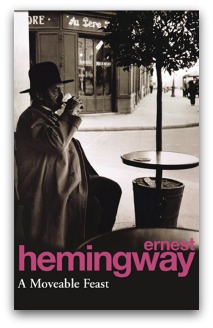
10. A Moveable Feast (1964, revised 2009)

Author: Ernest Hemingway
Synopsis: Hemingway’s posthumously published memoir detailing his years as a young American expat in Paris socializing with the likes of F. Scott Fitzgerald, Gertrude Stein and Ezra Pound.
Film pitch: Perhaps now is the perfect time for an adaptation of A Moveable Feast. The surprising success of Woody Allen‘s Midnight in Paris will perhaps have whetted Hollywood’s appetite for a more serious take on the same subject matter.

9. One Fat Englishman (1963)

Author: Kingsley Amis
Synopsis: Inspired by a year Amis spent teaching at Princeton, One Fat Englishman follows the badly behaved Roger Micheldene with Amis’s typical brio. An English gentleman who is affronted by everything on the American scene, Roger fails to see how his presence might adversely affect Anglo-American relations.
Film pitch: Cast Timothy Spall as Roger and watch the fireworks.

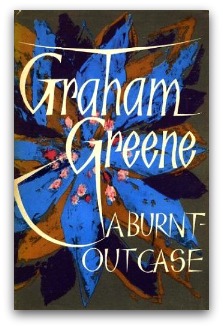
8. A Burnt Out Case (1960)

Author: Graham Greene
Synopsis: A man named Querry arrives at a leper colony in the Congo. He assists the colony’s doctor, who diagnoses him as suffering depression. It is revealed that Querry is in fact a world-famous architect, though he is hiding other secrets, too.
Film pitch: Perhaps Greene’s bleakest work — which may explain why it hasn’t been filmed previously despite being optioned twice by Otto Preminger (Greene was said to be thankful that it was never made). I would argue, however, that it has all the material for a fascinating film.

7. Travels through France and Italy (1766)

Author: Tobias Smollett
Synopsis: After the sad death of his daughter, Tobias Smollett and his wife left England for a tour of France and Italy. Detailing the quarrels Smollett has on his journey with those pesky Continentals, this is a very funny book.
Film pitch: Yes, I am suggesting that someone should make a movie based on an 18th-century travelogue. If Robbie Coltrane and John Sessions can turn Boswell and Johnson’s tour of the Hebrides into a delightful TV movie then I think the same could be done with this.

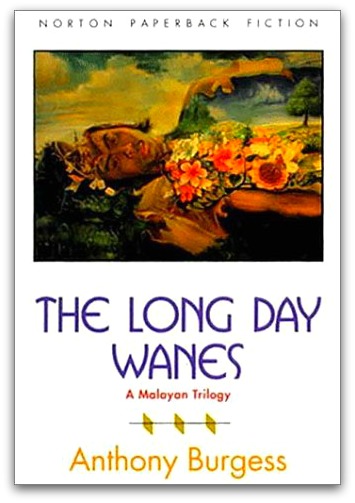
6. The Long Day Wanes: A Malayan Trilogy (1956-59)

Author: Anthony Burgess
Synopsis: Burgess’s first three novels are concerned with the character of Victor Crabbe, a teacher in a village in Malaya (now Malaysia). Based upon Burgess’s own experiences as a British civil servant in Malaya, the three novels that make up The Long Day Wanes detail the death of Empire and the birth pains of a newly independent nation.
Film pitch: Other than A Clockwork Orange, whose adaptation Burgess had strong misgivings over, Burgess’s work often seems overlooked for movie adaptations. It really shouldn’t be.

5. The Thousand Autumns of Jacob de Zoet (2010)

Author: David Mitchell
Synopsis: Until Commodore Perry in 1853 anchored four warships off the Japanese coast and so opened up Japan to western trade, Japan had been a “locked country” (sakoku) where it was illegal for a foreigner to enter Japan and for a Japanese subject to leave. The exception to this was at Dejima, in Nagasaki, where trade with some select foreign powers was allowed. This fascinating piece of history is the basis for David Mitchell’s latest novels. Set in 1799, The Thousand Autumns of Jacob de Zoet details a young Dutch trader who has come to Dejima to make his fortune though he discovers a lot more.
Film pitch: The book has all the makings of a wonderful historical epic.

4. Up Above the World (1966)

Author: Paul Bowles
Synopsis: Dr and Mrs Slade are an American couple touring Central America. A chance encounter with an elderly woman leads to a tense and gripping chain of events.
Film pitch:A disturbing and intense work typical of Bowles, it would make for a deeply compelling thriller.

3. Burmese Days (1934)

Author: George Orwell
Synopsis: Similar to Burgess’s The Long Day Wanes, this novel is concerned with the dying days of Empire. Orwell, who was himself an officer in the Indian Imperial Police Force in Burma, paints a depressing picture of expatriate life that is based around the stultifying social hub of the European club.
Film pitch: Orwell’s first novel and while certainly not his best work, even a bad Orwell novel is still worthy of consideration.

2. Henderson the Rain King (1959)

Author: Saul Bellow
Synopsis: Eugene Henderson is a rich American with an unfulfilled desire. Not knowing quite what it is, he hopes he will discover it by going to Africa. Through a series of misadventures Eugene Henderson finds himself away from his original group and in the village of Wariri in Africa. After performing a feat of strength, Eugene is adopted by the villagers as the Wariri Rain King.
Film pitch: Bellow’s funniest book, Henderson the Rain King could be pitched as an intellectual Joe Versus the Volcano (or maybe not — that’s a terrible pitch).

1. Turkish Embassy Letters (1763)

Author: Lady Mary Wortley Montagu
Synopsis: An important writer in her own right, Lady Mary Wortley Montagu was the wife of Edward Wortley Montagu, who was appointed as the ambassador at Constantinople. Accompanying her husband just after recovering from contracting smallpox marring her famed beauty, Lady Wortley Montagu wrote about her observations in numerous letters. These letters form a fascinating look at the Ottoman Empire — from how they inoculated against smallpox to the zenanas, special areas of the house reserved for women — as observed by an aristocratic English woman of the time.
Film pitch: Just think what a great biopic you could make about her.

Note: If you click on the book titles in the above list, you’ll be taken to Amazon, where the books can be purchased — except in the case of Tobias Smollett’s travelogue, which goes to Gutenberg, where he can be read FOR FREE!!

STAY TUNED for tomorrow’s post, an interview with first-time novelist Meagan Adele Lopez, and her plans for turning the book into a film.

If you enjoyed this post, we invite you to register for The Displaced Dispatch, a round up of weekly posts from The Displaced Nation, with seasonal recipes, book giveaways and other extras. Register for The Displaced Dispatch by clicking here!

Related posts:

RANDOM NOMAD: Megan Farrell, American Expat in São Paulo, Brazil

Place of birth: Chicago, Illinois USA
Geographical history: USA (Chicago, Illinois; West Palm Beach, Florida; Ventura, California; Washington, DC): 1969 – 2002; Spain (Barcelona): 2001; USA (Princeton, New Jersey; New York, New York): 2002-10; Brazil (São Paulo): 2010 – present.
Passport: USA — my daughter, however, has three: USA, Brazil & Germany.
Current occupation: Aspiring novelist and screenplay writer, business school lecturer, and former research director at a Wall Street firm.
Cyberspace coordinates: Born Again Brazilian (blog) and @BornAgainBrazil (Twitter handle)

What made you leave your homeland in the first place?
Ever since I was a child, I wanted to explore the world and always had it in my head that I would live in other countries. I think it was because I used to read a lot as a kid, stories about other places, some of my favorites being James and the Giant Peach and The Little Prince. I also loved Laura Ingalls Wilder‘s Little House series. By the time I reached adulthood, I was open to opportunities to travel and explore new cities as a local.

Describe the moment when you felt most displaced since making your home in Brazil’s largest city, São Paulo.
Wandering lost, in the rain, in an unfamiliar neighborhood, after a boy on a bike tried to wrestle my iPhone out of my hands. I’d grabbed it out of his hands, but he still hung around yelling something at me and trying to get the phone. It seemed incredible to me this was happening because although it was raining, it was broad daylight and I was on a street where there was a row of little shops. So after putting a bit of distance between us, I stopped and started screaming like a horror movie starlet and pointing at him. People came out of their shops and of course he got scared — I think mostly because he thought I was crazy. I’d never before experienced anything so bold.

Your blog is called Born Again Brazilian. I imagine you’ve also had many moments when you feel more at home in Brazil than you do in the USA. When have you felt least displaced?
While sitting on the beach of Leblon, in Rio de Janeiro, viewing the ocean. On a beautiful day, it absolutely makes you feel as though all is right with the world and you are exactly where you are meant to be.

You may bring one curiosity you’ve collected from each of your adopted countries into The Displaced Nation. What’s in your suitcase?
No need for a suitcase as what I’d most like to bring with me to The Displaced Nation is a couple of intangible items:
From Brazil: Jeitinho or jeito, the ability to get in, out and/or around something despite a law, a regulation, a contract, physics or gravity.
From Barcelona: The recipe for survival possessed by local shops, which seem to close and open at random times — and when you enter, the owners or employees often act as though you are completely putting them out by wanting to buy something. It’s hilarious and curious at the same time.

Food is close to the heart of all Displaced Nation citizens. We would therefore like to invite you to make a meal for us. What will you offer?
I can offer a choice of two classic menus:
1) Brazilian (São Paulo/Rio de Janeiro)
Appetizer: Bolinho de bacalhau (codfish cakes), served with Original cerveja (beer)
Main: Feijoada (traditional bean stew with beef and pork), served with caipirinhas (Brazilian national cocktail, made with rum, sugar and lime)
Dessert: Mouse de maracujá (passion fruit mousse)
2) Spanish (Barcelona)
Appetizer: Assorted pinchos (bar snacks eaten with toothpicks), served with cider
Main: Paella Valenciana (Valencian paella), served with a nice Spanish white wine
Dessert: Flan (crème caramel)

What’s your pleasure?

You may add a word or expression from the country where you live in to The Displaced Nation argot. What will you loan us?
Tudo bem! When you greet someone in Brazil, you say tudo bem instead of hello, but you use it like a question: “Tudo bem?” (All is well?) And you might respond with tudo bem (all is well) or tudo otimo (all is great) or simply tudo (all). Brazilians must use this greeting countless times a day. What I love about tudo bem is that it represents how familiar and personal the Brazilian culture is. A stranger in the elevator will greet you by asking if all is right in the world for you. That is totally Brazilian.

This month, in honor of Valentine’s Day, The Displaced Nation has been delving into the topic of finding love abroad. I understand you have a Brazilian husband. Where and how did the pair of you meet, and was it love at first sight?
I met my husband while we were getting our MBAs at Georgetown University (in Washington, DC). The first time I met him, I thought he was pretty stern — little did I know he had just arrived to the country the day before and wasn’t so comfortable with his English. I kind of wrote him off as one of the machismo Latin guys that didn’t like to work closely in a business setting with women. But after the final exams of our first semester, we wound up at the same party. I actually attempted to hook him up with my friend — he is tall and she is tall — but it turned out he was more interested in me. After I saw a few of his dance moves…it was love at second sight!

Thanks to Gisele, many people have an image of Brazilian women as very attractive. Is that also true of the men, and do they make good husbands?
First, my husband is not your typical Brazilian man. He spent a great deal of his childhood in Germany with his grandparents and has his behavior has been heavily influenced by his German father. Typical Brazilian men see the roles of men and women as clearly defined channels. From what I’ve seen and heard from my Brazilian and American friends married to Brazilians, the menfolk rarely if ever help out with household chores or issues, as they feel that is the woman’s role — even if she is working a full-time job! However, for the most part, Brazilian men are very charming, complimentary and romantic. They see themselves as Prince Charming, and if that is what a woman is looking for, a Brazilian man is a good catch.

You said you fantasized about traveling to other lands from the time you were a child. How about marrying someone from another land?
I never thought much about it, but before my husband, I only dated All-American guys, so I think it came as a surprise to my parents. However, when my now husband asked me to marry him, I knew that my life would never be boring, and always full of adventure. And I was right!

Now that Valentine’s is over, The Displaced Nation is moving on to look at expat and travel films, in time for the Oscars. Do you have a favorite film(s) in this “genre”? I see you’re interesting in screenplay writing, which makes me doubly curious.
I think the first movies that inspired travel for me were Cocktail with Tom Cruise (he finds love while working in a bar in Jamaica) and Only You with Marisa Tomei (she follows the man she thinks will be her true love to Italy). When I was a bit older, I was definitely was drawn to seeing the world by a beautifully filmed, but wildly depressing, New Zealand-Australian-British film by Jane Campion titled An Angel At My Table. It’s based on Janet Frame‘s autobiographical series about growing up in New Zealand, leaving and returning.

Readers — yay or nay for letting Megan Farrell into The Displaced Nation? Tell us your reasons. (Note: It’s fine to vote “nay” as long as you couch your reasoning in terms we all — including Megan — find amusing.)

STAY TUNED for tomorrow’s installment from our displaced fictional heroine, Libby, who is discovering that Valentine’s Day in the US is quite different from the UK version — a fact that doesn’t come naturally to her three-year-old son. (What, not keeping up with Libby? Read the first three episodes of her expat adventures.)

If you enjoyed this post, we invite you to register for The Displaced Dispatch, a round up of weekly posts from The Displaced Nation, with seasonal recipes, book giveaways and other extras. Register for The Displaced Dispatch by clicking here!

Related posts:

img: Megan Farrell poses at the nature center in Parque Estadual do Pico do Itacolomi, which is outside Ouro Preto, Minas Gerias (July 2011).